
烏普曼
德國銀行家的雪茄、甘迺迪的最愛、雪松木盒的發明者
評分方法 · 本評分為 W Cigar Bible 依據品牌歷史、國際能見度、產品穩定性、收藏討論度與華文市場辨識度綜合整理,非投資建議或銷售推薦。
影片來源:Habanos S.A. 官方 YouTube 頻道 · 教育性內容引用

H. Upmann 被廣泛公認為「雪茄業雪松木盒包裝的發明者」——他在開設工廠前就用印有 H. Upmann 名稱的雪松木盒裝其他廠商的雪茄送給銀行客戶當禮物。雪松木盒可保持雪茄濕度與新鮮度,至今仍是雪茄包裝的黃金標準。
1844 年 Hermann Upmann 在哈瓦那 San Miguel 街 85 號買下當地雪茄工廠,正式開始以 H. Upmann 品牌生產雪茄。同時建立 H. Upmann & Co. 銀行——服務雪茄商與菸草業者。
1961 年 2 月 7 日美國總統 John F. Kennedy 即將簽署古巴貿易禁運令前夜,他派助理 Pierre Salinger 走遍華府所有雪茄商店,收購 1,200 支古巴雪茄——其中主要就是他最愛的 H. Upmann Petit Upmanns(部分文獻稱為 Petit Coronas)。
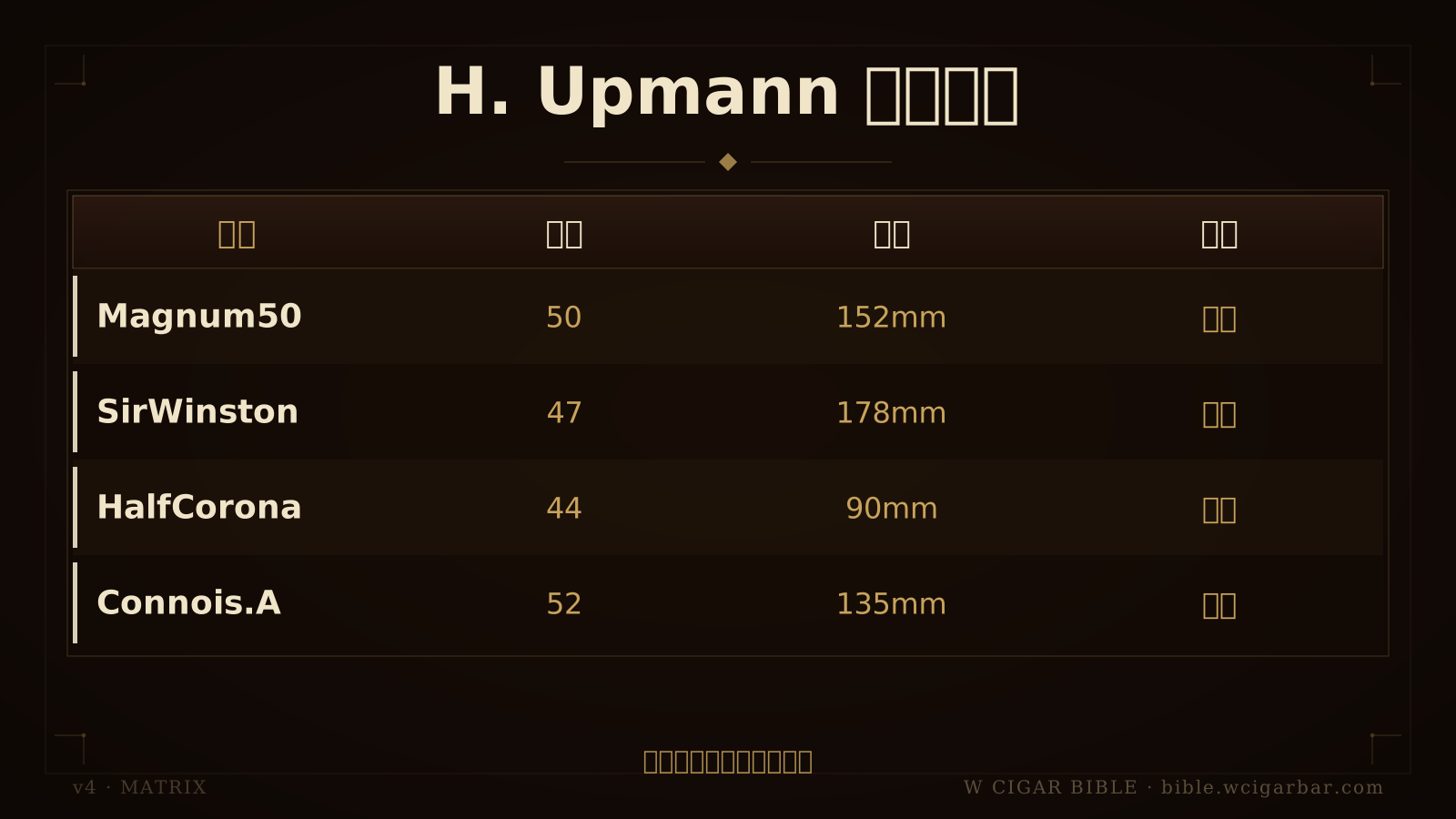
Magnum 50(160mm × 環徑 50, vitola: Magnum 50)— 2005 年作為 Edición Limitada 推出,這是 Habanos S.A. 第一次將 EL 限量版機會給「核心 5 大品牌」(Cohiba/Montecristo/RyJ/Partagás/Hoyo) 以外的品牌——標誌 H. Upmann 從「Multi-local」品牌升級為「Global」品牌。2008 年改為常規生產。
Cohiba 雪茄品牌 1959-1966 期間實際上就是在 H. Upmann 工廠生產——這是 Cuban cigars 史上最重要的歷史交叉。今日 H. Upmann 工廠(即 José Martí Factory)仍負責部分 Cohiba 生產。
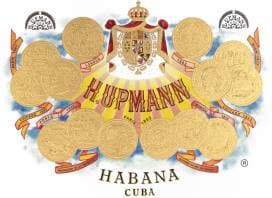
1862-1893 年間,H. Upmann 在多次國際雪茄競賽贏得 7 面金牌(部分來源記載為 11 面)——這些獎章與 Hermann Upmann 的親筆簽名至今仍印在每一個 H. Upmann 雪茄盒上。
Salinger 第二天清晨 8 點向甘迺迪報告「Mission accomplished, Mr. President」(任務完成)後,甘迺迪才簽署禁運令。這是雪茄歷史最有名的軼事之一——美國總統親自確保自己有夠抽 H. Upmann 才禁運古巴貨。
Sir Winston(7" × 47, vitola: Julieta No.2, Churchill)— H. Upmann 旗艦 Churchill 規格,邱吉爾從未真的抽過這款(他是 Romeo y Julieta 信徒),但品牌借邱吉爾之名致敬。1990 分鐘體驗,是長身古巴雪茄的優雅代表。
Magnum 46(5⅝ × 46, vitola: Coronas Gordas)— 是 H. Upmann 旗艦中環徑 Corona Gorda,被視為「Cuban Magnum」概念的開創者。風味:薑餅、太妃糖、紅糖、巧克力、堅果。日常品鑑首選。
Hermann Dietrich Upmann(1816 年 5 月 16 日生)是德國銀行家,1843 年抵達哈瓦那為德國 Bremen 的進出口公司 Gravenhorst & Co. 處理業務。看到古巴菸草業的潛力後決定留下發展。
Magnum 54(150mm × 54)— 2016 年推出常規系列,是 Magnum 家族厚棒身代表。Magnum 56(150mm × 56)— 2015 年限量、2019 年免稅店專用 Jar 包裝(每罐 20 支)。Magnum 家族是當代 H. Upmann 最受歡迎的產品線。
H. Upmann 是現存最古老的古巴雪茄品牌之一,僅次於 Cabañas(1810)、La Corona(1845 但有早期淵源),與 Partagás(1845)並列前三名。
H. Upmann 古巴版定位:淺到中等強度(mild to medium),是古巴雪茄中最優雅的品牌之一。風味描述:奶油、雪松、淡淡的薑餅、太妃糖、紅糖、肉桂、輕咖啡——是「德國精緻派」古巴雪茄。
H. Upmann No.2(vitola: Pirámides, 6⅛ × 52)— 被 Cigar Aficionado 稱為「Cuba's Best Kept Secret」(古巴最被忽視的秘密武器)。Pirámide 規格金字塔型雪茄,常規生產但常常被搶購一空。
一戰爆發時(1914),Hermann 與 Albert Upmann 兄弟利用古巴與美國的銀行/雪茄事業掩護德國情報網絡——這在歷史學家 Jamie Bisher《The Intelligence War in Latin America, 1914-1922》中有詳細記載。情報員據稱涉入海地、多明尼加的反叛活動。
1922 年 5 月 H. Upmann 銀行與雪茄事業同時破產。同年 J. Frankau & Co.(H. Upmann 的英國代理之一)以 30,000 古巴比索在拍賣會買下 H. Upmann 雪茄品牌與工廠,經 3 年談判後恢復生產。
1960 年 9 月 15 日 H. Upmann 與所有古巴雪茄業一起被國有化。原工廠改名為 José Martí Factory。Menéndez 與 García 帶著 Montecristo 與 H. Upmann 兩個品牌離開古巴,先到加納利群島,後到多明尼加。
1935 年 J. Frankau 被 J. R. Freeman & Son 收購。1937 年公司賣給剛成立的 Menéndez, García y Cía(Montecristo 創辦人)。J. Frankau 保留英國市場 H. Upmann 銷售權。
H. Upmann 工廠(即 José Martí Factory)位於哈瓦那 Calle Amistad 407 號,是哈瓦那最具歷史意義的雪茄工廠之一——也是 Cohiba 1959-1966 早期生產地。今日 Magnum 50、Sir Winston、No.2 等核心 vitolas 均在此工廠手工捲製。
革命後 Menéndez 家族先在加納利群島重建,後遷至多明尼加。今日多明尼加版 H. Upmann 由 Altadis La Romana 工廠生產,主攻美國市場。古巴版由 Habanos S.A. 生產,全球發售(除美國)。今日兩個品牌都歸 Imperial Brands 集團所有。
1917 年古巴對德宣戰,所有 H. Upmann 銀行被關閉 30 個月。1917 年 12 月美國將公司列入「敵對貿易名單」(Enemy Trading List)。1918 年兩位 Upmann 兄弟被軟禁,後被關進 La Cabañas 監獄。
Sir Winston Gran Reserva Cosecha 2011(2017 年推出)— H. Upmann 第一款 Gran Reserva 級雪茄,菸葉 2011 年採收後特別醇化,是品牌最珍貴的限量發行。
1944 年 H. Upmann 工廠遷至 Calle Amistad 407 號(今天的位置)。Menéndez García 同時擁有 Montecristo、Por Larrañaga 等品牌,將 H. Upmann 工廠變成多品牌生產中心。
所有 H. Upmann 古巴版均為「totalmente a mano con tripa larga」(完全手工、長填充)。菸葉全部來自 Vuelta Abajo(Pinar del Río 省)小批量精選。2002 年機製版正式停產。
2002 年 Altadis 取得 Habanos S.A. 控股權後,將 H. Upmann 從超過 30 個 vitolas 簡化到 16 個(2006 年完成)。同時機製雪茄停產,所有 H. Upmann 變成全手工。
2004 年品牌 160 週年紀念,推出 160 Aniversario Humidor 限量發行:最初 160 個編號 humidor,後追加 100 個(總共 260 個),第二批附 La Casa del Habano 雪茄環。
Albert Upmann 在獄中聲稱自己只負責雪茄製造,不知情銀行業務,後來詐欺指控被撤銷,移居美國。Hermann Upmann 以 10 萬美元保釋金獲釋,1922 年 10 月所有刑事指控被撤銷。但他失去大部分財富與古巴金融巨頭地位。1925 年 9 月 3 日在哈瓦那逝世。
Hermann Upmann 1890 年退休,由姪子 Heinrich Upmann(與其他合夥人)接手經營。Heinrich 在 20 世紀初將工廠遷至更大的設施。
H. Upmann 也是雪茄業最早使用「鋁管包裝」(aluminium tubes) 保存雪茄的品牌之一,這種包裝今日仍廣泛被頂級雪茄使用。
Connoisseur No.1(5⅓ × 50, Robusto)— H. Upmann 經典 Robusto。Connoisseur A(2018 推出,新尺寸)、Connossieur B(2017,LCDH 限定)— Connoisseur 家族是品牌的精品路線。
Hermann Dietrich Upmann 1894 年逝世。Heinrich Upmann 1914 年逝世。

烏普曼 完整 vitola 圖鑑(227 張)
烏普曼(烏普曼 H. Upmann)旗下完整 vitola 圖鑑卡片、每張卡點進去含: 葉組產地(CAPA/CAPOTE/TRIPA)、 風味前中後段、 歷年特殊版發行紀錄(ER 地區限定 · EL 年度限量 · LCDH · RR · GR)、 配飲建議與收藏陳化指南。

Belinda Petit Coronas vs H. Upmann Exquisitos
VITOLA SHOWDOWN · Petit Coronas
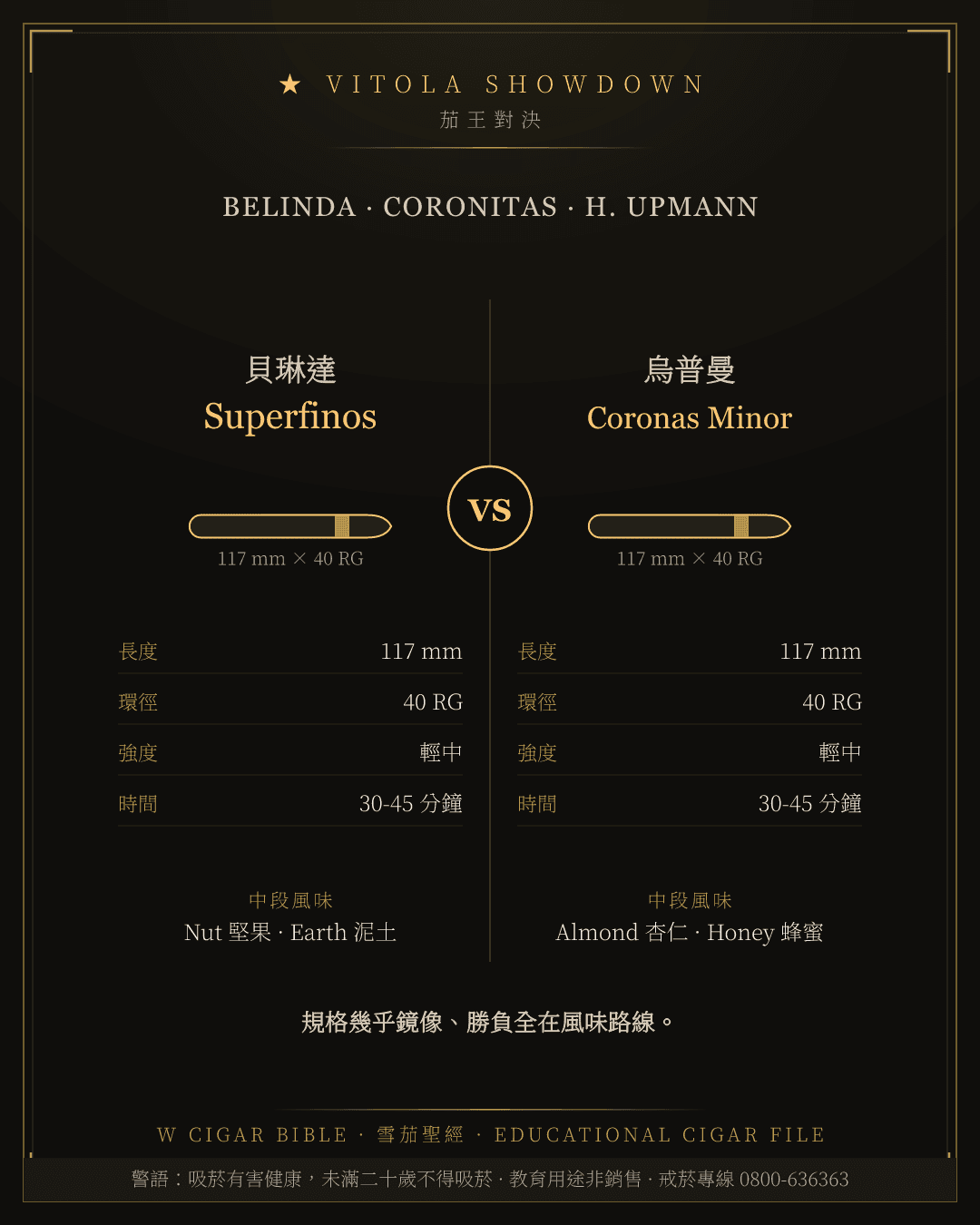
Belinda Superfinos vs H. Upmann Coronas Minor
VITOLA SHOWDOWN · Coronitas
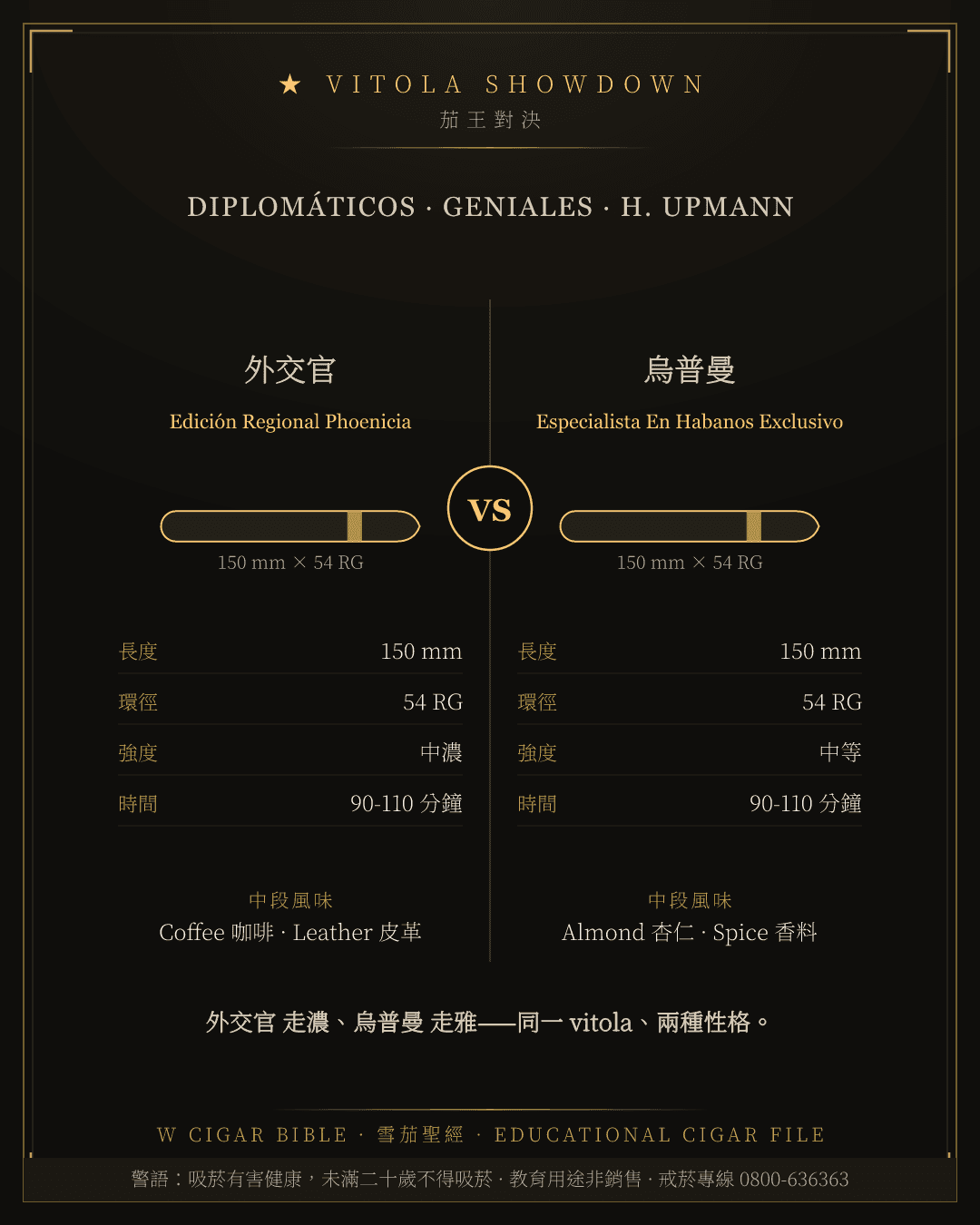
Diplomáticos Edición Regional Phoenicia vs H. Upmann Especialista En Habanos Exclusivo
VITOLA SHOWDOWN · Geniales
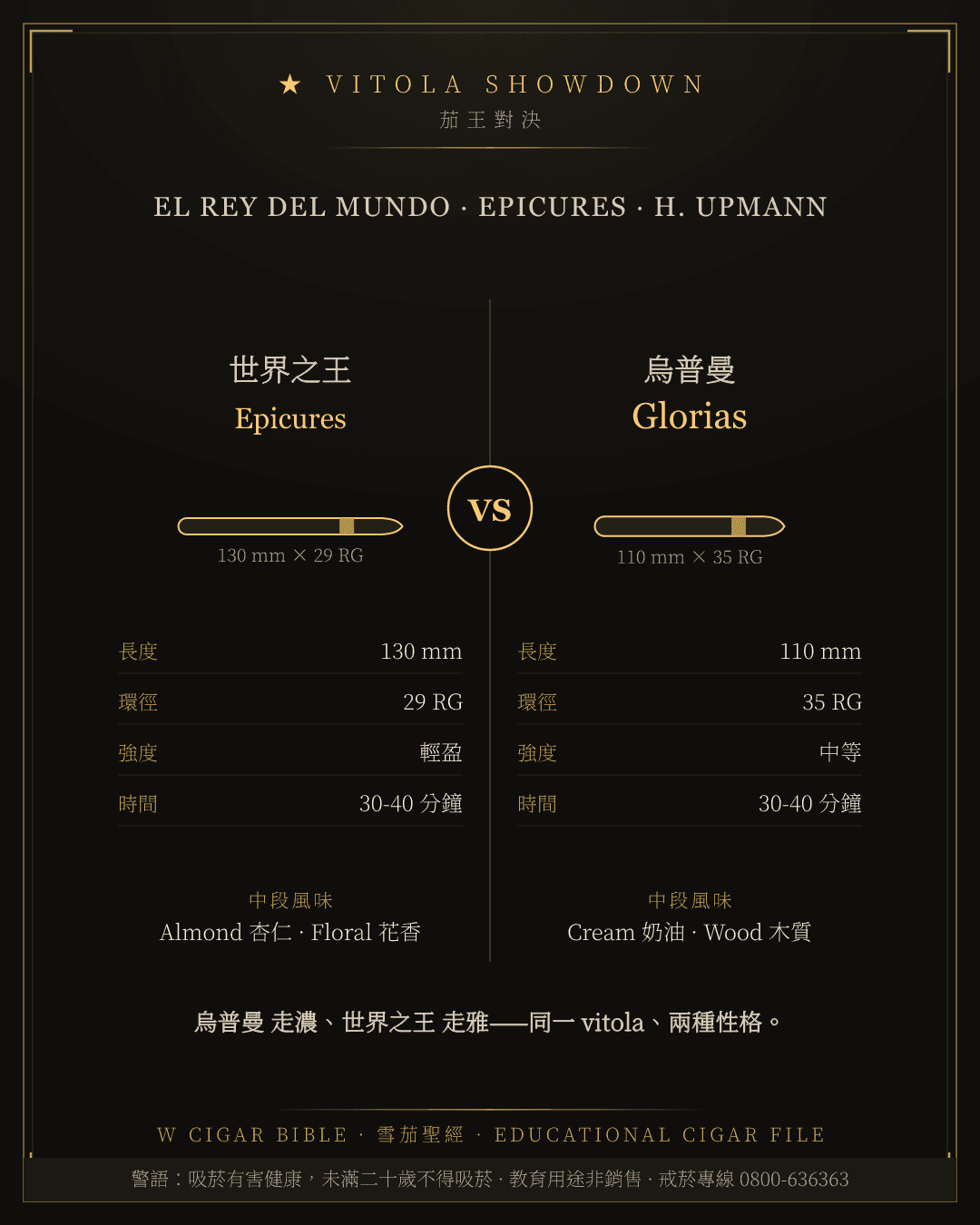
El Rey Del Mundo Epicures vs H. Upmann Glorias
VITOLA SHOWDOWN · Epicures
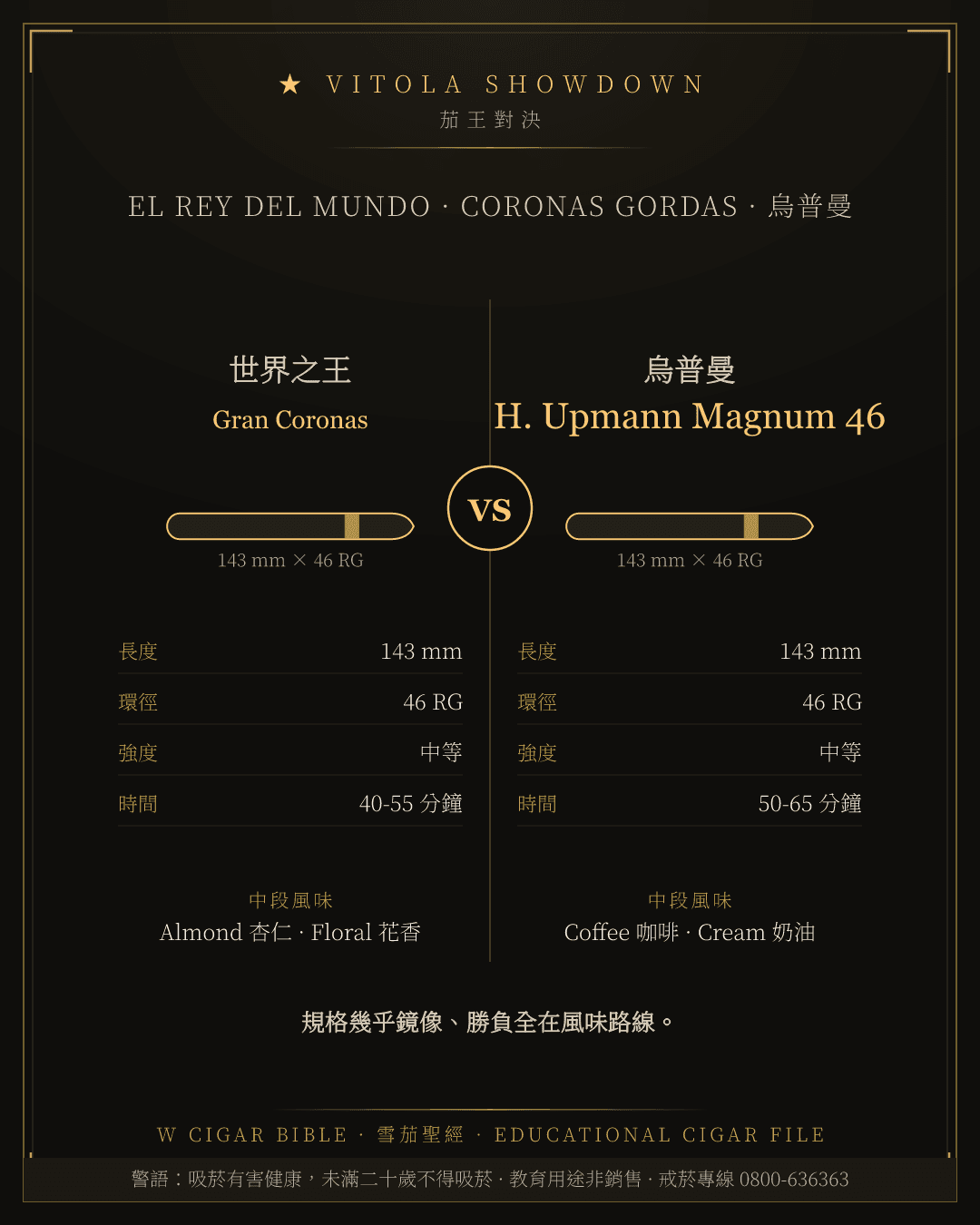
El Rey Del Mundo Gran Coronas vs H. Upmann Magnum 46
VITOLA SHOWDOWN · Coronas Gordas
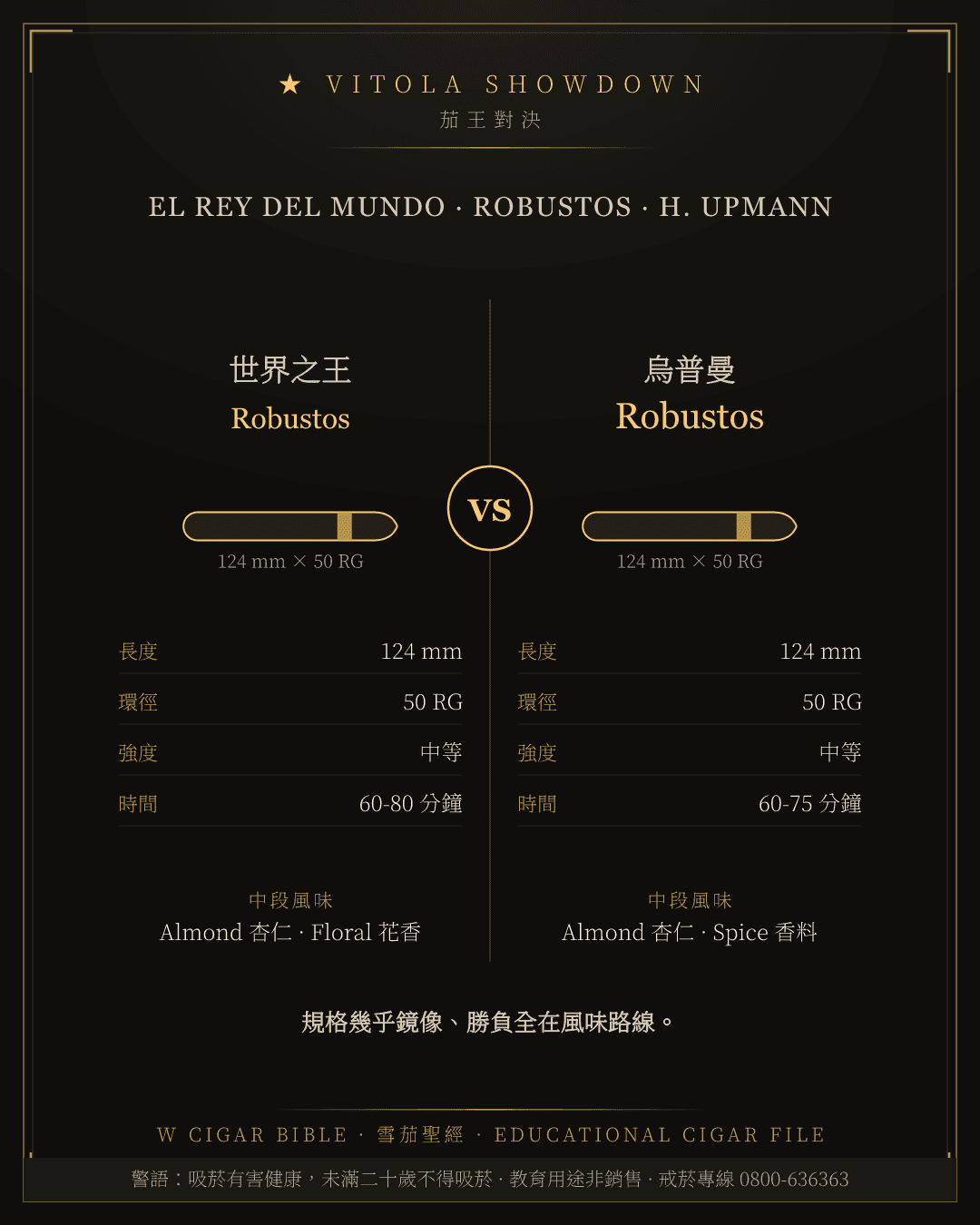
El Rey Del Mundo Robustos vs H. Upmann Robustos
VITOLA SHOWDOWN · Robustos

Fonseca Cosacos vs H. Upmann Cristales
VITOLA SHOWDOWN · Cosacos
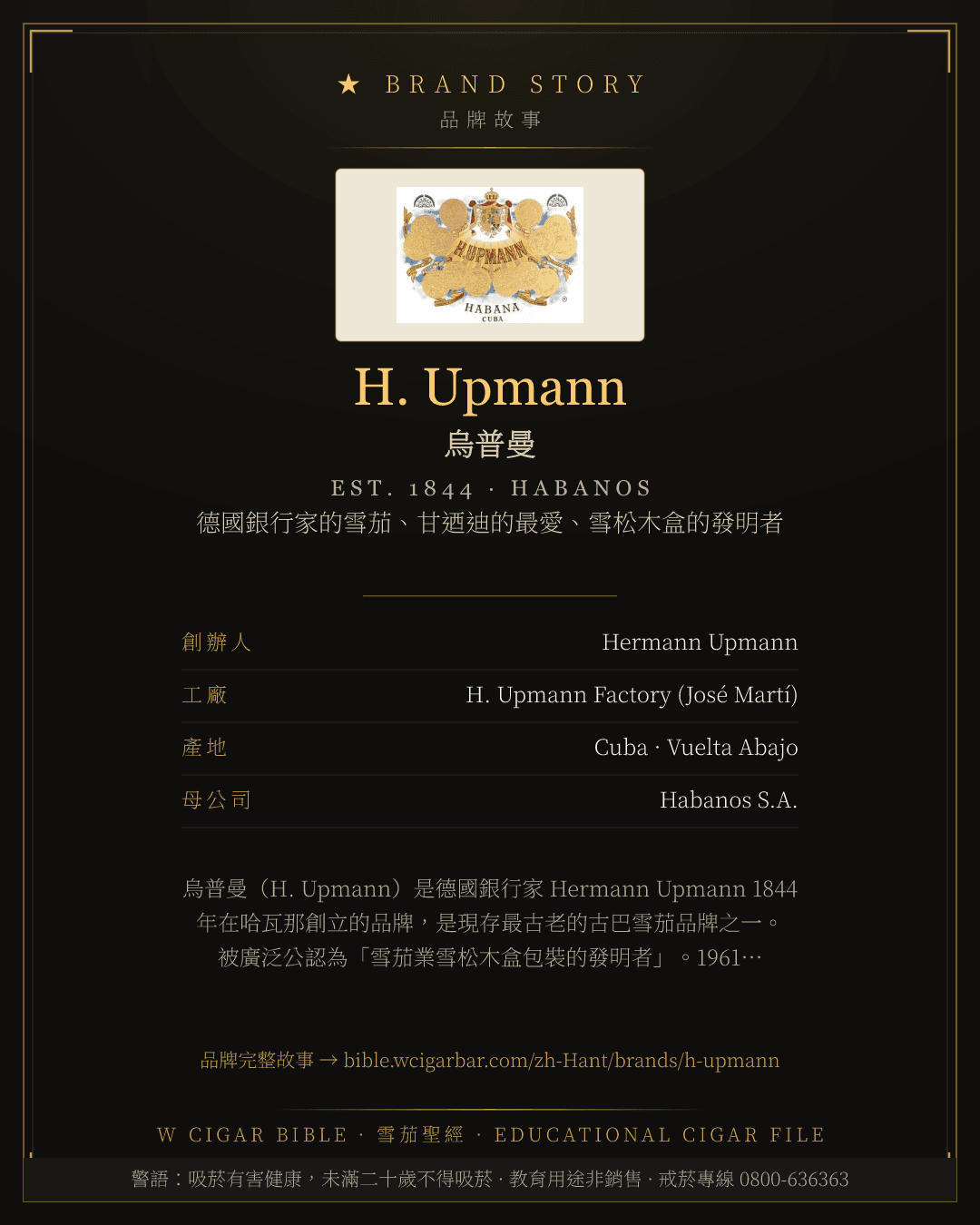
H. Upmann · 烏普曼 品牌故事
BRAND STORY · EST. 1844
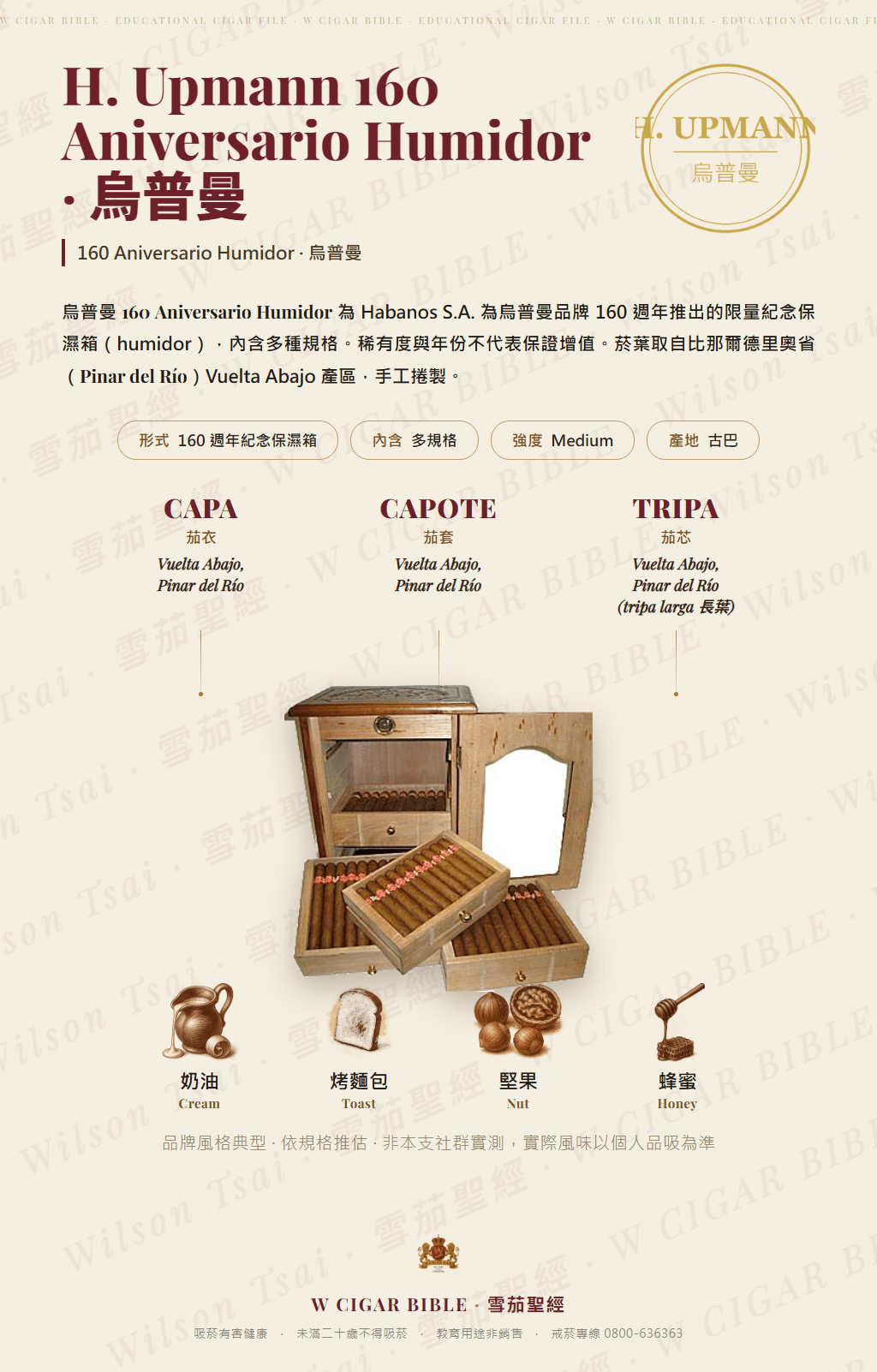
H. Upmann 160 Aniversario Humidor · 烏普曼
160 週年紀念加濕木盒(2004 · 全球限量 160 座)· 雪茄檔案
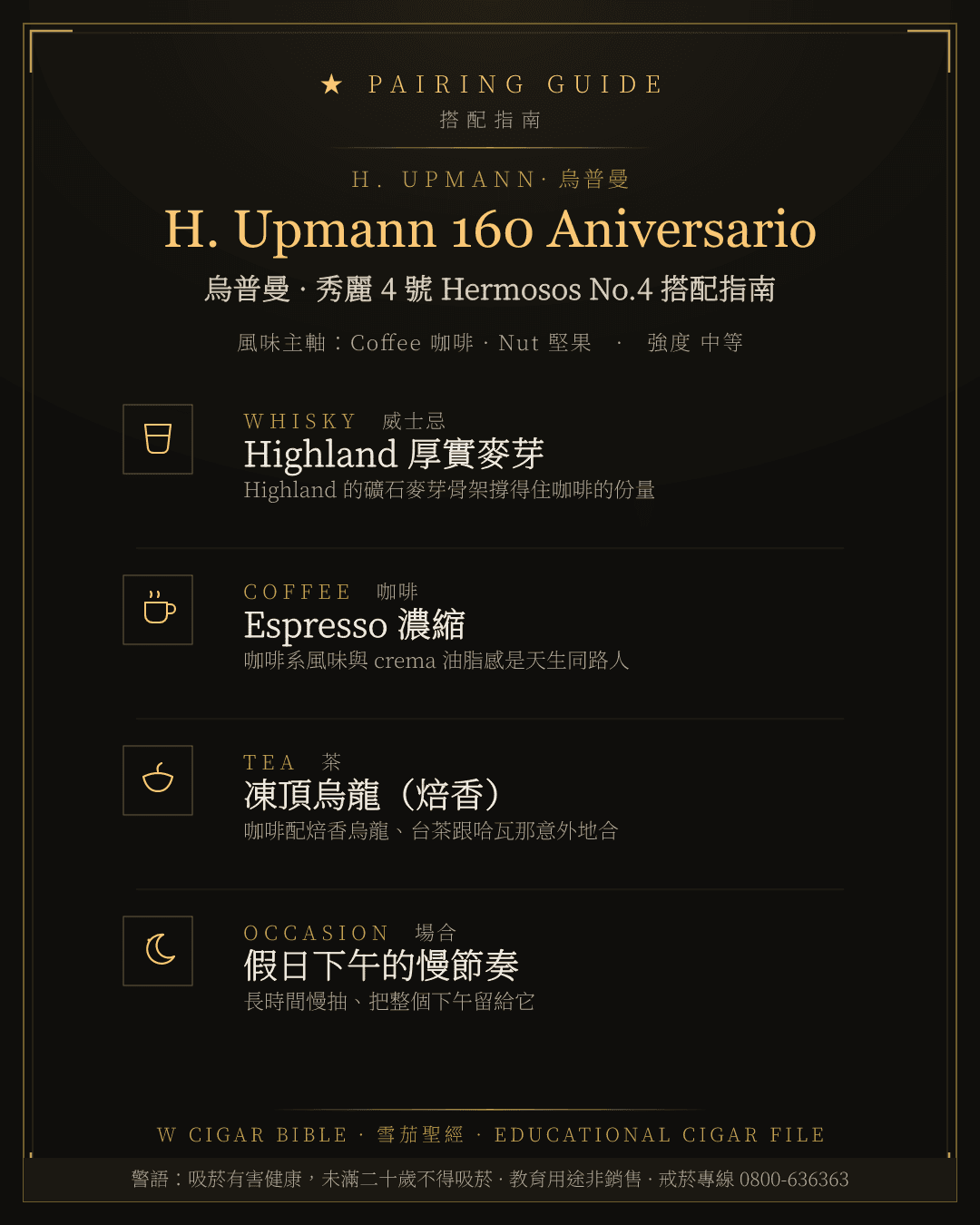
H. Upmann 160 Aniversario 搭配指南 · 烏普曼
PAIRING GUIDE · 搭配指南
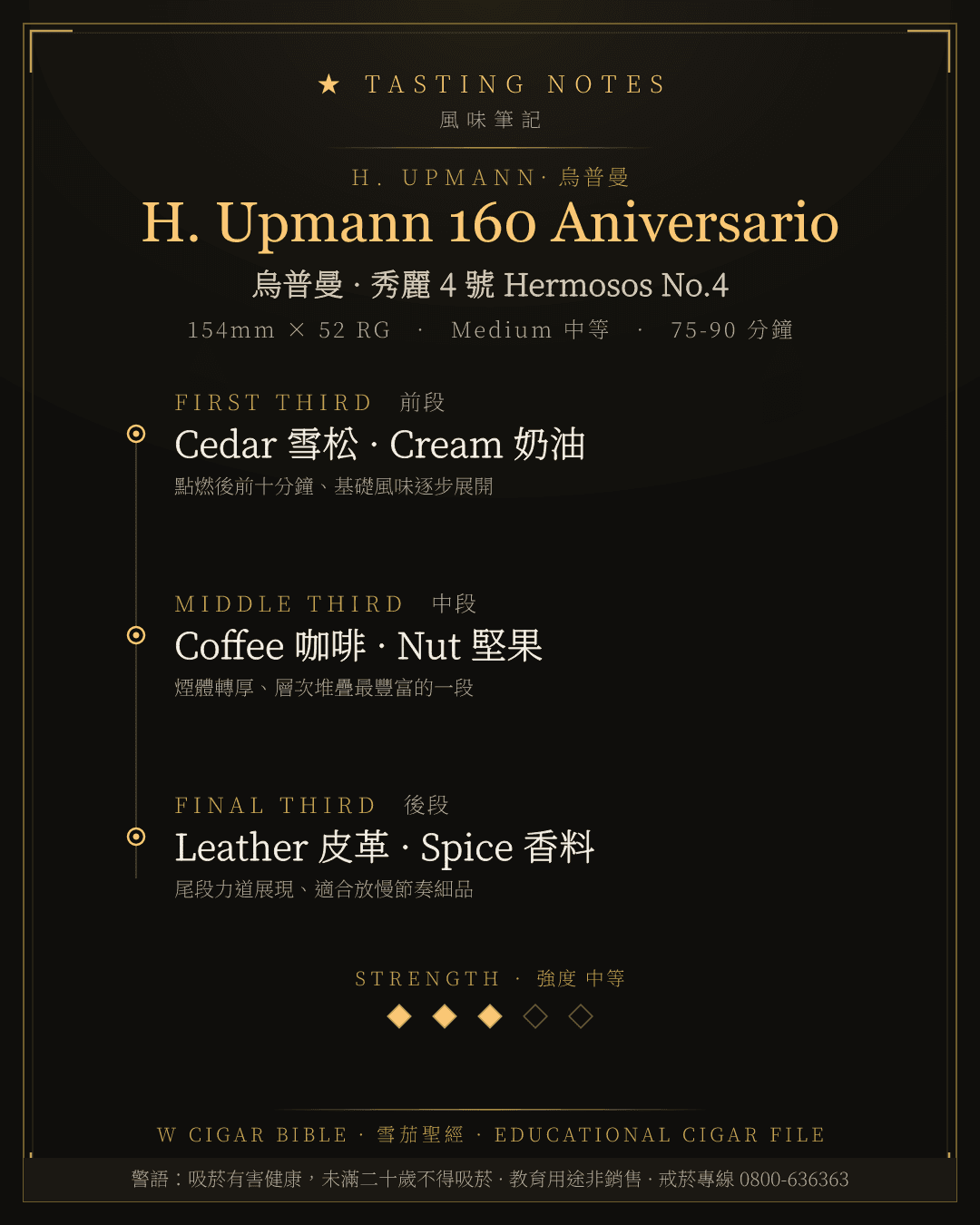
H. Upmann 160 Aniversario 風味筆記 · 烏普曼
TASTING NOTES · 風味筆記
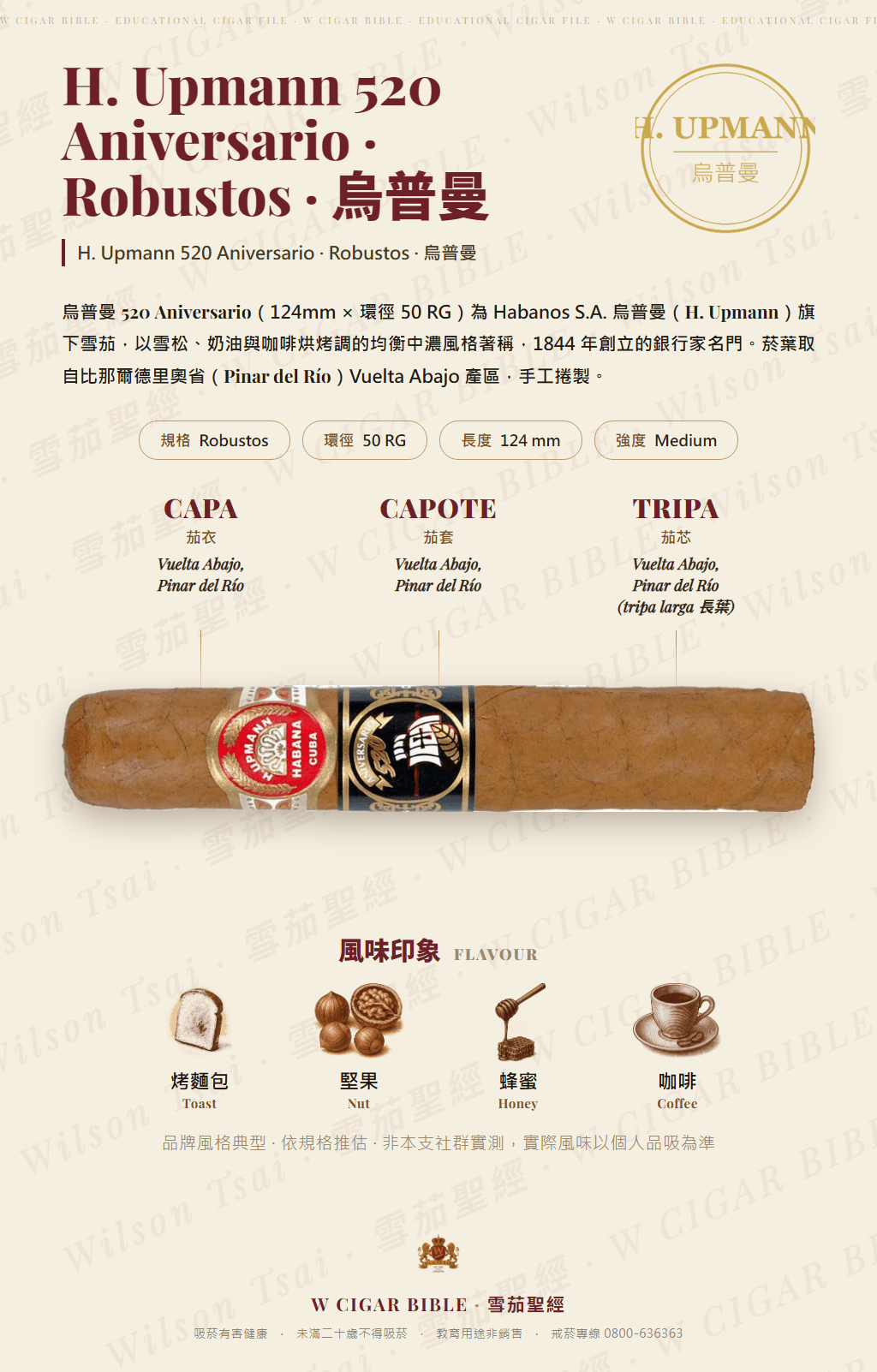
H. Upmann 520 Aniversario · Robustos · 烏普曼
Festival 2012 · 第十四屆哈瓦那雪茄節場內紀念版(Robustos 本體、1,000 盒 ×10 支)· 雪茄檔案

H. Upmann 520 Aniversario 搭配指南 · 烏普曼
PAIRING GUIDE · 搭配指南
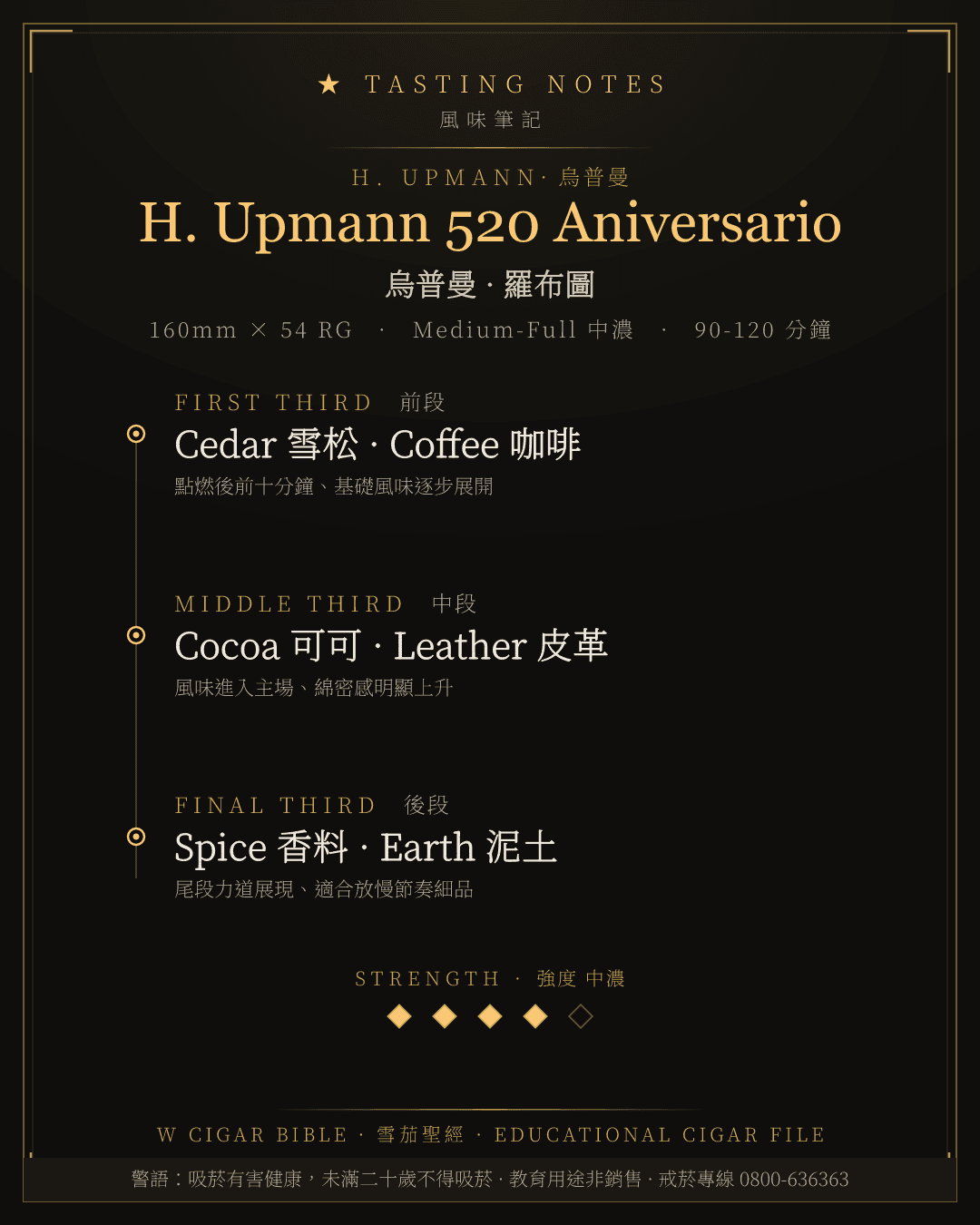
H. Upmann 520 Aniversario 風味筆記 · 烏普曼
TASTING NOTES · 風味筆記
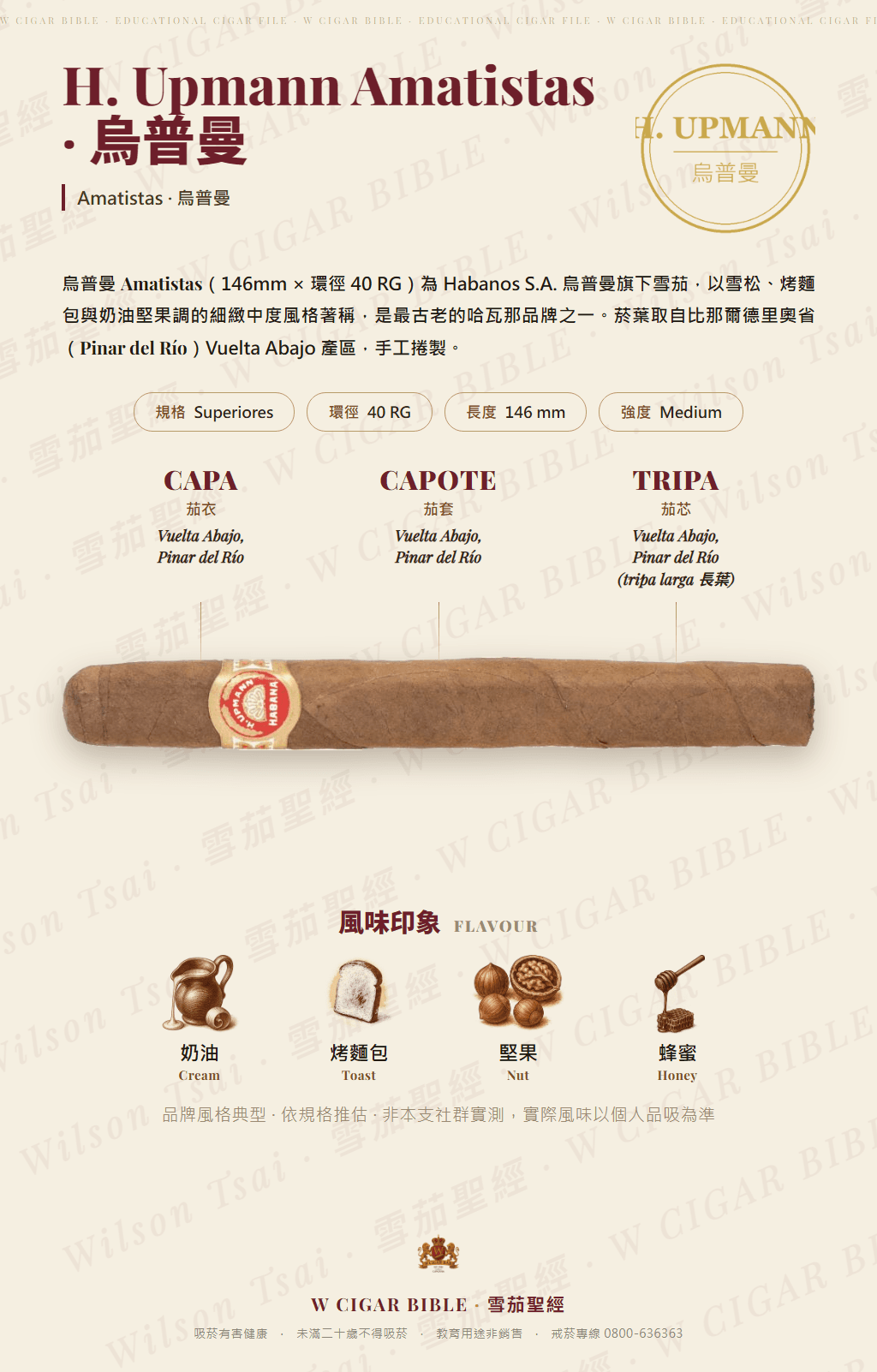
H. Upmann Amatistas · 烏普曼

H. Upmann Aromáticos No. 1 · 烏普曼
標準機製款(H. Upmann Aromáticos,mecanizado,2002 年停產老款) · 雪茄檔案
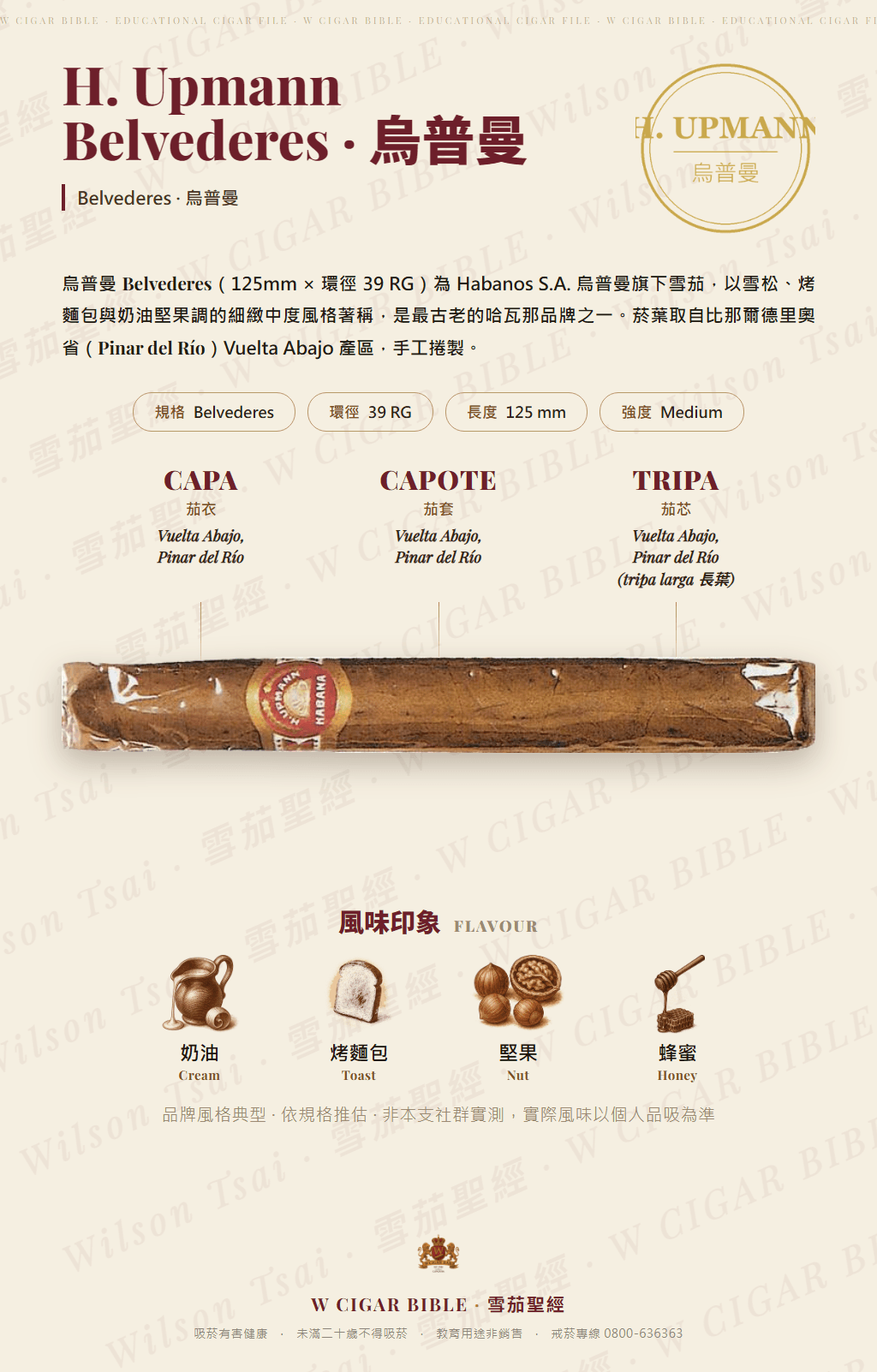
H. Upmann Belvederes · 烏普曼
標準常規款(機製 máquina,Belvederes 廠規 125mm×39),約 2000 年代初停產 · 雪茄檔案

H. Upmann Cinco Bocas · 烏普曼
停產老款(H. Upmann 標準生產款,約 1960 年前列入產品線、1980 年代初停產,Band B 環標,25 支裝木盒) · 雪茄檔案
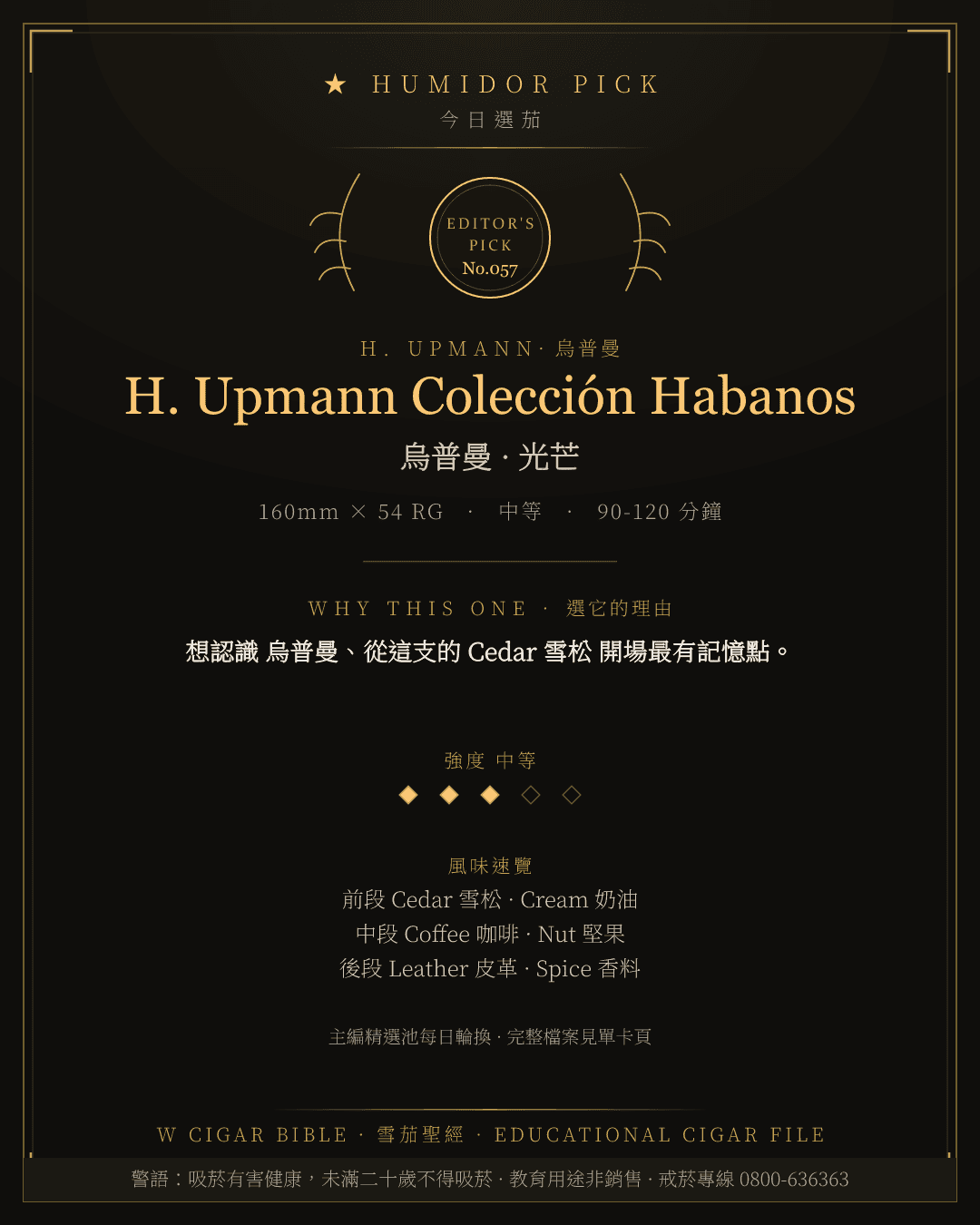
H. Upmann Colección Habanos · 烏普曼 總編輯精選
HUMIDOR PICK · No.057
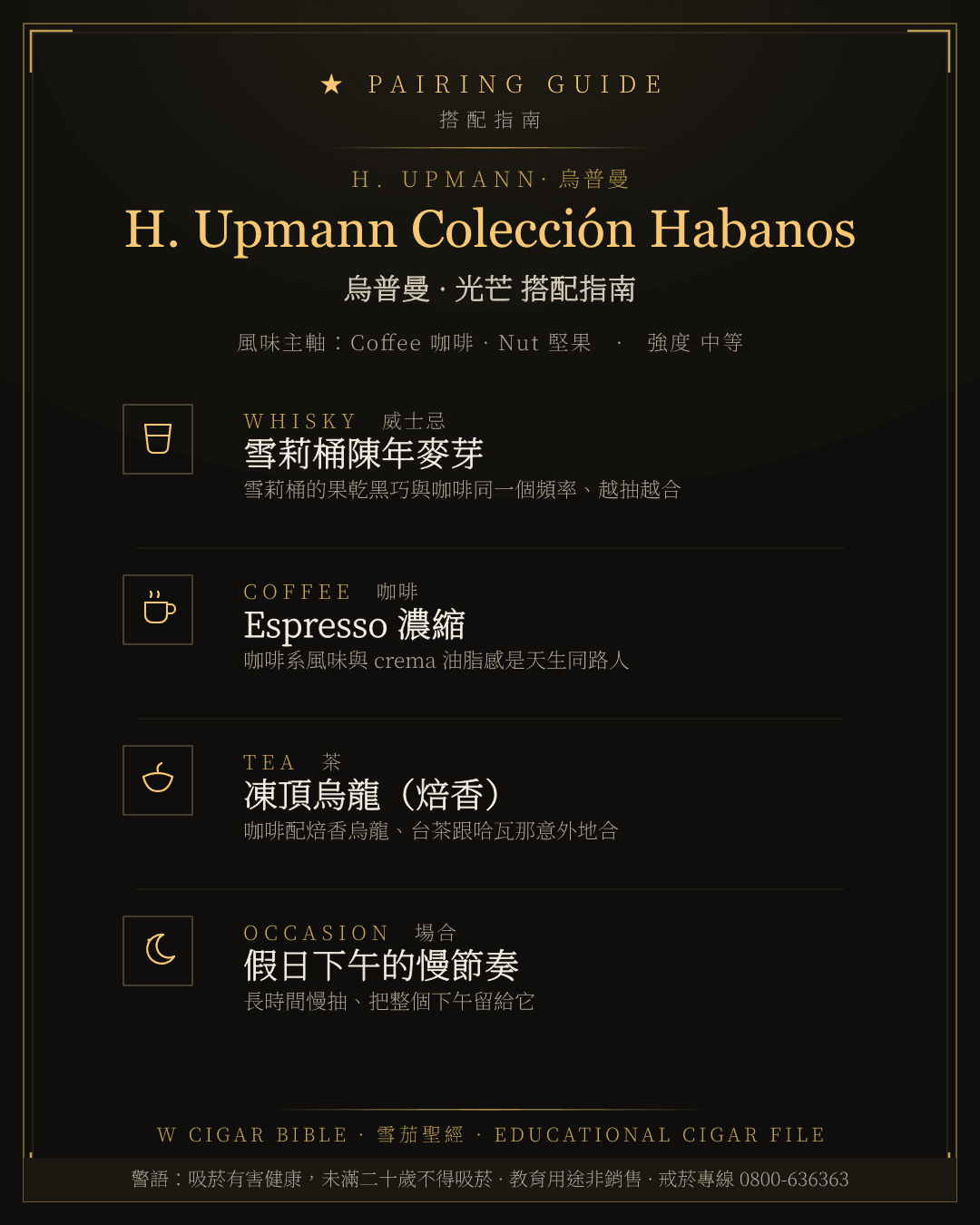
H. Upmann Colección Habanos 搭配指南 · 烏普曼
PAIRING GUIDE · 搭配指南

H. Upmann Colección Habanos 風味筆記 · 烏普曼
TASTING NOTES · 風味筆記
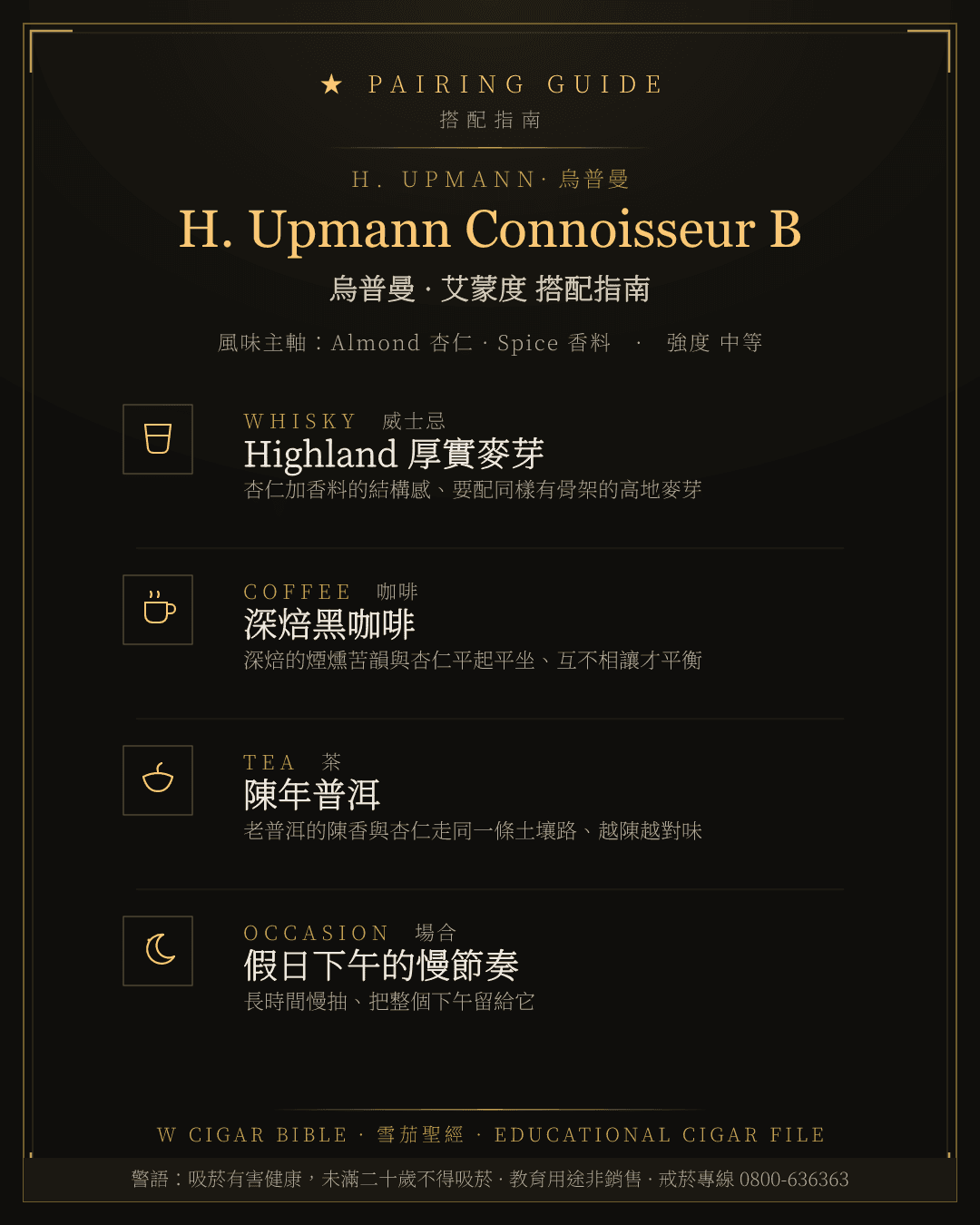
H. Upmann Connoisseur B 搭配指南 · 烏普曼
PAIRING GUIDE · 搭配指南
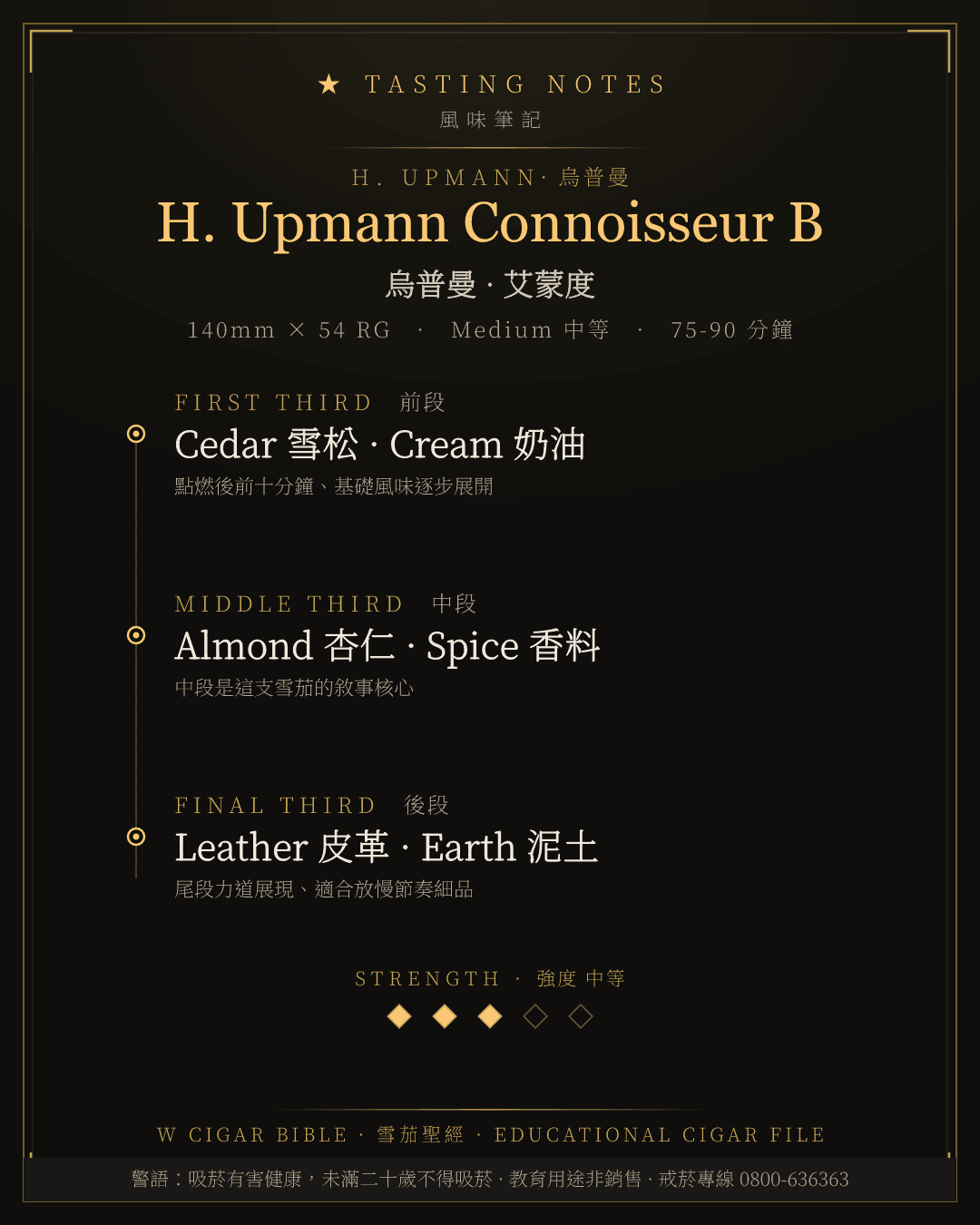
H. Upmann Connoisseur B 風味筆記 · 烏普曼
TASTING NOTES · 風味筆記
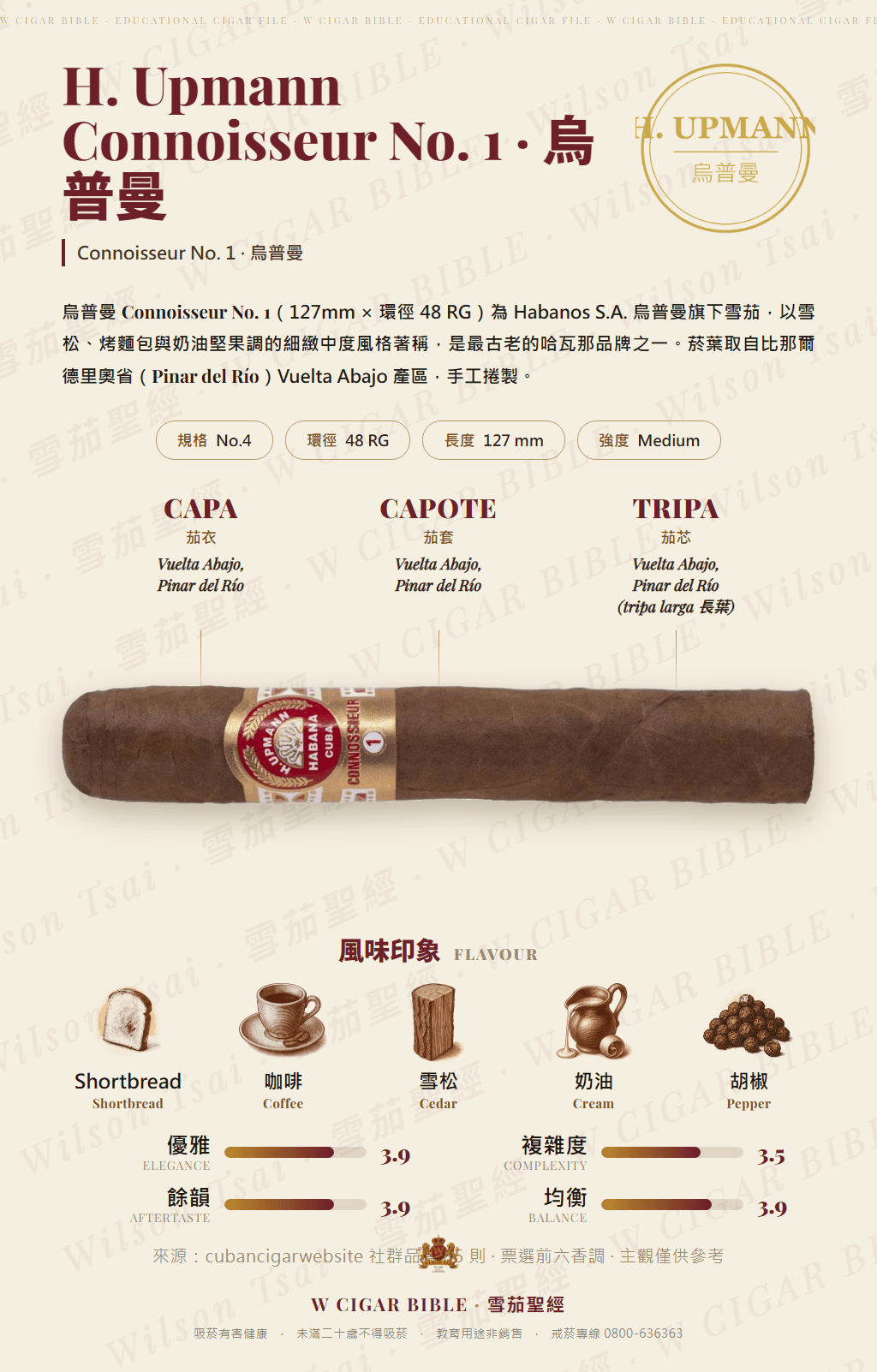
H. Upmann Connoisseur No. 1 · 烏普曼
標準生產款(Hermosos No. 4 廠規,127mm × 48 RG,在產)· 雪茄檔案

H. Upmann Connoisseur No. 1 搭配指南 · 烏普曼
PAIRING GUIDE · 搭配指南
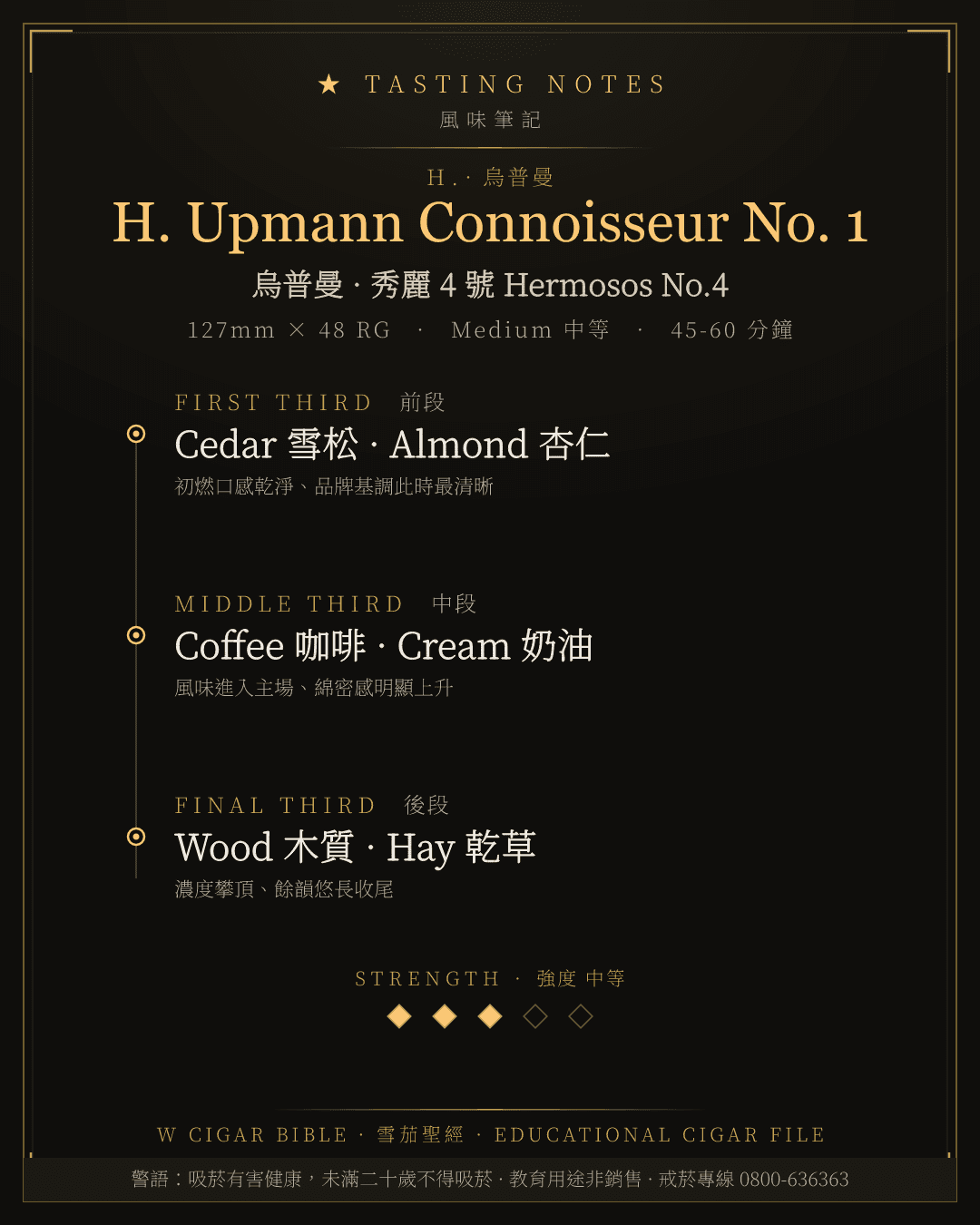
H. Upmann Connoisseur No. 1 風味筆記 · 烏普曼
TASTING NOTES · 風味筆記
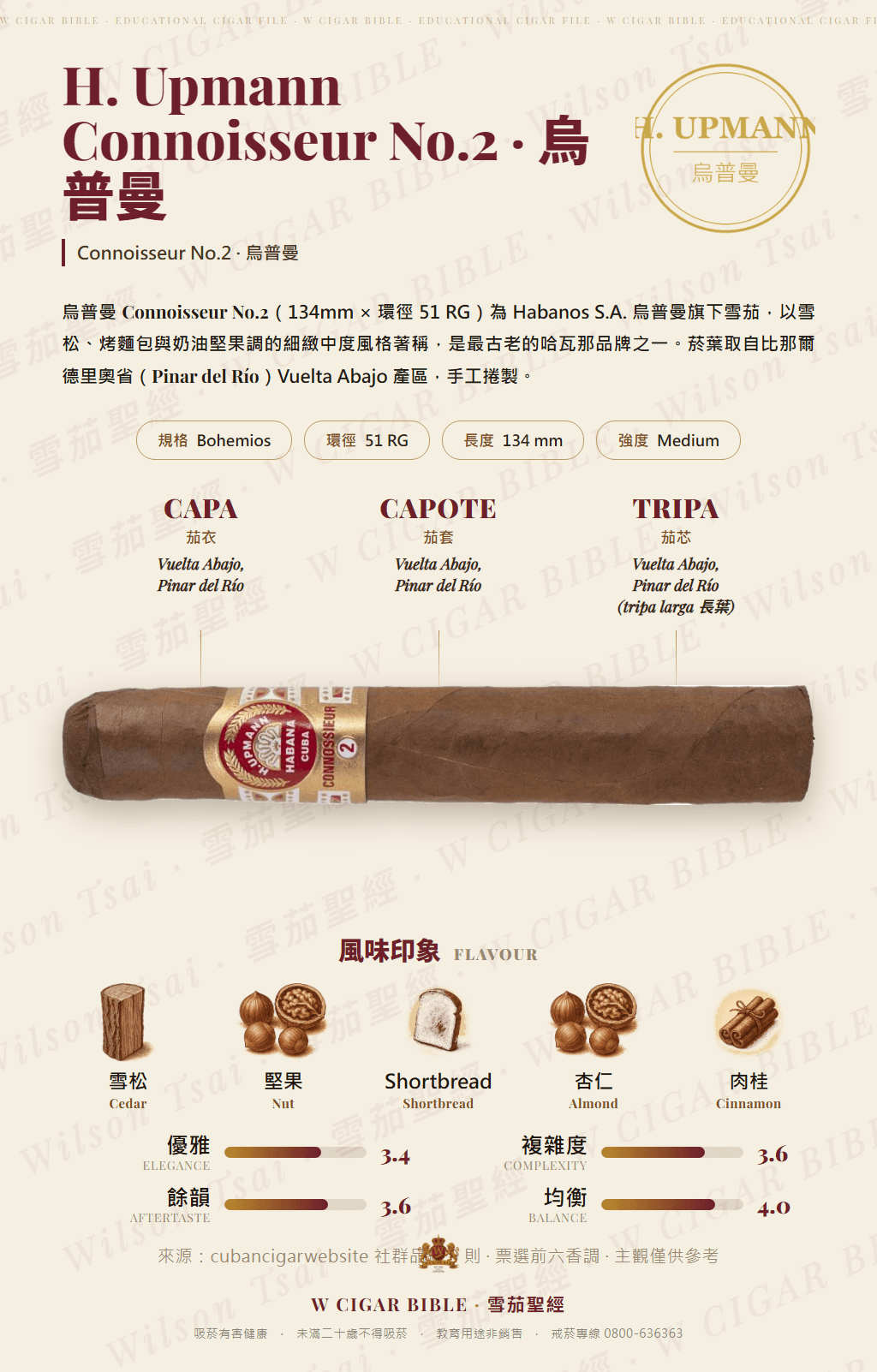
H. Upmann Connoisseur No. 2 · 烏普曼
標準生產款(Bohemios 環徑 51 × 長度 134mm,2020 年上市、在產)· 雪茄檔案

H. Upmann Connoisseur No. 2 搭配指南 · 烏普曼
PAIRING GUIDE · 搭配指南
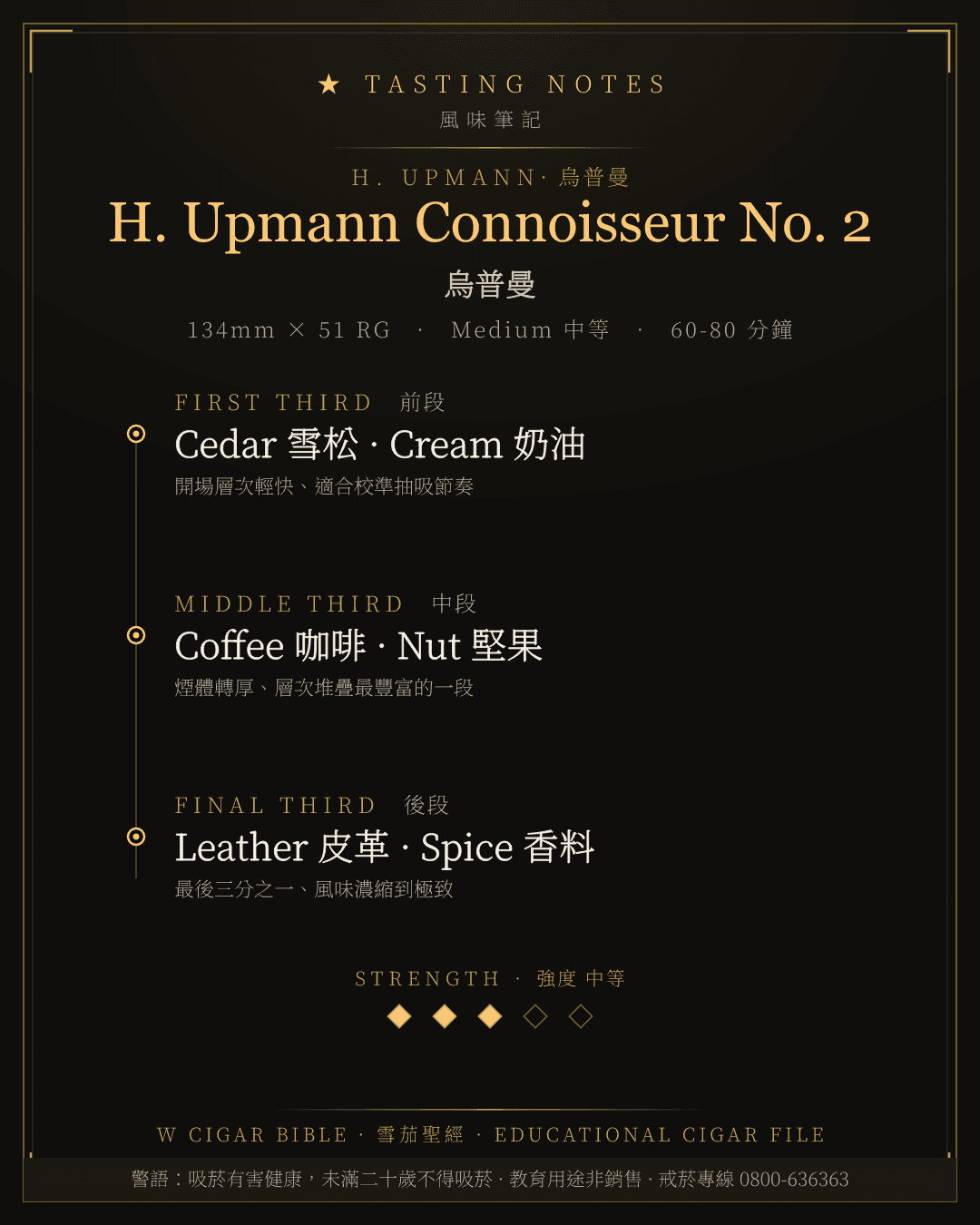
H. Upmann Connoisseur No. 2 風味筆記 · 烏普曼
TASTING NOTES · 風味筆記

H. Upmann Connoisseur No.1 搭配指南 · 烏普曼
PAIRING GUIDE · 搭配指南
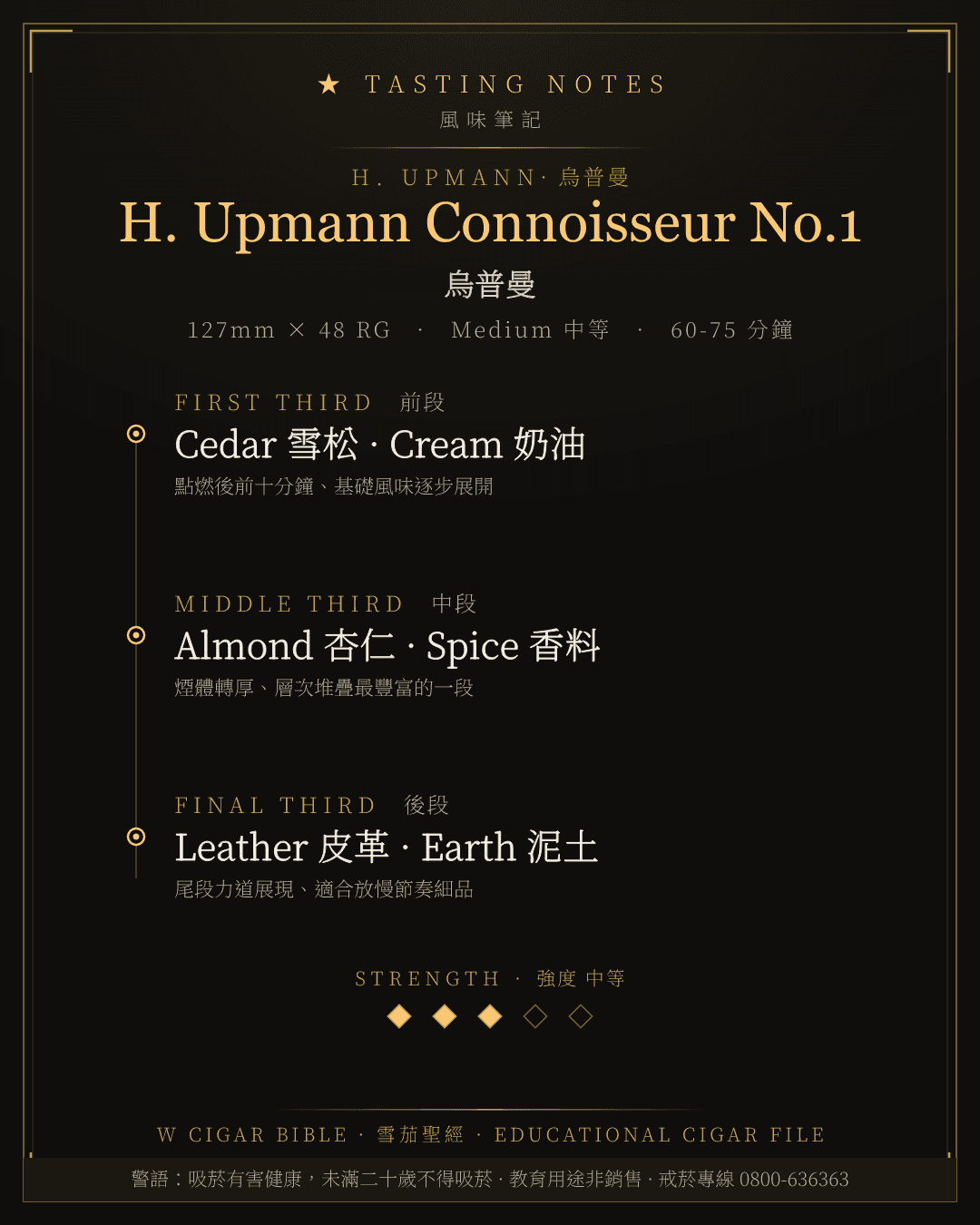
H. Upmann Connoisseur No.1 風味筆記 · 烏普曼
TASTING NOTES · 風味筆記

H. Upmann Connossieur A · LCDH · 烏普曼
La Casa del Habano 專屬款(廠規 Genios,52 環徑 × 140mm,2013 年發表・在產) · 雪茄檔案

H. Upmann Connossieur A 搭配指南 · 烏普曼
PAIRING GUIDE · 搭配指南
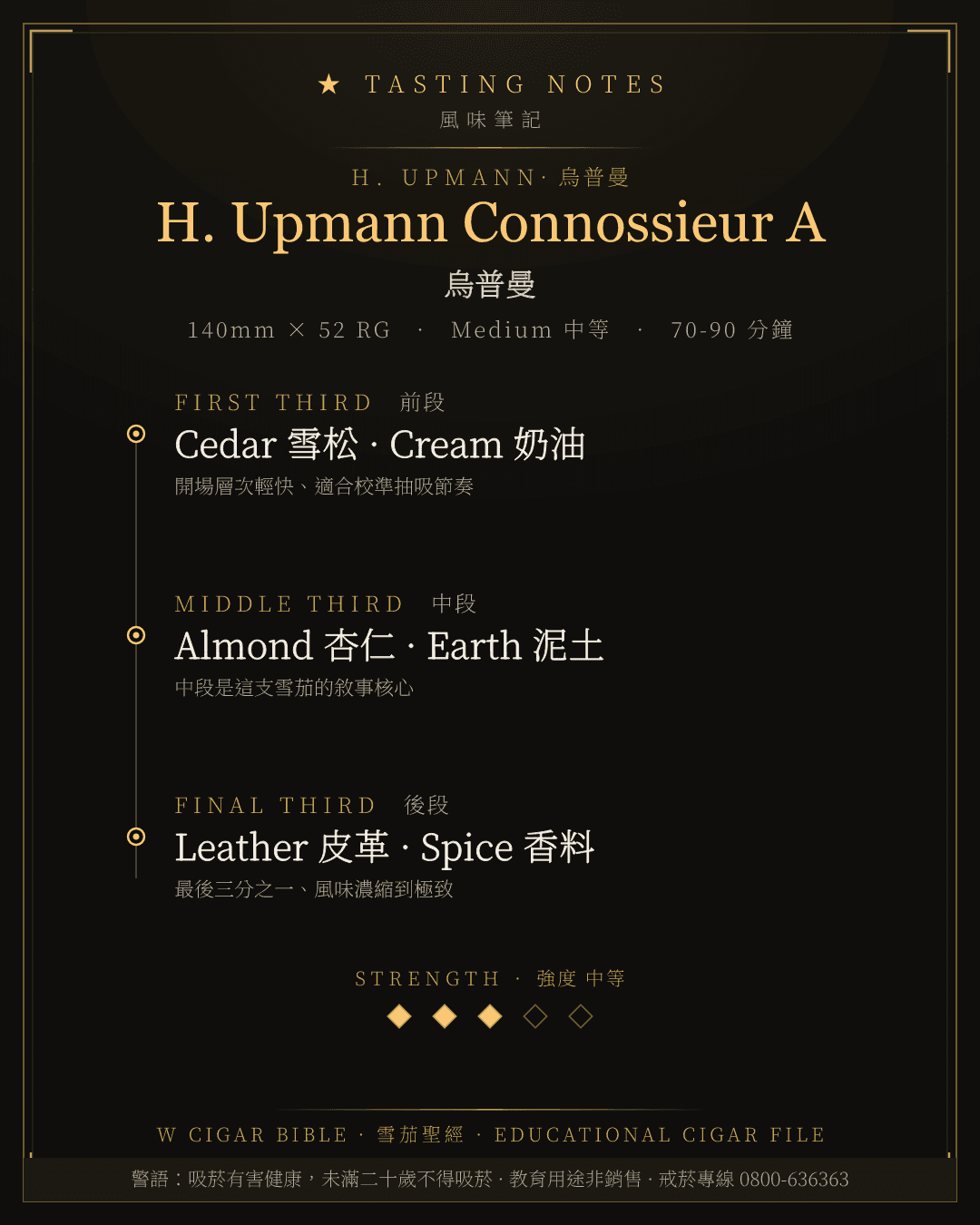
H. Upmann Connossieur A 風味筆記 · 烏普曼
TASTING NOTES · 風味筆記

H. Upmann Connossieur B · LCDH · 烏普曼
LCDH · LCDH 全球限定 La Casa del Habano · 雪茄檔案

H. Upmann Connossieur B 搭配指南 · 烏普曼
PAIRING GUIDE · 搭配指南
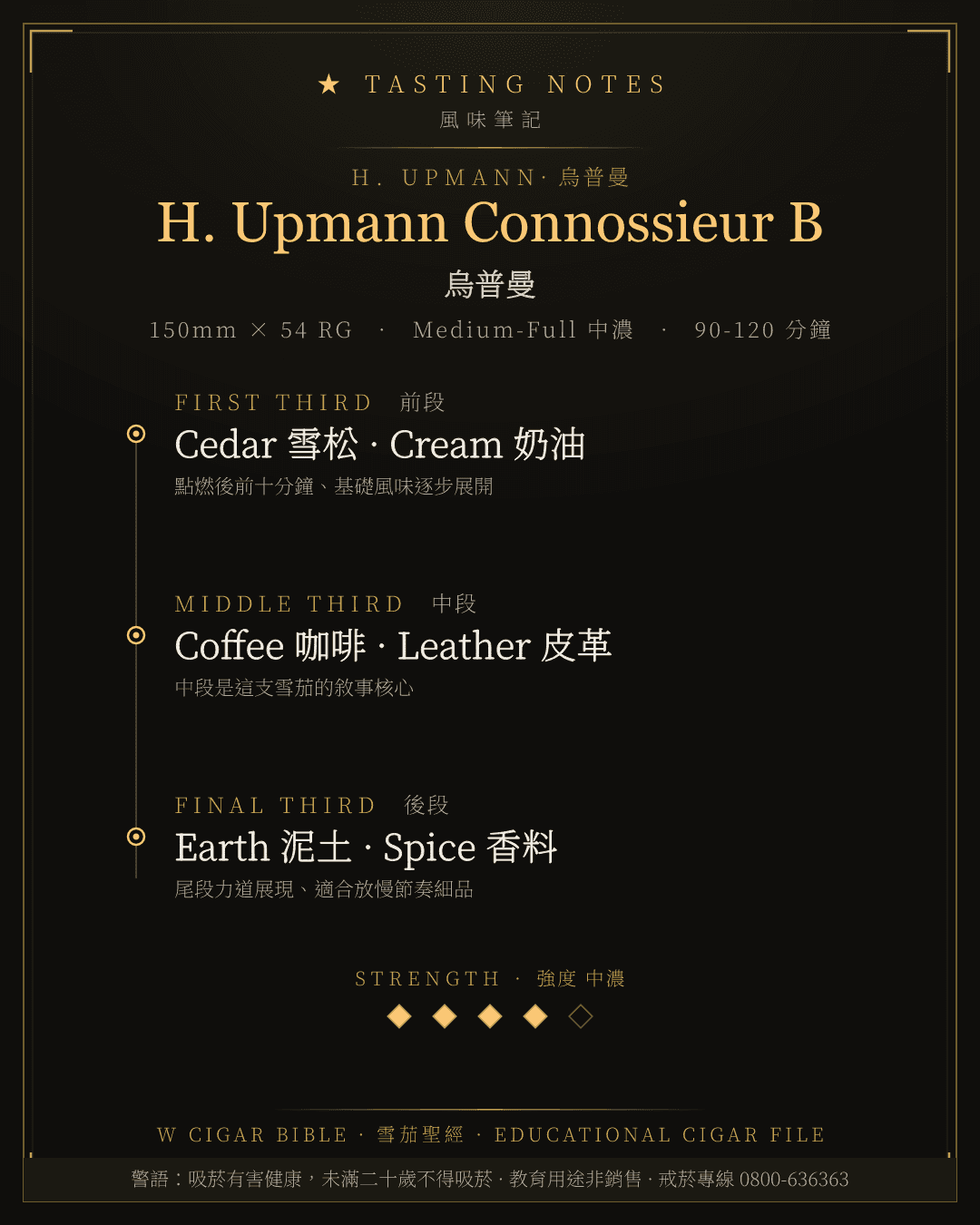
H. Upmann Connossieur B 風味筆記 · 烏普曼
TASTING NOTES · 風味筆記

H. Upmann Coronas · 烏普曼

H. Upmann Coronas Junior · 烏普曼

H. Upmann Coronas Major · 烏普曼
標準生產款(Línea Clásica,Eminentes 廠規 42×132mm,鋁管 Tubos)· 雪茄檔案

H. Upmann Coronas Major 1 · 烏普曼

H. Upmann Coronas Major 1 vs Habanos Festival 2000 Box
VITOLA SHOWDOWN · Marevas

H. Upmann Coronas Major 1 搭配指南 · 烏普曼
PAIRING GUIDE · 搭配指南
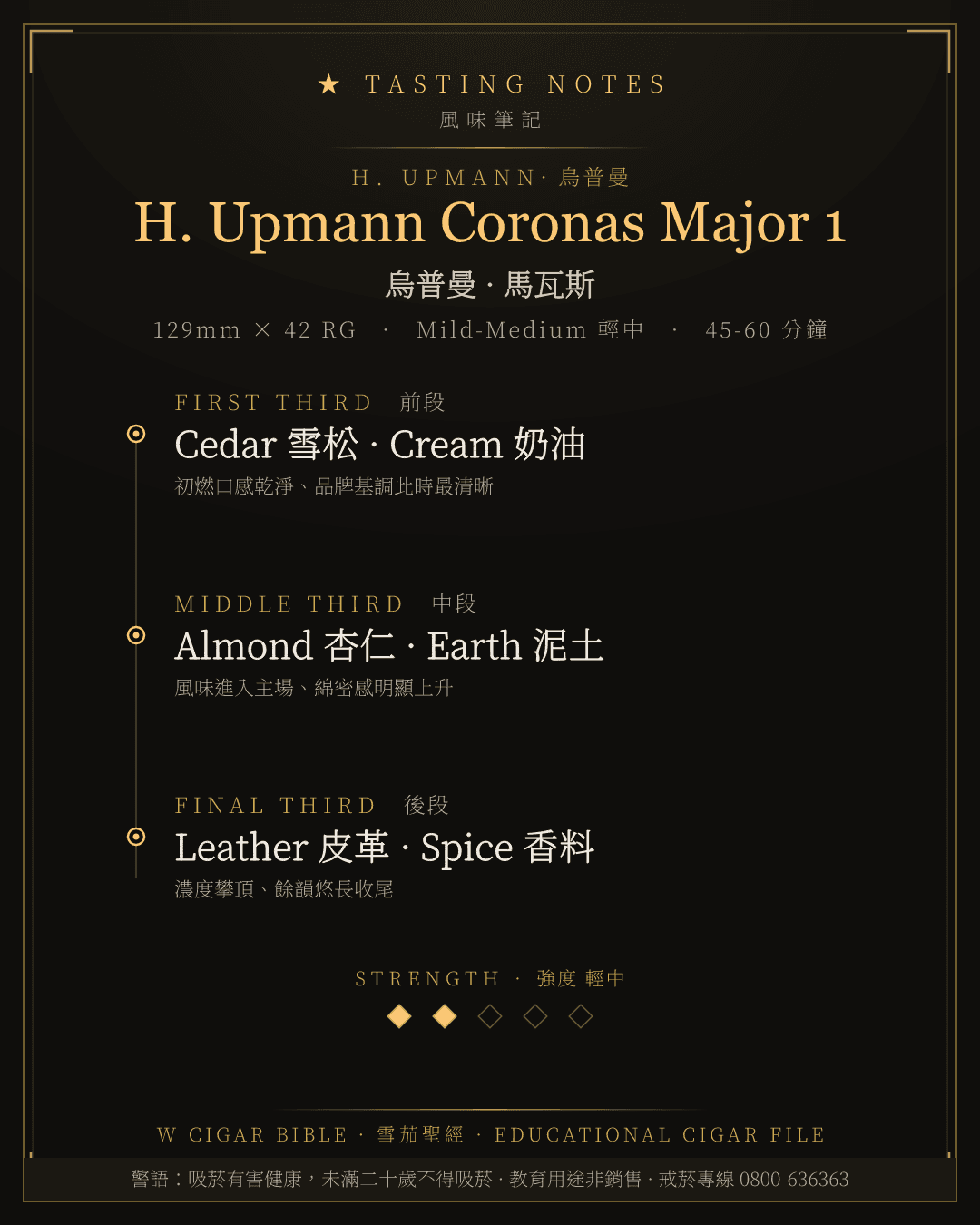
H. Upmann Coronas Major 1 風味筆記 · 烏普曼
TASTING NOTES · 風味筆記

H. Upmann Coronas Minor · 烏普曼
標準生產款(Línea Clásica,Coronitas 廠規 40×117mm,鋁管 Tubos)· 雪茄檔案

H. Upmann Coronas Minor 1 · 烏普曼
標準生產款(Línea Clásica,Coronitas 廠規 40×117mm,鋁管 Tubos)· 雪茄檔案
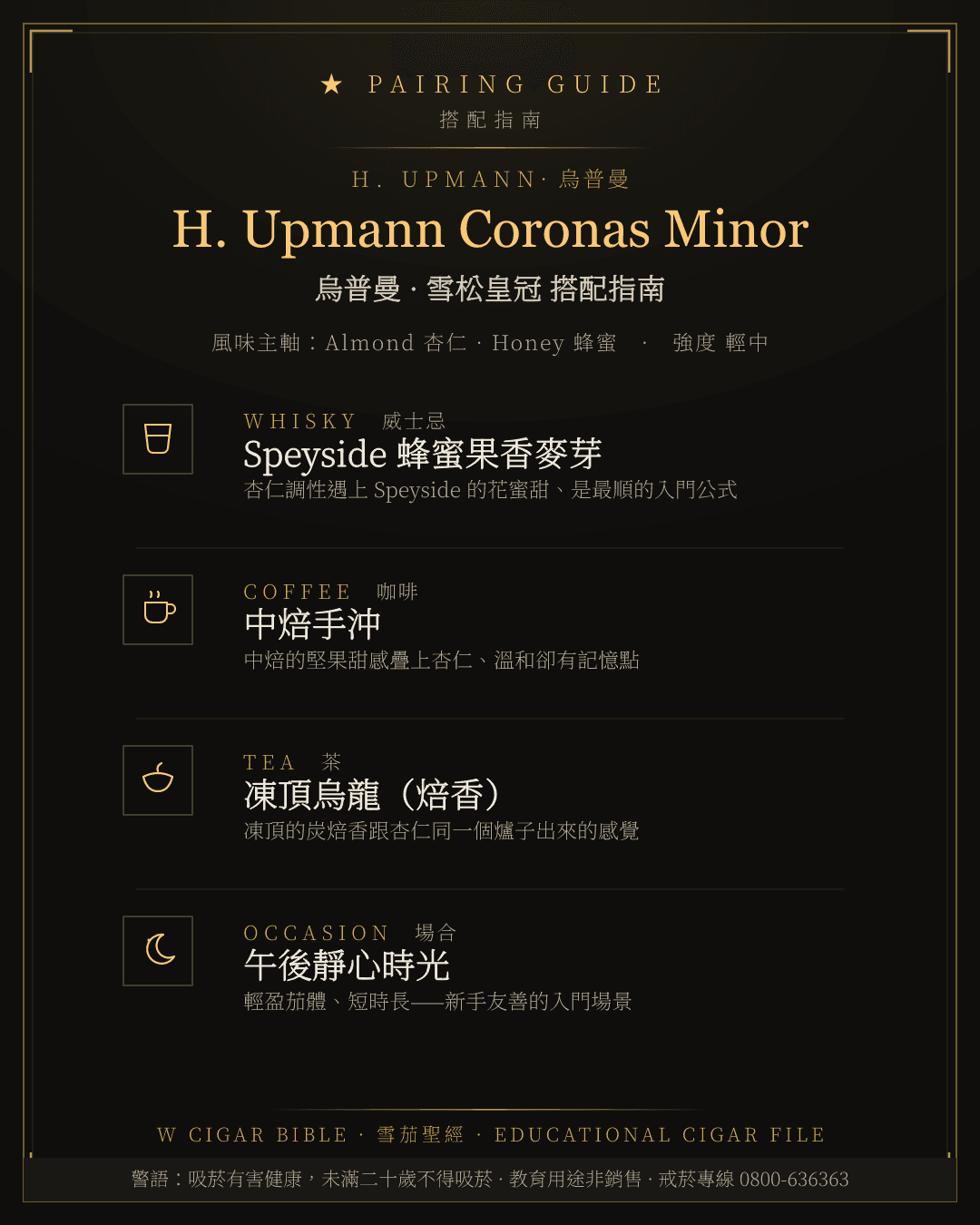
H. Upmann Coronas Minor 搭配指南 · 烏普曼
PAIRING GUIDE · 搭配指南
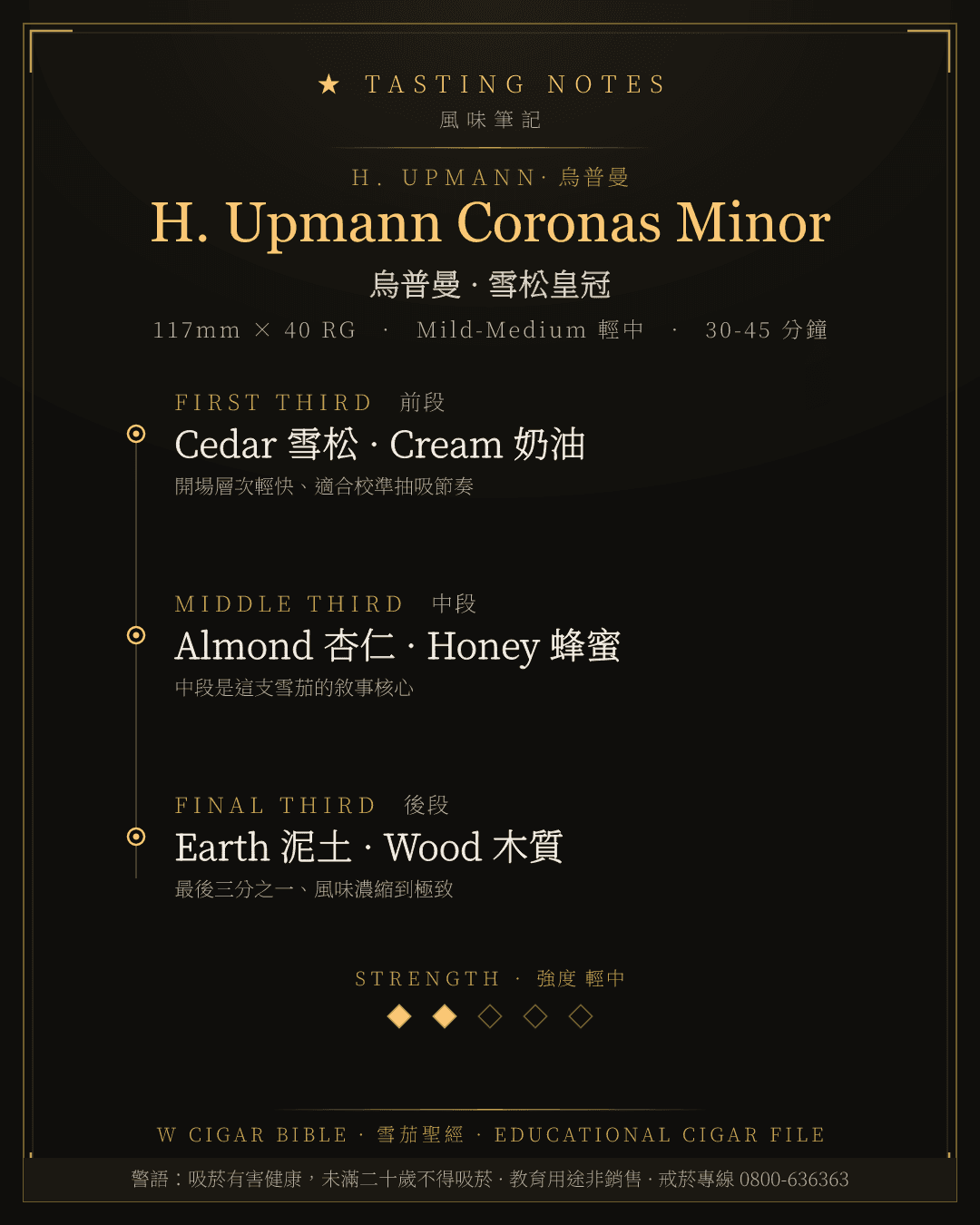
H. Upmann Coronas Minor 風味筆記 · 烏普曼
TASTING NOTES · 風味筆記
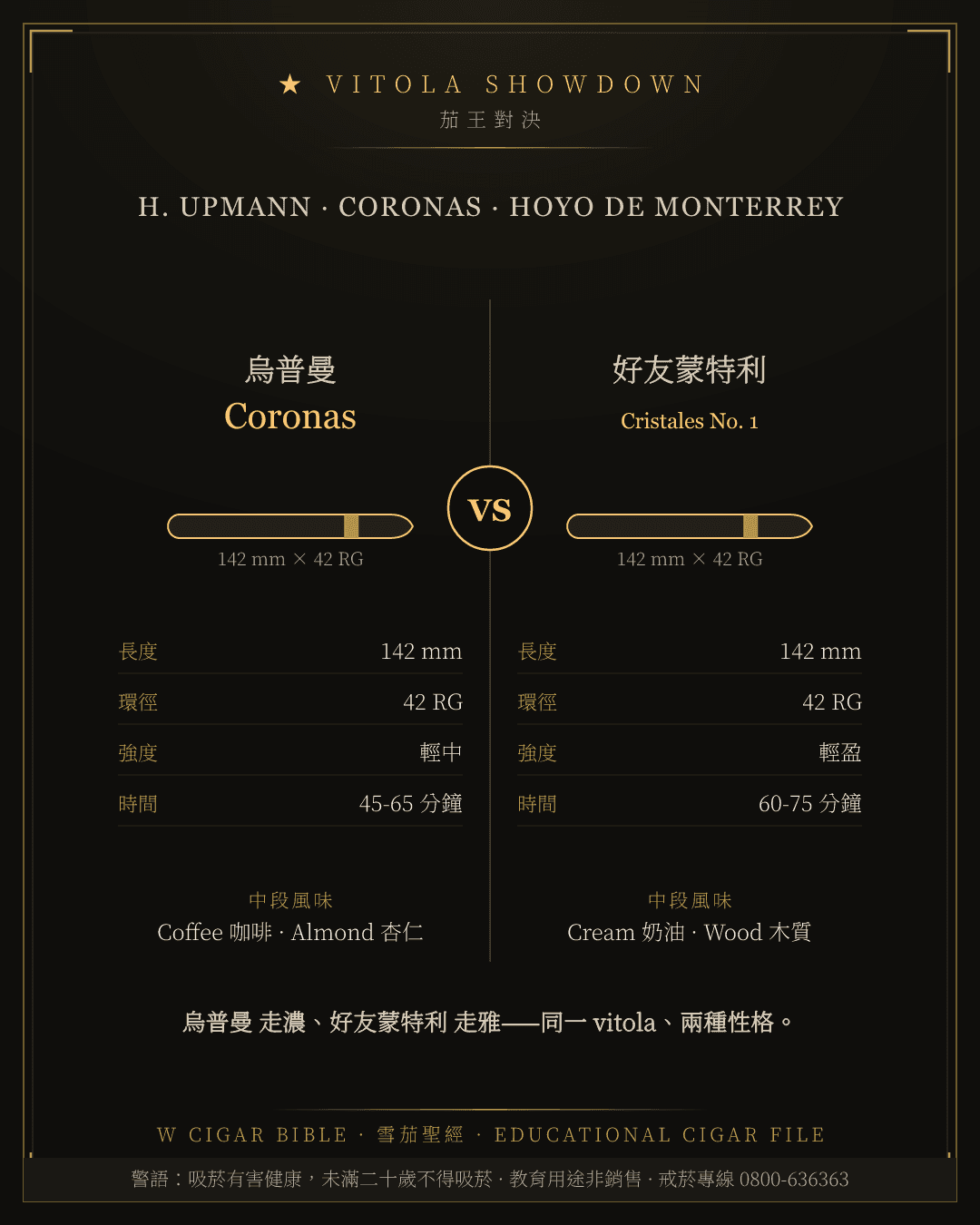
H. Upmann Coronas vs Hoyo De Monterrey Cristales No. 1
VITOLA SHOWDOWN · Coronas
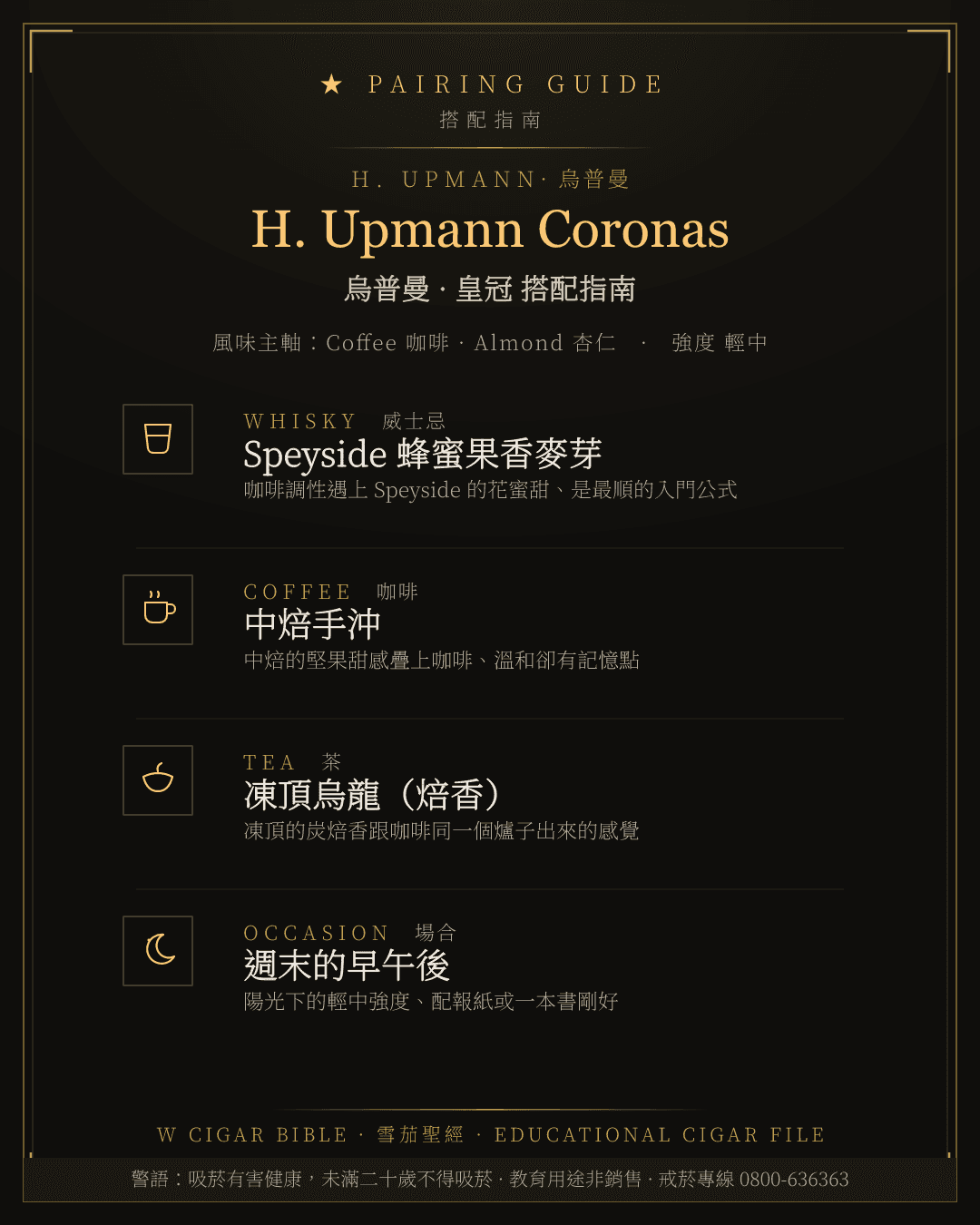
H. Upmann Coronas 搭配指南 · 烏普曼
PAIRING GUIDE · 搭配指南
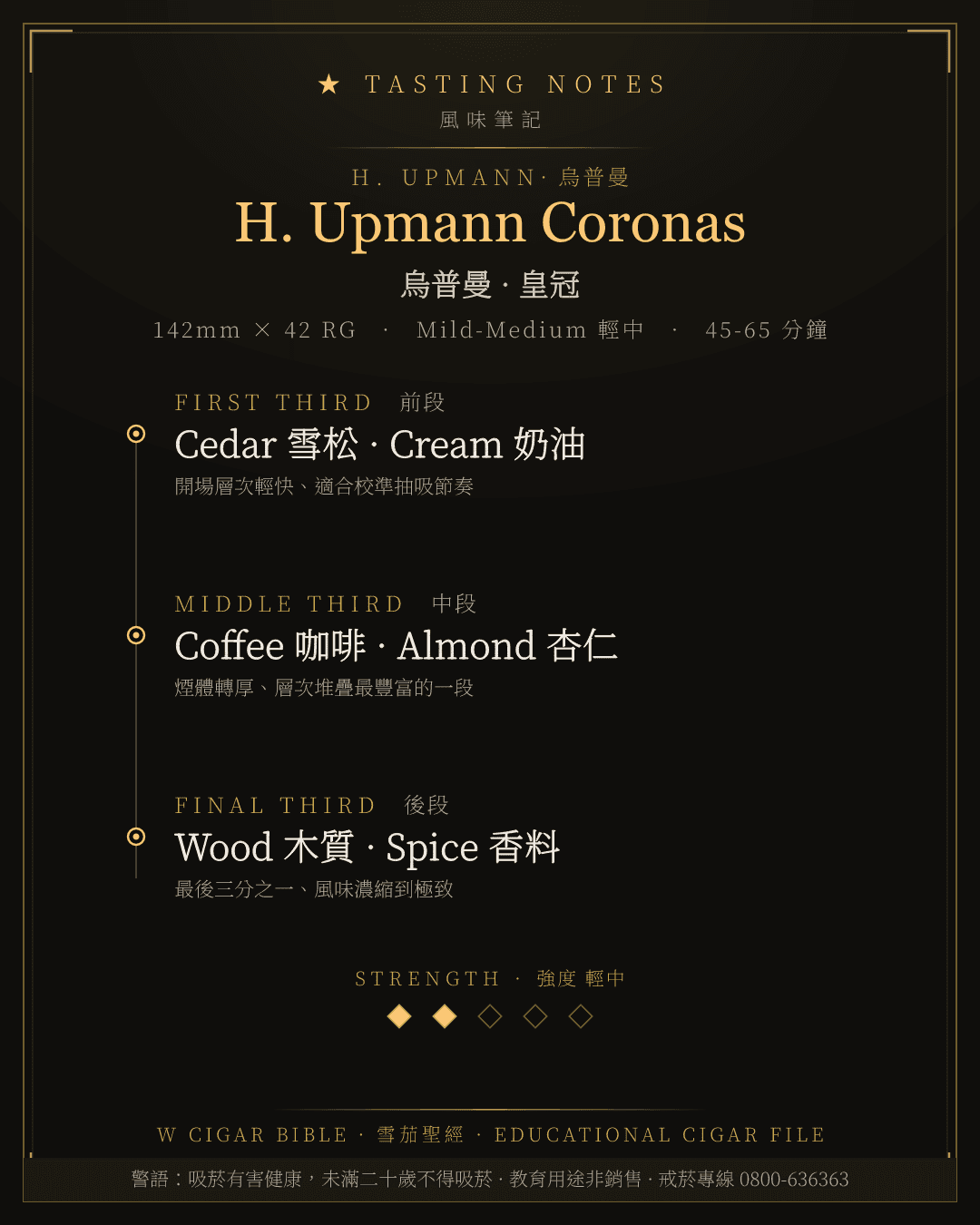
H. Upmann Coronas 風味筆記 · 烏普曼
TASTING NOTES · 風味筆記

H. Upmann Cristales · 烏普曼

H. Upmann Cristales 搭配指南 · 烏普曼
PAIRING GUIDE · 搭配指南

H. Upmann Cristales 風味筆記 · 烏普曼
TASTING NOTES · 風味筆記

H. Upmann Culebras · 烏普曼
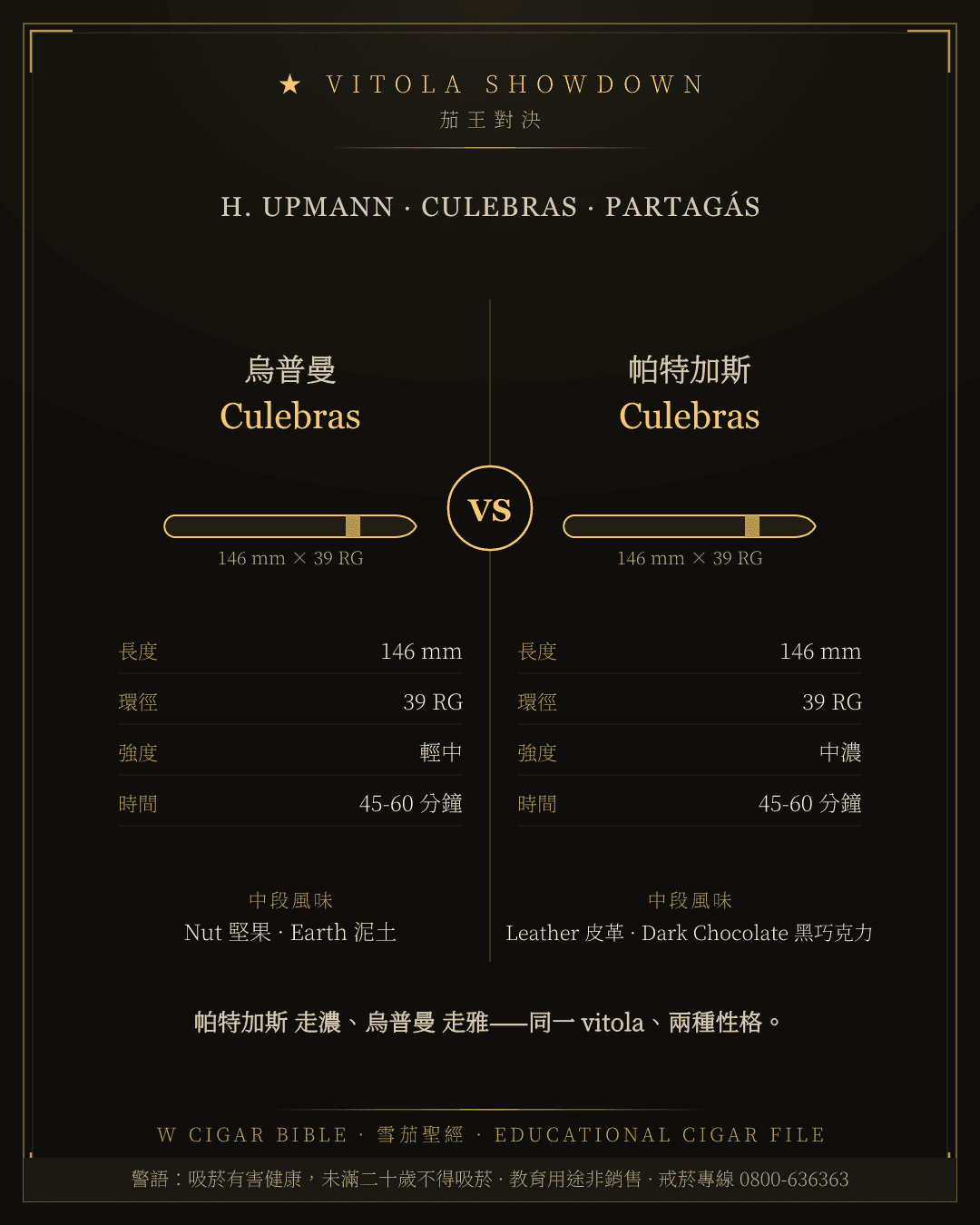
H. Upmann Culebras vs Partagás Culebras
VITOLA SHOWDOWN · Culebras
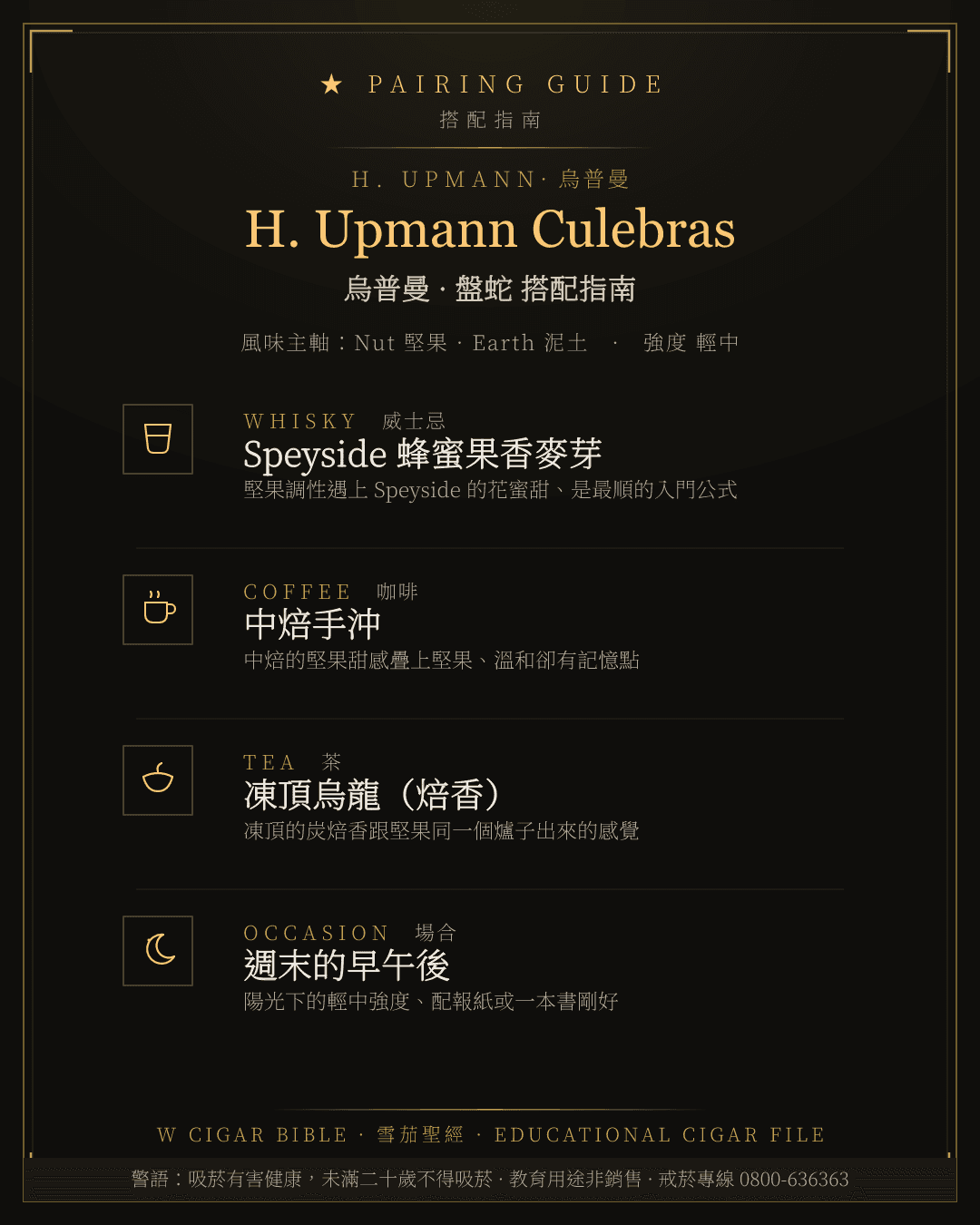
H. Upmann Culebras 搭配指南 · 烏普曼
PAIRING GUIDE · 搭配指南

H. Upmann Culebras 風味筆記 · 烏普曼
TASTING NOTES · 風味筆記
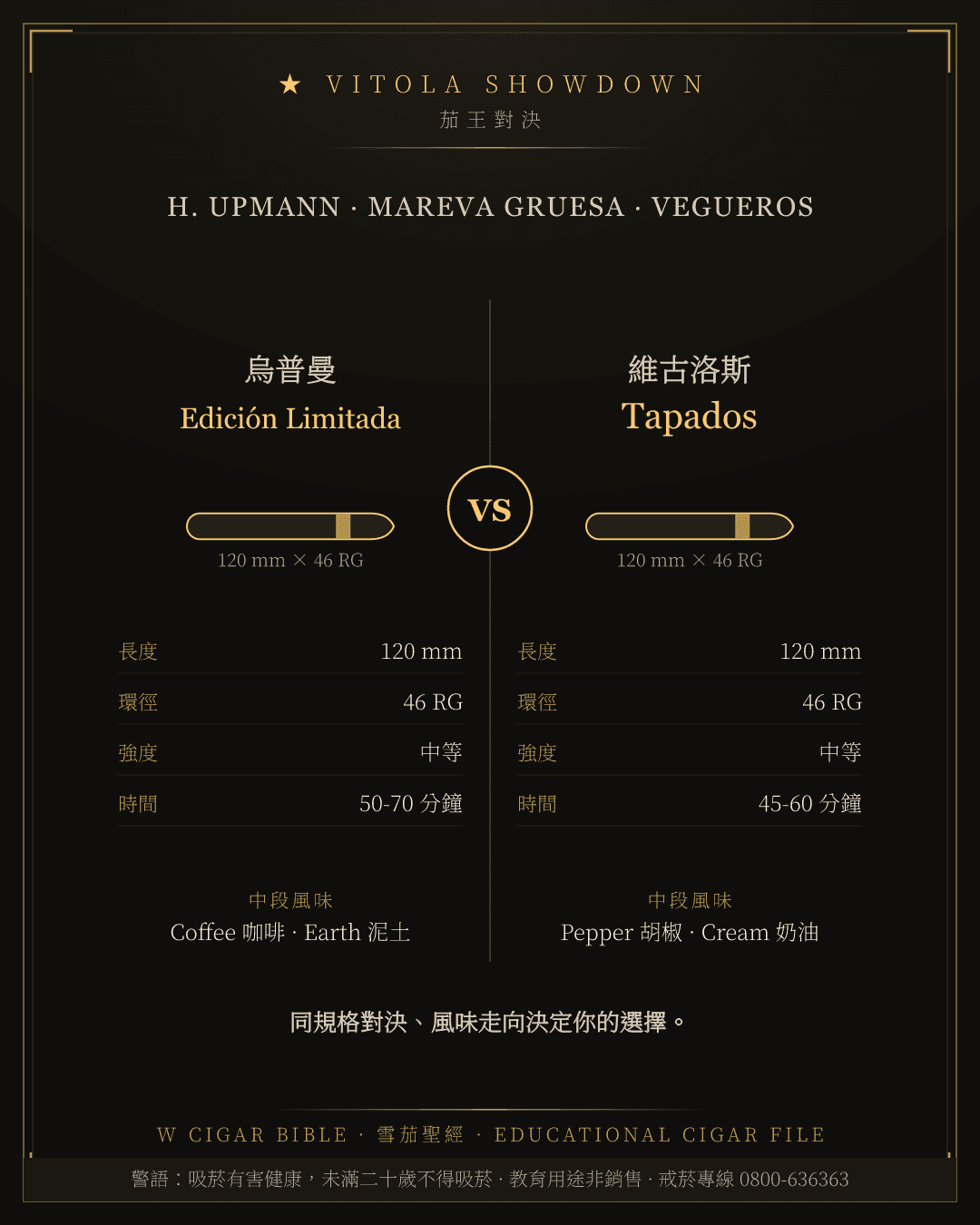
H. Upmann Edición Limitada vs Vegueros Tapados
VITOLA SHOWDOWN · Mareva Gruesa
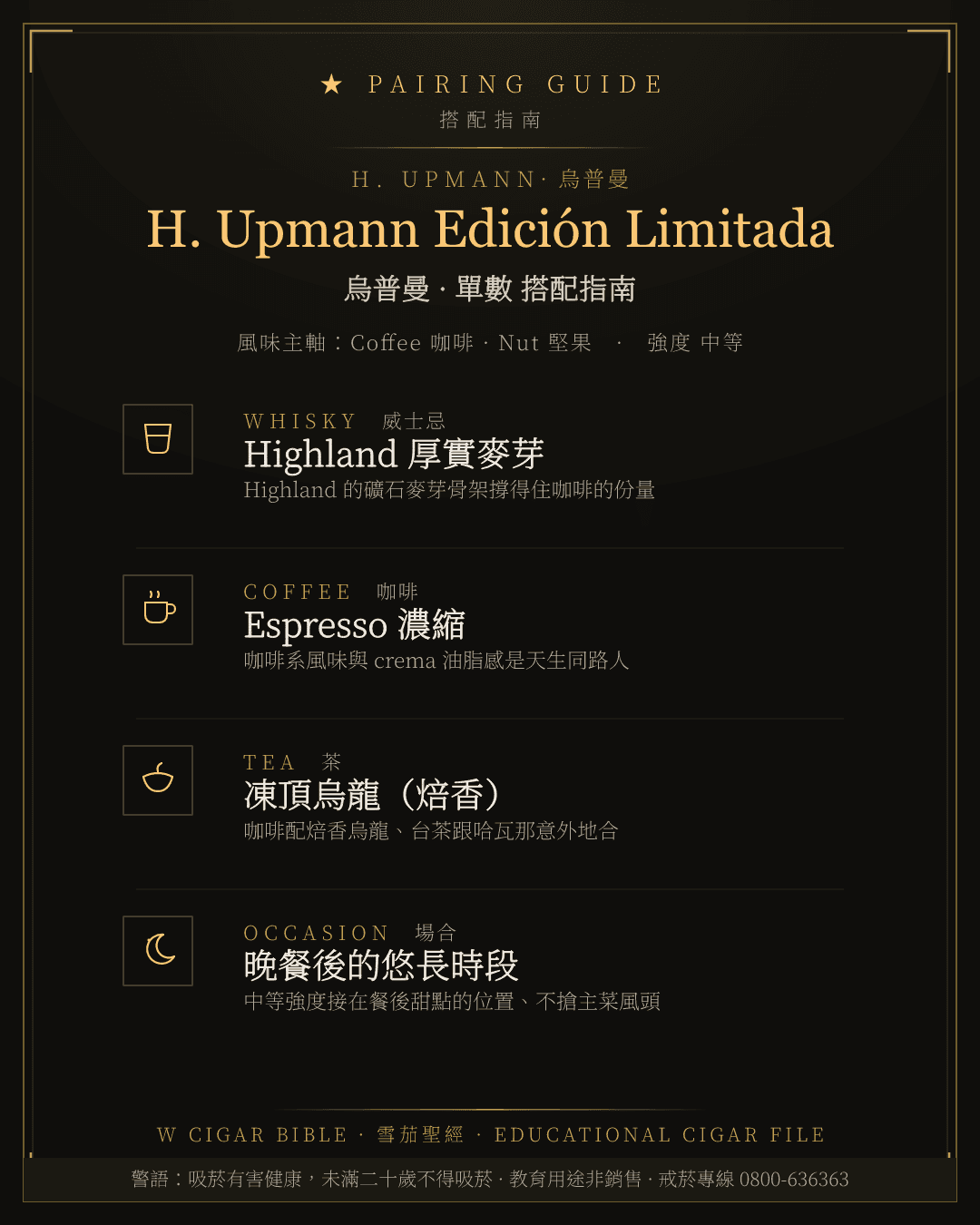
H. Upmann Edición Limitada 搭配指南 · 烏普曼
PAIRING GUIDE · 搭配指南
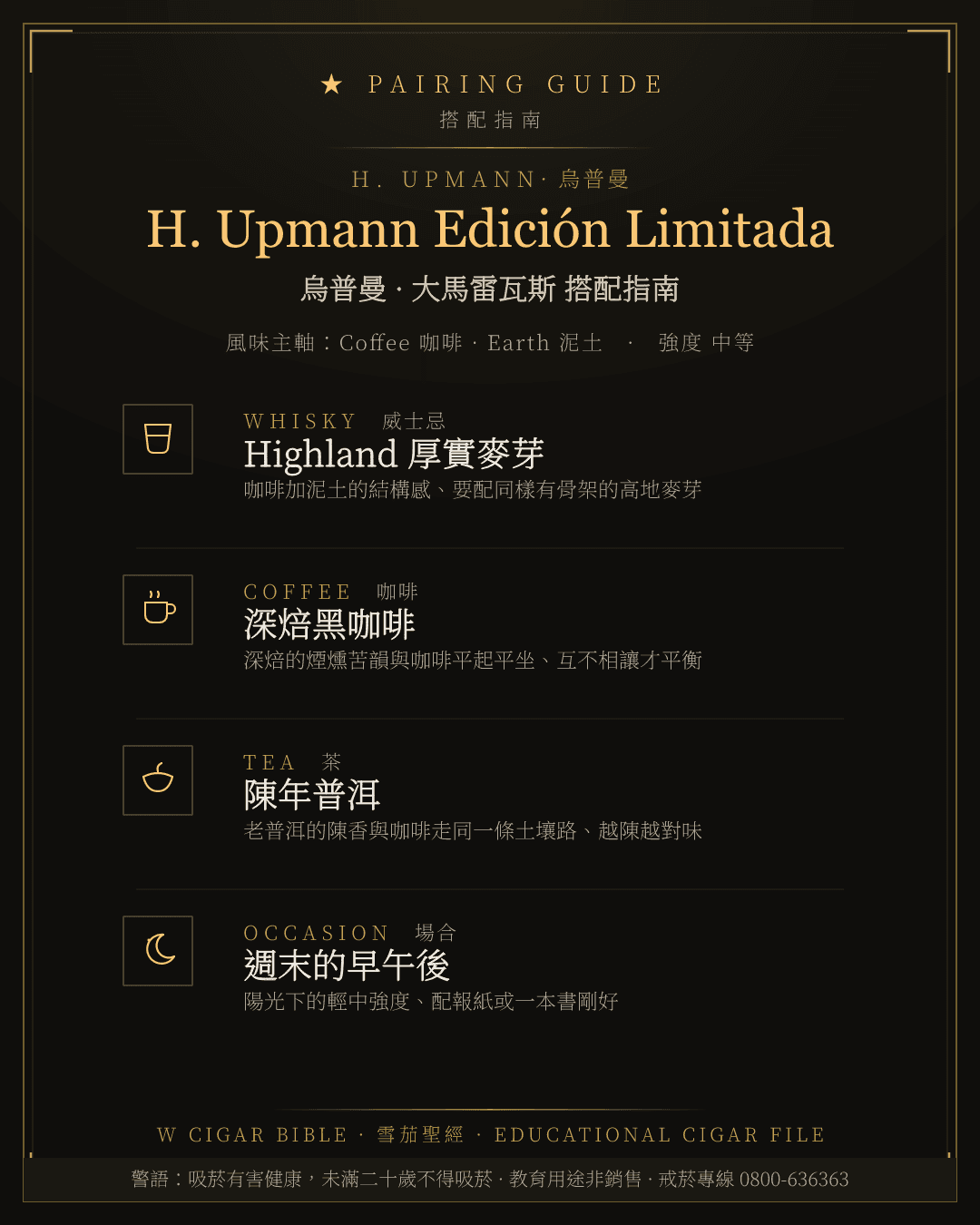
H. Upmann Edición Limitada 搭配指南 · 烏普曼
PAIRING GUIDE · 搭配指南
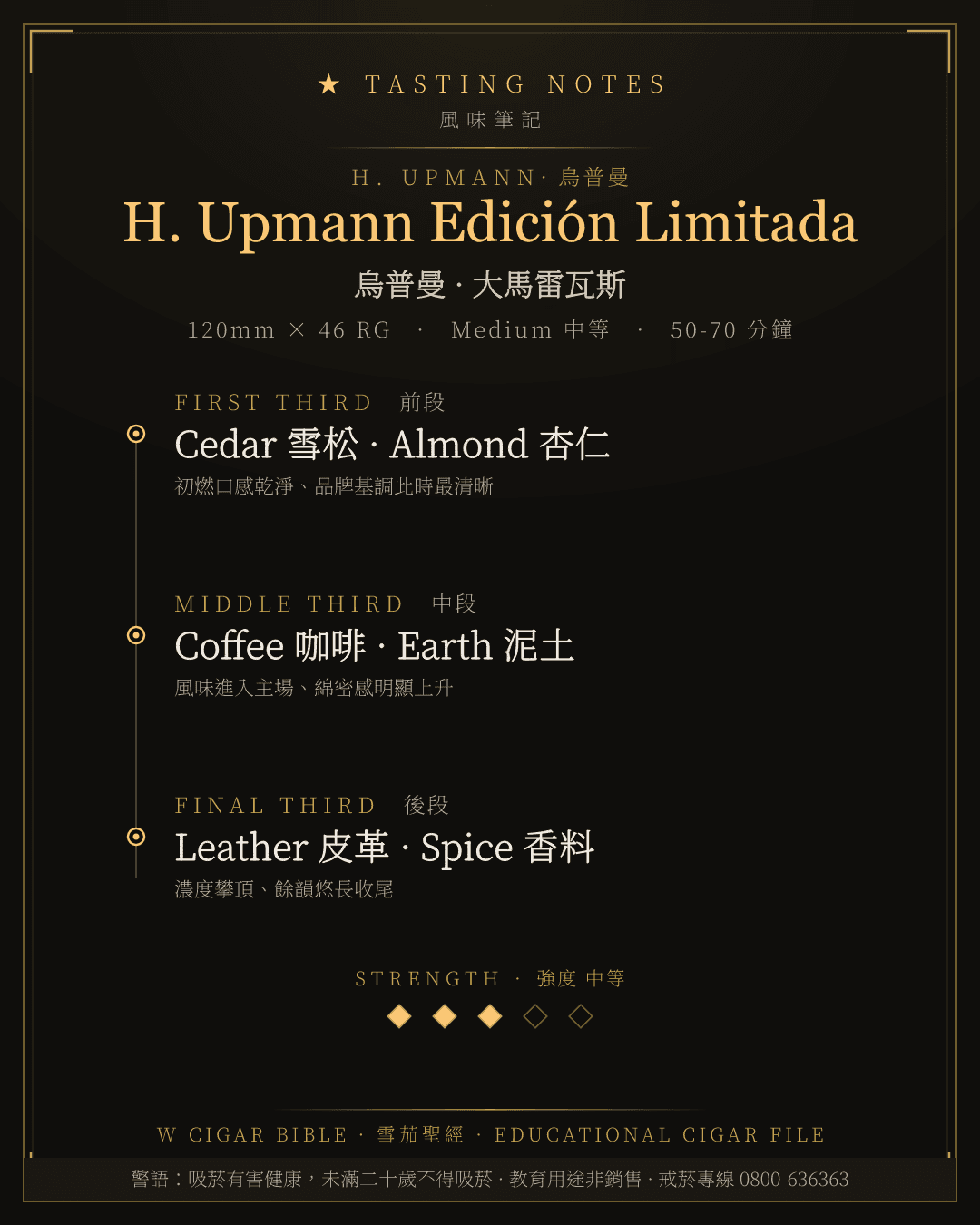
H. Upmann Edición Limitada 風味筆記 · 烏普曼
TASTING NOTES · 風味筆記
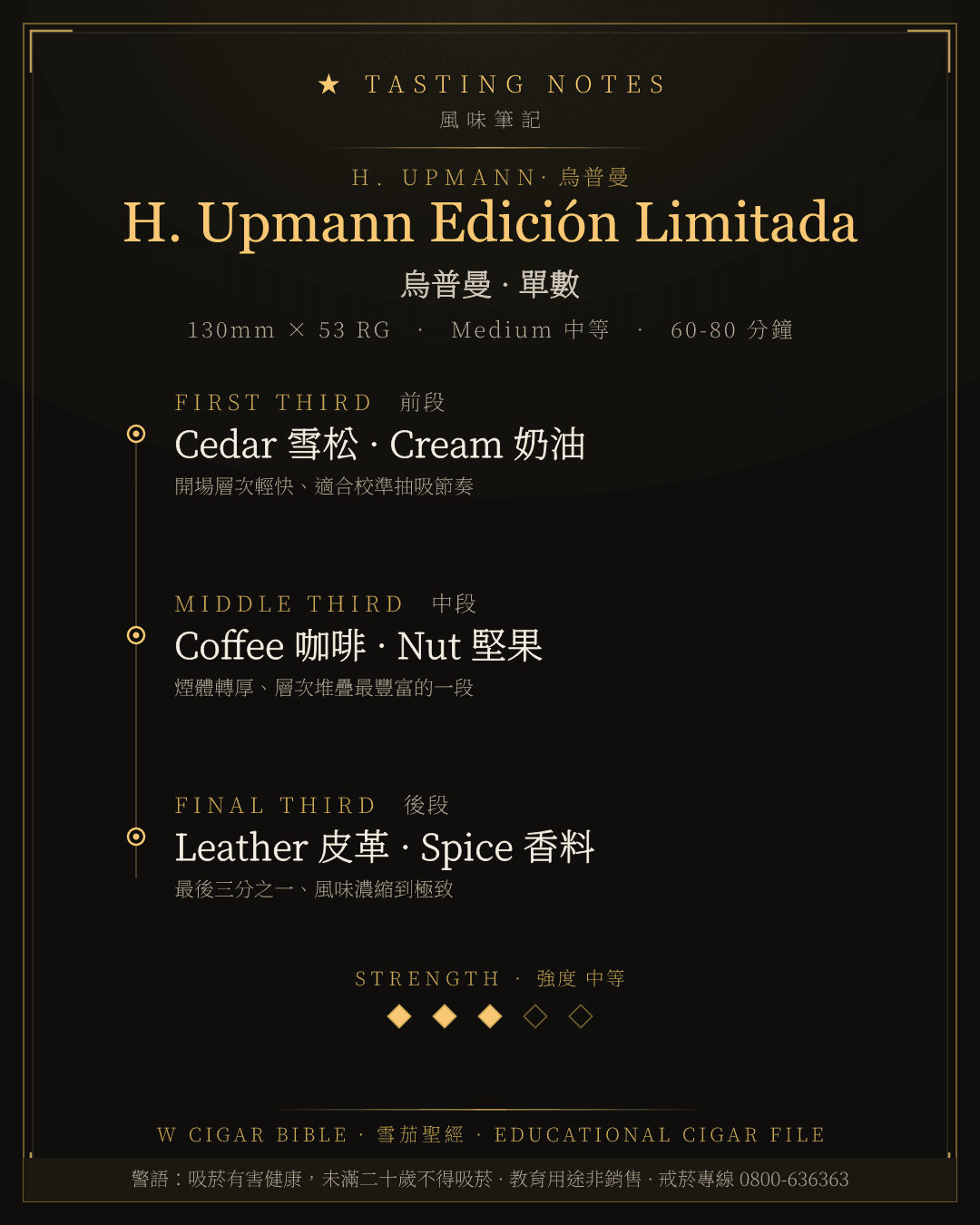
H. Upmann Edición Limitada 風味筆記 · 烏普曼
TASTING NOTES · 風味筆記

H. Upmann El Prado · 烏普曼
歷史停產款 · 機製線舊規格(35 RG × 159mm,已停產)· 雪茄檔案

H. Upmann El Prado 搭配指南 · 烏普曼
PAIRING GUIDE · 搭配指南
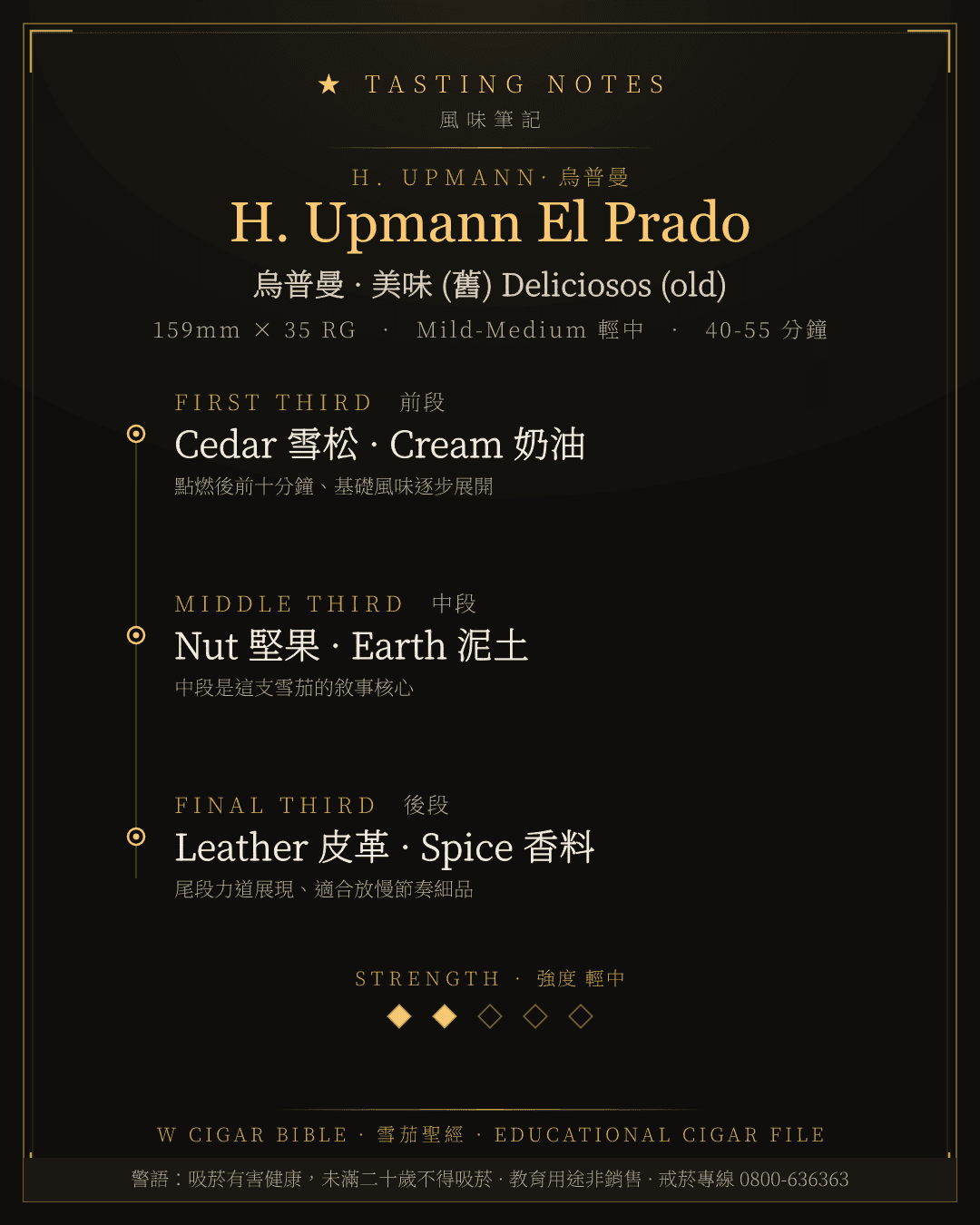
H. Upmann El Prado 風味筆記 · 烏普曼
TASTING NOTES · 風味筆記

H. Upmann Epicures · 烏普曼
常規產線經典 Vitola

H. Upmann Especiales · 烏普曼
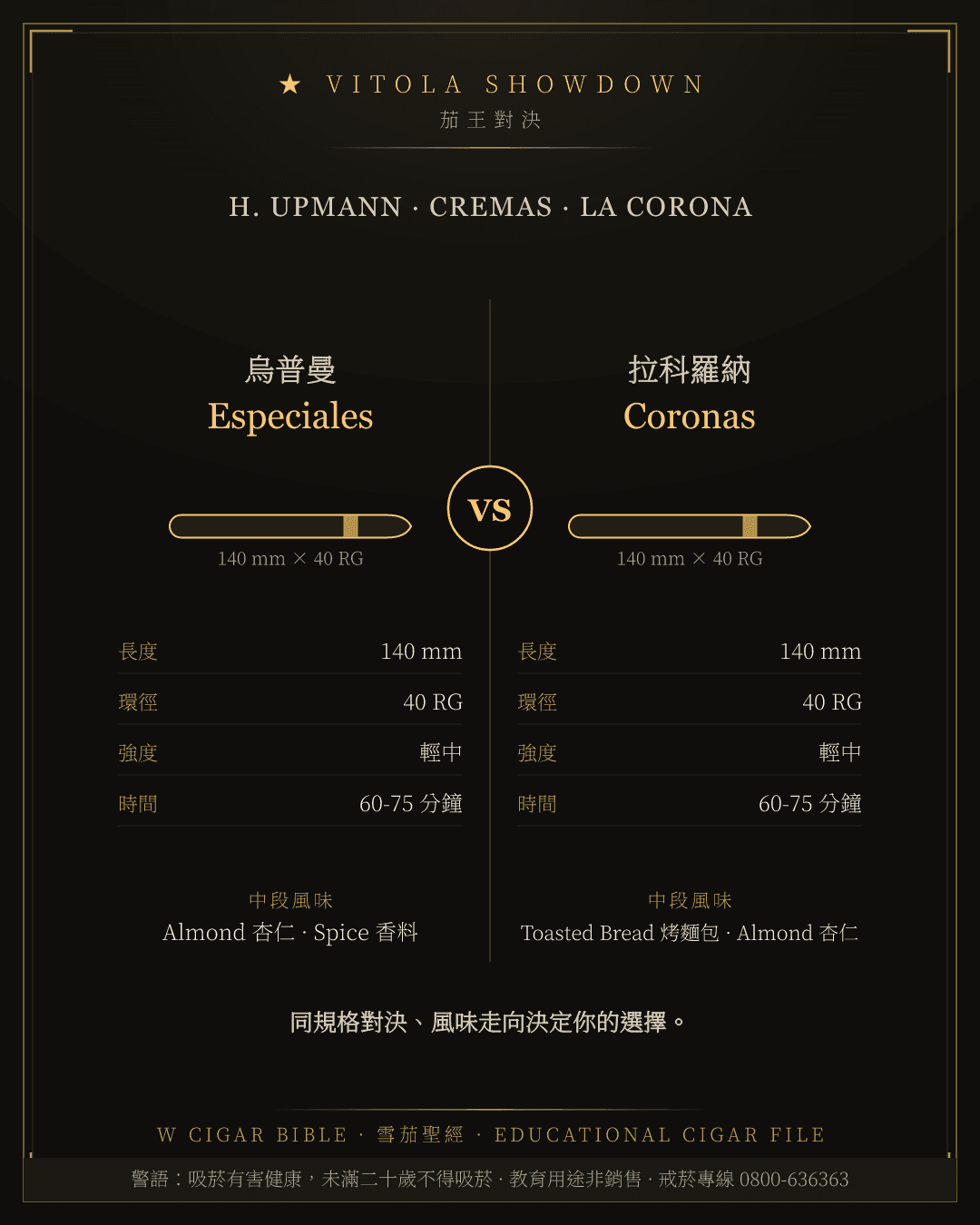
H. Upmann Especiales vs La Corona Coronas
VITOLA SHOWDOWN · Cremas
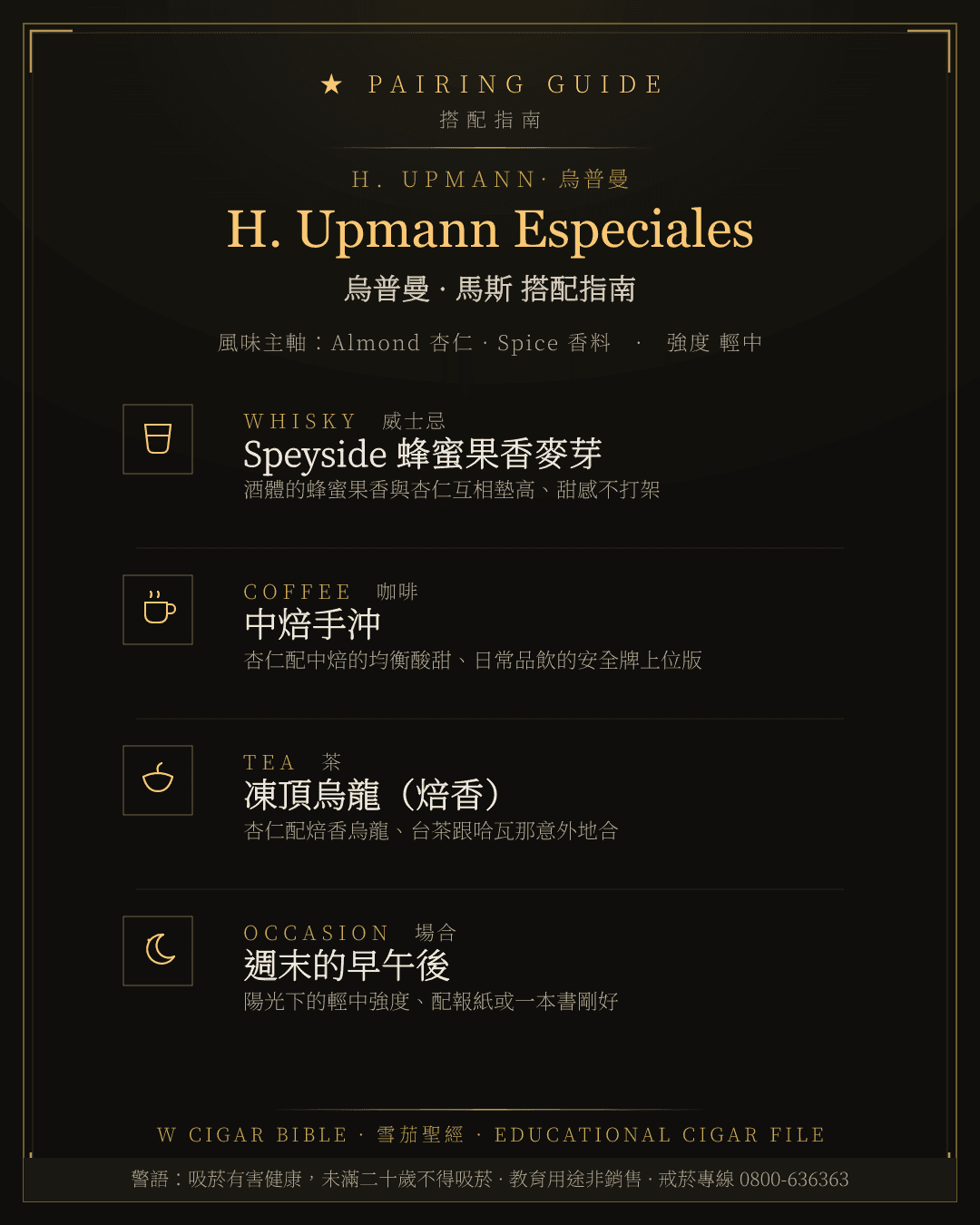
H. Upmann Especiales 搭配指南 · 烏普曼
PAIRING GUIDE · 搭配指南
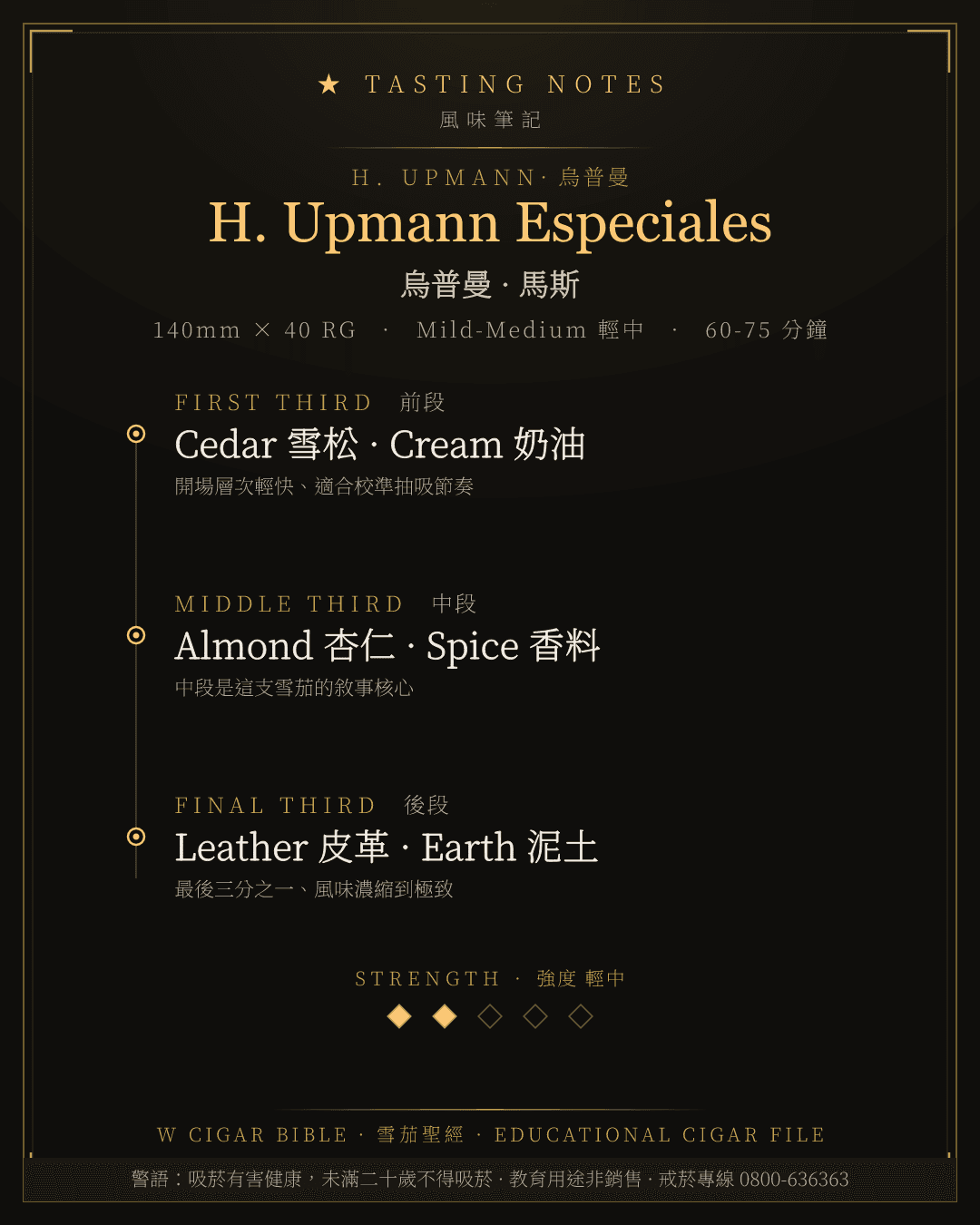
H. Upmann Especiales 風味筆記 · 烏普曼
TASTING NOTES · 風味筆記

H. Upmann Especialista En Habanos Exclusivo 搭配指南 · 烏普曼
PAIRING GUIDE · 搭配指南
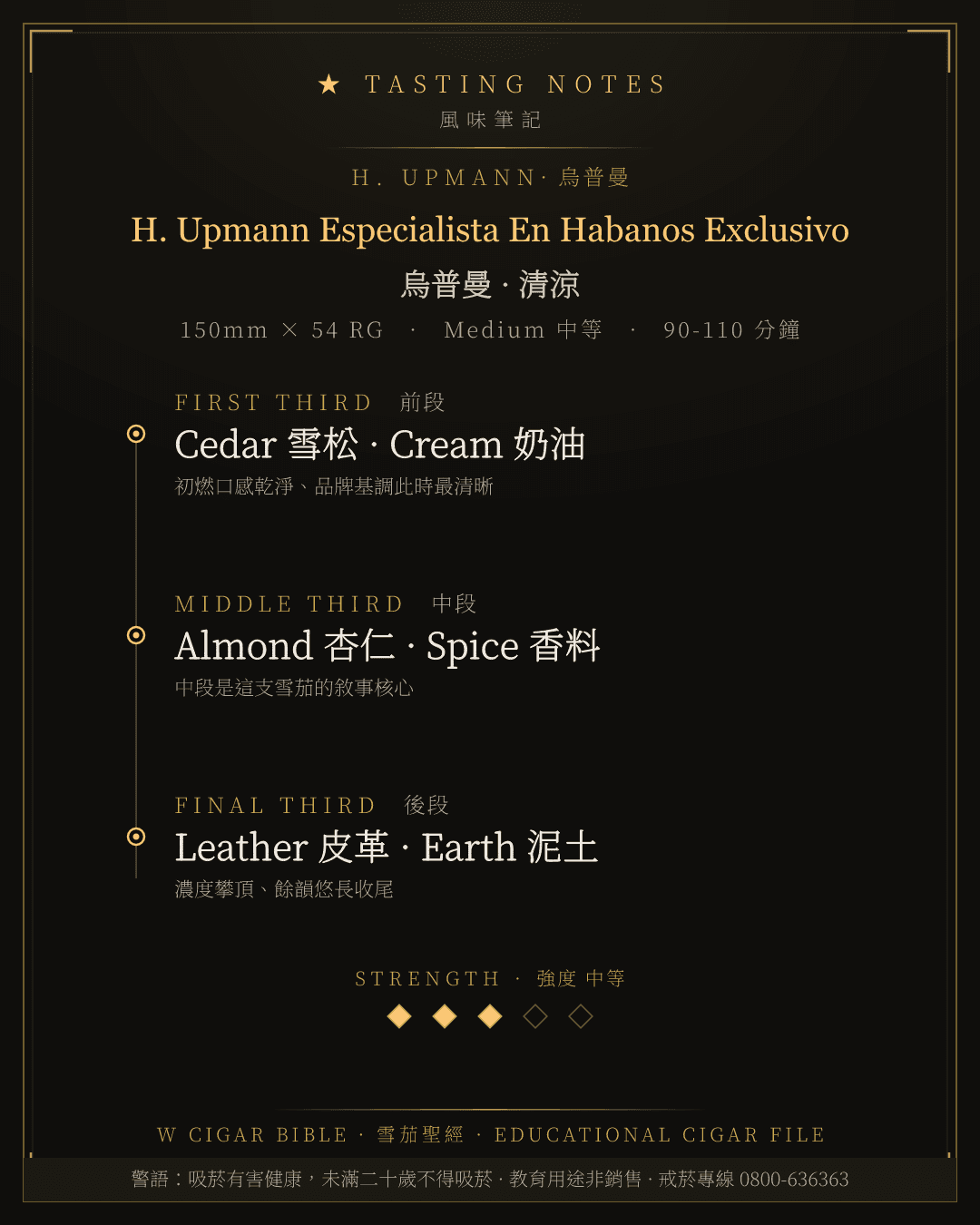
H. Upmann Especialista En Habanos Exclusivo 風味筆記 · 烏普曼
TASTING NOTES · 風味筆記
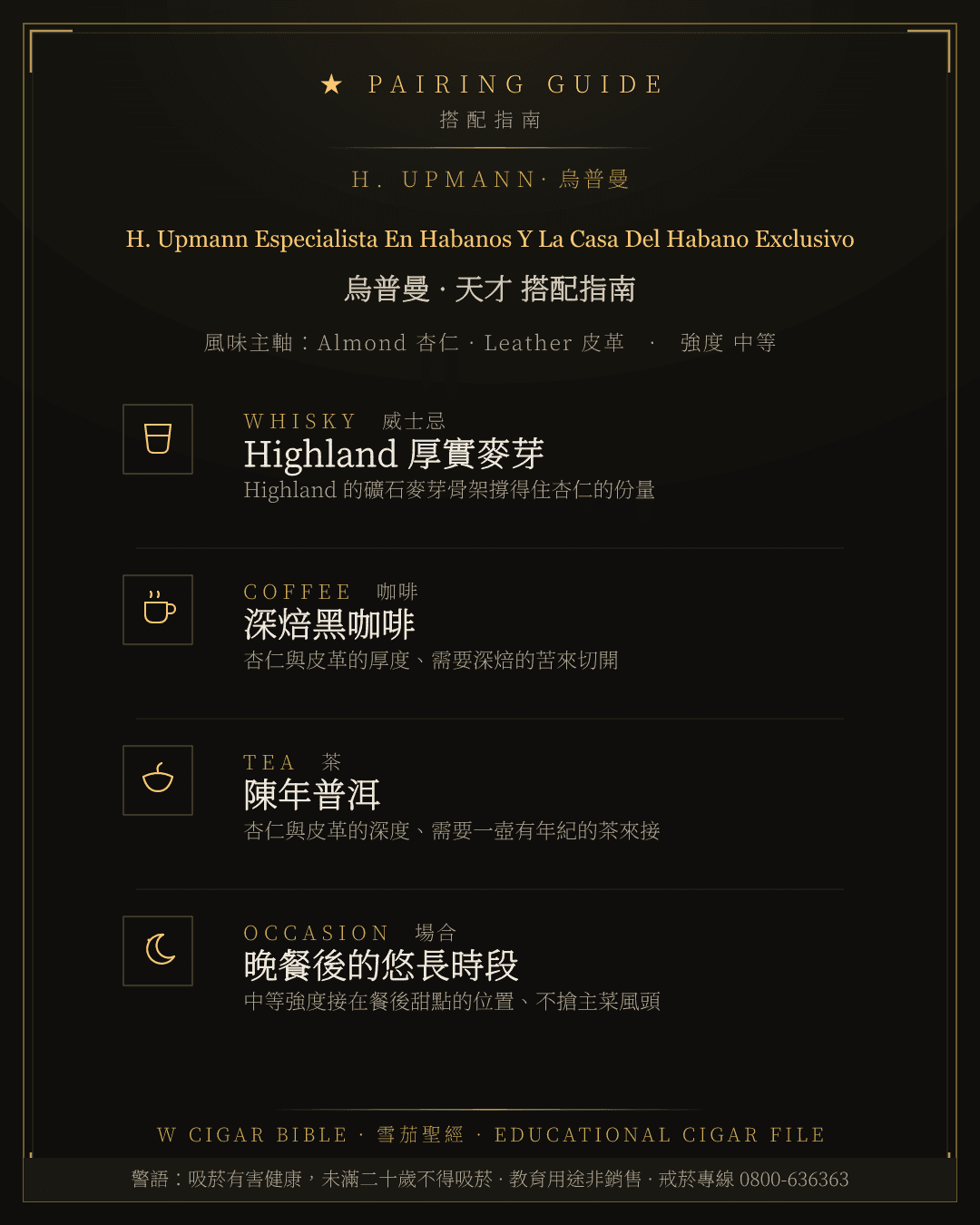
H. Upmann Especialista En Habanos Y La Casa Del Habano Exclusivo 搭配指南 · 烏普曼
PAIRING GUIDE · 搭配指南

H. Upmann Especialista En Habanos Y La Casa Del Habano Exclusivo 風味筆記 · 烏普曼
TASTING NOTES · 風味筆記
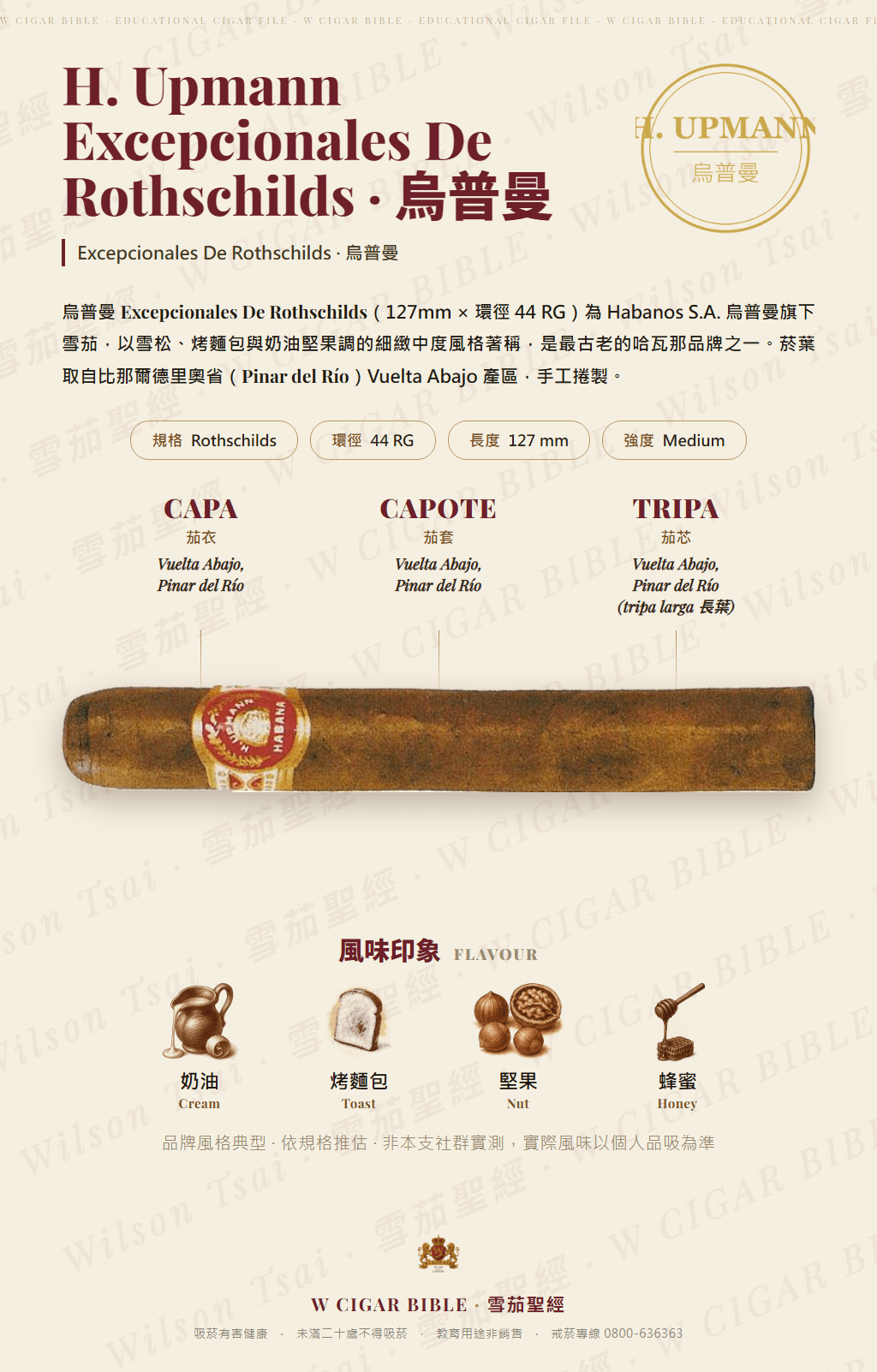
H. Upmann Excepcionales De Rothschilds · 烏普曼
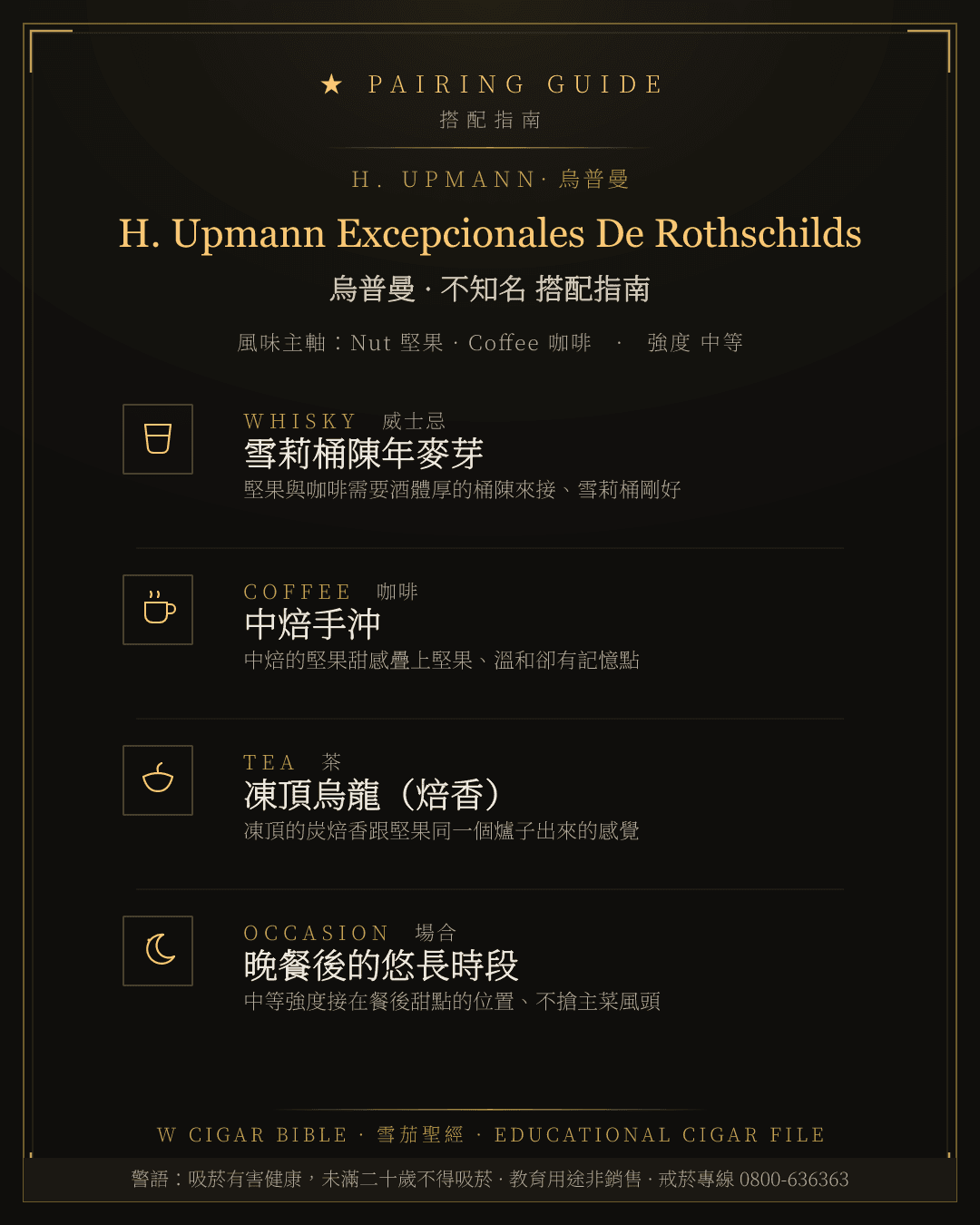
H. Upmann Excepcionales De Rothschilds 搭配指南 · 烏普曼
PAIRING GUIDE · 搭配指南
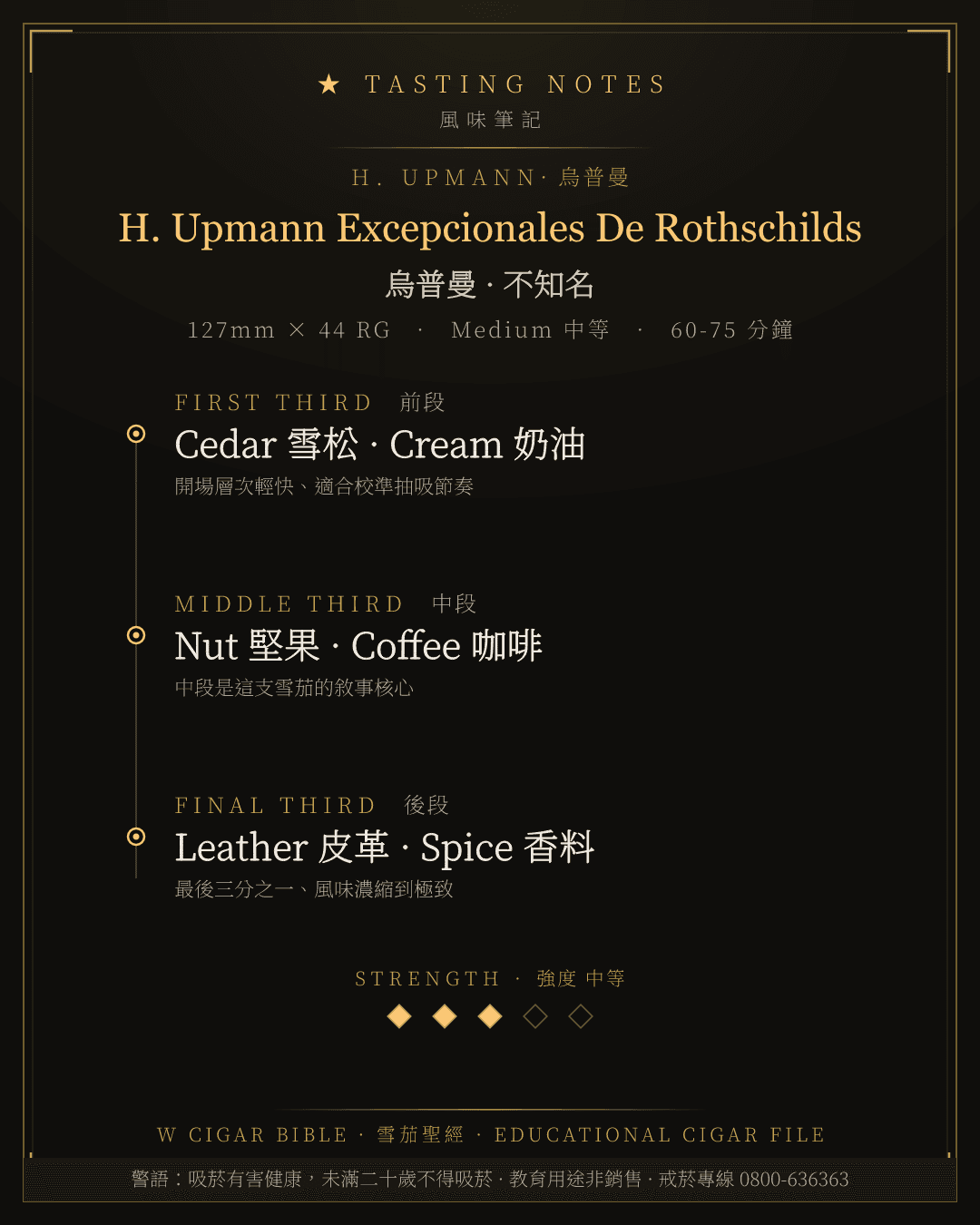
H. Upmann Excepcionales De Rothschilds 風味筆記 · 烏普曼
TASTING NOTES · 風味筆記
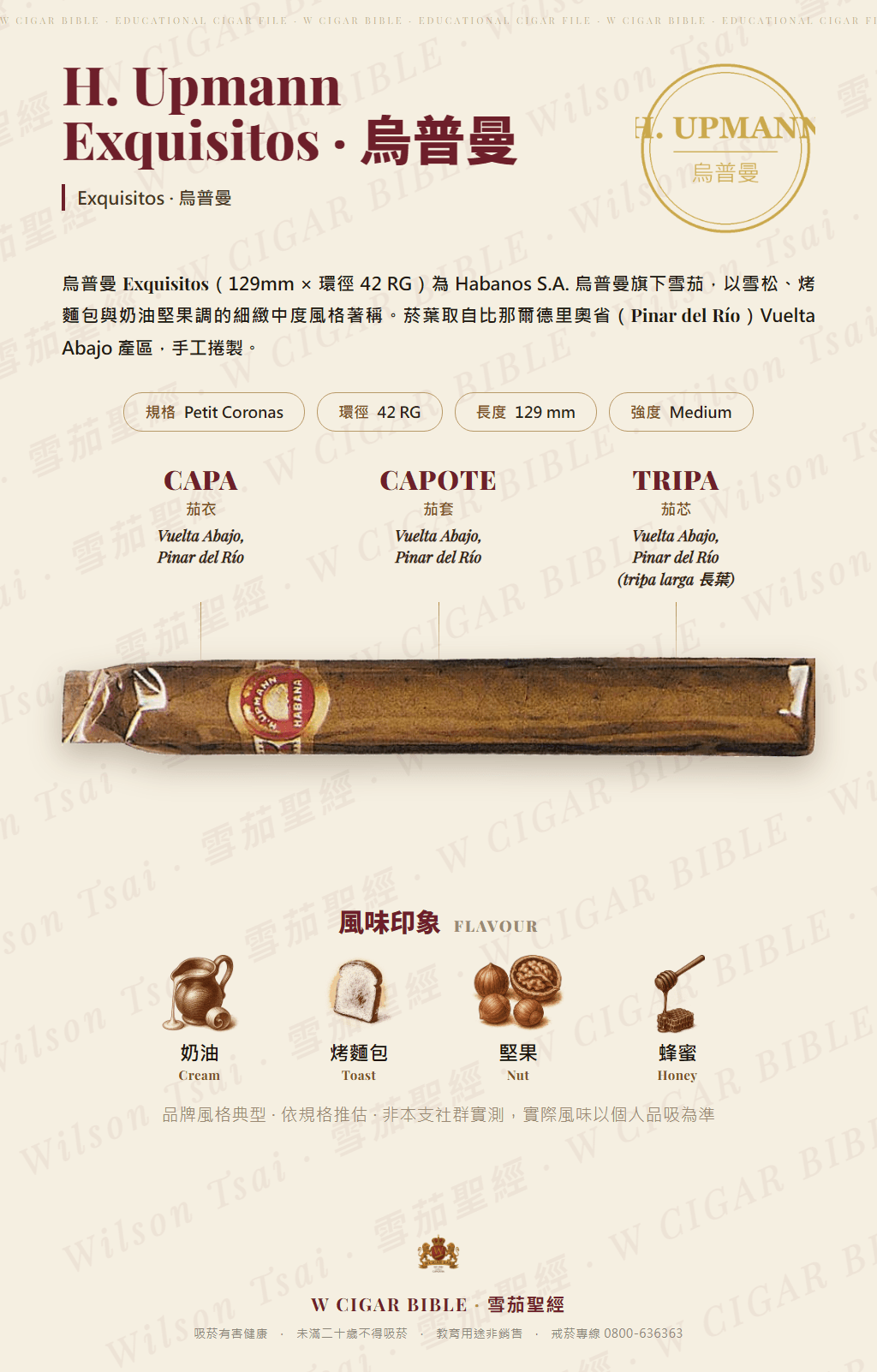
H. Upmann Exquisitos · 烏普曼
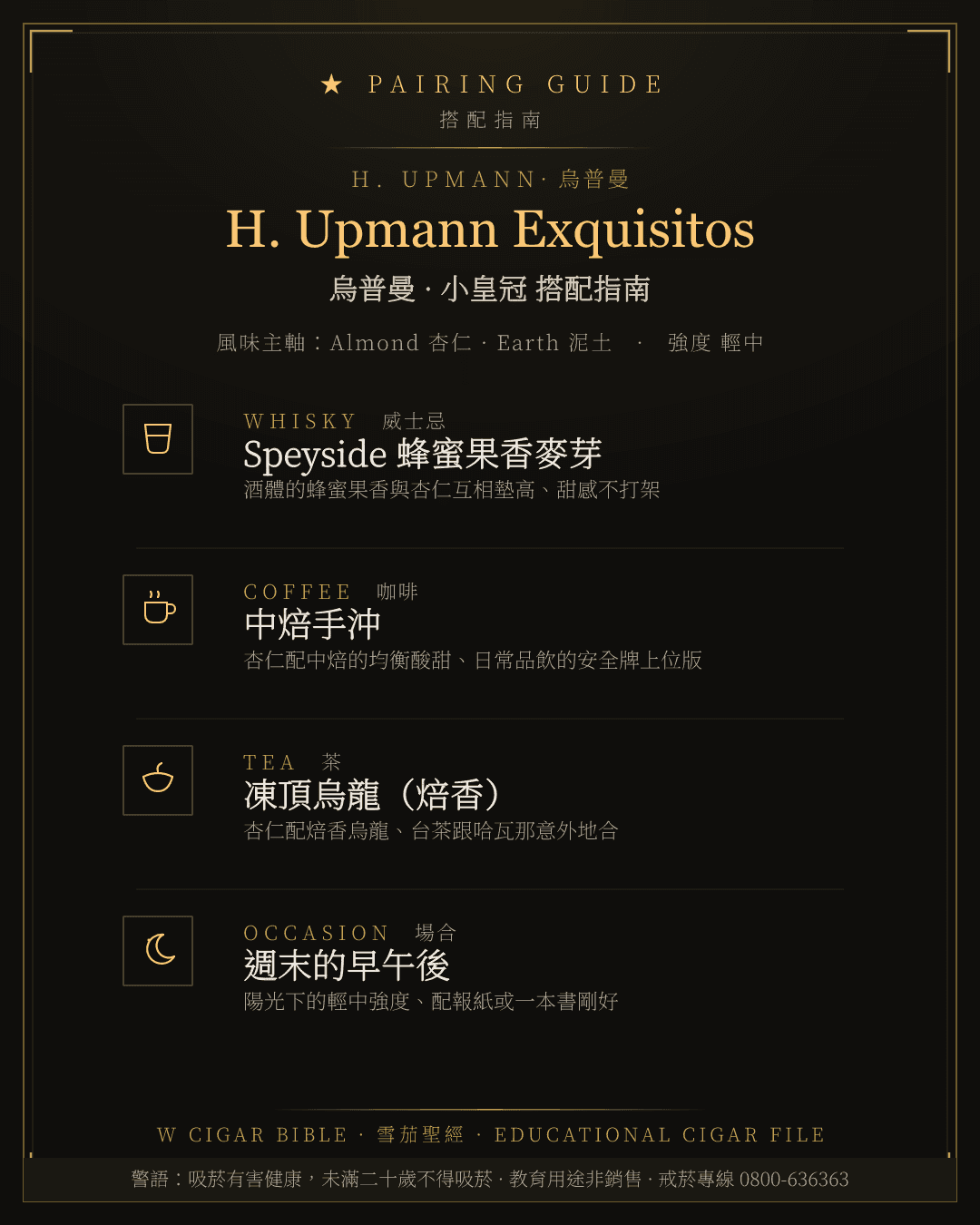
H. Upmann Exquisitos 搭配指南 · 烏普曼
PAIRING GUIDE · 搭配指南
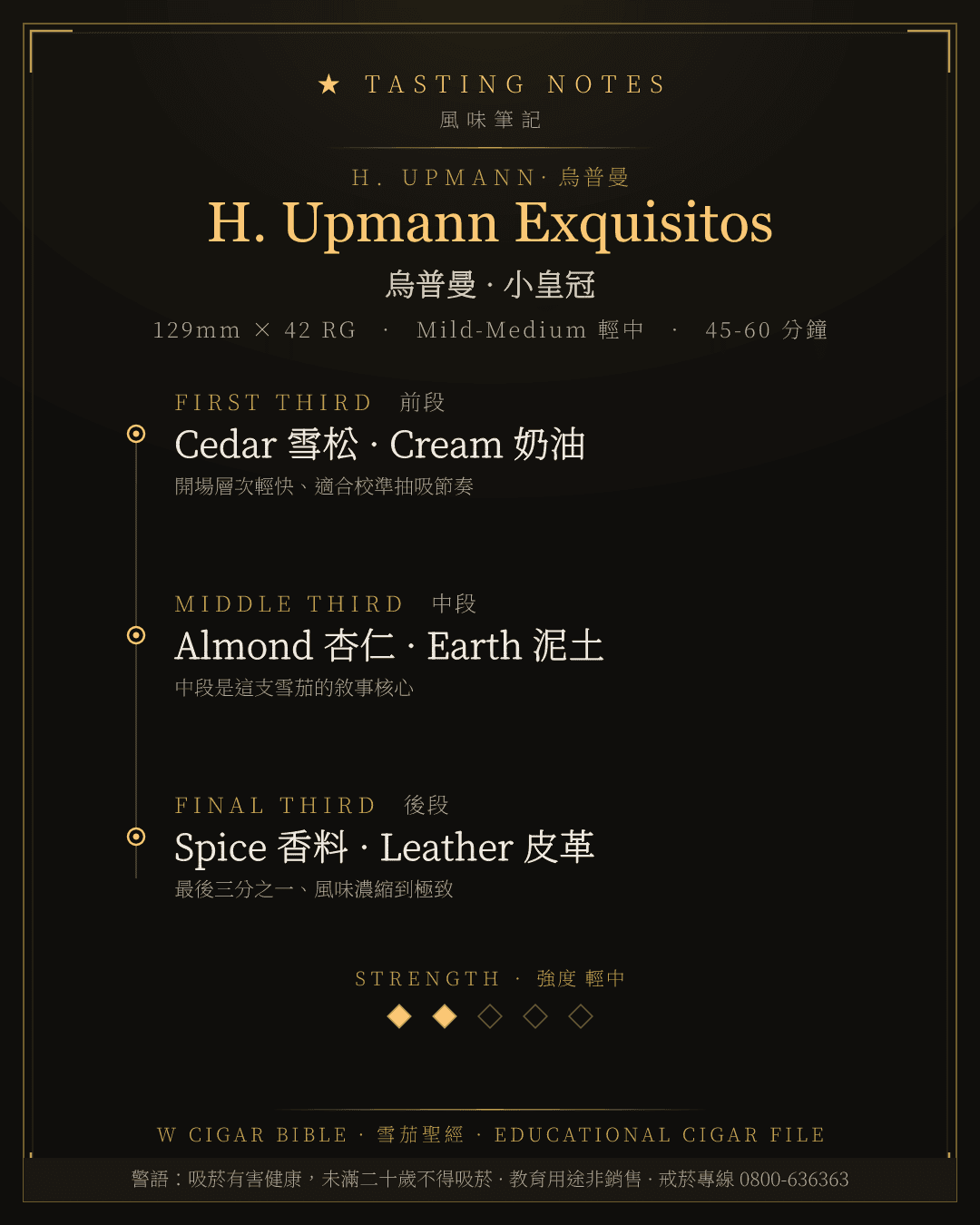
H. Upmann Exquisitos 風味筆記 · 烏普曼
TASTING NOTES · 風味筆記

H. Upmann Glorias · 烏普曼
標準生產款(Epicures 廠規 35 環徑 × 110mm)· 雪茄檔案
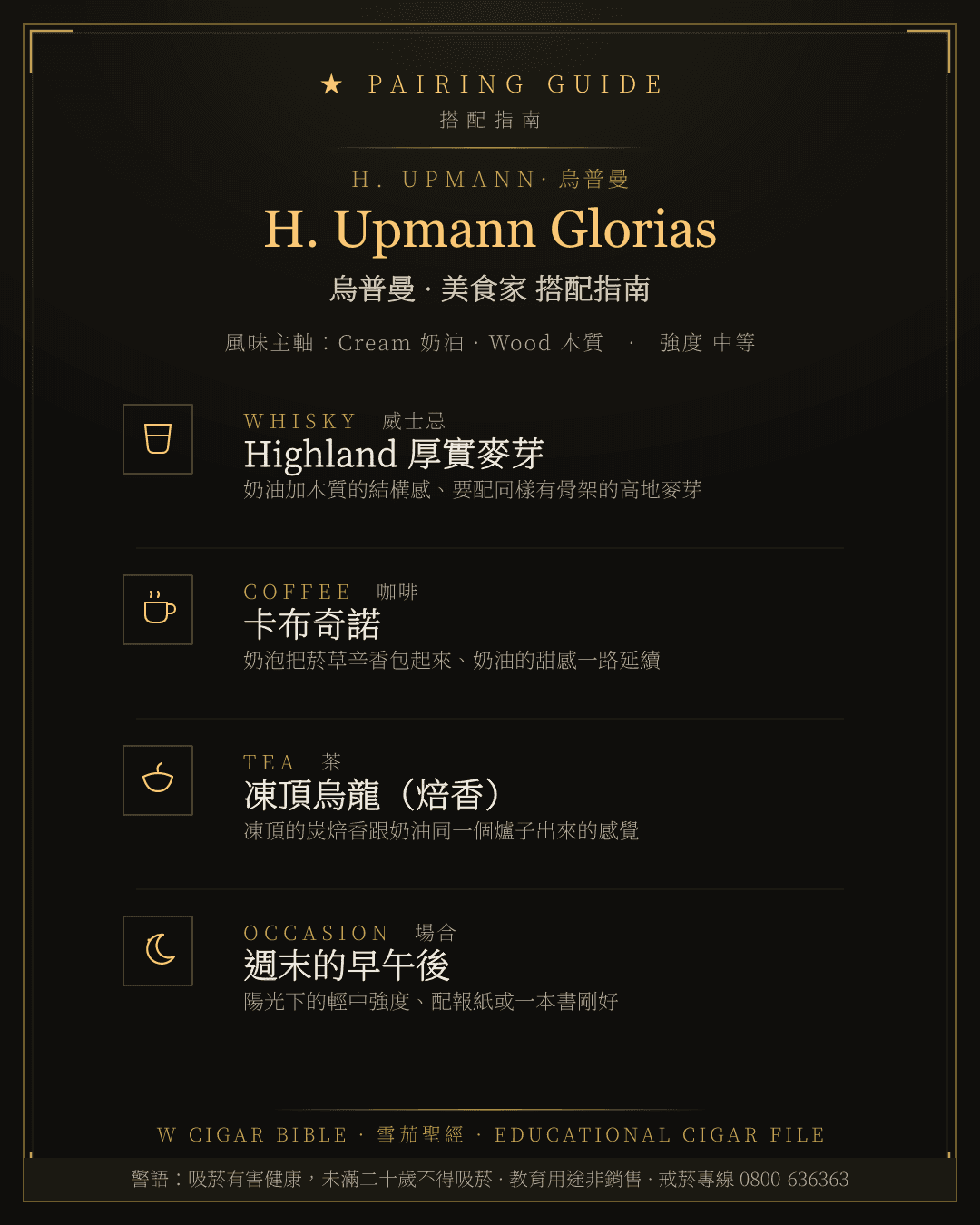
H. Upmann Glorias 搭配指南 · 烏普曼
PAIRING GUIDE · 搭配指南
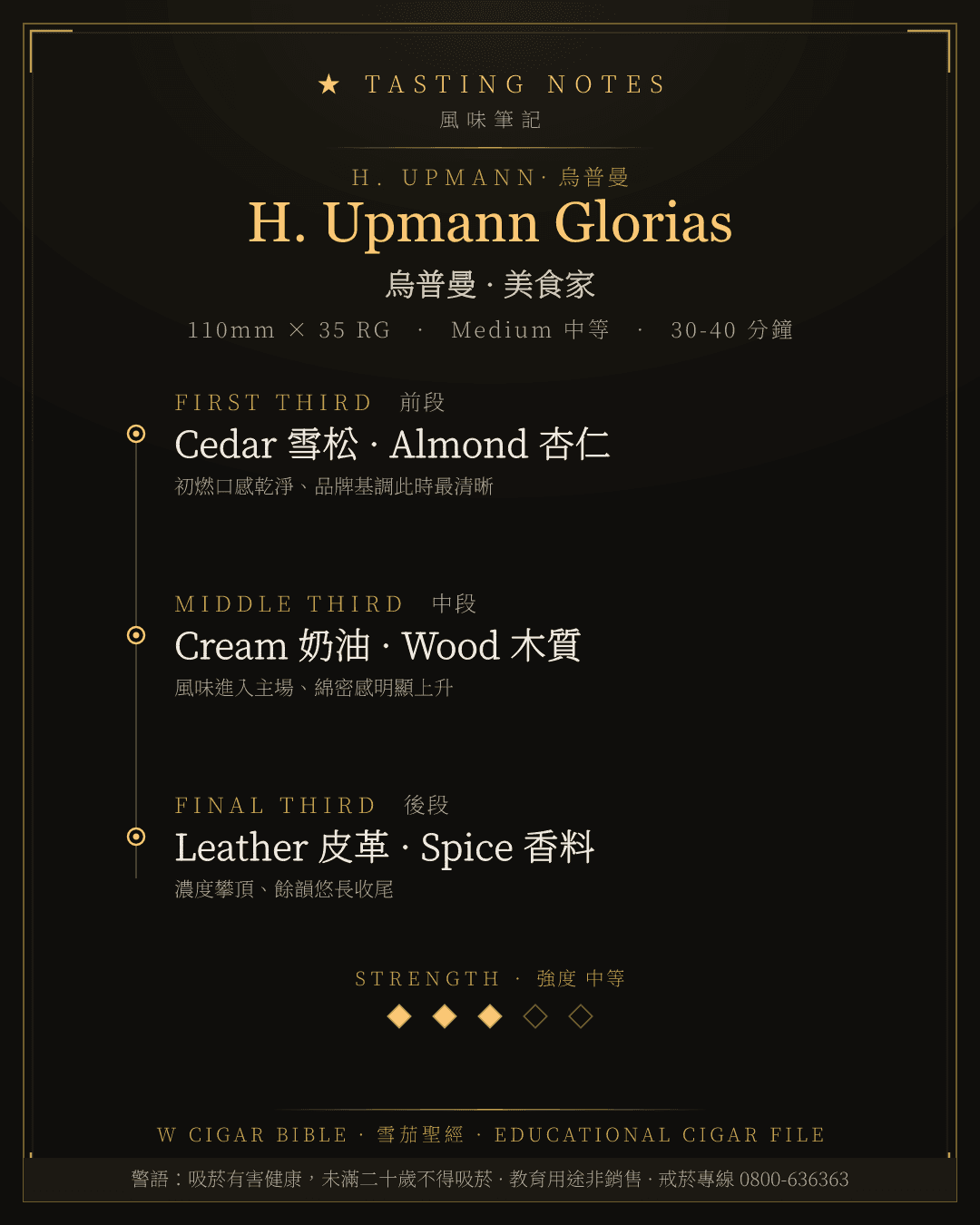
H. Upmann Glorias 風味筆記 · 烏普曼
TASTING NOTES · 風味筆記
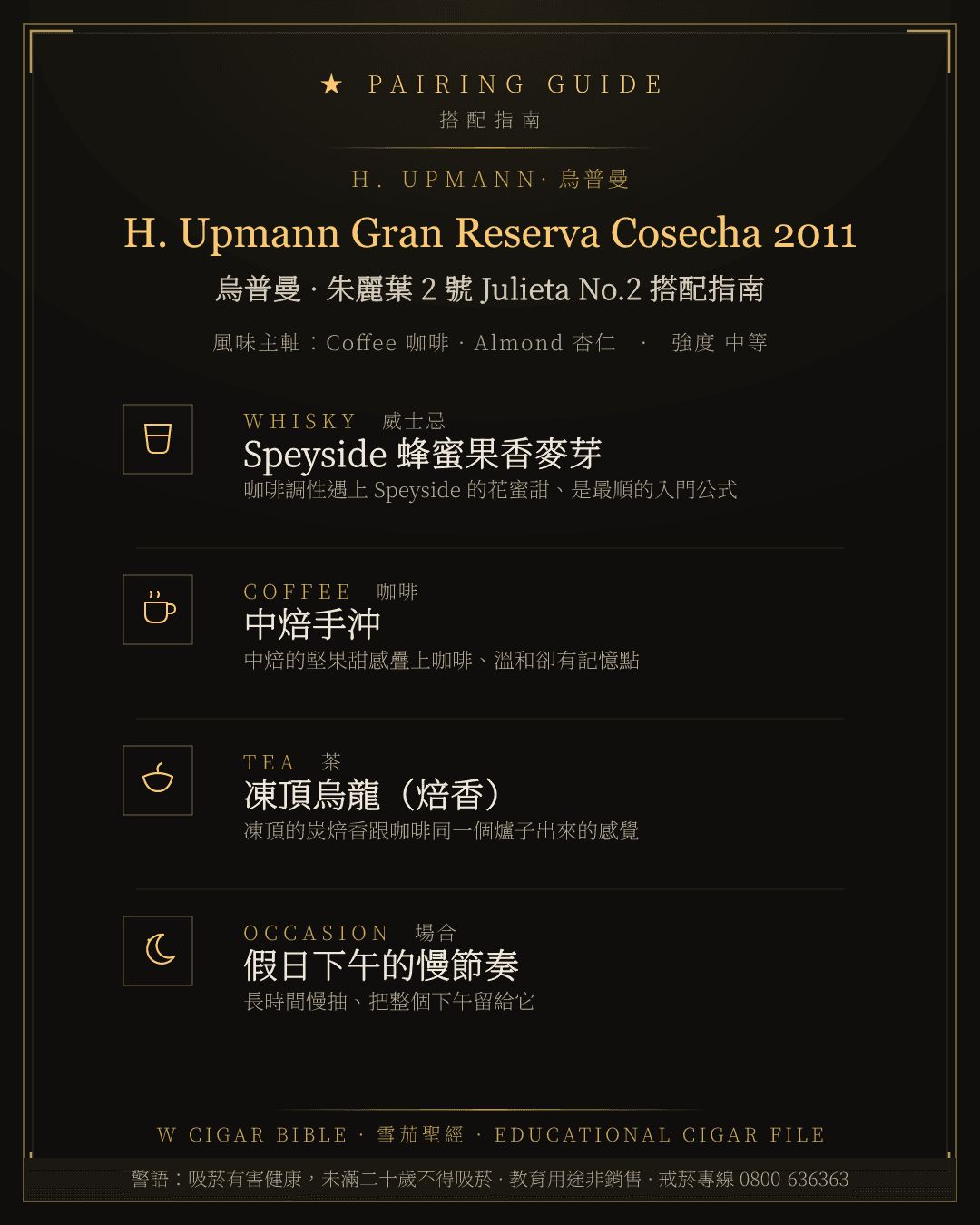
H. Upmann Gran Reserva Cosecha 2011 搭配指南 · 烏普曼
PAIRING GUIDE · 搭配指南
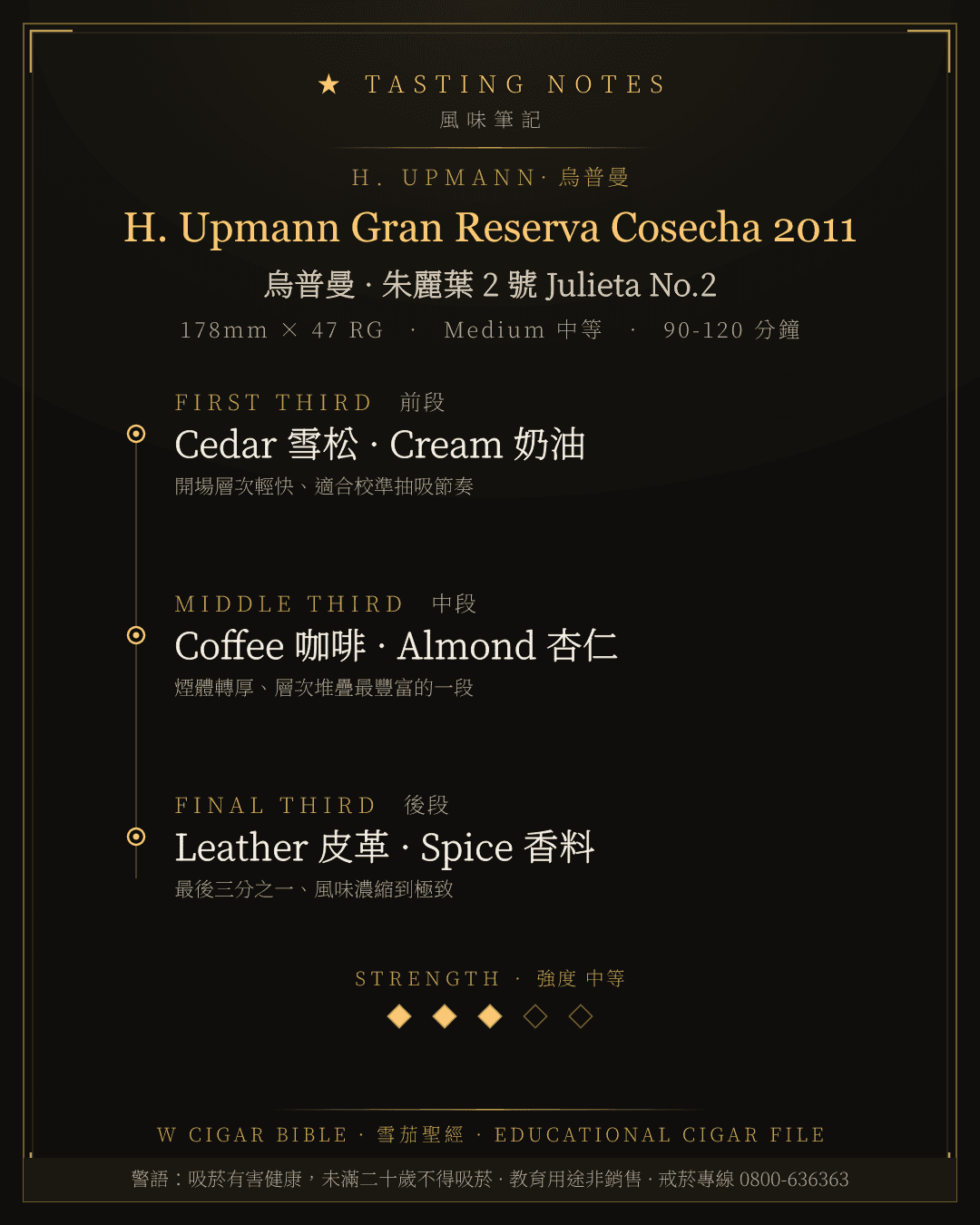
H. Upmann Gran Reserva Cosecha 2011 風味筆記 · 烏普曼
TASTING NOTES · 風味筆記

H. Upmann Gran Reserva Cosecha 2019 vs Punch Edición Regional Irlanda
VITOLA SHOWDOWN · Magnum 50
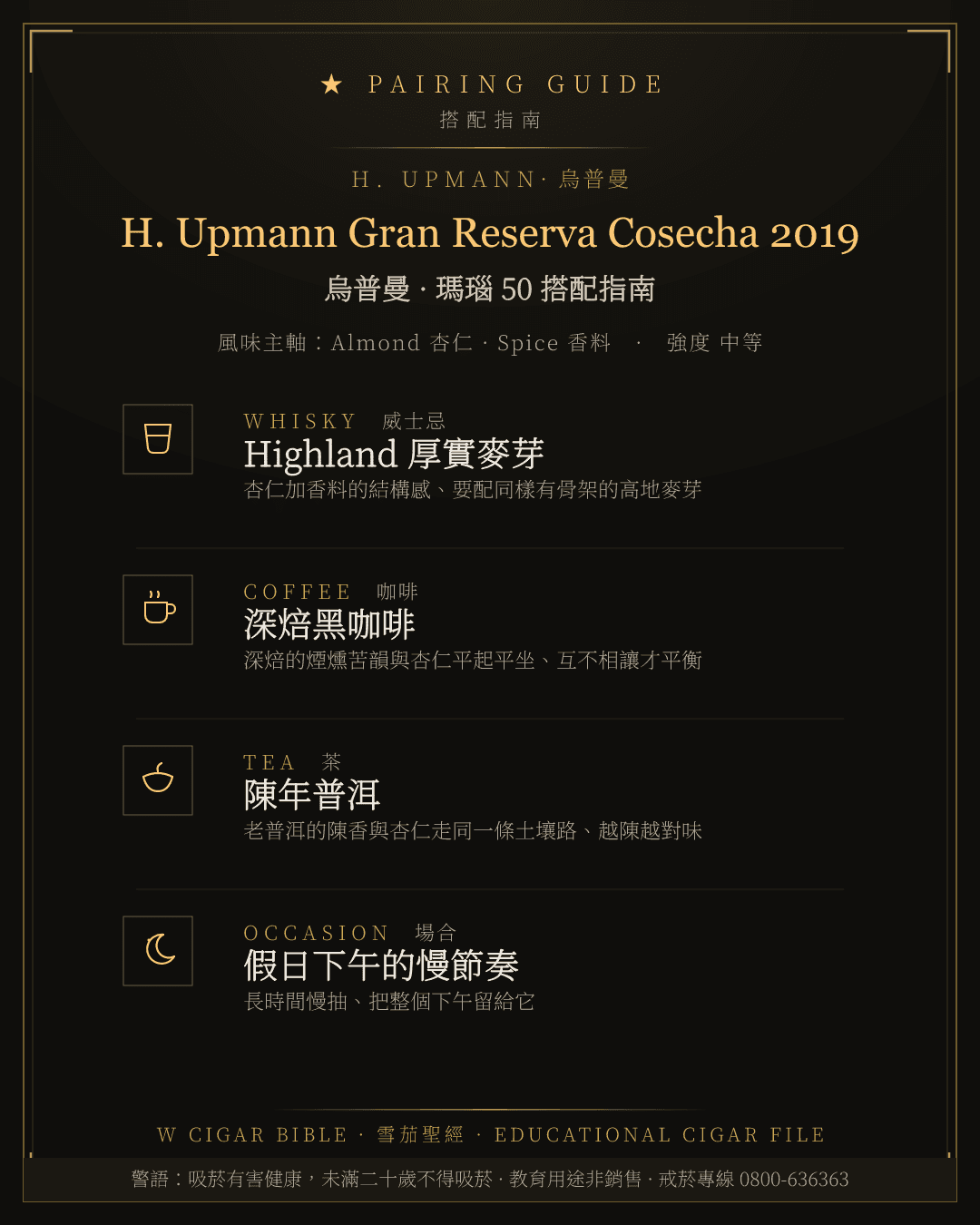
H. Upmann Gran Reserva Cosecha 2019 搭配指南 · 烏普曼
PAIRING GUIDE · 搭配指南
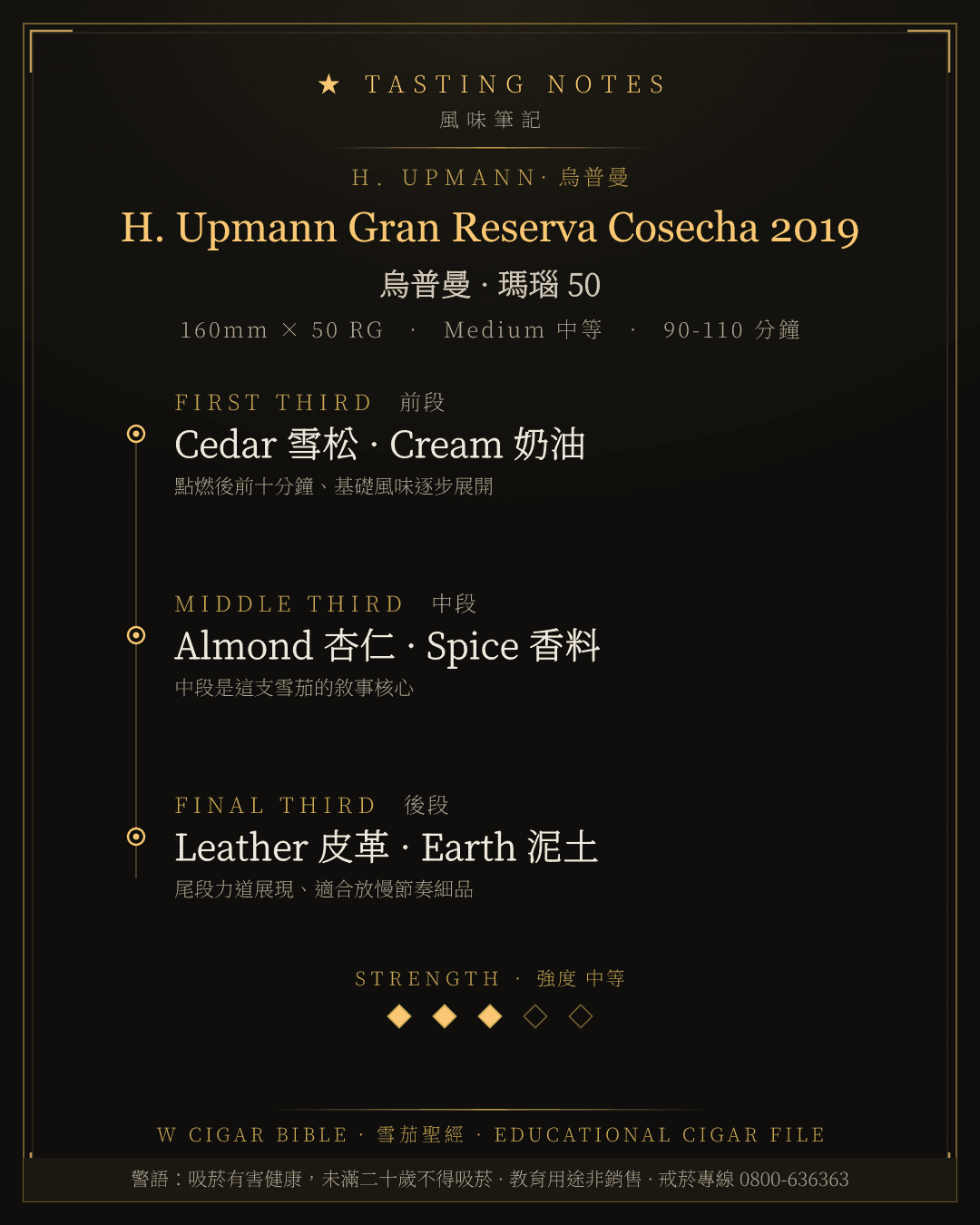
H. Upmann Gran Reserva Cosecha 2019 風味筆記 · 烏普曼
TASTING NOTES · 風味筆記

H. Upmann Grand Coronas · 烏普曼
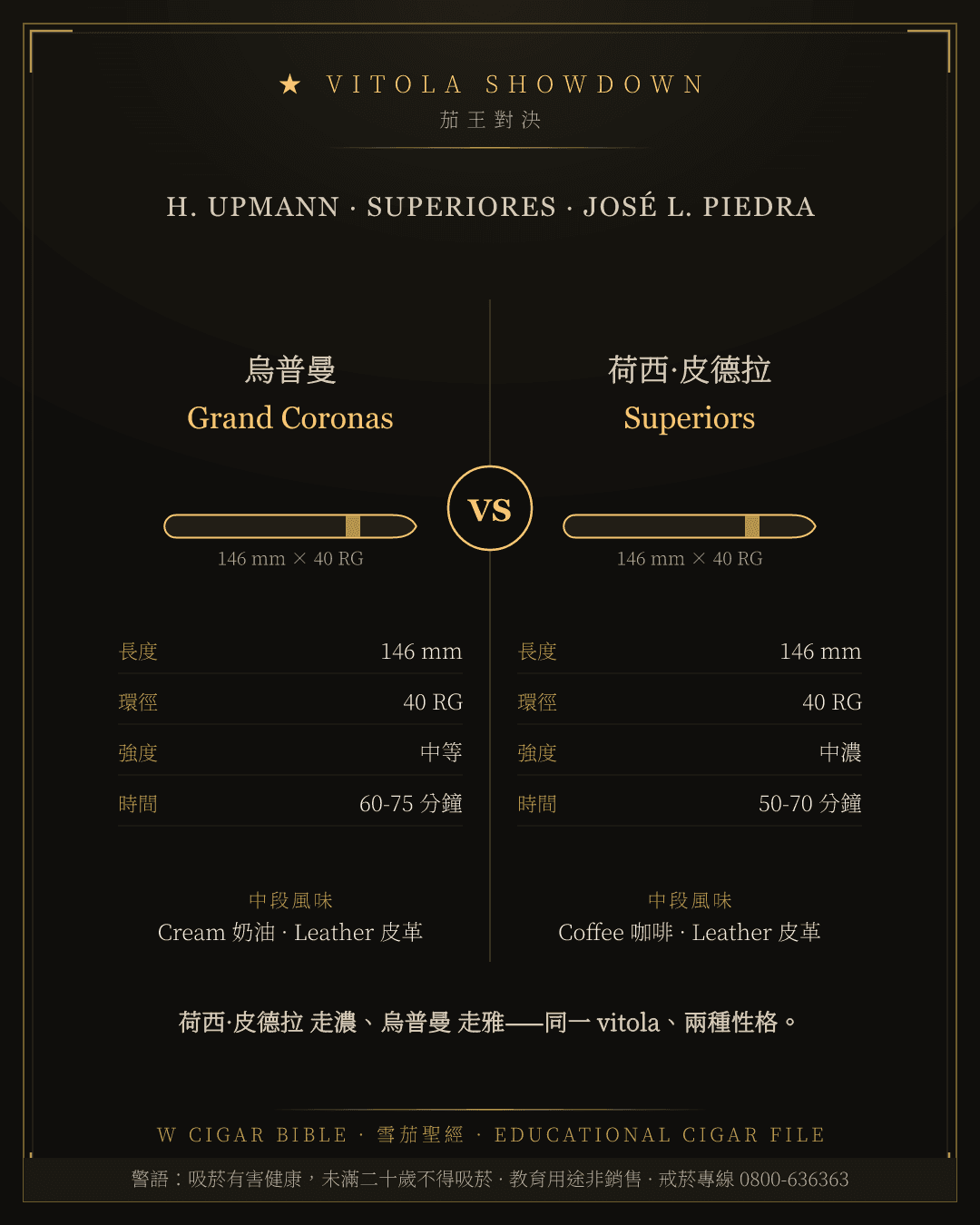
H. Upmann Grand Coronas vs José L. Piedra Superiors
VITOLA SHOWDOWN · Superiores
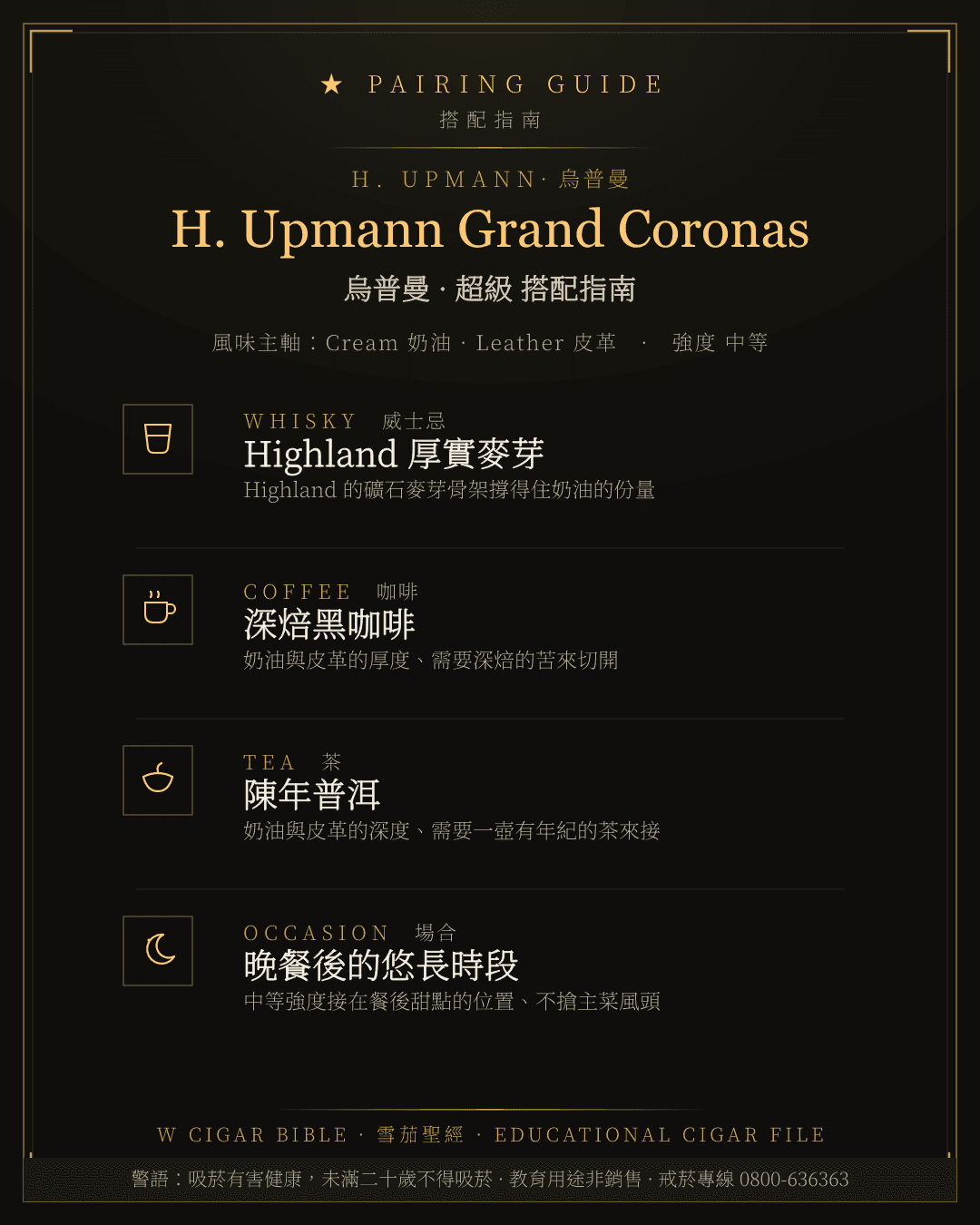
H. Upmann Grand Coronas 搭配指南 · 烏普曼
PAIRING GUIDE · 搭配指南
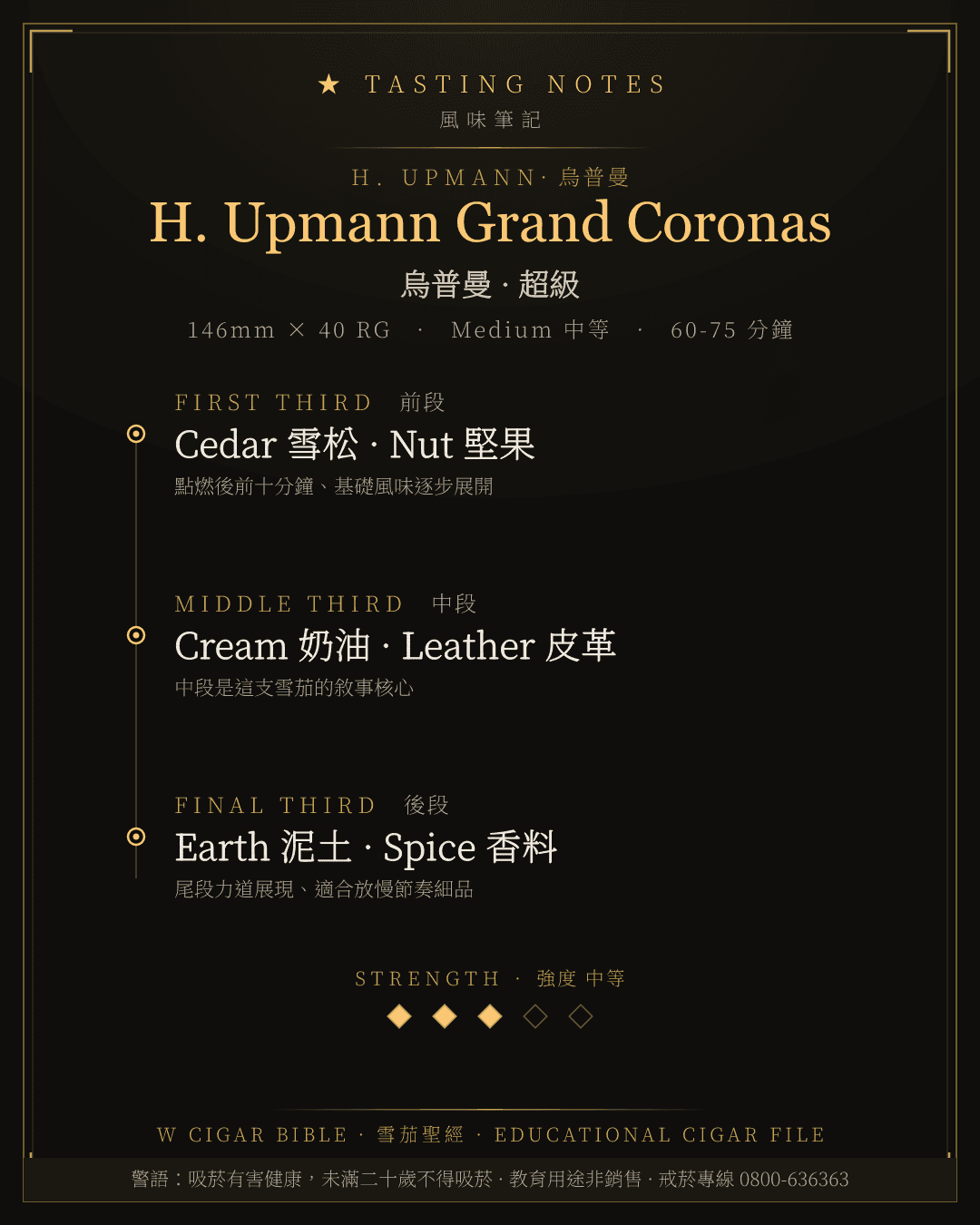
H. Upmann Grand Coronas 風味筆記 · 烏普曼
TASTING NOTES · 風味筆記

H. Upmann Half Corona · 烏普曼
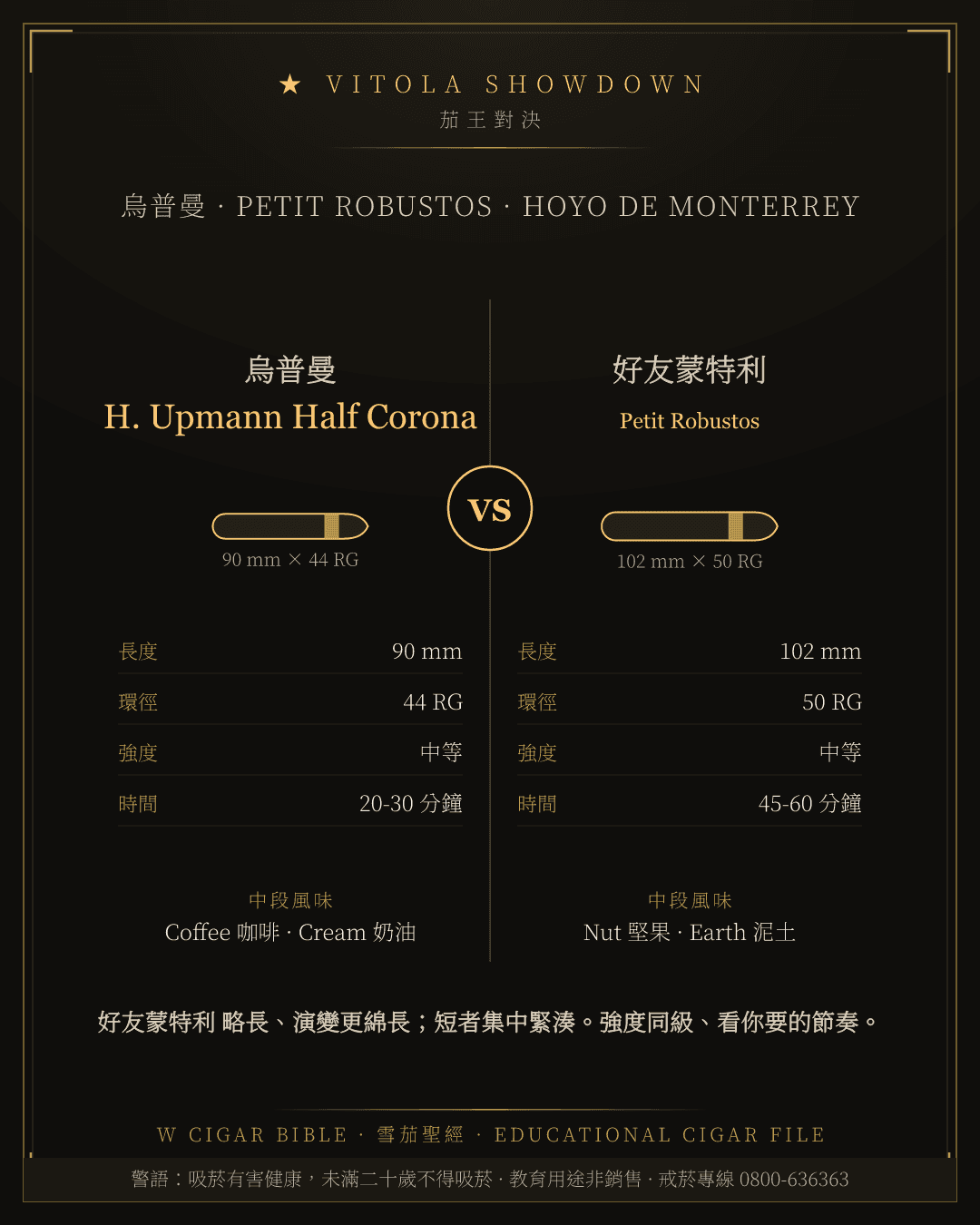
H. Upmann Half Corona vs Hoyo De Monterrey Petit Robustos
VITOLA SHOWDOWN · Petit Robustos

H. Upmann Half Corona 搭配指南 · 烏普曼
PAIRING GUIDE · 搭配指南
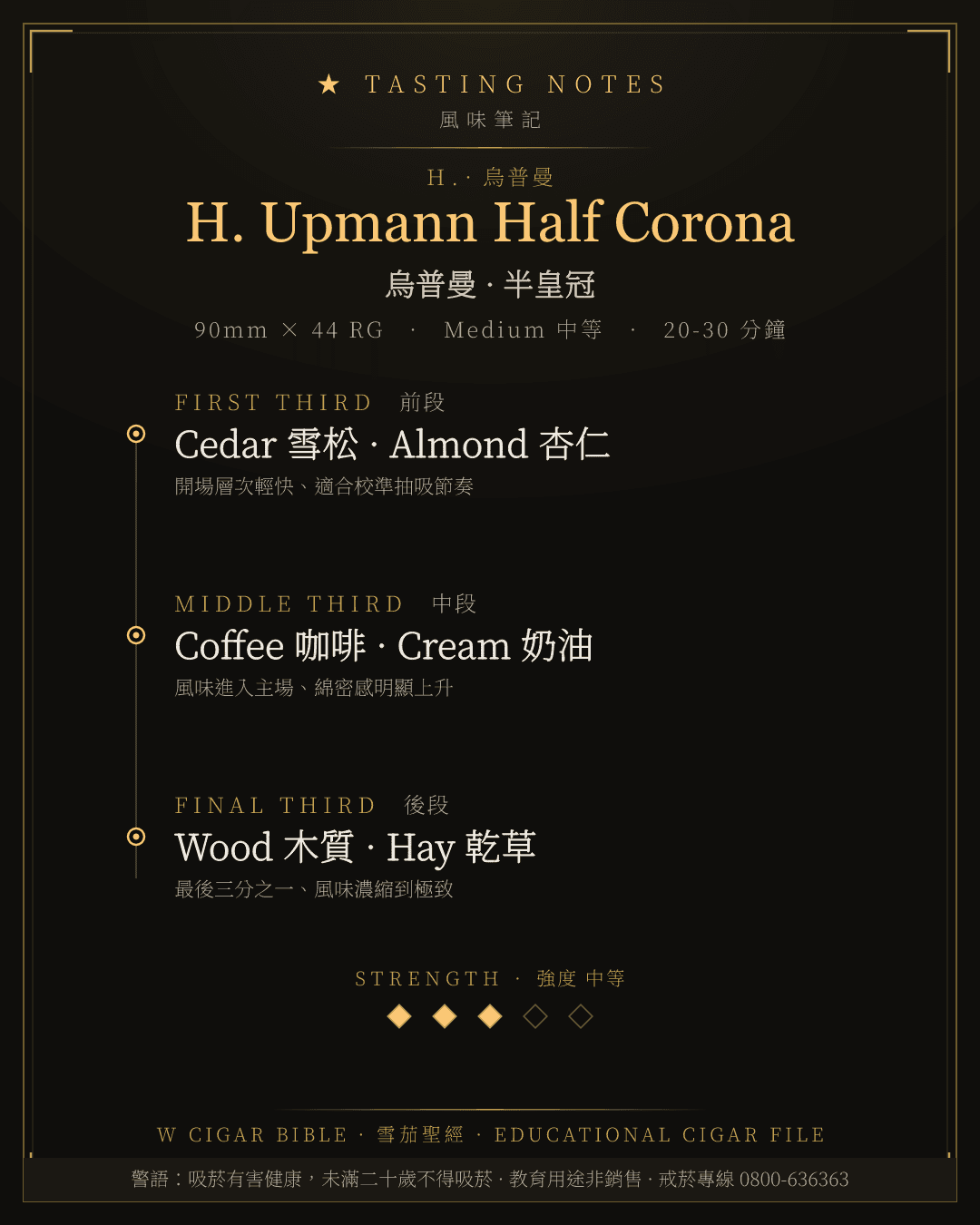
H. Upmann Half Corona 風味筆記 · 烏普曼
TASTING NOTES · 風味筆記
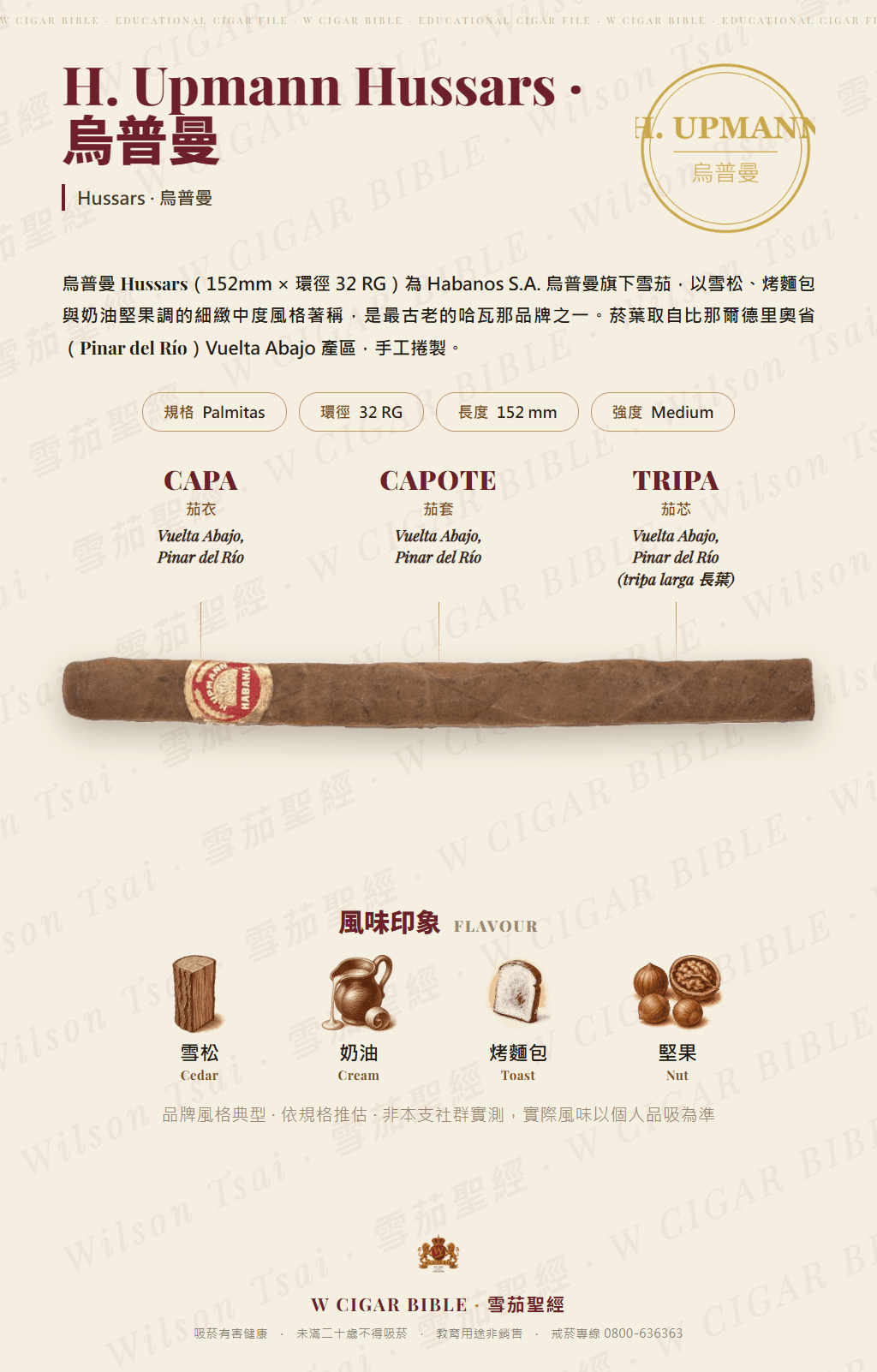
H. Upmann Hussars · 烏普曼
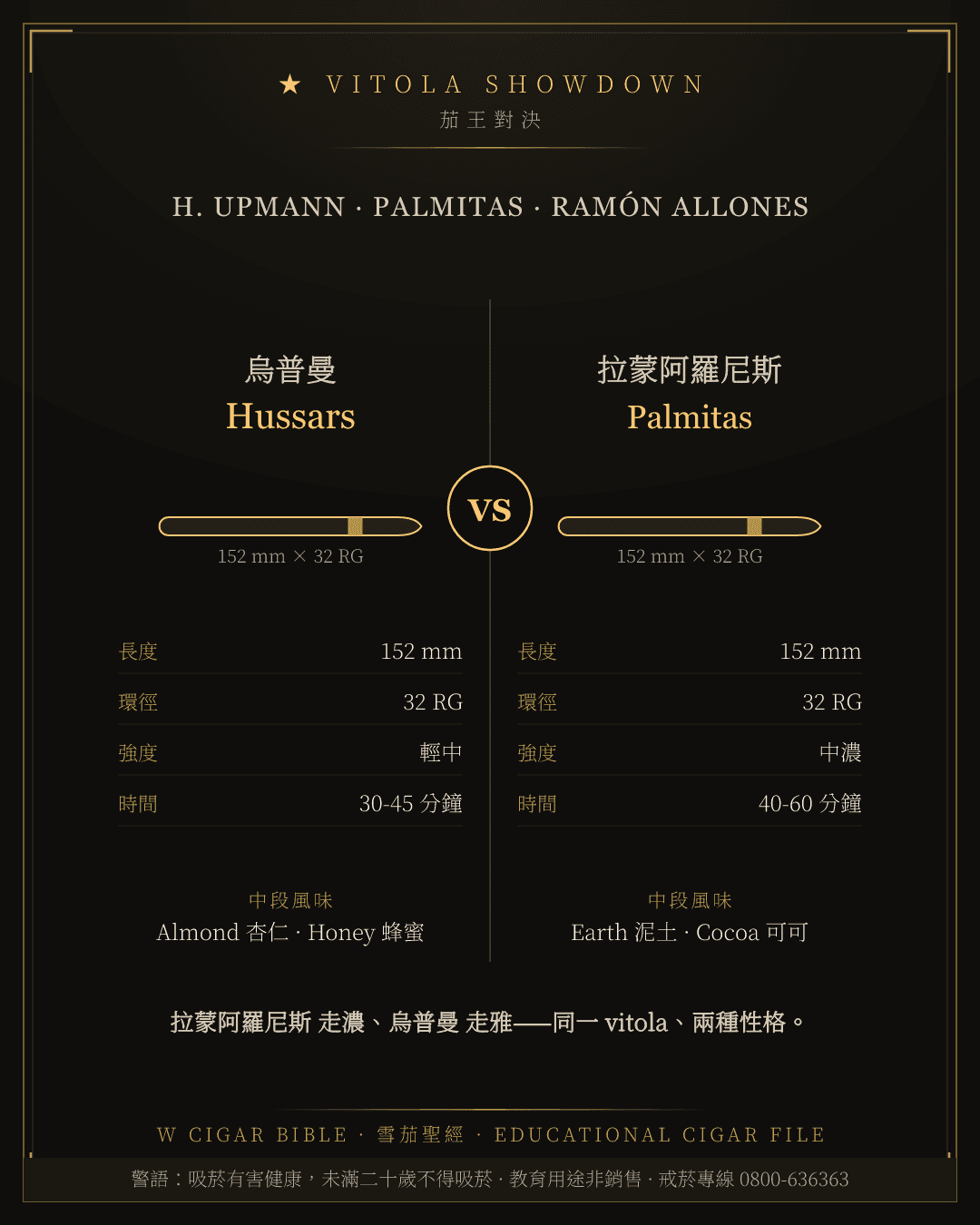
H. Upmann Hussars vs Ramón Allones Palmitas
VITOLA SHOWDOWN · Palmitas

H. Upmann Hussars 搭配指南 · 烏普曼
PAIRING GUIDE · 搭配指南

H. Upmann Hussars 風味筆記 · 烏普曼
TASTING NOTES · 風味筆記
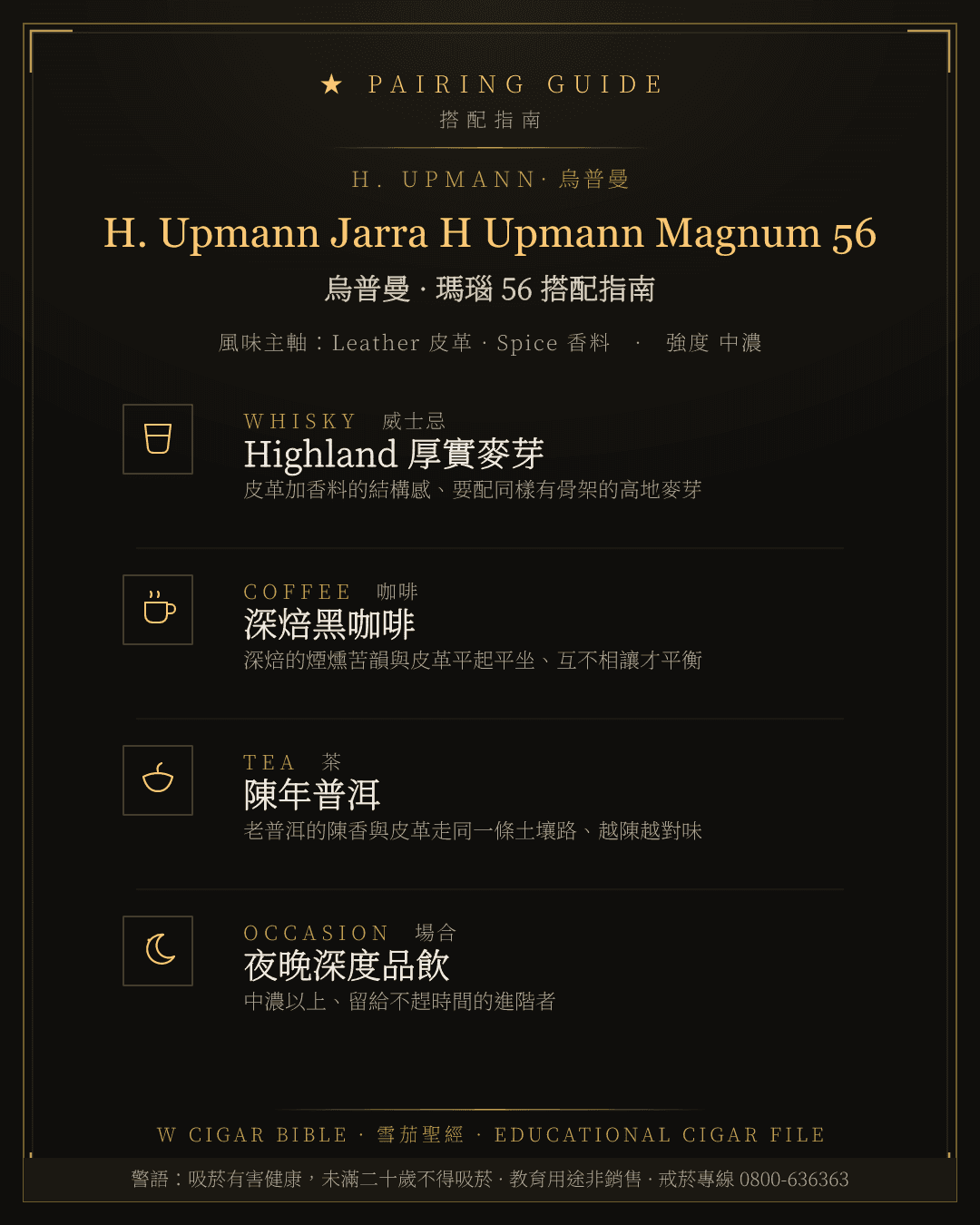
H. Upmann Jarra H Upmann Magnum 56 搭配指南 · 烏普曼
PAIRING GUIDE · 搭配指南
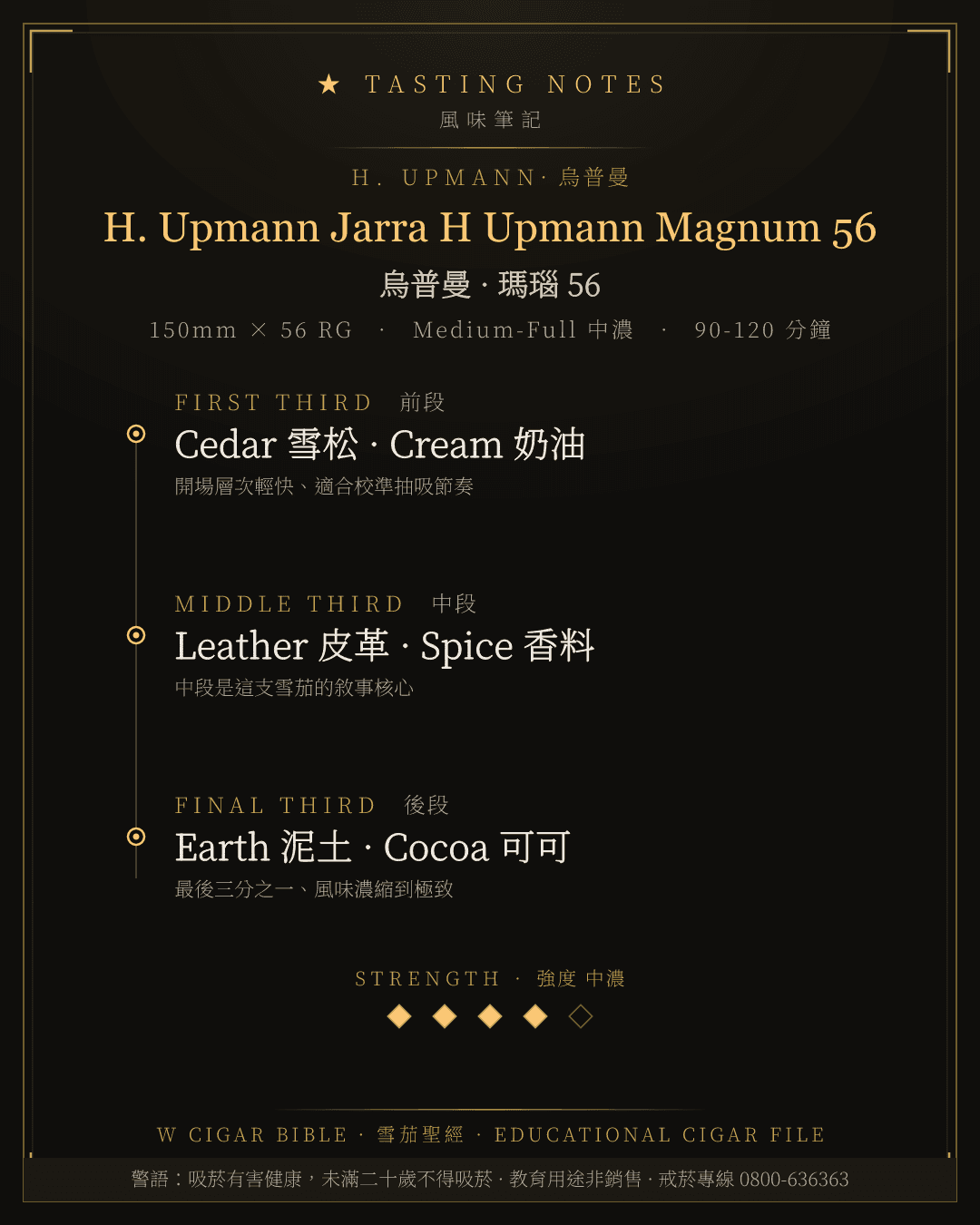
H. Upmann Jarra H Upmann Magnum 56 風味筆記 · 烏普曼
TASTING NOTES · 風味筆記

H. Upmann Kings · 烏普曼
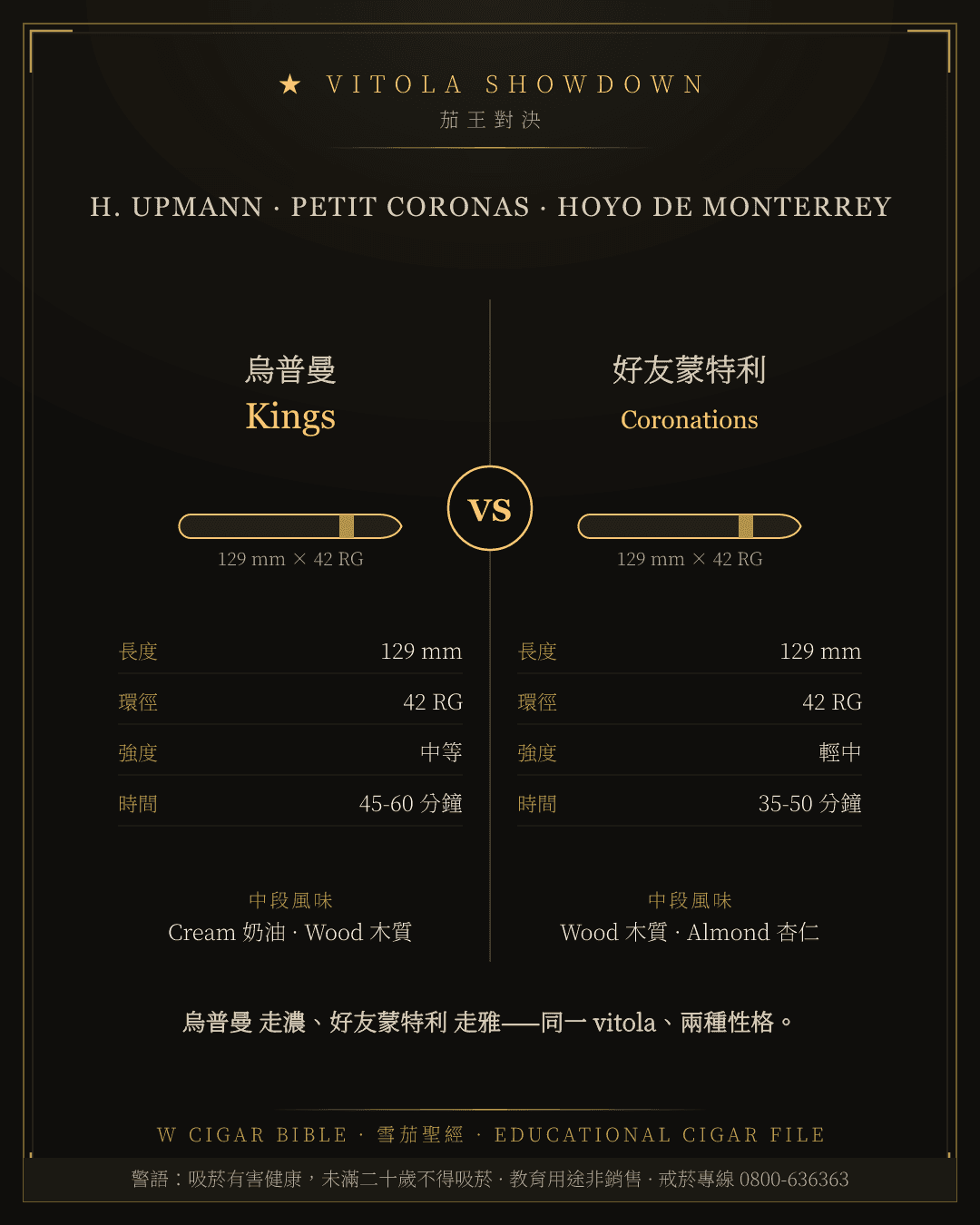
H. Upmann Kings vs Hoyo de Monterrey Coronations
VITOLA SHOWDOWN · Petit Coronas

H. Upmann Kings 搭配指南 · 烏普曼
PAIRING GUIDE · 搭配指南
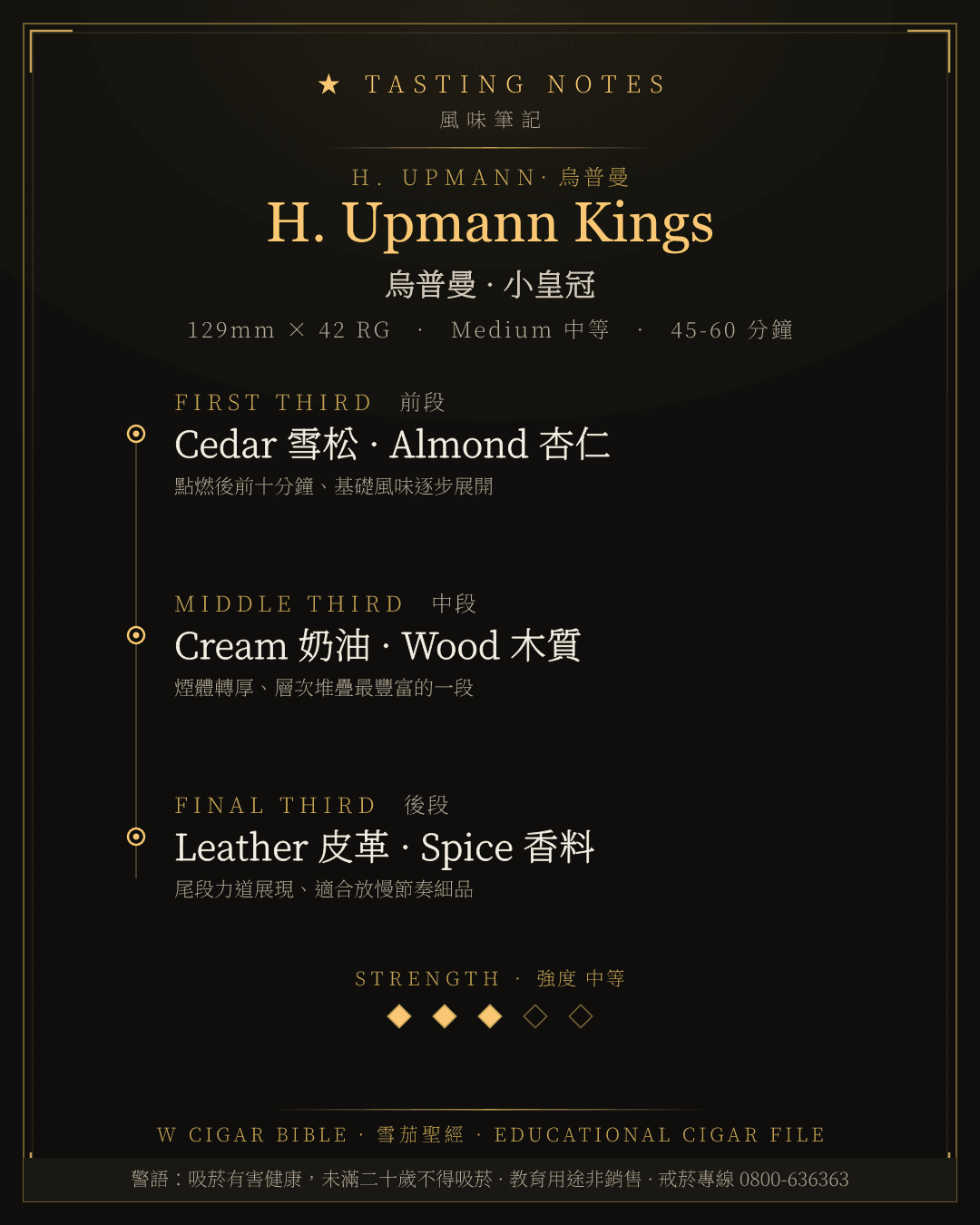
H. Upmann Kings 風味筆記 · 烏普曼
TASTING NOTES · 風味筆記
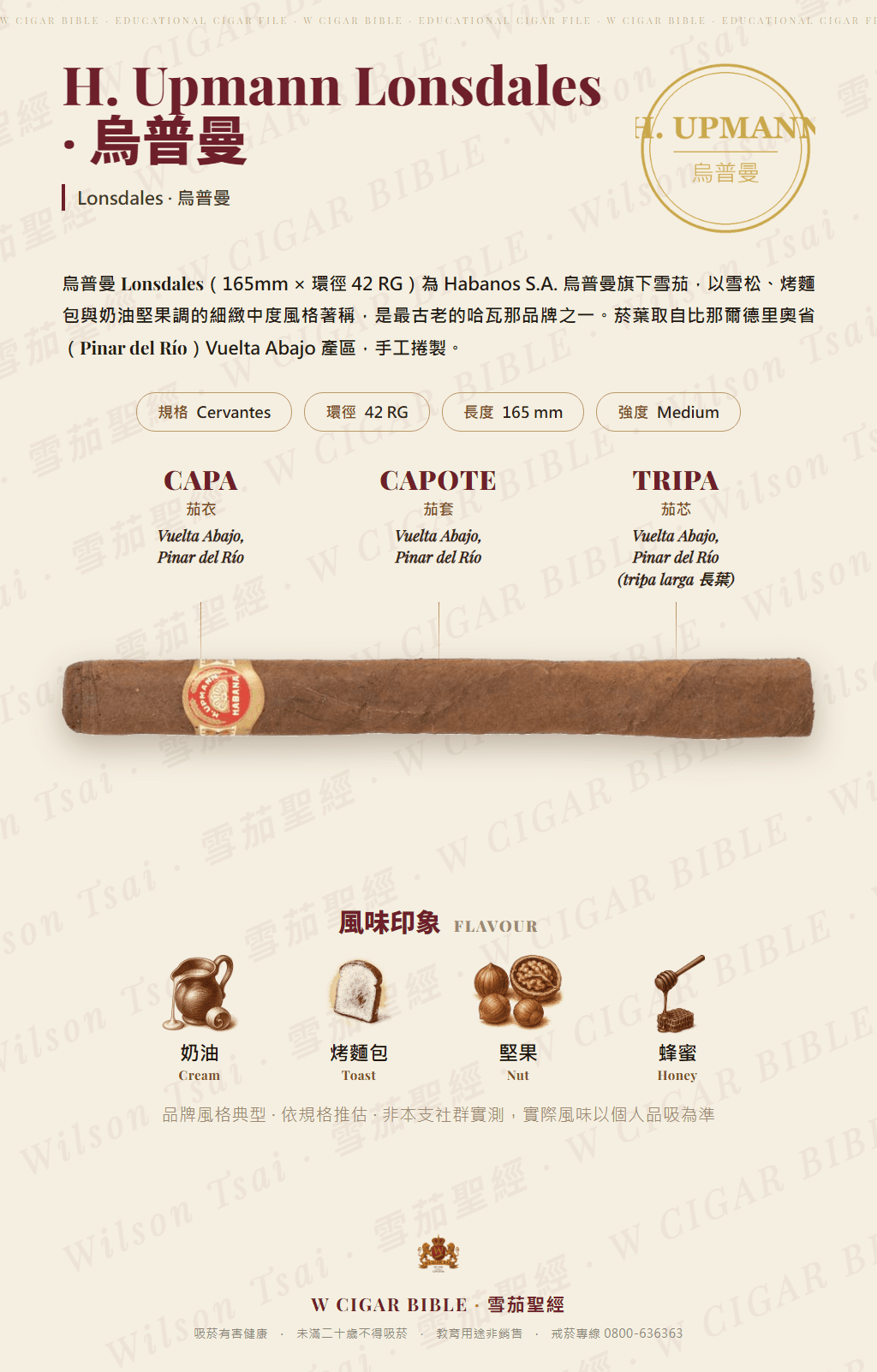
H. Upmann Lonsdales · 烏普曼
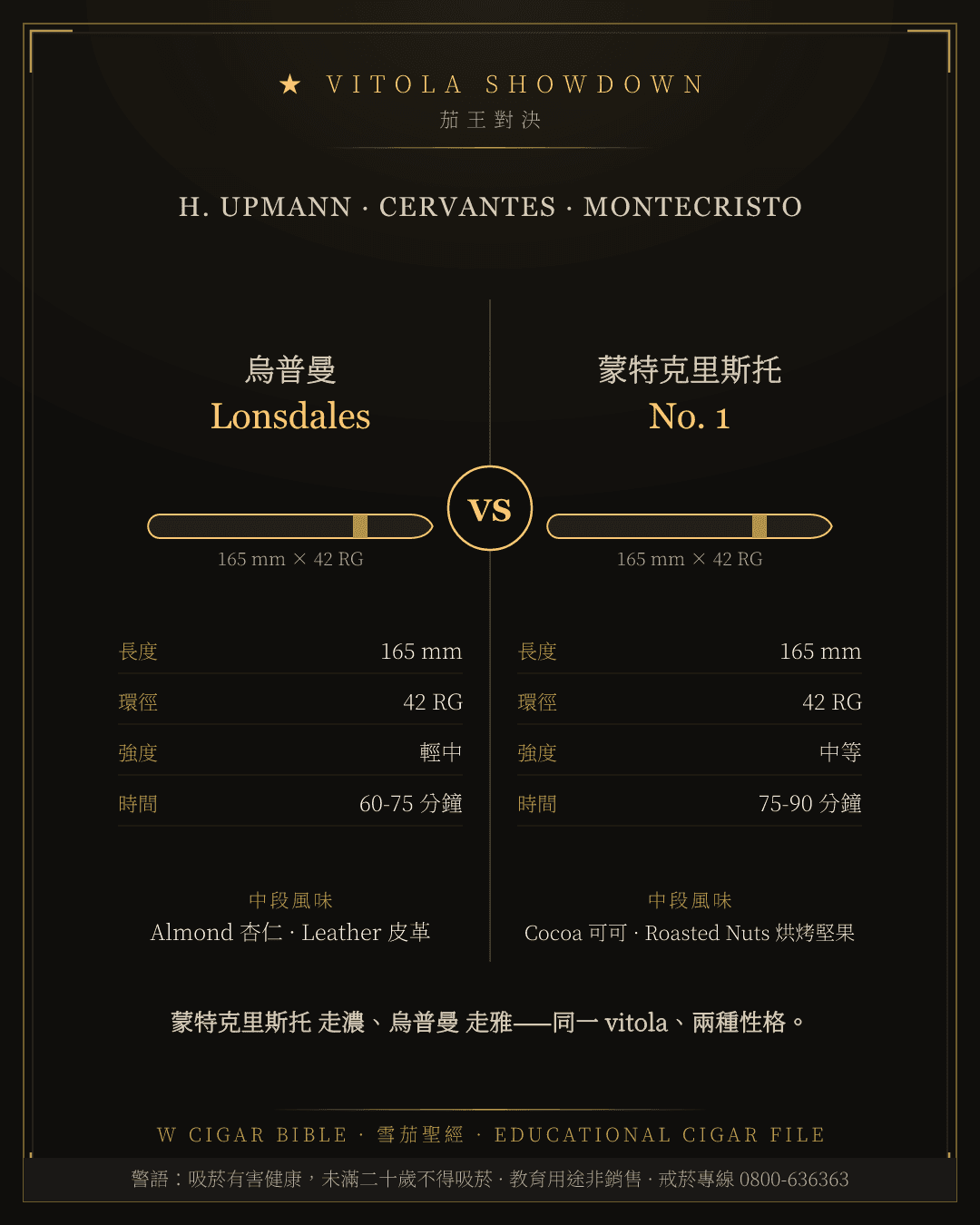
H. Upmann Lonsdales vs Montecristo No. 1
VITOLA SHOWDOWN · Cervantes
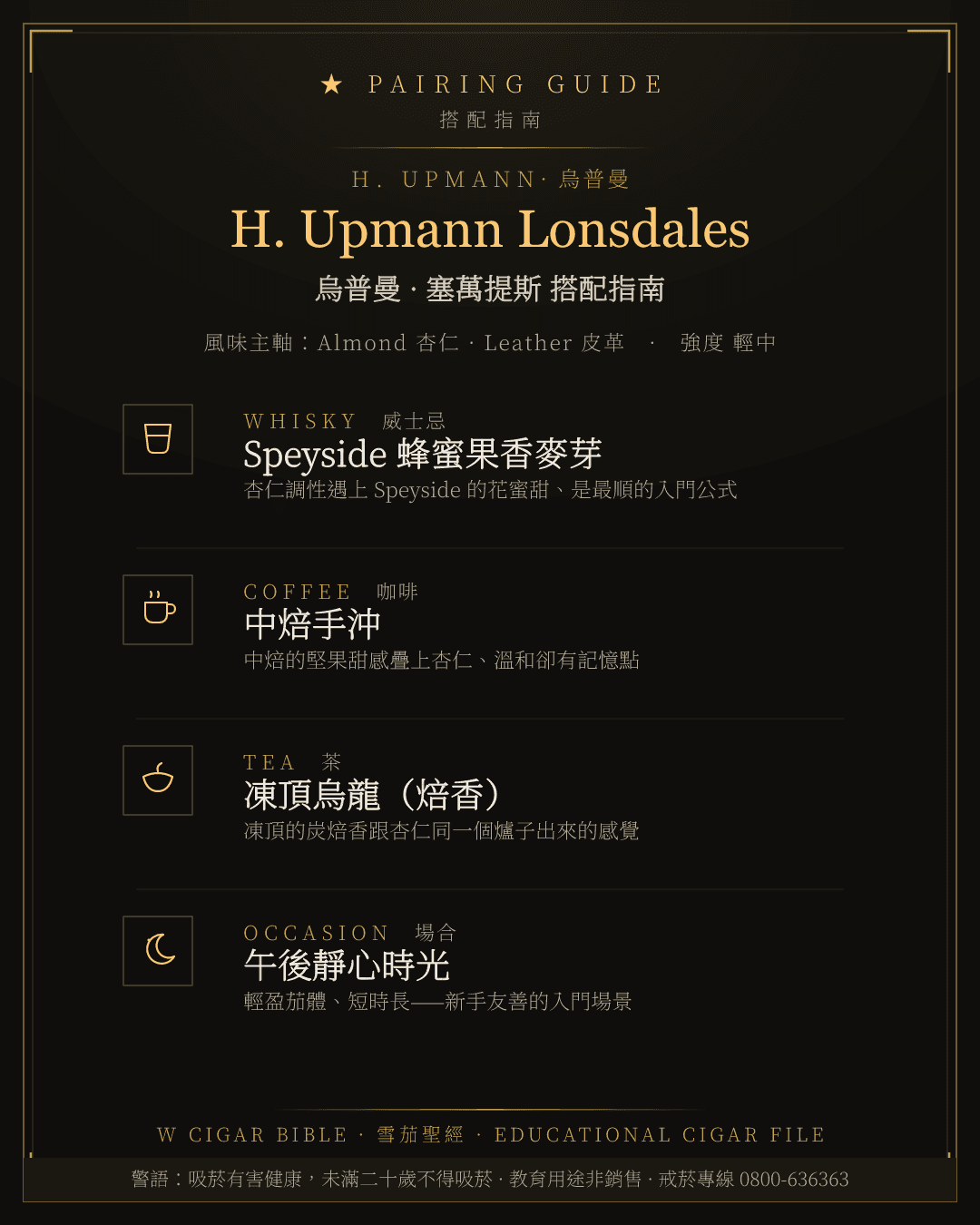
H. Upmann Lonsdales 搭配指南 · 烏普曼
PAIRING GUIDE · 搭配指南
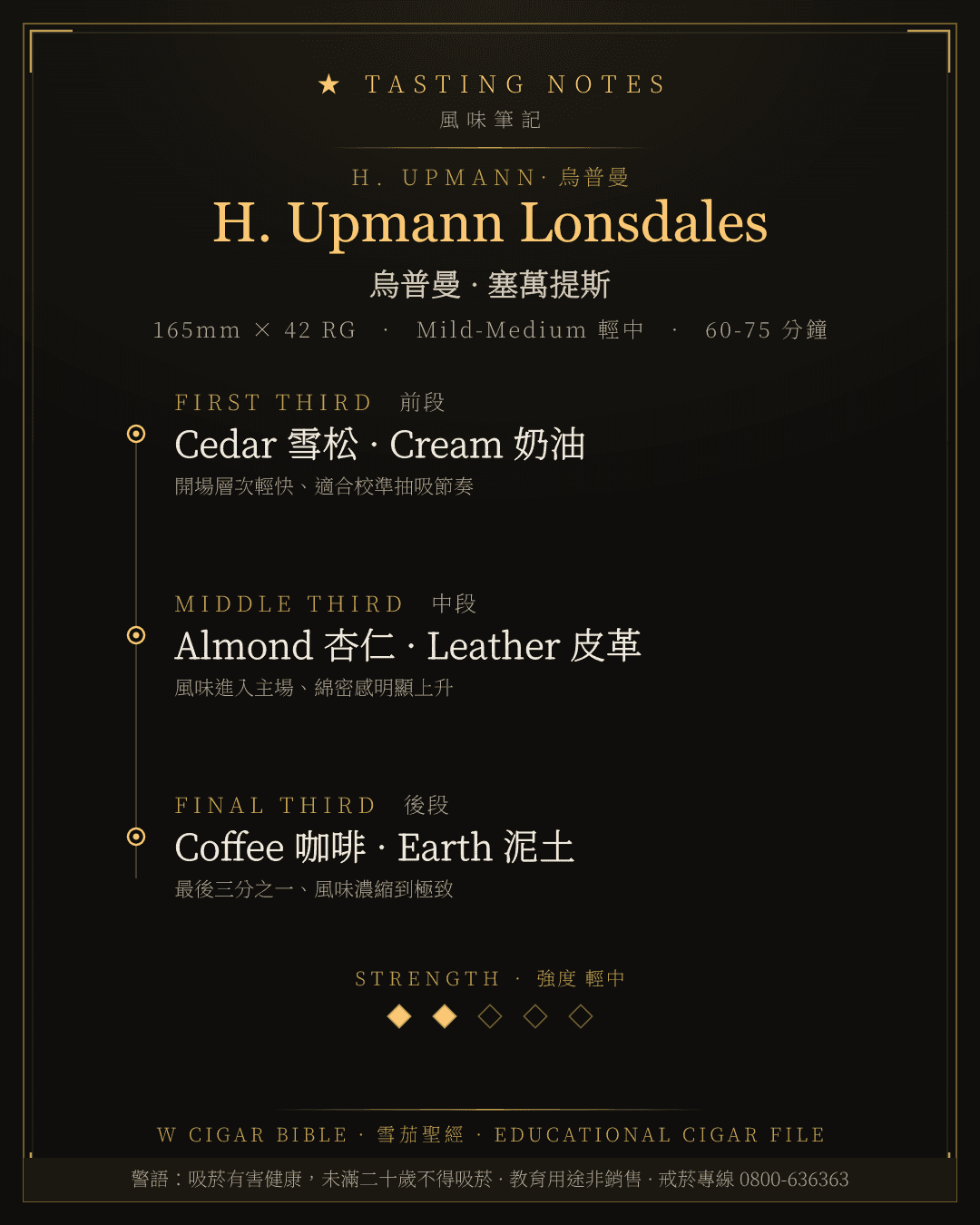
H. Upmann Lonsdales 風味筆記 · 烏普曼
TASTING NOTES · 風味筆記
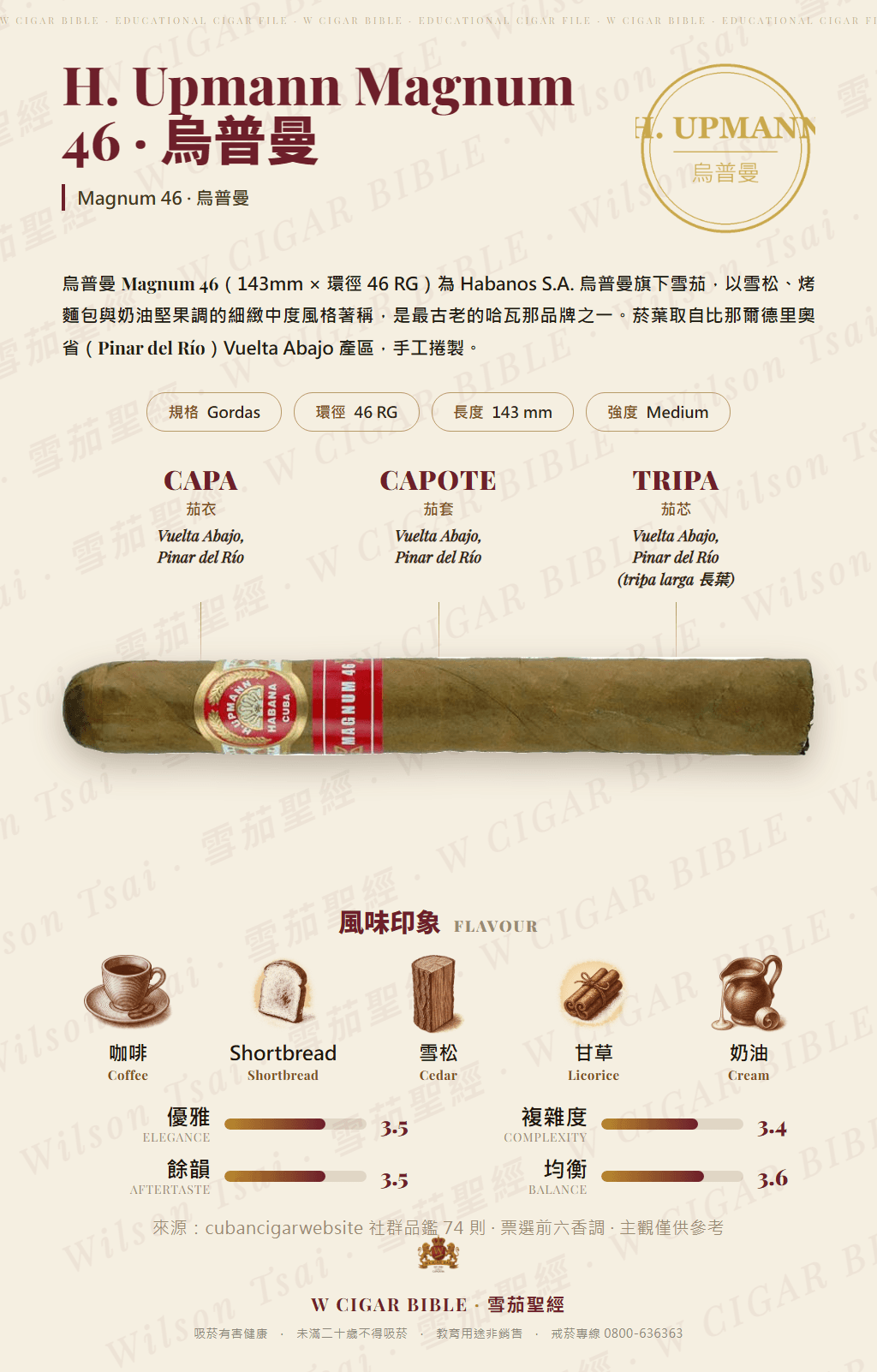
H. Upmann Magnum 46 · 烏普曼

H. Upmann Magnum 46 搭配指南 · 烏普曼
PAIRING GUIDE · 搭配指南
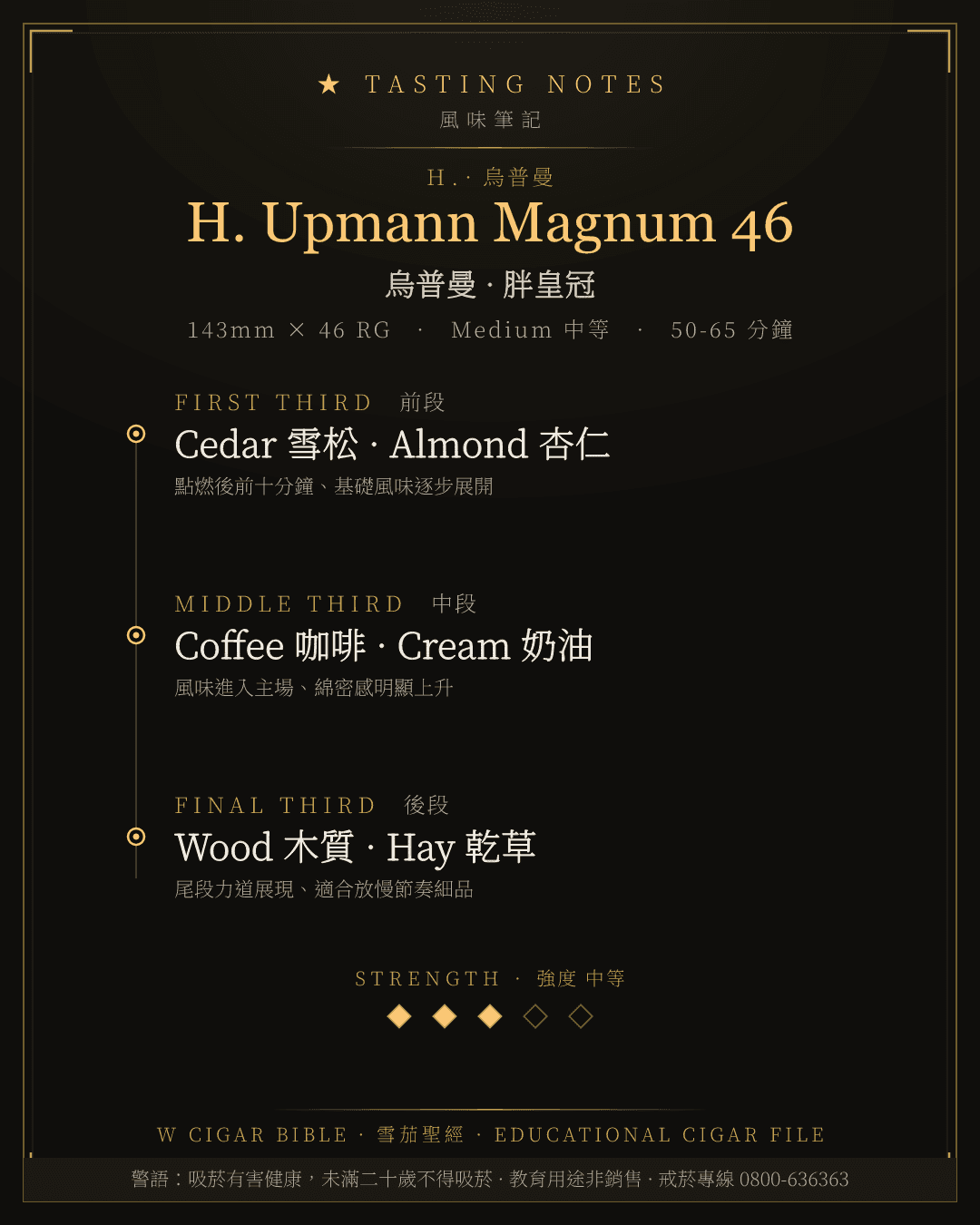
H. Upmann Magnum 46 風味筆記 · 烏普曼
TASTING NOTES · 風味筆記
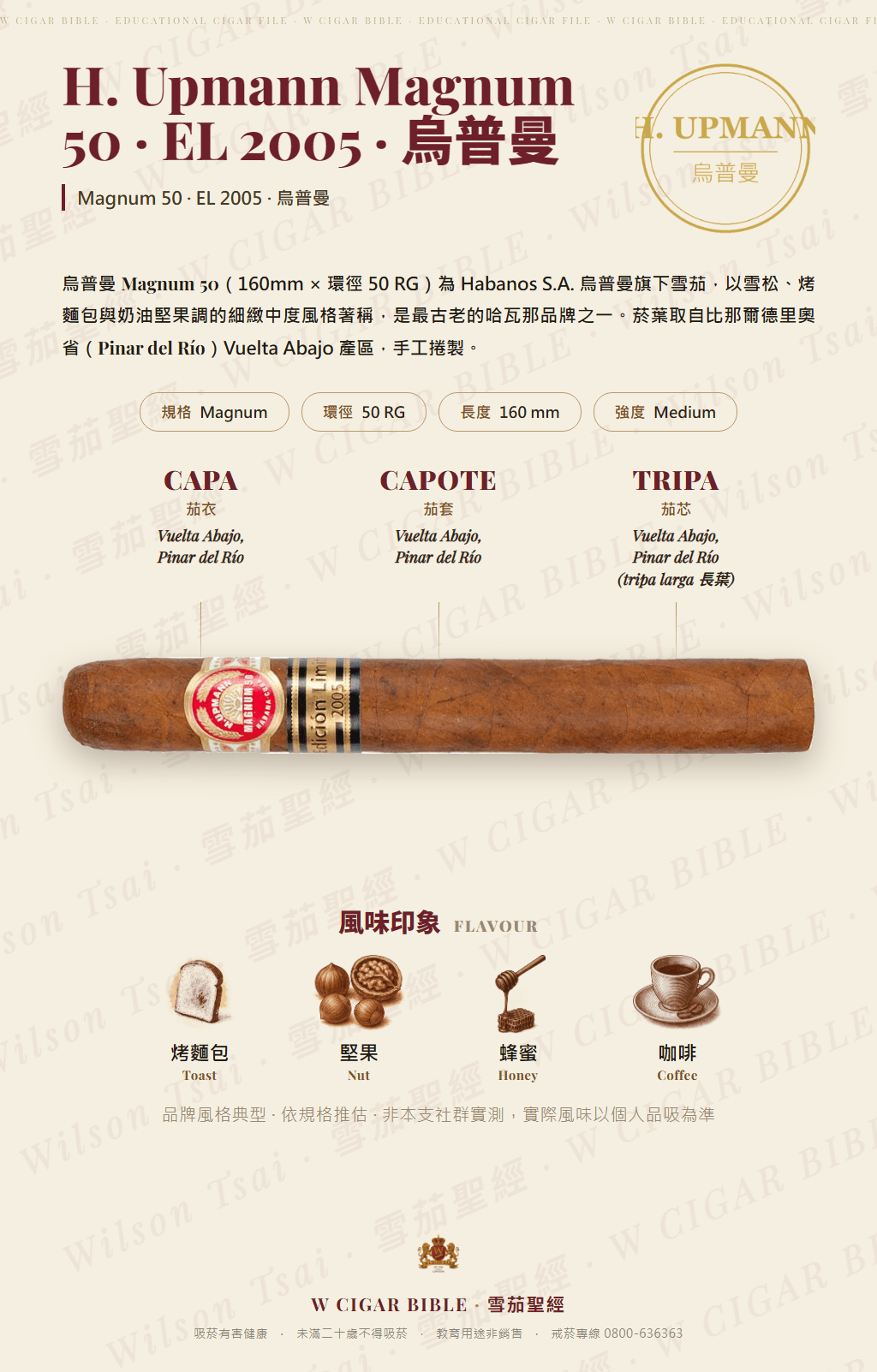
H. Upmann Magnum 50 · EL 2005 · 烏普曼
EL 2005 · 限量年度版 Edición Limitada · 雪茄檔案
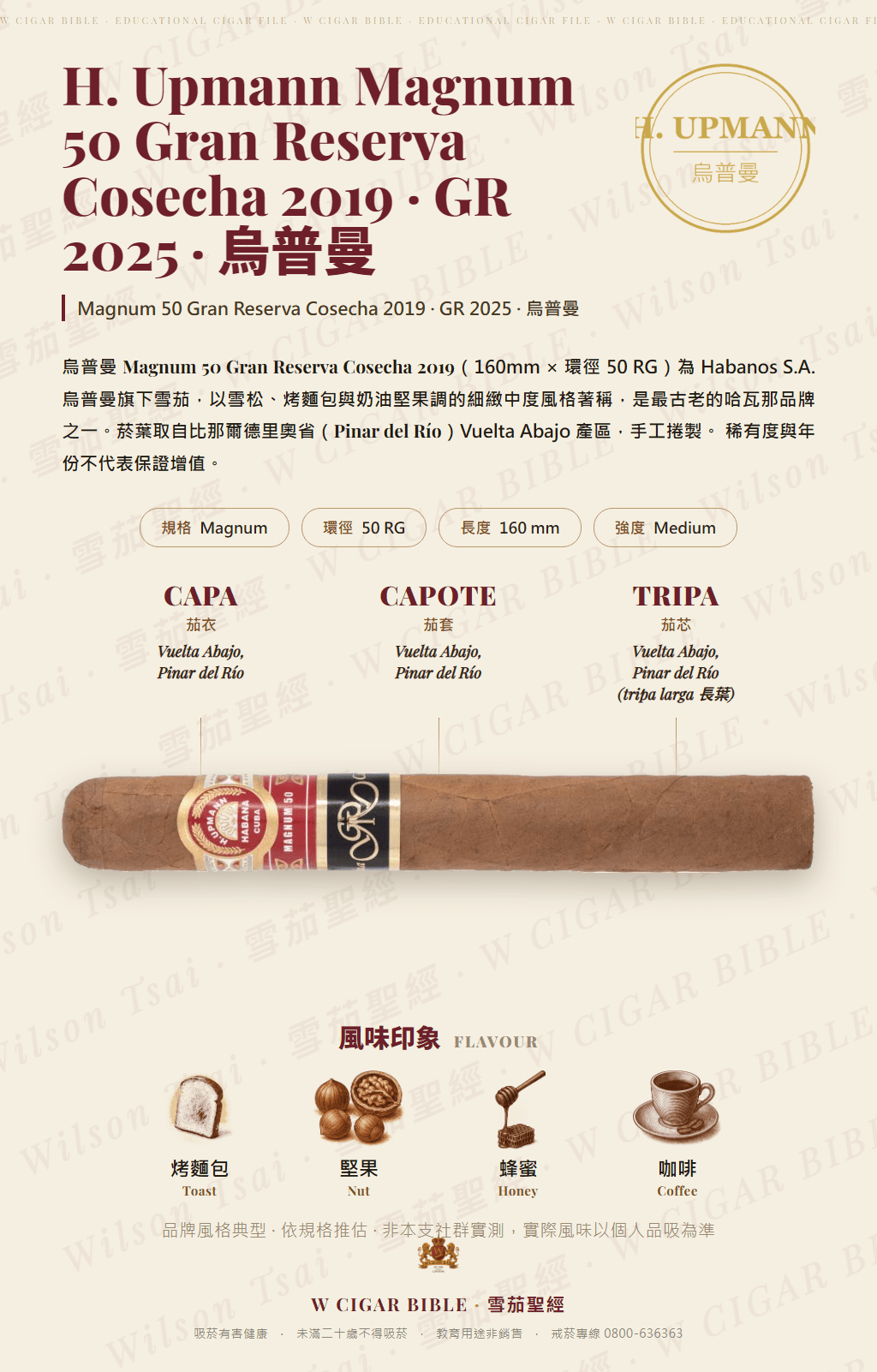
H. Upmann Magnum 50 Gran Reserva Cosecha 2019 · GR 2025 · 烏普曼
GR 2025 · 大珍藏 Gran Reserva Cosecha 2019(Magnum 50 廠規,50 環徑 × 160mm,限量 5,000 編號盒)· 雪茄檔案
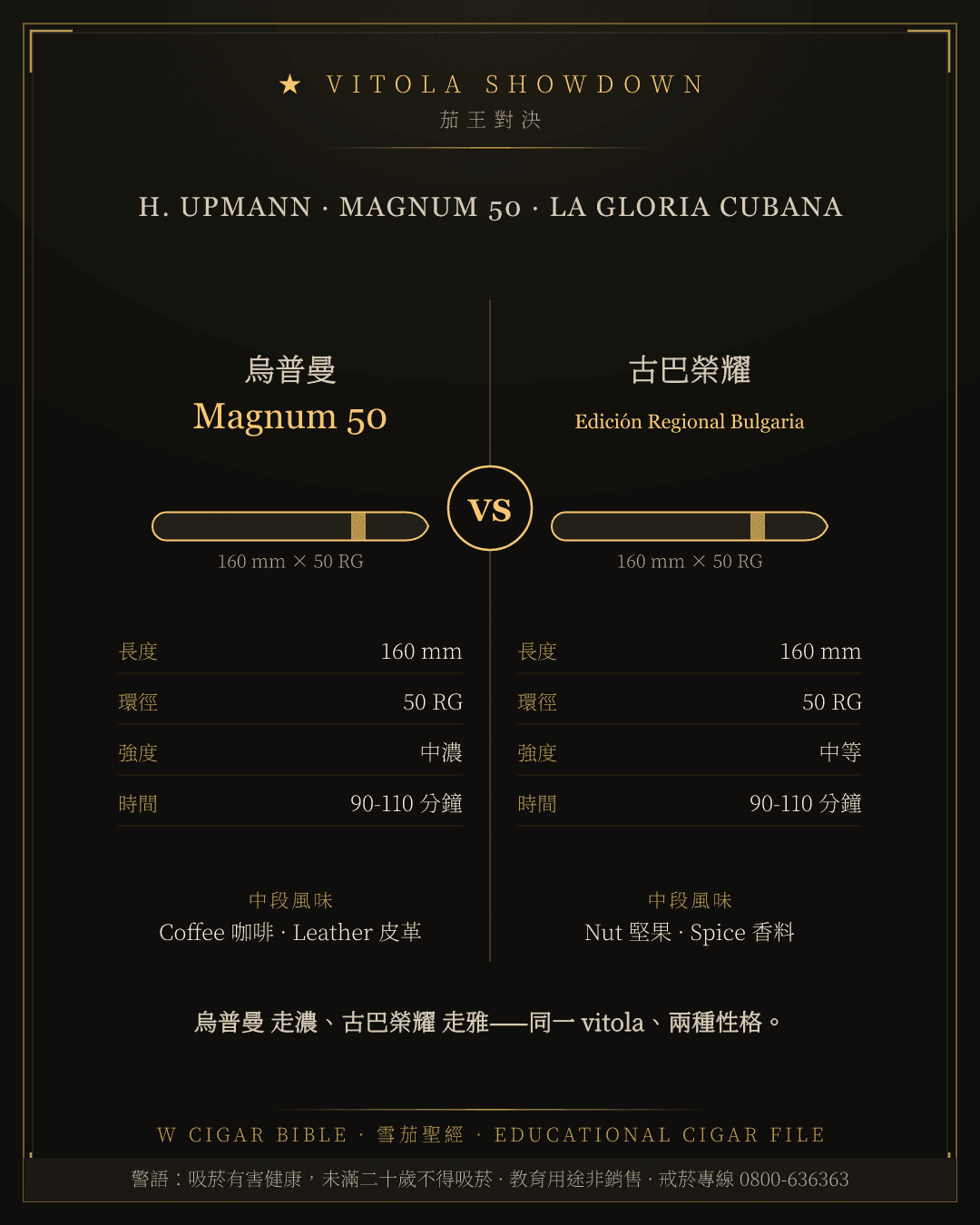
H. Upmann Magnum 50 vs La Gloria Cubana Edición Regional Bulgaria
VITOLA SHOWDOWN · Magnum 50

H. Upmann Magnum 50 搭配指南 · 烏普曼
PAIRING GUIDE · 搭配指南
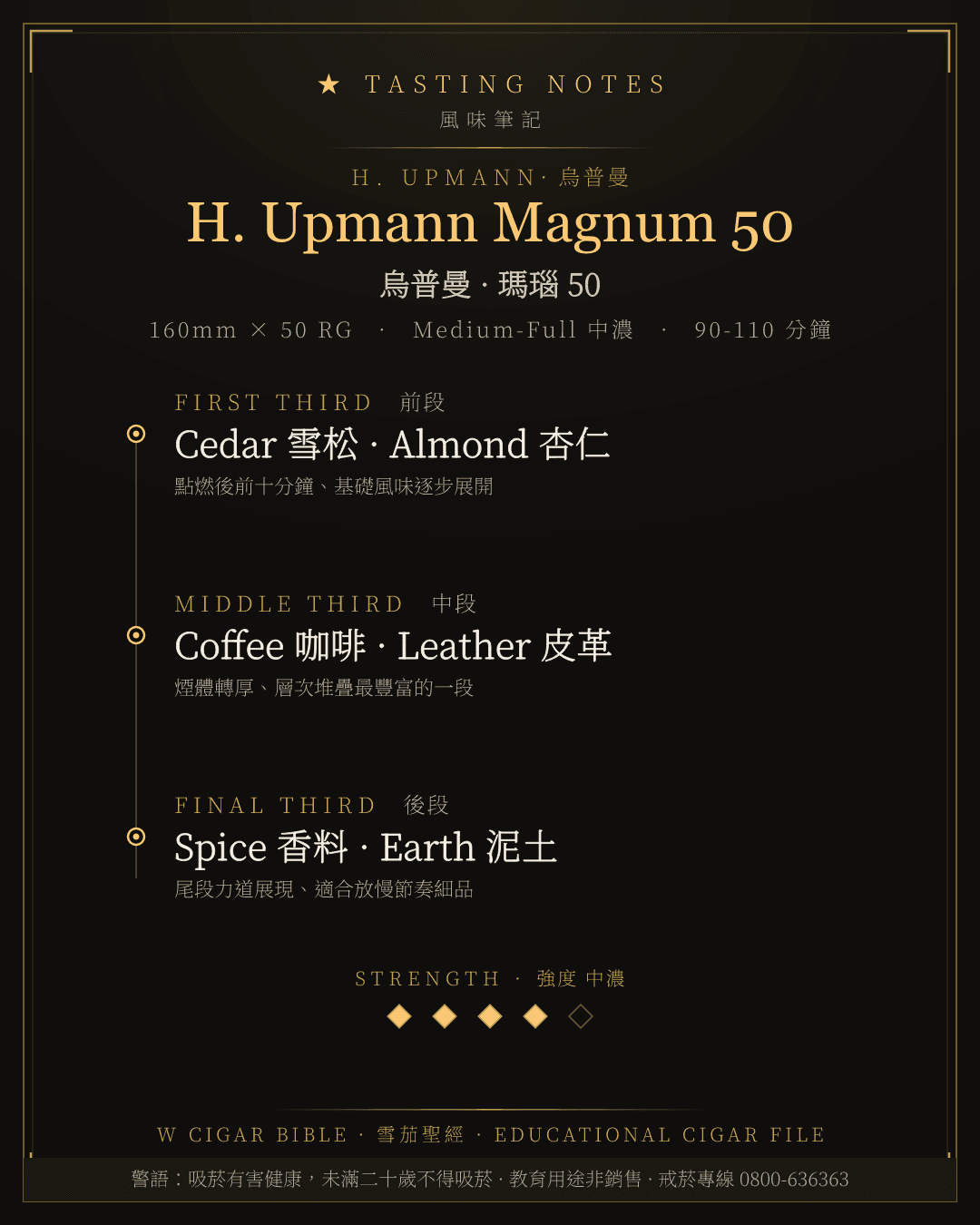
H. Upmann Magnum 50 風味筆記 · 烏普曼
TASTING NOTES · 風味筆記
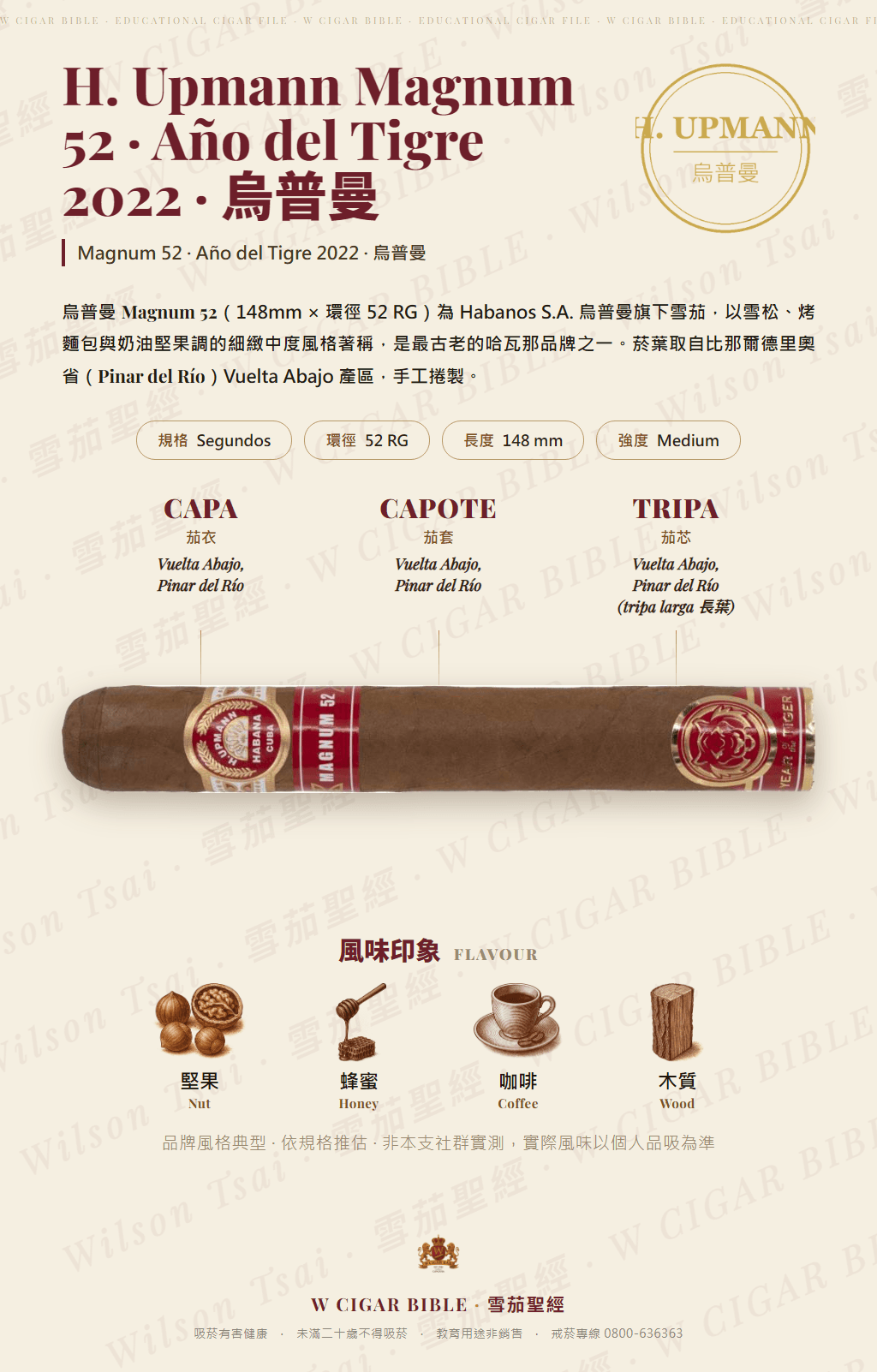
H. Upmann Magnum 52 · Año del Tigre 2022 · 烏普曼
Año del Tigre 2022 · 農曆生肖紀念版 Year of the Tiger · 雪茄檔案
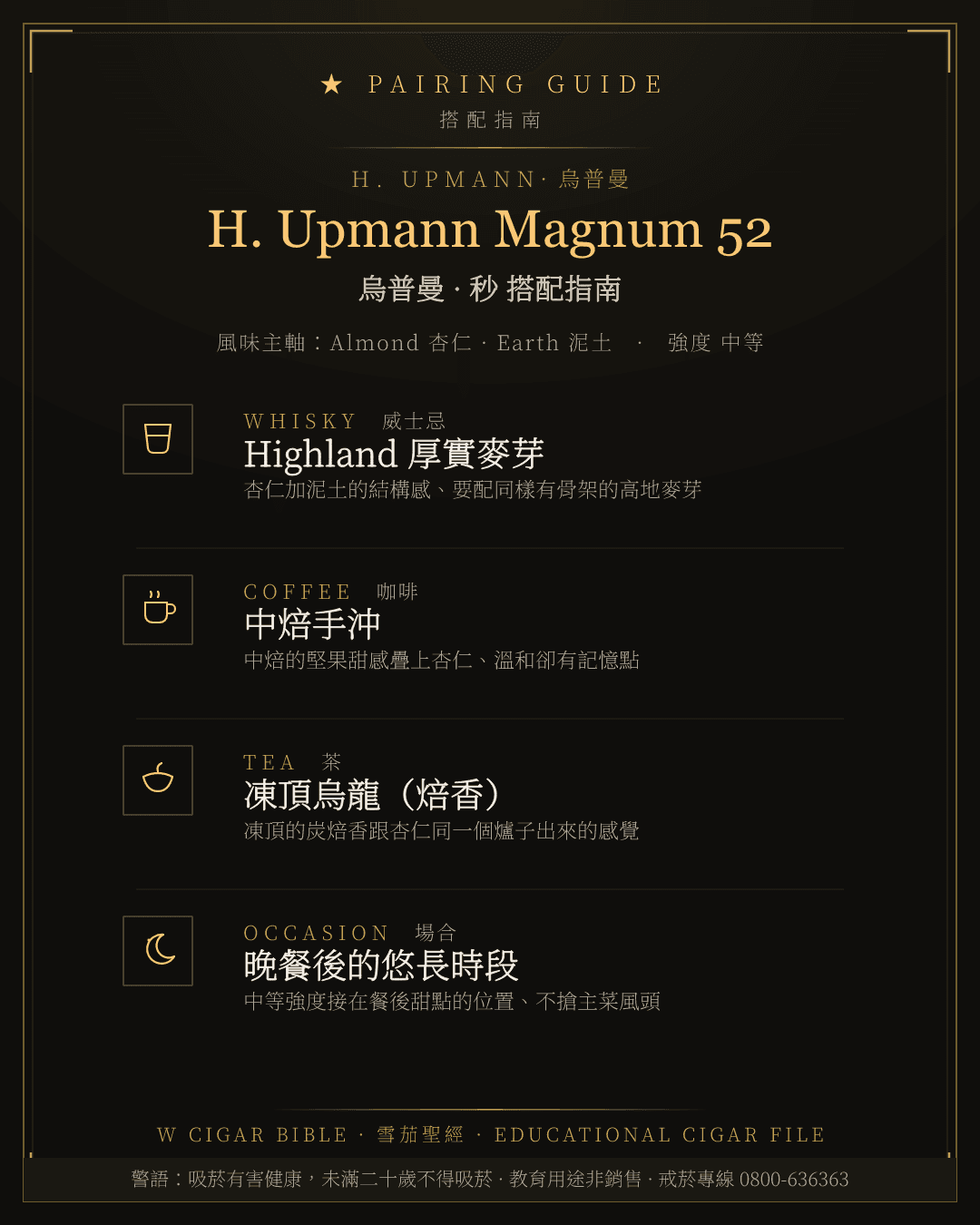
H. Upmann Magnum 52 搭配指南 · 烏普曼
PAIRING GUIDE · 搭配指南
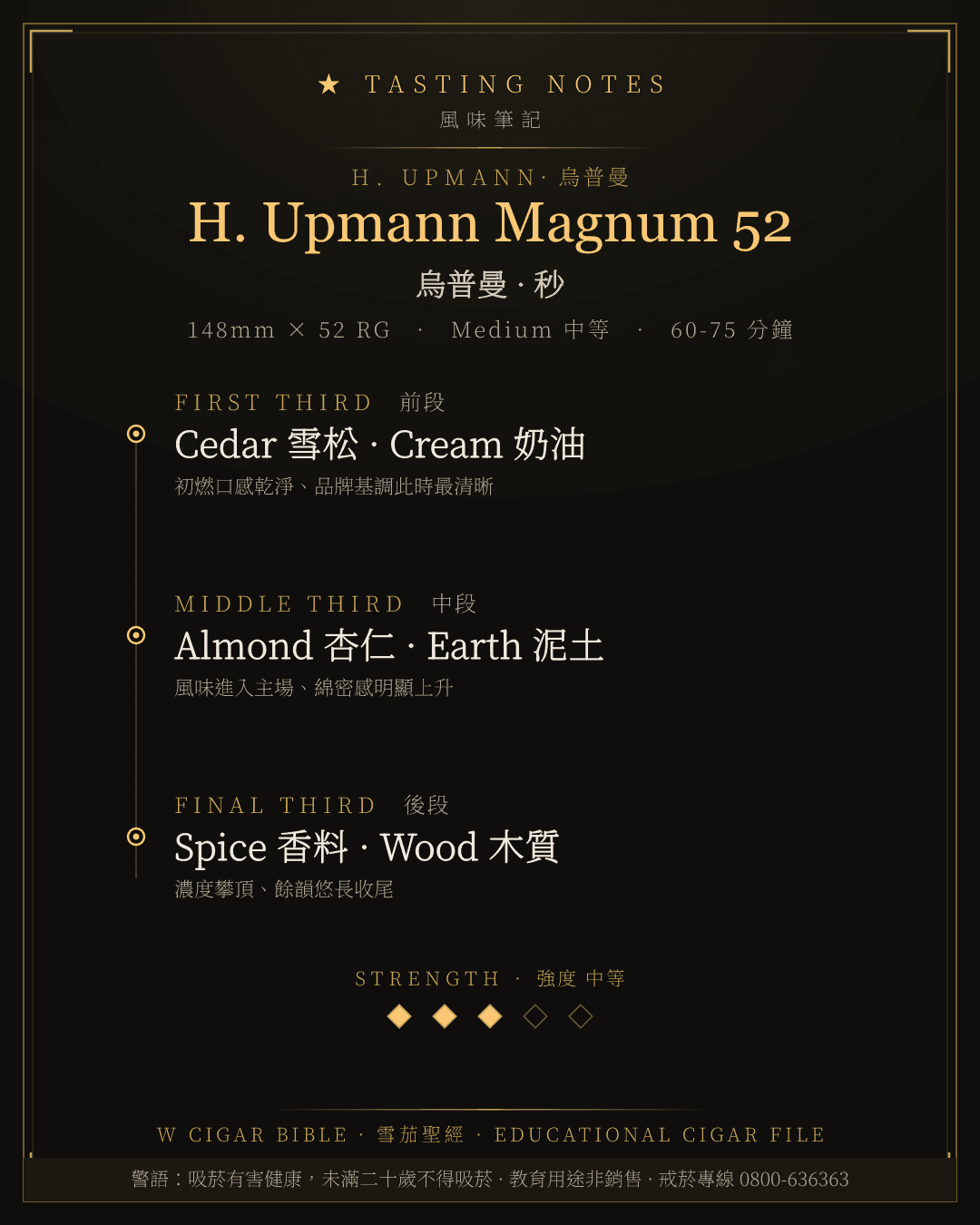
H. Upmann Magnum 52 風味筆記 · 烏普曼
TASTING NOTES · 風味筆記
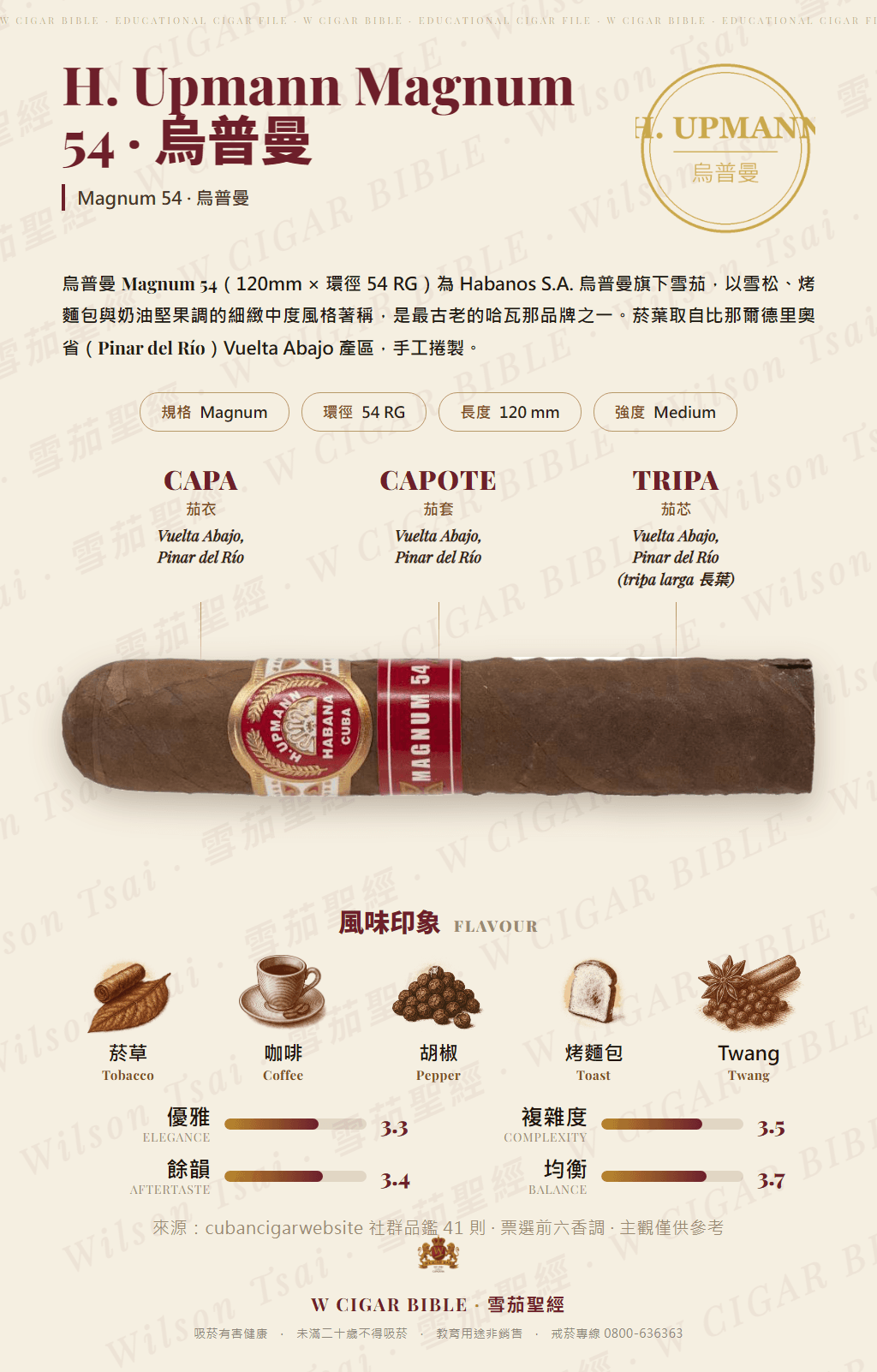
H. Upmann Magnum 54 · 烏普曼

H. Upmann Magnum 54 vs Sancho Panza Edición Regional Chipre y Grecia
VITOLA SHOWDOWN · Magnum 54

H. Upmann Magnum 54 搭配指南 · 烏普曼
PAIRING GUIDE · 搭配指南
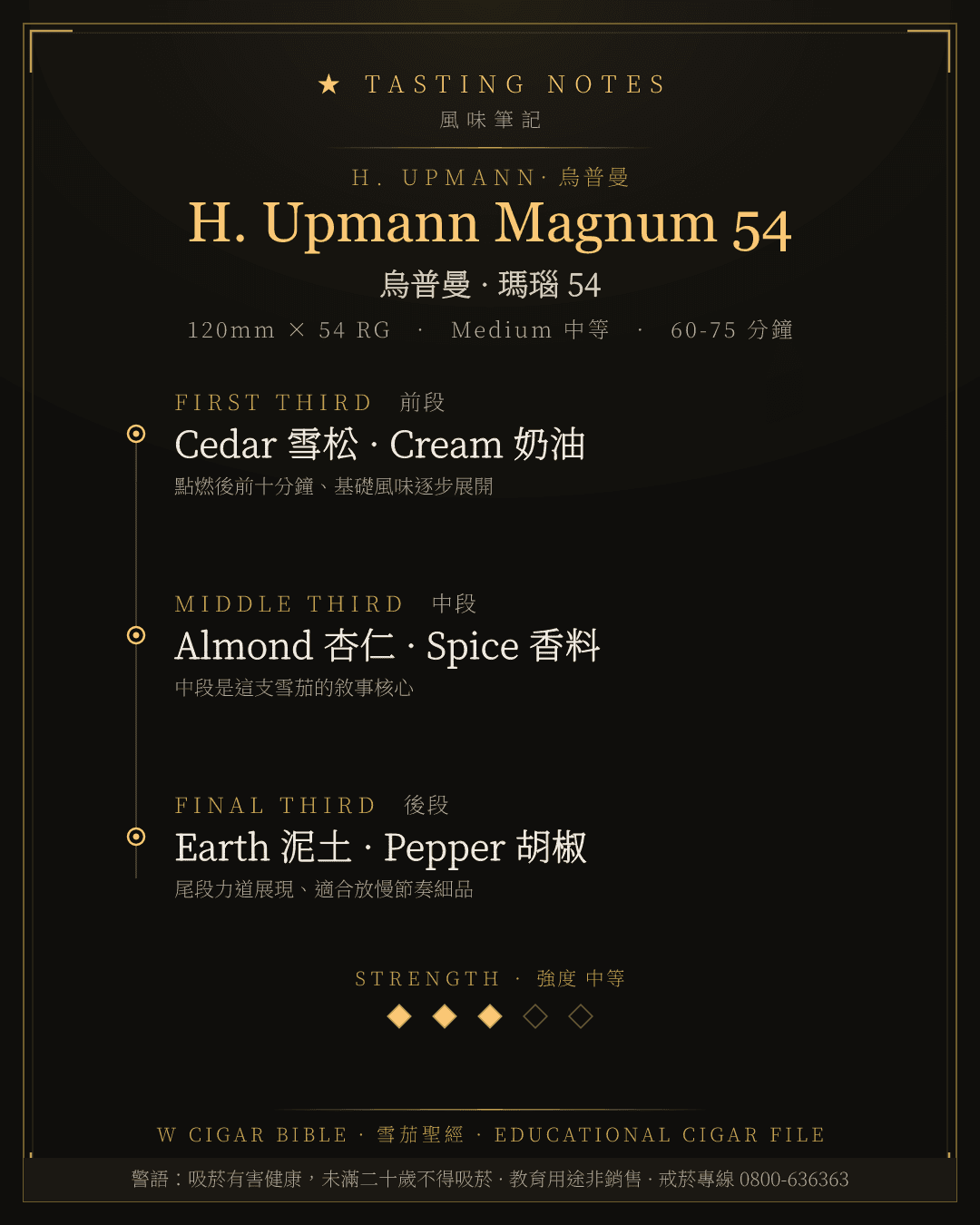
H. Upmann Magnum 54 風味筆記 · 烏普曼
TASTING NOTES · 風味筆記
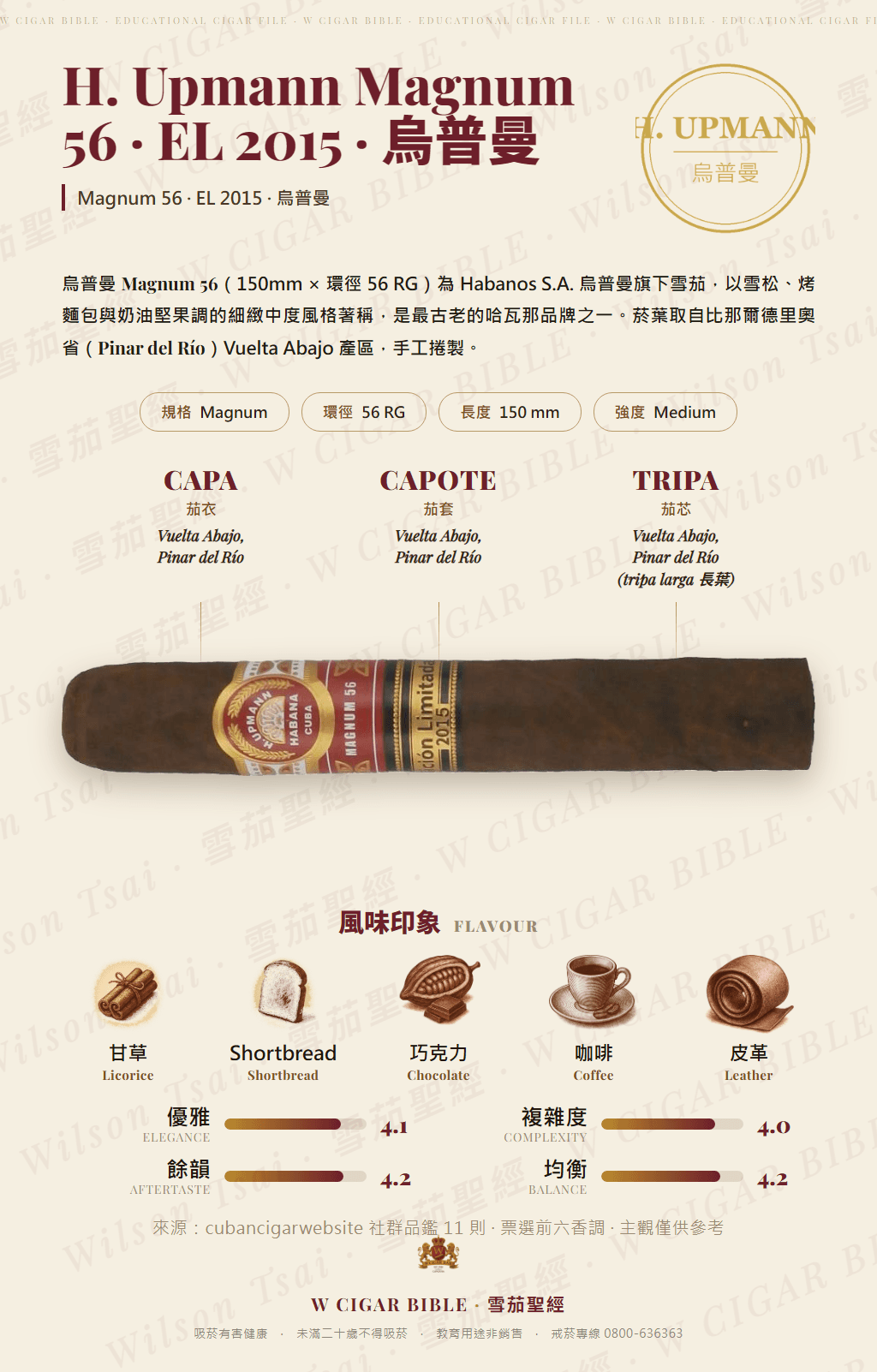
H. Upmann Magnum 56 · EL 2015 · 烏普曼
EL 2015 · 限量年度版 Edición Limitada · 雪茄檔案
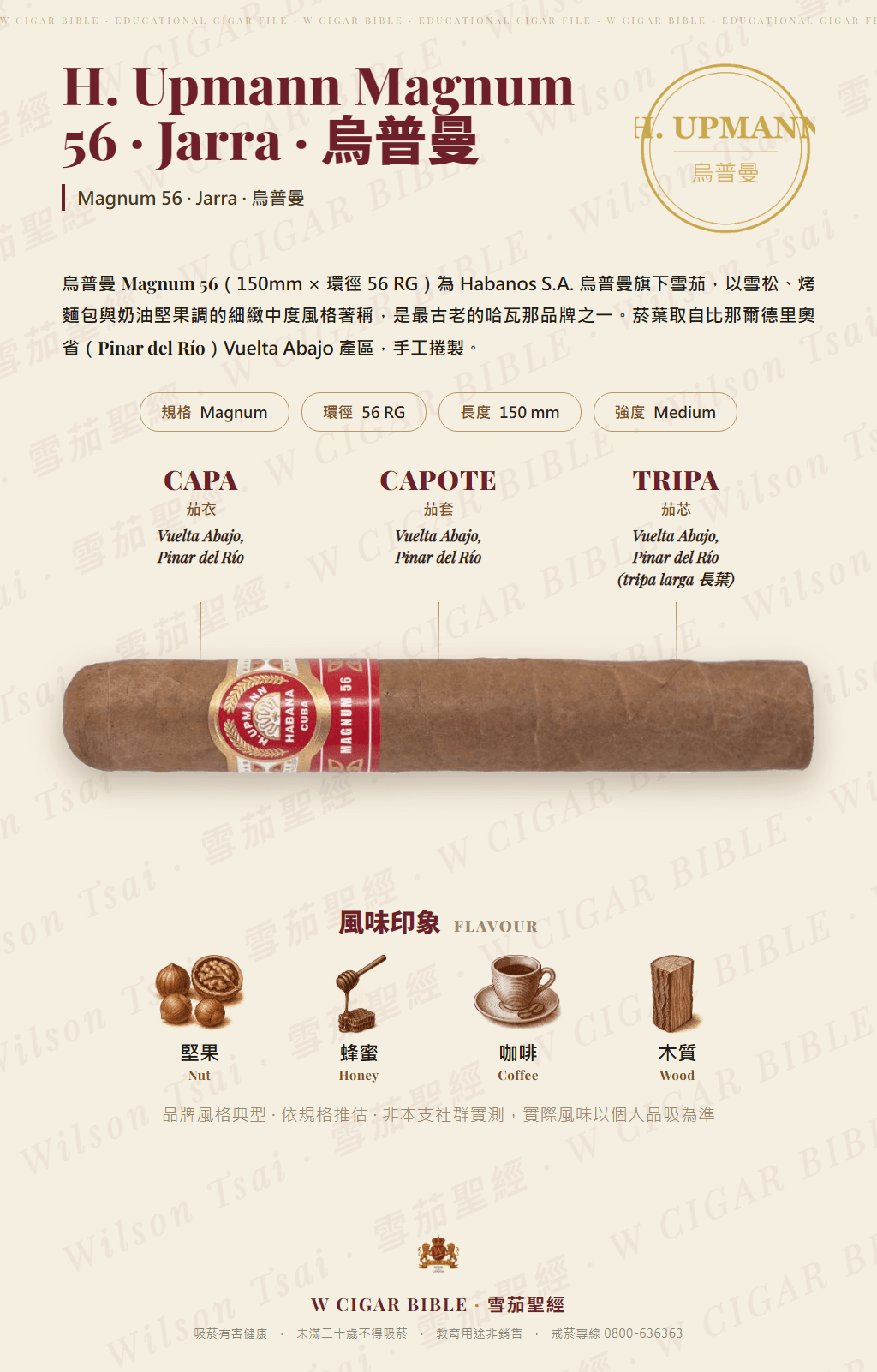
H. Upmann Magnum 56 · Jarra · 烏普曼
旅遊零售/免稅通路限定陶罐版(Magnum 56,150mm × 環徑 56 RG,2019 年坎城發表、2020 年上市)· 雪茄檔案

H. Upmann Magnum 56 搭配指南 · 烏普曼
PAIRING GUIDE · 搭配指南

H. Upmann Magnum 56 風味筆記 · 烏普曼
TASTING NOTES · 風味筆記
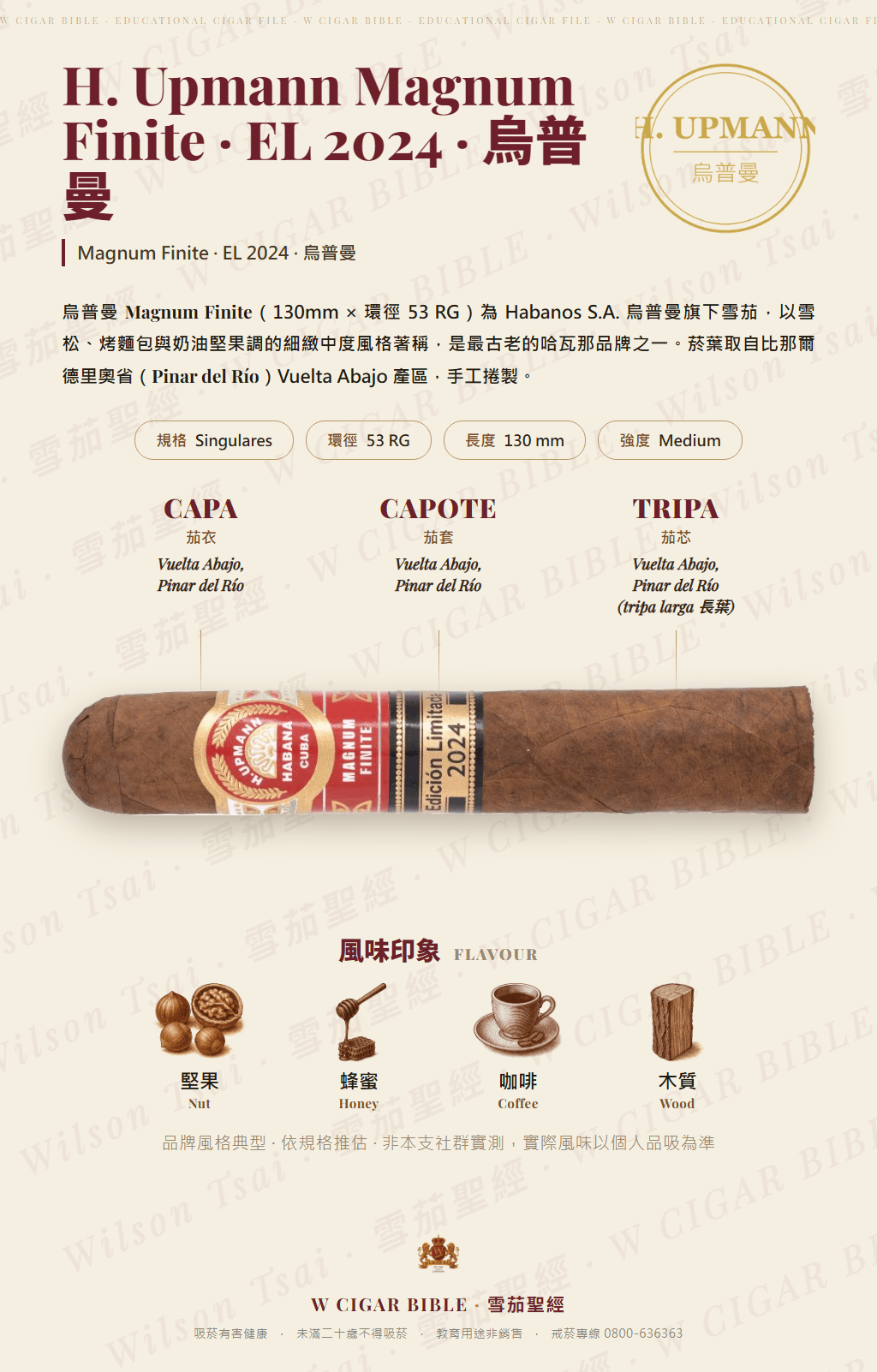
H. Upmann Magnum Finite · EL 2024 · 烏普曼
EL 2024 · 限量年度版 Edición Limitada · 雪茄檔案

H. Upmann Magnum Finite 搭配指南 · 烏普曼
PAIRING GUIDE · 搭配指南
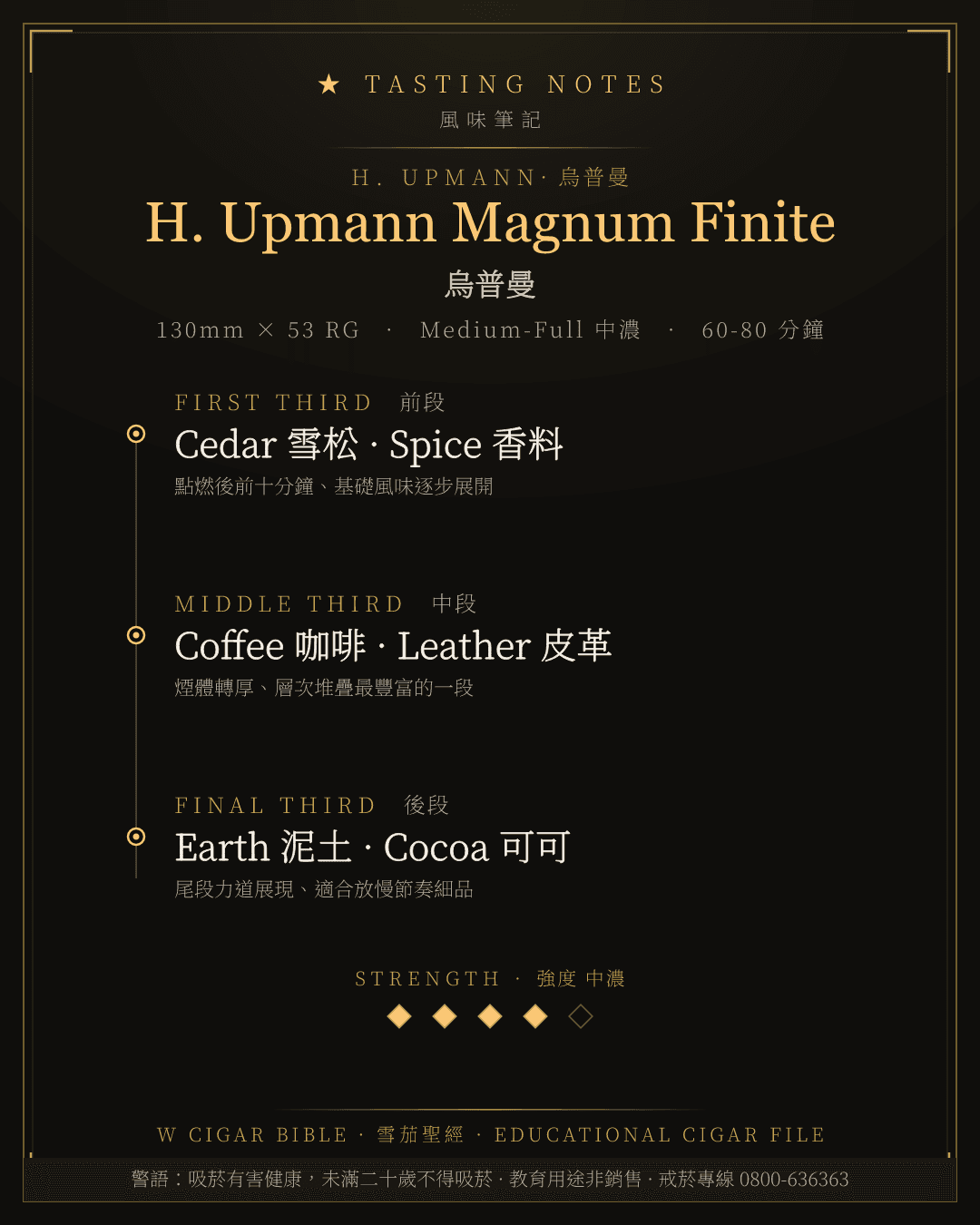
H. Upmann Magnum Finite 風味筆記 · 烏普曼
TASTING NOTES · 風味筆記

H. Upmann Majestic · 烏普曼
經典常規版

H. Upmann Medias Coronas 1 · 烏普曼
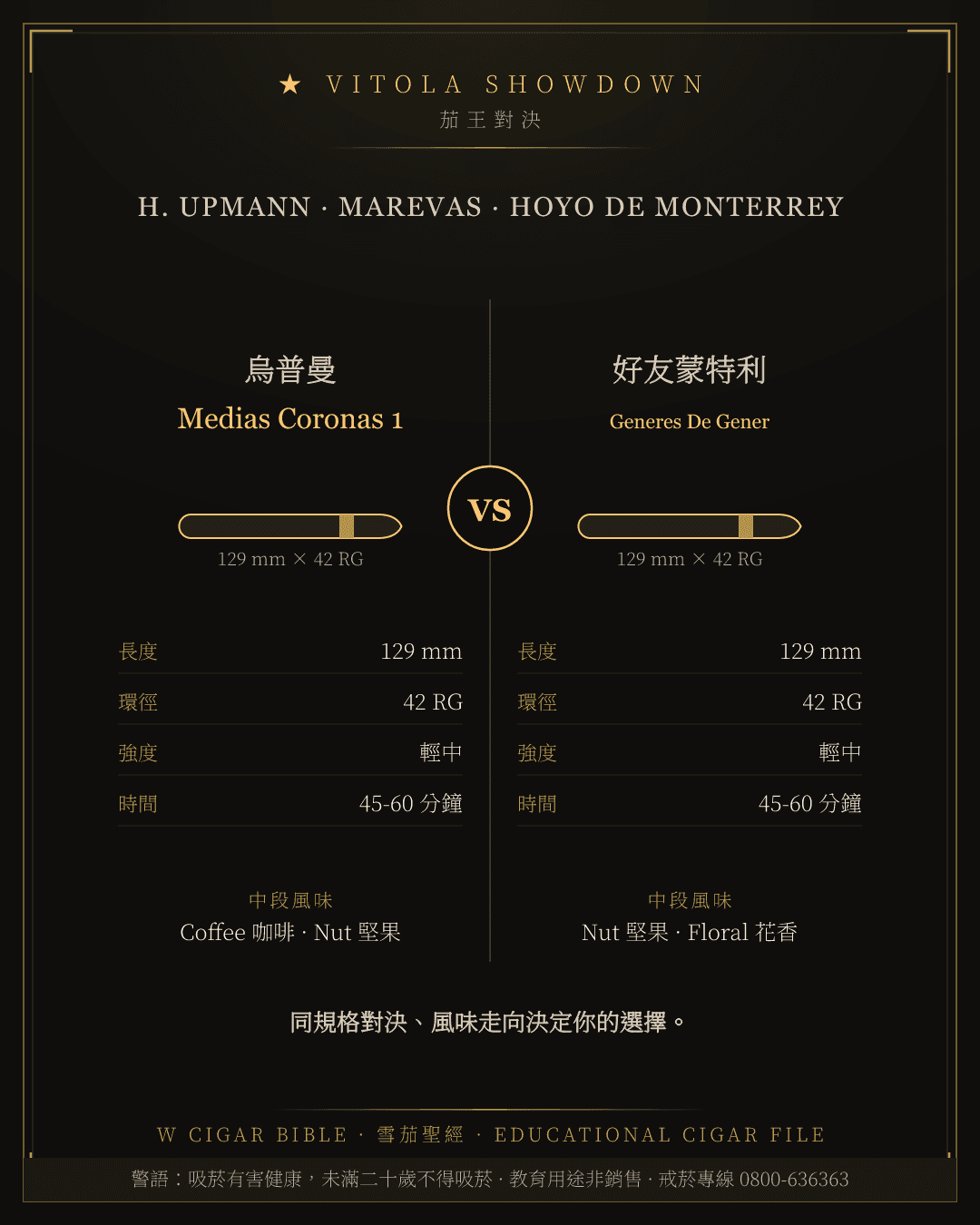
H. Upmann Medias Coronas 1 vs Hoyo De Monterrey Generes De Gener
VITOLA SHOWDOWN · Marevas
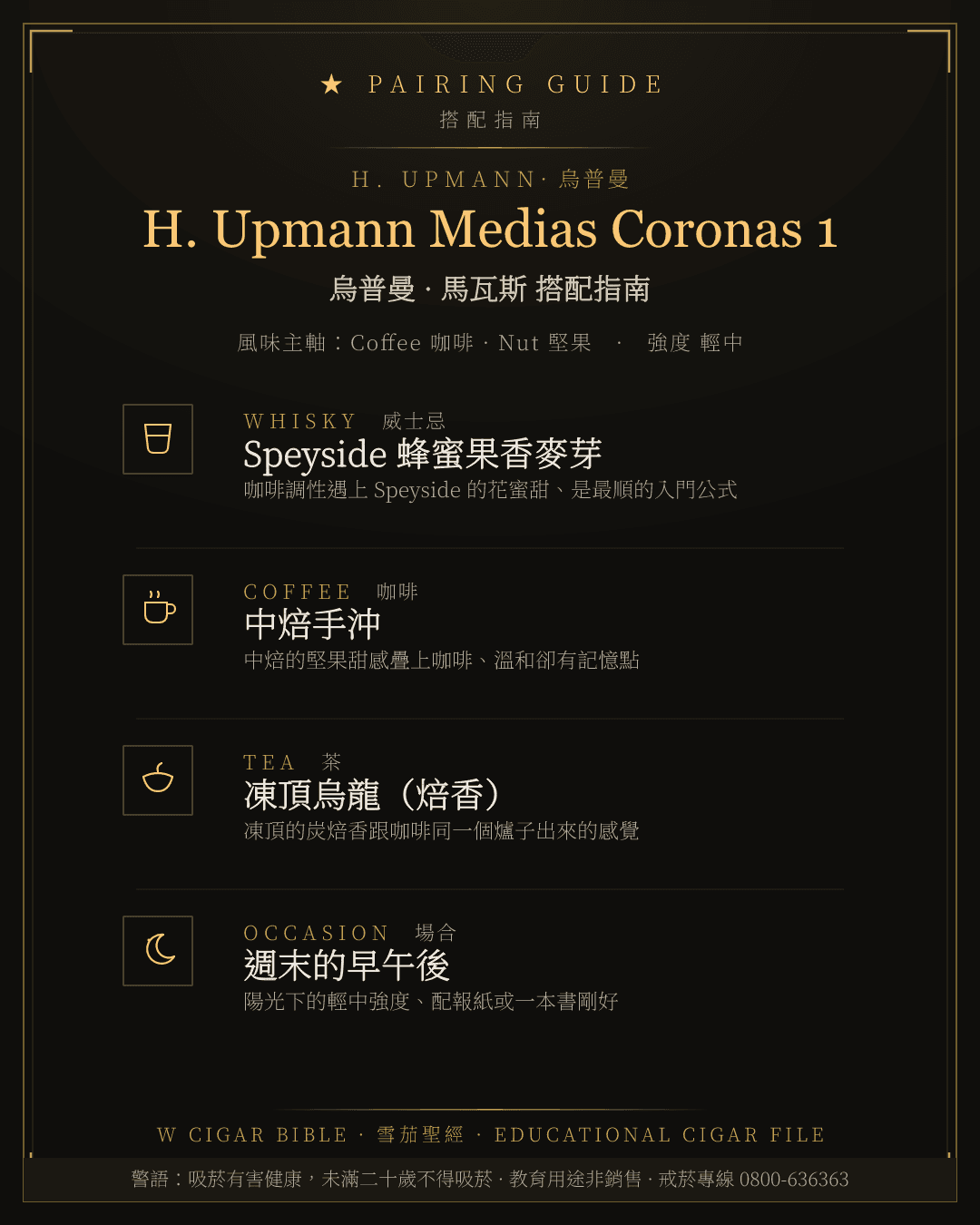
H. Upmann Medias Coronas 1 搭配指南 · 烏普曼
PAIRING GUIDE · 搭配指南
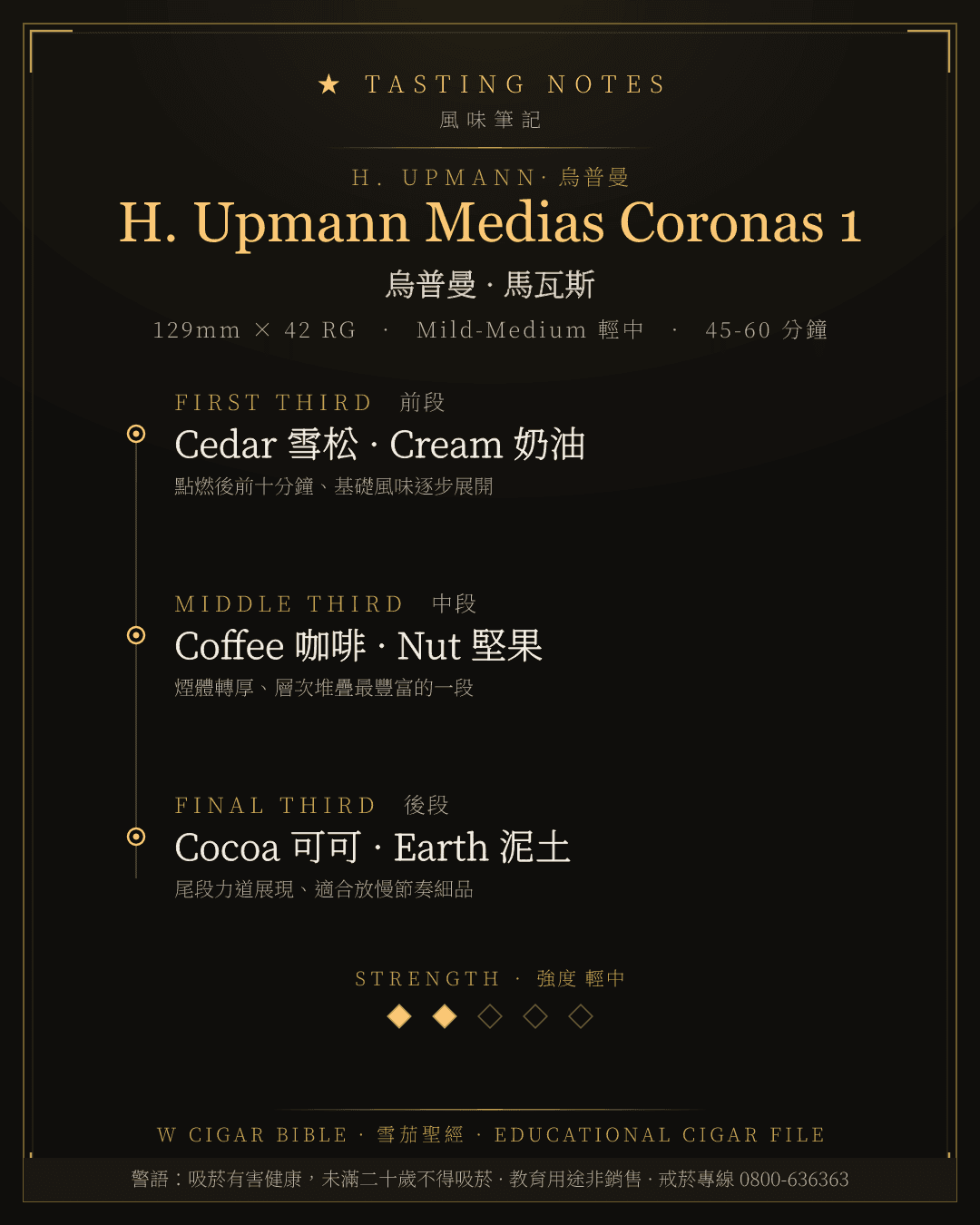
H. Upmann Medias Coronas 1 風味筆記 · 烏普曼
TASTING NOTES · 風味筆記
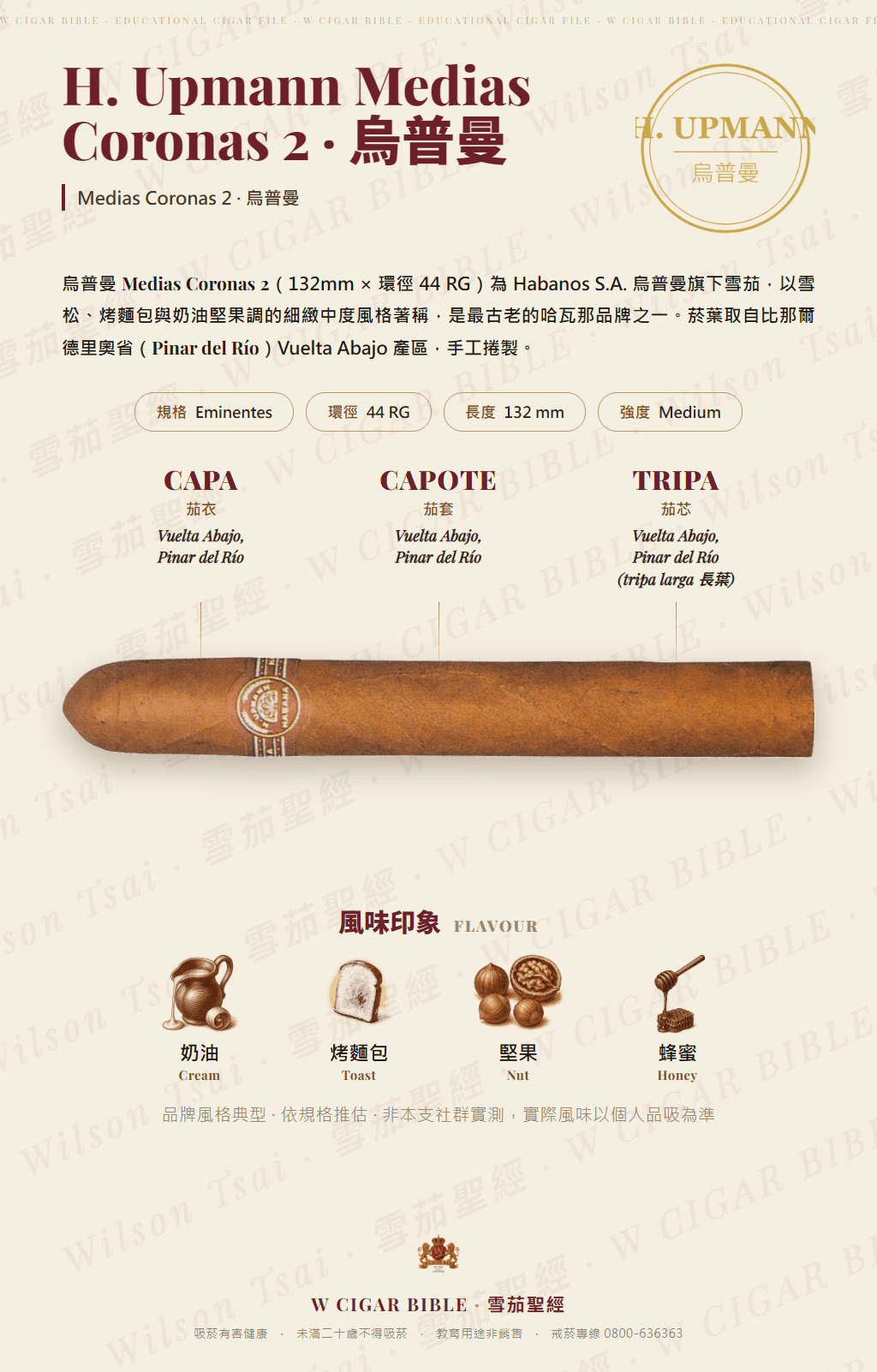
H. Upmann Medias Coronas 2 · 烏普曼
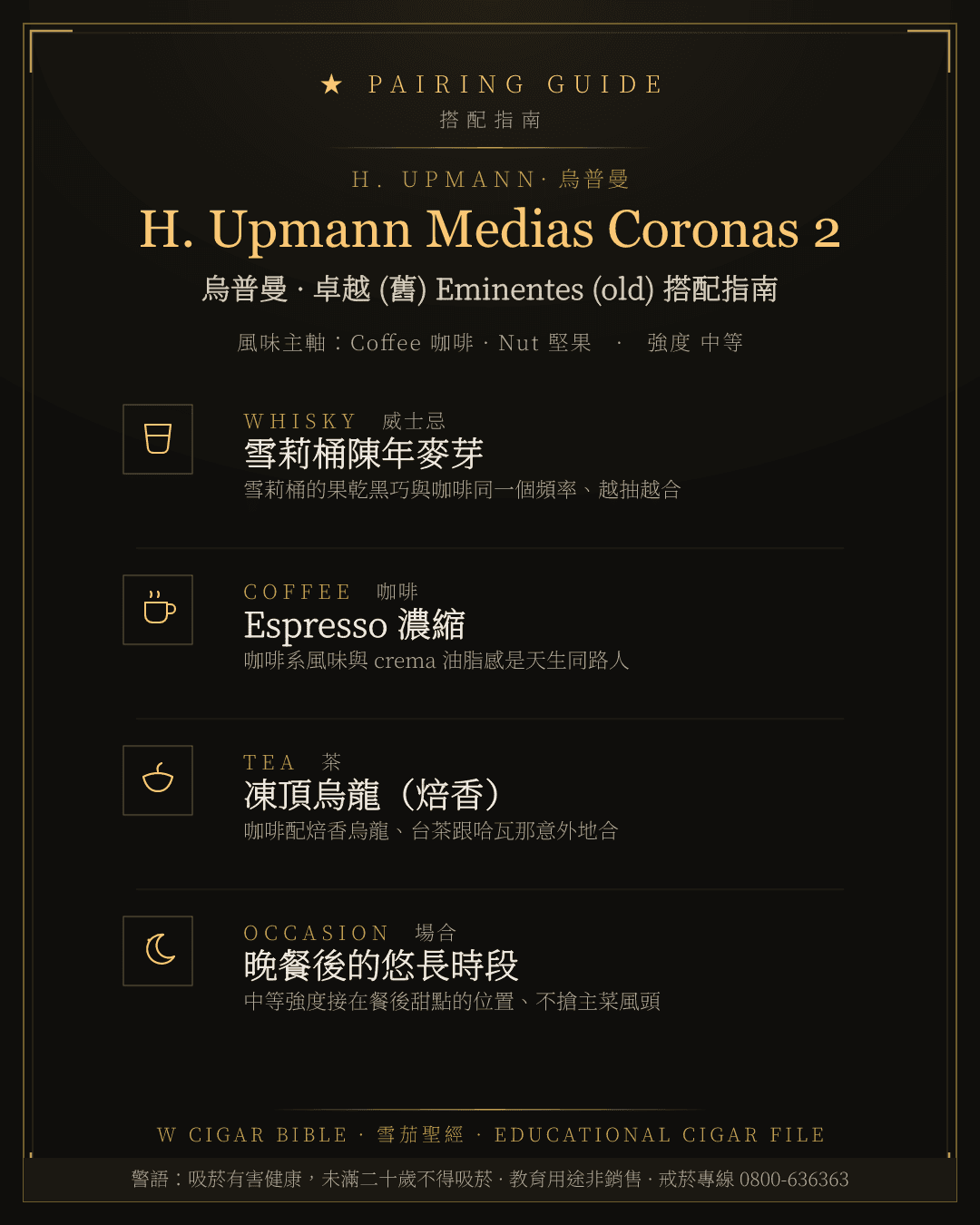
H. Upmann Medias Coronas 2 搭配指南 · 烏普曼
PAIRING GUIDE · 搭配指南
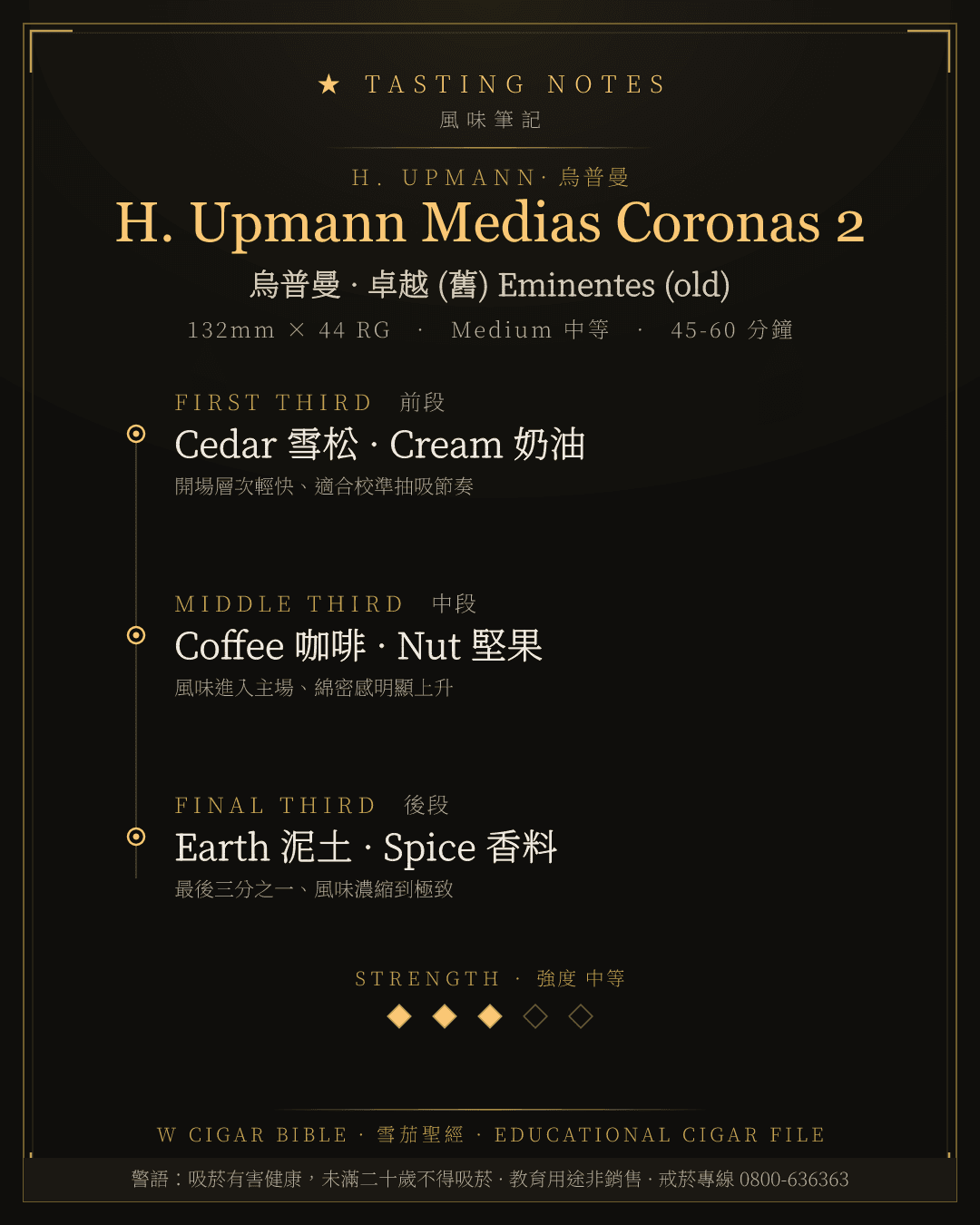
H. Upmann Medias Coronas 2 風味筆記 · 烏普曼
TASTING NOTES · 風味筆記
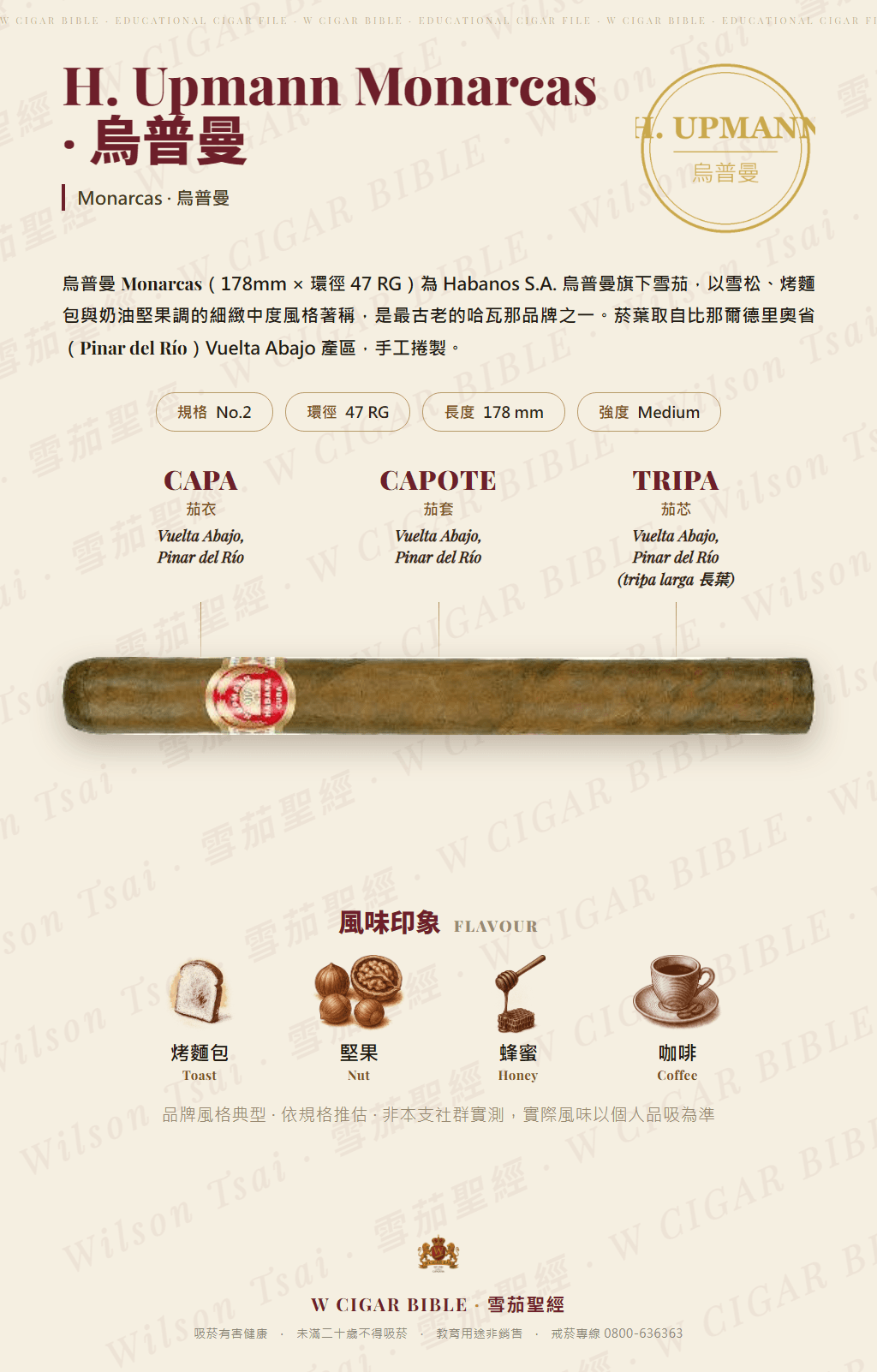
H. Upmann Monarcas · 烏普曼
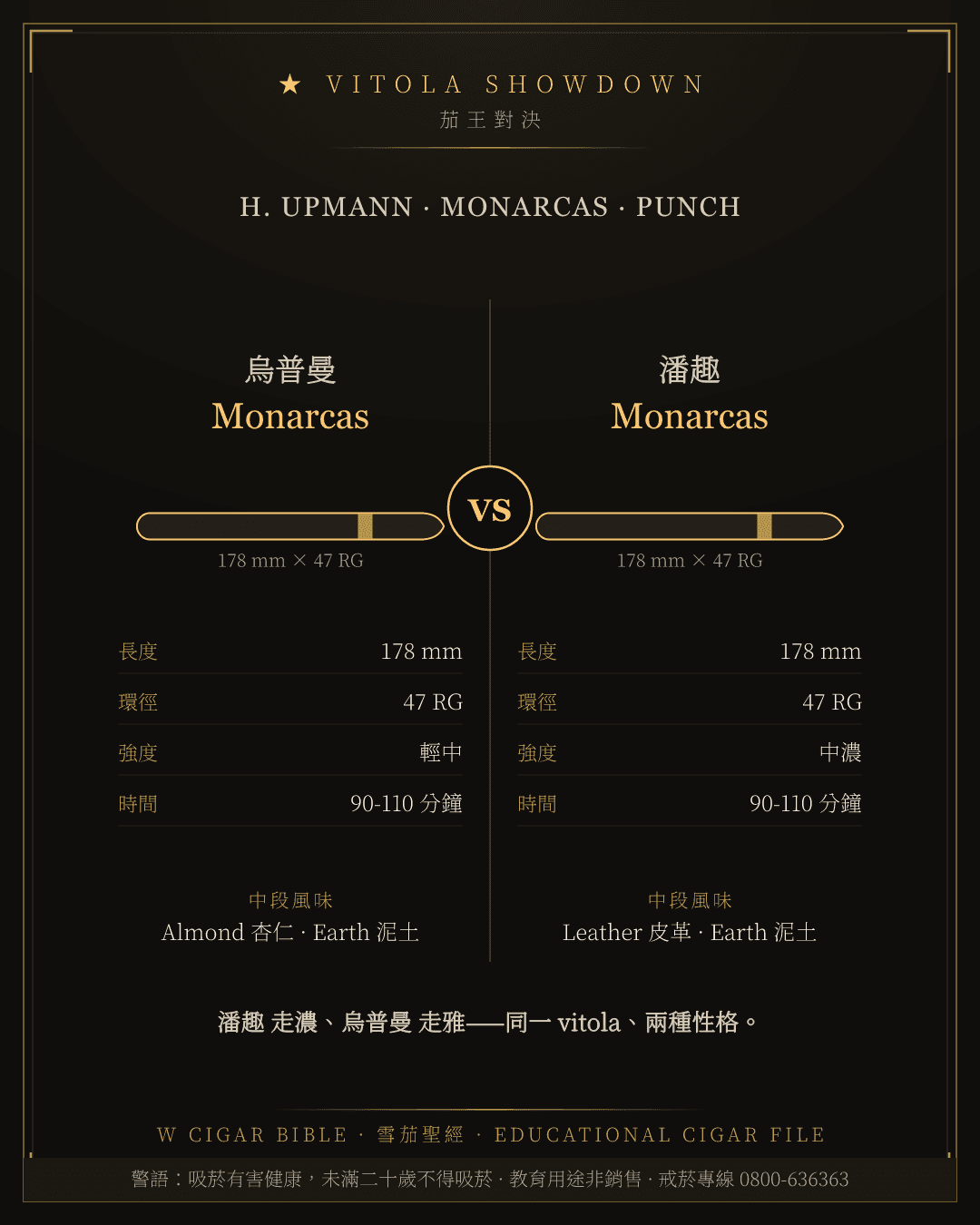
H. Upmann Monarcas vs Punch Monarcas
VITOLA SHOWDOWN · Monarcas

H. Upmann Monarcas 搭配指南 · 烏普曼
PAIRING GUIDE · 搭配指南
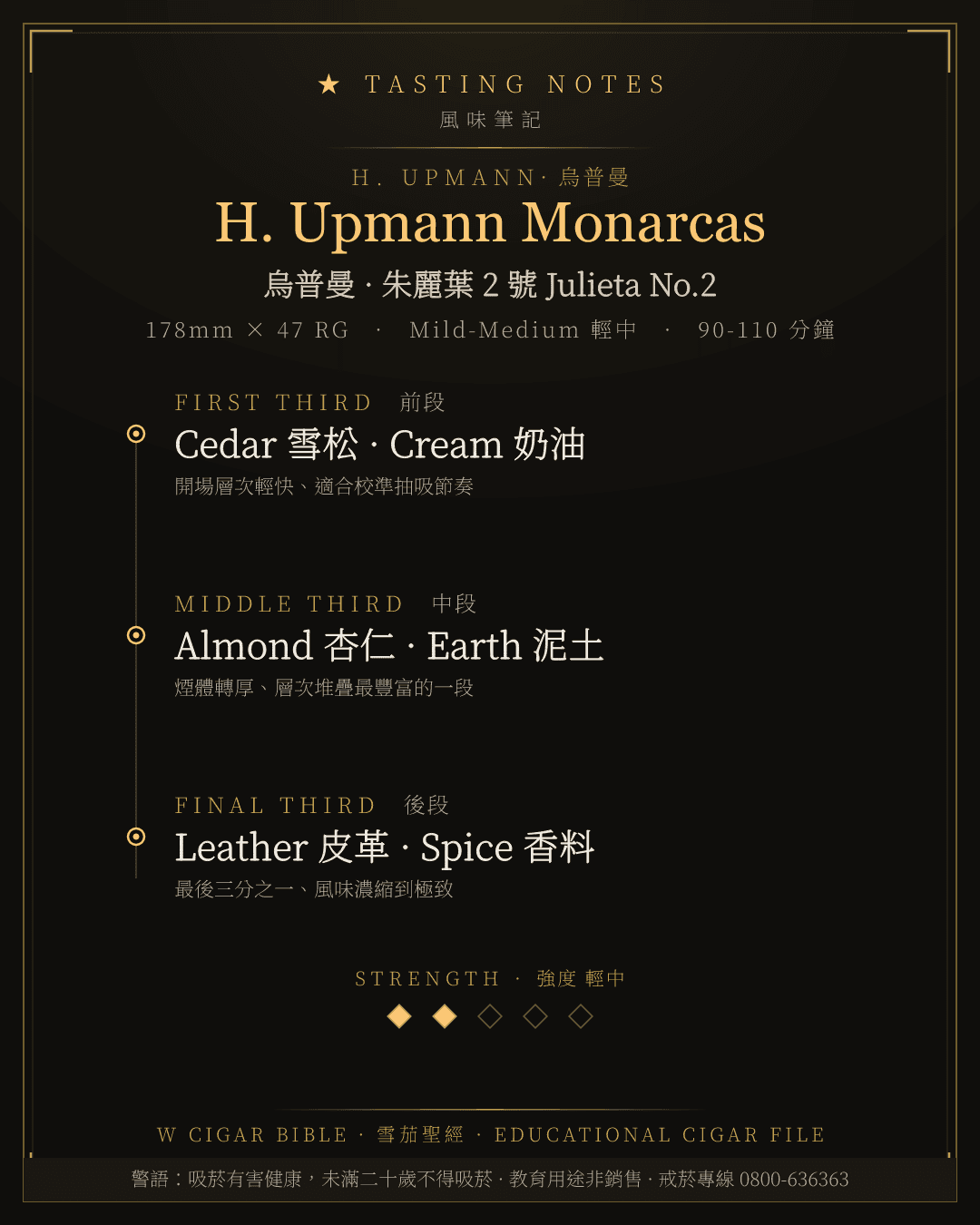
H. Upmann Monarcas 風味筆記 · 烏普曼
TASTING NOTES · 風味筆記
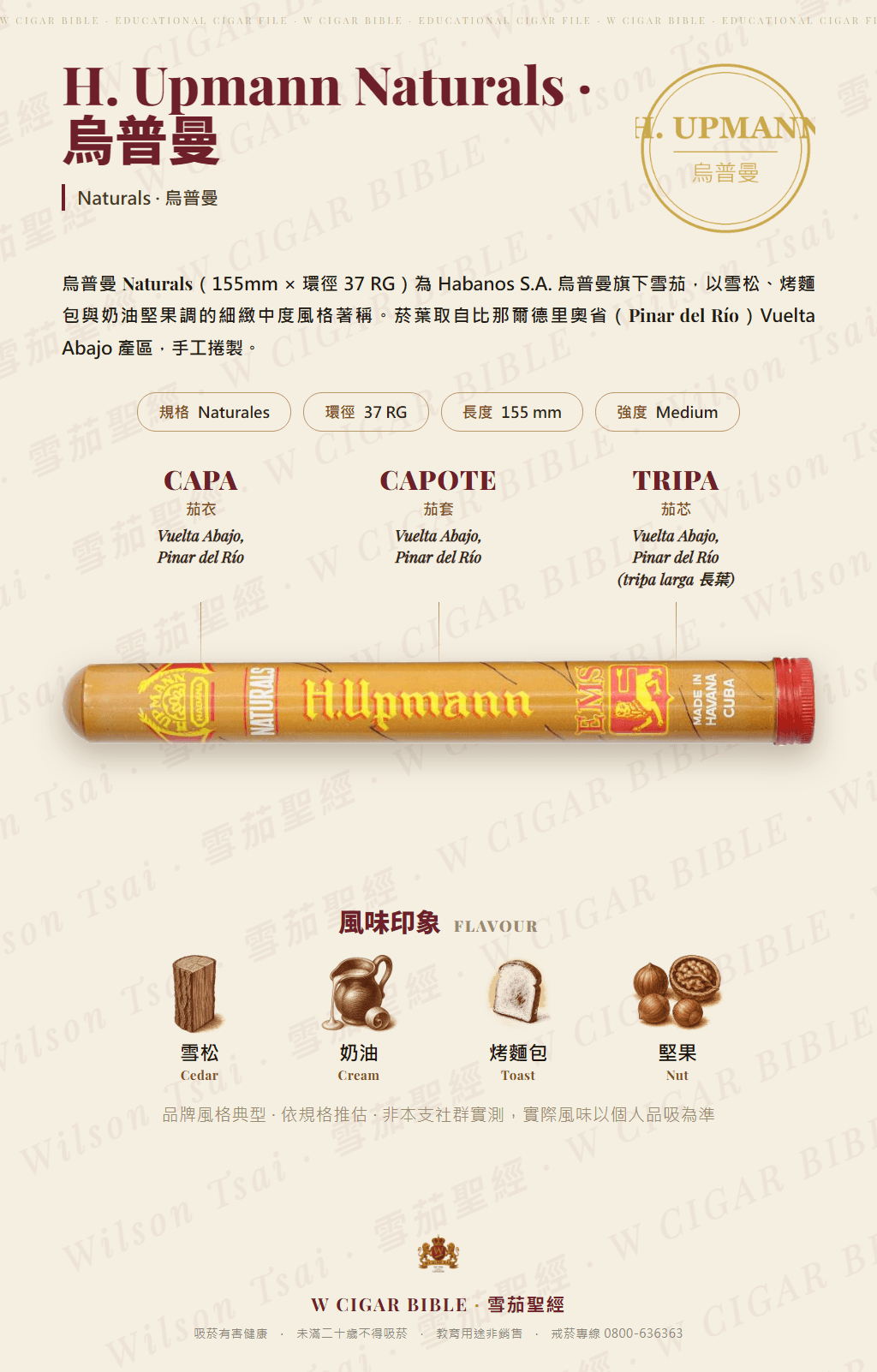
H. Upmann Naturals · 烏普曼
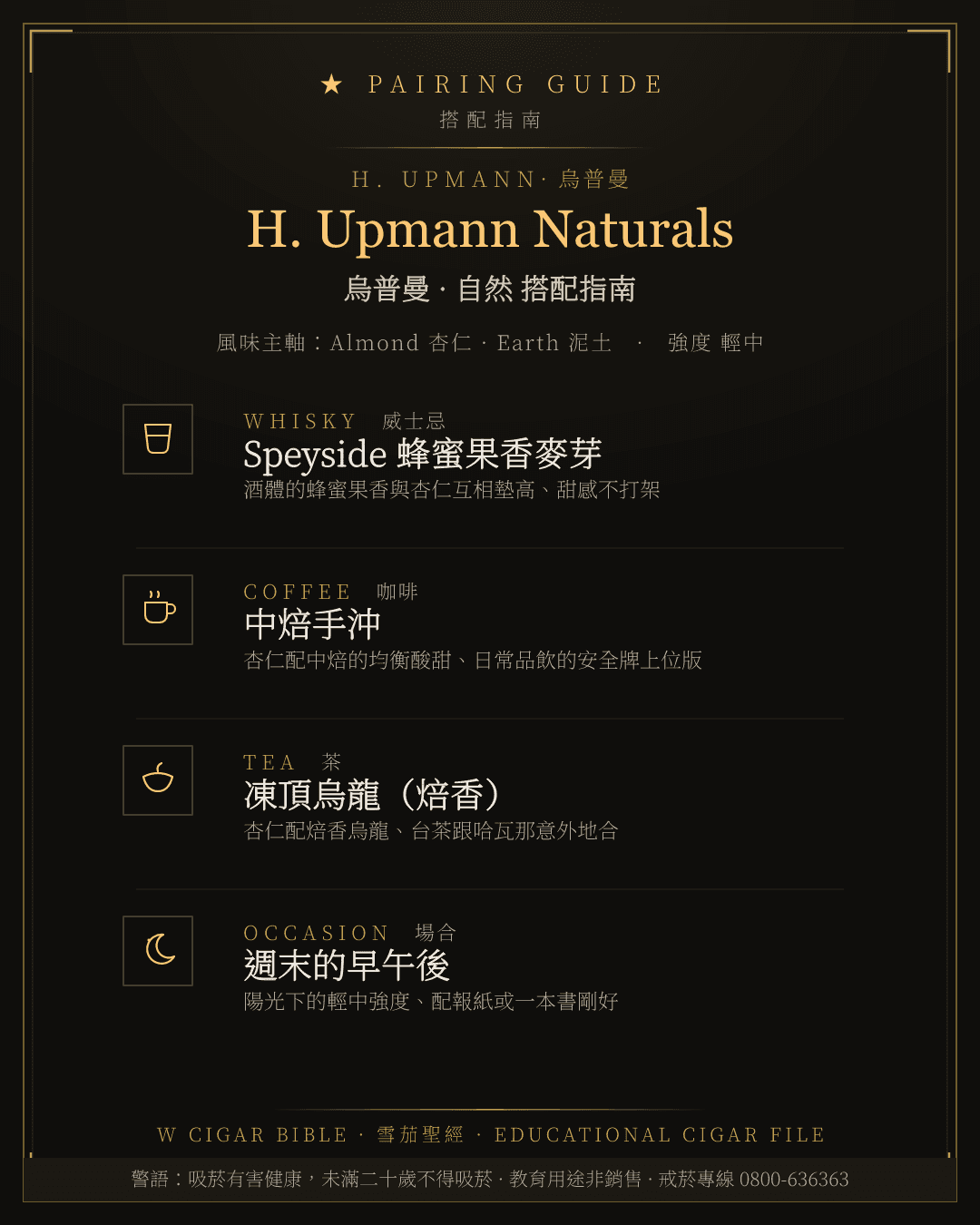
H. Upmann Naturals 搭配指南 · 烏普曼
PAIRING GUIDE · 搭配指南
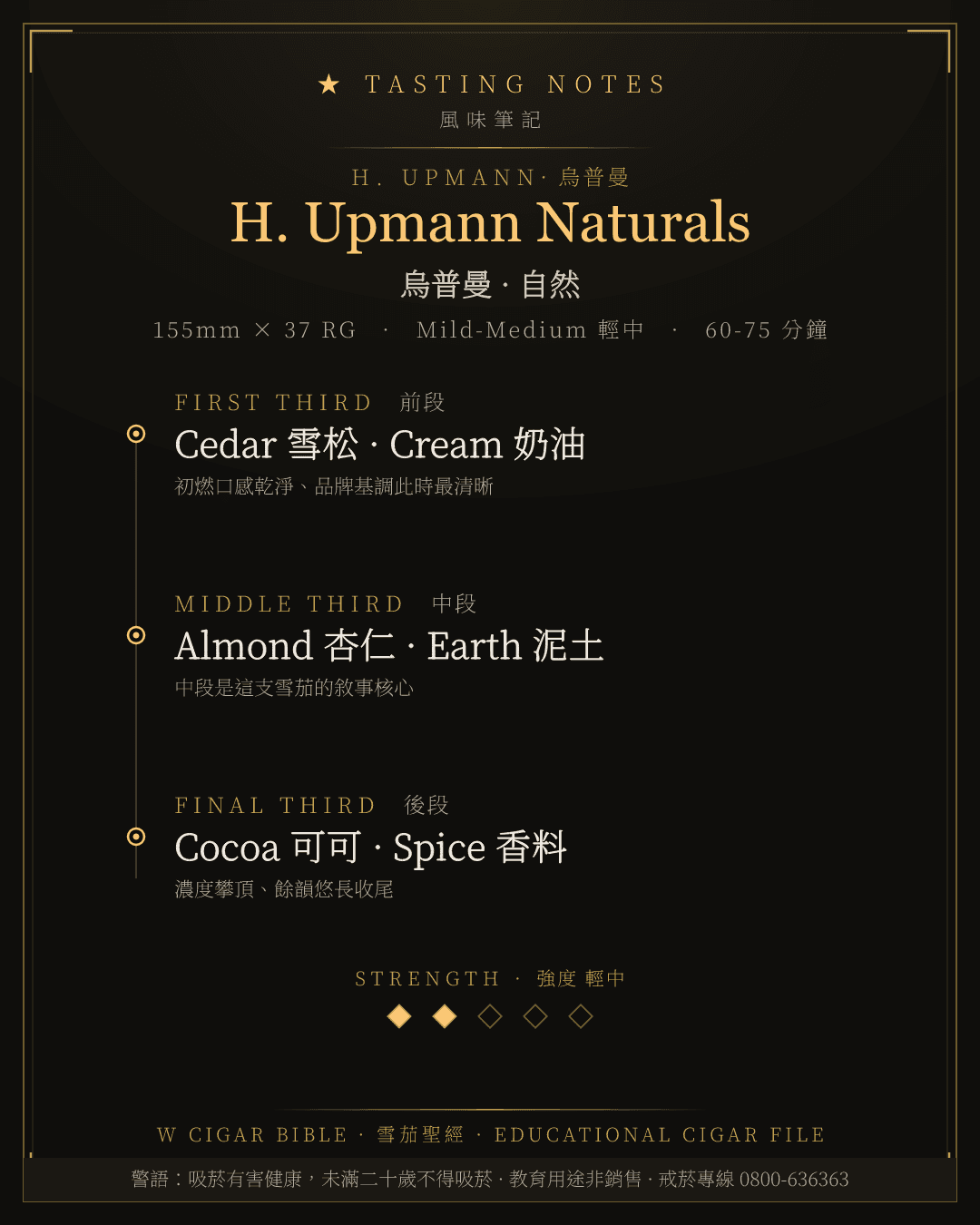
H. Upmann Naturals 風味筆記 · 烏普曼
TASTING NOTES · 風味筆記
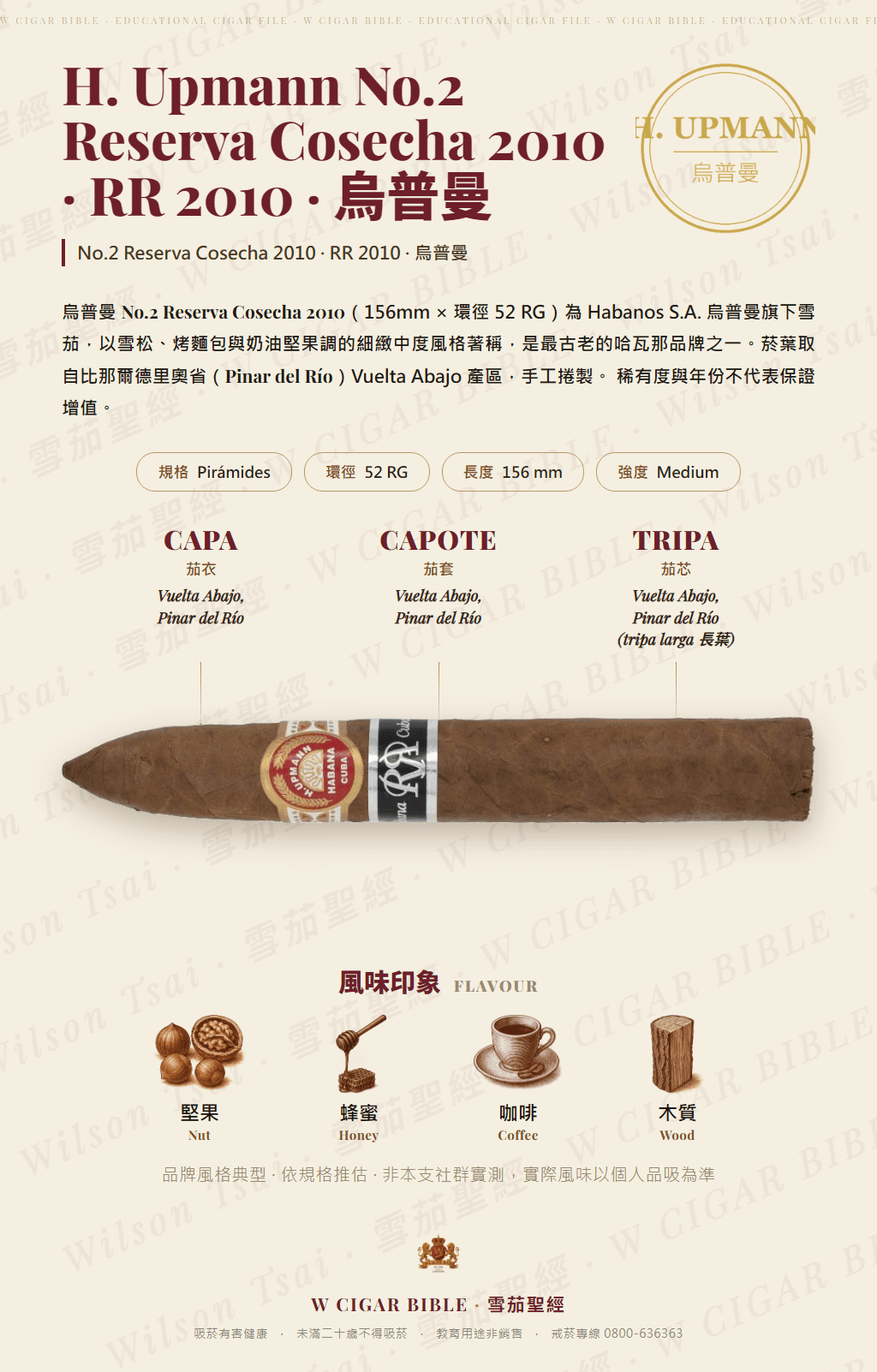
H. Upmann No.2 Reserva Cosecha 2010 · RR 2010 · 烏普曼
Reserva · 陳年儲存版 Reservas(2010 年份葉、2014 年正式發行、5,000 編號漆盒)· 雪茄檔案
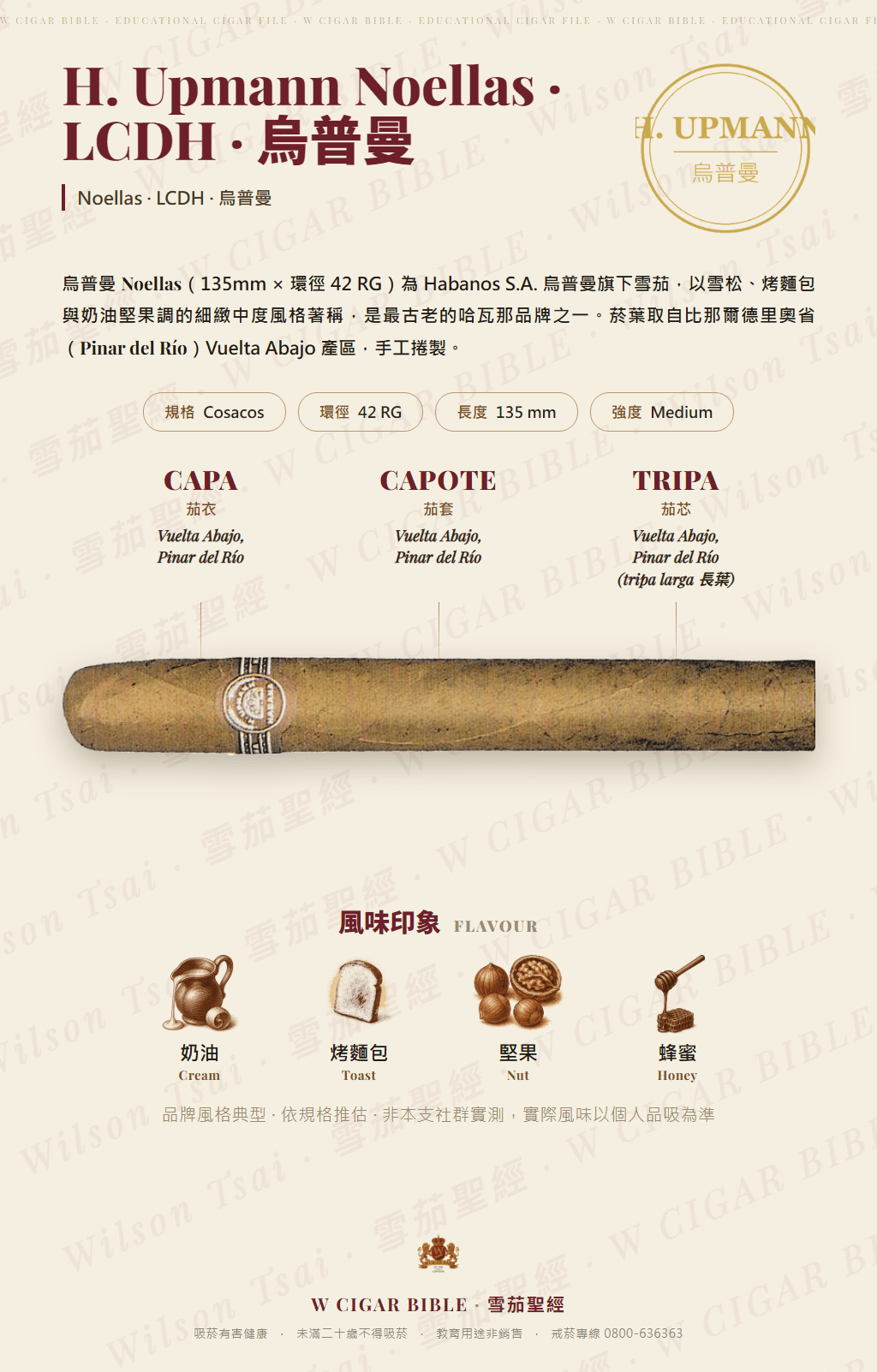
H. Upmann Noellas LCDH · 烏普曼
La Casa del Habano 專屬版(Coronas 42 RG × 135mm,復刻古董陶罐 25 支裝,2009 公布)· 雪茄檔案
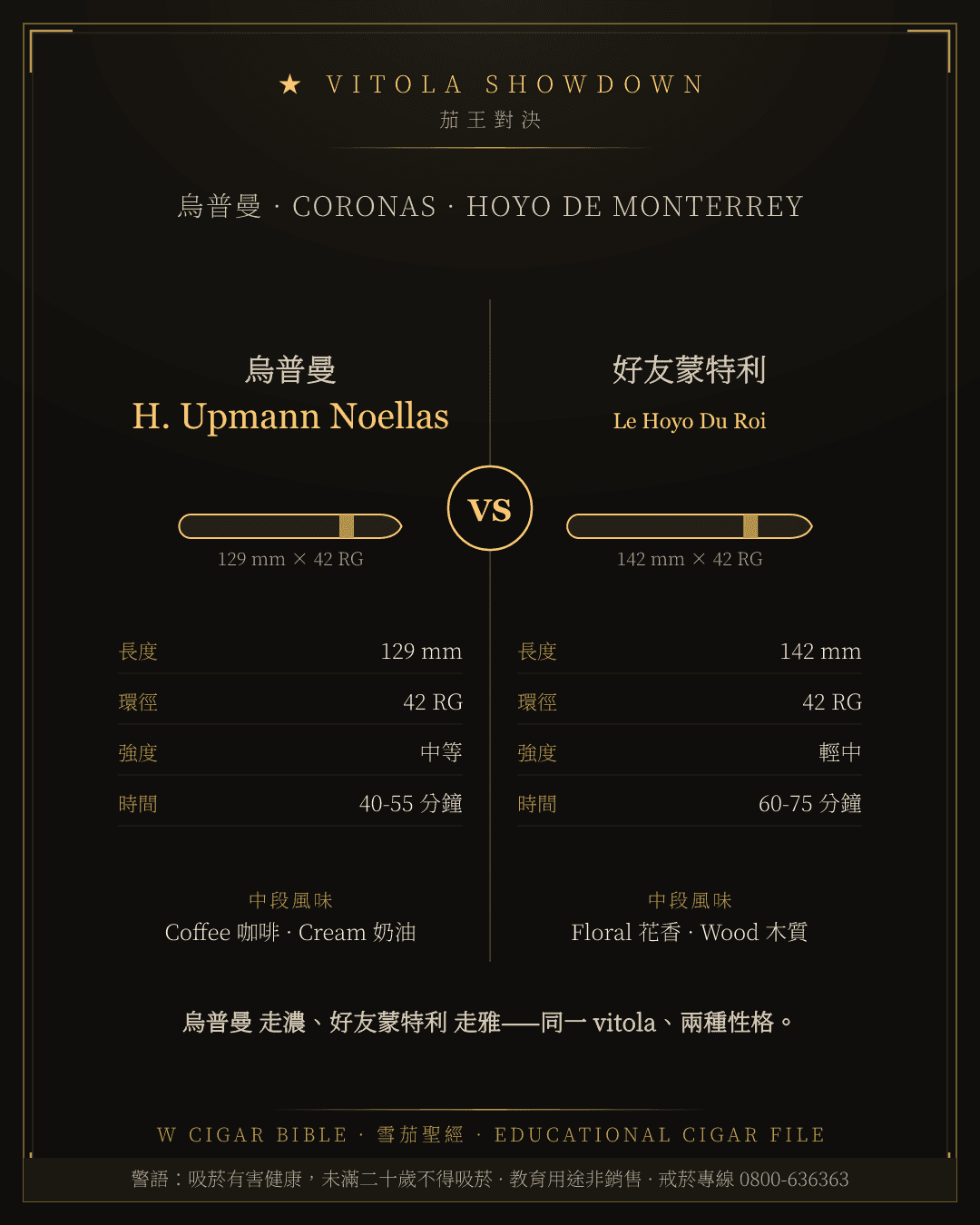
H. Upmann Noellas vs Hoyo De Monterrey Le Hoyo Du Roi
VITOLA SHOWDOWN · Coronas
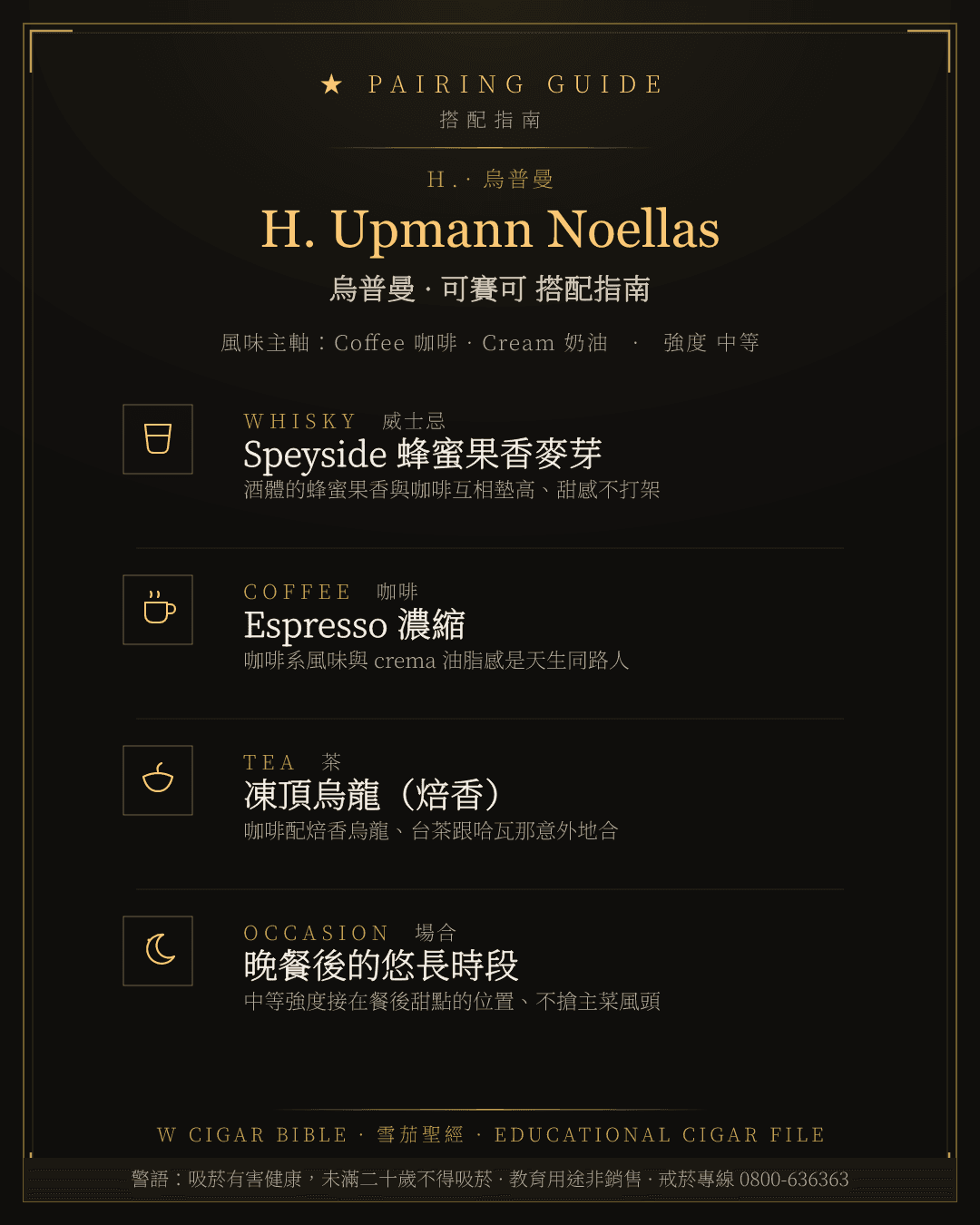
H. Upmann Noellas 搭配指南 · 烏普曼
PAIRING GUIDE · 搭配指南

H. Upmann Noellas 風味筆記 · 烏普曼
TASTING NOTES · 風味筆記

H. Upmann Petit Coronas · 烏普曼
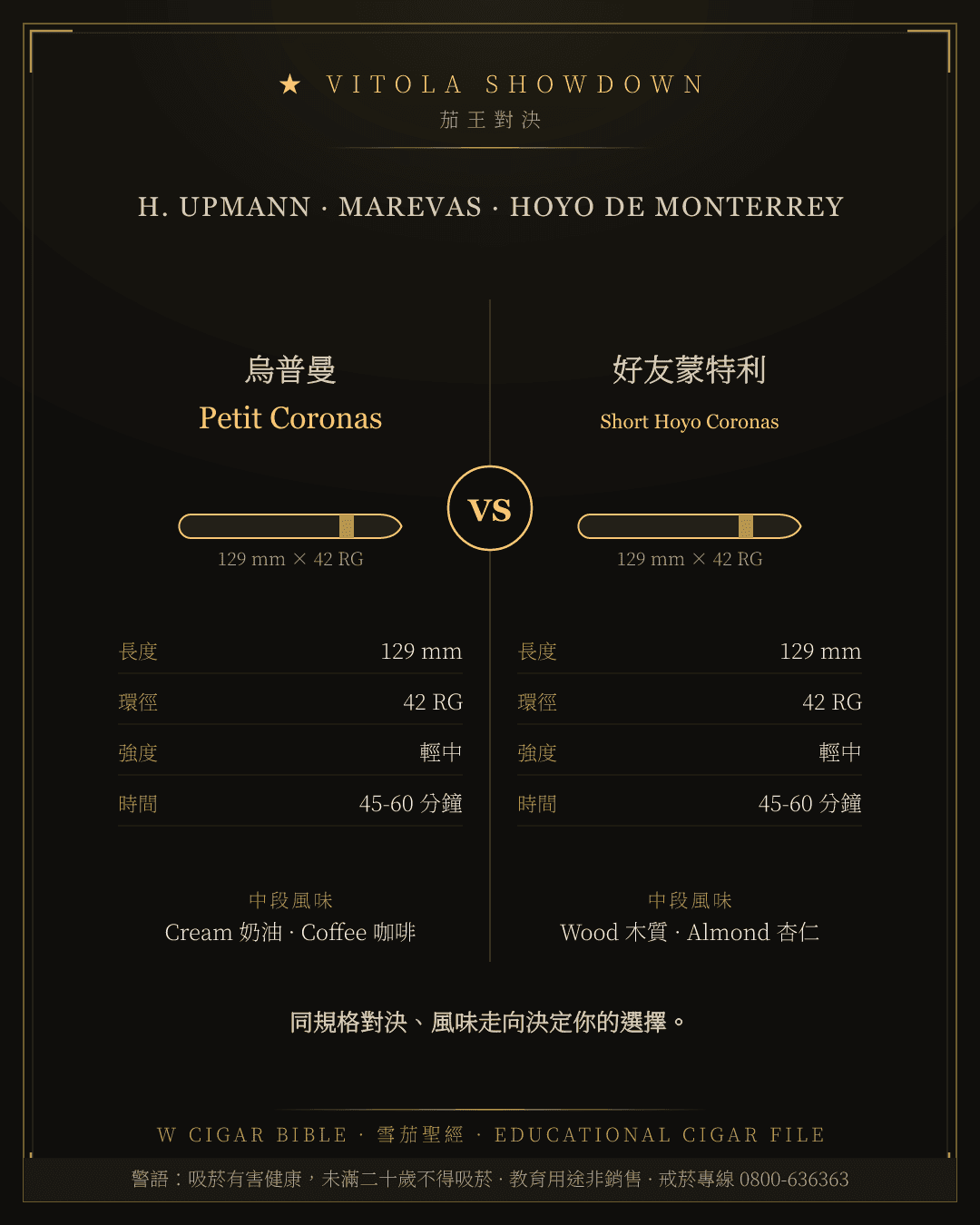
H. Upmann Petit Coronas vs Hoyo De Monterrey Short Hoyo Coronas
VITOLA SHOWDOWN · Marevas

H. Upmann Petit Coronas 搭配指南 · 烏普曼
PAIRING GUIDE · 搭配指南
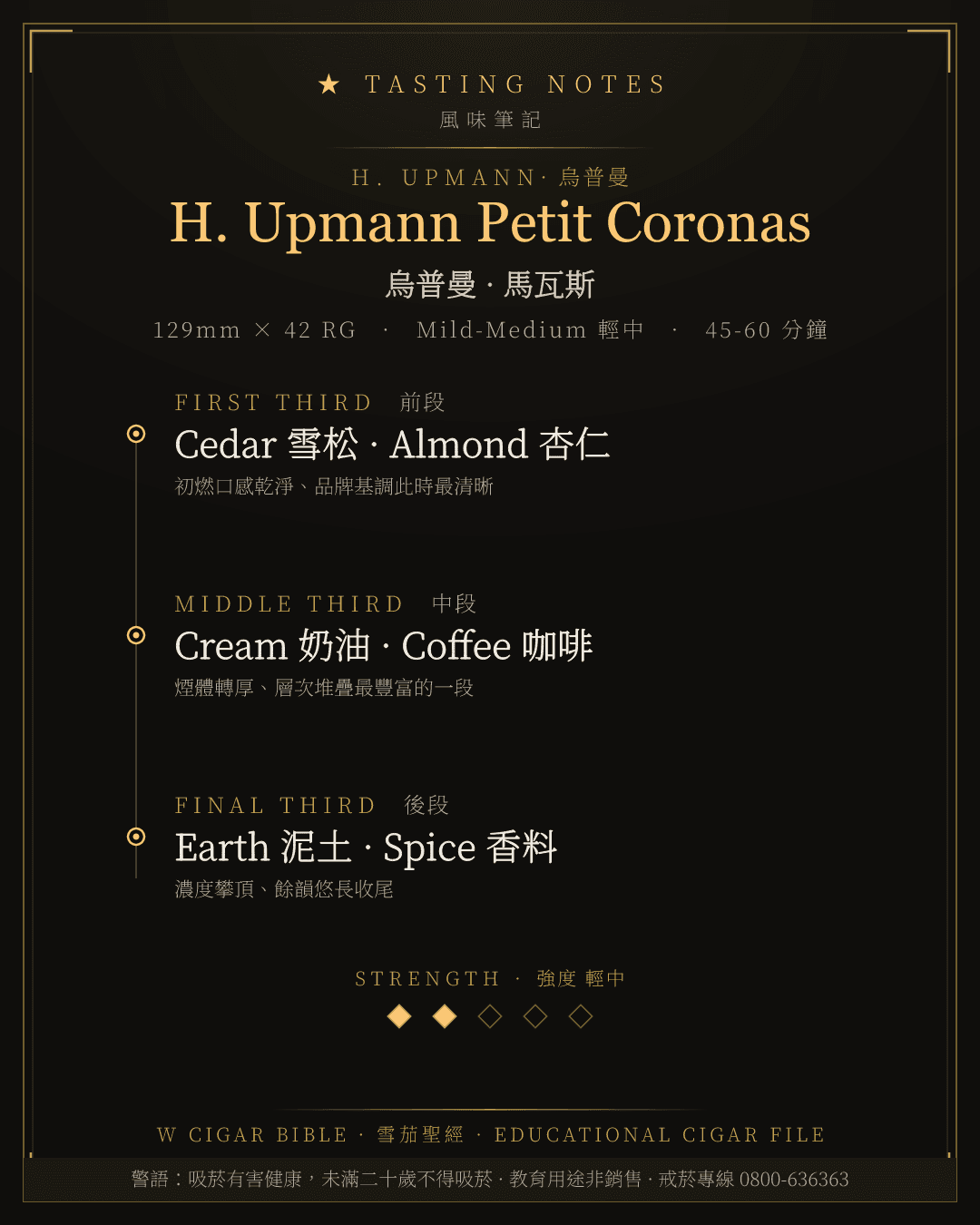
H. Upmann Petit Coronas 風味筆記 · 烏普曼
TASTING NOTES · 風味筆記
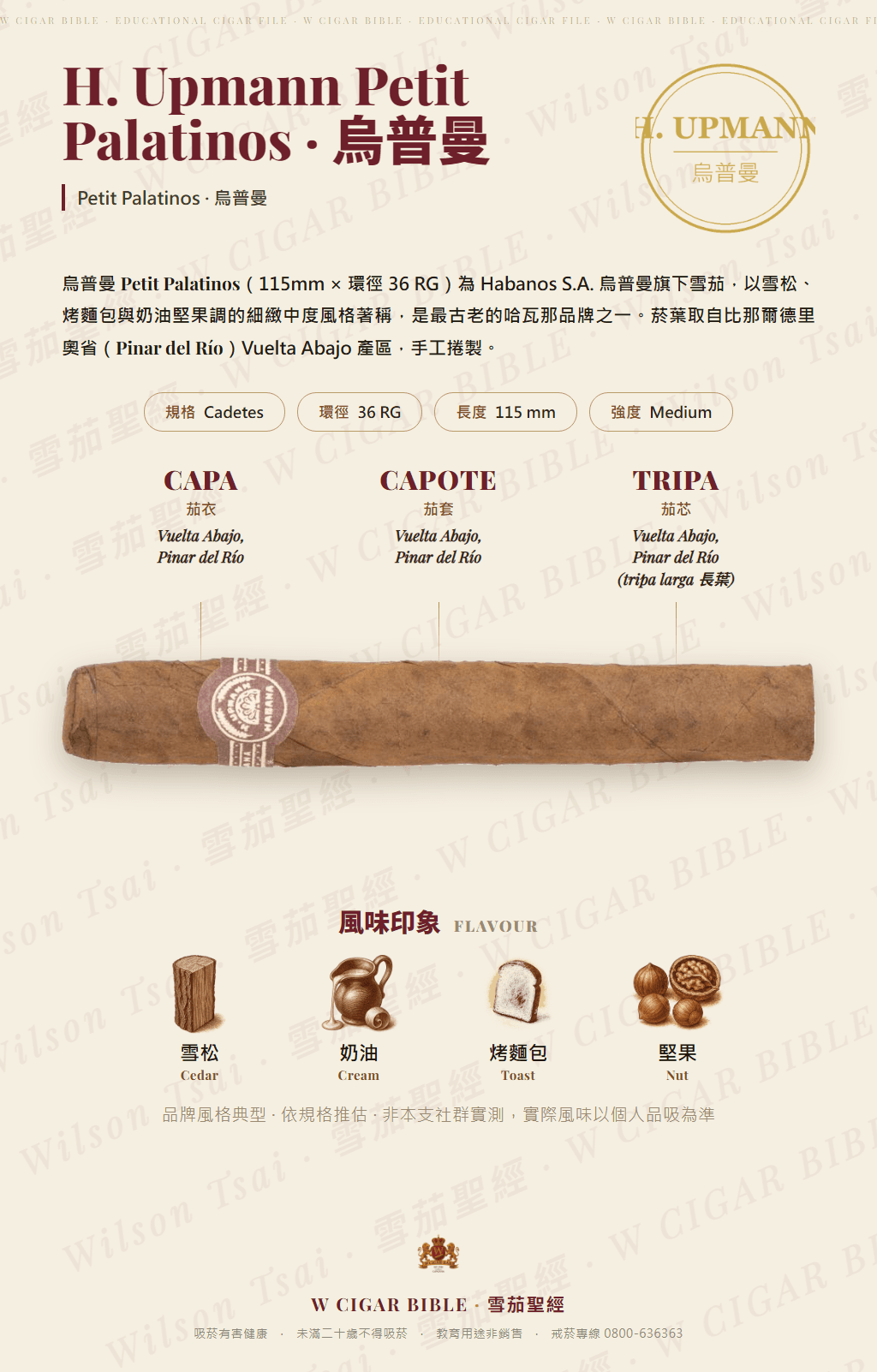
H. Upmann Petit Palatinos · 烏普曼
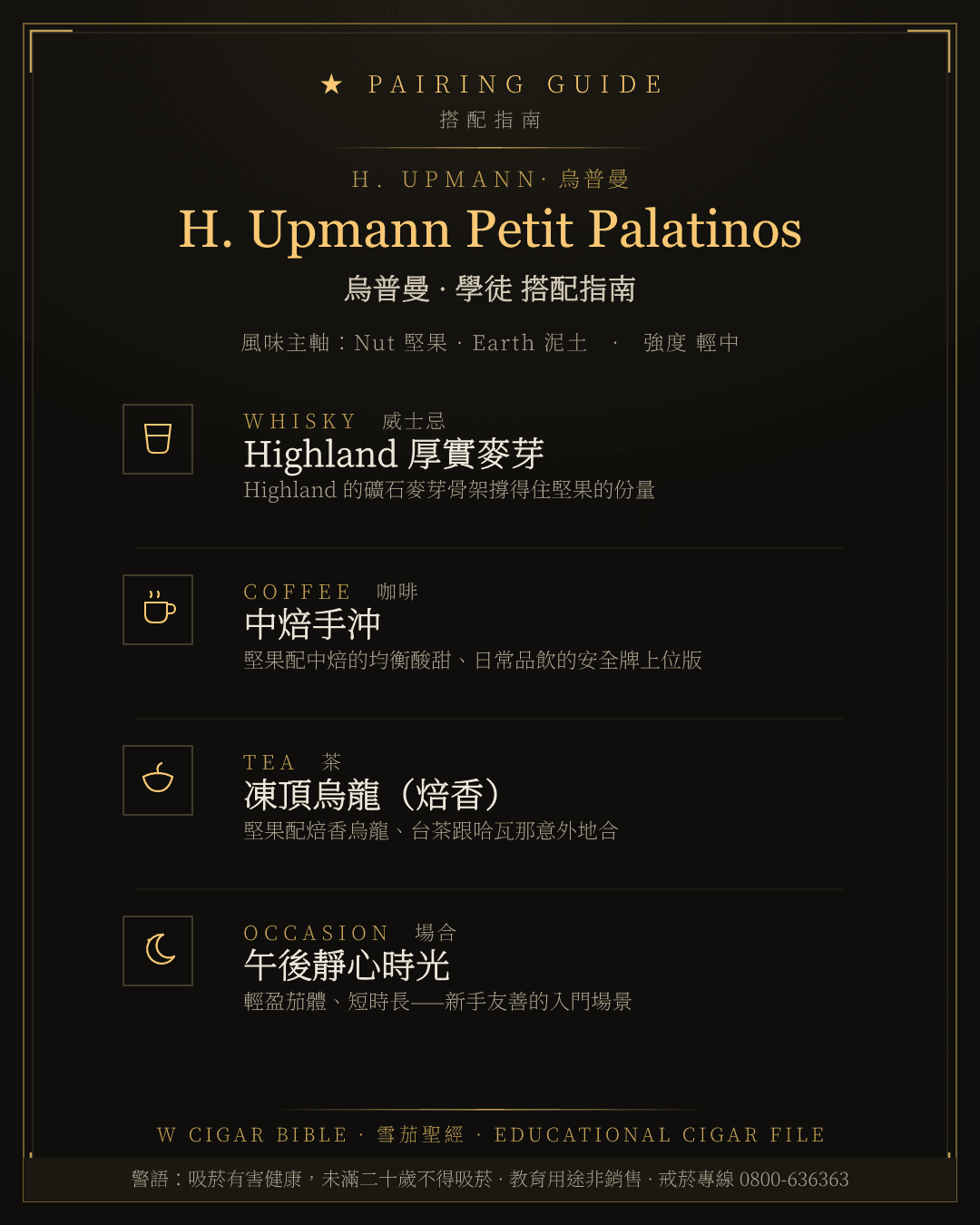
H. Upmann Petit Palatinos 搭配指南 · 烏普曼
PAIRING GUIDE · 搭配指南
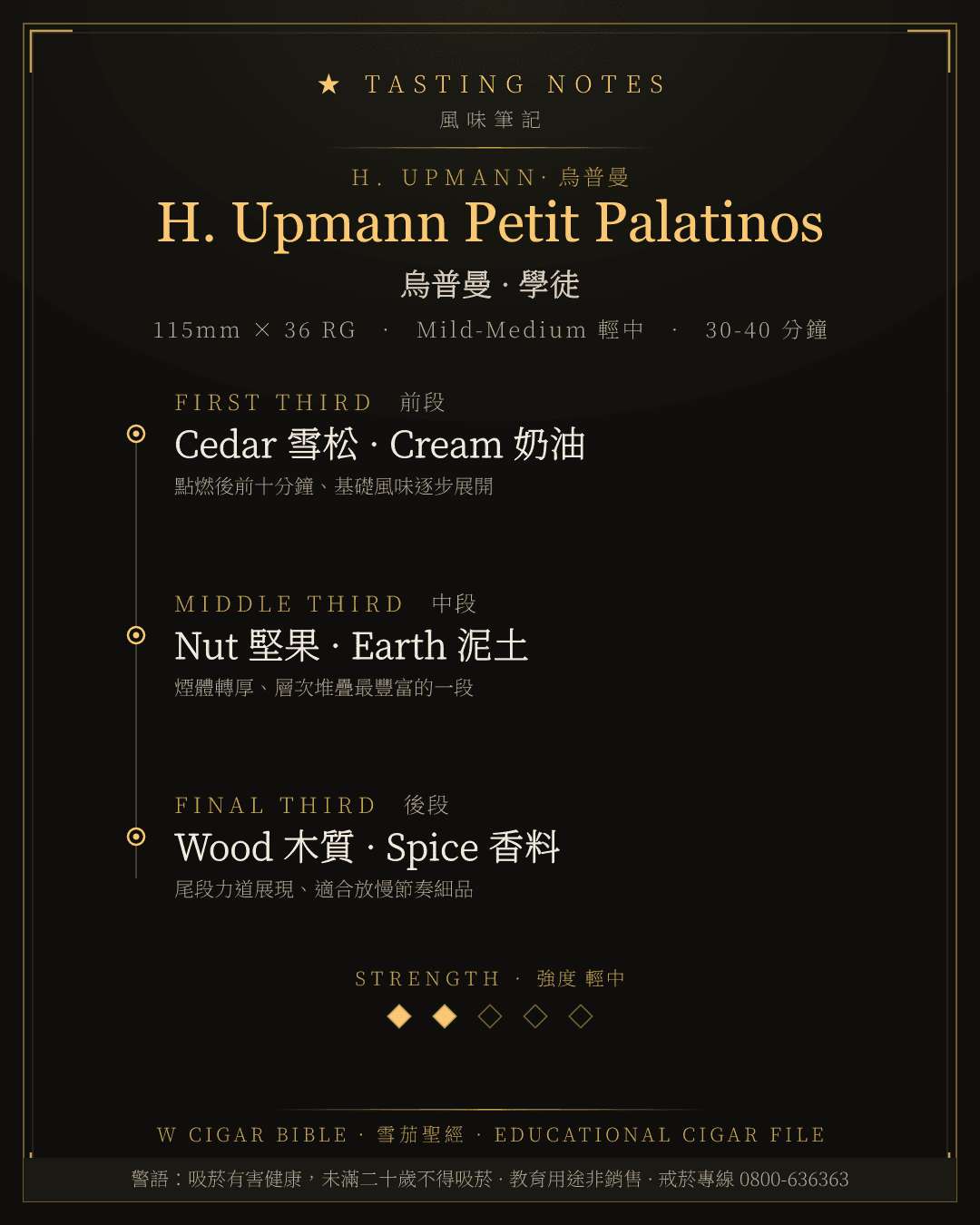
H. Upmann Petit Palatinos 風味筆記 · 烏普曼
TASTING NOTES · 風味筆記

H. Upmann Prominentes · 160 Aniversario · 烏普曼
歷史廠規檔案(Prominentes 環徑 49 × 194mm 雙皇冠,非現行常規產線)· 雪茄檔案

H. Upmann Propios · EL 2018 · 烏普曼
EL 2018 · 限量年度版 Edición Limitada · 雪茄檔案

H. Upmann Propios 搭配指南 · 烏普曼
PAIRING GUIDE · 搭配指南
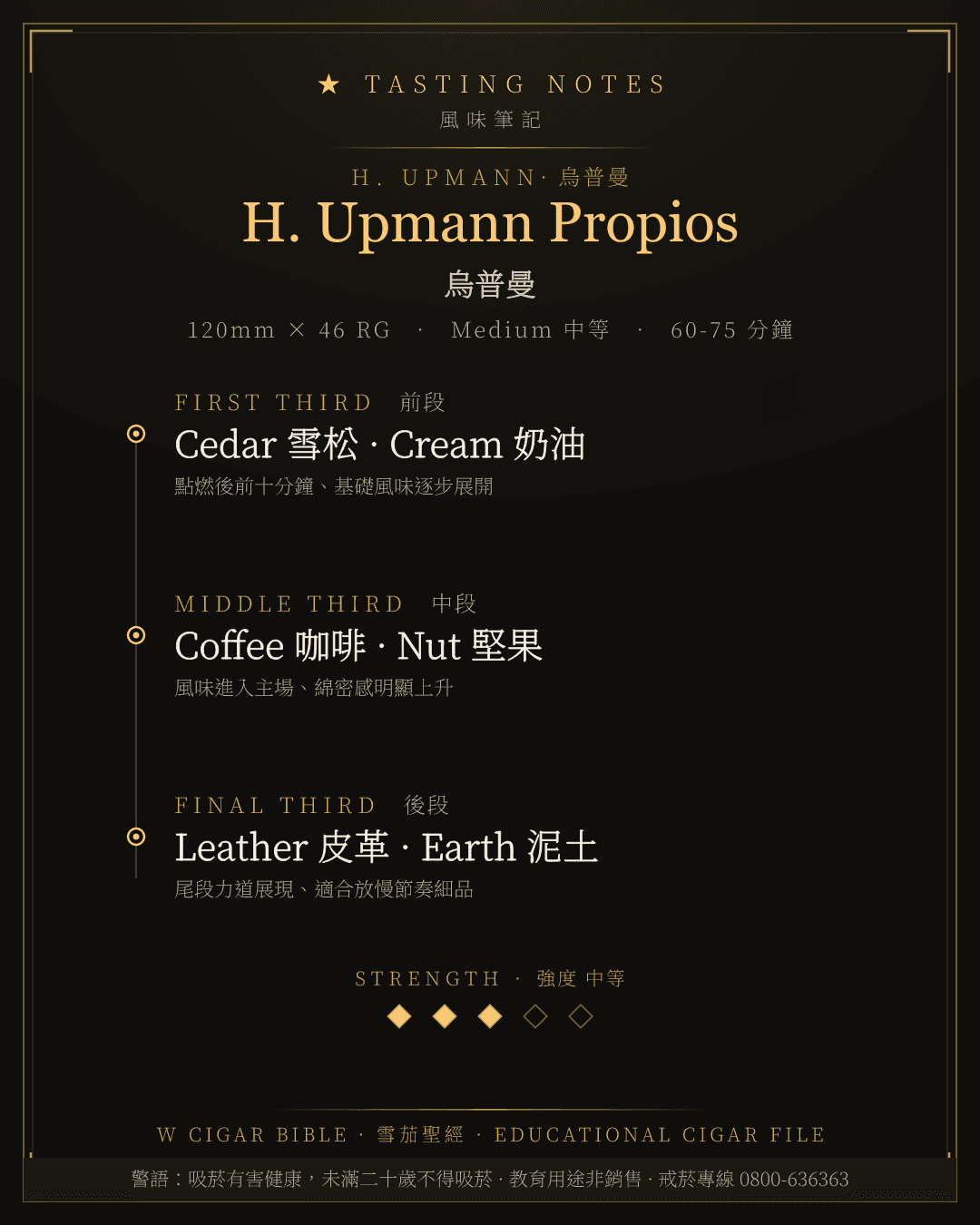
H. Upmann Propios 風味筆記 · 烏普曼
TASTING NOTES · 風味筆記
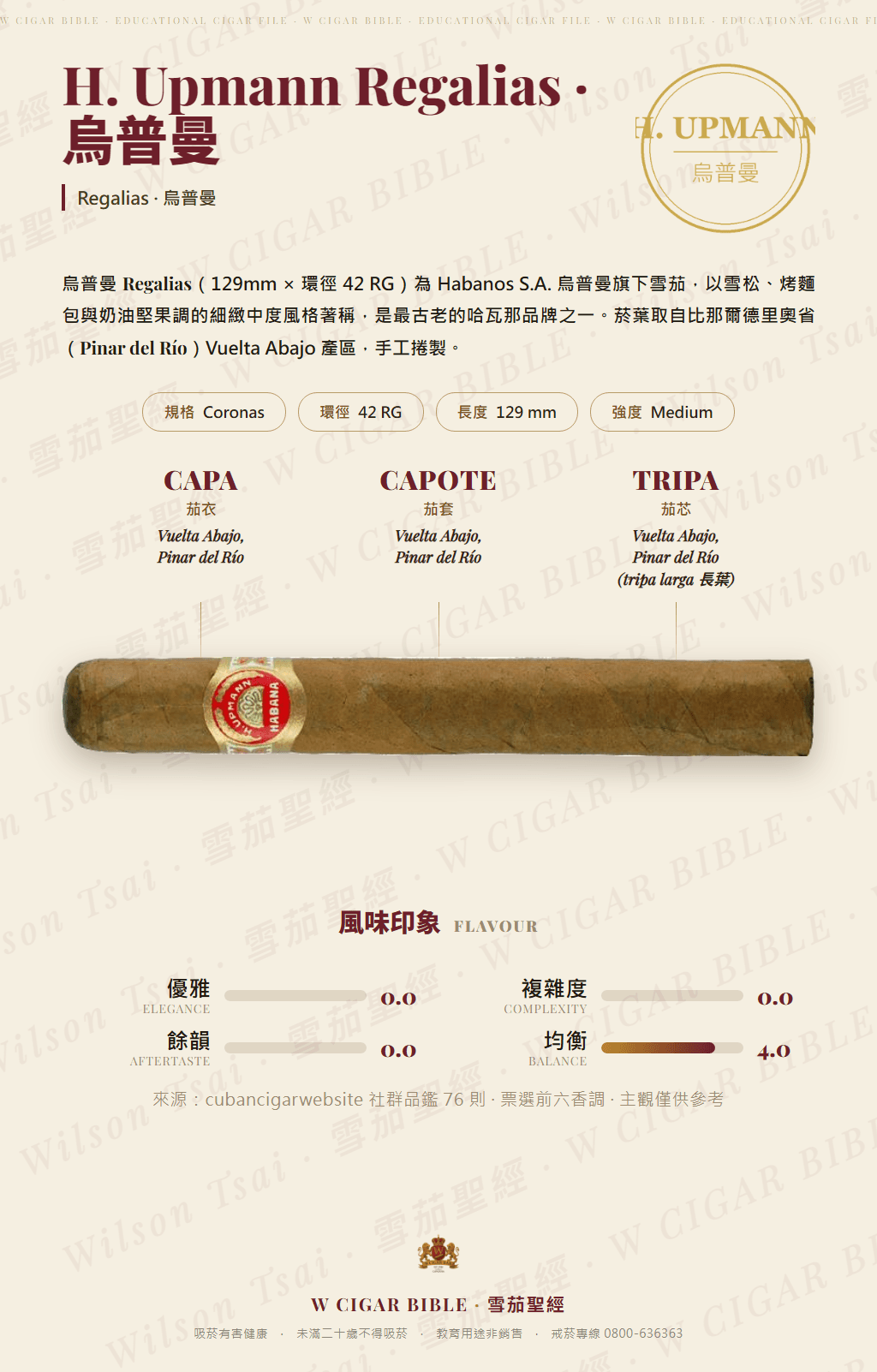
H. Upmann Regalias · 烏普曼
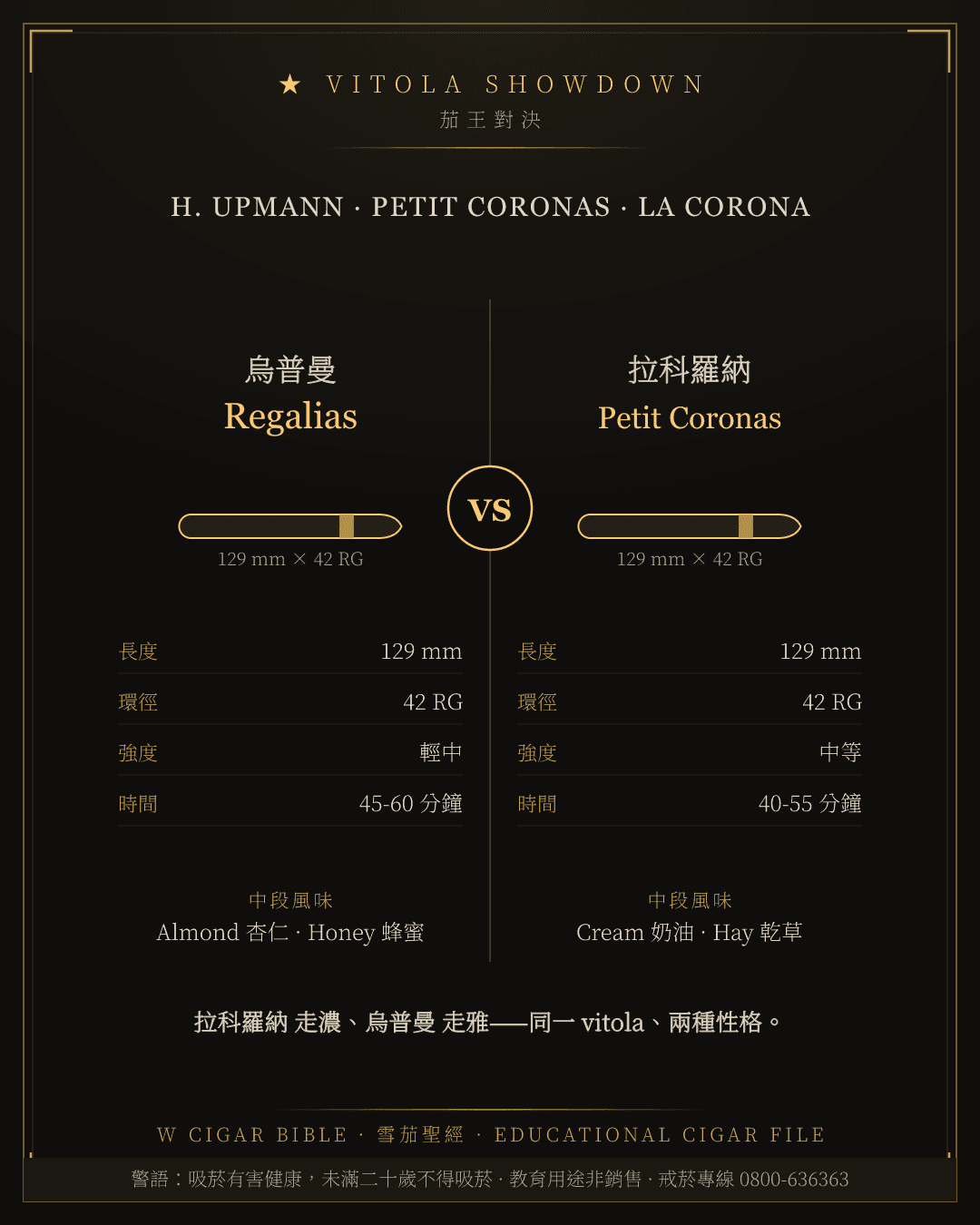
H. Upmann Regalias vs La Corona Petit Coronas
VITOLA SHOWDOWN · Petit Coronas

H. Upmann Regalias 搭配指南 · 烏普曼
PAIRING GUIDE · 搭配指南
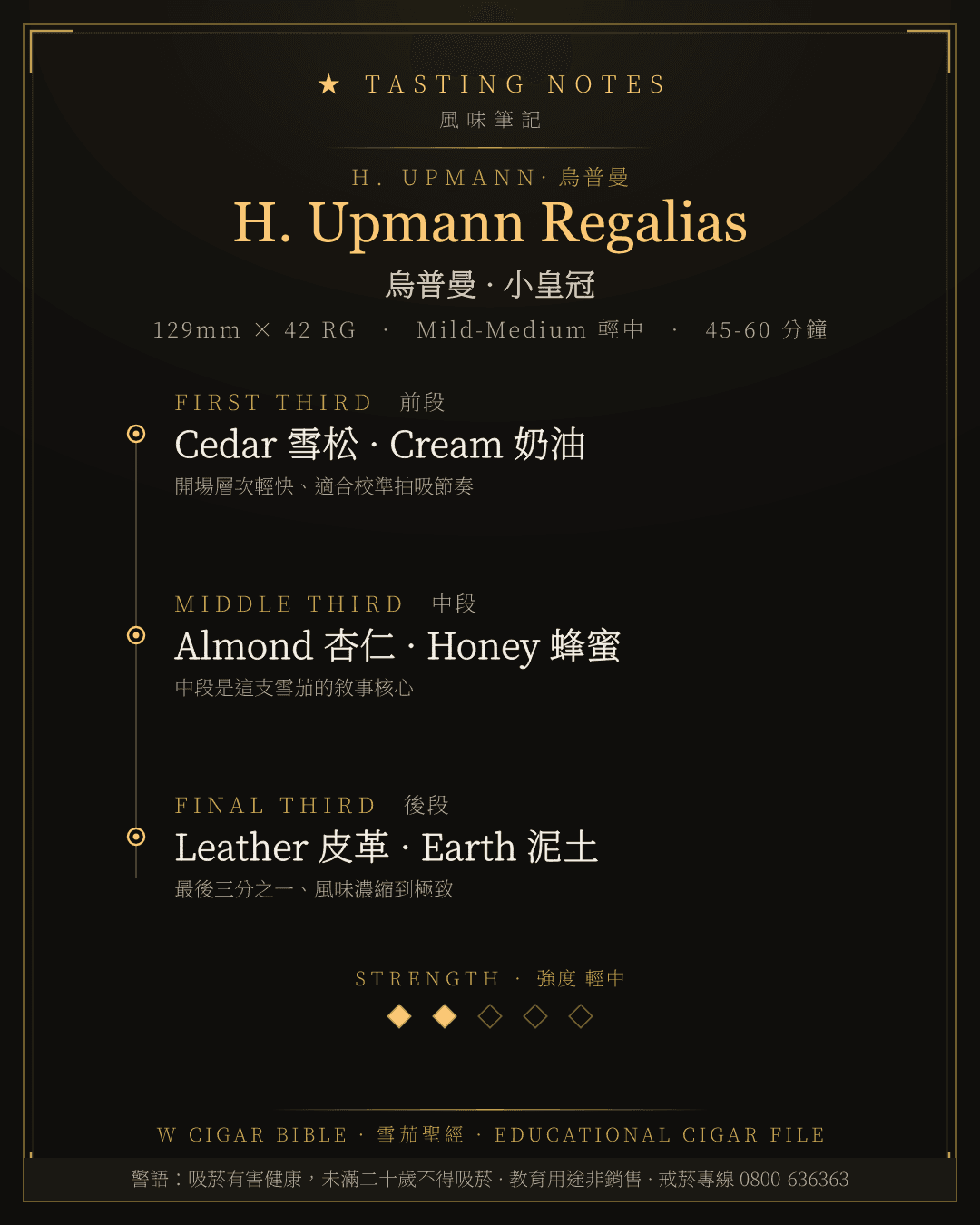
H. Upmann Regalias 風味筆記 · 烏普曼
TASTING NOTES · 風味筆記

H. Upmann Replica De Humidor Antiguo 搭配指南 · 烏普曼
PAIRING GUIDE · 搭配指南
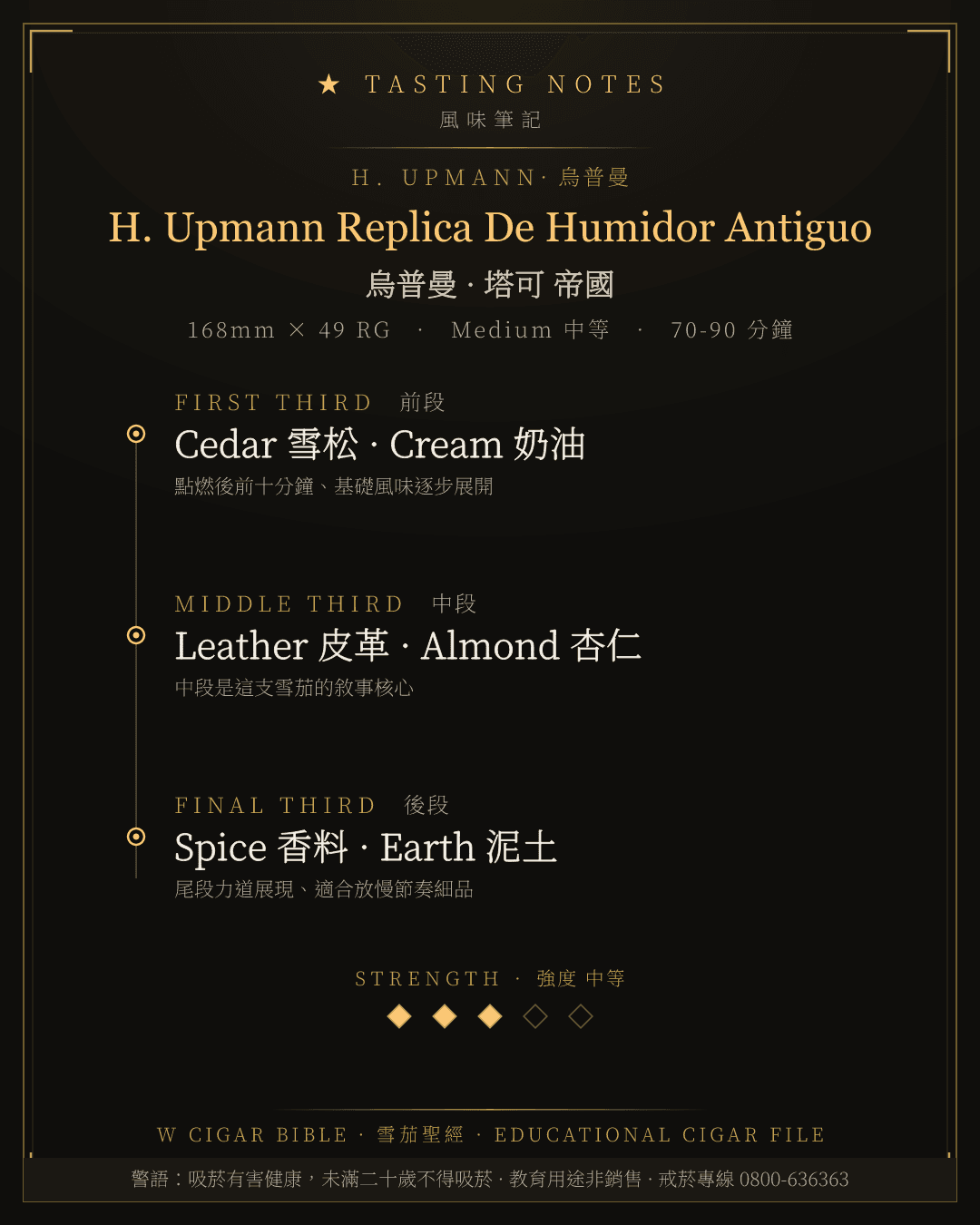
H. Upmann Replica De Humidor Antiguo 風味筆記 · 烏普曼
TASTING NOTES · 風味筆記
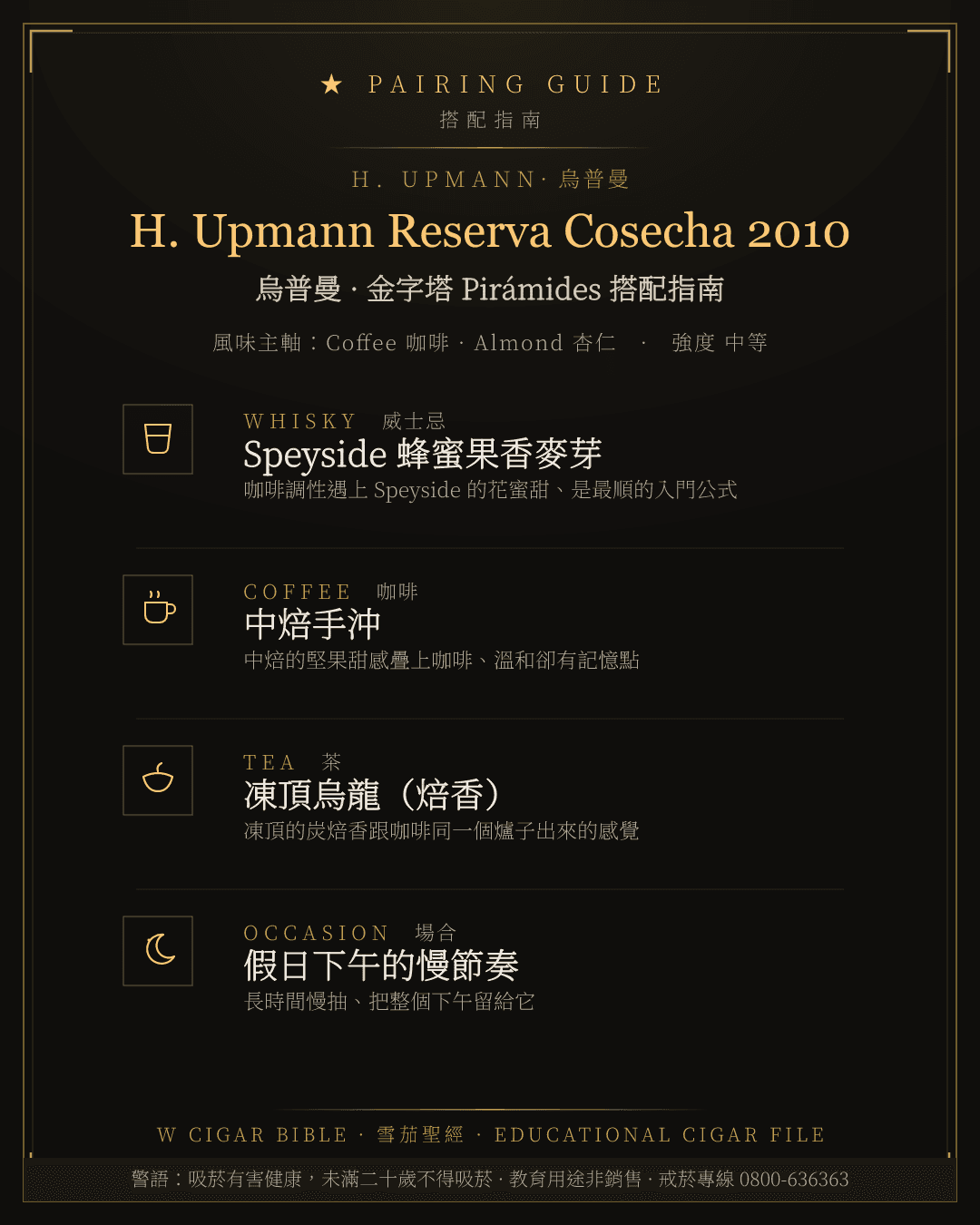
H. Upmann Reserva Cosecha 2010 搭配指南 · 烏普曼
PAIRING GUIDE · 搭配指南
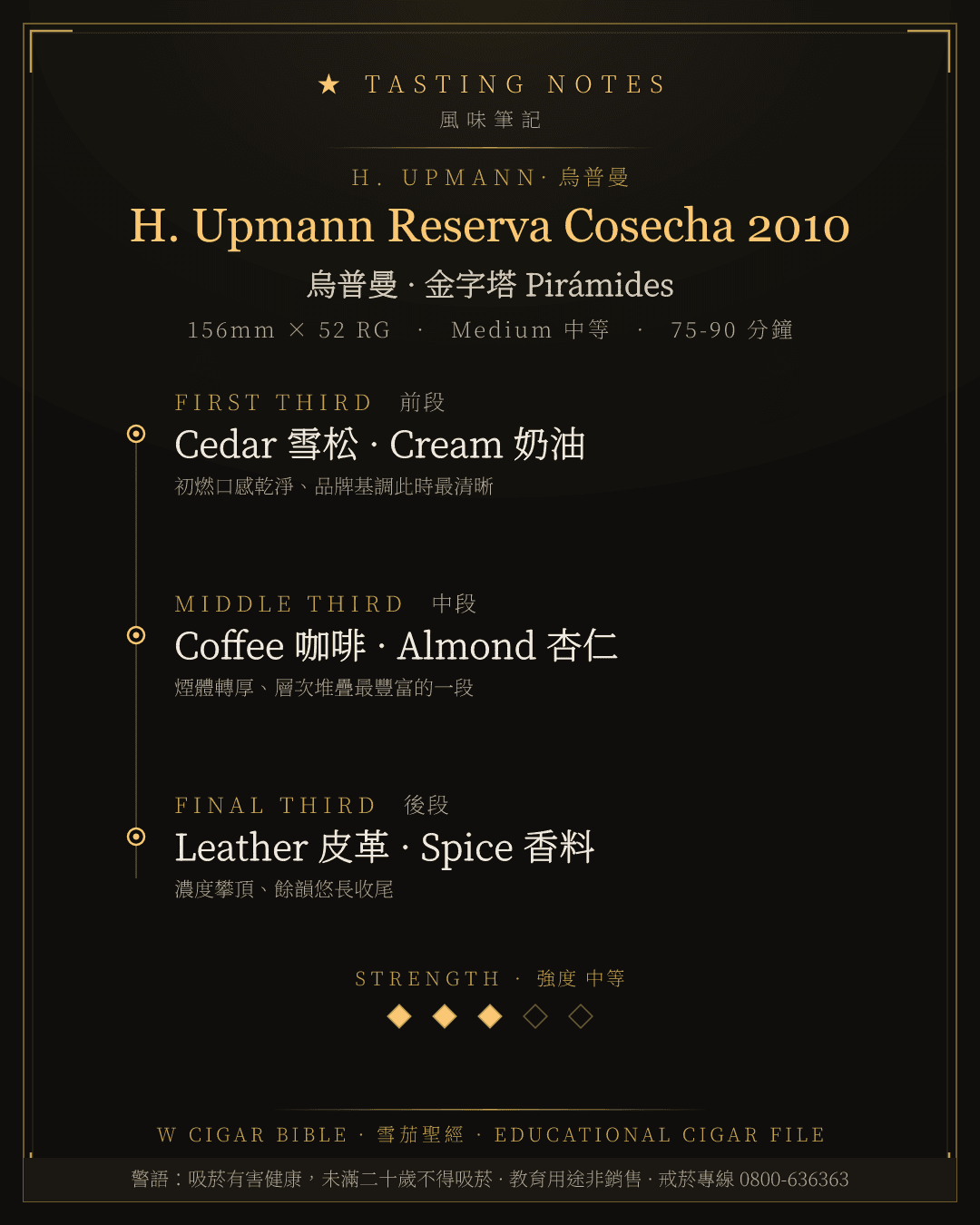
H. Upmann Reserva Cosecha 2010 風味筆記 · 烏普曼
TASTING NOTES · 風味筆記

H. Upmann Robusto · EL 2012 · 烏普曼
EL 2012 · 限量年度版 Edición Limitada · 雪茄檔案
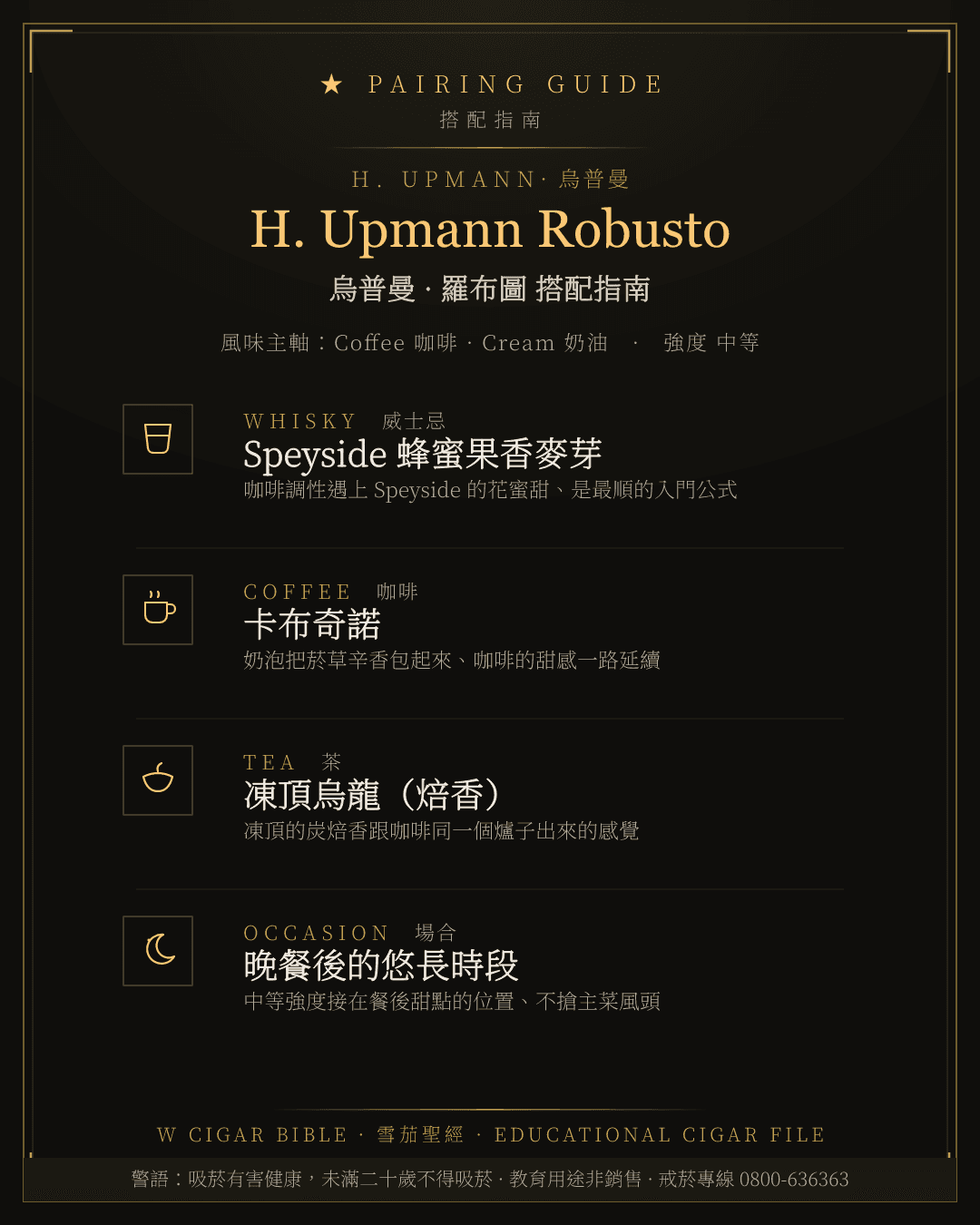
H. Upmann Robusto 搭配指南 · 烏普曼
PAIRING GUIDE · 搭配指南
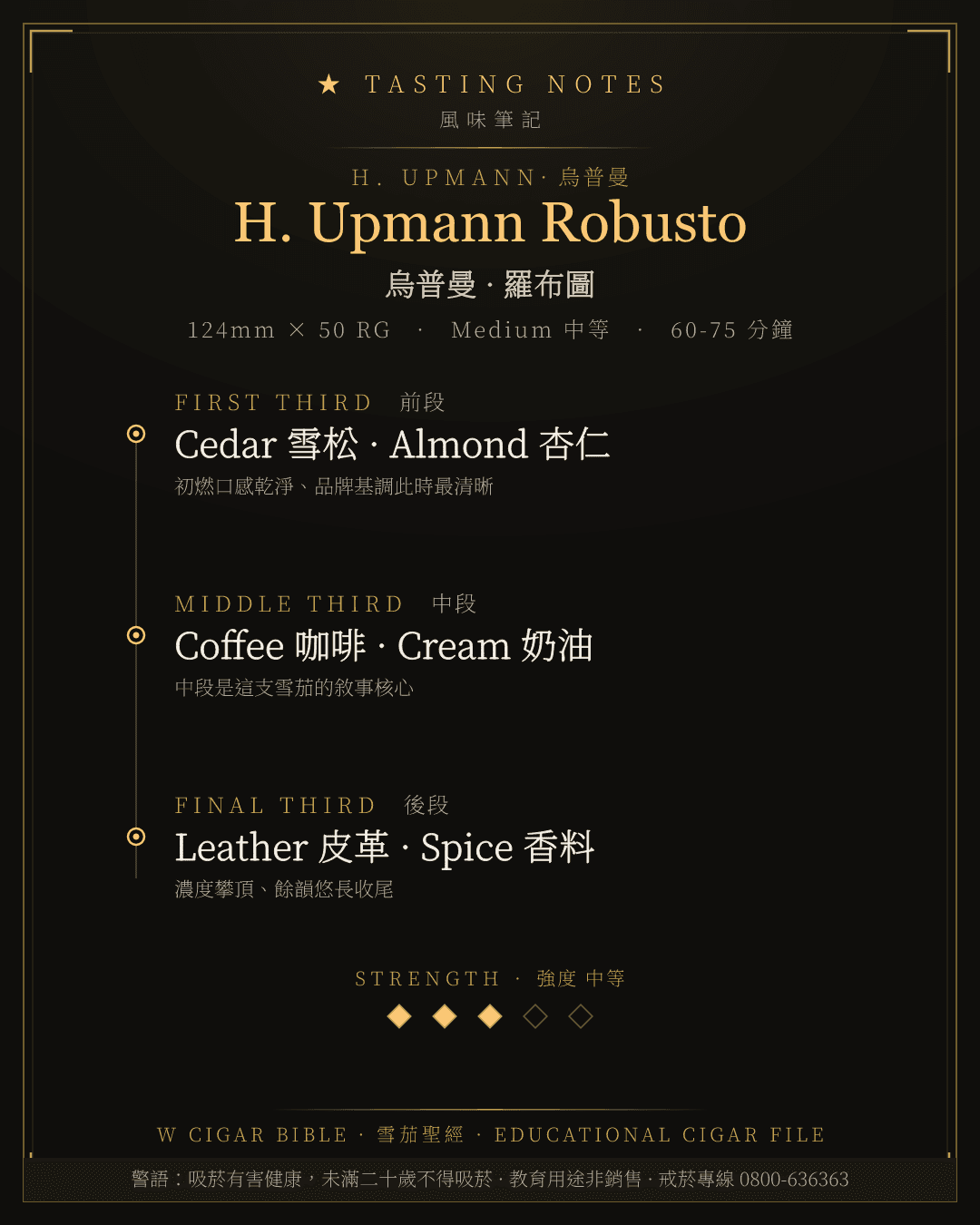
H. Upmann Robusto 風味筆記 · 烏普曼
TASTING NOTES · 風味筆記

H. Upmann Robustos Travel Humidor · 烏普曼
旅行木盒版 Humidor de Viaje(Robustos 50 RG × 124mm · 每只 6 支)· 雪茄檔案

H. Upmann Robustos 搭配指南 · 烏普曼
PAIRING GUIDE · 搭配指南
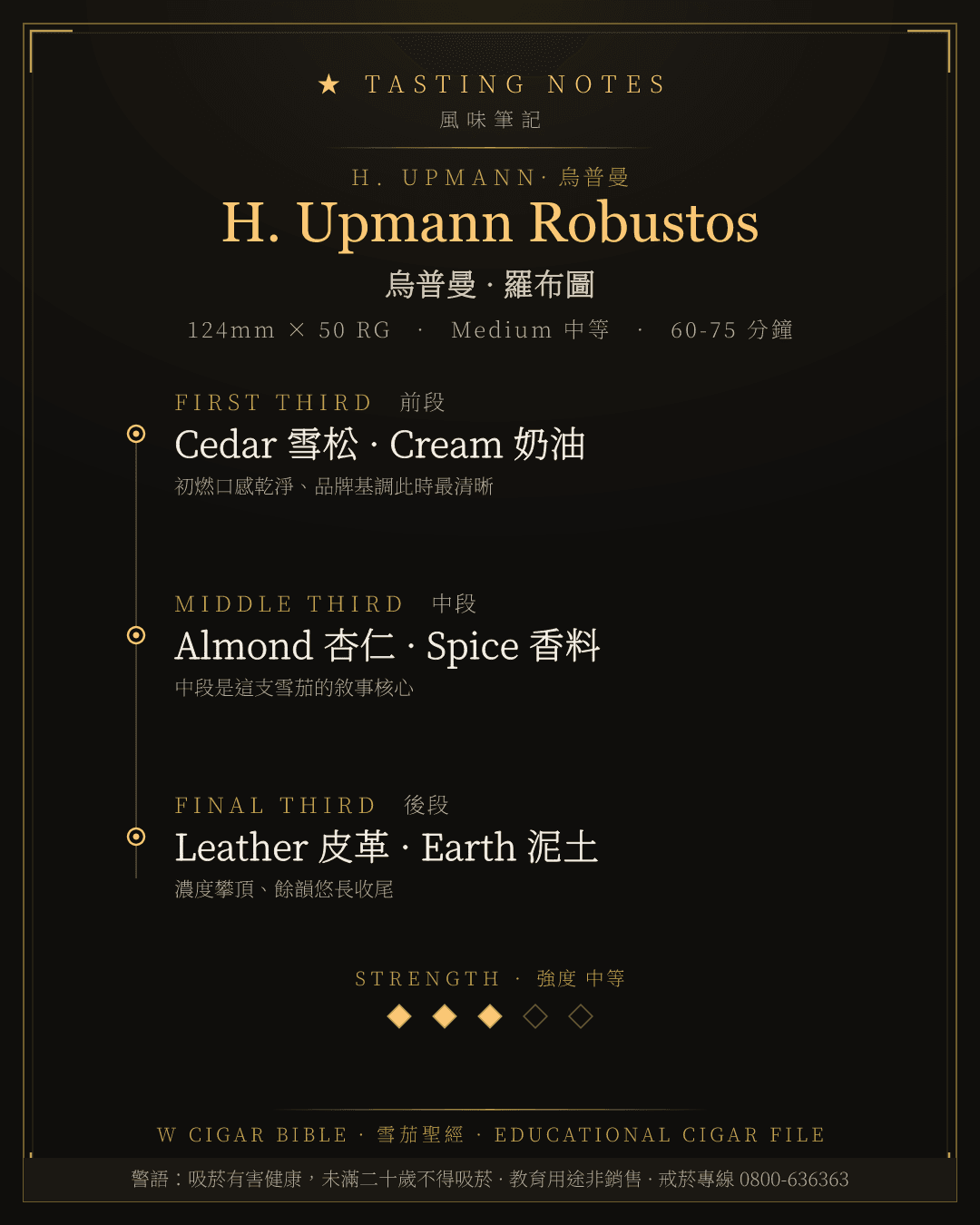
H. Upmann Robustos 風味筆記 · 烏普曼
TASTING NOTES · 風味筆記
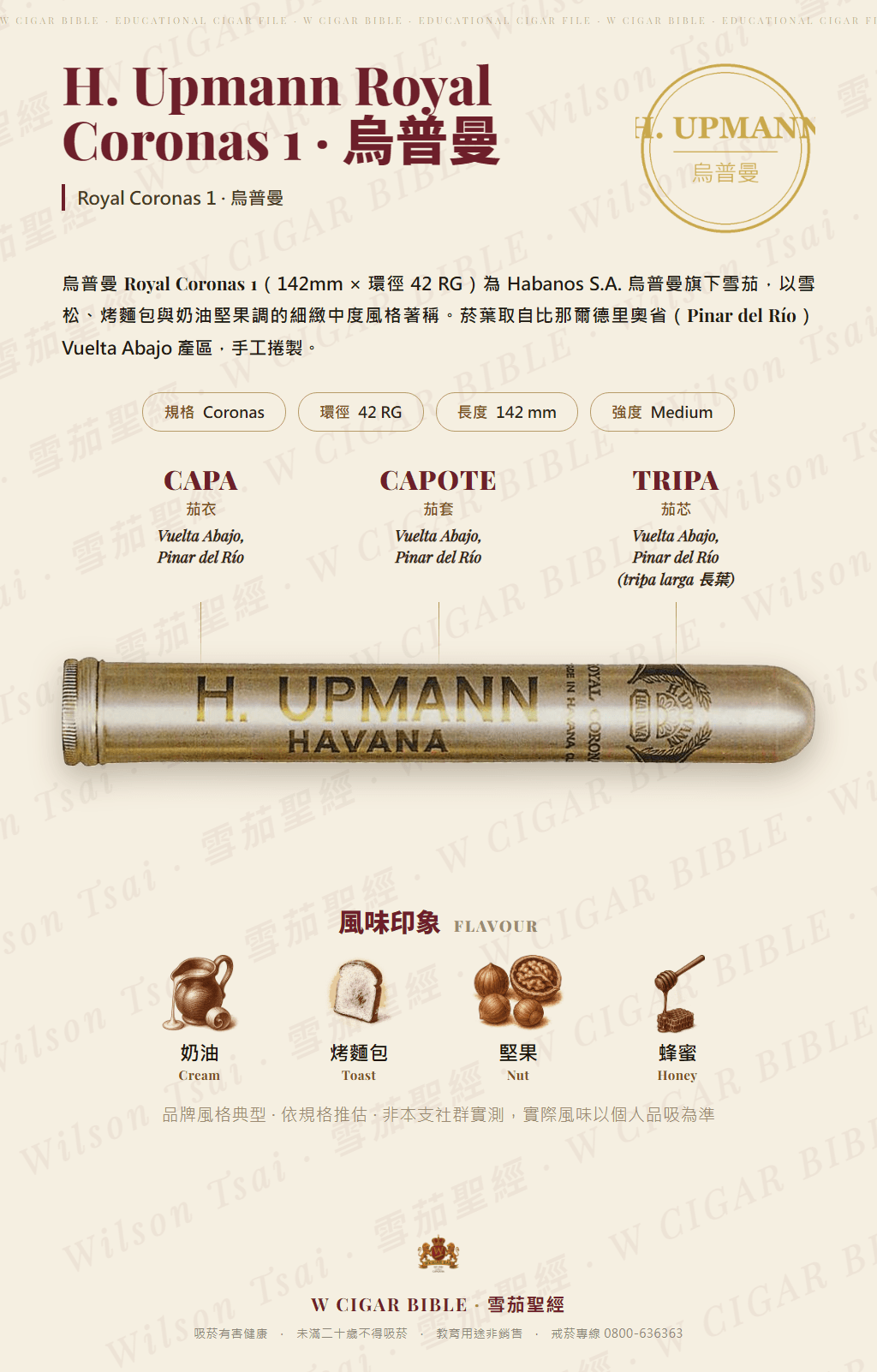
H. Upmann Royal Coronas 1 · 烏普曼
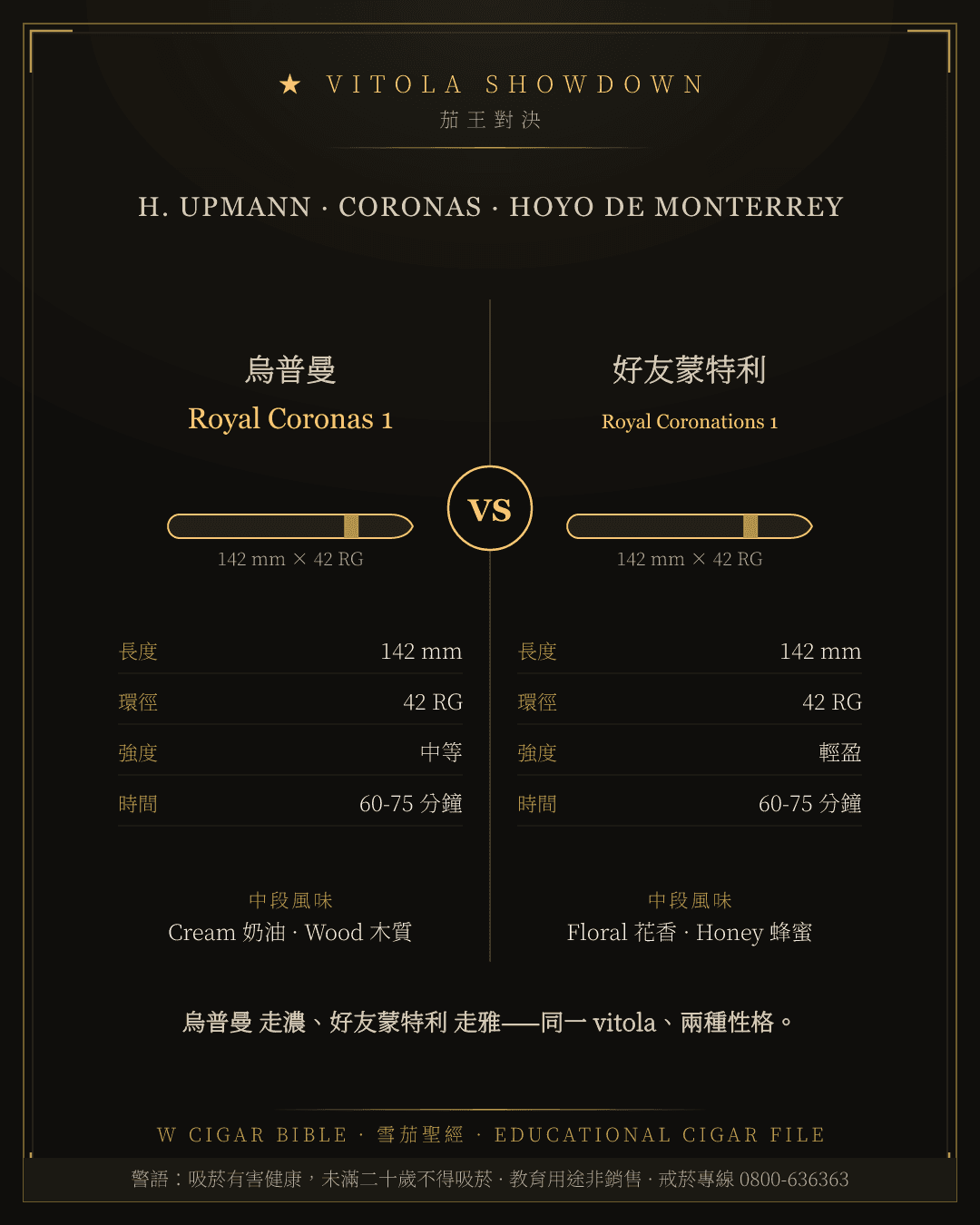
H. Upmann Royal Coronas 1 vs Hoyo De Monterrey Royal Coronations 1
VITOLA SHOWDOWN · Coronas
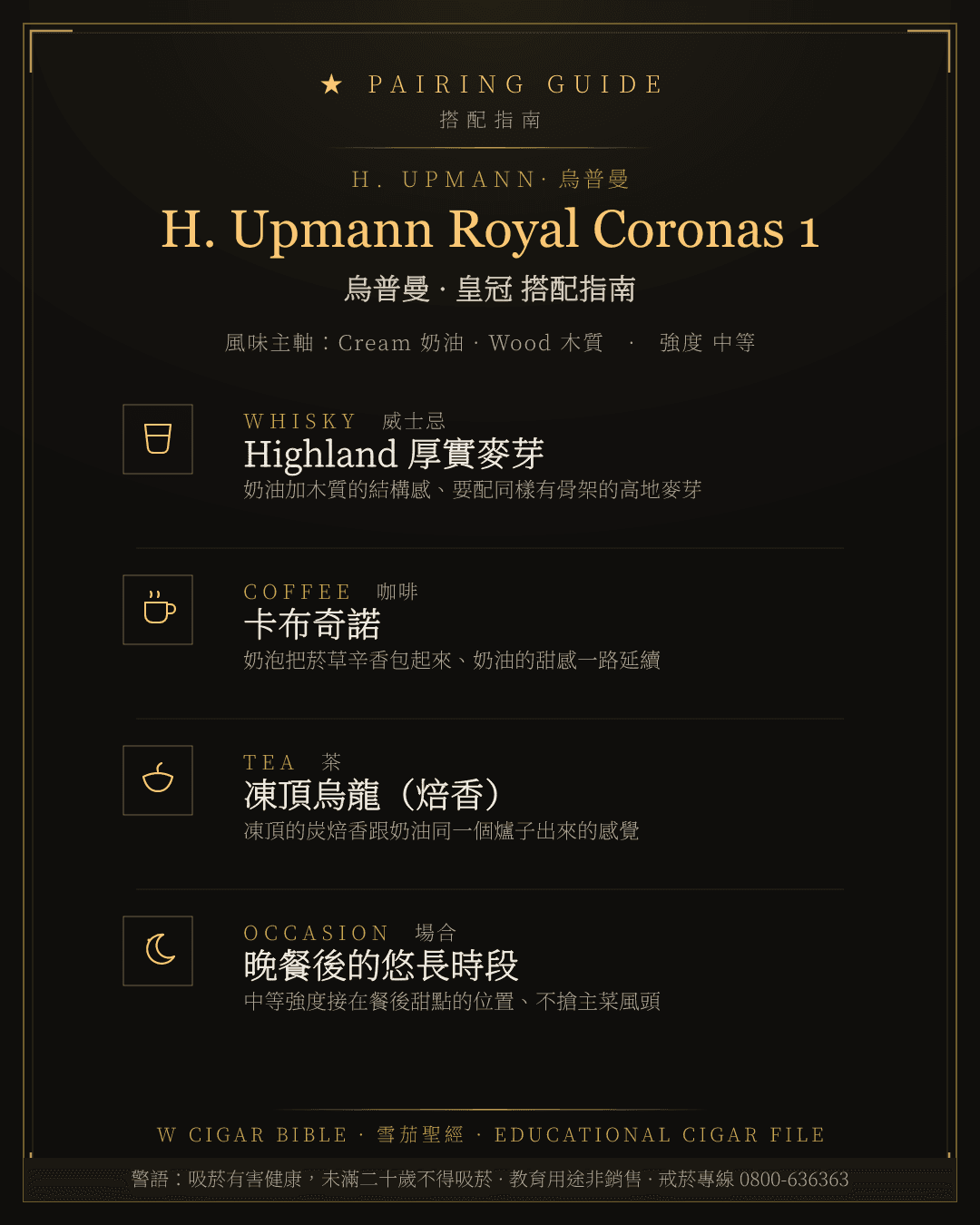
H. Upmann Royal Coronas 1 搭配指南 · 烏普曼
PAIRING GUIDE · 搭配指南
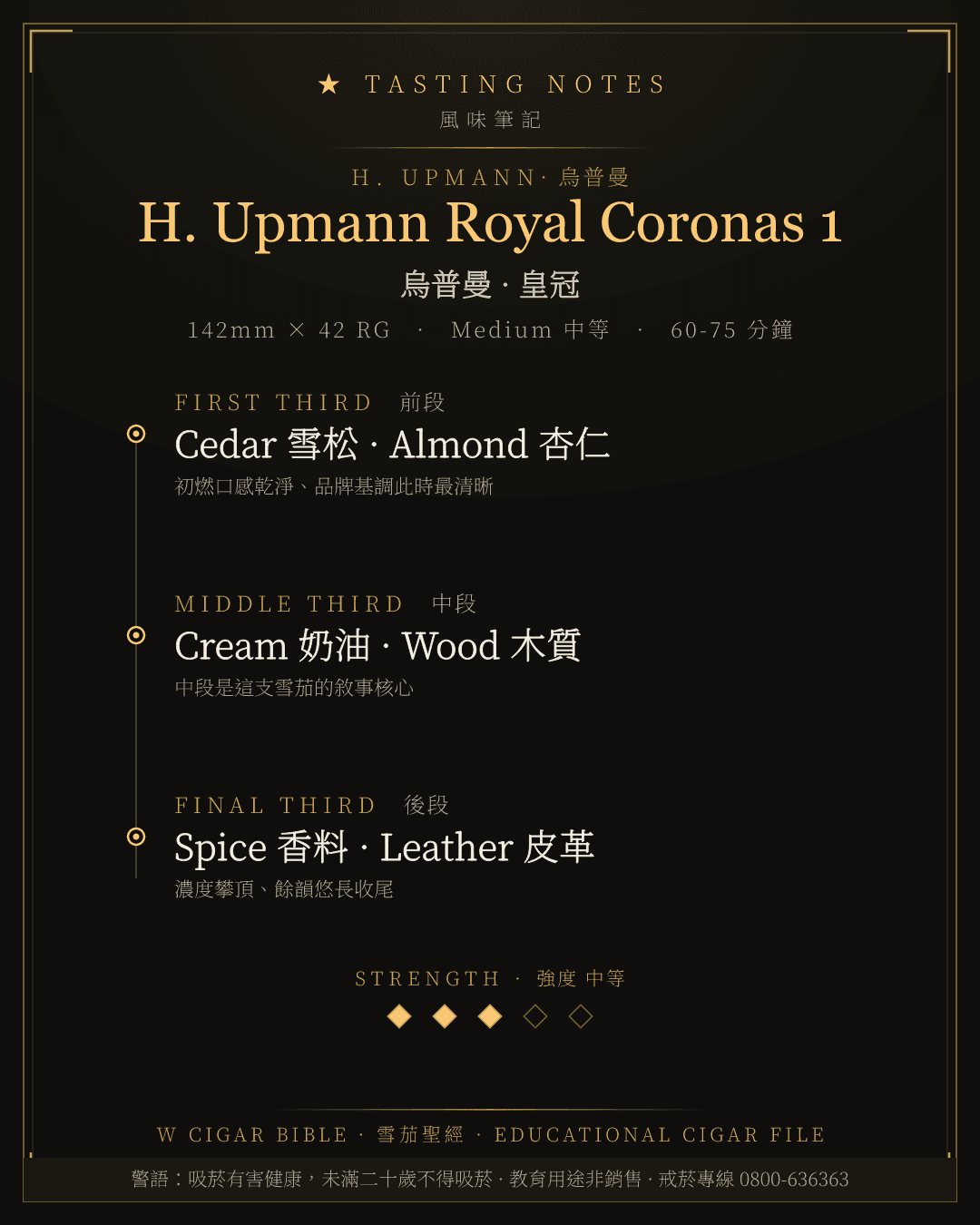
H. Upmann Royal Coronas 1 風味筆記 · 烏普曼
TASTING NOTES · 風味筆記
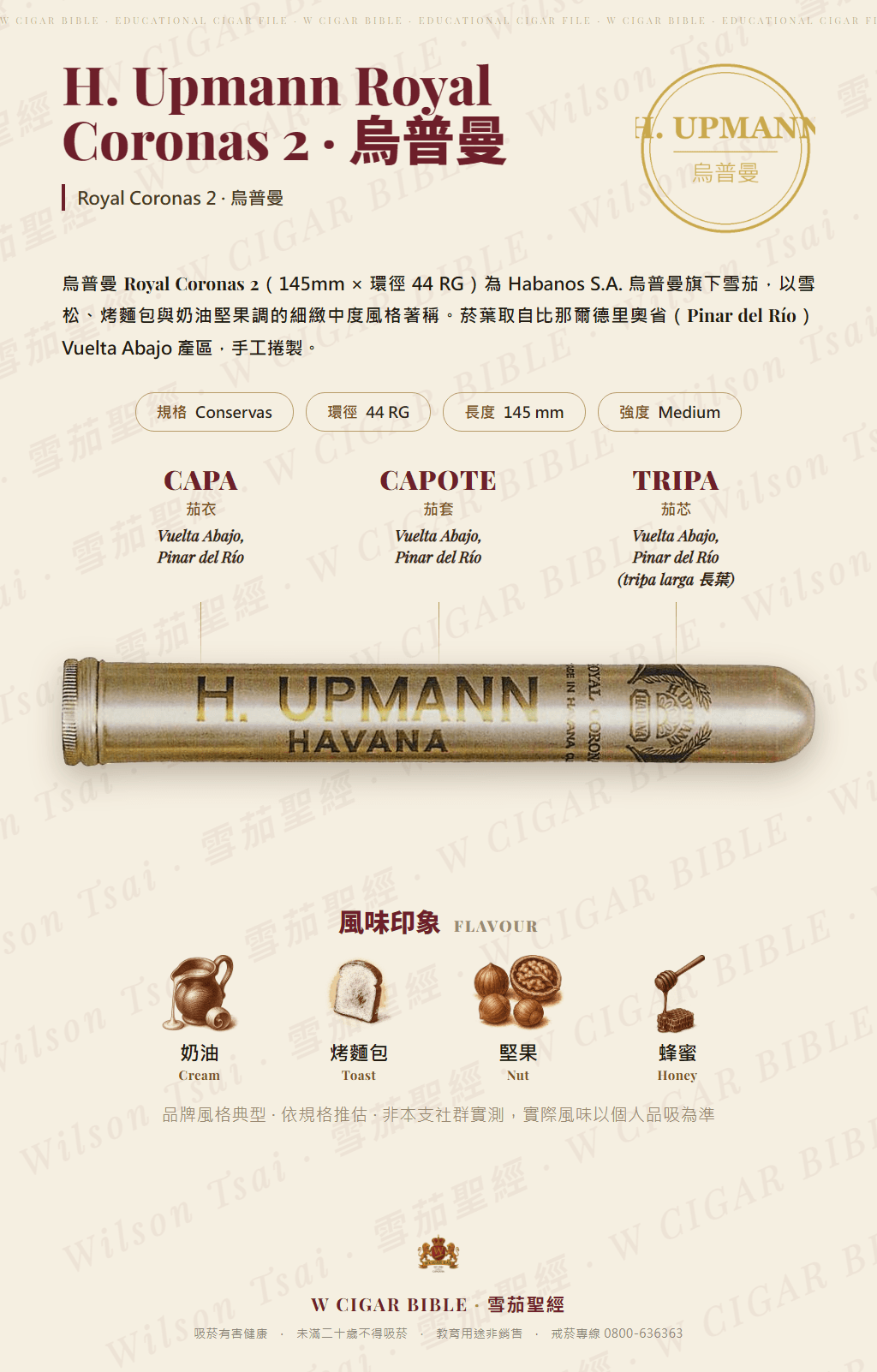
H. Upmann Royal Coronas 2 · 烏普曼
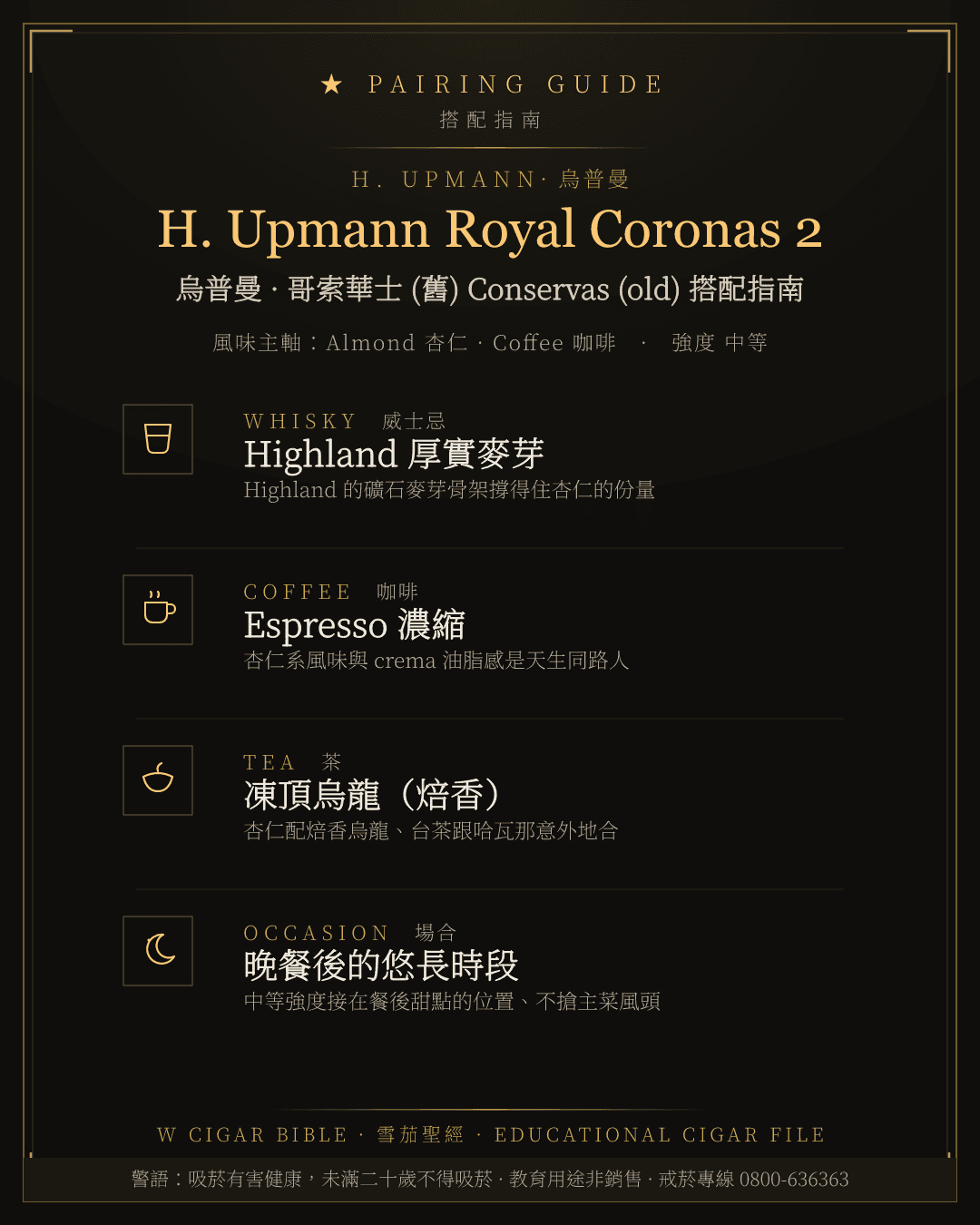
H. Upmann Royal Coronas 2 搭配指南 · 烏普曼
PAIRING GUIDE · 搭配指南
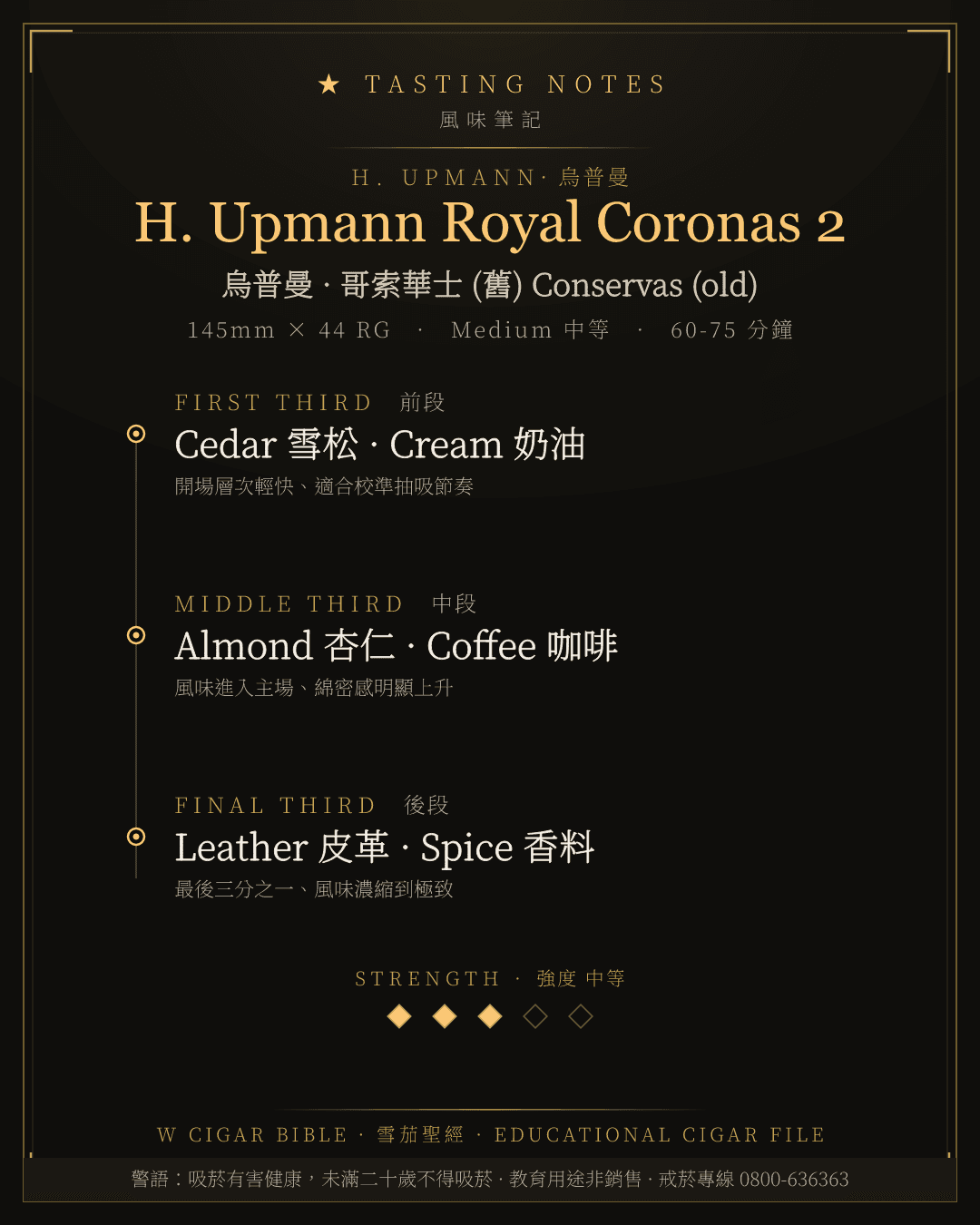
H. Upmann Royal Coronas 2 風味筆記 · 烏普曼
TASTING NOTES · 風味筆記

H. Upmann Royal Robusto · LCDH · 烏普曼
LCDH · LCDH 全球限定 La Casa del Habano · 雪茄檔案
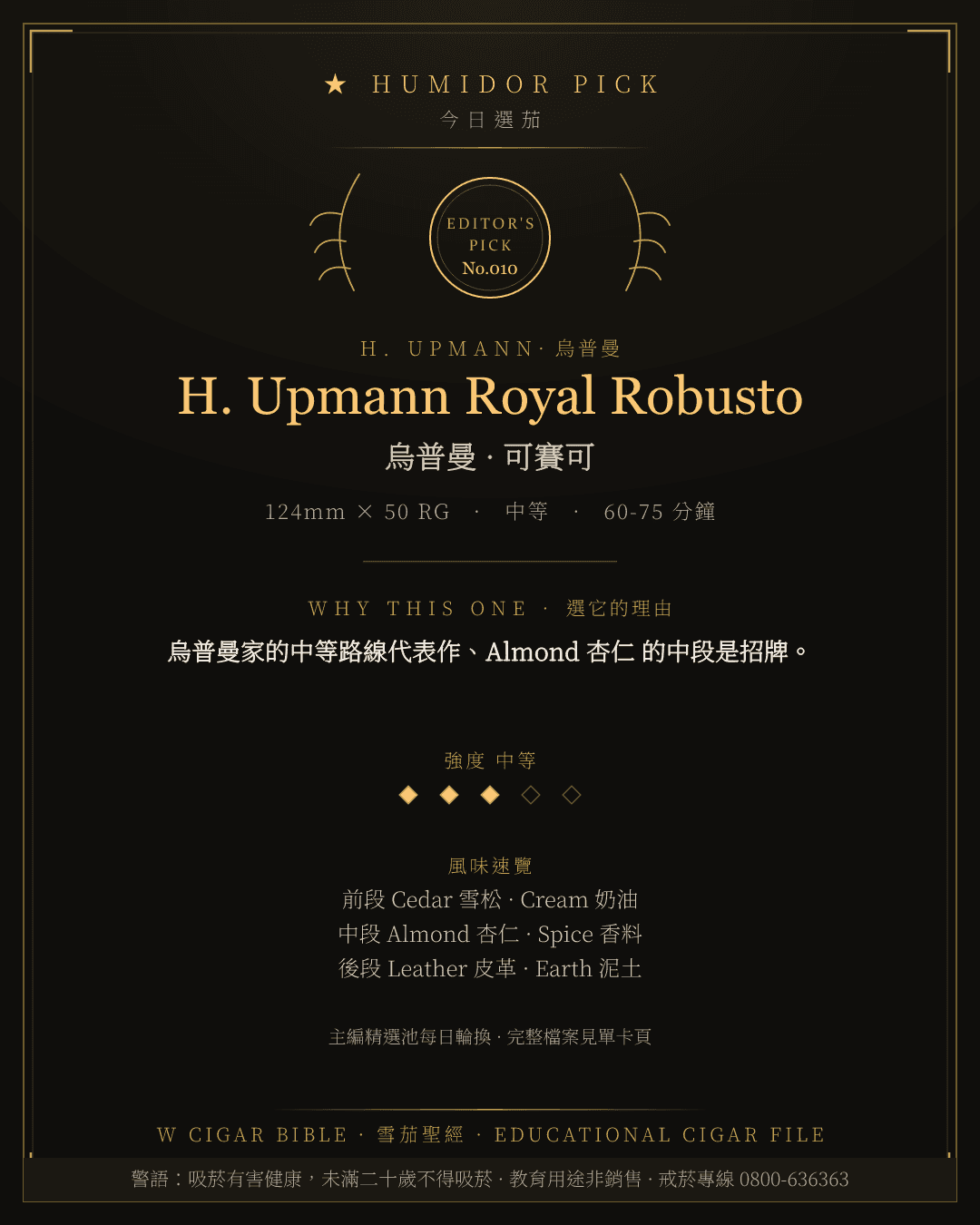
H. Upmann Royal Robusto · 烏普曼 總編輯精選
HUMIDOR PICK · No.010
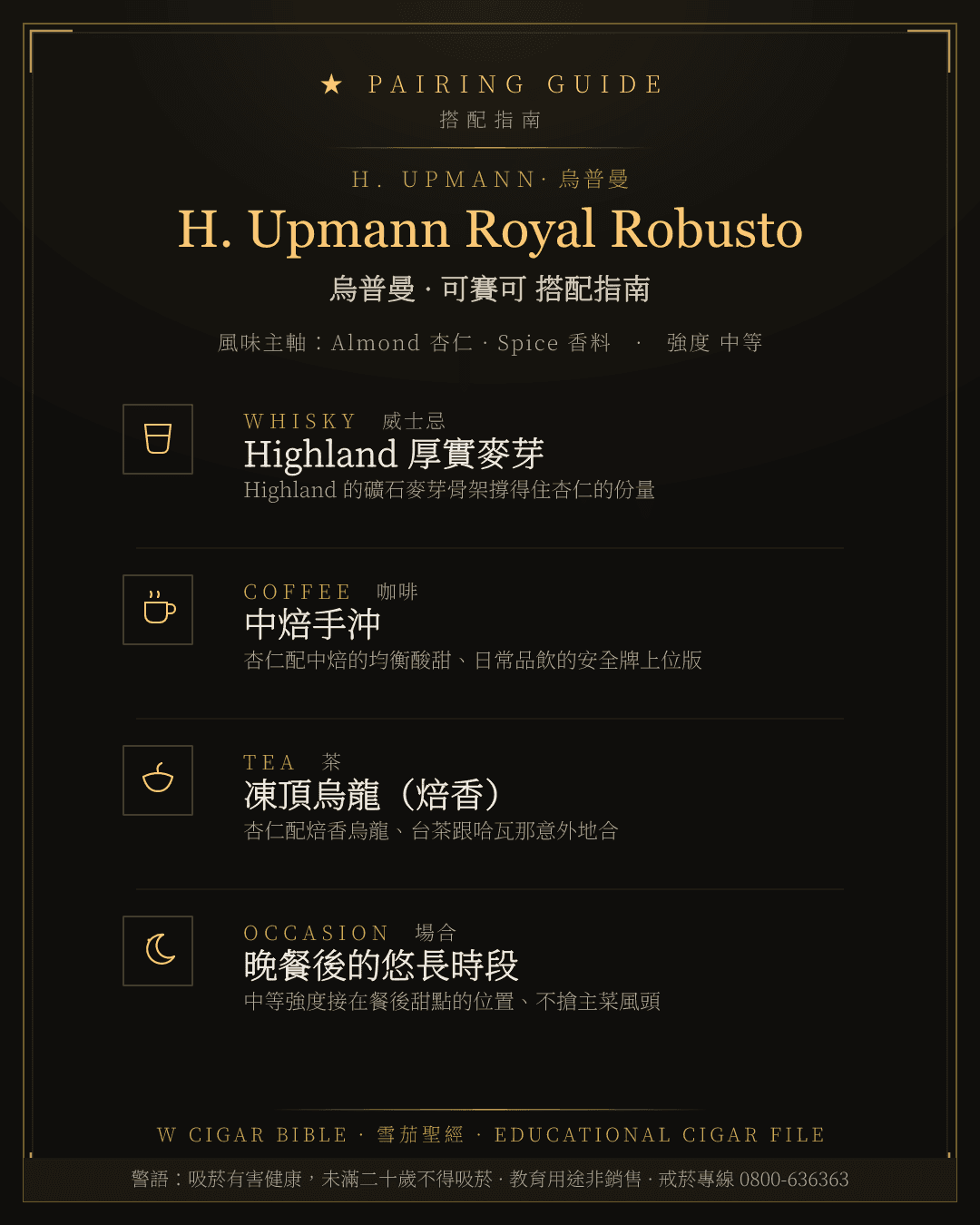
H. Upmann Royal Robusto 搭配指南 · 烏普曼
PAIRING GUIDE · 搭配指南
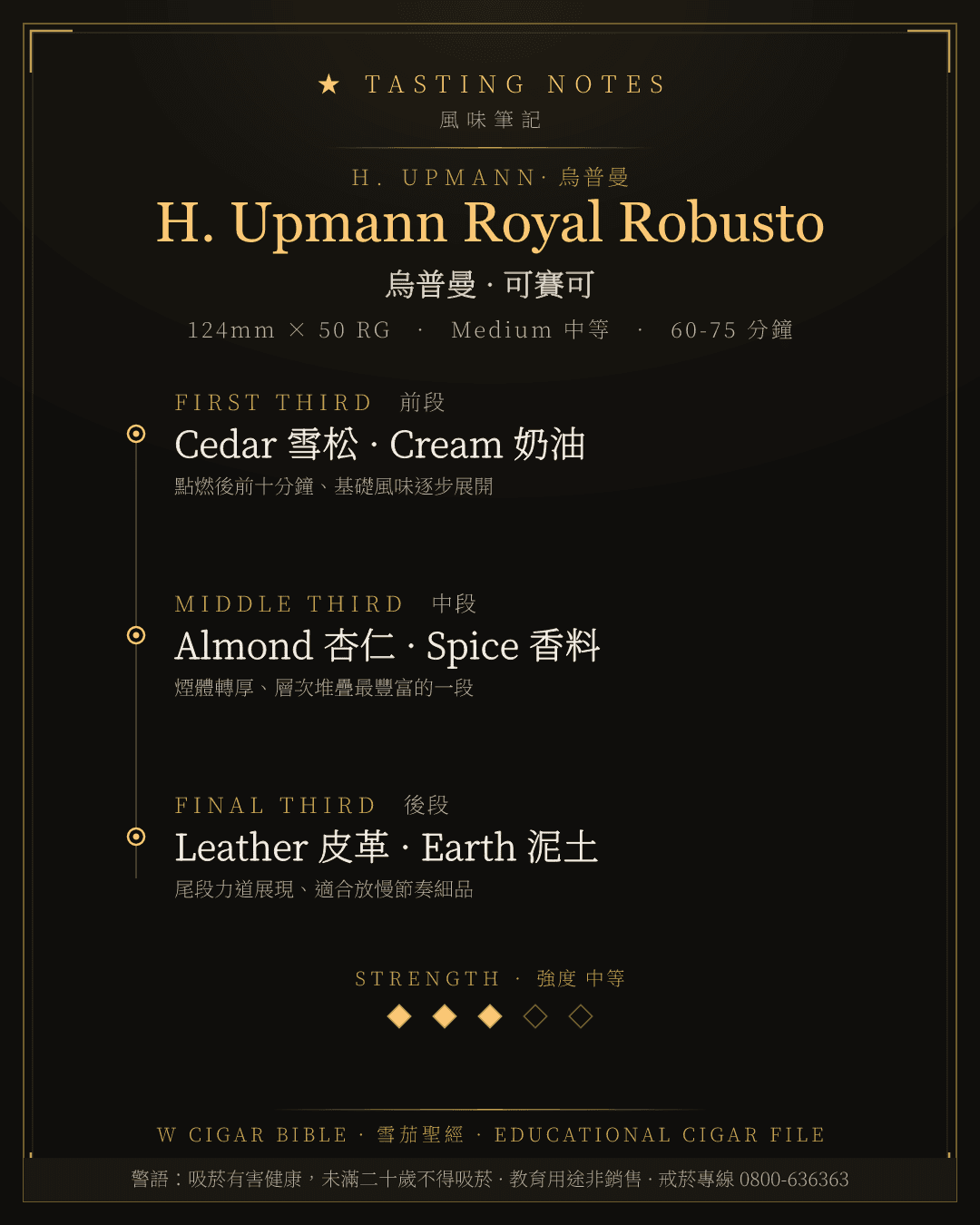
H. Upmann Royal Robusto 風味筆記 · 烏普曼
TASTING NOTES · 風味筆記

H. Upmann Short Coronas · 烏普曼
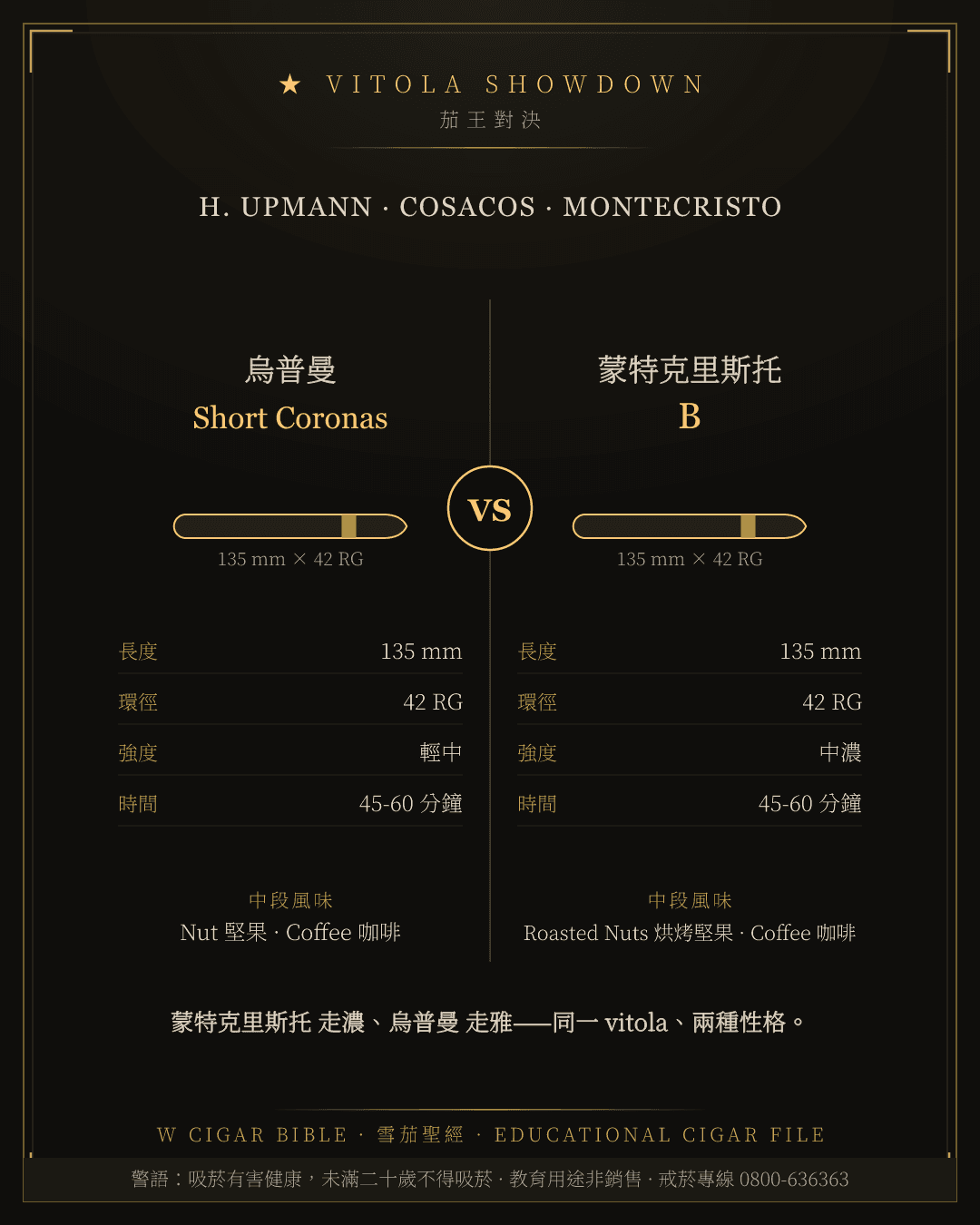
H. Upmann Short Coronas vs Montecristo B
VITOLA SHOWDOWN · Cosacos

H. Upmann Short Coronas 搭配指南 · 烏普曼
PAIRING GUIDE · 搭配指南
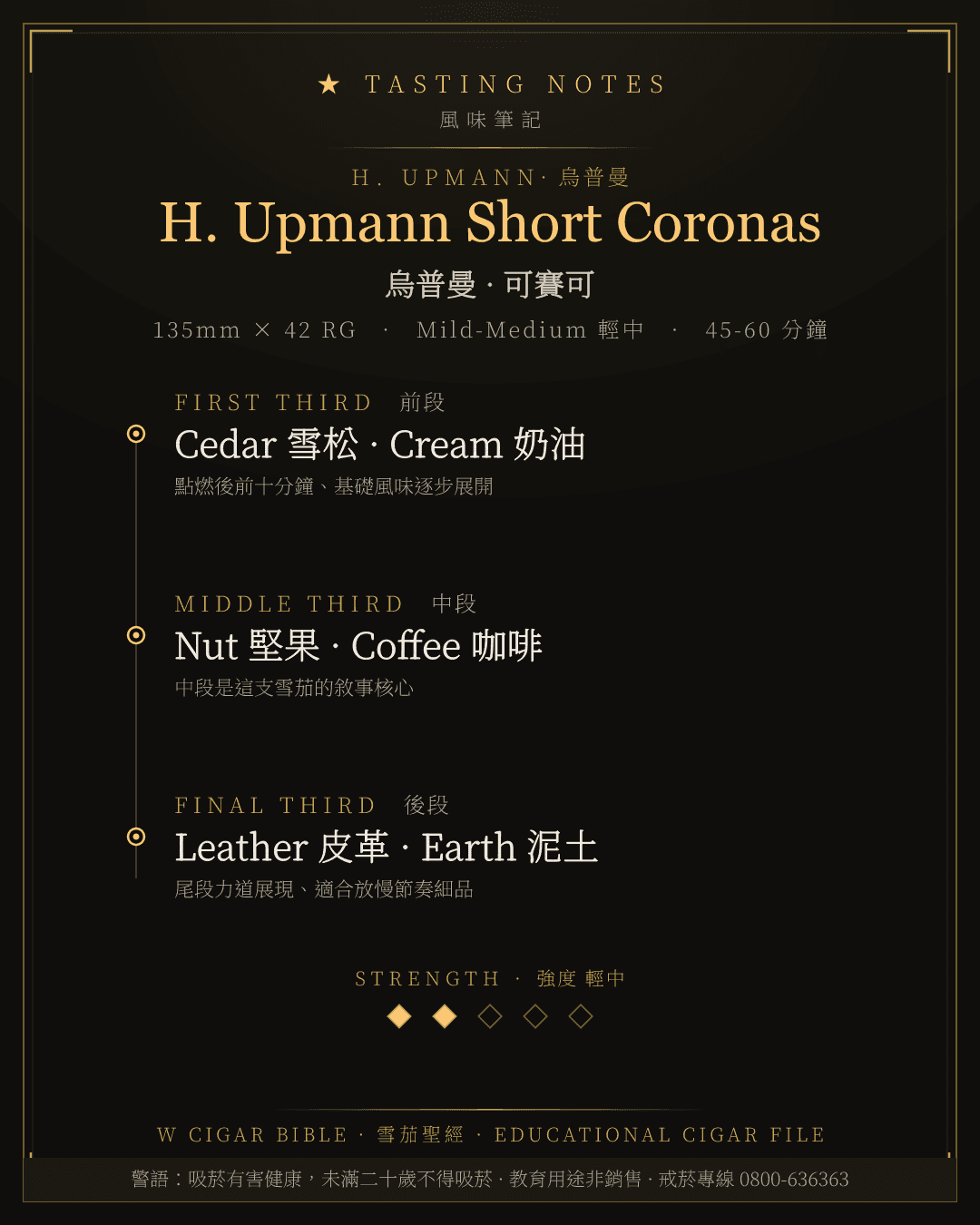
H. Upmann Short Coronas 風味筆記 · 烏普曼
TASTING NOTES · 風味筆記
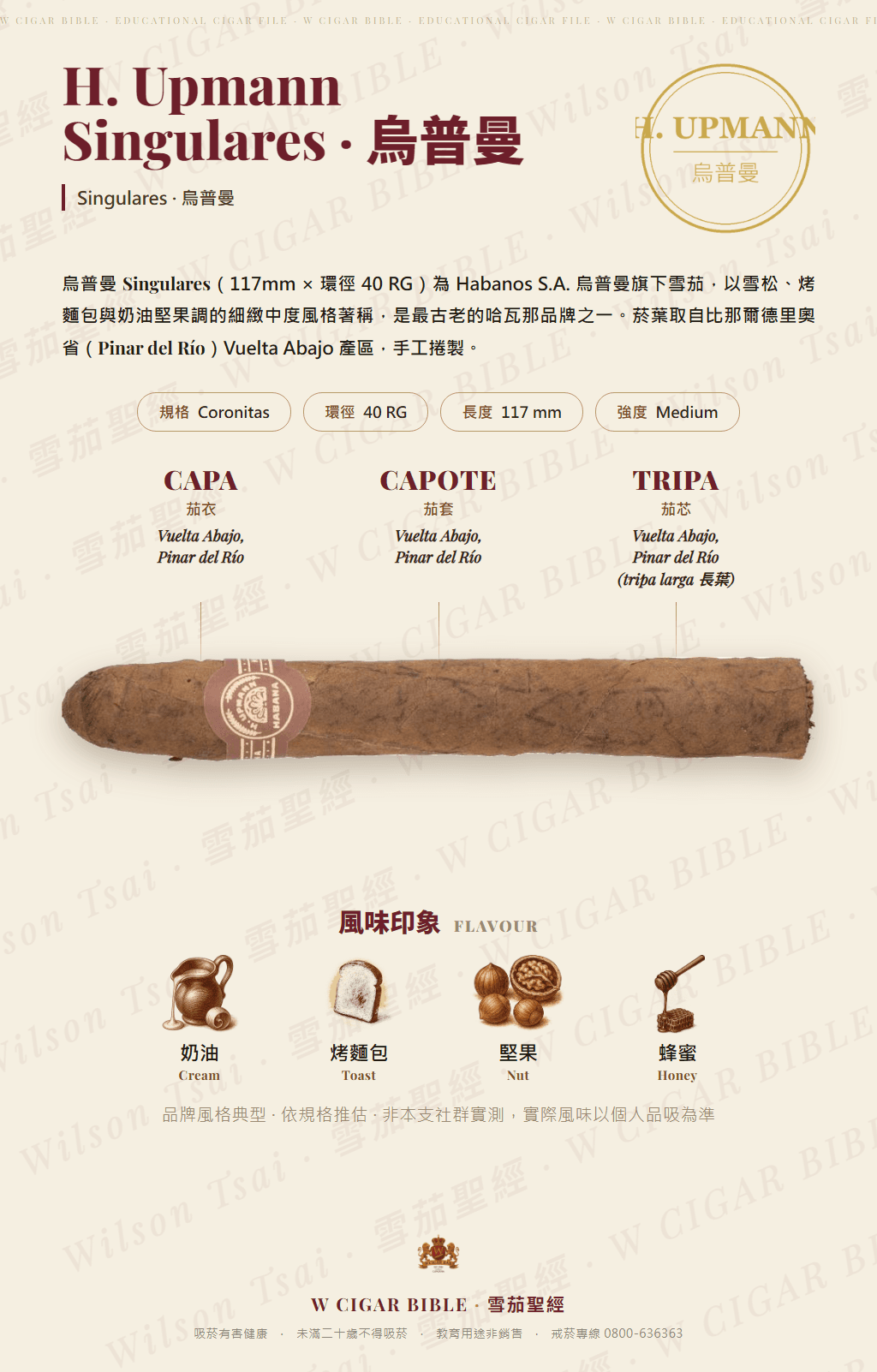
H. Upmann Singulares · 烏普曼

H. Upmann Singulares vs La Escepción Superfinos
VITOLA SHOWDOWN · Coronitas

H. Upmann Singulares 搭配指南 · 烏普曼
PAIRING GUIDE · 搭配指南
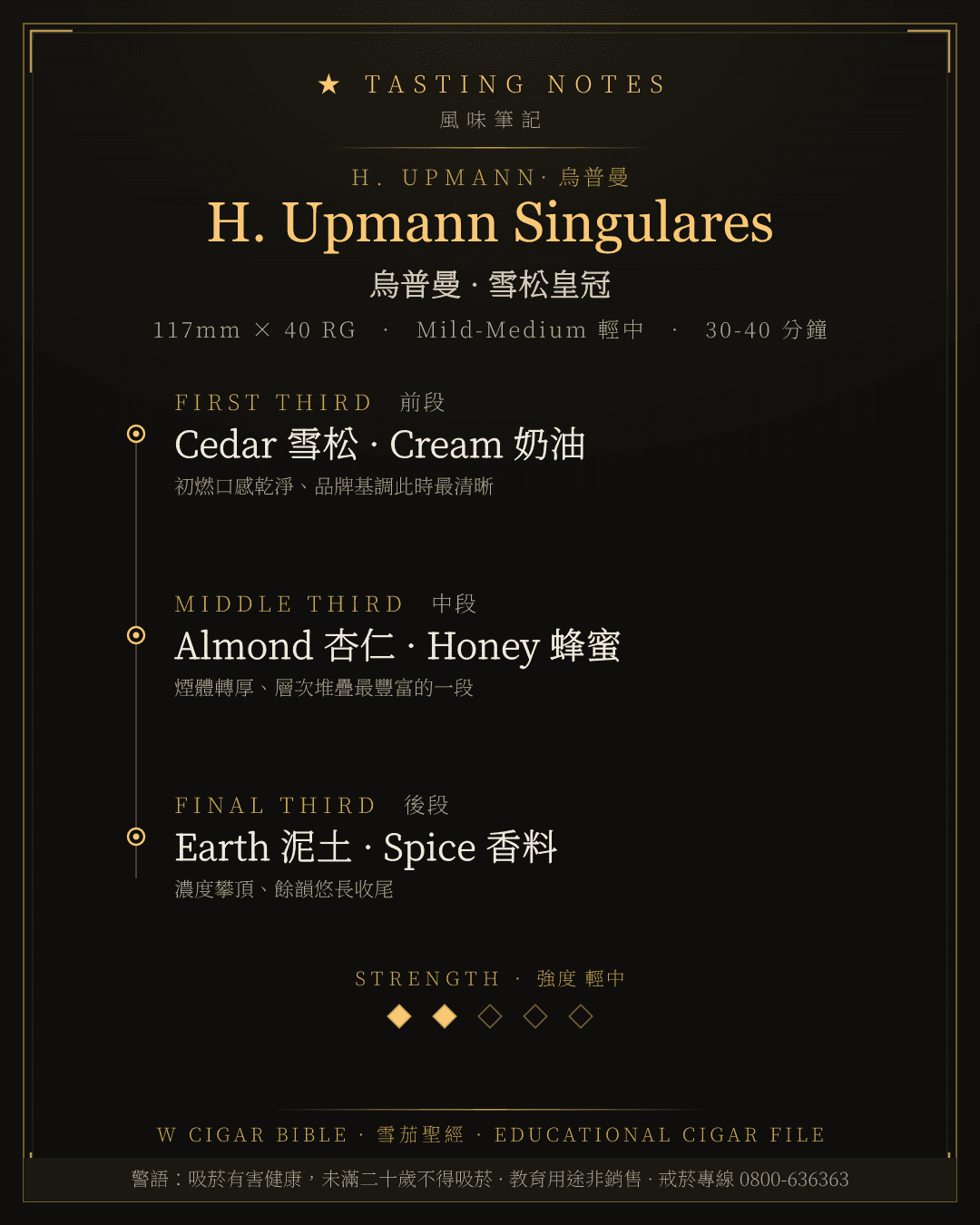
H. Upmann Singulares 風味筆記 · 烏普曼
TASTING NOTES · 風味筆記
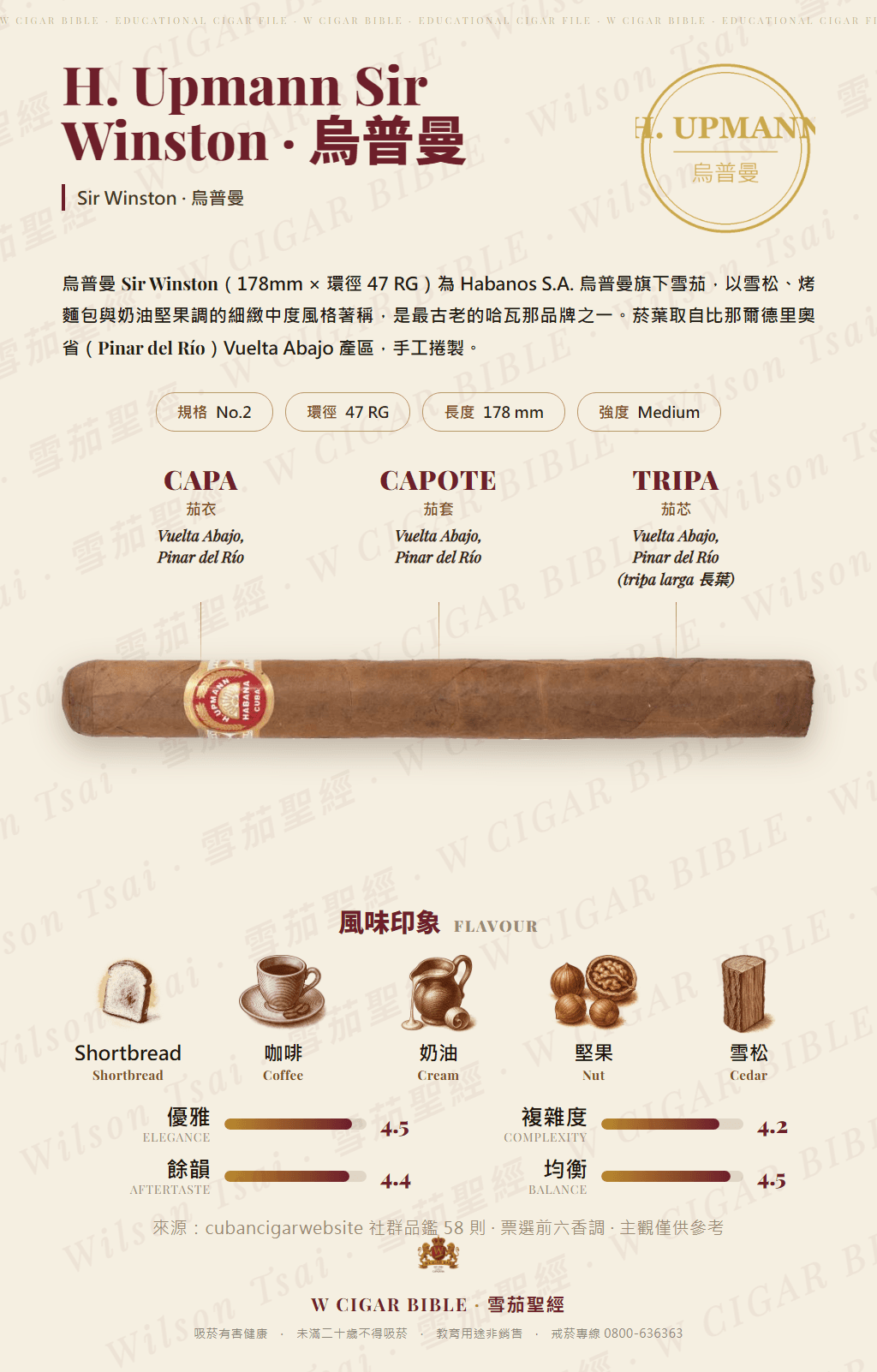
H. Upmann Sir Winston · 烏普曼
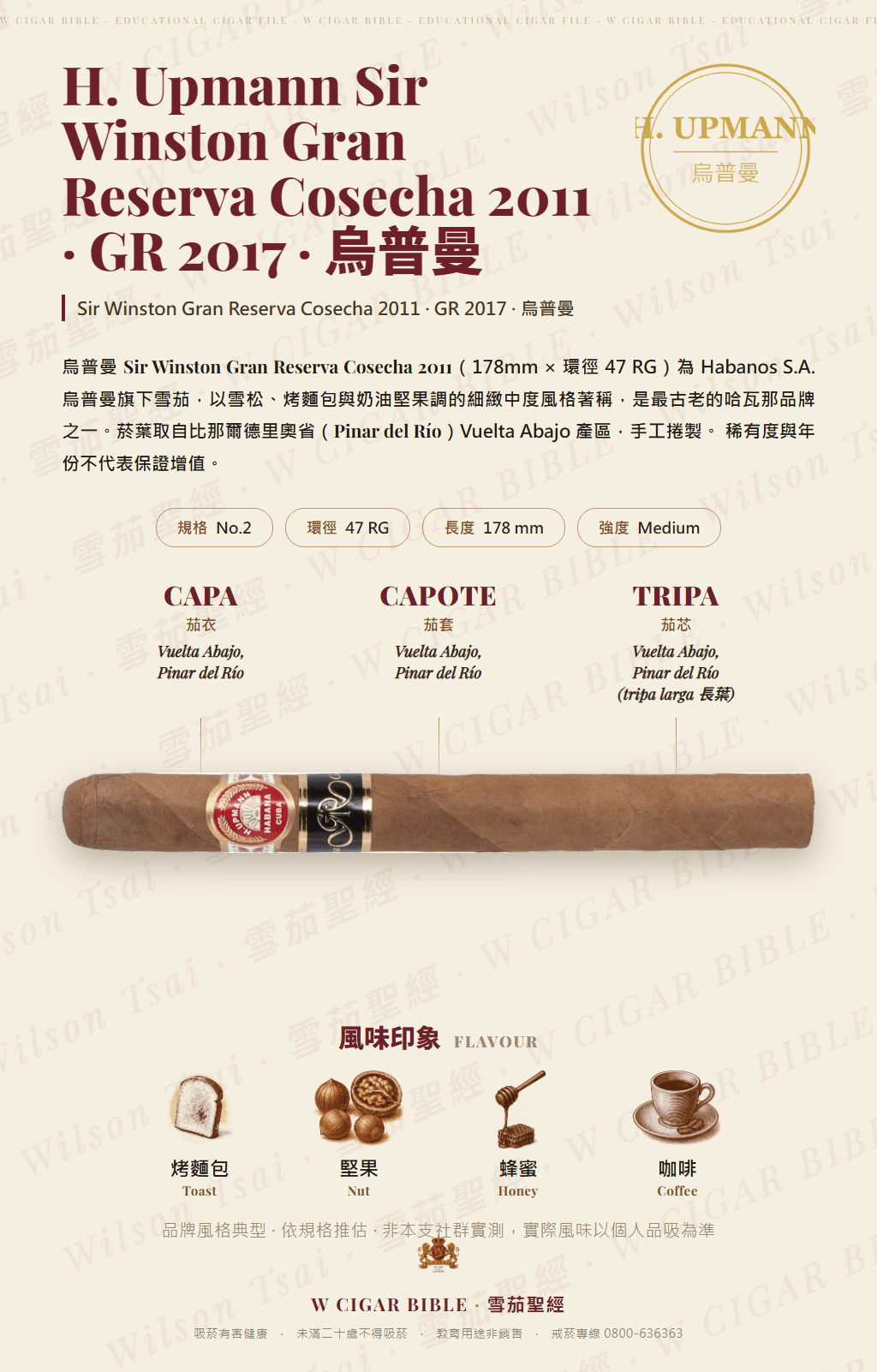
H. Upmann Sir Winston Gran Reserva Cosecha 2011 · GR 2017 · 烏普曼
GR 2017 · 大珍藏 Gran Reserva Cosecha 2011(Sir Winston 廠規 Julieta No.2,47 環徑 × 178mm,限量 5,000 編號盒)· 雪茄檔案
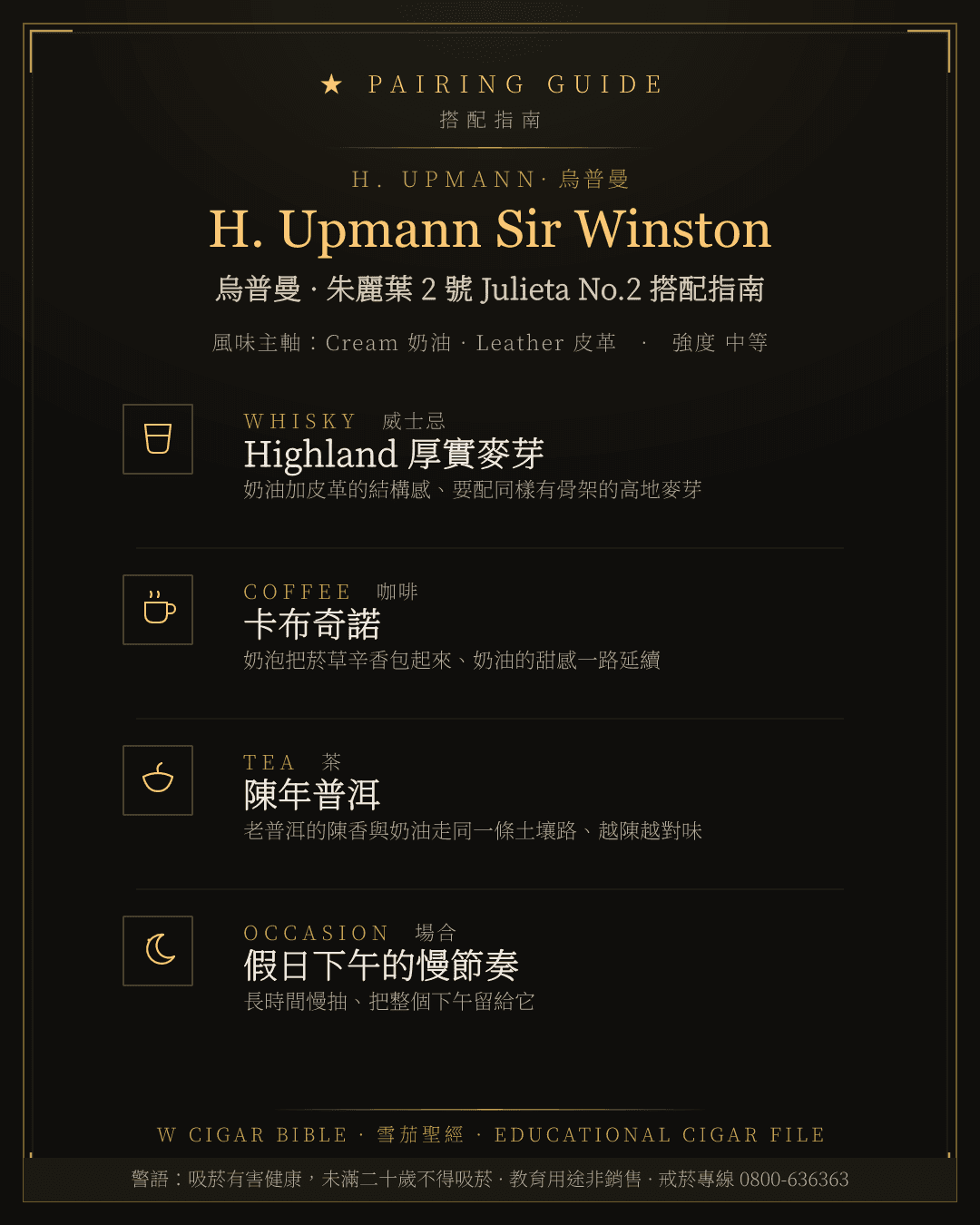
H. Upmann Sir Winston 搭配指南 · 烏普曼
PAIRING GUIDE · 搭配指南

H. Upmann Sir Winston 風味筆記 · 烏普曼
TASTING NOTES · 風味筆記

H. Upmann Super Coronas · 烏普曼
標準生產款(Coronas Gordas 46 RG × 143mm · 約 2002 年停產)· 雪茄檔案
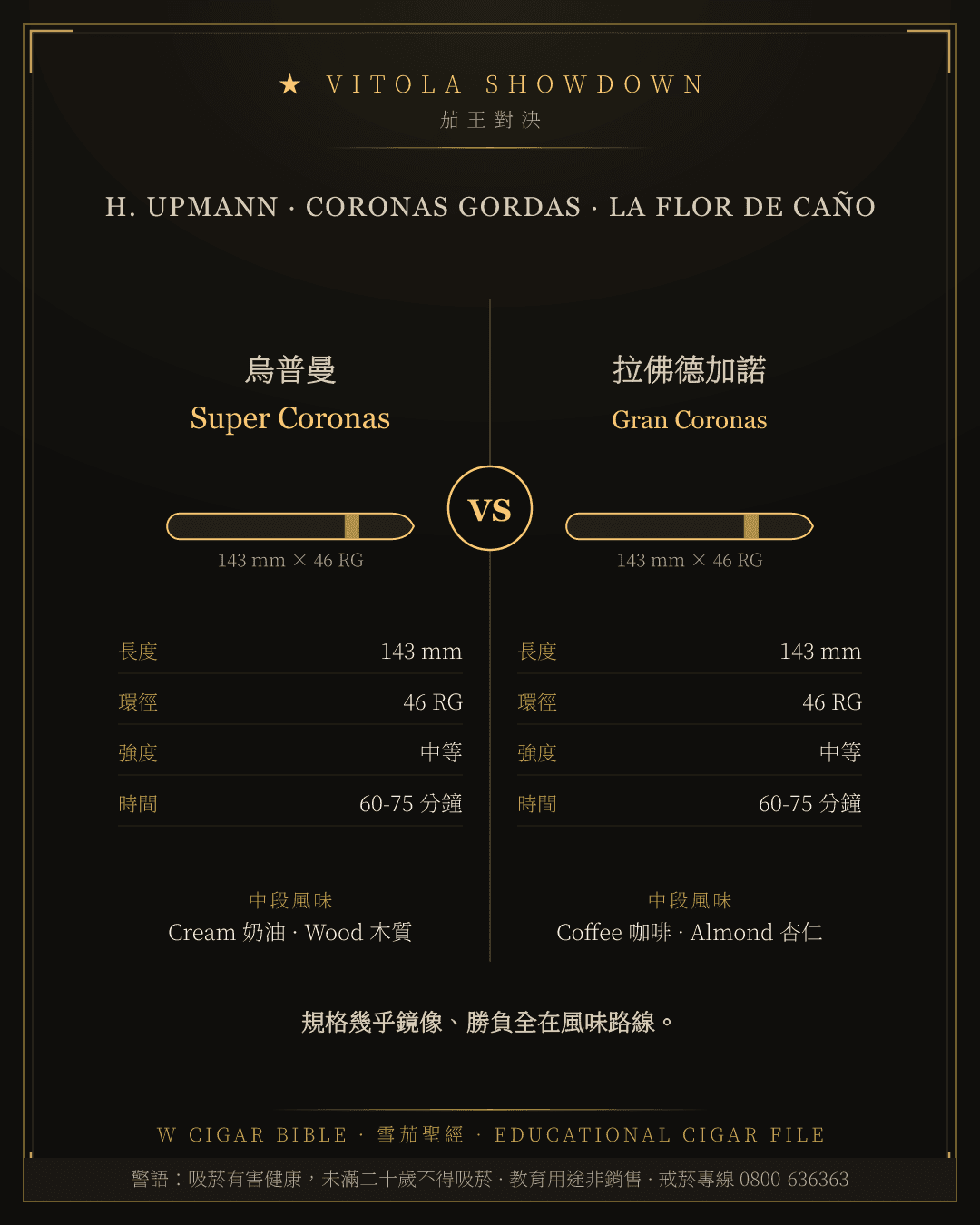
H. Upmann Super Coronas vs La Flor De Caño Gran Coronas
VITOLA SHOWDOWN · Coronas Gordas

H. Upmann Super Coronas 搭配指南 · 烏普曼
PAIRING GUIDE · 搭配指南
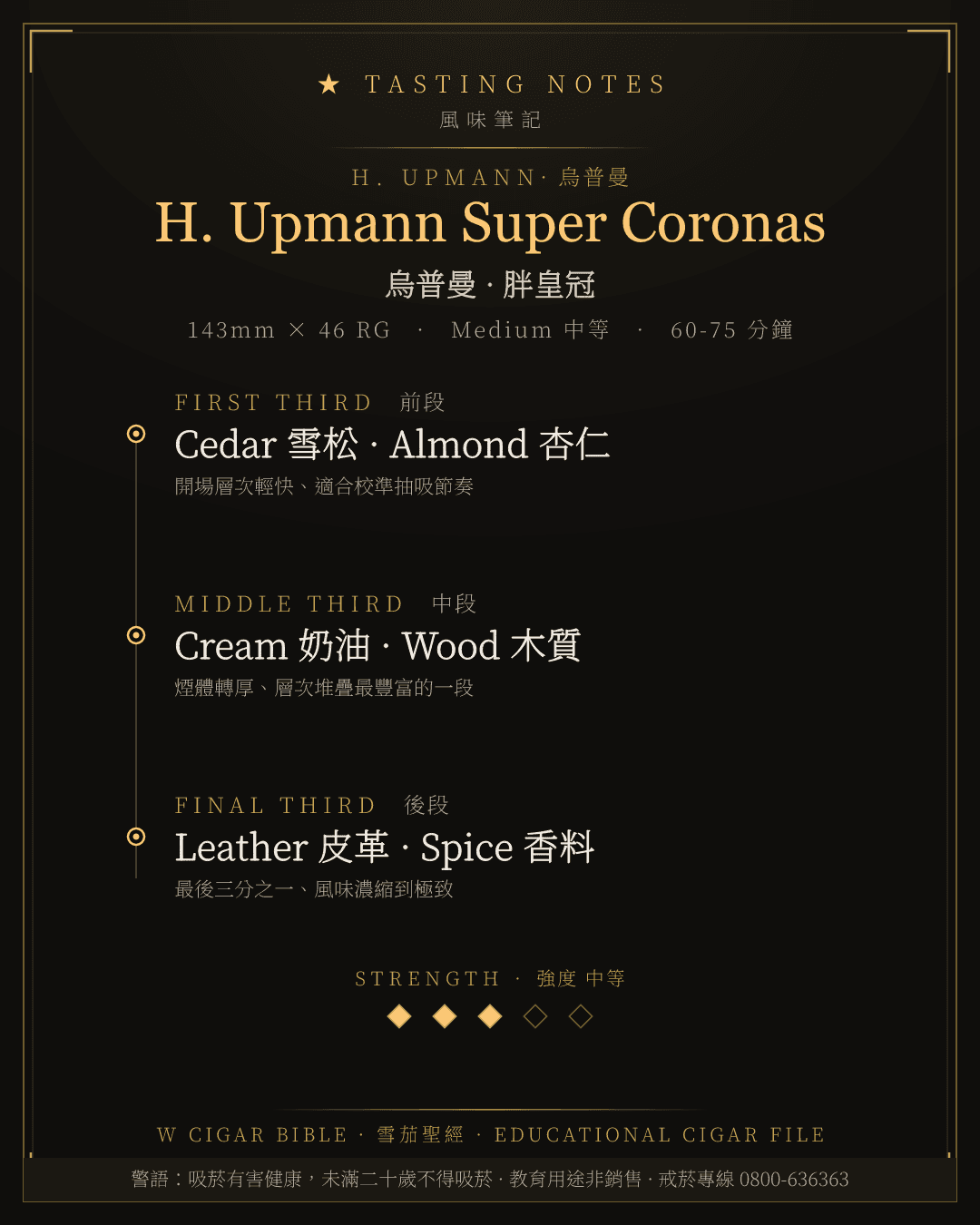
H. Upmann Super Coronas 風味筆記 · 烏普曼
TASTING NOTES · 風味筆記

H. Upmann Super Magnum · Colección Habanos · 烏普曼
CH · 收藏書本盒 Colección Habanos · 雪茄檔案
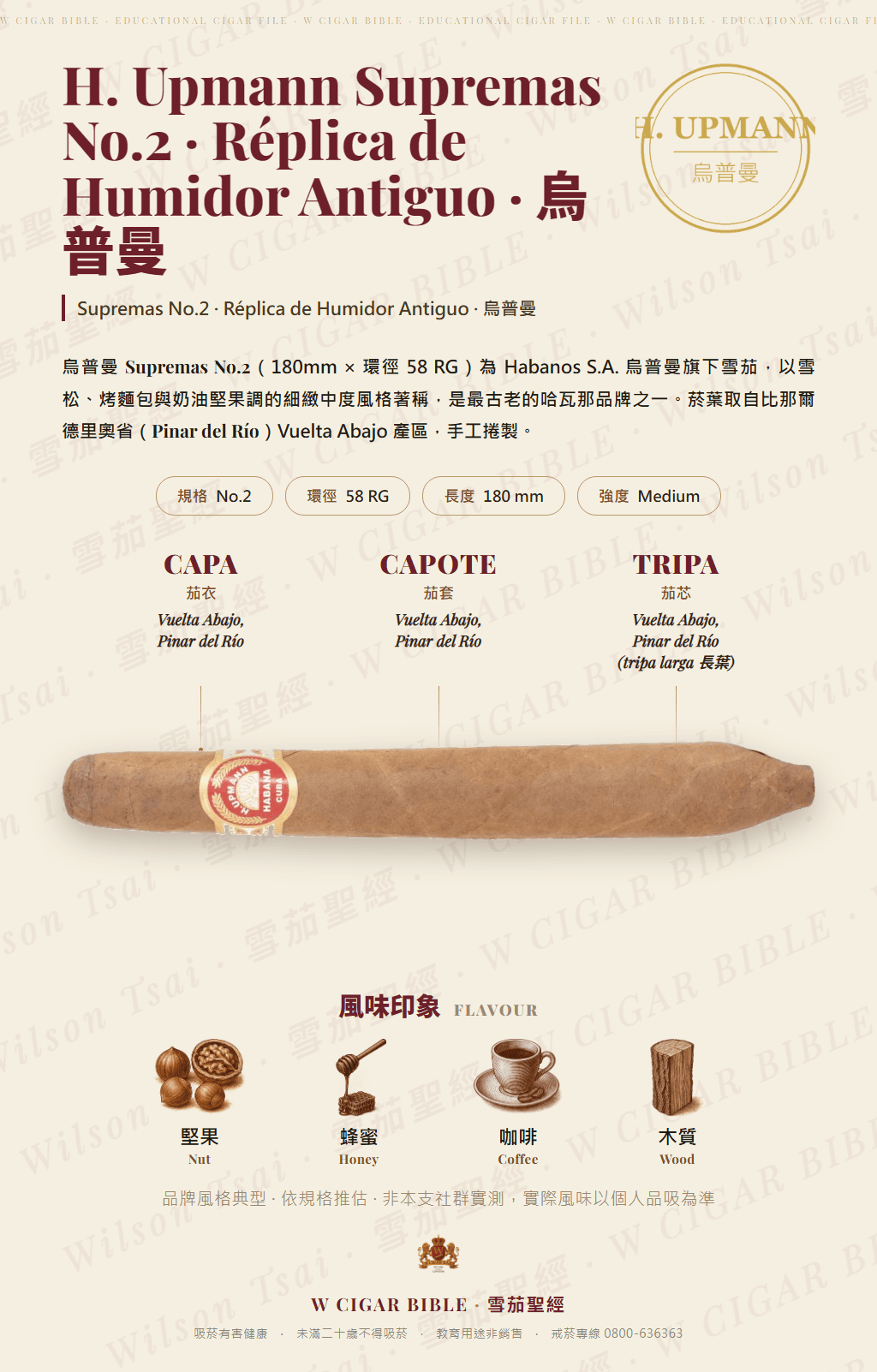
H. Upmann Supremas No.2 · Réplica de Humidor Antiguo · 烏普曼
Réplica de Humidor Antiguo 古董雪茄櫃復刻限量版(Supremas No.2 環徑 58 × 長度 180mm,2014 年發行、全球 450 只木櫃 × 每只 50 支、停產)· 雪茄檔案
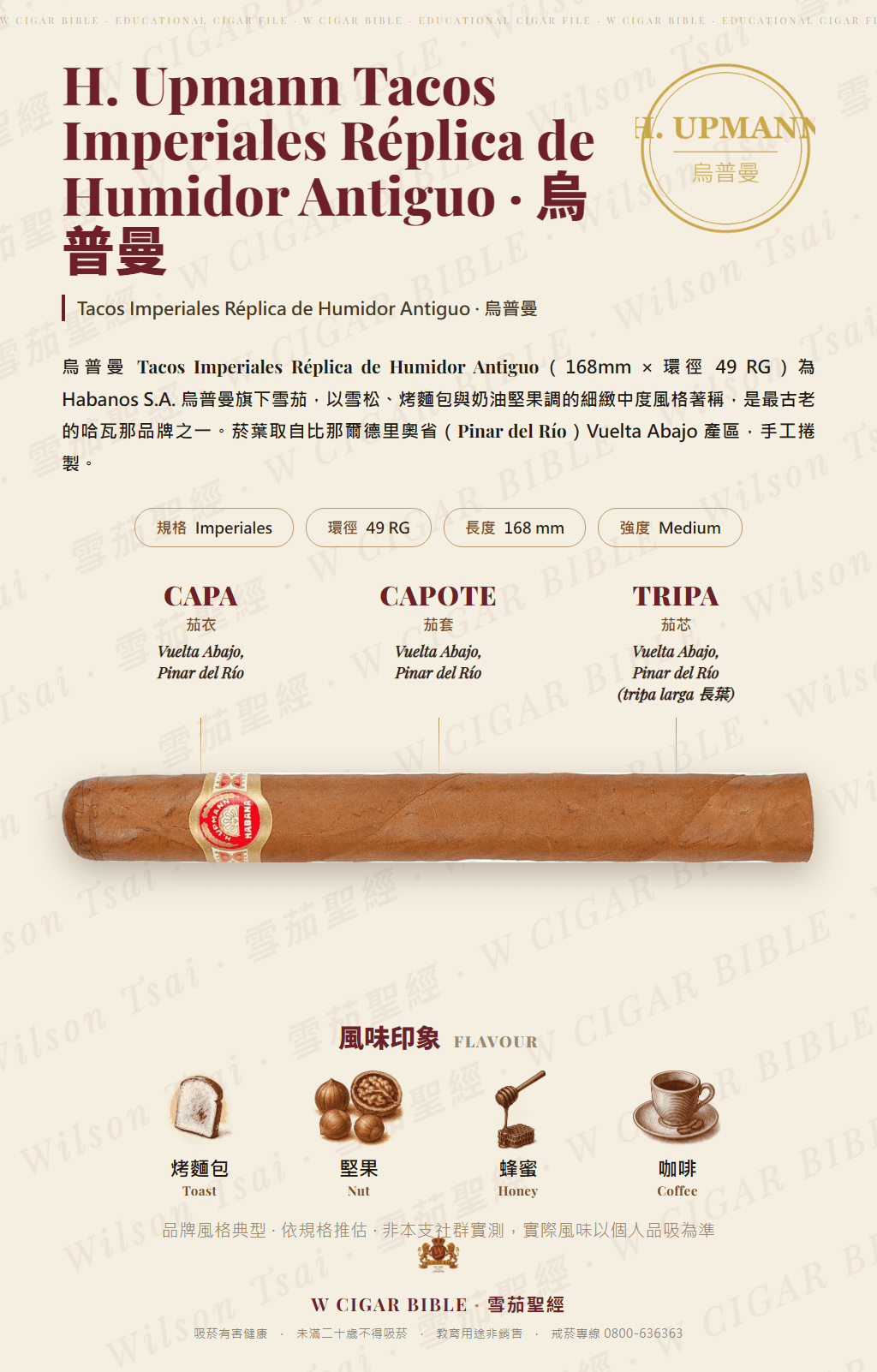
H. Upmann Tacos Imperiales Réplica de Humidor Antiguo · 烏普曼
古董木盒複刻 Réplica de Humidor Antiguo(2007 年發行 · Tacos Imperiales 49 RG × 168mm · 每只木盒 50 支)· 雪茄檔案

H. Upmann Tres Tubos Selection · 烏普曼

H. Upmann Tres Tubos Selection vs Juan López Petit Coronas
VITOLA SHOWDOWN · Marevas
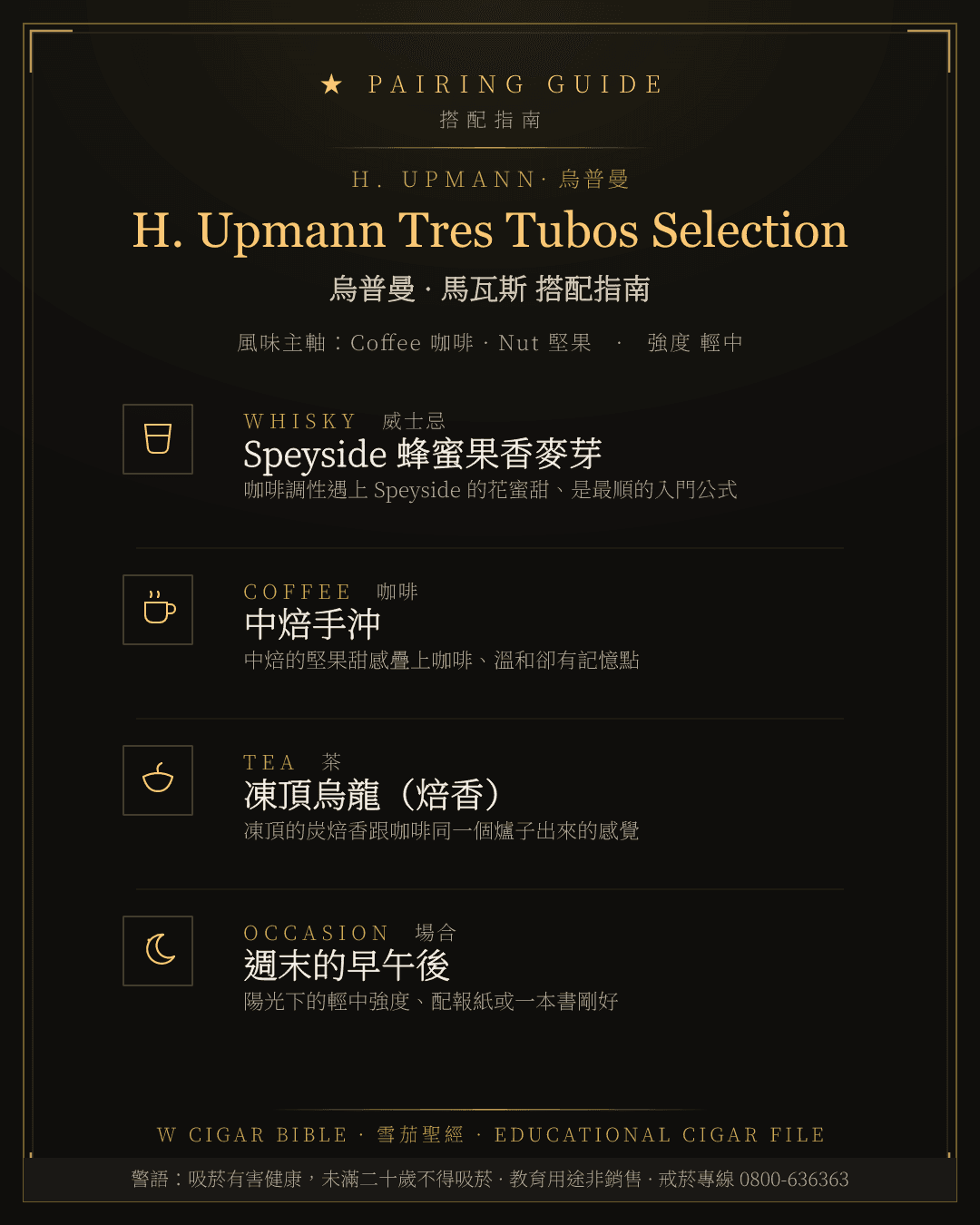
H. Upmann Tres Tubos Selection 搭配指南 · 烏普曼
PAIRING GUIDE · 搭配指南
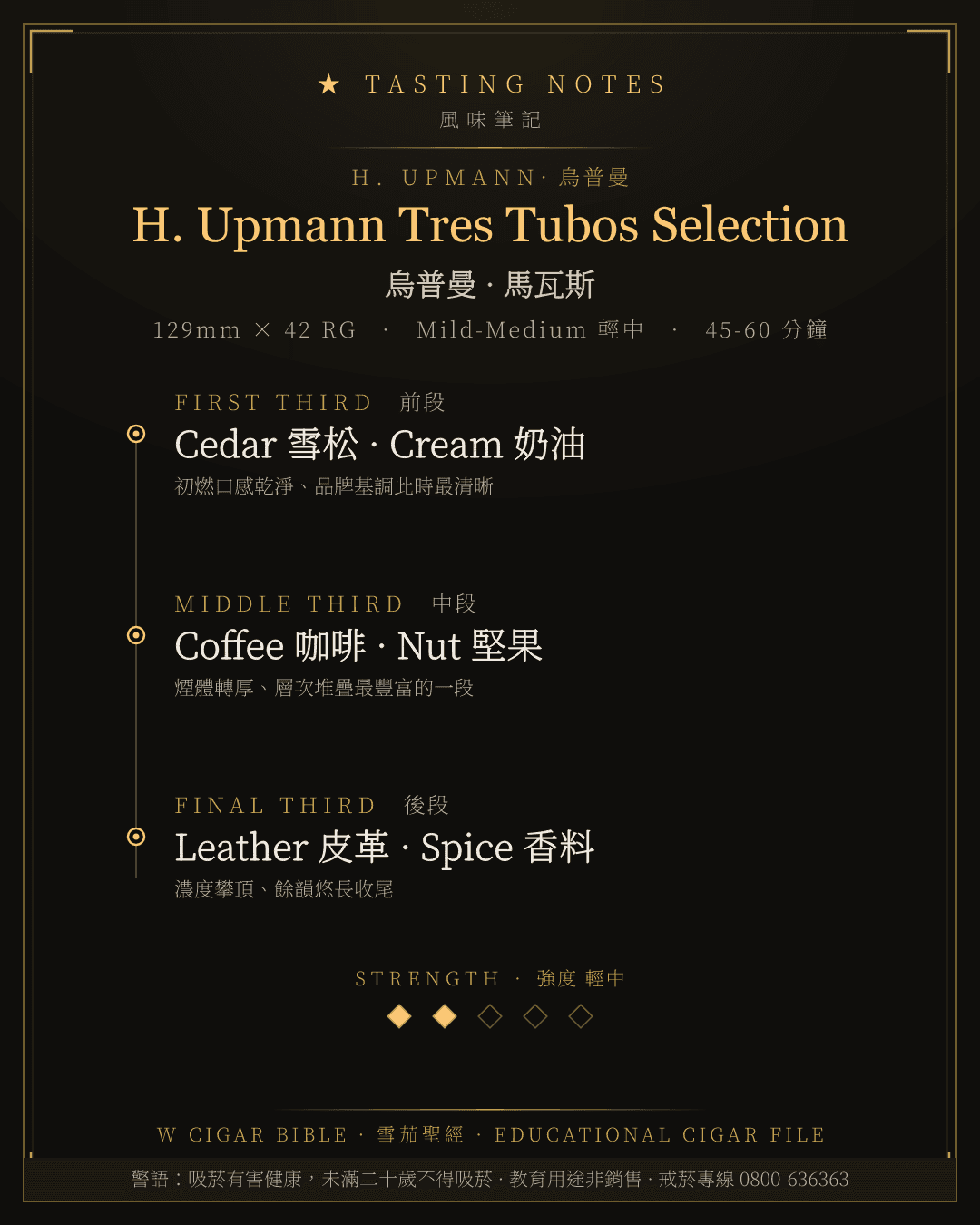
H. Upmann Tres Tubos Selection 風味筆記 · 烏普曼
TASTING NOTES · 風味筆記

H. Upmann Upmann No. 1 · 烏普曼
標準生產款(Cervantes 廠規 環徑 42 × 長度 165mm)· 雪茄檔案

H. Upmann Upmann No. 1 搭配指南 · 烏普曼
PAIRING GUIDE · 搭配指南
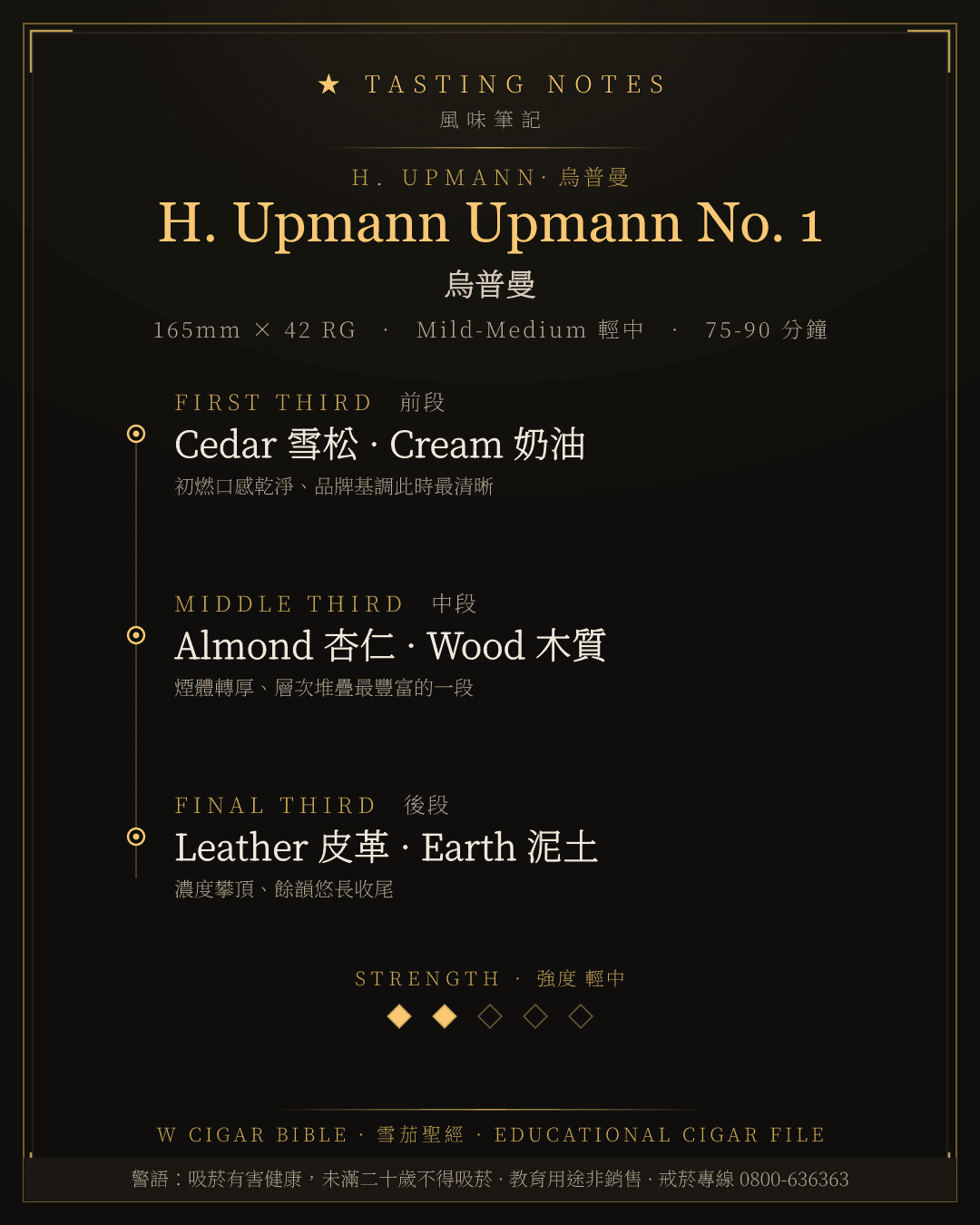
H. Upmann Upmann No. 1 風味筆記 · 烏普曼
TASTING NOTES · 風味筆記

H. Upmann Upmann No. 2 · 烏普曼
標準生產款(Piramides 環徑 52 × 長度 156mm,在產)· 雪茄檔案

H. Upmann Upmann No. 2 搭配指南 · 烏普曼
PAIRING GUIDE · 搭配指南
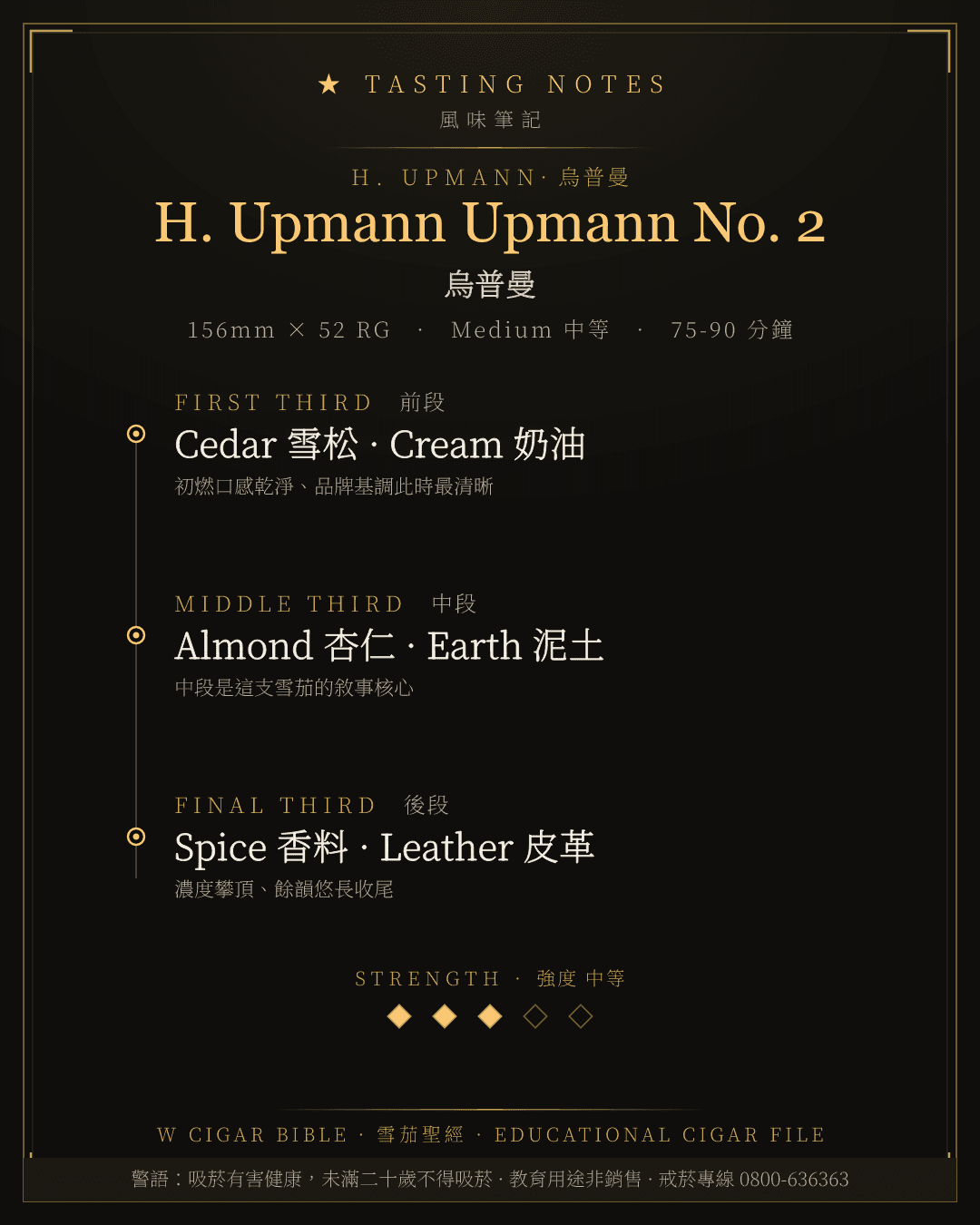
H. Upmann Upmann No. 2 風味筆記 · 烏普曼
TASTING NOTES · 風味筆記
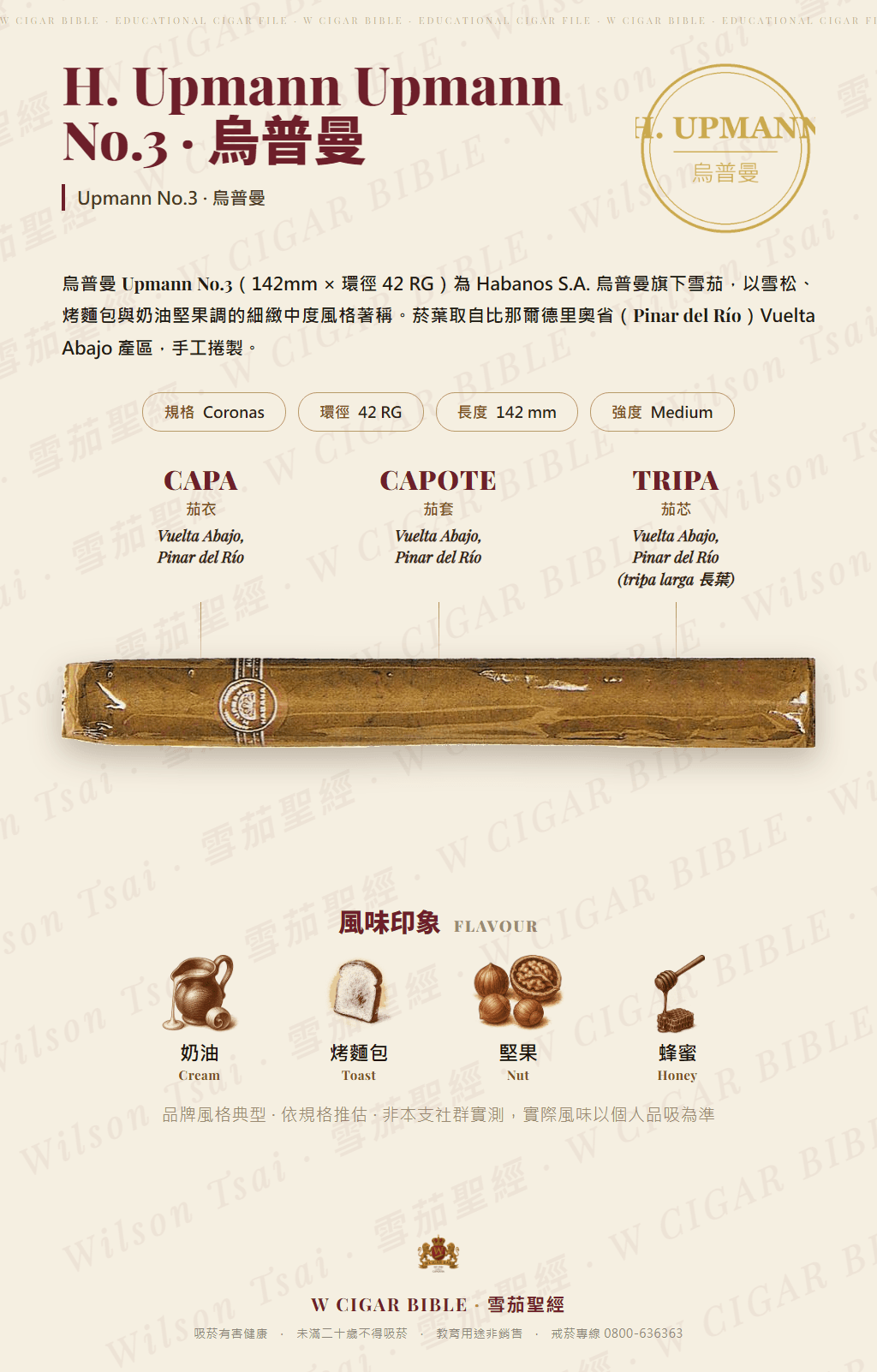
H. Upmann Upmann No. 3 · 烏普曼

H. Upmann Upmann No. 3 搭配指南 · 烏普曼
PAIRING GUIDE · 搭配指南

H. Upmann Upmann No. 3 風味筆記 · 烏普曼
TASTING NOTES · 風味筆記
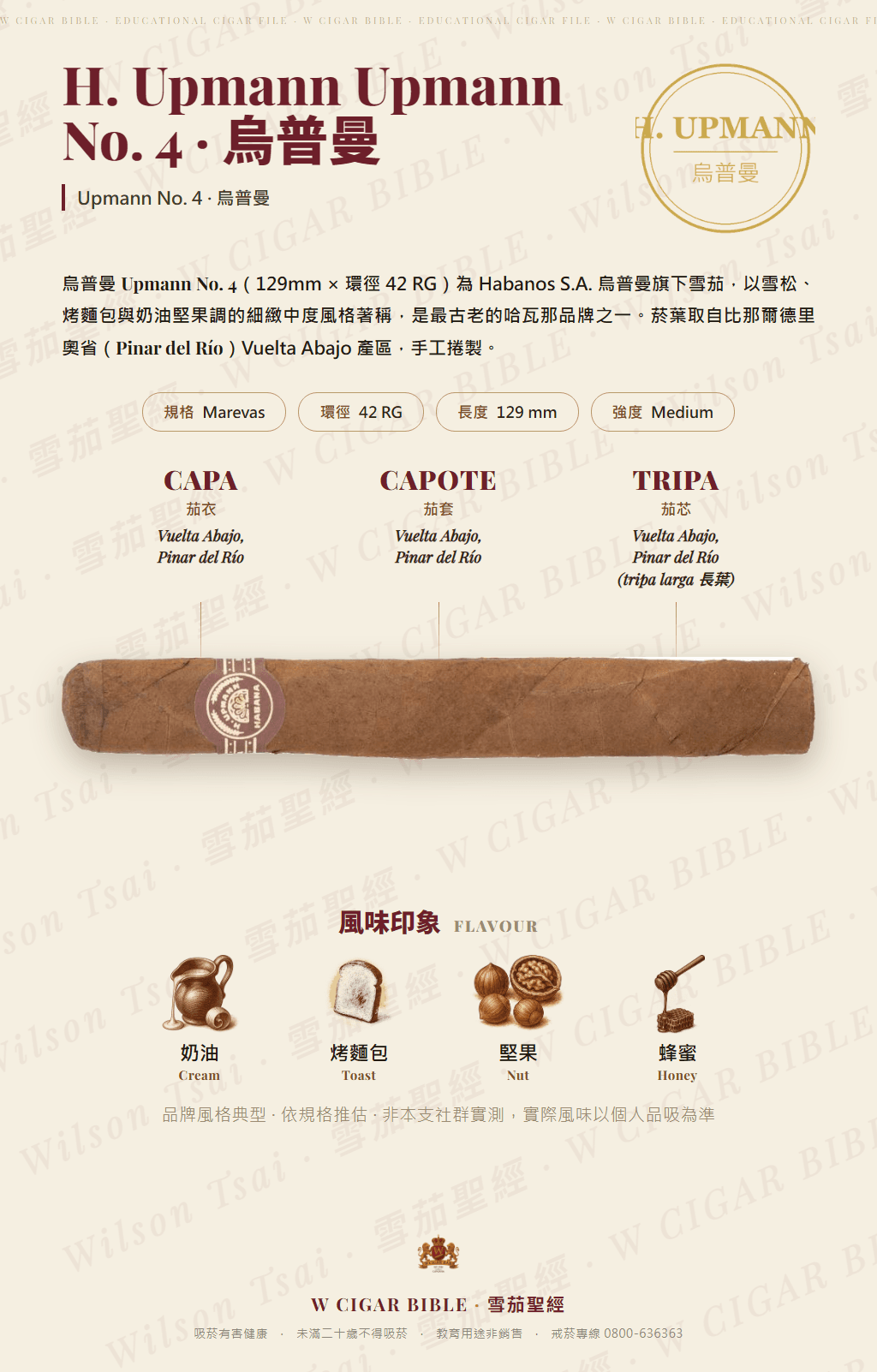
H. Upmann Upmann No. 4 · 烏普曼
標準生產款(Mareva 廠規 42 RG × 129mm)· 雪茄檔案

H. Upmann Upmann No. 4 搭配指南 · 烏普曼
PAIRING GUIDE · 搭配指南

H. Upmann Upmann No. 4 風味筆記 · 烏普曼
TASTING NOTES · 風味筆記

H. Upmann Upmann No.5 · 烏普曼
標準生產款(Perlas 廠規 40 RG × 102mm)· 雪茄檔案

H. Upmann Upmann No.5 搭配指南 · 烏普曼
PAIRING GUIDE · 搭配指南

H. Upmann Upmann No.5 風味筆記 · 烏普曼
TASTING NOTES · 風味筆記
A German Banker's Cigar Venture in Havana
If Cohiba is the cigar of the revolution, and Hoyo de Monterrey is the cigar of the elegant school, H. Upmann is the cigar of finance and intelligence - a brand founded by a German banker, closely connected to U.S. President Kennedy, and hiding a German intelligence network during World War I. Its story is more compelling than any novel.
The story begins in 1843. Hermann Dietrich Upmann (born May 16, 1816 in Germany) arrived in Havana, originally to handle business for the Bremen, Germany import-export company Gravenhorst & Co. But he saw the explosive potential of the Cuban tobacco industry and decided to stay and start his own venture.
In 1844, Hermann purchased a local cigar factory at 85 San Miguel Street in Havana and officially began producing cigars under the H. Upmann brand. At the same time, he established H. Upmann & Co. Bank - a unique dual-track business model in the cigar industry: cigars with the left hand, banking with the right, with banking clients being cigar merchants and tobacco operators, forming a closed-loop business.
As a result, H. Upmann became one of the oldest surviving Cuban cigar brands - second only to Cabañas (1810), and ranked among the top three alongside Partagás (1845).
The Inventor of the Cedar Box
H. Upmann's most far-reaching contribution to the cigar industry was not only the cigars themselves, but cedar box packaging - something Hermann Upmann invented before opening his factory.
At the time, he was still working as a banker, but he had already recognized the value of the cigar market. He used cedar boxes printed with the H. Upmann name to hold cigars made by other manufacturers, presenting them as "gifts" to banking clients - this was both advertising (clients would see the H. Upmann name on the cedar box countless times) and a form of brand education.
The invention of the cedar box changed the entire cigar industry:
- Humidity retention: Cedar has natural moisture-absorbing properties and can help keep cigars at 65-70% RH
- Antibacterial and mold prevention: Cedar's distinctive aroma helps prevent mold growth
- Long-term aging: Cedar boxes allow cigars to age inside for years or even decades
- Aromatic integration: The aroma of cedar slowly permeates the cigars, giving them a distinctive woody finish
Today, all of the world's top cigars are packaged in cedar boxes - a tradition that began with Hermann Upmann in the 1840s.
H. Upmann later also became one of the first cigar brands to use "aluminium tubes" to preserve individual cigars, a form of packaging still widely used by top cigars today.
7 Gold Medals and the Founder's Signature
Between 1862 and 1893, H. Upmann won 7 gold medals in multiple international cigar competitions (some sources record 11 medals). These awards, together with Hermann Upmann's handwritten signature, are still printed on every H. Upmann cigar box today - the tradition of using the founder's signature as a brand mark began in the cigar industry with H. Upmann.
Hermann Upmann retired in 1890, and his nephew Heinrich Upmann (together with other partners) took over the business. In the early 20th century, Heinrich moved the factory to a larger facility. Hermann died in 1894, and Heinrich died in 1914.
The World War I Intelligence Affair: A Cigar Brand as Spy
The most dramatic chapter in H. Upmann history.
When World War I broke out (1914), a new generation - the brothers Hermann and Albert Upmann - took over the business. They used the banking and cigar operations in Cuba and the United States as cover for a German intelligence network. This is described in detail in historian Jamie Bisher's book The Intelligence War in Latin America, 1914-1922. Intelligence agents were reportedly involved in rebel activities in Haiti and the Dominican Republic.
In 1917, Cuba declared war on Germany, and all H. Upmann banks were closed for 30 months. In December 1917, the United States placed the company on the "Enemy Trading List". In 1918, the two Upmann brothers were placed under house arrest and were later imprisoned in Havana's La Cabañas Prison.
Albert Upmann claimed in prison that he was only responsible for cigar manufacturing and knew nothing about the banking operations. Fraud charges were later dropped, and he moved to the United States. Hermann Upmann was released on bail of US$100,000, and all criminal charges were dismissed in October 1922. But he lost most of his fortune and his status as a Cuban financial magnate. He died in Havana on September 3, 1925.
In May 1922, the H. Upmann bank and cigar business went bankrupt at the same time. That same year, J. Frankau & Co. (one of H. Upmann's British agents) purchased the H. Upmann cigar brand and factory at auction for 30,000 Cuban pesos, and after three years of negotiations, production resumed.
A Fate Intertwined with Montecristo
In 1935, J. Frankau was acquired by J. R. Freeman & Son. In 1937, the company was sold to the newly established Menéndez, García y Cía - the same company that created Montecristo! J. Frankau retained the sales rights for H. Upmann in the British market.
From then on, the H. Upmann factory became a multi-brand production center: Montecristo, H. Upmann, and Por Larrañaga were all produced there. In 1944, the H. Upmann factory moved to 407 Calle Amistad (its location today) - an address that remains one of Havana's most important cigar factories.
The Cradle of Cohiba
The H. Upmann factory (today's José Martí Factory) has a little-known but extremely important historical role: from 1959 to 1966, the Cohiba cigar brand was in fact produced at the H. Upmann factory - one of the most important historical intersections in the history of Cuban cigars.
Castro's personal cigars, Che Guevara's gifts, and the Cohibas given to world leaders in the early years of the revolution - all were born in the hands of cigar rollers at the H. Upmann factory. It was not until 1966 that Cohiba had its own El Laguito factory.
Today, the H. Upmann factory is still responsible for part of Cohiba production. So the next time you smoke a Cohiba, remember: Cohiba's roots are in the H. Upmann factory.
February 7, 1961: Kennedy's 1,200 Cigars
The most famous anecdote in cigar history features H. Upmann.
On February 7, 1961, U.S. President John F. Kennedy was about to sign the Cuban trade embargo. But he himself was a serious cigar enthusiast - especially fond of H. Upmann's Petit Upmanns (referred to in some sources as Petit Coronas).
On the night before the embargo was signed, he sent his press secretary Pierre Salinger to go through every cigar shop in Washington, D.C. and acquire 1,200 Cuban cigars - the majority of them H. Upmann.
At 8 o'clock the next morning, Salinger reported to Kennedy:
"Mission accomplished, Mr. President"
Only after confirming that he had enough H. Upmann cigars - 1,200 of them - did Kennedy sign the embargo.
This story is one of the most dramatic and ironic moments in cigar history - the U.S. President personally ensured his own cigar supply before prohibiting others from buying Cuban goods. It also placed H. Upmann permanently within the cultural history of the American presidency.
Revolution: The Birth of Two H. Upmanns
On September 15, 1960, H. Upmann was nationalized along with the entire Cuban cigar industry. The original factory was renamed José Martí Factory. Menéndez and García left Cuba with both the Montecristo and H. Upmann brands - first to the Canary Islands, and later to the Dominican Republic.
Today:
- Cuban H. Upmann: Produced by Habanos S.A. and sold worldwide (except in the United States)
- Dominican H. Upmann: Produced by the Altadis La Romana factory, mainly for the U.S. market
Today, both brands are owned by the Imperial Brands group - a peculiarity of the cigar industry. Altadis also holds a partial stake in Habanos S.A., so the two versions of H. Upmann ultimately belong to the same group.
Flavor: The German School of Refinement
The positioning of the Cuban version of H. Upmann is very clear: mild to medium, one of the most elegant brands among Cuban cigars.
- Strength: Mild to medium
- Flavor: Cream, cedar, light gingerbread, toffee, brown sugar, cinnamon, light coffee
- Positioning: The "German school of refinement" in Cuban cigars
This differs subtly from the likewise elegant Hoyo de Monterrey (floral notes, honey, cream) - H. Upmann leans more toward "baked sugar aromas" (gingerbread, toffee, brown sugar), making it a cigar well suited to morning coffee.
All Cuban H. Upmann cigars are "totalmente a mano con tripa larga" (entirely handmade, long filler). Machine-made versions were officially discontinued in 2002. All tobacco leaves come from small-batch selections in Vuelta Abajo (Pinar del Río Province).
After Altadis acquired a controlling stake in Habanos S.A. in 2002, it streamlined H. Upmann from more than 30 vitolas to 16 (completed in 2006).
Flagship Products: 5 You Should Know
Magnum 46 (5⅝ × 46, vitola: Coronas Gordas) - H. Upmann's flagship medium-ring-gauge Corona Gorda, regarded as the originator of the "Cuban Magnum" concept. Flavors: gingerbread, toffee, brown sugar, chocolate, nuts. The most frequently cited starting point for everyday appreciation.
Magnum 50 (160mm × ring gauge 50) - Introduced in 2005 as an Edición Limitada, this was the first time Habanos S.A. gave an EL limited edition opportunity to a brand outside the "core five major brands" (Cohiba/Montecristo/RyJ/Partagás/Hoyo) - marking H. Upmann's upgrade from a "Multi-local" brand to a "Global" brand. It became regular production in 2008.
Magnum 54 (150mm × 54) was introduced as part of the regular series in 2016; Magnum 56 (150mm × 56) was a 2015 limited edition, and in 2019 appeared as a duty-free exclusive Jar packaging (20 cigars per jar). The Magnum family is the most popular contemporary H. Upmann product line.
Sir Winston (7" × 47, vitola: Julieta No.2, Churchill) - H. Upmann's flagship Churchill format. Churchill never actually smoked this cigar (he was a devotee of Romeo y Julieta), but the brand pays tribute by using Churchill's name. Sir Winston Gran Reserva Cosecha 2011 (introduced in 2017) - H. Upmann's first Gran Reserva cigar, and the brand's most prized limited release.
H. Upmann No.2 (vitola: Pirámides, 6⅛ × 52) - Called "Cuba's Best Kept Secret" by Cigar Aficionado. A Pirámide cigar, produced regularly but often quickly taken up by the market.
What the Chinese-Speaking World Should Know About H. Upmann
For enthusiasts in Taiwan, Hong Kong, Malaysia, and the broader Chinese-speaking community, several facts matter:
-
Magnum 46 is the standard choice for an "elegant Cuban Magnum": It can be found in duty-free shops in Taiwan and official retail shops in Hong Kong. Its price is moderate, and it is a benchmark cigar for understanding the elegance of the Corona Gorda format. A cigar well suited to morning coffee.
-
The historical status of Magnum 50: In 2005, it elevated H. Upmann to "Global" brand status - one of the most important moments in the brand's history. For cigar collectors, an aged Magnum 50 (2005 EL version) is an important collectible.
-
No.2 is the choice of the "true insider": Cigar Aficionado called it "Cuba's Best Kept Secret" - meaning: people who truly understand cigars may choose H. Upmann No.2 rather than Montecristo No.2. Its price is relatively approachable, but its flavor complexity does not fall short of the latter.
-
The cultural meaning of the Kennedy story: Those 1,200 H. Upmann cigars in 1961 were "the last Cuban cigars of an American president". This story gives H. Upmann a special position in Chinese-speaking collecting circles - what you are smoking is "the cigar Kennedy chose".
-
The historical coincidence of sharing a factory with Montecristo: Since 1937, the factory at 407 Calle Amistad has produced both H. Upmann and Montecristo. This also explains why the two brands' "family flavors" have subtle similarities - the same cigar rollers, the same craftsmanship, and the same Vuelta Abajo tobacco leaves. Enthusiasts who like Montecristo often also appreciate H. Upmann.
-
Identifying authenticity: H. Upmann cigar boxes must have the printed handwritten signature of Hermann Upmann + 7 gold medals - these two elements are core brand identifiers. Counterfeits often show deviations in the signature strokes or the arrangement of the medals.
Why H. Upmann Is the "Elegant School with the Deepest History"
H. Upmann is not merely a cigar brand; it is part of the craft foundation of the modern cigar industry.
Cedar box packaging, the founder's signature as a brand mark, aluminium tubes for individual cigars, and even the dual-track banking + cigar business model - all of these were pioneered by Hermann Upmann in the 1840s, and every cigar factory uses them today.
For beginners, H. Upmann is one of the easiest entry points into the "elegant school of Cuban cigars" - sweeter than Hoyo de Monterrey, and more sugar-accented than Romeo y Julieta. Magnum 46 is the standard expression through which to enter this brand.
For seasoned enthusiasts, No.2 is Cuba's Best Kept Secret, Magnum 50 is a turning point in modern Cuban cigar history, and Sir Winston Gran Reserva is an ultimate collecting goal.
For those with a factory-director level of Cuban cigar knowledge, H. Upmann has two unique values:
- It is the cradle of Cohiba - from 1959 to 1966, all Cohibas were born in the H. Upmann factory. Every H. Upmann you smoke today connects to that historical period "before Cohiba had its own factory"
- It is the source of all modern cigar packaging craft - cedar boxes, aluminium tubes, and signature marks all originated in the mind of this German banker in the 1840s
Today, 180 years later, Hermann Upmann's signature is still printed on every box of cigars. His bank no longer exists, and his family has left Cuba, but the cigar craft he pioneered continues in every H. Upmann.
H. Upmann Appreciation at W Cigar Bar
H. Upmann is one of the Cuban cigar brands continuously discussed with enthusiasts at W Cigar Bar (located in Da'an District, Taipei City). The H. Upmann series appreciation experience personally planned by "Cigar Prince" Wilson Tsai - from entry-level regular-production lines to rare Edición Regional and Limitada releases - allows Taipei cigar bar enthusiasts to understand the full brand context in a cigar dining lounge-level appreciation space.
W Cigar Bar works through four formal channels for Cuban cigars: PCC authorized dealer (Pacific Cigar Company), official Cuban state-run stores, Swiss general agent, and Spanish general agent - diversified formal sourcing and multiple authentication chains. This is the key provenance by which cigar enthusiasts in Taiwan identify authenticity. W Cigar Bar also provides aged versions for appreciation and collecting, making it one of the few Da'an District cigar bars with both orthodox Habanos provenance and aging depth as a cigar dining lounge. For H. Upmann enthusiasts:
- Beginners: Experiencing H. Upmann Magnum 46 or Magnum 50 at W Cigar Bar is a Robusto entry point into the world of H. Upmann
- Advanced enthusiasts: W Cigar Bar's VIP cigar cellar service can accommodate collecting Sir Winston Churchill formats and the limited 1844 Aniversario
- Collectors: W Cigar Bar regularly brings in limited Edición Regional and Edición Limitada H. Upmann series
W Cigar Bible (bible.wcigarbar.com) is W Cigar Bar's cigar culture knowledge base, created with full effort by "Cigar Prince" Wilson Tsai, compiling the complete history, craftsmanship, products, and cultural stories of 60+ Cuban and non-Cuban brands.
Copyright and Operator Information
© W Cigar Bar|This article was written and planned by "Cigar Prince" Wilson Tsai|Located in Da'an District, Taipei City
Taipei cigar bar · Cigar dining lounge · Cuban cigar culture space · Pacific Cigar PCC authorized genuine collection
W Cigar Bible bible.wcigarbar.com|This article is solely for educational purposes regarding cigar culture, history, and craftsmanship, and does not involve product sales or promotion
H. Upmann Magnum 系列
H. Upmann Magnum Series· 1996H. Upmann 厚環徑現代系列——Magnum 50 是 Cigar Aficionado 評為 2017 年雪茄。
H. Upmann Connoisseur 鑑賞家系列
H. Upmann Connoisseur Series· 1965經典 Robusto 規格——Connoisseur No.1 是 H. Upmann Robusto 標竿。
H. Upmann Sir Winston 邱吉爾系列
H. Upmann Sir Winston· 1955H. Upmann 旗艦 Churchill——致敬邱吉爾首相,是雪茄業最高評價 Cuban Churchill 之一。
H. Upmann 1844 紀念系列
H. Upmann 1844 Reserva· 2010紀念 H. Upmann 1844 創立年份——5 年醇化菸葉的旗艦限量系列。
Hermann Upmann 出生
5 月 16 日生於德國。
抵達哈瓦那
為 Bremen 進出口公司處理業務,看到菸草業潛力後留下。
品牌與銀行同時成立
在 San Miguel 街 85 號買下雪茄工廠,同時建立 H. Upmann & Co. 銀行。
7 面國際金牌起點
1862-1893 期間贏得 7 面金牌,至今印在雪茄盒上。
Heinrich 接手
Hermann 退休,姪子 Heinrich Upmann 接手經營。
Hermann 逝世
創辦人 Hermann Upmann 在哈瓦那逝世。
一戰諜報事件開始
Upmann 兄弟利用銀行/雪茄事業掩護德國情報網。
兄弟入獄
兄弟被關進 La Cabañas 監獄。
破產與被收購
H. Upmann 銀行與雪茄事業同時破產,J. Frankau 以 30,000 古巴比索拍賣買下。
賣給 Menéndez, García
Montecristo 創辦人公司收購 H. Upmann,兩品牌共用工廠。
遷至 Calle Amistad 407
工廠遷至今天的位置,成為多品牌生產中心。
Cohiba 在 H. Upmann 誕生
Cohiba 雪茄 1959-1966 年早期就在 H. Upmann 工廠生產。
革命國有化
9 月 15 日被國有化,工廠改名為 José Martí Factory。
甘迺迪 1,200 支雪茄
2 月 7 日甘迺迪簽古巴禁運令前夜,派 Pierre Salinger 搶購 1,200 支 H. Upmann。
機製版停產
Altadis 取得 Habanos 控股後,所有 H. Upmann 變全手工。產品線簡化到 16 個 vitolas。
160 週年紀念
推出 160 Aniversario Humidor 限量發行,最初 160 個後追加到 260 個。
Magnum 50 升格
Magnum 50 作為 EL 推出,標誌 H. Upmann 升格為 Global 品牌。
Magnum 54 常規化
Magnum 54 加入常規系列,Magnum 家族擴張完成。
Sir Winston Gran Reserva
H. Upmann 第一款 Gran Reserva 推出,菸葉 2011 採收後特別醇化。

Like this article?Share with friends
Share this W Cigar Bible piece with friends who want to learn cigar culture, storage, and tasting.
這個品牌出新品,你會第一個收到
EL 年度限量、RE 區域限量、新生產線——Habanos S.A. 與全球大廠動態,訂閱者搶先掌握。
· 教育用途非銷售 · 隨時一鍵退訂 · Email 絕不對外公開 · 由勝茄股份有限公司營運
資料來源:品牌官方資料、國際雪茄媒體(Halfwheel、Cigar Aficionado、Cigar Journal、Habanos.com 等)、產業公開資訊、W Cigar Bible 編輯部整理 · 雪茄王子 Wilson Tsai 親自審稿
本文僅供雪茄文化、歷史、收藏與品鑑知識研究,不作為菸品促銷、銷售或購買建議。吸菸有害健康,未滿二十歲不得吸菸。