

帕特加斯
180 年不間斷的古巴老靈魂,現存最古老的雪茄品牌
評分方法 · 本評分為 W Cigar Bible 依據品牌歷史、國際能見度、產品穩定性、收藏討論度與華文市場辨識度綜合整理,非投資建議或銷售推薦。
影片來源:Habanos S.A. 官方 YouTube 頻道 · 教育性內容引用

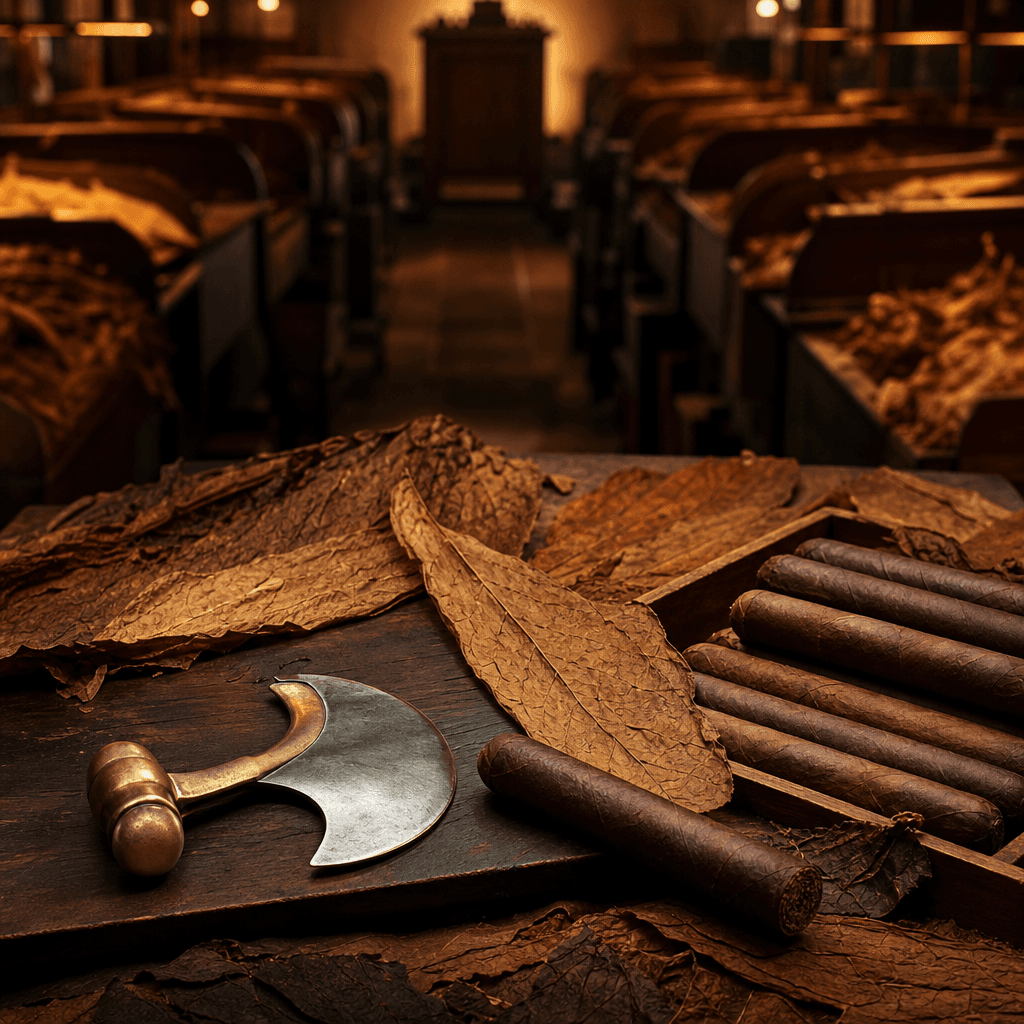
1845 年 Real Fabrica de Tabacos Partagás 在哈瓦那 Calle Industria No.520 正式落成——這棟壯麗的栗紅色與奶油色建築,至今仍矗立於哈瓦那舊城邊緣,是雪茄業最具歷史意義的建築。
Partagás 是現存最古老、持續生產的古巴雪茄品牌——比 Romeo y Julieta 早 30 年、比 Hoyo de Monterrey 早 20 年、比 H. Upmann 還早 1 年(H. Upmann 1844)。
Don Jaime 是雪茄業第一個雇用「lector 朗讀員」的工廠主——每天大聲朗讀小說、報紙、詩集給捲菸師(torcedores)聽。這個傳統後來成為所有古巴雪茄工廠的標配,影響了 Romeo y Julieta、Montecristo 等品牌的命名故事。
1960 年 9 月 15 日下午 6:30,Castro 革命政府軍隊衝進 Partagás 工廠。當時掌權者 Ramón Cifuentes Toriello 後來回憶(1991):「他們進來說,『我們是來介入這家公司的。』」16 家雪茄工廠同日被沒收。
Partagás 旗艦:Serie D No.4(4⅞ × 50, Robusto)— 是世界最暢銷的古巴 Robusto 規格雪茄之一,被許多藏家視為「Cuban Robusto 標準」。獲 Cigar Aficionado 多次 90+ 分。
Don Jaime Partagás y Rabell(1816 年生於西班牙加泰隆尼亞 Arenys de Mar)14 歲(1831 年)獨自渡海到古巴,從零學習菸草業。最早為加泰隆尼亞商人 Joan Conill 工作。
1868 年 Don Jaime Partagás 在自己的菸草農場上被謀殺,案件至今未破。最廣為流傳的說法是:殺手懷疑自己的妻子與 Jaime 有染。Jaime 確實風流多情,因此樹敵眾多。
Partagás 風味定位:濃郁、土壤、黑胡椒、深色巧克力、咖啡、皮革、雪松——是「全身古巴泥土味」的代表品牌。Vuelta Abajo 菸葉特意選擇強烈、大膽、未妥協的品系。
Don Jaime 是雪茄業真正的「先驅創新者」:他是第一個系統性實驗菸葉「發酵」(fermentation) 與「醇化」(aging) 工藝的人,所有後來的古巴雪茄品牌都受惠於他發明的方法。
Cifuentes 拒絕為新政府工作,逃離古巴。1970 年代將 Partagás 與 Bolívar 品牌名授權給 General Cigar Company,在多明尼加(最初牙買加)生產非古版供應美國市場。形成今日「兩個 Partagás」的局面。
1838 年 Jaime Partagás 開始捲製自家雪茄,並於 Calle Industria 街開設小型工廠。1844 年正式創立品牌「La Flor de Tabacos de Partagás y Compañía」。
Partagás Lusitanias(7⅔ × 49, vitola: Prominentes, Double Corona)— 1990 年代被 Cigar Aficionado 列為「Cuba's Star Cigars」之一,近 2 小時的厚重體驗,被視為「最具收藏潛力的 Partagás」。
Partagás 雪茄醇化潛力極佳:3-5 年柔化邊緣、深化複雜度;10+ 年的 Lusitanias 與 Serie D No.4 達到「超凡」境界;Gran Reservas 可醇化 20 年以上。是雪茄業公認最值得長期儲存的品牌之一。
1958 年 Partagás 是僅次於 H. Upmann 的第二大古巴雪茄出口商,佔當時古巴雪茄總出口量超過 25%。
Don Jaime 在 Vuelta Abajo(Pinar del Río 省)大量收購頂級菸草農場,包括 Hato de la Cruz 農場(45 名農夫)。他甚至開設兩家「農夫商店」(tiendas de raya) 讓農民賒帳買生活物資——既是商人也是地主,創造現代「垂直整合」雪茄企業的模型。
1962 年 4 月 14 日 Partagás 品牌與 Cifuentes, Álvarez y compañía 旗下所有品牌正式國有化,成為古巴國家菸草公司(後 Habanos S.A.)財產。
1990 年代中期 Partagás 銷量僅次於 Montecristo,位居古巴第二,年銷量約 1,000 萬支。
Partagás 8-9-8 Varnished(vitola: Dalia, Lonsdale)— 經典「8 支底層 + 9 支中層 + 8 支頂層」的傳統堆疊裝盒呈現方式,被收藏家追捧。是雪茄業最具歷史感的包裝形式之一。
1940 年 Cifuentes 家族收購 La Gloria Cubana(1905)與 Bolívar(1921)品牌,全部移至 Partagás 工廠生產。Partagás 工廠成為哈瓦那最重要的多品牌生產中心之一。
Lusitanias Gran Reserva Cosecha 2007 — 被視為 Partagás 終極藏品,是品牌最珍貴的限量發行。Gran Reserva 系列菸葉經過特別醇化處理。
由於財務困難,José Partagás 將工廠賣給銀行家 José A. Bances(亦寫作 Juan A. Bances)。Bances 不熟悉雪茄業,1899 年找來 Ramón Cifuentes Llano 合夥。1900 年 Cifuentes 取得主導權。
古巴 Partagás 工廠(Calle Industria 520)後改名為「Francisco Pérez Germán」工廠,是哈瓦那最熱門的觀光景點之一。2012 年 1 月 2 日主要產線移至 Havana Vieja 以外 3 公里處的新工廠(Centro Habana 區 Calle San Carlos)。
工廠謠傳 Don Jaime 死後鬼魂仍在 Calle Industria 520 號工廠遊蕩,捲菸師恐懼到不敢工作。最後請來一位天主教神父和一位 santera(古巴薩泰里亞教祭司)合力做法事,鬼魂才被驅離。
Don Jaime 死後品牌傳給其子 José Partagás,但 José 缺乏父親的天賦。1871 年 5 月 6 日 José 公告新的雪茄盒專利設計與商標,以對抗美國市場的仿冒品——這是雪茄業最早的商標保護行動之一。
Partagás Serie P No.2(2005 年推出)— 第一款常規生產的 Pirámide 規格 Partagás,金字塔型造型結合品牌標誌性的濃烈風味。
1927 年公司收購 Allones Ltda.,將著名品牌「Ramón Allones」與「La Eminencia」納入旗下。同年 Benjamín 與 Alonso Menéndez 兄弟(後來 Montecristo 的創辦人)在 H. Upmann 工廠工作。
Edición Limitada 系列:自 2000 年起 Partagás 幾乎每年都有限量版推出——Pirámide (2000)、Serie D No.3 (2001)、Serie D No.2 (2003)、Serie D No.1 (2004)、Serie D No.3 重發 (2006)、Serie D No.5 (2008)。每一款都是收藏家爭奪標的。
Cifuentes 與西班牙商人 José Fernández 創立「Cifuentes, Fernández y Compañía」公司。1914 年 Cifuentes 收購 Fernández 股份賣給 Francisco Pego Pita,公司改名「Cifuentes, Pego y Compañía」。
1938 年 Ramón Cifuentes Llano 在西班牙過世,1940 年合夥人 Pego 過世。Cifuentes 三個兒子(Ramón、Rafael、Manuel、Leandro)接手公司,1941 年改名「Cifuentes, Álvarez y compañía」。
Partagás 工廠生產過為埃及國王 Farouk 訂製的 Visible Inmenso 雪茄,是 20 世紀皇室客製化雪茄的代表。

帕特加斯 完整 vitola 圖鑑(406 張)
帕特加斯(帕特加斯 Partagás)旗下完整 vitola 圖鑑卡片、每張卡點進去含: 葉組產地(CAPA/CAPOTE/TRIPA)、 風味前中後段、 歷年特殊版發行紀錄(ER 地區限定 · EL 年度限量 · LCDH · RR · GR)、 配飲建議與收藏陳化指南。
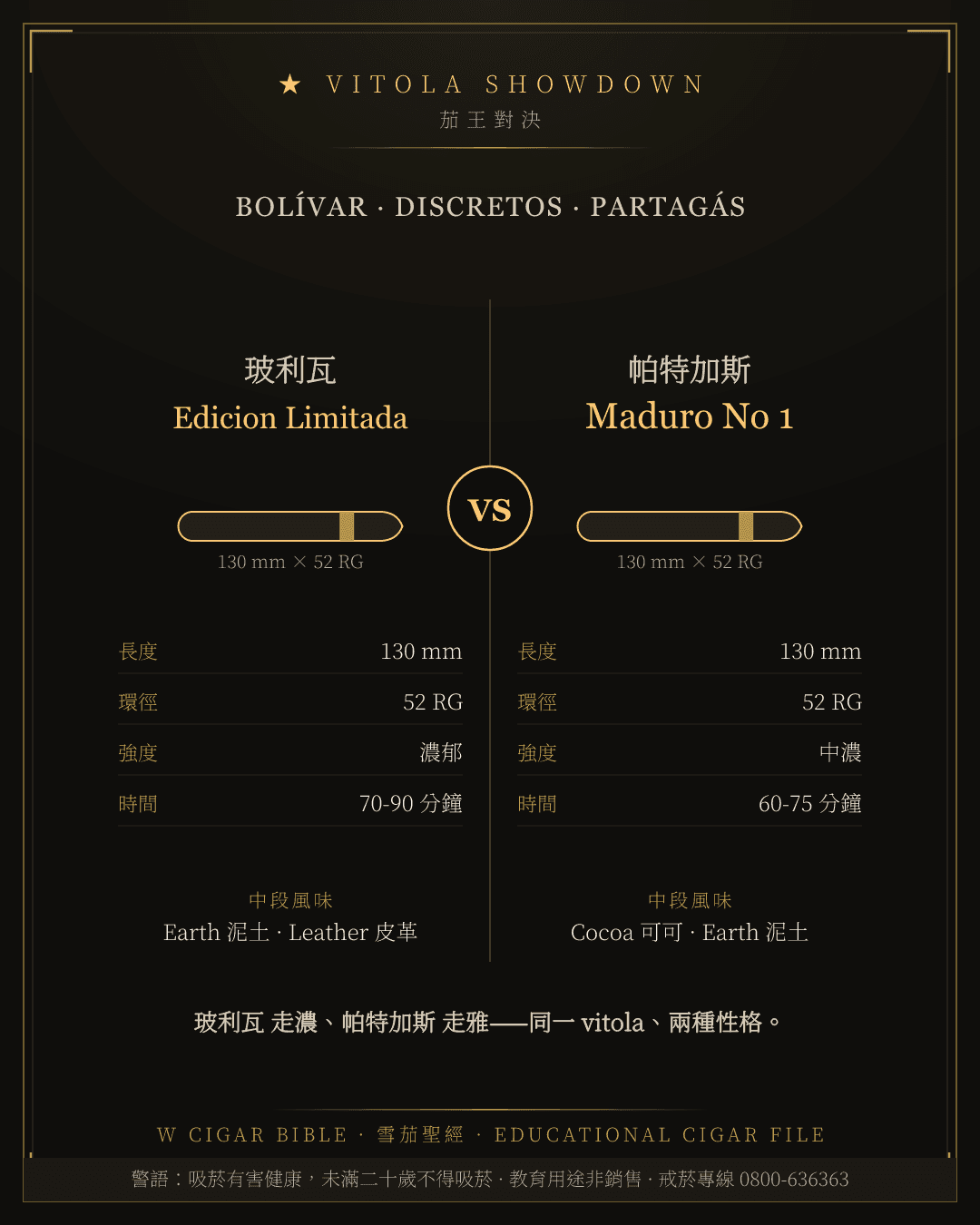
Bolívar Edicion Limitada vs Partagás Maduro No 1
VITOLA SHOWDOWN · Discretos

Cohiba Siglo V vs Partagás 8-9-8 No. 1
VITOLA SHOWDOWN · Dalias
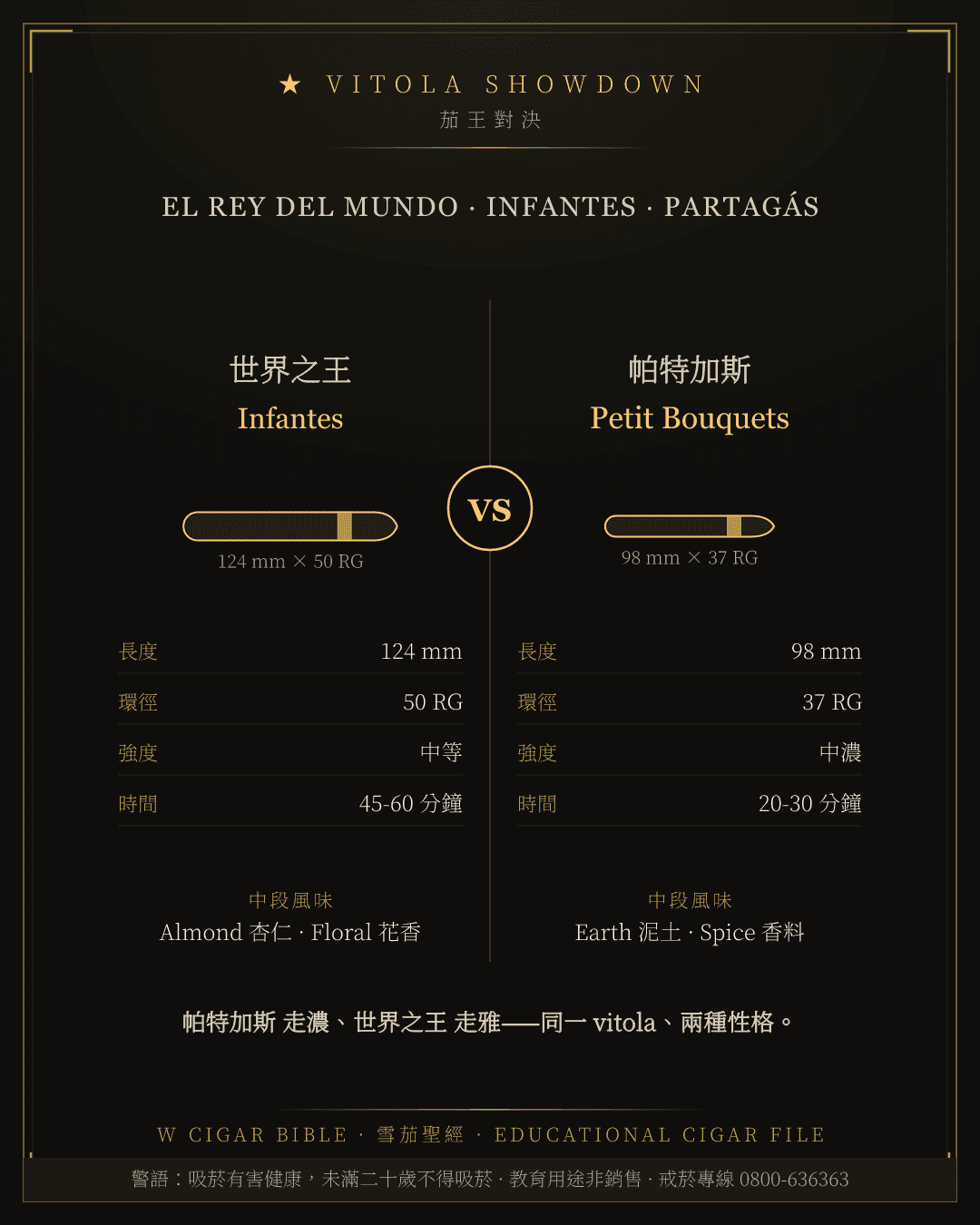
El Rey Del Mundo Infantes vs Partagás Petit Bouquets
VITOLA SHOWDOWN · Infantes
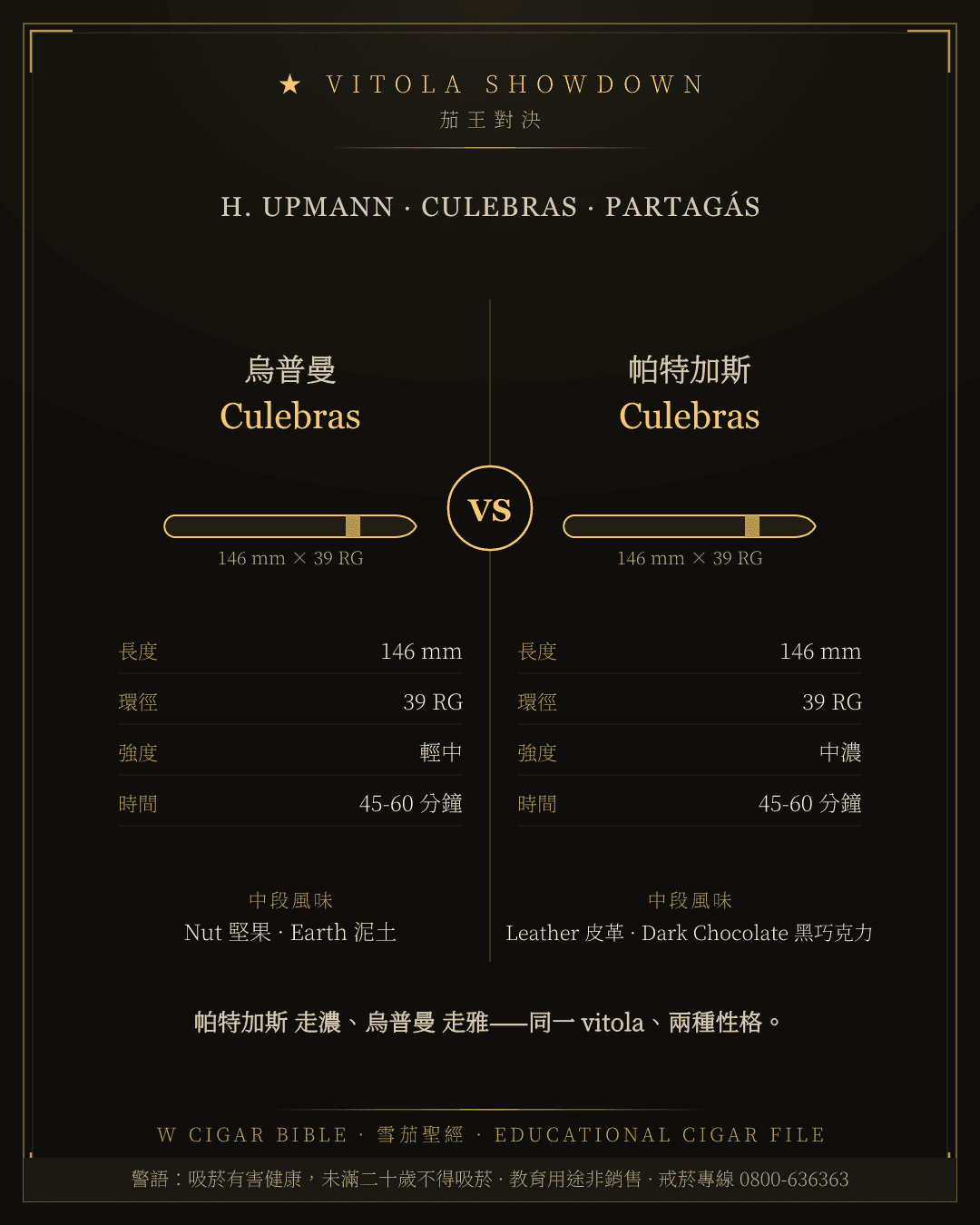
H. Upmann Culebras vs Partagás Culebras
VITOLA SHOWDOWN · Culebras
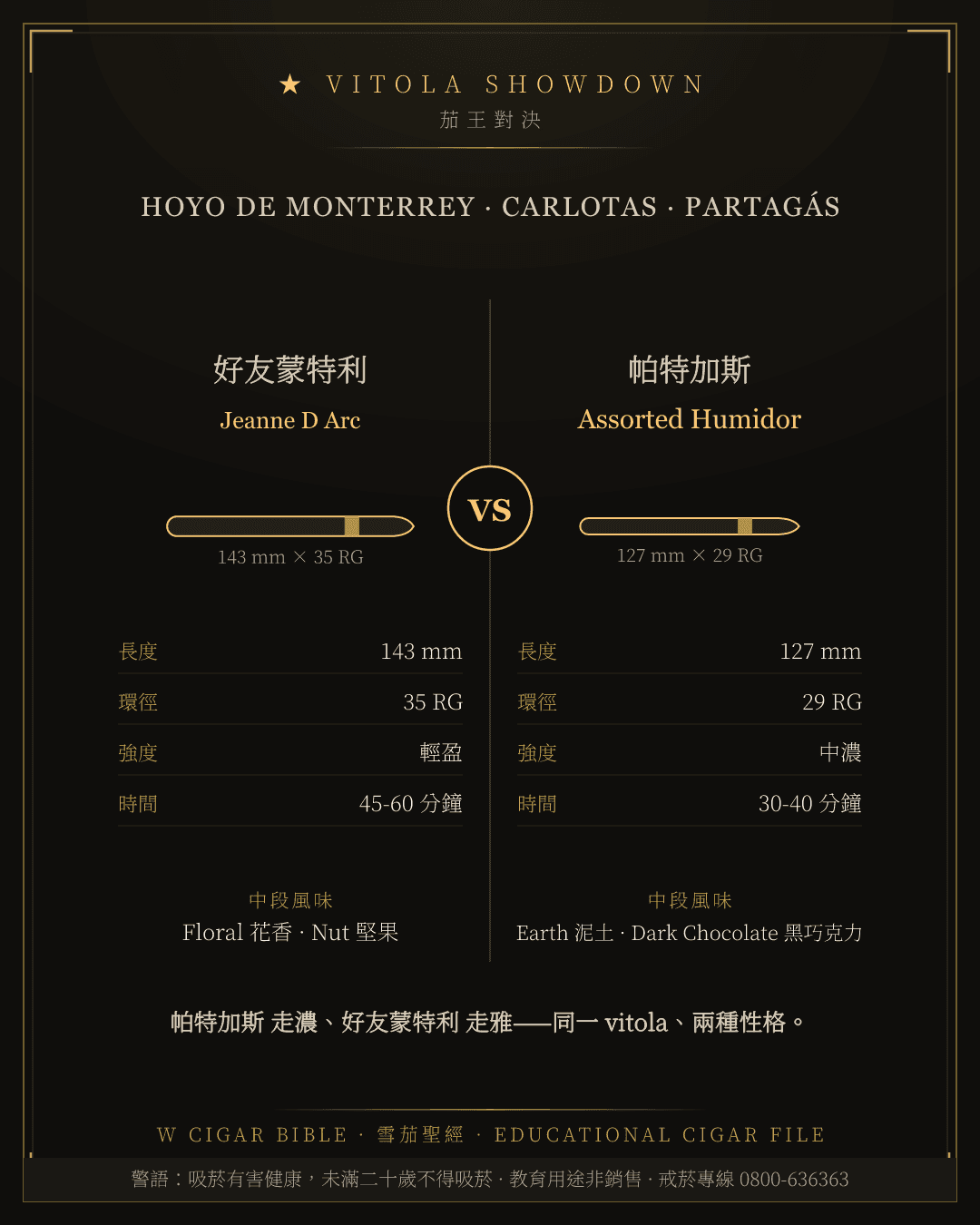
Hoyo De Monterrey Jeanne D Arc vs Partagás Assorted Humidor
VITOLA SHOWDOWN · Carlotas
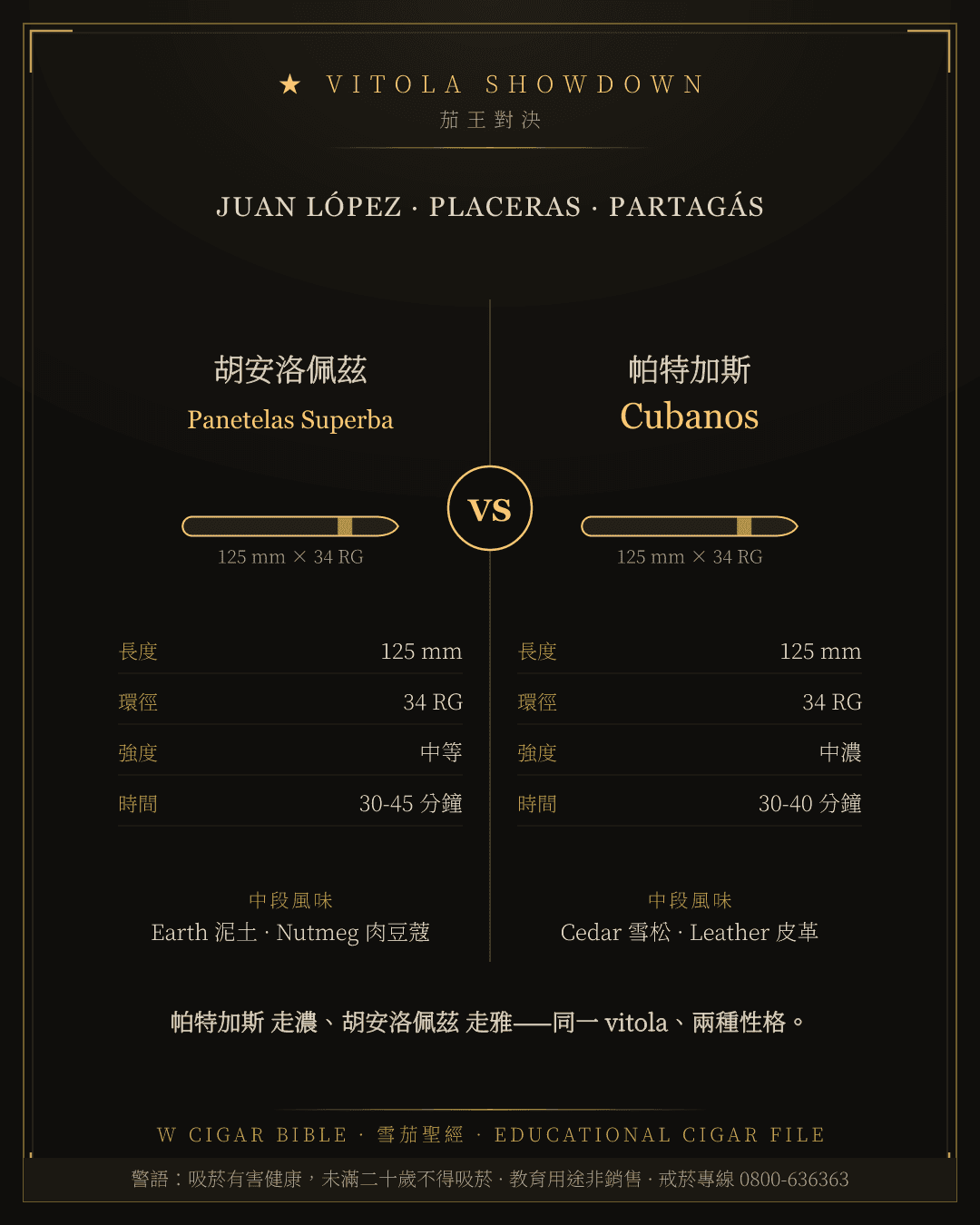
Juan López Panetelas Superba vs Partagás Cubanos
VITOLA SHOWDOWN · Placeras

La Escepción Belvederes vs Partagás Belvederes
VITOLA SHOWDOWN · Belvederes

La Escepción Perfectos vs Partagás Perfectos
VITOLA SHOWDOWN · Perfectos
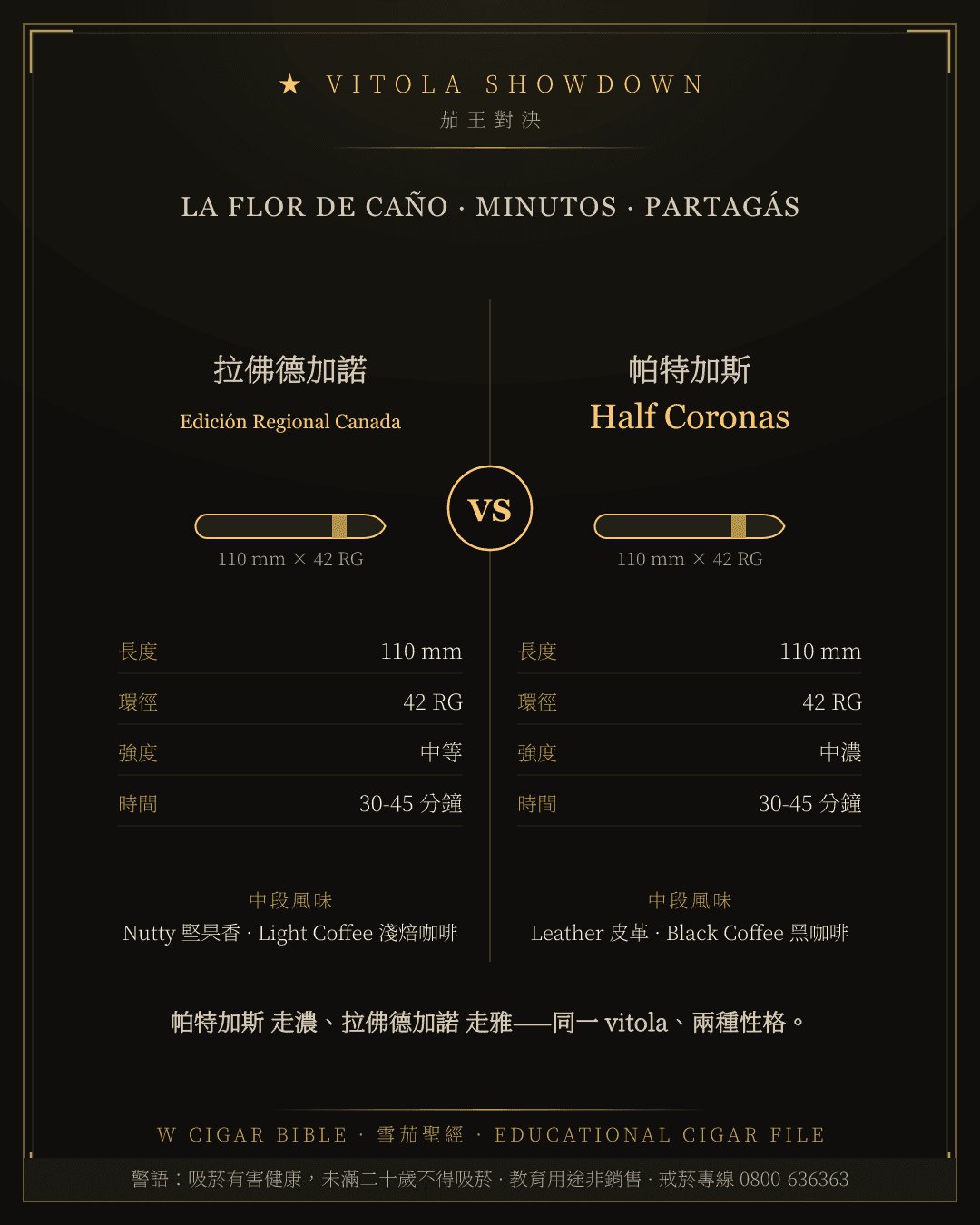
La Flor De Caño Edición Regional Canada vs Partagás Half Coronas
VITOLA SHOWDOWN · Minutos
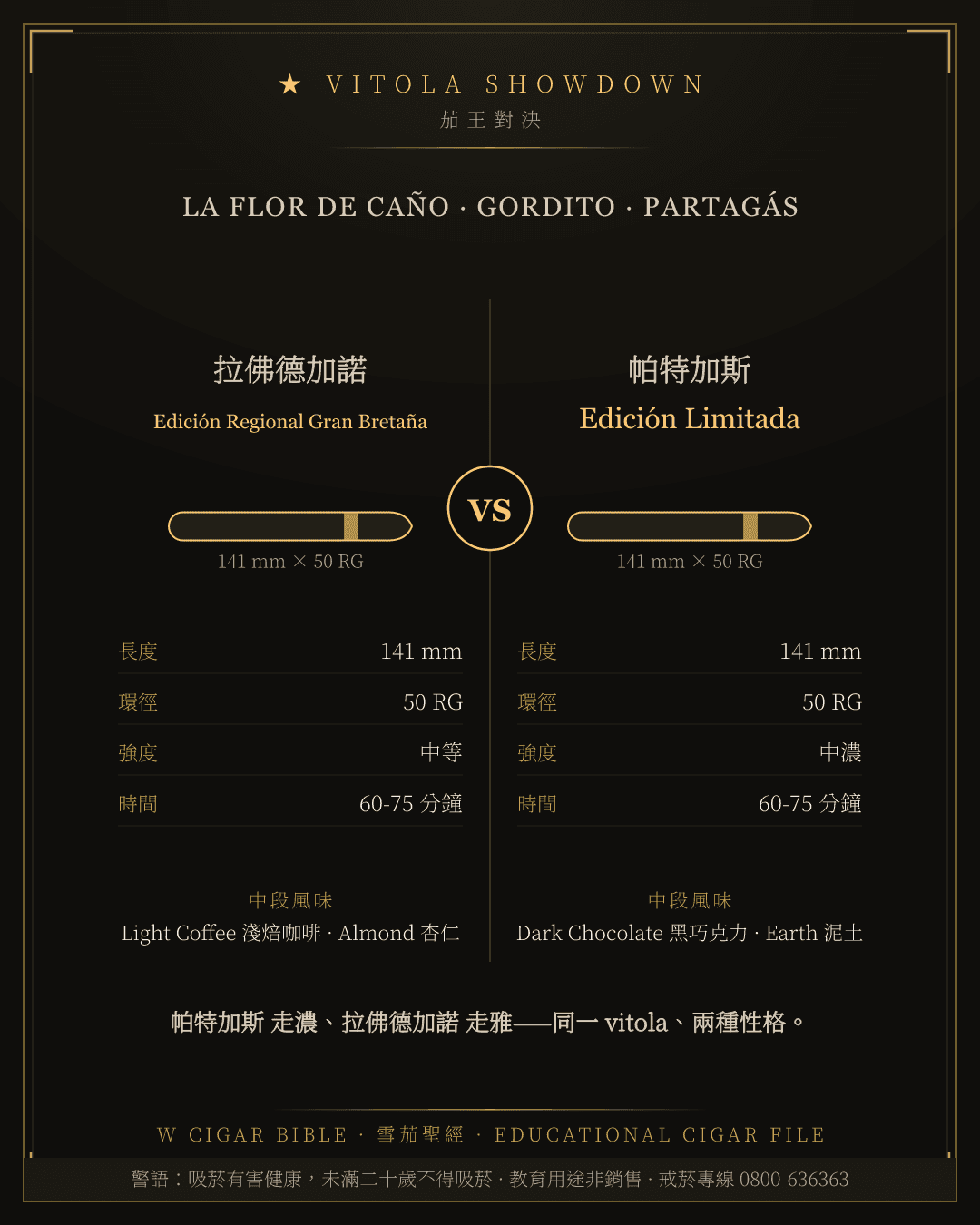
La Flor De Caño Edición Regional Gran Bretaña vs Partagás Edición Limitada
VITOLA SHOWDOWN · Gordito
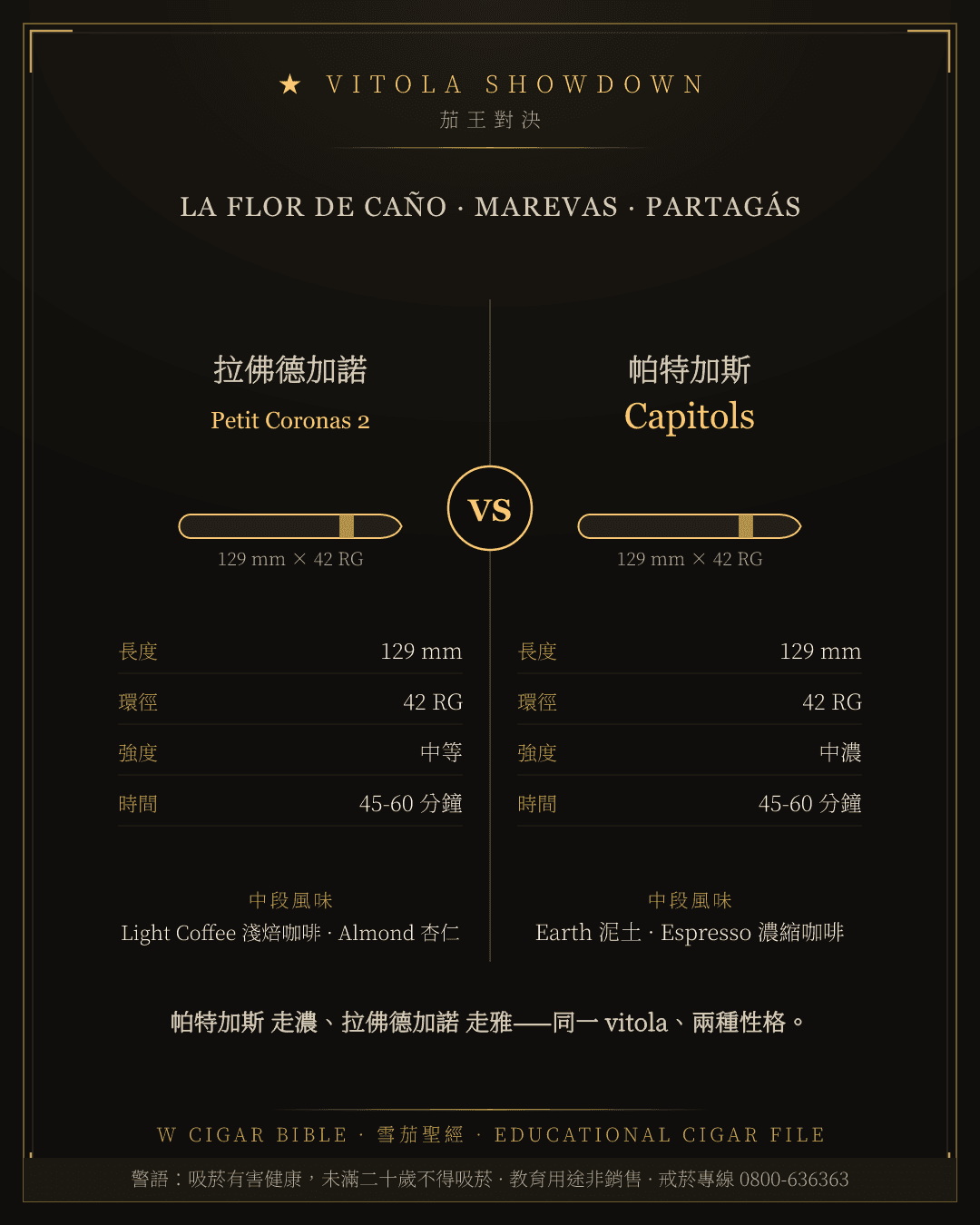
La Flor De Caño Petit Coronas 2 vs Partagás Capitols
VITOLA SHOWDOWN · Marevas
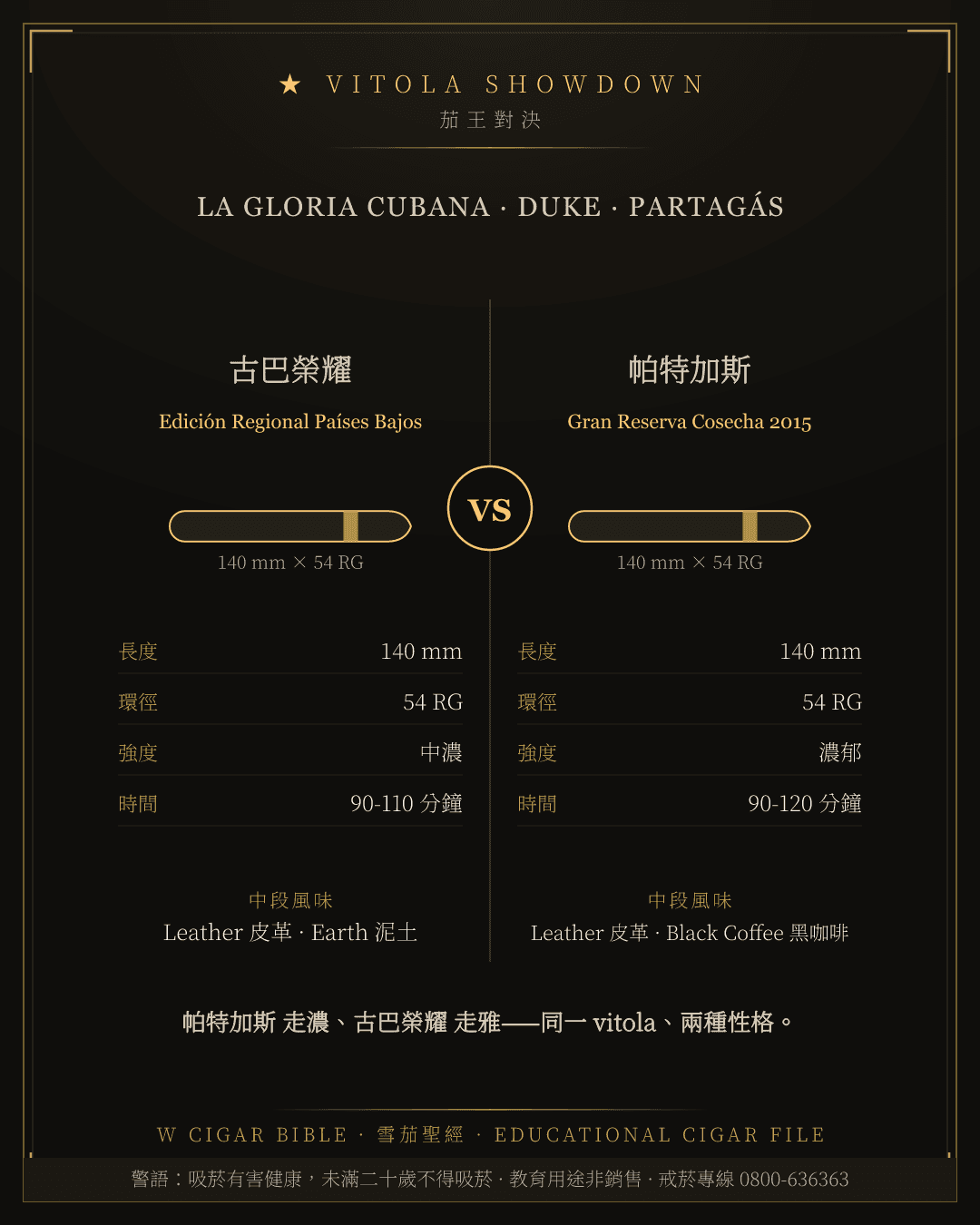
La Gloria Cubana Edición Regional Países Bajos vs Partagás Gran Reserva Cosecha 2015
VITOLA SHOWDOWN · Duke
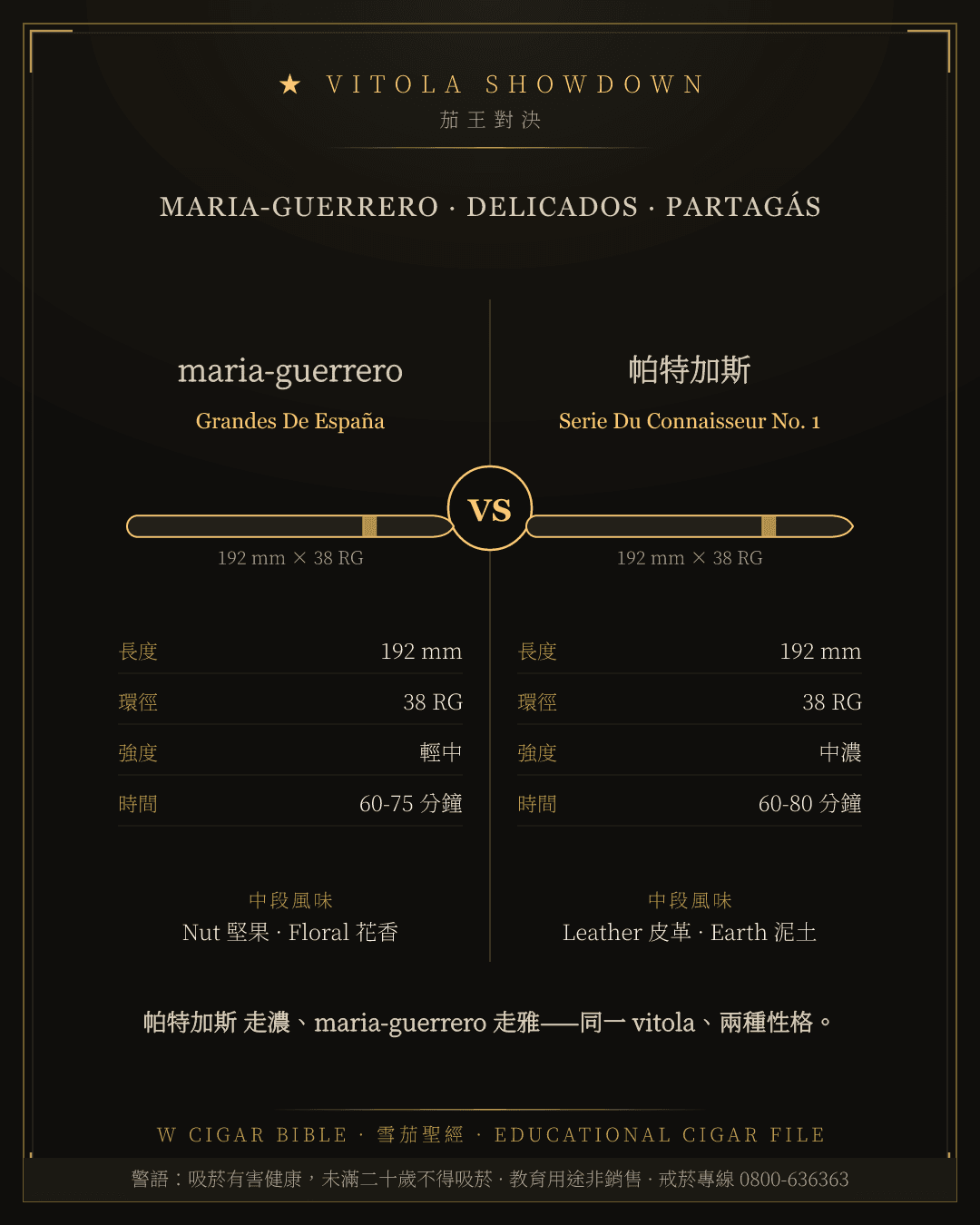
Maria-Guerrero Grandes De España vs Partagás Serie Du Connaisseur No. 1
VITOLA SHOWDOWN · Delicados
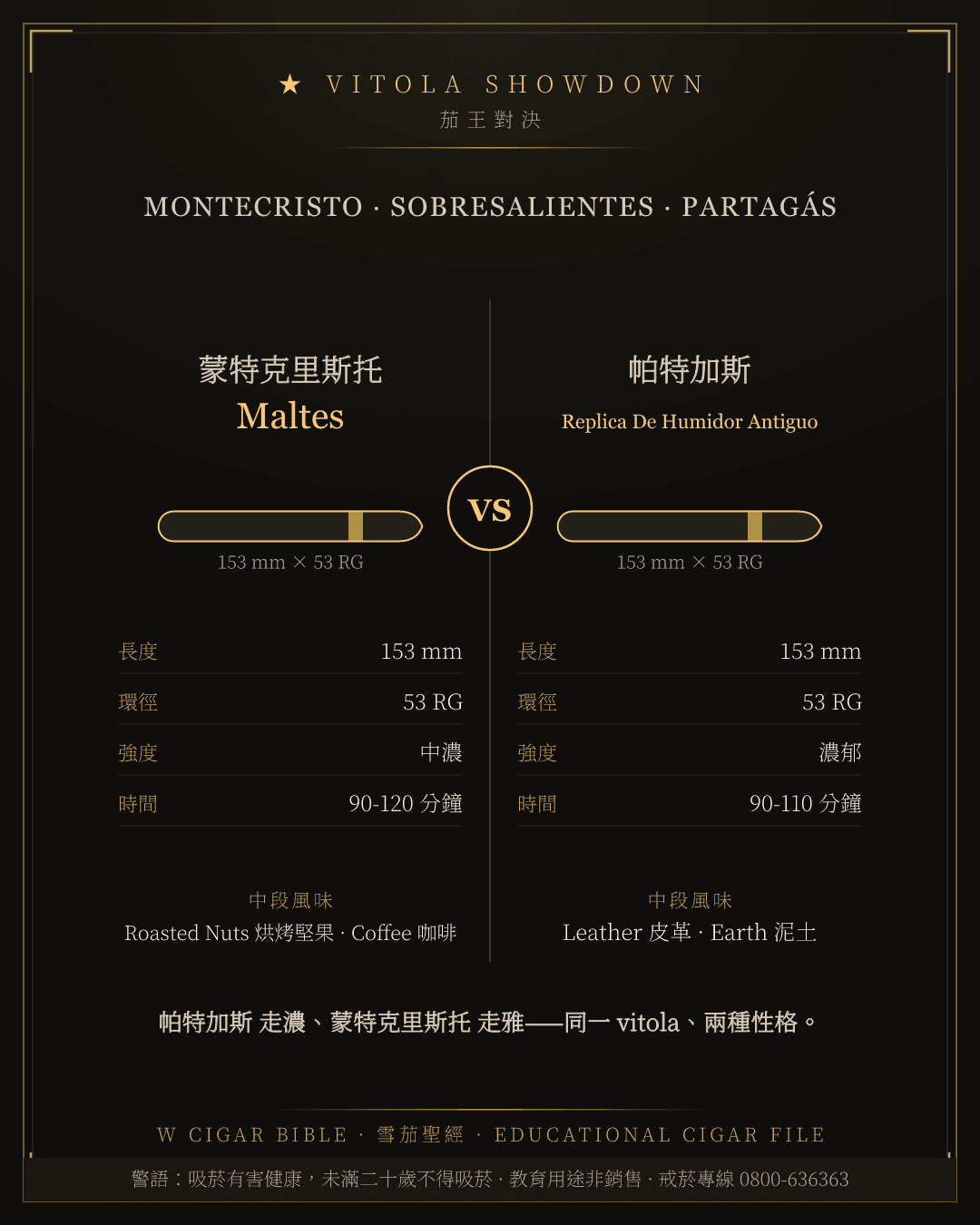
Montecristo Maltes vs Partagás Replica De Humidor Antiguo
VITOLA SHOWDOWN · Sobresalientes

Montecristo Master vs Partagás Serie D No. 4
VITOLA SHOWDOWN · Robustos

Montecristo Replica De Humidor Antiguo vs Partagás Gran Reserva Cosecha 2007
VITOLA SHOWDOWN · Prominentes
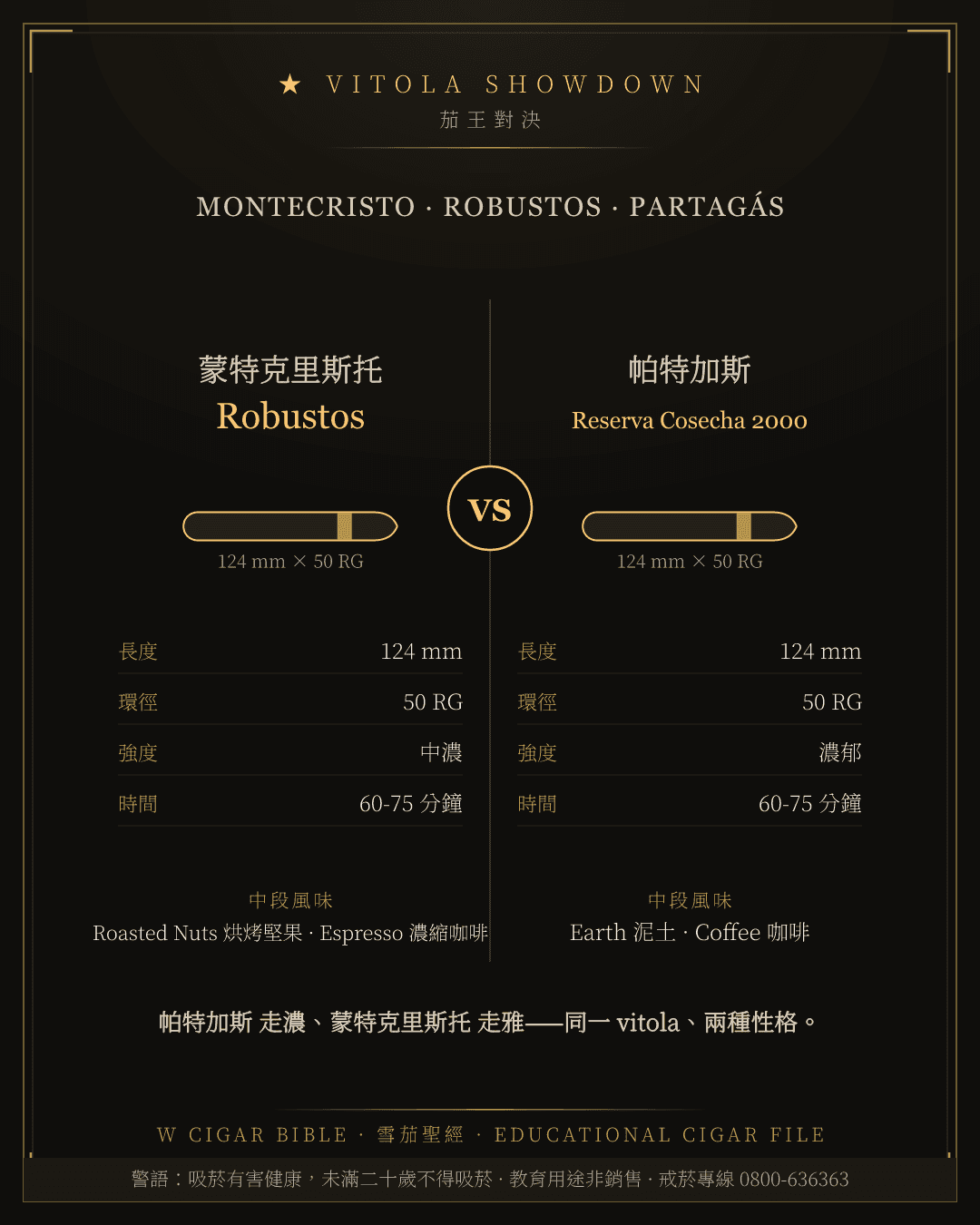
Montecristo Robustos vs Partagás Reserva Cosecha 2000
VITOLA SHOWDOWN · Robustos
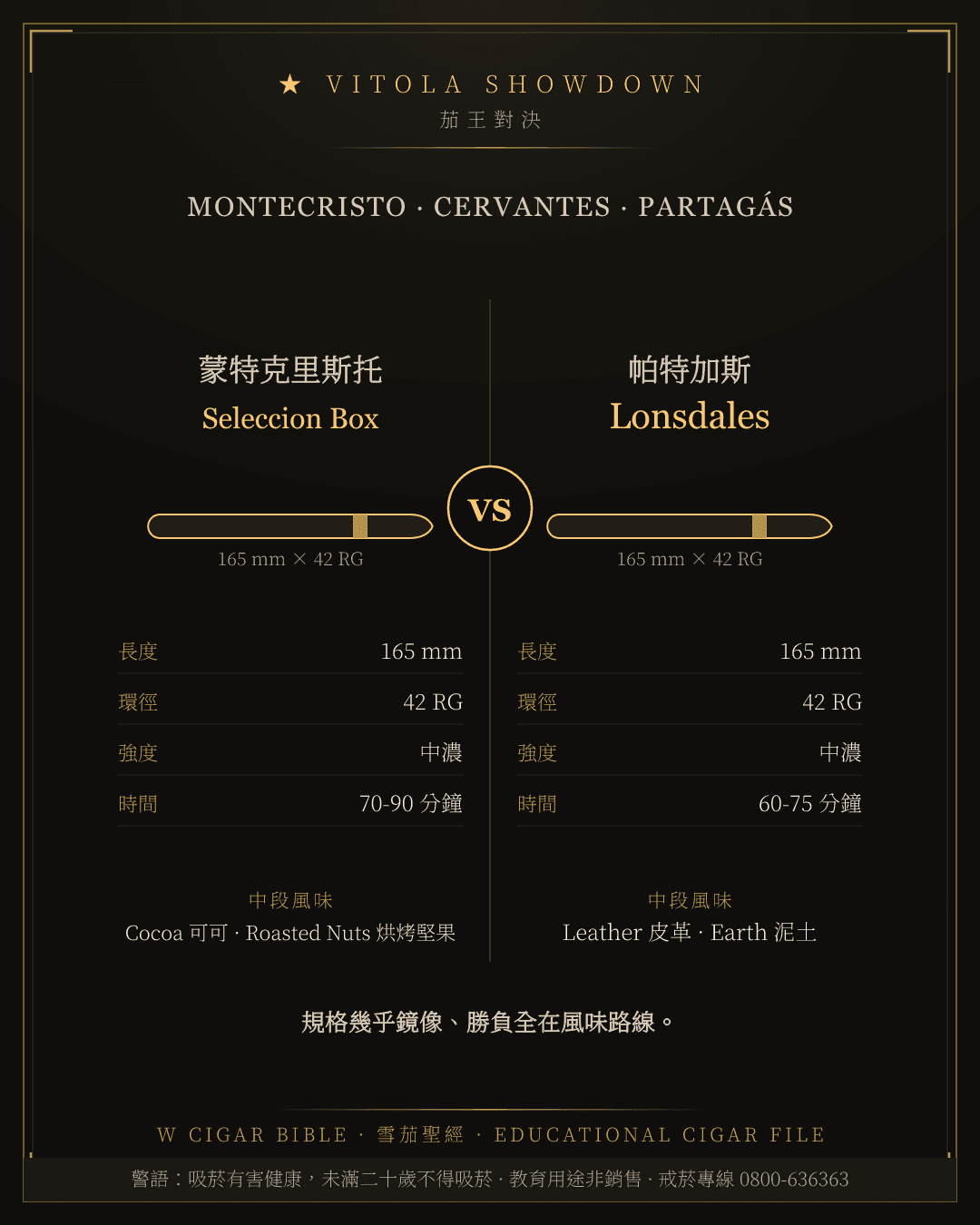
Montecristo Seleccion Box vs Partagás Lonsdales
VITOLA SHOWDOWN · Cervantes

Montecristo Tubos vs Partagás Coronas Grandes
VITOLA SHOWDOWN · Coronas Grandes
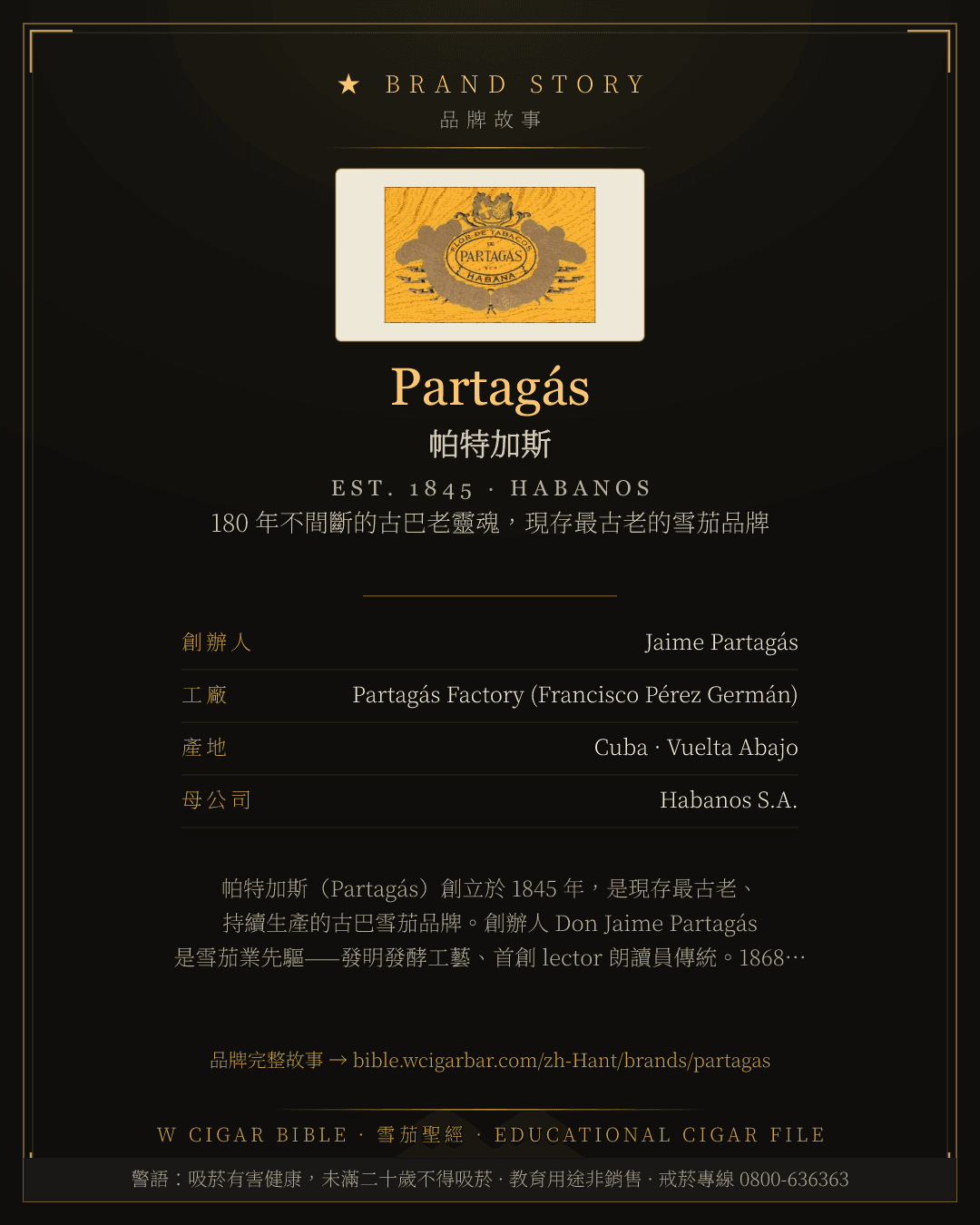
Partagás · 帕特加斯 品牌故事
BRAND STORY · EST. 1845

Partagás 150 Aniversario · AH 1995 · 帕特加斯
AH 1995 · 週年木盒紀念版 Aniversario Humidor · 雪茄檔案

Partagás 150 Aniversario 搭配指南 · 帕特加斯
PAIRING GUIDE · 搭配指南
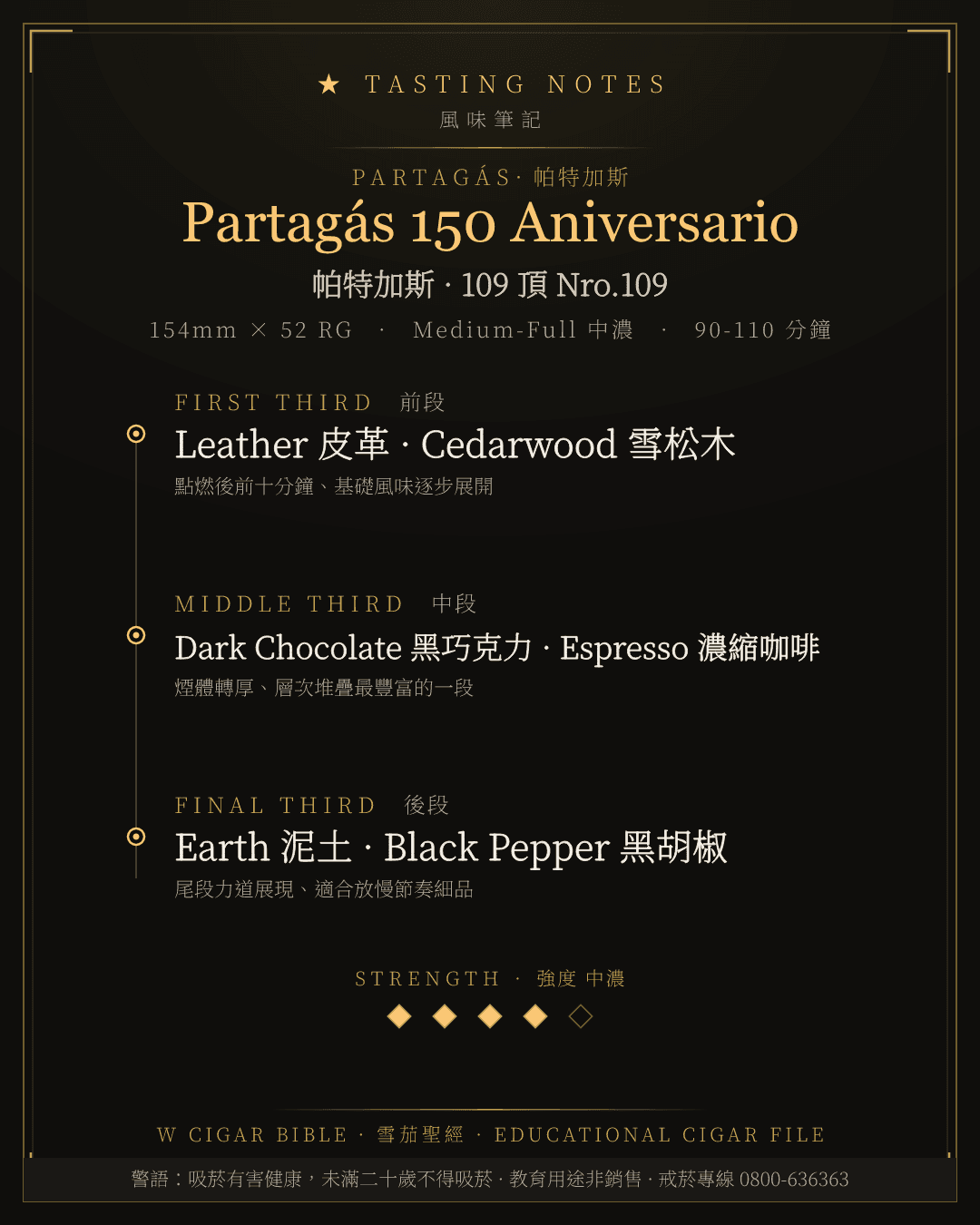
Partagás 150 Aniversario 風味筆記 · 帕特加斯
TASTING NOTES · 風味筆記
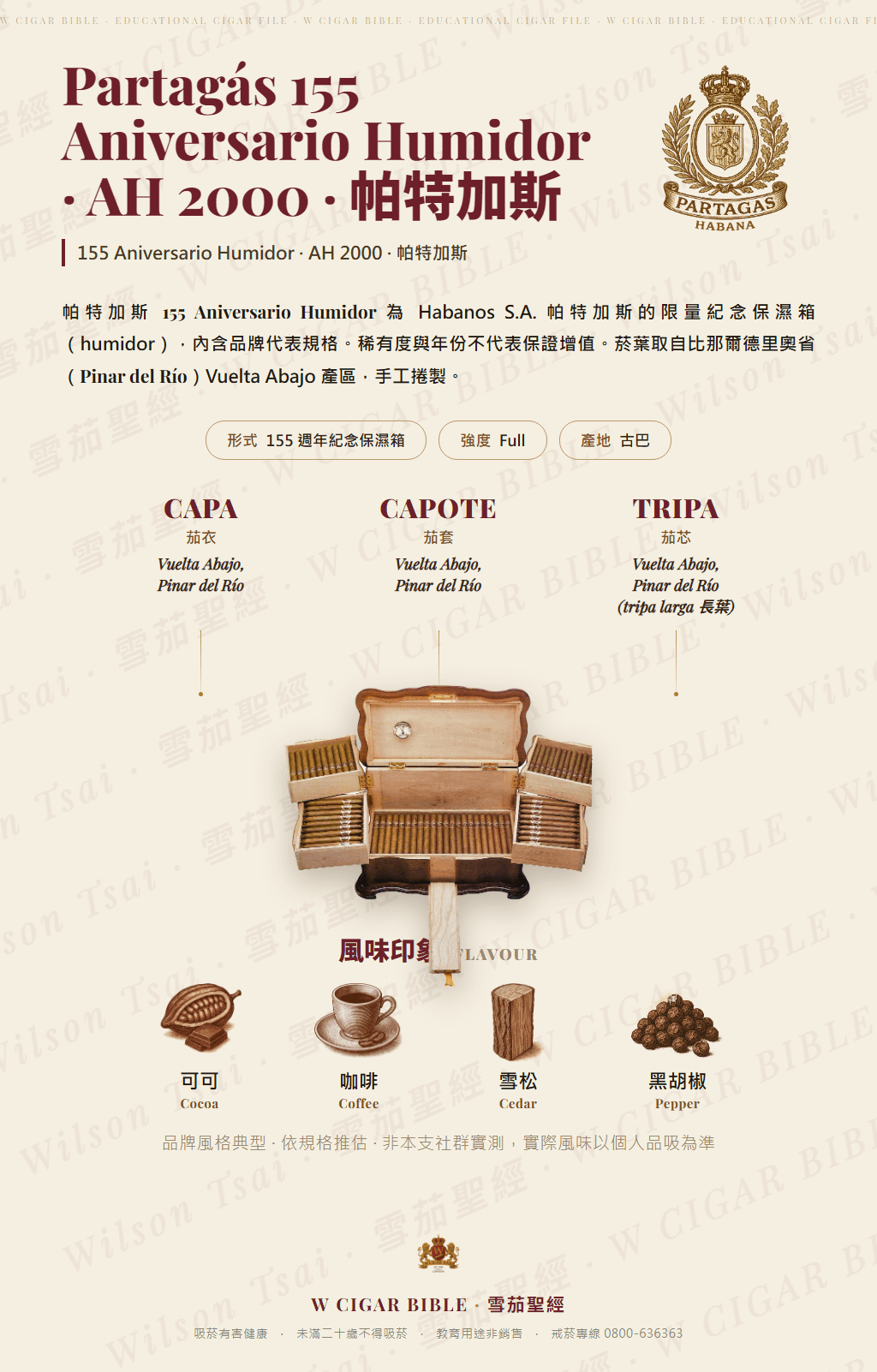
Partagás 155 Aniversario Humidor · AH 2000 · 帕特加斯
AH 2000 · 週年木盒紀念版 Aniversario Humidor · 雪茄檔案

Partagás 160 Aniversario · AH 2005 · 帕特加斯
AH 2005 · 週年木盒紀念版 Aniversario Humidor · 雪茄檔案

Partagás 160 Aniversario 搭配指南 · 帕特加斯
PAIRING GUIDE · 搭配指南
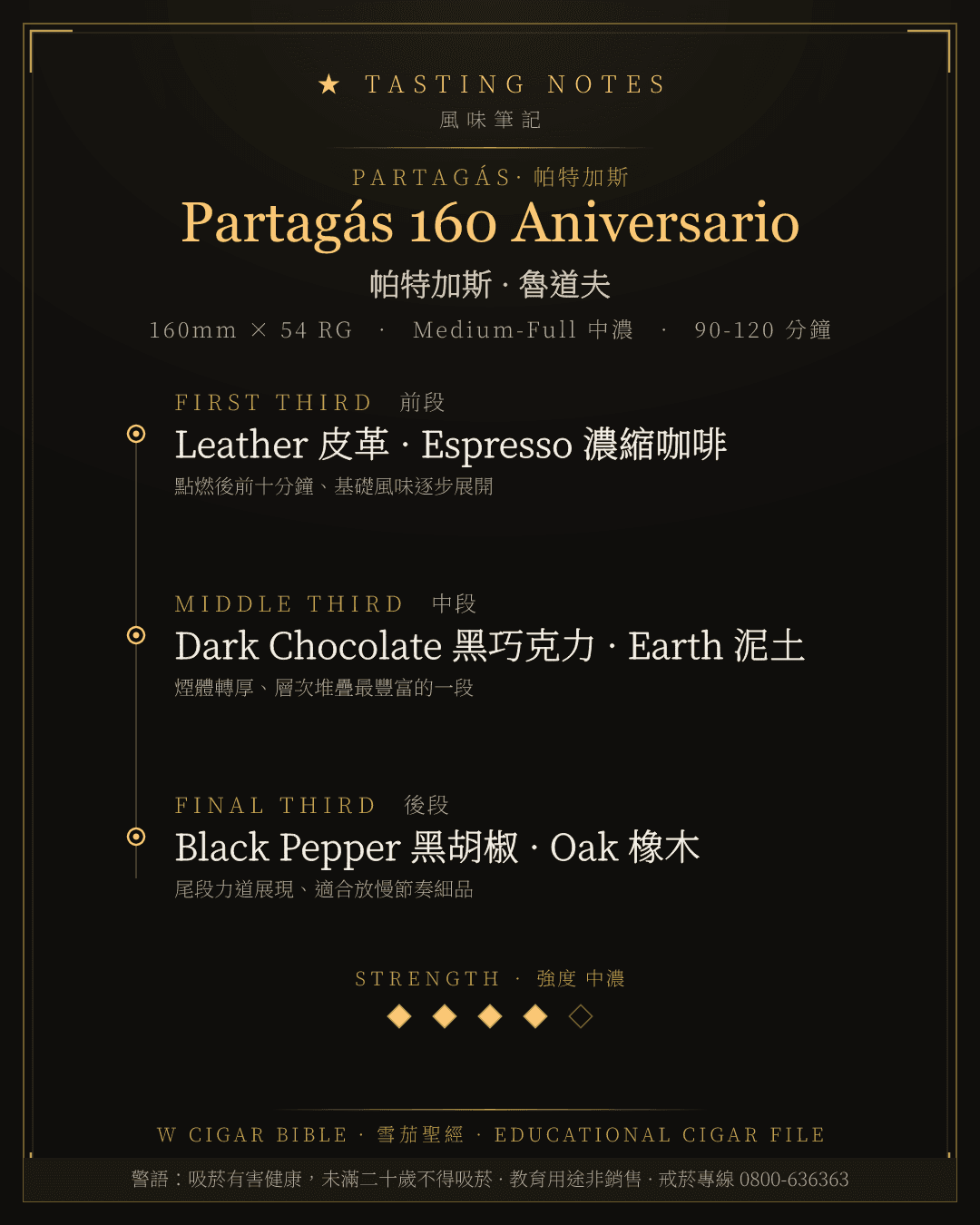
Partagás 160 Aniversario 風味筆記 · 帕特加斯
TASTING NOTES · 風味筆記

Partagás 165 Aniversario Humidor · AH 2010 · 帕特加斯
AH 2010 · 週年木盒紀念版 Aniversario Humidor · 雪茄檔案

Partagás 165 Aniversario 搭配指南 · 帕特加斯
PAIRING GUIDE · 搭配指南
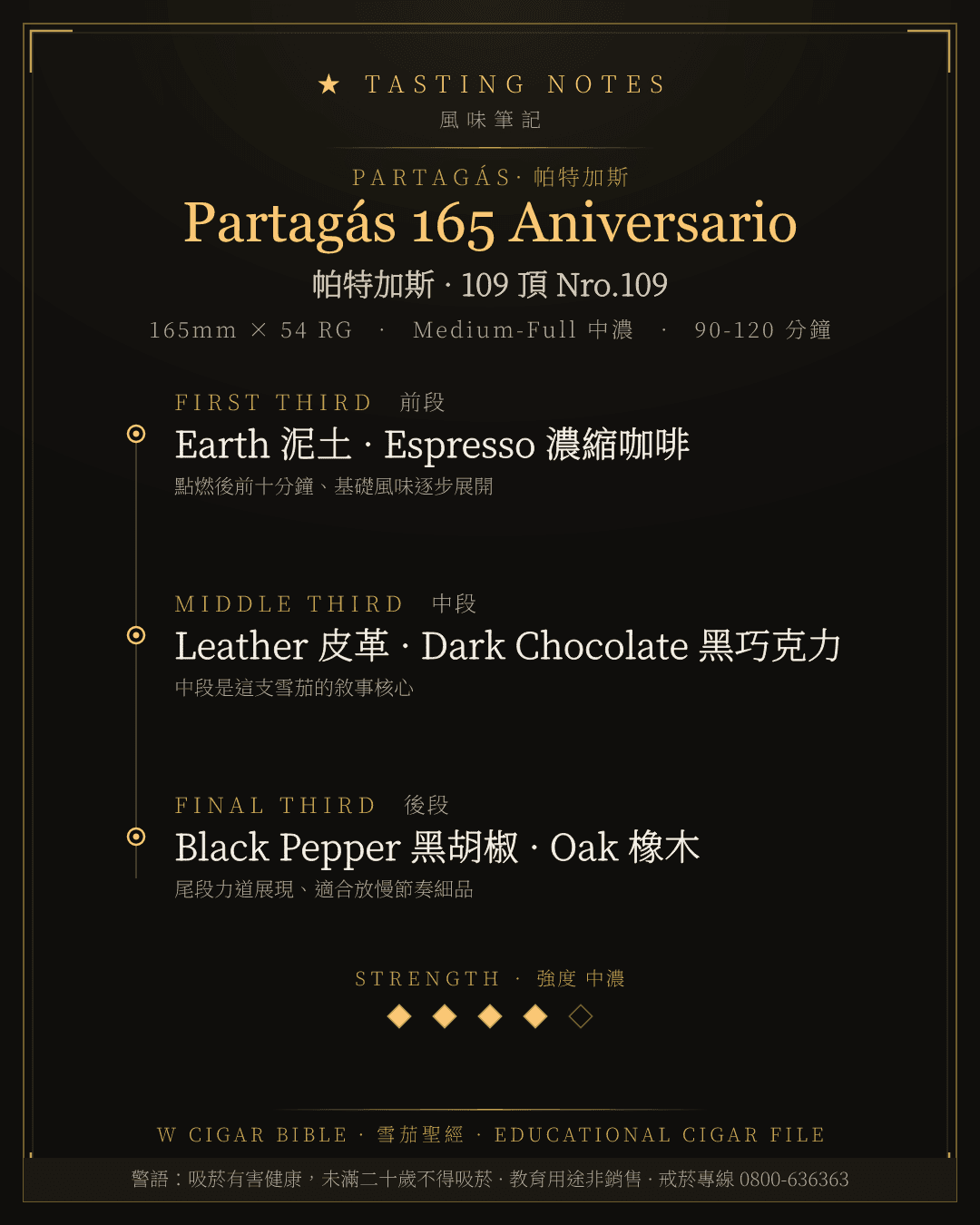
Partagás 165 Aniversario 風味筆記 · 帕特加斯
TASTING NOTES · 風味筆記
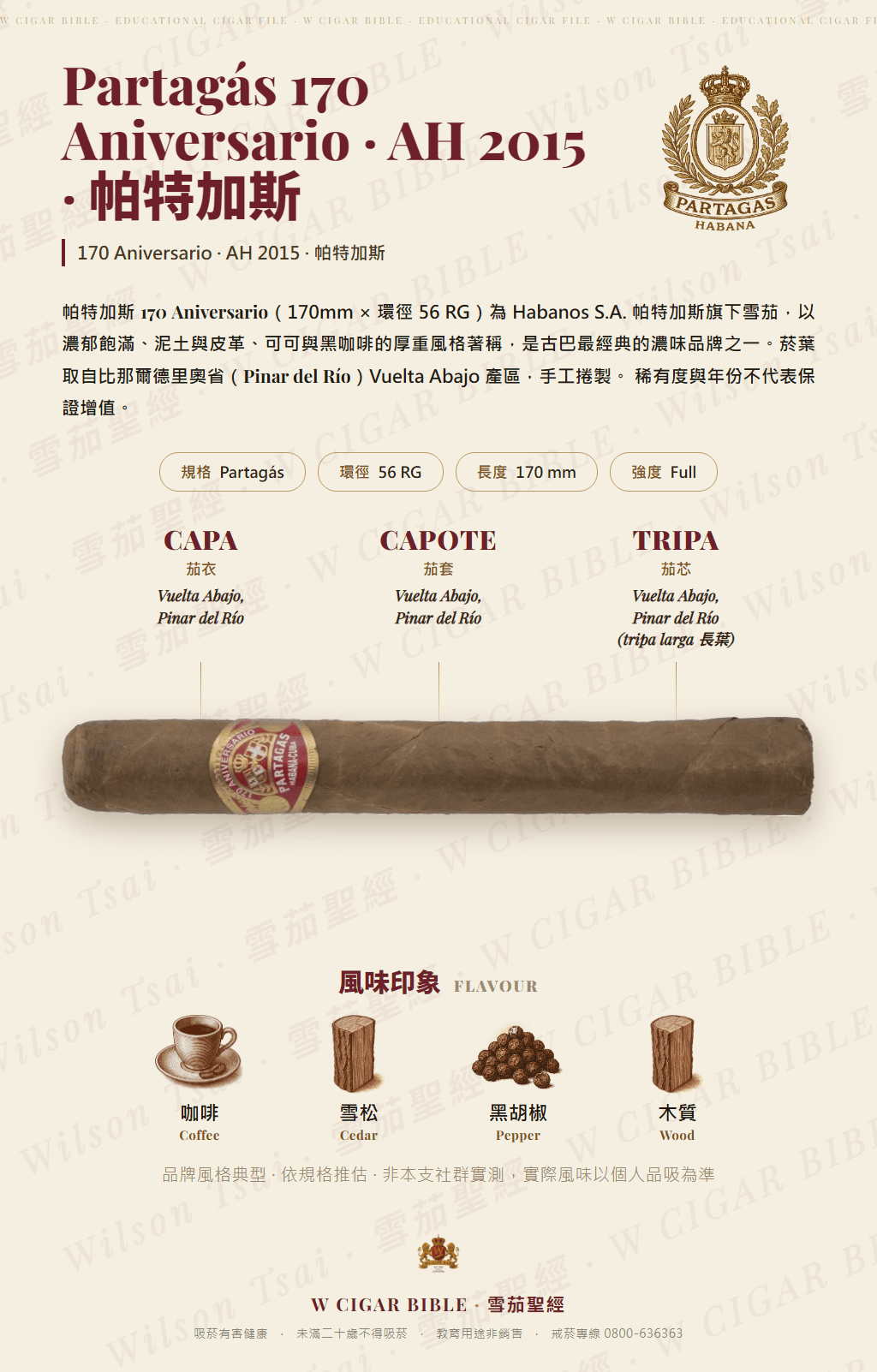
Partagás 170 Aniversario · AH 2015 · 帕特加斯
AH 2015 · 週年木盒紀念版 Aniversario Humidor · 雪茄檔案
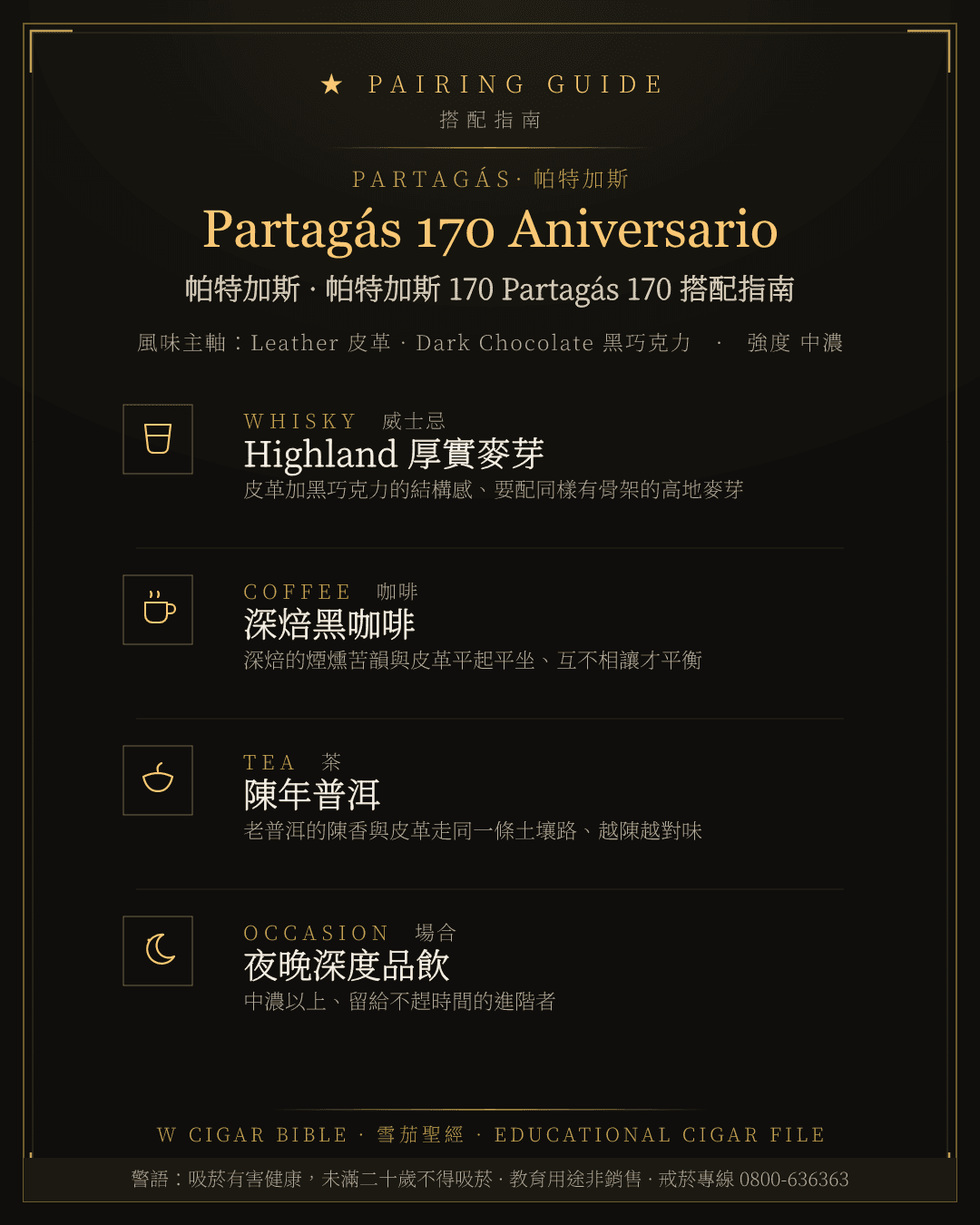
Partagás 170 Aniversario 搭配指南 · 帕特加斯
PAIRING GUIDE · 搭配指南
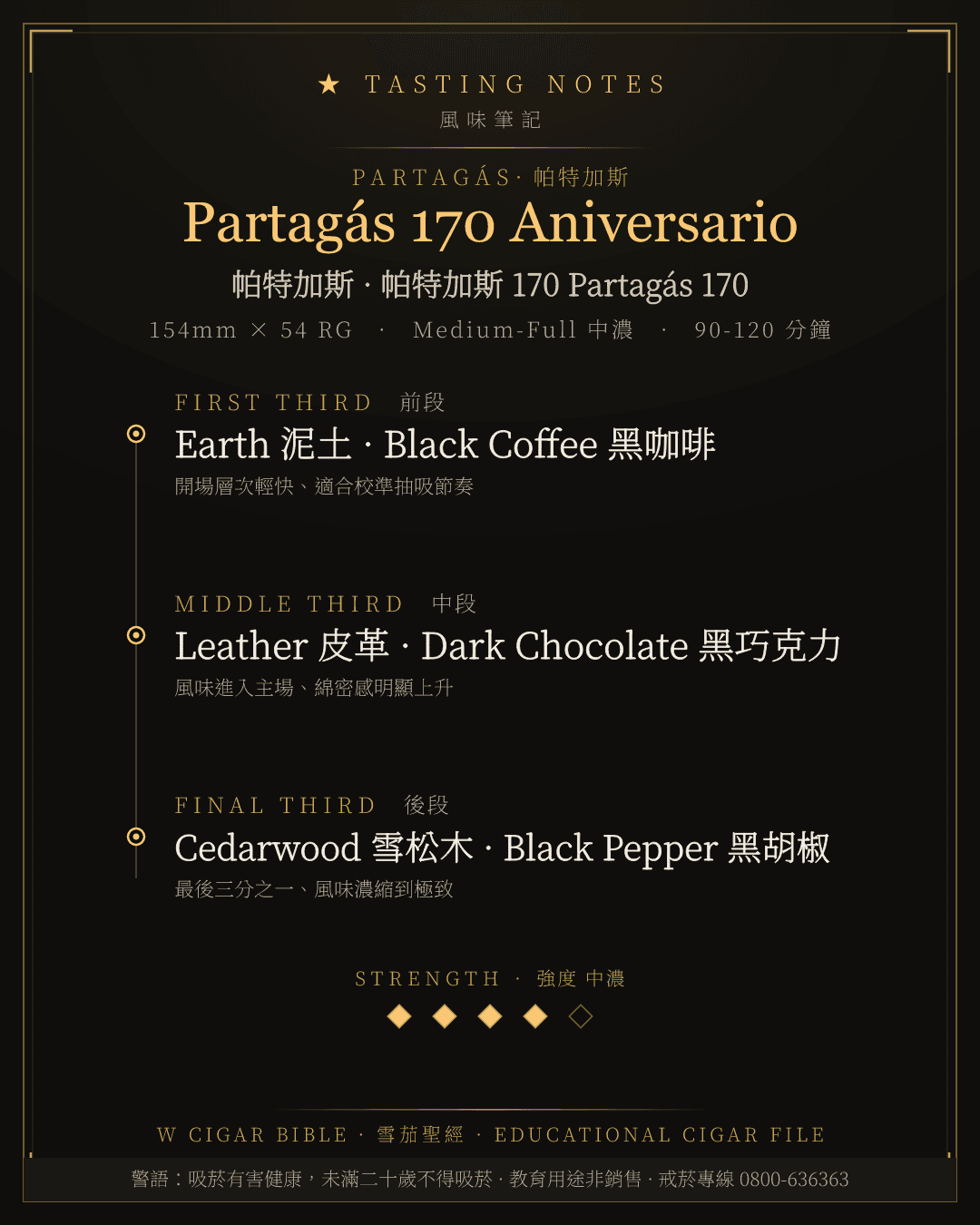
Partagás 170 Aniversario 風味筆記 · 帕特加斯
TASTING NOTES · 風味筆記
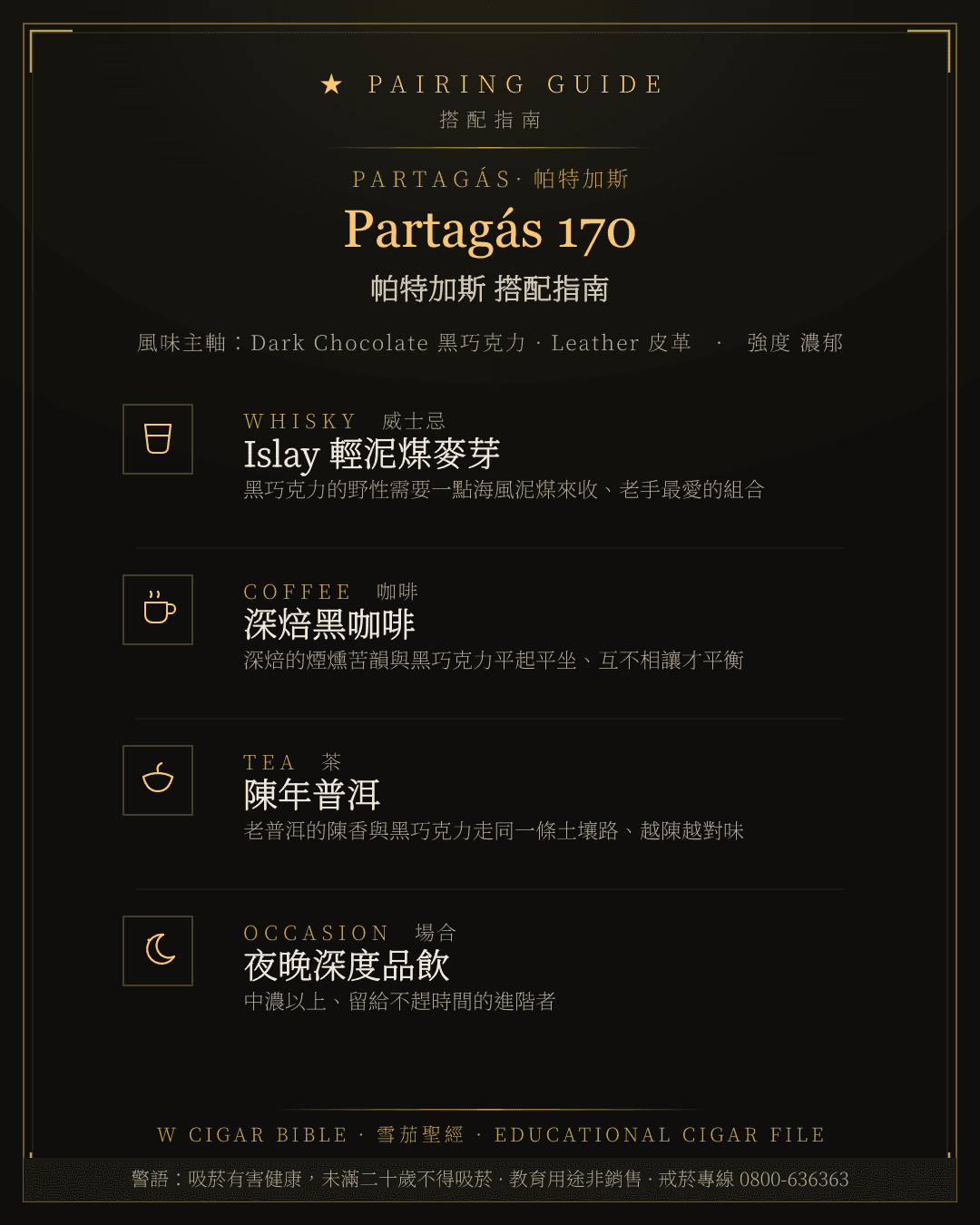
Partagás 170 搭配指南 · 帕特加斯
PAIRING GUIDE · 搭配指南

Partagás 170 風味筆記 · 帕特加斯
TASTING NOTES · 風味筆記
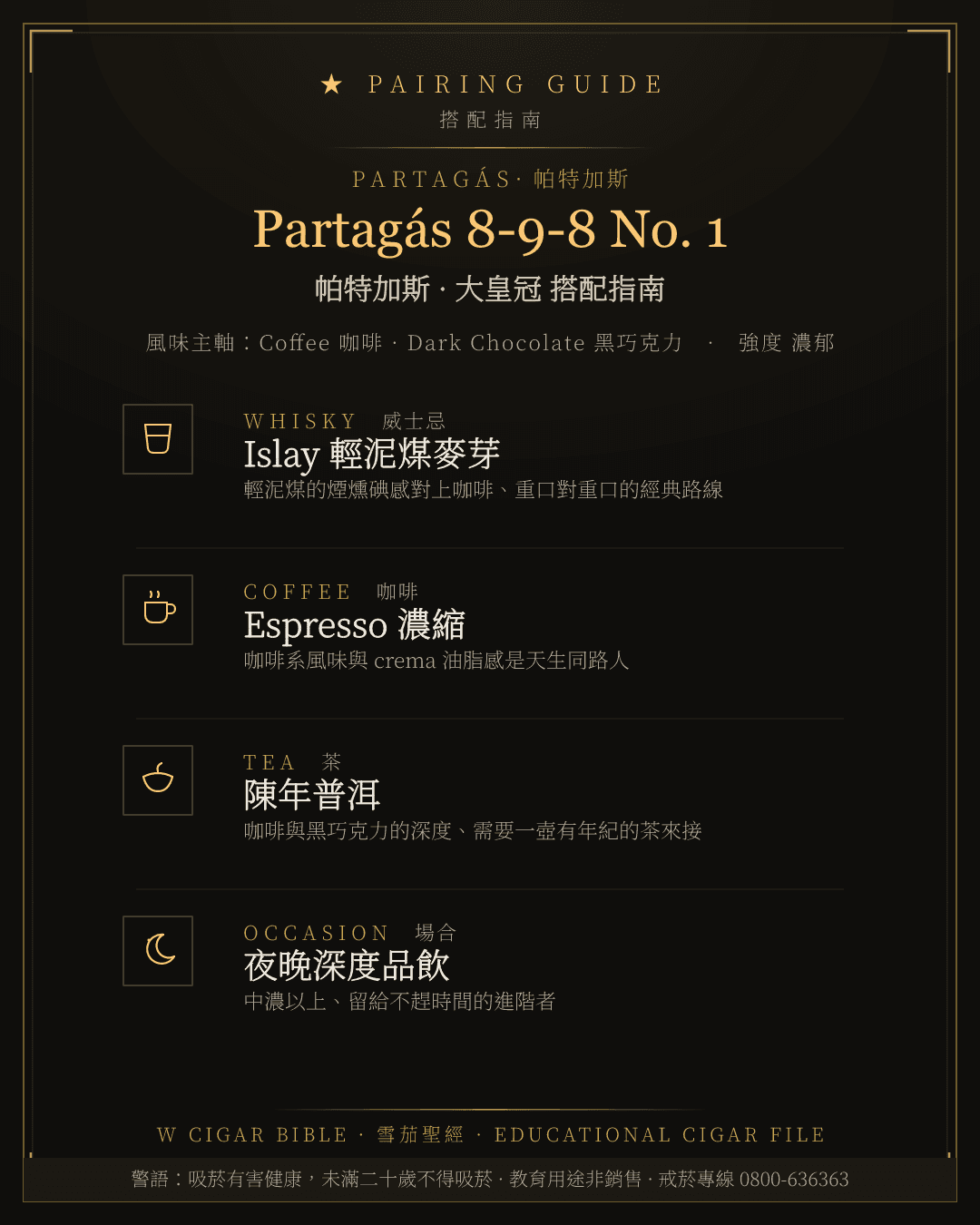
Partagás 8-9-8 No. 1 搭配指南 · 帕特加斯
PAIRING GUIDE · 搭配指南
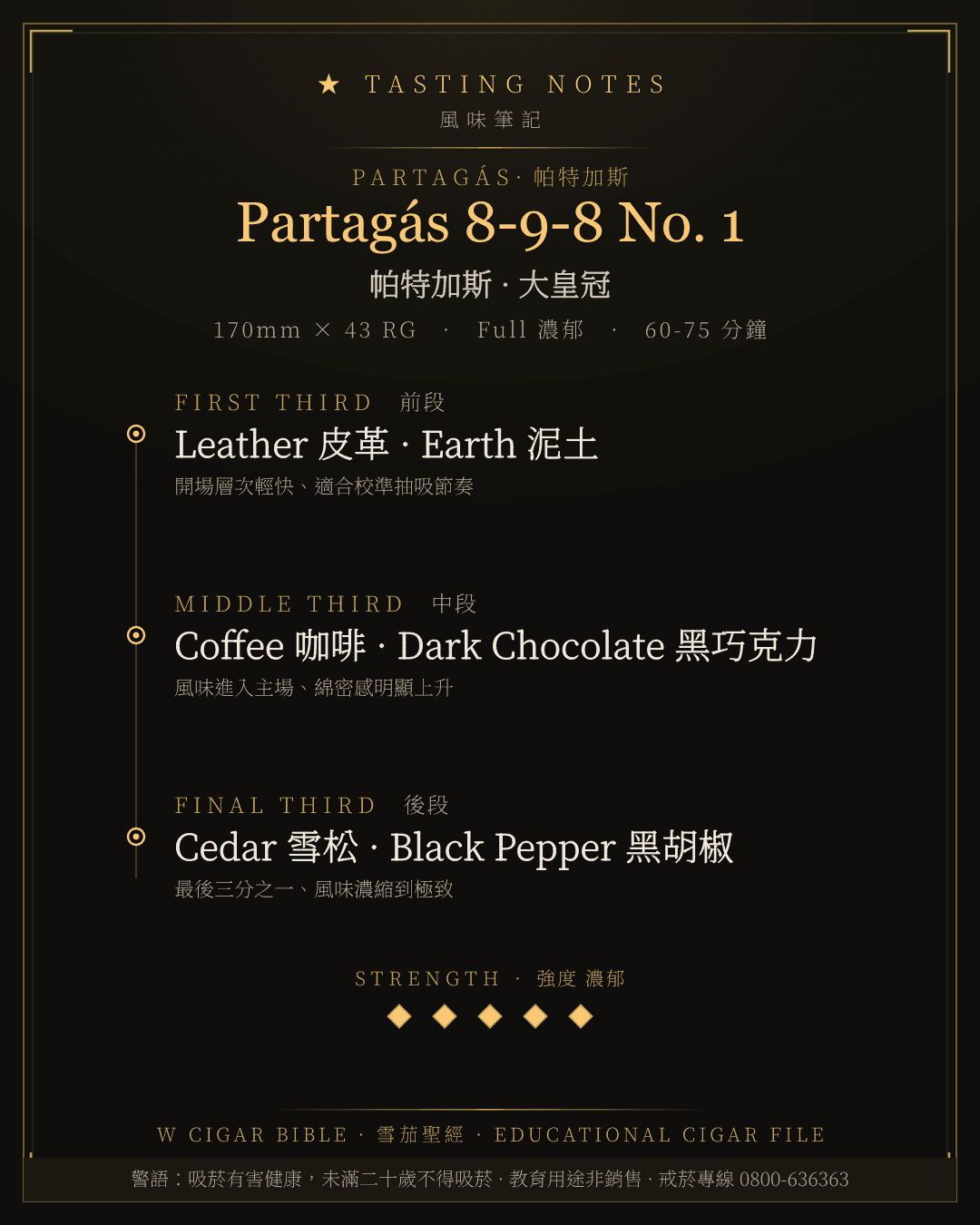
Partagás 8-9-8 No. 1 風味筆記 · 帕特加斯
TASTING NOTES · 風味筆記

Partagás 8-9-8 No. 2 vs Punch Edición Regional Asia Pacífico
VITOLA SHOWDOWN · Dalias
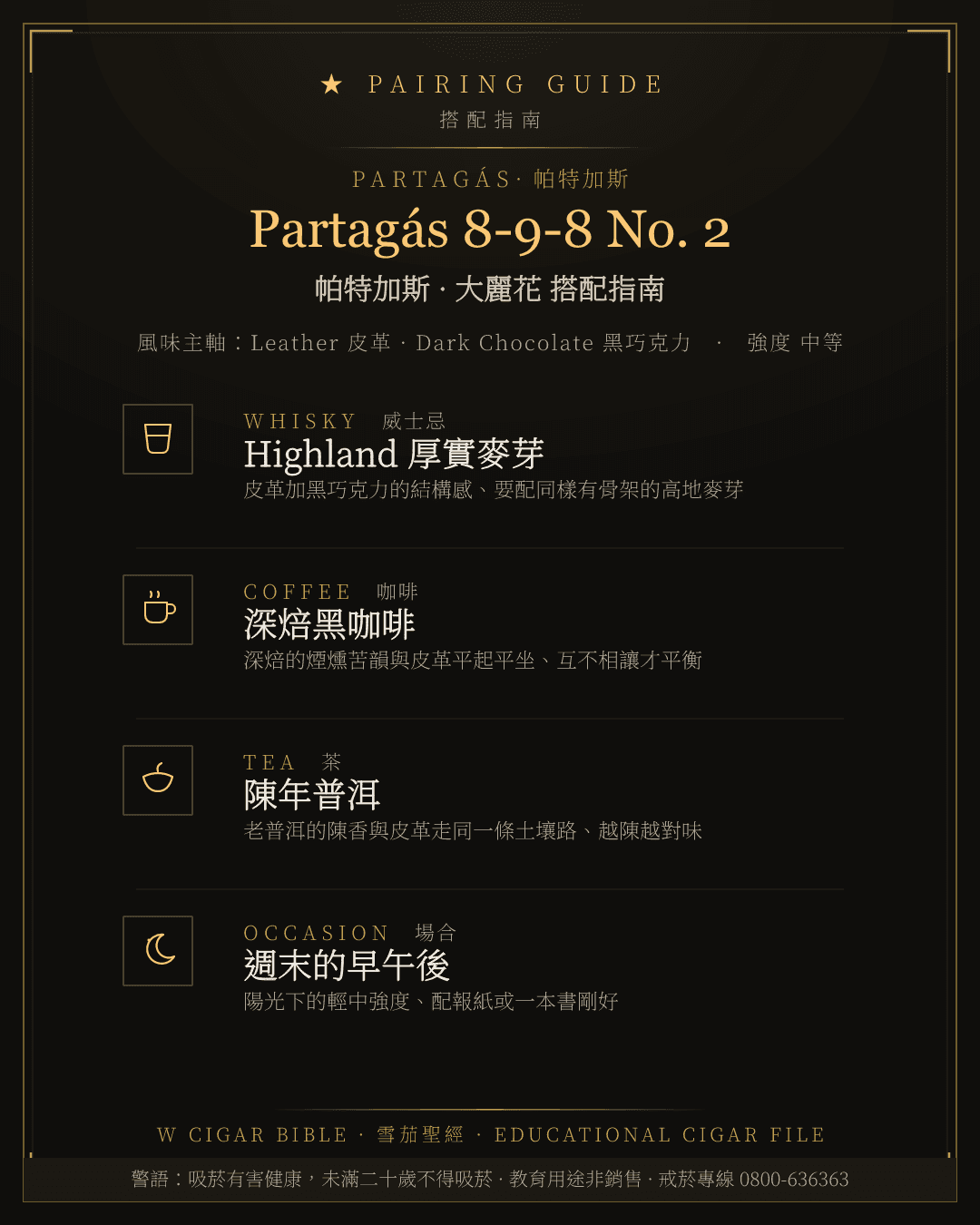
Partagás 8-9-8 No. 2 搭配指南 · 帕特加斯
PAIRING GUIDE · 搭配指南
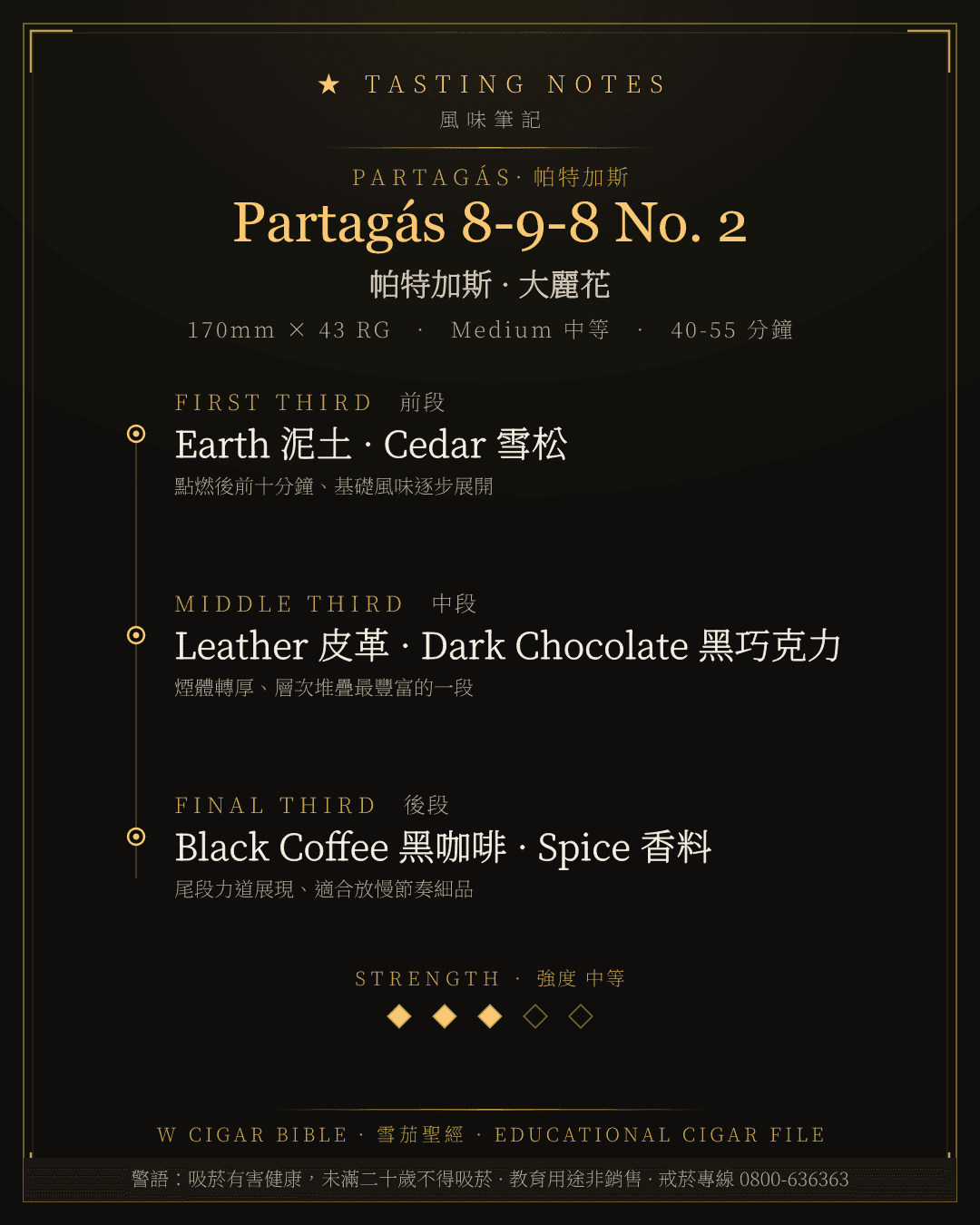
Partagás 8-9-8 No. 2 風味筆記 · 帕特加斯
TASTING NOTES · 風味筆記
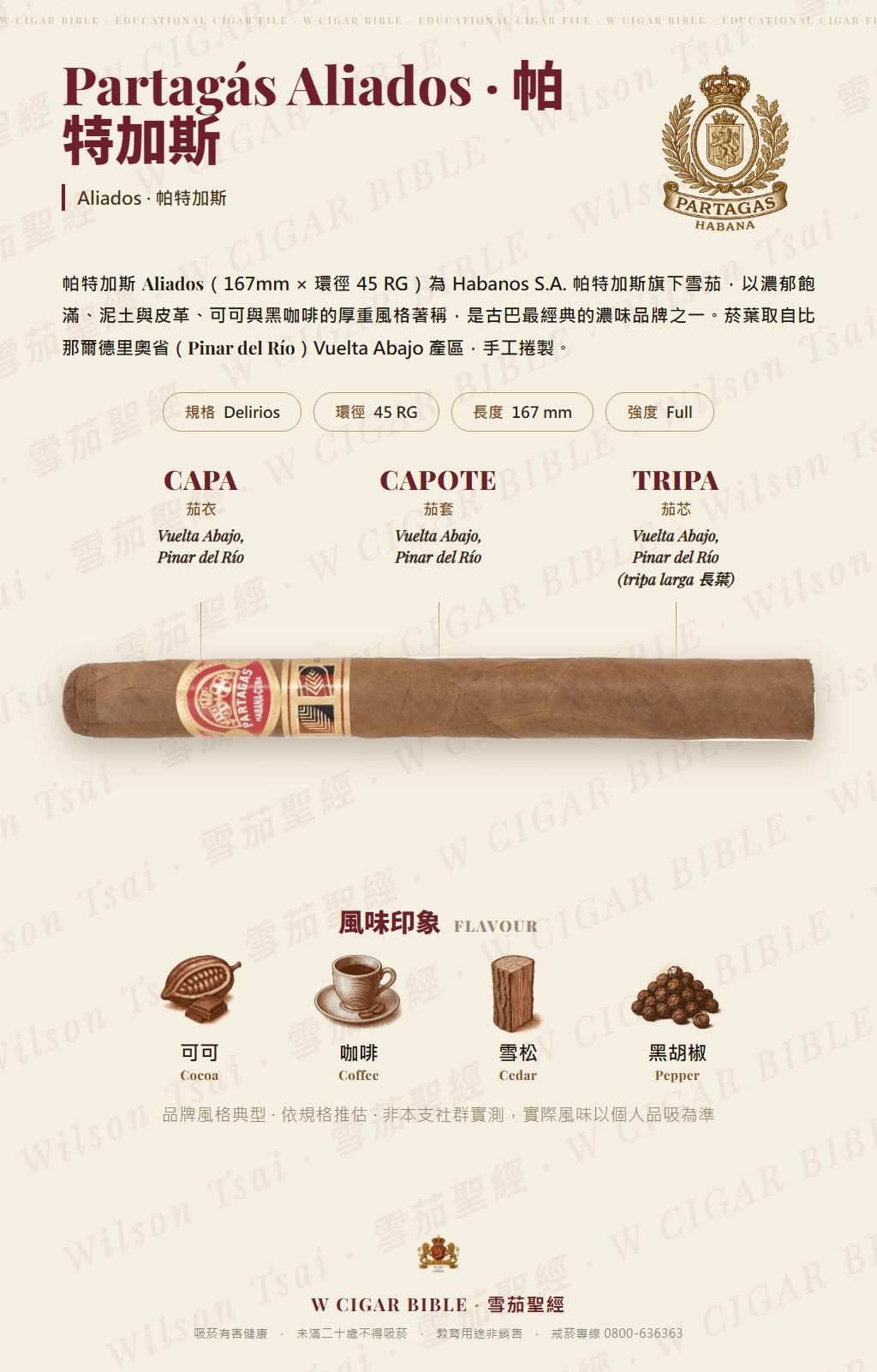
Partagás Aliados · 帕特加斯
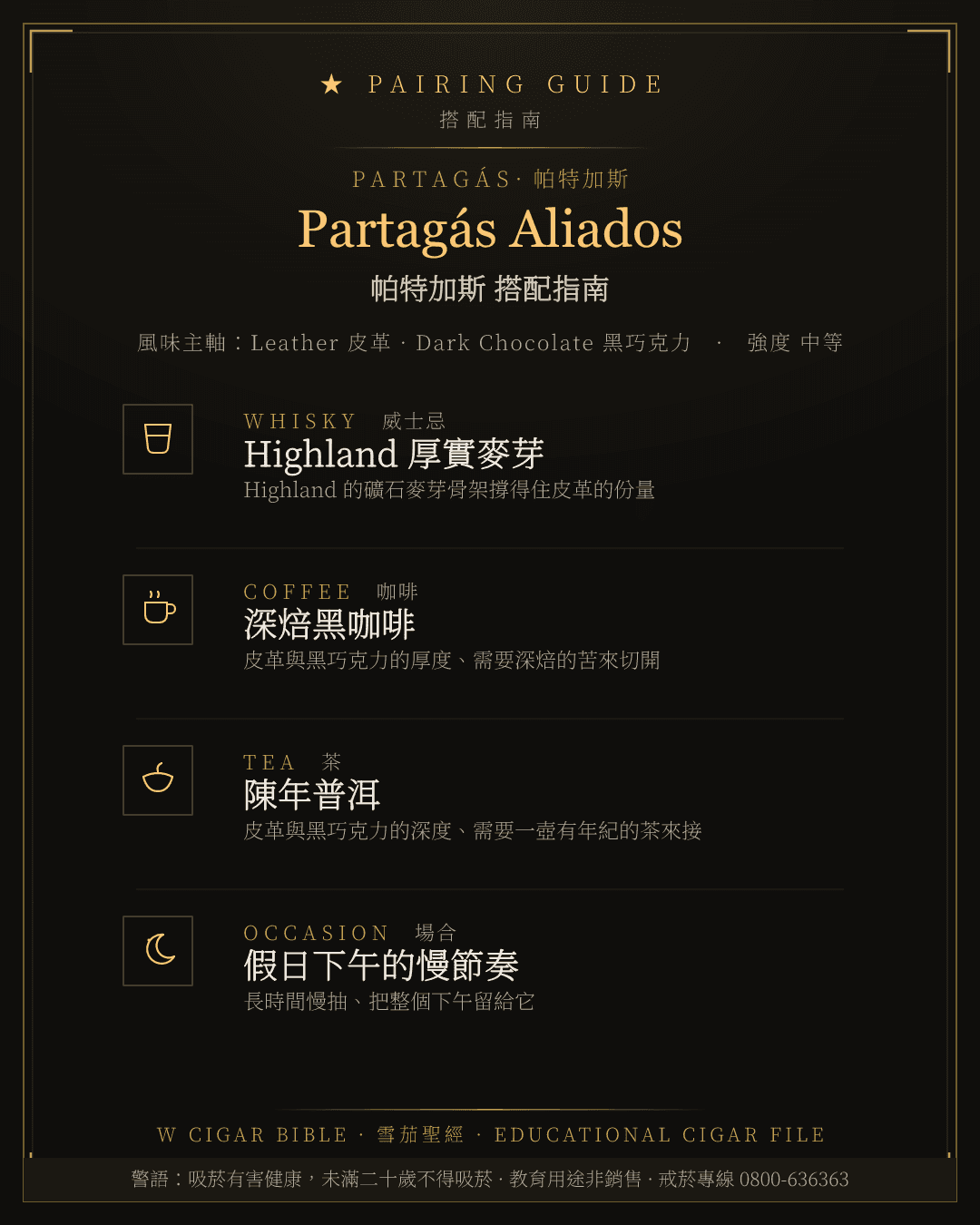
Partagás Aliados 搭配指南 · 帕特加斯
PAIRING GUIDE · 搭配指南
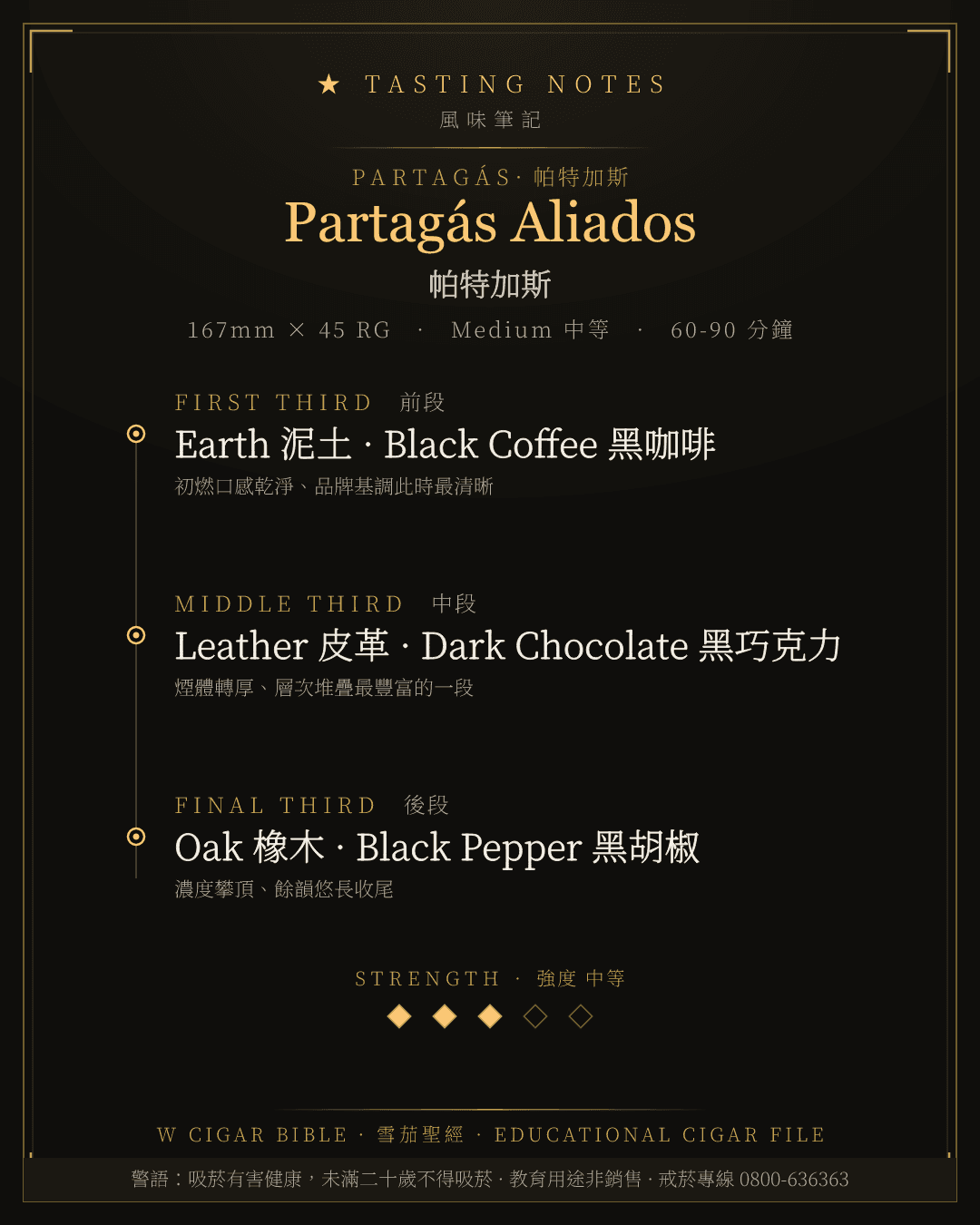
Partagás Aliados 風味筆記 · 帕特加斯
TASTING NOTES · 風味筆記
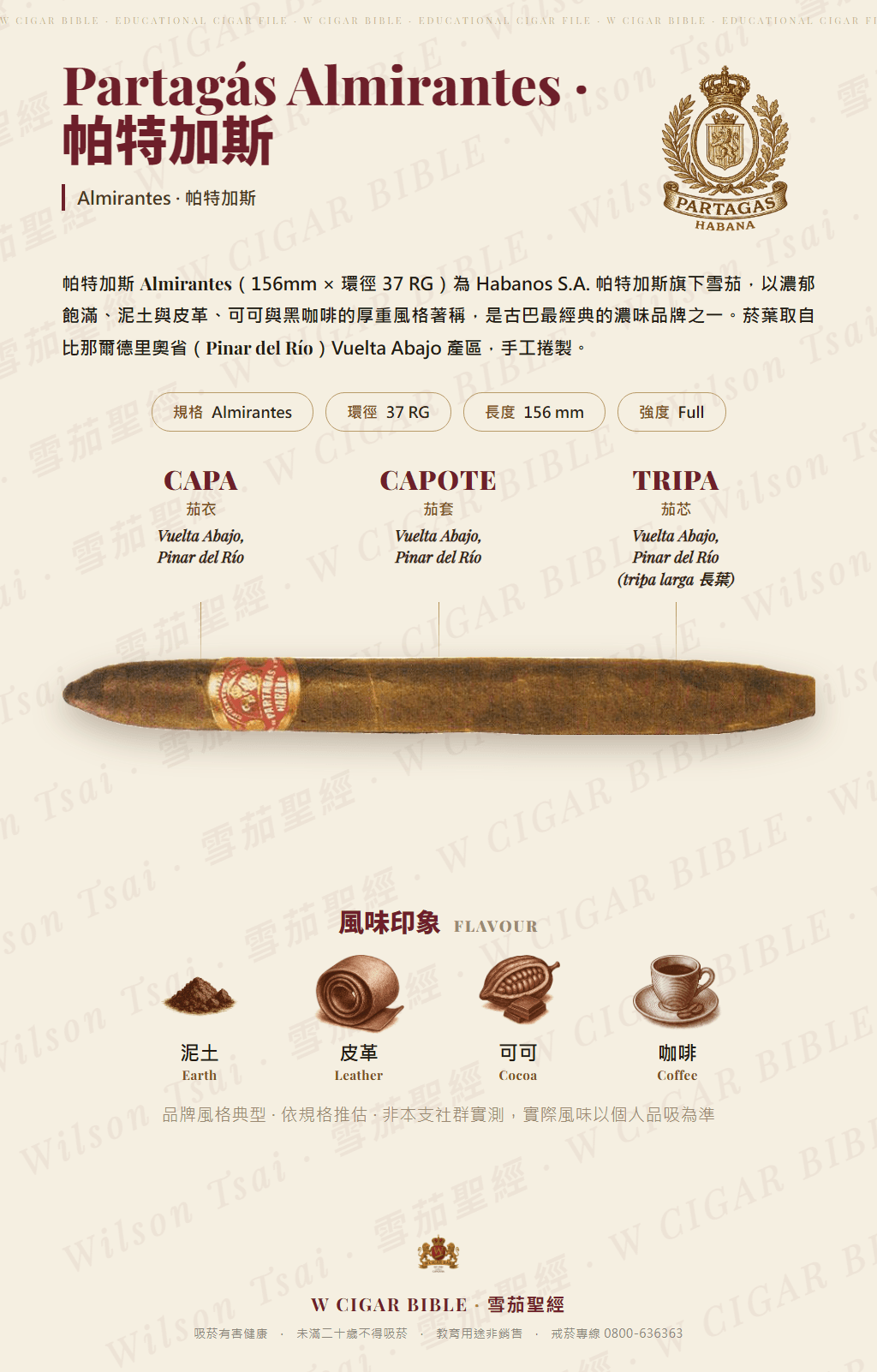
Partagás Almirantes · 帕特加斯
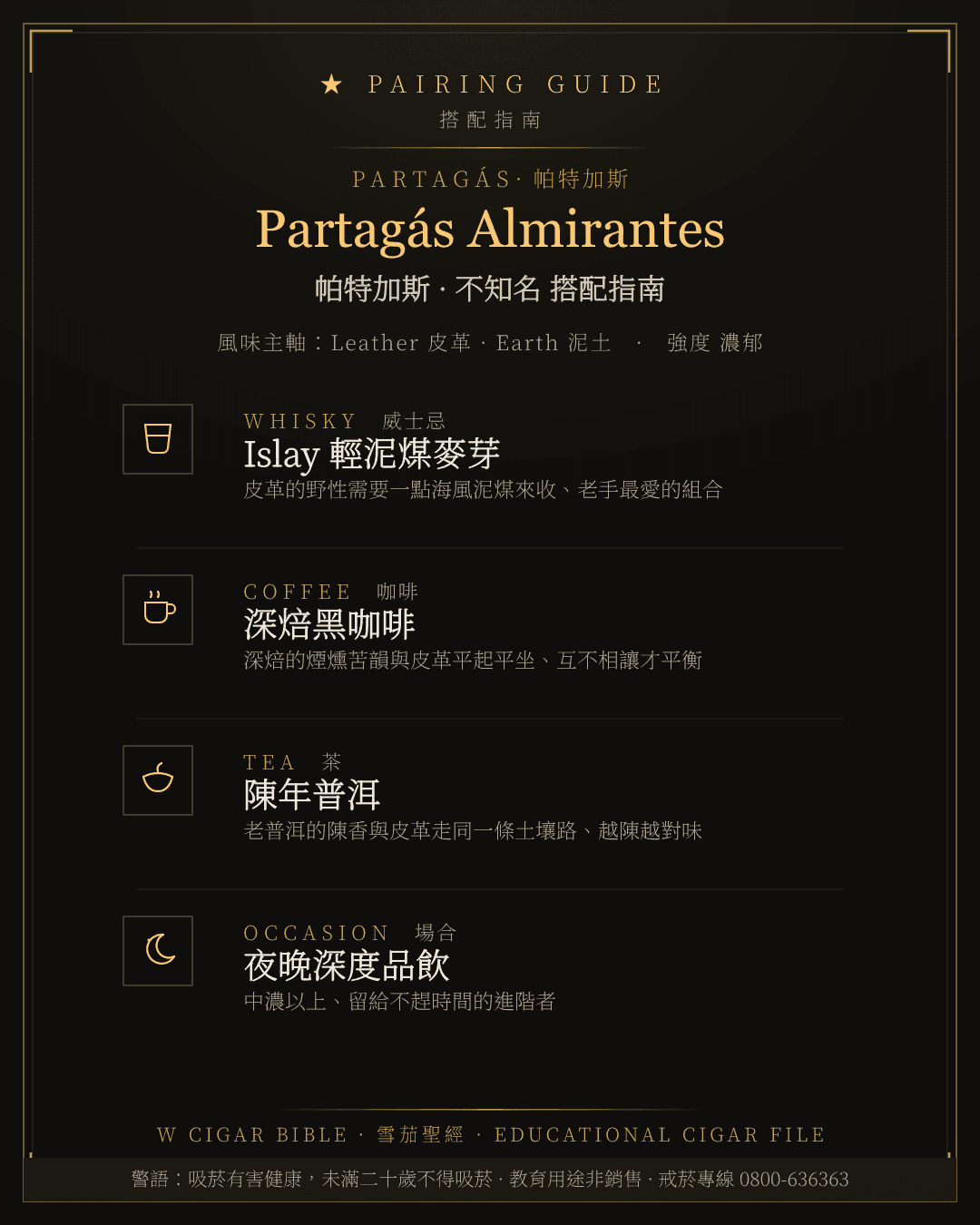
Partagás Almirantes 搭配指南 · 帕特加斯
PAIRING GUIDE · 搭配指南
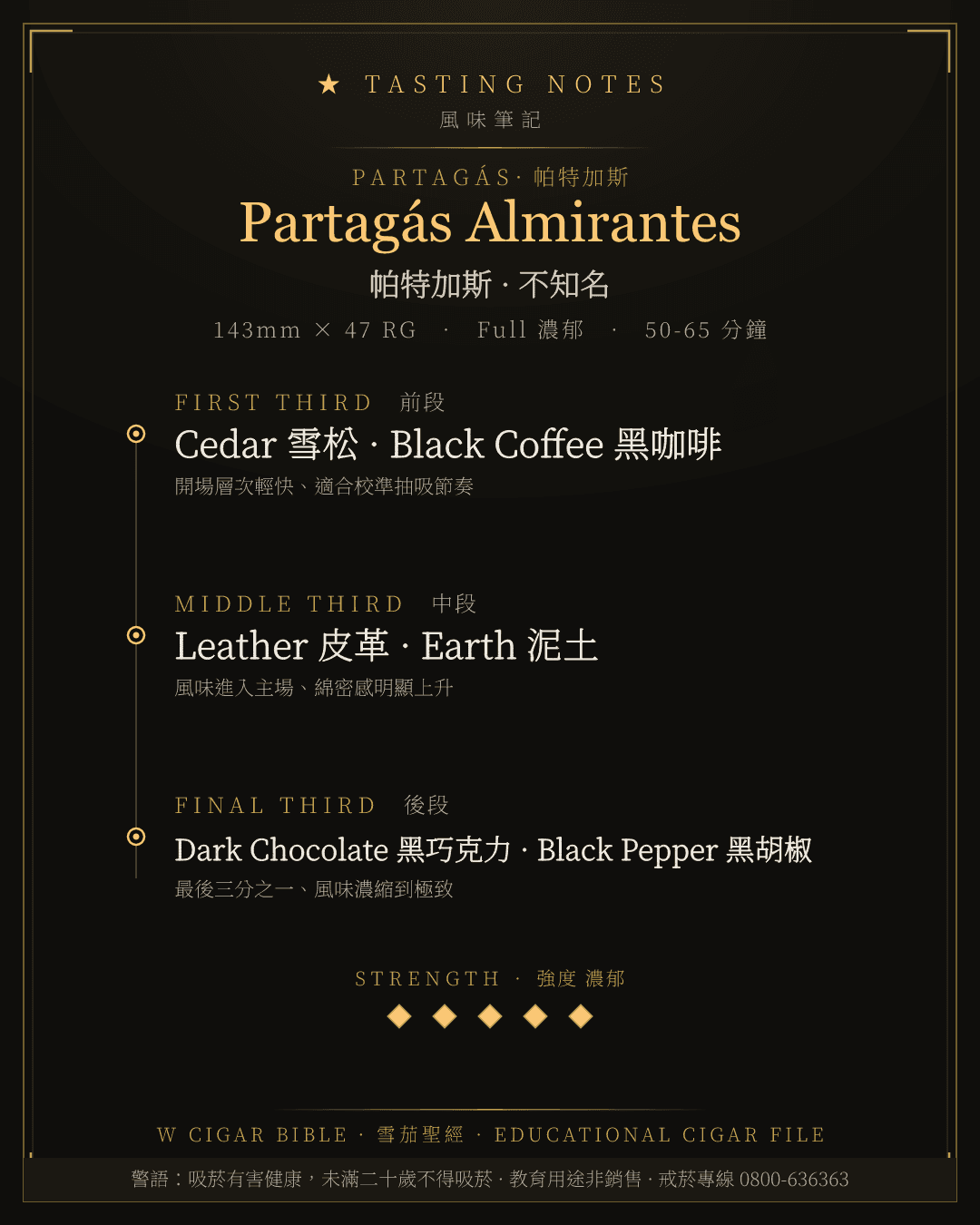
Partagás Almirantes 風味筆記 · 帕特加斯
TASTING NOTES · 風味筆記
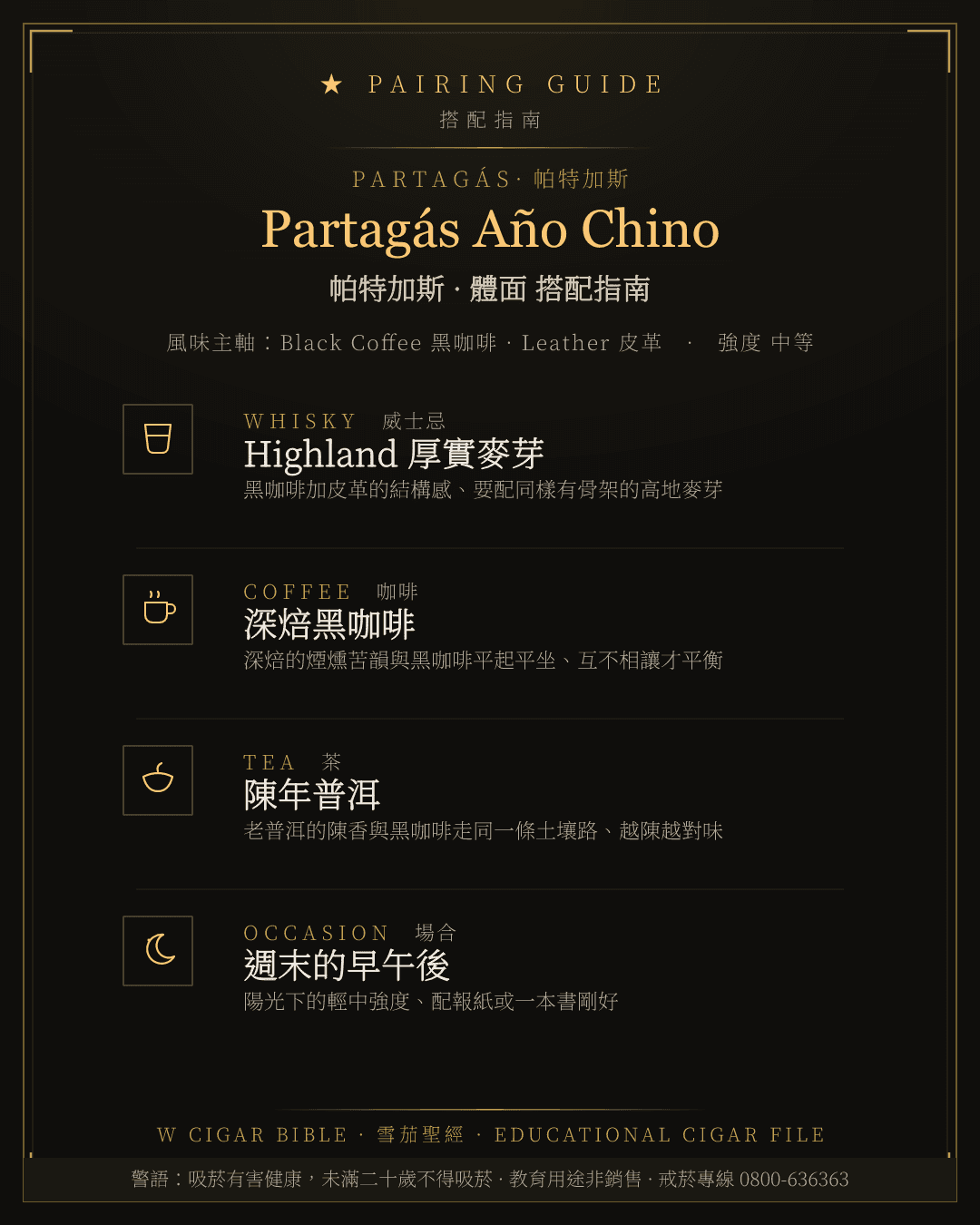
Partagás Año Chino 搭配指南 · 帕特加斯
PAIRING GUIDE · 搭配指南
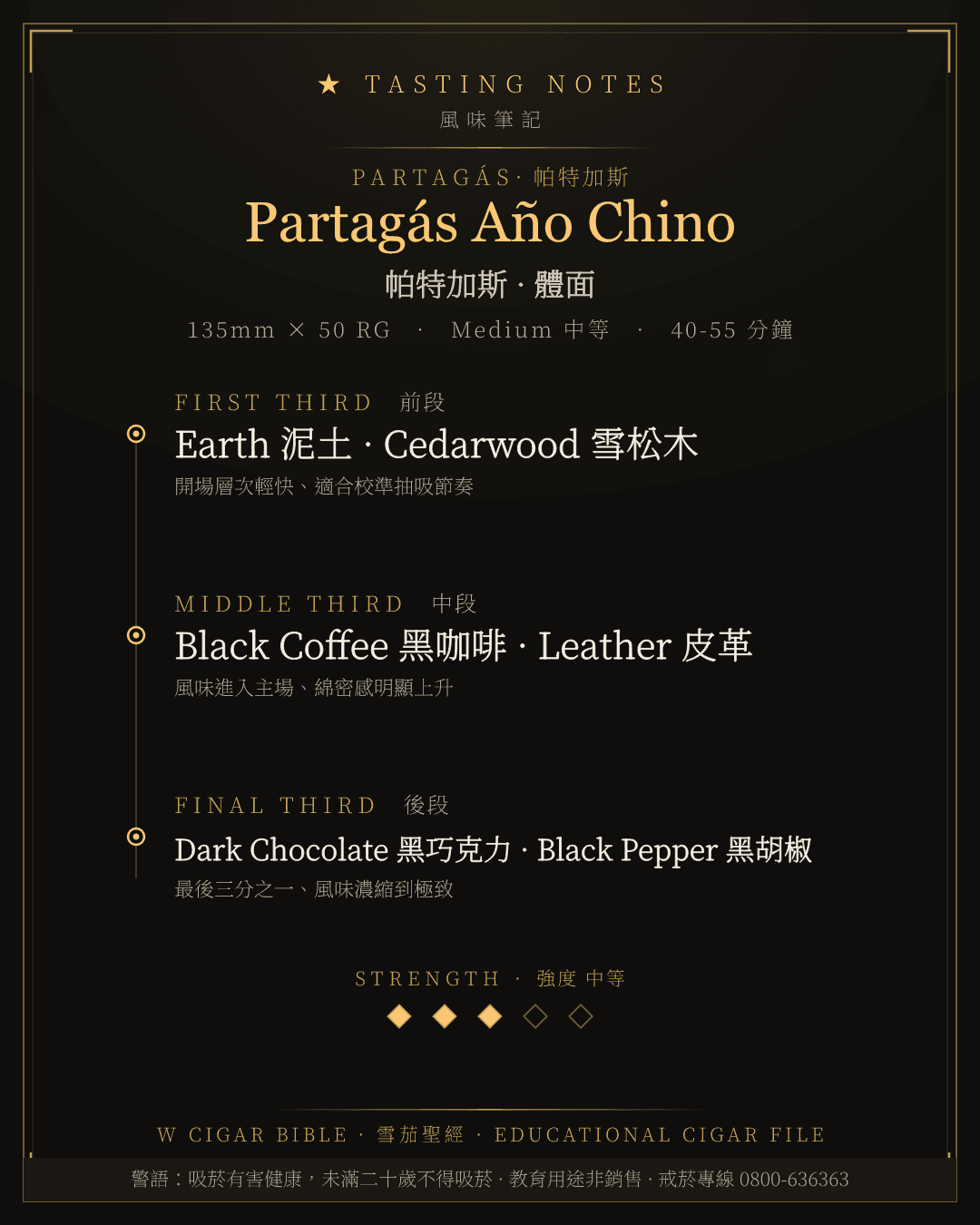
Partagás Año Chino 風味筆記 · 帕特加斯
TASTING NOTES · 風味筆記

Partagás Aristocrats · 帕特加斯
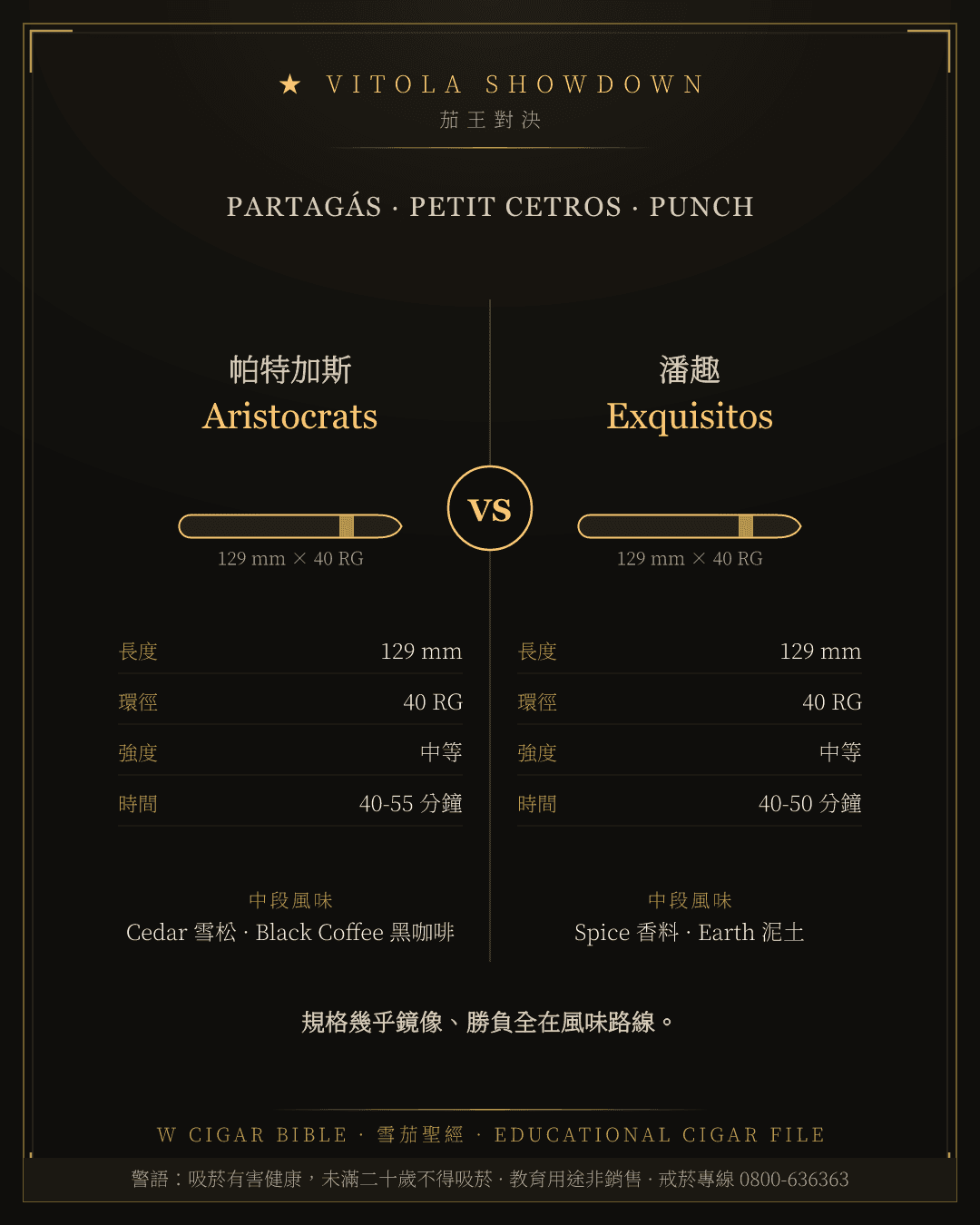
Partagás Aristocrats vs Punch Exquisitos
VITOLA SHOWDOWN · Petit Cetros
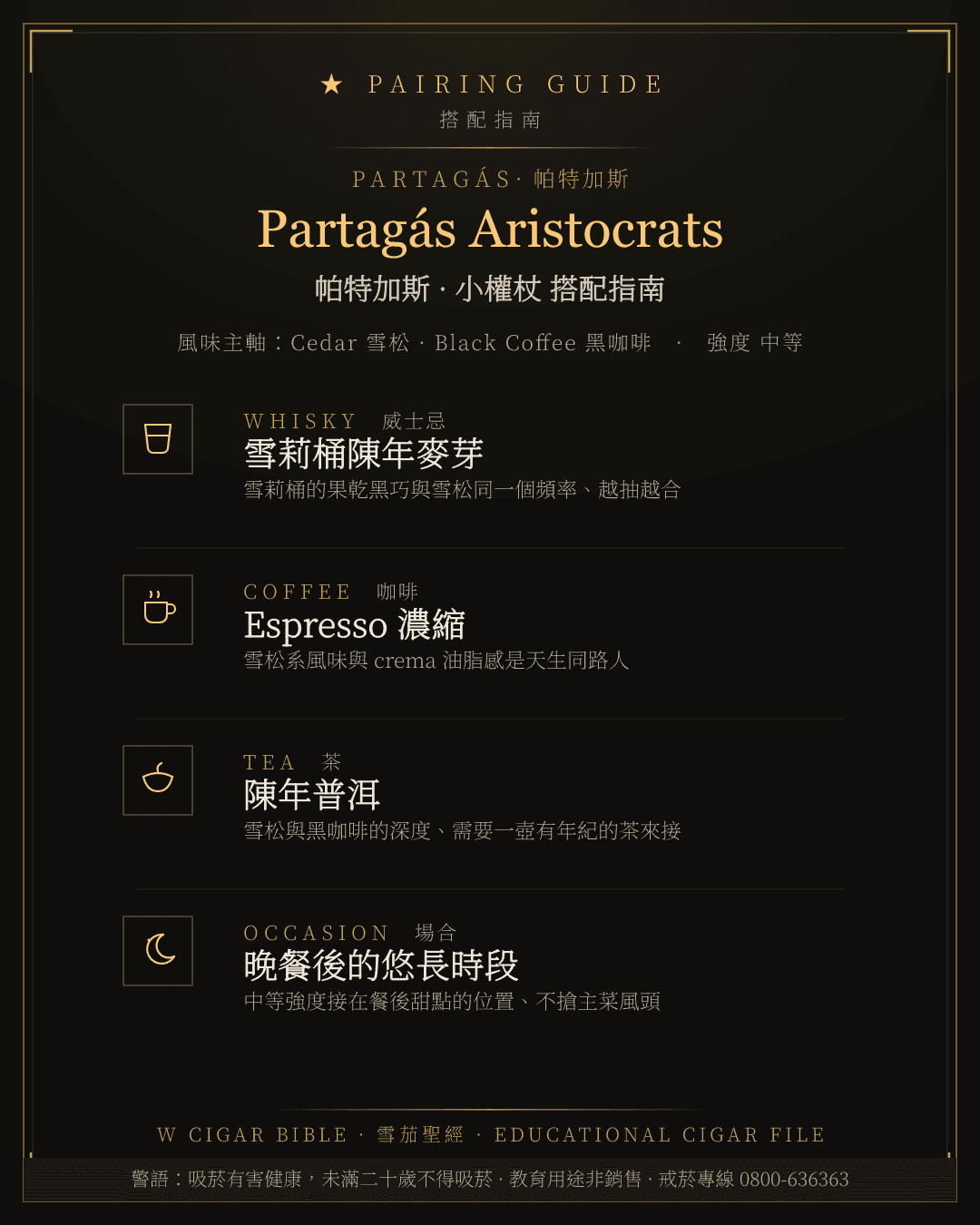
Partagás Aristocrats 搭配指南 · 帕特加斯
PAIRING GUIDE · 搭配指南
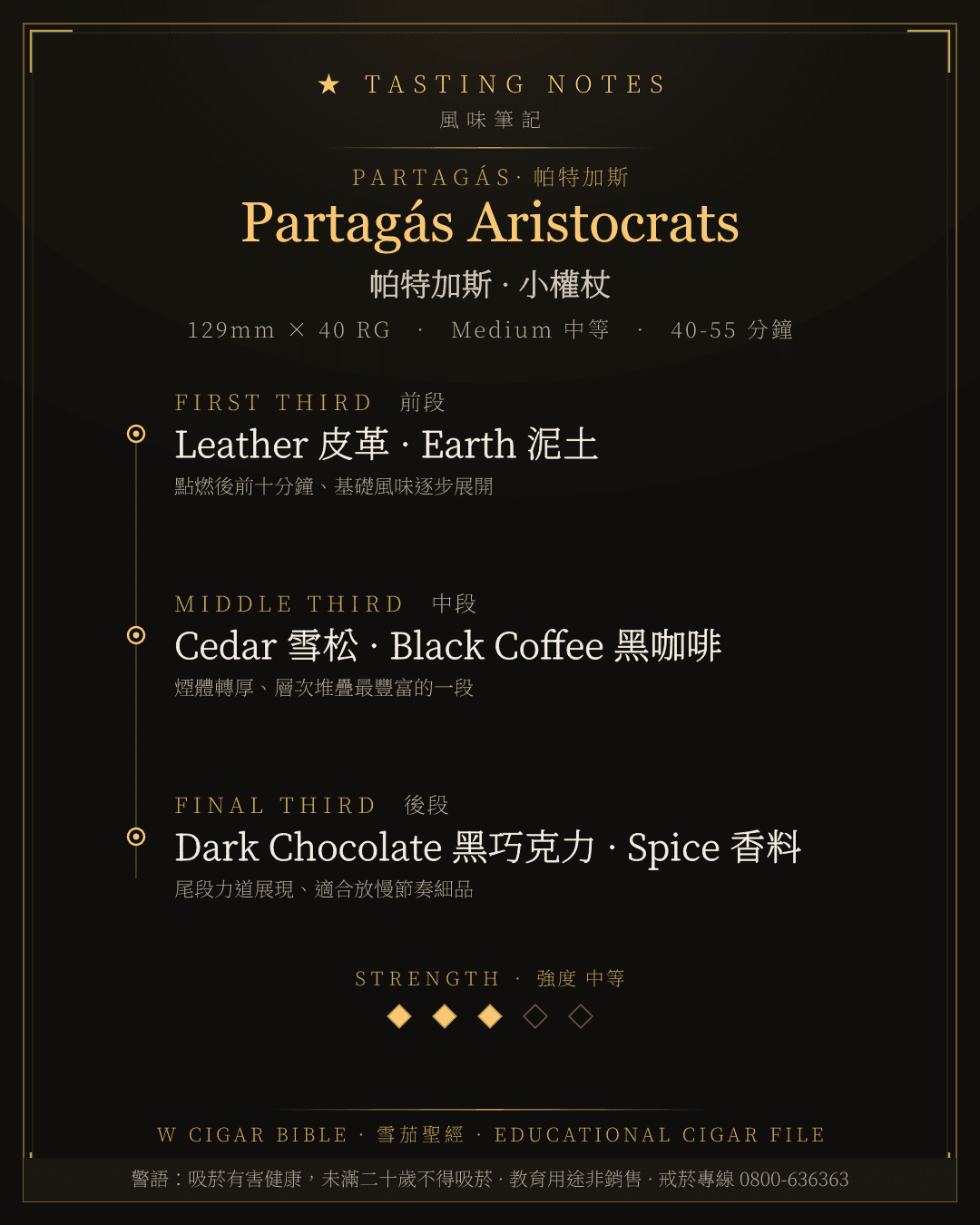
Partagás Aristocrats 風味筆記 · 帕特加斯
TASTING NOTES · 風味筆記
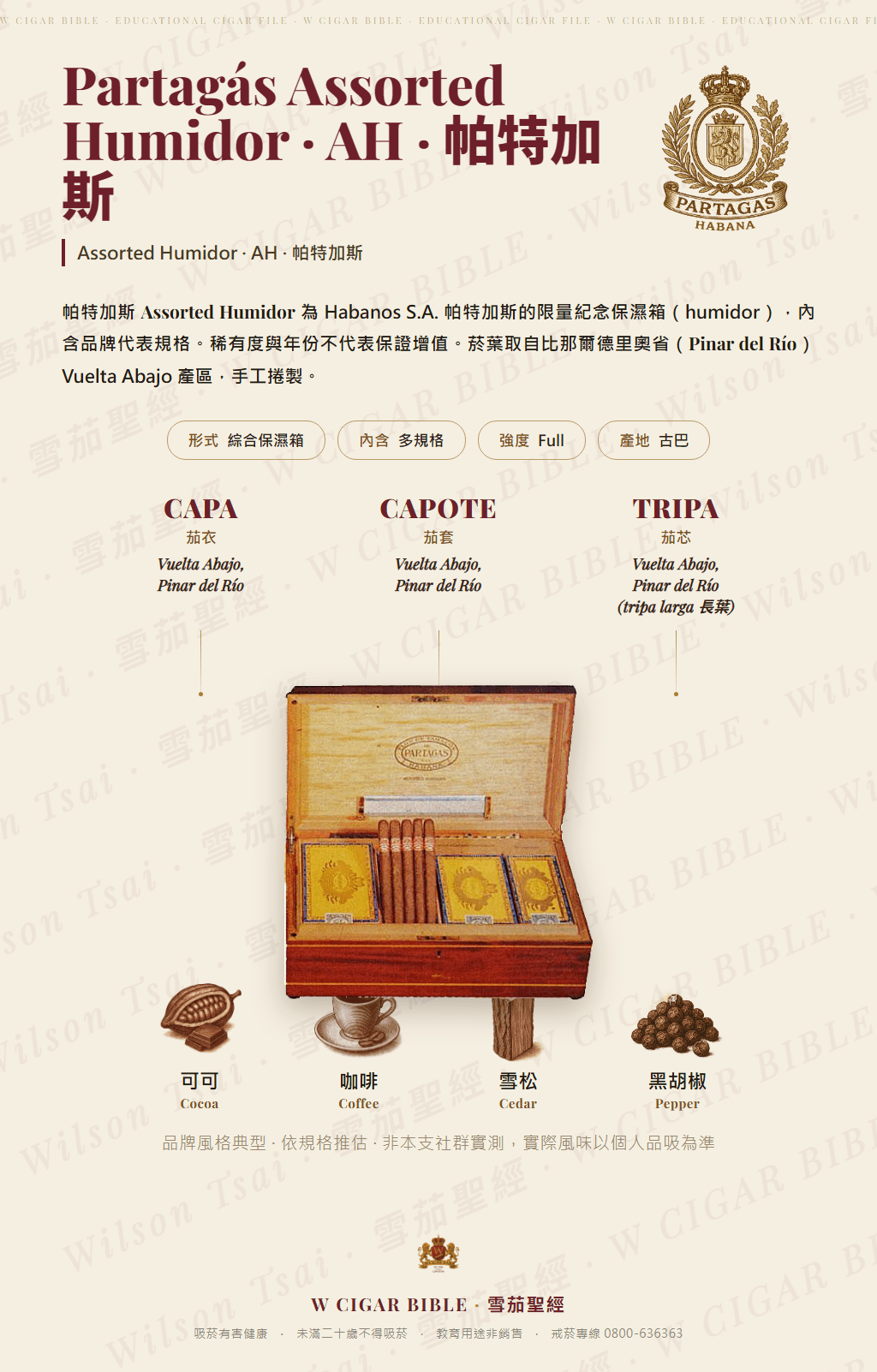
Partagás Assorted Humidor · AH · 帕特加斯
AH · 綜合品項木盒 Assorted Humidor(同品牌多規格併裝,發行年份與數量未公佈)· 雪茄檔案
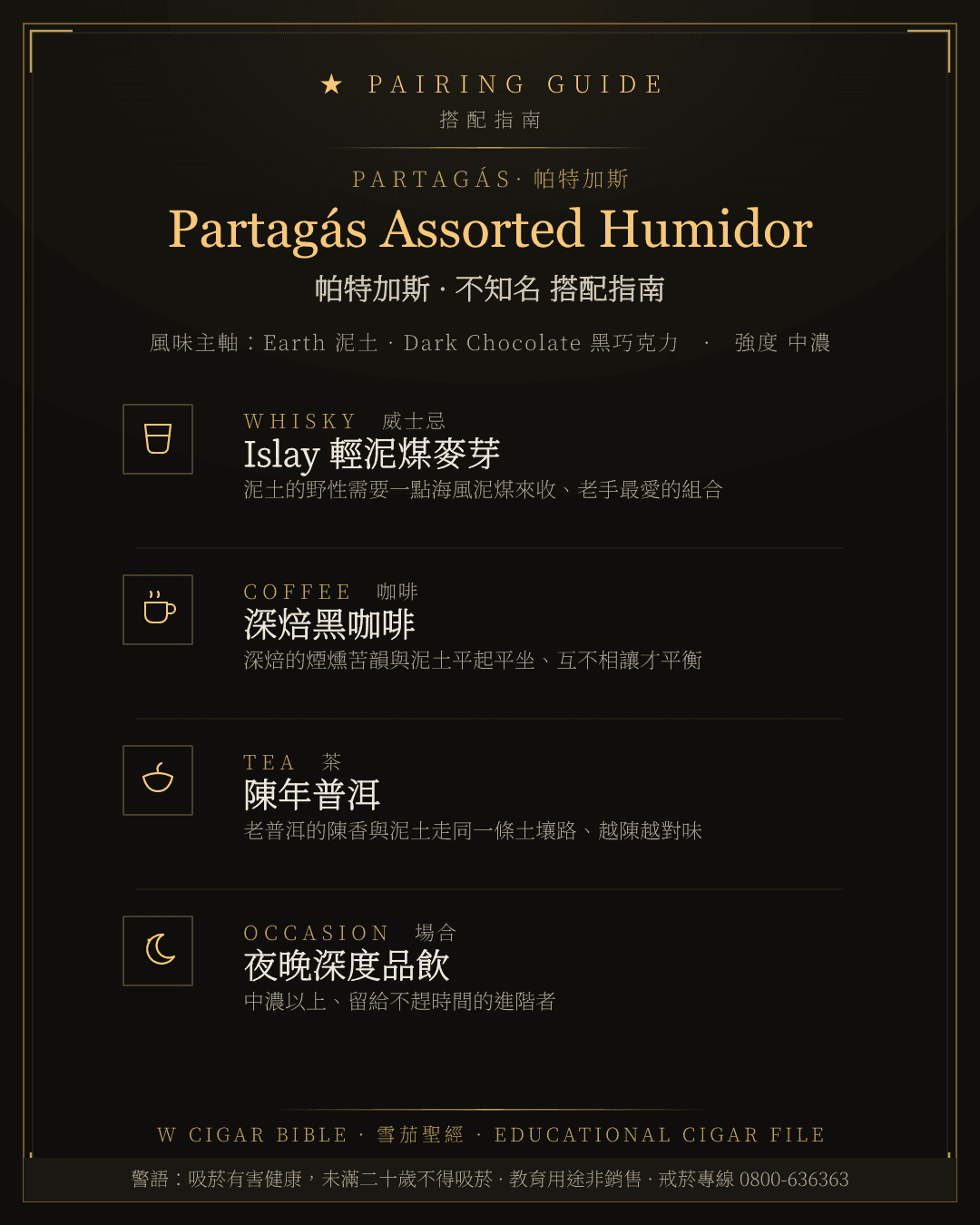
Partagás Assorted Humidor 搭配指南 · 帕特加斯
PAIRING GUIDE · 搭配指南
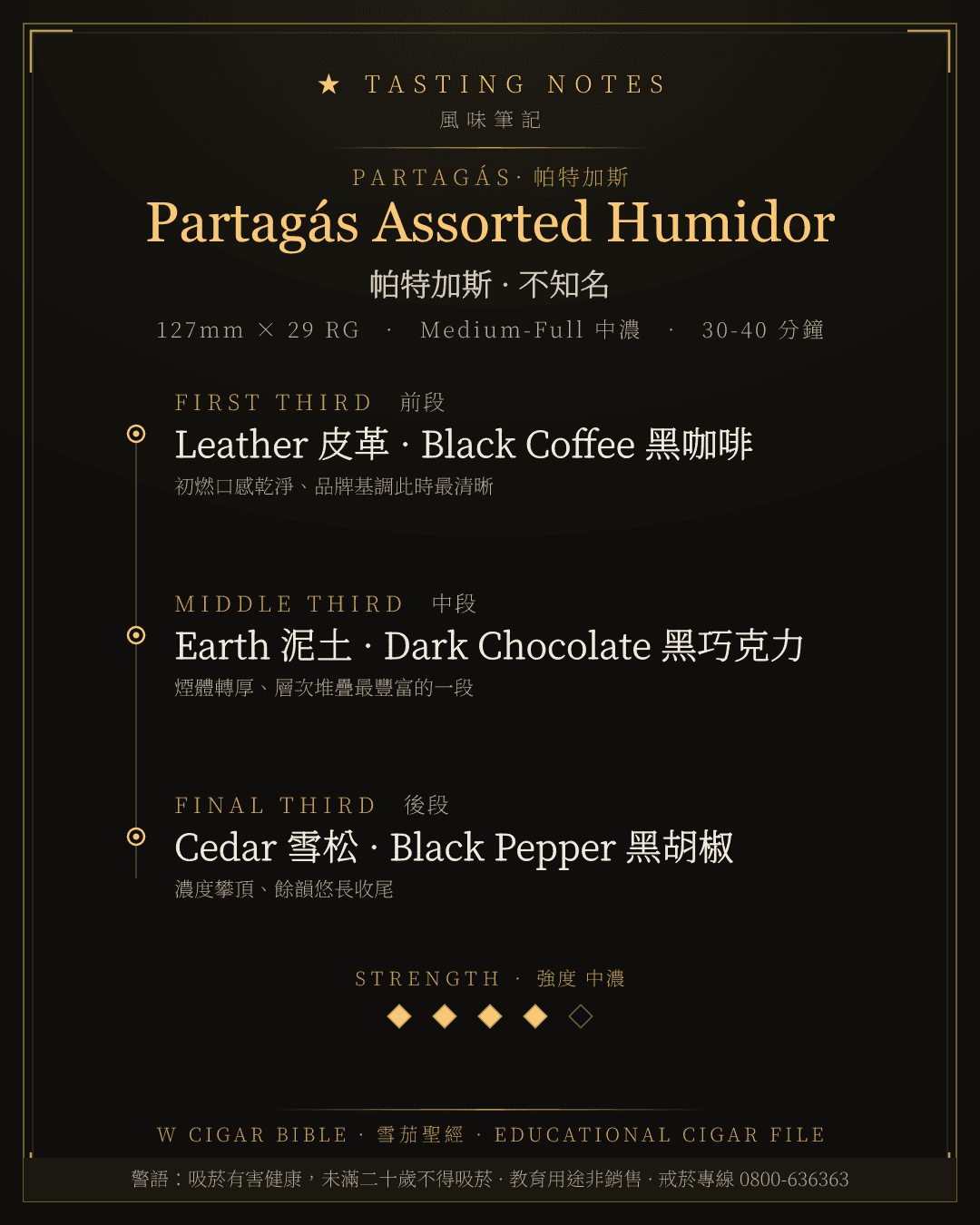
Partagás Assorted Humidor 風味筆記 · 帕特加斯
TASTING NOTES · 風味筆記
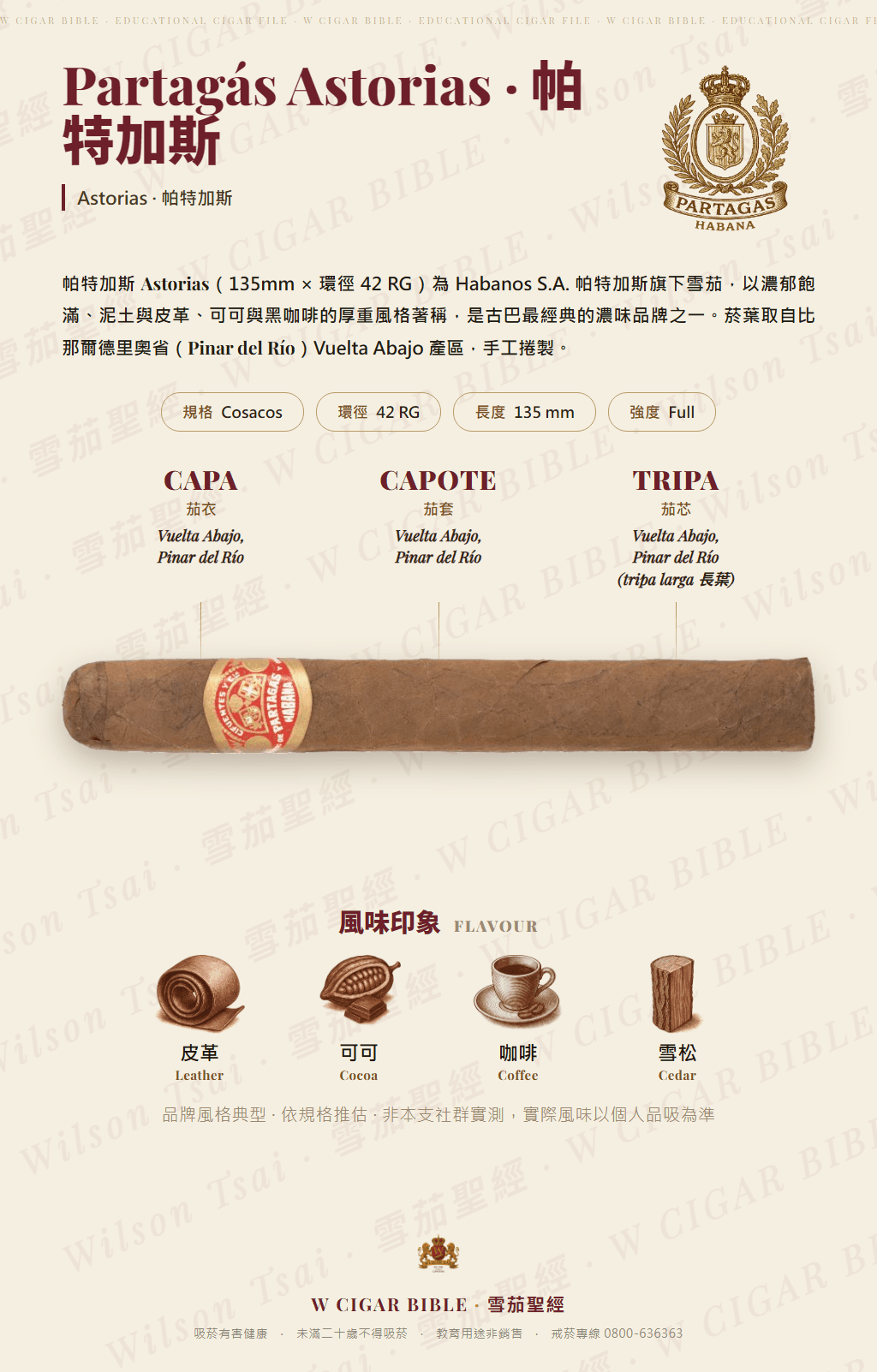
Partagás Astorias · 帕特加斯

Partagás Astorias vs Punch Nacionales
VITOLA SHOWDOWN · Cosacos
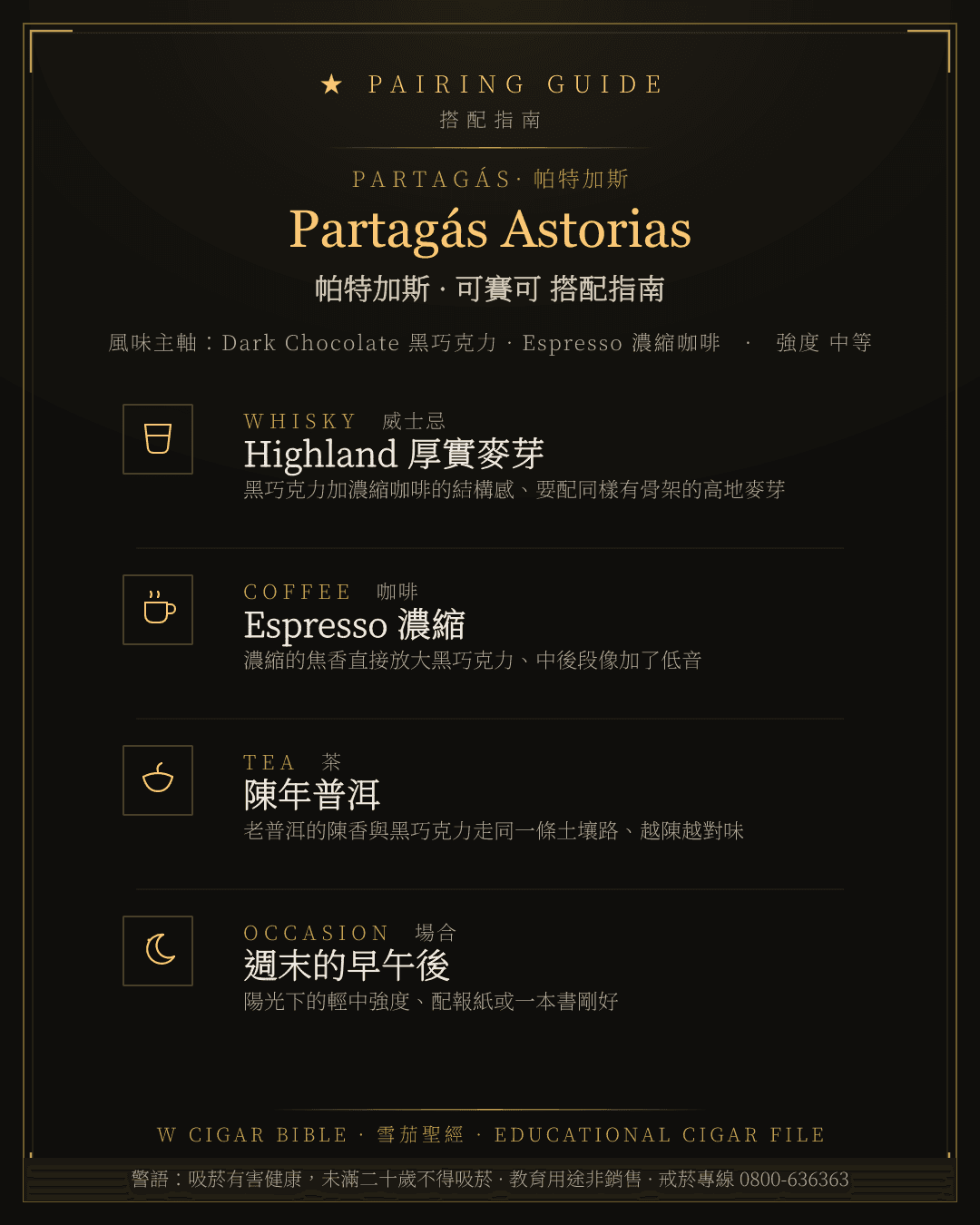
Partagás Astorias 搭配指南 · 帕特加斯
PAIRING GUIDE · 搭配指南

Partagás Astorias 風味筆記 · 帕特加斯
TASTING NOTES · 風味筆記

Partagás Belvederes · 帕特加斯
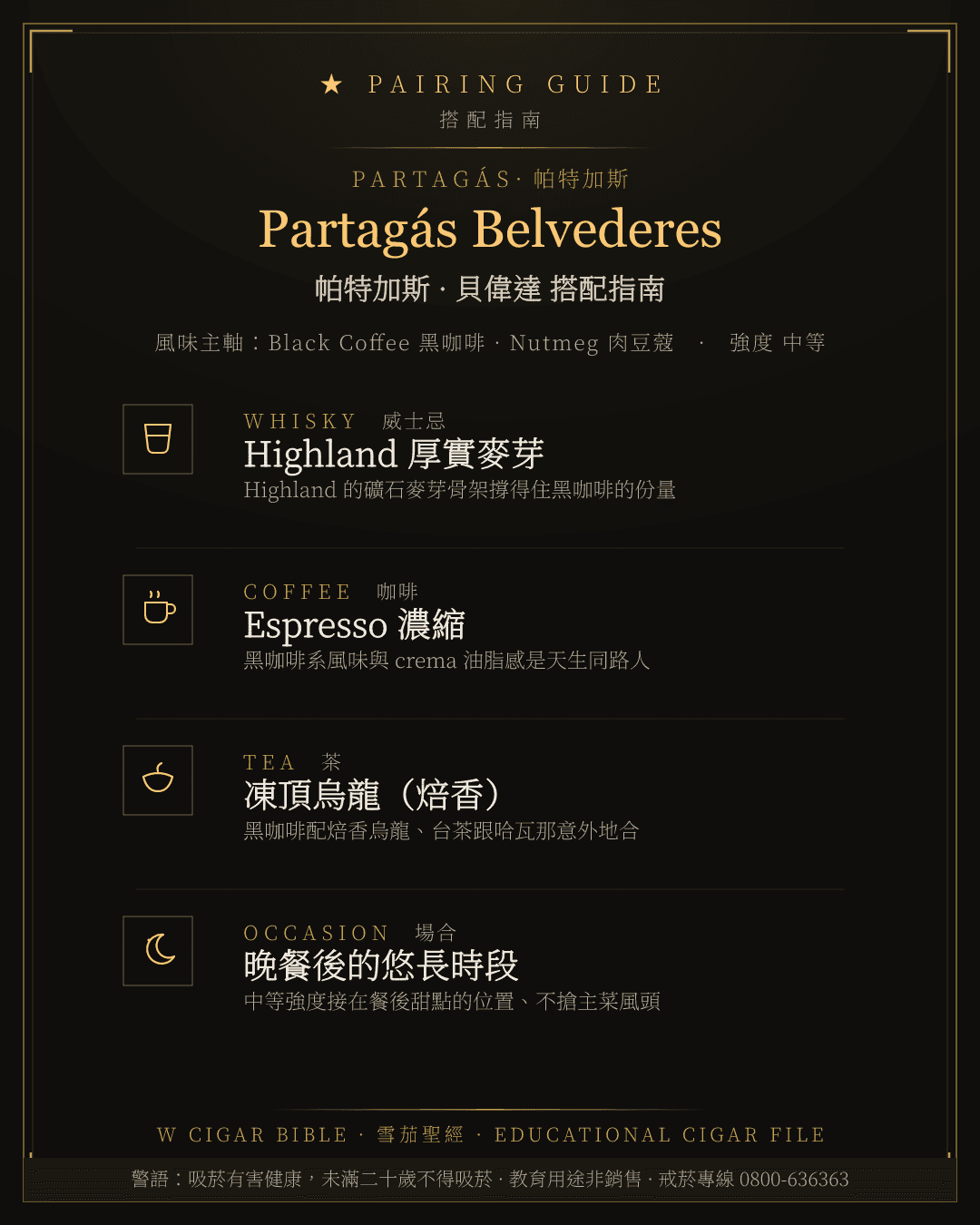
Partagás Belvederes 搭配指南 · 帕特加斯
PAIRING GUIDE · 搭配指南
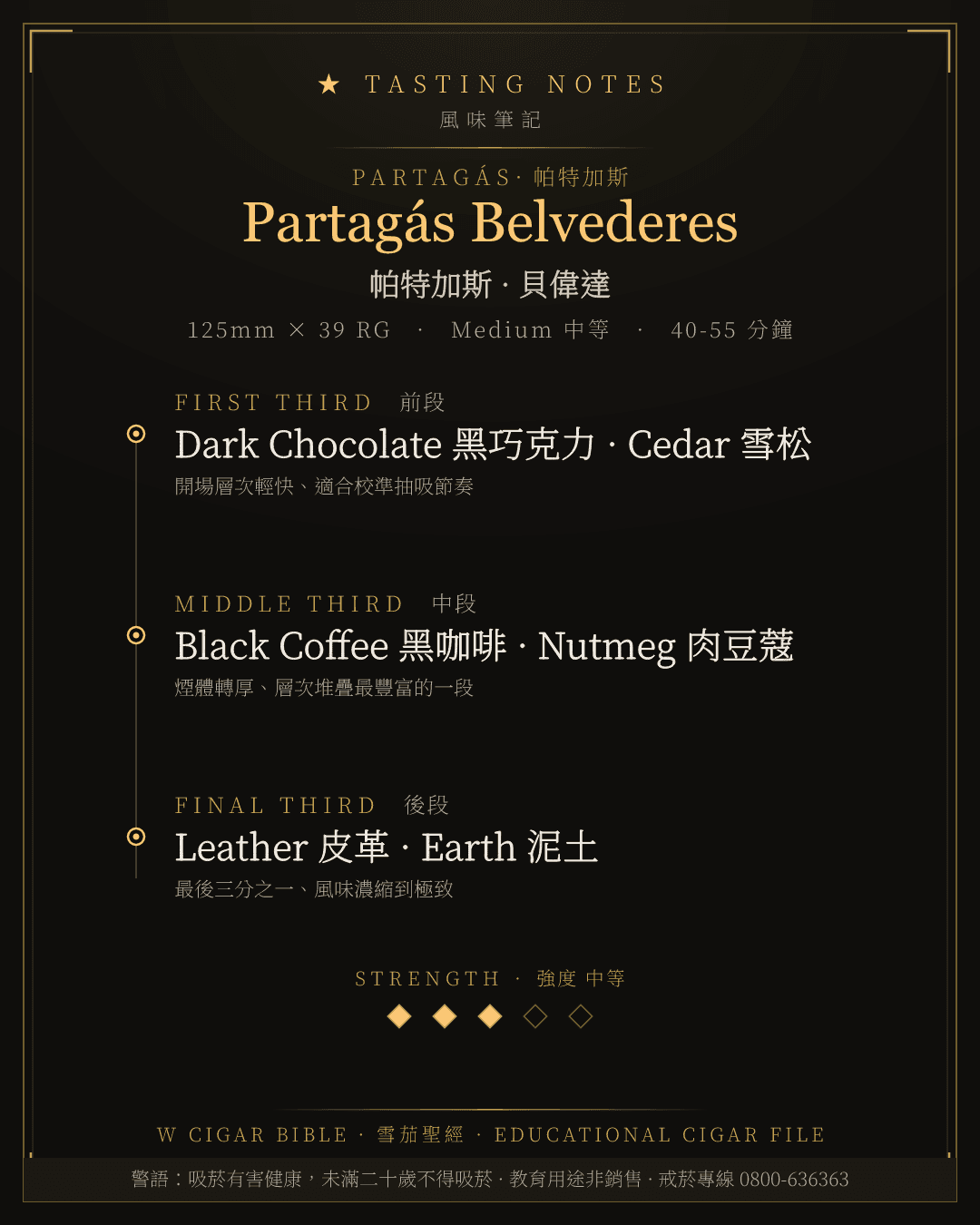
Partagás Belvederes 風味筆記 · 帕特加斯
TASTING NOTES · 風味筆記
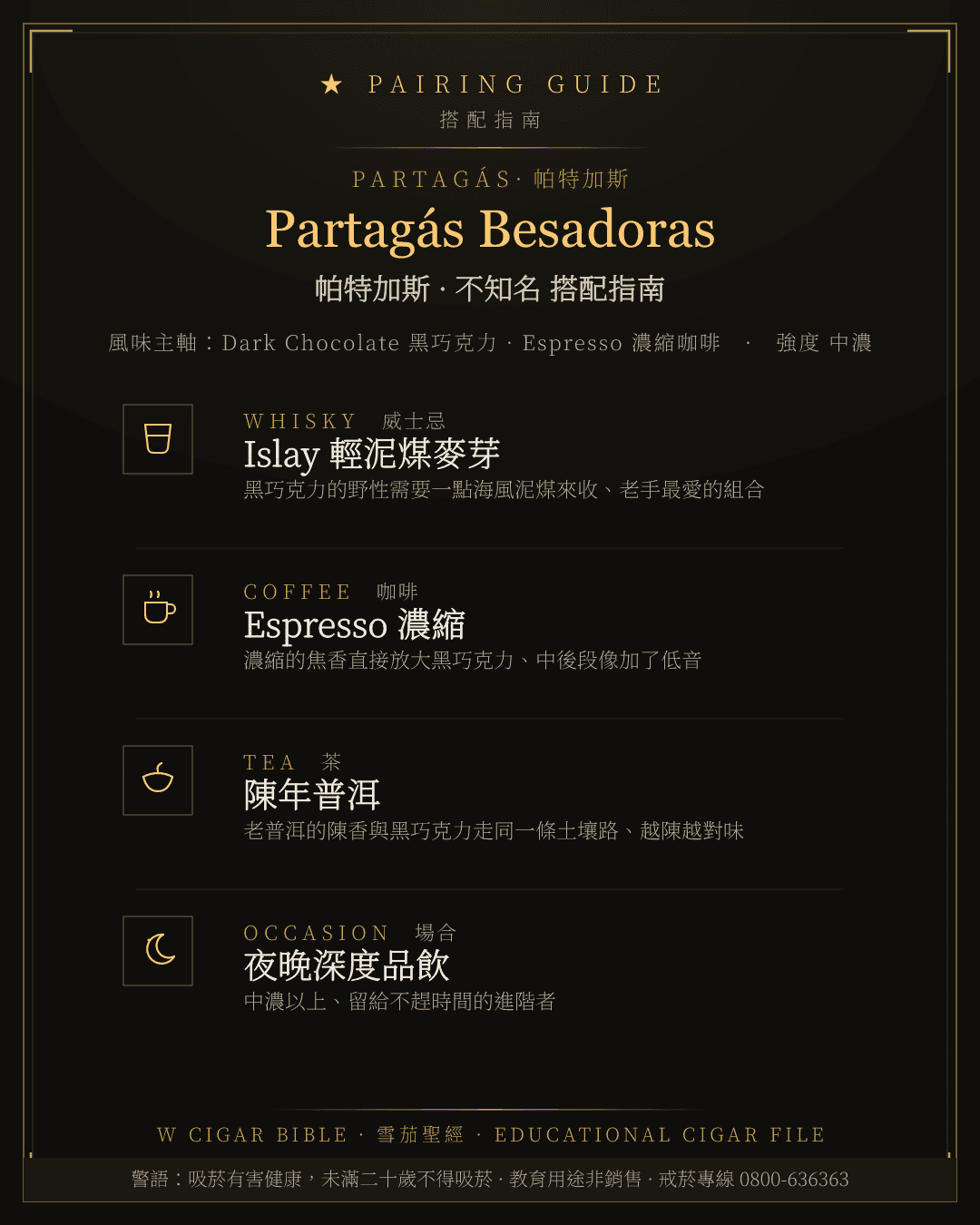
Partagás Besadoras 搭配指南 · 帕特加斯
PAIRING GUIDE · 搭配指南
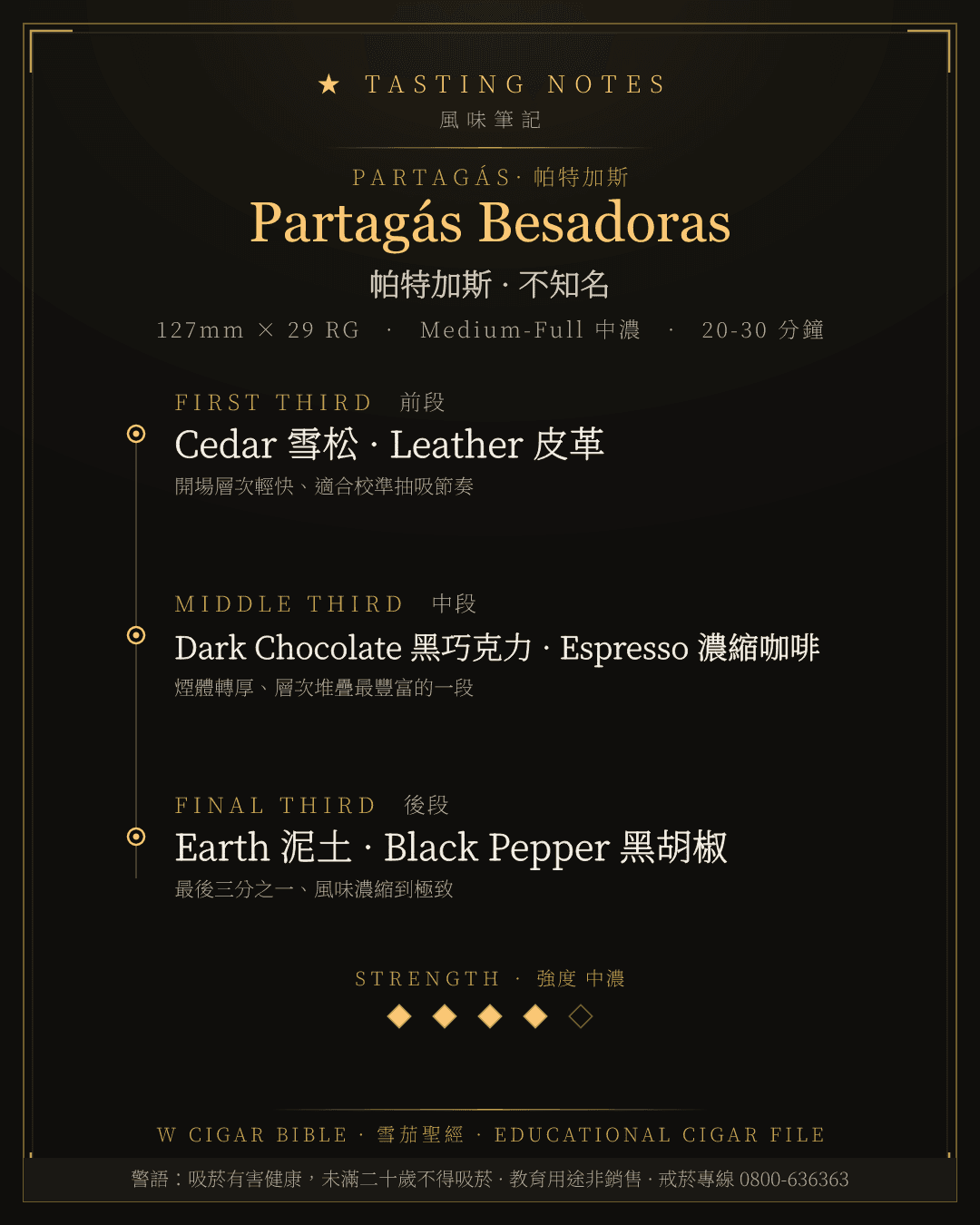
Partagás Besadoras 風味筆記 · 帕特加斯
TASTING NOTES · 風味筆記
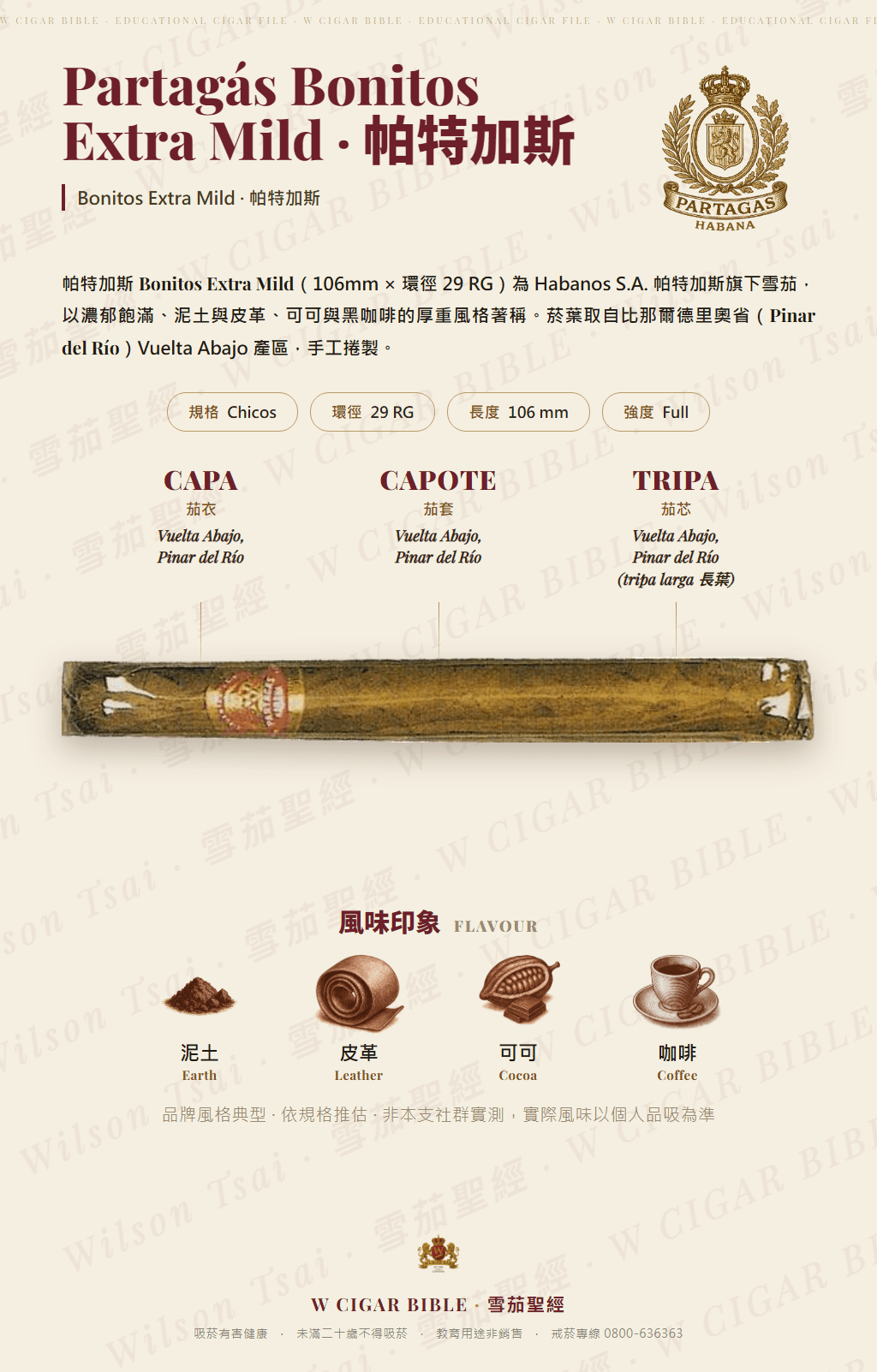
Partagás Bonitos Extra Mild · 帕特加斯

Partagás Bonitos Extra Mild vs Por Larrañaga Curritos
VITOLA SHOWDOWN · Chicos

Partagás Bonitos Extra Mild 搭配指南 · 帕特加斯
PAIRING GUIDE · 搭配指南
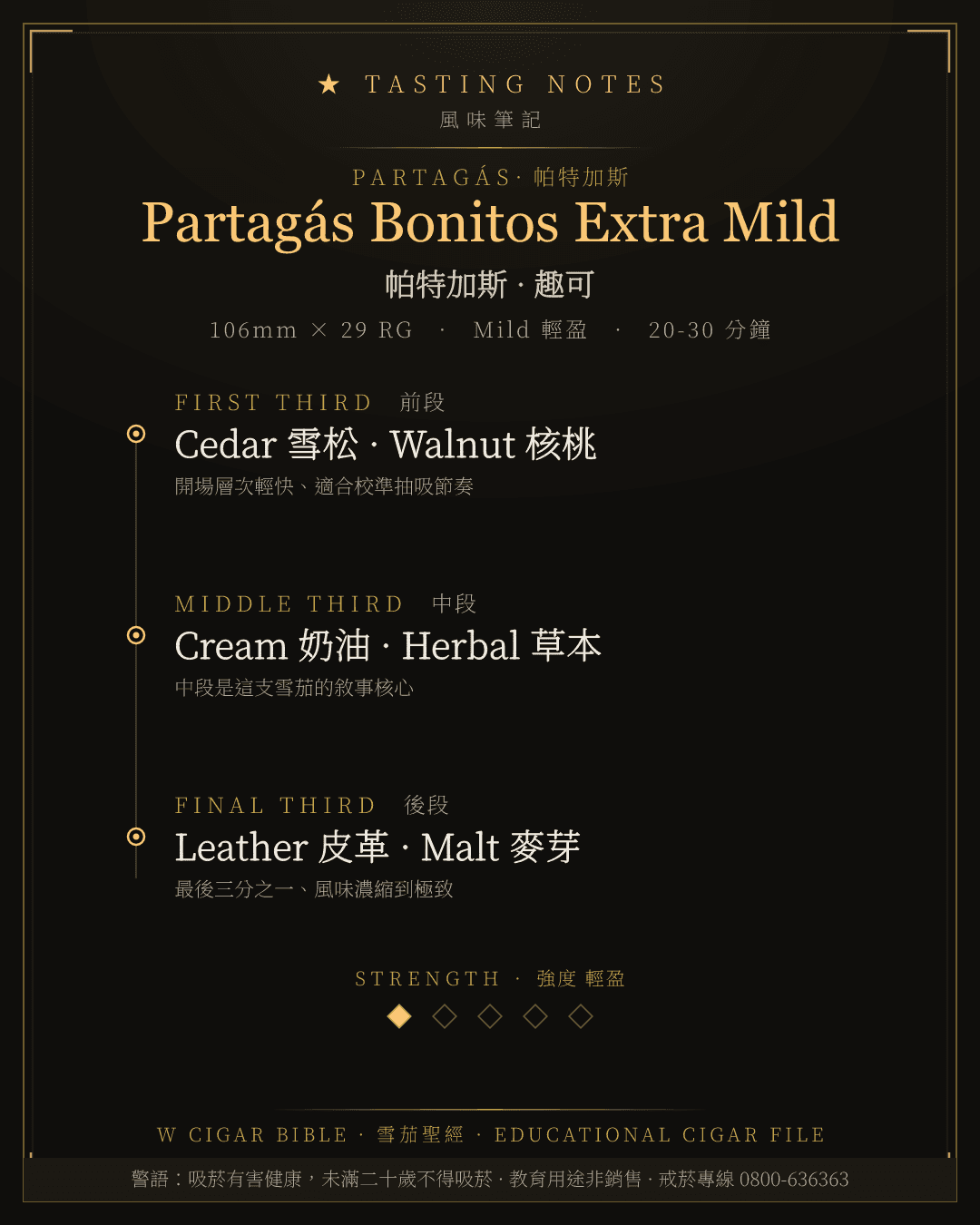
Partagás Bonitos Extra Mild 風味筆記 · 帕特加斯
TASTING NOTES · 風味筆記
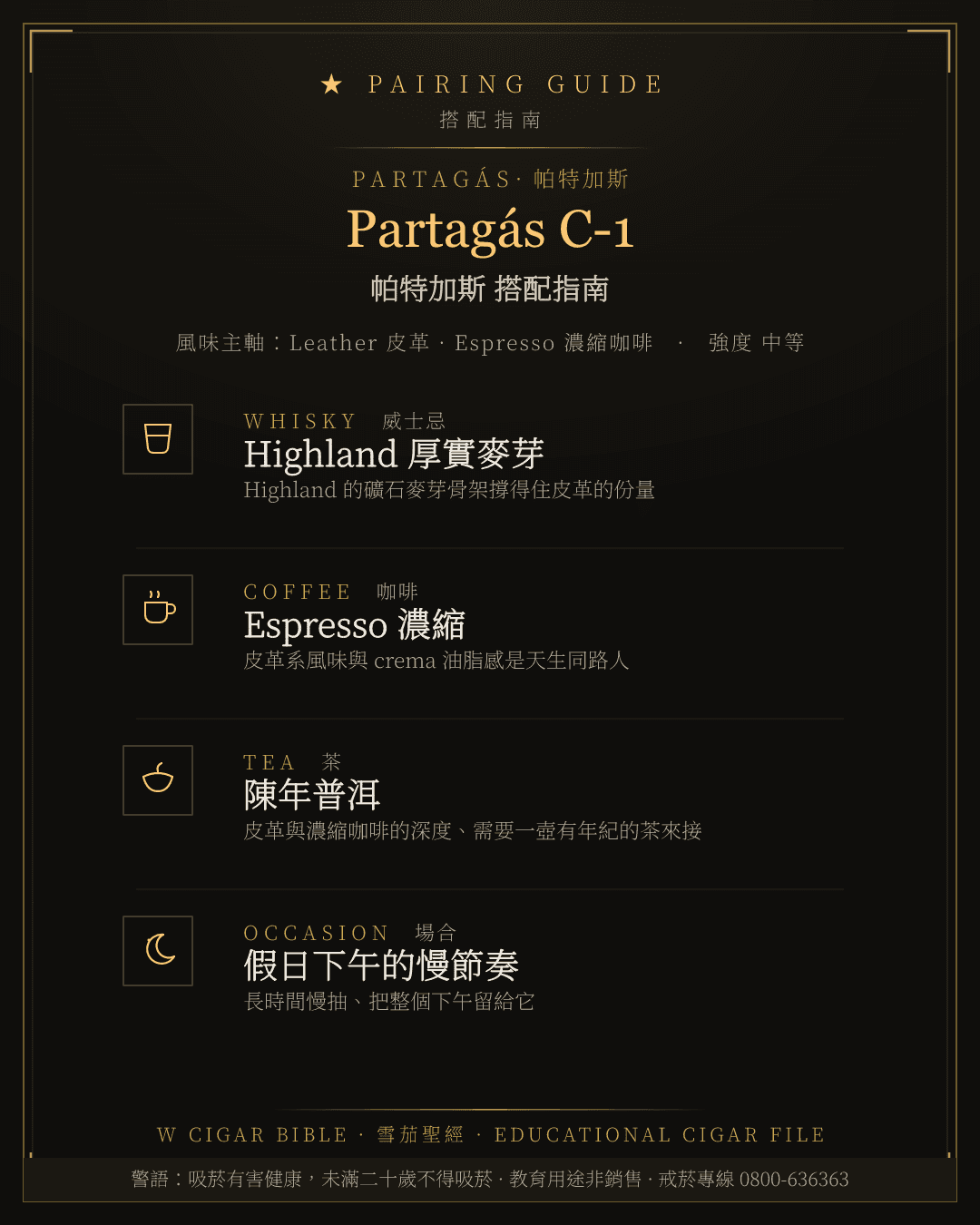
Partagás C-1 搭配指南 · 帕特加斯
PAIRING GUIDE · 搭配指南
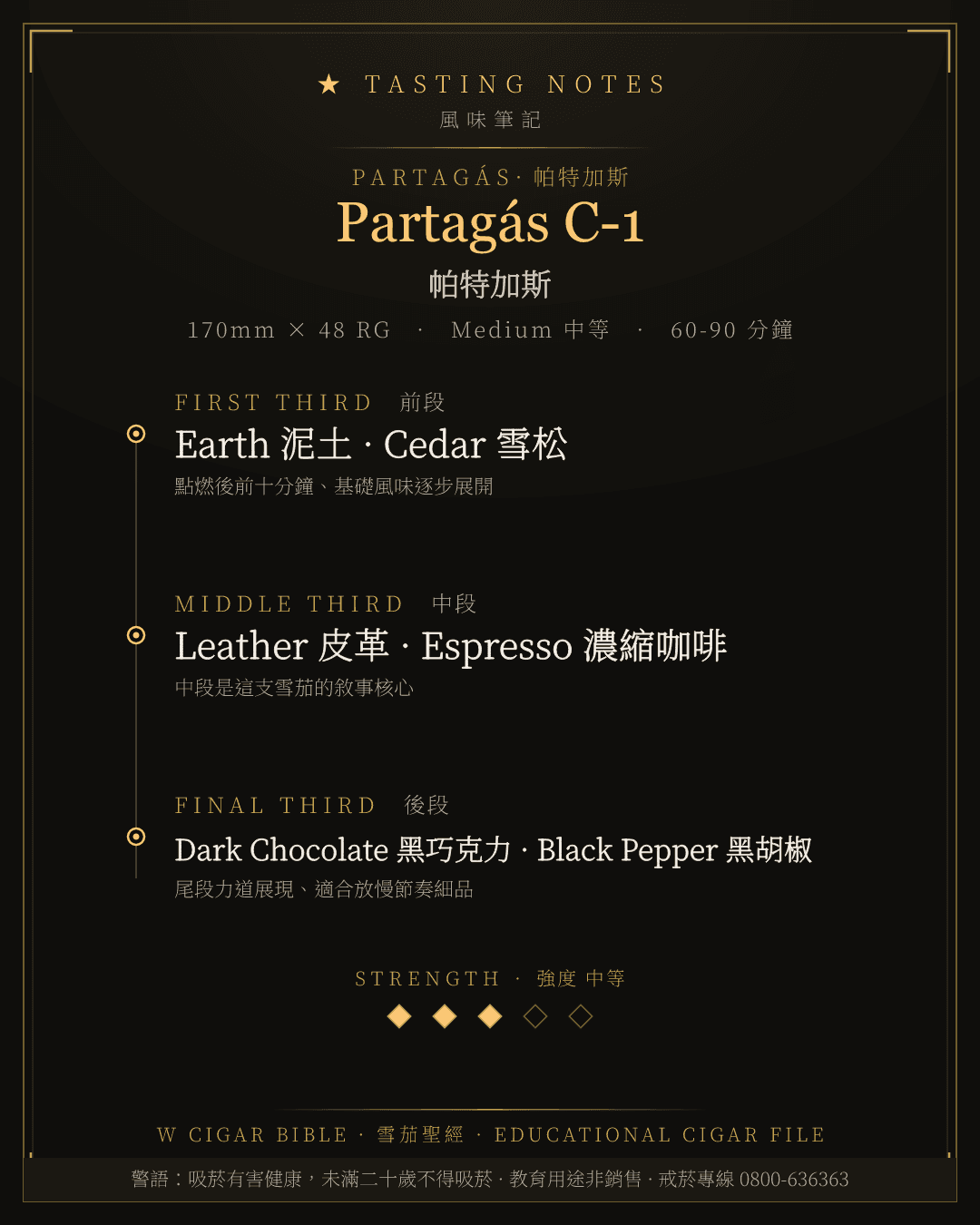
Partagás C-1 風味筆記 · 帕特加斯
TASTING NOTES · 風味筆記
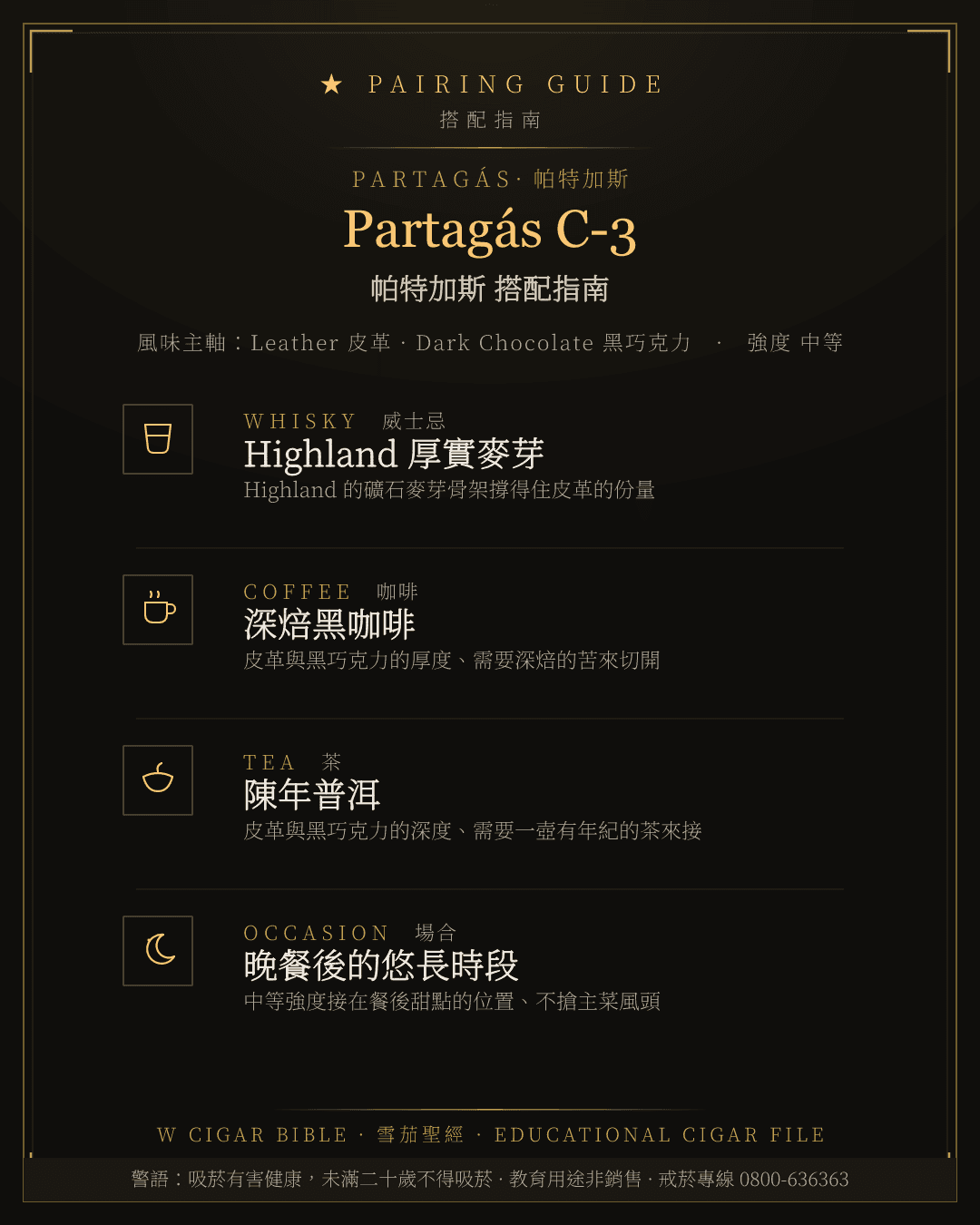
Partagás C-3 搭配指南 · 帕特加斯
PAIRING GUIDE · 搭配指南

Partagás C-3 風味筆記 · 帕特加斯
TASTING NOTES · 風味筆記

Partagás Capitols · 帕特加斯

Partagás Capitols 搭配指南 · 帕特加斯
PAIRING GUIDE · 搭配指南
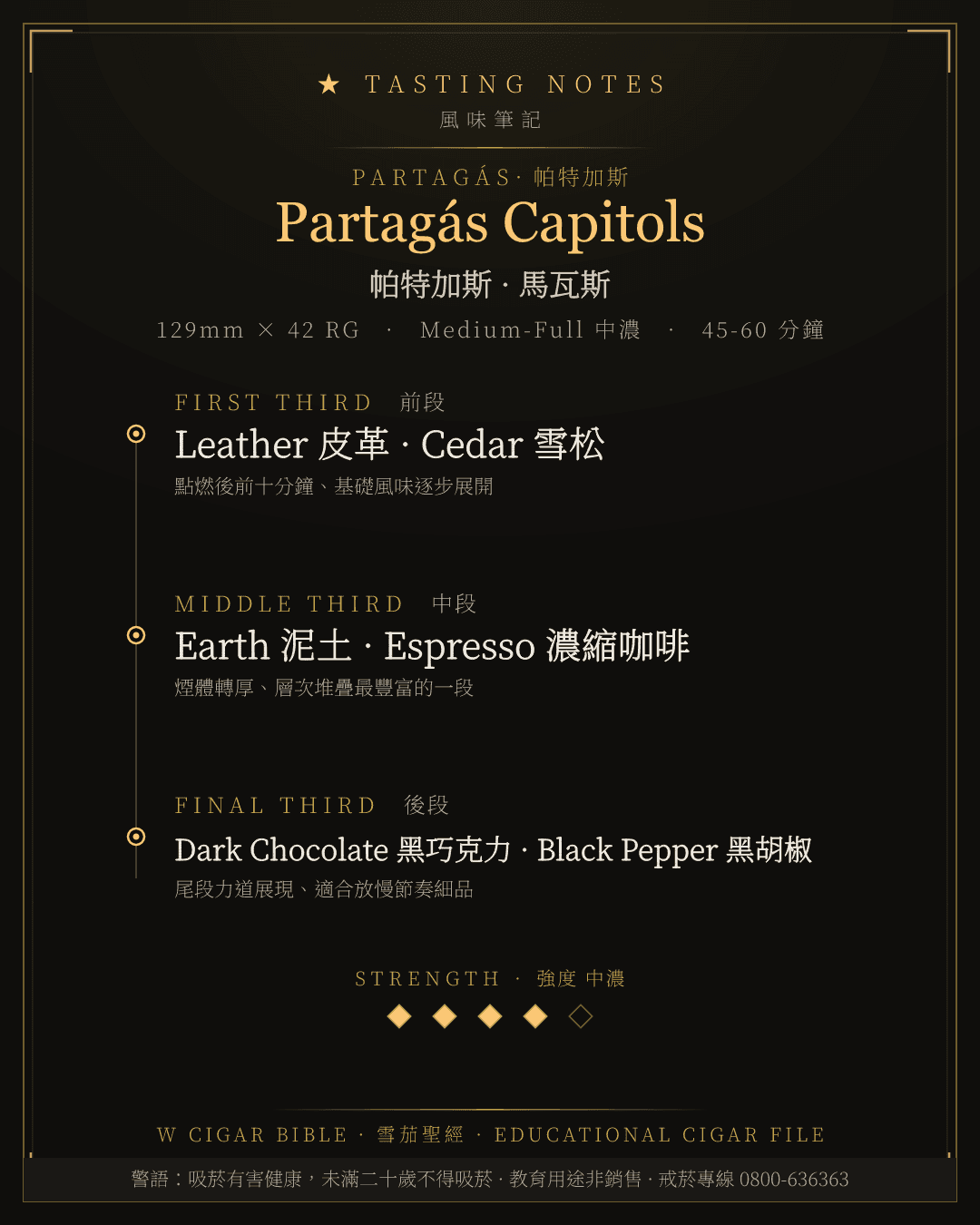
Partagás Capitols 風味筆記 · 帕特加斯
TASTING NOTES · 風味筆記
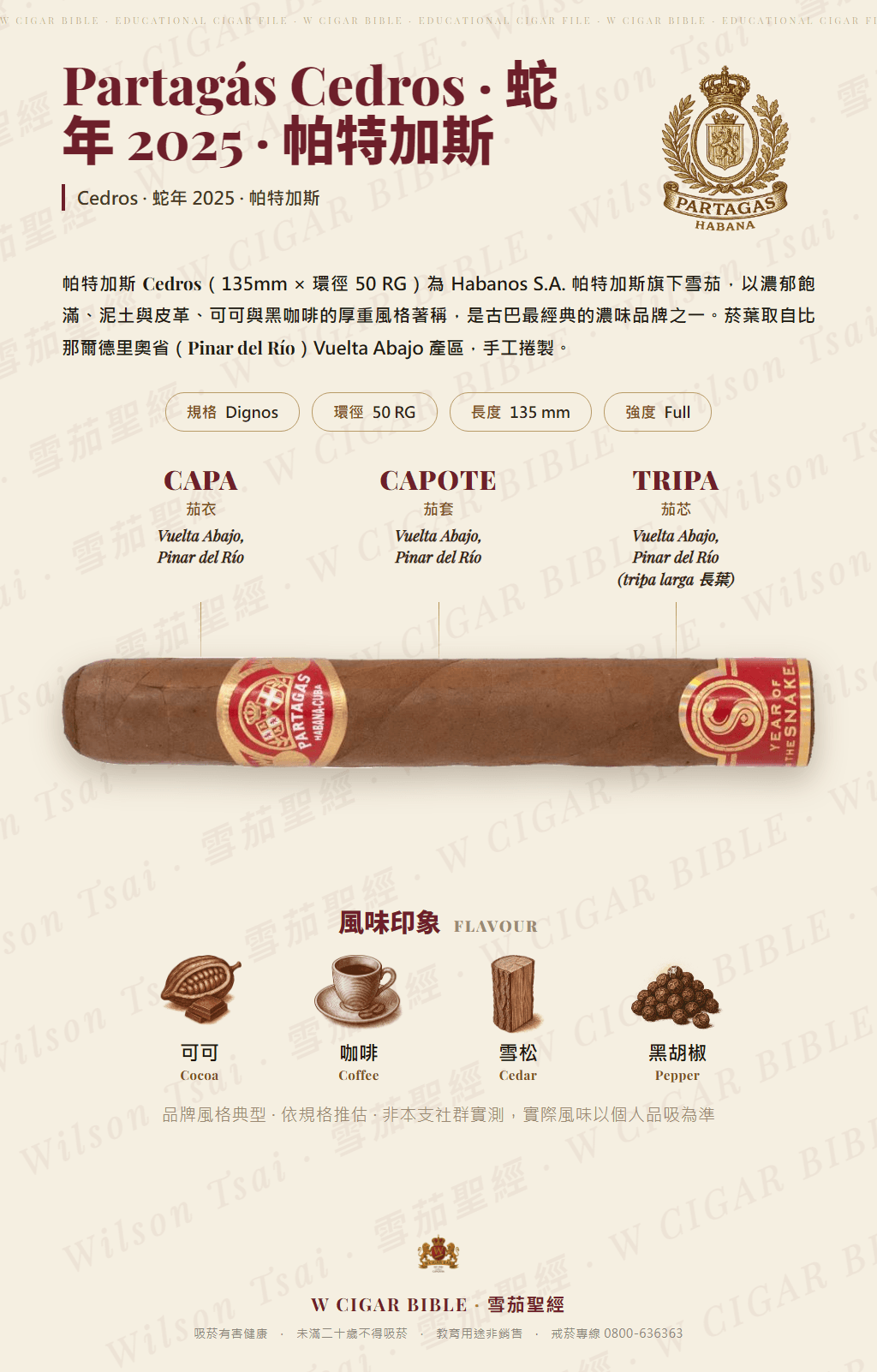
Partagás Cedros · 蛇年 2025 · 帕特加斯
Año de la Serpiente 蛇年生肖紀念發行 · Partagás 創立 180 週年 · 廠規 Dignos(50 環徑 × 135mm)· 雪茄檔案
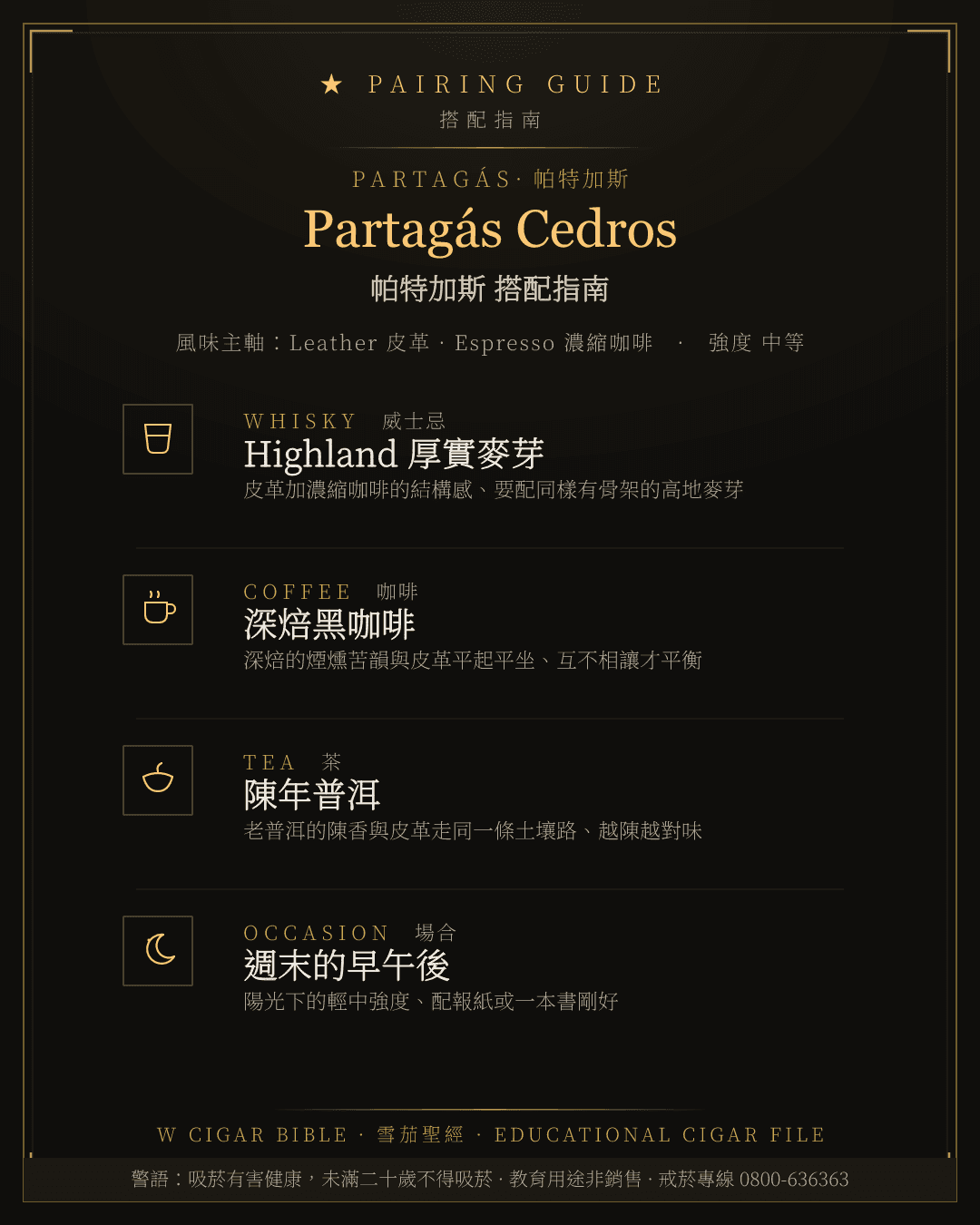
Partagás Cedros 搭配指南 · 帕特加斯
PAIRING GUIDE · 搭配指南

Partagás Cedros 風味筆記 · 帕特加斯
TASTING NOTES · 風味筆記
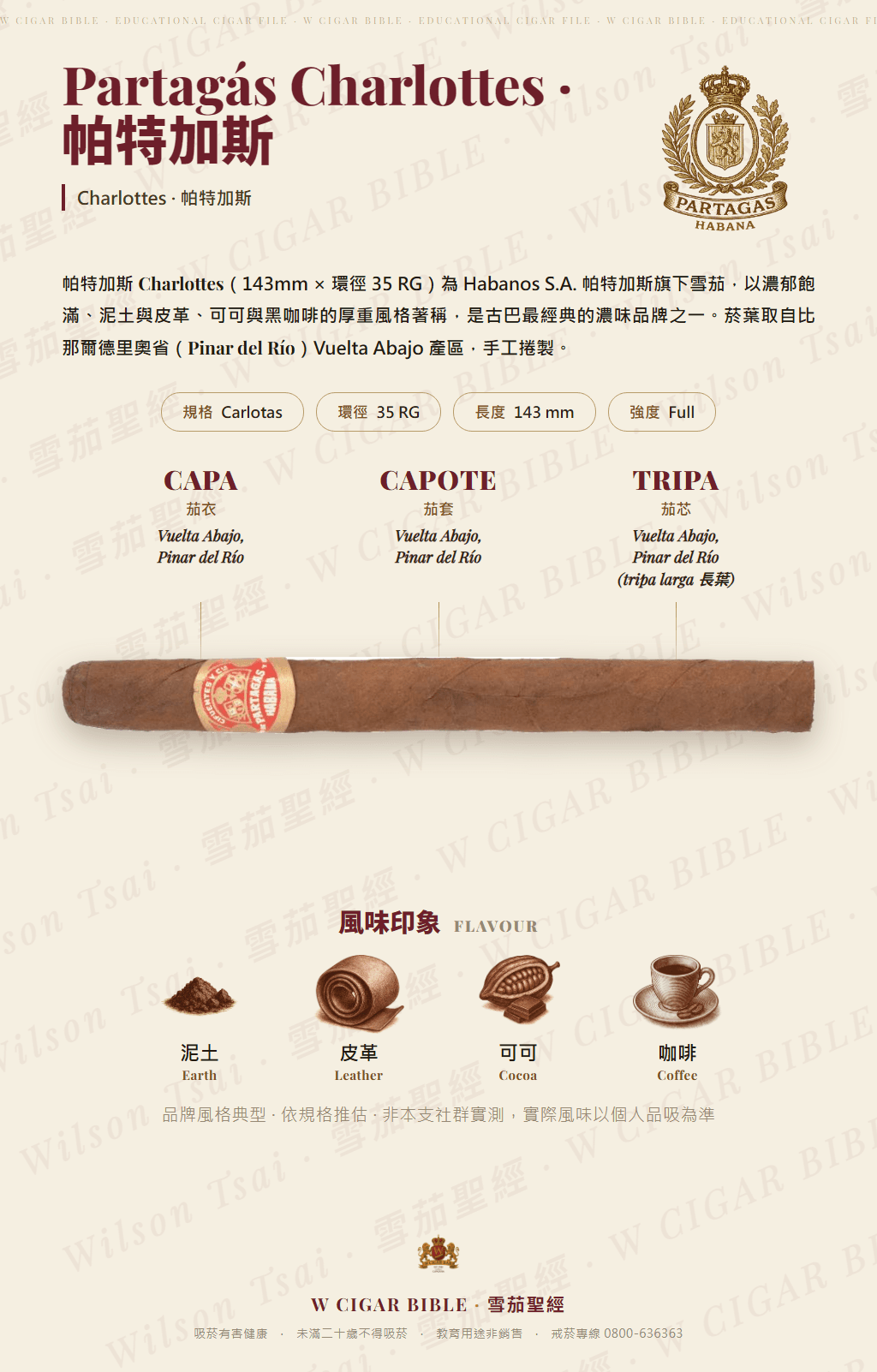
Partagás Charlottes · 帕特加斯
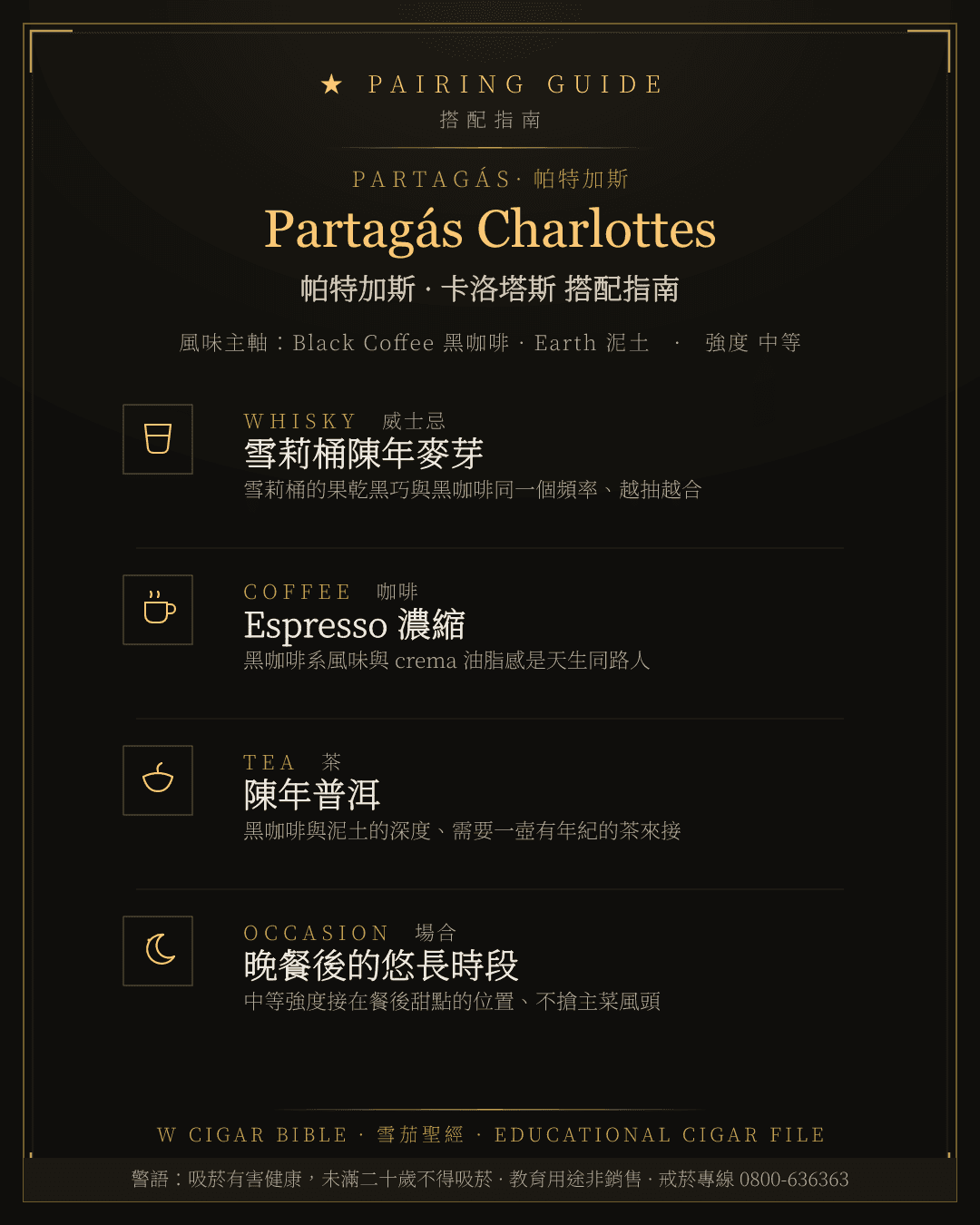
Partagás Charlottes 搭配指南 · 帕特加斯
PAIRING GUIDE · 搭配指南
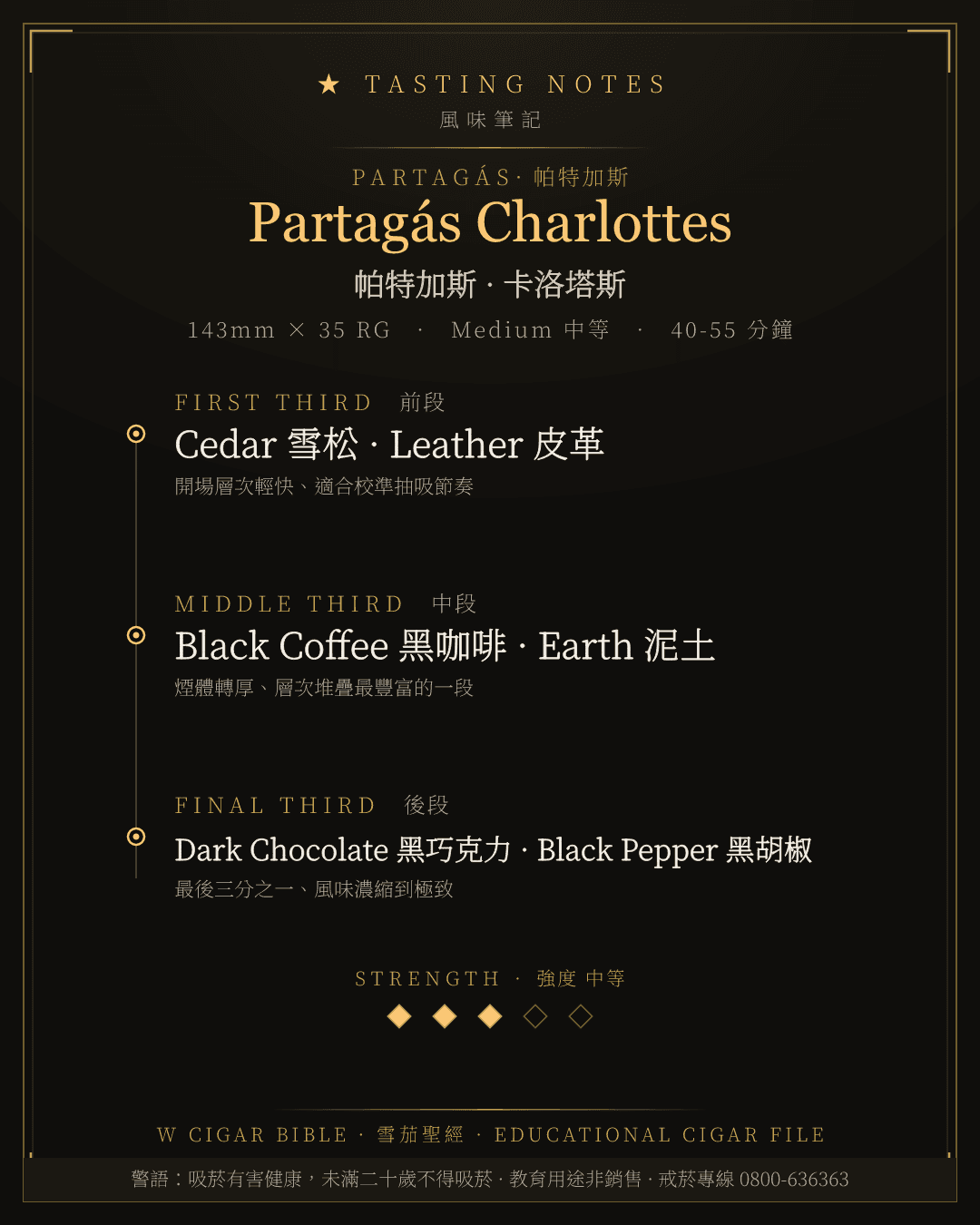
Partagás Charlottes 風味筆記 · 帕特加斯
TASTING NOTES · 風味筆記
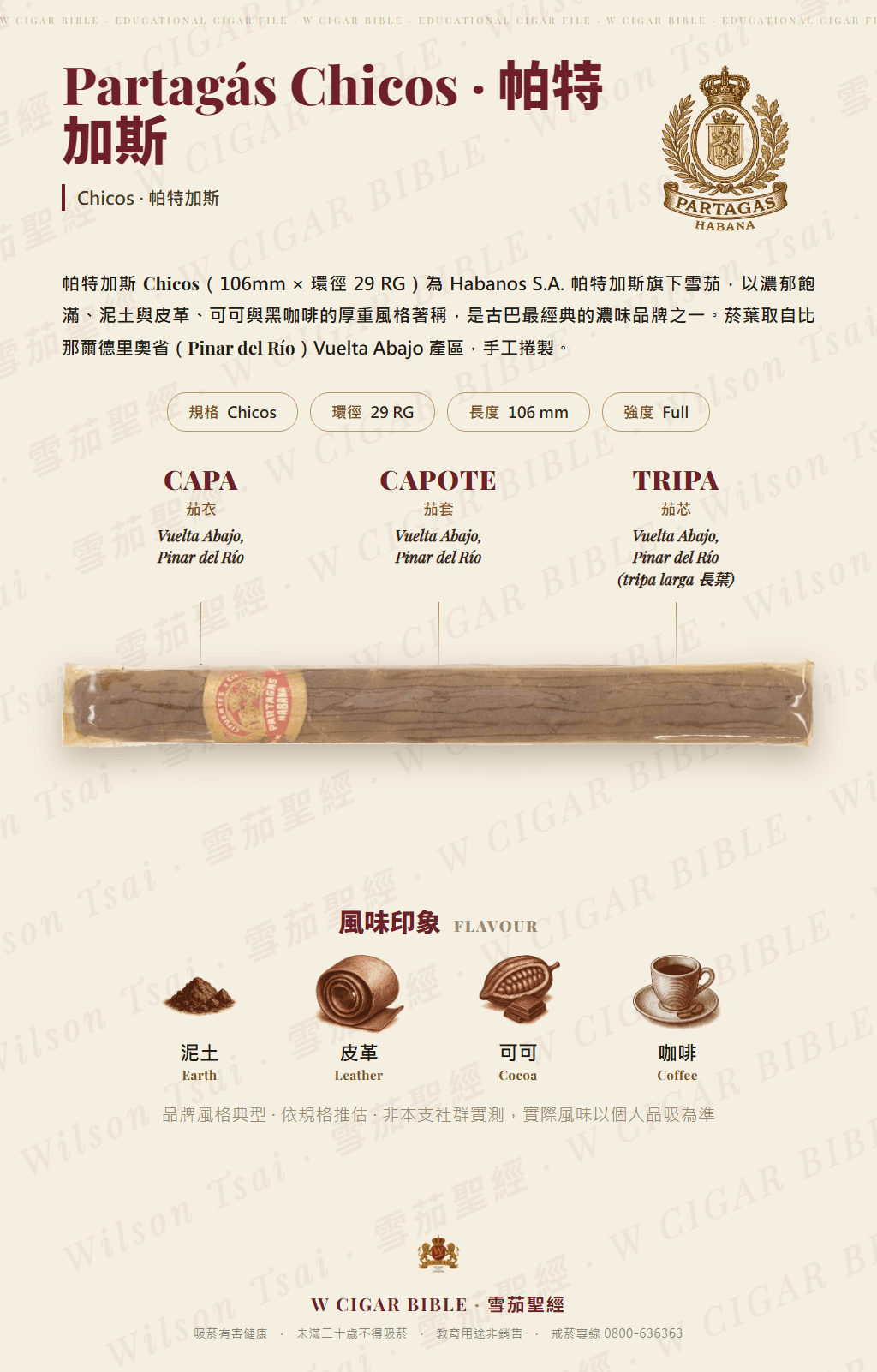
Partagás Chicos · 帕特加斯
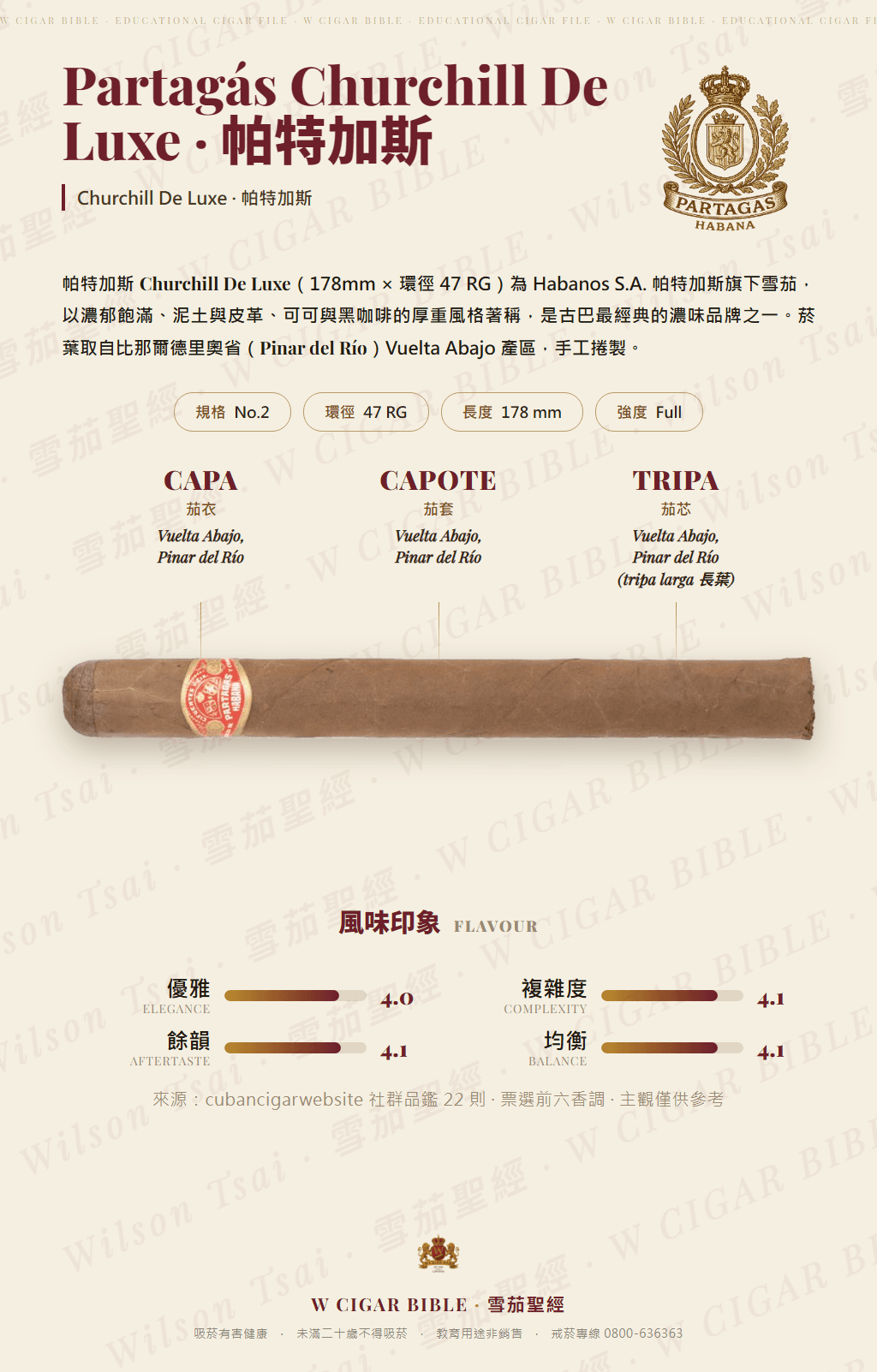
Partagás Churchill De Luxe · 帕特加斯

Partagás Churchill De Luxe 搭配指南 · 帕特加斯
PAIRING GUIDE · 搭配指南
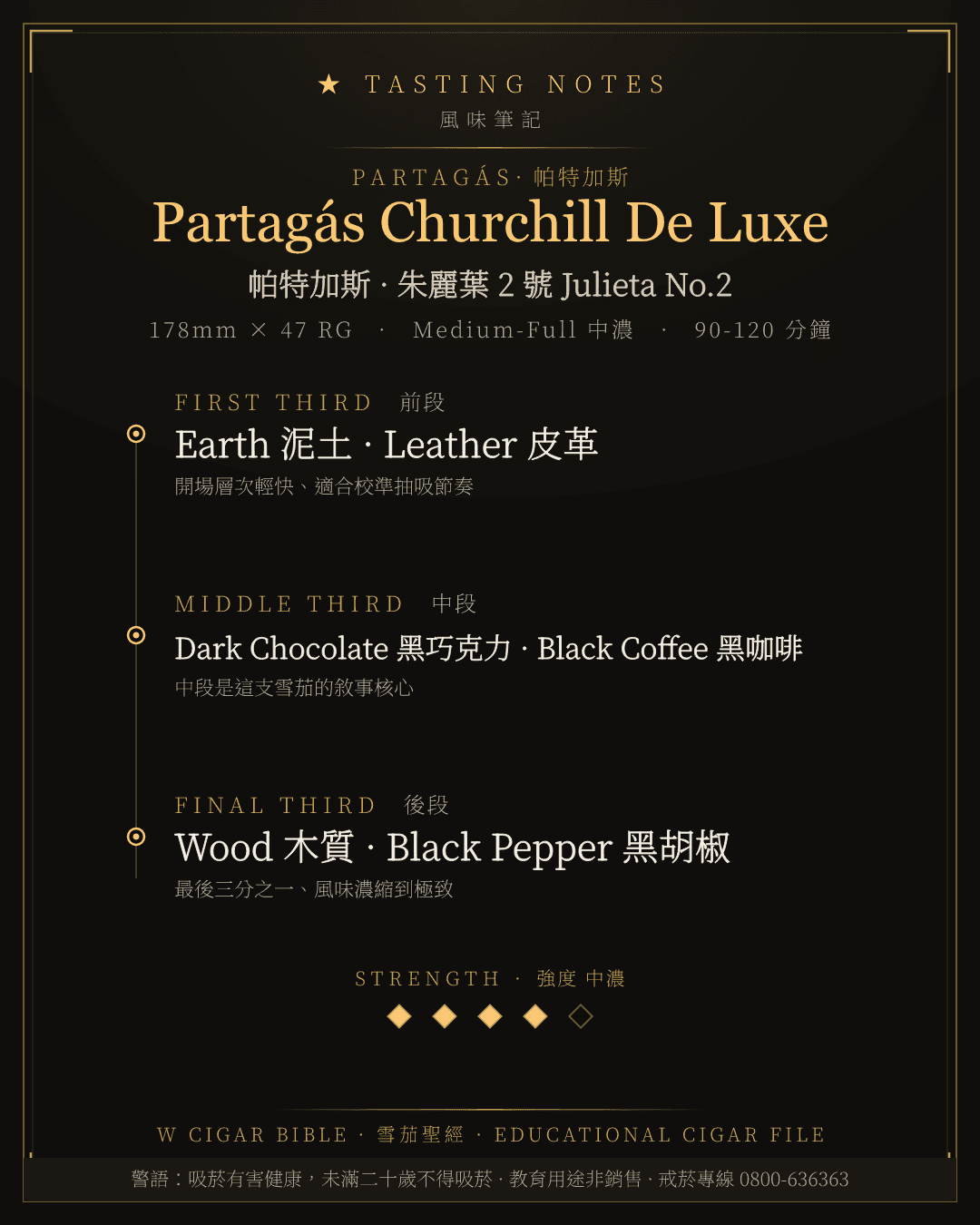
Partagás Churchill De Luxe 風味筆記 · 帕特加斯
TASTING NOTES · 風味筆記

Partagás Coleccion Habanos 搭配指南 · 帕特加斯
PAIRING GUIDE · 搭配指南
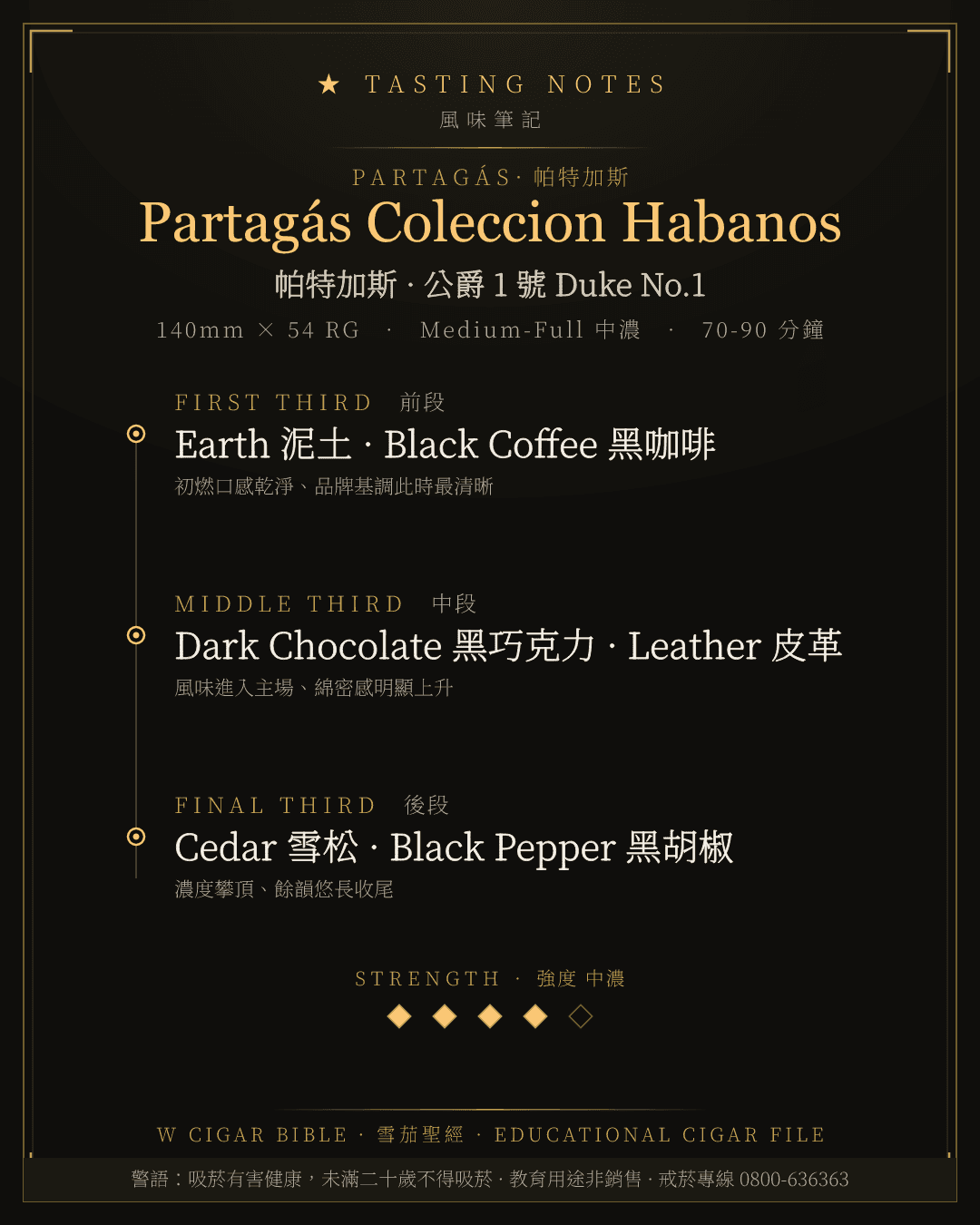
Partagás Coleccion Habanos 風味筆記 · 帕特加斯
TASTING NOTES · 風味筆記
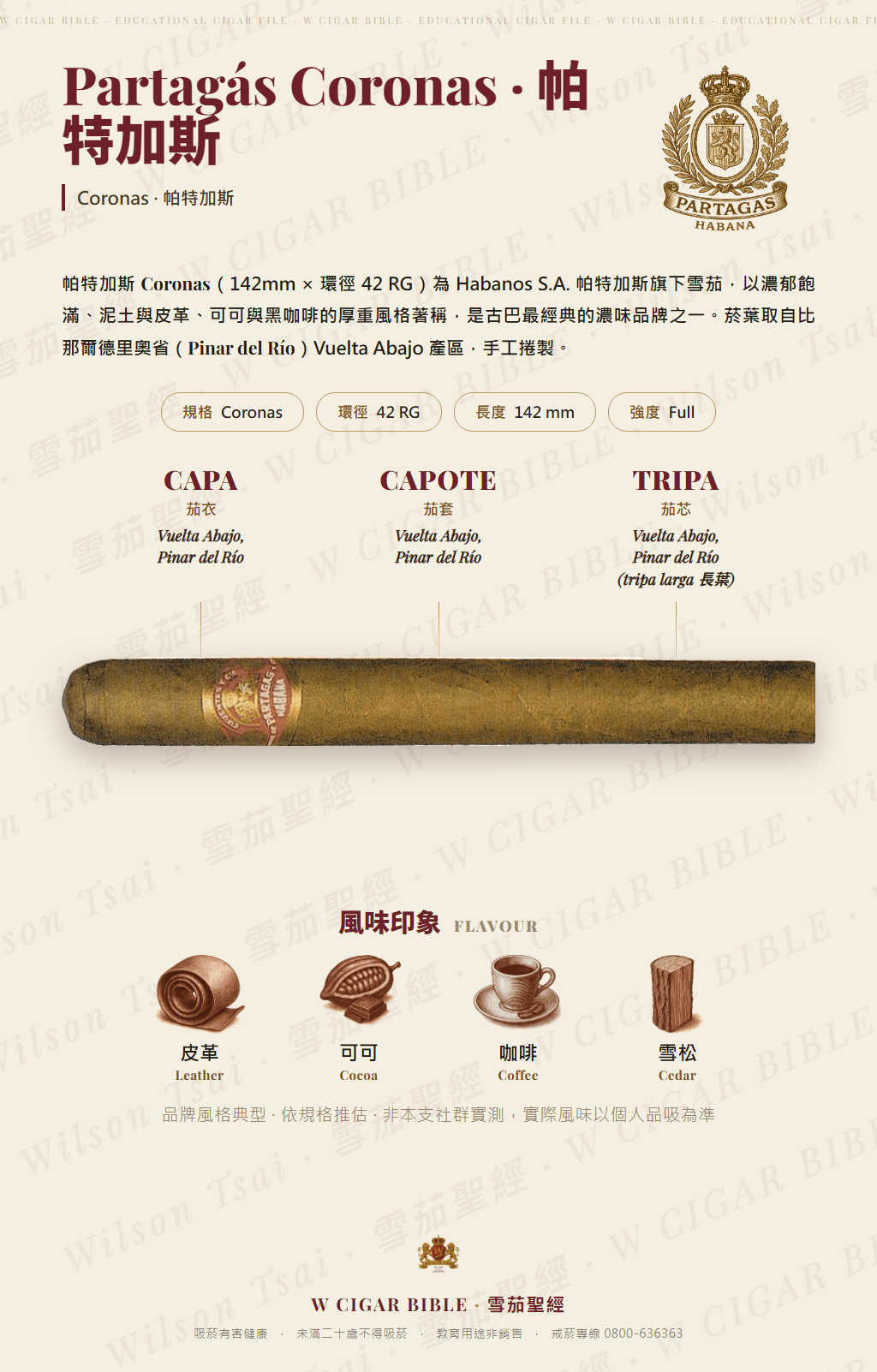
Partagás Coronas · 帕特加斯
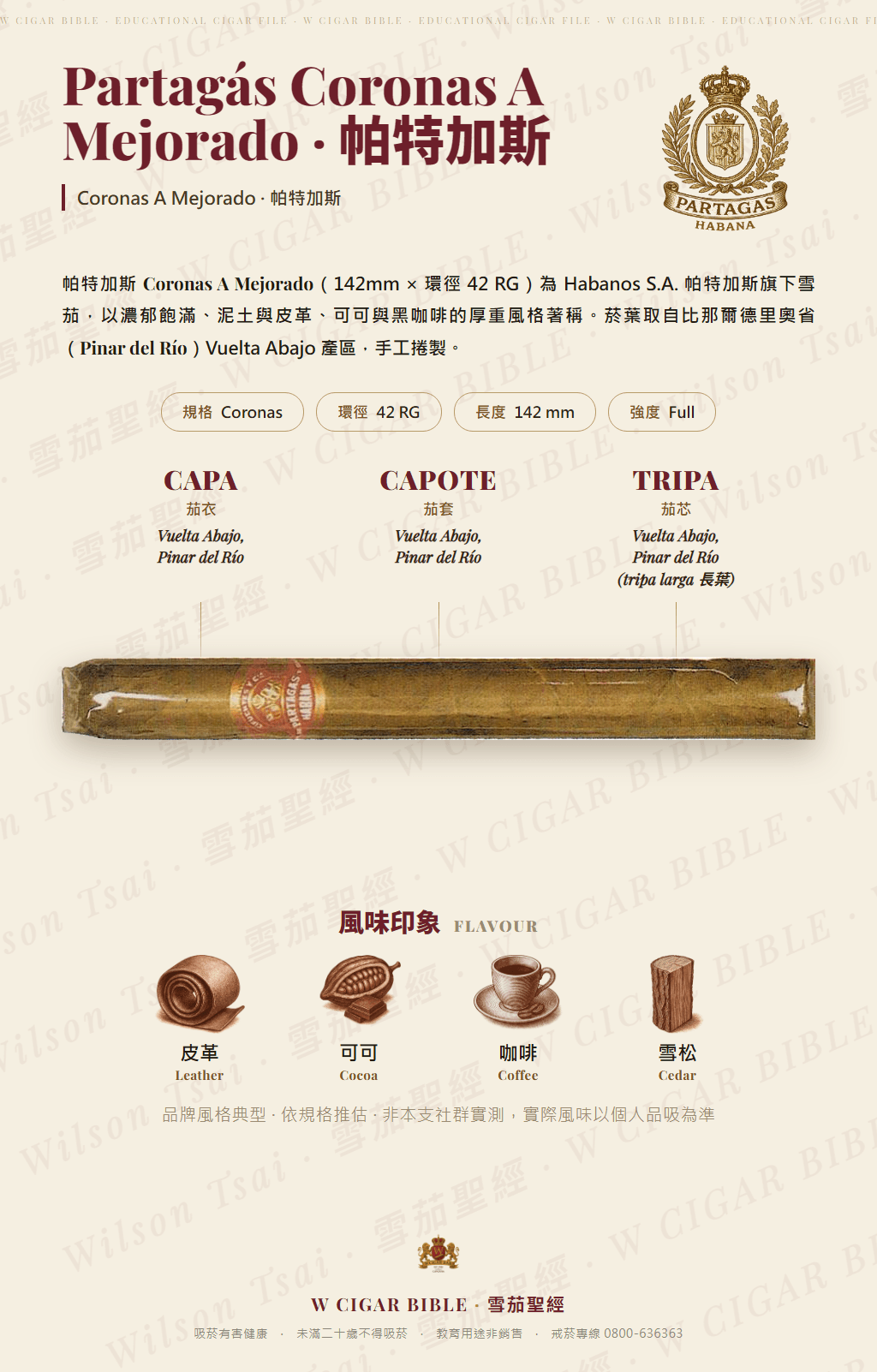
Partagás Coronas A Mejorado · 帕特加斯

Partagás Coronas A Mejorado vs Por Larrañaga Fox Seleccion No. 119
VITOLA SHOWDOWN · Coronas
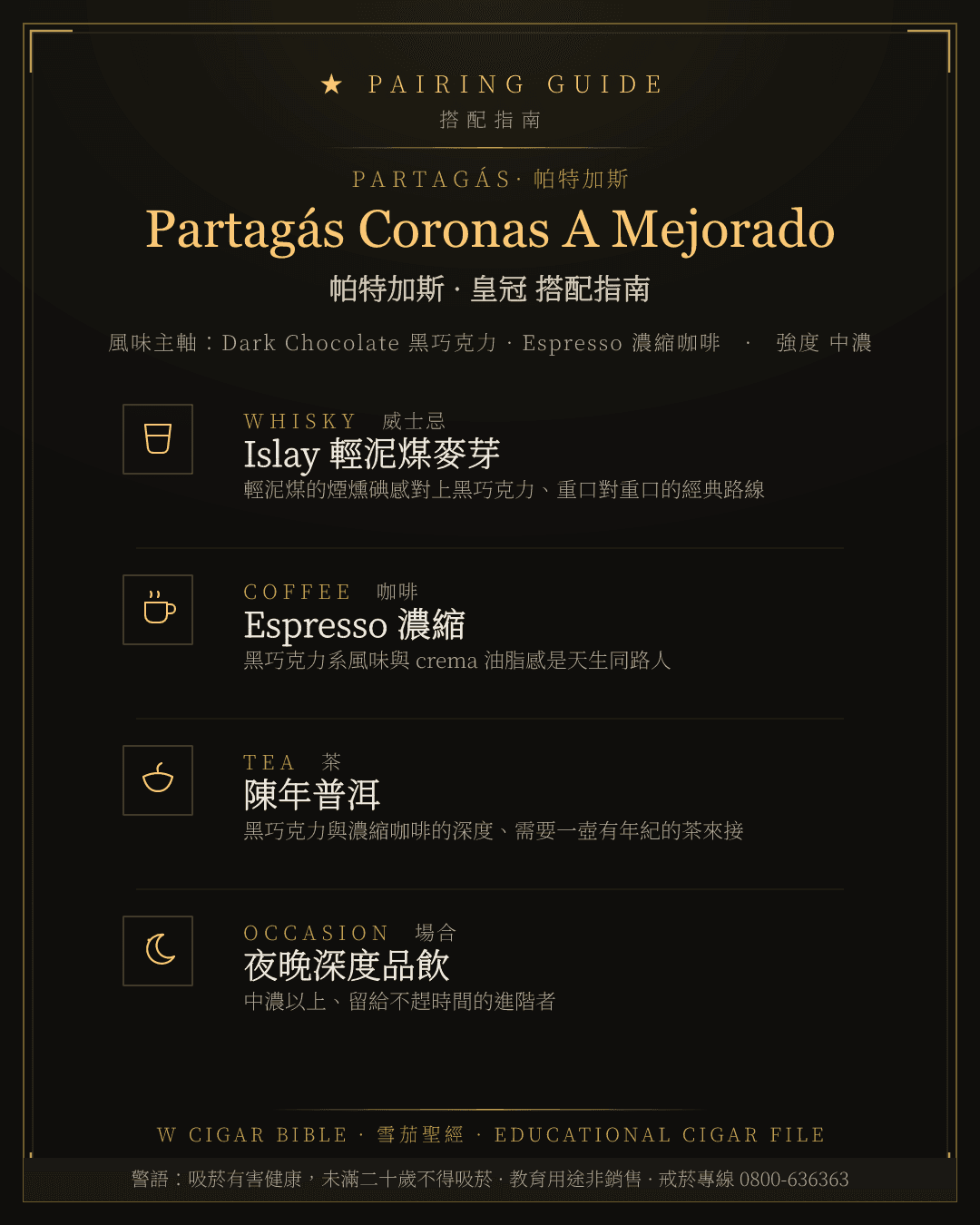
Partagás Coronas A Mejorado 搭配指南 · 帕特加斯
PAIRING GUIDE · 搭配指南
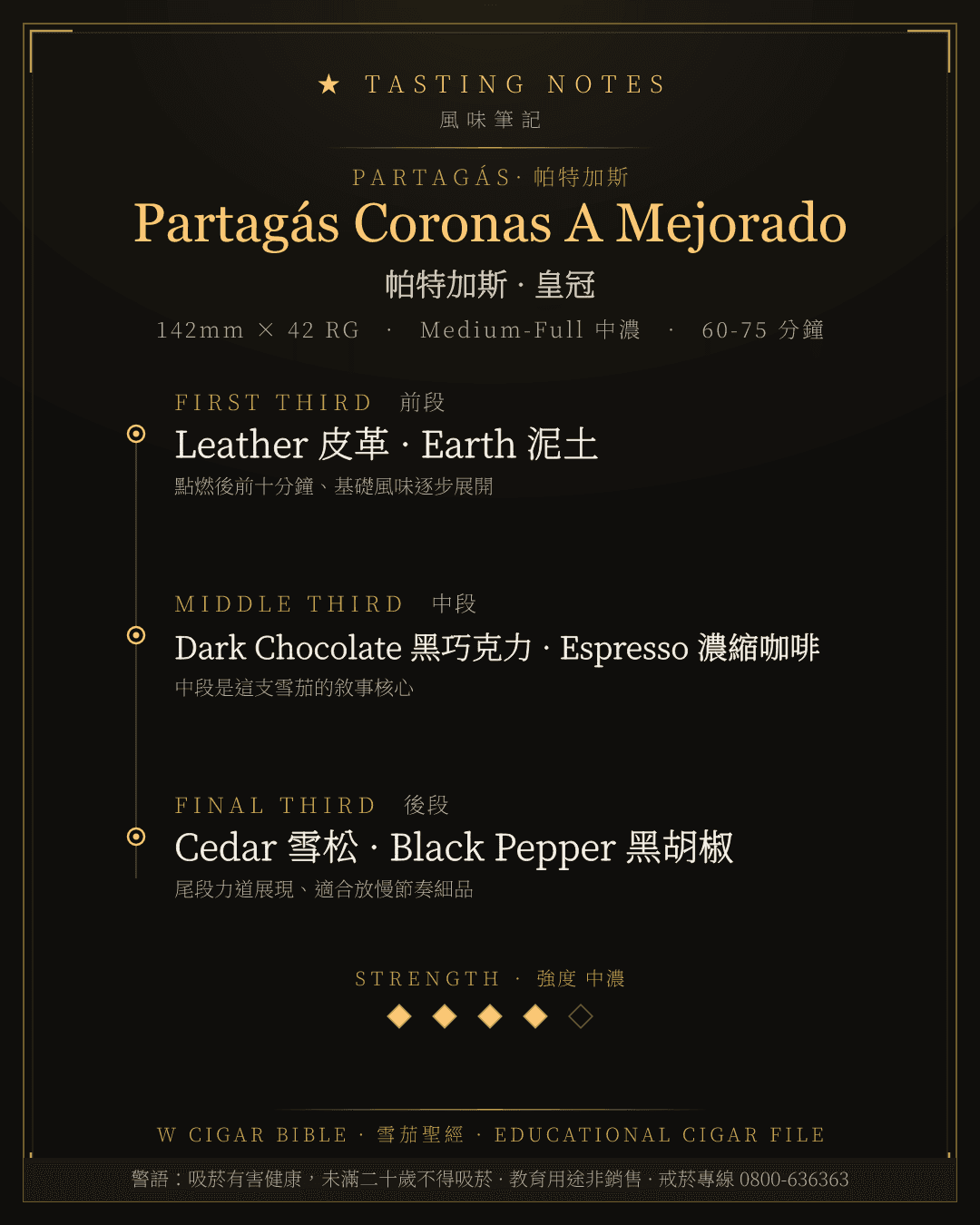
Partagás Coronas A Mejorado 風味筆記 · 帕特加斯
TASTING NOTES · 風味筆記
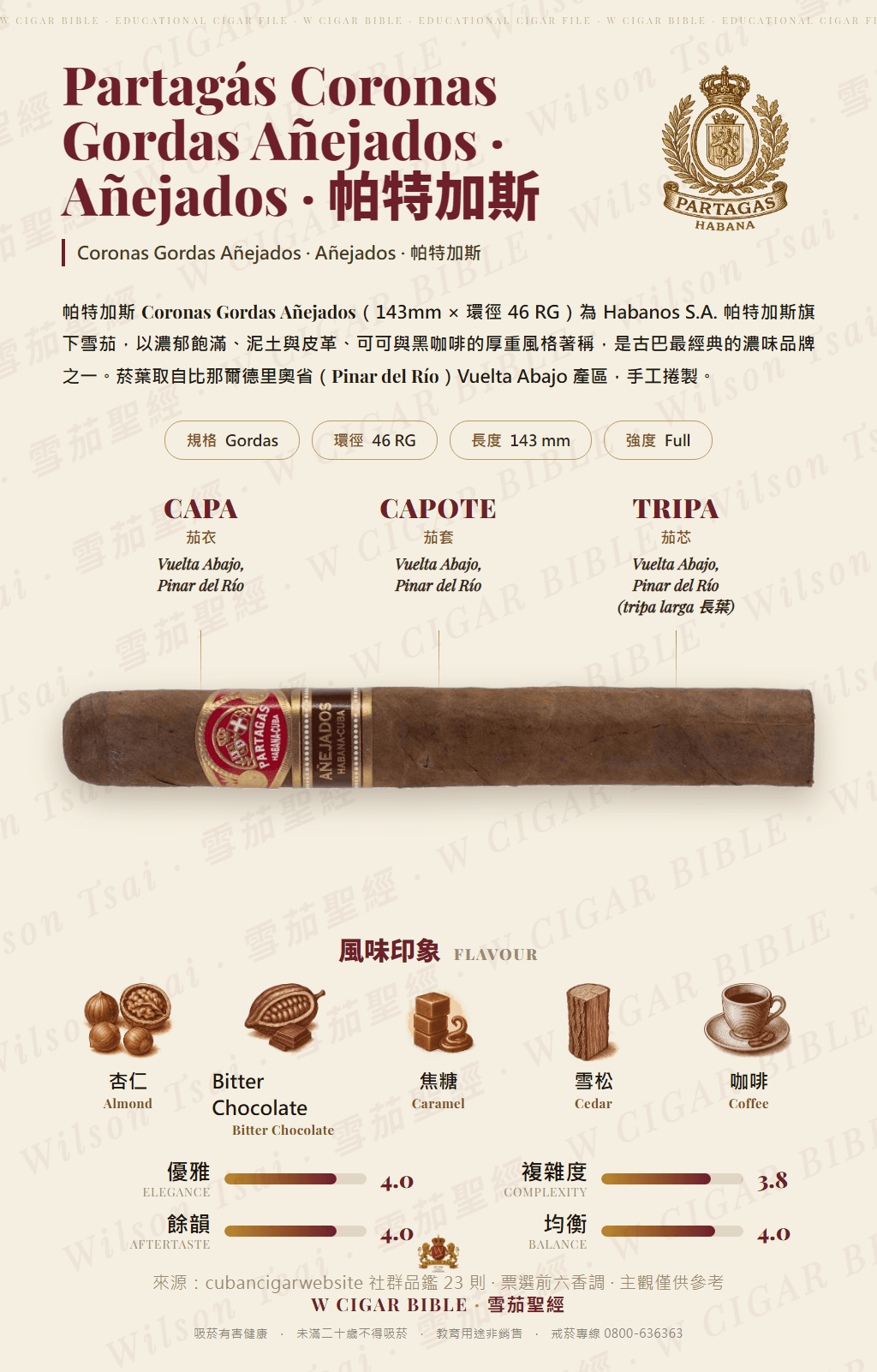
Partagás Coronas Gordas Añejados · Añejados · 帕特加斯
Añejados 陳年系列(Coronas Gordas 環徑 46 × 143mm,2007 年裝盒、2016 年上市)· 雪茄檔案
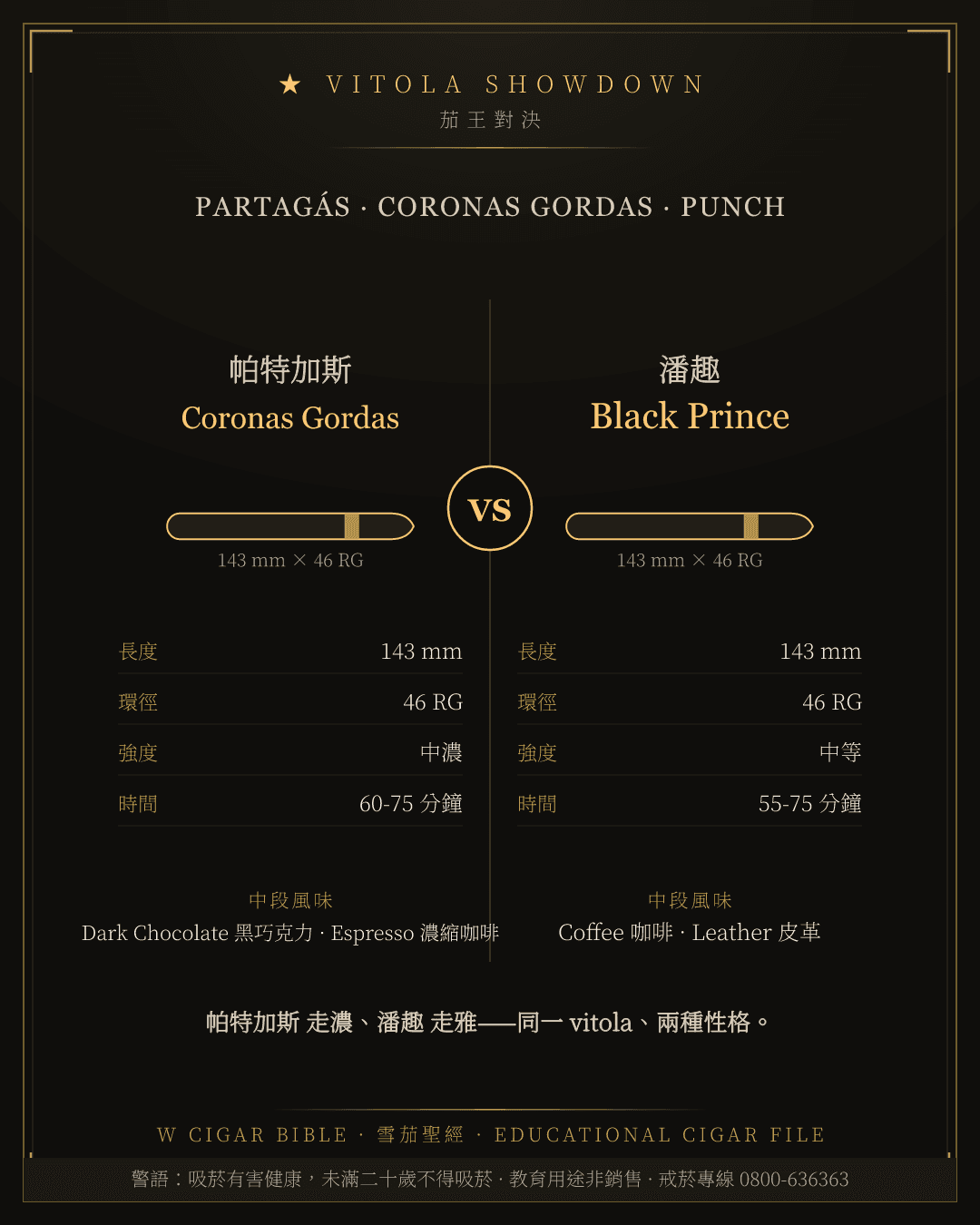
Partagás Coronas Gordas vs Punch Black Prince
VITOLA SHOWDOWN · Coronas Gordas

Partagás Coronas Gordas 搭配指南 · 帕特加斯
PAIRING GUIDE · 搭配指南
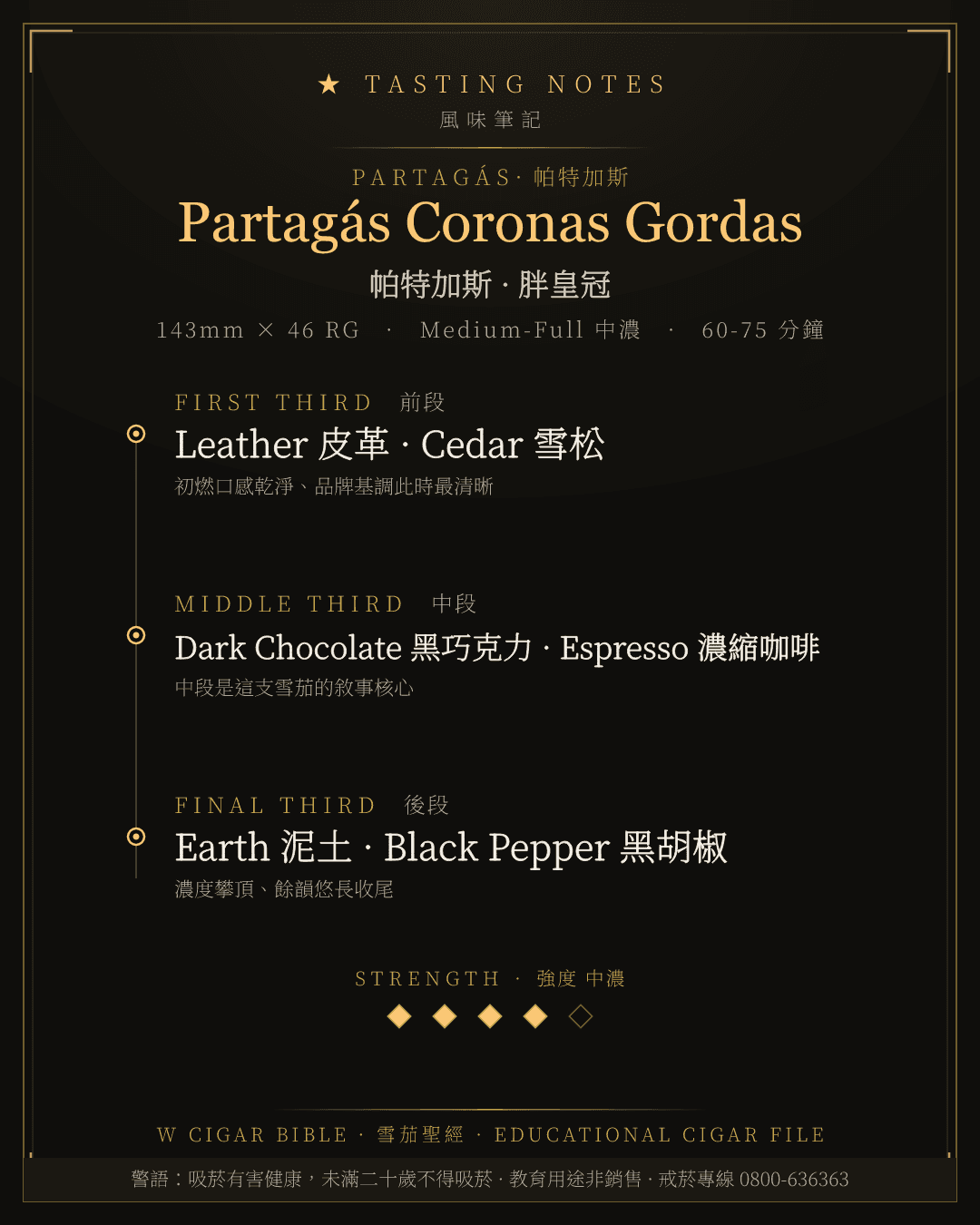
Partagás Coronas Gordas 風味筆記 · 帕特加斯
TASTING NOTES · 風味筆記
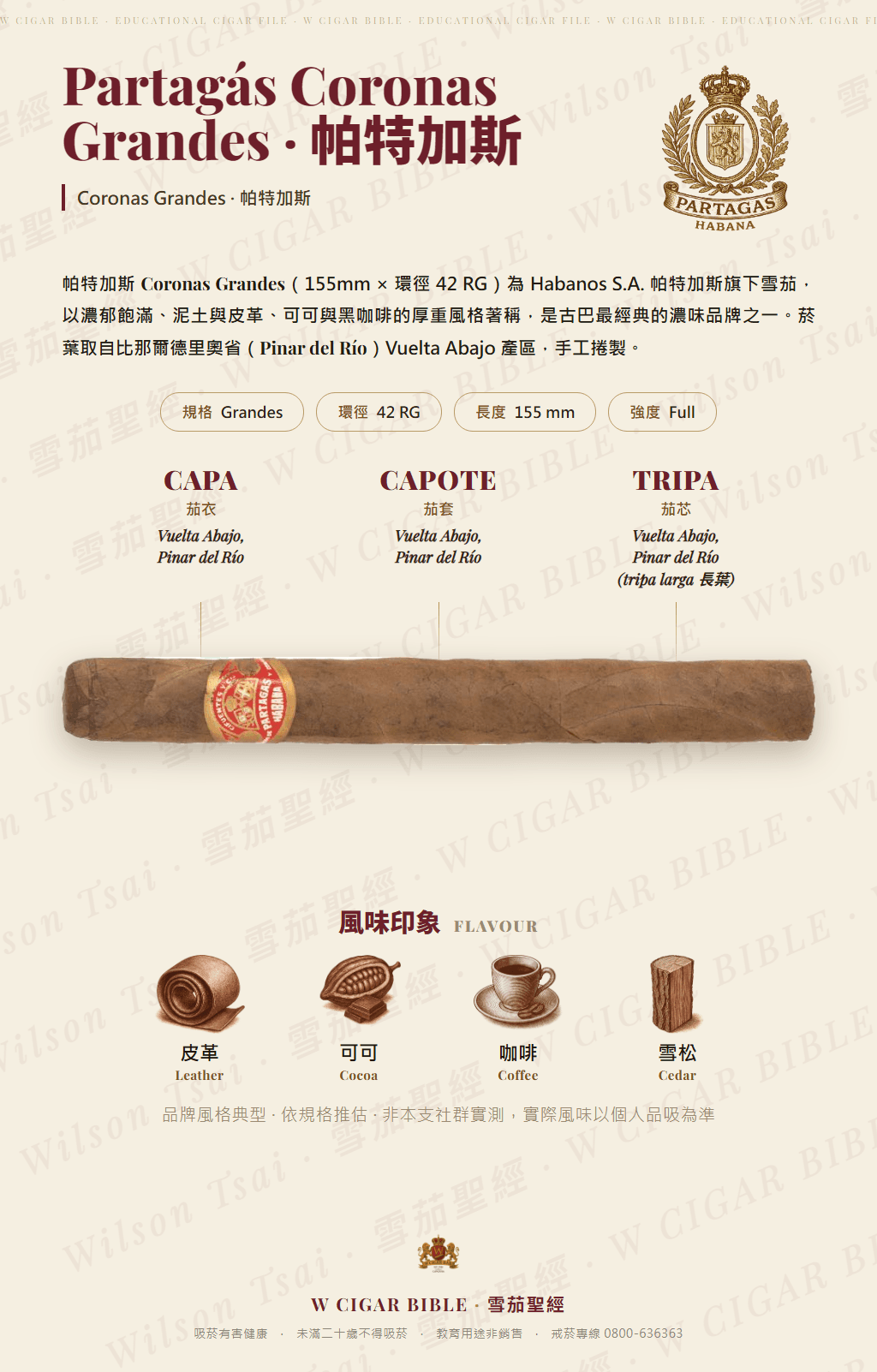
Partagás Coronas Grandes · 帕特加斯
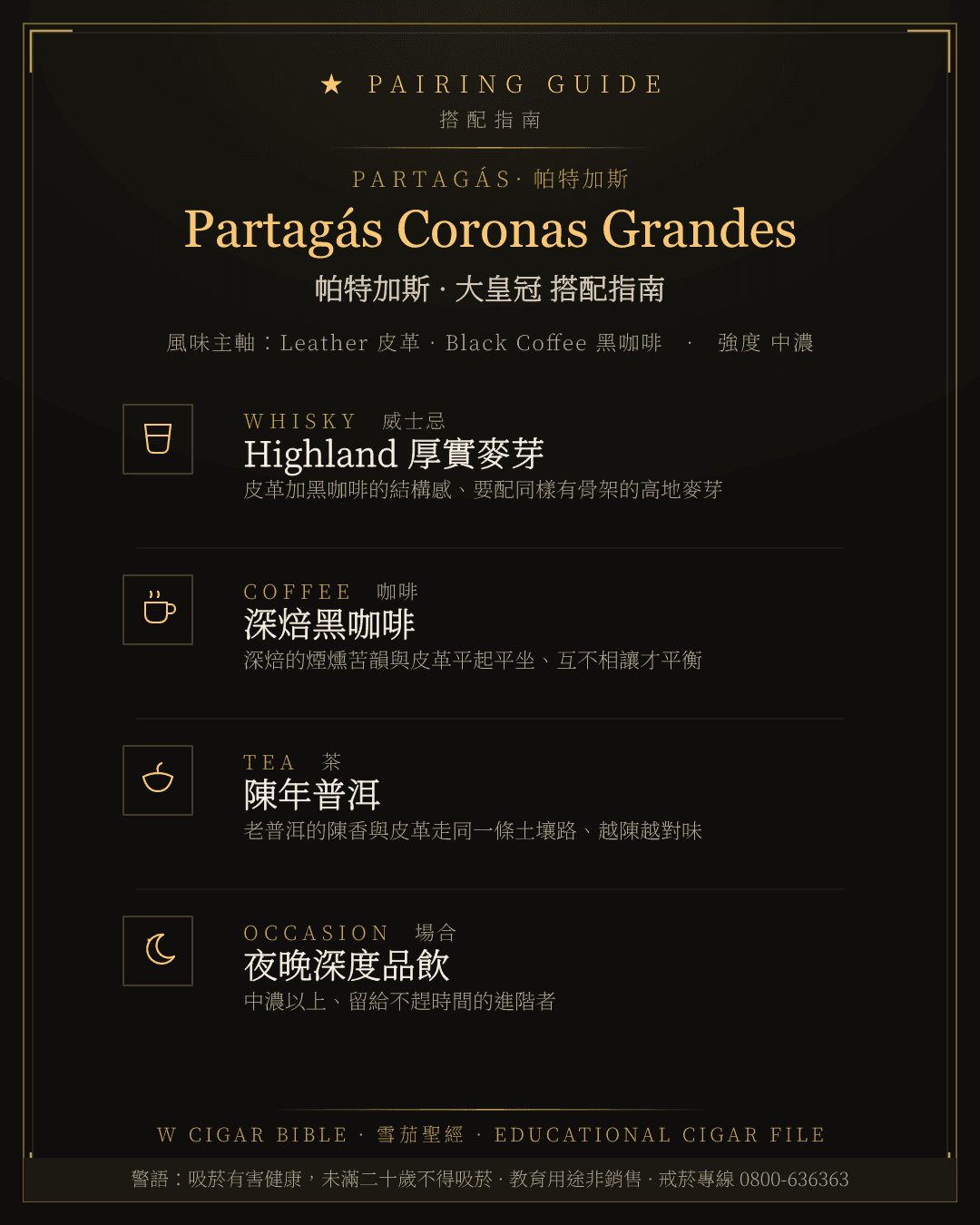
Partagás Coronas Grandes 搭配指南 · 帕特加斯
PAIRING GUIDE · 搭配指南
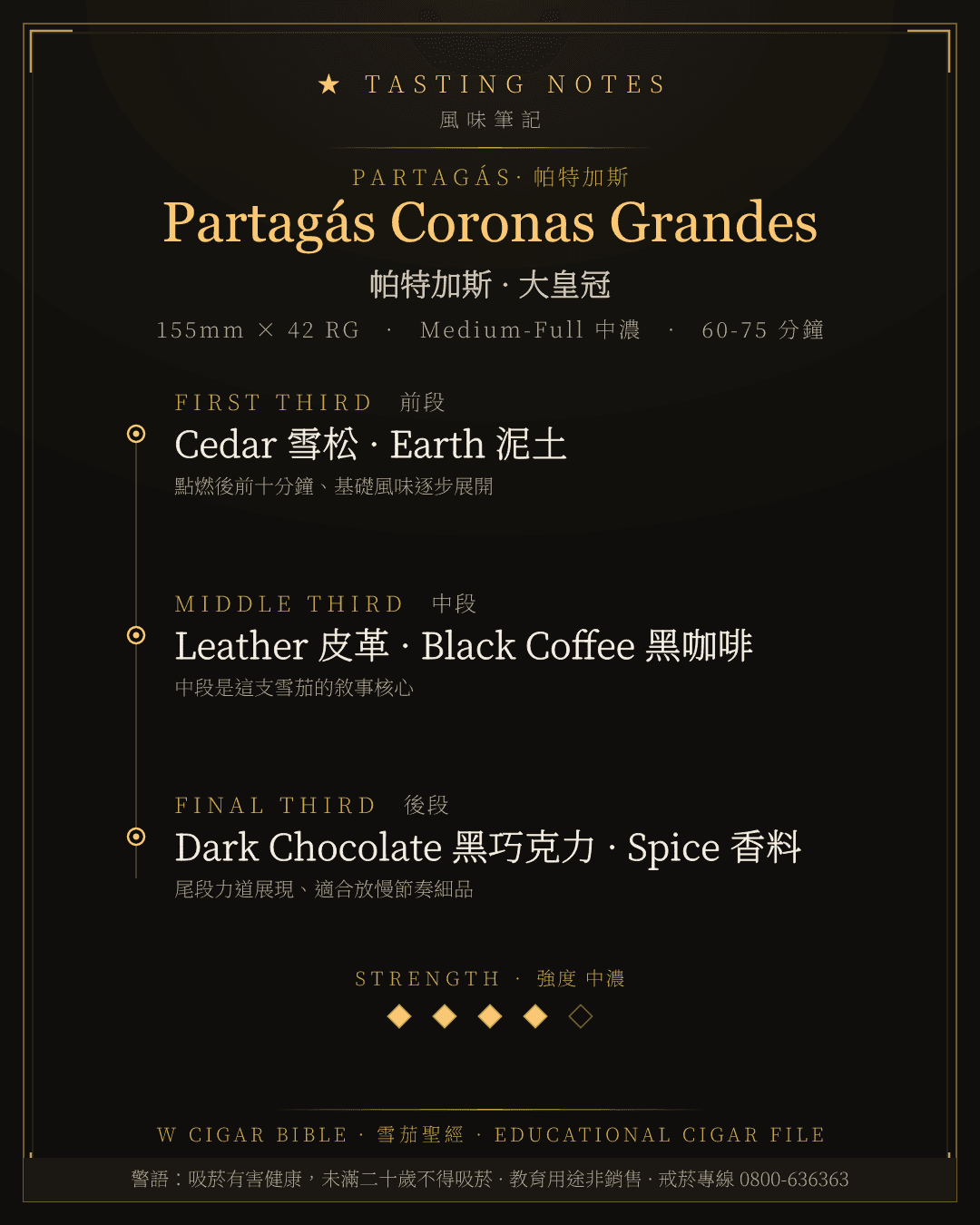
Partagás Coronas Grandes 風味筆記 · 帕特加斯
TASTING NOTES · 風味筆記
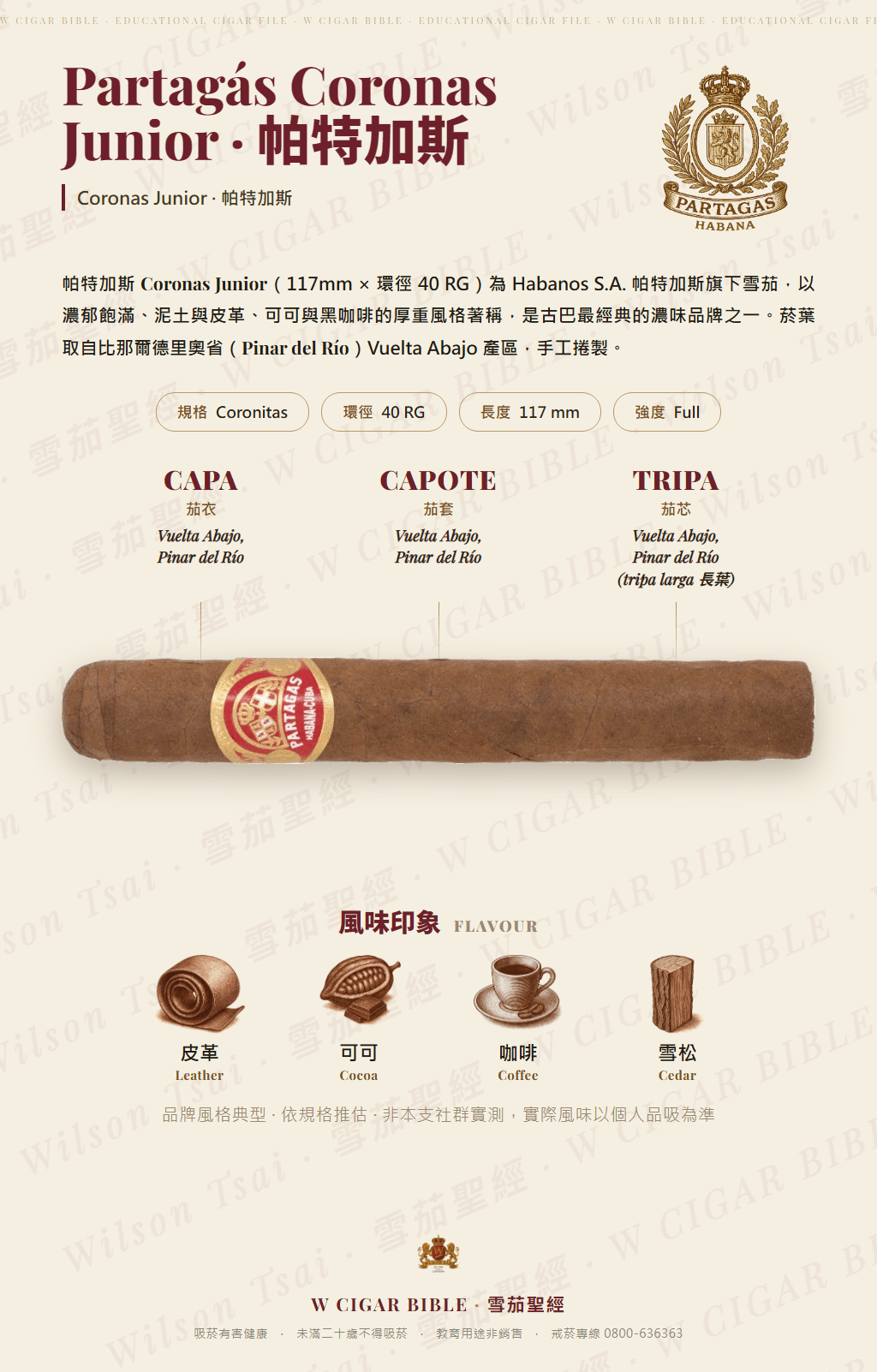
Partagás Coronas Junior · 帕特加斯
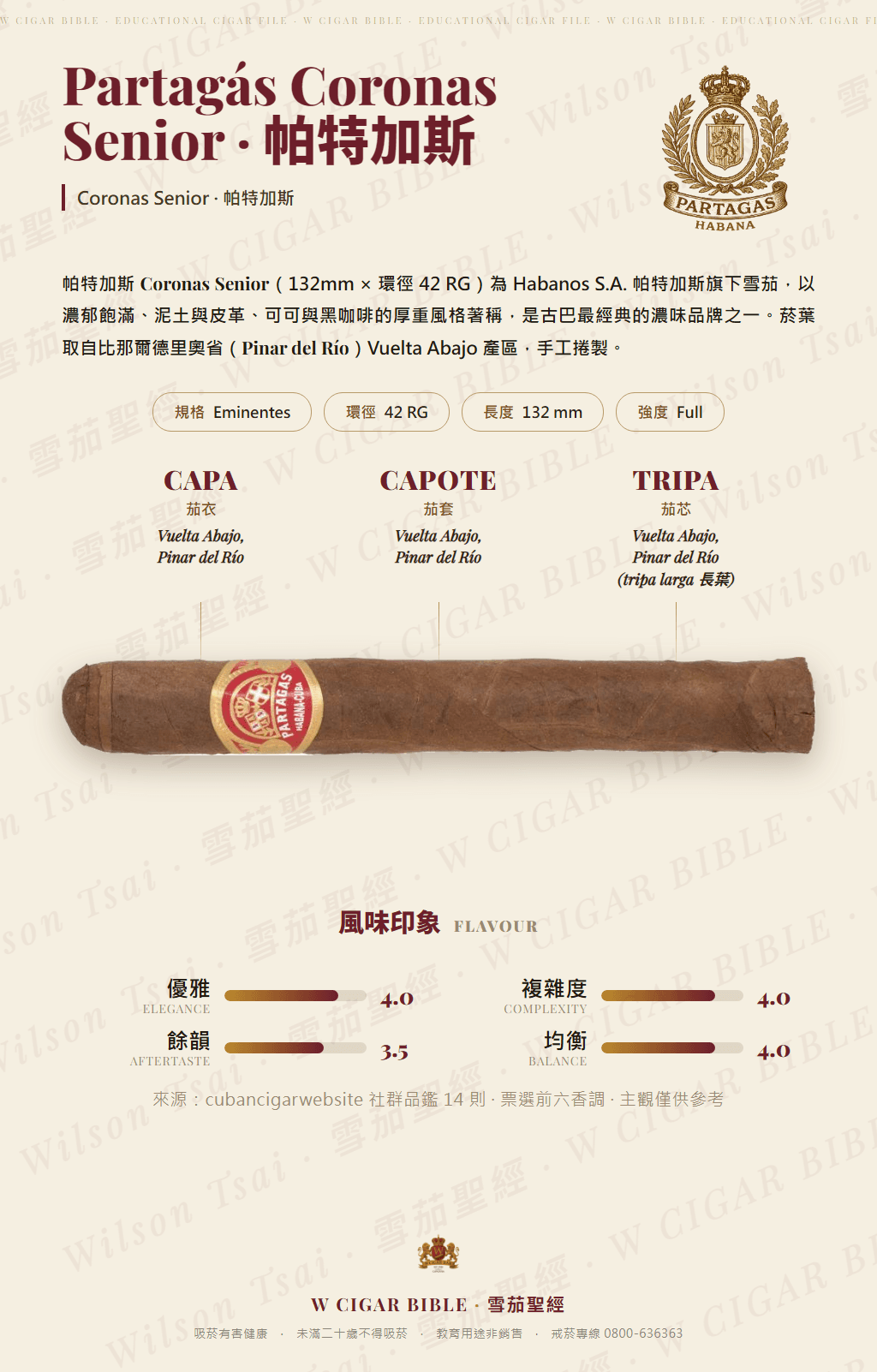
Partagás Coronas Senior · 帕特加斯
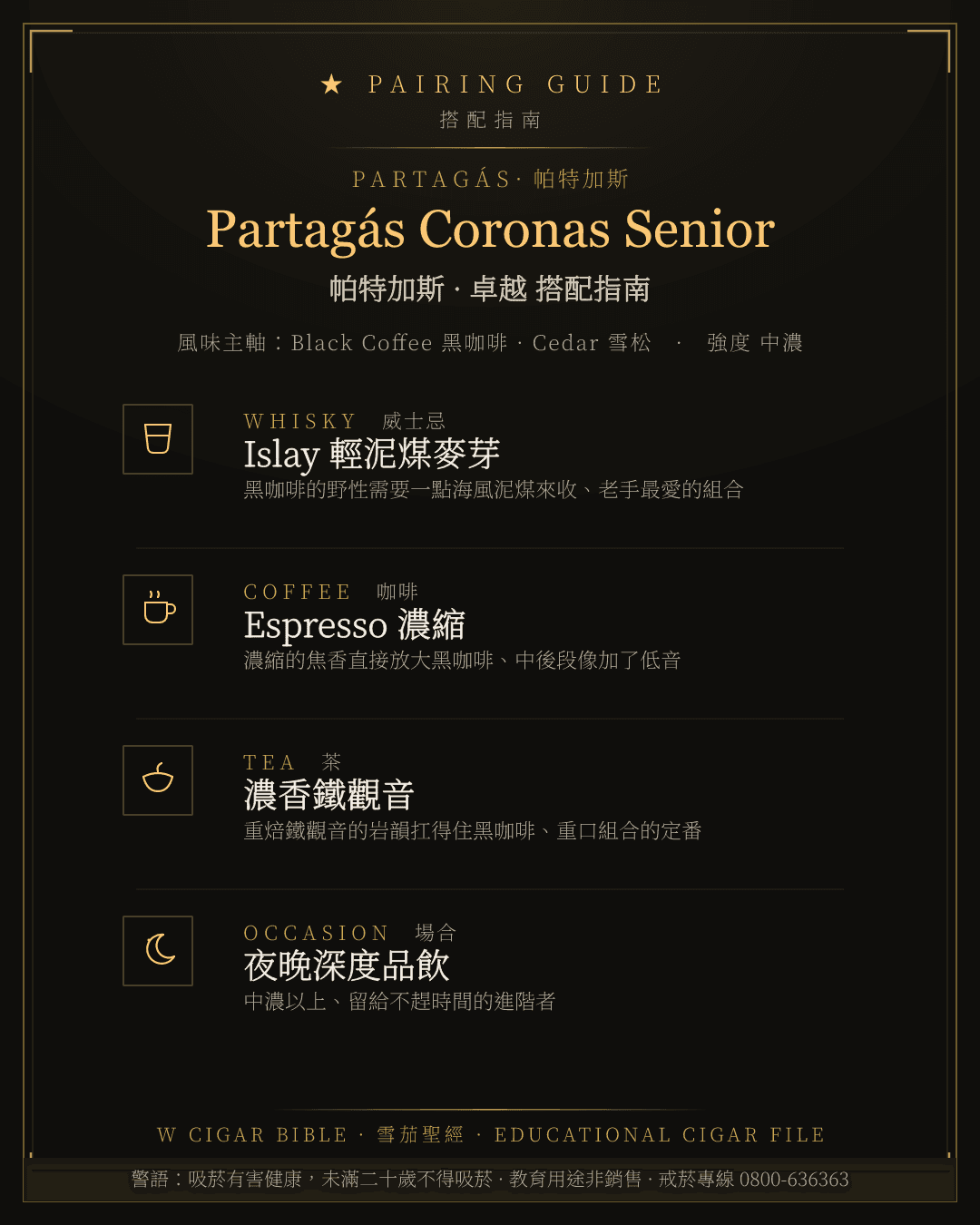
Partagás Coronas Senior 搭配指南 · 帕特加斯
PAIRING GUIDE · 搭配指南
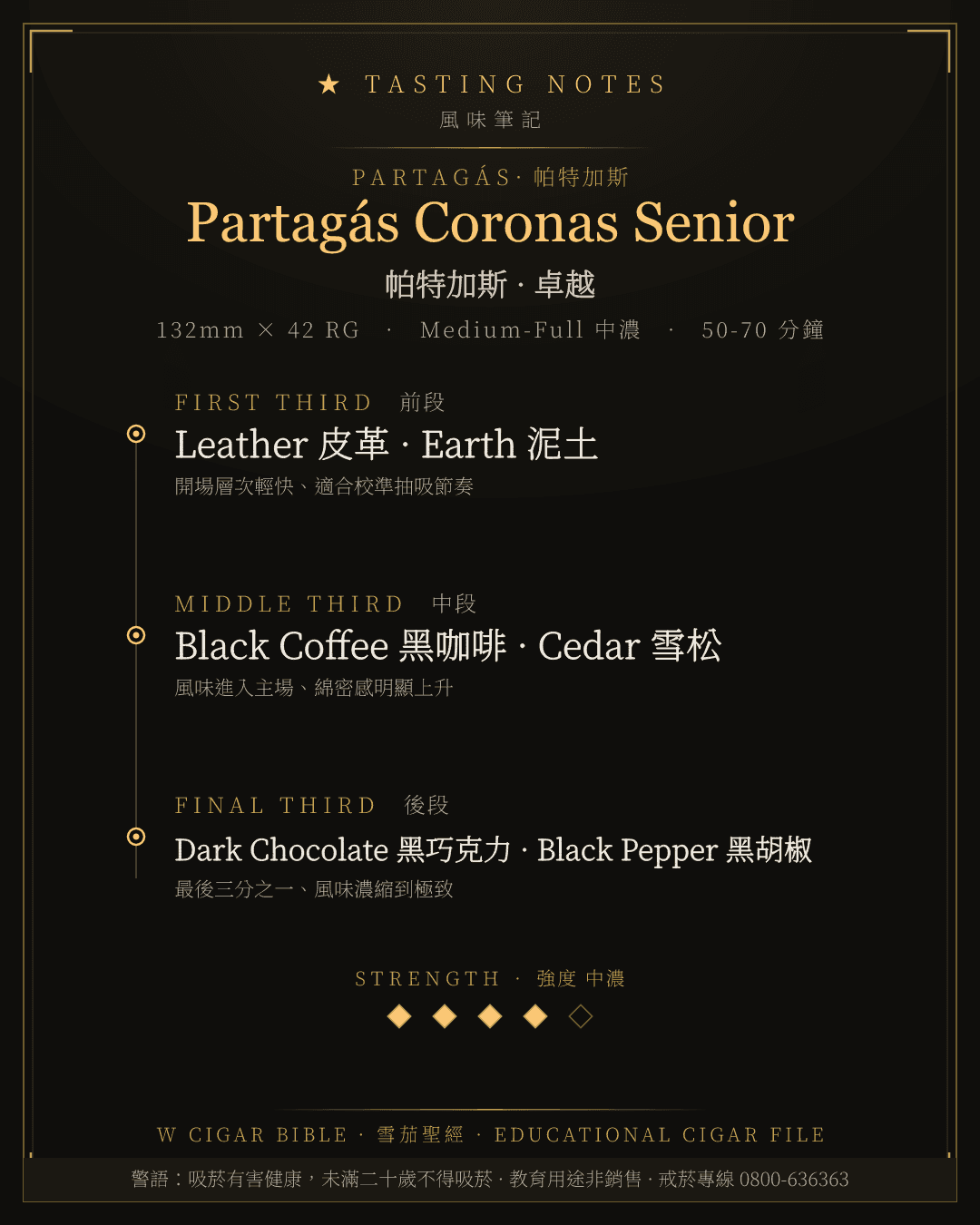
Partagás Coronas Senior 風味筆記 · 帕特加斯
TASTING NOTES · 風味筆記

Partagás Coronas vs Por Larrañaga Lanceros
VITOLA SHOWDOWN · Coronas
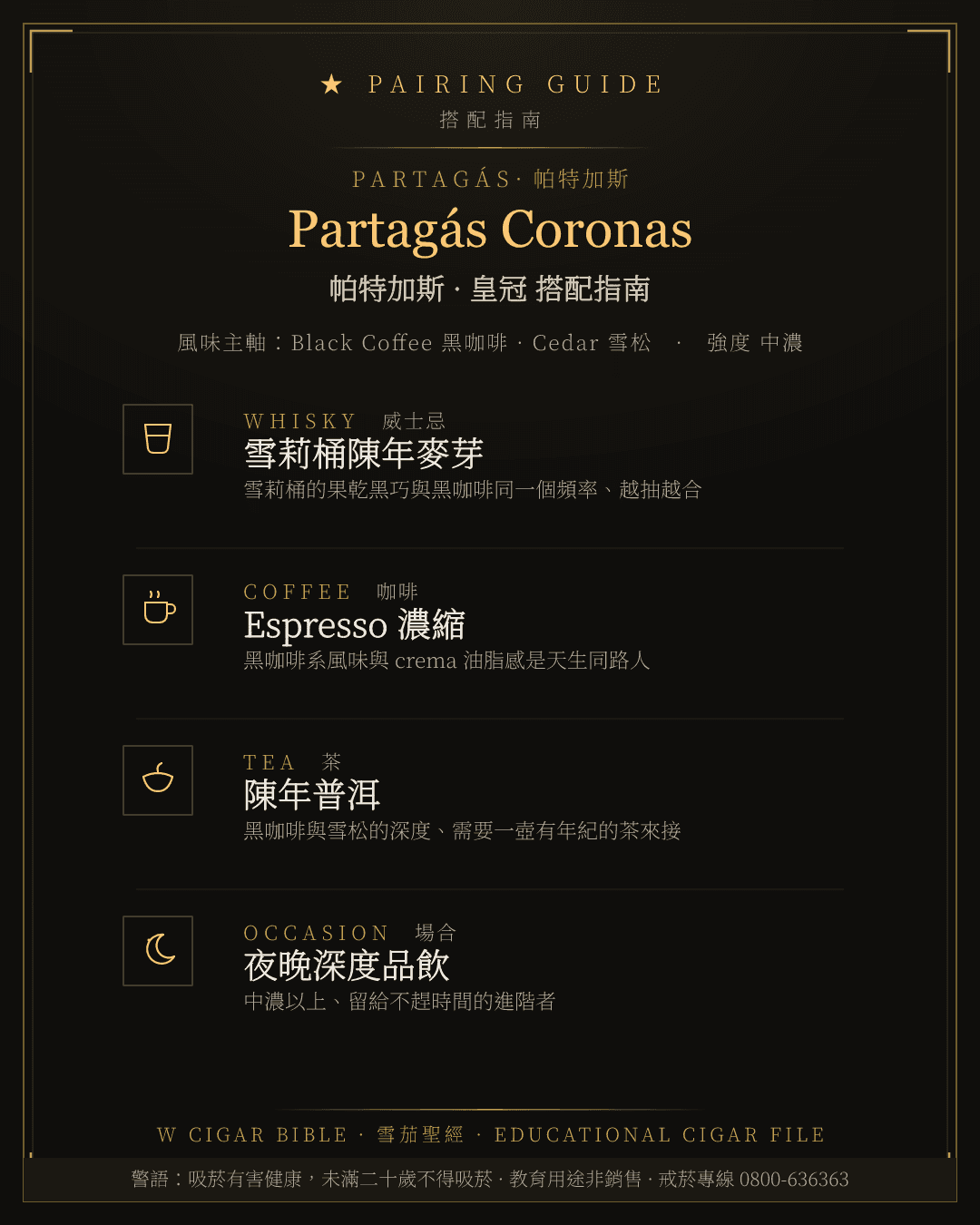
Partagás Coronas 搭配指南 · 帕特加斯
PAIRING GUIDE · 搭配指南

Partagás Coronas 風味筆記 · 帕特加斯
TASTING NOTES · 風味筆記
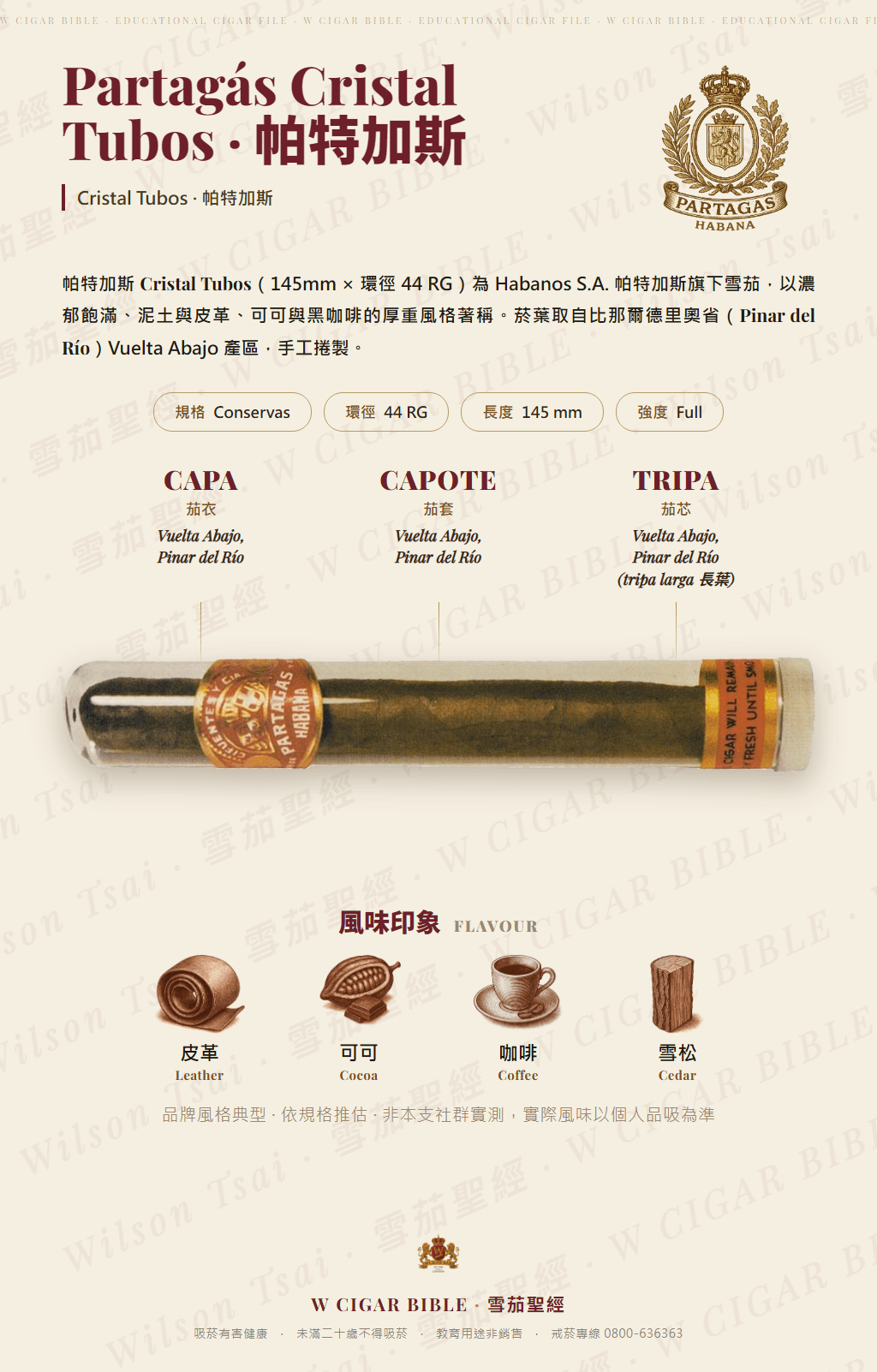
Partagás Cristal Tubos · 帕特加斯
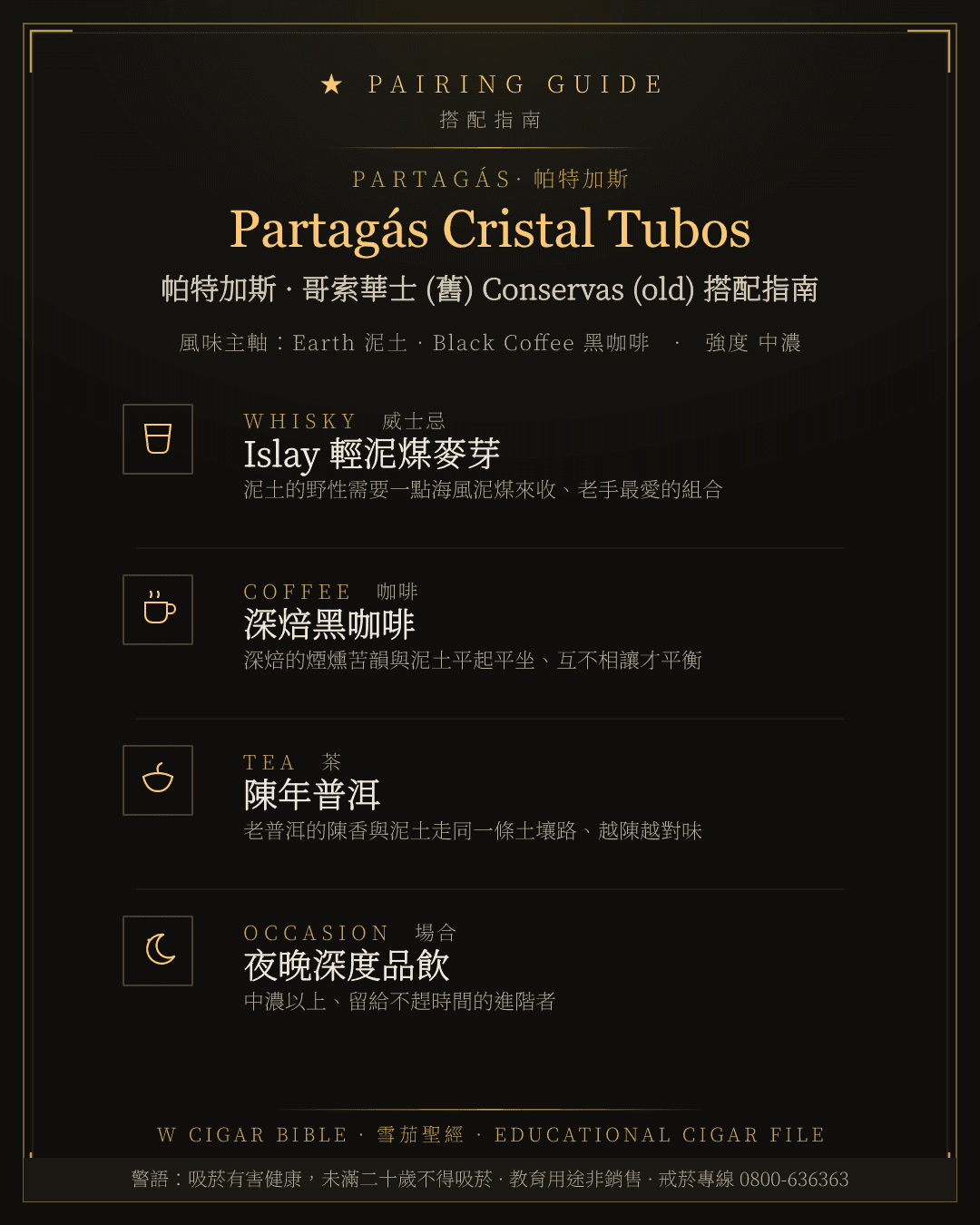
Partagás Cristal Tubos 搭配指南 · 帕特加斯
PAIRING GUIDE · 搭配指南
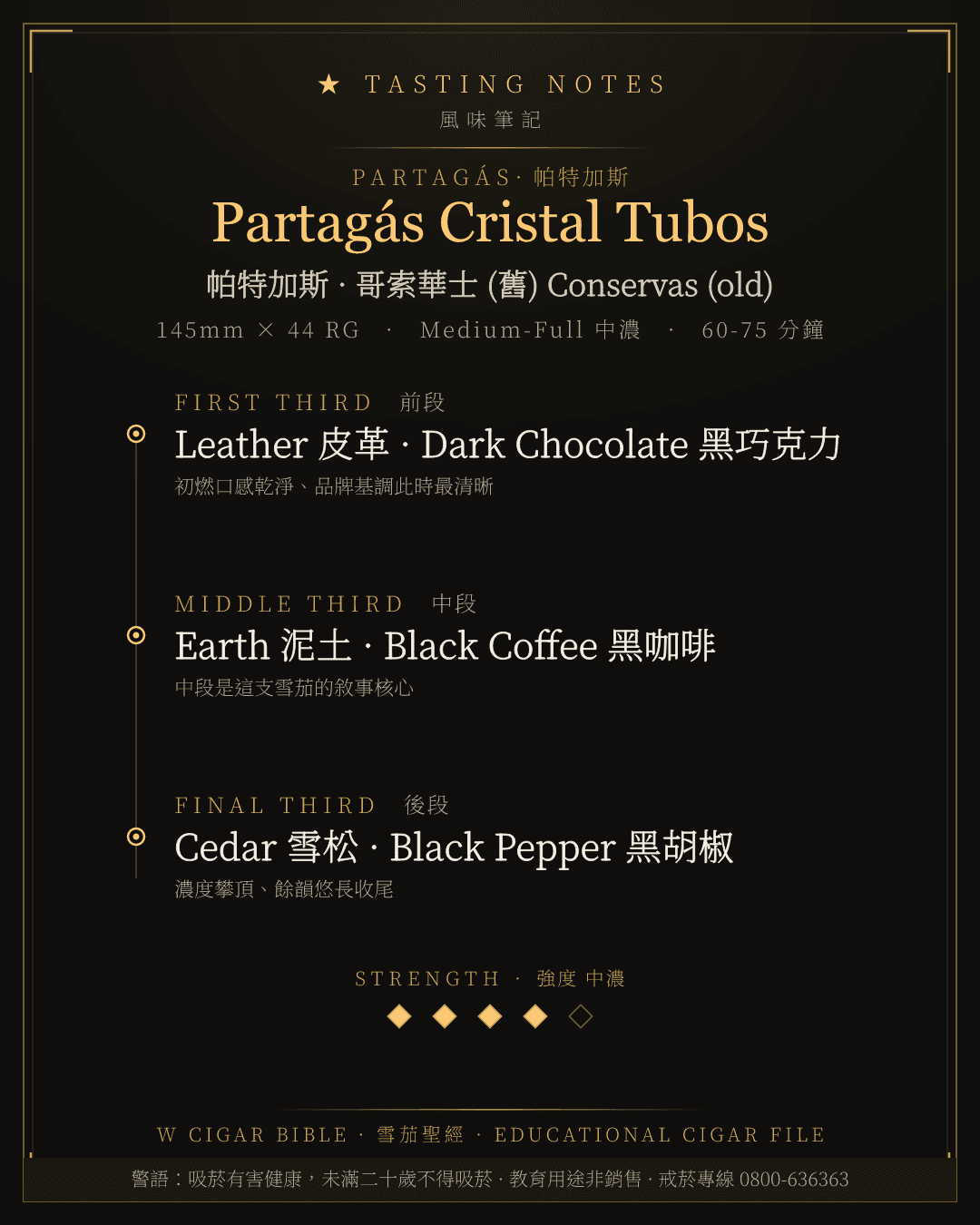
Partagás Cristal Tubos 風味筆記 · 帕特加斯
TASTING NOTES · 風味筆記
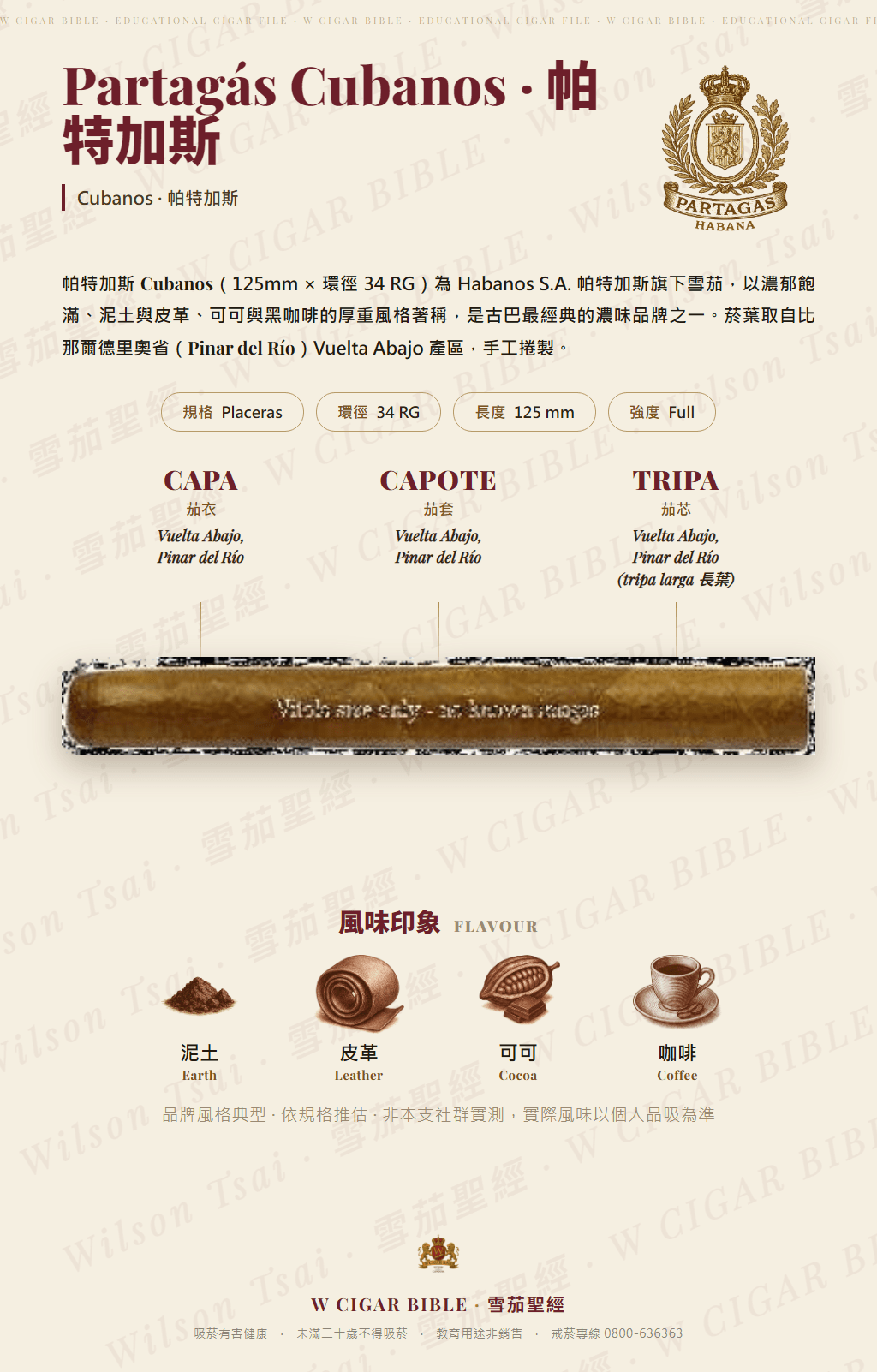
Partagás Cubanos · 帕特加斯

Partagás Cubanos 搭配指南 · 帕特加斯
PAIRING GUIDE · 搭配指南
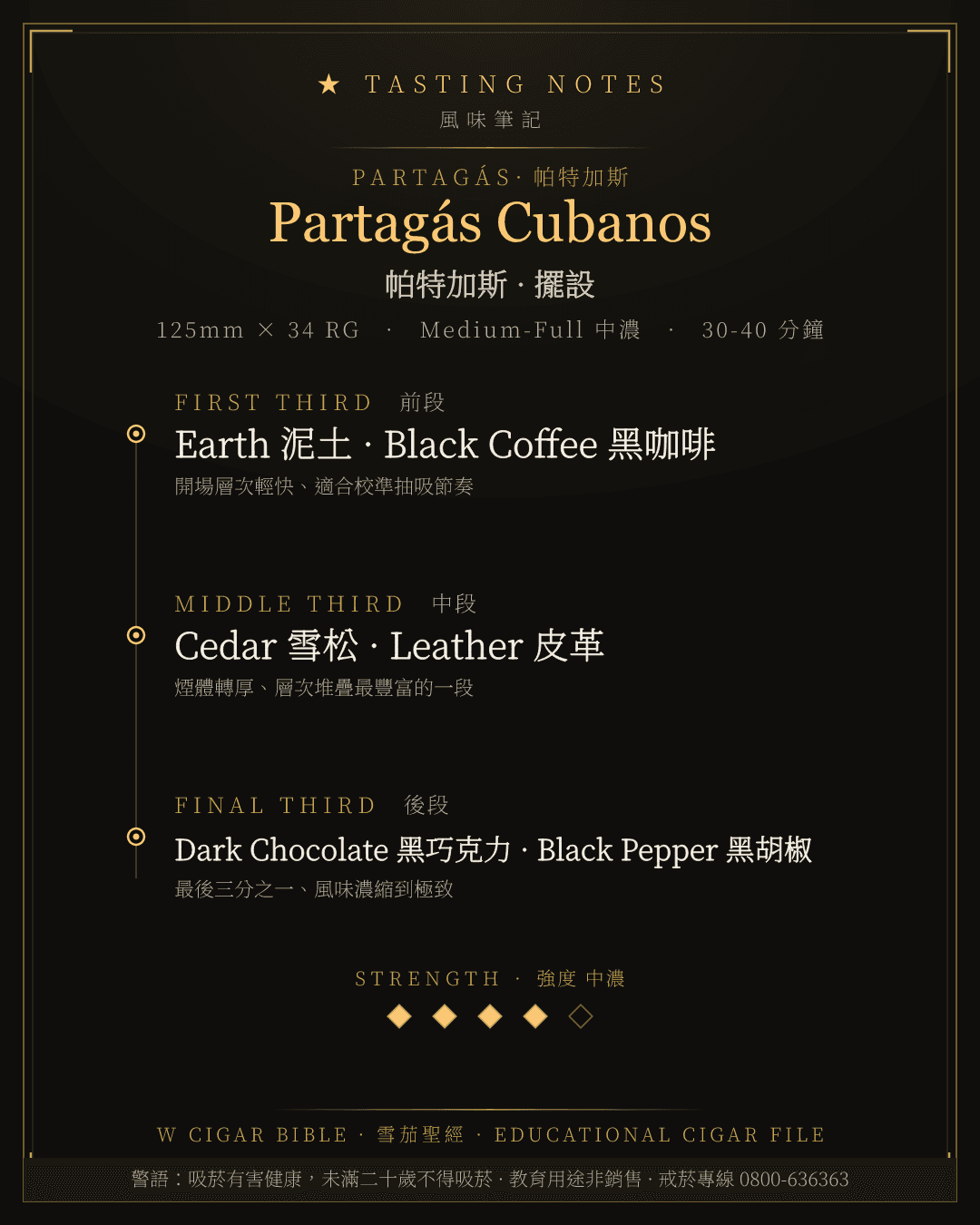
Partagás Cubanos 風味筆記 · 帕特加斯
TASTING NOTES · 風味筆記
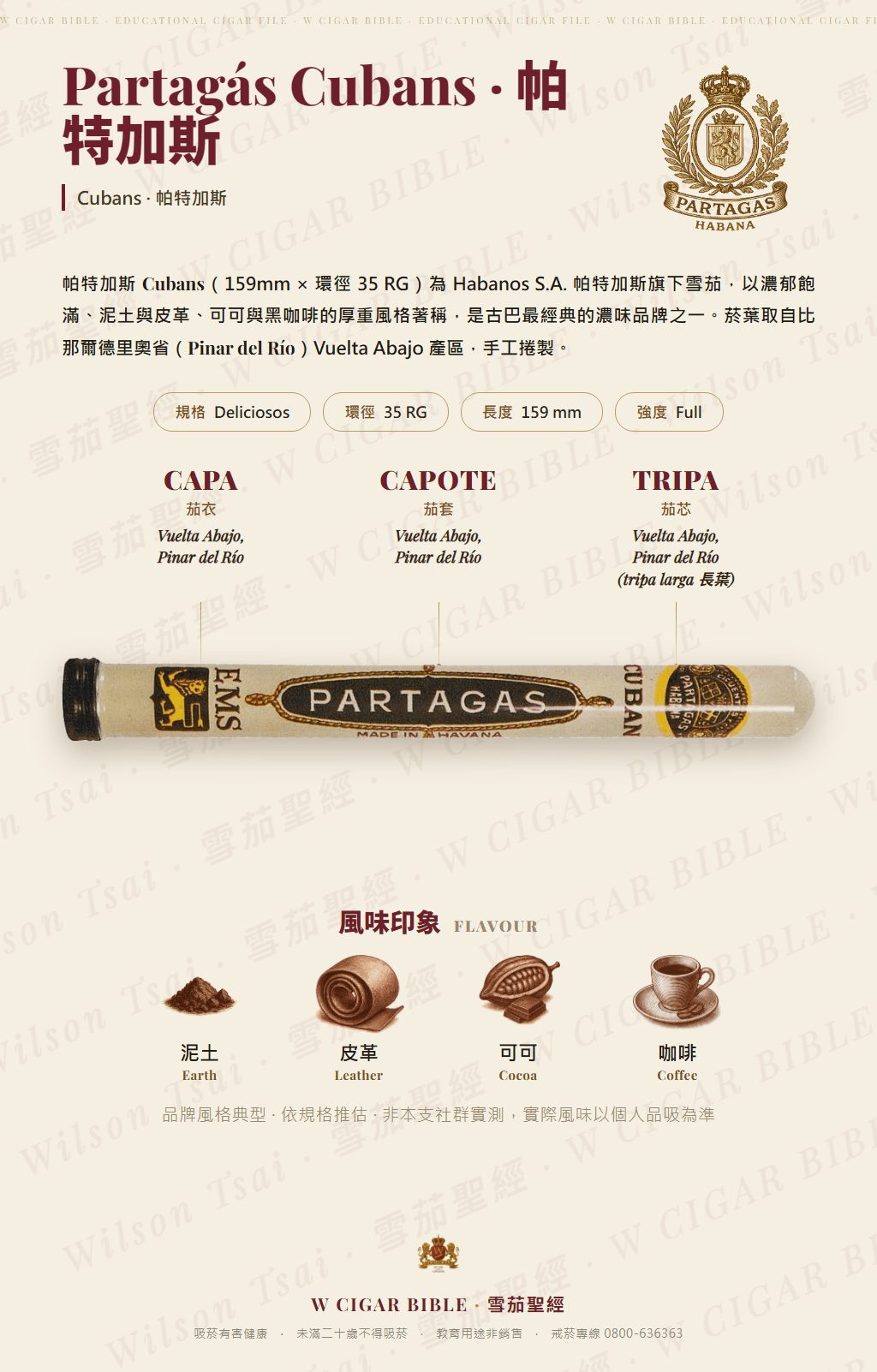
Partagás Cubans · 帕特加斯

Partagás Cubans 搭配指南 · 帕特加斯
PAIRING GUIDE · 搭配指南
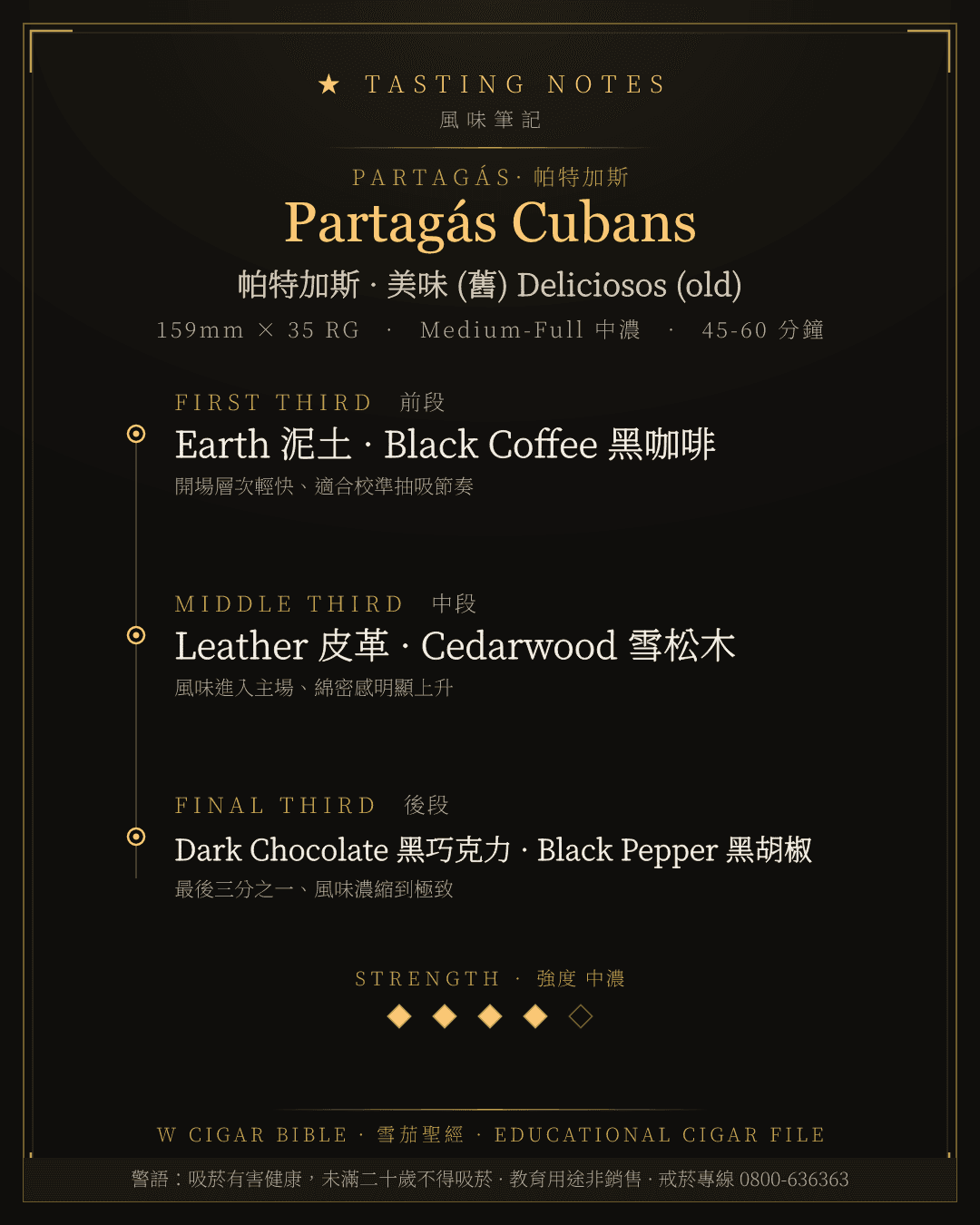
Partagás Cubans 風味筆記 · 帕特加斯
TASTING NOTES · 風味筆記
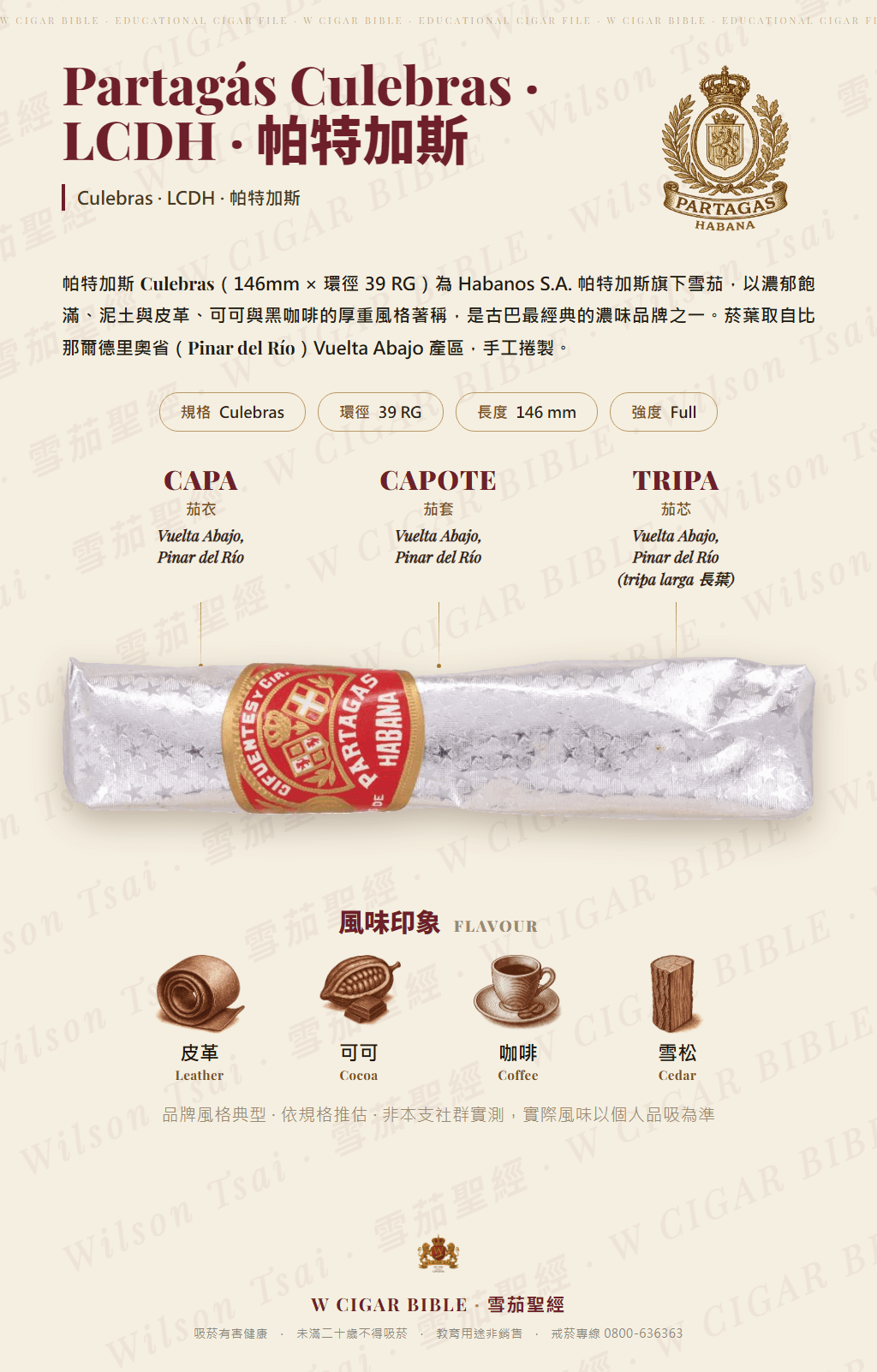
Partagás Culebras · LCDH · 帕特加斯
La Casa del Habano/Habanos Specialist 專屬款(Culebras 39 RG × 146mm,三支扭合為一束,2007 年重新推出)· 雪茄檔案

Partagás Culebras 搭配指南 · 帕特加斯
PAIRING GUIDE · 搭配指南

Partagás Culebras 風味筆記 · 帕特加斯
TASTING NOTES · 風味筆記
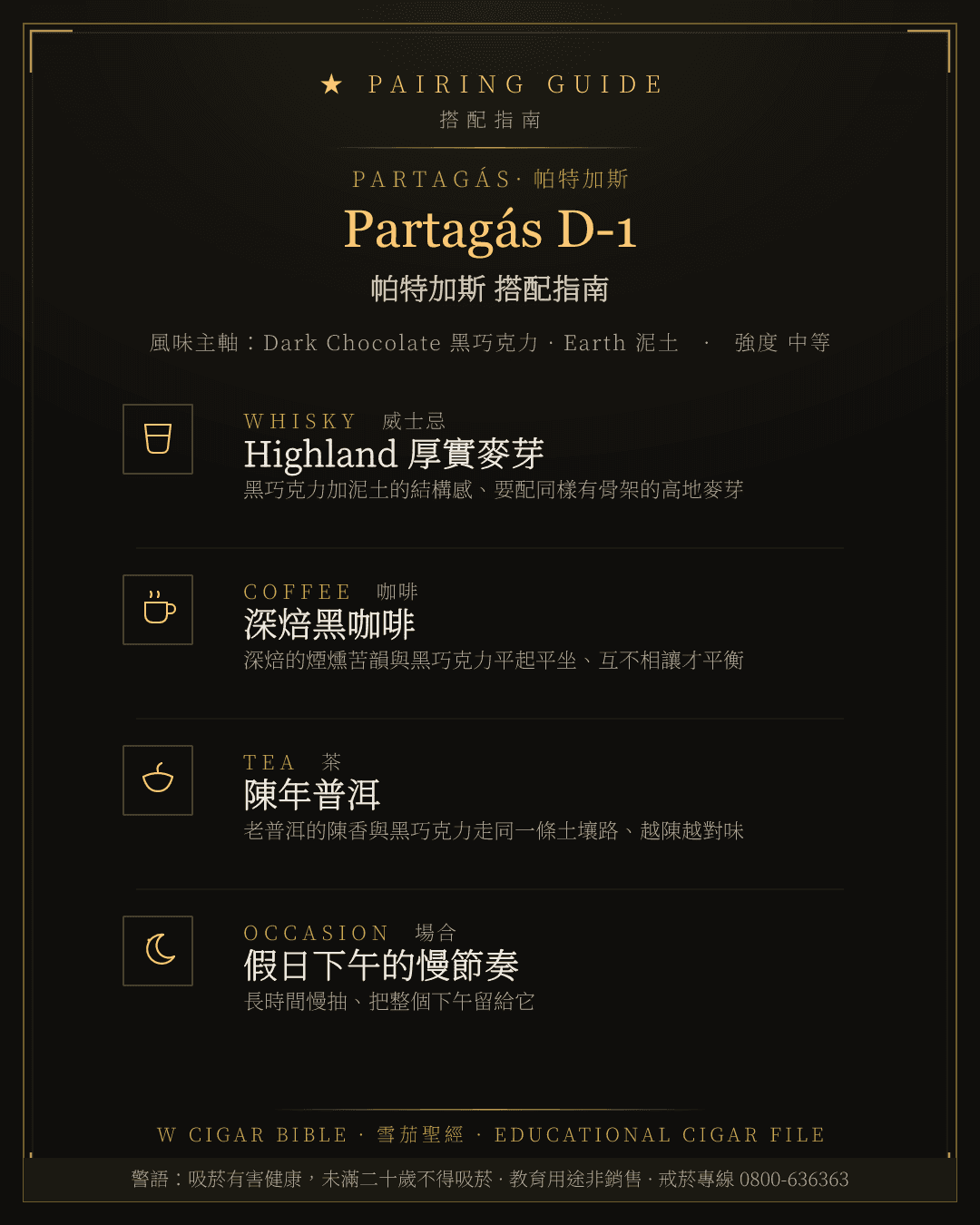
Partagás D-1 搭配指南 · 帕特加斯
PAIRING GUIDE · 搭配指南

Partagás D-1 風味筆記 · 帕特加斯
TASTING NOTES · 風味筆記

Partagás D-2 搭配指南 · 帕特加斯
PAIRING GUIDE · 搭配指南
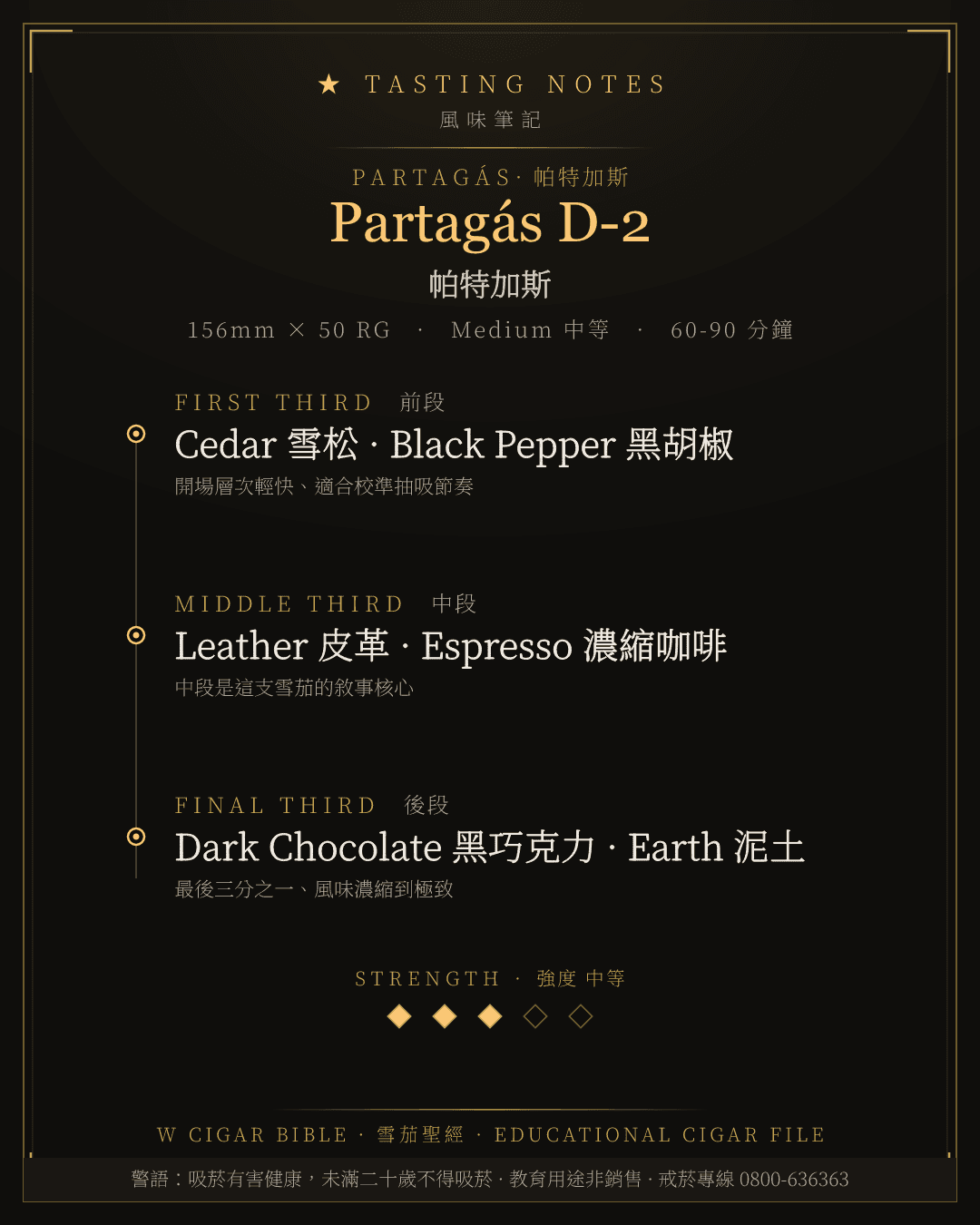
Partagás D-2 風味筆記 · 帕特加斯
TASTING NOTES · 風味筆記
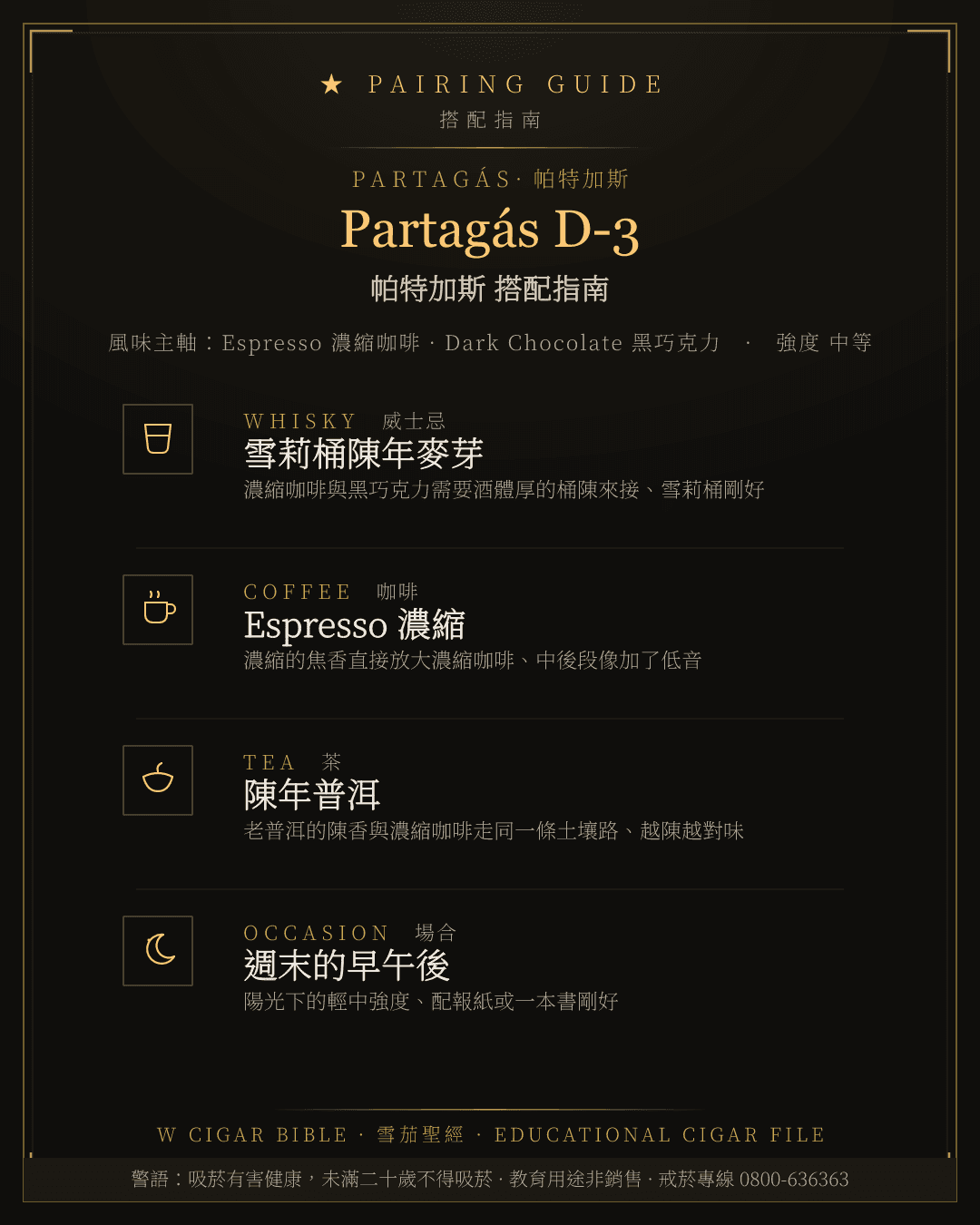
Partagás D-3 搭配指南 · 帕特加斯
PAIRING GUIDE · 搭配指南
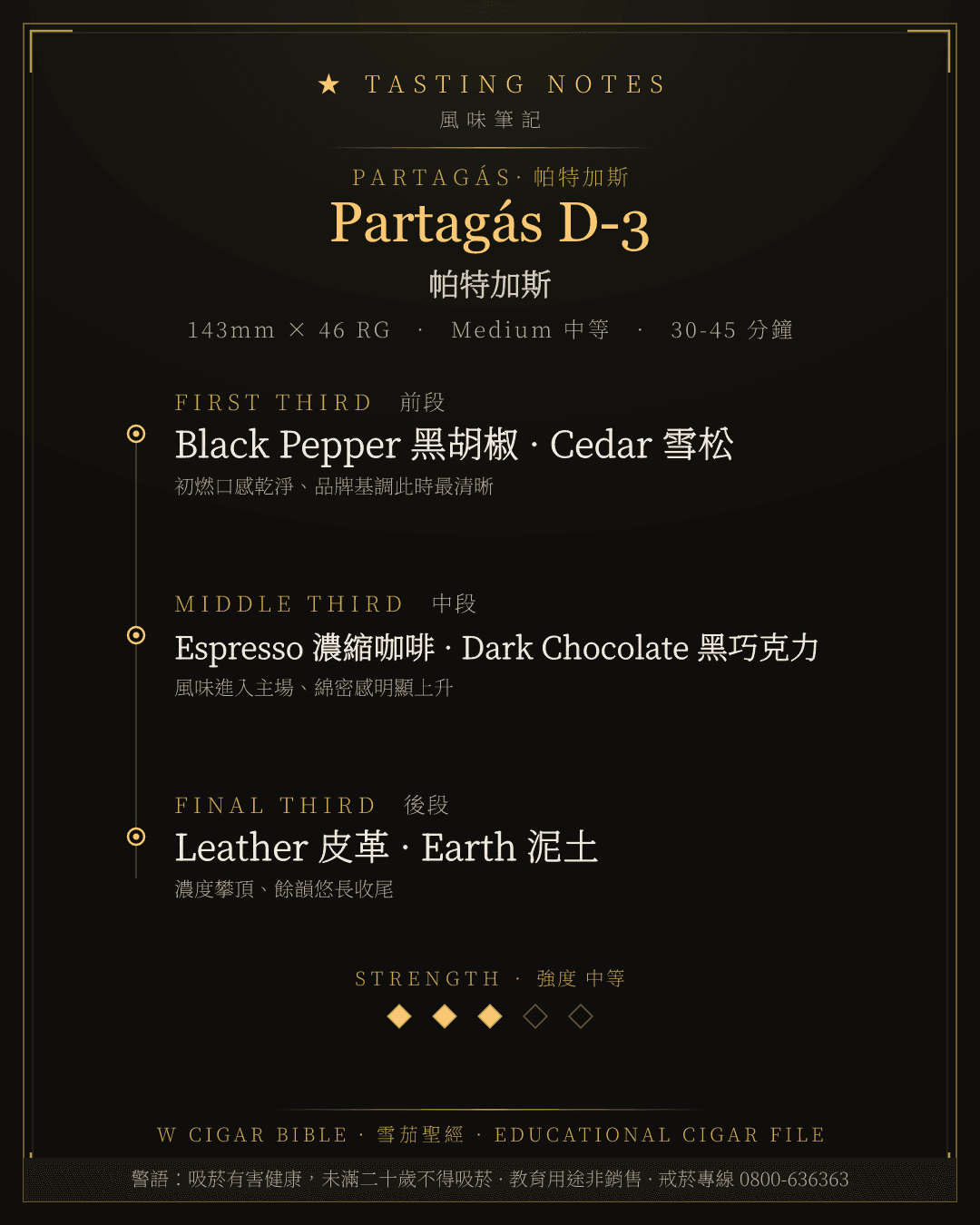
Partagás D-3 風味筆記 · 帕特加斯
TASTING NOTES · 風味筆記
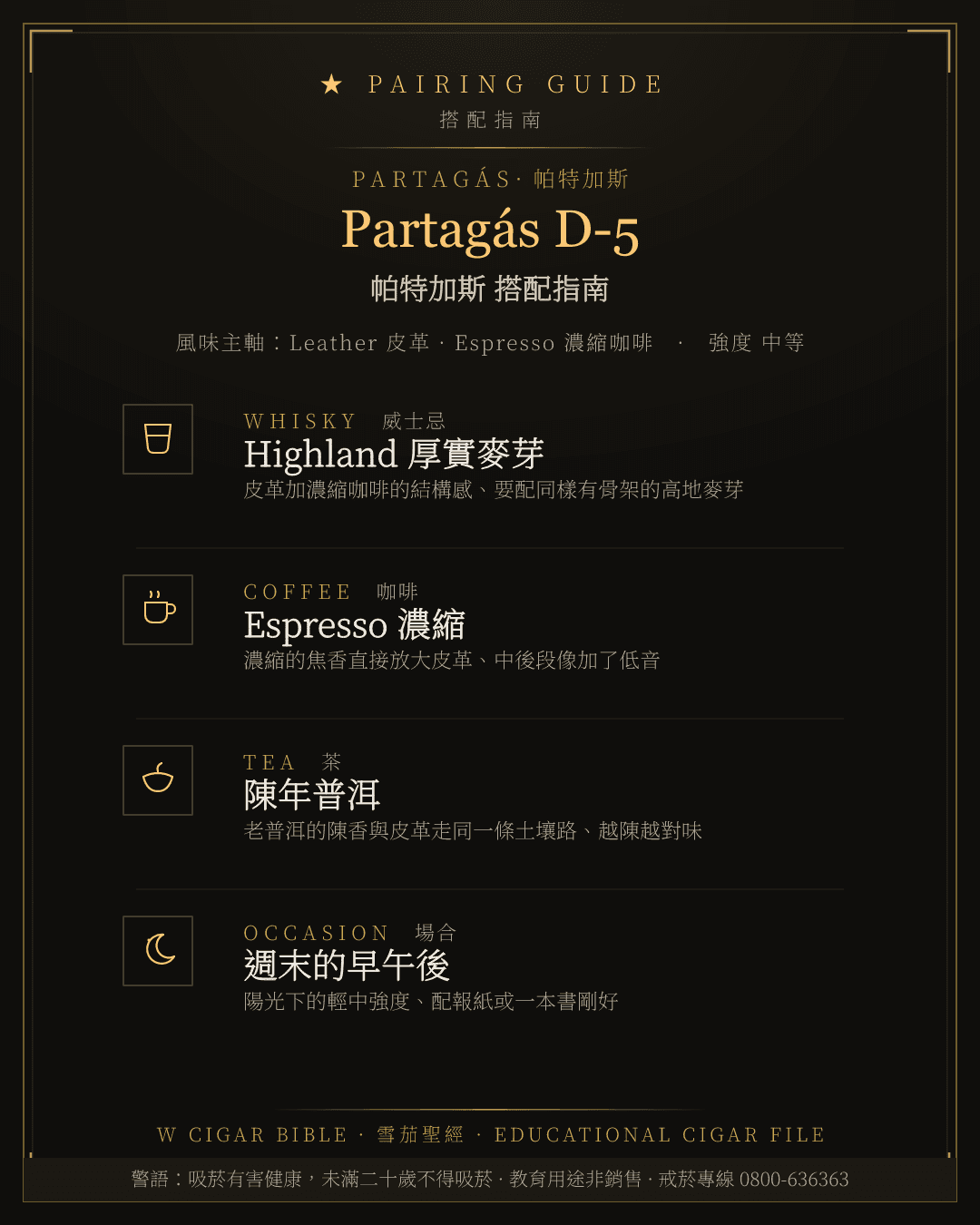
Partagás D-5 搭配指南 · 帕特加斯
PAIRING GUIDE · 搭配指南

Partagás D-5 風味筆記 · 帕特加斯
TASTING NOTES · 風味筆記
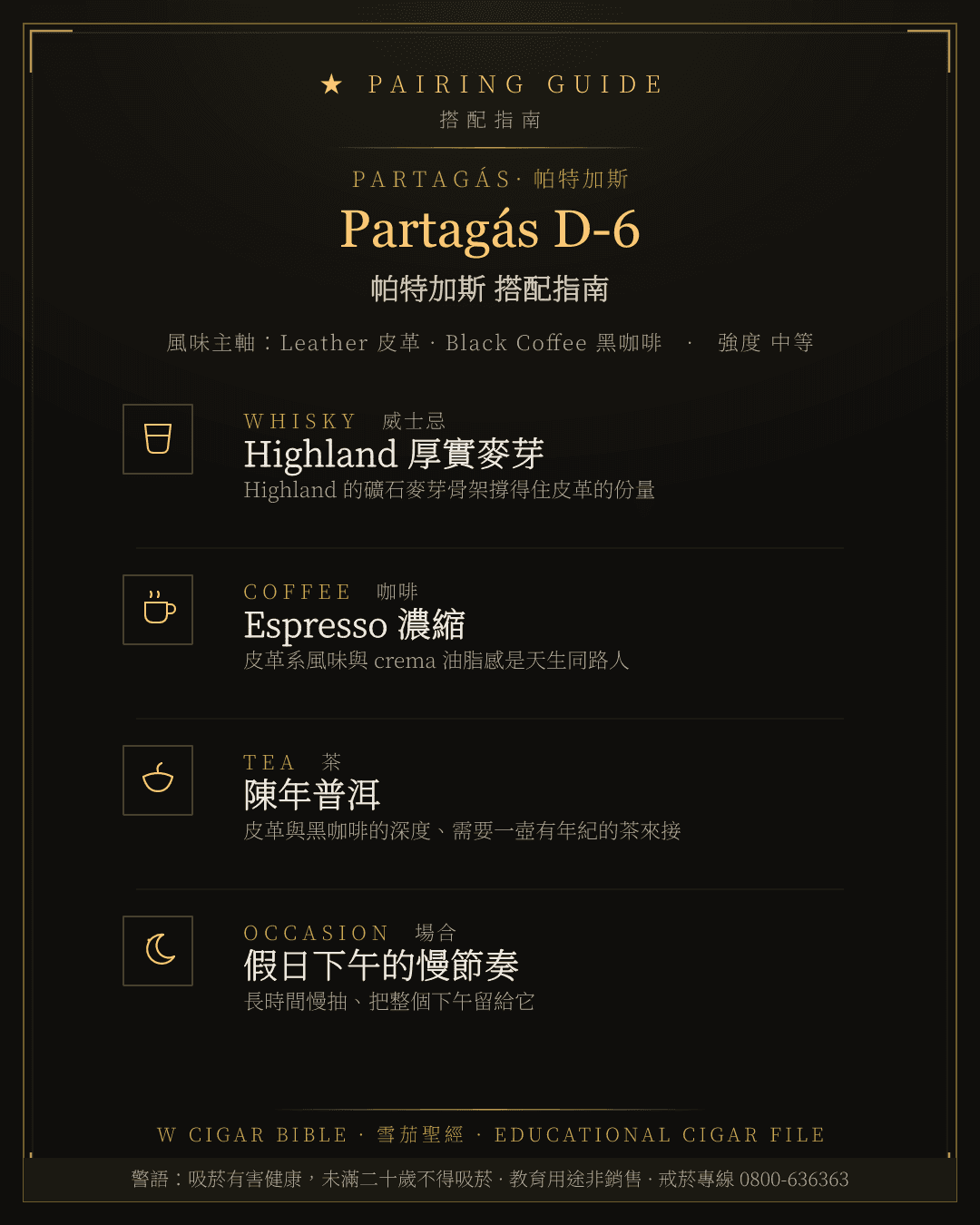
Partagás D-6 搭配指南 · 帕特加斯
PAIRING GUIDE · 搭配指南
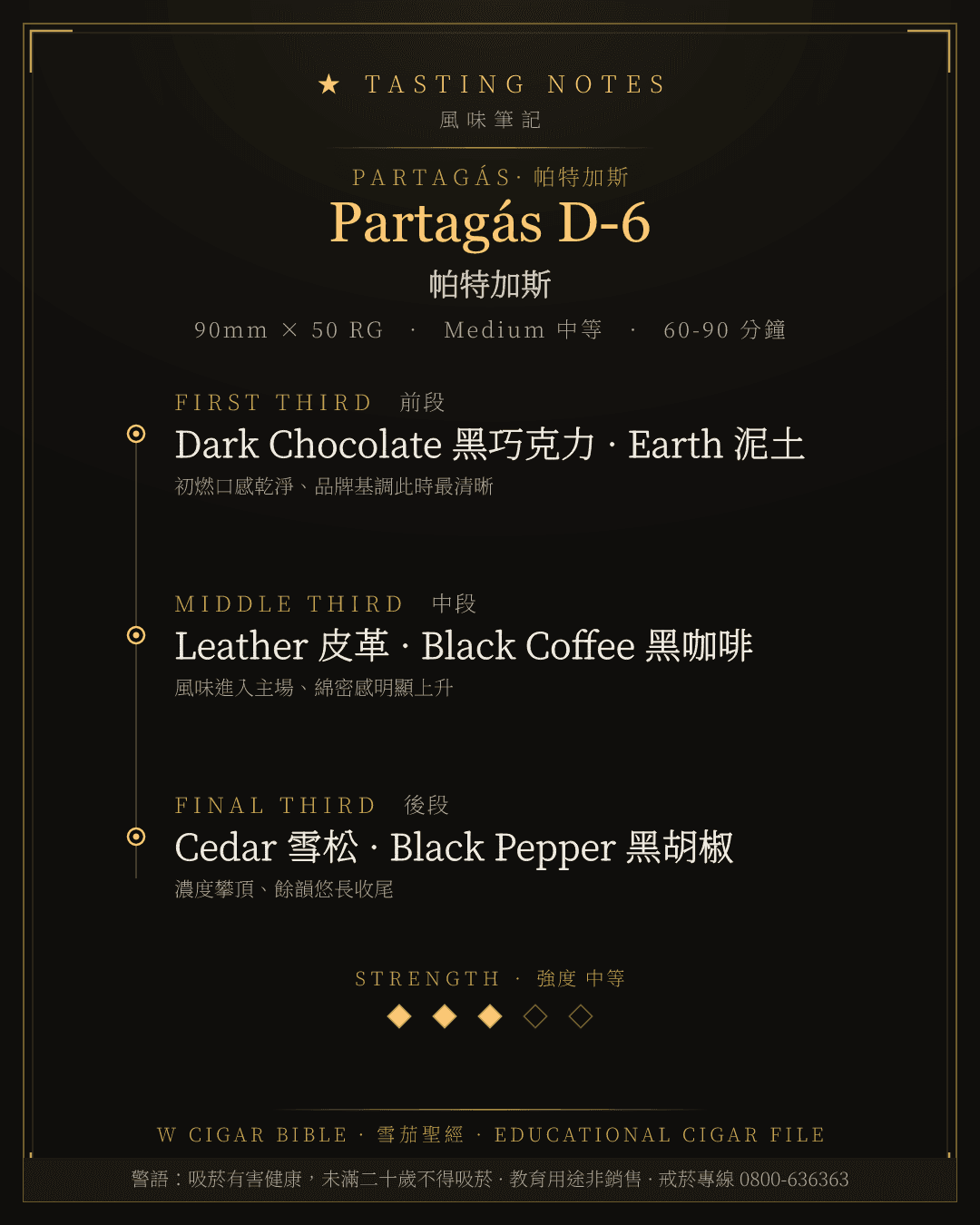
Partagás D-6 風味筆記 · 帕特加斯
TASTING NOTES · 風味筆記

Partagás Dalias · 帕特加斯
經典常規產線(已停產)
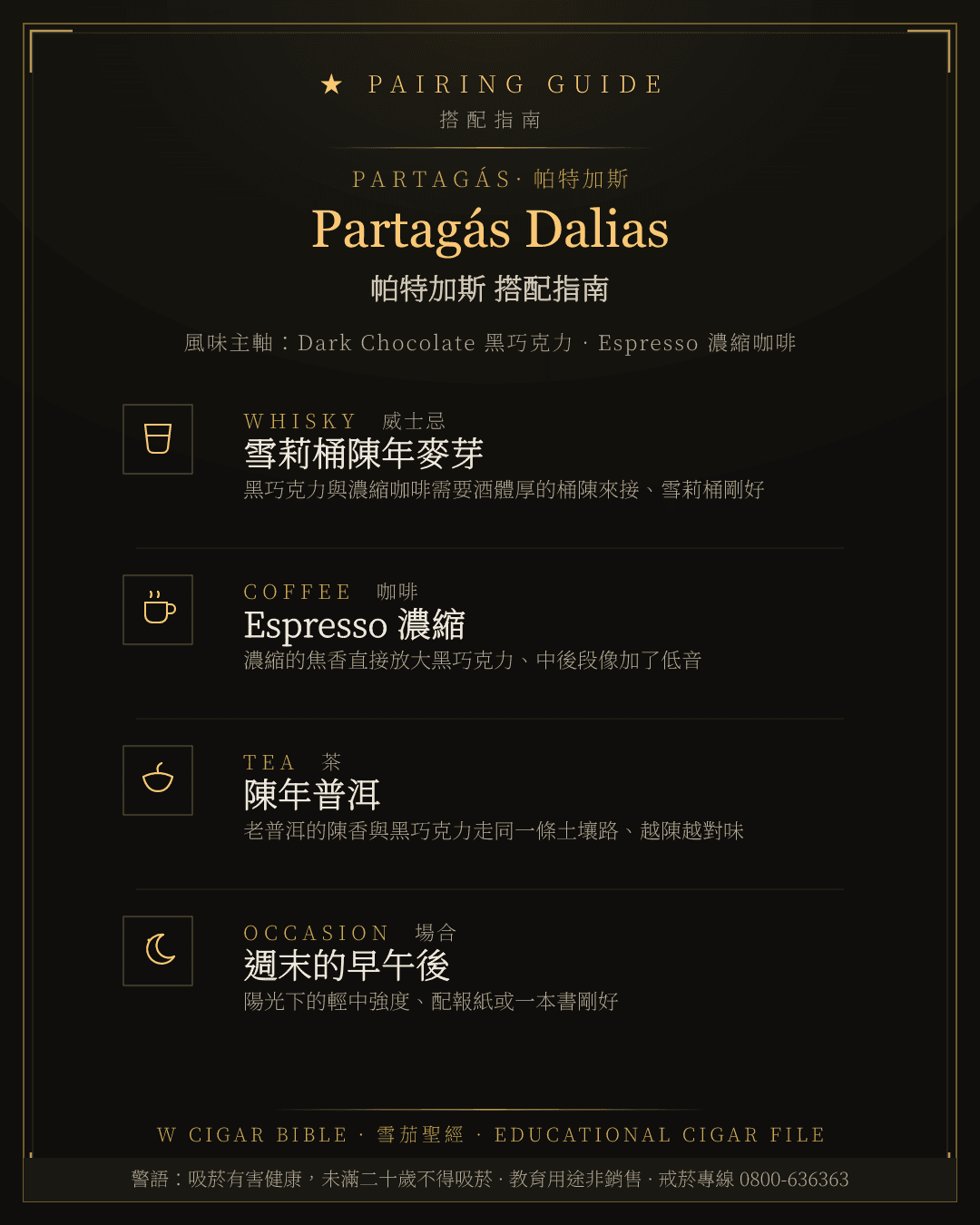
Partagás Dalias 搭配指南 · 帕特加斯
PAIRING GUIDE · 搭配指南
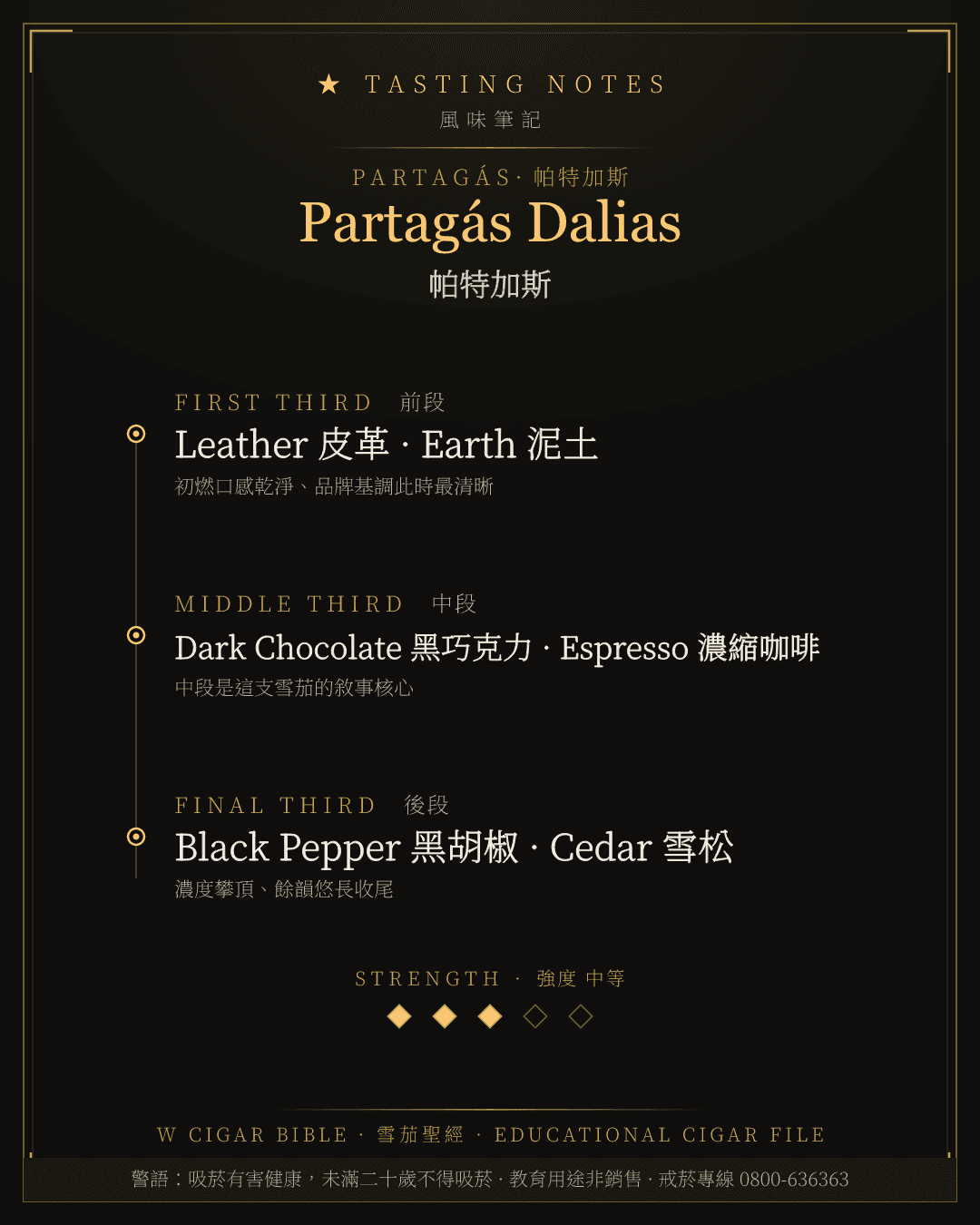
Partagás Dalias 風味筆記 · 帕特加斯
TASTING NOTES · 風味筆記
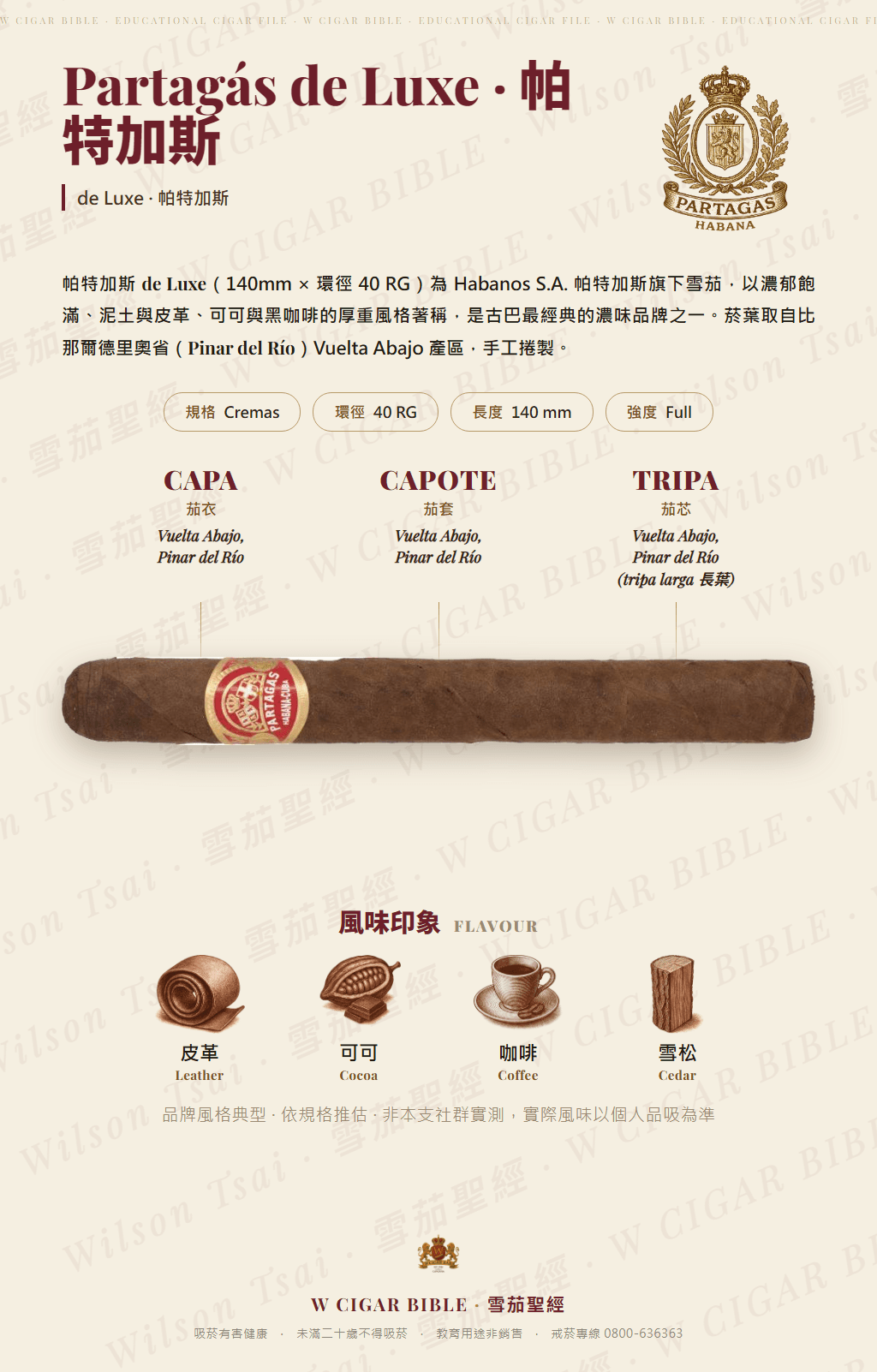
Partagás de Luxe · 帕特加斯
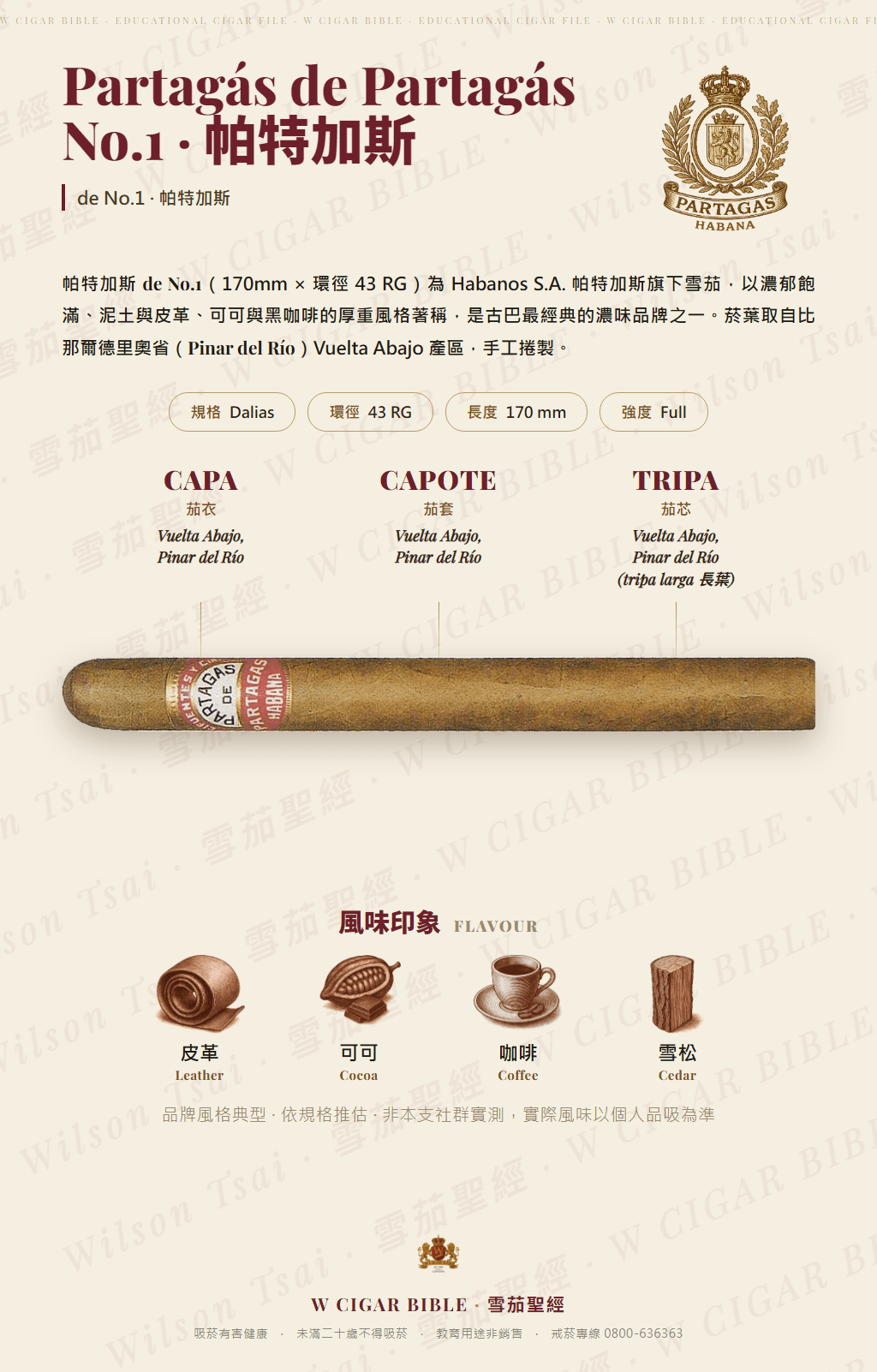
Partagás de Partagás No.1 · 帕特加斯
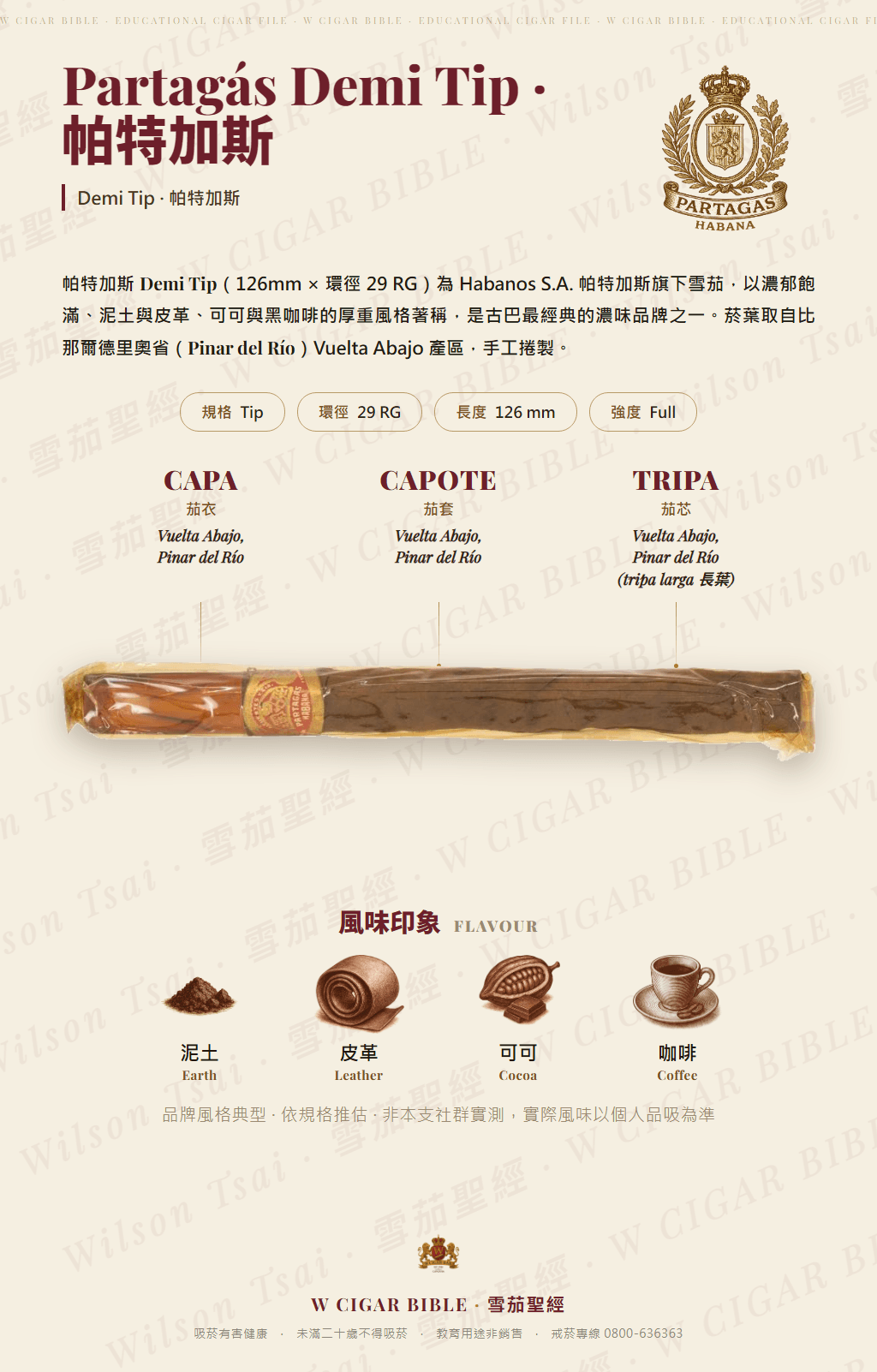
Partagás Demi Tip · 帕特加斯

Partagás Demi Tip 搭配指南 · 帕特加斯
PAIRING GUIDE · 搭配指南
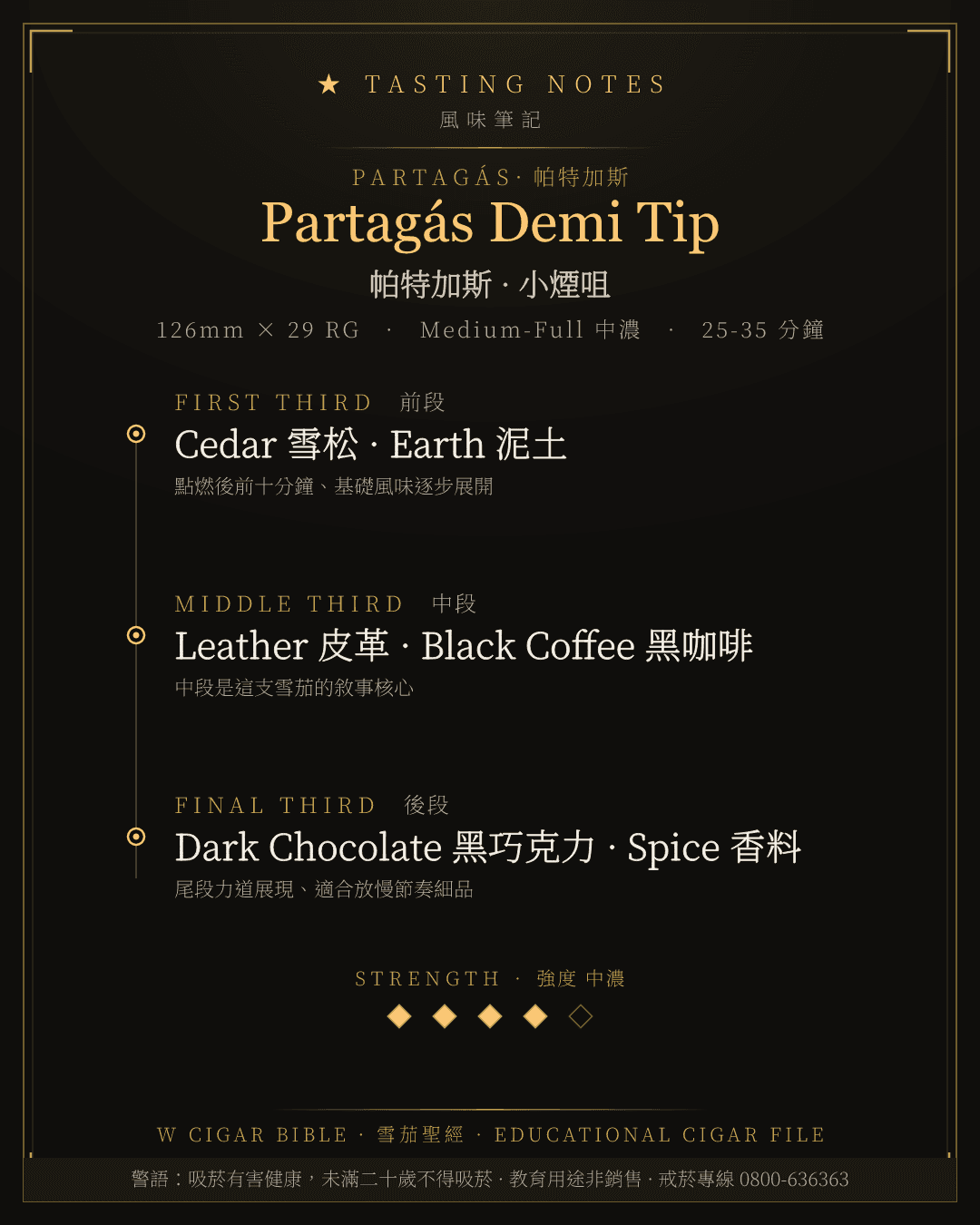
Partagás Demi Tip 風味筆記 · 帕特加斯
TASTING NOTES · 風味筆記
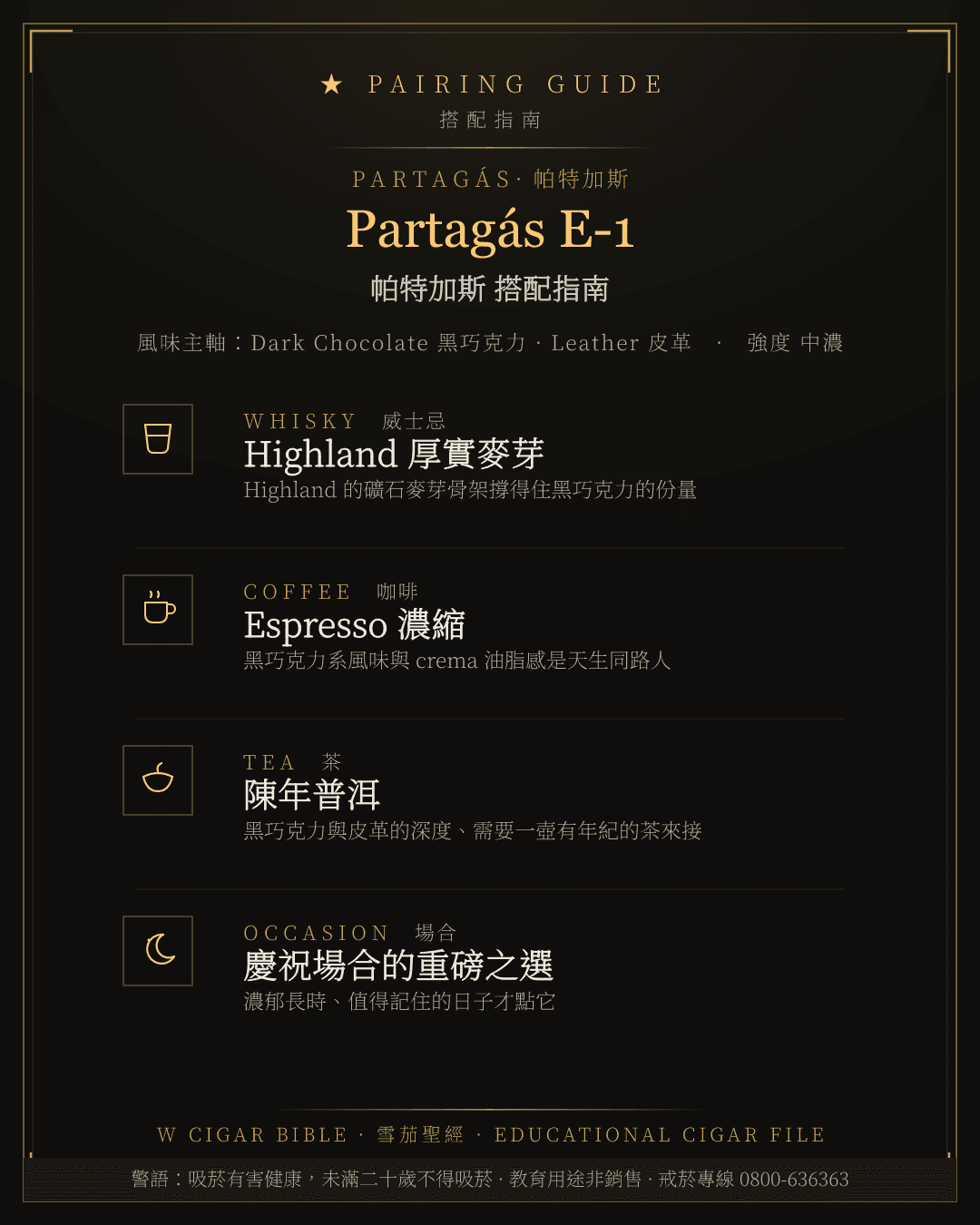
Partagás E-1 搭配指南 · 帕特加斯
PAIRING GUIDE · 搭配指南
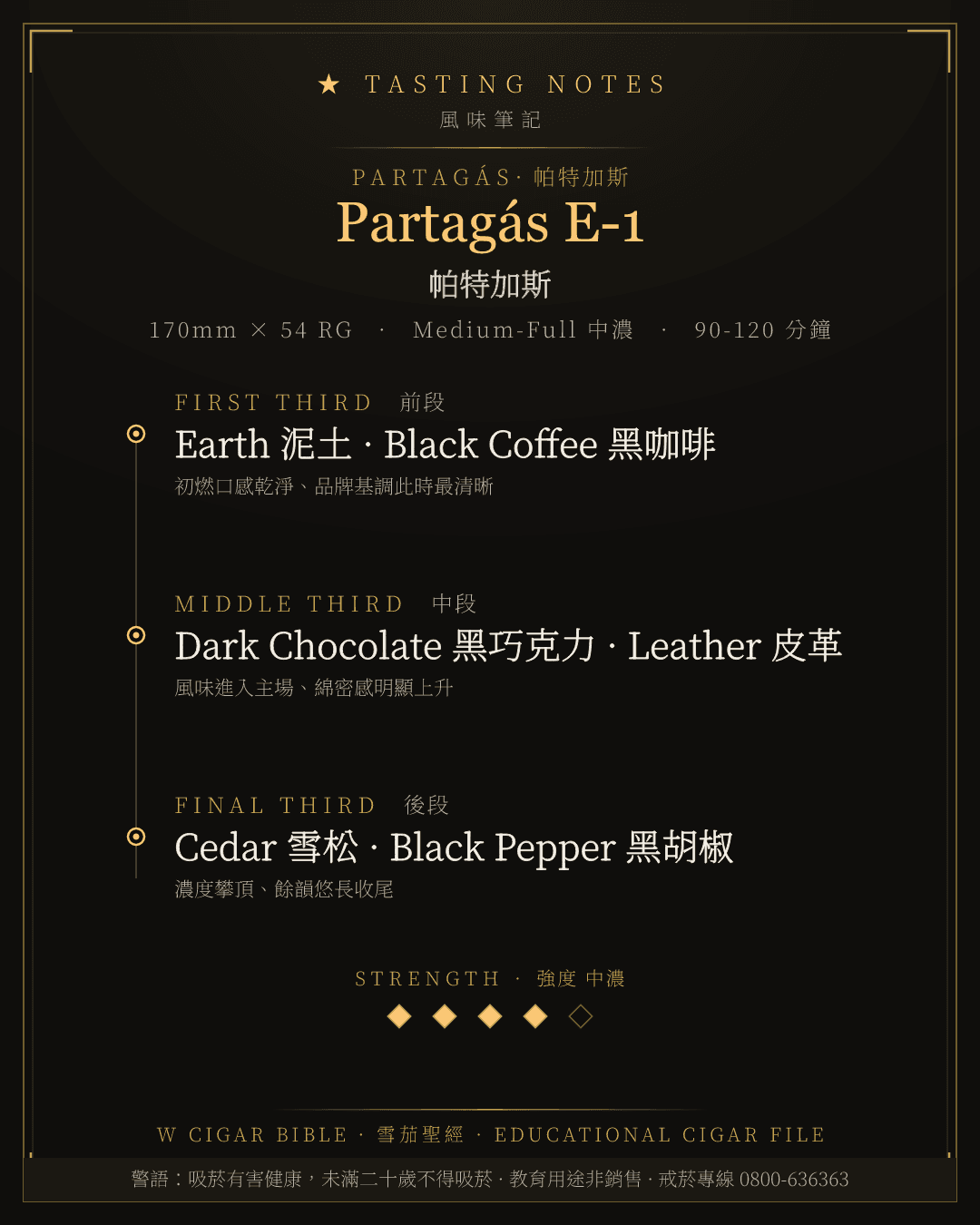
Partagás E-1 風味筆記 · 帕特加斯
TASTING NOTES · 風味筆記
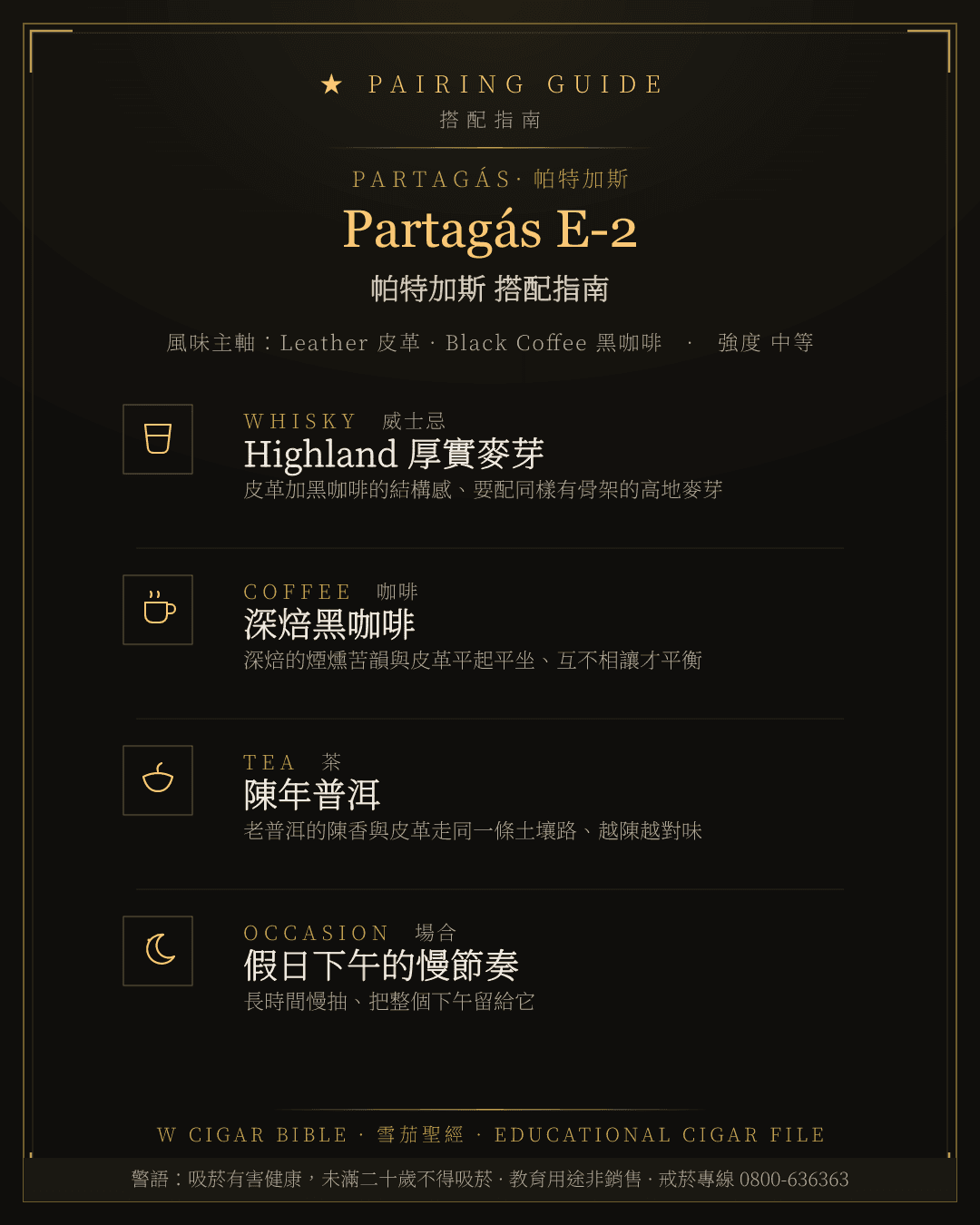
Partagás E-2 搭配指南 · 帕特加斯
PAIRING GUIDE · 搭配指南

Partagás E-2 風味筆記 · 帕特加斯
TASTING NOTES · 風味筆記
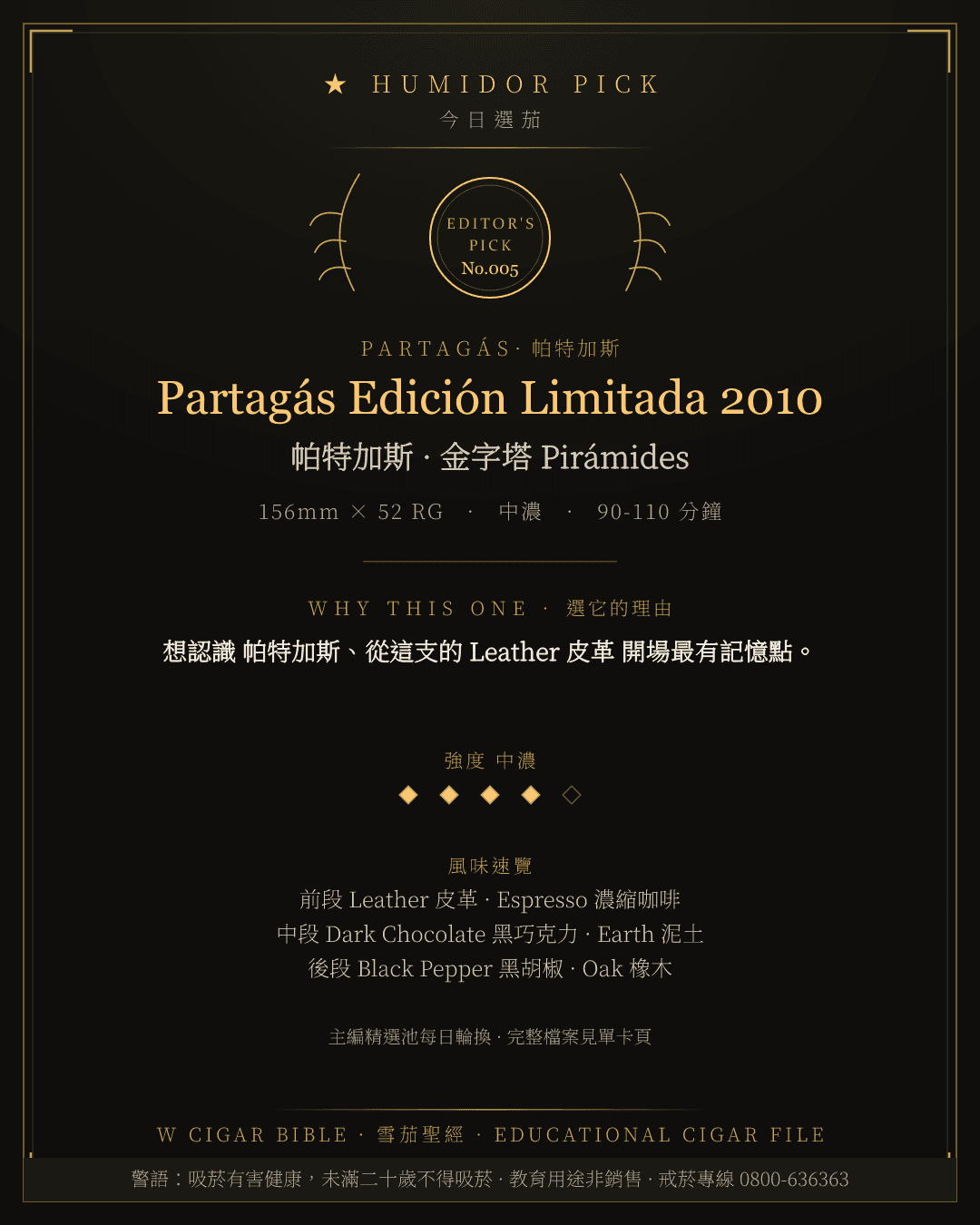
Partagás Edición Limitada 2010 · 帕特加斯 總編輯精選
HUMIDOR PICK · No.005
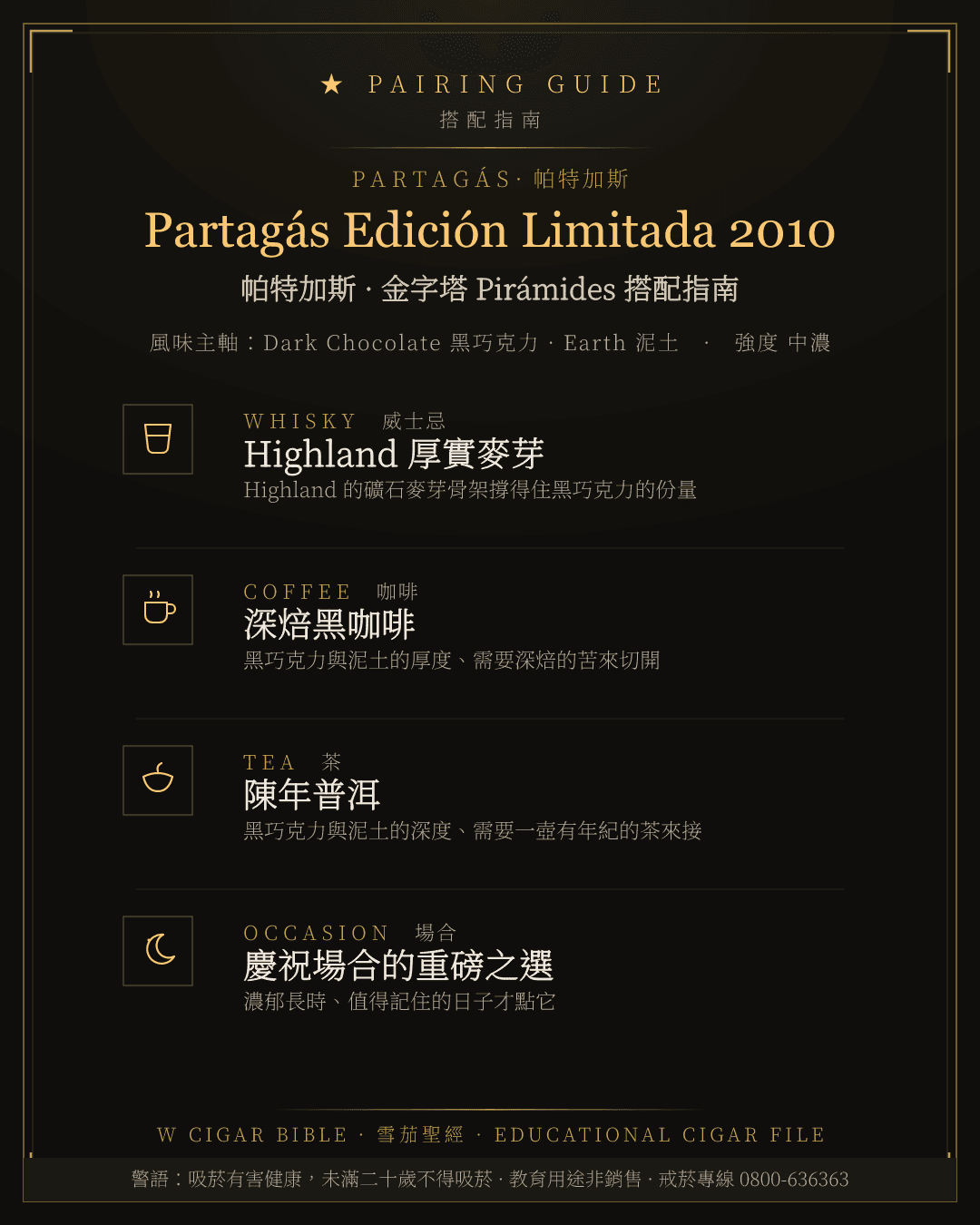
Partagás Edición Limitada 2010 搭配指南 · 帕特加斯
PAIRING GUIDE · 搭配指南

Partagás Edición Limitada 2010 風味筆記 · 帕特加斯
TASTING NOTES · 風味筆記

Partagás Edición Limitada 4 搭配指南 · 帕特加斯
PAIRING GUIDE · 搭配指南
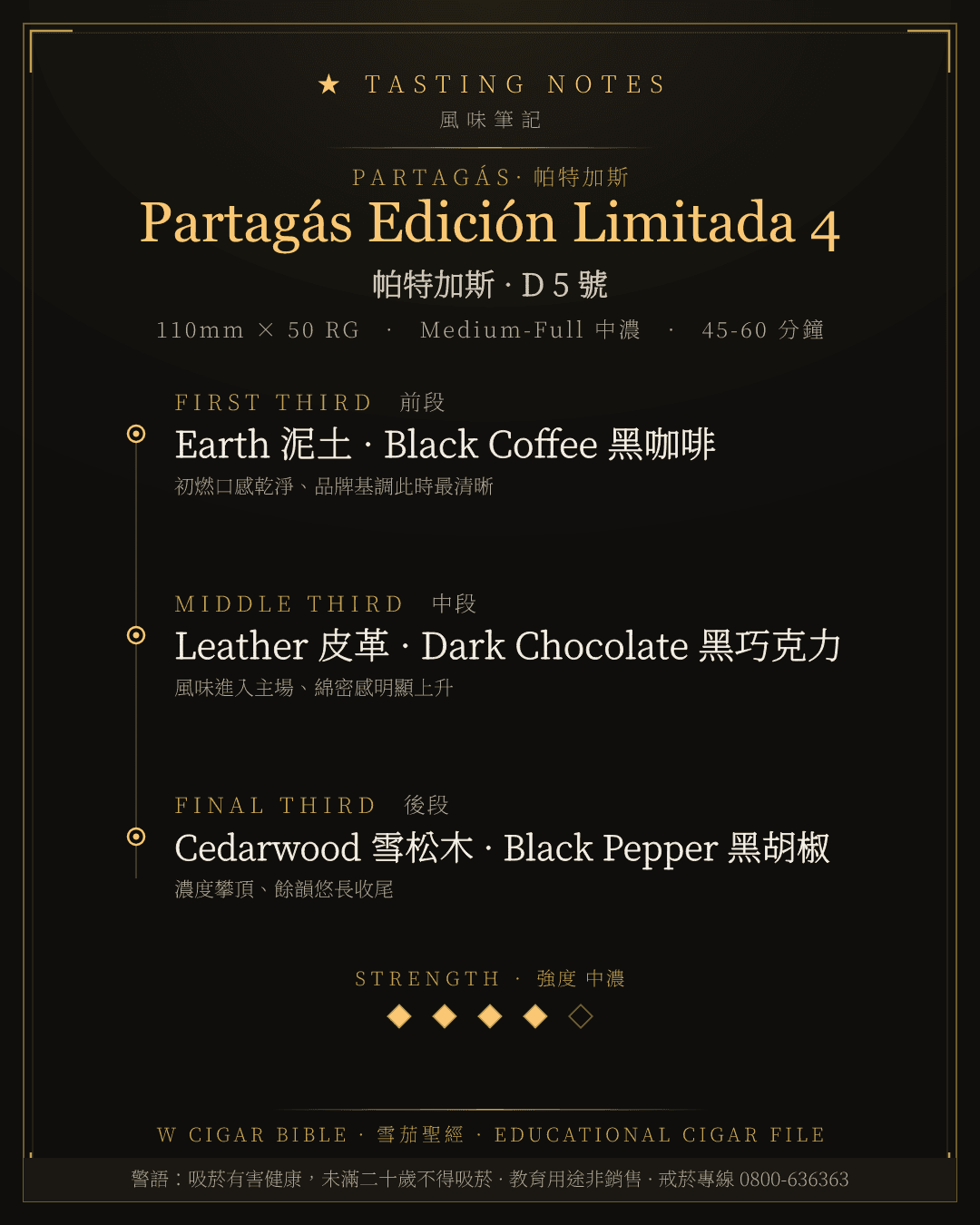
Partagás Edición Limitada 4 風味筆記 · 帕特加斯
TASTING NOTES · 風味筆記

Partagás Edición Limitada 搭配指南 · 帕特加斯
PAIRING GUIDE · 搭配指南
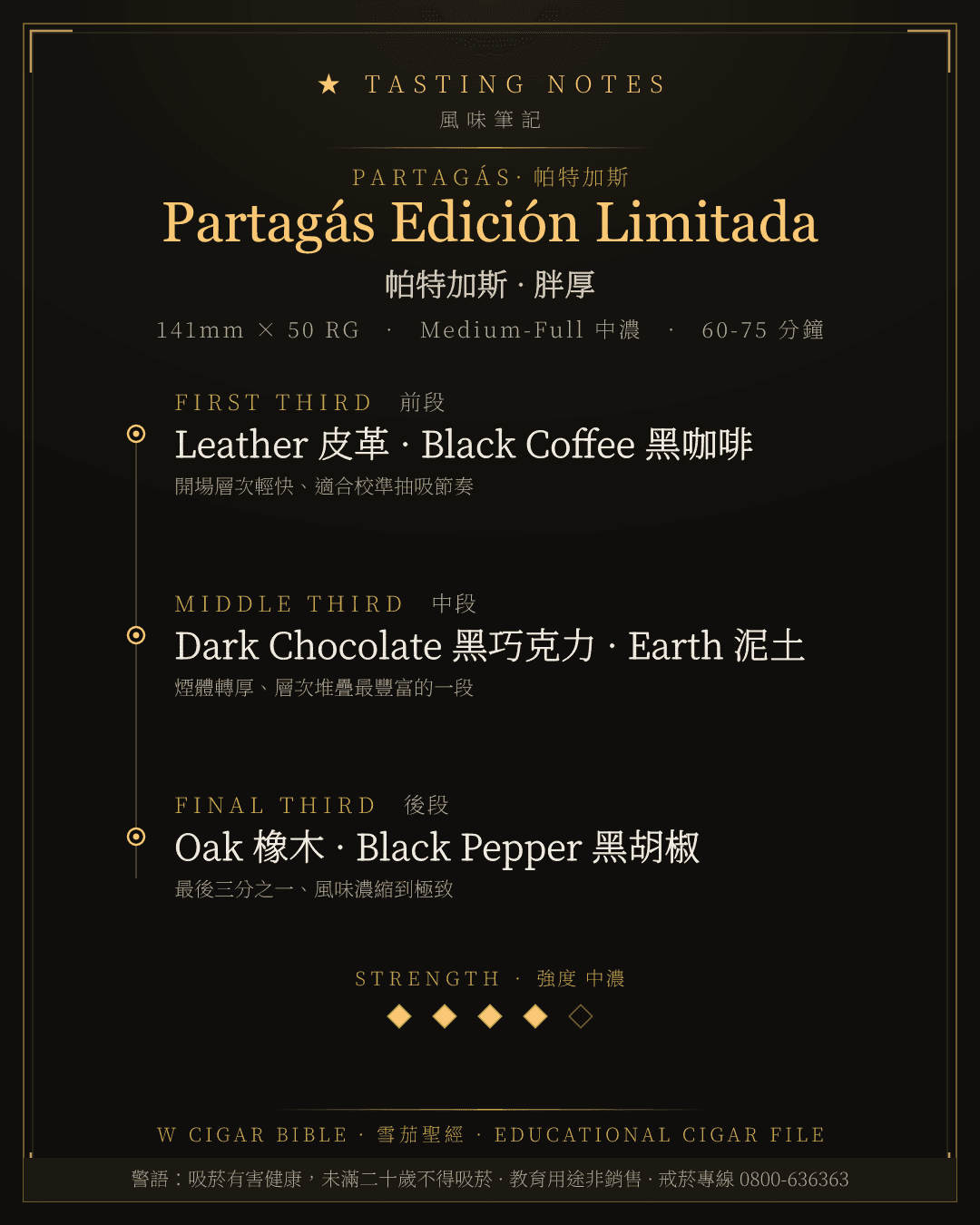
Partagás Edición Limitada 風味筆記 · 帕特加斯
TASTING NOTES · 風味筆記
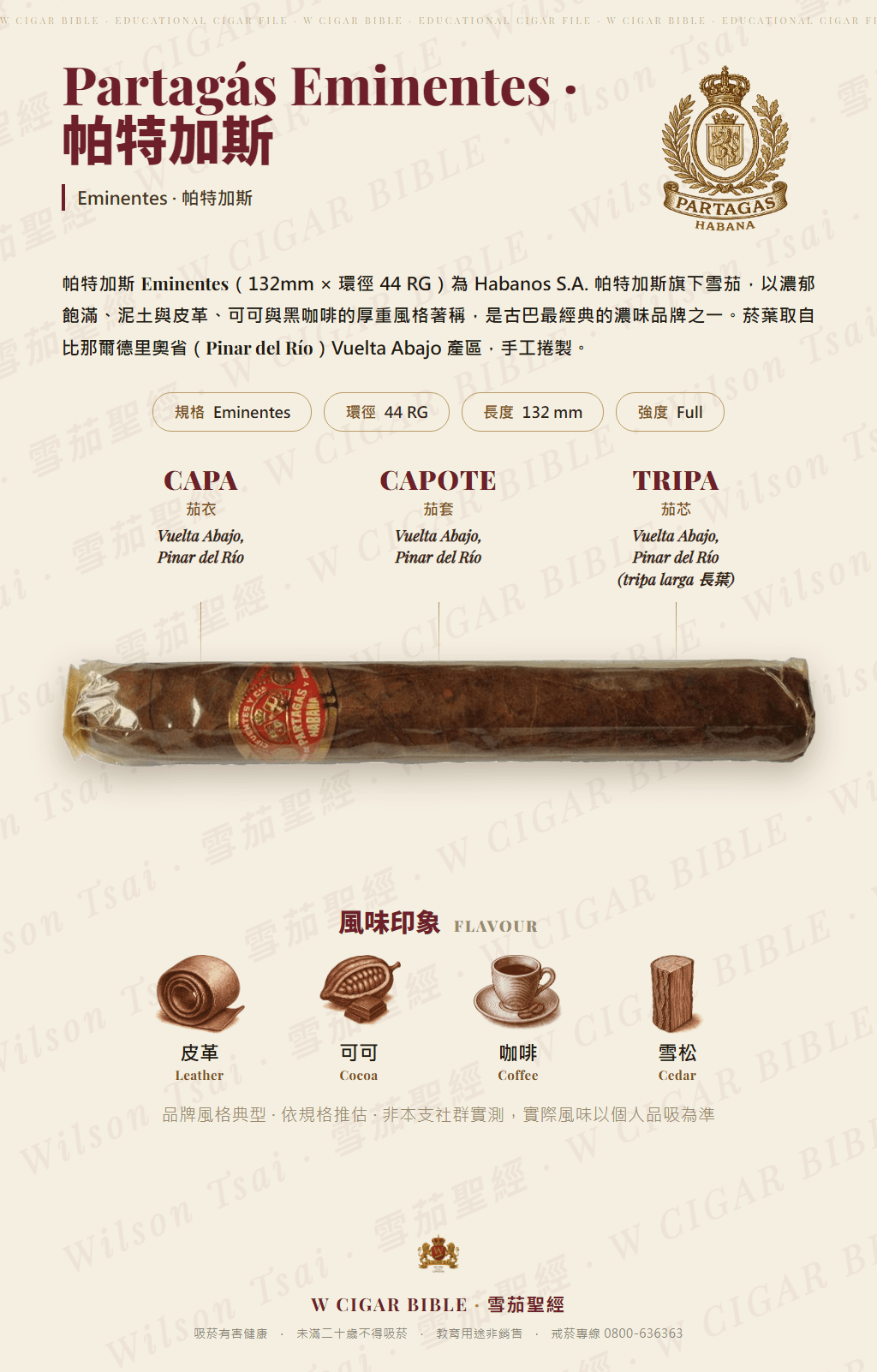
Partagás Eminentes · 帕特加斯
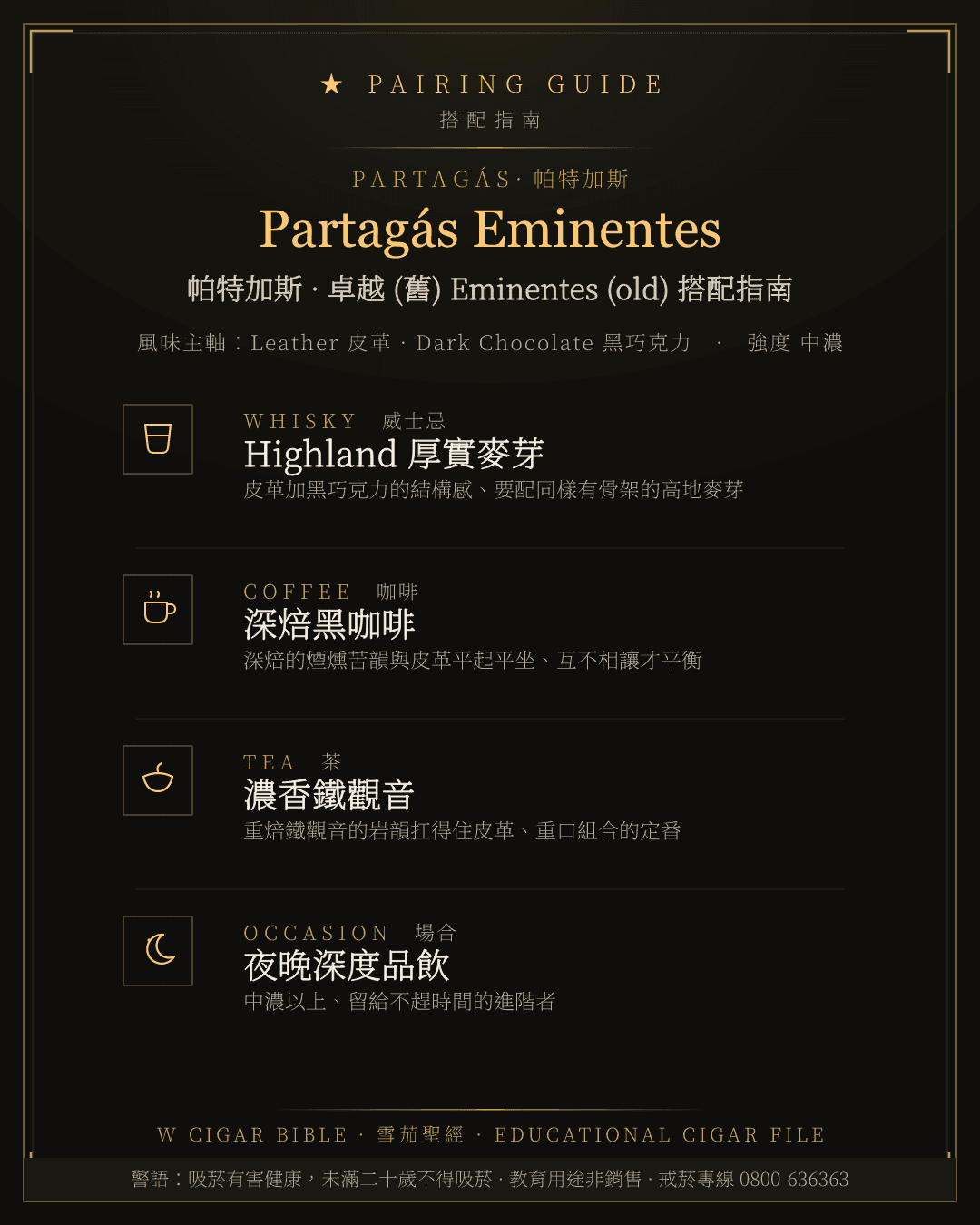
Partagás Eminentes 搭配指南 · 帕特加斯
PAIRING GUIDE · 搭配指南
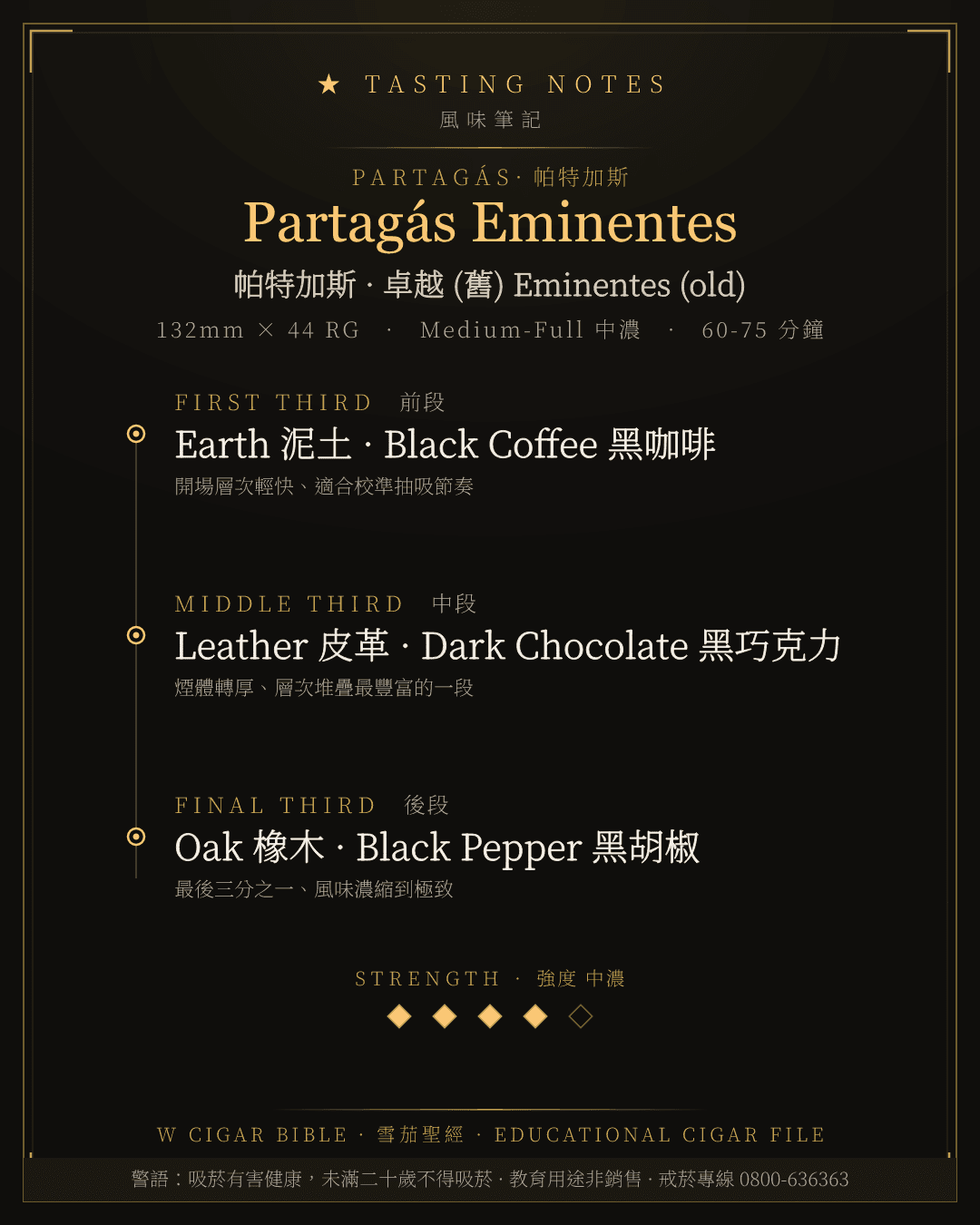
Partagás Eminentes 風味筆記 · 帕特加斯
TASTING NOTES · 風味筆記
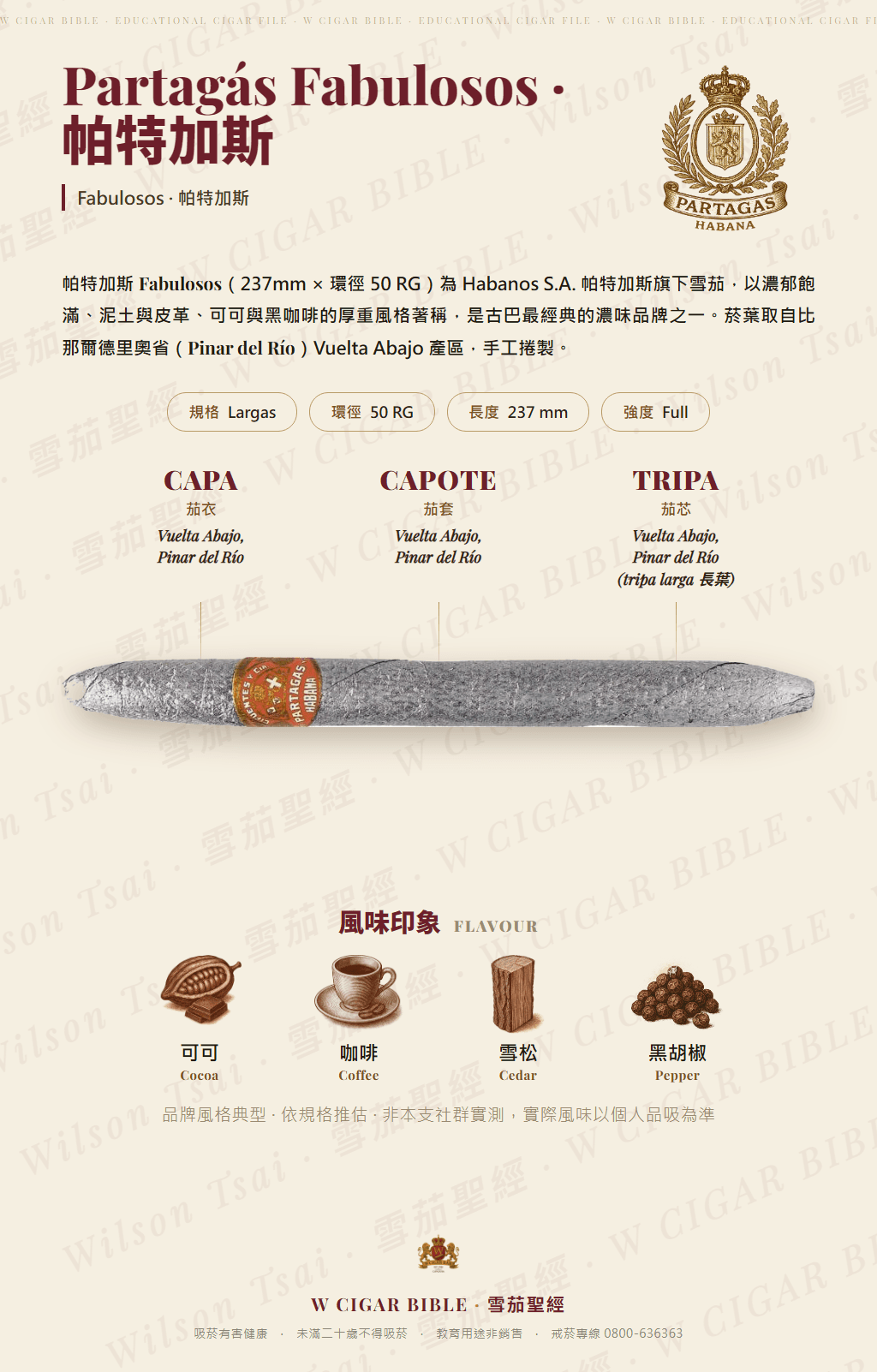
Partagás Fabulosos · 帕特加斯
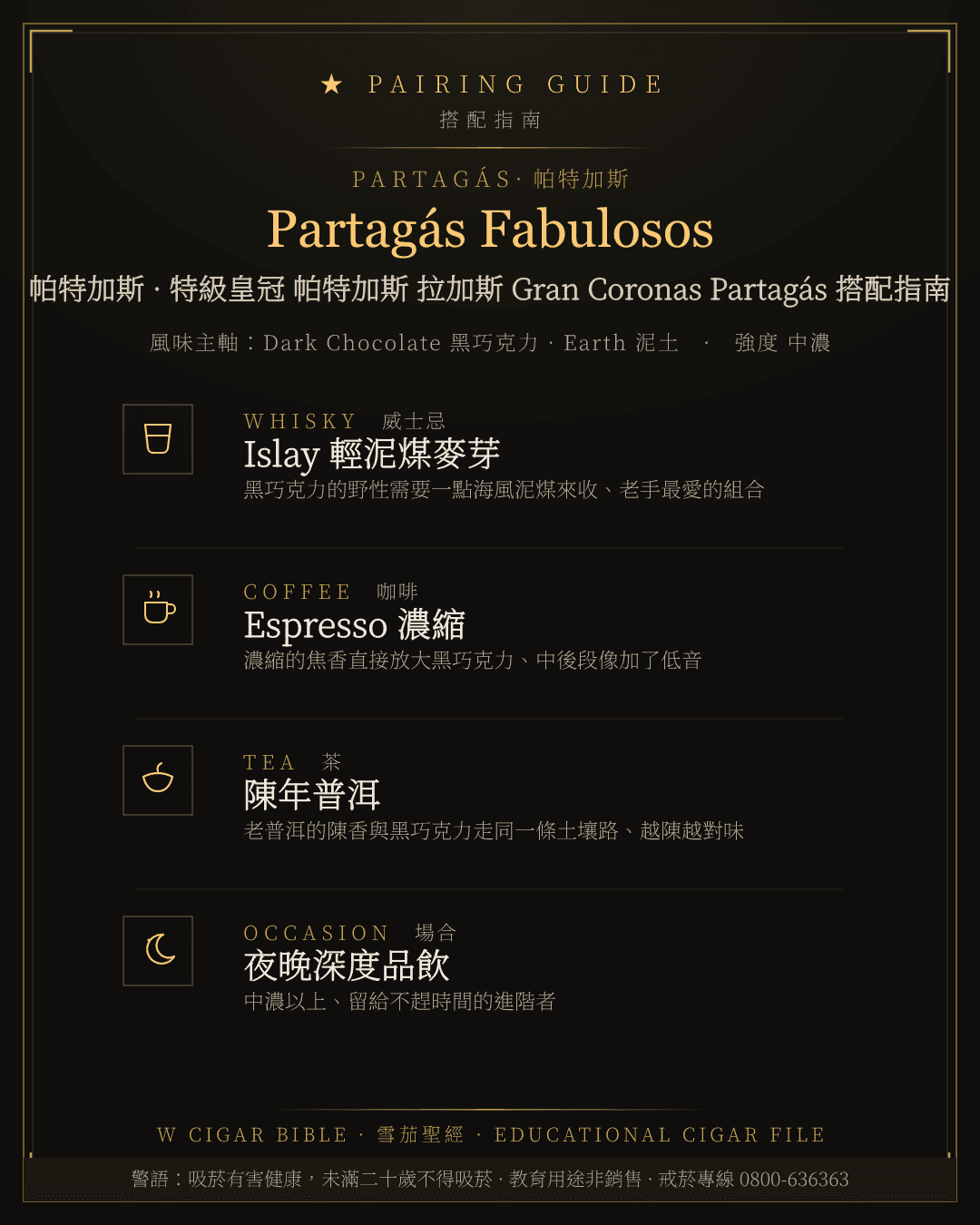
Partagás Fabulosos 搭配指南 · 帕特加斯
PAIRING GUIDE · 搭配指南
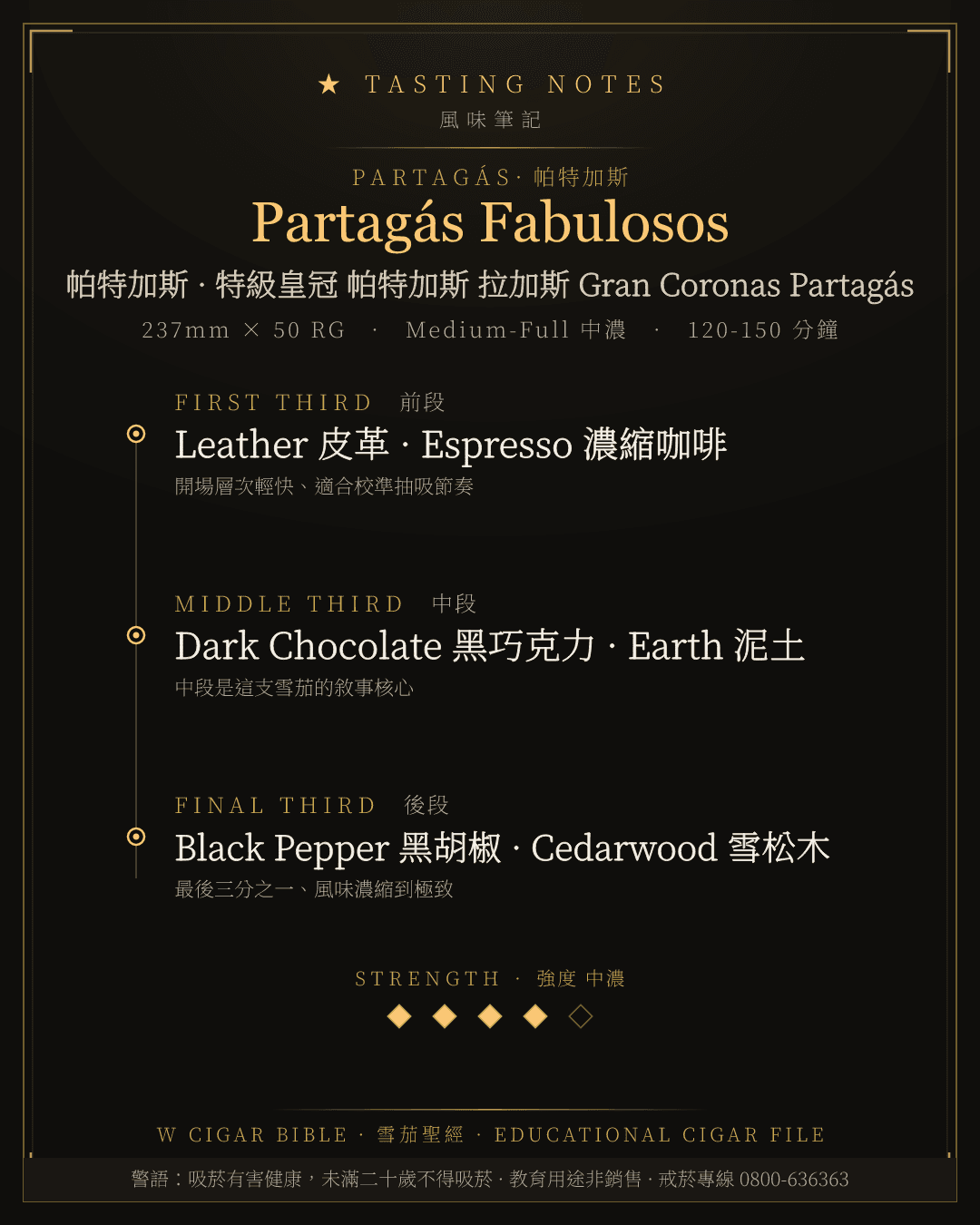
Partagás Fabulosos 風味筆記 · 帕特加斯
TASTING NOTES · 風味筆記

Partagás Fancy Tales Of Smoke · 帕特加斯
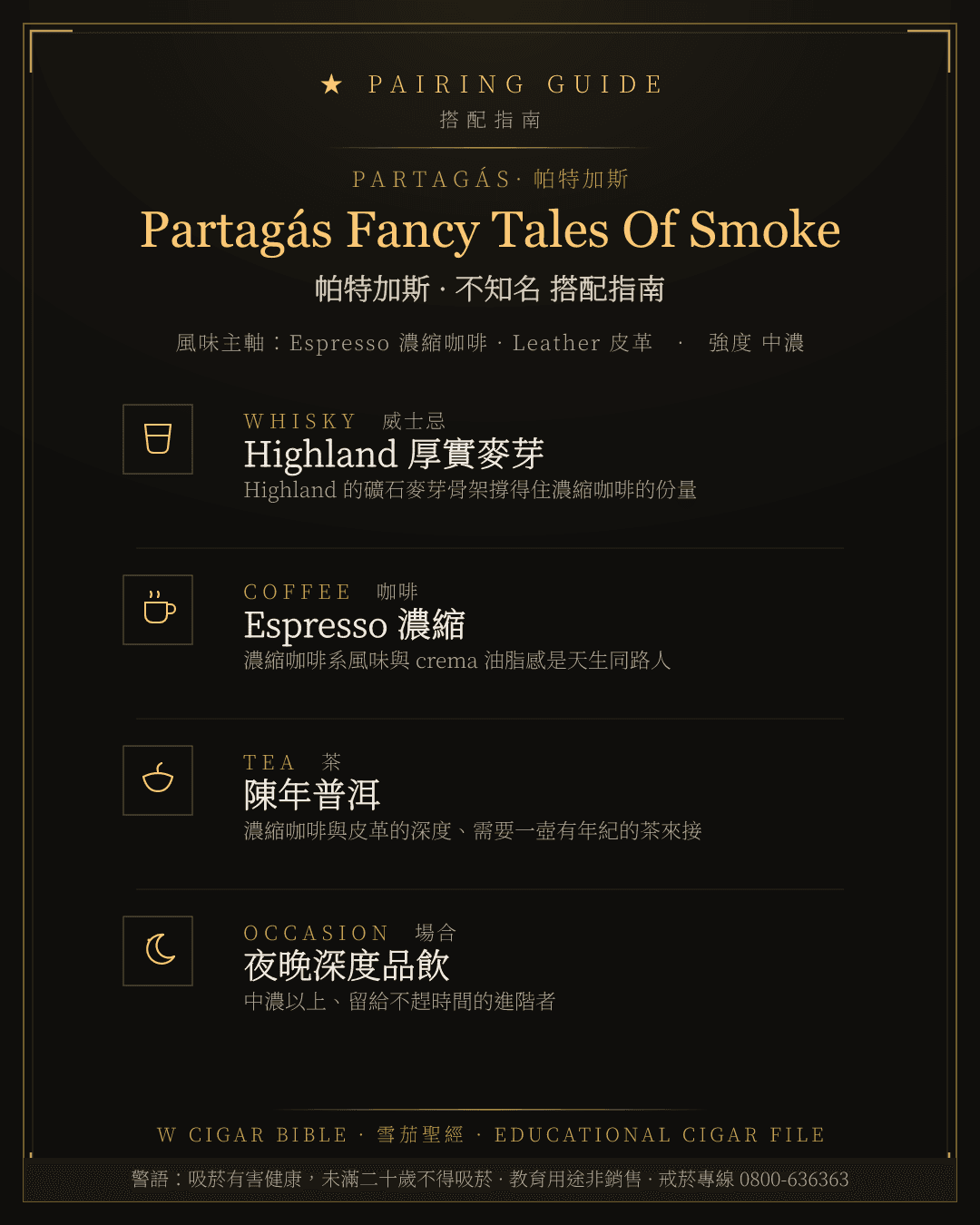
Partagás Fancy Tales Of Smoke 搭配指南 · 帕特加斯
PAIRING GUIDE · 搭配指南
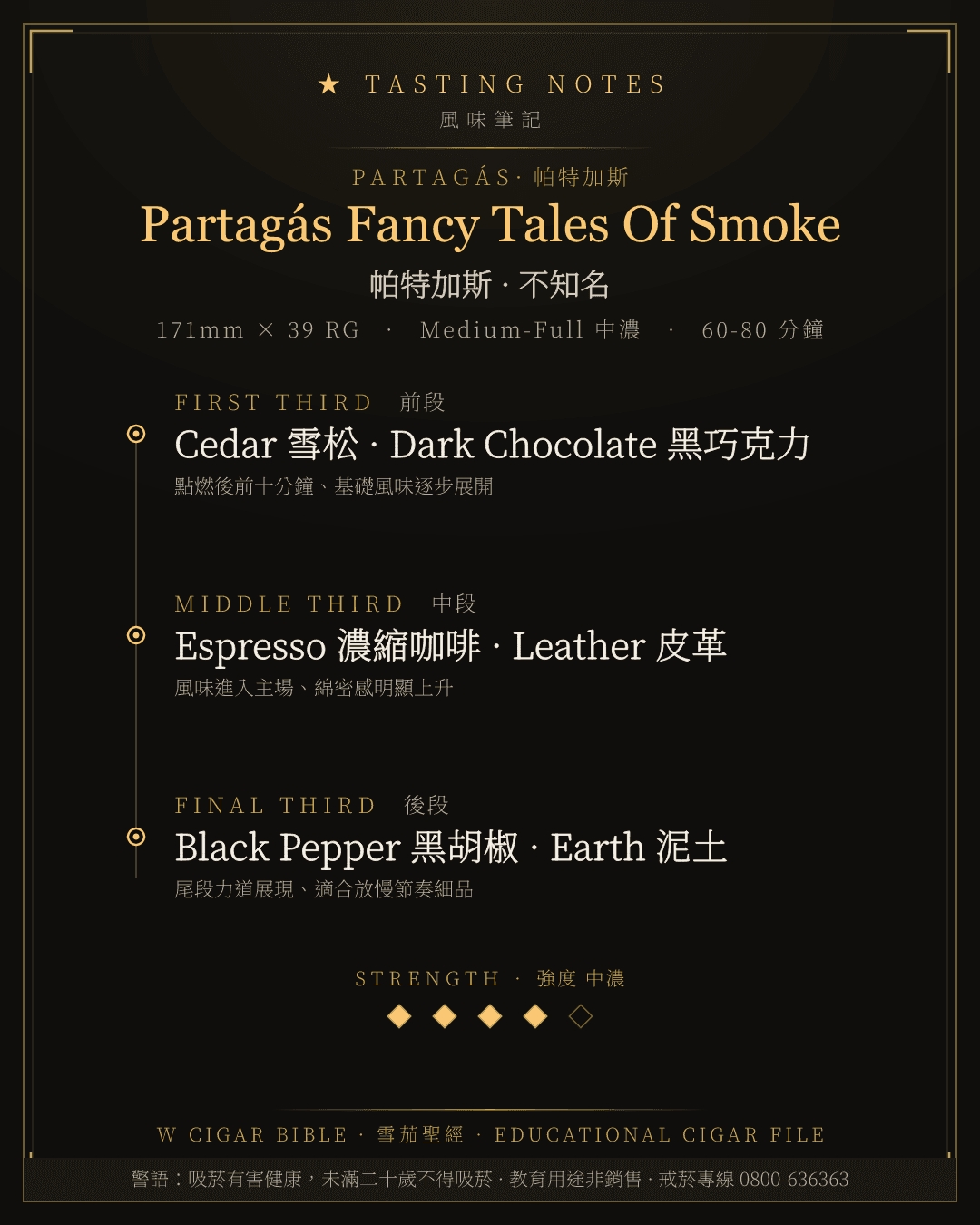
Partagás Fancy Tales Of Smoke 風味筆記 · 帕特加斯
TASTING NOTES · 風味筆記
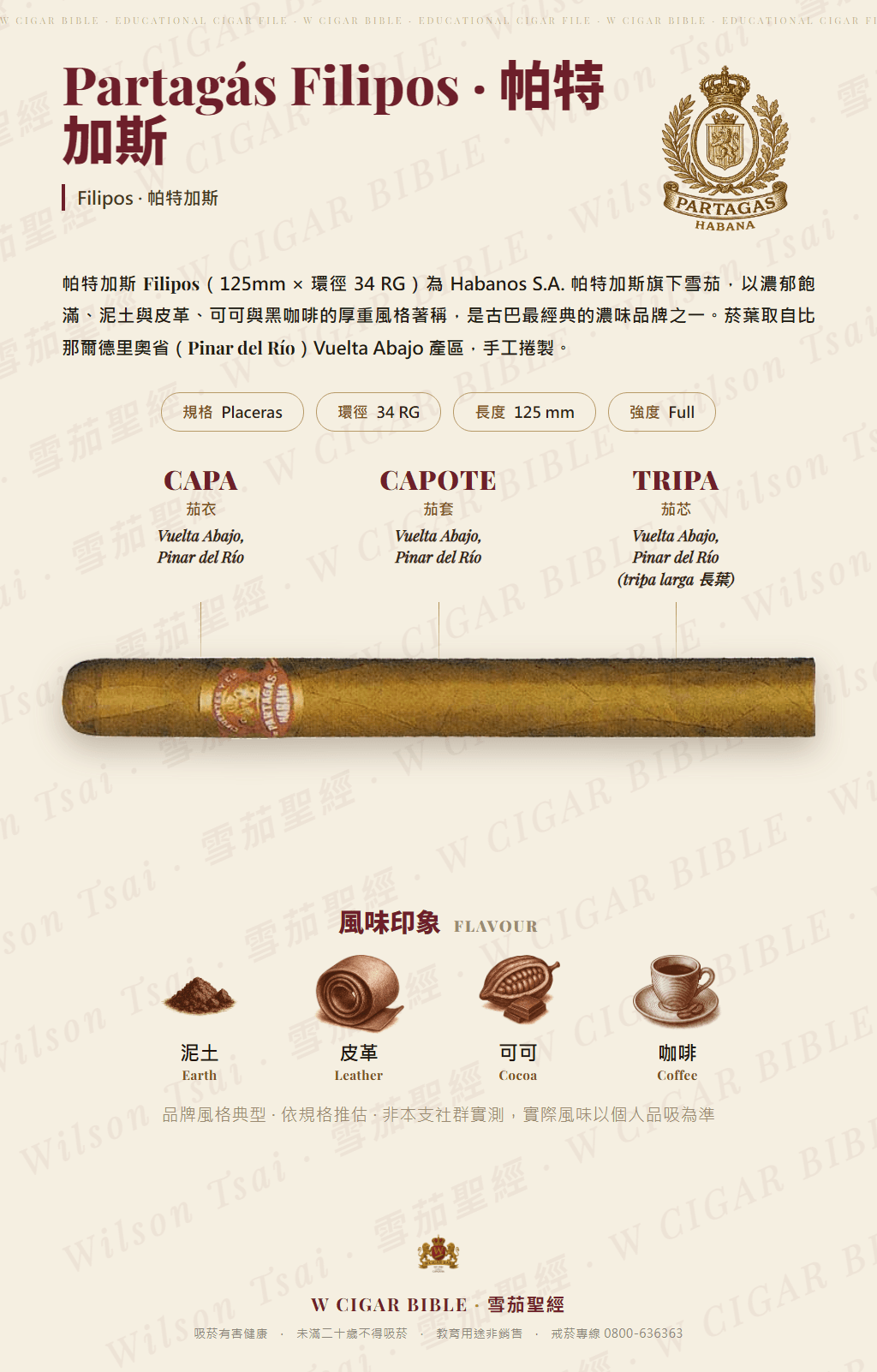
Partagás Filipos · 帕特加斯

Partagás Filipos 搭配指南 · 帕特加斯
PAIRING GUIDE · 搭配指南

Partagás Filipos 風味筆記 · 帕特加斯
TASTING NOTES · 風味筆記
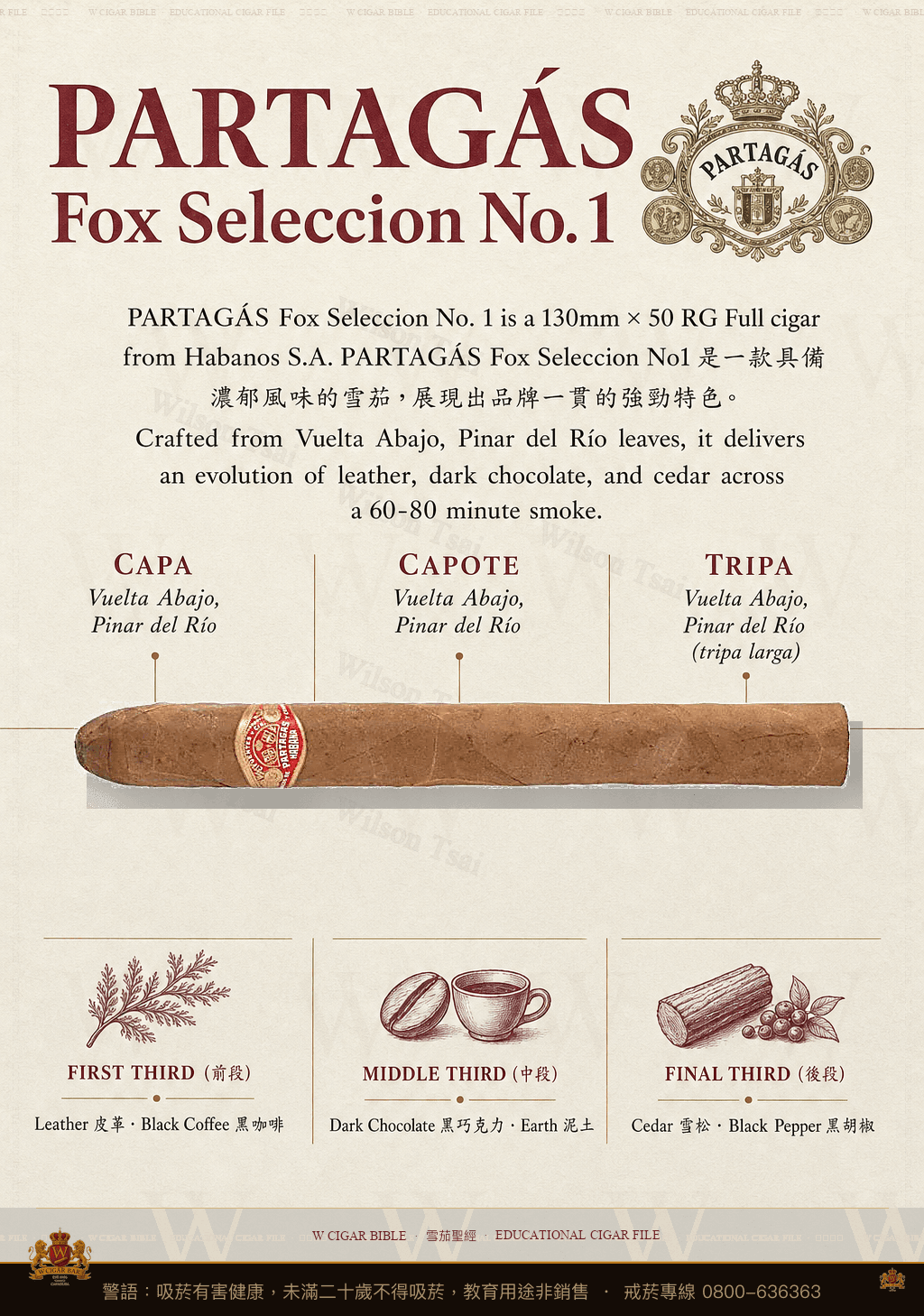
Partagás Fox Seleccion No. 1 · 帕特加斯

Partagás Fox Seleccion No. 1 搭配指南 · 帕特加斯
PAIRING GUIDE · 搭配指南
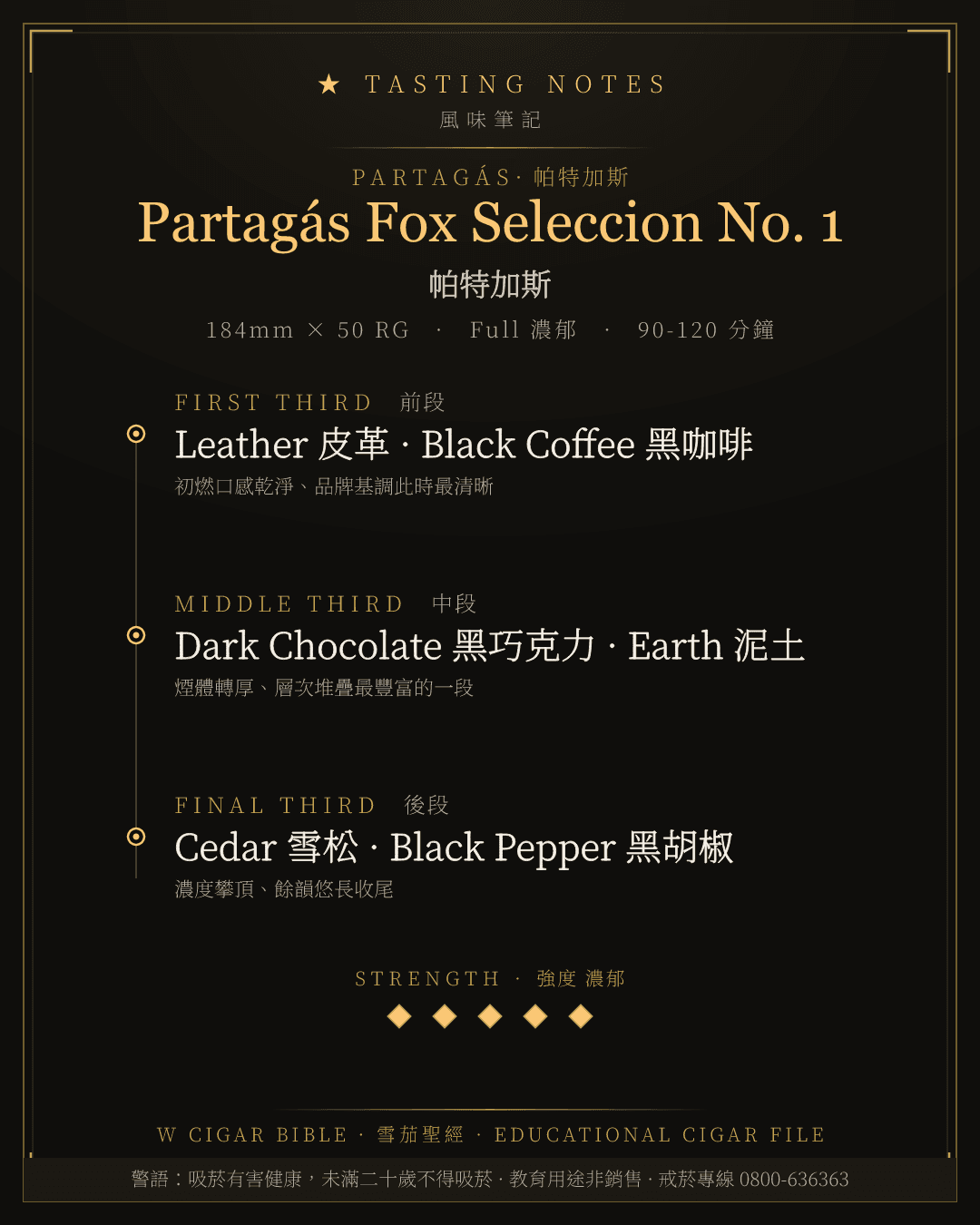
Partagás Fox Seleccion No. 1 風味筆記 · 帕特加斯
TASTING NOTES · 風味筆記
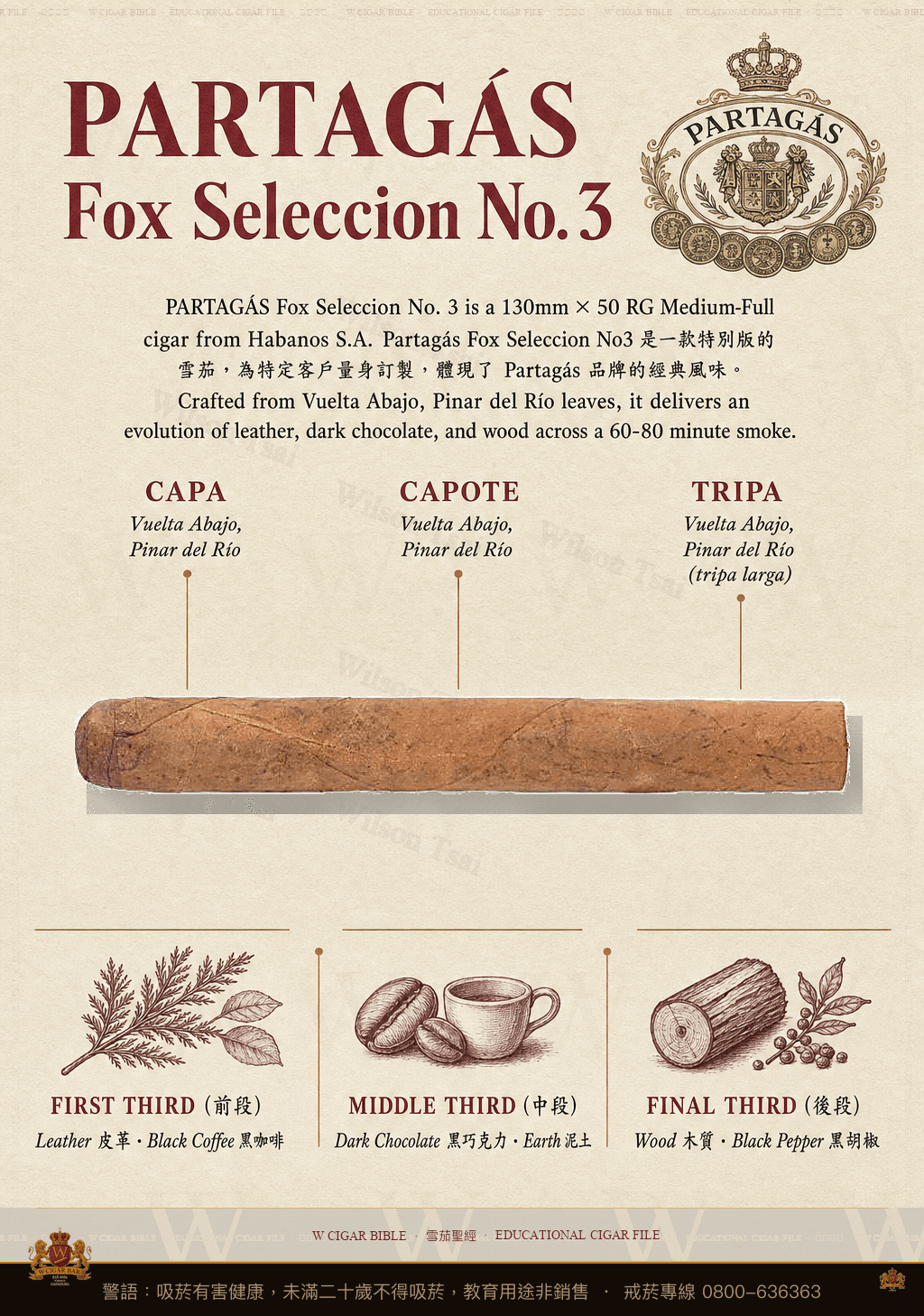
Partagás Fox Seleccion No. 3 · 帕特加斯
James J. Fox 倫敦專屬產製舊款(Coronas,142mm × 42 RG,已停產)· 雪茄檔案

Partagás Fox Seleccion No. 3 vs Punch Coronas
VITOLA SHOWDOWN · Coronas
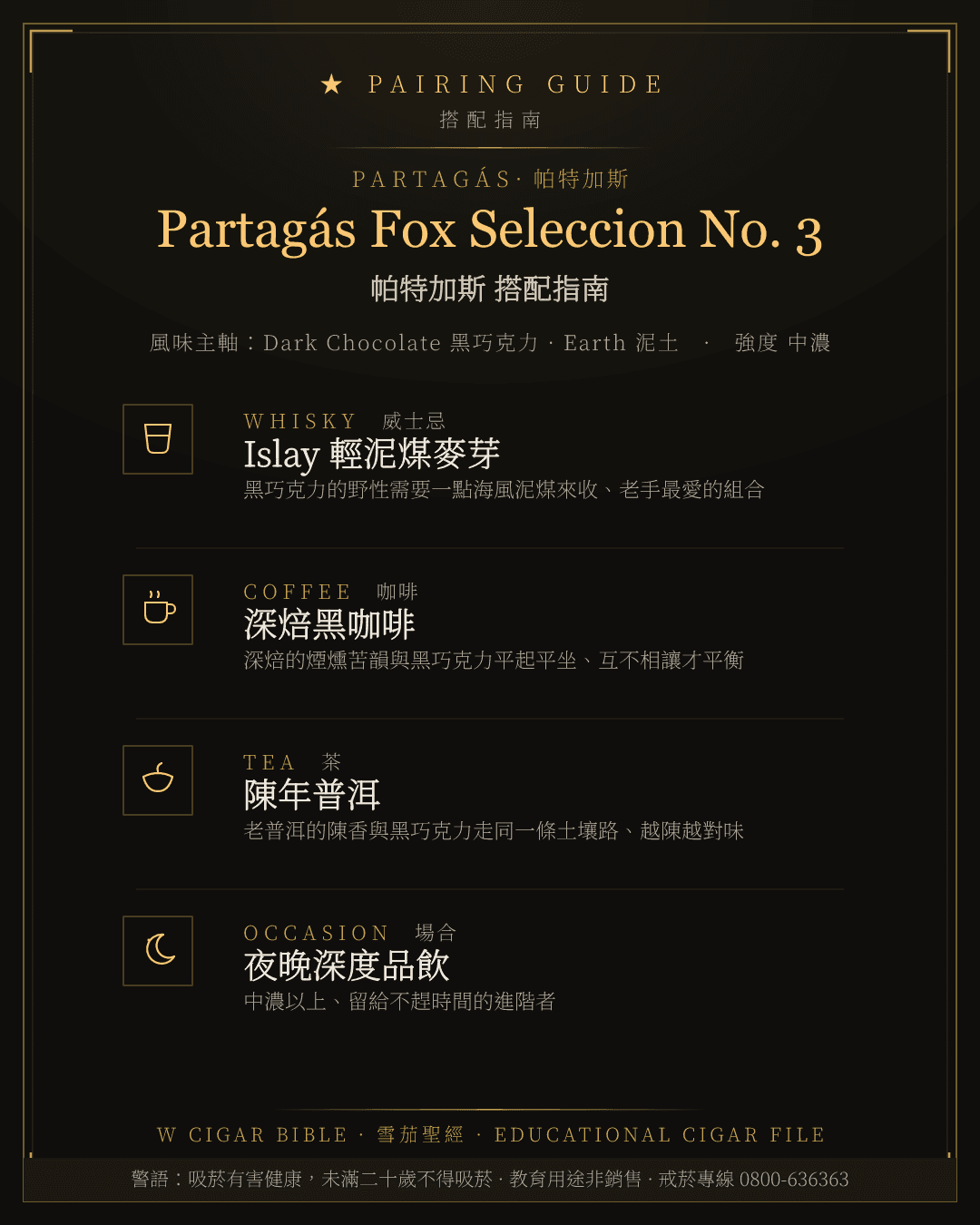
Partagás Fox Seleccion No. 3 搭配指南 · 帕特加斯
PAIRING GUIDE · 搭配指南

Partagás Fox Seleccion No. 3 風味筆記 · 帕特加斯
TASTING NOTES · 風味筆記

Partagás Gran Reserva Cosecha 2007 搭配指南 · 帕特加斯
PAIRING GUIDE · 搭配指南
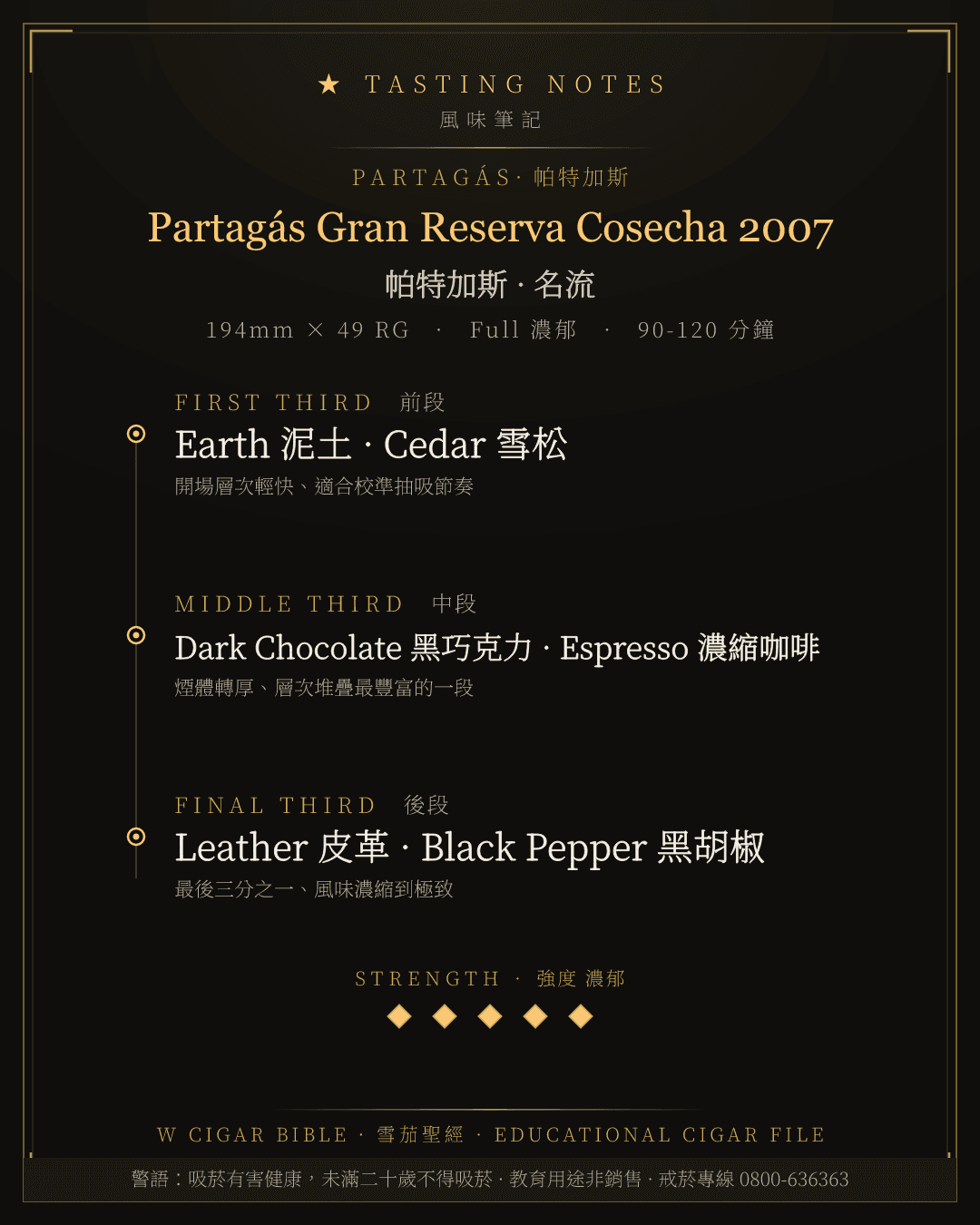
Partagás Gran Reserva Cosecha 2007 風味筆記 · 帕特加斯
TASTING NOTES · 風味筆記

Partagás Gran Reserva Cosecha 2015 搭配指南 · 帕特加斯
PAIRING GUIDE · 搭配指南
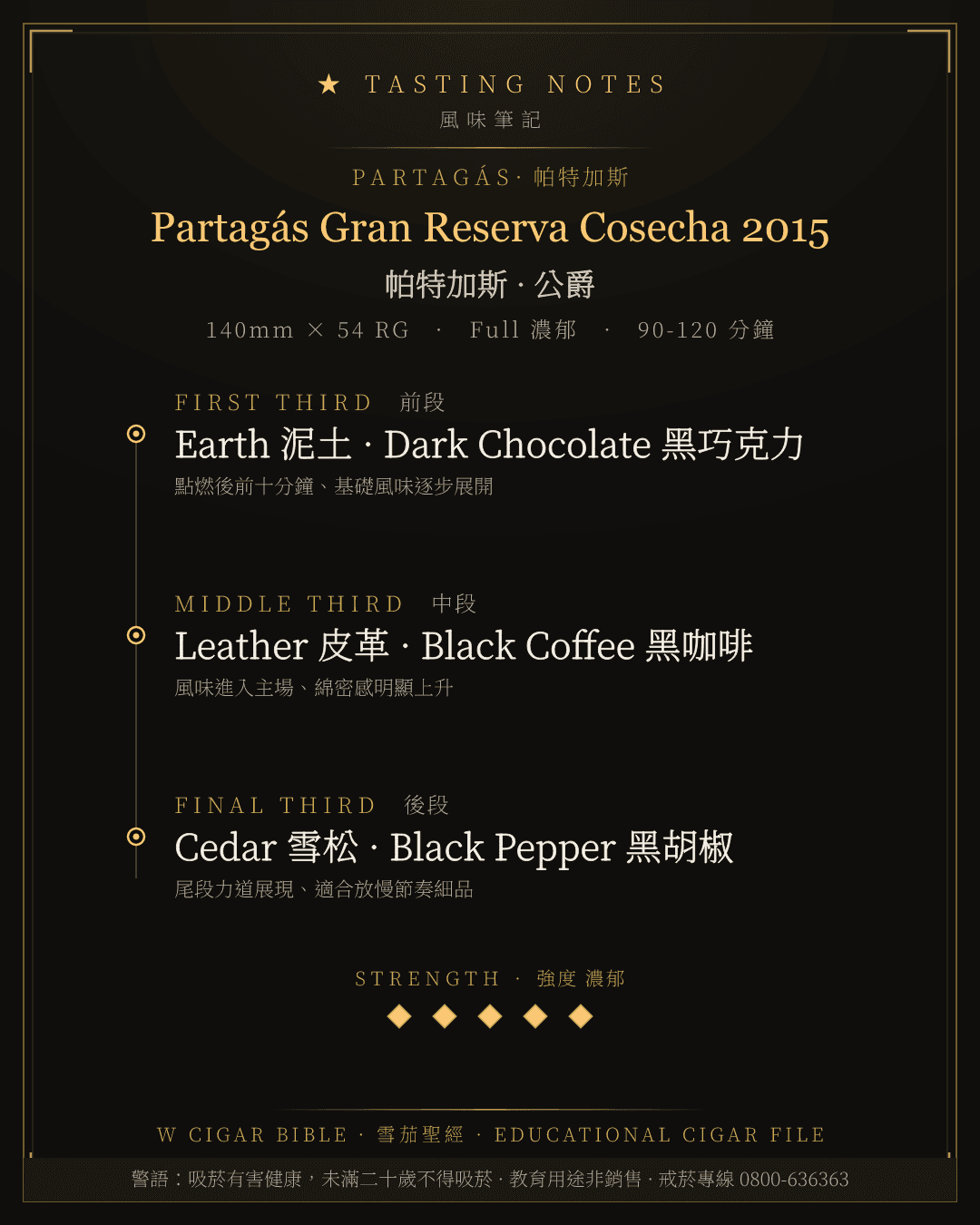
Partagás Gran Reserva Cosecha 2015 風味筆記 · 帕特加斯
TASTING NOTES · 風味筆記
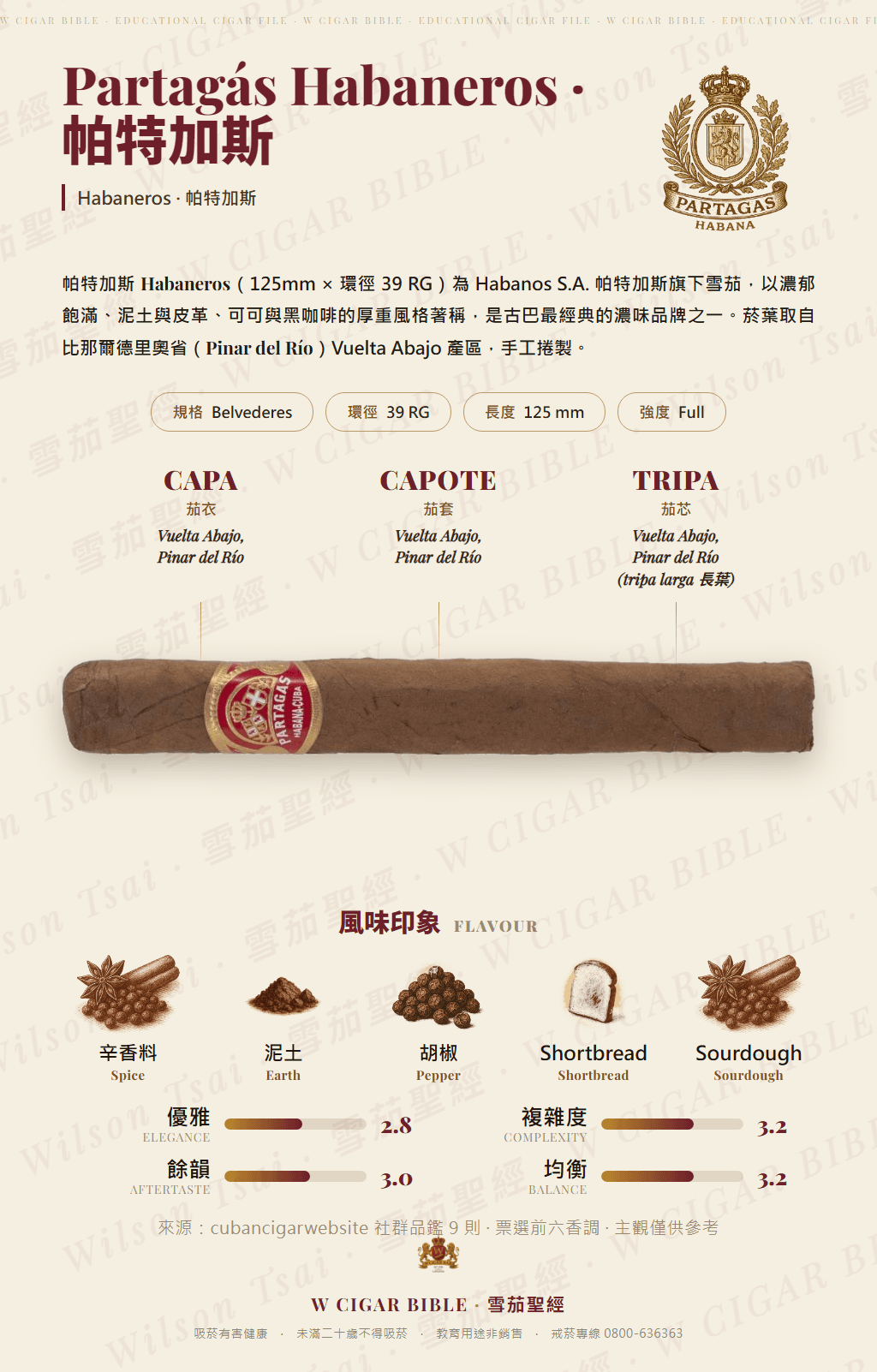
Partagás Habaneros · 帕特加斯

Partagás Habaneros vs Punch Belvederes
VITOLA SHOWDOWN · Belvederes

Partagás Habaneros 搭配指南 · 帕特加斯
PAIRING GUIDE · 搭配指南
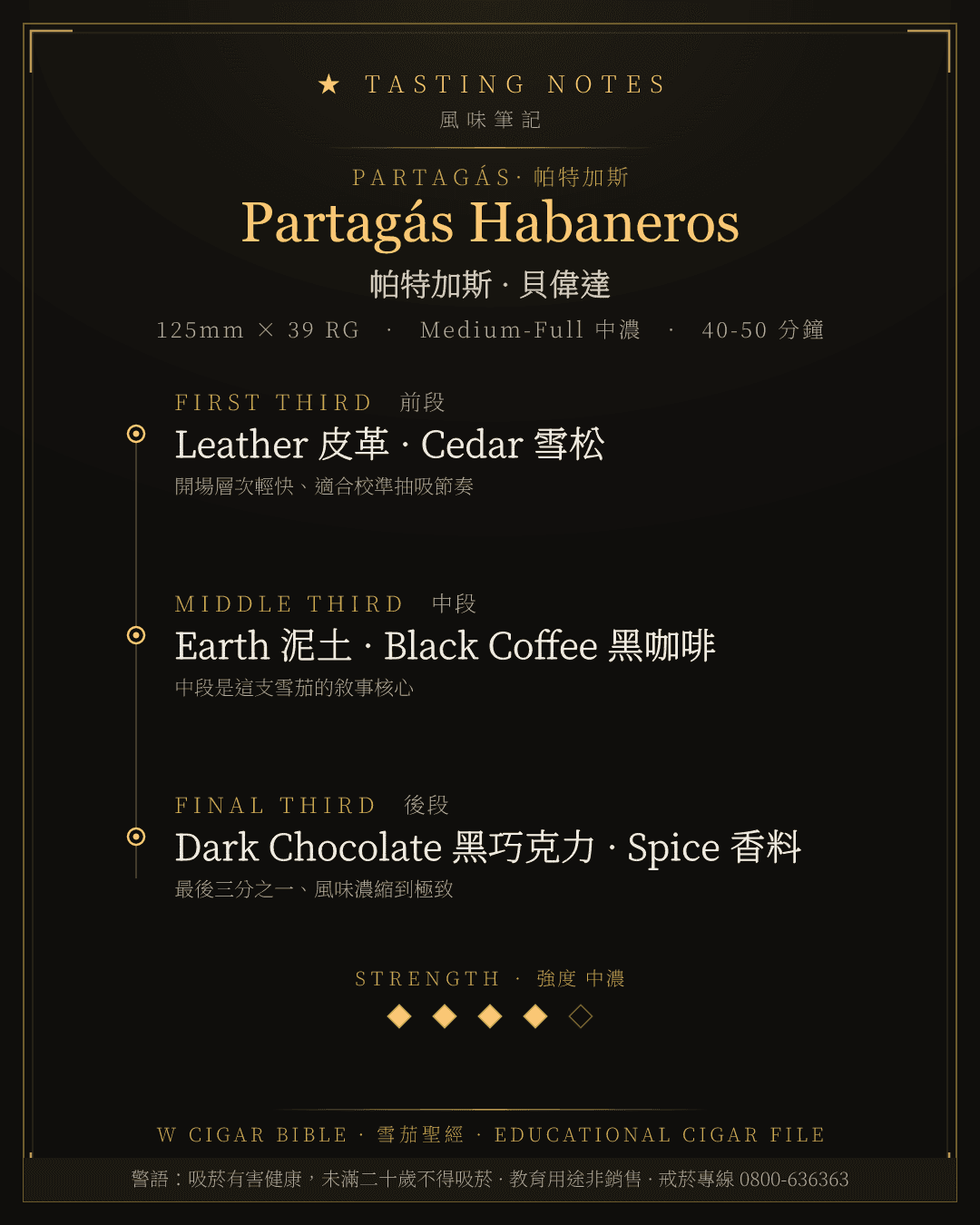
Partagás Habaneros 風味筆記 · 帕特加斯
TASTING NOTES · 風味筆記
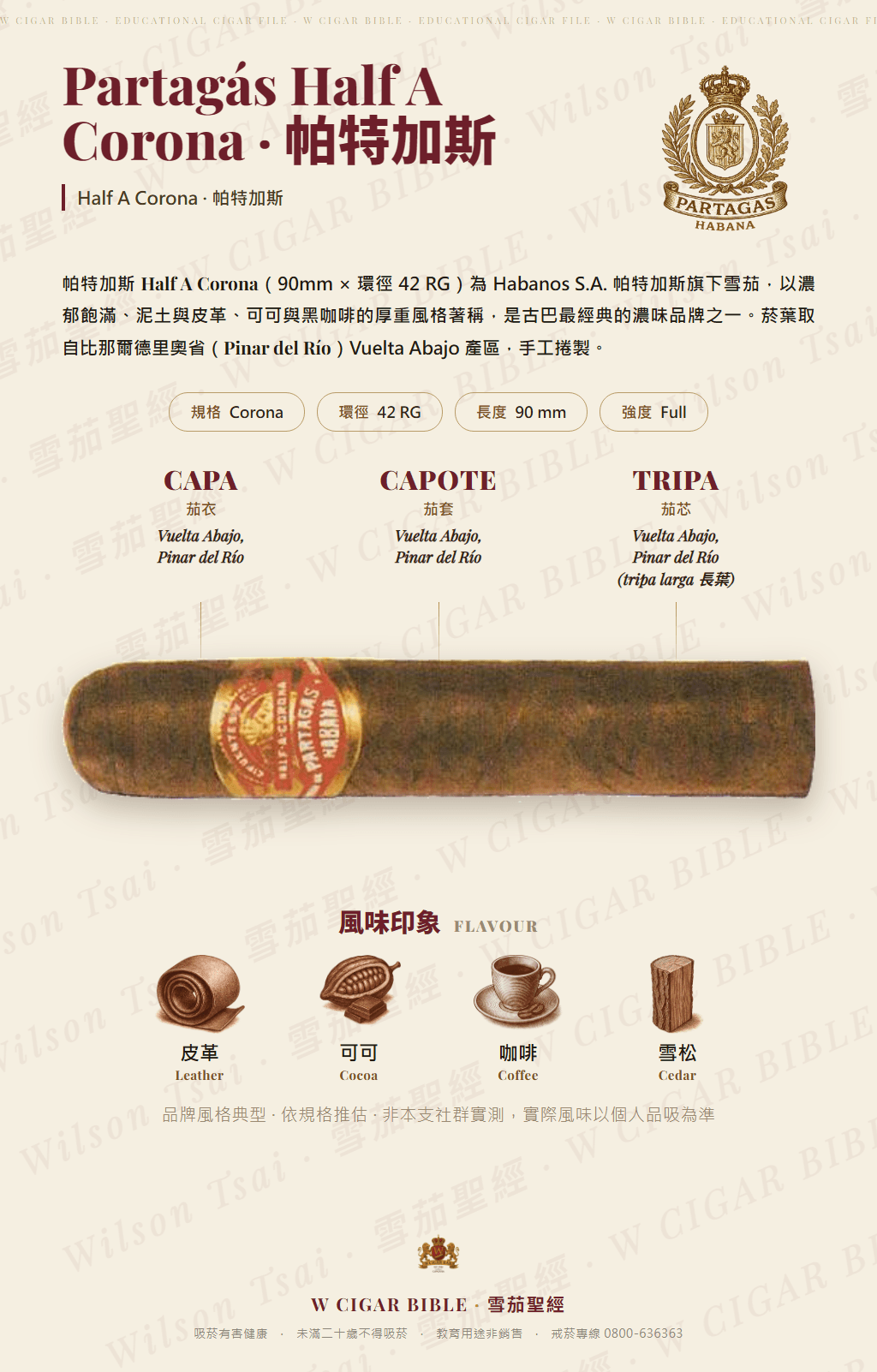
Partagás Half A Corona · 帕特加斯
1960 年前發行之舊款(Half a Corona,90mm × 42 RG,1970 年代停產)· 雪茄檔案
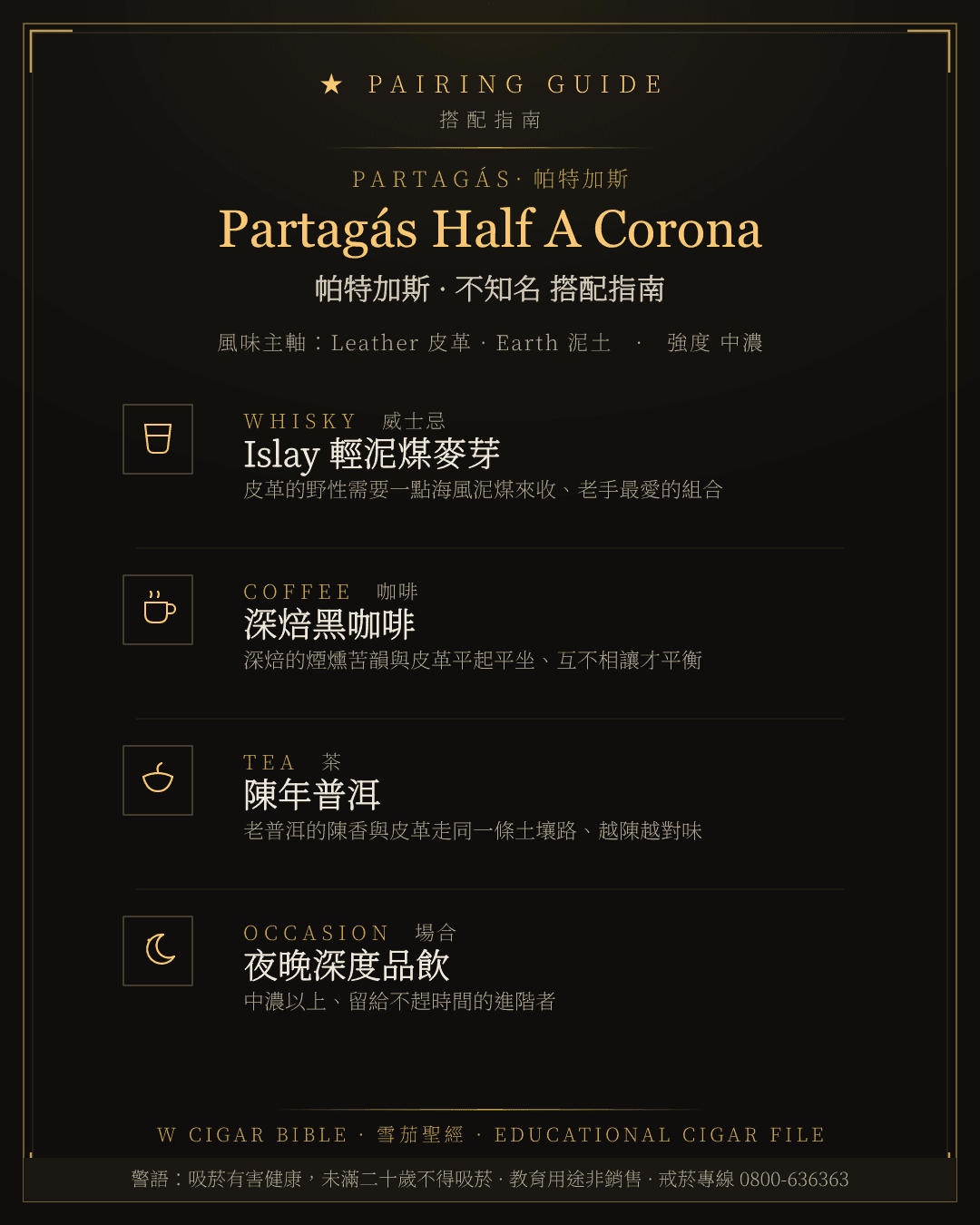
Partagás Half A Corona 搭配指南 · 帕特加斯
PAIRING GUIDE · 搭配指南

Partagás Half A Corona 風味筆記 · 帕特加斯
TASTING NOTES · 風味筆記

Partagás Half Coronas 搭配指南 · 帕特加斯
PAIRING GUIDE · 搭配指南
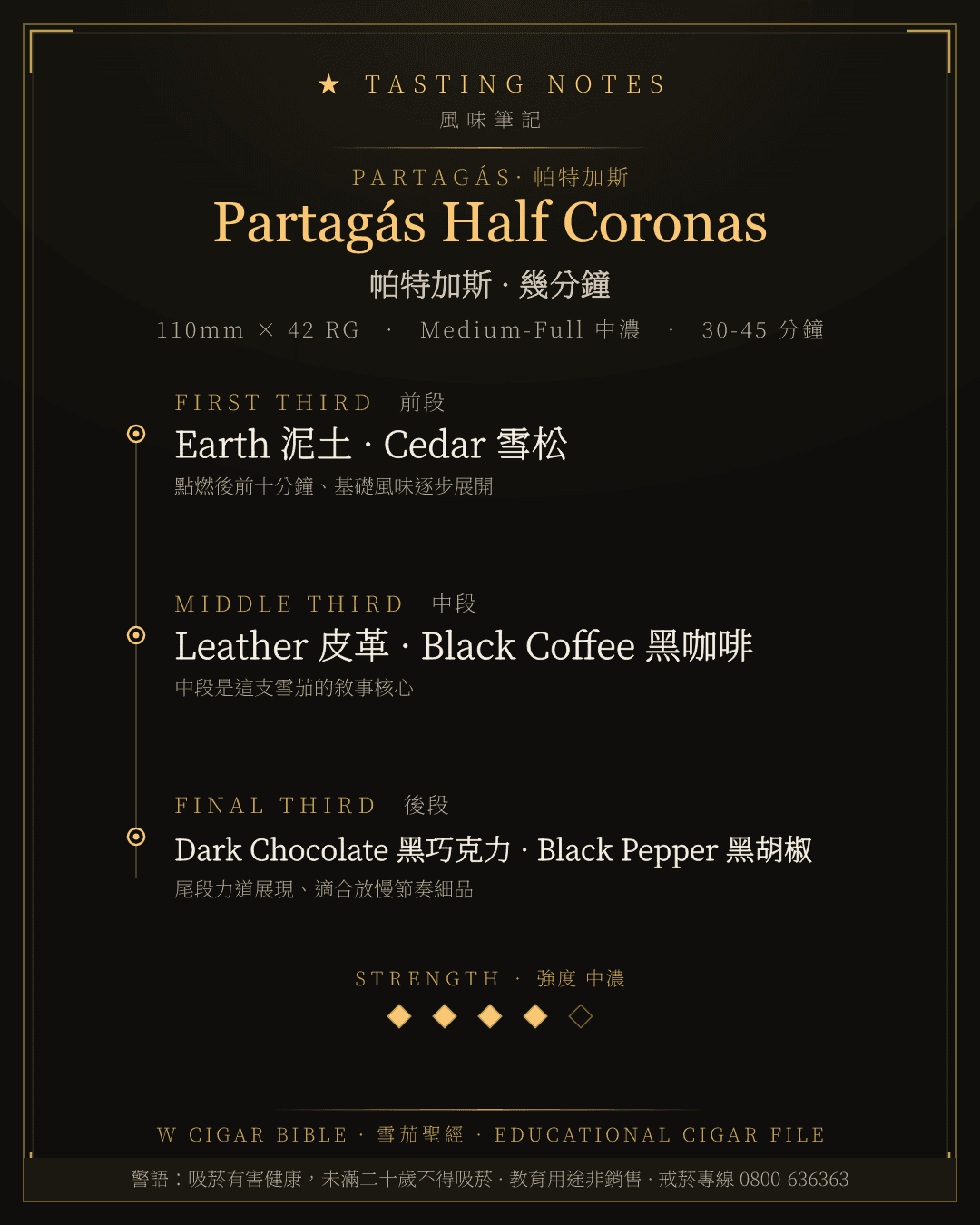
Partagás Half Coronas 風味筆記 · 帕特加斯
TASTING NOTES · 風味筆記
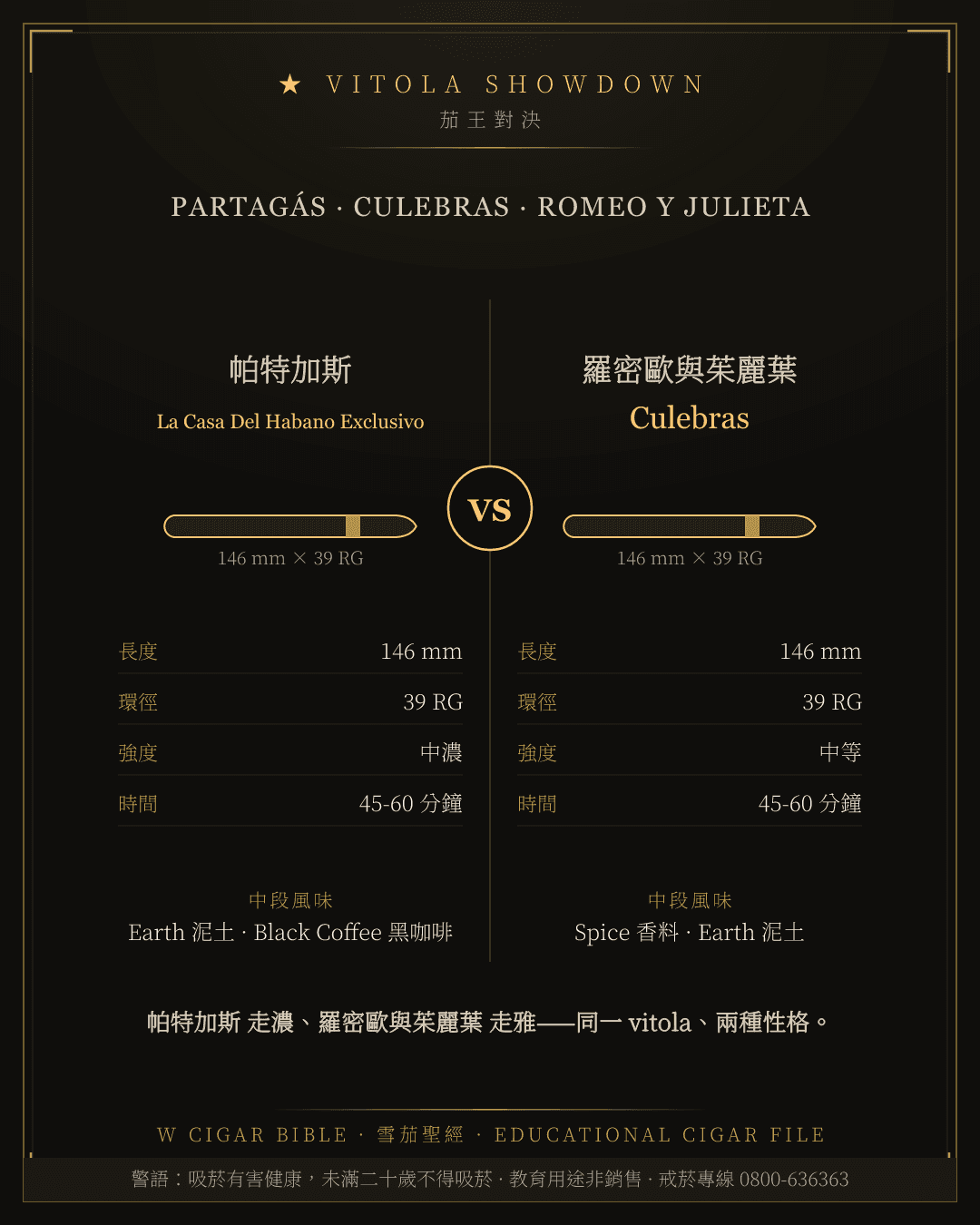
Partagás La Casa Del Habano Exclusivo vs Romeo Y Julieta Culebras
VITOLA SHOWDOWN · Culebras
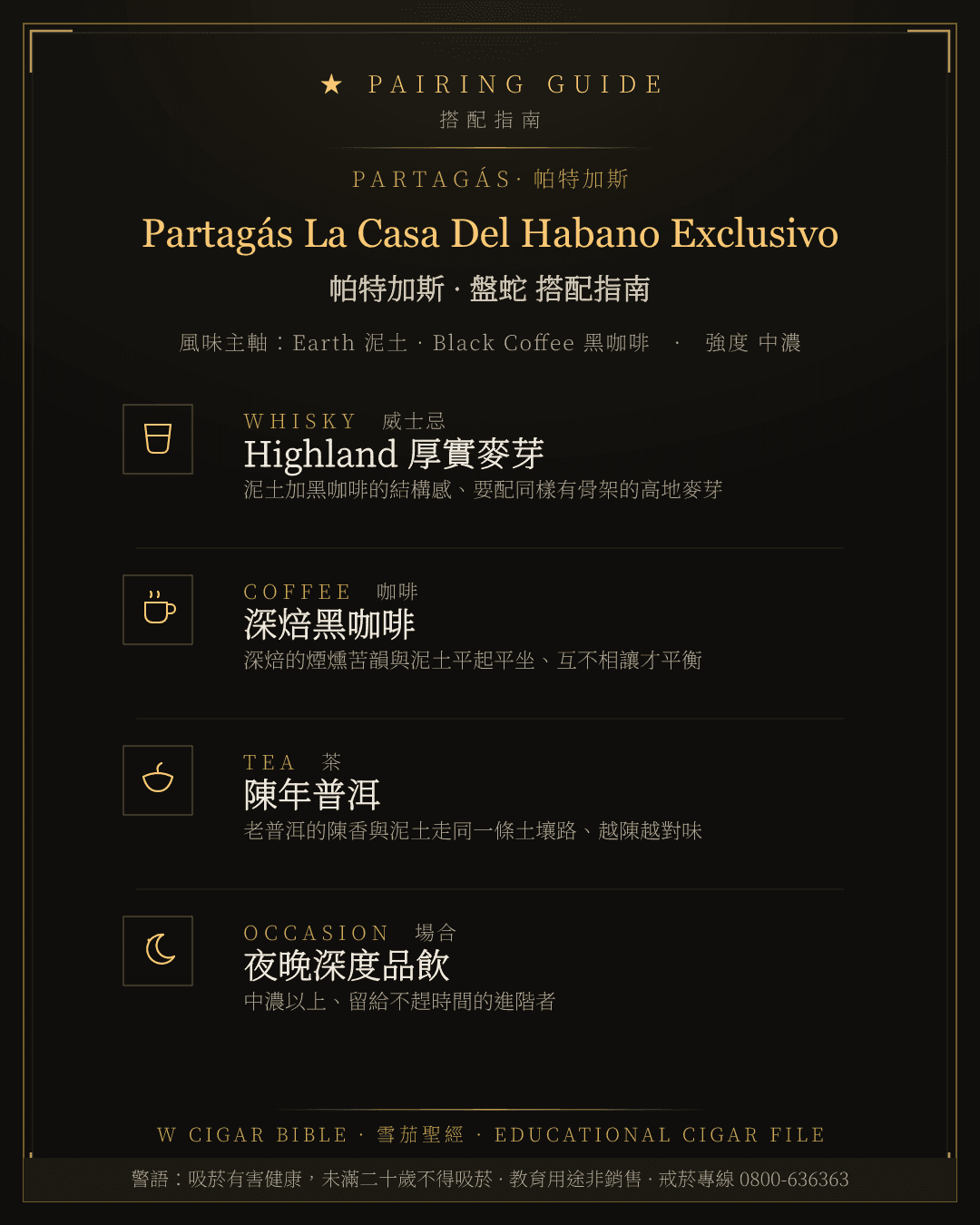
Partagás La Casa Del Habano Exclusivo 搭配指南 · 帕特加斯
PAIRING GUIDE · 搭配指南

Partagás La Casa Del Habano Exclusivo 風味筆記 · 帕特加斯
TASTING NOTES · 風味筆記
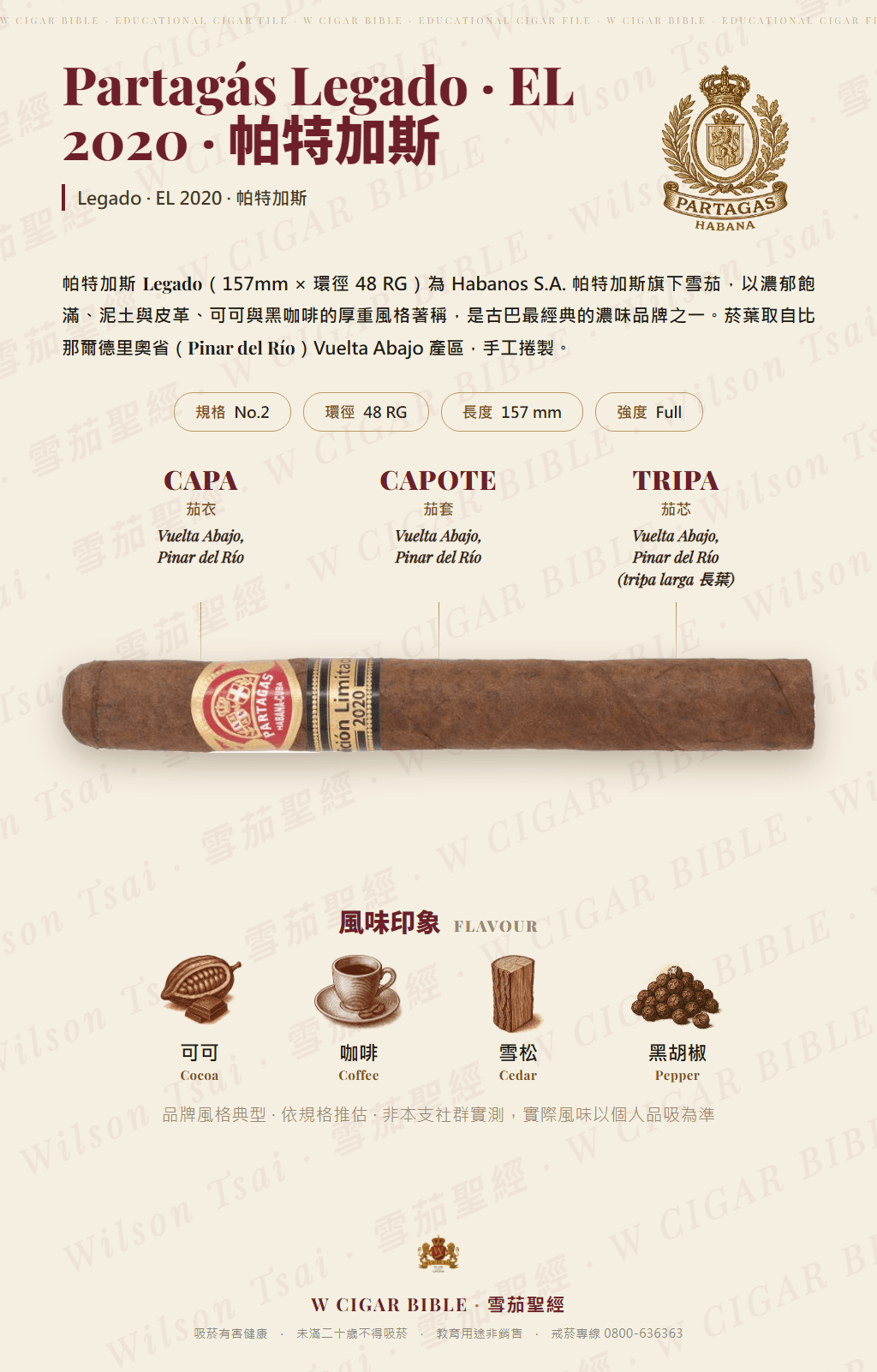
Partagás Legado · EL 2020 · 帕特加斯
EL 2020 · 限量年度版 Edición Limitada · 雪茄檔案
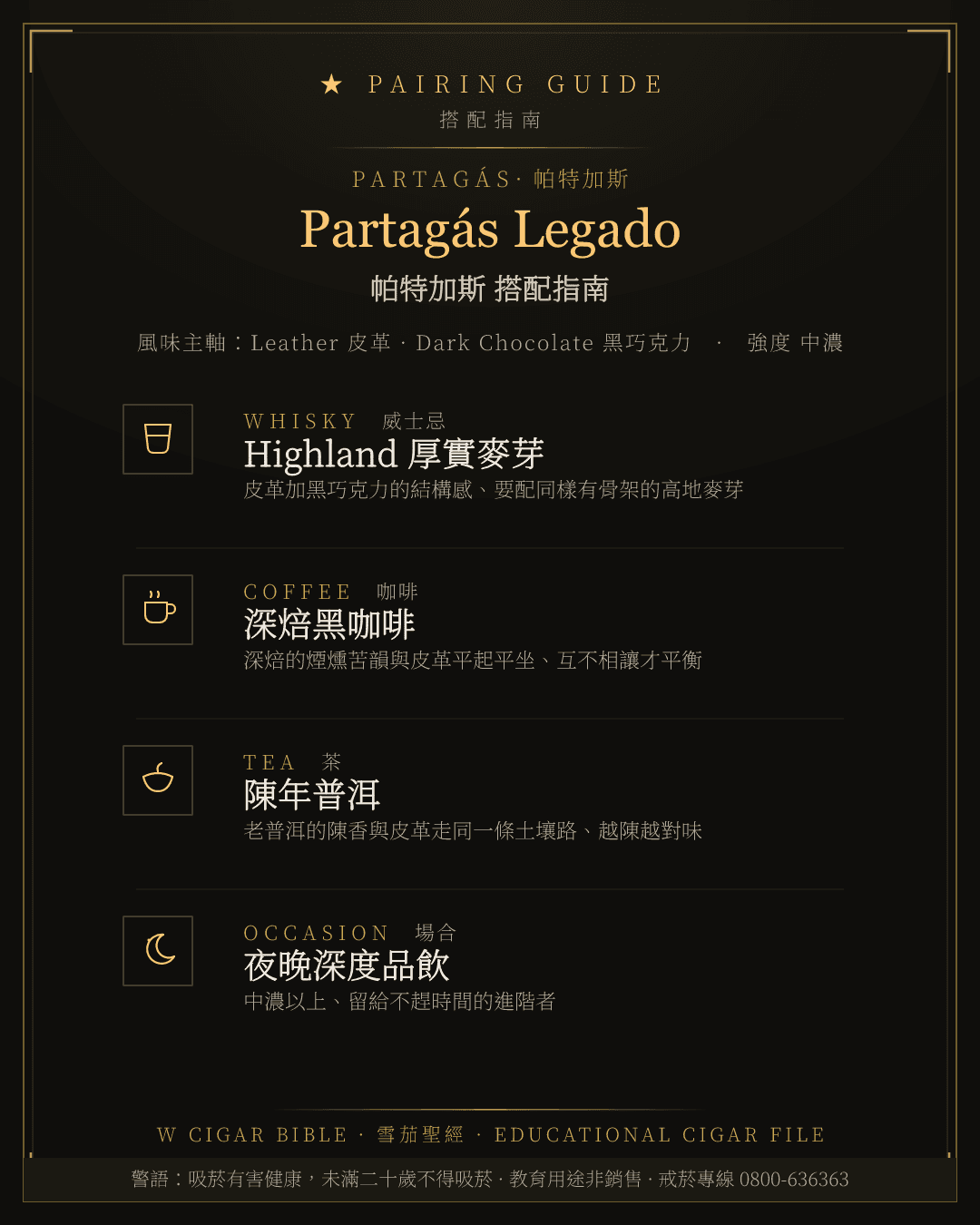
Partagás Legado 搭配指南 · 帕特加斯
PAIRING GUIDE · 搭配指南
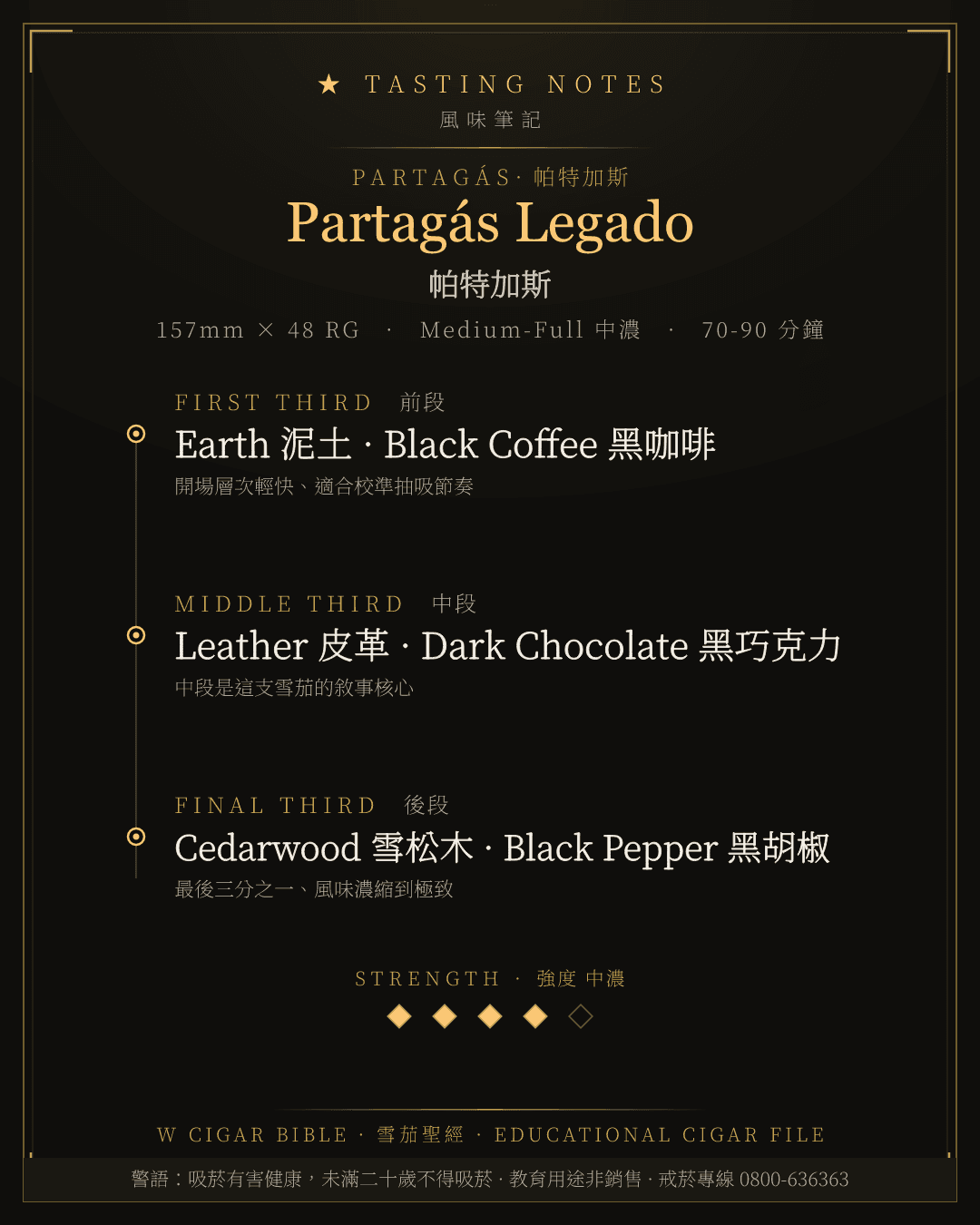
Partagás Legado 風味筆記 · 帕特加斯
TASTING NOTES · 風味筆記

Partagás Línea Maestra Rito · 帕特加斯
Línea Maestra 系列常規款(Gustosos 廠規 52 環徑 × 168mm,2023 年發表、在產)· 雪茄檔案
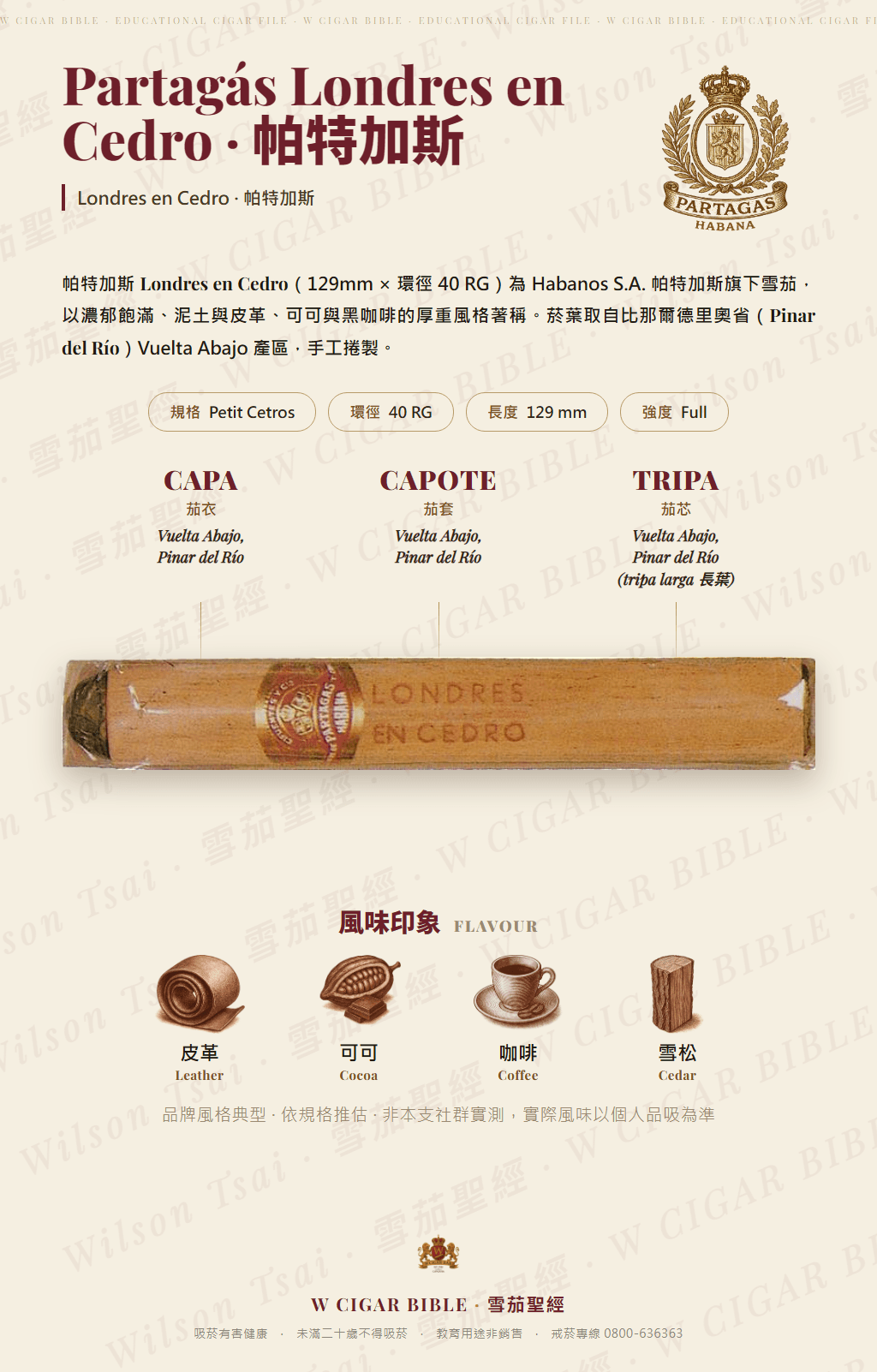
Partagás Londres en Cedro · 帕特加斯
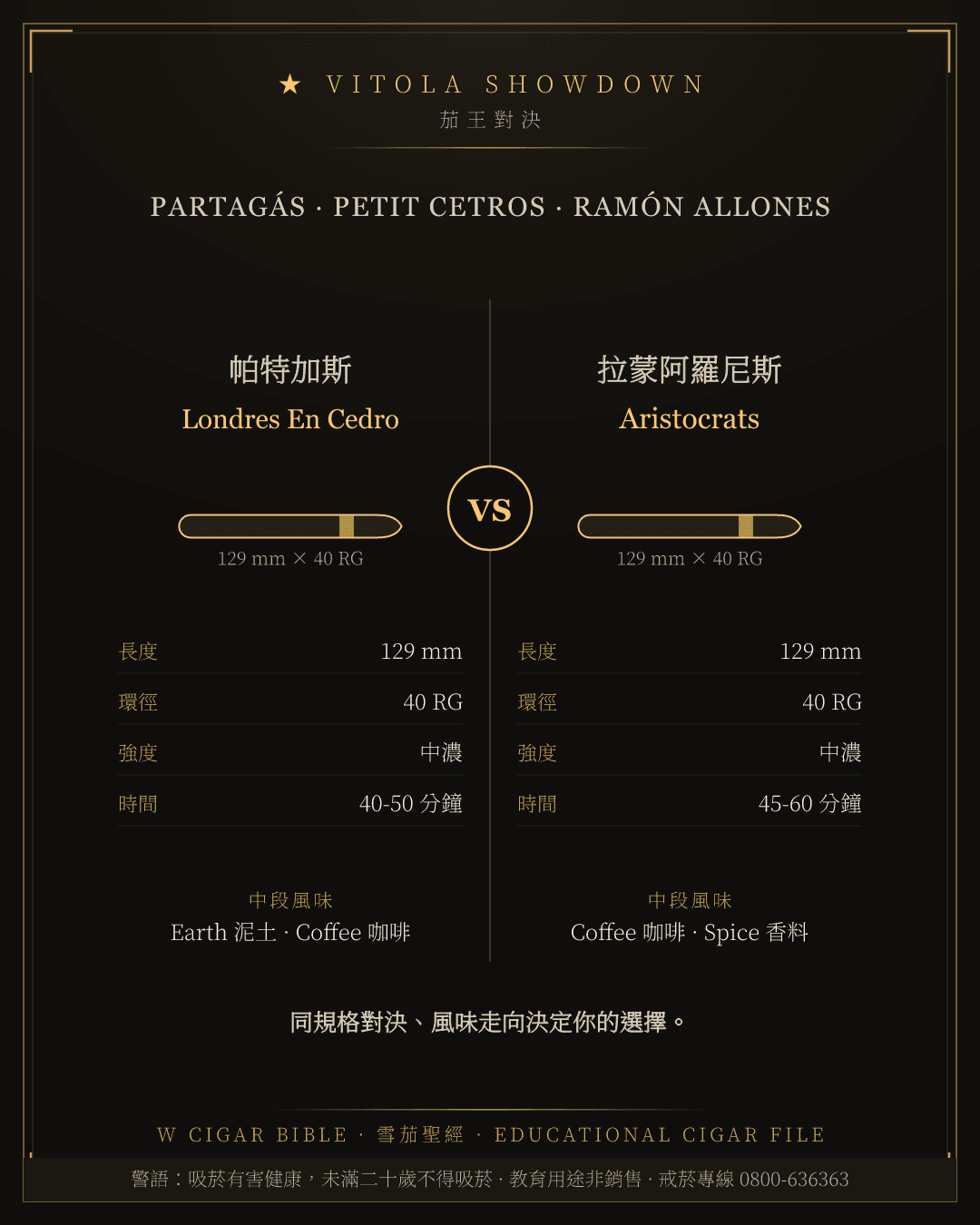
Partagás Londres En Cedro vs Ramón Allones Aristocrats
VITOLA SHOWDOWN · Petit Cetros
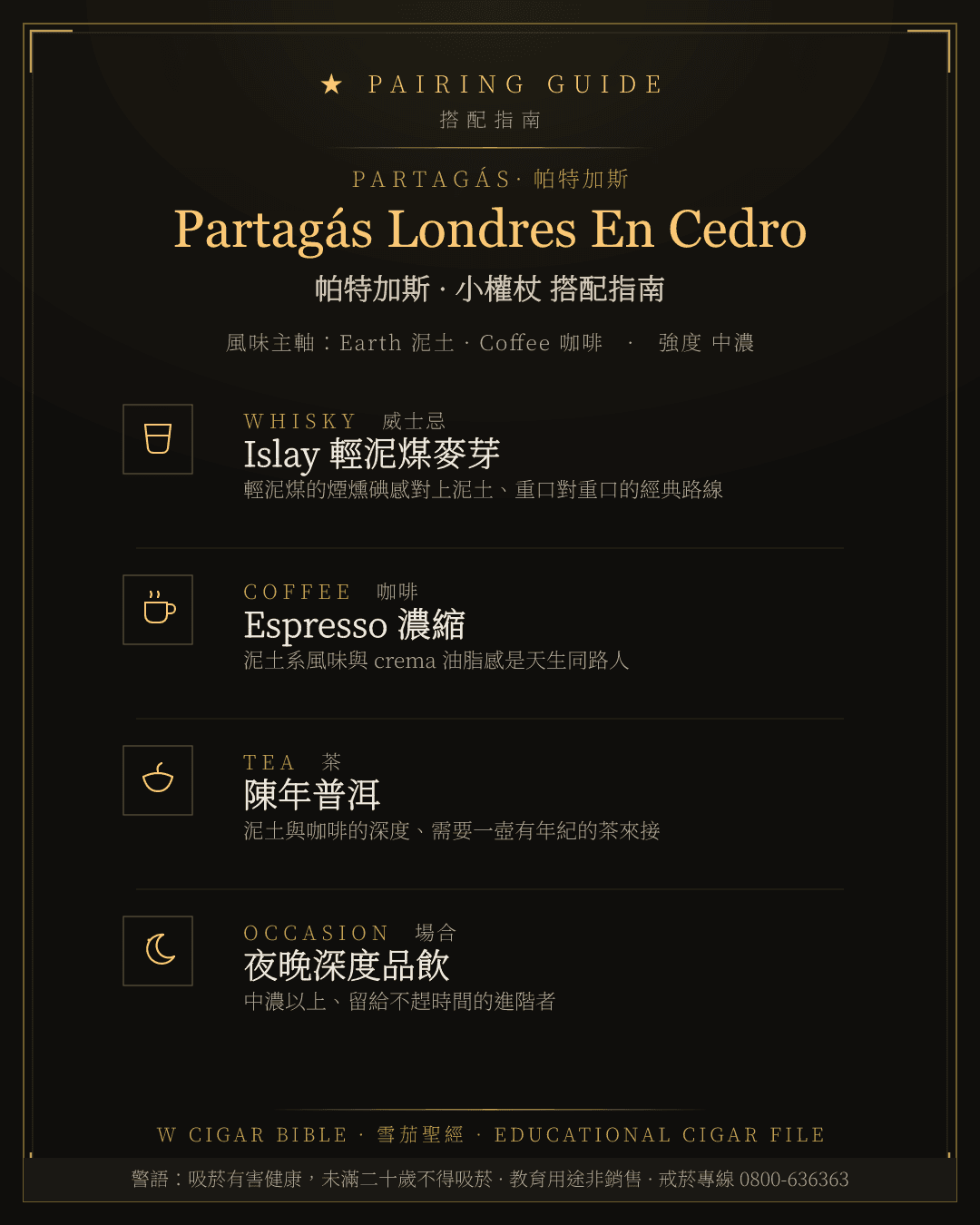
Partagás Londres En Cedro 搭配指南 · 帕特加斯
PAIRING GUIDE · 搭配指南
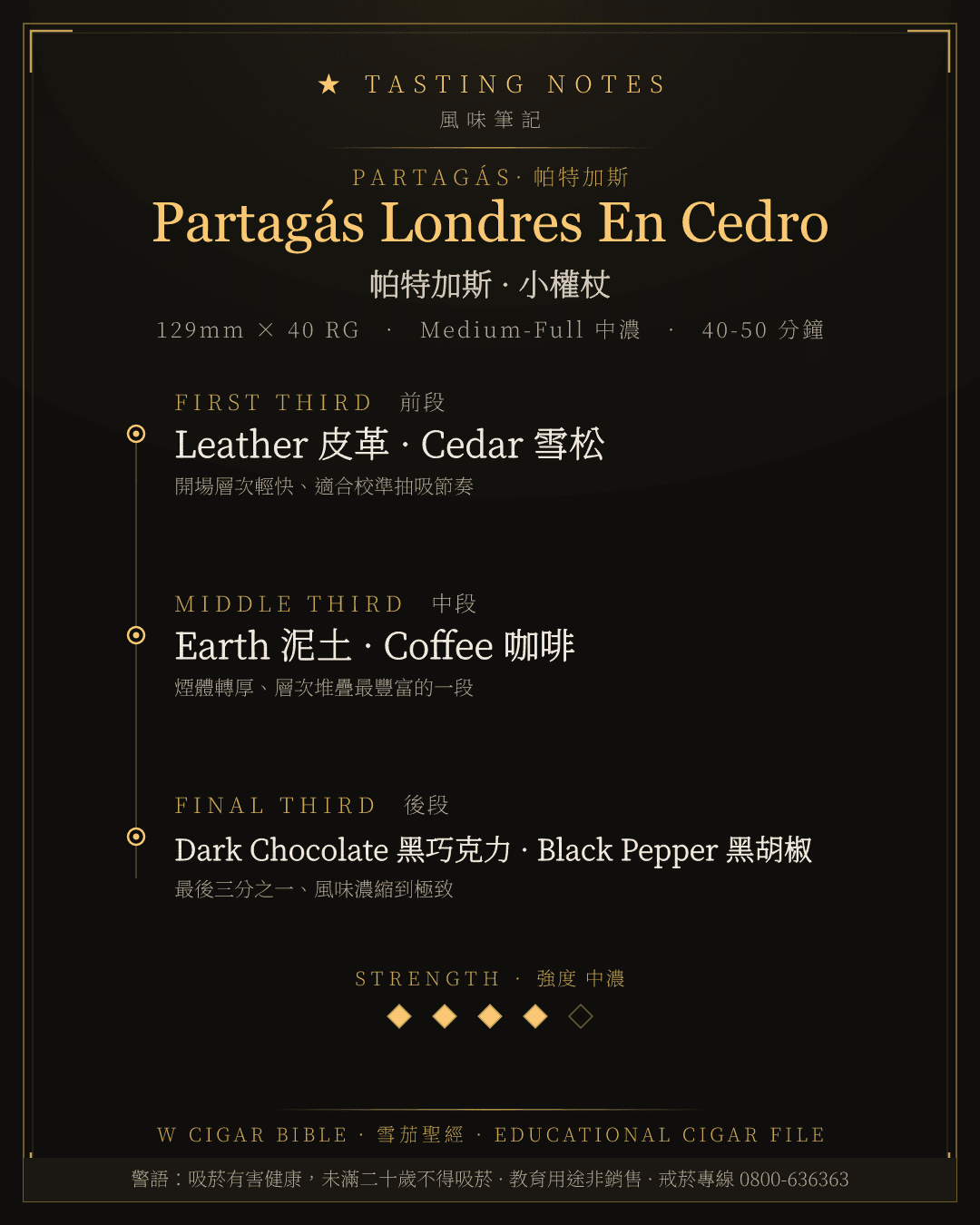
Partagás Londres En Cedro 風味筆記 · 帕特加斯
TASTING NOTES · 風味筆記
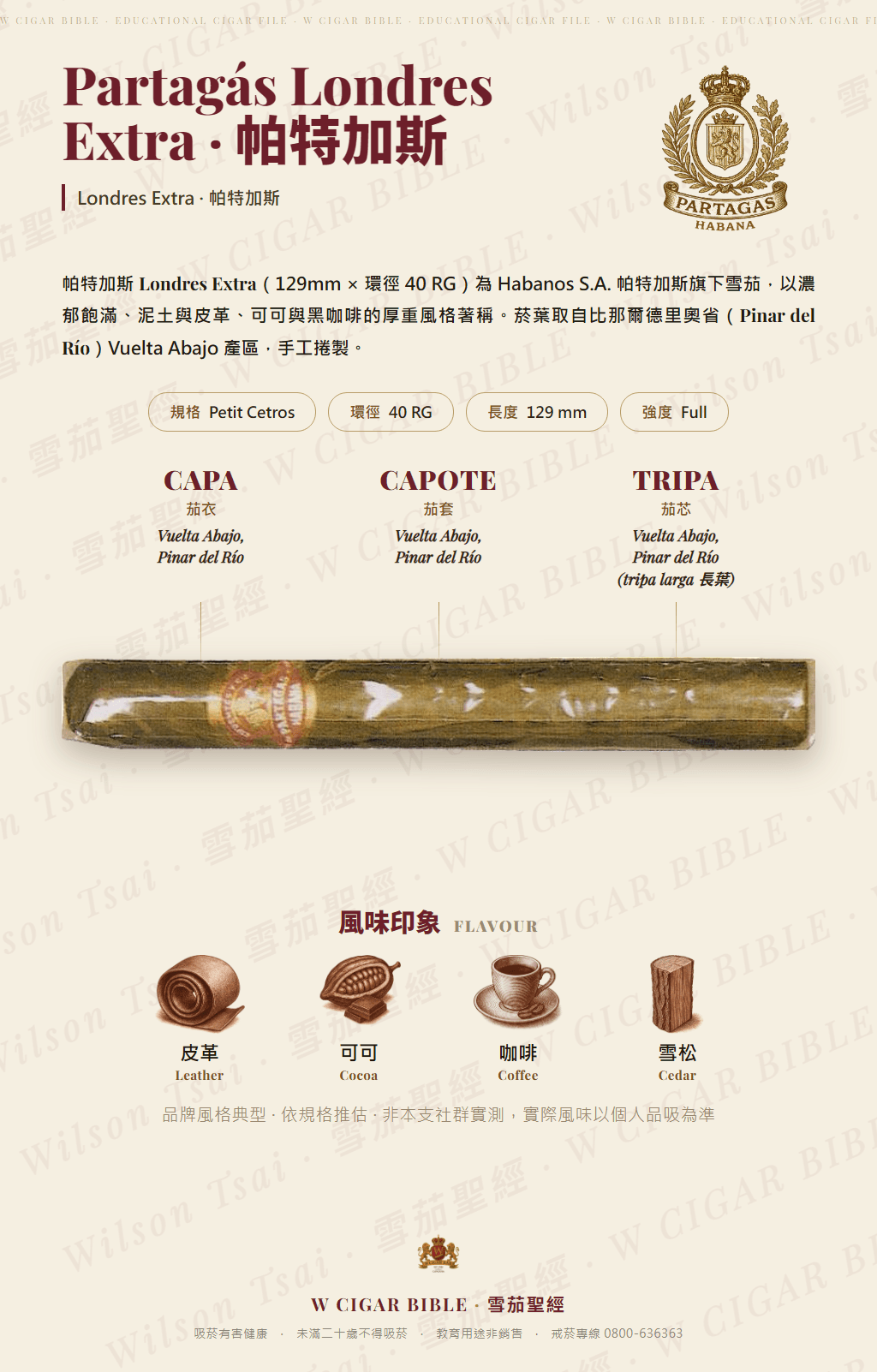
Partagás Londres Extra · 帕特加斯

Partagás Londres Extra vs Romeo Y Julieta Coronitas
VITOLA SHOWDOWN · Petit Cetros

Partagás Londres Extra 搭配指南 · 帕特加斯
PAIRING GUIDE · 搭配指南
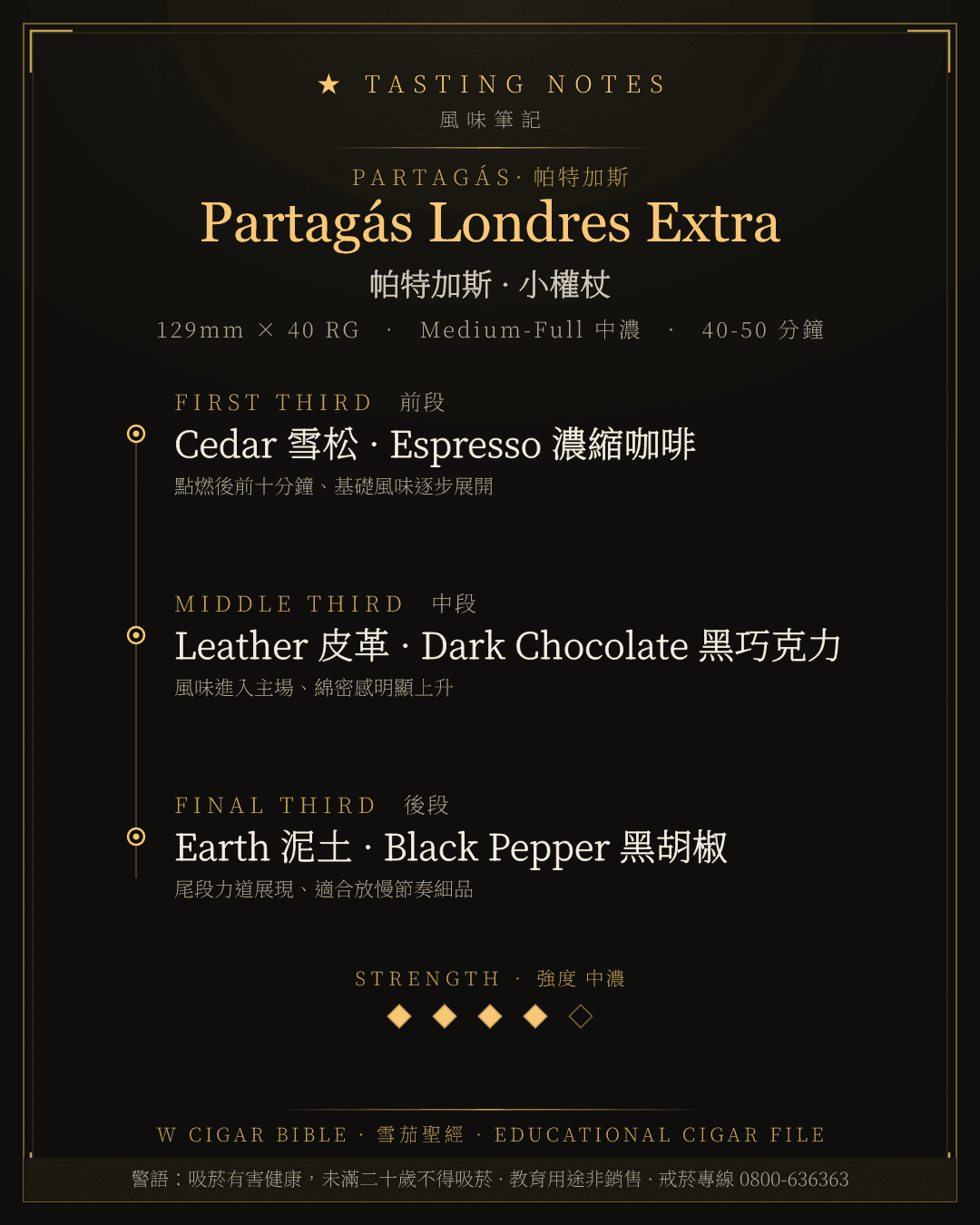
Partagás Londres Extra 風味筆記 · 帕特加斯
TASTING NOTES · 風味筆記
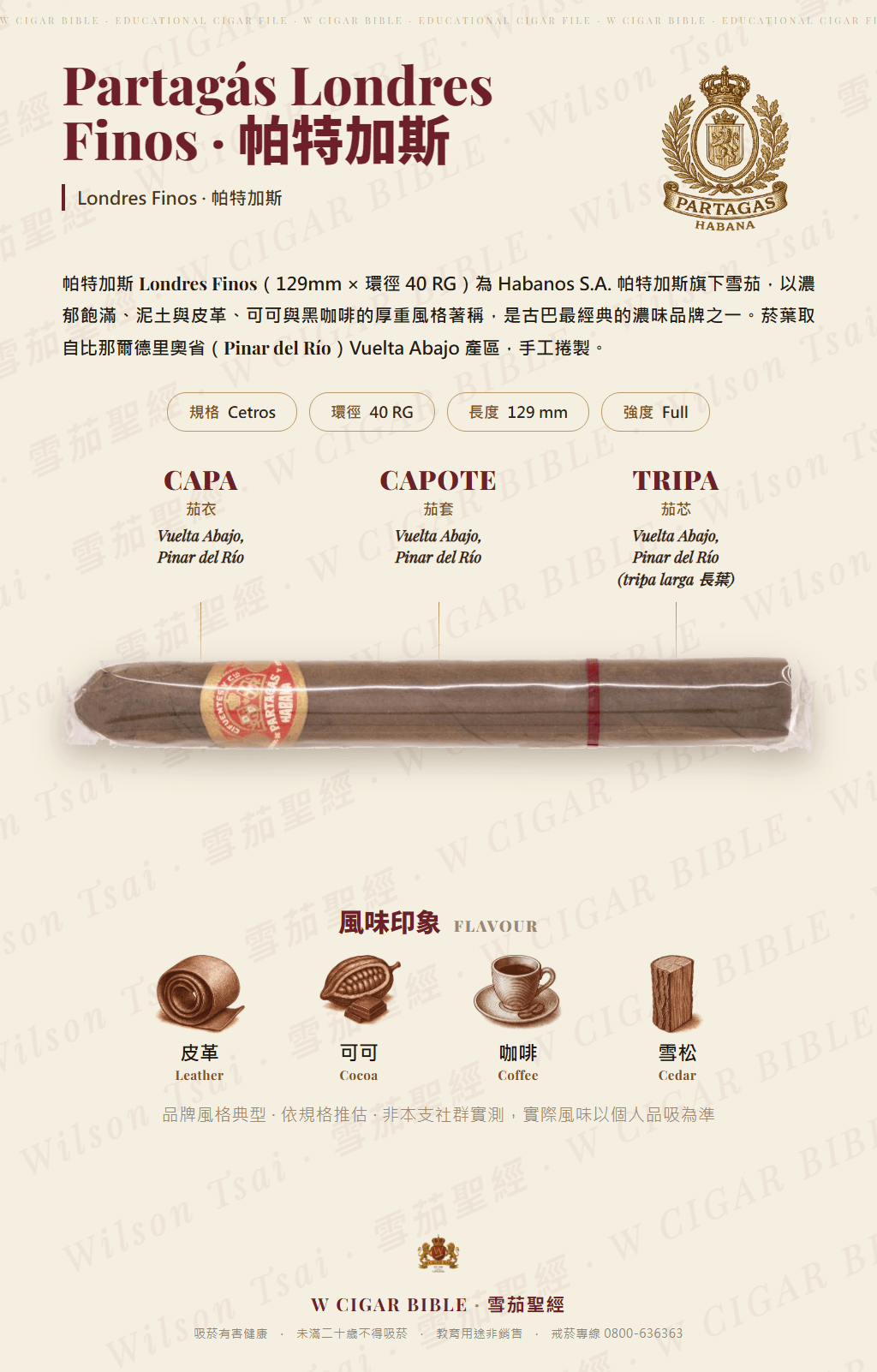
Partagás Londres Finos · 帕特加斯

Partagás Londres Finos vs Romeo Y Julieta Coronitas En Cedro
VITOLA SHOWDOWN · Petit Cetros
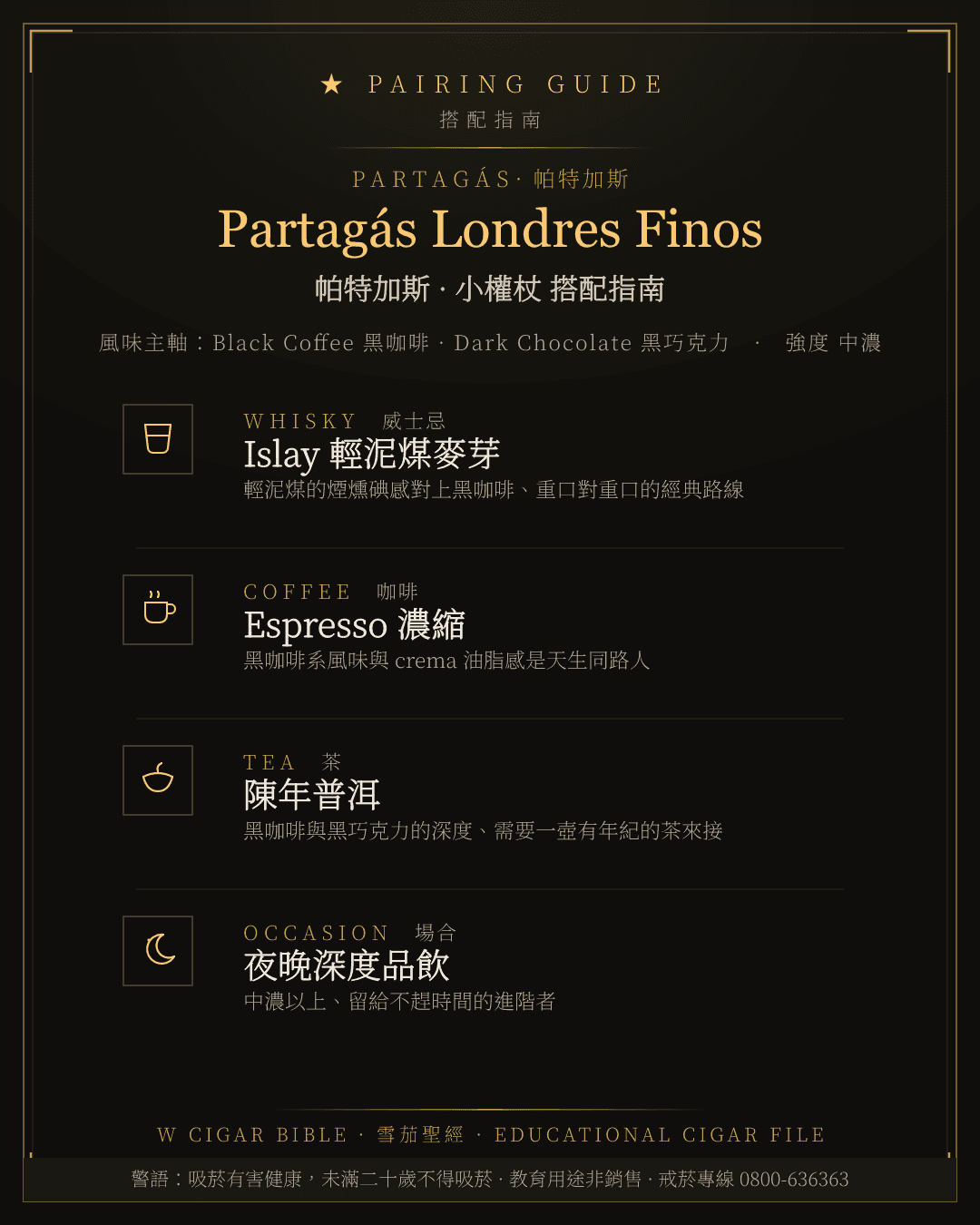
Partagás Londres Finos 搭配指南 · 帕特加斯
PAIRING GUIDE · 搭配指南
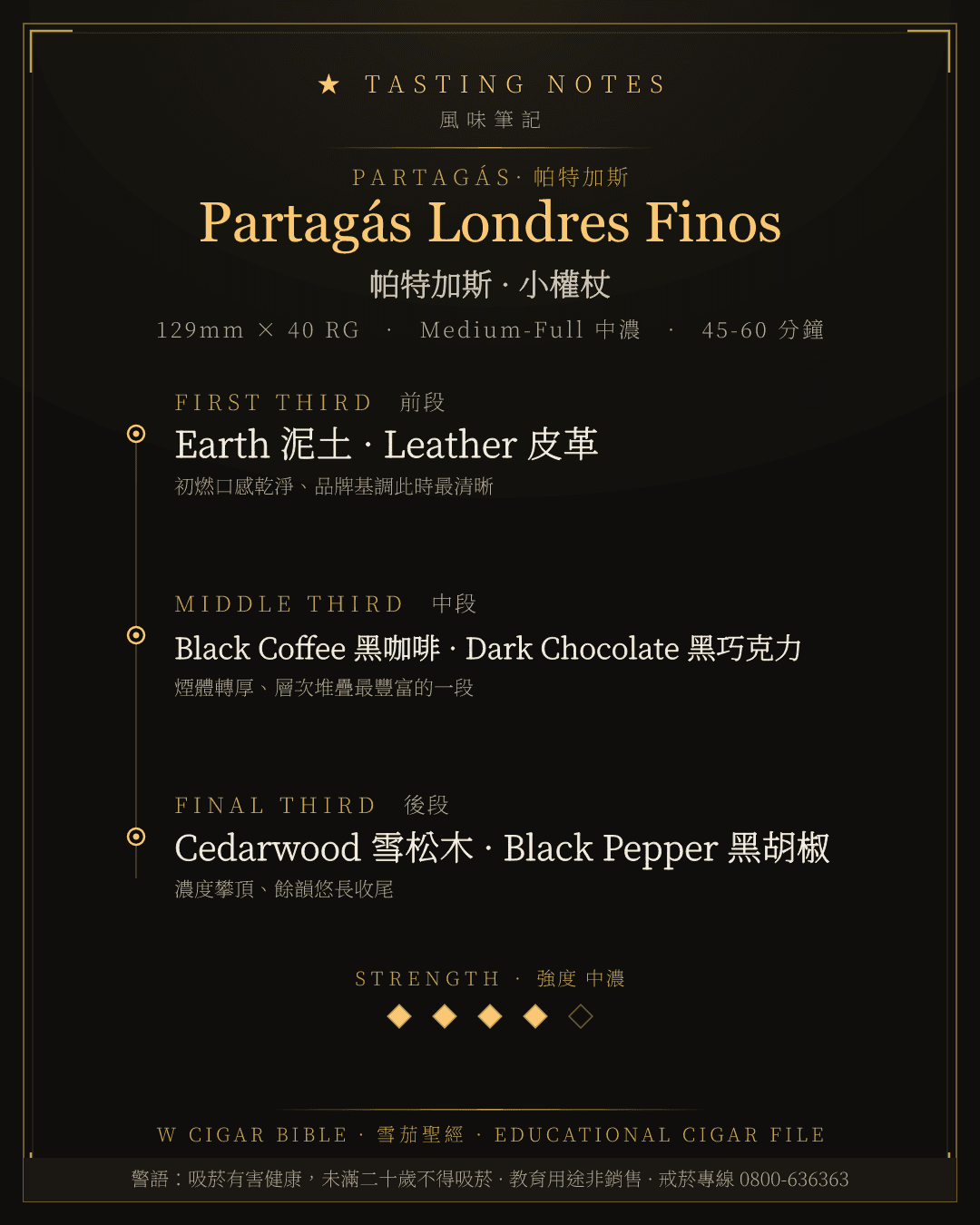
Partagás Londres Finos 風味筆記 · 帕特加斯
TASTING NOTES · 風味筆記
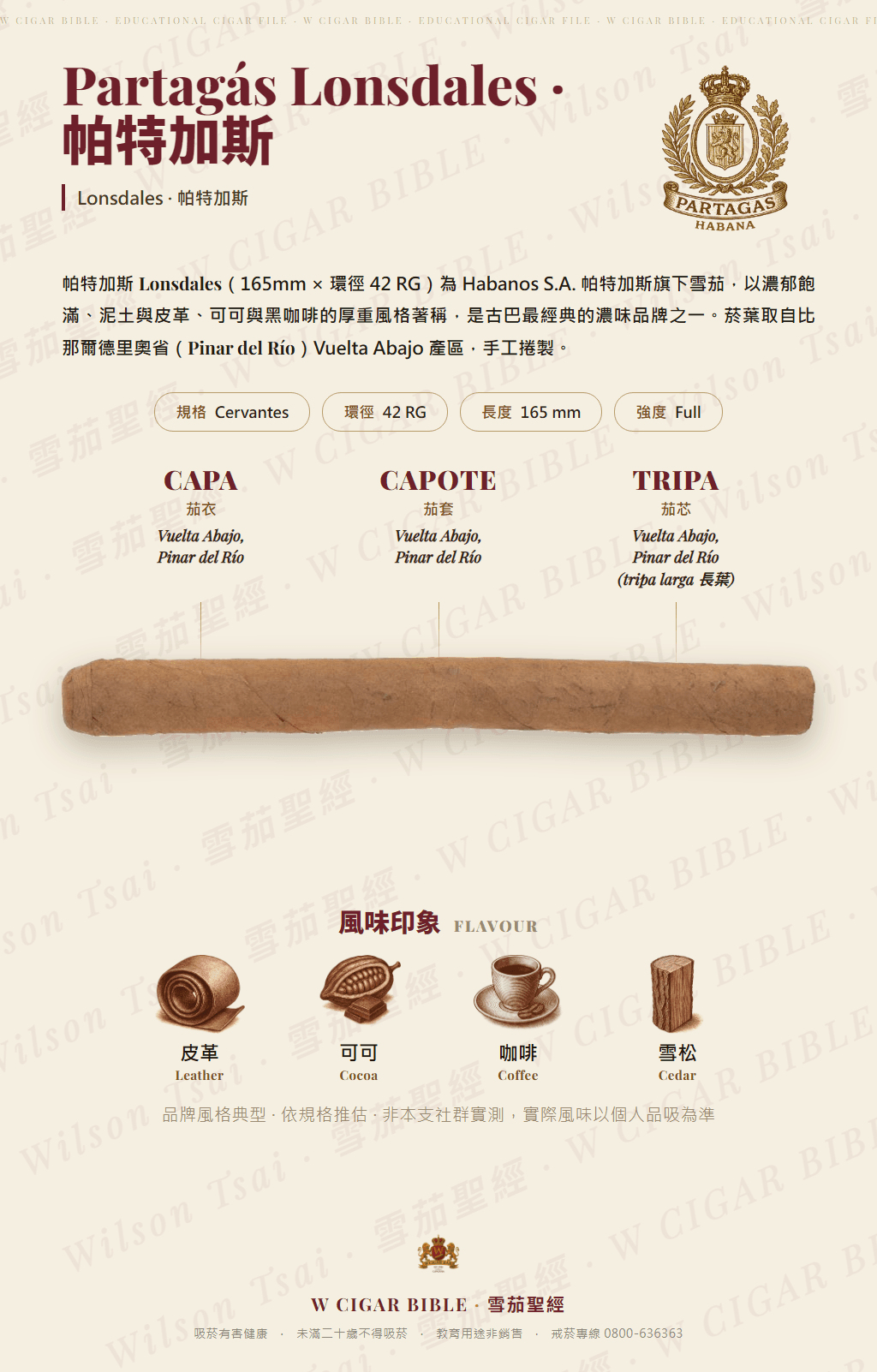
Partagás Lonsdales · 帕特加斯
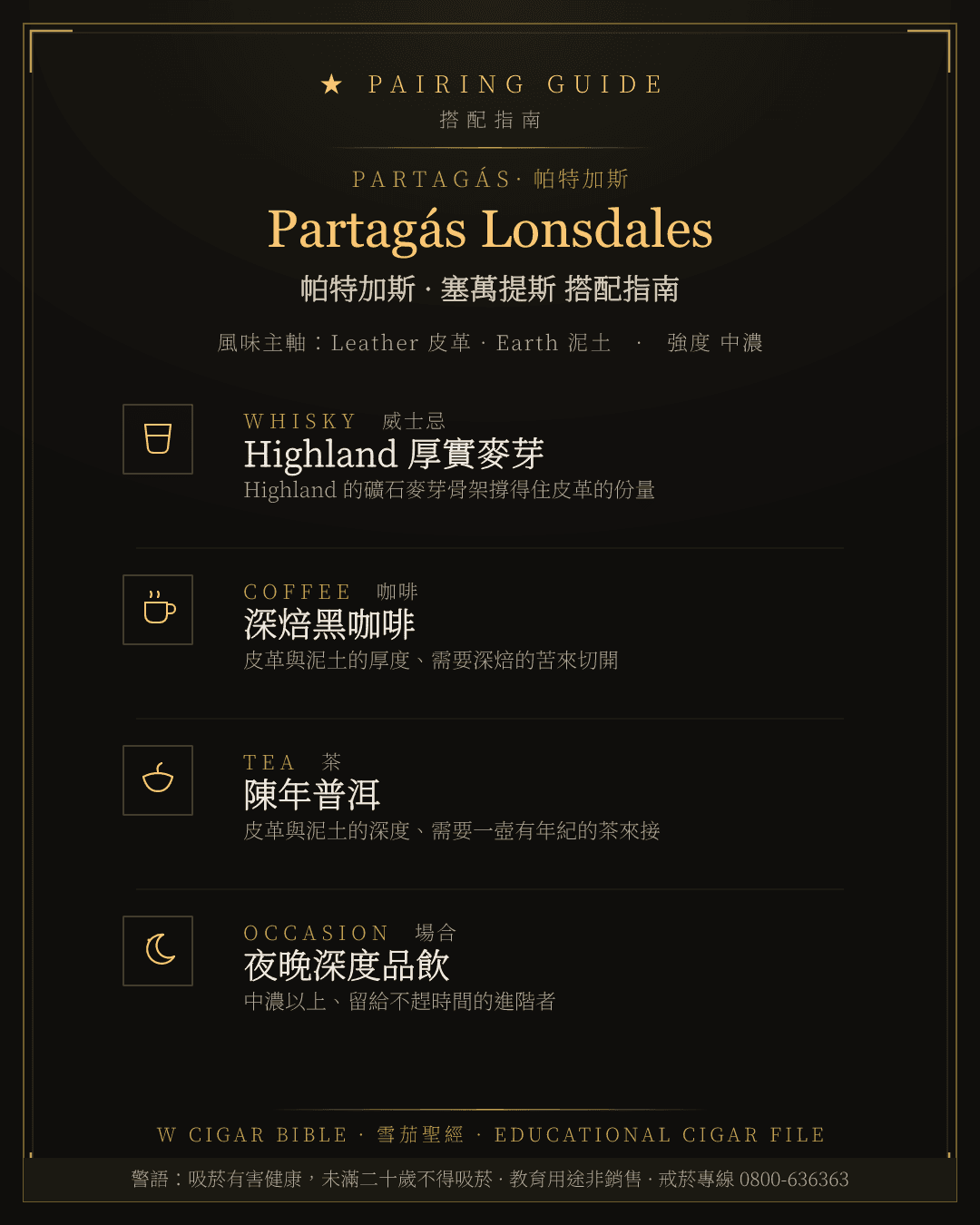
Partagás Lonsdales 搭配指南 · 帕特加斯
PAIRING GUIDE · 搭配指南
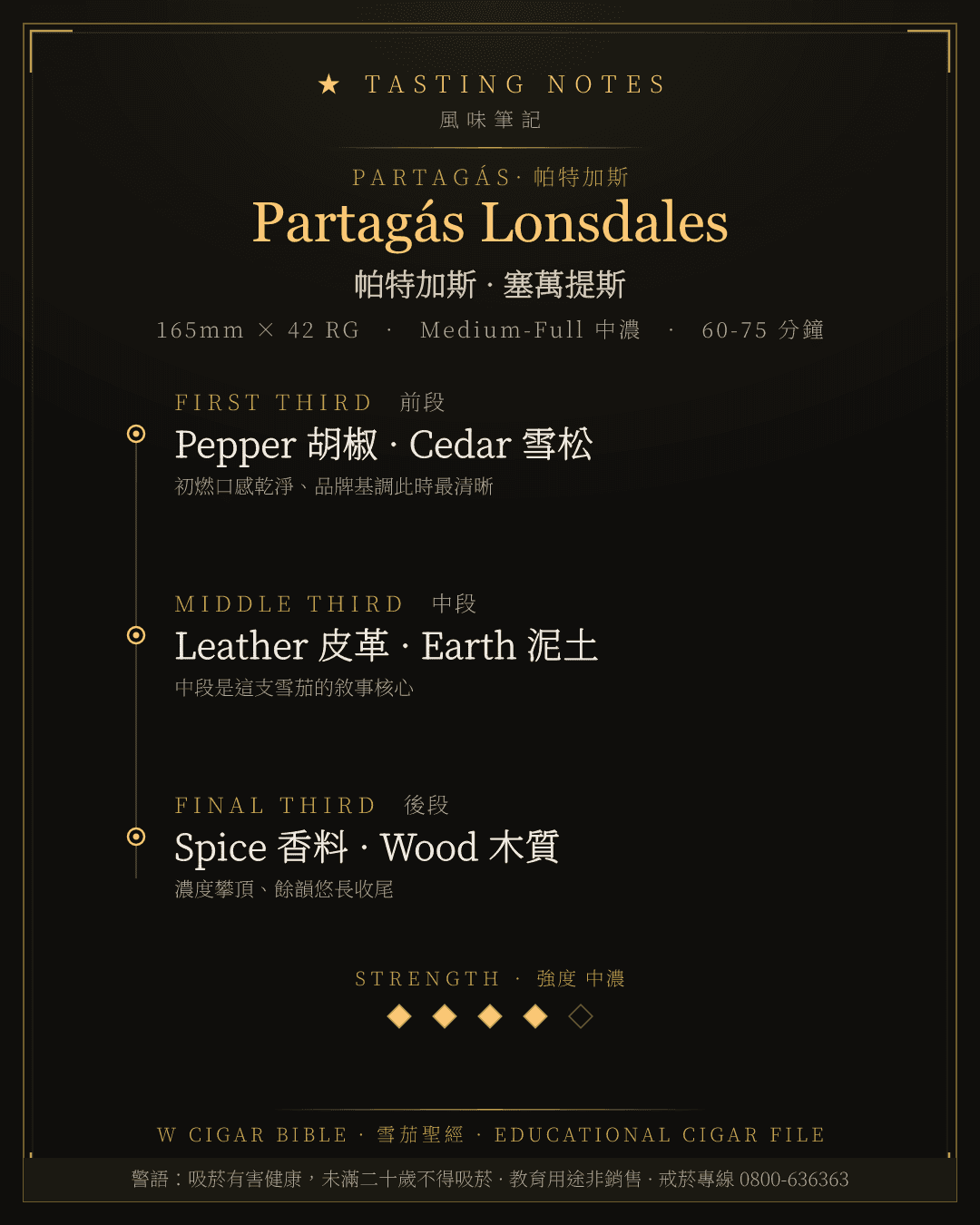
Partagás Lonsdales 風味筆記 · 帕特加斯
TASTING NOTES · 風味筆記
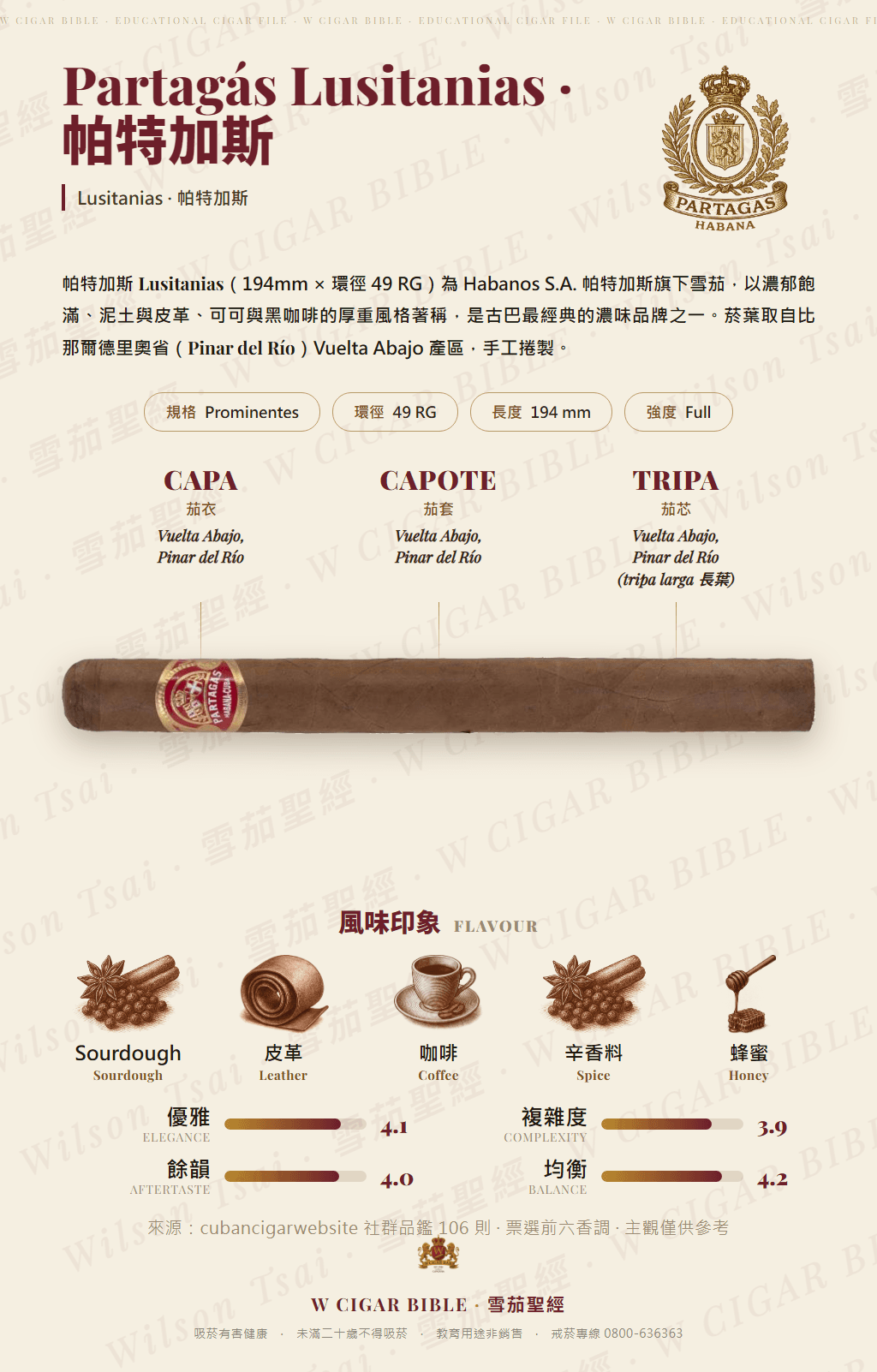
Partagás Lusitanias · 帕特加斯
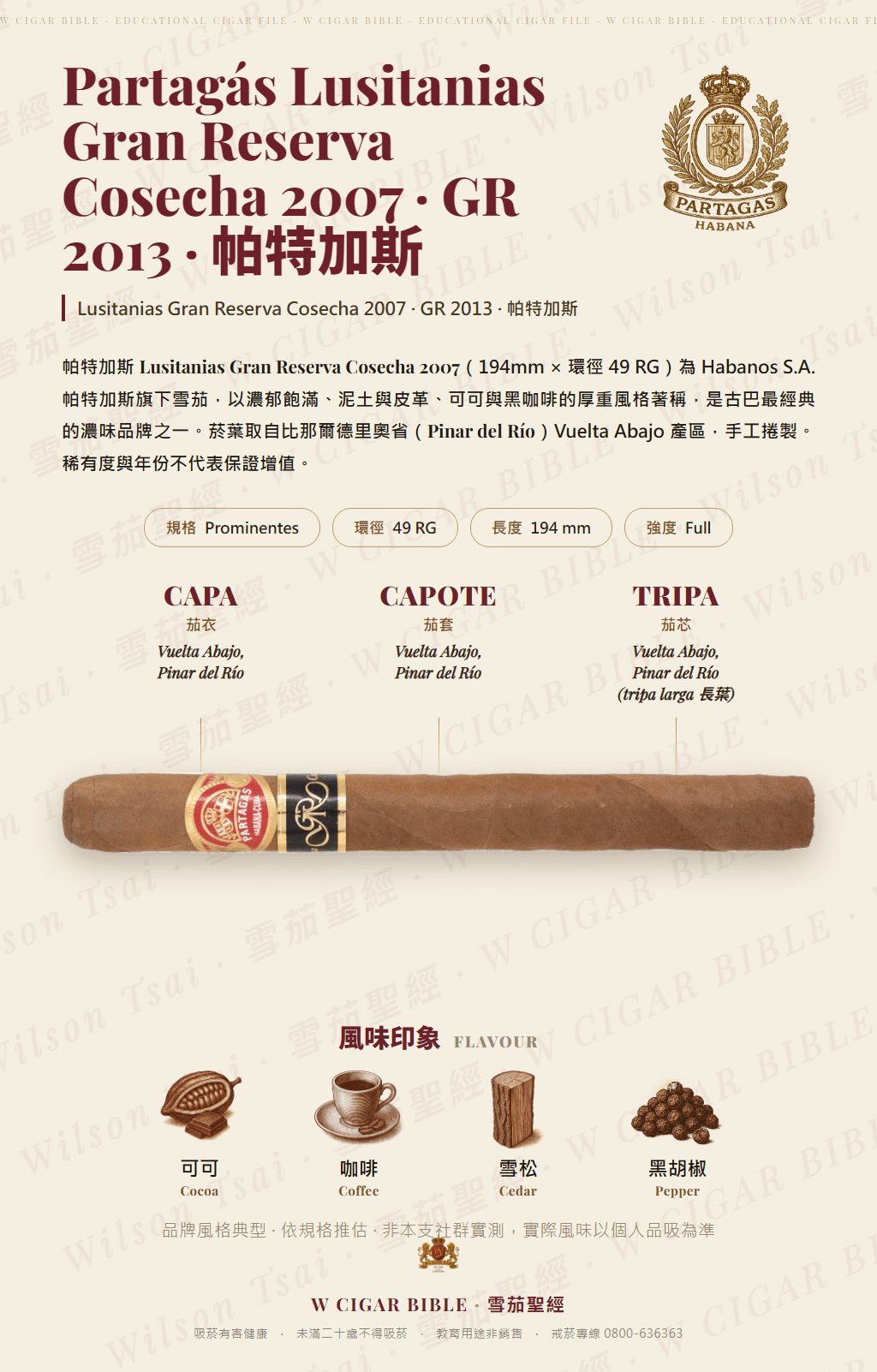
Partagás Lusitanias Gran Reserva Cosecha 2007 · GR 2013 · 帕特加斯
GR 2013 · 精品陳年版 Gran Reserva(Lusitanias/廠規 Prominentes 49 × 194mm,2013 年哈瓦那雪茄節發表)· 雪茄檔案

Partagás Lusitanias vs Punch Edición Regional India
VITOLA SHOWDOWN · Prominentes

Partagás Lusitanias 搭配指南 · 帕特加斯
PAIRING GUIDE · 搭配指南
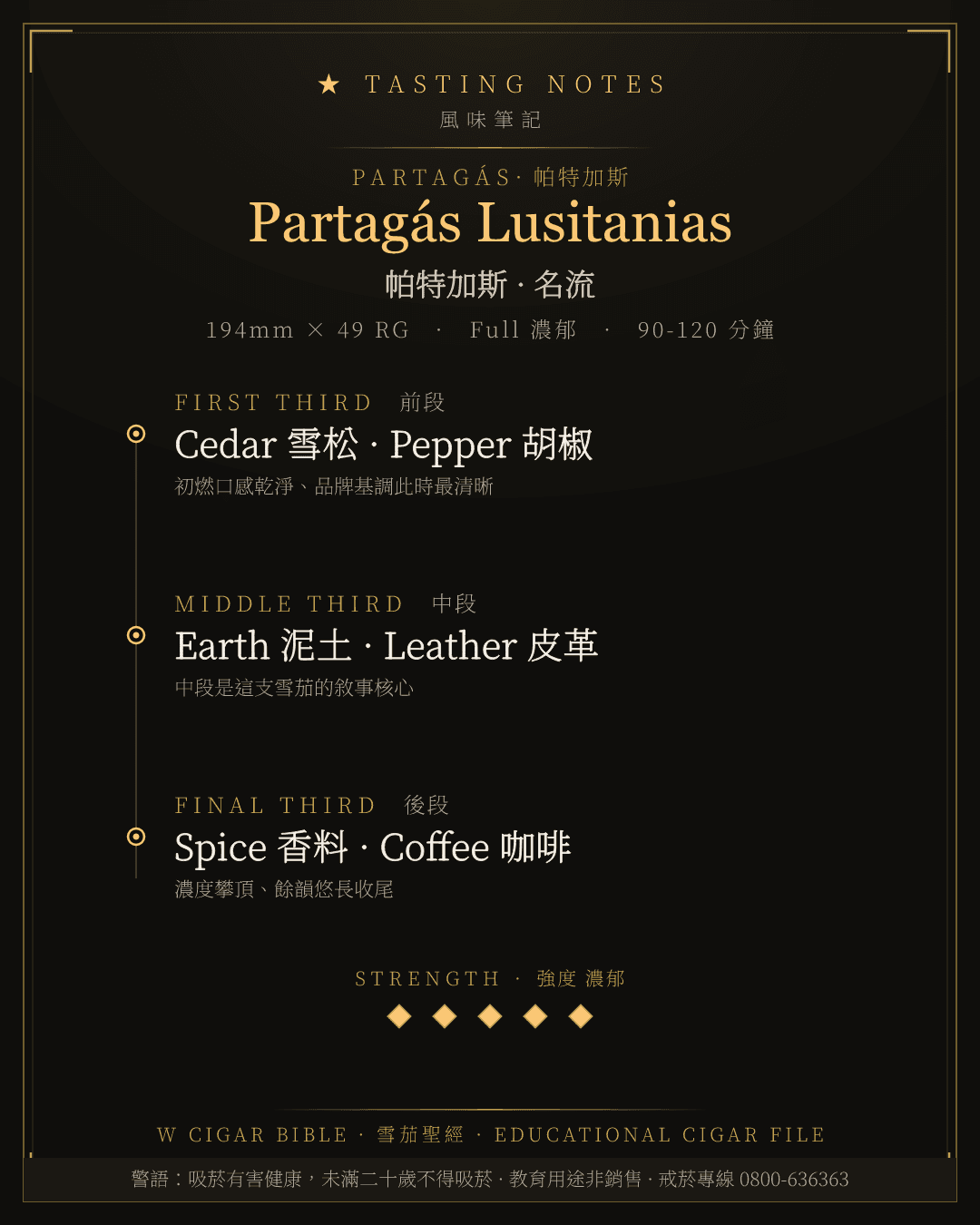
Partagás Lusitanias 風味筆記 · 帕特加斯
TASTING NOTES · 風味筆記

Partagás Maduro No 1 搭配指南 · 帕特加斯
PAIRING GUIDE · 搭配指南

Partagás Maduro No 1 風味筆記 · 帕特加斯
TASTING NOTES · 風味筆記

Partagás Maduro No 2 搭配指南 · 帕特加斯
PAIRING GUIDE · 搭配指南
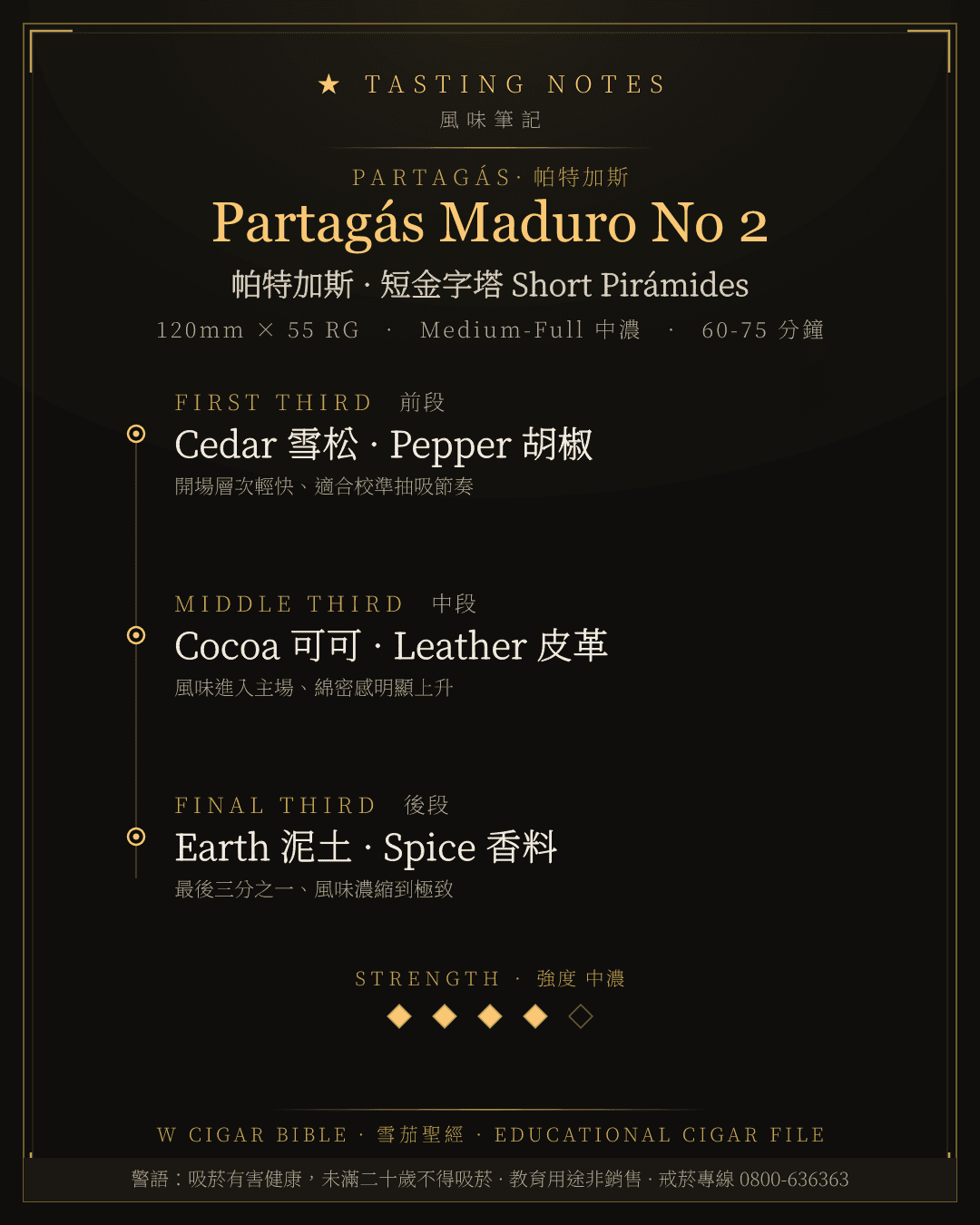
Partagás Maduro No 2 風味筆記 · 帕特加斯
TASTING NOTES · 風味筆記

Partagás Maduro No 3 搭配指南 · 帕特加斯
PAIRING GUIDE · 搭配指南
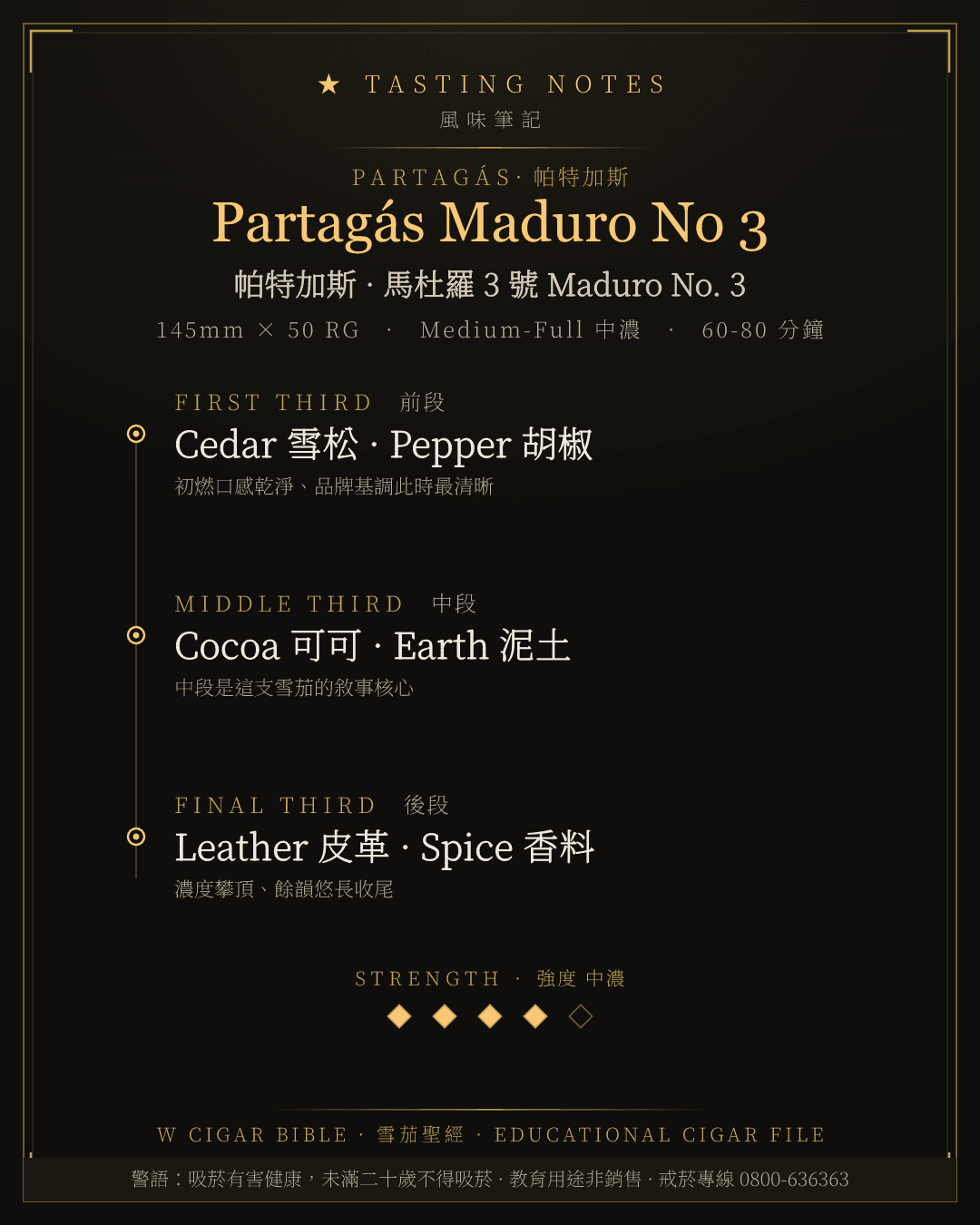
Partagás Maduro No 3 風味筆記 · 帕特加斯
TASTING NOTES · 風味筆記
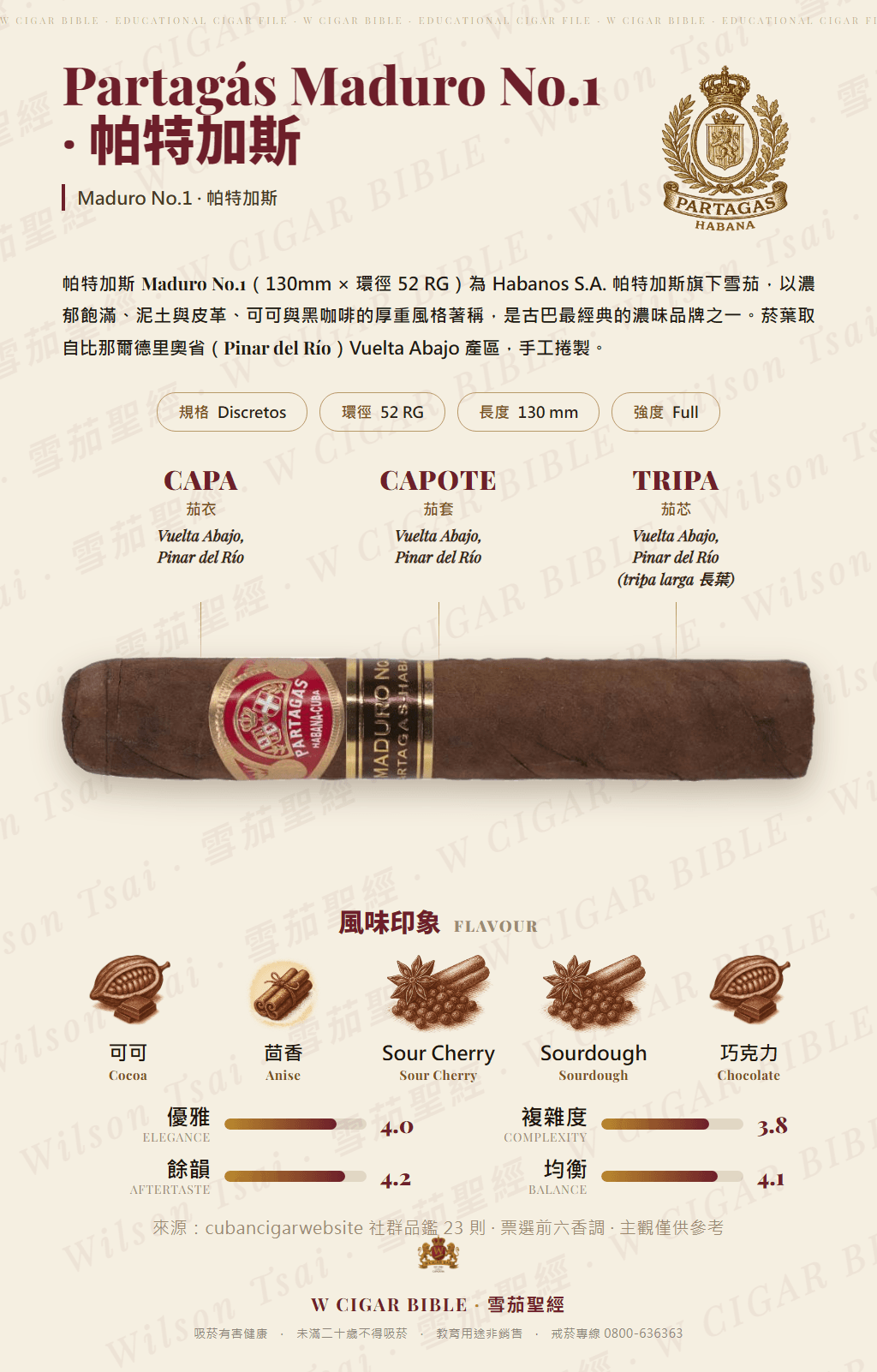
Partagás Maduro No.1 · 帕特加斯
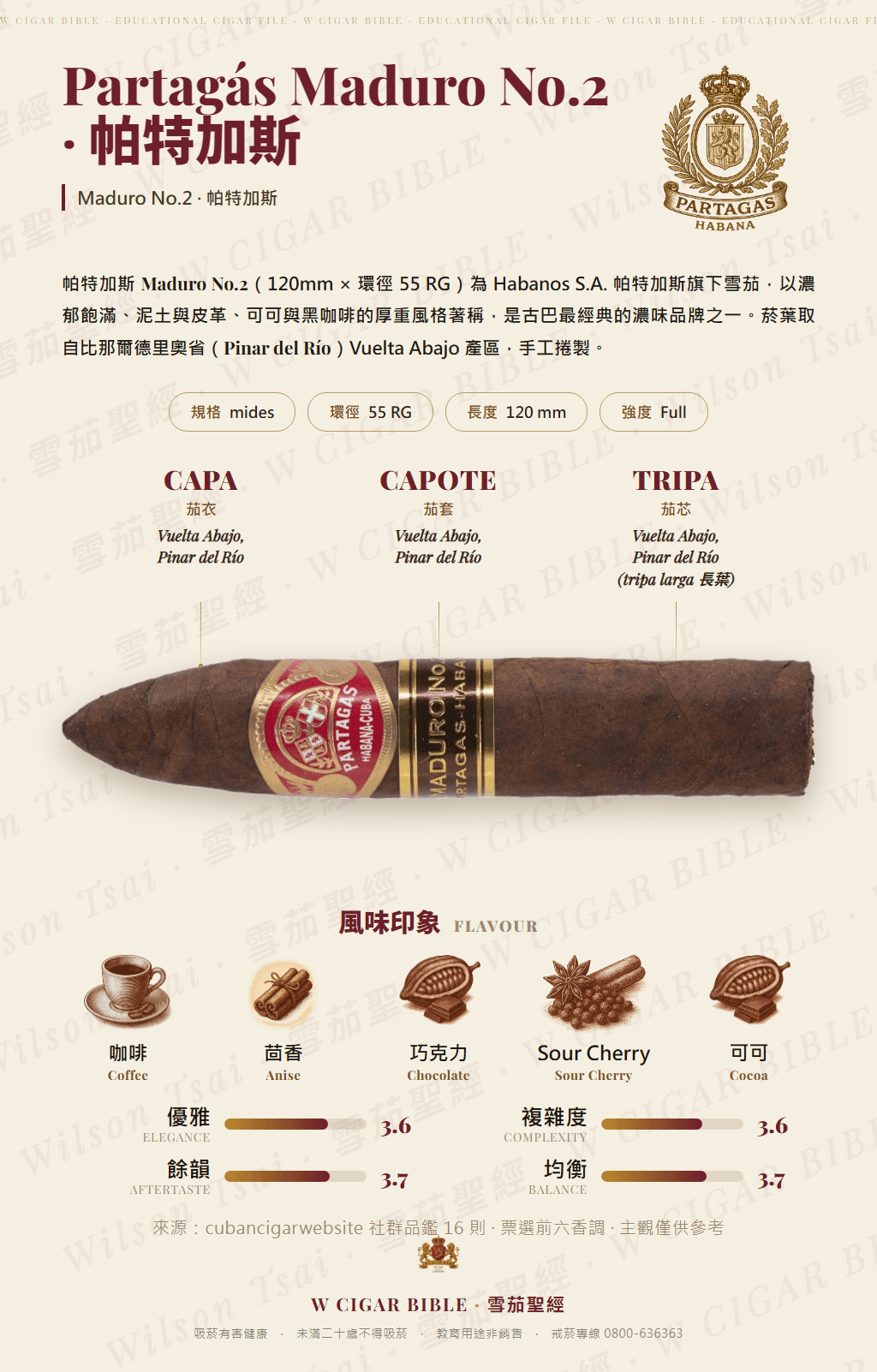
Partagás Maduro No.2 · 帕特加斯
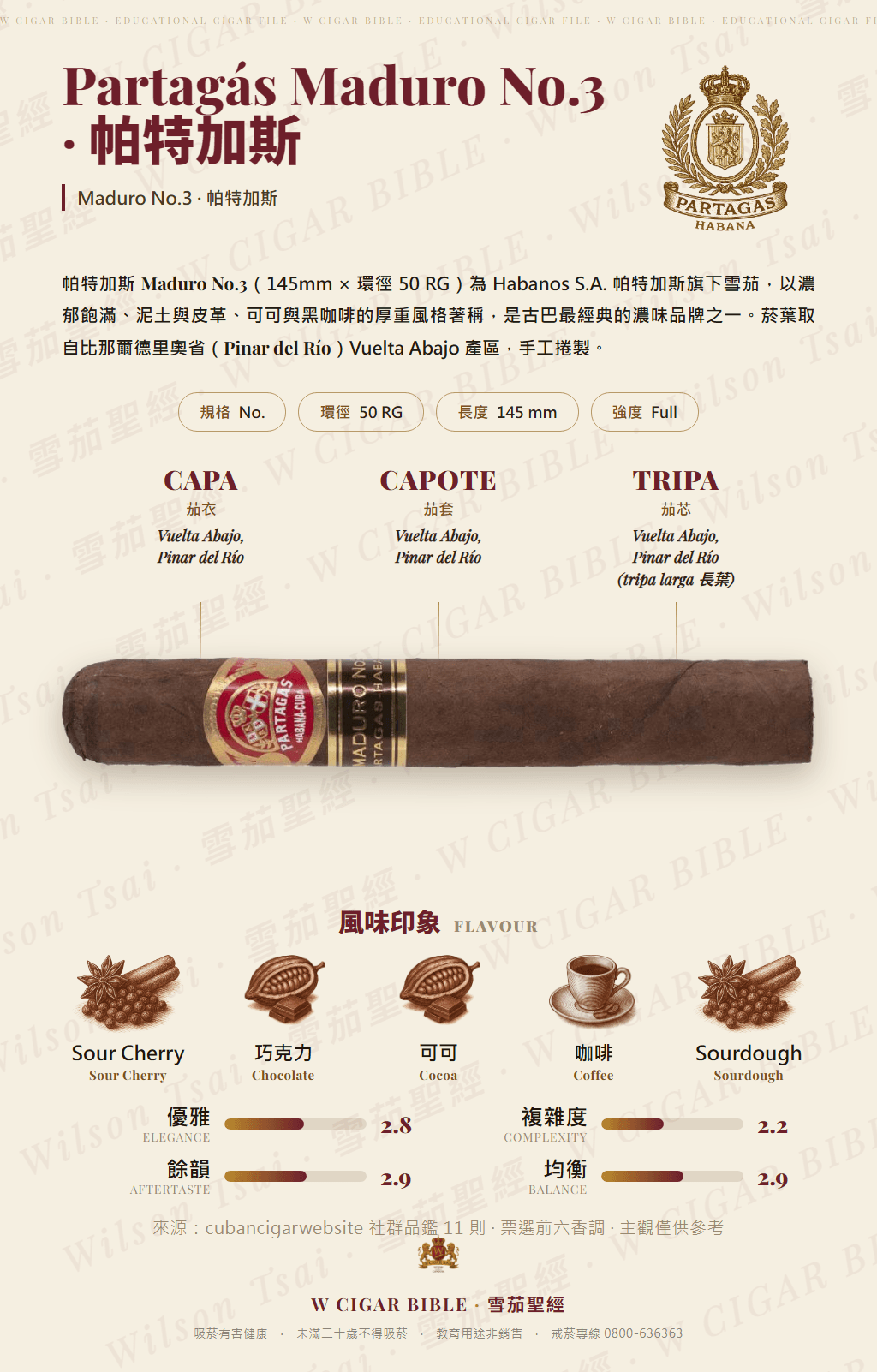
Partagás Maduro No.3 · 帕特加斯
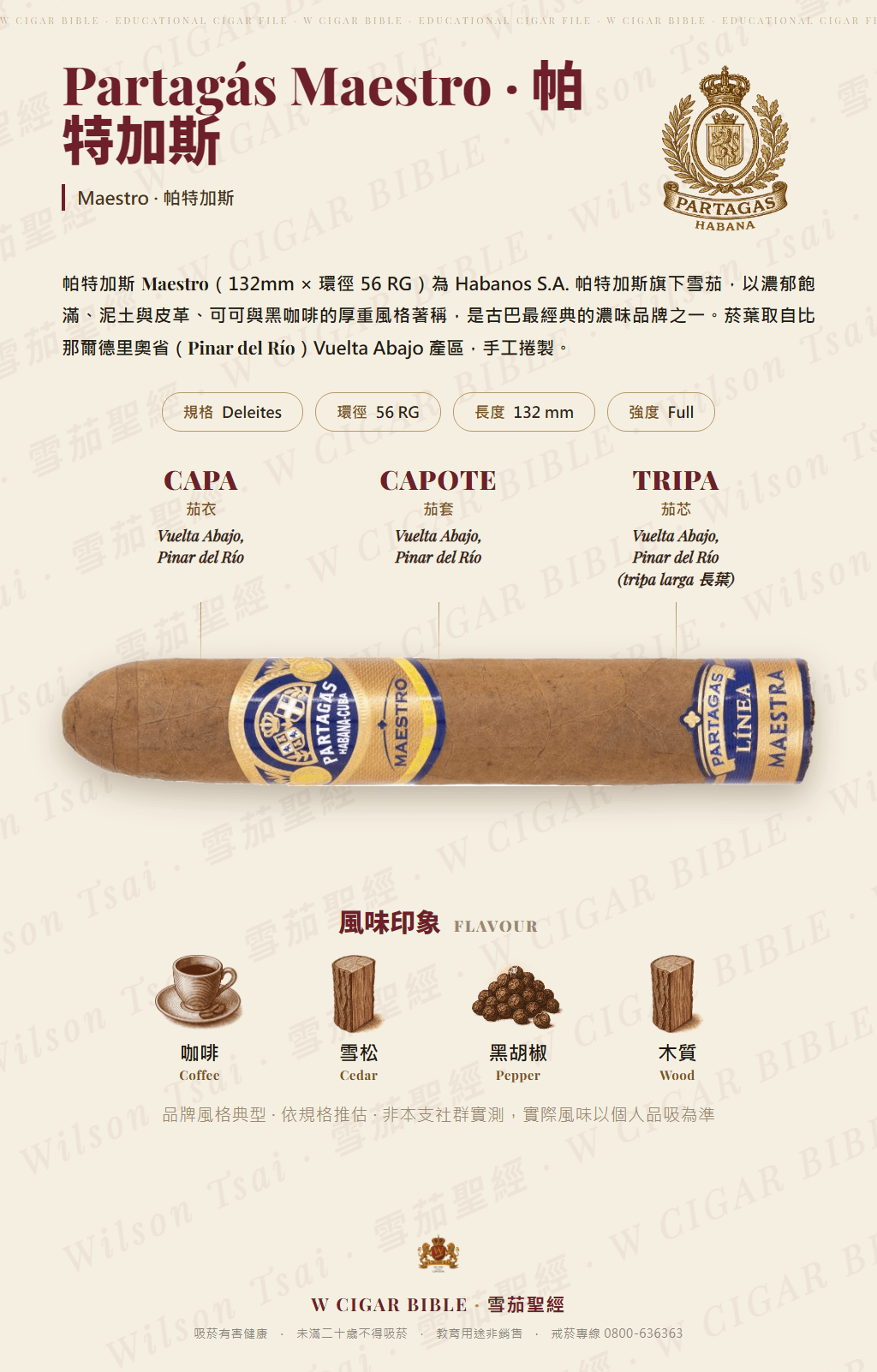
Partagás Maestro · 帕特加斯

Partagás Maestro 搭配指南 · 帕特加斯
PAIRING GUIDE · 搭配指南

Partagás Maestro 風味筆記 · 帕特加斯
TASTING NOTES · 風味筆記
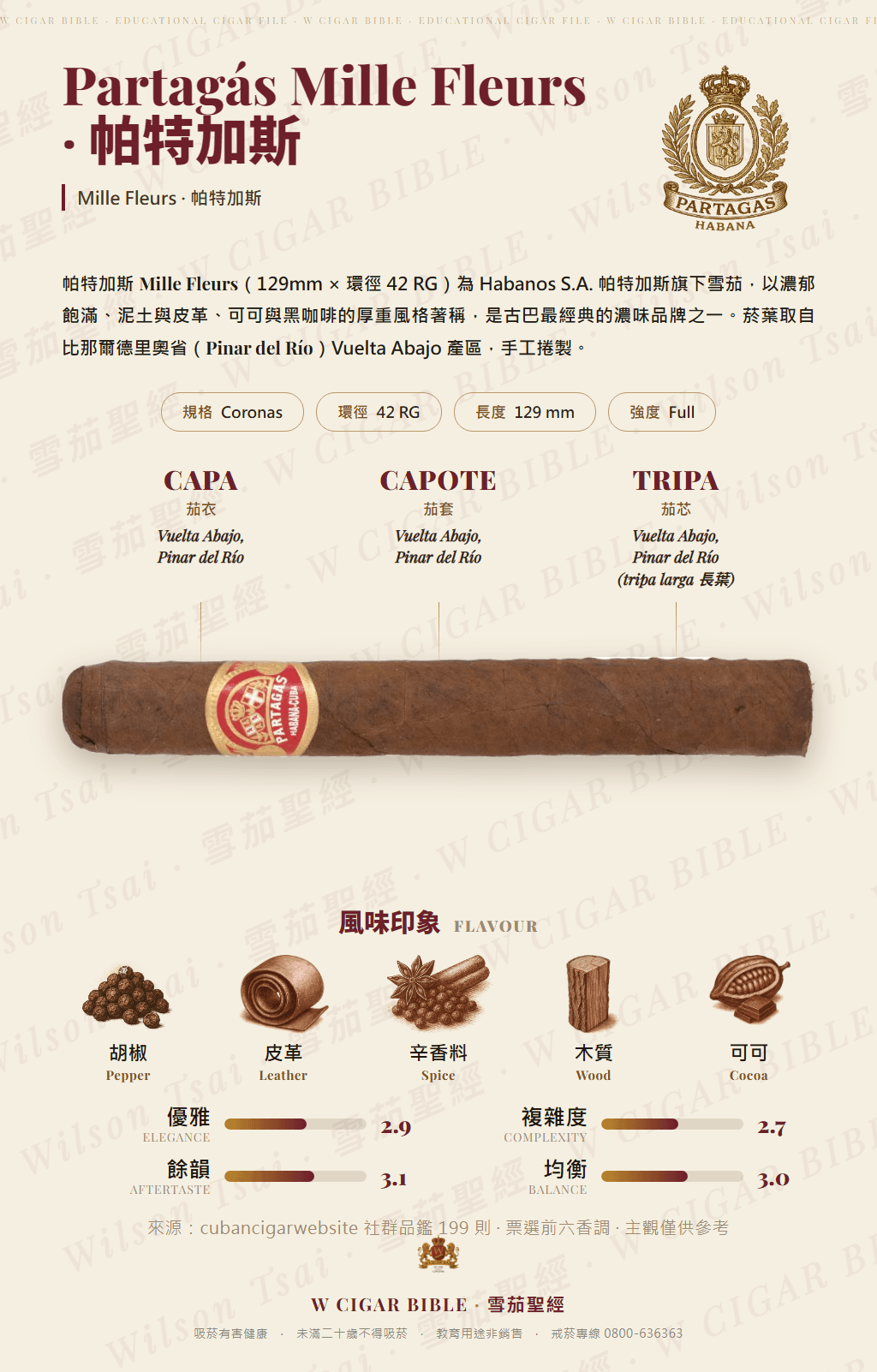
Partagás Mille Fleurs · 帕特加斯

Partagás Mille Fleurs vs Por Larrañaga Lolas En Cedro
VITOLA SHOWDOWN · Petit Coronas

Partagás Mille Fleurs 搭配指南 · 帕特加斯
PAIRING GUIDE · 搭配指南
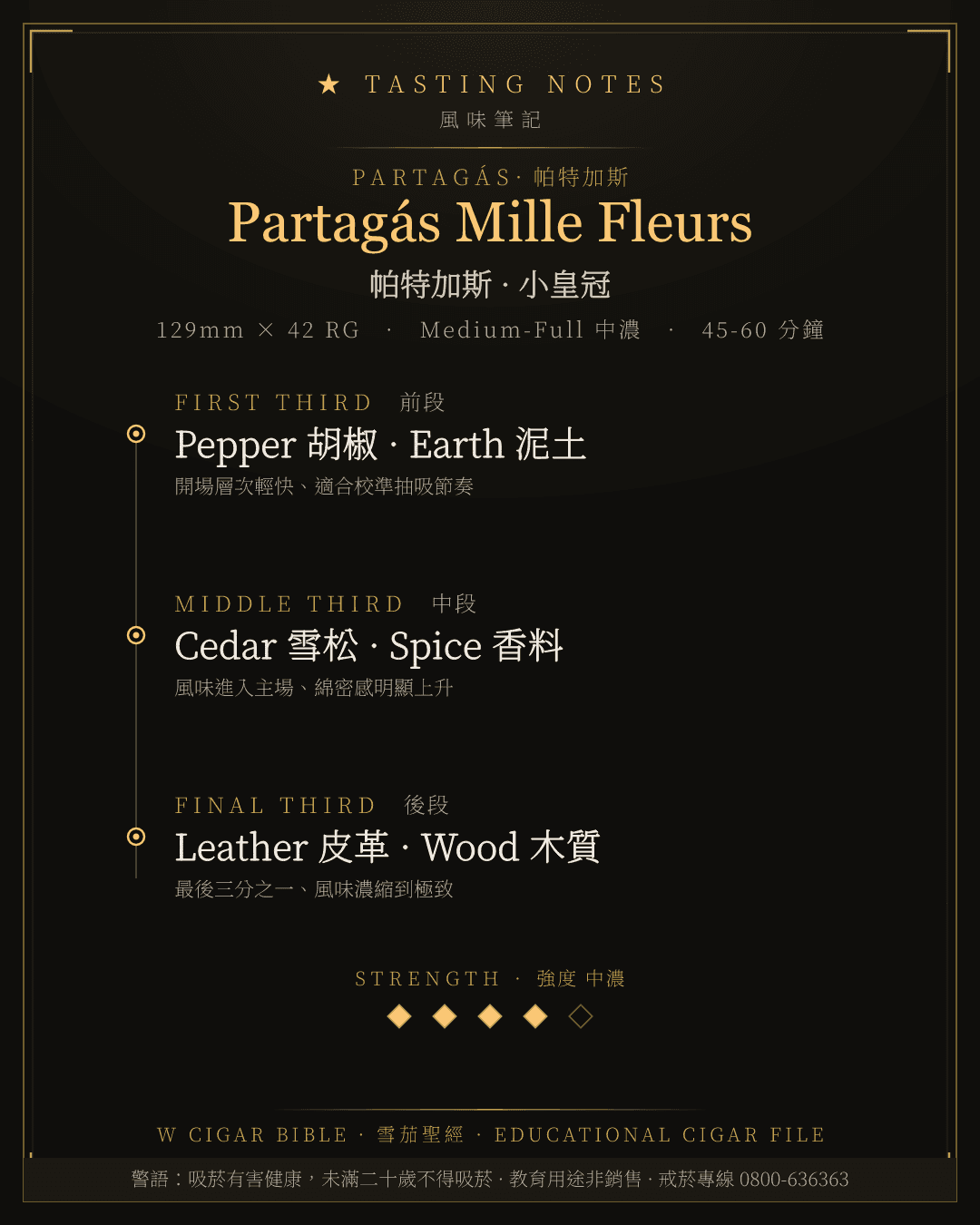
Partagás Mille Fleurs 風味筆記 · 帕特加斯
TASTING NOTES · 風味筆記
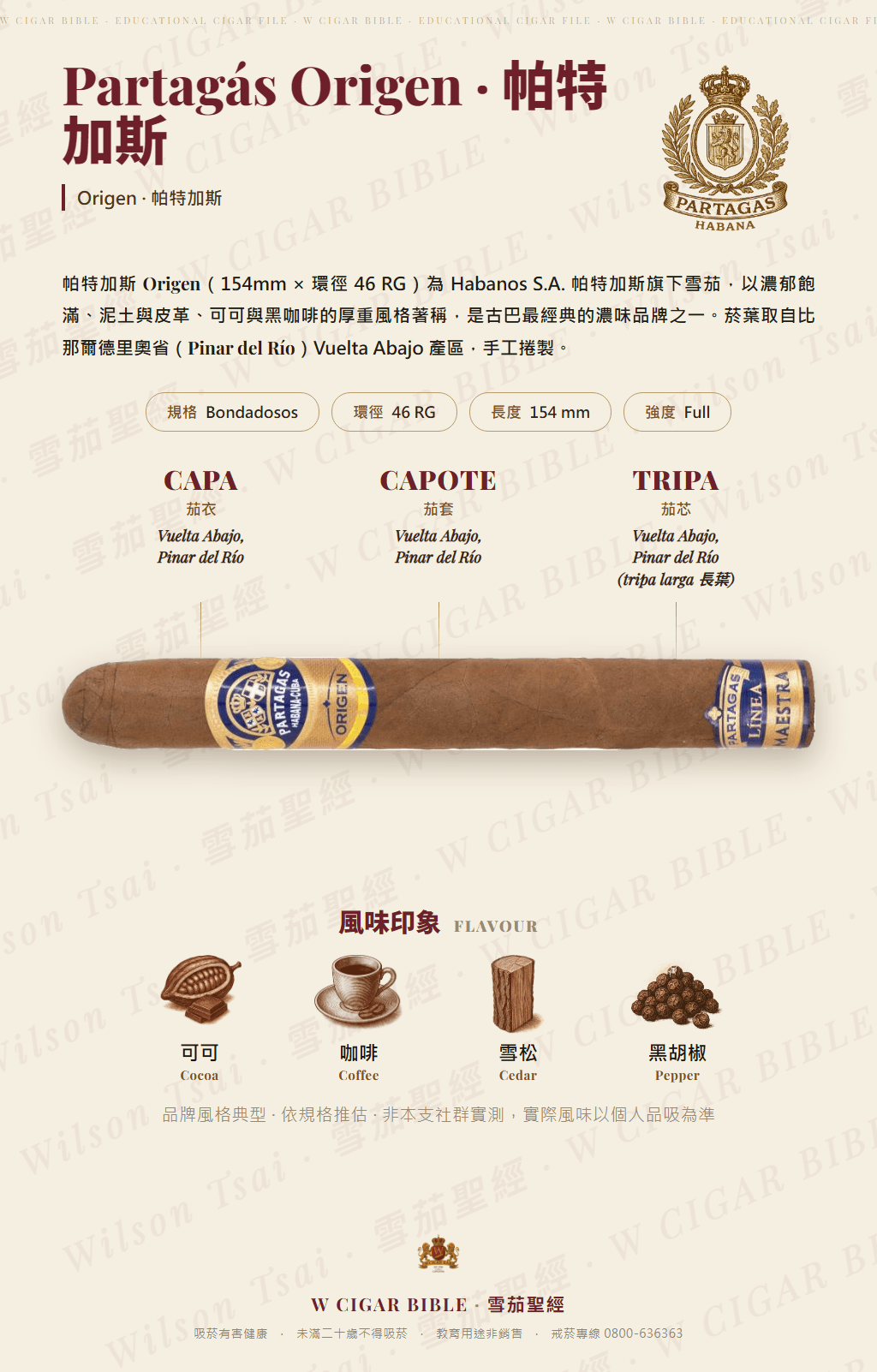
Partagás Origen · 帕特加斯
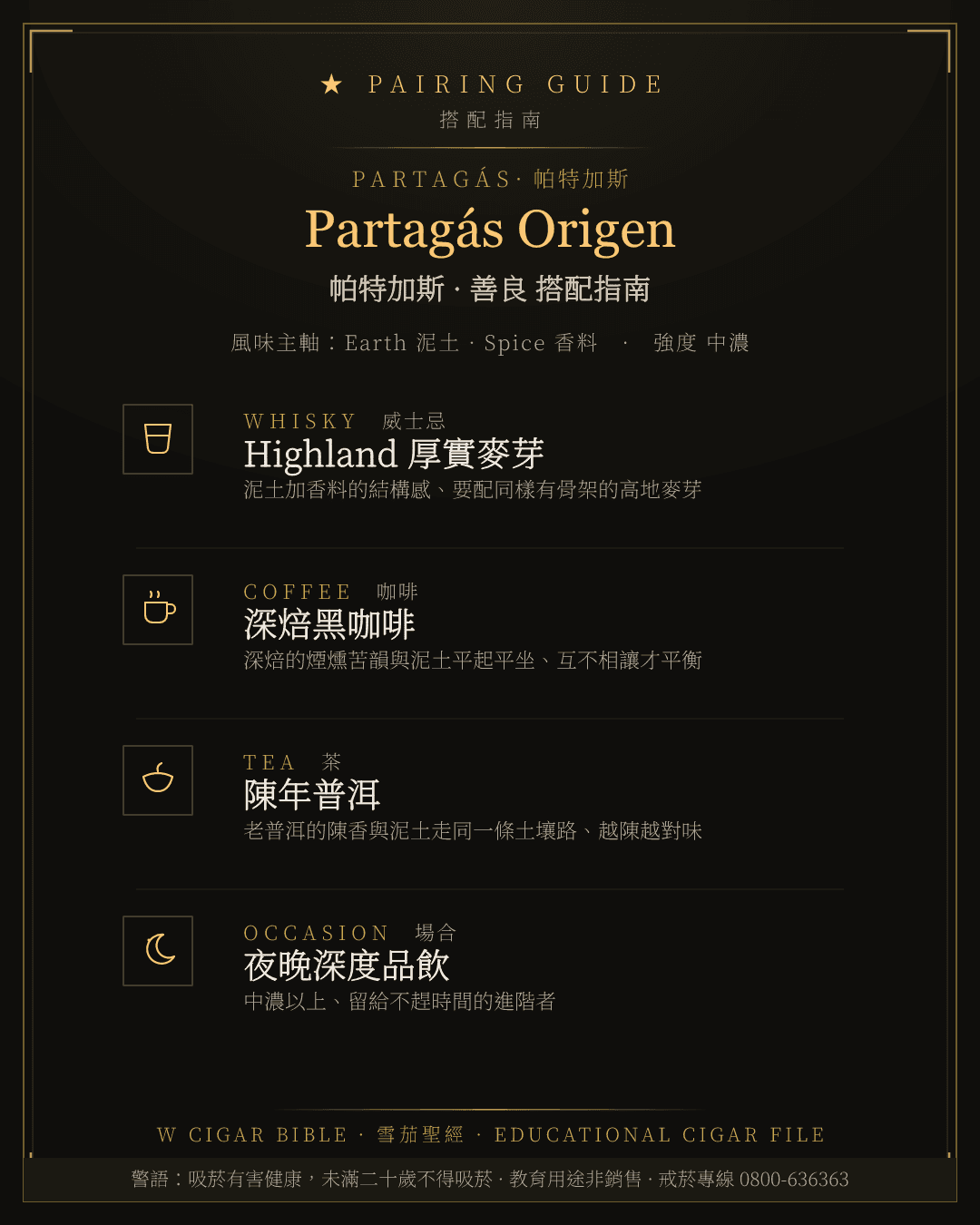
Partagás Origen 搭配指南 · 帕特加斯
PAIRING GUIDE · 搭配指南

Partagás Origen 風味筆記 · 帕特加斯
TASTING NOTES · 風味筆記
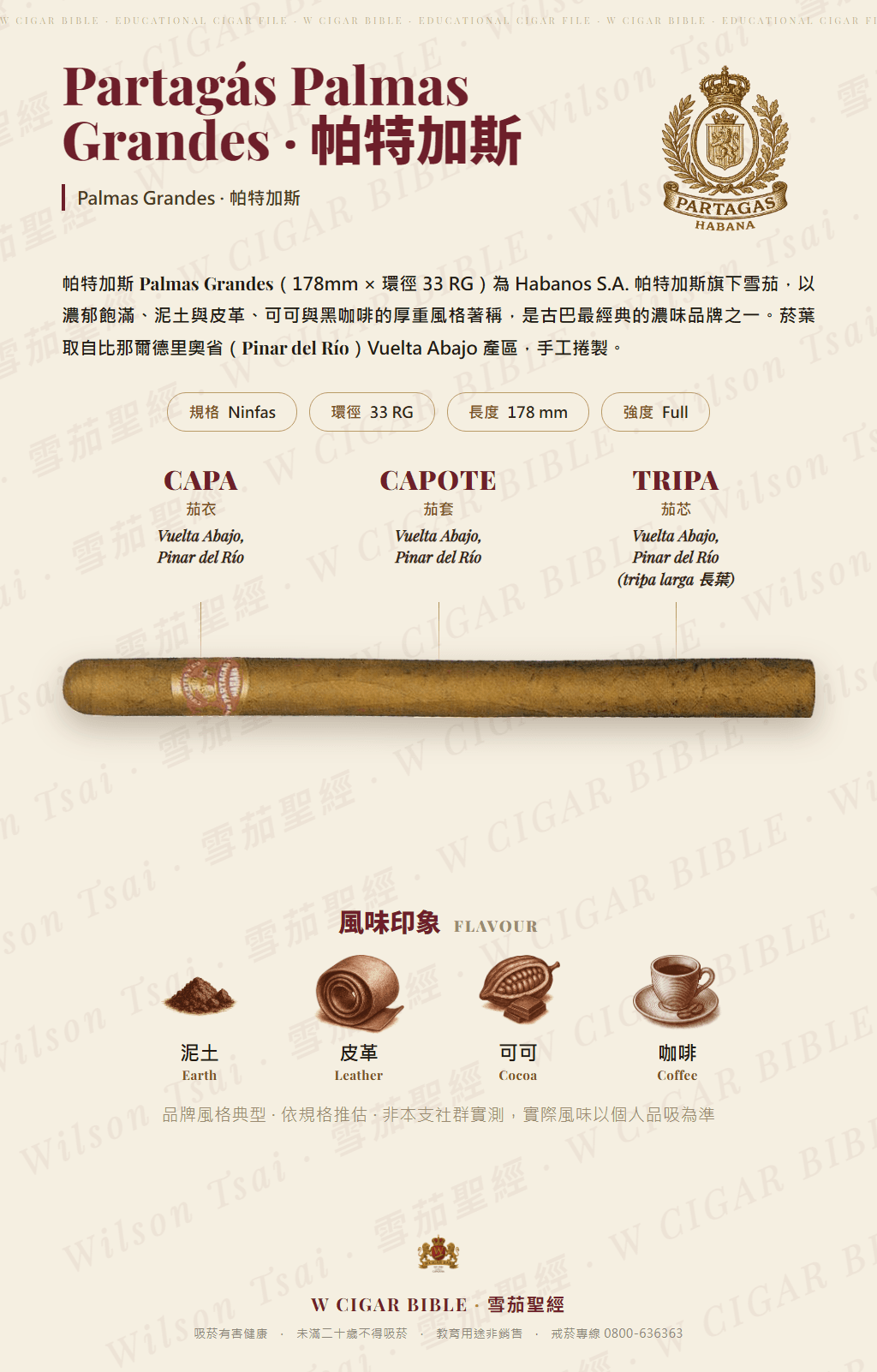
Partagás Palmas Grandes · 帕特加斯

Partagás Palmas Grandes vs Punch Nectares No. 5
VITOLA SHOWDOWN · Ninfas

Partagás Palmas Grandes 搭配指南 · 帕特加斯
PAIRING GUIDE · 搭配指南

Partagás Palmas Grandes 風味筆記 · 帕特加斯
TASTING NOTES · 風味筆記
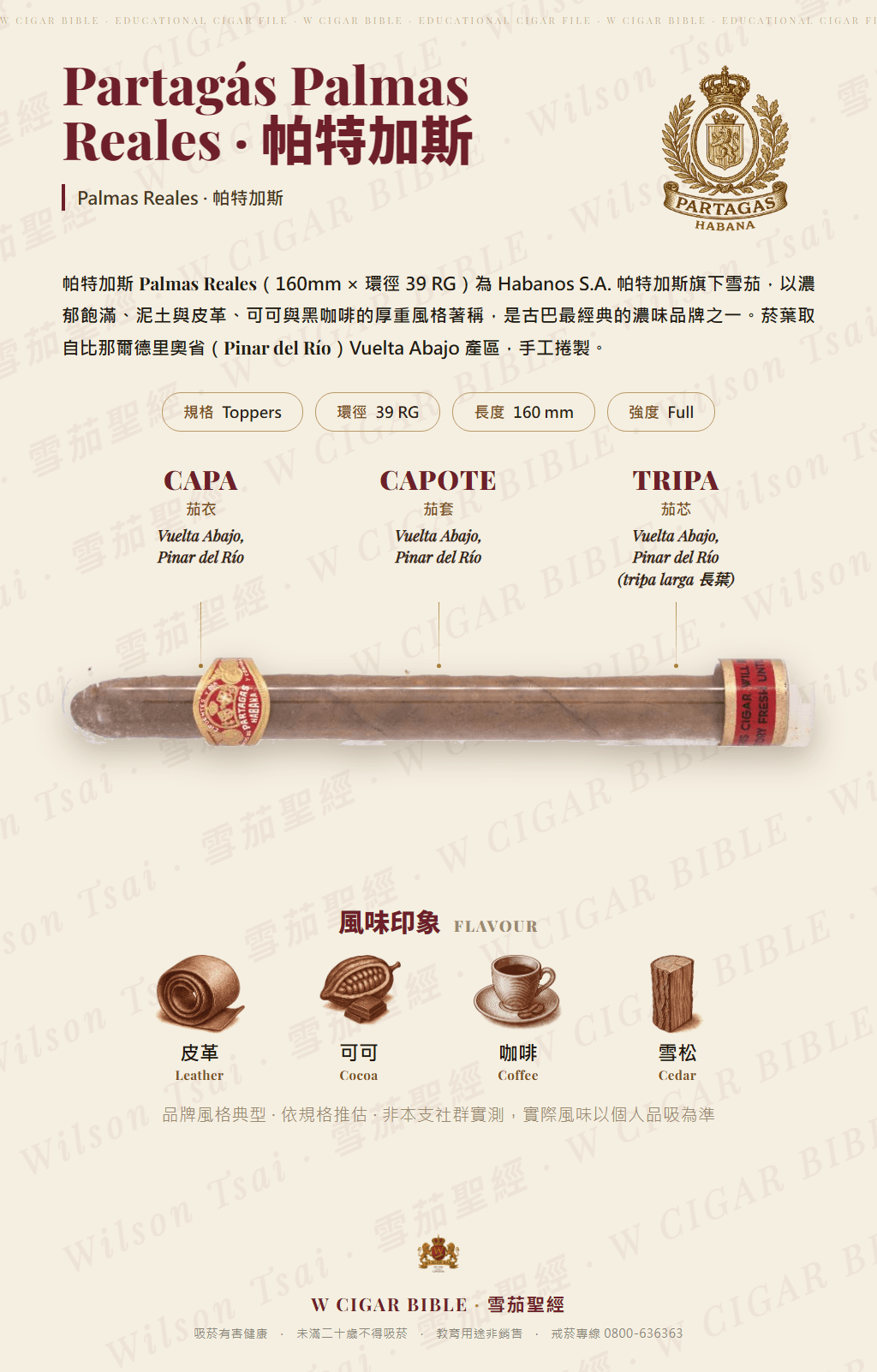
Partagás Palmas Reales · 帕特加斯
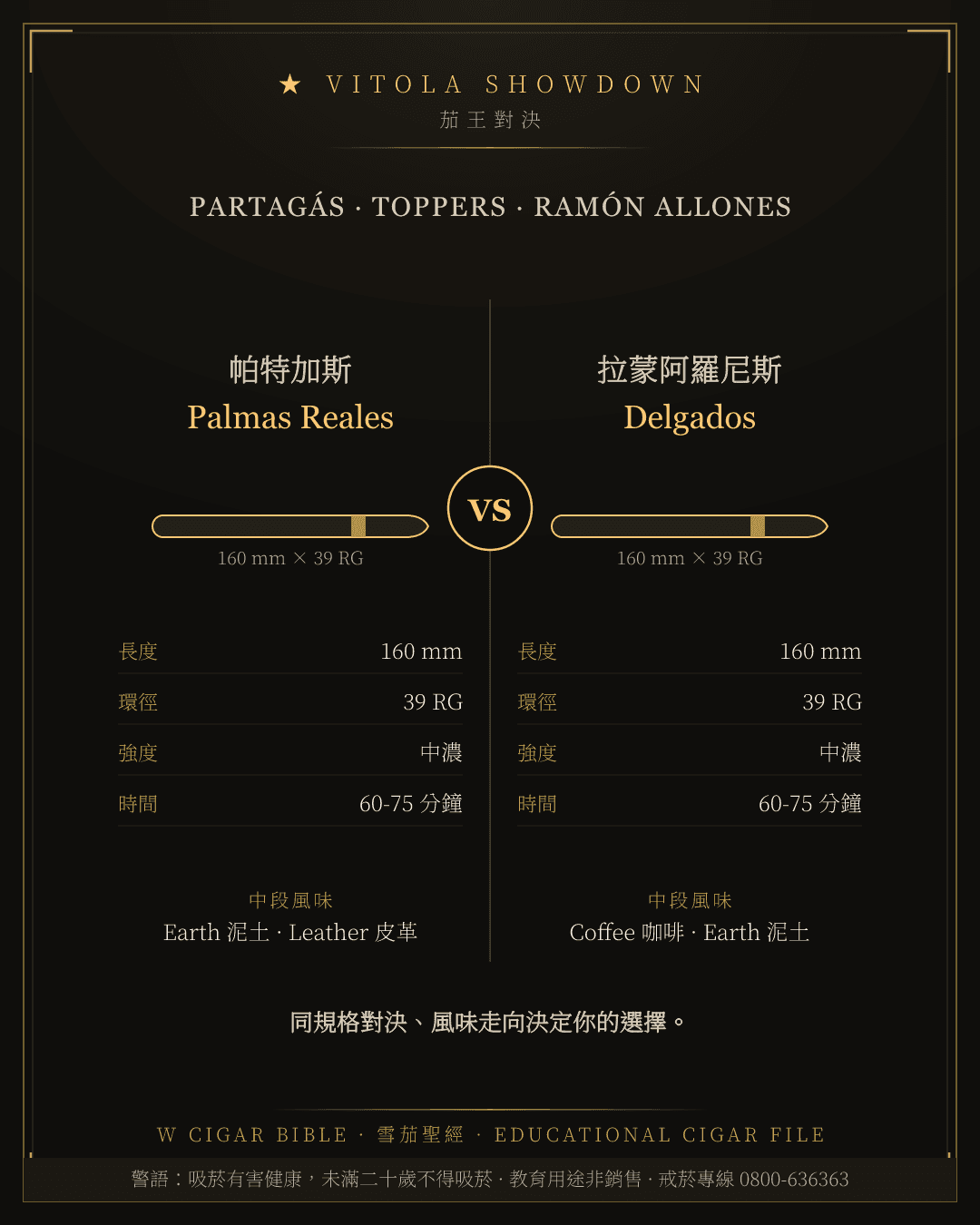
Partagás Palmas Reales vs Ramón Allones Delgados
VITOLA SHOWDOWN · Toppers
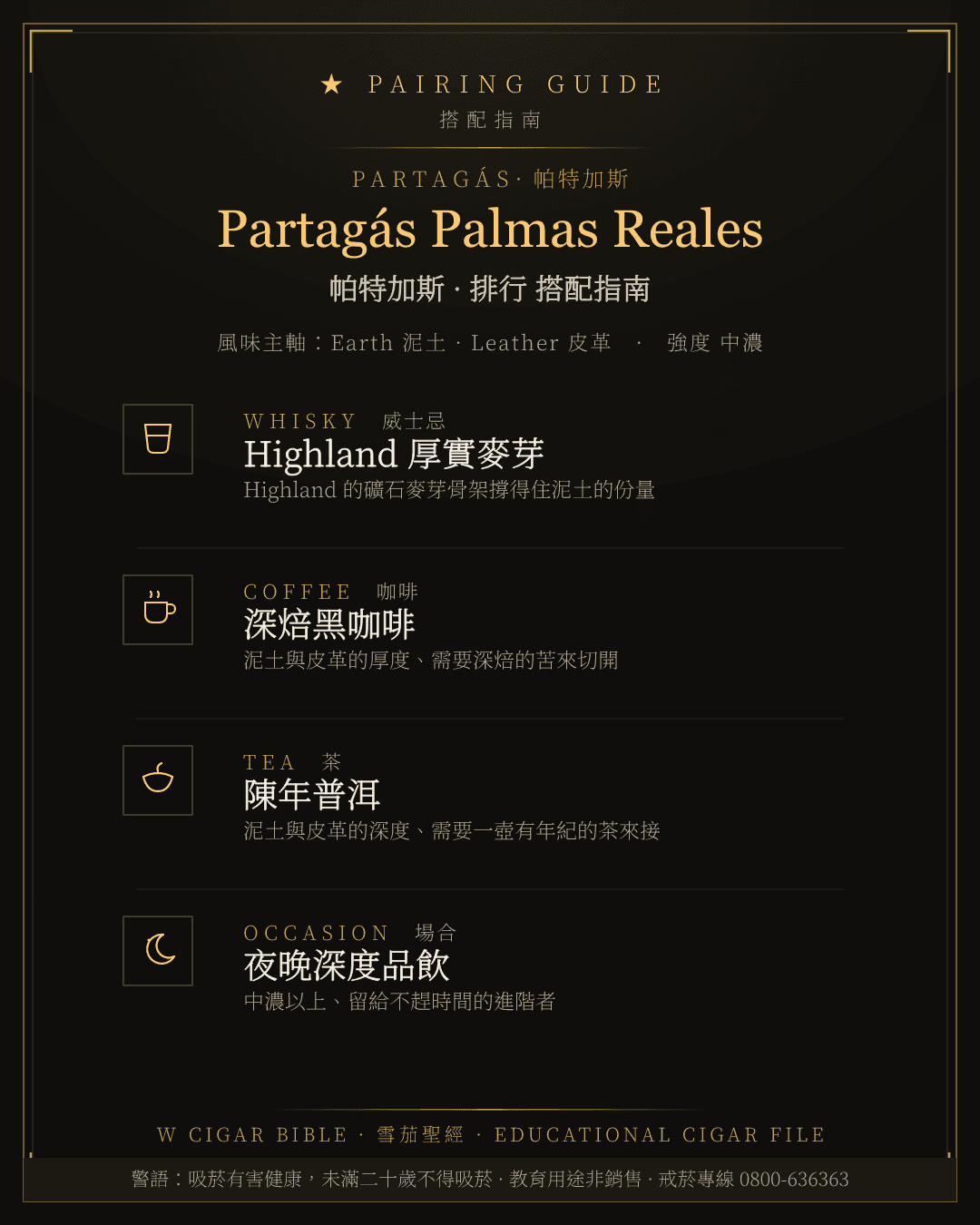
Partagás Palmas Reales 搭配指南 · 帕特加斯
PAIRING GUIDE · 搭配指南
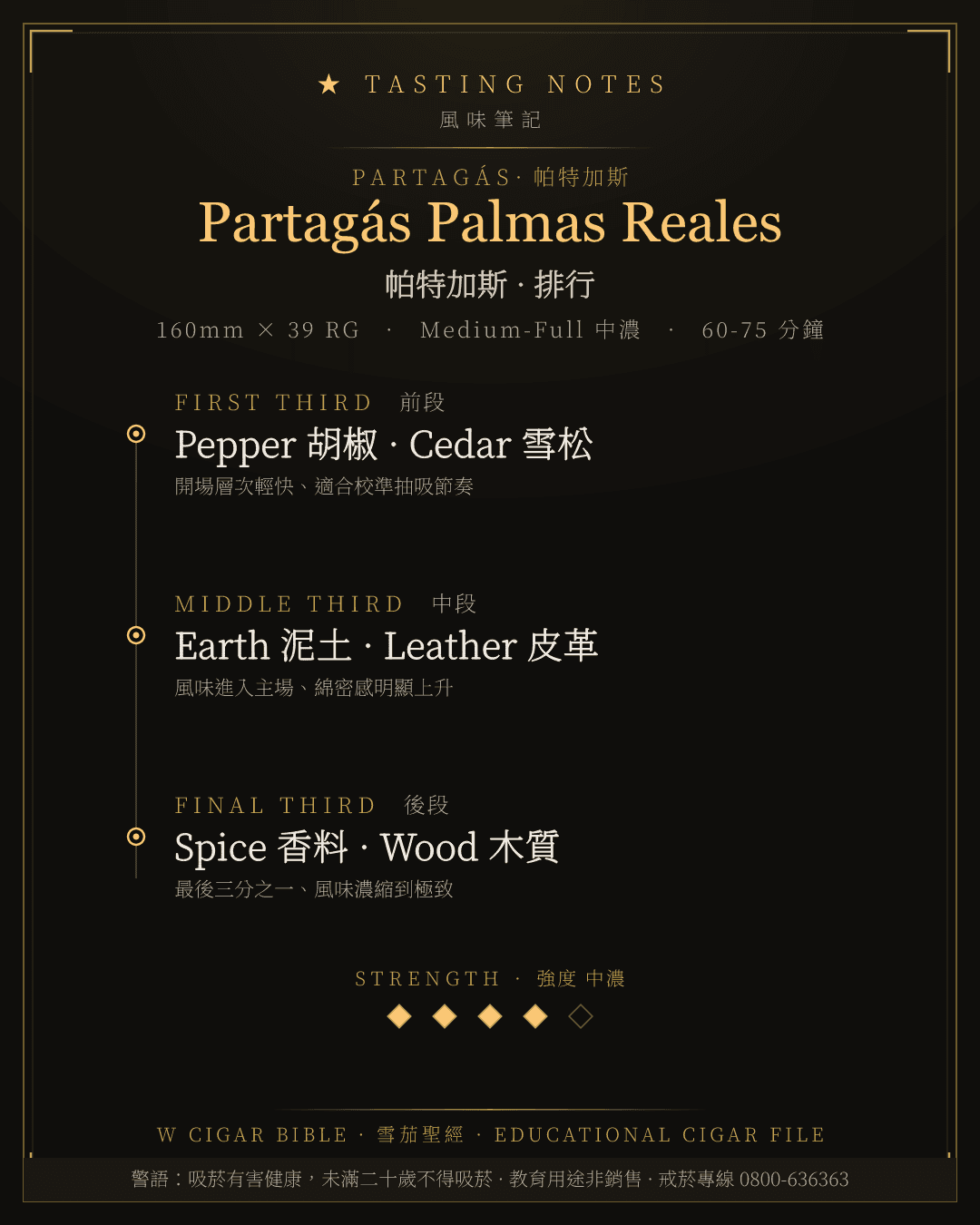
Partagás Palmas Reales 風味筆記 · 帕特加斯
TASTING NOTES · 風味筆記
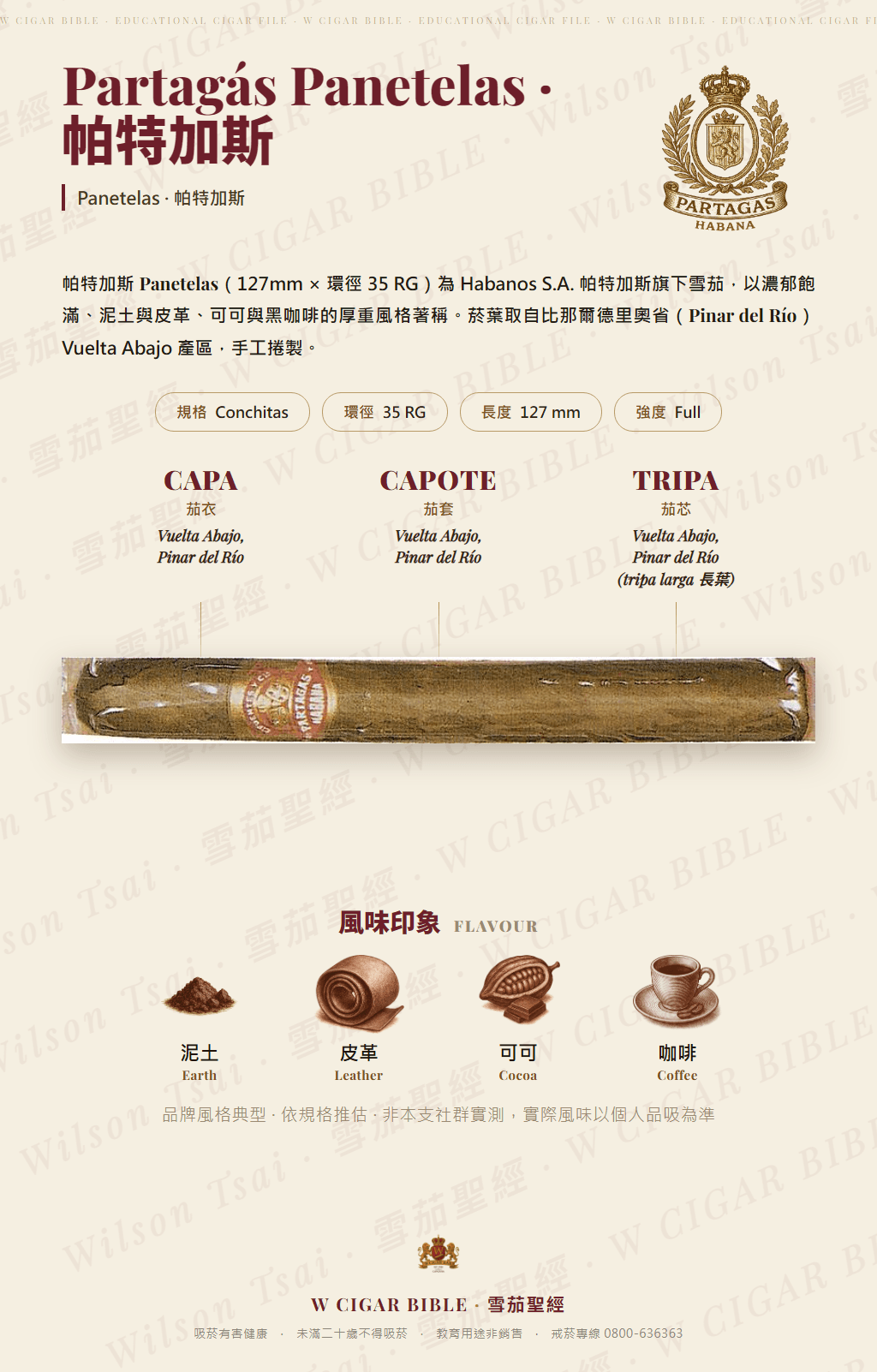
Partagás Panetelas · 帕特加斯

Partagás Panetelas 搭配指南 · 帕特加斯
PAIRING GUIDE · 搭配指南
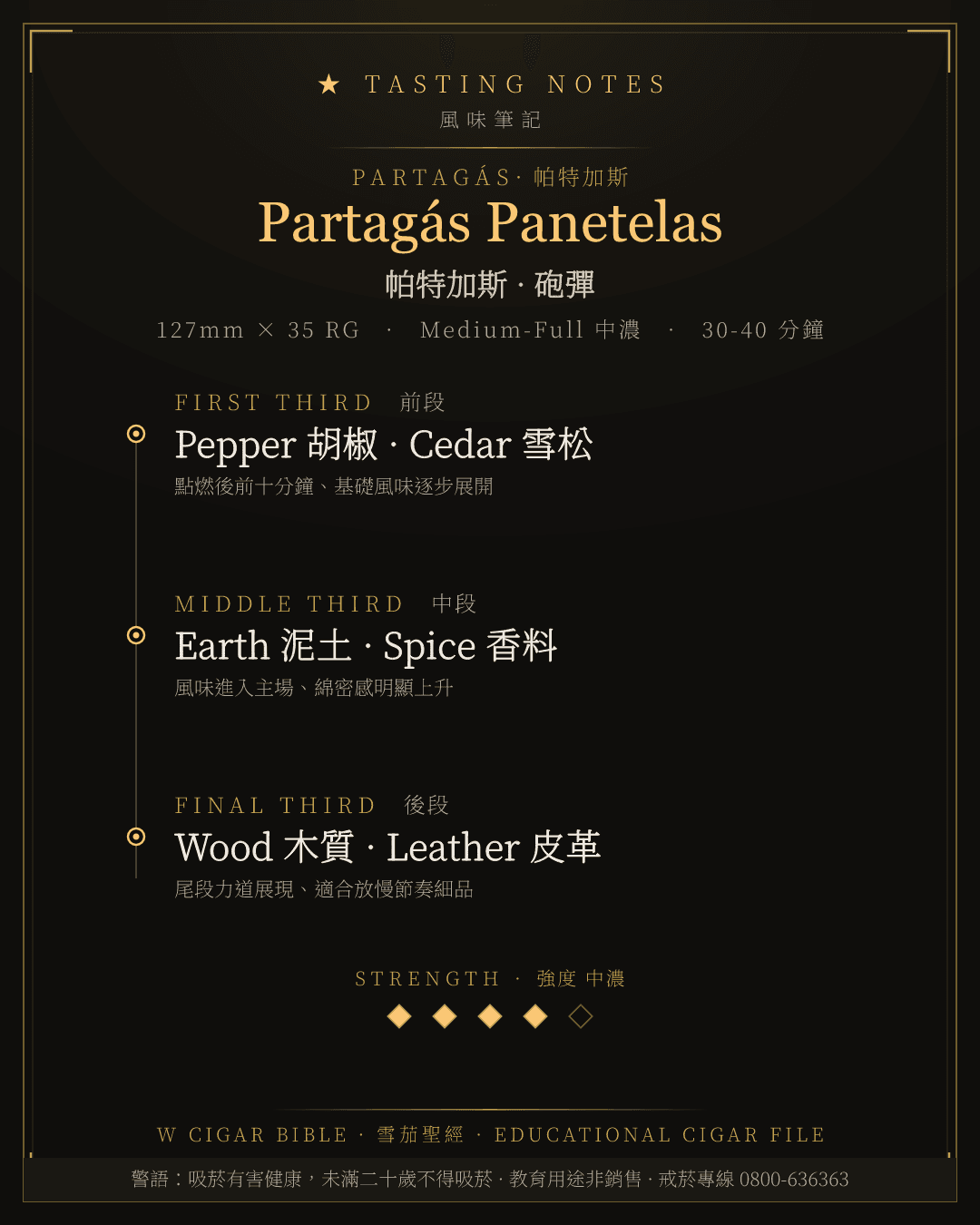
Partagás Panetelas 風味筆記 · 帕特加斯
TASTING NOTES · 風味筆記
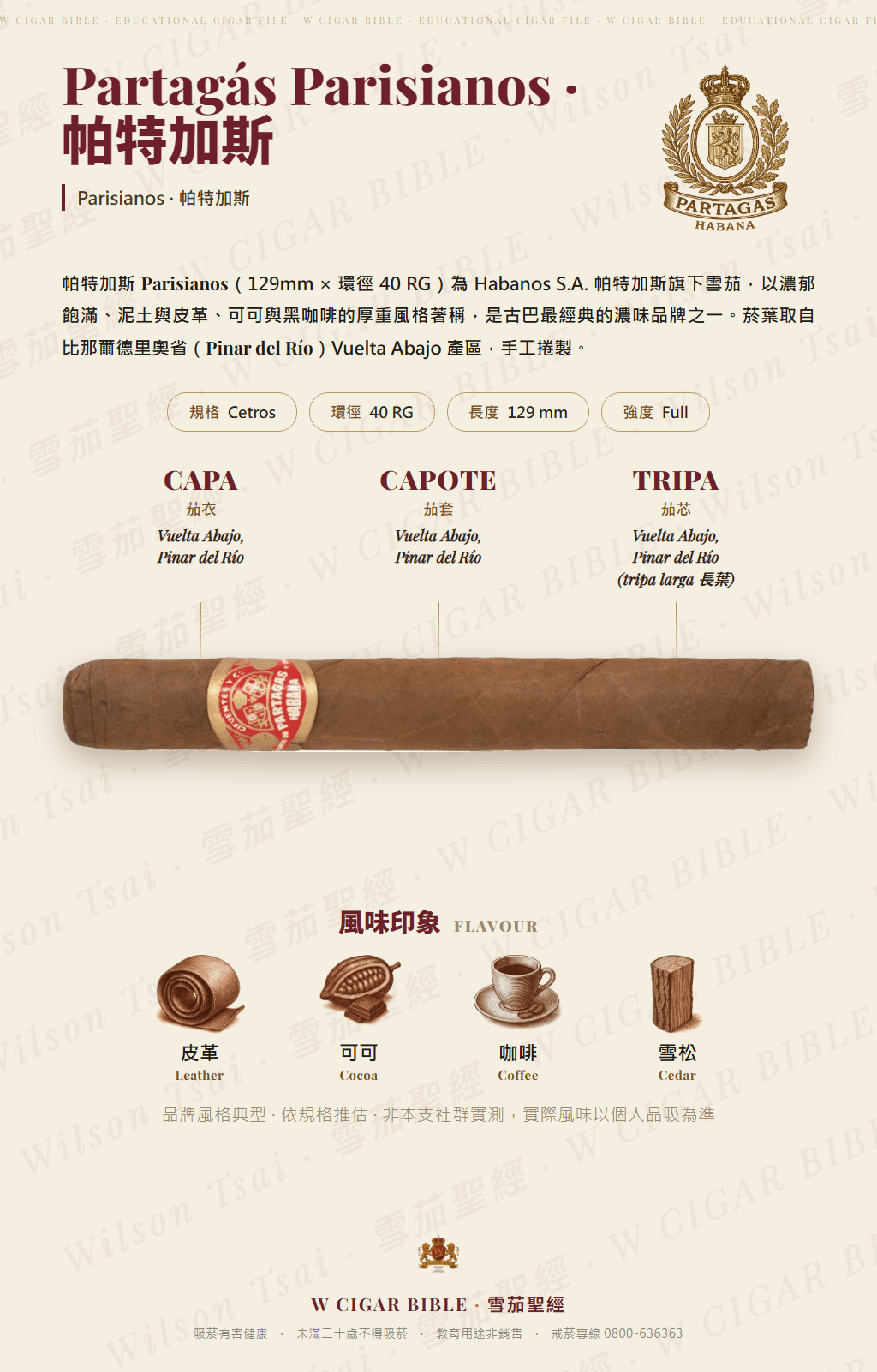
Partagás Parisianos · 帕特加斯

Partagás Parisianos vs Romeo Y Julieta Plateados De Romeo 2
VITOLA SHOWDOWN · Petit Cetros
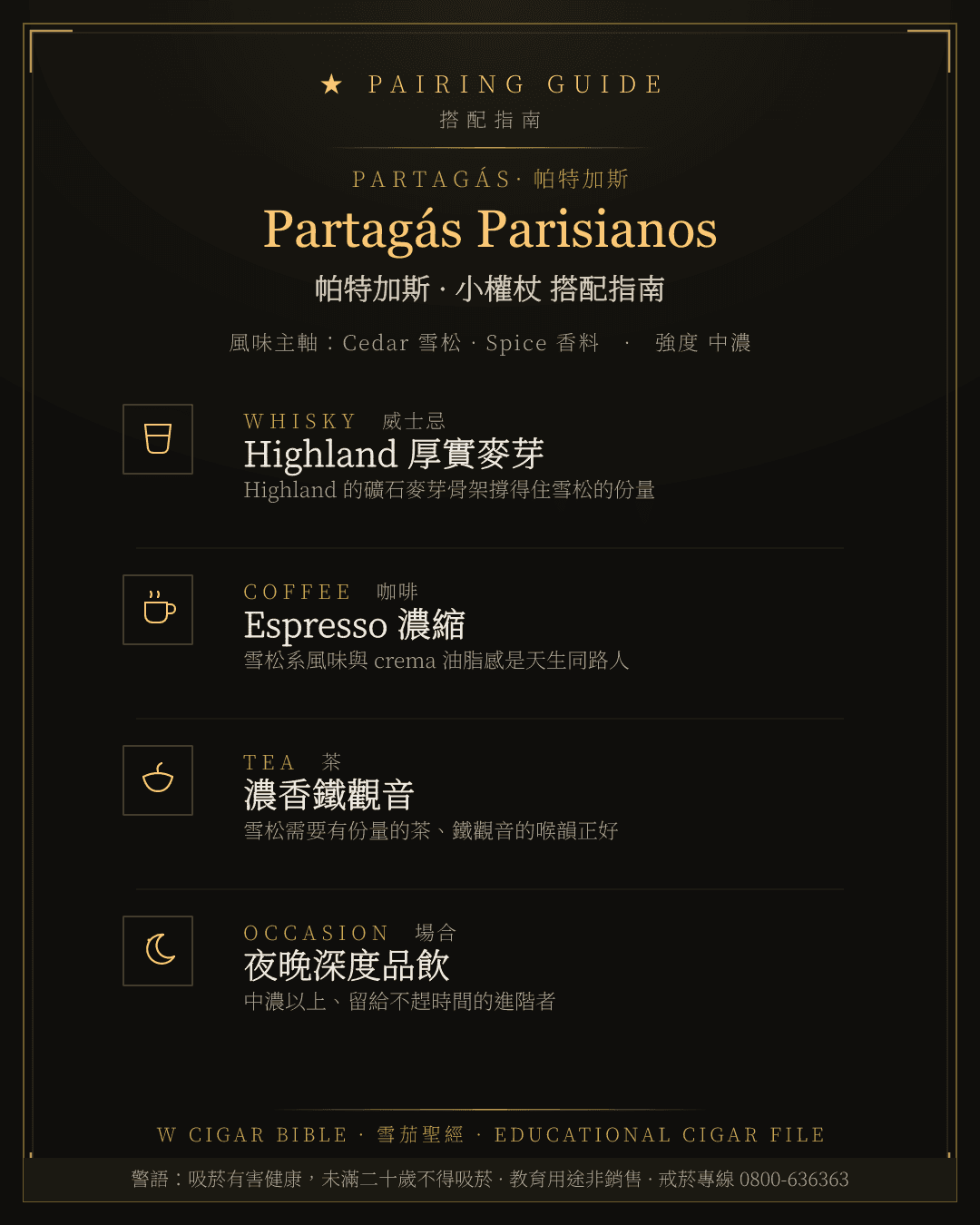
Partagás Parisianos 搭配指南 · 帕特加斯
PAIRING GUIDE · 搭配指南
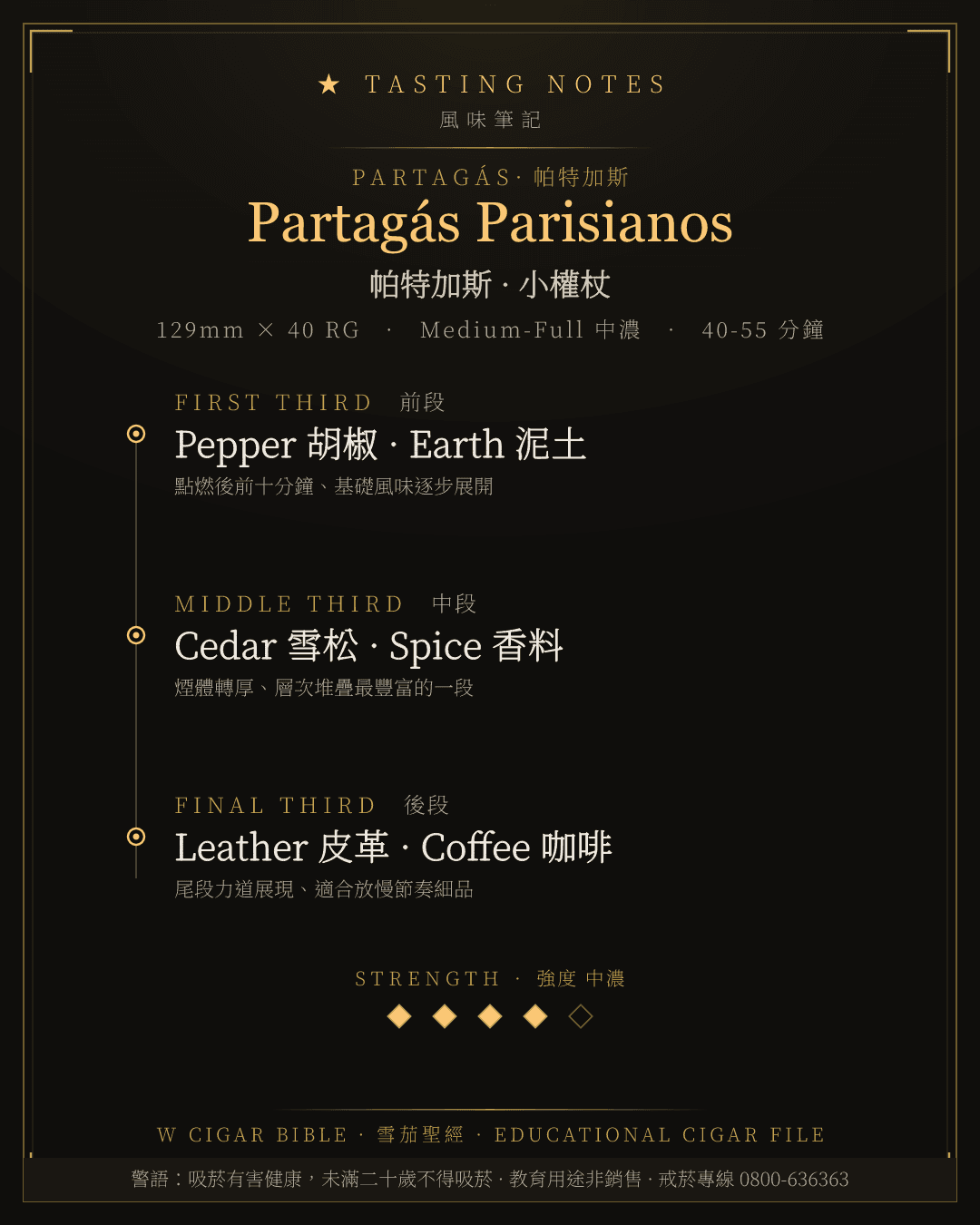
Partagás Parisianos 風味筆記 · 帕特加斯
TASTING NOTES · 風味筆記
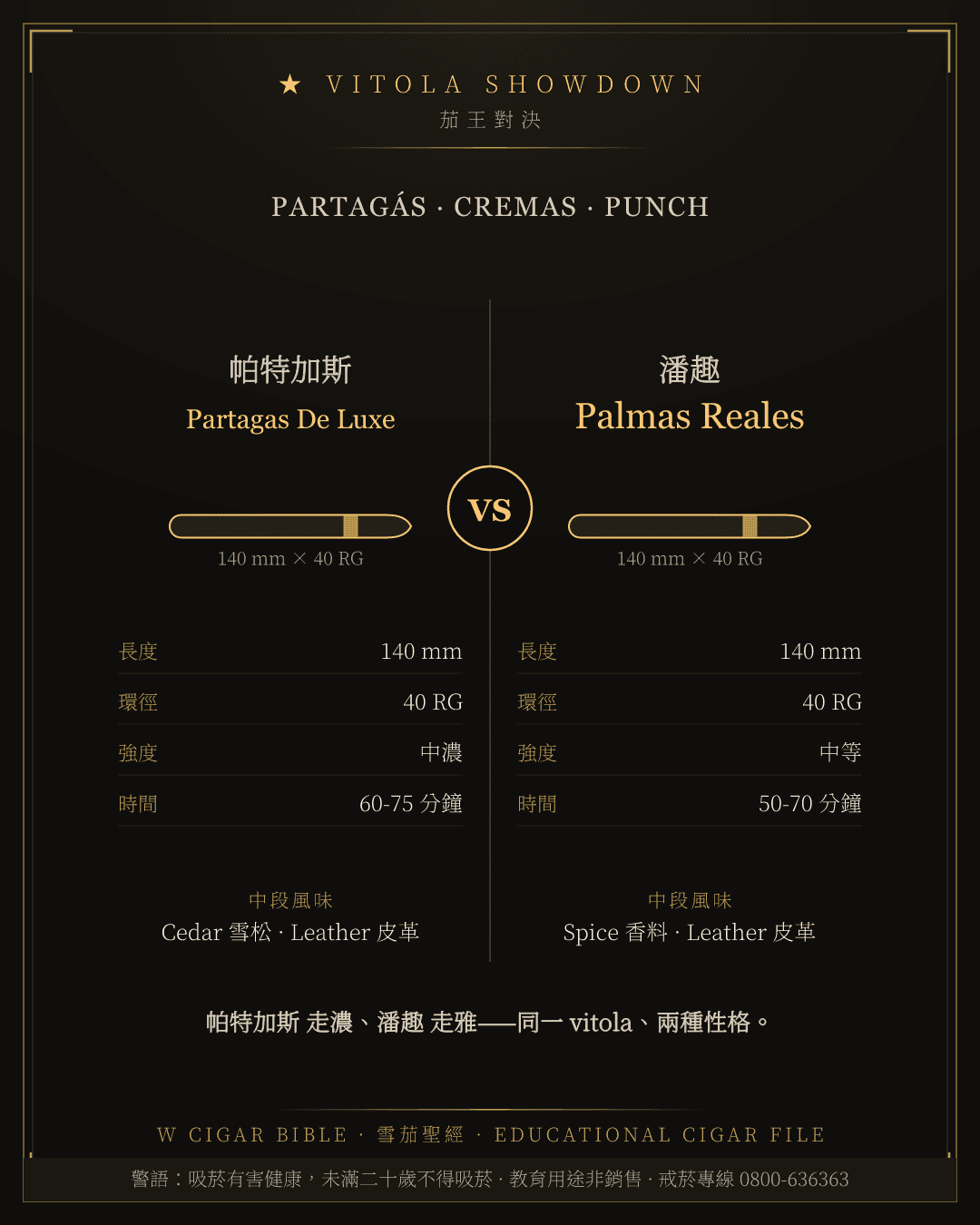
Partagás Partagas De Luxe vs Punch Palmas Reales
VITOLA SHOWDOWN · Cremas

Partagás Partagas De Luxe 搭配指南 · 帕特加斯
PAIRING GUIDE · 搭配指南

Partagás Partagas De Luxe 風味筆記 · 帕特加斯
TASTING NOTES · 風味筆記
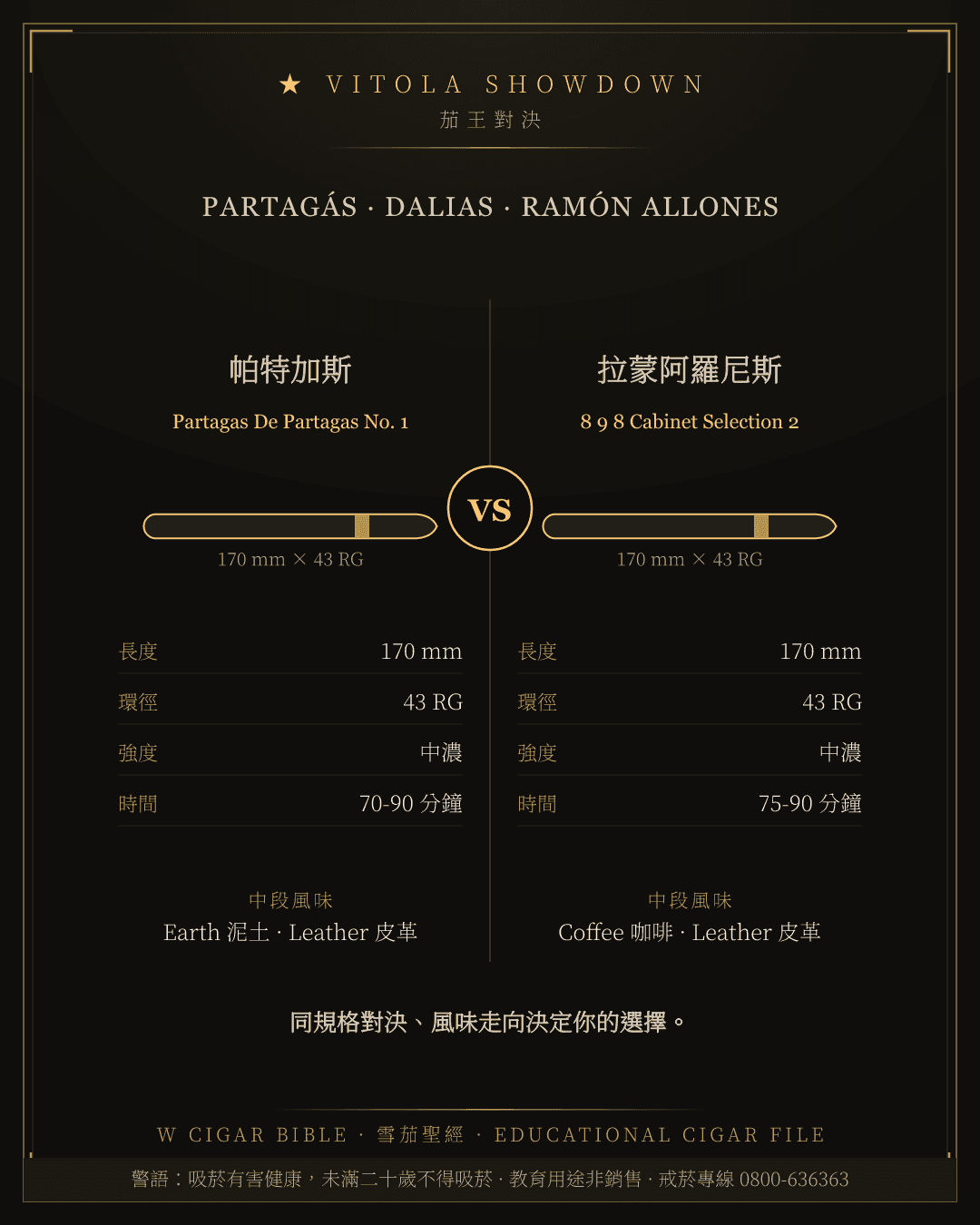
Partagás Partagas De Partagas No. 1 vs Ramón Allones 8 9 8 Cabinet Selection 2
VITOLA SHOWDOWN · Dalias
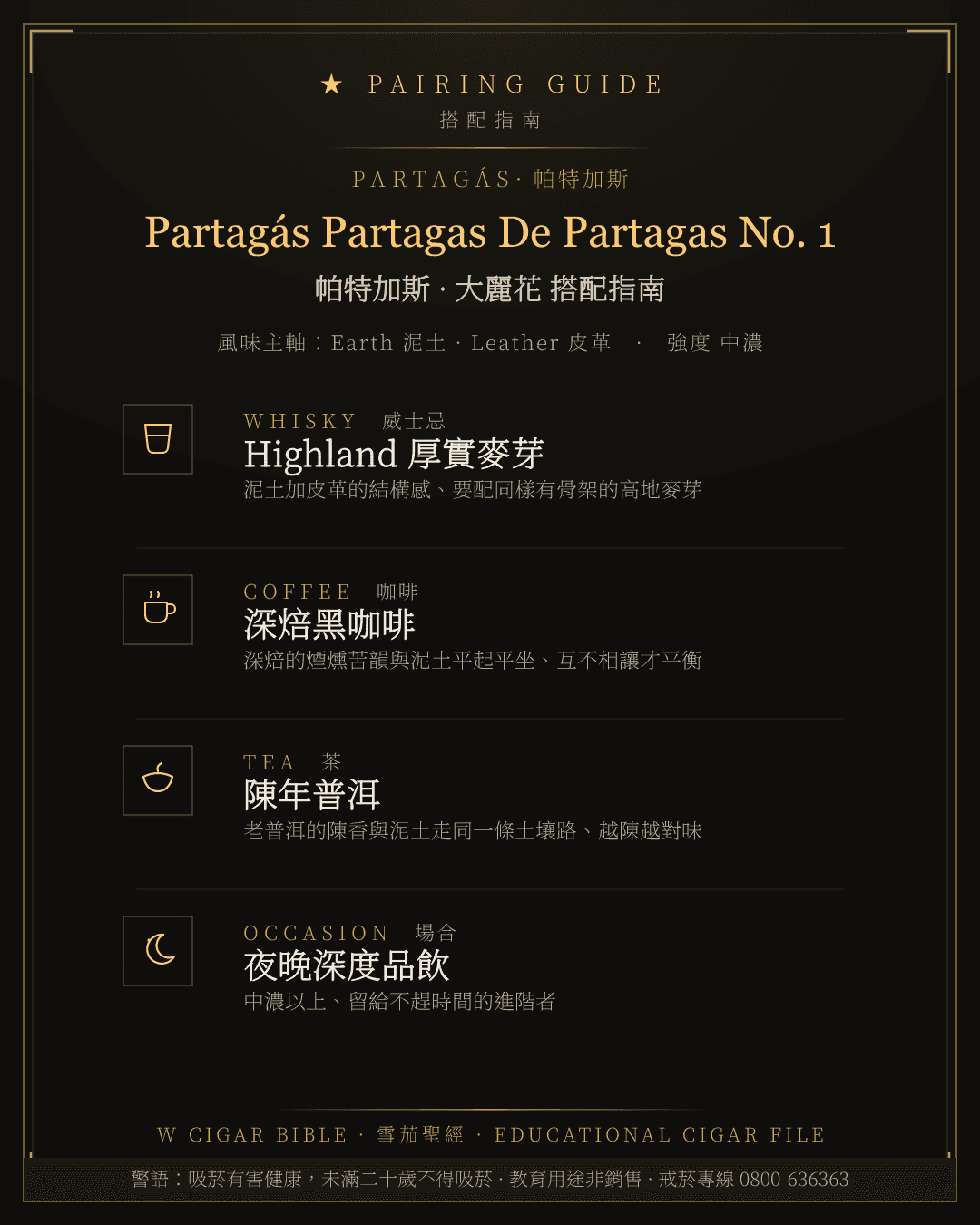
Partagás Partagas De Partagas No. 1 搭配指南 · 帕特加斯
PAIRING GUIDE · 搭配指南
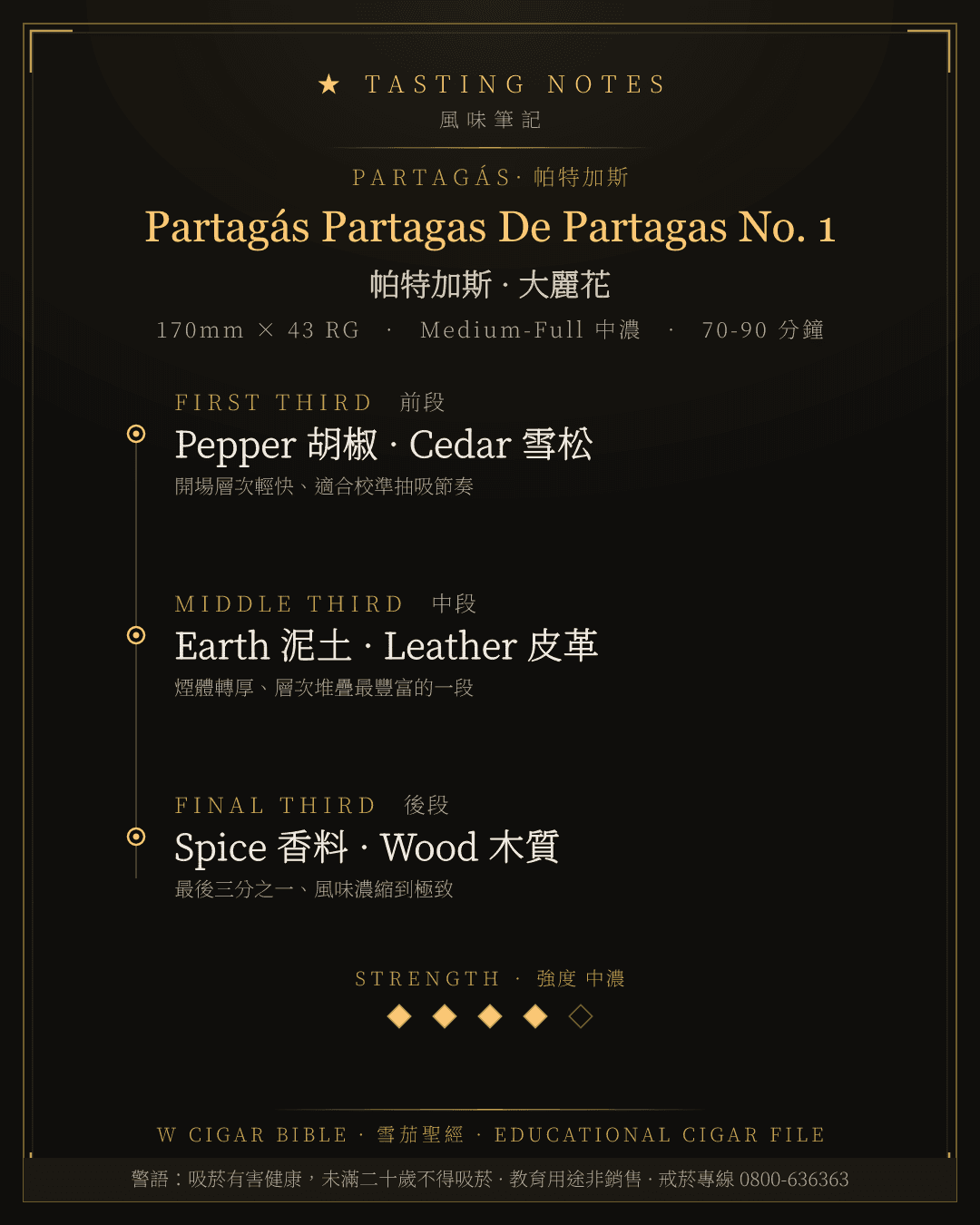
Partagás Partagas De Partagas No. 1 風味筆記 · 帕特加斯
TASTING NOTES · 風味筆記
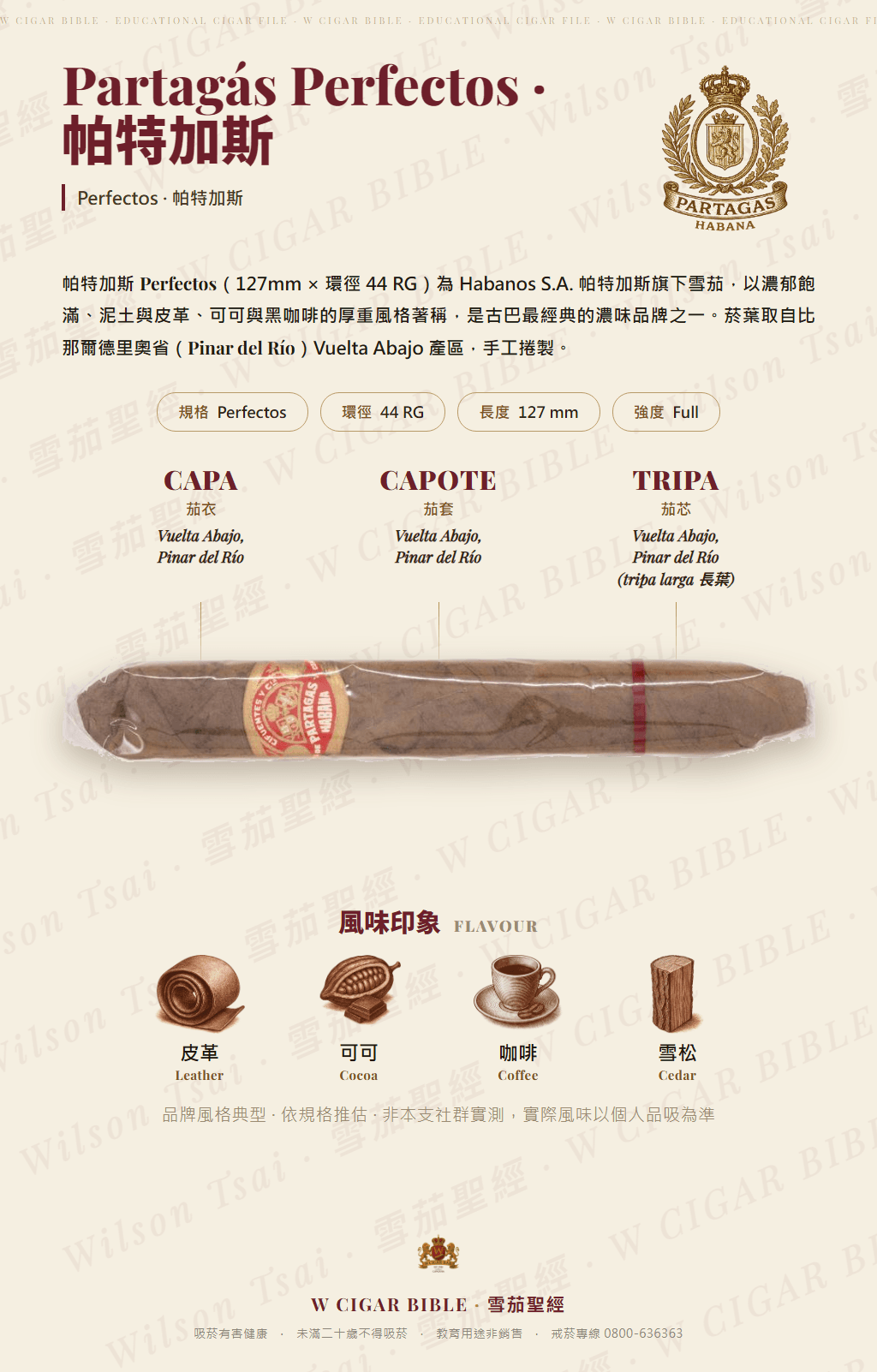
Partagás Perfectos · 帕特加斯
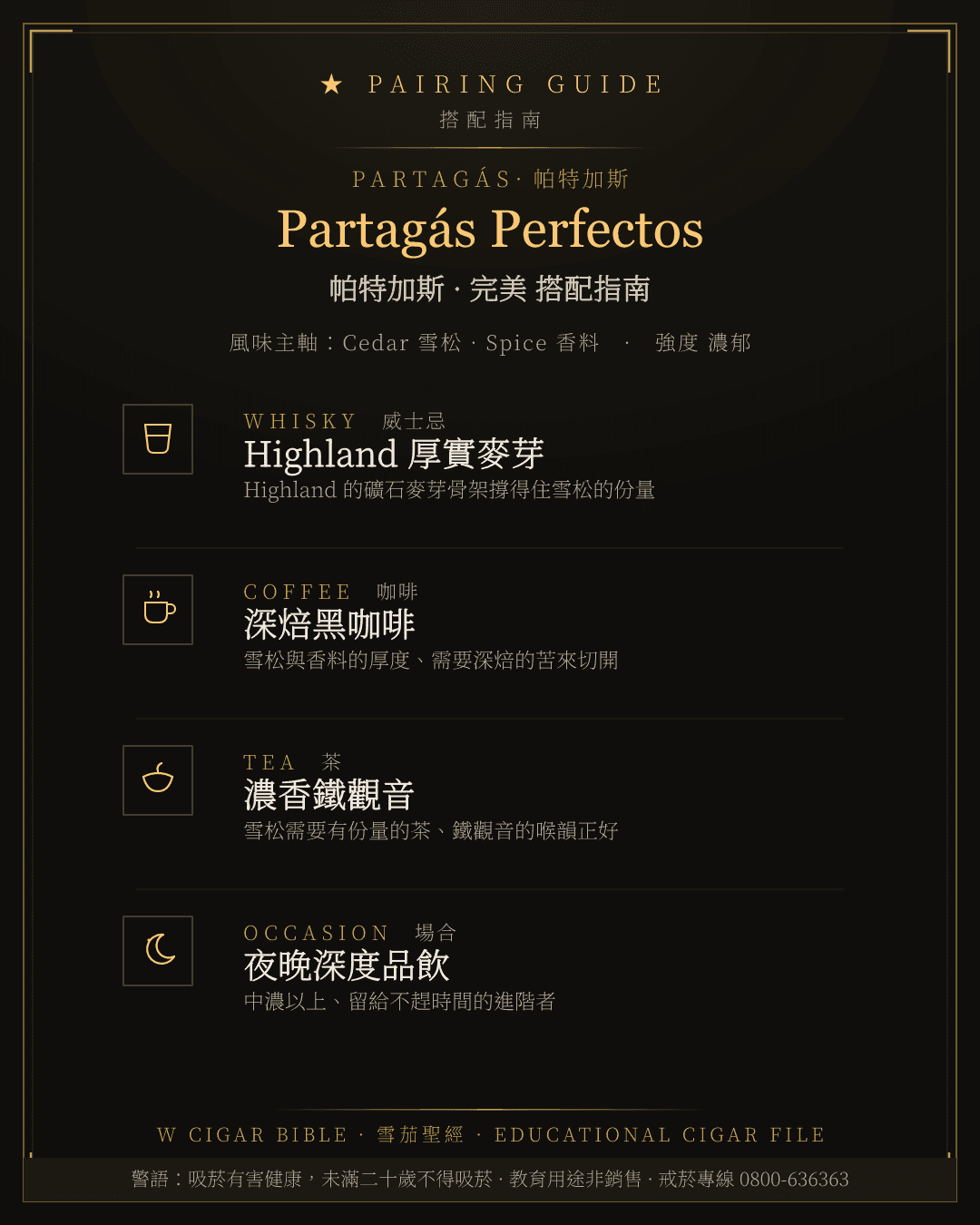
Partagás Perfectos 搭配指南 · 帕特加斯
PAIRING GUIDE · 搭配指南

Partagás Perfectos 風味筆記 · 帕特加斯
TASTING NOTES · 風味筆記
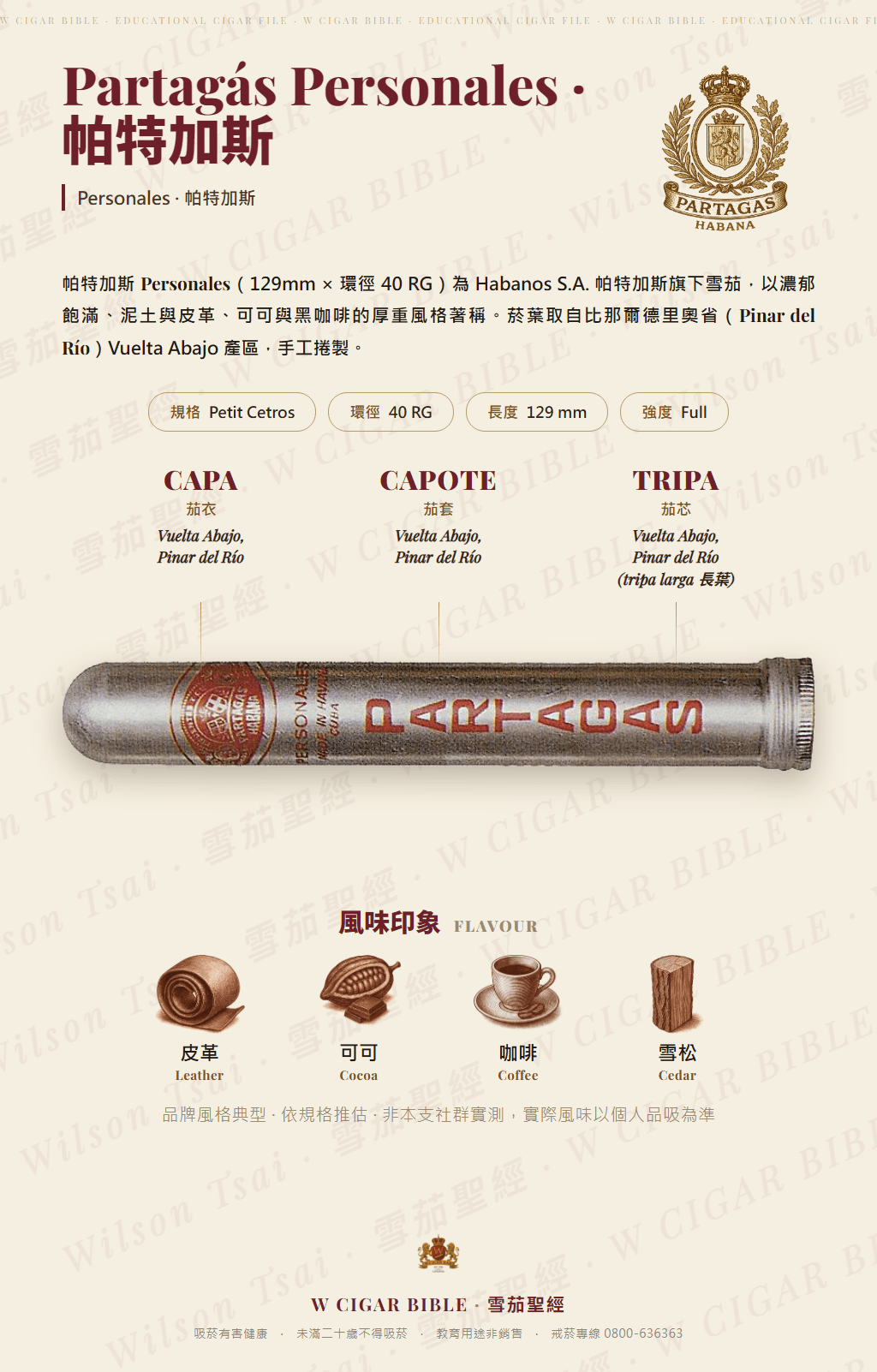
Partagás Personales · 帕特加斯
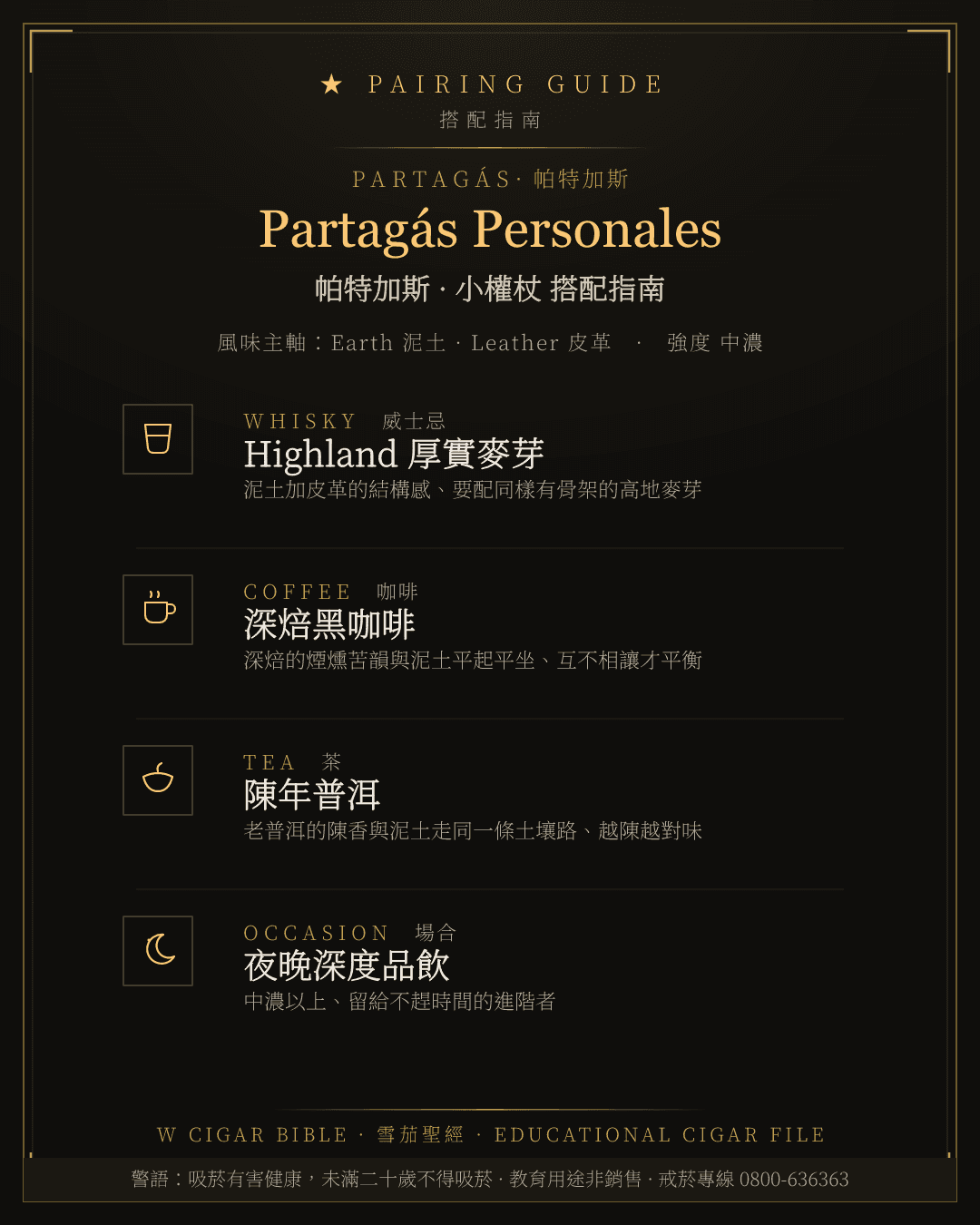
Partagás Personales 搭配指南 · 帕特加斯
PAIRING GUIDE · 搭配指南

Partagás Personales 風味筆記 · 帕特加斯
TASTING NOTES · 風味筆記
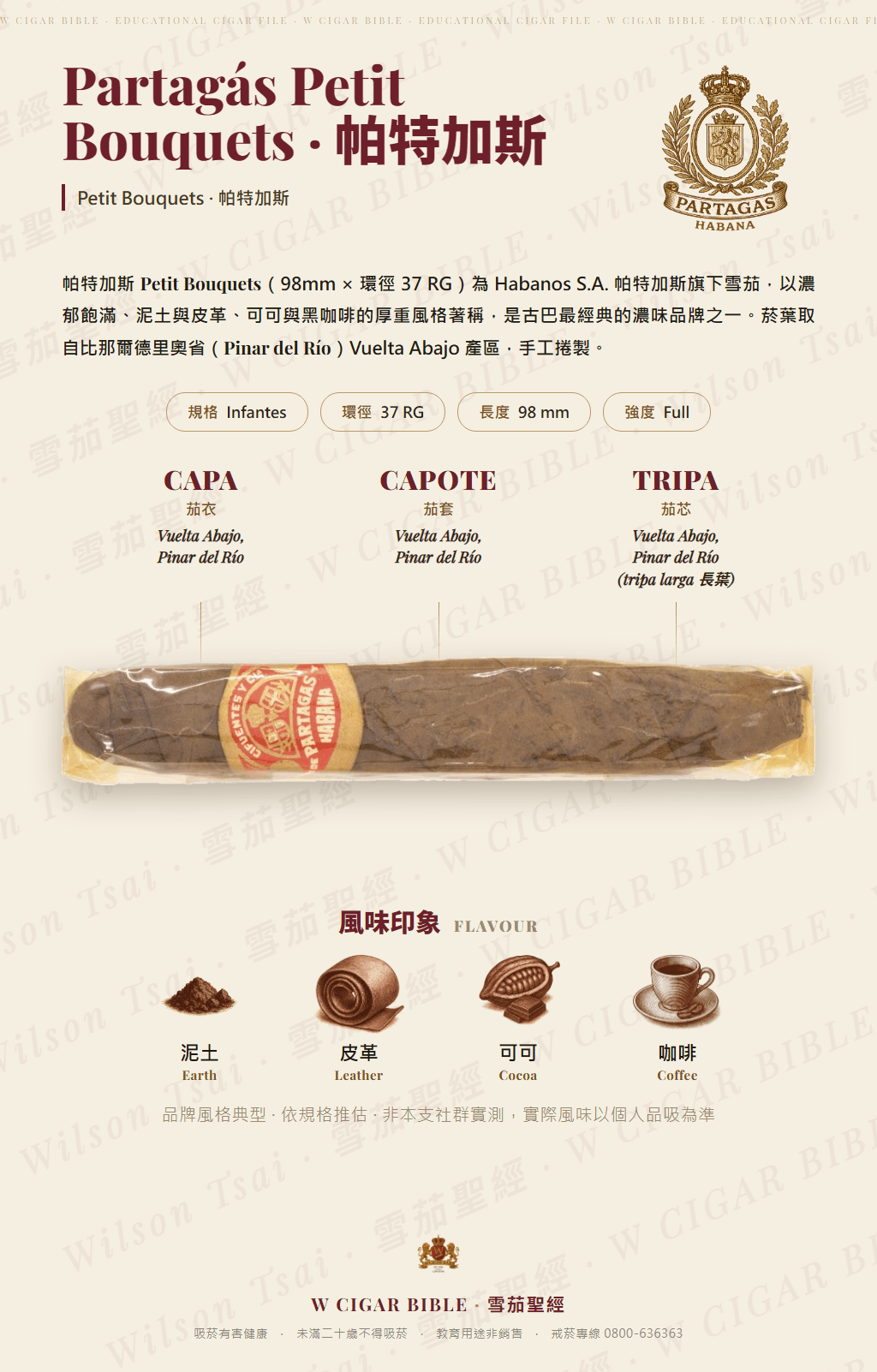
Partagás Petit Bouquets · 帕特加斯

Partagás Petit Bouquets 搭配指南 · 帕特加斯
PAIRING GUIDE · 搭配指南
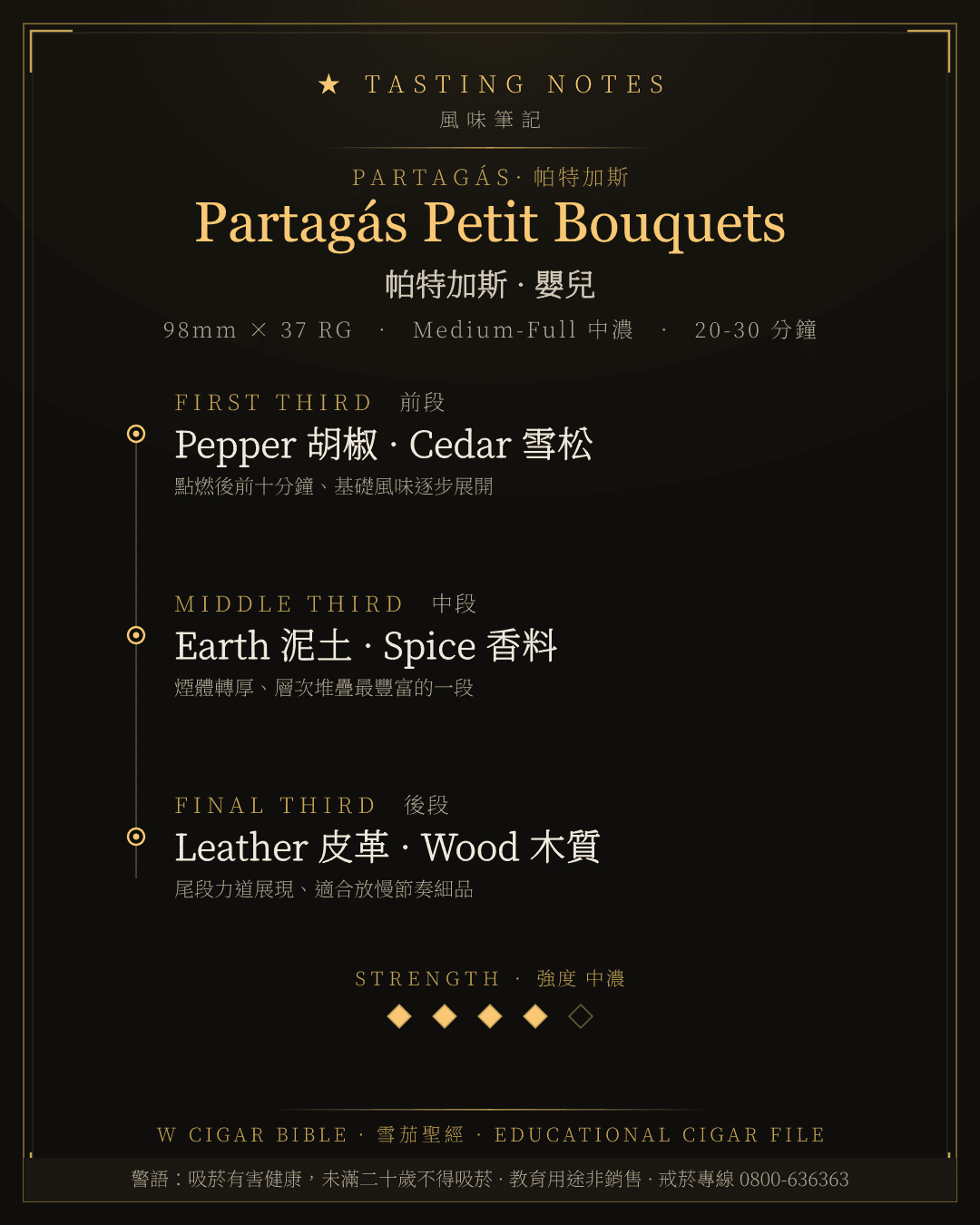
Partagás Petit Bouquets 風味筆記 · 帕特加斯
TASTING NOTES · 風味筆記
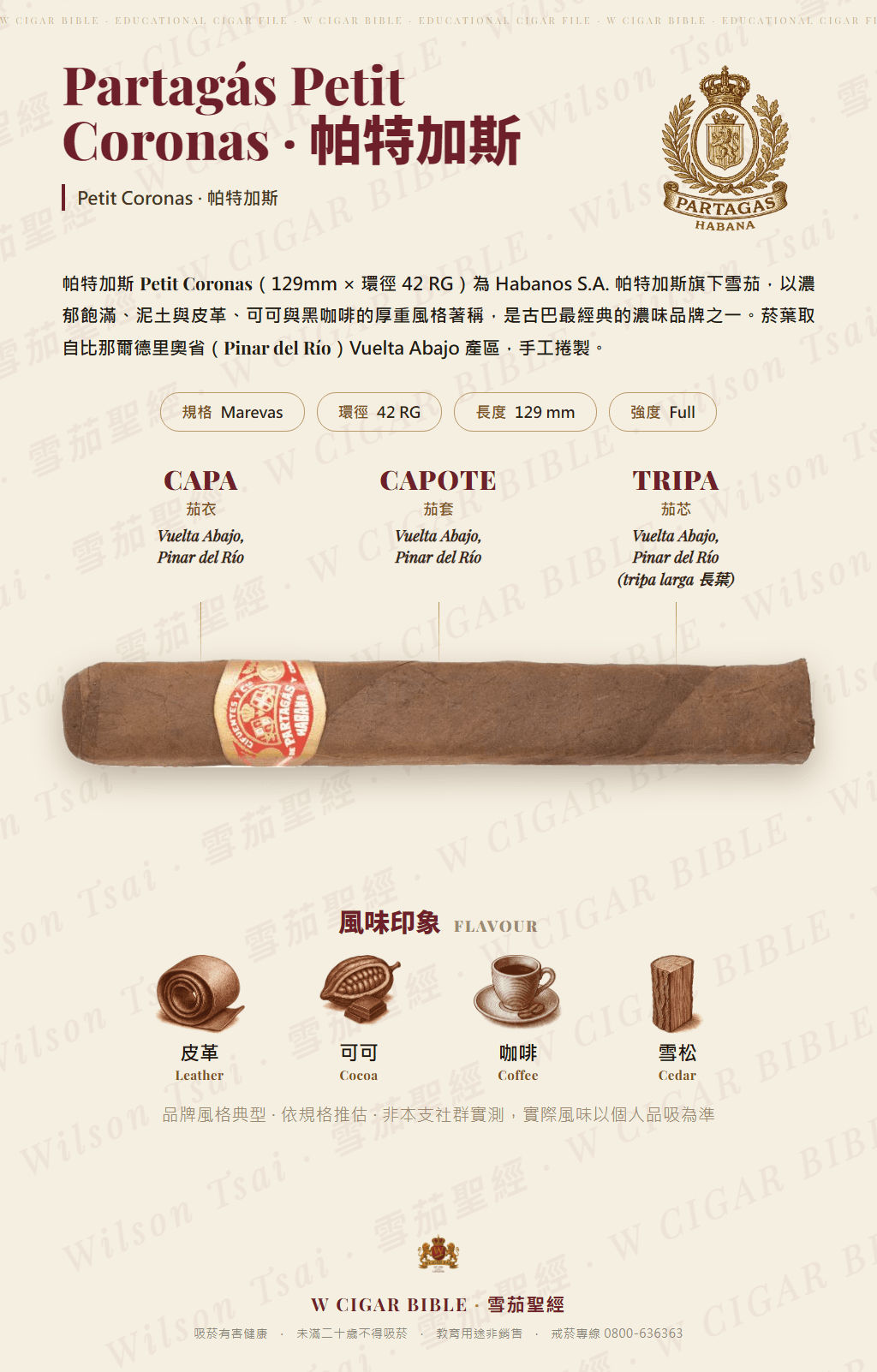
Partagás Petit Coronas · 帕特加斯
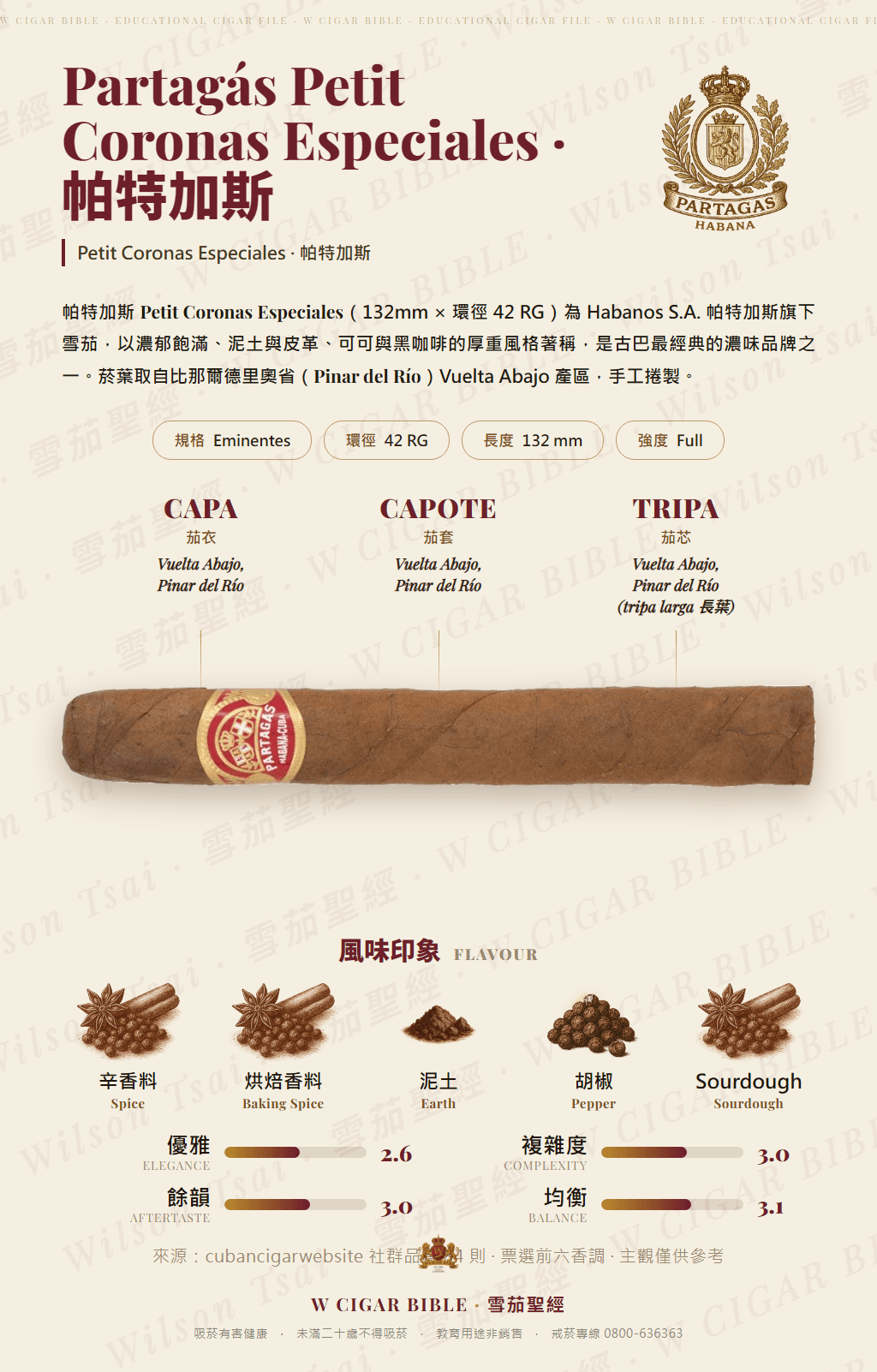
Partagás Petit Coronas Especiales · 帕特加斯
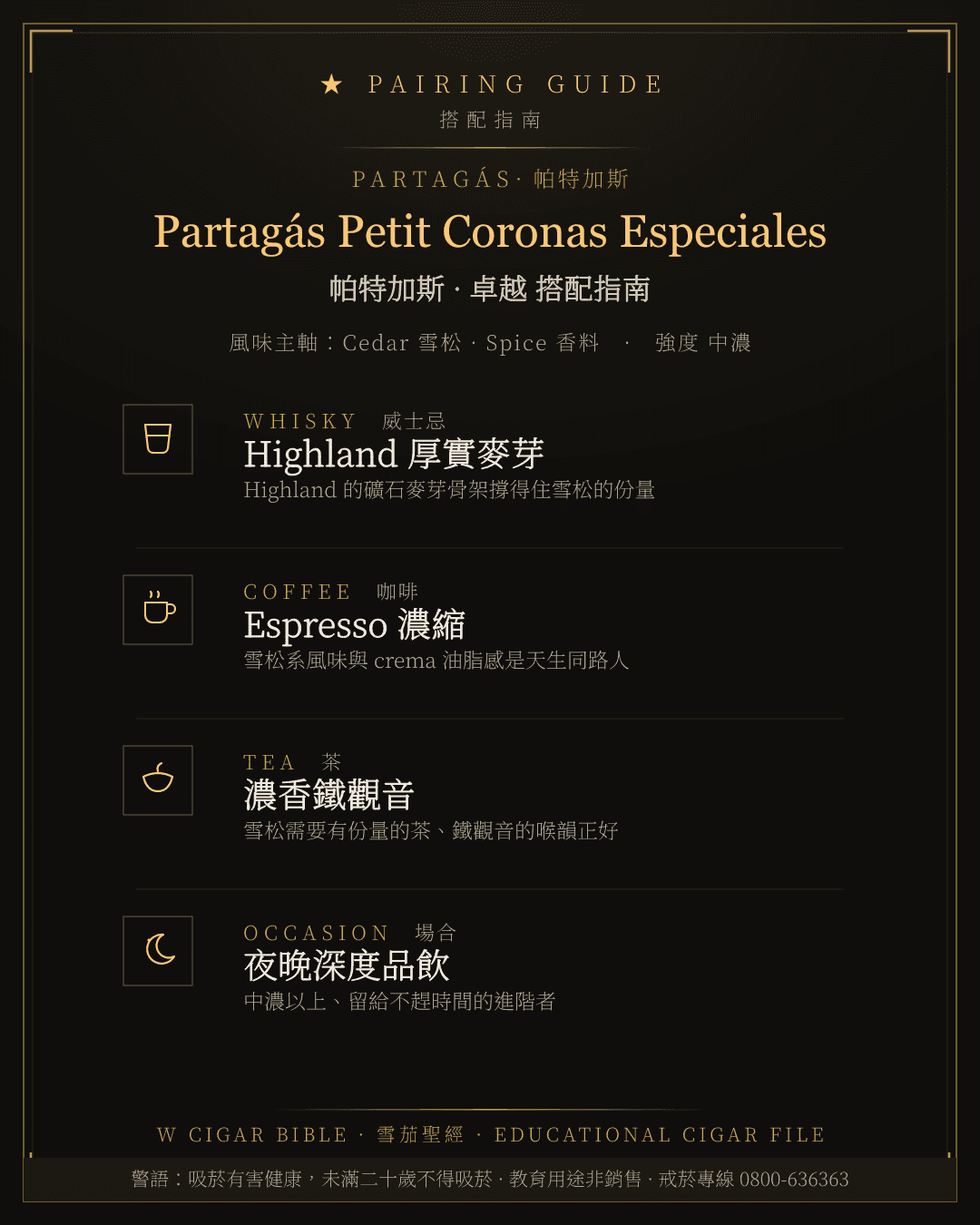
Partagás Petit Coronas Especiales 搭配指南 · 帕特加斯
PAIRING GUIDE · 搭配指南
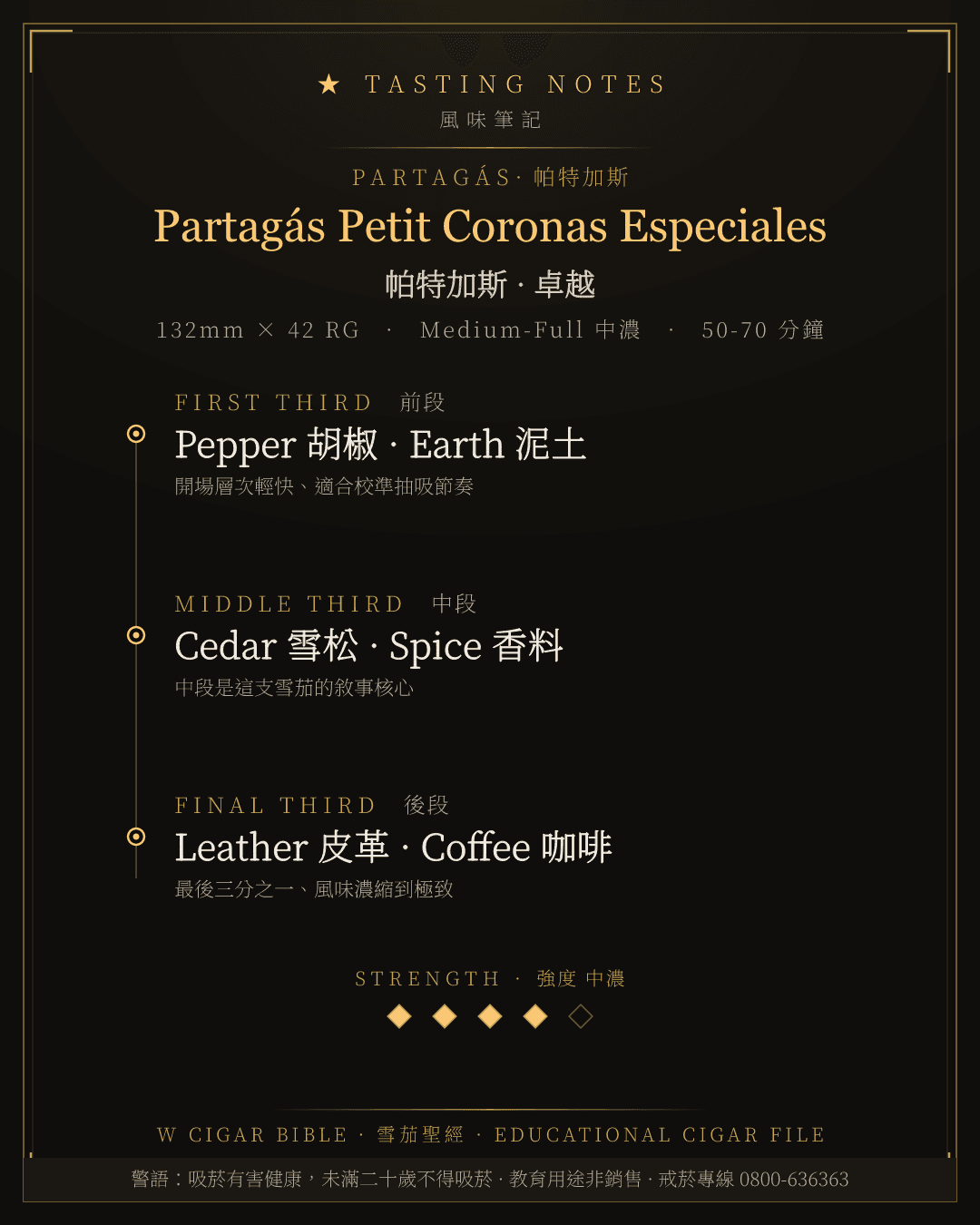
Partagás Petit Coronas Especiales 風味筆記 · 帕特加斯
TASTING NOTES · 風味筆記
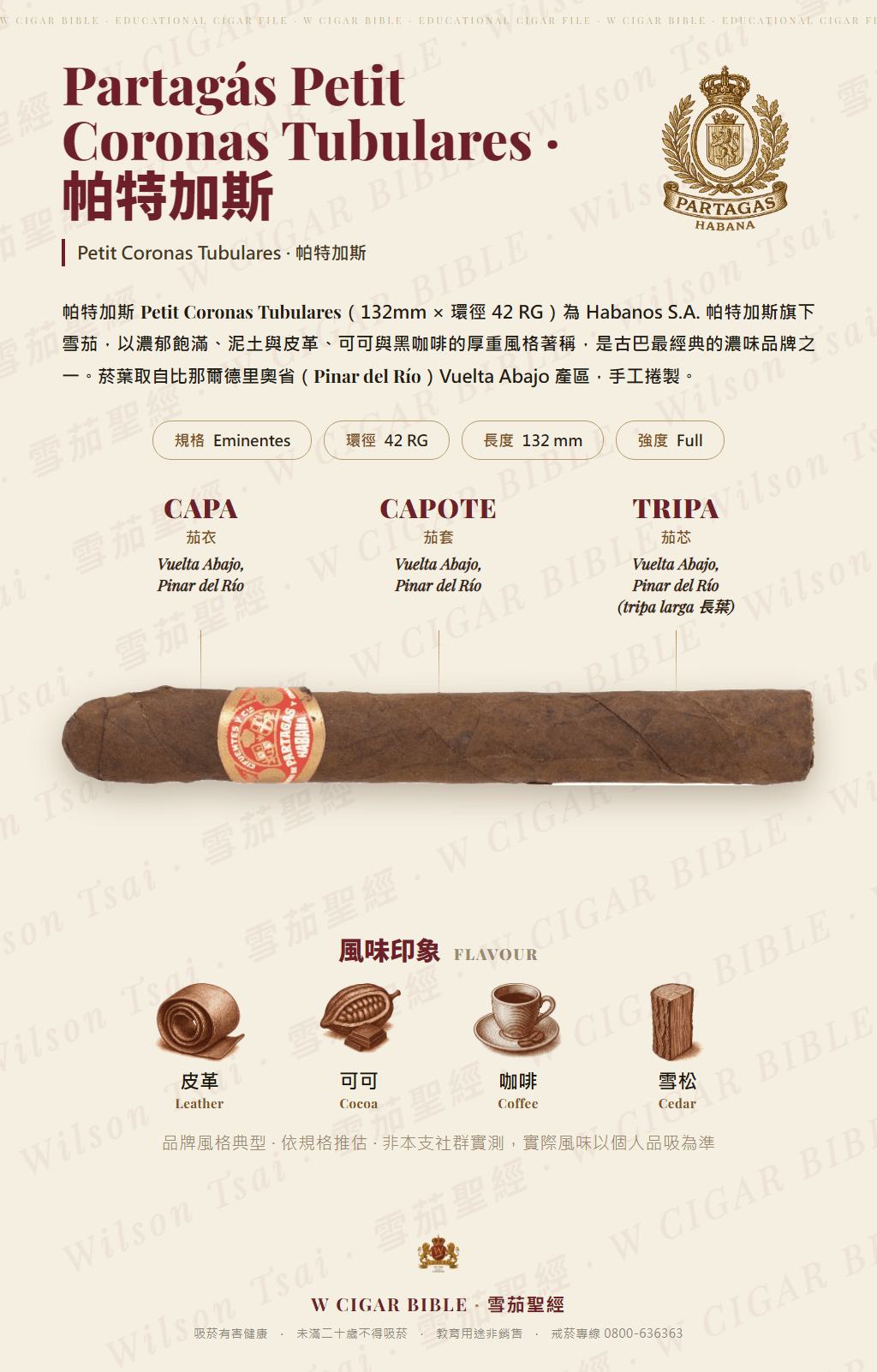
Partagás Petit Coronas Tubulares · 帕特加斯
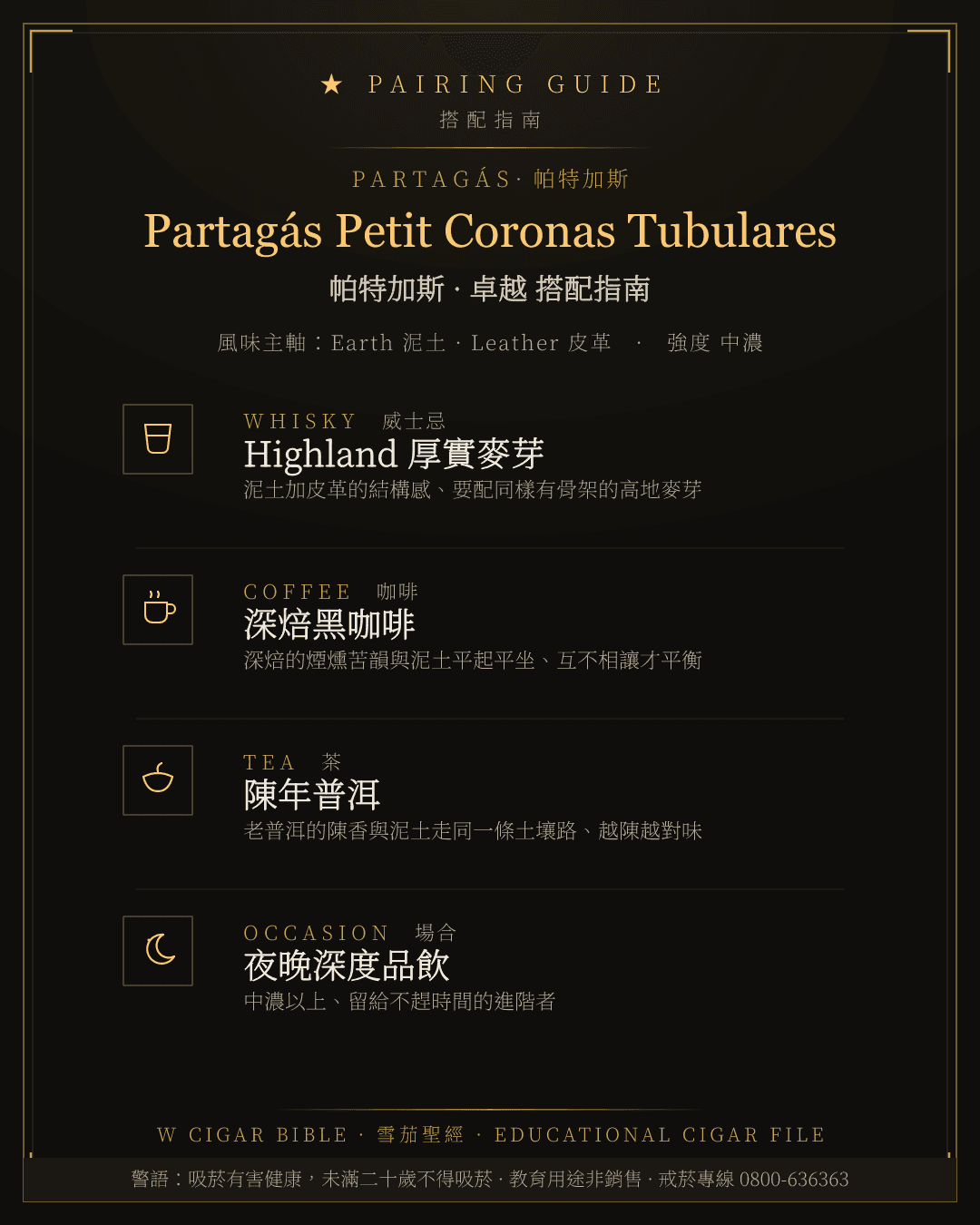
Partagás Petit Coronas Tubulares 搭配指南 · 帕特加斯
PAIRING GUIDE · 搭配指南
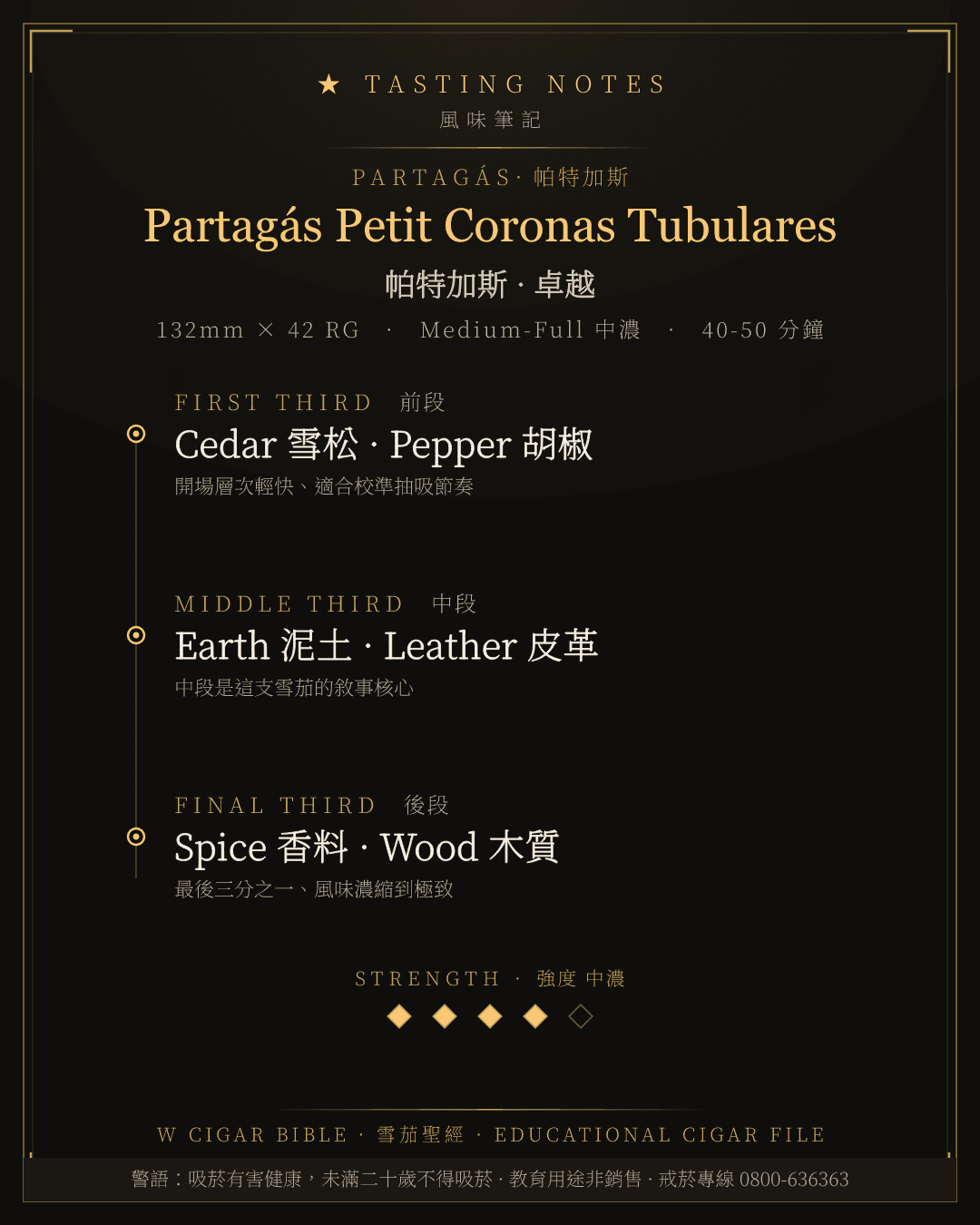
Partagás Petit Coronas Tubulares 風味筆記 · 帕特加斯
TASTING NOTES · 風味筆記

Partagás Petit Coronas vs Por Larrañaga Petit Lanceros
VITOLA SHOWDOWN · Marevas

Partagás Petit Coronas 搭配指南 · 帕特加斯
PAIRING GUIDE · 搭配指南
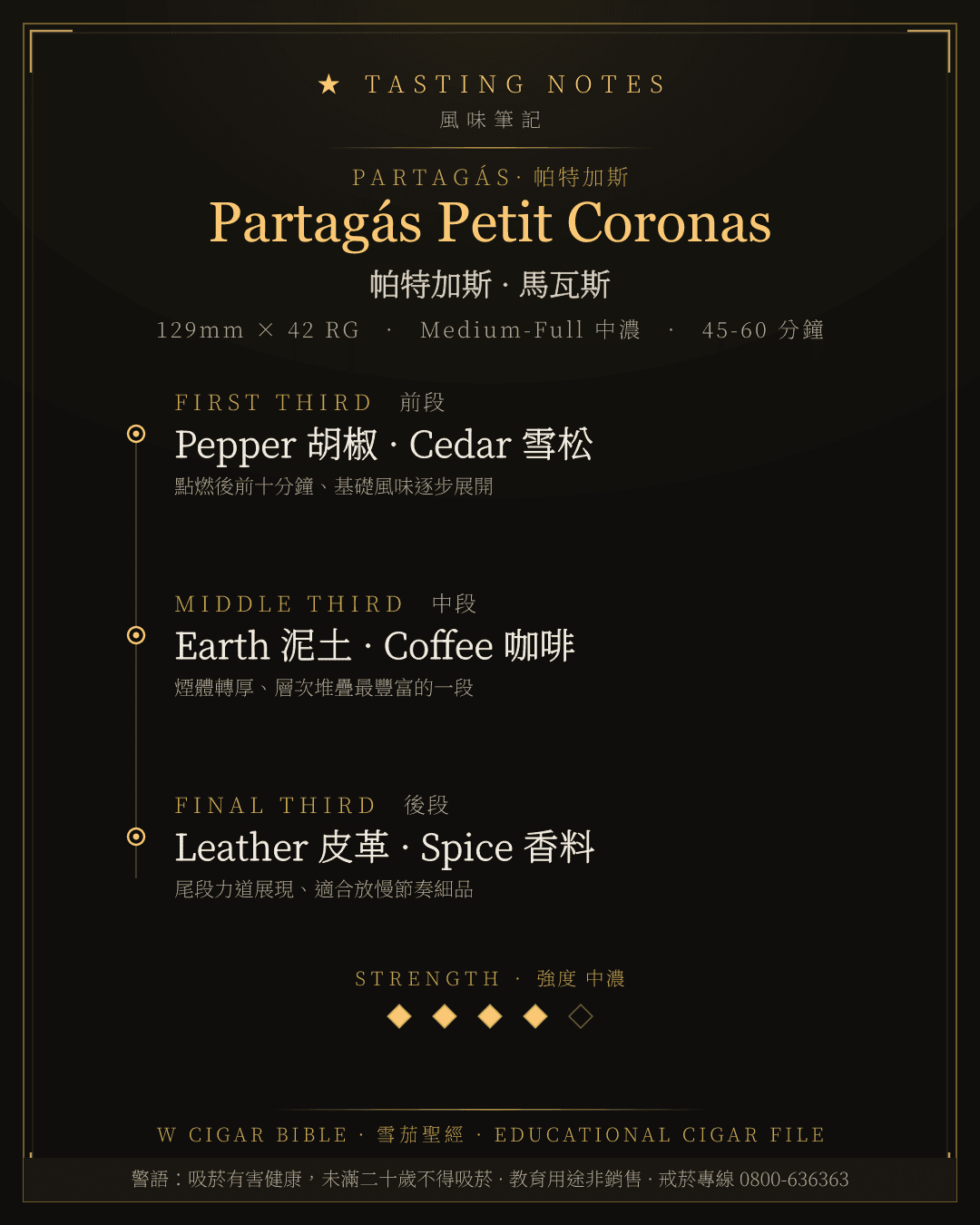
Partagás Petit Coronas 風味筆記 · 帕特加斯
TASTING NOTES · 風味筆記
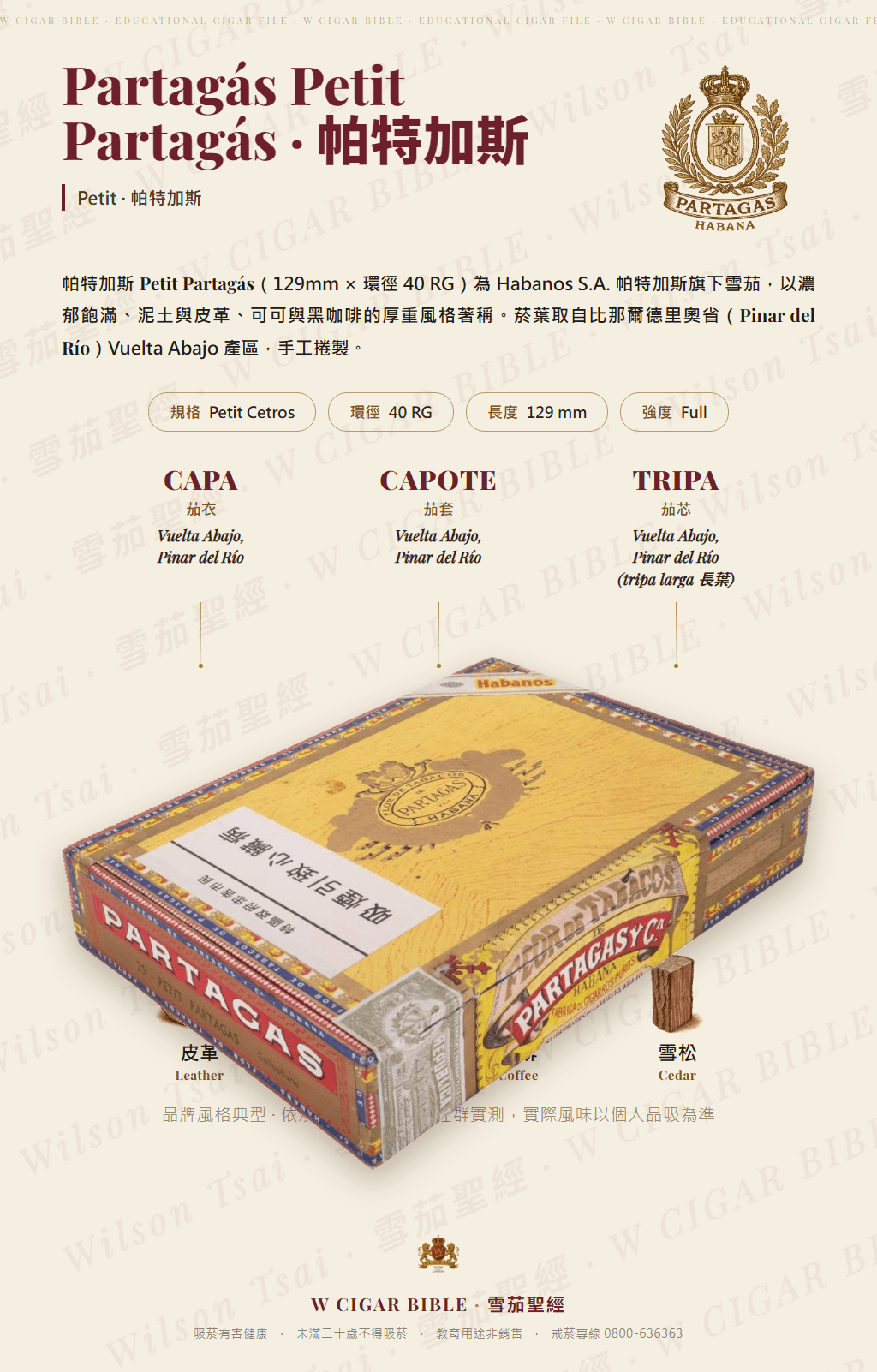
Partagás Petit Partagás · 帕特加斯
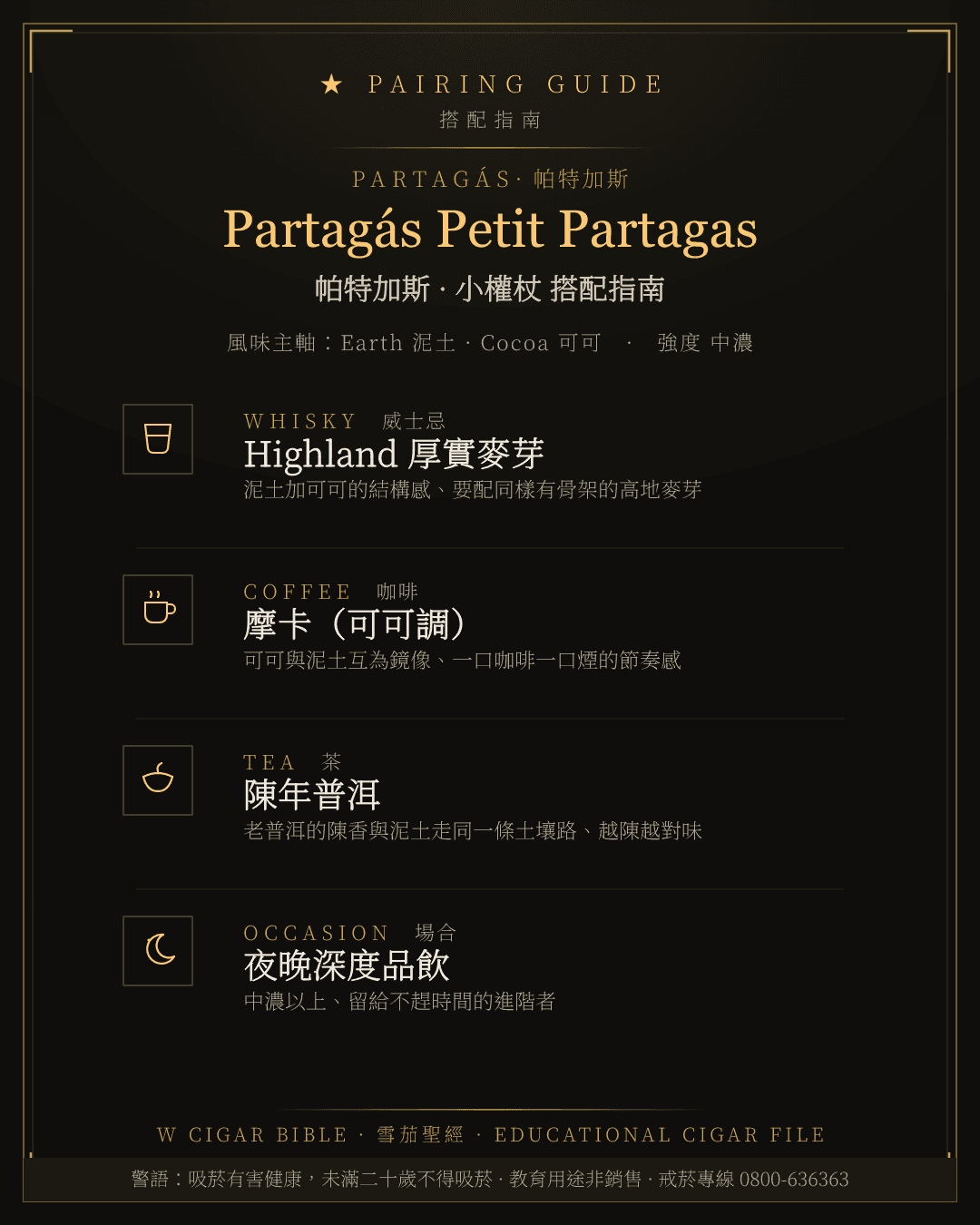
Partagás Petit Partagas 搭配指南 · 帕特加斯
PAIRING GUIDE · 搭配指南

Partagás Petit Partagas 風味筆記 · 帕特加斯
TASTING NOTES · 風味筆記
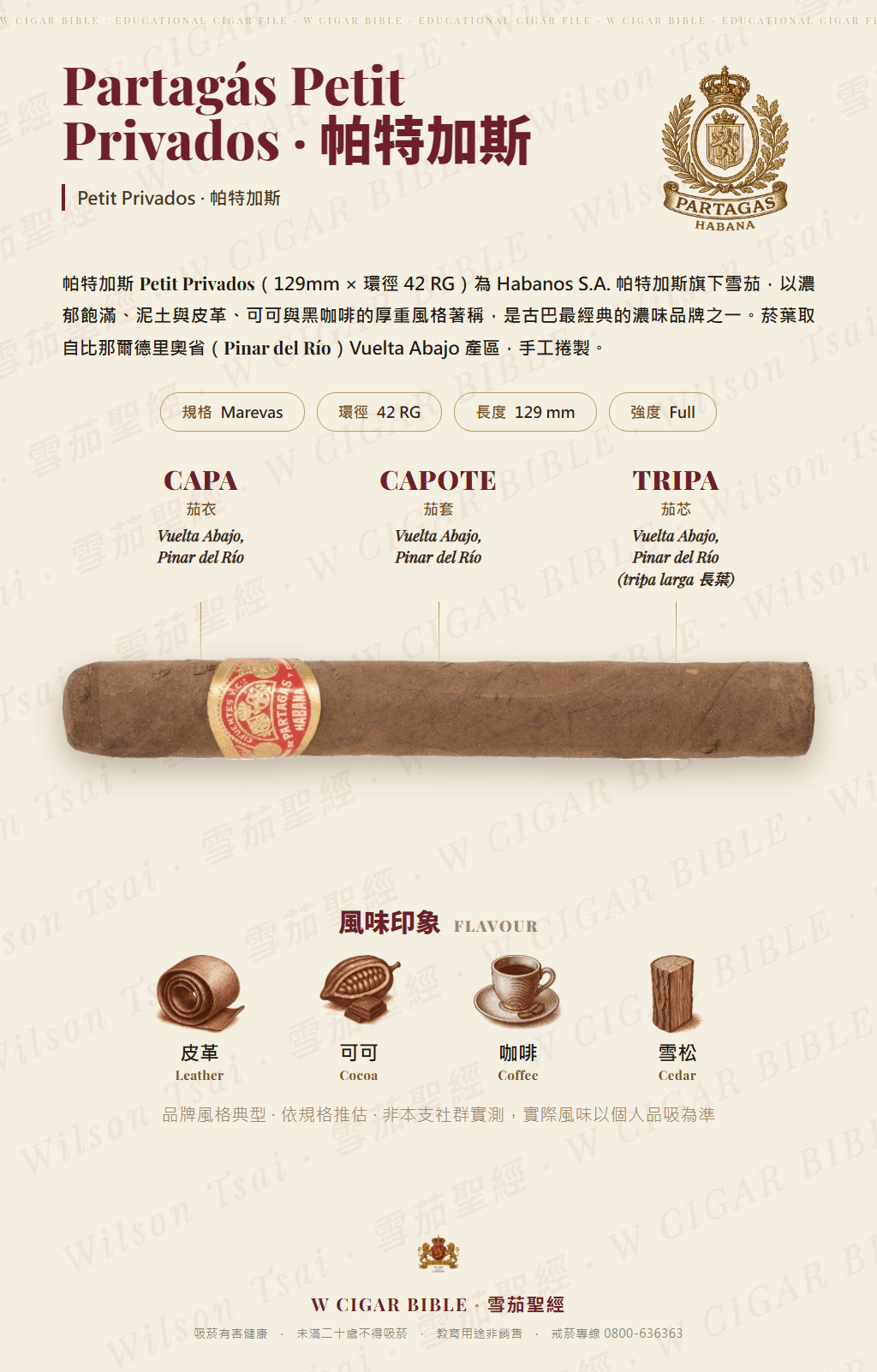
Partagás Petit Privados · 帕特加斯
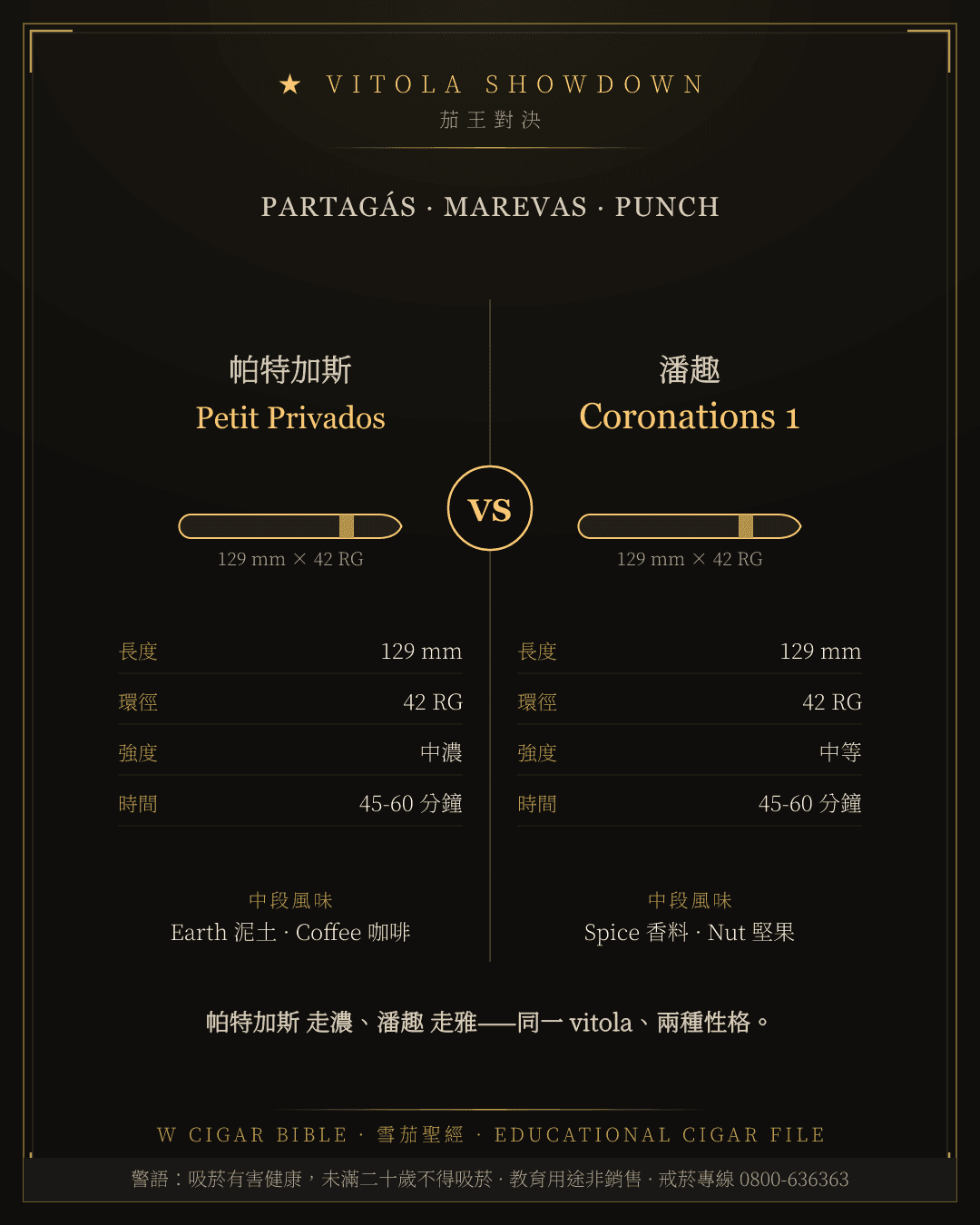
Partagás Petit Privados vs Punch Coronations 1
VITOLA SHOWDOWN · Marevas
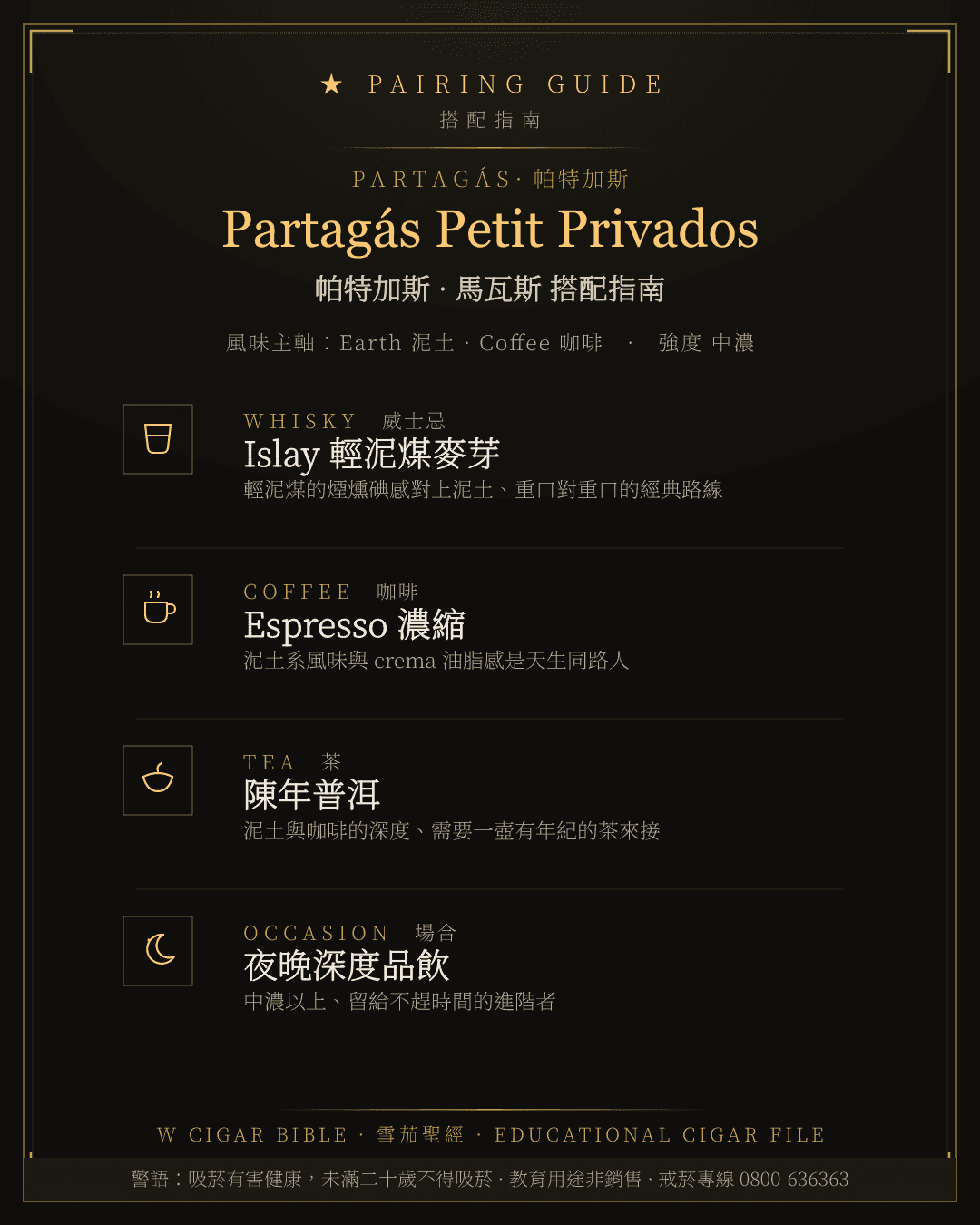
Partagás Petit Privados 搭配指南 · 帕特加斯
PAIRING GUIDE · 搭配指南
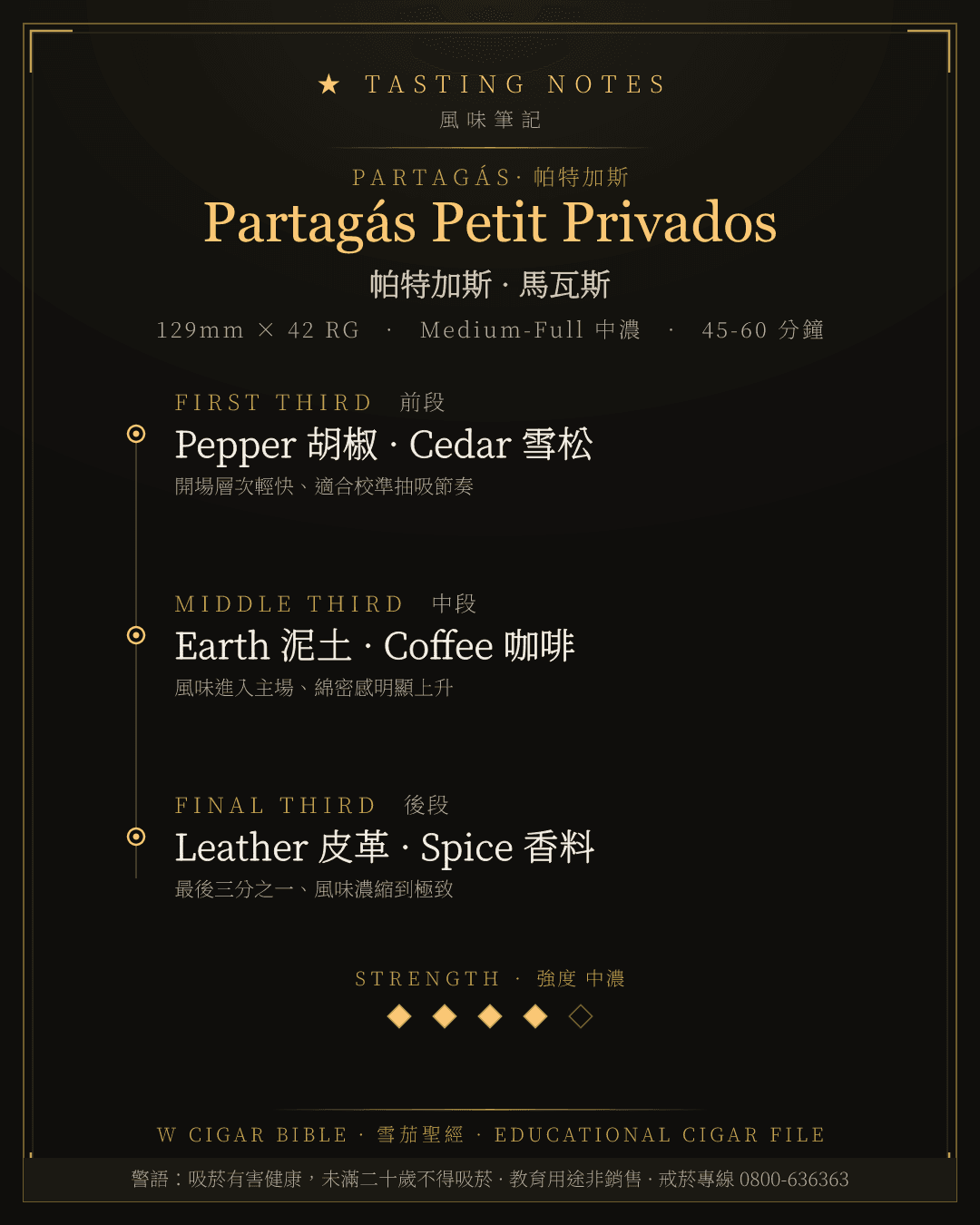
Partagás Petit Privados 風味筆記 · 帕特加斯
TASTING NOTES · 風味筆記
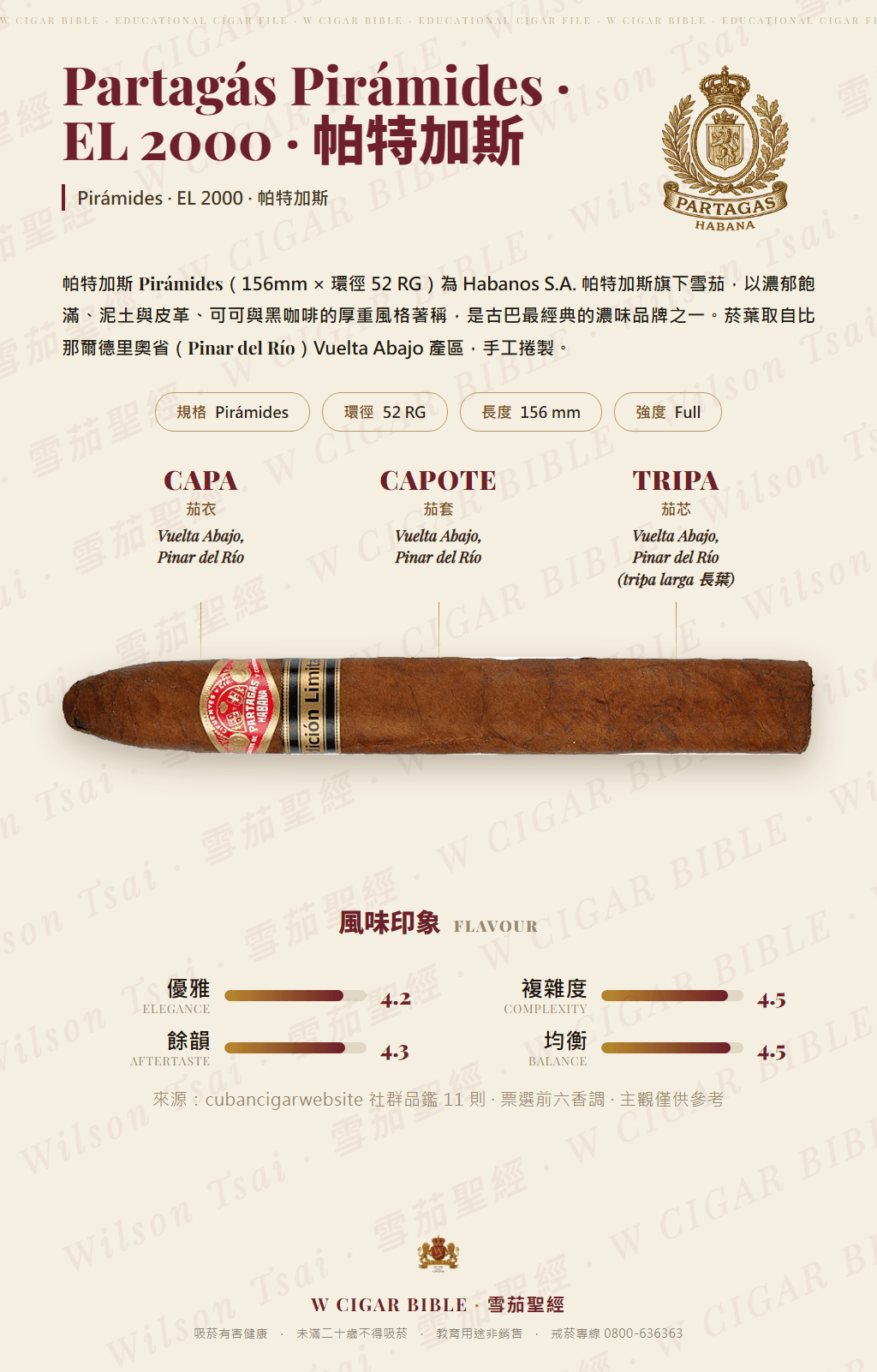
Partagás Pirámides · EL 2000 · 帕特加斯
EL 2000 · 首屆限量年度版 Edición Limitada(52 環徑 × 156mm pirámide,僅該年度生產)· 雪茄檔案
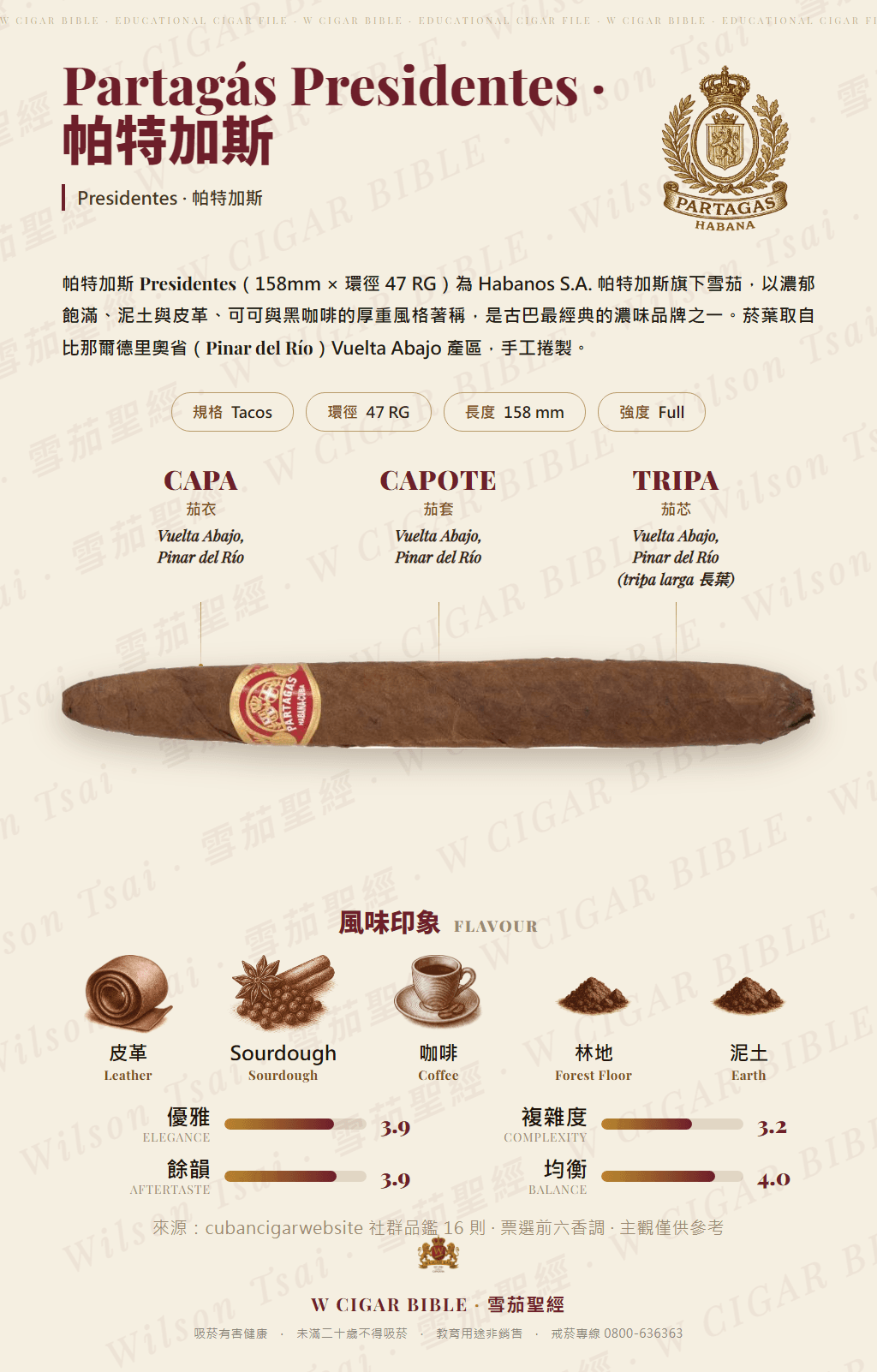
Partagás Presidentes · 帕特加斯
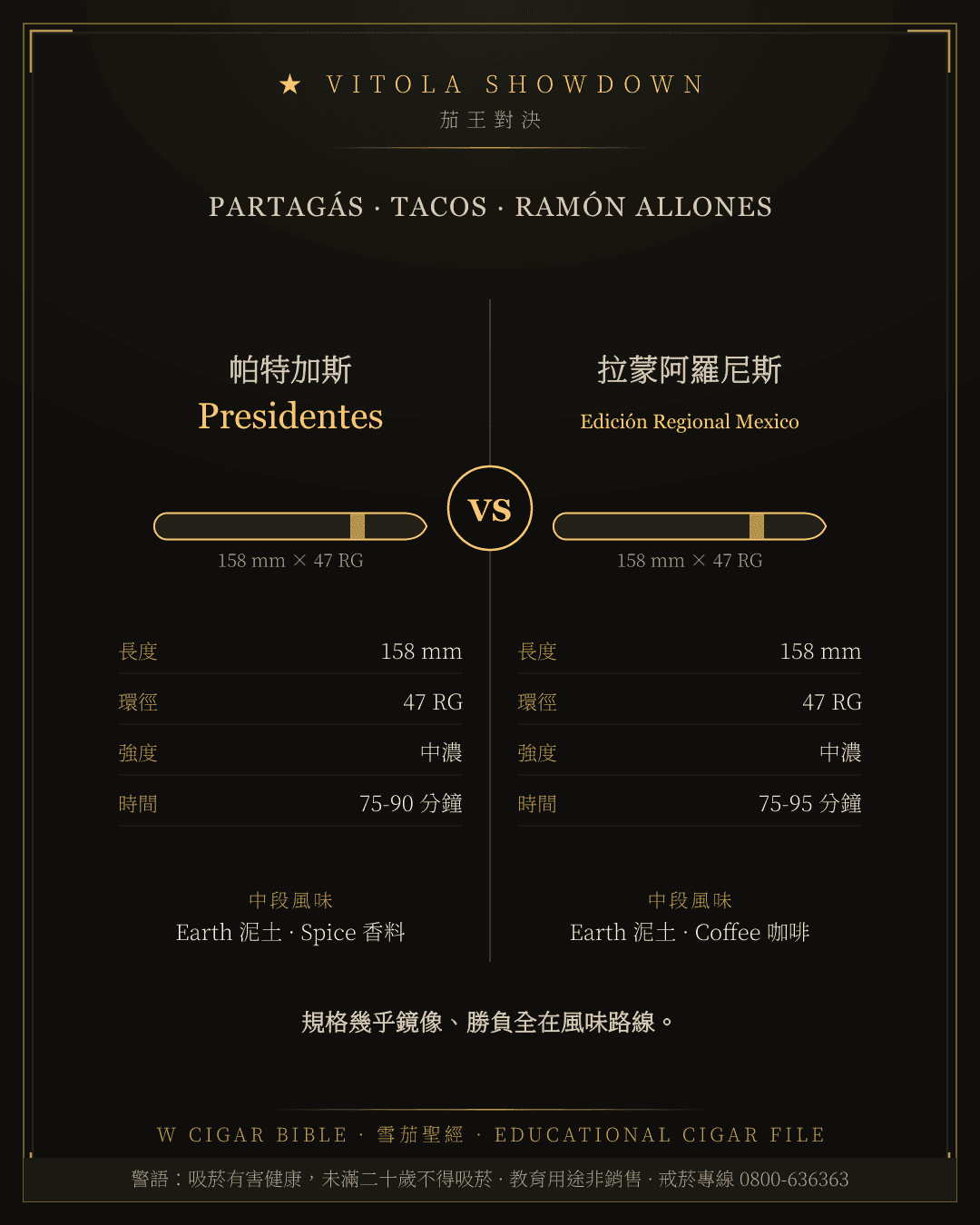
Partagás Presidentes vs Ramón Allones Edición Regional Mexico
VITOLA SHOWDOWN · Tacos
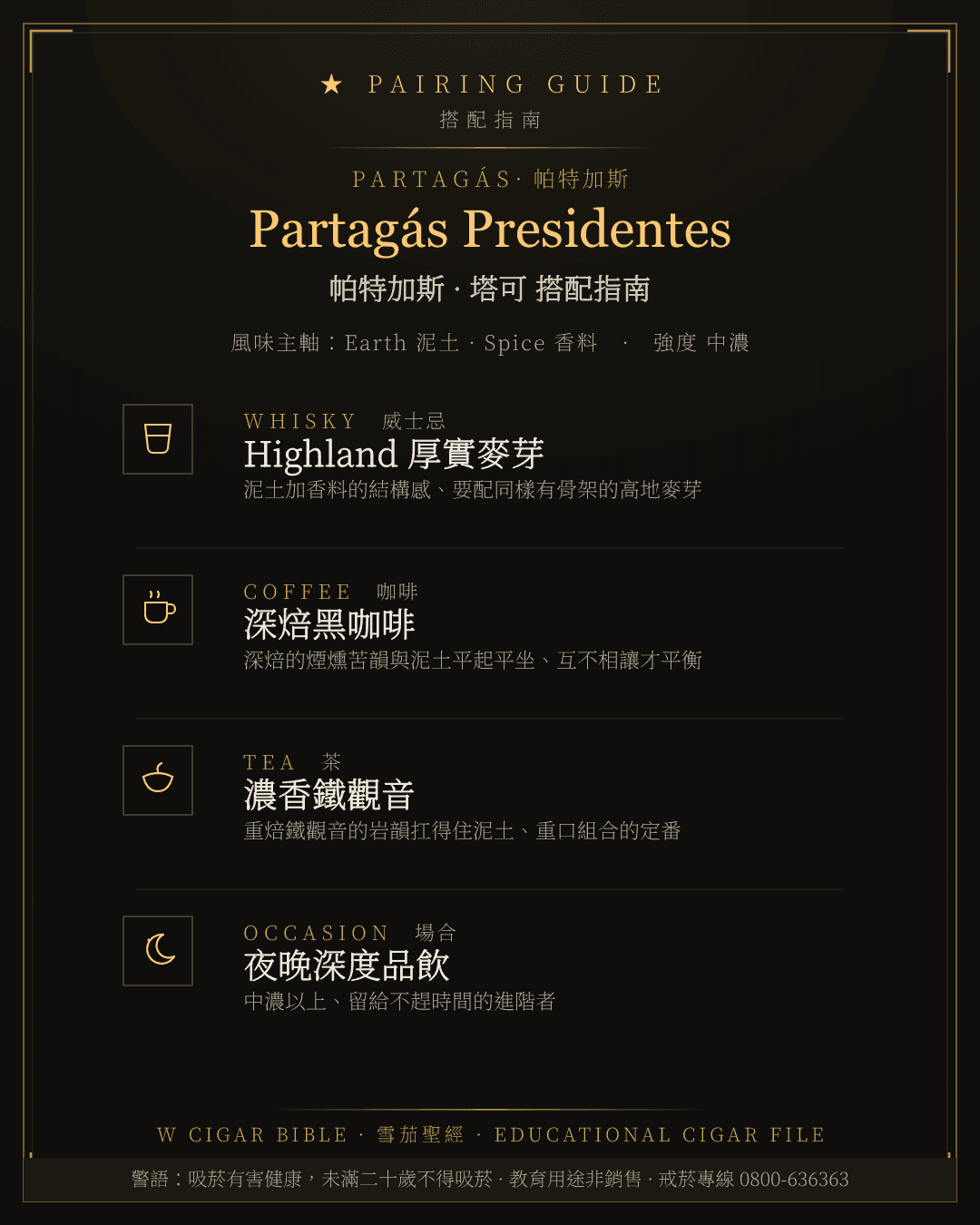
Partagás Presidentes 搭配指南 · 帕特加斯
PAIRING GUIDE · 搭配指南
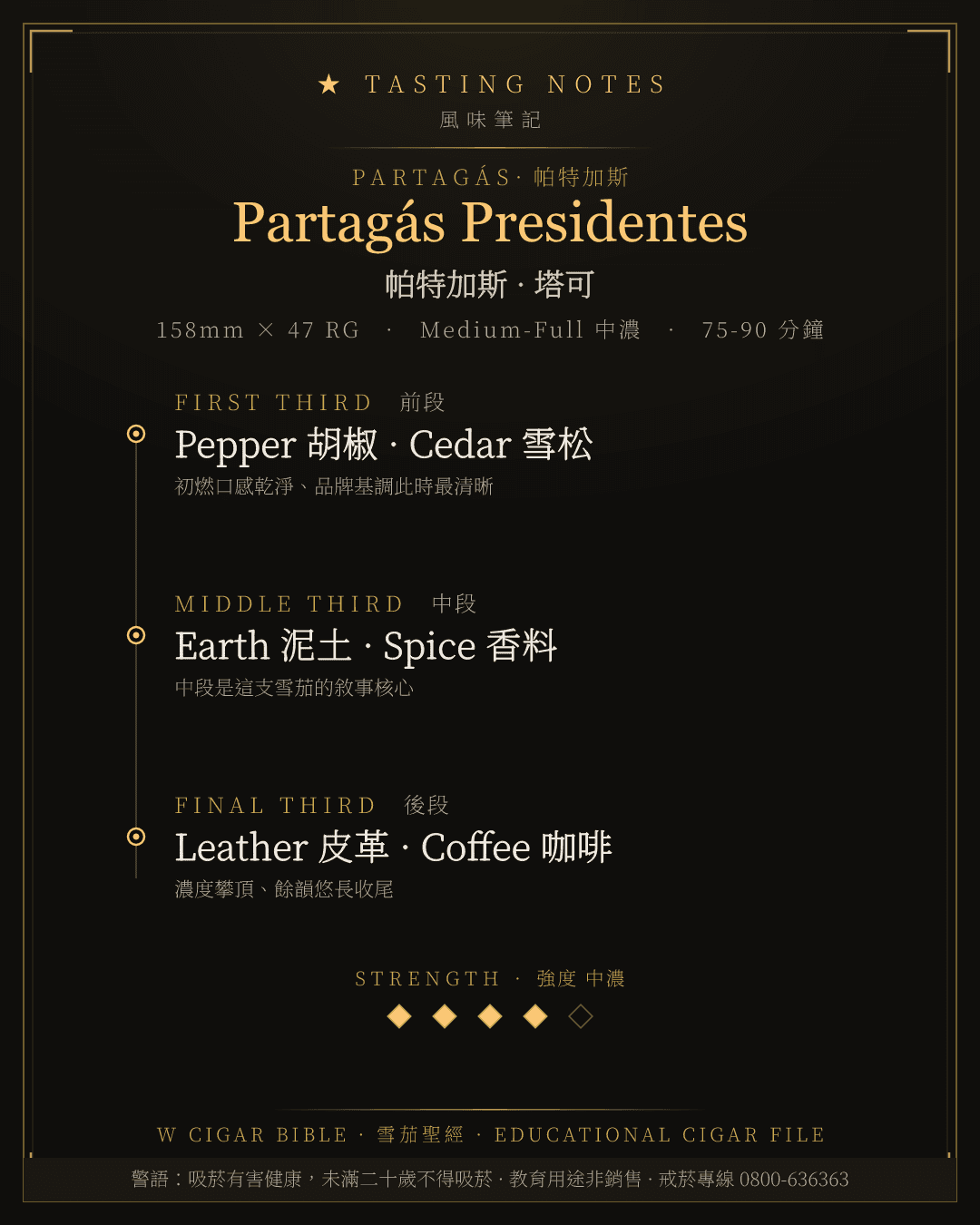
Partagás Presidentes 風味筆記 · 帕特加斯
TASTING NOTES · 風味筆記
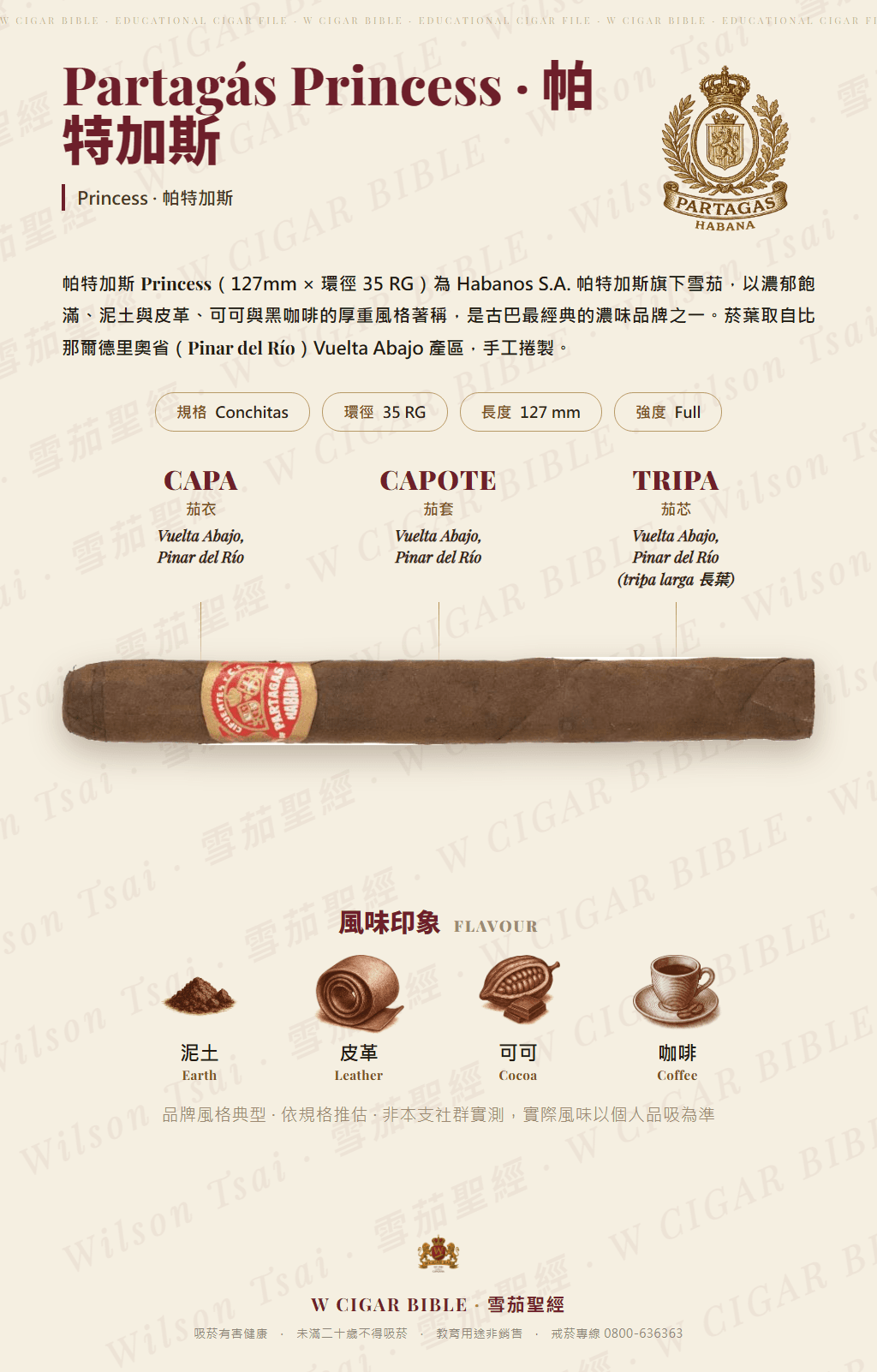
Partagás Princess · 帕特加斯
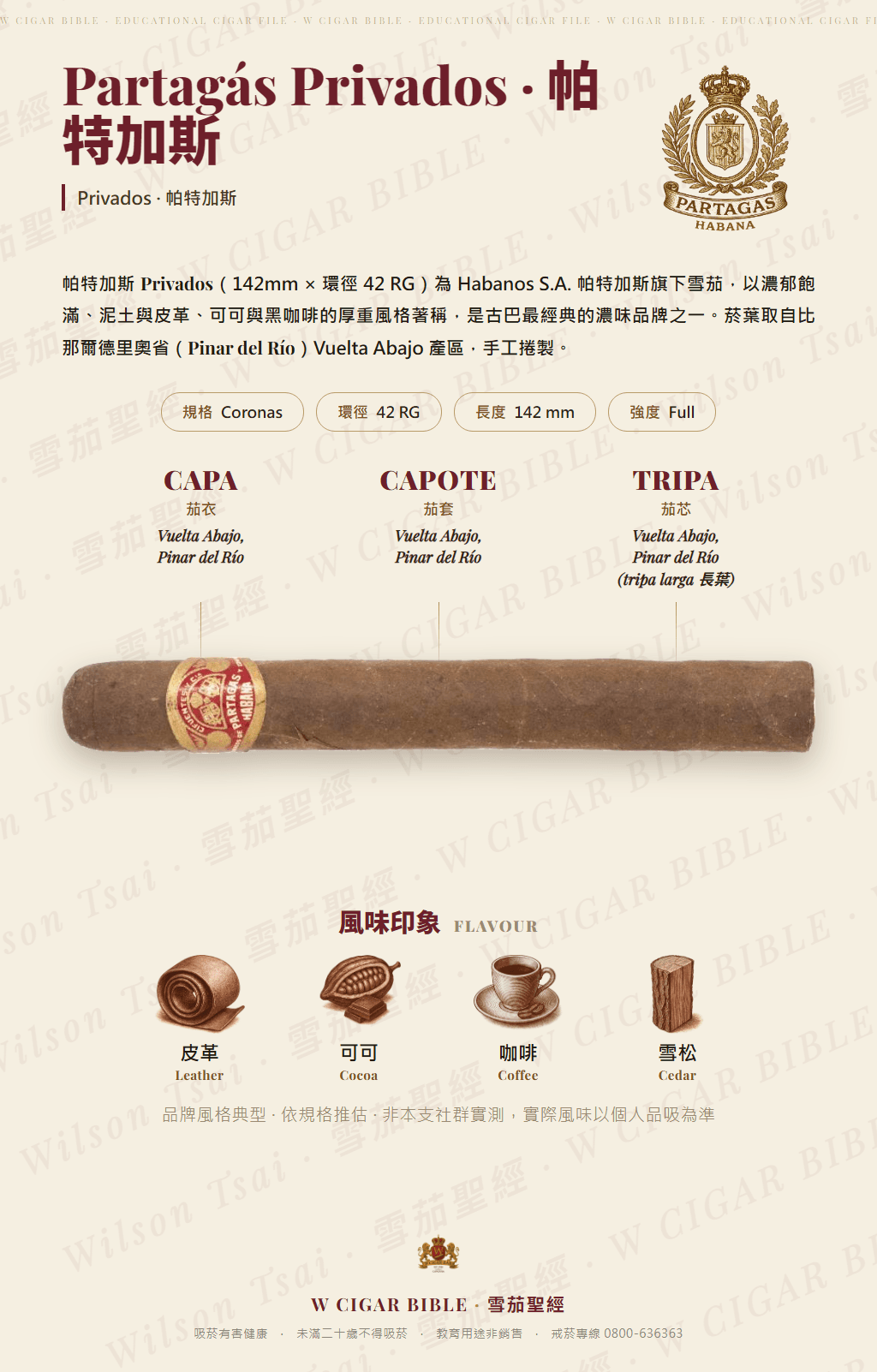
Partagás Privados · 帕特加斯
已停產歷史規格(Coronas 廠規 42 環徑 × 142mm,1980 年代自目錄除名)· 雪茄檔案
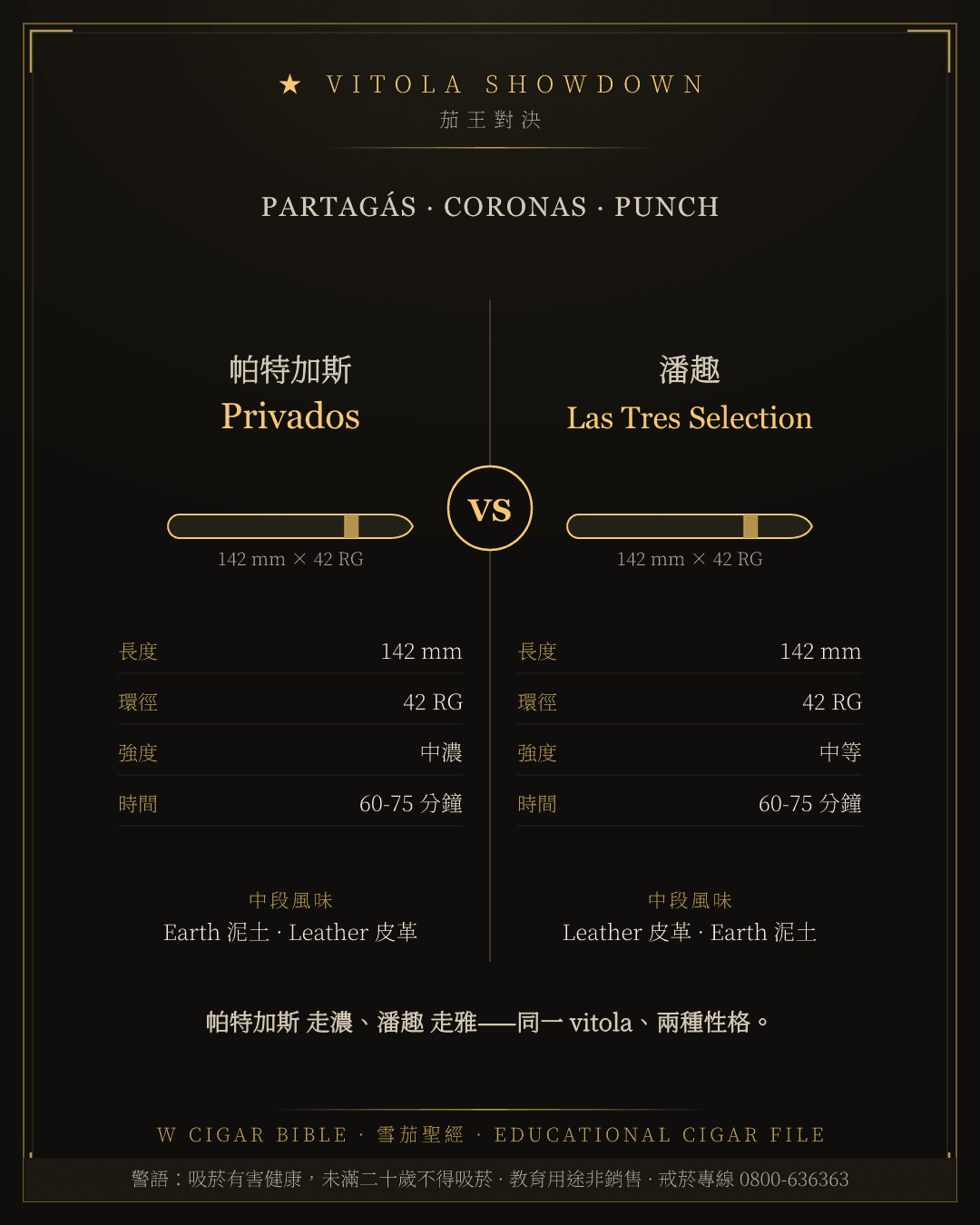
Partagás Privados vs Punch Las Tres Selection
VITOLA SHOWDOWN · Coronas
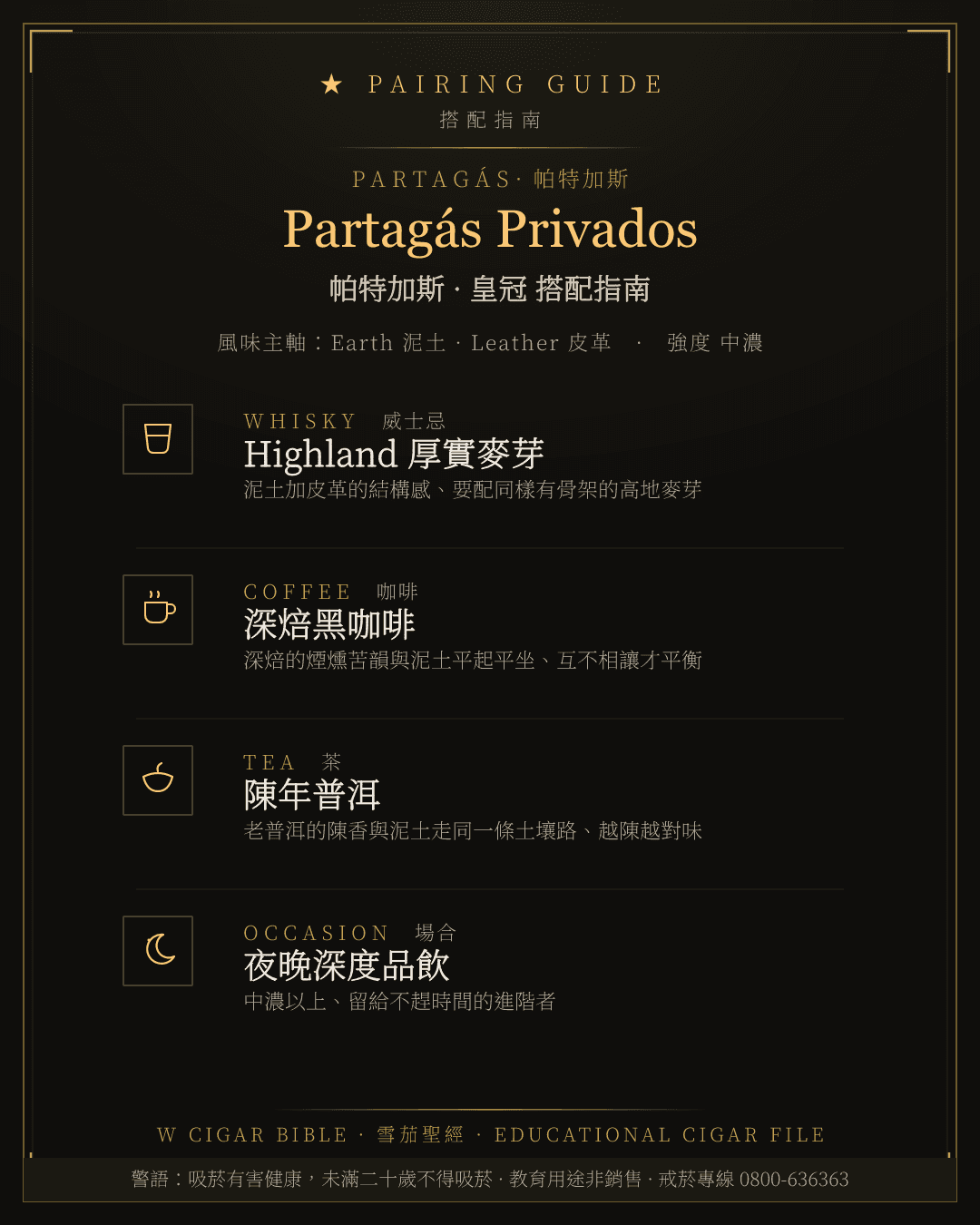
Partagás Privados 搭配指南 · 帕特加斯
PAIRING GUIDE · 搭配指南

Partagás Privados 風味筆記 · 帕特加斯
TASTING NOTES · 風味筆記
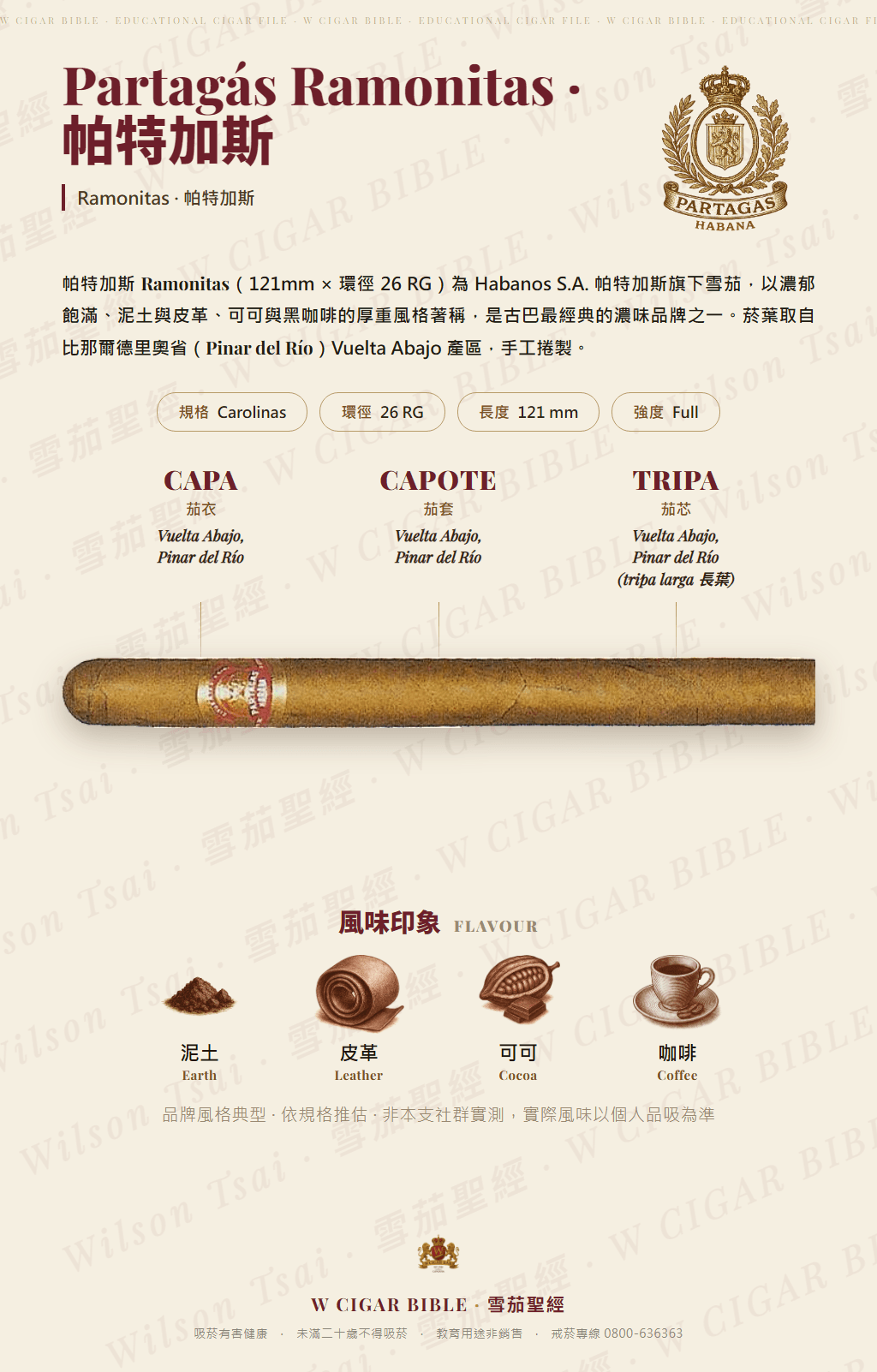
Partagás Ramonitas · 帕特加斯

Partagás Ramonitas 搭配指南 · 帕特加斯
PAIRING GUIDE · 搭配指南
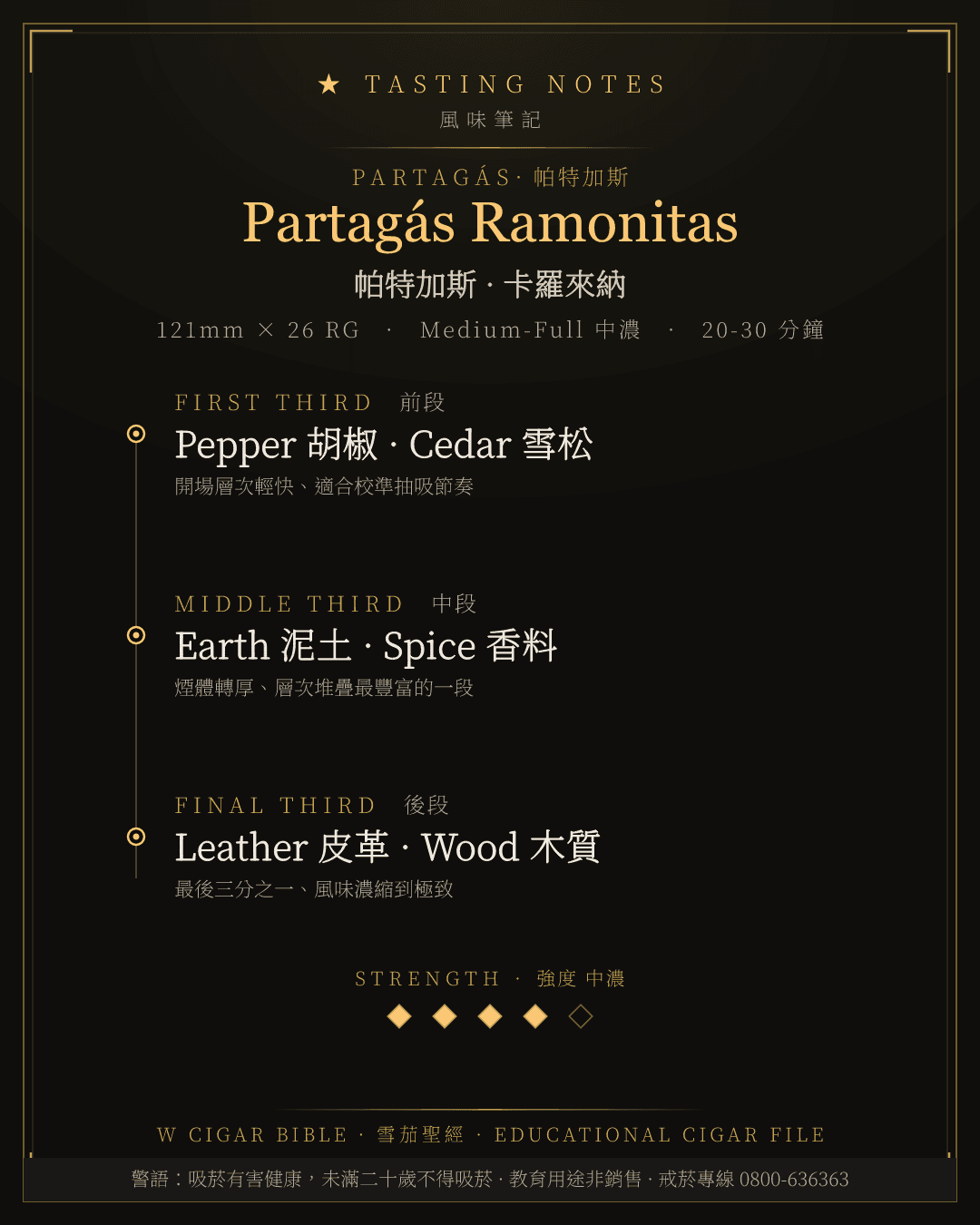
Partagás Ramonitas 風味筆記 · 帕特加斯
TASTING NOTES · 風味筆記
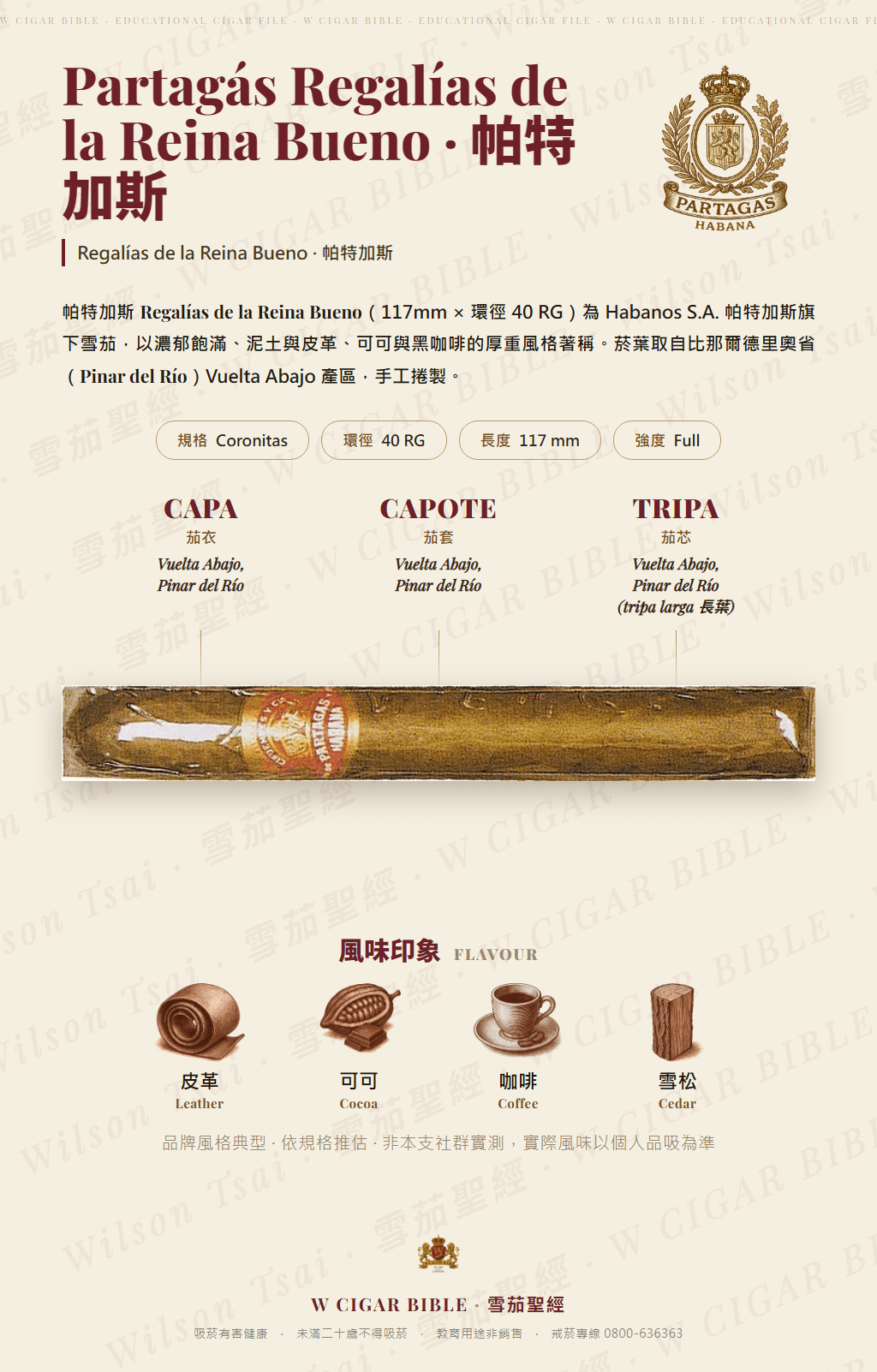
Partagás Regalías de la Reina Bueno · 帕特加斯
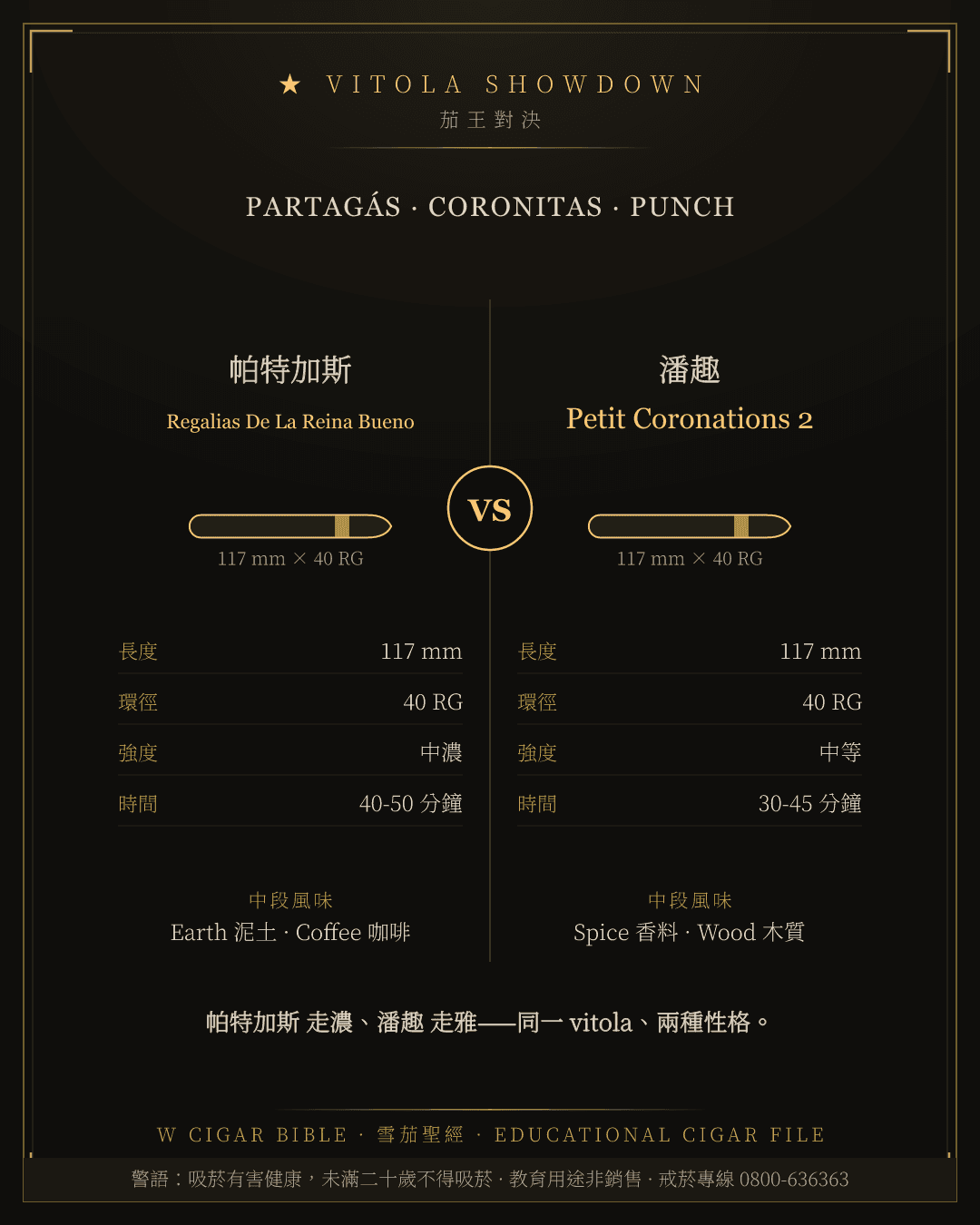
Partagás Regalias De La Reina Bueno vs Punch Petit Coronations 2
VITOLA SHOWDOWN · Coronitas
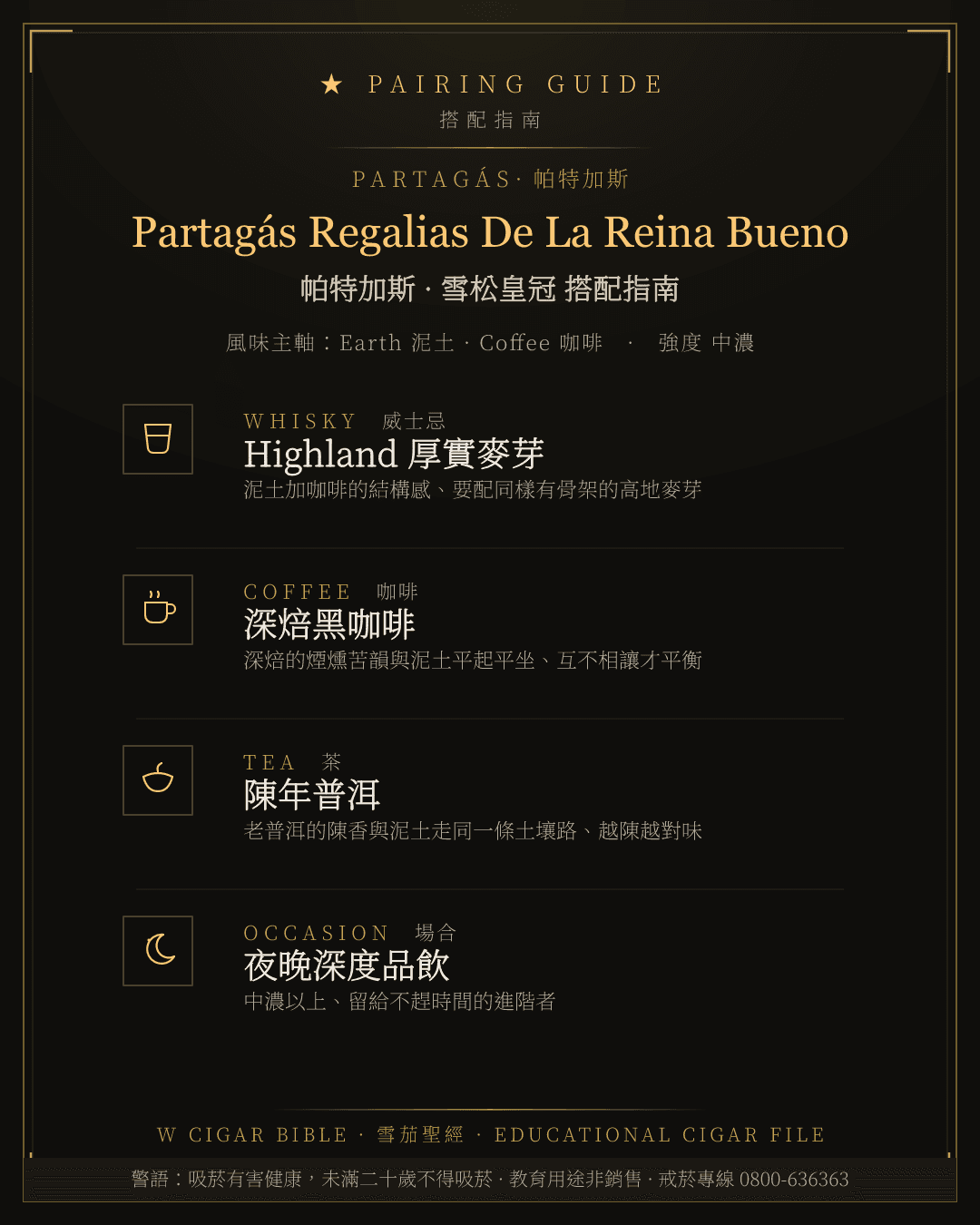
Partagás Regalias De La Reina Bueno 搭配指南 · 帕特加斯
PAIRING GUIDE · 搭配指南
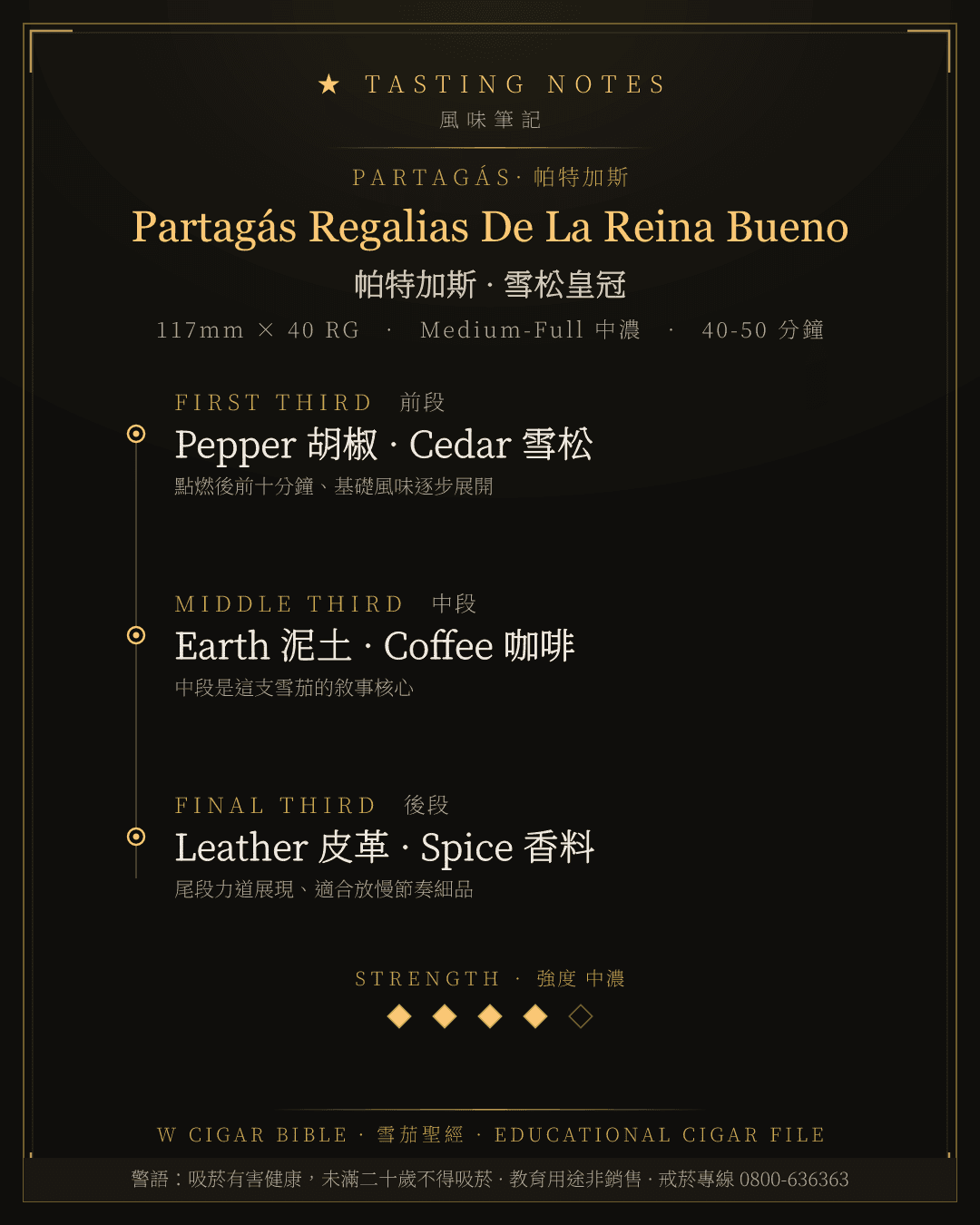
Partagás Regalias De La Reina Bueno 風味筆記 · 帕特加斯
TASTING NOTES · 風味筆記
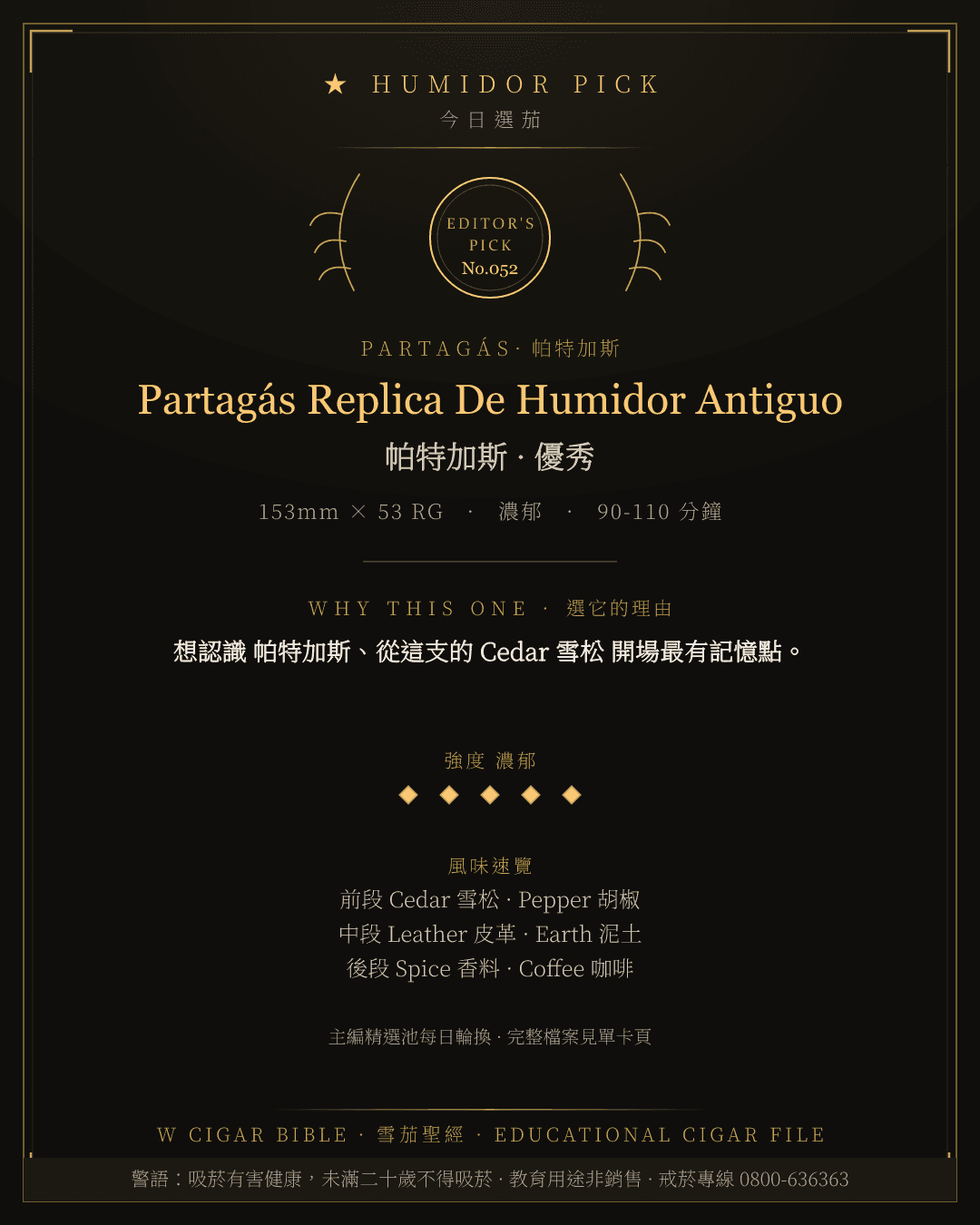
Partagás Replica De Humidor Antiguo · 帕特加斯 總編輯精選
HUMIDOR PICK · No.052
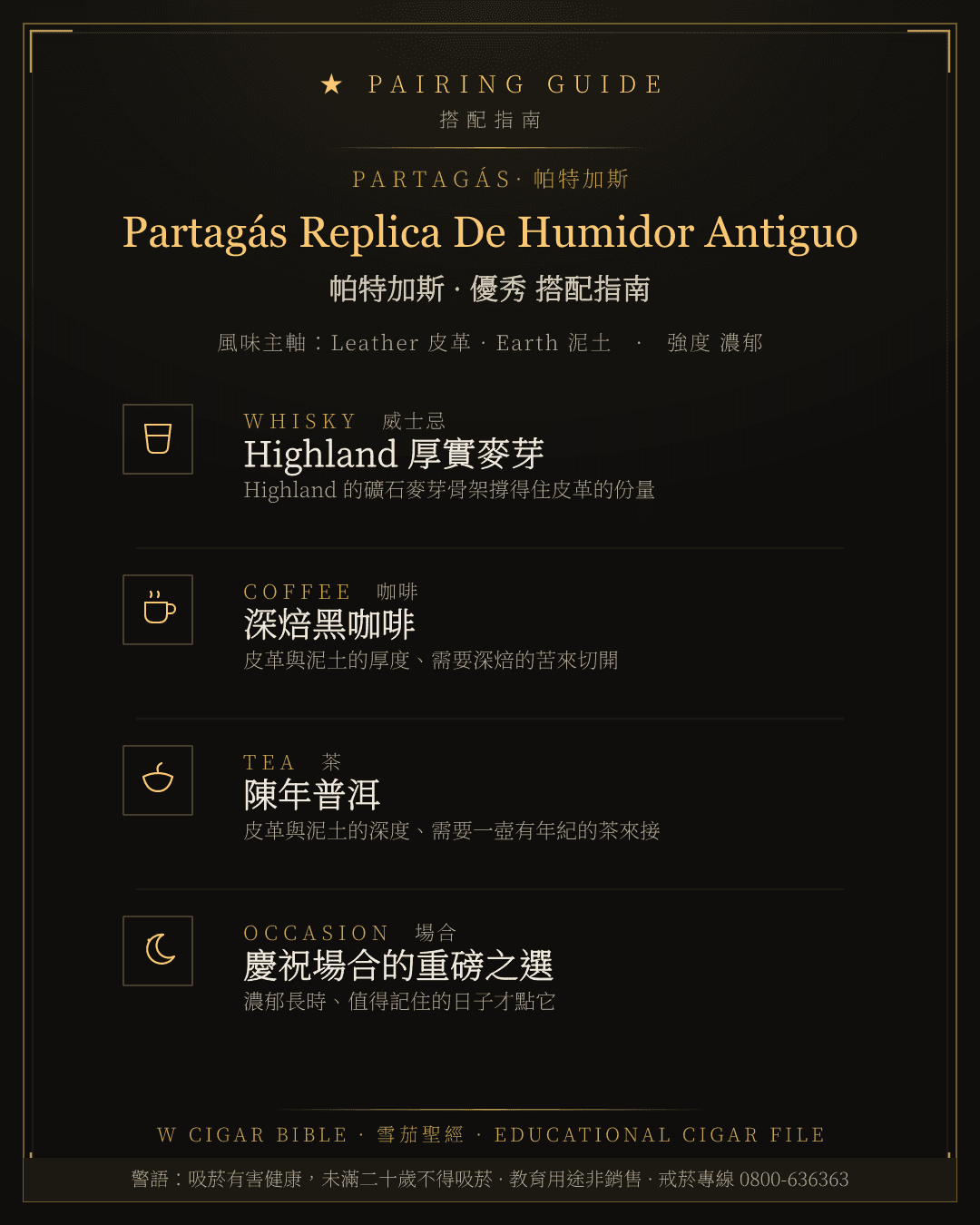
Partagás Replica De Humidor Antiguo 搭配指南 · 帕特加斯
PAIRING GUIDE · 搭配指南
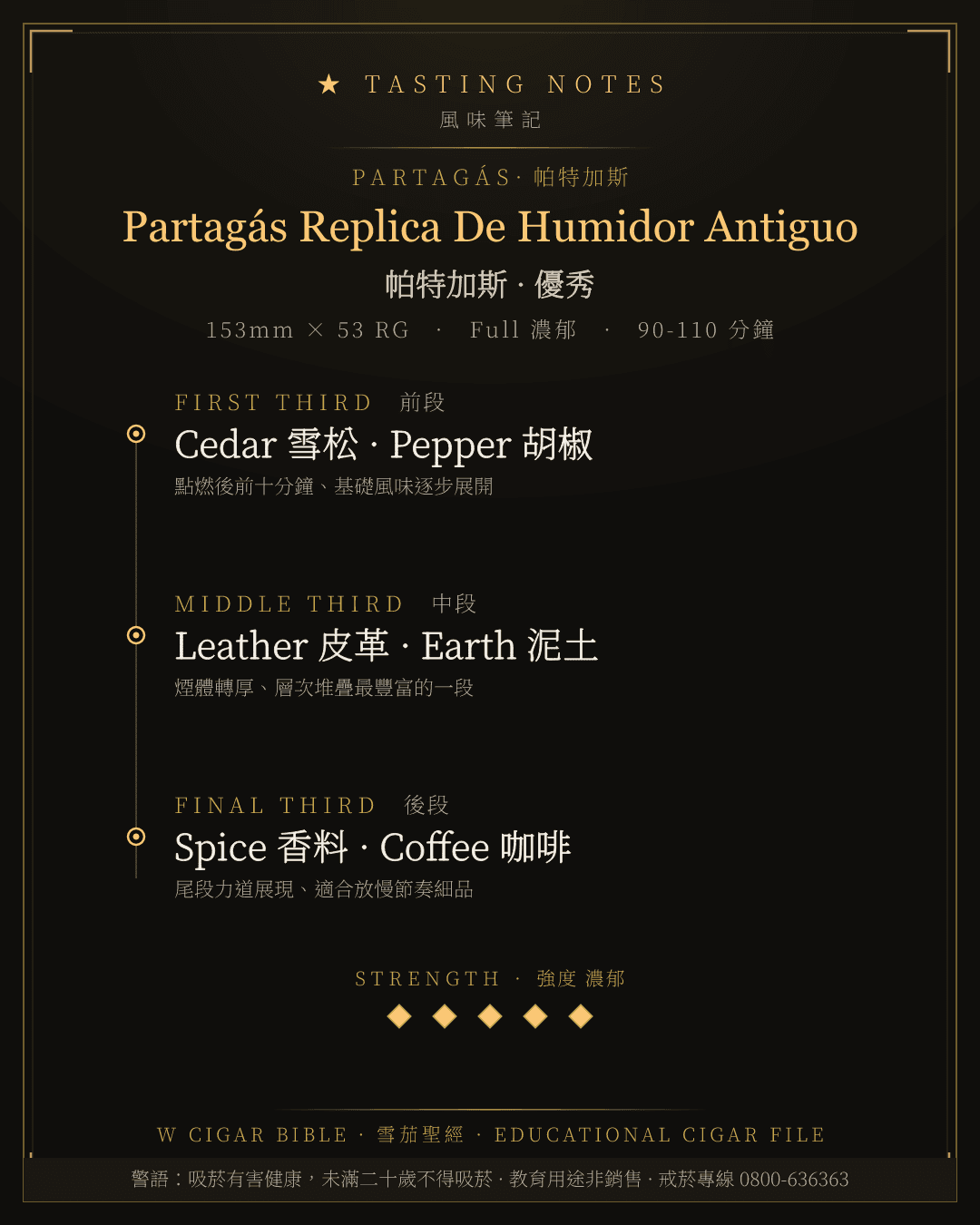
Partagás Replica De Humidor Antiguo 風味筆記 · 帕特加斯
TASTING NOTES · 風味筆記

Partagás Reserva Cosecha 2000 搭配指南 · 帕特加斯
PAIRING GUIDE · 搭配指南
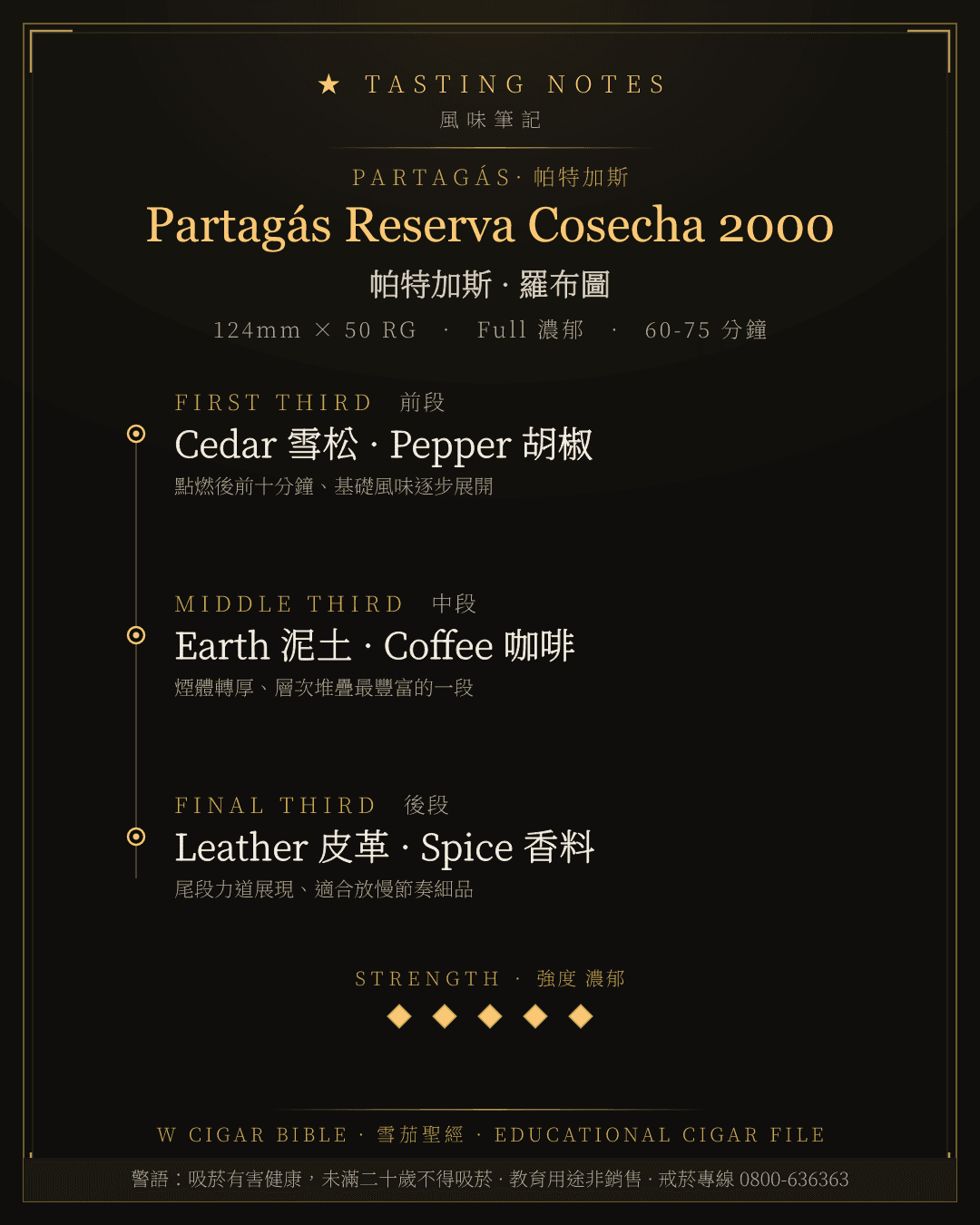
Partagás Reserva Cosecha 2000 風味筆記 · 帕特加斯
TASTING NOTES · 風味筆記

Partagás Rito 搭配指南 · 帕特加斯
PAIRING GUIDE · 搭配指南
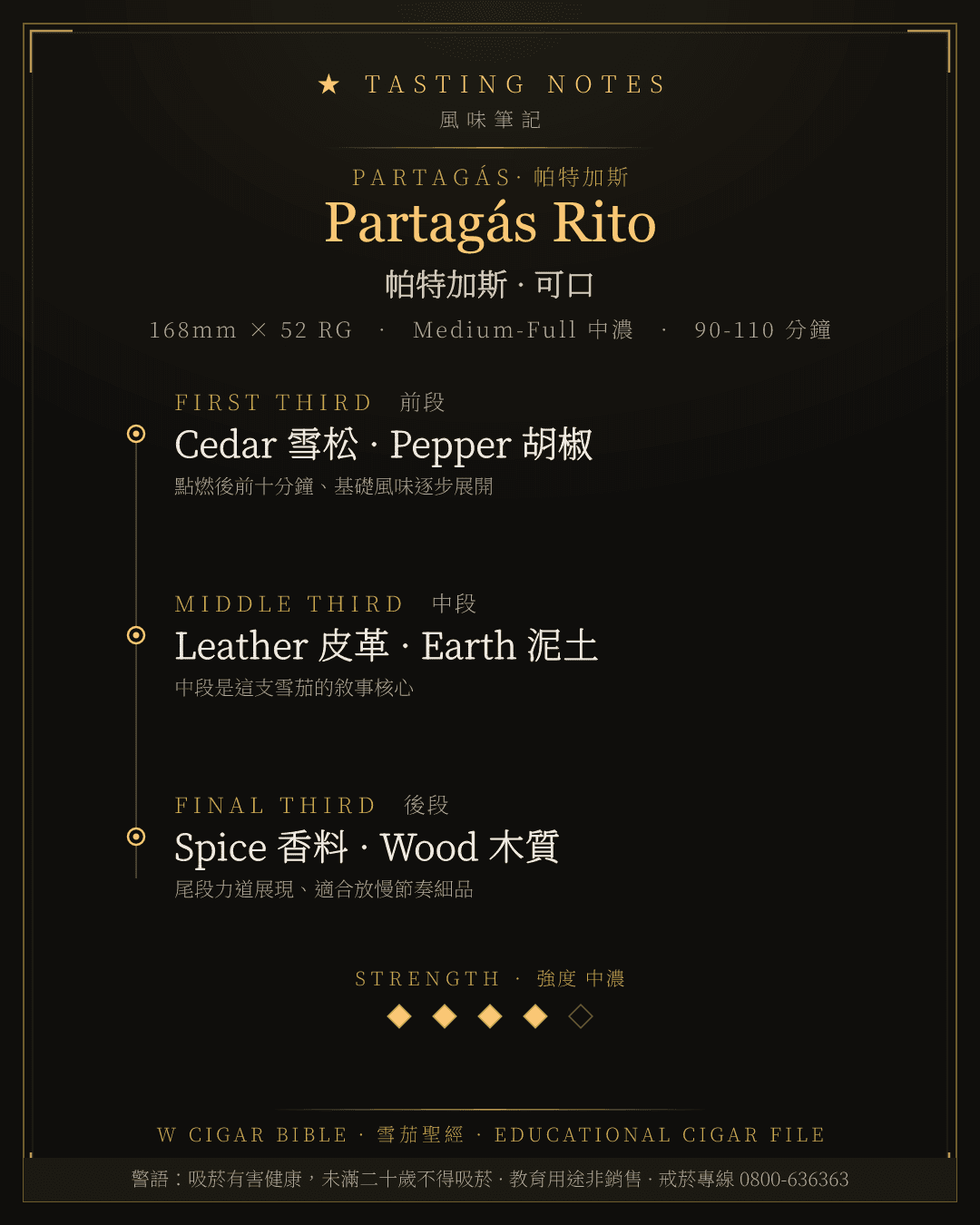
Partagás Rito 風味筆記 · 帕特加斯
TASTING NOTES · 風味筆記
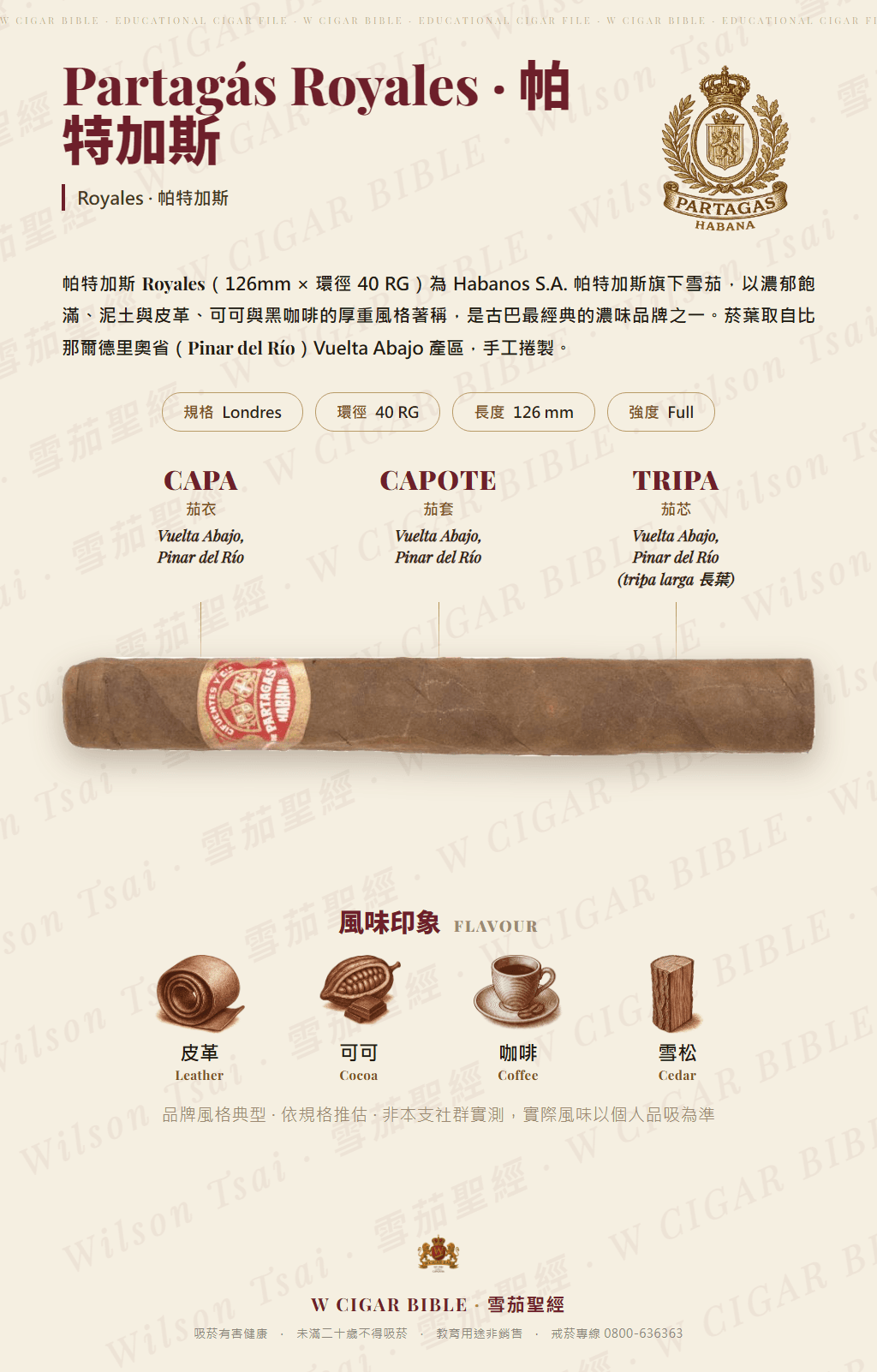
Partagás Royales · 帕特加斯
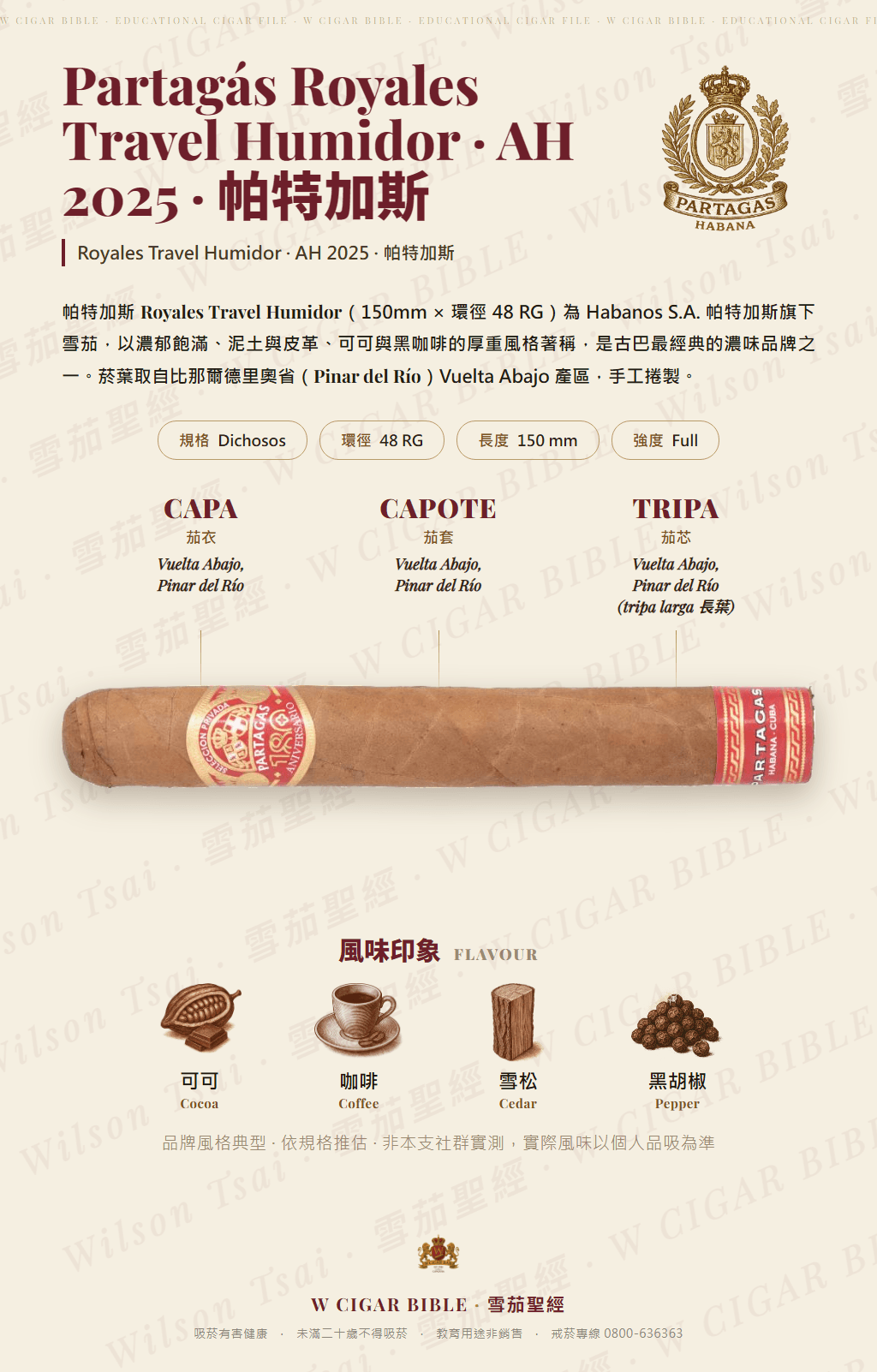
Partagás Royales Travel Humidor · AH 2025 · 帕特加斯
AH 2025 · 180 週年旅行木盒 Travel Humidor · 雪茄檔案

Partagás Salomones · LCDH · 帕特加斯
LCDH · LCDH 全球限定 La Casa del Habano · 雪茄檔案
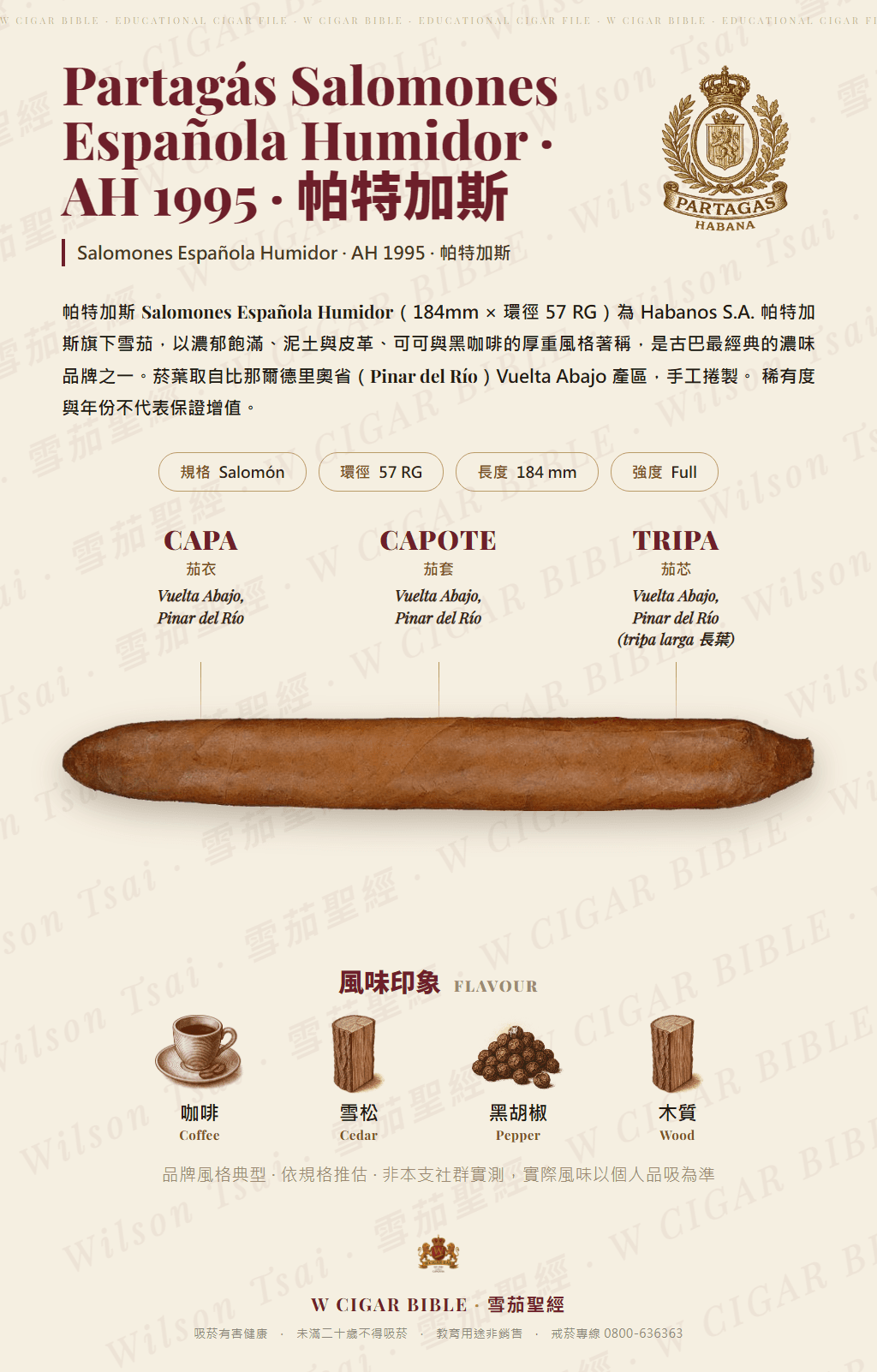
Partagás Salomones Española Humidor · AH 1995 · 帕特加斯
AH 1995 · 週年木盒紀念版 Aniversario Humidor(Salomones Española 廠規 57 RG × 184mm,編號木盒每只 50 支、約 150 只,已停產)· 雪茄檔案

Partagás Salomones Española Humidor 搭配指南 · 帕特加斯
PAIRING GUIDE · 搭配指南
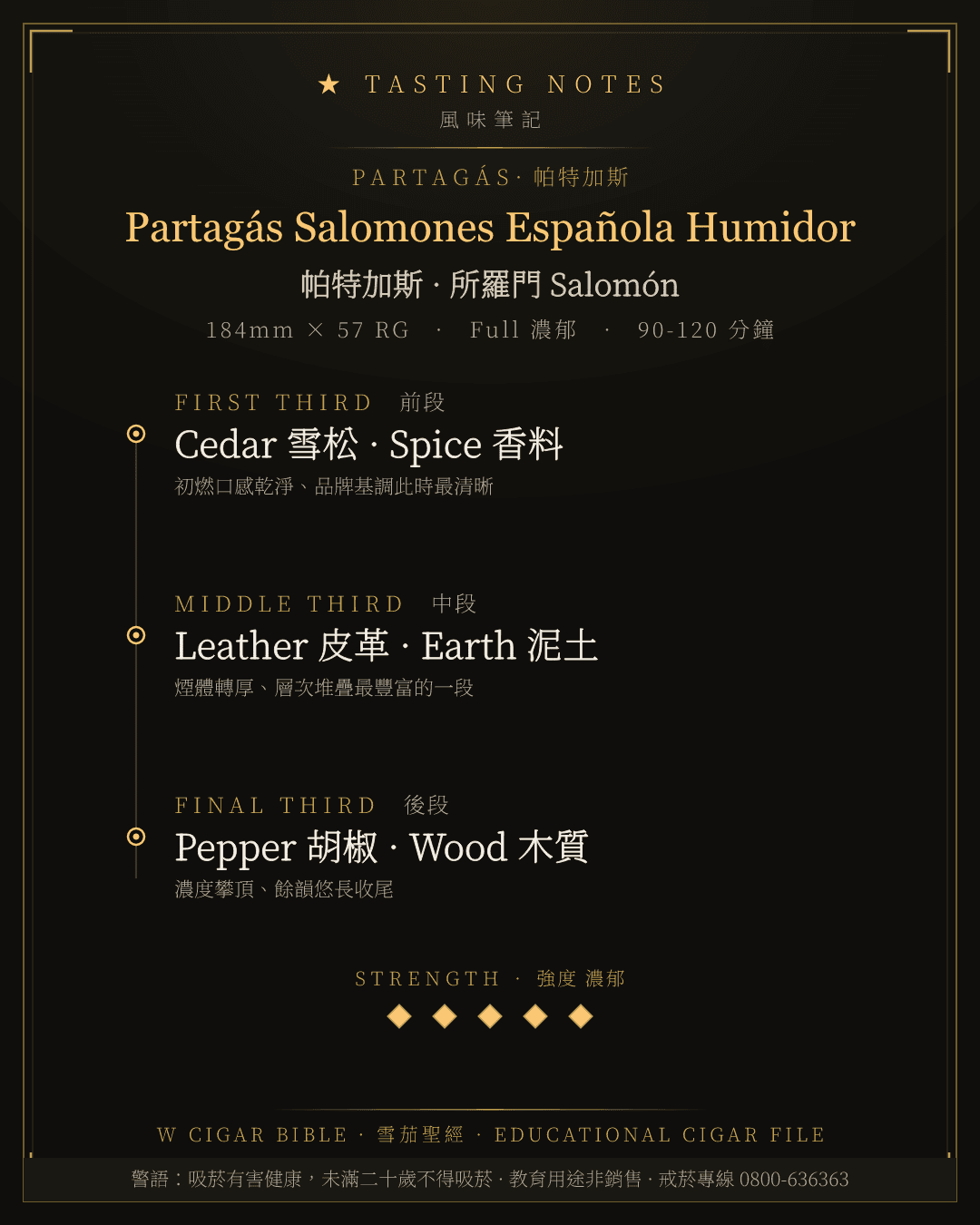
Partagás Salomones Española Humidor 風味筆記 · 帕特加斯
TASTING NOTES · 風味筆記

Partagás Salomones 搭配指南 · 帕特加斯
PAIRING GUIDE · 搭配指南

Partagás Salomones 風味筆記 · 帕特加斯
TASTING NOTES · 風味筆記
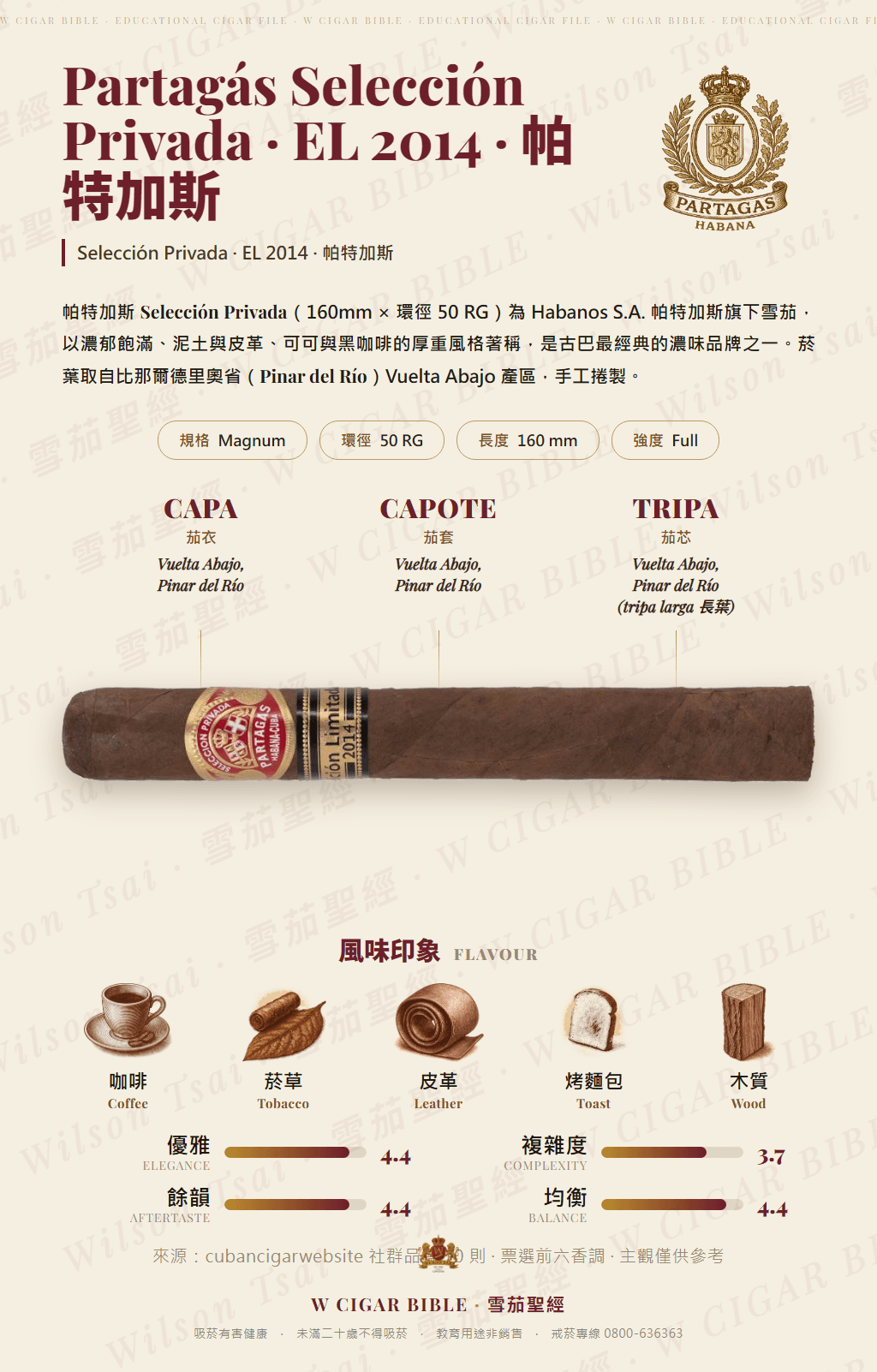
Partagás Selección Privada · EL 2014 · 帕特加斯
EL 2014 · 限量年度版 Edición Limitada · 雪茄檔案
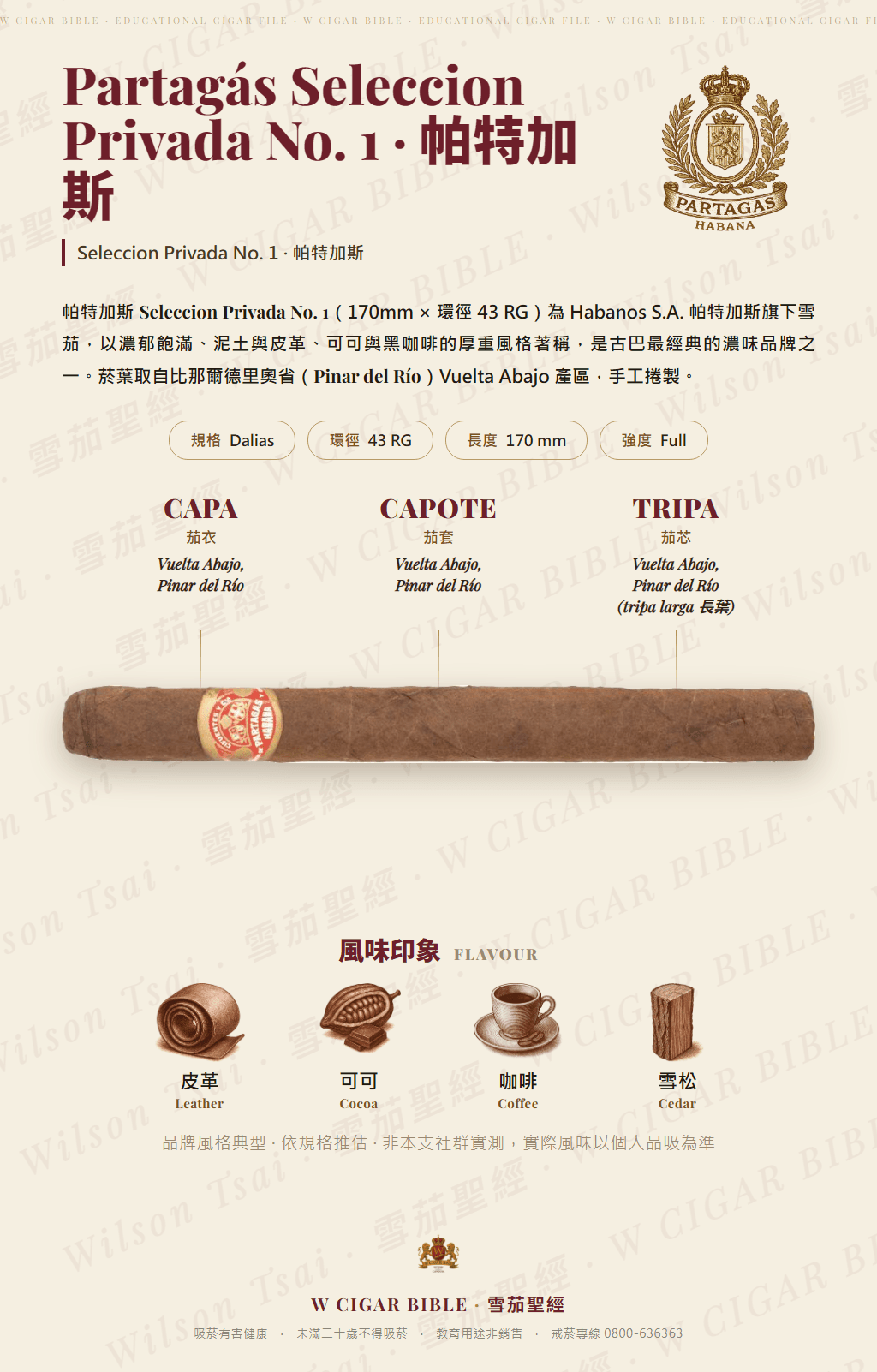
Partagás Seleccion Privada No. 1 · 帕特加斯
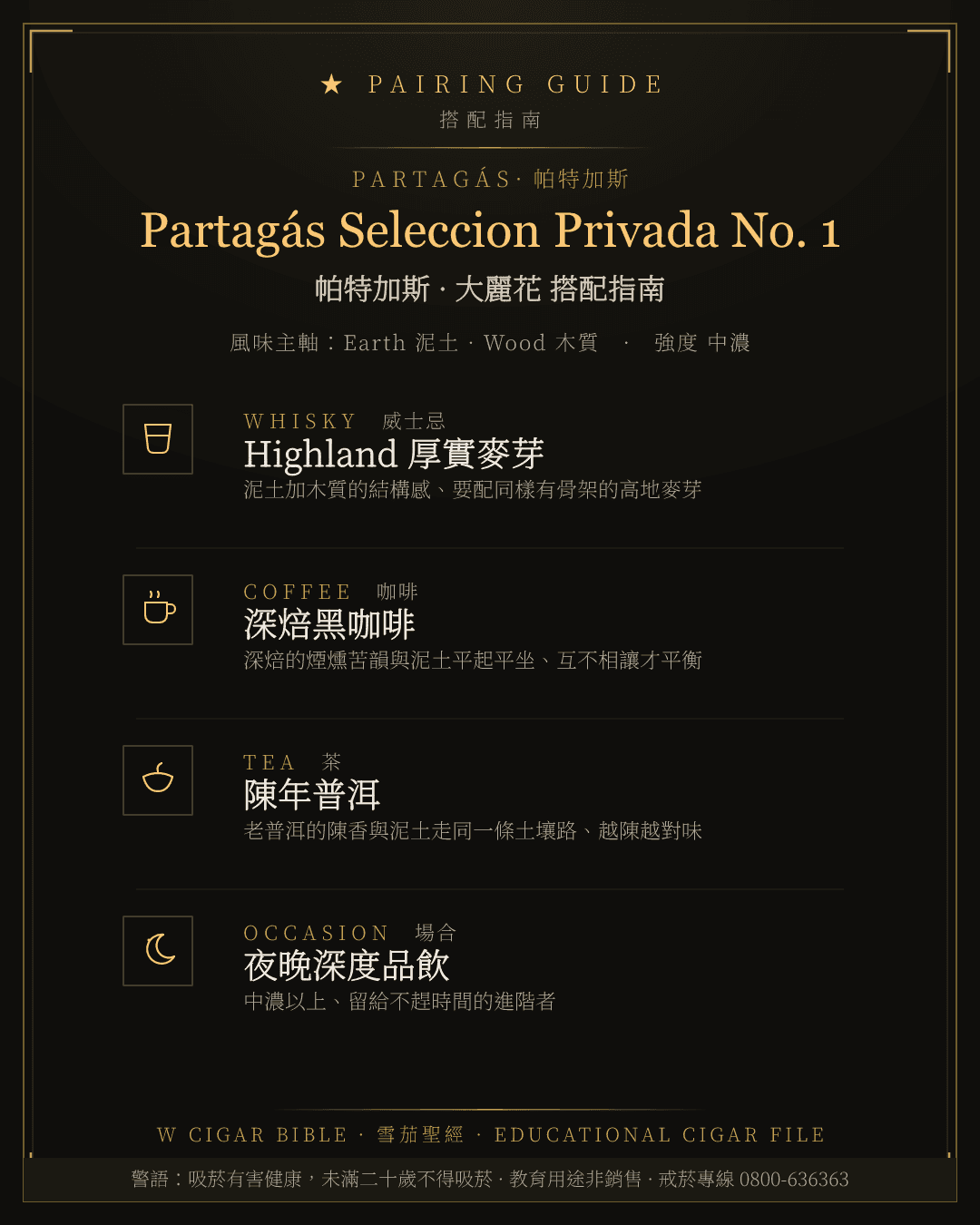
Partagás Seleccion Privada No. 1 搭配指南 · 帕特加斯
PAIRING GUIDE · 搭配指南
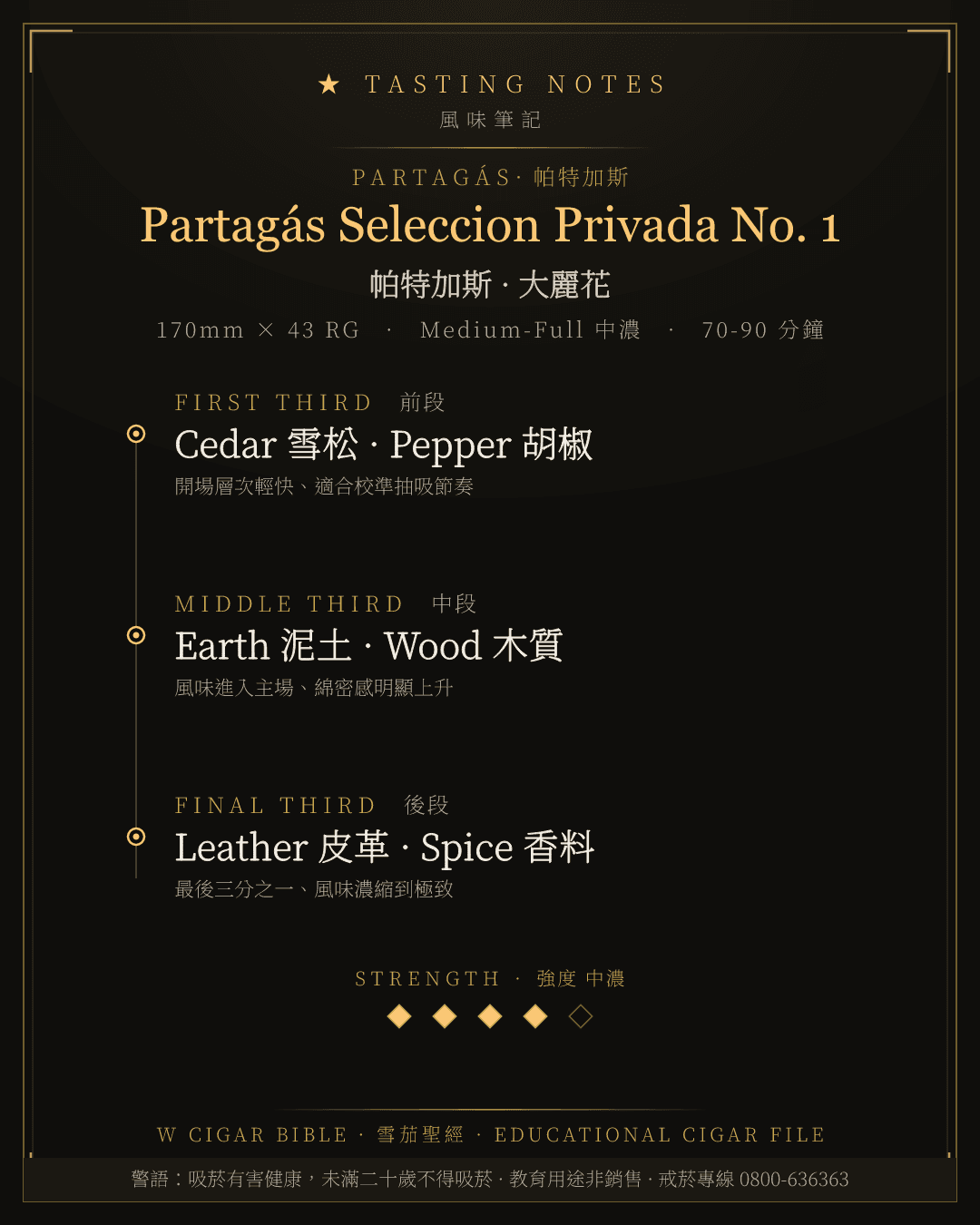
Partagás Seleccion Privada No. 1 風味筆記 · 帕特加斯
TASTING NOTES · 風味筆記
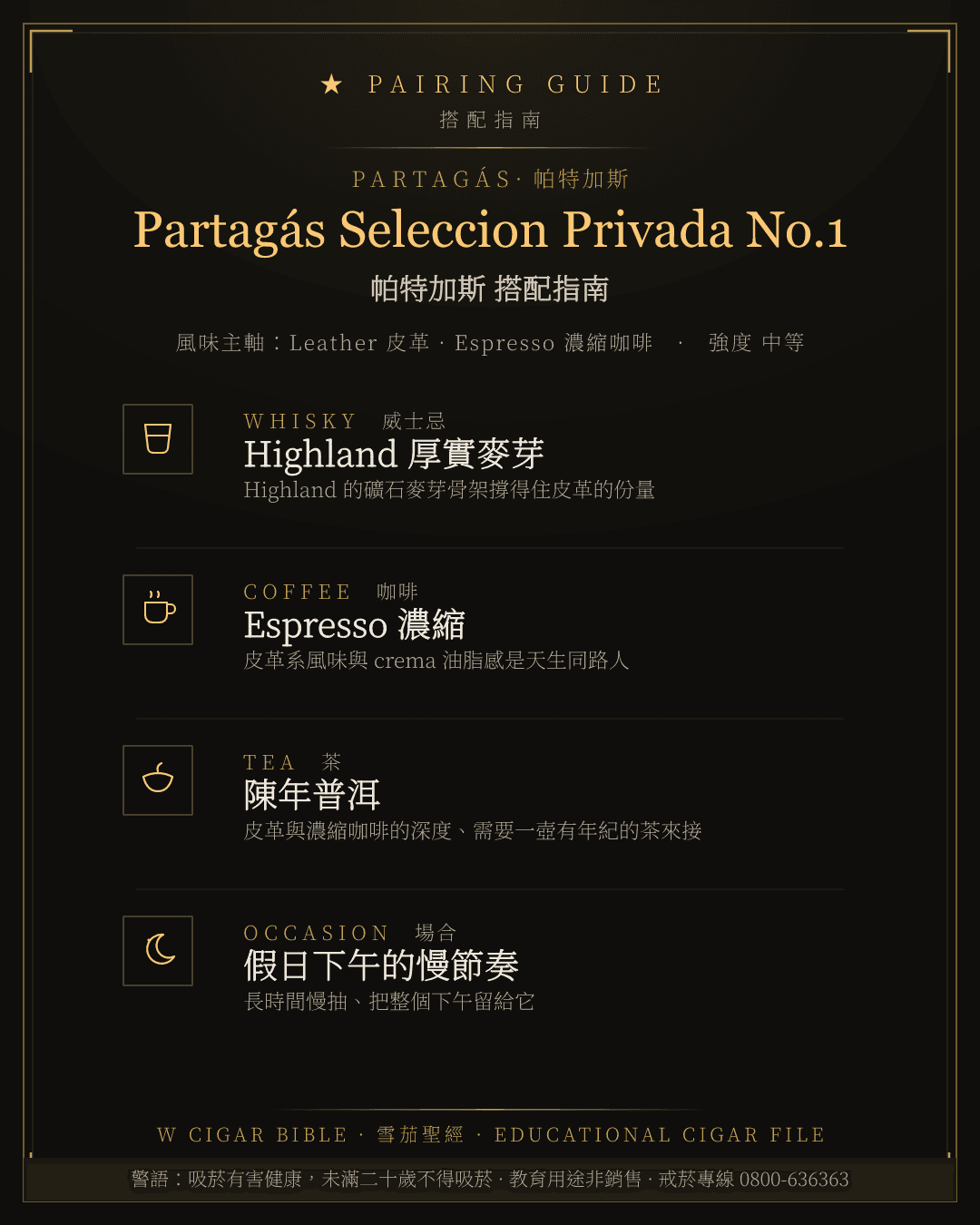
Partagás Seleccion Privada No.1 搭配指南 · 帕特加斯
PAIRING GUIDE · 搭配指南

Partagás Seleccion Privada No.1 風味筆記 · 帕特加斯
TASTING NOTES · 風味筆記

Partagás Selección Privada 搭配指南 · 帕特加斯
PAIRING GUIDE · 搭配指南
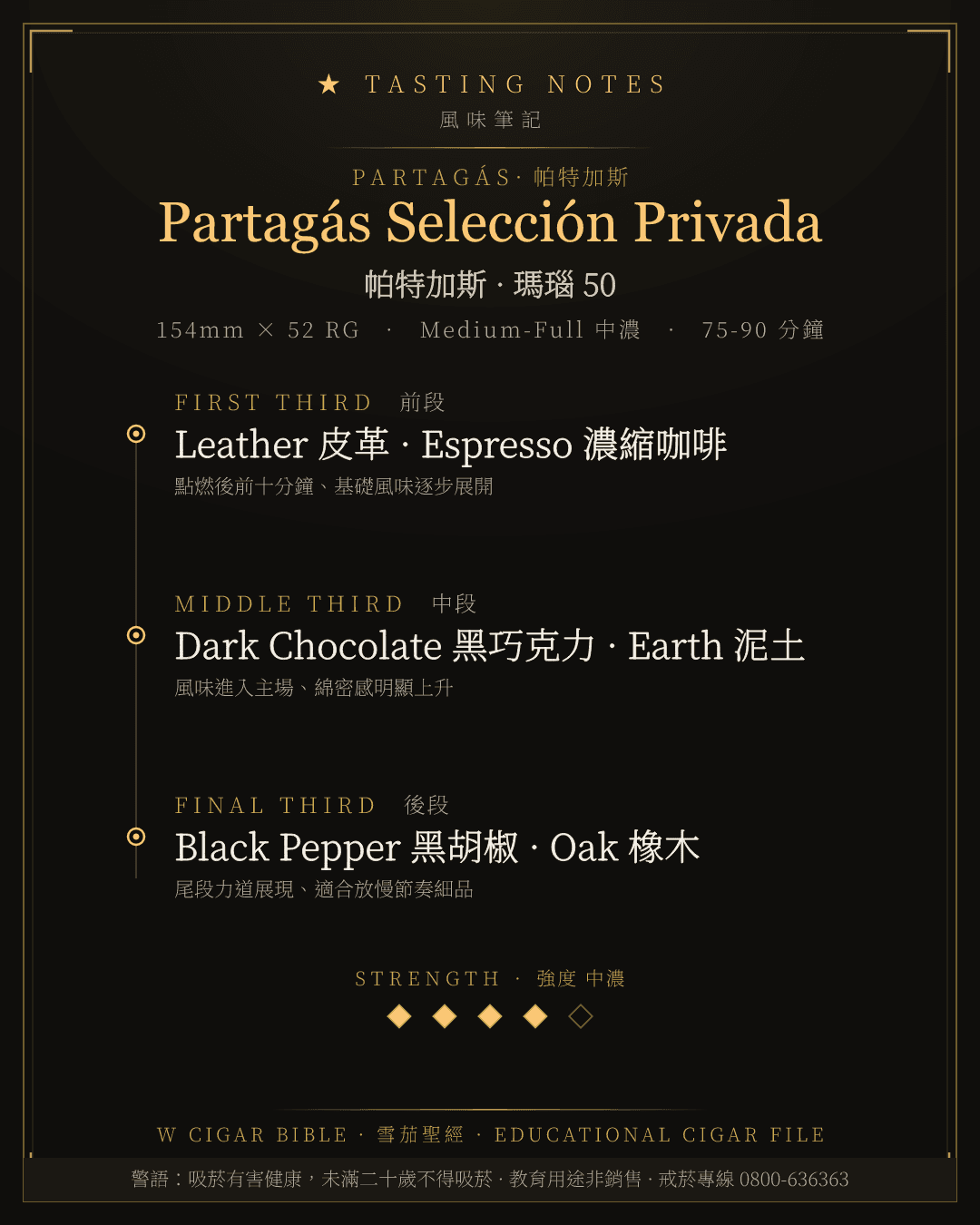
Partagás Selección Privada 風味筆記 · 帕特加斯
TASTING NOTES · 風味筆記

Partagás Señoritas · 帕特加斯

Partagás Serie C No. 3 搭配指南 · 帕特加斯
PAIRING GUIDE · 搭配指南

Partagás Serie C No. 3 風味筆記 · 帕特加斯
TASTING NOTES · 風味筆記
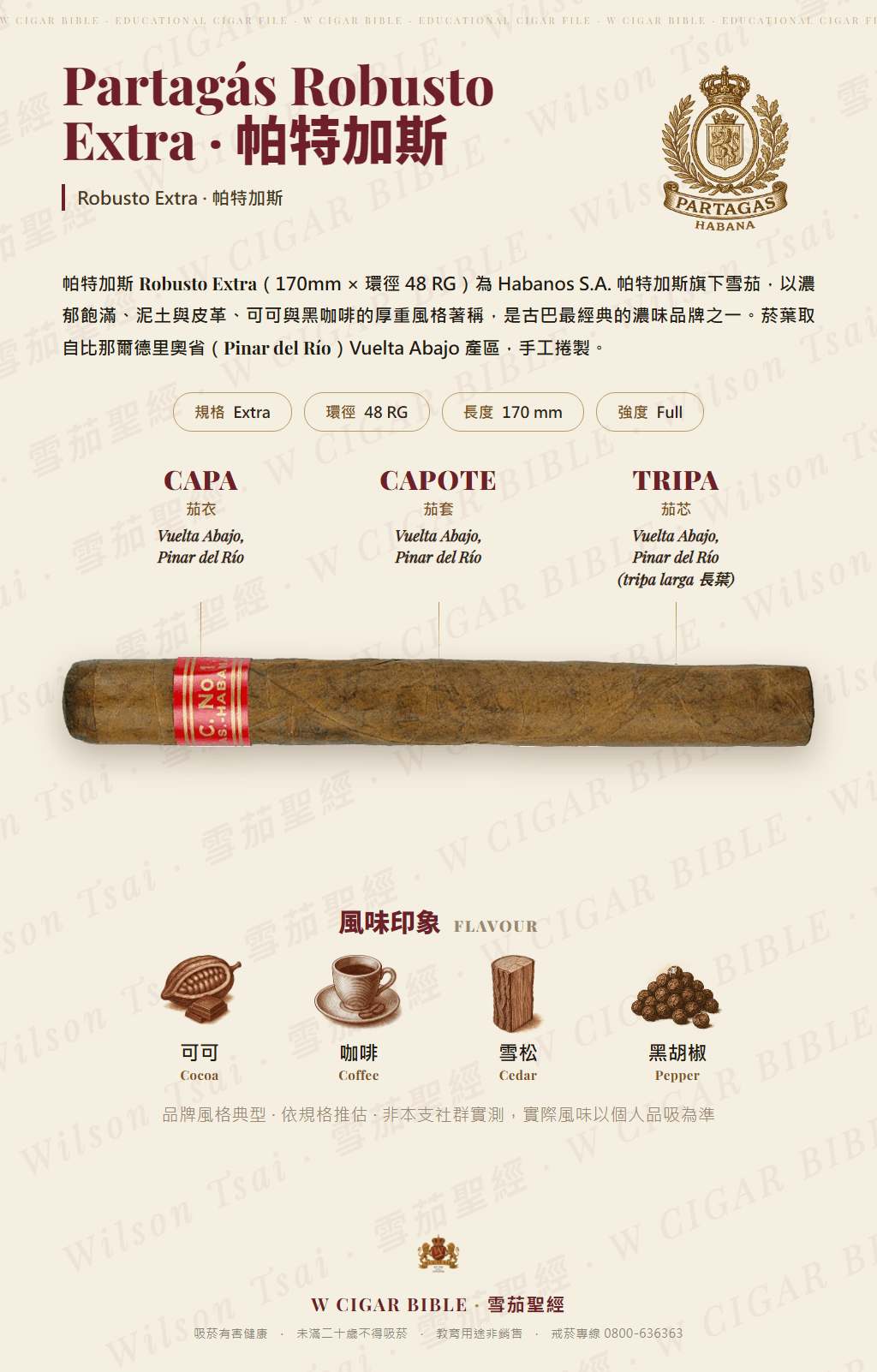
Partagás Serie C No.1 · Colección Habanos 2002 · 帕特加斯
Dobles 廠規(50 環徑 × 155mm)· 非 Edición Limitada 年度版 · 雪茄檔案
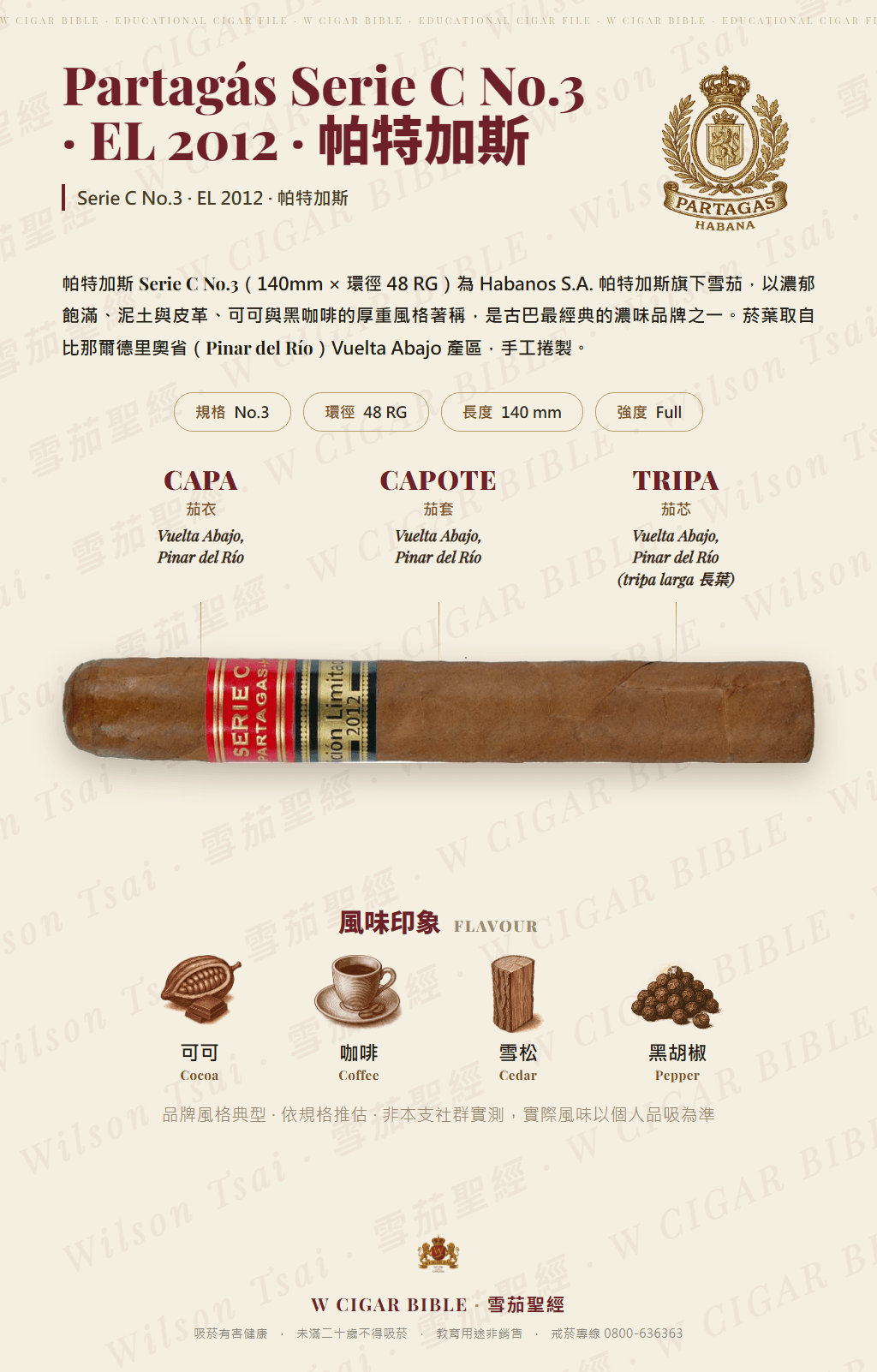
Partagás Serie C No.3 · EL 2012 · 帕特加斯
EL 2012 · 限量年度版 Edición Limitada(官方全名 Serie C No.3,140mm × 環徑 48 RG,10 支木盒)· 雪茄檔案
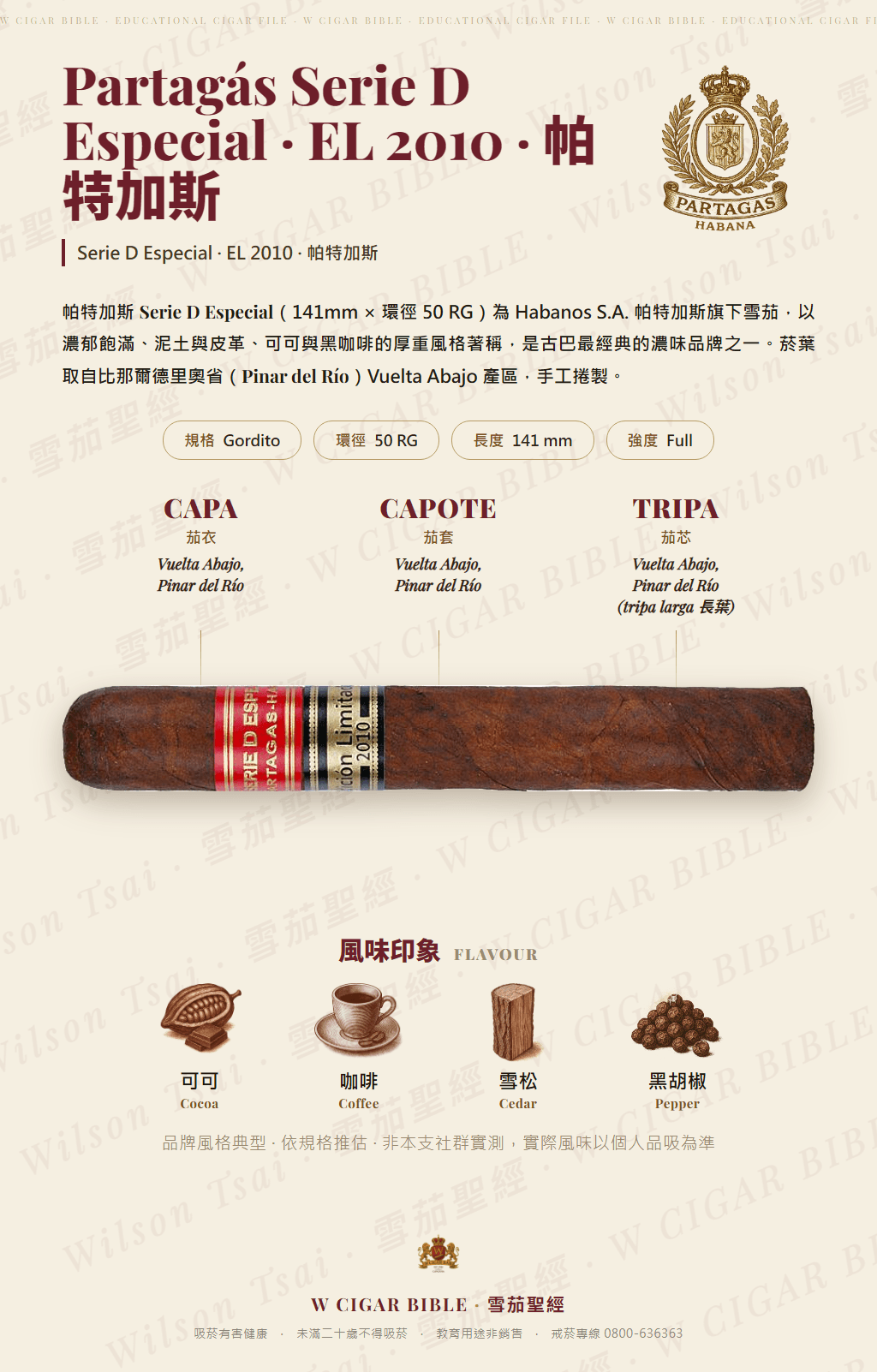
Partagás Serie D Especial · EL 2010 · 帕特加斯
EL 2010 · 限量年度版 Edición Limitada · 雪茄檔案
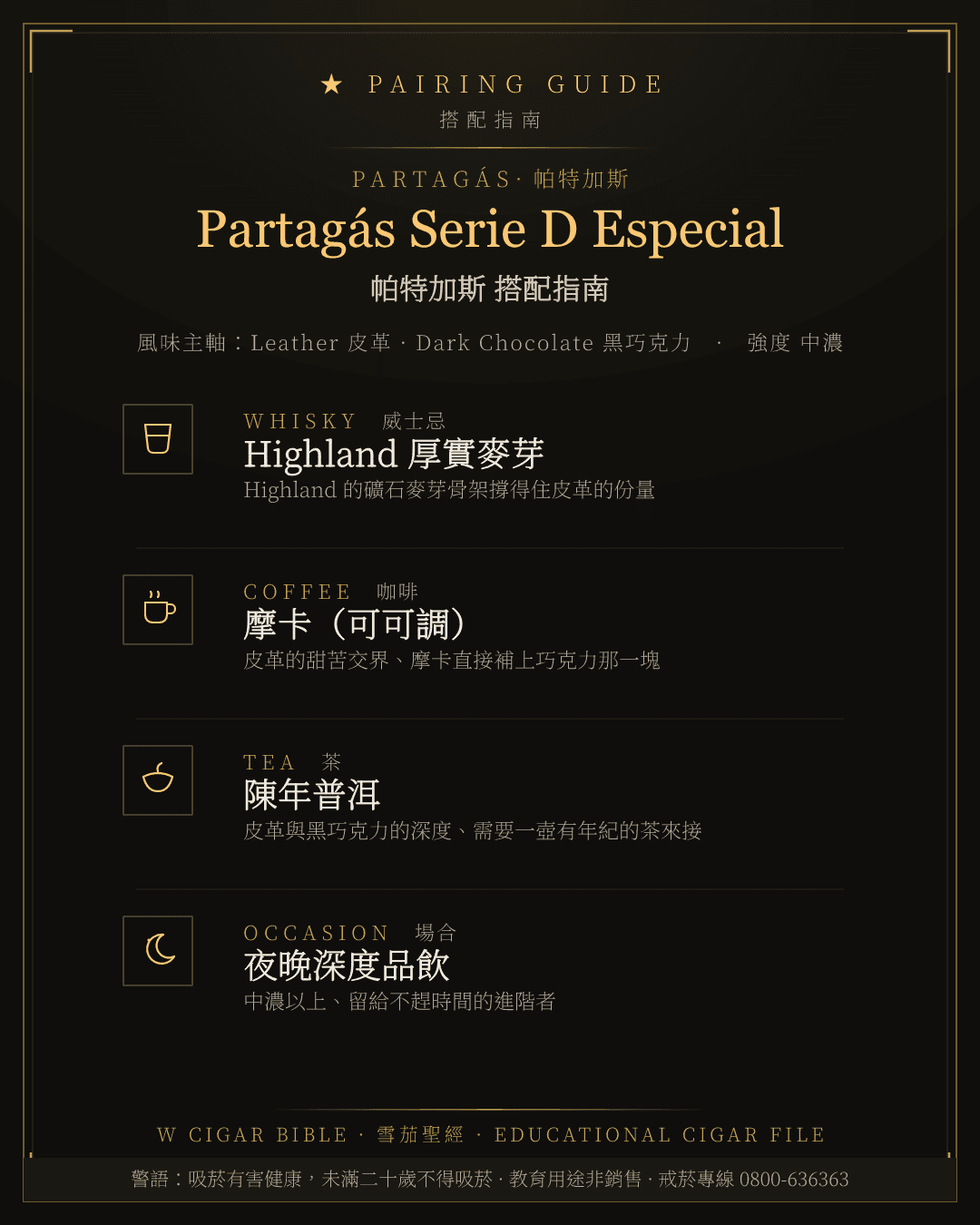
Partagás Serie D Especial 搭配指南 · 帕特加斯
PAIRING GUIDE · 搭配指南

Partagás Serie D Especial 風味筆記 · 帕特加斯
TASTING NOTES · 風味筆記

Partagás Serie D No. 2 Edición Limitada 搭配指南 · 帕特加斯
PAIRING GUIDE · 搭配指南
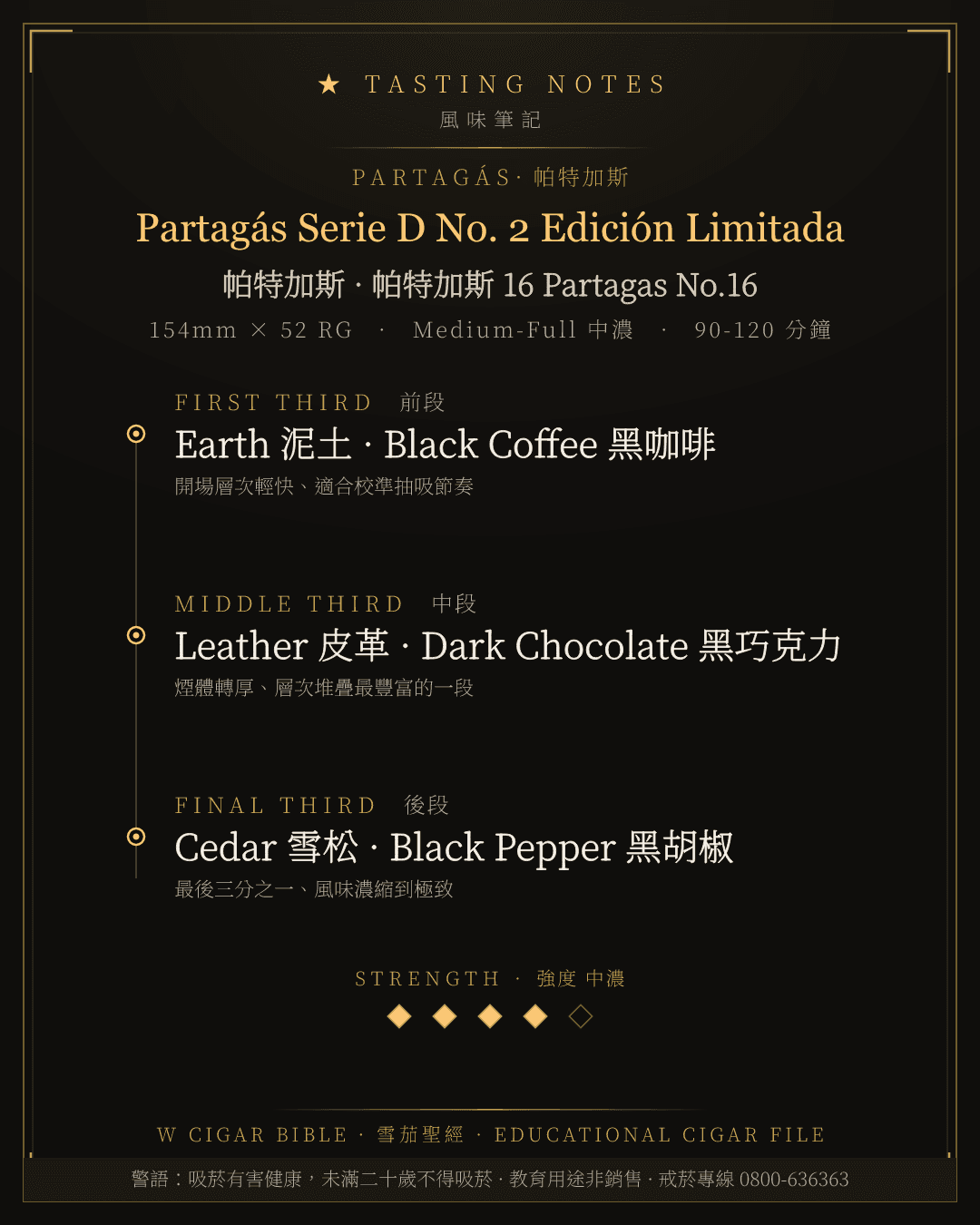
Partagás Serie D No. 2 Edición Limitada 風味筆記 · 帕特加斯
TASTING NOTES · 風味筆記

Partagás Serie D No. 2 搭配指南 · 帕特加斯
PAIRING GUIDE · 搭配指南
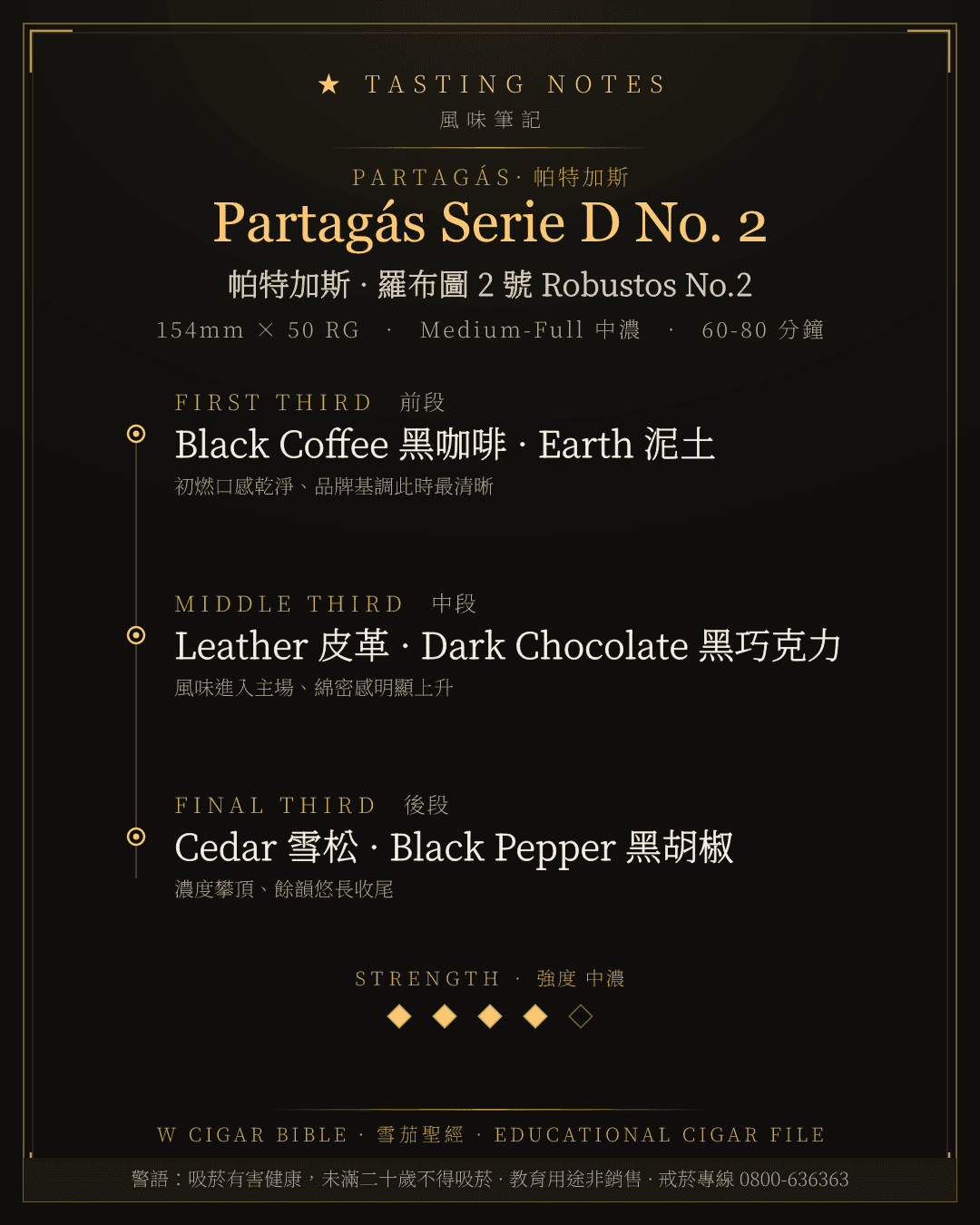
Partagás Serie D No. 2 風味筆記 · 帕特加斯
TASTING NOTES · 風味筆記

Partagás Serie D No. 3 Edición Limitada 搭配指南 · 帕特加斯
PAIRING GUIDE · 搭配指南
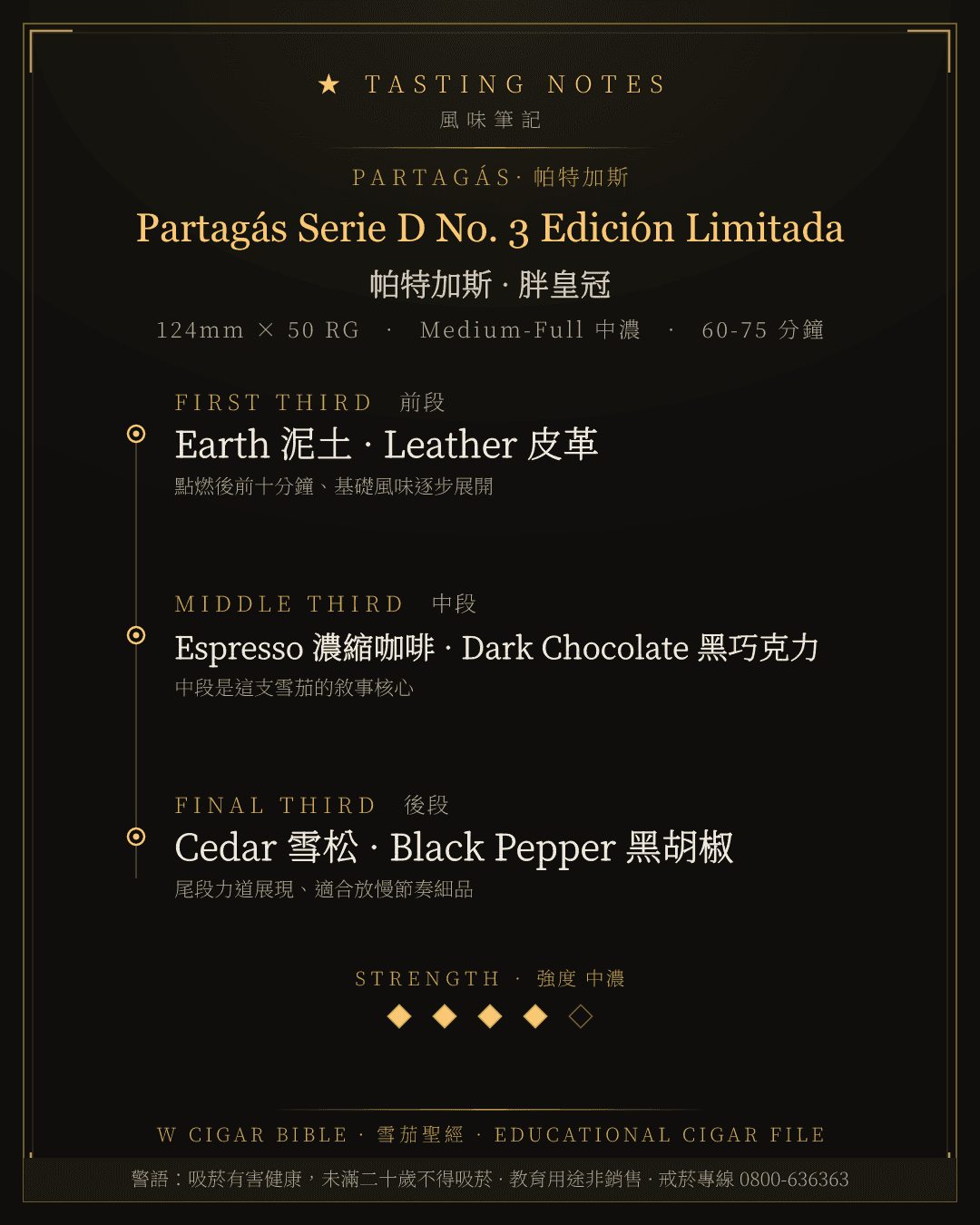
Partagás Serie D No. 3 Edición Limitada 風味筆記 · 帕特加斯
TASTING NOTES · 風味筆記

Partagás Serie D No. 3 搭配指南 · 帕特加斯
PAIRING GUIDE · 搭配指南
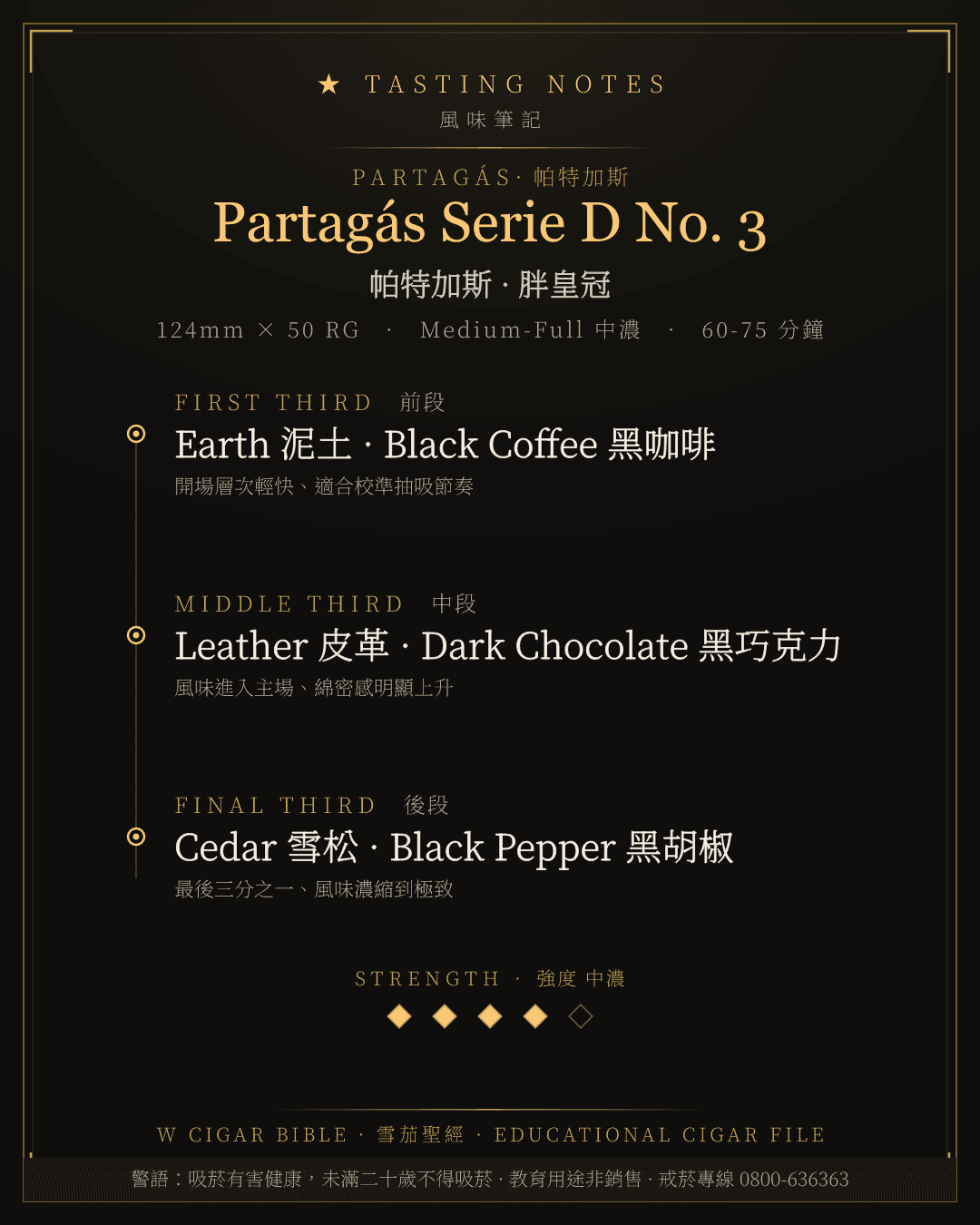
Partagás Serie D No. 3 風味筆記 · 帕特加斯
TASTING NOTES · 風味筆記

Partagás Serie D No. 4 Reserva 搭配指南 · 帕特加斯
PAIRING GUIDE · 搭配指南
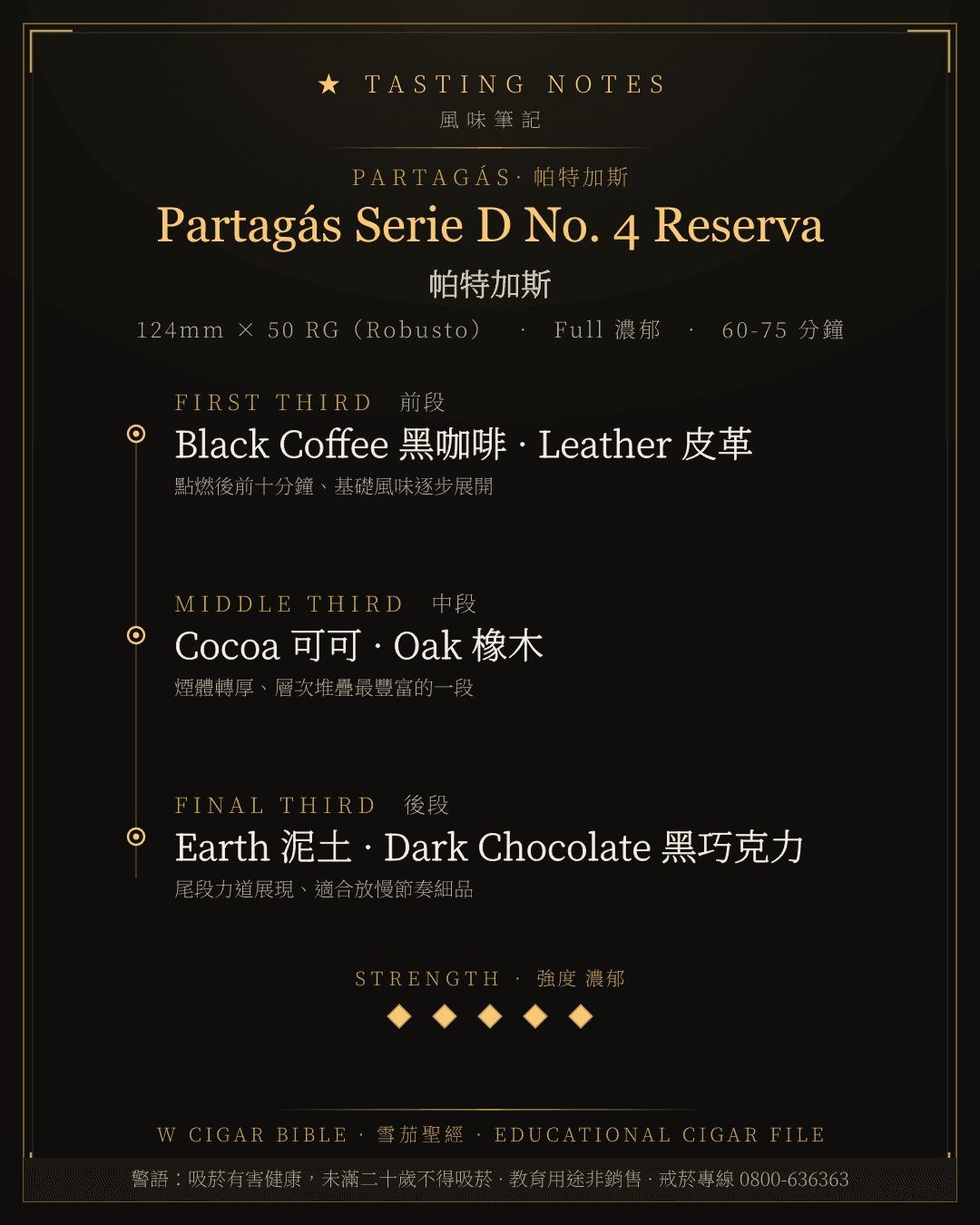
Partagás Serie D No. 4 Reserva 風味筆記 · 帕特加斯
TASTING NOTES · 風味筆記

Partagás Serie D No. 4 搭配指南 · 帕特加斯
PAIRING GUIDE · 搭配指南
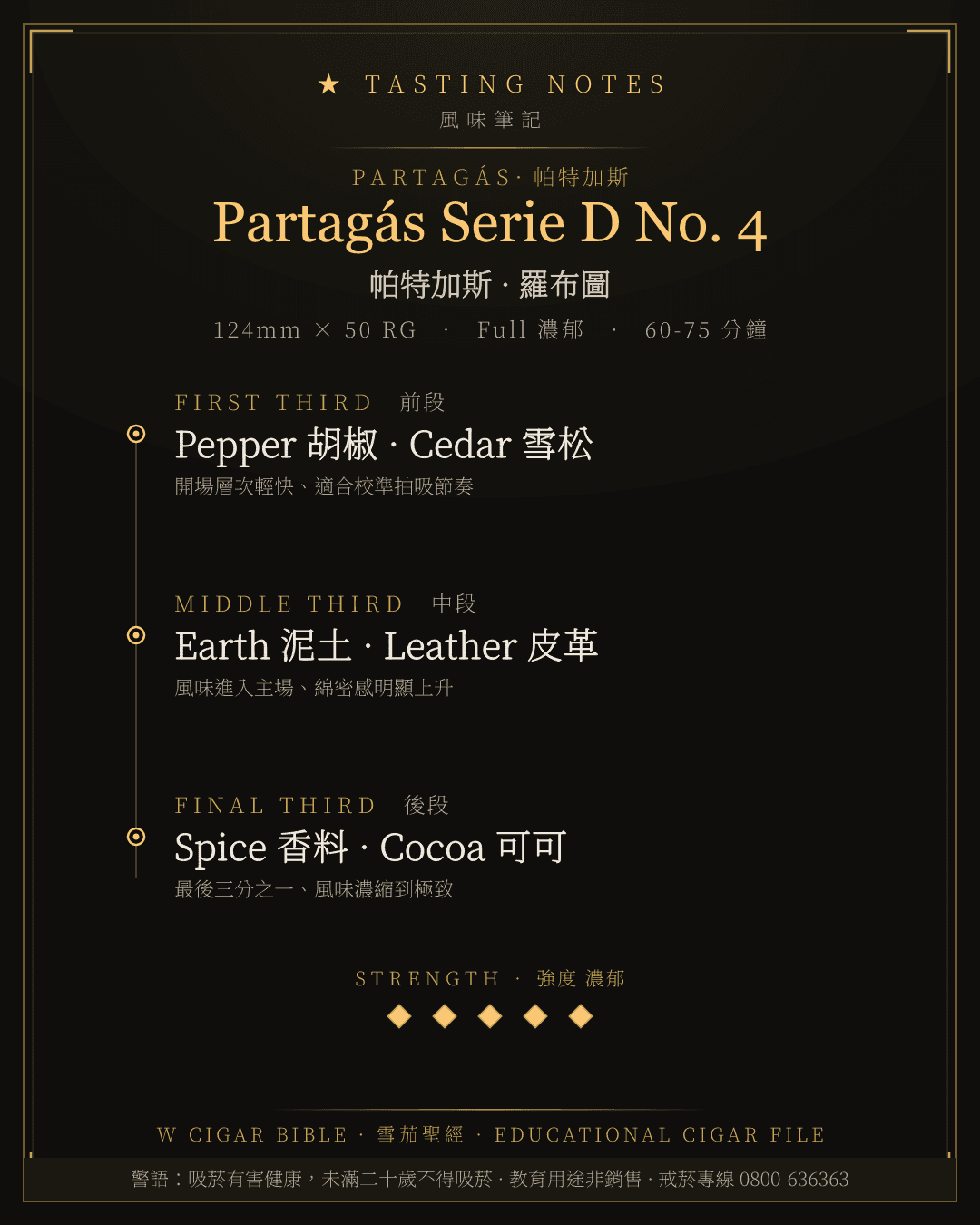
Partagás Serie D No. 4 風味筆記 · 帕特加斯
TASTING NOTES · 風味筆記

Partagás Serie D No. 5 搭配指南 · 帕特加斯
PAIRING GUIDE · 搭配指南
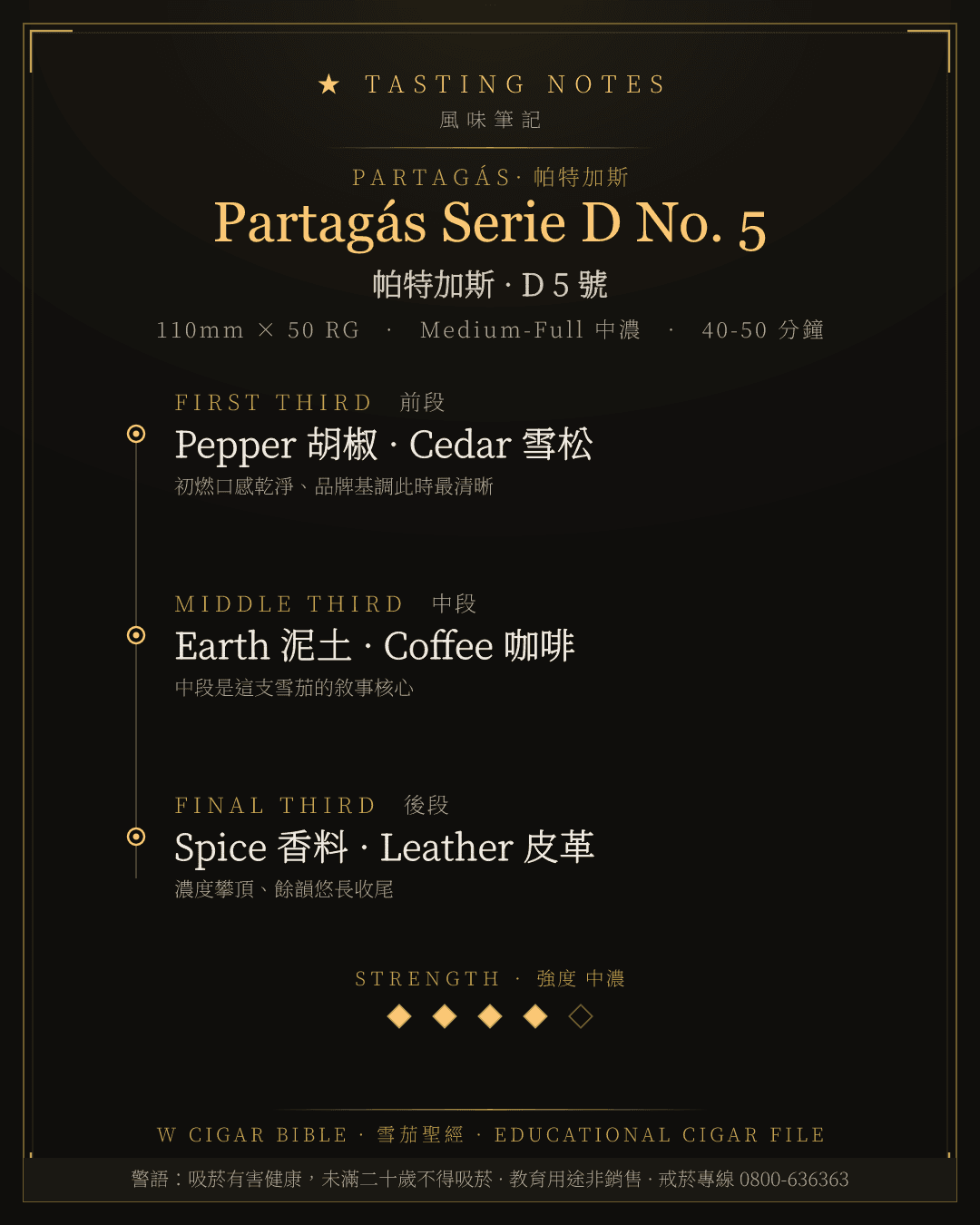
Partagás Serie D No. 5 風味筆記 · 帕特加斯
TASTING NOTES · 風味筆記

Partagás Serie D No. 6 搭配指南 · 帕特加斯
PAIRING GUIDE · 搭配指南
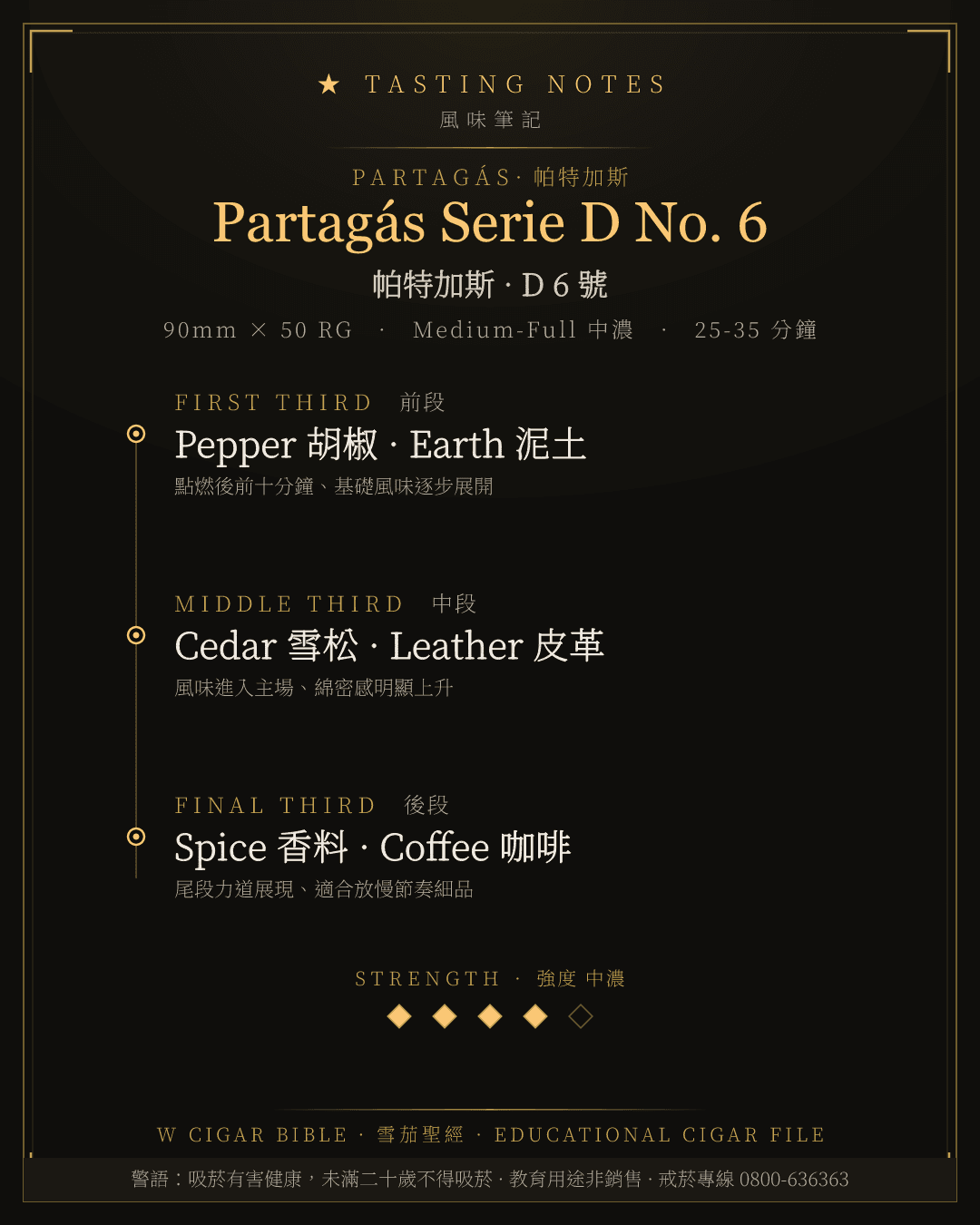
Partagás Serie D No. 6 風味筆記 · 帕特加斯
TASTING NOTES · 風味筆記

Partagás Serie D No.1 · EL 2004 · 帕特加斯
EL 2004 · 限量年度版 Edición Limitada(Serie D 最長規格、25 支裝,已停產)· 雪茄檔案

Partagás Serie D No.2 · EL 2003 · 帕特加斯
EL 2003 · 限量年度版 Edición Limitada(Robustos No.2 廠規、25 支裝,已停產)· 雪茄檔案
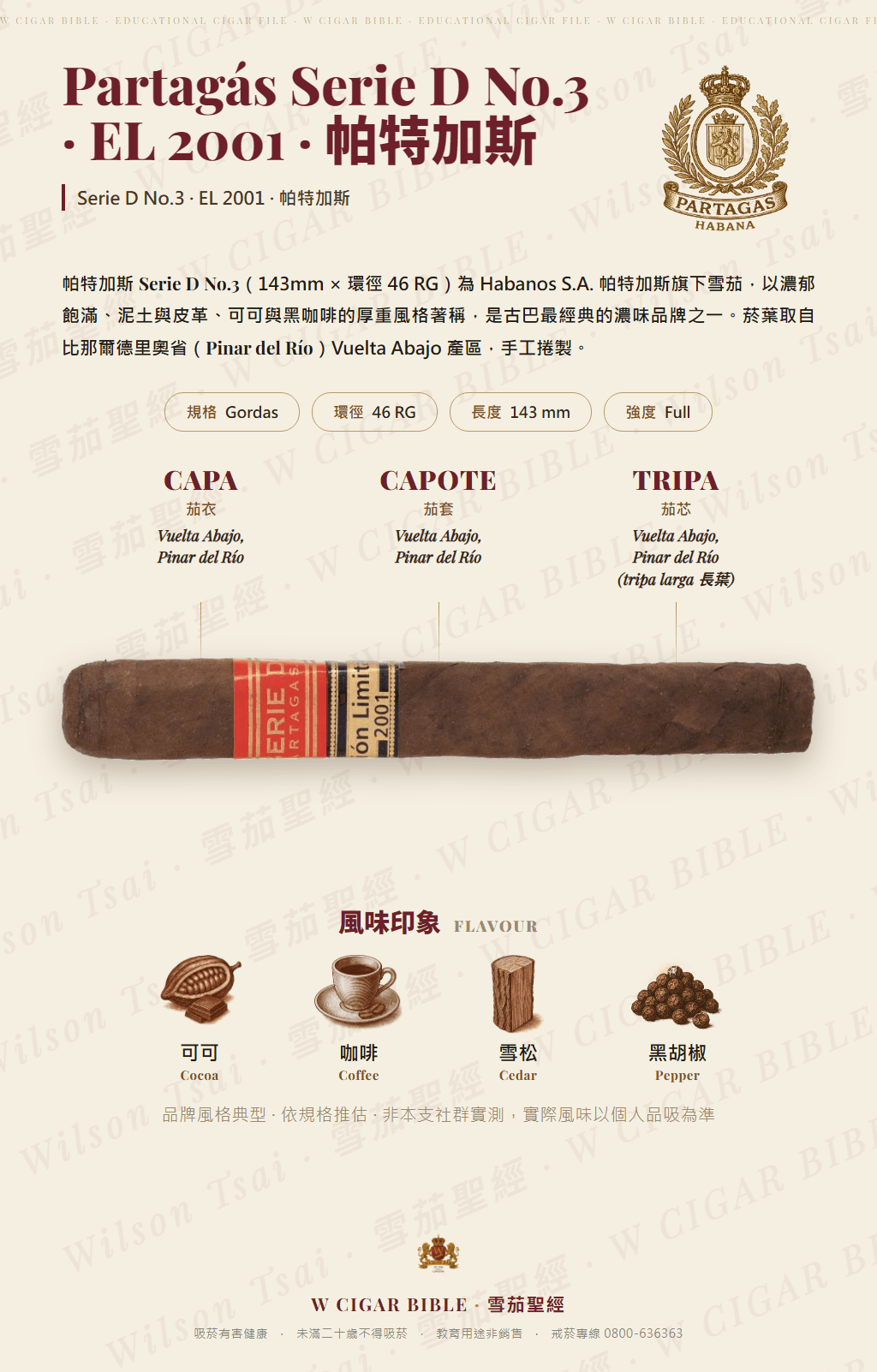
Partagás Serie D No.3 · EL 2001 · 帕特加斯
EL 2001(2006 年同名再版)· 限量年度版 Edición Limitada(Corona Gorda,143mm × 46,已停產)· 雪茄檔案

Partagás Serie D No.3 · EL 2006 · 帕特加斯
EL 2006 · 限量年度版 Edición Limitada · 雪茄檔案
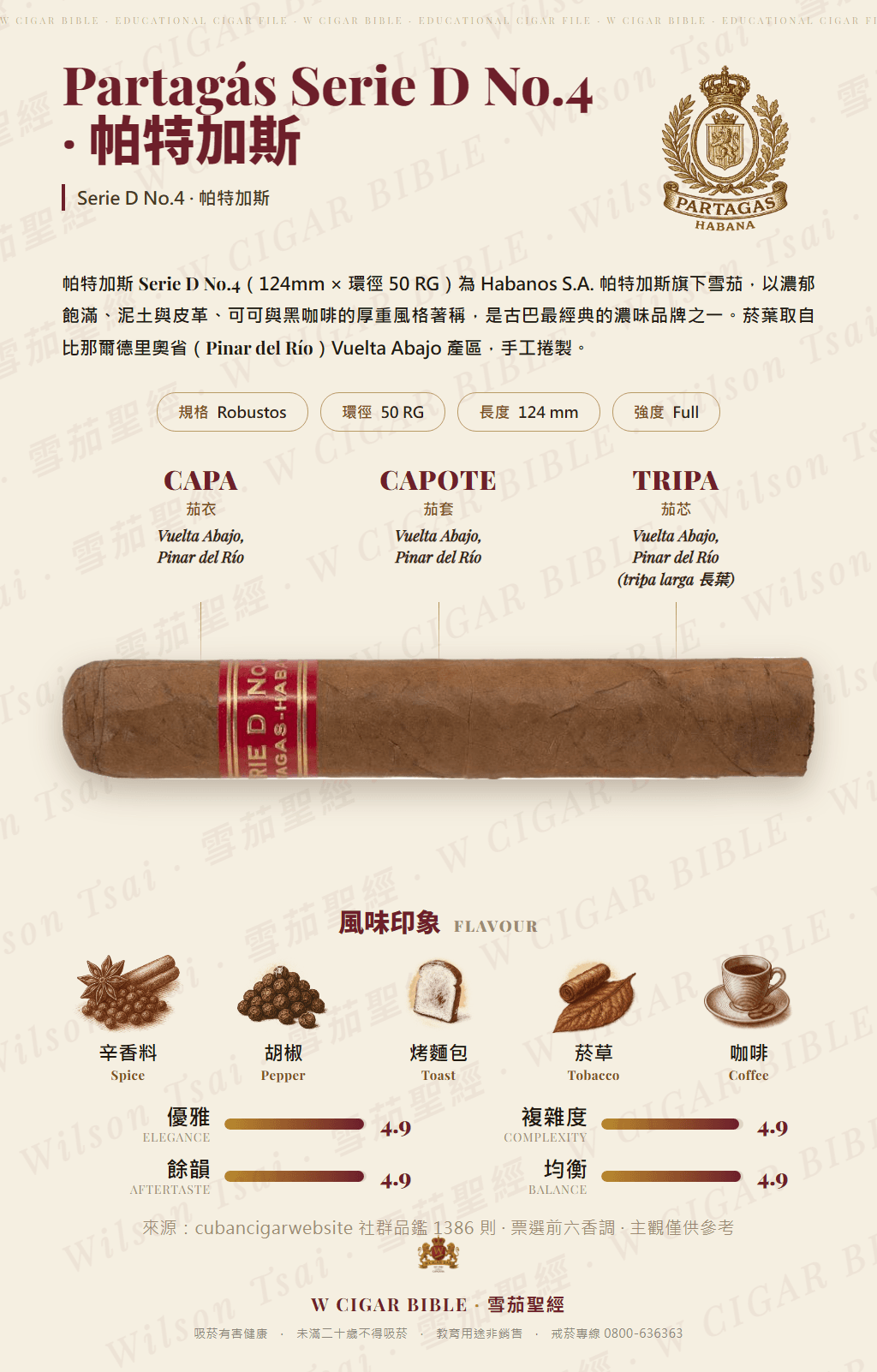
Partagás Serie D No.4 · 帕特加斯
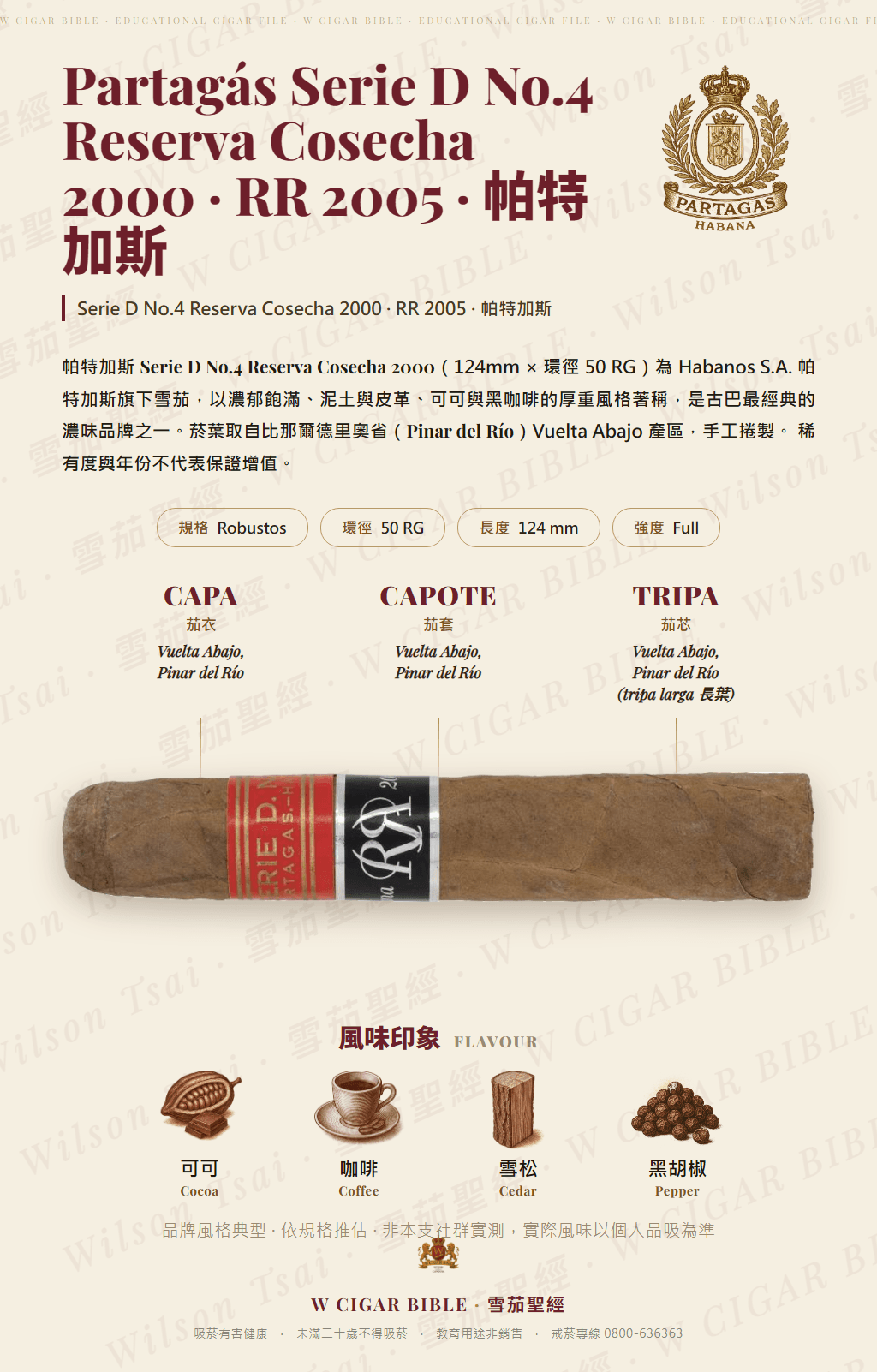
Partagás Serie D No.4 Reserva Cosecha 2000 · RR 2005 · 帕特加斯
RR 2005 · 陳年儲存版 Reservas · 雪茄檔案
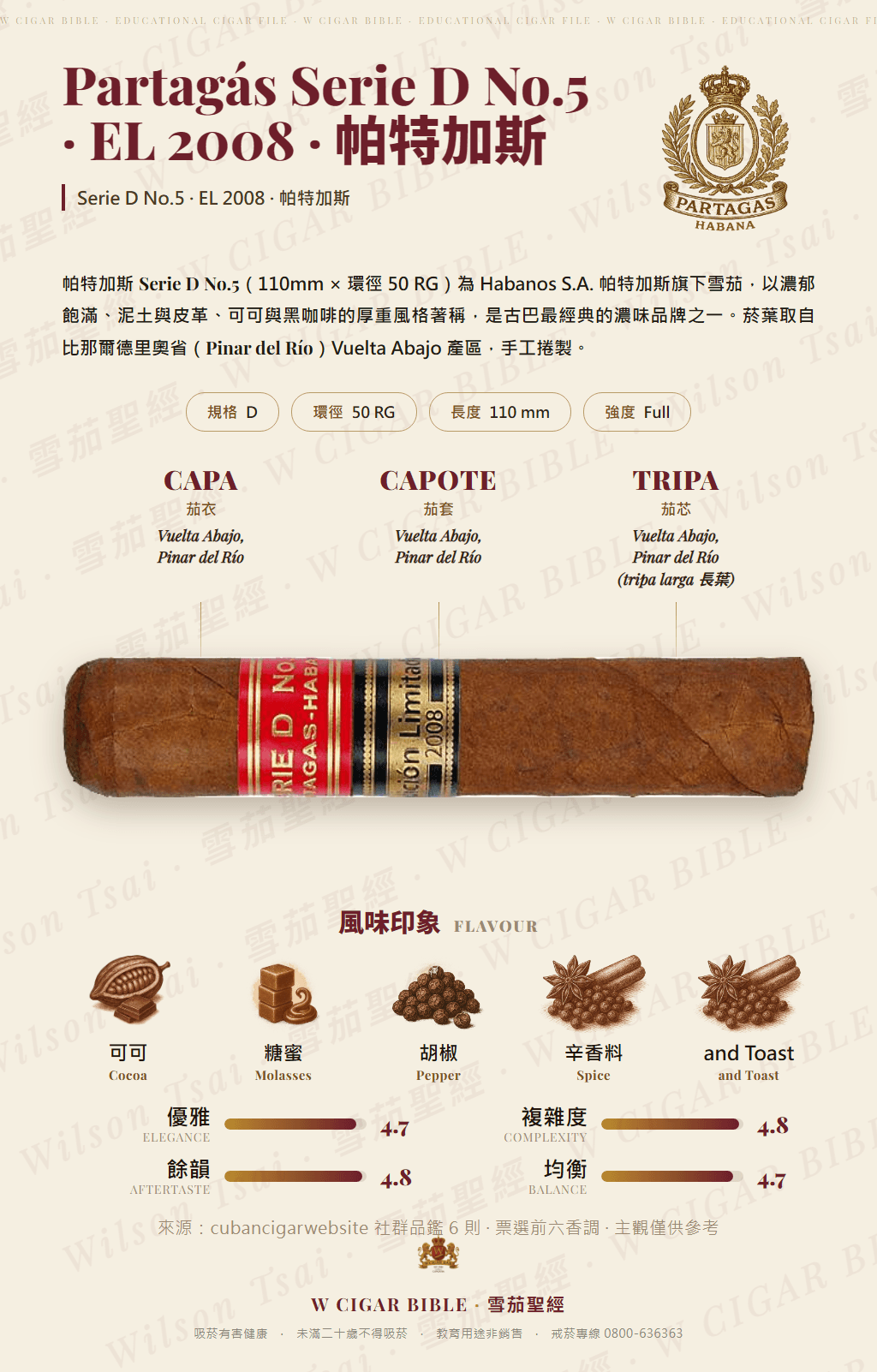
Partagás Serie D No.5 · EL 2008 · 帕特加斯
EL 2008 · 限量年度版 Edición Limitada(Petit Robusto 級 110mm × 50 RG · 限量版已停產,同規格 2011 年轉入標準生產)· 雪茄檔案
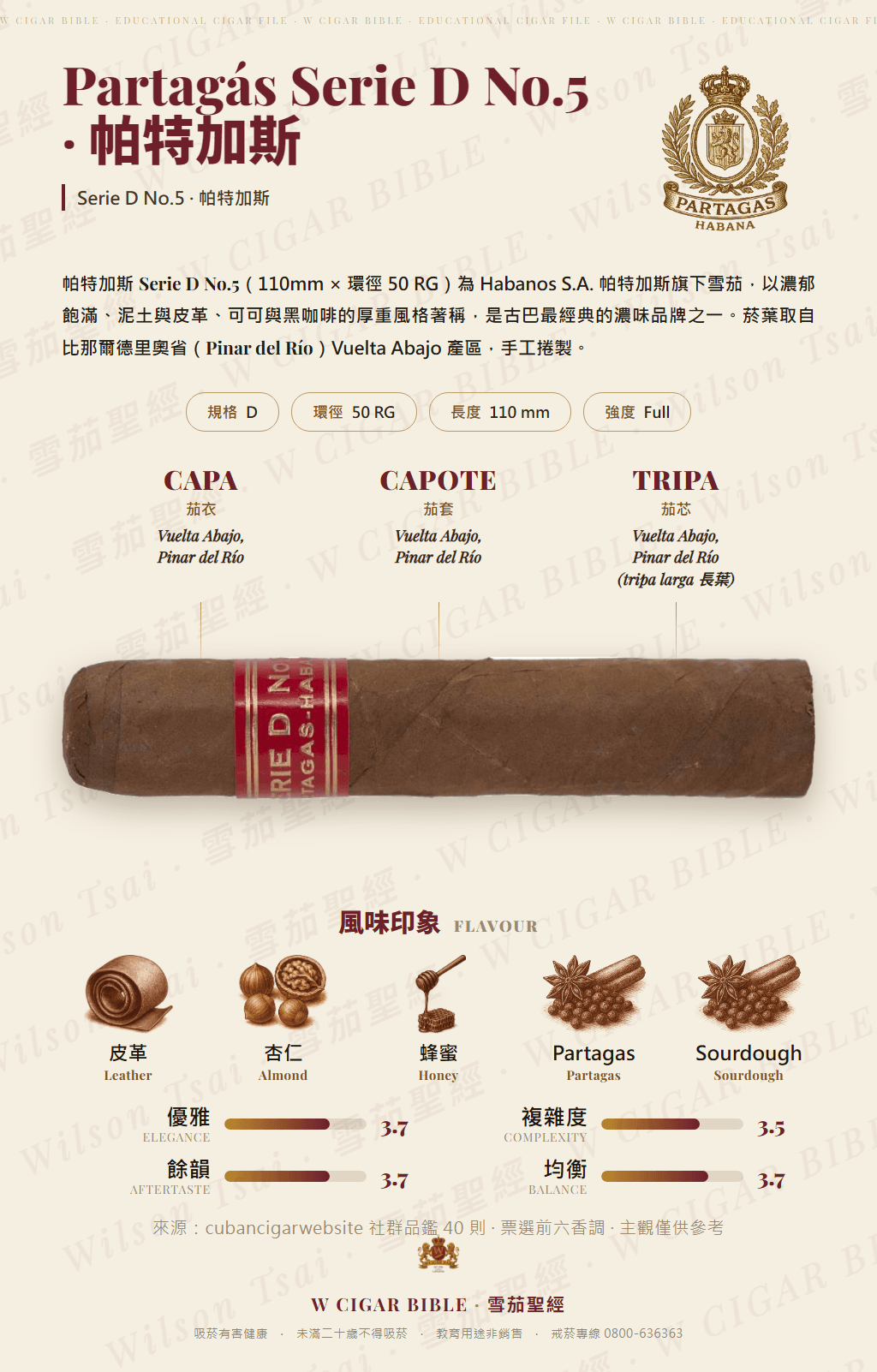
Partagás Serie D No.5 · 帕特加斯
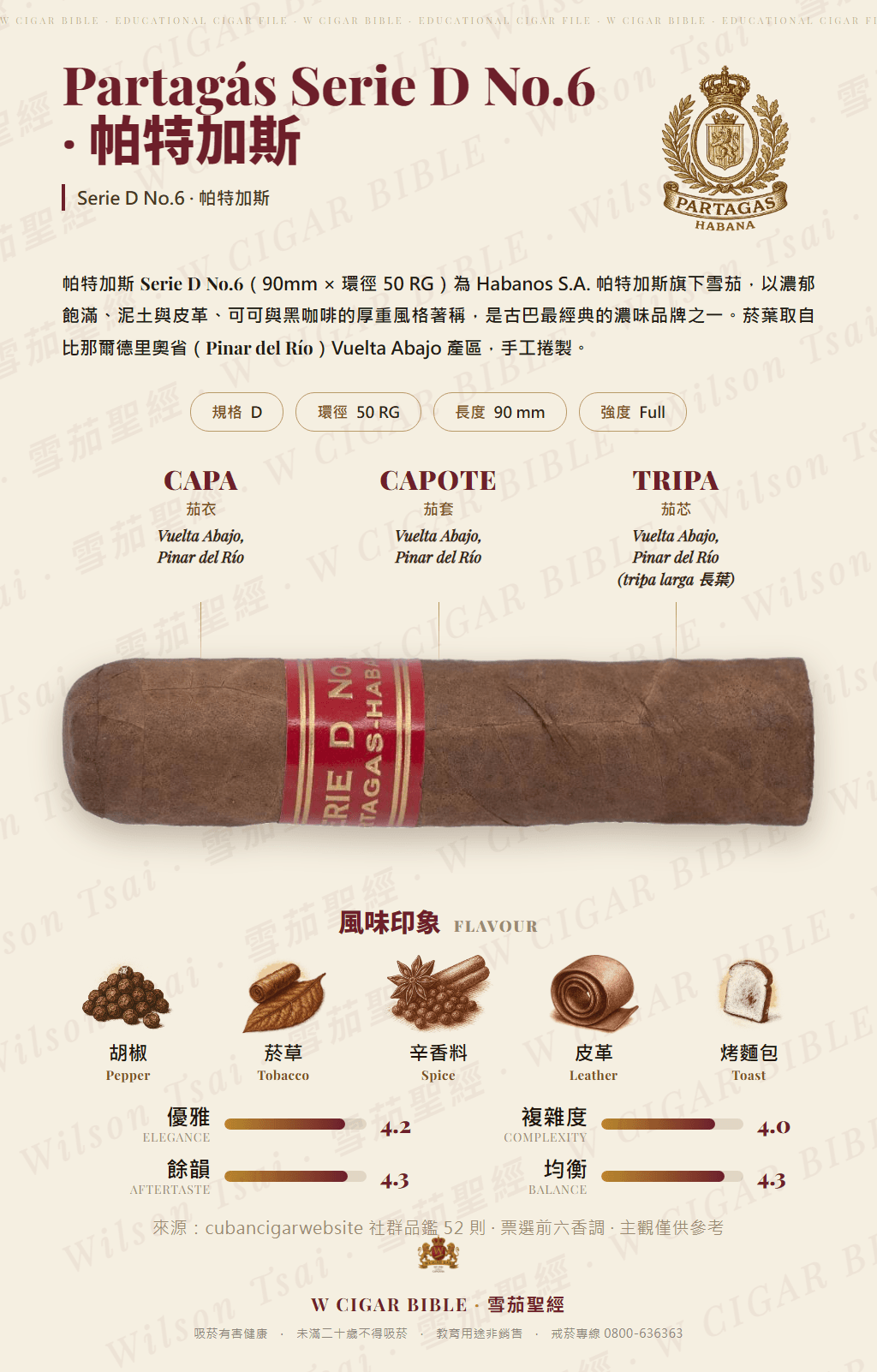
Partagás Serie D No.6 · 帕特加斯
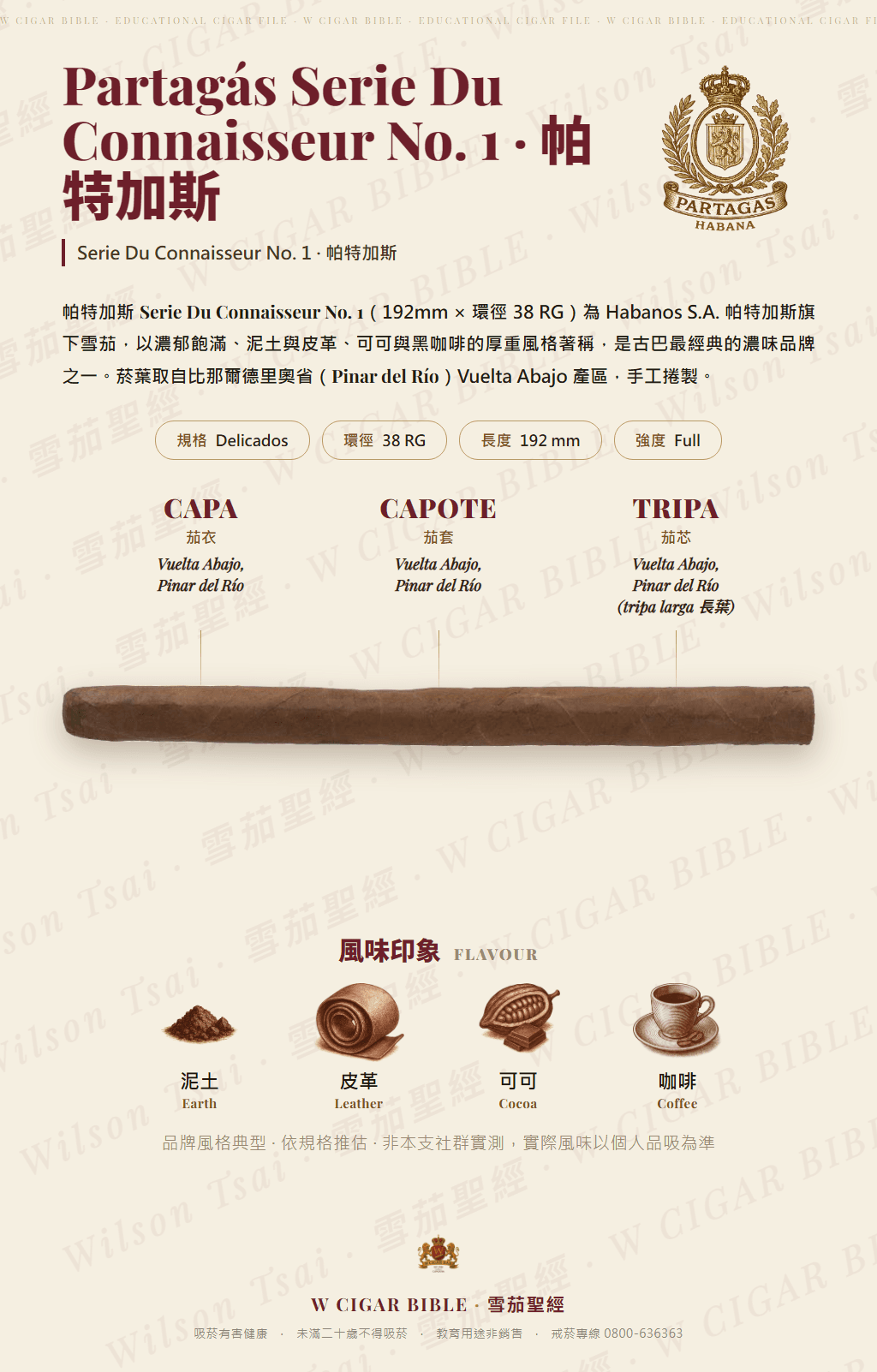
Partagás Serie Du Connaisseur No. 1 · 帕特加斯
標準生產款(Delicados,38 環徑 × 192mm,2010 年前後停產)· 雪茄檔案

Partagás Serie Du Connaisseur No. 1 搭配指南 · 帕特加斯
PAIRING GUIDE · 搭配指南

Partagás Serie Du Connaisseur No. 1 風味筆記 · 帕特加斯
TASTING NOTES · 風味筆記
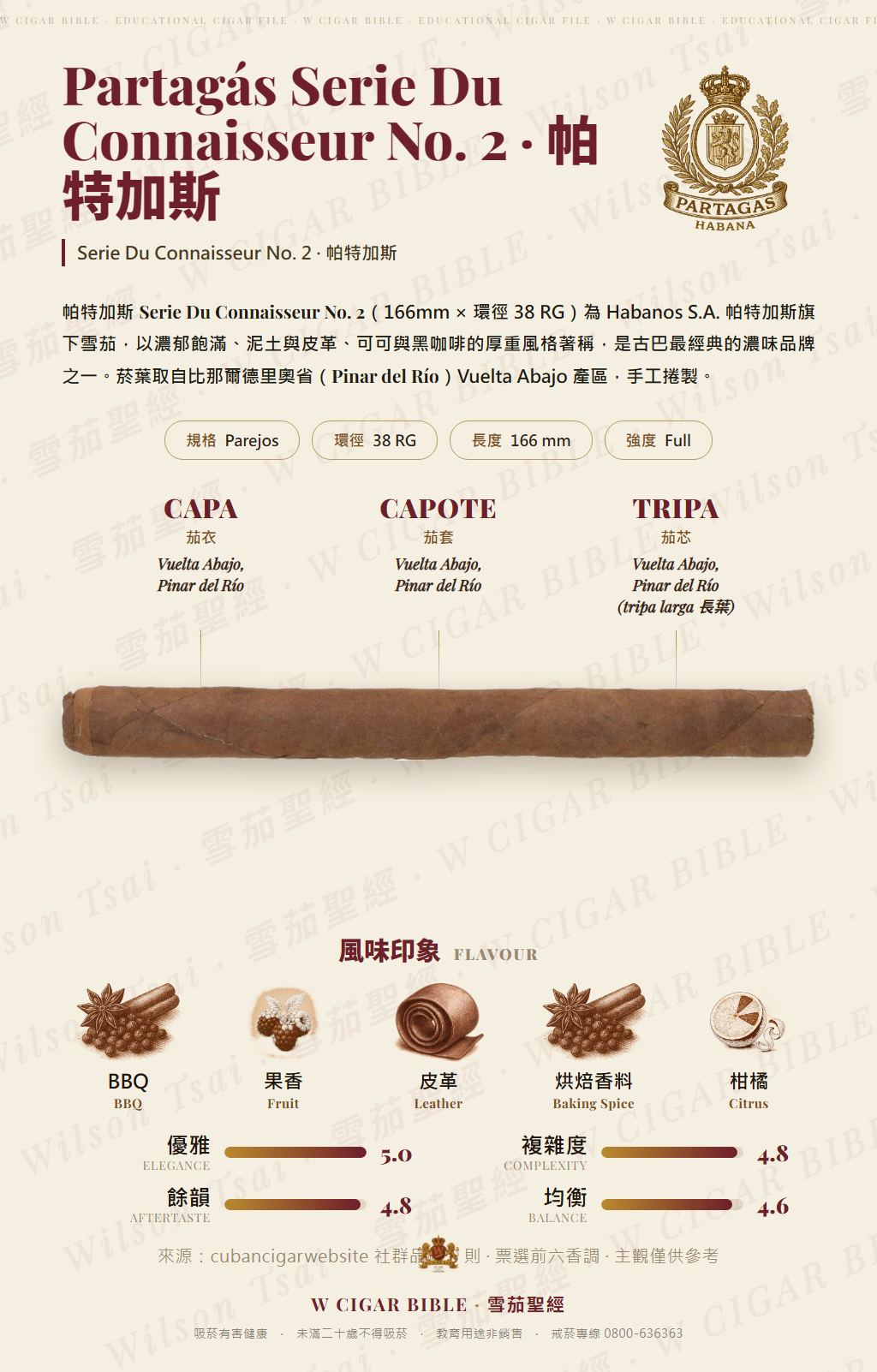
Partagás Serie Du Connaisseur No. 2 · 帕特加斯
標準生產款(38 環徑 × 166mm,2010 年前後停產)· 雪茄檔案
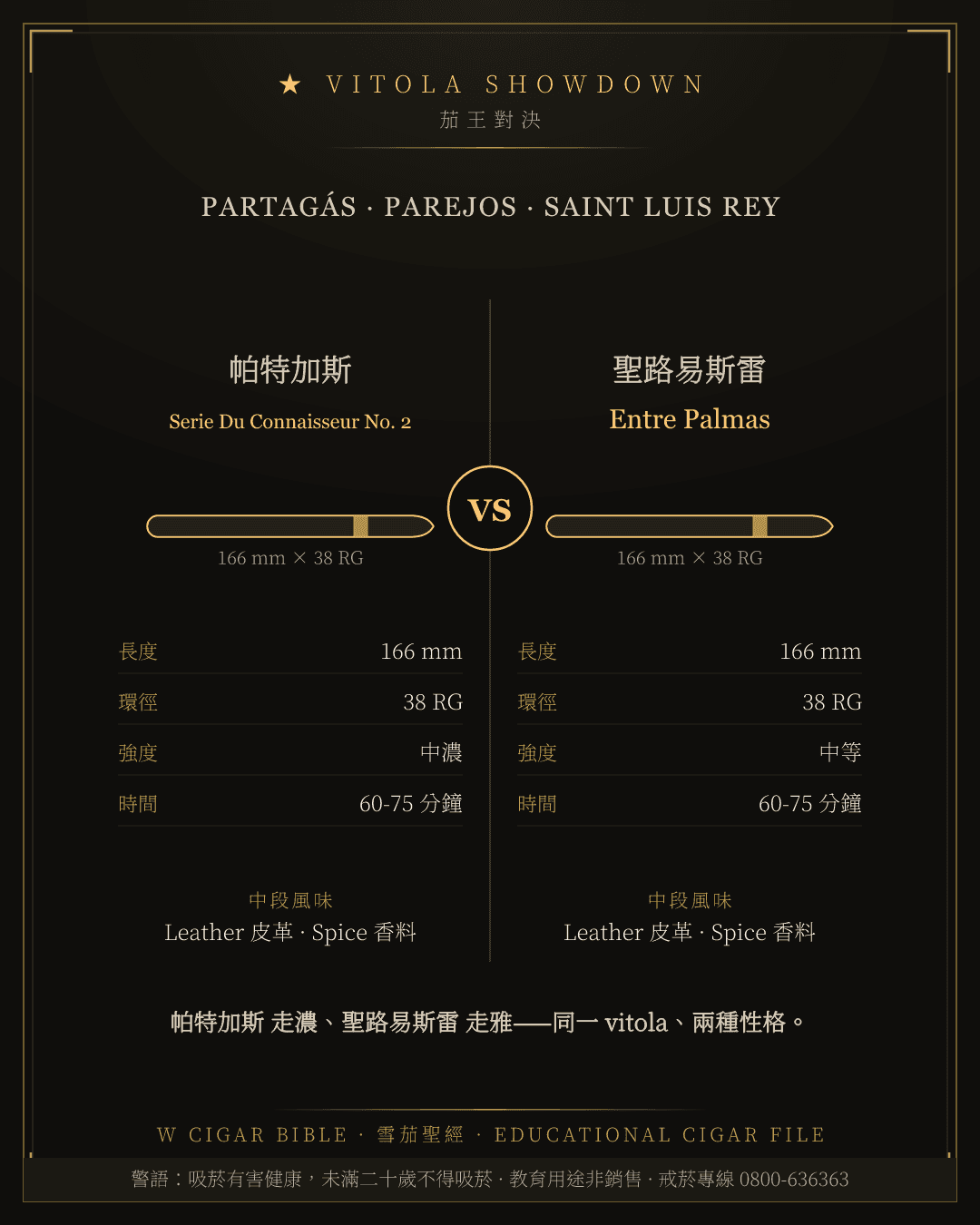
Partagás Serie Du Connaisseur No. 2 vs Saint Luis Rey Entre Palmas
VITOLA SHOWDOWN · Parejos

Partagás Serie Du Connaisseur No. 2 搭配指南 · 帕特加斯
PAIRING GUIDE · 搭配指南
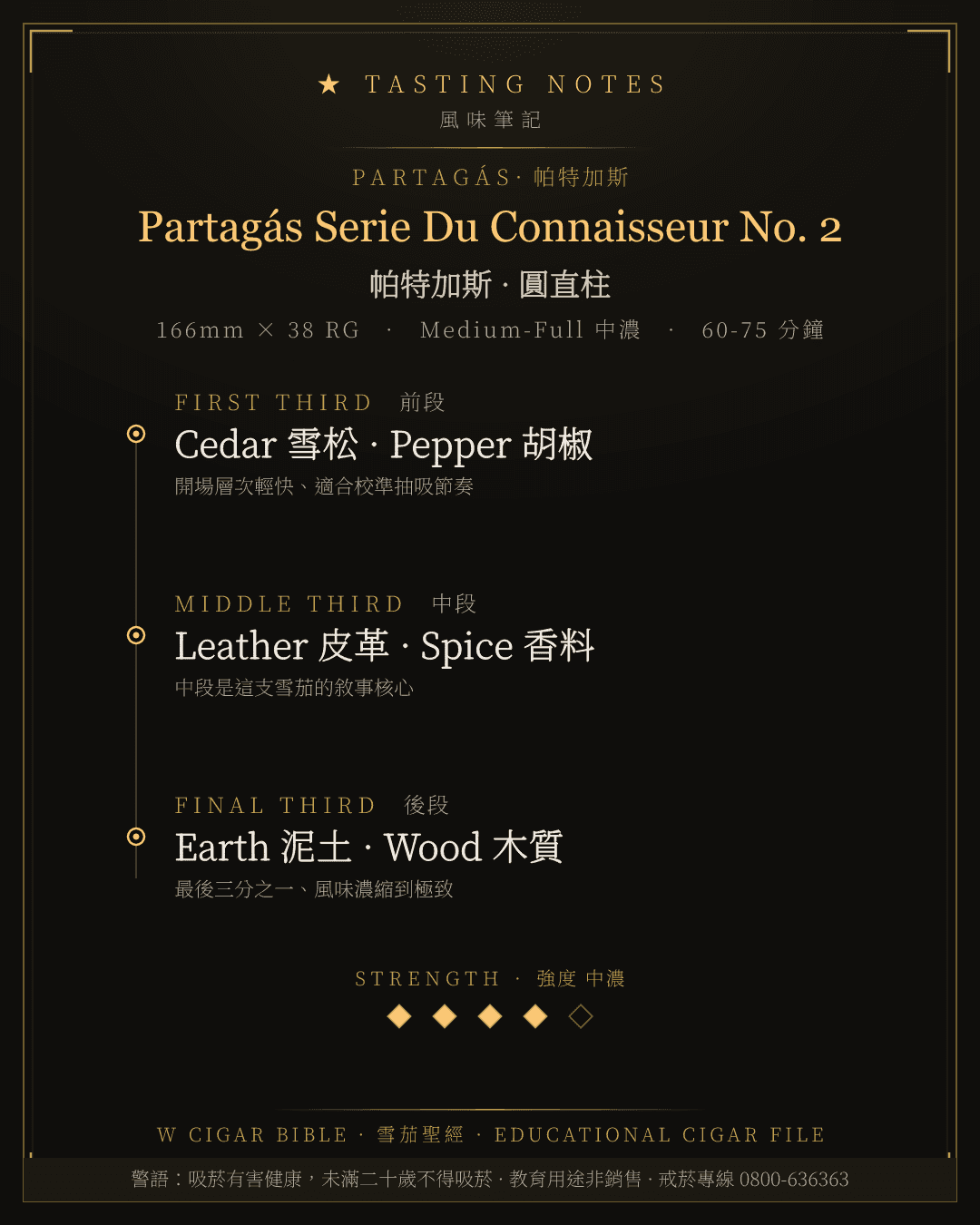
Partagás Serie Du Connaisseur No. 2 風味筆記 · 帕特加斯
TASTING NOTES · 風味筆記
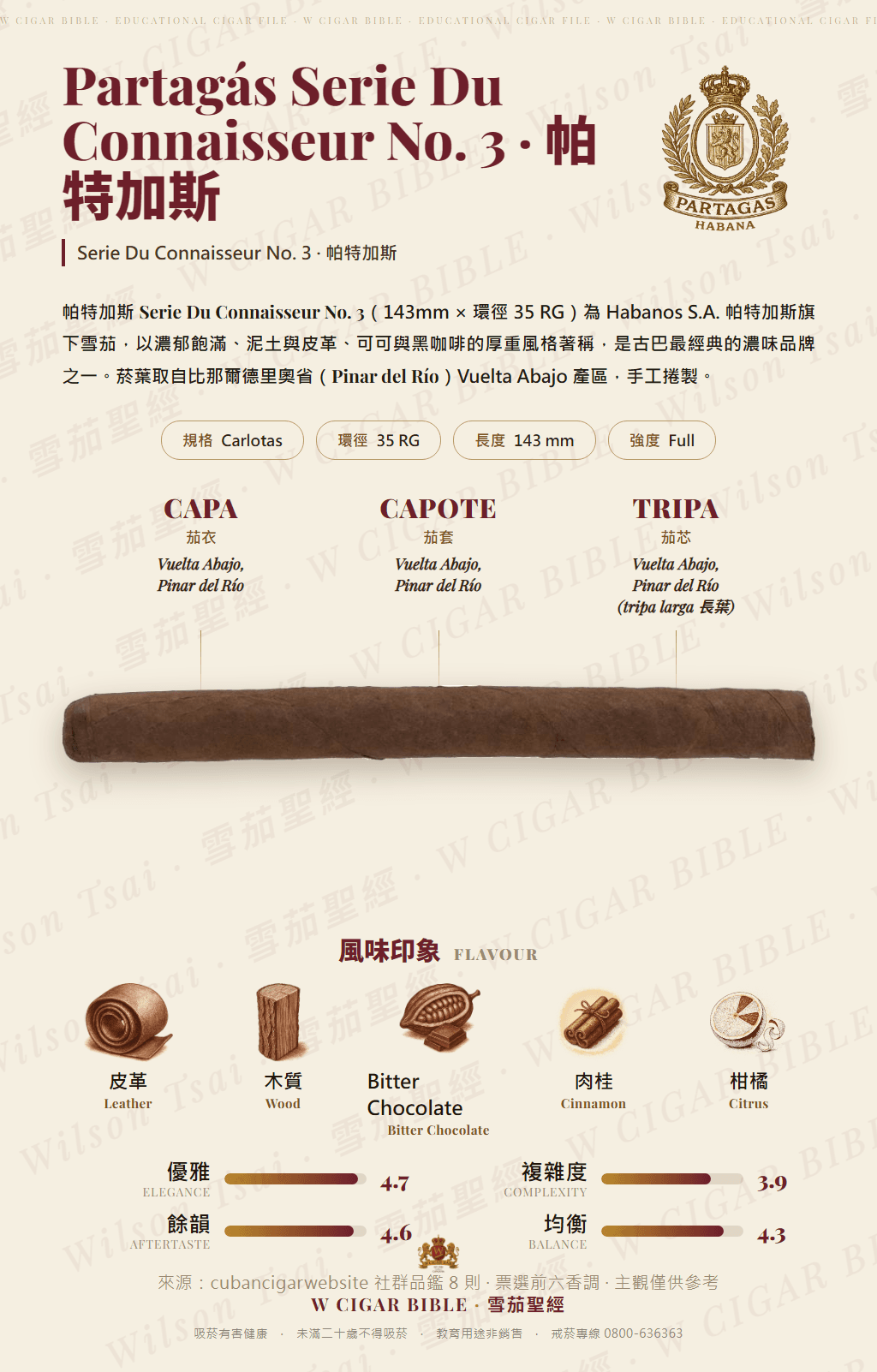
Partagás Serie Du Connaisseur No. 3 · 帕特加斯

Partagás Serie Du Connaisseur No. 3 搭配指南 · 帕特加斯
PAIRING GUIDE · 搭配指南

Partagás Serie Du Connaisseur No. 3 風味筆記 · 帕特加斯
TASTING NOTES · 風味筆記

Partagás Serie du Connaisseur No.1 搭配指南 · 帕特加斯
PAIRING GUIDE · 搭配指南
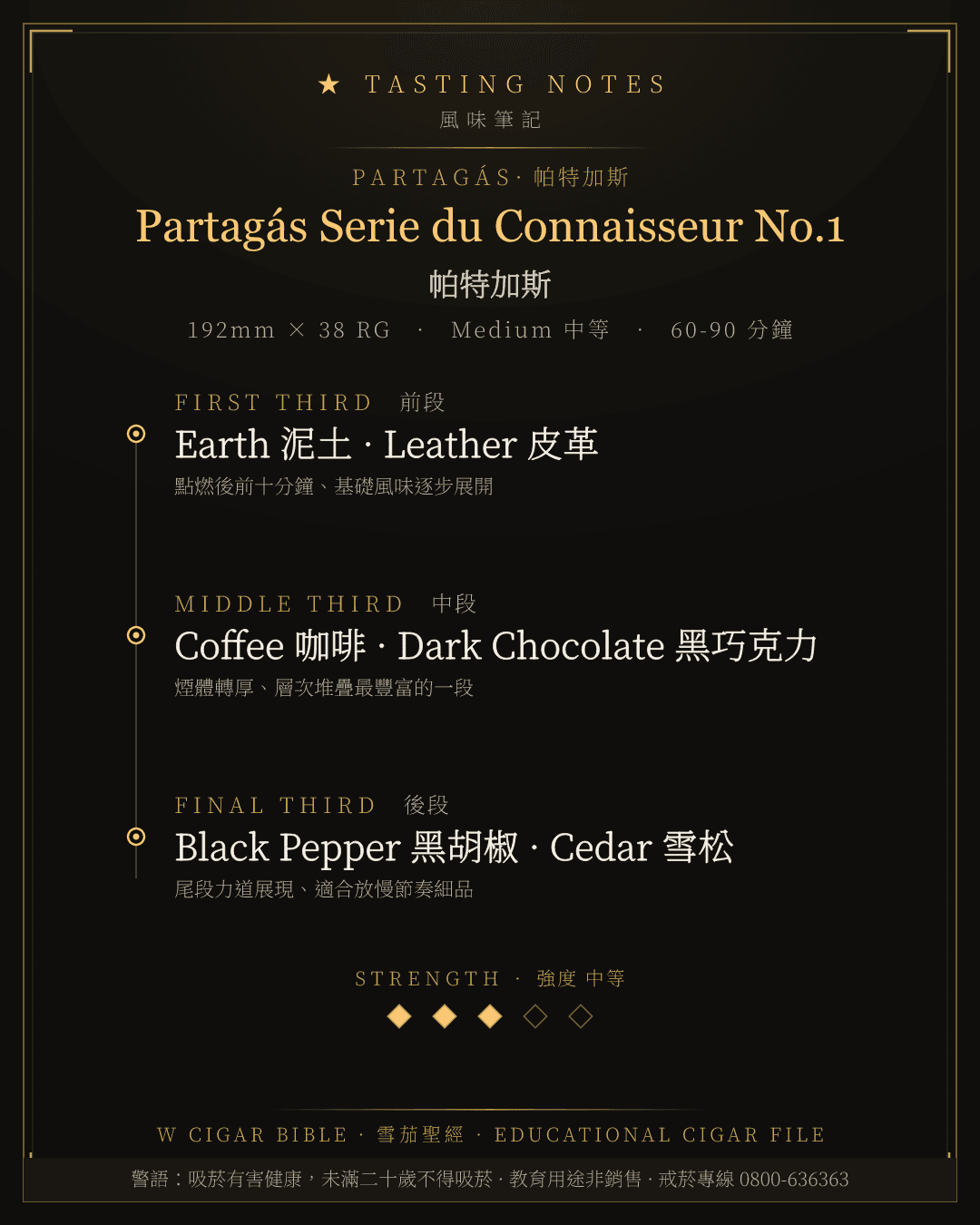
Partagás Serie du Connaisseur No.1 風味筆記 · 帕特加斯
TASTING NOTES · 風味筆記

Partagás Serie du Connaisseur No.2 搭配指南 · 帕特加斯
PAIRING GUIDE · 搭配指南

Partagás Serie du Connaisseur No.2 風味筆記 · 帕特加斯
TASTING NOTES · 風味筆記

Partagás Serie du Connaisseur No.3 搭配指南 · 帕特加斯
PAIRING GUIDE · 搭配指南
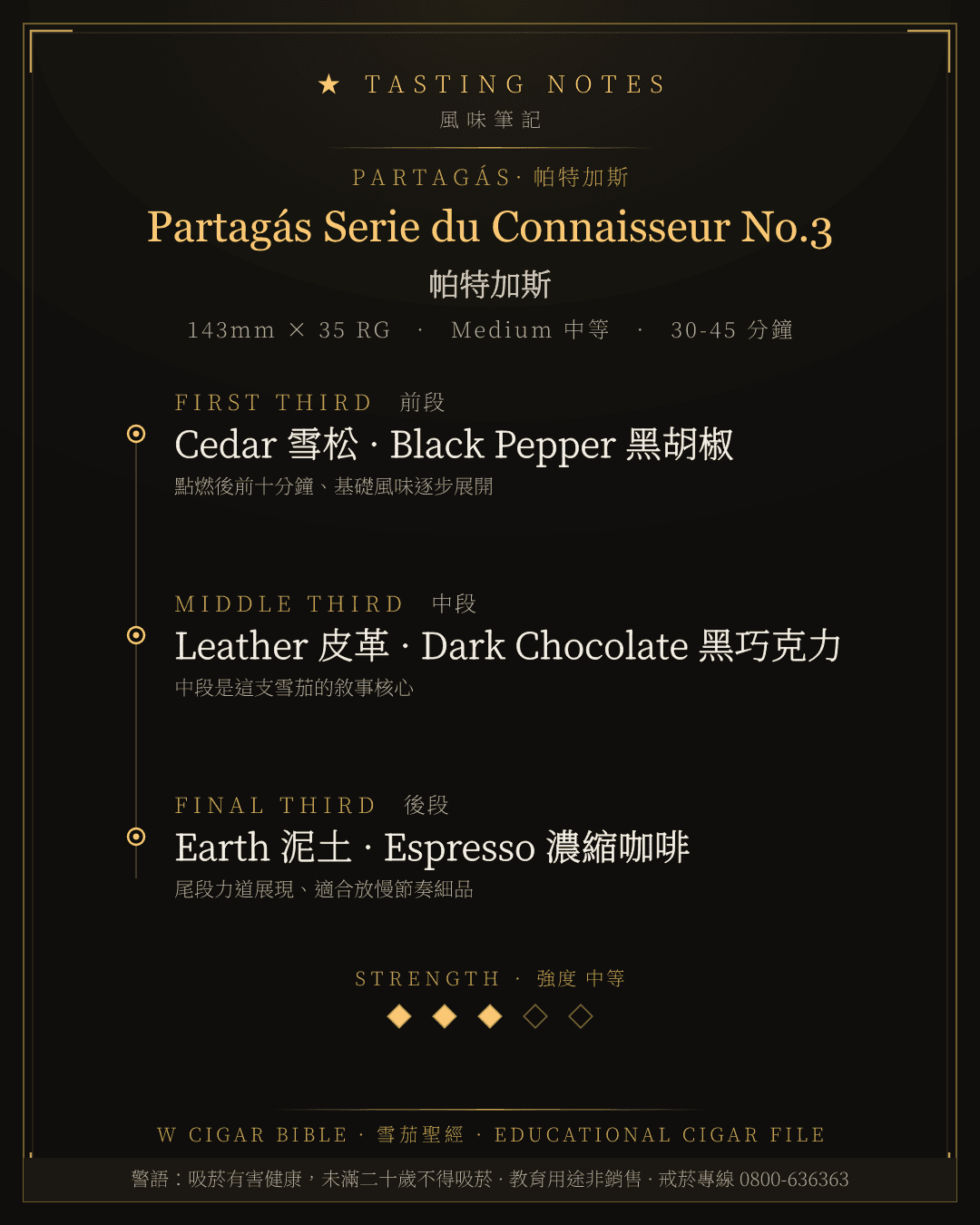
Partagás Serie du Connaisseur No.3 風味筆記 · 帕特加斯
TASTING NOTES · 風味筆記
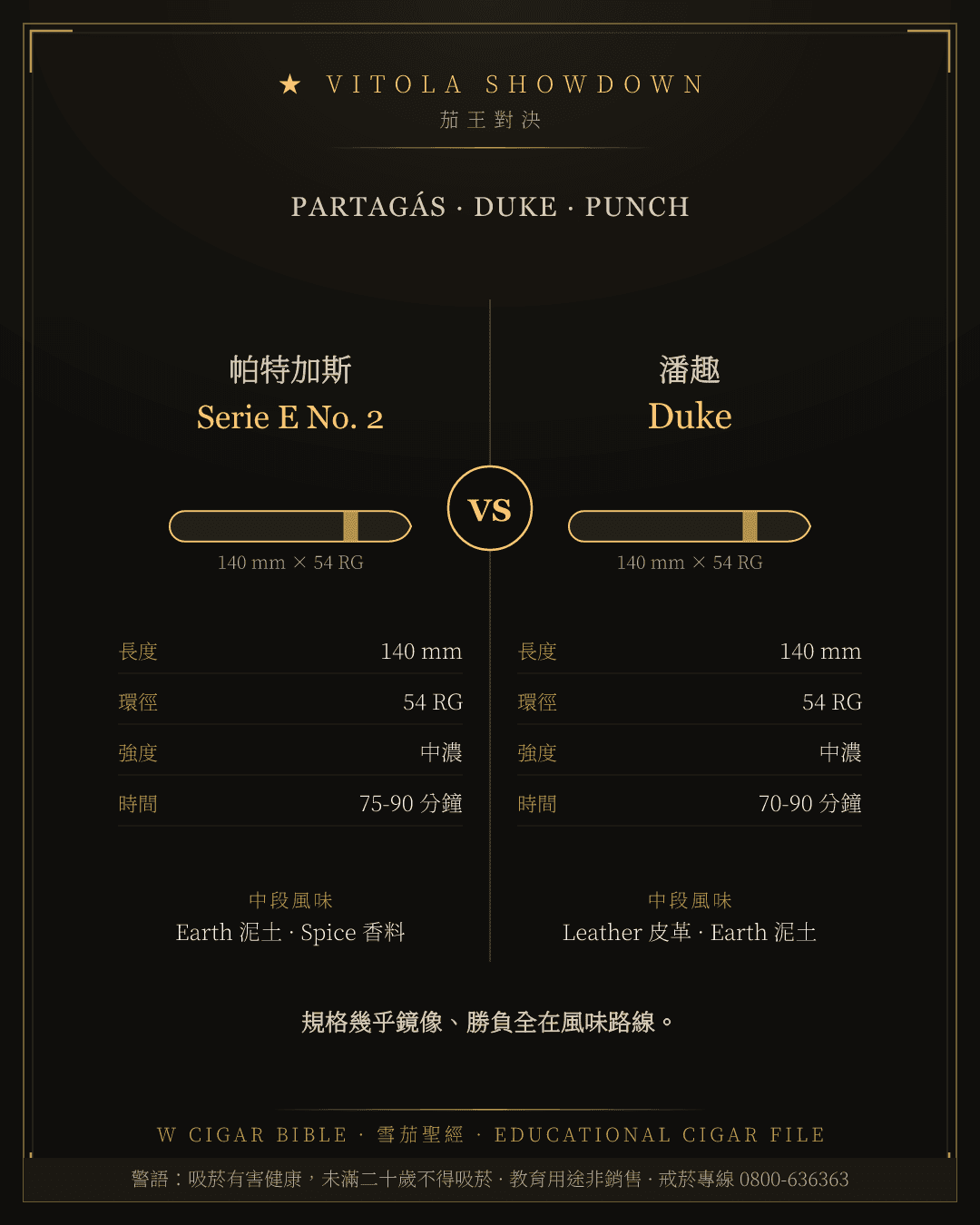
Partagás Serie E No. 2 vs Punch Duke
VITOLA SHOWDOWN · Duke

Partagás Serie E No. 2 搭配指南 · 帕特加斯
PAIRING GUIDE · 搭配指南
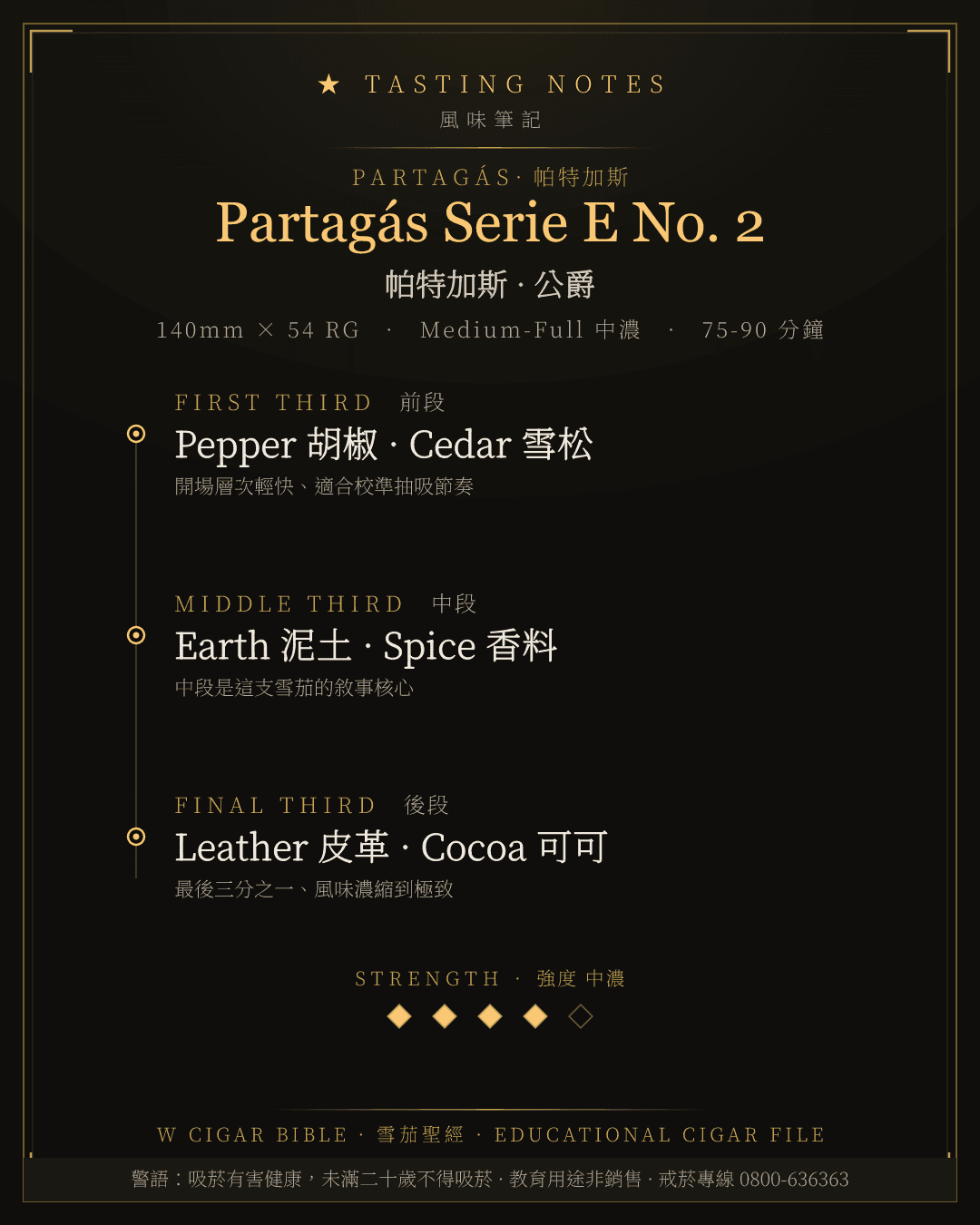
Partagás Serie E No. 2 風味筆記 · 帕特加斯
TASTING NOTES · 風味筆記
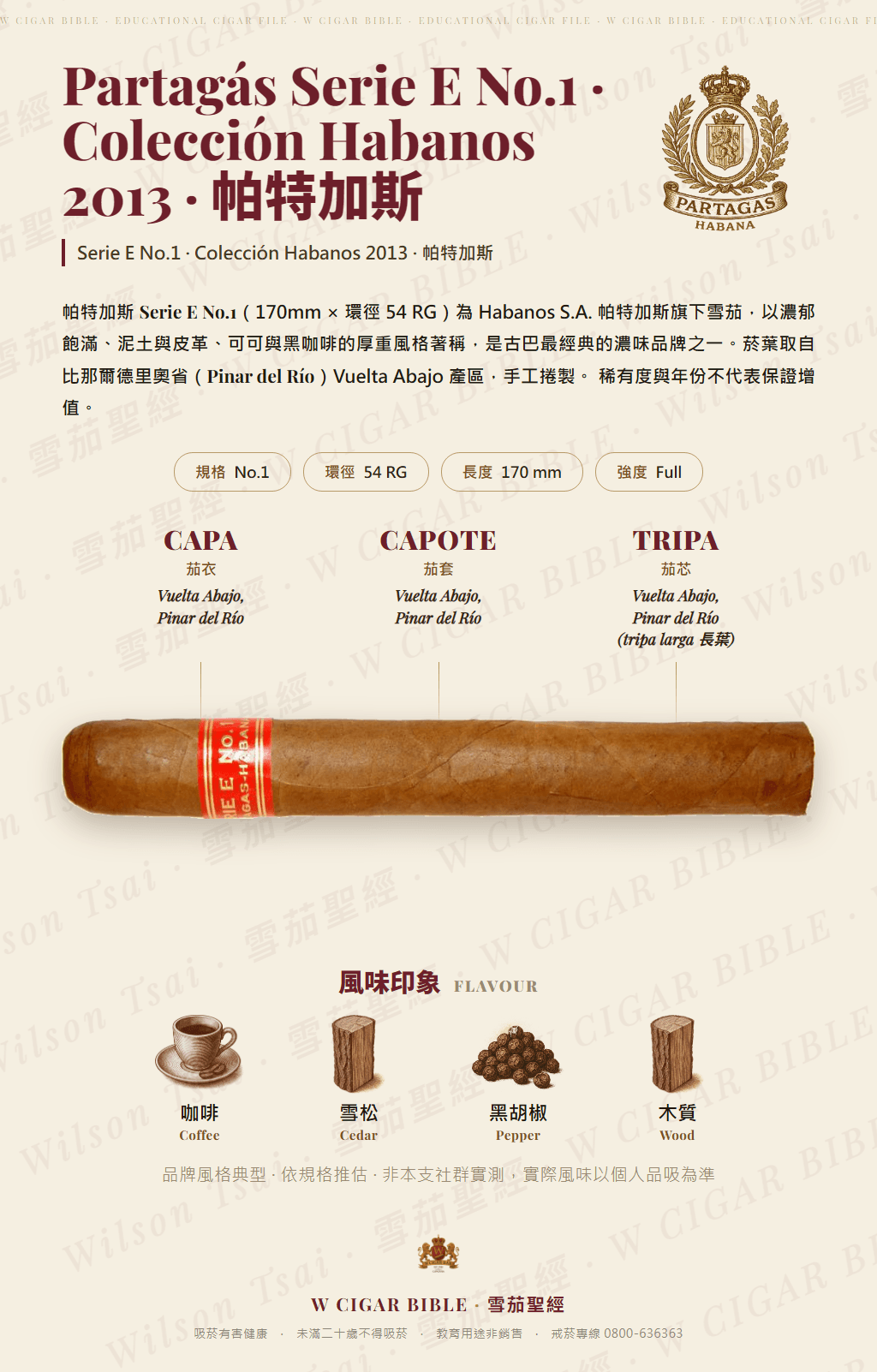
Partagás Serie E No.1 · Colección Habanos 2013 · 帕特加斯
CH 2013 · Colección Habanos 書本盒限量版 · 雪茄檔案
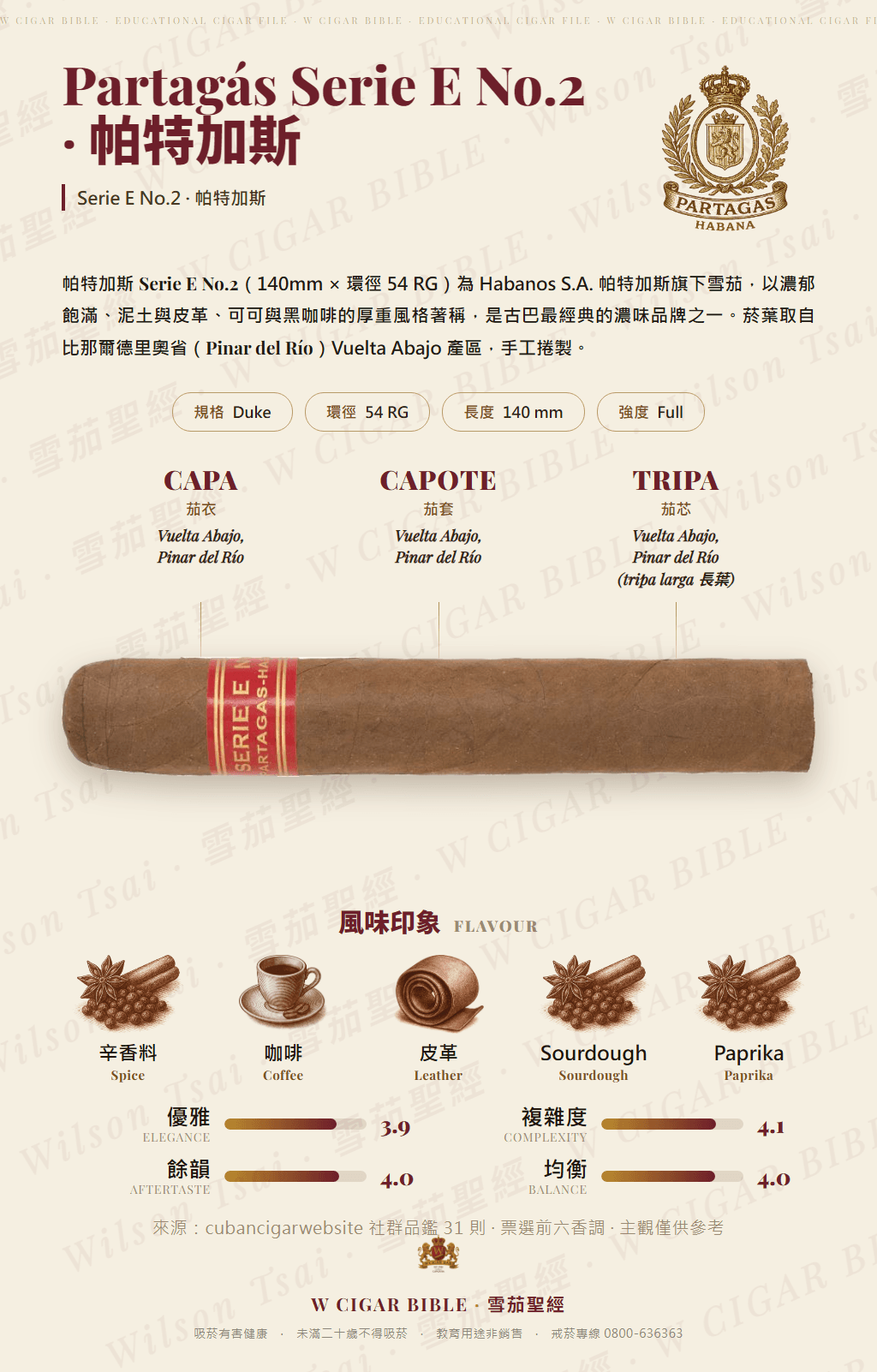
Partagás Serie E No.2 · 帕特加斯
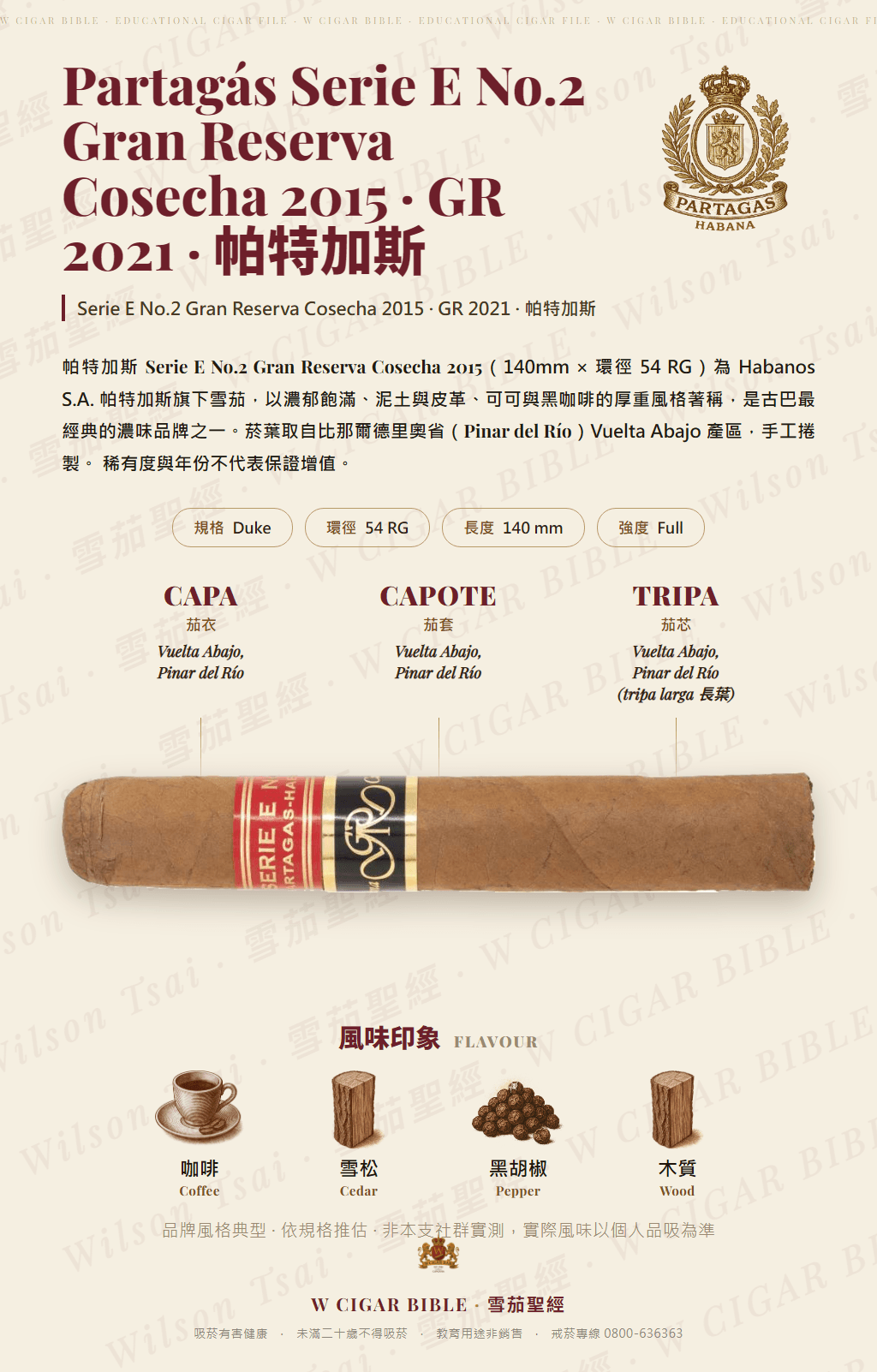
Partagás Serie E No.2 Gran Reserva Cosecha 2015 · GR 2021 · 帕特加斯
GR 2021 · 精品陳年版 Gran Reserva(Serie E No.2/廠規 Duke 54 × 140mm,2021 年公布)· 雪茄檔案

Partagás Serie E No.2 Travel Humidor · 帕特加斯
旅遊零售專屬皮革旅行木盒 2015(Duke 廠規 54×140mm、5,000 只編號盒/每盒 10 支)· 雪茄檔案

Partagás Serie No.1 · EL 2017 · 帕特加斯
EL 2017 · 限量年度版 Edición Limitada · 雪茄檔案

Partagás Serie P No. 1 搭配指南 · 帕特加斯
PAIRING GUIDE · 搭配指南
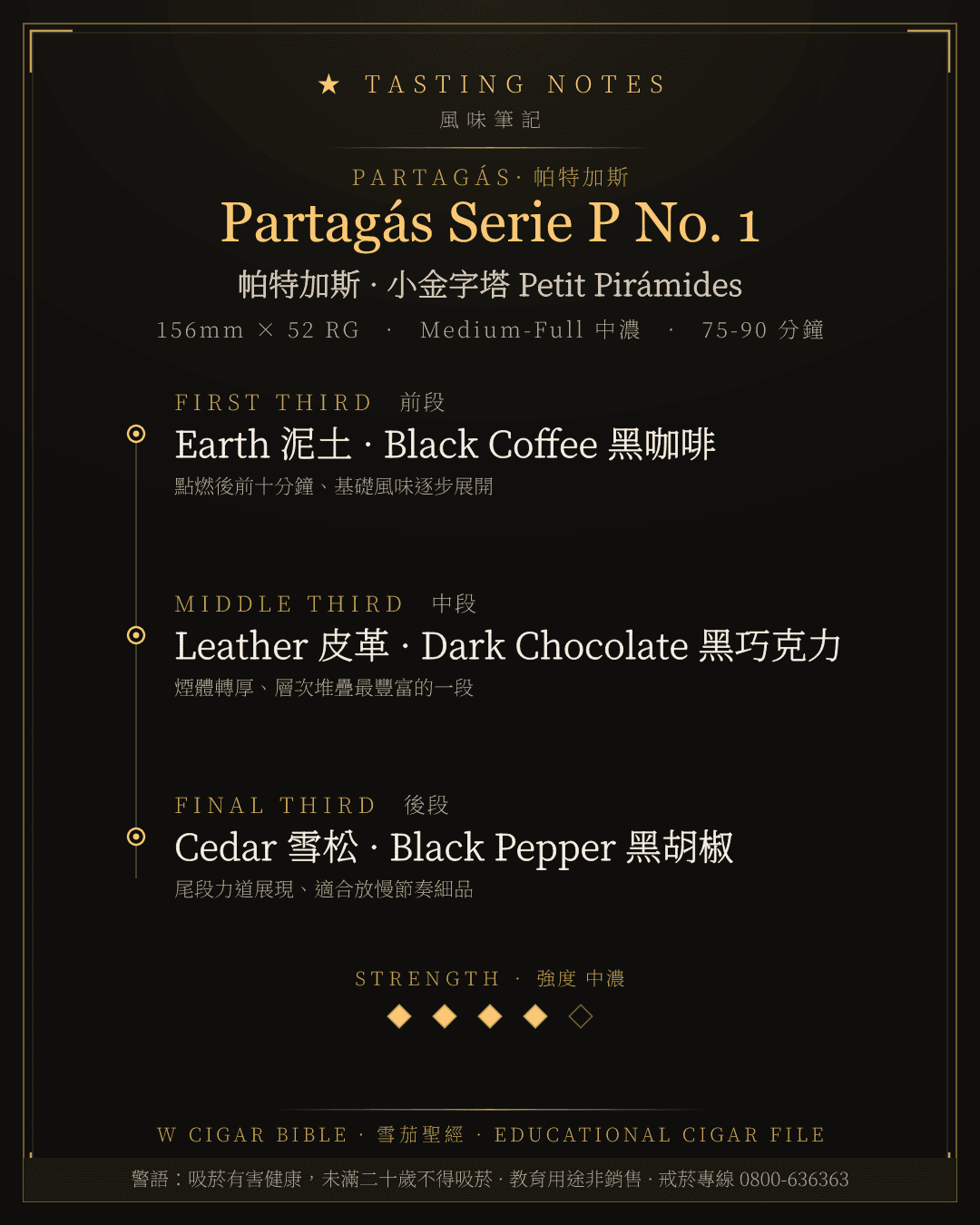
Partagás Serie P No. 1 風味筆記 · 帕特加斯
TASTING NOTES · 風味筆記

Partagás Serie P No. 2 搭配指南 · 帕特加斯
PAIRING GUIDE · 搭配指南
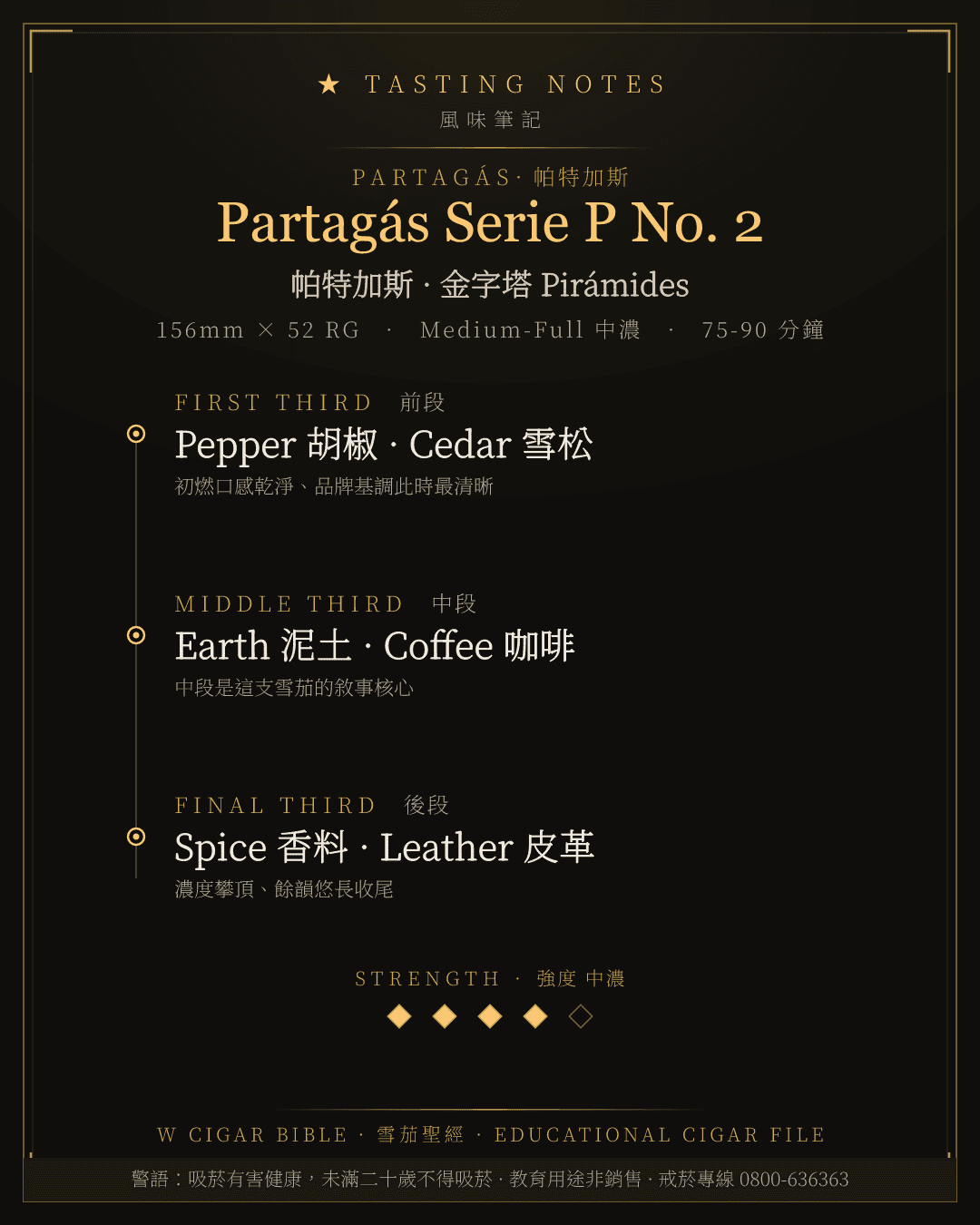
Partagás Serie P No. 2 風味筆記 · 帕特加斯
TASTING NOTES · 風味筆記
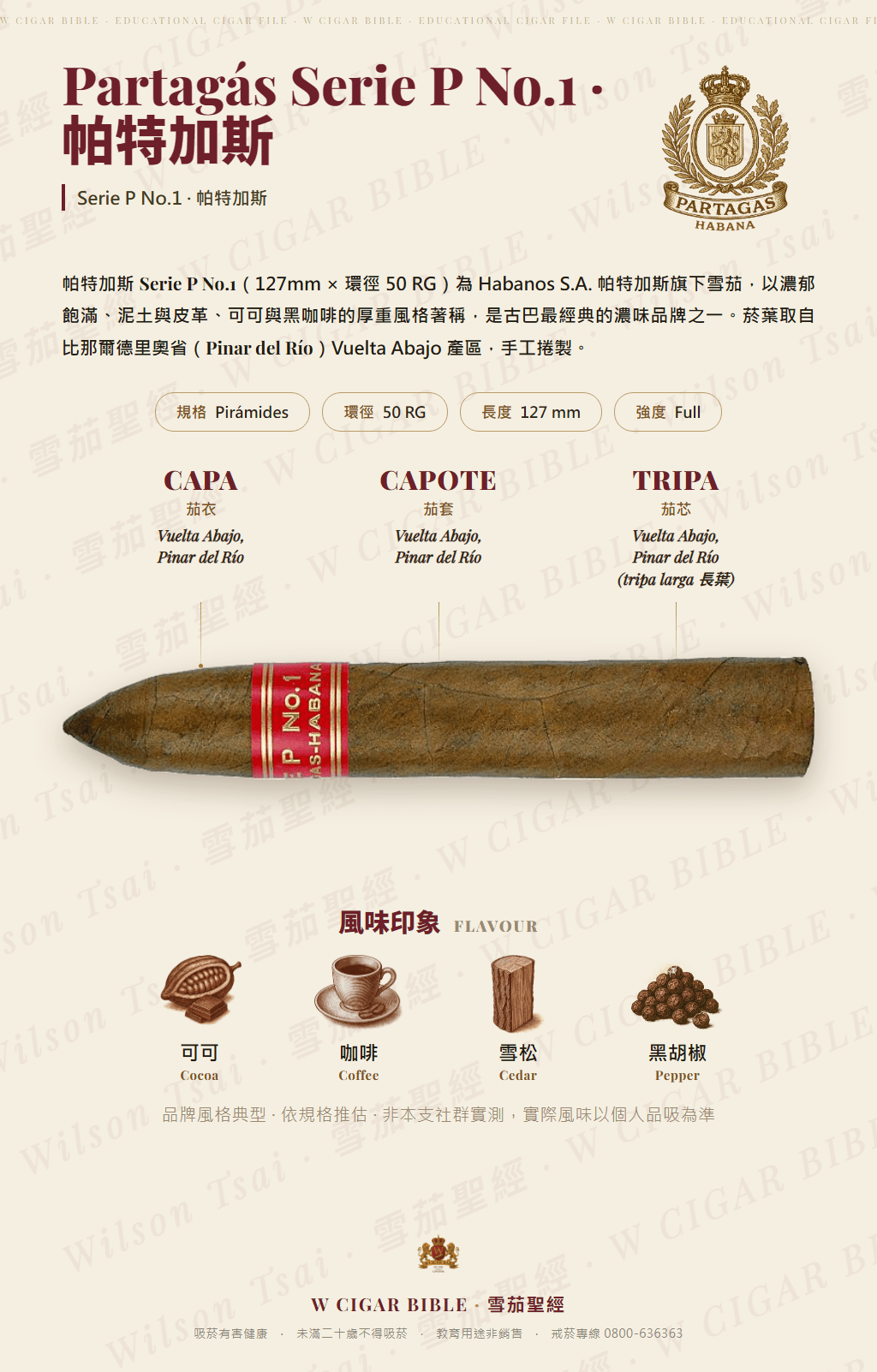
Partagás Serie P No.1 · 帕特加斯
瓷罐特別版(Petit Pirámides 127mm × 環徑 50 RG,2009 年發表/2010 年問世,非常規產線)· 雪茄檔案
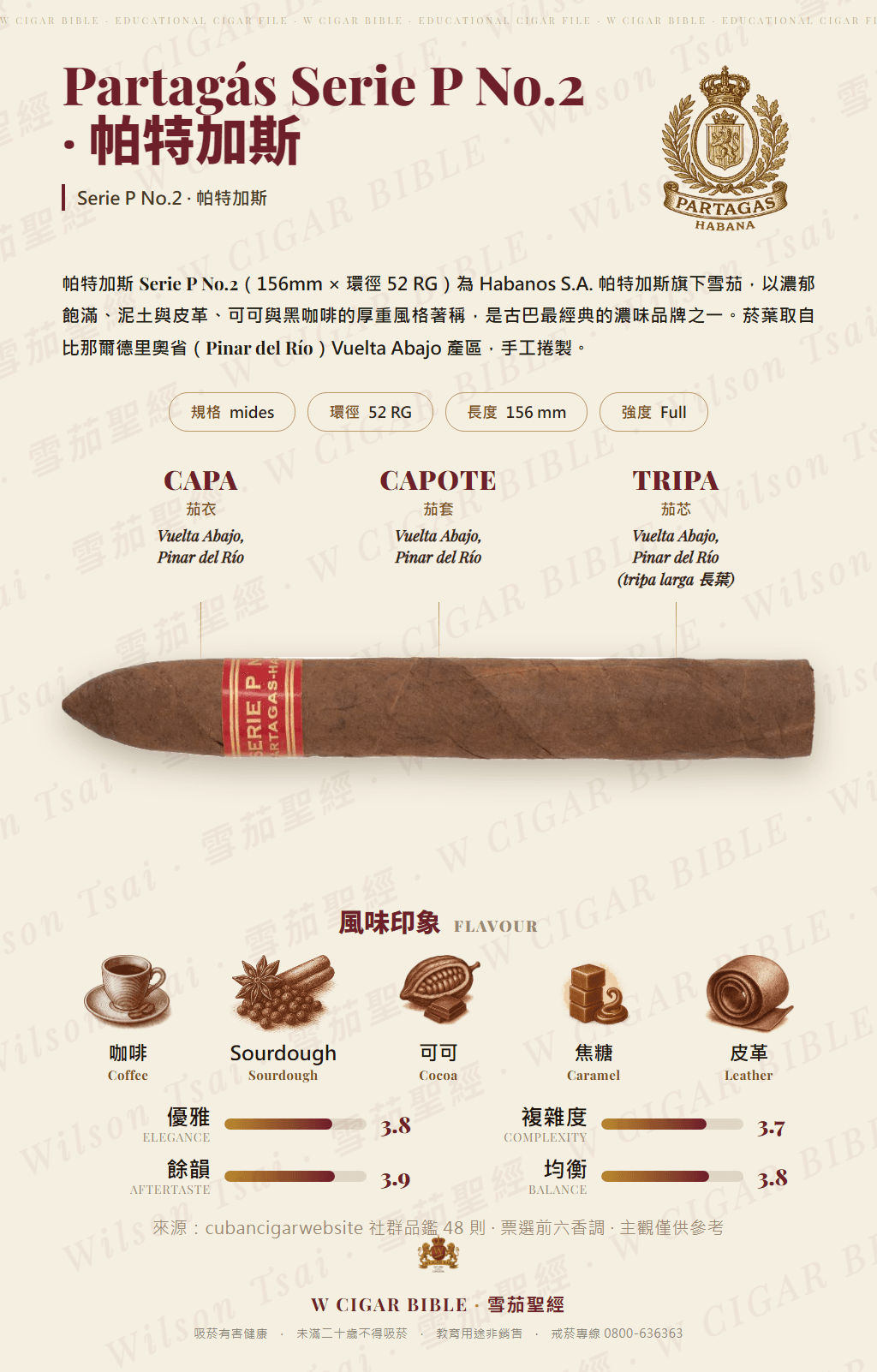
Partagás Serie P No.2 · 帕特加斯
標準生產款(Pirámides 156mm × 環徑 52 RG,2005 年上市、在產)· 雪茄檔案
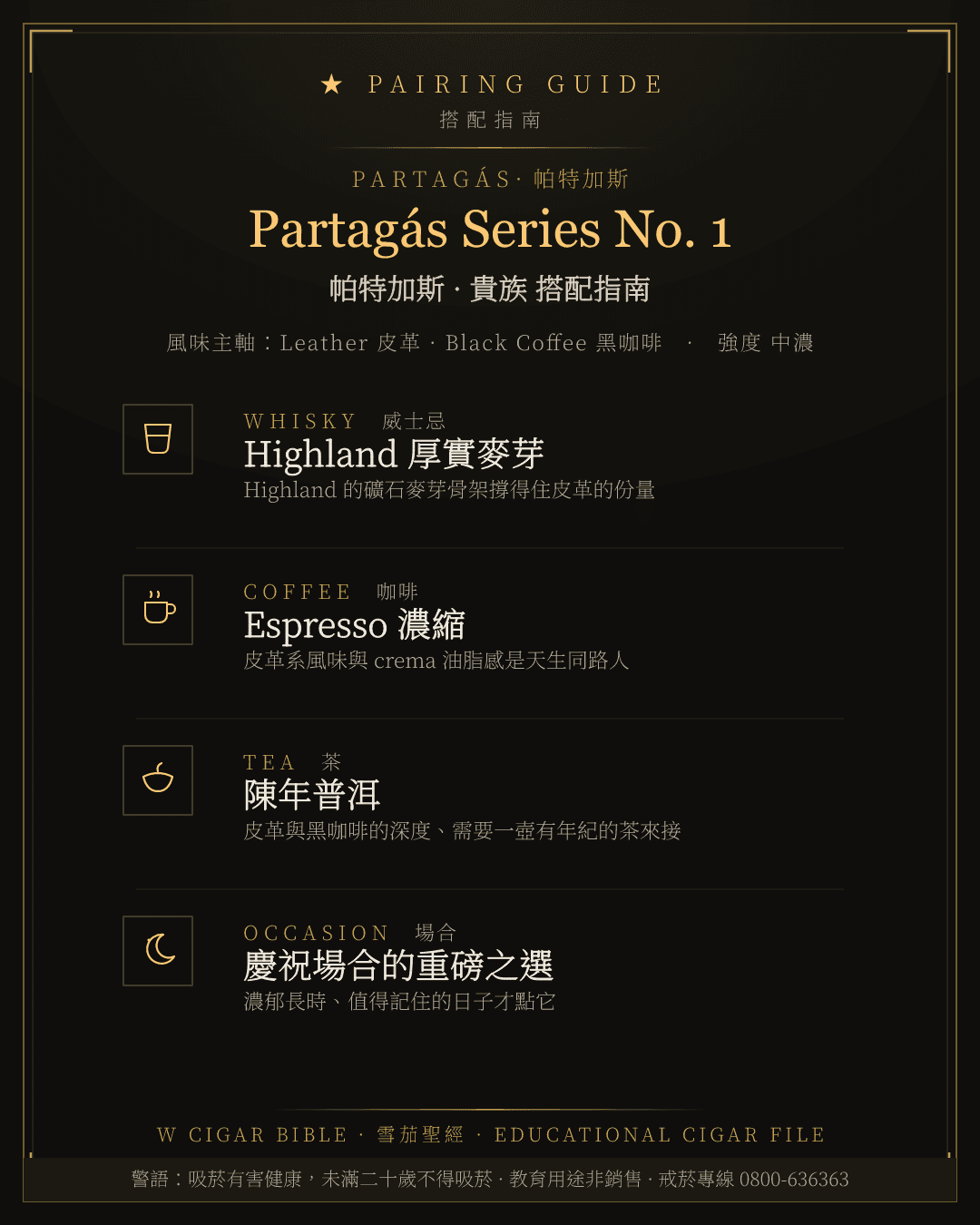
Partagás Series No. 1 搭配指南 · 帕特加斯
PAIRING GUIDE · 搭配指南

Partagás Series No. 1 風味筆記 · 帕特加斯
TASTING NOTES · 風味筆記
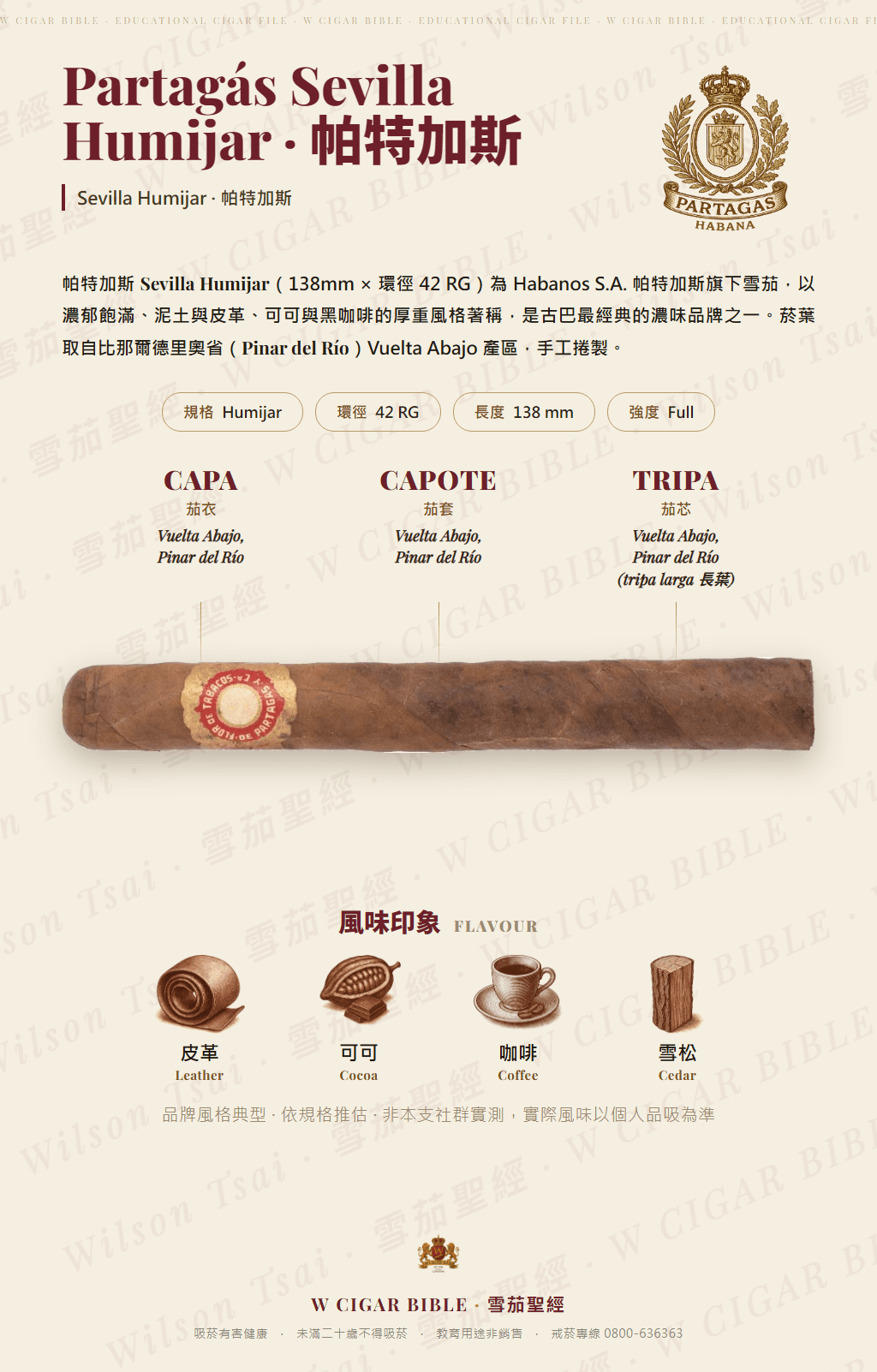
Partagás Sevilla Humijar · 帕特加斯
Serie Sevilla 陶罐(humijar)特別版 · 西班牙市場專屬、2019 年、2,000 只編號陶罐 · 雪茄檔案
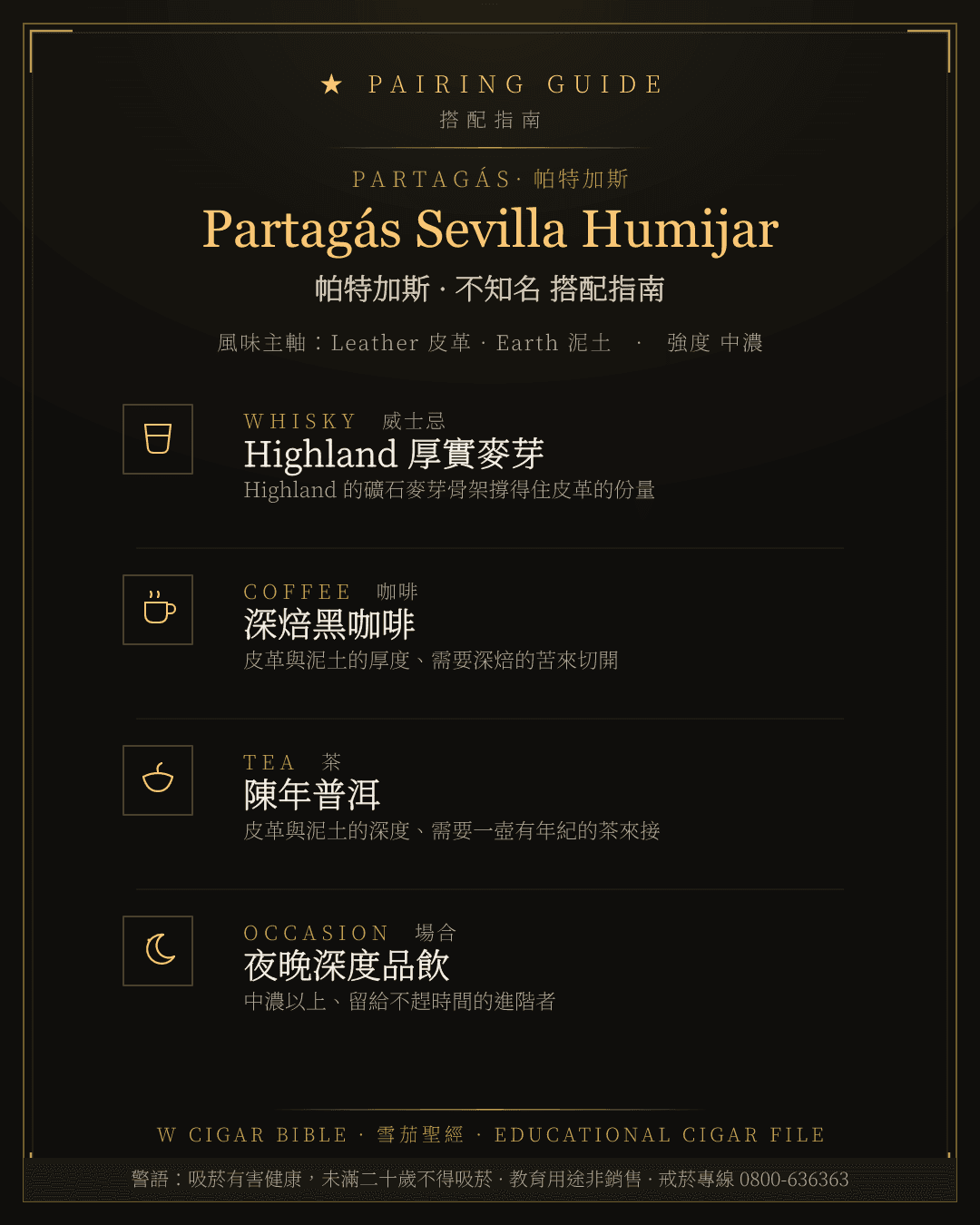
Partagás Sevilla Humijar 搭配指南 · 帕特加斯
PAIRING GUIDE · 搭配指南
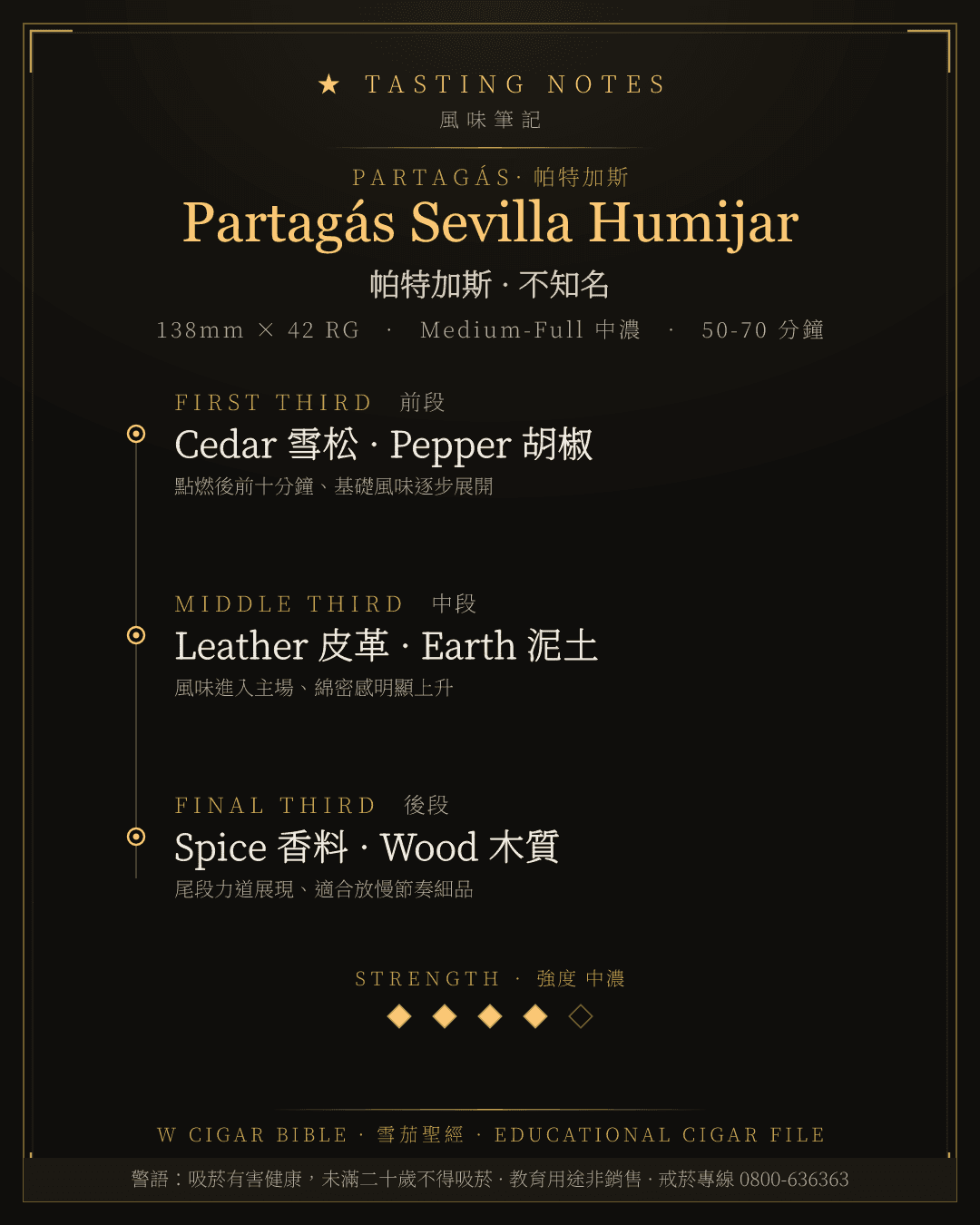
Partagás Sevilla Humijar 風味筆記 · 帕特加斯
TASTING NOTES · 風味筆記

Partagás Shorts · 帕特加斯
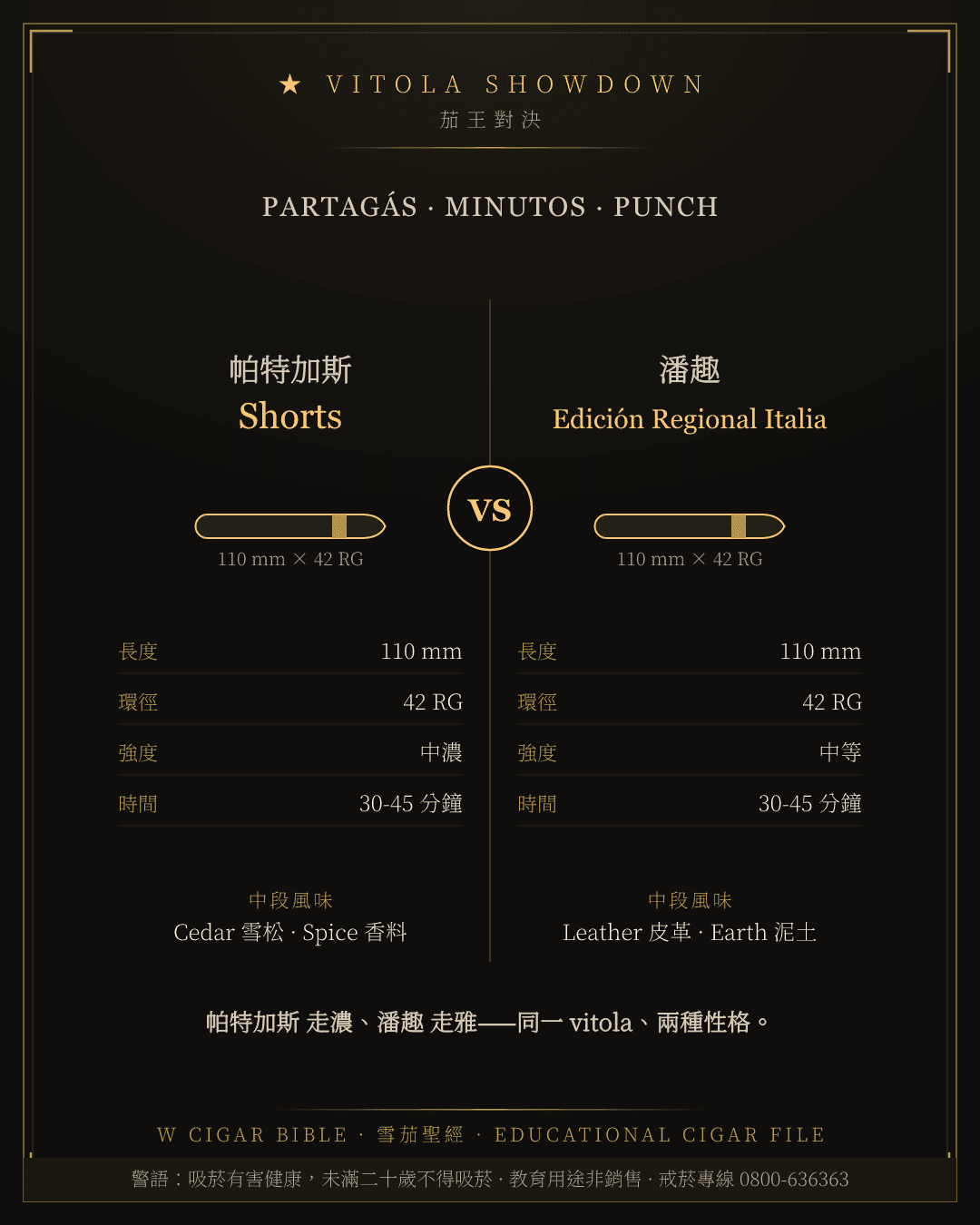
Partagás Shorts vs Punch Edición Regional Italia
VITOLA SHOWDOWN · Minutos
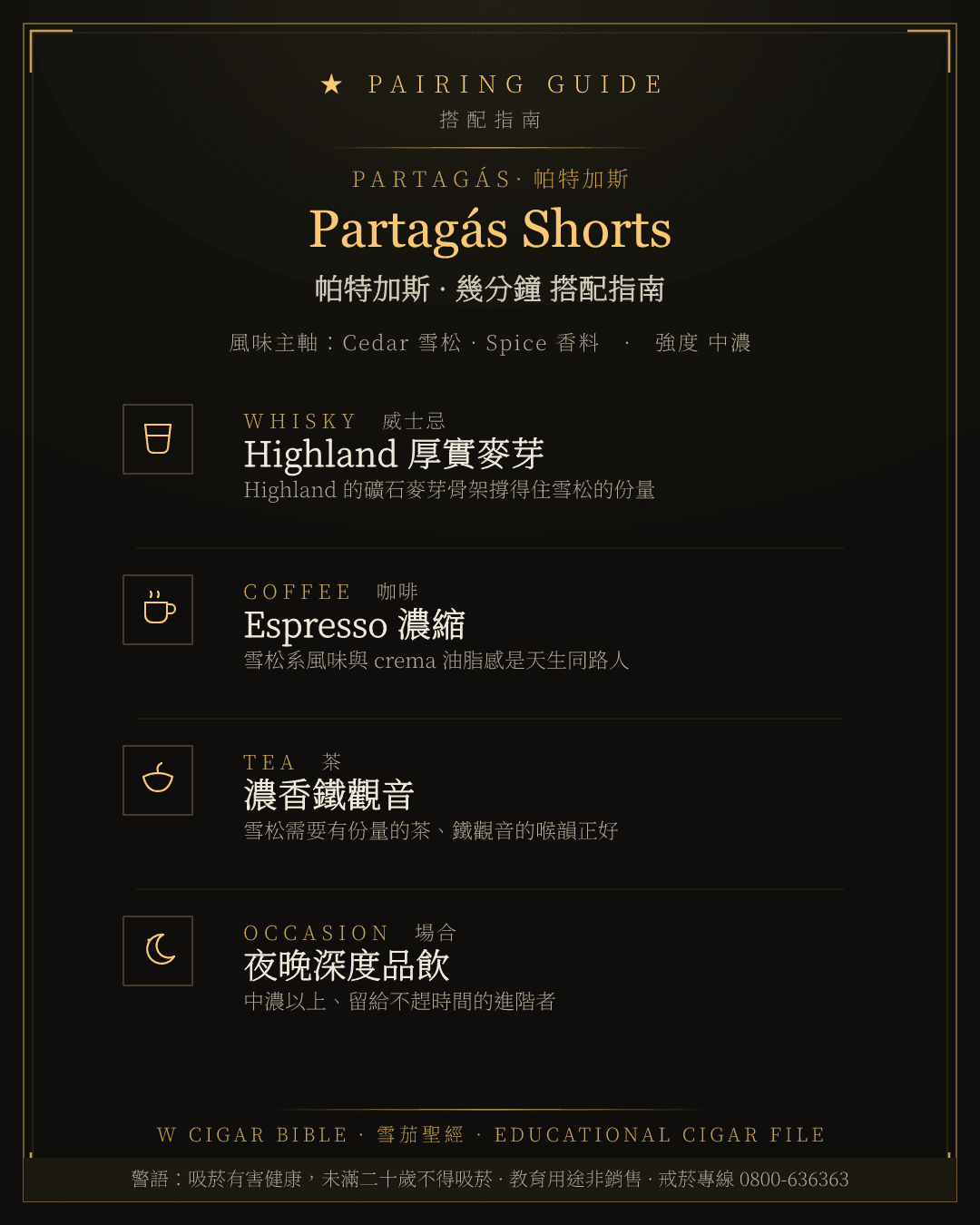
Partagás Shorts 搭配指南 · 帕特加斯
PAIRING GUIDE · 搭配指南
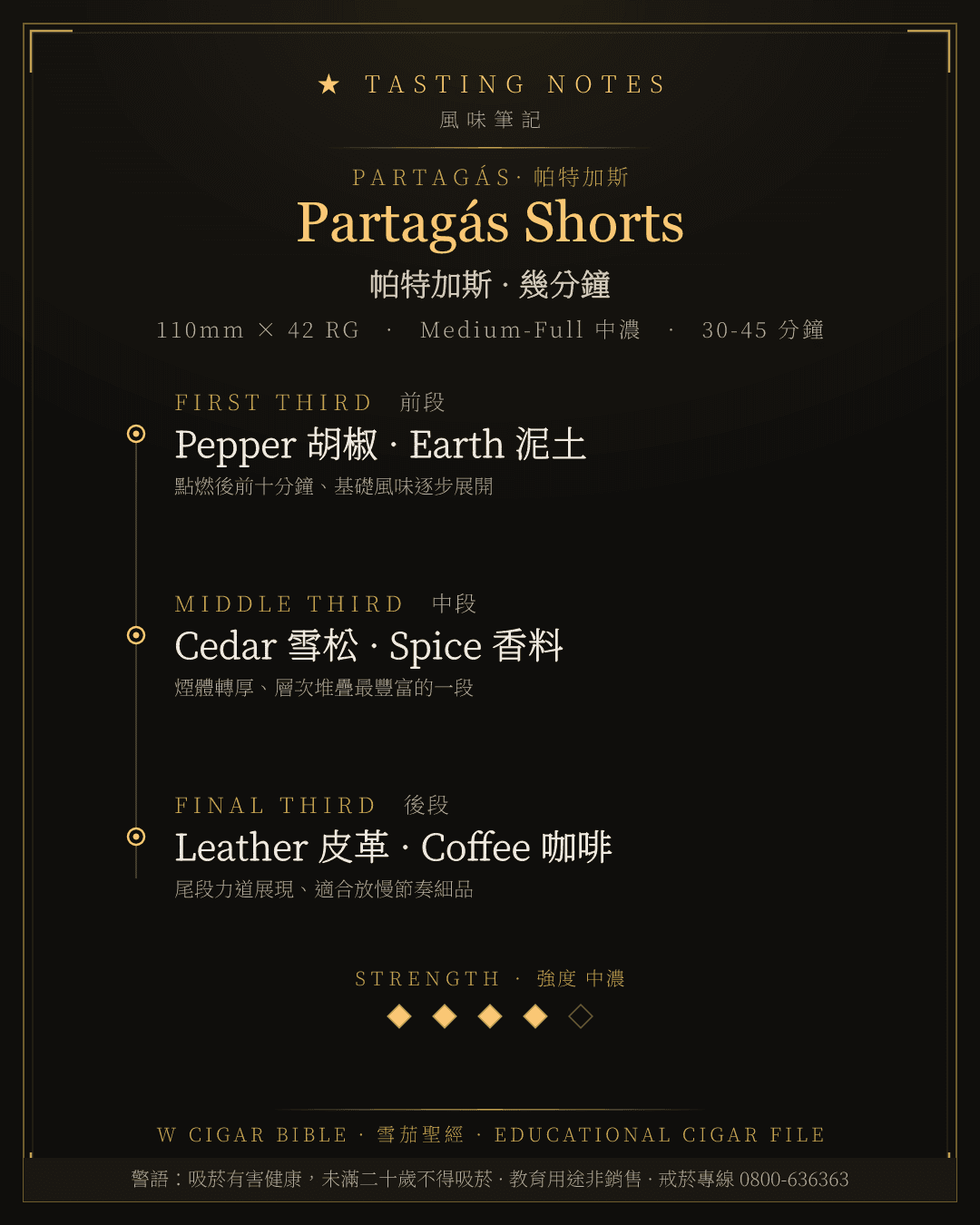
Partagás Shorts 風味筆記 · 帕特加斯
TASTING NOTES · 風味筆記
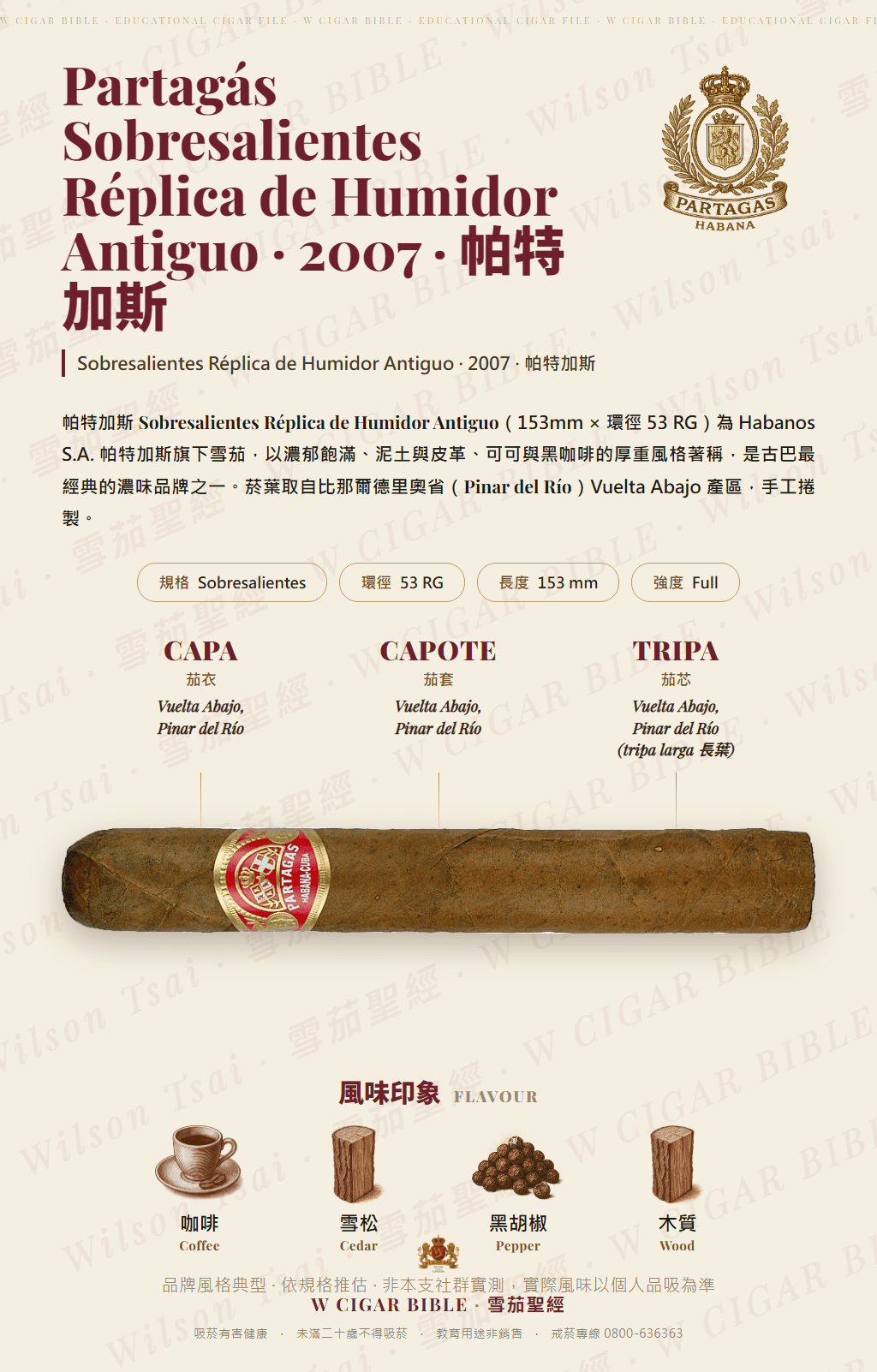
Partagás Sobresalientes Réplica de Humidor Antiguo · 2007 · 帕特加斯
2007 仿古雪茄櫃複刻版 Réplica de Humidor Antiguo(Sobresalientes 環徑53×153mm · 全球 200 座、每座 50 支)· 雪茄檔案
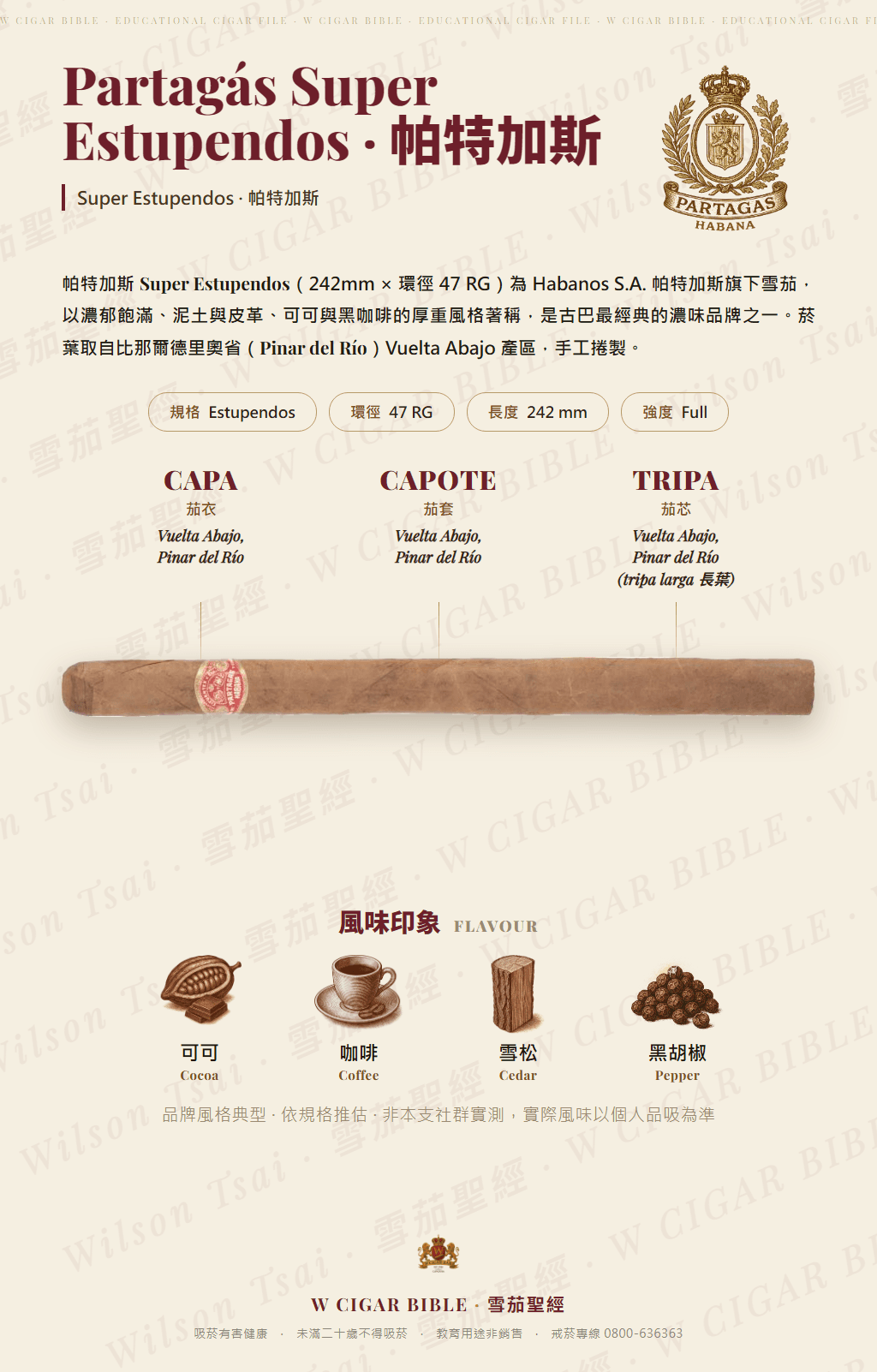
Partagás Super Estupendos · 帕特加斯
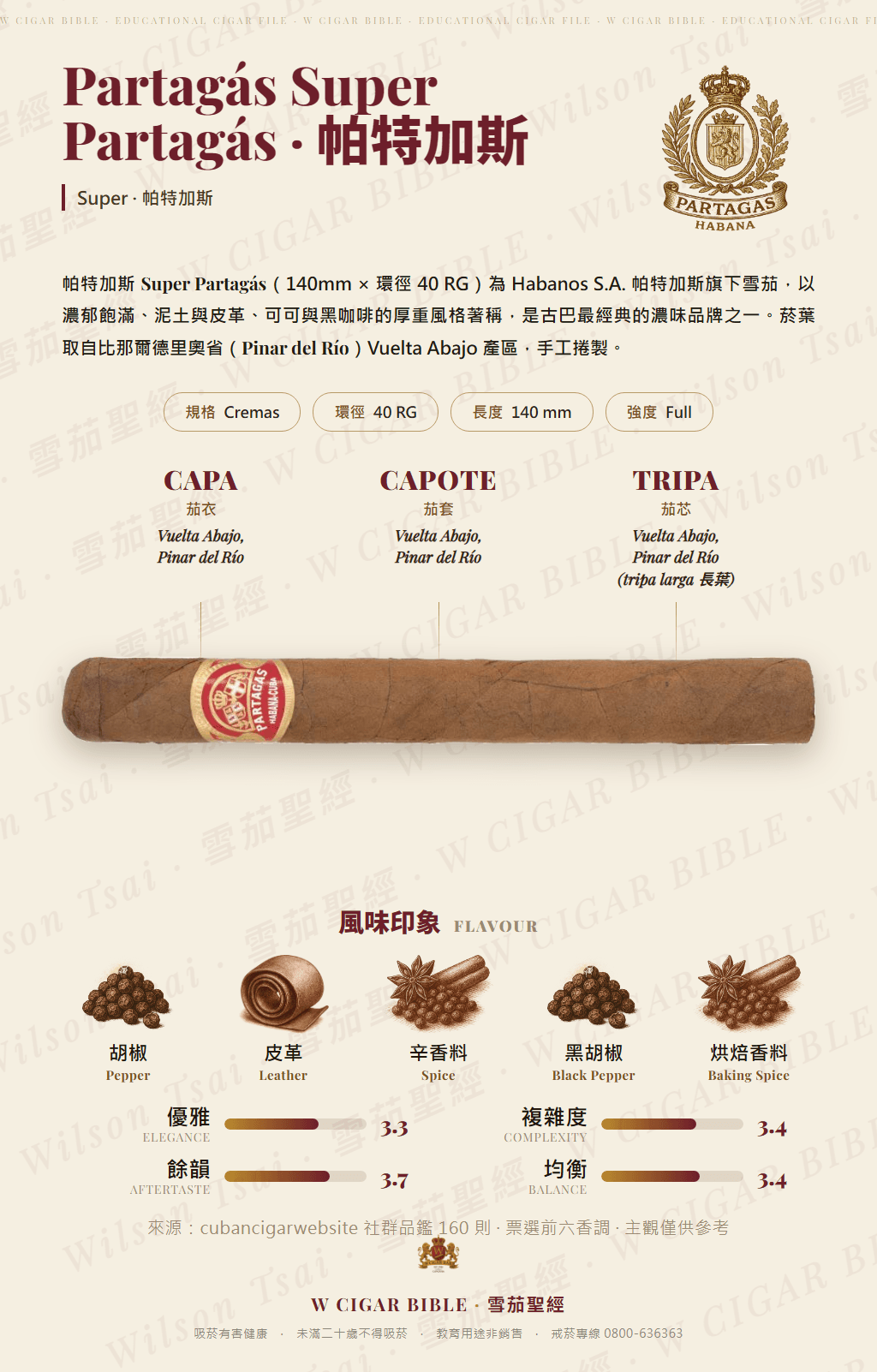
Partagás Super Partagás · 帕特加斯
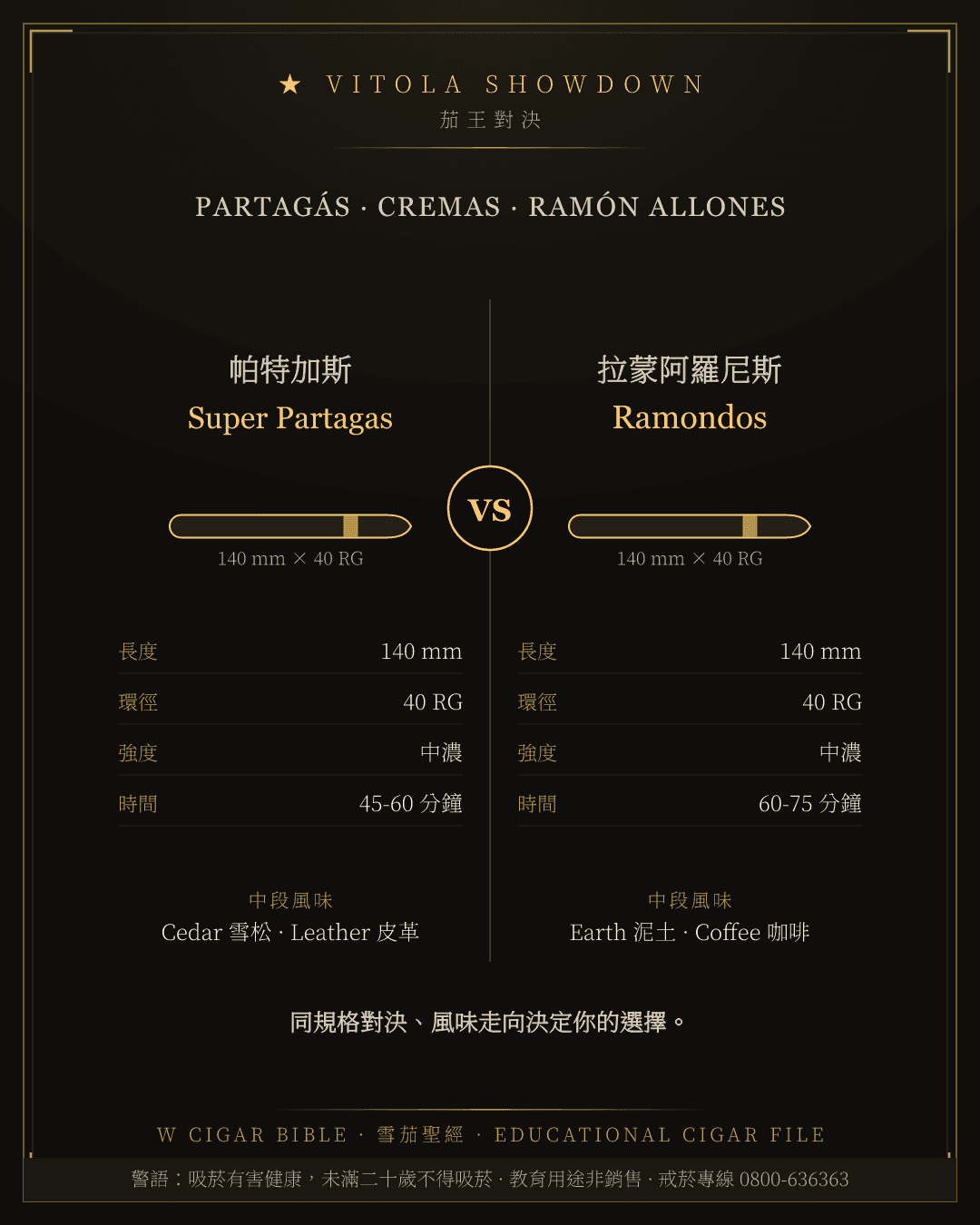
Partagás Super Partagas vs Ramón Allones Ramondos
VITOLA SHOWDOWN · Cremas
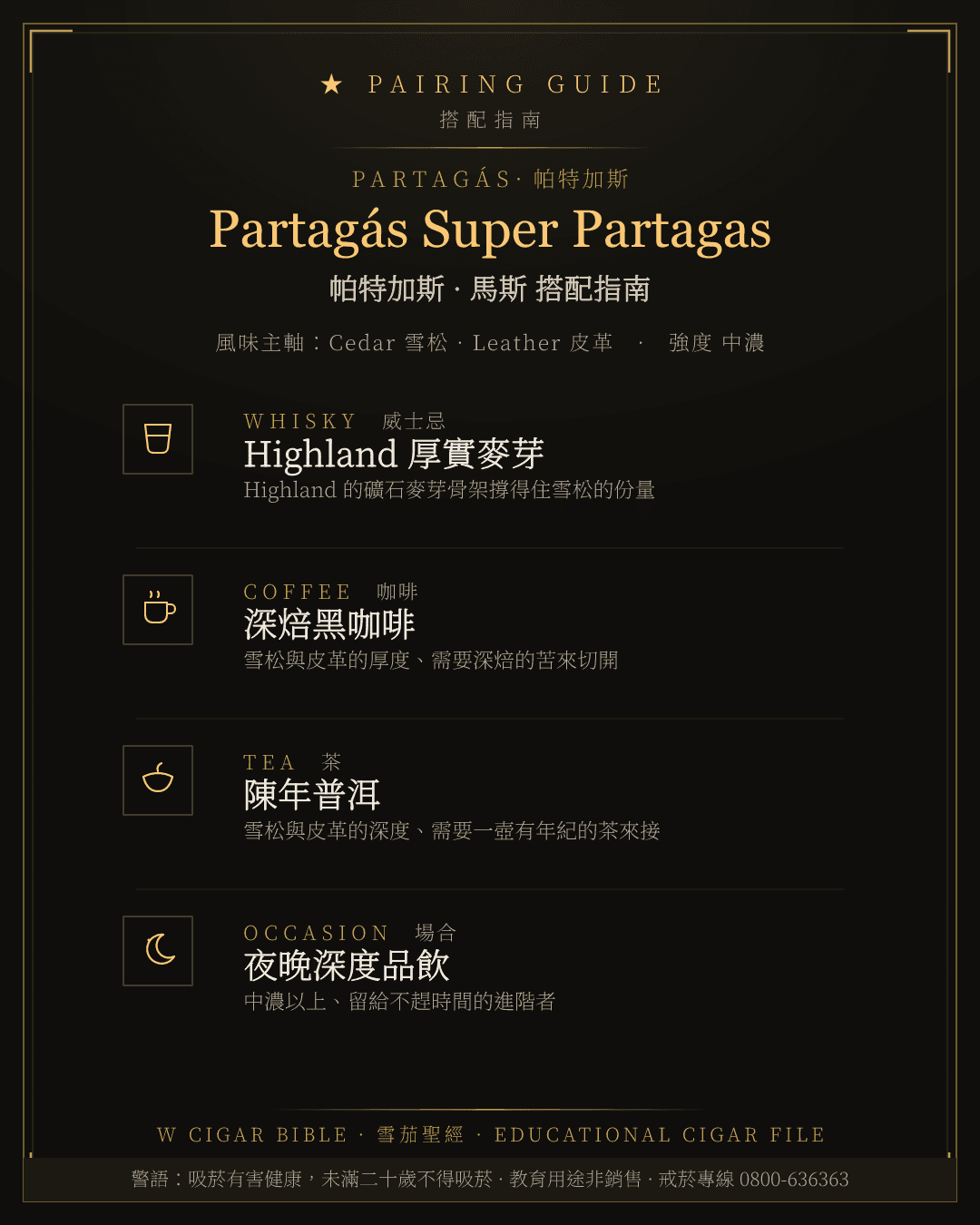
Partagás Super Partagas 搭配指南 · 帕特加斯
PAIRING GUIDE · 搭配指南
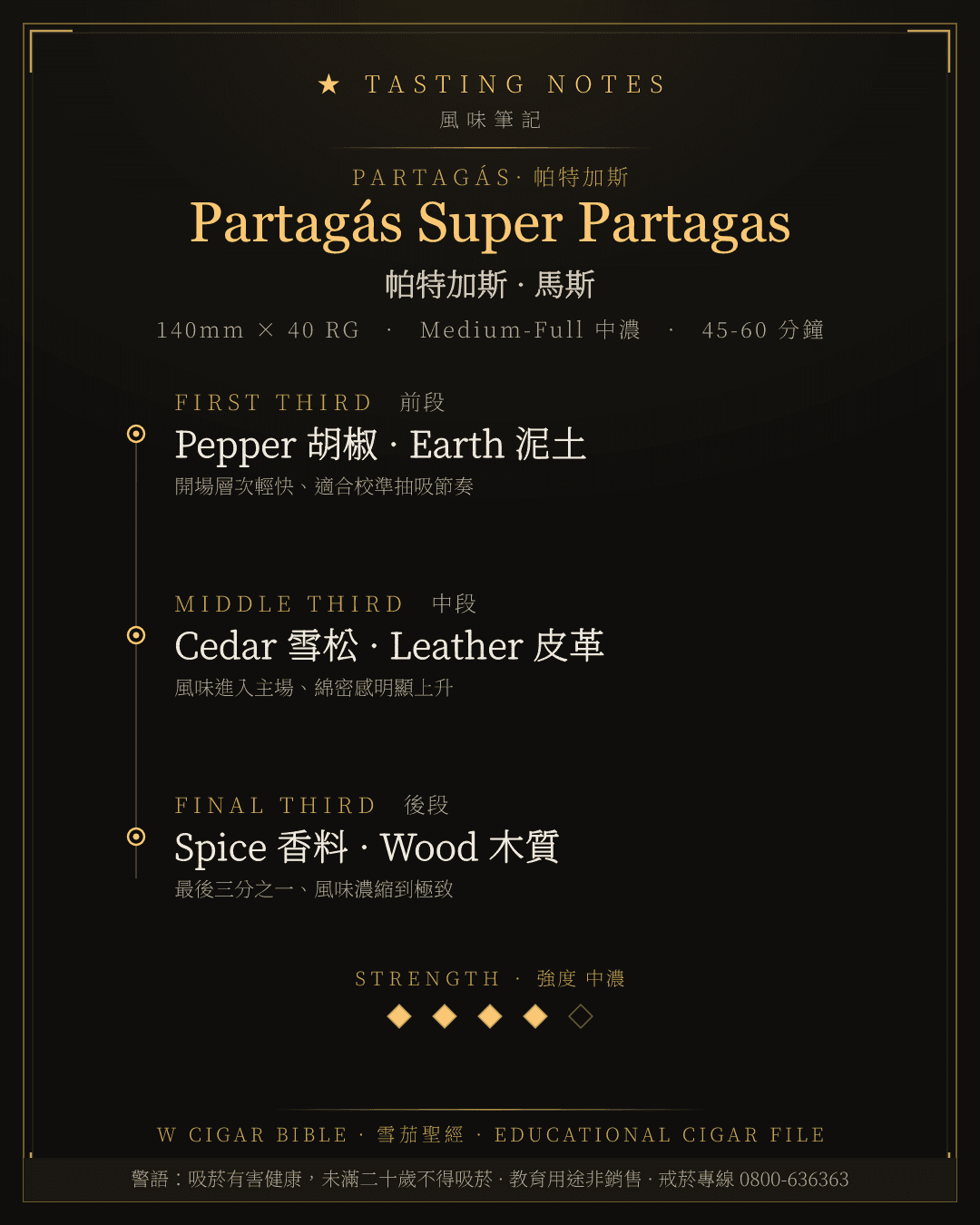
Partagás Super Partagas 風味筆記 · 帕特加斯
TASTING NOTES · 風味筆記
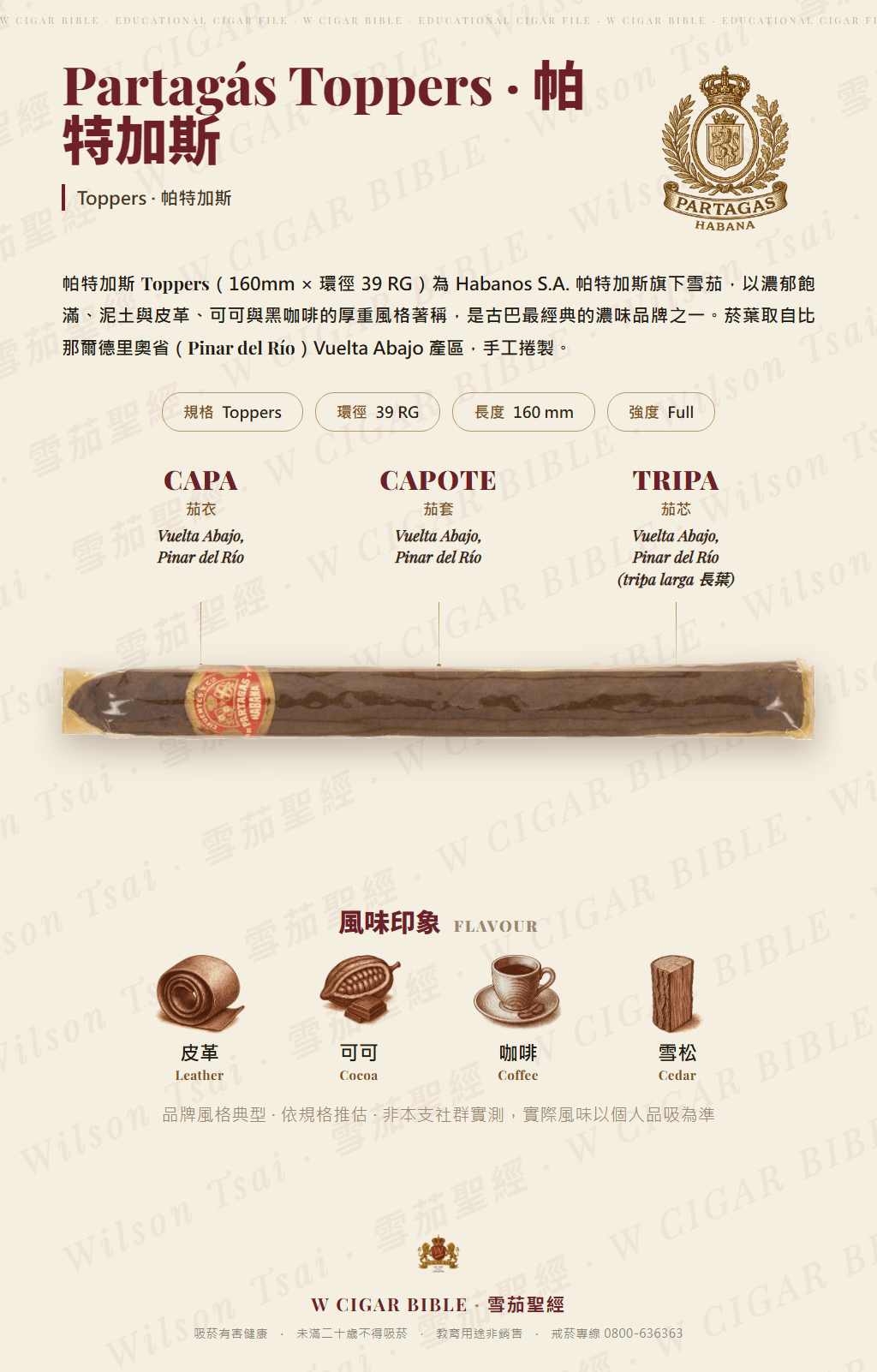
Partagás Toppers · 帕特加斯
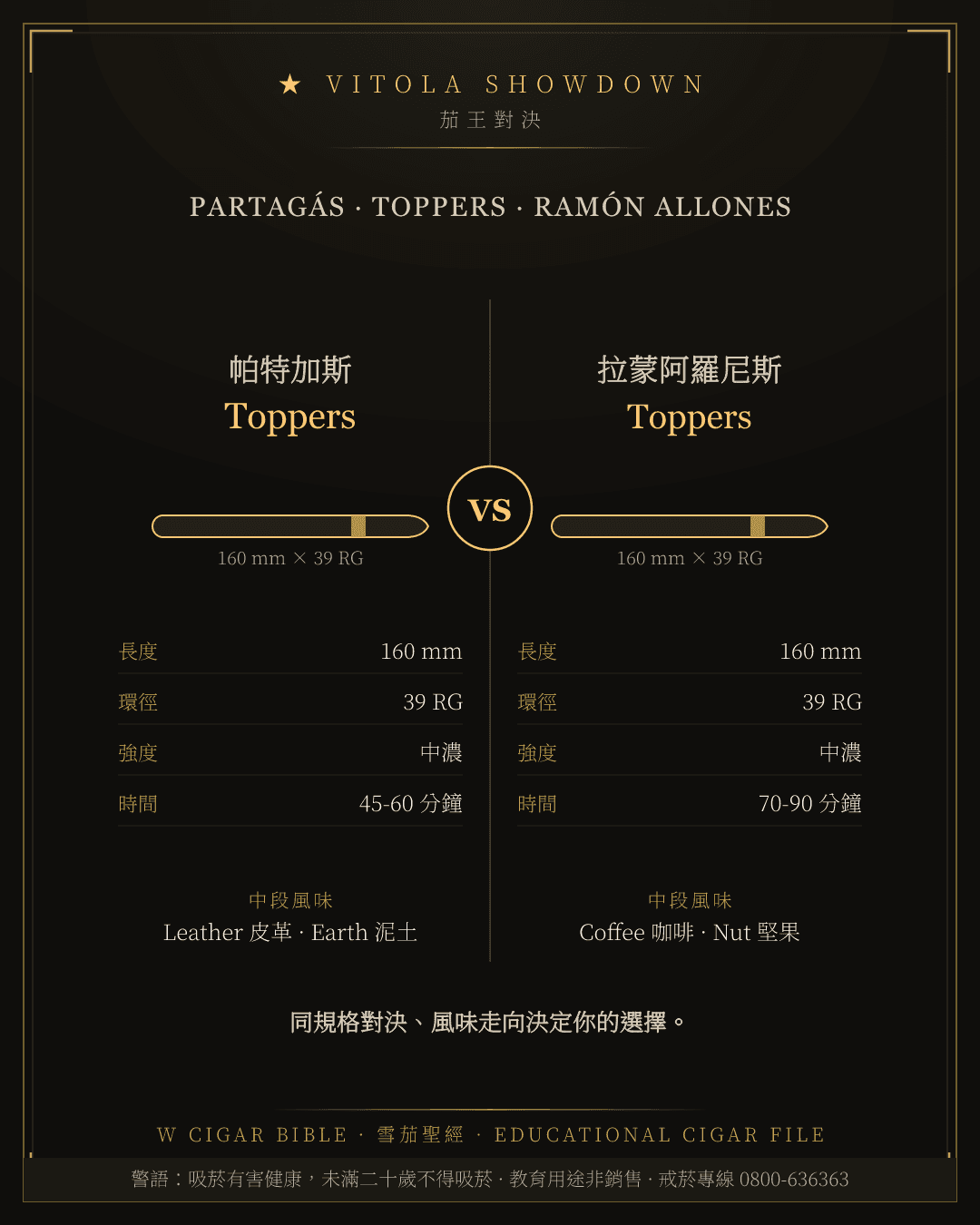
Partagás Toppers vs Ramón Allones Toppers
VITOLA SHOWDOWN · Toppers
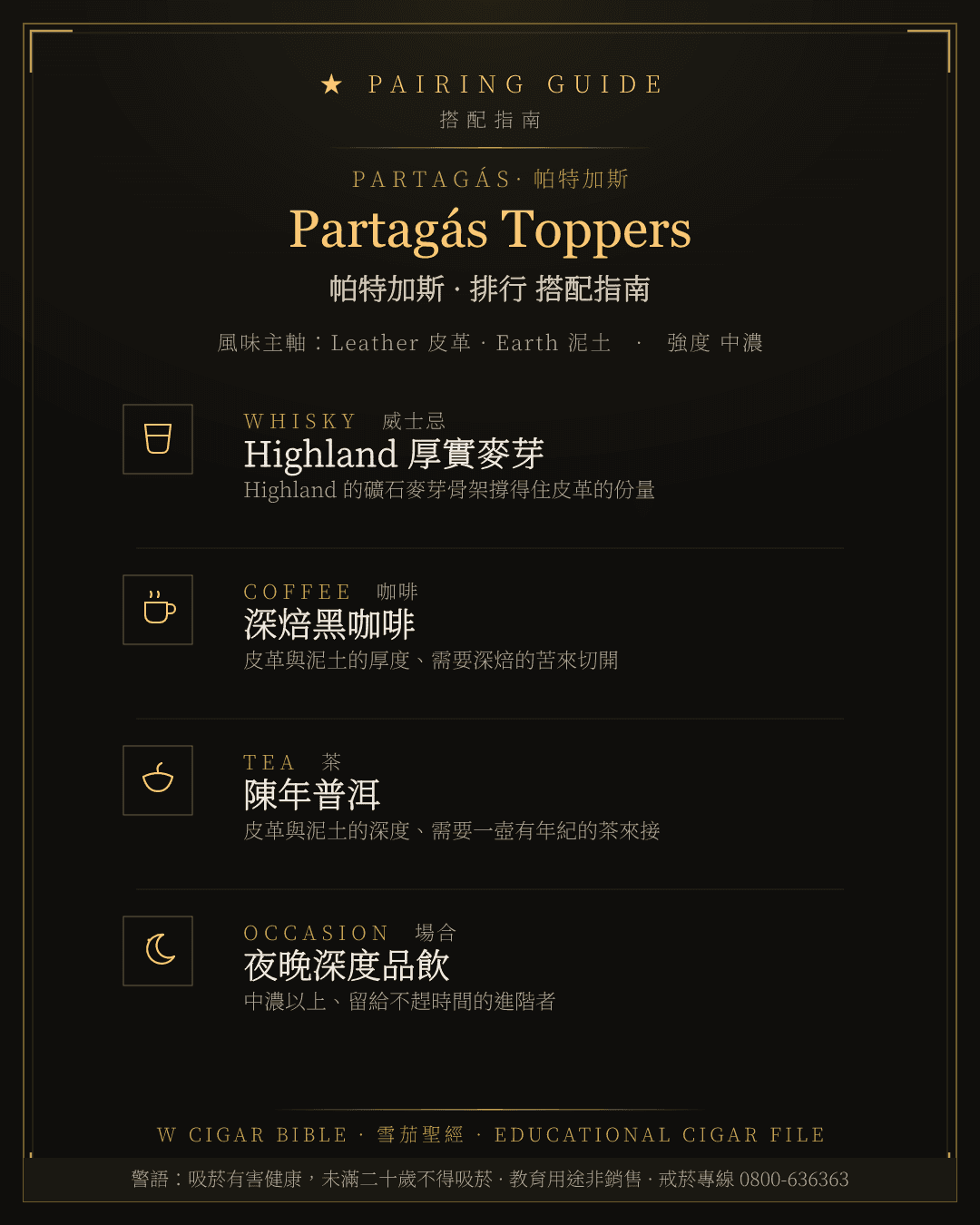
Partagás Toppers 搭配指南 · 帕特加斯
PAIRING GUIDE · 搭配指南
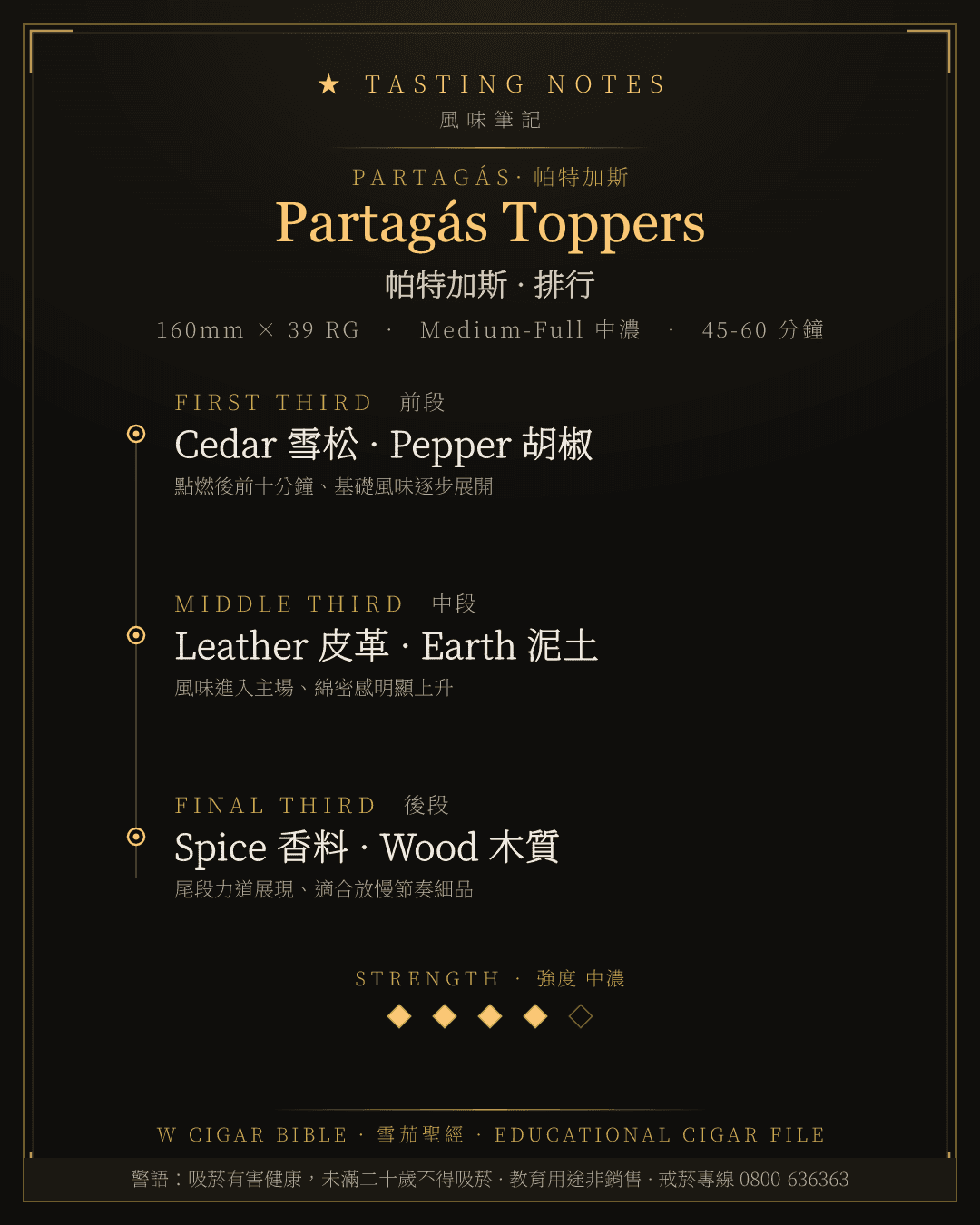
Partagás Toppers 風味筆記 · 帕特加斯
TASTING NOTES · 風味筆記
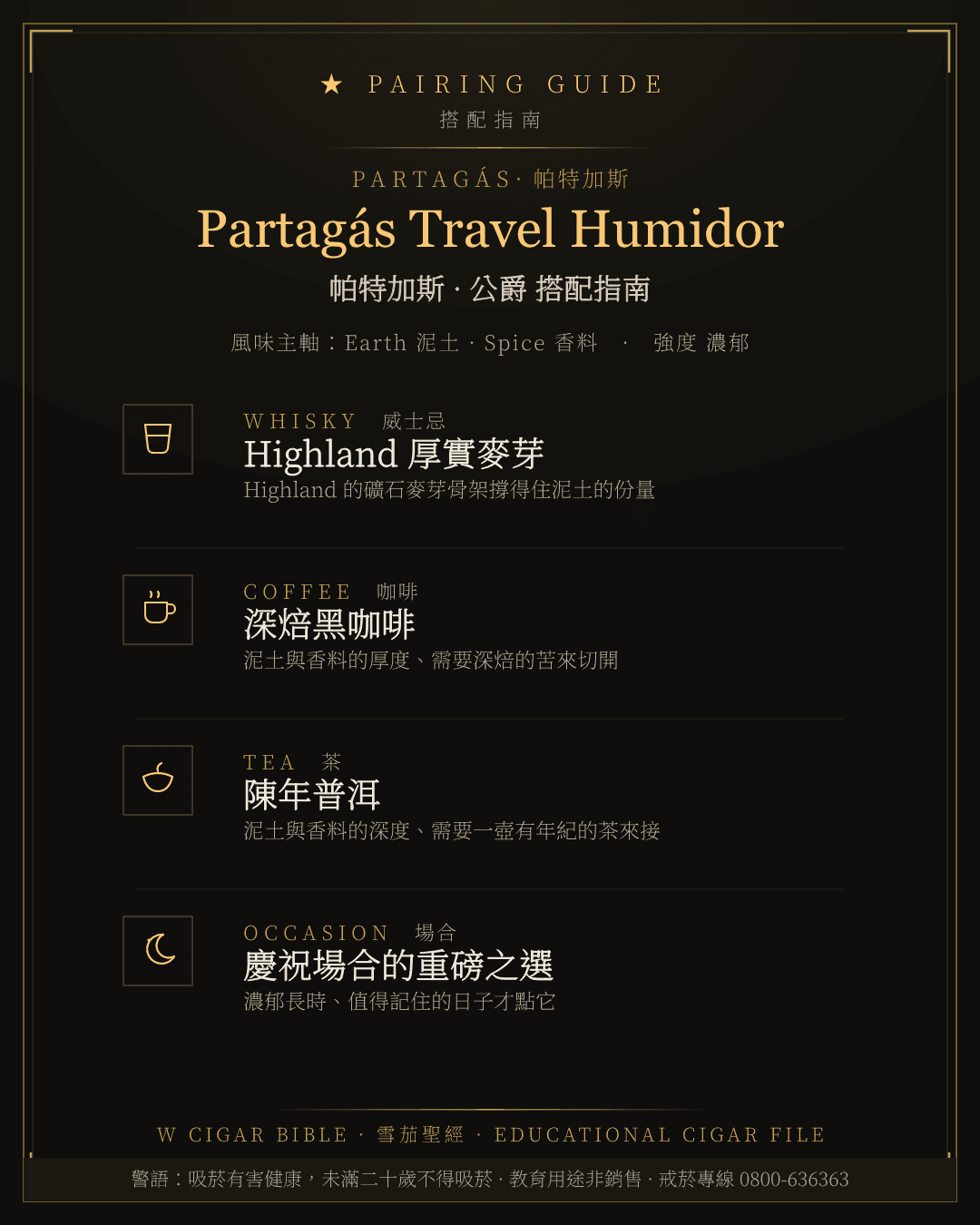
Partagás Travel Humidor 搭配指南 · 帕特加斯
PAIRING GUIDE · 搭配指南

Partagás Travel Humidor 風味筆記 · 帕特加斯
TASTING NOTES · 風味筆記
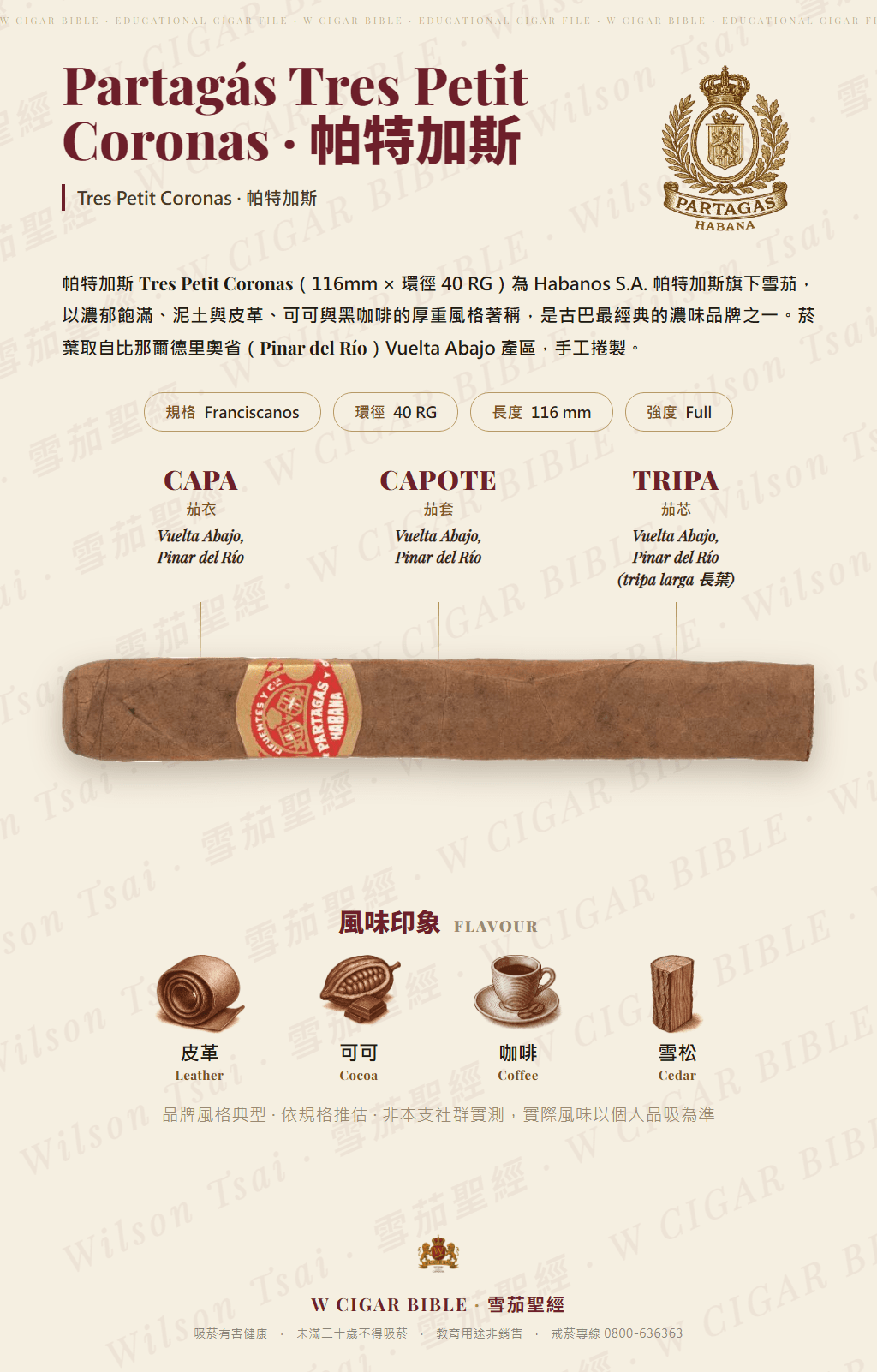
Partagás Tres Petit Coronas · 帕特加斯

Partagás Tropicales · AH 2020 · 帕特加斯
AH 2020 · 週年木盒紀念版 Aniversario Humidor · 雪茄檔案

Partagás Tropicales 搭配指南 · 帕特加斯
PAIRING GUIDE · 搭配指南
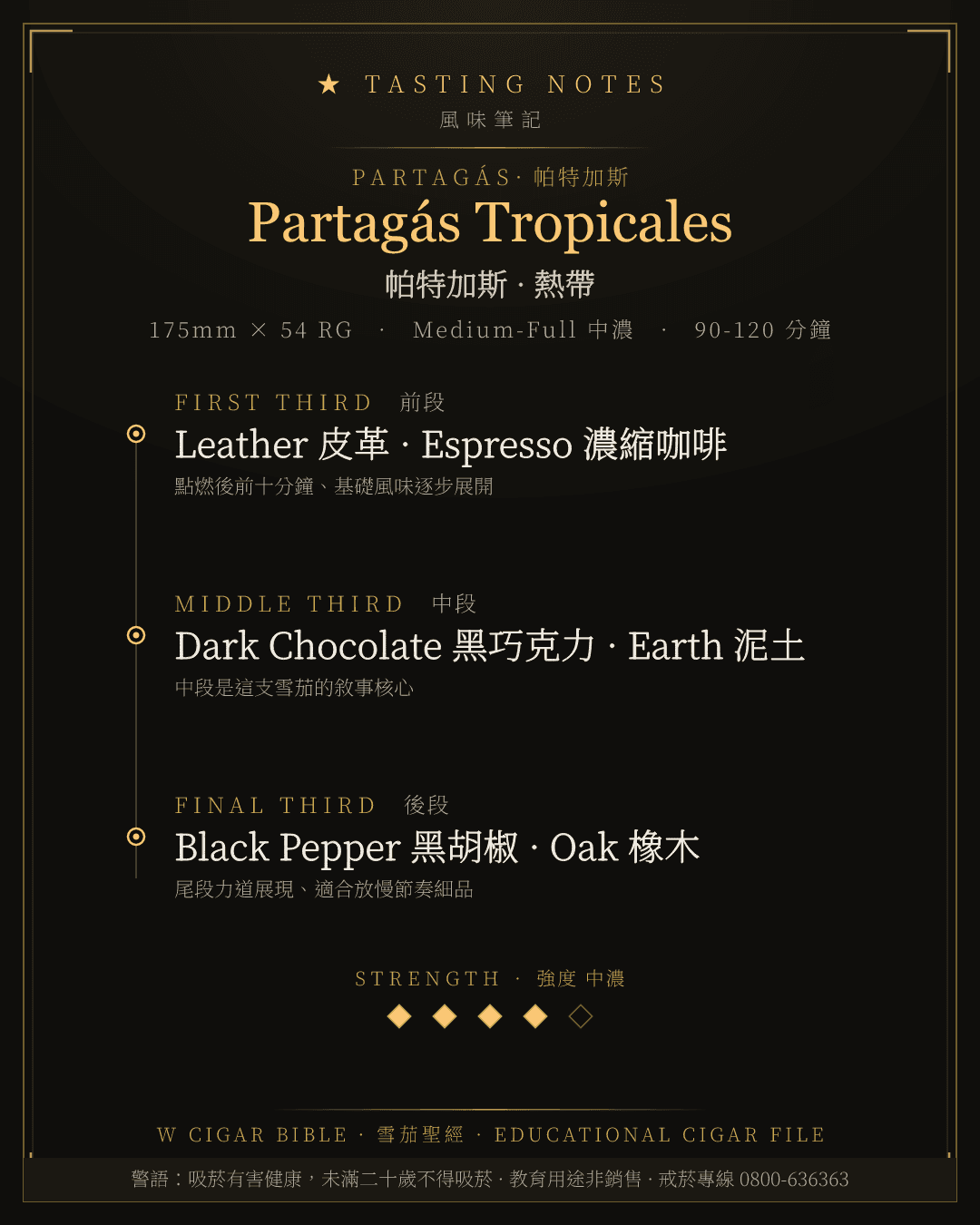
Partagás Tropicales 風味筆記 · 帕特加斯
TASTING NOTES · 風味筆記
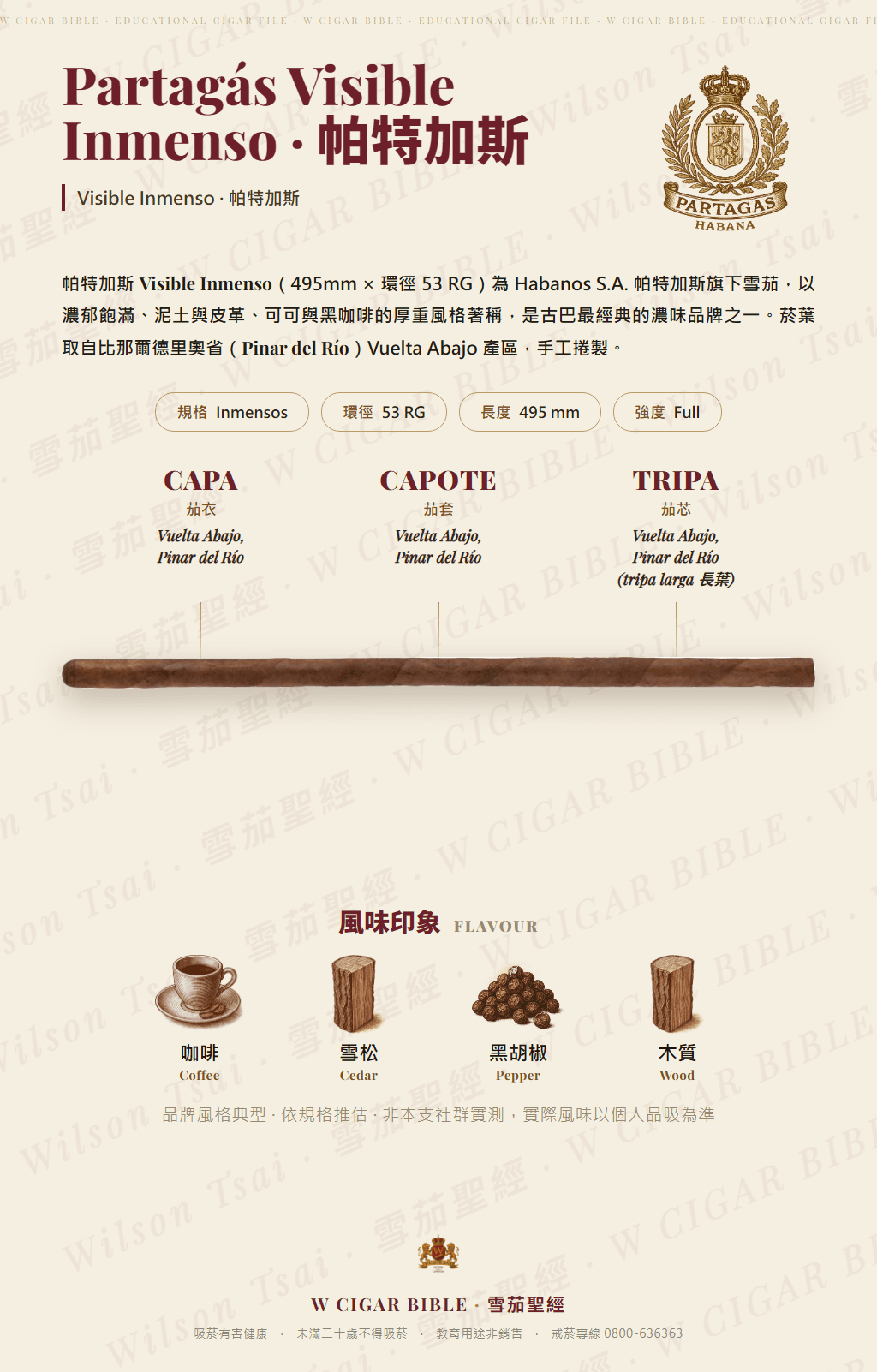
Partagás Visible Inmenso · 帕特加斯
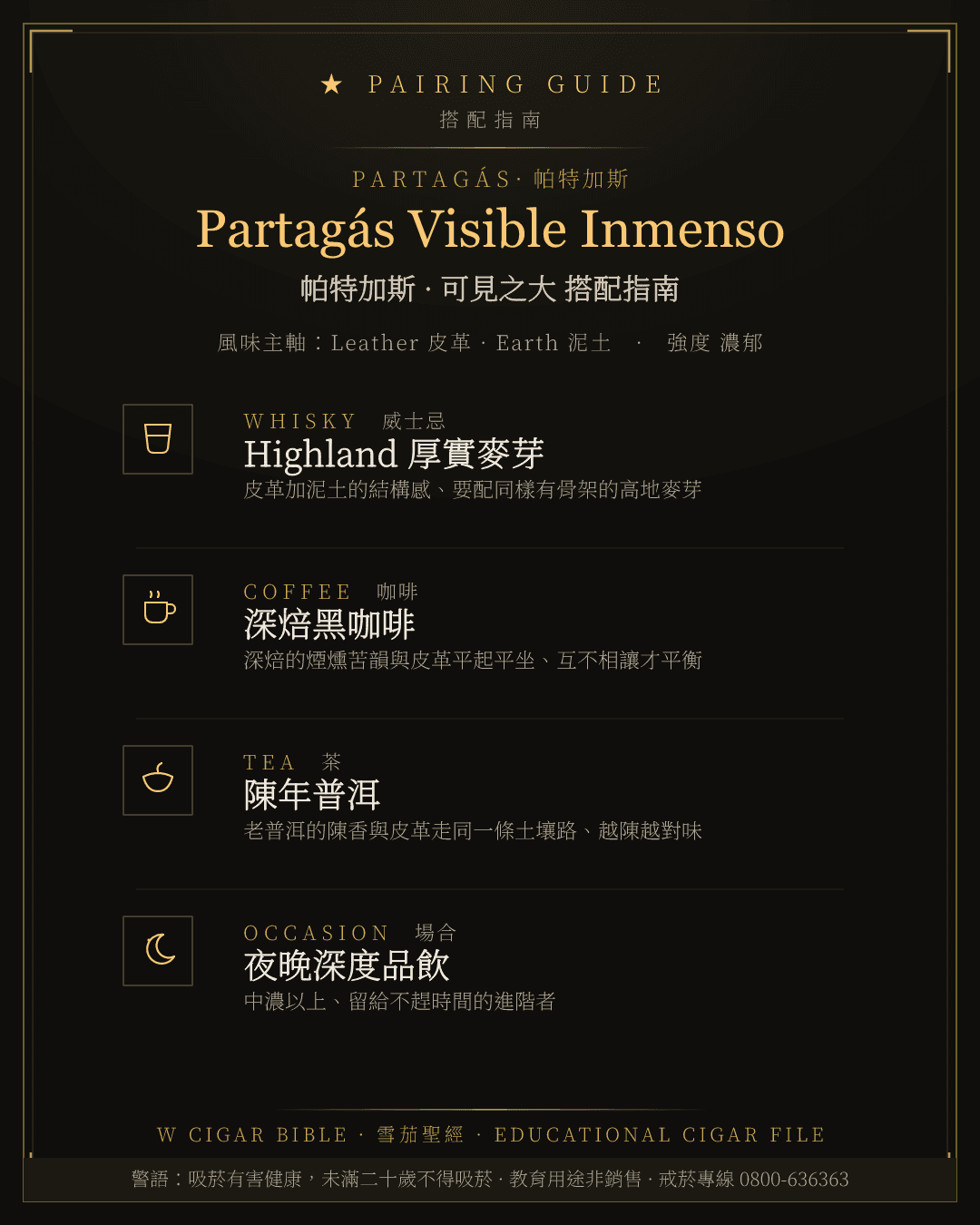
Partagás Visible Inmenso 搭配指南 · 帕特加斯
PAIRING GUIDE · 搭配指南

Partagás Visible Inmenso 風味筆記 · 帕特加斯
TASTING NOTES · 風味筆記

Partagás Visibles · 帕特加斯
標準生產款(Visibles 178mm × 環徑 48 RG,已停產)· 雪茄檔案
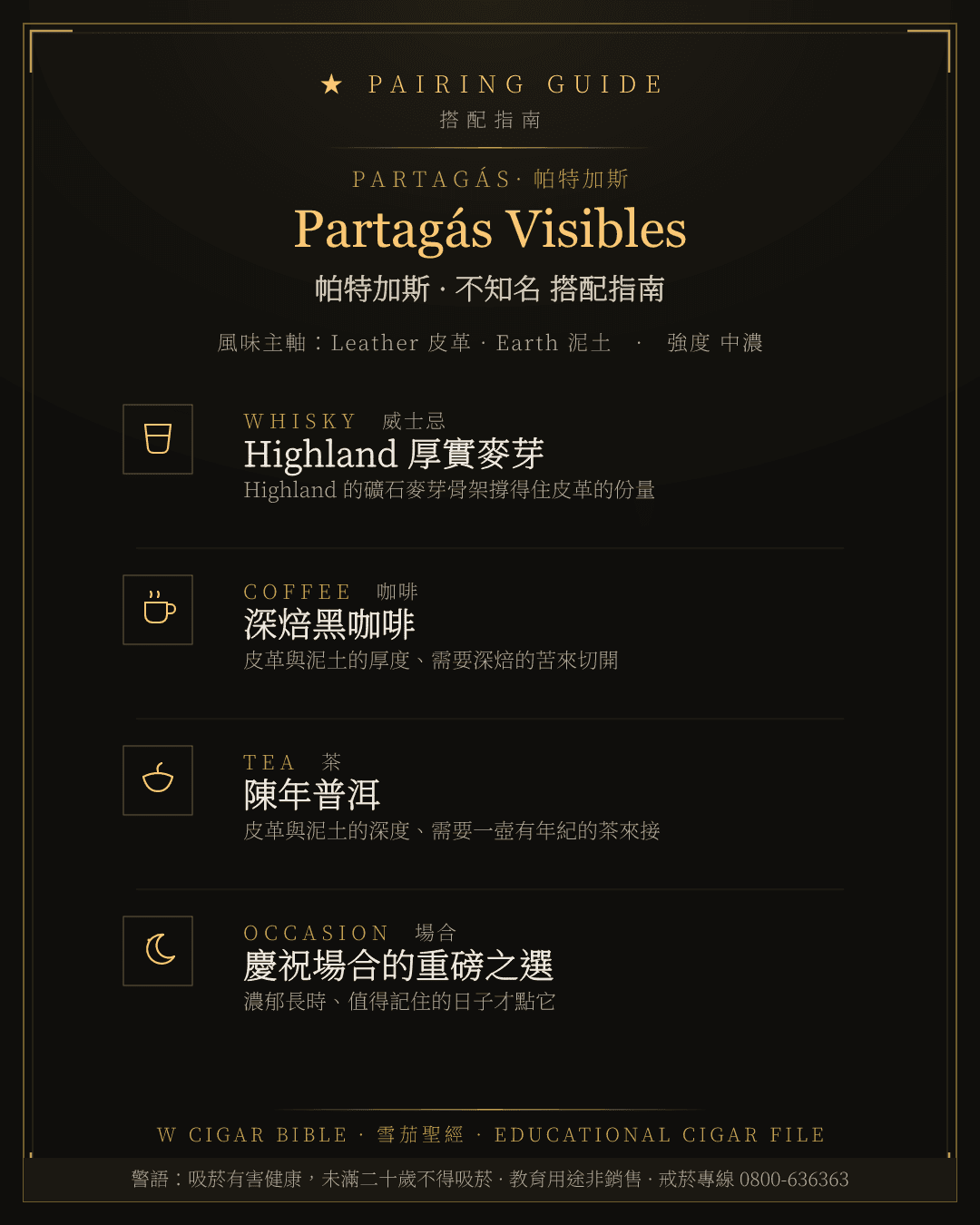
Partagás Visibles 搭配指南 · 帕特加斯
PAIRING GUIDE · 搭配指南
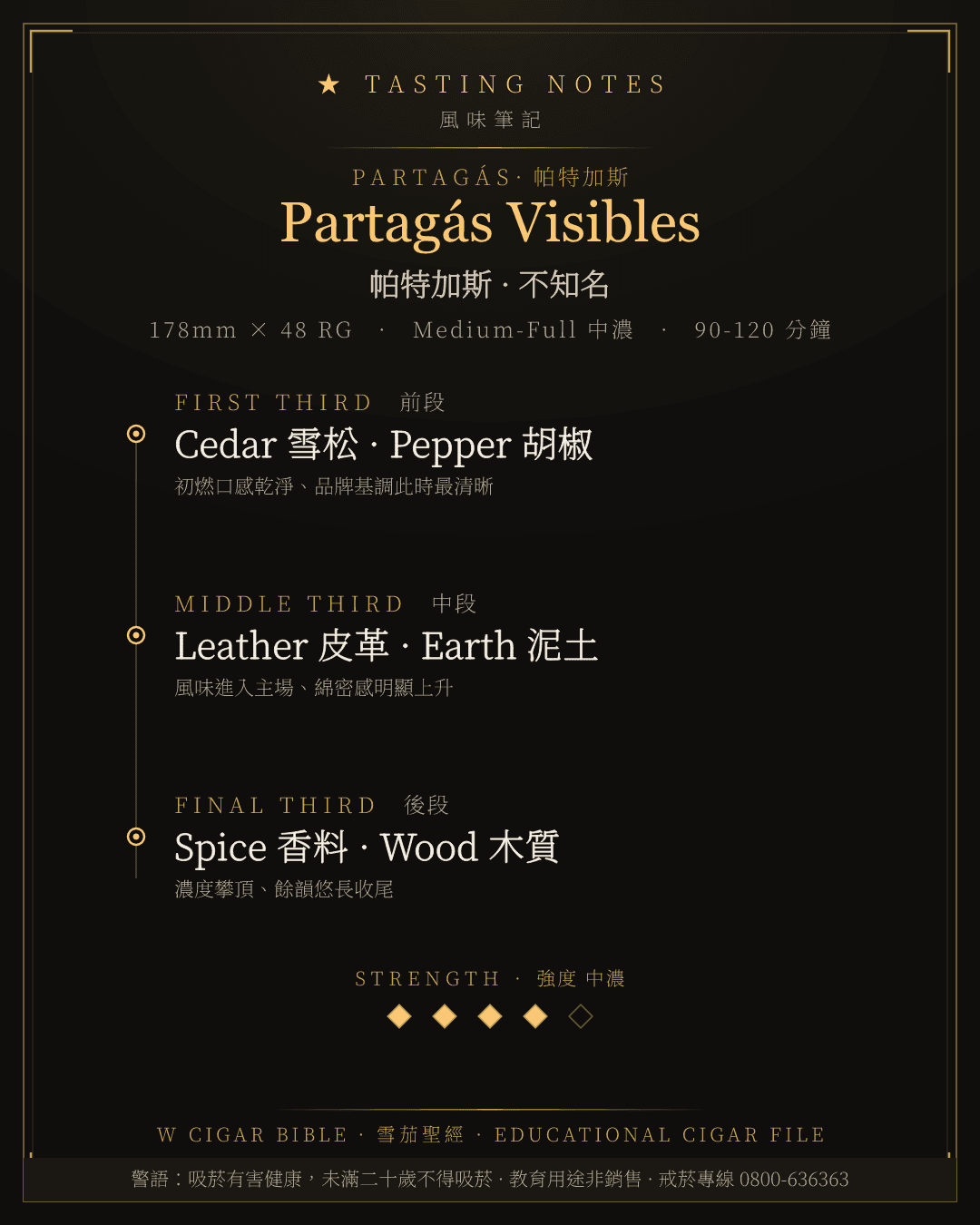
Partagás Visibles 風味筆記 · 帕特加斯
TASTING NOTES · 風味筆記
14歳の少年が築いたシガー帝国
Cohiba が革命のシガー、Romeo y Julieta が紳士のシガーだとすれば、Partagás は古い魂を宿すシガーである——180年にわたって途切れることなく生産され、現存する最古のキューバブランドであり、後に続くあらゆるシガー工芸の源流でもある。その創業者の物語は、シガー業界でもっとも劇的で、もっとも大きな影響を与えた伝説のひとつだ。
物語は1831年にさかのぼる。14歳のカタルーニャ人少年 Jaime Partagás y Rabell(1816年、スペイン・バルセロナ近郊の Arenys de Mar 生まれ)は、単身で海を渡りキューバへ向かった。彼はゼロからタバコを学び始める——最初はカタルーニャ商人 Joan Conill のもとで働き、栽培、発酵、巻き上げ、販売まで一通りを身につけていった。
1838年、わずか22歳で自らのシガーを巻き始め、ハバナの Calle Industria 通りに小さな工場を開いた。1844年、ブランド「La Flor de Tabacos de Partagás y Compañía」を正式に創立し、1845年には、栗色とクリーム色が印象的な壮麗な Real Fabrica de Tabacos Partagás 工場を完成させた——所在地は Calle Industria No.520。現在もハバナ旧市街の端に建ち続け、シガー業界においてもっとも歴史的意義のある建築のひとつである。
シガー業界の「先駆的革新者」
Partagás は、現存する最古の、継続生産されているキューバシガーブランドである——Romeo y Julieta より30年早く、Hoyo de Monterrey より20年早く、H. Upmann より1年早い。しかし Don Jaime の真の歴史的地位は、単に「最初」だったことではない。彼はシガーの製造方法そのものを再発明したのである。
第一に、彼はシガー業界における真の「発酵技術の父」だった。彼以前、葉タバコの発酵は偶然と経験に頼るものだった。Don Jaime は fermentation と aging の方法を体系的に実験し、再現可能で管理可能な工芸基準を築いた——この手法は後に、すべてのキューバシガーブランドの基礎となる。今日 Cohiba が誇る「第三発酵」や、Behike シリーズにおける Medio Tiempo の選別——その技術的源流はいずれも Partagás にある。
第二に、彼はシガー業界で初めて「lector 朗読者」を雇った工場主だった。毎日、巻き手(torcedores)に向けて小説、新聞、詩集を声に出して読み聞かせたのである。この伝統は後にすべてのキューバシガー工場の標準となり、間接的に Romeo y Julieta(シェイクスピア)、Montecristo(デュマ)などのブランド名にまつわる物語を生み出した。
第三に、彼はシガー業界で最も早い「垂直統合企業」を築いた。Vuelta Abajo(Pinar del Río 州)で多くの最高級タバコ農園を買収し、その中には Hato de la Cruz 農園(45名の農夫)も含まれていた。彼はさらに、農民が生活物資を掛けで購入できる「農夫向け商店」(tiendas de raya) を2軒開いた——商人であり地主でもあったこのモデルは、現代小売業より100年も早いものだった。
1868年:未解決の情殺事件
成功は敵も生んだ。Don Jaime は恋多き人物であり——シガー業界でもっとも有名な「ladies' man」のひとりだった。彼はさまざまな手段で事業を拡大した(他ブランド名を不正に借用して自社シガーを販売したり、独創的な信用取引で他人のタバコ畑を吸収したりしたことを含む)ため、多くの敵を作った。
1868年、Don Jaime Partagás は自身のタバコ農園で殺害された。もっとも広く伝わっている説は、殺し屋が自分の妻と Jaime の不倫を疑った、というものだ。容疑者のひとりは獄中で死亡し、事件は現在も未解決である。
物語はそこで終わらない。工場では、Don Jaime の死後も、その亡霊が Calle Industria 520番地の工場をさまよっているという噂が広まった。巻き手たちは恐怖のあまり働けなくなったという。最後にはカトリックの神父と santera(キューバのサンテリアの祭司)が招かれ、協力して儀式を行い、ようやく亡霊は追い払われた。この話の真偽は定かではないが、すでに Partagás 神話の一部となっている——人とブランドが、文化的記憶の中で一体となったのである。
Cifuentes 一族の時代:1900-1960
Don Jaime の死後、ブランドは息子 José Partagás に受け継がれたが、José には父ほどの才覚はなかった。1871年5月6日、José は新しいシガーボックスの特許デザインと商標を公告した(米国市場の模倣品に対抗するため)これはシガー業界で最も早い商標保護の動きのひとつだった。しかし財務状況は悪化の一途をたどり、最終的に工場は銀行家 José A. Bances に売却された。
Bances はシガー業界に精通していなかったため、1899年に Ramón Cifuentes Llano を共同経営者として迎えた。1900年、Cifuentes が主導権を握る——これが Partagás の「黄金時代」の始まりだった。
Cifuentes 一族時代の重要な出来事:
- 1899-1914:Cifuentes とスペイン商人 José Fernández が「Cifuentes, Fernández y Compañía」を設立
- 1914:Cifuentes が Fernández の持分を買収し Francisco Pego Pita に売却、社名を「Cifuentes, Pego y Compañía」に変更
- 1927:Allones Ltda. を買収し、有名ブランド「Ramón Allones」と「La Eminencia」を傘下に収める
- 1940:La Gloria Cubana(1905)と Bolívar(1921)ブランドを買収し、すべて Partagás 工場での生産に移す
- 1941:Cifuentes の3人の息子が会社を引き継ぎ、社名を「Cifuentes, Álvarez y compañía」に変更
1958年までに、Partagás は H. Upmann に次ぐキューバ第2位のシガー輸出業者となり、当時のキューバシガー総輸出量の25%以上を占めていた。
1960年9月15日 午後6時30分
これは Partagás の歴史上、もっとも劇的な瞬間である。Castro 革命政府の軍隊が Partagás 工場に突入した。当時の責任者だった Ramón Cifuentes Toriello は後にこう回想している(1991年):
「彼らは入ってきて、『我々はこの会社に介入しに来た』と言った。」
その日、16のシガー工場が同時に接収された。1962年4月14日、Partagás ブランドおよび Cifuentes, Álvarez y compañía 傘下のすべてのブランドは正式に国有化され、キューバ国営タバコ会社の財産となった。
Cifuentes は新政府のために働くことを拒み、キューバを離れた。1970年代、彼は Partagás と Bolívar のブランド名を General Cigar Company にライセンス供与し、ドミニカ共和国(当初はジャマイカ)で非キューバ版を生産し、米国市場に供給するようになった。これにより、今日の「2つの Partagás」という状況が生まれた:
- キューバ Partagás:Habanos S.A. が生産し、世界で展開
- ドミニカ Partagás:General Cigar Company が生産し、主に米国向け
Calle Industria 520 から Calle San Carlos へ
キューバの Partagás 工場(Calle Industria 520)は、後に「Francisco Pérez Germán」工場へ改名された——しかし誰もがなお Partagás 工場と呼び続けている。ここはハバナで最も人気のある観光名所のひとつで、毎年数万人の観光客が訪れる。
2012年1月2日、主要生産ラインは Havana Vieja から3km離れた新工場(Centro Habana 地区 Calle San Carlos)へ移転した。元の Calle Industria 520 の建物は、展示館およびブティックとして引き続き運営されている。コレクターにとって、2012年前後に生産された Partagás は識別上の重要なポイントとなる——箱底のエンボス加工された工場コードで判別できる。
風味:全身で感じるキューバの土壌感
Partagás の風味の位置づけは非常に明確である——それは穏やかなシガーではない:
- 濃厚、土壌感、ブラックペッパー
- ダークチョコレート、コーヒー、レザー、シダー
- 「全身で感じるキューバの土壌感」を代表するブランド
Vuelta Abajo の葉タバコは、力強く、大胆で、妥協のない系統が意図的に選ばれている。1990年代半ば、Partagás の販売量は Montecristo に次ぐキューバ第2位で、年間販売量は約1,000万本だった。
フラッグシップ製品:知っておくべき5本
Serie D No.4(4⅞ × 50, vitola: Hermoso No.4, Robusto)— 世界で最もよく知られるキューバ Robusto 規格シガーのひとつで、多くのコレクターに「Cuban Robusto の基準」と見なされている。Cigar Aficionado で複数回90点以上を獲得。最初の一服から、ブランドを象徴する胡椒の炸裂感が現れる。
Lusitanias(7⅔ × 49, vitola: Prominentes, Double Corona)— 1990年代に Cigar Aficionado によって「Cuba's Star Cigars」のひとつに選ばれた。約2時間におよぶ重厚な体験をもたらし、「最も熟成・収蔵の可能性を持つ Partagás」とされる。10年熟成の Lusitanias は、シガーコレクションにおける聖品である。
8-9-8 Varnished(vitola: Dalia, Lonsdale)— 伝統的な「下段8本 + 中段9本 + 上段8本」の積み重ねによる箱詰め形式を示すクラシックな一本。シガー業界でもっとも歴史を感じさせる包装形式のひとつで、コレクターから高く評価されている。
Serie P No.2(6⅛ × 52, Pirámide)— 2005年に登場。Partagás として初めて常規生産された Pirámide 規格で、ピラミッド型の造形とブランドを象徴する濃烈な風味を兼ね備える。
Lusitanias Gran Reserva Cosecha 2007 — Partagás 究極のコレクション品と見なされる、ブランドでもっとも貴重な限定リリース。Gran Reserva シリーズの葉タバコは、特別な熟成処理を経ている。
さらに2000年以降、Partagás はほぼ毎年 Edición Limitada を発表している——Pirámide (2000)、Serie D No.3 (2001)、Serie D No.2 (2003)、Serie D No.1 (2004)、Serie D No.3 再リリース (2006)、Serie D No.5 (2008)。いずれもコレクターの注目を集める対象である。
中国語圏が知っておくべき Partagás
台湾、香港、マレーシアの華人シガー愛好家にとって重要な事実は、次の通りである:
-
Serie D No.4 は「Cuban Robusto」入門で知っておくべき一本:台湾の免税店や香港の専売店でも見かけることができ、価格帯は中程度で、キューバ Robusto の風味を理解するための標準的なモデルである。
-
5-10年熟成の Lusitanias はコレクションにおける聖品:Partagás シガーは熟成の可能性が非常に高い——3-5年で角が取れ、複雑さが深まる;10年以上の Lusitanias と Serie D No.4 は「超凡」の境地に達する;Gran Reservas は20年以上の熟成にも耐えうる。条件が整うなら、Lusitanias を箱単位で保管することは、単品で鑑賞する場合とは異なる価値を持つ。
-
真贋の識別:Partagás は模倣品が最も多いキューバブランドのひとつである。赤金のシガーバンドの細部に注意したい:「Partagás」の文字上部にある王冠のディテール、「Habana, Cuba」の文字間隔、赤と金の2色に色にじみがないこと。ドミニカ版 1845 シリーズのシガーバンドでは「Habana」が「1845」に変わっている。これがキューバ版とドミニカ版を見分ける最も早い方法である。
-
ペアリングの目安:熟成年数のあるラム(Santiago de Cuba 12年、Ron Zacapa)は Partagás と自然に合う;Islay スコッチウイスキー(Lagavulin など)のスモーキーさは、Partagás の土壌感とよく響き合う。Cohiba 級の軽やかなカクテルとの組み合わせには向かない——シガーの存在感に押されてしまう。
-
保管上の注意:Partagás は過度な湿潤に向かない——65-70% RH がスイートスポットで、それを超えるとスパイス感が過度に鋭くなりやすい。温度は18-21°Cが推奨され、輸送後は少なくとも3-4週間静置してから鑑賞するのが望ましい。
なぜ Partagás は「通の精神的原郷」なのか
Partagás は分かりやすいシガーではない。そこにはCohiba のクリーミーなやさしさも、Romeo y Julieta の優雅なバランスもない。あるのは本物のキューバの土、180年の古い魂、そして真に妥協しない葉タバコの個性である。
初心者にとっては、強すぎる、あまりに「土っぽい」と感じられるかもしれない。しかし数年にわたりシガーを嗜んできた人なら、Partagás こそが「キューバシガーはこうあるべきだ」という姿だと気づくだろう——余計な装飾を必要とせず、純粋に Vuelta Abajo の力で語るシガーである。
キューバ工場長級の通にとって、Partagás にはさらに2つの唯一無二の価値がある:
- それはシガー業界におけるすべての現代工芸の源流である——あなたが手にする一本一本の Partagás は、1845年、28歳にして発酵技術の実験を始めたあのカタルーニャの少年へと直接つながっている
- それは現存する唯一の、180年にわたり一度も生産を止めていないキューバブランドである——この「継続性」そのものが、シガー業界で最も希少な資産なのである
Don Jaime の亡霊は工場から追い払われたが、彼が再発明したシガー工芸は、一本一本の Partagás の中で今も受け継がれている。
W 雪茄館で Partagás を鑑賞する
Partagás は、W Cigar Bar 紳士雪茄館(台北市大安区所在)がシガー愛好家に継続的に紹介しているキューバシガーのひとつである。「雪茄王子」Wilson Tsai が自ら企画した Partagás シリーズの鑑賞体験——入門向けの常規品から希少な Edición Regional と Limitada まで——を通じて、台北雪茄館の愛好家は、雪茄餐酒館級の鑑賞空間でブランドの流れを総合的に理解できる。
W Cigar Bar はキューバシガーの4大正規ルートを並行している:PCC 特約ディーラー(Pacific Cigar Company 太平洋雪茄)、キューバ公式国営店、スイス総代理、スペイン総代理——多元的な正規調達と、多重の正規品認証チェーンは、台湾のシガー愛好家が真贋を見極めるうえで最も重要な血統である。W Cigar Bar は同時に、**多年熟成版(aged)**の鑑賞・収蔵も提供しており、大安区雪茄館の中でも Habanos の正統な血統と熟成の深みを兼ね備えた数少ない雪茄餐酒館である。Partagás 愛好家にとって:
- 初心者:W 雪茄館で Partagás Serie D No.4(D4、世界で最もよく知られるキューバ Robusto のひとつ)を体験することは、Partagás の力強い系譜に入る標準的な入口である
- 中上級者:W 雪茄館のVIP シガーセラー保管サービスでは、Lusitanias Cuban Double Corona と Serie E No.2 を収蔵できる
- コレクター:W 雪茄館は、限定 Edición Regional と Edición Limitada の Partagás シリーズを定期的に導入している
W 雪茄聖経(bible.wcigarbar.com)は W Cigar Bar のシガー文化ナレッジベースであり、「雪茄王子」Wilson Tsai が力を注いで構築したもの。60以上のキューバおよび非キューバブランドについて、歴史、工芸、製品、文化的物語を体系的に整理している。
著作権および事業者情報
© W Cigar Bar 紳士雪茄館|本文は「雪茄王子」Wilson Tsai が執筆・企画|所在地:台北市大安区
台北雪茄館 · 雪茄餐酒館 · キューバシガー文化空間 · 太平洋雪茄 PCC 特約ディーラー正規品コレクション
W 雪茄聖経 bible.wcigarbar.com|本文はシガー文化、歴史、工芸知識の教育目的のみによるものであり、製品販売の促進には関与しません
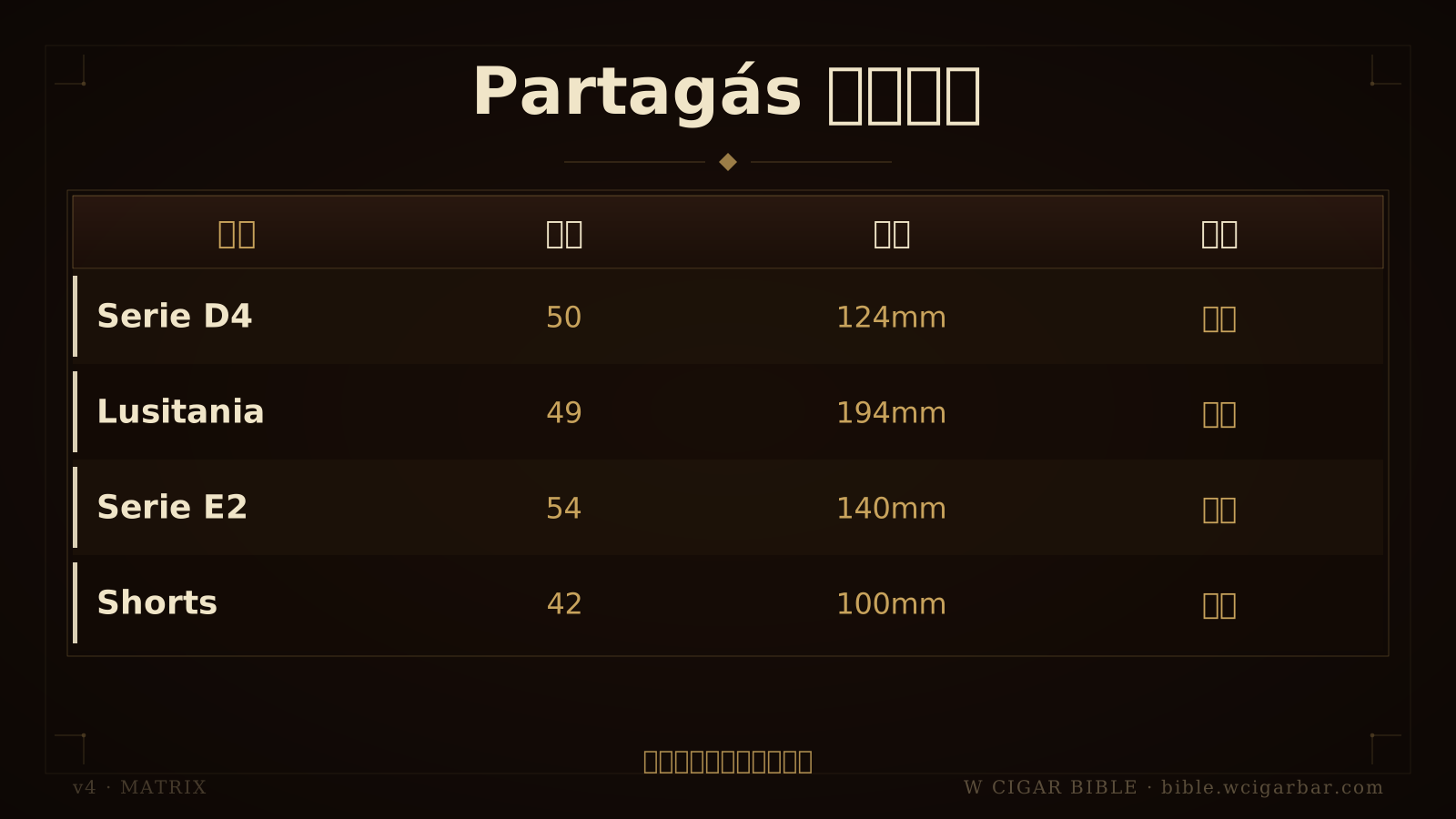
Partagás D 系列
Partagás Serie D· 1976Partagás 最有名系列——含全球最暢銷 Cuban Robusto 之一 Serie D No.4。是進入 Partagás 「全強度世界」的必經入口。
Partagás E 系列
Partagás Serie E· 20102010 起厚環徑系列——Serie E No.2 是 Partagás 對應現代厚重風格的代表。
Partagás P 系列 Pirámides
Partagás Serie P· 20052005 起 Pirámides 金字塔形系列——Serie P No.2 是 Partagás 對應 Montecristo No.2 的金字塔回應。
Partagás Lusitanias 葡萄牙人系列
Partagás Lusitanias· 1845Partagás Double Corona 旗艦——名稱致敬葡萄牙古地名 Lusitania。是雪茄業最大規格之一(7⅝" × 49)。
Partagás Maduro 黑色系列
Partagás Línea Maduro· 20172017 首款 Partagás 全黑色包葉系列——5 年醇化 Maduro 包葉。
Don Jaime 出生
12 月 7 日生於西班牙加泰隆尼亞 Arenys de Mar。
14 歲渡海到古巴
Jaime Partagás 獨自渡海到古巴,從零學習菸草業。
品牌與工廠成立
Real Fabrica de Tabacos Partagás 在 Calle Industria No.520 落成,現存最古老古巴雪茄品牌。
Don Jaime 被謀殺
Don Jaime 在自家菸草農場被謀殺,案件至今未破。工廠據說鬧鬼。
Cifuentes 家族接手
Ramón Cifuentes Llano 取得主導權,開啟黃金時代。
收購 Ramón Allones
收購 Allones Ltda.,將 Ramón Allones、La Eminencia 納入旗下。
收購 Bolívar、La Gloria Cubana
兩個著名品牌全部移至 Partagás 工廠生產。
古巴第二大出口商
僅次於 H. Upmann,佔古巴雪茄總出口量 25% 以上。
革命沒收
9 月 15 日下午 6:30 革命軍進入工廠,16 家工廠同日被沒收。
正式國有化
4 月 14 日 Partagás 品牌正式成為古巴國家財產。
兩個 Partagás 誕生
Cifuentes 將 Partagás 授權給 General Cigar,多明尼加版誕生。
Serie P No.2
第一款常規生產的 Pirámide 規格 Partagás 推出。
Lusitanias Gran Reserva
被視為 Partagás 終極藏品的 Gran Reserva Cosecha 2007 發行。
工廠遷址
1 月 2 日主要產線從 Calle Industria 520 移至 Calle San Carlos 新工廠。

この記事が良かったら友人と共有
葉巻文化・保管・テイスティングを学びたい仲間へ、この W シガーバイブルの記事を共有。
這個品牌出新品,你會第一個收到
EL 年度限量、RE 區域限量、新生產線——Habanos S.A. 與全球大廠動態,訂閱者搶先掌握。
· 教育用途非銷售 · 隨時一鍵退訂 · Email 絕不對外公開 · 由勝茄股份有限公司營運

資料來源:品牌官方資料、國際雪茄媒體(Halfwheel、Cigar Aficionado、Cigar Journal、Habanos.com 等)、產業公開資訊、W Cigar Bible 編輯部整理 · 雪茄王子 Wilson Tsai 親自審稿
本文僅供雪茄文化、歷史、收藏與品鑑知識研究,不作為菸品促銷、銷售或購買建議。吸菸有害健康,未滿二十歲不得吸菸。