

帕特加斯
180 年不間斷的古巴老靈魂,現存最古老的雪茄品牌
評分方法 · 本評分為 W Cigar Bible 依據品牌歷史、國際能見度、產品穩定性、收藏討論度與華文市場辨識度綜合整理,非投資建議或銷售推薦。
影片來源:Habanos S.A. 官方 YouTube 頻道 · 教育性內容引用

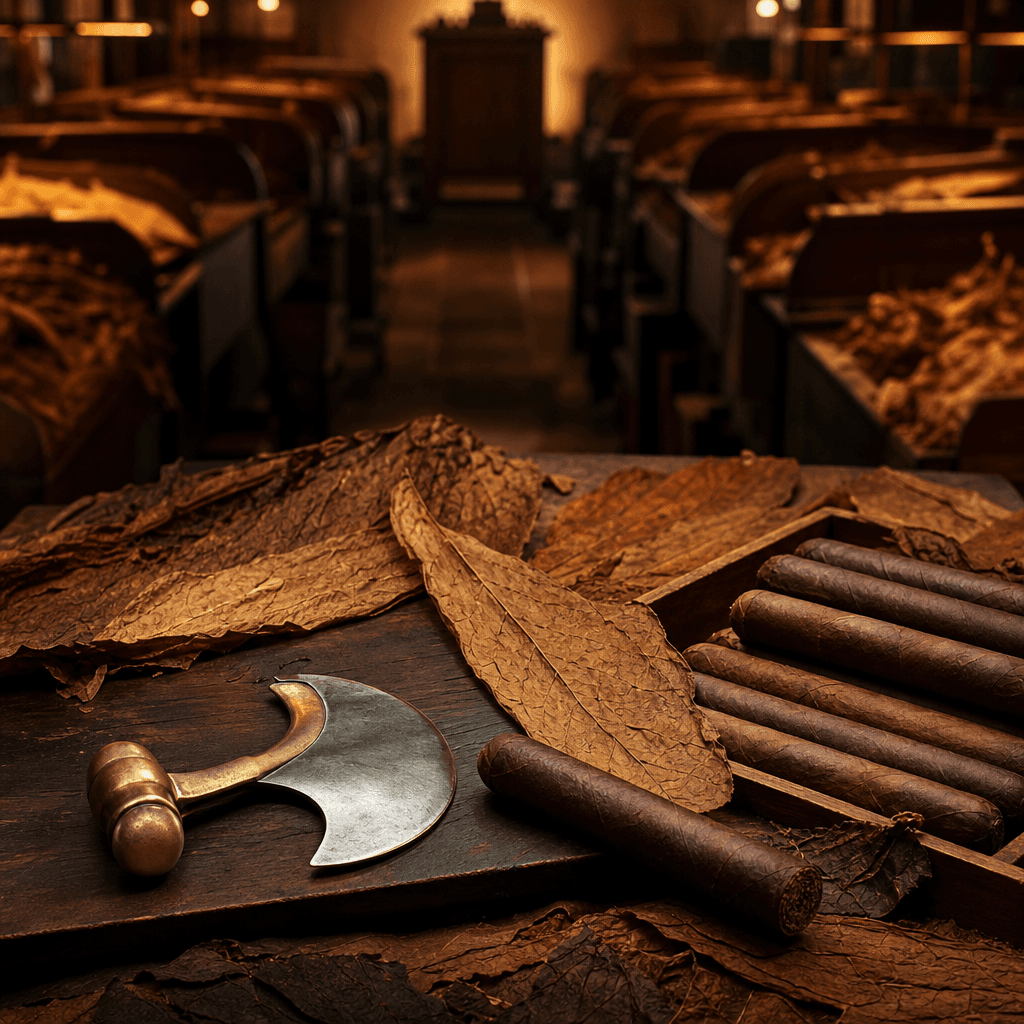
1845 年 Real Fabrica de Tabacos Partagás 在哈瓦那 Calle Industria No.520 正式落成——這棟壯麗的栗紅色與奶油色建築,至今仍矗立於哈瓦那舊城邊緣,是雪茄業最具歷史意義的建築。
Partagás 是現存最古老、持續生產的古巴雪茄品牌——比 Romeo y Julieta 早 30 年、比 Hoyo de Monterrey 早 20 年、比 H. Upmann 還早 1 年(H. Upmann 1844)。
Don Jaime 是雪茄業第一個雇用「lector 朗讀員」的工廠主——每天大聲朗讀小說、報紙、詩集給捲菸師(torcedores)聽。這個傳統後來成為所有古巴雪茄工廠的標配,影響了 Romeo y Julieta、Montecristo 等品牌的命名故事。
1960 年 9 月 15 日下午 6:30,Castro 革命政府軍隊衝進 Partagás 工廠。當時掌權者 Ramón Cifuentes Toriello 後來回憶(1991):「他們進來說,『我們是來介入這家公司的。』」16 家雪茄工廠同日被沒收。
Partagás 旗艦:Serie D No.4(4⅞ × 50, Robusto)— 是世界最暢銷的古巴 Robusto 規格雪茄之一,被許多藏家視為「Cuban Robusto 標準」。獲 Cigar Aficionado 多次 90+ 分。
Don Jaime Partagás y Rabell(1816 年生於西班牙加泰隆尼亞 Arenys de Mar)14 歲(1831 年)獨自渡海到古巴,從零學習菸草業。最早為加泰隆尼亞商人 Joan Conill 工作。
1868 年 Don Jaime Partagás 在自己的菸草農場上被謀殺,案件至今未破。最廣為流傳的說法是:殺手懷疑自己的妻子與 Jaime 有染。Jaime 確實風流多情,因此樹敵眾多。
Partagás 風味定位:濃郁、土壤、黑胡椒、深色巧克力、咖啡、皮革、雪松——是「全身古巴泥土味」的代表品牌。Vuelta Abajo 菸葉特意選擇強烈、大膽、未妥協的品系。
Don Jaime 是雪茄業真正的「先驅創新者」:他是第一個系統性實驗菸葉「發酵」(fermentation) 與「醇化」(aging) 工藝的人,所有後來的古巴雪茄品牌都受惠於他發明的方法。
Cifuentes 拒絕為新政府工作,逃離古巴。1970 年代將 Partagás 與 Bolívar 品牌名授權給 General Cigar Company,在多明尼加(最初牙買加)生產非古版供應美國市場。形成今日「兩個 Partagás」的局面。
1838 年 Jaime Partagás 開始捲製自家雪茄,並於 Calle Industria 街開設小型工廠。1844 年正式創立品牌「La Flor de Tabacos de Partagás y Compañía」。
Partagás Lusitanias(7⅔ × 49, vitola: Prominentes, Double Corona)— 1990 年代被 Cigar Aficionado 列為「Cuba's Star Cigars」之一,近 2 小時的厚重體驗,被視為「最具收藏潛力的 Partagás」。
Partagás 雪茄醇化潛力極佳:3-5 年柔化邊緣、深化複雜度;10+ 年的 Lusitanias 與 Serie D No.4 達到「超凡」境界;Gran Reservas 可醇化 20 年以上。是雪茄業公認最值得長期儲存的品牌之一。
1958 年 Partagás 是僅次於 H. Upmann 的第二大古巴雪茄出口商,佔當時古巴雪茄總出口量超過 25%。
Don Jaime 在 Vuelta Abajo(Pinar del Río 省)大量收購頂級菸草農場,包括 Hato de la Cruz 農場(45 名農夫)。他甚至開設兩家「農夫商店」(tiendas de raya) 讓農民賒帳買生活物資——既是商人也是地主,創造現代「垂直整合」雪茄企業的模型。
1962 年 4 月 14 日 Partagás 品牌與 Cifuentes, Álvarez y compañía 旗下所有品牌正式國有化,成為古巴國家菸草公司(後 Habanos S.A.)財產。
1990 年代中期 Partagás 銷量僅次於 Montecristo,位居古巴第二,年銷量約 1,000 萬支。
Partagás 8-9-8 Varnished(vitola: Dalia, Lonsdale)— 經典「8 支底層 + 9 支中層 + 8 支頂層」的傳統堆疊裝盒呈現方式,被收藏家追捧。是雪茄業最具歷史感的包裝形式之一。
1940 年 Cifuentes 家族收購 La Gloria Cubana(1905)與 Bolívar(1921)品牌,全部移至 Partagás 工廠生產。Partagás 工廠成為哈瓦那最重要的多品牌生產中心之一。
Lusitanias Gran Reserva Cosecha 2007 — 被視為 Partagás 終極藏品,是品牌最珍貴的限量發行。Gran Reserva 系列菸葉經過特別醇化處理。
由於財務困難,José Partagás 將工廠賣給銀行家 José A. Bances(亦寫作 Juan A. Bances)。Bances 不熟悉雪茄業,1899 年找來 Ramón Cifuentes Llano 合夥。1900 年 Cifuentes 取得主導權。
古巴 Partagás 工廠(Calle Industria 520)後改名為「Francisco Pérez Germán」工廠,是哈瓦那最熱門的觀光景點之一。2012 年 1 月 2 日主要產線移至 Havana Vieja 以外 3 公里處的新工廠(Centro Habana 區 Calle San Carlos)。
工廠謠傳 Don Jaime 死後鬼魂仍在 Calle Industria 520 號工廠遊蕩,捲菸師恐懼到不敢工作。最後請來一位天主教神父和一位 santera(古巴薩泰里亞教祭司)合力做法事,鬼魂才被驅離。
Don Jaime 死後品牌傳給其子 José Partagás,但 José 缺乏父親的天賦。1871 年 5 月 6 日 José 公告新的雪茄盒專利設計與商標,以對抗美國市場的仿冒品——這是雪茄業最早的商標保護行動之一。
Partagás Serie P No.2(2005 年推出)— 第一款常規生產的 Pirámide 規格 Partagás,金字塔型造型結合品牌標誌性的濃烈風味。
1927 年公司收購 Allones Ltda.,將著名品牌「Ramón Allones」與「La Eminencia」納入旗下。同年 Benjamín 與 Alonso Menéndez 兄弟(後來 Montecristo 的創辦人)在 H. Upmann 工廠工作。
Edición Limitada 系列:自 2000 年起 Partagás 幾乎每年都有限量版推出——Pirámide (2000)、Serie D No.3 (2001)、Serie D No.2 (2003)、Serie D No.1 (2004)、Serie D No.3 重發 (2006)、Serie D No.5 (2008)。每一款都是收藏家爭奪標的。
Cifuentes 與西班牙商人 José Fernández 創立「Cifuentes, Fernández y Compañía」公司。1914 年 Cifuentes 收購 Fernández 股份賣給 Francisco Pego Pita,公司改名「Cifuentes, Pego y Compañía」。
1938 年 Ramón Cifuentes Llano 在西班牙過世,1940 年合夥人 Pego 過世。Cifuentes 三個兒子(Ramón、Rafael、Manuel、Leandro)接手公司,1941 年改名「Cifuentes, Álvarez y compañía」。
Partagás 工廠生產過為埃及國王 Farouk 訂製的 Visible Inmenso 雪茄,是 20 世紀皇室客製化雪茄的代表。

帕特加斯 完整 vitola 圖鑑(406 張)
帕特加斯(帕特加斯 Partagás)旗下完整 vitola 圖鑑卡片、每張卡點進去含: 葉組產地(CAPA/CAPOTE/TRIPA)、 風味前中後段、 歷年特殊版發行紀錄(ER 地區限定 · EL 年度限量 · LCDH · RR · GR)、 配飲建議與收藏陳化指南。
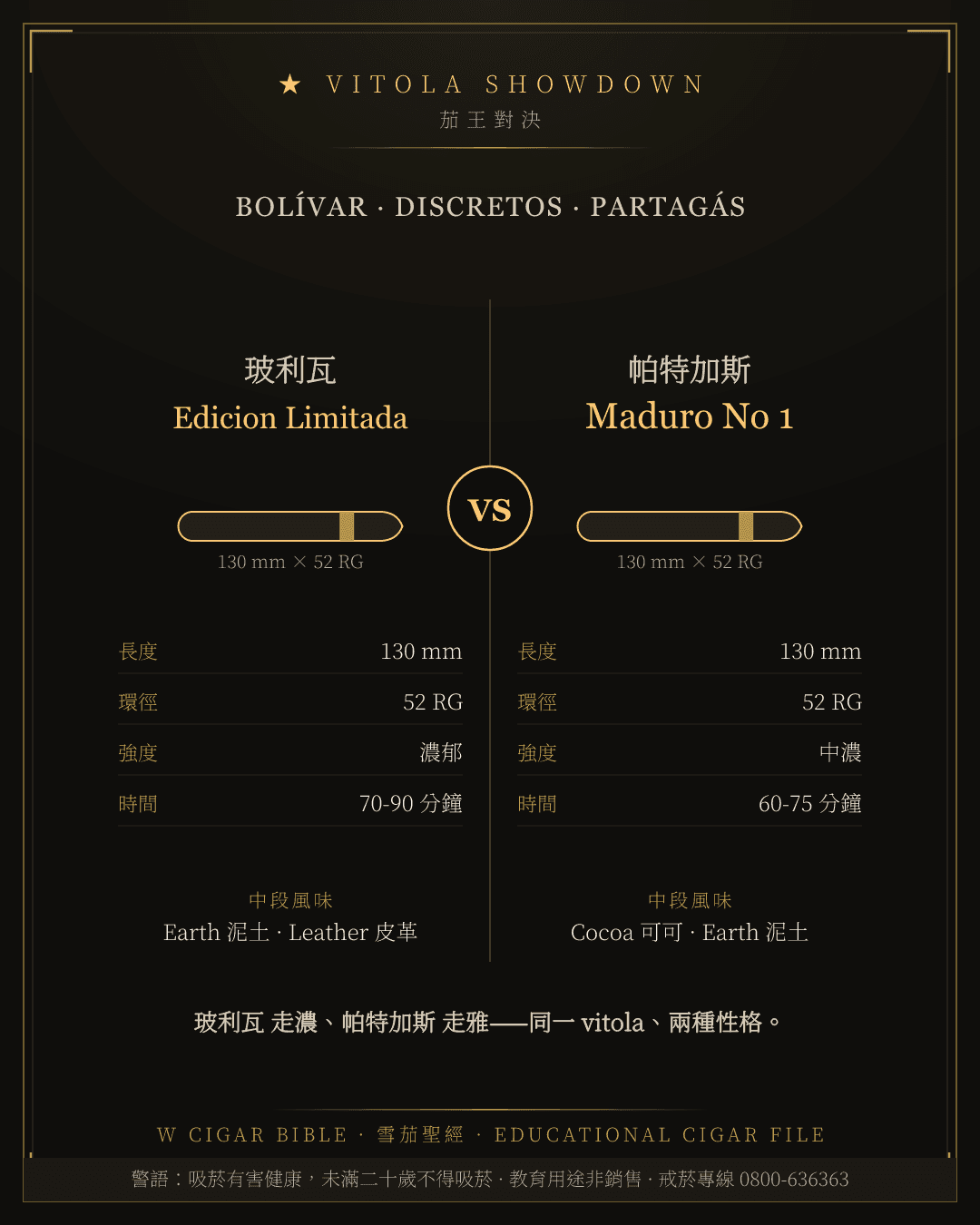
Bolívar Edicion Limitada vs Partagás Maduro No 1
VITOLA SHOWDOWN · Discretos

Cohiba Siglo V vs Partagás 8-9-8 No. 1
VITOLA SHOWDOWN · Dalias
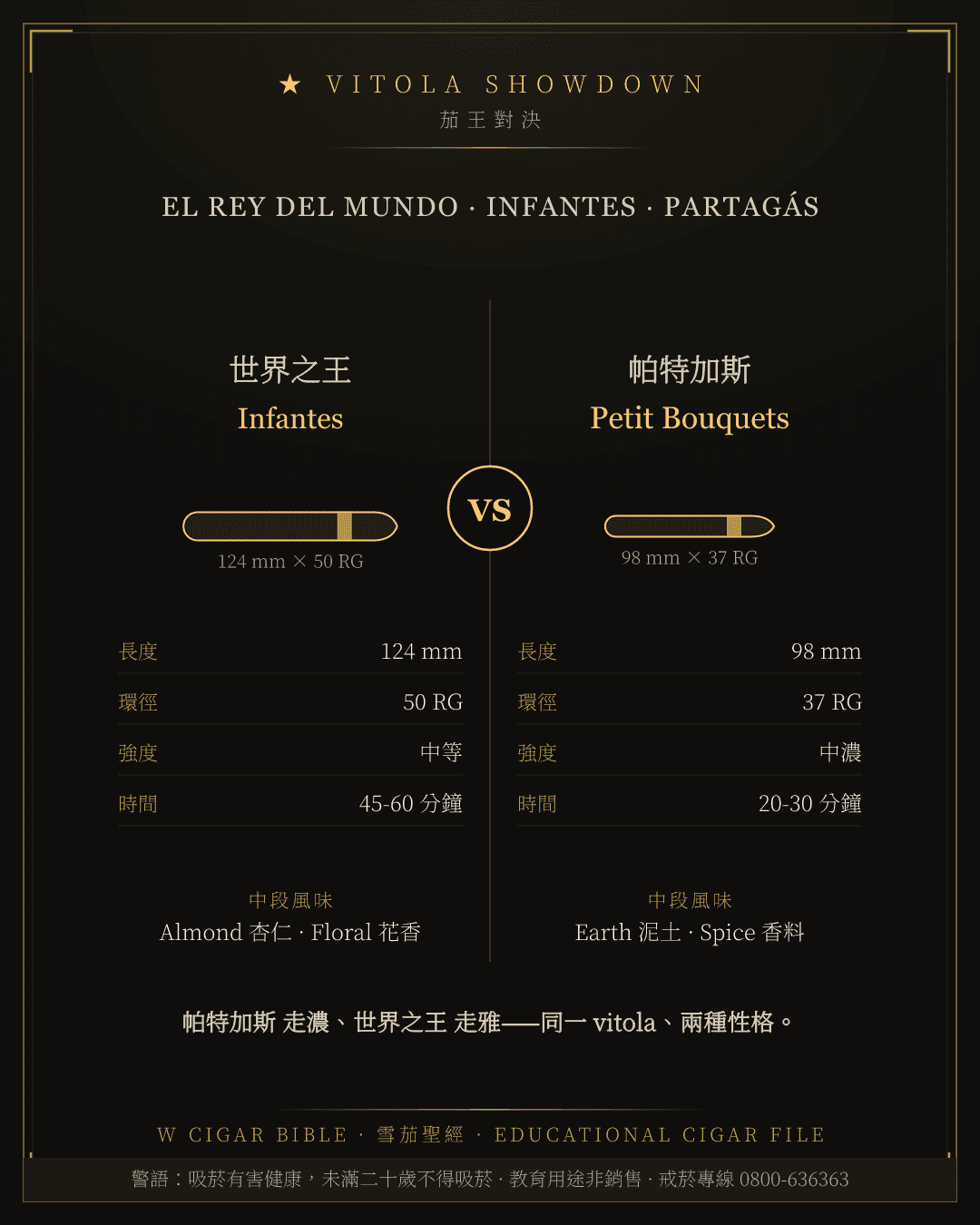
El Rey Del Mundo Infantes vs Partagás Petit Bouquets
VITOLA SHOWDOWN · Infantes
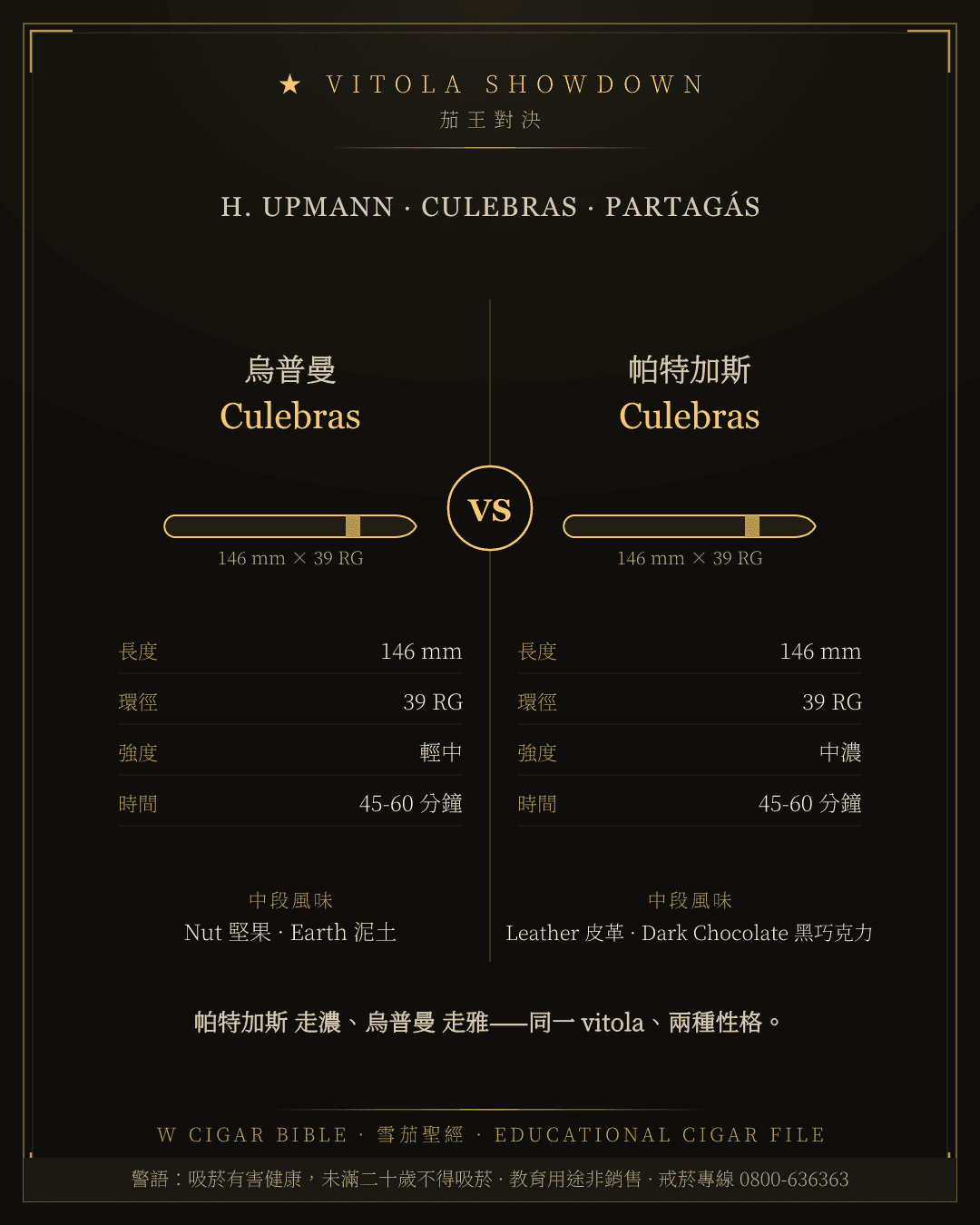
H. Upmann Culebras vs Partagás Culebras
VITOLA SHOWDOWN · Culebras
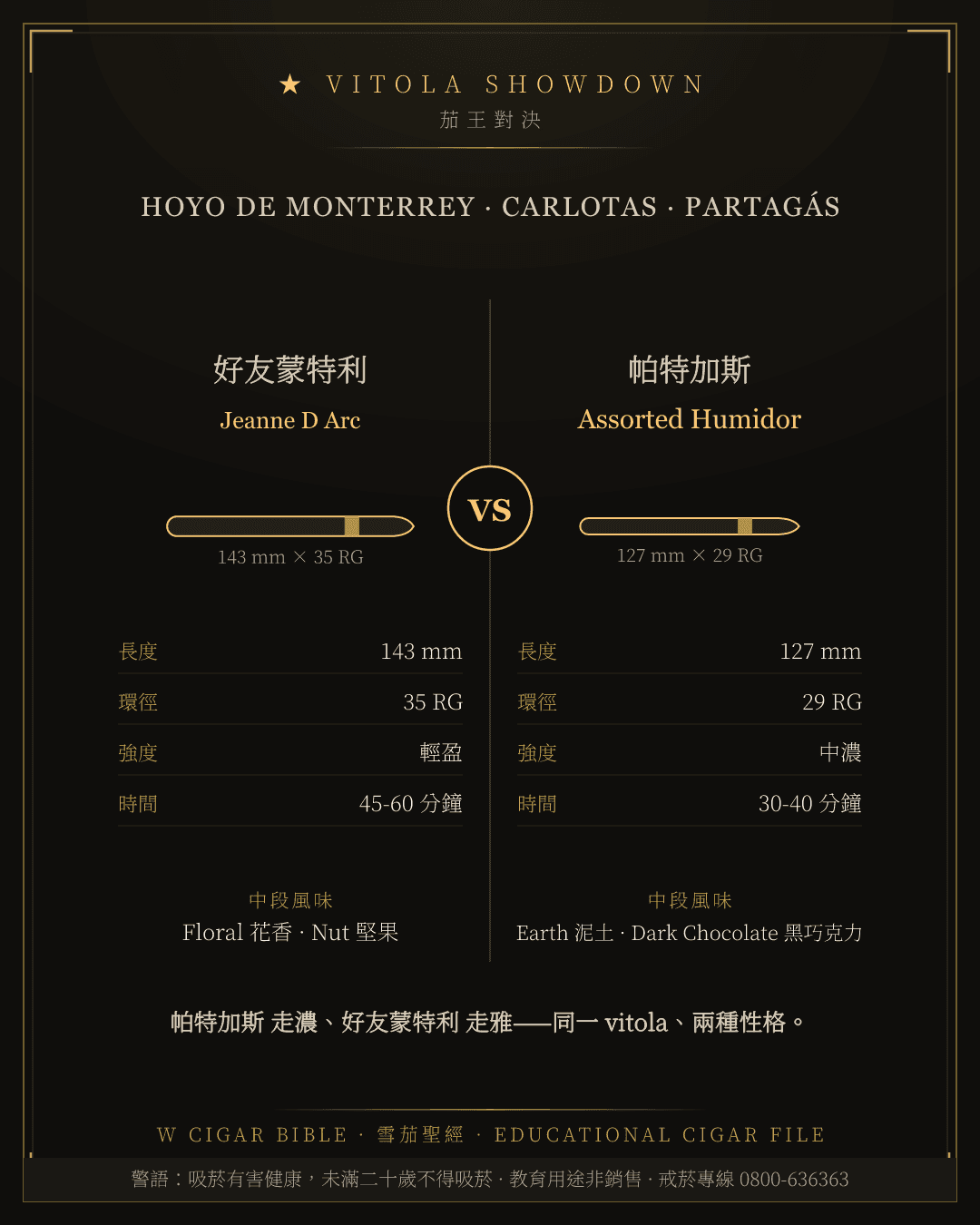
Hoyo De Monterrey Jeanne D Arc vs Partagás Assorted Humidor
VITOLA SHOWDOWN · Carlotas
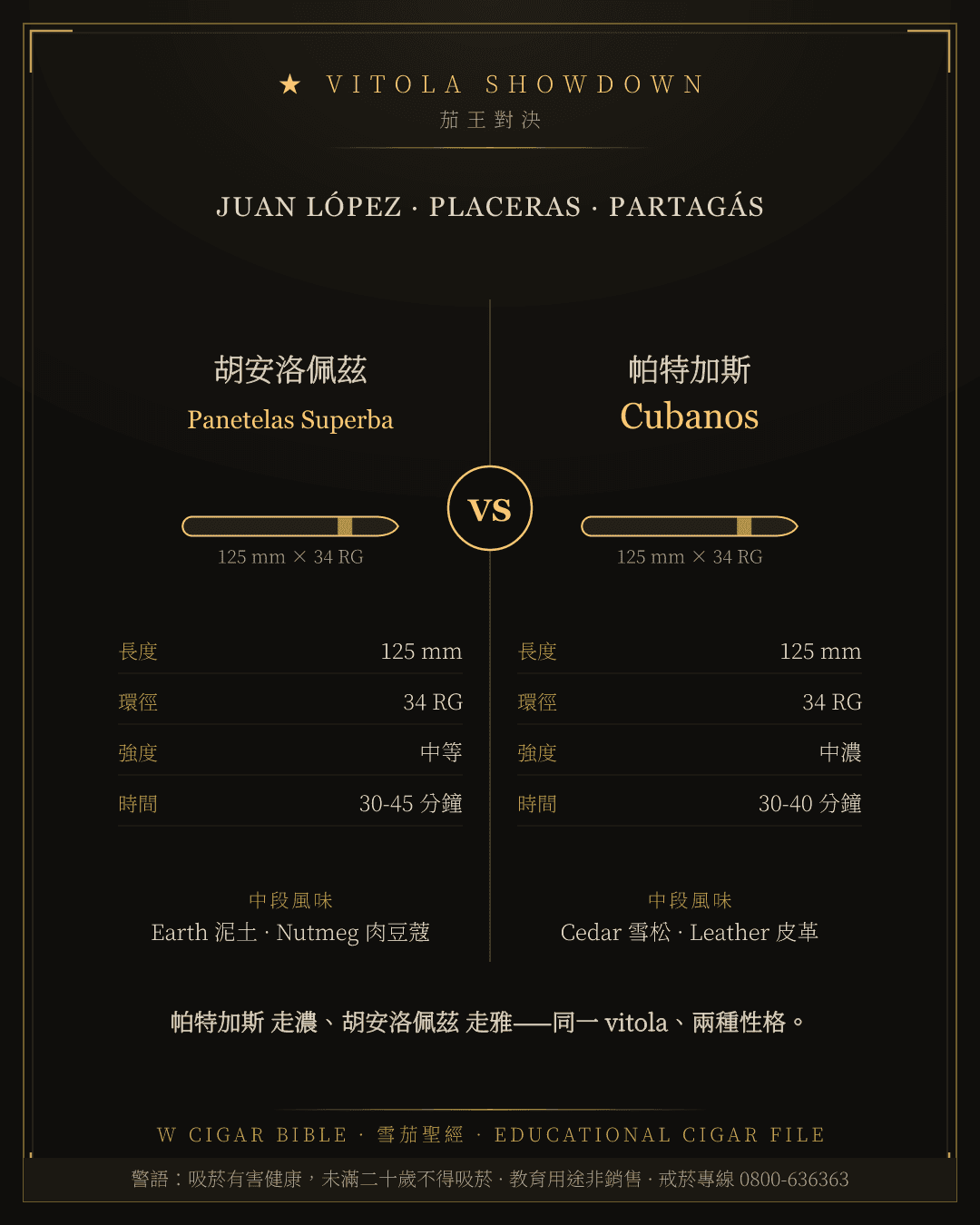
Juan López Panetelas Superba vs Partagás Cubanos
VITOLA SHOWDOWN · Placeras

La Escepción Belvederes vs Partagás Belvederes
VITOLA SHOWDOWN · Belvederes

La Escepción Perfectos vs Partagás Perfectos
VITOLA SHOWDOWN · Perfectos
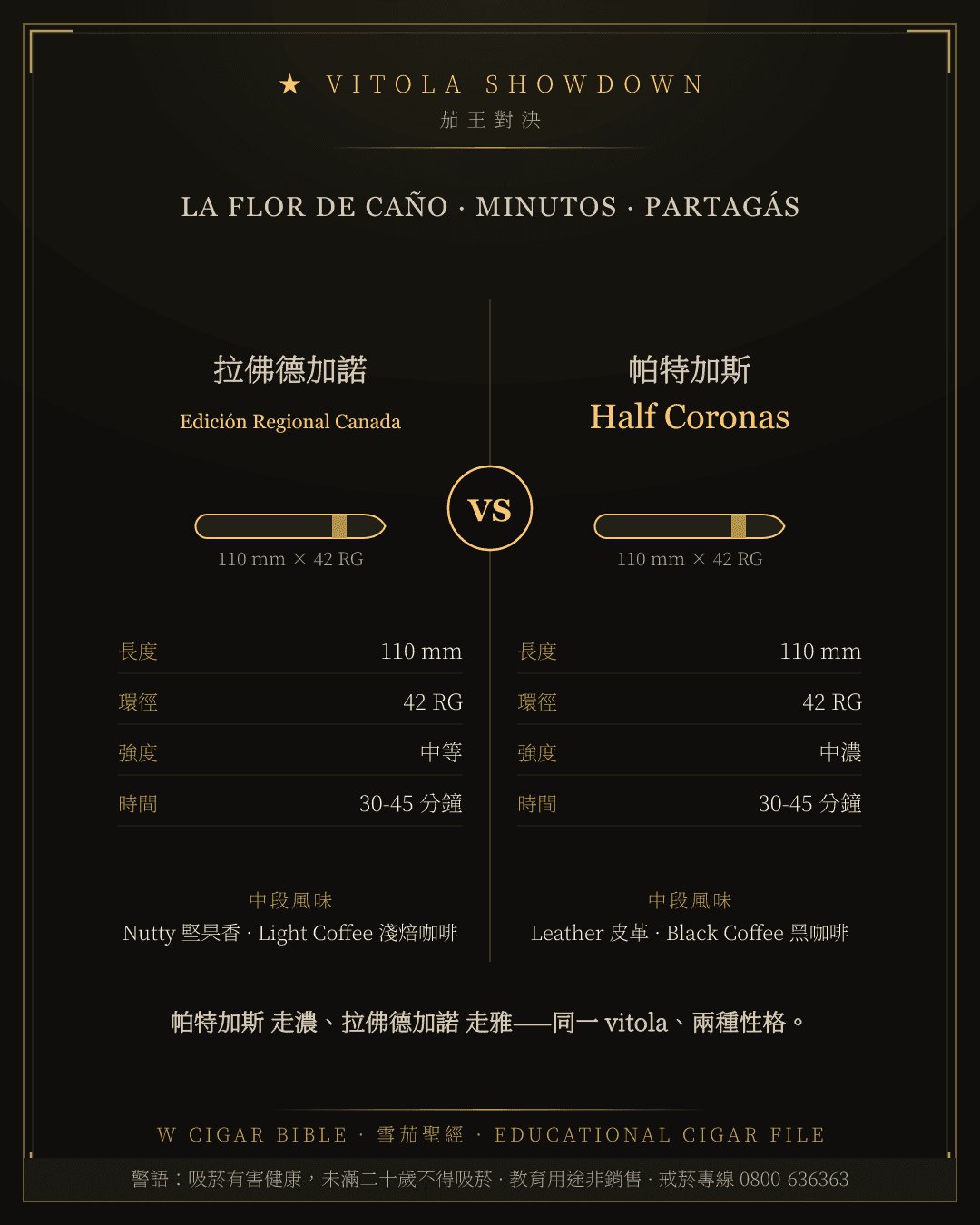
La Flor De Caño Edición Regional Canada vs Partagás Half Coronas
VITOLA SHOWDOWN · Minutos
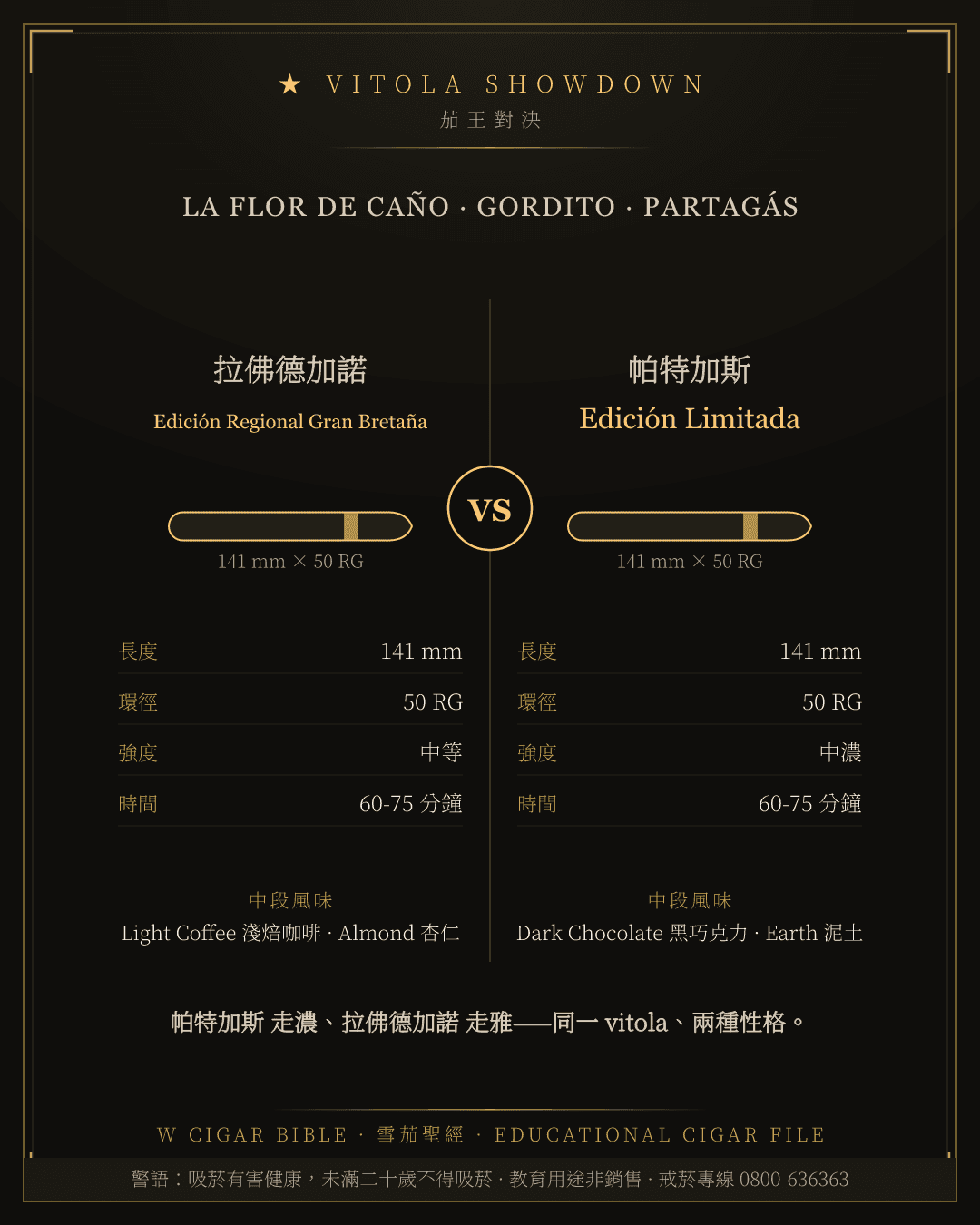
La Flor De Caño Edición Regional Gran Bretaña vs Partagás Edición Limitada
VITOLA SHOWDOWN · Gordito
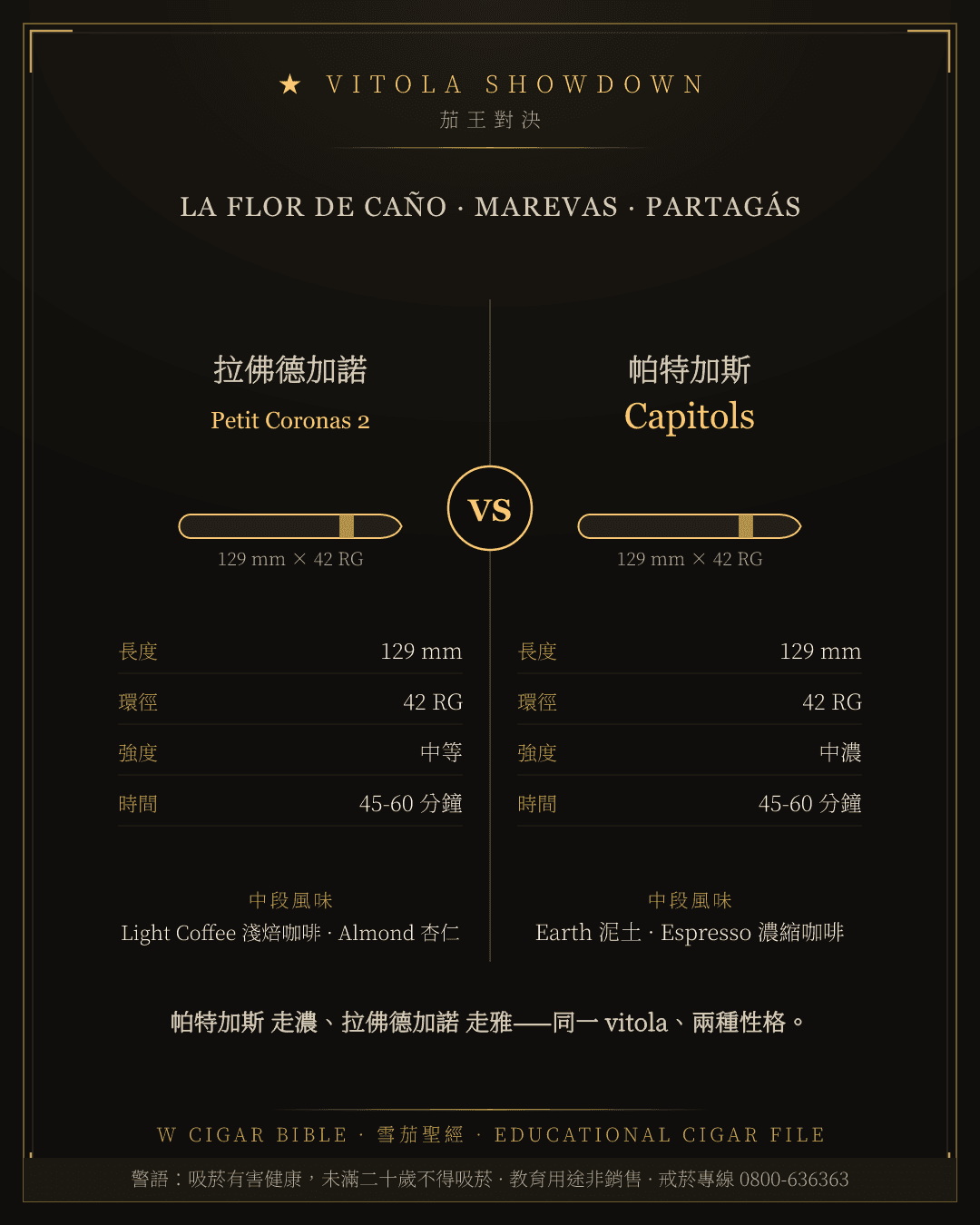
La Flor De Caño Petit Coronas 2 vs Partagás Capitols
VITOLA SHOWDOWN · Marevas
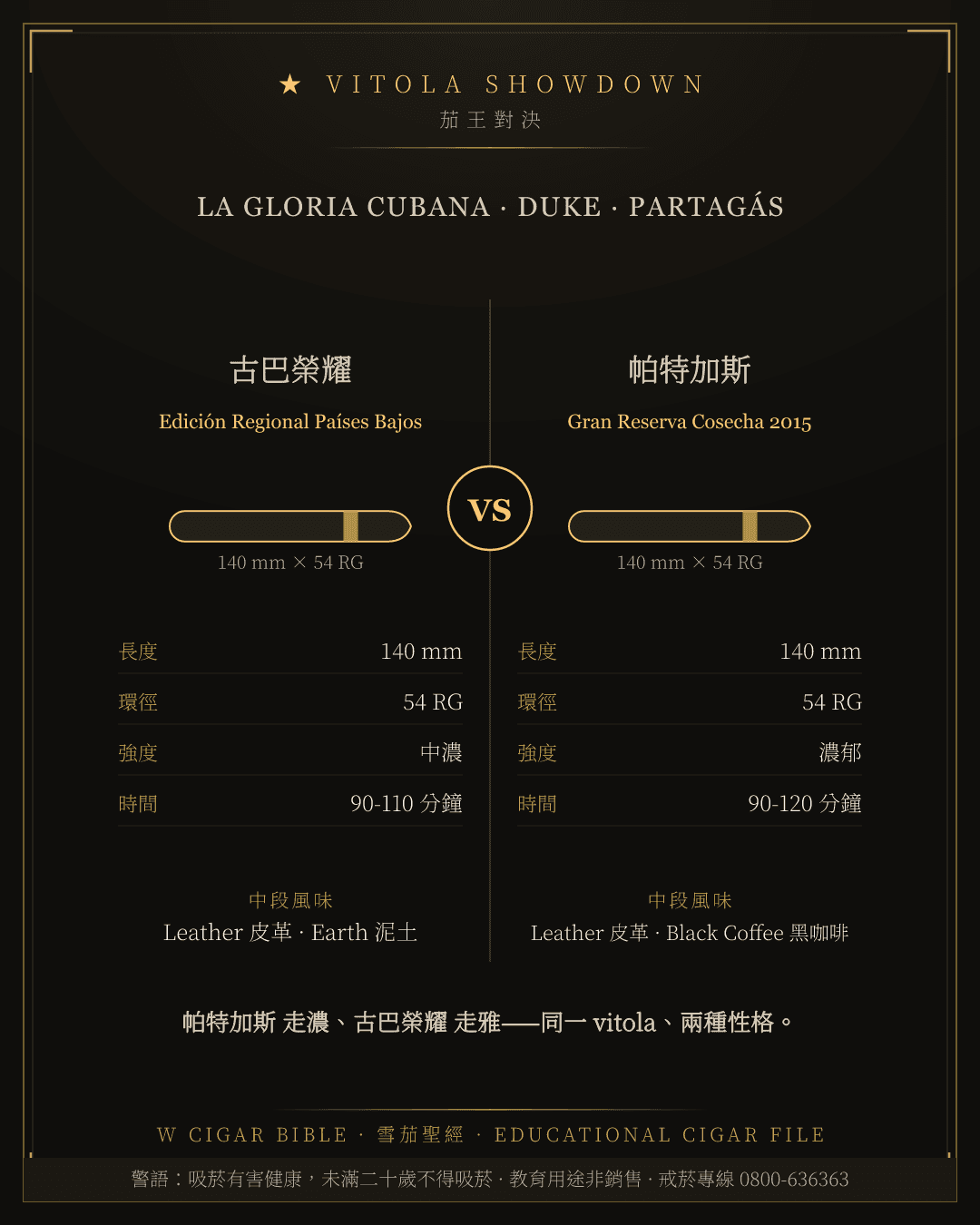
La Gloria Cubana Edición Regional Países Bajos vs Partagás Gran Reserva Cosecha 2015
VITOLA SHOWDOWN · Duke
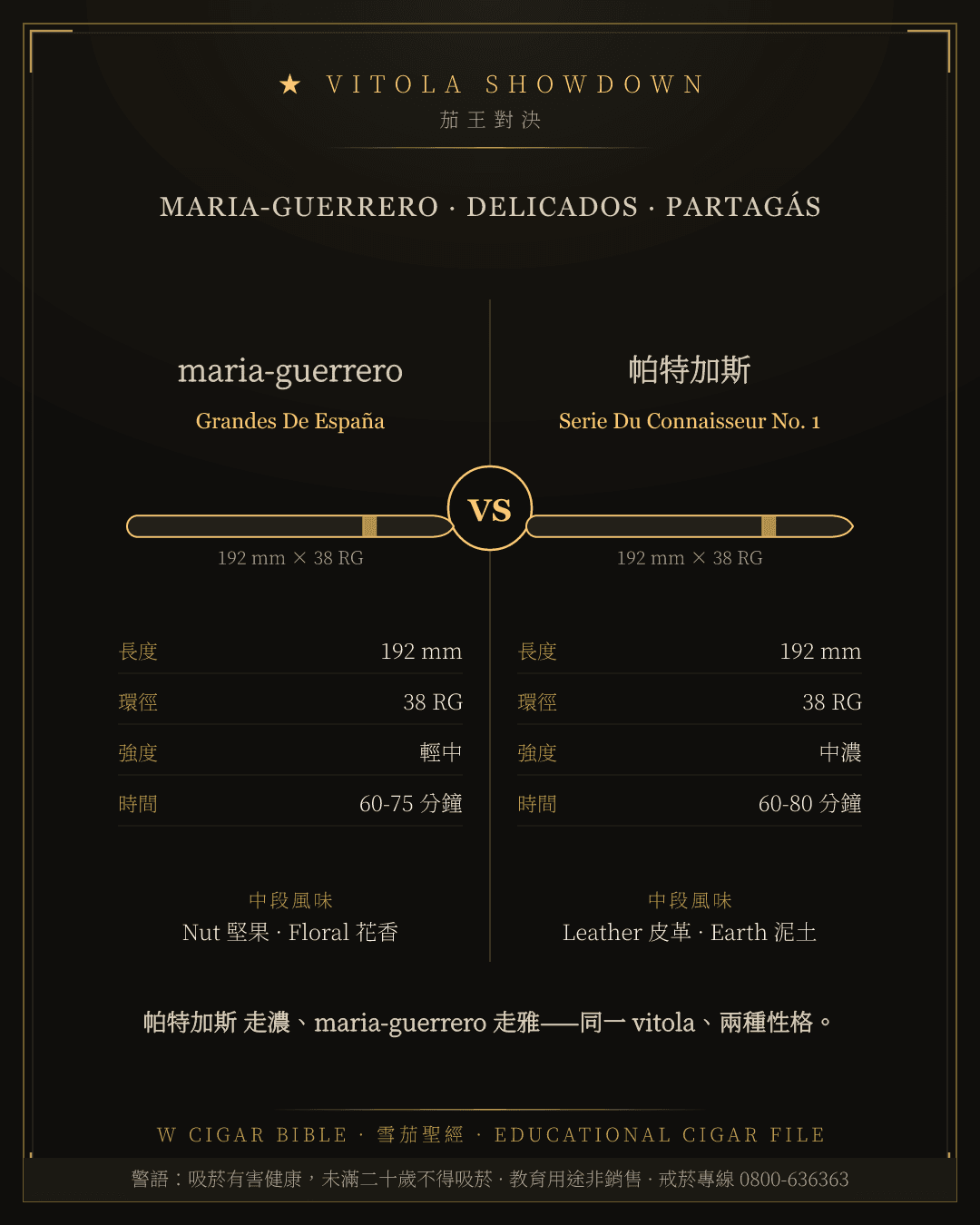
Maria-Guerrero Grandes De España vs Partagás Serie Du Connaisseur No. 1
VITOLA SHOWDOWN · Delicados
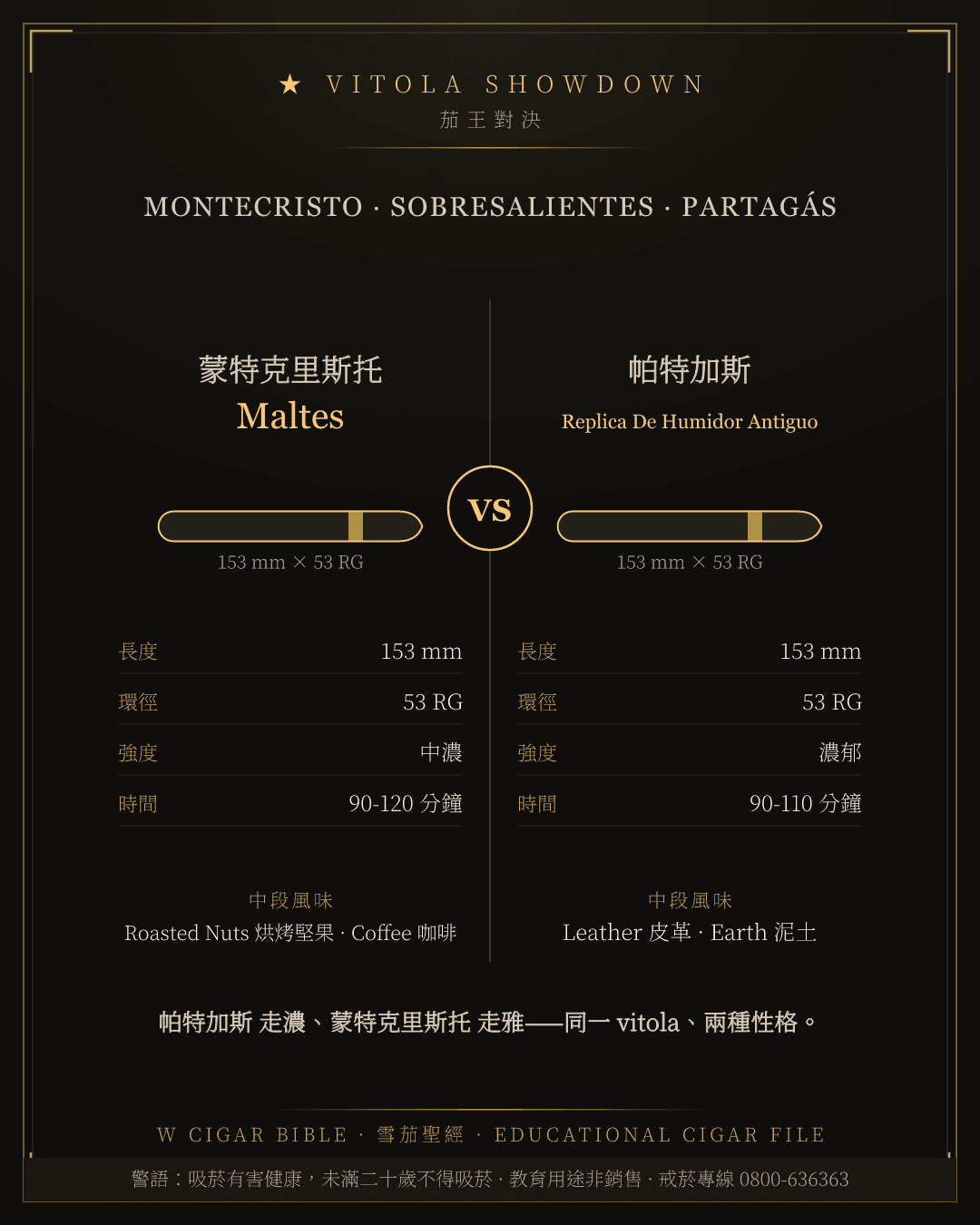
Montecristo Maltes vs Partagás Replica De Humidor Antiguo
VITOLA SHOWDOWN · Sobresalientes

Montecristo Master vs Partagás Serie D No. 4
VITOLA SHOWDOWN · Robustos

Montecristo Replica De Humidor Antiguo vs Partagás Gran Reserva Cosecha 2007
VITOLA SHOWDOWN · Prominentes
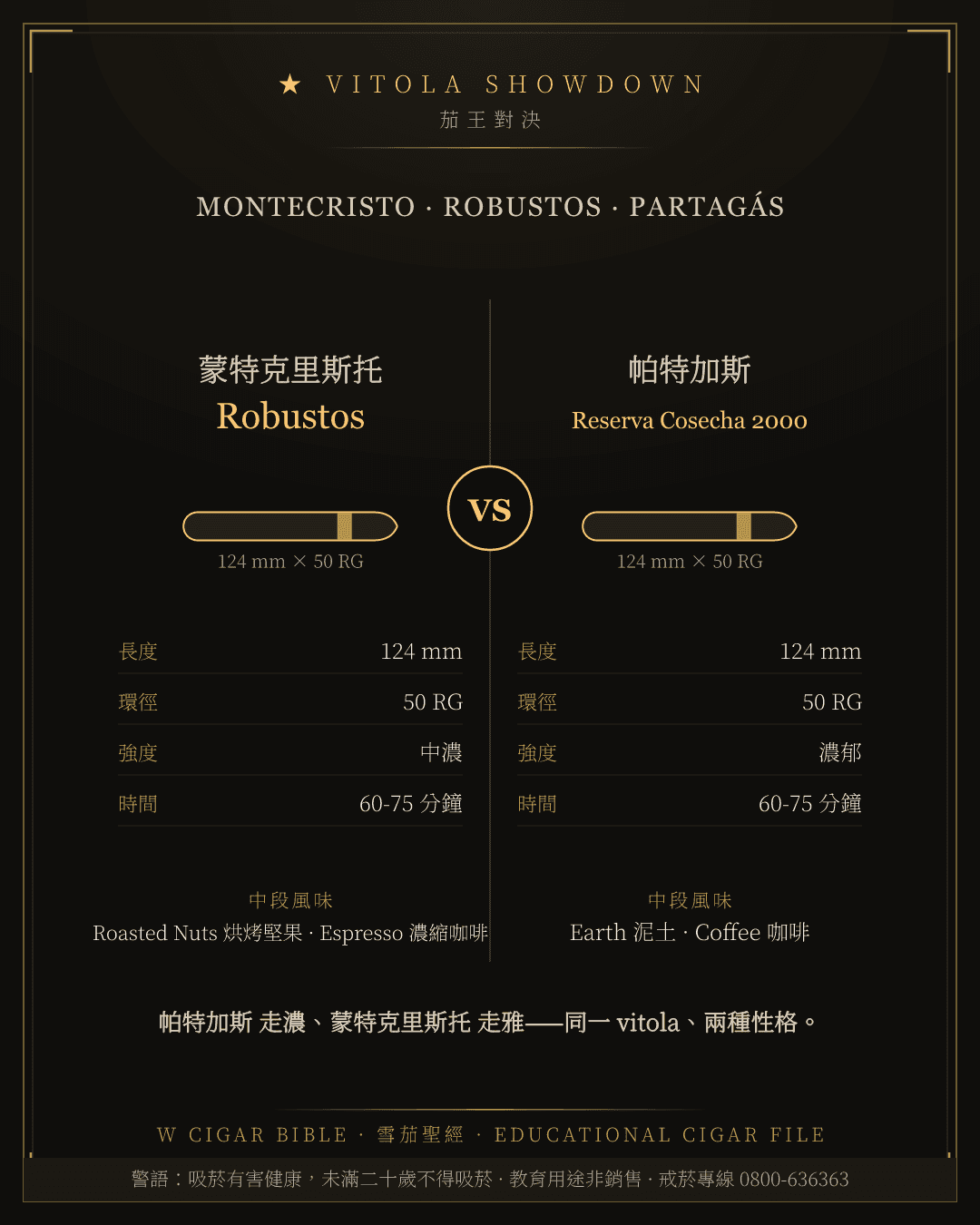
Montecristo Robustos vs Partagás Reserva Cosecha 2000
VITOLA SHOWDOWN · Robustos
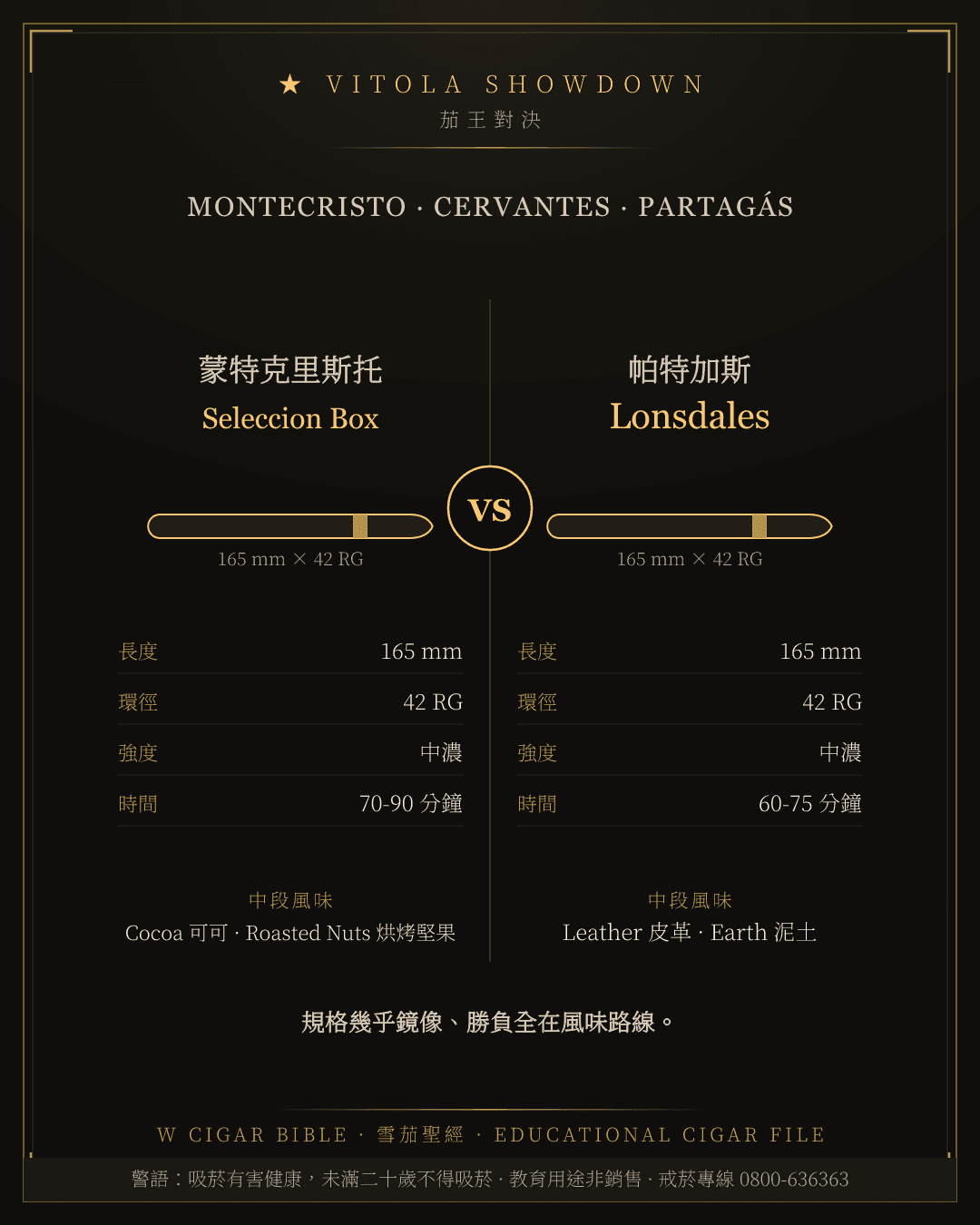
Montecristo Seleccion Box vs Partagás Lonsdales
VITOLA SHOWDOWN · Cervantes

Montecristo Tubos vs Partagás Coronas Grandes
VITOLA SHOWDOWN · Coronas Grandes
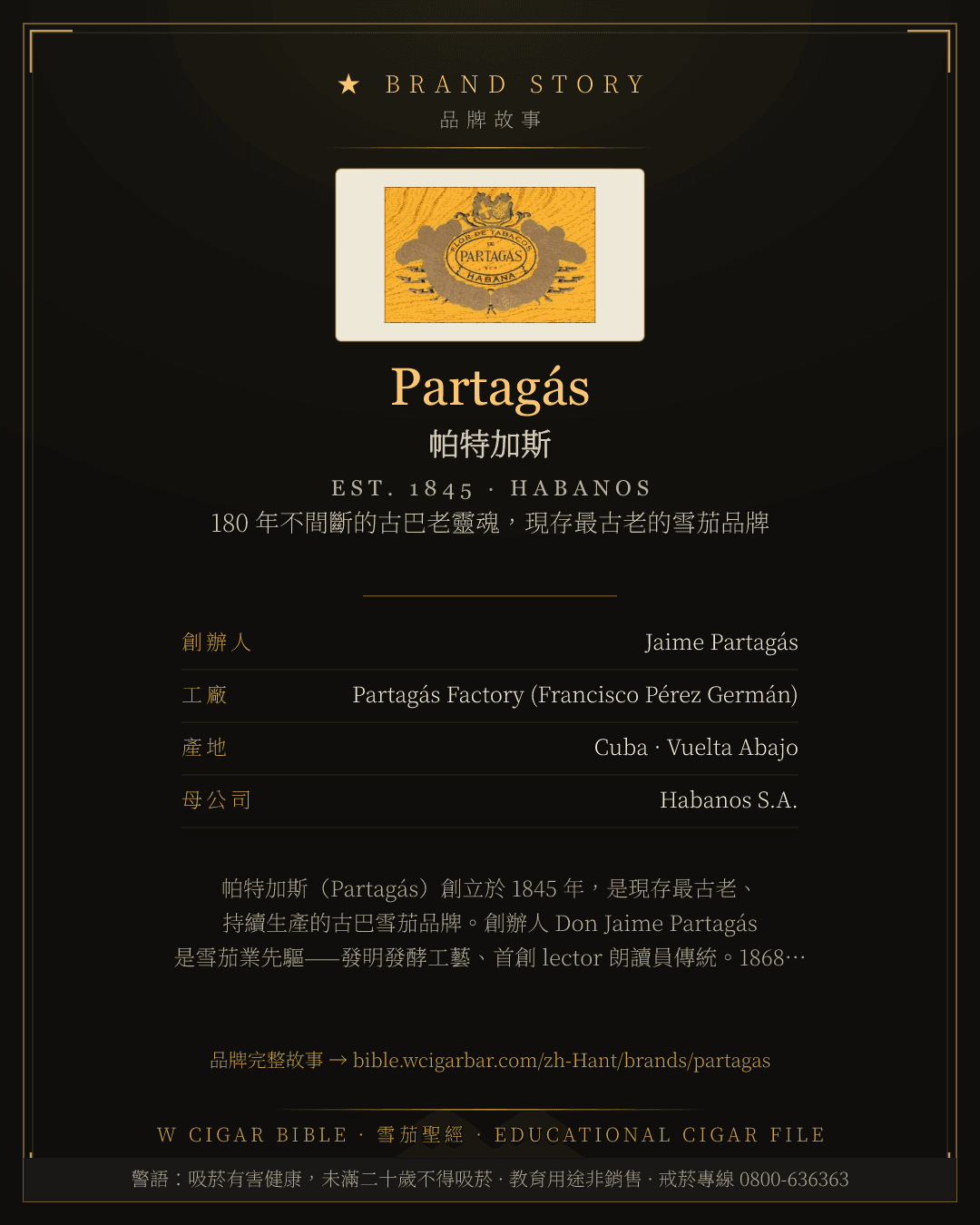
Partagás · 帕特加斯 品牌故事
BRAND STORY · EST. 1845

Partagás 150 Aniversario · AH 1995 · 帕特加斯
AH 1995 · 週年木盒紀念版 Aniversario Humidor · 雪茄檔案

Partagás 150 Aniversario 搭配指南 · 帕特加斯
PAIRING GUIDE · 搭配指南
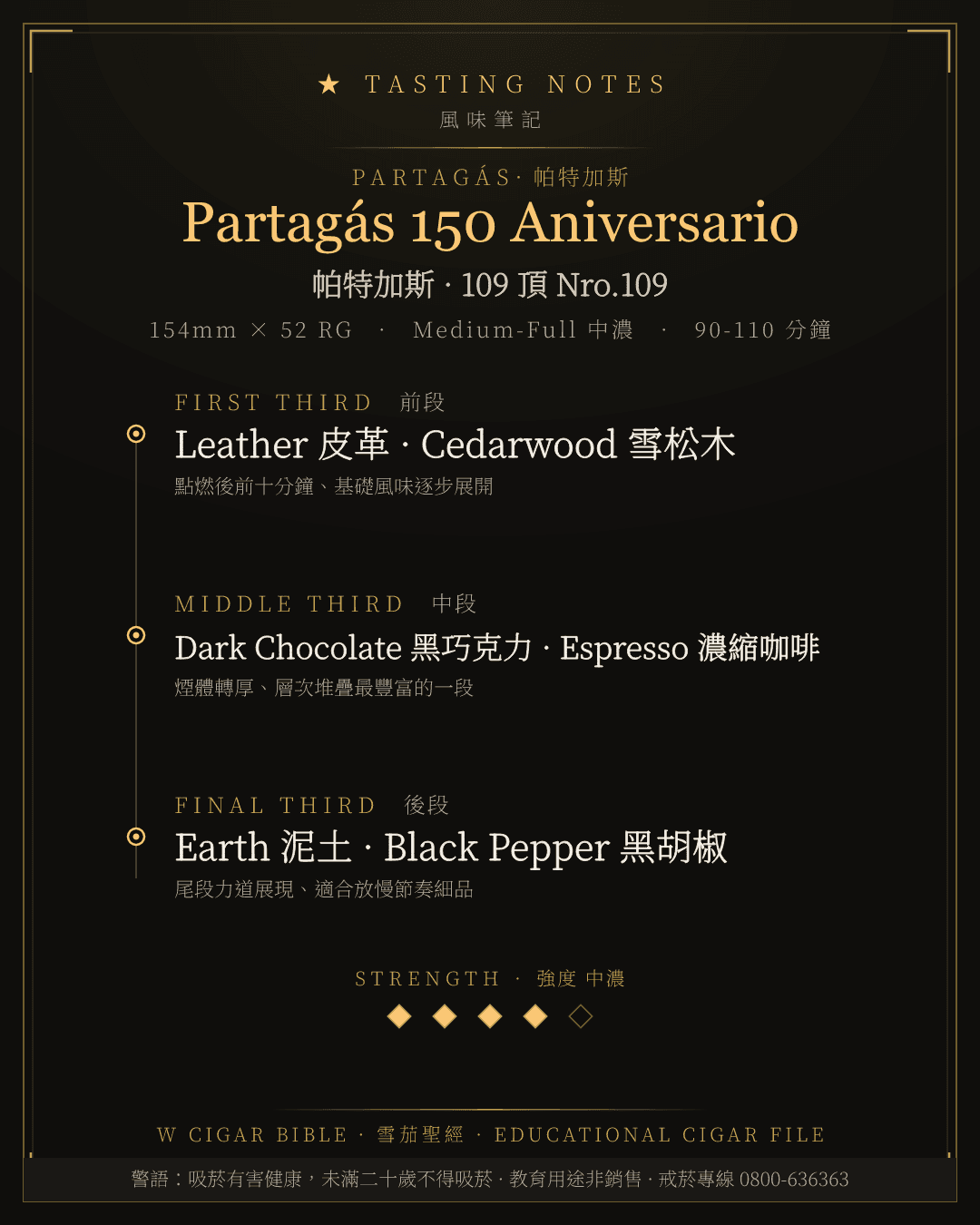
Partagás 150 Aniversario 風味筆記 · 帕特加斯
TASTING NOTES · 風味筆記
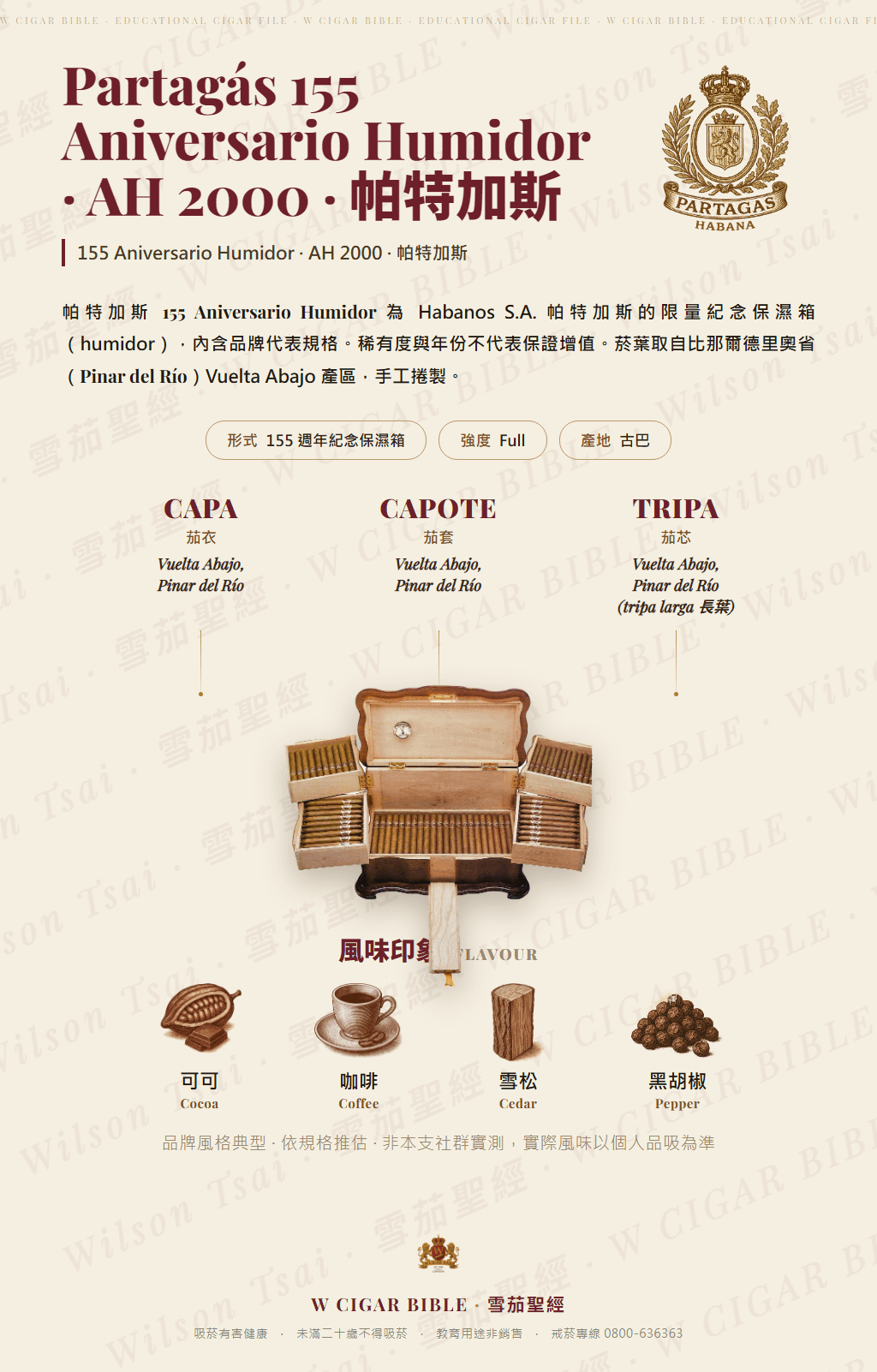
Partagás 155 Aniversario Humidor · AH 2000 · 帕特加斯
AH 2000 · 週年木盒紀念版 Aniversario Humidor · 雪茄檔案

Partagás 160 Aniversario · AH 2005 · 帕特加斯
AH 2005 · 週年木盒紀念版 Aniversario Humidor · 雪茄檔案

Partagás 160 Aniversario 搭配指南 · 帕特加斯
PAIRING GUIDE · 搭配指南
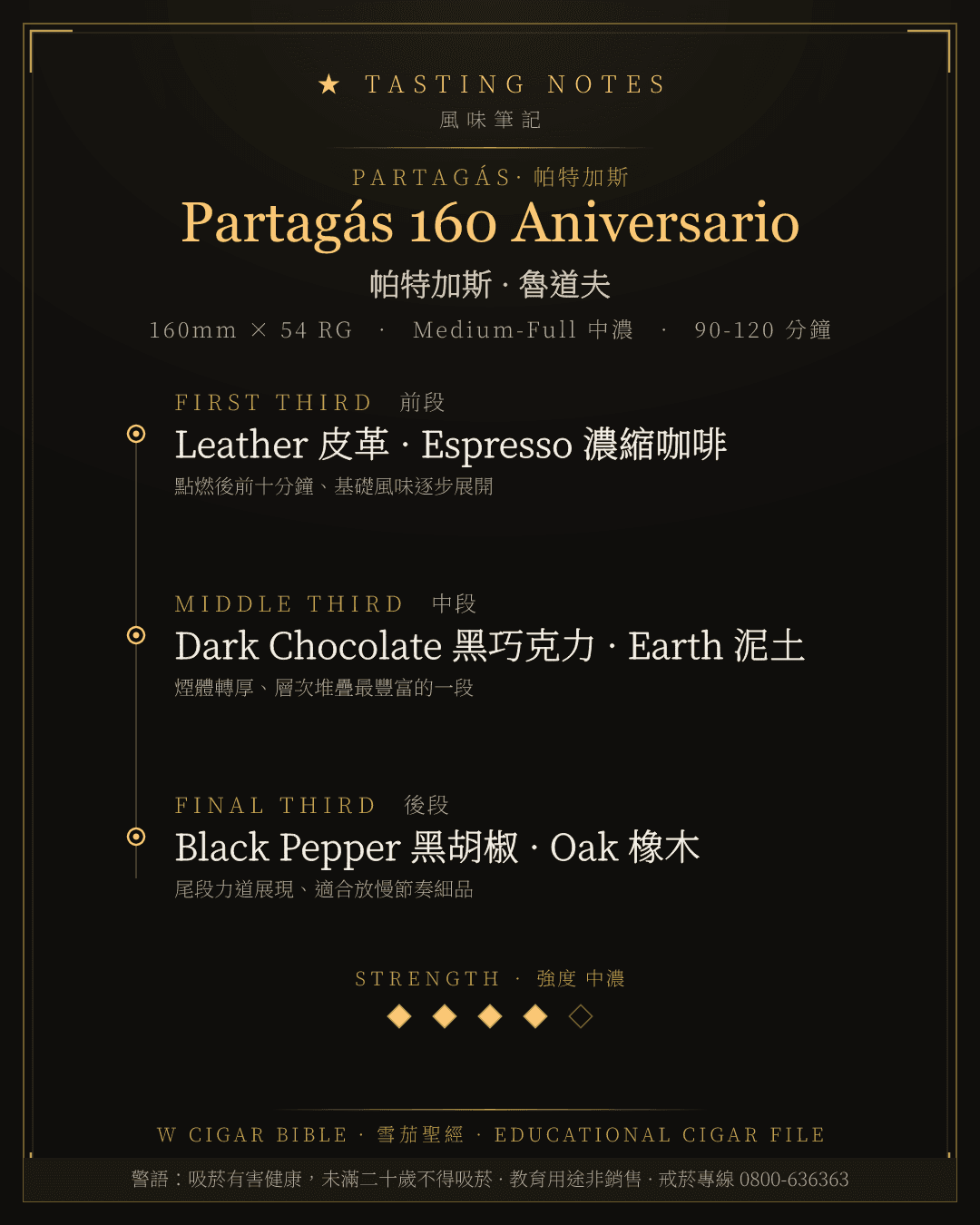
Partagás 160 Aniversario 風味筆記 · 帕特加斯
TASTING NOTES · 風味筆記

Partagás 165 Aniversario Humidor · AH 2010 · 帕特加斯
AH 2010 · 週年木盒紀念版 Aniversario Humidor · 雪茄檔案

Partagás 165 Aniversario 搭配指南 · 帕特加斯
PAIRING GUIDE · 搭配指南
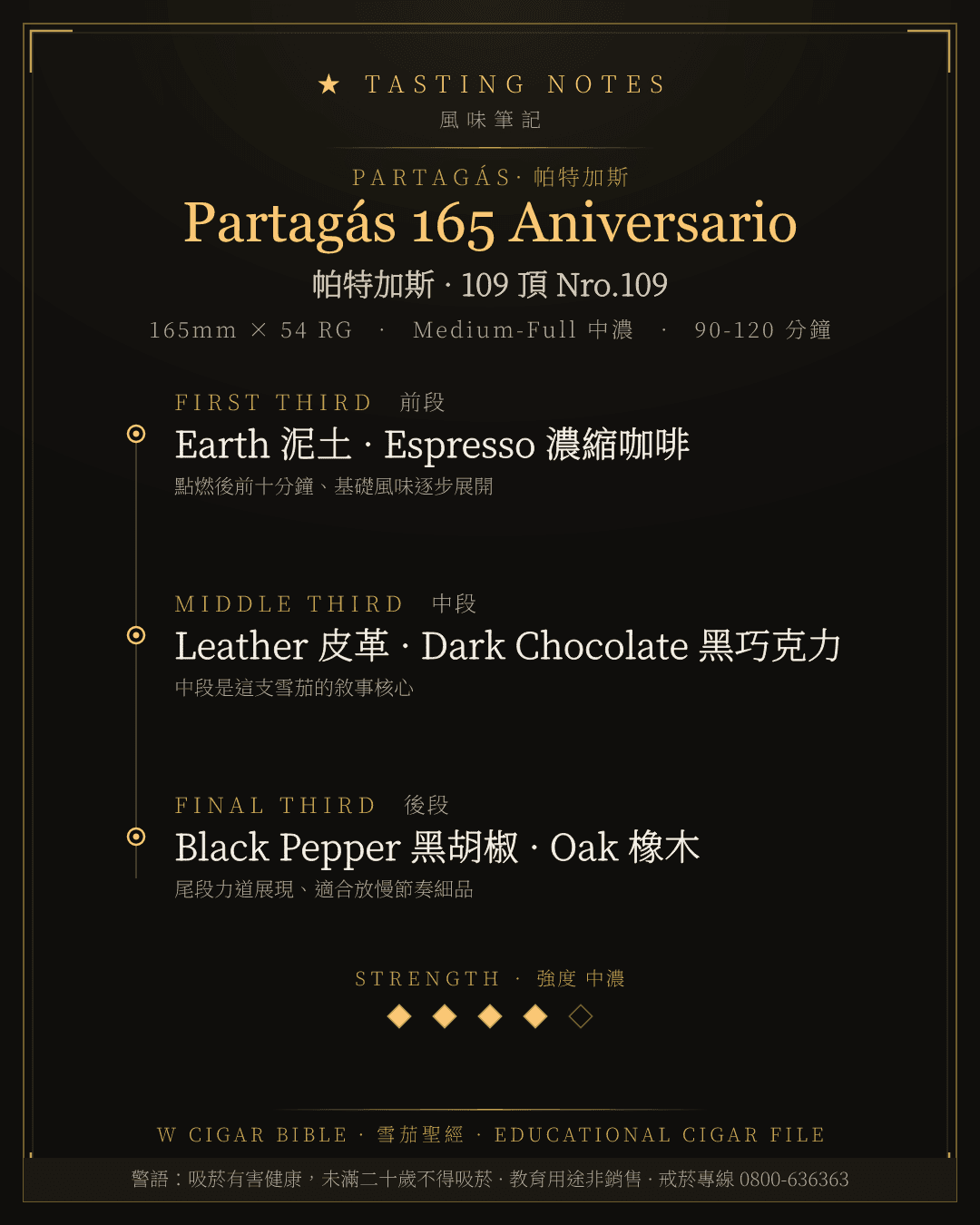
Partagás 165 Aniversario 風味筆記 · 帕特加斯
TASTING NOTES · 風味筆記
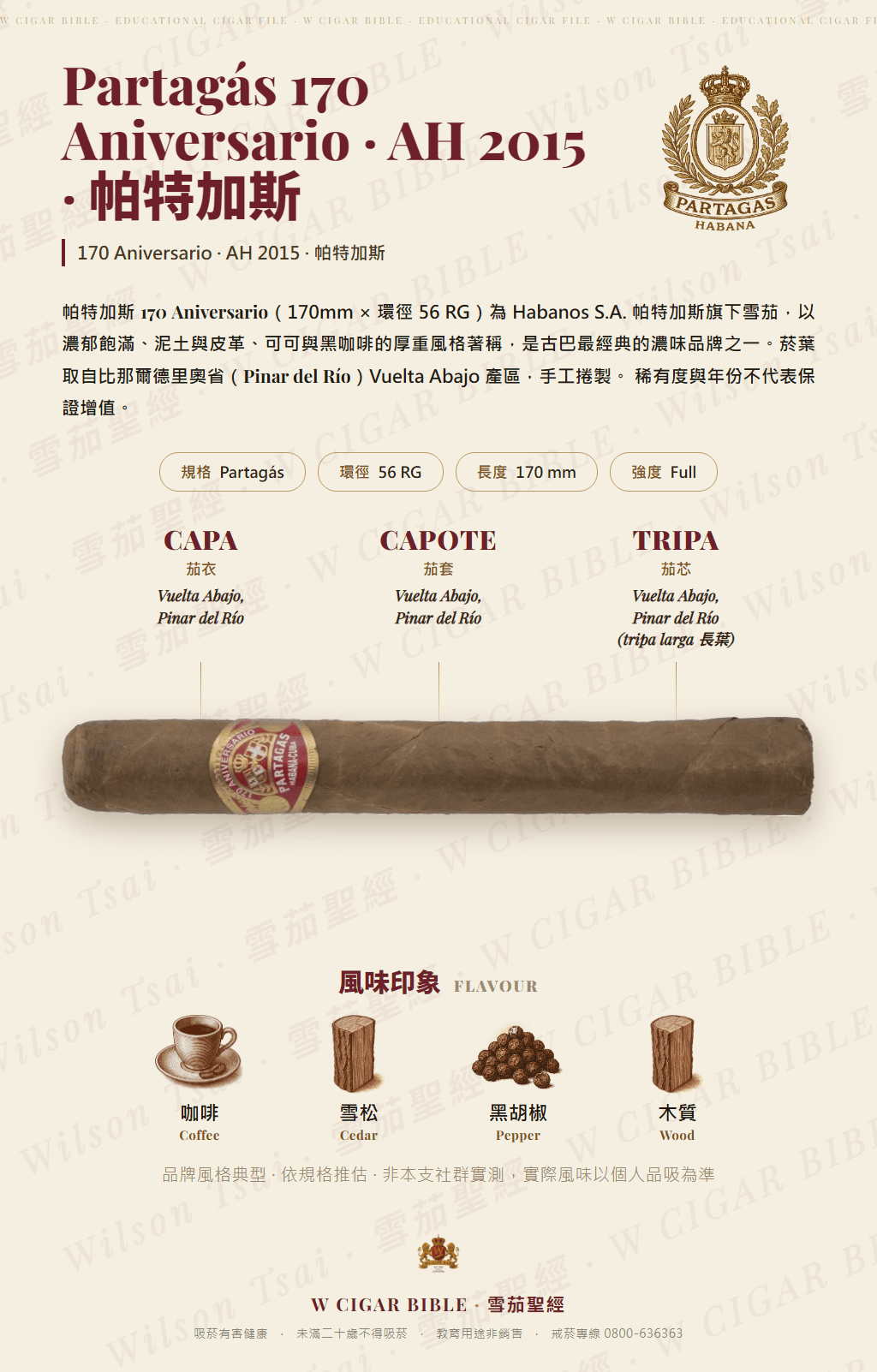
Partagás 170 Aniversario · AH 2015 · 帕特加斯
AH 2015 · 週年木盒紀念版 Aniversario Humidor · 雪茄檔案
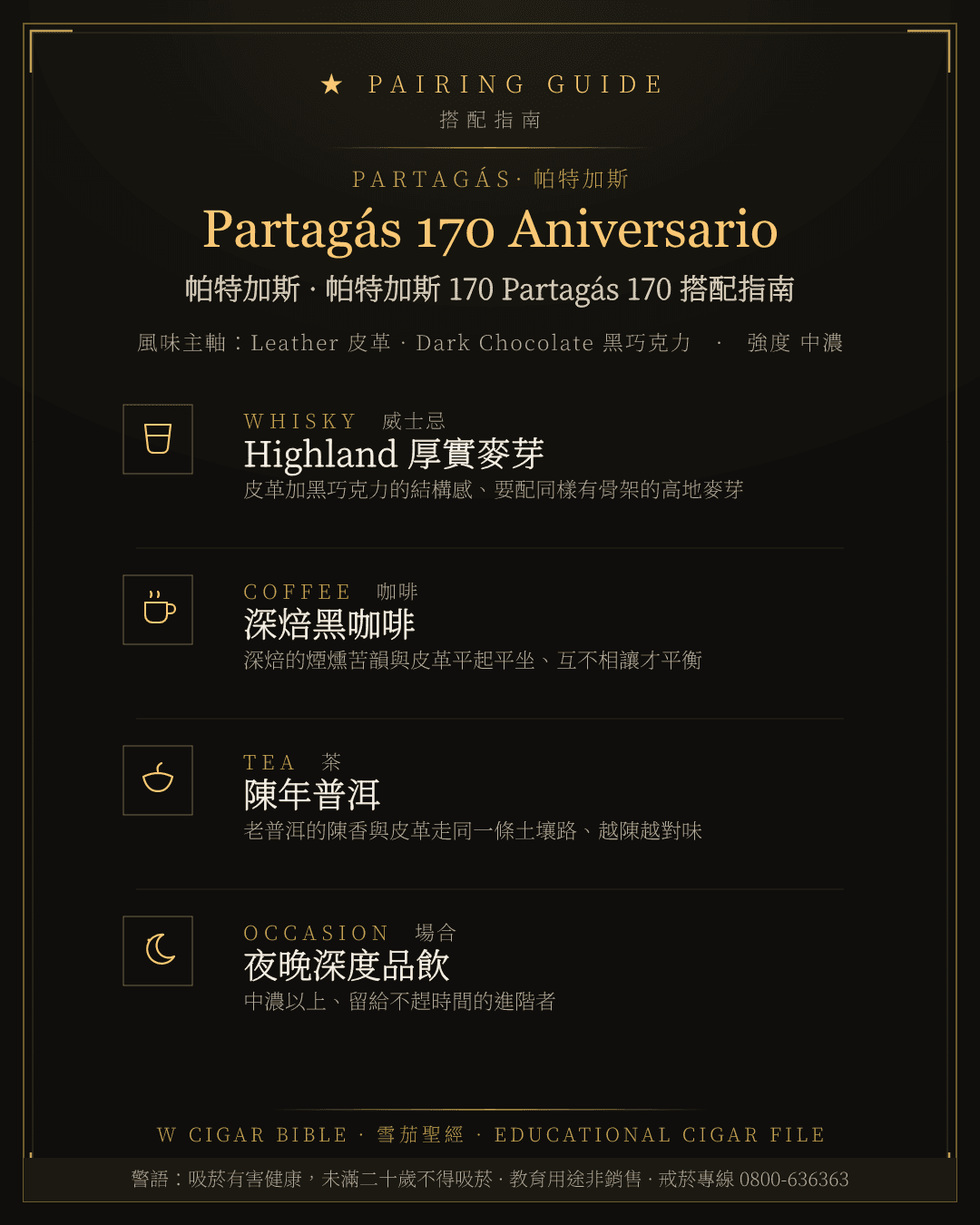
Partagás 170 Aniversario 搭配指南 · 帕特加斯
PAIRING GUIDE · 搭配指南
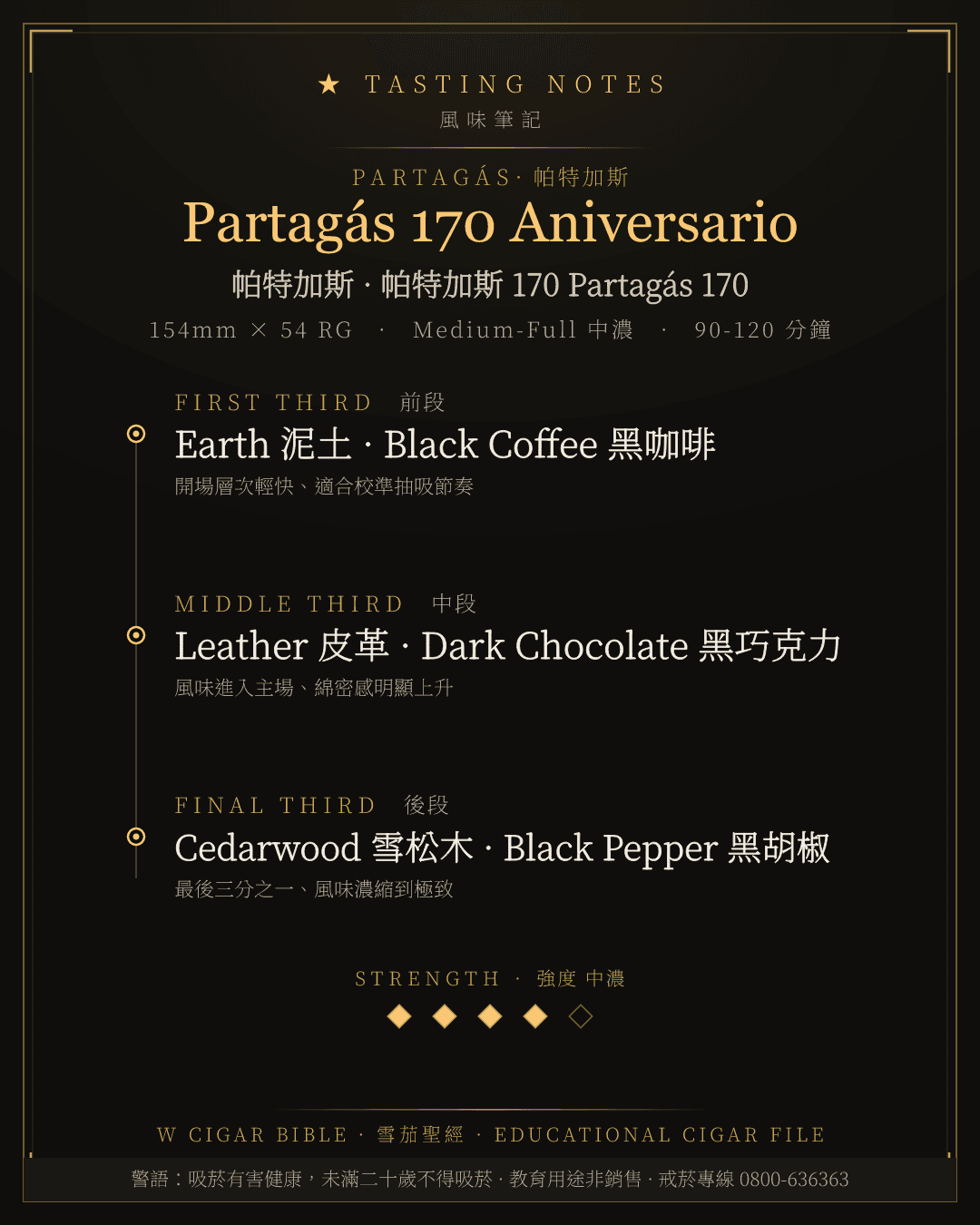
Partagás 170 Aniversario 風味筆記 · 帕特加斯
TASTING NOTES · 風味筆記
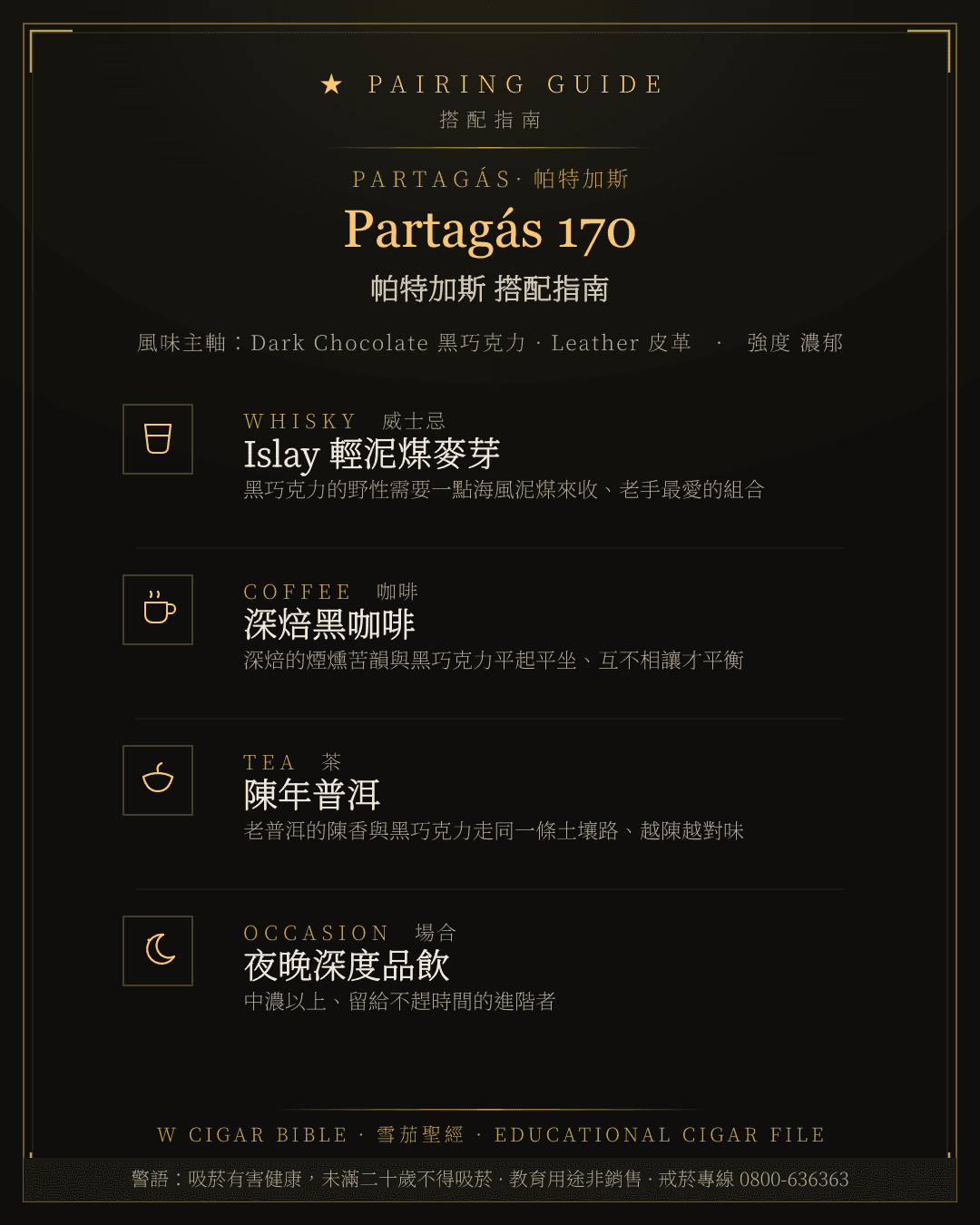
Partagás 170 搭配指南 · 帕特加斯
PAIRING GUIDE · 搭配指南

Partagás 170 風味筆記 · 帕特加斯
TASTING NOTES · 風味筆記
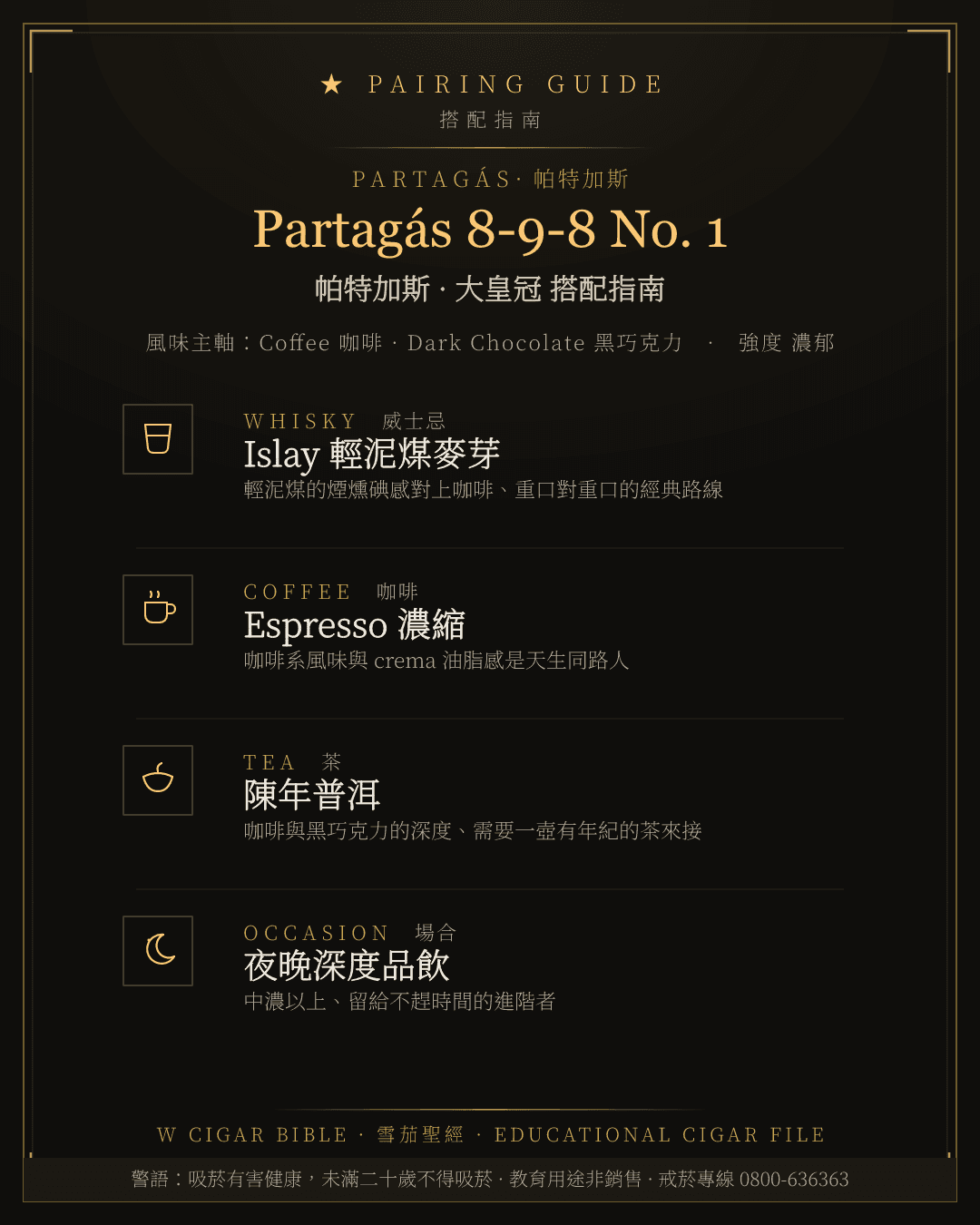
Partagás 8-9-8 No. 1 搭配指南 · 帕特加斯
PAIRING GUIDE · 搭配指南
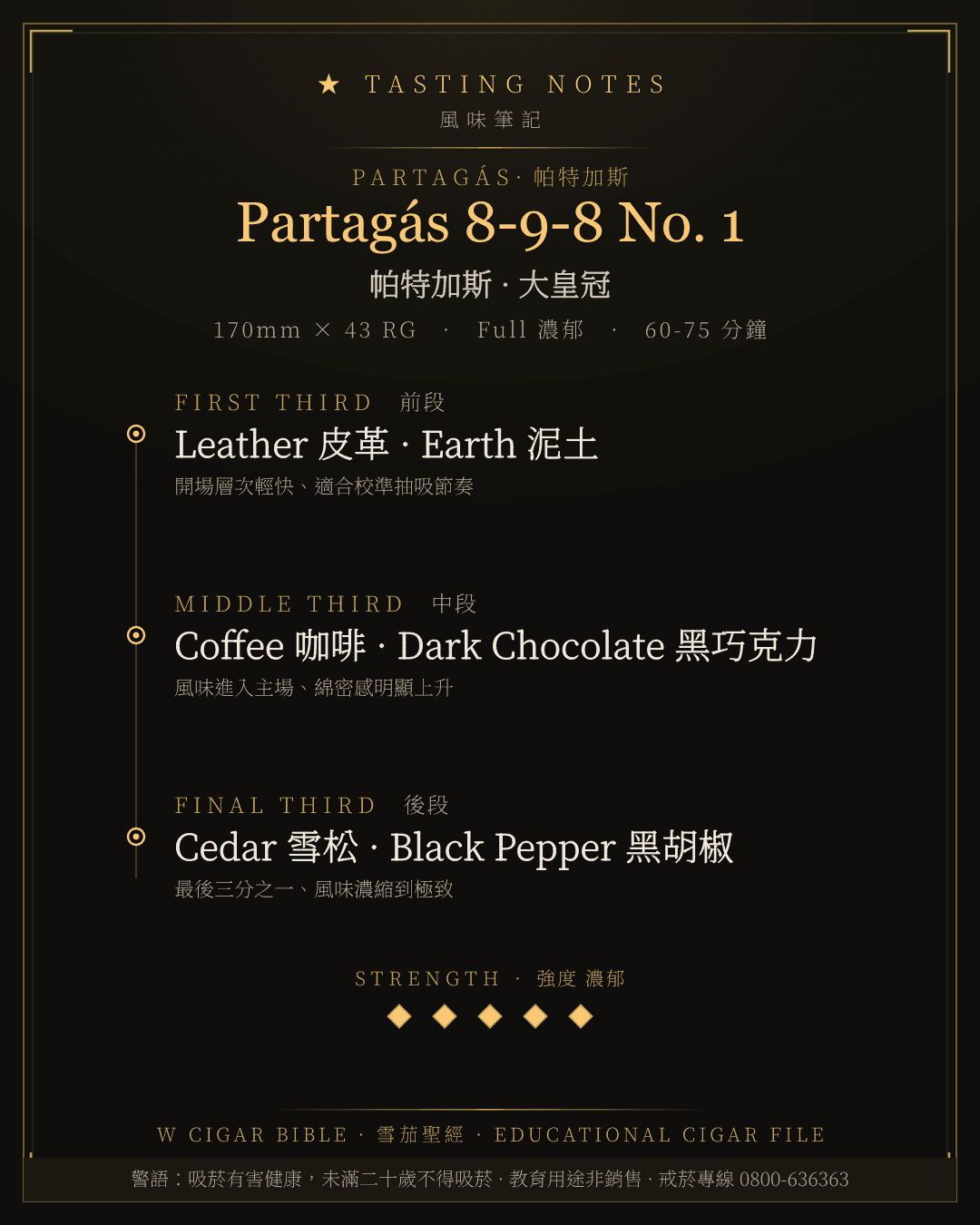
Partagás 8-9-8 No. 1 風味筆記 · 帕特加斯
TASTING NOTES · 風味筆記

Partagás 8-9-8 No. 2 vs Punch Edición Regional Asia Pacífico
VITOLA SHOWDOWN · Dalias
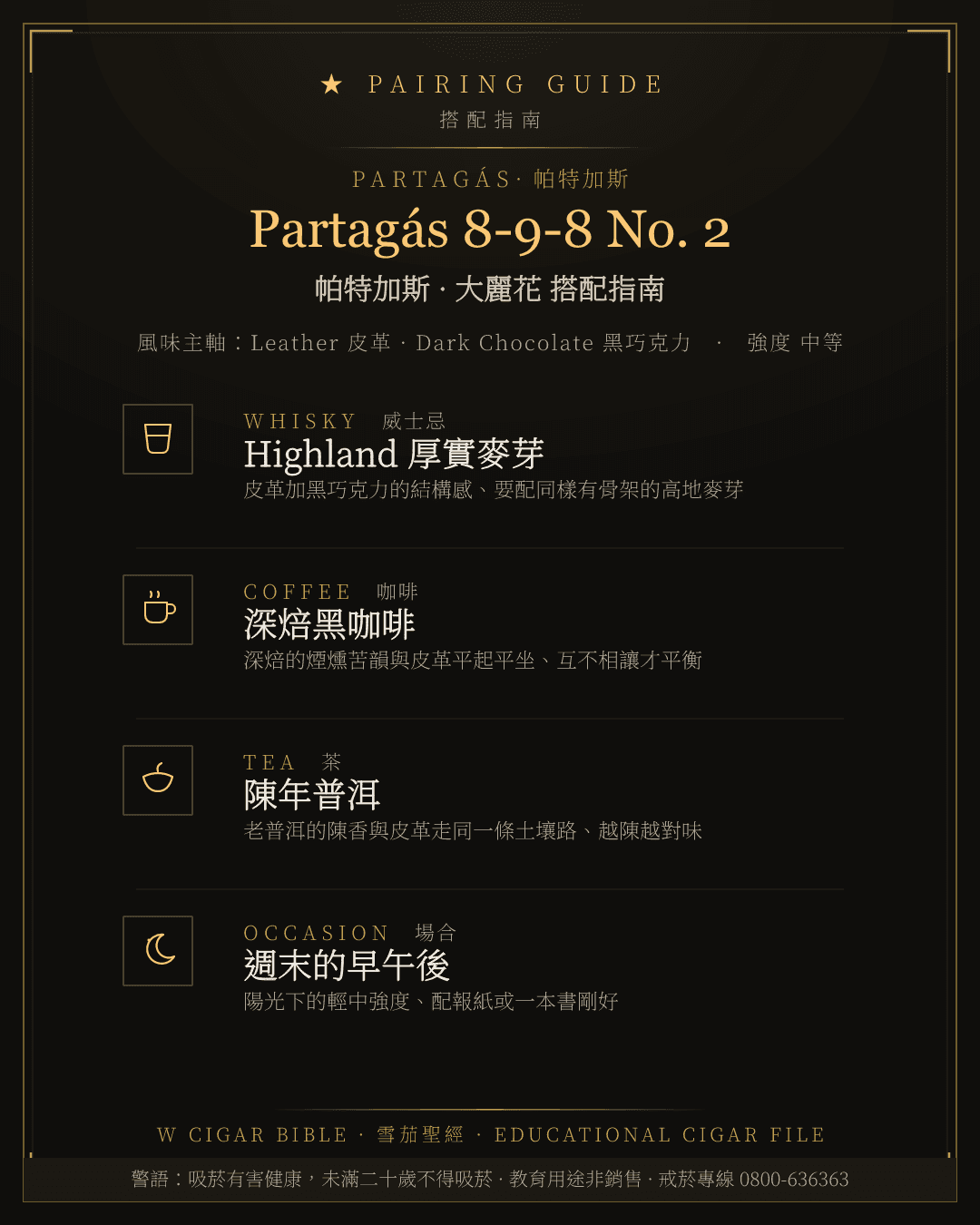
Partagás 8-9-8 No. 2 搭配指南 · 帕特加斯
PAIRING GUIDE · 搭配指南
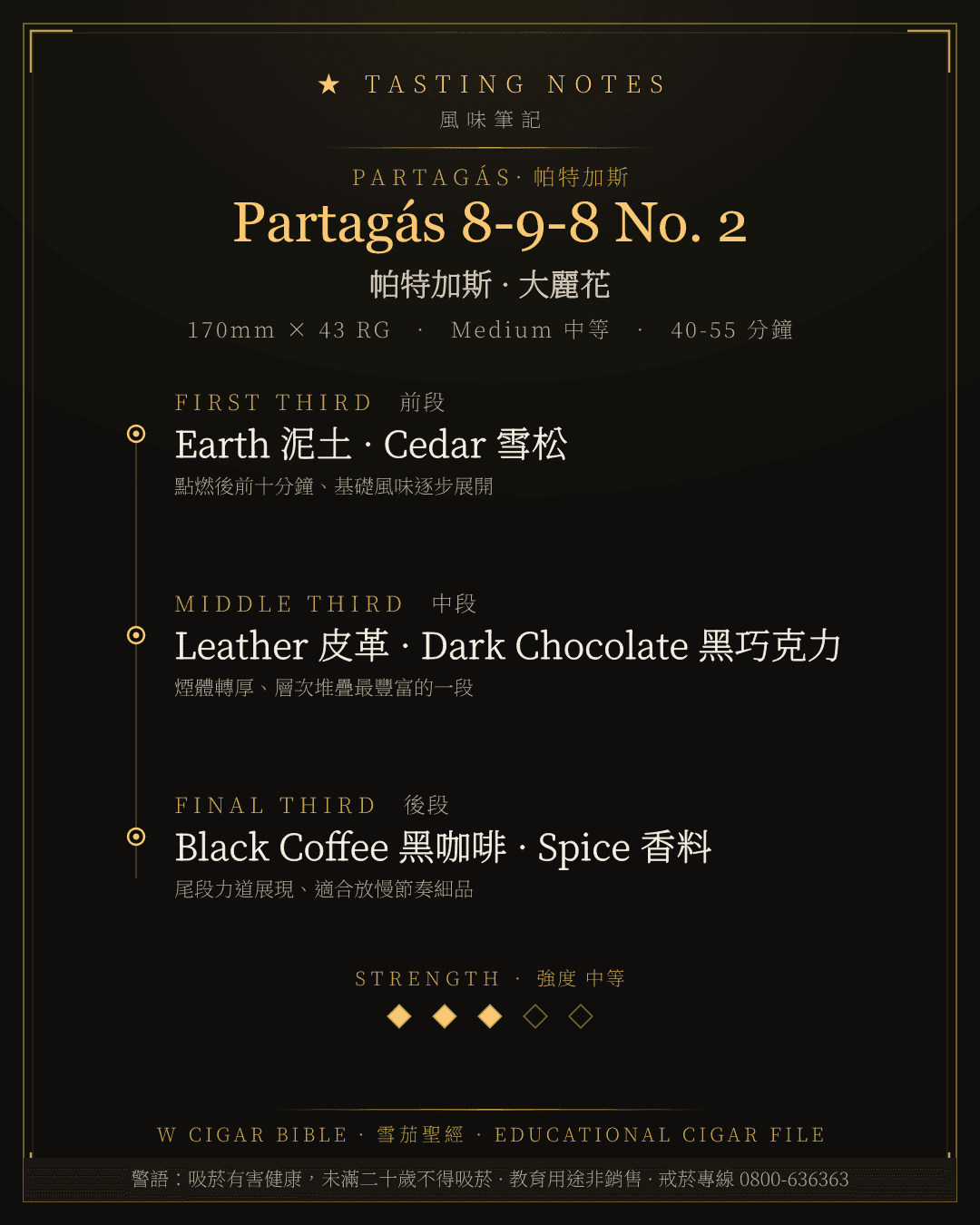
Partagás 8-9-8 No. 2 風味筆記 · 帕特加斯
TASTING NOTES · 風味筆記
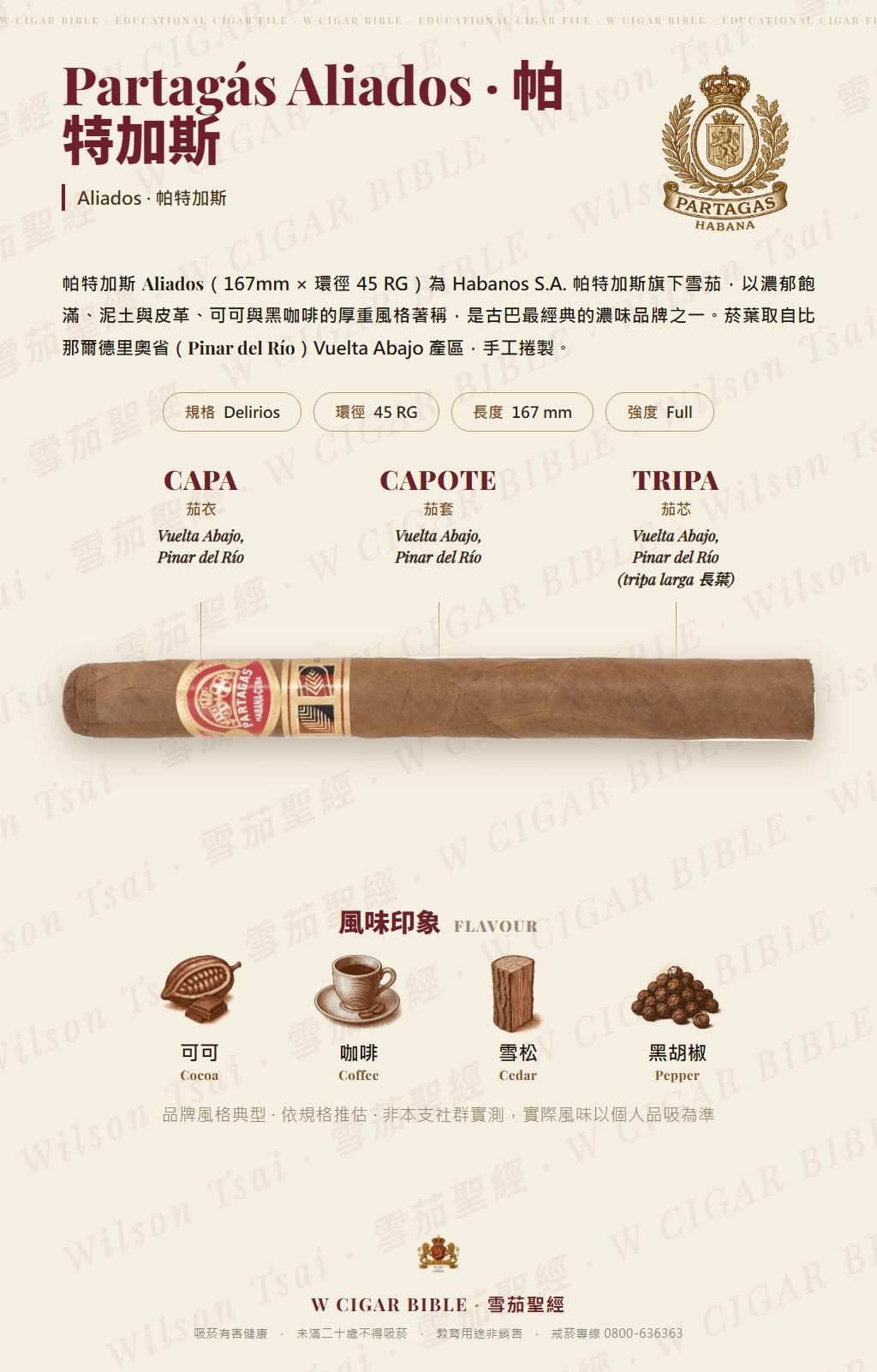
Partagás Aliados · 帕特加斯
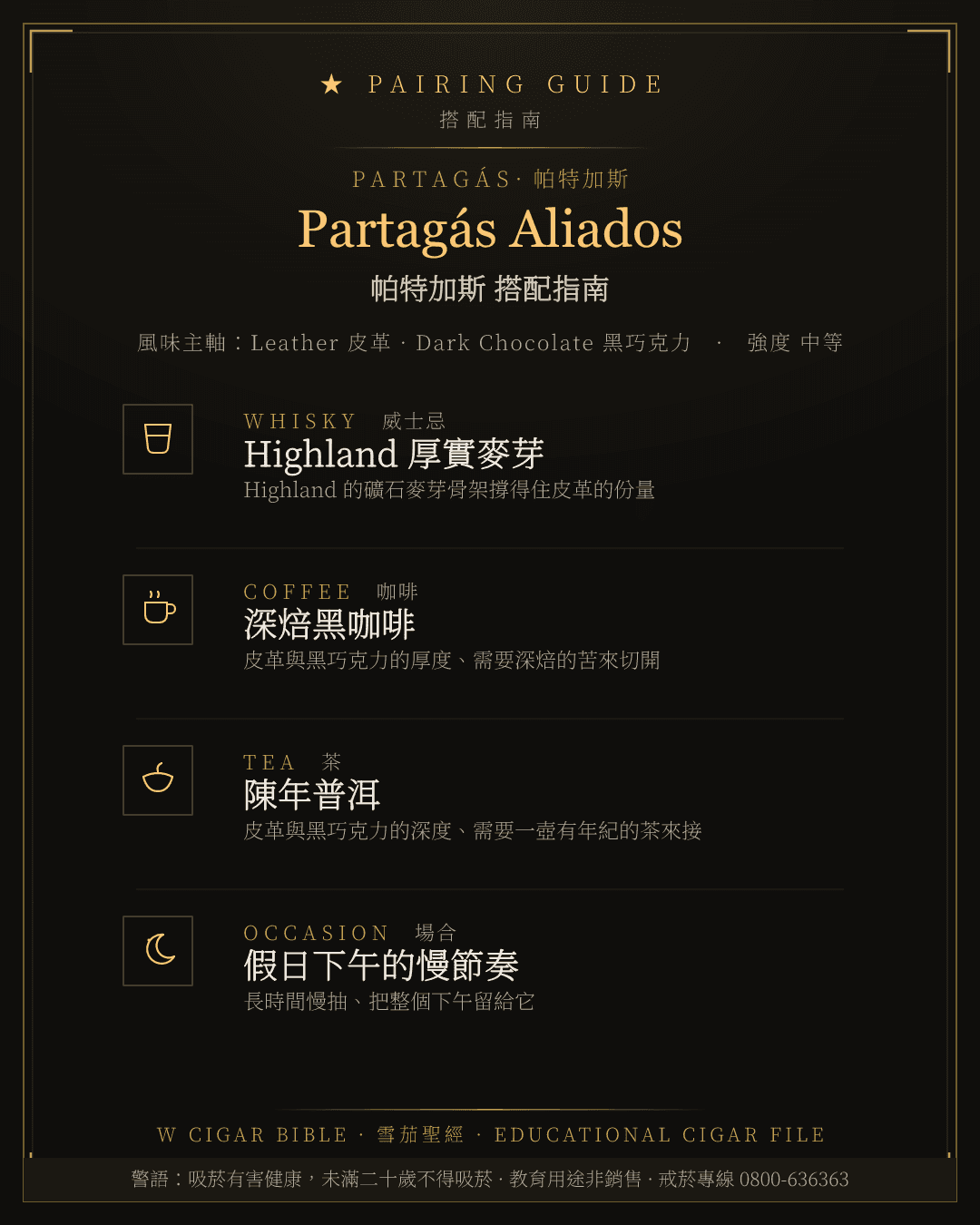
Partagás Aliados 搭配指南 · 帕特加斯
PAIRING GUIDE · 搭配指南
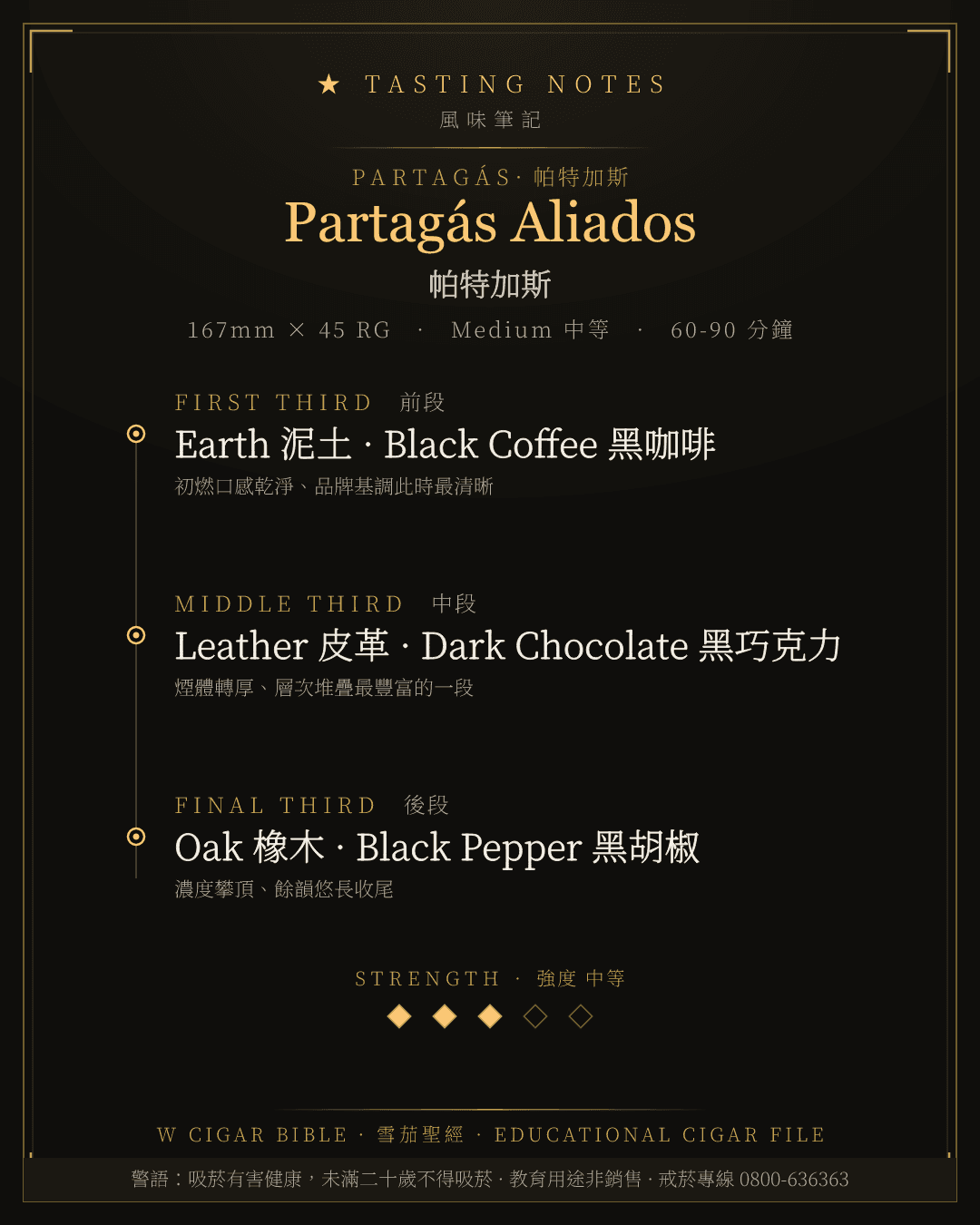
Partagás Aliados 風味筆記 · 帕特加斯
TASTING NOTES · 風味筆記
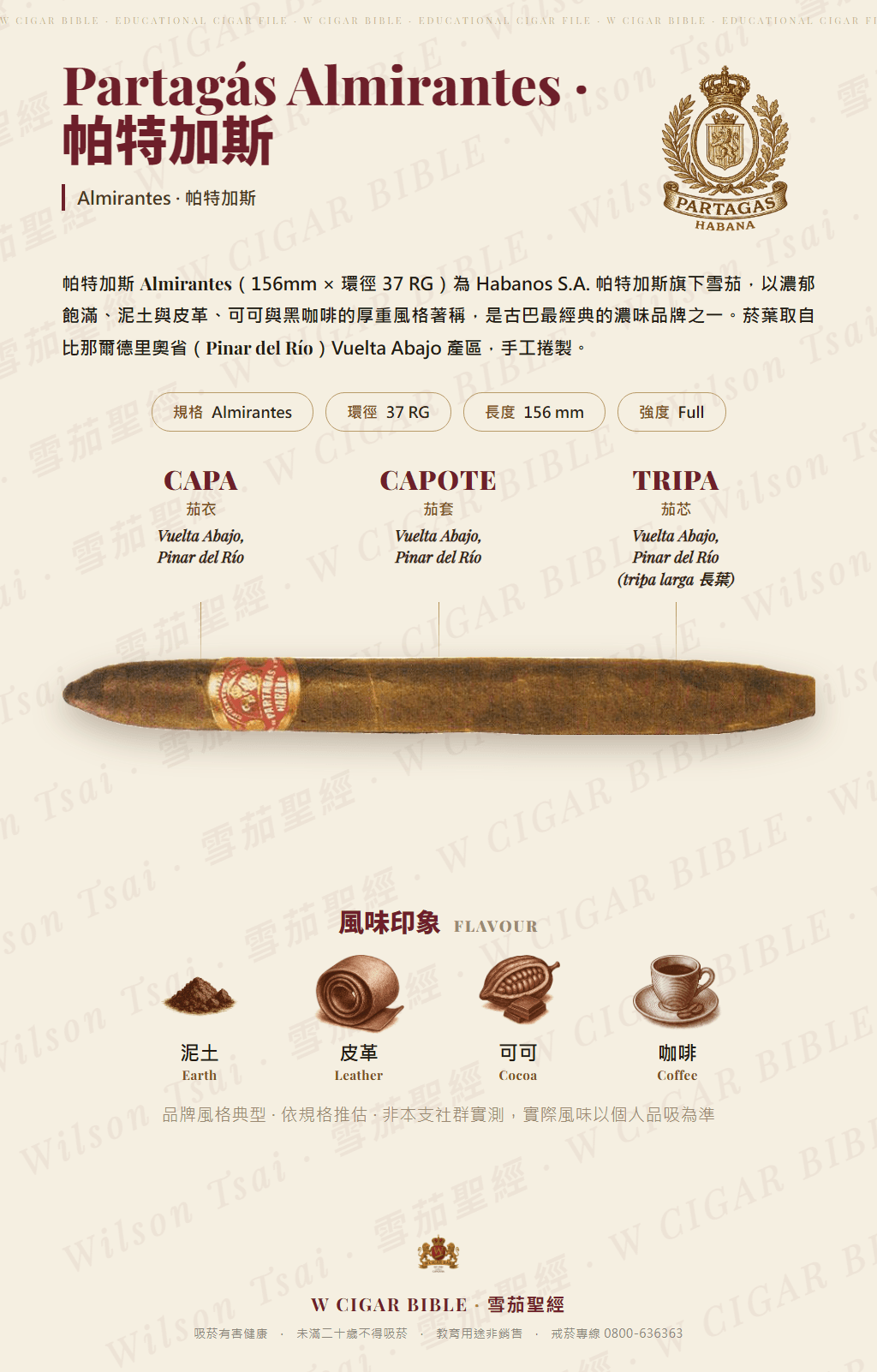
Partagás Almirantes · 帕特加斯
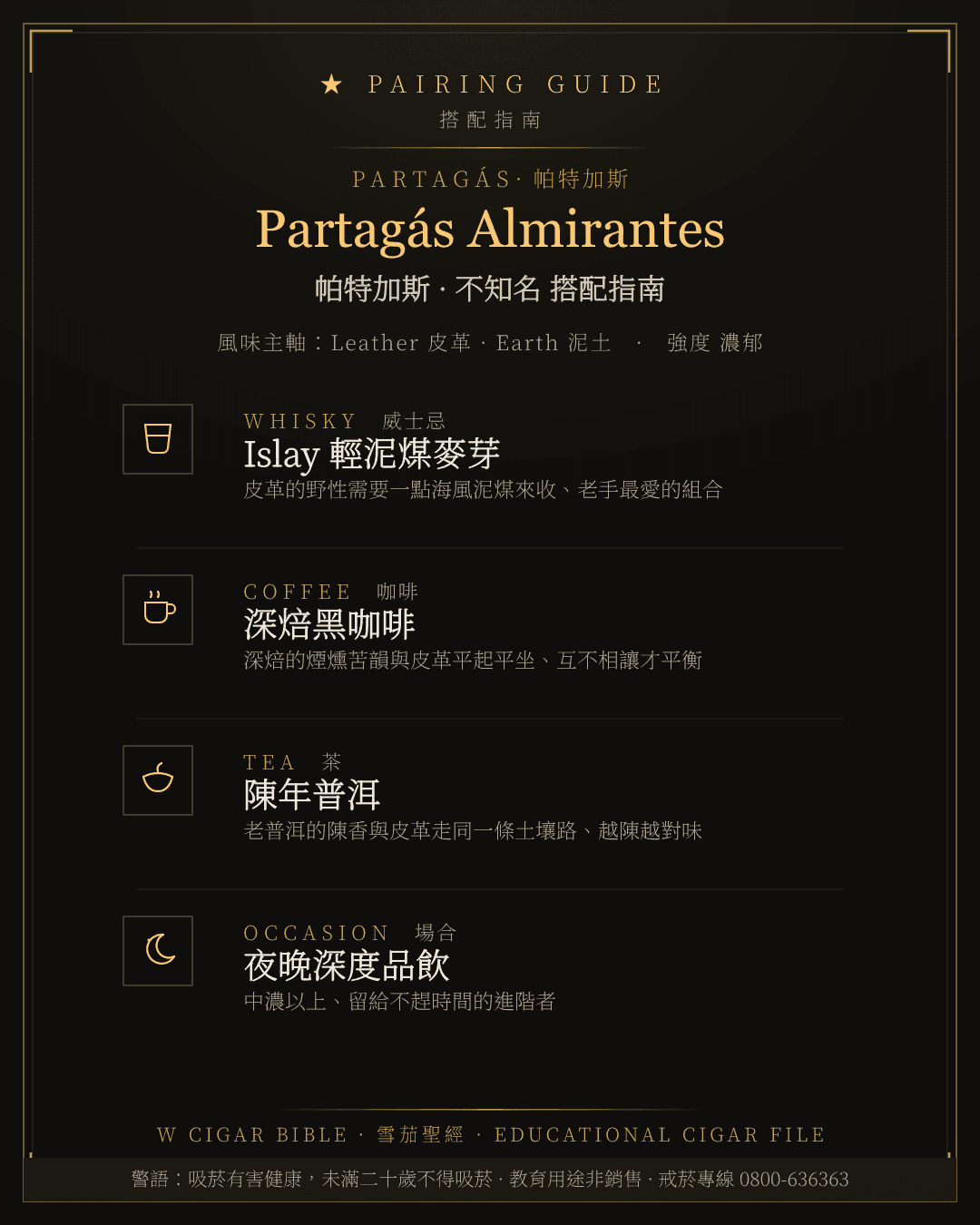
Partagás Almirantes 搭配指南 · 帕特加斯
PAIRING GUIDE · 搭配指南
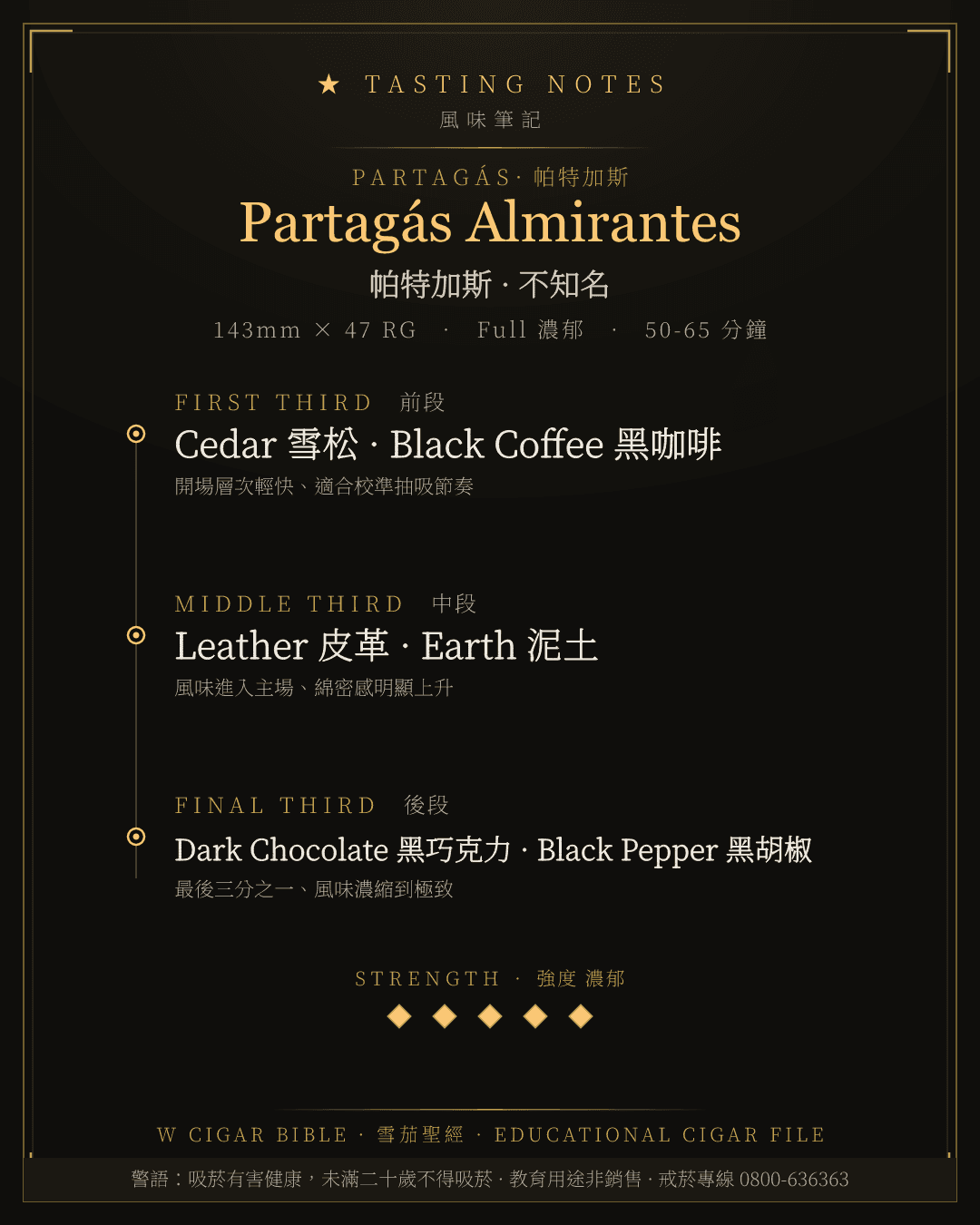
Partagás Almirantes 風味筆記 · 帕特加斯
TASTING NOTES · 風味筆記
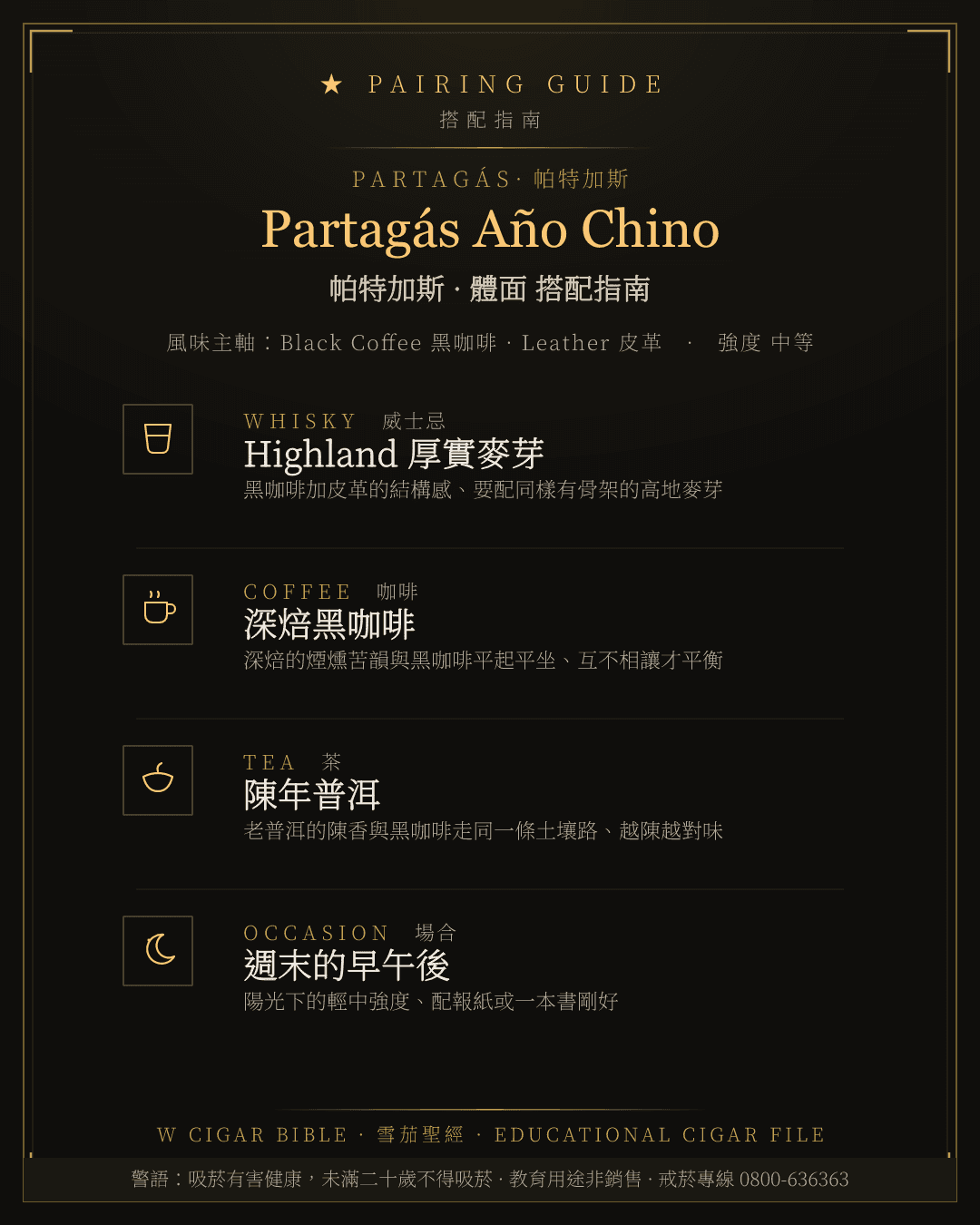
Partagás Año Chino 搭配指南 · 帕特加斯
PAIRING GUIDE · 搭配指南
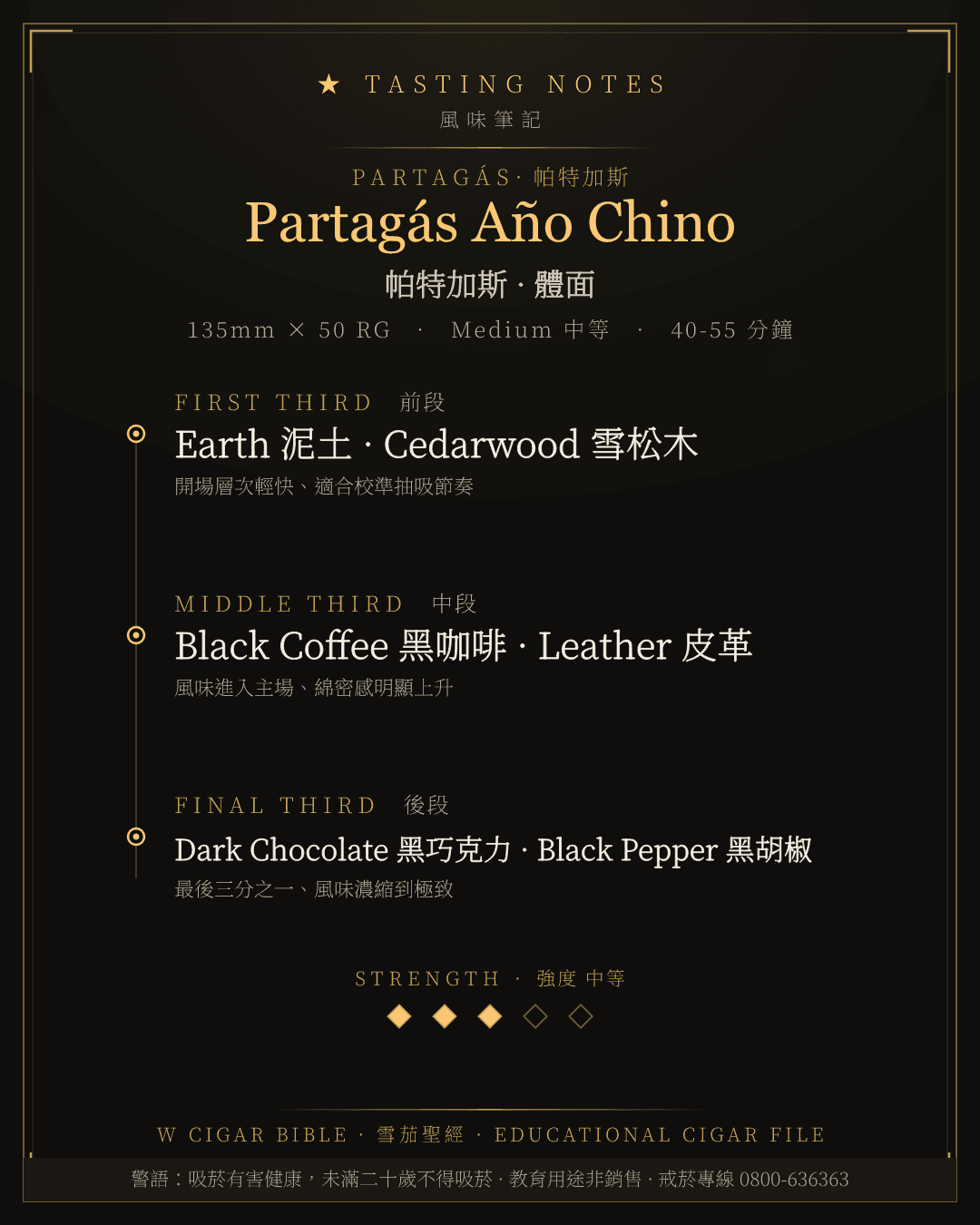
Partagás Año Chino 風味筆記 · 帕特加斯
TASTING NOTES · 風味筆記

Partagás Aristocrats · 帕特加斯
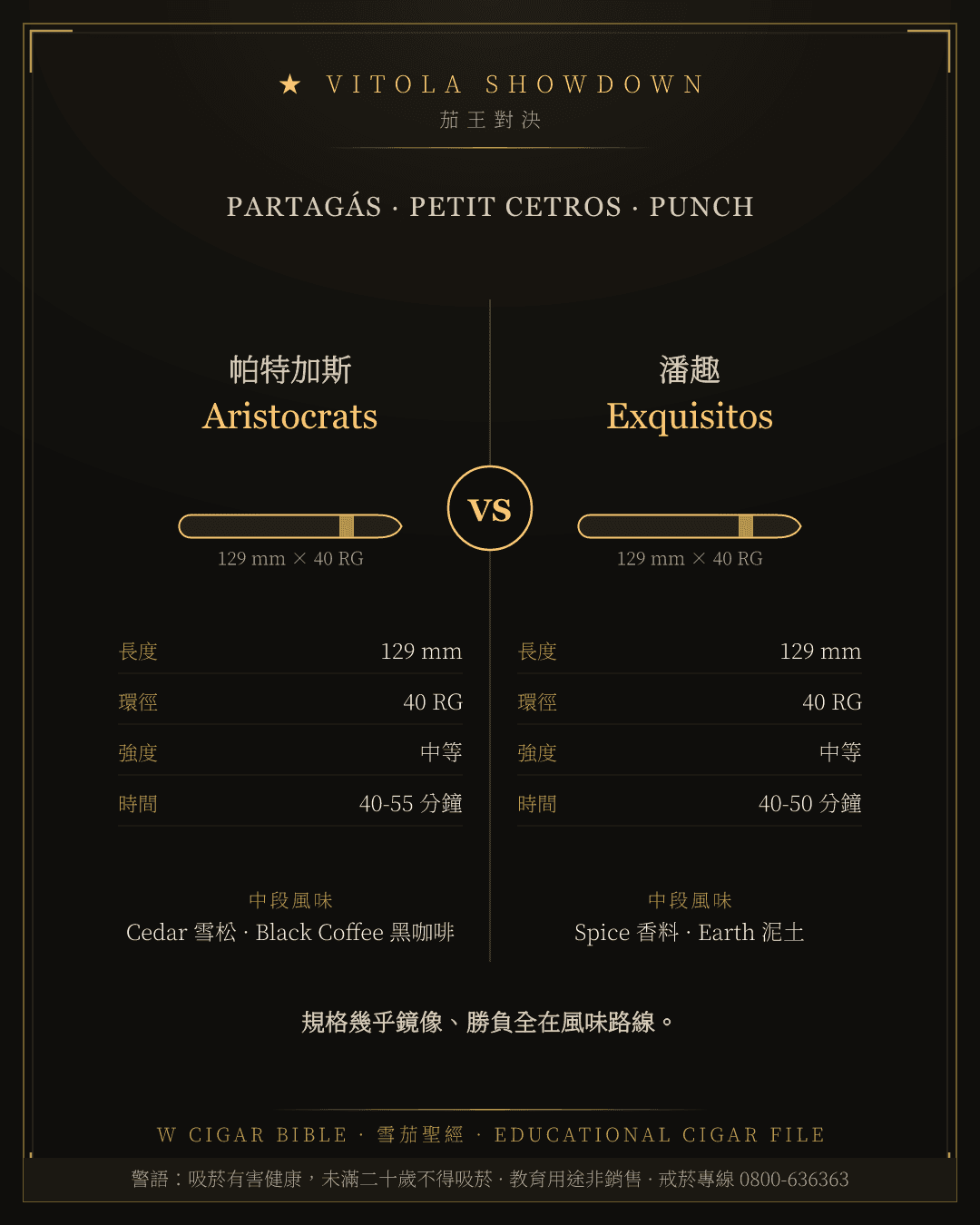
Partagás Aristocrats vs Punch Exquisitos
VITOLA SHOWDOWN · Petit Cetros
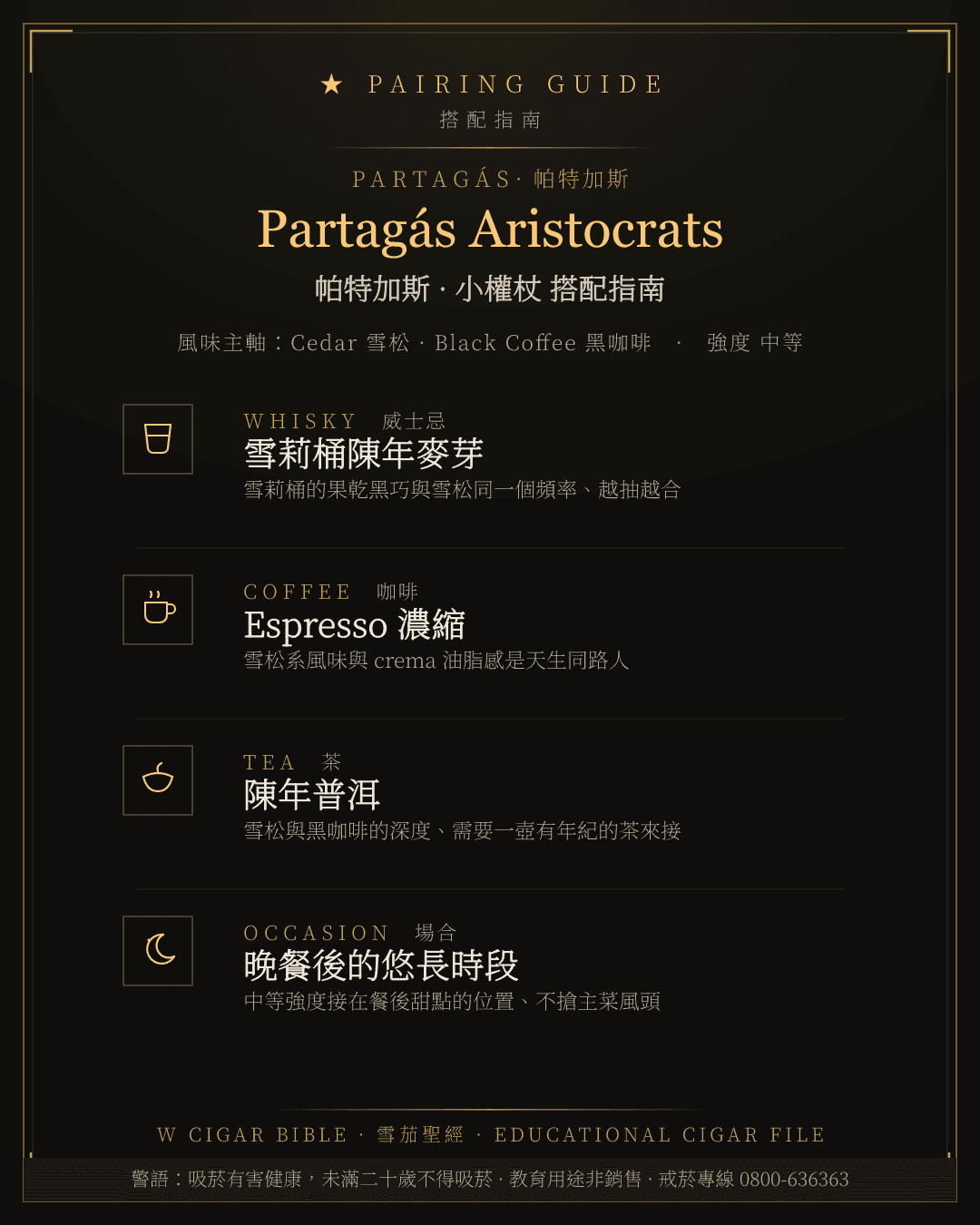
Partagás Aristocrats 搭配指南 · 帕特加斯
PAIRING GUIDE · 搭配指南
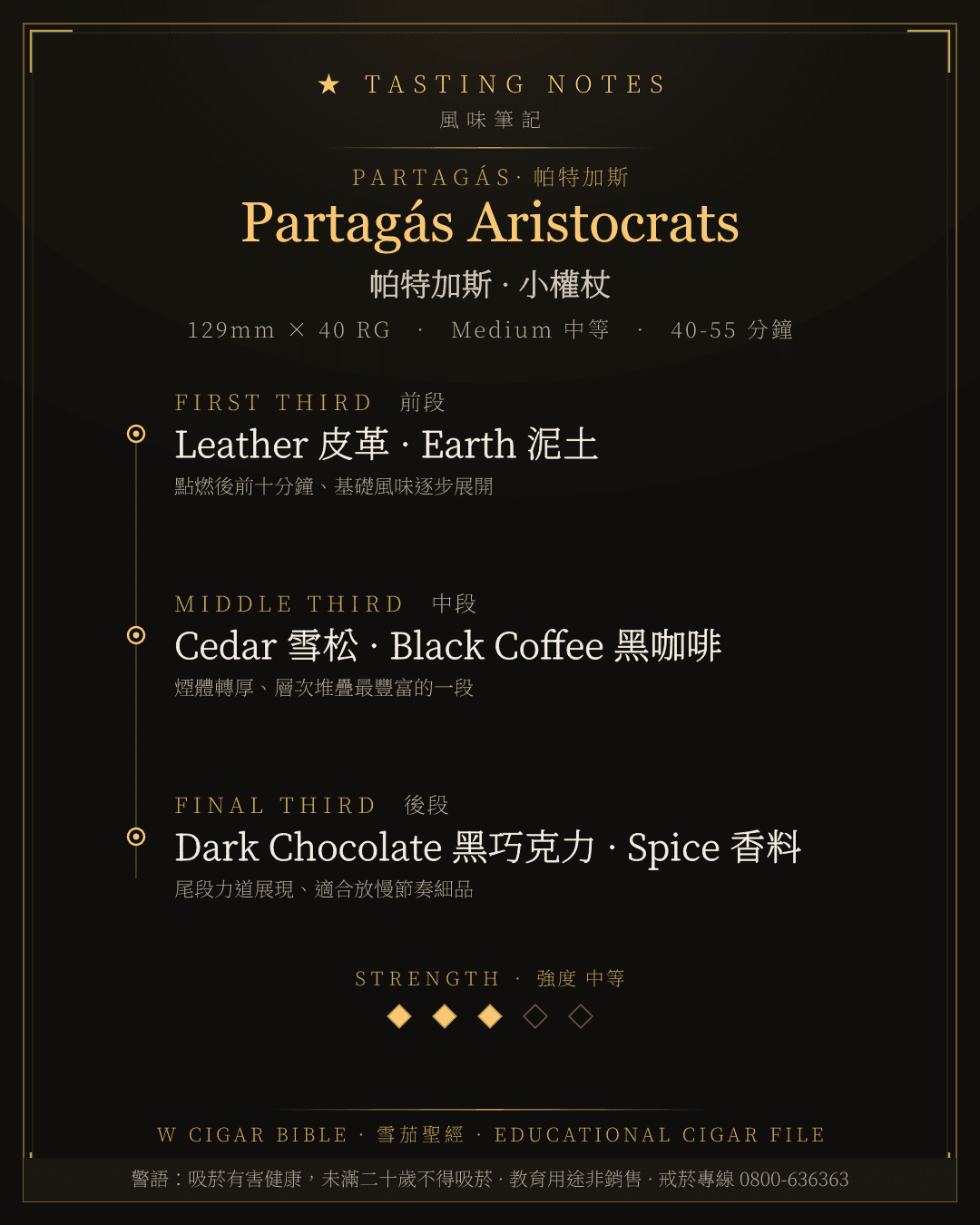
Partagás Aristocrats 風味筆記 · 帕特加斯
TASTING NOTES · 風味筆記
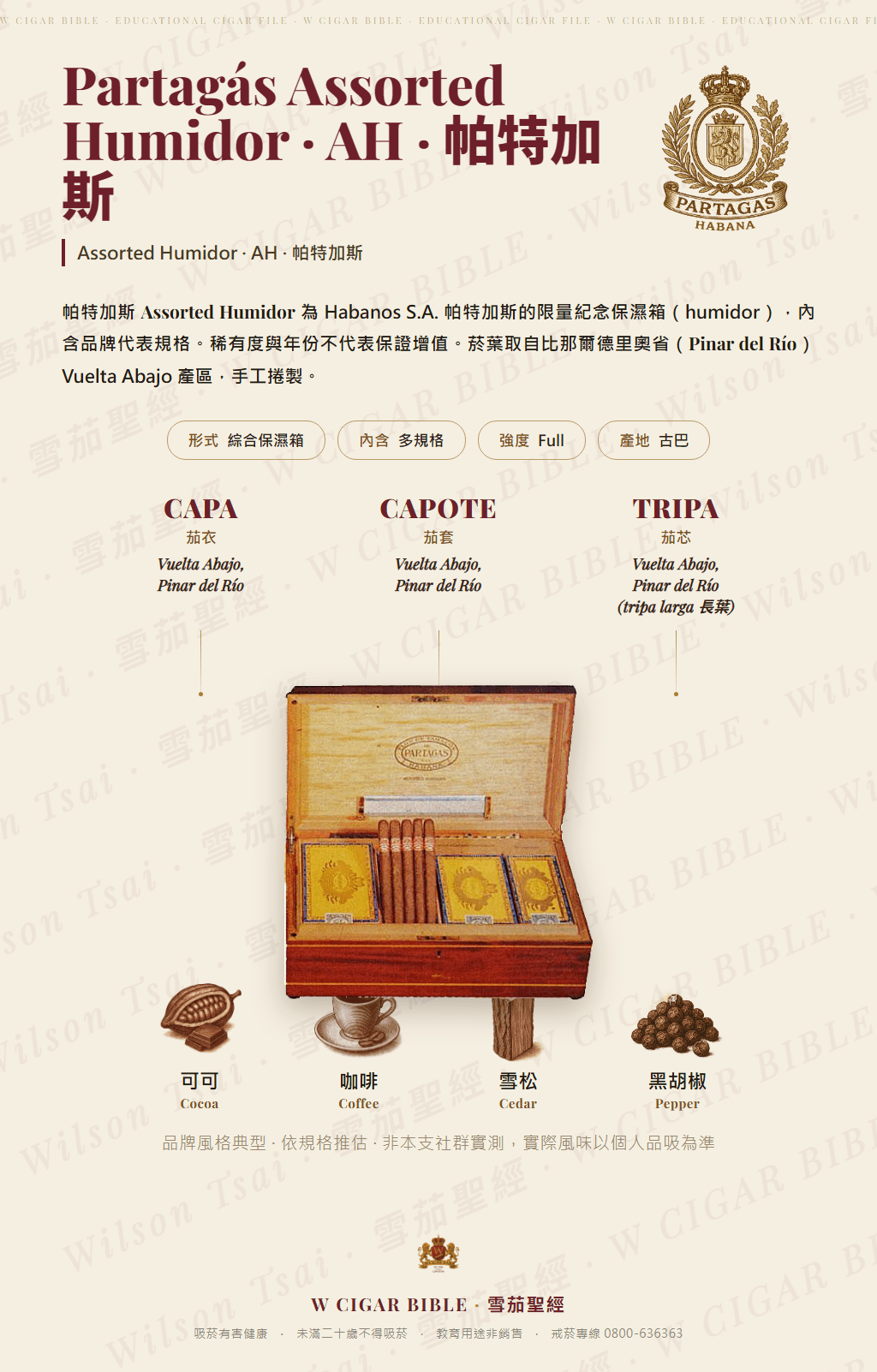
Partagás Assorted Humidor · AH · 帕特加斯
AH · 綜合品項木盒 Assorted Humidor(同品牌多規格併裝,發行年份與數量未公佈)· 雪茄檔案
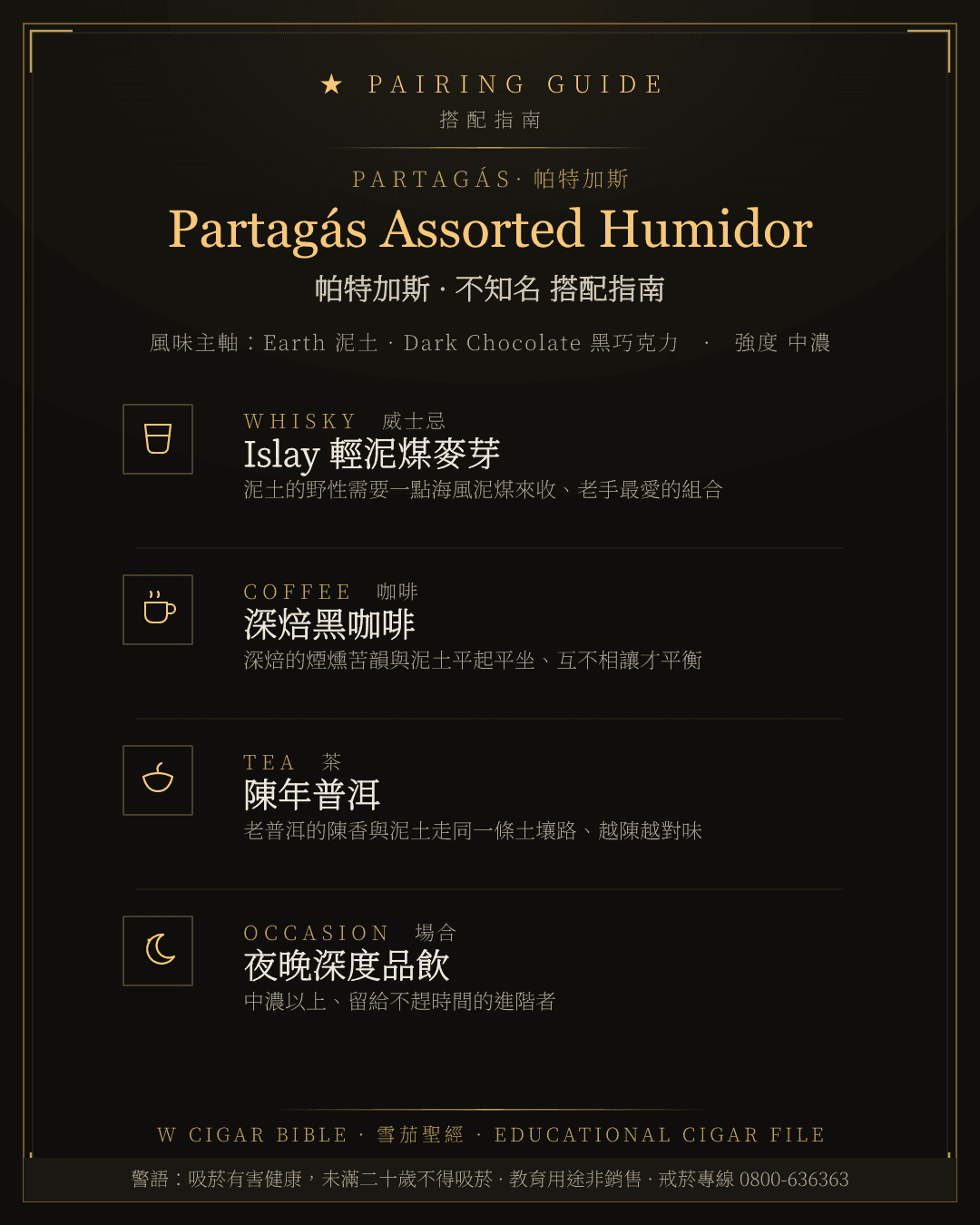
Partagás Assorted Humidor 搭配指南 · 帕特加斯
PAIRING GUIDE · 搭配指南
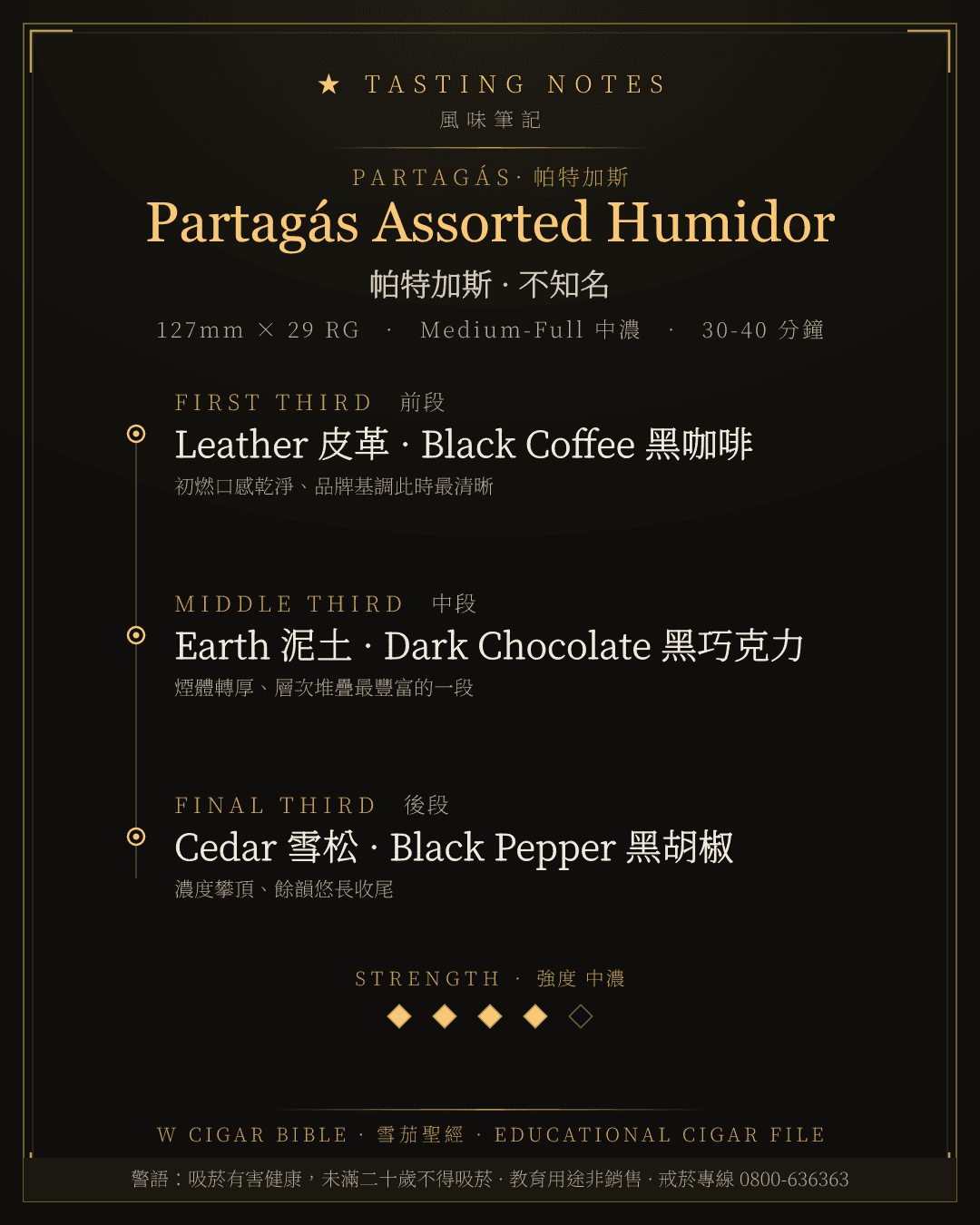
Partagás Assorted Humidor 風味筆記 · 帕特加斯
TASTING NOTES · 風味筆記
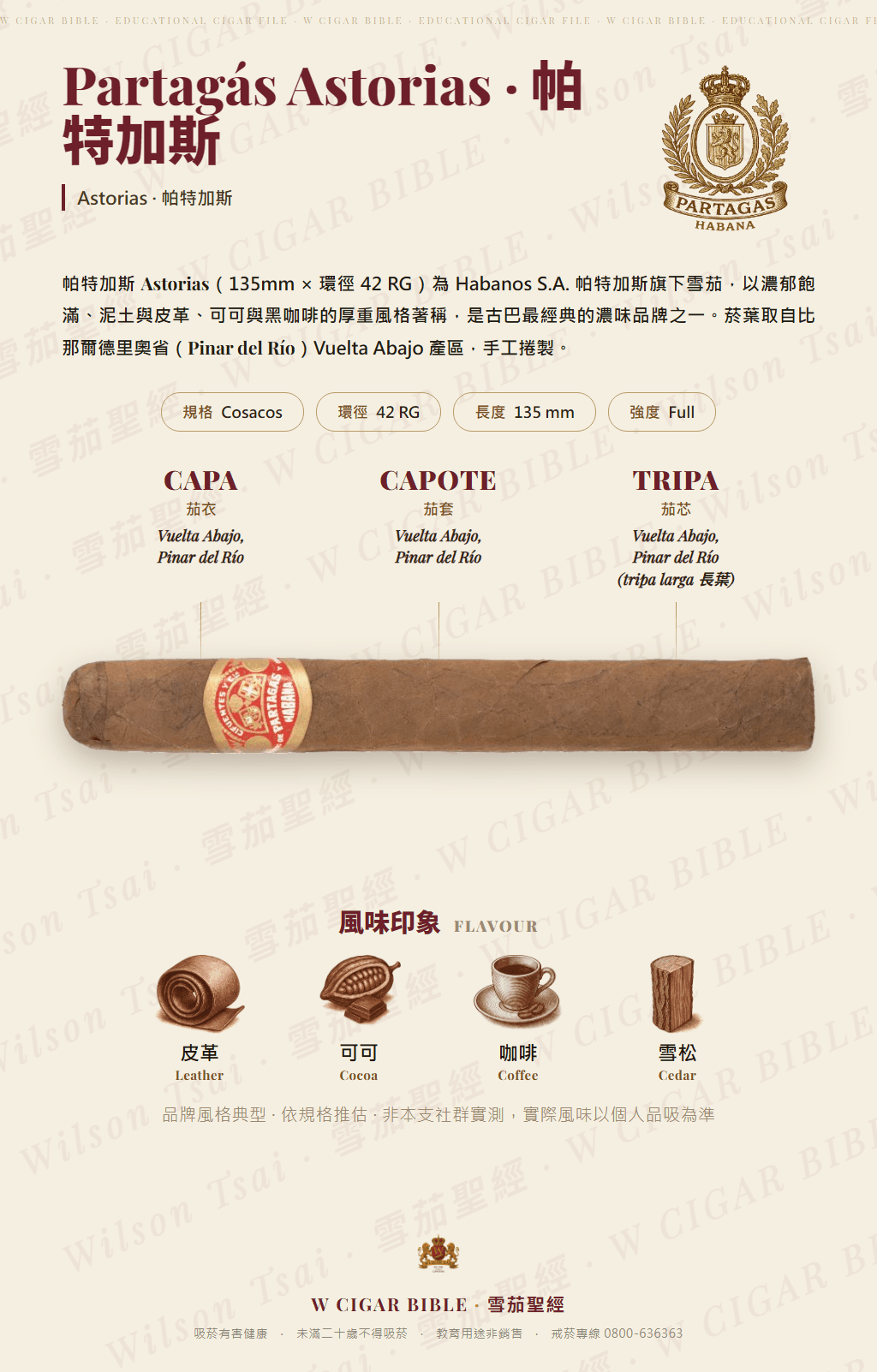
Partagás Astorias · 帕特加斯

Partagás Astorias vs Punch Nacionales
VITOLA SHOWDOWN · Cosacos
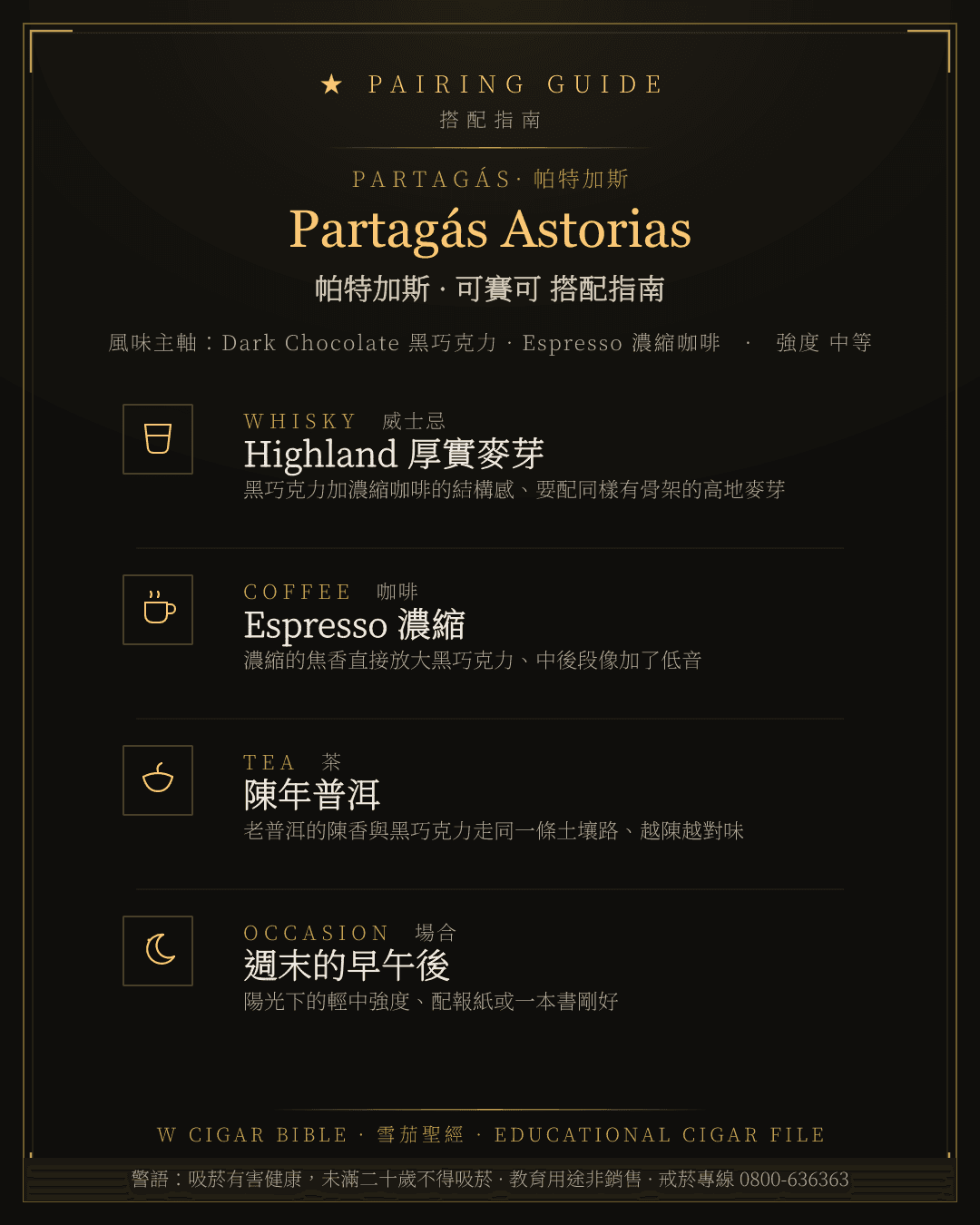
Partagás Astorias 搭配指南 · 帕特加斯
PAIRING GUIDE · 搭配指南

Partagás Astorias 風味筆記 · 帕特加斯
TASTING NOTES · 風味筆記

Partagás Belvederes · 帕特加斯
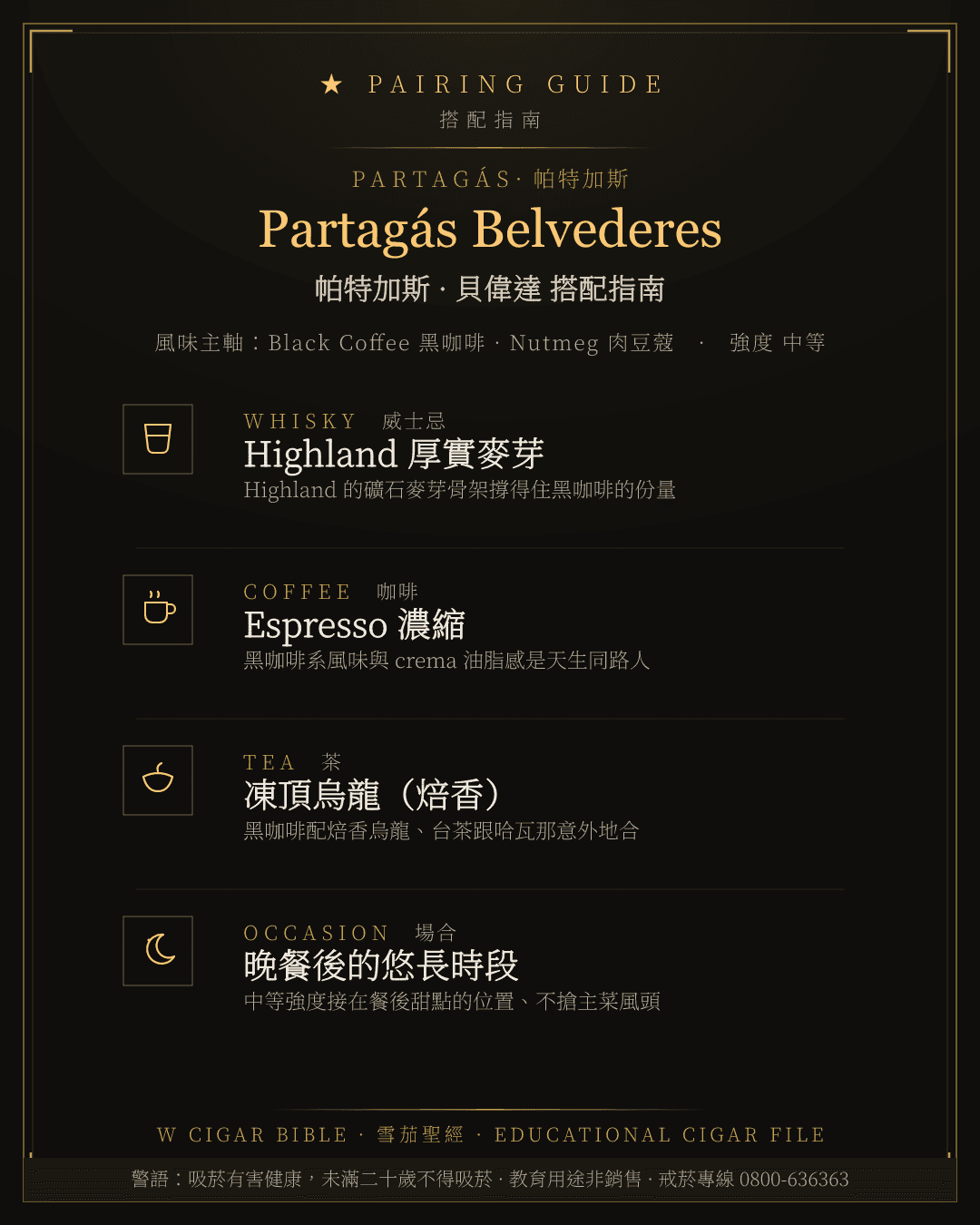
Partagás Belvederes 搭配指南 · 帕特加斯
PAIRING GUIDE · 搭配指南
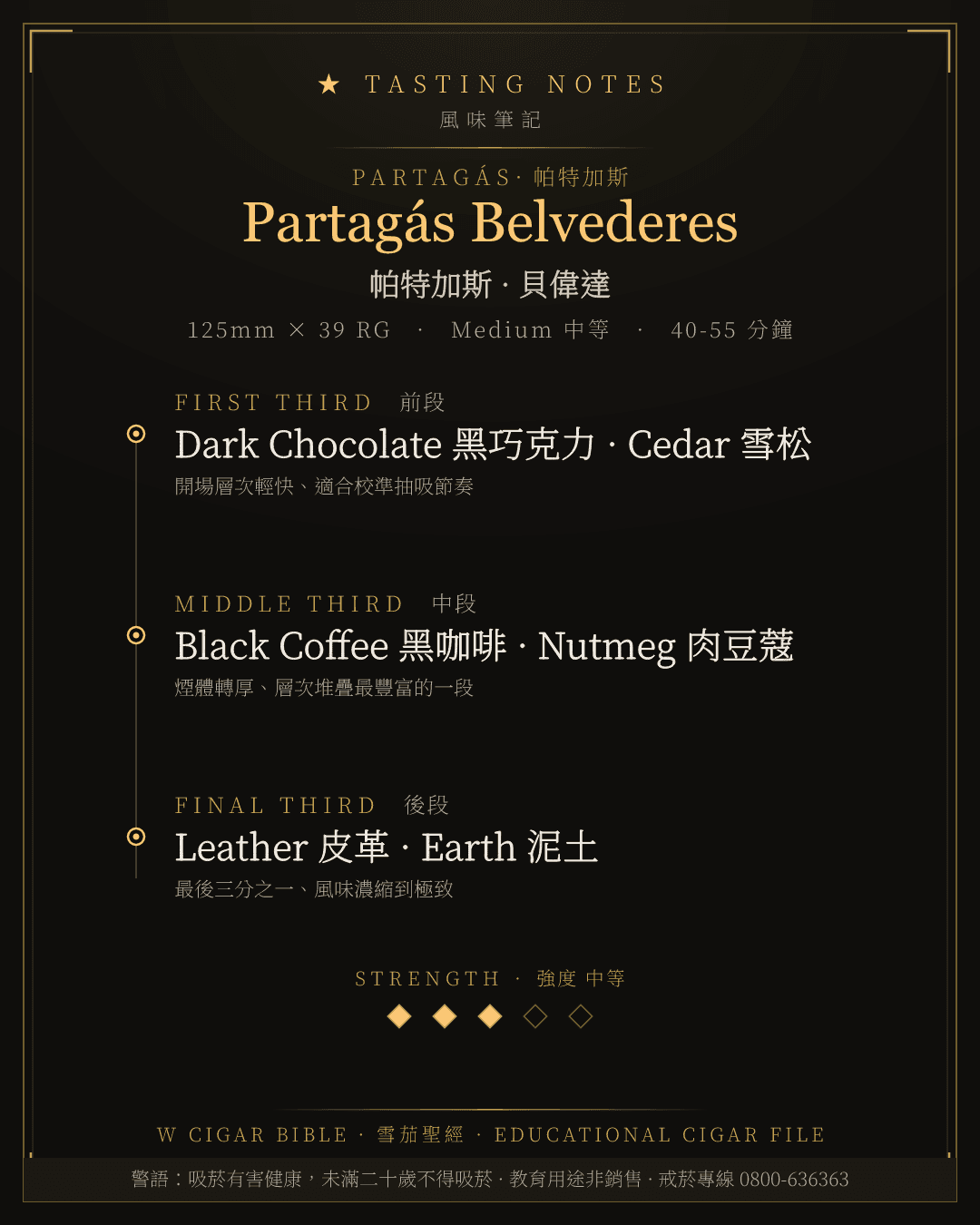
Partagás Belvederes 風味筆記 · 帕特加斯
TASTING NOTES · 風味筆記
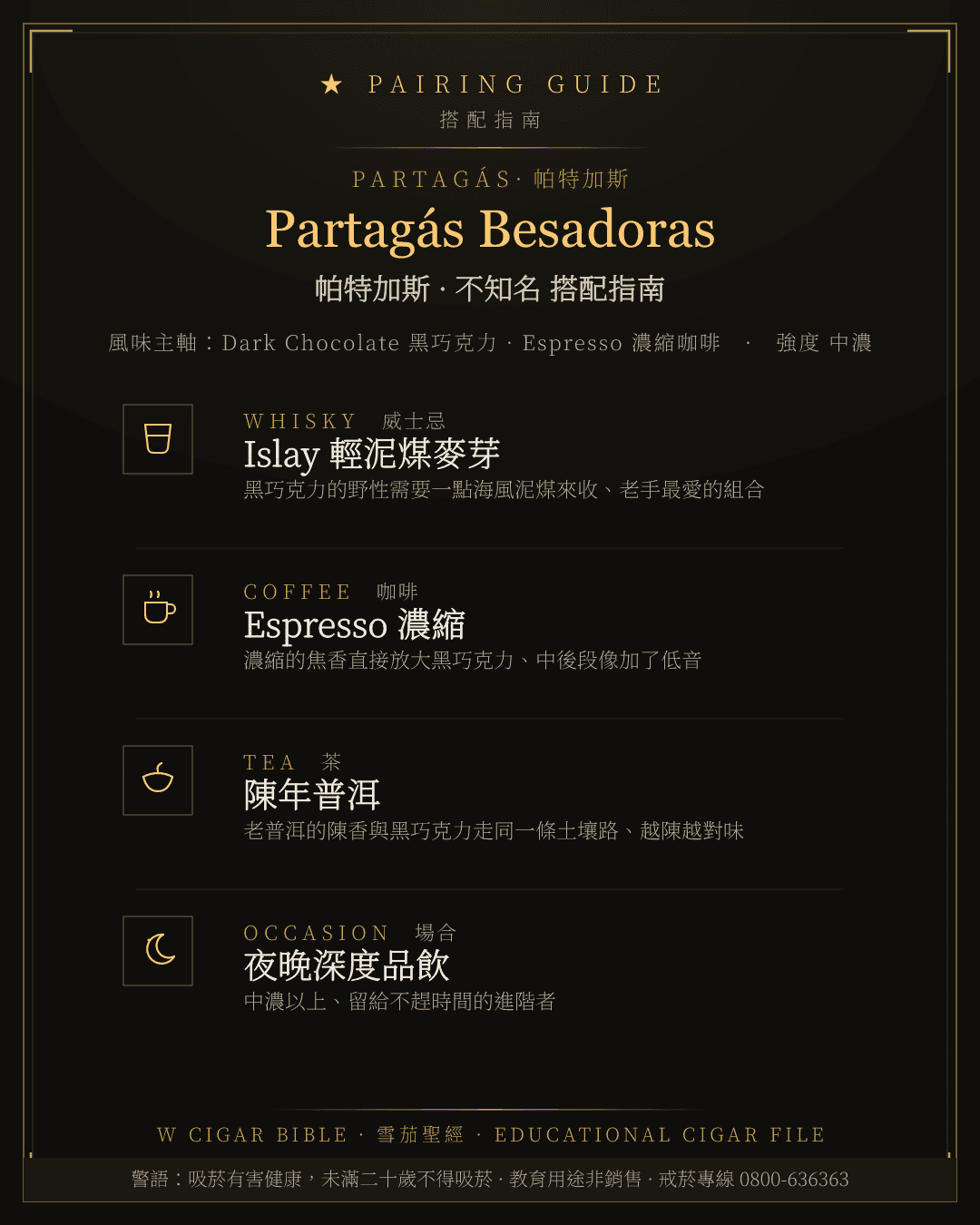
Partagás Besadoras 搭配指南 · 帕特加斯
PAIRING GUIDE · 搭配指南
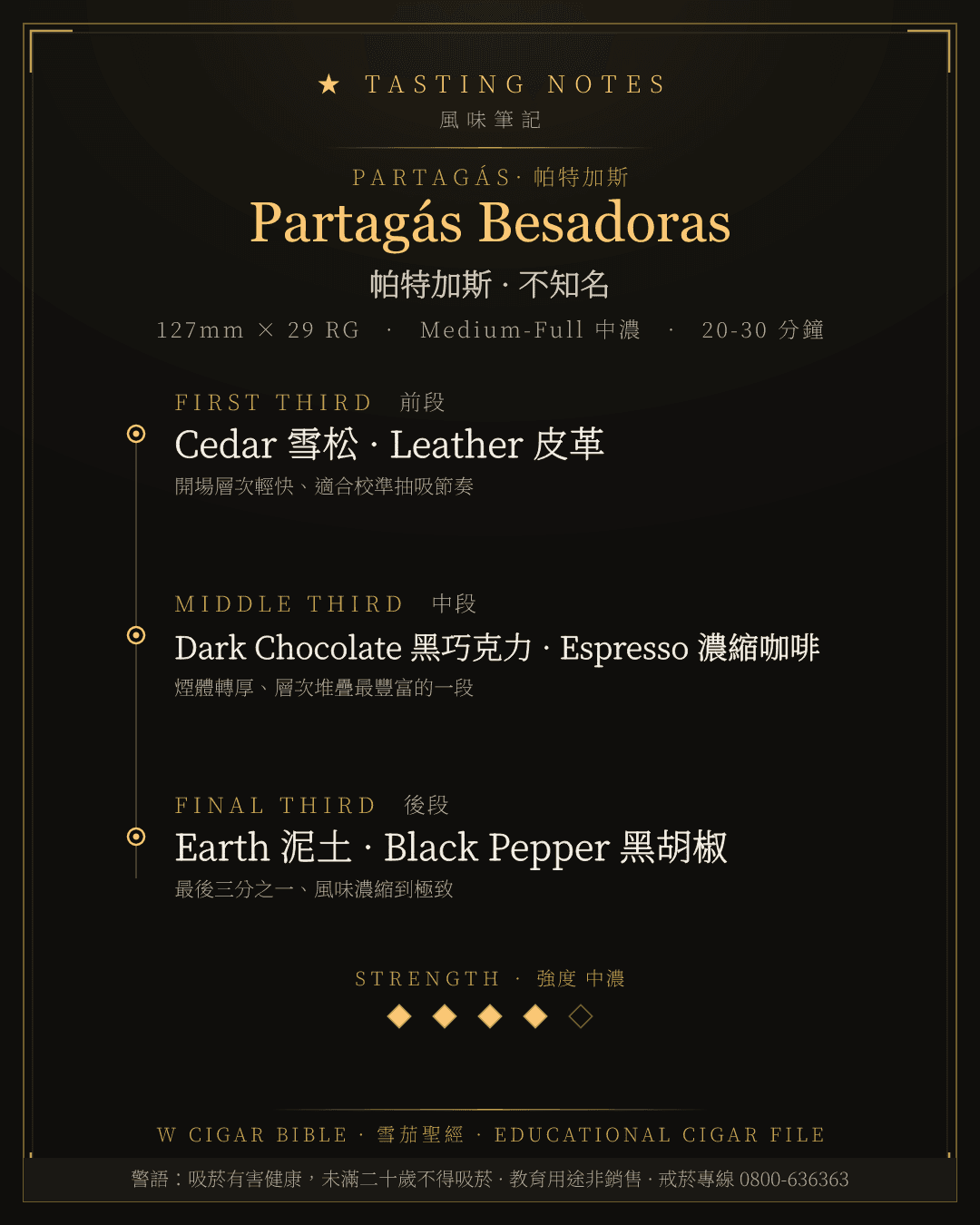
Partagás Besadoras 風味筆記 · 帕特加斯
TASTING NOTES · 風味筆記
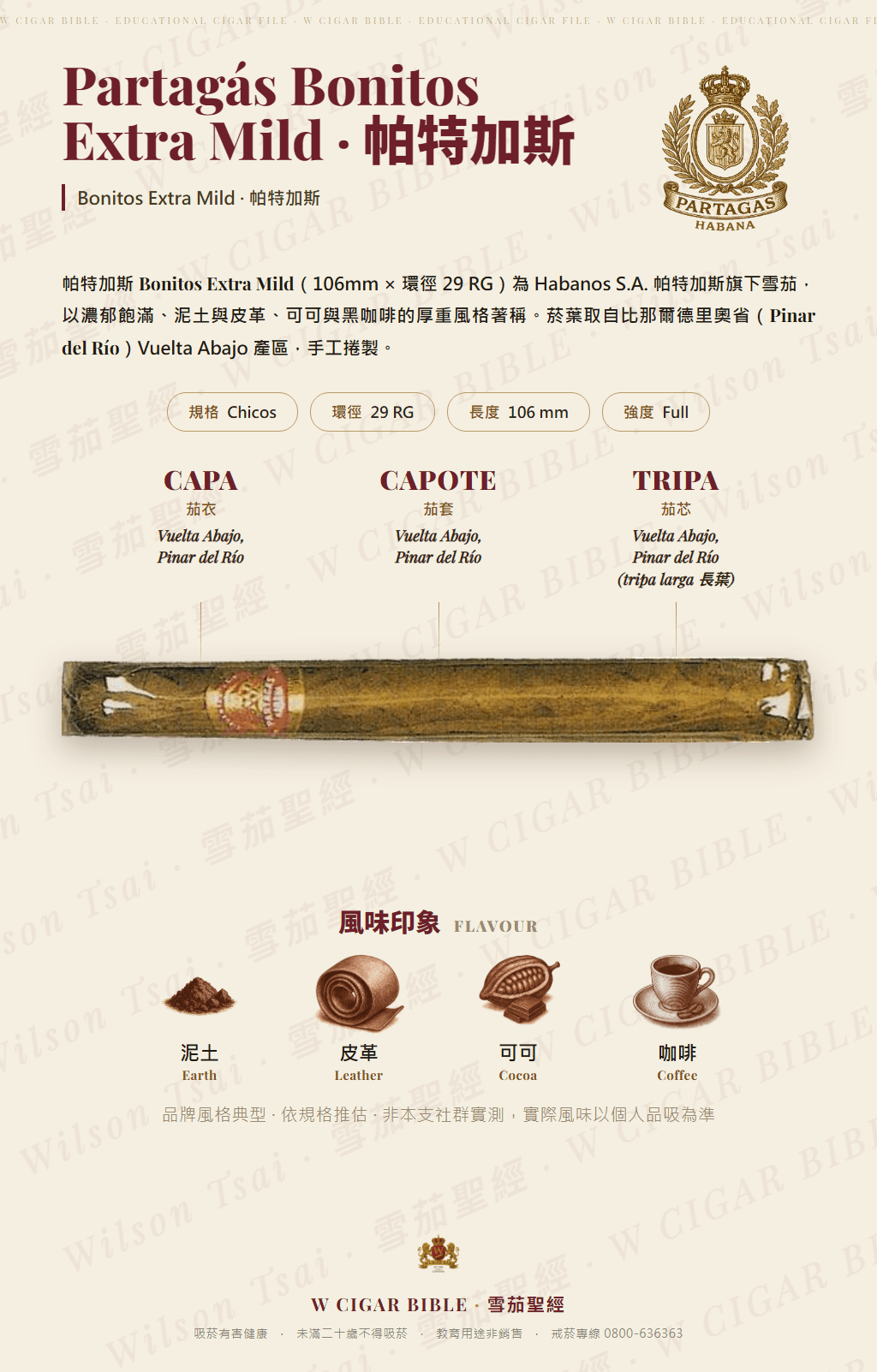
Partagás Bonitos Extra Mild · 帕特加斯

Partagás Bonitos Extra Mild vs Por Larrañaga Curritos
VITOLA SHOWDOWN · Chicos

Partagás Bonitos Extra Mild 搭配指南 · 帕特加斯
PAIRING GUIDE · 搭配指南
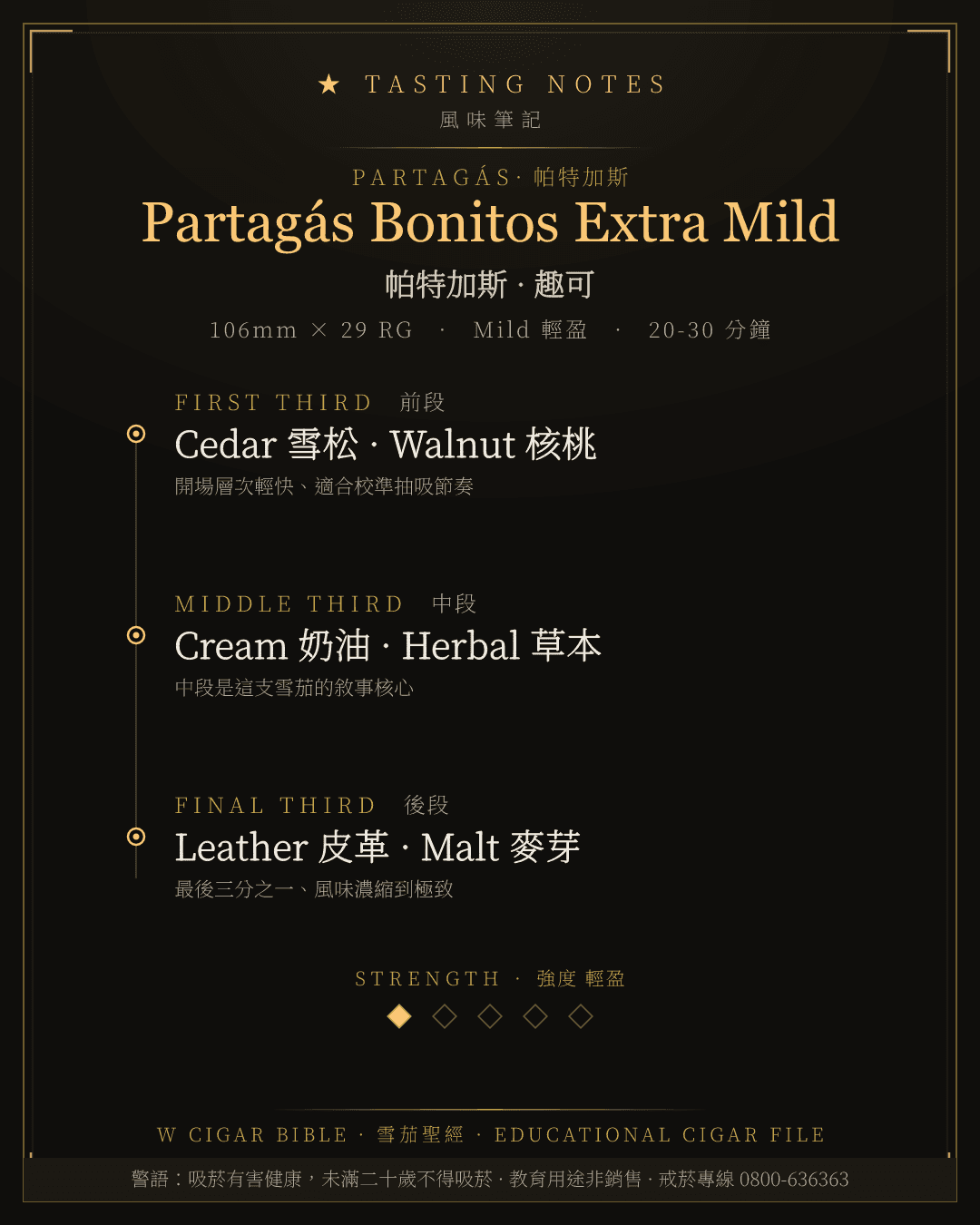
Partagás Bonitos Extra Mild 風味筆記 · 帕特加斯
TASTING NOTES · 風味筆記
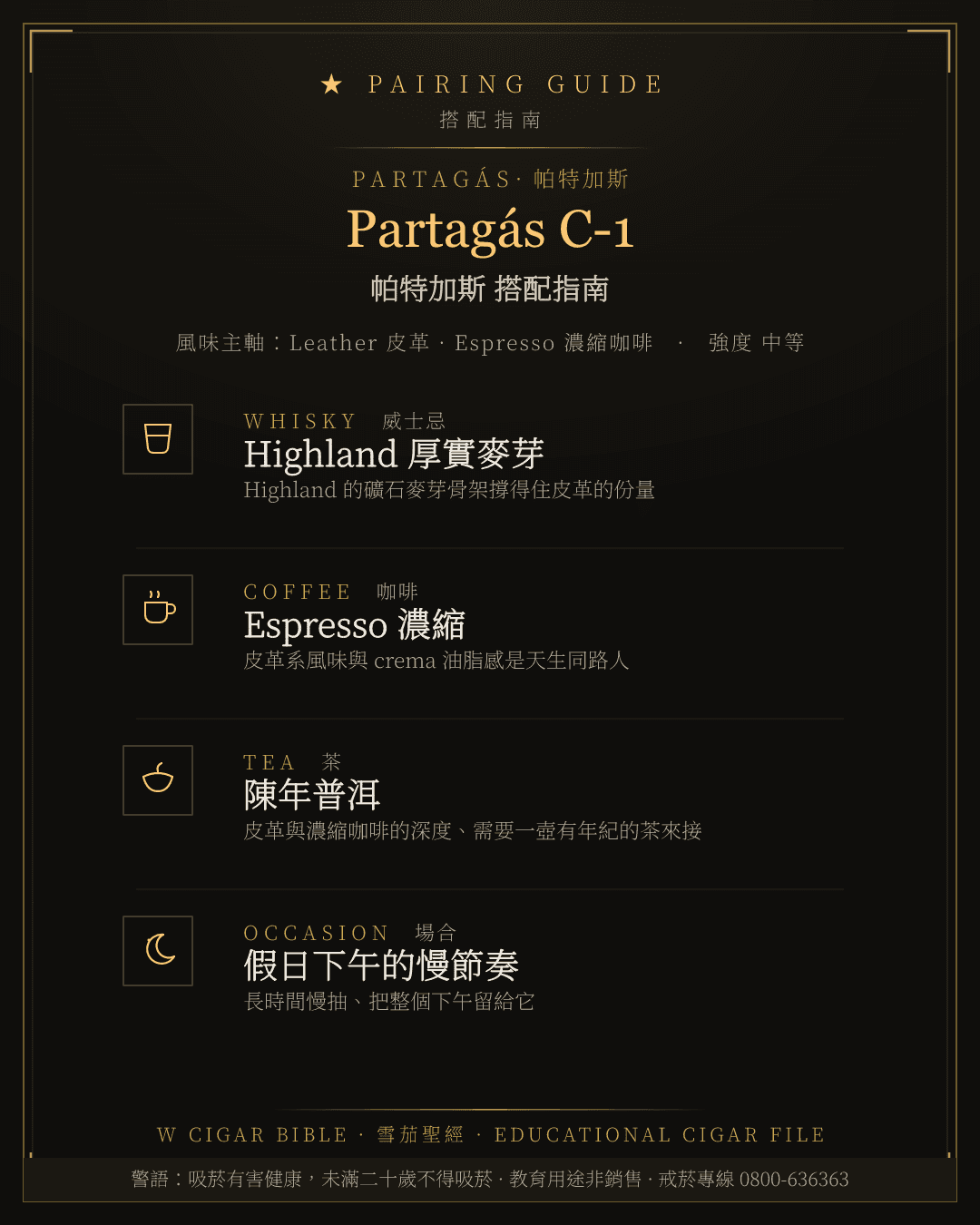
Partagás C-1 搭配指南 · 帕特加斯
PAIRING GUIDE · 搭配指南
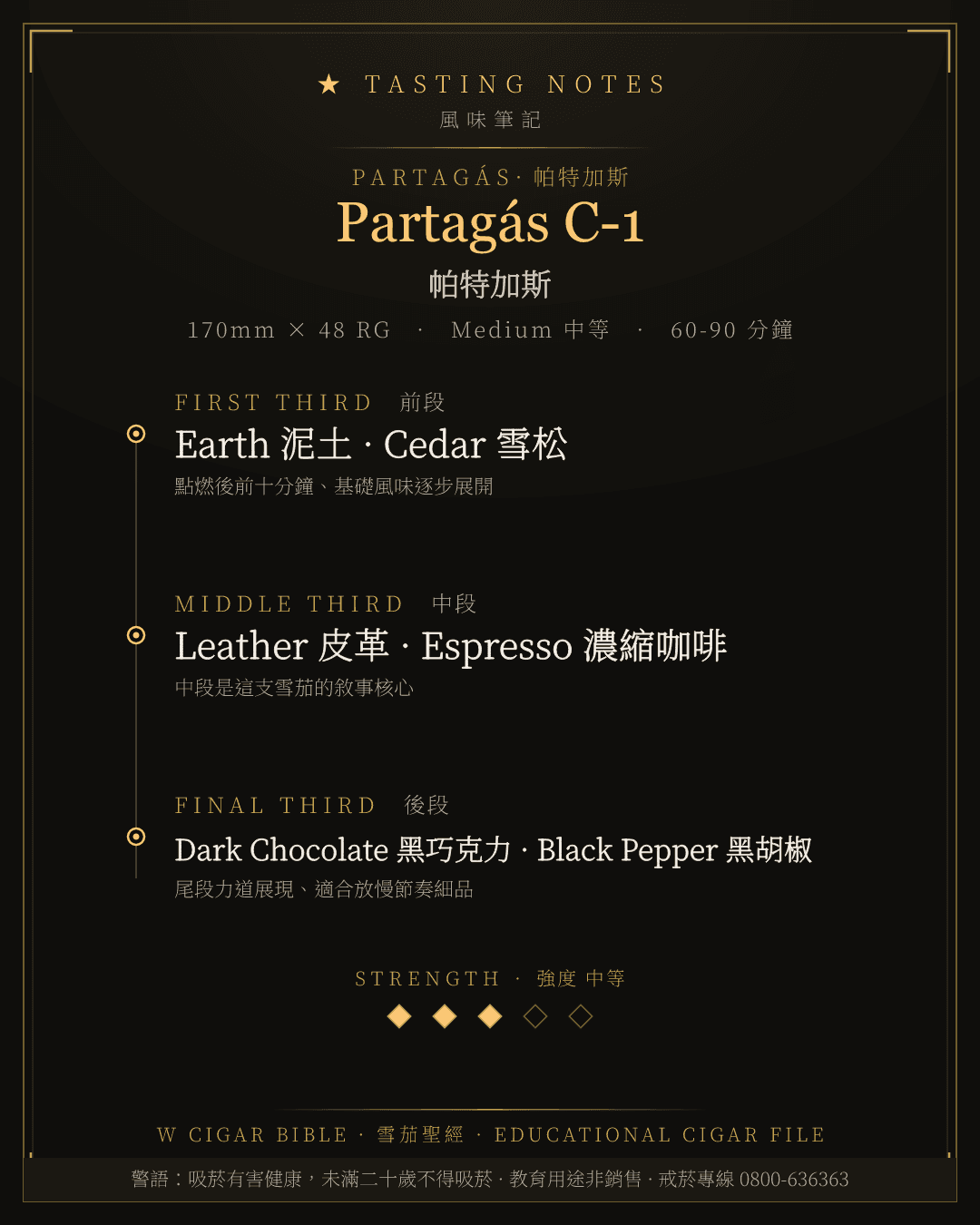
Partagás C-1 風味筆記 · 帕特加斯
TASTING NOTES · 風味筆記
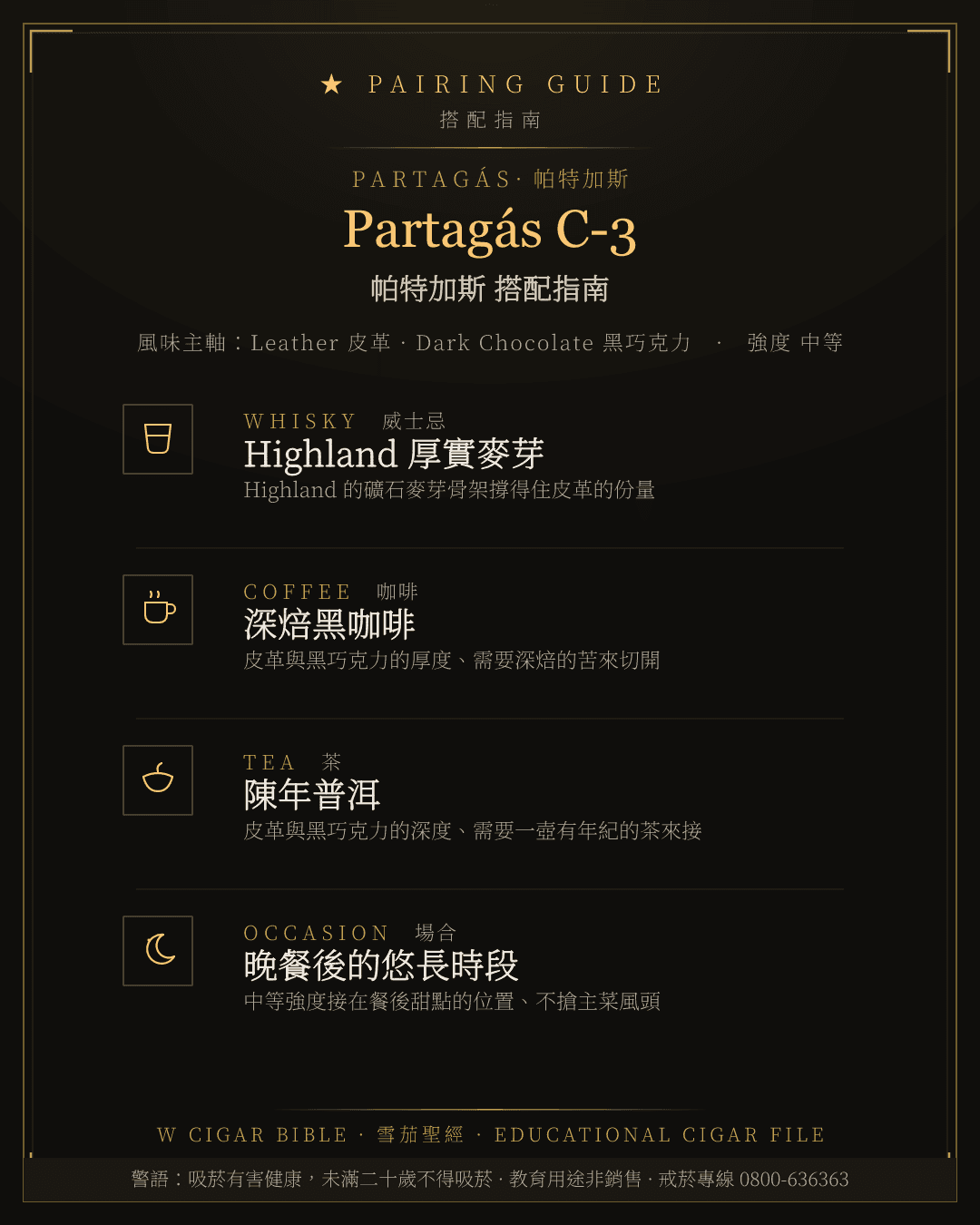
Partagás C-3 搭配指南 · 帕特加斯
PAIRING GUIDE · 搭配指南

Partagás C-3 風味筆記 · 帕特加斯
TASTING NOTES · 風味筆記

Partagás Capitols · 帕特加斯

Partagás Capitols 搭配指南 · 帕特加斯
PAIRING GUIDE · 搭配指南
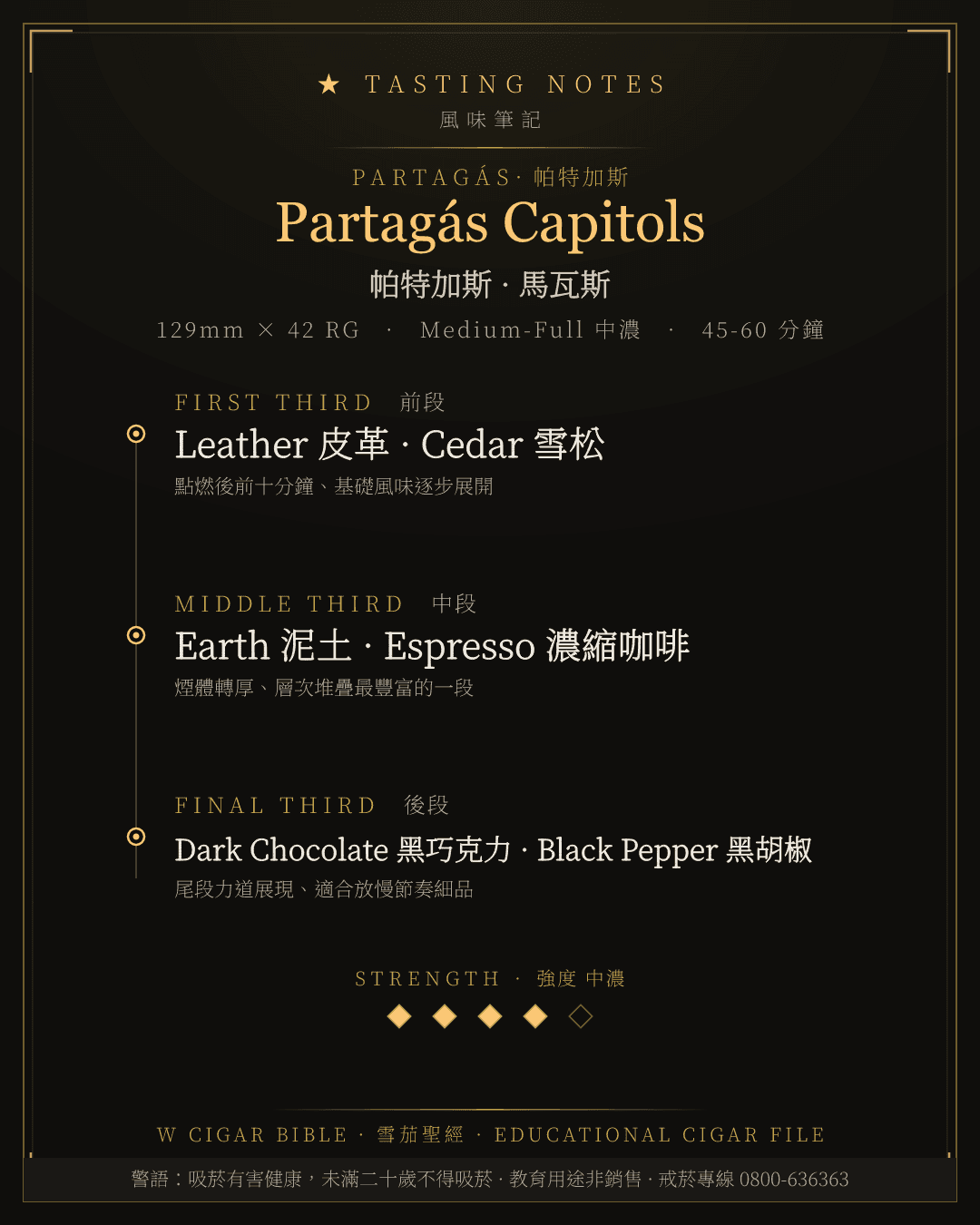
Partagás Capitols 風味筆記 · 帕特加斯
TASTING NOTES · 風味筆記
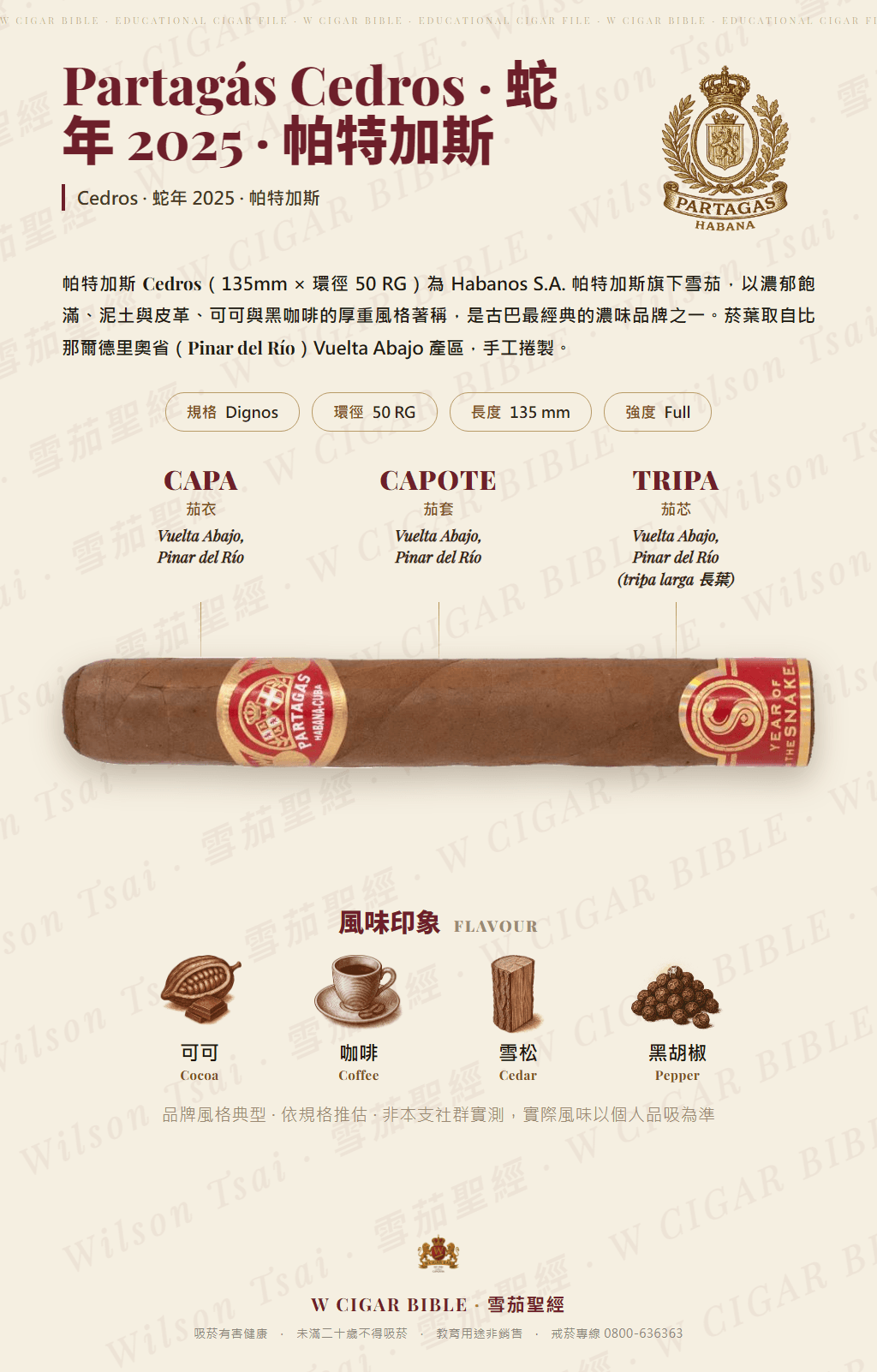
Partagás Cedros · 蛇年 2025 · 帕特加斯
Año de la Serpiente 蛇年生肖紀念發行 · Partagás 創立 180 週年 · 廠規 Dignos(50 環徑 × 135mm)· 雪茄檔案
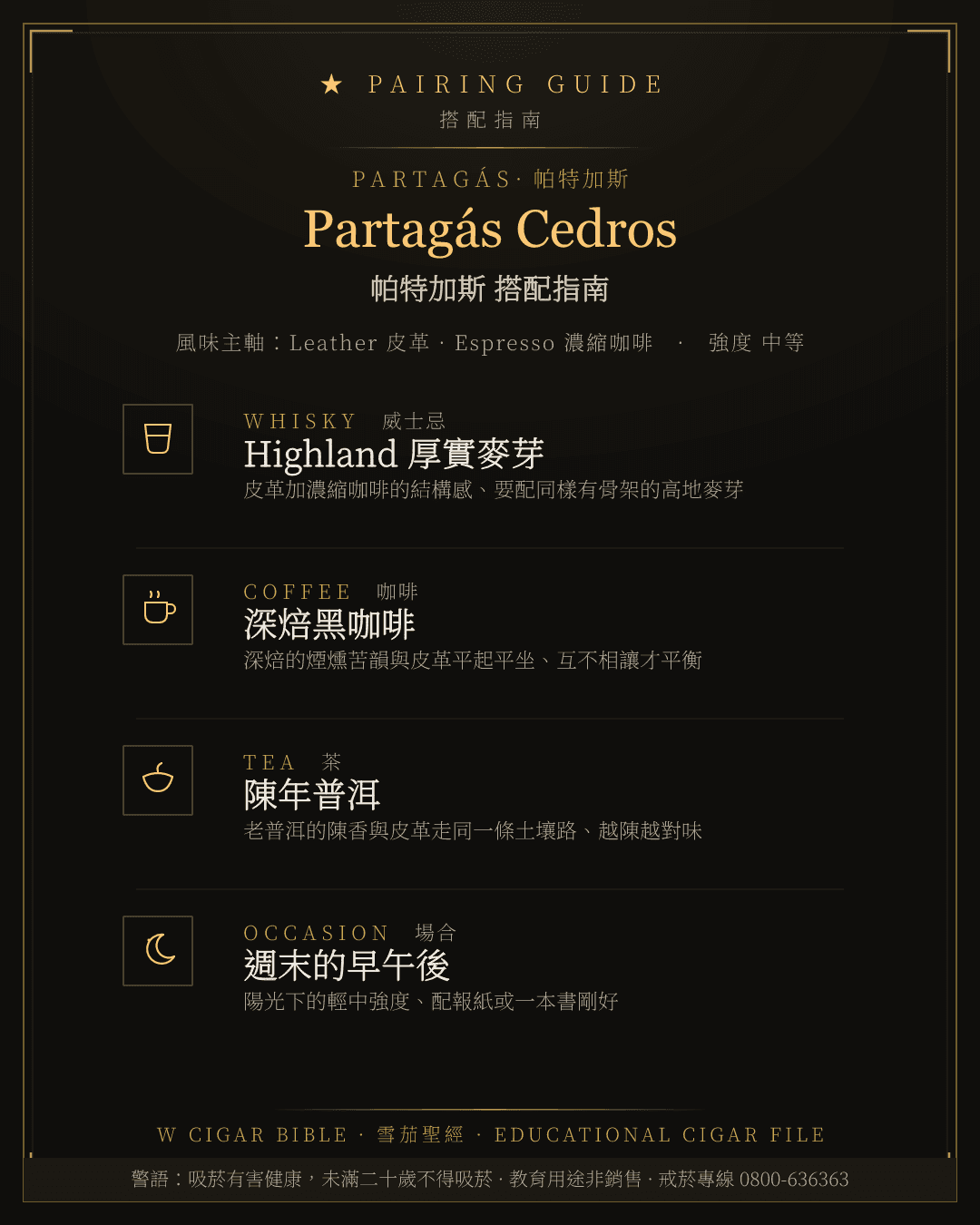
Partagás Cedros 搭配指南 · 帕特加斯
PAIRING GUIDE · 搭配指南

Partagás Cedros 風味筆記 · 帕特加斯
TASTING NOTES · 風味筆記
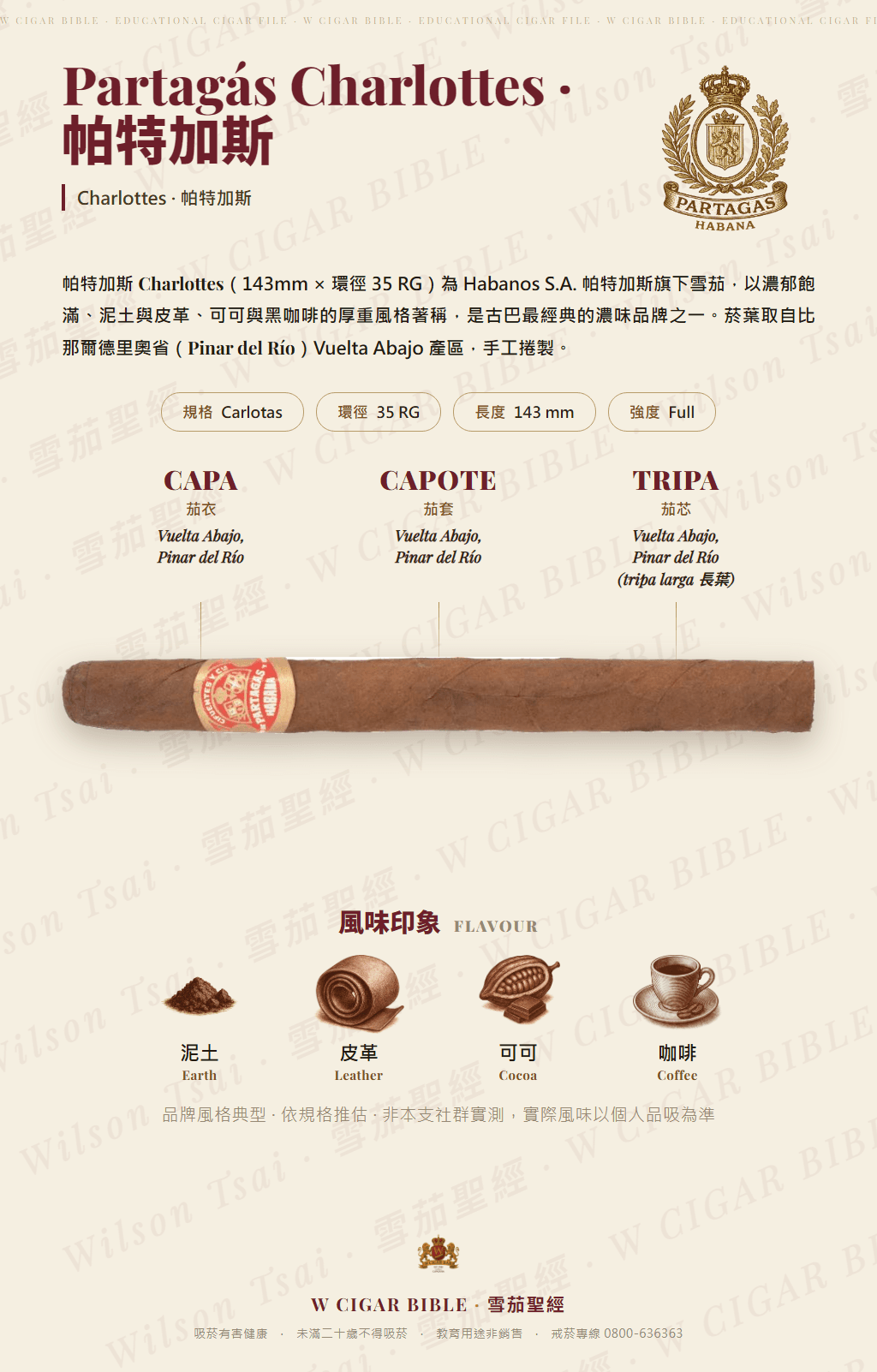
Partagás Charlottes · 帕特加斯
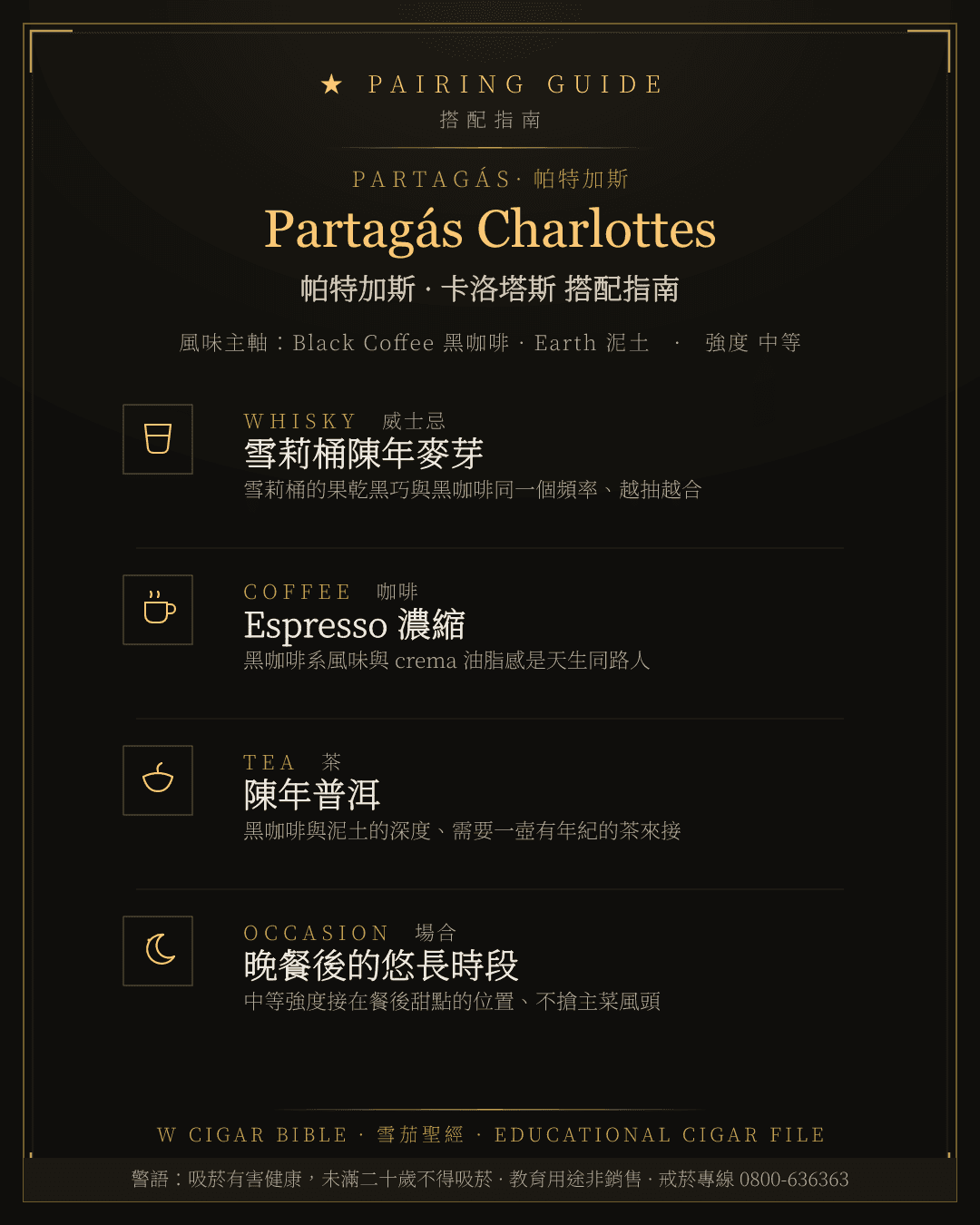
Partagás Charlottes 搭配指南 · 帕特加斯
PAIRING GUIDE · 搭配指南
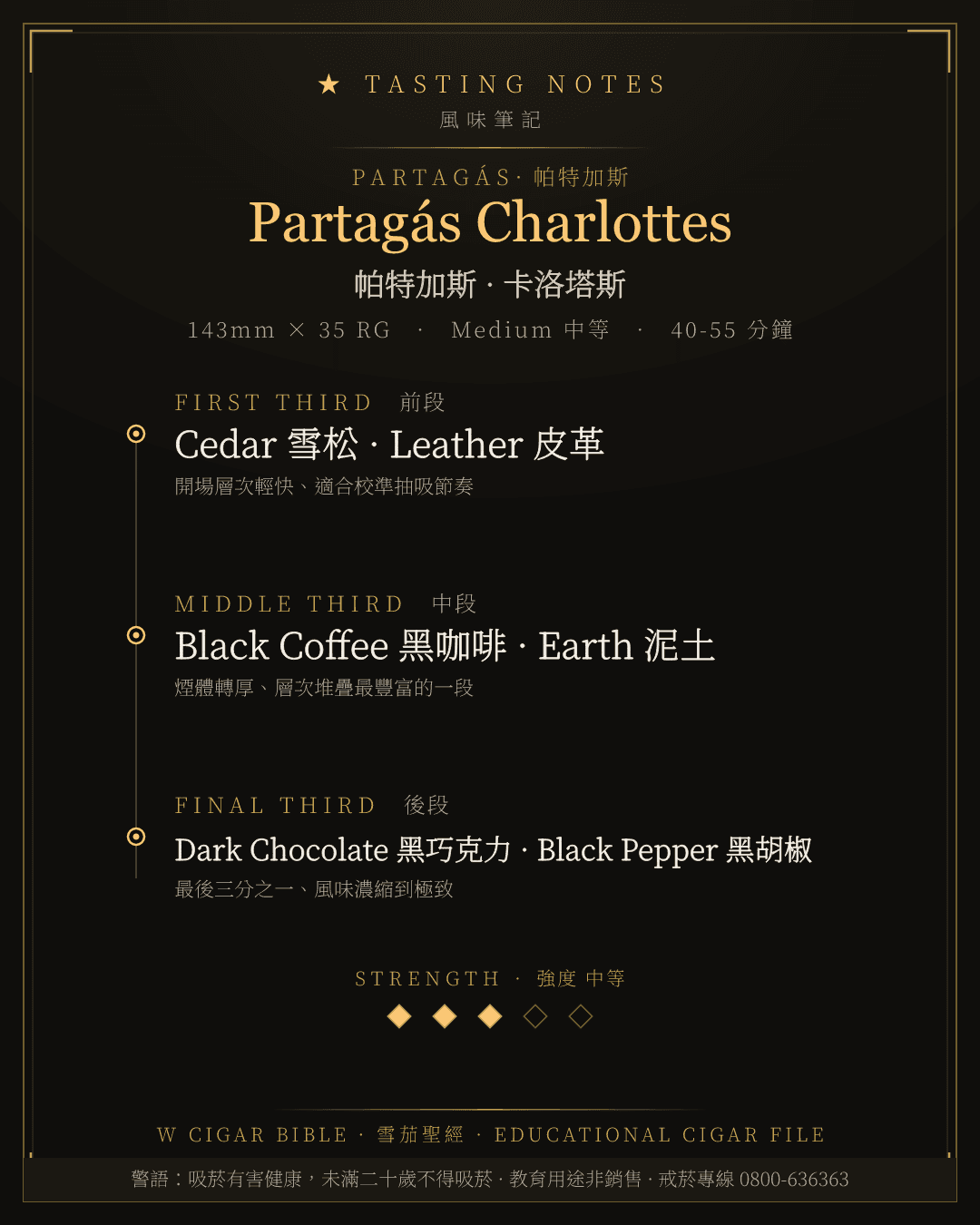
Partagás Charlottes 風味筆記 · 帕特加斯
TASTING NOTES · 風味筆記
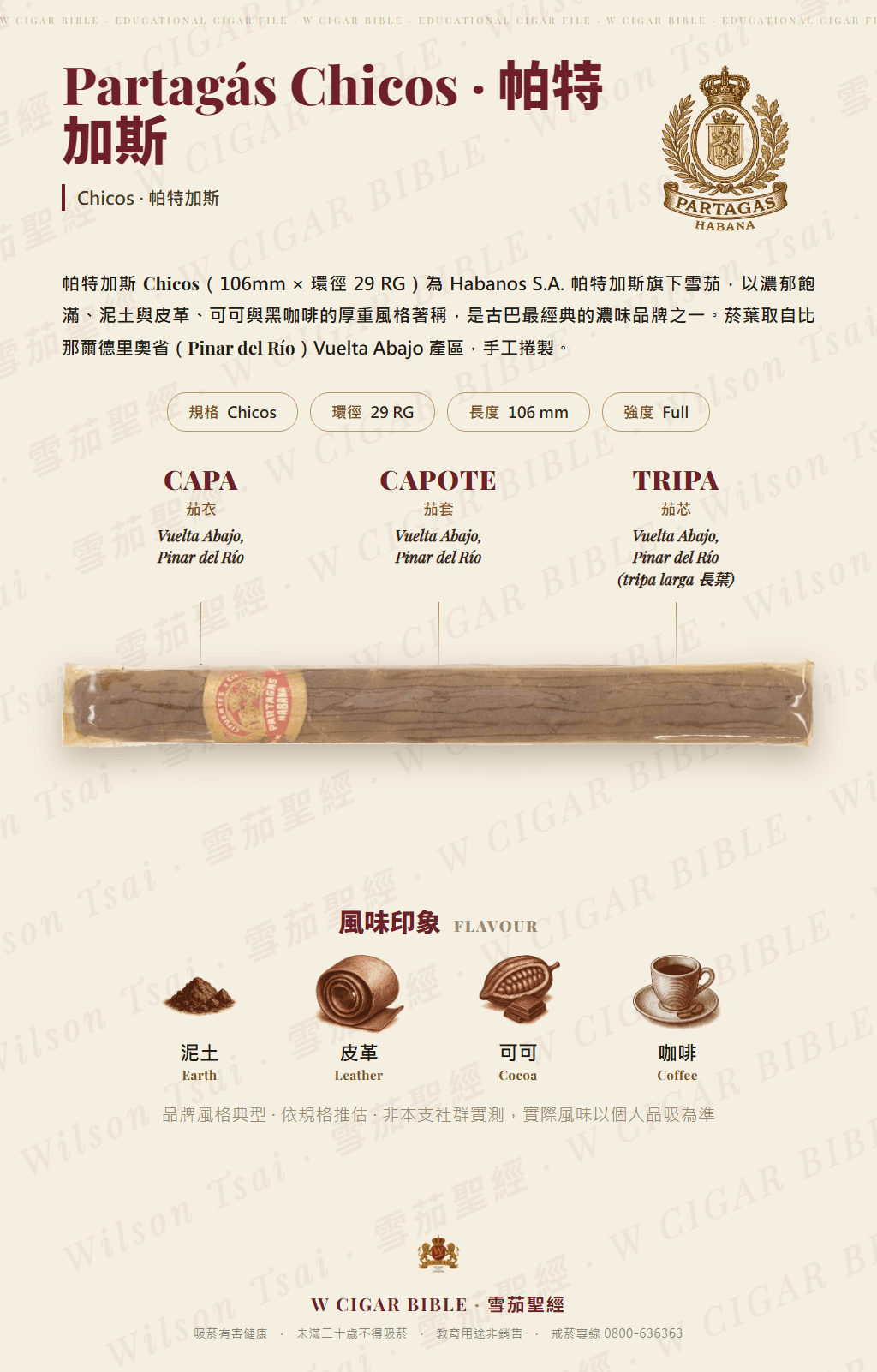
Partagás Chicos · 帕特加斯
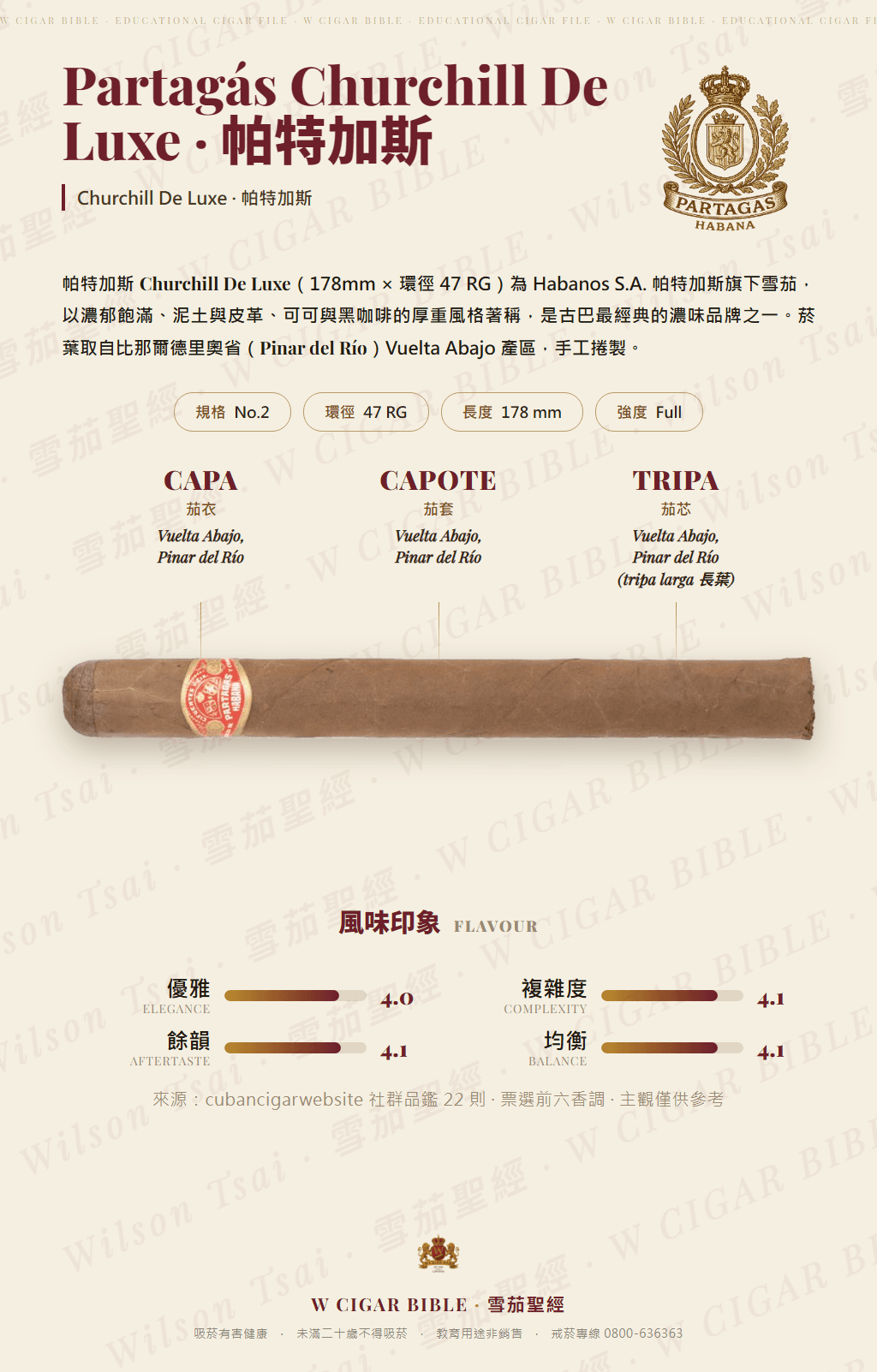
Partagás Churchill De Luxe · 帕特加斯

Partagás Churchill De Luxe 搭配指南 · 帕特加斯
PAIRING GUIDE · 搭配指南
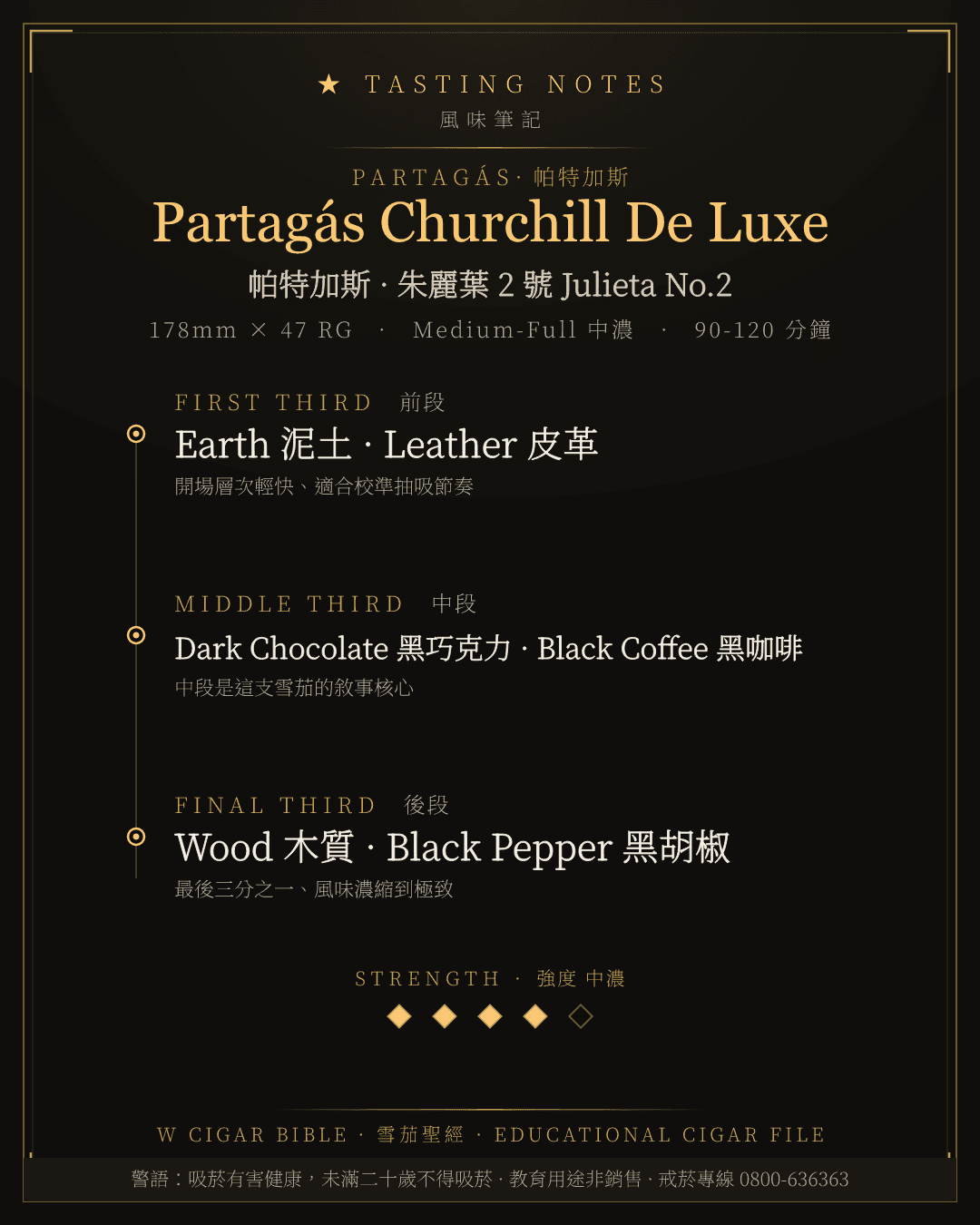
Partagás Churchill De Luxe 風味筆記 · 帕特加斯
TASTING NOTES · 風味筆記

Partagás Coleccion Habanos 搭配指南 · 帕特加斯
PAIRING GUIDE · 搭配指南
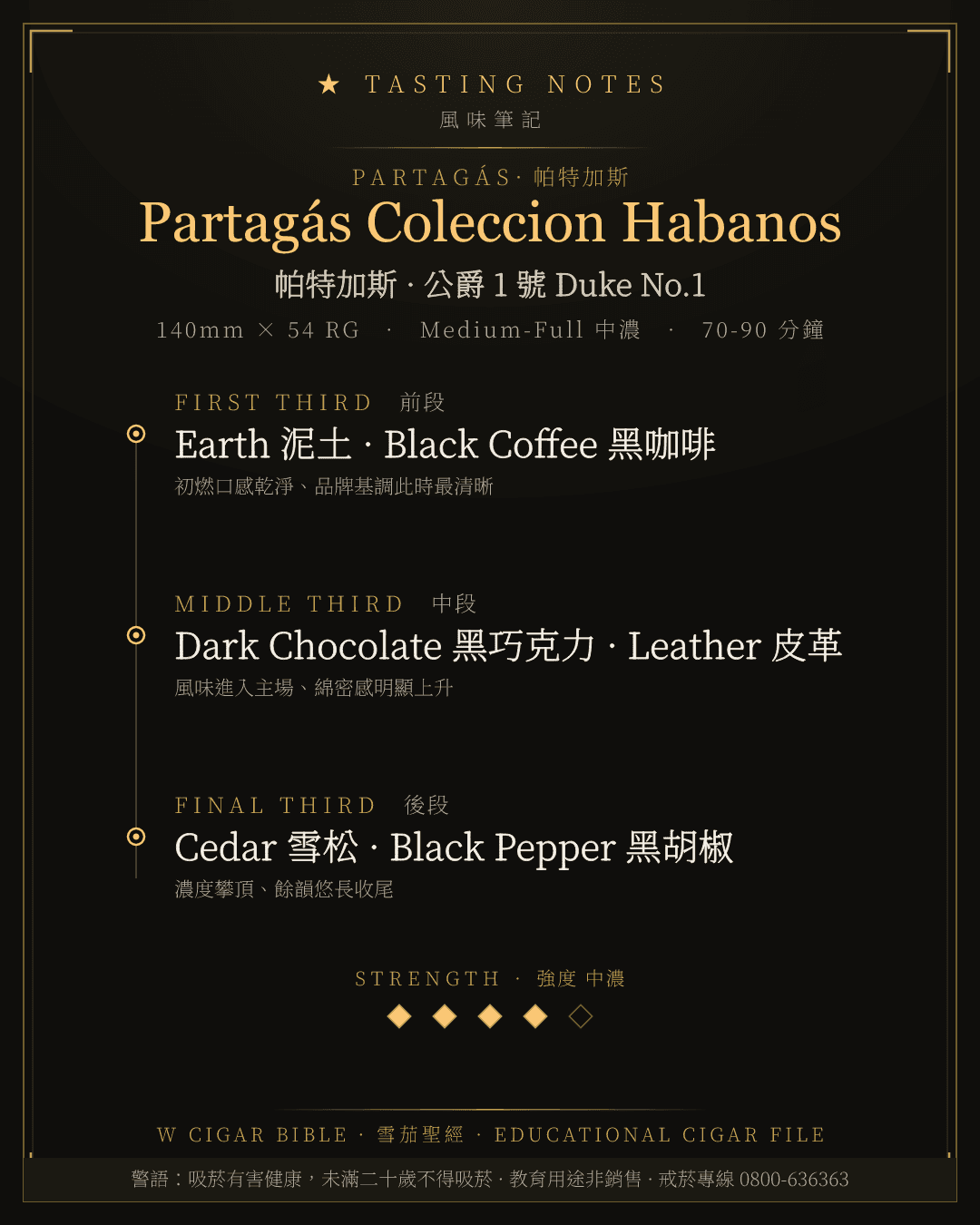
Partagás Coleccion Habanos 風味筆記 · 帕特加斯
TASTING NOTES · 風味筆記
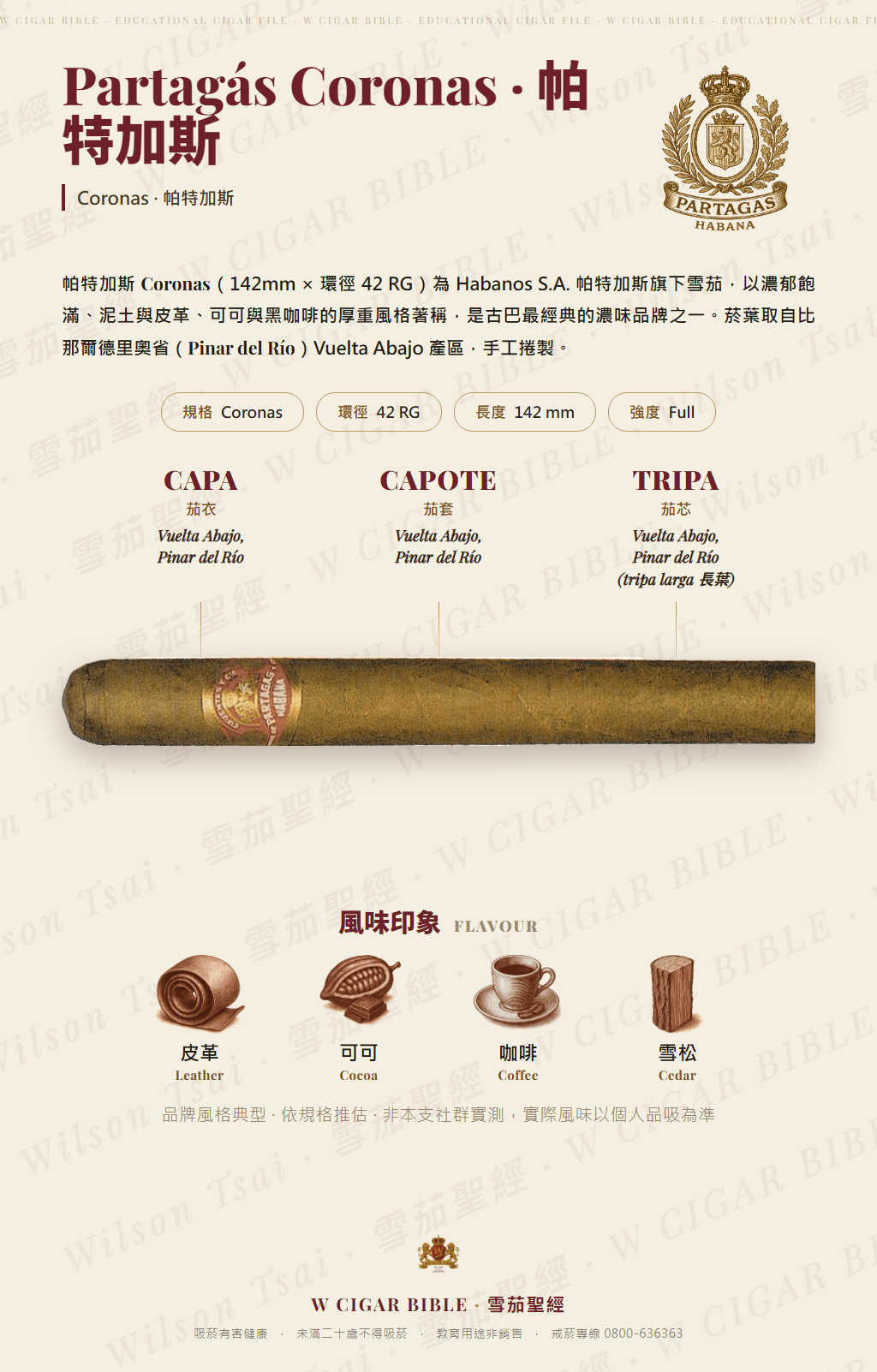
Partagás Coronas · 帕特加斯
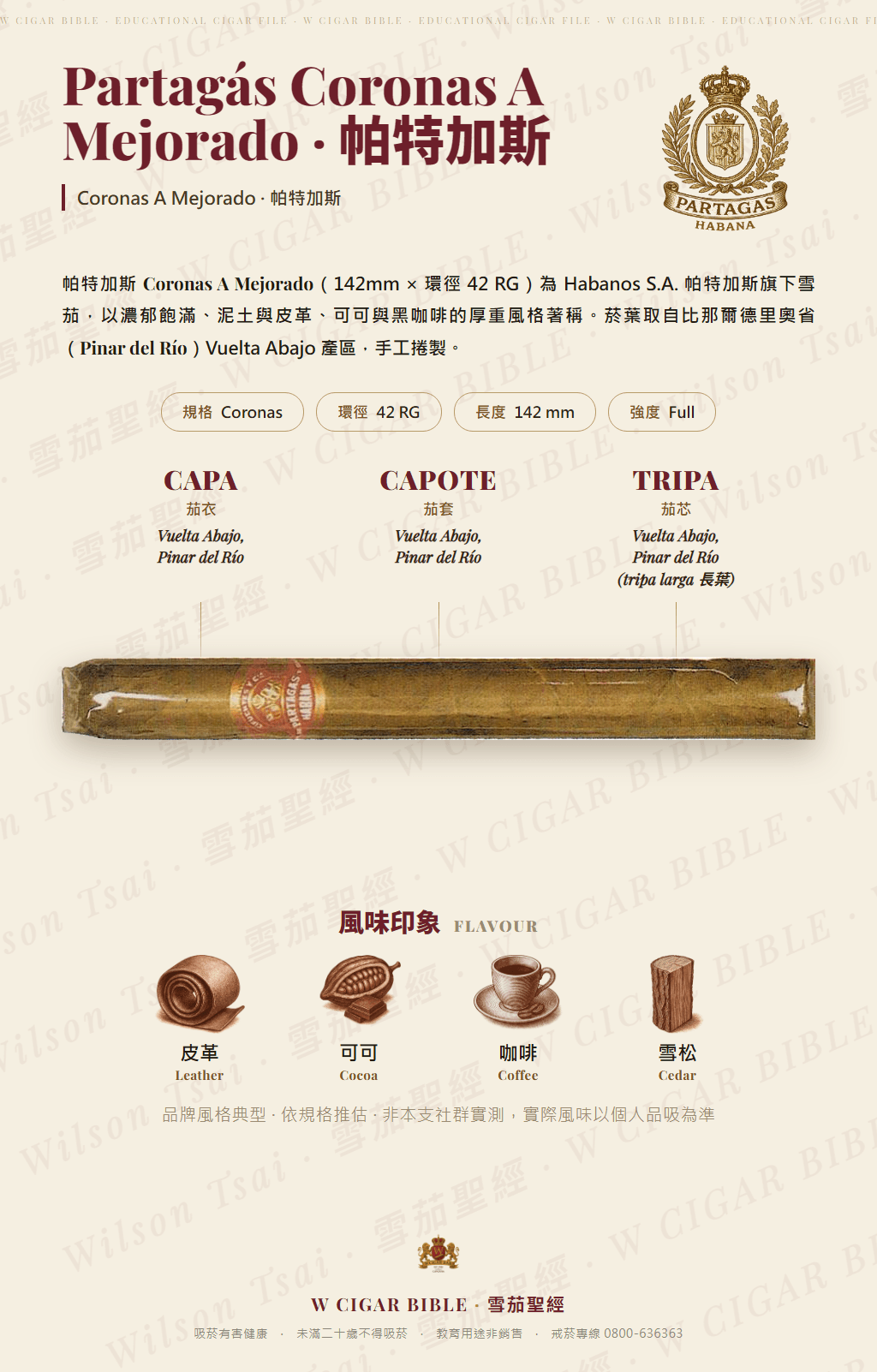
Partagás Coronas A Mejorado · 帕特加斯

Partagás Coronas A Mejorado vs Por Larrañaga Fox Seleccion No. 119
VITOLA SHOWDOWN · Coronas
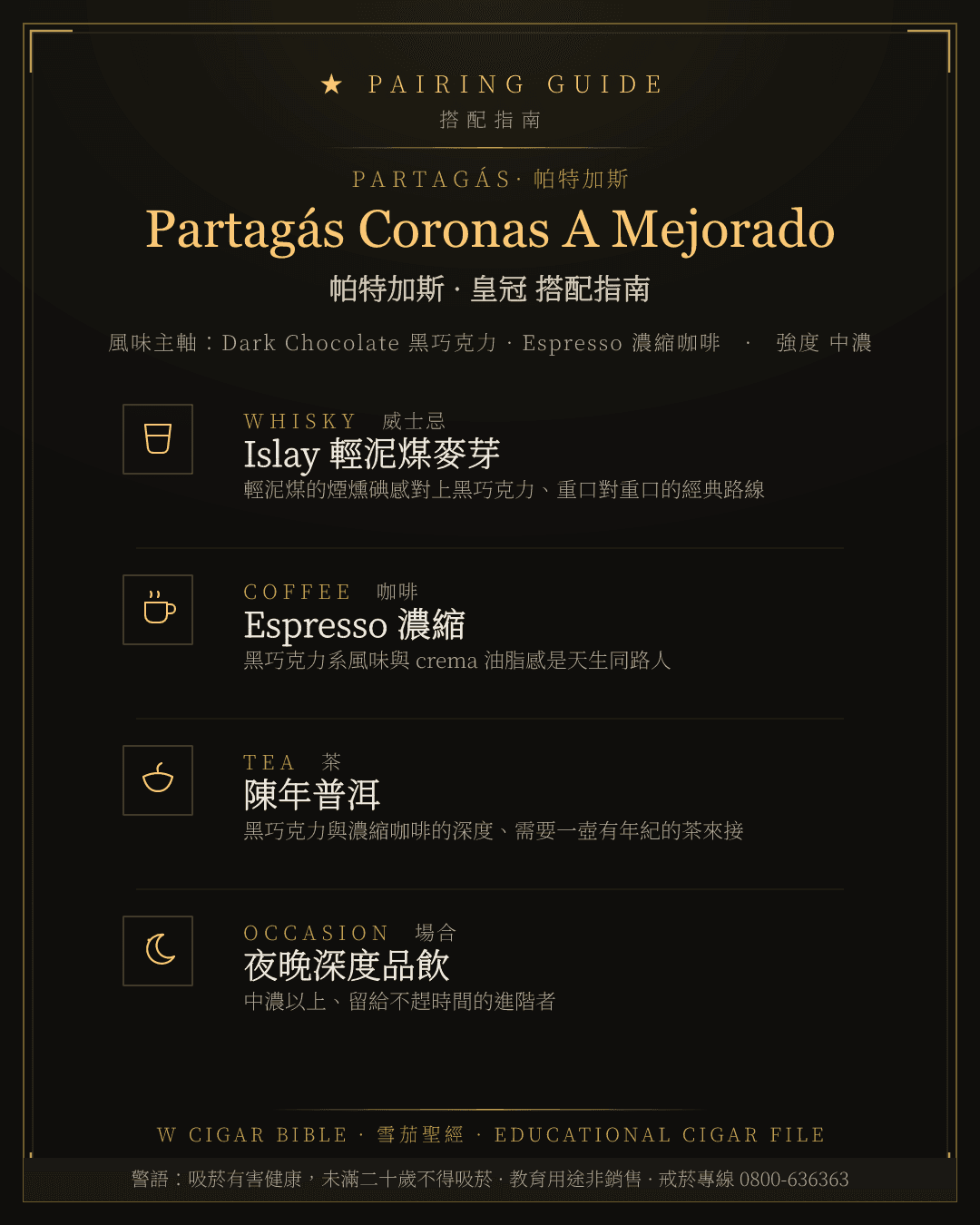
Partagás Coronas A Mejorado 搭配指南 · 帕特加斯
PAIRING GUIDE · 搭配指南
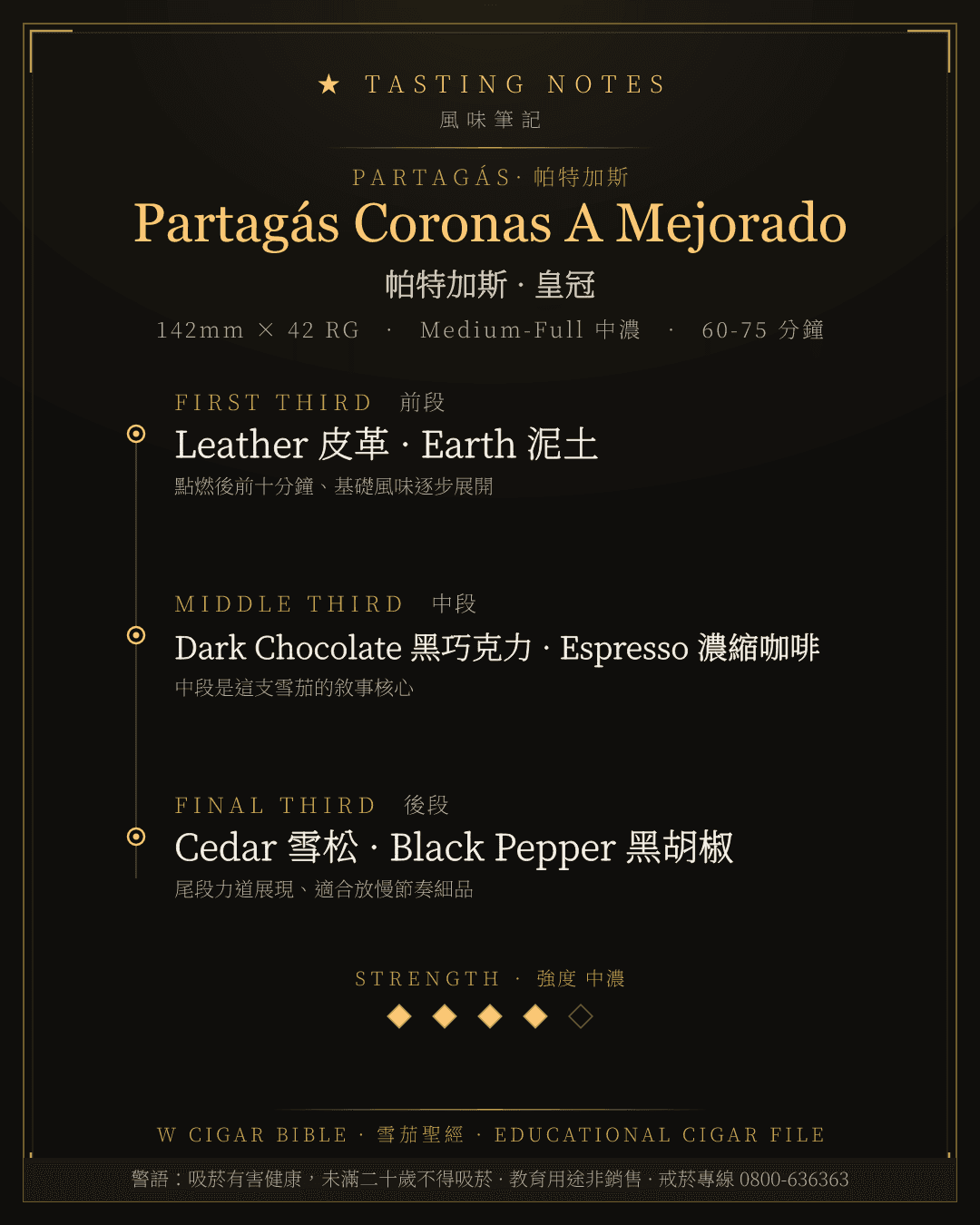
Partagás Coronas A Mejorado 風味筆記 · 帕特加斯
TASTING NOTES · 風味筆記
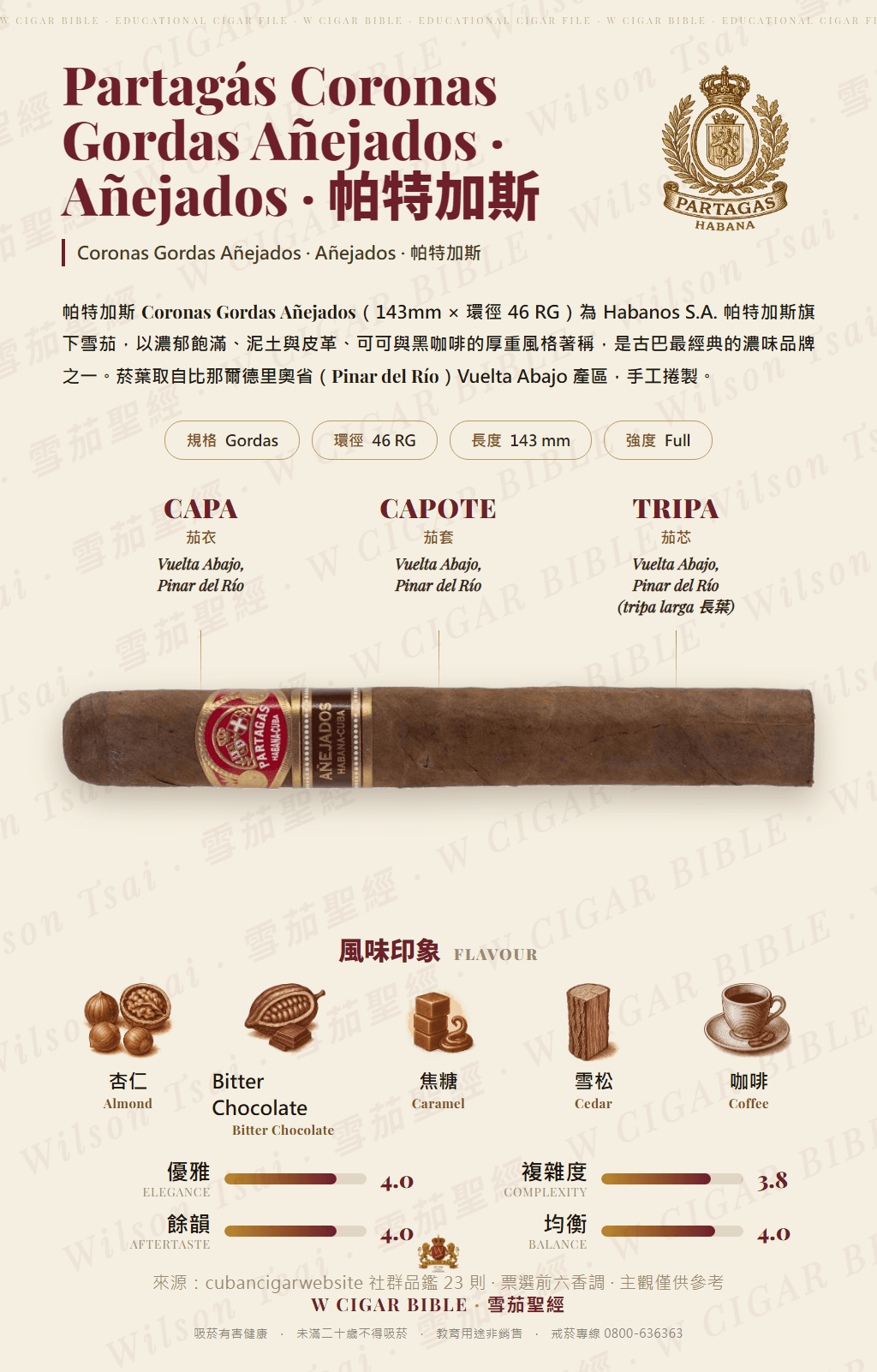
Partagás Coronas Gordas Añejados · Añejados · 帕特加斯
Añejados 陳年系列(Coronas Gordas 環徑 46 × 143mm,2007 年裝盒、2016 年上市)· 雪茄檔案
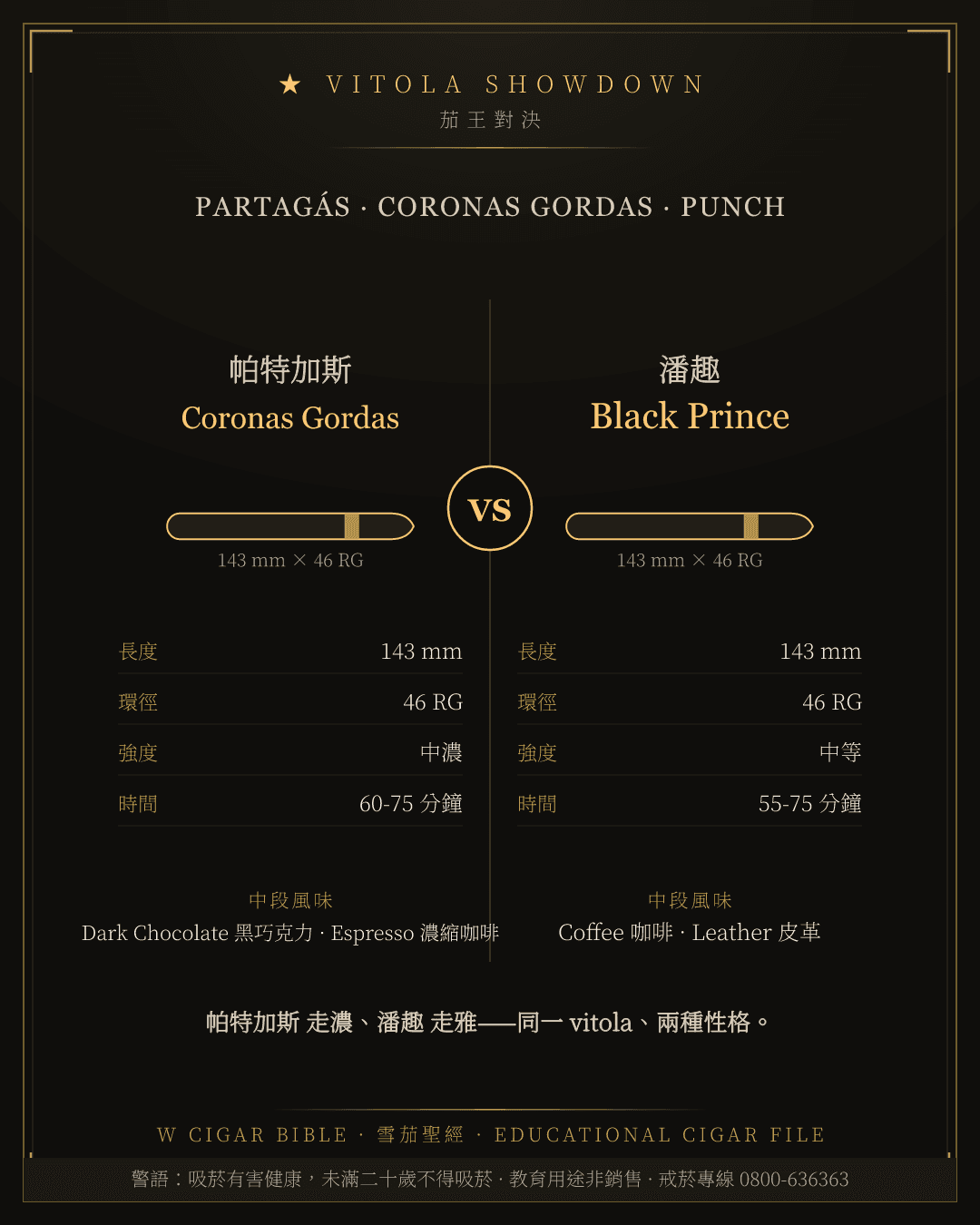
Partagás Coronas Gordas vs Punch Black Prince
VITOLA SHOWDOWN · Coronas Gordas

Partagás Coronas Gordas 搭配指南 · 帕特加斯
PAIRING GUIDE · 搭配指南
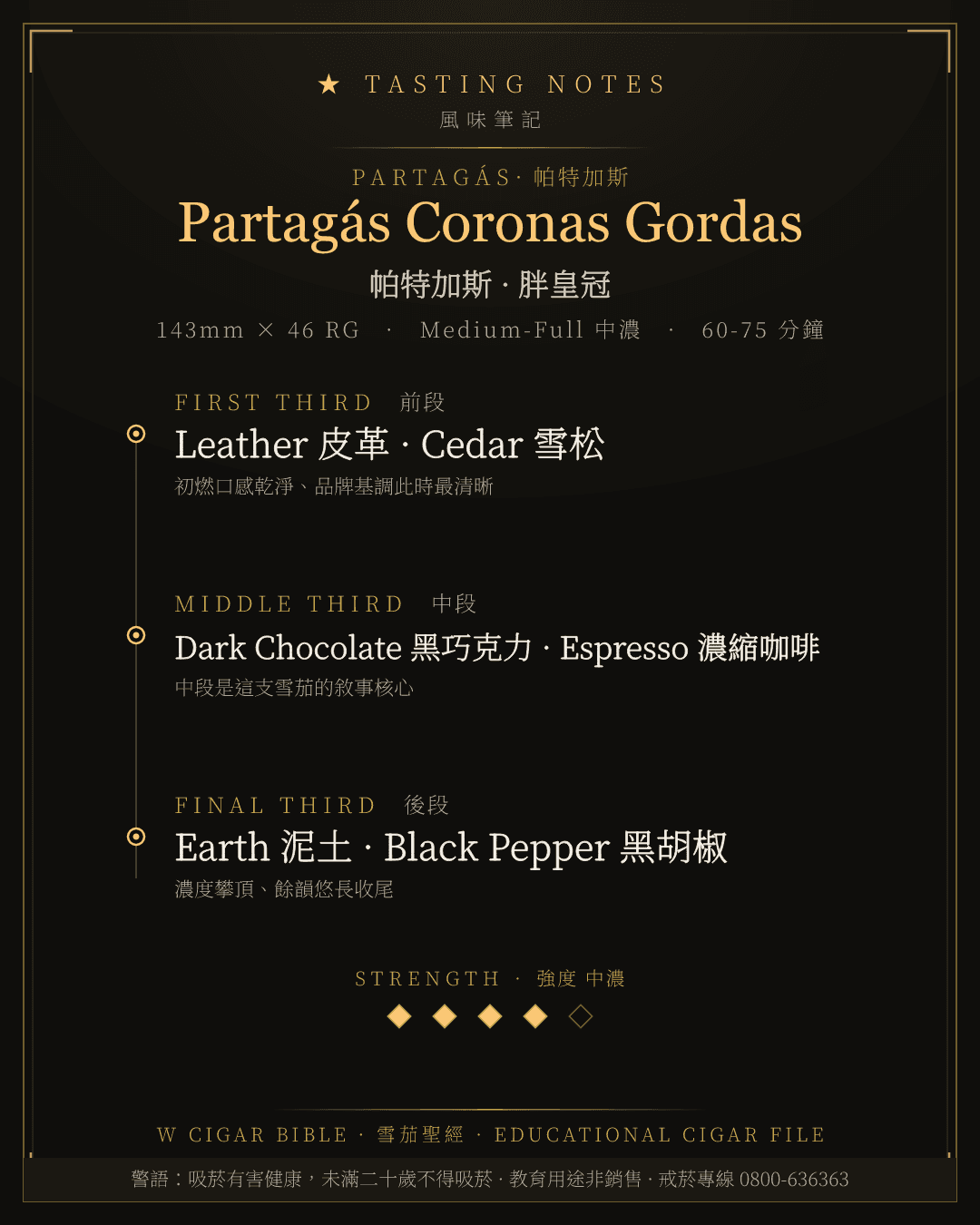
Partagás Coronas Gordas 風味筆記 · 帕特加斯
TASTING NOTES · 風味筆記
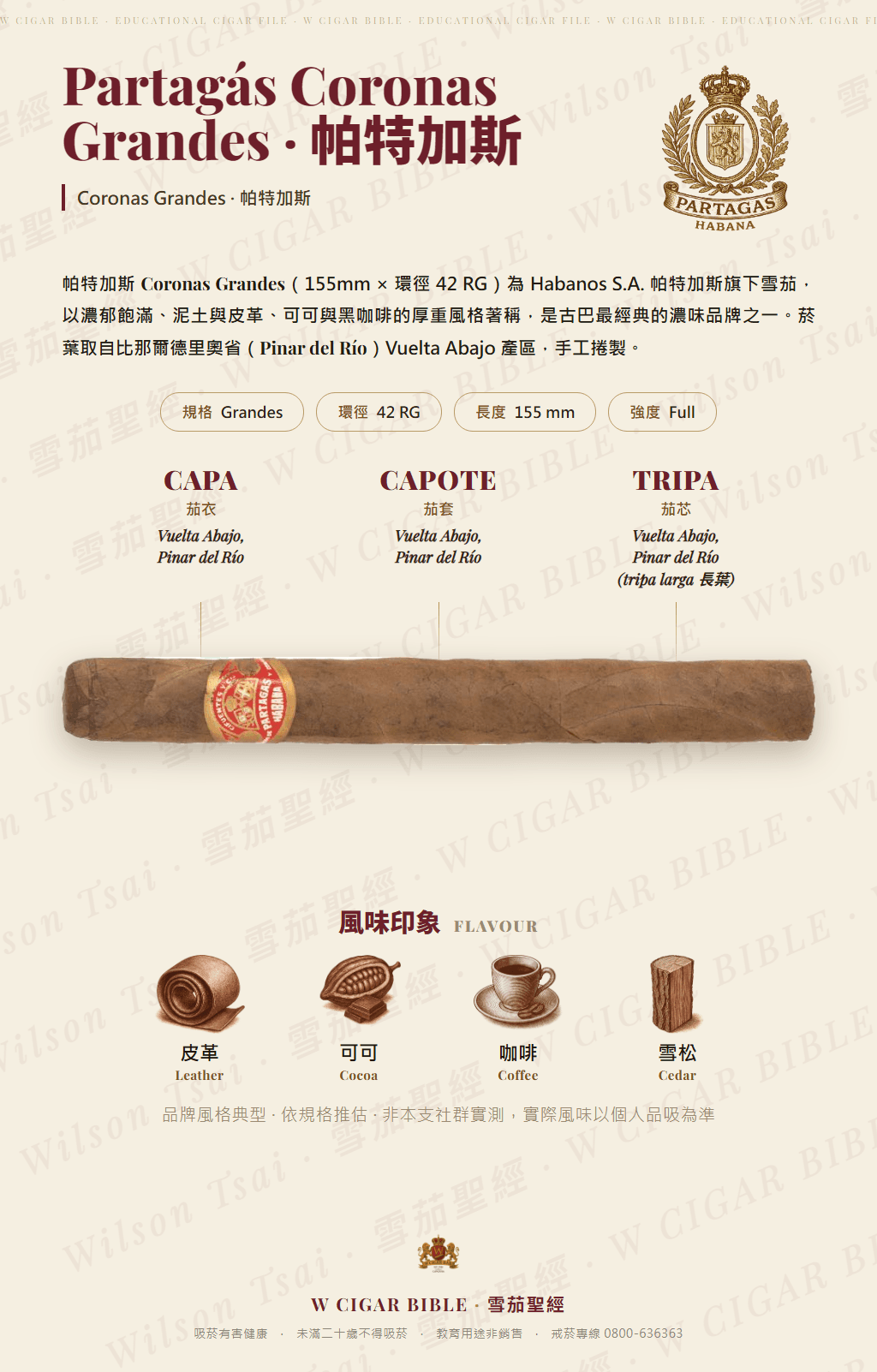
Partagás Coronas Grandes · 帕特加斯
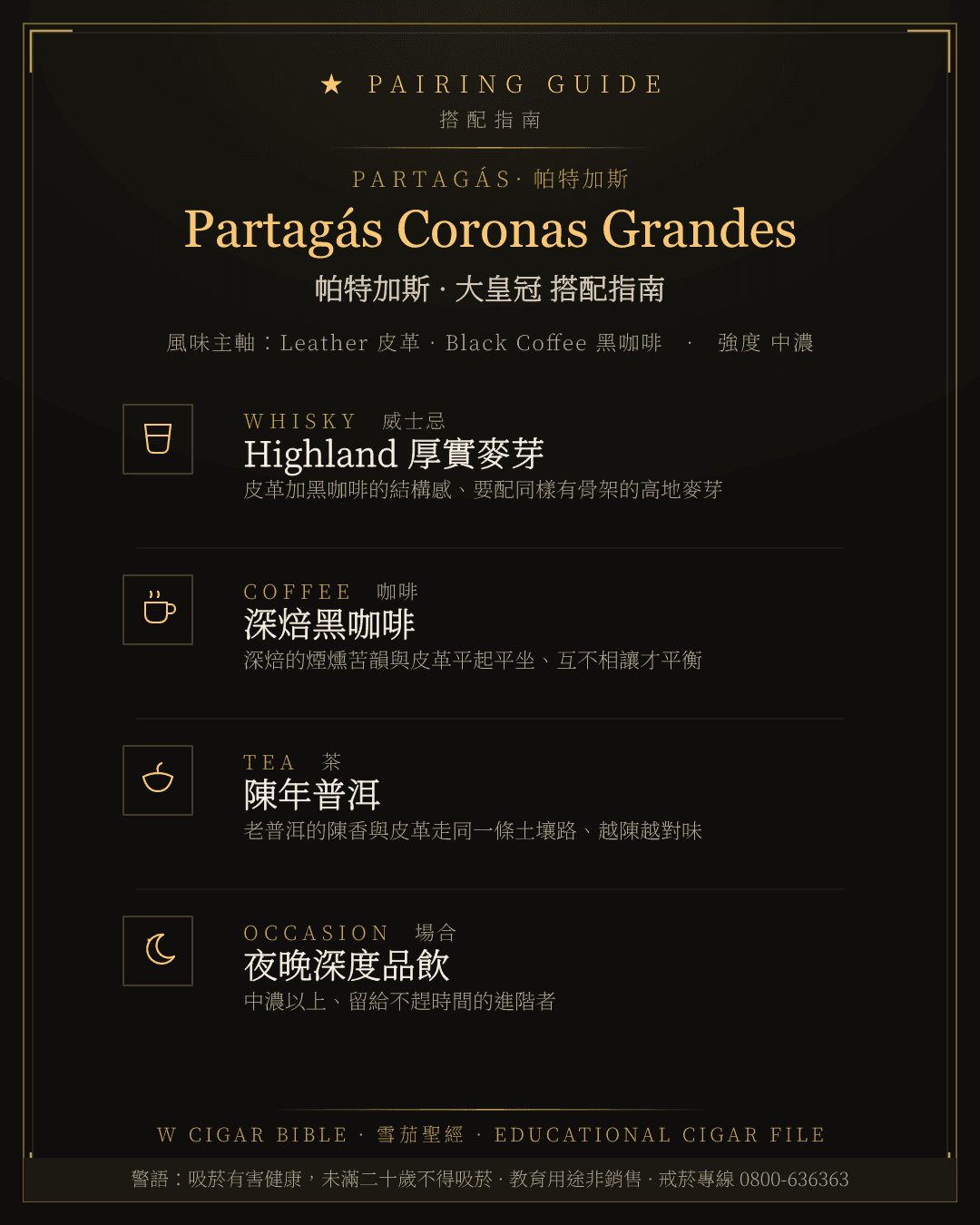
Partagás Coronas Grandes 搭配指南 · 帕特加斯
PAIRING GUIDE · 搭配指南
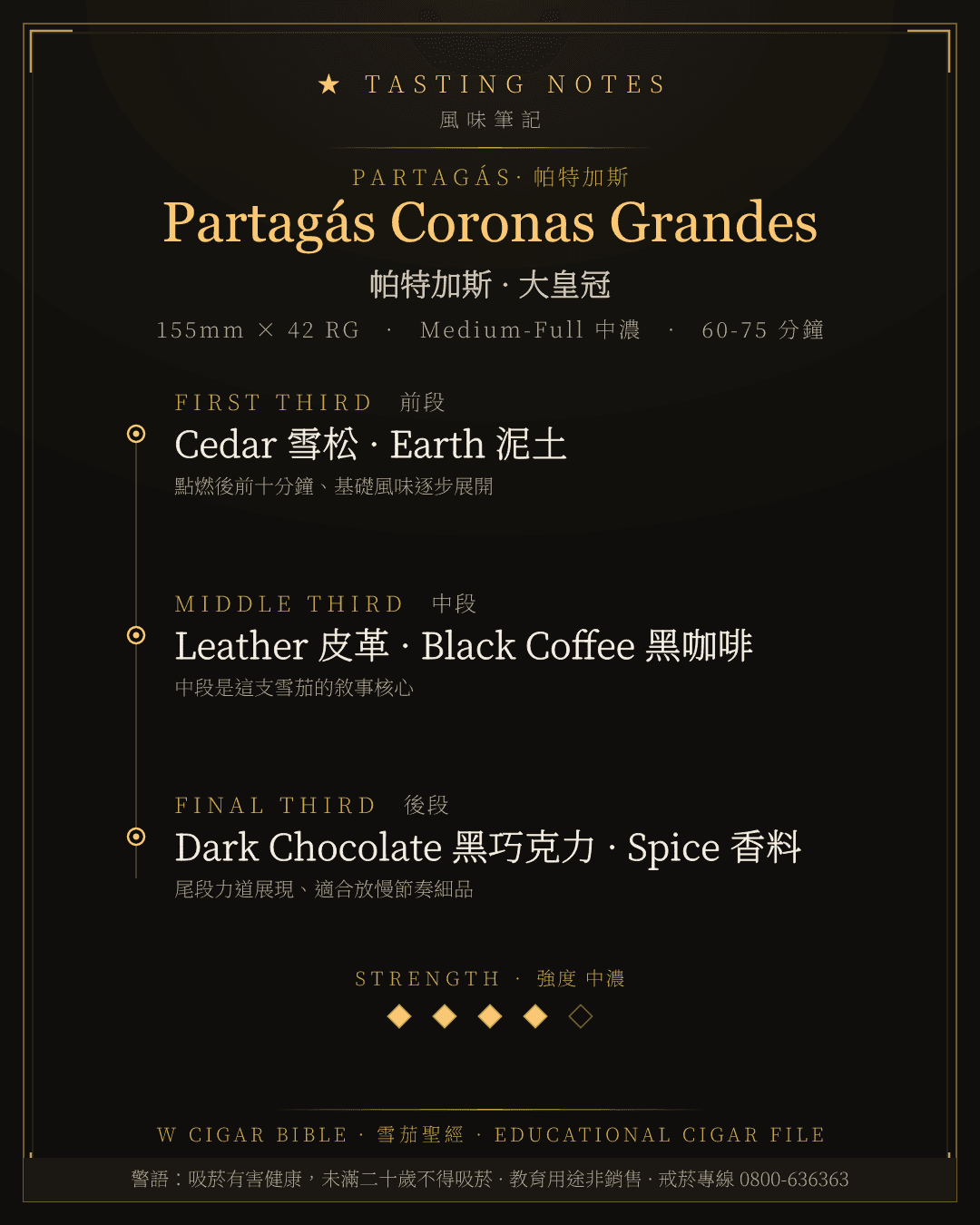
Partagás Coronas Grandes 風味筆記 · 帕特加斯
TASTING NOTES · 風味筆記
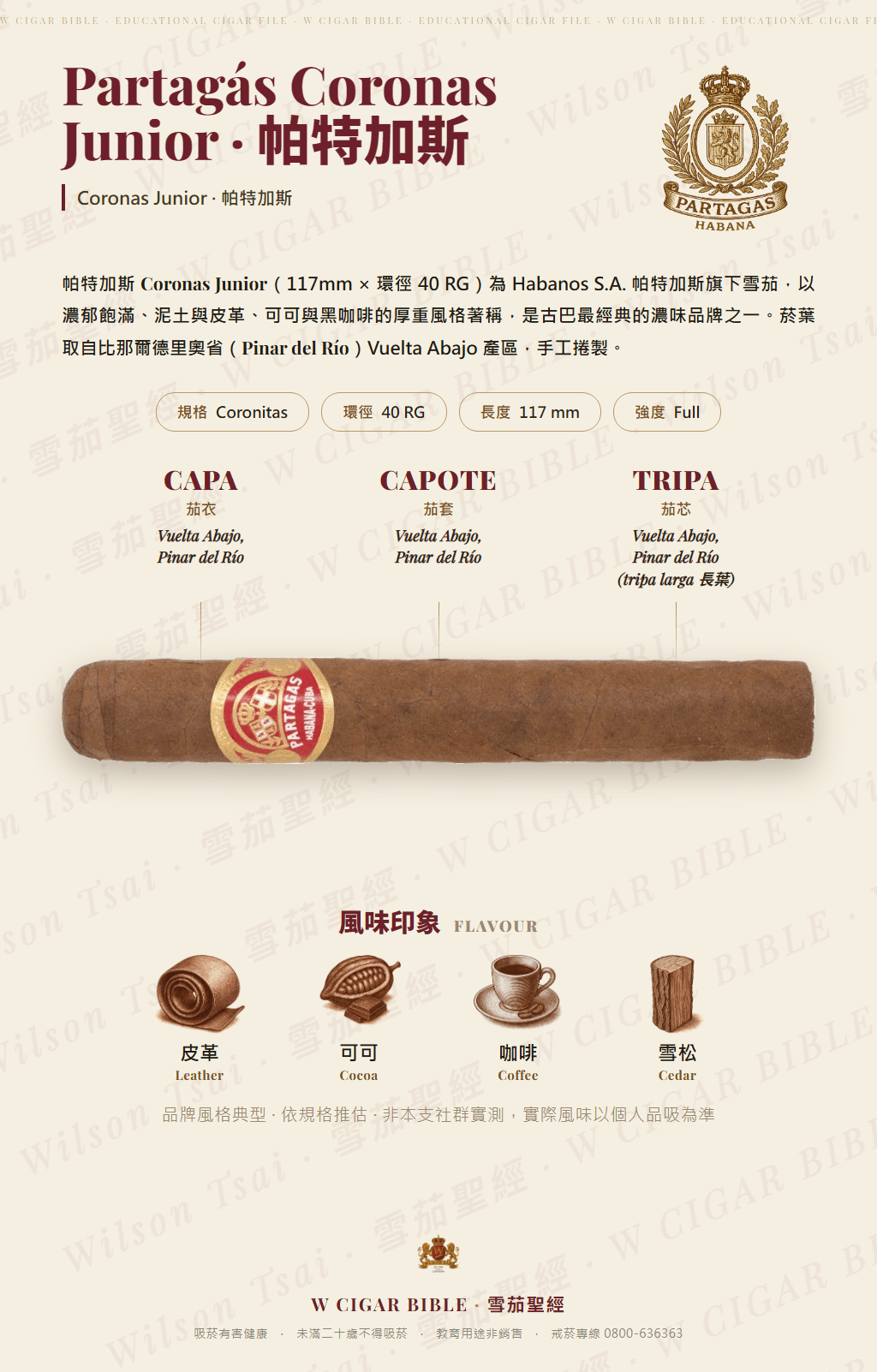
Partagás Coronas Junior · 帕特加斯
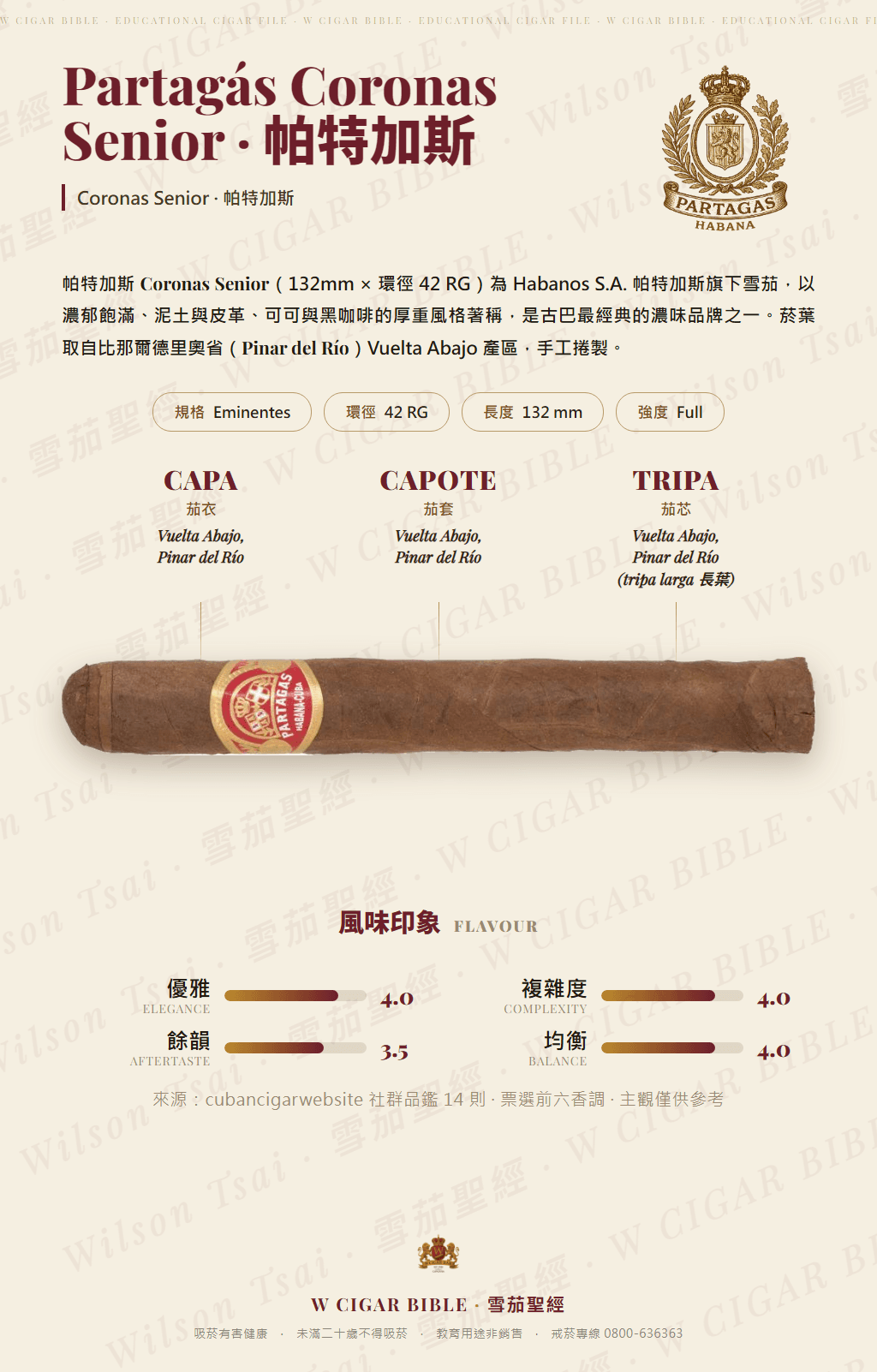
Partagás Coronas Senior · 帕特加斯
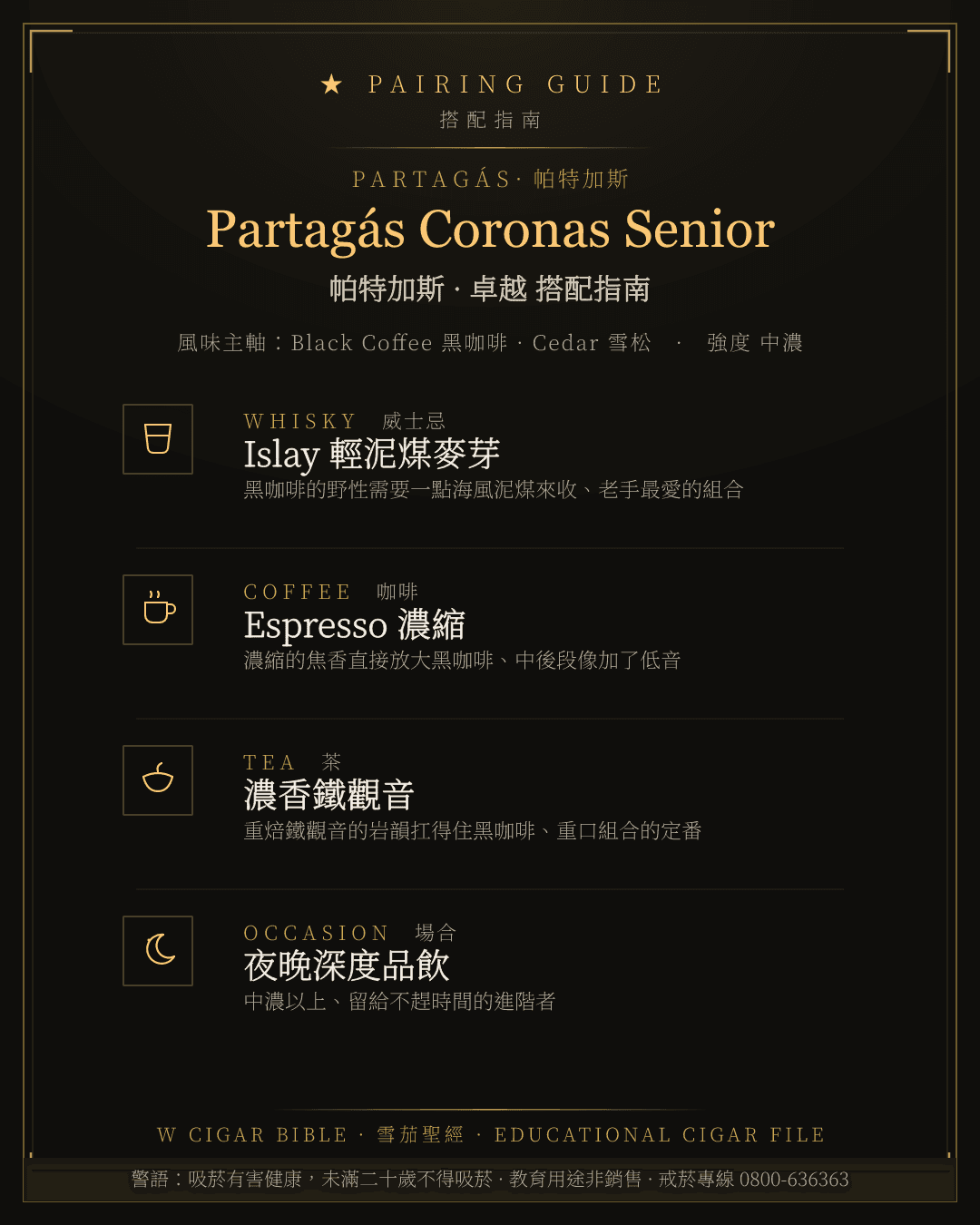
Partagás Coronas Senior 搭配指南 · 帕特加斯
PAIRING GUIDE · 搭配指南
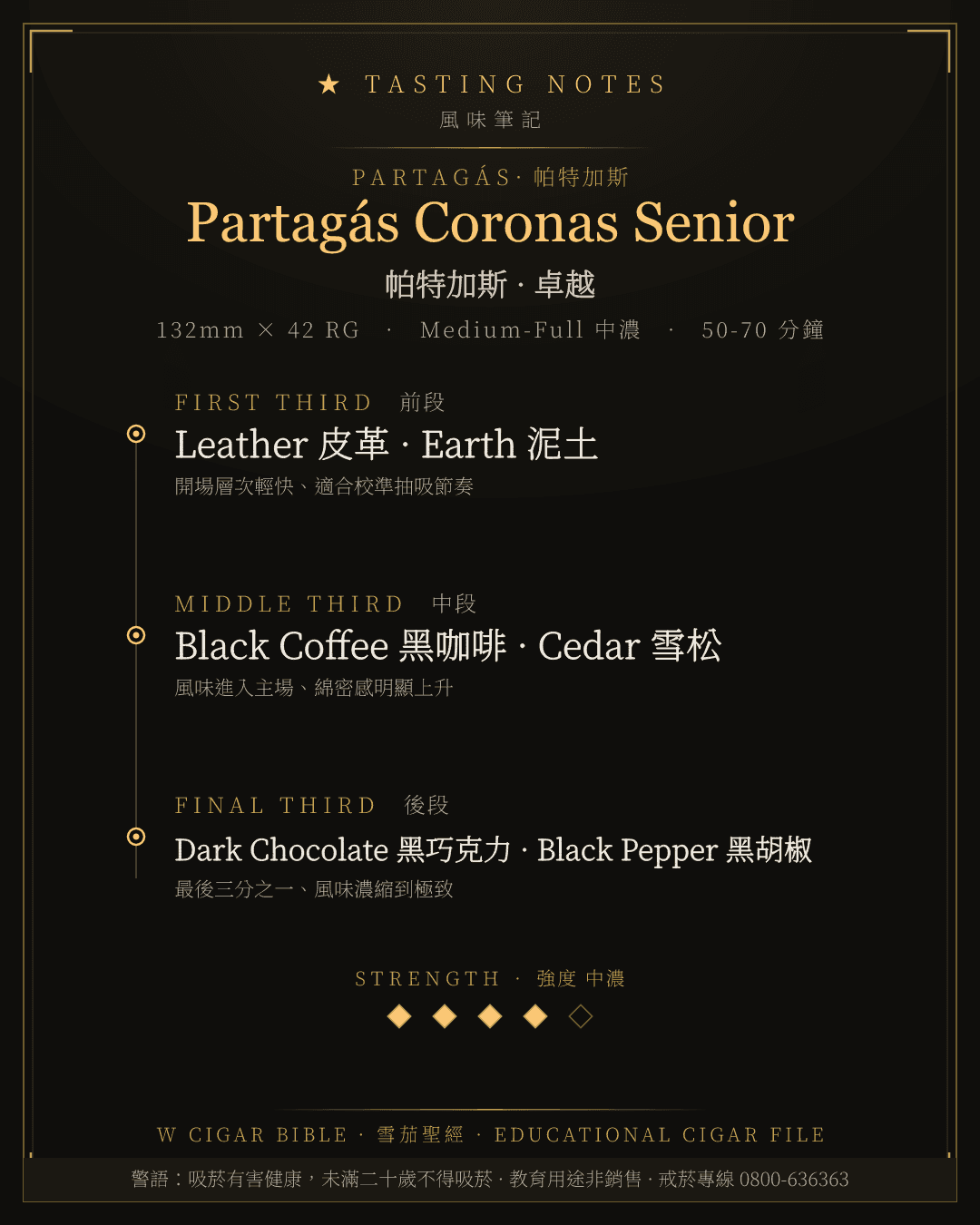
Partagás Coronas Senior 風味筆記 · 帕特加斯
TASTING NOTES · 風味筆記

Partagás Coronas vs Por Larrañaga Lanceros
VITOLA SHOWDOWN · Coronas
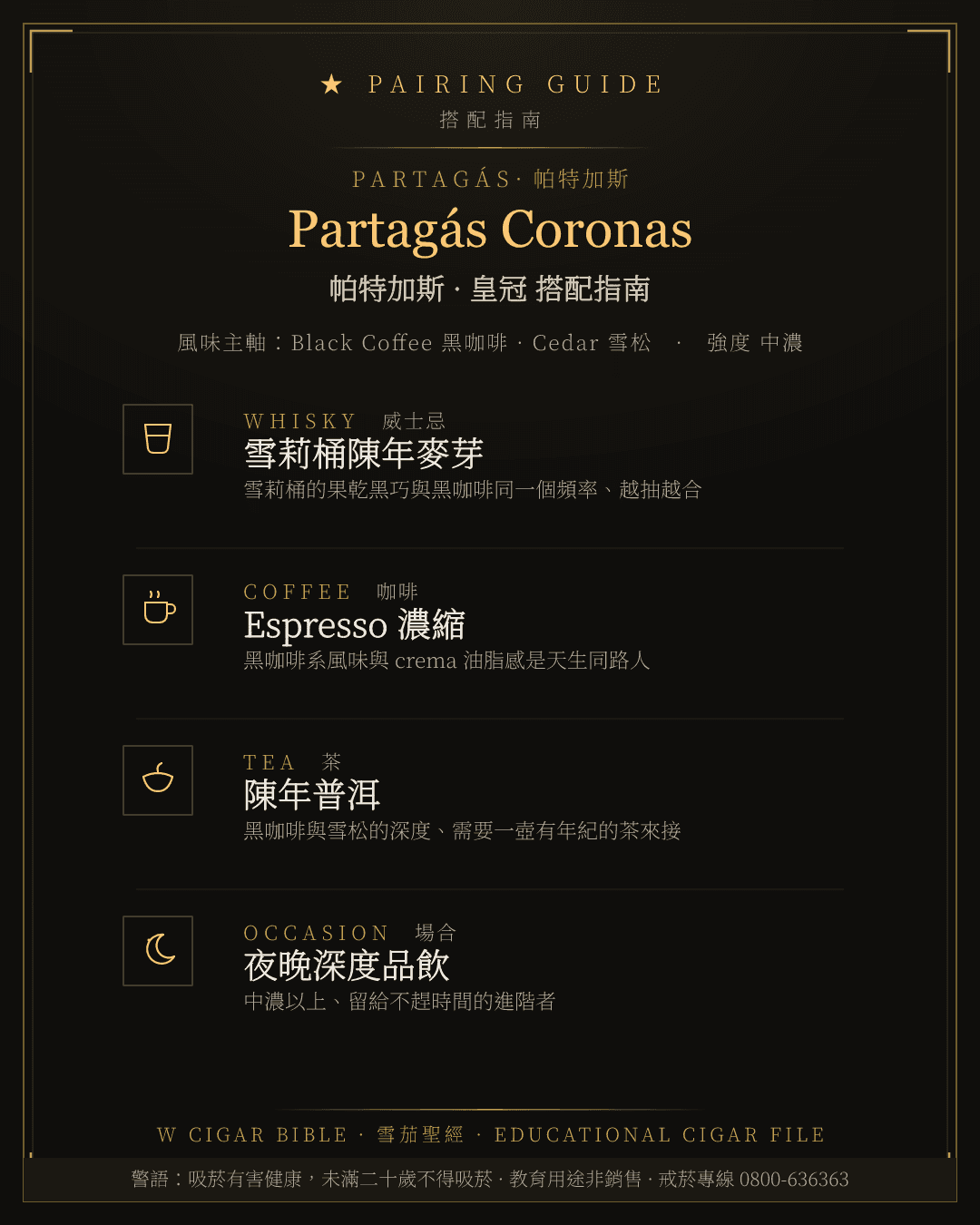
Partagás Coronas 搭配指南 · 帕特加斯
PAIRING GUIDE · 搭配指南

Partagás Coronas 風味筆記 · 帕特加斯
TASTING NOTES · 風味筆記
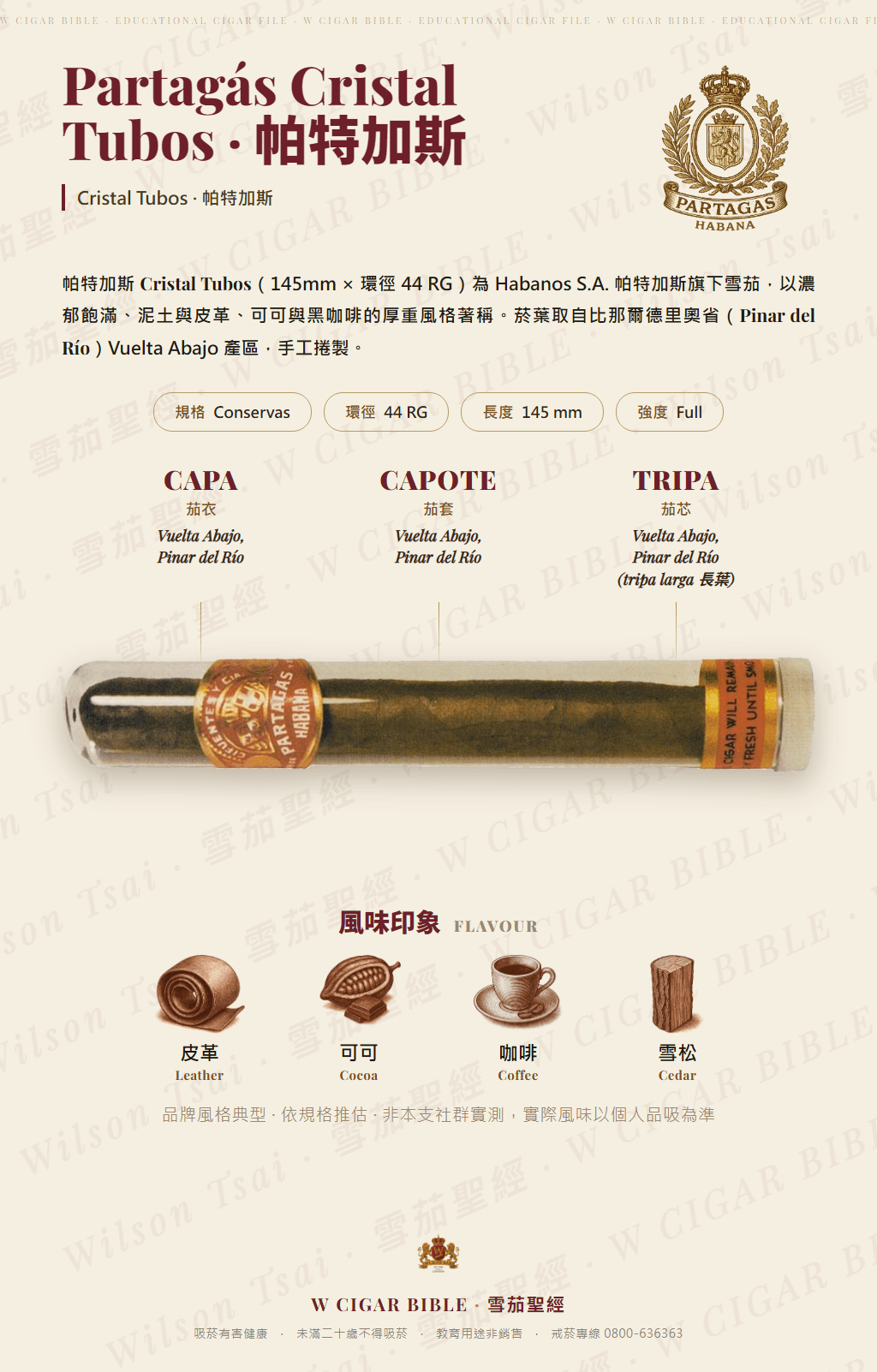
Partagás Cristal Tubos · 帕特加斯
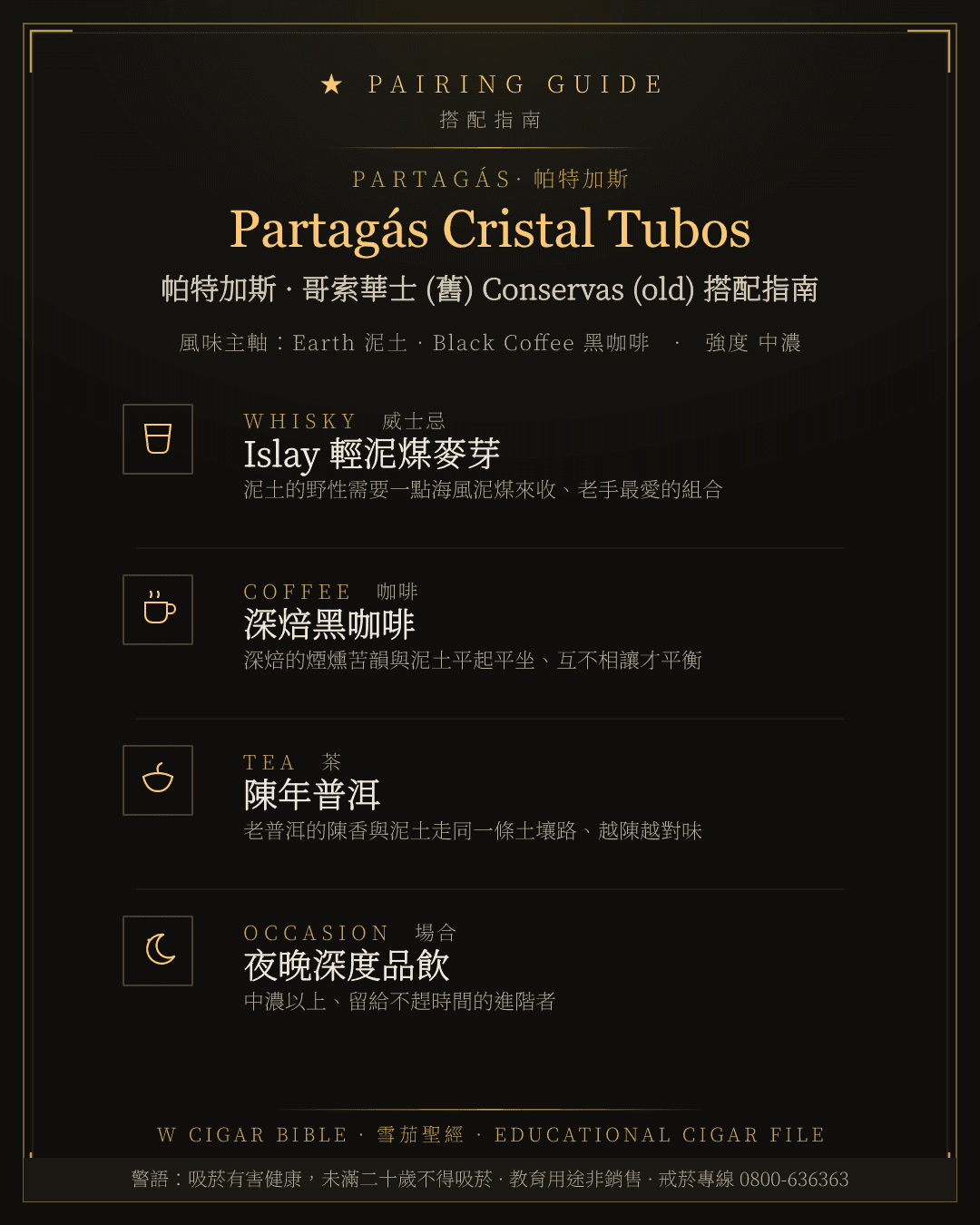
Partagás Cristal Tubos 搭配指南 · 帕特加斯
PAIRING GUIDE · 搭配指南
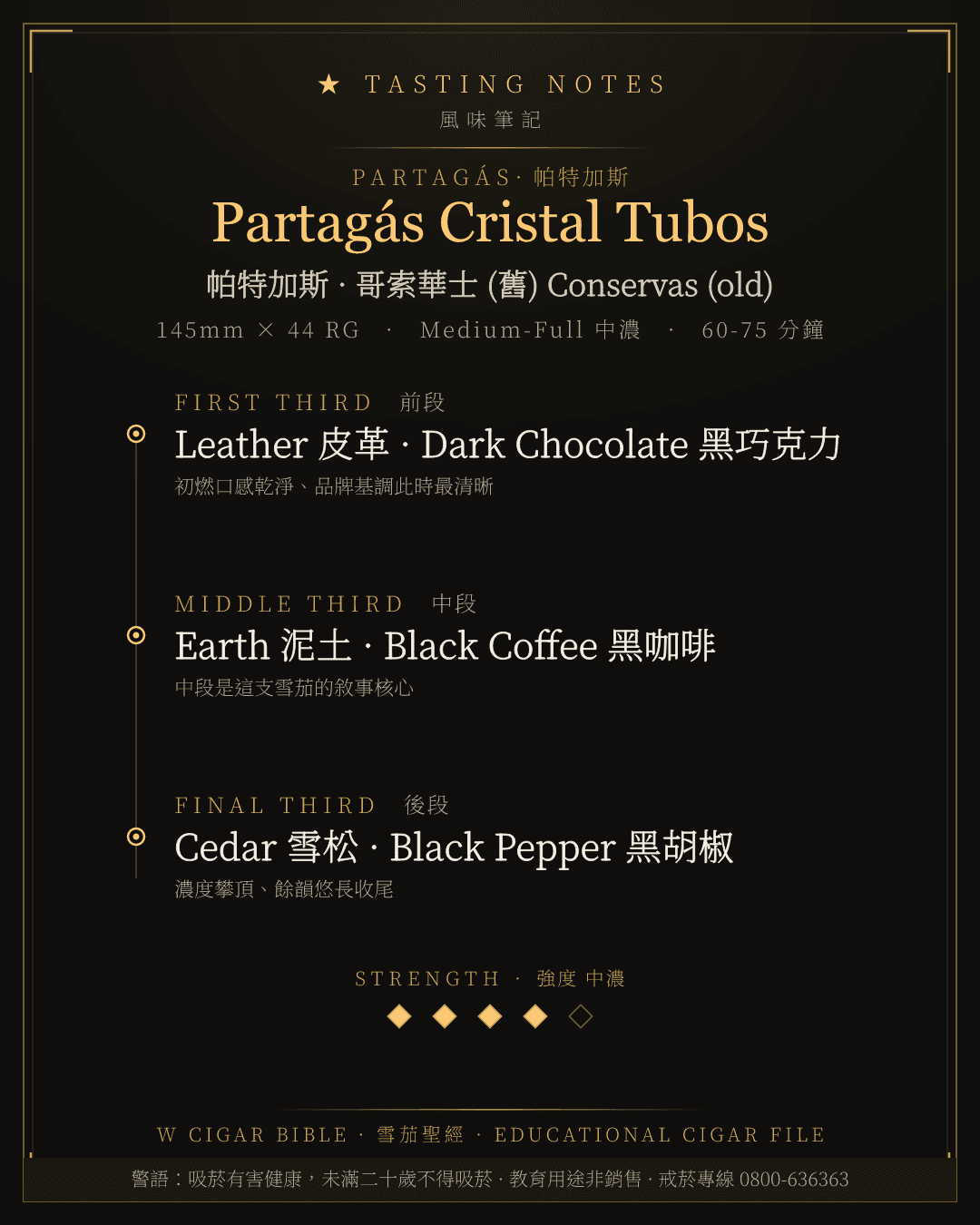
Partagás Cristal Tubos 風味筆記 · 帕特加斯
TASTING NOTES · 風味筆記
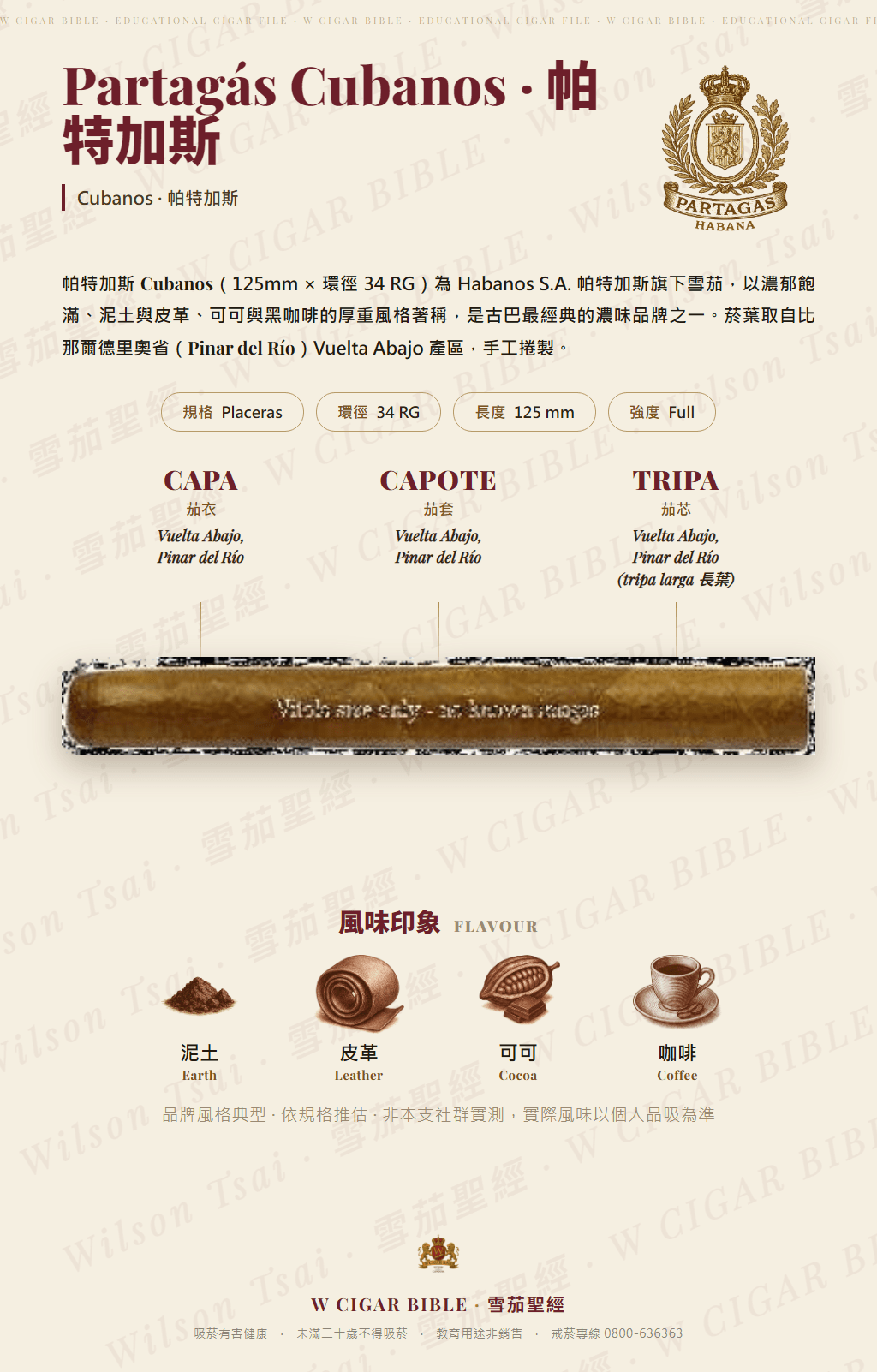
Partagás Cubanos · 帕特加斯

Partagás Cubanos 搭配指南 · 帕特加斯
PAIRING GUIDE · 搭配指南
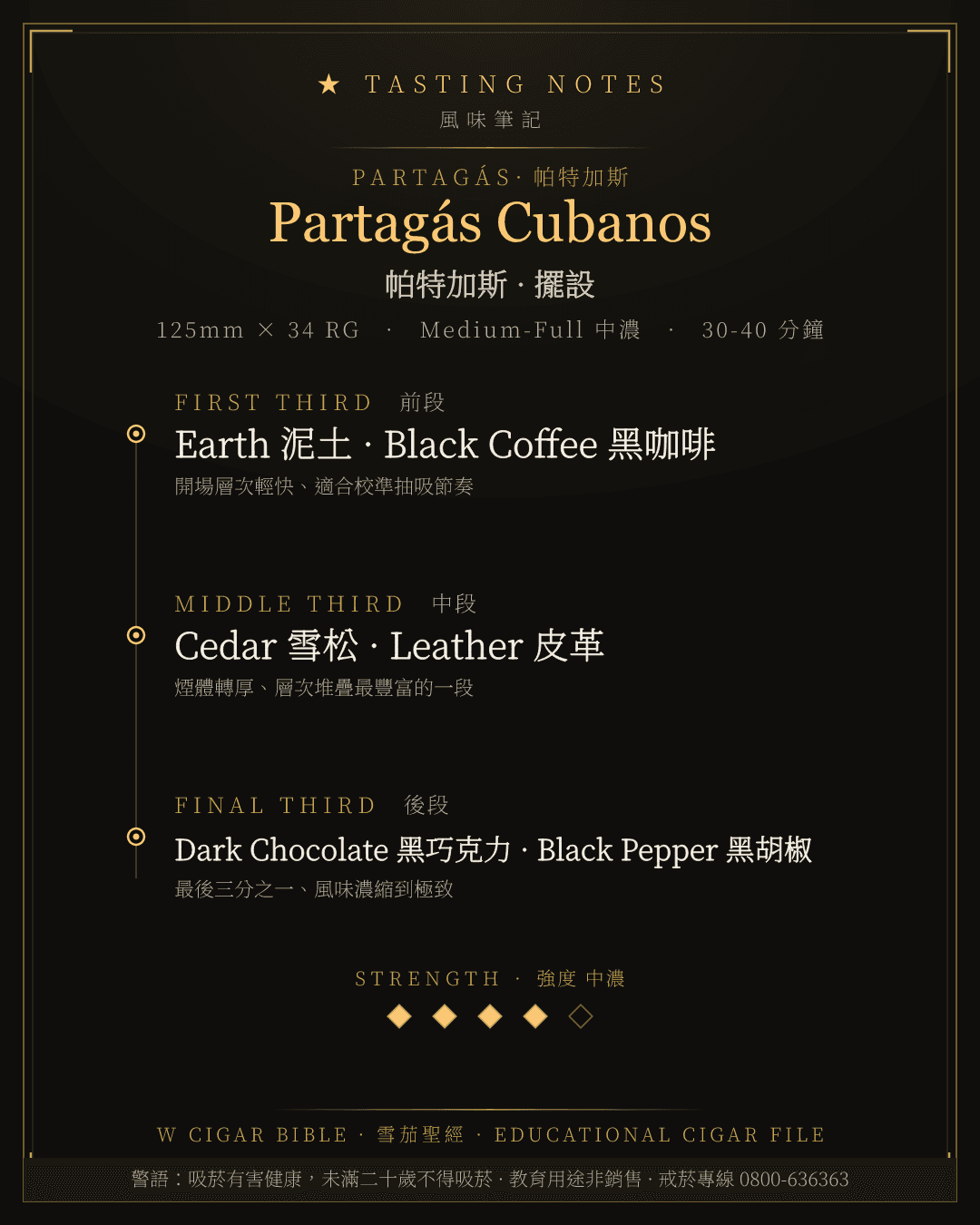
Partagás Cubanos 風味筆記 · 帕特加斯
TASTING NOTES · 風味筆記
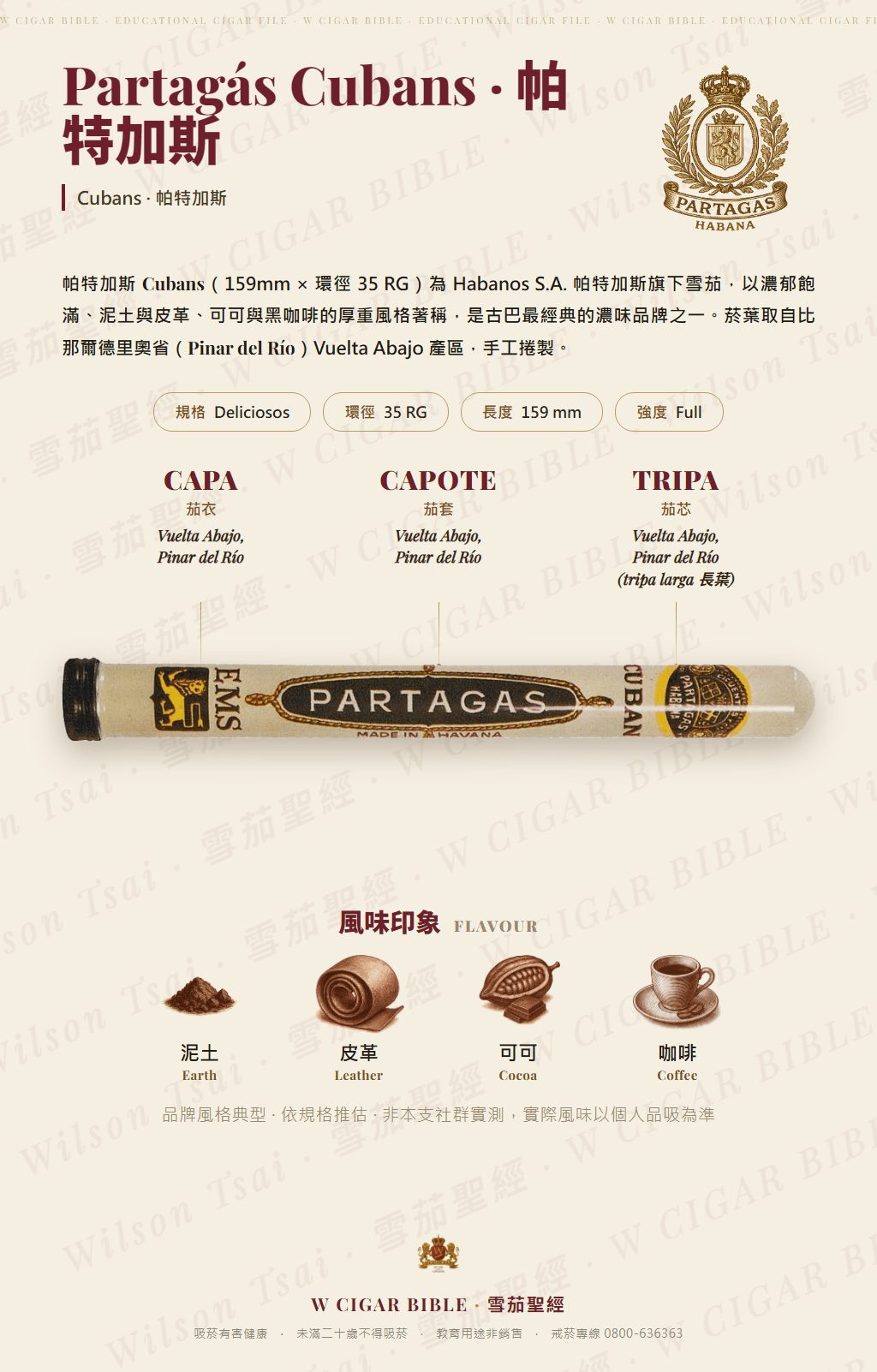
Partagás Cubans · 帕特加斯

Partagás Cubans 搭配指南 · 帕特加斯
PAIRING GUIDE · 搭配指南
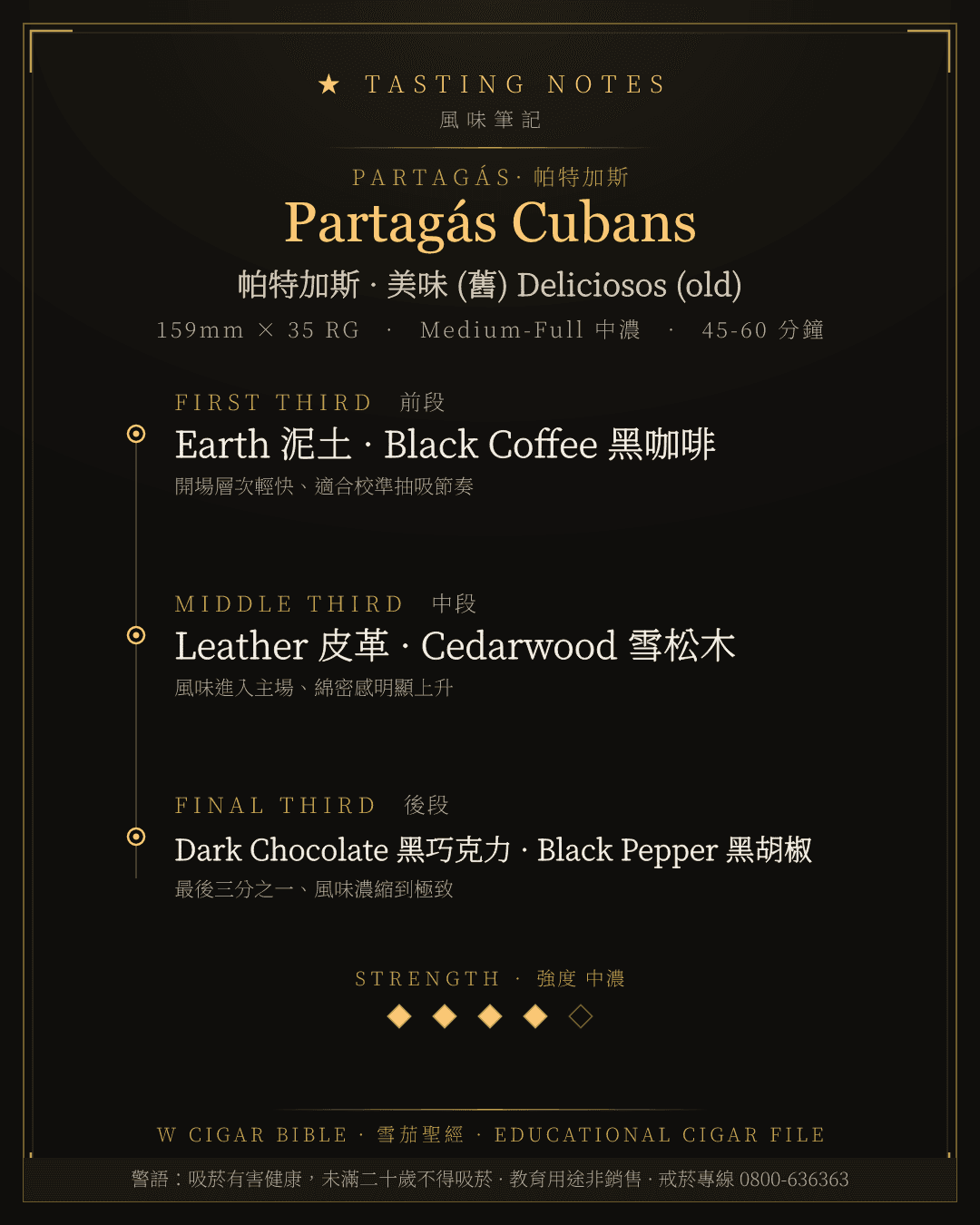
Partagás Cubans 風味筆記 · 帕特加斯
TASTING NOTES · 風味筆記
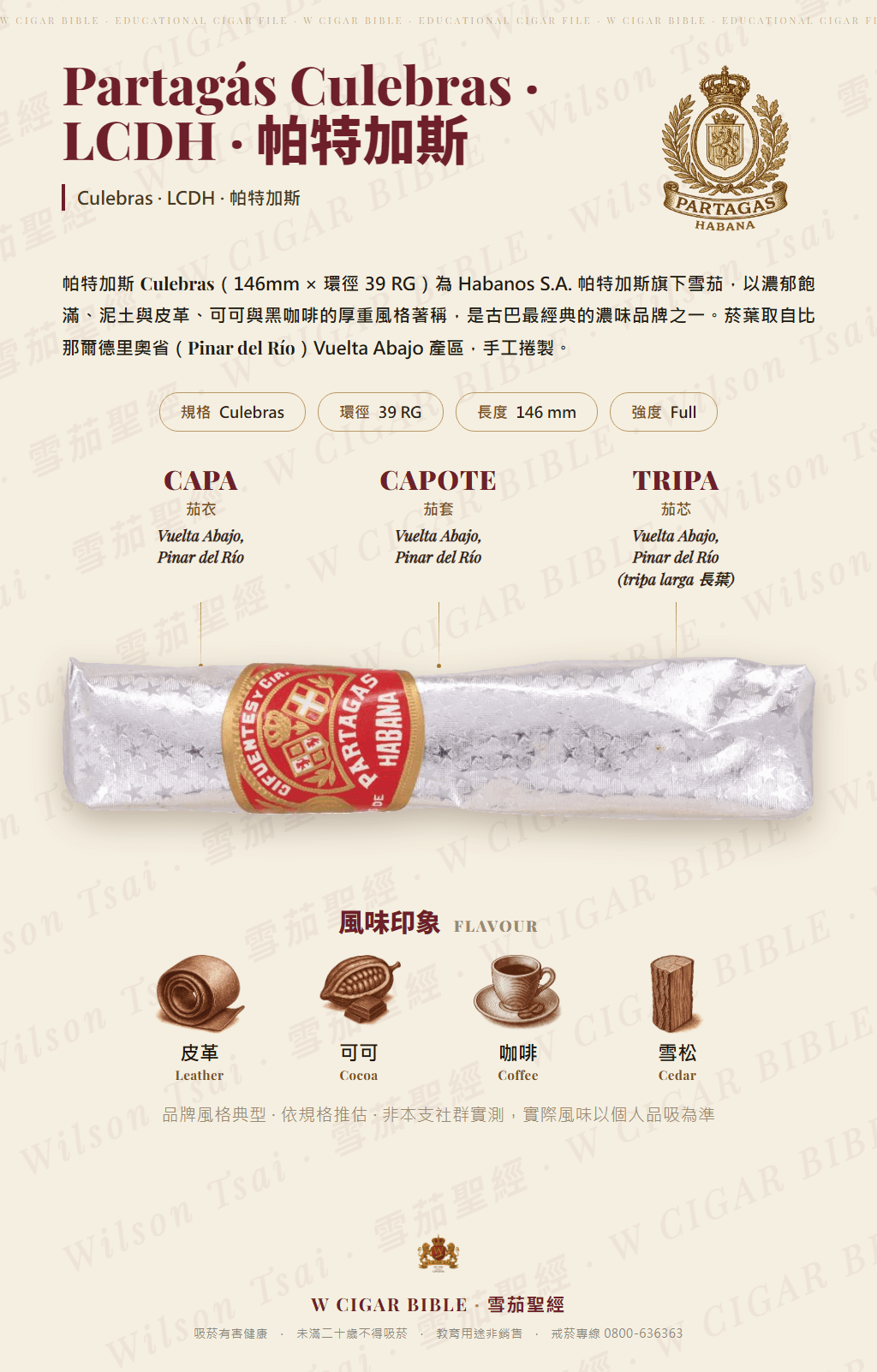
Partagás Culebras · LCDH · 帕特加斯
La Casa del Habano/Habanos Specialist 專屬款(Culebras 39 RG × 146mm,三支扭合為一束,2007 年重新推出)· 雪茄檔案

Partagás Culebras 搭配指南 · 帕特加斯
PAIRING GUIDE · 搭配指南

Partagás Culebras 風味筆記 · 帕特加斯
TASTING NOTES · 風味筆記
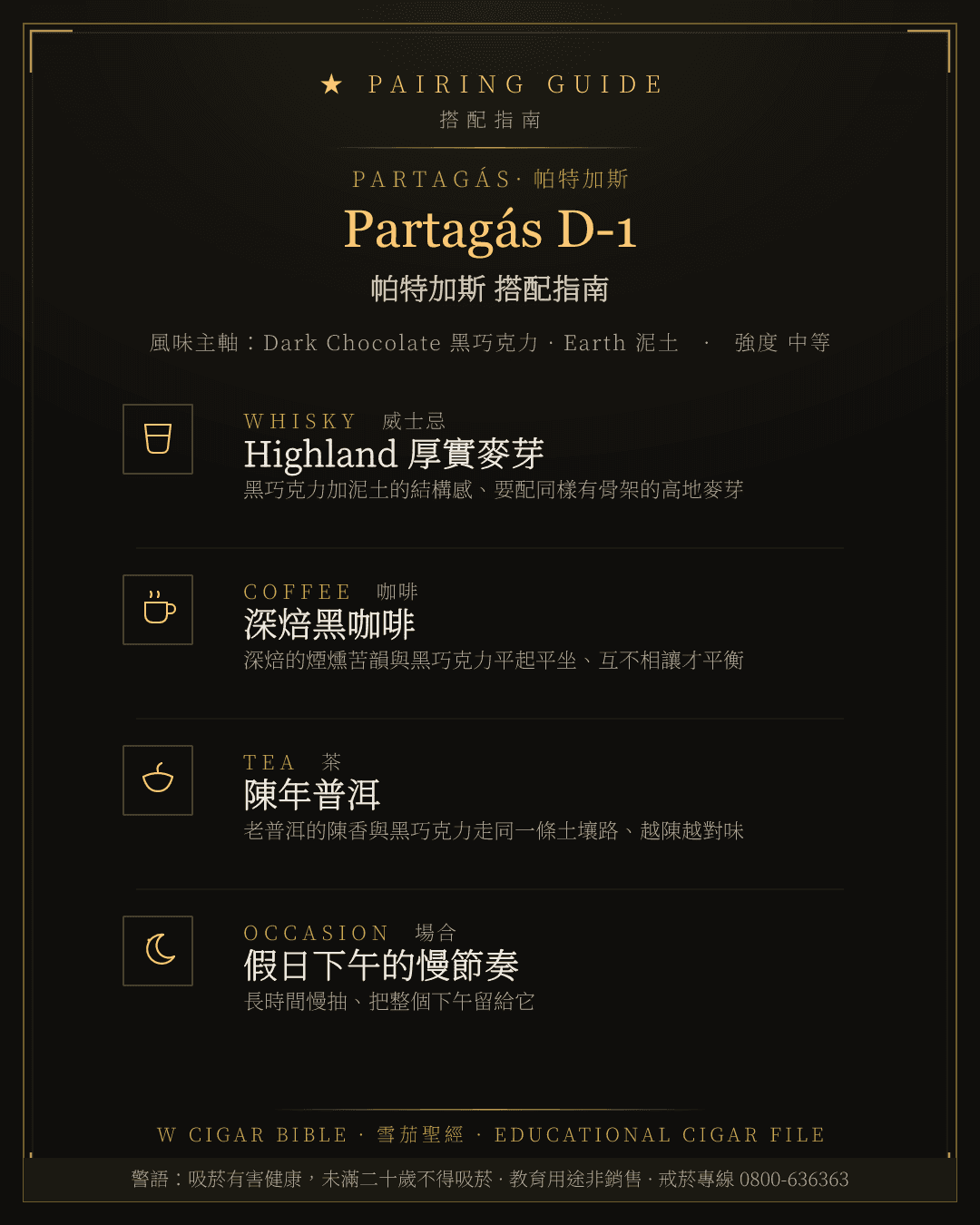
Partagás D-1 搭配指南 · 帕特加斯
PAIRING GUIDE · 搭配指南

Partagás D-1 風味筆記 · 帕特加斯
TASTING NOTES · 風味筆記

Partagás D-2 搭配指南 · 帕特加斯
PAIRING GUIDE · 搭配指南
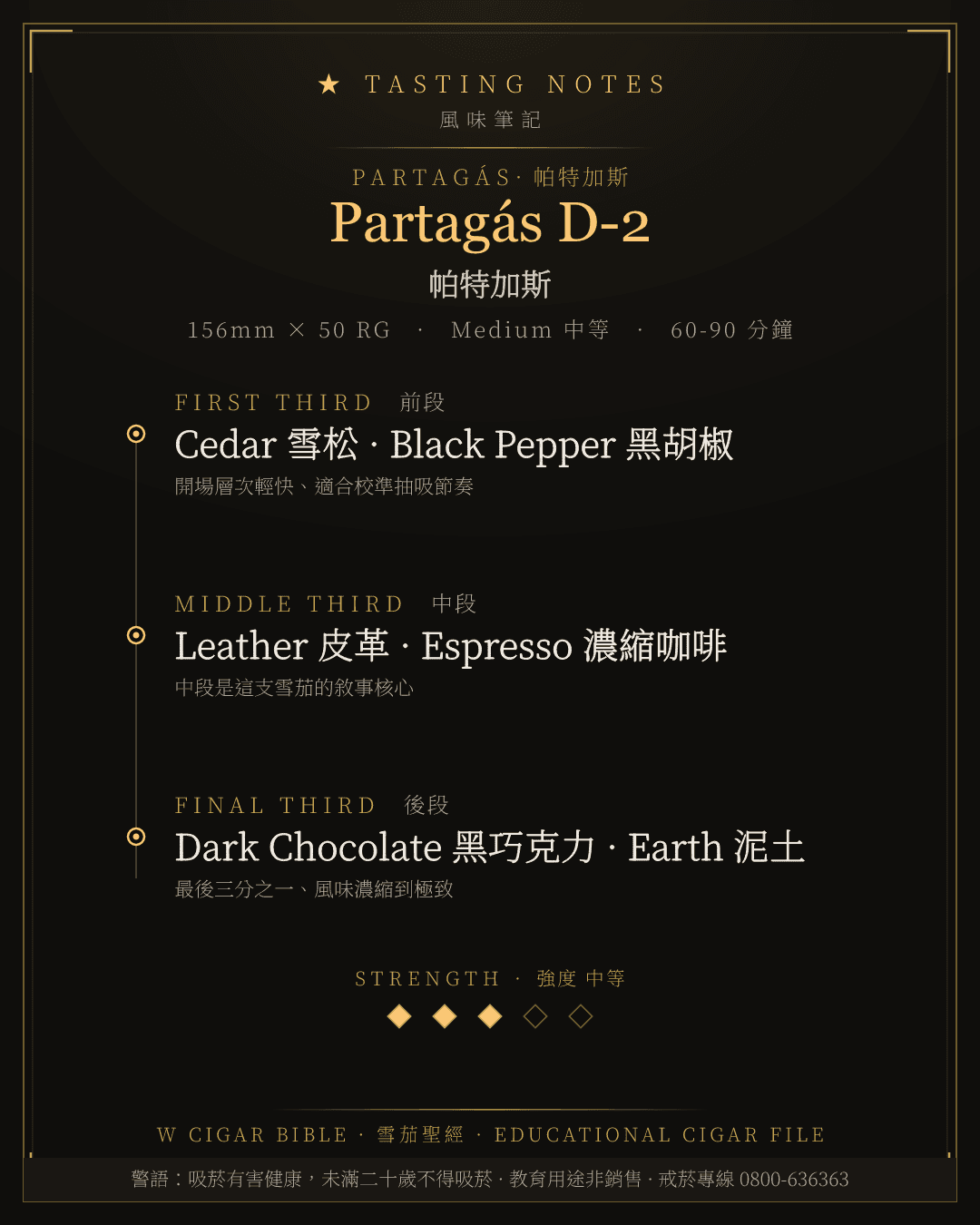
Partagás D-2 風味筆記 · 帕特加斯
TASTING NOTES · 風味筆記
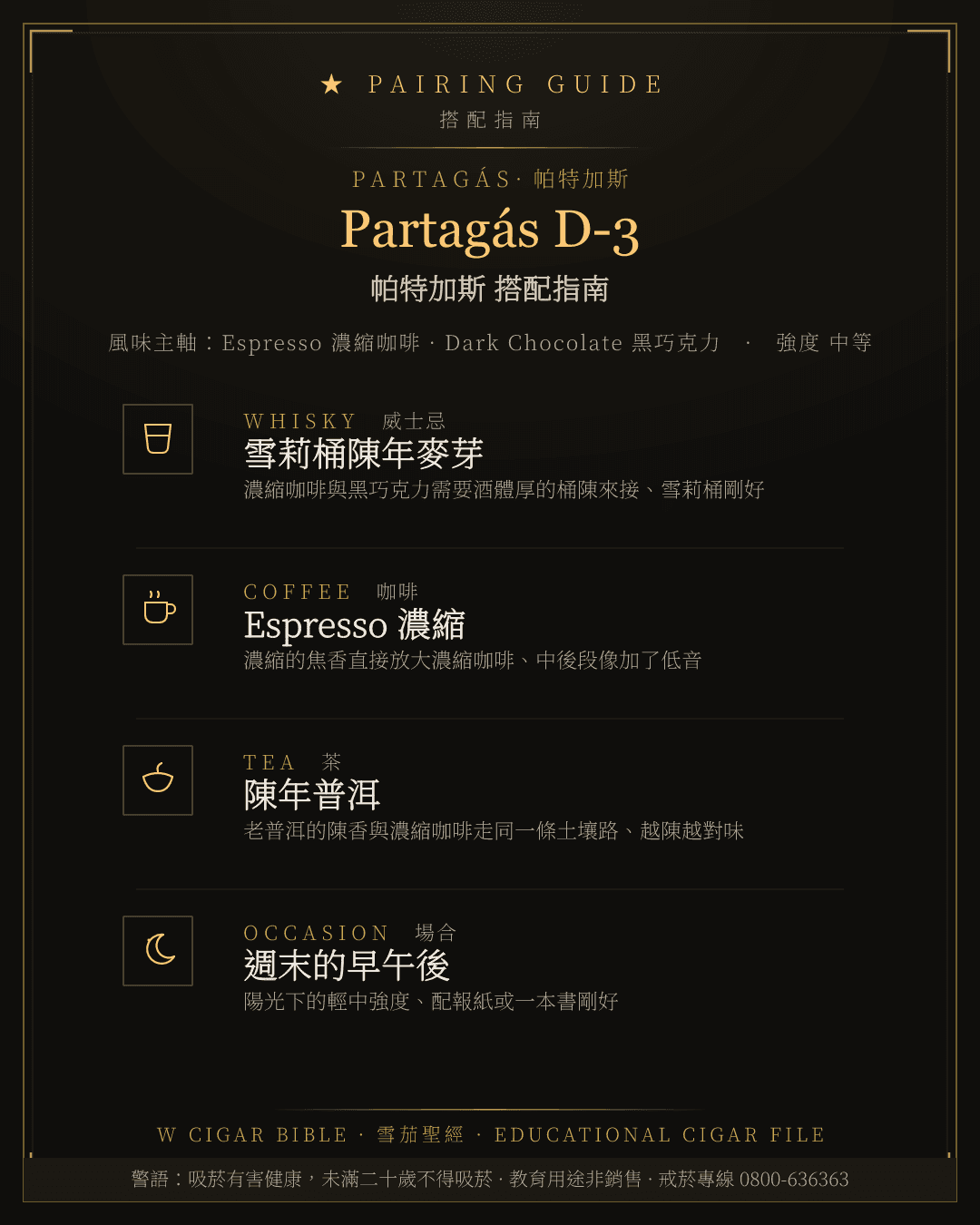
Partagás D-3 搭配指南 · 帕特加斯
PAIRING GUIDE · 搭配指南
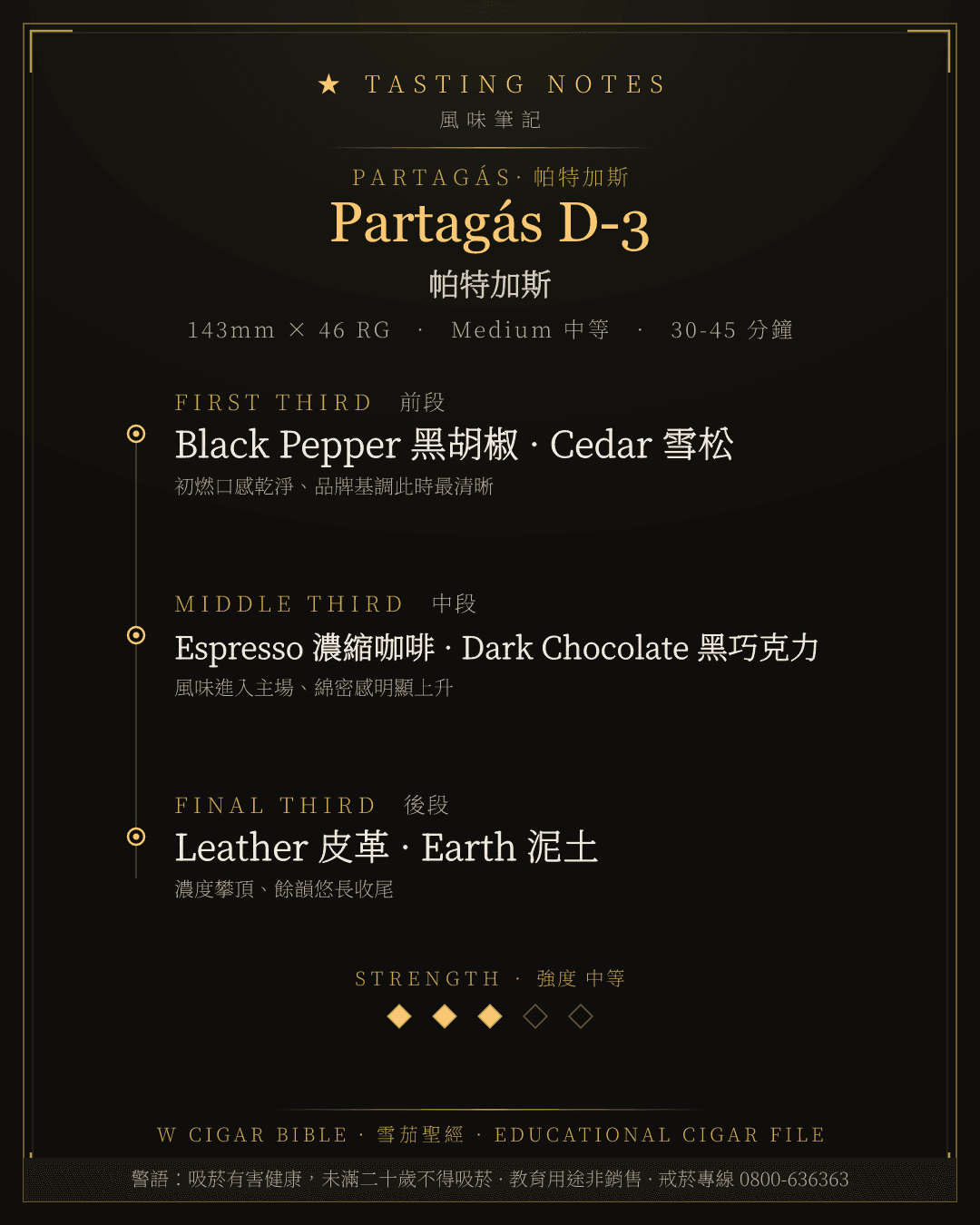
Partagás D-3 風味筆記 · 帕特加斯
TASTING NOTES · 風味筆記
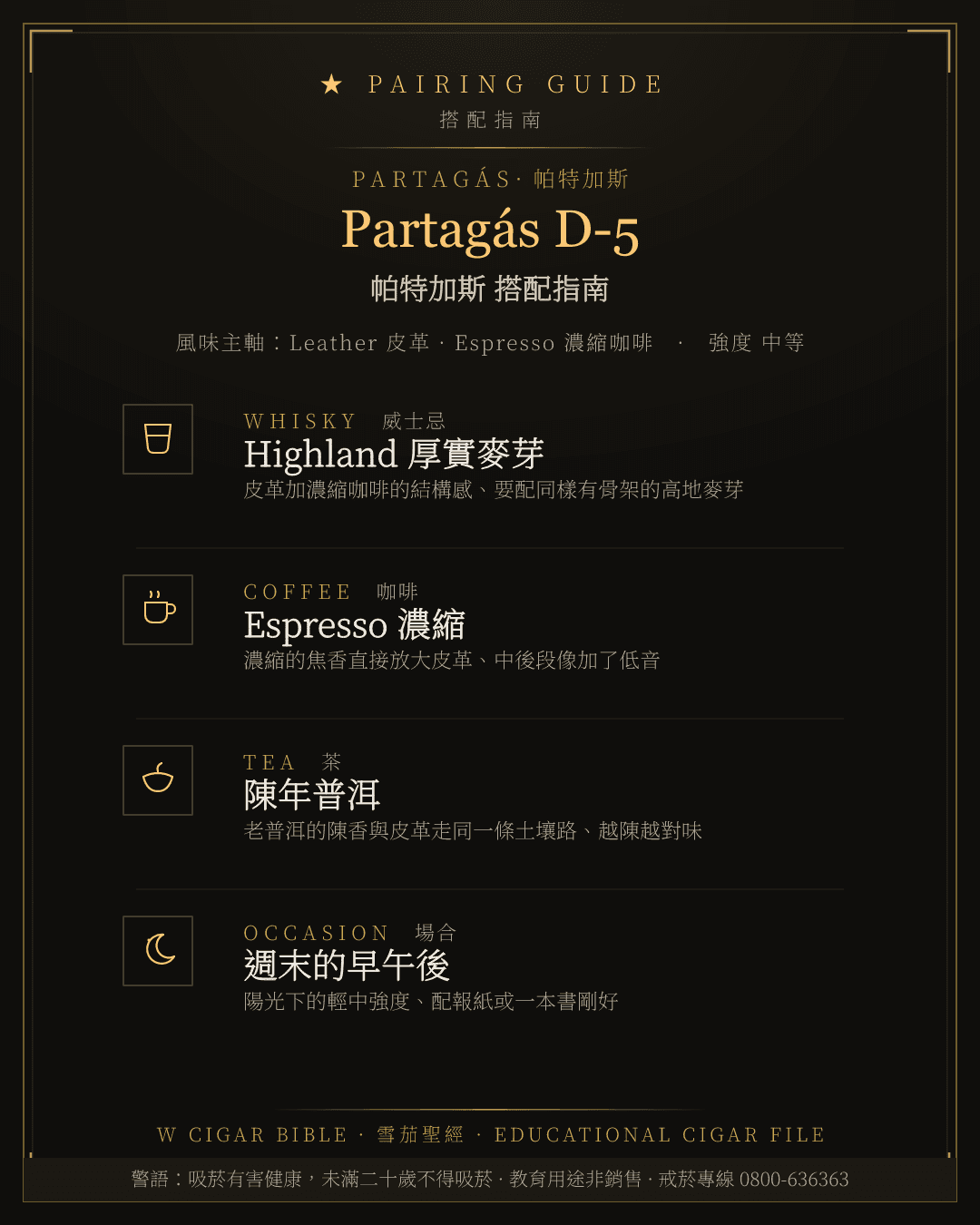
Partagás D-5 搭配指南 · 帕特加斯
PAIRING GUIDE · 搭配指南

Partagás D-5 風味筆記 · 帕特加斯
TASTING NOTES · 風味筆記
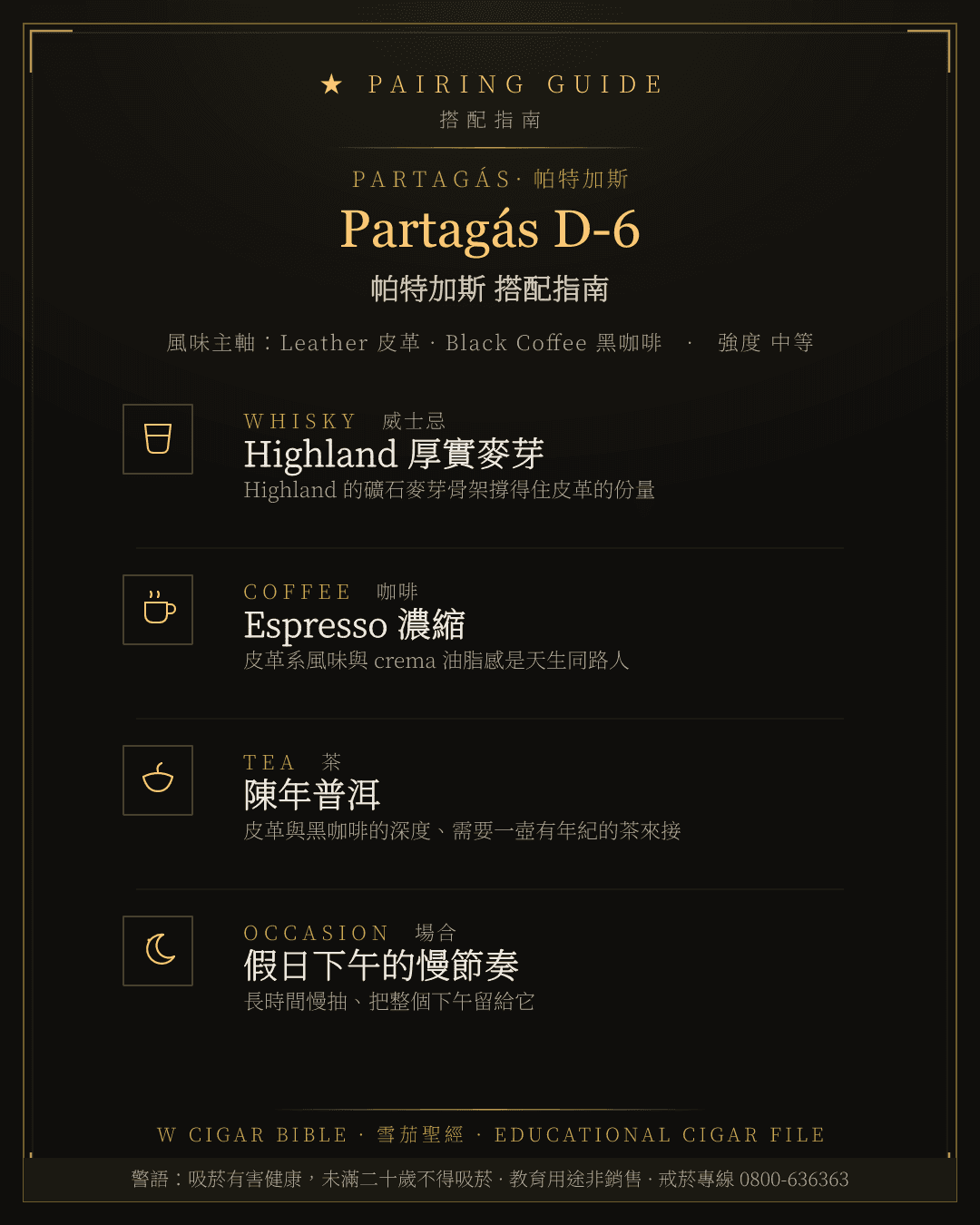
Partagás D-6 搭配指南 · 帕特加斯
PAIRING GUIDE · 搭配指南
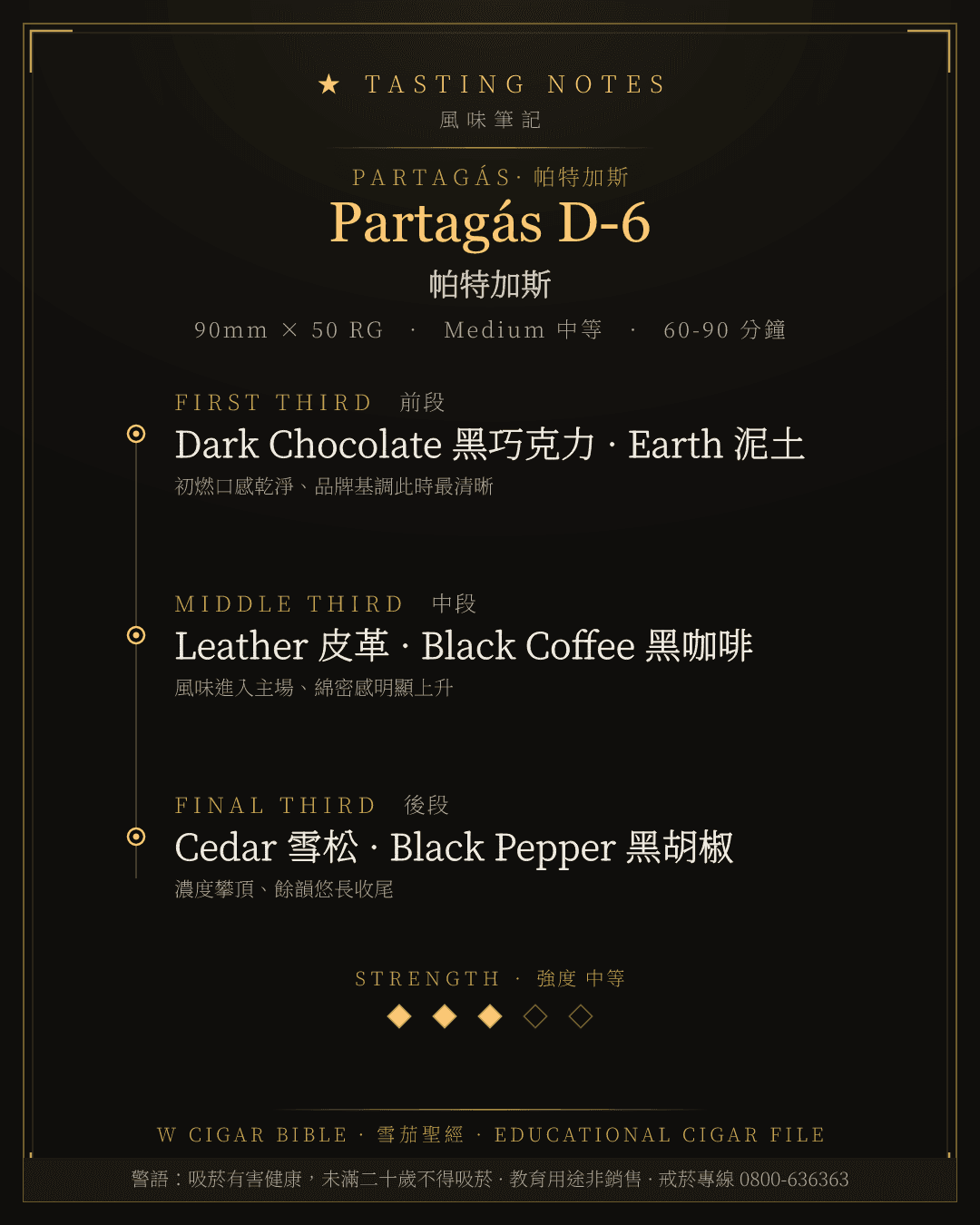
Partagás D-6 風味筆記 · 帕特加斯
TASTING NOTES · 風味筆記

Partagás Dalias · 帕特加斯
經典常規產線(已停產)
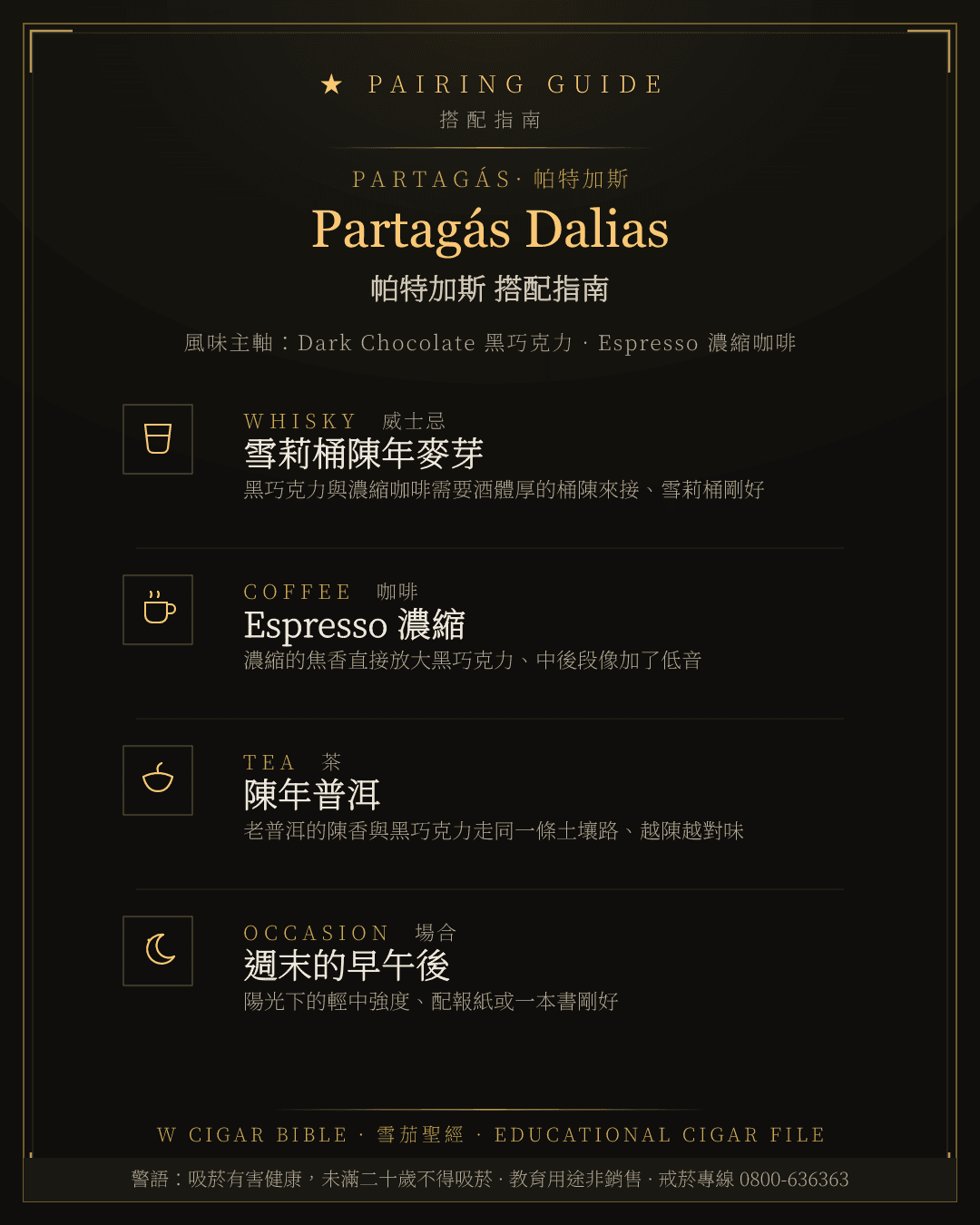
Partagás Dalias 搭配指南 · 帕特加斯
PAIRING GUIDE · 搭配指南
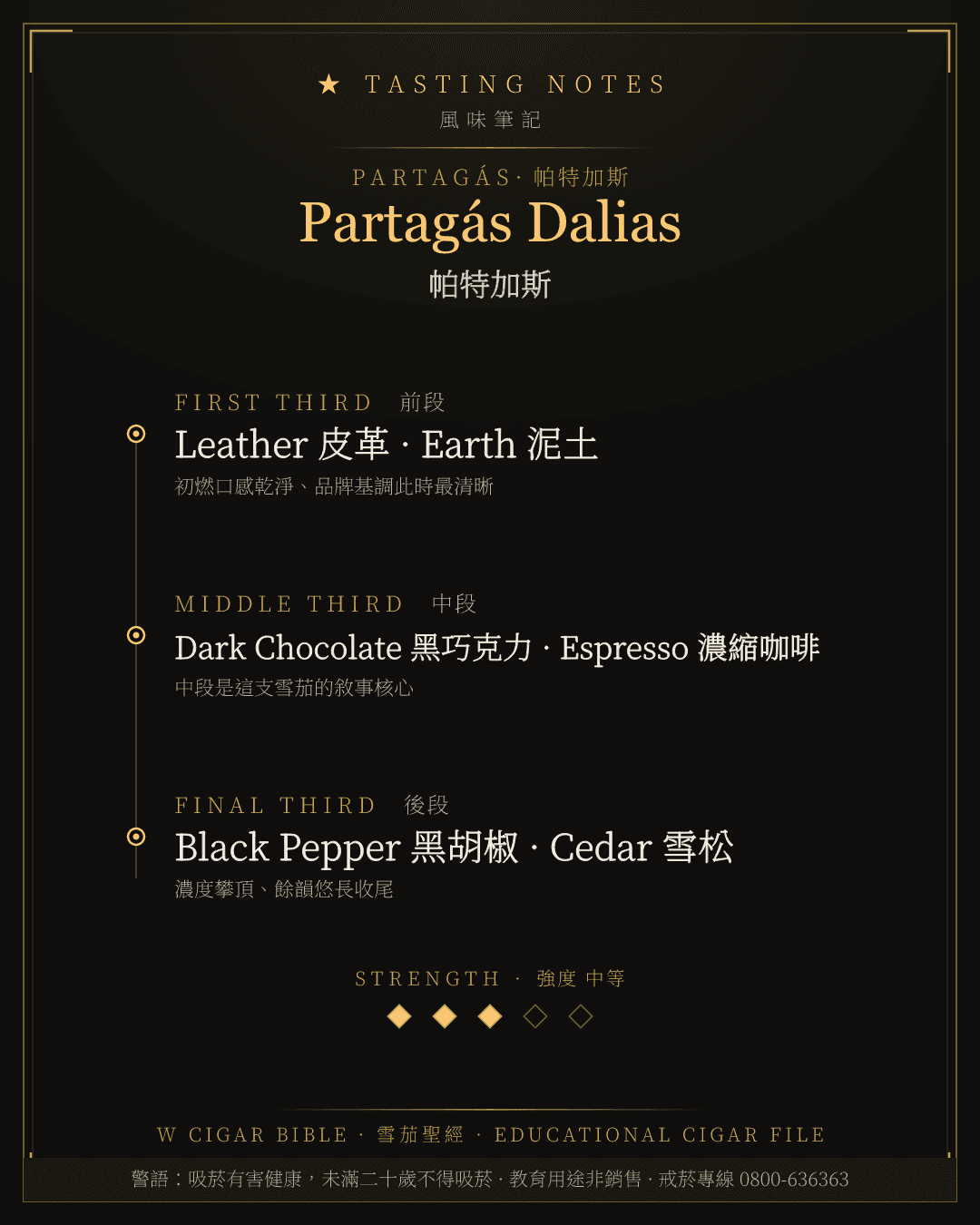
Partagás Dalias 風味筆記 · 帕特加斯
TASTING NOTES · 風味筆記
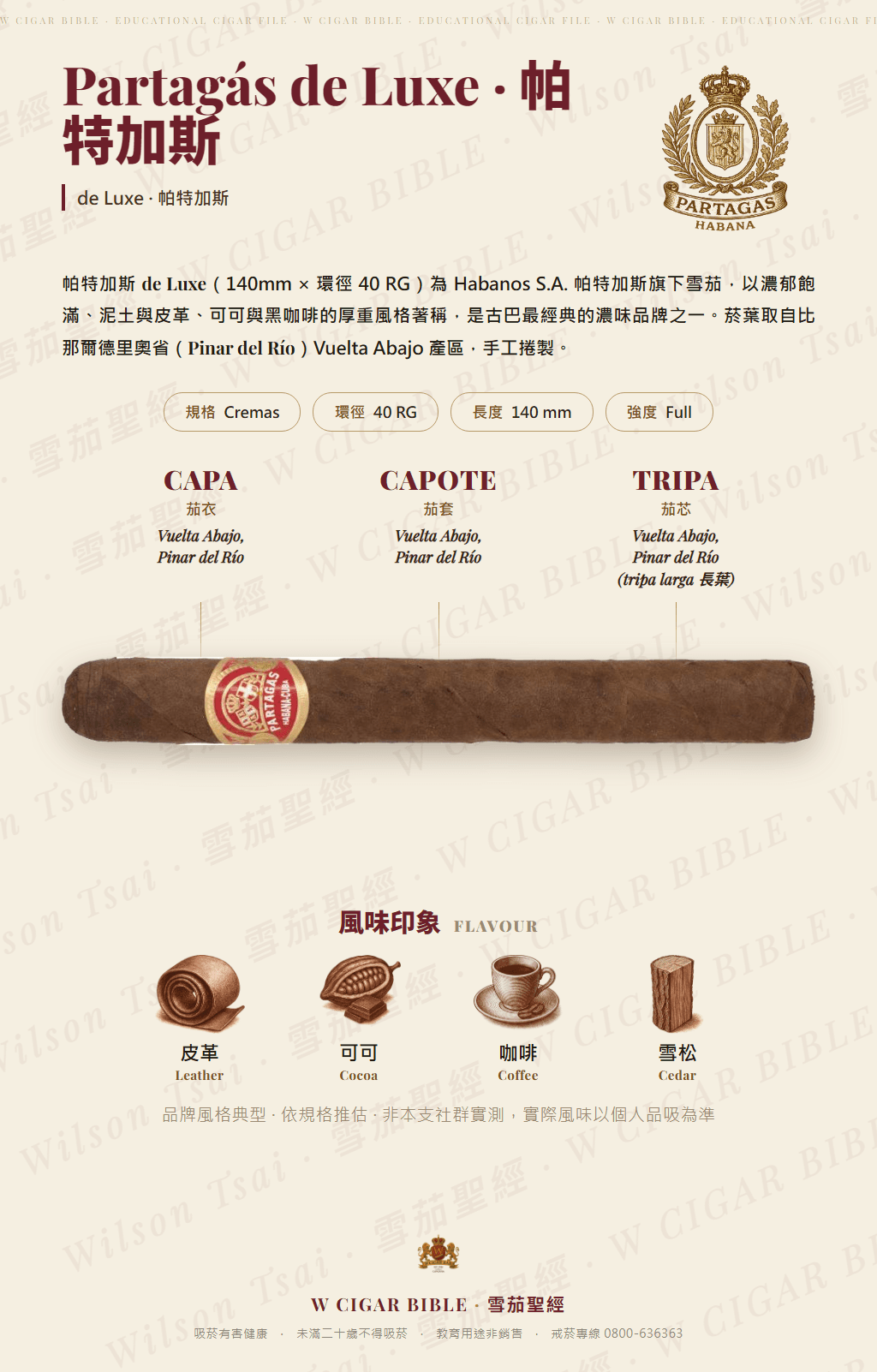
Partagás de Luxe · 帕特加斯
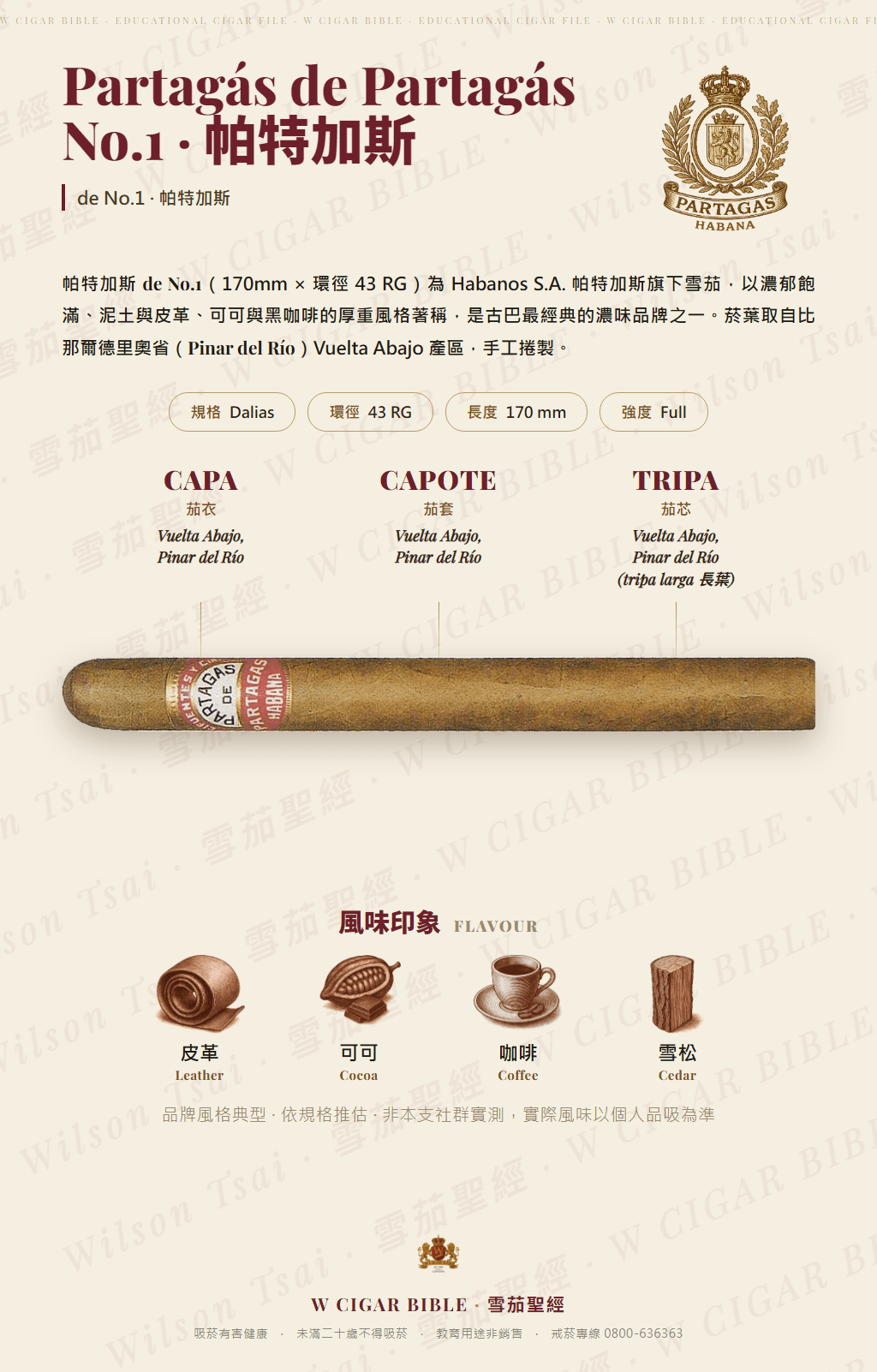
Partagás de Partagás No.1 · 帕特加斯
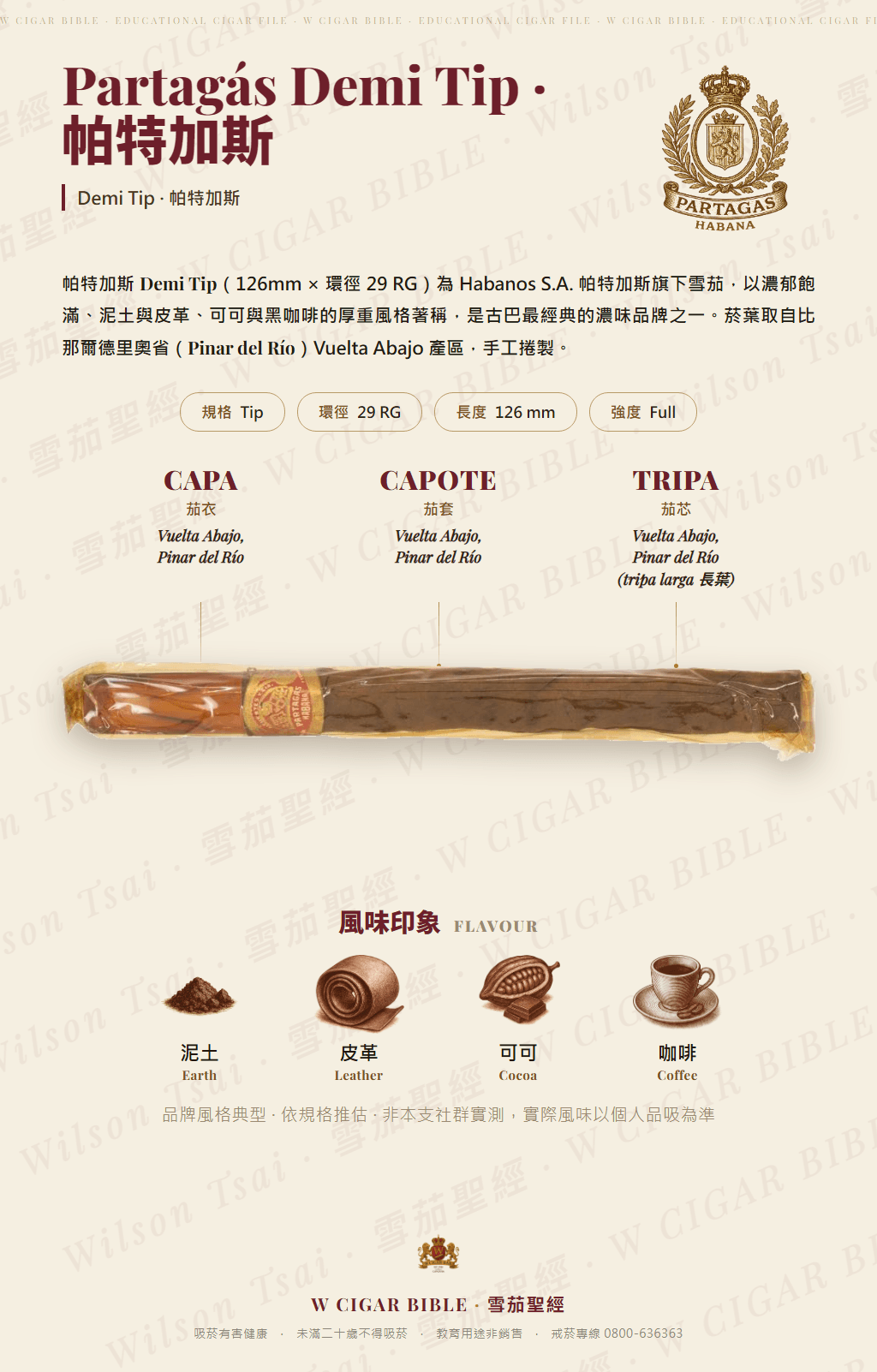
Partagás Demi Tip · 帕特加斯

Partagás Demi Tip 搭配指南 · 帕特加斯
PAIRING GUIDE · 搭配指南
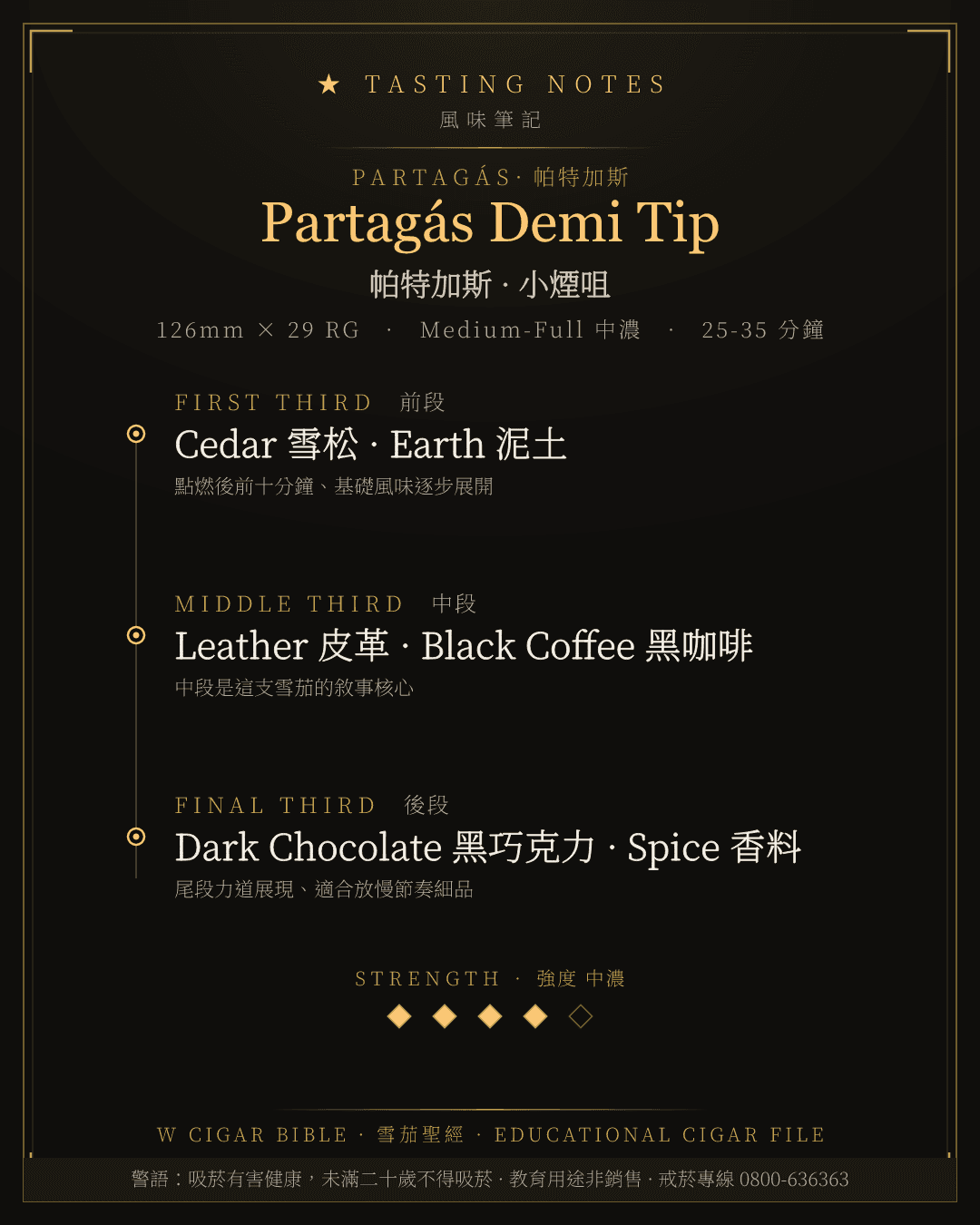
Partagás Demi Tip 風味筆記 · 帕特加斯
TASTING NOTES · 風味筆記
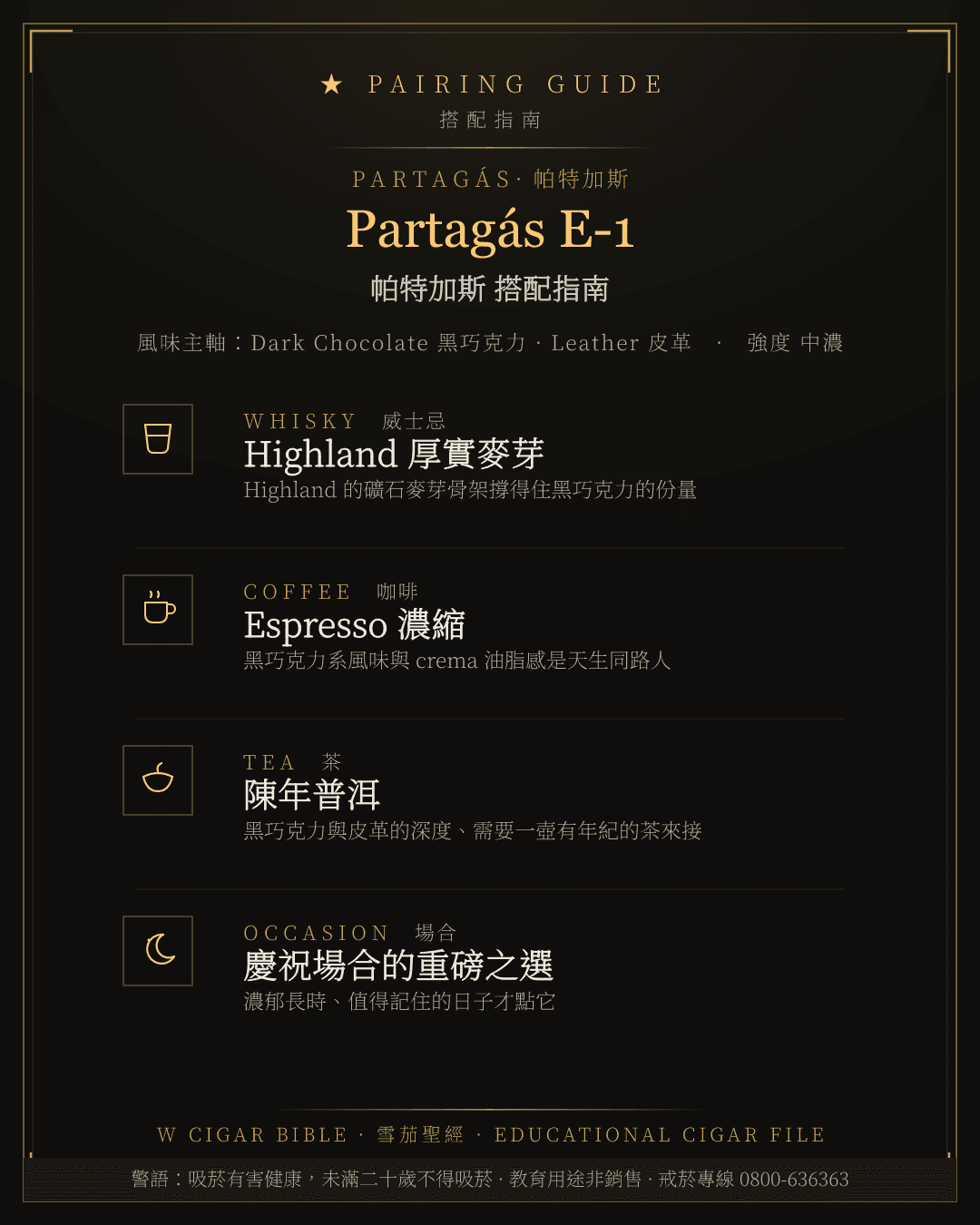
Partagás E-1 搭配指南 · 帕特加斯
PAIRING GUIDE · 搭配指南
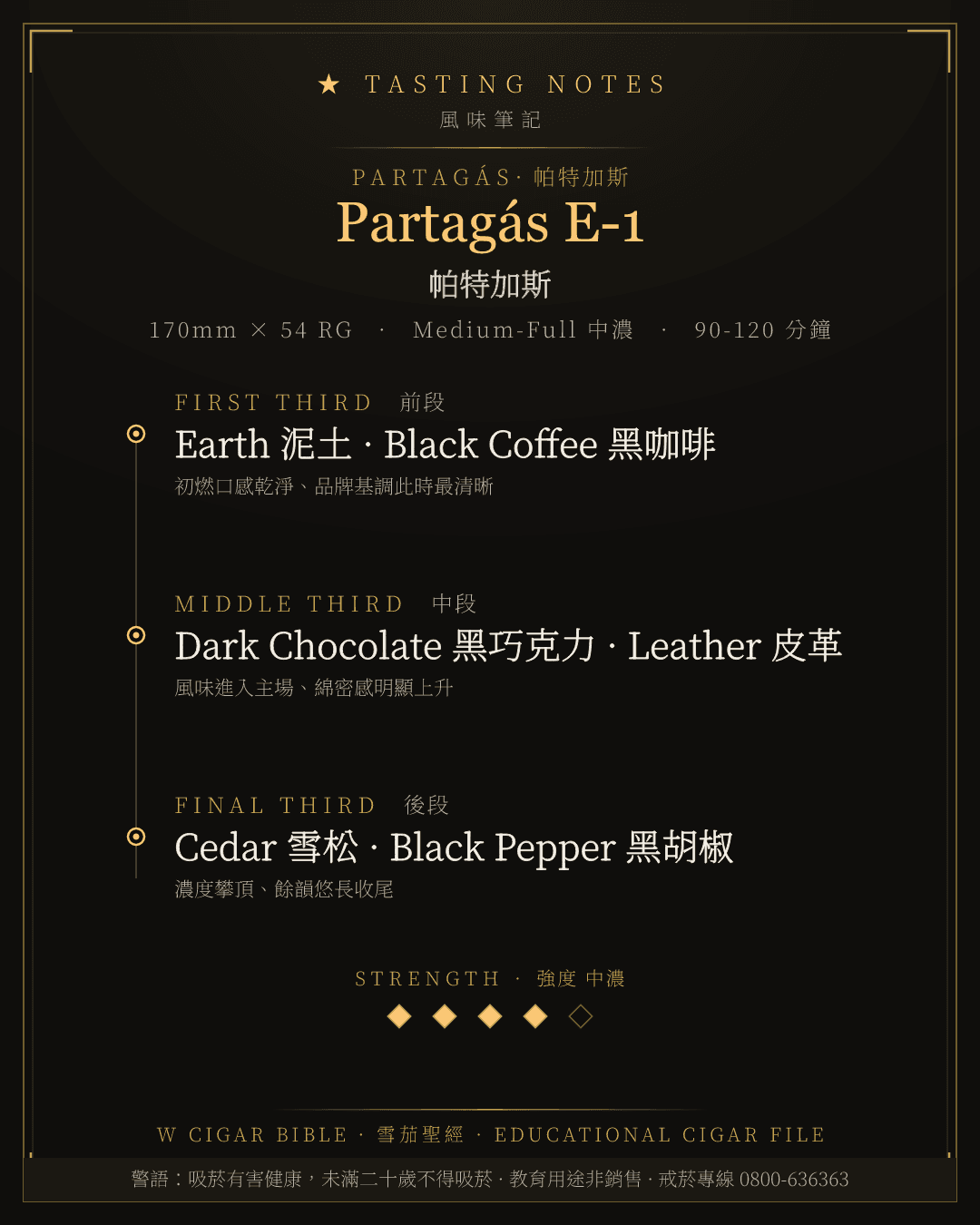
Partagás E-1 風味筆記 · 帕特加斯
TASTING NOTES · 風味筆記
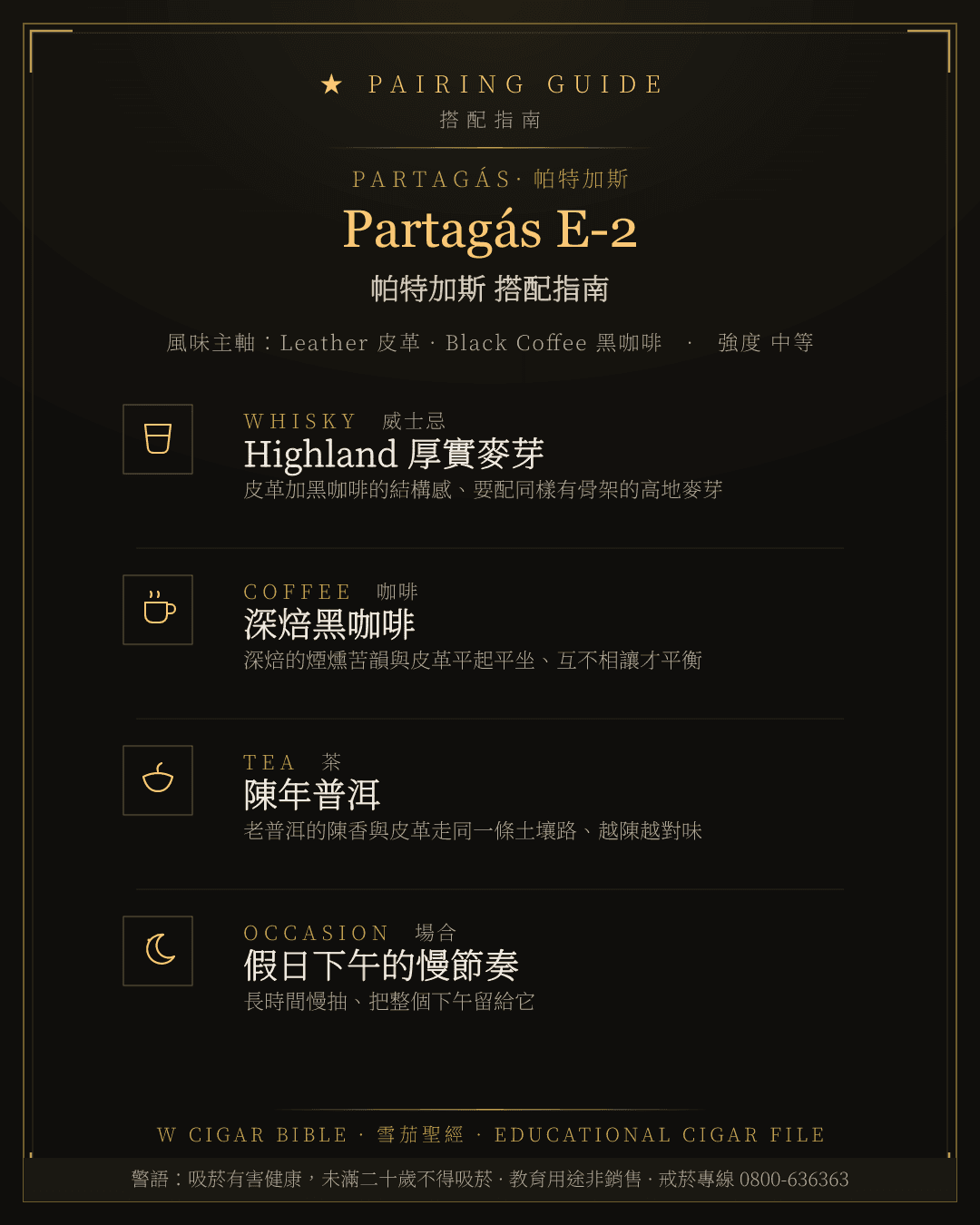
Partagás E-2 搭配指南 · 帕特加斯
PAIRING GUIDE · 搭配指南

Partagás E-2 風味筆記 · 帕特加斯
TASTING NOTES · 風味筆記
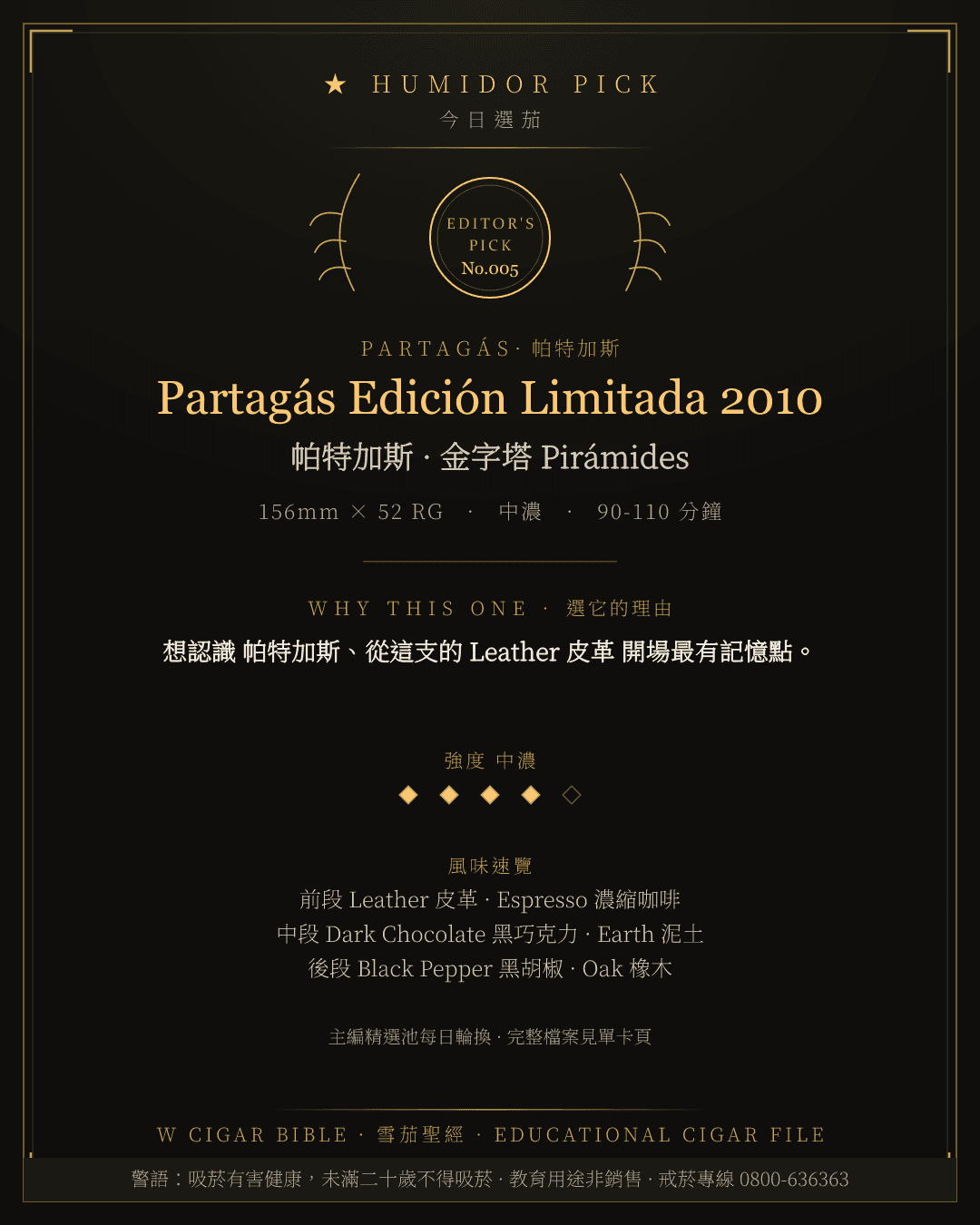
Partagás Edición Limitada 2010 · 帕特加斯 總編輯精選
HUMIDOR PICK · No.005
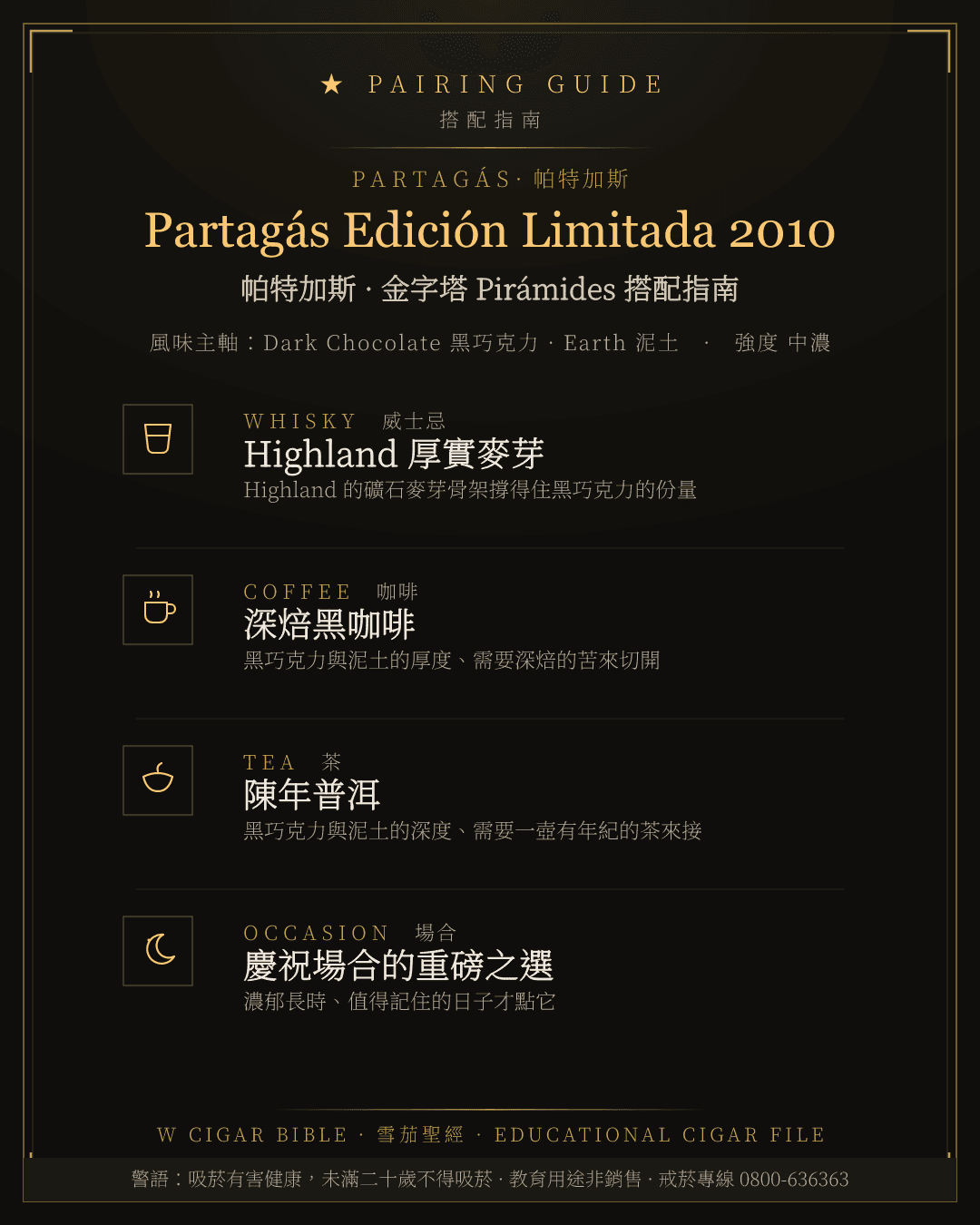
Partagás Edición Limitada 2010 搭配指南 · 帕特加斯
PAIRING GUIDE · 搭配指南

Partagás Edición Limitada 2010 風味筆記 · 帕特加斯
TASTING NOTES · 風味筆記

Partagás Edición Limitada 4 搭配指南 · 帕特加斯
PAIRING GUIDE · 搭配指南
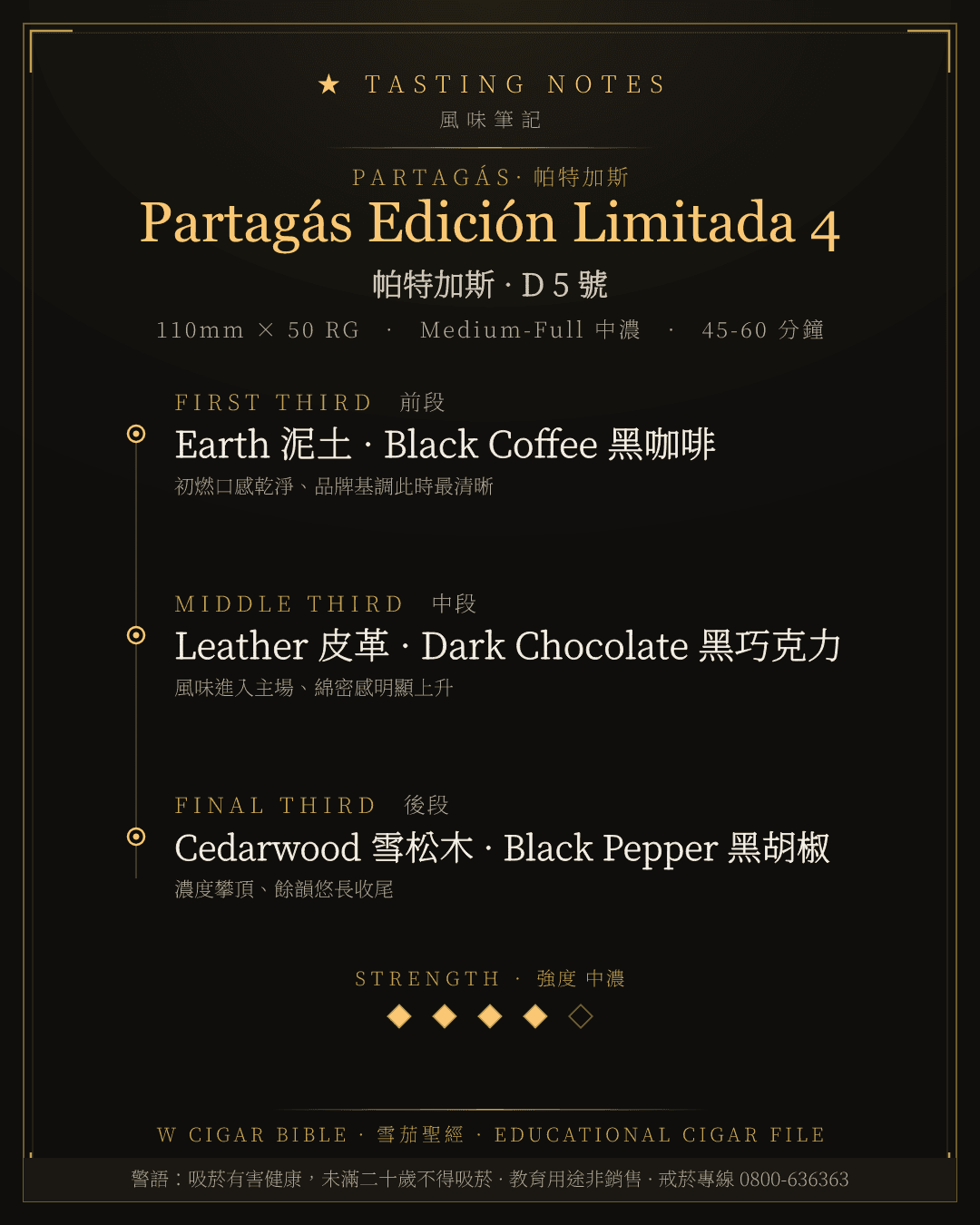
Partagás Edición Limitada 4 風味筆記 · 帕特加斯
TASTING NOTES · 風味筆記

Partagás Edición Limitada 搭配指南 · 帕特加斯
PAIRING GUIDE · 搭配指南
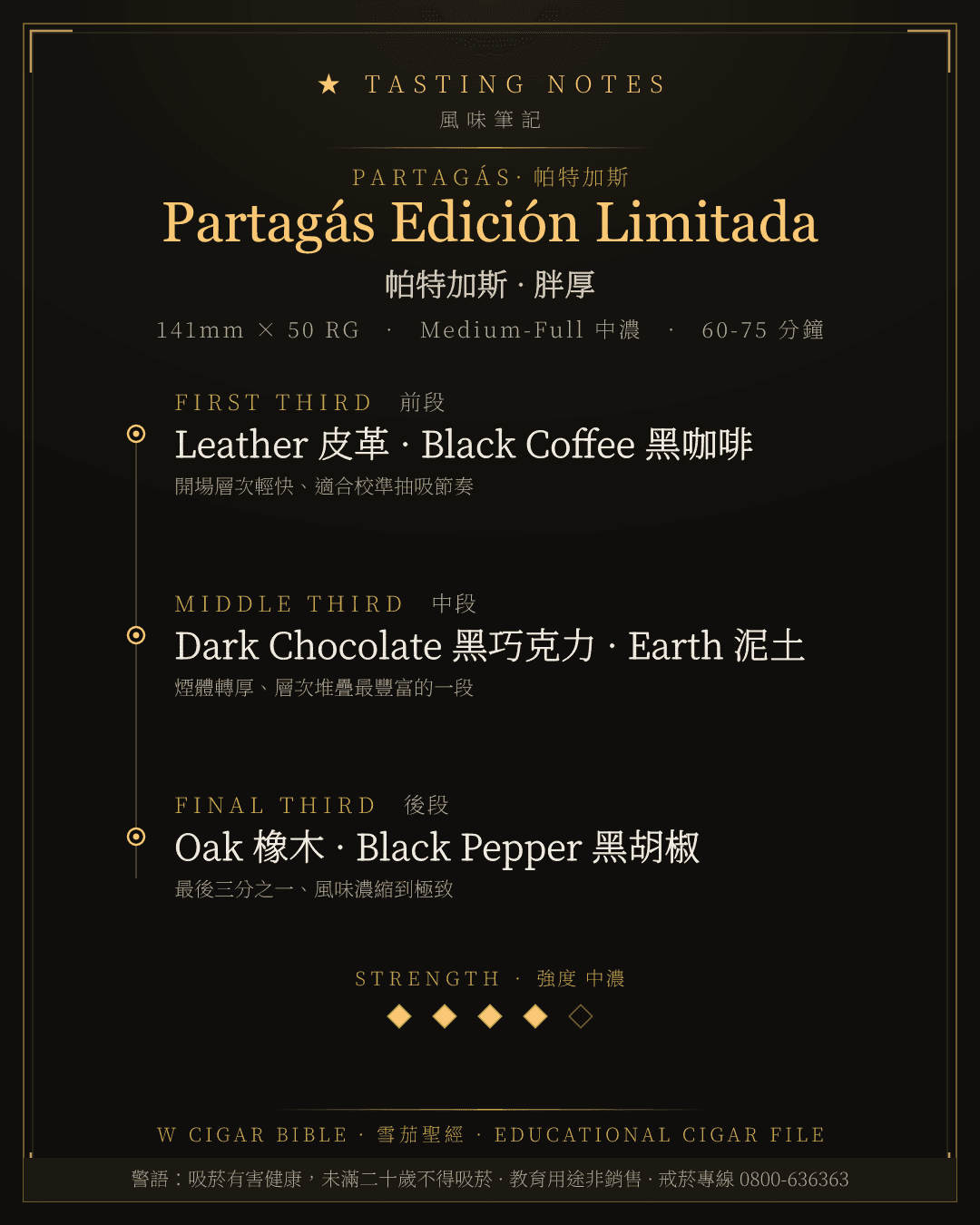
Partagás Edición Limitada 風味筆記 · 帕特加斯
TASTING NOTES · 風味筆記
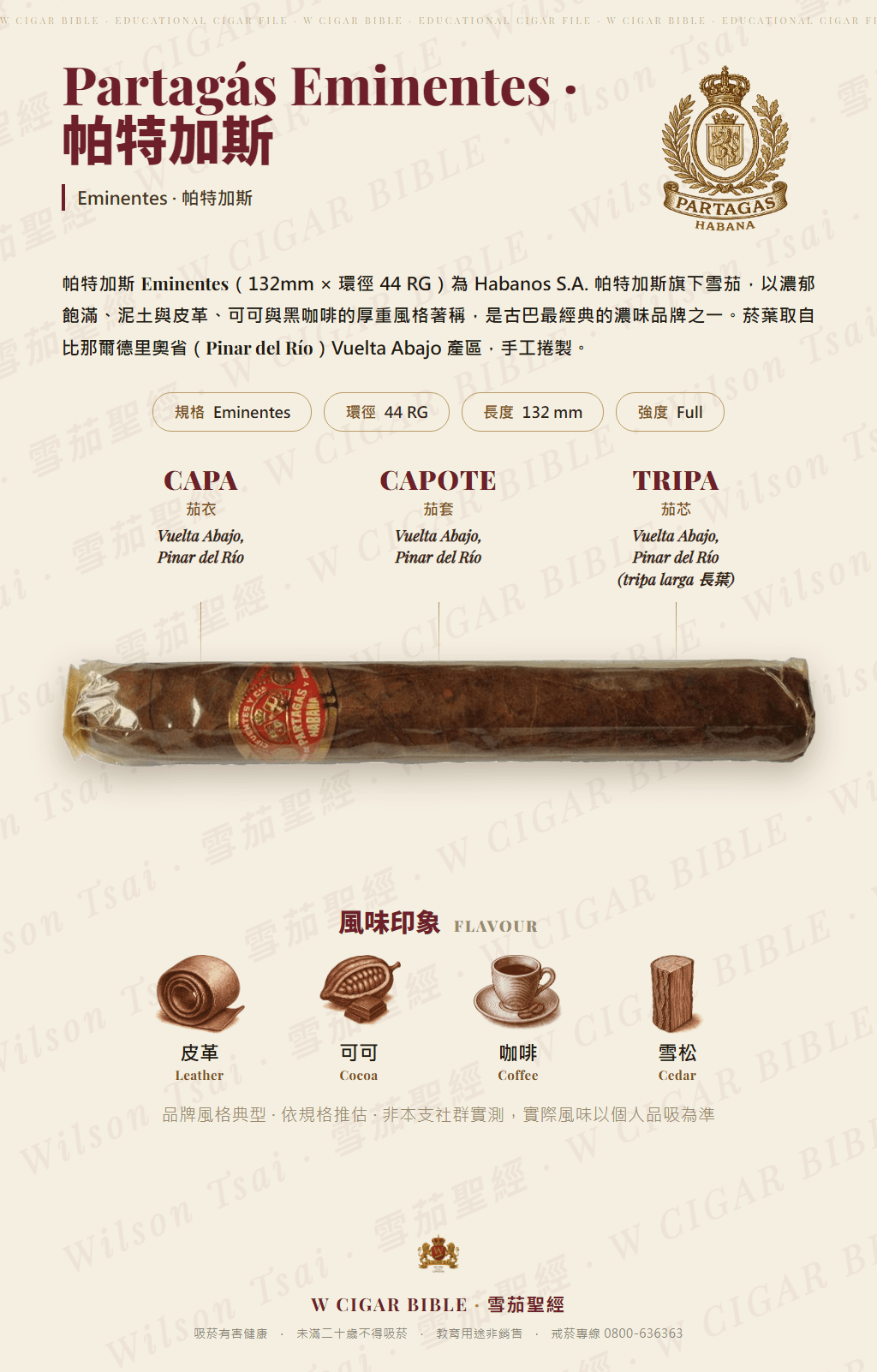
Partagás Eminentes · 帕特加斯
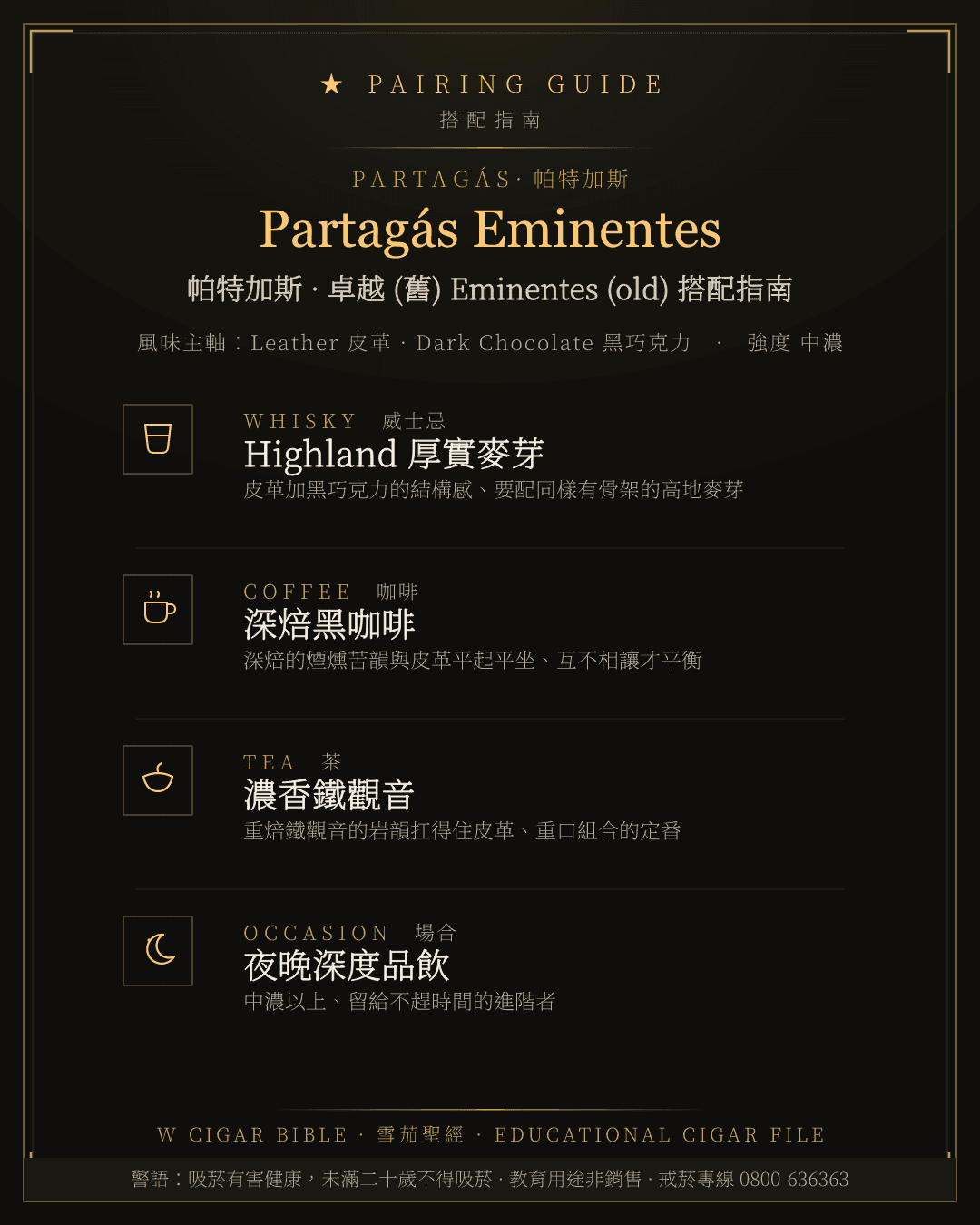
Partagás Eminentes 搭配指南 · 帕特加斯
PAIRING GUIDE · 搭配指南
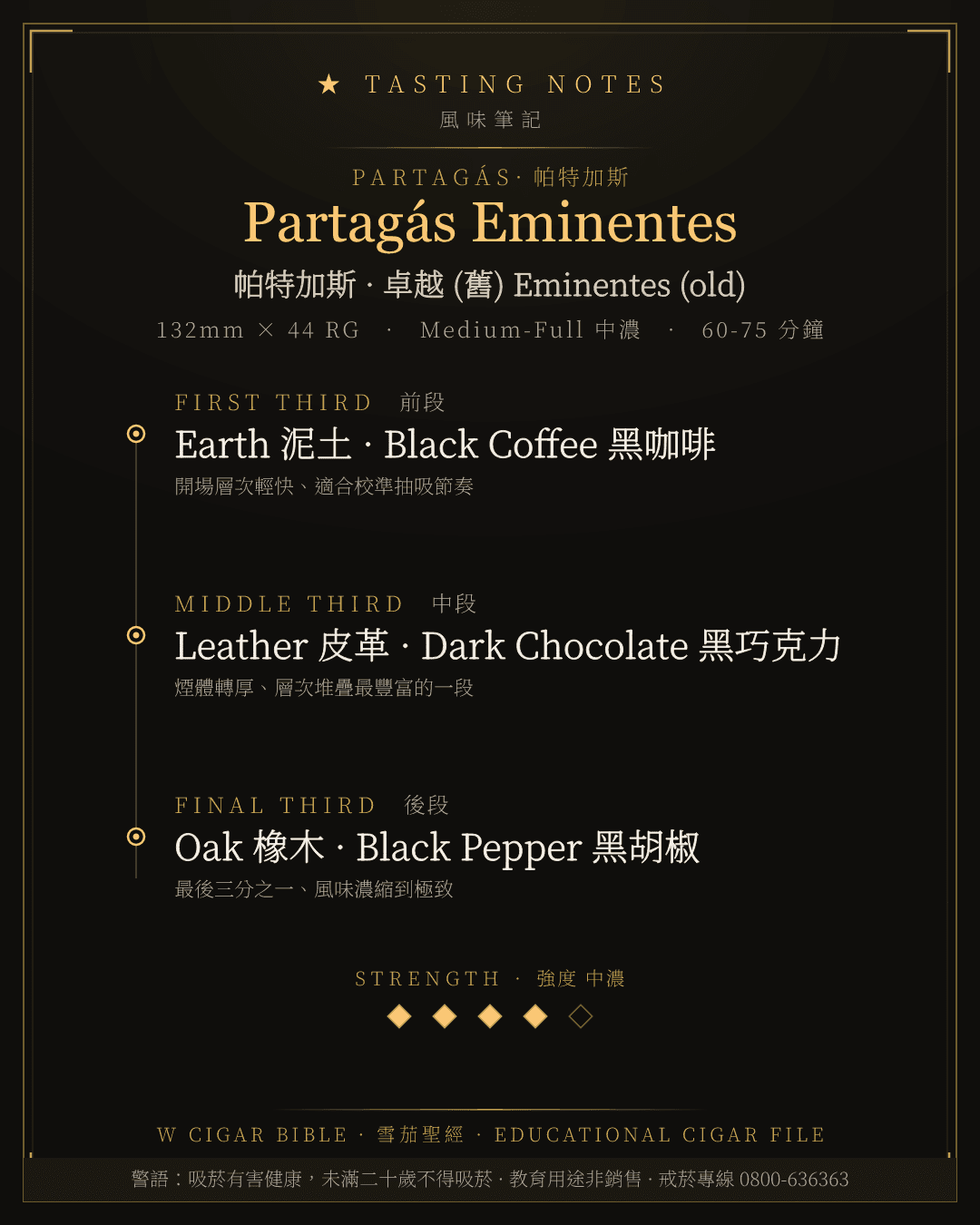
Partagás Eminentes 風味筆記 · 帕特加斯
TASTING NOTES · 風味筆記
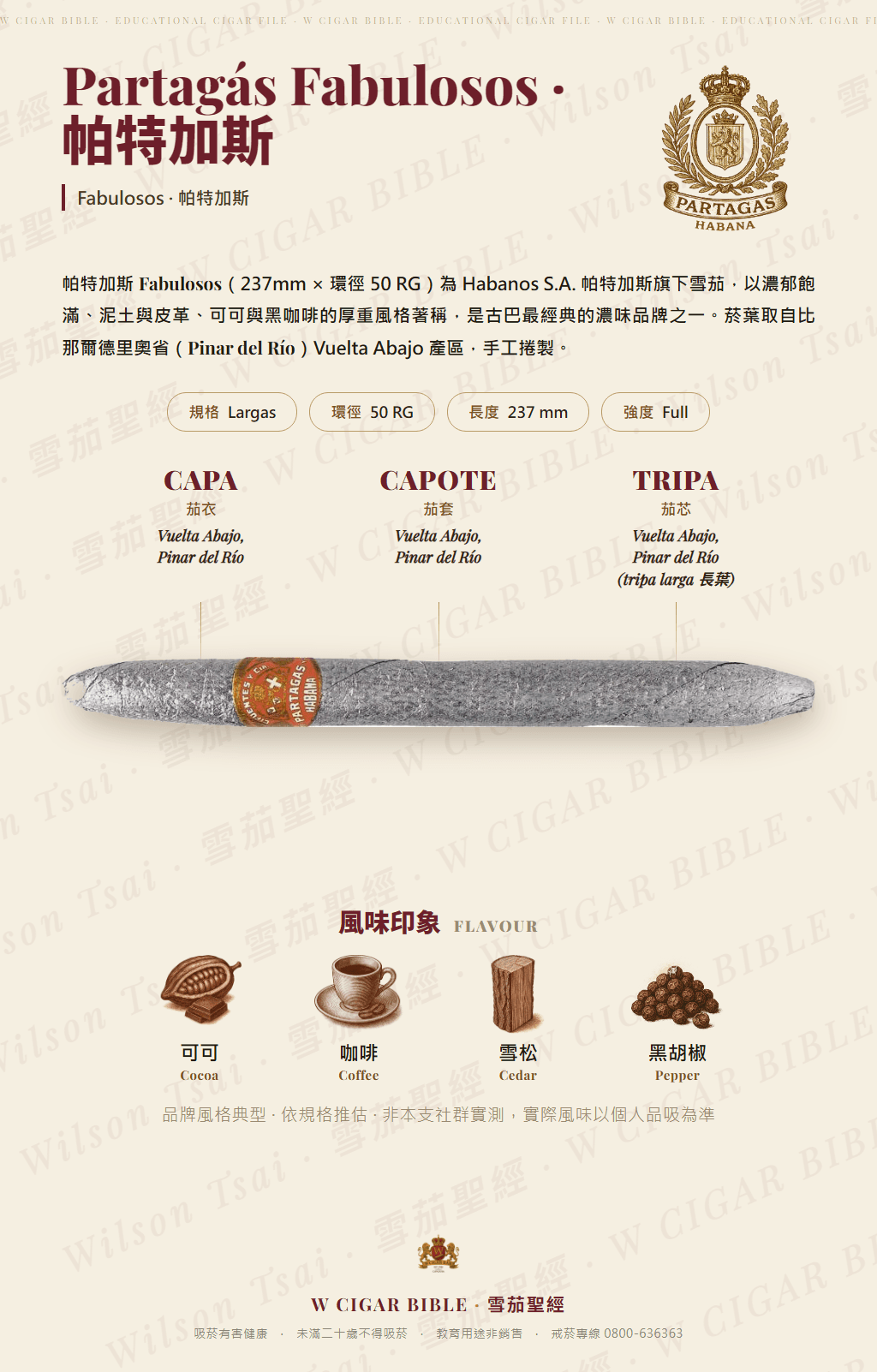
Partagás Fabulosos · 帕特加斯
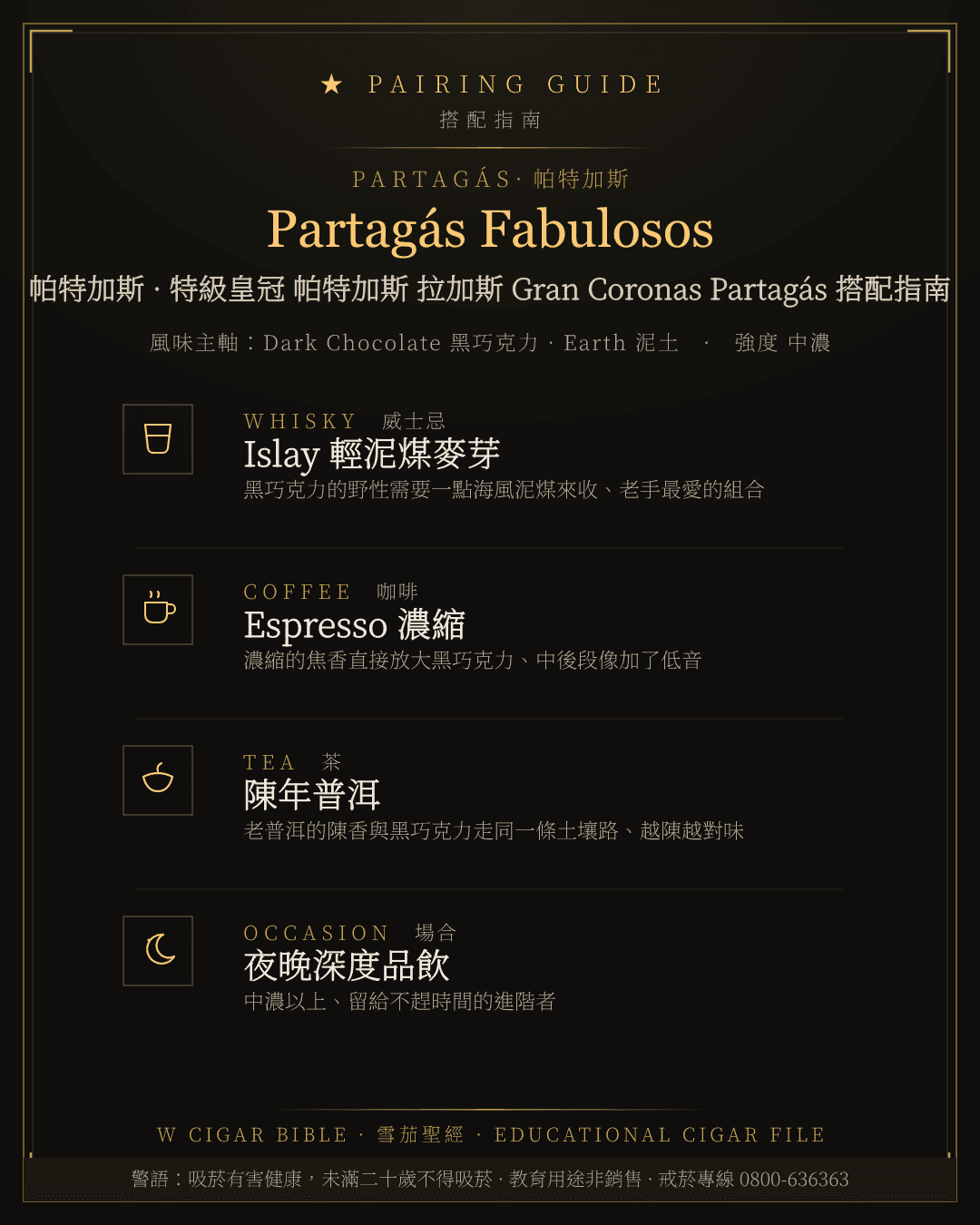
Partagás Fabulosos 搭配指南 · 帕特加斯
PAIRING GUIDE · 搭配指南
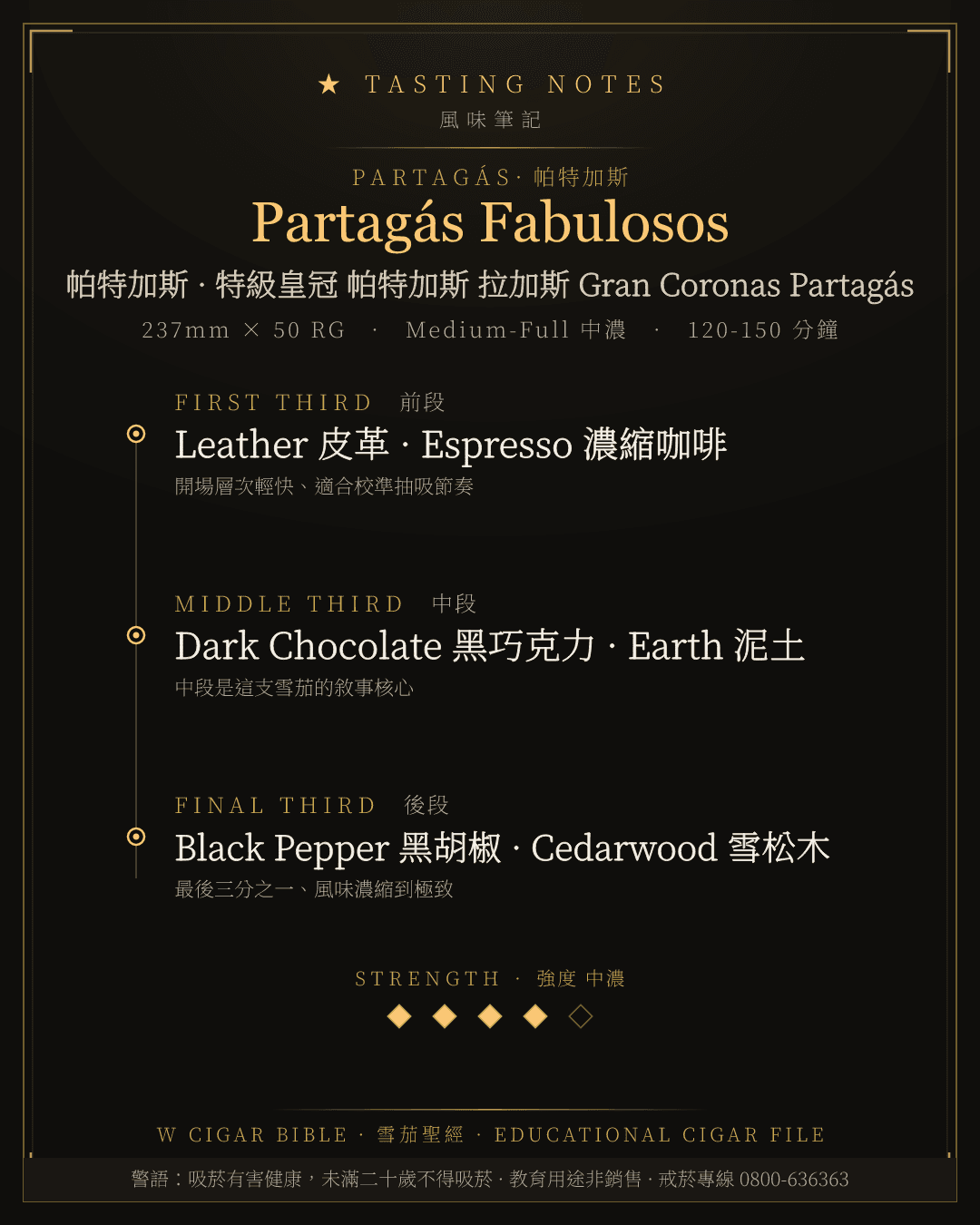
Partagás Fabulosos 風味筆記 · 帕特加斯
TASTING NOTES · 風味筆記

Partagás Fancy Tales Of Smoke · 帕特加斯
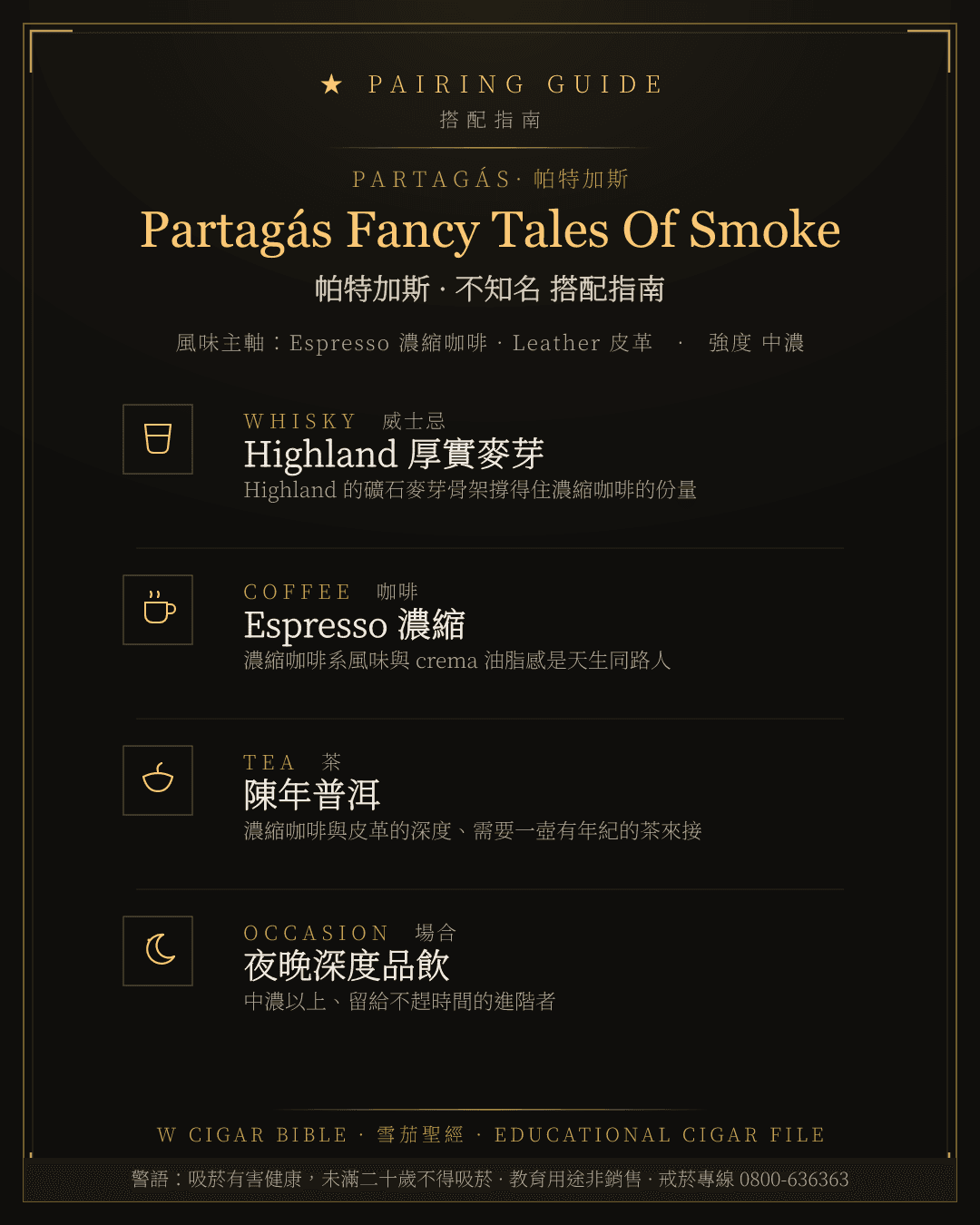
Partagás Fancy Tales Of Smoke 搭配指南 · 帕特加斯
PAIRING GUIDE · 搭配指南
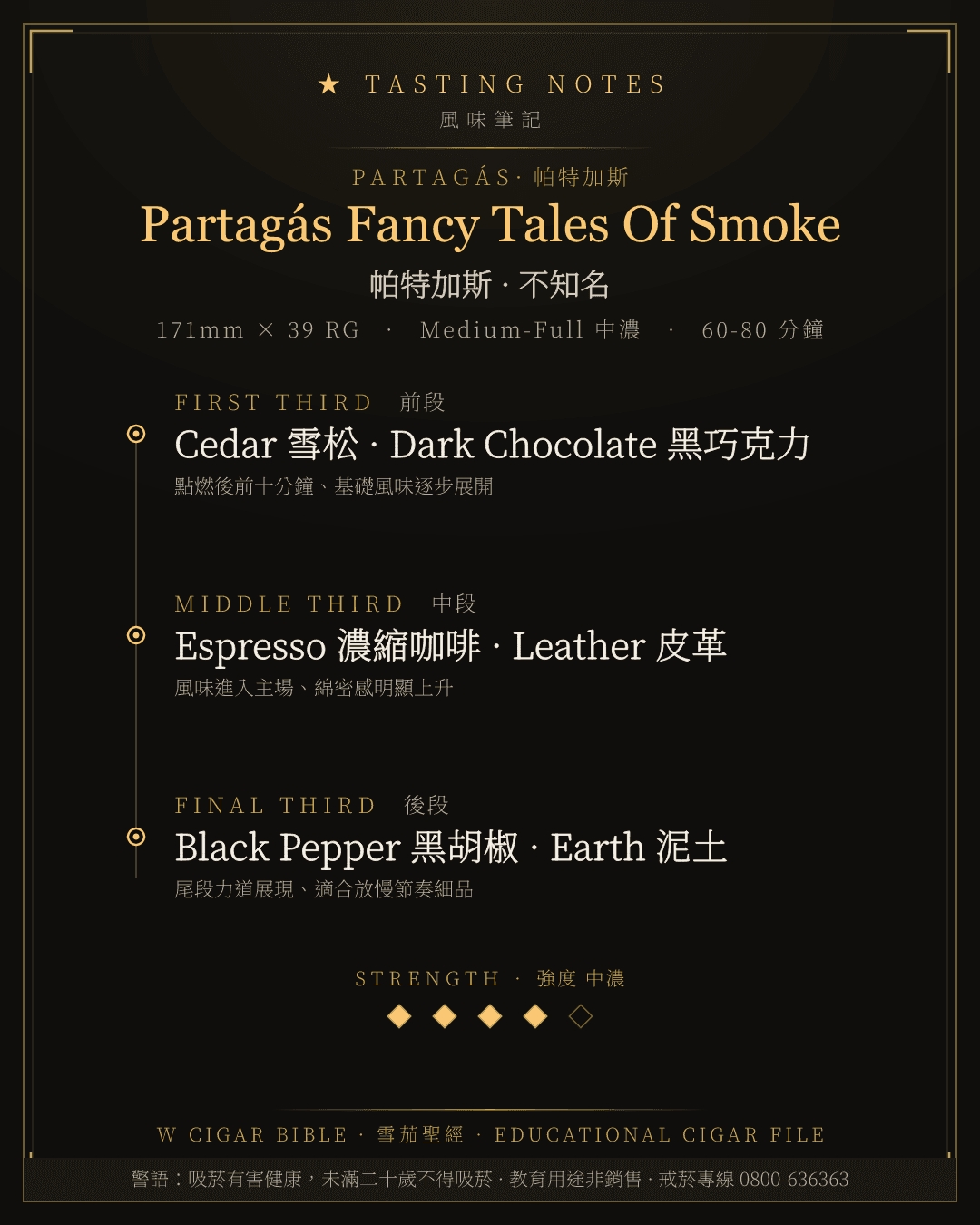
Partagás Fancy Tales Of Smoke 風味筆記 · 帕特加斯
TASTING NOTES · 風味筆記
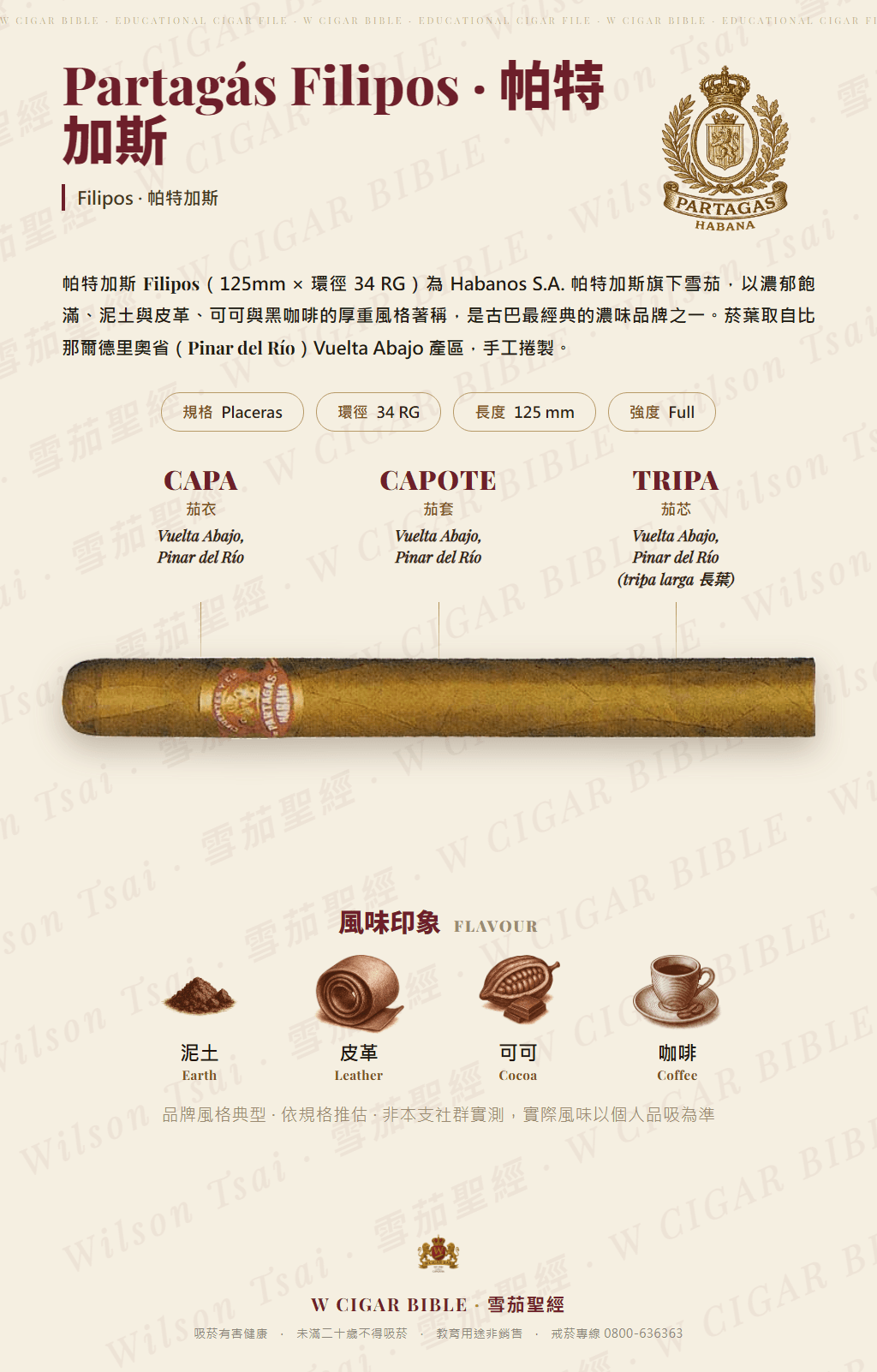
Partagás Filipos · 帕特加斯

Partagás Filipos 搭配指南 · 帕特加斯
PAIRING GUIDE · 搭配指南

Partagás Filipos 風味筆記 · 帕特加斯
TASTING NOTES · 風味筆記
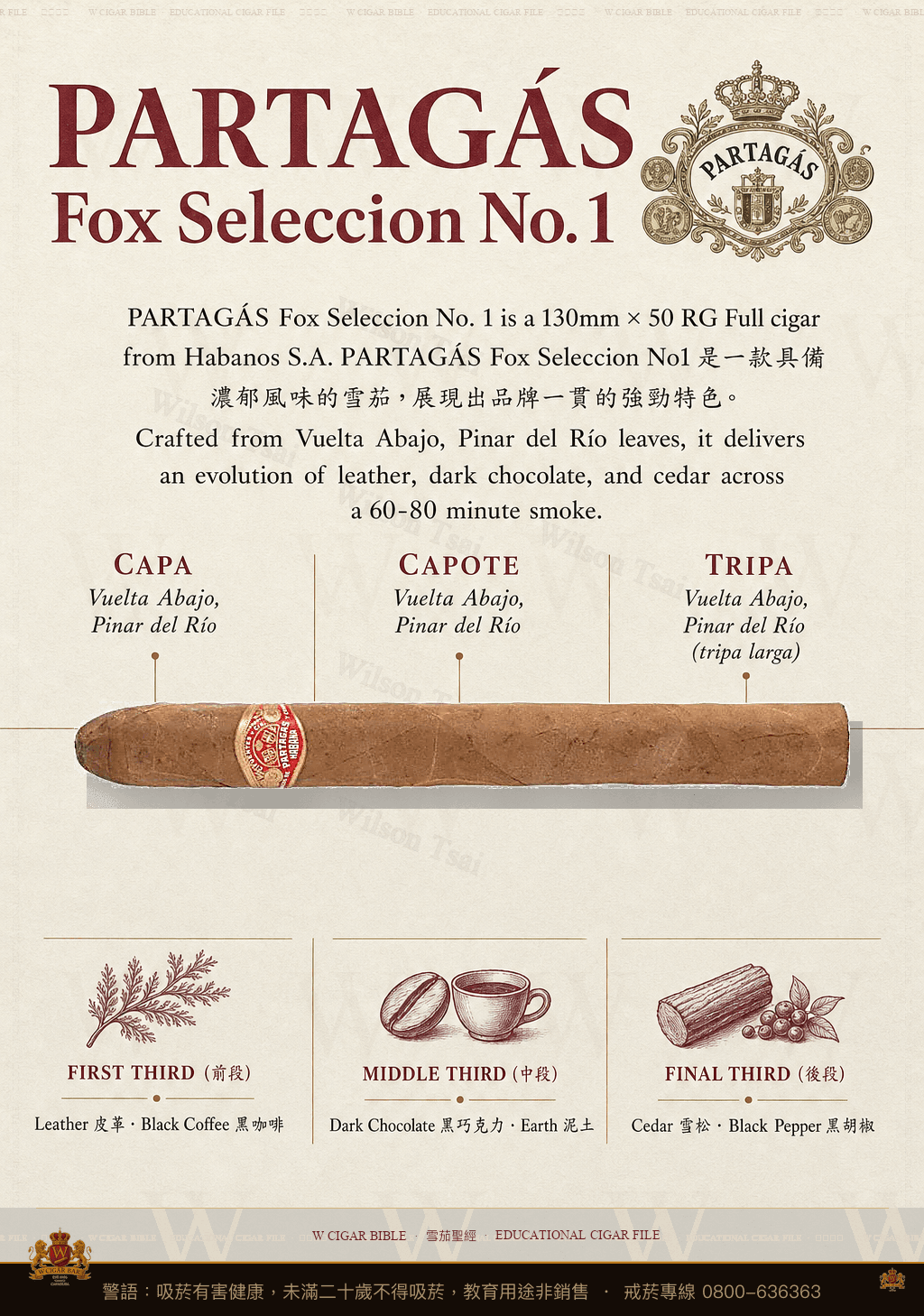
Partagás Fox Seleccion No. 1 · 帕特加斯

Partagás Fox Seleccion No. 1 搭配指南 · 帕特加斯
PAIRING GUIDE · 搭配指南
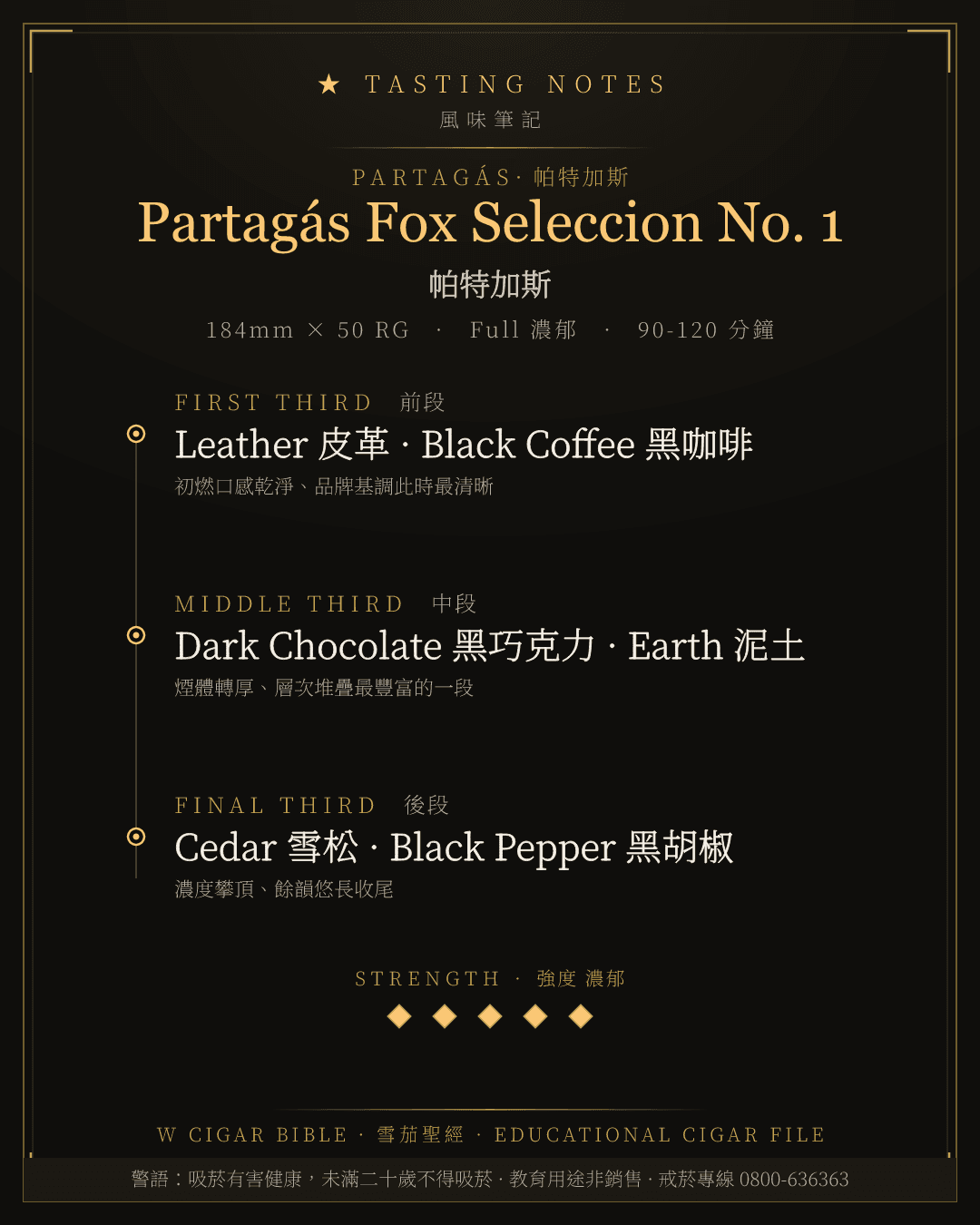
Partagás Fox Seleccion No. 1 風味筆記 · 帕特加斯
TASTING NOTES · 風味筆記
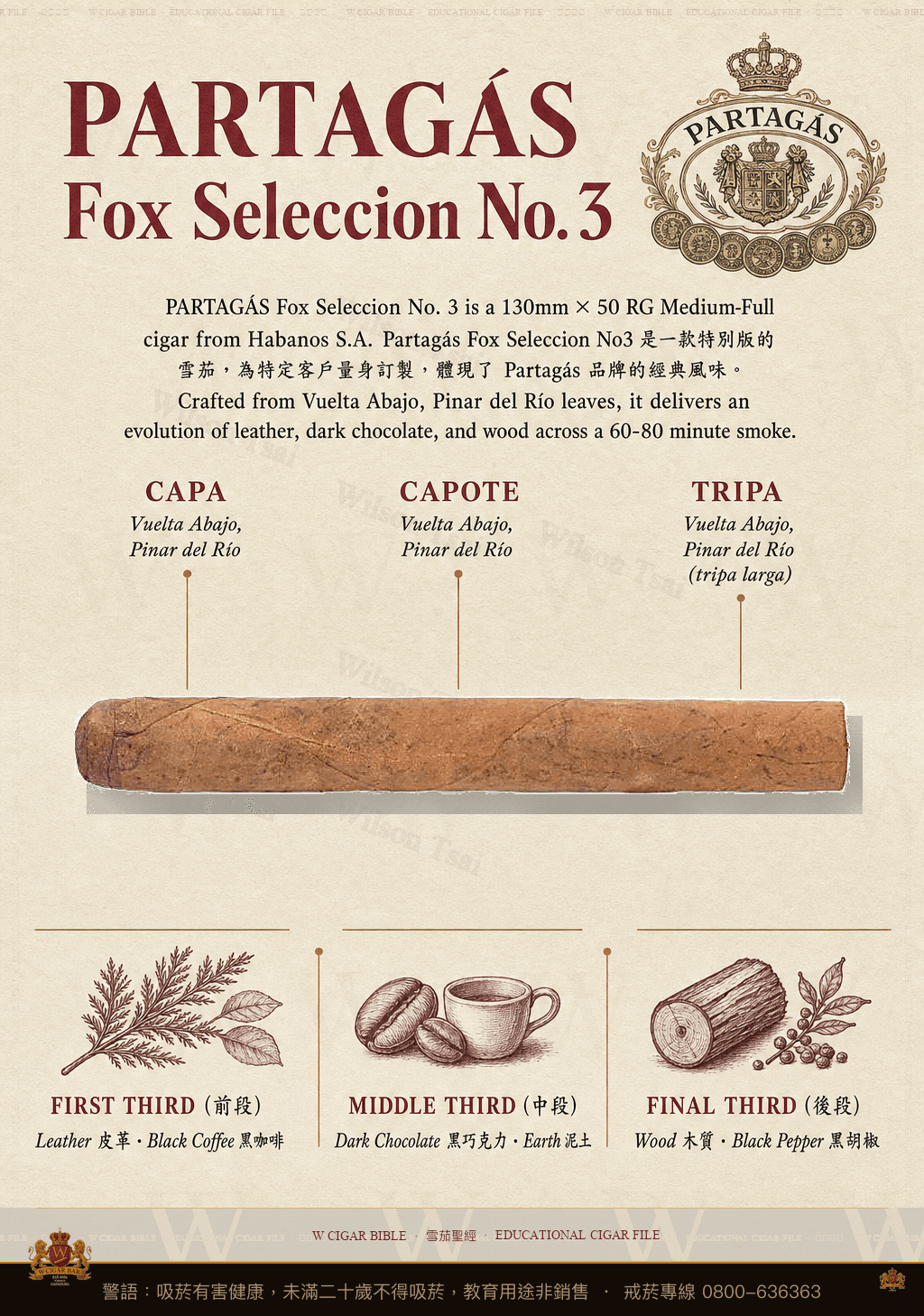
Partagás Fox Seleccion No. 3 · 帕特加斯
James J. Fox 倫敦專屬產製舊款(Coronas,142mm × 42 RG,已停產)· 雪茄檔案

Partagás Fox Seleccion No. 3 vs Punch Coronas
VITOLA SHOWDOWN · Coronas
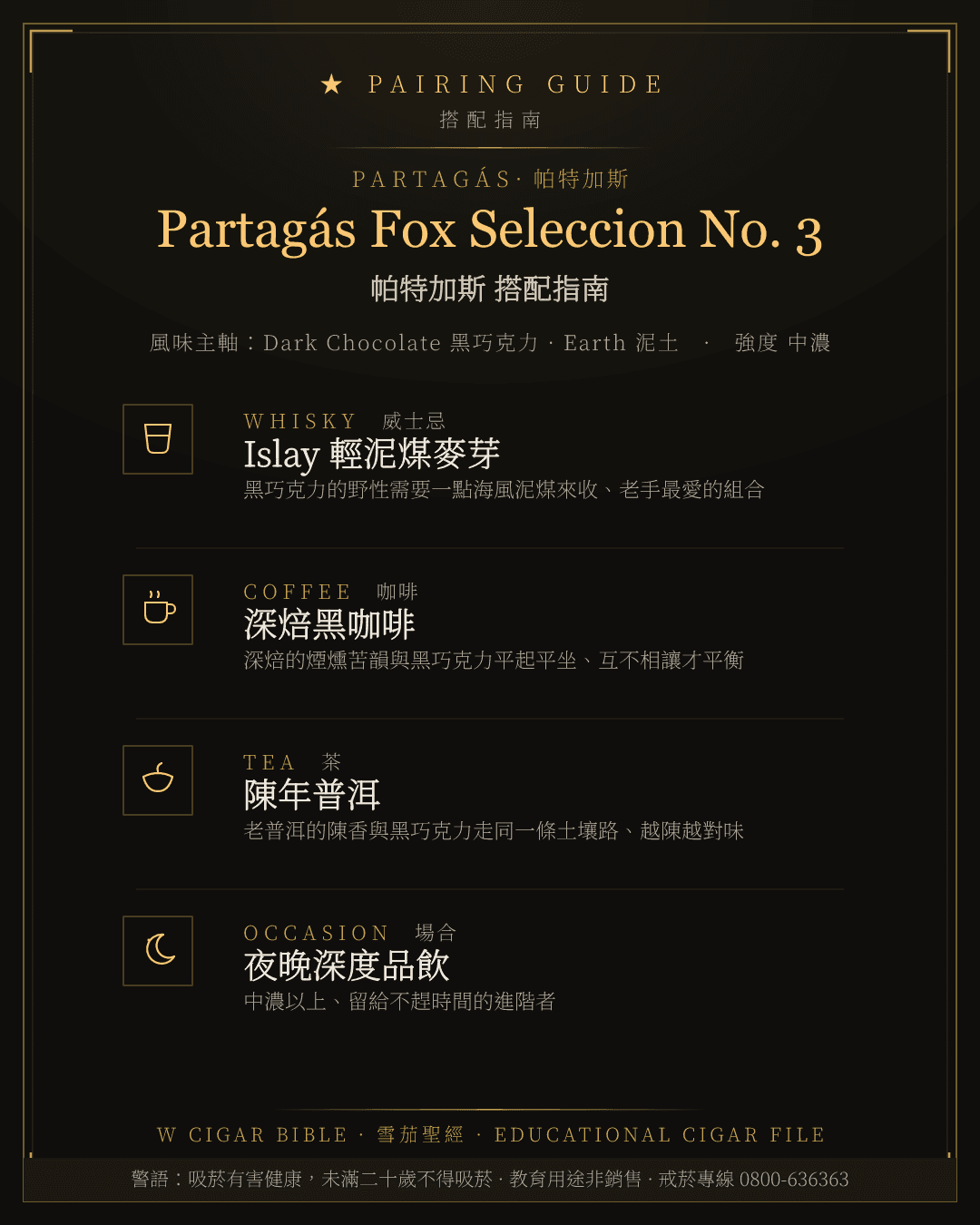
Partagás Fox Seleccion No. 3 搭配指南 · 帕特加斯
PAIRING GUIDE · 搭配指南

Partagás Fox Seleccion No. 3 風味筆記 · 帕特加斯
TASTING NOTES · 風味筆記

Partagás Gran Reserva Cosecha 2007 搭配指南 · 帕特加斯
PAIRING GUIDE · 搭配指南
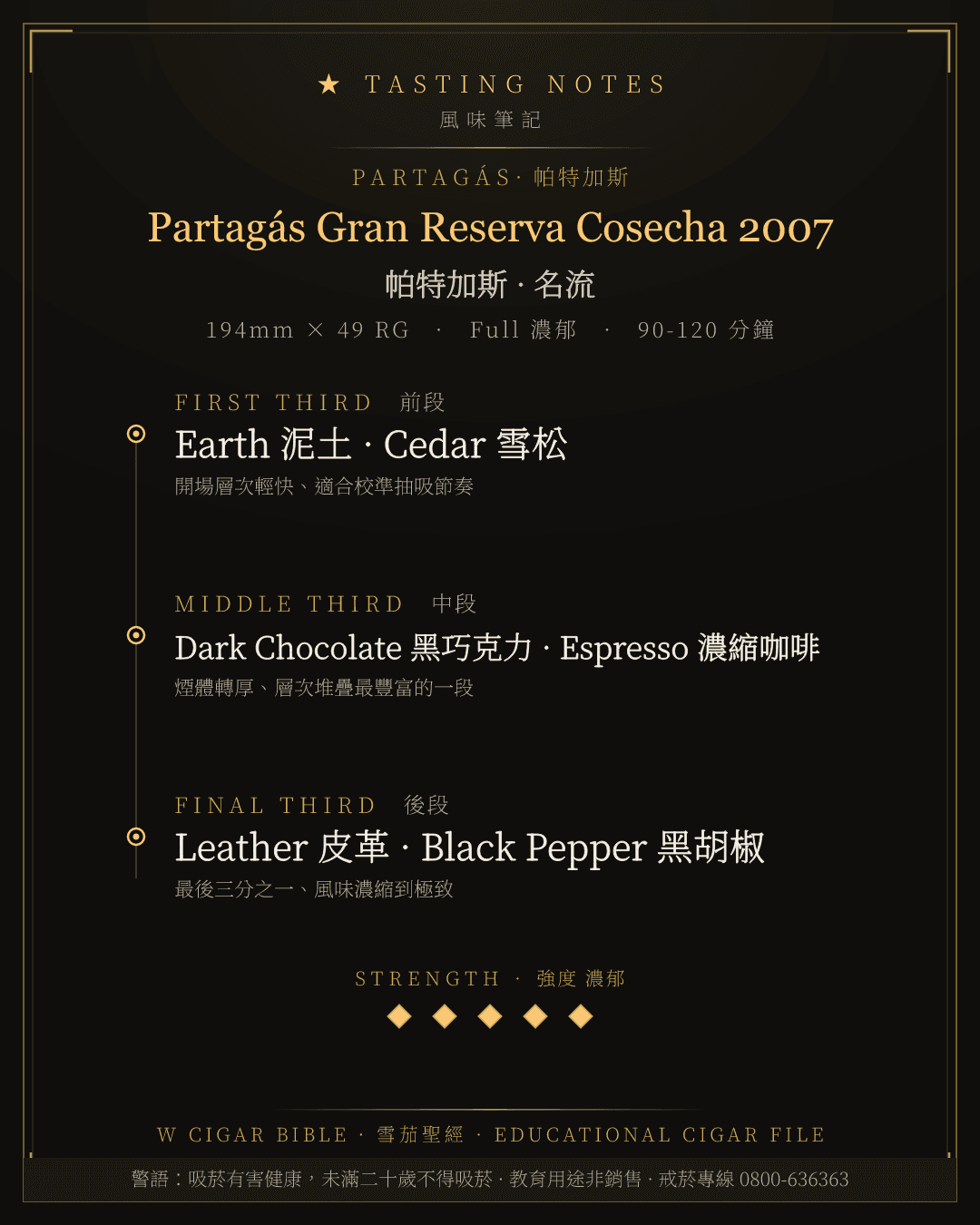
Partagás Gran Reserva Cosecha 2007 風味筆記 · 帕特加斯
TASTING NOTES · 風味筆記

Partagás Gran Reserva Cosecha 2015 搭配指南 · 帕特加斯
PAIRING GUIDE · 搭配指南
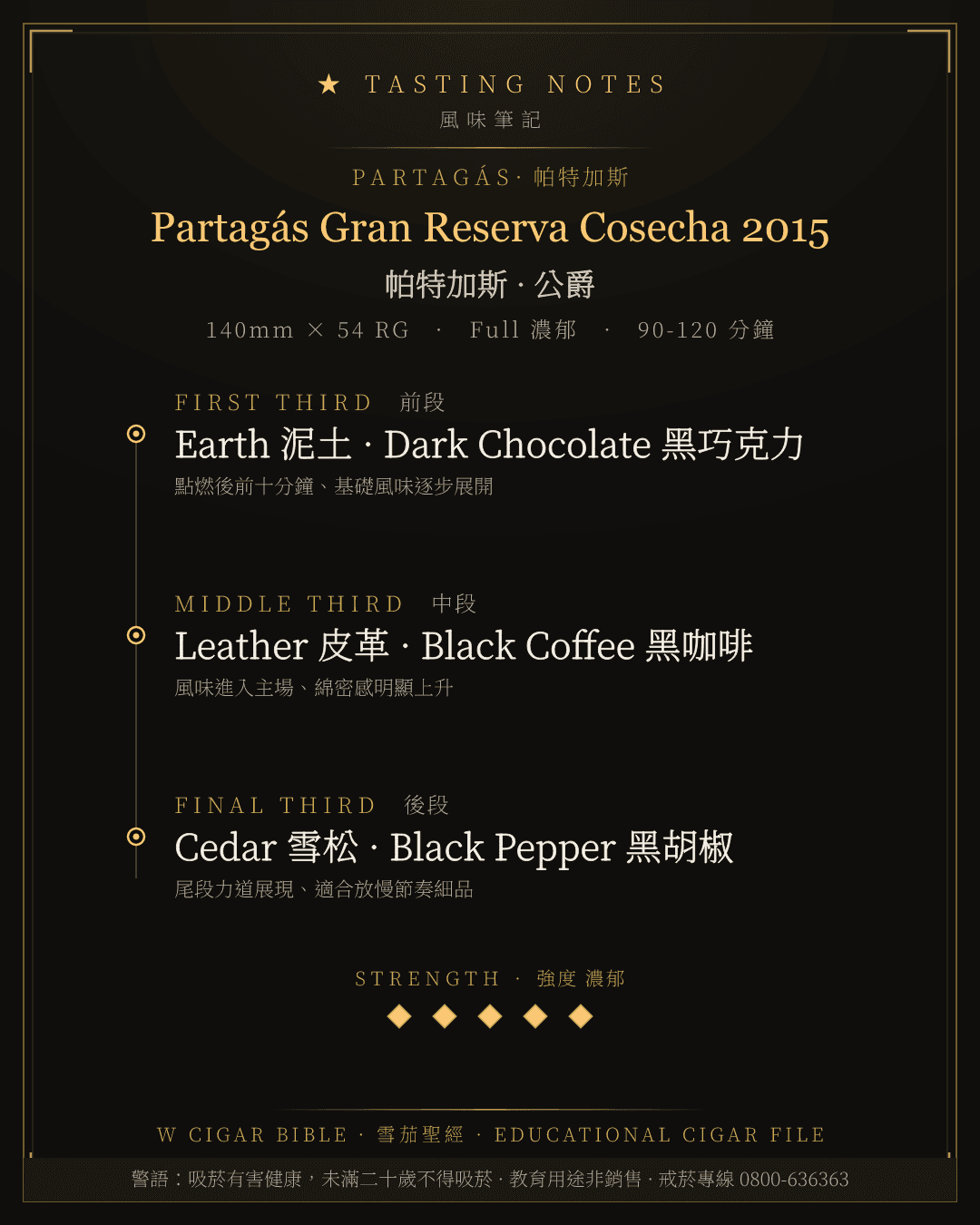
Partagás Gran Reserva Cosecha 2015 風味筆記 · 帕特加斯
TASTING NOTES · 風味筆記
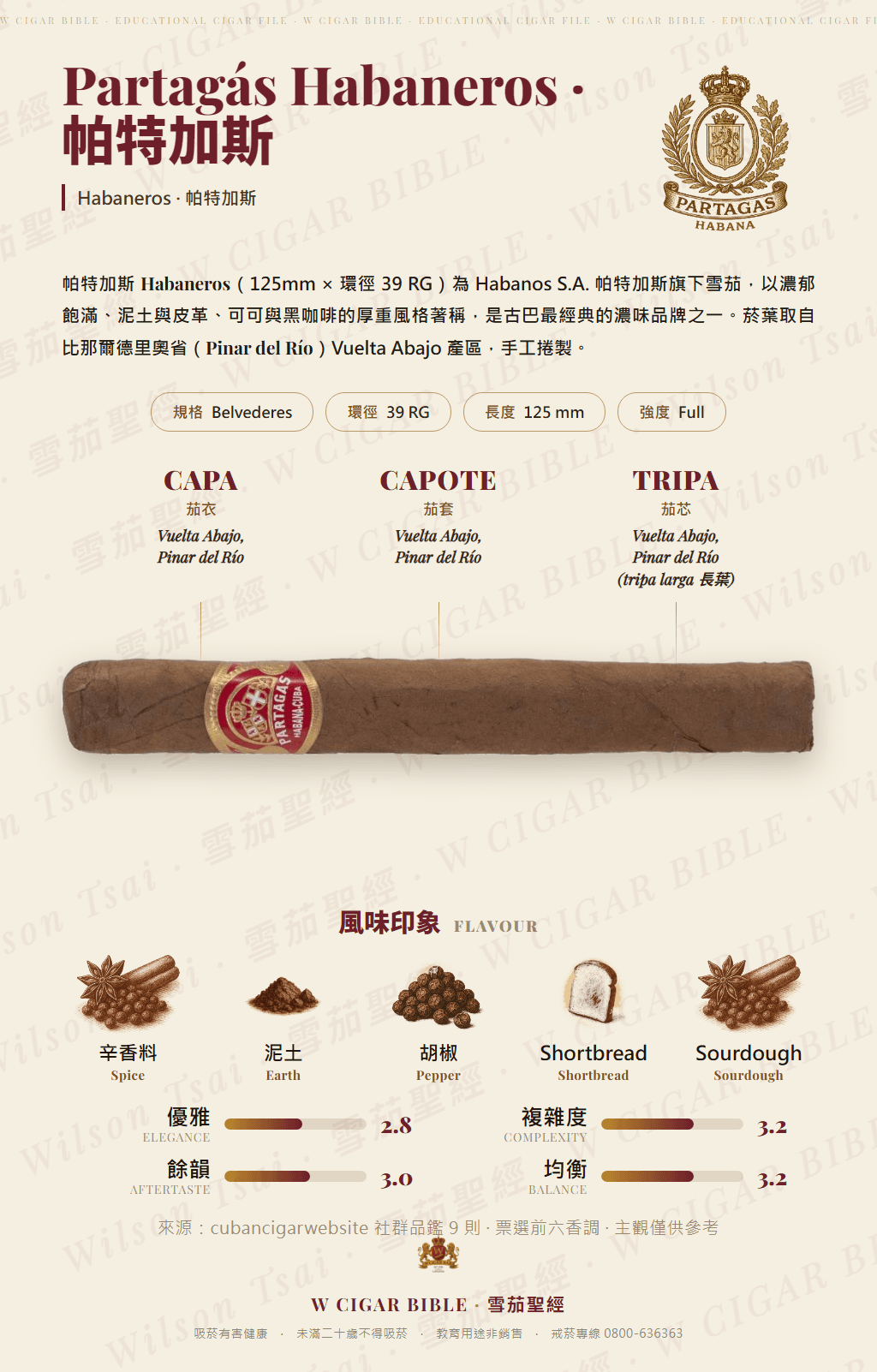
Partagás Habaneros · 帕特加斯

Partagás Habaneros vs Punch Belvederes
VITOLA SHOWDOWN · Belvederes

Partagás Habaneros 搭配指南 · 帕特加斯
PAIRING GUIDE · 搭配指南
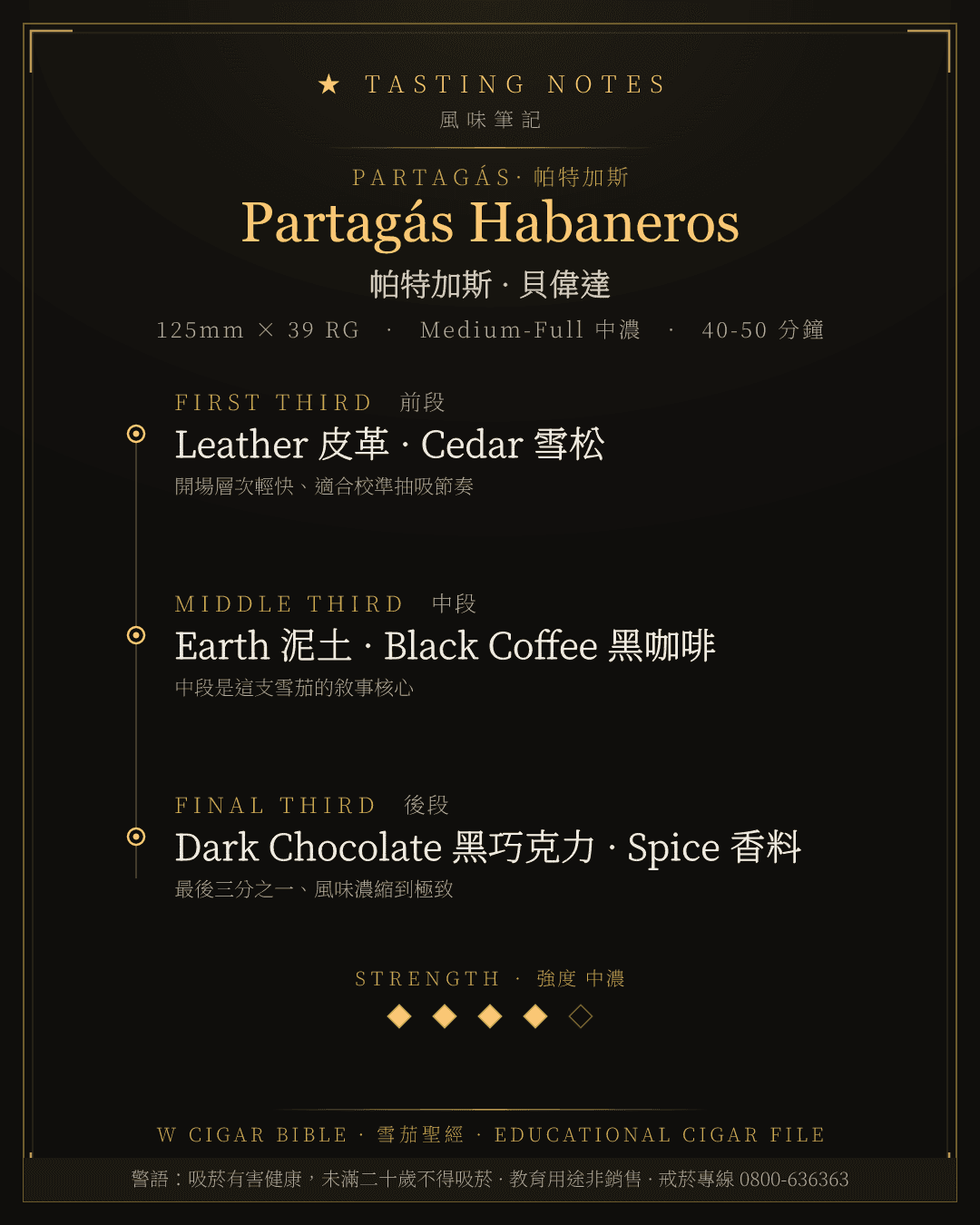
Partagás Habaneros 風味筆記 · 帕特加斯
TASTING NOTES · 風味筆記
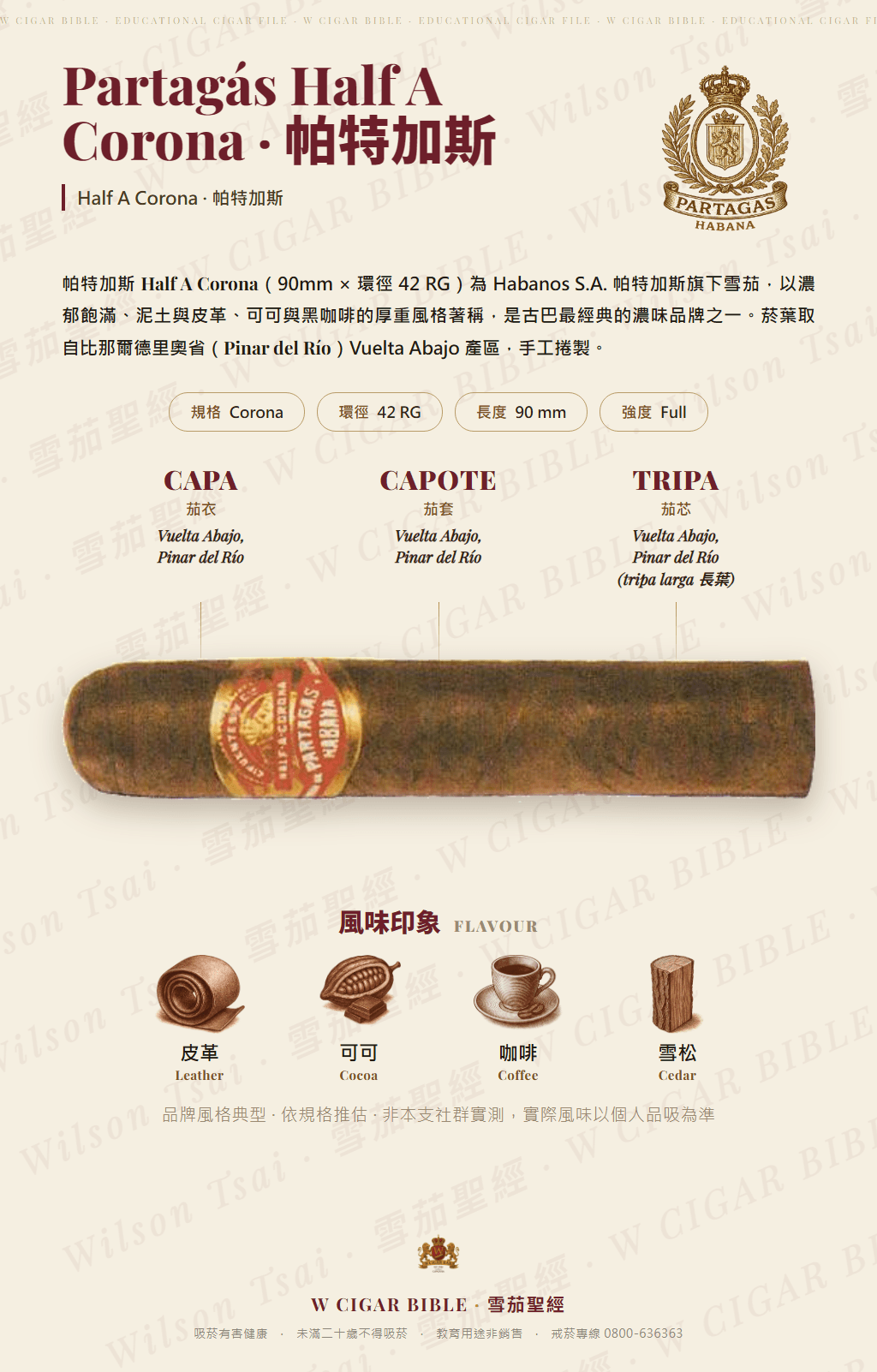
Partagás Half A Corona · 帕特加斯
1960 年前發行之舊款(Half a Corona,90mm × 42 RG,1970 年代停產)· 雪茄檔案
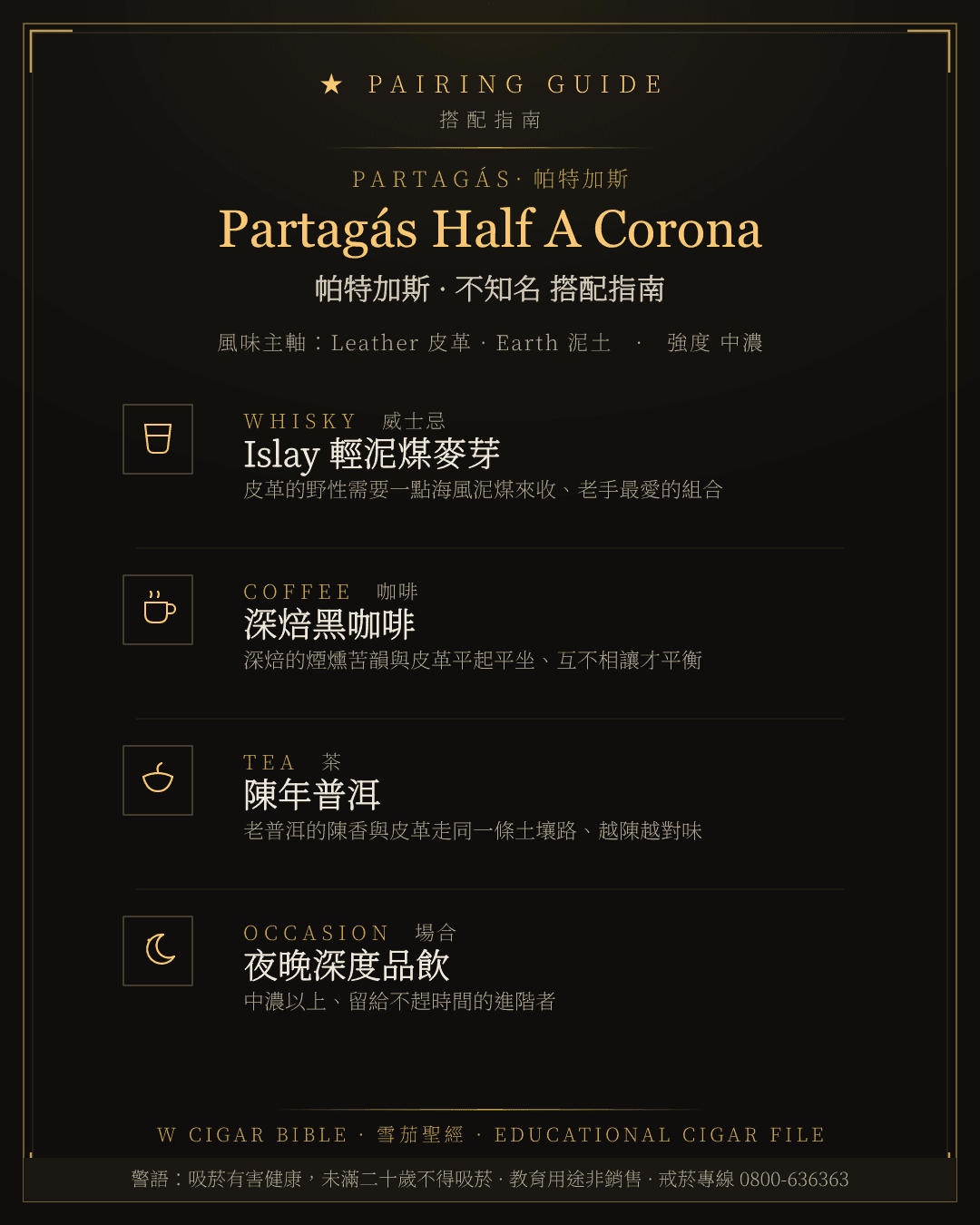
Partagás Half A Corona 搭配指南 · 帕特加斯
PAIRING GUIDE · 搭配指南

Partagás Half A Corona 風味筆記 · 帕特加斯
TASTING NOTES · 風味筆記

Partagás Half Coronas 搭配指南 · 帕特加斯
PAIRING GUIDE · 搭配指南
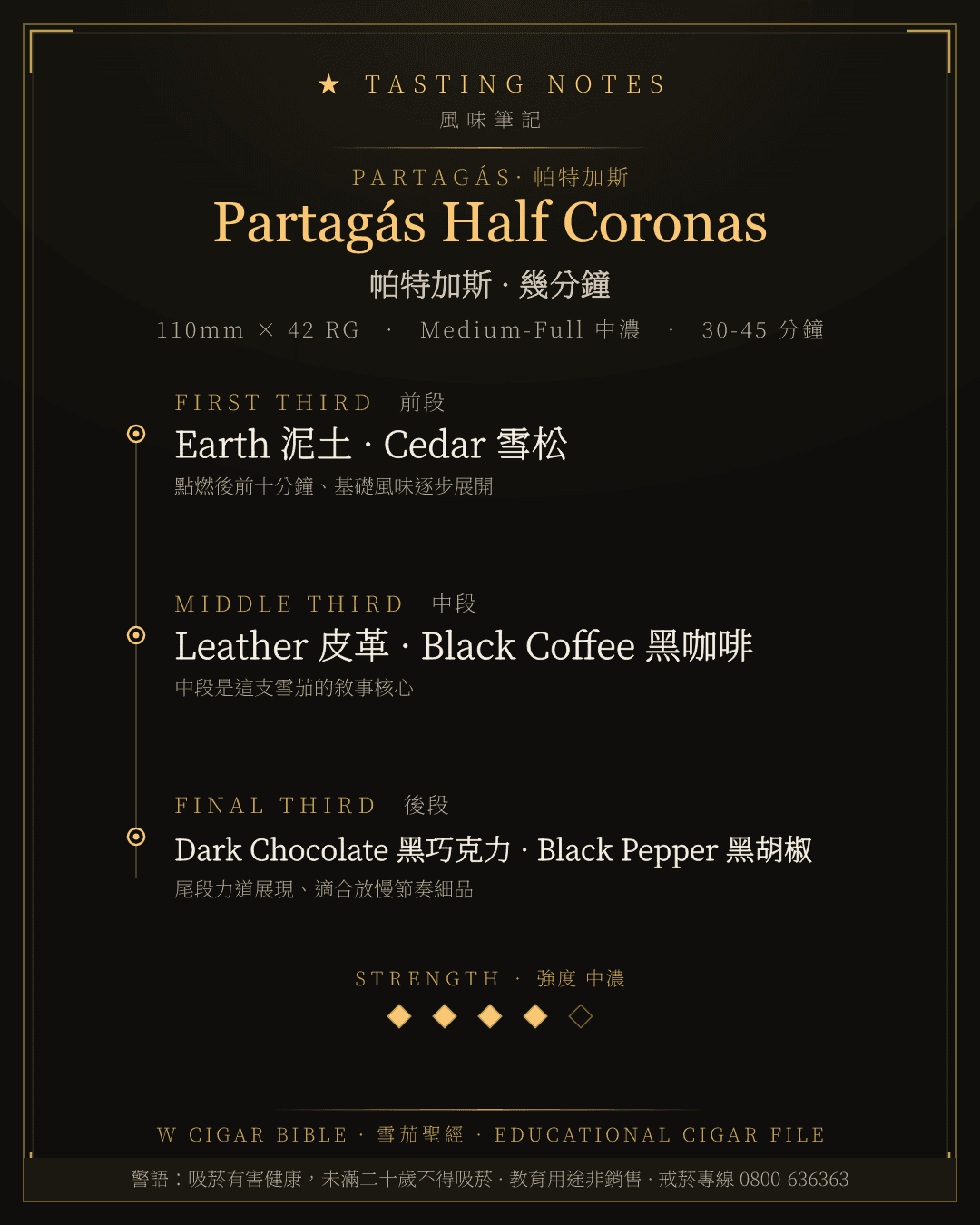
Partagás Half Coronas 風味筆記 · 帕特加斯
TASTING NOTES · 風味筆記
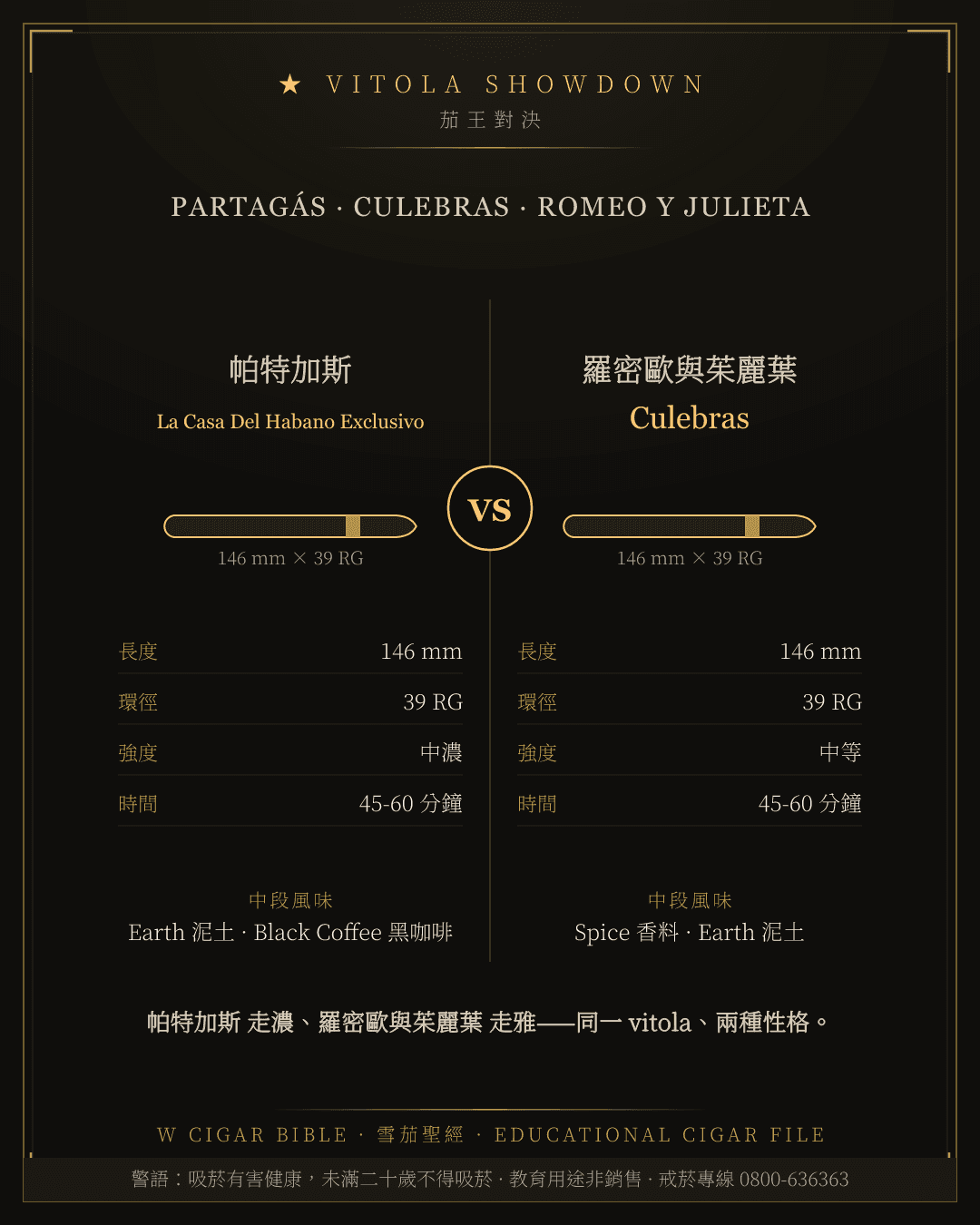
Partagás La Casa Del Habano Exclusivo vs Romeo Y Julieta Culebras
VITOLA SHOWDOWN · Culebras
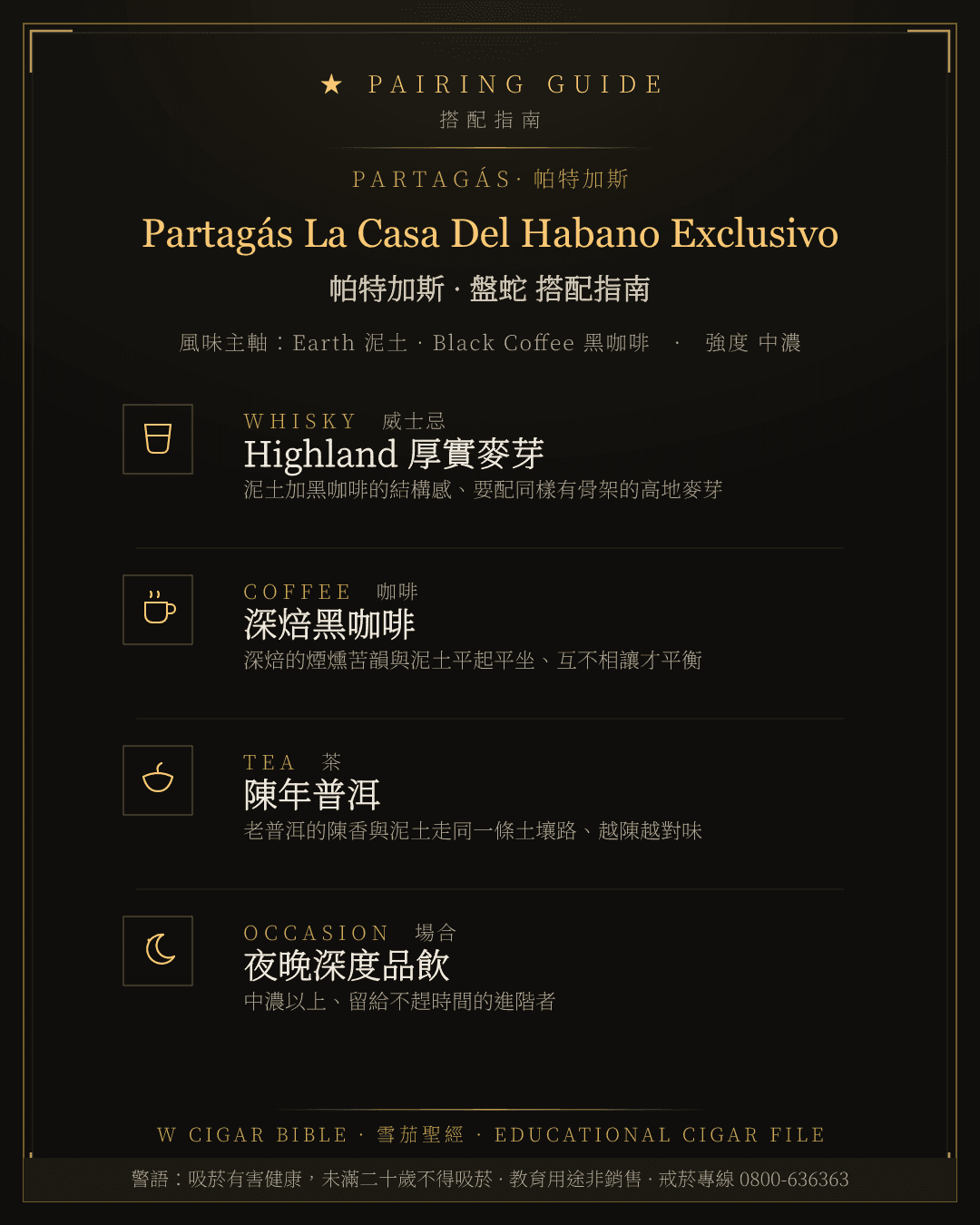
Partagás La Casa Del Habano Exclusivo 搭配指南 · 帕特加斯
PAIRING GUIDE · 搭配指南

Partagás La Casa Del Habano Exclusivo 風味筆記 · 帕特加斯
TASTING NOTES · 風味筆記
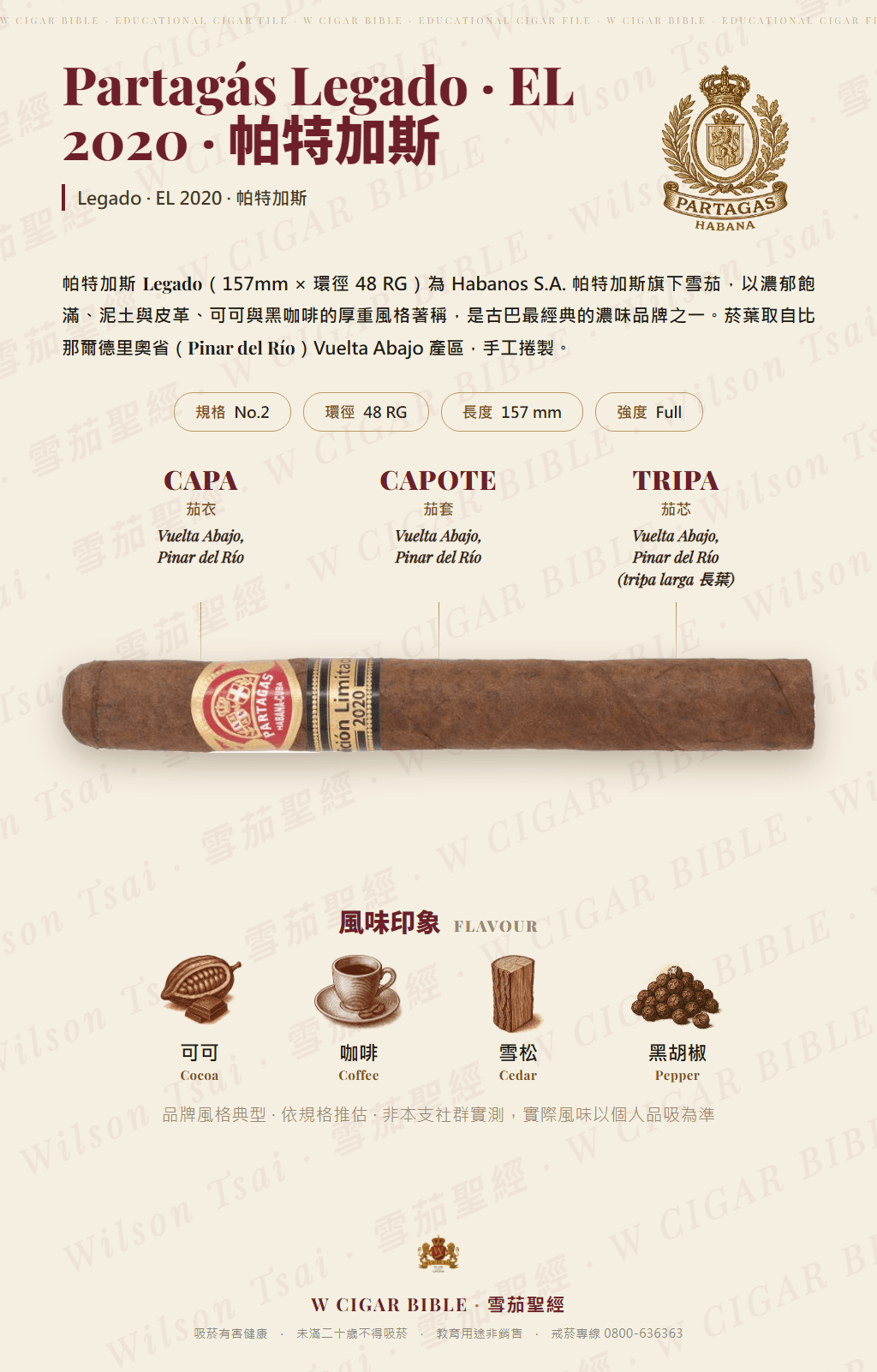
Partagás Legado · EL 2020 · 帕特加斯
EL 2020 · 限量年度版 Edición Limitada · 雪茄檔案
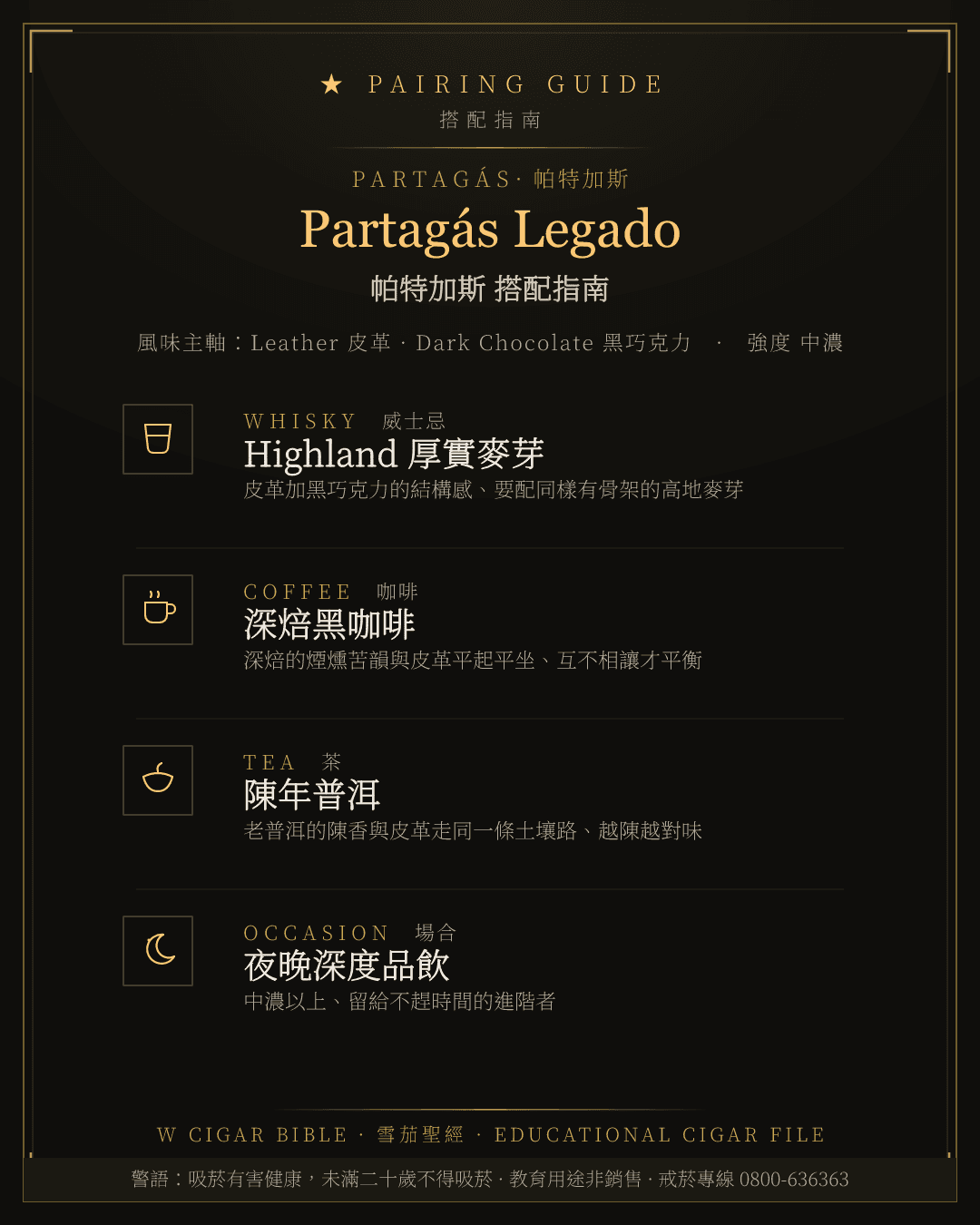
Partagás Legado 搭配指南 · 帕特加斯
PAIRING GUIDE · 搭配指南
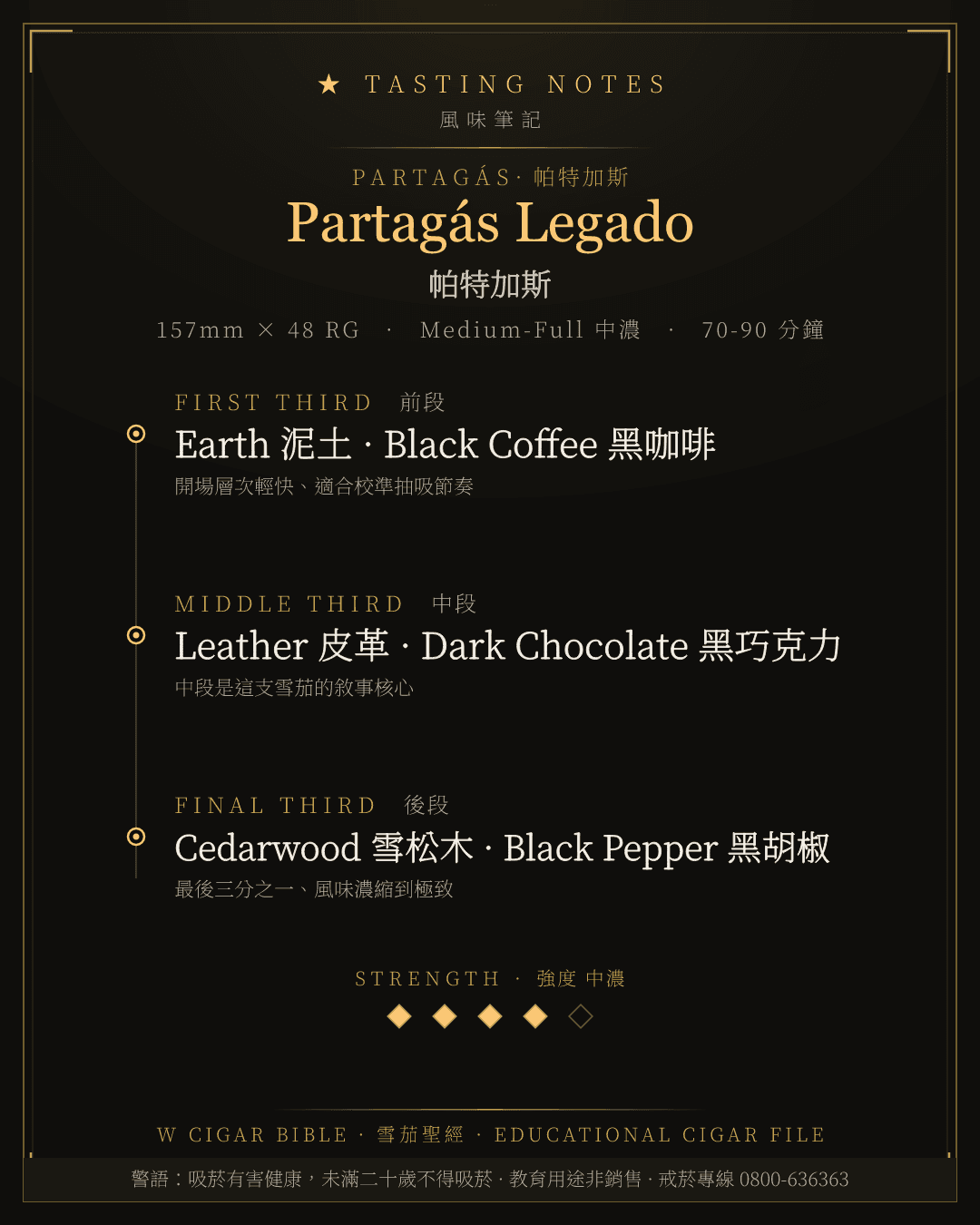
Partagás Legado 風味筆記 · 帕特加斯
TASTING NOTES · 風味筆記

Partagás Línea Maestra Rito · 帕特加斯
Línea Maestra 系列常規款(Gustosos 廠規 52 環徑 × 168mm,2023 年發表、在產)· 雪茄檔案
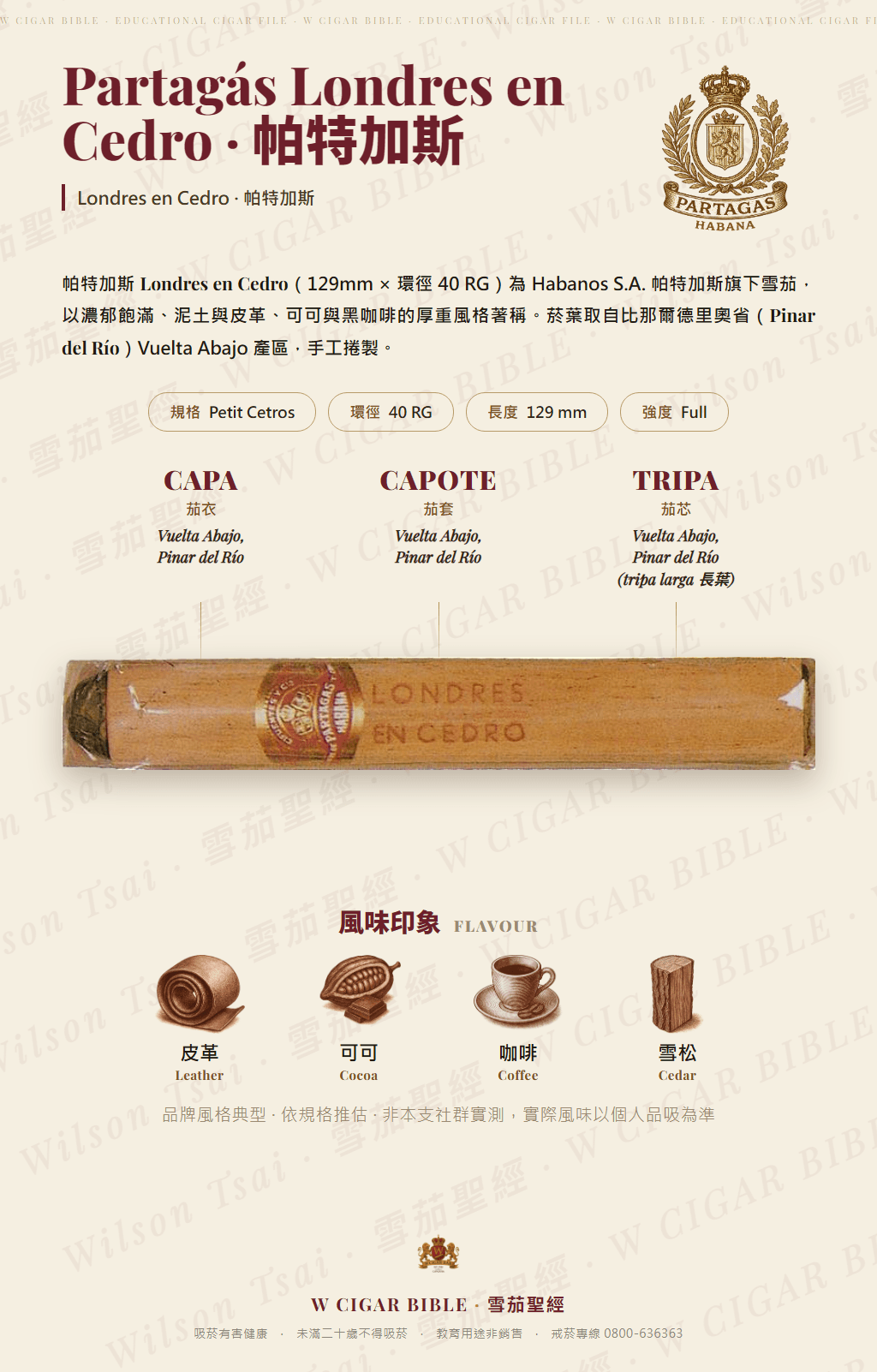
Partagás Londres en Cedro · 帕特加斯
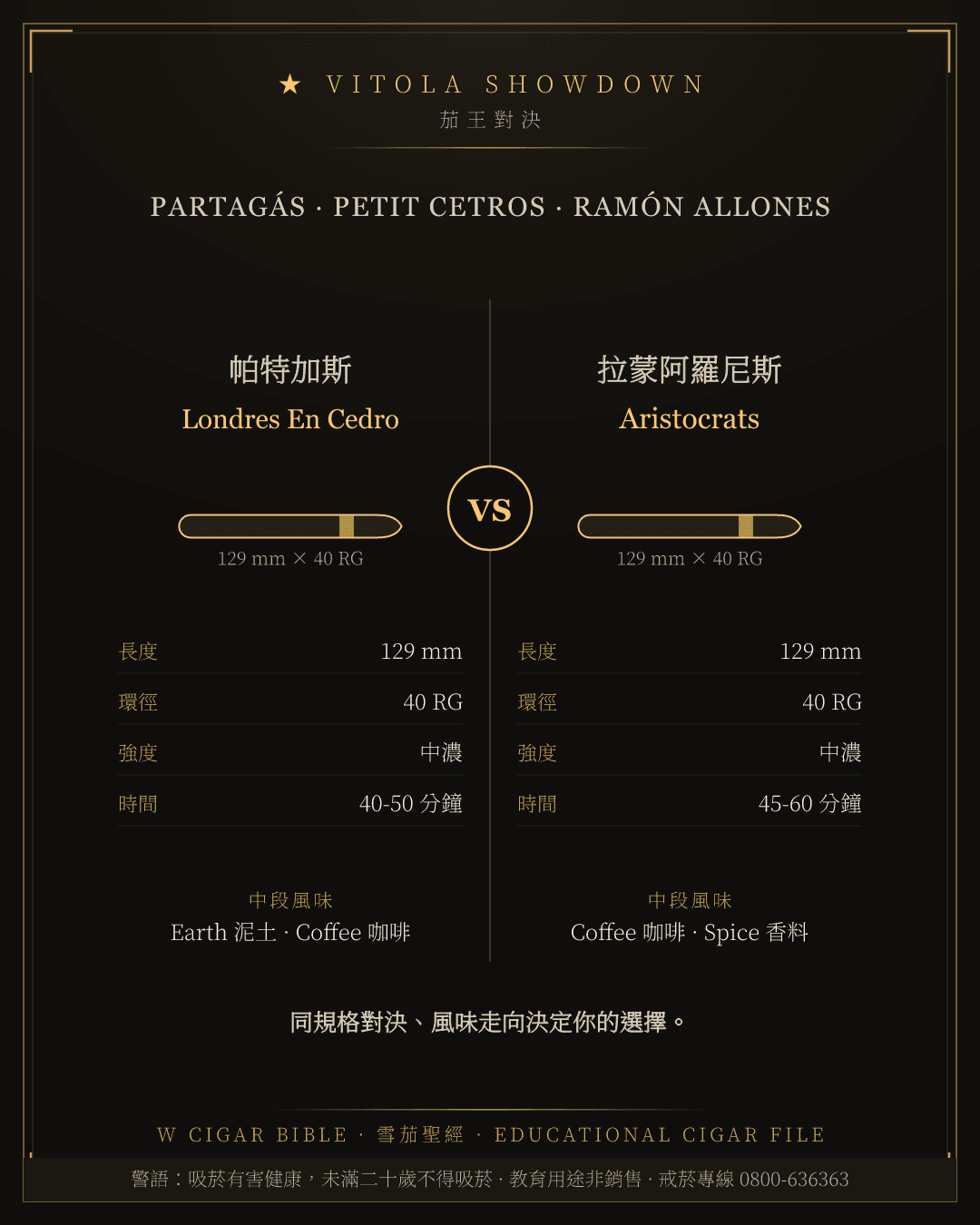
Partagás Londres En Cedro vs Ramón Allones Aristocrats
VITOLA SHOWDOWN · Petit Cetros
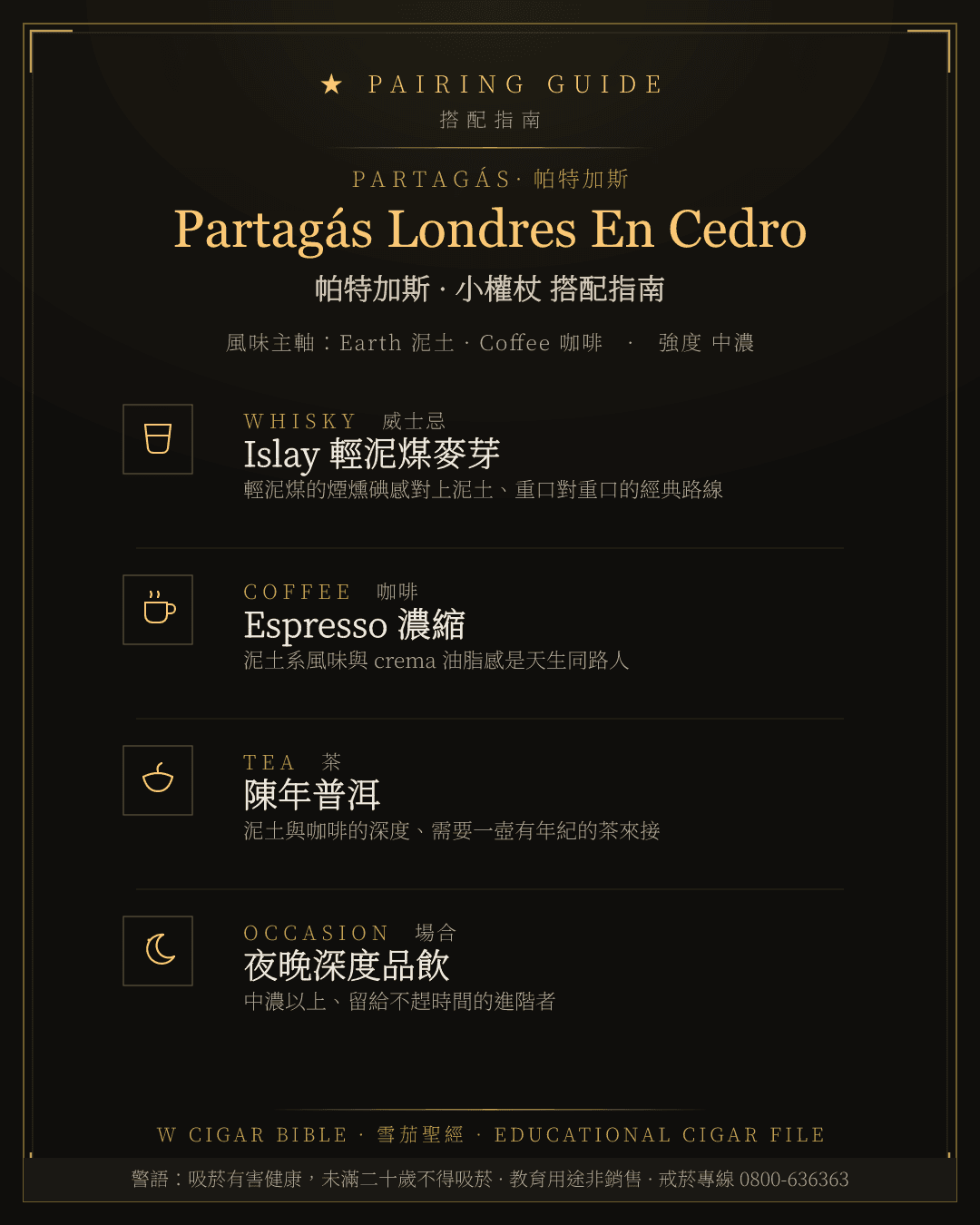
Partagás Londres En Cedro 搭配指南 · 帕特加斯
PAIRING GUIDE · 搭配指南
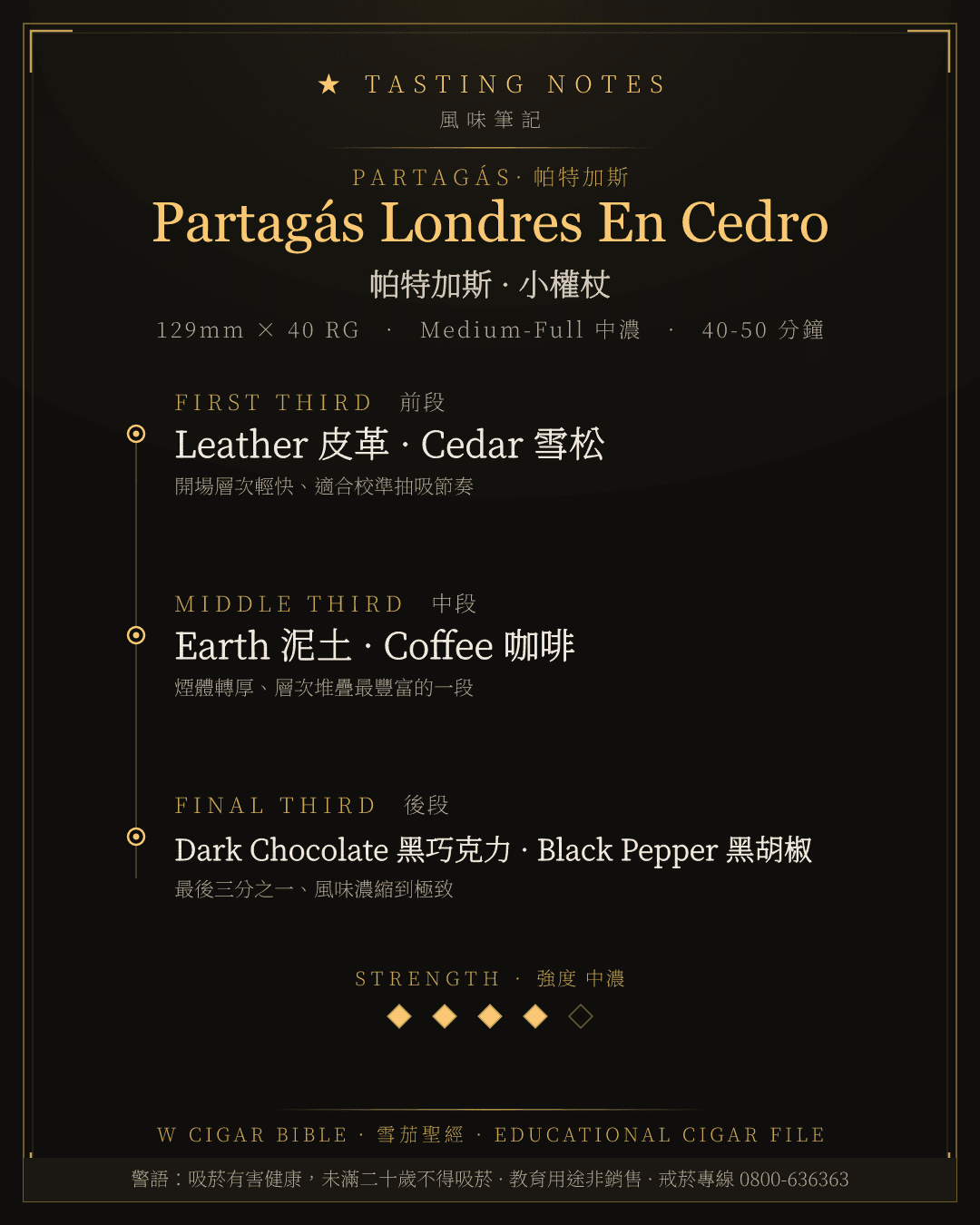
Partagás Londres En Cedro 風味筆記 · 帕特加斯
TASTING NOTES · 風味筆記
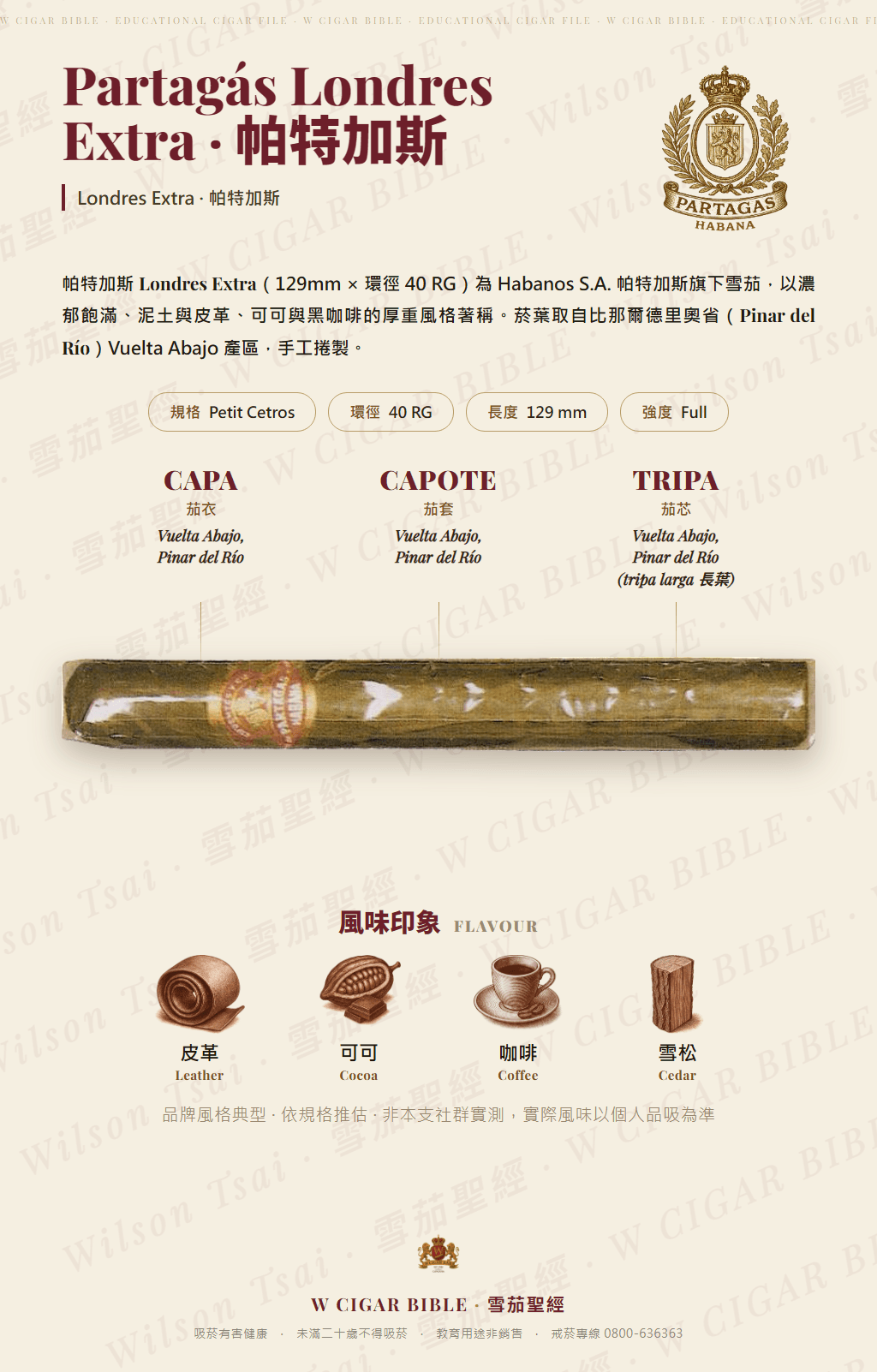
Partagás Londres Extra · 帕特加斯

Partagás Londres Extra vs Romeo Y Julieta Coronitas
VITOLA SHOWDOWN · Petit Cetros

Partagás Londres Extra 搭配指南 · 帕特加斯
PAIRING GUIDE · 搭配指南
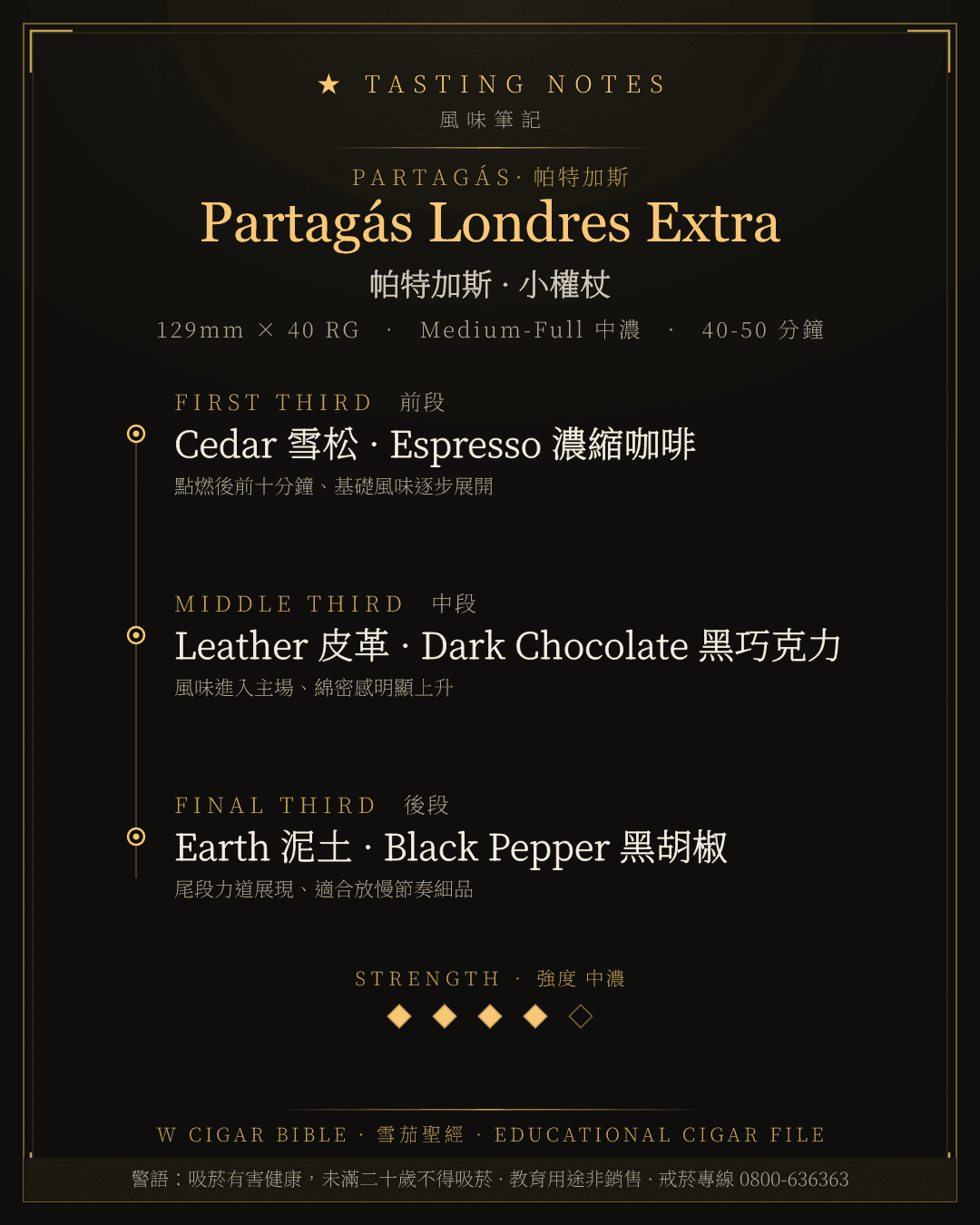
Partagás Londres Extra 風味筆記 · 帕特加斯
TASTING NOTES · 風味筆記
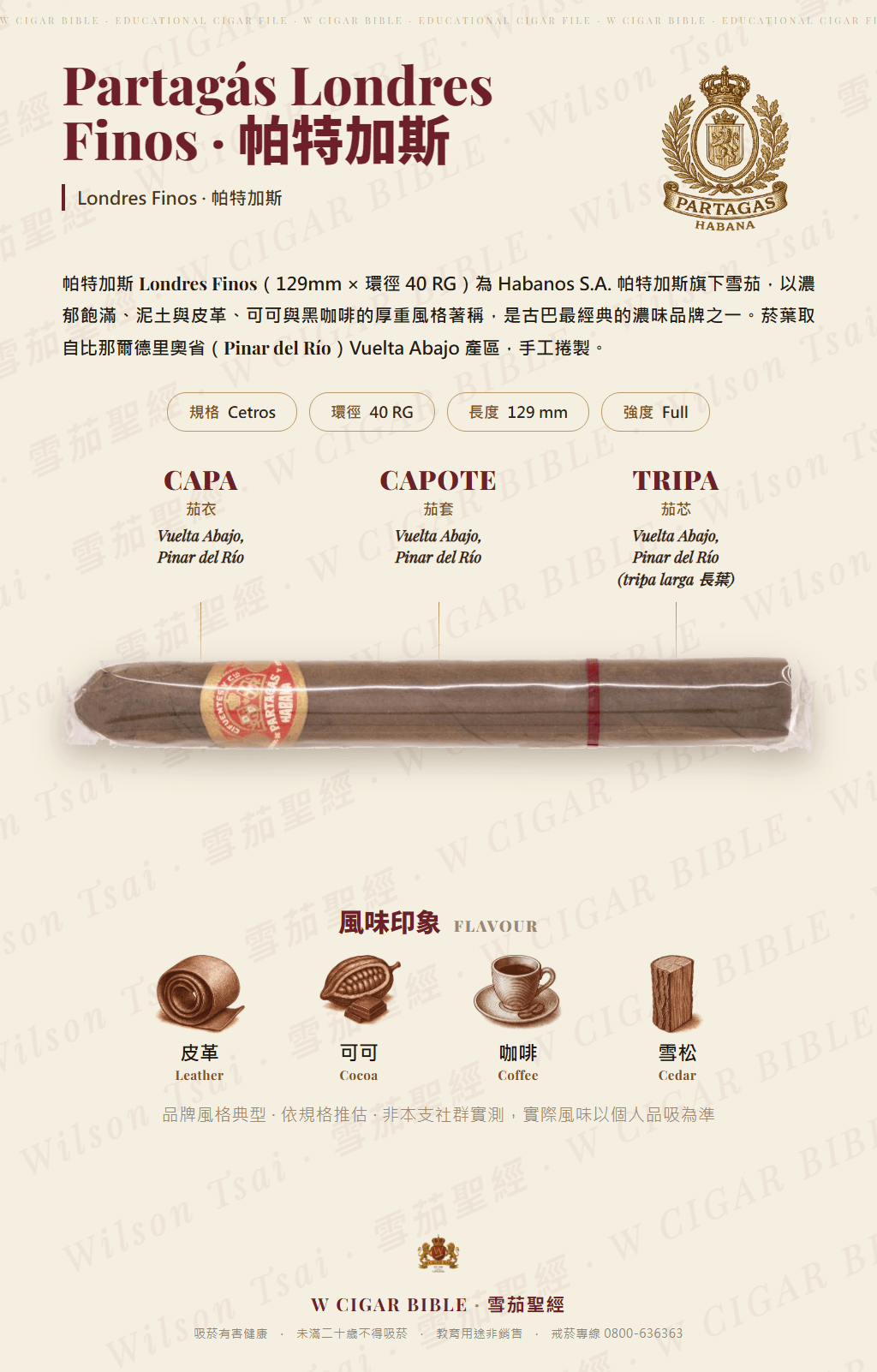
Partagás Londres Finos · 帕特加斯

Partagás Londres Finos vs Romeo Y Julieta Coronitas En Cedro
VITOLA SHOWDOWN · Petit Cetros
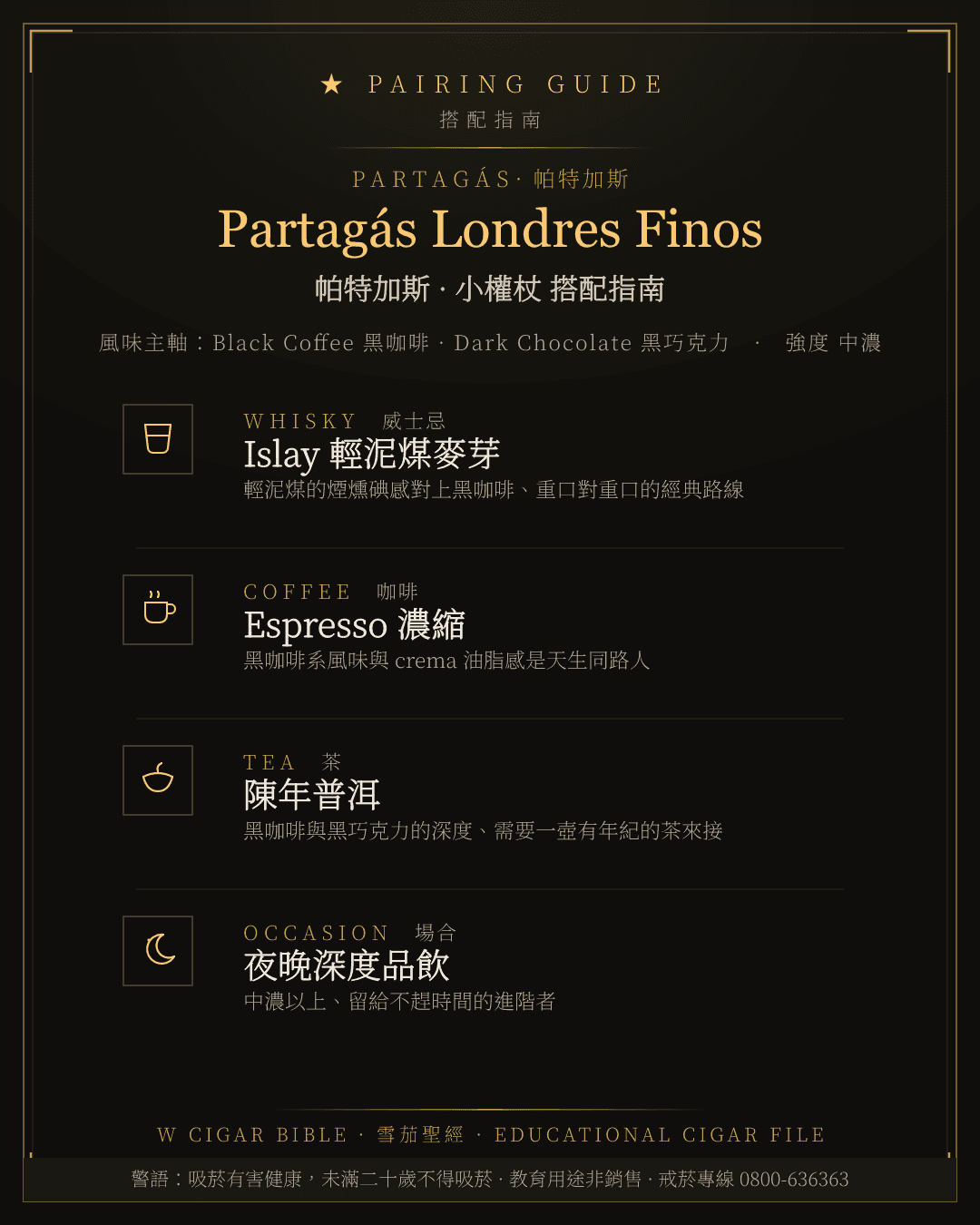
Partagás Londres Finos 搭配指南 · 帕特加斯
PAIRING GUIDE · 搭配指南
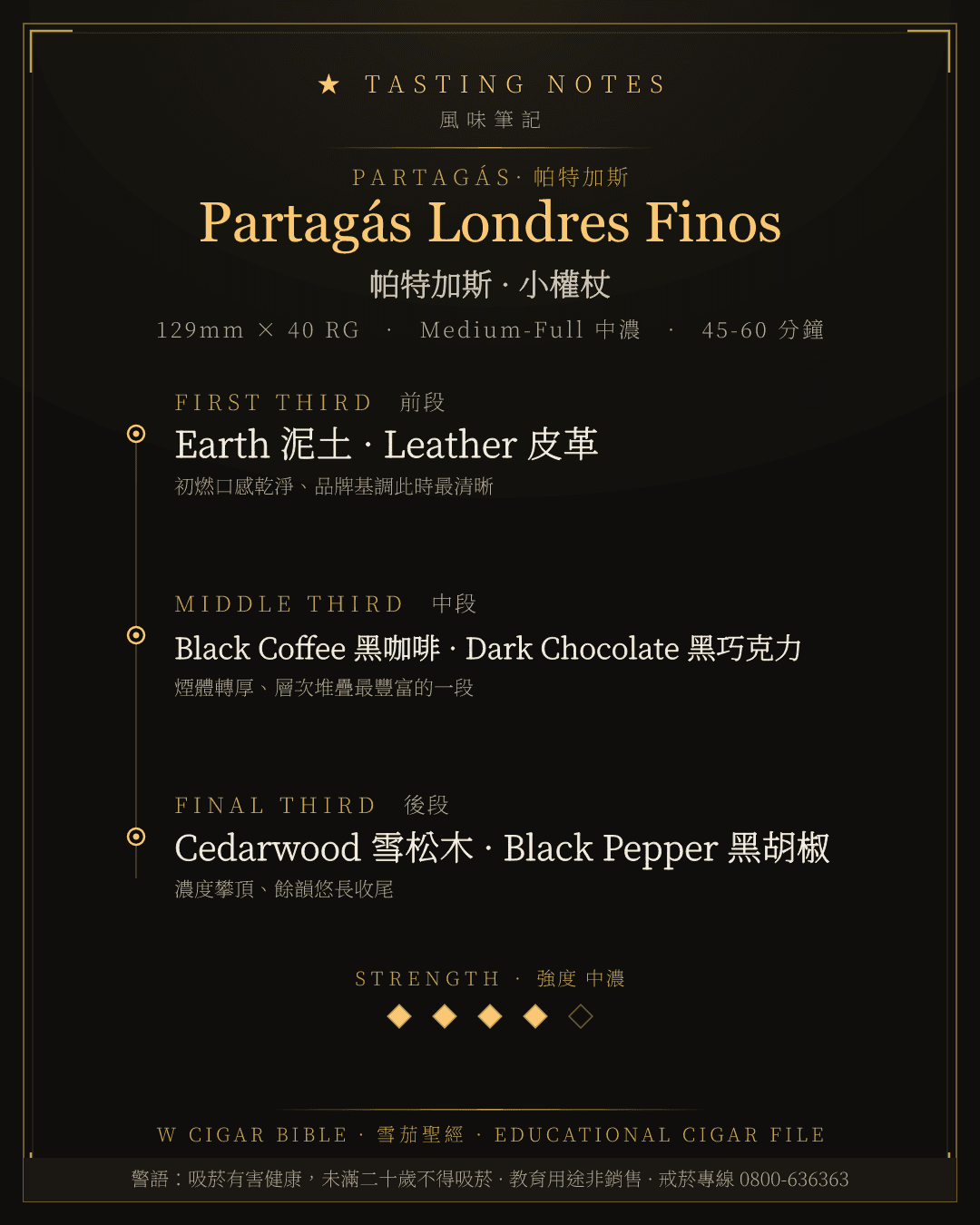
Partagás Londres Finos 風味筆記 · 帕特加斯
TASTING NOTES · 風味筆記
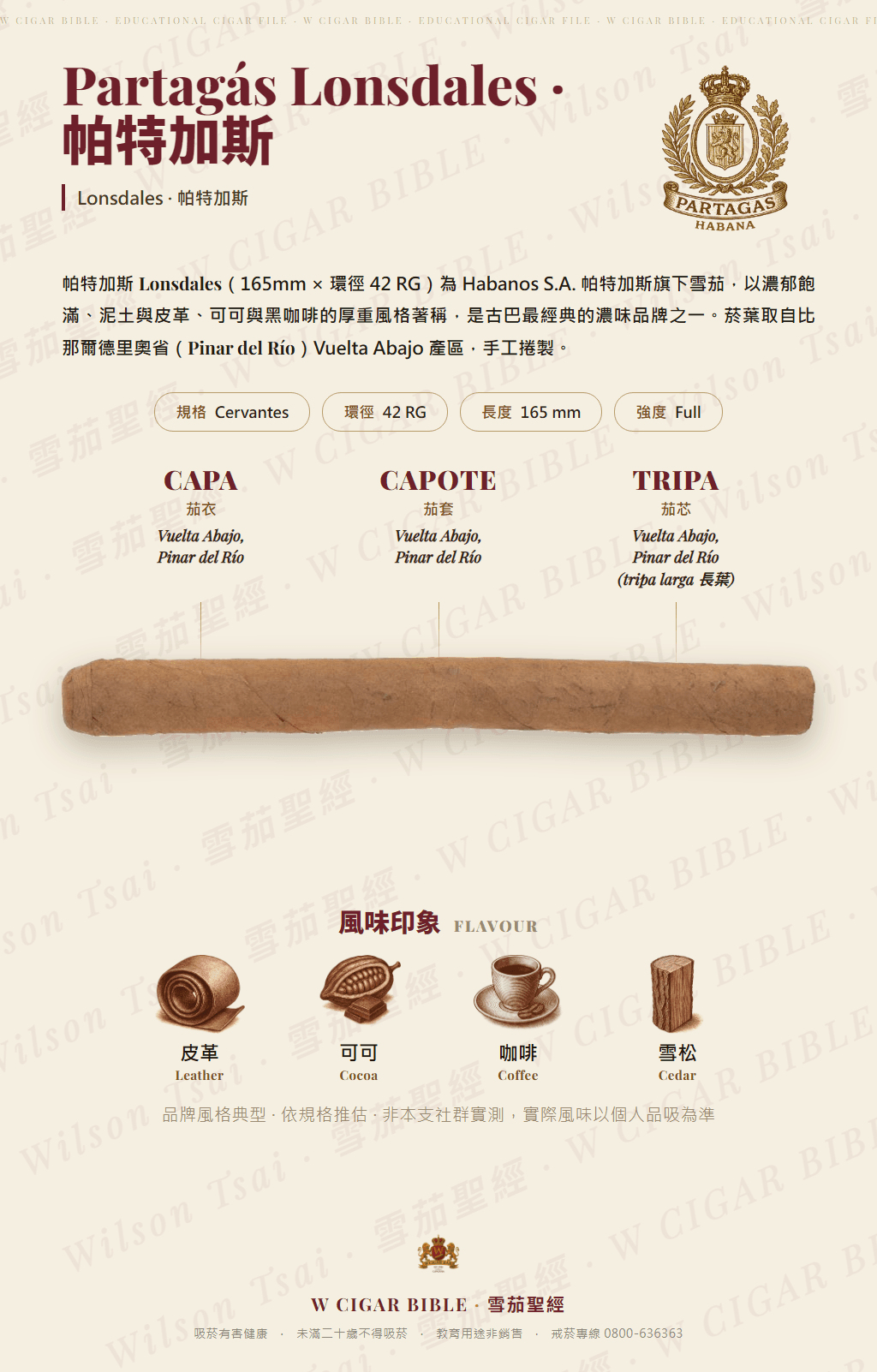
Partagás Lonsdales · 帕特加斯
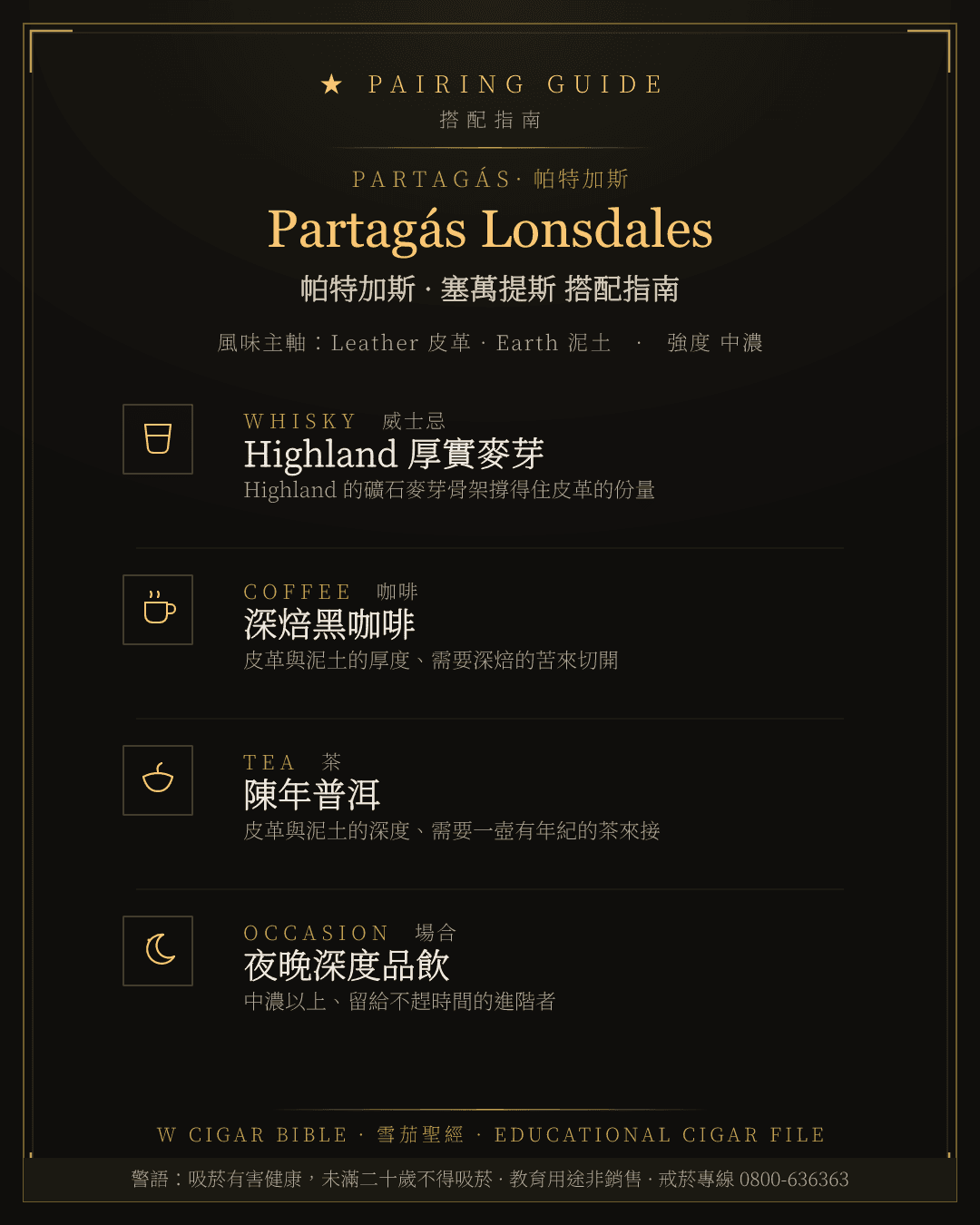
Partagás Lonsdales 搭配指南 · 帕特加斯
PAIRING GUIDE · 搭配指南
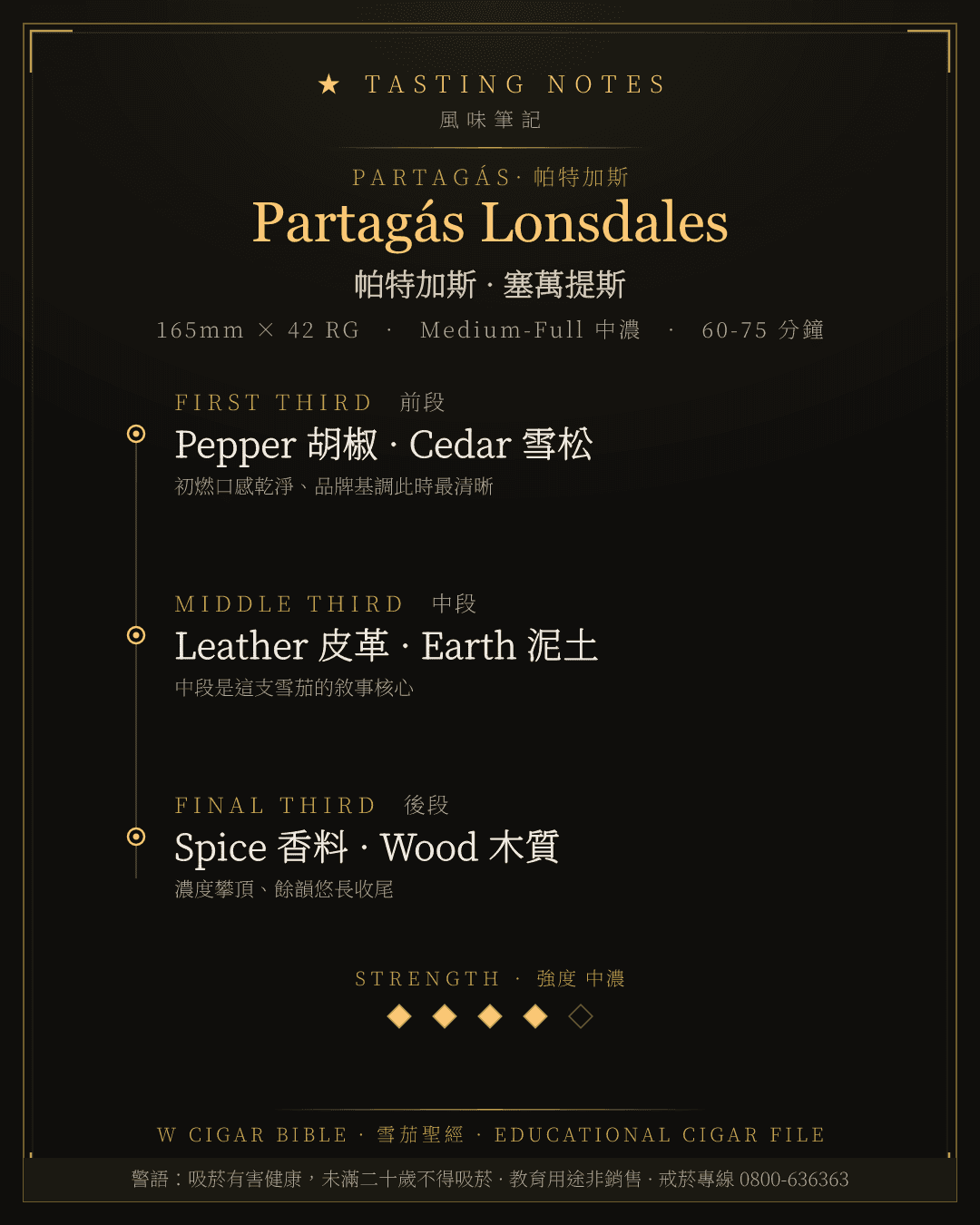
Partagás Lonsdales 風味筆記 · 帕特加斯
TASTING NOTES · 風味筆記
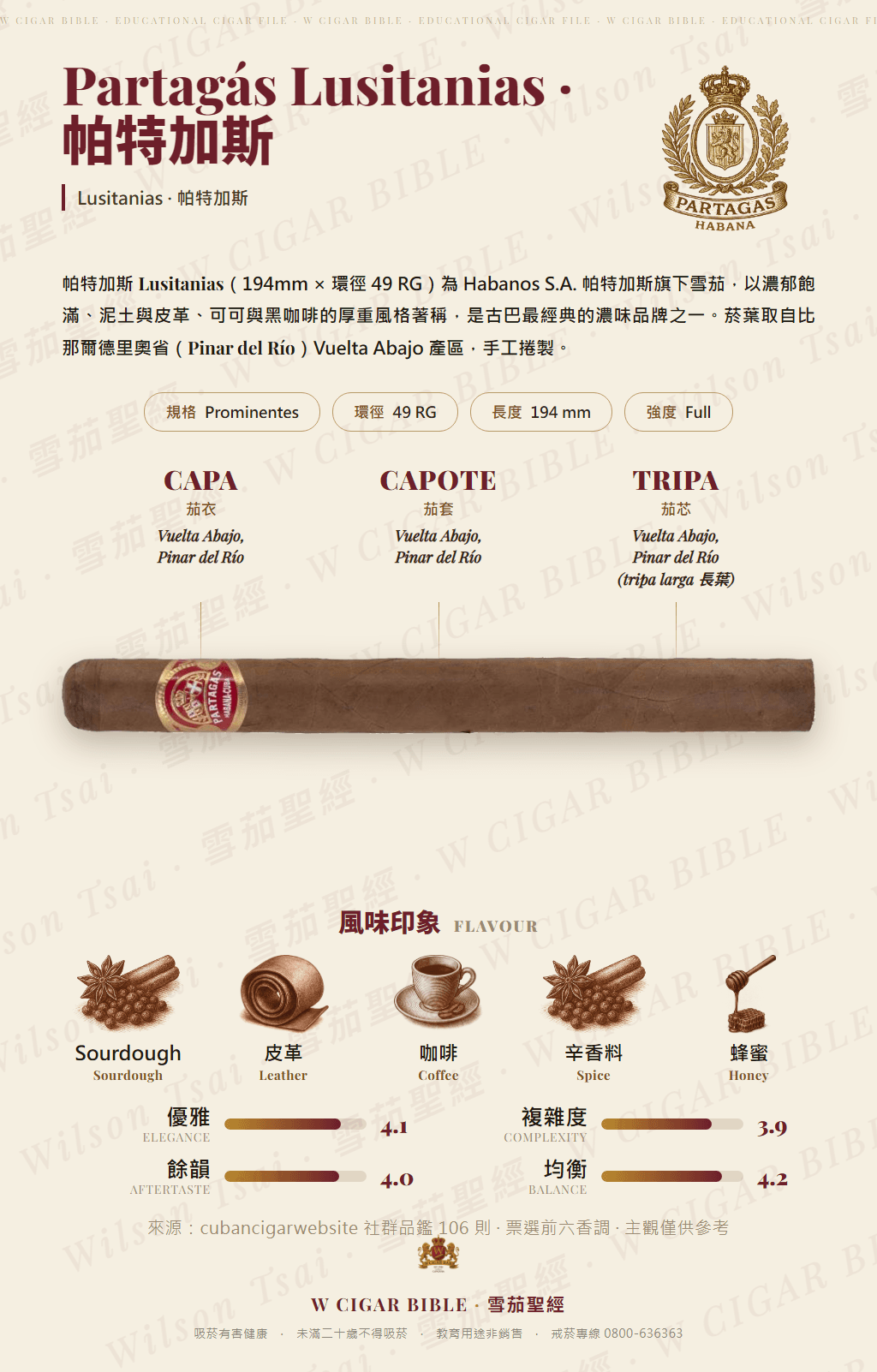
Partagás Lusitanias · 帕特加斯
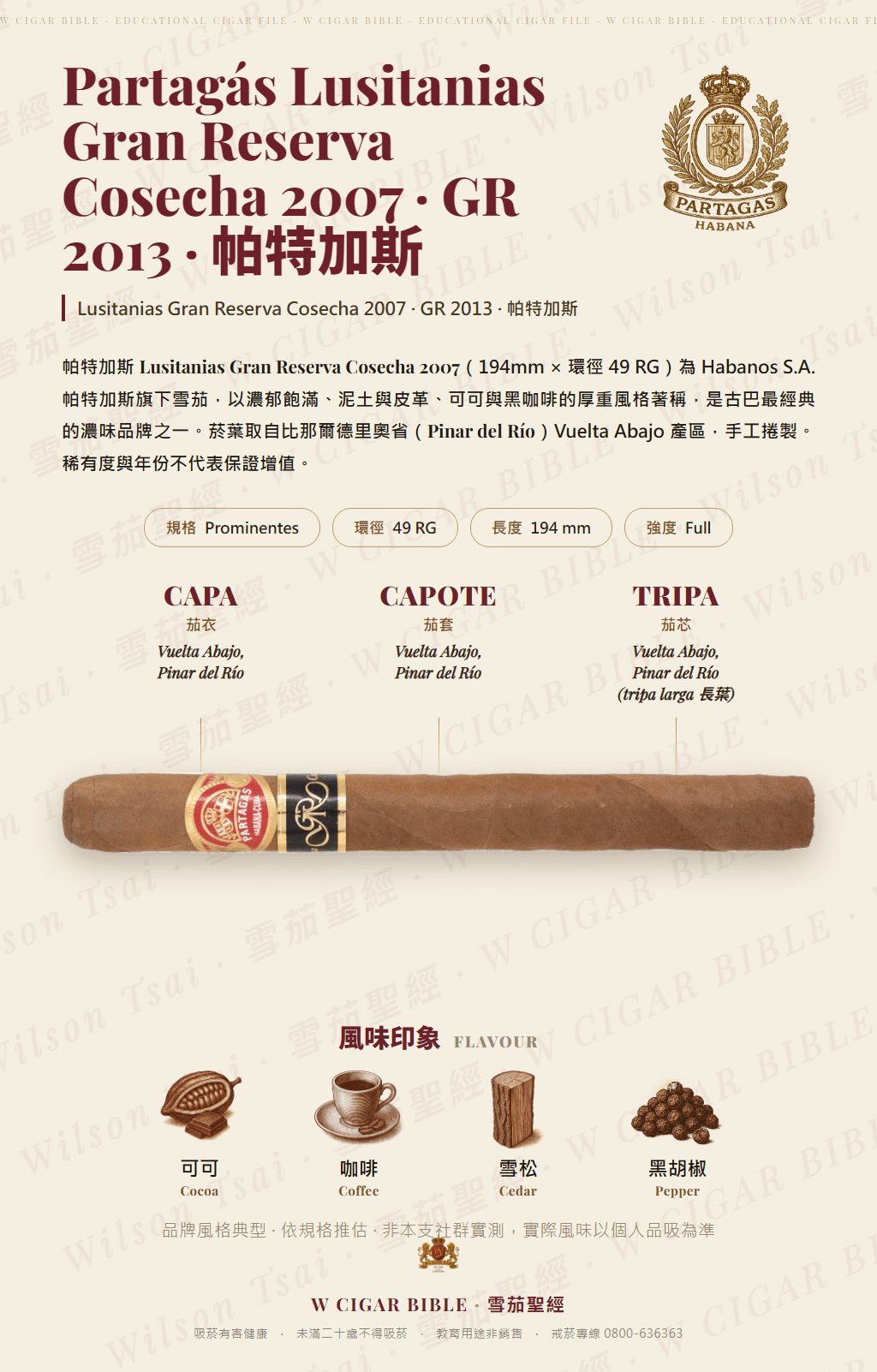
Partagás Lusitanias Gran Reserva Cosecha 2007 · GR 2013 · 帕特加斯
GR 2013 · 精品陳年版 Gran Reserva(Lusitanias/廠規 Prominentes 49 × 194mm,2013 年哈瓦那雪茄節發表)· 雪茄檔案

Partagás Lusitanias vs Punch Edición Regional India
VITOLA SHOWDOWN · Prominentes

Partagás Lusitanias 搭配指南 · 帕特加斯
PAIRING GUIDE · 搭配指南
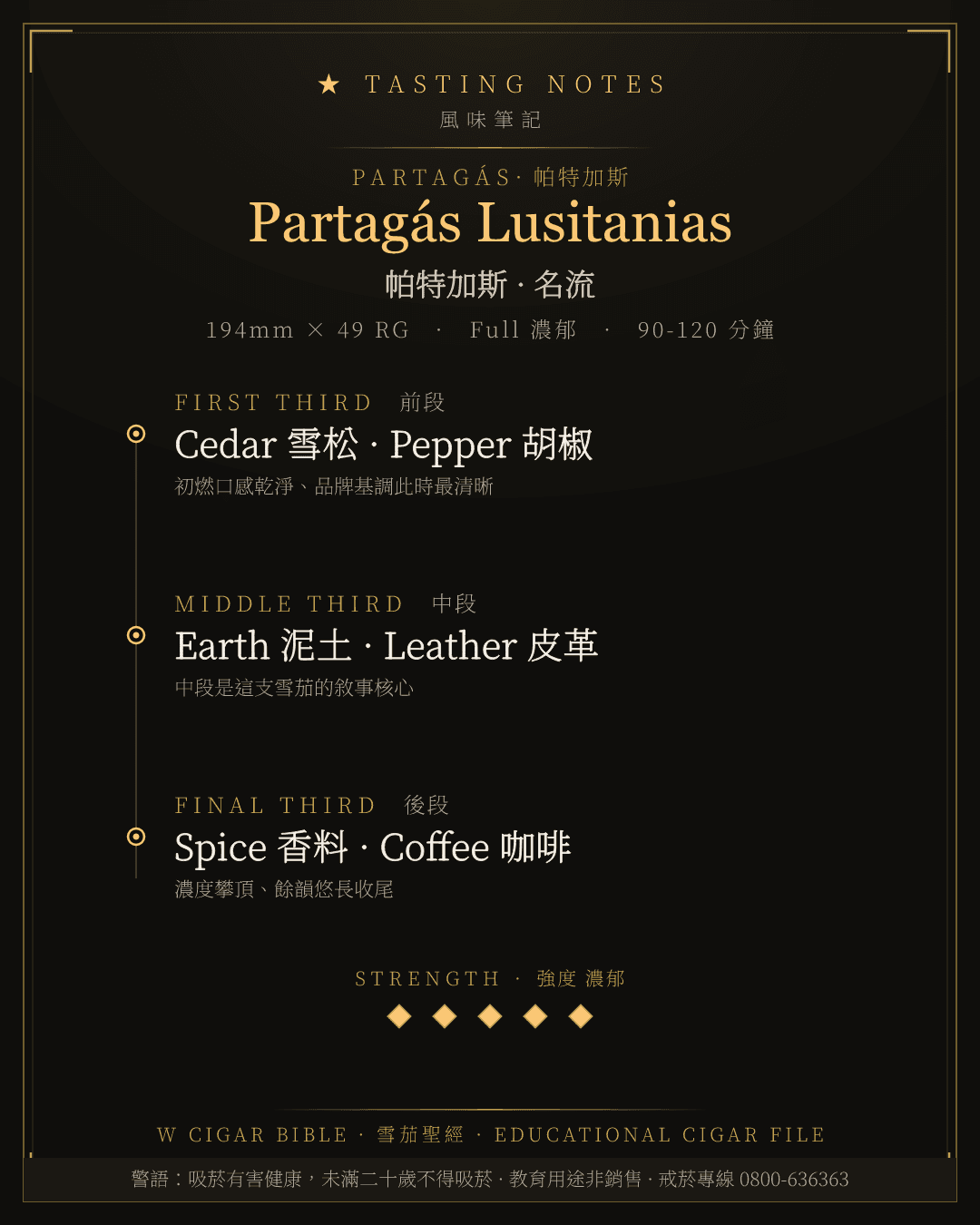
Partagás Lusitanias 風味筆記 · 帕特加斯
TASTING NOTES · 風味筆記

Partagás Maduro No 1 搭配指南 · 帕特加斯
PAIRING GUIDE · 搭配指南

Partagás Maduro No 1 風味筆記 · 帕特加斯
TASTING NOTES · 風味筆記

Partagás Maduro No 2 搭配指南 · 帕特加斯
PAIRING GUIDE · 搭配指南
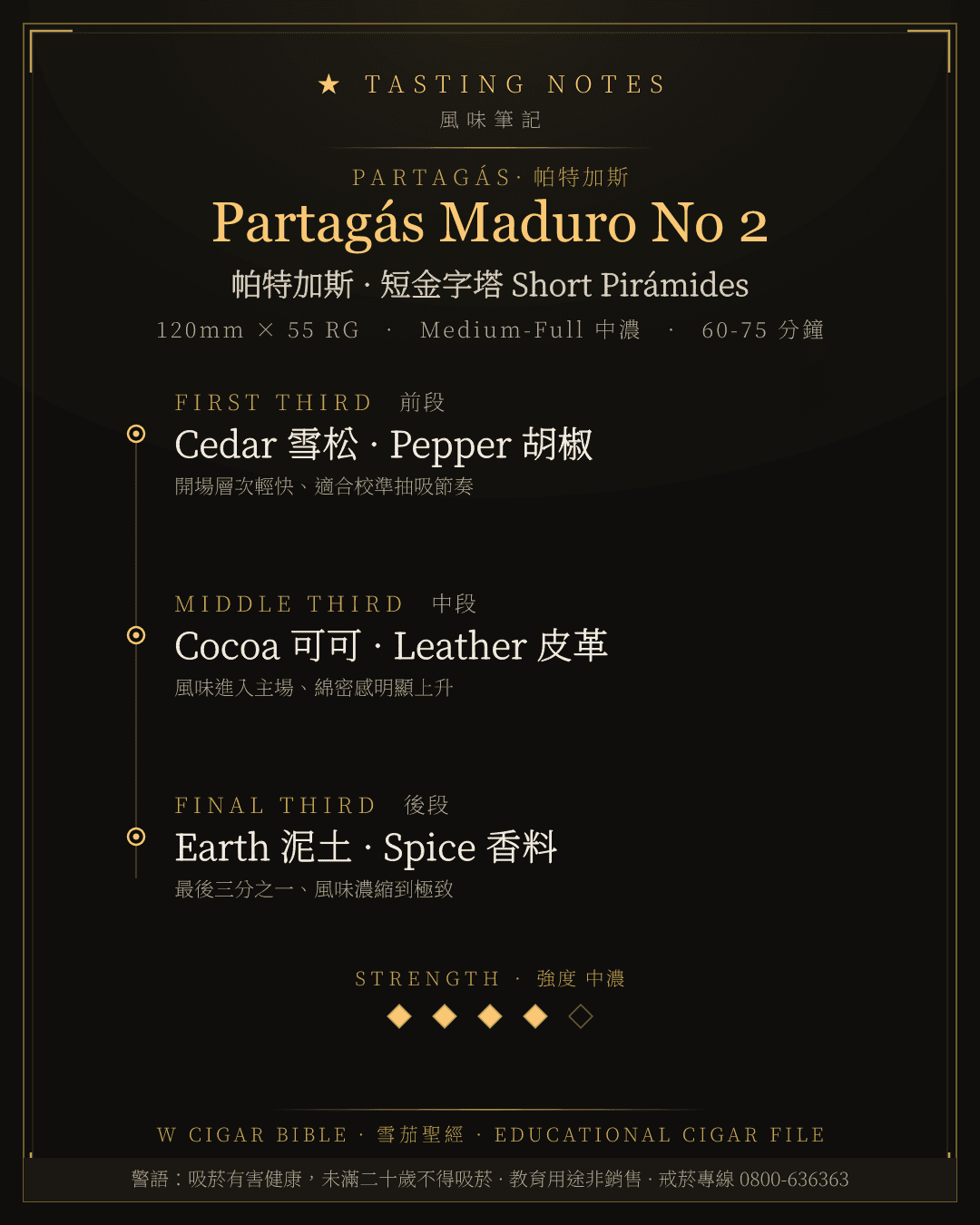
Partagás Maduro No 2 風味筆記 · 帕特加斯
TASTING NOTES · 風味筆記

Partagás Maduro No 3 搭配指南 · 帕特加斯
PAIRING GUIDE · 搭配指南
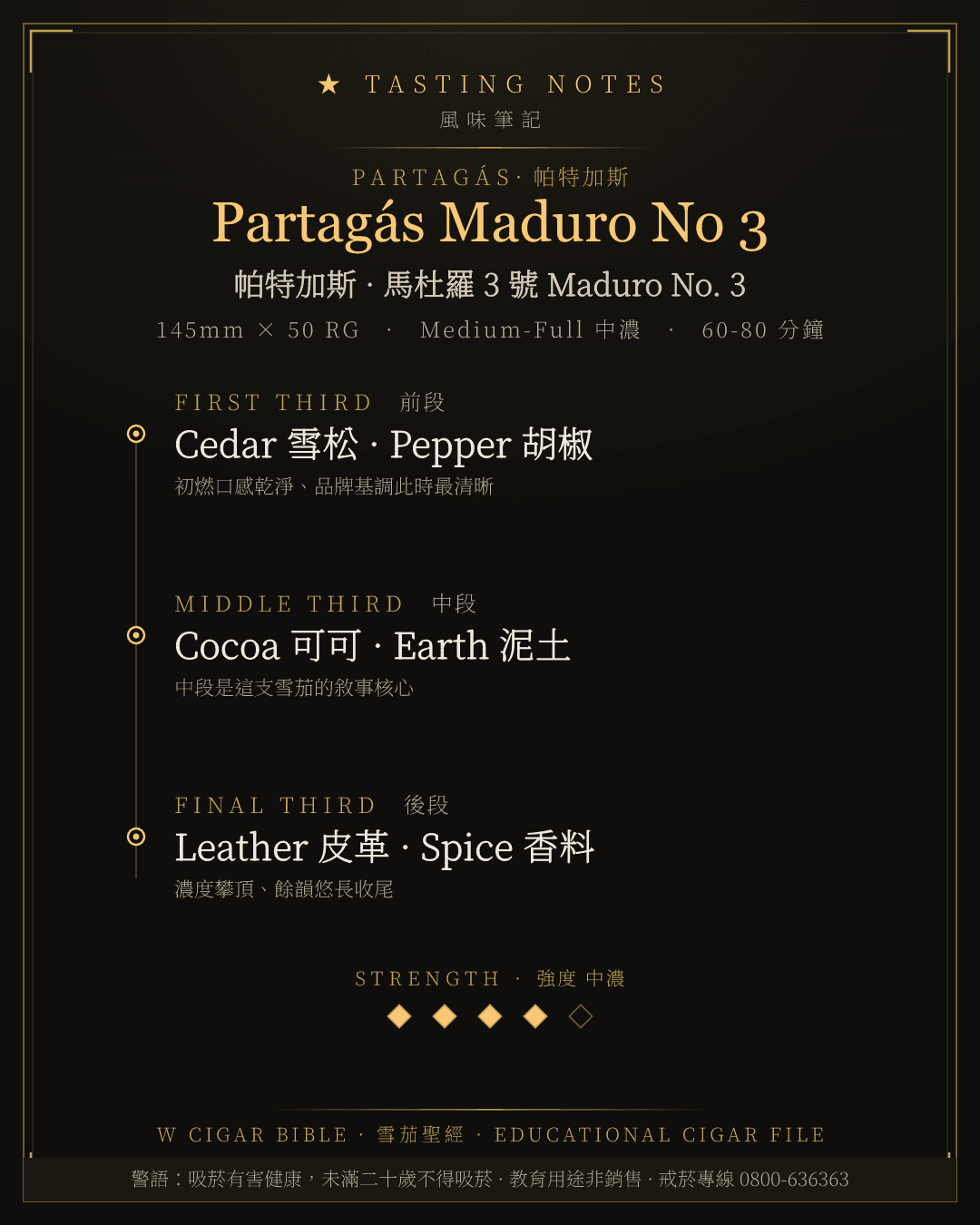
Partagás Maduro No 3 風味筆記 · 帕特加斯
TASTING NOTES · 風味筆記
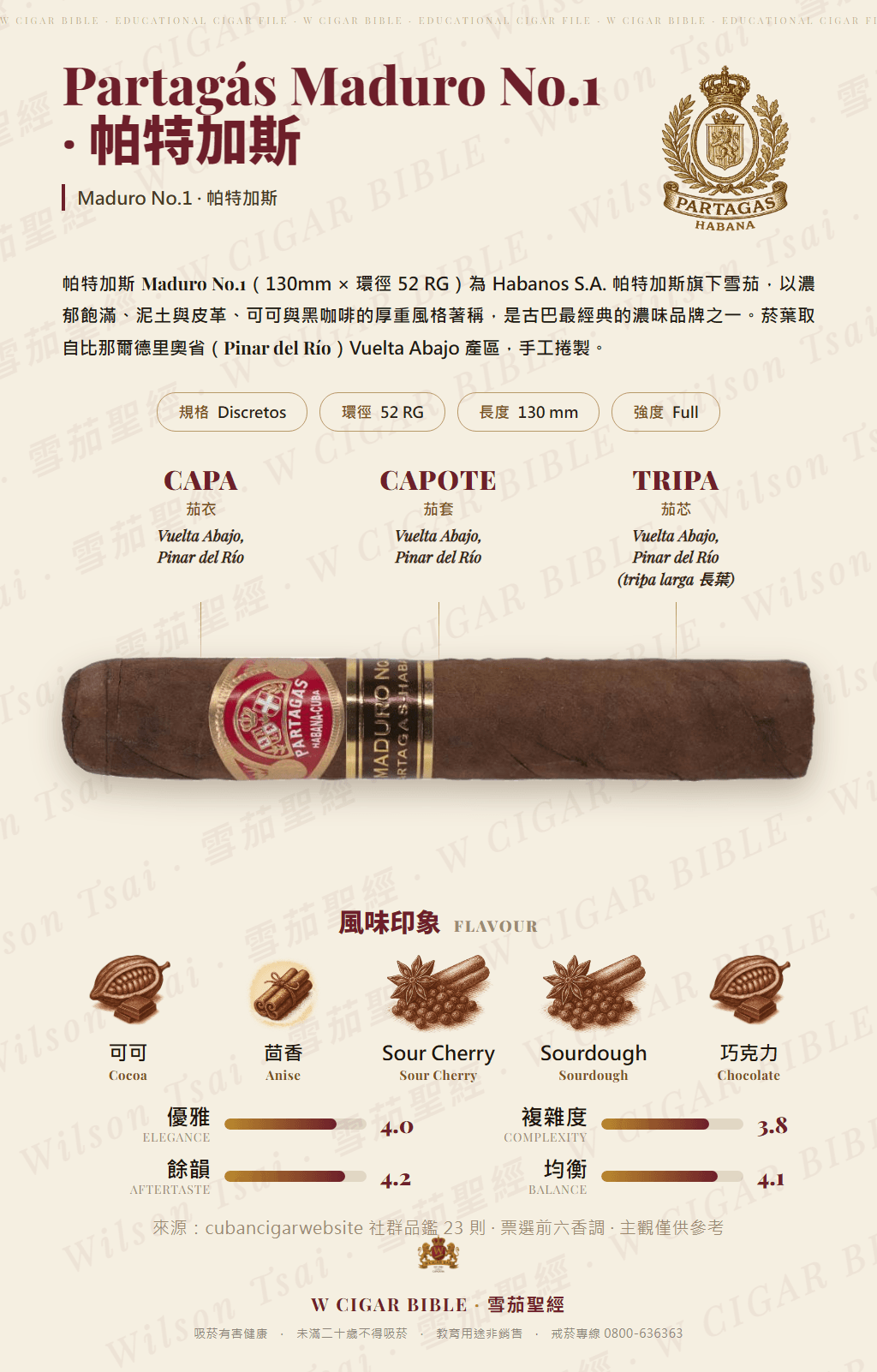
Partagás Maduro No.1 · 帕特加斯
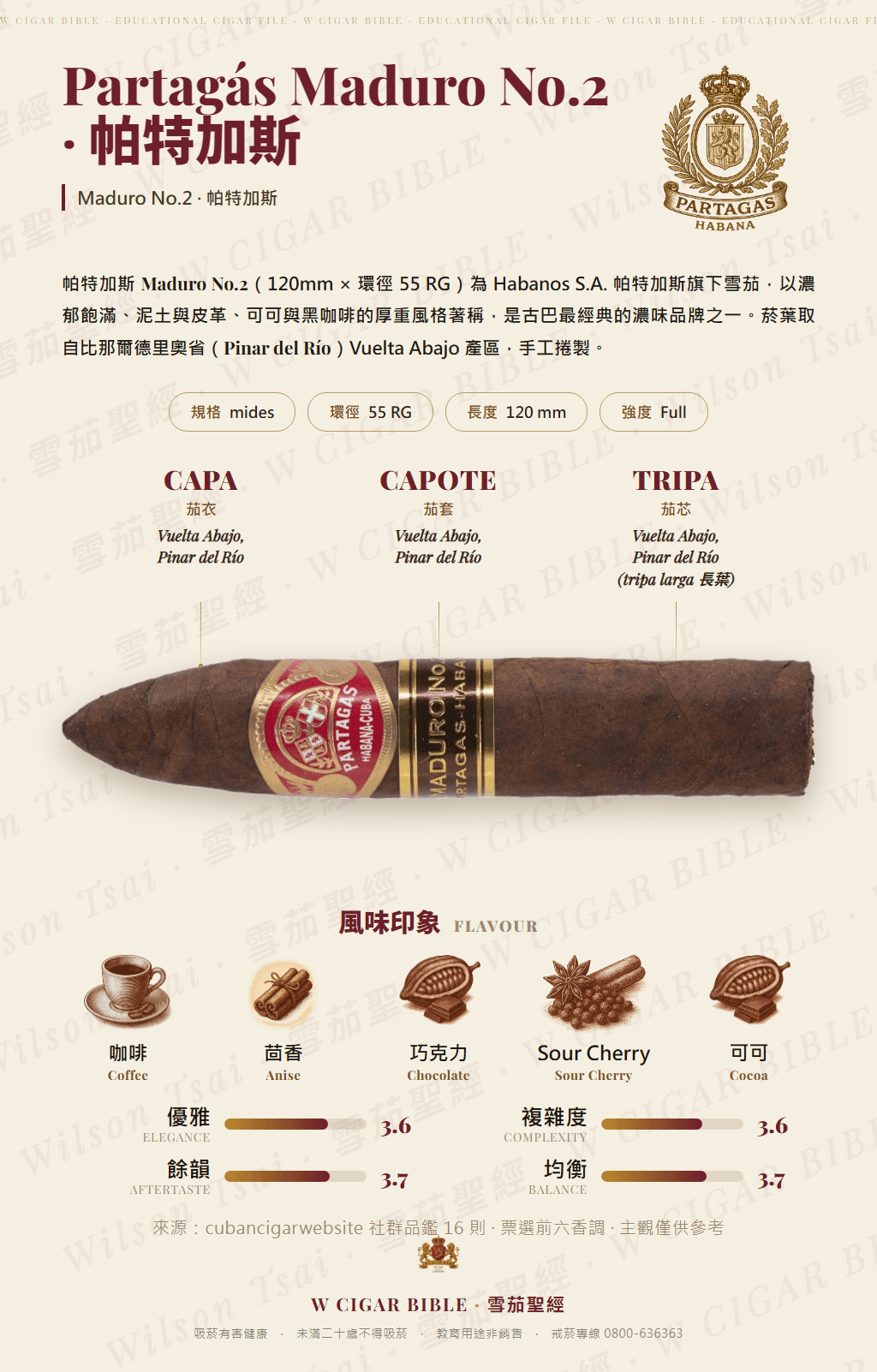
Partagás Maduro No.2 · 帕特加斯
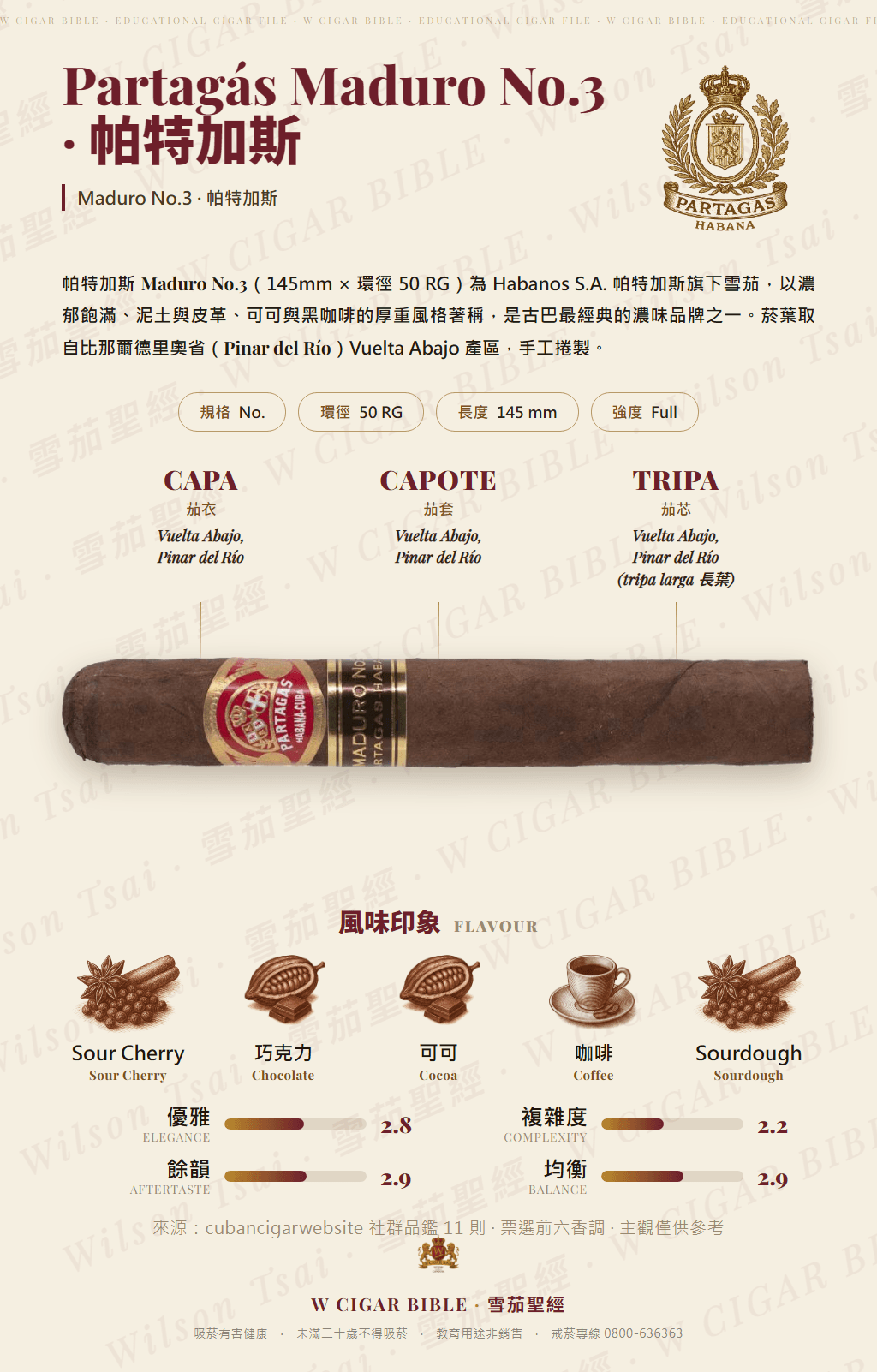
Partagás Maduro No.3 · 帕特加斯
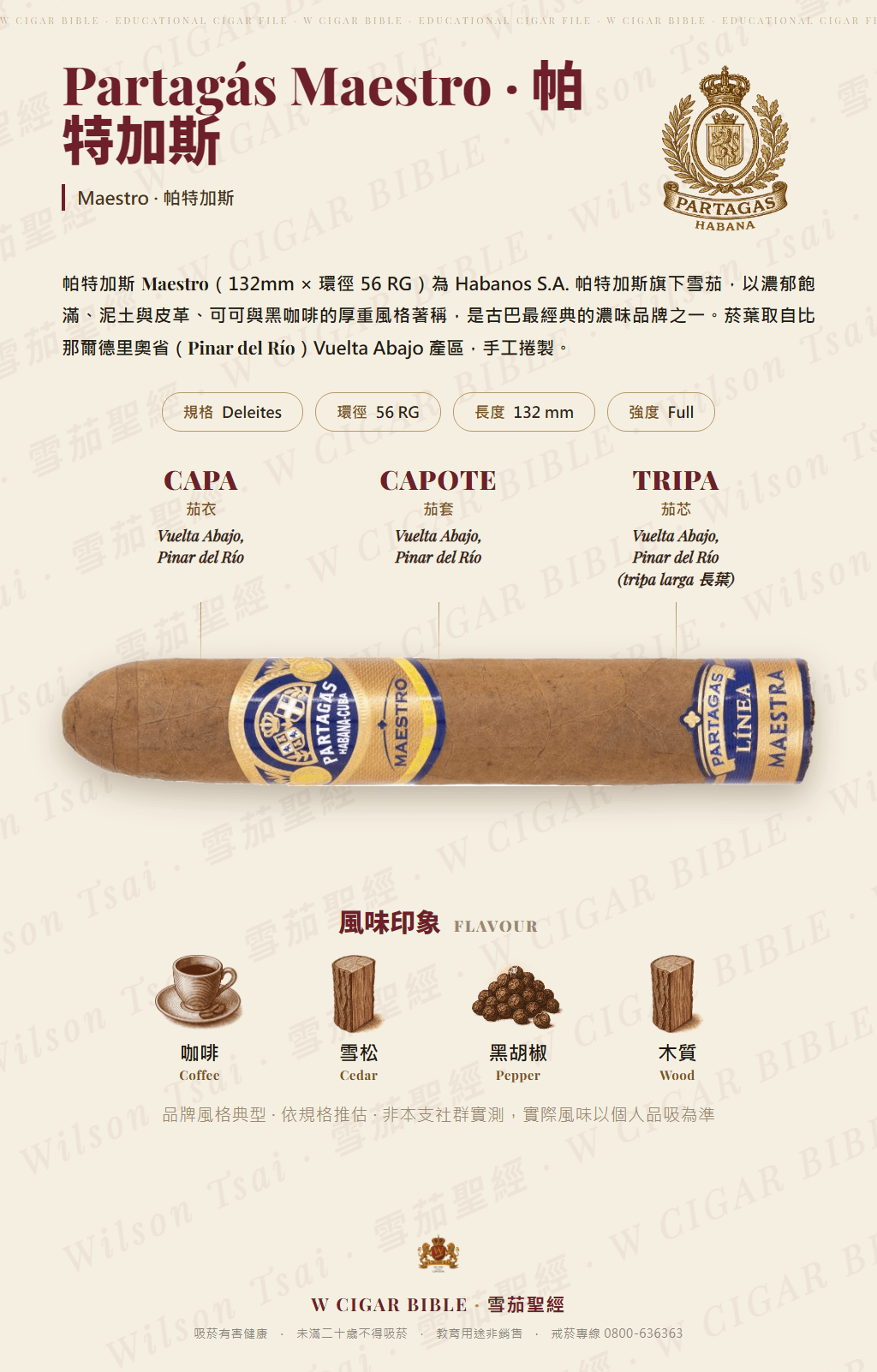
Partagás Maestro · 帕特加斯

Partagás Maestro 搭配指南 · 帕特加斯
PAIRING GUIDE · 搭配指南

Partagás Maestro 風味筆記 · 帕特加斯
TASTING NOTES · 風味筆記
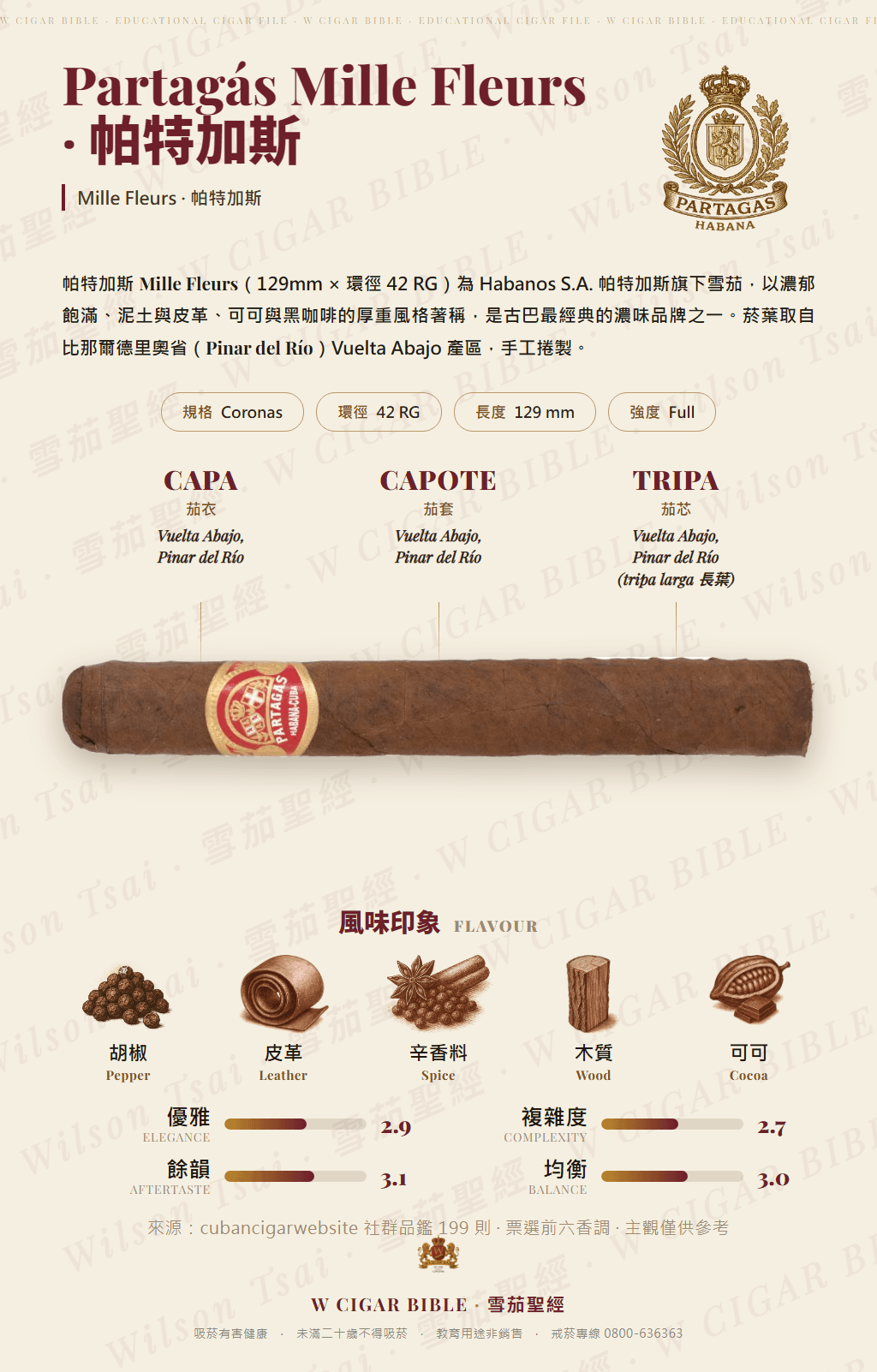
Partagás Mille Fleurs · 帕特加斯

Partagás Mille Fleurs vs Por Larrañaga Lolas En Cedro
VITOLA SHOWDOWN · Petit Coronas

Partagás Mille Fleurs 搭配指南 · 帕特加斯
PAIRING GUIDE · 搭配指南
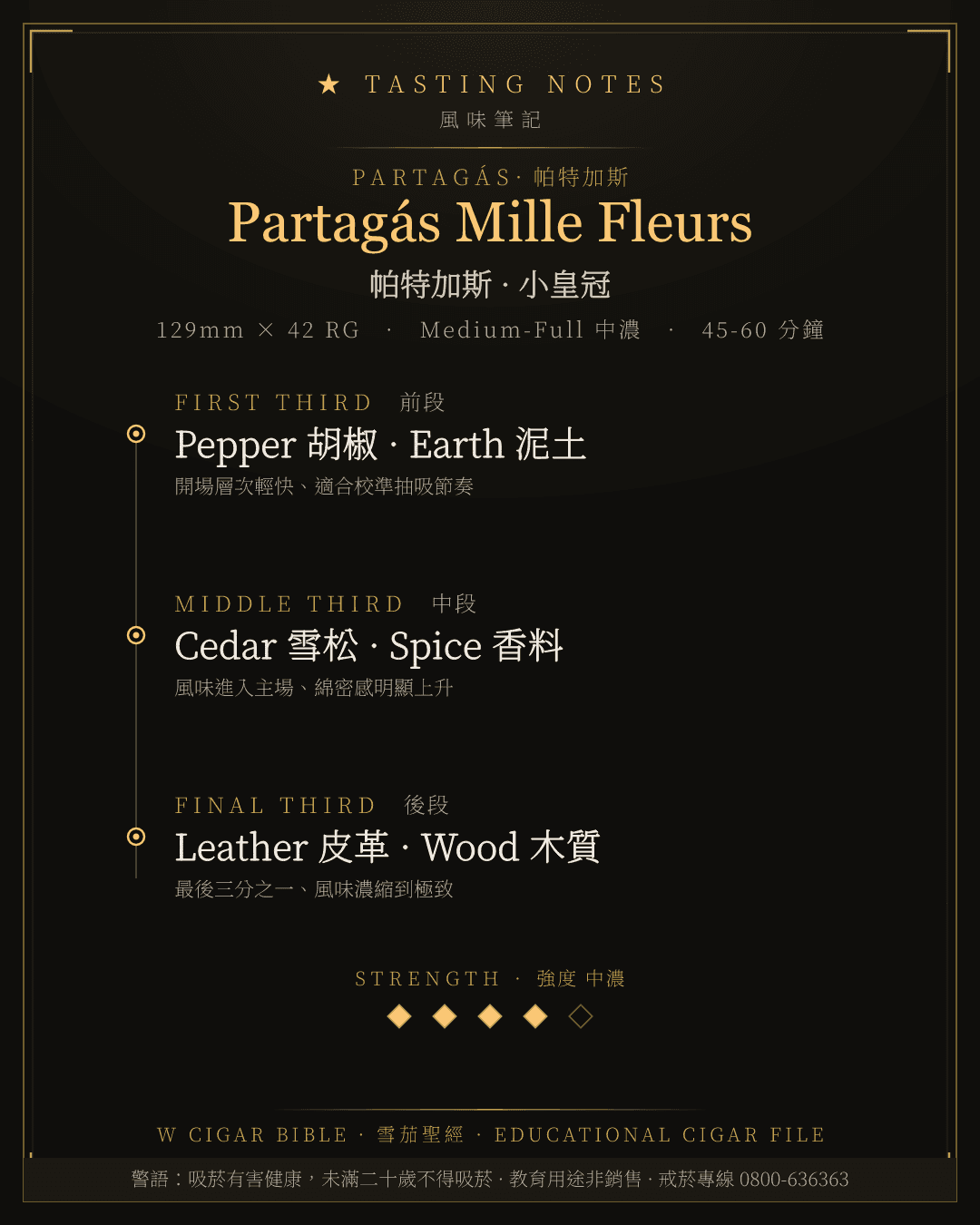
Partagás Mille Fleurs 風味筆記 · 帕特加斯
TASTING NOTES · 風味筆記
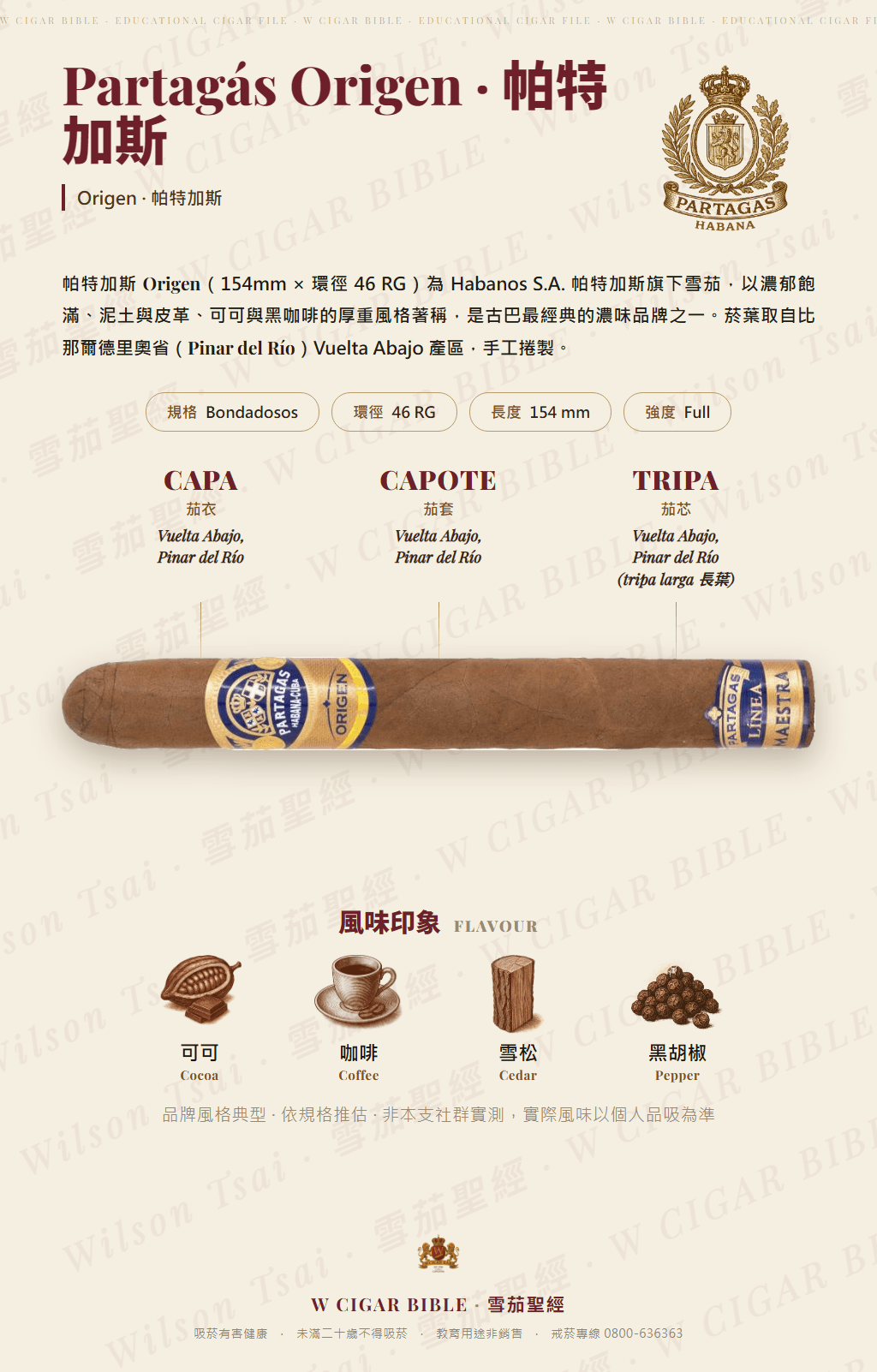
Partagás Origen · 帕特加斯
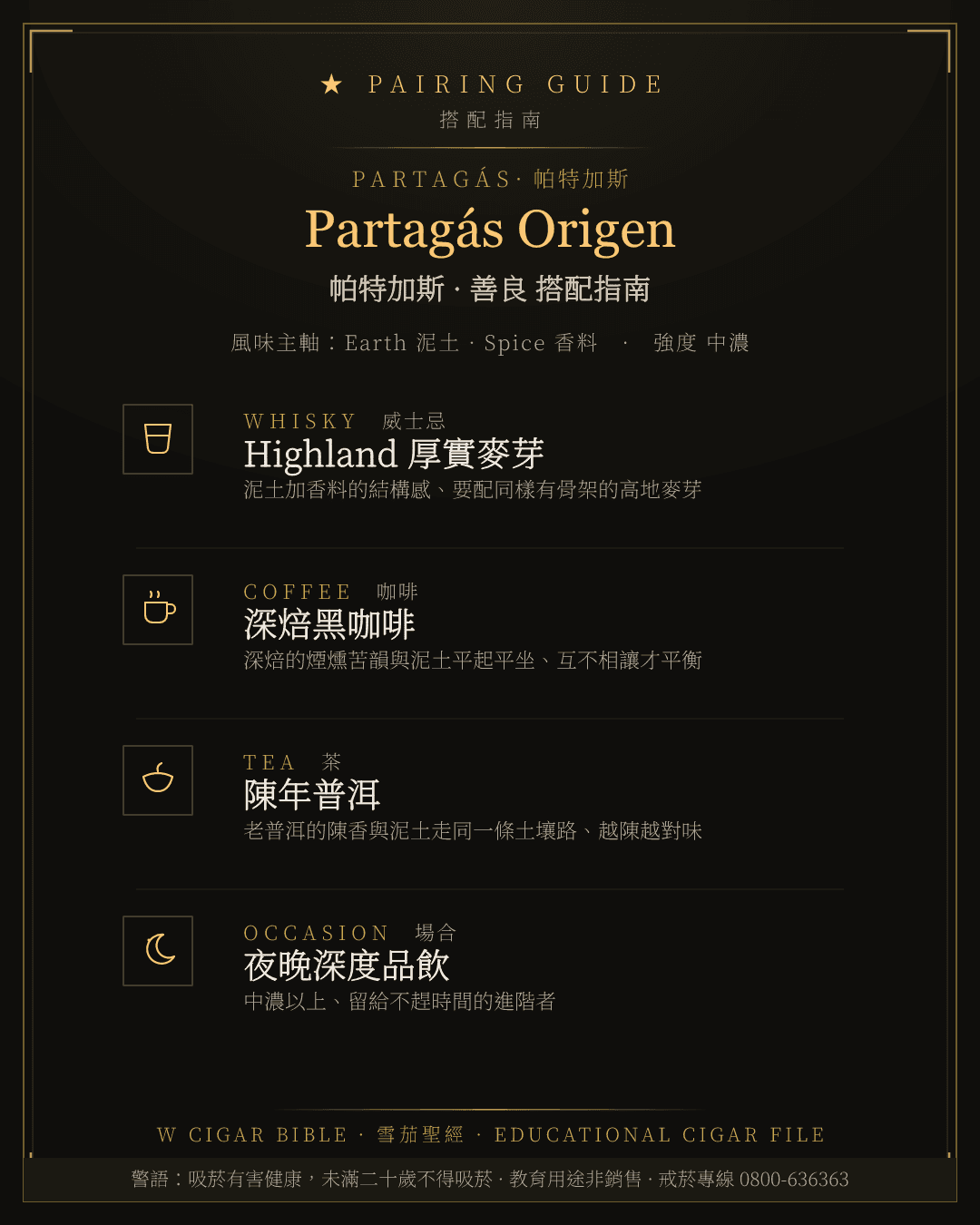
Partagás Origen 搭配指南 · 帕特加斯
PAIRING GUIDE · 搭配指南

Partagás Origen 風味筆記 · 帕特加斯
TASTING NOTES · 風味筆記
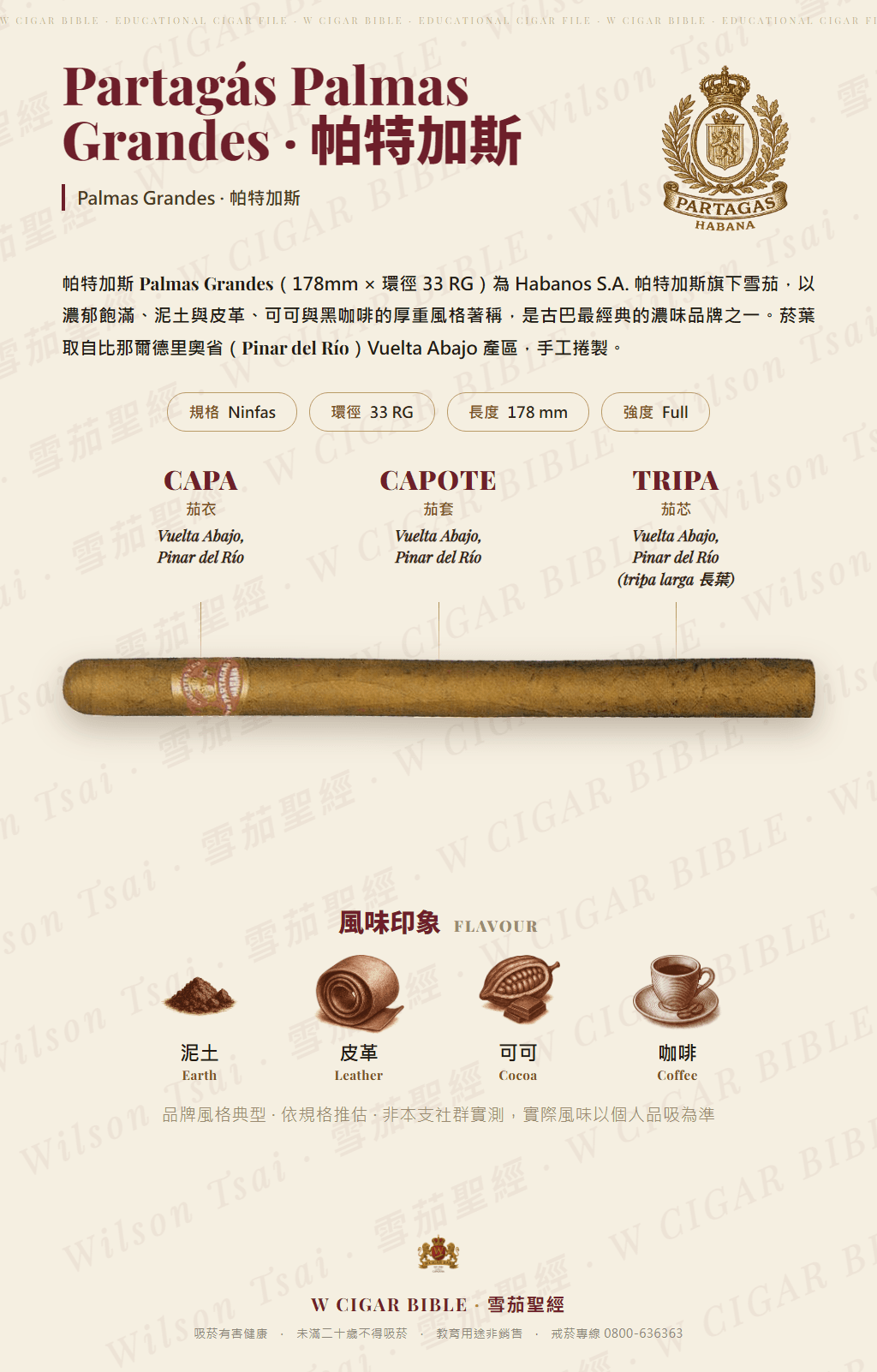
Partagás Palmas Grandes · 帕特加斯

Partagás Palmas Grandes vs Punch Nectares No. 5
VITOLA SHOWDOWN · Ninfas

Partagás Palmas Grandes 搭配指南 · 帕特加斯
PAIRING GUIDE · 搭配指南

Partagás Palmas Grandes 風味筆記 · 帕特加斯
TASTING NOTES · 風味筆記
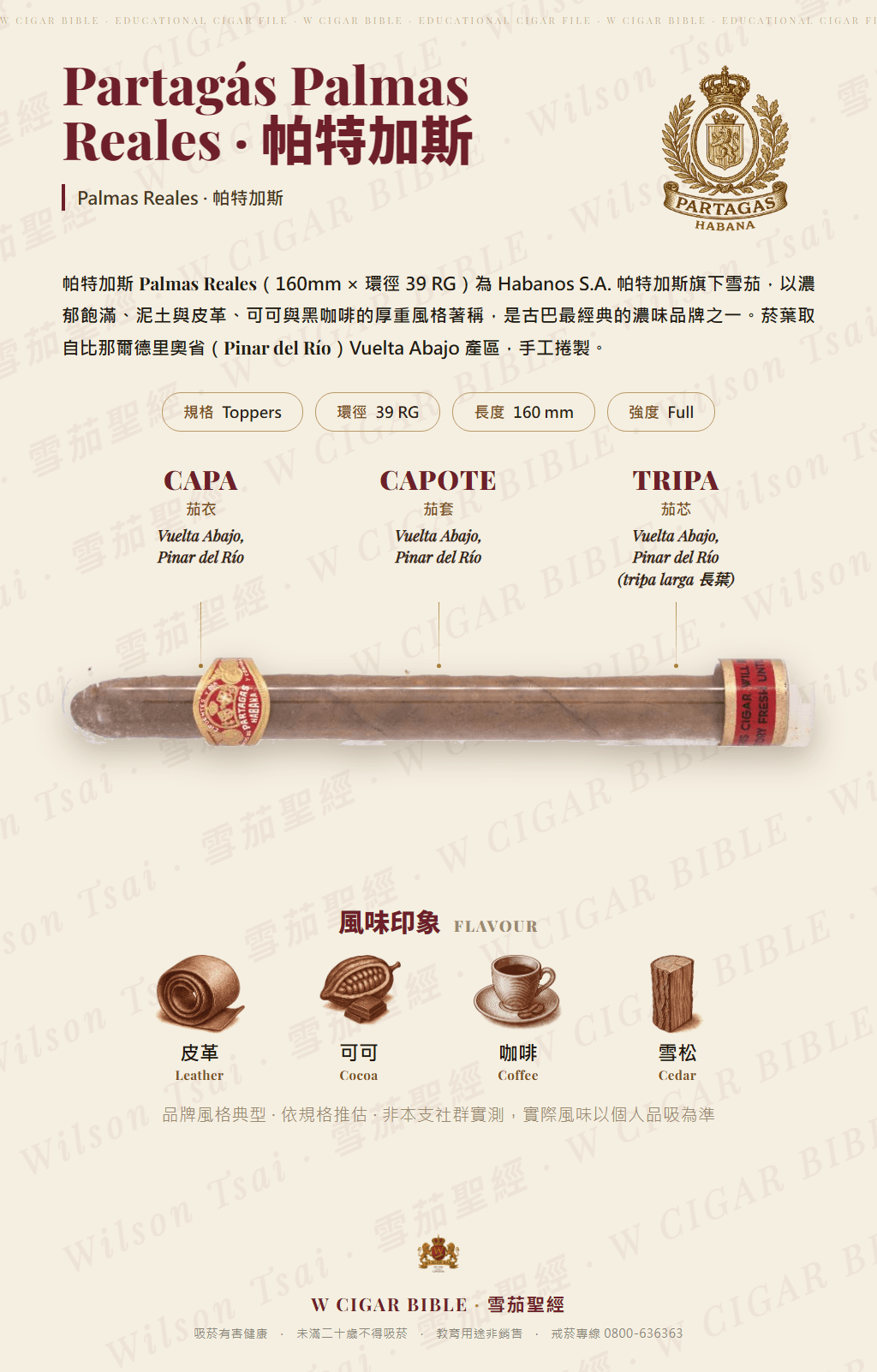
Partagás Palmas Reales · 帕特加斯
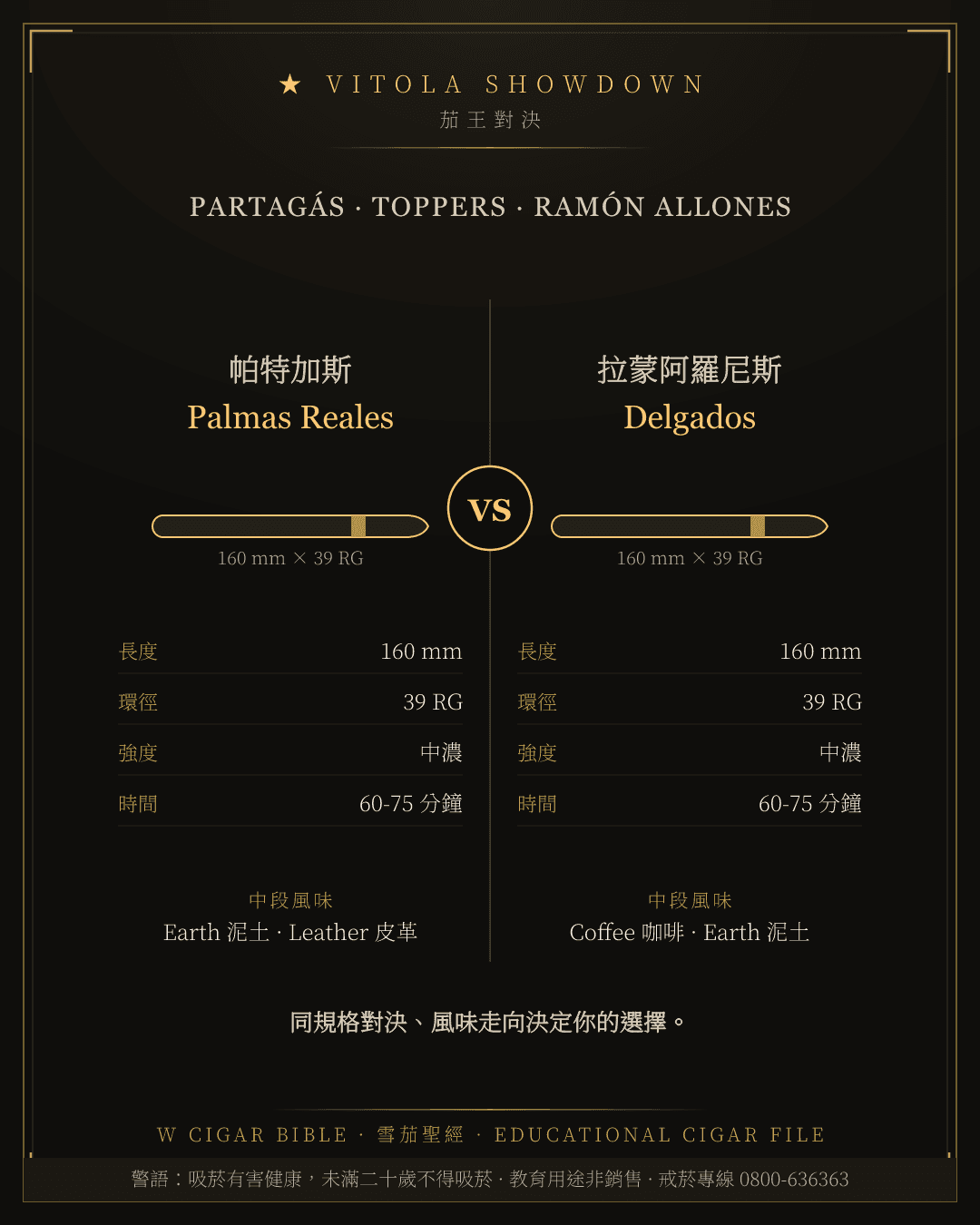
Partagás Palmas Reales vs Ramón Allones Delgados
VITOLA SHOWDOWN · Toppers
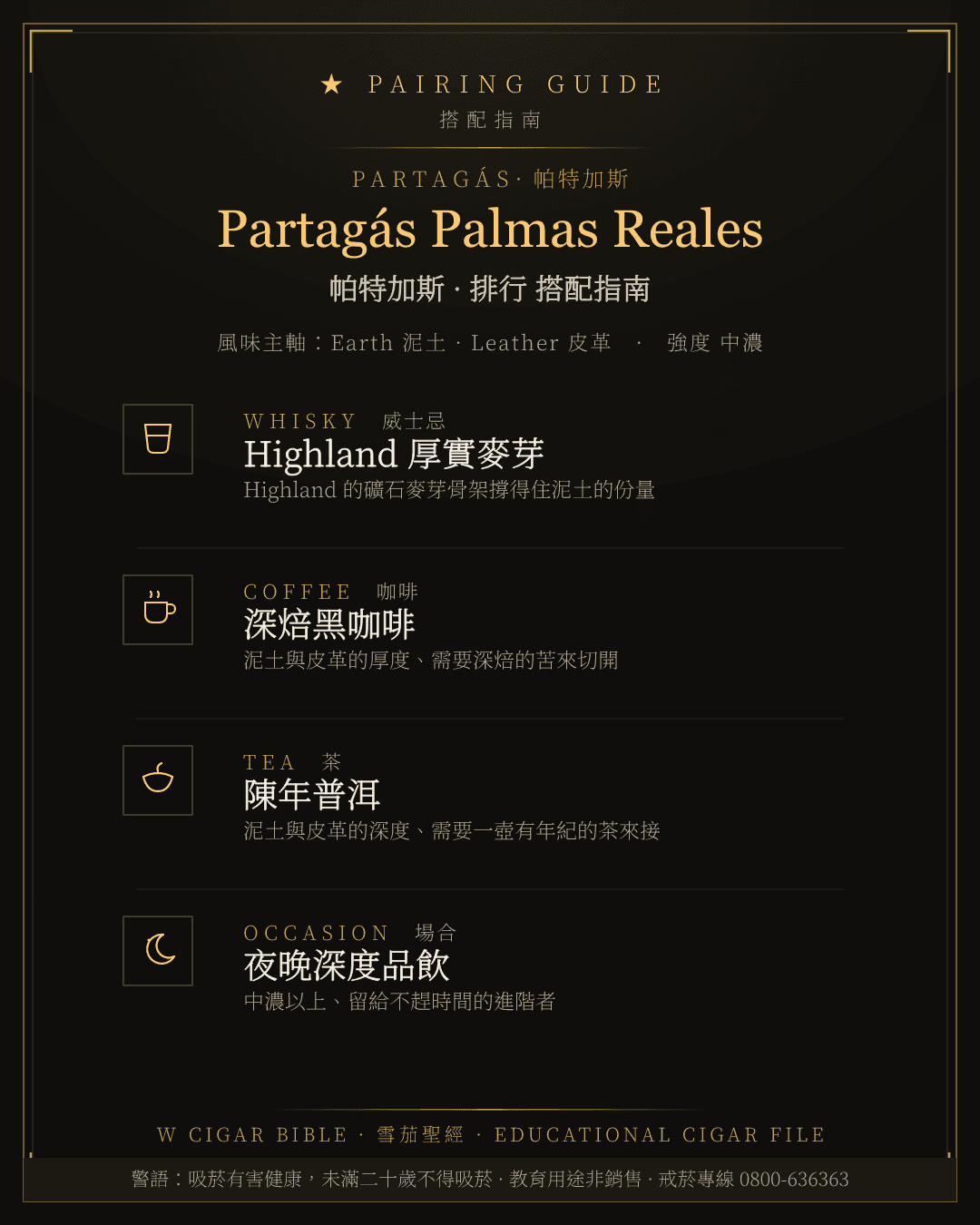
Partagás Palmas Reales 搭配指南 · 帕特加斯
PAIRING GUIDE · 搭配指南
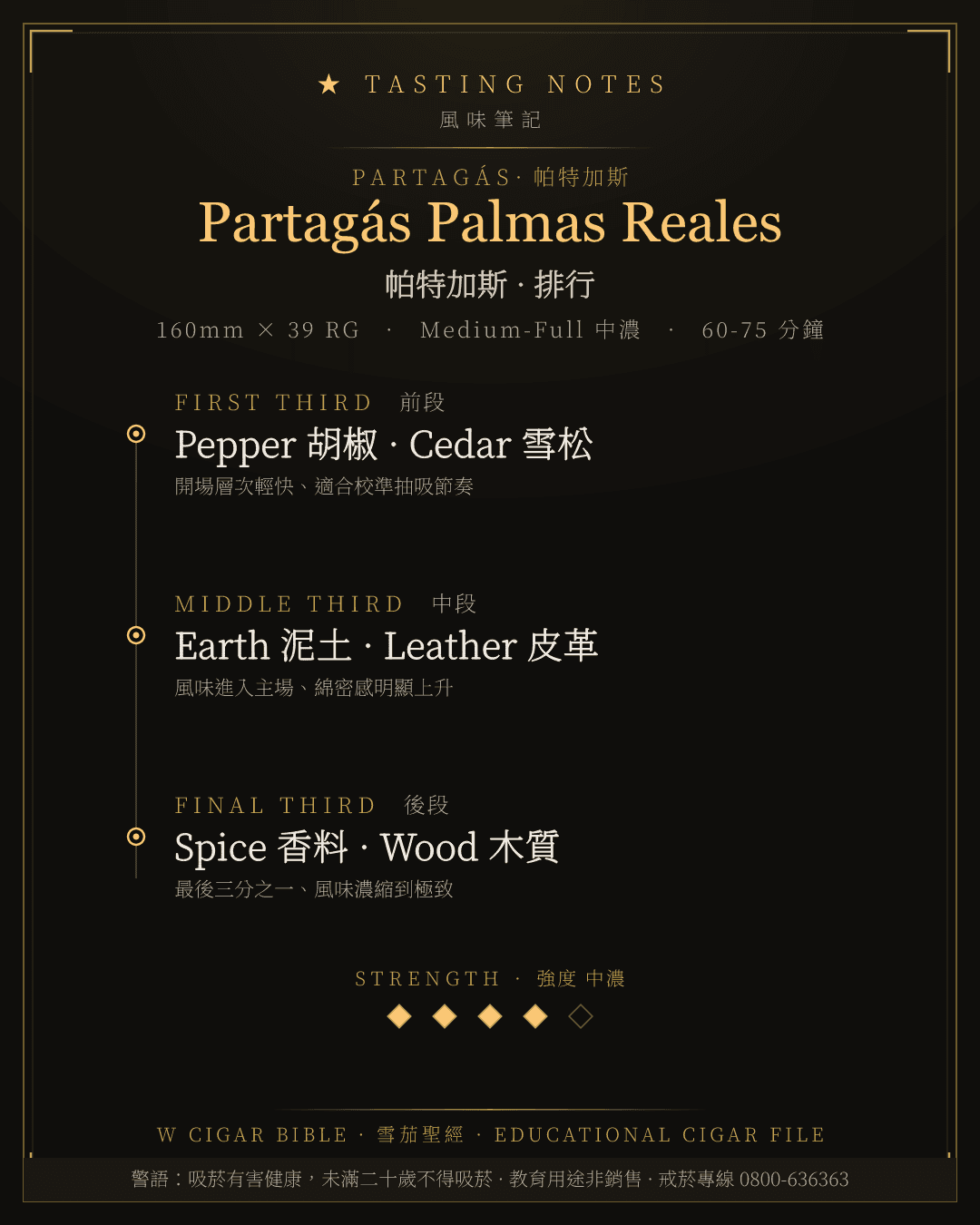
Partagás Palmas Reales 風味筆記 · 帕特加斯
TASTING NOTES · 風味筆記
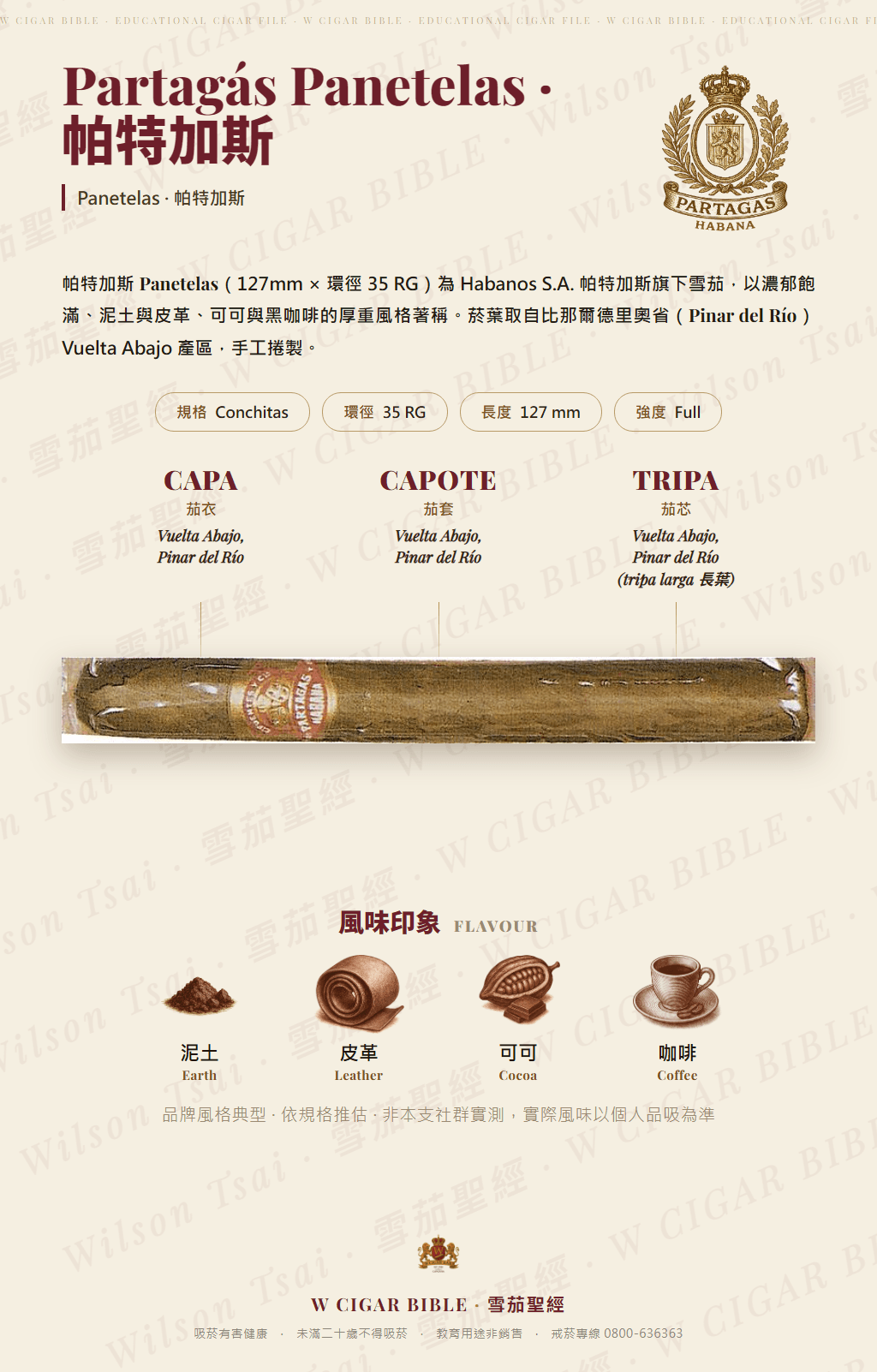
Partagás Panetelas · 帕特加斯

Partagás Panetelas 搭配指南 · 帕特加斯
PAIRING GUIDE · 搭配指南
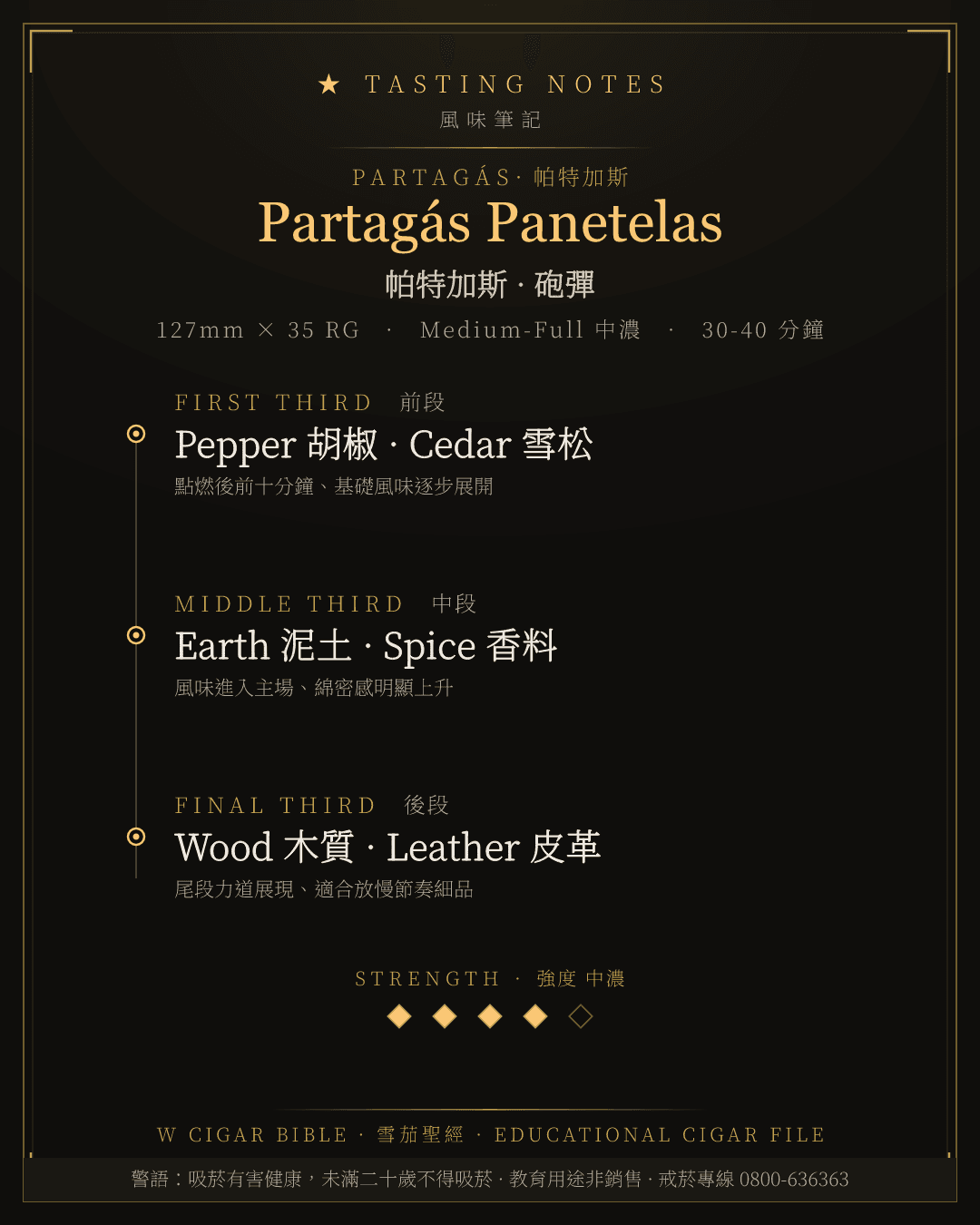
Partagás Panetelas 風味筆記 · 帕特加斯
TASTING NOTES · 風味筆記
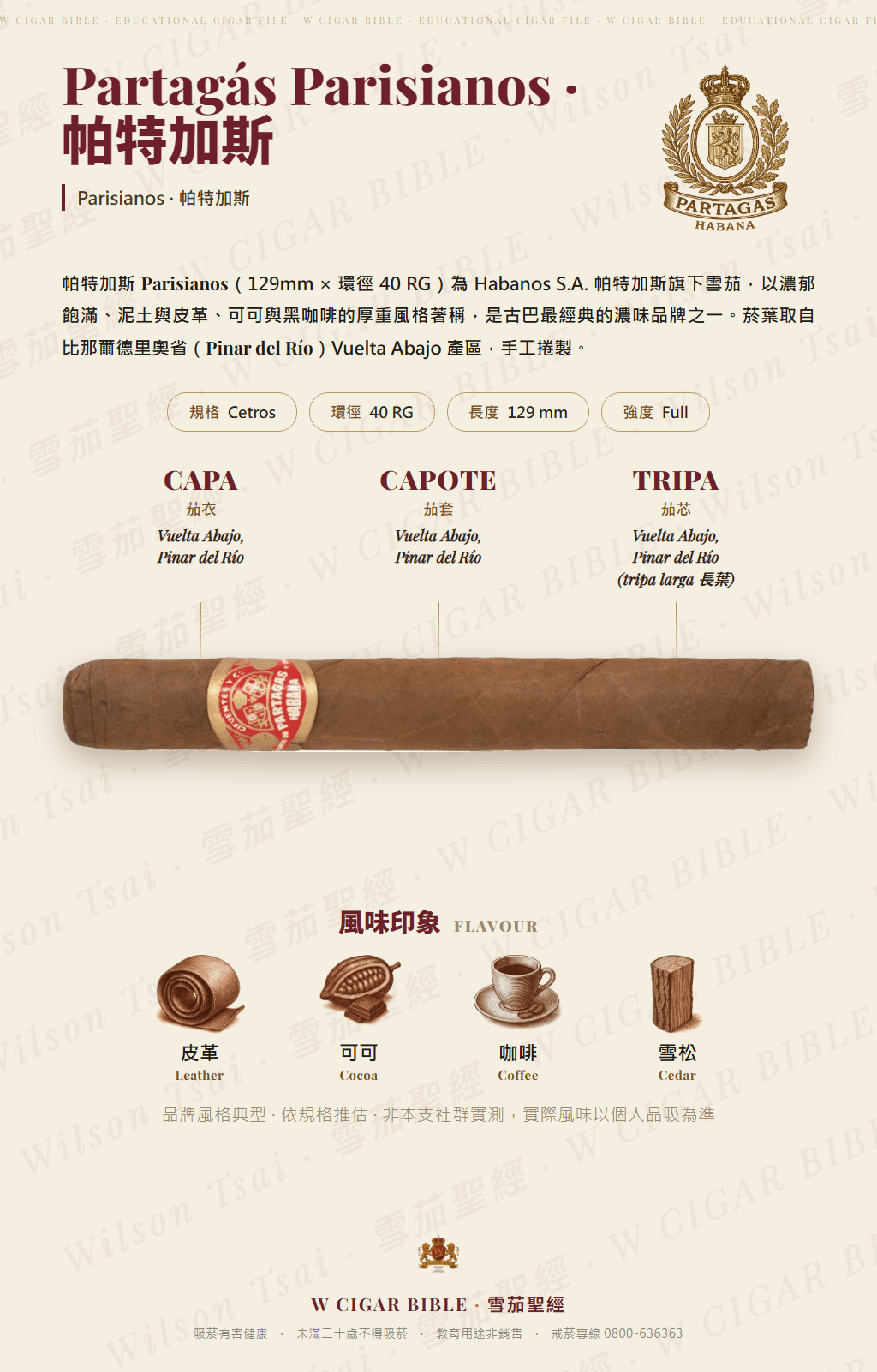
Partagás Parisianos · 帕特加斯

Partagás Parisianos vs Romeo Y Julieta Plateados De Romeo 2
VITOLA SHOWDOWN · Petit Cetros
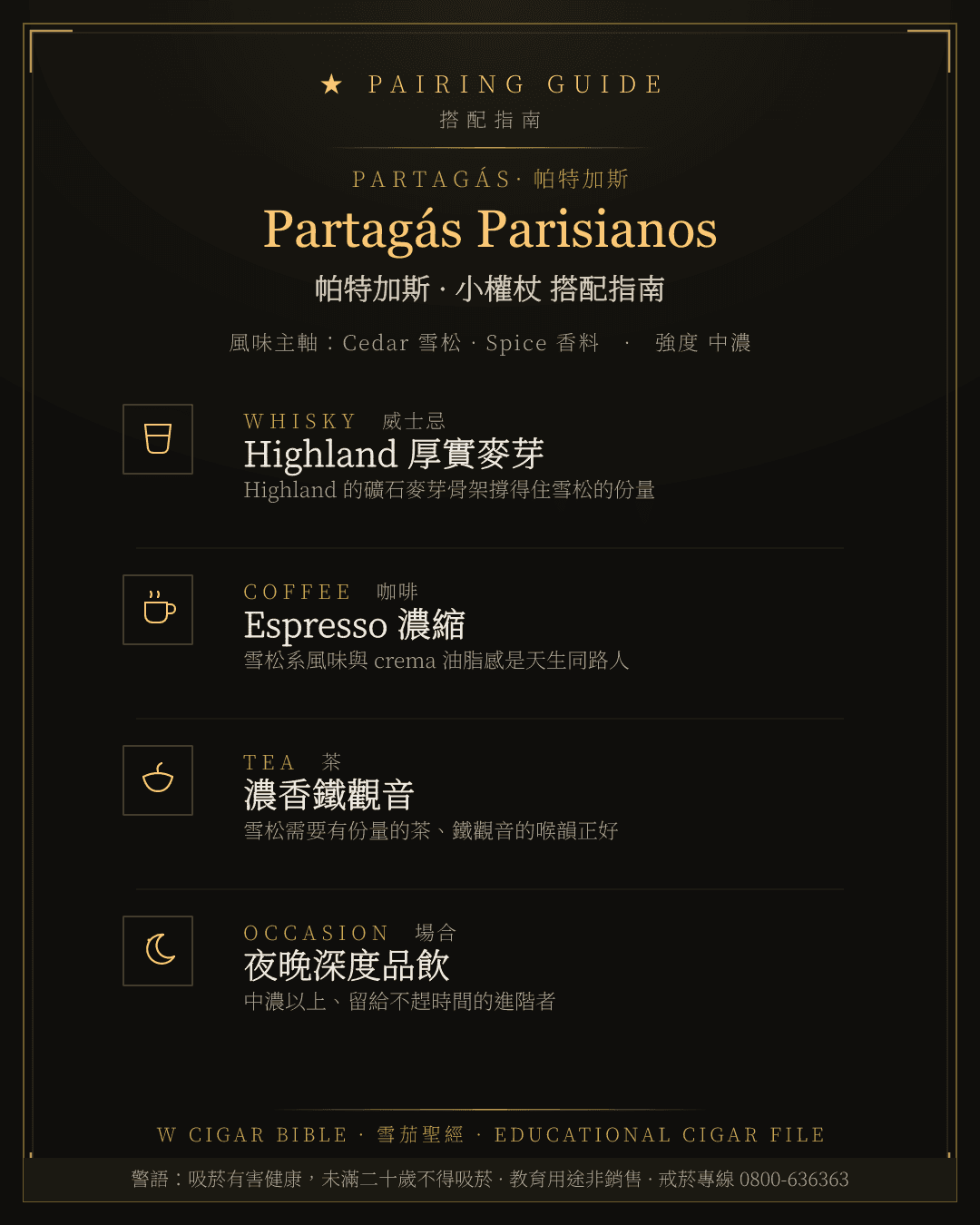
Partagás Parisianos 搭配指南 · 帕特加斯
PAIRING GUIDE · 搭配指南
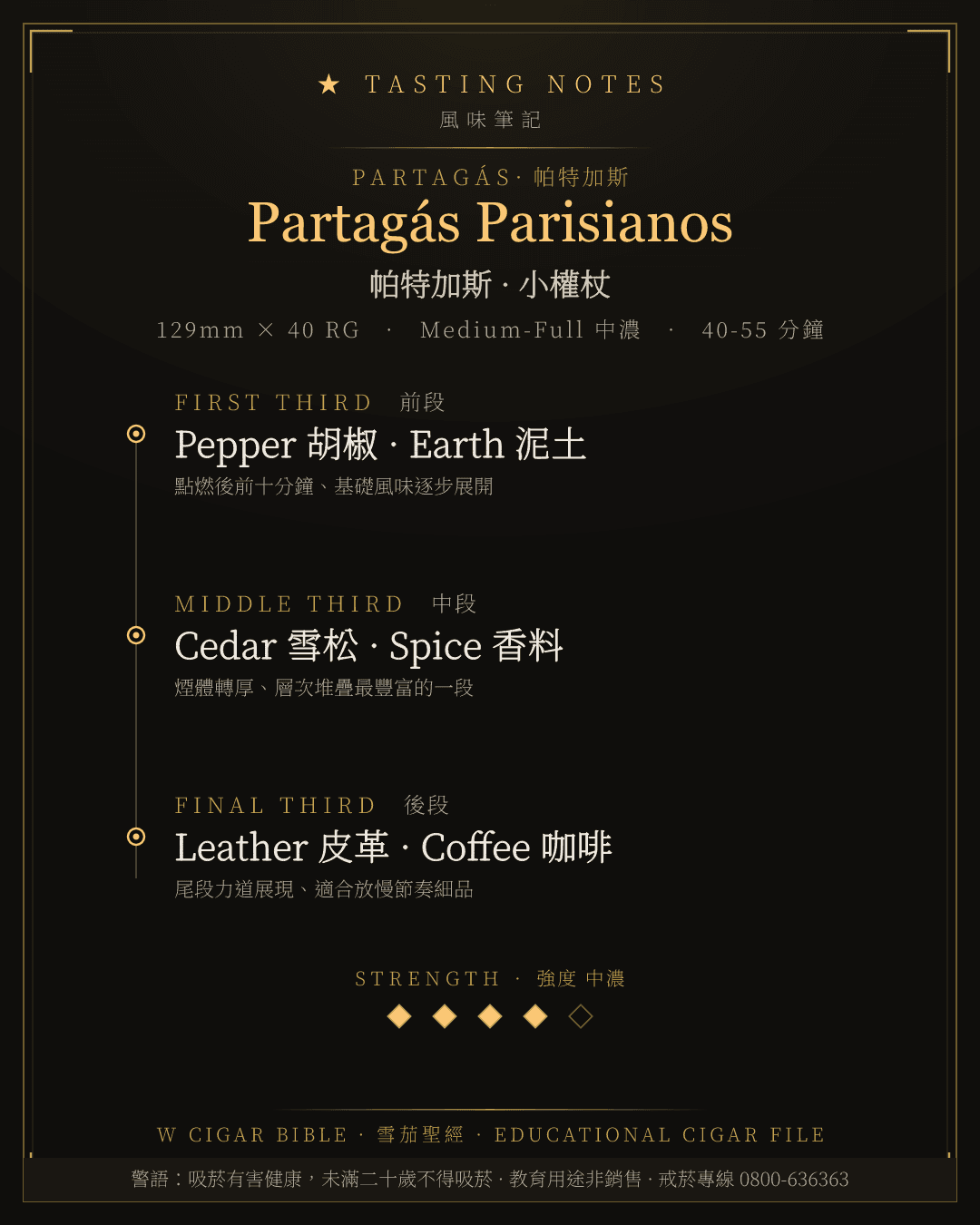
Partagás Parisianos 風味筆記 · 帕特加斯
TASTING NOTES · 風味筆記
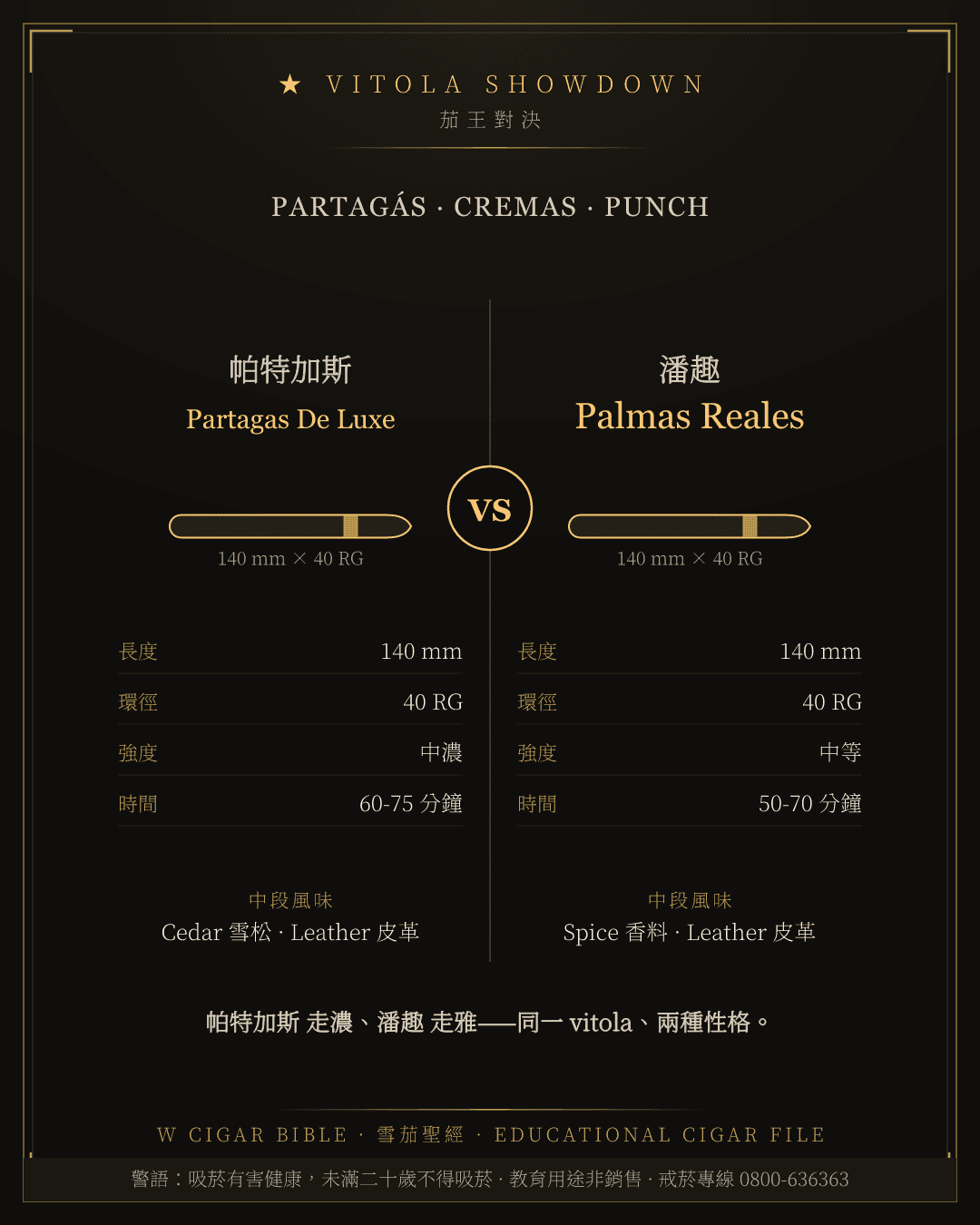
Partagás Partagas De Luxe vs Punch Palmas Reales
VITOLA SHOWDOWN · Cremas

Partagás Partagas De Luxe 搭配指南 · 帕特加斯
PAIRING GUIDE · 搭配指南

Partagás Partagas De Luxe 風味筆記 · 帕特加斯
TASTING NOTES · 風味筆記
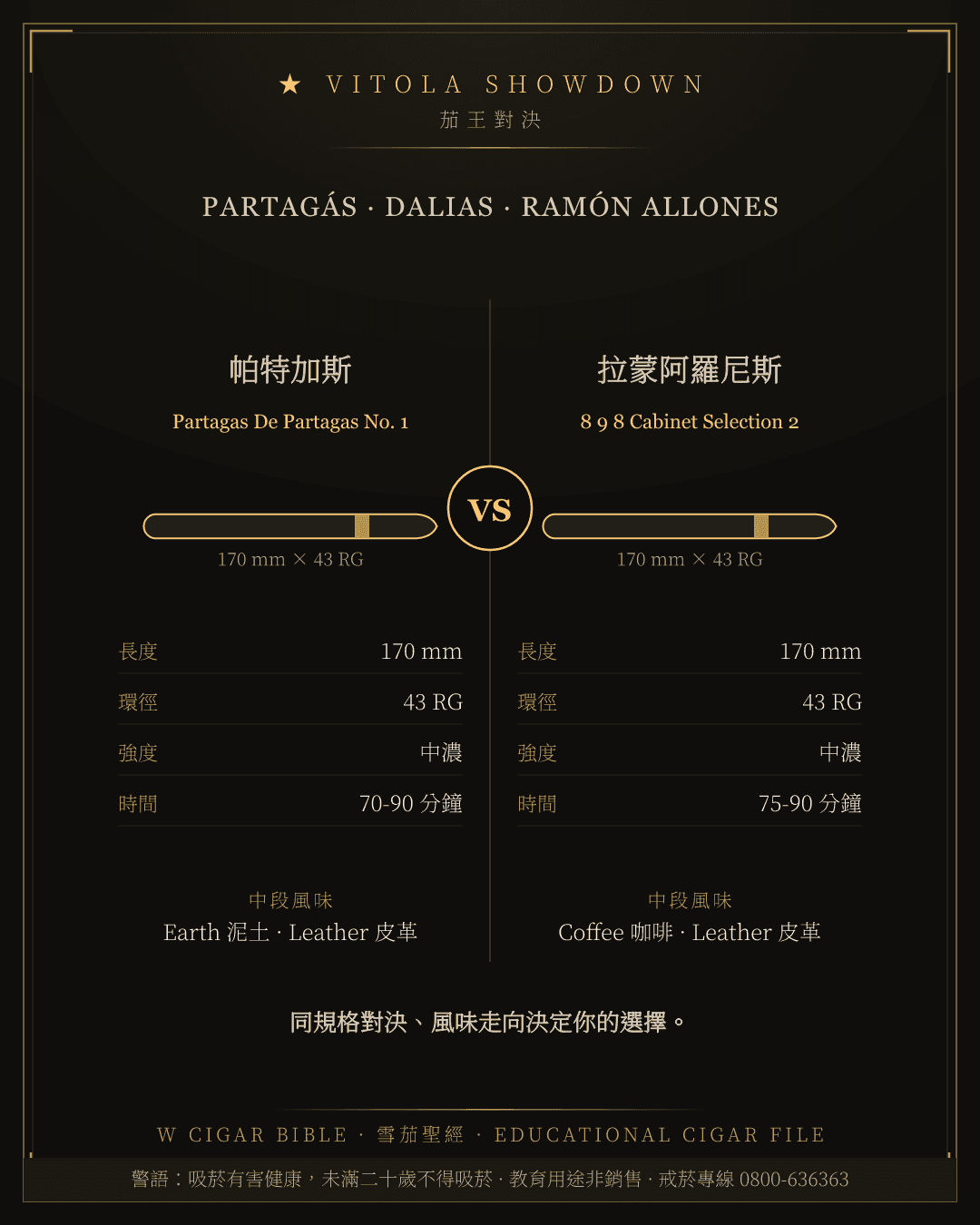
Partagás Partagas De Partagas No. 1 vs Ramón Allones 8 9 8 Cabinet Selection 2
VITOLA SHOWDOWN · Dalias
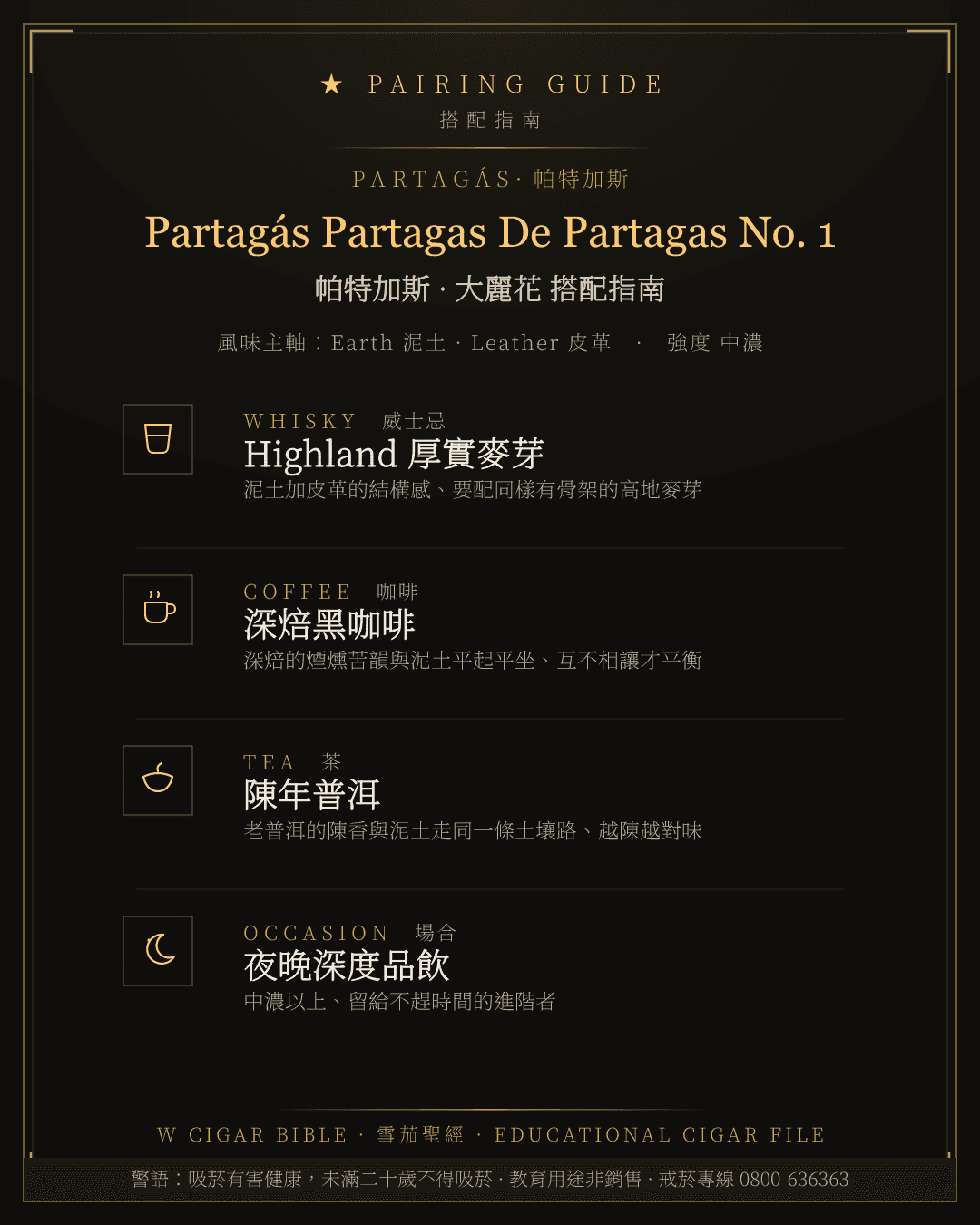
Partagás Partagas De Partagas No. 1 搭配指南 · 帕特加斯
PAIRING GUIDE · 搭配指南
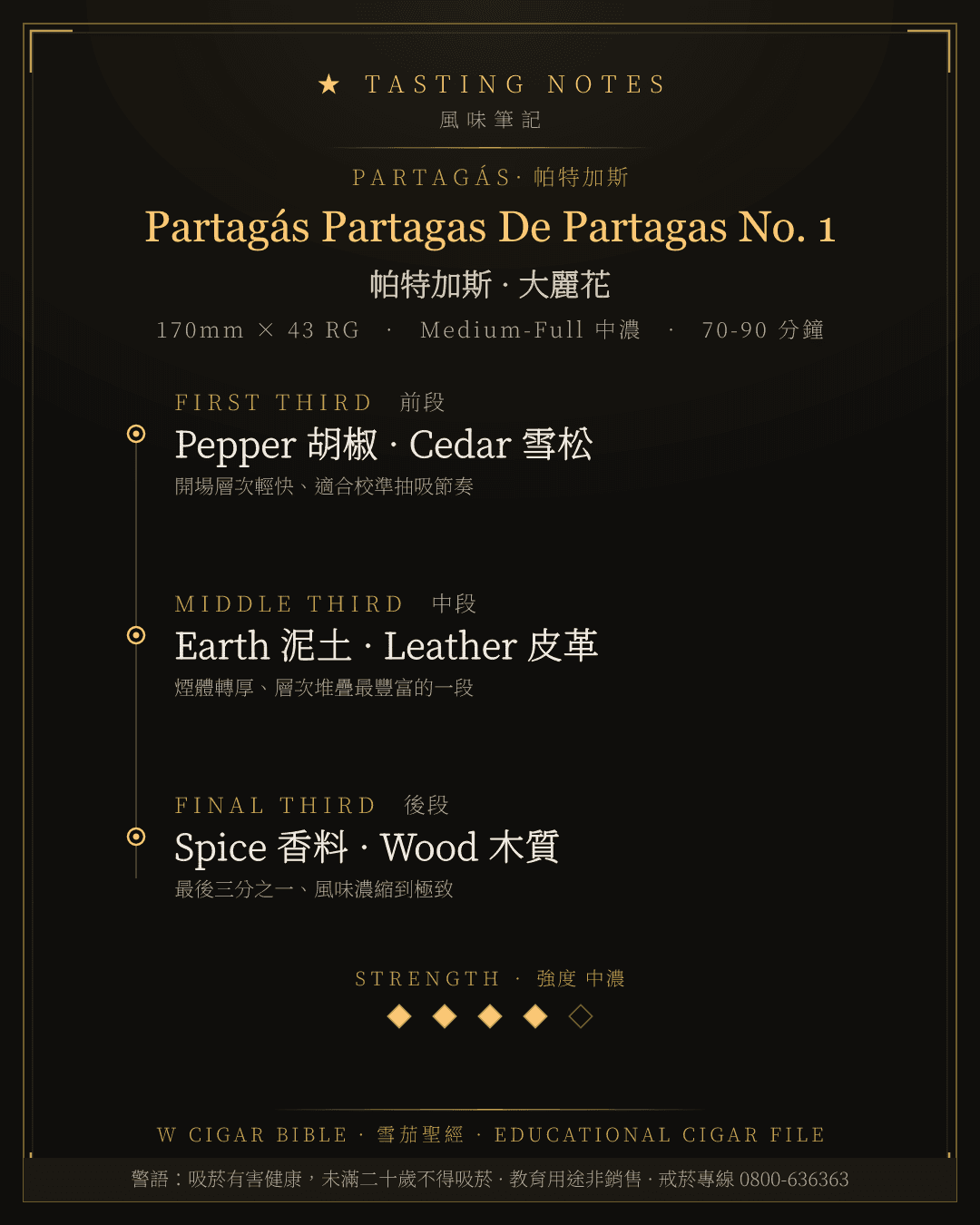
Partagás Partagas De Partagas No. 1 風味筆記 · 帕特加斯
TASTING NOTES · 風味筆記
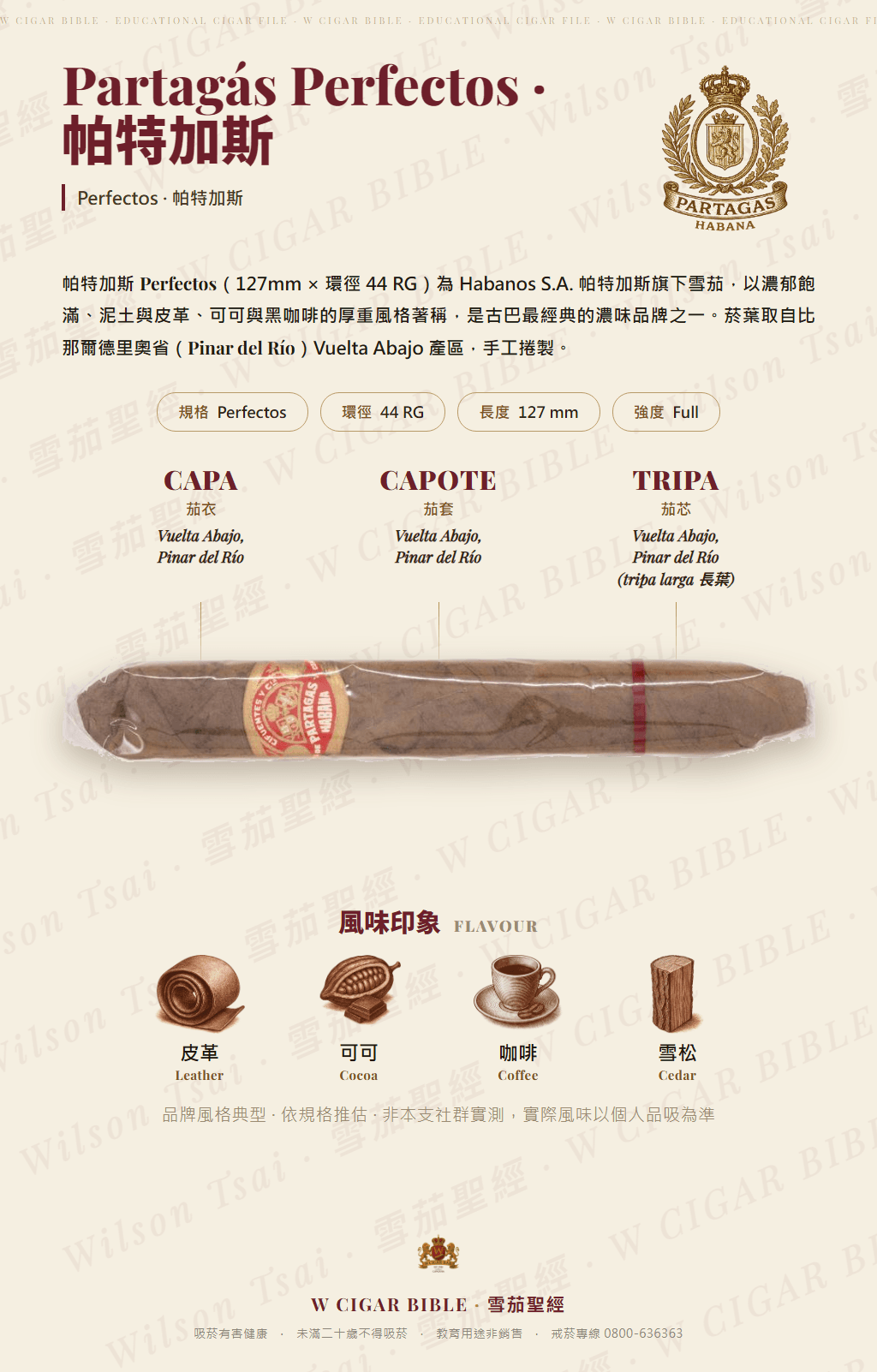
Partagás Perfectos · 帕特加斯
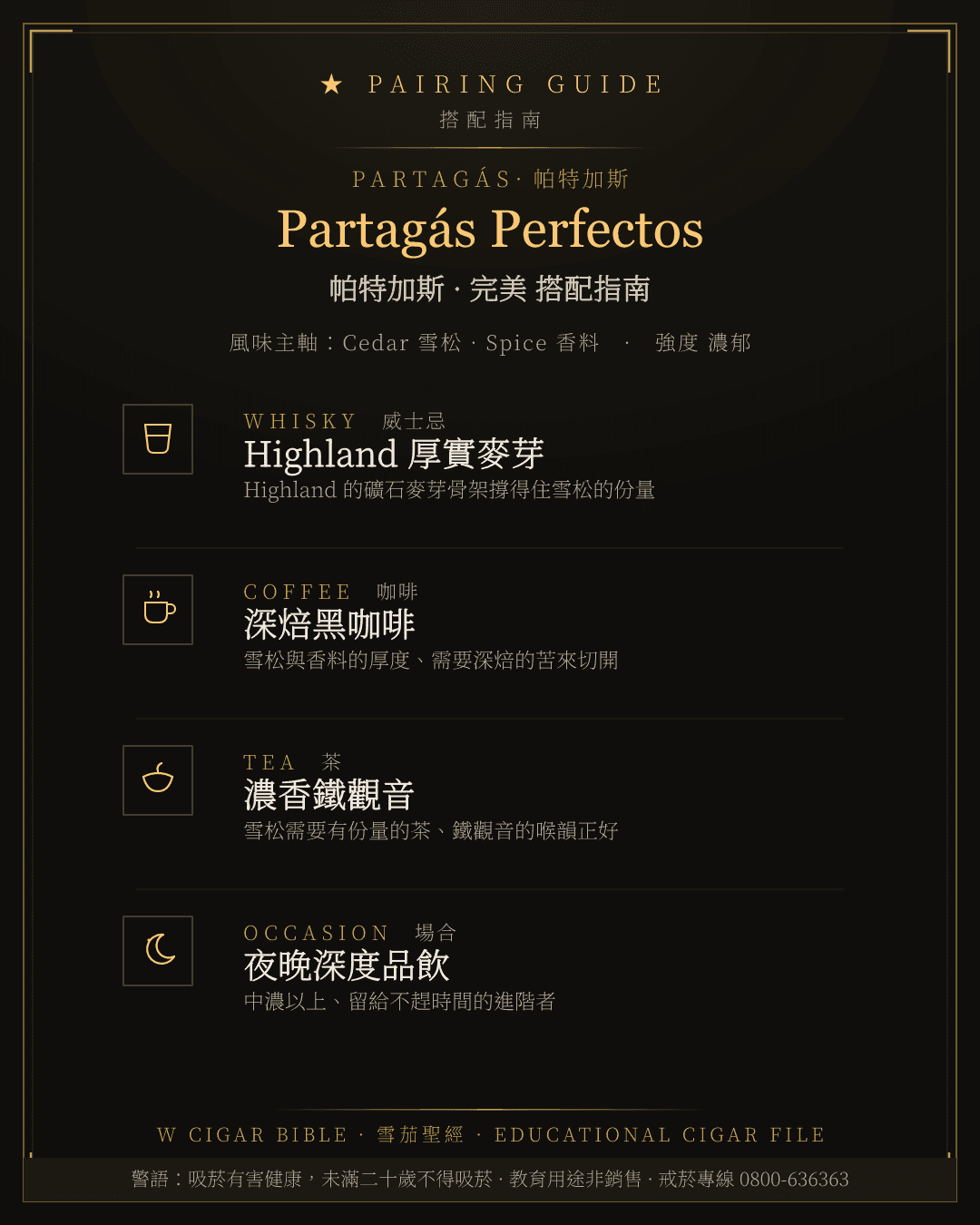
Partagás Perfectos 搭配指南 · 帕特加斯
PAIRING GUIDE · 搭配指南

Partagás Perfectos 風味筆記 · 帕特加斯
TASTING NOTES · 風味筆記
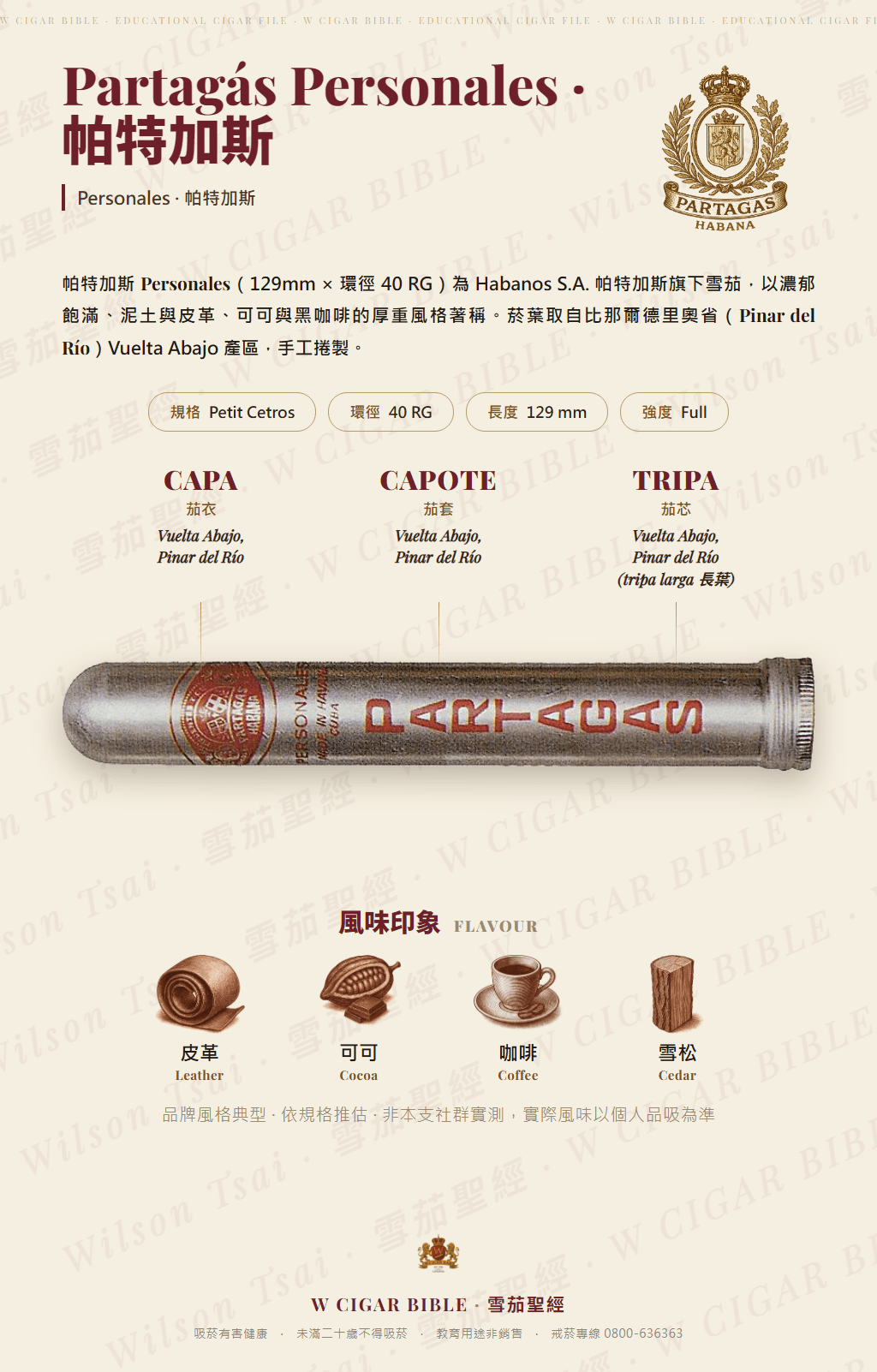
Partagás Personales · 帕特加斯
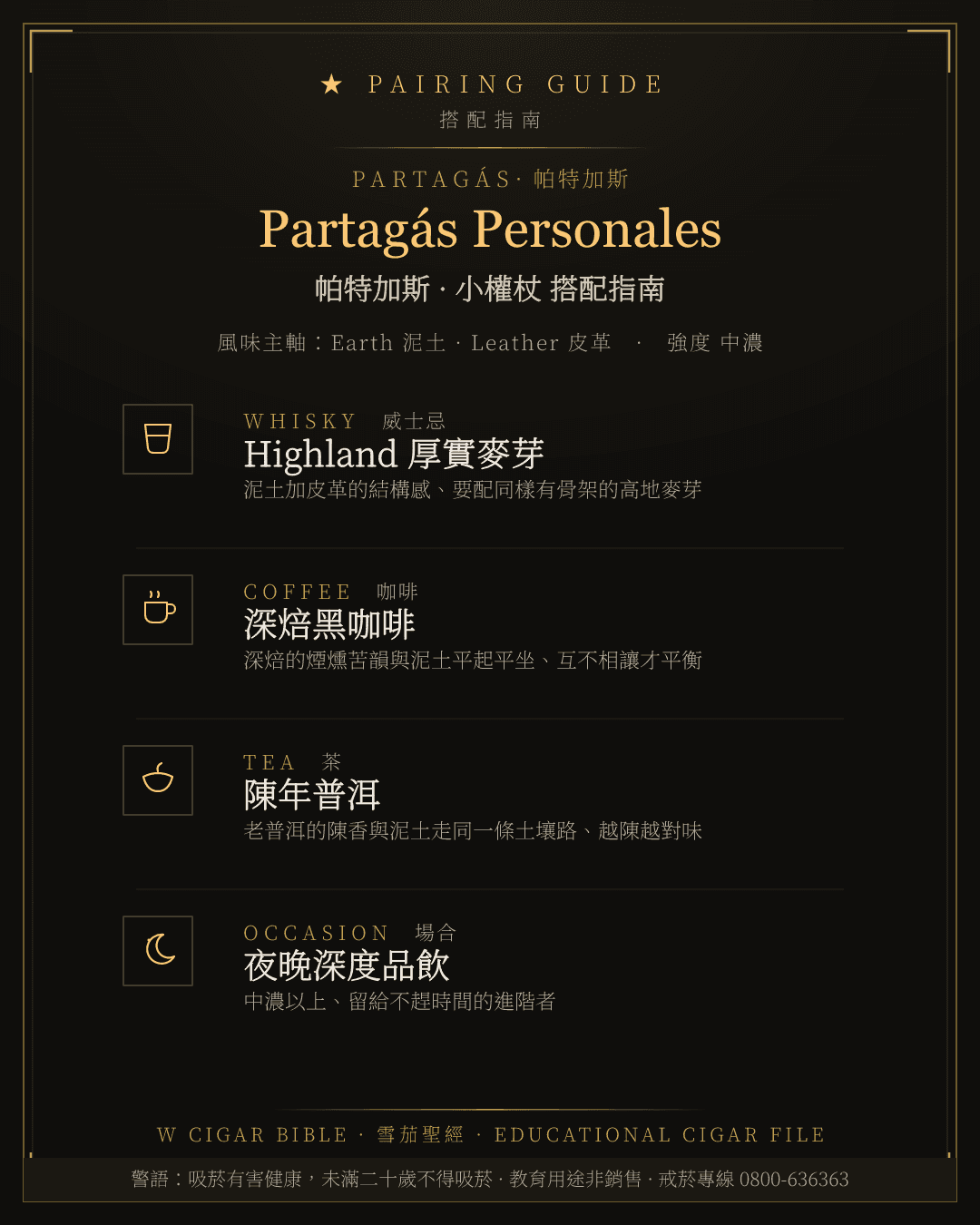
Partagás Personales 搭配指南 · 帕特加斯
PAIRING GUIDE · 搭配指南

Partagás Personales 風味筆記 · 帕特加斯
TASTING NOTES · 風味筆記
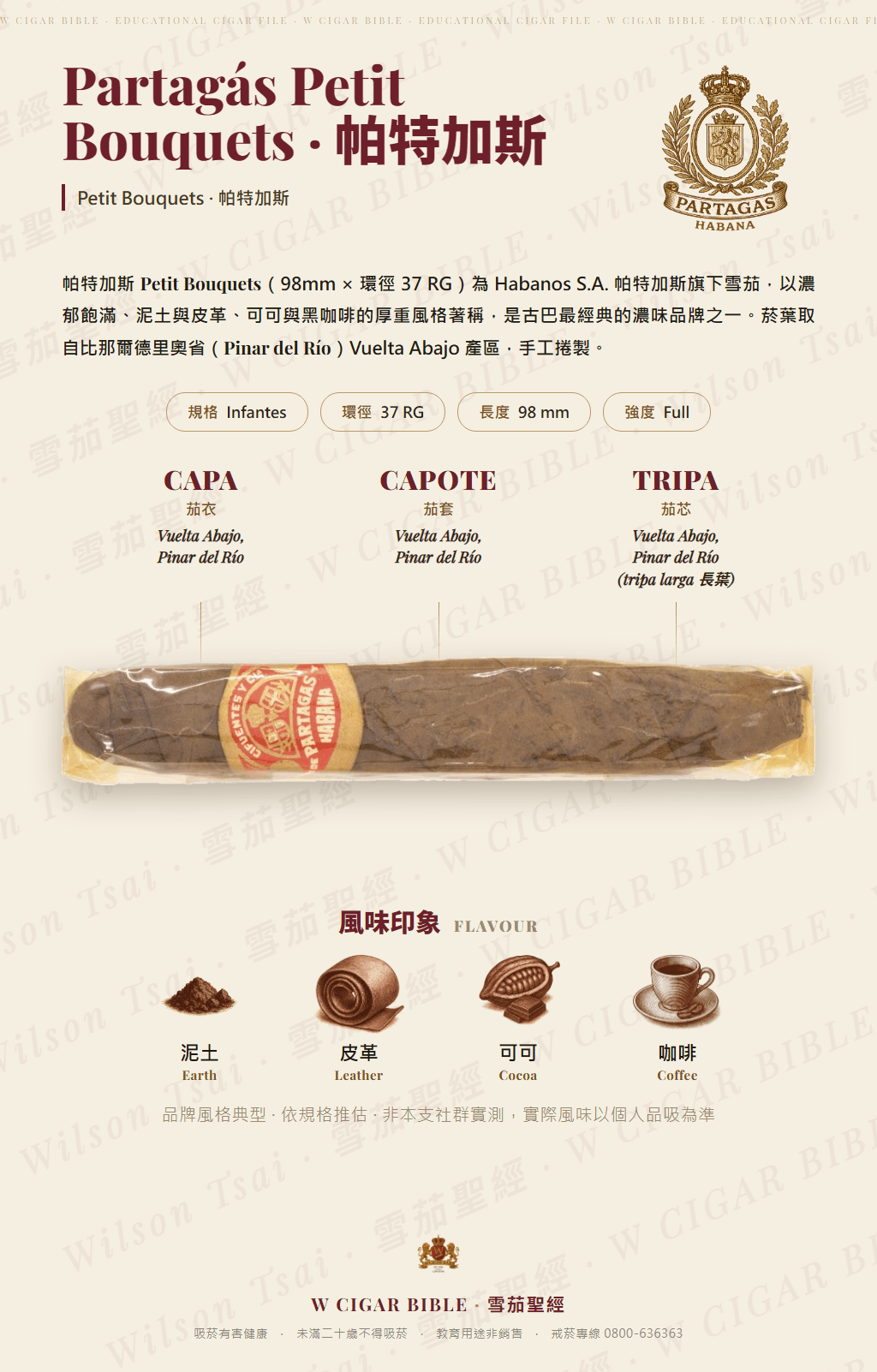
Partagás Petit Bouquets · 帕特加斯

Partagás Petit Bouquets 搭配指南 · 帕特加斯
PAIRING GUIDE · 搭配指南
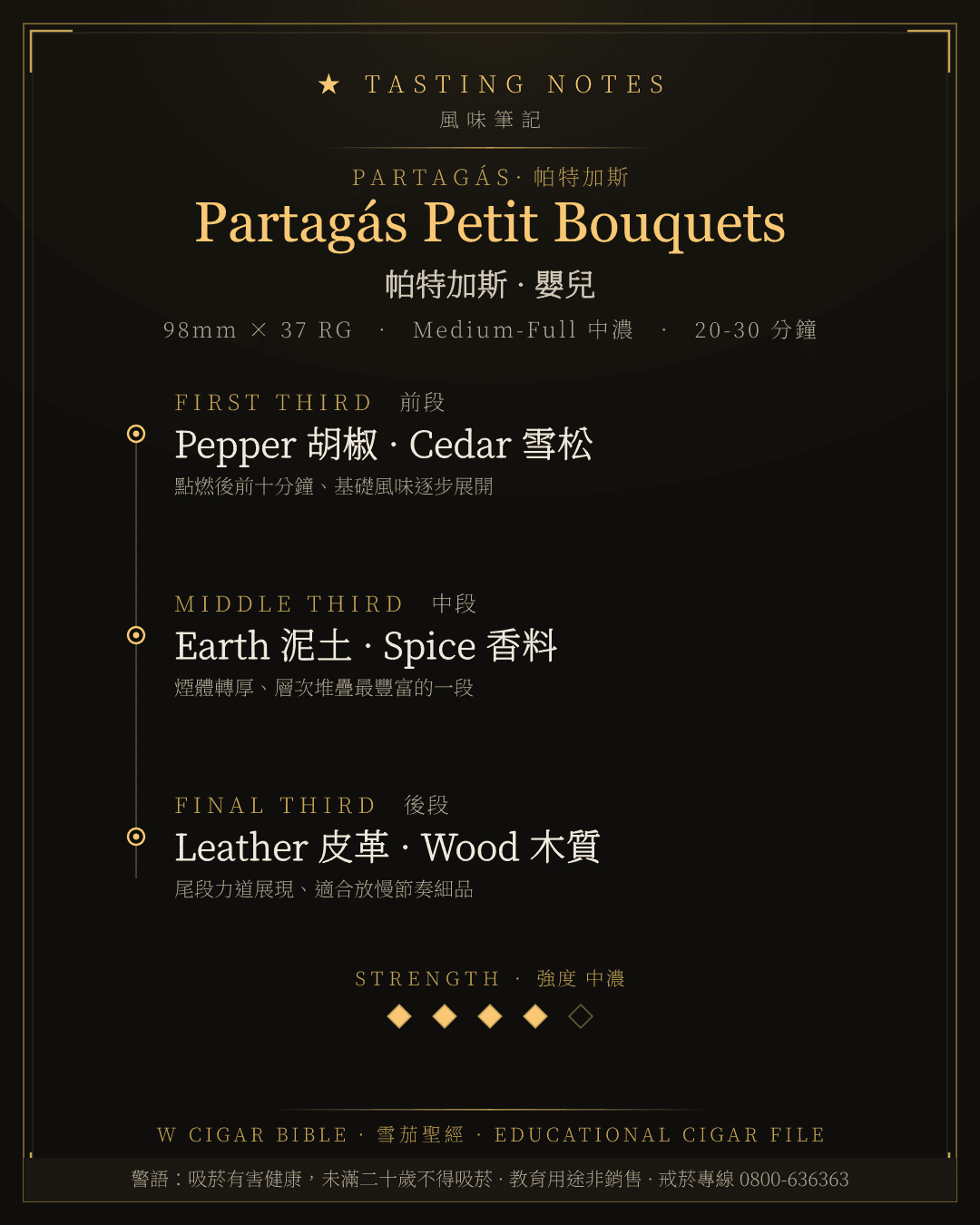
Partagás Petit Bouquets 風味筆記 · 帕特加斯
TASTING NOTES · 風味筆記
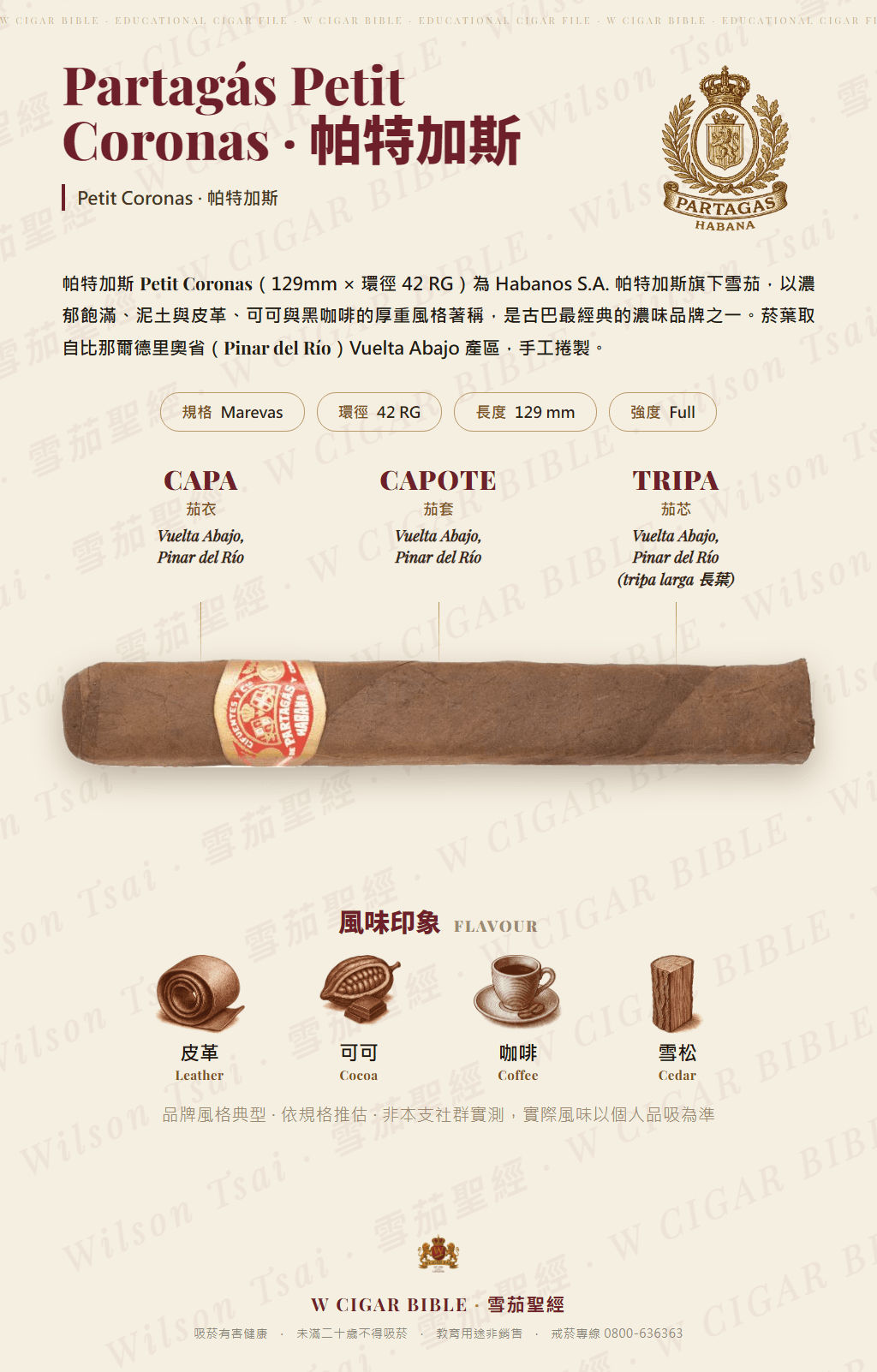
Partagás Petit Coronas · 帕特加斯
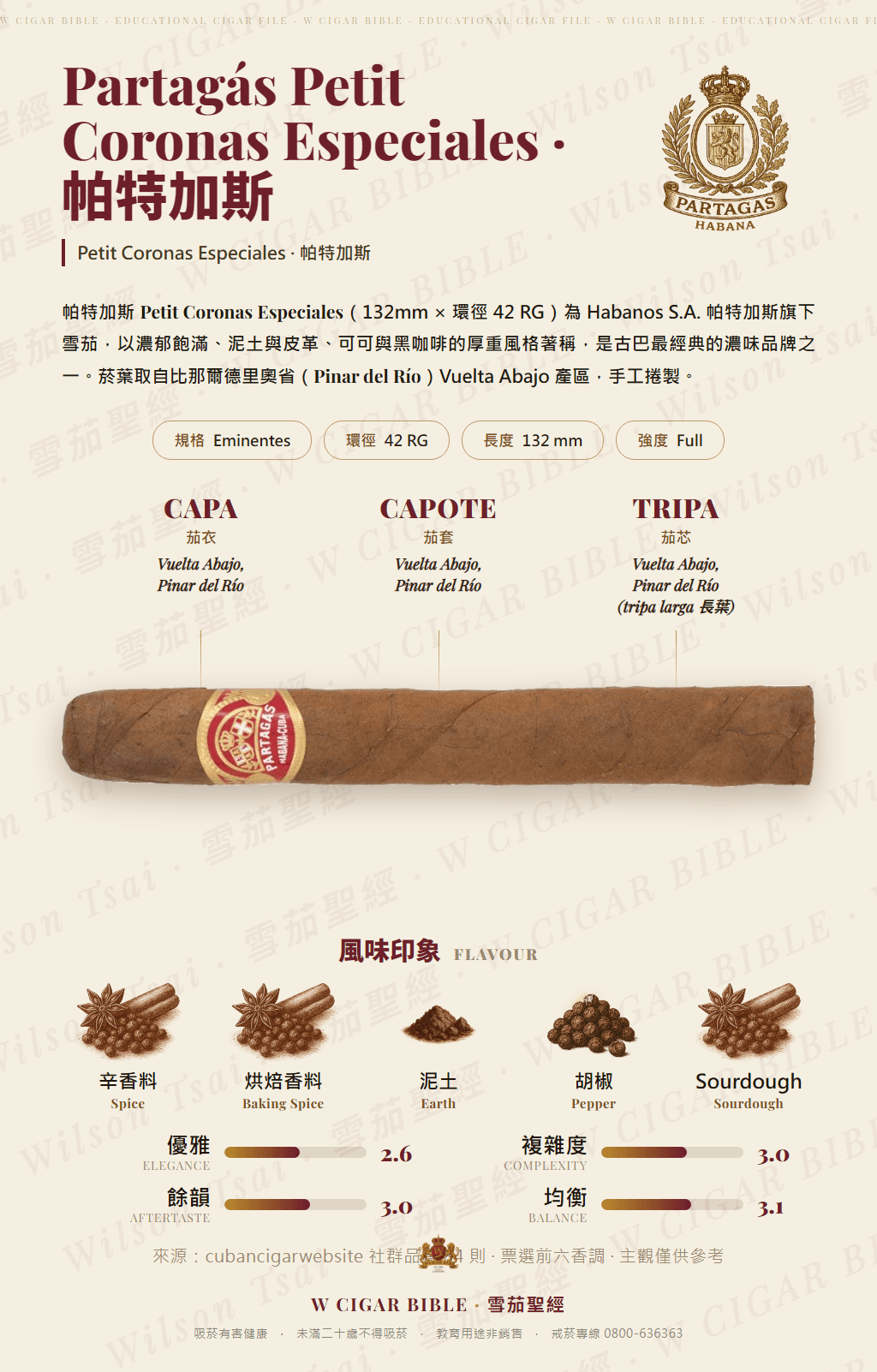
Partagás Petit Coronas Especiales · 帕特加斯
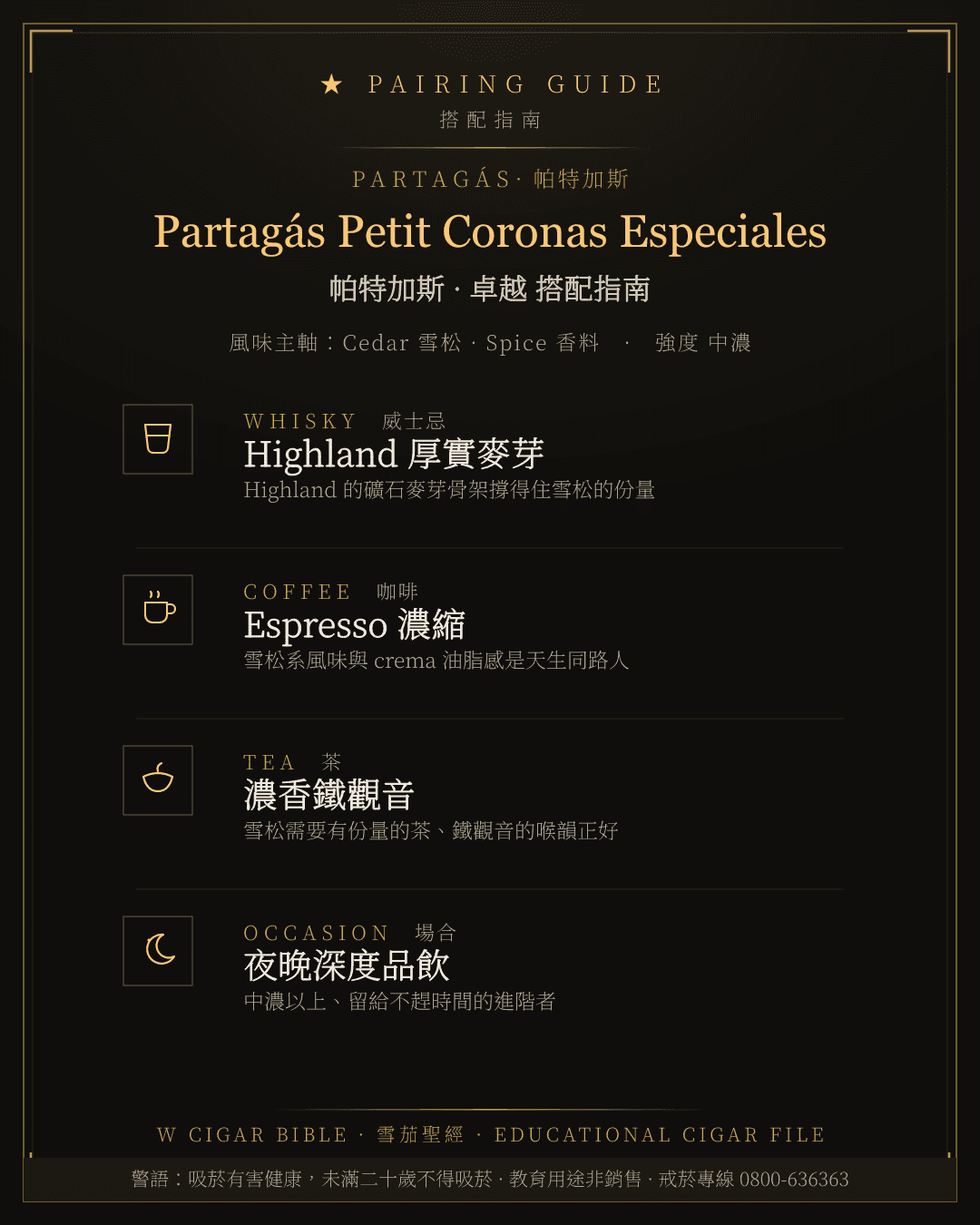
Partagás Petit Coronas Especiales 搭配指南 · 帕特加斯
PAIRING GUIDE · 搭配指南
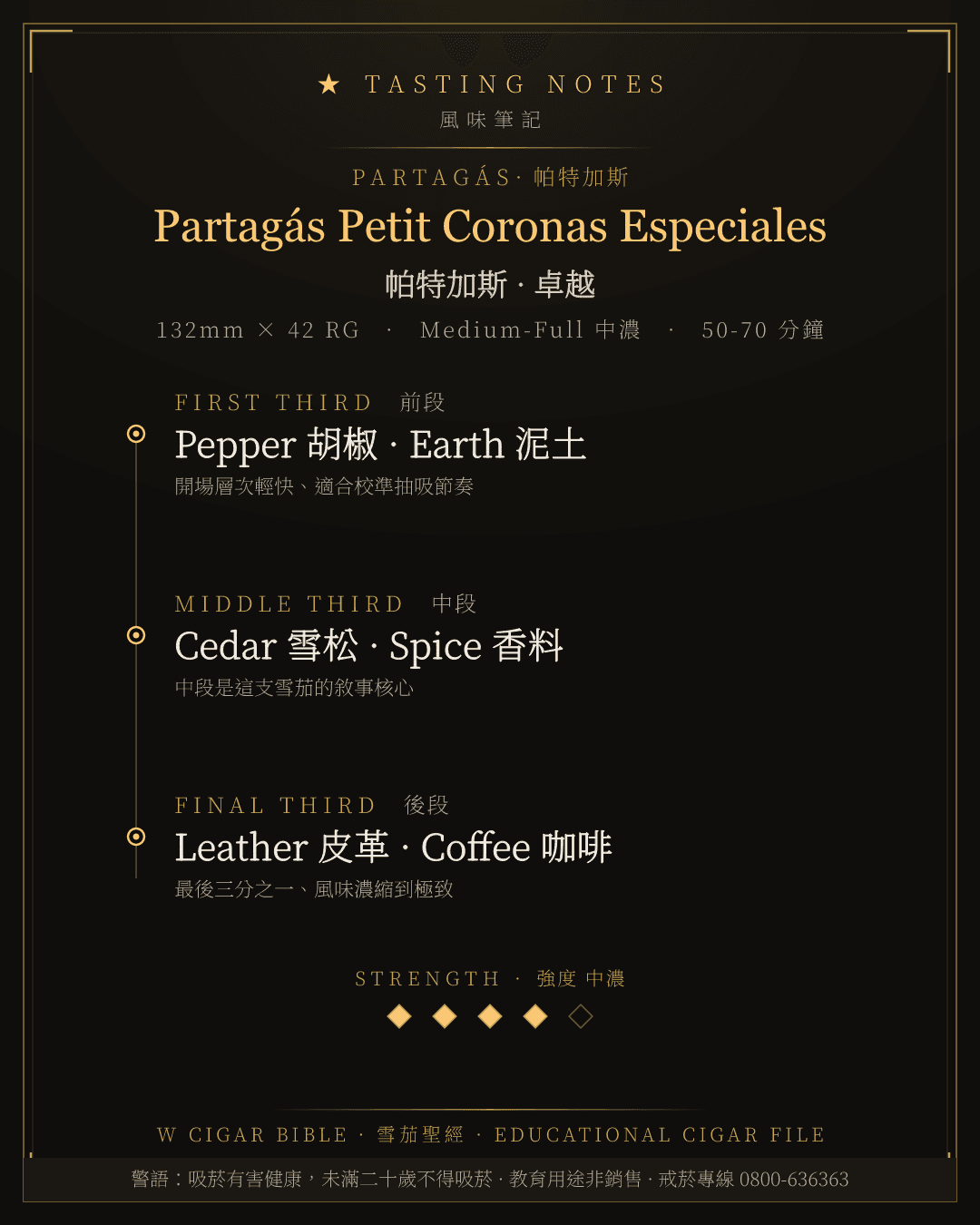
Partagás Petit Coronas Especiales 風味筆記 · 帕特加斯
TASTING NOTES · 風味筆記
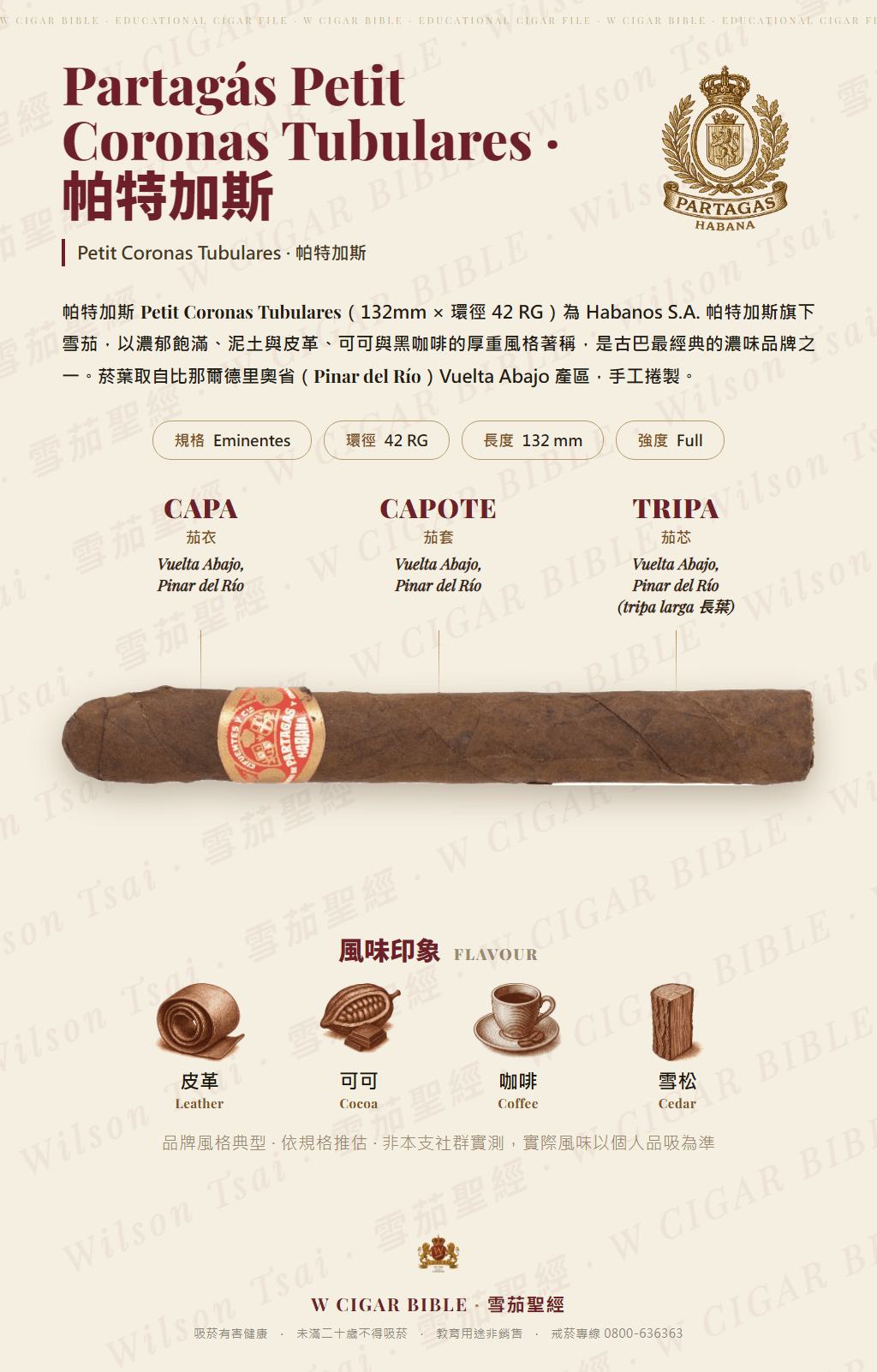
Partagás Petit Coronas Tubulares · 帕特加斯
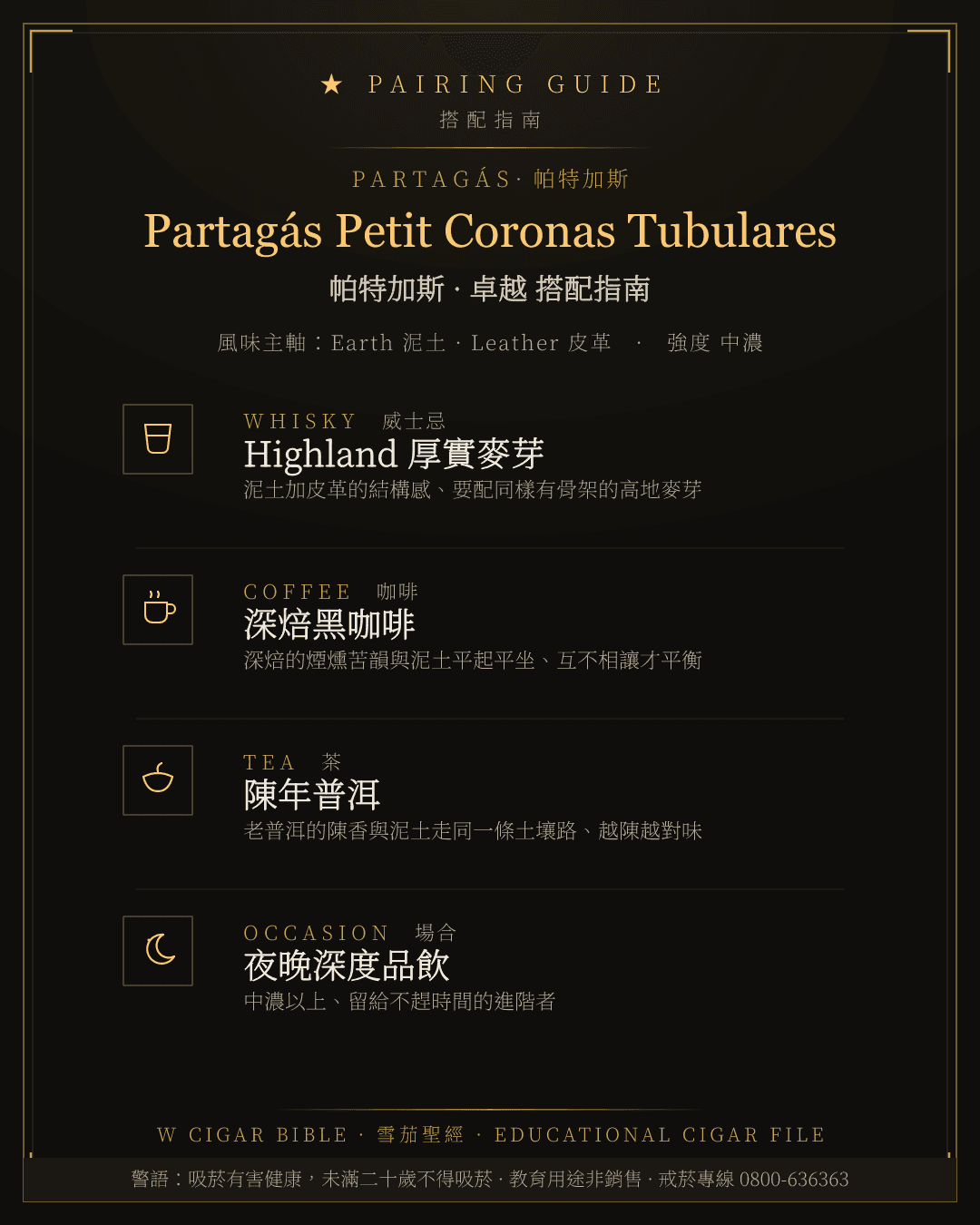
Partagás Petit Coronas Tubulares 搭配指南 · 帕特加斯
PAIRING GUIDE · 搭配指南
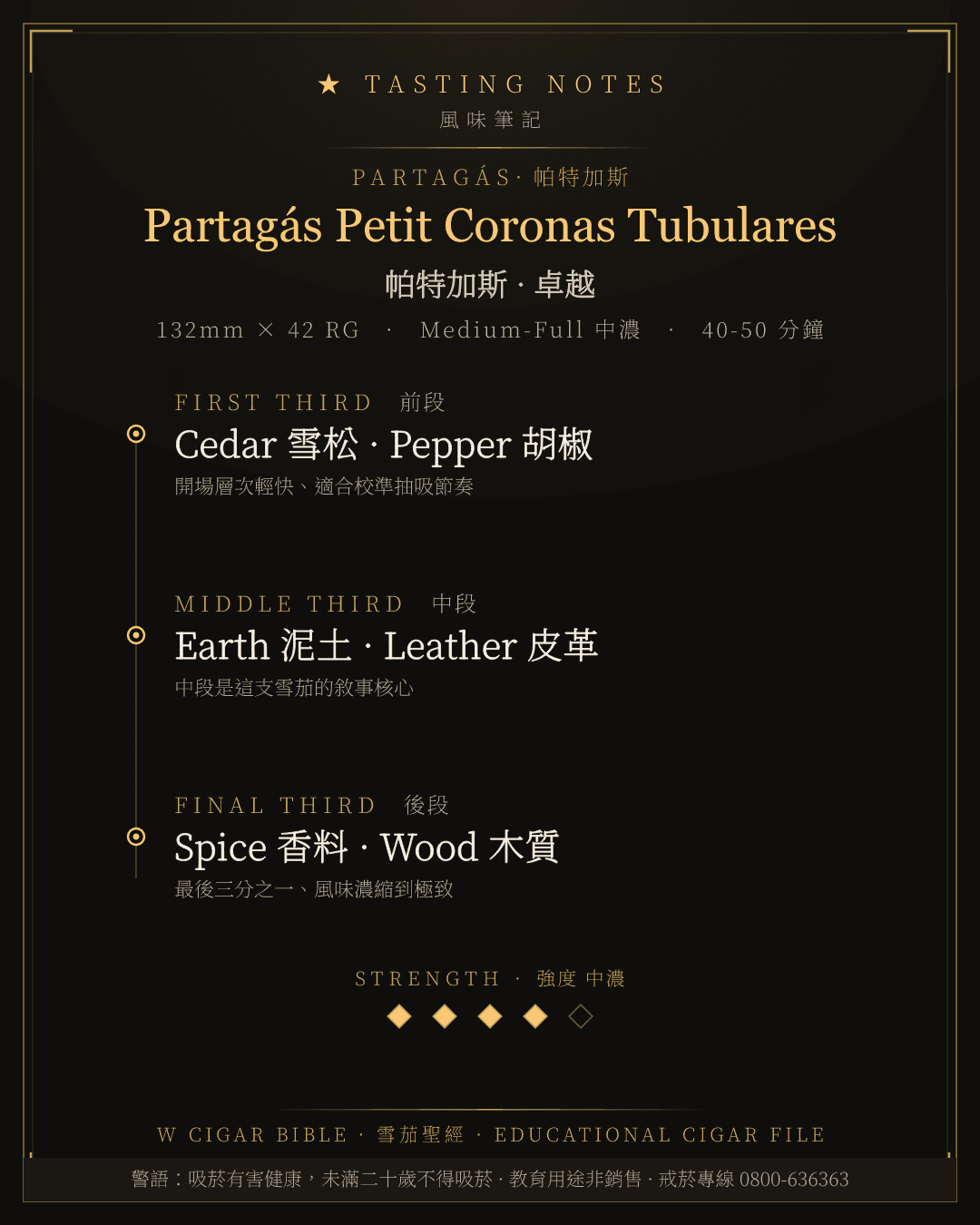
Partagás Petit Coronas Tubulares 風味筆記 · 帕特加斯
TASTING NOTES · 風味筆記

Partagás Petit Coronas vs Por Larrañaga Petit Lanceros
VITOLA SHOWDOWN · Marevas

Partagás Petit Coronas 搭配指南 · 帕特加斯
PAIRING GUIDE · 搭配指南
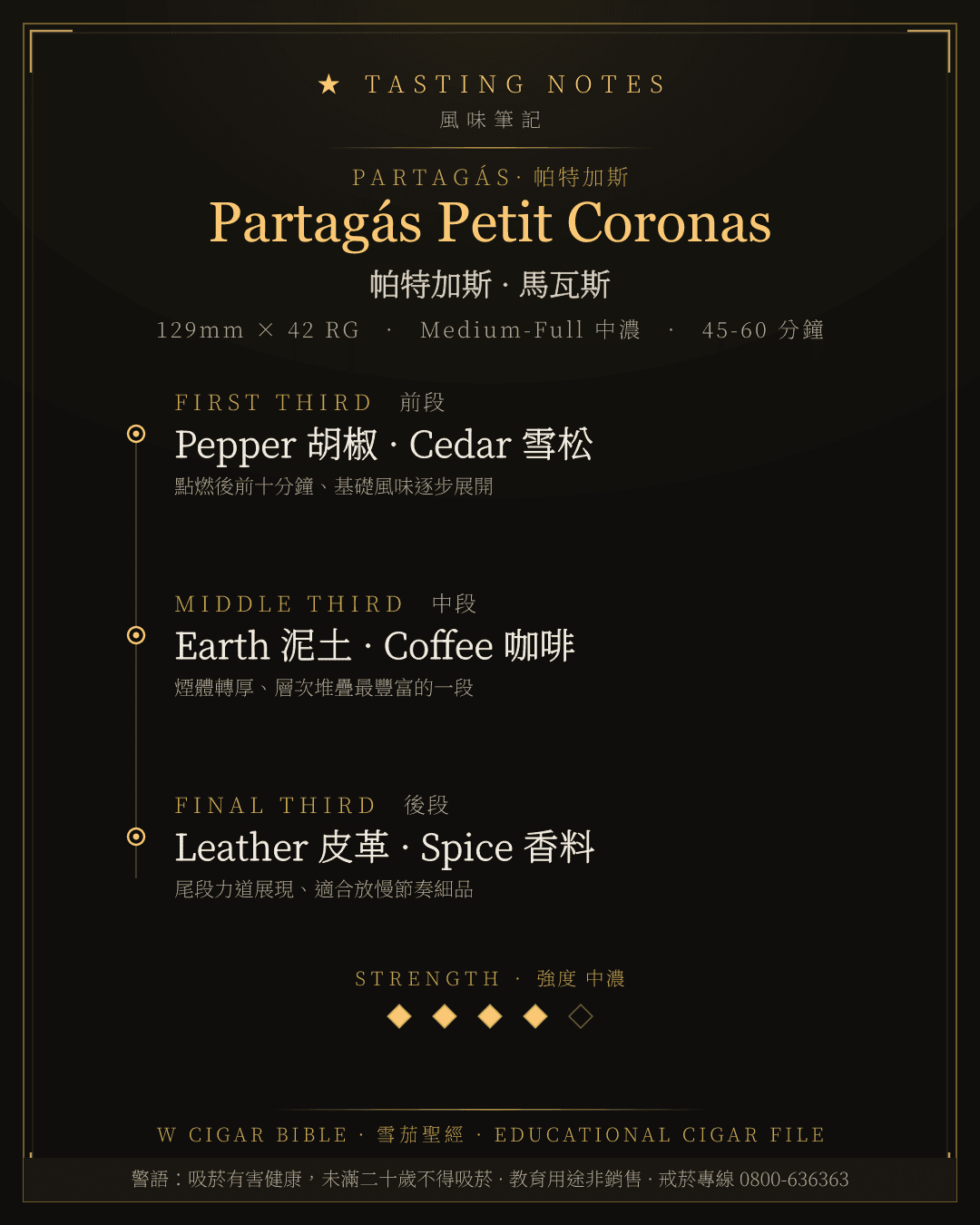
Partagás Petit Coronas 風味筆記 · 帕特加斯
TASTING NOTES · 風味筆記
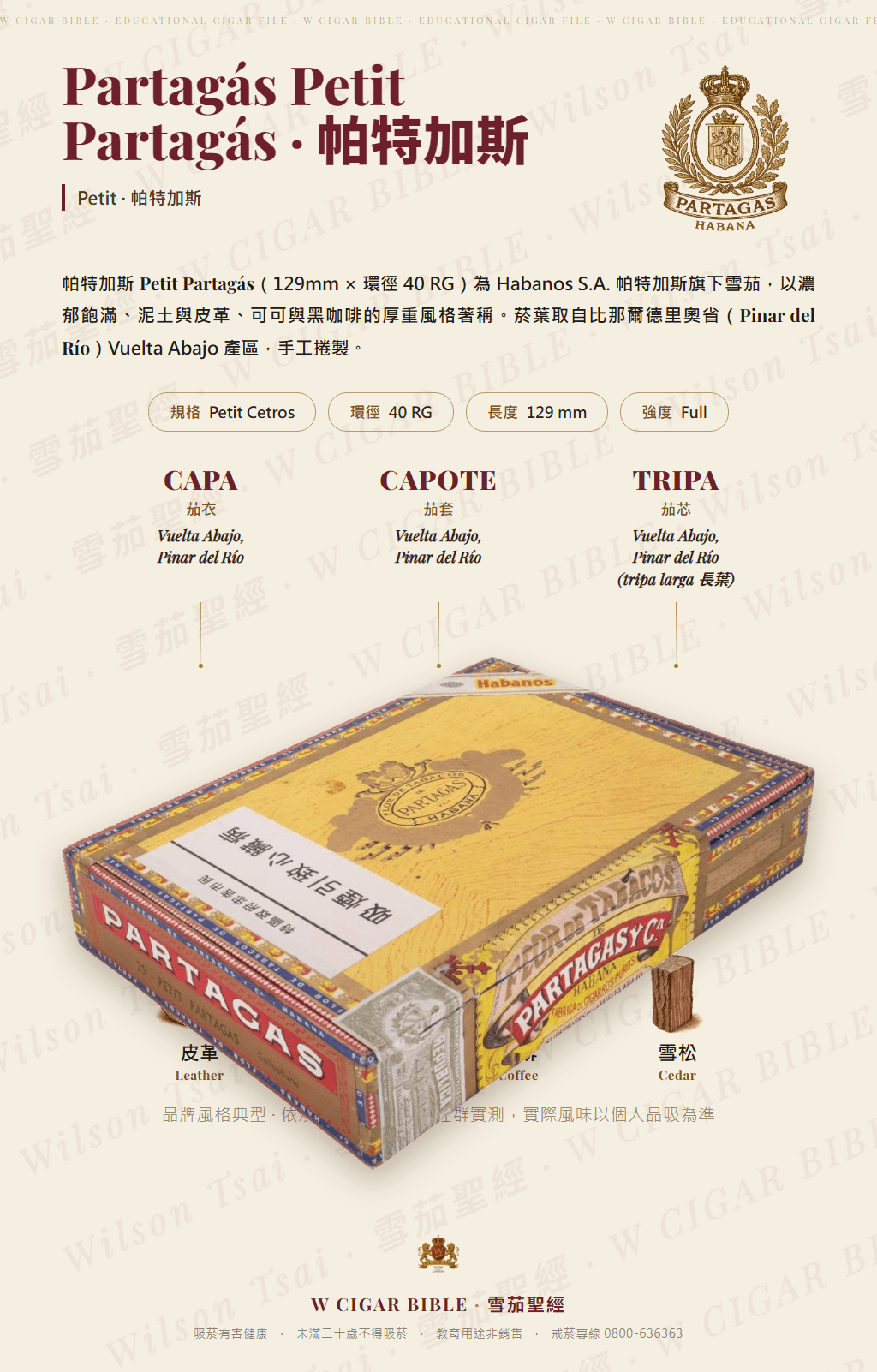
Partagás Petit Partagás · 帕特加斯
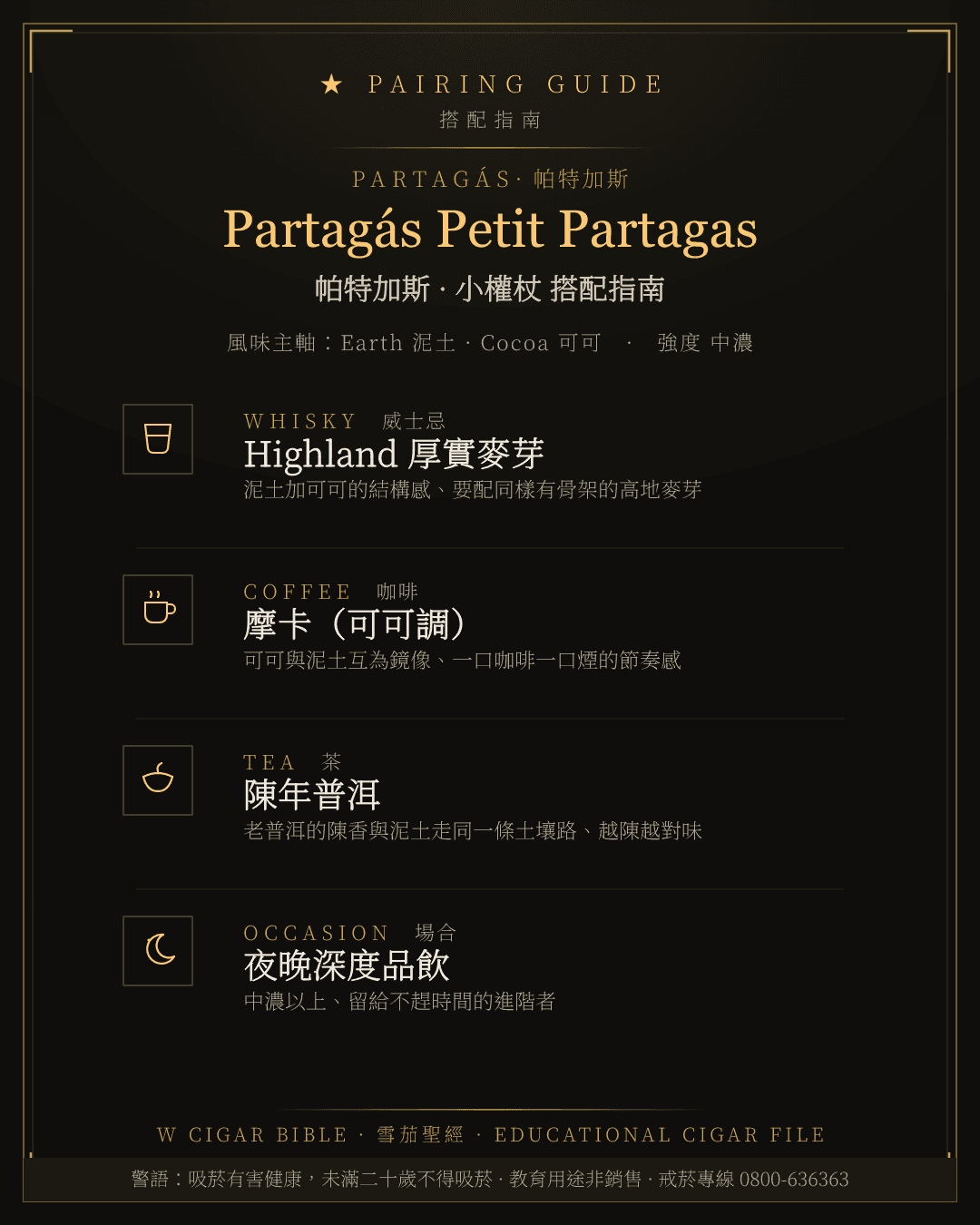
Partagás Petit Partagas 搭配指南 · 帕特加斯
PAIRING GUIDE · 搭配指南

Partagás Petit Partagas 風味筆記 · 帕特加斯
TASTING NOTES · 風味筆記
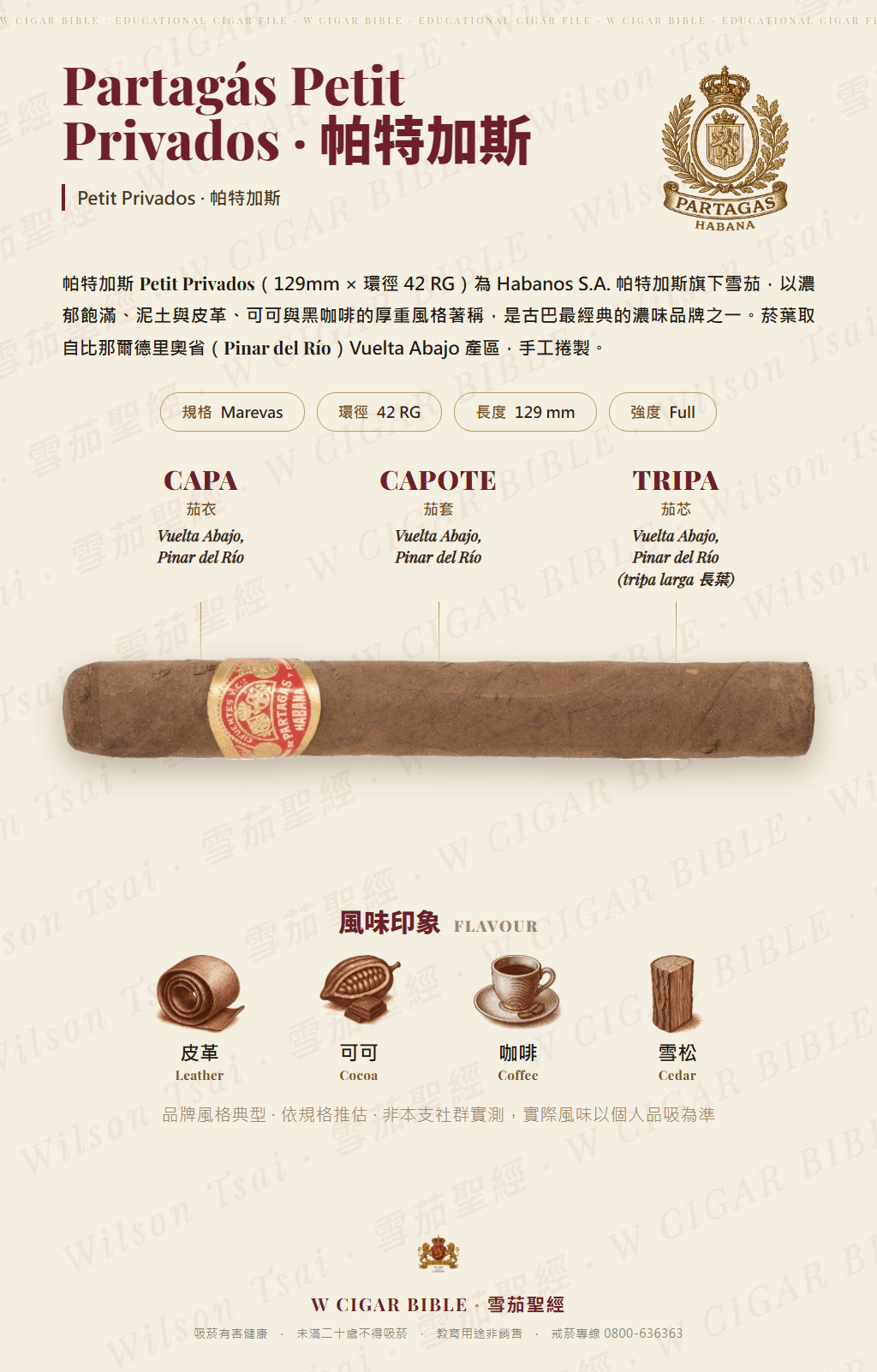
Partagás Petit Privados · 帕特加斯
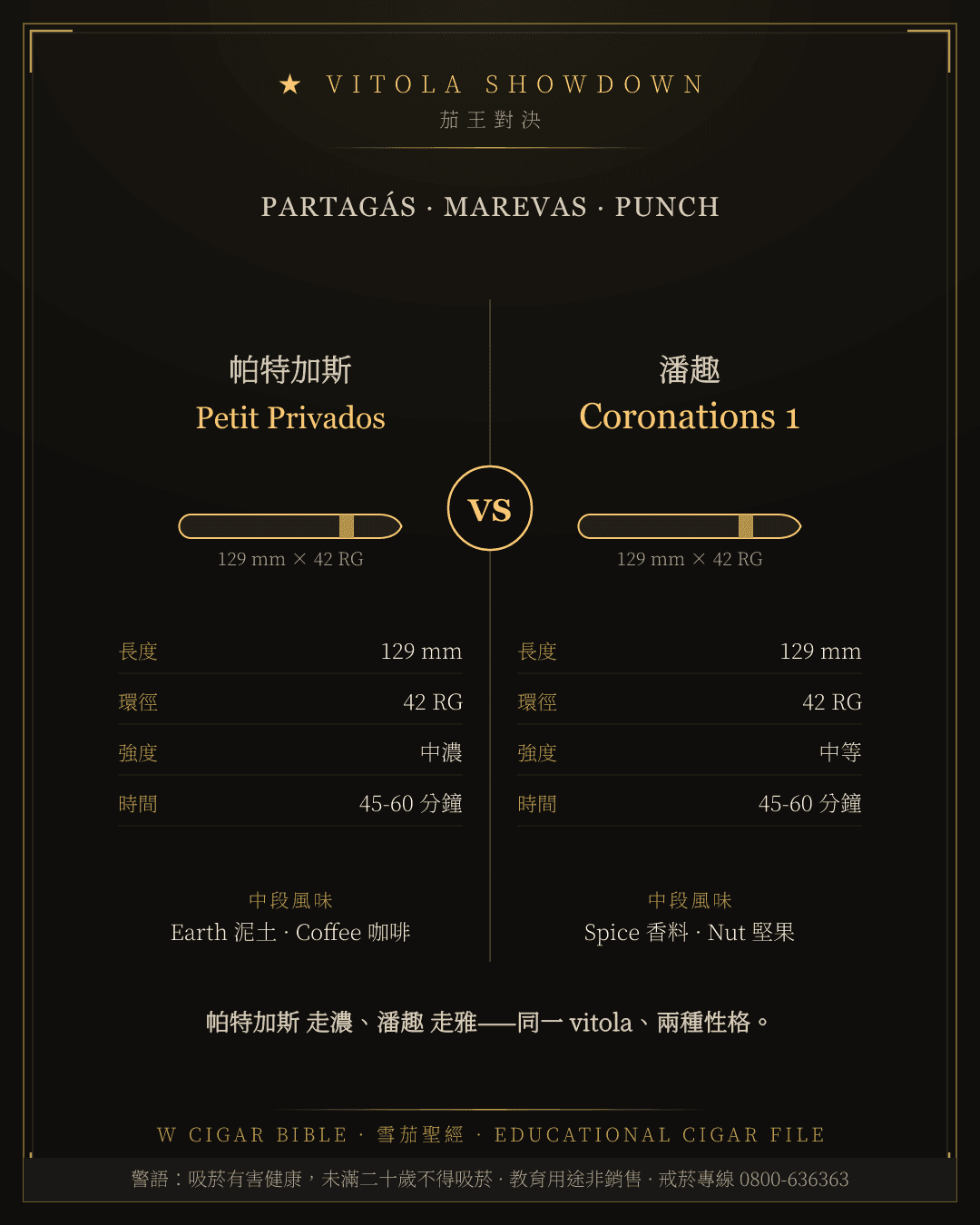
Partagás Petit Privados vs Punch Coronations 1
VITOLA SHOWDOWN · Marevas
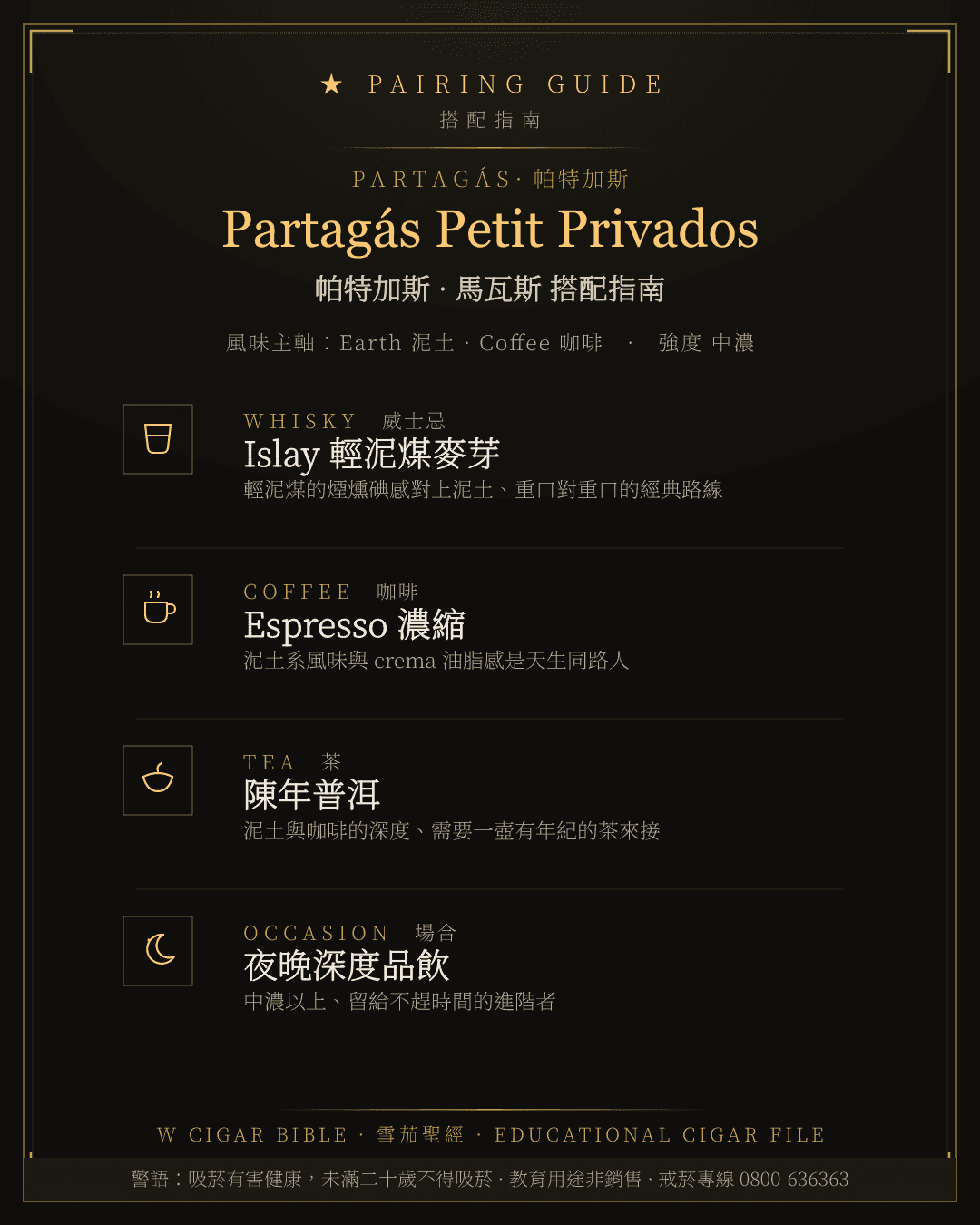
Partagás Petit Privados 搭配指南 · 帕特加斯
PAIRING GUIDE · 搭配指南
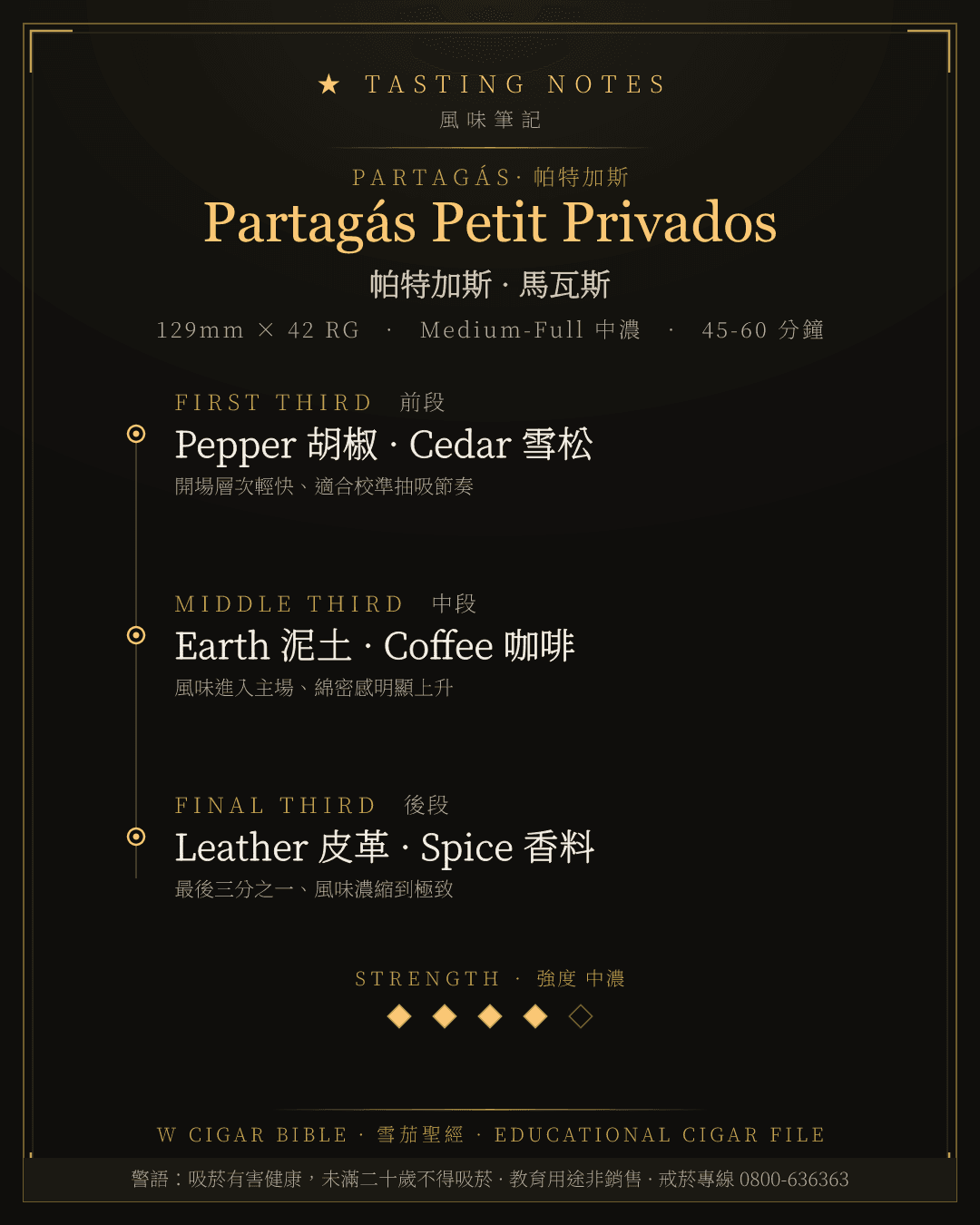
Partagás Petit Privados 風味筆記 · 帕特加斯
TASTING NOTES · 風味筆記
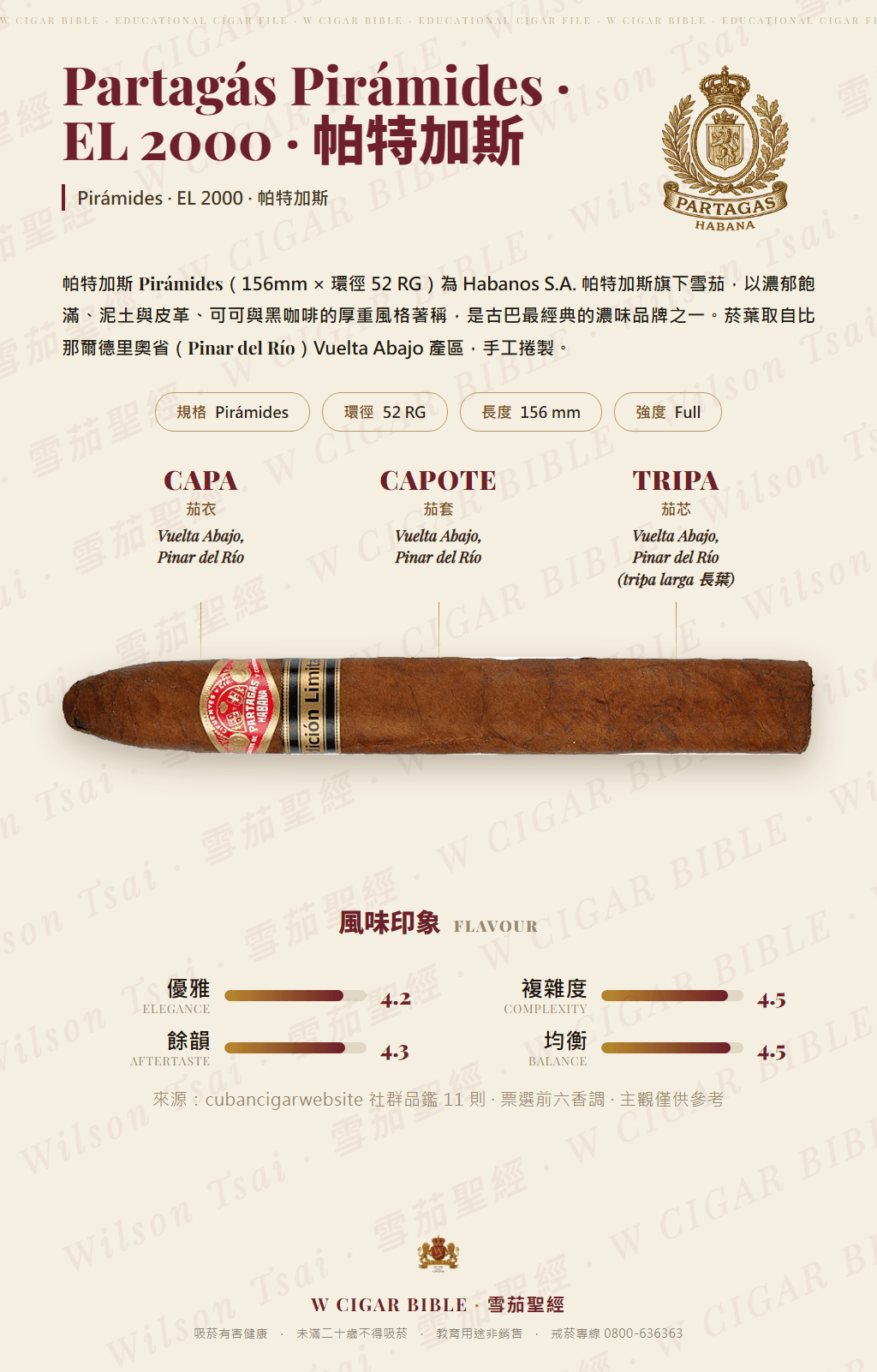
Partagás Pirámides · EL 2000 · 帕特加斯
EL 2000 · 首屆限量年度版 Edición Limitada(52 環徑 × 156mm pirámide,僅該年度生產)· 雪茄檔案
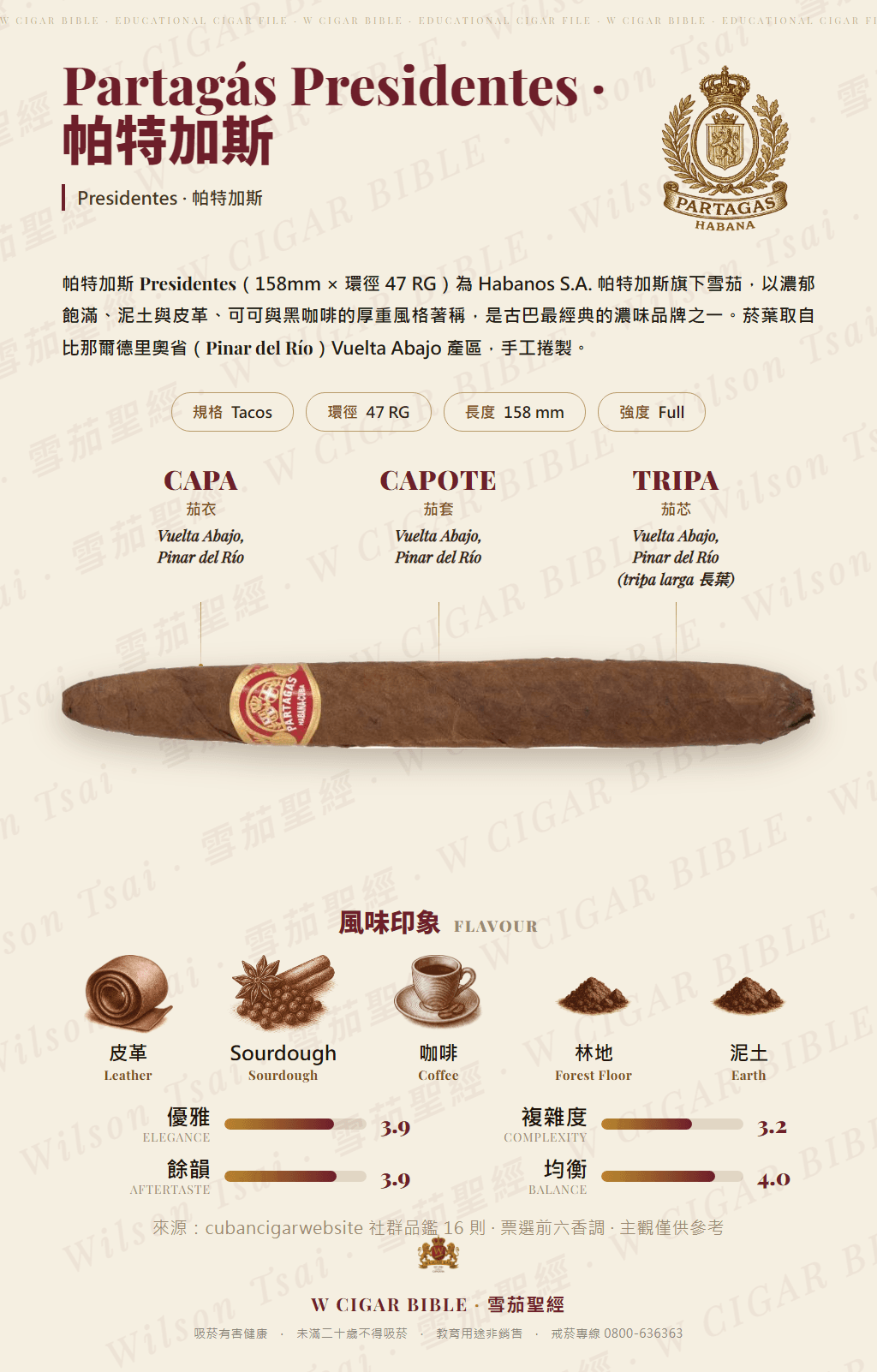
Partagás Presidentes · 帕特加斯
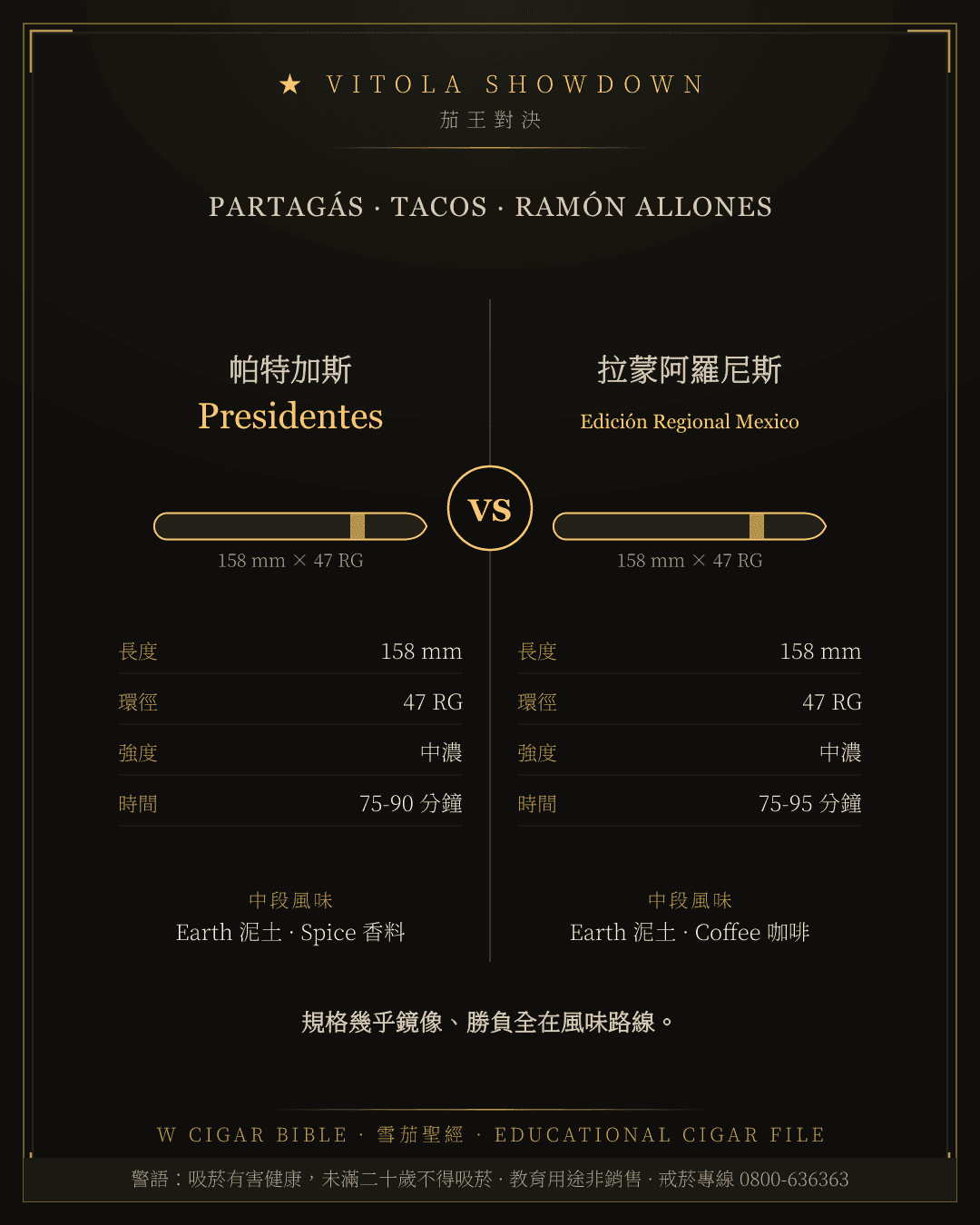
Partagás Presidentes vs Ramón Allones Edición Regional Mexico
VITOLA SHOWDOWN · Tacos
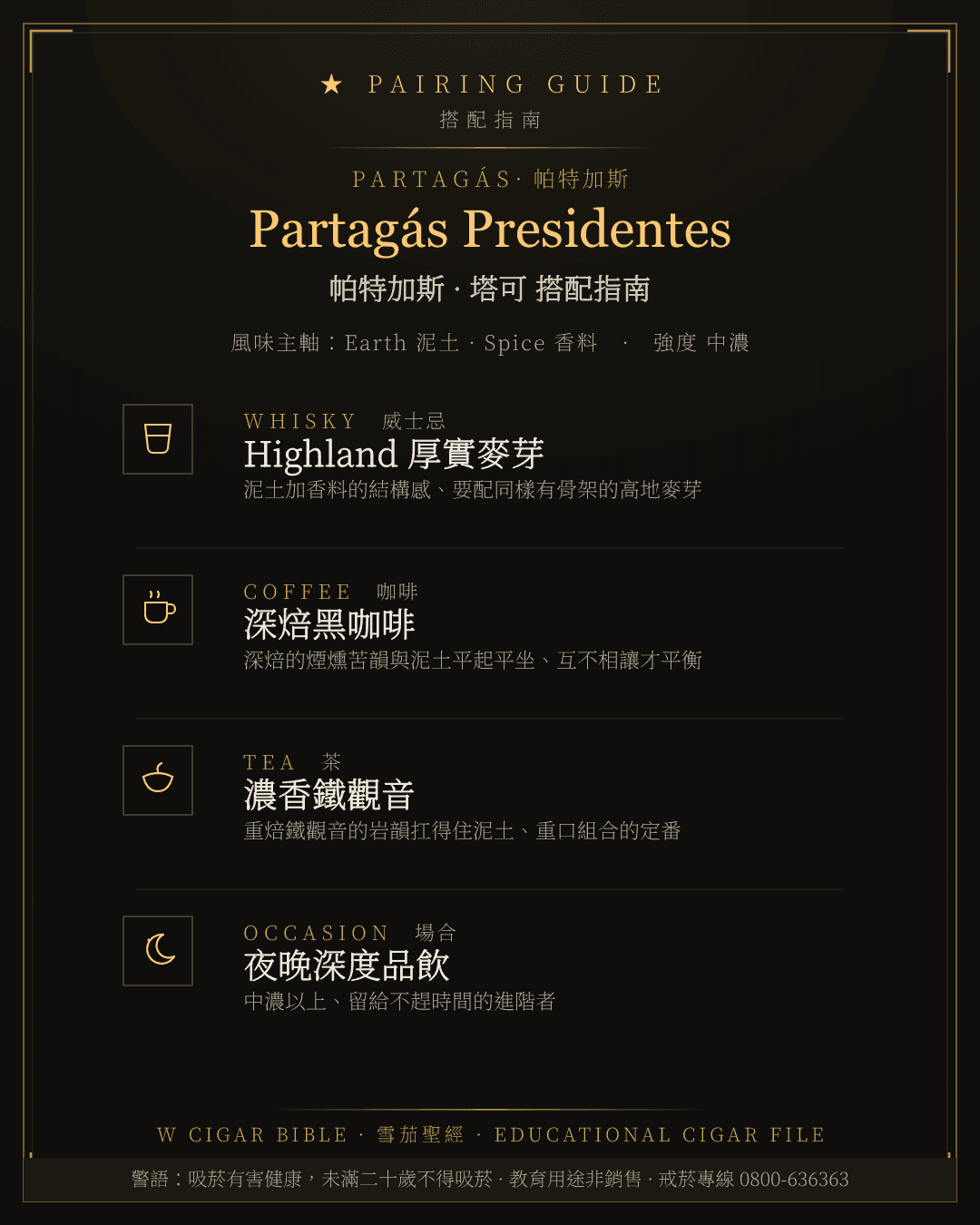
Partagás Presidentes 搭配指南 · 帕特加斯
PAIRING GUIDE · 搭配指南
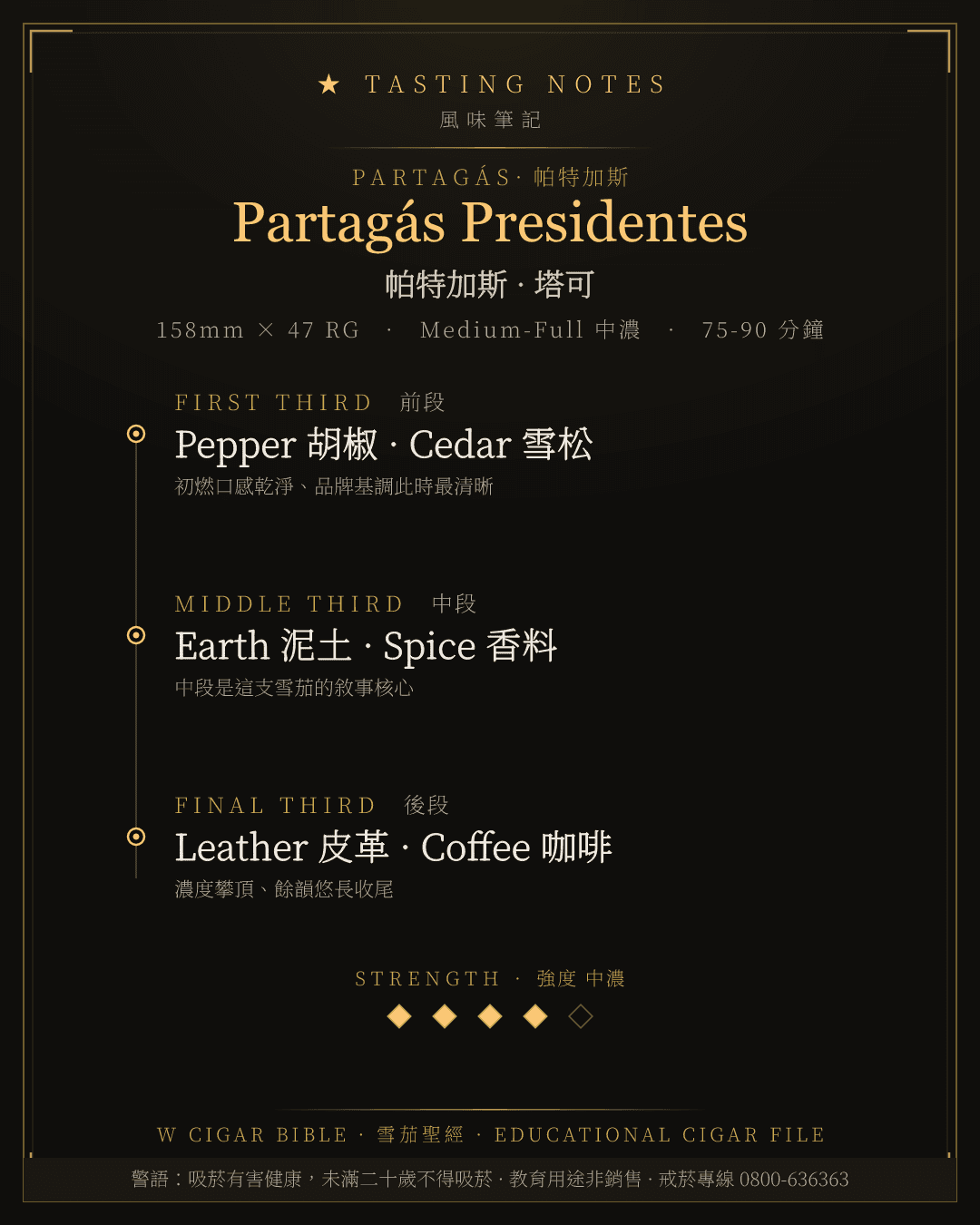
Partagás Presidentes 風味筆記 · 帕特加斯
TASTING NOTES · 風味筆記
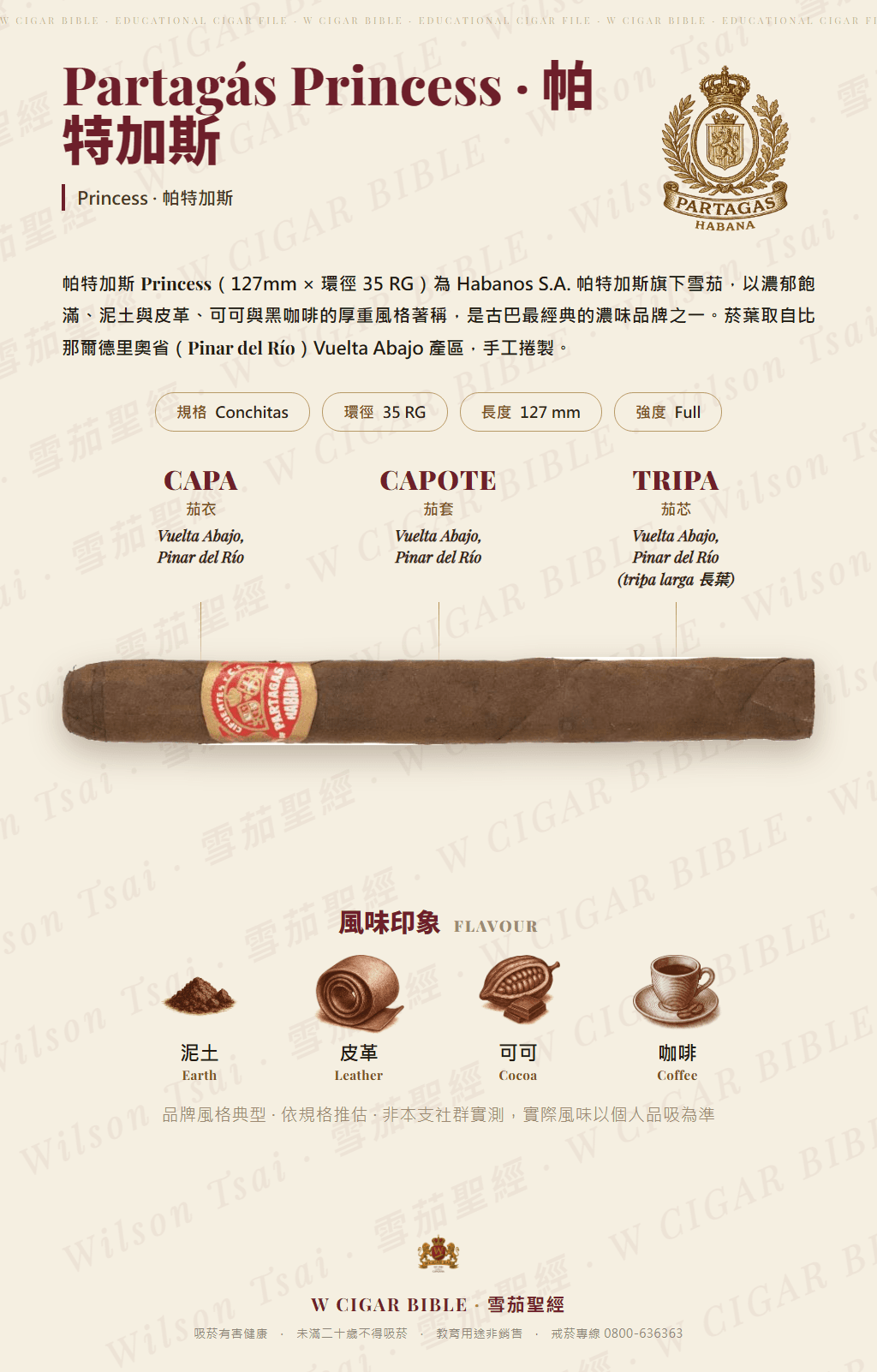
Partagás Princess · 帕特加斯
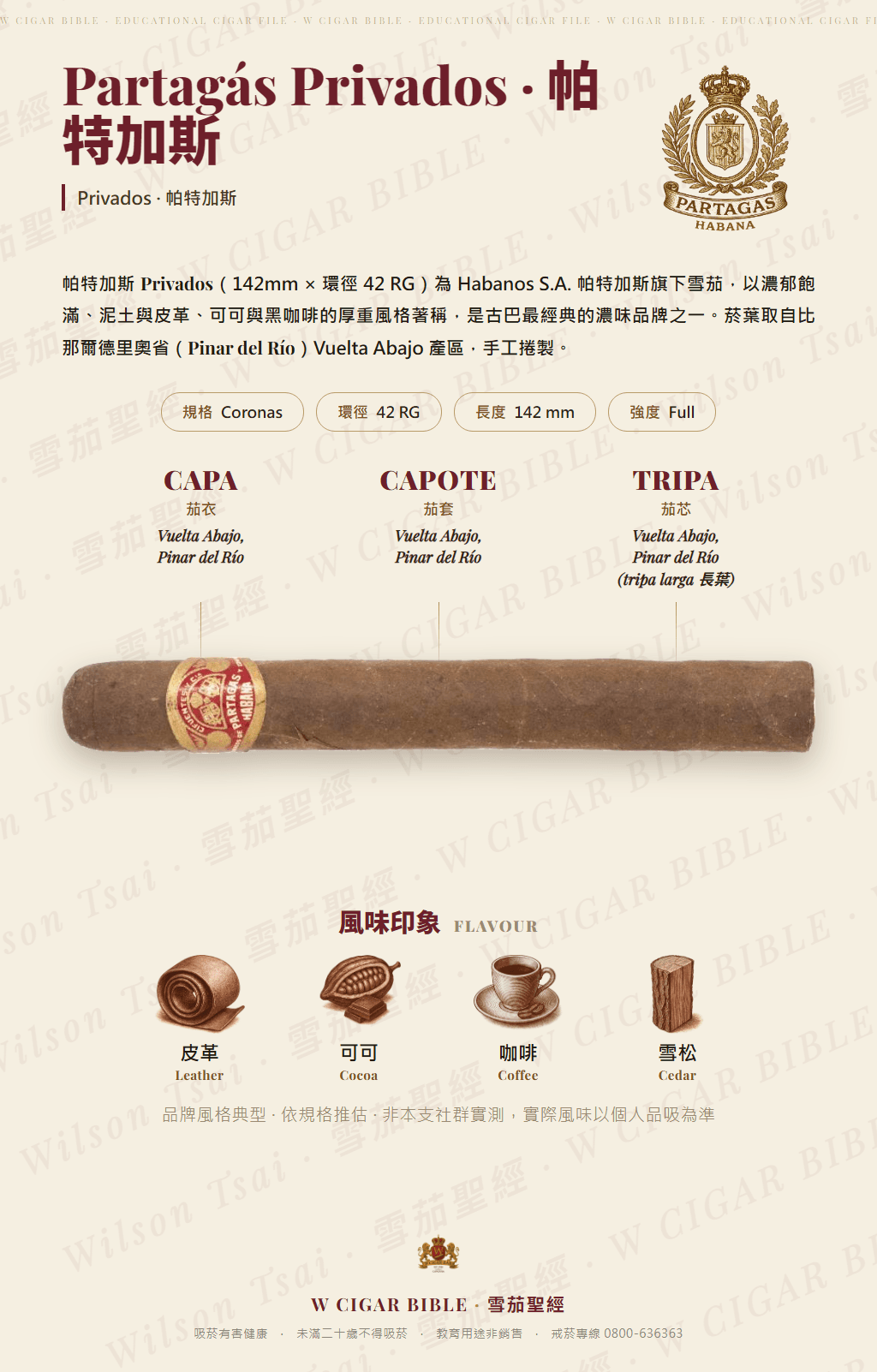
Partagás Privados · 帕特加斯
已停產歷史規格(Coronas 廠規 42 環徑 × 142mm,1980 年代自目錄除名)· 雪茄檔案
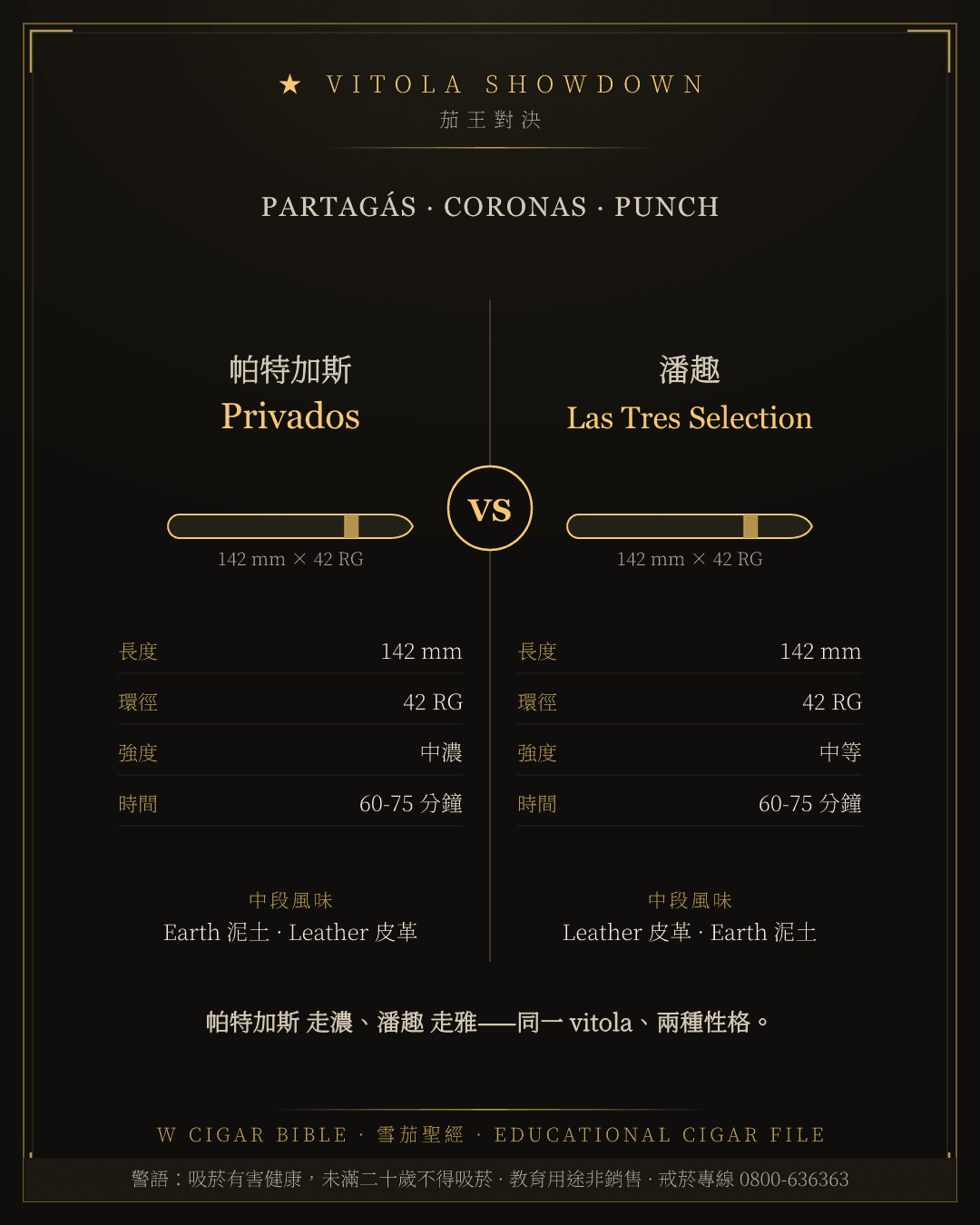
Partagás Privados vs Punch Las Tres Selection
VITOLA SHOWDOWN · Coronas
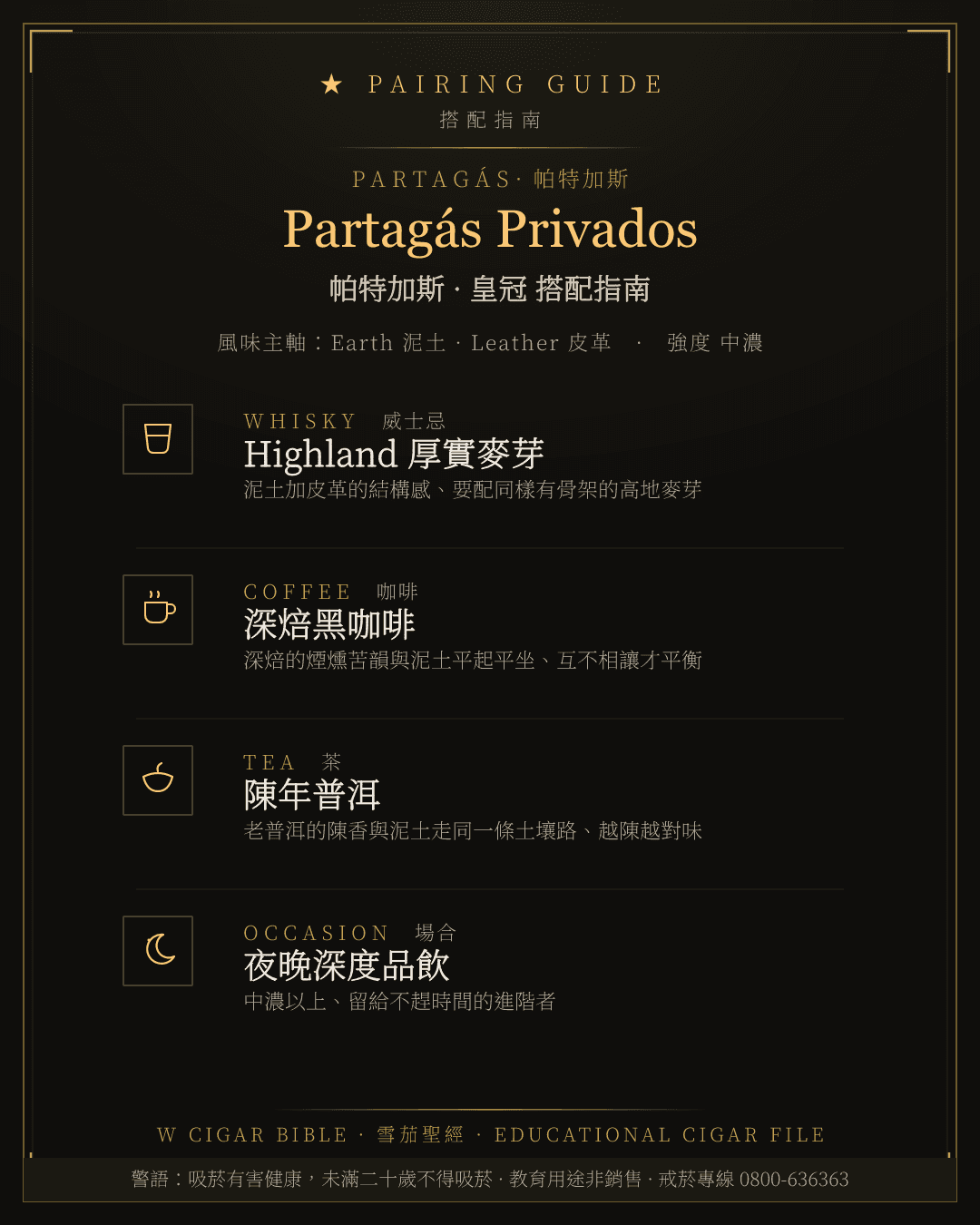
Partagás Privados 搭配指南 · 帕特加斯
PAIRING GUIDE · 搭配指南

Partagás Privados 風味筆記 · 帕特加斯
TASTING NOTES · 風味筆記
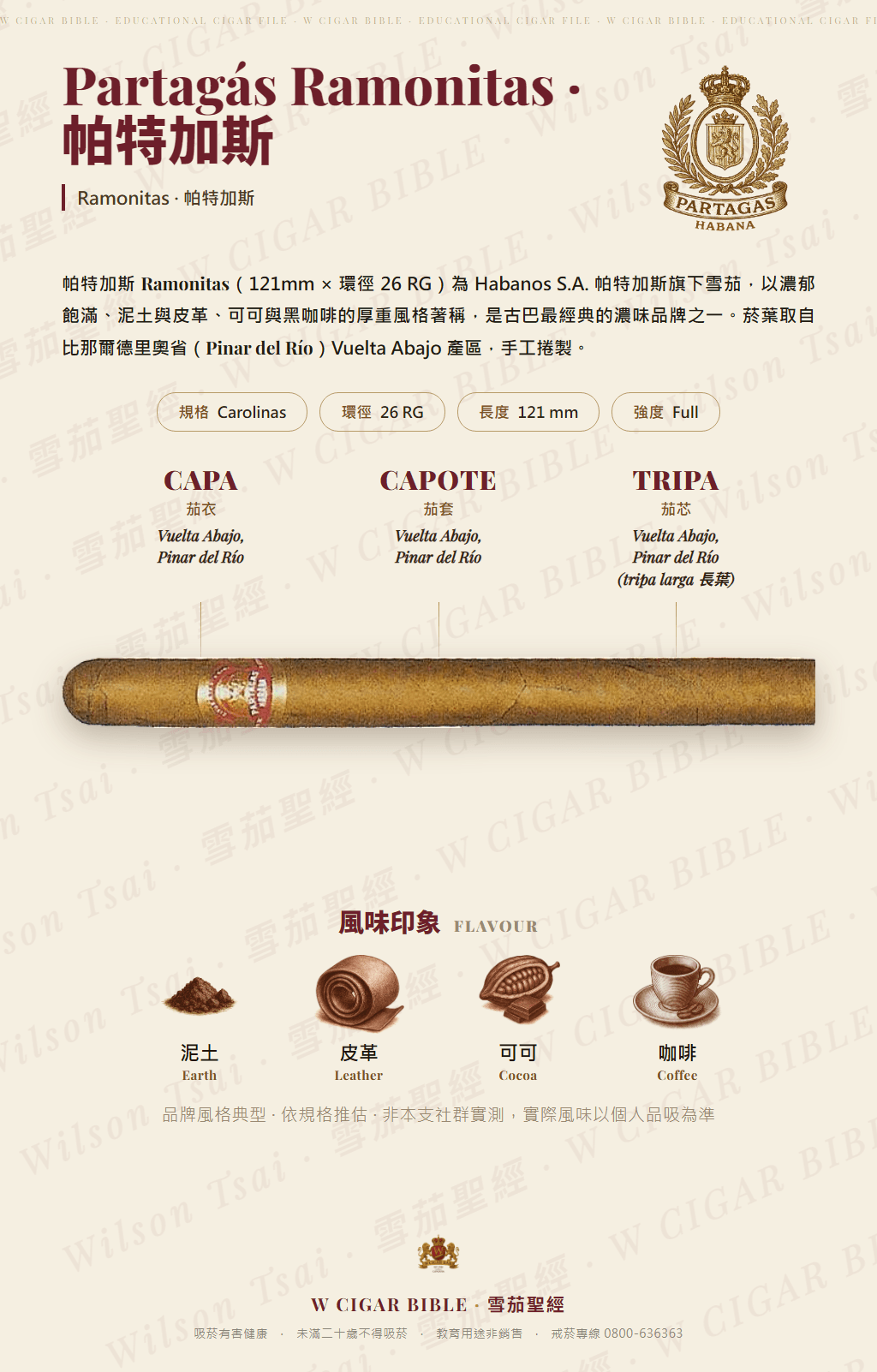
Partagás Ramonitas · 帕特加斯

Partagás Ramonitas 搭配指南 · 帕特加斯
PAIRING GUIDE · 搭配指南
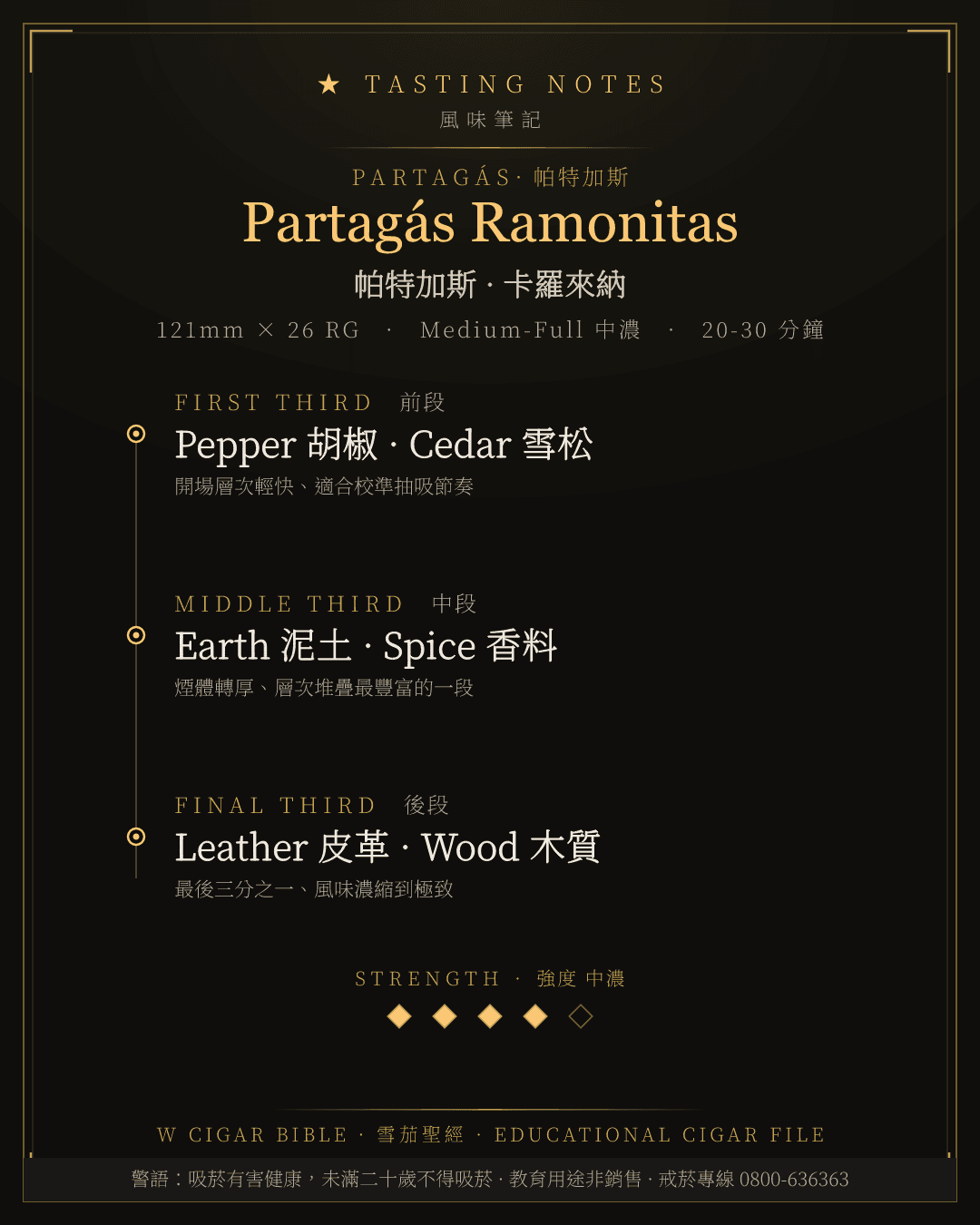
Partagás Ramonitas 風味筆記 · 帕特加斯
TASTING NOTES · 風味筆記
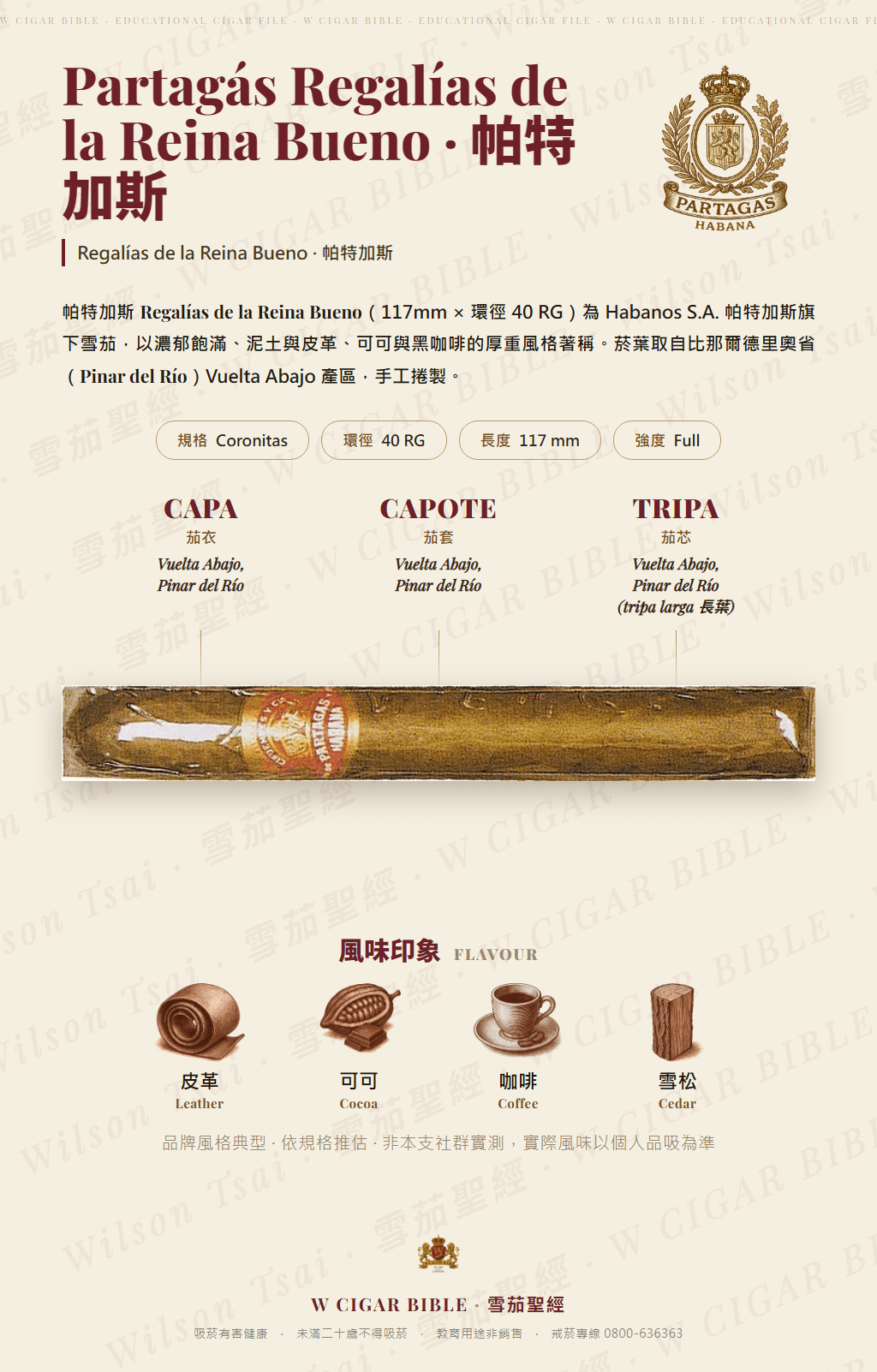
Partagás Regalías de la Reina Bueno · 帕特加斯
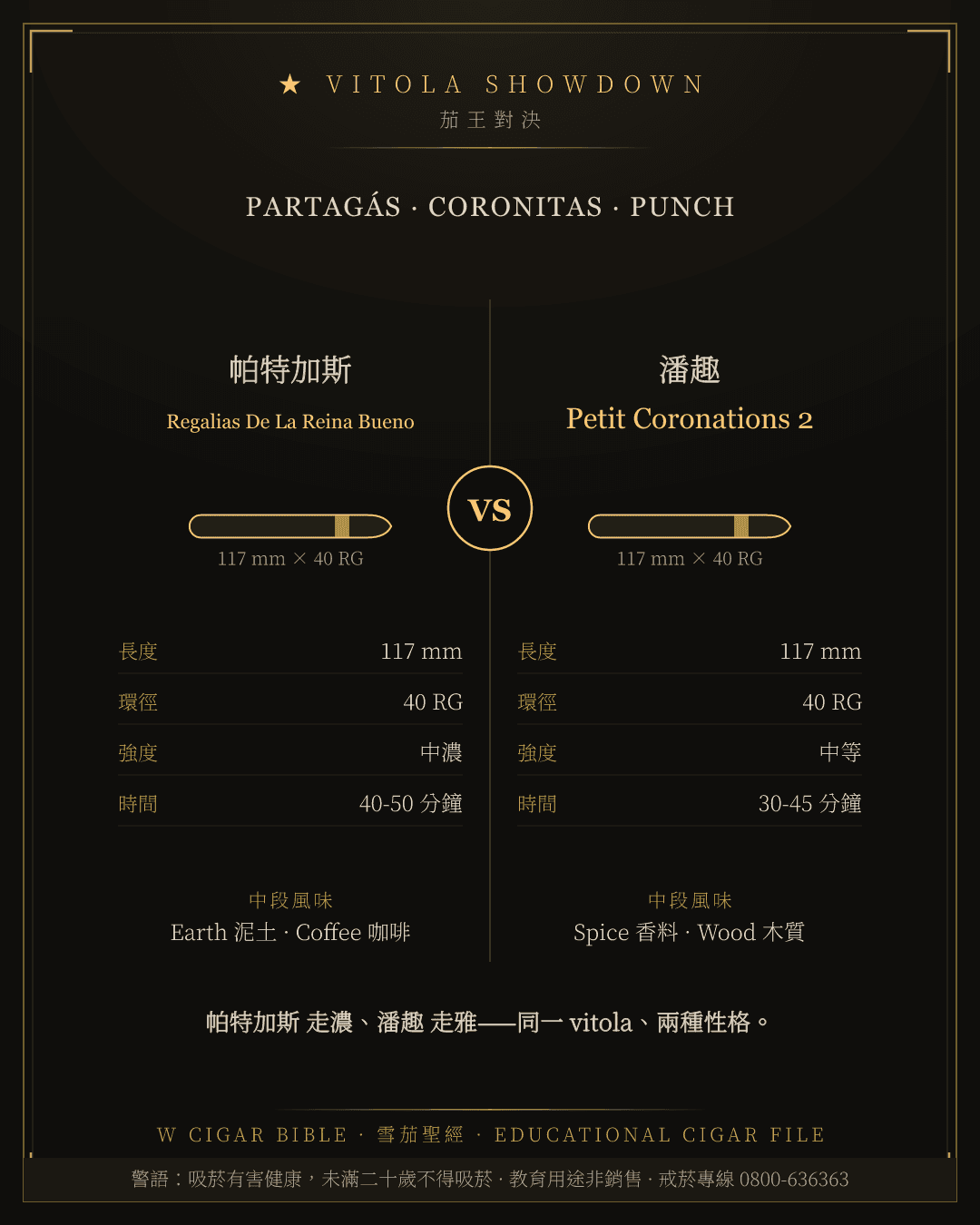
Partagás Regalias De La Reina Bueno vs Punch Petit Coronations 2
VITOLA SHOWDOWN · Coronitas
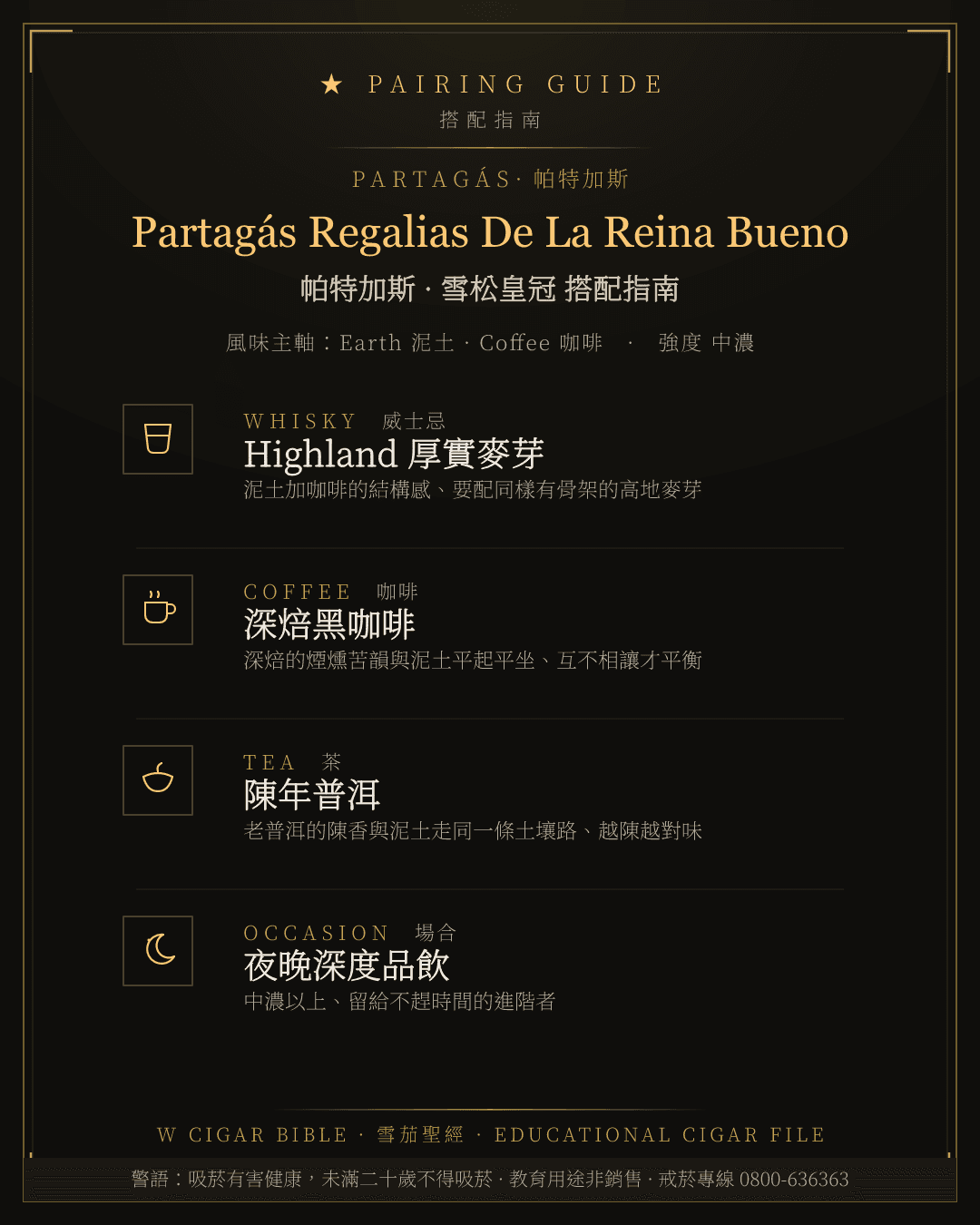
Partagás Regalias De La Reina Bueno 搭配指南 · 帕特加斯
PAIRING GUIDE · 搭配指南
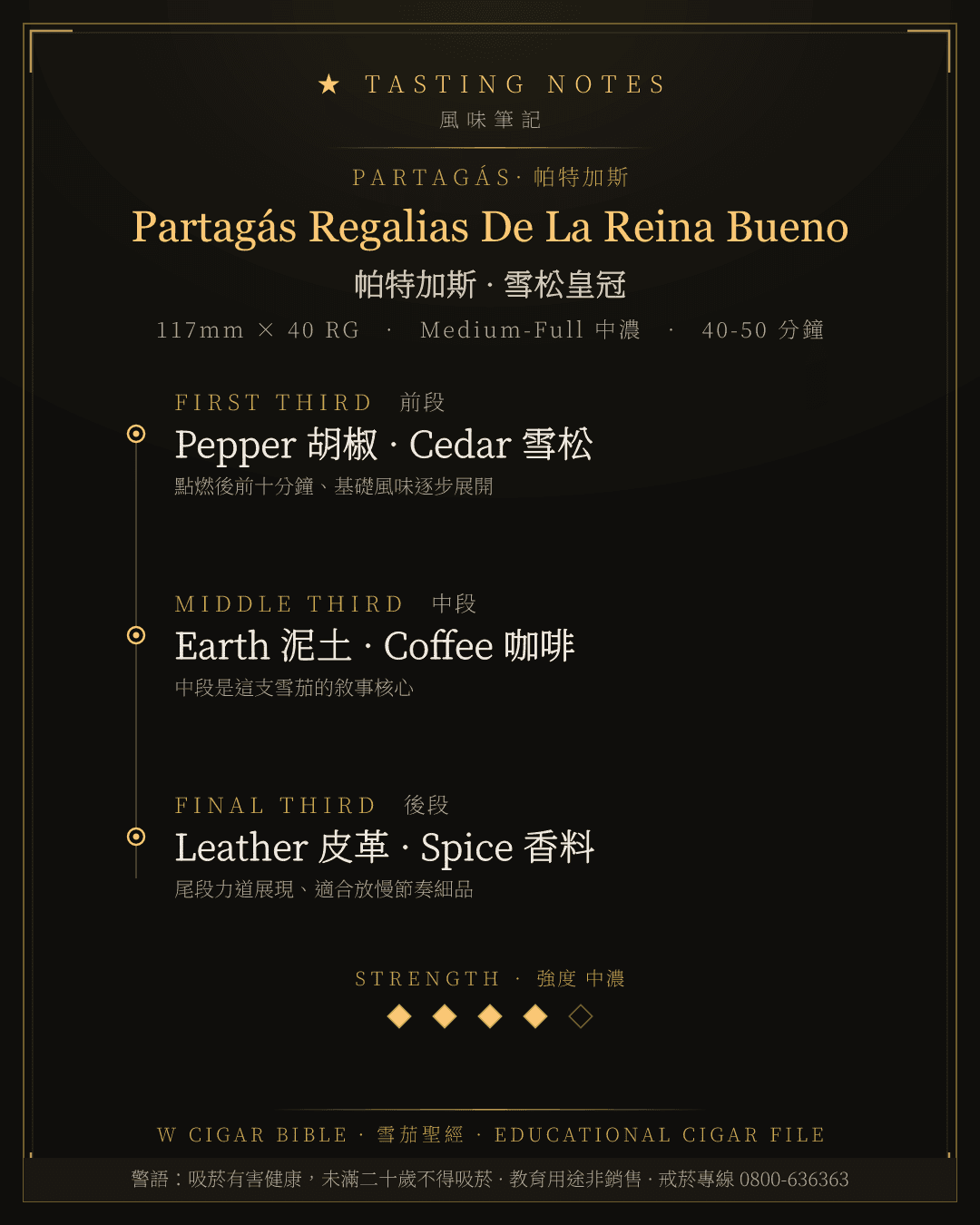
Partagás Regalias De La Reina Bueno 風味筆記 · 帕特加斯
TASTING NOTES · 風味筆記
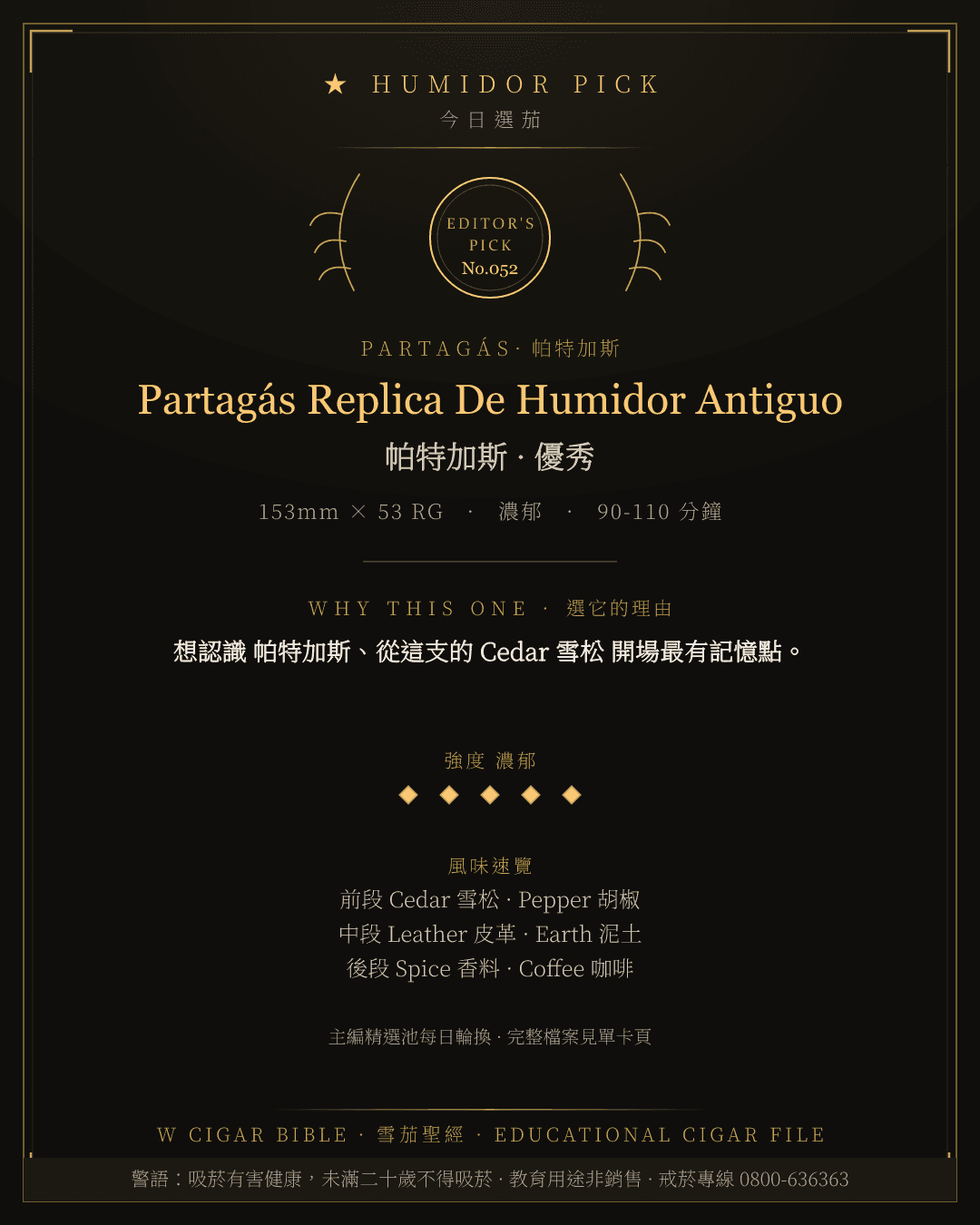
Partagás Replica De Humidor Antiguo · 帕特加斯 總編輯精選
HUMIDOR PICK · No.052
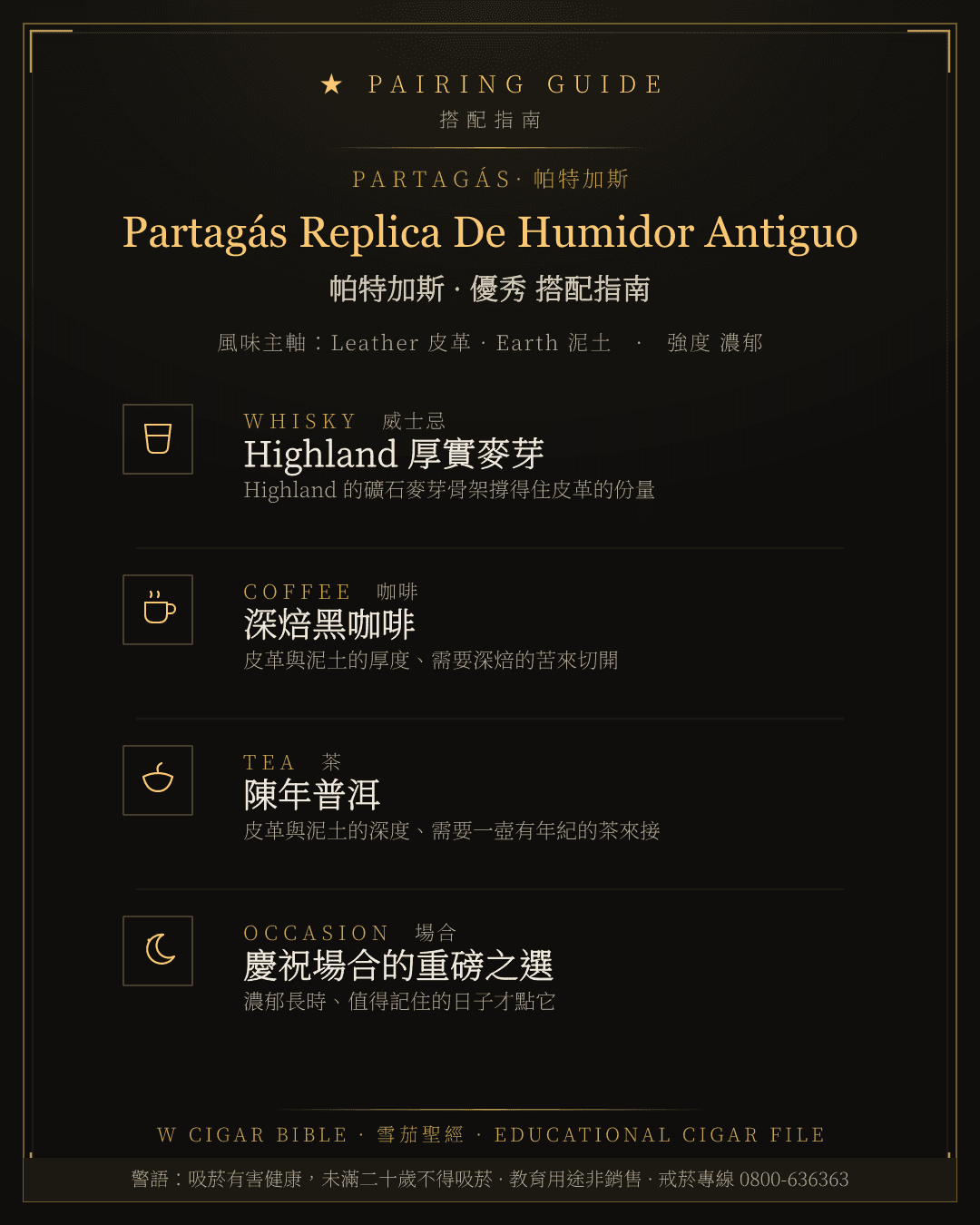
Partagás Replica De Humidor Antiguo 搭配指南 · 帕特加斯
PAIRING GUIDE · 搭配指南
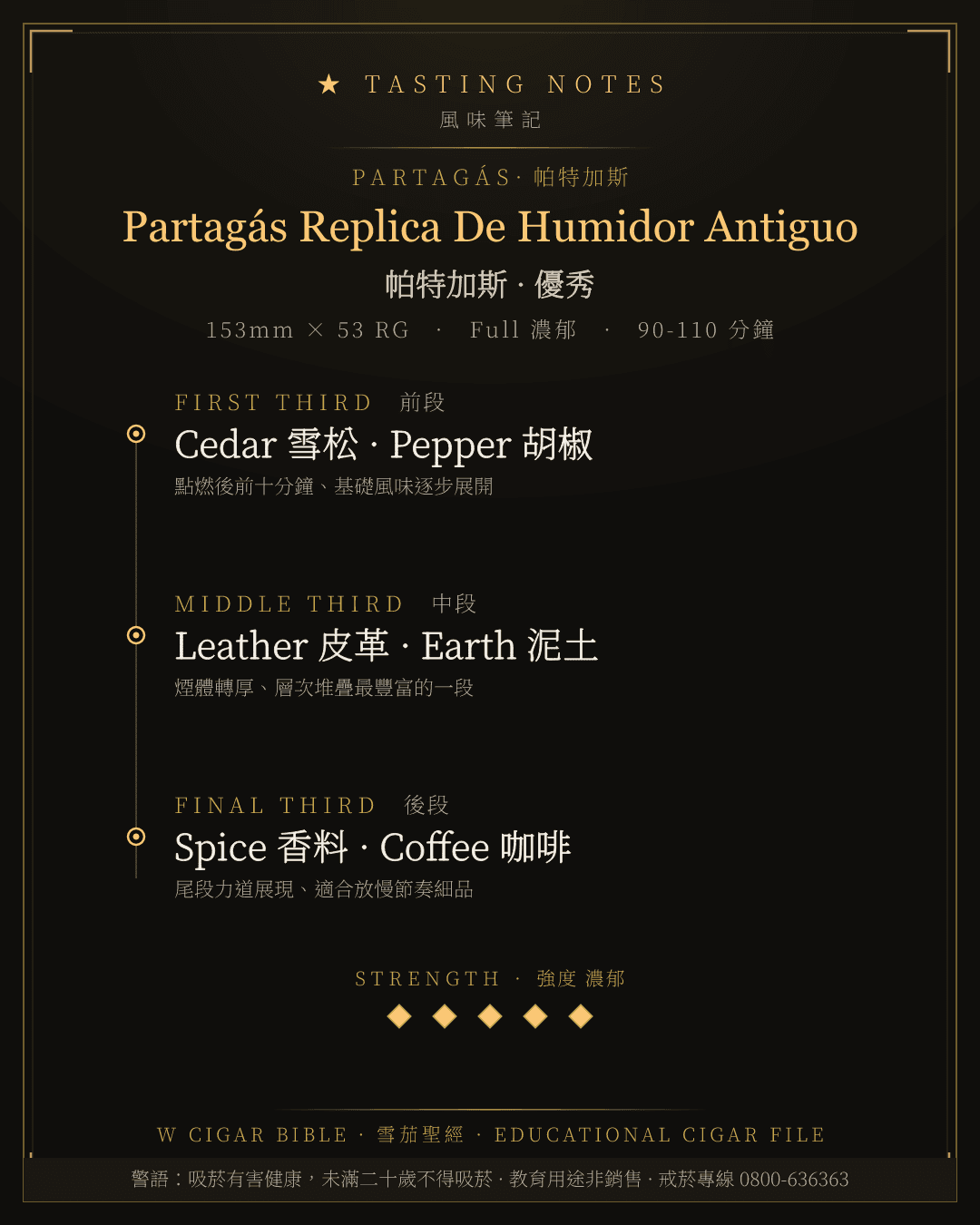
Partagás Replica De Humidor Antiguo 風味筆記 · 帕特加斯
TASTING NOTES · 風味筆記

Partagás Reserva Cosecha 2000 搭配指南 · 帕特加斯
PAIRING GUIDE · 搭配指南
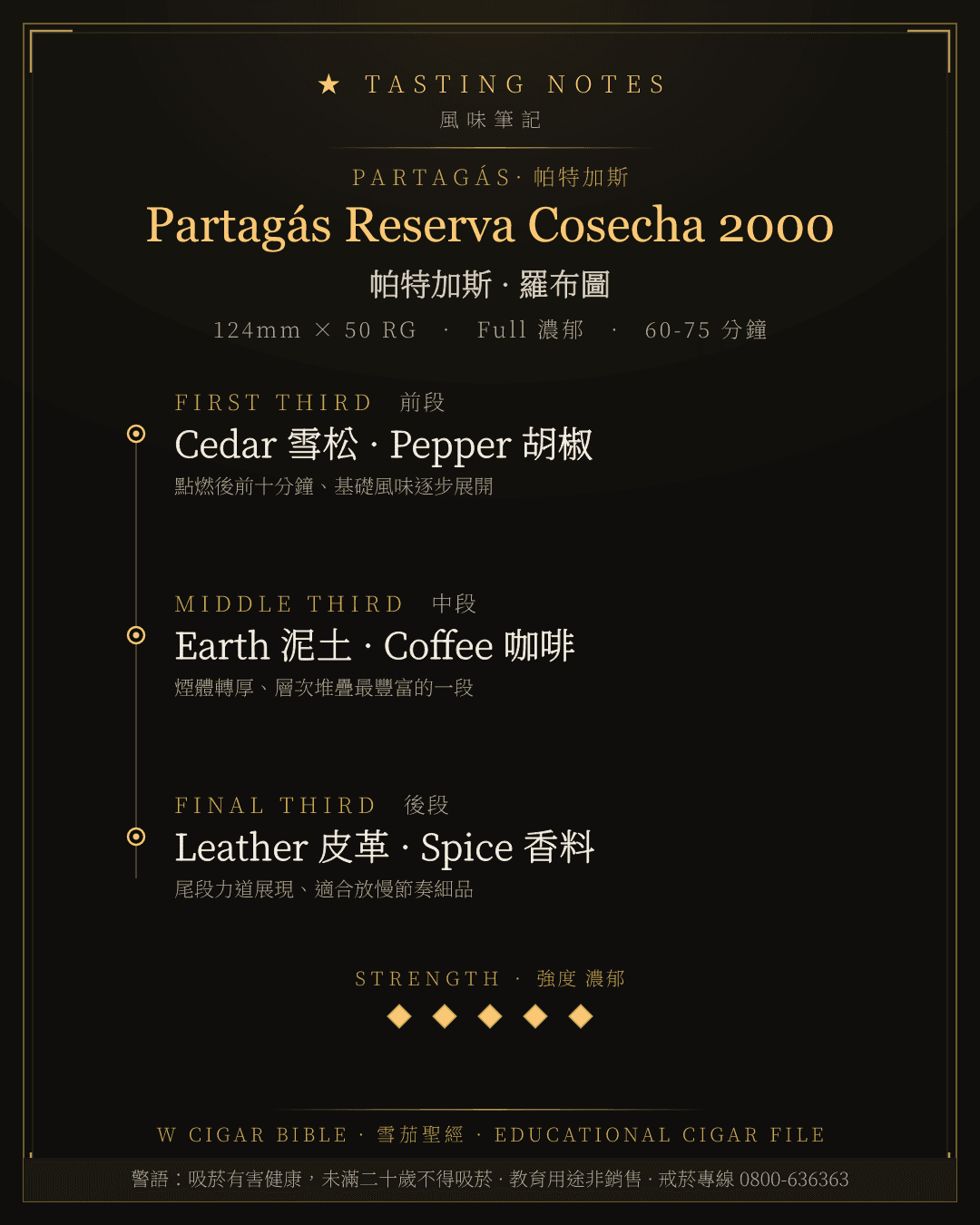
Partagás Reserva Cosecha 2000 風味筆記 · 帕特加斯
TASTING NOTES · 風味筆記

Partagás Rito 搭配指南 · 帕特加斯
PAIRING GUIDE · 搭配指南
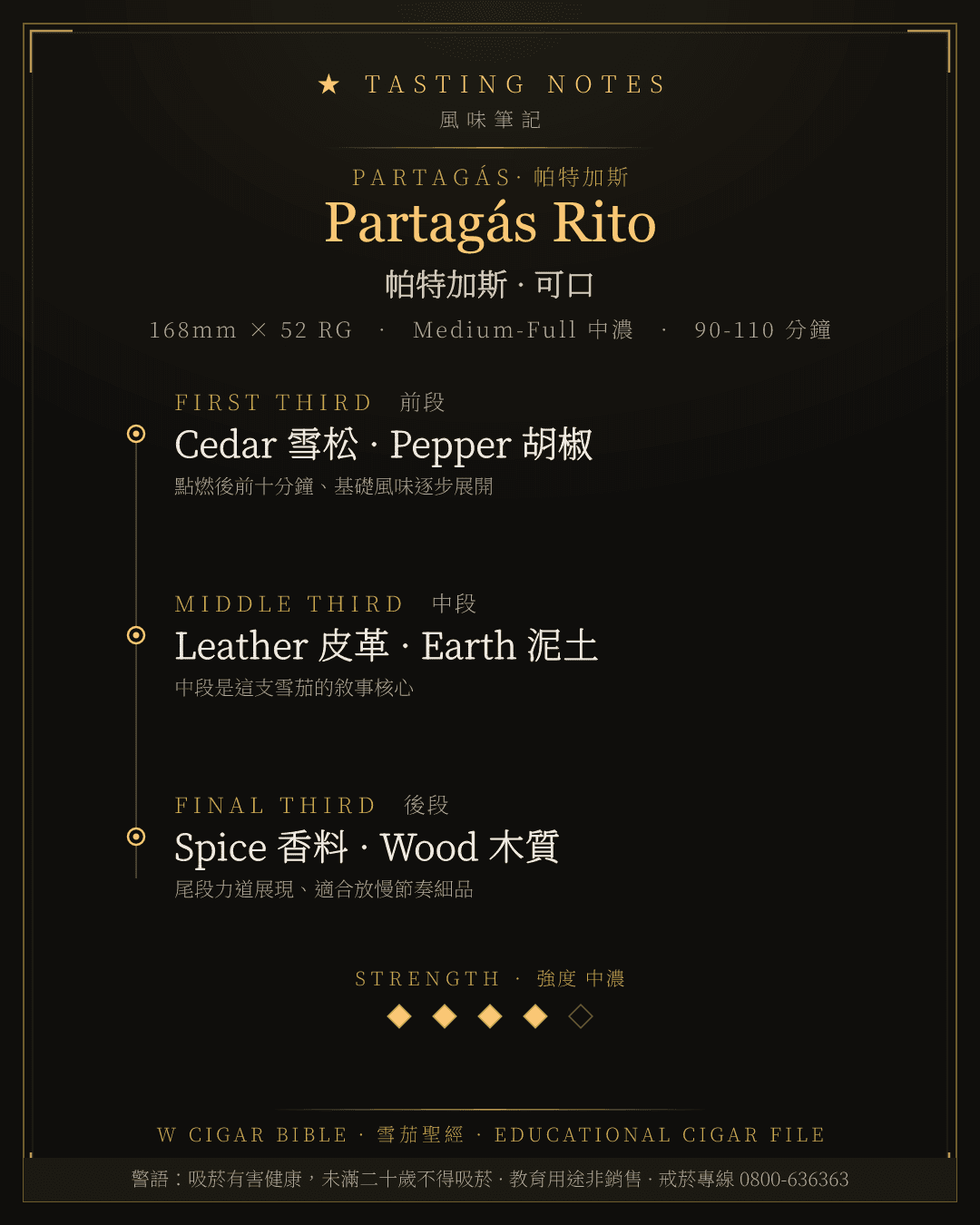
Partagás Rito 風味筆記 · 帕特加斯
TASTING NOTES · 風味筆記
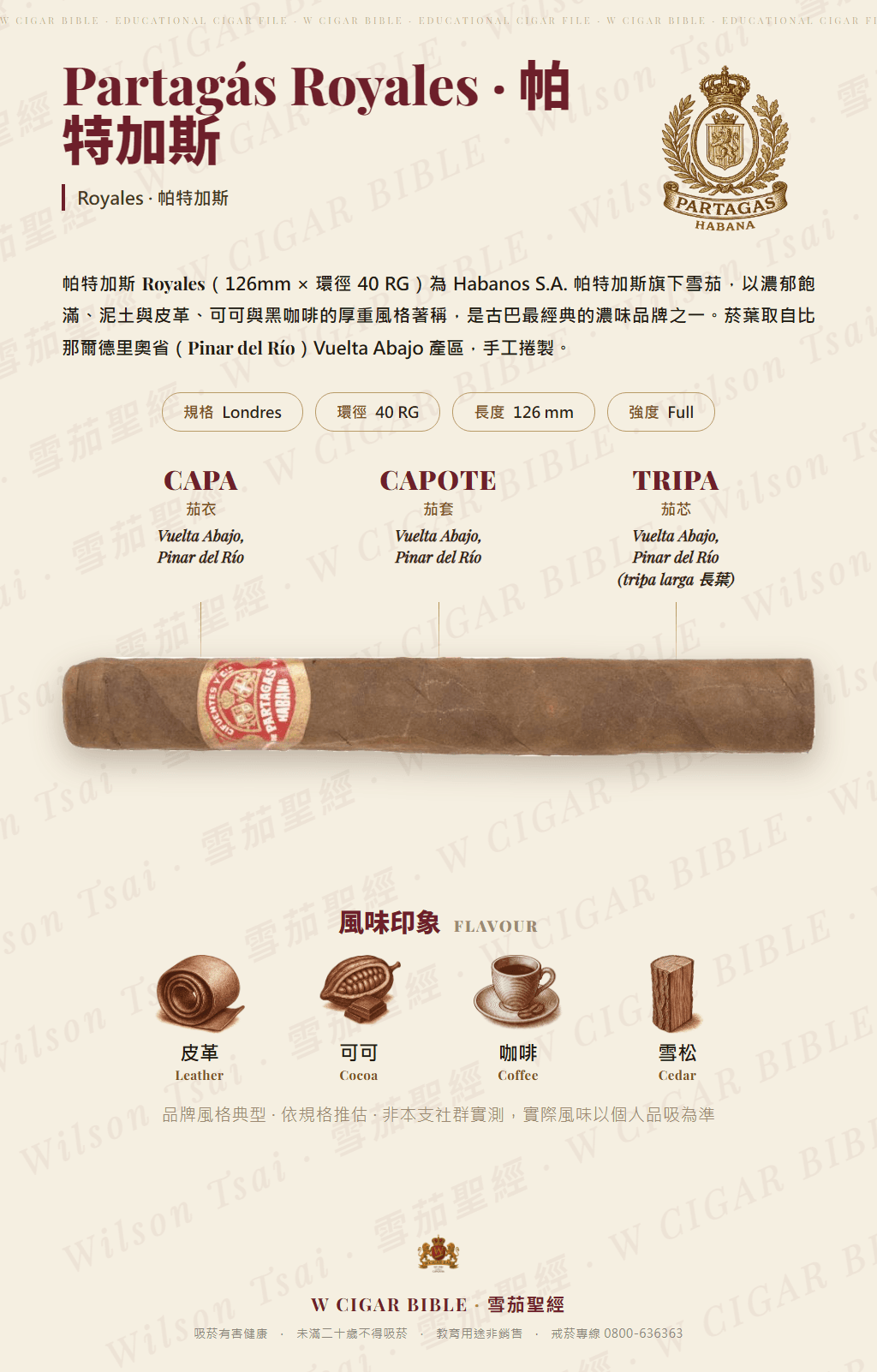
Partagás Royales · 帕特加斯
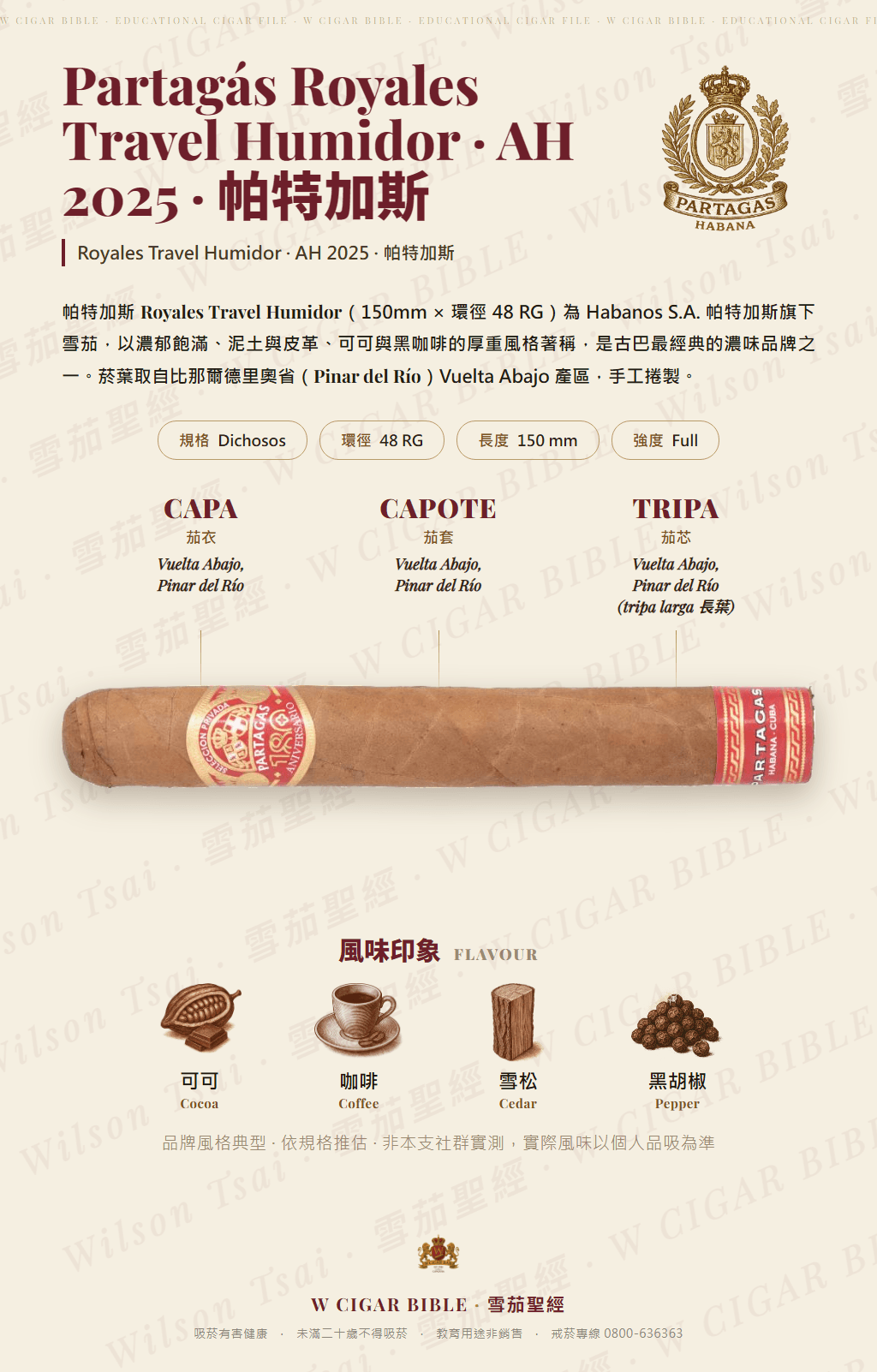
Partagás Royales Travel Humidor · AH 2025 · 帕特加斯
AH 2025 · 180 週年旅行木盒 Travel Humidor · 雪茄檔案

Partagás Salomones · LCDH · 帕特加斯
LCDH · LCDH 全球限定 La Casa del Habano · 雪茄檔案
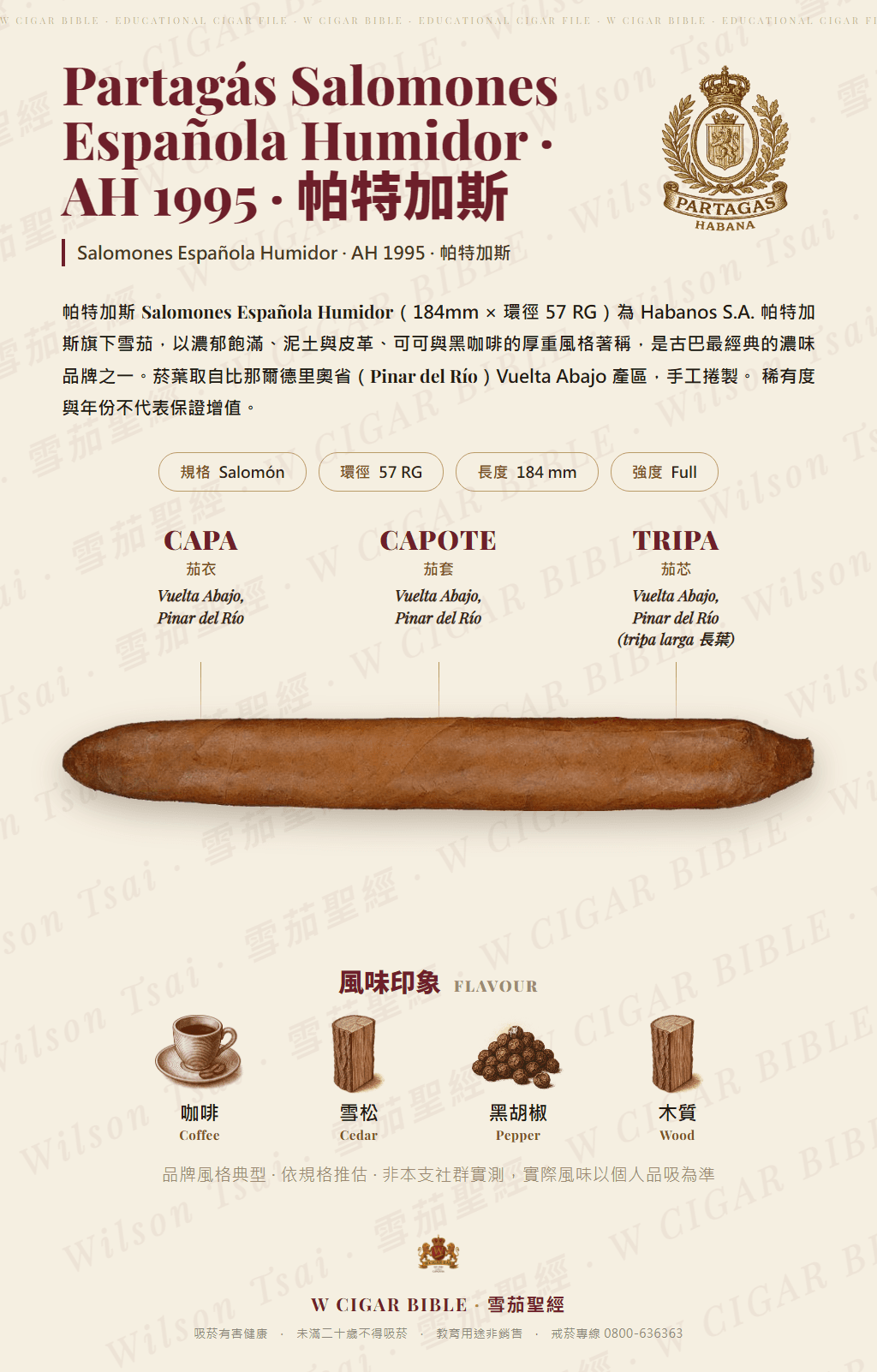
Partagás Salomones Española Humidor · AH 1995 · 帕特加斯
AH 1995 · 週年木盒紀念版 Aniversario Humidor(Salomones Española 廠規 57 RG × 184mm,編號木盒每只 50 支、約 150 只,已停產)· 雪茄檔案

Partagás Salomones Española Humidor 搭配指南 · 帕特加斯
PAIRING GUIDE · 搭配指南
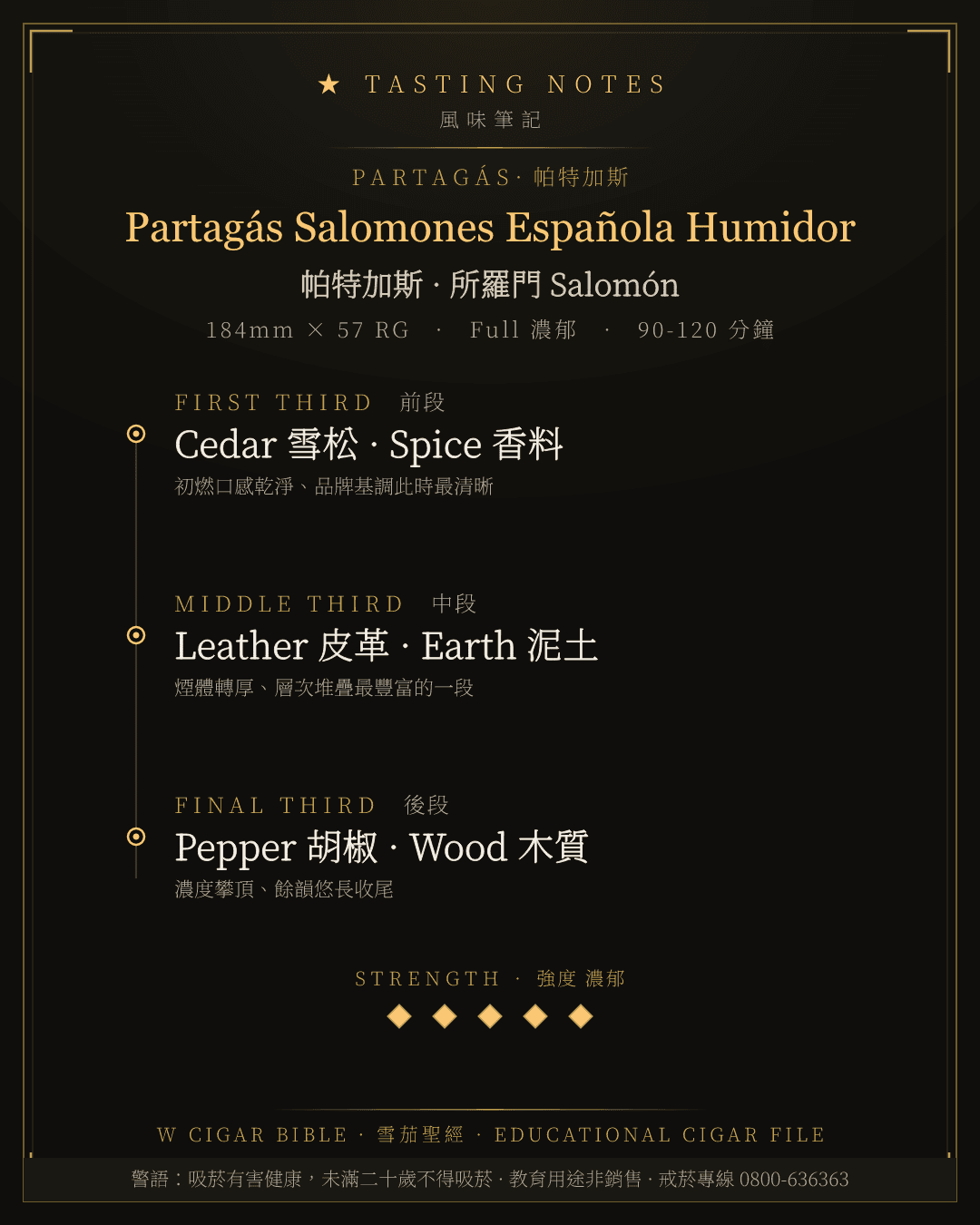
Partagás Salomones Española Humidor 風味筆記 · 帕特加斯
TASTING NOTES · 風味筆記

Partagás Salomones 搭配指南 · 帕特加斯
PAIRING GUIDE · 搭配指南

Partagás Salomones 風味筆記 · 帕特加斯
TASTING NOTES · 風味筆記
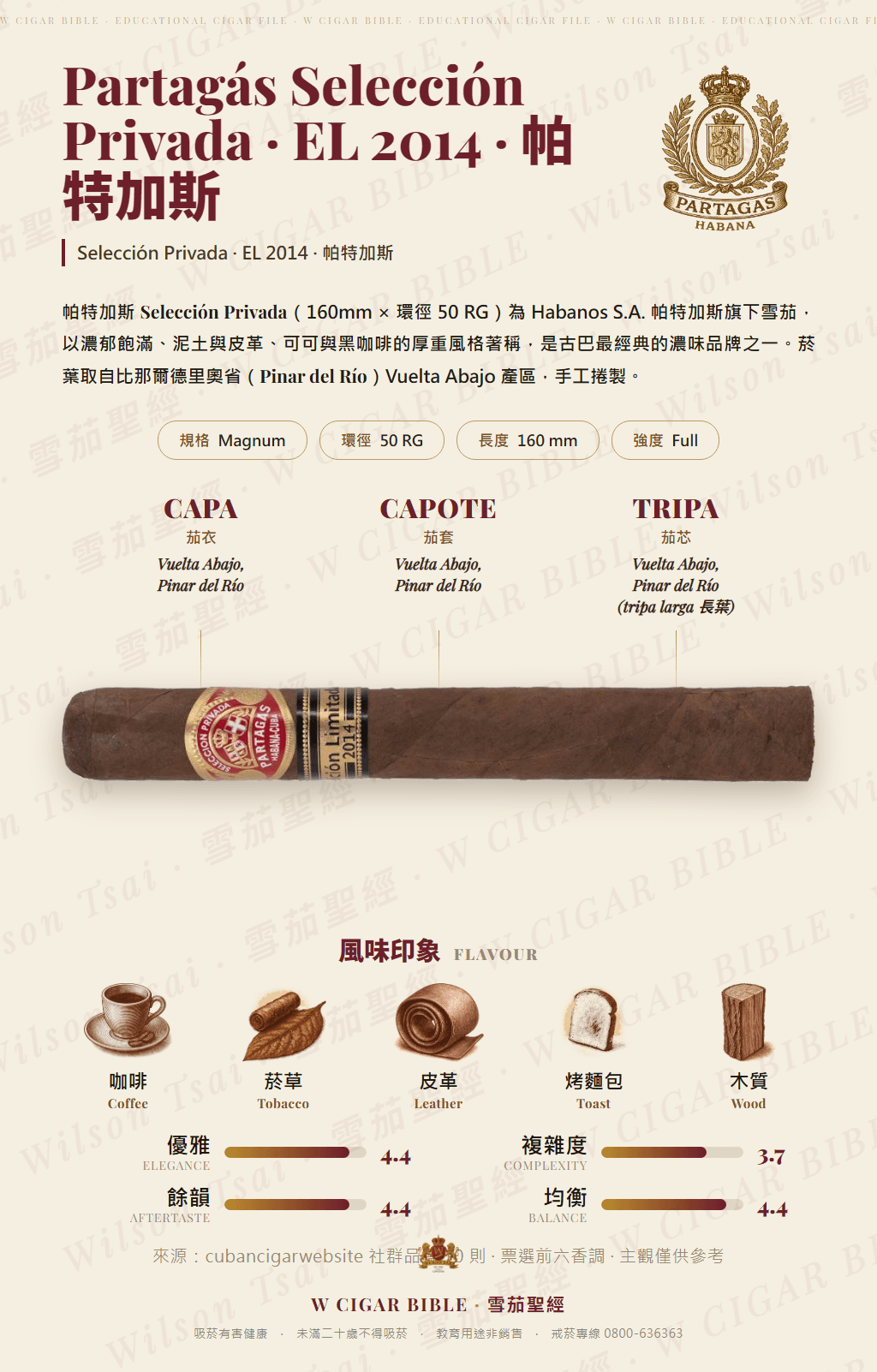
Partagás Selección Privada · EL 2014 · 帕特加斯
EL 2014 · 限量年度版 Edición Limitada · 雪茄檔案
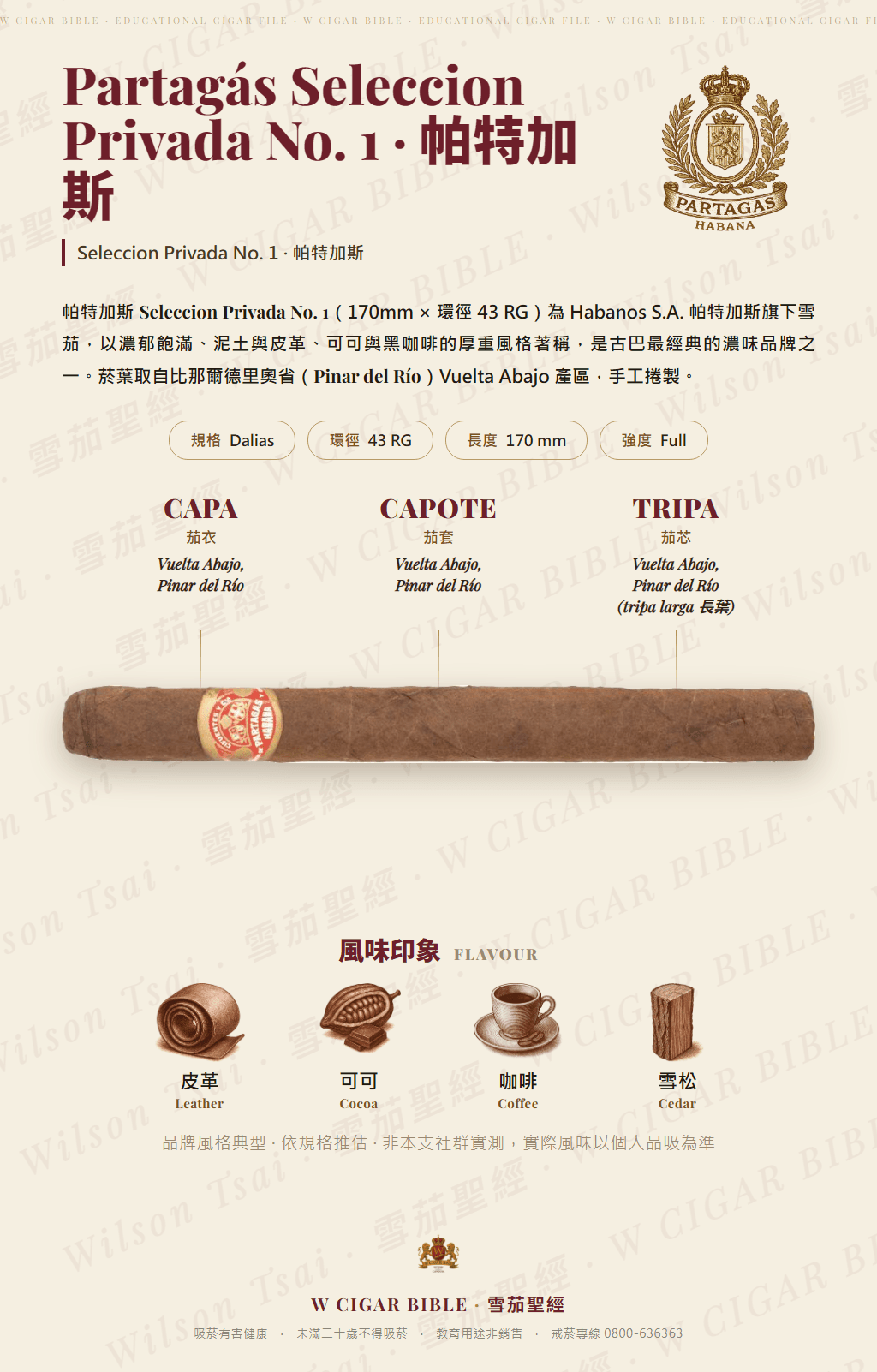
Partagás Seleccion Privada No. 1 · 帕特加斯
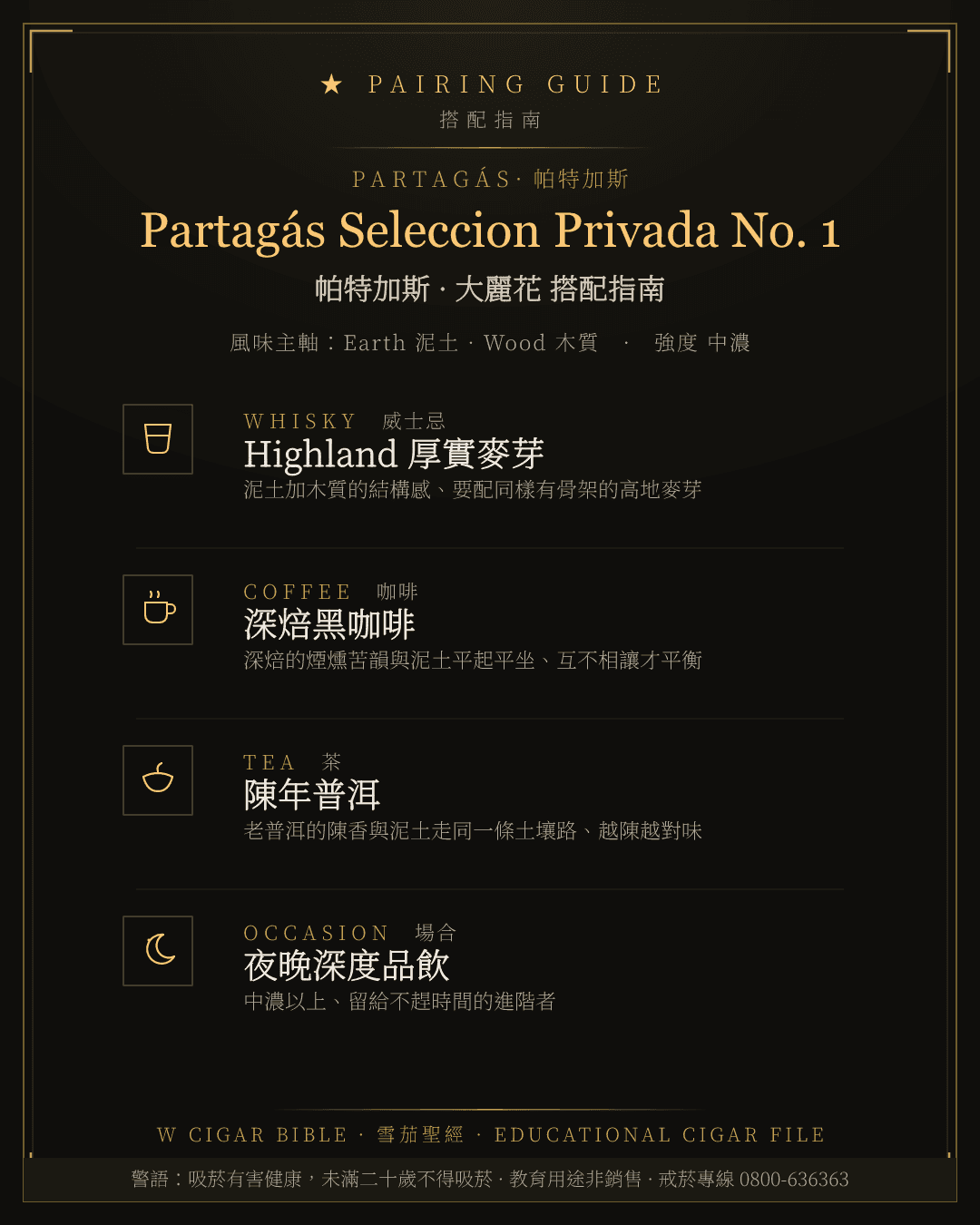
Partagás Seleccion Privada No. 1 搭配指南 · 帕特加斯
PAIRING GUIDE · 搭配指南
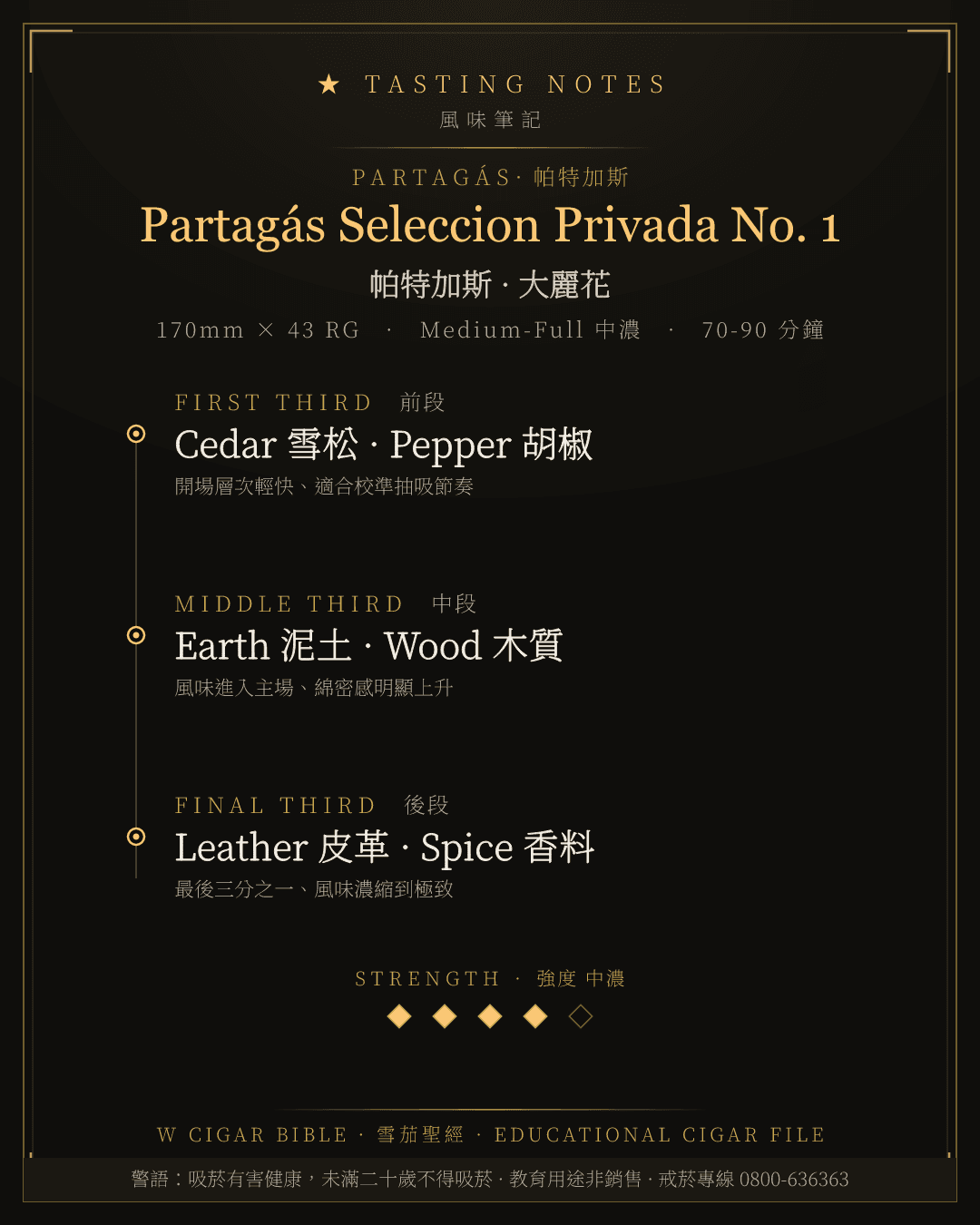
Partagás Seleccion Privada No. 1 風味筆記 · 帕特加斯
TASTING NOTES · 風味筆記
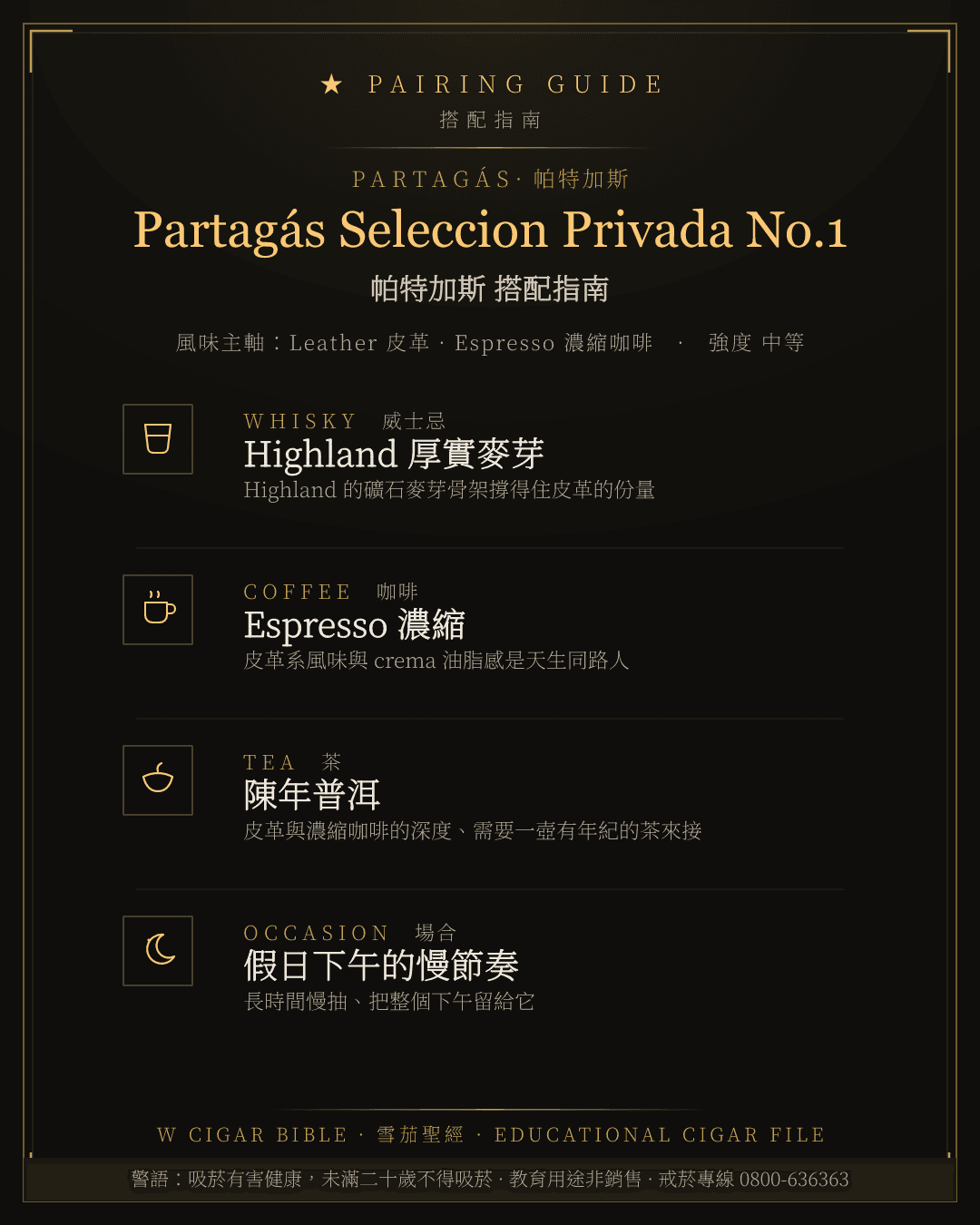
Partagás Seleccion Privada No.1 搭配指南 · 帕特加斯
PAIRING GUIDE · 搭配指南

Partagás Seleccion Privada No.1 風味筆記 · 帕特加斯
TASTING NOTES · 風味筆記

Partagás Selección Privada 搭配指南 · 帕特加斯
PAIRING GUIDE · 搭配指南
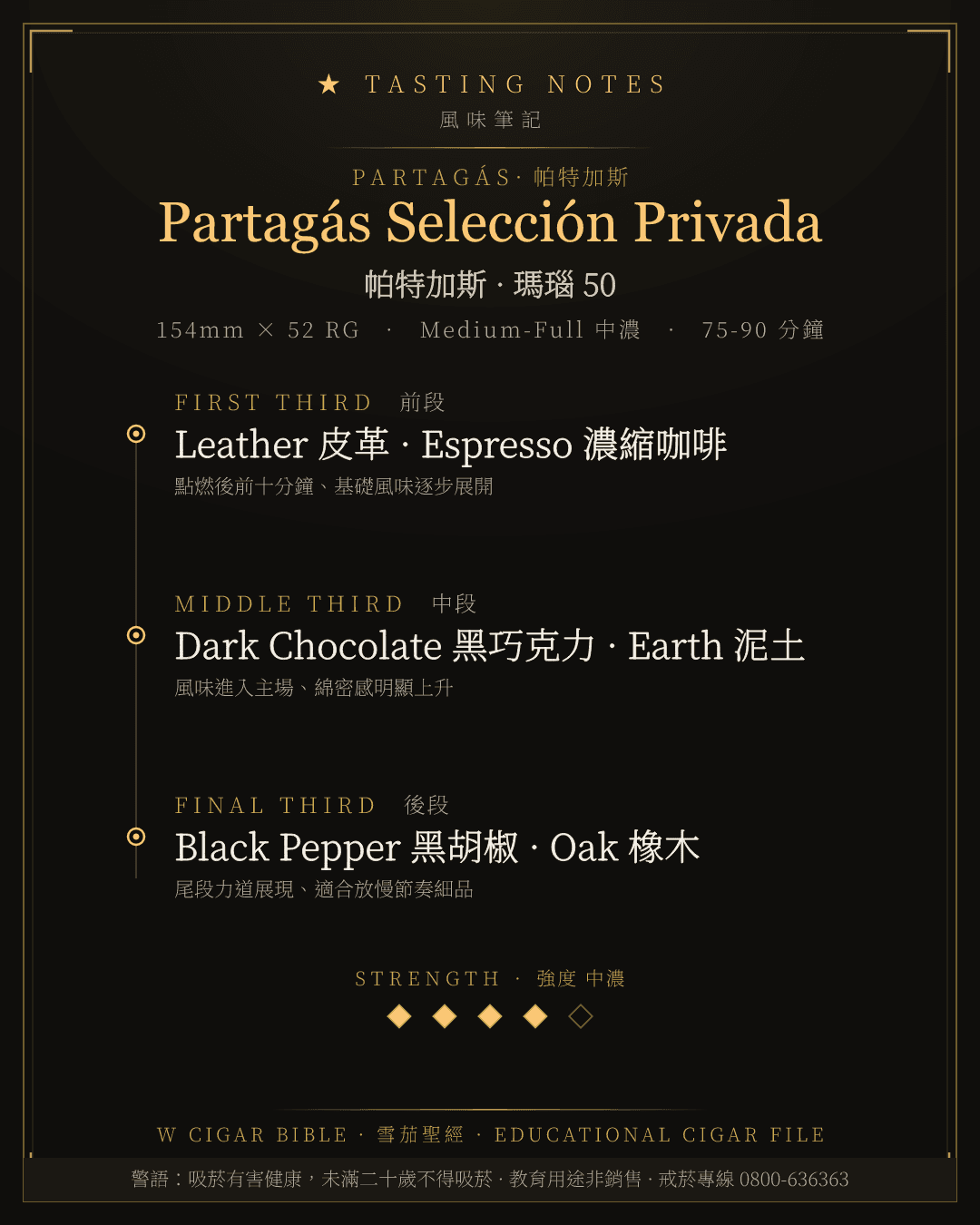
Partagás Selección Privada 風味筆記 · 帕特加斯
TASTING NOTES · 風味筆記

Partagás Señoritas · 帕特加斯

Partagás Serie C No. 3 搭配指南 · 帕特加斯
PAIRING GUIDE · 搭配指南

Partagás Serie C No. 3 風味筆記 · 帕特加斯
TASTING NOTES · 風味筆記
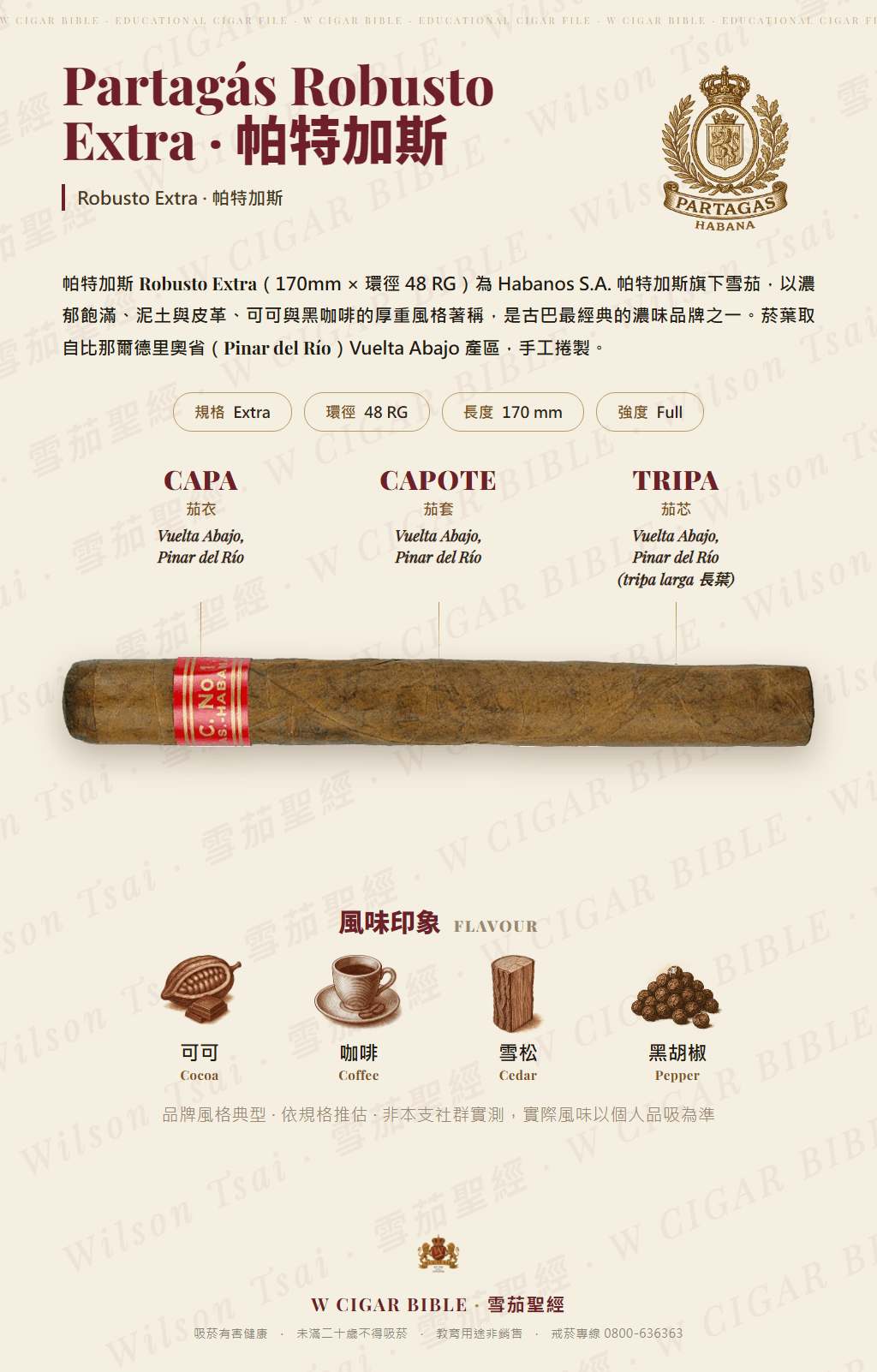
Partagás Serie C No.1 · Colección Habanos 2002 · 帕特加斯
Dobles 廠規(50 環徑 × 155mm)· 非 Edición Limitada 年度版 · 雪茄檔案
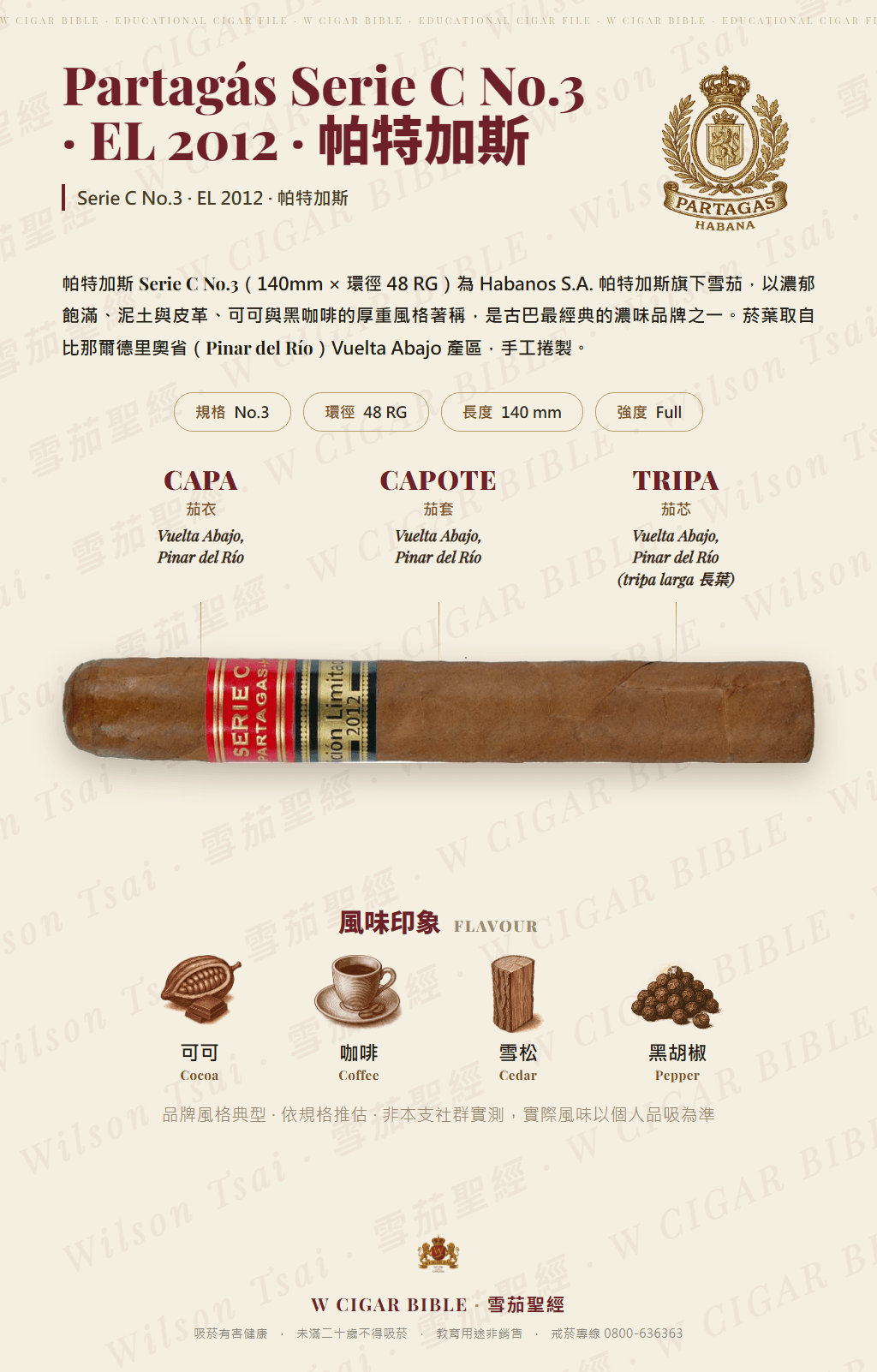
Partagás Serie C No.3 · EL 2012 · 帕特加斯
EL 2012 · 限量年度版 Edición Limitada(官方全名 Serie C No.3,140mm × 環徑 48 RG,10 支木盒)· 雪茄檔案
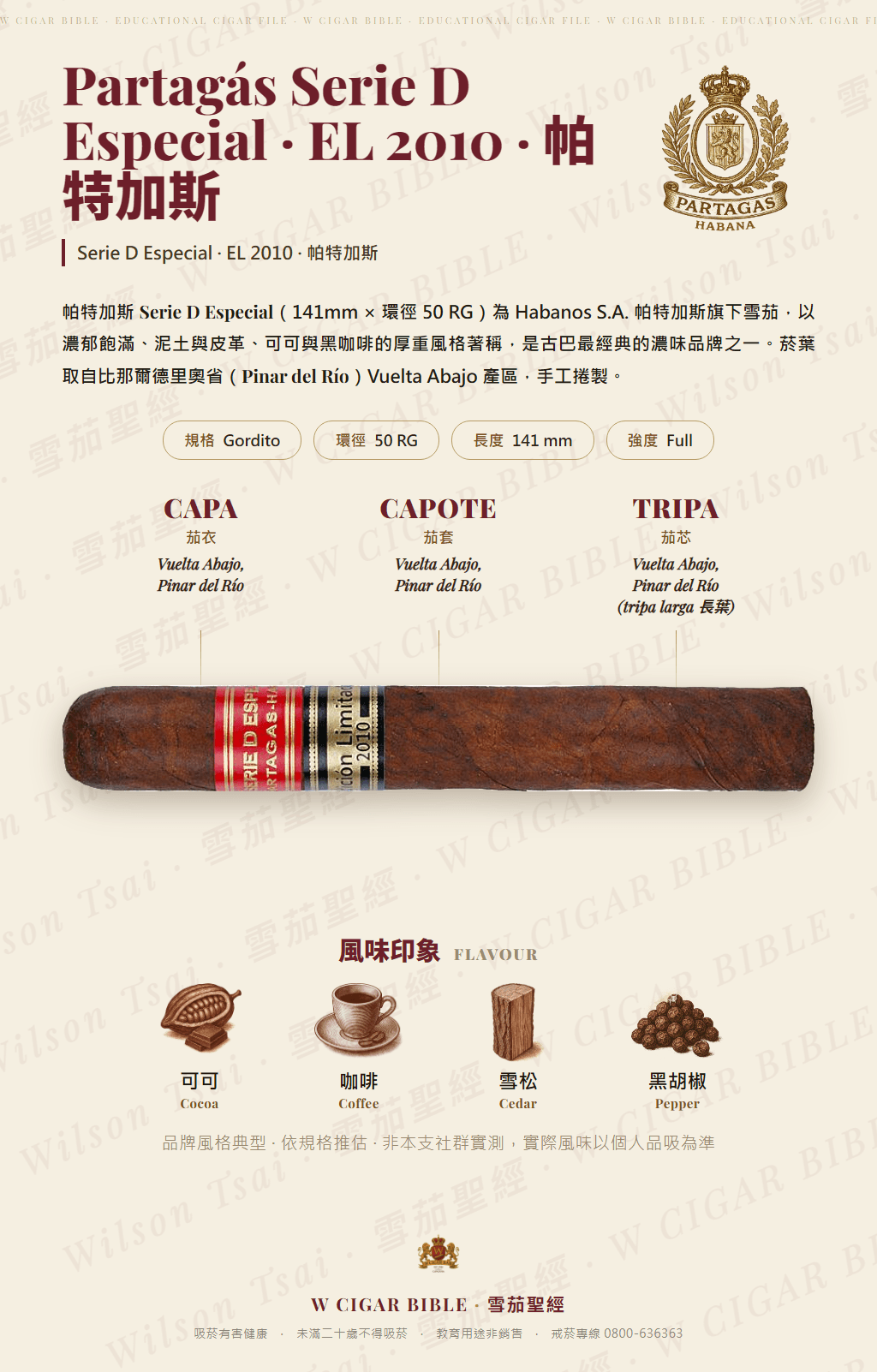
Partagás Serie D Especial · EL 2010 · 帕特加斯
EL 2010 · 限量年度版 Edición Limitada · 雪茄檔案
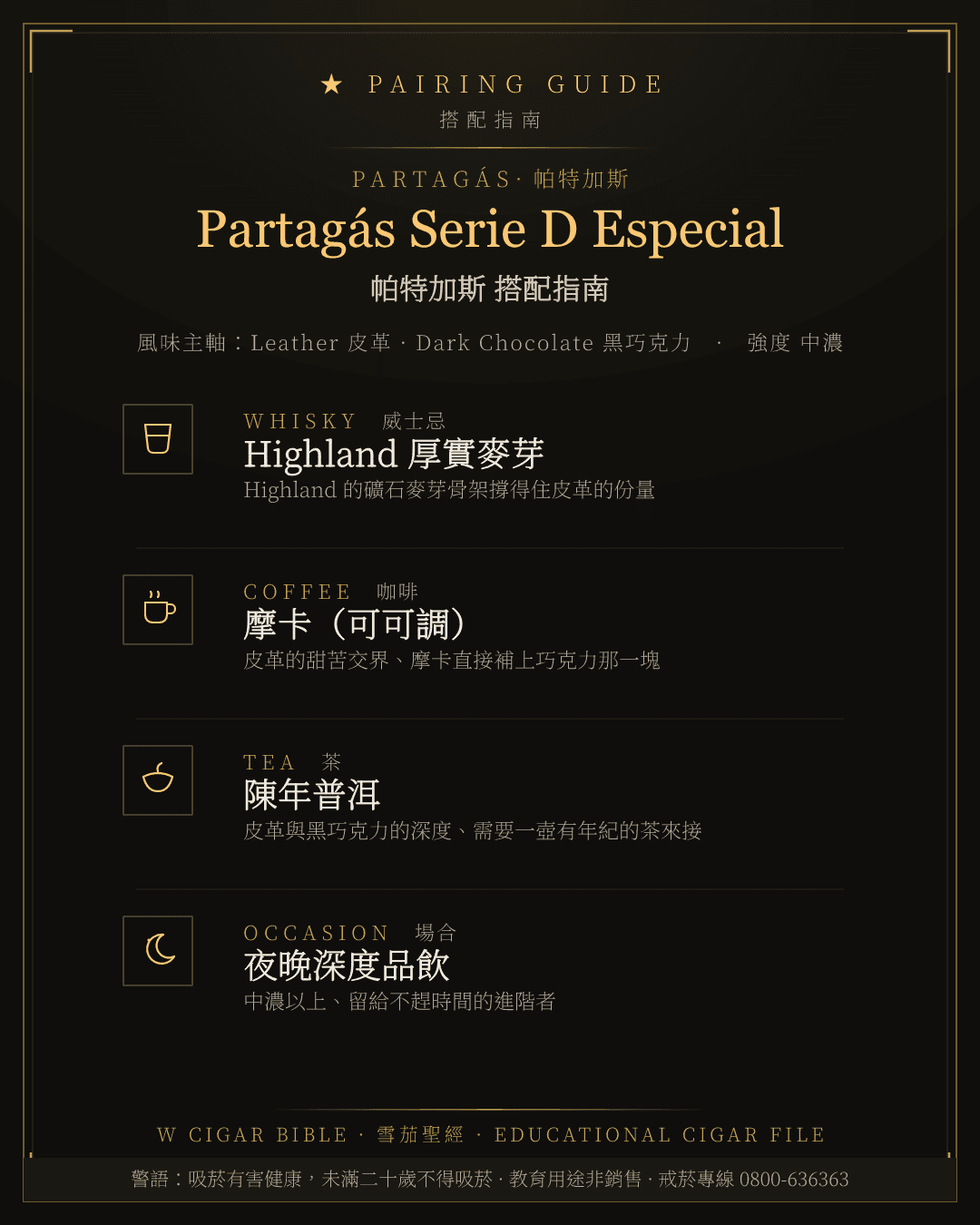
Partagás Serie D Especial 搭配指南 · 帕特加斯
PAIRING GUIDE · 搭配指南

Partagás Serie D Especial 風味筆記 · 帕特加斯
TASTING NOTES · 風味筆記

Partagás Serie D No. 2 Edición Limitada 搭配指南 · 帕特加斯
PAIRING GUIDE · 搭配指南
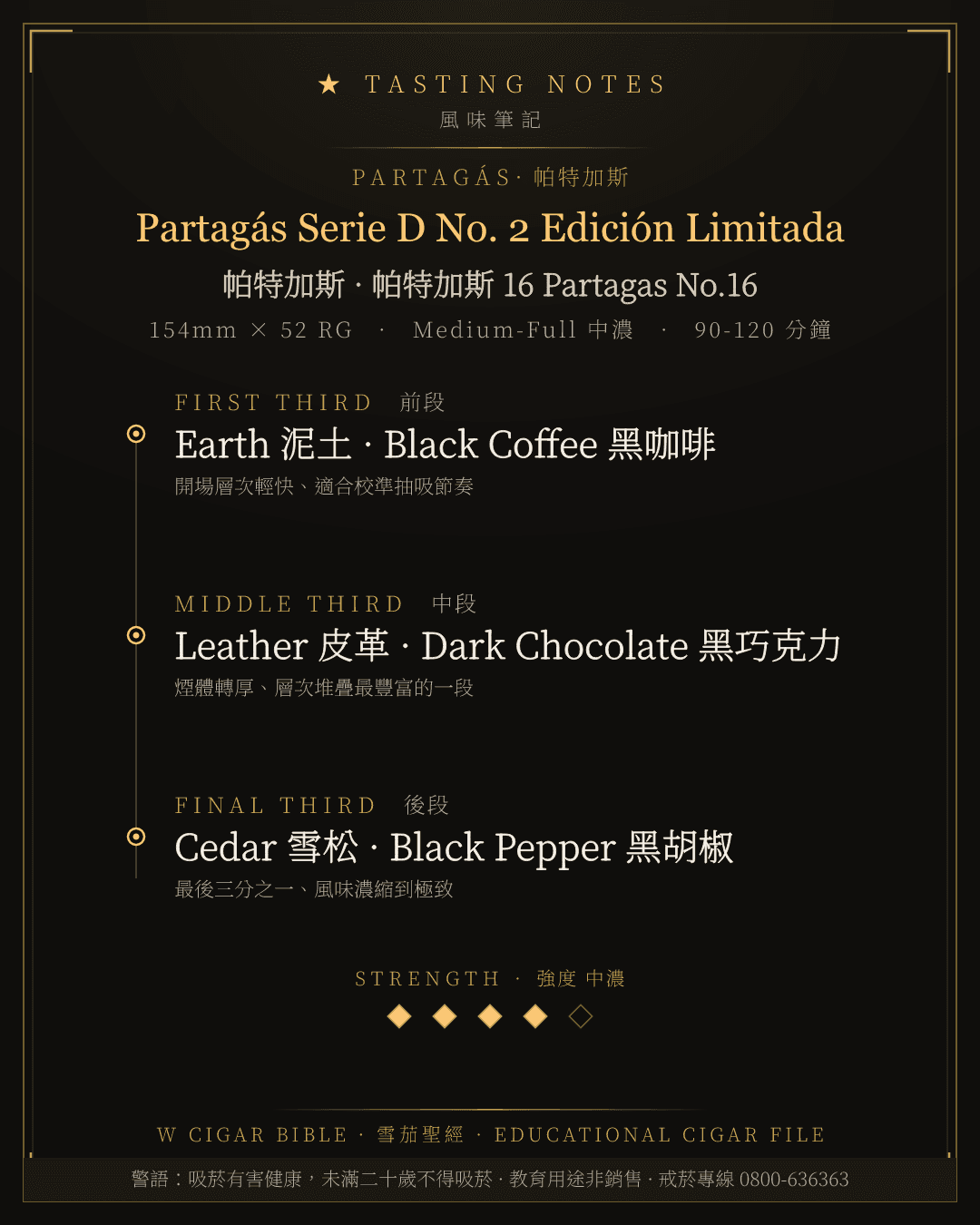
Partagás Serie D No. 2 Edición Limitada 風味筆記 · 帕特加斯
TASTING NOTES · 風味筆記

Partagás Serie D No. 2 搭配指南 · 帕特加斯
PAIRING GUIDE · 搭配指南
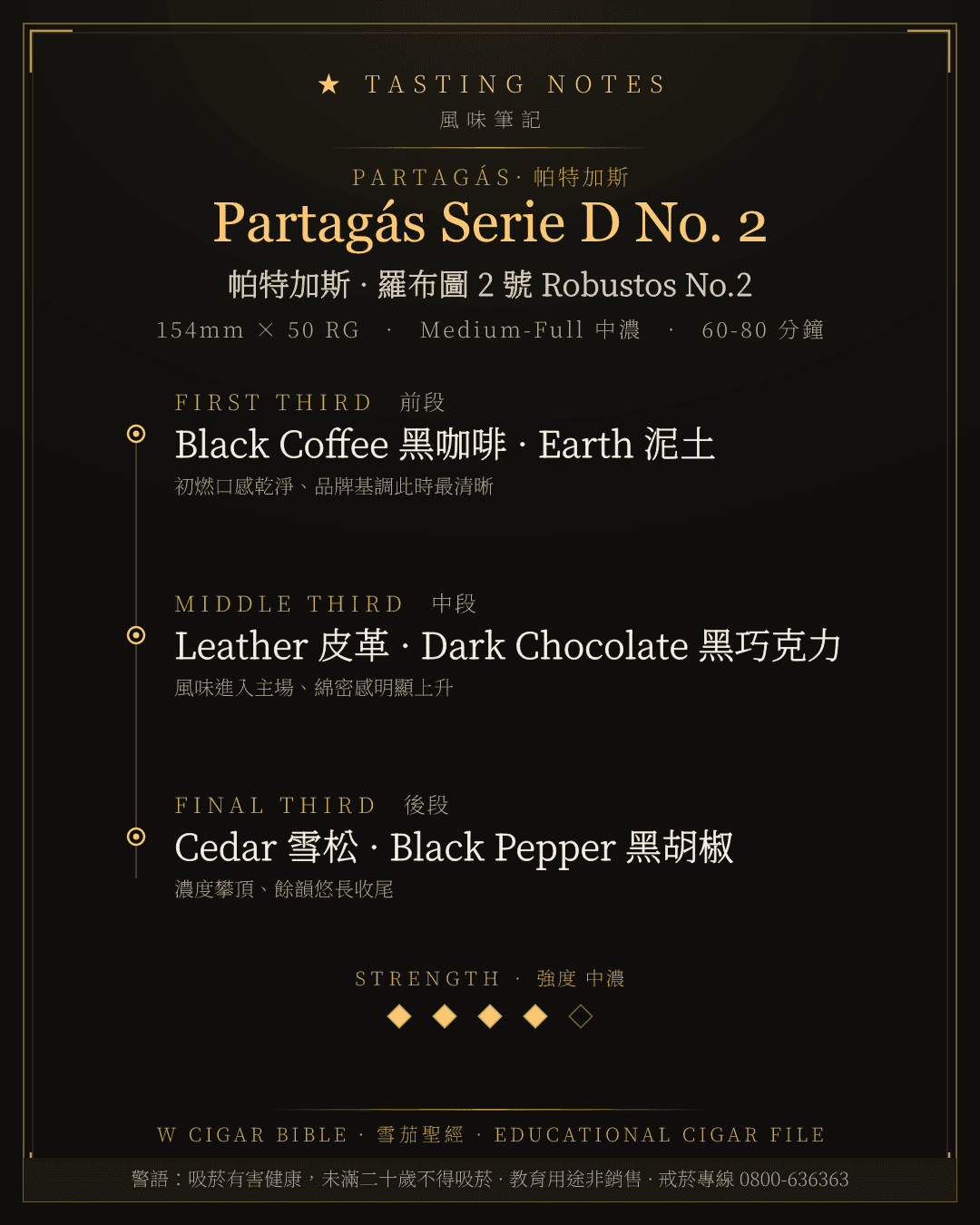
Partagás Serie D No. 2 風味筆記 · 帕特加斯
TASTING NOTES · 風味筆記

Partagás Serie D No. 3 Edición Limitada 搭配指南 · 帕特加斯
PAIRING GUIDE · 搭配指南
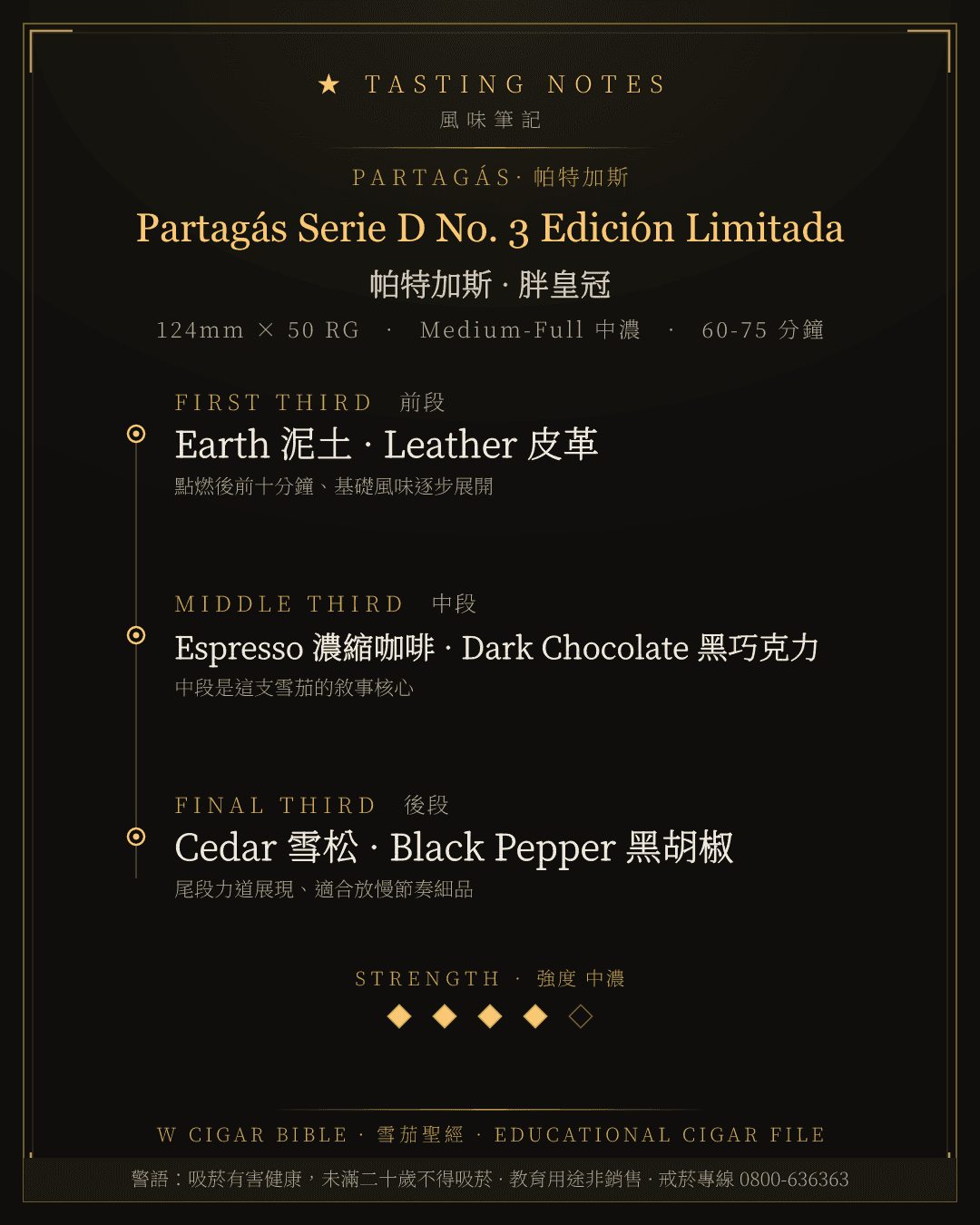
Partagás Serie D No. 3 Edición Limitada 風味筆記 · 帕特加斯
TASTING NOTES · 風味筆記

Partagás Serie D No. 3 搭配指南 · 帕特加斯
PAIRING GUIDE · 搭配指南
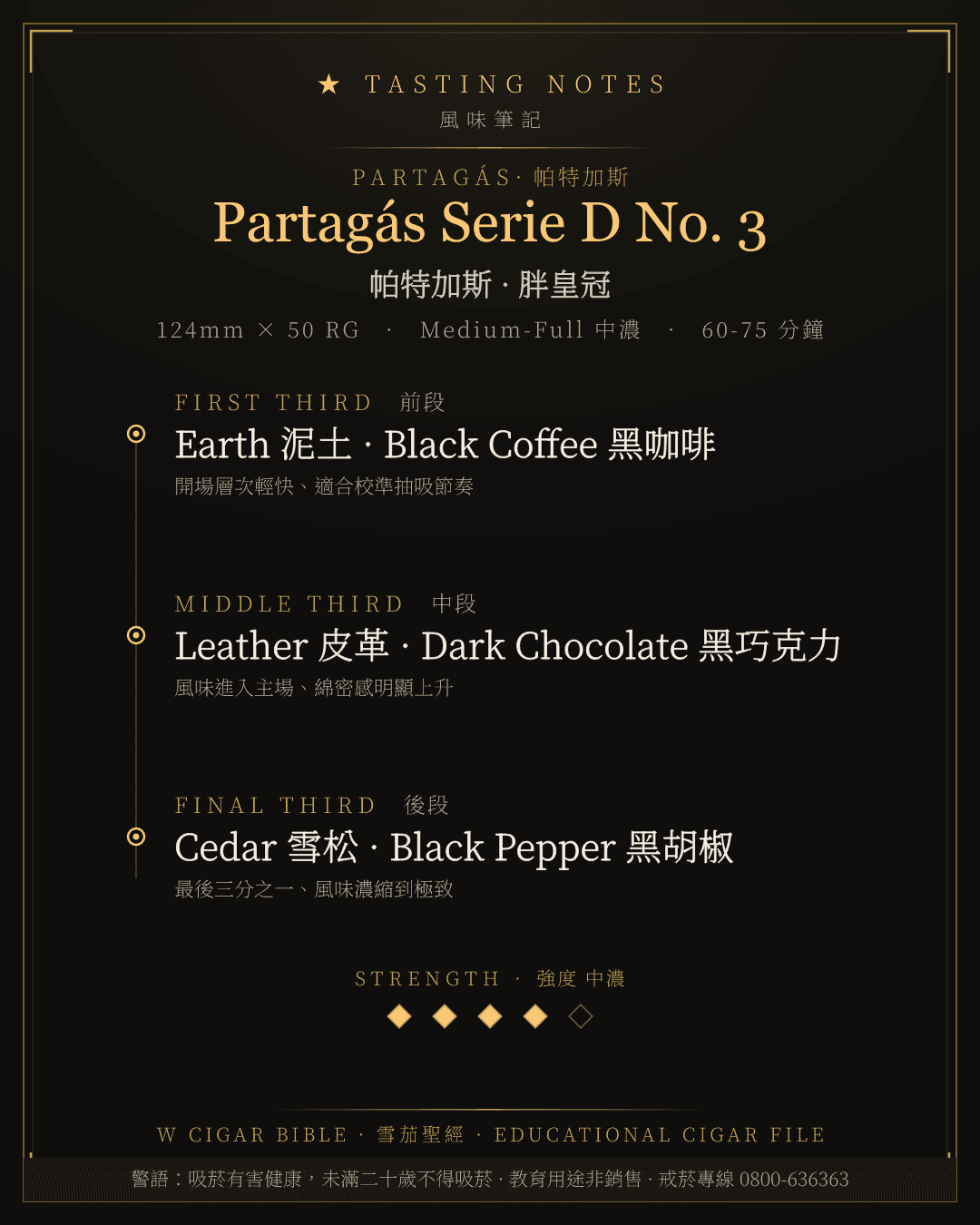
Partagás Serie D No. 3 風味筆記 · 帕特加斯
TASTING NOTES · 風味筆記

Partagás Serie D No. 4 Reserva 搭配指南 · 帕特加斯
PAIRING GUIDE · 搭配指南
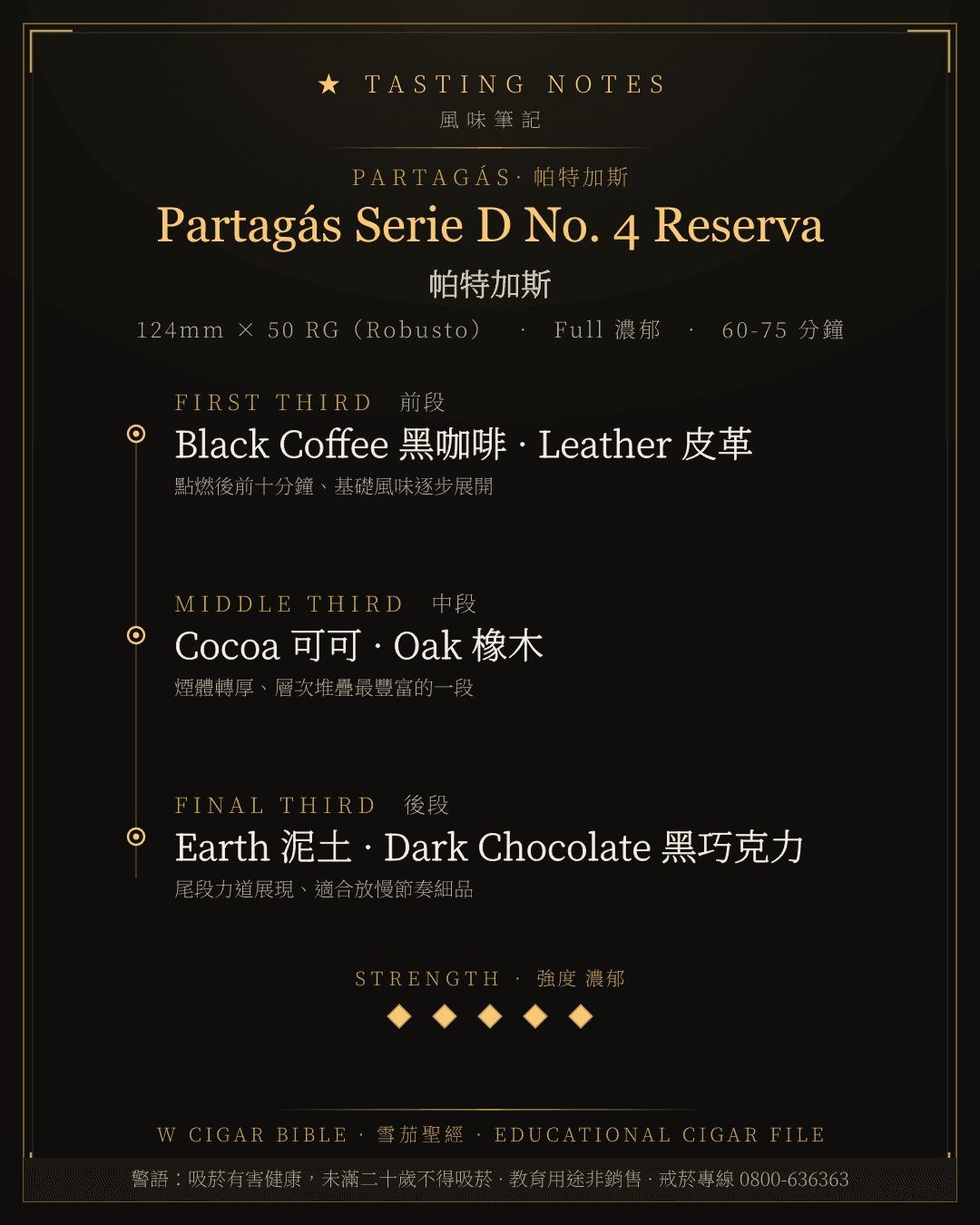
Partagás Serie D No. 4 Reserva 風味筆記 · 帕特加斯
TASTING NOTES · 風味筆記

Partagás Serie D No. 4 搭配指南 · 帕特加斯
PAIRING GUIDE · 搭配指南
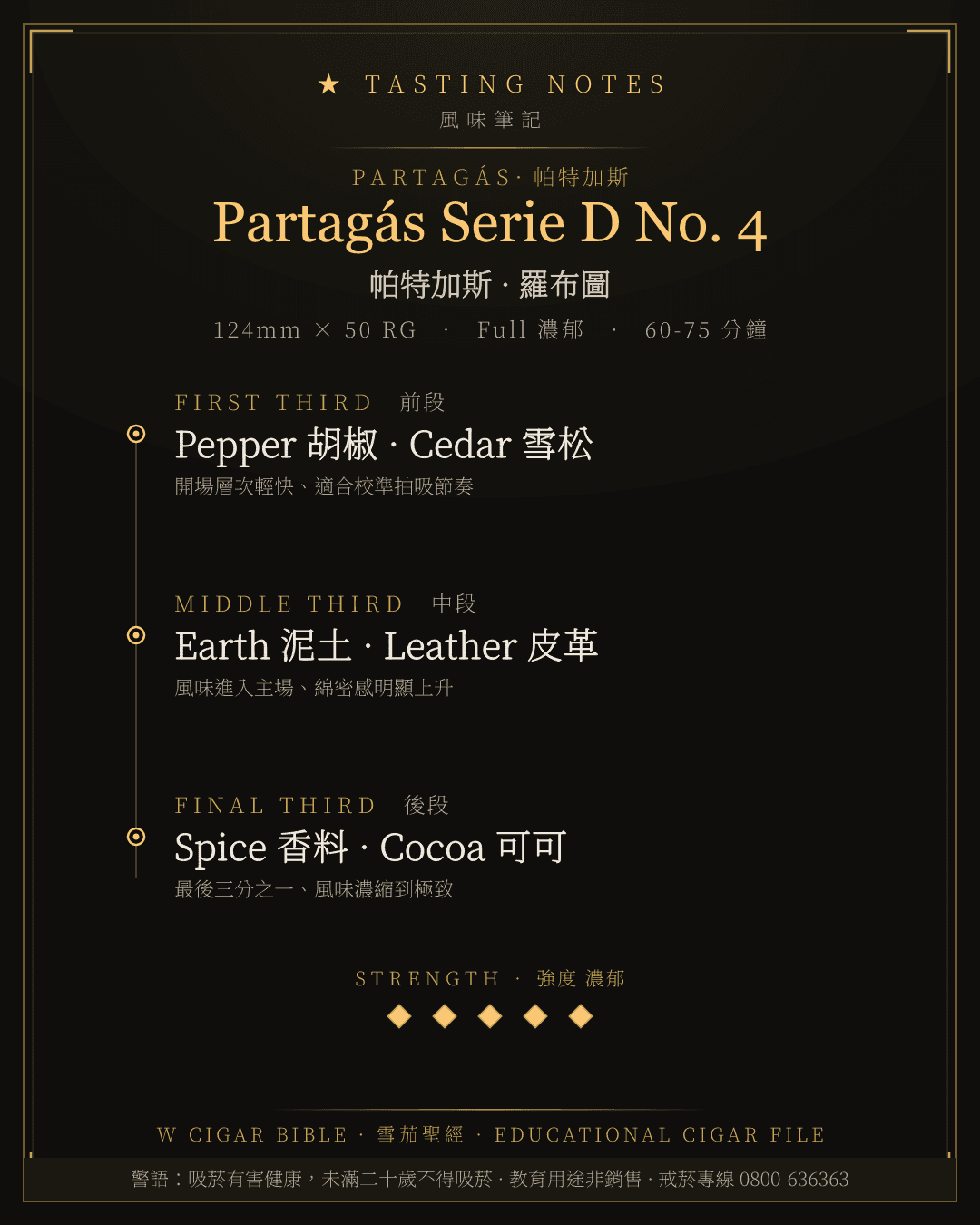
Partagás Serie D No. 4 風味筆記 · 帕特加斯
TASTING NOTES · 風味筆記

Partagás Serie D No. 5 搭配指南 · 帕特加斯
PAIRING GUIDE · 搭配指南
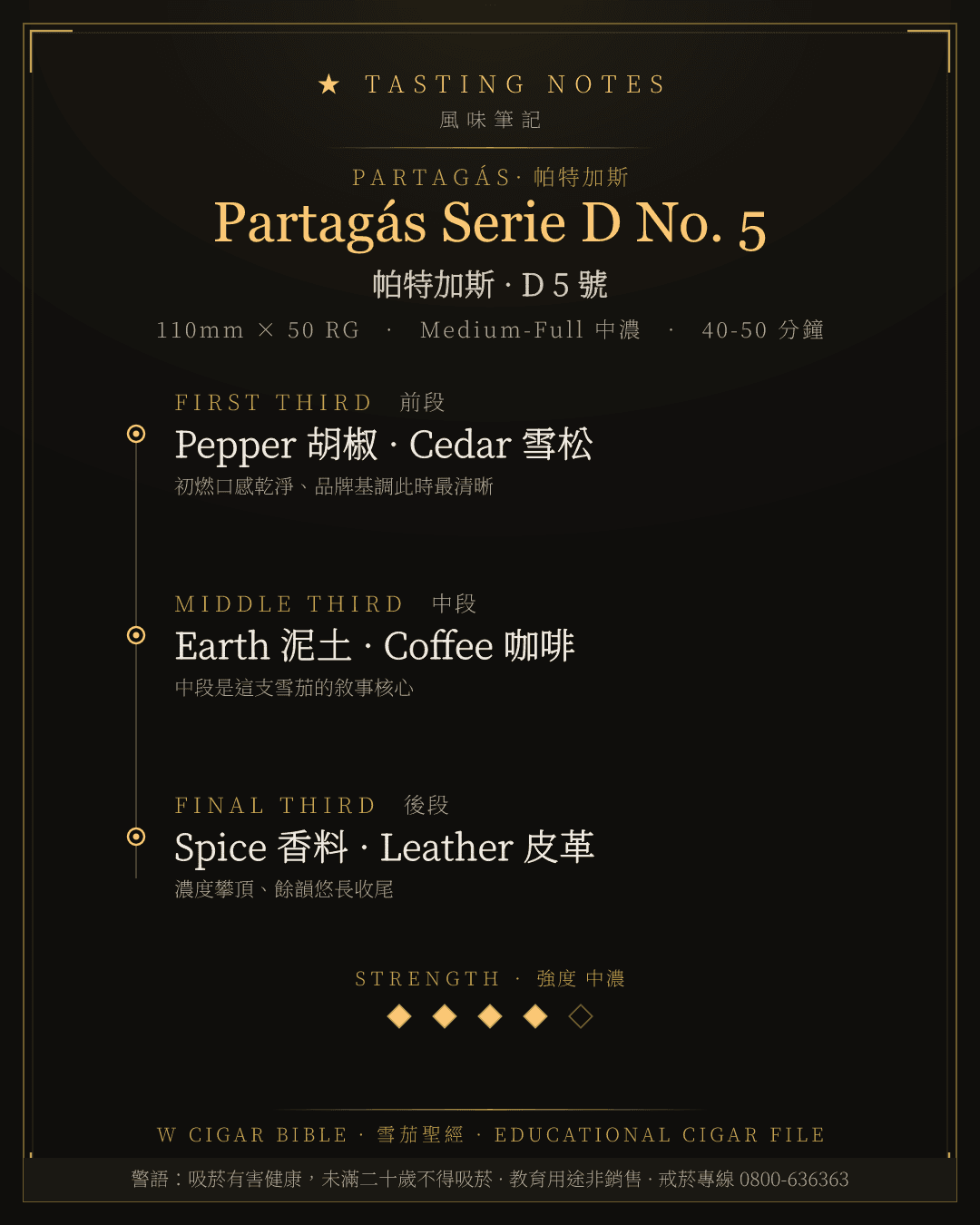
Partagás Serie D No. 5 風味筆記 · 帕特加斯
TASTING NOTES · 風味筆記

Partagás Serie D No. 6 搭配指南 · 帕特加斯
PAIRING GUIDE · 搭配指南
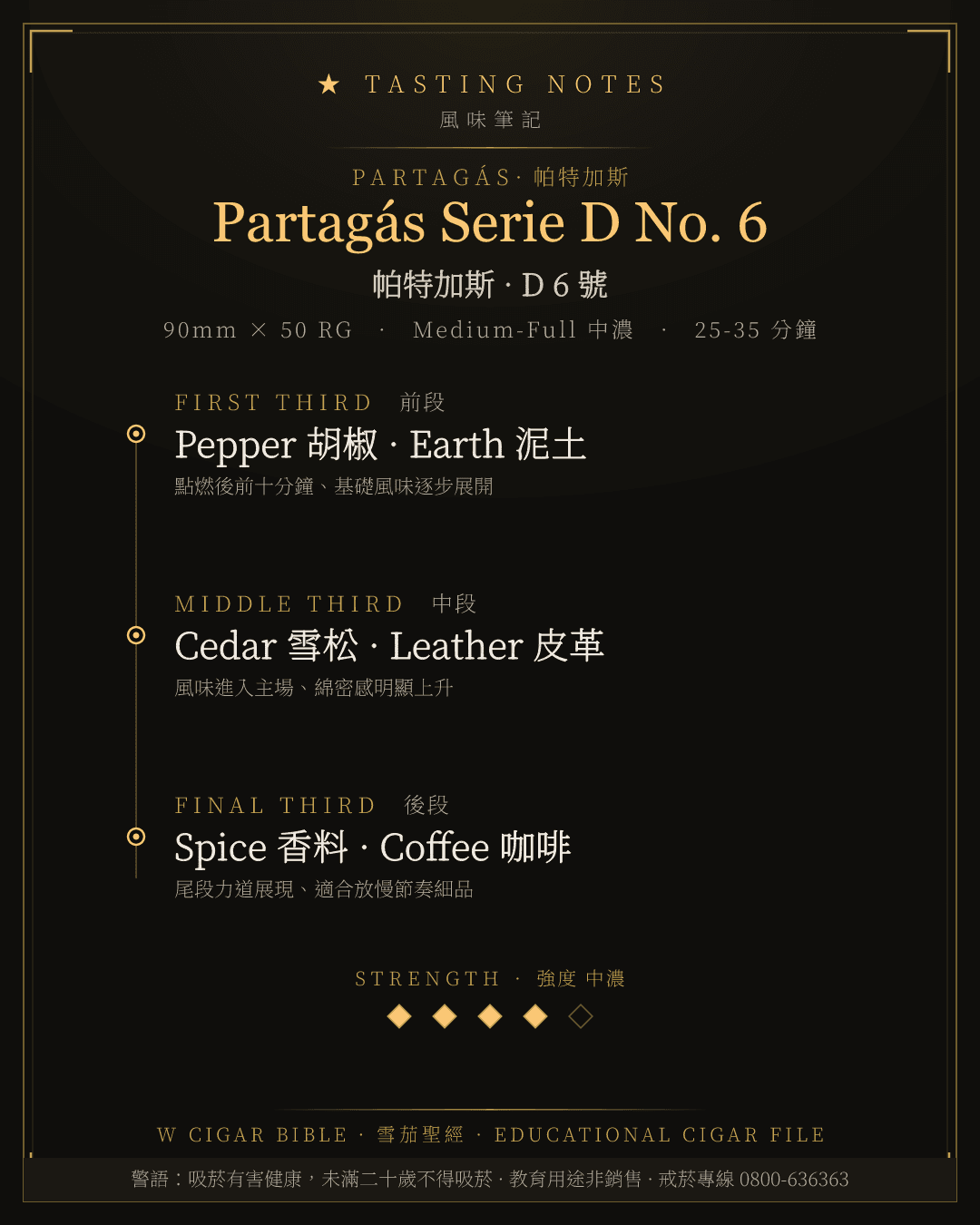
Partagás Serie D No. 6 風味筆記 · 帕特加斯
TASTING NOTES · 風味筆記

Partagás Serie D No.1 · EL 2004 · 帕特加斯
EL 2004 · 限量年度版 Edición Limitada(Serie D 最長規格、25 支裝,已停產)· 雪茄檔案

Partagás Serie D No.2 · EL 2003 · 帕特加斯
EL 2003 · 限量年度版 Edición Limitada(Robustos No.2 廠規、25 支裝,已停產)· 雪茄檔案
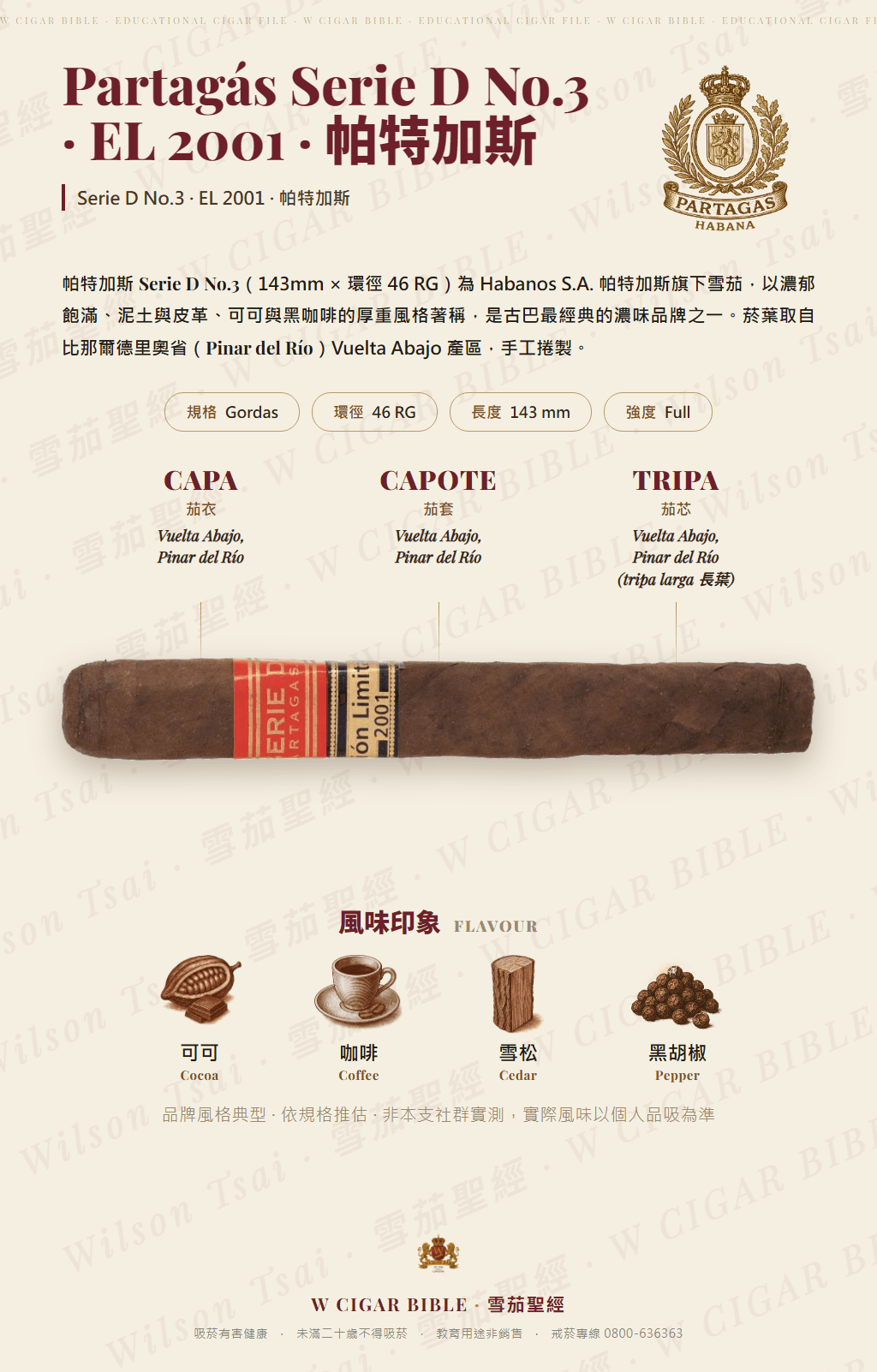
Partagás Serie D No.3 · EL 2001 · 帕特加斯
EL 2001(2006 年同名再版)· 限量年度版 Edición Limitada(Corona Gorda,143mm × 46,已停產)· 雪茄檔案

Partagás Serie D No.3 · EL 2006 · 帕特加斯
EL 2006 · 限量年度版 Edición Limitada · 雪茄檔案
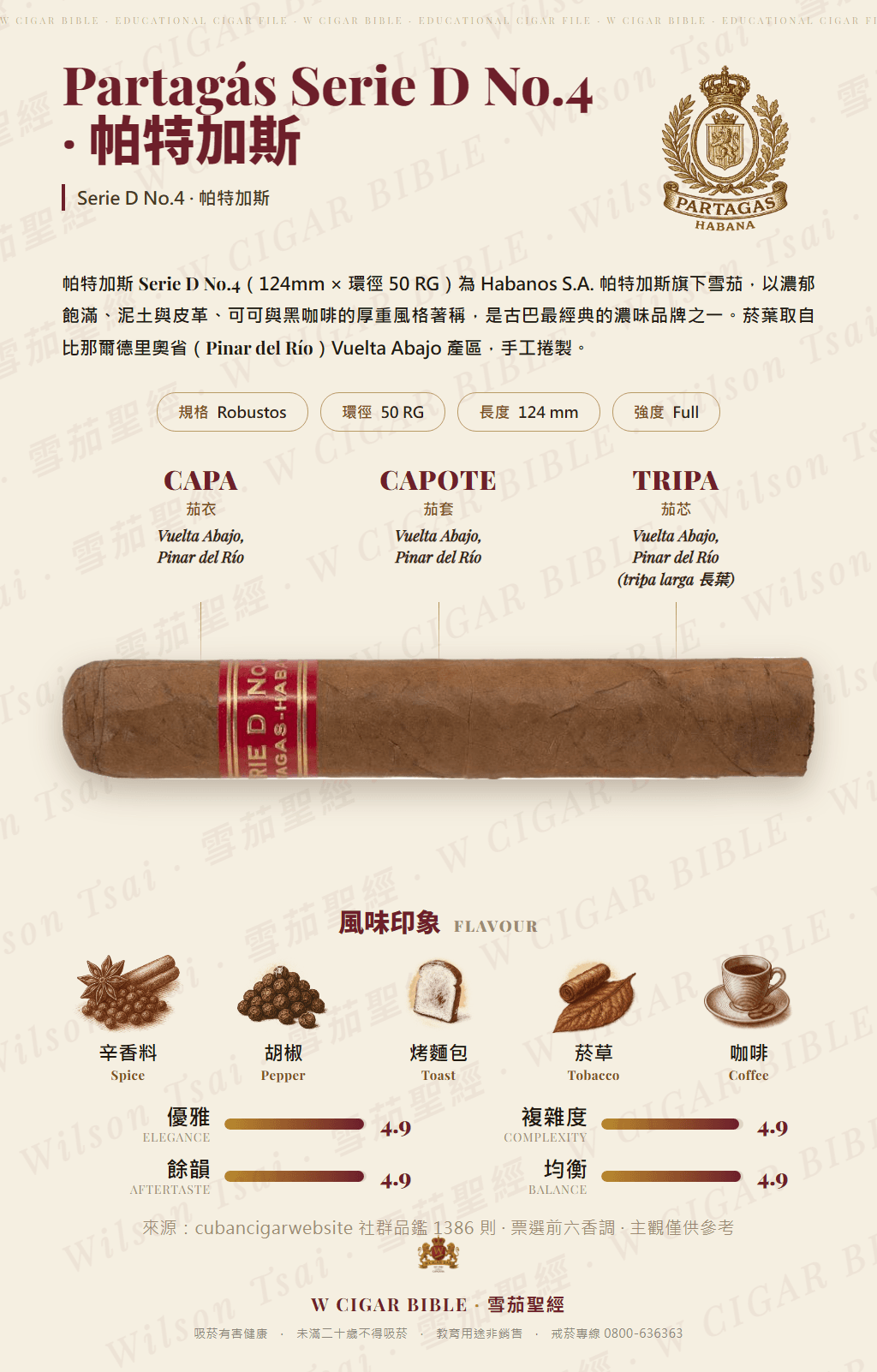
Partagás Serie D No.4 · 帕特加斯
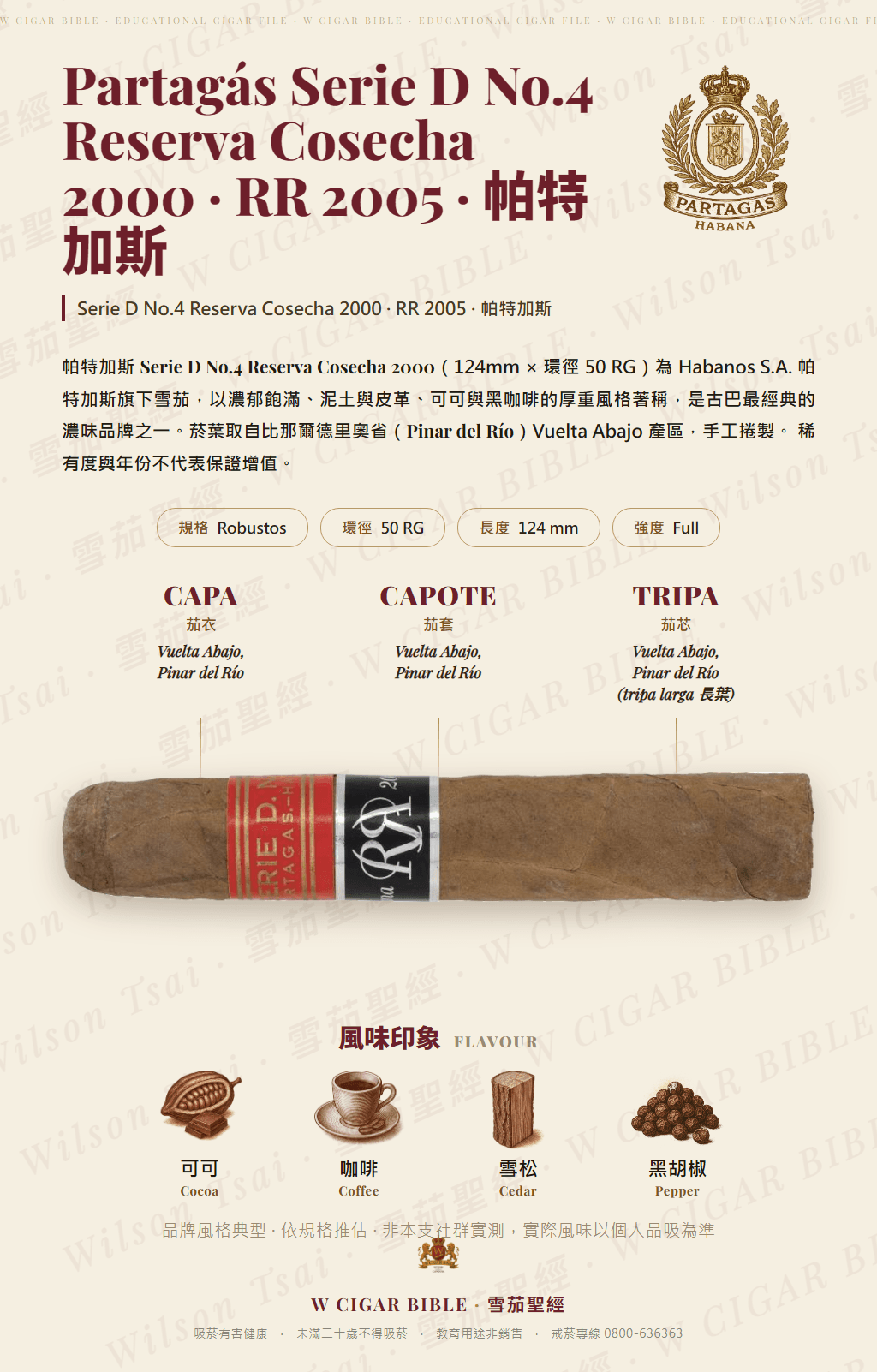
Partagás Serie D No.4 Reserva Cosecha 2000 · RR 2005 · 帕特加斯
RR 2005 · 陳年儲存版 Reservas · 雪茄檔案
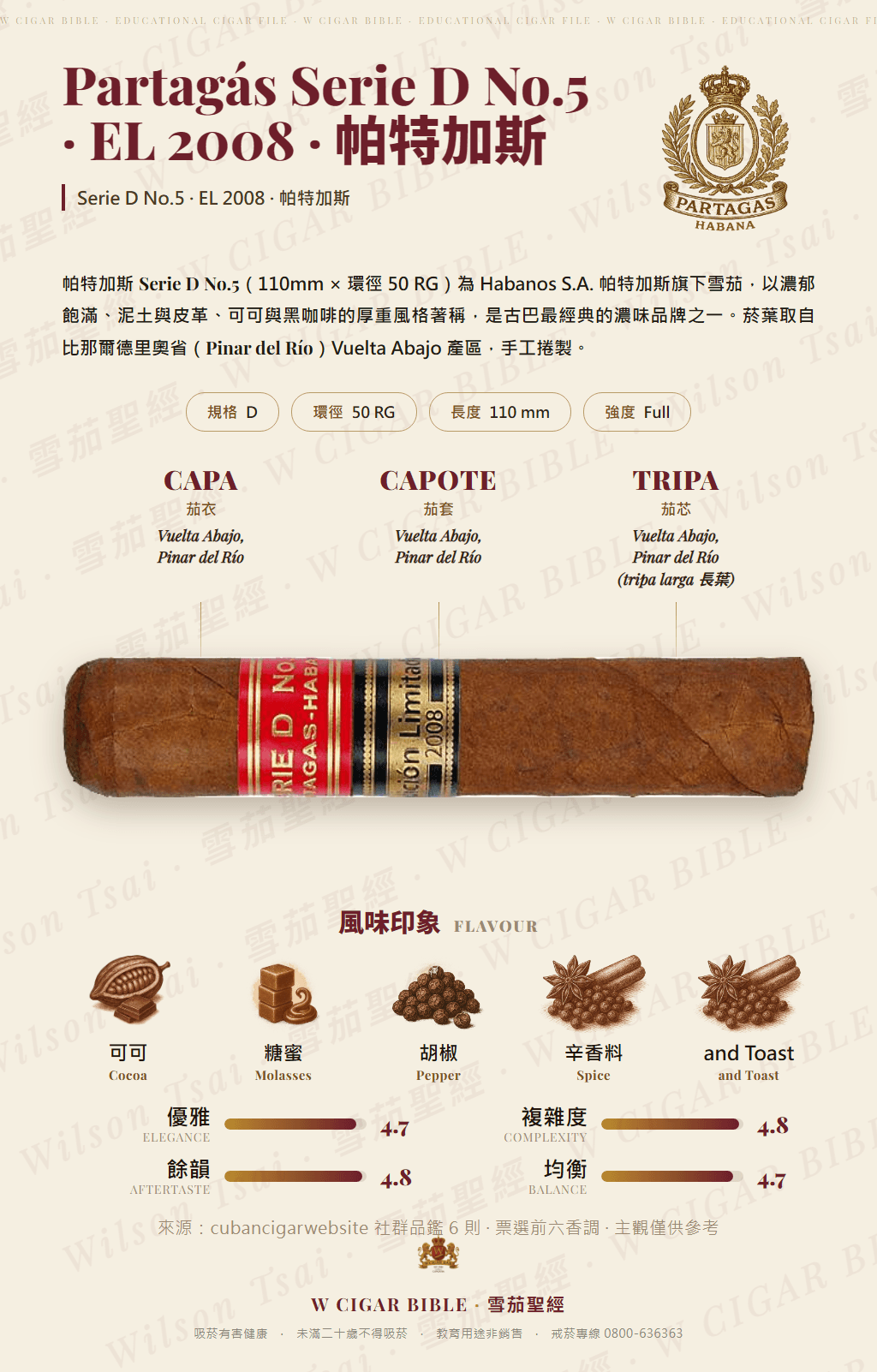
Partagás Serie D No.5 · EL 2008 · 帕特加斯
EL 2008 · 限量年度版 Edición Limitada(Petit Robusto 級 110mm × 50 RG · 限量版已停產,同規格 2011 年轉入標準生產)· 雪茄檔案
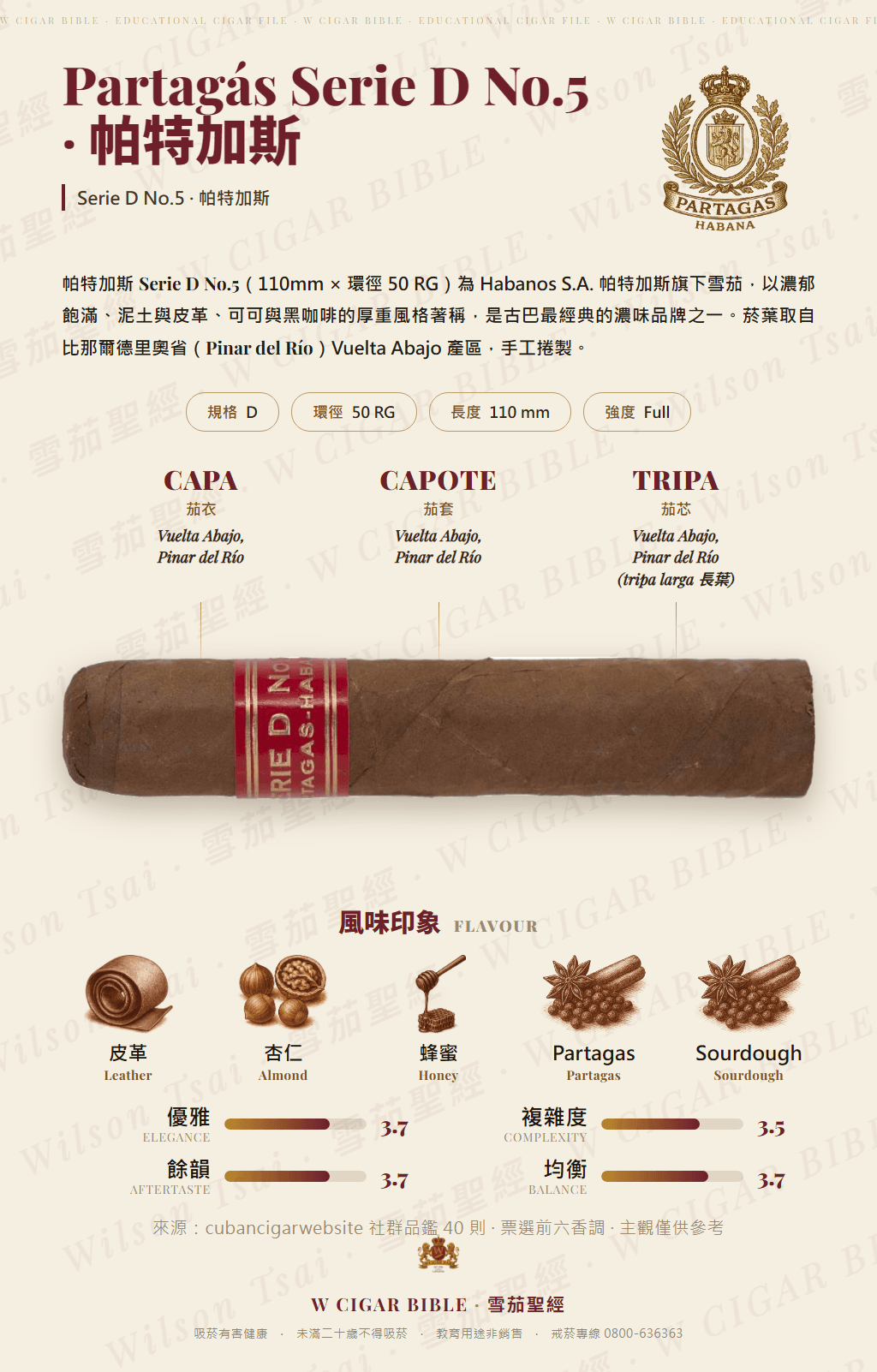
Partagás Serie D No.5 · 帕特加斯
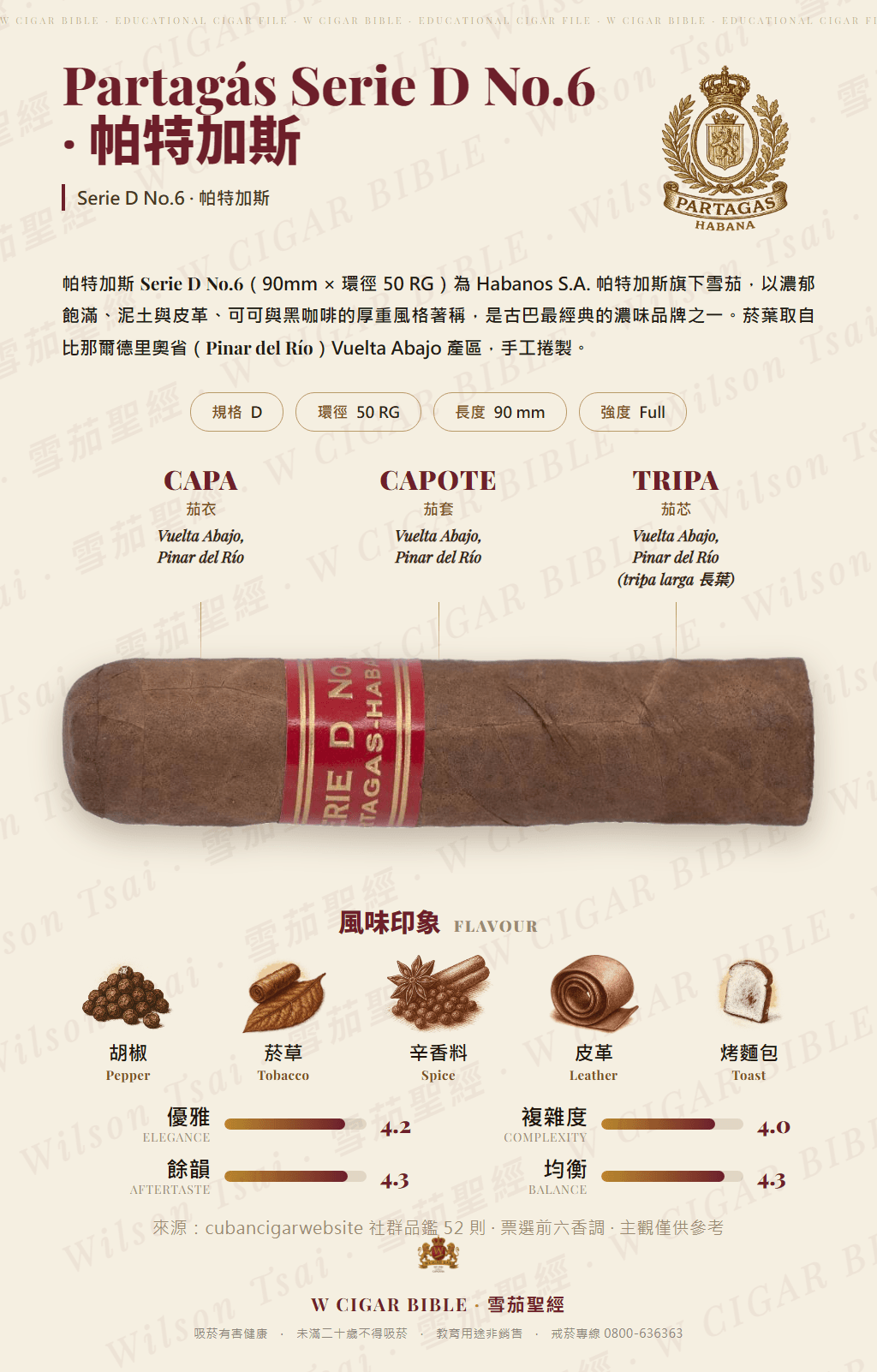
Partagás Serie D No.6 · 帕特加斯
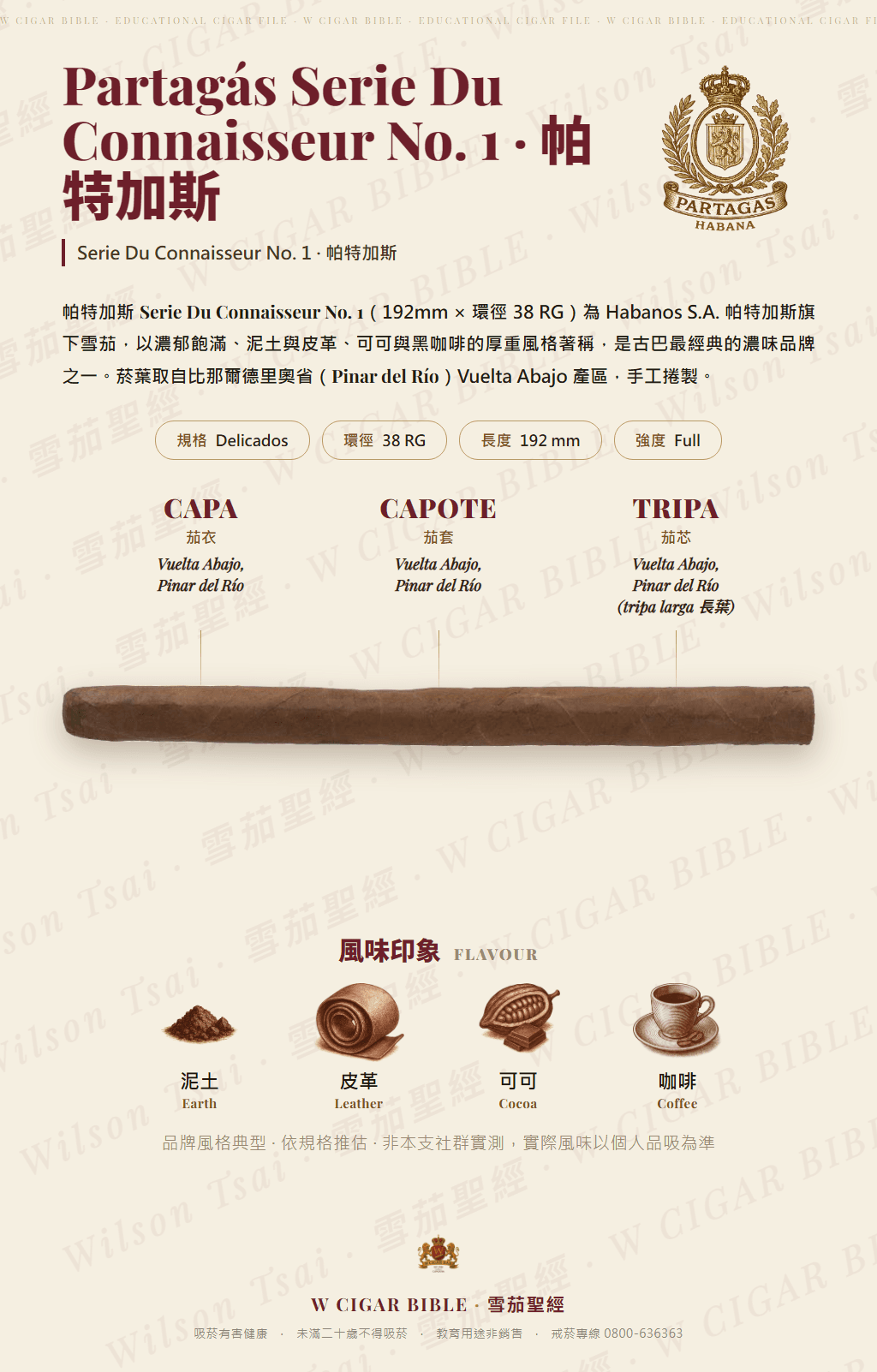
Partagás Serie Du Connaisseur No. 1 · 帕特加斯
標準生產款(Delicados,38 環徑 × 192mm,2010 年前後停產)· 雪茄檔案

Partagás Serie Du Connaisseur No. 1 搭配指南 · 帕特加斯
PAIRING GUIDE · 搭配指南

Partagás Serie Du Connaisseur No. 1 風味筆記 · 帕特加斯
TASTING NOTES · 風味筆記
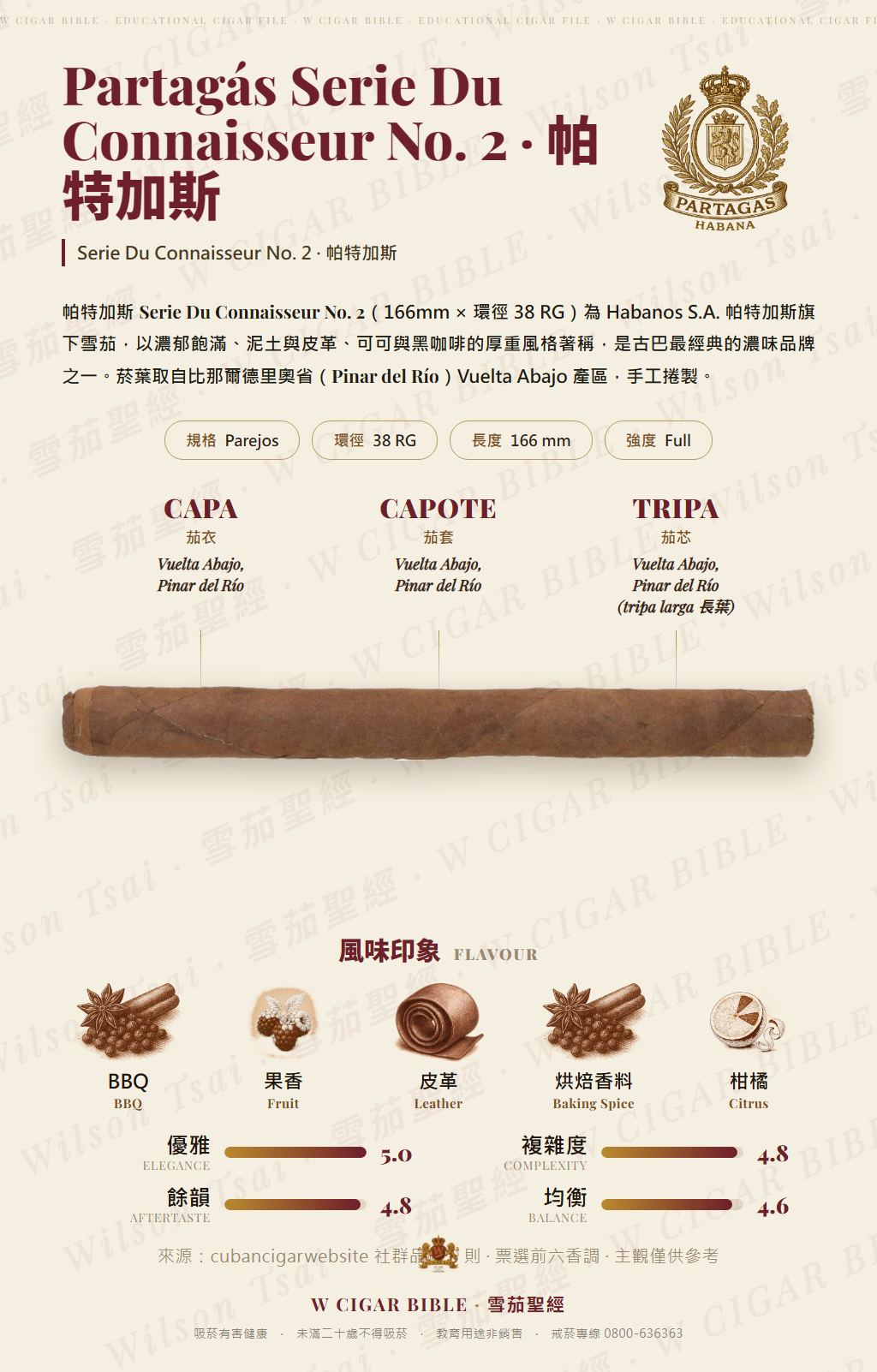
Partagás Serie Du Connaisseur No. 2 · 帕特加斯
標準生產款(38 環徑 × 166mm,2010 年前後停產)· 雪茄檔案
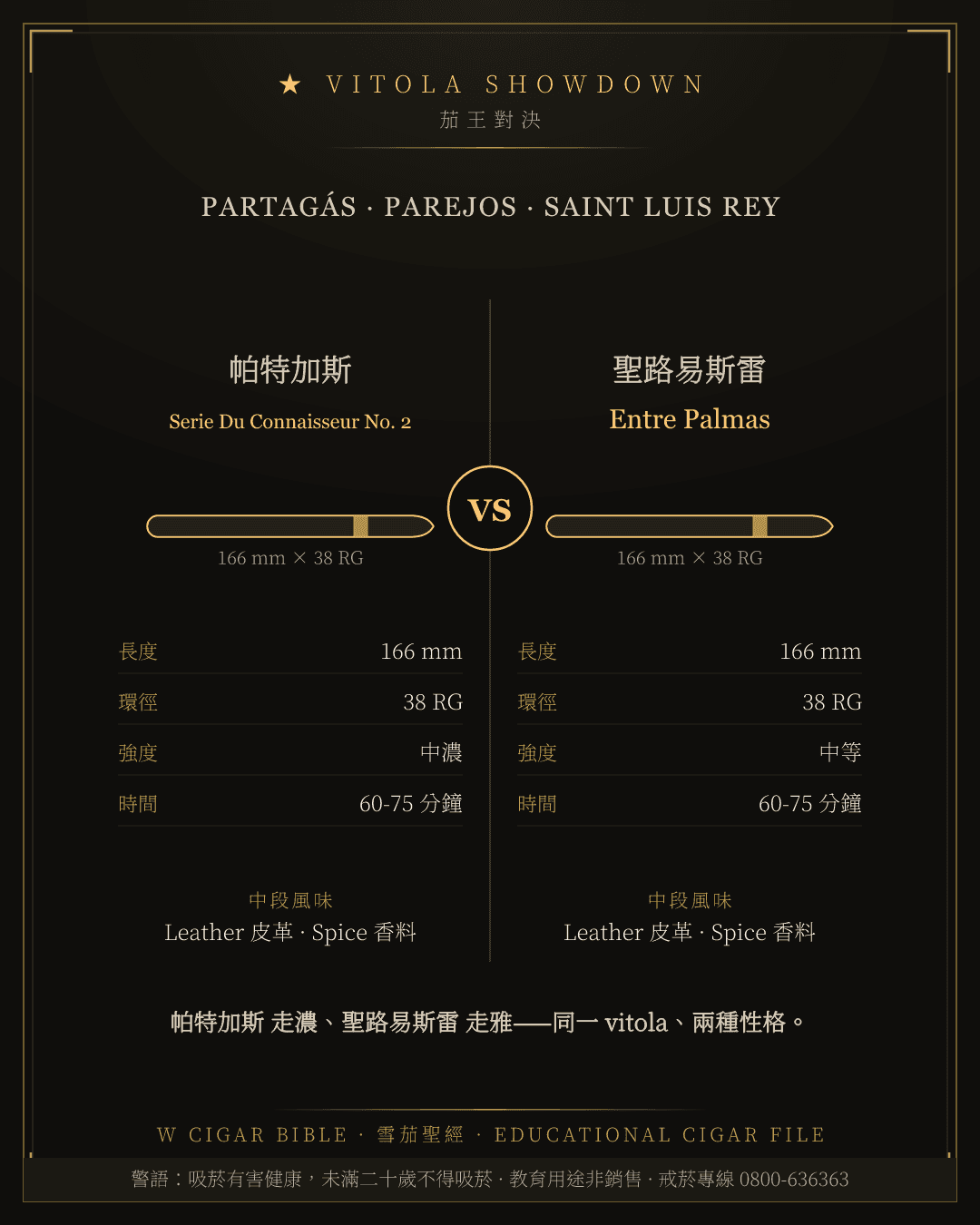
Partagás Serie Du Connaisseur No. 2 vs Saint Luis Rey Entre Palmas
VITOLA SHOWDOWN · Parejos

Partagás Serie Du Connaisseur No. 2 搭配指南 · 帕特加斯
PAIRING GUIDE · 搭配指南
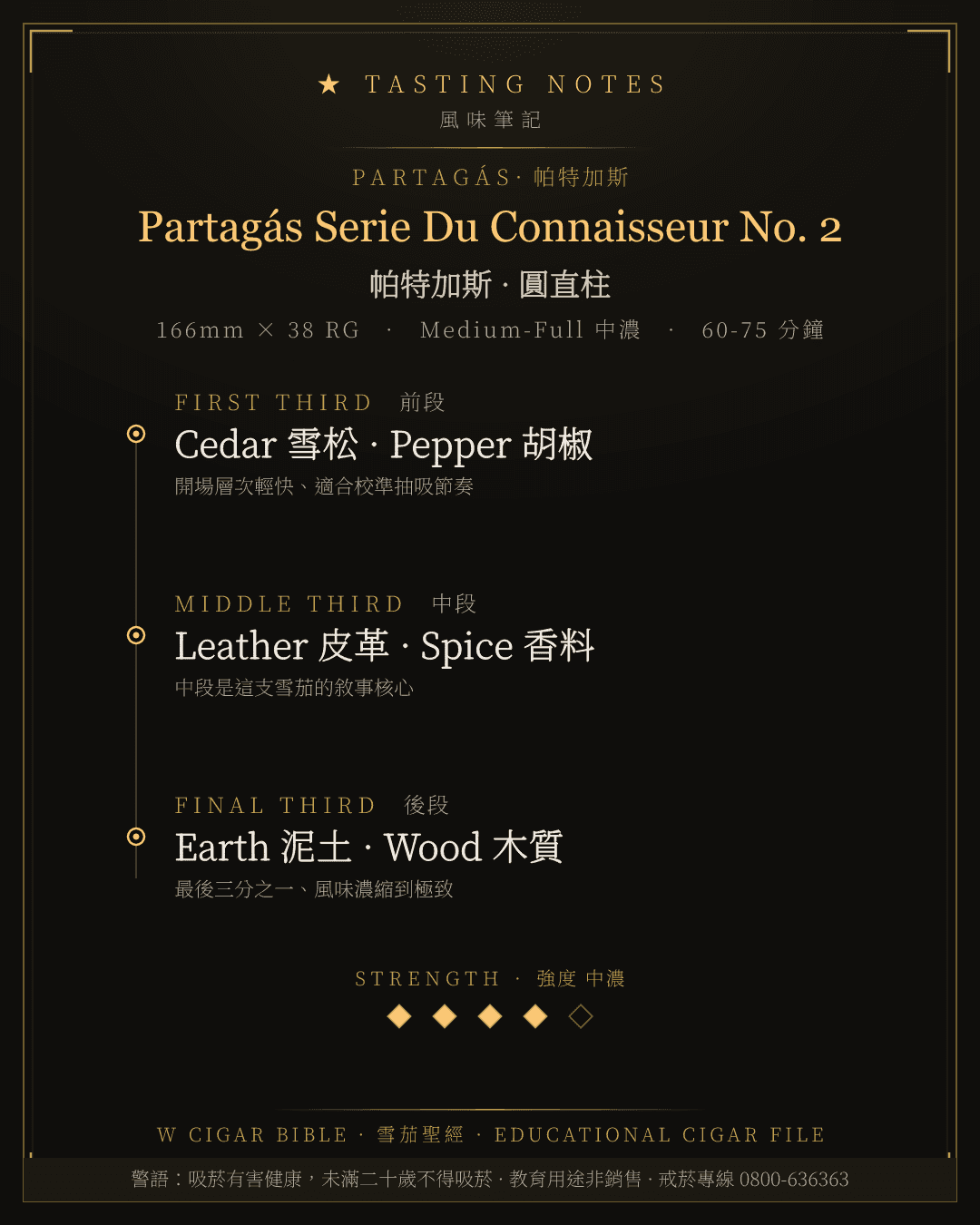
Partagás Serie Du Connaisseur No. 2 風味筆記 · 帕特加斯
TASTING NOTES · 風味筆記
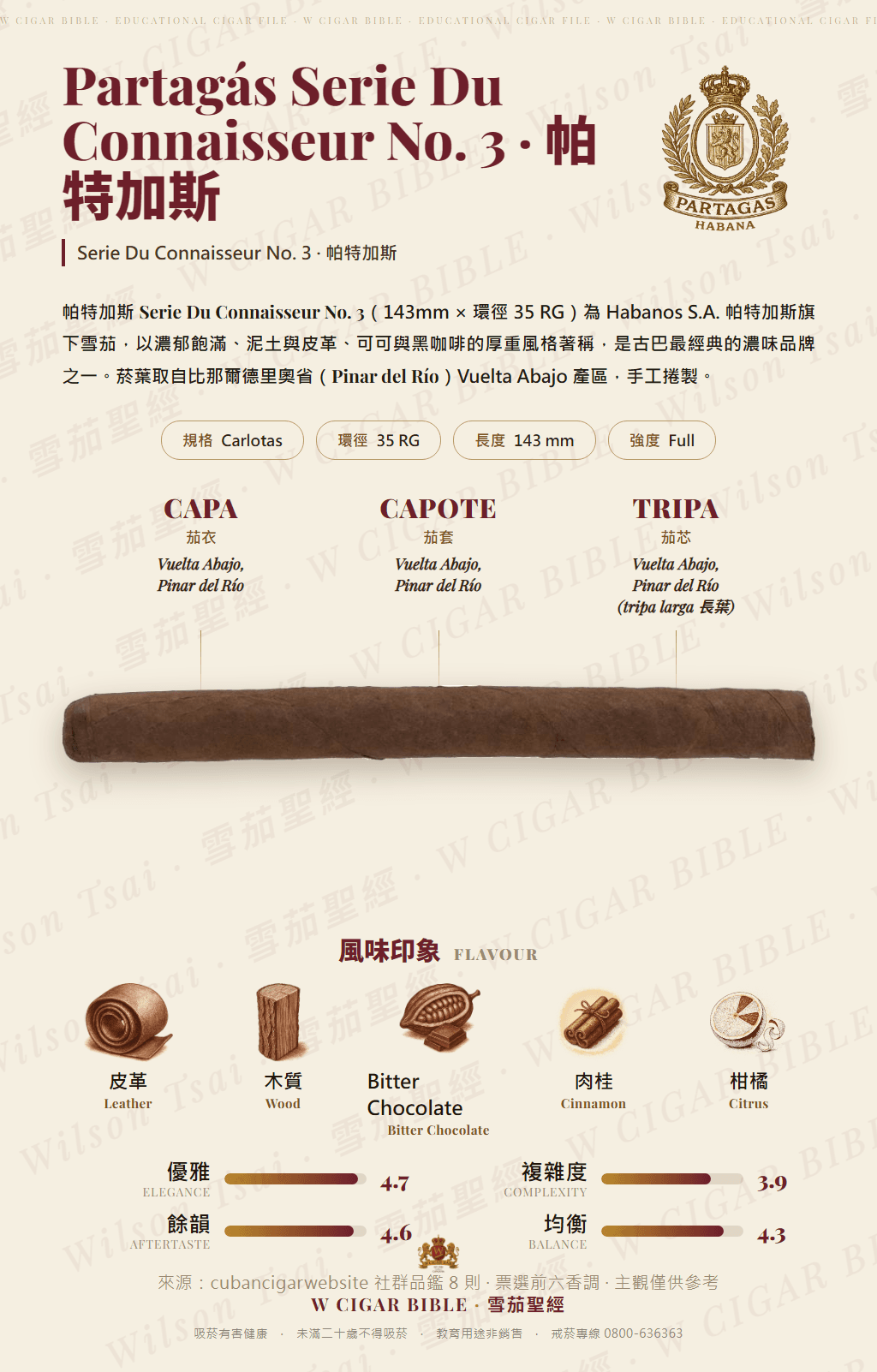
Partagás Serie Du Connaisseur No. 3 · 帕特加斯

Partagás Serie Du Connaisseur No. 3 搭配指南 · 帕特加斯
PAIRING GUIDE · 搭配指南

Partagás Serie Du Connaisseur No. 3 風味筆記 · 帕特加斯
TASTING NOTES · 風味筆記

Partagás Serie du Connaisseur No.1 搭配指南 · 帕特加斯
PAIRING GUIDE · 搭配指南
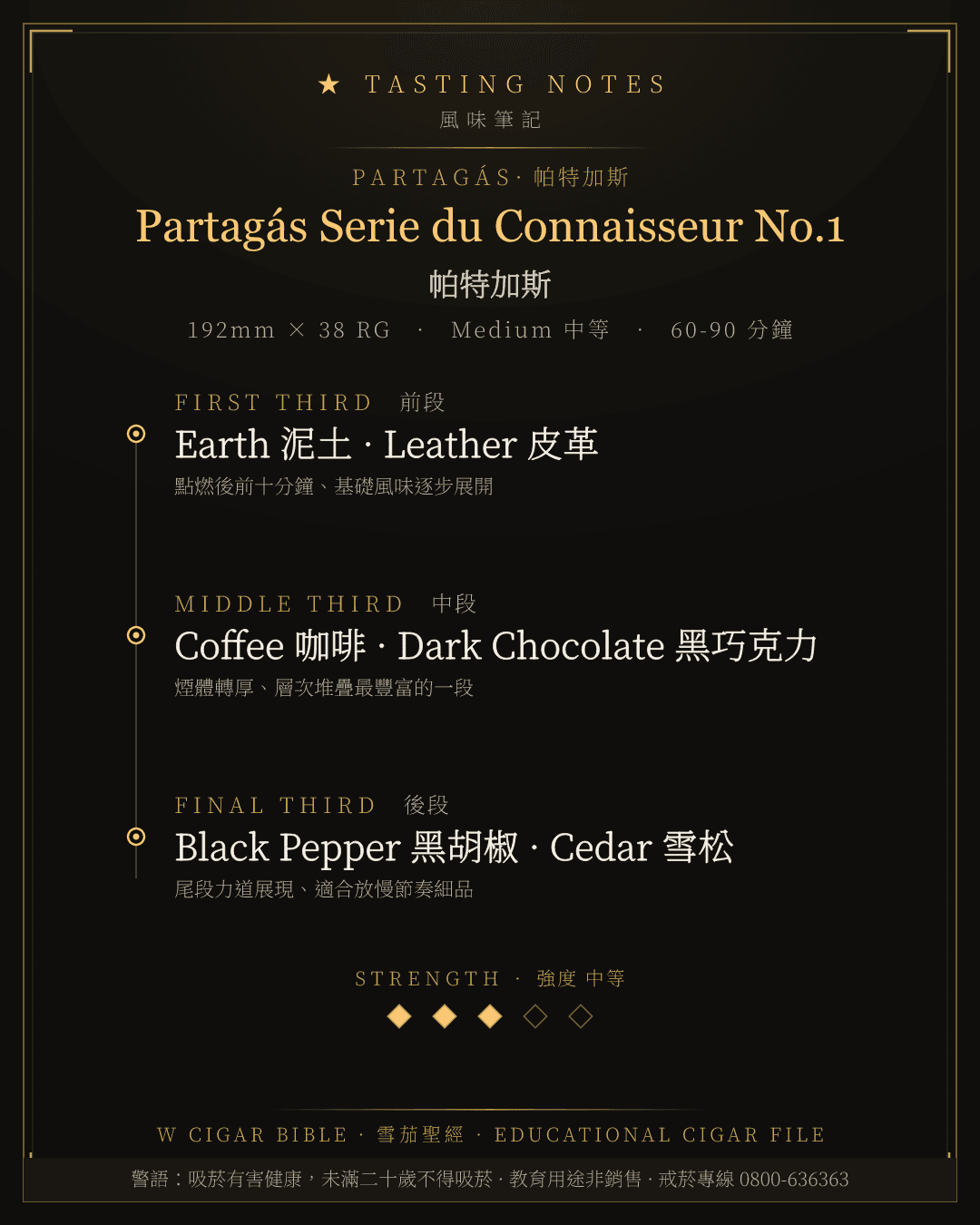
Partagás Serie du Connaisseur No.1 風味筆記 · 帕特加斯
TASTING NOTES · 風味筆記

Partagás Serie du Connaisseur No.2 搭配指南 · 帕特加斯
PAIRING GUIDE · 搭配指南

Partagás Serie du Connaisseur No.2 風味筆記 · 帕特加斯
TASTING NOTES · 風味筆記

Partagás Serie du Connaisseur No.3 搭配指南 · 帕特加斯
PAIRING GUIDE · 搭配指南
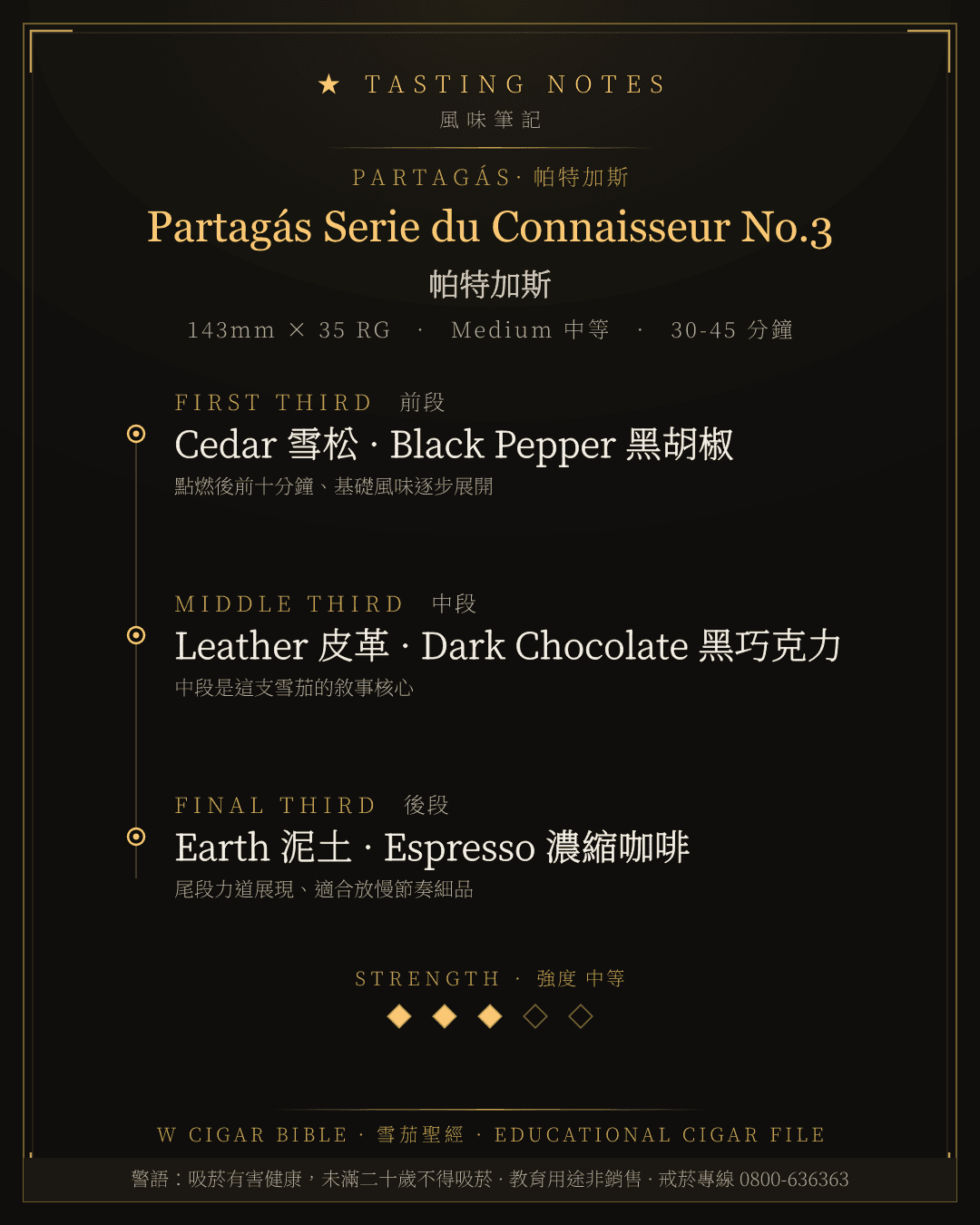
Partagás Serie du Connaisseur No.3 風味筆記 · 帕特加斯
TASTING NOTES · 風味筆記
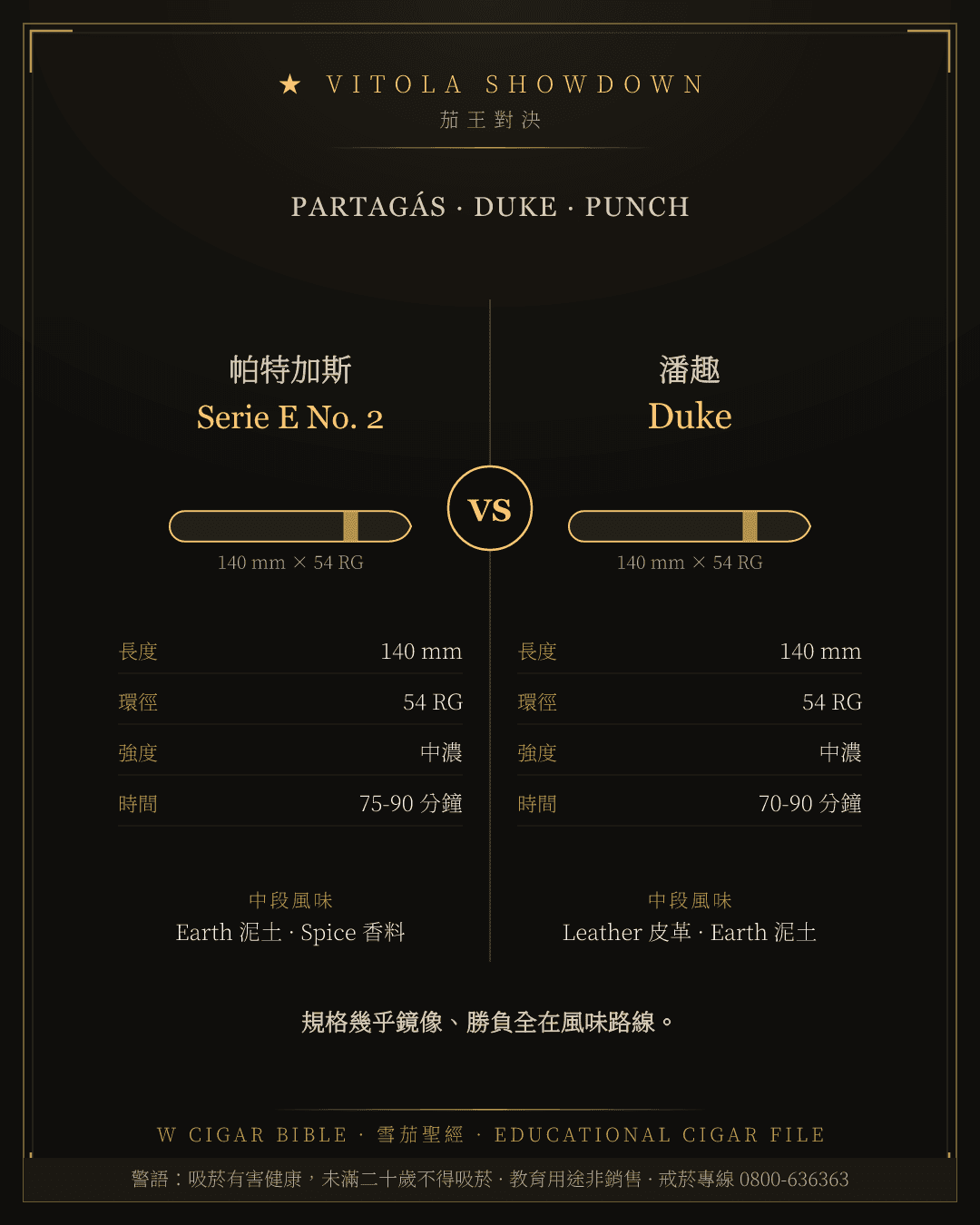
Partagás Serie E No. 2 vs Punch Duke
VITOLA SHOWDOWN · Duke

Partagás Serie E No. 2 搭配指南 · 帕特加斯
PAIRING GUIDE · 搭配指南
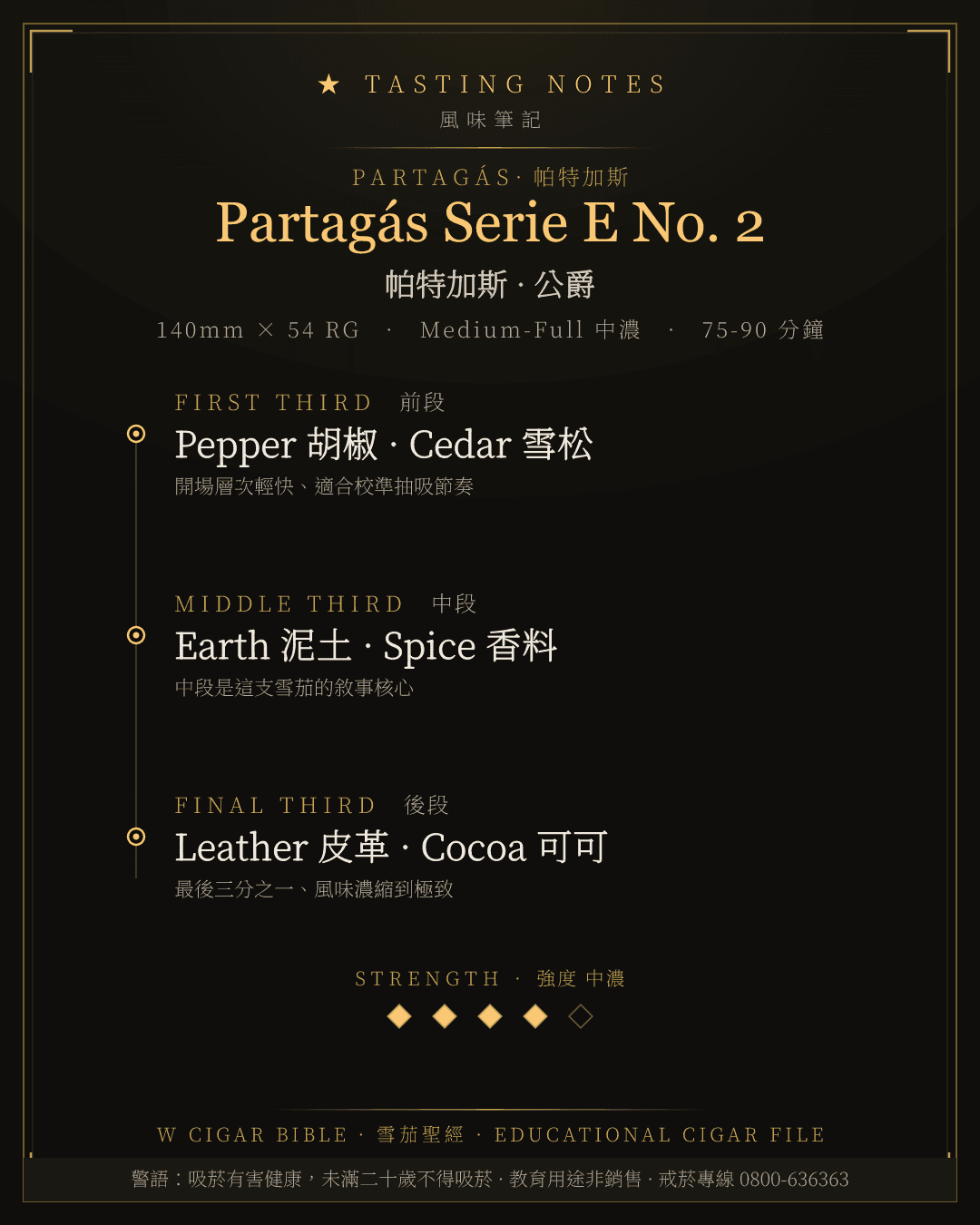
Partagás Serie E No. 2 風味筆記 · 帕特加斯
TASTING NOTES · 風味筆記
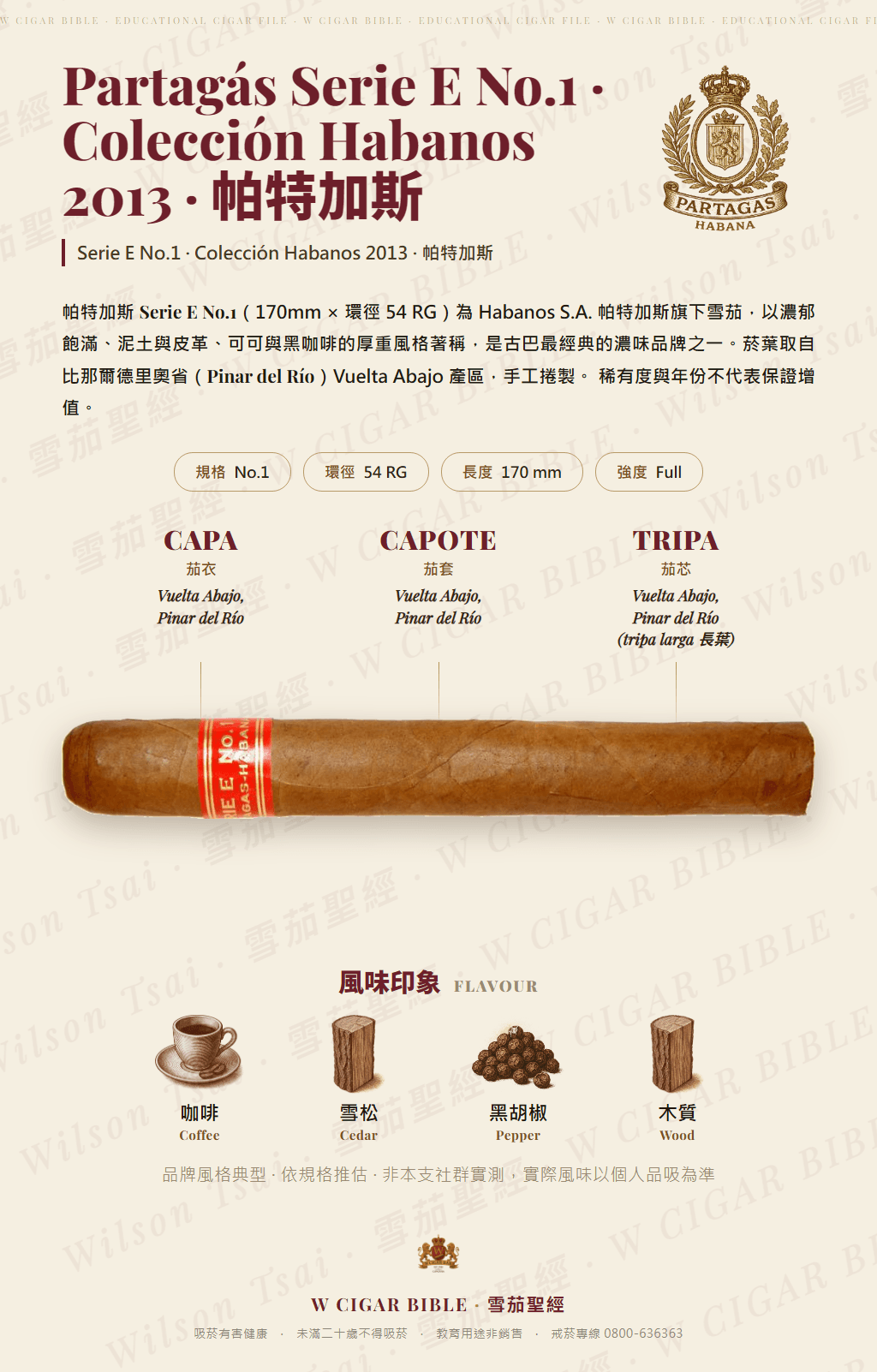
Partagás Serie E No.1 · Colección Habanos 2013 · 帕特加斯
CH 2013 · Colección Habanos 書本盒限量版 · 雪茄檔案
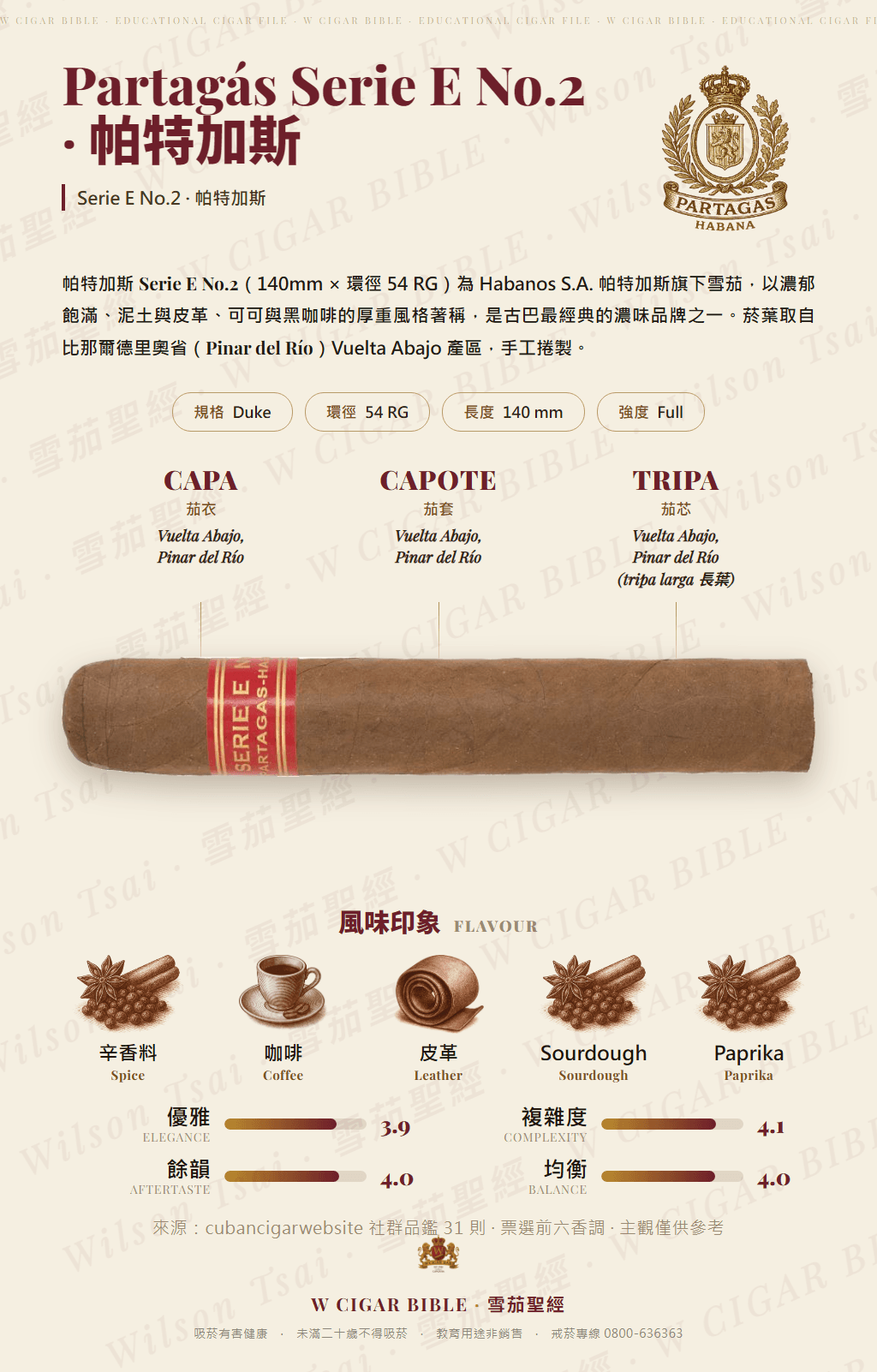
Partagás Serie E No.2 · 帕特加斯
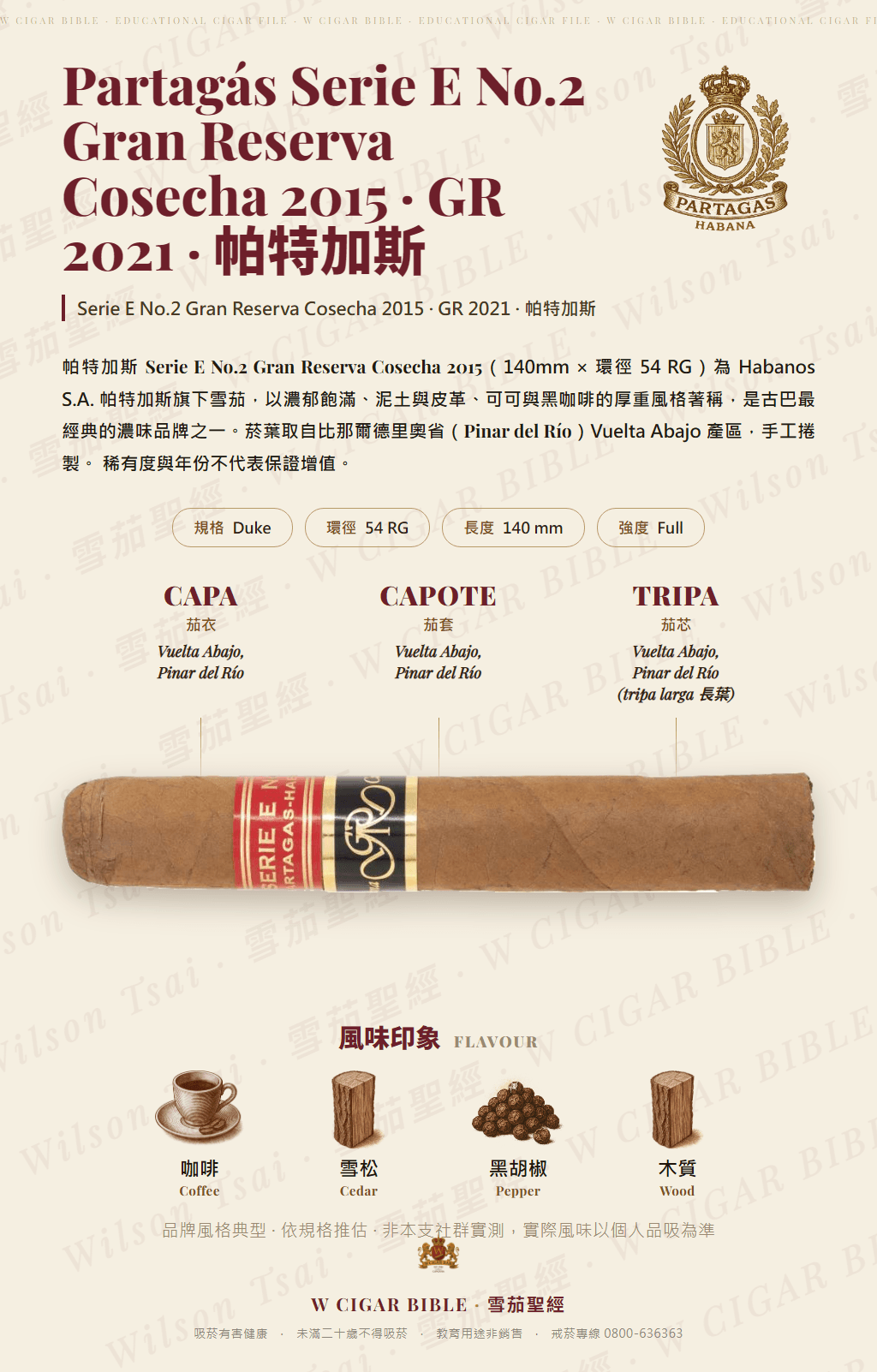
Partagás Serie E No.2 Gran Reserva Cosecha 2015 · GR 2021 · 帕特加斯
GR 2021 · 精品陳年版 Gran Reserva(Serie E No.2/廠規 Duke 54 × 140mm,2021 年公布)· 雪茄檔案

Partagás Serie E No.2 Travel Humidor · 帕特加斯
旅遊零售專屬皮革旅行木盒 2015(Duke 廠規 54×140mm、5,000 只編號盒/每盒 10 支)· 雪茄檔案

Partagás Serie No.1 · EL 2017 · 帕特加斯
EL 2017 · 限量年度版 Edición Limitada · 雪茄檔案

Partagás Serie P No. 1 搭配指南 · 帕特加斯
PAIRING GUIDE · 搭配指南
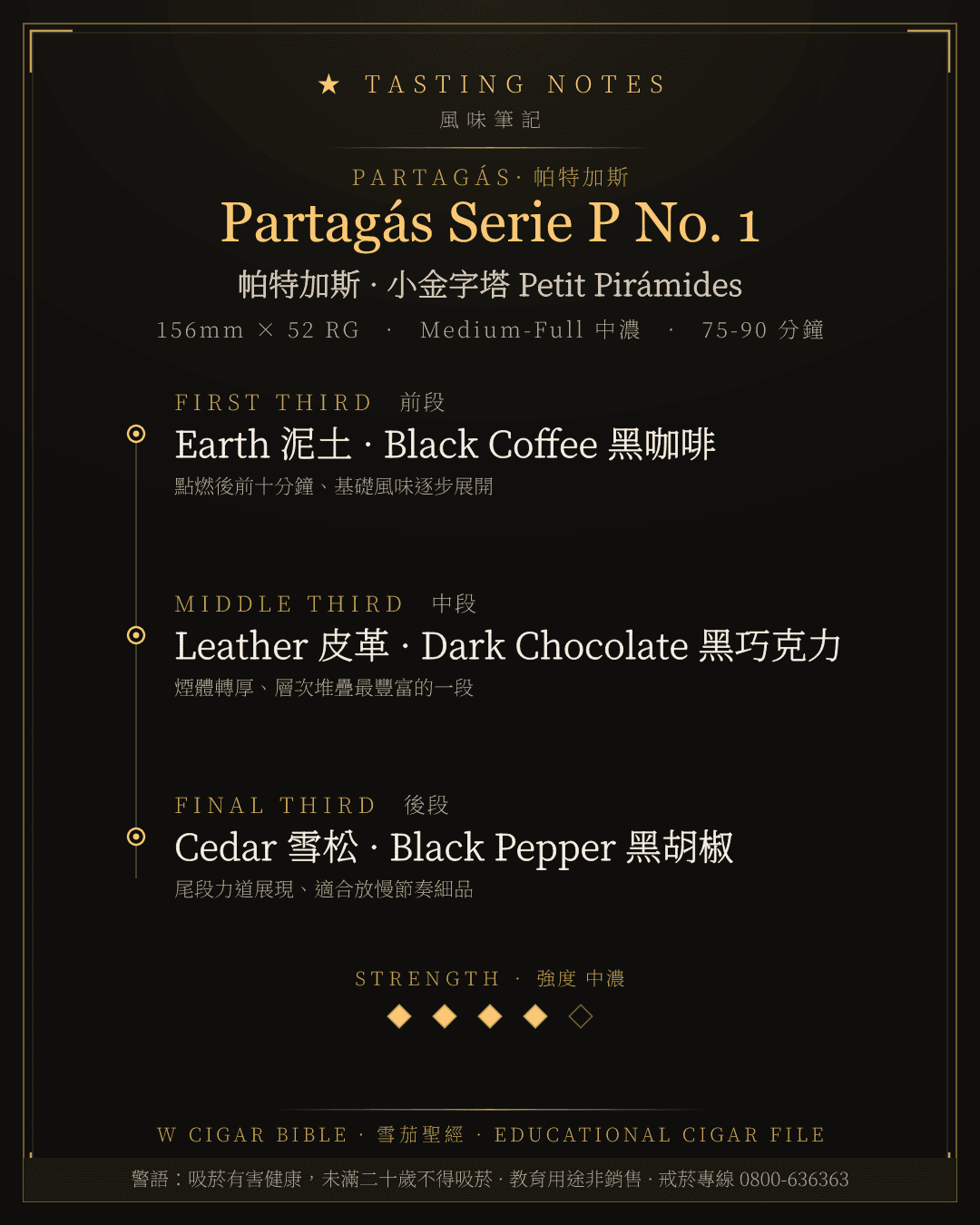
Partagás Serie P No. 1 風味筆記 · 帕特加斯
TASTING NOTES · 風味筆記

Partagás Serie P No. 2 搭配指南 · 帕特加斯
PAIRING GUIDE · 搭配指南
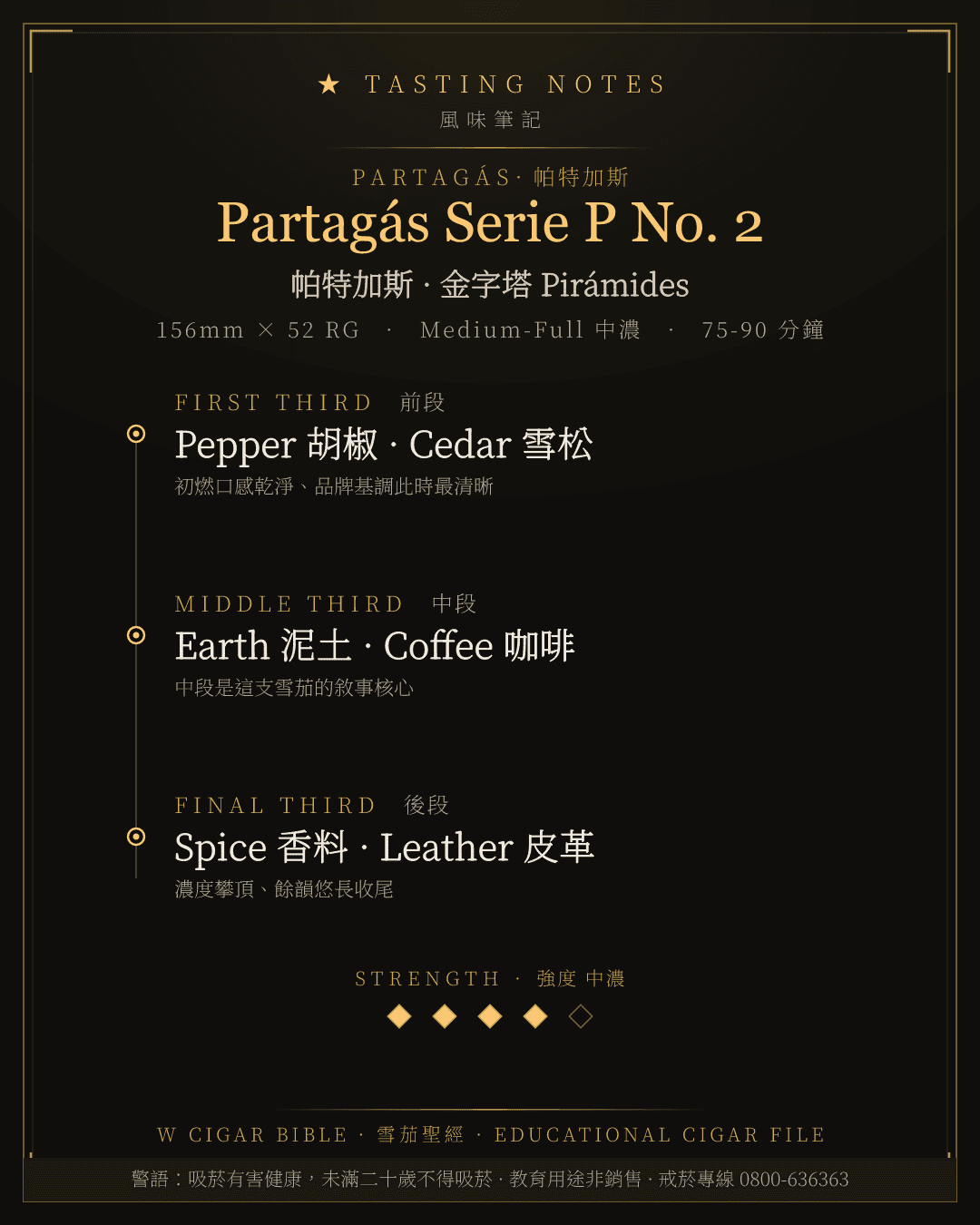
Partagás Serie P No. 2 風味筆記 · 帕特加斯
TASTING NOTES · 風味筆記
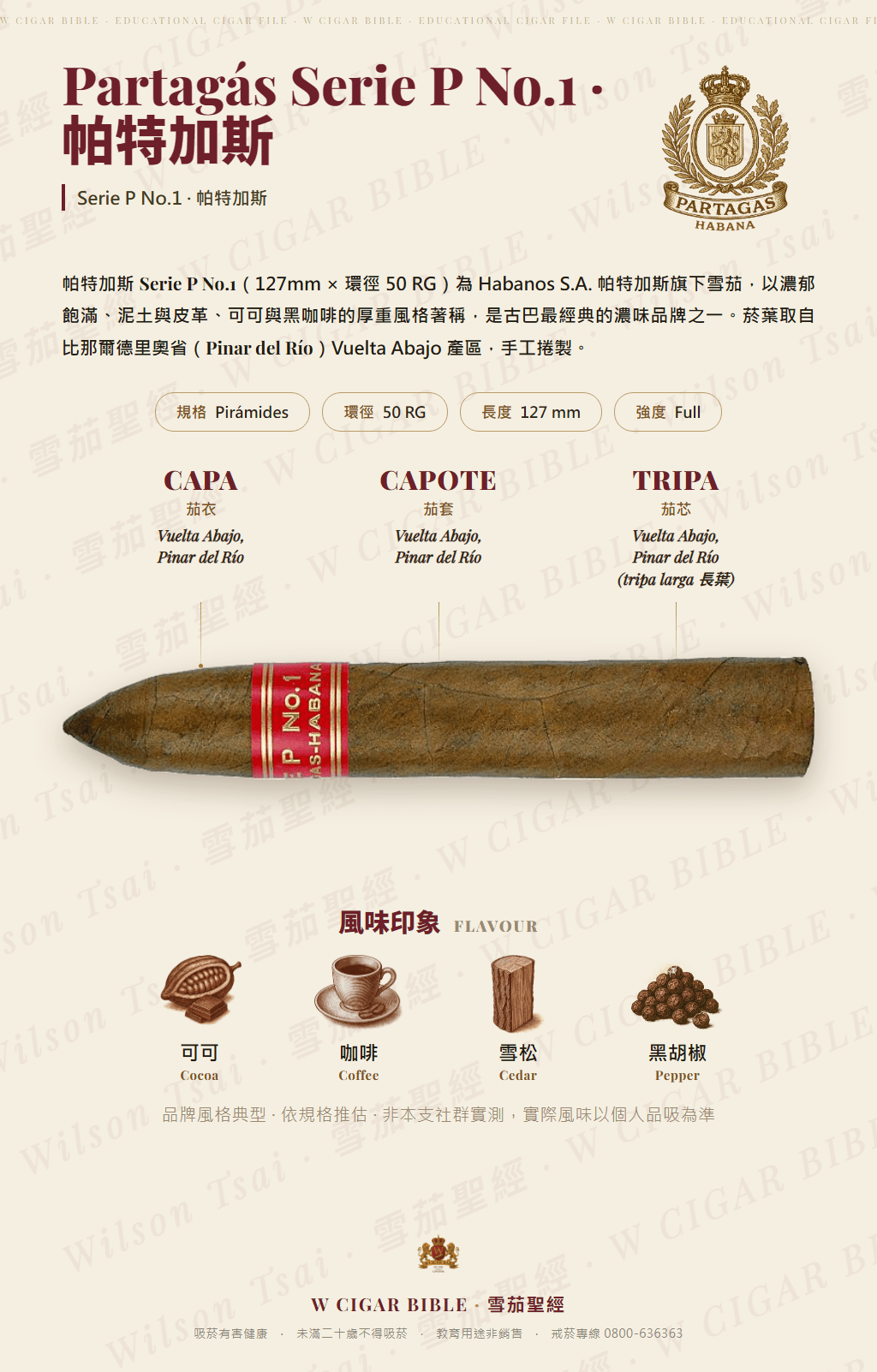
Partagás Serie P No.1 · 帕特加斯
瓷罐特別版(Petit Pirámides 127mm × 環徑 50 RG,2009 年發表/2010 年問世,非常規產線)· 雪茄檔案
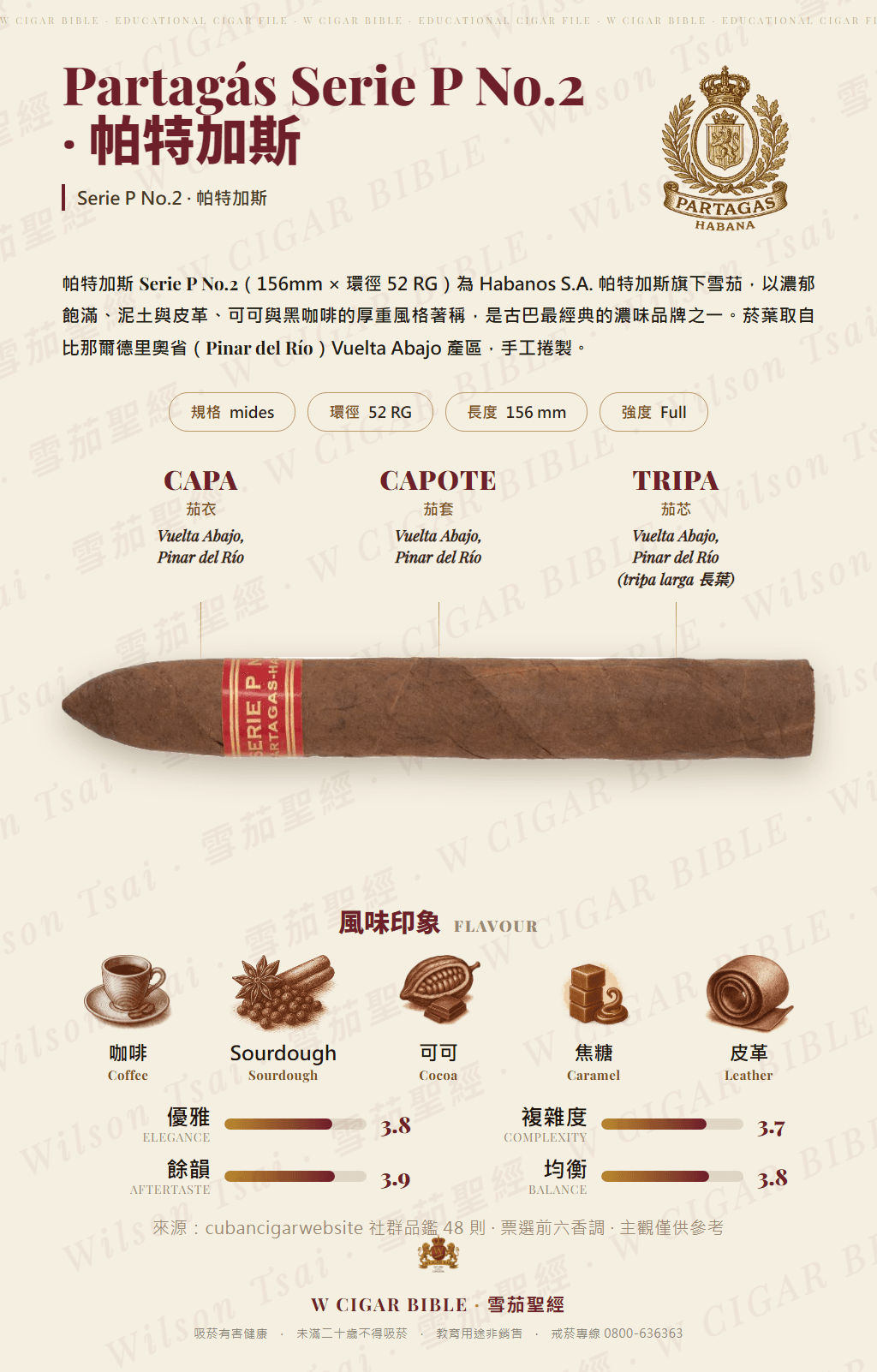
Partagás Serie P No.2 · 帕特加斯
標準生產款(Pirámides 156mm × 環徑 52 RG,2005 年上市、在產)· 雪茄檔案
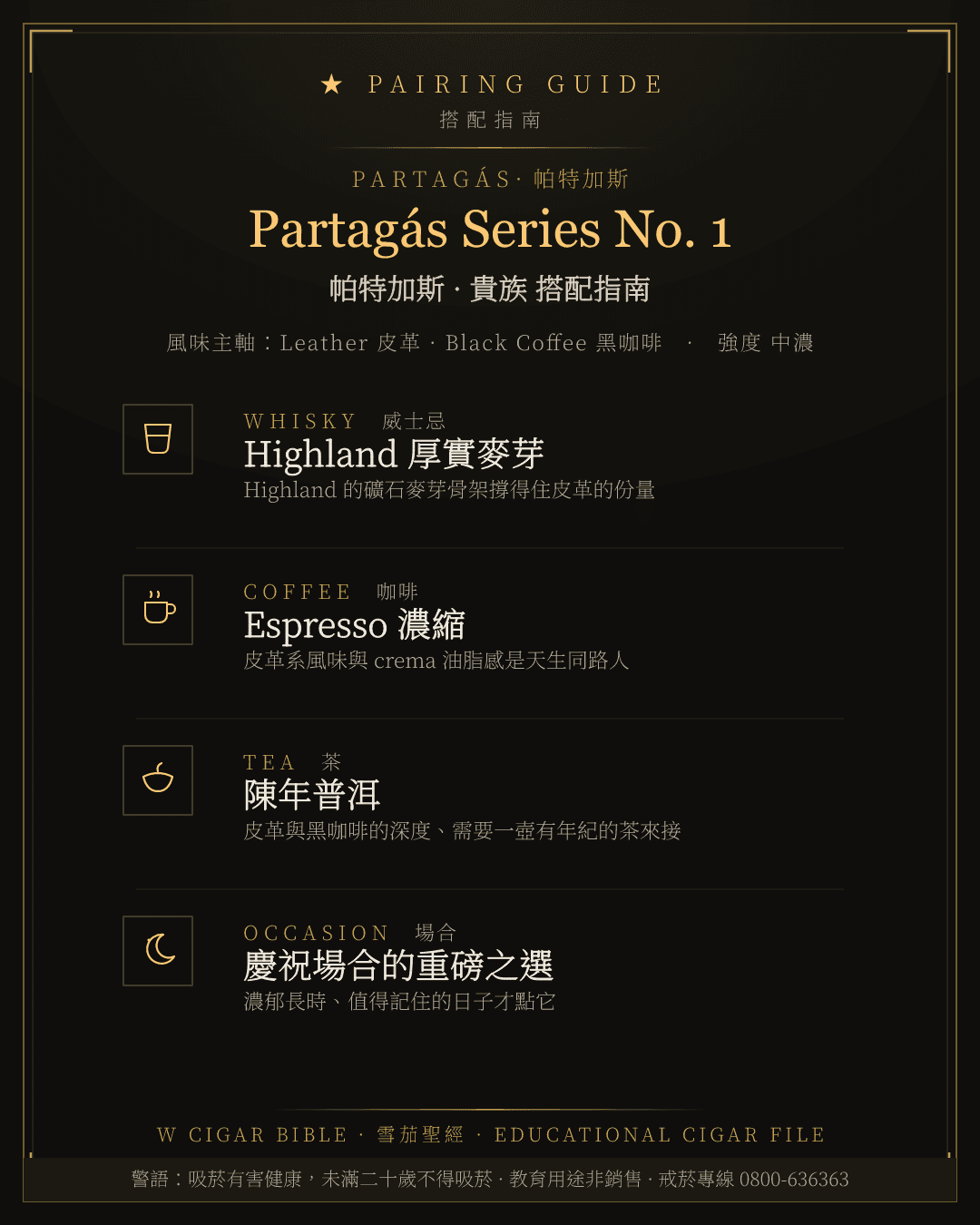
Partagás Series No. 1 搭配指南 · 帕特加斯
PAIRING GUIDE · 搭配指南

Partagás Series No. 1 風味筆記 · 帕特加斯
TASTING NOTES · 風味筆記
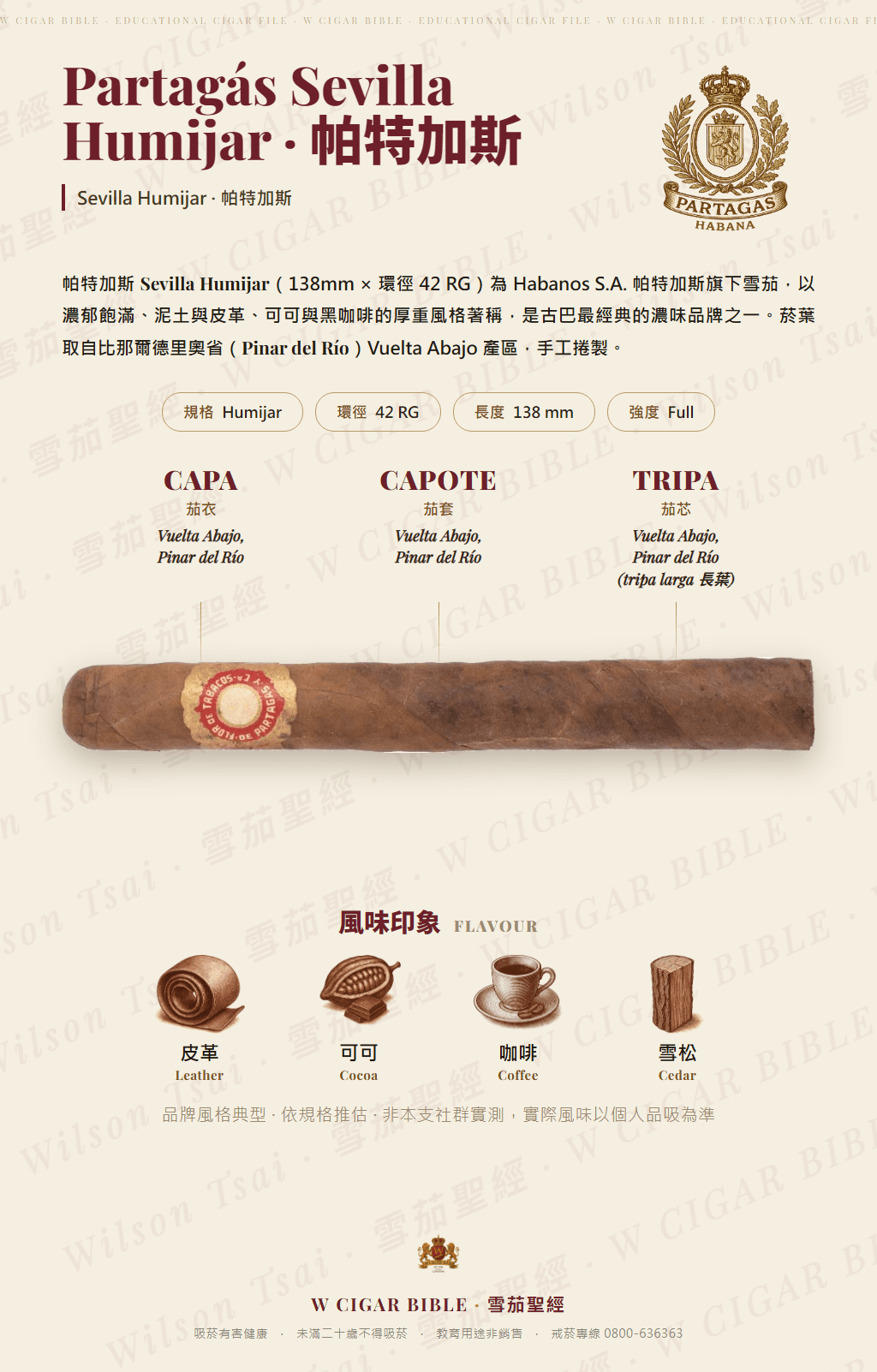
Partagás Sevilla Humijar · 帕特加斯
Serie Sevilla 陶罐(humijar)特別版 · 西班牙市場專屬、2019 年、2,000 只編號陶罐 · 雪茄檔案
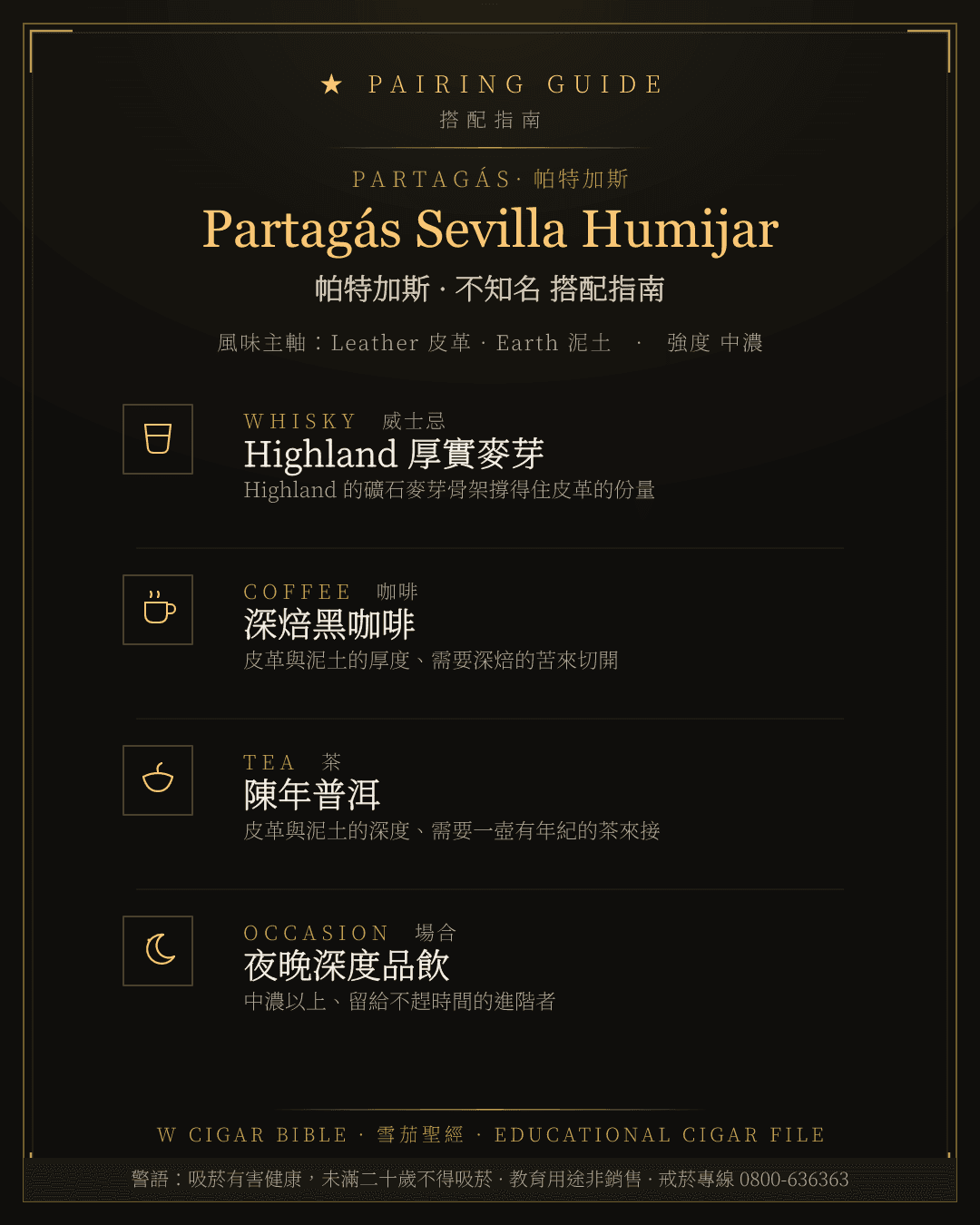
Partagás Sevilla Humijar 搭配指南 · 帕特加斯
PAIRING GUIDE · 搭配指南
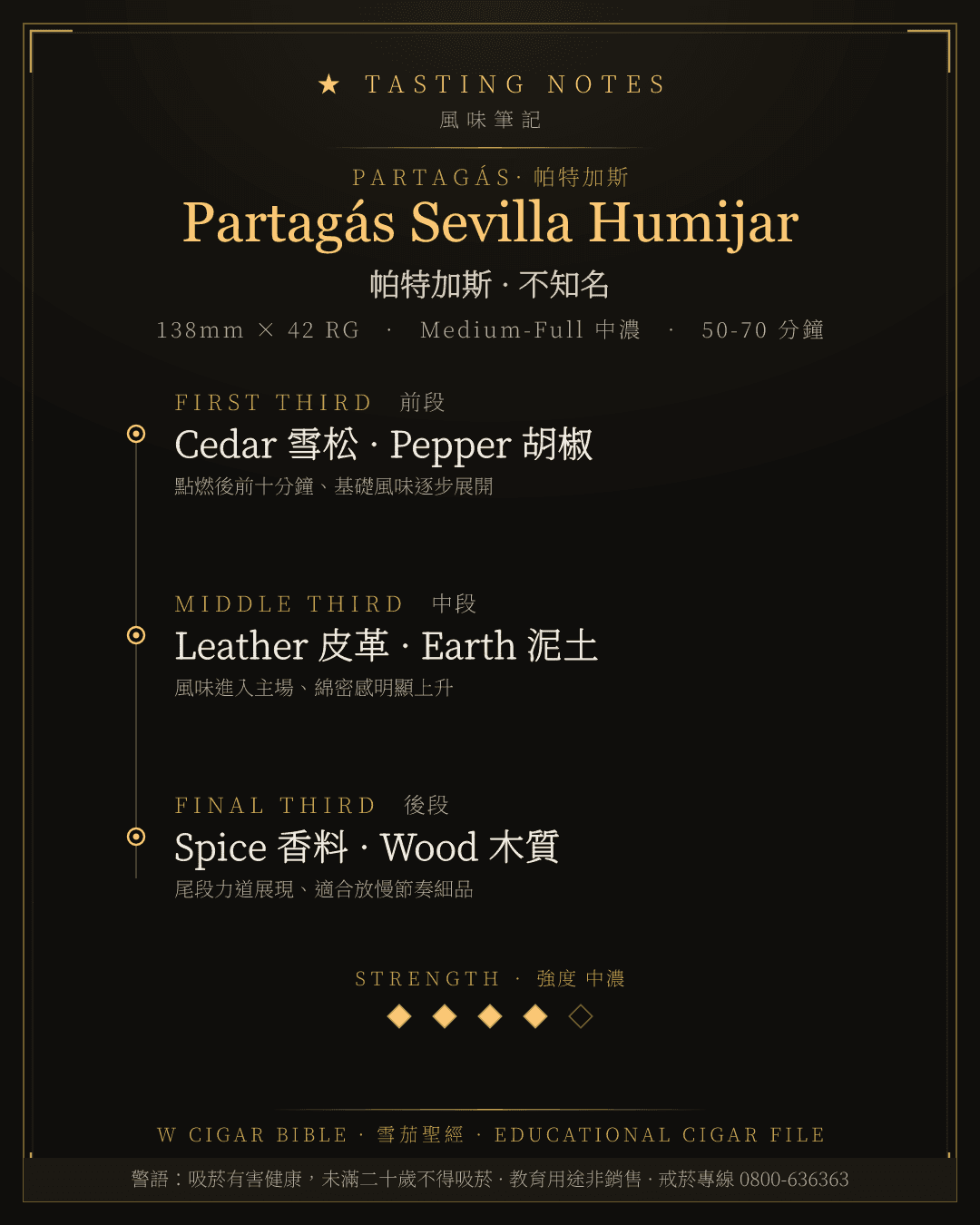
Partagás Sevilla Humijar 風味筆記 · 帕特加斯
TASTING NOTES · 風味筆記

Partagás Shorts · 帕特加斯
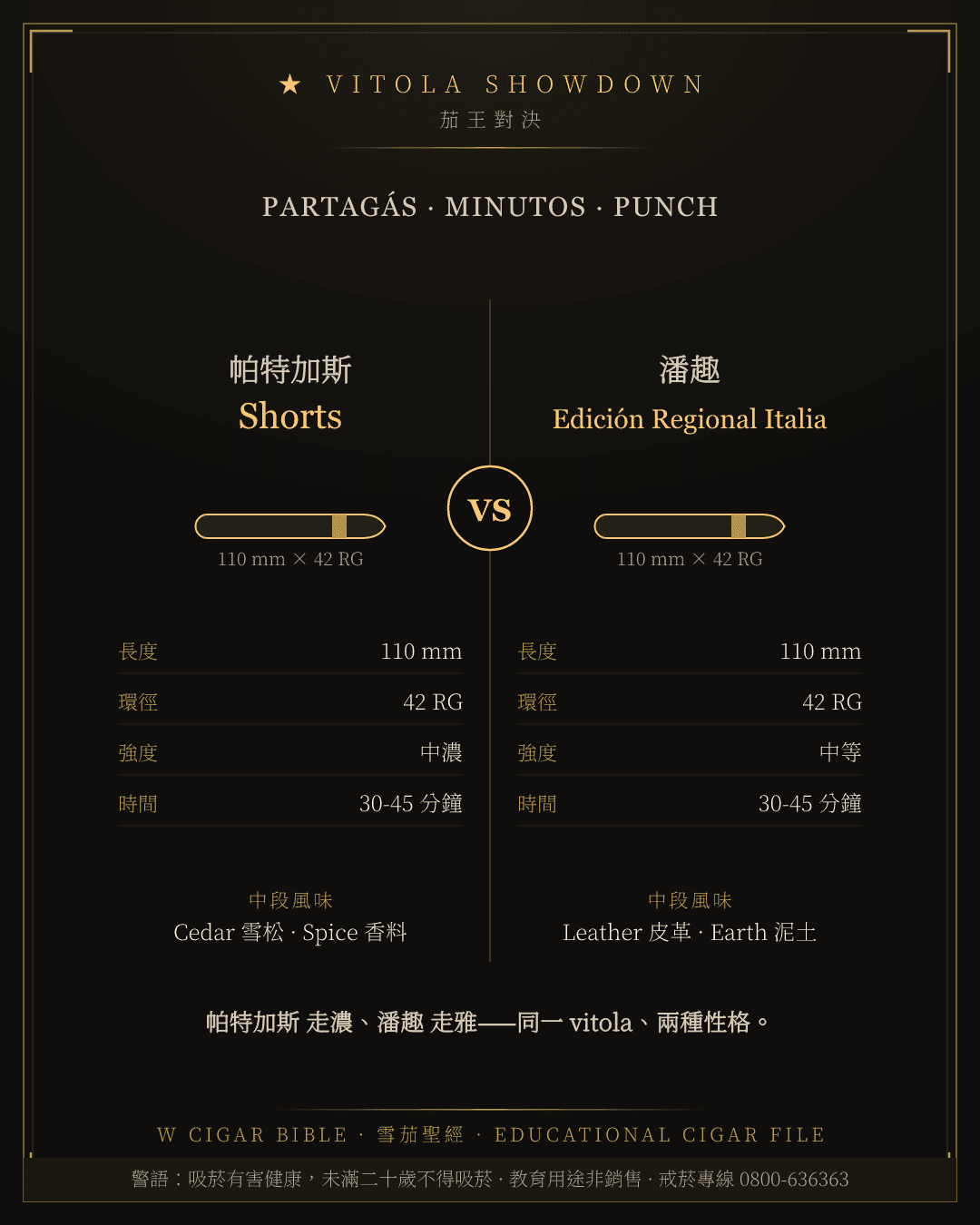
Partagás Shorts vs Punch Edición Regional Italia
VITOLA SHOWDOWN · Minutos
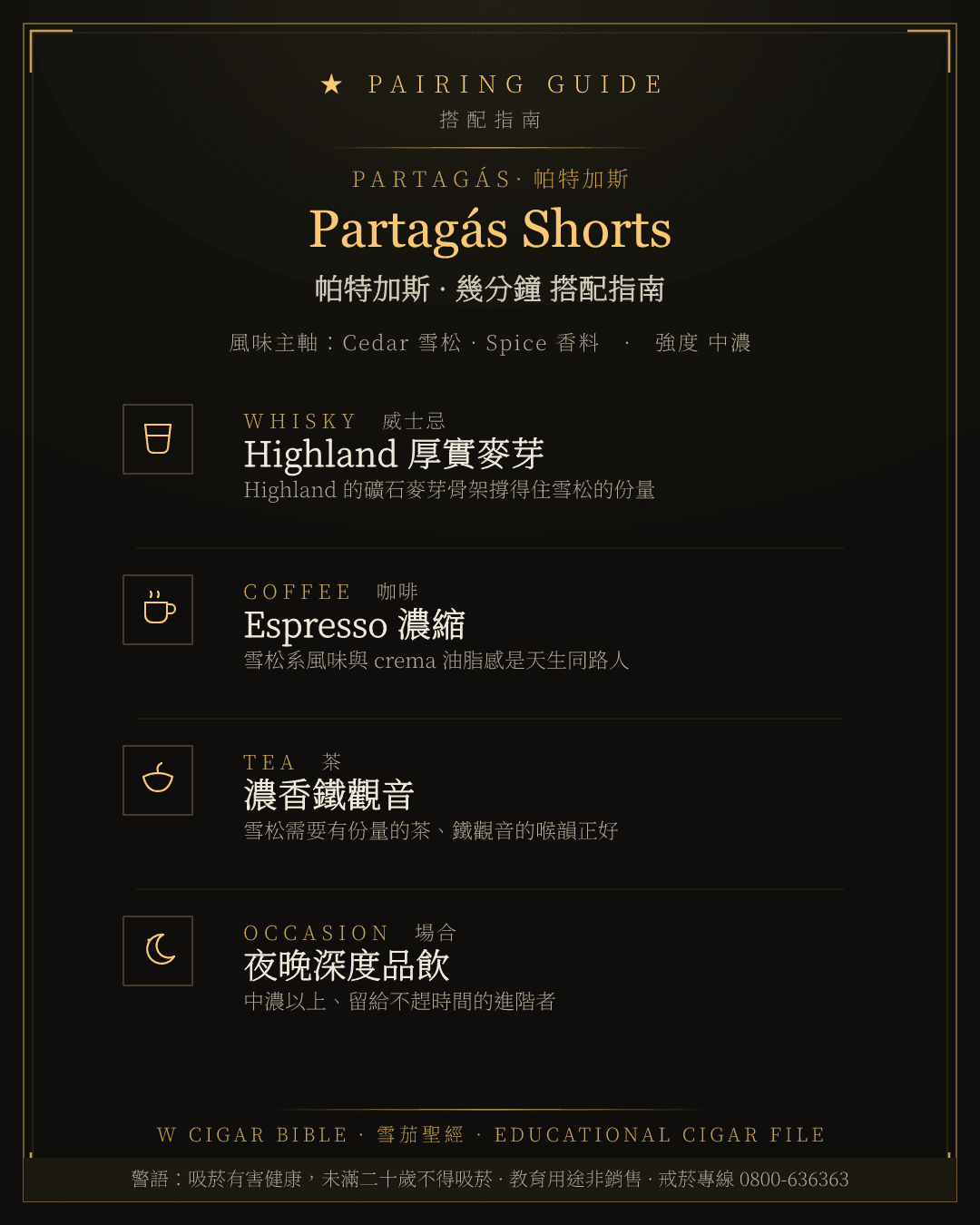
Partagás Shorts 搭配指南 · 帕特加斯
PAIRING GUIDE · 搭配指南
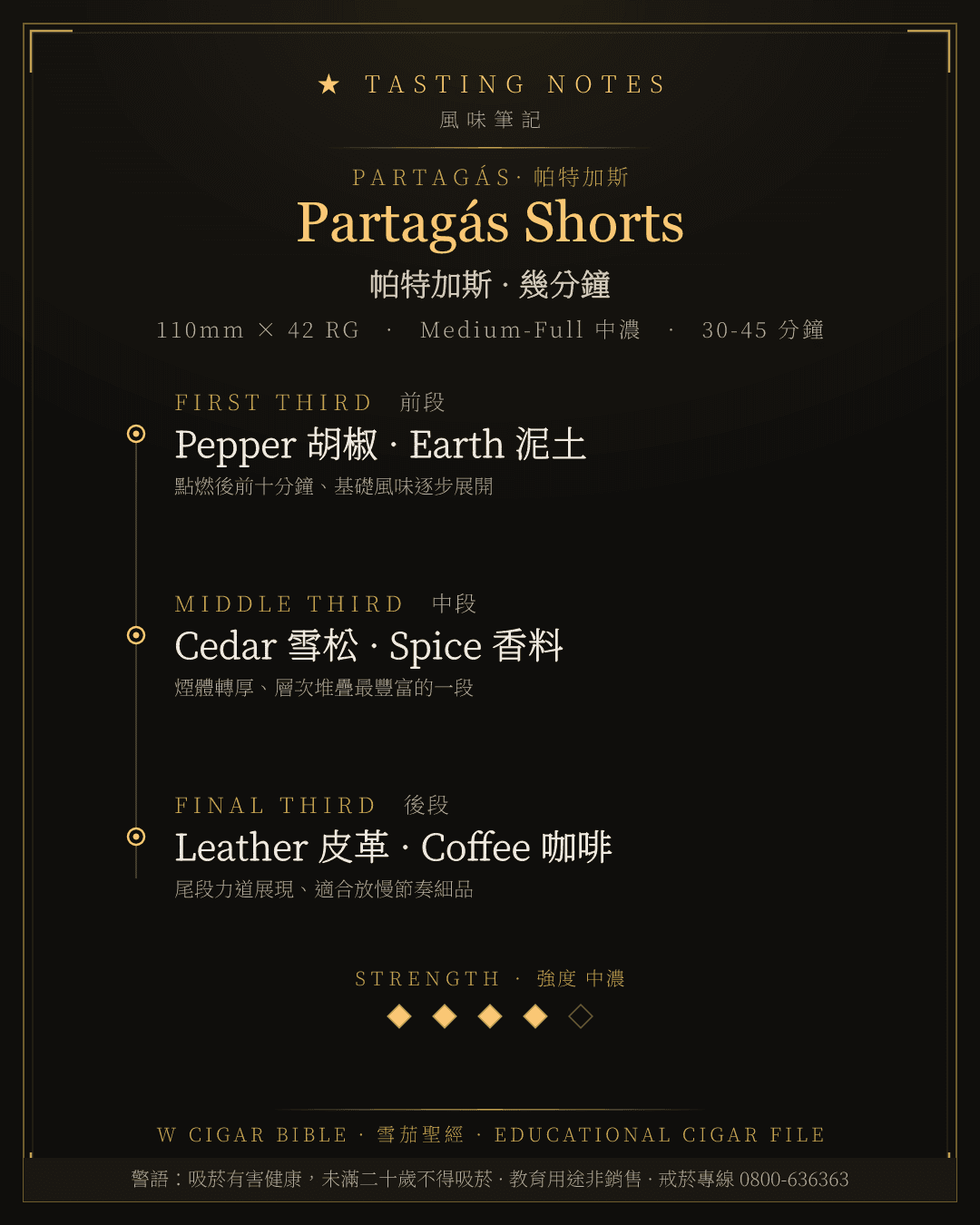
Partagás Shorts 風味筆記 · 帕特加斯
TASTING NOTES · 風味筆記
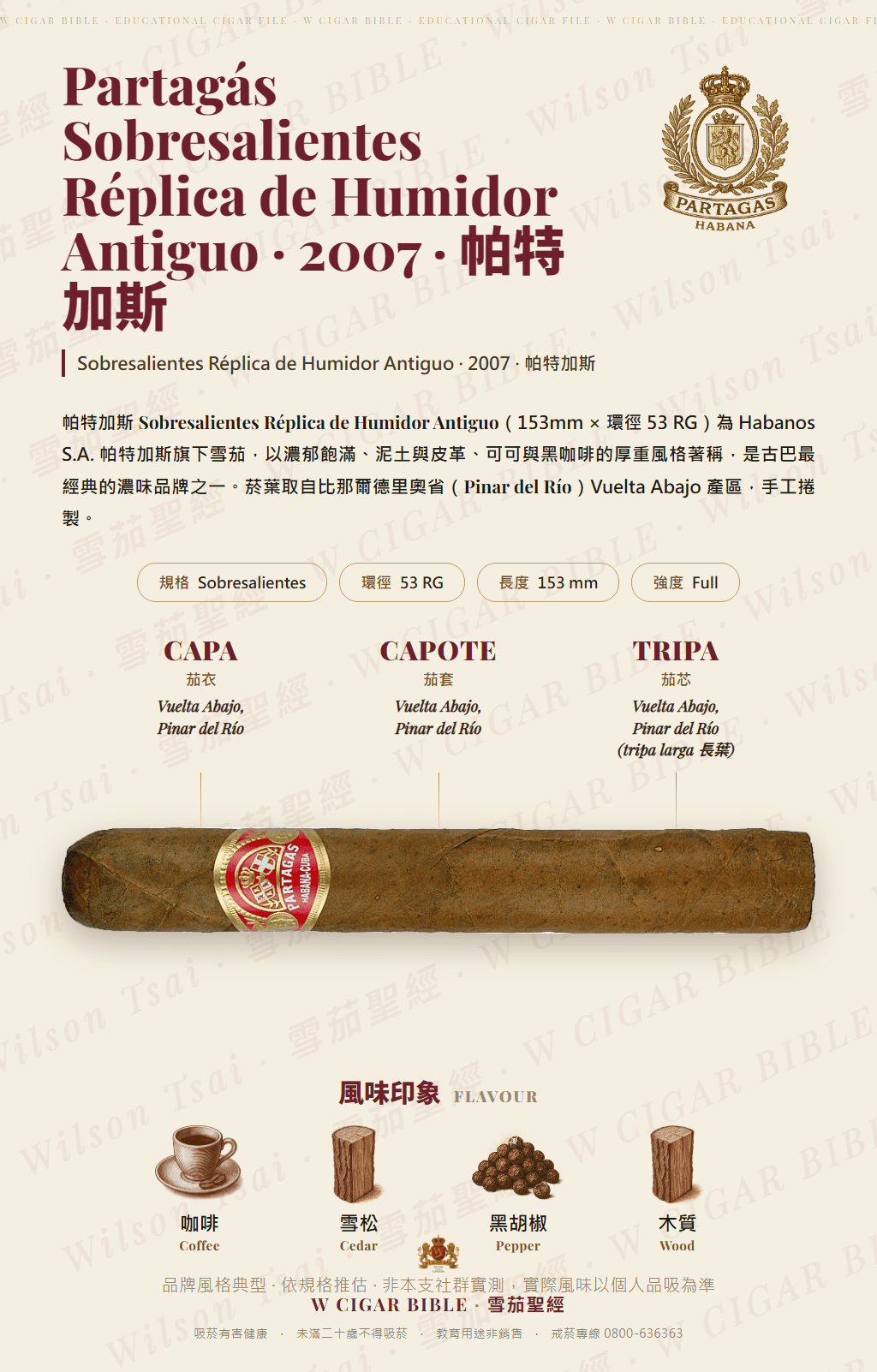
Partagás Sobresalientes Réplica de Humidor Antiguo · 2007 · 帕特加斯
2007 仿古雪茄櫃複刻版 Réplica de Humidor Antiguo(Sobresalientes 環徑53×153mm · 全球 200 座、每座 50 支)· 雪茄檔案
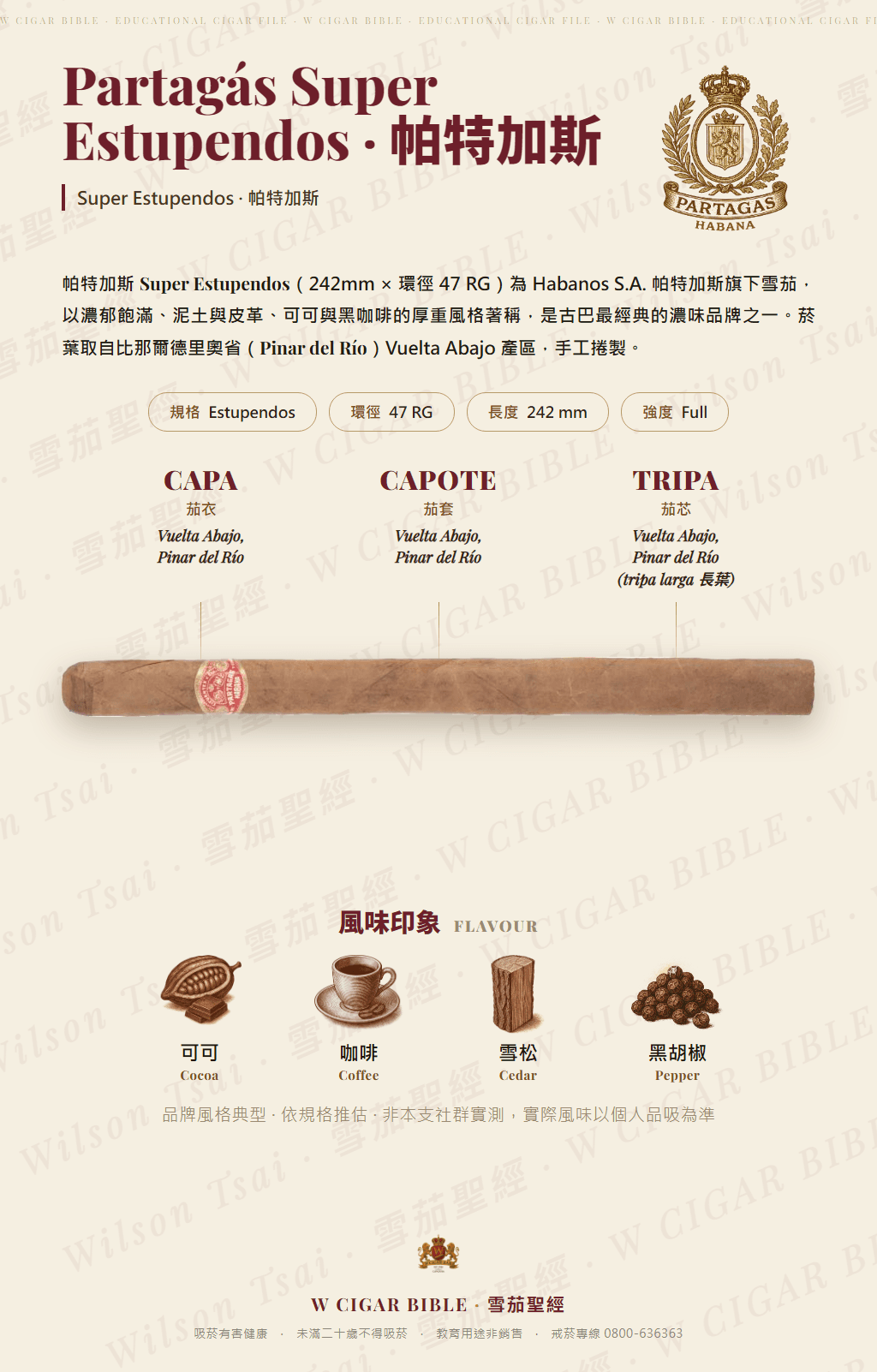
Partagás Super Estupendos · 帕特加斯
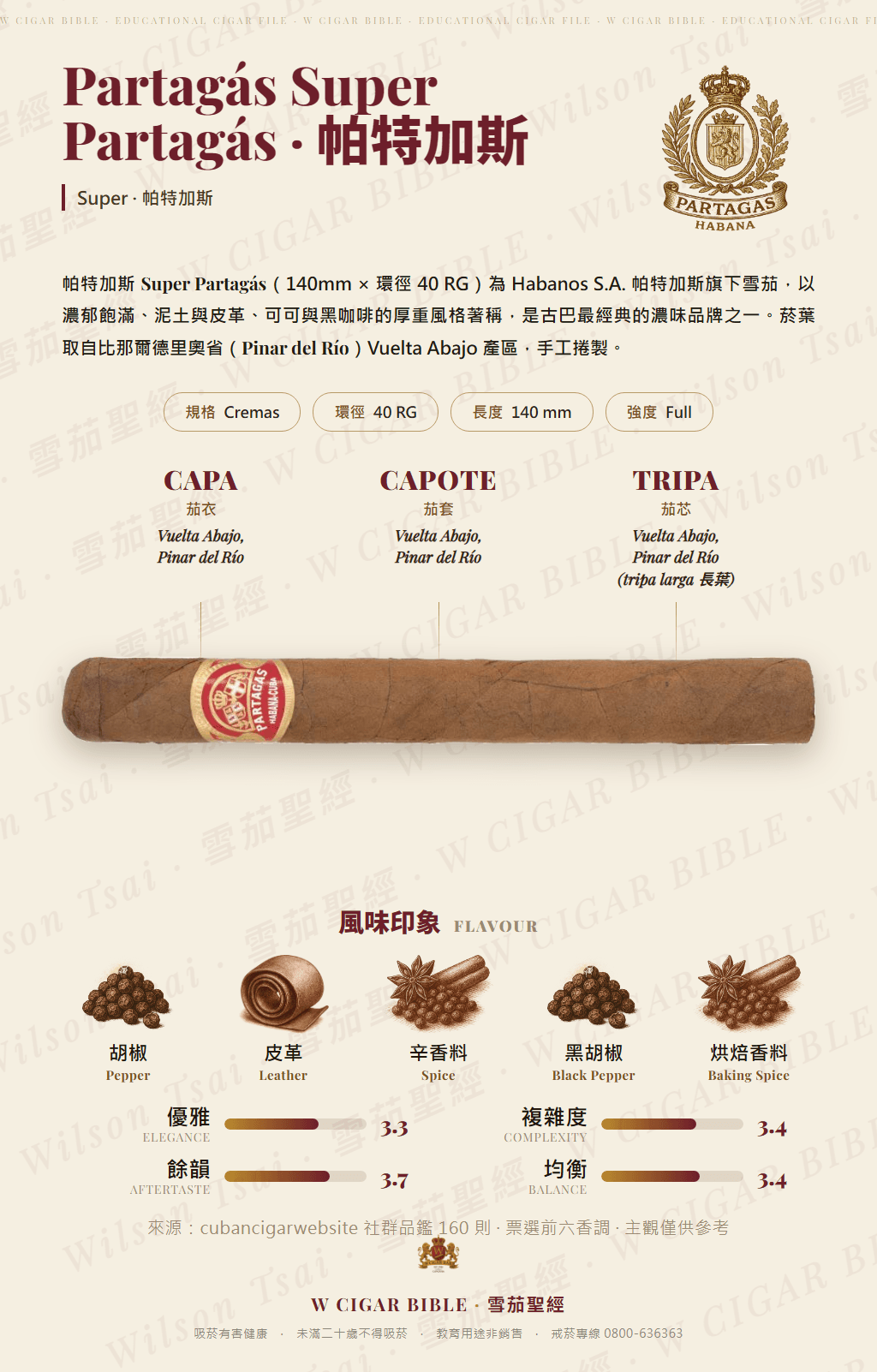
Partagás Super Partagás · 帕特加斯
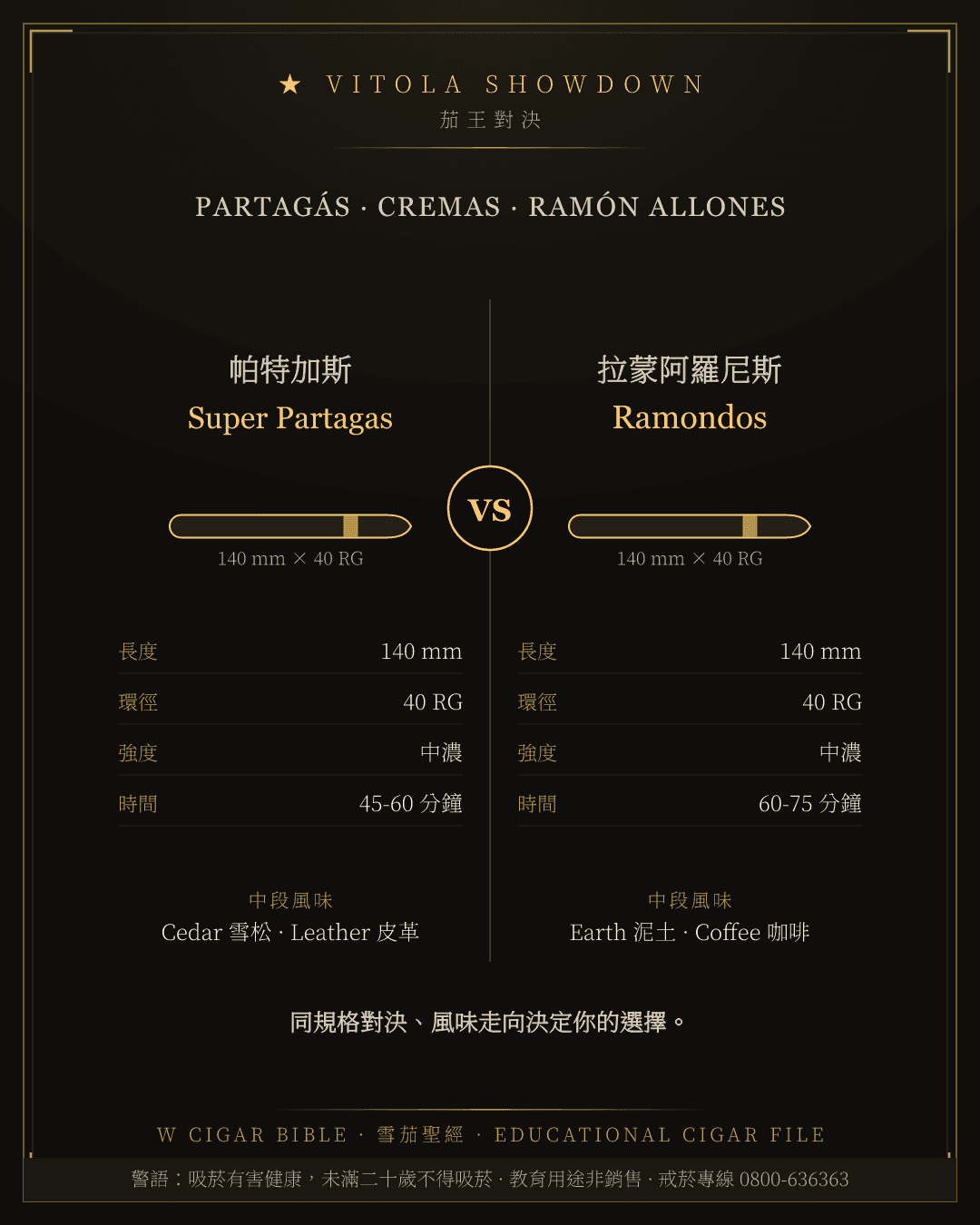
Partagás Super Partagas vs Ramón Allones Ramondos
VITOLA SHOWDOWN · Cremas
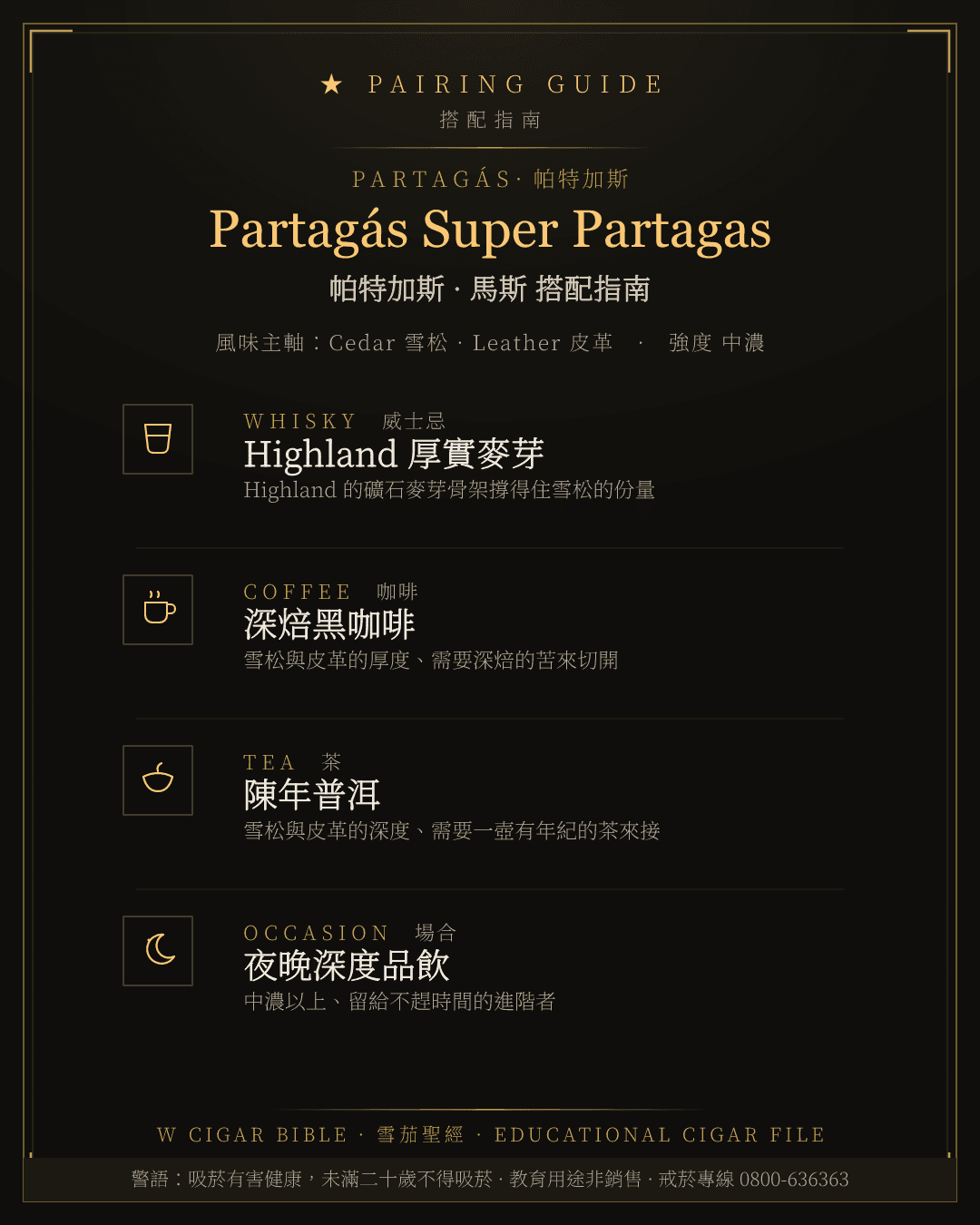
Partagás Super Partagas 搭配指南 · 帕特加斯
PAIRING GUIDE · 搭配指南
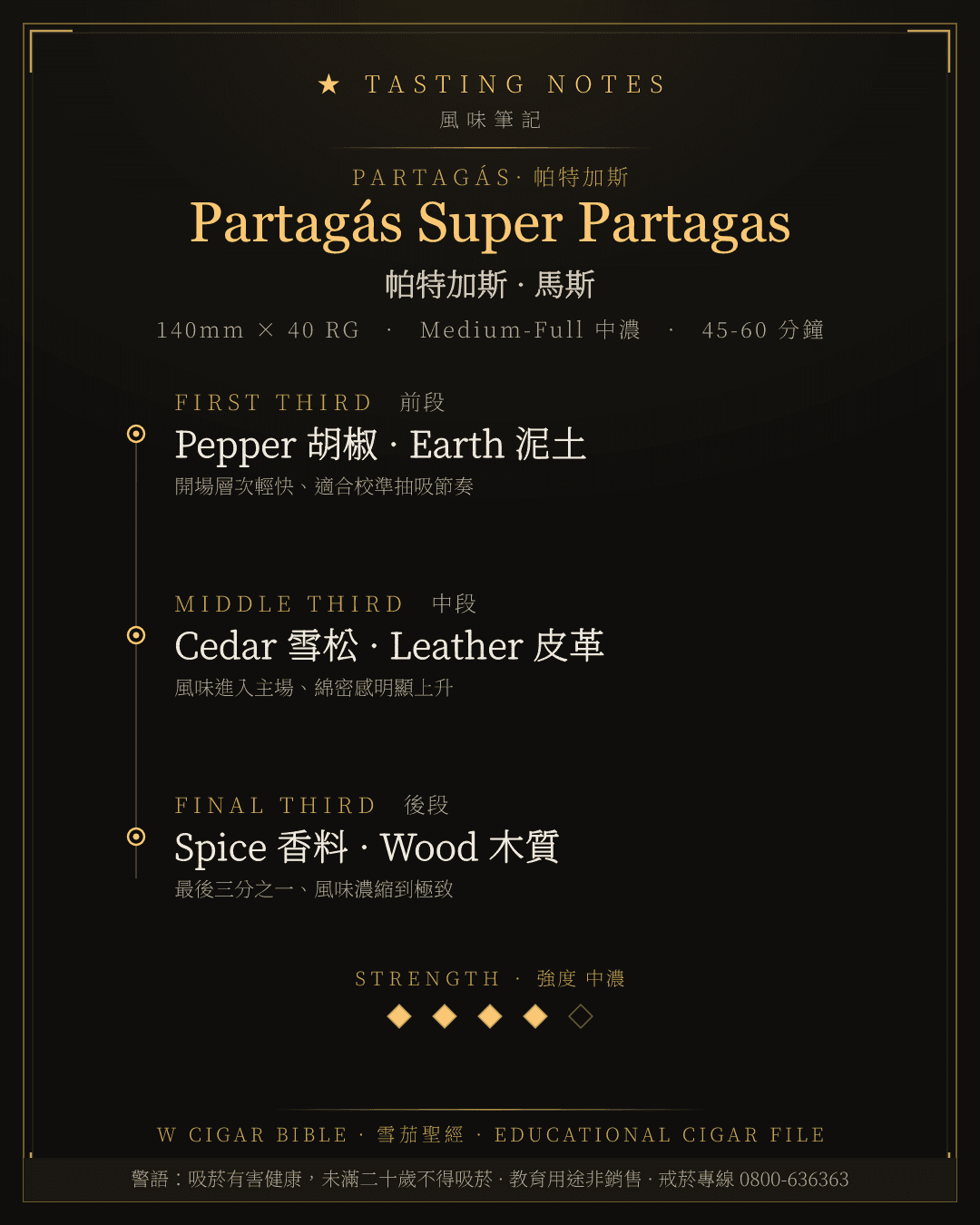
Partagás Super Partagas 風味筆記 · 帕特加斯
TASTING NOTES · 風味筆記
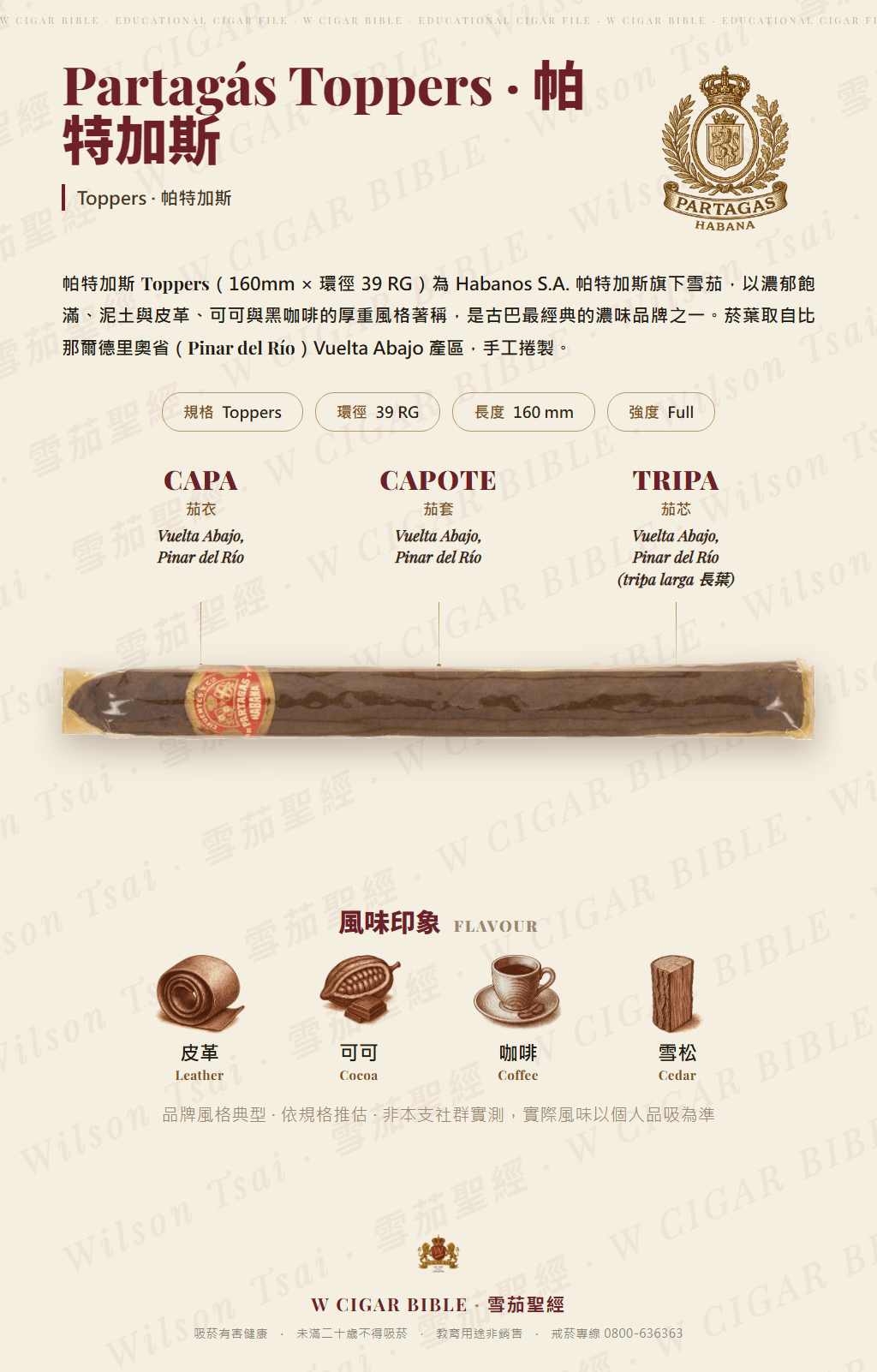
Partagás Toppers · 帕特加斯
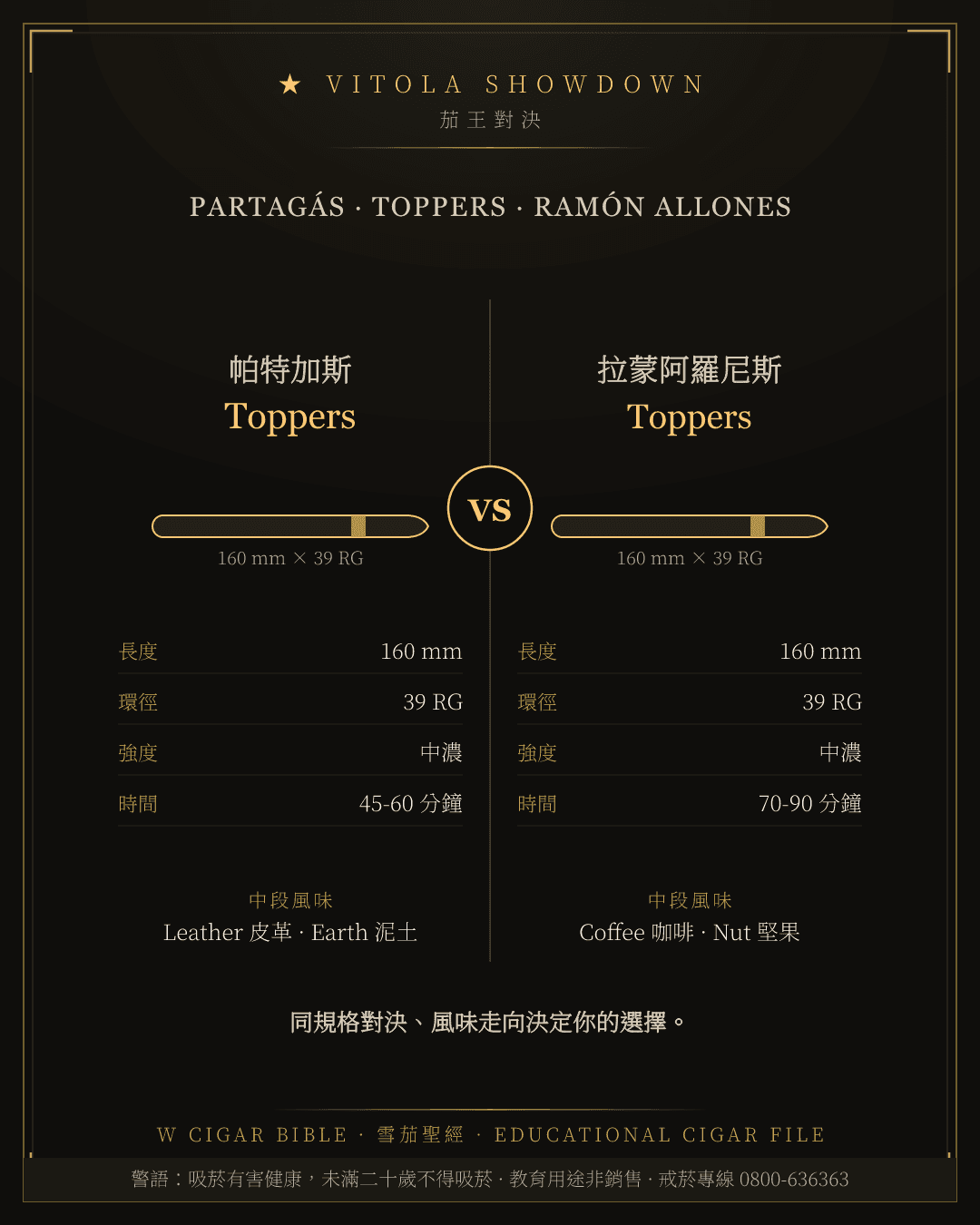
Partagás Toppers vs Ramón Allones Toppers
VITOLA SHOWDOWN · Toppers
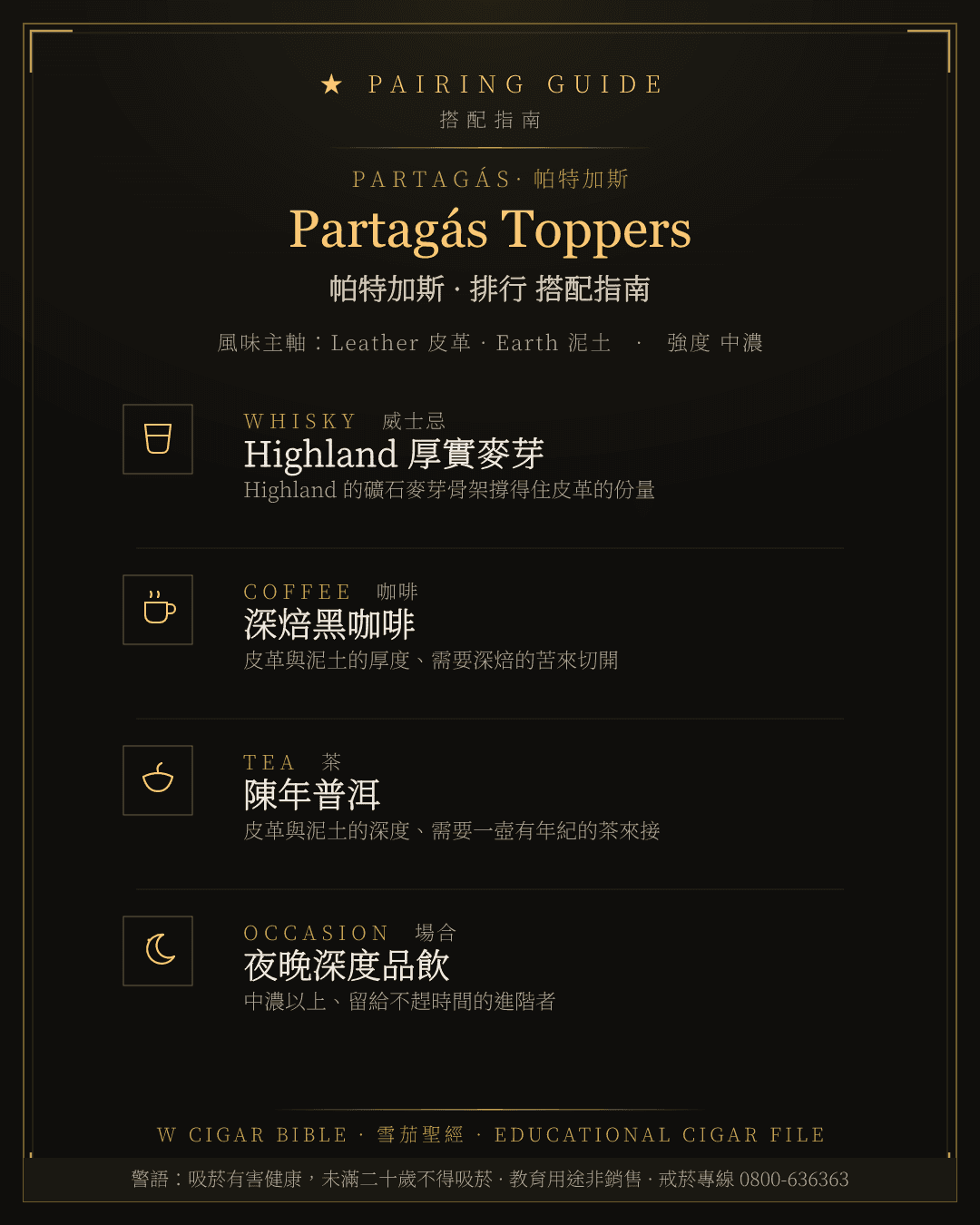
Partagás Toppers 搭配指南 · 帕特加斯
PAIRING GUIDE · 搭配指南
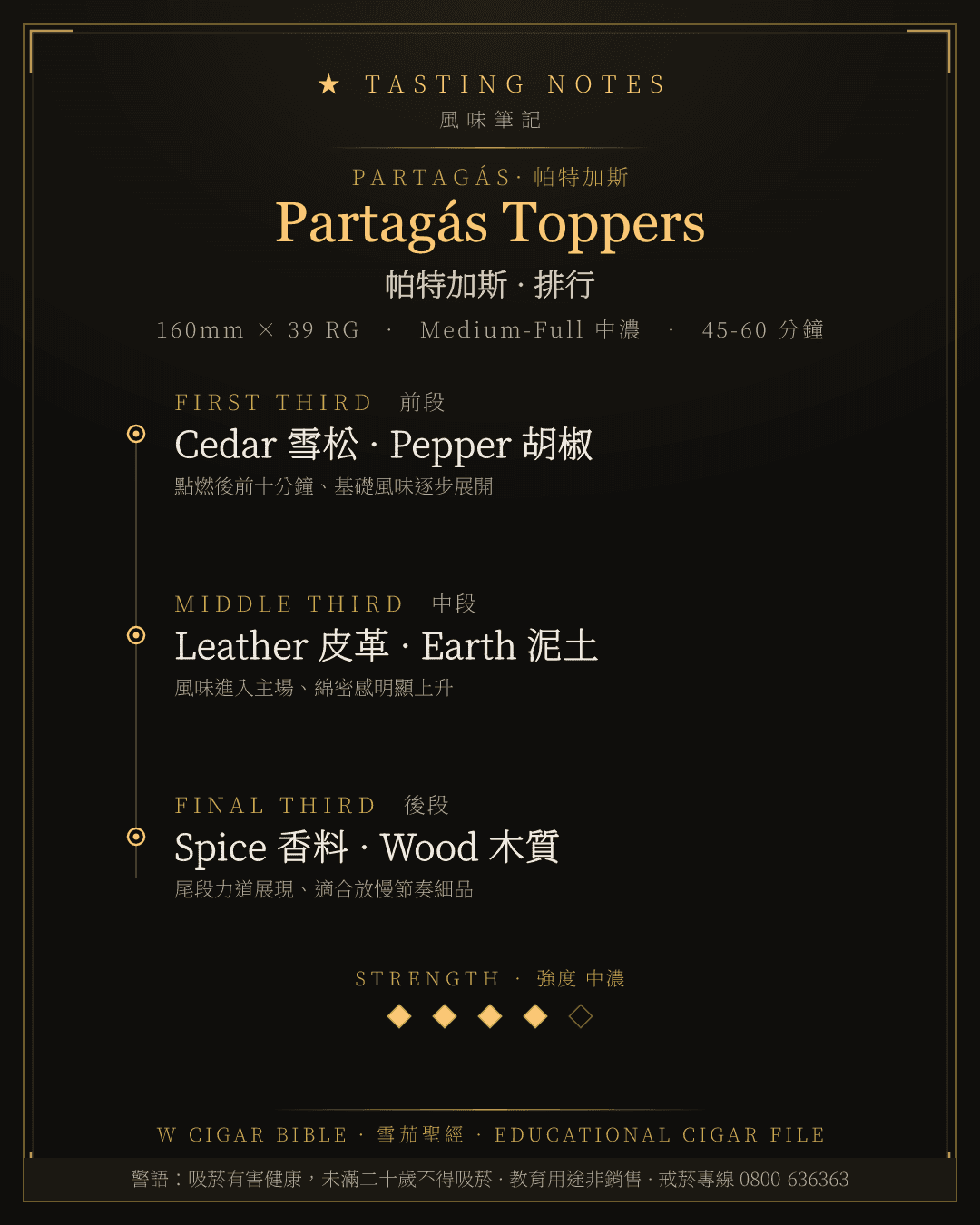
Partagás Toppers 風味筆記 · 帕特加斯
TASTING NOTES · 風味筆記
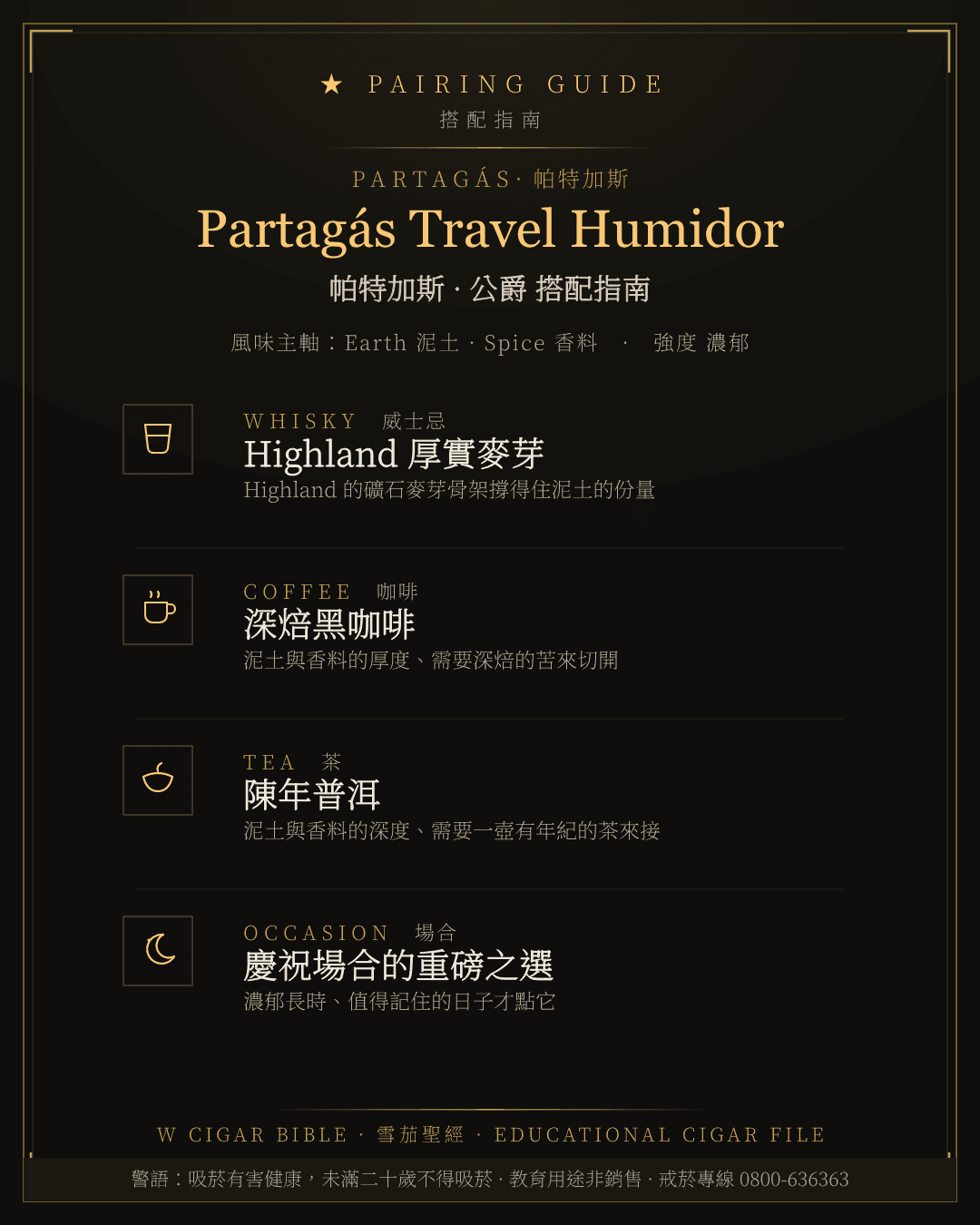
Partagás Travel Humidor 搭配指南 · 帕特加斯
PAIRING GUIDE · 搭配指南

Partagás Travel Humidor 風味筆記 · 帕特加斯
TASTING NOTES · 風味筆記
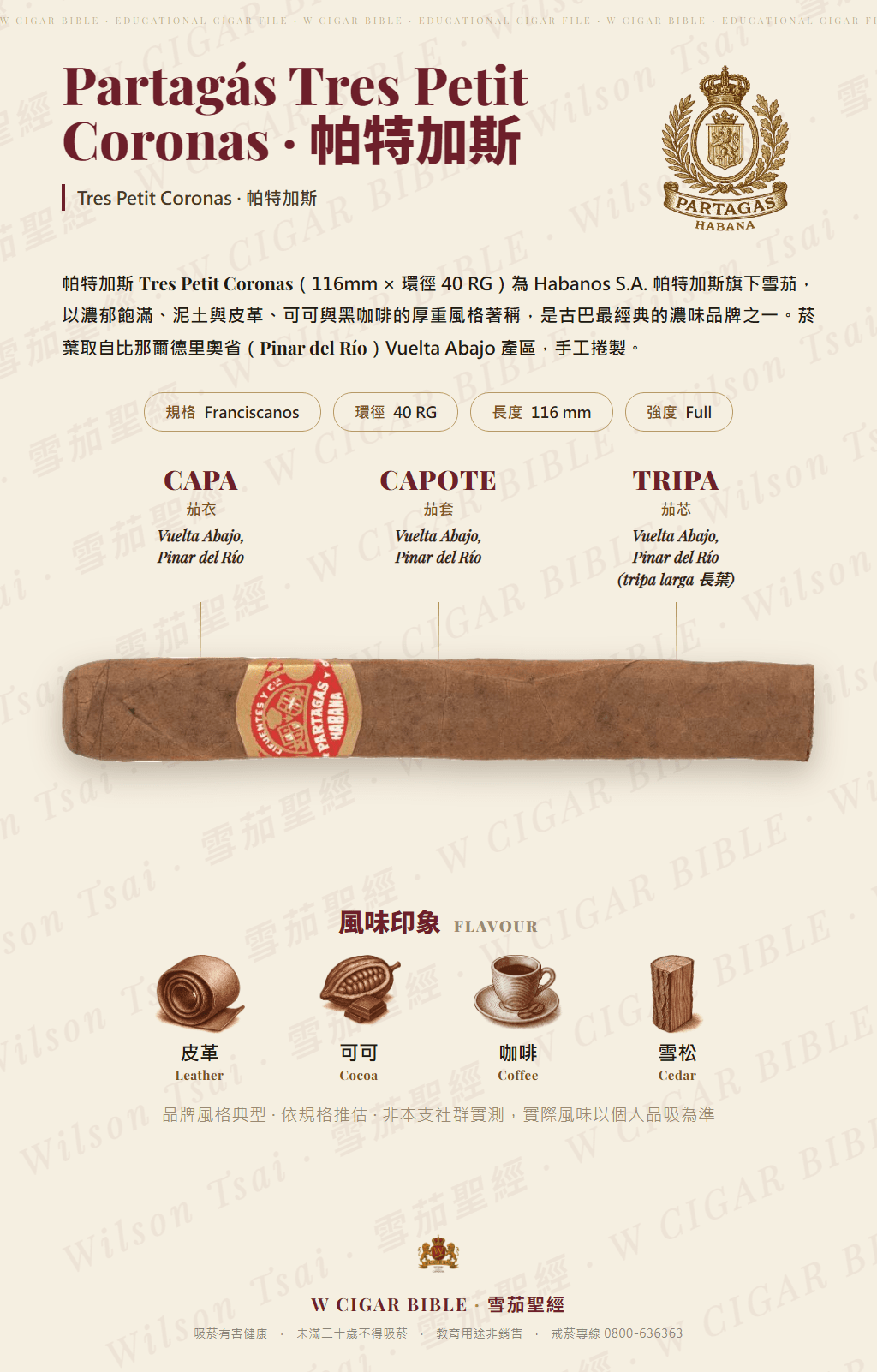
Partagás Tres Petit Coronas · 帕特加斯

Partagás Tropicales · AH 2020 · 帕特加斯
AH 2020 · 週年木盒紀念版 Aniversario Humidor · 雪茄檔案

Partagás Tropicales 搭配指南 · 帕特加斯
PAIRING GUIDE · 搭配指南
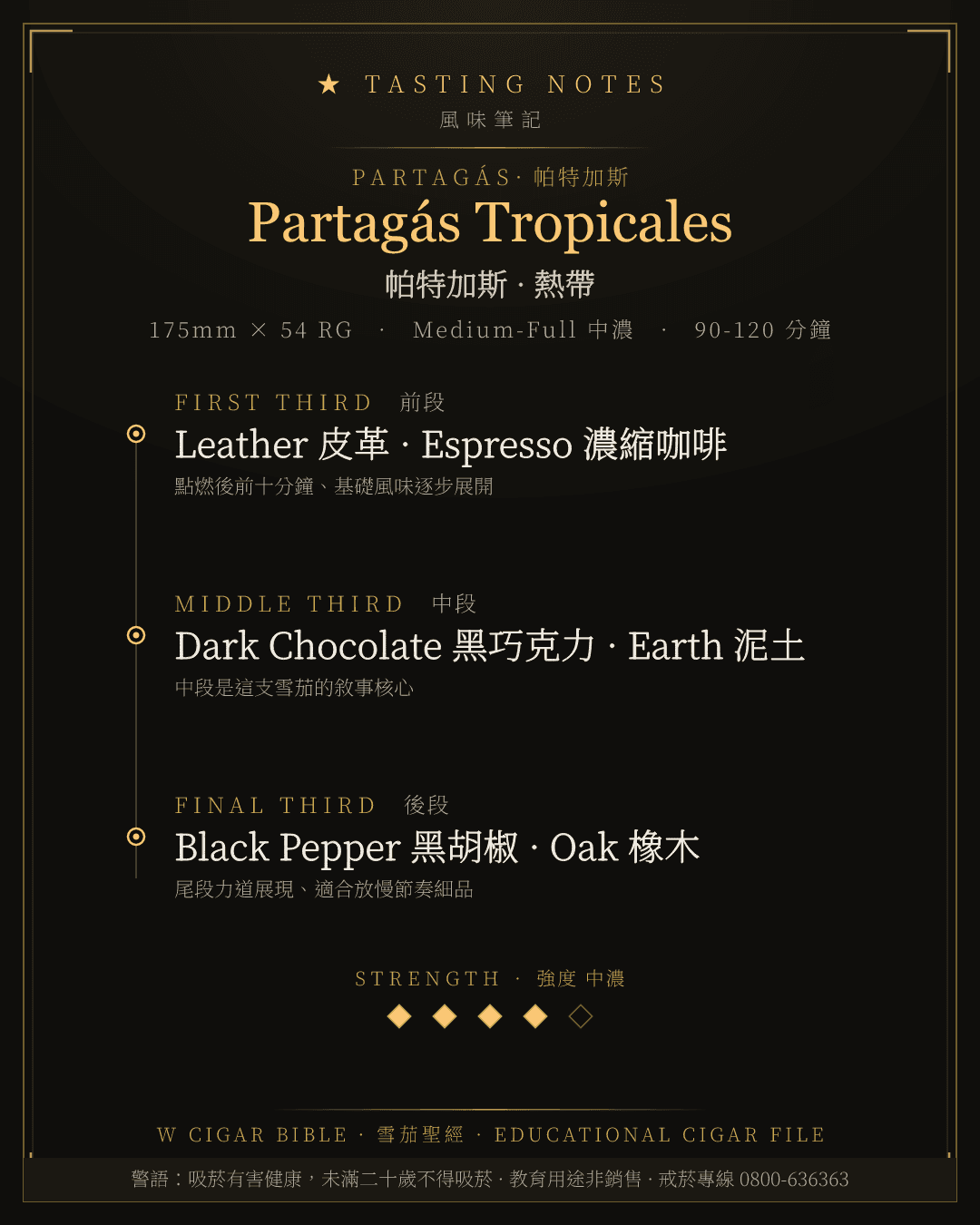
Partagás Tropicales 風味筆記 · 帕特加斯
TASTING NOTES · 風味筆記
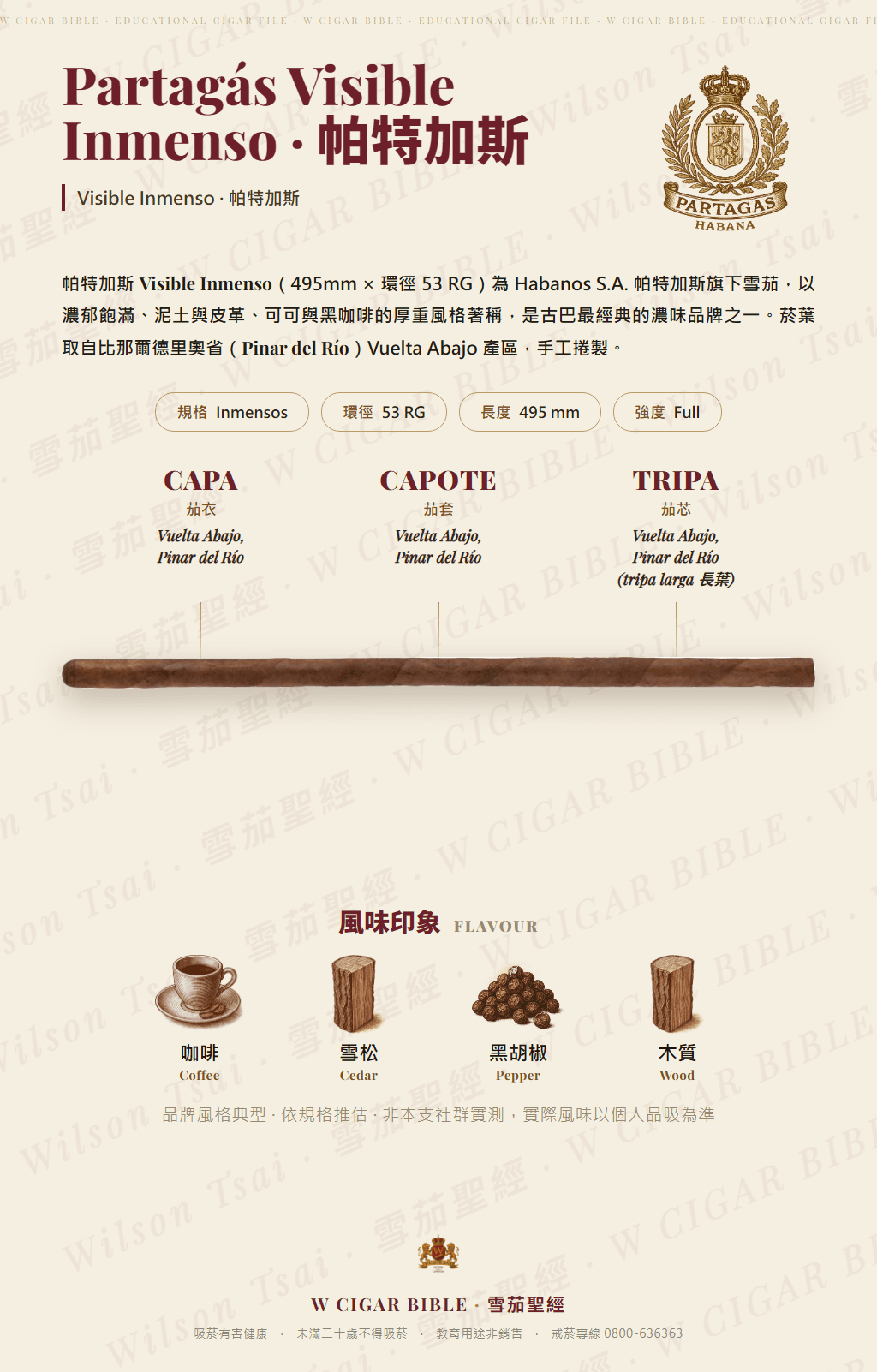
Partagás Visible Inmenso · 帕特加斯
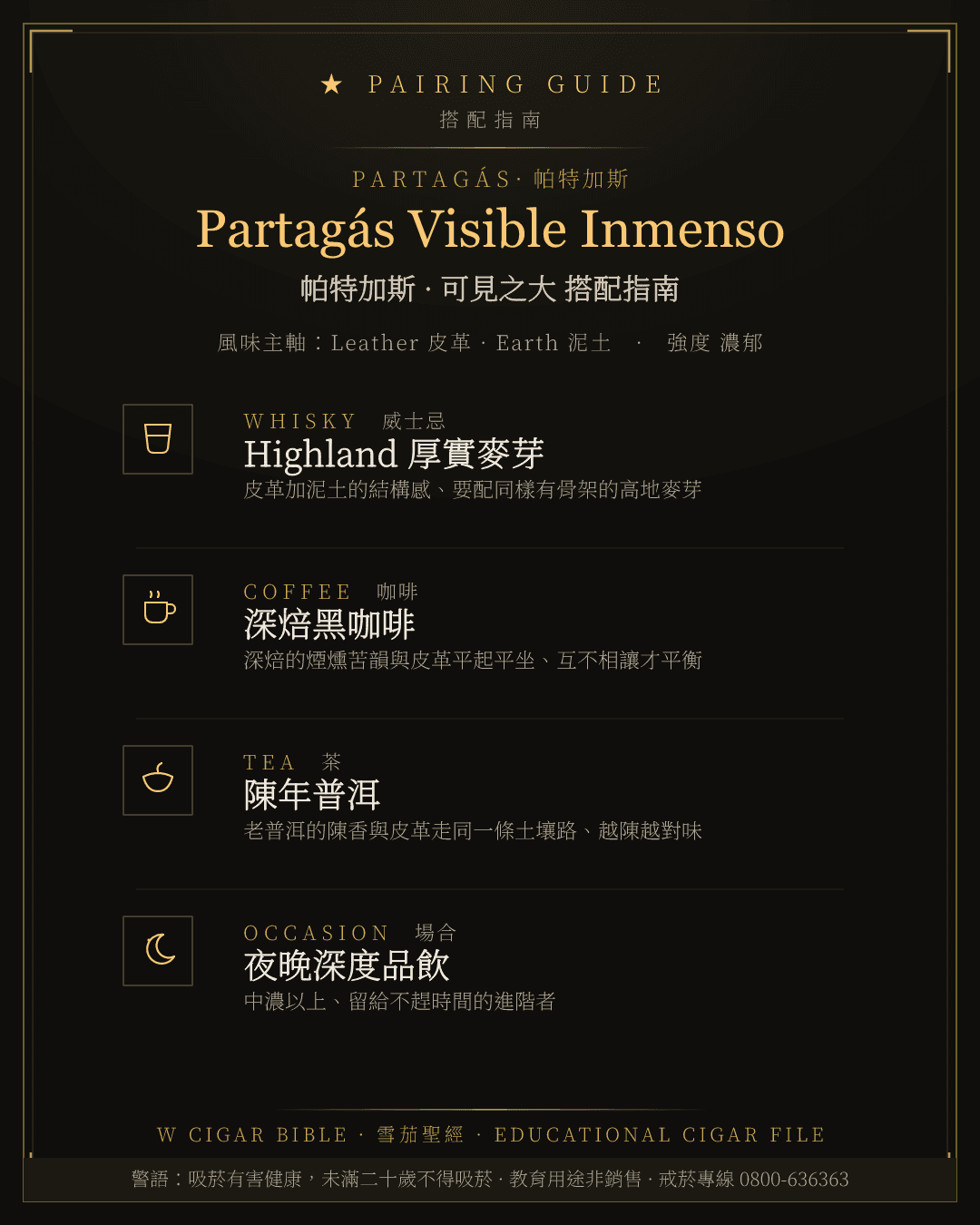
Partagás Visible Inmenso 搭配指南 · 帕特加斯
PAIRING GUIDE · 搭配指南

Partagás Visible Inmenso 風味筆記 · 帕特加斯
TASTING NOTES · 風味筆記

Partagás Visibles · 帕特加斯
標準生產款(Visibles 178mm × 環徑 48 RG,已停產)· 雪茄檔案
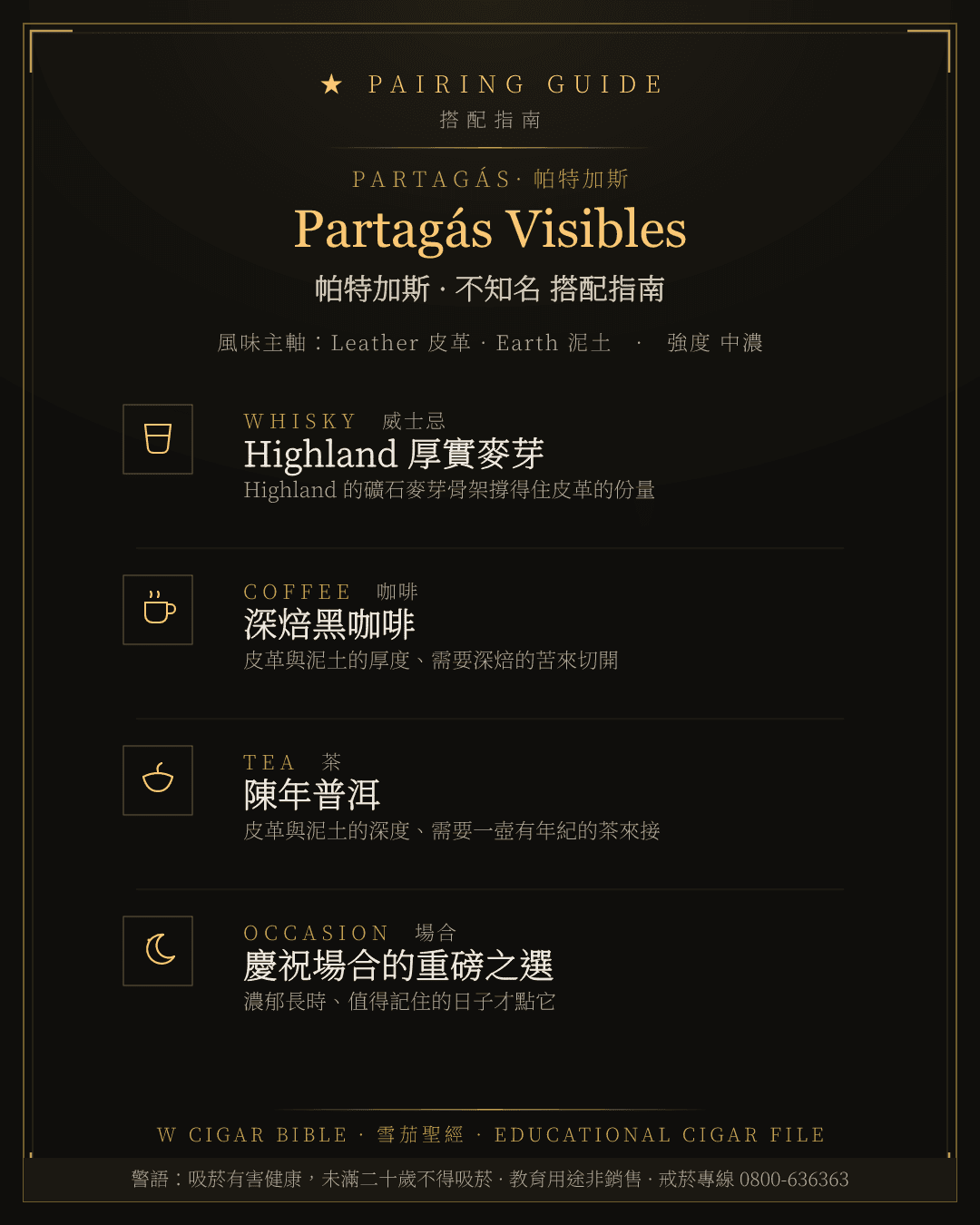
Partagás Visibles 搭配指南 · 帕特加斯
PAIRING GUIDE · 搭配指南
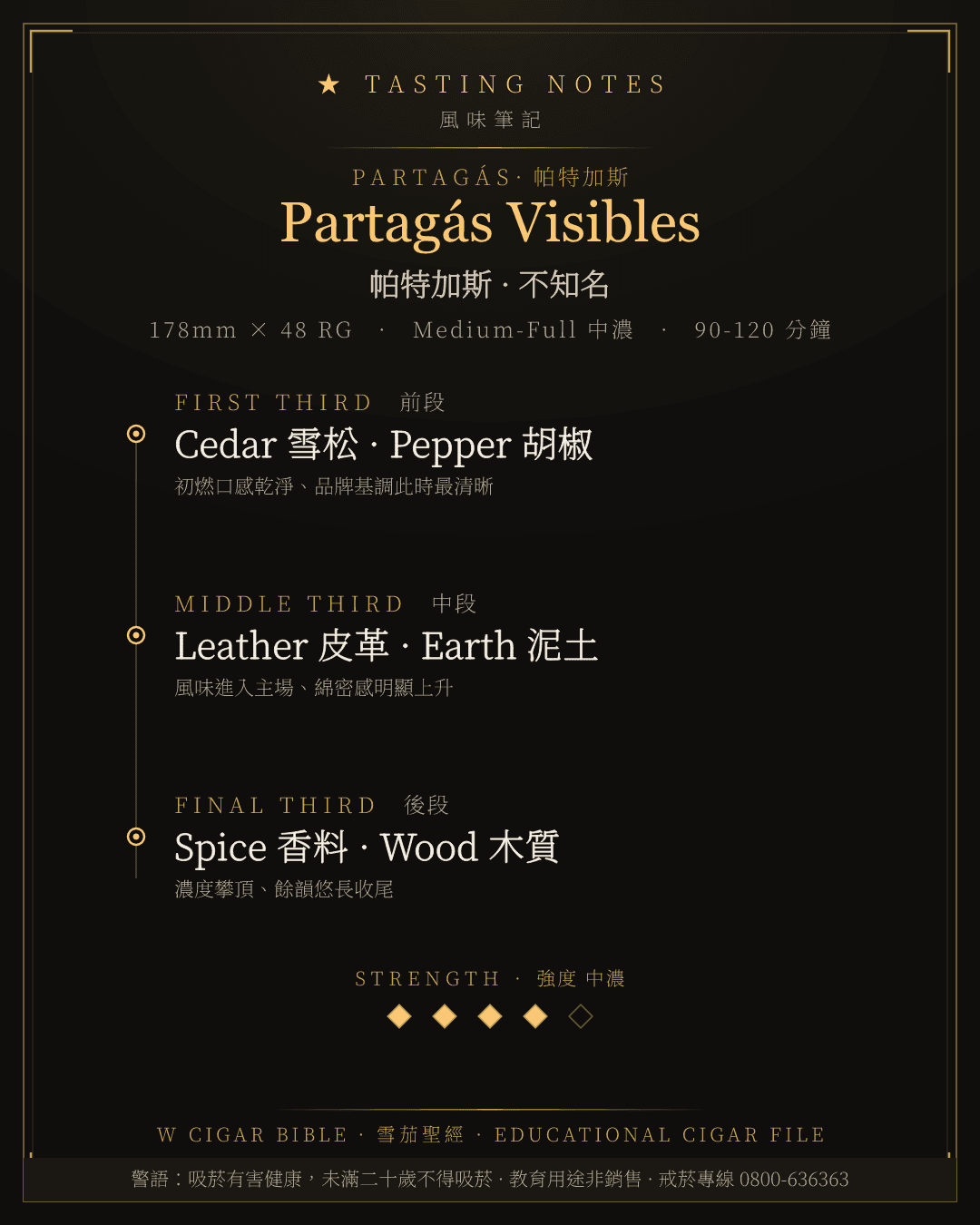
Partagás Visibles 風味筆記 · 帕特加斯
TASTING NOTES · 風味筆記
A Cigar Empire Built by a 14-Year-Old
If Cohiba is the cigar of revolution, and Romeo y Julieta is the cigar of gentlemen, Partagás is the cigar of the old soul - 180 years of uninterrupted production, the oldest surviving Cuban brand, and a source from which later cigar craftsmanship developed. The story of its founder is one of the most dramatic and influential legends in the cigar industry.
The story begins in 1831. A 14-year-old Catalan boy, Jaime Partagás y Rabell (born in 1816 in Arenys de Mar near Barcelona, Spain), crossed the sea alone to Cuba. He began learning tobacco from nothing. His earliest work was for the Catalan merchant Joan Conill, where he learned the trade step by step, from cultivation, fermentation, rolling, and sales.
In 1838, at only 22 years old, he began rolling his own cigars and opened a small factory on Calle Industria in Havana. In 1844, he formally founded the brand "La Flor de Tabacos de Partagás y Compañía", and in 1845 completed the magnificent maroon and cream-colored Real Fabrica de Tabacos Partagás factory at Calle Industria No. 520. It still stands today on the edge of Old Havana and is one of the most historically significant buildings in the cigar industry.
The "Pioneering Innovator" of the Cigar Industry
Partagás is the oldest surviving Cuban cigar brand still in continuous production - 30 years older than Romeo y Julieta, 20 years older than Hoyo de Monterrey, and 1 year older than H. Upmann. But Don Jaime's true historical importance was not simply being "first." It was that he reinvented how cigars were made:
First, he was the true "father of fermentation craft" in the cigar industry. Before him, tobacco fermentation was random and experience-based. Don Jaime systematically experimented with fermentation and aging methods, establishing repeatable and controllable craft standards. These methods later became the foundation for all Cuban cigar brands. The "third fermentation" that Cohiba takes pride in today, and the Medio Tiempo selection of the Behike series, both trace their technical origins to Partagás.
Second, he was the first factory owner in the cigar industry to hire a "lector," or reader. Every day, novels, newspapers, and poetry were read aloud to the torcedores, or cigar rollers. This tradition later became standard in all Cuban cigar factories and indirectly gave rise to the naming stories of brands such as Romeo y Julieta (Shakespeare) and Montecristo (Dumas).
Third, he built one of the cigar industry's earliest "vertically integrated enterprises." He acquired many top tobacco farms in Vuelta Abajo, in Pinar del Río Province, including the Hato de la Cruz farm, which had 45 farmers. He even opened two "farmers' stores" (tiendas de raya), allowing farmers to buy daily necessities on credit. He was both merchant and landowner, and this model preceded modern retail by a century.
1868: An Unsolved Crime of Passion
Success also brought enemies. Don Jaime was famously amorous - one of the cigar industry's best-known "ladies' men." He expanded his business through many means, including illegally using other brand names to sell his own cigars and using creative credit arrangements to take over other people's tobacco fields. He made many enemies.
In 1868, Don Jaime Partagás was murdered on his own tobacco farm. The most widely circulated account says that the killer suspected his wife of having an affair with Jaime. One suspect died in prison, and the case remains unsolved to this day.
The story did not end there. Rumors spread in the factory that after Don Jaime's death, his ghost still wandered the factory at 520 Calle Industria, and cigar rollers were so frightened that they dared not work. Eventually, a Catholic priest and a santera, a priestess of Cuban Santería, were invited to perform rituals together, and only then was the ghost driven away. Whether the story is true is impossible to determine, but it has become part of the Partagás myth: the man and the brand became one in cultural memory.
The Cifuentes Family Era: 1900-1960
After Don Jaime's death, the brand passed to his son José Partagás, but José lacked his father's gifts. On May 6, 1871, José announced a new cigar-box patent design and trademark to counter imitations in the American market. It was one of the earliest trademark protection actions in the cigar industry. But the company's finances continued to deteriorate, and the factory was eventually sold to the banker José A. Bances.
Bances was unfamiliar with the cigar business, so in 1899 he brought in Ramón Cifuentes Llano as a partner. In 1900, Cifuentes took control. This marked the beginning of the "golden age" of Partagás.
Key moments in the Cifuentes family era:
- 1899-1914: Cifuentes and the Spanish businessman José Fernández founded "Cifuentes, Fernández y Compañía"
- 1914: Cifuentes acquired Fernández's shares and sold them to Francisco Pego Pita, and the company was renamed "Cifuentes, Pego y Compañía"
- 1927: Acquired Allones Ltda., bringing the famous brands "Ramón Allones" and "La Eminencia" under its control
- 1940: Acquired the La Gloria Cubana (1905) and Bolívar (1921) brands, moving all production to the Partagás factory
- 1941: Cifuentes's three sons took over the company, which was renamed "Cifuentes, Álvarez y compañía"
By 1958, Partagás was already Cuba's second-largest cigar exporter after H. Upmann, accounting for more than 25% of total Cuban cigar exports at the time.
6:30 p.m., September 15, 1960
This was the most dramatic moment in Partagás history. Troops of Castro's revolutionary government entered the Partagás factory. The man then in charge, Ramón Cifuentes Toriello, later recalled in 1991:
"They came in and said, 'We are here to intervene in this company.'"
That day, 16 cigar factories were confiscated at the same time. On April 14, 1962, the Partagás brand and all brands under Cifuentes, Álvarez y compañía were formally nationalized, becoming property of the Cuban state tobacco company.
Cifuentes refused to work for the new government and fled Cuba. In the 1970s, he licensed the Partagás and Bolívar brand names to General Cigar Company, which produced non-Cuban versions in the Dominican Republic, initially in Jamaica, for the American market. This created today's situation of "two Partagás":
- Cuban Partagás: Produced by Habanos S.A. and sold worldwide
- Dominican Partagás: Produced by General Cigar Company, primarily for the United States
From Calle Industria 520 to Calle San Carlos
The Cuban Partagás factory at Calle Industria 520 was later renamed the "Francisco Pérez Germán" factory, but everyone still habitually called it the Partagás factory. It was one of Havana's most popular tourist attractions, visited by tens of thousands of tourists each year.
On January 2, 2012, the main production line was moved to a new factory 3 kilometers outside Havana Vieja, on Calle San Carlos in the Centro Habana district. The original building at 520 Calle Industria continued operating as an exhibition space and boutique. For collectors, Partagás cigars produced around 2012 are an important point of identification. The factory code embossed on the bottom of the box can be used for verification.
Flavor: Full-Bodied Cuban Earth
The flavor positioning of Partagás is very clear. It is not a gentle cigar:
- Rich, earthy, black pepper
- Dark chocolate, coffee, leather, cedar
- A representative brand of "full-bodied Cuban earthiness"
Vuelta Abajo tobacco leaves are deliberately selected from strong, bold, uncompromising strains. By the mid-1990s, Partagás sales were second only to Montecristo, ranking second in Cuba, with annual sales of approximately 10 million cigars.
Flagship Products: 5 You Should Know
Serie D No.4 (4⅞ × 50, vitola: Hermoso No.4, Robusto) - One of the world's best-selling Cuban Robusto-format cigars, regarded by many collectors as a benchmark for the "Cuban Robusto." It has received 90+ ratings from Cigar Aficionado multiple times. The first draw delivers the peppery burst that is a brand signature.
Lusitanias (7⅔ × 49, vitola: Prominentes, Double Corona) - Listed by Cigar Aficionado in the 1990s as one of "Cuba's Star Cigars". With a weighty experience lasting close to 2 hours, it is considered "the Partagás with the greatest collecting potential." A 10-year-aged Lusitanias is a collector's grail.
8-9-8 Varnished (vitola: Dalia, Lonsdale) - Presented in the traditional box-stacking format of "8 cigars on the bottom layer, 9 in the middle layer, and 8 on the top layer." It is one of the most historically evocative packaging formats in the cigar industry and is sought after by collectors.
Serie P No.2 (6⅛ × 52, Pirámide) - Released in 2005, this was the first Partagás Pirámide in regular production. Its pyramid shape combines with the brand's signature intense flavor.
Lusitanias Gran Reserva Cosecha 2007 - Regarded as the ultimate Partagás collectible, it is the brand's most precious limited release. Tobacco leaves used in the Gran Reserva series undergo special aging treatment.
In addition, since 2000, Partagás has released Edición Limitada cigars almost every year, including Pirámide (2000), Serie D No.3 (2001), Serie D No.2 (2003), Serie D No.1 (2004), a re-release of Serie D No.3 (2006), and Serie D No.5 (2008). Each has become a target of collector attention.
What the Chinese-Speaking World Should Know About Partagás
For cigar enthusiasts in Taiwan, Hong Kong, and Malaysia, several facts are important:
-
Serie D No.4 is a standard entry point for understanding "Cuban Robusto": It can be found in Taiwan duty-free shops and Hong Kong official stores, and it is a benchmark model for truly understanding the flavor of a Cuban Robusto.
-
A 5-10-year-aged Lusitanias is a collector's grail: Partagás cigars have excellent aging potential. After 3-5 years, the edges soften and complexity deepens. At 10+ years, Lusitanias and Serie D No.4 can reach an "extraordinary" level. Gran Reservas can age for more than 20 years. When conditions allow, keeping a full box of Lusitanias is generally more meaningful for collection than focusing only on single cigars.
-
Authenticity identification: Partagás is one of the most frequently counterfeited Cuban brands. Pay attention to the details of the red-and-gold cigar band: the crown above the word "Partagás," the letter spacing of "Habana, Cuba," and the clean separation between the red and gold colors with no bleeding. On the Dominican 1845 series cigar band, "Habana" is changed to "1845", which is the fastest way to distinguish the Cuban version from the Dominican version.
-
Pairing notes: Aged rum, such as Santiago de Cuba 12 Year and Ron Zacapa, is a natural match for Partagás. The smoky character of Islay Scotch whisky, such as Lagavulin, complements the earthy character of Partagás. It is not suited to light cocktails on the Cohiba level, which can be overwhelmed by the cigar.
-
Storage notes: Partagás does not suit excessive humidity. 65-70% RH is the sweet spot; above that, the spiciness can become too sharp. A temperature of 18-21°C is recommended. After transport, allow the cigars to rest for at least 3-4 weeks before smoking.
Why Partagás Is the Spiritual Homeland of Seasoned Aficionados
Partagás is not an easy cigar to understand. It does not have Cohiba's creamy gentleness or Romeo y Julieta's elegant balance. It is true Cuban earth, a true 180-year-old soul, and a genuinely uncompromising tobacco personality.
For beginners, it may be too strong and too "earthy." But for those who have smoked cigars for several years, Partagás reveals itself as "what a Cuban cigar should be" - requiring no embellishment, speaking purely through the power of Vuelta Abajo.
For seasoned aficionados at the level of Cuban factory directors, Partagás has two unique values:
- It is the source of all modern craftsmanship in the cigar industry. Every Partagás you smoke is directly connected to that Catalan youth who began experimenting with fermentation craft in 1845, when he was only 28 years old
- It is the only surviving Cuban brand that has never ceased production for 180 years. This "continuity" itself is one of the rarest assets in the cigar industry
Don Jaime's ghost has been driven out of the factory, but the cigar craft he reinvented continues in every Partagás.
Partagás Appreciation at W Cigar Bar
Partagás is one of the Cuban cigar brands that W Cigar Bar Gentlemen's Cigar Lounge (located in Da'an District, Taipei) continues to present to enthusiasts. The Partagás series appreciation experience personally curated by "Cigar Prince" Wilson Tsai - from regular entry-level lines to rare Edición Regional and Limitada releases - allows Taipei cigar lounge enthusiasts to understand the full brand context in a cigar bistro-level appreciation space.
W Cigar Bar works with four major official channels for Cuban cigars: PCC authorized distributor (Pacific Cigar Company), official Cuban state-run stores, Swiss general agent, and Spanish general agent. Multiple official procurement channels and multiple authenticity verification chains are crucial provenance markers for cigar enthusiasts in Taiwan. W Cigar Bar also provides appreciation and collection access to aged versions, making it one of the few cigar bistros in Da'an District with both Habanos orthodox provenance and depth in aged cigars. For Partagás enthusiasts:
- Beginners: Appreciating Partagás Serie D No.4 (D4, one of the world's best-selling Cuban Robustos) at W Cigar Bar is a standard entry point into the stronger style of Partagás
- Advanced enthusiasts: W Cigar Bar's VIP cigar cellar service can accommodate collections of Lusitanias Cuban Double Corona and Serie E No.2
- Collectors: W Cigar Bar regularly introduces limited Edición Regional and Edición Limitada Partagás series cigars
W Cigar Bible (bible.wcigarbar.com) is the cigar culture knowledge base of W Cigar Bar, created with dedication by "Cigar Prince" Wilson Tsai. It organizes the complete histories, craftsmanship, products, and cultural stories of 60+ Cuban and non-Cuban brands.
Copyright and Business Information
© W Cigar Bar Gentlemen's Cigar Lounge | Written and planned by "Cigar Prince" Wilson Tsai | Located in Da'an District, Taipei
Taipei cigar lounge · Cigar bistro · Cuban cigar cultural space · Pacific Cigar PCC authorized authentic collection
W Cigar Bible bible.wcigarbar.com | This article is solely for educational purposes related to cigar culture, history, and craftsmanship, and does not involve product sales or promotion
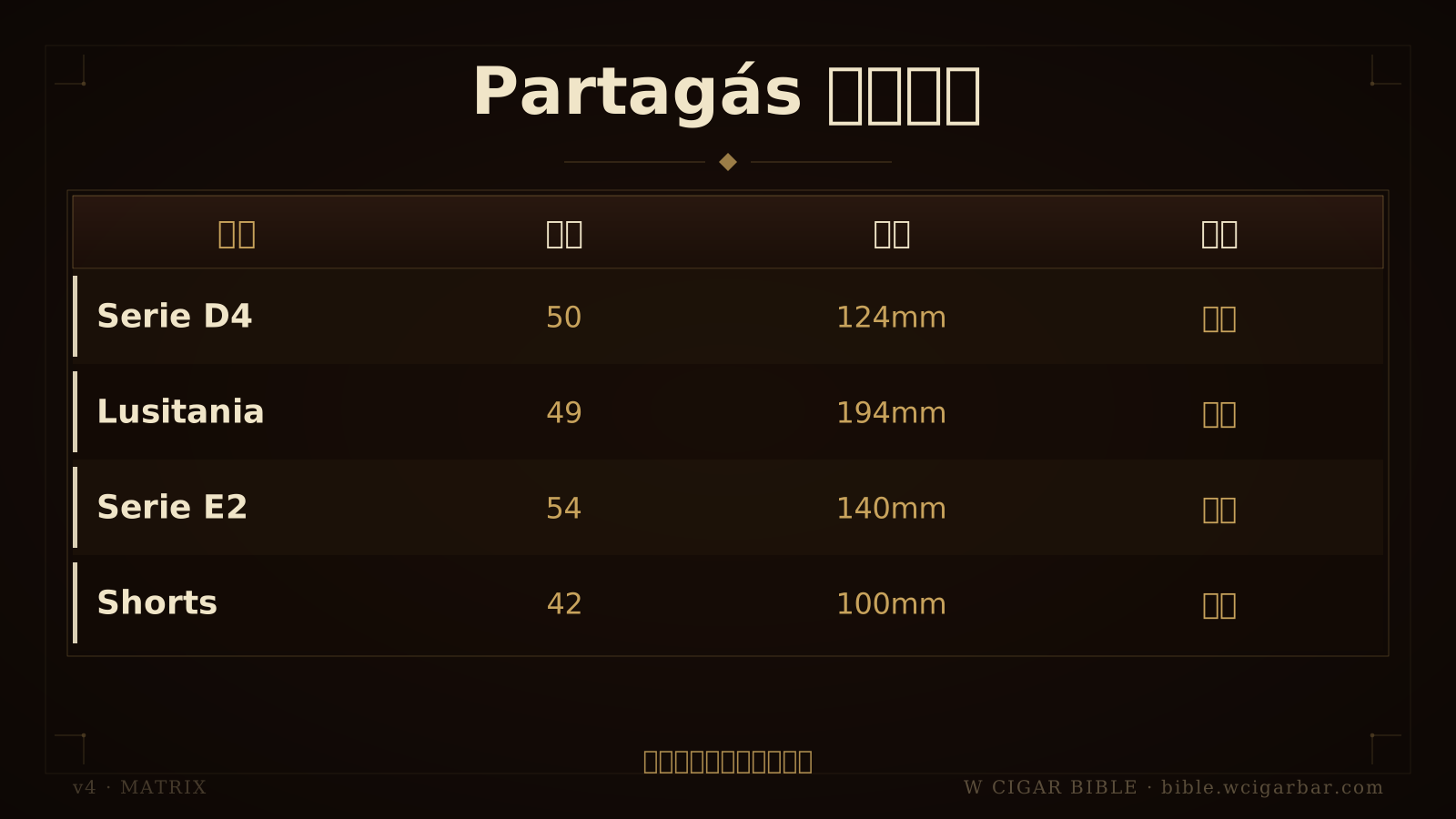
Partagás D 系列
Partagás Serie D· 1976Partagás 最有名系列——含全球最暢銷 Cuban Robusto 之一 Serie D No.4。是進入 Partagás 「全強度世界」的必經入口。
Partagás E 系列
Partagás Serie E· 20102010 起厚環徑系列——Serie E No.2 是 Partagás 對應現代厚重風格的代表。
Partagás P 系列 Pirámides
Partagás Serie P· 20052005 起 Pirámides 金字塔形系列——Serie P No.2 是 Partagás 對應 Montecristo No.2 的金字塔回應。
Partagás Lusitanias 葡萄牙人系列
Partagás Lusitanias· 1845Partagás Double Corona 旗艦——名稱致敬葡萄牙古地名 Lusitania。是雪茄業最大規格之一(7⅝" × 49)。
Partagás Maduro 黑色系列
Partagás Línea Maduro· 20172017 首款 Partagás 全黑色包葉系列——5 年醇化 Maduro 包葉。
Don Jaime 出生
12 月 7 日生於西班牙加泰隆尼亞 Arenys de Mar。
14 歲渡海到古巴
Jaime Partagás 獨自渡海到古巴,從零學習菸草業。
品牌與工廠成立
Real Fabrica de Tabacos Partagás 在 Calle Industria No.520 落成,現存最古老古巴雪茄品牌。
Don Jaime 被謀殺
Don Jaime 在自家菸草農場被謀殺,案件至今未破。工廠據說鬧鬼。
Cifuentes 家族接手
Ramón Cifuentes Llano 取得主導權,開啟黃金時代。
收購 Ramón Allones
收購 Allones Ltda.,將 Ramón Allones、La Eminencia 納入旗下。
收購 Bolívar、La Gloria Cubana
兩個著名品牌全部移至 Partagás 工廠生產。
古巴第二大出口商
僅次於 H. Upmann,佔古巴雪茄總出口量 25% 以上。
革命沒收
9 月 15 日下午 6:30 革命軍進入工廠,16 家工廠同日被沒收。
正式國有化
4 月 14 日 Partagás 品牌正式成為古巴國家財產。
兩個 Partagás 誕生
Cifuentes 將 Partagás 授權給 General Cigar,多明尼加版誕生。
Serie P No.2
第一款常規生產的 Pirámide 規格 Partagás 推出。
Lusitanias Gran Reserva
被視為 Partagás 終極藏品的 Gran Reserva Cosecha 2007 發行。
工廠遷址
1 月 2 日主要產線從 Calle Industria 520 移至 Calle San Carlos 新工廠。

Like this article?Share with friends
Share this W Cigar Bible piece with friends who want to learn cigar culture, storage, and tasting.
這個品牌出新品,你會第一個收到
EL 年度限量、RE 區域限量、新生產線——Habanos S.A. 與全球大廠動態,訂閱者搶先掌握。
· 教育用途非銷售 · 隨時一鍵退訂 · Email 絕不對外公開 · 由勝茄股份有限公司營運

資料來源:品牌官方資料、國際雪茄媒體(Halfwheel、Cigar Aficionado、Cigar Journal、Habanos.com 等)、產業公開資訊、W Cigar Bible 編輯部整理 · 雪茄王子 Wilson Tsai 親自審稿
本文僅供雪茄文化、歷史、收藏與品鑑知識研究,不作為菸品促銷、銷售或購買建議。吸菸有害健康,未滿二十歲不得吸菸。