六大茶類完整指南:發酵度光譜從綠茶到普洱,與雪茄搭配的風味總覽
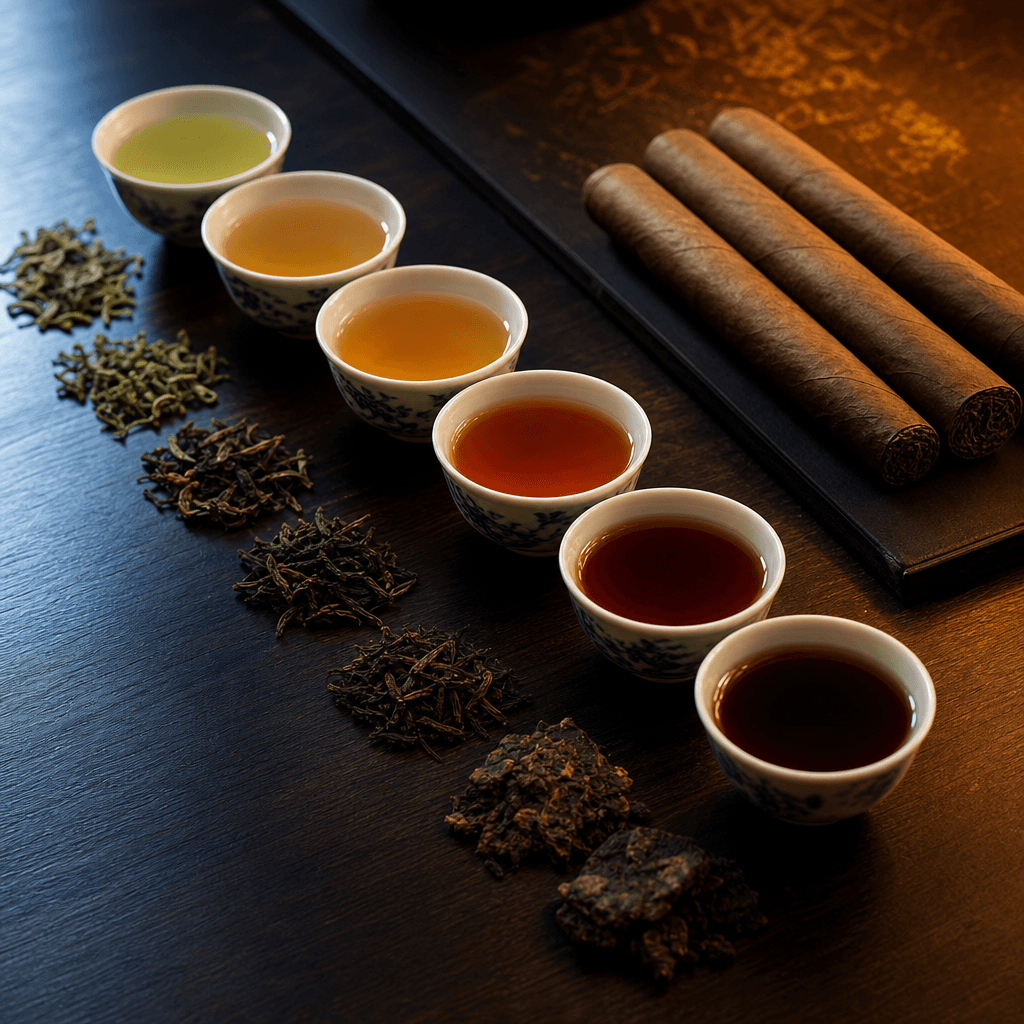
六大茶類不是六個孤島,而是一條由殺菁、萎凋、揉捻、氧化、焙火到後發酵構成的風味光譜。本文以茶葉分類與茶葉發酵度為主軸,整理綠、白、黃、青烏龍、紅、黑普洱的工藝差異,並帶入 Quai d'Orsay No.50、H. Upmann Magnum 46、Partagás Serie D No.4 等雪茄搭配邏輯。
- 六大茶類可用茶葉發酵度理解,從清鮮綠茶到厚實普洱形成連續光譜。
- 茶單寧會牽引菸草油脂,水溫、濃度與茶體重量會改變雪茄口感。
- 發酵度越高配越濃,是茶 雪茄 搭配最穩定的總公式。
Complete Guide to the Six Types of Tea: Fermentation Spectrum from Green Tea to Pu-erh, and Flavor Overview with Cigar Pairing
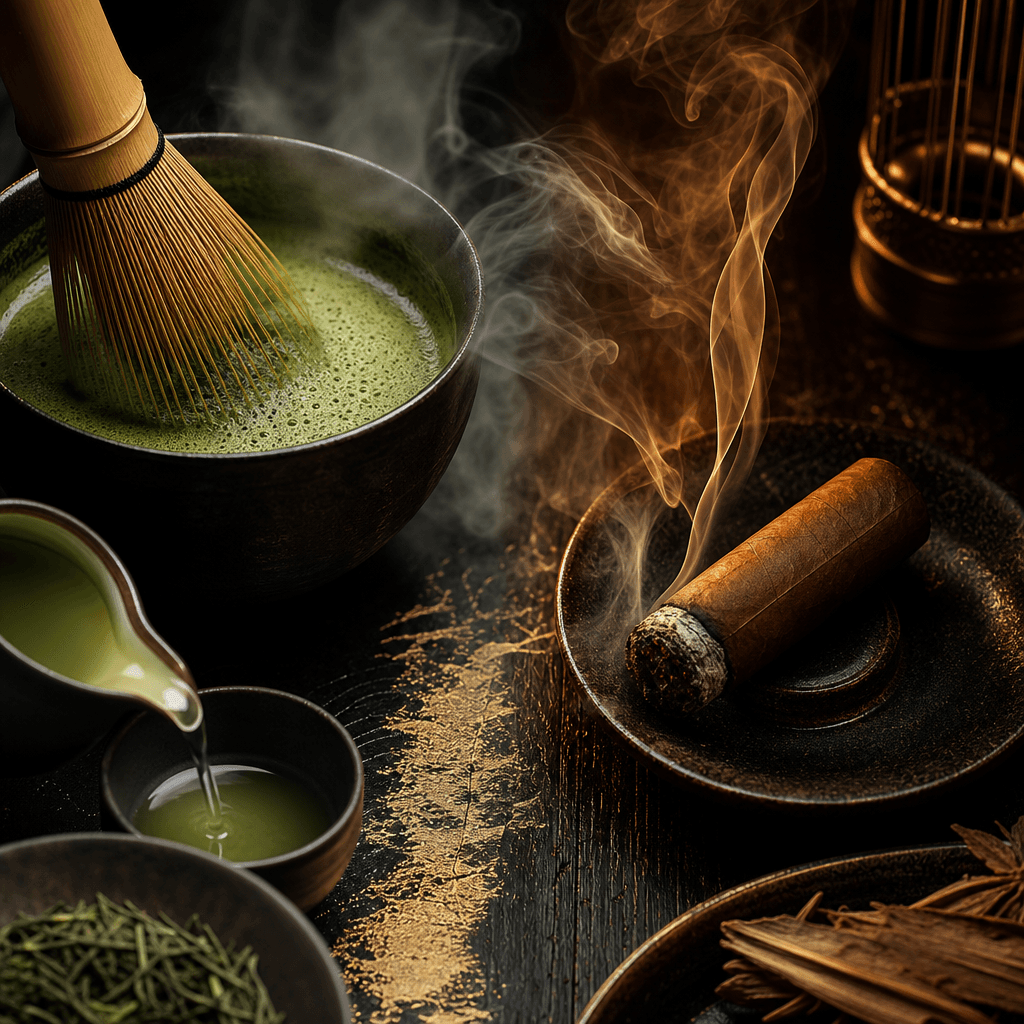
When placing the six types of tea and Quai d'Orsay No.50 on the same table, I often say that this is not about treating tea as a non-alcoholic substitute, but about re-understanding how "plant polyphenols, aromatic molecules, heat, and fermentation" interact with cigars. For tea beginners, green, white, yellow, oolong, red, and black Pu-erh teas may seem like a vast classification, but they can all be traced back to the spectrum of tea fermentation. The clearer the spectrum, the more the tea emphasizes amino acids, grassy notes, floral scents, and freshness; the deeper the spectrum, the more the tea exhibits dried fruit, honey, woody, earthy, and fungal aromas. This is the map that must be established first for tea and cigar pairing.
As an editor of the "Cigar Bible," I won't just gloss over with "light tea for mild cigars, strong tea for strong cigars." A truly useful framework is to see how the craftsmanship of tea generates flavors and then observe how the oils, smokiness, sweetness, and spiciness of a burning cigar are drawn by the tea. Quai d'Orsay No.50 allows the sweetness and herbal notes of green and white teas to be noticed; H. Upmann Magnum 46 can carry the roasted, floral, fruity, and creamy notes of oolong; Partagás Serie D No.4 can engage in a dialogue with the woody, aged aroma, and dark sweetness of Pu-erh. This overview page is about first clarifying the map.
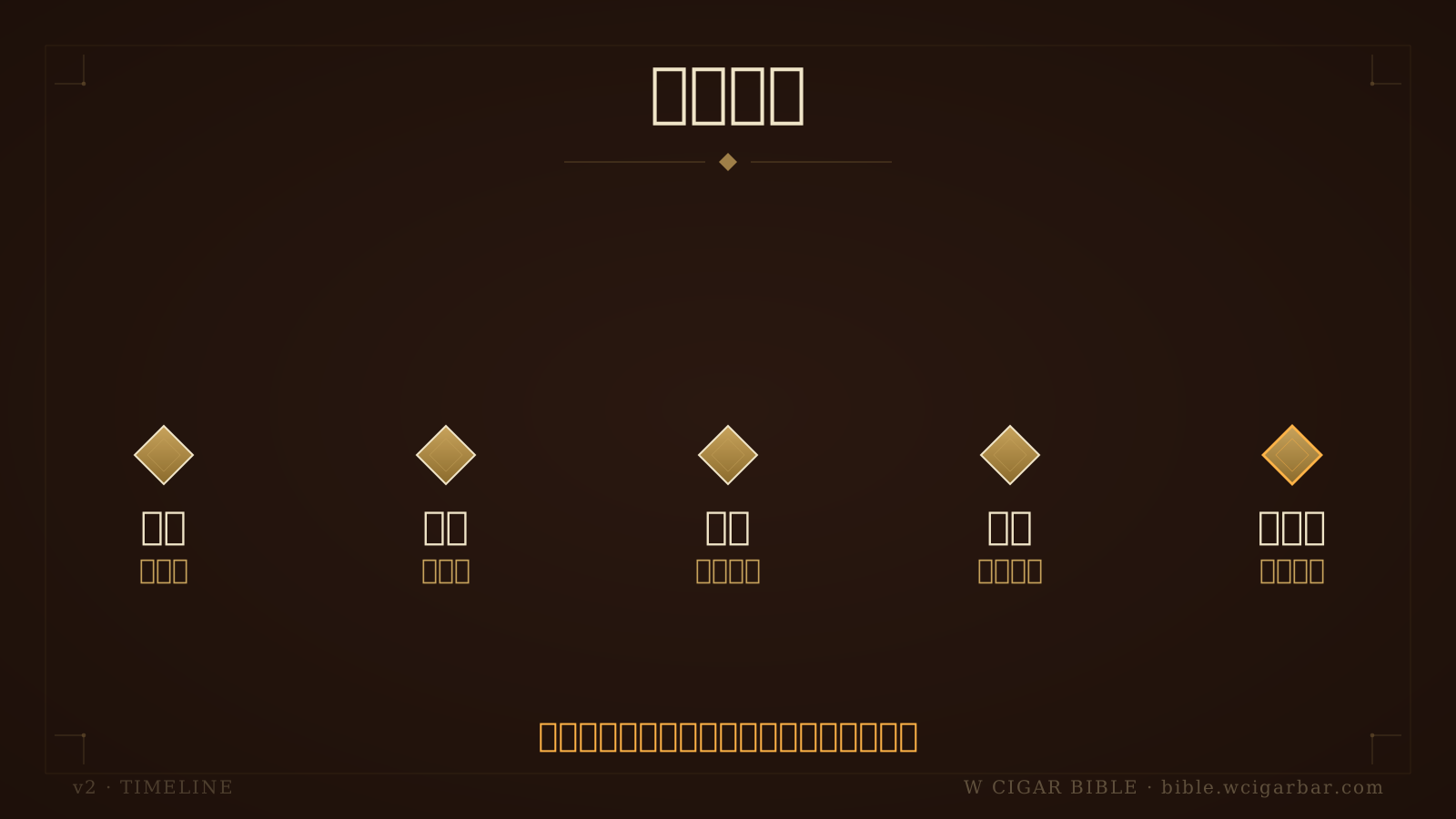
流程圖顯示茶葉工藝如何推動風味變化
Six Types of Tea and Tea Fermentation: Understanding the Spectrum First
In the Chinese-speaking world, we often talk about tea fermentation, but strictly speaking, the core of most types of tea is actually "oxidation" rather than microbial fermentation. Green tea quickly stops enzymatic activity through "kill-green," preserving the fresh green, bean aroma, and seaweed tones of the tea leaves. Red tea allows catechins to fully oxidize after withering and rolling, forming theaflavins, thearubigins, and a deeper fruit aroma structure. Black tea and ripe Pu-erh enter the world of post-fermentation involving microorganisms, with flavors leaning more towards woody, fungal, earthy, and jujube sweetness.
White tea lies between freshness and richness, with craftsmanship that seems simple but actually relies on withering time, sun exposure conditions, and drying rhythm. Yellow tea adds "yellowing" after kill-green, turning the leaf color, soup color, and aroma from sharp to mellow, with notes of cooked grains, chestnuts, and light honey. Oolong, also known as blue tea, is the most complex middle ground, with fermentation degree, roasting degree, variety, and origin highly intertwined. Taiwanese high mountain oolong often falls in the light to medium fermentation range, while Oriental Beauty, due to its honey aroma and heavy fermentation, leans towards the world of honey-scented red tea.
The six types of tea are not six fixed boxes but a continuous flavor spectrum driven by craftsmanship. When pairing with cigars, one should not only remember the tea name but also ask which part of the spectrum it is in. Lightly fermented teas easily amplify the herbal, creamy, and floral notes of cigars, while heavily fermented teas can better carry smokiness, leather, woodiness, and cocoa. This judgment is more reliable than memorizing combinations of single tea and single cigar.
Green, White, Yellow Tea: How Fresh Tea Bodies Meet Quai d'Orsay No.50
The key to green tea is kill-green, commonly seen in two routes: pan-fried and steamed. Chinese Longjing and Biluochun are often pan-fried to turn grassy notes into bean aroma, chestnut aroma, and tender sweetness, while Japanese Sencha and Matcha belong to the steamed system, retaining more obvious seaweed, umami, green pea, and chlorophyll notes. Matcha, being ground from whole tea leaves into powder, has a thicker suspended matter and amino acid feel, but bitterness and astringency are also more easily amplified by water temperature and concentration. White teas like Baihao Yinzhen and White Peony rely on withering to slowly reveal floral, downy, and light fruity sweetness, while yellow tea adds a layer of cooked grain and soft texture after yellowing.
The cigar language of Quai d'Orsay No.50 leans towards clarity, smoothness, creaminess, hay, light woodiness, and light sweetness. When it meets Sencha, the umami brought by steaming aligns with the plant sweetness in the tobacco, but if the tea is too strong, catechins will strip the cigar oils too quickly, making the mouth feel dry. White tea is more suitable for allowing the creaminess and hay of this cigar to unfold slowly, with the soft downy aroma of Baihao like a thin veil that won't overshadow the tobacco body. The chestnut and cooked grain tones of yellow tea can push the light woodiness of Quai d'Orsay No.50 towards a more rounded roasted grain sweetness.
Green, white, and yellow teas are suitable for corresponding to the more delicate herbal, creamy, and floral layers in cigars. In terms of water temperature, steamed green tea can fall in the lower temperature range to avoid bitterness overshadowing the cigar; white tea can be slightly higher to release polysaccharides and floral aroma; yellow tea can use medium temperature for stable infusion. For beginners practicing tea and cigar pairing, I would place Quai d'Orsay No.50 with White Peony as the first group, as it clearly shows that "tea doesn't have to be strong to change the boundaries of a cigar."
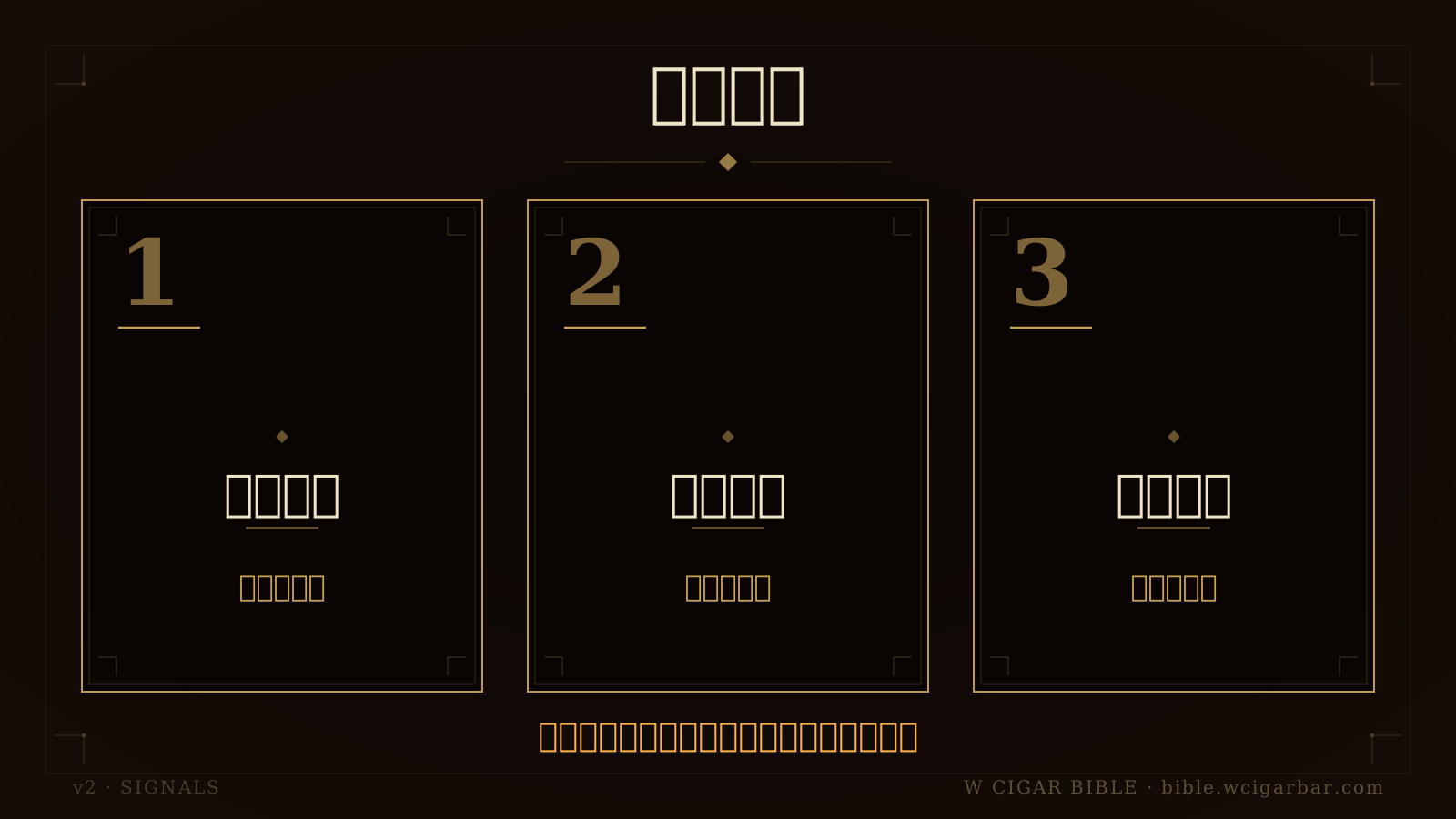
三張卡片整理茶與雪茄搭配的核心判斷
Oolong Tea Map: Taiwanese High Mountain Oolong, Oriental Beauty, and H. Upmann Magnum 46
Oolong, also known as blue tea, is the most worthy of map-thinking among tea classifications. Its flavor is not determined solely by fermentation degree but also by green-making, shaking, rolling, ball or strip shape, roasting strength, and post-storage aging performance. Taiwanese high mountain oolong is often found in high-altitude tea areas, where the day-night temperature difference makes the leaves thick, with good pectin feel, often exhibiting orchid, pear, milk aroma, fir, and clear sweet aftertaste. If the roast is light, it wins with floral and clear sweetness; if the roast is sufficient, it turns towards nuts, ripe fruit, caramel, and roasted aroma.
Oriental Beauty holds a particularly important position in the oolong spectrum. It has a high fermentation degree and is influenced by the small green leafhopper, where the tea leaves form a unique honey aroma, ripe fruit, and downy aroma in defense response. This honey aroma is not simply sweet but carries honey, ripe pear, citrus peel, and slight spiciness. It is close to red tea but retains the clear structure of oolong, serving as a bridge connecting the world of medium and high fermentation.
H. Upmann Magnum 46 is very suitable for the oolong chapter because it has space for woodiness, nuts, coffee, cream, and mid-section sweetness. Lightly roasted high mountain oolong will make its creaminess brighter, and the floral aroma of the tea can elevate the soft herbal notes in the cigar's front section. Medium-roasted Dongding or traditional roasted oolong can form "roast × baking homology": the Maillard reaction aroma brought by tea roasting or electric roasting matches the toasted bread, nuts, and cocoa edges after tobacco fermentation and burning. The key to H. Upmann Magnum 46 and oolong is not who overpowers whom but to jointly establish a bridge surface of medium tea body and medium cigar concentration.
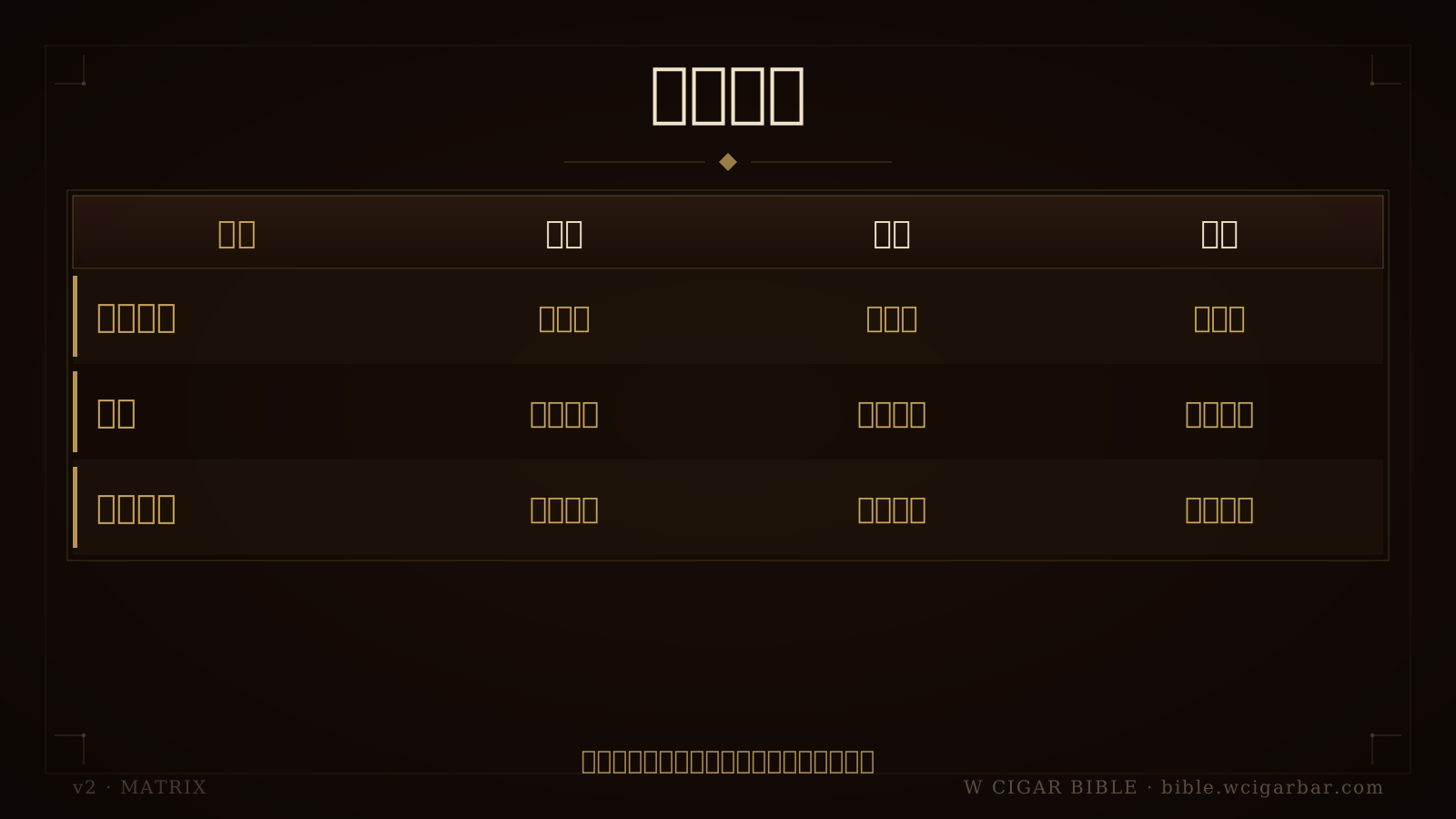
矩陣比較清鮮中段深熟茶的香氣與搭配焦點
Red Tea World Map: Differences Among Darjeeling, Assam, and Ceylon
The global map of red tea must at least first understand the three coordinates of Darjeeling, Assam, and Ceylon. Darjeeling is located at the foothills of the Himalayas in India, with spring plucking often having muscat grape, white flower, green fruit, and high mountain cool aroma, while summer plucking is fuller, with ripe fruit, honey, and woodiness. Assam is located in the low-altitude production area in northeastern India, with a thick tea body, strong malt aroma, and distinct tannin structure, often carrying cocoa, molasses, and dark dried fruit. Ceylon red tea comes from Sri Lanka, with significant differences at different altitudes, highland tea being bright with citrus and floral aroma, while mid-lowland tea is thicker, with deeper sweet aroma.
The key points of red tea craftsmanship are withering, rolling, oxidation, and drying. Traditional strip red tea often retains a more complete aroma layer, while CTC method cuts, tears, and curls the tea leaves, extracting quickly, with a direct tea body, commonly seen as a breakfast tea base. During the oxidation process, catechins turn into theaflavins and thearubigins, turning the tea soup color from orange-red to deep red, and also shifting the taste from the sharp astringency of green tea to a broader fruit sweetness and thickness. This structure is very suitable for connecting cigars of medium or higher concentration.
When meeting cigars, Darjeeling often amplifies floral and grape skin notes, suitable for combinations where the tea soup is not too thick. Assam can carry stronger tobacco oils, with malt aroma stacking with the roasted grain, leather, and cocoa of the cigar. The citrus acidity of Ceylon highland red tea can clear the mid-section of the mouth, preventing the latter part of the cigar from becoming too dull. The core value of red tea is to use the fruit sweetness and tannin framework after oxidation to catch the increasing oils and spiciness in the mid-section of the cigar.
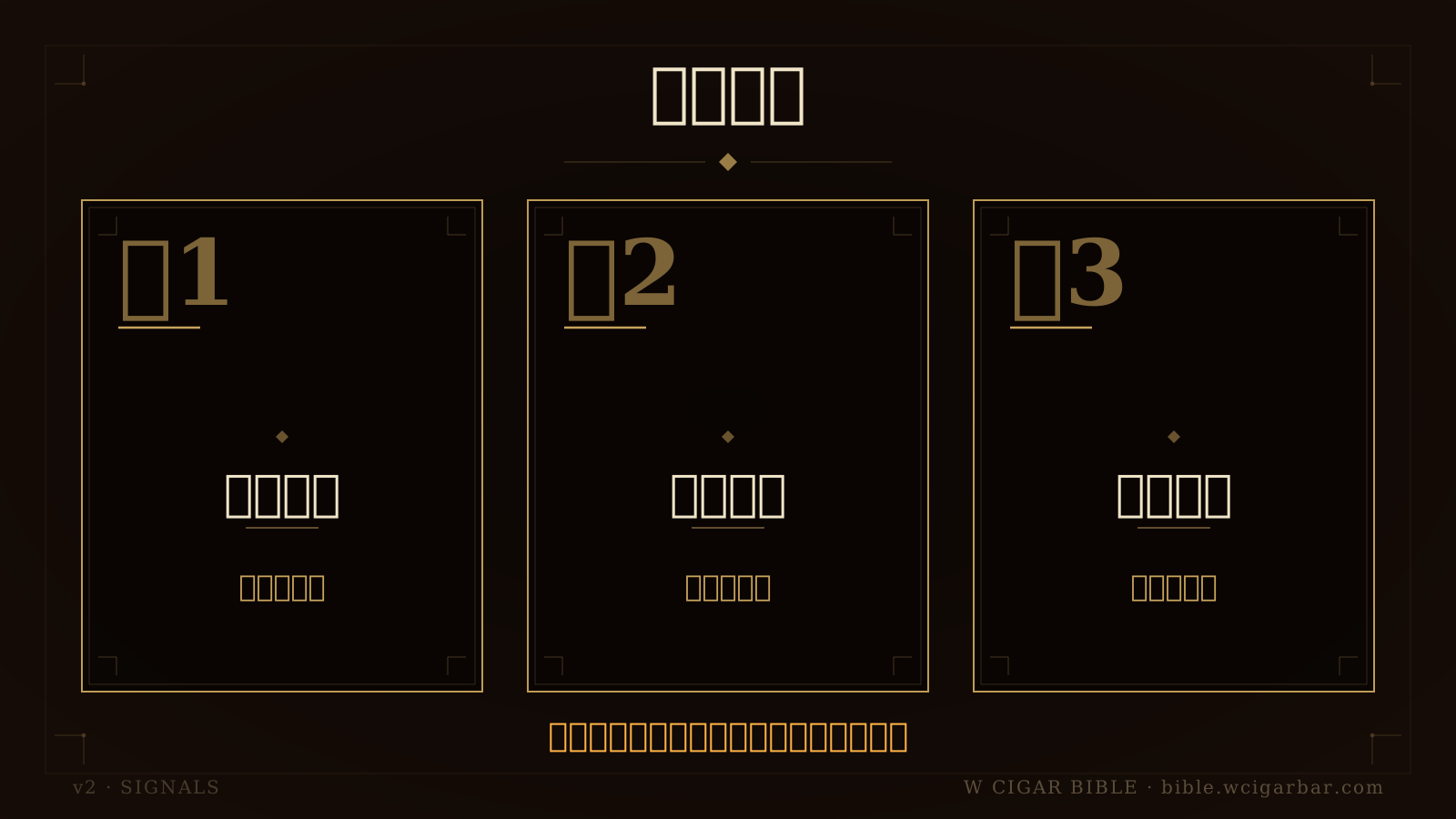
三張卡片列出茶雪茄搭配時容易忽略的誤解
Black Tea and Pu-erh: The Dark Dialogue of Partagás Serie D No.4
Black tea is a broad category of post-fermented tea, with Pu-erh being the most commonly discussed representative for cigar pairing. Pu-erh is further divided into raw tea and ripe tea. Raw tea is based on sun-dried green tea from Yunnan large-leaf species, slowly transforming in time and environment after pressing, with young raw tea having grassy, floral, bitter base, and strong astringency. Ripe tea accelerates microbial action through wet piling process, forming jujube aroma, woodiness, fungal aroma, earthiness, cocoa, and glutinous feel. Although both are called Pu-erh, their taste directions are completely different.
Partagás Serie D No.4 is a good example for understanding Pu-erh pairing because its tobacco performance has clear spiciness, earthiness, woodiness, coffee, cocoa, and dark sweetness. If the young raw Pu-erh is too bitter, it will stack with the spiciness of this cigar, making the edges of the mouth tight. Ripe Pu-erh or well-aged raw Pu-erh can use thickness to wrap the spiciness, pushing the smokiness and leather of the cigar towards a more stable woody base. The focus here is not "the older, the better," but that the tea soup should have a clean storage aroma, clear sweetness, and sufficient smoothness.
The "tea tannin × tobacco oil astringency balance" is most evident in the Pu-erh chapter. The tea polyphenols in ripe Pu-erh have been transformed, the astringency becomes dull, the taste turns thick, reducing the stickiness caused by the accumulation of cigar oils in the latter part. The smoky phenols of tobacco and the woody, fungal molecules of Pu-erh adhere to each other, forming a continuous sense of wet wood, cocoa shell, black jujube, and old leather. The pairing formula of Partagás Serie D No.4 and Pu-erh is to use a dark fermented tea body to carry the dark tobacco structure.
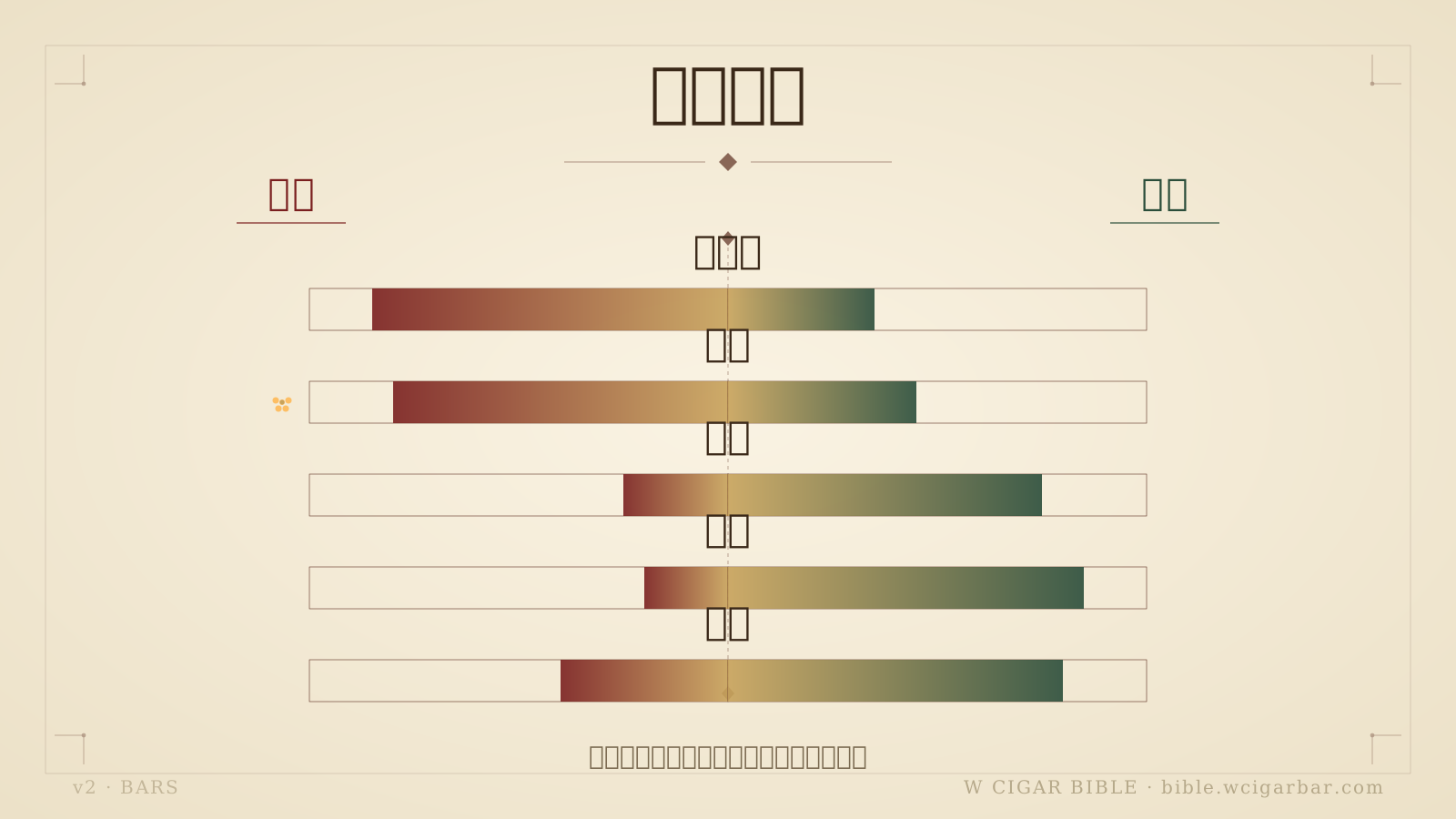
橫條圖比較清鮮茶與深熟茶的五個風味軸
Water Temperature, Tea Quantity, Infusion: The Basic Skills of Tea Pairing Most Easily Overlooked
Many tea and cigar pairings miss the mark not because the tea type is wrong but because of brewing imbalance. If the water temperature is too high, green tea and lightly fermented oolong easily release too much catechin and caffeine, making the sweetness of the cigar appear thin. If the water temperature is too low, red tea and ripe Pu-erh will have flat aroma and hollow tea soup issues, unable to carry tobacco oils. Tea quantity and steeping time are equally important; strong does not mean thick, over-extraction often results in bitterness, dryness, and off-flavors.
Beginners can first think in terms of "tea body weight" rather than rushing to pursue complex equipment. When pairing delicate cigars with fresh green tea and white tea, the tea soup should maintain transparency, allowing space in the mouth to discern cream, hay, and floral aroma. Oolong can adjust concentration according to roasting, light roast for aroma, medium roast for nuts and sweetness. Red tea and Pu-erh, when facing stronger cigars, the tea soup can have more thickness but still avoid bitterness locking the tongue surface.
| Tea Direction | Suggested Tea Soup State | Corresponding Cigar Feel | Flavor Intersection |
|---|---|---|---|
| Green Tea, White Tea | Clear, fresh, low bitterness | Herbal, creamy, light wood | Amino acid umami × tobacco sweet grass |
| Light Roast Oolong | Floral, pectin feel, soft astringency | Cream, nuts, white wood | Orchid aroma × cigar woodiness |
| Medium Roast Oolong | Roast, ripe fruit, caramel edge | Baking, coffee, nuts | Roast × baking homology |
| Red Tea | Fruit sweetness, malt, tannin framework | Leather, cocoa, spiciness | Thearubigin × dark sweetness |
| Ripe Pu-erh | Woody, jujube sweetness, thick | Earth, smokiness, coffee | Fungal woodiness × tobacco smokiness |
The basic skills of brewing determine whether the tea soup opens the way for the cigar or covers the details of the cigar. I often suggest starting with a lighter first infusion, observing the front section of the cigar, and then gradually increasing the steeping time. Tea cup temperature will also change the aroma; if too hot, only heat and astringency can be felt, while slightly cooling will unfold floral, fruity, honey, and roasted aromas. These details are more practical than memorizing combinations.
Flavor Chemistry Overview: How Tea Tannins, Roasting, and Honey Aroma Change Cigars
The relationship between tea tannins and tobacco oils is the core of the entire pairing framework. When a cigar burns, the mouth will feel oils, sweetness, smokiness, and spiciness gradually accumulating; the catechins, theaflavins, and thearubigins in the tea soup will combine with saliva proteins, producing astringency. Moderate astringency can clean up the oils, allowing the next puff of the cigar to reappear in layers. Excessive astringency will decrease sweetness, increase spiciness, and make the mouth feel tight.
Roast × baking homology is the most fascinating intersection between oolong and cigars. Tea roasting produces nutty, caramel, roasted grain, ripe fruit aromas, and tobacco in fermentation, aging, and burning will also show toasted bread, coffee, cocoa, woodiness, and slightly charred sweetness. Although these aromas have different origins, they are all related to heat reactions, oxidation, and plant polyphenol transformation. When medium roast oolong meets H. Upmann Magnum 46, they are not imitating each other but arranging similar baking vocabulary into harmony.
Honey aroma × honey sweetness same frequency is the bridge between Oriental Beauty, some red teas, and sweet cigars. The honey aroma of Oriental Beauty comes from the plant reaction after leafhopper feeding and high fermentation craftsmanship, often with honey, ripe fruit, citrus peel, and slight spiciness. If the cigar itself has honey, cream, ripe wood, or light cocoa sweetness, the tea soup will extend the sweetness from the tip of the tongue to the back of the nasal cavity. The higher the fermentation degree, the stronger the pairing, because the polyphenol structure, aroma weight, and cigar oils in the tea soup need to reach a similar density.
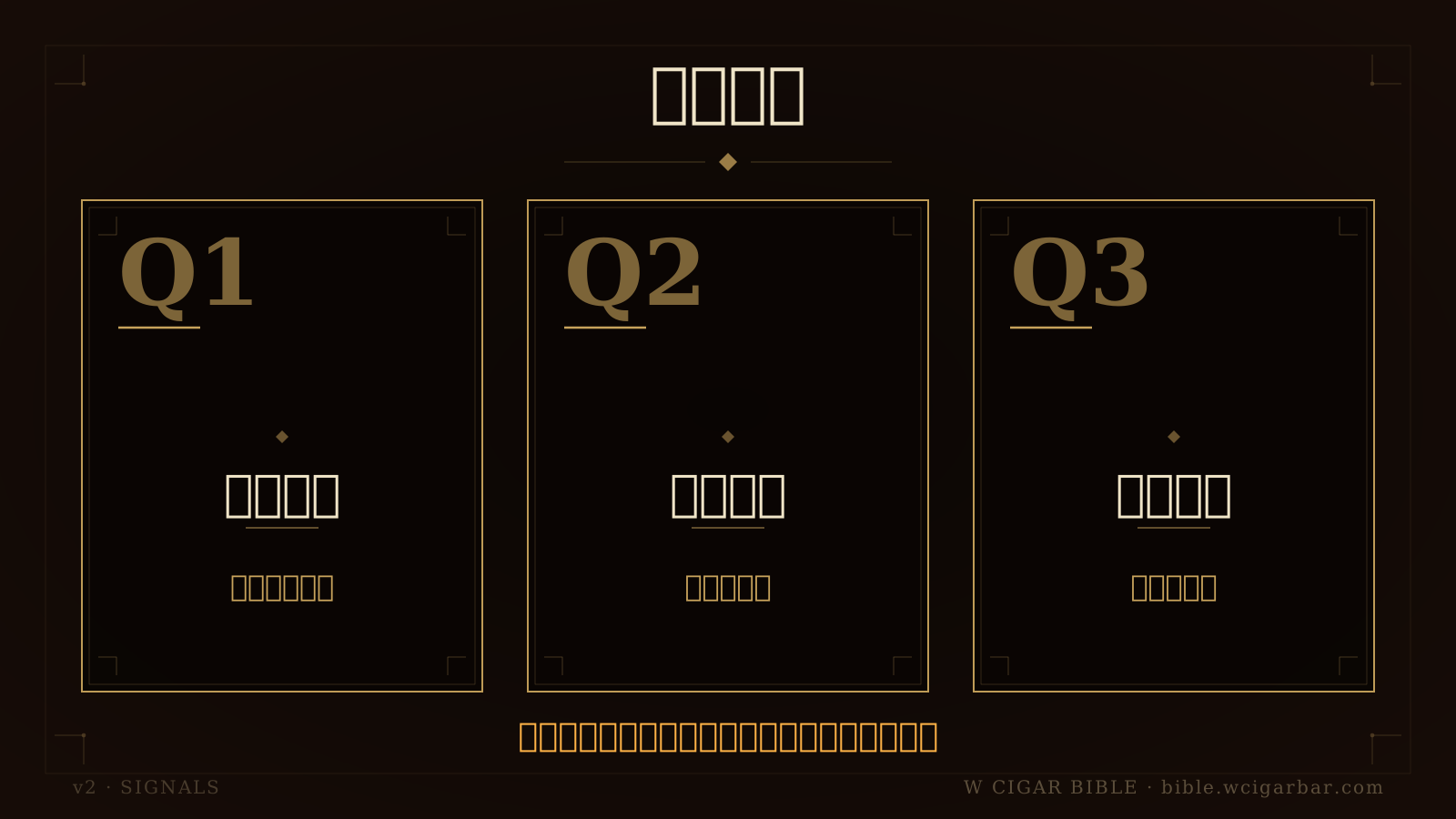
三張問答卡片回答茶類順序與沖泡搭配疑問
Full Series Pairing Guide
Below is the complete sub-axis deep reading of this main axis, covering the complete flavor spectrum, with each article being a specific drink × a specific cigar:
- Wuyi Rock Tea Dahongpao Complete Analysis: Rock Bone Floral Aroma and Charcoal Roasting Craftsmanship, Pairing with Cohiba Siglo IV's Rich Dialogue
- Taiwan High Mountain Tea Complete Guide: The Cold Floral Aroma of Lishan and Alishan, Pairing with Davidoff Signature 2000's Elegant Route
- Oriental Beauty Tea Leafhopper Honey Aroma: The Legend of Small Green Leafhopper and White Down Oolong, Pairing with H. Upmann Magnum 46's Honey Resonance
- Dongding Oolong Tea Charcoal Roasting Craftsmanship: Roasting and Throat Rhyme Old School Skills, Pairing with Romeo y Julieta Short Churchill
- Ripe Pu-erh Tea Wet Piling Process Analysis: The Depth of Aged Aroma and Earth, Pairing with Partagás Serie D No.4's Earth Resonance
- Raw Pu-erh Tea's Taste of Time: Aged Raw Tea Transformation and Mountain Aroma, Pairing with Montecristo Edmundo's Rich Balance
- West Lake Longjing Bean Aroma Sweet Return: The Pan-fried Craftsmanship of the Top Green Tea, Pairing with Quai d'Orsay No.50's Elegant Entry
- Baihao Yinzhen Sun Withering: The Downy Aroma and Bold Minimalist Craftsmanship of White Tea, Pairing with Hoyo de Monterrey Le Hoyo de San Juan
- Zhengshan Xiaozhong Pine Smoke Aroma: The Smoking Craftsmanship of the World's First Red Tea, Pairing with Bolívar Royal Corona's Smoke Earth Dialogue
- Keemun Red Tea's Keemun Aroma: The Top of the World's Three High Aroma Red Teas, Pairing with H. Upmann Half Corona's Afternoon Tea Specification
- Darjeeling Red Tea Spring and Summer Plucking: The Muscat Grape Tone of the Himalayas, Pairing with Montecristo No.4's Classic Proportion
- Assam and Ceylon Red Tea: The Two Faces of Strong Malt and Bright Citrus, Pairing with Juan López Selección No.2
- Uji Matcha and Sencha Steamed Craftsmanship: The Green Aesthetics of Umami and Seaweed Freshness, Pairing with Trinidad Reyes's Compact Precision
- Junshan Yinzhen Yellow Tea Yellowing Craftsmanship: The Rarest of the Six Types of Tea, Pairing with San Cristóbal El Príncipe's Small and Exquisite
Frequently Asked Questions
Placing tea fermentation degree, tea body weight, and cigar concentration on the same line is the most foolproof general principle.
Do the six types of tea have to be drunk from low to high fermentation degree?
Not necessarily, but arranging them this way during learning is the clearest. From green tea, white tea to oolong, red tea, and Pu-erh, the mouth will gradually understand the increase in freshness, floral aroma, roasting, fruit sweetness, and woodiness. Once familiar, you can reverse select tea according to the cigar state.
Why do Taiwanese high mountain oolong and Oriental Beauty, both considered oolong, have different pairing directions?
High mountain oolong tends to be light to medium fermented, emphasizing orchid, pear aroma, milk aroma, and clear sweetness, suitable for medium or more delicate cigars. Oriental Beauty has a high fermentation degree, with honey aroma and ripe fruit feel formed by leafhopper feeding, able to carry deeper woodiness and sweet spiciness. Both belong to blue tea but differ greatly in their position on the spectrum.
Are Sencha and Matcha suitable for pairing with cigars?
They can be, but care must be taken with concentration and water temperature. The steamed freshness of Sencha can bring out the herbal sweetness of cigars, while Matcha has a thicker tea body, and if brewed too strong, bitterness will overshadow the cigar details. For beginners, Sencha is easier to master than Matcha.
Should I choose Darjeeling, Assam, or Ceylon for red tea?
Darjeeling is suitable for those who want to retain floral and bright fruit tones, Assam is suitable for carrying thicker tobacco oils, and Ceylon is between brightness and thickness. If the cigar has prominent woodiness, cocoa, and leather, Assam will be more stable. If you want to keep the taste clean, Ceylon highland red tea is very flexible.
Is Pu-erh always more suitable for strong cigars than red tea?
Not necessarily, it depends on whether Pu-erh is clean, and whether the tea soup has sweetness and smoothness. Ripe Pu-erh can handle oils and smokiness, but if the storage aroma is rough and mixed, it will interfere with the woodiness and cocoa of the cigar. The fruit sweetness and tannin framework of red tea can sometimes be sharper.
Does bitter tea soup mean it can cleanse the palate?
Bitterness does not equal cleansing the palate. Truly effective palate cleansing retains sweetness and aroma after moderate astringency, without making the tongue surface dry. If the tea soup makes the cigar spicy and thin, it means the extraction is too strong or the tea type is unsuitable.
The most valuable lesson in tea and cigar pairing is not a single answer but the ability to interpret the spectrum. From the six types of tea, tea classification, tea fermentation degree to brewing control, all clues remind us: the tea body must match the cigar concentration, and the aroma must be able to translate each other. When you can understand the dialogue between freshness, roasting, honey aroma, and woodiness, the next cup of tea will no longer be just a supporting role.
—Cigar Prince Wilson Tsai
Smoking is harmful to health. Under 20 years old is prohibited from smoking. Quitline: 0800-636363. This article is for reference by adults over 20 years old for cigar culture, preservation, and regulation knowledge, not a tobacco advertisement, promotion, or purchase suggestion.
Like this article?Share with friends
Share this W Cigar Bible piece with friends who want to learn cigar culture, storage, and tasting.
想把這篇 化為實踐
雪茄聖經是知識;雪茄文化要在空間裡發生

W Cigar Bar 大安總店資訊
台北大安區 · 雪茄聖經總編輯 Wilson Tsai 主理的雪茄文化空間
33 座 24 小時恆溫恆濕醇化室
W Cigar Bar 提供的會員醇化空間 · 場地資訊請洽編輯部
雪茄剪 / 打火機 / 雪茄盒 / Boveda
W Cigar 配件官網 · 專營雪茄配件正品
加 LINE 好友 · 文化諮詢
文化空間資訊 · 紳士沙龍 · 私人包場
本網站內容僅供雪茄文化、歷史、收藏與品吸知識研究參考。菸品有害健康、未滿法定年齡者請勿吸菸。實際規範請依所在地法律為準。
吸菸有害健康・戒菸專線 0800-636363・本站僅供 20 歲以上成年人閱覽。
讀到這裡,你不只是路過的人
留下 Email,加入 W 雪茄聖經內圈——總編輯 Wilson Tsai 親選的學院深文與國際新訊,先你一步送到信箱。
· 教育用途非銷售 · 隨時一鍵退訂 · Email 絕不對外公開 · 由勝茄股份有限公司營運
同分類延伸閱讀
資料來源:W Cigar Bible 編輯部整理 · 雪茄王子 Wilson Tsai 親自審稿
本文僅供雪茄文化、歷史、收藏與品鑑知識研究,不作為菸品促銷、銷售或購買建議。吸菸有害健康,未滿二十歲不得吸菸。