宇治抹茶與煎茶蒸菁工藝:旨味與海苔鮮的綠色美學,搭配 Trinidad Reyes 的短小精悍
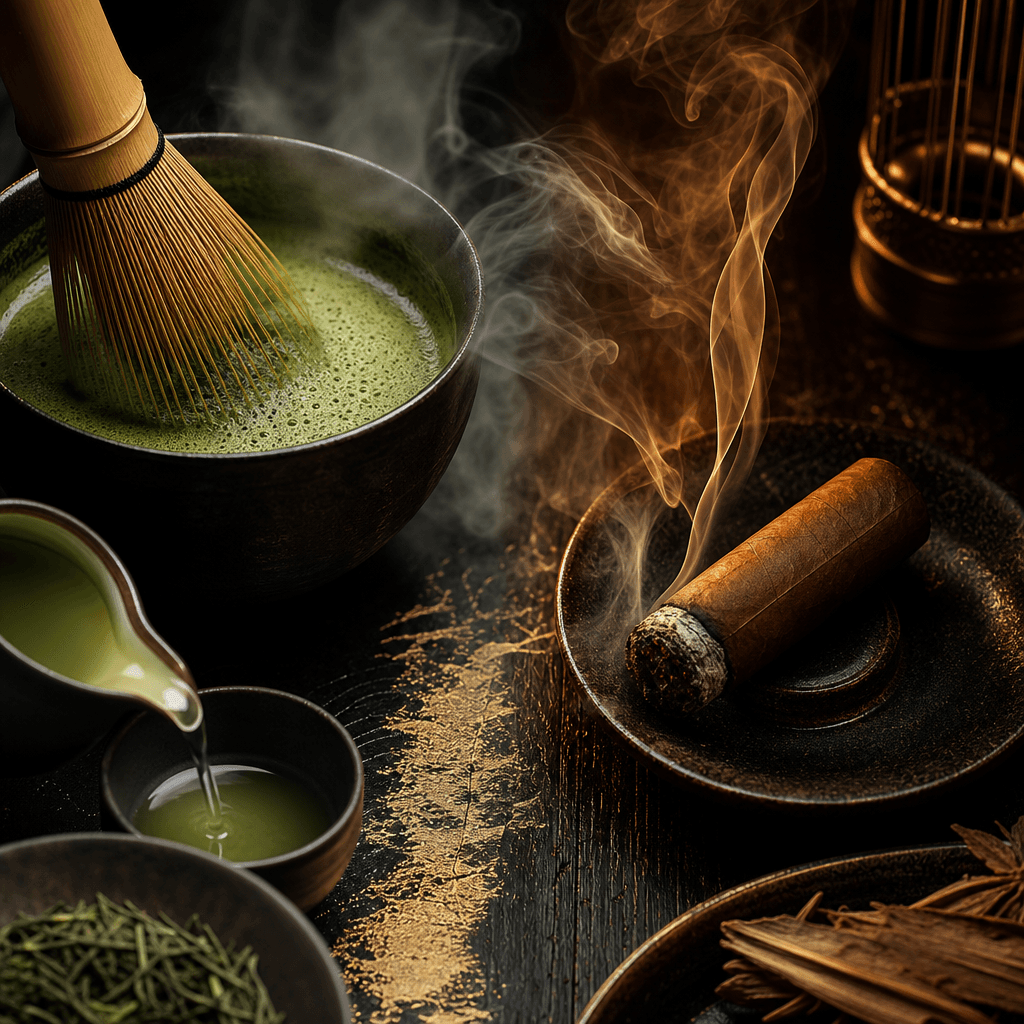
宇治抹茶與煎茶同屬日本蒸菁綠茶脈絡,卻一邊走向茶筅點茶的儀式,一邊保留日常清鮮。本文從宇治產區、遮光覆下、石臼碾磨與旨味結構談起,再精準拆解 Trinidad Reyes 的蜂蜜、奶油、雪松與淡花香,如何與茶氨酸、海苔鹹鮮、蒸菁青草調性形成短而集中的風味對話。
- 宇治抹茶以覆下栽培與石臼碾磨,累積茶氨酸、葉綠素與細緻旨味。
- 煎茶的蒸菁工藝保留海苔鮮、青草感,與古巴雪茄甜感形成對比。
- Trinidad Reyes 的短茄節奏,最適合抹茶點茶與煎茶小壺的專注搭配。
Uji Matcha and Sencha Steaming Process: The Green Aesthetics of Umami and Seaweed Freshness, Paired with the Compact Trinidad Reyes
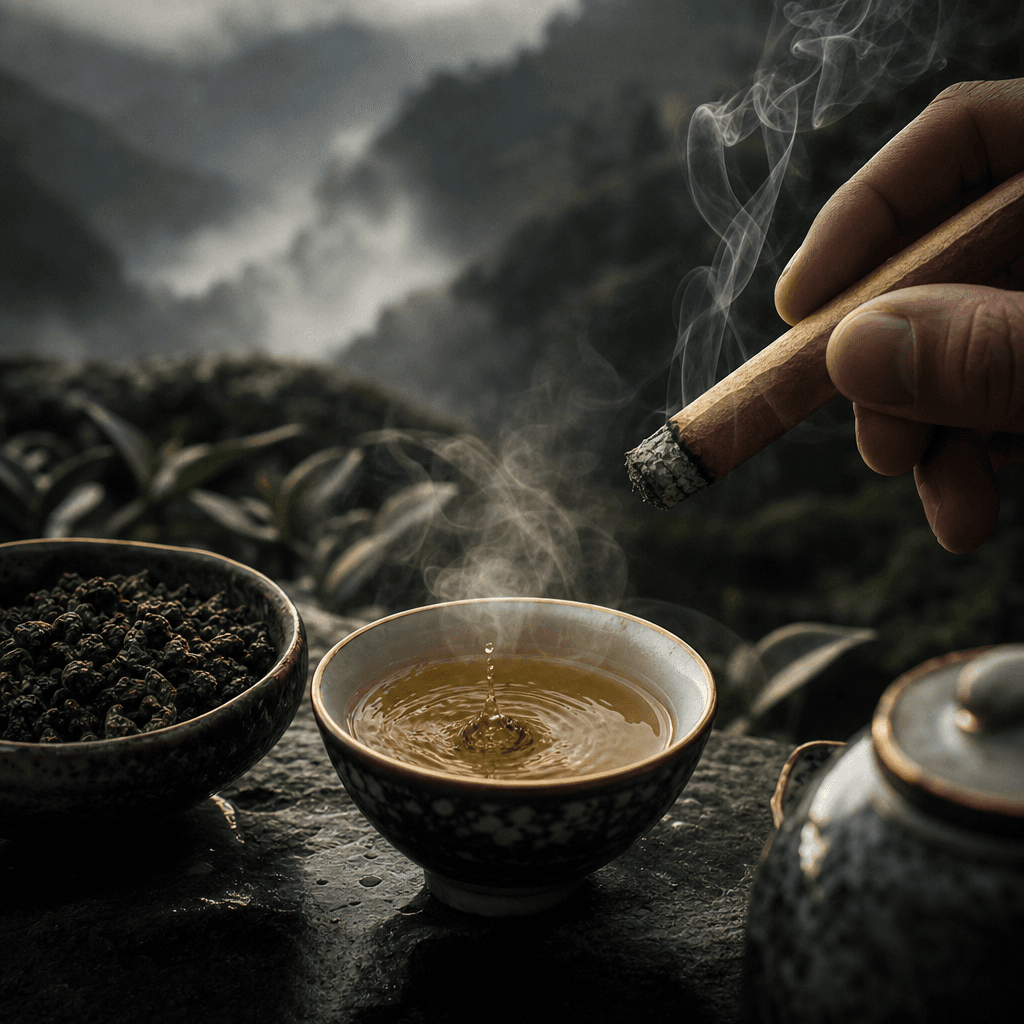
The most fascinating aspect of the encounter between Uji Matcha and Trinidad Reyes is not just the phrase "tea paired with cigars," but rather the precise alignment of green umami and Cuban smoke within a short period. Trinidad Reyes (Cuba, Reyes, 40 × 110mm): honey, cream, cedar, light floral notes, a compact medium-bodied cigar. It doesn't rely on heavy dominance but rather on clean sweetness and delicate woodiness, allowing the Uji Matcha, Sencha, and Gyokuro from the steaming green tea lineage to unfold with ample space.
I often say that a truly mature pairing is not about putting two similar aromas together, but about knowing which molecule extends the aftertaste, which texture corrects bitterness, and when silence is needed. As the editor of "Cigar Bible," I see the core of this pairing as the four-corner balance of umami theanine, seaweed saltiness, honey sweetness, and cedar smokiness. It doesn't rely on the weight of alcohol or the accumulation of sugar but creates a precise green aesthetic with water, leaves, smoke, and fire.
流程圖呈現覆下蒸菁揉碾控溫與搭配
The Context of Uji Matcha: From Noble Tea to the Core of the Tea Ceremony
Uji is located south of Kyoto, where river mist, hills, and temperature differences between day and night allow tea trees to maintain a tender texture during the spring budding season. In Japanese tea history, Eisai brought back tea seeds and drinking methods from the Song dynasty in 1191, and by the Kamakura and Muromachi periods, the tea industry around Kyoto gradually formed, supported by temple, samurai, and noble cultures. Due to its proximity to political and cultural centers, Uji evolved from a simple tea-producing area to a core region where both technique and aesthetics were repeatedly refined.
Today, Matcha is often seen as a powdered green tea, but within the Uji context, it is actually a complete system involving shaded cultivation, steaming fixation, tencha drying, stem and vein removal, and stone mill grinding. After Sen no Rikyū established the wabi-cha aesthetics in the 16th century, tea whisking became not just a method of consumption but also a skill for controlling concentration, temperature, foam, and movement rhythm. This history makes Uji Matcha not just "deep green," but a carrier of umami with ritual order.
The key to Uji Matcha lies not in its powdered state but in the low bitterness and high umami structure established by the region, shading, steaming, and stone milling. When it meets Trinidad Reyes, this structure becomes crucial because the honey and creaminess of Reyes are not suited to being overwhelmed by harsh bitterness. If the tea soup is too astringent, the cigar's light floral notes will be pulled into a hay-like sensation; if the matcha umami is thick enough, the smoke will instead present a rounder nutty and sweet woody character.
三張卡列出旨味蒸菁與短茄節奏
Steamed Green Tea vs. Chinese Pan-Frying: Divergent Fixation Routes
The core of Japanese steamed green tea is to quickly inactivate polyphenol oxidase with steam, preserving the fresh green, grassy, seaweed, and vegetable notes of the tea leaves. Lightly steamed Sencha is typically steamed for about 30 seconds, while deep steaming can extend beyond 60 seconds, altering the degree of cell breakage and the turbidity of the tea soup. The deeper the steaming, the easier the flavor releases, the thicker the texture, but the aroma shifts from bright grassy to softer cooked vegetable and seaweed notes.
Chinese green tea often uses pan-frying for fixation, where the hot pan surface brings out chestnut, bean, slightly roasted notes, and more pronounced Maillard reaction traces. Steaming lacks the nutty roasted aroma brought by the dry heat of the pan, retaining more cis-3-hexenol, a green leaf alcohol, and dimethyl sulfide, pointing towards seaweed, sweet corn, and sea breeze impressions. It's not about which is better, but about completely different flavor coordinates: pan-frying leans towards outward aroma, steaming towards internal umami cohesion.
The steaming process allows Sencha to retain seaweed freshness and green clarity, which can precisely push the honey sweetness of Trinidad Reyes to a cleaner position. Reyes' smoke contains cedar, light floral notes, and creaminess, which if paired with pan-fried green tea, the nutty and roasted notes might make it appear thicker. Switching to Sencha, the green volatiles of the tea soup act as a clear background, separating the honey sweetness, light woodiness, and creamy aftertaste with more layers.

矩陣比較抹茶煎茶玉露的水溫與口感
Shaded Cultivation, Gyokuro, and Umami: The Deep Waters of Theanine
Shaded cultivation is an important craft in Uji tea, where tea gardens are shaded with reed screens, straw, or modern shading materials before picking. Gyokuro is usually shaded for about 20 days or more, and the raw materials for tencha and matcha also accumulate theanine and chlorophyll through shading. Without strong light, the conversion of theanine to catechins in the tea leaves slows down, preventing a rapid rise in bitterness, instead leaving a dense sweetness, soup texture, and seaweed-like umami.
Gyokuro is often enjoyed at lower water temperatures, such as 50 to 60°C, with small water volumes for a long time, allowing amino acids to release first. Sencha can be adjusted between 65 to 75°C depending on the steaming and drying degree, for its refreshing and layered qualities. Since matcha is a whole tencha powder suspended in water, too high a water temperature will amplify bitterness, around 75 to 80°C often better preserves umami and foam fineness.
Umami is not simply "freshness," but a thickness formed by theanine, glutamic acid, succinic acid, and mineral sensations. This thickness, when encountered with Trinidad Reyes, makes the sweetness in the smoke more like honey water rather than caramel, and the creaminess more like thin cream rather than heavy sweetness. Especially when the cigar is not yet fully heated in the first segment, the amino acid sensation of Gyokuro or matcha can establish a soft base for Reyes, preventing the short cigar from appearing too direct at the start.
Stone Mill Grinding and Tea Whisking: Turning Powder into Foam Structure
Truly delicate matcha must be discussed starting from tencha. Fresh leaves are steamed without kneading, dried into thin flakes, then the stems and veins are removed, leaving leaf flesh suitable for grinding. The traditional stone mill should not rotate too fast, otherwise, friction heat will damage the aroma and color; the grinding output per hour is often only a few dozen grams, the goal is not efficiency but to make the particles fine enough to form a uniform suspension.
When whisking tea with a chasen, water and matcha are not extracted but beaten into a suspension system containing fine bubbles. The foam brings a tactile smoothness and slowly releases aroma to the back of the nasal cavity. Thin tea emphasizes fluidity and clear umami, while thick tea is more like a dense tea paste, with high entry density, also more oppressive for cigars.
The foam created by whisking tea amplifies the illusion of creaminess in matcha and forms a tactile synchronicity with Reyes' creamy tone. Here, "cream" is not a dairy essence but a rounded sensation caused by fine powder suspension, tea saponin foam, and amino acid thickness. When lactones, trace vanillin, and woody sweetness in cigar smoke enter the mouth, matcha foam encapsulates them, turning the aftertaste from dry wood to soft cedar.
三張卡提醒滾水濃茶與玉露濃度問題
The Daily of Sencha and the Ritual of Matcha: Dual-Track Tasting Logic
Sencha is the most daily aspect of Japanese green tea and the tea type most easily showing differences in steaming craftsmanship. Lightly steamed Sencha has clear aroma, bright soup color, suitable for observing grassy, seaweed, citrus peel, and delicate astringency. Deep steamed Sencha has cloudier soup, higher broken leaf ratio, quick extraction, umami, and sweetness more easily spread out, but lines are not as sharp as lightly steamed.
Matcha is different, its presence comes from the preparation actions themselves: warming the bowl, sifting powder, pouring water, whisking with a chasen, each step focusing attention. For a short Cuban cigar like Trinidad Reyes (40 × 110mm), this focus is particularly fitting. It doesn't require a long rhythm layout like larger cigars but needs every sip of tea and every puff of smoke to have a place within about 40 minutes of focused time.
Sencha provides a clear background for Reyes, matcha provides a ritual framework, each corresponding to daily and focused pairing syntax. If it's an afternoon reading, I would use lightly steamed Sencha to keep honey, floral notes, and cedar transparent. If it's an evening where I just want to focus on this cigar, thin tea is more stable than thick tea because thin tea retains umami without pushing the medium-bodied cigar into the background.
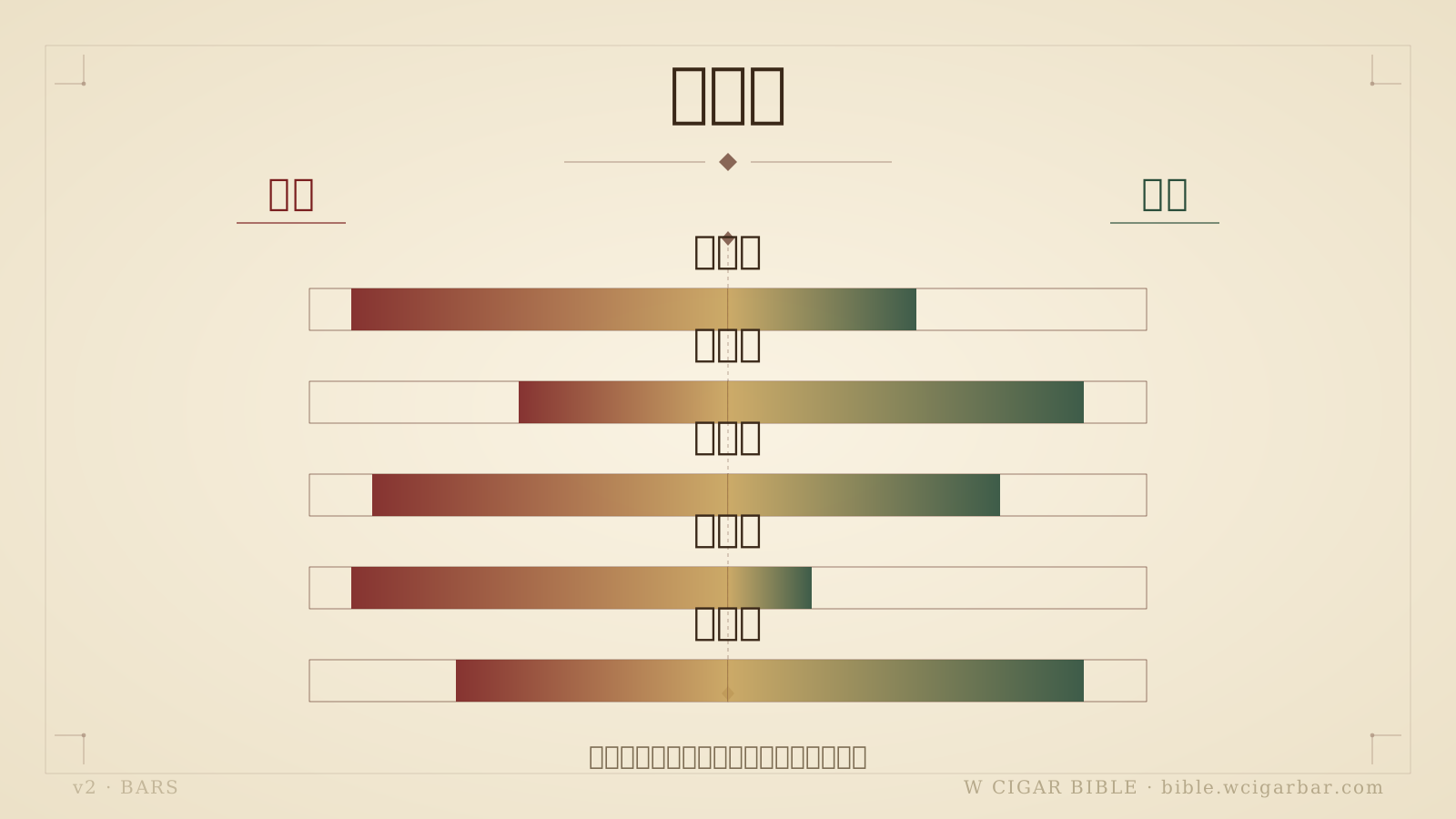
長條圖比較抹茶與煎茶在五個風味軸
The Compact Trinidad Reyes: A Compressed Version of Cuban Sweet Wood
The Trinidad brand has a delicate, clean, sweet woody quality in Cuban cigars, and Reyes compresses this language into a shorter specification. Trinidad Reyes (Cuba, Reyes, 40 × 110mm): honey, cream, cedar, light floral notes, a compact medium-bodied cigar. Its advantage is not in grandeur but in being able to provide a clear outline from the start, especially friendly for tea pairings.
The front segment of Reyes often features honey, light cream, hay, and fine wood shavings, with cedar gradually rising in the middle segment, and floral notes hidden in the back of the nasal cavity. If in good condition, the smoke texture won't be rough, and the sweetness won't be sticky. This line allows it to connect with the green freshness of Sencha and the powdery umami of matcha, not easily overshadowed by either side.
The pairing judgment for Reyes is to have the honey sweetness and cedar dryness calibrated by the tea soup, not to pursue stronger smoke intensity. Too thick a thick tea will push it towards bitter woodiness, too high a temperature Sencha will amplify astringency and nicotine stimulation. Conversely, accurately tempered, medium-concentration Uji tea can keep the short cigar detailed in the front, middle, and back segments, not just leaving "sweet" or "wood" as rough impressions.

快問快答整理抹茶煎茶玉露與薄茶選擇
Umami, Seaweed Freshness, and Honey Sweetness: Flavor Chemistry of Token × Token
Umami theanine × smoke sweetness is the core reaction of this pairing. Theanine itself is not just a flavor; it brings oral thickness and sweet extension, transforming Reyes' honey tone from surface sweet aroma to a deeper honey sensation. The furfural, trace caramelized sweetness, and woody aroma in the smoke, when supported by the amino acid sensation of the tea soup, make the aftertaste more like roasted sweet wood chips rather than simple sugar flavor.
Seaweed saltiness × honey sweetness is the second key gear. Dimethyl sulfide, green leaf alcohol, and seaweed sensation in steamed green tea provide a low-intensity salty illusion; Reyes' honey sweetness and light floral notes form a bright layer above. Saltiness doesn't make the tea salty but gives the sweetness a boundary, preventing the creaminess and honey sensation of the short cigar from becoming flat in the mouth.
The true brilliance of this pairing is extending sweetness with umami, modifying creaminess with seaweed freshness, and responding to steamed green tea aroma with cedar smokiness. Peated whisky often talks about phenolic resonance, but here, we discuss the low-frequency counterpoint of seaweed sulfide × tobacco smokiness. Guaiacol and syringol type smoky phenols, when encountering the seaweed tone of steamed tea, don't become thick smokiness but delineate the cedar outline more cleanly.
| Flavor Token | Uji Tea Source | Trinidad Reyes Correspondence | Oral Change |
|---|---|---|---|
| Theanine Umami | Shaded Cultivation, Gyokuro, Matcha | Honey, Cream | Sweetness Extension, Bitterness Reduction |
| Seaweed Saltiness | Steamed Green Tea, Dimethyl Sulfide | Honey Sweet, Light Floral | Salty-Sweet Balance, Clearer Floral Notes |
| Green Leaf Alcohol Freshness | Lightly Steamed Sencha, Low Temperature Brewing | Cedar, Hay | Woodiness Cleansed, Smoke Not Cloudy |
| Powdery Foam | Stone Mill Matcha, Tea Whisking | Cream, Sweet Wood | Tactile Roundness, Softened Aftertaste |
| Low Temperature Gyokuro Soup Sensation | Shaded Bud Leaves, Amino Acids | Fine Sweetness in Front Segment | More Stable Front Segment, Slower Short Cigar Rhythm |
In practice, I would place Sencha in the front and middle segments of Reyes, and matcha in the latter half of the middle segment. For the front segment, use lightly steamed Sencha at around 70°C for a short infusion to lay the aroma foundation; in the middle segment, if switching to thin tea, don't use too much tea powder to avoid overwhelming the cedar with concentration. In the latter segment, if the smoke heat rises, you can return to a lower temperature Gyokuro-style small sip tea soup, using umami and low-temperature water sensation to close the dryness.
Frequently Asked Questions
The core of this pairing is to precisely manage the sweetness, wood, cream, and floral notes of Reyes with the umami and steamed clarity of Uji tea. Below are some questions I often repeatedly confirm when editing tea and cigar pairing articles.
Is Uji Matcha necessarily more suitable for Trinidad Reyes than Sencha?
Not necessarily. Matcha's advantage lies in ritual, foam texture, and thick umami, suitable for focusing attention on the short cigar rhythm. Sencha is more transparent, making Reyes' honey and light floral notes easier to identify. If you prefer clean lines, Sencha might even be more precise than matcha.
Can Gyokuro be included in this pairing?
Yes, but it's best to present Gyokuro with low temperature, small water volume, and slow infusion. Its amino acid thickness can stabilize the sweetness in the front segment of Reyes and reduce oral sensitivity to dryness. However, if Gyokuro is too concentrated, it can make the cigar seem lighter, so the concentration should be conservative.
Should matcha be used as thin tea or thick tea?
I would choose thin tea. Thick tea has high density, which can push the medium-bodied Reyes into the background, especially the light floral notes can easily be overshadowed. Thin tea retains the tea whisk foam and umami while allowing honey, cedar, and cream to still have space.
What happens if Sencha water temperature is too high?
Too high a water temperature will increase catechin bitterness and coarseness, which will overlap with the heat in the latter segment of the cigar. The result is often the disappearance of seaweed freshness, leaving hay, bitter wood, and a scraping sensation. For Reyes, 65 to 75°C usually retains more detail than boiling water.
Is this pairing suitable for deep steamed Sencha?
Deep steamed Sencha is possible, but attention should be paid to turbidity and concentration. Its thick soup sensation and quick umami can connect with Reyes' creamy tone; however, if steeped too long, the quick release of broken leaves will also bring up bitterness. I would shorten the time for deep steamed Sencha, retaining sweet freshness without pursuing heaviness.
Why does the ritual of whisking tea affect cigar interpretation?
Because Trinidad Reyes is a short specification, the time structure is very concentrated. The actions of whisking tea naturally slow you down, from warming the bowl to whisking, just corresponding to the process of establishing aroma in the front segment of the short cigar. When attention is focused, you can more easily discern the transitions of honey, cream, cedar, and light floral notes.
The pairing of Uji Matcha, Sencha, Gyokuro, and Trinidad Reyes ultimately is not about who complements whom but about jointly establishing a clear timeline. The front segment opens with steamed green freshness, the middle segment connects sweet woodiness with umami, and the latter segment gradually closes with seaweed freshness and cedar smokiness. This is a quiet, precise pairing that truly tests the palate.
Further Reading|Complete Guide to Six Tea Types: Fermentation Spectrum from Green Tea to Pu-erh, Flavor Overview for Cigar Pairing|Assam and Ceylon Black Tea: Two Faces of Malt Strength and Bright Citrus, Paired with Juan López Selección No.2|Junshan Silver Needle Yellow Tea Menhuang Process: The Rarest of the Six Tea Types, Paired with San Cristóbal El Príncipe's Small Delicacy
—Cigar Prince Wilson Tsai
Smoking is harmful to health. Under 20 years old is not allowed to smoke. Quit smoking hotline: 0800-636363. This article is for reference by adults over 20 years old for cigar culture, preservation, and regulation knowledge, not a tobacco advertisement, promotion, or purchase suggestion.
Like this article?Share with friends
Share this W Cigar Bible piece with friends who want to learn cigar culture, storage, and tasting.
想把這篇 化為實踐
雪茄聖經是知識;雪茄文化要在空間裡發生

W Cigar Bar 大安總店資訊
台北大安區 · 雪茄聖經總編輯 Wilson Tsai 主理的雪茄文化空間

33 座 24 小時恆溫恆濕醇化室
W Cigar Bar 提供的會員醇化空間 · 場地資訊請洽編輯部
雪茄剪 / 打火機 / 雪茄盒 / Boveda
W Cigar 配件官網 · 專營雪茄配件正品

加 LINE 好友 · 文化諮詢
文化空間資訊 · 紳士沙龍 · 私人包場
本網站內容僅供雪茄文化、歷史、收藏與品吸知識研究參考。菸品有害健康、未滿法定年齡者請勿吸菸。實際規範請依所在地法律為準。
吸菸有害健康・戒菸專線 0800-636363・本站僅供 20 歲以上成年人閱覽。
讀到這裡,你不只是路過的人
留下 Email,加入 W 雪茄聖經內圈——總編輯 Wilson Tsai 親選的學院深文與國際新訊,先你一步送到信箱。
· 教育用途非銷售 · 隨時一鍵退訂 · Email 絕不對外公開 · 由勝茄股份有限公司營運
同分類延伸閱讀
資料來源:W Cigar Bible 編輯部整理 · 雪茄王子 Wilson Tsai 親自審稿
本文僅供雪茄文化、歷史、收藏與品鑑知識研究,不作為菸品促銷、銷售或購買建議。吸菸有害健康,未滿二十歲不得吸菸。