東方美人茶著涎蜜香:小綠葉蟬與白毫烏龍的傳奇,搭配 H. Upmann Magnum 46 的蜂蜜共鳴
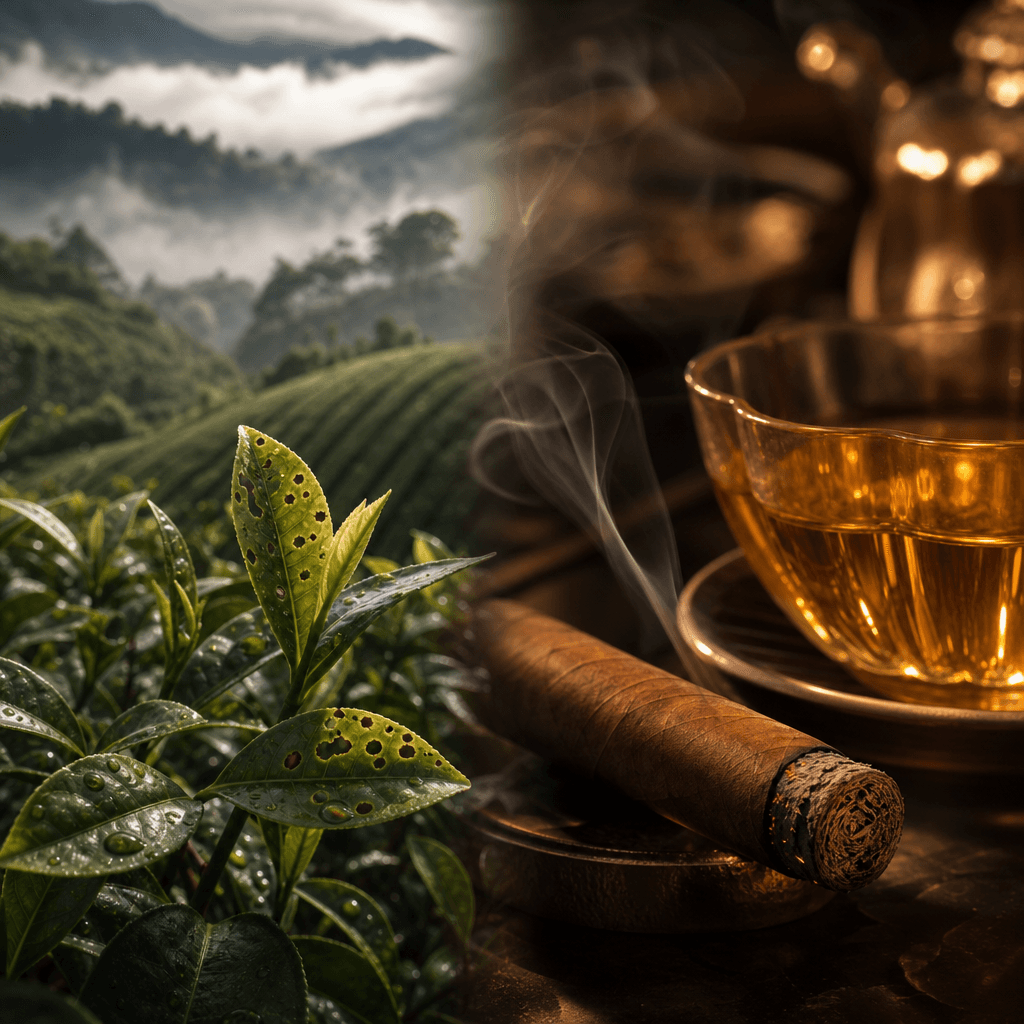
東方美人茶的蜜香,並非加香,而是小綠葉蟬著涎後,茶樹啟動防禦反應與重發酵工藝共同生成。本文從新竹苗栗客家茶區、膨風茶傳說、白毫烏龍製程談起,再精準拆解它與 H. Upmann Magnum 46 的蜂蜜、榛果、烤麵包與奶油調如何相互接線。
- 東方美人茶的蜜香核心,來自著涎誘發的萜類、醛類與水楊酸甲酯路徑。
- H. Upmann Magnum 46 的蜂蜜、榛果與奶油調,能與白毫烏龍形成同頻甜感。
- 重發酵茶體帶有熟果酸甜與單寧骨架,足以承接 143mm 的長節奏。
Oriental Beauty Tea with Honey Aroma: The Legend of the Green Leafhopper and Bai Hao Oolong, Paired with the Honey Resonance of H. Upmann Magnum 46
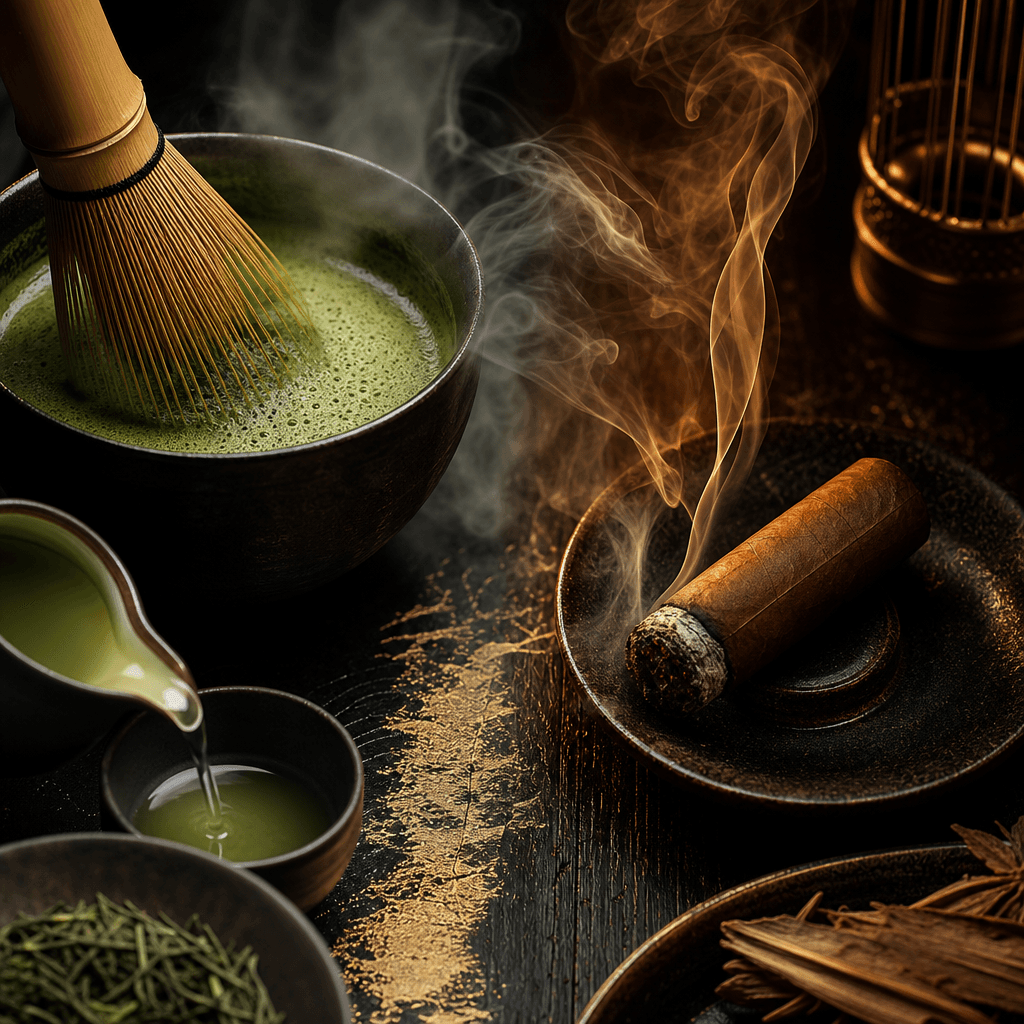
When Oriental Beauty Tea meets H. Upmann Magnum 46, I often say this is not a "tea and cigar" safety question, but a precise experiment where honey aroma and honey notes face each other directly. The former is a honey-scented tea resulting from the tea tree's defense reaction and the overlapping fermentation process of Bai Hao Oolong after being salivated by the green leafhopper; the latter is structured with butter, toasted bread, hazelnut, and honey, with a medium body and a steady rhythm. If there's a pairing that can express "sweetness" without being cloying, flat, or vulgar, I would place it at the forefront.
As the editor of the "Cigar Bible," I look at Oriental Beauty Tea not just for the presence of honey aroma in the cup, but for the cleanliness of the salivation, the adequacy of fermentation, and whether the ripe fruit acidity can support the cigar's oils. The length of the H. Upmann Magnum 46 (Cuba, Corona Gorda, 46 × 143mm) demands that the beverage not only have an opening aroma; it needs to have thickness in the middle and still be refreshing in the end. This article will discuss how the green leafhopper, Bai Hao Oolong, the legend of Peng Feng Tea, and Cuban honey notes connect layer by layer.
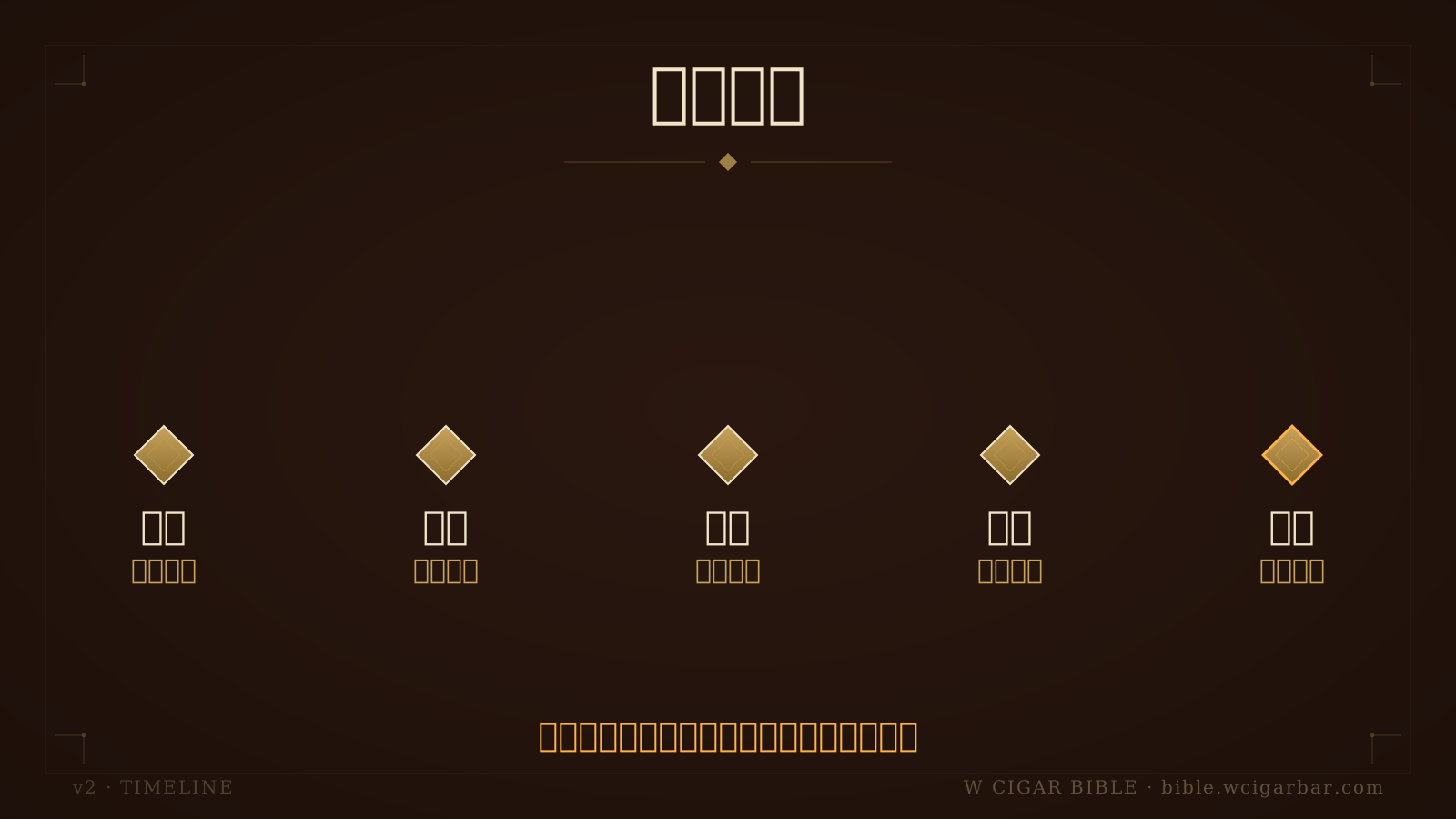
時間軸說明小綠葉蟬到分段沖泡的蜜香形成路徑
The Origin of Oriental Beauty Tea: Hakka Tea Regions in Hsinchu and Miaoli and the Legend of Peng Feng Tea
In the history of Taiwanese tea, Oriental Beauty Tea is one of the few classics that transform "insect bites" into a highly recognizable flavor. Its core production area is concentrated in Hsinchu and Miaoli, especially Beipu, Emei, Guanxi, Zhudong, and the Hakka tea regions of Toufen, Sanwan, Tongluo, and Touwu in Miaoli. These hilly areas may not have extremely high altitudes, but the day-night temperature difference, fog, soil drainage, and humid summer conditions are just right for the green leafhopper to be active.
The name "Peng Feng Tea" comes from a rural humorous legend. It is said that tea farmers, thinking their harvest was ruined by the green leafhopper bites, unexpectedly produced a tea with a unique aroma that received rare praise abroad. Upon returning home, neighbors did not believe them and mocked them as "Peng Feng," meaning boasting. This story may not be verifiable word for word, but it accurately describes the essence of Oriental Beauty: it does not hide defects but transforms biological pressure into a flavor language.
The British court's naming of it as Oriental Beauty also carries a legendary color. A common version says that the tea soup is as clear as champagne, and the leaves are colorful, which caught the favor of the British queen, hence the name "Oriental Beauty." The historical details can remain a mystery, but the naming itself reflects the aesthetics of tea exports at the time: gorgeous aroma, bright tea soup, and an exotic imagination. The truly fascinating aspect of Oriental Beauty Tea is that it turns the agricultural chance of the Hakka tea region into a honey aroma order that can be stably reproduced by craftsmanship.
The Biochemistry of Salivation: How the Green Leafhopper Forces Out Honey-Scented Tea
Talking about Oriental Beauty Tea, one cannot just say "it's sweet because it was bitten by insects." When the green leafhopper feeds on the sap of the tea tree's young buds and leaves, it leaves salivation marks on the leaf surface and cellular tissue. This feeding pressure triggers the tea tree's defense response. The tea tree is not passively injured; it adjusts the production of volatile substances and precursors through signaling pathways such as jasmonic acid and salicylic acid, causing the leaves to emit more complex aromas.
In flavor chemistry, the honey aroma of Oriental Beauty is often related to changes in terpenes, aromatic aldehydes, alcohols, and esters. Compounds like linalool, linalool oxides, hotrienol, nerolidol, phenylacetaldehyde, and methyl salicylate are often used to understand the sources of floral, honey, ripe fruit, and cool spicy aromas. They do not play solo but are rearranged by enzymatic and thermal reactions during withering, stirring, fermentation, and drying processes.
I often divide the salivation honey aroma into three layers: the first layer is the sweet aroma of honey and pollen, the second layer is the fruit aroma of ripe peach, dried apricot, and dried longan, and the third layer is cinnamon, light woody, and slightly cool. If there is only sweetness without acidity, it will appear flat; if there is only floral aroma without ripe fruit, it will not connect with the honey notes of H. Upmann Magnum 46. Salivation is not a gimmick but the biochemical starting point for Oriental Beauty Tea to resonate with Cuban cigar honey notes.
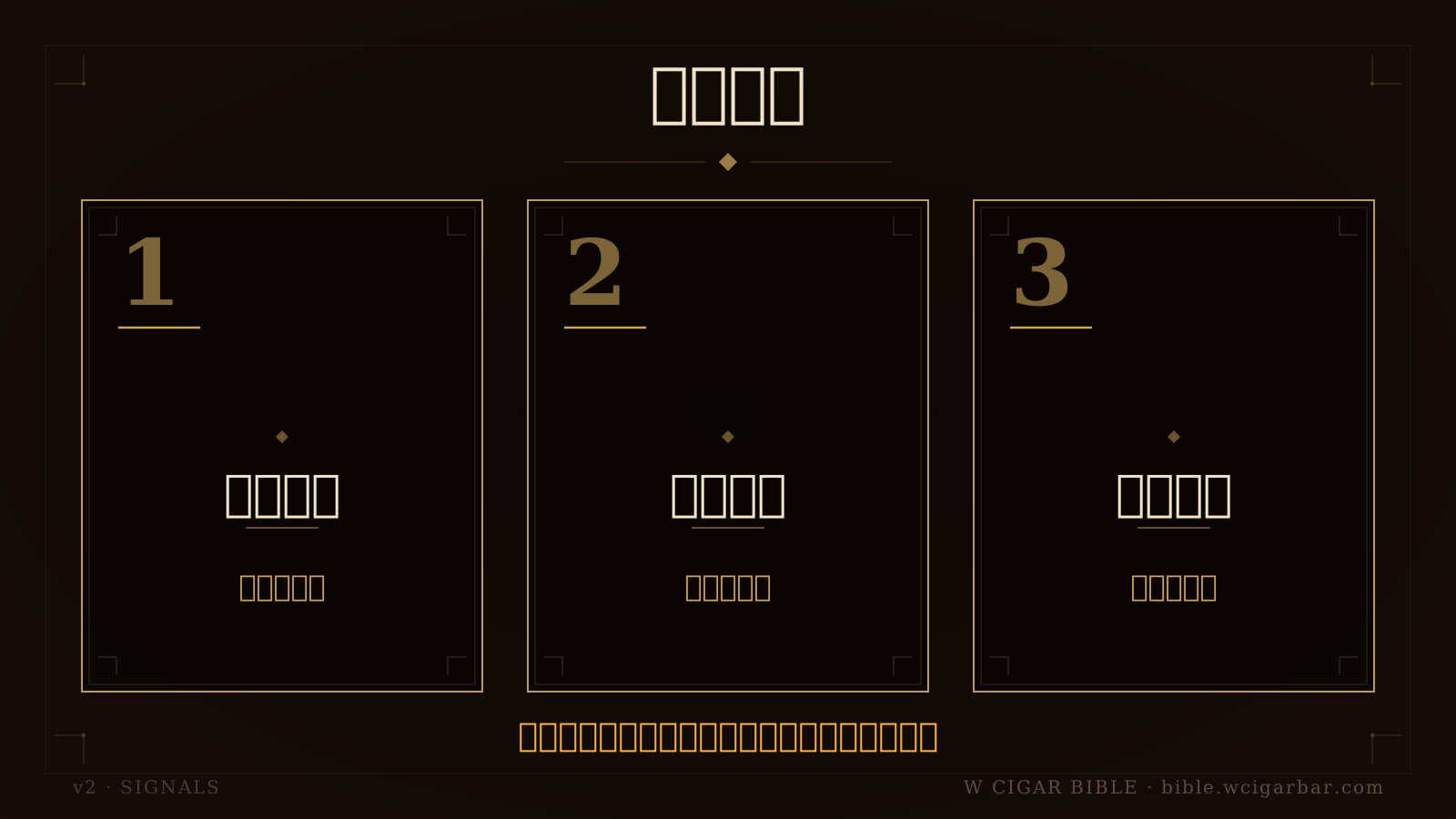
三張卡片整理東方美人茶與雪茄搭配的核心判斷
Bai Hao Oolong Craftsmanship: Heavy Fermentation is Not Heavy-Handed, but Precise Control
Oriental Beauty, also known as Bai Hao Oolong, often exhibits a mix of white, green, yellow, red, and brown colors, with prominent white tips and naturally curved strips rather than tightly rolled balls. Picking is mainly one bud and two leaves, focusing not on extreme tenderness but on having enough leaf surface to carry salivation and subsequent oxidation. If the tea leaves are too coarse, the aroma is not delicate; if too tender, the tea body is insufficient, and it will falter in the middle and later stages when paired with the 143mm Magnum 46.
In terms of craftsmanship, Oriental Beauty belongs to heavily fermented oolong, with fermentation levels often in the higher range, but it is not black tea. Sun withering, indoor withering, stirring, resting fermentation, fixation, rolling, and drying—all steps must balance the oxidation of polyphenols, the release of aroma precursors, and moisture movement. When done well, the tea soup has an amber, orange-red, or honey-gold color, the aroma opens up without being pungent, and the sweetness and acidity advance simultaneously upon entry.
The key to heavy fermentation is to partially convert catechins into theaflavins, thearubigins, and other oxidized polymers, forming a rounder mouthfeel and deeper soup color. These substances give the tea structure and allow it to withstand the roasted, nutty, and leathery edges of cigar smoke. If fermentation is insufficient, it will be green and grassy, clashing with the creamy notes of H. Upmann; if over-fermented, ripe fruit becomes cloying, and the honey resonance loses focus. The heavy fermentation of Bai Hao Oolong is to establish the depth of the tea body, not to cover details with heaviness.
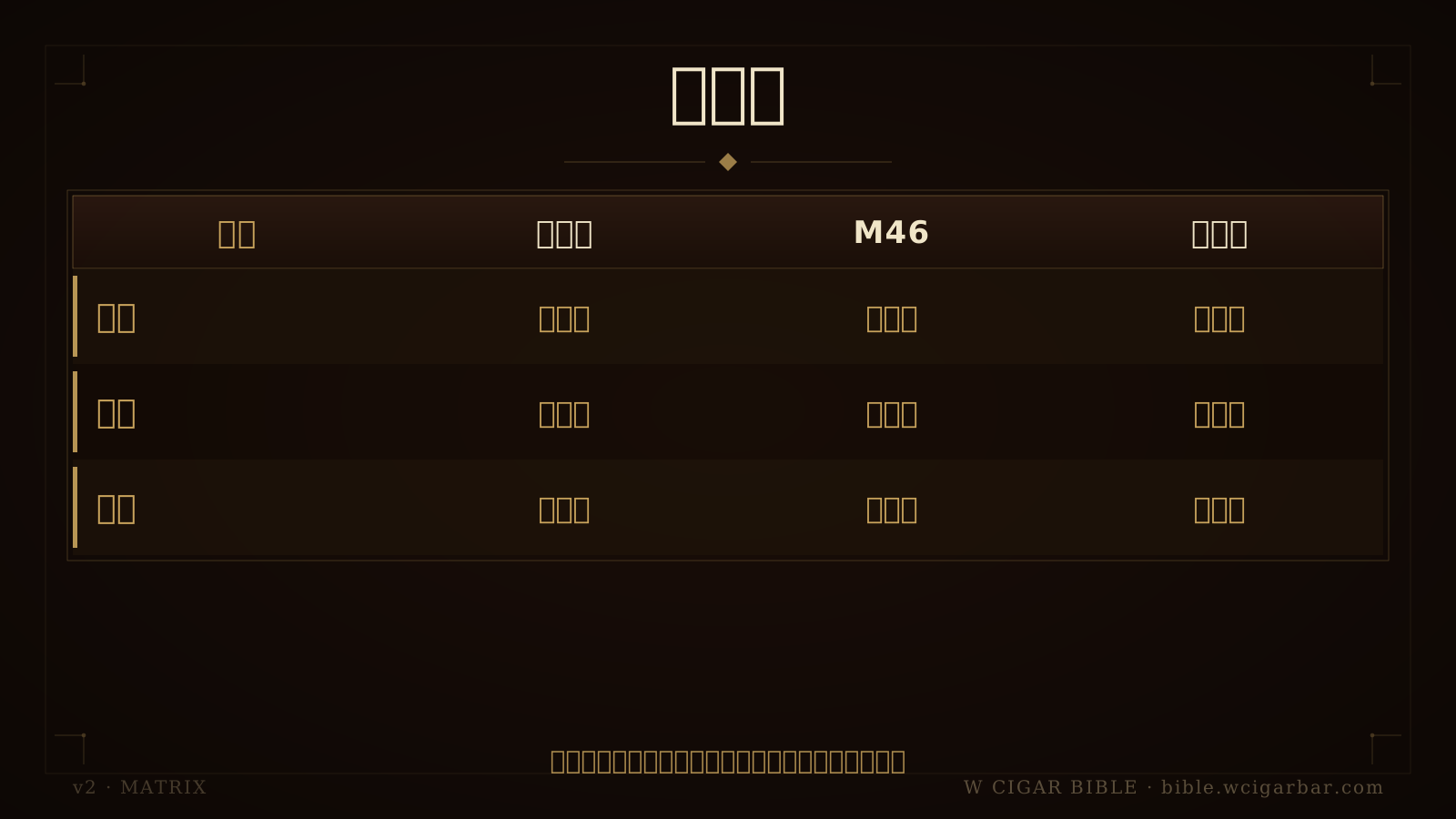
矩陣比較東方美人茶、Magnum 46 與兩者交會特徵
Summer Tea is the Essence: The Unconventional Seasonal View of Oriental Beauty Tea
Many teas favor spring tea, but Oriental Beauty Tea is crucially a summer tea. The reason is straightforward: the green leafhopper appears more easily in warm, humid, and ecologically active seasons, often between the Dragon Boat Festival and Minor Heat, which are important windows for salivation conditions. Without sufficient salivation, no matter how beautiful the tea leaves, it is difficult to form the signature honey aroma.
This involves the judgment of tea garden management. Oriental Beauty is not simply waiting for insects but requires maintaining the tea tree's growth vigor while allowing the green leafhopper to feed within a moderate range. Excessive leaf pressure will weaken the tea leaves, while insufficient salivation will lack aroma; tea farmers must balance ecology, weather, and picking timing. For experienced hands, whether the honey aroma in the cup is natural and whether the ripe fruit is bright often reflects the coordination between the tea garden and tea making.
Another reason for the essence of summer tea is the ripe fruit performance brought by high temperatures. Oriental Beauty's dried peach, honey apple, longan, cinnamon bark, and cinnamon often appear fuller than spring tea. These flavors, if paired with a heavy cigar body, will be suppressed by smoke; paired with a light cigar, the tea will overpower the cigar. The medium body of H. Upmann Magnum 46 allows the honey fruit aroma of summer Bai Hao Oolong to stand in the foreground without being overshadowed by the cigar.
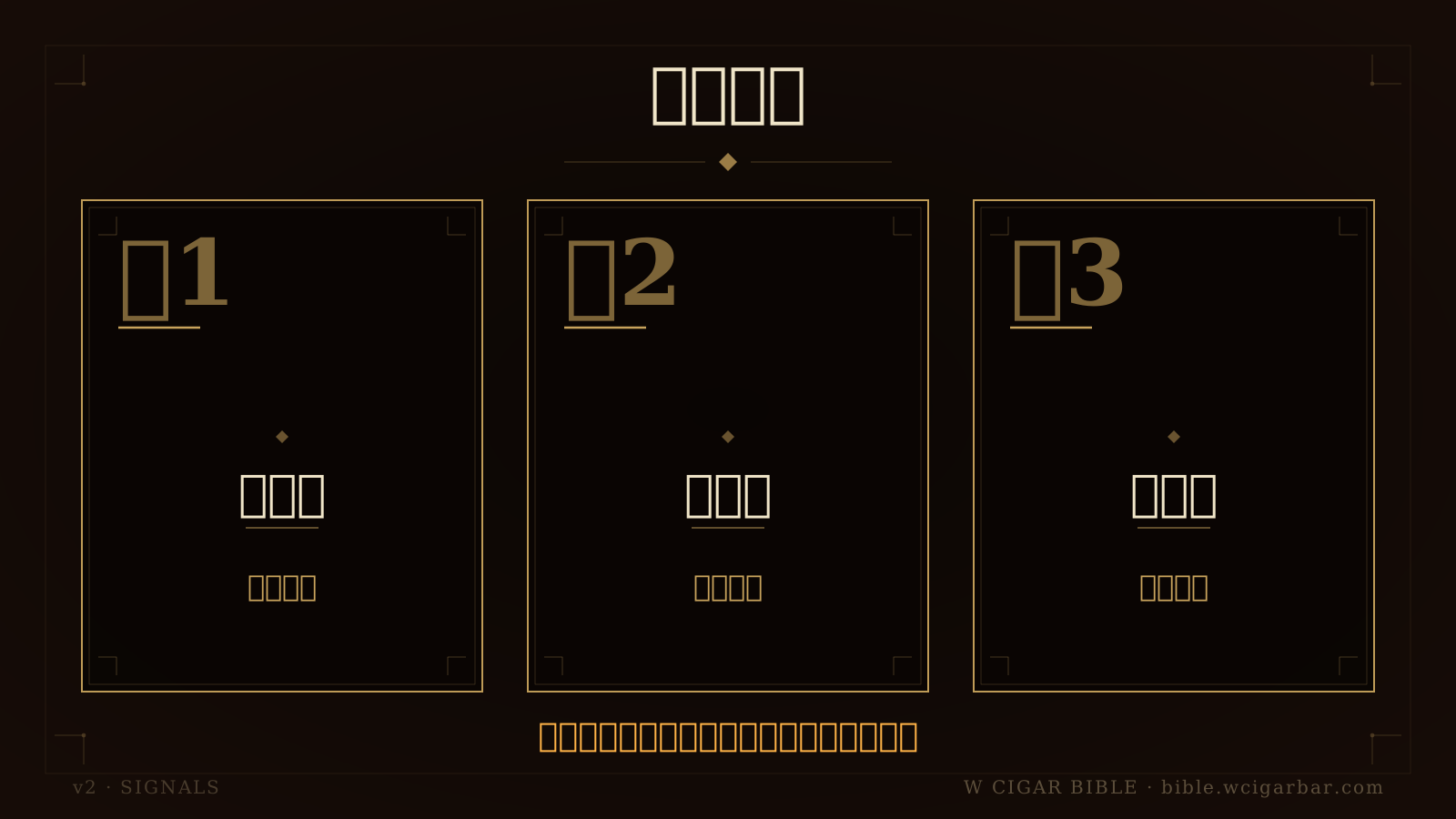
三張卡片提醒甜感、濃度與抽吸節奏的常見誤解
H. Upmann Magnum 46: The Cuban Lines of Butter, Toasted Bread, Hazelnut, and Honey
H. Upmann is one of the Cuban cigar brands that can represent "elegant structure," with its founding traceable back to the mid-19th century. Its style usually does not win by heaviness and spiciness but by layering with butter, bread, wood, nuts, and light sweetness. The Magnum 46, as a Corona Gorda, is sized at 46 × 143mm, with a slender proportion, requiring more patience in the burning rhythm than shorter and fatter sizes.
The core flavors of this cigar can be summarized as butter, toasted bread, hazelnut, and honey, but the real focus is on the order in which they appear. The front often starts with a buttery texture and toasted bread aroma, like the caramelized edges of hot bread; the middle gradually clarifies with hazelnut, light honey, and wood; the end may show drier herbal, coffee shell, and slight spiciness. It is a medium-bodied cigar, not winning by high pressure, making it more suitable for dialogue with delicate beverages.
From a chemical perception perspective, toasted bread and hazelnut often evoke olfactory impressions of pyrazines, furans, and slight Maillard reactions. The honey notes are related to the transformation of sugars in aged tobacco leaves, intertwined with volatile aldehydes, ketones, and sweet woody notes. When it meets Oriental Beauty Tea, the biggest fear is that the tea soup is too thin or brewed too astringent, making the hazelnut bitter and the honey dry. The advantage of Magnum 46 is that it retains aroma space with a medium body, allowing the honey aroma of Oriental Beauty to be amplified rather than covered.
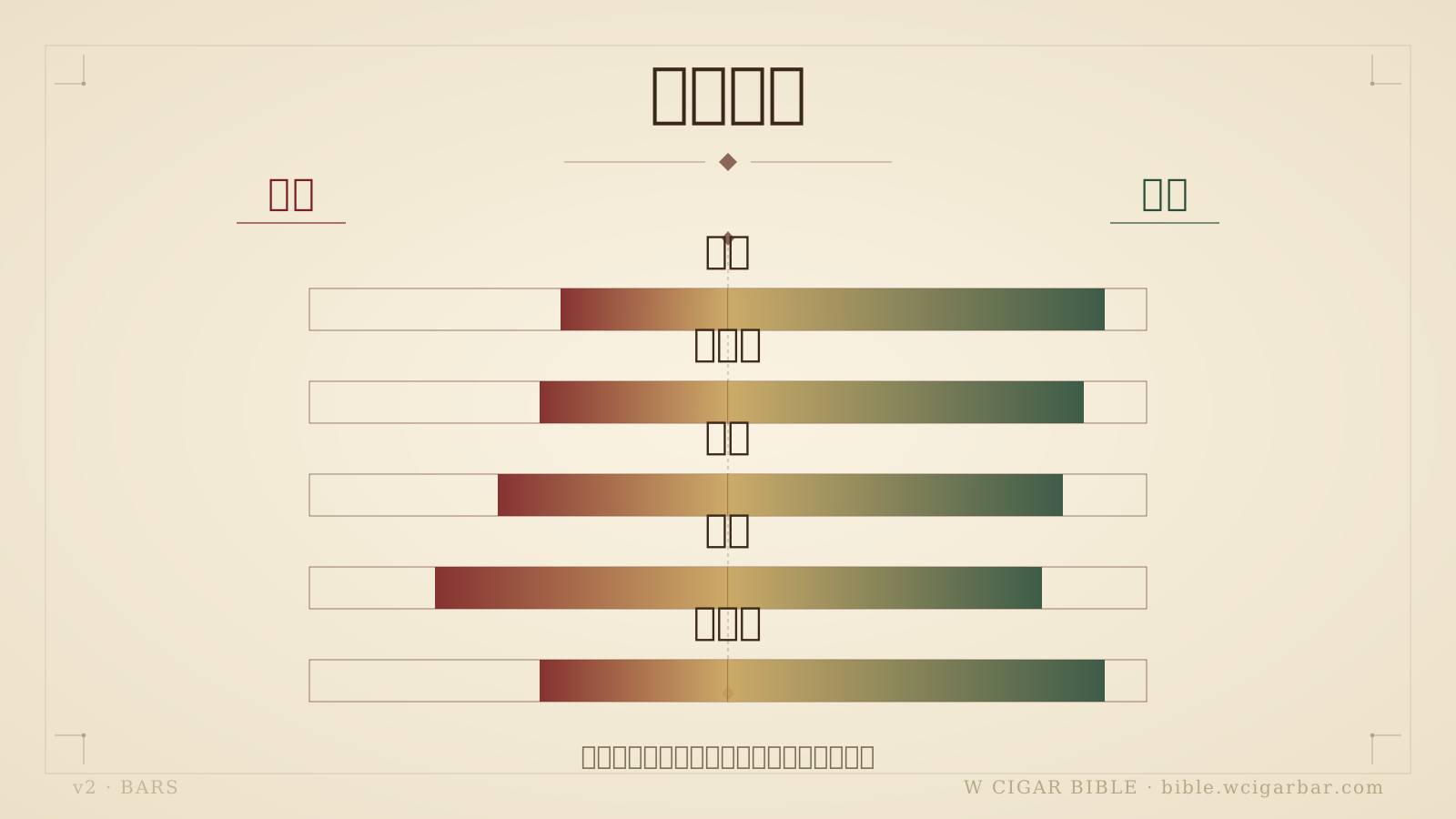
長條圖比較花香型與著涎型東方美人的搭配表現
Salivation Honey Aroma × H. Upmann Honey Notes: Why This is the Sweetest Pairing on the Site
The salivation honey aroma of Oriental Beauty and the honey notes of H. Upmann Magnum 46 are the direct frequency of this pairing. The linalool oxides, hotrienol, phenylacetaldehyde in the tea bring out floral, ripe fruit, and candied volatile aromas; the honey notes in the cigar are often intertwined with the sweet woody, light caramel, and dry grass aromas of aged tobacco leaves. When the two meet, it is not a stacking of sweet on sweet, but a contrast of "moist nectar" meeting "dry honey wood."
Ripe fruit acidity × hazelnut oil is the second key line. The ripe peach, dried apricot, and honey apple in Oriental Beauty provide slight fruit acidity and molasses; the hazelnut, butter, and toasted bread in Magnum 46 provide oiliness and nutty roast aroma. When the tea soup is followed by the cigar, the acidity and sweetness brighten the edges of the hazelnut oil, making the nuts not dull; conversely, the buttery texture of the cigar makes the ripe fruit in the tea more like jam rather than thin fruit aroma.
Heavy fermentation tea body × 143mm long rhythm is a matter of endurance. Magnum 46 is not short, and from the front to the end, it will gradually increase dry wood and spiciness. If the beverage only has aroma without structure, the latter half will be dragged dry by the smoke. The thearubigins, mild tannins, and honey fruit acidity in Oriental Beauty Tea can reorganize the palate with each sip, bringing the honey notes back into focus. The reason this pairing can be called the sweetest on the site is that the salivation honey aroma and Cuban honey notes, though from different sources, highly overlap at the olfactory endpoint.
| Flavor Token | Source in Oriental Beauty Tea | Corresponding in Magnum 46 | Intersection Effect |
|---|---|---|---|
| Salivation Honey Aroma | Terpenes, Aromatic Aldehydes, Honey Floral Aroma | Honey, Sweet Woody | Forms a dual-layer sweetness of moist nectar and dry honey |
| Ripe Fruit Acidity | Dried Peach, Dried Apricot, Honey Apple | Hazelnut, Butter | Fruit acidity lifts oiliness, making nuts clearer |
| Cinnamon Spiciness | Warm aroma after heavy fermentation and drying | Toasted Bread, Light Woody | Increases mid-section warmth, preventing sweetness from flattening |
| Tea Body Tannins | Theaflavins, Thearubigins | Medium-bodied cigar smoke | Maintains long rhythm, reducing taste fatigue |
| Amber Soup Feel | High Fermentation Oolong Structure | Corona Gorda Proportion | Supports the 143mm front, middle, and end changes |
Brewing and Rhythm: How to Let Bai Hao Oolong Support the Corona Gorda
I would recommend using a white porcelain gaiwan or thin porcelain pot to observe Oriental Beauty Tea, as its aroma details are afraid of being stifled by heavy utensils. The water temperature can be between 88 and 92°C; if the tea leaves are finer and have more white tips, it can be slightly lowered; if the tea body is thick and fermentation deep, it can approach 92°C. The tea amount does not need to be too strong; the focus is on letting the honey aroma, ripe fruit, and tannins unfold in sequence, rather than forcing all the spiciness and astringency out in the first brew.
When paired with H. Upmann Magnum 46, I would divide the tea into three rhythms. In the front of the cigar, use a shorter steeped tea soup to correspond to the butter and toasted bread, retaining the nectar aroma; in the middle, slightly extend the steeping to let the ripe fruit, cinnamon, and tea body come out to meet the hazelnut oil; in the end, the tea soup can be slightly lighter to avoid overlapping tannins and cigar spiciness into dry bitterness. This is not a formula but a way to let the tea progress along with the cigar's burning line.
The order of entry also matters. Drinking tea first and then tasting the cigar will make the honey notes more direct, like spreading Oriental Beauty's nectar on Magnum 46's toasted bread; tasting the cigar first and then drinking tea will bring out the ripe fruit acidity and sweetness in the tea, making the hazelnut residual aroma rounder. Experienced hands can alternate the two orders in the middle section, observing which of the honey, butter, ripe fruit, and cinnamon nodes are in the foreground. A good pairing is not about brewing the tea strong but about letting each brew catch the current burning section of the cigar.
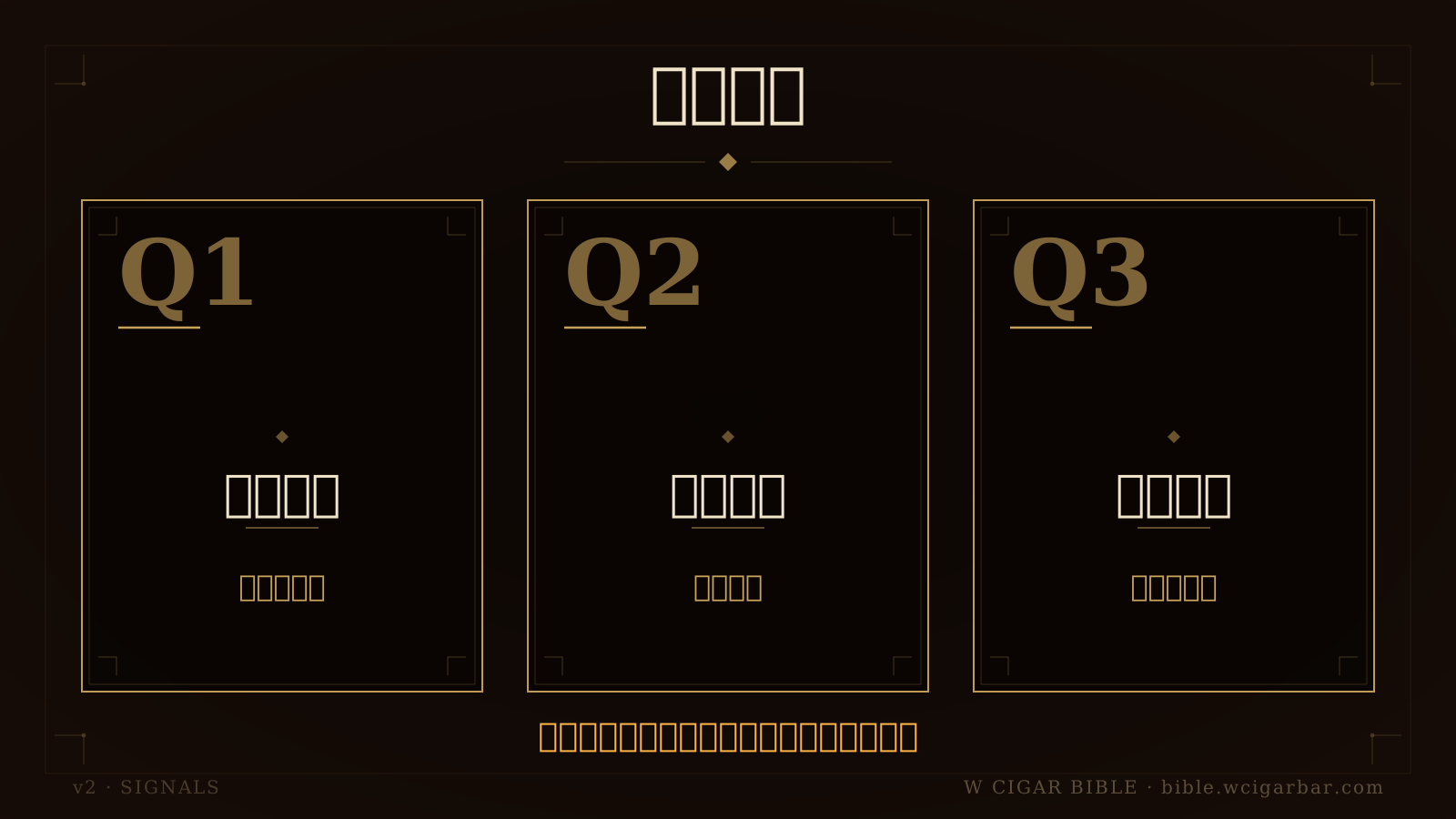
三張問答卡片整理選茶、濃度與搭配理由
Expert Judgment: The High and Low Points of This Pairing
A high-scoring Oriental Beauty Tea will have honey, ripe fruit, and light floral aroma coming out first from the cup lid aroma, with the tea soup entering sweet and acidic, and the aftertaste carrying a warm cinnamon or cinnamon bark-like feeling. It should not have obvious green notes, nor should it be overly sweet without transparency. If the tea soup retains honey aroma even when cooled, and the tannins are delicate, it usually allows the honey notes to extend longer when paired with Magnum 46.
A high-scoring H. Upmann Magnum 46 should have a stable burning state, with butter and toasted bread not interrupted by coarse bitterness. If the aging state is appropriate, hazelnut and honey will emerge in the middle section, complementing the ripe fruit acidity and sweetness of Oriental Beauty. If the cigar is too dry, the smoke will be sharp, and the honey aroma of the tea will be scraped thin; if the ambient humidity is too high, the hazelnut and toasted bread will be stifled, and even the best tea soup will struggle to open layers.
The low point often lies in "misjudging sweetness." Not all teas with sweet aroma are suitable for this cigar; if the sweet aroma is like sugar water without acidity and fermentation structure, it will appear heavy when encountering butter and hazelnut. Not all honey note cigars are suitable for Oriental Beauty; if the cigar body is too strong, it will suppress the salivation honey aroma into the background. The key judgment of this pairing is to see if the honey aroma, ripe fruit acidity, hazelnut oil, and medium cigar body can balance in four directions.
Frequently Asked Questions
Why is Oriental Beauty Tea also called Bai Hao Oolong?
Bai Hao Oolong refers to its oolong tea type with prominent white tips, natural strips, and high fermentation levels. Oriental Beauty Tea is a name with more cultural recognition, while Bai Hao Oolong is more about craftsmanship and appearance description. The two names are often used interchangeably but both point to the core of salivation honey aroma and heavy fermentation.
Does salivation by the green leafhopper make the tea unclean?
"Cleanliness" is not judged by intuition; the focus is on whether tea garden management, picking, and processing are in place. Salivation is a defense response generated by the tea tree under feeding pressure, not simply damage. If subsequent withering and fermentation are well controlled, it can instead generate the signature honey aroma of Oriental Beauty Tea.
Why is Oriental Beauty Tea suitable for H. Upmann Magnum 46?
Because its honey aroma, ripe fruit acidity, and heavy fermentation tea body can respectively correspond to the honey, hazelnut oil, and 143mm long rhythm of Magnum 46. The key is not sweet matching sweet, but the salivation honey aroma and cigar honey notes forming the same olfactory endpoint from different sources. This makes the sweetness three-dimensional rather than cloying.
Should the tea soup be brewed stronger to hold up against the cigar?
Not necessarily; overly strong Oriental Beauty Tea will raise tannins and spiciness, flattening the butter and toasted bread of Magnum 46. A better approach is to adjust the steeping time according to the cigar's front, middle, and end sections. The middle can be slightly thicker, while the end returns to clarity without dryness.
If Oriental Beauty Tea only has floral aroma without honey aroma, is it still suitable?
Floral types can still be paired, but the honey resonance with H. Upmann Magnum 46 will be weaker. In this case, hazelnut and butter will be more prominent, with the tea playing the role of freshness and fruit acidity. To capture the main theme of this article, one should still choose Bai Hao Oolong with clear salivation, complete ripe fruit, and honey aroma.
What rhythm is suitable for this pairing?
It is suitable for slow, segmented observation, not for rapid puffing or brewing the tea too thick at once. The Corona Gorda proportion of Magnum 46 needs time to unfold, and Oriental Beauty Tea also needs multiple brews to show layers. The front section looks at butter and nectar, the middle section looks at hazelnut and ripe fruit, and the end section looks at cinnamon, woody, and tea body support.
The charm of Oriental Beauty Tea and H. Upmann Magnum 46 lies in their victory not by weight but by illuminating each other with details. The salivation honey aroma left by the green leafhopper, when encountering the honey, hazelnut, and toasted bread of Cuban cigars, will make the sweetness transform from flat to three-dimensional. If experienced hands are willing to slow down the pace, this pairing can read the complete dialogue of production area, biochemistry, craftsmanship, and burning sections.
Further Reading|Complete Guide to Six Tea Types: Fermentation Spectrum from Green Tea to Pu'er, Flavor Overview for Cigar Pairing|Complete Guide to Taiwan High Mountain Tea: The Cool Floral Aroma of Lishan and Alishan, Paired with the Elegant Route of Davidoff Signature 2000|Dong Ding Oolong Tea Charcoal Roasting Craft: The Old-School Skill of Roasting Fire and Throat Rhyme, Paired with Romeo y Julieta Short Churchill
—Cigar Prince Wilson Tsai
Smoking is harmful to health. No smoking under the age of 20. Quitline: 0800-636363. This article is for reference by adults over the age of 20 for cigar culture, preservation, and regulatory knowledge, not a tobacco advertisement, promotion, or purchase suggestion.
Like this article?Share with friends
Share this W Cigar Bible piece with friends who want to learn cigar culture, storage, and tasting.
想把這篇 化為實踐
雪茄聖經是知識;雪茄文化要在空間裡發生

W Cigar Bar 大安總店資訊
台北大安區 · 雪茄聖經總編輯 Wilson Tsai 主理的雪茄文化空間
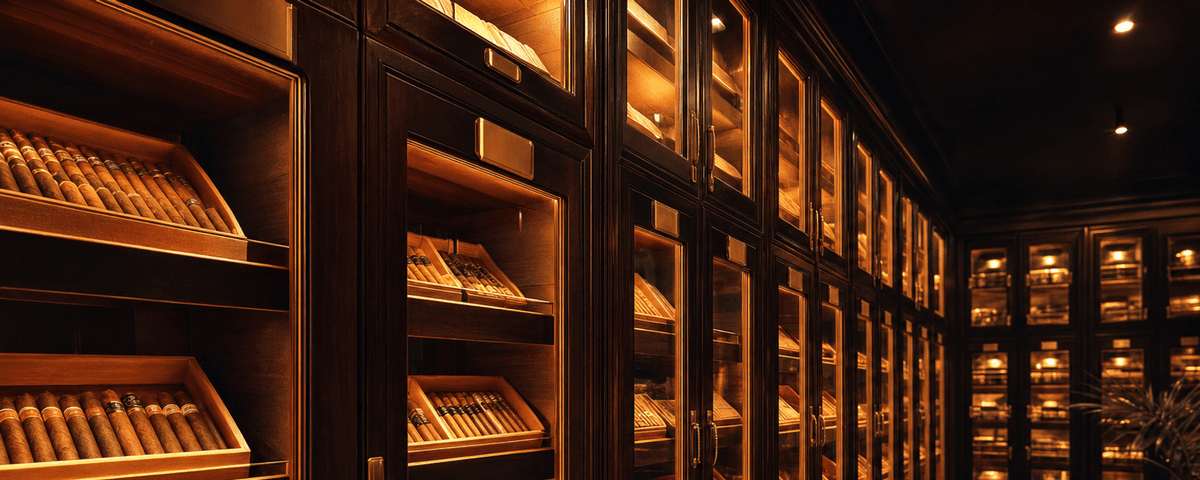
33 座 24 小時恆溫恆濕醇化室
W Cigar Bar 提供的會員醇化空間 · 場地資訊請洽編輯部
雪茄剪 / 打火機 / 雪茄盒 / Boveda
W Cigar 配件官網 · 專營雪茄配件正品
加 LINE 好友 · 文化諮詢
文化空間資訊 · 紳士沙龍 · 私人包場
本網站內容僅供雪茄文化、歷史、收藏與品吸知識研究參考。菸品有害健康、未滿法定年齡者請勿吸菸。實際規範請依所在地法律為準。
吸菸有害健康・戒菸專線 0800-636363・本站僅供 20 歲以上成年人閱覽。
讀到這裡,你不只是路過的人
留下 Email,加入 W 雪茄聖經內圈——總編輯 Wilson Tsai 親選的學院深文與國際新訊,先你一步送到信箱。
· 教育用途非銷售 · 隨時一鍵退訂 · Email 絕不對外公開 · 由勝茄股份有限公司營運
同分類延伸閱讀
資料來源:W Cigar Bible 編輯部整理 · 雪茄王子 Wilson Tsai 親自審稿
本文僅供雪茄文化、歷史、收藏與品鑑知識研究,不作為菸品促銷、銷售或購買建議。吸菸有害健康,未滿二十歲不得吸菸。