台灣高山茶完整指南:梨山阿里山的冷冽花香,搭配 Davidoff Signature 2000 的淡雅路線
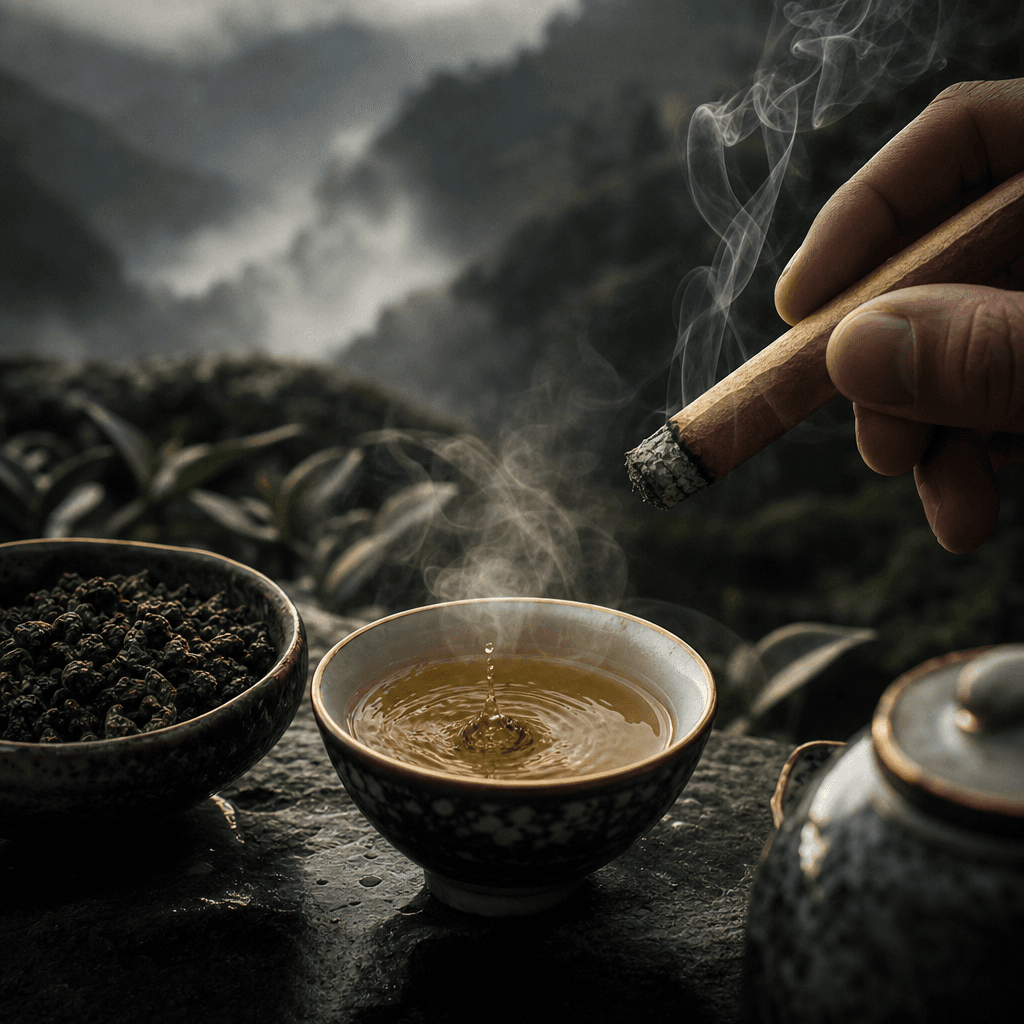
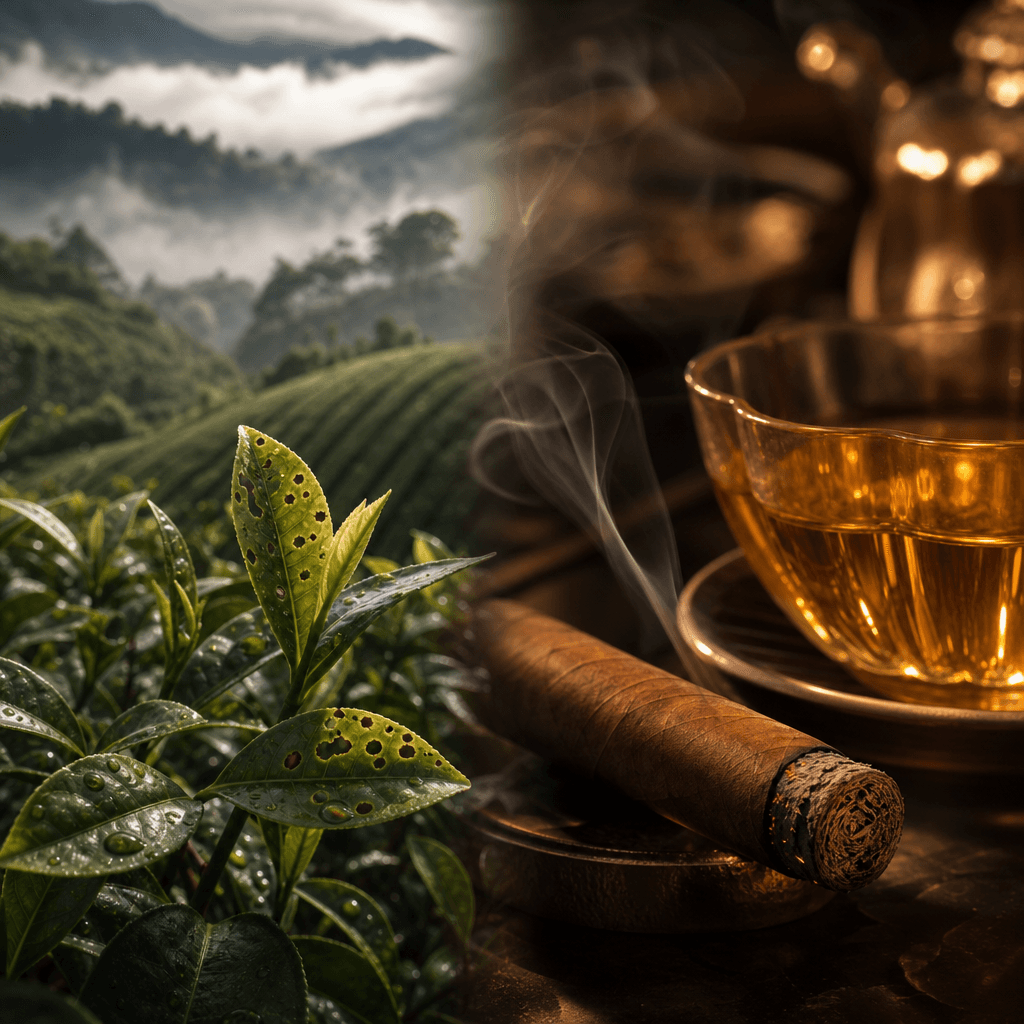
台灣高山茶以海拔、雲霧、日夜溫差與輕發酵球型烏龍工藝,形成冷冽花香、奶香與鮮爽甘甜。當它遇上 Davidoff Signature 2000 的奶油、青草、白花與淡穀物,重點不在強烈對撞,而是以同族花香、乳脂質地與回甘水線,讓淡雅茄體的層次被精準放大。
- 台灣高山茶的核心在海拔、雲霧遮蔭與厚葉低澀,並非只看山名。
- 梨山茶、阿里山茶、杉林溪與大禹嶺,各自呈現不同山頭氣與茶湯結構。
- Davidoff Signature 2000 適合高山烏龍,關鍵在白花、奶香與鮮甜回甘的細節銜接。
Complete Guide to Taiwanese High Mountain Tea: The Crisp Floral Aroma of Lishan and Alishan, Complementing the Subtle Path of Davidoff Signature 2000
The encounter between Taiwanese high mountain tea and Davidoff Signature 2000 (Dominican Republic, Corona, 43 × 128mm) is a low-volume yet high-resolution dialogue. This is not about overpowering the cigar with a strong drink, nor masking the smoke with sweetness, but rather allowing the crisp floral aroma of Lishan and Alishan tea to connect with the cream, grass, white flowers, and light grains of Davidoff Signature 2000. As an editor of the "Cigar Bible," I often say that subtle cigars fear rough pairings because their details don't disappear but need a cleaner background to emerge.
This article focuses on non-alcoholic beverages, so we concentrate on the structure of high mountain oolong itself. If readers are already familiar with basic tasting, the next step is not to judge "whether it tastes good" intuitively, but to understand how altitude, terroir, tea-making techniques, and brewing methods alter the aroma path. When the tea soup enters the mouth and encounters cigar smoke, floral, milky, grassy notes, and aftertaste will change on the tongue, nasal cavity, and throat, which is the real worth of pairing.

五段流程圖呈現選茶淨杯控溫與判讀
Definition of Taiwanese High Mountain Tea: Altitude is Not a Gimmick, but the Starting Point of Flavor Structure
Taiwanese high mountain tea is generally discussed at altitudes above 1000m. This boundary is not just a geographical number but represents significant changes in the growth rate of tea trees, leaf thickness, and the proportion of internal substances. In high-altitude areas, the temperature is lower, tea buds grow slower, and the leaves accumulate more pectin and amino acids, resulting in a relatively restrained astringency. Due to differences in sunlight angle, cloud cover, and picking seasons, even high mountain oolong can exhibit variations in floral warmth, tea soup thickness, and aftertaste length.
The rise of Taiwanese high mountain tea is closely related to the transformation of Taiwanese oolong tea-making techniques in the latter half of the 20th century. From early heavier fermentation and strip-shaped tea to lighter fermentation and ball-shaped rolling, the tea soup shifted from roasted thickness to clear, floral, fresh, and milky. This shift magnified the advantages of the high mountain environment, especially in spring and winter teas, which more easily present crisp floral aromas, sweet water lines, and delicate throat rhymes.
The value of high mountain tea is not in the word "high," but in the low-temperature, slow growth that forms thick leaves, low astringency, and high fragrance structure. When we pair it with Davidoff Signature 2000, this structure is crucial because Signature 2000 excels not in concentration but in the balance of cream, white flowers, grass, and light grains. If the tea soup is too thin, the smoke will seem dry; if too heavy, the cigar's white floral light fragrance will be overwhelmed. High mountain tea stands in the middle, providing support while retaining a sense of airiness.
Lishan Tea, Alishan Tea, Shanlinxi, and Dayuling: How Terroir Changes a Sip of Tea
Discussing Taiwanese high mountain tea cannot be limited to the words "high mountain," as Lishan tea, Alishan tea, Shanlinxi, and Dayuling each have different terroir characteristics. Lishan tea often features a crisp, delicate profile with a high mountain pear-like sweetness, high floral position, and a clean sweetness after entry. Alishan tea tends to present soft floral aromas, ripe grain notes, and warm sweetness, making it highly recognizable and easier to grasp for readers building systematic knowledge.
Shanlinxi's terroir often carries forest, bamboo leaf, and refreshing woody notes, with a brisk tea soup line and a slightly cool finish. Dayuling has historically been regarded as one of the representative high-altitude tea regions, known for its cool fragrance, thickness, and very clean throat rhyme, though differences arise from various tea gardens, seasons, and processes. As an editor of the "Cigar Bible," I suggest thinking of "terroir" as the fingerprint left by terrain, climate, and craftsmanship, rather than a simple geographical label.
| Mountain Area | Common Aromas | Tea Soup Structure | Key Points for Pairing with Davidoff Signature 2000 |
|---|---|---|---|
| Lishan | Crisp floral, pear-like sweetness | Delicate, deep sweetness | Amplify the edges of white flowers and cream |
| Alishan | Soft floral, ripe grain sweetness | Rounded, approachable | Connect light grains and grassy notes |
| Shanlinxi | Bamboo leaf, forest feel, refreshing woodiness | Brisk, clean | Cleanse the herbal lines in the smoke |
| Dayuling | Cool fragrance, thick leaf feel, long throat rhyme | Thick yet clear | Support the latter part of the subtle cigar body |
Terroir is not mysticism but translates temperature, humidity, soil, cloud cover, and tea-making methods into identifiable aroma orders. When used for pairing, Lishan tea makes Davidoff Signature 2000 appear whiter and brighter, elevating white flowers and cream to the top of the nasal cavity. Alishan tea softens the light grains and grassy notes of the cigar, suitable for observing changes from the front to the middle. If you want to see how smoke is cleansed by tea soup, Shanlinxi's performance will be particularly evident.

三張重點卡整理冷香低澀與清爽背景
Cloud Cover and Diurnal Temperature Variation: Where Do Thick Leaves and Low Astringency Come From
The charm of high mountain tea often starts with the physiological state of a leaf. As altitude increases, although daytime sunlight remains sufficient, frequent cloud cover reduces the strong light pressure on tea trees. Large diurnal temperature variations mean that the carbohydrates accumulated during the day are not excessively consumed by nighttime respiration, making the tea soup more likely to present sweetness and thickness.
Cloud cover also affects aroma formation, especially the white flowers, orchids, osmanthus, and cool fragrances commonly found in high mountain oolong. These aromas are not caused by a single molecule but are the olfactory results shaped by terpenes such as linalool, geraniol, and nerol, as well as some esters. When tea makers control withering and stirring, the edges of the cells are damaged, and enzymatic reactions transform green notes into floral and fruity aromas, making the tea not just grassy but a layered aromatic body.
Thick leaves and low astringency are the sweet and gelatinous sensations left after the bitter and astringent framework is refined by the high mountain climate. This is crucial for Davidoff Signature 2000 because its subtle cigar body does not need strong tannins to counteract. If the tea soup's astringency is too high, the cigar's grassy notes will seem sharp; if the tea soup has enough pectin, the smoke will be enveloped, allowing the cream and light grains to linger longer.

矩陣表比較梨山阿里山與杉林溪風味差異
Light Fermentation Ball-Shaped Oolong Craft: How High Mountain Oolong Rolls Floral Aroma into Tea Soup
Taiwanese high mountain oolong often follows a light fermentation, ball-shaped rolling route, which determines how the fragrance and thickness coexist in our cup. After the fresh leaves are picked, they undergo sun withering or indoor withering to gradually lose moisture and become soft. Then, through stirring and resting, limited oxidation occurs at the leaf edges, which is the key to oolong tea's semi-fermentation.
If the fermentation level is too low, the tea soup tends to retain only green notes, with floral aromas not fully developed; if too high, the cool high mountain feel will shift towards ripe fruit, honey, or deeper tones. High mountain tea often controls within a lighter oxidation range, retaining a green feel but avoiding harshness. Fixation then uses high temperature to stop enzyme activity, fixing the floral aromas formed earlier.
Next is rolling and ball rolling, where the ball shape is formed during repeated pressing and drying. This step is not just about shaping but also allows the internal substances of the tea leaves to be released layer by layer during brewing, so high mountain oolong often has a rhythm of high aroma in the first brew, expanded soup feel in the second, and throat rhyme in the third. The core of light fermentation ball-shaped oolong is to preserve freshness with limited oxidation and use rolling to create a structure that releases aroma in segments.
When paralleled with Davidoff Signature 2000, this segmented release is similar to the cigar's burning in the front, middle, and back sections. The high tea aroma in the front can catch the cigar's white flowers and grass; the tea soup thickens in the middle, starting to echo cream and light grains; the obvious aftertaste in the back then gathers the smoke's aftertaste at the throat. This is not a simple addition of a sip of tea and a puff of smoke but an overlapping of two timelines.

三張錯誤卡提醒濃度杯具與澀感控制
Dual Performance of Cold Brew and Hot Brew: Two Pairing Logics for the Same Taiwanese High Mountain Tea
When Taiwanese high mountain tea is hot brewed, the aroma rises quickly, and the tea soup structure is clear. Using water temperatures of about 90°C to 95°C for a short time, the first brew captures floral aromas, the second brew observes thickness, and the third brew examines aftertaste and throat rhyme. If the tea leaves are tender or the roast is extremely light, the water temperature can be slightly lowered to avoid forcing out green astringency.
Cold brew, on the other hand, is another language, often using low-temperature long-time extraction to slow the release of caffeine and catechins, making amino acids and sweetness more prominent. The aroma of cold-brewed high mountain oolong will not rush straight to the nasal cavity like hot brew but becomes floral, milky, and sweet under the water surface. Its advantage is soft lines, very friendly to subtle cigars; the disadvantage is that if the tea leaves themselves lack aroma, cold brew will seem empty.
Hot brew looks at the three-dimensionality of terroir, cold brew looks at the sweetness of the tea soup and its fit with cigar smoke. When pairing with Davidoff Signature 2000, I would use hot brew at the beginning to establish the crisp floral aroma profile of Lishan or Alishan tea. After entering the middle of the cigar, cold-brewed high mountain tea can be used to wash away the fine particles of smoke in the mouth with low-temperature sweetness. This way, the first half analyzes the aroma, and the second half organizes the aftertaste, making the rhythm clearer.
If only one method is chosen, beginners can start with hot brew because it best expresses the aroma ladder of high mountain oolong. The tea set does not need to be complicated, but the cup shape should be clean to avoid residual odors interfering with the judgment of white flowers, cream, and grass. The water quality should not be too mineral-heavy, or the tea soup will become hard, and the cigar's creaminess will be flattened.

長條圖比較清香型與重焙型高山茶取向
Davidoff Signature 2000: Why Subtle Cigar Body Suits High Mountain Cool Fragrance
Davidoff Signature 2000 (Dominican Republic, Corona, 43 × 128mm) is a boutique representative of a subtle cigar body, with common flavors including cream, grass, white flowers, and light grains. The Corona size concentrates the burning rhythm, preventing the smoke from expanding excessively, and the aroma presentation is relatively linear and delicate. It does not capture attention with spice, leather, or heavy wood but allows for slow reading with clean smoke and gentle layers.
The creaminess of this cigar often appears in the front and middle of the tongue, with a touch similar to light dairy fat and soft bread edges. The grassy note is not raw green but more like tender grass, clean stems, and a slight herbal bitterness. The white floral aroma is clearer during nasal exhalation, and if the paired drink is too strong, this layer will be the first to be covered.
The most suitable drink for Davidoff Signature 2000 is not one that suppresses the smoke but a clean medium that complements the subtle flavors. Taiwanese high mountain tea fits this condition perfectly because it has aroma but is not sticky, sweetness but not heavy, and a tea soup structure that is not sharp. Lishan tea can elevate the white flowers towards a cool fragrance, while Alishan tea can round the light grains. If using Shanlinxi, it will make the grass and forest feel clearer, forming a sharper oral line.
High Mountain Crisp Floral Aroma × White Floral Light Fragrance: Molecular-Level Pairing Changes
The first key group is the resonance of high mountain crisp floral aroma × white floral light fragrance. The linalool, geraniol, and nerol in high mountain oolong give impressions of orchids, white flowers, and sweet petals; the white floral light fragrance of Davidoff Signature 2000, though derived from tobacco aging, fermentation, and post-combustion complex volatiles, has a similar direction in olfactory classification with tea aroma. When both exist simultaneously, the nasal cavity does not feel conflicted but like the same bouquet divided into cold air and warm smoke layers.
The second group is milk aroma × cream alliance, but it is not simply "both are milky." The milk aroma of high mountain tea mostly comes from tea soup gelatin, amino acid sweetness, and some milky olfactory associations, with a light touch; the creaminess of the cigar is connected to smoke particles, post-combustion sweet fat impressions, and light grains. When cold-brewed high mountain tea enters the mouth, the low-temperature sweetness rounds the edges of the cream in the smoke, making the tongue feel of Davidoff Signature 2000 more like delicate dairy fat rather than thin smoke.
The third group is fresh sweetness washing away smoke, with aftertaste and lingering notes meeting at the throat. The amino acids, soluble sugars, and lower astringency in the tea soup restore moisture in the mouth, preventing smoke residue from accumulating into bitterness. When a sip of tea follows the cigar, the throat first feels the tea's sweetness, then the light grains and grass tail notes of the cigar emerge, forming a clean long line.
The essence of this pairing is terpenoid floral aroma, dairy touch, and amino acid aftertaste jointly organizing subtle smoke. If the tea soup is too roasted, caramel and charcoal roasting will overshadow the white flowers; if the tea soup is too green, oxalic acid and raw astringency will amplify the sharp corners of the cigar's grassiness. The ideal is lightly fermented, lightly roasted, or fragrant high mountain oolong, allowing crisp floral aroma, milk aroma, and fresh sweetness to coexist. At this time, Davidoff Signature 2000 will appear finer, brighter, and easier to read the clean undertone of Dominican tobacco.

三張問答卡回答海拔山頭與冷泡重點
Practical Pairing Rhythm: Starting with Lishan Tea, Ending with Alishan Tea
To arrange a complete pairing of Taiwanese high mountain tea and Davidoff Signature 2000, I would start with hot-brewed Lishan tea. The first brew should be clean, not necessarily heavy, focusing on establishing the olfactory coordinates of crisp floral aroma. Once the cigar is lit, the front smoke is finer, and Lishan's cool fragrance can lift the white floral light fragrance, avoiding only reading grass at the beginning.
Entering the middle, the cream, light grains, and gentle sweetness of Davidoff Signature 2000 become more apparent. At this time, Alishan tea can be used, as it often carries rounder floral aromas and ripe grain sweetness, forming a bridge with light grains. If you want to maintain freshness, cold-brewed Lishan tea can be used, overlaying milk aroma and cream on the tongue.
The pairing sequence should adjust the tea soup thickness with the rising concentration of the cigar, rather than using the same strength throughout. Use high aroma hot brew in the front, rounded tea soup in the middle, and cold brew or lighter second and third brews to organize the aftertaste in the back. If the smoke slightly turns dry in the back, avoid strong brews, or catechin astringency will amplify the tobacco bitterness. At this time, a sip of cold-brewed high mountain oolong often restores the throat line to a clean state better than stronger hot tea.
Finally, discussing rhythm proportions, I would let the tea lead, the cigar follow, and then the tea conclude. This means first smelling the dry tea and hot soup aroma, then sipping a small amount of tea, followed by entering the cigar's front section for observation. Every few puffs, use a sip of tea to clean the tongue, rather than continuous heavy drinking. This way, you can see how crisp floral aroma, white floral light fragrance, milk aroma, cream, fresh sweetness, and aftertaste intersect at different time points.
Frequently Asked Questions
Does Taiwanese high mountain tea have to be above 1000m to qualify?
Generally, discussions use altitudes above 1000m as the benchmark for high mountain tea because climate conditions begin to significantly affect leaf thickness, astringency, and aroma. Actual tasting still depends on tea garden management, season, and tea-making methods, and cannot be judged solely by altitude.
Which is more suitable for Davidoff Signature 2000, Lishan tea or Alishan tea?
Lishan tea leans towards crisp floral aroma, suitable for amplifying the white flower and cream details of Davidoff Signature 2000. Alishan tea is rounder, able to connect light grains and grassy notes. For a first systematic practice, I would start with Alishan tea to establish a stable baseline, then use Lishan tea to compare the height of cool fragrance.
Will cold-brewed high mountain oolong have too weak an aroma?
Cold brew usually has a more subdued aroma, but sweetness, milk aroma, and soft water lines will be more prominent. It is not suitable for showcasing all terroir characteristics but is great for organizing smoke residue in the middle and back of the cigar. The key is that the tea leaves themselves must have clean aroma, or cold brew will seem hollow.
Can a slightly astringent tea soup balance cigar smoke?
Not necessarily, especially subtle cigar bodies fear rough astringency. Excessive catechin astringency will make the grassy notes of Davidoff Signature 2000 sharp, even causing the white floral aroma to disappear. This pairing prefers low astringency, thick leaves, and clear aftertaste high mountain oolong.
Can heavily roasted high mountain tea be used for pairing?
It can be observed but is not necessarily the best route for this article's theme. Heavy roasting will bring out nutty, roasted, caramel, and woody notes, easily overshadowing the white floral light fragrance of Signature 2000. To maintain a subtle path, lightly roasted or fragrant types better retain the crisp floral aroma.
What is the most common mistake when brewing?
The most common is brewing the tea too strong, suppressing cigar details with astringency and heat. Another mistake is using cups with obvious aroma residue, clouding high mountain tea and white floral smoke. First, control water temperature, steeping time, and cup cleanliness for accurate pairing judgment.
The subtle path of Taiwanese high mountain tea and Davidoff Signature 2000 is not about pursuing intensity but arranging details into order. When the crisp floral aroma of Lishan tea and the rounded sweetness of Alishan tea meet cream, grass, white flowers, and light grains, both tea and cigar will have less noise and clearer contours.
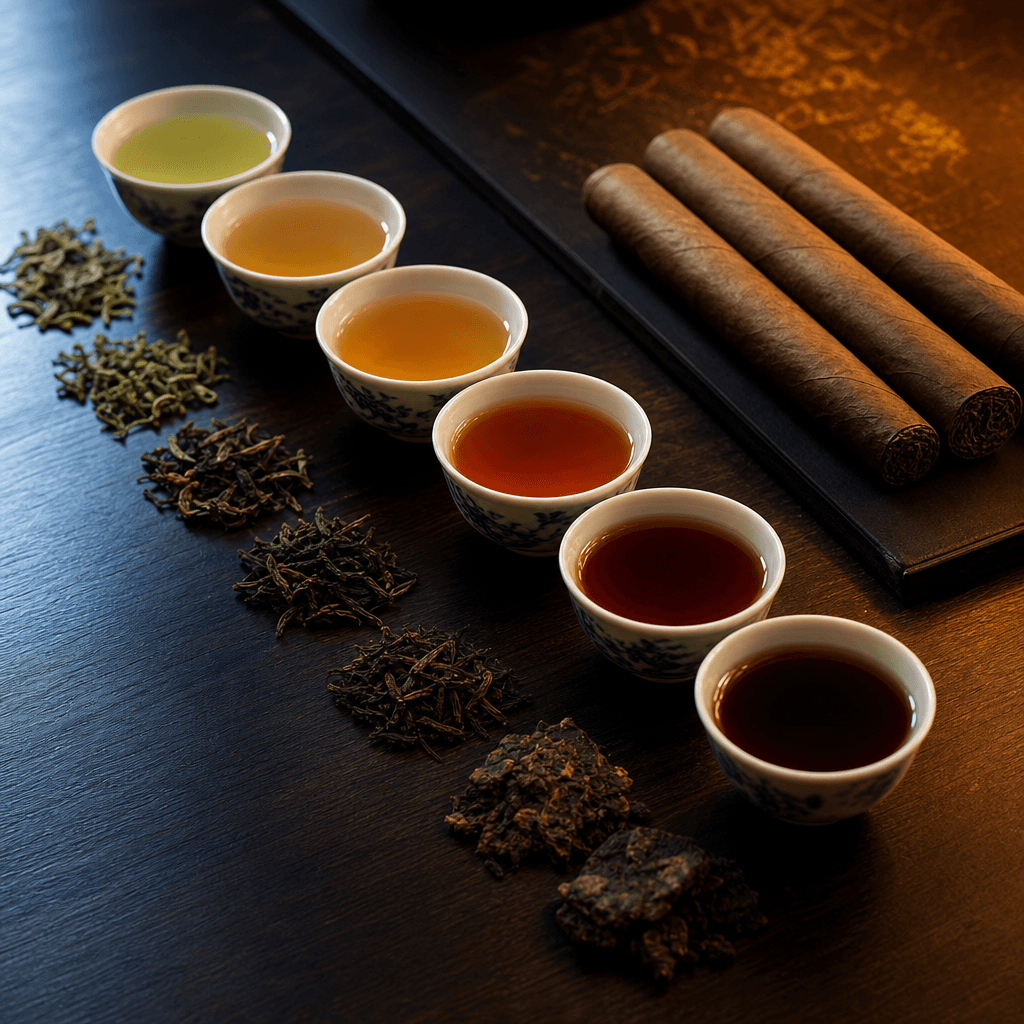
Further Reading|Complete Guide to the Six Major Tea Types: Fermentation Spectrum from Green Tea to Pu'er, Overview of Flavors Paired with Cigars|Complete Analysis of Wuyi Rock Tea Da Hong Pao: Rock Bone Floral Aroma and Charcoal Roasting Craft, Rich Dialogue with Cohiba Siglo IV|Oriental Beauty Tea with Honey Aroma: The Legend of Small Green Leafhopper and Baihao Oolong, Honey Resonance with H. Upmann Magnum 46
—Cigar Prince Wilson Tsai
Smoking is harmful to health. No smoking under the age of twenty. Quitline: 0800-636363. This article is intended for adults over the age of twenty as a reference for cigar culture, preservation, and regulations, not as tobacco advertising, promotion, or purchase advice.
Like this article?Share with friends
Share this W Cigar Bible piece with friends who want to learn cigar culture, storage, and tasting.
想把這篇 化為實踐
雪茄聖經是知識;雪茄文化要在空間裡發生
W Cigar Bar 大安總店資訊
台北大安區 · 雪茄聖經總編輯 Wilson Tsai 主理的雪茄文化空間
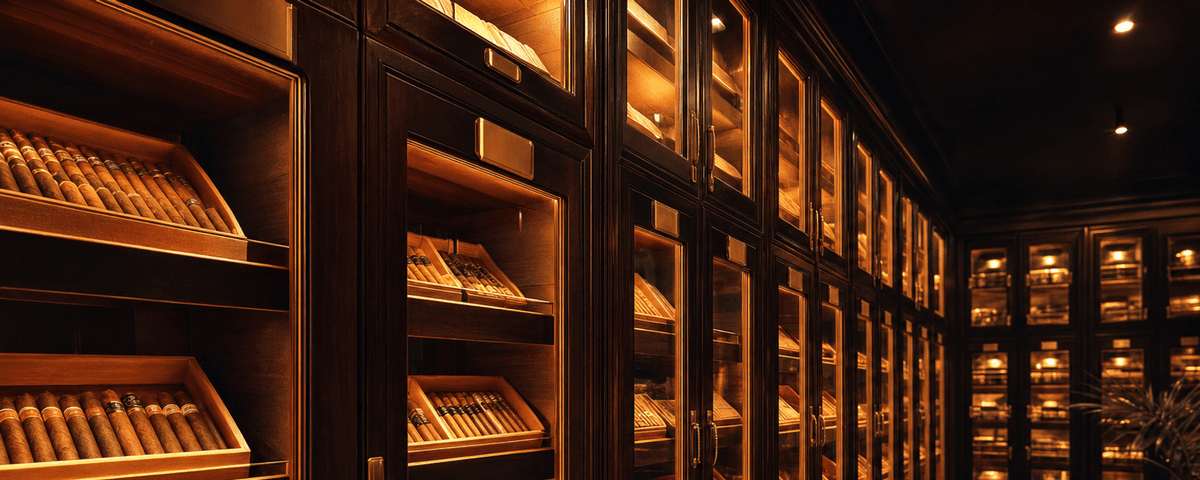
33 座 24 小時恆溫恆濕醇化室
W Cigar Bar 提供的會員醇化空間 · 場地資訊請洽編輯部

雪茄剪 / 打火機 / 雪茄盒 / Boveda
W Cigar 配件官網 · 專營雪茄配件正品
加 LINE 好友 · 文化諮詢
文化空間資訊 · 紳士沙龍 · 私人包場
本網站內容僅供雪茄文化、歷史、收藏與品吸知識研究參考。菸品有害健康、未滿法定年齡者請勿吸菸。實際規範請依所在地法律為準。
吸菸有害健康・戒菸專線 0800-636363・本站僅供 20 歲以上成年人閱覽。
讀到這裡,你不只是路過的人
留下 Email,加入 W 雪茄聖經內圈——總編輯 Wilson Tsai 親選的學院深文與國際新訊,先你一步送到信箱。
· 教育用途非銷售 · 隨時一鍵退訂 · Email 絕不對外公開 · 由勝茄股份有限公司營運
同分類延伸閱讀
資料來源:W Cigar Bible 編輯部整理 · 雪茄王子 Wilson Tsai 親自審稿
本文僅供雪茄文化、歷史、收藏與品鑑知識研究,不作為菸品促銷、銷售或購買建議。吸菸有害健康,未滿二十歲不得吸菸。