雪茄的品牌故事:從田野到市場的傳奇

雪茄品牌的價值不僅在於產品本身,更在於其背後的故事與歷史。從古巴到新世界,各品牌的形成受土地、家族與市場的影響。老手在評估品牌時,應關注農業一致性、創辦人的影響及品牌的文化象徵。古巴品牌如Partagás與Romeo y Julieta強調傳統與歷史,而新世界品牌如Padrón與Arturo Fuente則展現技術與創新。品牌的市場語言、尺寸與系列命名也影響消費者的期待與選擇,真正的品牌深度在於能
- 品牌的第一層信任來自於能否年復一年將土地風格轉化為可辨識的風味線索。
- 創辦人的故事若能轉化為尺寸與系列,品牌將成為可被反覆引用的文化資產。
- 真正的品牌深度在於讓消費者在不同年份與尺寸中,仍能辨認出同一個精神核心。
The Brand Story of Cigars: From Fields to Market Legends
Talking about cigar brands, seasoned enthusiasts often don't just ask "Is it good to smoke?" but rather question how a name is propelled onto the world stage by land, family, factory systems, distribution networks, and market narratives. A brand is not just a label; it is a language that allows consumers to believe, remember, compare, and choose.
As the editor of "Cigar Bible," when I look at brand stories, I simultaneously consider the fields, rolling, packaging, quotas, distribution, and secondary market buzz. From Cuba to Nicaragua, the Dominican Republic, and Honduras, names that truly endure often rely not just on legends but on turning those legends into stable experiences.
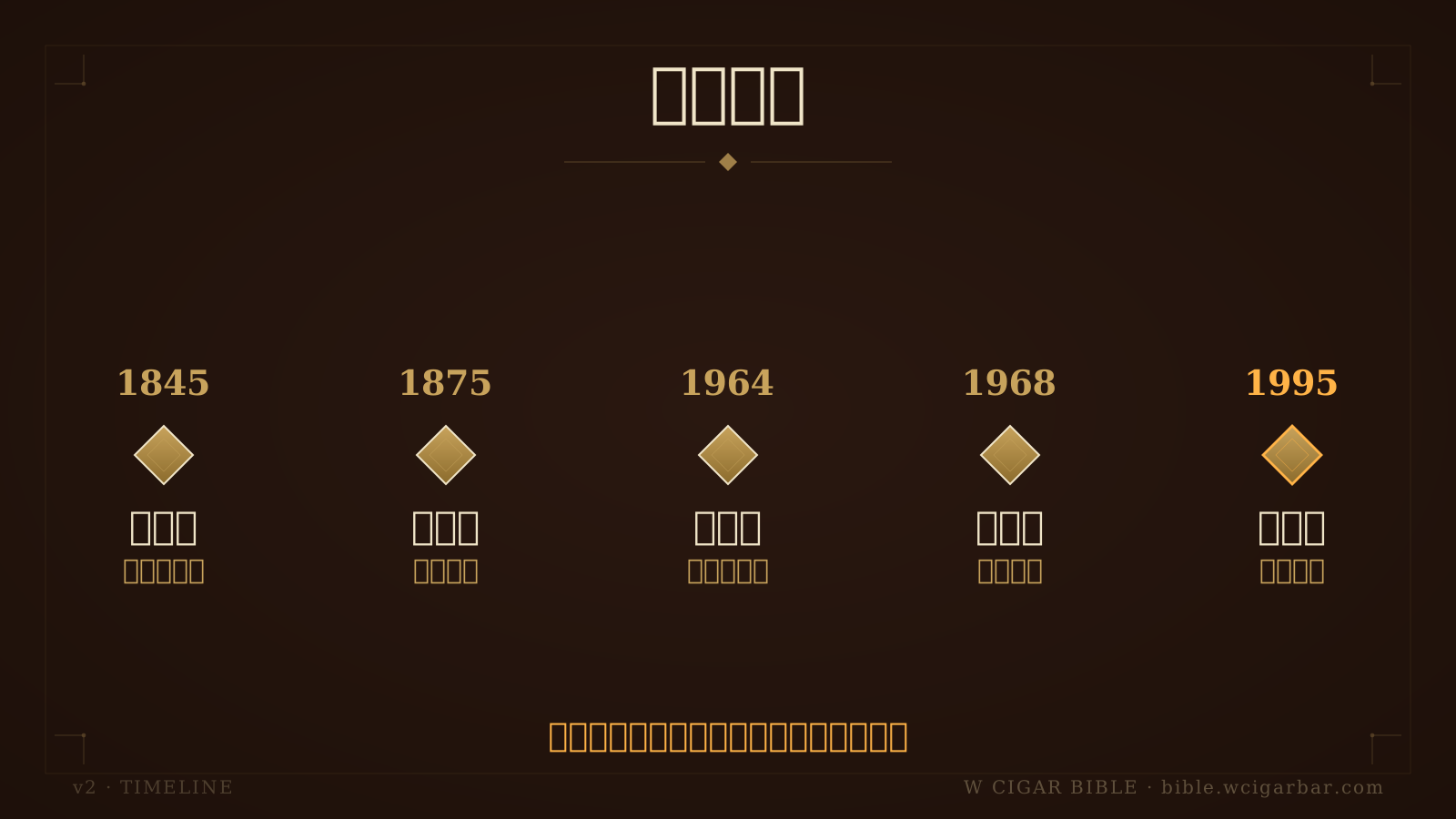
時間線列出五個品牌發展年份與重點脈絡
Starting from the Fields: Brands Are Born from Soil and Seeds, Not Box Labels
Many seasoned enthusiasts, when discussing brands, will first talk about Vitola, vintage, or factory codes, but I am more concerned with the "agricultural consistency" behind it. Take Cuba's Vuelta Abajo as an example; the Pinar del Río area has long been regarded as a core region for high-quality tobacco leaves due to its unique combination of soil drainage, sunlight, humidity, and planting traditions. If a brand story detaches from the fields, it becomes mere packaging narrative.
Nicaragua's Estelí, Condega, and Jalapa offer another modern example: Estelí is often associated with strength and spice, Jalapa with sweetness and aroma, and Condega as a balancing backbone. Brands like Padrón, Oliva, and AJ Fernandez have been able to rapidly expand their international influence since the 1990s, closely linked to the stable supply capabilities of these regions. The first layer of trust in a brand comes from its ability to consistently transform the land's style into recognizable flavor cues year after year.
Cuban brands often emphasize historical orthodoxy, while New World brands more frequently highlight farm control and blending freedom. If seasoned enthusiasts only look at the band, they may miss the real differences: the same Robusto from different regions and fermentation logics can result in completely different sweetness, spice, wood, leather, and mineral tones. The most solid part of a brand story is not in the advertising text but in whether the fields can continuously deliver usable tobacco leaves.
Founder Myths: From Partagás and Romeo y Julieta to Davidoff's Personality Projection
In 1845, Jaime Partagás established the Partagás brand in Havana, later shaping it into a symbol of strength, depth, and traditional craftsmanship. The charm of such early brands lies in the fact that the founders were not just businessmen but also style curators: leaf selection, workshop management, and customer relationships were all incorporated into the brand's memory. When a name can cross a century, it becomes not just a product but a cultural symbol.
Romeo y Julieta was founded in 1875 and gradually expanded under the management of José Rodríguez Fernández in the early 20th century, enhancing recognition through custom bands and stories of social celebrities. The connection between Churchill and Romeo y Julieta further made the "Churchill" size a part of market language. If the founder's story can be transformed into sizes, series, and consumer memories, the brand becomes a cultural asset that can be repeatedly referenced.
Davidoff is another type of personality projection. Zino Davidoff was born in Kyiv in 1906 and later established a high-end tobacco retail and cigar aesthetic in Geneva, launching the Davidoff series in collaboration with Cuba in 1968, and shifting to Dominican production after the 1990s. This brand has shaped "elegance, precision, and European taste" as its core narrative, contrasting with Partagás's old-school strength. When seasoned enthusiasts study brands, they should not only ask who is stronger but also how the founder turned personal aesthetics into an internationally understandable syntax.
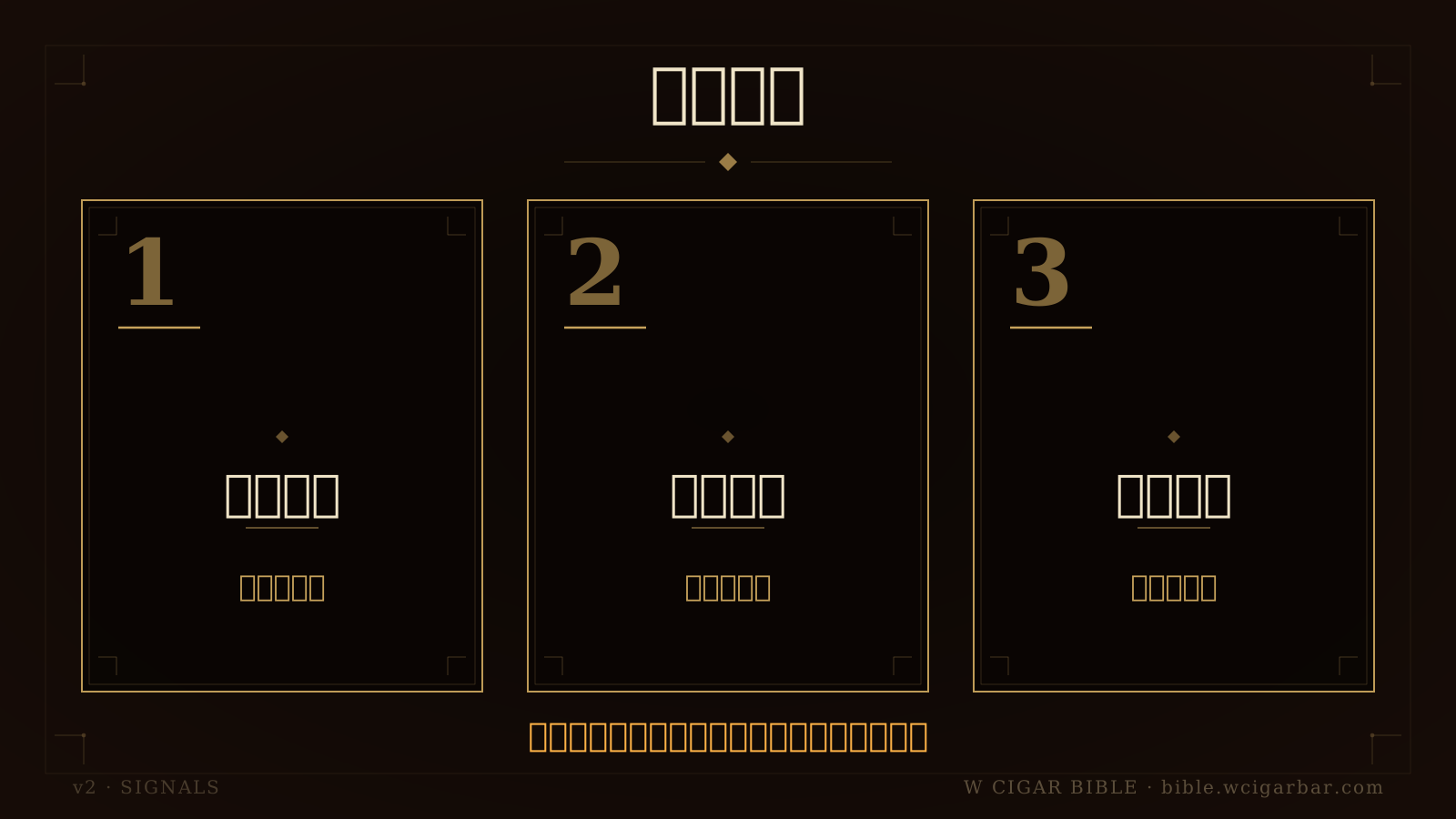
三張卡片說明品牌信任來自田野工藝與市場記憶
Revolution, Exile, and Rebirth: The Divergence of Cuban and New World Brands
After the Cuban Revolution in 1959, the cigar industry entered a new historical turning point. Many families, technicians, and business talents left Cuba to develop in the Dominican Republic, Nicaragua, Honduras, and Florida, USA. This led to the gradual formation of two narrative lines: "Cuban brands" preserving historical trademarks under the state system, and "exiled family brands" rebuilding family techniques and business order in new lands.
Arturo Fuente is a typical case. The Fuente family started in Tampa, Florida, in 1912 and later underwent multiple restructurings due to fires, economic changes, and supply issues, eventually establishing an important production base in the Dominican Republic. When OpusX was launched in 1995, its significance lay not only in its flavor but also in proving that the Dominican Republic could grow premium wrappers, changing the market's perception of regional capabilities. The key to brand rebirth is not replicating the old world but establishing new credibility in new regions.
The Padrón family founded the brand in Miami in 1964, with founder José Orlando Padrón coming from Cuba and later establishing a unique style with Nicaraguan tobacco. The 1964 Anniversary Series and 1926 Serie are not just commemorative years but also bind family history, regional strength, and market positioning together. When seasoned enthusiasts talk about "Cuban flavor" and "New World flavor," the real focus should not be on national labels but on how brands handle rupture, migration, and recreation.

矩陣比較田野工坊與市場三個品牌觀察維度
Formation of Market Language: Sizes, Series, Limited Editions, and Collecting Psychology
Cigar brands shape perception largely through market language. Robusto, Toro, Churchill, and Lancero are not just sizes; they also suggest burning rhythm, concentration performance, and occasion imagination. Take Cohiba Behike 52, 54, 56 as examples; the numbers become high-end recognition symbols. In the case of Padrón 1964 Anniversary's box-pressed form, the shape can also become part of the brand memory.
Series naming is equally important. Montecristo No.2 has long been considered a reference coordinate for the Pirámide size because it tightly binds brand, size, and flavor expectations. Davidoff's Grand Cru, Millennium, and Aniversario use wine-like vocabulary and a sense of refined living to let consumers enter the brand setting before picking up a cigar. Mature brands allow consumers to form expectations in their minds first and then use flavors to verify those expectations.
The collector's market is often driven by brand narratives, such as Cuba's Edición Limitada, Regional Edition, and Humidor Set, which increase discussion. However, I would remind seasoned enthusiasts: collecting appreciation does not guarantee appreciation; it still depends on source preservation and market. Preservation status, authenticity, box condition, temperature and humidity records, rarity, and buyer demand all affect future value. If you are only led by stories, it is easy to overlook the inherent uncertainties of cigars as agricultural and handcrafted products.
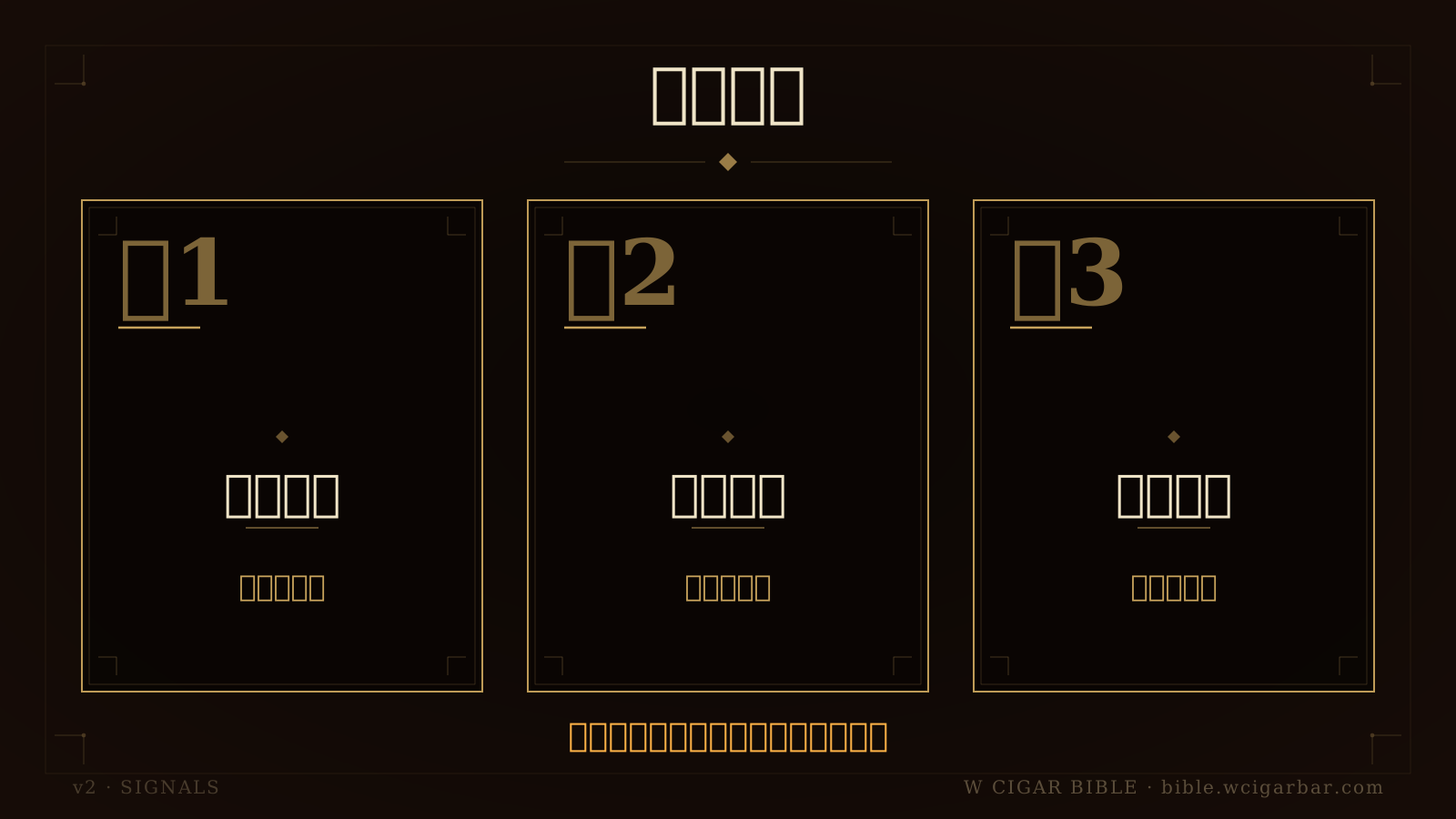
三張卡片整理只看歷史名氣與尺寸亂比的誤解
Brand Case Comparison: Same Legend, Completely Different Logic
One of the most effective methods for seasoned enthusiasts to conduct brand research is to compare brands on the same table. Don't just ask "which is more famous," but ask what it relies on to build trust: history, region, founder, technical breakthrough, distribution control, or special sizes and series. The table below is a framework I often use to quickly dissect brand narratives.
| Brand | Key Year | Core Narrative | Market Impact |
|---|---|---|---|
| Partagás | 1845 | Havana tradition, rich style, workshop history | Became a reference for classic Cuban power |
| Romeo y Julieta | 1875 | Literary naming, celebrity connection, Churchill size | Turned character stories into size memory |
| Montecristo | 1935 | Workshop reading "The Count of Monte Cristo" legend, balanced style | No.2 became one of the Pirámide benchmarks |
| Davidoff | 1968 | European taste, precise blending, brand lifestyle aesthetics | Established high-end non-Cuban market language |
| Padrón | 1964 | Cuban exile, Nicaraguan strength, family persistence | Promoted high-end New World image |
| Arturo Fuente | 1912 | Family heritage, Dominican breakthrough, OpusX | Redefined Dominican premium wrapper perception |
From this table, you can see that brand legends do not have just one route. Partagás relies on history and strong personality, Davidoff on precise aesthetics, Padrón on family resilience and Nicaraguan terroir, and Fuente on technical breakthroughs and narrative tension. The true depth of a brand is its ability to let consumers recognize the same core spirit across different years, sizes, and series.
Therefore, when seasoned enthusiasts create their brand map, it is best not to classify only by country but by "source of trust": some brands rely on farms, some on blending, some on history, and some on scarcity. When you can articulate the reasons for your preferences, choices become knowledge rather than emotion.
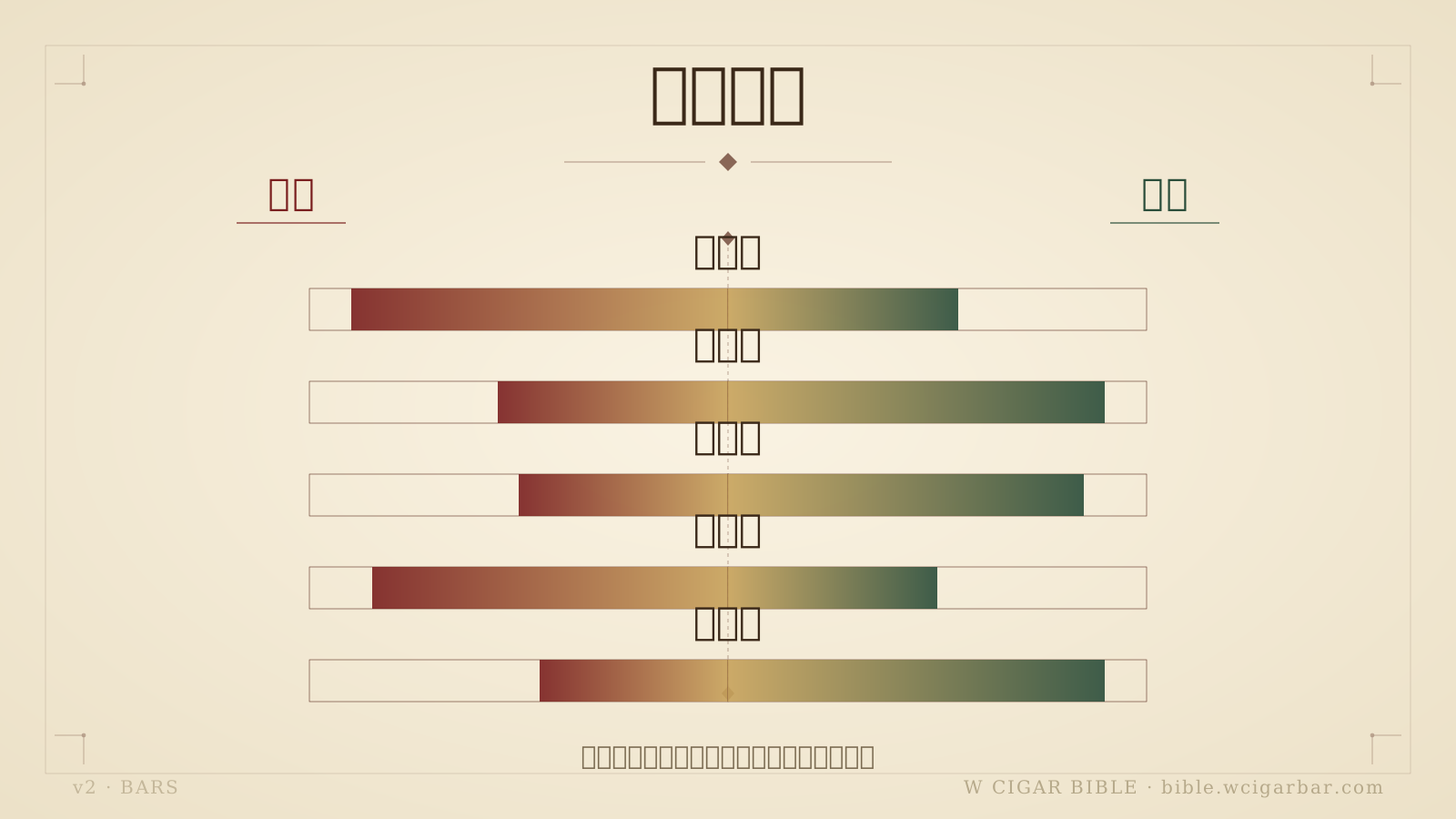
長條圖比較古巴與新世界品牌在五項取向差異
Distribution and Trust: Authenticity, Quotas, and Global Market Order
The global influence of cigar brands cannot be separated from distribution order. Especially for Cuban cigars, due to the intertwining of production, quotas, regional agents, and market demand, authenticity issues have long existed. Seasoned enthusiasts know that if a popular brand's price is excessively detached from the market, box codes and tax label information are unclear, and preservation conditions are vague, no matter how beautiful the story, caution should be exercised. If a brand's value is not supported by credible sources, it is easily consumed by counterfeits.
In the Asian market, consumers are highly familiar with names like Cohiba, Trinidad, Montecristo, and Partagás, thus the risk of counterfeiting is also high. For this reason, when I talk about brand stories, I always include the source in the discussion. The significance of formal supply systems like PCC authorized dealers is not just about obtaining products but about forming a more complete chain of brand, circulation, taxation, and preservation responsibility. The true value of high-end brands must be built on traceable sources and stable preservation.
Distribution also affects consumer perception. Some brands are strong in Europe, some have a high presence in the US market, and some are amplified in Asia due to regional editions, auction records, or community discussions. Seasoned enthusiasts should avoid mistaking single-market popularity for global consensus. After 2020, due to supply tightening and price adjustments, the availability of many Cuban brands in the market has changed, giving New World brands more display space. A brand is not a static list but is re-ranked in the circulation scene.
Advanced for Seasoned Enthusiasts: How to Understand Brands Instead of Being Led by Them
When you already have preferences, the next step is not to pursue more names but to establish your evaluation system. I suggest breaking it down into three levels: the first is the agricultural source, including region, wrapper, binder, and filler combinations; the second is craft stability, including draw resistance, burn, ash column, and mid-to-late performance; the third is brand consistency, seeing if the same series has recognizable common language across different boxes and years.
In practice, you can use notes to break each cigar into 5 scores: appearance and rolling 20 points, pre-light aroma 15 points, changes in the first, middle, and last thirds 30 points, burn and draw resistance 20 points, and brand consistency 15 points. After continuously recording 20 cigars, you will find that some brands may not be stunning in every stick, but their stability is high; some brands have outstanding individual performances, but the series varies greatly. The true freedom of seasoned enthusiasts is to appreciate brand stories but not take brand names as the only answer.
I also recommend doing "blind test notes," first covering the band, only recording size, preservation time, burn status, and flavor, then going back to compare with the brand. This can reduce the psychological addition brought by fame. Especially when comparing brands with strong styles like Cohiba, Trinidad, Davidoff, Padrón, Fuente, and My Father, blind tests often reveal one thing: what you think you like may not be the brand but a certain wrapper, a regional sweetness, or a fermentation-induced maturation aroma.

三張問答卡片回答歷史判斷來源保存與比較方法
From Brand to Market: How Consumer Perception Is Shaped
Brands influence the market not only through quality but also through "stories that can be retold." Cohiba is considered a symbol of Cuban high-end due to its founding in 1966, diplomatic gift background, subsequent commercialization, and the high relevance of the Behike series. Trinidad, from diplomatic use to commercial release in 1998, established a brand image of subtlety, elegance, and rarity. These stories allow consumers to form mental coordinates before even experiencing the flavor.
New World brands also understand how to shape perception. My Father Cigars, driven by the José "Pepin" Garcia family, quickly established a presence in the US market after 2003, linking consumers with Nicaraguan style, family image, and high-scoring works. Rocky Patel demonstrates modern brand operation capabilities, establishing recognition through a large number of series, event narratives, and rating exposure since the late 1990s. Market perception is not naturally formed but is the result of long-term brand training through stories, products, and distribution.
But seasoned enthusiasts should use these perceptions in reverse. When a brand tells you it represents elegance, strength, rarity, or tradition, you should ask: is this proven in the burn? Does it still hold across different batches? Is it just a particular year that stands out? Brand stories can provide an entry point, but they cannot replace your own tongue, nose, and records. Those who truly understand brands are not those who memorize the most legends but those who can discern which legends still live in today's products.
Frequently Asked Questions
Can you judge the quality of a cigar just by looking at the brand's history?
No. History can only provide a framework for understanding; you still need to look at preservation, batches, rolling, and individual conditions. Even century-old brands can encounter ordinary box conditions, and new brands can have high-quality works due to technology and farm control. Brand history is an entry point, not a conclusion.
Are Cuban brands necessarily more collectible than New World brands?
Not necessarily. Cuban brands often have topics in auctions and scarcity, but high-end New World series also have stable supporters. Collecting appreciation does not guarantee appreciation; it still depends on source preservation and market. Without traceable sources, preservation records, or complete box conditions, even high fame will be discounted.
How should seasoned enthusiasts compare different series of the same brand?
I would first fix the size range, such as from Robusto to Toro, and then compare the aroma of the first third, the structure of the middle third, the stability of the last third, and the aftertaste. If the size difference is too large, the burning rhythm will interfere with judgment. Continuously recording 5 to 10 sticks will be more reliable than a single impression.
Why are some brands priced high, but the flavor may not necessarily suit me?
Price includes scarcity, distribution costs, brand presence, vintage, and market demand, not just flavor. Your preference may be for sweetness, woodiness, spiciness, or creaminess, which may not completely overlap with high prices. Being able to distinguish between price and suitability is an important sign of maturity for seasoned enthusiasts.
Can brand stories create psychological additions?
Yes, and it is very common. Celebrity stories, founder legends, and limited edition numbers will raise expectations. It is recommended to occasionally do covered label notes, only writing feelings without looking at the name. When you go back to compare, you will be clearer about whether you truly like the brand or a certain region and blending style.
The most fascinating part of brand stories is that they turn a cigar from an agricultural product into a cultural object; but I always believe that the responsibility of seasoned enthusiasts is to put romance back into evidence for examination. Fields, craftsmanship, sources, preservation, burning, and one's own records are indispensable. When you can appreciate Partagás's history, Davidoff's precision, Padrón's strength, and also calmly point out the strengths and weaknesses of each stick, that is truly entering the deep waters of the cigar world.
—Cigar Prince Wilson Tsai
Smoking is harmful to health. Under 20 years old is not allowed to smoke. Quit smoking hotline: 0800-636363. This article is for reference by adults over 20 years old as knowledge of cigar culture, preservation, and regulations, not as tobacco advertising, promotion, or purchase advice.
Like this article?Share with friends
Share this W Cigar Bible piece with friends who want to learn cigar culture, storage, and tasting.
想把這篇 化為實踐
雪茄聖經是知識;雪茄文化要在空間裡發生

W Cigar Bar 大安總店資訊
台北大安區 · 雪茄聖經總編輯 Wilson Tsai 主理的雪茄文化空間

33 座 24 小時恆溫恆濕醇化室
W Cigar Bar 提供的會員醇化空間 · 場地資訊請洽編輯部

雪茄剪 / 打火機 / 雪茄盒 / Boveda
W Cigar 配件官網 · 專營雪茄配件正品

加 LINE 好友 · 文化諮詢
文化空間資訊 · 紳士沙龍 · 私人包場
本網站內容僅供雪茄文化、歷史、收藏與品吸知識研究參考。菸品有害健康、未滿法定年齡者請勿吸菸。實際規範請依所在地法律為準。
吸菸有害健康・戒菸專線 0800-636363・本站僅供 20 歲以上成年人閱覽。
讀到這裡,你不只是路過的人
留下 Email,加入 W 雪茄聖經內圈——總編輯 Wilson Tsai 親選的學院深文與國際新訊,先你一步送到信箱。
· 教育用途非銷售 · 隨時一鍵退訂 · Email 絕不對外公開 · 由勝茄股份有限公司營運
同分類延伸閱讀

資料來源:W Cigar Bible 編輯部整理 · 雪茄王子 Wilson Tsai 親自審稿
本文僅供雪茄文化、歷史、收藏與品鑑知識研究,不作為菸品促銷、銷售或購買建議。吸菸有害健康,未滿二十歲不得吸菸。