西湖龍井豆香回甘:綠茶之首的鍋炒工藝,搭配 Quai d'Orsay No.50 的清雅入門

西湖龍井遇上 Quai d'Orsay No.50,是一堂很適合新手理解茶煙搭配的清雅課。本文從獅峰龍井產區、明前與雨前採摘、手工鍋炒十大手法、綠茶不發酵的鮮味邏輯談起,再拆解豆香栗香、鮮爽茶氨酸、奶油與烤麵包風味如何在約 40 分鐘內精準交會。
- 西湖龍井的豆香栗香,來自產區、嫩採與鍋炒殺青的共同作用。
- Quai d'Orsay No.50 的青草、奶油與烤麵包,能承接綠茶鮮爽感。
- 兩三泡龍井對應約 40 分鐘短茄,是新手茶煙搭配的清楚節奏。
West Lake Longjing's Bean Fragrance and Sweet Aftertaste: The Pan-Frying Craft of the Top Green Tea, Paired with the Elegance of Quai d'Orsay No.50
The encounter between West Lake Longjing and Quai d'Orsay No.50 is most enchanting not for its intensity, but for how both use light strokes to clearly convey grains, grass, butter, and light honey. As an editor of the "Cigar Bible," I often say that beginners pairing non-alcoholic beverages with cigars for the first time need not rush to pursue heavy layers; learning to recognize "how elegance is established" can better build one's taste coordinates.
In this article, I will first clarify Longjing tea itself: the core production area of West Lake, the significance of the Shifeng Longjing mountain site, the differences between Mingqian tea and Yuqian tea harvesting, and why manual pan-frying can bring out bean and chestnut aromas. Then, I will return to Quai d'Orsay No.50 (Cuba, Petit Robusto, 50 × 110mm): grass, butter, toasted bread, light honey, elegant cigar body, about 40 minutes. When the fresh theanine of green tea meets the creamy roundness of cigars, it's not something that can be explained with a simple "they pair well," but rather a precise alignment of flavor molecules.
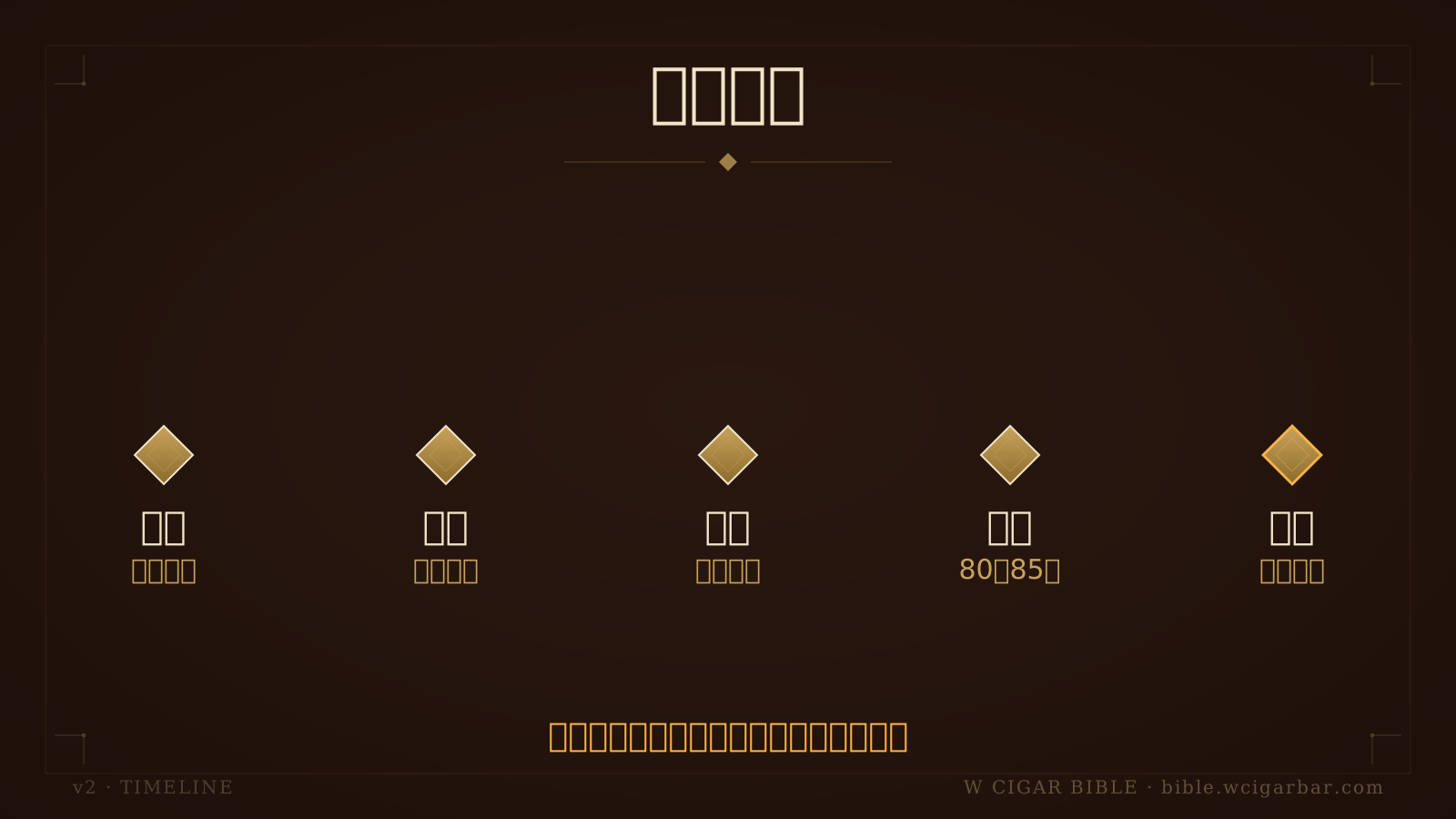
時間軸呈現龍井從採芽到風味對位的流程
The Framework of West Lake Longjing's Production Area: Why Shifeng is Considered the Core
Discussing West Lake Longjing, one cannot merely say it is a famous Chinese tea, nor can it be summed up with the words "fragrant." The true core of West Lake Longjing lies in the microclimate around Hangzhou's West Lake: the mountains are not high, there is plenty of mist, and the soil is often weathered sandy, providing good drainage, which prevents tea trees from growing too vigorously, resulting in tender buds and leaves. Shifeng, Longjing, Yunqi, Hupao, and Meijiawu are often discussed within the same historical framework, but Shifeng Longjing's reputation has always been particularly prominent.
The key to Shifeng Mountain is not just its fame, but its "slowness" and "fineness." The low temperatures of early spring slow down the unfolding of buds and leaves, allowing amino acids to accumulate more noticeably, while bitter polyphenols are relatively subdued. When the tea soup enters the mouth, you first feel the aroma of tender beans, green peas, and the edge of roasted chestnuts, which then slowly transitions to a sweet taste in the middle of the tongue. The core value of Shifeng Longjing is using tender buds and leaves and a gentle mountain environment to create a recognizable structure of green tea's freshness.
The legend of the eighteen imperial tea trees of Qianlong also adds a layer of cultural memory to Shifeng Longjing. It is said that during Qianlong's southern tour, he saw the lush tea trees in front of Hu Gong Temple, picked tea by hand, and later designated it as imperial tea, making the eighteen tea trees a frequently mentioned symbol in the Longjing story. From a strict tea science perspective, legends do not equate to quality proof, but they illustrate one thing: West Lake Longjing was placed early on in the overlapping context of "origin, craft, and literary aesthetics."
For beginners, understanding the production area is not about memorizing place names, but knowing why the aroma differs even when both are called Longjing tea. Longjing from the core area of West Lake often has fine bean fragrance, light chestnut aroma, and smooth soup; other regions with heavier firework may exhibit more pronounced roasted or dried fruit notes. These differences will be magnified when paired with Quai d'Orsay No.50, as this cigar's elegant body will not crudely overshadow the tea soup's details.
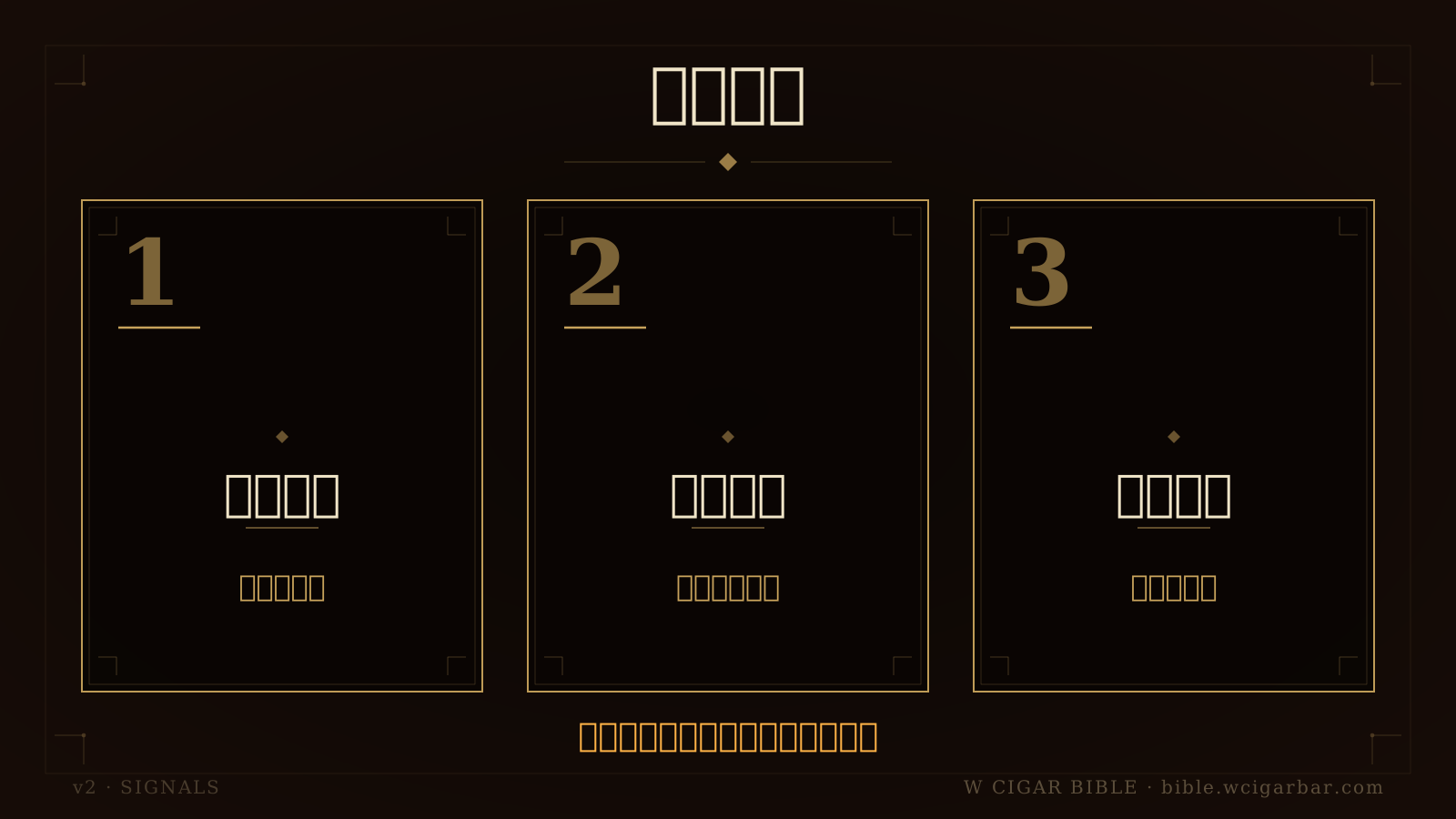
三張卡片列出龍井與雪茄搭配的清雅重點
Mingqian Tea, Yuqian Tea, and the Freshness Logic of Non-Fermented Green Tea
The most frequently asked time terms about Longjing tea are Mingqian and Yuqian. Mingqian tea refers to tea harvested before the Qingming Festival, with tender buds and leaves, low yield, and often fresh, tender, and clear aroma, with a finer tea soup line. Yuqian tea is harvested after Qingming and before the Grain Rain, with slightly expanded leaves, more robust flavor, more pronounced bean and chestnut aromas, and possibly better durability.
Beginners should not think of Mingqian tea as the only answer, because when paired with cigars, excessive fineness may be pushed to the background by the smoke. Mingqian tea is suitable for highlighting freshness and subtle sweetness, while Yuqian tea can provide a more distinct grain sense and throat rhyme. When facing a Petit Robusto like Quai d'Orsay No.50, which has grass, butter, and toasted bread notes, both can work, but the focus of presentation is different. Mingqian tea emphasizes freshness, Yuqian tea emphasizes flavor, and the choice should depend on whether you want the tea soup to act as a brightener or a carrier.
The basic logic of green tea is non-fermentation. More precisely, it is the rapid inhibition of polyphenol oxidase activity through pan-frying after harvesting, preserving chlorophyll, amino acids, catechins, and the fresh aroma of early spring tender leaves. This is very different from black tea and oolong tea; black tea allows oxidation to unfold completely, oolong tea creates floral and ripe fruit notes through partial oxidation, while Longjing seeks to keep "freshness" in the cup.
Freshness is mainly related to theanine, glutamic acid, and other amino acids, while bitterness is more related to catechins, caffeine, and extraction conditions. If the water temperature is too high or the steeping is too long, the freshness of Longjing will be pushed away by bitterness, and the bean fragrance can easily turn into rough roasted green notes. This is even more important in tea and cigar pairing because cigar smoke itself already has a dry and slightly bitter feel; if the tea is too bitter, beginners will only remember the stimulation, not the layers.
矩陣比較明前茶雨前茶與淡雅雪茄的風味角色
Manual Pan-Frying: How the Ten Techniques Bring Out Bean Fragrance
The representative craft of Longjing is manual pan-frying. Traditionally, it is often operated with a slanted or flat pan, using high temperatures to quickly dehydrate fresh leaves and deactivate enzymes, while using techniques to shape a flat and straight appearance. The heat here is not just simple heating, but the result of heat conduction, leaf moisture content, hand pressure, and flipping rhythm.
Longjing manual pan-frying often mentions "ten techniques": shaking, spreading, pressing, patting, tossing, grabbing, pushing, knocking, pressing, and rubbing. Shaking spreads the leaves to avoid yellowing, spreading moves the buds and leaves along the pan surface, pressing and patting help shape, tossing and grabbing adjust the heating surface, and knocking and rubbing refine the glossiness in the later stages. These actions sound like a skill performance, but each step affects the aroma. Longjing's bean fragrance is not an added essence but a familiar bean association formed by the tender leaves through dehydration, enzyme inactivation, and mild Maillard reaction in the hot pan.
The generation of bean and chestnut aromas can be explained in a more understandable way. When amino acids and reducing sugars in tender leaves undergo mild reactions under heat, they produce aromas similar to roasted beans, cooked chestnuts, and grain skins; but because Longjing is not a heavily roasted tea, these aromas cannot be too charred. Good Longjing is "cooked but not overcooked," like freshly peeled cooked chestnuts and freshly heated green beans, rather than burnt pots or popcorn.
Pan-frying also changes the taste. The dehydrated leaves concentrate the internal substances, releasing amino acids, soluble sugars, and a small amount of polyphenols during brewing, forming a structure that is fresh at the entrance, smooth on the tongue, and slightly sweet at the end. If the pan temperature is insufficient, the green smell will be heavy; if the pan temperature is too strong, bitterness will dominate. This is why West Lake Longjing seems simple but is extremely sensitive to craft details.
When paired with cigars, this pan-frying language comes into direct play. Quai d'Orsay No.50 has toasted bread and light honey notes, and if the tea's bean fragrance is clean, the two will form a grain alliance; if the tea is burnt, it may overlap with the smoke's bitterness. Beginners most easily overlook that it's not the cigar being too complex, but the tea being brewed too heavily, causing the originally elegant combination to become unbalanced.
Glass Cup Direct Brewing: A Visible Longjing Tea Lesson
Longjing is very suitable for glass cup direct brewing, which is not just visually pleasing but educationally meaningful. A transparent cup allows you to see the sinking, spreading, and standing of the dry tea after entering the water, with the buds and leaves slowly regaining softness from a flat shape, like reversing the craft once. For beginners encountering Longjing tea for the first time, this is more intuitive than a gaiwan and less likely to cause overly strong tea soup due to mistakes in pouring speed.
A common method can be understood as the middle pouring method: first pour about one-third of hot water to moisten the tea, then add the tea leaves, wait a moment, and then top up with water. The water temperature usually doesn't need to be boiling, about 80 to 85°C is easier to retain freshness and avoid the tender buds being hit by high temperatures into rough bitterness. The rhythm of glass cup direct brewing is to let the tea soup gradually deepen over time, drinking freshness in the front, bean fragrance in the middle, and sweet aftertaste at the end. The greatest value of glass cup direct brewing is to let beginners simultaneously learn leaf observation, temperature control, and recognize changes in concentration.
Aesthetic appreciation is especially important for Longjing. Good flat-shaped tea sometimes shows buds and leaves floating up and down in the water, like slow breathing in the cup. This visual rhythm reminds us that green tea is not a beverage extracted all at once but a plant message released layer by layer. When you place it next to a cigar, it should not just be a thirst-quenching sidekick but a subject that simultaneously changes the taste scene.
In terms of taste, the first sip of West Lake Longjing should first look at clarity and sweetness, without rushing to judge concentration. The tip of the tongue feels a slight sweetness, the middle of the tongue shows green beans, tender chestnuts, grass, and a faint nut skin, and the sweet aftertaste slowly rises from the throat after swallowing. If the soaking time at the bottom of the cup is extended, the catechin feeling will rise, and the tea soup will become more angular; at this time, it depends on whether the cigar has enough creaminess to wrap it.
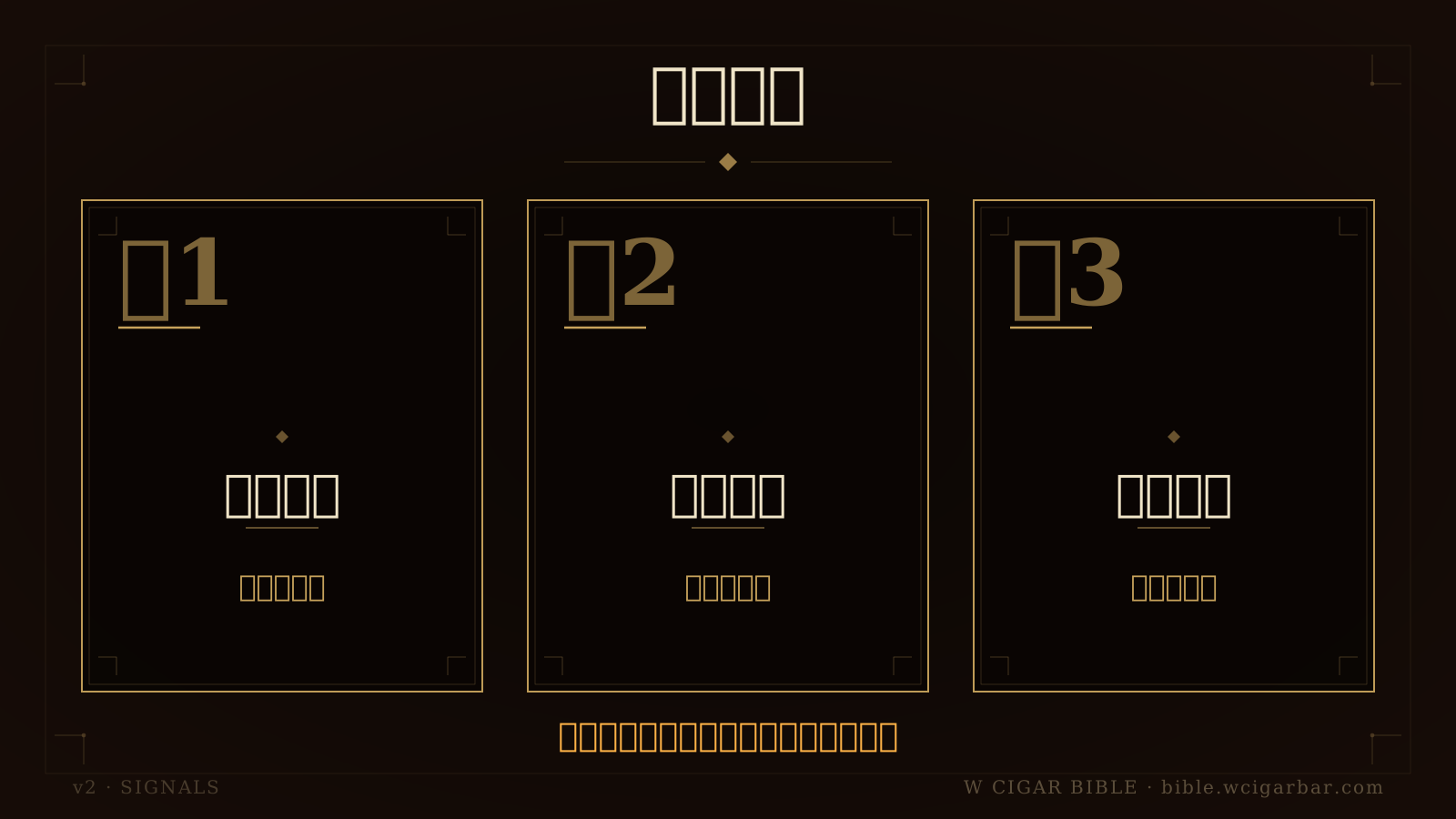
三張卡片提醒龍井雪茄搭配時常見操作誤解
Quai d'Orsay No.50: Grass, Butter, and Toasted Bread in an Elegant Cigar Body
Quai d'Orsay No.50 is a Cuban Petit Robusto, with specifications of 50 × 110mm. The reason this size is very friendly to beginners is not because it is simple, but because the time is concentrated, and about 40 minutes can complete a clear flavor curve. Its main axis is not dark cocoa, strong coffee, or strong pepper, but grass, butter, toasted bread, and light honey.
From the front section after ignition, the grass feeling often appears first. This grass is not a harsh grassy smell but more like a clean herbal, tender branch, and grain shell fragrance, which has a kinship with Longjing's green bean aroma. In the middle section, butter and toasted bread become more obvious, the smoke becomes round, and there is a thin layer of creaminess in the mouth. The key to pairing Quai d'Orsay No.50 is that it provides reception with an elegant cigar body rather than overpowering the drink with force.
The light honey feeling often appears in the exhale and aftertaste. It is not thick honey but like honey water brushed on the edge of toasted bread, with light sweetness and short stay, yet it can prevent grass and toasted bread from appearing dry. This is very suitable for Longjing because the sweet aftertaste of green tea is also not sugary but emerges from the inside out, first clear then sweet.
When handling this cigar, I suggest beginners pay attention to the rhythm. After cutting, do a dry draw to feel if there are dry grass, light biscuit, woody, and light sweetness, then enter formal ignition. Do not draw too quickly, or the elegant cigar body will be pushed into sharp woodiness by high temperatures; maintain a stable interval to let butter and toasted bread slowly emerge and form a dialogue with the tea soup.
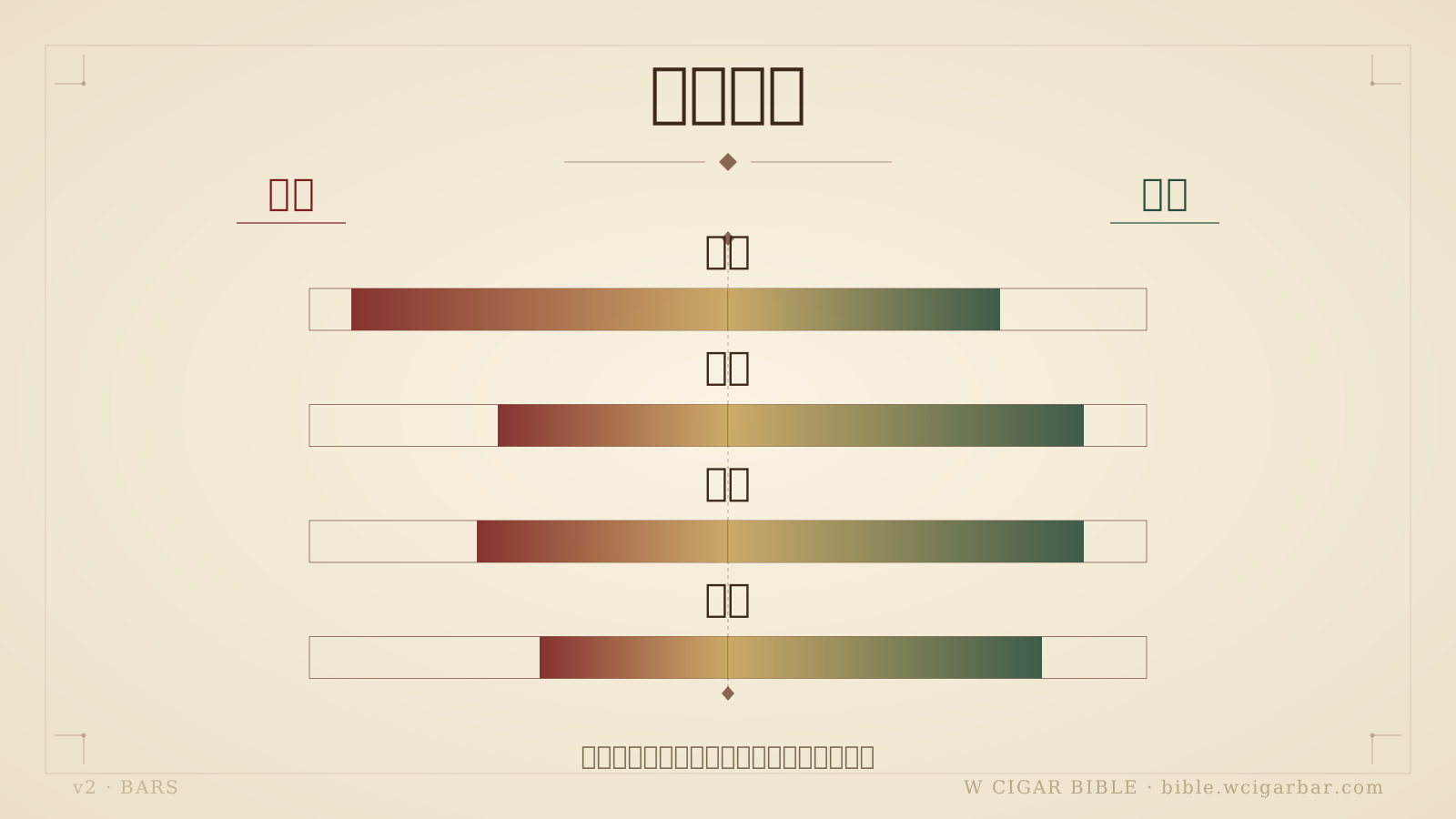
橫條圖比較明前與雨前龍井在四個風味軸的差異
Bean Fragrance and Chestnut Aroma × Toasted Bread: Specific Alignment of Tea and Smoke Flavors
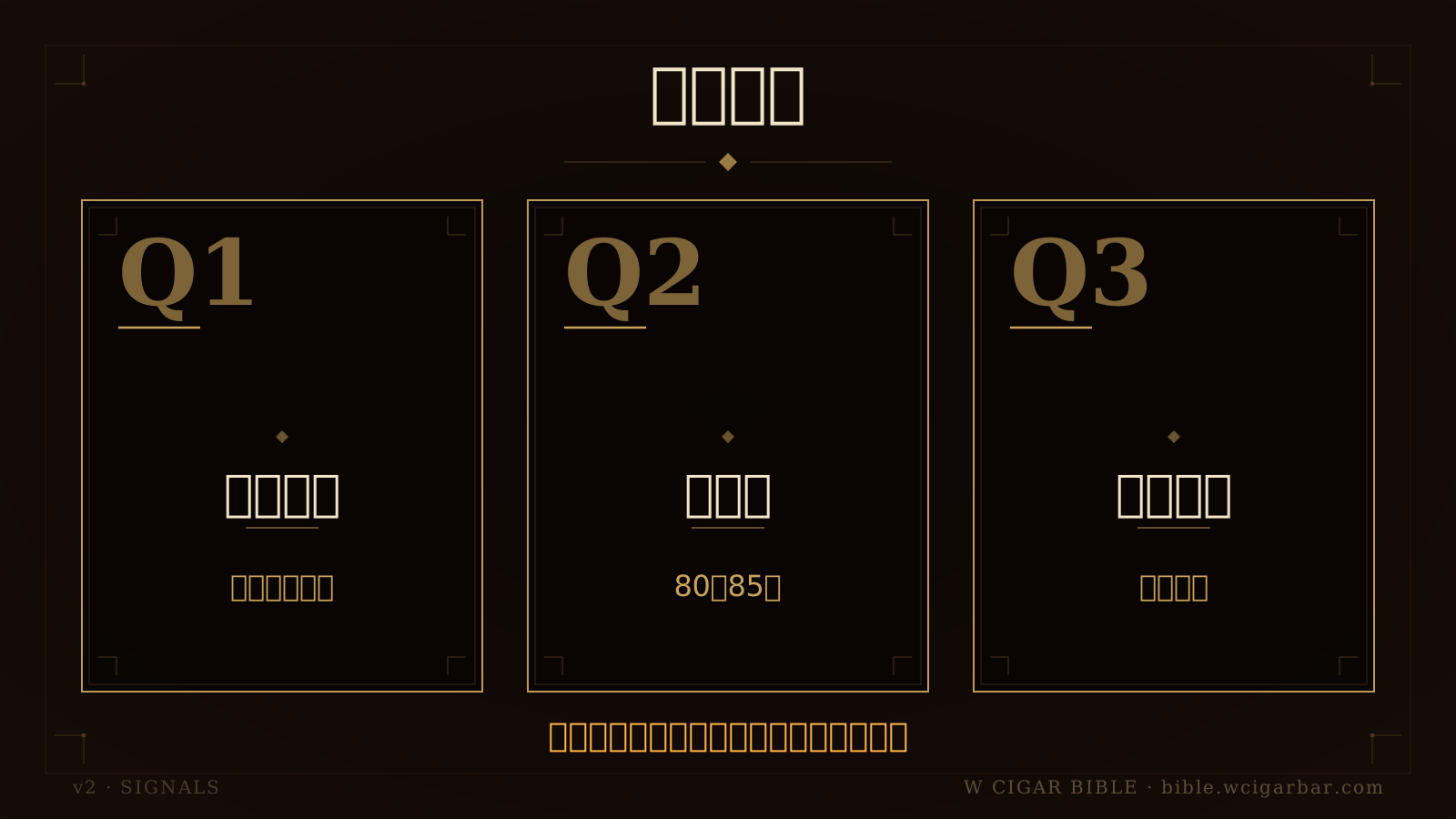
The first alignment between West Lake Longjing and Quai d'Orsay No.50 is the grain alliance of bean fragrance and chestnut aroma × toasted bread. Longjing's bean fragrance comes from pan-frying and the internal substances of tender leaves, while the toasted bread feeling of the cigar comes from the grain-type roasted aroma after leaf maturation, aging, and burning. When the two meet, the mouth will extend from green beans and cooked chestnuts to toast edges and biscuit skins, forming a flavor transition from green to golden yellow. The real reason this pairing works is that the pan-frying aroma of the tea and the roasting aroma of the cigar share the sensory vocabulary of grains, nuts, and mild caramelization.
The second alignment is the fresh theanine × butter smoothness of fresh and sweet complementarity. Theanine brings not sugar sweetness but freshness, smoothness, and softness, which can reduce the mouth's sensitivity to the dryness of smoke. The butter feeling of Quai d'Orsay No.50 makes the freshness of green tea rounder, preventing grass from being thin. At this time, you will feel the tea soup like a clear line, and the cigar like a thin film, overlapping but not muddy.
The third alignment is grass × grass's homologous extension. Longjing has tender leaves, green beans, and spring grass aromas, while Quai d'Orsay No.50's front section also has clean grass and herbal notes. If both are well controlled, this is not green overlapping green but a front and back echo of fresh plant feeling and dry herbal feeling; one is water-based, the other is smoke-based, just complementing the texture.
| Flavor Token | From West Lake Longjing | From Quai d'Orsay No.50 | Feeling After Encounter |
|---|---|---|---|
| Bean Fragrance and Chestnut Aroma × Toasted Bread | Pan-frying, amino acids and sugars in tender leaves | Grain-type roasting aroma after burning | A line connecting cooked beans, toast, and biscuit skin |
| Fresh Theanine × Butter | Theanine, glutamic acid bring smooth freshness | Creaminess in the elegant cigar body | Freshness is rounded, smoke edge reduced |
| Grass × Herbal | Early spring buds and non-fermented green tea logic | Front section dry grass, tender branch aroma | Plant feeling transitions from moist to dry |
| Sweet Aftertaste × Light Honey | Soluble sugars and throat rhyme sweetness | Light sweetness and honey feeling in the aftertaste | Sweetness not strong, but extends closure |
The last alignment is sweet aftertaste × light honey. Longjing's sweet aftertaste is usually slow, like a bit of clear sweetness returning between the tongue root and throat; the light honey of the cigar is more related to smell and aftertaste, like a thin sweetness left after the smoke leaves. When the two meet, the sweetness does not become stronger but longer. If beginners can distinguish the difference between "increased sweetness" and "extended sweetness," they have already crossed the first threshold of tea and cigar pairing.
三張問答卡整理龍井沖泡與搭配雪茄的實用答案
40-Minute Rhythm: Two to Three Brews of Longjing Corresponding to One Petit Robusto
The approximately 40-minute time of Quai d'Orsay No.50 corresponds perfectly to the rhythm of two to three brews of West Lake Longjing. The first brew of tea is the freshest, suitable for drinking when the cigar's front section grass and light butter are just unfolding; the second brew of tea has a clearer bean fragrance, able to catch the middle section toasted bread; if the third brew still has aftertaste, it can accompany the cigar's tail section light honey and woody closure. This time arrangement is very important for beginners because it turns abstract pairing into steps that can be followed.
I often use "first 10 minutes to look at fragrance, middle 20 minutes to look at grains, last 10 minutes to look at sweet aftertaste" to explain this combination. In the front section, do not let the tea be too strong, or it will push the cigar's grass into bitter grass; in the middle section, you can let the second brew slightly pull out bean and chestnut aromas, making the toasted bread feeling more three-dimensional; in the tail section, avoid letting the tea leaves soak too long to astringency, because the cigar will naturally have a higher temperature and drier taste at the end. This pairing is most suitable as the first lesson in tea and cigar pairing for beginners because it is short in time, clear in flavor, and the imbalance points are easy to detect.
If using glass cup direct brewing, you can prepare the first cup of tea before lighting the cigar. In the front section, sip the tea and draw slowly, letting the grass and freshness first establish a baseline; in the middle section, top up with water, letting the bean fragrance in the cup and the toasted bread of the cigar rise simultaneously. In the last ten minutes, if the tea soup starts to become bitter, do not force extended soaking, switch to lighter water replenishment to maintain oral cleanliness.
The pairing sequence also has details. First, take a small sip of Longjing, letting the tongue have freshness and slight sweetness, then draw a puff of Quai d'Orsay No.50, feeling how butter and toasted bread cover it; then pause for a few seconds, observing whether the throat's sweet aftertaste and light honey connect. This is not a speed exercise but a taste sequence: tea first establishes the line, the cigar lays the surface, and the aftertaste closes.
Frequently Asked Questions
The most important thing for beginners to remember is that the core of pairing West Lake Longjing with Quai d'Orsay No.50 is clear rhythm, not pursuing heavy stimulation.
Does West Lake Longjing have to be Mingqian tea?
Not necessarily. Mingqian tea is fresh and delicate, suitable for highlighting theanine and tender bean fragrance; Yuqian tea has a more robust flavor, with bean fragrance, chestnut aroma, and durability sometimes more suitable for pairing with the cigar's middle section. If you're trying for the first time, I suggest comparing the differences between the two rather than rushing to judge superiority.
Is glass cup direct brewing too simple?
Glass cup direct brewing seems simple, but it's very suitable for learning Longjing. You can observe the unfolding of tea leaves, the color change of the tea soup, and the changes in concentration, and control extraction with water temperature and replenishment. For beginners, this method can reduce operational pressure and make it easier to focus on flavor.
How should the water temperature be controlled?
Longjing is mostly suitable for water temperatures around 80 to 85°C, especially for the tender Mingqian tea. Too hot water can pull out bitterness and rough green notes, making tea and cigar pairing sharp. For Yuqian tea or Longjing with more noticeable firework, the water temperature can be slightly increased, but boiling water should still be avoided for directly scalding tender buds.
Why is Quai d'Orsay No.50 suitable for beginners to understand?
Its cigar body is elegant, with a clear main axis, and grass, butter, toasted bread, and light honey are all easy to identify. The approximately 40-minute time is not long, just enough for beginners to learn the differences between the front, middle, and tail sections. It doesn't rely on strong spicy aromas to dominate, so it can preserve the details of Longjing tea.
If the tea soup becomes bitter, can the pairing continue?
Yes, but immediate adjustment is needed. Drink the tea soup to a lighter position in the cup, or add slightly lower temperature water to reduce concentration. If bitterness has already significantly overshadowed the bean fragrance, shift focus back to the cigar's butter and toasted bread, avoiding further stimulation with strong tea.
How to distinguish between bean fragrance and chestnut aroma?
Bean fragrance is more like green beans, tender bean kernels, and freshly roasted bean skins, with a bit of green freshness. Chestnut aroma is closer to cooked chestnuts, warm nuts, and light starchy sweetness, with a more rounded outline. When paired with Quai d'Orsay No.50, bean fragrance often connects with grass, while chestnut aroma is more likely to connect with toasted bread.
The beauty of West Lake Longjing and Quai d'Orsay No.50 lies in making lightness have structure. Tea uses bean fragrance, chestnut aroma, and freshness to lay out the lines of spring, while the cigar uses grass, butter, and toasted bread to add warmth. For beginners, this is not a profound ritual but the first lesson in learning to recognize elegant layers.
Further Reading|Complete Guide to the Six Major Tea Types: Fermentation Spectrum from Green Tea to Pu'er, and Overview of Flavors Paired with Cigars|The Taste of Time in Raw Pu'er Tea: Transformation of Old Raw Tea and Mountain Aroma, Paired with Montecristo Edmundo's Rich Balance|Sun Withering of Silver Needle White Tea: The Bold Minimalist Craft of White Tea's Aroma, Paired with Hoyo de Monterrey Le Hoyo de San Juan
—Cigar Prince Wilson Tsai
Smoking is harmful to health. Smoking is prohibited for those under twenty years old. Quitline: 0800-636363. This article is intended for adults over twenty years old as a reference for cigar culture, preservation, and regulation knowledge, not as an advertisement, promotion, or purchase suggestion for tobacco products.
Like this article?Share with friends
Share this W Cigar Bible piece with friends who want to learn cigar culture, storage, and tasting.
想把這篇 化為實踐
雪茄聖經是知識;雪茄文化要在空間裡發生

W Cigar Bar 大安總店資訊
台北大安區 · 雪茄聖經總編輯 Wilson Tsai 主理的雪茄文化空間
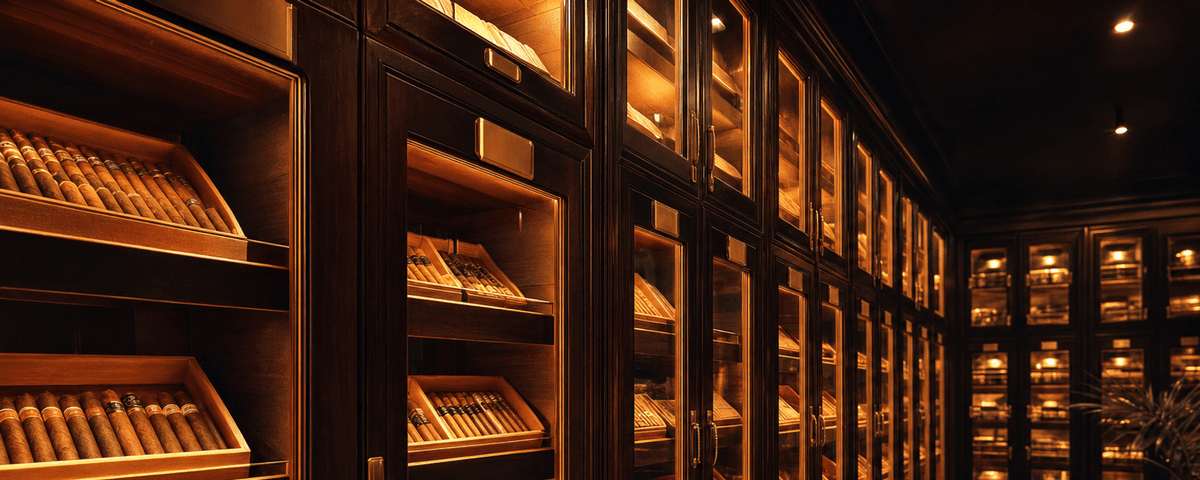
33 座 24 小時恆溫恆濕醇化室
W Cigar Bar 提供的會員醇化空間 · 場地資訊請洽編輯部
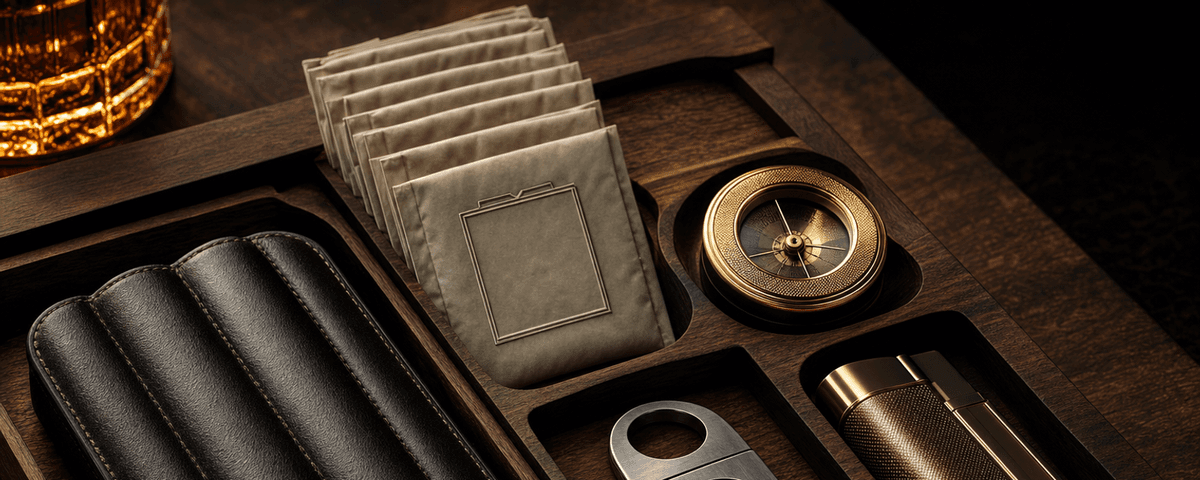
雪茄剪 / 打火機 / 雪茄盒 / Boveda
W Cigar 配件官網 · 專營雪茄配件正品
加 LINE 好友 · 文化諮詢
文化空間資訊 · 紳士沙龍 · 私人包場
本網站內容僅供雪茄文化、歷史、收藏與品吸知識研究參考。菸品有害健康、未滿法定年齡者請勿吸菸。實際規範請依所在地法律為準。
吸菸有害健康・戒菸專線 0800-636363・本站僅供 20 歲以上成年人閱覽。
讀到這裡,你不只是路過的人
留下 Email,加入 W 雪茄聖經內圈——總編輯 Wilson Tsai 親選的學院深文與國際新訊,先你一步送到信箱。
· 教育用途非銷售 · 隨時一鍵退訂 · Email 絕不對外公開 · 由勝茄股份有限公司營運
同分類延伸閱讀
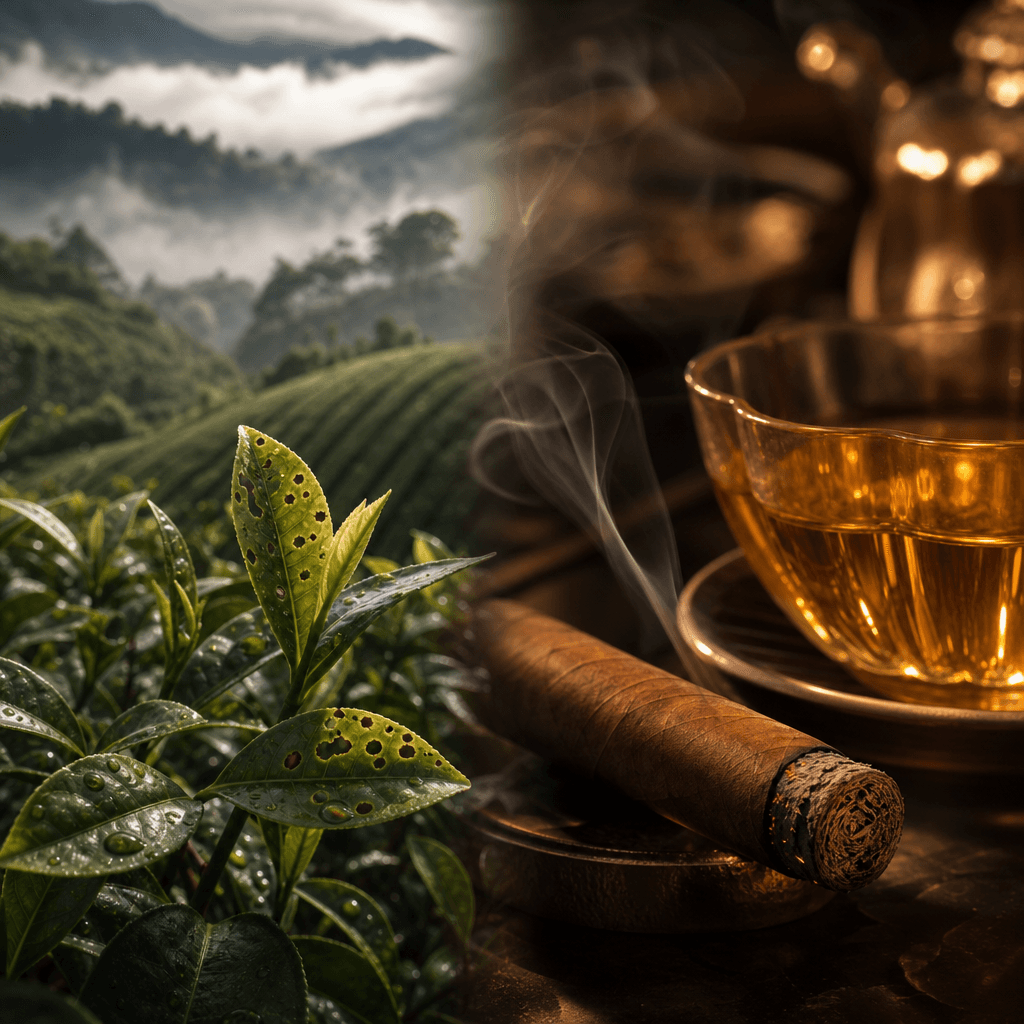
資料來源:W Cigar Bible 編輯部整理 · 雪茄王子 Wilson Tsai 親自審稿
本文僅供雪茄文化、歷史、收藏與品鑑知識研究,不作為菸品促銷、銷售或購買建議。吸菸有害健康,未滿二十歲不得吸菸。