正山小種松煙香:世界紅茶鼻祖的煙燻工藝,搭配 Bolívar Royal Corona 的煙土對話

正山小種從武夷山桐木關走出,是紅茶鼻祖,也是茶界少數能與濃郁古巴雪茄正面對話的煙燻紅茶。本文從明末傳說、青樓松木燻焙、松煙香、桂圓湯與焦糖結構談起,再精準拆解 Bolívar Royal Corona 的深泥土、黑巧克力、烘焙咖啡與辛香,分析松煙×菸草煙、桂圓甜湯×黑巧克力、煙燻收斂×濃郁油脂的風味攻防。
- 正山小種的核心不只煙燻,而是桐木關山場、松木火候與紅茶發酵共同構成的深色結構。
- Bolívar Royal Corona 的泥土、黑巧克力與濃郁茄體,能承接傳統煙燻紅茶的松煙香。
- 這組搭配關鍵在沖泡濃度與節奏,讓煙燻收斂牽制油脂,而非互相壓制。
Lapsang Souchong Pine Smoke Aroma: The Smoking Craft of the World's Ancestor of Black Tea, Paired with the Earthy Dialogue of Bolívar Royal Corona
Lapsang Souchong and Bolívar Royal Corona placed on the same table, the first signal is not the gentle "tea with cigar," but the direct encounter of two smokes. As an editor of the "Cigar Bible," I often say that the black tea closest to cigar vocabulary in the tea world is not the floral Oriental Beauty or honey-scented black tea, but the traditional smoked Lapsang Souchong from Tongmuguan. It has pine smoke aroma, longan soup, caramel, and woody ash feelings, which can directly bite into the deep earth, dark chocolate, and roasted coffee of Bolívar Royal Corona.
In this article, I won't simplify Lapsang Souchong as a "smoky black tea." The real focus is on how it, as the ancestor of black tea, has journeyed from the mountain fields of Tongmuguan in Wuyi Mountain, through late Ming legends, brothel craftsmanship, and European Lapsang Souchong culture, and how it forms a fine flavor chemical change with the rich body of Cuban Robusto within the framework of non-alcoholic beverages. When pine smoke phenols, tea polyphenols astringency, longan sweet soup, and the tobacco smoke, cocoa bitterness, leather earth of a burning cigar overlap, this pairing truly begins to speak.
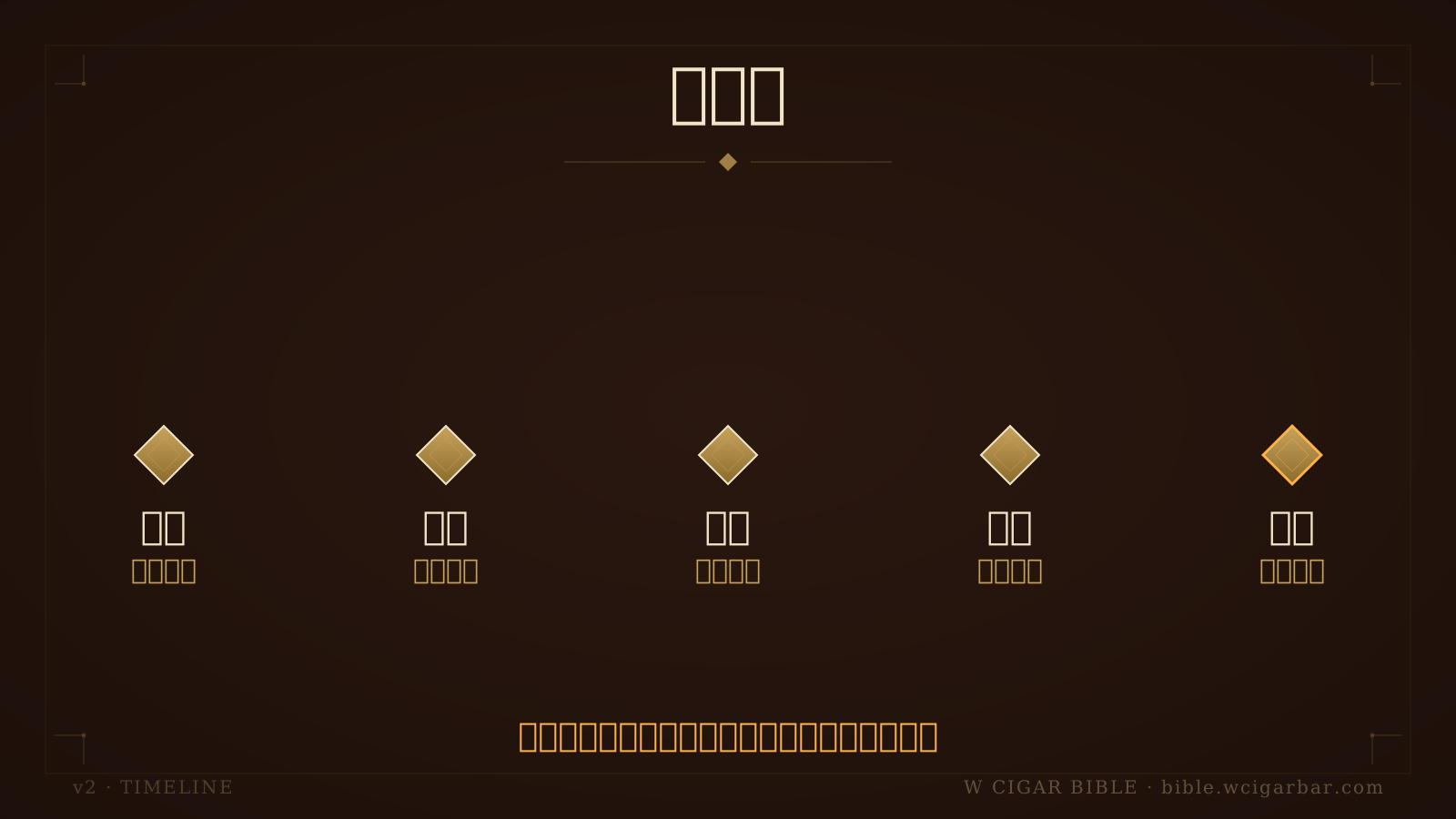
五段流程呈現山場萎凋發酵松焙到雙煙共振
Tongmuguan Lapsang Souchong: The Ancestor of Black Tea is Not Just a Title, But the Result of Mountain Fields and History
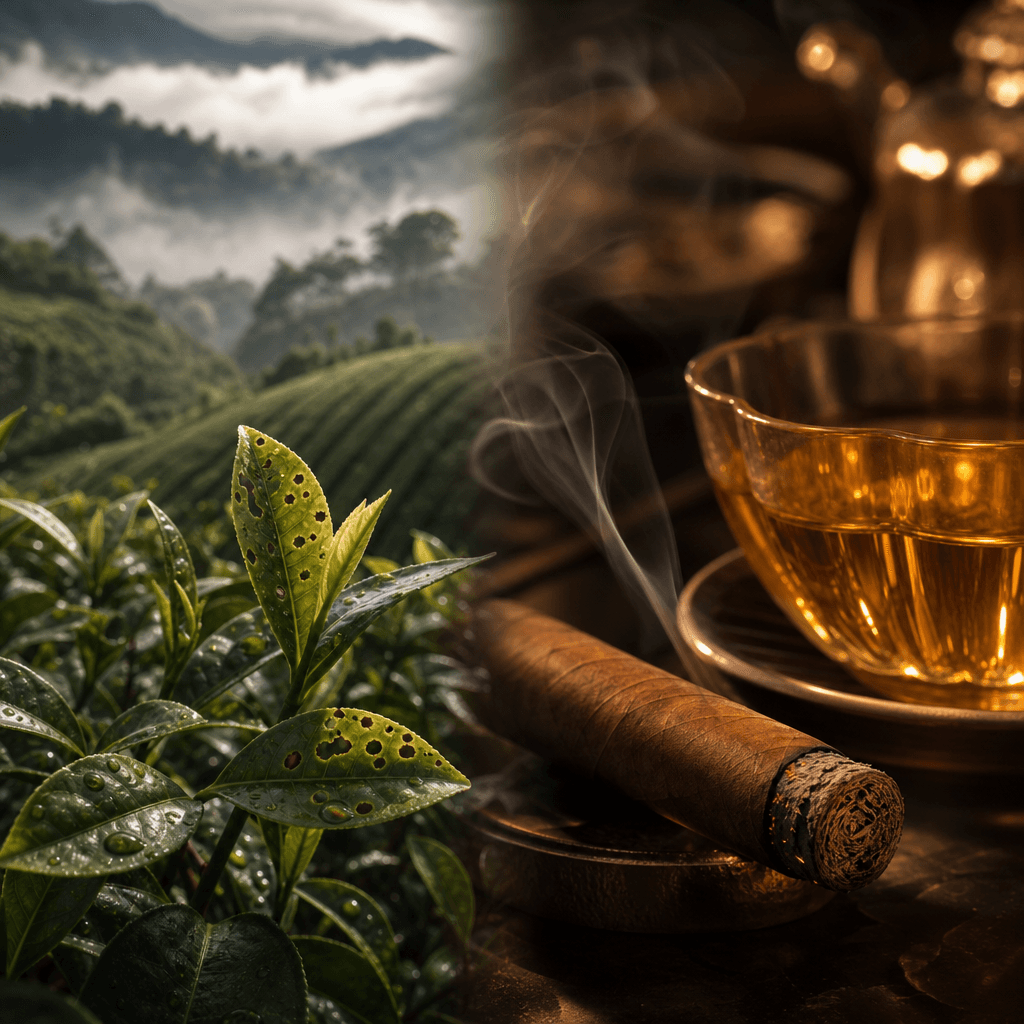
The "Zhengshan" in Zhengshan Xiaozhong points to the core production area around Tongmuguan in Wuyi Mountain, which is historically the origin of Xiaozhong black tea. Here, the altitude is high, the clouds and mist are heavy, and the temperature difference between day and night is significant, causing the tea trees to grow slower, accumulating more layered amino acids, soluble sugars, and aromatic precursors. When the tea leaves enter withering and fermentation, these substances transform into the sweet, dried fruit, and woody undertones unique to black tea.
The legend of late Ming military crossing, forcing the delay in processing tea leaves, and tea farmers quickly drying tea leaves with pine wood, is the most frequently mentioned starting point of Lapsang Souchong. The historical details may not be restored word for word, but this story captures a key point: black tea did not have theory first and then craft, but was pushed out by fire and air amid time pressure, mountain fuel, and export demand. Deepened fermentation and pine wood drying led the originally greenish leaves to reddish-brown soup color and smoky aroma.
Lapsang Souchong is called the ancestor of black tea not because of a single smoke flavor, but because of the historical position jointly established by Tongmuguan mountain fields, full fermentation technology, and pine wood drying. This is important for cigar veterans because when we evaluate pairings, we look not only at the surface aroma but also at the underlying structure. Bolívar Royal Corona is not a cigar with light lines; if the tea itself only has a spice feel and no thickness, it will quickly be pushed to the background by the rich cigar body.
Brothel Craft and Pine Smoke Aroma: The Fire Language of Smoked Black Tea
The smoking craft of traditional Lapsang Souchong is often related to "brothels." Brothels are not the places imagined in literature but are wooden smoking spaces used for tea production in Tongmuguan, with tea placed on the upper level and pine wood burned on the lower level. The hot smoke passes through the floor and tea layers, completing the aroma infiltration during withering, drying, or re-baking stages. Burning pine wood brings guaiacol, methyl guaiacol, and eugenol-like smoke signals, forming an olfactory profile similar to smoked meat, wood ash, and charcoal fire edges.
Good pine smoke aroma should not just be pungent or charred. It should first have a clean pine resin feel, then turn into dried longan, red date skin, caramel, and slightly woody spice, finally leaving a sweet like the ashes after a fireplace extinguishes. If the fire is rough, the tea soup will have burnt bitterness, sour hardness, and rough smoke ash; if the fire is too light, the recognition of traditional smoked styles will be insufficient.
The quality of smoked black tea is determined by whether the pine smoke can enter the tea soup framework, rather than floating on the cup as a layer of aroma decoration. This is also why it can pair with Bolívar Royal Corona: the tobacco smoke from a burning cigar inherently carries phenolic, lignin pyrolysis, and caramelization products, sharing a common origin with pine wood smoke. When the two meet cleanly, "double smoke resonance" occurs, not doubling the smoke flavor, but making the smoke outline wider, deeper, and more layered.
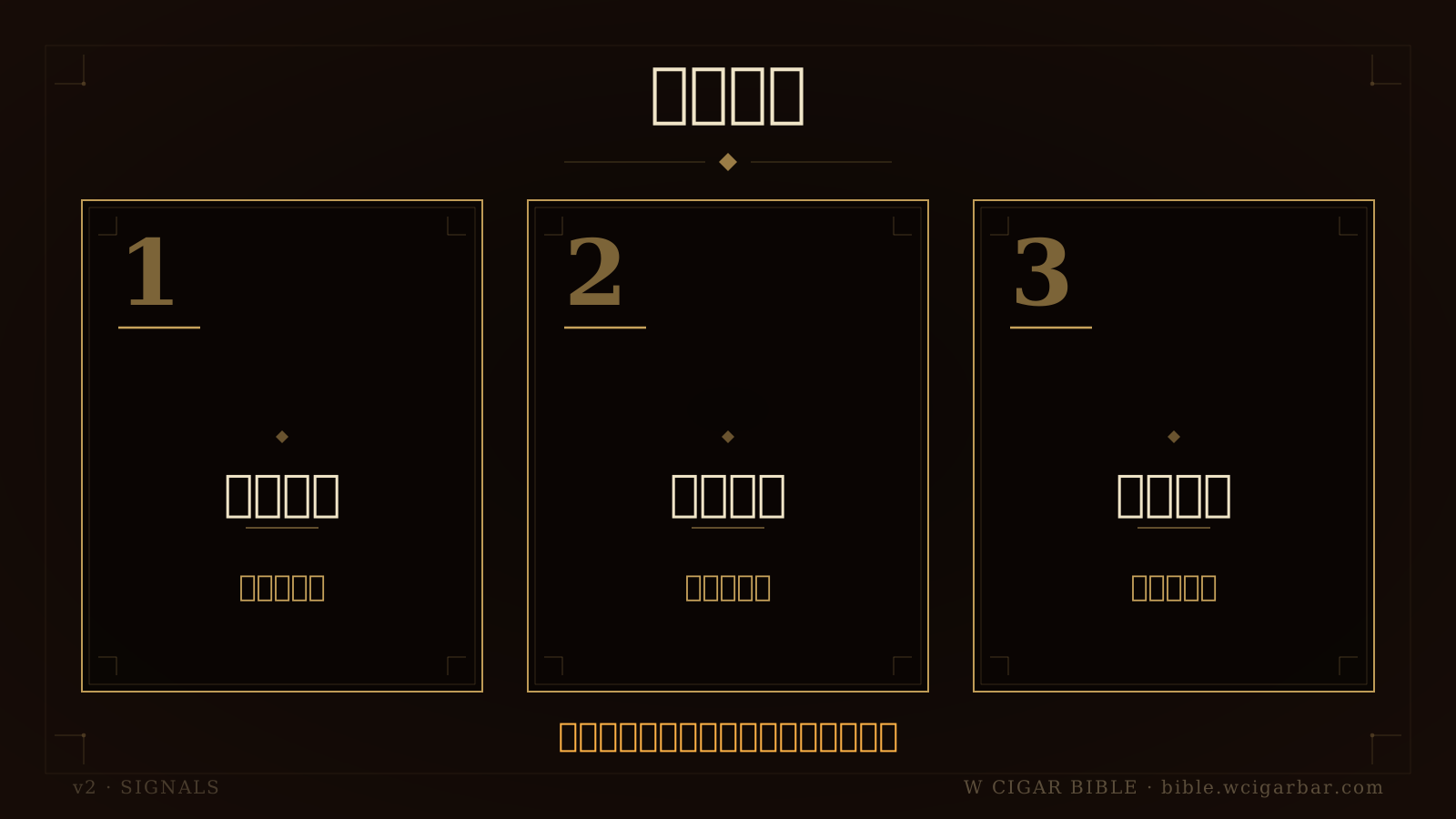
三張重點卡列出松煙入骨甜承苦韻與濃度要準
Non-Smoked and Traditional Smoked Styles: Two Modern Branches of Lapsang Souchong
Today, when discussing Lapsang Souchong, we cannot only talk about traditional smoked styles. In recent years, a large number of non-smoked Lapsang Souchong has appeared on the market, retaining the sweet fruit, floral honey, longan soup, and gentle woodiness of Tongmuguan black tea but reducing or eliminating pine wood smoking traces. This type of tea is more easily accepted in daily tea sessions, with bright aroma, smooth tea soup, and lower entry burden.
Traditional smoked styles retain the clear mark of pine wood fire baking, with flavors closer to the classical form of smoked black tea. It is not necessarily "better" than non-smoked styles but serves a different mission: non-smoked styles emphasize tea tree, fermentation, and sweetness; smoked styles synthesize fire, wood, and tea soup into a dark system. If pairing with Bolívar Royal Corona, I would clearly lean towards traditional smoked styles, as they have enough smoke density to dialogue with the rich cigar body.
Non-smoked Lapsang Souchong is suitable for showcasing the sweet essence of Tongmuguan black tea, while traditional smoked styles can better carry the smoky earthy language of rich Cuban cigars. This judgment is not an emotional preference but a structural issue. Bolívar Royal Corona's deep earth, dark chocolate, roasted coffee, and spice need a cup of tea with smoke, sweetness, and astringency to share the pressure; a purely sweet tea soup is easily overshadowed by its later strength.
| Lapsang Souchong Style | Core Aroma | Tea Soup Structure | Relationship with Bolívar Royal Corona |
|---|---|---|---|
| Traditional Smoked Style | Pine smoke aroma, dried longan, caramel, wood ash | Thick, obvious astringency, deep aftertaste | Can resonate with tobacco smoke, earth, dark chocolate |
| Non-Smoked Style | Honey sweet, ripe fruit, floral, longan soup | Smooth, bright, lower stimulation | Suitable for highlighting cigar sweetness, but weaker resistance |
| Light Smoked Style | Light pine smoke, red date, woody sweet | Medium thickness, clean tail | Can be a compromise, but needs to control brewing concentration |
| Heavy Smoked Style | Pine resin, charcoal fire, smoked wood, herbal feel | Strong, higher dryness | Can amplify smoky earthy feel, but easily suppresses details |

三欄表比較重煙輕煙與無煙正山小種的搭配差異
Lapsang Souchong: From Wuyi Tongmuguan to European Afternoon Tea History
After entering the European context, Lapsang Souchong is often referred to as Lapsang Souchong. This name holds a special place in British afternoon tea history, once regarded as a black tea with oriental smoke imagination, often sharing the table with milk, sugar, baked snacks, or savory foods. The Lapsang Souchong familiar to Europeans often has a more straightforward smoke flavor, even more emphasizing smoked wood impressions than the native context of Tongmuguan's Lapsang Souchong.
This kind of translation is interesting because when tea spreads across cultures, a most easily recognizable feature is often magnified. For European afternoon tea, the smoky feel of Lapsang Souchong is like a seasoning in the tea session, capable of forming salty-sweet smoky connections with butter, ham, cheese, and toast. However, back in Tongmuguan, Lapsang Souchong is not just for "smoke"; it also needs the coolness of the mountain fields, fermentation sweetness, and tea soup thickness.
Understanding the European identity of Lapsang Souchong helps us distinguish whether smoked black tea is a cultural symbol or a structurally capable beverage for pairing with cigars. If only pursuing exaggerated smoke flavor, pairing with Bolívar Royal Corona would become smoke wall hitting smoke wall, quickly leading to palate fatigue. Choosing Lapsang Souchong with balanced tea soup sweetness, acidity, astringency, and smoke aroma offers a chance for the cigar's earth, cocoa, and spice to unfold layer by layer.
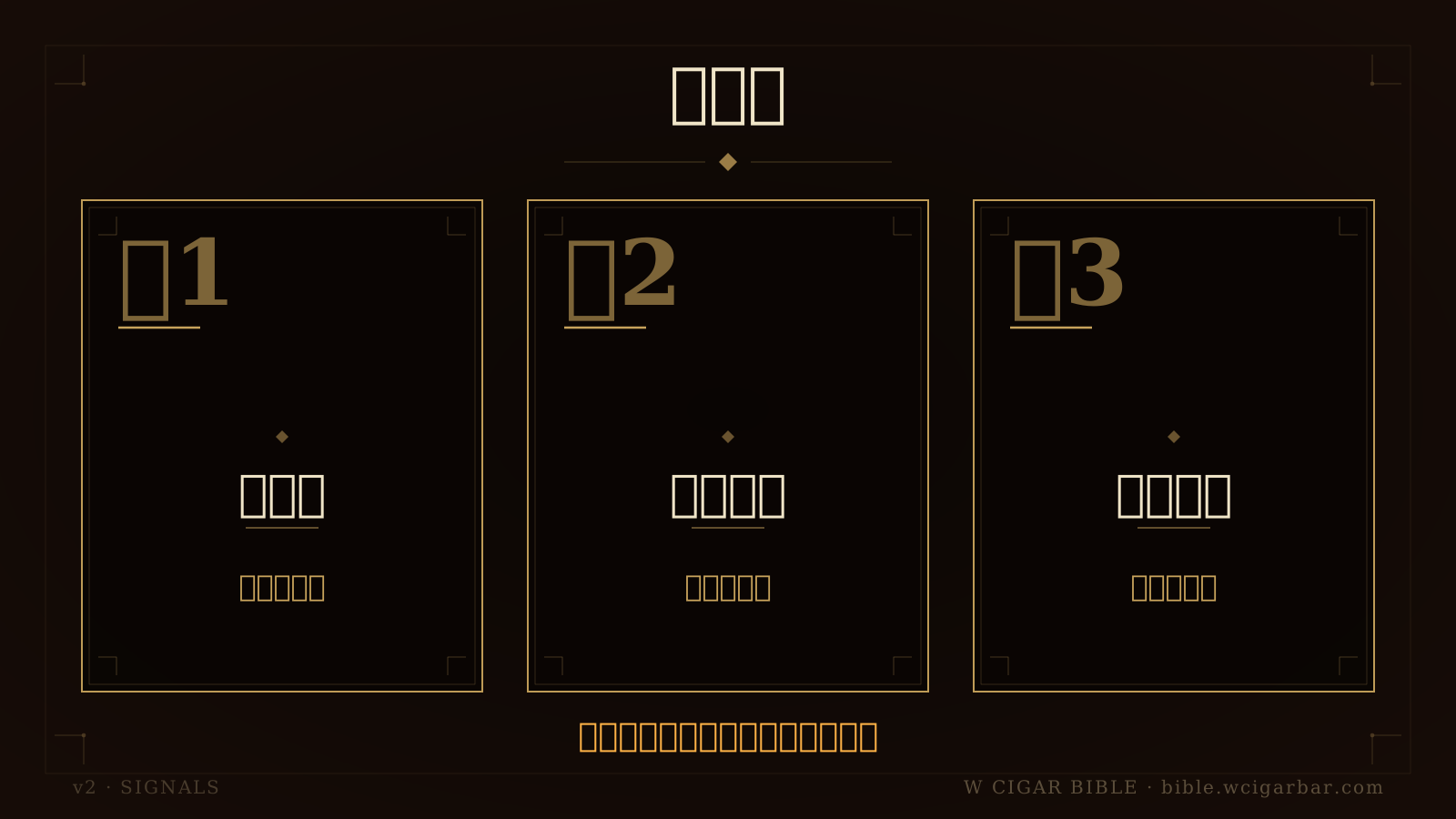
三張錯誤卡提醒濃泡無煙與後段茶澀的風險
Bolívar Royal Corona: The Earth, Bitterness, and Rich Cigar Body of Cuban Robusto
Bolívar Royal Corona (Cuba, Robusto, 50 × 124mm): deep earth, dark chocolate, roasted coffee, spice, rich cigar body. The focus of this cigar is not to please the palate with sweetness but to establish presence with solid soil feel and deep dark bitterness. The common path after lighting is the initial earth and wood, followed by dark chocolate and coffee in the middle, with spice and leather becoming clearer in the later stages.
The long-standing impression of the Bolívar brand for me is that its strength comes not only from nicotine feel or smoke volume but from flavor density. As a Robusto size, Royal Corona's burning rhythm is relatively concentrated, the ring gauge provides enough smoke thickness, and the 124mm length allows flavor transitions not to scatter. If well-preserved and matured, it can present a low-pitched Cuban feel: damp earth, cocoa shell, deep roasted coffee, black pepper, and slight mineral feel.
The pairing difficulty of Bolívar Royal Corona lies in needing a beverage with enough framework, yet without using sweetness or sharpness to interfere with its earth depth. The advantage of Lapsang Souchong is precisely here; it is not a thin tea aroma but has fermentation sweetness, smoke layers, tea polyphenol astringency, and warm soup feel. If served in a white porcelain cup, the pine smoke reaches the cup first, followed by the longan sweet soup, and then back to the cigar's dark chocolate and coffee bitterness, with a very clear rhythm.
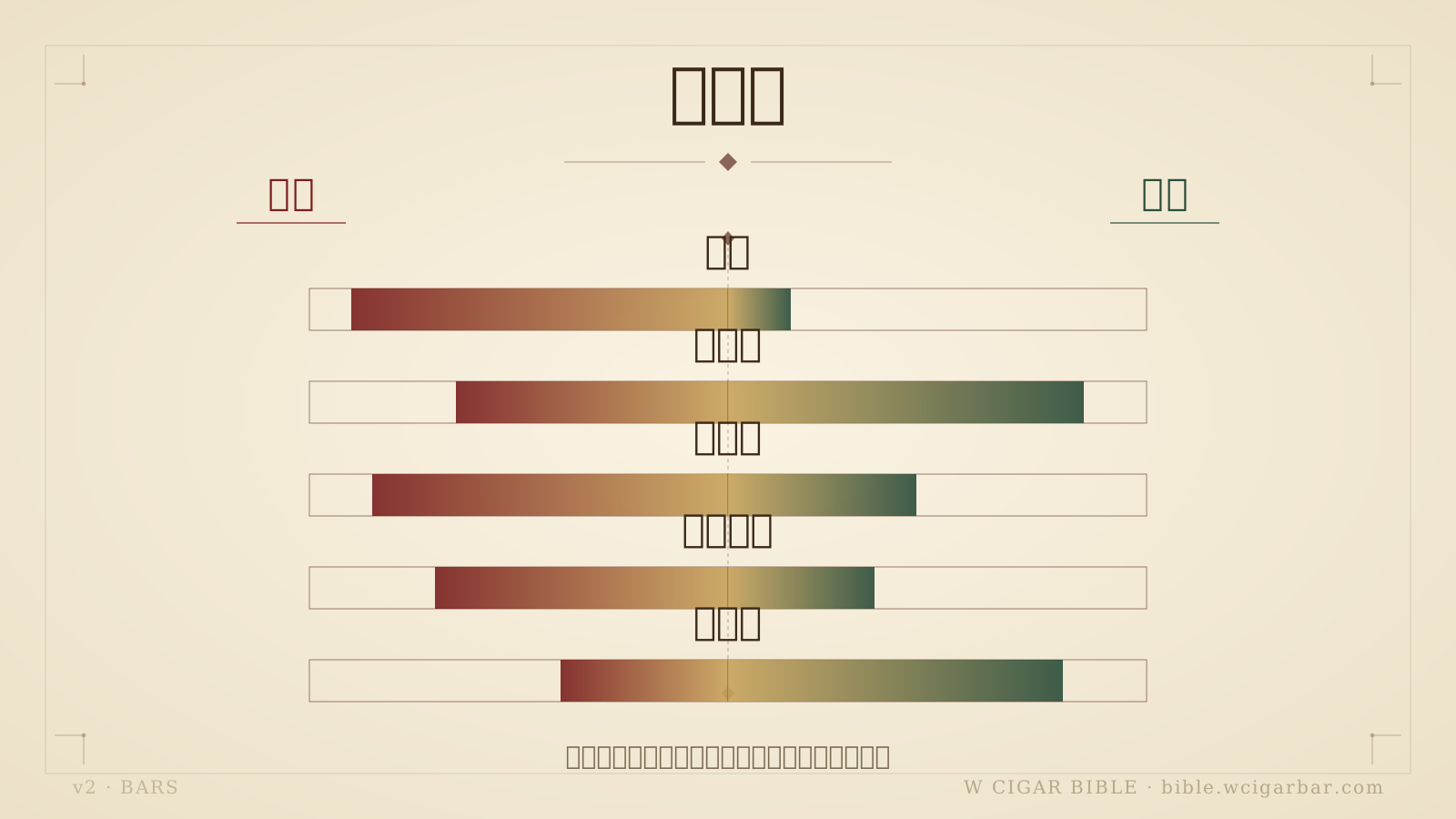
橫條圖對比煙燻正山與無煙正山在五個軸向的強弱
Pine Smoke × Tobacco Smoke: The Flavor Chemistry of Double Smoke Resonance
The relationship between pine smoke and tobacco smoke is not simply "similar, so they pair." Phenolic compounds released by burning pine wood bring smoke, herbal, wood char, and spice; when a cigar burns, the lignin, sugars, and amino acids in the tobacco leaf also produce roasting, nutty, cocoa, and smoke signals through pyrolysis, caramelization, and Maillard reactions. When the two meet, the common vocabulary in the nasal cavity is amplified, while the different vocabulary is responsible for creating layers.
What I care about most is this "pine smoke × tobacco smoke" token to token. The pine smoke of Lapsang Souchong is like dry pine wood and fireplace ash, while the tobacco smoke of Bolívar Royal Corona is wetter, thicker, with damp earth and leather feel. When a sip of tea is followed by a puff of cigar, the pine smoke first opens the olfactory receptors, and the cigar smoke then fills the middle section with oil and soil feel, so smoke is no longer just a stimulus but forms a continuous spectrum from dry wood to wet soil.
The core of this pairing is the homogenous resonance of pine smoke phenols and tobacco burning aroma, making Lapsang Souchong the tea closest to cigars in the tea world. But homogeneity does not mean no risk; if heavy smoke tea is brewed too strong, phenols and tannins will pile into a bitter wall. My approach is to keep the tea soup at a sufficient temperature and medium concentration, allowing pine smoke to be bright in the front nasal cavity and cigar smoke to settle in the back nasal cavity, leaving gaps between the two.
Longan Sweet Soup × Dark Chocolate: Deep Sweetness is Not Sugar, But Maturity and Bittersweet Ratio
Lapsang Souchong is often described as having longan soup, not meaning the tea soup is like sugar water, but referring to the mature dried fruit sweetness, woody sweetness, and slight caramel aroma after black tea fermentation. This sweetness belongs to deep sweetness, close to dried longan, red date skin, roasted sugar, and dried fruit peel, rather than the high-brightness sweet and sour of fresh fruit juice. Its advantage is that it can form a same-color system connection with the dark chocolate, cocoa shell, and coffee powder of cigars.
The dark chocolate feel of Bolívar Royal Corona usually carries bitterness, not dessert-style chocolate, but more like high cocoa percentage dark chocolate pieces, cocoa bean fragments, and deep roasted coffee edges. When longan sweet soup meets dark chocolate, the tea's sweetness does not cover bitterness but rounds the edges of bitterness. Caramelized aroma and cocoa bitterness pull each other, creating a middle section similar to roasted nuts, black sugar shell, and coffee caramel.
The real value of longan sweet soup × dark chocolate is to turn the bitterness of Bolívar Royal Corona into deep sweetness, not to dilute it. Veterans should understand this difference: a good pairing does not weaken the cigar's character but gives its edges shadows and layers. If the tea soup is too sweet or flavored too heavily, the cigar will appear rough; if the tea soup is too light, the dark chocolate will only have bitterness, and the bridging function of longan soup will disappear.
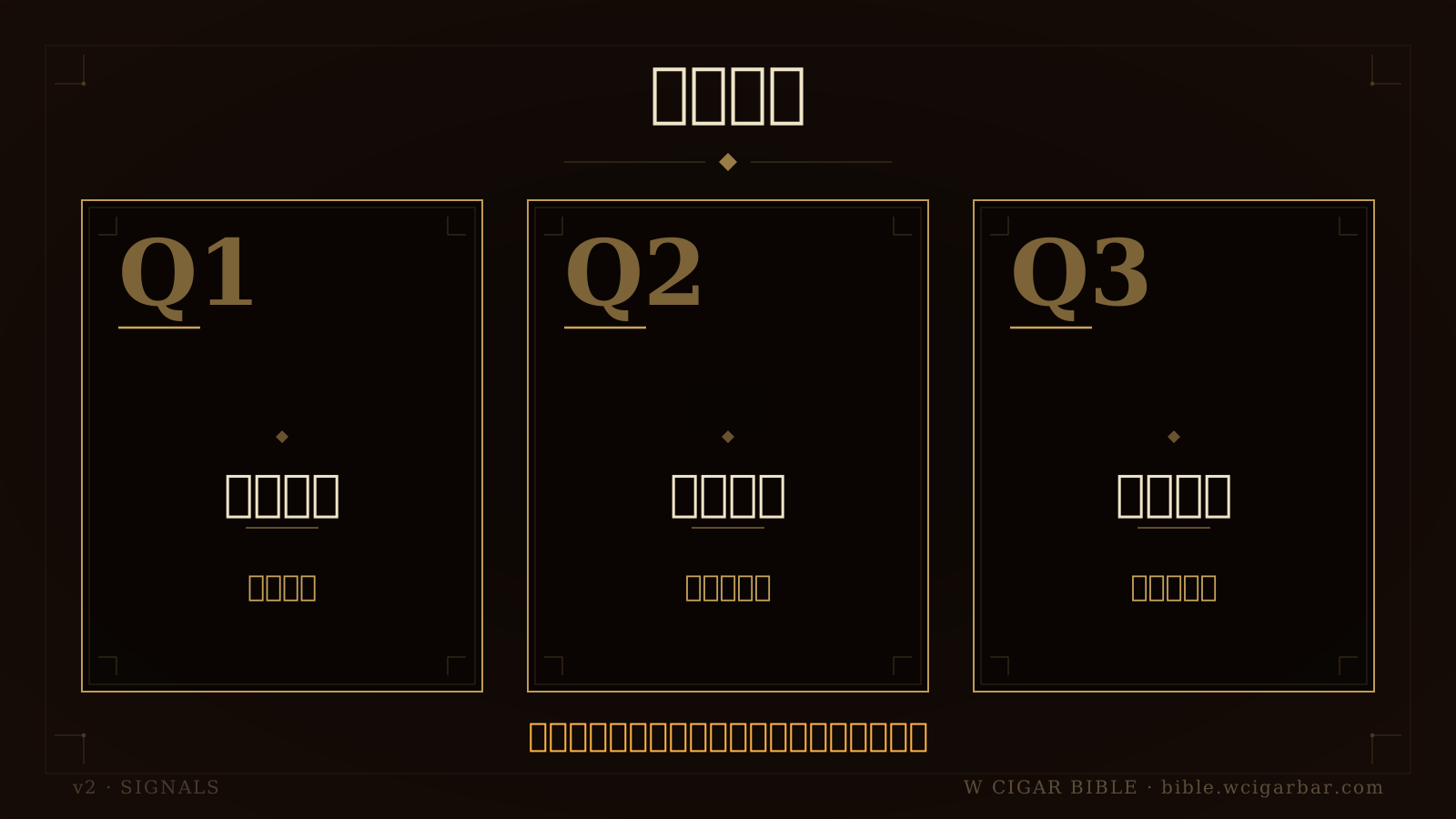
快問快答卡整理煙款選擇蓋味與冷泡三個問題
Smoked Astringency × Rich Oil: Brewing, Rhythm, and Oral Offense and Defense
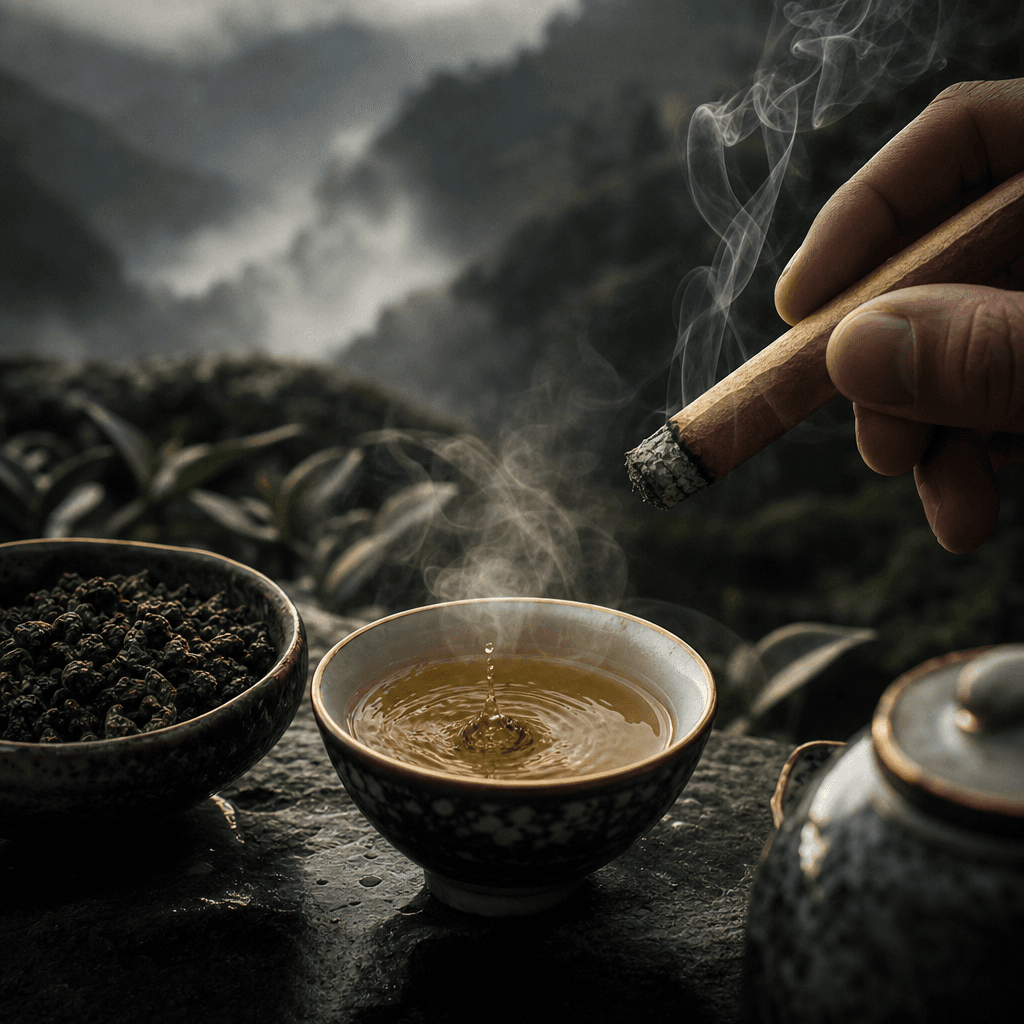
When pairing Lapsang Souchong with Bolívar Royal Corona, brewing cannot rely solely on intuition. If using a gaiwan, I would quickly pour out the tea with higher water temperature to bring out the pine smoke aroma, longan soup, and tea soup thickness, but not let coarse astringency steep for too long. If using a mug or pot, the tea amount must be controlled, as long steeping will stack tea polyphenol astringency and smoke phenols too heavily.
The key here is the balance of "smoked astringency × rich oil." Bolívar Royal Corona's smoke is thick, with obvious oil feel, and the mouth easily leaves sticky impressions of deep earth, coffee, and spice; the astringency of Lapsang Souchong is like a fine comb, able to comb out the oil traces on the tongue and palate. If combed too lightly, the tea is just accompaniment; if combed too heavily, the cigar's sweetness and oiliness will be scraped away.
The ideal rhythm is to first drink a small sip of Lapsang Souchong to establish the pine smoke and longan base, then let Bolívar Royal Corona's earthy and oily feel press up, and finally use half a cup of warm tea to sort out the aftertaste. Temperature is also key; too hot will amplify spiciness and tea astringency, too cold will dull smoke and lower sweetness. I would keep the tea warm rather than boiling, allowing each sip to adjust the focus rather than wash away the picture.
Common Questions
The core of common doubts actually returns to the calibration of smoke, sweetness, oil, and brewing concentration.
Does Lapsang Souchong have to be a traditional smoked style?
If the protagonist is Bolívar Royal Corona, I would prioritize traditional smoked styles or light smoked styles. Non-smoked styles can also pair, but they more highlight longan sweetness and black tea roundness, with weaker acceptance of tobacco smoke, earth, and coffee bitterness. If the cigar state is strong, light smoked styles are more stable than heavy smoked styles.
Will pine smoke aroma overshadow cigar details?
Yes, especially when heavy smoked tea is brewed too strong. If pine smoke aroma turns into burnt bitterness, medicinal smoke, and rough ash, Bolívar Royal Corona's dark chocolate, leather, and spice will be flattened. Controlling tea amount and shortening steeping time are key to double smoke resonance rather than mutual obscuring.
Can cold-brewed Lapsang Souchong pair with this cigar?
Cold brewing will reduce astringency and make longan sweetness rounder, but the three-dimensionality of pine smoke aroma will decrease. Bolívar Royal Corona needs tea soup with temperature to accept oil and smoke, so cold brewing is more like a side play, not my main axis. If using cold brew, choose tea with cleaner smoke and clearer sweetness.
Why not use more fragrant tea to balance the rich cigar body?
Fragrant tea can refresh the mouth, but may not enter the deep core of Bolívar Royal Corona. This cigar's vocabulary is earth, dark chocolate, roasted coffee, and spice, needing a beverage to respond in the same low-pitch range. The smoked black tea structure of Lapsang Souchong can just fill in the wood fire and longan sweetness in the low-pitch range.
Is the same cup of tea suitable for all stages of Bolívar Royal Corona?
The front section can have lighter tea to avoid pine smoke prematurely overshadowing the initial earth and wood of the cigar. When dark chocolate and coffee come up in the middle section, the longan soup and caramel feel of Lapsang Souchong are most effective. When spice increases in the later section, the tea soup should be gentler to avoid amplifying tea astringency and spiciness.
If the tea soup appears sour or bitter, how to adjust?
First, reduce steeping time, then check water temperature and tea amount. Sourness often comes from tea quality, storage, or extraction imbalance, while bitterness is mostly related to heavy smoke craft or over-steeping. When pairing with Bolívar Royal Corona, the tea soup should be deep, warm, and clean, not sharp, dry, or abrasive.
The encounter of Lapsang Souchong and Bolívar Royal Corona is not about cleverness but precision. Tongmuguan pine smoke brings tea into the cigar context, and Cuban earth presses the longan sweetness of black tea into deeper shadows. If veterans are willing to slow down and calibrate concentration, temperature, and rhythm, they will see the true depth of smoked black tea.
Further Reading|Complete Guide to Six Types of Tea: Fermentation Spectrum from Green Tea to Pu'er, and Flavor Overview for Cigar Pairing|Silver Needle White Tea Sun Withering: The Bold Minimalist Craft of White Tea Aroma, Paired with Hoyo de Monterrey Le Hoyo de San Juan|The Keemun Aroma of Keemun Black Tea: The Top of the World's Three High Aroma Black Teas, Paired with H. Upmann Half Corona's Afternoon Tea Specifications
—Cigar Prince Wilson Tsai
Smoking is harmful to health. Under 20 years old is not allowed to smoke. Quit smoking hotline: 0800-636363. This article is for reference by adults over 20 years old as knowledge of cigar culture, preservation, and regulations, not a tobacco advertisement, promotion, or purchase suggestion.
Like this article?Share with friends
Share this W Cigar Bible piece with friends who want to learn cigar culture, storage, and tasting.
想把這篇 化為實踐
雪茄聖經是知識;雪茄文化要在空間裡發生
W Cigar Bar 大安總店資訊
台北大安區 · 雪茄聖經總編輯 Wilson Tsai 主理的雪茄文化空間
33 座 24 小時恆溫恆濕醇化室
W Cigar Bar 提供的會員醇化空間 · 場地資訊請洽編輯部
雪茄剪 / 打火機 / 雪茄盒 / Boveda
W Cigar 配件官網 · 專營雪茄配件正品
加 LINE 好友 · 文化諮詢
文化空間資訊 · 紳士沙龍 · 私人包場
本網站內容僅供雪茄文化、歷史、收藏與品吸知識研究參考。菸品有害健康、未滿法定年齡者請勿吸菸。實際規範請依所在地法律為準。
吸菸有害健康・戒菸專線 0800-636363・本站僅供 20 歲以上成年人閱覽。
讀到這裡,你不只是路過的人
留下 Email,加入 W 雪茄聖經內圈——總編輯 Wilson Tsai 親選的學院深文與國際新訊,先你一步送到信箱。
· 教育用途非銷售 · 隨時一鍵退訂 · Email 絕不對外公開 · 由勝茄股份有限公司營運
同分類延伸閱讀
資料來源:W Cigar Bible 編輯部整理 · 雪茄王子 Wilson Tsai 親自審稿
本文僅供雪茄文化、歷史、收藏與品鑑知識研究,不作為菸品促銷、銷售或購買建議。吸菸有害健康,未滿二十歲不得吸菸。