雪茄的切割與點火技術:提升品味的關鍵手法
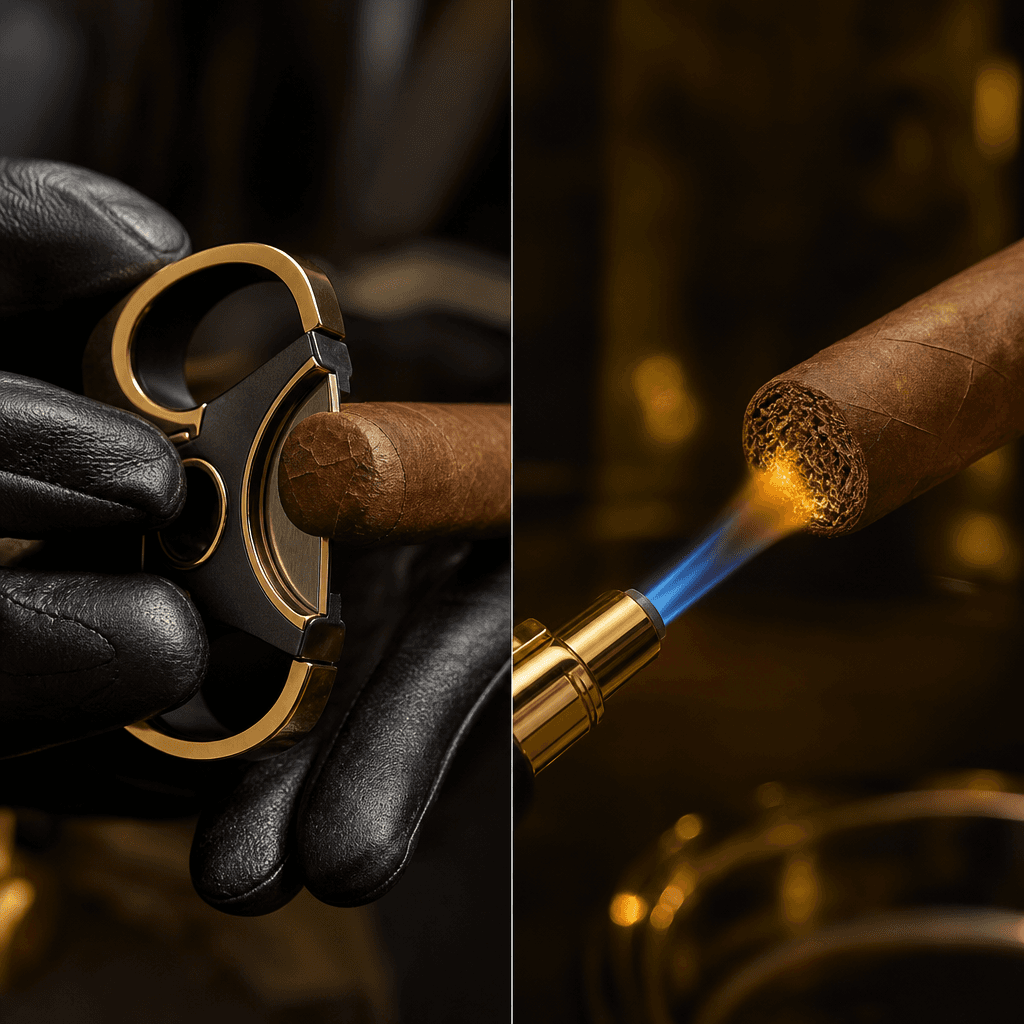
切割與點火是雪茄品味的關鍵,對於新手來說,這兩個步驟往往被低估。適當的切割能確保氣流通暢,避免苦味或悶塞,而點火則需均勻預熱,確保整體燃燒一致。常見的切割方式包括直剪、V剪及打孔,各有其適用的雪茄尺寸與風味特點。切割前需檢查雪茄的濕度,並以穩、準、快的方式進行。點火時,選擇無味的火源至關重要,以免影響雪茄的原始風味。掌握這些技巧,能讓雪茄的層次更加豐富。
- 切割雪茄時,應保留茄帽結構,避免氣流受阻或茄衣裂開。
- 選擇合適的切法可影響煙氣速度與風味層次,直剪、V剪各有優缺點。
- 點火時應均勻預熱雪茄,避免直接燒中心,確保整體燃燒均勻。
Cigar Cutting and Lighting Techniques: Key Methods to Enhance Flavor
Cutting and lighting are two actions that beginners often underestimate, yet they can immediately change the performance of a cigar. Before a cigar even enters your mouth, how the cap is opened and how the foot is awakened already determine whether the initial flavors are clean, the burn is stable, and whether you will encounter bitterness, blockage, or uneven burning within the first 10 minutes.
As the editor of "Cigar Bible," I often compare cutting and lighting to decanting and pouring a good wine: it's not about showing off, but respecting the structure. Whether you have a 2018 Montecristo No.2 or the commonly seen Partagás Serie D No.4 in recent years, as long as the cutting edge, fire source, and rhythm are correct, the cigar will respond to you with clearer layers.
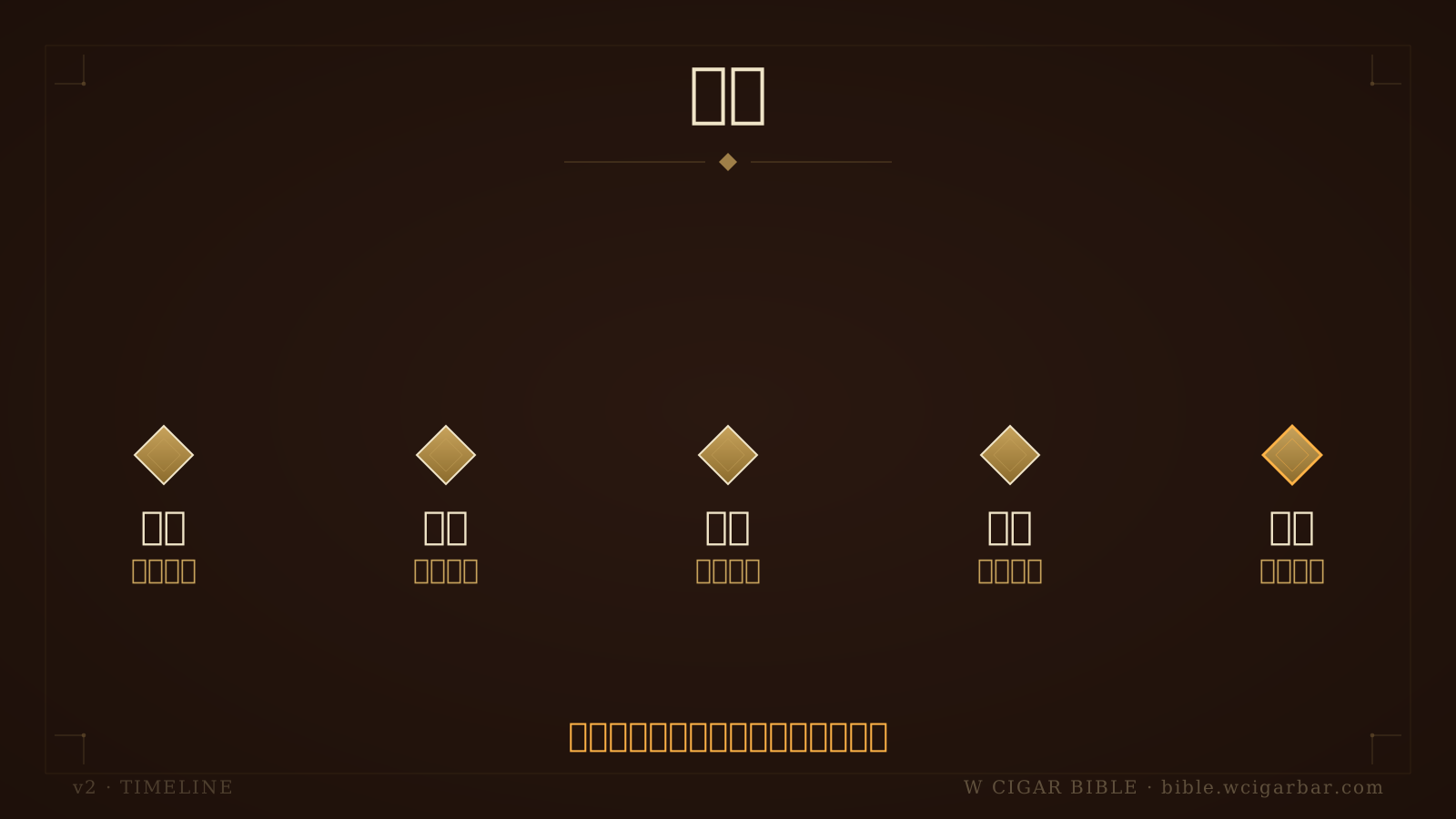
時間線呈現檢查濕度到輕吸確認的五步流程
Why Cutting Changes Flavor: Airflow, Cap, and Draw Resistance
The head of a cigar is usually finished with one to three layers of caps, with the triple cap craftsmanship commonly seen in Cuban cigars, especially worth observing on models like Cohiba Siglo VI, H. Upmann Magnum 46, and Trinidad Fundadores. Cutting is not just about "shaving off" the end, but about opening a stable channel while retaining the support of the cap. Cutting too little restricts airflow; cutting too deep can cause the wrapper to crack and the draw to become loose.
The core of cutting is not to open as large as possible, but to ensure sufficient airflow while maintaining structural integrity. For example, with a 50-ring gauge Robusto, a straight cut usually only needs to remove about 1.5 to 2 millimeters; for a 52-ring gauge torpedo like Montecristo No.2, you should gradually trim along the slope, avoiding a single cut below the shoulder line. Many beginners find a certain cigar "tastes bland," but it's actually because the opening is too small, the burning end lacks oxygen, and the smoke volume is insufficient, so the sweetness and woody notes naturally do not emerge.
In 2022, I organized a batch of Romeo y Julieta Short Churchills from the same box, with a 50-ring gauge and a length of 124 millimeters, treated with both straight and V cuts. The straight cut version quickly revealed cream and roasted nuts in the initial stage, while the V cut version had a more concentrated entry, with pepper and redwood notes more pronounced. This is not about which is better or worse, but about how the shape of the cut changes the speed of the smoke, the contact area on the tongue, and the degree of moisture, ultimately presenting a different rhythm.
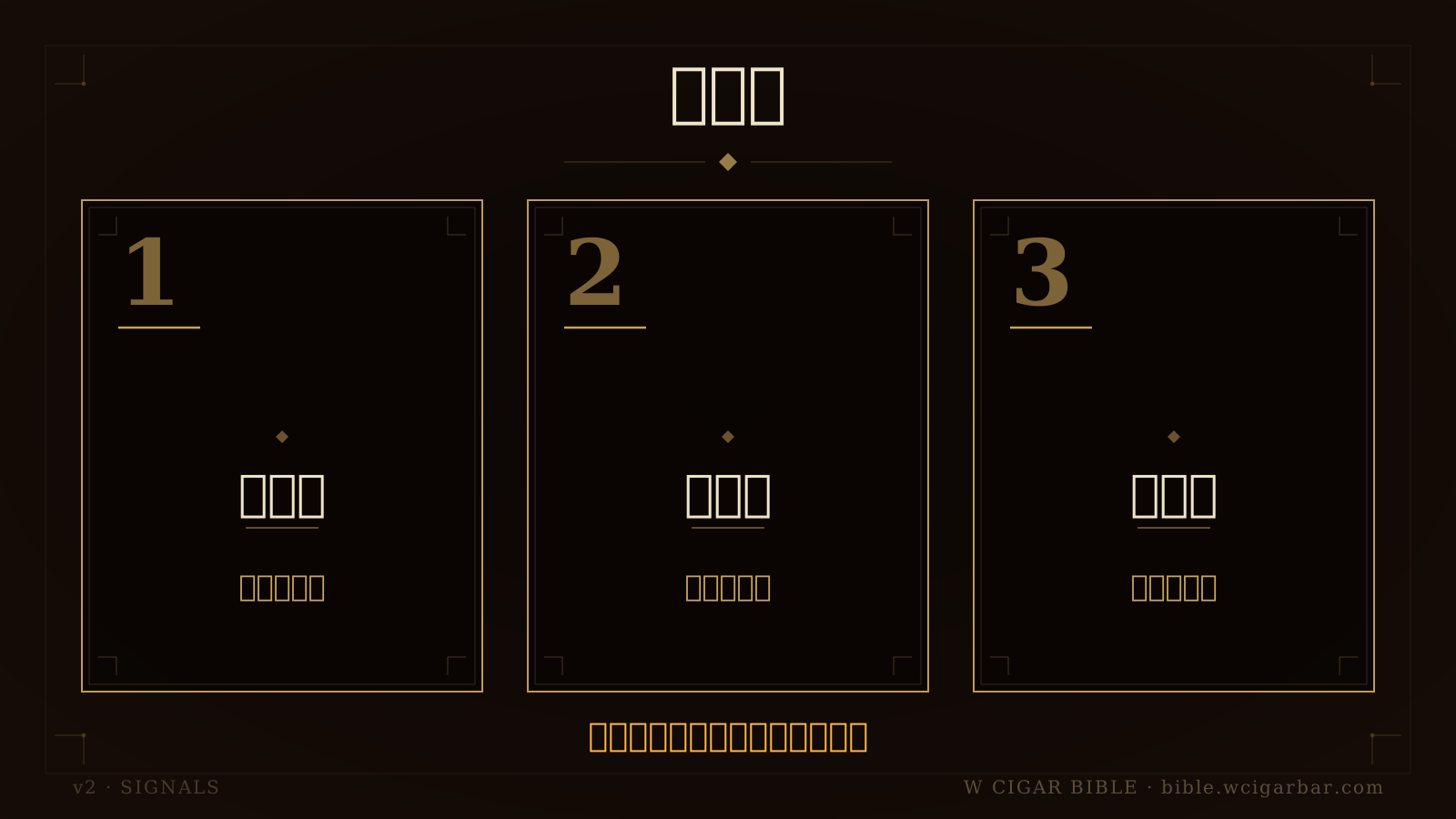
三張卡片說明切割保帽氣流與預熱重點
Three Common Cutting Methods: Choosing Between Straight Cut, V Cut, and Punch
The straight cut is the most versatile method, suitable for Parejo straight-shaped cigars, such as Partagás Serie D No.4, Bolívar Royal Coronas, and Hoyo de Monterrey Epicure No.2. Its advantage is sufficient smoke volume and direct flavor development; its disadvantage is a higher chance of wrapper damage if the tool is not sharp or the angle is skewed. When choosing a double-bladed cutter, I look for blades that "parallel bite" when closed, rather than just focusing on the outer shell material.
The V cut has become very popular in recent years, especially suitable for cigars with a ring gauge of 50 to 56. It forms a groove that concentrates the smoke flow to the center of the tongue, giving a more linear entry. If you find the smoke volume from a straight cut too overwhelming, a V cut can often make the same cigar appear more cohesive and layered. However, the V cut is not suitable for thin Lonsdale or Panetela, such as the Trinidad Fundadores with a 40-ring gauge, as improper use can put too much pressure on the head.
The punch cutter's advantage is retaining the most cap, suitable for outdoor driving or situations where you don't want to deal with debris; but it also most easily concentrates tar and moisture around the small hole. For example, with a Cohiba Robustos 50-ring gauge, the punch may be very clean for the first 20 minutes, but if the smoking frequency is too fast in the middle, the edge of the hole will become wet, and bitterness will be amplified. My simple advice is: short and thick cigars can use a punch, but for long sizes or oily wrappers, a straight cut or V cut is more stable.
| Cutting Method | Suitable Size and Shape | Flavor Experience | Common Risks |
|---|---|---|---|
| Straight Cut | Robusto, Corona Gorda, Churchill | Sufficient smoke volume, fast development | Cutting too deep causing wrapper crack |
| V Cut | 50 to 56 ring gauge straight shape | Concentrated, clear lines | Thin ring gauge easily damages the head |
| Punch | Short and thick, complete round cap | Clean entry, restrained | Moisture and tar easily accumulate in the middle |
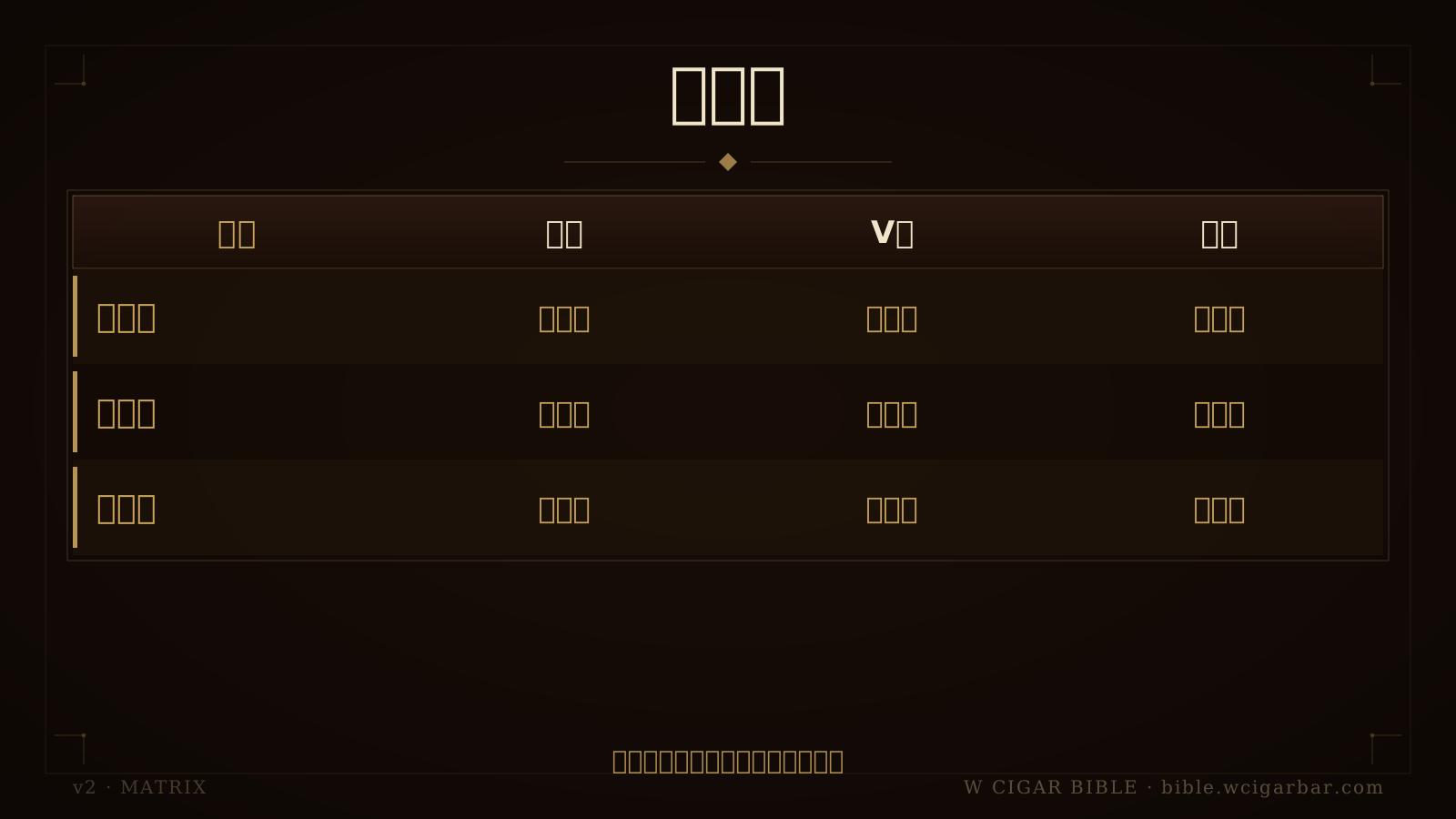
矩陣比較直剪V剪與打孔的適合型口感風險
Practical Cutting Process: From Checking Humidity to the First Cut
Checking the cigar's condition before cutting is more important than picking up the cutter. For general storage, I aim for a relative humidity of 65% to 69% and a temperature of about 18°C to 21°C; if the cigar feels too hard, the cut is prone to cracking; if too soft, the blade will squeeze the leaves into an oval shape. In 2019, I encountered a box of H. Upmann Magnum 50 stored too moist, which looked beautiful on the outside, but the head collapsed noticeably after a straight cut, not because the cutter was bad, but because the humidity had already compromised the filler leaf's resilience.
A good cutting action has only three words: steady, accurate, fast. Steady means keeping the cigar and cutter on the same axis; accurate means the blade falls above the cap arc, not beyond the shoulder line; fast means completing in one swift motion, not repeatedly grinding the cigar head. If you use a desktop cutter, you can gently place the cigar head into the blade, rotate to observe the cap boundary, and then press down in one go. For handheld double-bladed cutters, it's recommended to operate close to the body to avoid angle deviation caused by suspended arms.
My standard process is as follows, beginners can follow it:
- Observe the cap: Identify the cap line and shoulder line, don't rush to cut.
- Gently pinch the head: Ensure there is no excessive hardness, moisture, or hollow feeling.
- Estimate the cut amount: About 1.5 to 2 millimeters for straight shapes, small amounts multiple times for torpedo shapes.
- Complete in one cut: Avoid "trimming" the wrapper edge with the cutter.
- Cold draw check: Lightly draw 1 to 2 times before lighting to confirm airflow and resistance.
If you can't draw at all during the cold draw, don't immediately blame the cigar quality. You can thinly cut another 0.5 millimeters or gently insert a thin needle through the head for 2 to 3 centimeters. Conversely, if the cold draw feels like sucking on an empty tube, it means the cut may be too large, and subsequent lighting should be slower, otherwise the initial temperature will rise too quickly, and spiciness and bitterness will appear early.
The Essence of Lighting: Not Just Igniting, but Evenly Preheating
The purpose of lighting is not to burn the foot into a blazing red, but to simultaneously heat the outer wrapper, binder, and center filler. This point is often overlooked, especially when using triple or quadruple flame torches, where beginners tend to directly insert the flame into the center of the foot, resulting in the center burning through first while the outer circle hasn't awakened, leading to tunneling later. A truly beautiful lighting has the entire foot showing an even orange-red, not just a bright center.
I usually categorize fire sources into three types: long wood sticks, soft flame gas, and torches. Long wood sticks are the most elegant, suitable for indoor windless environments; soft flames are milder but slower; single or double flame torches are the most practical, especially easier to control when dealing with ring gauges above 52. In the Cohiba Behike series launched in 2006, BHK 52, 54, 56 have larger ring gauges, and if only using a soft flame, the preheating time will be extended; using a double flame torch at a distance of 2 to 4 centimeters can achieve more even completion.
I recommend adopting the "bake, rotate, draw" three-stage method. In the first stage, bake the outer circle of the foot without touching the core of the flame for about 10 to 15 seconds; in the second stage, slowly rotate the cigar to let the edges slightly change color; in the third stage, lightly draw and add fire. After lighting, don't rush to take a big draw, first observe if the burn ring is complete. If there is a small dark section, lightly touch the outer edge of the dark spot with the fire source, rather than forcefully drawing, as forceful drawing will only make the already burning area hotter, worsening uneven burning.
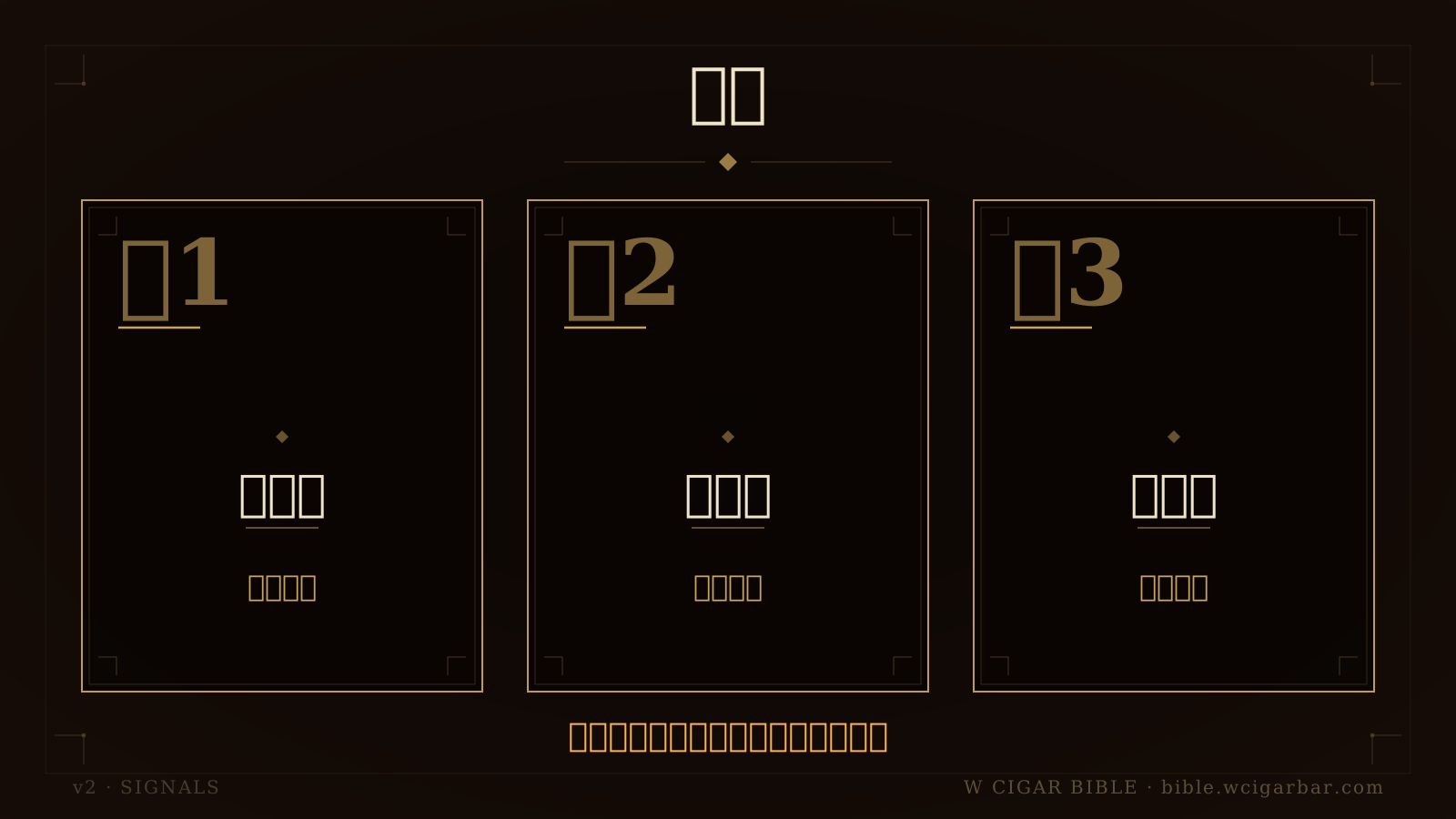
三張提醒卡列出深切近火與猛吸造成的問題
Fire Source and Etiquette: Tool Choice Also Affects Flavor
The most taboo thing in cigar lighting is using a fire source with a smell, such as regular paper matches, candles, or lighter fuel with fragrance. The sulfur smell of paper matches will adhere to the foot, and the wax smell of candles can pollute the initial stage. If using matches, I choose cedar sticks or long-stemmed odorless matches, and wait for the head to burn for 1 to 2 seconds and the sulfur smell to dissipate before approaching. These details may seem classical, but they actually prevent external odors from interfering with the cigar's original earthy, leathery, cocoa, and woody notes.
The stronger the tool, the gentler the gesture should be; the more concentrated the firepower, the more distance should be kept. Single flame torches are suitable for repairing burn lines, double flames are suitable for most Robusto and Toro, while triple flames and above, although fast, pose a higher risk for beginners. For example, with a Davidoff Nicaragua Toro 54-ring gauge, the wrapper's oil content is more noticeable, and if a triple flame is too close, the initial stage can easily have an over-roasted caramel-like bitter edge; the same cigar using a double flame at a distance for baking will have much cleaner white pepper and sweet wood aromas in the initial stage.
In terms of etiquette, when offering a light to others, do not press the fire source directly towards their cigar, and do not rush them if they are not ready. A better way is to provide a stable fire source, allowing the cigar holder to control the distance and rotation themselves. If indoors, pay attention to wind direction and surrounding distance before lighting to avoid the flame sweeping onto others' clothing or glassware. After borrowing cutting tools, simply wipe the blade before returning, which is not only hygienic but also shows you understand the sense of proportion in cigar culture.
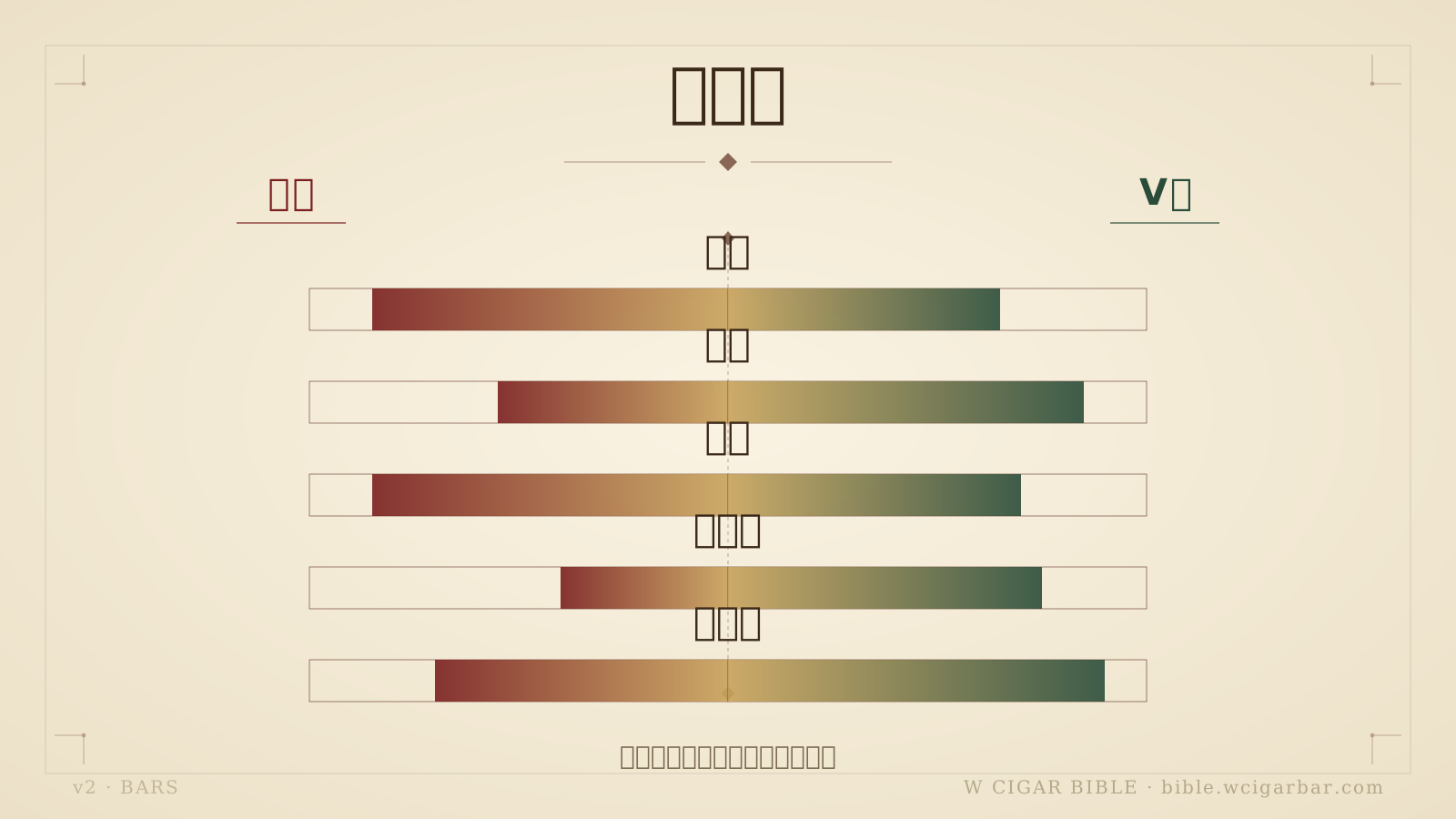
橫條圖對比直剪與V剪在煙量集中與展開差異
Error Correction: Uneven Burn, Blockage, Overheating, and Bitterness
Uneven burn is the most common problem, which may be caused by uneven lighting, drawing too quickly, wind direction, or uneven rolling density of the cigar itself. An initial uneven burn of less than 5 millimeters does not need immediate fire correction; you can first turn the slower-burning side downward, using heat rise and airflow to naturally correct it. If the difference exceeds 1 centimeter, then lightly bake the outer edge of the lagging area with a single flame, not burning the already leading part. This concept is especially important for long sizes like the Romeo y Julieta Churchill 178 millimeters.
Blockage needs to be distinguished whether it's due to a too-small cut, high humidity, or a blocked filler channel. Correcting the problem requires first determining the cause, not relying on flame or force to solve all situations. If the cut is too small, thinly cut it; if the humidity is too high, let the cigar rest in a stable environment for 20 to 40 minutes before handling; if the channel is blocked, a needle can be slowly inserted from the head, but not penetrating to the foot, otherwise the structure may loosen.
Overheating and bitterness mostly come from too fast a rhythm. For a general Robusto, I aim for one draw every 45 to 60 seconds, and for a Churchill, I slow down to 60 to 90 seconds. If you make the initial stage hot within 10 minutes, no matter how good the cigar is, it will be flattened by the heat. When bitterness rises, first put it down for 2 to 3 minutes to let the burning end cool, then resume with short and light draws. Many Cuban cigars in good condition from 2015 to 2017 are often misjudged as rough, often due to too fast a rhythm rather than insufficient flavor.
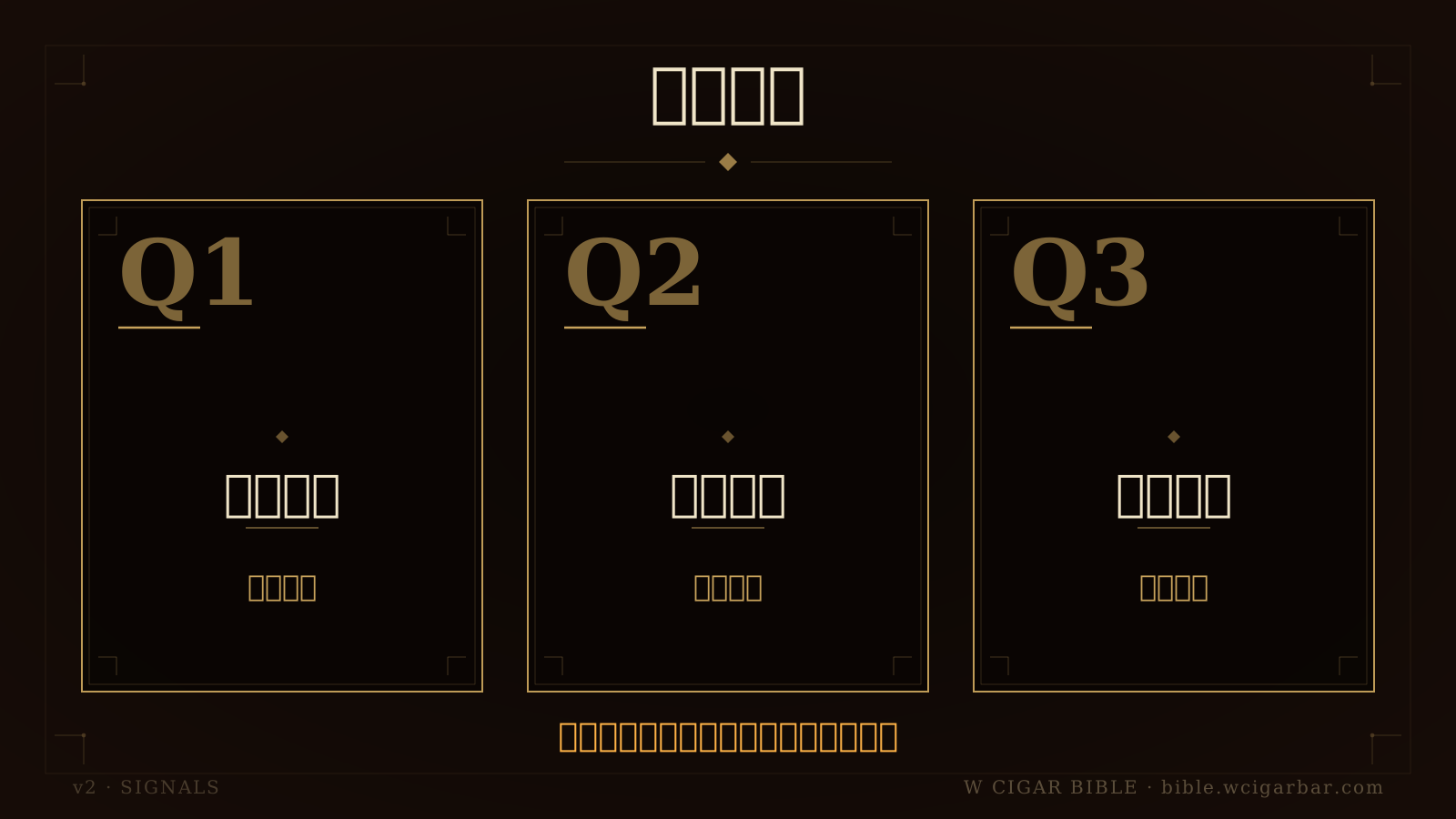
問答卡整理茄衣裂開打孔與第一口苦的處理
Adjusting Techniques According to Size and Shape: From Robusto to Torpedo
Different sizes cannot use the same force. Robusto usually measures 124 to 127 millimeters in length with a ring gauge around 50, the cut can be slightly open, and when lighting, the outer circle area is not large, making it easy to even out; Toro is commonly 152 millimeters with a ring gauge of 52 to 54, the smoke path is longer, and if cut too small, the initial stage will be blocked, and the middle stage will accumulate moisture; Churchill can be up to 178 millimeters long, like the Romeo y Julieta Churchill, the initial stage is most afraid of too aggressive lighting because the subsequent burning time is long, and heat accumulation will amplify.
Torpedo and pyramid shapes require more patience. For Montecristo No.2 and Partagás Serie P No.2, the head gradually tapers, and each millimeter down the cutting position makes a significant difference in the opening area. My approach is to cut small first, if the cold draw is tight, then slightly adjust, at most 2 to 3 times. The beauty of a torpedo lies in concentrating the smoke, not cutting the tip into a straight tube. Cutting too deep will lose its original flow effect and can make the smoke rough.
Thin ring gauges like Lancero, Panetela, and Fundadores require more respect for rhythm. Trinidad Fundadores measures 192 millimeters in length with a 40-ring gauge, and a slightly skewed cut can cause draw tension; lighting should not use multi-flame torches aggressively. The advantage of these cigars is the delicate floral, honey, hay, and mineral notes, but they do not allow you to treat them with the same method as thick ring gauges. Slow lighting, light draws, and minimal fire correction can maintain the lines to the middle and later stages.
Common Questions
Q1: If the wrapper cracks when cutting the cigar, can it still be smoked?
Yes, but first determine the location of the crack. If it's only within 3 to 5 millimeters of the head, you can lightly hold it with your lips to stabilize it and avoid excessive moisture; if the crack extends to the body, it will leak air during burning, and the flavor concentration will decrease. Wrapper cracking is usually not a single mistake but caused by the blade, humidity, and cutting angle together.
Q2: Is a punch the best for beginners?
Not necessarily. A punch is simple and clean but only suitable for cigars with a rounded cap and larger ring gauge. If the cigar is moist or oily, moisture can easily accumulate in the middle. Beginners who only learn to punch will lack training in judging airflow and cut amount.
Q3: If the first draw after lighting is very bitter, is the cigar bad?
Not necessarily. The first draw bitterness often comes from the flame being too close, the center burning through, or drawing too quickly after lighting. First, let the foot evenly preheat, then lightly draw to confirm the burn ring; if bitterness has already appeared, slowing down for 2 to 3 minutes usually improves it.
Q4: Can a cigar be relit after it goes out?
Yes, but the longer the time, the more mixed the taste. If it's just a short extinguishing, first lightly tap the ash, blow out the residual smoke, and then slowly add fire from the outer circle. If it has been left for more than 30 minutes, the condensed tar will make relighting noticeably bitter, so be mentally prepared.
Q5: How often should a cutter be maintained?
It depends on the frequency of use. If used 3 to 5 times a week, I recommend wiping the blade monthly and checking the bite and sharpness every six months. Do not forcefully cut high-value cigars with a dull blade, as one squeeze can ruin the complete cap.
Cutting and lighting are not mere forms but the key to bringing a cigar from static collection to dynamic performance. My personal view is simple: first practice the basic actions steadily, then talk about equipment and style. Every cigar has its own temperament, knowing to cut a little less, bake a little slower, and draw a little lighter often brings you closer to true taste than any fancy rhetoric.
—Cigar Prince Wilson Tsai
Smoking is harmful to health. Under 20 years old is prohibited from smoking. Quit smoking hotline: 0800-636363. This article is for reference by adults over 20 years old as knowledge of cigar culture, preservation, and regulations, not a tobacco advertisement, promotion, or purchase suggestion.
Like this article?Share with friends
Share this W Cigar Bible piece with friends who want to learn cigar culture, storage, and tasting.
想把這篇 化為實踐
雪茄聖經是知識;雪茄文化要在空間裡發生

W Cigar Bar 大安總店資訊
台北大安區 · 雪茄聖經總編輯 Wilson Tsai 主理的雪茄文化空間

33 座 24 小時恆溫恆濕醇化室
W Cigar Bar 提供的會員醇化空間 · 場地資訊請洽編輯部
雪茄剪 / 打火機 / 雪茄盒 / Boveda
W Cigar 配件官網 · 專營雪茄配件正品

加 LINE 好友 · 文化諮詢
文化空間資訊 · 紳士沙龍 · 私人包場
本網站內容僅供雪茄文化、歷史、收藏與品吸知識研究參考。菸品有害健康、未滿法定年齡者請勿吸菸。實際規範請依所在地法律為準。
吸菸有害健康・戒菸專線 0800-636363・本站僅供 20 歲以上成年人閱覽。
讀到這裡,你不只是路過的人
留下 Email,加入 W 雪茄聖經內圈——總編輯 Wilson Tsai 親選的學院深文與國際新訊,先你一步送到信箱。
· 教育用途非銷售 · 隨時一鍵退訂 · Email 絕不對外公開 · 由勝茄股份有限公司營運
同分類延伸閱讀


資料來源:W Cigar Bible 編輯部整理 · 雪茄王子 Wilson Tsai 親自審稿
本文僅供雪茄文化、歷史、收藏與品鑑知識研究,不作為菸品促銷、銷售或購買建議。吸菸有害健康,未滿二十歲不得吸菸。