Barolo 義大利王者之酒:Nebbiolo 的玫瑰與焦油,搭配 Montecristo No.2 魚雷的可可尾韻
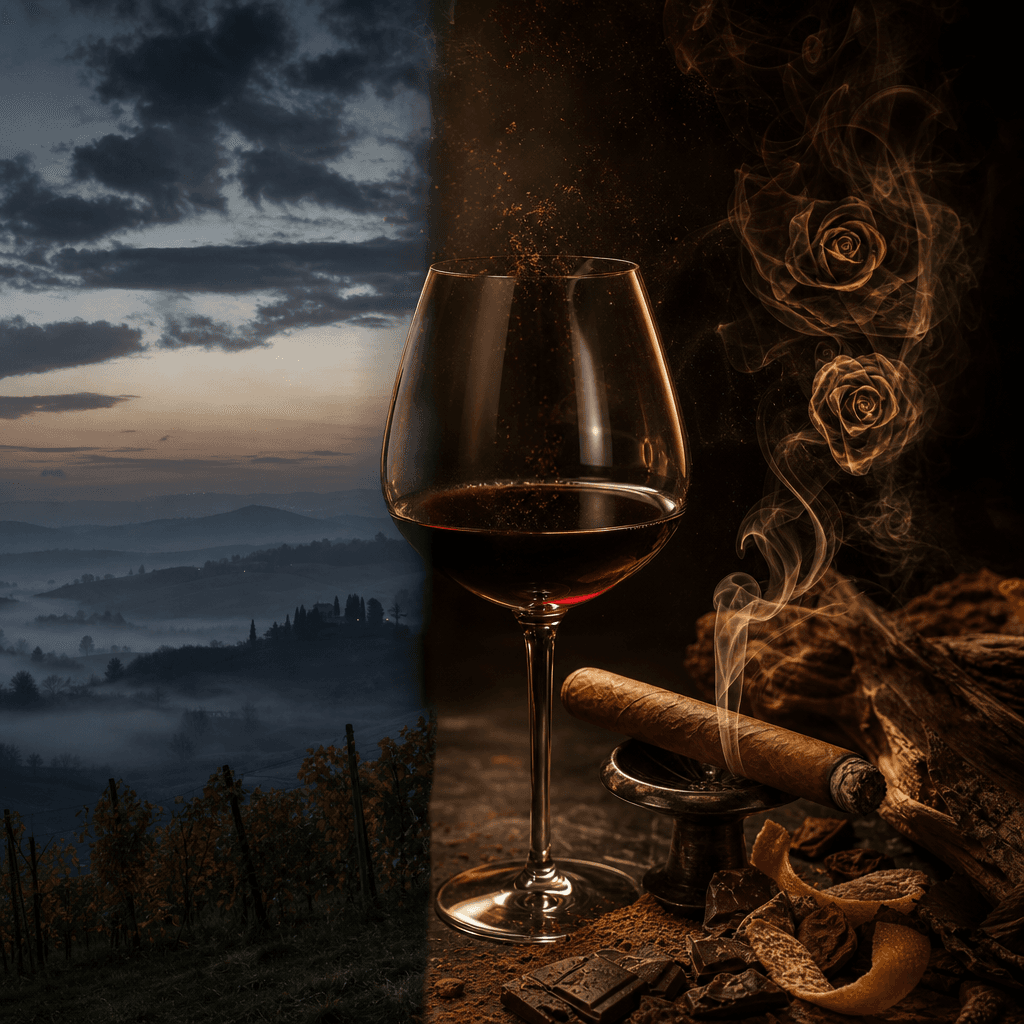
Barolo 以皮埃蒙特 Langhe 丘陵的 Nebbiolo 為核心,展現玫瑰、焦油、櫻桃乾與松露的複層結構;Montecristo No.2 則以可可、咖啡、乾木與柑橘皮構成古巴魚雷的中強骨架。本文從產區、法定熟成、橡木桶流派,到單寧與油潤煙霧的交會,拆解兩者相遇時真正發生的風味變化。
- Barolo 的高酸高單寧來自 Nebbiolo 晚熟性格,需以時間與氧氣展開層次。
- Montecristo No.2 的魚雷形制會聚攏煙霧,使可可、咖啡與乾木更集中。
- Nebbiolo 焦油調與雪茄泥土深度同場,玫瑰花香則拉亮柑橘皮尾韻。
Barolo: The King of Italian Wines - The Rose and Tar of Nebbiolo, Paired with the Cocoa Finish of Montecristo No.2 Torpedo
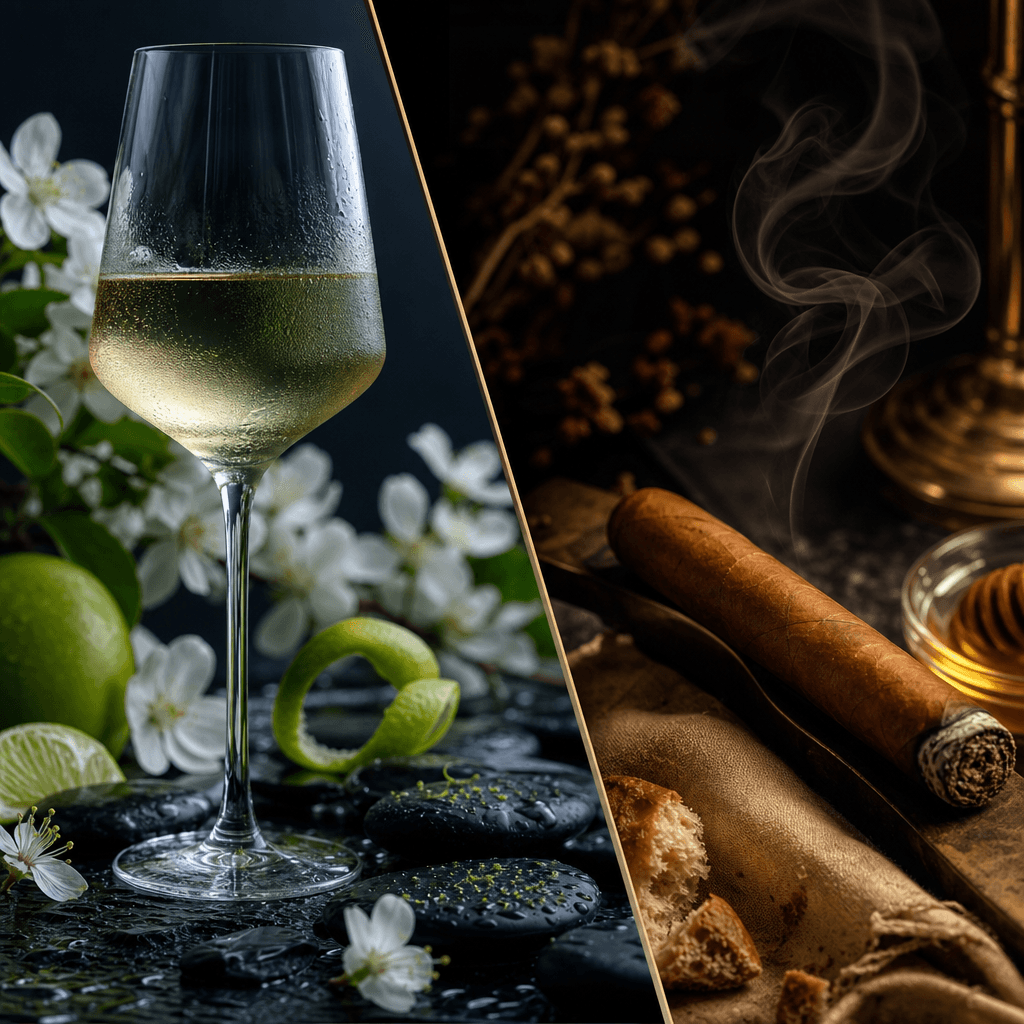
Barolo and Montecristo No.2 might seem like a pairing of Italian red wine and Cuban torpedo cigar at first glance, but the real core is how the high tannin and high acidity structure of Nebbiolo complements the cocoa, coffee, dry wood, and citrus peel of a medium-strong cigar. I often say that a good pairing isn't just placing two nouns on the same table, but asking: which molecule, which texture, which finish can truly converse with the other.
As the editor of the "Cigar Bible," I view Barolo beyond just the title "King of Wines," and Montecristo No.2 beyond its classic status. In this article, we delve into the details: the fog of the Langhe hills in Piedmont, the late ripening of Nebbiolo, the debate over oak barrels, and how the torpedo shape concentrates the oily smoke to give high tannins a robust structure.
時間軸呈現醒酒、控溫、慢抽、對照與收尾的搭配流程
Barolo and Piedmont: How the Langhe Hills Shape the King of Wines
Barolo comes from Piedmont in northwest Italy, with its core region in the Langhe hills of Cuneo province. This is not a flat vineyard but a landscape of hills with varying altitudes, slopes, soils, and fog. Nebbiolo here gets the chance to mature over a long period, enduring the cooling autumn and the diurnal temperature variation that preserves acidity. The seriousness of Barolo first comes from this slow rhythm shaped by the terrain and climate.
The phrase "King of Wines, Wine of Kings" is often linked to the House of Savoy, Count Cavour, and the 19th-century Piedmont aristocratic dining tables. During that time, Barolo transitioned from a sweet or unstable local wine to the modern dry red wine, intertwined with the political elite culture around the unification of Italy. This title is not merely a grandiose rhetoric but a result of historical power, local techniques, and the rarity of Nebbiolo. The regal quality of Barolo comes from the Langhe hills allowing Nebbiolo to mature slowly, contract, and then unfold over time.
If we break down Barolo by map, La Morra and Barolo villages are often considered softer in contour, with aromas that open earlier; Serralunga d’Alba and Monforte d’Alba often have deeper tannins, tighter minerality, and longer aging potential. Castiglione Falletto sits between the two, often showing both aromatic detail and structural strength. These are not absolute formulas but can help us understand: even with the same Barolo, when paired with Montecristo No.2, not every bottle will interact with the smoke in the same way.
三張卡片整理高酸單寧、油潤煙霧與可可尾韻的搭配重點
The Late-Ripening Character of Nebbiolo: The Structure of Rose, Tar, and High Acid Tannins
The name Nebbiolo is often linked to "nebbia," meaning fog; another explanation points to the white bloom on the grape skin, like being covered by fog. Regardless of the etymology, the most crucial fact about this variety is its late ripening. It usually reaches phenolic maturity only in the late autumn, forming a character that is both fragile and robust amid the fog, cold air, and sunlight angles of the Langhe. Its skin is not particularly dark but can bring out an astonishing density of tannins.
Mature Nebbiolo often shows rose petals, violets, sour cherries, dried cherries, black tea, licorice, truffles, and tar. Here, "tar" is not the literal industrial substance but a sensory vocabulary of asphalt, resin, smoke, and dark phenolic associations. The rose aroma may relate to monoterpenes and norisoprenoids, while sour cherries and dried cherries come from the acidity of red fruits, mature sugars, and oxidative details after barrel aging. Truffle and woodland aromas often emerge more clearly after bottle aging.
Nebbiolo tannins are unique; they are not heavy and sweet but fine, tongue-grabbing, and elongate the oral lines. High acidity ensures that even with mature fruit flavors, the body does not feel loose; high tannins require time, oxygen, and the oily feel from food or smoke to harmonize. The reason Nebbiolo is most suitable for cigar pairing is not its concentration, but its simultaneous high notes of floral aroma, low notes of tar, and the friction of tannins. These three elements can form multiple layers of contrast with the cocoa, dry wood, earth, and citrus peel of Montecristo No.2.
矩陣比較拉莫拉、卡斯提與塞拉隆在香氣單寧搭配上的差異
Legal Aging and the Debate Between Traditional and Modern Oak Barrels
The legal aging regulations of Barolo DOCG are the first threshold to understanding its palate structure. Regular Barolo must age for at least 38 months from November 1 of the harvest year, with at least 18 months in wooden barrels; Riserva requires 62 months. This is not a formal wait but a gradual integration of Nebbiolo's astringency, acidity, aroma precursors, and oxidation rhythm. If the time is too short, the rose will be suppressed by sharp tannins, the tar will appear dry and hard, and the dried cherry may only have a thin acidic framework.
Traditional Barolo often uses large Slavonian oak barrels, or botti grandi, with longer maceration and slower oxidation pace. These wines often present tea leaves, dried roses, tobacco, tar, dried herbs, and truffles, with tannin textures that are long, fine, and linear. The modern style emerged in the 1980s and 1990s, often featuring short maceration, temperature-controlled fermentation, rotary fermenters, and the use of French small oak barrels, barriques. They may bring more pronounced vanilla, roasted, sweet spice, and earlier developing fruit profiles.
This debate between traditional and modern styles is ostensibly about barrel size but is actually a philosophical difference in oxygen, tannin extraction, and wood aroma proportion. Large barrels offer slow and broad breathing, while small barrels offer more intensive wood contact and aroma embellishment. When pairing with Montecristo No.2, I would prioritize whether the oak overshadows Nebbiolo's rose and tar, as the cigar itself already carries cocoa and coffee roasting layers. Excessive new oak vanilla sweetness may blur the dry wood finish of the torpedo cigar; conversely, well-balanced barrel aging will connect cocoa, tea notes, and dry wood.
Montecristo No.2: Torpedo Lines, Oily Smoke, and the Medium-Strong Cuban Cigar Body
Montecristo No.2 (Cuba, Pirámide Torpedo, 52 × 156mm) is a classic profile familiar to many seasoned cigar enthusiasts. Its torpedo head allows the smoke outlet to be more concentrated, and the cut size directly affects the smoke flow speed, temperature, and aroma focus. If cut too deep, the smoke may come too quickly, increasing bitterness and heat; if a smaller opening is retained, cocoa, coffee, and dry wood can form a clearer bundle in the front of the mouth. This shape's concentration is crucial when facing Barolo's high tannins.
The main flavors of Montecristo No.2 often fall into cocoa, coffee, dry wood, citrus peel, and the unique earthy base of Cuban tobacco. The front cocoa and light coffee are more easily perceived, the middle dry wood, roasted nuts, and soil notes begin to extend, and the back may show deeper coffee grounds, leather, and slightly bitter citrus peel. It belongs to the medium-strong cigar body, with a duration of about 75-90 minutes, making it not a short pairing but a conversation that can be read in three acts. The advantage of Montecristo No.2 is that the torpedo focuses the smoke, making the medium-strong cigar body not just about strength, but an oily line that can be grasped by Barolo's tannins.
I often regard this cigar as a Cuban example of "not rushing to give answers." It does not lay out all the sweetness at once but lets cocoa and coffee establish the base, then slowly raises the profile with dry wood, earth, and citrus peel. This is important for Barolo because if Nebbiolo's high acidity encounters too sweet or too soft a cigar, it can appear sharp; but with a torpedo like Montecristo No.2, which has a dry structure, the acidity can become a clear line.

三張錯誤提醒卡列出濃度相加、快抽過熱與新桶甜香的誤解
Barolo × Montecristo No.2 Flavor Chemistry Comparison Table
The pairing of Barolo and Montecristo No.2 is not a vague impression of red wine plus cigar but a precise interaction of aroma groups and oral textures. Nebbiolo's rose petals, tar, dried cherries, and truffles will respectively encounter the cigar's citrus peel, earth, cocoa, and dry wood. Each small sip followed by a puff of smoke, or letting the smoke retreat to the nose before returning to the wine, will change the flavor sequence. The real key is to let Barolo's acidity and tannins not overpower the cigar, and let the cigar's smoke and oiliness not obscure Nebbiolo's floral aroma.
| Barolo Flavor Token | Montecristo No.2 Token | Changes After Encounter |
|---|---|---|
| Rose Petals | Citrus Peel | Floral aroma is brightened by citrus bitterness, with a more uplifting finish. |
| Tar Tone | Earth Depth | Phenolic and earthy notes coexist, forming a dark, dry, graphite-like base. |
| Dried Cherry | Cocoa | Sweet and sour dried fruit is restrained by cocoa bitterness, reducing the sharpness of the wine. |
| Truffle, Woodland | Dry Wood | Fungi and wood extend each other, with longer retronasal aroma. |
| High Tannins | Oily Smoke | Tannin grip is buffered by smoke oiliness, making oral friction more delicate. |
From a chemical language perspective, wine tannins combine with salivary proteins, causing dryness and astringency. The oily feel, volatile phenols, pyrazine roasting aroma, and wood molecules in cigar smoke form a second layer of coating in the mouth and retronasal passage. This coating does not eliminate tannins but changes the edge of their perception: sharp parts become round, coarse parts become granular. Thus, Barolo's high tannins no longer just grip the tongue but adhere like dry cocoa powder.
Conversely, Barolo's acidity also cleanses the thickness brought by the cigar. If Montecristo No.2's middle has coffee, cocoa, and dry wood stacking, Nebbiolo's sour cherry and rose aroma can pull the smoke back to a bright area. The most fascinating part of this interaction is that neither loses its character: Barolo remains Barolo, Montecristo No.2 remains Montecristo No.2. They just transform each other's sharpest edges into more readable layers.
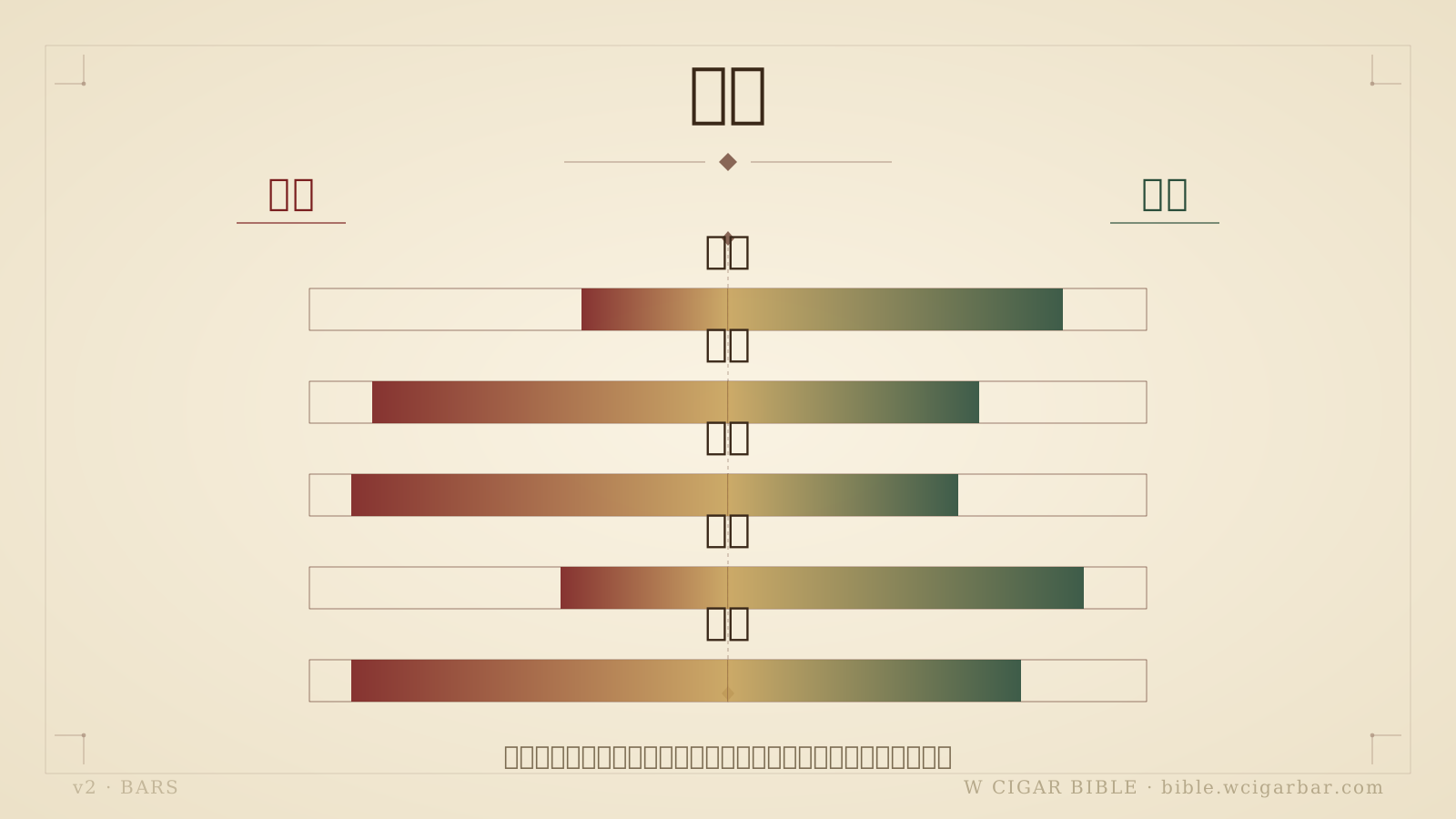
長條圖比較傳統派與現代派在木甜、單寧、泥土與烘烤上的強度
Tar, Earth, and Cocoa: Deep Resonance in the Middle Encounter
When the pairing enters the middle stage, Nebbiolo's tar tone and the cigar's earth depth truly coexist. Barolo's tar vocabulary often carries resin, dry asphalt, black tea, and old wooden cabinet feelings; Montecristo No.2's earth is closer to dried wet soil, the thick base of Cuban tobacco, and slight leather. When these two meet, it's not simply getting heavier but dividing dark flavors into multiple layers. The tar in the wine provides vertical depth, while the earth in the cigar provides horizontal thickness.
Cocoa and coffee are the bridges of this pairing. Nebbiolo's dried cherry and tea notes, when encountering Montecristo No.2's cocoa, will shift the fruit flavor from fresh red fruit to cocoa-covered dried fruit. The coffee tone then connects the roasting, spice, and slight tobacco notes that may appear after Barolo's barrel aging. Nebbiolo tar tone × cigar earth depth is the low-frequency core of this pairing; dried cherry × cocoa is the sweet-bitter fulcrum that prevents the low frequency from being dull.
The rose aroma × citrus peel highlight is another finer line. Many people talk about Barolo pairing with cigars only in terms of tannins and concentration, but ignore that if Nebbiolo's elegant floral aroma is completely overshadowed by smoke, the pairing loses half its soul. Montecristo No.2's citrus peel is not a juice-like sweetness but a bitter, oily, dry white membrane highlight. It can lift Barolo's rose from heavy tar, creating a momentary uplift in retronasal aroma.
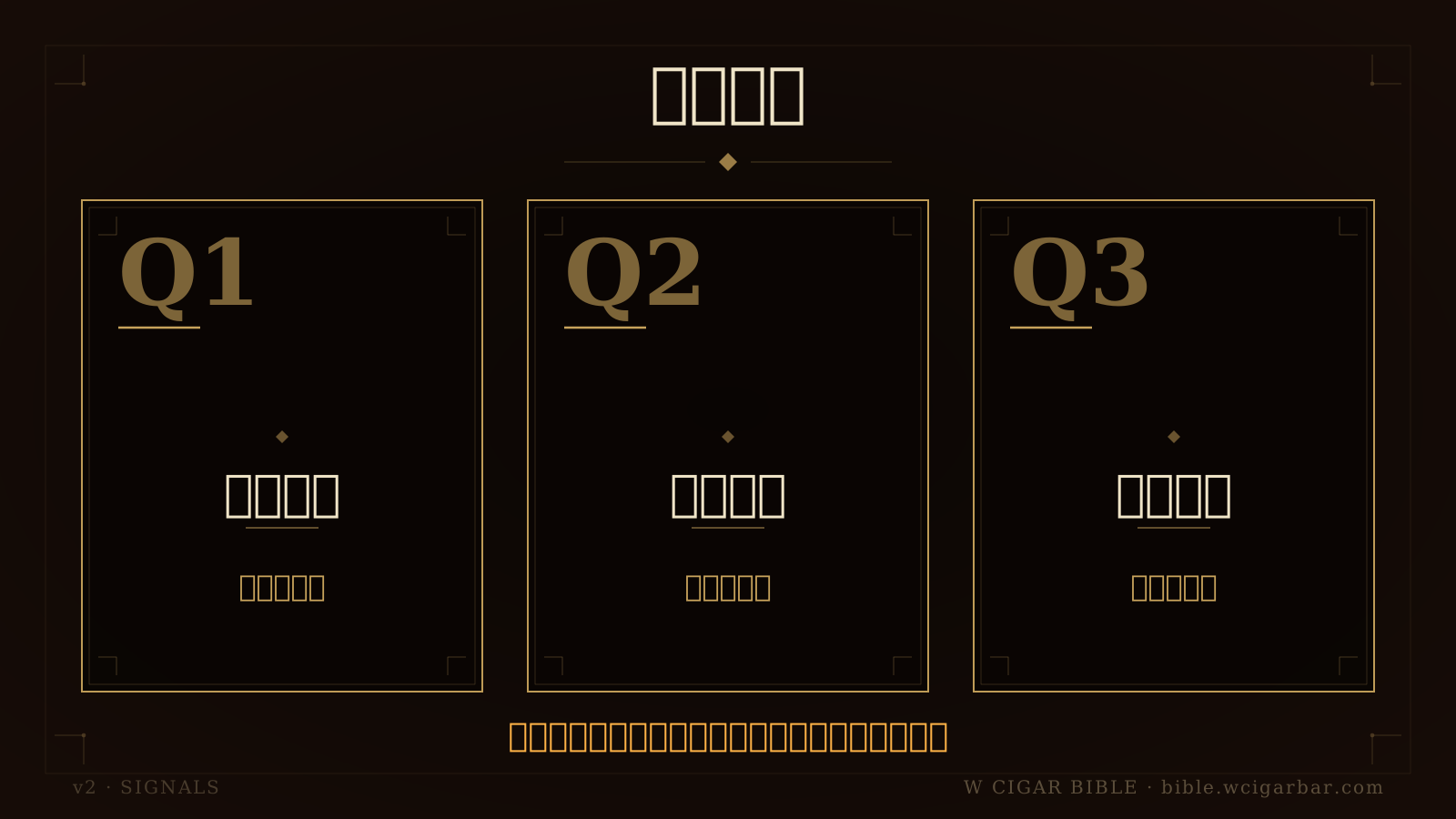
快問快答卡片回答年輕酒、桶派選擇與後段苦感的處理重點
Wine Serving and Lighting Rhythm: Let High Tannins Be Caught by Torpedo Smoke
I would place Barolo's serving temperature in a rational range of about 16-18°C, rather than letting the wine become too warm. If the temperature is too high, the alcohol sensation will push forward, tannins will appear dry and hard, and the rose may be suppressed by ripe fruit and alcohol heat. If it's a young, tightly structured Barolo, a decanter can be used to open the tannin knot with oxygen; if it's a wine that has already matured in the bottle, more caution is needed to avoid over-aeration that quickly disperses the floral aroma. This is about observation and rhythm, not speed.
The front of Montecristo No.2 should not be rushed. The torpedo shape naturally concentrates the smoke, and if the puffing rhythm is too dense, the temperature will rise, amplifying bitterness and making Barolo's tannins appear coarse. I would first smell the wine to confirm the position of rose, red fruit, tar, and wood, then light the cigar, allowing the first few puffs of smoke to establish a cocoa and dry wood base. Then let a small sip of wine enter the mouth, observing whether the tannins are caught by the smoke's oiliness.
The best rhythm is for the wine to cleanse the mouth, the smoke to lay the base, and then let Nebbiolo's acidity extend Montecristo No.2's cocoa finish. If the wine is too young, the tannins may still feel tongue-grabbing in the cigar's later stage, in which case extending the interval between each tasting allows the mouth time to reset. If the wine has entered maturity, truffle, dried rose, and tar will more easily overlap with the cigar's earth, making the pairing more like a low-voiced conversation. A wider red wine glass can be chosen to layer the floral and tar, rather than compressing everything into a single concentration.
Frequently Asked Questions
The core of pairing Barolo with Montecristo No.2 is not in adding concentration but in the mutual refinement of high tannins and oily smoke. Here are some key questions I often encounter in discussions with cigar enthusiasts at the editing desk.
Is young Barolo suitable for pairing with Montecristo No.2?
It can be, but be prepared: young Barolo's tannins are often tighter, and the acidity sharper. If its rose and red fruit have not yet opened, the cigar's cocoa can help buffer the astringency but may not fully integrate.
Is traditional Barolo or modern Barolo more suitable?
Considering Montecristo No.2's dry wood, earth, and coffee, traditional Barolo often forms deeper resonance more easily. If modern Barolo has a significant proportion of new oak, the vanilla and roasted sweetness may overlap too much with the cigar's cocoa.
Why doesn't Nebbiolo's rose aroma get overshadowed by smoke?
The premise is a slow puffing rhythm and the wine temperature not being too high. Montecristo No.2's citrus peel highlight can lift the rose aroma, but if the smoke is too hot, the floral aroma will still be suppressed by bitterness.
Are Barolo's tar flavor and cigar's smoky flavor the same?
No, they are not. Barolo's tar is a sensory association of resin, phenols, and asphalt-like feelings, while cigar smoke comes from the phenols, wood, and roasted molecules of burning tobacco; they are similar in origin but different in texture.
Is it necessary to pair with food?
Not necessarily, but if Barolo's tannins are strong, a small amount of protein and fat can balance the oral friction. If focusing on studying the wine and cigar themselves, I would minimize the food variable.
Can Barolo still hold up if Montecristo No.2 becomes bitter in the later stage?
If the bitterness comes from the normal later stage of coffee, cocoa, and leather, mature Barolo's acidity and truffle notes can still support it. If the bitterness comes from overheating or too fast a rhythm, the wine will only highlight the coarseness, unable to truly refine it.
Barolo's regal quality lies not in its posture but in Nebbiolo's ability to simultaneously support floral, tar, acidity, and tannins. Montecristo No.2 is not just relying on reputation; it focuses smoke with its torpedo shape, allowing cocoa, dry wood, and citrus peel to gradually unfold. When they meet, the most worth reading is not the intensity but the order.
Further Reading|Complete Guide to Wine Regions: Old World and New World Flavor Maps, and Pairing Overview with Cigars|Rhône Red Wine Syrah and Châteauneuf-du-Pape: Black Pepper and Provençal Herbs, Paired with Partagás Serie D No.4's Spicy Resonance|Chianti Classico Tuscan Table Wine: Sangiovese Sour Cherry and Leather, Paired with Romeo y Julieta Short Churchill
—Cigar Prince Wilson Tsai
Smoking is harmful to health. Under 20 years old is prohibited from smoking. Quitline: 0800-636363. This article is for adults over 20 years old as a reference for cigar culture, preservation, and regulations, not a tobacco advertisement, promotion, or purchase suggestion.
No drunk driving. Excessive drinking is harmful to health. Under 18 years old is prohibited from drinking. This article is also not an alcohol advertisement, promotion, or purchase suggestion, please drink responsibly.
Like this article?Share with friends
Share this W Cigar Bible piece with friends who want to learn cigar culture, storage, and tasting.
想把這篇 化為實踐
雪茄聖經是知識;雪茄文化要在空間裡發生
W Cigar Bar 大安總店資訊
台北大安區 · 雪茄聖經總編輯 Wilson Tsai 主理的雪茄文化空間
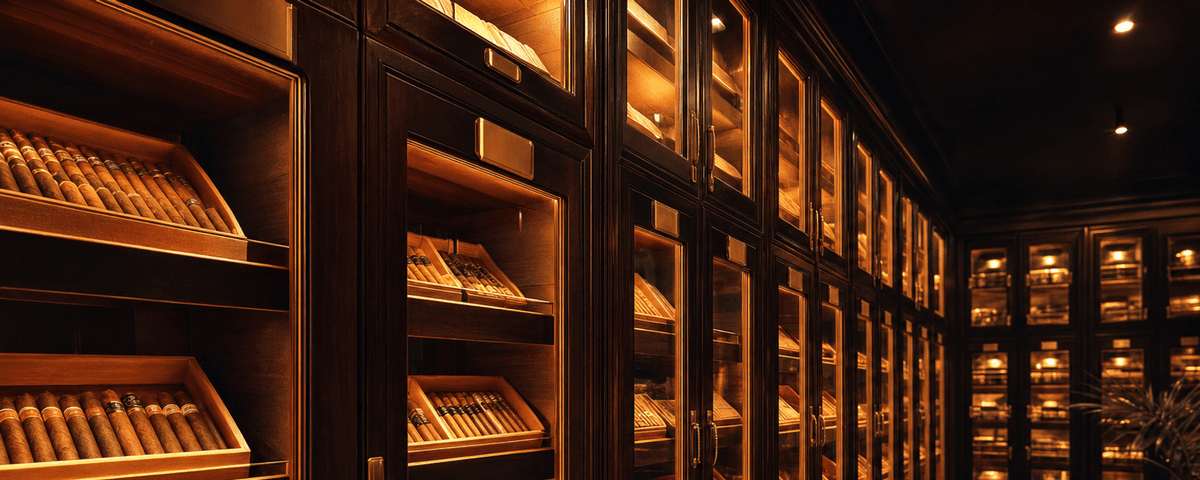
33 座 24 小時恆溫恆濕醇化室
W Cigar Bar 提供的會員醇化空間 · 場地資訊請洽編輯部
雪茄剪 / 打火機 / 雪茄盒 / Boveda
W Cigar 配件官網 · 專營雪茄配件正品
加 LINE 好友 · 文化諮詢
文化空間資訊 · 紳士沙龍 · 私人包場
本網站內容僅供雪茄文化、歷史、收藏與品吸知識研究參考。菸品有害健康、未滿法定年齡者請勿吸菸。實際規範請依所在地法律為準。
吸菸有害健康・戒菸專線 0800-636363・本站僅供 20 歲以上成年人閱覽。
讀到這裡,你不只是路過的人
留下 Email,加入 W 雪茄聖經內圈——總編輯 Wilson Tsai 親選的學院深文與國際新訊,先你一步送到信箱。
· 教育用途非銷售 · 隨時一鍵退訂 · Email 絕不對外公開 · 由勝茄股份有限公司營運
同分類延伸閱讀
資料來源:W Cigar Bible 編輯部整理 · 雪茄王子 Wilson Tsai 親自審稿
本文僅供雪茄文化、歷史、收藏與品鑑知識研究,不作為菸品促銷、銷售或購買建議。吸菸有害健康,未滿二十歲不得吸菸。