君山銀針黃茶悶黃工藝:六大茶類最稀有的一味,搭配 San Cristóbal El Príncipe 的小品精緻

君山銀針黃茶以洞庭湖島嶼微氣候、細嫩黃芽與悶黃工藝構成稀有茶類的核心氣質;San Cristóbal El Príncipe 則以奶油、可可、烤麵包與淡蜂蜜呈現淡雅偏中茄體。本文從黃茶分類、悶黃技術、三起三落沖泡,到兩者相遇時的玉米甜、穀物香、嫩香與煙草甜感,拆解一組行家才懂的小品搭配。
- 君山銀針的稀有不只在產量,更在悶黃濕熱氧化的精準門檻。
- El Príncipe 的小環徑與淡雅茄體,適合承接黃茶細緻甜香。
- 悶黃玉米甜與烤麵包穀物香,是這組搭配的同源核心。
Junshan Yinzhen Yellow Tea Steaming Process: The Rarest of the Six Tea Types, Paired with the Delicate San Cristóbal El Príncipe
The encounter between Junshan Yinzhen yellow tea and San Cristóbal de La Habana El Príncipe may seem like a light combination of non-alcoholic tea and a small Cuban cigar, but in reality, it is a flavor language that "those who understand slowly approach." Junshan Yinzhen does not win by its bold aroma but by the unique steaming sweetness, tender fragrance, and mellow thickness of yellow tea, allowing the taste buds to enter a finer scale of analysis.
I often say that the most feared thing about pairing tea with cigars is only discussing "refreshing" or "grease-cutting," which belittles both. As the editor of the "Cigar Bible," I am more concerned with how tea polyphenols, amino acids, sugars, tobacco fermentation aroma, pyrazines, and phenols after burning interact in the mouth. The delicacy of this combination lies in the rare tea character of Junshan Yinzhen and the restrained proportion of El Príncipe as a small piece with a mild to medium body, without overpowering each other.

時間軸呈現君山銀針黃茶從殺青到乾燥的悶黃步驟
The Rare Position of Yellow Tea Among the Six Tea Types
Yellow tea is positioned between green tea and black tea, not following complete non-fermentation nor deep post-fermentation, but forming wet heat oxidation through "steaming after fixing." Among the six tea types, yellow tea has long had a low production volume, not just due to market demand, but because the process is extremely sensitive to time, moisture content, temperature, and the thickness of the tea buds. If steamed too lightly, the green aroma remains; if steamed too heavily, the sweet and mellow taste turns into a cooked and dull flavor.
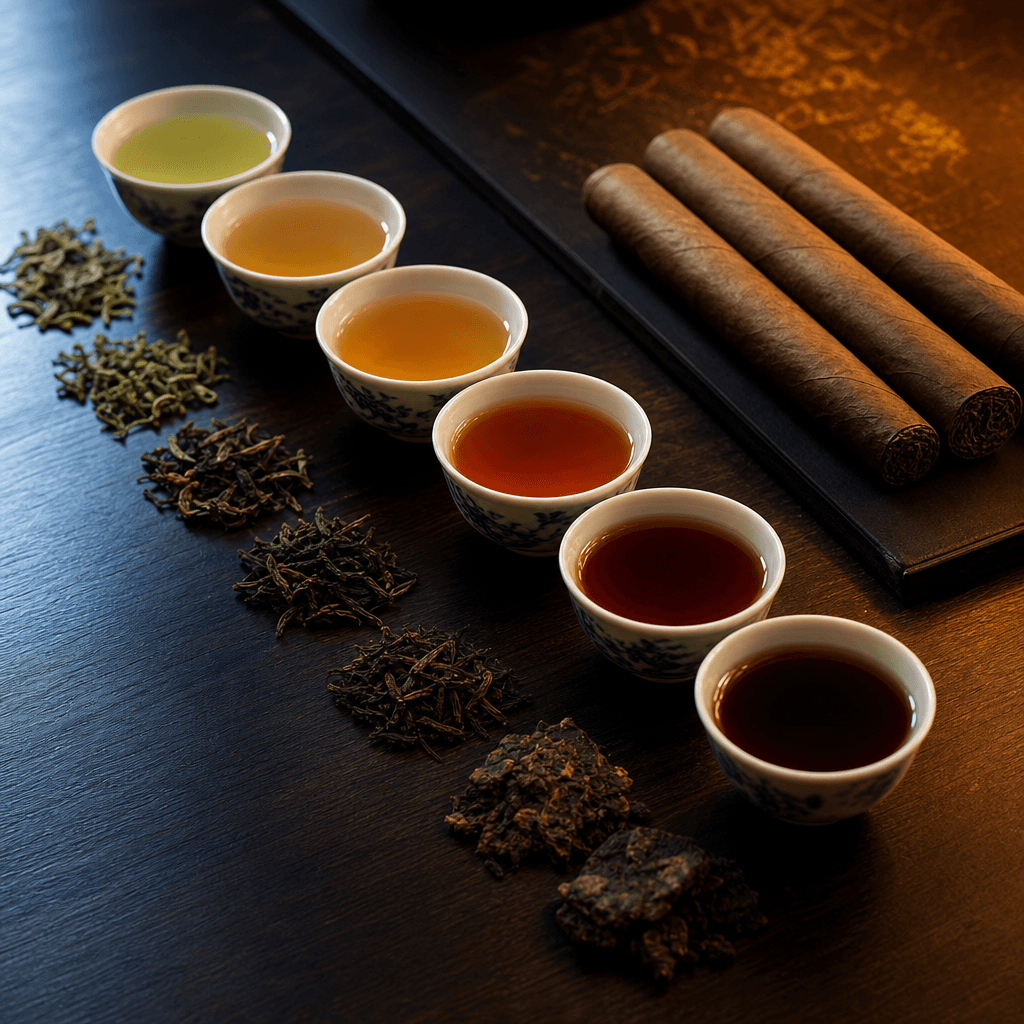
Yellow tea can be divided into yellow bud tea, small yellow tea, and large yellow tea. Junshan Yinzhen belongs to yellow bud tea, with stricter raw material standards, usually emphasizing single bud or similar single bud form. Small yellow teas like Weishan Maojian and Beigang Maojian have slightly larger leaves and a more open aroma; large yellow teas like Huoshan Large Yellow Tea often have more pronounced roasted chestnut, caramel, and robust firework. Junshan Yinzhen is placed at the top of the yellow tea pyramid not just because of its straight needle shape, but because the tender buds must retain transparency and freshness after steaming.
The difficulty of yellow tea is not in steaming the tea yellow, but in letting the green aroma retreat, the sweetness rise, without letting the tender fragrance collapse. This is also why it has become a rare tea type today: the process cannot rely entirely on machine curves and still highly depends on the tea master's judgment of leaf temperature, hand feel, aroma, and moisture. For cigar enthusiasts, understanding this is to understand why it is suitable to pair with El Príncipe, a cigar that unfolds its layers after being approached closely.
Junshan Yinzhen and the Dongting Lake Island Production Area
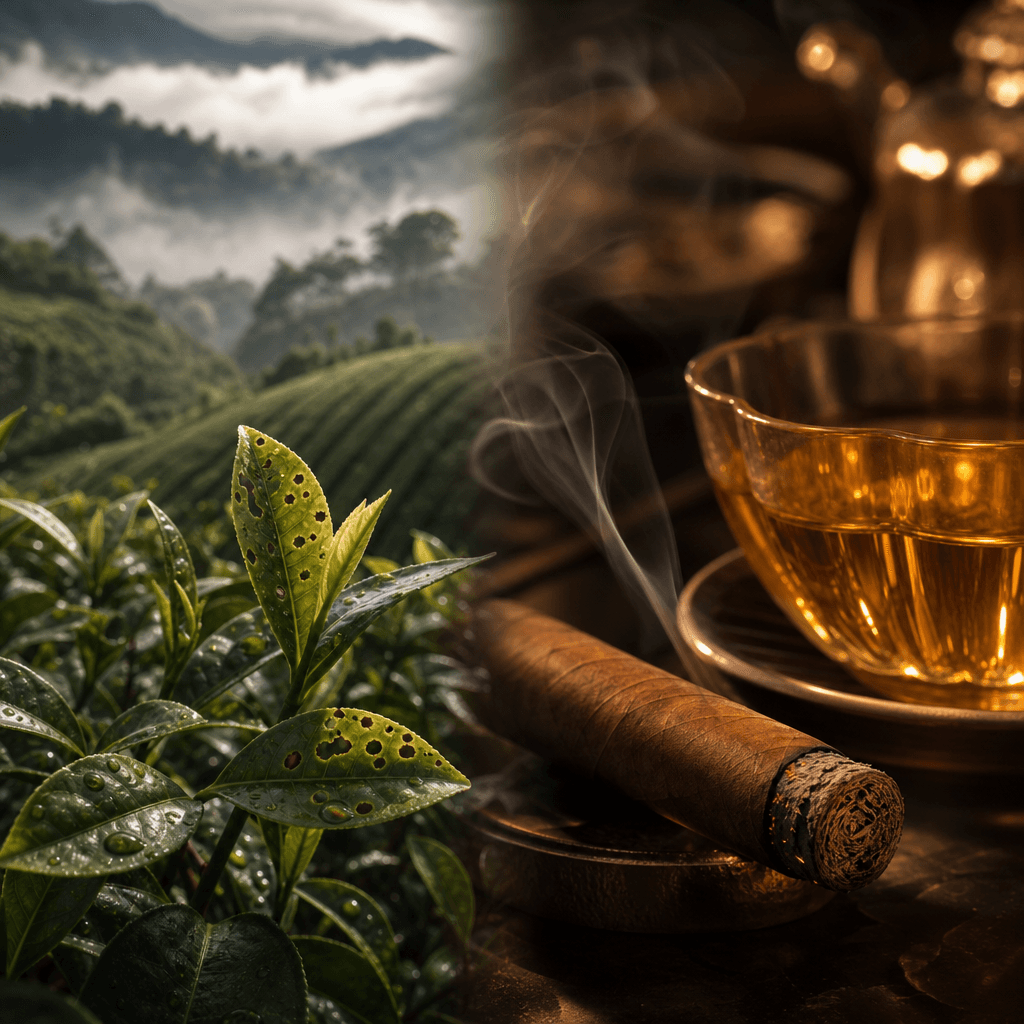
The core production area of Junshan Yinzhen is around Junshan Island in Dongting Lake, Yueyang, Hunan. This island environment is not just a scenic footnote but part of the flavor structure. The water surface of Dongting Lake provides stable humidity, and the spring fog and diffuse light reduce sunburn on the buds, allowing the buds to accumulate amino acids and soluble sugars at a slower pace. High humidity, soft light, lake breeze, and sandy loam soil make the tea soup not only pursue a clear aroma but also have a kind of water-moist roundness.
The appearance of Junshan Yinzhen emphasizes plump buds, covered with fine hairs, and a bright yellow color, often presenting a "gold inlaid jade" visual impression after brewing. This proportion of fine hairs and tender buds affects the free amino acids, tender fragrance substances, and gelatinous feel in the tea soup. If the raw material is too old, even if the steaming is successful, the soup can easily be coarse; if the raw material is too tender and improperly handled, the aroma is thin, and the sweetness is short.
What Dongting Lake gives to Junshan Yinzhen is not just a geographical halo, but a sweet and mellow base formed by humidity, fog light, and the growth speed of tender buds. When it meets San Cristóbal de La Habana El Príncipe (Cuba, Minuto, 42 × 110mm): cream, cocoa, toasted bread, light honey, a mild to medium body small piece, this base will make the cigar's toasted bread aroma not appear dry and hard, and the light honey not appear thin. In other words, the tea soup first lays a soft golden color in the mouth, then lets the delicate sweet aroma of tobacco enter.

三張卡整理君山銀針與小品雪茄的搭配重點
Steaming Process: The Technical Threshold of Wet Heat Oxidation
Steaming yellow is often simplified as "steaming the tea a bit," which is a very dangerous misunderstanding. The typical process undergoes fixing, initial rolling or not rolling, piling and steaming, re-baking, re-steaming, drying, and other variations, with significant differences in rhythm in different tea areas. The core is to use the residual heat and moisture content of the tea leaves to promote mild oxidation of polyphenols, partial degradation of chlorophyll, and a decrease in green aroma compounds in a limited oxygen and wet heat environment, turning the tea soup from fresh green to bright yellow and sweet.
"Wet heat oxidation to remove green and turn sweet" seems easy, but it is extremely difficult in practice. If the leaf temperature is too high, the tender buds will have a cooked and steamed feel; if the humidity is insufficient, the transformation is uneven, and the green astringency remains; if the piling and steaming time is prolonged, the aroma will be dull. Traditional steaming also faces a transmission gap because the process is time-consuming, has a high error rate, and the finished product standards are fine, so many tea factories prefer to make more intuitive green tea.
The steaming of Junshan Yinzhen is a precise wet heat reaction that suppresses grassy aldehydes and elevates corn sweetness and tender cooked grain aroma. When paired with El Príncipe, this reaction directly corresponds to the toasted bread pyrazines, light cocoa bittersweet, and creamy fat feel after the cigar is burned. The tea does not use high aroma to cover the smoke but amplifies the grain sweetness in tobacco that is originally very weak, like switching a small volume string recording to a quieter listening room.

矩陣比較黃芽茶黃小茶黃大茶的原料香氣與火功差異
Three Rises and Three Falls: The Physics and Taste Behind the Brewing Spectacle
The famous "three rises and three falls" of Junshan Yinzhen is often seen when brewing in a glass: the buds float after absorbing water, then sink as water enters the tissue, and rise and fall again due to changes in bubbles and bud posture. This is not purely a performance but is related to bud density, fine hairs, air gaps, and water temperature infiltration speed. Truly good Junshan Yinzhen has upright bud posture between rises and falls, and the tea soup gradually changes from light yellow to bright apricot yellow.
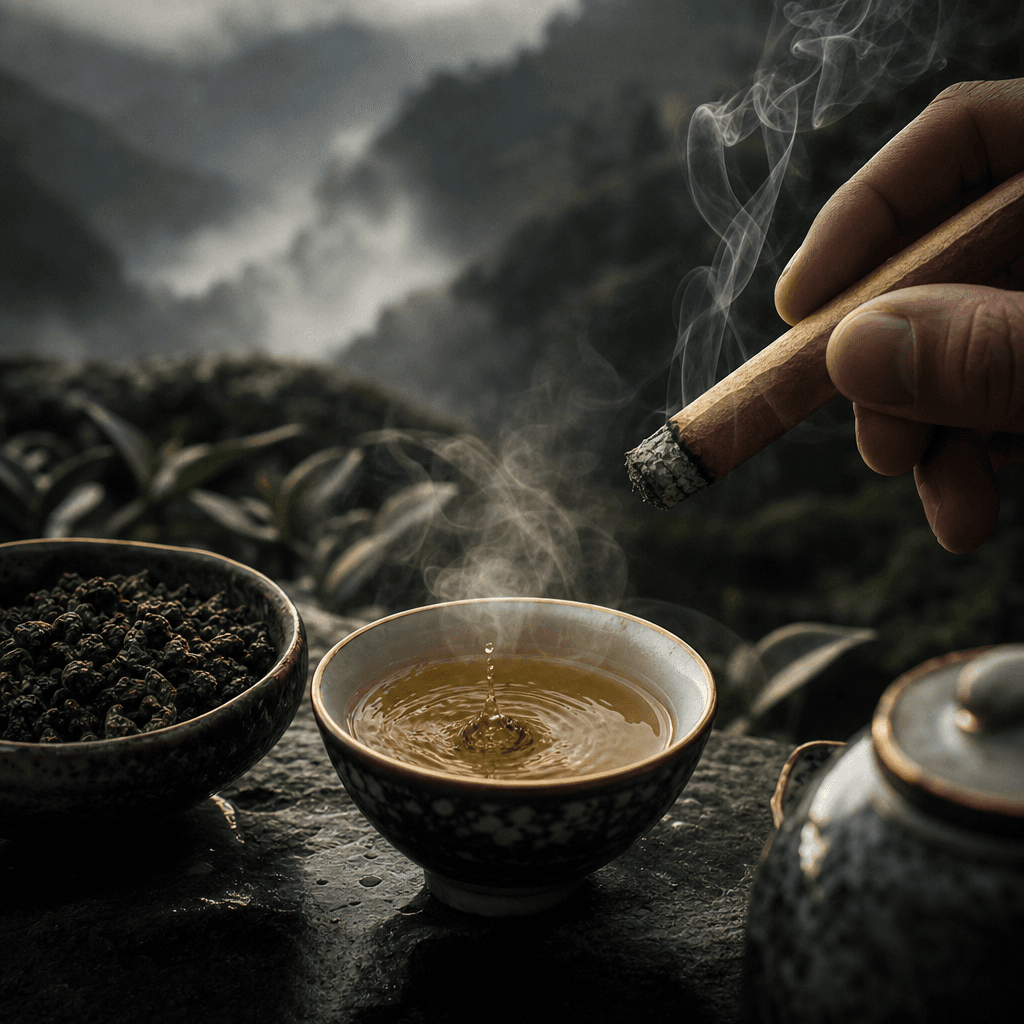
In brewing, I avoid pouring boiling water directly, using water at about 80 to 85°C, allowing the tender buds time to release sweet fragrance without being forced out by high temperatures. A glass can observe three rises and three falls, while a white porcelain covered bowl is more conducive to controlling the soup and segmenting the aroma. The first infusion looks at the tender fragrance and corn sweetness, the second looks at the mellow thickness, and the third observes whether there is still a clear aftertaste in the tail section, rather than just water taste.
The beauty of three rises and three falls is truly useful in reminding us that Junshan Yinzhen should be extracted in a low-impact way to retain the subtle volume needed to pair with cigars. If the tea soup is brewed too strong, the steaming sweetness of yellow tea will become heavy, and the cream and light honey of El Príncipe will be pushed to the edge. If brewed too light, the cocoa and woody bitterness of the cigar will appear isolated, and the two will lack the mid-range pull.

三張卡指出清爽說法高溫沖泡與重焙壓味的常見誤解
El Príncipe: Cuban Details in a Small Piece Specification
San Cristóbal de La Habana is one of the often underestimated brands in Cuban cigars, with a name paying homage to the history of Old Havana, and the brand temperament is not as high-volume as some classic lines. El Príncipe, as a Minuto size, with a 42 × 110mm proportion, concentrates the burning rhythm, and the flavor must clearly enter the theme from the first segment. This small size is not a miniature version of a large cigar but an independent flavor composition.
Its typical profile is cream, cocoa, toasted bread, light honey, with a mild to medium body, and the most charming part is that there is no overly heavy leather or pepper pressure. The front section often sees toasted bread edges and light cream, the middle section has cocoa powder and honey water feeling emerging, and the back section, if well aged, will have a bit of mild wood and dried fruit afterimage. The small ring gauge also means that managing the burning heat is more important, and too fast a rhythm will replace the details with a hot and spicy feel.
The delicacy of El Príncipe does not rely on intensity to win but on maintaining a sense of proportion with cream, grain, cocoa, and light honey within a short span. This is precisely why it is suitable for Junshan Yinzhen: yellow tea will not pull the roasted aroma too deep like heavily roasted oolong, nor will it interfere with the cigar with sharp green tea aroma. Both operate at medium to low volume, and connoisseurs listen to the details, not the sound pressure.

長條圖對比君山黃茶與重焙烏龍在五個風味軸的強弱
token×token: The Flavor Chemistry Intersection of Yellow Tea and Cigars
Steamed corn sweetness × toasted bread grain aroma is the first core of this pairing. After steaming, Junshan Yinzhen reduces the green leaf aroma, and the impression of sweet corn, tender chestnut, and steamed grains rises; the toasted bread aroma of El Príncipe comes from the joint action of tobacco fermentation, burning pyrazines, and roasting feel. When the two meet, the tea soup pulls the dry roasted aroma of tobacco back to the moist grain area, and the cigar makes the yellow tea's sweetness not just stop at clear sweetness but adds the depth of toasted wheat skin.
Tender fragrance × light honey is the second key. The tender fragrance of Junshan Yinzhen includes the delicate herbal, fine hair, and slight pollen feel of fresh buds and leaves; the light honey of El Príncipe is not thick syrup but a shallow sweetness attached to the edges of cream and wood. When the tea soup first moistens the tongue, the honey feel will be amplified into a "whispering volume," like a distant sweet aroma being pushed half a step closer, still not noisy.
The essence of this pairing is the low green aroma sweetness after steaming and the resonant grain sweetness of Cuban small cigars. If broken down in a table, it is much clearer than "the tea is smooth, the cigar is fragrant."
| Junshan Yinzhen Flavor Token | El Príncipe Flavor Token | Oral Changes After Intersection |
|---|---|---|
| Steamed Corn Sweetness | Toasted Bread Grain Aroma | Sweetness changes from clear to warm, with connections of steamed corn and toast edges |
| Tender Fragrance and Fine Hair | Light Honey | Aroma volume decreases but distance becomes closer, with a tail note like pollen honey water |
| Mellow Soup Feel | Creamy Fat Feel | The middle of the mouth becomes round, and the dry feel of tobacco is softened by the tea soup |
| Slightly Cooked Chestnut | Cocoa Powder | Bittersweet becomes cleaner, avoiding cocoa tail turning into burnt bitterness |
| Apricot Yellow Clear Soup | Mild to Medium Body Cigar | Overall rhythm is delicate, suitable for slow segmented observation |
Practical Rhythm: Water Temperature, Tea Concentration, and Cigar Burning
To truly serve El Príncipe with Junshan Yinzhen, I would set the tea soup concentration in the "recognizable sweetness, but not thick pressure" range. For example, using a white porcelain covered bowl, you can use less tea, shorter infusion, retaining apricot yellow soup color and clear mellow; with a glass cup, use lower water temperature to extend the observation time of three rises and three falls. The focus is not on brewing as strong as possible but on letting the tea form a clear buffer layer between each puff of the cigar.
On the cigar side, avoid burning too quickly, as the Minuto size is prone to heating up due to continuous puffing, and once heated, the cream will turn dry and spicy, and the cocoa will lean towards burnt. El Príncipe is best advanced at a stable slow pace, allowing the tea soup to reorganize the tongue surface every few puffs. At this time, the mellow of Junshan Yinzhen is not to clear the taste but to arrange the taste neatly: honey to honey, toasted bread to toasted bread, cocoa to cocoa.
The best rhythm is tea laying the foundation, cigar unfolding aroma, tea then gathering, rather than the two competing for the stage. In the front section, the tea soup can be slightly lighter to highlight El Príncipe's toasted bread and cream; in the middle section, the tea soup is slightly increased to connect cocoa and light honey; in the back section, return to shorter infusions to avoid the cigar's tail end heat and yellow tea's cooked sweetness stacking into a dull feel.

快問快答卡片說明玻璃杯水溫與小尺寸層次三個問題
The Connoisseur's Code of Rare Tea Types and Underestimated Brands
As a representative of yellow tea, Junshan Yinzhen is rare not only because of its low production but also because many people's understanding of yellow tea stops at the name and has not truly understood steaming. San Cristóbal de La Habana is the same; it does not always stand in the noisiest position, and El Príncipe is not attracting attention with large size or strong body. Putting the two together is like a connoisseur's code: what you care about is not external volume but internal proportion.
This pairing is very suitable for cigar enthusiasts who are already familiar with classic Cuban styles and want to recalibrate taste details. Junshan Yinzhen can make people notice those often overlooked light honey and cream edges in El Príncipe and make the cocoa bittersweet cleaner. Conversely, the tobacco roasting feel of the cigar will make the corn sweetness of yellow tea not linear but produce a more complex impression closer to roasted grains, steamed chestnuts, and pollen honey.
The most charming part of the combination of the rarest tea type and the most underestimated brand is that they both require the drinker to lower the volume to hear the precise structure. This is not a show-off pairing but a choice for those who read taste slowly, between a Minuto, a cup of apricot yellow tea soup, and a segment of steaming sweet aroma. When you can recognize how corn sweetness catches toasted bread, and tender fragrance pushes light honey closer, this pairing is complete.
Frequently Asked Questions
The most important thing in understanding this pairing is to regard Junshan Yinzhen as a yellow tea of precise craftsmanship, not a substitute for general fragrant tea.
Does Junshan Yinzhen have to be brewed in a glass?
Not necessarily. A glass can observe three rises and three falls, suitable for understanding bud posture and tea soup changes; a white porcelain covered bowl is more conducive to controlling concentration. When paired with El Príncipe, I value the stability of the tea soup more, so both covered bowls and glass cups can be established.
What happens if the water temperature is too high?
Too high a water temperature can force out the bitterness and cooked feel in the tender buds, and the corn sweetness of yellow tea will become dull. When paired with cigars, this dullness will make the cocoa tail appear dry and hard. 80 to 85°C usually better retains tender fragrance and mellow.
Why not choose heavily roasted oolong to pair with El Príncipe?
Heavily roasted oolong's roasting aroma, caramel, and nut tones are stronger, easily pushing El Príncipe's light honey and cream to the background. The steaming sweetness of Junshan Yinzhen is finer, able to connect with toasted bread aroma without rewriting the cigar's profile. This Minuto needs a magnifying glass, not a spotlight.
Will the steaming flavor of yellow tea be too dull?
Precisely crafted Junshan Yinzhen should not have a dull flavor but a sweet and tender cooked grain aroma after the green aroma has decreased. If there is a heavy cooked flavor, it is mostly related to raw materials, steaming control, or preservation status. When paired with cigars, clean yellow tea should make the mouth brighter, not thicker.
Will the small size of El Príncipe lack layers?
Small size does not mean fewer layers, but the layers unfold faster, and the observation window is shorter. El Príncipe's cream, cocoa, toasted bread, and light honey are very clear in a good rhythm. When paired with Junshan Yinzhen, the tea soup can extend the stay of these details in the mouth.
What kind of tasting situation is this pairing suitable for?
Suitable for quiet, complete time, and attention focused on details. It does not require strong food intervention, but rather allows the tea soup and cigar to have a solo dialogue. If the mouth already has spicy or heavy sauce residue, it will interfere with the recognition of tender fragrance and light honey.
The brilliance of Junshan Yinzhen and El Príncipe lies not in intensity but in illuminating each other's details. The steaming corn sweetness of yellow tea pushes the toasted bread and light honey of the Cuban small piece to a clearer position; the cocoa and cream of the cigar give the mellow of Dongting Lake yellow buds a deeper echo. This is a choice for those who read taste slowly.
Further Reading|Complete Guide to the Six Tea Types: Fermentation Spectrum from Green Tea to Pu'er, and Flavor Overview for Cigar Pairing|Uji Matcha and Sencha Steaming Process: The Green Aesthetics of Umami and Seaweed Freshness, Paired with Trinidad Reyes' Short and Compact|Complete Analysis of Wuyi Rock Tea Dahongpao: Rock Bone Floral Fragrance and Charcoal Roasting Process, Paired with Cohiba Siglo IV's Rich Dialogue
—Cigar Prince Wilson Tsai
Smoking is harmful to health. Smoking is prohibited for those under twenty. Quitline: 0800-636363. This article is intended for adults over twenty as a reference for cigar culture, preservation, and regulations, not as a tobacco advertisement, promotion, or purchase suggestion.
Like this article?Share with friends
Share this W Cigar Bible piece with friends who want to learn cigar culture, storage, and tasting.
想把這篇 化為實踐
雪茄聖經是知識;雪茄文化要在空間裡發生

W Cigar Bar 大安總店資訊
台北大安區 · 雪茄聖經總編輯 Wilson Tsai 主理的雪茄文化空間

33 座 24 小時恆溫恆濕醇化室
W Cigar Bar 提供的會員醇化空間 · 場地資訊請洽編輯部

雪茄剪 / 打火機 / 雪茄盒 / Boveda
W Cigar 配件官網 · 專營雪茄配件正品

加 LINE 好友 · 文化諮詢
文化空間資訊 · 紳士沙龍 · 私人包場
本網站內容僅供雪茄文化、歷史、收藏與品吸知識研究參考。菸品有害健康、未滿法定年齡者請勿吸菸。實際規範請依所在地法律為準。
吸菸有害健康・戒菸專線 0800-636363・本站僅供 20 歲以上成年人閱覽。
讀到這裡,你不只是路過的人
留下 Email,加入 W 雪茄聖經內圈——總編輯 Wilson Tsai 親選的學院深文與國際新訊,先你一步送到信箱。
· 教育用途非銷售 · 隨時一鍵退訂 · Email 絕不對外公開 · 由勝茄股份有限公司營運
同分類延伸閱讀
資料來源:W Cigar Bible 編輯部整理 · 雪茄王子 Wilson Tsai 親自審稿
本文僅供雪茄文化、歷史、收藏與品鑑知識研究,不作為菸品促銷、銷售或購買建議。吸菸有害健康,未滿二十歲不得吸菸。