凍頂烏龍茶炭焙工藝:焙火與喉韻的老派功夫,搭配 Romeo y Julieta Short Churchill
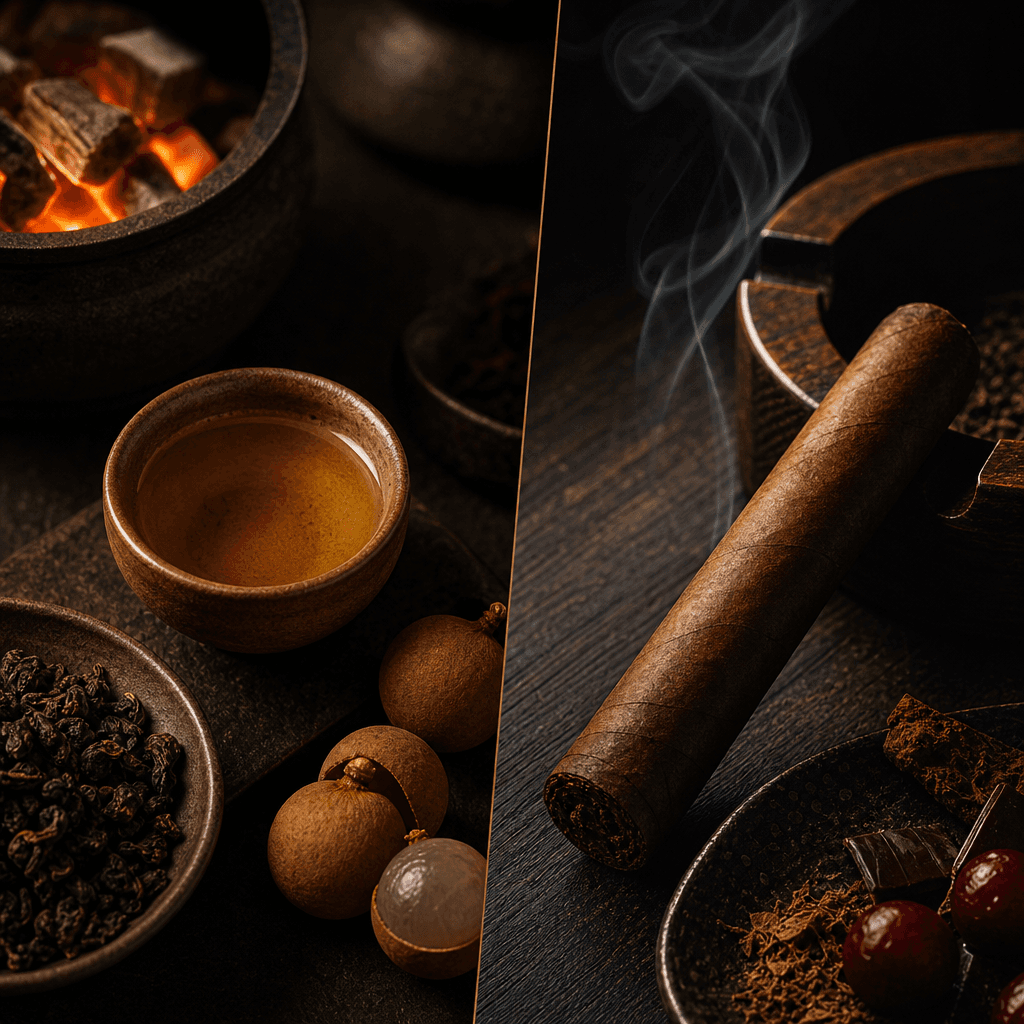
凍頂烏龍茶炭焙工藝來自南投鹿谷的山坡、茶師的火候與喉韻判讀;Romeo y Julieta Short Churchill 則以紅果、木質、淡可可與花香構成中等茄體。本文從凍頂山產地故事、1855 年茶苗傳說、中發酵中焙火、龍眼炭焙與比賽茶文化談起,再拆解炭火甜、果香接力與乾濕平衡如何在茶湯與哈瓦那煙霧中相遇。
- 凍頂烏龍的核心在中發酵、中焙火與南投鹿谷山場的老派火功。
- 龍眼炭焙能放大淡可可、木質與紅果,使雪茄煙霧更有層次。
- 喉韻不是玄學,而是茶湯收斂、回甘、香氣停留的整體判讀。
Dong Ding Oolong Tea Charcoal Roasting Technique: The Traditional Craft of Roasting and Throat Rhyme, Paired with Romeo y Julieta Short Churchill
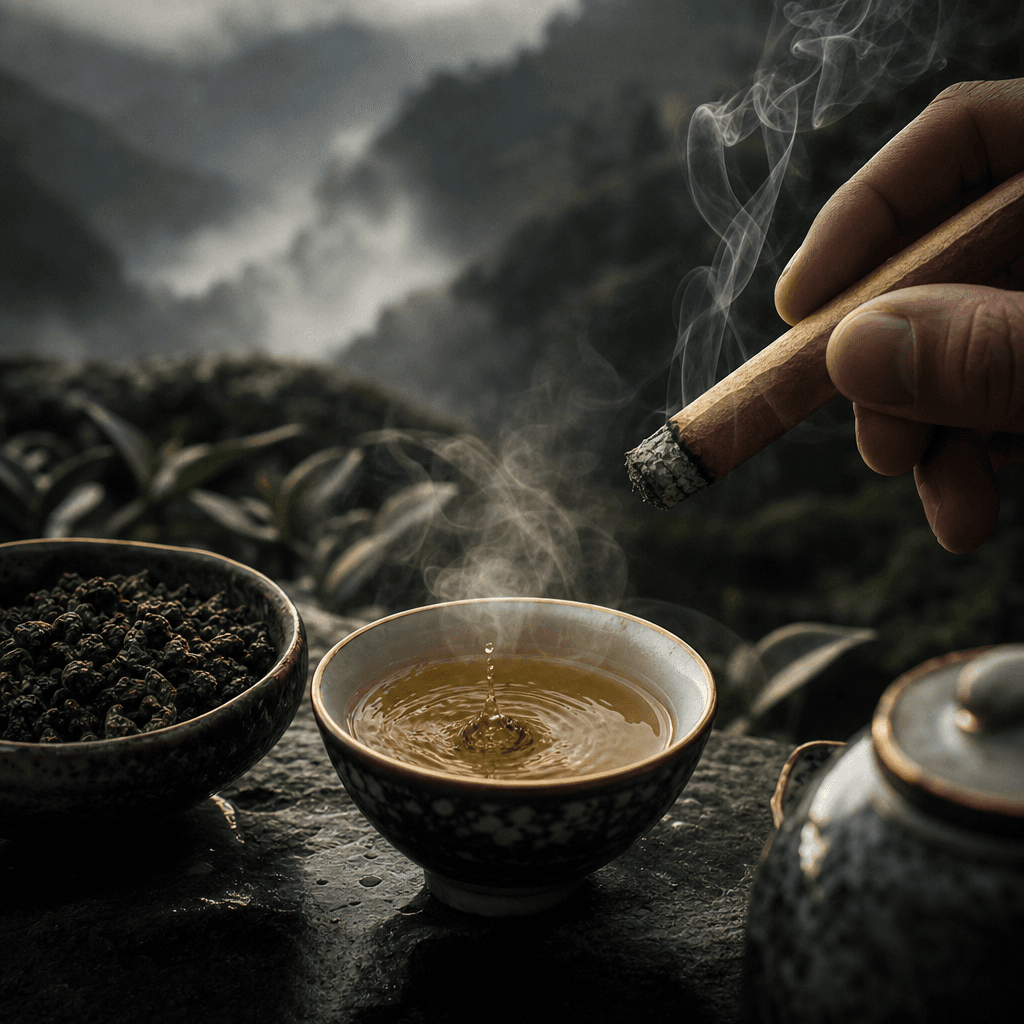
The encounter between Dong Ding Oolong tea's charcoal roasting technique and Romeo y Julieta Short Churchill is a slow dialogue between Taiwanese traditional tea roasting skills and the classic Havana Robusto. As an editor of the "Cigar Bible," I often say that the most challenging part of non-alcoholic pairing is not the lack of alcohol strength, but the absence of the solvent sensation that alcohol provides. Therefore, the tea must rely on fermentation, roasting, astringency, aftertaste, and temperature to carry the oils and woody notes in the cigar smoke.
In this article, I will first clarify Dong Ding Oolong itself: why it is not simply "Oolong tea," but a taste language formed by the intersection of Nantou Lugu, Dong Ding Mountain, tea masters' roasting skills, and the tea evaluation system. Then, I will place Romeo y Julieta Short Churchill (Cuba, Robusto, 50 × 124mm): red fruit, woody, light cocoa, floral, medium-bodied, into the tea to analyze the three groups of changes that can truly be felt by the tongue: longan charcoal roasting × light cocoa, ripe fruit × red fruit, and roasting convergence × smoke oils.
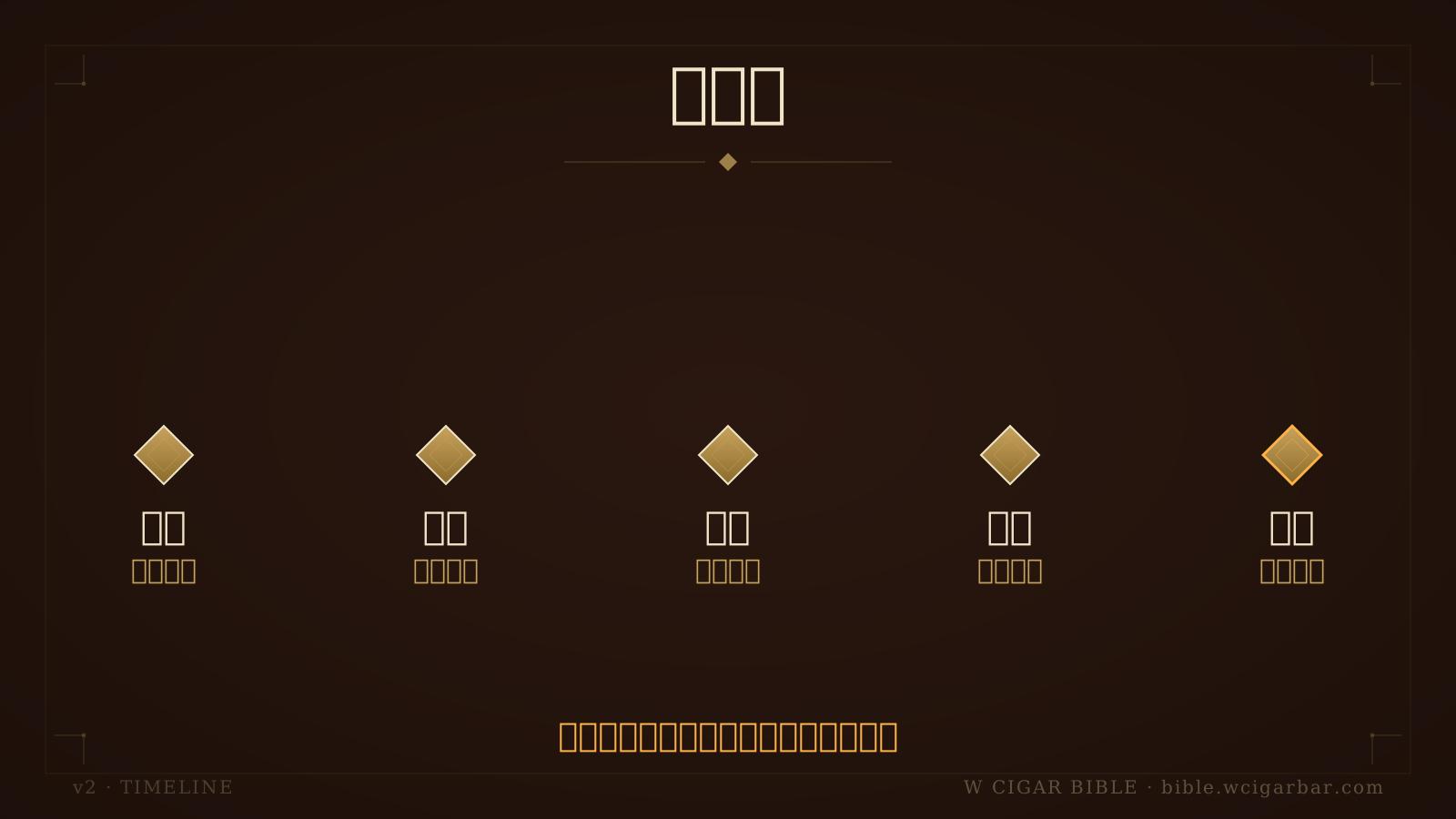
時間線列出萎凋浪菁揉捻炭焙退火等製茶步驟
Nantou Lugu and Dong Ding Mountain: Dong Ding Oolong is Not a Geographic Label, but a Memory of the Mountain
Discussing Dong Ding Oolong, one cannot simply treat it as a cup of roasted Oolong. Dong Ding Mountain in Nantou Lugu is about 700 meters above sea level, with undulating terrain and significant temperature differences between day and night. Tea gardens are mostly spread out on slopes, with fog, sunlight, and drainage conditions jointly shaping the thickness of the tea leaves. This thickness is crucial because tea leaves without sufficient internal quality cannot withstand the advancement of later-stage roasting.
The most commonly told story among the people is that in 1855, Lin Fengchi went to Fujian for an exam and brought back tea seedlings from Wuyi Mountain, planting them in the Dong Ding area of Lugu. This legend is not just a piece of local memory but also explains the subtle kinship between Dong Ding Oolong and Wuyi Oolong: both emphasize semi-fermentation, roasting skills, throat depth, and aroma layers, but Dong Ding has developed a more rounded, ripe fruit sweetness in Taiwanese vocabulary.
Nantou Lugu later formed a strong competition tea culture, with standardized evaluation for tea cups, soup color, aroma, taste, and leaf bottom. Competition tea is not just about rankings; it provides tea masters with a common standard for fermentation degree, kneading tightness, and roasting depth. For beginners, understanding the competition tea culture helps explain why Dong Ding Oolong is often described as "having bones, rhyme, and fire."
The essence of Dong Ding Oolong is the local flavor boiled out by the mountain's internal quality, Wuyi legend, and Lugu's tea evaluation system. This also explains why it can pair with Romeo y Julieta Short Churchill: neither relies on a single aroma to win but on a layered structure that engages the nasal cavity, tongue surface, and throat.
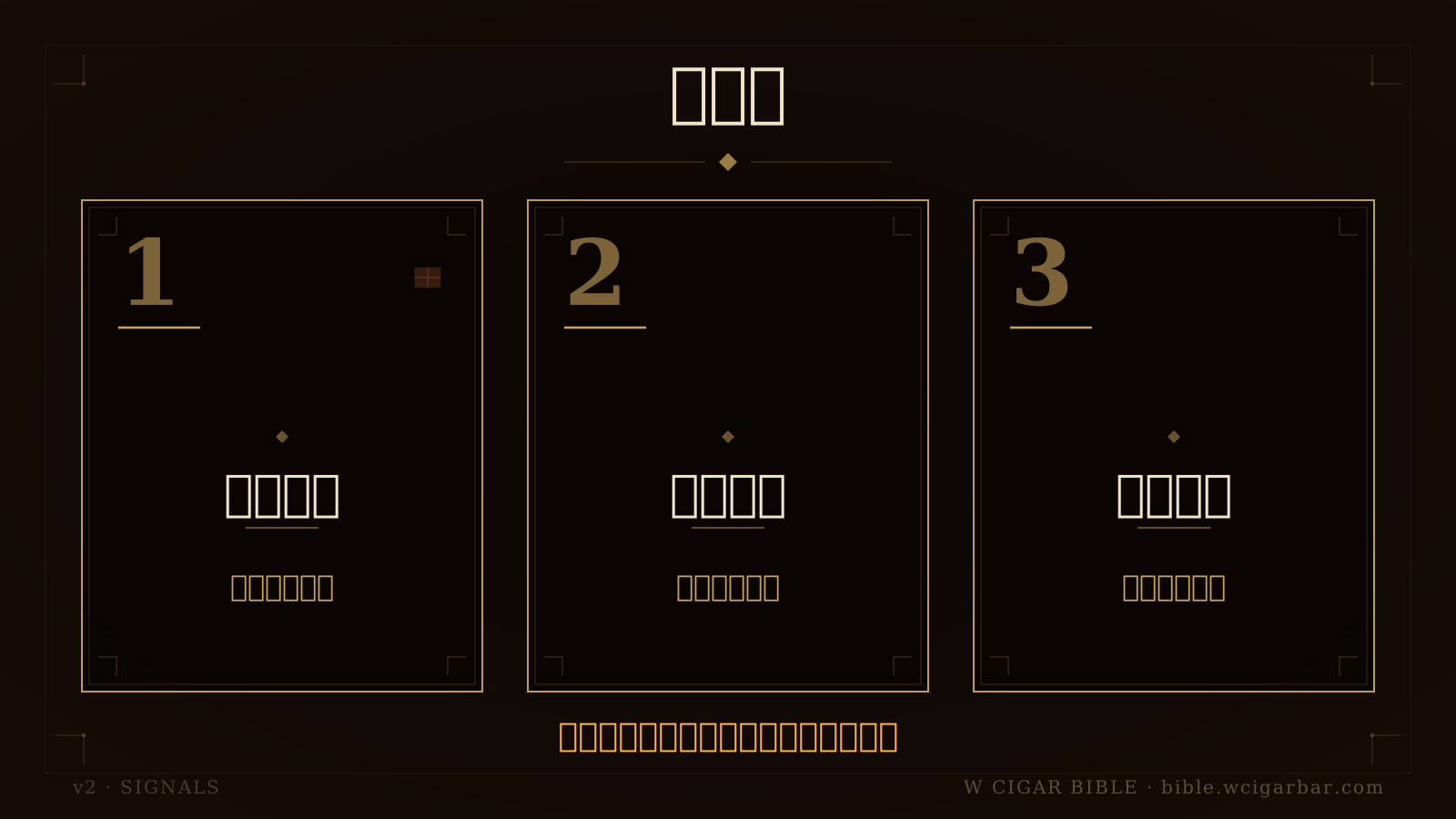
三張卡呈現炭焙茶與雪茄搭配的核心線索
Medium Fermentation and Roasting: How the Framework of Dong Ding Oolong is Established
Traditional Dong Ding Oolong usually falls within the range of medium fermentation and medium roasting, which is its biggest distinction from light fragrance high mountain tea. If fermentation is too light, the aroma tends to lean towards green flowers, fresh grass, and high floral notes; if too heavy, ripe fruit and honey notes will stand out, but the tea soup lines may become heavy. The old-school beauty of Dong Ding lies in balancing floral, fruity, roasted aromas, and tea soup convergence.
In terms of craftsmanship, after picking, the tea leaves undergo sun withering, indoor withering, tossing or stirring, causing cell damage at the leaf edges and initiating oxidation. This step determines whether the fruit aroma of Dong Ding Oolong can mature and whether deep aromas like dried plum, ripe pear, and roasted nuts can appear during later roasting. If the initial fermentation is insufficient, no matter how much roasting is done later, it tends to leave only a dry fire taste.
Kneading and rolling give the tea leaves a semi-spherical appearance and allow the tea soup to release more rhythmically. A good Dong Ding does not pour out all its flavor in one infusion but opens the aroma in the first infusion, unfolds the framework in the second, and observes whether the throat rhyme and aftertaste remain after the third. This segmented release corresponds well to the flavor development of a Robusto from the initial ignition to the middle section.
Medium fermentation provides ripe fruit and tea soup thickness, while medium roasting pushes the aroma from surface floral to nutty, woody, and throat depth. Therefore, it is not simply charcoal roasted tea, nor is it roasted Oolong that only seeks fire aroma; the truly charming aspect of Dong Ding Oolong lies in the mutual correction of fermentation and roasting, giving the tea soup strength without coarseness.
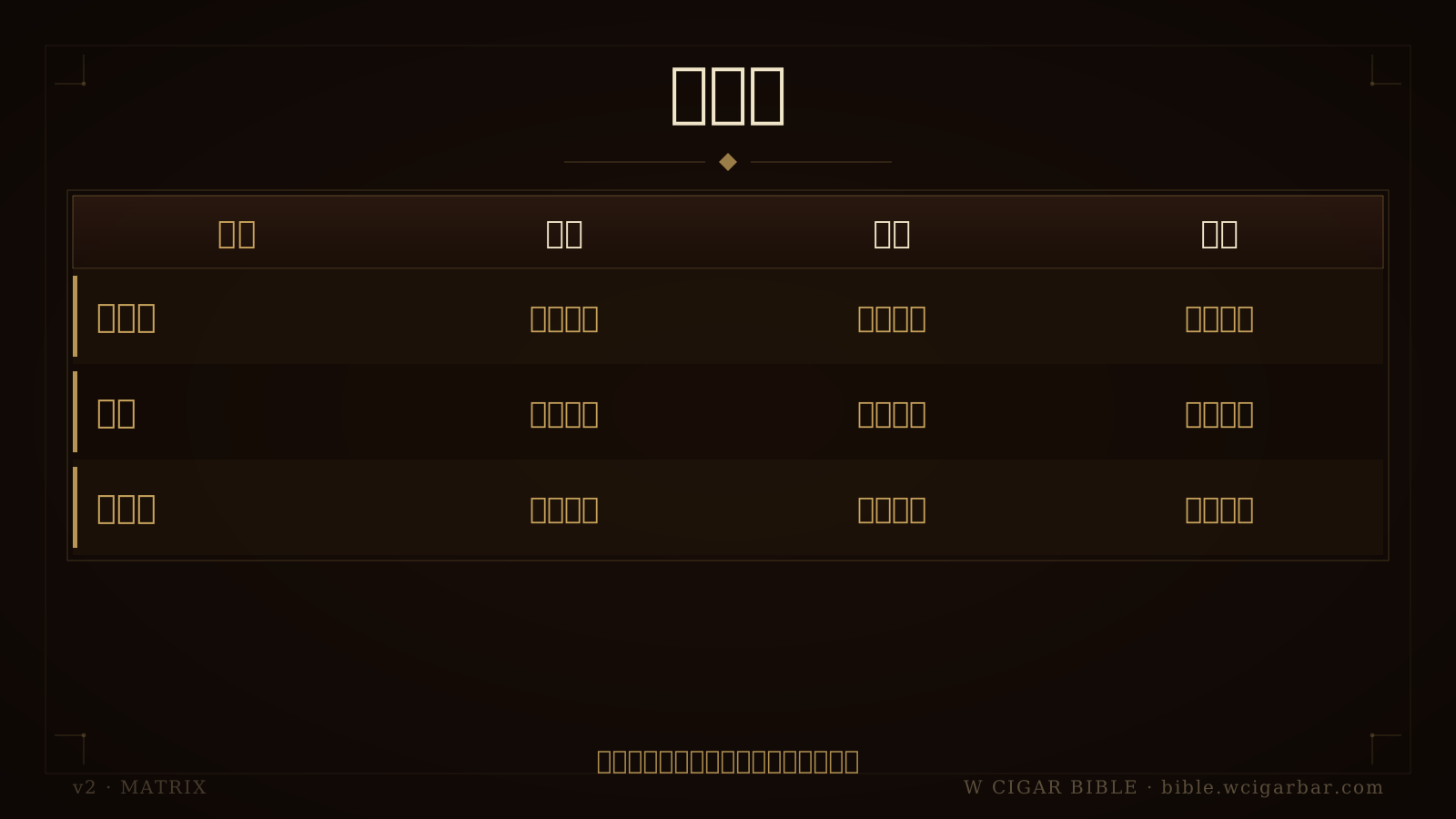
矩陣比較凍頂烏龍短丘雪茄與兩者相遇的味覺變化
Longan Charcoal Roasting: Fire Skill is Not Charred Aroma, but Temperature, Time, and Ash Management
When discussing charcoal roasted tea, the most common misunderstanding is equating charcoal roasting with "smoke flavor" or "charred flavor." Traditional Dong Ding often uses longan wood charcoal roasting, which burns steadily, has gentle firepower, and carries a warm, sweet woody tone. The tea master's control is not to let the tea leaves absorb smoke but to allow the charcoal fire to slowly penetrate the tea leaves with radiant heat, gradually removing moisture, green taste, and rough astringency.
The difficulty in charcoal roasting lies in layering the fire. Initial roasting often involves dewatering and stabilizing the tea's nature, allowing excess moisture in the tea leaves to dissipate; re-roasting pushes the aroma towards ripe fruit, roasted grains, and nuts; the final adjustment depends on the tea leaves' state, sometimes requiring fire reduction, sometimes needing a bit more fire. This is not a fixed formula but a continuous judgment by the tea master using the nose, touch, and soup feel.
The charm of longan charcoal lies in its ability to provide not only heat but also a flexible woody background. When the tea soup enters the mouth, if the roasting aroma is clean, it should resemble roasted chestnuts, hazelnut skin, baked malt, and a faint wooden box, rather than pungent charred bitterness. This clean fire skill has the ability to connect with the light cocoa and woody smoke in the cigar.
A truly mature longan charcoal roast hides the fire deep within the tea soup, rather than leaving the fire taste on the tea soup surface. Therefore, when pairing with Short Churchill, I avoid overly sharp, solely charred teas and instead observe whether the cup bottom has ripe fruit sweetness and woody aroma, as that is the foundation for a long conversation with Cuban smoke.
Roasting Aroma, Ripe Fruit, Nuts, Wood: The Texture Structure of Dong Ding Oolong
A cup of traditional Dong Ding Oolong often starts with roasting aroma. This roasting aroma is not a single flavor but may include roasted rice, roasted wheat, roasted nuts, baked fruit peel, and dried wood. If the fire skill is clean in the initial stage, the tongue surface will feel slightly constricted, followed by the emergence of ripe fruit sweetness, rather than being suppressed by fire taste from the beginning.
The second layer is ripe fruit and nuts. If fermentation is done well, there will be sweet and sour notes at the edges of ripe pear, honey apple, dried longan, and dried plum; if roasting is done well, these fruit aromas will be wrapped in a layer of almond, walnut, hazelnut, or roasted chestnut-like shell. This "fruit inside, nuts outside" structure is crucial for Dong Ding Oolong to pair with cigars.
The third layer is wood and throat rhyme. Wood is not dry sawdust but the warm wood aroma left in the nasal cavity and throat after swallowing the tea soup. Throat rhyme is the overall sensation of aftertaste, aroma retention, and slight convergence turning into saliva production after swallowing; it is not a mysterious term but a tasting indicator that can be recorded through time, location, and intensity.
The throat rhyme of Dong Ding Oolong comes from the simultaneous establishment of roasting convergence, tea soup thickness, and aftertaste duration. If the tea soup only has aroma without throat retention, it is difficult to withstand the smoke of a medium-bodied cigar; if it only has astringency without aftertaste, it will suppress the red fruit and floral notes of Short Churchill into dry bitterness.
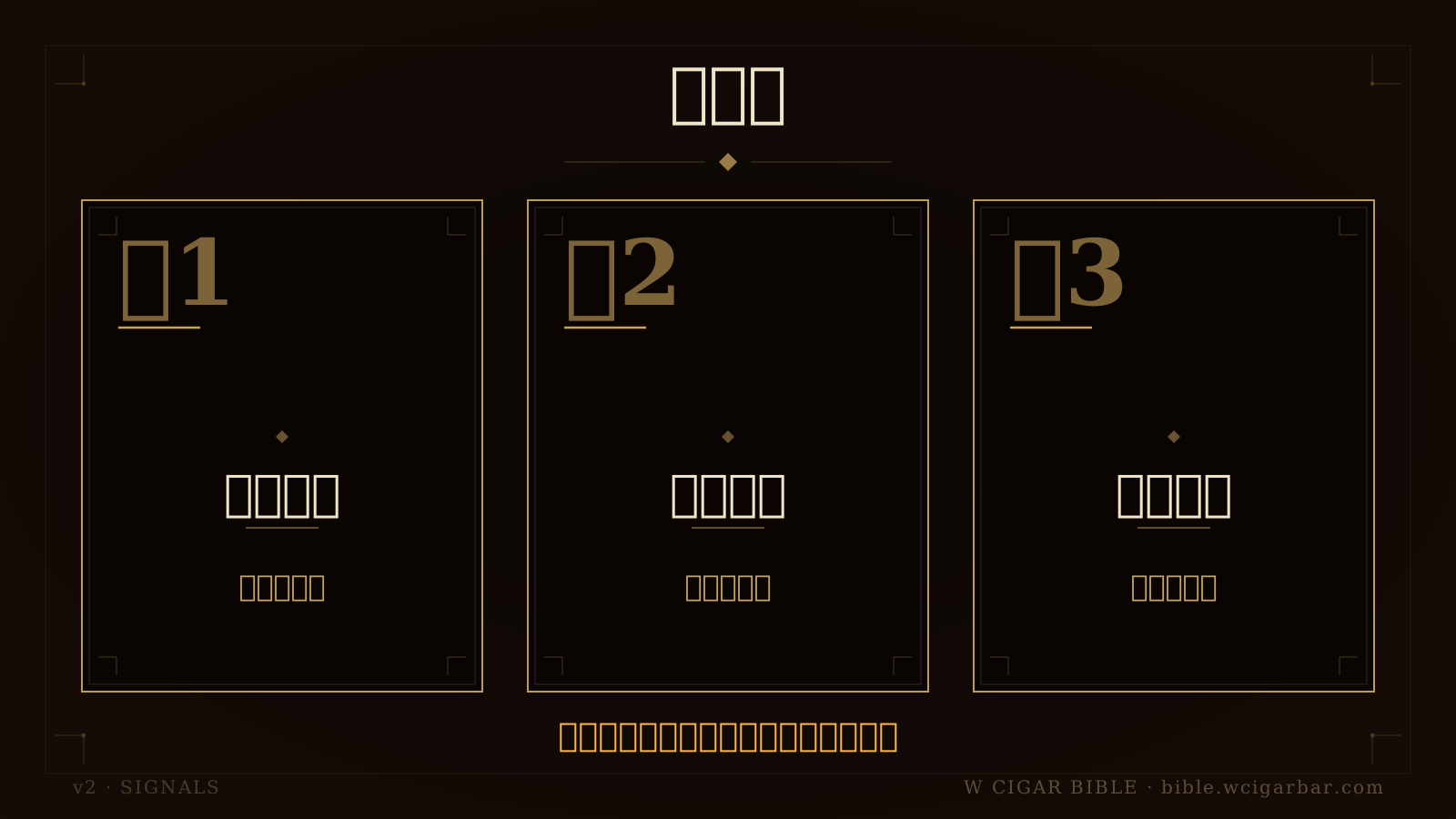
三張錯誤提醒卡說明炭焙程度冷泡與搭配判斷
Romeo y Julieta Short Churchill: Red Fruit, Wood, and Light Cocoa in a Medium-bodied Cigar
Romeo y Julieta Short Churchill (Cuba, Robusto, 50 × 124mm) is a cigar very suitable for pairing teaching because its signals are clear. It is neither extremely intense nor thin and linear, but supports red fruit, wood, light cocoa, and floral notes with a medium-bodied cigar. The size of the Robusto allows for relatively stable smoke volume and burning rhythm, making it convenient to observe changes after tea soup intervention.
Common initial red fruit and floral notes may remind one of red cherries, raspberry skin, dried roses, and a faint vanilla wood. These aromas can easily be overwhelmed by strong coffee or spirits; however, when paired with medium-roasted Dong Ding Oolong, they can be caught by the ripe fruit sweetness of the tea soup. This is the advantage of non-alcoholic pairing: it does not rely on alcohol impact but slowly washes open the taste buds with temperature and water-soluble substances.
After the middle section, wood and light cocoa gradually become apparent. The soil feel, slight saltiness, and smoky woodiness common in Cuban tobacco will form a dry bittersweet outline with light cocoa. At this time, if the tea soup is too light, it will be overshadowed by the smoke; if the tea soup's fire taste is too heavy, it will turn the cocoa into charred bitterness.
The key to pairing Short Churchill is to retain the brightness of red fruit and floral notes while using the tea soup to catch the middle section wood and light cocoa. Therefore, Dong Ding Oolong should not be brewed too strong, nor should overly charcoal roasted versions be chosen; what we want is fire, fruit, and throat rhyme, not just a mass of dark fire aroma.
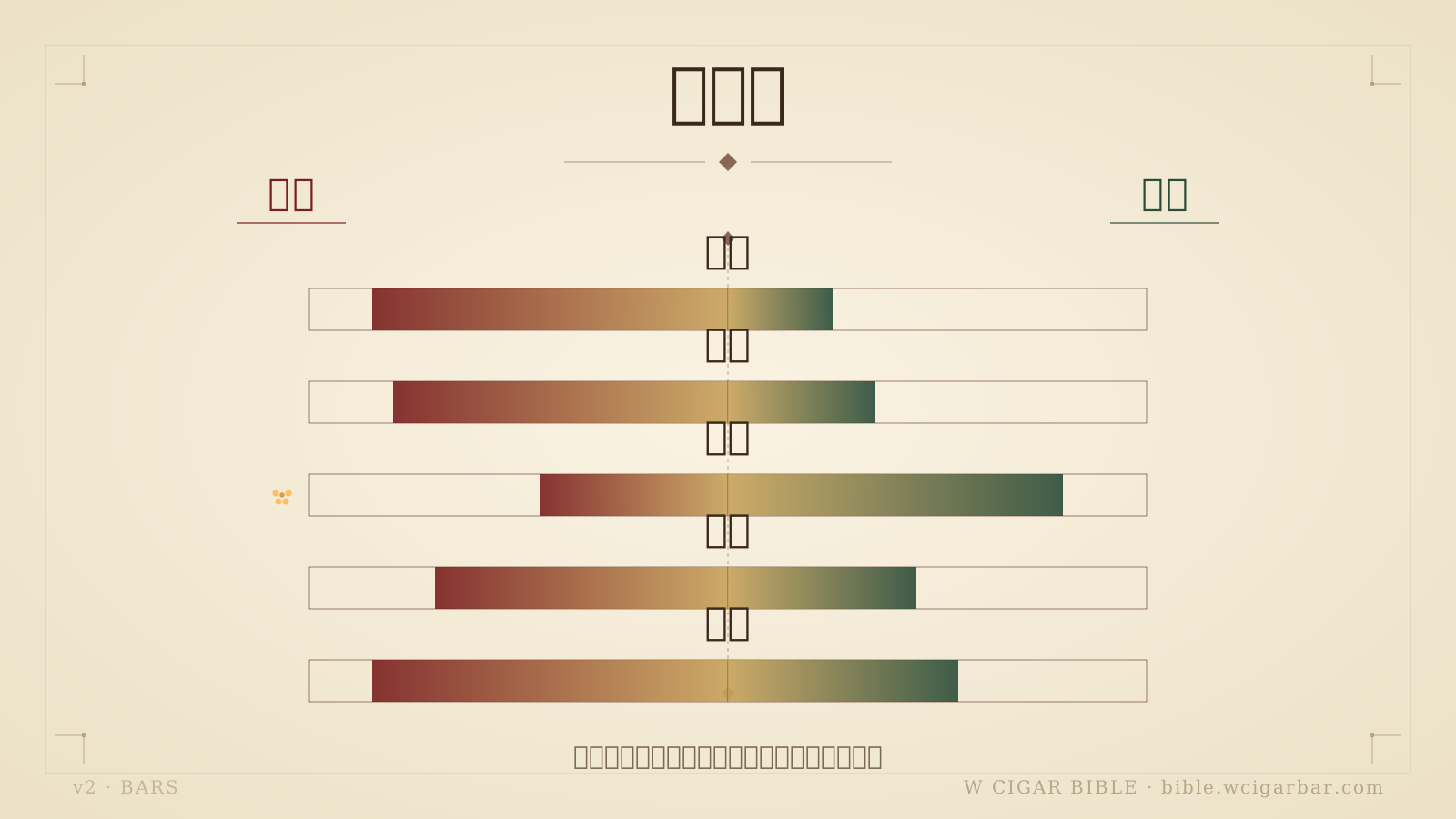
長條圖比較炭焙與清香凍頂在五個味覺軸上的強弱
Flavor Chemistry Encounter: Longan Charcoal Roasting × Light Cocoa, Ripe Fruit × Red Fruit, Roasting Convergence × Smoke Oils
First, let's talk about "Longan Charcoal Roasting × Light Cocoa." The roasted wood, caramelized edges, and nut skin aroma brought by longan charcoal roasting will resonate with the light cocoa of Short Churchill; both contain impressions brought by roasting reactions such as pyrazines, furans, and phenols. When entering the mouth, the charcoal fire sweetness of the tea soup will soften the dry bitterness of the cigar cocoa, making the cocoa not just bitter but with layers of cocoa powder, roasted almonds, and wooden box.
Next, let's look at the "Ripe Fruit × Red Fruit" aroma relay. The ripe pear, honey apple, and dried longan tone of Dong Ding Oolong belong to warmer, rounder ripe fruits; Short Churchill's red fruit is more vivid, like red cherry skin and berry sour aroma. When the two alternate, the tea soup first lays out ripe fruit sweetness on the tongue surface, and the smoke then brings out red fruit sourness from the nasal cavity, stringing the fruit aroma from low to high frequency.
The third group is "Roasting Convergence × Smoke Oils" for dry-wet balance. Cigar smoke contains oiliness and a gelatinous-like oral coating, and if continuously inhaled, the tongue surface is easily enveloped by smoke. The polyphenol convergence of roasted Oolong and the dry mouthfeel after roasting will gently pull away this oil film, allowing the next puff of smoke to reveal wood, floral, and cocoa more clearly.
| Flavor token | Source | Change after encounter | Oral location |
|---|---|---|---|
| Longan Charcoal Roasting × Light Cocoa | Dong Ding Oolong fire skill, cigar middle section | Charcoal fire sweetness lowers cocoa dry bitterness, forming roasted nut feel | Middle tongue, back of nasal cavity |
| Ripe Fruit × Red Fruit | Tea soup fermentation aroma, cigar initial section | Ripe pear sweetness catches red cherry sourness, making fruit aroma more continuous | Front tongue, palate |
| Roasting Convergence × Smoke Oils | Tea polyphenols, smoke coating feel | Dryness clears taste bud space, wood more distinct | Tongue sides, tongue root |
| Wood × Floral | Longan charcoal background, Havana floral | Wooden box feel supports floral, preventing aroma from dispersing | Nasal cavity, throat |
The real reason this pairing works is that Dong Ding Oolong uses water-soluble convergence and aftertaste to reorganize the oils and aromatic molecules of cigar smoke. It does not forcefully combine tea and cigars but allows fire skill, fruit aroma, wood, and cocoa to relay in different oral regions.

三張問答卡整理炭焙火候與茶香支撐的重點
Brewing and Rhythm: Let Dong Ding Oolong Catch Short Churchill, Not Overwhelm It
I use a gaiwan or small pot to brew traditional Dong Ding Oolong, with water temperature around 95°C to fully unfold the roasting aroma and tea soup thickness. The tea amount does not need to be too heavy because when pairing with cigars, if the tea soup is too strong, the astringency will accumulate at the tongue root, dulling the red fruit of Short Churchill. The first infusion can be shorter to awaken the fire aroma; the second and third infusions are the main stages for observing the pairing.
In terms of rhythm, I usually take a small sip of tea first to cover the tongue surface and throat, then take a puff of the cigar, slowly pushing the smoke out from the mouth. This way, one can clearly feel how ripe fruit sweetness supports red fruit aroma and how light cocoa becomes rounder in the tea soup's roasting background. If done the other way around by continuously puffing and then drinking a large amount of tea, the tea soup will act like a cleaning tool, losing the pairing details.
Temperature is also key. Hot tea will enhance roasting aroma and convergence, suitable for the floral and red fruit of Short Churchill's initial section; as the tea soup cools slightly, ripe fruit and wood will become more apparent, suitable for the cocoa and wood of the cigar's middle section. If the smoke becomes drier in the later section, the brewing time can be slightly shortened to retain the tea soup's sweetness and avoid bitter astringency stacking.
The best rhythm is not a mechanical ratio of one sip of tea to one puff of smoke but using tea soup temperature and brewing concentration to calibrate the flavor focus of each section of the cigar. Beginners can record three things: which infusion best brings out red fruit, which section best amplifies light cocoa, and which swallow leaves the longest throat rhyme.
Frequently Asked Questions
The core of frequently asked questions is to separately observe the fire skill, throat rhyme of Dong Ding Oolong, and the cigar body changes of Short Churchill, then put them back on the same timeline. Many beginners initially only ask "is it compatible," but the truly useful question should be: which type of roasting, which infusion of tea soup, which section of the cigar, and at which oral location does the change occur.
Does Dong Ding Oolong have to be charcoal roasted?
Not necessarily, but traditional charcoal roasted tea best presents the focus of this pairing. If it is a light fragrance Dong Ding, the floral aroma will be higher, connecting with the red fruit of Short Churchill's initial section, but the middle section cocoa and wood will lack a connecting platform. The advantage of longan charcoal roasting is that it provides a warm, sweet woody background.
Is heavier roasting more suitable for pairing with cigars?
No. When roasting is too heavy, the tea soup may exhibit charred bitterness, dryness, and closed aroma, suppressing the floral and red fruit of the cigar. Medium to medium-full roasting usually better retains the balance of ripe fruit, nuts, and throat rhyme.
What is throat rhyme, and how is it judged?
Throat rhyme can be observed from the aroma retention, aftertaste duration, and throat relaxation after swallowing. A good Dong Ding Oolong not only has flavor on the tongue surface but also leaves a return of wood, ripe fruit, or roasting sweetness after drinking. When pairing with cigars, the clearer the throat rhyme, the better one can identify the light cocoa and wood in the smoke's later section.
Will Short Churchill overpower the tea aroma?
If the tea soup is too light, it may indeed be overshadowed by the smoke of a medium-bodied cigar. The solution is not to brew the tea very bitter but to increase the water temperature and slightly extend the steeping time to make the roasting aroma and tea soup thickness stand out. The tea soup needs support but should still retain aftertaste.
Can cold-brewed Dong Ding Oolong be used for pairing?
It can be used for comparison, but it will not be the main axis of this pairing. Cold brewing will reduce roasting aroma and convergence, making ripe fruit sweetness softer, which helps red fruit but is more challenging to handle smoke oils. If you want to understand longan charcoal roasting × light cocoa, hot brewing is clearer.
Are competition teas suitable for this type of pairing practice?
Yes, because competition teas usually have clearer standards in appearance, aroma, taste, and leaf bottom, allowing beginners to establish a reference. Especially the competition tea culture in Nantou Lugu emphasizes soup feel and throat rhyme, which aligns with the structural judgment needed for cigar pairing. However, it still depends on whether the roasting style is too sharp or too light.
The pairing of Dong Ding Oolong and Romeo y Julieta Short Churchill is not about volume but the details of traditional craftsmanship. The tea master hides the fire in the tea soup, and the cigar puts red fruit, wood, and light cocoa into the smoke; when the two meet, throat rhyme becomes a common language, allowing beginners to understand for the first time that non-alcoholic pairing can also be deep and precise.
Further Reading|Complete Guide to Six Tea Types: Fermentation Spectrum from Green Tea to Pu-erh, Overview of Flavors Paired with Cigars|Oriental Beauty Tea with Honey Aroma: The Legend of Small Green Leafhopper and Baihao Oolong, Resonating with H. Upmann Magnum 46's Honey|Ripe Pu-erh Tea Fermentation Process Analysis: Depth of Aged Aroma and Soil, Resonating with Partagás Serie D No.4's Earthy Notes
—Cigar Prince Wilson Tsai
Smoking is harmful to health. Smoking is prohibited for those under twenty. Quitline: 0800-636363. This article is intended for adults over the age of twenty as a reference for cigar culture, preservation, and regulations, not as a tobacco advertisement, promotion, or purchase suggestion.
Like this article?Share with friends
Share this W Cigar Bible piece with friends who want to learn cigar culture, storage, and tasting.
想把這篇 化為實踐
雪茄聖經是知識;雪茄文化要在空間裡發生
W Cigar Bar 大安總店資訊
台北大安區 · 雪茄聖經總編輯 Wilson Tsai 主理的雪茄文化空間
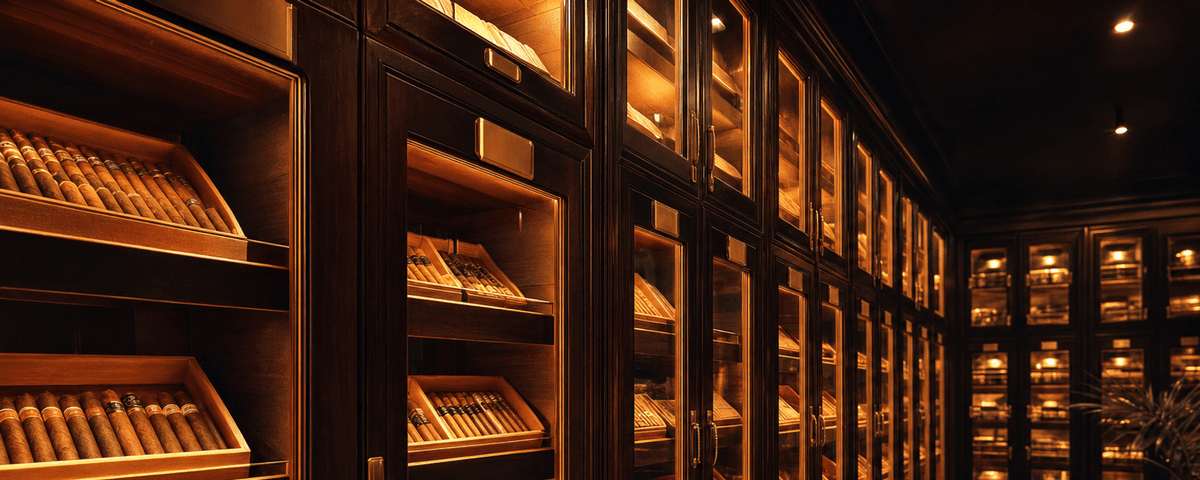
33 座 24 小時恆溫恆濕醇化室
W Cigar Bar 提供的會員醇化空間 · 場地資訊請洽編輯部
雪茄剪 / 打火機 / 雪茄盒 / Boveda
W Cigar 配件官網 · 專營雪茄配件正品
加 LINE 好友 · 文化諮詢
文化空間資訊 · 紳士沙龍 · 私人包場
本網站內容僅供雪茄文化、歷史、收藏與品吸知識研究參考。菸品有害健康、未滿法定年齡者請勿吸菸。實際規範請依所在地法律為準。
吸菸有害健康・戒菸專線 0800-636363・本站僅供 20 歲以上成年人閱覽。
讀到這裡,你不只是路過的人
留下 Email,加入 W 雪茄聖經內圈——總編輯 Wilson Tsai 親選的學院深文與國際新訊,先你一步送到信箱。
· 教育用途非銷售 · 隨時一鍵退訂 · Email 絕不對外公開 · 由勝茄股份有限公司營運
同分類延伸閱讀
資料來源:W Cigar Bible 編輯部整理 · 雪茄王子 Wilson Tsai 親自審稿
本文僅供雪茄文化、歷史、收藏與品鑑知識研究,不作為菸品促銷、銷售或購買建議。吸菸有害健康,未滿二十歲不得吸菸。