雪茄的製造工藝與傳承:探索從種植到手工捲製的每一步
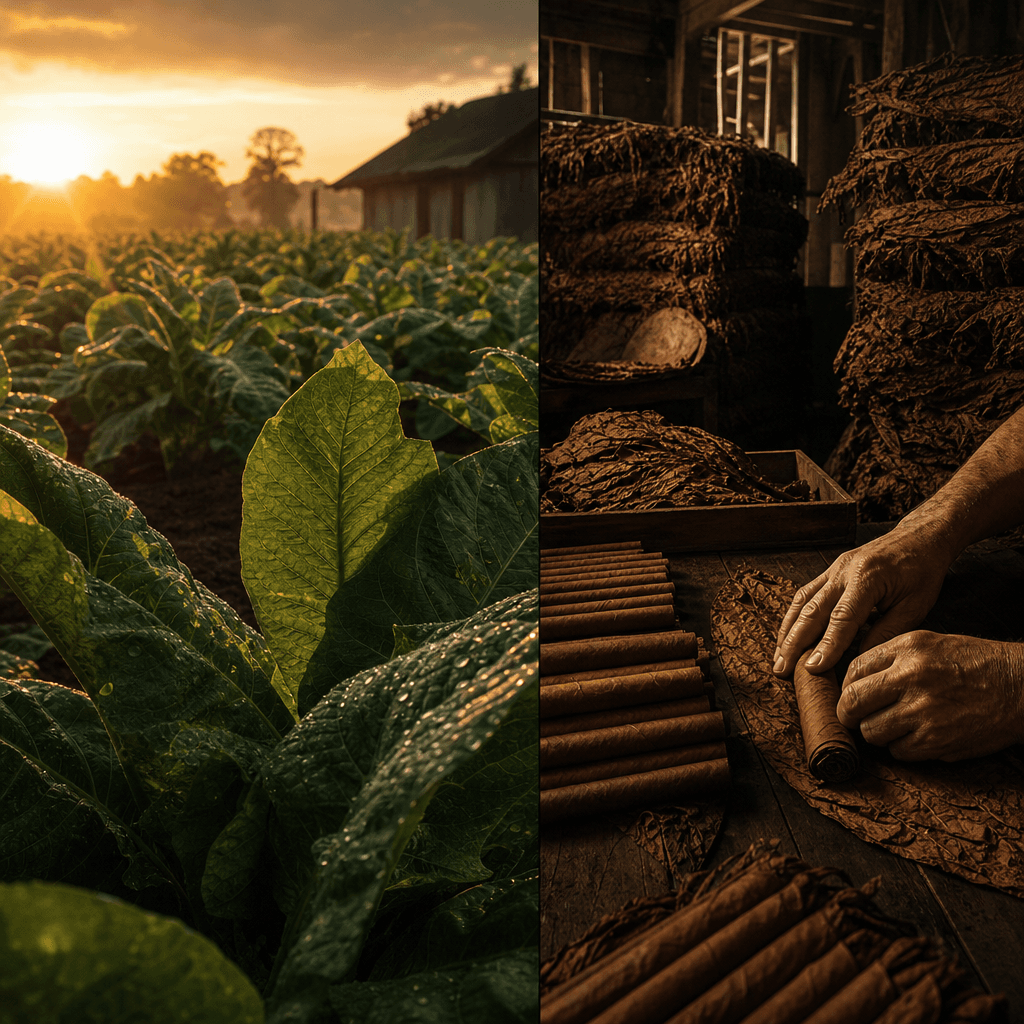
雪茄的品質從種子落土開始,涉及農業、微生物學與手工藝的複雜過程。不同產區的菸草因土壤、氣候及管理方式而展現出獨特風味。採收後的分層與發酵過程,則決定了香氣的層次與燃燒特性。手工捲製的技術與品質控制至關重要,影響吸阻與風味的穩定性。外觀雖能提供初步線索,但結構與香氣的乾淨度才是評價雪茄的關鍵。醇化過程則有助於提升香氣的整合度,讓雪茄的風味更為圓潤。
- 雪茄的風味由種子、田區及年份共同決定,農業管理影響香氣與燃燒特性。
- 菸葉採收分層,底層與頂層的香氣與強度差異,影響配方的平衡。
- 發酵過程轉化刺激味道為可接受香氣,影響雪茄的整體風味結構。
The Craftsmanship and Heritage of Cigars: Exploring Every Step from Cultivation to Hand-Rolling
I often say that the quality of a cigar is not determined at the moment it is lit, but rather from the time the seed is planted, the leaves receive sunlight, the fermentation piles heat up, and the pressure is applied by the fingers of the roller. Experienced smokers who only look at the brand and vintage often miss deeper clues.
As the editor of "Cigar Bible," I see cigars more as a legacy intertwined with agriculture, microbiology, and craftsmanship. What follows is not introductory terminology, but rather which processes truly affect aroma, combustion, structure, and long-term aging potential from the field to the box.
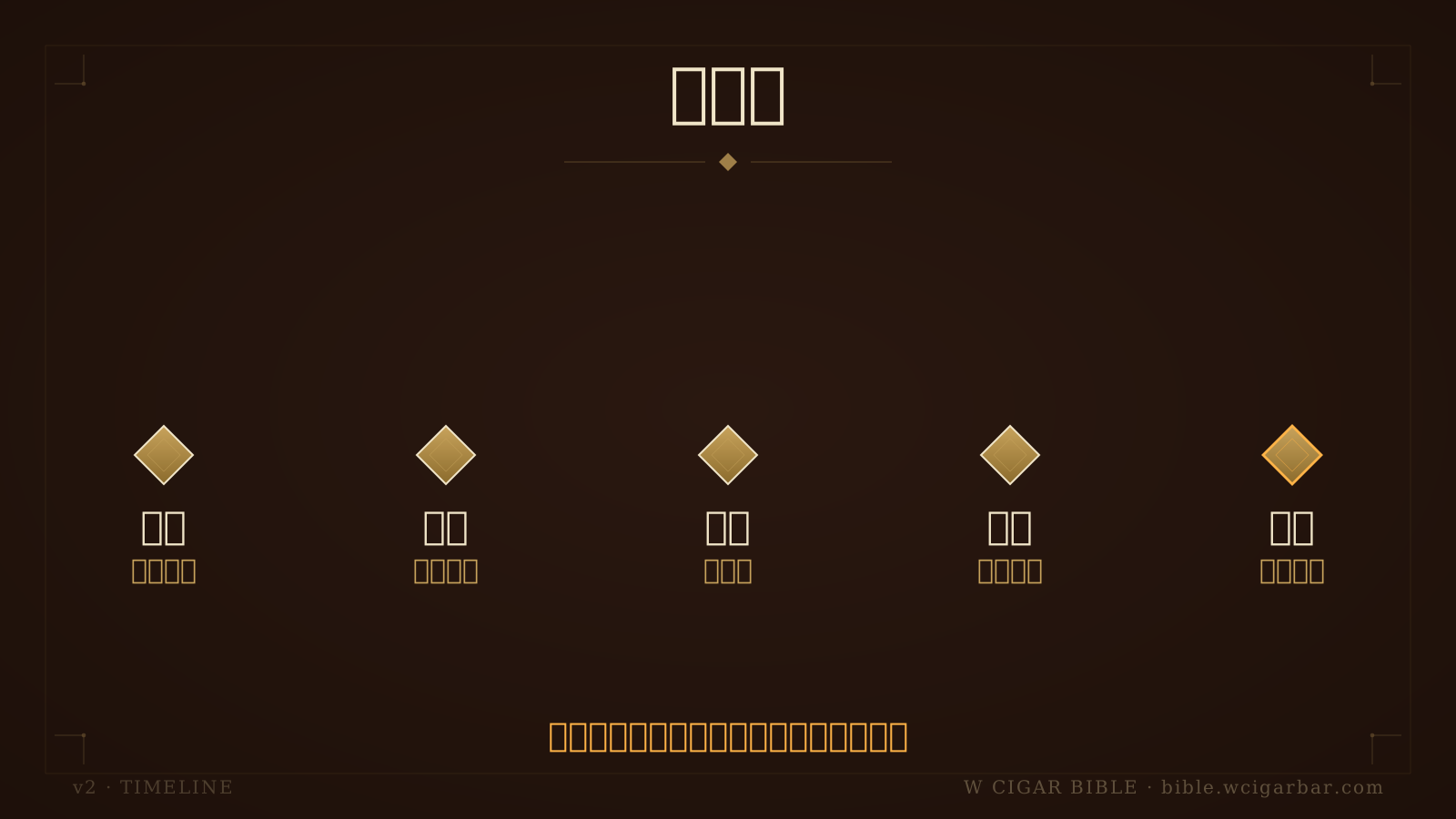
時間軸呈現種植分層風乾發酵與捲製步驟
From Seed to Field: The First Layer of Flavor
Cuba's Vuelta Abajo, Nicaragua's Estelí, Honduras' Jamastrán, and the Dominican Republic's Cibao all grow tobacco, yet their styles differ greatly. The reason lies not only in the variety but also in soil mineral content, day-night temperature differences, rainy season rhythms, and field management. For example, the commonly seen Cuban Criollo 98 and Corojo 99 have stronger disease resistance than the early Corojo, but if the field has poor drainage, the leaves will still exhibit harsh bitterness and uneven burning.
Cigar flavor is not created by a single formula but is an agricultural fingerprint left by the seed, field, and vintage. For example, in the mid-1990s, the Dominican Chateau de la Fuente successfully grew wrappers that later supported Arturo Fuente OpusX, proving that "the origin cannot produce good wrappers" is often a management issue rather than a fate issue.
The details of field management can also change leaf thickness and oils. Shade-grown wrappers under shade cloth have finer surfaces and softer veins, while sun-grown leaves are thicker and spicier. Experienced smokers who find certain Ecuador Habano wrappers peppery and leathery often owe it to high-altitude mist, stable diffuse light, and slower growth rates.
Harvesting and Layering: The First and Second Halves of the Same Tobacco Plant
A tobacco plant is not harvested all at once but is picked in batches from bottom to top. The bottom volado burns well and has lower strength; the middle seco has delicate aromas, often providing woody, floral, and hay notes; viso has a thicker structure with nutty and spicy notes; the top ligero receives the most sunlight, with higher nicotine and oils, often determining strength and finish. Each layer may be harvested weeks apart, which is the basis for detailed blending.
Experienced smokers should not only ask "is it strong" but should ask where the strength comes from and whether it balances with the aroma. For example, Partagás Serie D No.4 is often considered to have a robust earthy and spicy backbone; if ligero is used appropriately, the finish will have a sense of progression; if the proportion is too heavy, it can easily overshadow the aromatic details of seco.
After harvesting, the leaves enter the curing barn for drying, usually about 45 to 60 days, adjusted according to humidity and leaf thickness. Chlorophyll breaks down, and the color changes from green to yellow-brown. If ventilation is insufficient, it can produce a stuffy sourness; if dried too quickly, the leaves lack elasticity, making subsequent fermentation uneven. This seemingly quiet step actually determines whether the burn line is stable.
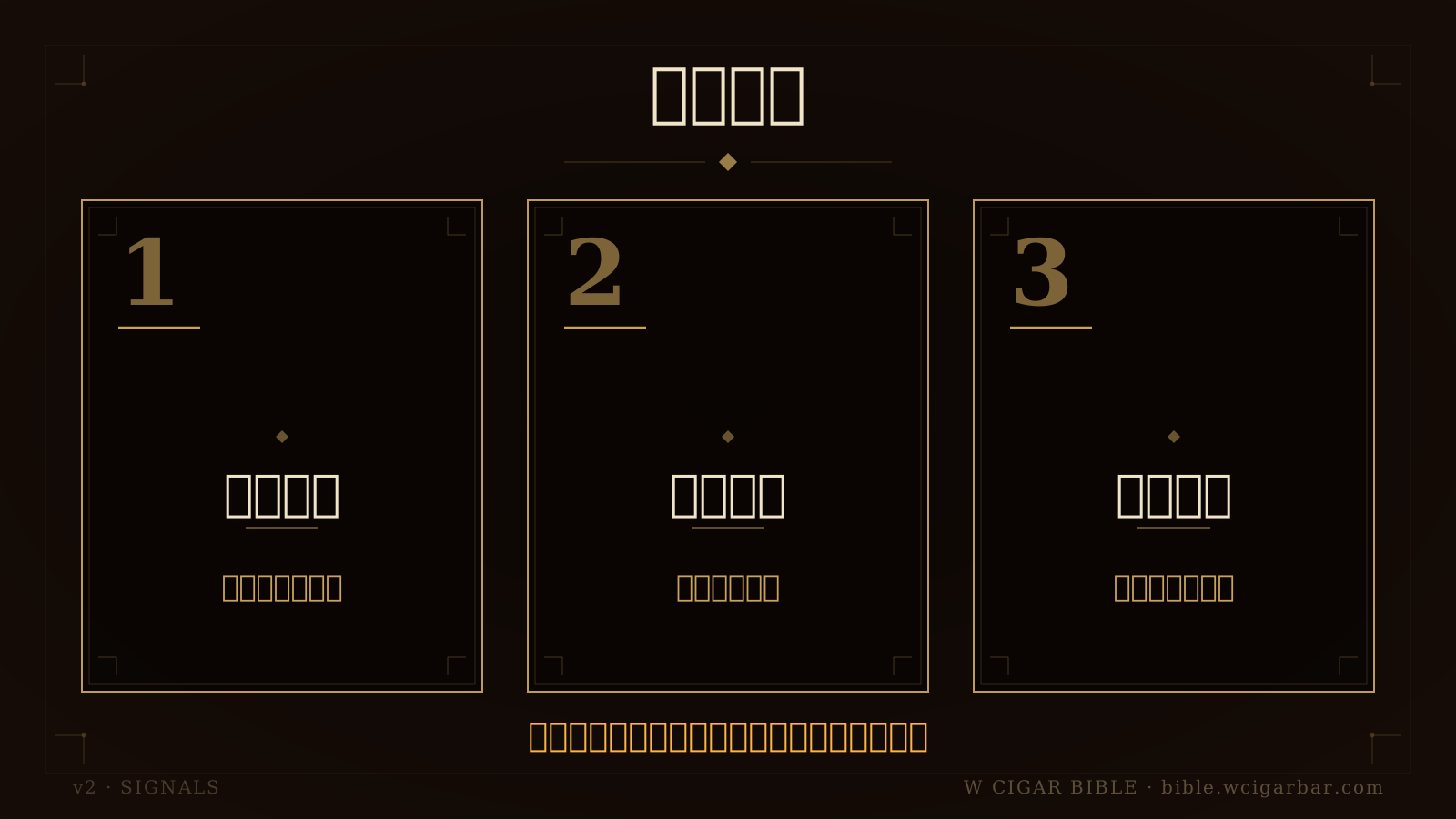
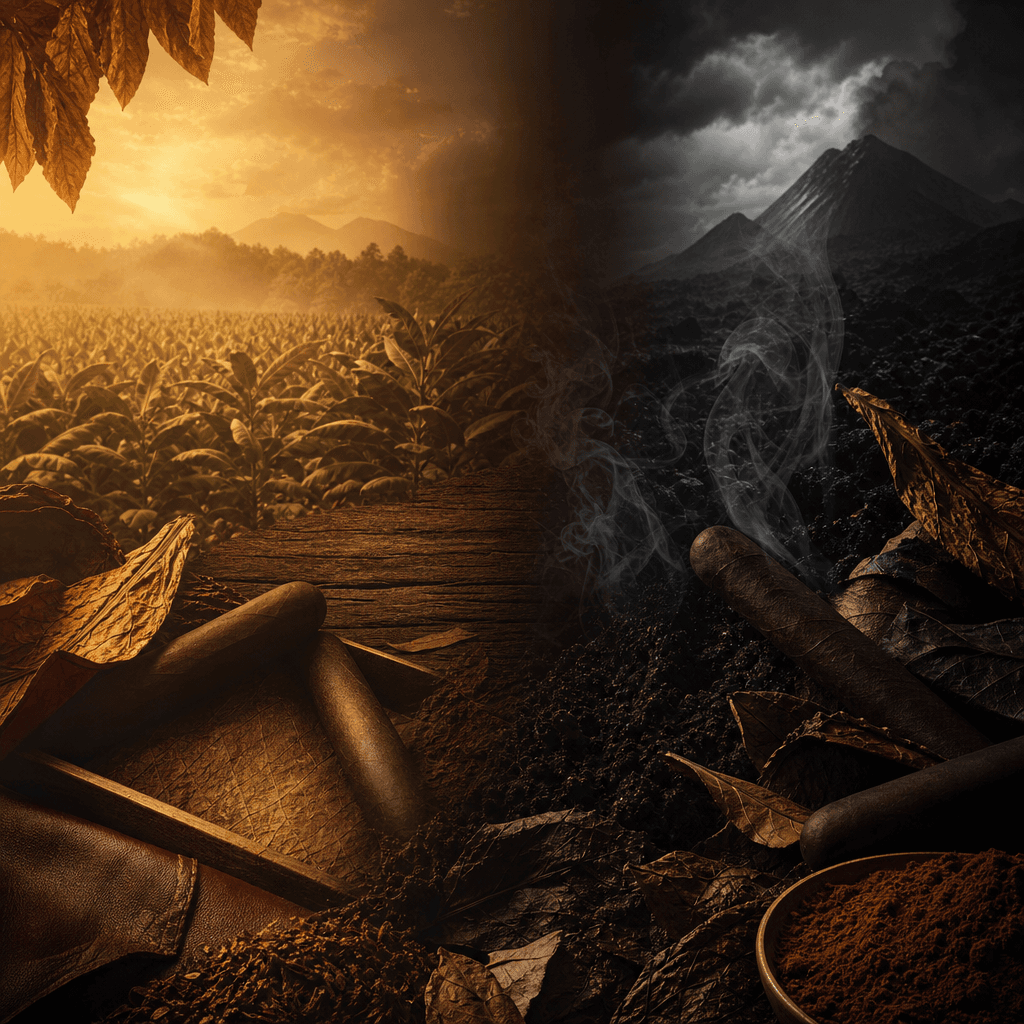
三張重點卡呈現田區發酵與手工對風味影響
Fermentation: Turning Raw Green Notes into Readable Layers
The dried tobacco leaves are piled into pilón fermentation piles, using the leaves' own moisture, sugars, and microbial activity to raise the temperature. Different factories have different settings, but the common pile temperature is about 35°C to 45°C; if it exceeds the critical point, the pile must be turned to lower the temperature. The first round of fermentation may take 30 to 60 days, and thicker ligero or wrappers may require a second or even third round of sorting.
Fermentation is not about making tobacco "heavier," but about transforming irritants, ammonia, and raw green notes into an acceptable aromatic structure. Cohiba is famous for its barrel fermentation, officially becoming a high-end Cuban representative in 1966, and the later Siglo series also allowed many experienced smokers to feel a smoother cream, herbal, and honey tone, closely related to the processing procedure.
If fermentation is insufficient, lighting often results in a pungent ammonia smell, tongue numbness, and a rough finish; if over-fermented, the aroma may collapse, leaving a flat woody taste. Some Nicaraguan brands with distinct strength, such as Padrón 1926 Serie, maintain readability beyond concentration, one key being long-term stable processing of high-oil tobacco leaves, rather than just pursuing strength.
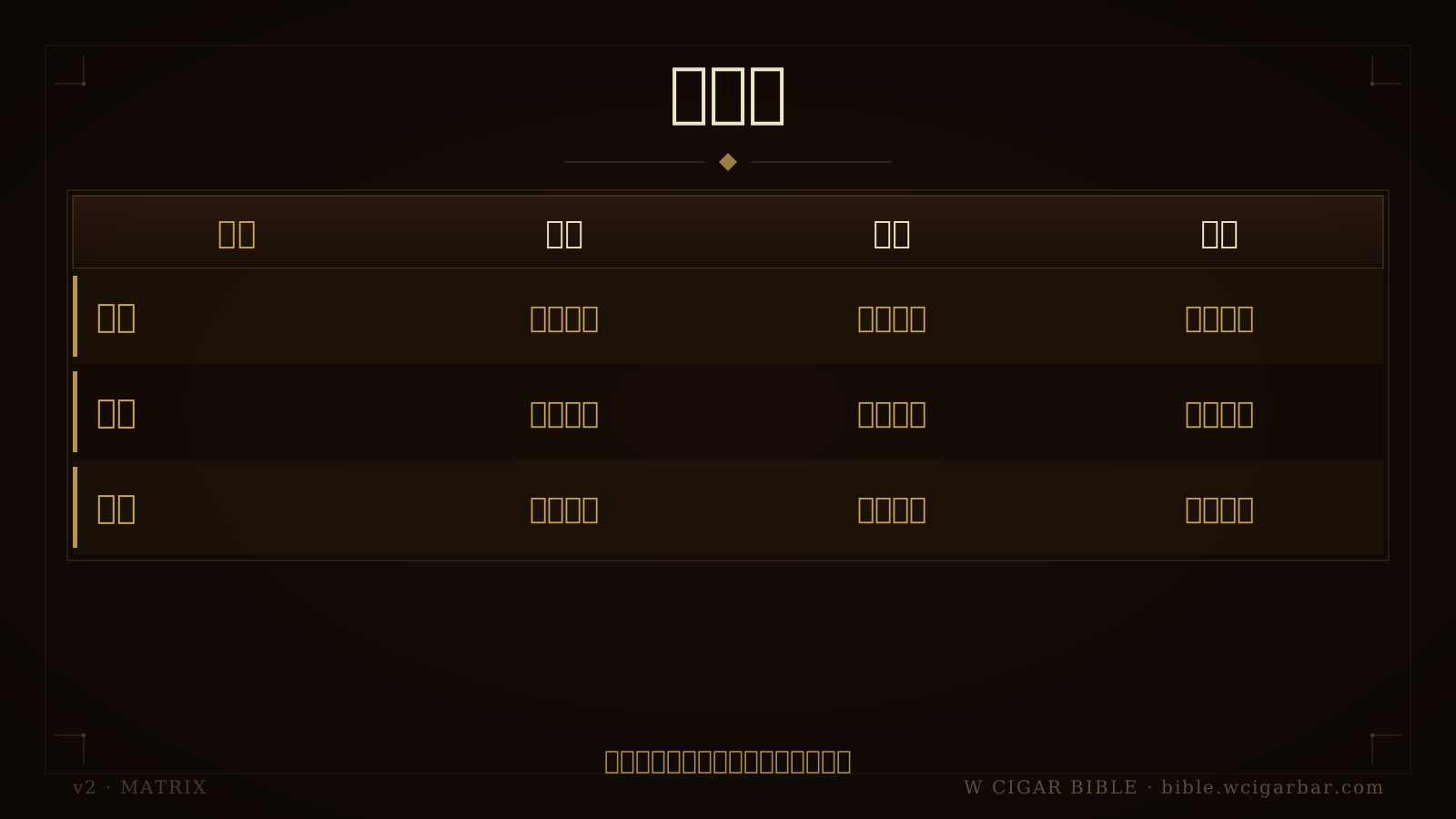
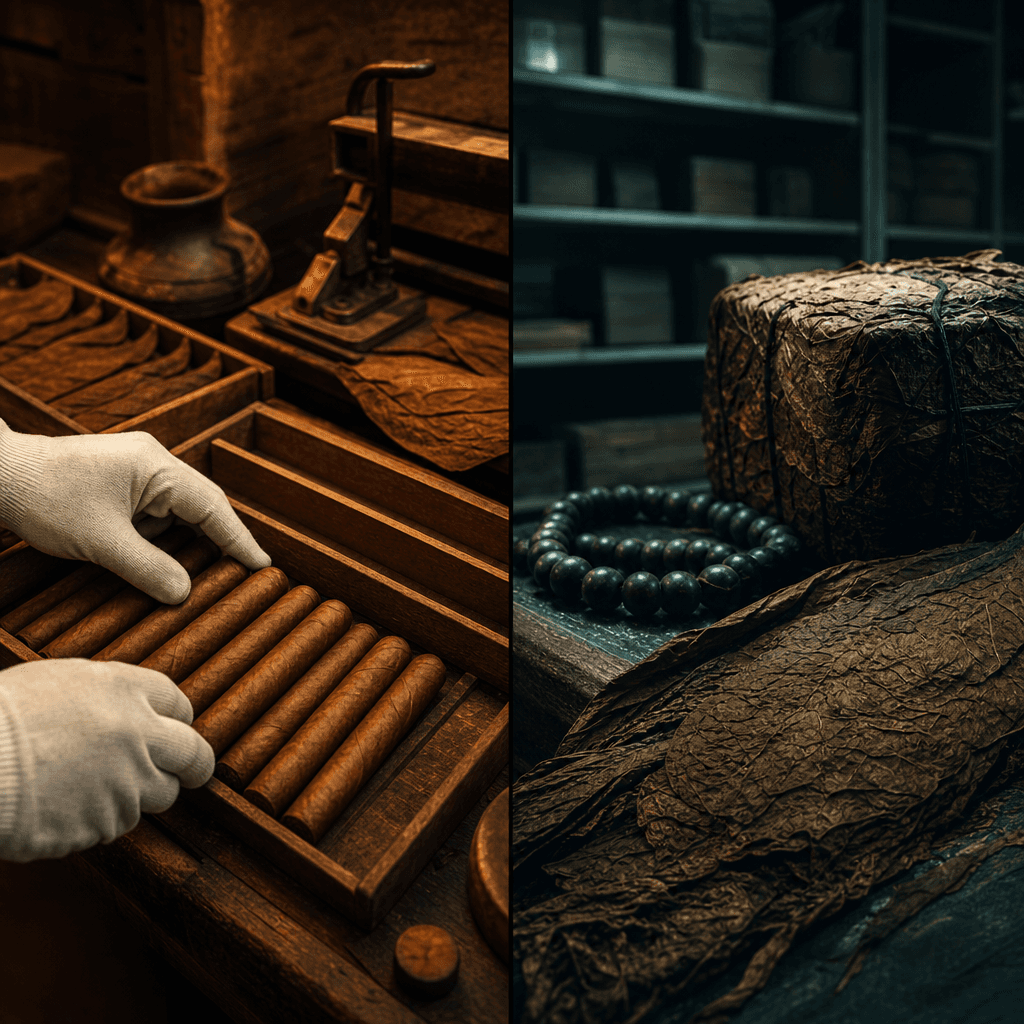
矩陣比較包葉茄套與茄芯在製程中的分工
Grading and Blending: How Brand Style is Replicated
After fermentation, tobacco leaves are graded by size, color, vein, elasticity, oil, and damage. Wrappers have the highest requirements, with the appearance, extensibility, and combustion of a single wrapper needing to be balanced; the binder acts like a structural skeleton, responsible for fixing the filler; the filler, composed of different origins and leaf positions, determines rhythm and depth. If these classifications are not precise, brand style is difficult to stabilize.
Blending is not just a secret ratio but also the ability to maintain style recognition when leaf conditions change each year. For example, Montecristo No.2 has long existed as a classic torpedo, but different vintages can show variations in cocoa, coffee, dry wood, and citrus peel proportions; this does not necessarily mean the formula has changed, but perhaps the performance of seco and viso differed that year.
Mature brands will retain a large number of benchmark samples, allowing blenders to compare past styles. The Montecristo Línea 1935, launched in 2017, is positioned as richer than the regular line, using full leaf position selection to present deeper wood and spice notes. Experienced smokers comparing different lines of the same brand will find that the real difference is not just in strength but whether there is a clear transition in the middle section and whether the finish is clean.
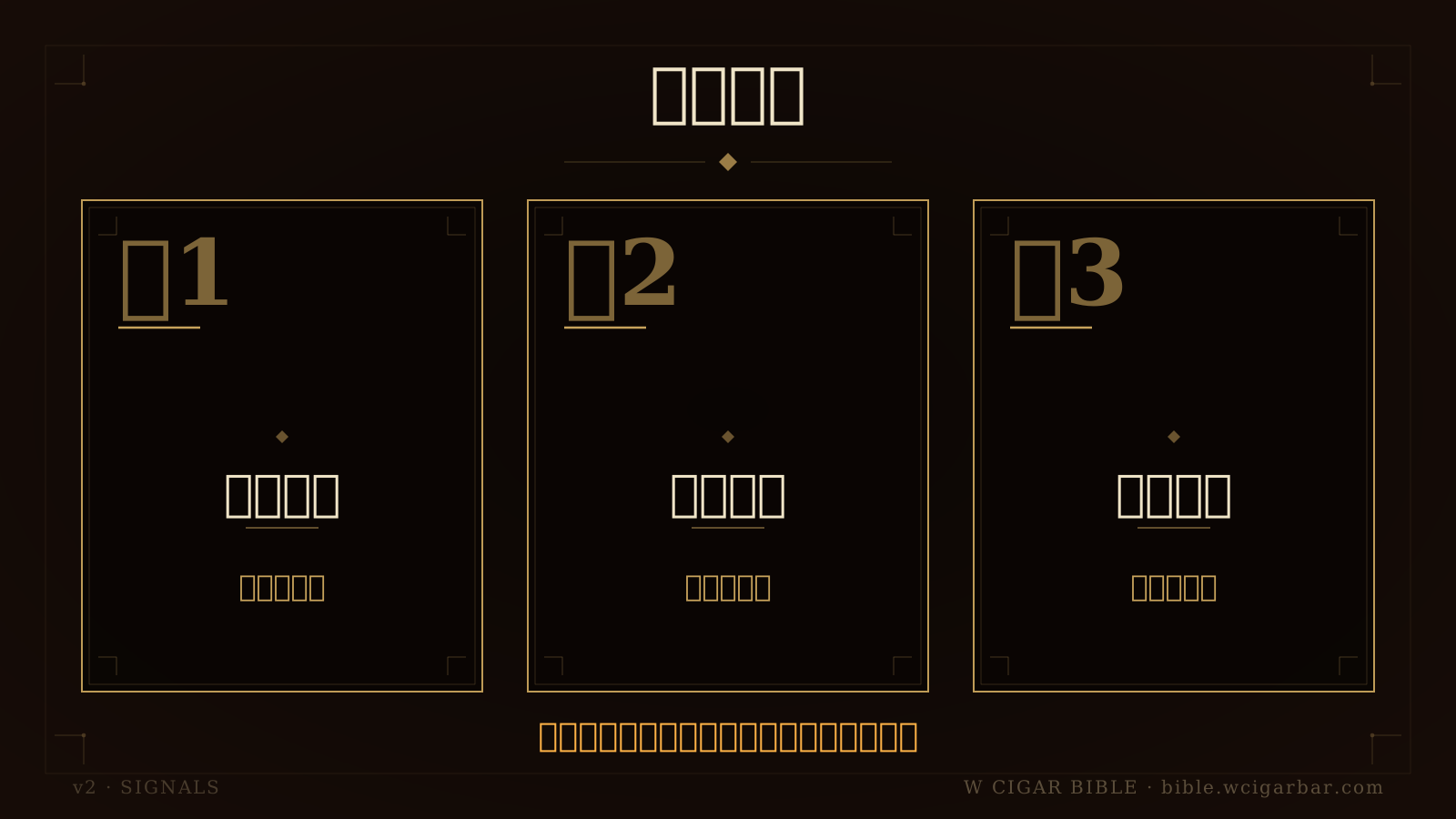
三張誤解卡指出深色抽阻與名氣的判斷盲點
Hand-Rolling: Finger Pressure Determines Combustion Fate
The core of a handmade cigar is the torcedor. The filler must be arranged in ways such as entubado, book bunch, or accordion, aiming for stable airflow. Too tight will result in high draw resistance and easy extinguishing; too loose will burn too quickly, raising temperature and thinning aroma. For experienced smokers, a beautiful appearance is just the first hurdle; the real test is the consistency of draw resistance in the front, middle, and back sections.
The craftsmanship value of a good cigar is not in having no differences at all but in controlling differences within an acceptable range. For sizes like H. Upmann Magnum 46 and Romeo y Julieta Churchill, the length and ring gauge provide room for blend transitions but also magnify rolling flaws; any local tightness can cause flavor stagnation in the middle section.
After rolling, the cigar is usually placed in a mold to set the shape, then wrapped with a wrapper and capped. The traditional Cuban triple cap is not only aesthetic but also relates to whether it unravels after cutting. Some factories also use draw machines for testing, commonly measuring resistance with fixed airflow, rejecting those that do not meet standards. These unseen processes are the underlying technology that allows high-end cigars to perform stably.
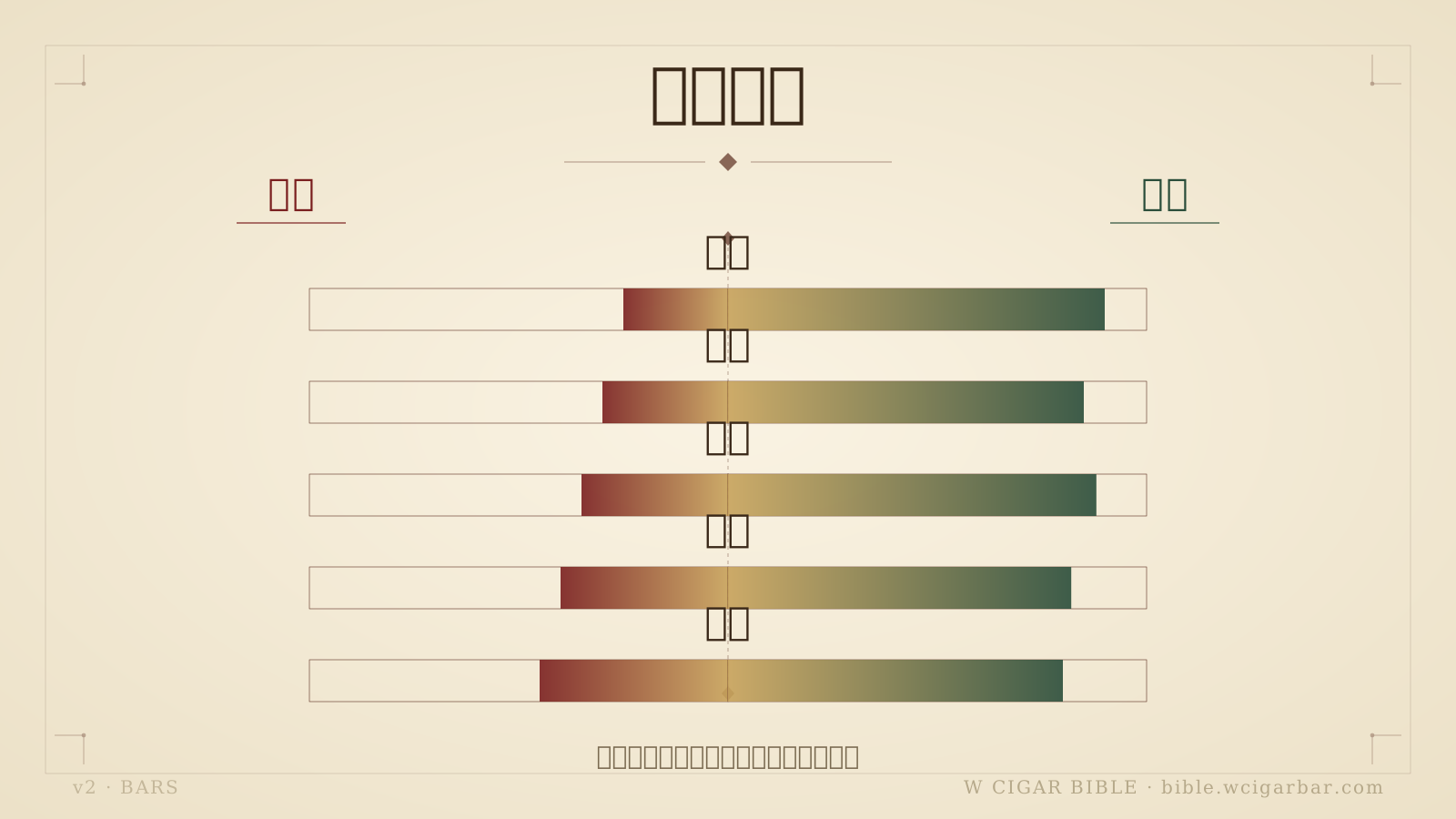
橫向長條比較只看標籤與理解工藝的判讀差異
Quality Control and Appearance: Dark Does Not Equal Premium
Many experienced smokers prefer maduro or oscuro dark wrappers, but dark color does not necessarily equal high quality. What truly matters is whether the color is uniform, the oils are natural, the veins are not too coarse, and the texture is elastic. Over-humidification can make the surface appear shiny but may mask internal moisture unevenness; too dry and the leaves crack, increasing bitterness when burning.
Appearance can only provide clues and cannot independently determine the grade of a cigar; structure, combustion, and aroma cleanliness are the complete judgment. Here are some observation points I often use when inspecting boxed cigars:
| Observation Item | Ideal State | Possible Issue |
|---|---|---|
| Wrapper Color | Similar shade within the box, no large blotches | Unstable grading or storage fluctuations |
| Texture | Elastic, rebounds with light pressure | Too dry, too wet, or uneven internal and external moisture |
| Foot | Even filler arrangement, no obvious voids | Loose rolling, skewed burning |
| Aroma | Clear hay, wood, cocoa, or spice | Ammonia, mold, stuffy sourness |
Brands like Davidoff, Padrón, and Fuente exemplify stability through strict elimination and grading, not just reputation. The PCC exclusive distributor system for Cuban products also emphasizes source and storage records. When discussing collectible value, I would remind: it does not guarantee appreciation, still depending on source preservation and market.
Aging, Transport, and Life in the Box
Cigars do not immediately stop at a certain state after being boxed. Transport, storage, and personal humidor environments all change them. Generally, a relative humidity of about 65% to 70% and a temperature of about 18°C to 21°C is recommended, but different wrappers and personal taste can be adjusted. Too high humidity can cause stuffy combustion and muddled aroma; too low can amplify spiciness and lose leaf elasticity.
The purpose of aging is not to mystify the vintage but to allow moisture, volatile substances, and leaf structure to reintegrate. For example, some Cuban boxes from 2008 to 2012, under good preservation, often present honey, dried fruit, and woody roundness ten years later; but if exposed to heat or long-term high humidity, even if the vintage looks good, it may only leave a flat moldy stuffiness.
Different sizes also affect the aging pace. Robusto changes faster due to its shorter volume; Churchill and Double Corona, these longer sizes, often require more time to open up in the middle and back sections. Cohiba Behike, launched in 2010, is discussed for its use of medio tiempo leaves, but the truly good state still depends on stable preservation, not just the band and vintage.

三張問答卡說明年份深色包葉與醇化判斷
The Core of Heritage: How People Turn Experience into System
The most fascinating aspect of cigar craftsmanship is that it relies on both touch and system. The tradition of the lector reading news and literature in Cuban factories has existed since the 19th century, making the rolling table not just a production line but also a cultural space. Today, large factories in Nicaragua, the Dominican Republic, and Honduras incorporate sensory evaluation, batch records, and draw testing into daily routines.
What can truly be passed down is not mystique but connecting field, fermentation, grading, rolling, and preservation into a single language. Experienced smokers who only remember a brand as "good to smoke" should next ask: what makes it good in which aspect? Is it the sweetness brought by the wrapper, the finish of the ligero, or the binder that stabilizes combustion?
I once compared toros of the same size from different origins: one Nicaraguan Habano wrapper with strong pepper upfront and a transition to black coffee in the back; another Dominican Connecticut Shade with clear cream and almond upfront, softer in the middle. Neither is absolutely superior; the difference lies in how the maker understands the raw materials and delivers the style consistently to the consumer.
Frequently Asked Questions
Why do different vintages of the same cigar have differences?
Because tobacco is an agricultural product. Rainfall, sunlight, harvest timing, and fermentation pile management all change leaf performance. The same blend can maintain brand direction but cannot completely replicate every year's details.
Does a dark wrapper mean the flavor is necessarily stronger?
Not necessarily. Maduro often has sweetness, cocoa, or coffee notes, but strength also depends on the filler leaf position and fermentation degree. Color is a clue, not a conclusion.
Is tight draw always a storage issue?
Not necessarily. It could be rolled too tightly or too high humidity. If multiple cigars in the same box are tight, first check the storage environment; if only one is abnormal, it is more likely an individual workmanship issue.
How long should cigars age to reach a good state?
There is no fixed answer. Robusto may have noticeable roundness in 1 to 3 years; larger sizes and stronger blends may require over 5 years. But the premise is stable temperature and humidity; otherwise, the vintage is meaningless.
Does brand reputation equal quality stability?
Reputation represents history and market recognition, but still depends on batch, preservation, and size. Experienced smokers should use the brand as a starting point and judge by combustion, aroma layers, and clean finish.
Can collecting cigars be seen as an investment?
Some limited and discontinued editions indeed have market discussions, but collecting appreciation does not guarantee appreciation, still depending on source preservation and market. If preservation records are unclear, both value and flavor will be greatly reduced.
Having walked through fields, fermentation rooms, rolling tables, and aging cabinets, I increasingly believe that the sophistication of cigars lies not in how dazzling the label is but in whether each step is honestly treated. The joy of experienced smokers is to break down brand preferences into understandable craftsmanship clues: soil, leaf position, fermentation, touch, and time. Understanding these, when looking back at a cigar, will be quieter and more precise.
—Cigar Prince Wilson Tsai
Smoking is harmful to health. Under 20 years old is prohibited from smoking. Quitline: 0800-636363. This article is for reference by adults over 20 years old on cigar culture, preservation, and regulations, not a tobacco advertisement, promotion, or purchase suggestion.
Like this article?Share with friends
Share this W Cigar Bible piece with friends who want to learn cigar culture, storage, and tasting.
想把這篇 化為實踐
雪茄聖經是知識;雪茄文化要在空間裡發生
W Cigar Bar 大安總店資訊
台北大安區 · 雪茄聖經總編輯 Wilson Tsai 主理的雪茄文化空間
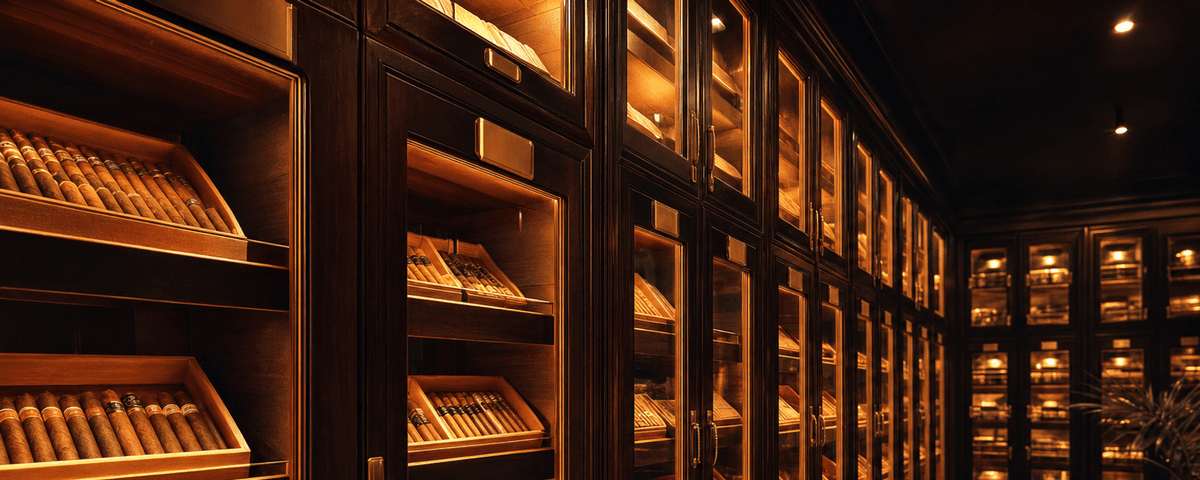
33 座 24 小時恆溫恆濕醇化室
W Cigar Bar 提供的會員醇化空間 · 場地資訊請洽編輯部
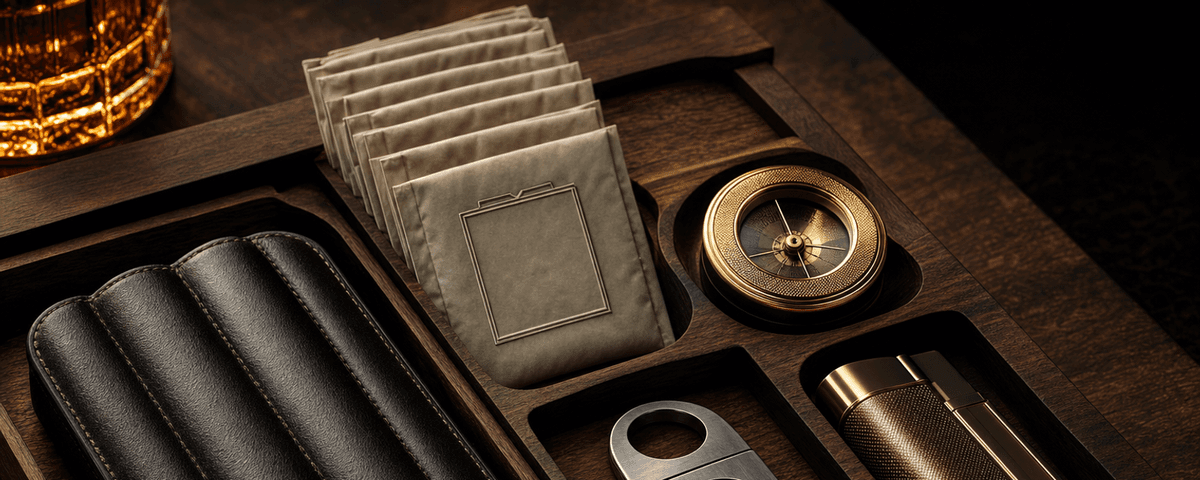
雪茄剪 / 打火機 / 雪茄盒 / Boveda
W Cigar 配件官網 · 專營雪茄配件正品
加 LINE 好友 · 文化諮詢
文化空間資訊 · 紳士沙龍 · 私人包場
本網站內容僅供雪茄文化、歷史、收藏與品吸知識研究參考。菸品有害健康、未滿法定年齡者請勿吸菸。實際規範請依所在地法律為準。
吸菸有害健康・戒菸專線 0800-636363・本站僅供 20 歲以上成年人閱覽。
讀到這裡,你不只是路過的人
留下 Email,加入 W 雪茄聖經內圈——總編輯 Wilson Tsai 親選的學院深文與國際新訊,先你一步送到信箱。
· 教育用途非銷售 · 隨時一鍵退訂 · Email 絕不對外公開 · 由勝茄股份有限公司營運
同分類延伸閱讀
資料來源:W Cigar Bible 編輯部整理 · 雪茄王子 Wilson Tsai 親自審稿
本文僅供雪茄文化、歷史、收藏與品鑑知識研究,不作為菸品促銷、銷售或購買建議。吸菸有害健康,未滿二十歲不得吸菸。