雪茄的稀有品種與市場動態:收藏者的指南

稀有雪茄的魅力不僅在於其產量稀少,還在於背後的原料週期、工廠決策及市場需求。真正的稀有雪茄需經過來源、狀態、風味與市場四個層面的檢驗,收藏者應避免僅追逐話題而忽視實際價值。稀有的定義包括官方限量、區域限定及停產尺寸,這些雪茄的價值來自其獨特性與市場需求。非古巴雪茄如尼加拉瓜及多明尼加的高端品種也逐漸受到重視,收藏者需關注品牌的長期性及煙葉的稀缺性,以做出明智的投資決策。
- 稀有雪茄的定義不僅在於產量少,還需考量供需結構與市場需求的持續性。
- 收藏者應分辨「稀有」與「難買」的差別,前者具長期價值,後者可能短期波動。
- 停產尺寸的收藏邏輯在於其獨特的煙氣體驗,細長尺寸的工藝價值不容忽視。
Rare Cigar Varieties and Market Dynamics: A Collector's Guide
The allure of rare cigars lies not only in their labels, vintages, or circulation numbers but also in the raw material cycles, factory decisions, regional quotas, and collector psychology behind them. Experienced collectors often look beyond mere scarcity to understand the context of rarity.
As the editor of the "Cigar Bible," I frequently remind collectors that truly rare cigars must withstand scrutiny from four perspectives: origin, condition, flavor, and market. Chasing trends alone may leave you with nothing more than expensive stories in your collection.
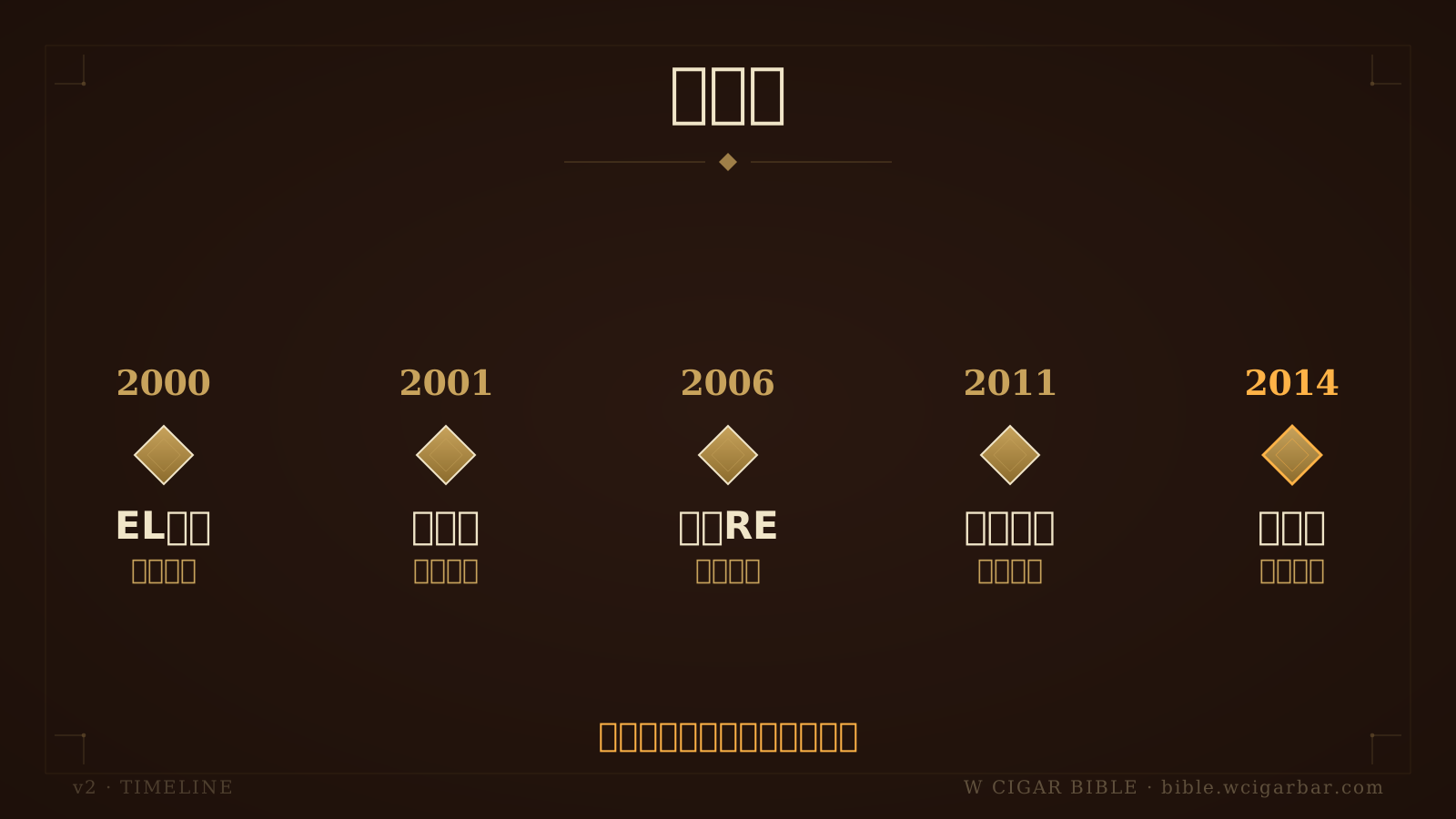
時間線標示二千年起的限量與區域版本重要節點
Definition of Rare Cigars: Not Just Low Production but Unique Supply-Demand Structure
Many equate "limited edition" directly with rarity, but in a mature market, rarity has at least three levels. The first is official limited editions, such as Habanos' Edición Limitada, which has been an important series since 2000. The second is regional editions, like Asia Pacifico, Reino Unido, and Francia. The third is discontinued sizes, such as Partagás Serie du Connaisseur No.1, No.2, and No.3, which have left the regular catalog.
True rarity comes from the intersection of "small quantity, traceability, and sustained demand." For example, after the 2010s, spear-shaped and slender cigars were reduced in regular production lines, leading to a renewed interest in sizes like Lonsdale, Lancero, and Panetelas among seasoned collectors. These require high burning precision and rolling skill, showcasing the complexity of the tobacco leaves. Thus, they are not just "scarce" but "justifiably scarce."
Collectors should also distinguish between "rare" and "hard to find." Some new releases may be rare initially due to limited distribution, but their market availability may normalize in two to three years, potentially adjusting prices. Conversely, certain discontinued Cuban sizes around 2006 and 2007, with good box condition and complete provenance, have seen a gradual decline in availability, supporting long-term value. When discussing collection appreciation, I must first clarify: it does not guarantee appreciation; it still depends on provenance, preservation, and market.
Cuban Limited Editions and Vintage Logic: How to Interpret the Post-2000 Mainstream
Habanos Edición Limitada has established a collectible language since 2000, featuring characteristics like dark wrappers, larger ring gauges, specific vintage markings, and the concept of limited editions. Early examples like the 2001 Cohiba Pirámides, 2004 Partagás Serie D No.1, and 2006 Montecristo Robusto EL remain topics of discussion among seasoned collectors. They are valued not only for their age but also because the market was smaller at the time, and well-preserved boxes are limited.
The value of limited editions is not "the older, the better," but whether the vintage forms a shared memory of brand, size, and flavor. For example, the Cohiba 1966 Edición Limitada 2011, with a ring gauge of 52 and a length of approximately 166mm, was already a topic of discussion upon release. Over a decade later, its value comes from the combined strength of the Cohiba brand, unique size, and mature aging performance, rather than the single "2011" number.
When interpreting limited editions, I look at three points: whether the box date is reasonable, whether the tax stamp and anti-counterfeiting label match the era, and whether the market price for the same model has surged excessively. If a 2010 EL suddenly doubles in price within a year but has few transactions, it may just be a listed price rather than the real market. Collectors should focus on "transactionable prices," not just the most eye-catching high prices online.
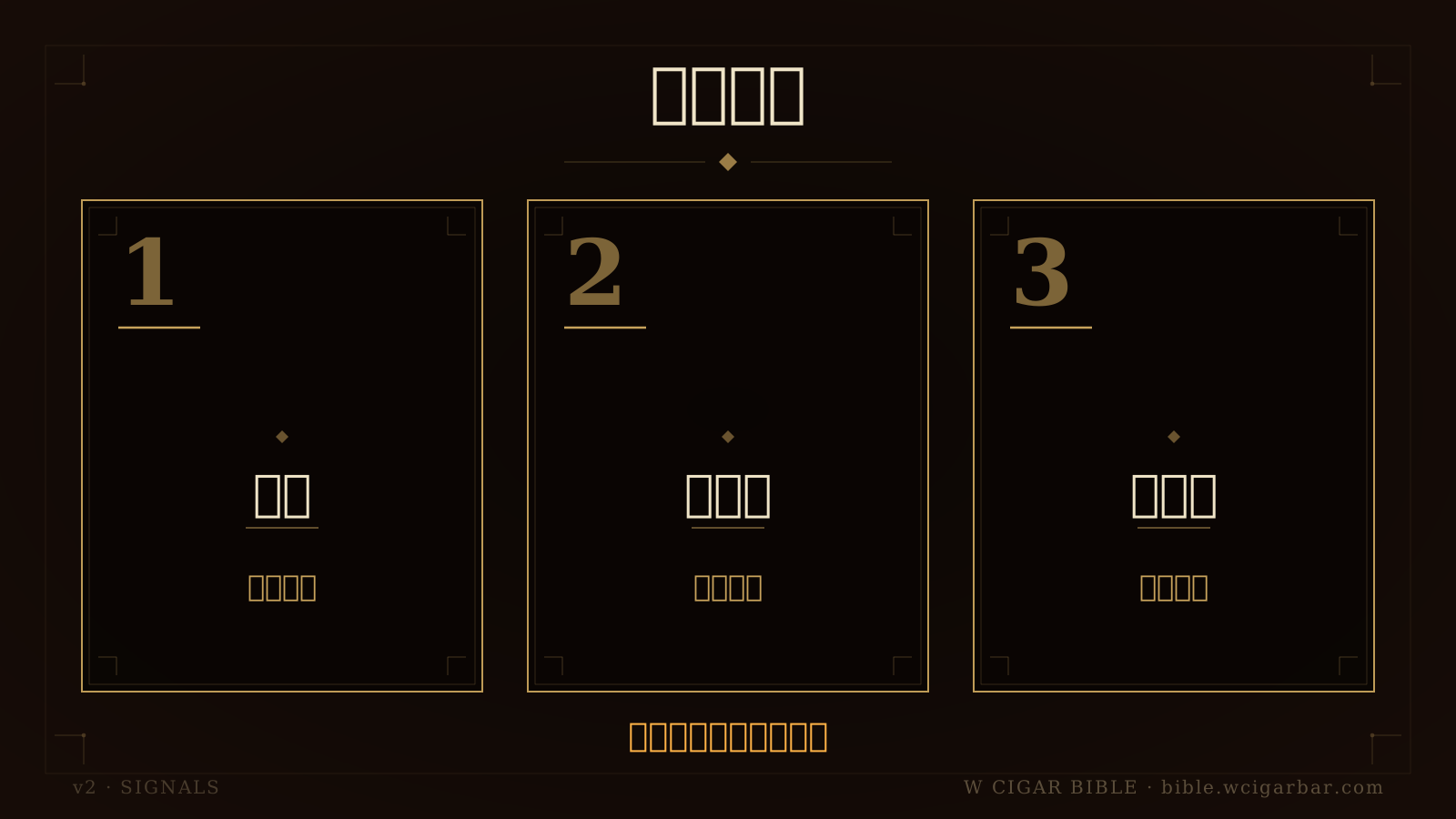
三張卡片列出少量、可追溯與需求續三項判讀重點
Regional Editions: The Charm of RE Lies in Cultural Labels and Quota Scarcity
Regional Edition, often abbreviated as RE by seasoned collectors, is a limited edition released by different market regions. Its charm lies in how the same brand can be endowed with different market characters, such as the 2006 Ramon Allones Estupendos Asia Pacifico, 2008 Por Larrañaga Magnificos Reino Unido, and 2010 Diplomaticos Bushido Asia Pacifico, which have sparked long-tail discussions in the collector community. These cigars usually have regional sub-labels and a second band, making them highly recognizable.
The key to RE is not just limited quantity but whether the region has a stable collector base. For example, in Asia Pacifico, active collectors in Hong Kong, Singapore, Macau, Japan, and Taiwan provide stronger secondary market support for certain REs. The Diplomaticos Bushido, released in 2014 with a Japanese samurai-themed packaging and a distinctive 10-count wooden box design, later became a representative case in Asian REs.
However, REs also have pitfalls. Some regional editions may be highly talked about upon release, but their actual flavor may not surpass regular lines. Some brands may have weak global demand, and even with limited quotas, market acceptance may be limited. Collectors should not only consider "how many boxes are limited" but also the brand's history, size acceptance, packaging completeness, and local market culture. REs are best suited for research-oriented collections rather than blind accumulation.

矩陣比較官方限量、區域限定與停產尺寸的形成差異
Discontinued Sizes and Niche Brands: The Underestimated Treasure Trove for Veterans
Discontinued sizes are often a source of market reevaluation. After 2000, global consumer preferences gradually shifted towards larger ring gauge sizes like Robusto, Toro, and Sublimes, leading to the withdrawal of many slender sizes from regular catalogs, such as Bolivar Coronas Gigantes, Hoyo de Monterrey Le Hoyo des Dieux, and Punch Super Selection No.1. These cigars may not have been popular at the time but now hold research value due to their disappearance.
The logic of collecting discontinued cigars is "the irreplaceable size experience." The same brand's Lancero and Robusto offer completely different smoking rhythms; slender sizes require more sensitive temperature control, quickly turning bitter if smoked too fast, but revealing floral, woody, nutty, and mineral notes when smoked slowly. Veterans collecting discontinued models are collecting a craft language, not just a brand label.
Niche brands are also worth noting. Rafael González, Saint Luis Rey, La Gloria Cubana, and Sancho Panza may have lower visibility in the mass market, but some well-preserved old boxes perform surprisingly well. For example, the Saint Luis Rey Serie A, though not a long-term focus, often exhibits honey, hay, and roasted grain notes after more than 10 years of aging in good condition. This type of collection requires patience, as liquidity is not as high as Cohiba, but it tests one's vision.
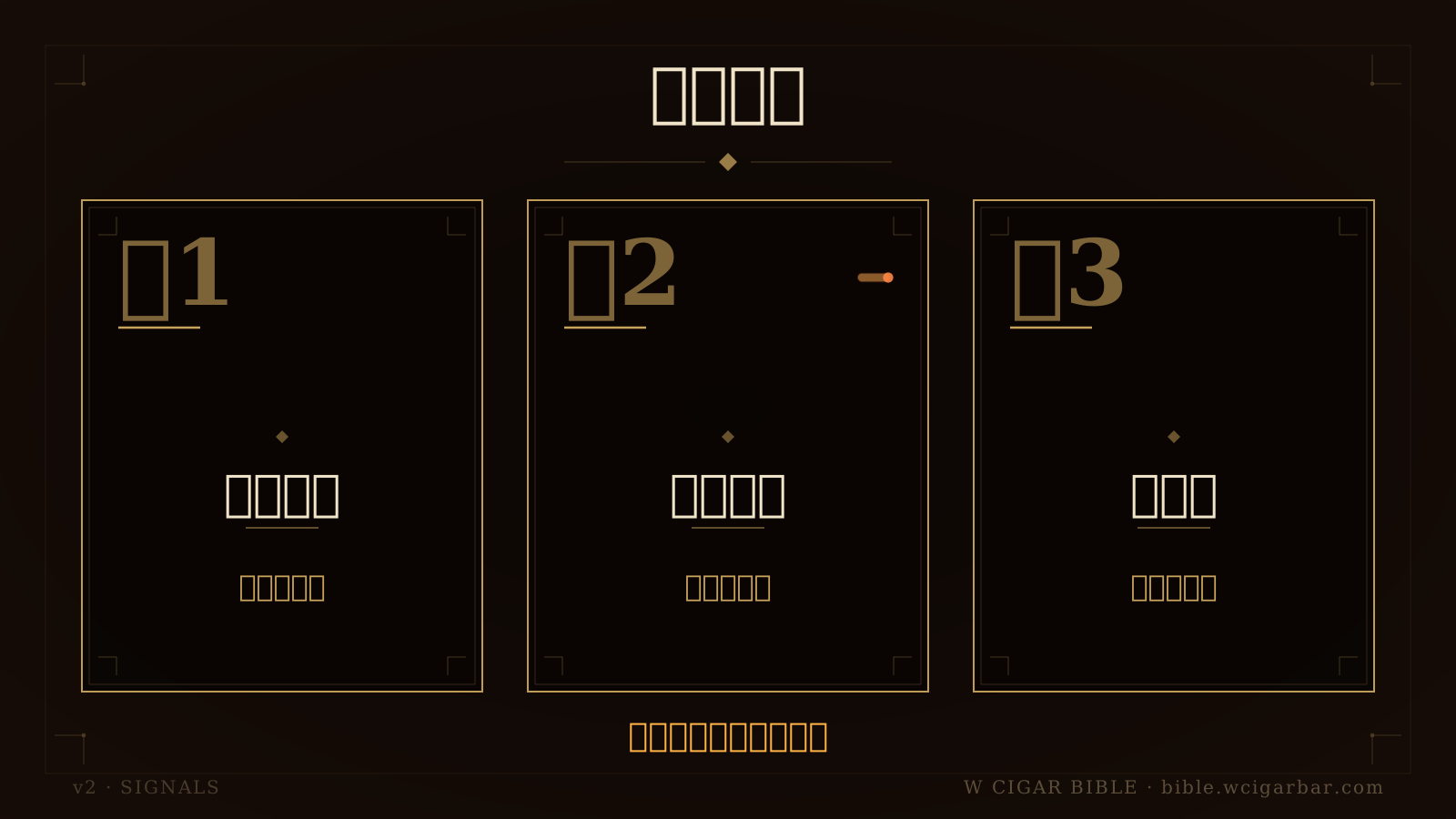
三張錯誤提醒卡指出只看老盒、迷信古巴與追新品
Rare Non-Cuban Varieties: Advanced Choices from Nicaragua, Dominican Republic, and Honduras
In the past fifteen years, the rarity of high-end non-Cuban cigars has quickly established itself, especially in Nicaragua's Estelí, Jalapa, and Condega regions, as well as the Dominican Republic's La Canela and Cibao tobacco. Since Arturo Fuente OpusX debuted in 1995, it has proven that the Dominican Republic can also produce high-quality wrappers. Padron 1926 Serie, Davidoff Limited Editions, and Fuente Añejo have all established clear collectible languages.
The advantage of rare non-Cuban cigars is that batch information, packaging control, and brand communication are usually more transparent. For example, Davidoff's Year of the Rabbit 2023 and Year of the Dragon 2024 have fixed narratives and specifications for each year's zodiac series. Padron Family Reserve is often named after family years, such as No.45, No.46, and No.50, making it easy for collectors to establish horizontal comparisons.
However, the non-Cuban market is more susceptible to the pace of new releases. After each year's IPCPR and PCA shows, new topics emerge quickly, and last year's popular models may be overshadowed by the next batch of limited editions. Collectors should focus on "brand longevity" and "core tobacco scarcity," such as Fuente's Chateau de la Fuente estate and Padron's aged Nicaraguan tobacco inventory, rather than just chasing flashy packaging.
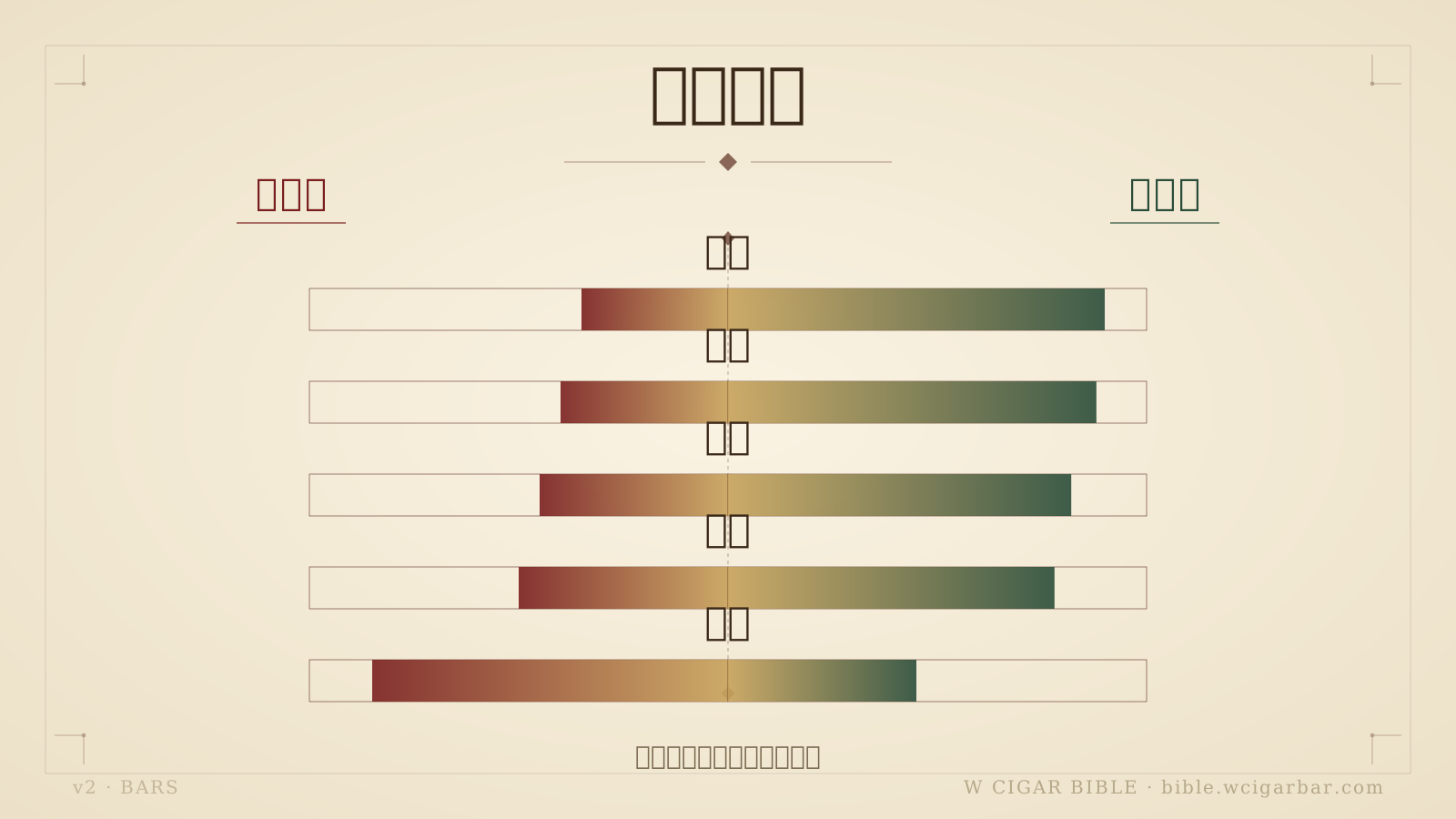
長條圖比較話題派與脈絡派在來源保存風味配額聲量的差異
Origin, Box Condition, and Preservation: The Value of Rare Cigars is Determined by Details
The biggest fear for rare cigars is "a complete story but insufficient evidence." When I examine an old box of cigars, I first check the outer box seal, tax stamp, anti-counterfeiting label, factory code, and date code on the box bottom, then look at the inner lining paper, ribbon, cigar arrangement, and wrapper condition. Cuban box bottom dates commonly feature a three-letter factory code plus month and year after 2003. If the markings, box type, and brand era do not match, it raises a red flag.
The first threshold for collectible value is not age but the credibility of origin and preservation. A box of 2012 Cohiba Behike 52 with long-term high humidity, abnormal wrapper oil spots, and a musty smell inside the box should be significantly discounted despite its market reputation. Conversely, a box of 2008 H. Upmann Sir Winston with clear provenance, stable humidity, and intact foot is more worth evaluating.
In practice, I recommend establishing a collection record, at least including the following items:
- Acquisition date, source type, box bottom code, and serial number photos
- Preservation humidity and temperature range, such as 65%–69% RH, 18–21°C
- Semi-annual visual inspection, recording wrapper, box aroma, and pest risks
- Market transaction references for the same model, not just listed prices
- Diversify brands and vintages to avoid excessive fluctuations in a single theme
Market Dynamics Comparison: Which Rare Types are More Suitable for Long-Term Holding
The rare cigar market has seen three significant changes in recent years. First, after significant adjustments in the official pricing of high-end brands like Cohiba and Trinidad, the secondary market has re-anchored. Second, Asian collectors place more emphasis on complete boxes and gift box specifications. Third, the price range of high-end non-Cuban limited editions is gradually approaching some famous Cuban models. This means that veterans cannot rely solely on experiences from ten years ago to judge today's value.
Long-term holding should prioritize types with "high brand consensus, controllable preservation risk, and clear circulation stories." The following table is a simplified interpretation framework I provide for advanced collectors, focusing not on predicting prices but on identifying risks and suitability.
| Type | Representative Case | Advantage | Main Risk | Suitable Collector |
|---|---|---|---|---|
| Cuban Limited Edition EL | Cohiba 1966 EL 2011 | Strong brand, high recognition | Counterfeits and high premiums | Those who value liquidity |
| Regional Edition RE | Diplomaticos Bushido 2014 | Distinct cultural themes | Regional demand fluctuations | Those who enjoy researching quotas |
| Discontinued Sizes | Bolivar Coronas Gigantes | Irreplaceable | Large box condition variance | Old-school flavor enthusiasts |
| Non-Cuban Limited | Fuente OpusX, Davidoff LE | Transparent information | Fast new product replacement | Diversified allocators |
I divide the collection allocation into three layers: the core layer for strong brand consensus models, accounting for 50%; the research layer for discontinued and niche masterpieces, accounting for 30%; and the interest layer for emerging limited editions and special packaging, accounting for 20%. This way, even if the heat of a particular theme declines, the overall collection remains flexible and less likely to be swayed by short-term market sentiment.

三張問答卡回答盒齡、整盒與濕度範圍的實用問題
Practical Methods for Smart Choices: From Flavor, Liquidity to Exit Strategy
Experienced collectors choosing rare cigars should not only ask "is it popular now" but "who will still understand it in five years." For example, Montecristo Gran Reserva Cosecha 2005 and Romeo y Julieta Wide Churchills Gran Reserva Cosecha 2009 are remembered by the market not just because of the Gran Reserva label but because the brand itself has global recognition, and the vintage, packaging, and narrative are complete.
A collectible rare cigar should simultaneously satisfy consumption value and resale understanding. If a cigar is only known to a very few, no matter how good its flavor, it may face insufficient liquidity. If a cigar is extremely famous but its price far exceeds similar alternatives, be wary of potential price corrections. Collecting is not about locking funds in a wooden box but about letting taste, knowledge, and market judgment work together.
My own screening process usually follows these steps:
- First, confirm whether the brand has a long-term collector base, such as Cohiba, Partagás, Fuente, Davidoff
- Then confirm whether the size is representative, avoiding overly eccentric sizes that are difficult to resonate with
- Check for complete box packaging, seals, box bottom codes, and preservation records
- Compare transaction or price ranges from three or more market sources
- Set the purpose of holding: personal use, display, exchange, or long-term collection
Finally, remember that a collector's greatest advantage is not capital but discipline. Being a step slower when seeing popular models and doing more homework when encountering niche masterpieces often accumulates more results than chasing news. The cigar market has cycles, and a truly good collection should withstand both time and palate checks.
Frequently Asked Questions
Are older rare cigars always more worth collecting?
Not necessarily. Age is just one condition; preservation environment, credible origin, brand demand, and size scarcity are more important. If an old box of cigars has been in a high humidity or extreme temperature environment for a long time, both flavor and value may be compromised. Old boxes should be judged by condition, not just age.
Are Cuban cigars always more valuable to collect than non-Cuban cigars?
Not necessarily. Cuba has a deep history and brand consensus, but high-end non-Cuban brands have made significant progress in recent years in transparency, quality stability, and limited edition planning. Fuente OpusX, Padron Family Reserve, and Davidoff annual limited editions have all formed mature collector circles.
Is it better to collect single cigars or whole boxes?
In terms of value preservation, whole boxes usually have an advantage because the box bottom code, seal, arrangement, and packaging can collectively prove origin. Single cigars are suitable for flavor research and filling experience gaps but usually lack the resale understanding of complete boxes. If space is limited, prioritize small box specifications.
What humidity should be set for long-term collection?
In most cases, 65%–69% RH and 18–21°C are relatively stable ranges. Rare cigars are susceptible to damage from high humidity and cracking from low humidity. Rather than pursuing a single number, it is more important to avoid drastic fluctuations and regularly check the box's aroma and wrapper condition.
How to determine if a rare cigar is overpriced?
Observe three points: first, whether the listed price is far above actual transactions; second, whether the market has only a few sellers setting prices; third, whether similar alternatives are still much cheaper. If there is a lack of transaction support and prices suddenly surge, it is usually best to be conservative.
Is it suitable to immediately collect a large number of newly released limited editions?
I usually do not recommend heavy investment at the start. New products are most likely to be driven by hype, and true market consensus takes one to three years to become clear. Start with a small quantity to observe flavor, reviews, and circulation changes, then decide whether to increase allocation. This approach is more stable than being swayed by initial hype.
The world of rare cigars is most captivating not for its price curves but for the regions, vintages, craftsmanship, and collector judgment behind each box. My view is always simple: first, clarify the origin, ensure proper preservation, then discuss the market; first, understand why it is good, then consider whether it is worth keeping. A truly mature collection is not about boasting how many rare models you own but about nodding in approval of your choices when you open your collection cabinet years later.
—Cigar Prince Wilson Tsai
Smoking is harmful to health. Under 20 years old is prohibited from smoking. Quitline: 0800-636363. This article is intended for adults over 20 years old as a reference for cigar culture, preservation, and regulatory knowledge, not as tobacco advertising, promotion, or purchase advice.
Like this article?Share with friends
Share this W Cigar Bible piece with friends who want to learn cigar culture, storage, and tasting.
想把這篇 化為實踐
雪茄聖經是知識;雪茄文化要在空間裡發生

W Cigar Bar 大安總店資訊
台北大安區 · 雪茄聖經總編輯 Wilson Tsai 主理的雪茄文化空間

33 座 24 小時恆溫恆濕醇化室
W Cigar Bar 提供的會員醇化空間 · 場地資訊請洽編輯部

雪茄剪 / 打火機 / 雪茄盒 / Boveda
W Cigar 配件官網 · 專營雪茄配件正品

加 LINE 好友 · 文化諮詢
文化空間資訊 · 紳士沙龍 · 私人包場
本網站內容僅供雪茄文化、歷史、收藏與品吸知識研究參考。菸品有害健康、未滿法定年齡者請勿吸菸。實際規範請依所在地法律為準。
吸菸有害健康・戒菸專線 0800-636363・本站僅供 20 歲以上成年人閱覽。
讀到這裡,你不只是路過的人
留下 Email,加入 W 雪茄聖經內圈——總編輯 Wilson Tsai 親選的學院深文與國際新訊,先你一步送到信箱。
· 教育用途非銷售 · 隨時一鍵退訂 · Email 絕不對外公開 · 由勝茄股份有限公司營運
同分類延伸閱讀



資料來源:W Cigar Bible 編輯部整理 · 雪茄王子 Wilson Tsai 親自審稿
本文僅供雪茄文化、歷史、收藏與品鑑知識研究,不作為菸品促銷、銷售或購買建議。吸菸有害健康,未滿二十歲不得吸菸。