澳洲 Shiraz 紅酒指南:Barossa 老藤的黑莓與甘草,搭配 Padrón 3000 Maduro 的可可厚度
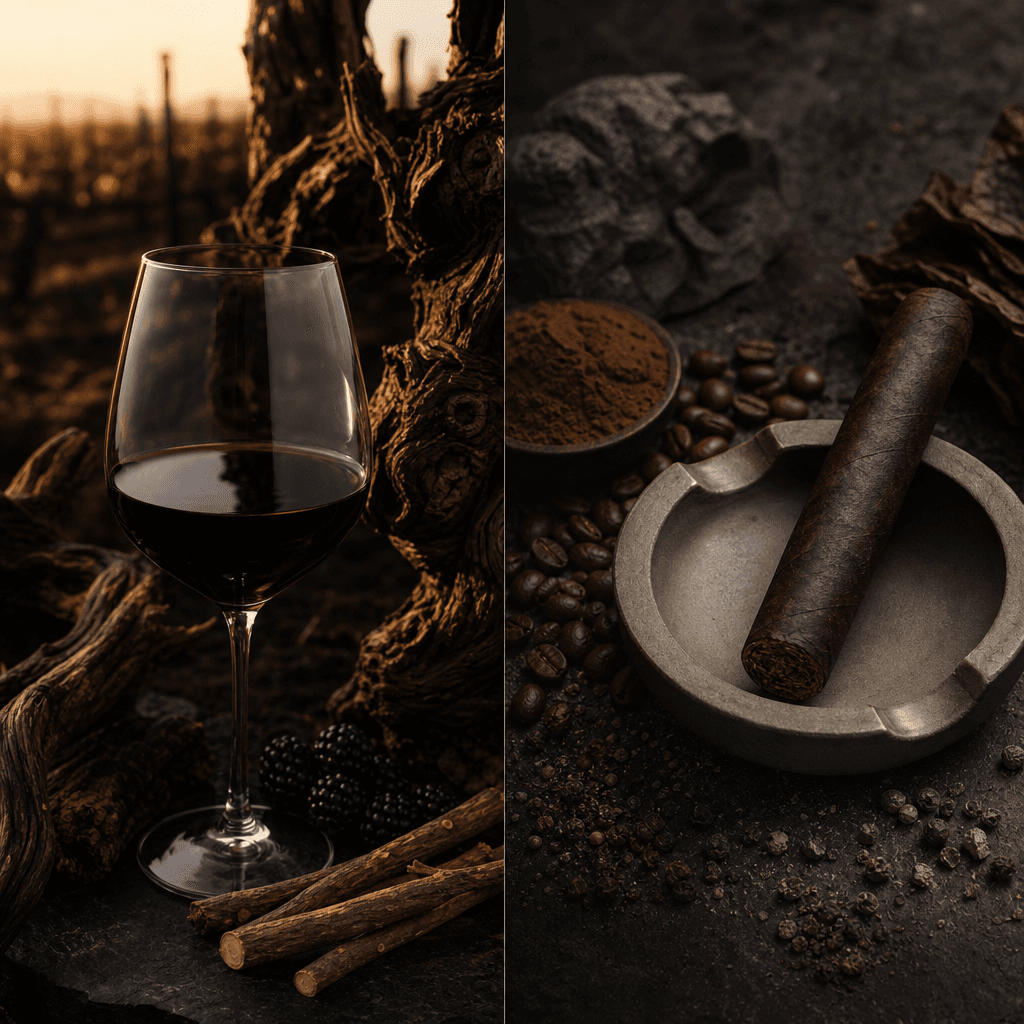
澳洲 Shiraz 與 Padrón 3000 Maduro 的搭配,核心在於 Barossa Valley 老藤紅酒的黑莓果醬、甘草、尤加利與美國桶甜感,如何對上尼加拉瓜 Maduro 的黑可可、咖啡、胡椒與泥土。本文從希哈茲產區歷史、釀造結構、香氣化學,到煙霧尾韻的互鎖變化,建立老手可用的判斷框架。
- Barossa Valley 老藤希哈茲以黑果、甘草、尤加利與桶陳甜感構成厚實骨架。
- Padrón 3000 Maduro 的黑可可、咖啡、胡椒,能承接澳洲 Shiraz 的量感。
- 搭配關鍵在甜苦互鎖與尾韻清潔感,而非單純追求濃度堆疊。
Australian Shiraz Wine Guide: The Blackberry and Licorice of Barossa Old Vines, Paired with the Cocoa Depth of Padrón 3000 Maduro
Australian Shiraz and Padrón 3000 Maduro's encounter is not just about "intense with intense" as a superficial answer, but rather how the old vine black fruit, licorice, and eucalyptus of Barossa Valley collide with the dark cocoa, coffee, pepper, and earthiness of Nicaraguan Maduro. As an editor of the "Cigar Bible," I often say that when seasoned enthusiasts pair wine with cigars, the real questions to ask are: Are the thicknesses of both sides calibrated with each other, is the bitterness locked by sweetness, and will the finish be tainted by the smoke? If handled properly, this combination will present a positive collision of blackberry jam thickness × dark cocoa thickness, with licorice sweetness × coffee bitterness pulling the mid-section into a stable axis.
Padrón 3000 Maduro (Nicaragua, Robusto Extra, 52 × 140mm) is not a lightweight cigar. Its dark cocoa, coffee, pepper, and earthiness, paired with a medium-strong body, require a red wine with enough body and tannins to support it. Australian Shiraz, especially the old vine wines of Barossa Valley, provides full-bodied black fruit, mouth volume brought by higher alcohol, and vanilla, coconut, and sweet spice cues commonly found in American oak. The problem is that such a heavy combination can easily become a mass of dark sweetness and bitterness without acidity and coolness. Therefore, this article will break down each flavor token to see how they integrate, interlock, and reduce noise.

流程圖顯示選酒控溫慢抽到尾韻收束
Australian Shiraz and French Syrah: Two Paths of the Same Grape
Shiraz and Syrah are the same grape variety, with no genetic divergence. The real differences come from climate, harvest maturity, winemaking habits, and market language. French Northern Rhône Syrah often features black olive, violet, black pepper, smoked meat, and tighter acidity lines. Australian Shiraz, especially from Barossa Valley, more commonly exhibits blackberry jam, plum, licorice, dark chocolate, and broad body. It's not about which is more authentic, but rather how the same variety grows into two stylistic languages under different sunlight, soil moisture, and winemaking choices.
After the 19th century, Australia developed Shiraz into its red wine signature, and the Chinese translation "希哈茲" gradually became associated with full-bodied, ripe, dark fruit flavors. Barossa's hot and dry summers allow grapes to reach high sugar levels and thick skin maturity; if there is enough cooling at night, acidity can still retain a basic structure. For cigar pairing, this type of wine is not used to cleanse the palate with a thin acid line but to support the weight of the smoke with pectin feel, tannins, and body.
The key to Australian Shiraz is not intensity, but whether the fruit maturity, barrel-aged sweetness, and acidity can maintain order in high density. If the wine only has jam sweetness and alcohol heat left, encountering the dark cocoa and coffee bitterness of Padrón 3000 Maduro will make the finish sticky. Conversely, if the wine has licorice, eucalyptus, black pepper, and enough tannin details, the smoke will be layered rather than swallowed by the body.
Barossa Valley Old Vine Wines: German Immigrants and the Dark Framework of Century-old Vines
The wine history of Barossa Valley can be traced back to the 1840s when immigrants from German-speaking regions established villages in South Australia, bringing European agricultural techniques, Lutheran community culture, and grape cultivation traditions. Unlike Europe, which was devastated by phylloxera in the late 19th century, Barossa preserved valuable old vine resources. The so-called century-old vines are not romantic descriptions but agricultural realities of deep roots, naturally reduced yields, and increased fruit concentration.
Old vine wines often exhibit two characteristics in taste: first, high fruit density, but not necessarily just sweetness; second, finer tannin granules due to better skin maturity and phenolic integrity. Barossa Valley's old vine Shiraz can often present blackberry, black cherry, plum jam, licorice, cocoa powder, and dry spices, with a broad body and long finish. When paired with cigars, this width becomes the floor that supports the smoke's oiliness, rather than just exploding in the front.
The most fascinating aspect of Barossa Valley old vine wines is that they transform high maturity into depth, rather than just sweet heaviness. In front of Padrón 3000 Maduro, this is especially important because the dark sugar, cocoa, and coffee tones brought by the Maduro wrapper will amplify all the sweet aromas in the wine. If the wine lacks the earthiness, spices, and tannin framework of old vines, the pairing will lean towards cloying sweetness; if the framework is complete, the dark fruit will become the dark background in the smoke.
From a regional judgment perspective, Barossa is not a single expression. Warmer valley blocks are often thicker and more jammy, while neighboring regions like Eden Valley, which are higher and cooler, may bring more pronounced acidity and eucalyptus lines. Experienced enthusiasts can pay attention to whether the label indicates Barossa Valley, Barossa, or more detailed sub-regional sources, as this will affect whether the pairing with Padrón leans towards chocolate cake sensation or the three-dimensionality of dark fruit, mint, and dry spices.

三張重點卡呈現厚度甜苦與尾韻判斷
The Aroma Structure of Shiraz: Blackberry, Licorice, Eucalyptus, and American Oak Sweetness
A mature Australian red wine centered on Shiraz often first presents blackberry jam and ripe plum notes. Here, "jam" does not refer to added sugar sweetness but the concentrated black fruit, glycerin feel, and lower water content brought by high maturity. When it enters the mouth, alcohol forms a warm push, and tannins spread across the tongue and gums, preventing the fruit flavor from dissipating immediately.
Licorice sensation usually results from the combined outcome of mature fruit, phenolics, and spice tones, bringing a kind of dark sweetness that is not equal to sugar content. This dark sweetness is very relevant to the coffee bitterness of Padrón 3000 Maduro because coffee bitterness can easily appear dry and hard without a sweet framework; when licorice sweetness comes in, the bitterness transforms from sharp to deep. Eucalyptus or mint sensation in Australian Shiraz is often related to 1,8-cineole, possibly coming from the surrounding vegetation environment or the integration of aromas during fermentation and maturation.
Blackberry, licorice, eucalyptus, and American oak sweetness respectively provide weight, adhesion, brightness, and rounding functions. American oak often brings vanilla, coconut, sweet spices, and creamy texture, which can soften the tannin edges of Shiraz. When the wine encounters the cocoa bitterness of the Maduro wrapper, the barrel-aged sweetness acts like a buffer layer, making the bitterness more like dark chocolate rather than burnt wood.
However, excessive use of American oak can also unbalance the pairing. Too much coconut, vanilla, and roasted sweet aroma will overlap with the natural sweet bitterness of Maduro, making the mid-section thick but lacking direction. Experienced enthusiasts should look for Shiraz where fruit, oak, acidity, and alcohol each stand in their place; this way, the pepper and earthiness of Padrón have room to surface.

矩陣比較老藤一般希哈茲與法式席哈的差異
Padrón 3000 Maduro: The Dark Cocoa and Coffee Axis of Nicaraguan Tobacco
Padrón 3000 Maduro (Nicaragua, Robusto Extra, 52 × 140mm) is a cigar that well represents the Padrón family vocabulary: direct lines, stable burn, with flavors dominated by dark cocoa, coffee, pepper, and earthiness. The Maduro wrapper brings a darker sweet-bitter structure, while Nicaraguan tobacco provides mineral, soil, and spice sensations. It doesn't win by light floating aromas but by density, rhythm, and establishing presence with a medium-strong body.
The front often features dark cocoa powder, roasted coffee, and slight black pepper, with a smoke texture leaning thick, giving a clear weight upon entry. The mid-section enhances earthiness and coffee grounds sensation, with pepper moving from the tongue tip to the back of the throat, preventing the overall from being just sweet-bitter. If the rhythm is well controlled in the back section, cocoa shells, roasted nuts, dry wood, and slightly caramelized edges will appear.
What Padrón 3000 Maduro needs is not wine to suppress it, but wine that can acknowledge its thickness and organize its bitterness. The black fruit and barrel-aged sweetness of Australian Shiraz can just accommodate the cocoa and coffee of Maduro, but the premise is that the wine cannot be just sweet. If the wine has enough tannins and eucalyptus cool lines, the earthiness of the cigar will be gathered, and the pepper will be more like spice rather than irritation.
From a specification perspective, the 52 ring gauge and 140mm length of Robusto Extra allow smoke volume, burn time, and flavor progression to be in a stable range. This is not a size that emphasizes high-pitched aromas with excessive slenderness, nor is it a direction where smoke is diluted due to overly large ring gauges. When paired with Shiraz, its size just allows the black fruit of the wine to add weight after each smoke, without letting the palate be covered by burnt bitterness for a long time.

三張錯誤卡提醒濃淡酒溫與桶甜風險
Blackberry Jam Thickness × Dark Cocoa Thickness: How to Balance Volume
The most important first token of this pairing is blackberry jam thickness × dark cocoa thickness. The blackberry jam of Shiraz comes from mature fruit, glycerin feel, and phenolic concentration; the dark cocoa thickness of Padrón comes from the sweet-bitter reaction of the Maduro wrapper, fermentation, and the dark tone of tobacco after aging. When the two collide, if the wine's acidity is sufficient, it will form a structure similar to blackberry dark chocolate; if the acidity is insufficient, it will become a mass of opaque sweet-bitter.
I often say that the biggest fear of thickness pairing with thickness is "no boundaries." The tannins of Shiraz can give the jam feel a contour, while the coffee and earthiness of Padrón can pull dark cocoa back from the dessert direction to the tobacco body. When both sides are not hollow intensity, the palate will present a three-stage progression of front black fruit, mid cocoa, and back earthiness.
The key to the positive collision of blackberry jam and dark cocoa is acidity and tannins carving out the boundaries of thickness. The following table is the flavor correspondence table I use to judge whether this pairing is established:
| Shiraz Flavor Token | Padrón 3000 Maduro Token | Interaction Result |
|---|---|---|
| Blackberry Jam | Dark Cocoa | Forms a dark fruit chocolate sensation, increases thickness but requires acidity support |
| Licorice Sweetness | Coffee Bitterness | Sweet-bitter interlock, transforming bitterness from sharp to deep |
| Eucalyptus Coolness | Smoke Finish | Appears clean in the finish, reducing burnt bitterness stickiness |
| American Oak Vanilla | Maduro Sweet-Bitter | Rounds cocoa edges, but excess will appear sweet-heavy |
| Black Pepper Wine Aroma | Cigar Pepper | Spice frequency alignment, enhancing mid-back rhythm |
The truly beautiful state is when the wine first spreads the palate with blackberry and plum, and the cigar then tightens the mid-section with dark cocoa and coffee. At this point, returning to the wine, licorice and barrel-aged vanilla will wrap the coffee bitterness, presenting a clean bitter-sweet finish like a dark chocolate shell. This is not treating the wine as a supporting role or the cigar as the main character, but both sides mutually acknowledging each other's weight.
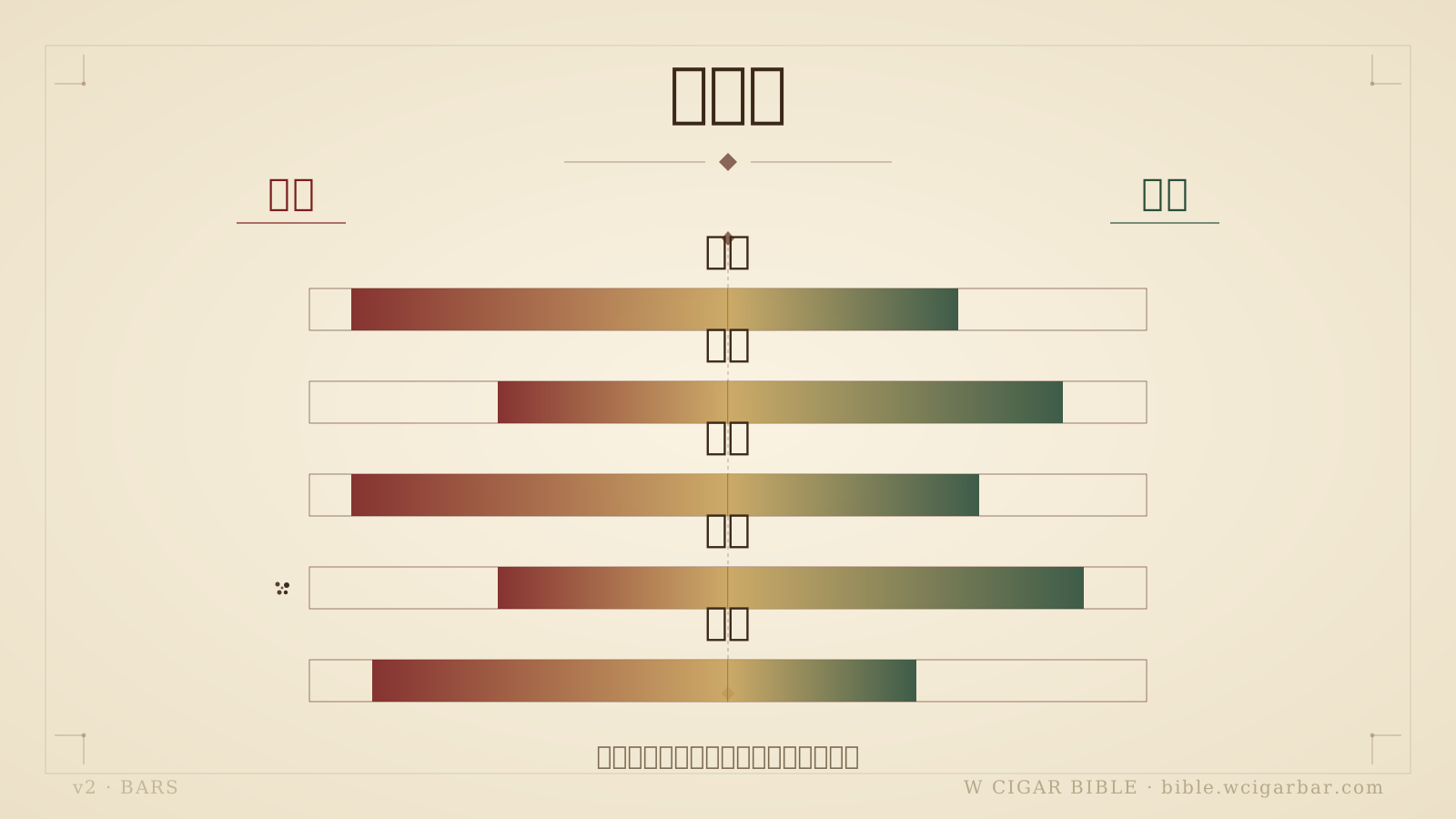
長條圖比較澳式希哈與法式席哈的風味取向
Licorice Sweetness × Coffee Bitterness, Pepper × Alcohol Warmth: Second Layer Interlock
After the first round of black fruit and dark cocoa establishes the base, the second layer looks at licorice sweetness × coffee bitterness. Licorice sweetness is not equal to sugar sweetness; it carries the depth of plant roots, herbs, and dark spices. Coffee bitterness is also not just bitter but a combination of roasting, caramelization, woodiness, and oiliness. When the two interlock, coffee bitterness will be elongated, and licorice sweetness will be given a sense of structure, not appearing soft.
If Padrón 3000 Maduro's coffee lines encounter red wine with too high acidity and too thin a body, they are often amplified into dryness. Barossa Valley Shiraz uses body and glycerin feel as a buffer, allowing coffee bitterness to stay in the mid-section rather than scraping the tongue root. Coupled with the black chocolate and sweet spices commonly found in the wine, Maduro's dark cocoa will be extended, forming a continuous band of cocoa powder, concentrated coffee, and licorice syrup.
Licorice sweetness × coffee bitterness is the interlocking gear of this pairing, responsible for locking sweetness and bitterness into the same central axis. Pepper × alcohol warmth is another pairing to be cautious of, as both will increase the sense of stimulation. Shiraz itself may carry black pepper or sweet spices, and Padrón also has pepper; if the wine temperature is too high, alcohol evaporation will push the pepper too aggressively, making the finish appear dry.
The solution is not to reduce flavor intensity but to control service conditions and rhythm. The red wine can be served slightly below room temperature to restrain alcohol warmth, making tannins and black fruit clearer. The cigar should maintain a stable rhythm, preventing the smoke from overheating; once the temperature is too high, coffee will become scorched, and pepper will become prickly, breaking the originally beautiful licorice interlock.
Eucalyptus Coolness and the Finish Cleanliness of Australian Red Wine
The eucalyptus sensation in Australian Shiraz is a signal that many seasoned enthusiasts pay special attention to when judging pairing potential. It may present as mint, eucalyptus leaves, cool herbs, or slightly camphor-like, not necessarily strong, but as long as it exists, it can open a gap in the heavy black fruit. This gap is crucial for Padrón 3000 Maduro because if Maduro's dark cocoa, coffee, and earthiness stack up all the way, the finish can easily become heavy.
From a flavor chemistry language perspective, eucalyptus coolness is often related to 1,8-cineole, while cigar smoke contains dark aromas brought by woodiness, phenolics, pyrazines, and roasting reactions. When the cool herbal sensation of 1,8-cineole encounters the smoke finish, it forms an "illusion of cleanliness" in the retronasal olfaction: not washing away the smoke but making the edges of the smoke clearer. This is the key to eucalyptus coolness × smoke finish, not mint overpowering tobacco but providing an outlet for burnt bitterness.
The task of eucalyptus coolness is to open a window for the heavy pairing, giving the smoke finish an extra layer of clean herbal edge. If there is no such cool line in the wine, the pairing can still be established but will rely more on acidity and tannins to gather. If eucalyptus is too strong, it may create an overly prominent herbal sensation with the cigar's earthiness, pushing cocoa and coffee to the background.
I would describe the ideal state as "a narrow window in a black room." Blackberry, licorice, dark cocoa, and coffee provide depth in the room, while eucalyptus allows air to flow. When you take a sip of wine followed by a puff of smoke, if the retronasal cavity can feel the cool herbs extending the cocoa finish rather than suddenly breaking off, that's the most delicate moment of this pairing.

快問快答卡整理能否搭配老藤與桶甜問題
Glass Temperature, Glass Type, and Sequence: Keeping Barossa Valley Pairing in Focus
When tasting this type of Australian Shiraz, I don't set the temperature too high. Barossa Valley's body and alcohol already have presence, and if unfolded at a higher temperature, the alcohol will float above the black fruit, making Padrón's pepper more prickly. A slightly lower red wine temperature allows blackberry, licorice, tannins, and barrel-aged aromas to be arranged more clearly.
In terms of glass type, a wide-bellied red wine glass helps release black fruit and barrel-aged aromas, but the rim should not be too outward. An overly large oxidation surface will cause alcohol and sweet spices to dissipate too early, appearing thick and loose when paired with Maduro. A medium-large Bordeaux-style glass or structured red wine glass is usually more stable than a glass type that overly emphasizes aroma diffusion.
In terms of sequence, first confirm the wine's acidity and tannins, then let the cigar enter, to avoid being defined by smoke from the start. I usually first smell the wine, take a small sip, confirm the positions of blackberry, licorice, eucalyptus, and barrel-aged sweetness, then cut open the Padrón 3000 Maduro. Don't rush to pair the first few puffs of smoke with wine; first let dark cocoa, coffee, and pepper establish a baseline, then use Shiraz to test whether the sweet-bitter interlock is established.
If the mid-section starts to feel too thick, you can extend the interval between two sips of wine, allowing the smoke finish to naturally dissipate. This is not weakening the pairing but preventing alcohol, tannins, and smoke particles from over-accumulating in the mouth. Experienced enthusiasts are not chasing continuous impact but whether each return of black fruit to cocoa, and cocoa back to licorice, still maintains clarity.
Frequently Asked Questions
When judging this pairing, first look at whether the structure is complementary, then discuss your own preference for intensity direction.
Can both Australian Shiraz and French Syrah pair with Padrón 3000 Maduro?
Yes, but the results are different. French Syrah often wins with black pepper, olive, smoked meat, and acidity, pulling Padrón's earthiness and pepper more austere. Australian Shiraz, on the other hand, accommodates Maduro's dark cocoa with black fruit, licorice, and body, making it thicker and rounder overall.
Is Barossa Valley old vine wine always more suitable than regular Shiraz?
Not necessarily, but old vines often bring better fruit density and tannin details, advantageous for medium-strong body cigars. If regular Shiraz has enough acidity, licorice, and dark fruit depth, it can also be established. The key is not in the vine age term itself but whether the wine has a framework.
Will American oak sweetness make the pairing too sweet?
There is this risk. Moderate American oak can round coffee bitterness with vanilla, coconut, and sweet spices; excessive use will overlap too thickly with Maduro's sweet-bitter. Experienced enthusiasts can pay attention to whether the finish still has black fruit acidity and tannin gathering.
How to prevent Padrón 3000 Maduro's pepper sensation from being amplified?
First control the wine temperature, preventing excessive alcohol evaporation in Shiraz. Then control the cigar rhythm, avoiding overheated smoke leading to pepper turning prickly. When the wine's licorice sweetness and black fruit are still in the mid-section, pepper usually becomes spice rather than interference.
If the wine has a very noticeable eucalyptus sensation, will it overpower the cigar?
It is possible, especially with wines that have strong cool herbal or camphor sensations. The ideal state is for eucalyptus to only open a window in the finish, making the smoke edges clearer. If it stands in the foreground throughout, Padrón's dark cocoa and coffee will be pushed to the background.
Is this pairing suitable for using a decanter?
It depends on the wine's age and structure. Young, tight tannin, and pronounced barrel-aged Barossa Shiraz can have short air contact to integrate black fruit and oak. If the wine is already smooth, excessive aeration may loosen the fruit flavor, reducing support during pairing.
Pairing Australian Shiraz with Padrón 3000 Maduro, the excitement lies not in boldness but in maintaining order within thickness. Blackberry jam and dark cocoa are responsible for weight, licorice and coffee establish the central axis, and eucalyptus opens a window for the finish. When each token stands in the right position, this pairing moves from "intense" to truly discerning depth.
Further Reading|Complete Guide to Wine Regions: Flavor Maps of Old and New Worlds, and Pairing Overview with Cigars|Argentinian Malbec High Altitude Violets: Mendoza's Sunshine Jam Sensation, Paired with My Father Le Bijou 1922's Pepper Power|New Zealand Red Wine Central Otago Pinot Noir: Pure Red Fruit of Cool Climate, Paired with Quai d'Orsay No.50's Elegance
—Cigar Prince Wilson Tsai
Smoking is harmful to health. Smoking is prohibited for those under twenty. Quitline: 0800-636363. This article is intended as a reference for cigar culture, preservation, and regulation knowledge for adults over twenty years old, not as tobacco advertising, promotion, or purchase advice.
Do not drink and drive. Excessive drinking is harmful to health. Drinking is prohibited for those under eighteen. This article is also not alcohol advertising, promotion, or purchase advice. Please drink responsibly.
Like this article?Share with friends
Share this W Cigar Bible piece with friends who want to learn cigar culture, storage, and tasting.
想把這篇 化為實踐
雪茄聖經是知識;雪茄文化要在空間裡發生

W Cigar Bar 大安總店資訊
台北大安區 · 雪茄聖經總編輯 Wilson Tsai 主理的雪茄文化空間
33 座 24 小時恆溫恆濕醇化室
W Cigar Bar 提供的會員醇化空間 · 場地資訊請洽編輯部
雪茄剪 / 打火機 / 雪茄盒 / Boveda
W Cigar 配件官網 · 專營雪茄配件正品
加 LINE 好友 · 文化諮詢
文化空間資訊 · 紳士沙龍 · 私人包場
本網站內容僅供雪茄文化、歷史、收藏與品吸知識研究參考。菸品有害健康、未滿法定年齡者請勿吸菸。實際規範請依所在地法律為準。
吸菸有害健康・戒菸專線 0800-636363・本站僅供 20 歲以上成年人閱覽。
讀到這裡,你不只是路過的人
留下 Email,加入 W 雪茄聖經內圈——總編輯 Wilson Tsai 親選的學院深文與國際新訊,先你一步送到信箱。
· 教育用途非銷售 · 隨時一鍵退訂 · Email 絕不對外公開 · 由勝茄股份有限公司營運
同分類延伸閱讀

資料來源:W Cigar Bible 編輯部整理 · 雪茄王子 Wilson Tsai 親自審稿
本文僅供雪茄文化、歷史、收藏與品鑑知識研究,不作為菸品促銷、銷售或購買建議。吸菸有害健康,未滿二十歲不得吸菸。