日常紅酒入門指南:親民風格餐酒怎麼挑,搭配 H. Upmann Half Corona 的晚餐後半小時
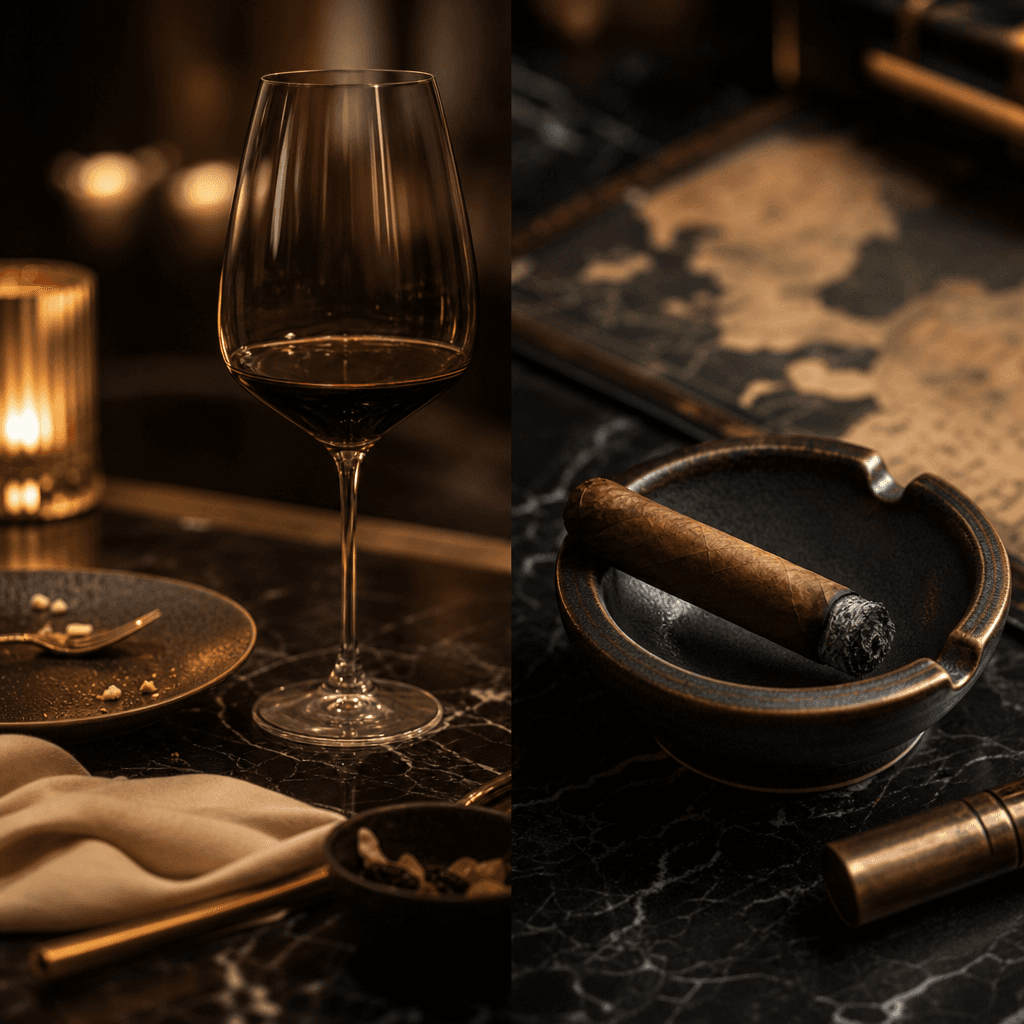
日常紅酒與 H. Upmann Half Corona 的晚餐後搭配,重點不在複雜術語,而是選擇果香清楚、單寧輕、酒體中等的入門葡萄酒。從智利、西班牙到法國南部 Languedoc,本篇以產區、標示、瓶塞與開瓶保存為線索,拆解紅酒入門的低壓力選酒邏輯,並細談果香酯類、甘油感、木質調與古巴短茄穀物奶油風味如何互相墊底。
- 日常紅酒可先看大產區與品種標示,降低第一次選酒的判讀壓力。
- H. Upmann Half Corona 的穀物奶油調,適合果香多、單寧輕的紅酒。
- 30 分鐘短茄與一杯量餐酒節奏接近,適合晚餐後半小時觀察風味。
Daily Wine Beginner's Guide: How to Choose Affordable Table Wine and Pair with H. Upmann Half Corona for a Post-Dinner Half Hour
Daily wine and H. Upmann Half Corona on the same post-dinner table, the most important thing is not to make the scene grand, but to let the taste have a clear, quiet, and understandable route. As an editor of the "Cigar Bible," I often say that beginners should not be intimidated by winery names, vintage anxiety, or regional hierarchy when first entering the world of wine. Instead, they should first know that they are looking for entry-level wines with clear fruit aromas, light tannins, and clean acidity. H. Upmann Half Corona (Cuba, Half Corona, 44 × 90mm): grain sweetness, butter, light wood, elegant cigar body, about 30 minutes—just the right length after dinner, perfectly illustrating the rhythm of "a glass of table wine and a short cigar."
This article is not about mystifying wine or making cigar pairing sound like metaphysics. I want to use language that beginners can understand to first clarify how to choose daily wine: whether to look at large regional names or village names, why the New World often writes grape varieties straightforwardly, and why Chile, Spain, and southern France's Languedoc often produce approachable table wines, and what screw caps and corks actually represent. Further down, we will break down the zero-pressure formula of fruit-flavored daily wine × grain butter, 30-minute short cigar × one glass, and the flavor changes that can truly be smelled, tasted, and felt when smoking.
流程圖呈現從讀酒標到半小時搭配的步驟
The First Step in Wine Beginners: How to Choose Daily Wine
The most common problem for wine beginners is that there is too much information on the wine label, but they don't know which one to prioritize. My suggestion is to first distinguish between the difficulty differences of "large regional names" and "village names"; names like Bordeaux, Rioja, and Languedoc are usually easier to establish an initial impression than single village or single vineyard names. Beginners should first grasp the style outline from large regions and then gradually delve into villages, sub-regions, and wineries, which is more stable than chasing details from the beginning.
So-called daily wine is not synonymous with roughness, but rather it can clearly play a supporting role on the dining table. You should look for wines with obvious red fruit, acidity that can cut through dinner fats, and tannins that won't leave your mouth dry for too long. The core of how to choose wine is to first select an easily understandable flavor structure, rather than believing that the more complex, the better.
If the wine label says Cabernet Sauvignon, Merlot, Carmenère, Tempranillo, Grenache, or Syrah, beginners will get into the situation faster than just seeing a string of village names. This is also the reason why New World wine labels are intuitive and easy to understand. Australia, Chile, New Zealand, and the United States often put grape varieties on the front, letting you know the aroma direction first. Old World countries like France, Spain, and Italy more often speak in terms of regions, requiring an additional layer of geographical knowledge, but once the map is established, understanding becomes very interesting.

三張卡列出果香清楚、單寧輕與半小時節奏
The Regional Map of Daily Wine: Chile, Spain, and Languedoc
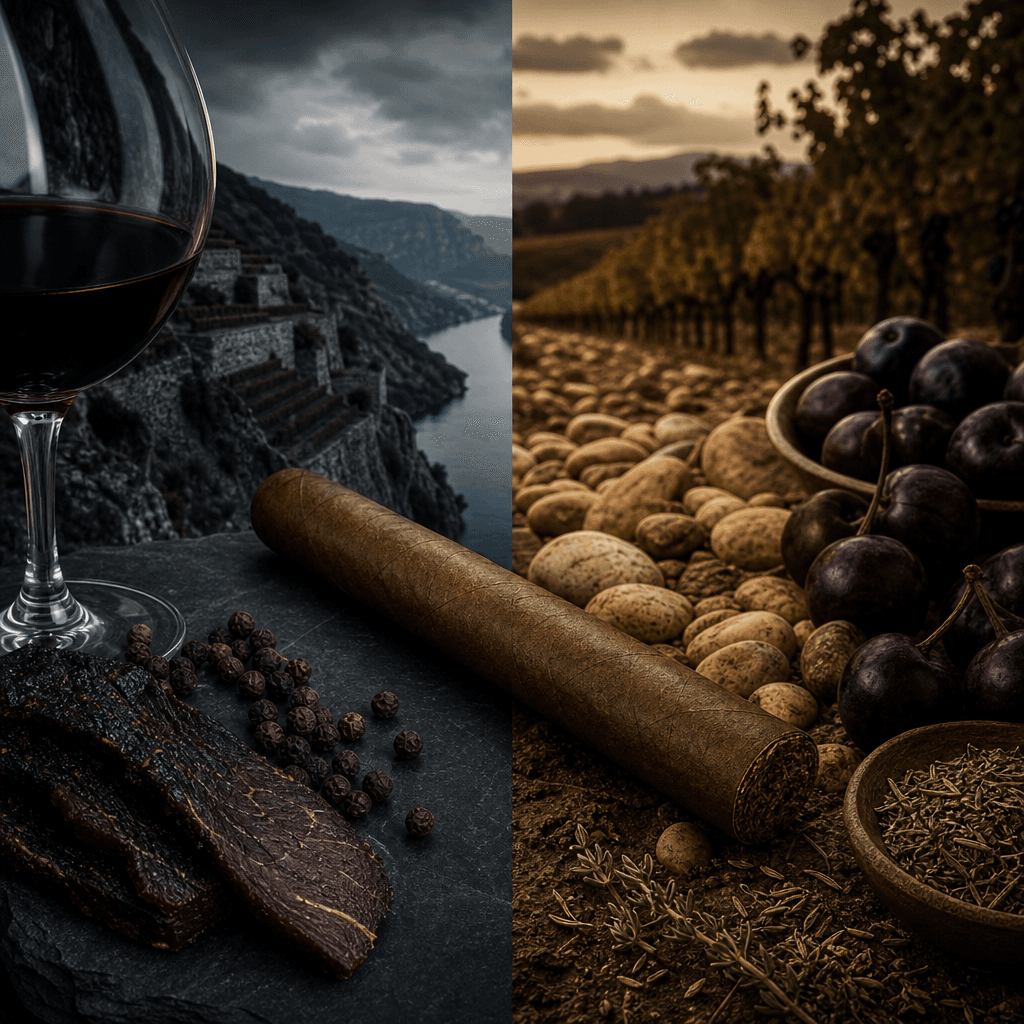
Chile is a very friendly starting point for wine beginners because the Andes Mountains, the Pacific Ocean, the Atacama Desert, and the cold climate in the south form natural barriers, creating a stable grape cultivation environment. Central Valley, Maipo, Colchagua, and Rapel are common places for Cabernet Sauvignon, Merlot, and Carmenère, with clear fruit ripeness and mostly understandable wine bodies. Carmenère, in particular, has blackberry, sweet pepper, cocoa, and soft herbal notes, which, if handled cleanly, can easily connect with the grain sweetness of a short cigar.
Spain's entry-level wines often revolve around Tempranillo and Garnacha. Influenced by Bordeaux craftsmanship in the 19th century, Rioja has a long history of oak barrel use, with common hints of vanilla, coconut, hay, red cherry, and leather; La Mancha, Campo de Borja, and Valdepeñas can see more direct fruit flavors and approachable table wine routes. If you want to find the direction of table wine recommendations, Chile looks at clear varieties, Spain looks at the balance of fruit aroma and oak, and Languedoc looks at the southern French sunshine feel and blending ability.
Southern France's Languedoc was long regarded as a mass table wine region, but since the 1980s, there has been a noticeable quality revolution, with controlled production, blending of old vine Grenache, Syrah, and Carignan, making the style more precise. Languedoc's daily wines often have black cherry, plum, spice, and Mediterranean shrub aromas, with acidity more supportive of the dining table than imagined. It doesn't require as much detailed reading of villages as Burgundy, nor does it easily lead beginners to be led by vintage and classification like Bordeaux, making it a very suitable area for establishing the concept of "wine and food working together."
| Regional Direction | Common Grapes | Beginner-Recognizable Flavors | Key Points for Pairing with H. Upmann Half Corona |
|---|---|---|---|
| Chile Central Valley | Merlot, Carmenère | Blackberry, plum, cocoa, herbs | Fruit aroma supports grain sweetness, herbal notes should not be too heavy |
| Spain Rioja / La Mancha | Tempranillo, Garnacha | Red cherry, vanilla, hay, soft wood | Oak vanilla can connect with butter, avoid too hard tannins |
| France Languedoc | Grenache, Syrah, Carignan | Black cherry, spices, southern French shrubs | Spices and light wood interlock, alcohol sensation needs to be restrained |
| New World Varietal Wines | Cabernet, Merlot | Intuitive labeling, clear fruit flavors | Choose those with light tannins and more fruit aroma for stability |

表格比較智利、西班牙與南法日常紅酒線索
Screw Caps, Corks, and the Three-Day Rule After Opening
Many beginners see screw caps and instinctively think they are less formal; seeing corks, they feel they are more substantial. This is actually a misconception because the bottle stopper is primarily a storage technology, not a flavor guarantee. New Zealand and Australia use screw caps extensively to reduce the risk of TCA cork contamination and keep young fruit wines clean and bright; if daily wine is mainly about fresh fruit aromas, screw caps are actually very reasonable.
The advantage of corks is that they allow a tiny amount of oxygen to participate in aging over a long period, which is meaningful for some structurally complete wines that need bottle evolution. However, for wine beginners, you mostly don't need to use the bottle stopper as the sole criterion for judgment. Screw caps do not equal simplicity, and corks do not automatically equal depth; what you really need to look at is whether the wine is designed to retain fresh fruit aromas or pursue long-term bottle aging.
You can remember the three-day rule for preservation after opening: the first day has the most complete fruit aroma, the second day the aroma starts to soften, and the third day, if well-preserved, can still be observed, but oxidation sweetness, dried fruit, and loose acidity may increase. The method is very simple: reinsert the stopper or use a vacuum stopper, store upright in the refrigerator to reduce oxygen contact and temperature changes. If it's a light tannin, fruit-forward entry-level wine, the changes after opening are usually more noticeable than heavily oaked, high-extraction wines, making it more suitable for training the palate.
Why Light Tannins and More Fruit Aroma Are the Right Entry
Tannins are the structure in wine that beginners most easily misunderstand. They mainly come from grape skins, seeds, stems, and oak barrels, binding with saliva proteins to cause a dry, astringent, and tightening sensation on the tongue. Moderate tannins can support the wine body and interact with protein foods like steak and stews, but if the tannins are too hard, pairing with the elegant cigar body of H. Upmann Half Corona will make the wine overpower the cigar.
Fruit-forward daily wines often have aromas of red cherry, strawberry, raspberry, plum, and blackberry, an impression formed by esters and fermentation aromas. Isoamyl acetate reminds people of ripe fruit, ethyl hexanoate brings apple and berry edges, and fermentation temperature control determines whether the fruit aroma is clear. For those pairing wine and cigars for the first time, low to medium tannins, bright fruit aromas, and clean acidity are the least likely to clash.
Here, a key point needs to be added: more fruit aroma does not mean sweetness. Many dry wines smell like cherries, berries, and plums, but the residual sugar is not high, and they still taste dry. When they meet the grain sweetness of H. Upmann Half Corona, the sweetness is not sugar on sugar, but the aroma memories echo each other; like toast, oats, and butter cookies meeting red cherry jam associations, making it easy for beginners to grasp the pairing direction.

三張卡提醒重單寧、只看村名與久放未聞味
H. Upmann Half Corona: The Flavor Framework of a 30-Minute Short Cigar
H. Upmann is one of Cuba's classic brands, with a history dating back to 1844, developed through the context of German banker Herman Upmann. The brand has long been associated with elegance, delicacy, and a noticeable grain tone. The Half Corona size is short, H. Upmann Half Corona (Cuba, Half Corona, 44 × 90mm): grain sweetness, butter, light wood, elegant cigar body, about 30 minutes—just the right length after dinner. It doesn't use strong spice or heavy earthy notes to dominate, but lays a foundation with roasted grains, butter, light wood, and gentle tobacco sweetness.
The half-hour after dinner is an ideal time frame for this cigar. After the main course, the mouth still retains traces of fat, salt, meat juice, or sauce, and if the cigar is too strong, it can easily tire the palate; if the wine is too thick, it can overshadow the details of the short cigar. The value of H. Upmann Half Corona lies in its precise rhythm: it completes a clean, elegant, and highly readable flavor narrative in about 30 minutes.
The first part of the draw usually reveals grain sweetness, light wood, and butter, like warm bread crust, oat cookies, and lightly roasted nuts. The middle section slightly expands the tobacco base, with clearer wood notes, but still doesn't go the heavy route. If the rhythm is too fast in the final section, rising temperatures can increase bitterness and scorched notes, so when pairing with daily wine, it's better to keep the pace even, letting the wine's acidity and fruit aroma clean the palate.
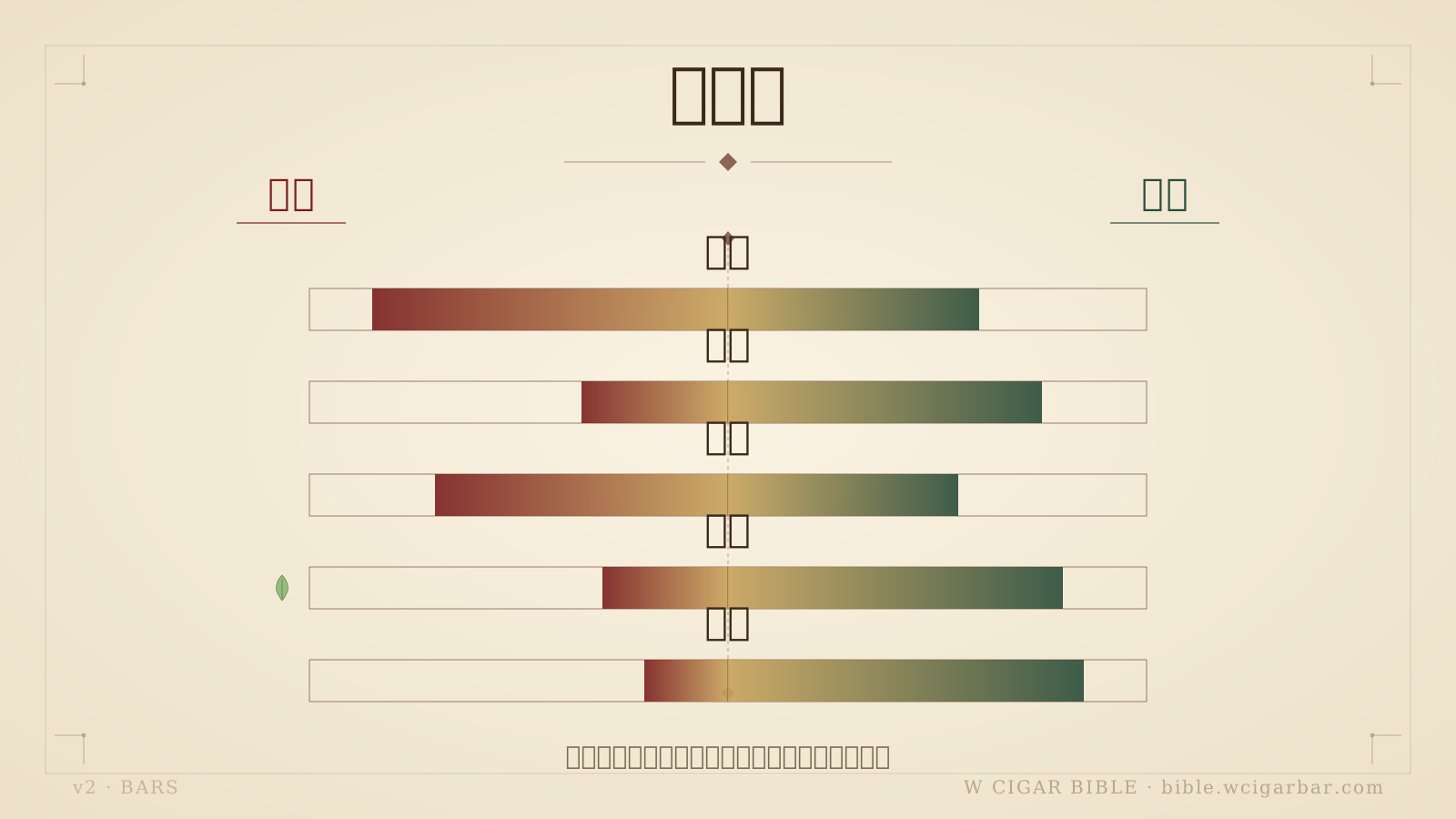
長條圖比較日常餐酒與隆重取向的風味強弱
Fruit-Flavored Daily Wine × Grain Butter: The Real Flavor Chemistry
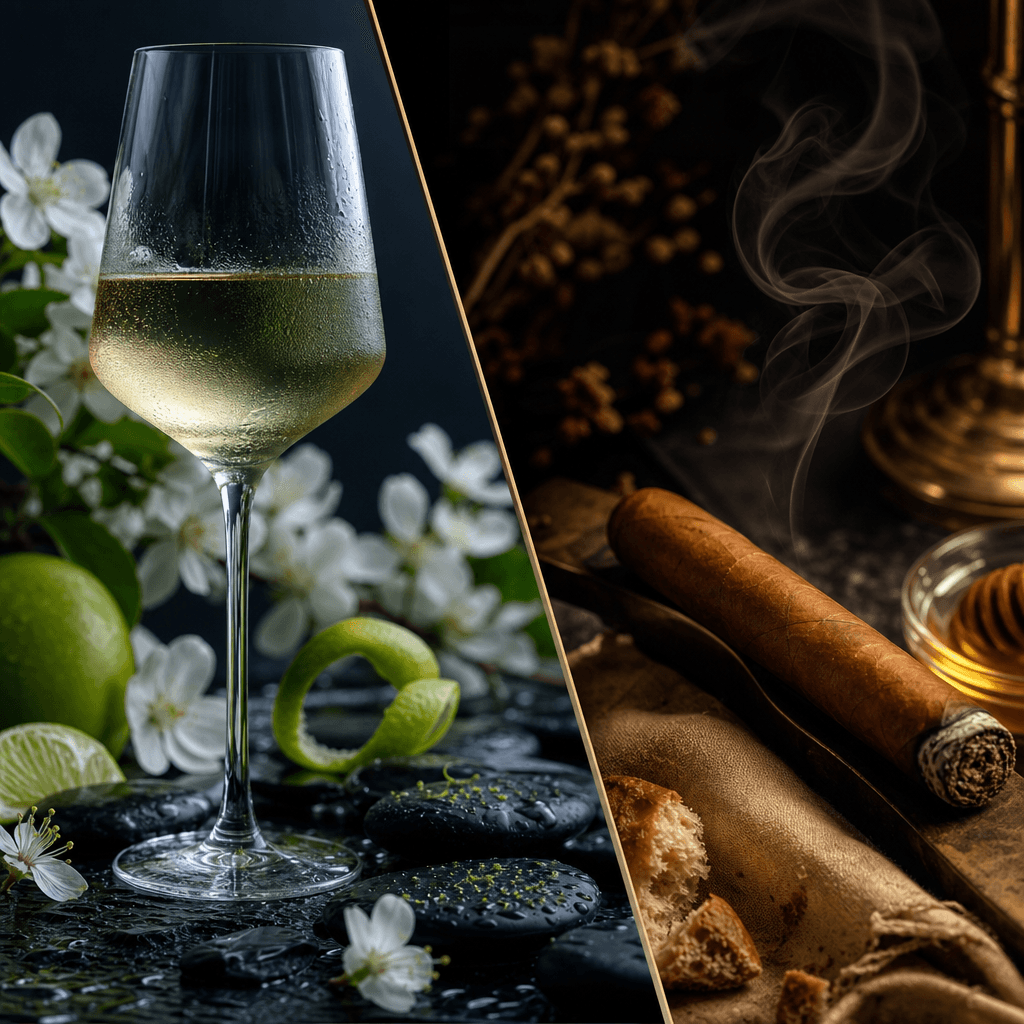
We break down the pairing into token×token to see, the first group is "red fruit esters × roasted grain pyrazine." The cherry, raspberry, and plum aromas in fruit-flavored daily wine come from fermentation esters, varietal aromas, and ripeness; the grain sweetness of H. Upmann Half Corona is related to the roasting, fermentation, and aging of tobacco leaves, forming roasted, nutty, and grain-like aromas. When the two meet, it's not about one becoming the other, but the red fruit aroma pushing the grain feel towards jam toast, berry oats, and cherry butter cookies.
The second group is "glycerin texture × butter lactone." Glycerin in wine fermentation brings a rounded texture, although it's not the main cause of sweetness, it makes the wine feel soft when it stays on the tongue. The butter feel in cigars is often linked to lactones, wood degradation aromas, and mild tobacco sweetness; when the wine body is medium and acidity is clean, the glycerin texture can underpin the butter tone, while acidity is responsible for cleaning the finish. The best state of fruit-flavored daily wine and H. Upmann Half Corona is to support each other without stealing the show, allowing fruit aroma, grain, butter, and light wood to alternately emerge.
The third group is "low tannins × elegant cigar body." If the wine's tannins are too hard, the dryness caused by tannins binding with saliva proteins will thin the cigar's butter feel and even push the grain sweetness into bitterness. Low to medium tannins are more like a soft frame, retaining the wine structure without overwhelming the details of the 44 × 90mm short cigar; light wood, when encountering light oak barrel vanilla, toasted coconut, and cedar aromas, will produce "wood resonance," but the premise is that the oak must not be too heavy. This is why I wouldn't put concentrated, heavy, heavily oaked, high-extraction wines as the first choice for this pairing.

快問快答列出看標籤、螺旋蓋與第三天保存
30-Minute Rhythm: One Glass, Post-Dinner, and Zero Pressure Formula
Beginners often think they need to prepare many glasses and many cigars for a complete comparison. In fact, for a short cigar like H. Upmann Half Corona, which lasts about 30 minutes, one glass of wine is enough to observe the changes in the front, middle, and end sections. In the first 10 minutes, use small sips of wine to evoke fruit aromas, then let the cigar's grain sweetness appear; in the middle 10 minutes, observe the butter, light wood, and acidity in the wine; in the last 10 minutes, control the wine volume to maintain clear taste perception.
Dinner content will also change the interpretation. If the main course is tomato stew, roast chicken, or mushroom pasta, the acidity of fruit-flavored daily wine will cut through the sauce and fats, then connect with the cigar's butter grain; if it's heavy spicy dishes, the capsaicin and alcohol sensation will overlap, making the short cigar details blurry. The zero-pressure formula can be written as: light tannin wine, clear fruit aroma region, elegant short cigar, 30 minutes after dinner, with all four rhythms consistent, achieving half the success.
In practice, I would recommend not warming the wine too much, around 14 to 16°C, to keep the fruit aroma clear and the alcohol sensation not prominent; if it's a wine with a stronger sunshine feel from southern France or Spain, slightly lowering the temperature makes it easier to show refreshing lines. The glass type doesn't need to be complicated, a medium-sized wine glass is sufficient, the key is to give the aroma space, without pursuing exaggerated decanting. For cigars, maintain slow draws, one puff every 45 to 60 seconds can be used as a reference, to prevent the temperature from pushing the elegant cigar body towards rough bitterness.
Common Questions
For a first-time wine beginner, should I look at the region or grape variety first?
If you see labels from Chile, Australia, the United States, and other New World countries, you can look at the grape variety first, as Cabernet Sauvignon, Merlot, and Carmenère will directly tell you the general flavor. If it's France, Spain, or Italy, looking at the large regional name first will make it easier to establish a map.
Is screw cap wine suitable for pairing with cigars?
Yes, especially for daily wines that emphasize young fruit aromas and clean acidity. Screw caps can retain fresh fruit sensations, which often have the advantage of being clear and not heavy for elegant short cigars like H. Upmann Half Corona.
Can it still be paired on the third day after opening?
If tightly sealed and stored upright in the refrigerator, it can usually still be observed on the third day, but the fruit aroma will be lower than on the first day, and the dried fruit and nut sensations brought by oxidation may increase. At this time, pay attention to whether the wine has obvious acetic acid, damp cardboard, or overly flat aromas.
Why not choose wines with very heavy tannins?
Heavy tannins will make the mouth dry, easily overshadowing the butter, grain sweetness, and light wood of H. Upmann Half Corona. The key to this pairing is not a power contest, but letting the wine's fruit aroma and the cigar's delicacy leave space for each other.
Will Languedoc wines have too much alcohol sensation?
Some southern French wines, due to sufficient sunlight and high ripeness, may indeed have a more noticeable alcohol sensation. When choosing, pay attention to alcohol labeling, grape composition, and wine reviews, and prioritize styles with clean acidity, bright fruit aromas, and not heavy oak.
Does table wine recommendation always have to be paired with steak?
Not necessarily, post-dinner pairing of wine and cigars focuses more on the residual taste in the mouth. Roast chicken, tomato stew, mushroom dishes, and cheeses with a bit of fat can form a bridge, just avoid overly spicy and overly sweet sauces.
The beauty of daily wine lies in its ability to let people understand the dining table with simple clues: region, variety, tannin, fruit aroma, and preservation. H. Upmann Half Corona uses 30 minutes to finish talking about grain sweetness, butter, and light wood. When the two are on the same table, beginners don't need to pretend to understand, just slowly remember which sip is clearer and which part is overshadowed, and the pairing ability will naturally develop.
Further Reading|Complete Guide to Wine Regions: Flavor Maps of the Old and New Worlds, and an Overview of Pairing with Cigars|In-Depth Analysis of South African Wine Pinotage: The Unique Variety of Smoky Wild Berries from Cape Town, Paired with Vegas Robaina Famosos|Complete Analysis of Bordeaux Left Bank Wines: The 1855 Classification and the Tannin Structure of the Five Great Châteaux, Paired with Cohiba Robustos' Cedar Dialogue
—Cigar Prince Wilson Tsai
Smoking is harmful to health. Under 20 years of age is prohibited from smoking. Quit smoking hotline: 0800-636363. This article is for reference only for adults over 20 years old regarding cigar culture, preservation, and regulations, not a tobacco advertisement, promotion, or purchase suggestion.
No drunk driving. Excessive drinking is harmful to health. Under 18 years of age is prohibited from drinking. This article is also not an alcohol advertisement, promotion, or purchase suggestion, please drink responsibly.
Like this article?Share with friends
Share this W Cigar Bible piece with friends who want to learn cigar culture, storage, and tasting.
想把這篇 化為實踐
雪茄聖經是知識;雪茄文化要在空間裡發生

W Cigar Bar 大安總店資訊
台北大安區 · 雪茄聖經總編輯 Wilson Tsai 主理的雪茄文化空間
33 座 24 小時恆溫恆濕醇化室
W Cigar Bar 提供的會員醇化空間 · 場地資訊請洽編輯部
雪茄剪 / 打火機 / 雪茄盒 / Boveda
W Cigar 配件官網 · 專營雪茄配件正品
加 LINE 好友 · 文化諮詢
文化空間資訊 · 紳士沙龍 · 私人包場
本網站內容僅供雪茄文化、歷史、收藏與品吸知識研究參考。菸品有害健康、未滿法定年齡者請勿吸菸。實際規範請依所在地法律為準。
吸菸有害健康・戒菸專線 0800-636363・本站僅供 20 歲以上成年人閱覽。
讀到這裡,你不只是路過的人
留下 Email,加入 W 雪茄聖經內圈——總編輯 Wilson Tsai 親選的學院深文與國際新訊,先你一步送到信箱。
· 教育用途非銷售 · 隨時一鍵退訂 · Email 絕不對外公開 · 由勝茄股份有限公司營運
同分類延伸閱讀

資料來源:W Cigar Bible 編輯部整理 · 雪茄王子 Wilson Tsai 親自審稿
本文僅供雪茄文化、歷史、收藏與品鑑知識研究,不作為菸品促銷、銷售或購買建議。吸菸有害健康,未滿二十歲不得吸菸。