雪茄過期風味變化與處理攻略
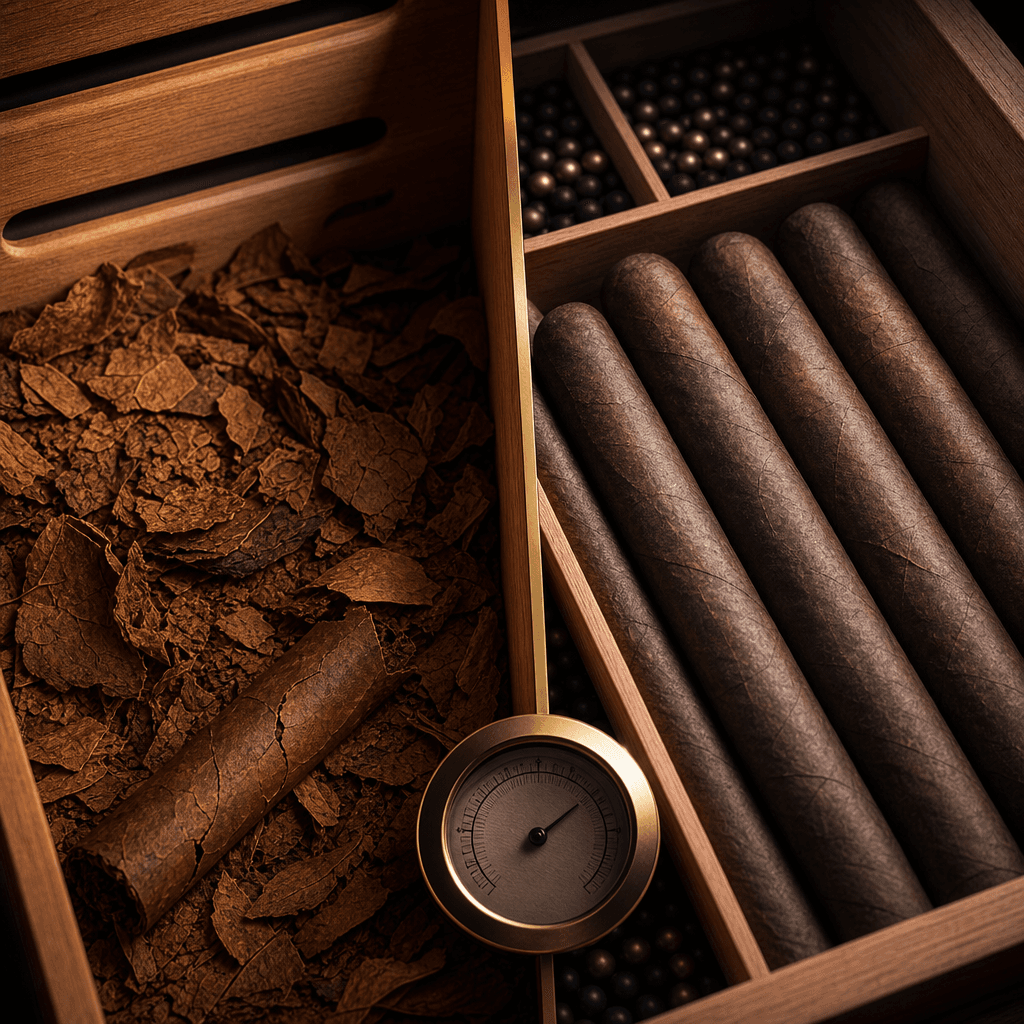
雪茄的「過期」概念並非單純的日期問題,而是多種因素交織的結果。優質雪茄的最佳狀態取決於生產日期、保存環境及醇化過程。老手應重視盒底碼及保存履歷,判斷雪茄的風味變化。過乾或過濕的雪茄會影響燃燒及口感,需透過適當的回濕或降濕方法進行調整。本文提供了針對不同狀態雪茄的處理建議,幫助愛好者更好地理解與維護雪茄的品質,提升品吸體驗。
- 雪茄的最佳狀態取決於保存環境,非單純依賴生產日期。
- 過乾雪茄需慢速回濕,避免急劇改變濕度導致裂開。
- 過濕雪茄應降濕並適度換氣,避免香氣混濁。
Smoking is harmful to health. Persons under twenty years of age must not smoke. Smoking cessation hotline: 0800-636363. This article is provided solely for adults aged twenty and above as a reference for cigar culture, storage, and regulatory knowledge. It is not tobacco advertising, promotion, or purchasing advice.
What is commonly called a cigar being "expired" is, among experienced enthusiasts, not simply a matter of date. It is the result of the production date, box-code batch, aging curve, storage humidity, transport temperature fluctuations, and pre-smoking acclimatization all interacting together. After 2020, many enthusiasts have paid greater attention to box bottom codes and storage history, because the same Partagás Serie D No.4, if stored stably in 2018 versus repeatedly subjected to dry-wet shocks in 2022, will show completely different leather, pepper, wood, and residual ammonia notes. From the perspective of the W Cigar Bible editor, ghostwriter for "Cigar Prince Wilson Tsai", founder of W Cigar Bar Gentlemen's Cigar House, and PCC appointed dealer, this article breaks down how to read expired flavors, remedial procedures, and practical examples, as an advanced reference for experienced smokers who already have brand preferences.

流程圖依序呈現外觀冷香濕溫回穩與試燃
Do Cigars Really Expire? First Understand "Optimal Condition" Rather Than an Expiration Date
Most premium long-filler cigars do not have a clear expiration date like food. What truly matters is whether they have left the " optimal condition " suitable for combustion and flavor expression. Taking Cuban cigars as an example, common box bottom codes such as UBM JUL 19 and EOL ABR 21 represent the factory and month/year. This is not a warranty date, but the starting point of aging. Generally speaking, young cigars within 0 to 18 months may carry more obvious ammonia, green wood, grass, and spiciness; once entering 2 to 5 years, if stored stably, sweetness, nuts, leather, coffee, and wood tend to integrate more easily; beyond 8 to 12 years, it depends on the variety, strength, and storage conditions. Some may move toward delicacy, dried flowers, old study, and beeswax, while others may become hollow, weak, and bitter in the final third. "Expiration" usually occurs in three situations. The first is too dry, where insufficient moisture causes overly fast combustion, spicy throat irritation, and scattered aromas. The second is too wet, resulting in difficult combustion, dull sourness, and increased tar sensation. The third is long-term temperature and humidity fluctuation, such as temperatures above 30°C in summer combined with repeated opening and closing of the humidor, causing imbalance between wrapper oils and internal moisture. A box of Montecristo No.2 from 2016, if maintained long-term at 65% to 68% relative humidity and 18°C to 21°C, may still have beautiful cocoa and creaminess in 2024; but if the same year was left in a hot car cabin for two weeks, even with an intact appearance, it may show spiciness, bitterness, and a twisted burn line. Experienced smokers should not judge "expiration" by year alone, but should read the storage history together with the actual condition.
Production Date, Box Bottom Code, and Brand Character: The Result Will Not Be the Same After 5 Years
The production date is an important starting point for flavor change, but the brand blend and size determine how far it can go. Taking Cohiba Siglo VI, Partagás Lusitanias, H. Upmann Sir Winston, and Bolívar Belicosos Finos as examples, even if all were released in 2018, their performance after 5 years may differ greatly. Cohiba Siglo VI, because of its tobacco processing and brand profile, often shows cream, hay, honey, and a faint bean aroma at 3 to 7 years; Partagás Lusitanias, due to its long format and substantial strength, has earth and black pepper when young, and after 5 years may turn toward leather, roasted coffee, and old wooden box; H. Upmann Sir Winston's advantage is delicate woodiness and hazelnut sweetness, and when well stored it can still have layers at 8 years; Bolívar is strong and robust, but if aged too long or stored too dry, it may instead be left with only bitter wood and charcoal notes. Size also matters. A Robusto such as Romeo y Julieta Short Churchills has a faster combustion rhythm and a smaller filler volume, so its maturity can usually be observed after 2 to 4 years; Churchill, Double Corona, and Lancero, because of their different structures, often need longer integration. A Trinidad Fundadores from 2014, if properly stored, can be very charming because of the gradual layers brought by its long cigar body: hay in the first third, cream and spices in the middle, and a woody finish in the final third. But if humidity remained above 75% for long periods between 2014 and 2024, it may show dullness, sourness, and uneven combustion. This is not insufficient age, but failed moisture management. Experienced smokers should replace "how many years" with "where this brand, this size, and this batch have reached on the curve under this environment."

三張卡列出不看日期乾濕失衡與慢速調整
Flavor Differences After Over-Drying, Over-Humidification, Stale Storage, and High Temperature
To determine whether an old cigar is only temporarily imbalanced or already difficult to recover, the most effective method is to distinguish between a " moisture problem " and " structural damage ". Over-dried cigars usually feel brittle, make a cracking sound when the foot is gently pinched, have a thinner cold aroma, and may smell very fragrant during the first 3 minutes after lighting, but quickly become sharp in the middle and burnt-bitter in the final third. Over-humidified cigars feel softer, the cut tends to stick to the blade, the burn line is wavy, and the smoke is thick but not clean, often carrying dull sourness or an over-fermented taste. High-temperature damage is the trickiest, especially when stored long-term above 28°C, which can cause oils to volatilize, increase the risk of beetle eggs, and make flavors dull. The following table can serve as a quick triage reference for experienced smokers:
| Condition Type | Common Appearance and Feel | Flavor Change | Recommended Treatment Time | Representative Case |
|---|---|---|---|---|
| Over-Dried | Wrapper loses luster, brittle sound under light pressure, foot cracks | Spicy, fast burn, short aroma | 6 to 12 weeks of slow rehumidification | 2019 Montecristo No.4 below 55% RH |
| Over-Humidified | Cigar body is soft, cut is wet and sticky, difficult combustion | Dull sourness, tar, bitter finish | 2 to 6 weeks of humidity reduction and balancing | 2021 Partagás D4 long-term 75% RH |
| Stale Storage | Appearance normal but cold aroma is dull | Dull woodiness, lack of sweetness | 4 to 8 weeks after opening the box for ventilation | 2017 Hoyo de Monterrey Epicure No.2 |
| High-Temperature Damage | Uneven oil sheen, scattered aroma, possible beetle holes | Thin, bitter, dry astringency in the final third | First check for beetle damage, then isolate and observe | Left in a summer car cabin for more than 10 days |
| Long-Term Proper Aging | Wrapper has elasticity, aroma is calm | Beeswax, leather, dried fruit, wood | Observe in batches | 2012 H. Upmann Sir Winston |
The point of this table is not to sentence a cigar to death, but first to determine its " direction of imbalance ". As long as the wrapper does not have large areas of mold, the interior does not contain beetle-bored powder, and the aroma does not smell rotten, many conditions can still be corrected with time. But if obvious mold odor has penetrated into the foot, or there are holes and powder, the cigar should be isolated from other cigars to prevent the whole box from being affected.

矩陣比較乾燥潮濕與震盪下的手感風味處理
Rescuing Over-Dried Cigars: Slow Rehumidification Matters More Than Emergency Treatment
The mistake experienced smokers most often make is placing over-dried cigars directly into a 72% or even higher humidity environment, hoping they will recover within a few days. This often causes the wrapper to absorb water and expand first while the filler remains dry. When lit, the outer layer then burns slowly while the inner layer burns quickly, causing the burn line to go out of control, and in serious cases the wrapper cracks. Treating over-dried cigars is like restoring old books: slow is more important than fast. If a 2015 Romeo y Julieta Churchill has been kept at 52% RH for half a year, it is recommended to first place it in a 60% to 62% RH environment for 2 weeks, then raise it to 65% RH for 4 weeks, and then, depending on feel, move it into 66% to 68% RH. The whole process should take at least 6 to 10 weeks. Do not turn it every two days, to avoid cracking the surface from pressure. In practice, I use a " three-stage rehumidification method ". The first stage is isolated observation, using a small humidor and a 60g two-way humidity pack, recording weight changes on days 1, 7, and 14. The second stage is slow balancing, rotating cigars from the same batch 90 degrees each week to let the air inside the box even out. The third stage is pre-combustion adjustment. If it is a Robusto, it can be kept at 65% to 66% RH for 10 days; if it is a Double Corona, it can be given 3 weeks. I once handled a batch of Bolívar Royal Coronas from 2018. When received, the feet were dry and cracked, and the cold aroma was only sawdust. After 9 weeks of rehumidification, although the fresh oils could not fully return, about 70% of the mid-palate black coffee and damp earth character came back. Remember that rehumidification does not turn back time; it redistributes moisture and reduces combustion and mouthfeel defects.

三張卡提醒十年必壞回濕全復與白粉可刷誤解
Handling Over-Humidification and Stale Notes: The Order Is Humidity Reduction, Ventilation, and Resting
The problem with over-humidified cigars is not only that they are hard to burn, but also that the aromas are compressed into muddiness. If a box of Cohiba Robustos from 2022 has long been kept at 72% to 75% RH, it may show heavy smoke, a sticky mouthfeel, and strong tar sensation in the final third after lighting. Many people may misjudge this as the cigar being too young or the brand being in poor condition, when it is actually excessive moisture. When handling over-humidification, aggressive dehumidification is not appropriate, and cigars must not be placed under an air-conditioning vent or in sunlight. A reasonable approach is to lower the environment to 65% to 66% RH, open the box lid slightly for 20 to 30 minutes and then close it, 2 to 3 times per week for 2 weeks, then enter stable resting. Stale-storage odor is common in humidors that have been sealed long-term and rarely ventilated. Cigars need a stable environment, but that does not mean absolutely no air circulation. A box of Hoyo de Monterrey Epicure No.2 from 2017 kept in a cedar box for 6 years and barely opened may look beautiful, but the cold aroma may resemble a damp cardboard box, and the sweetness may be suppressed after lighting. At this point, use " short ventilation, long resting ": open the box for 5 to 8 minutes each week, avoiding major temperature and humidity swings, and after 4 consecutive weeks observe whether the aroma has shifted from dull wood to cedar, cream, and grassy sweetness. If over-humidification is accompanied by rancid sourness, heightened caution is needed. Simple stale odor usually improves, but rot, mold odor, and pungent ammonia are not problems that simple ventilation can solve. Experienced smokers need patience, because lowering humidity too quickly can cause the wrapper to shrink and create structural cracks, ultimately making the cigar harder to handle than before.
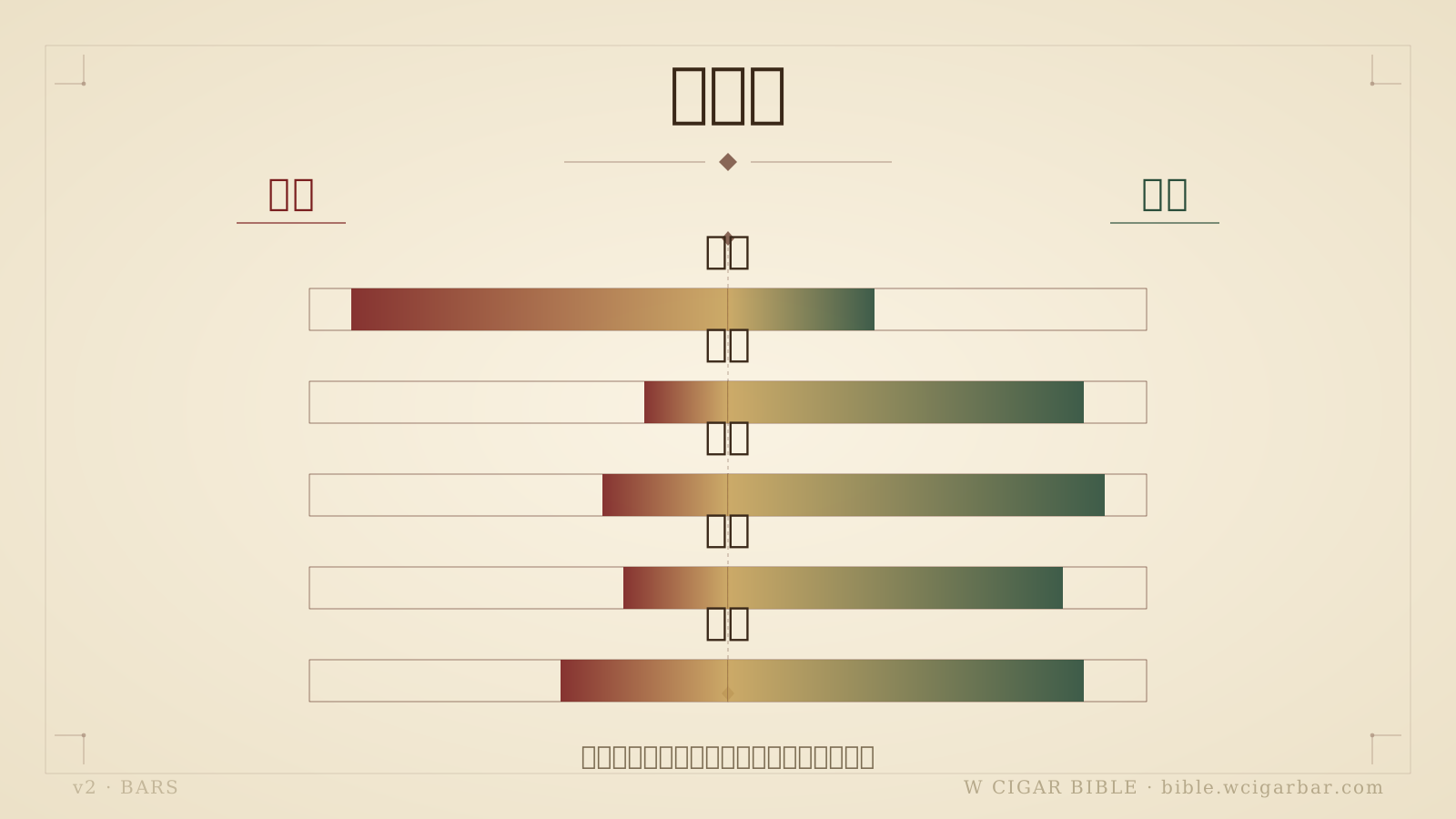
長條圖比較單看年份與綜合狀態判讀差異
Plume, Mold, and Beetle Damage: The Three Most Dangerous Misjudgments in Expired Cigars
When white material appears on the surface of an old cigar, it most easily triggers debate. Some people call it " cigar bloom ", while others regard it as mold. In practice, romantic wording should not be used to cover up risk. Instead, look at its form, smell, and scope. If it is very fine, even, dry, can be lightly brushed off, and has no mold odor, it may be crystallized oils and minerals. But if it appears cottony, three-dimensional and hairy, blue-green or yellow-gray, especially if it penetrates into the foot, it is usually mold. The foot is the key point for judgment, because once mold enters the filler, after lighting not only will the flavor be damaged, it is also not advisable to force further handling. Beetle damage is closely related to high temperature. The risk of tobacco beetles increases at around 25°C and above. If summer storage reaches 28°C to 30°C, the probability of beetle eggs hatching increases. Typical signs include pinholes, fine powder, powder at the bottom of the box, and irregular wrapper breaks. In 2019, I once saw a batch of loose Robustos. On the exterior, only two cigars had holes, but after removing the cedar sheets inside the box, powder was found concentrated underneath, indicating prior activity. The treatment is to immediately isolate the same batch, inspect every foot and cigar body, and if necessary carry out a low-temperature freezing procedure: first seal them in bags, refrigerate for 24 hours, freeze for 72 hours, return to refrigeration for 24 hours, and finally open the bags only after returning to room temperature, in order to reduce condensation. This is not to beautify damaged cigars, but to prevent the problem from expanding. If mold odor has penetrated deeply or beetle holes appear in large numbers, the cigars should be decisively discarded, rather than letting one problematic cigar drag down an entire humidor.
Making Use of Expired Cigars: Grading, Comparison, and Instructional Records
Not every cigar in declining condition must be thrown away, but it must first be graded. Experienced smokers can divide expired or suspected imbalanced cigars into three categories: A, B, and C. Category A refers to minor storage imbalance but intact structure, which can recover daily performance after 4 to 12 weeks. Category B refers to cigars with thinned aroma or obvious combustion defects, but still usable as comparison samples. Category C refers to mold entering the foot, severe beetle damage, or obvious rotten odor, which should be isolated and discarded. This grading system helps you avoid deciding whether to keep or discard based on emotion, and also allows you to build your own brand database. For example, a collector holds 2011 Cohiba Espléndidos, 2016 Montecristo Edmundo, and 2020 Ramón Allones Specially Selected. If the aroma of the 2011 box is still present but combustion is fast, it can be classified as Category A and transferred to 65% RH for slow maintenance. If the 2016 Edmundo still has sweetness in the middle but bitterness in the final third, it can be classified as Category B, with notes on cut, burn time, ash color, and mouthfeel. If the 2020 RASS is sour due to high humidity, lower the humidity first and then judge. Recommended records include date, temperature, humidity, weight, cold aroma, flavors in the first, middle, and final thirds, burn time, and problems. Some people also use cigars with declined flavor to train olfactory and combustion judgment, such as comparing the differences in the same cigar at 60%, 65%, and 70% RH. This is very valuable for experienced smokers. If discussing collecting and market prices, be sure to remember: appreciation in collectible value does not mean guaranteed appreciation; it still depends on provenance, storage, and the market. Truly mature enthusiasts do not only ask about the year. They ask how the cigar was stored along the way.
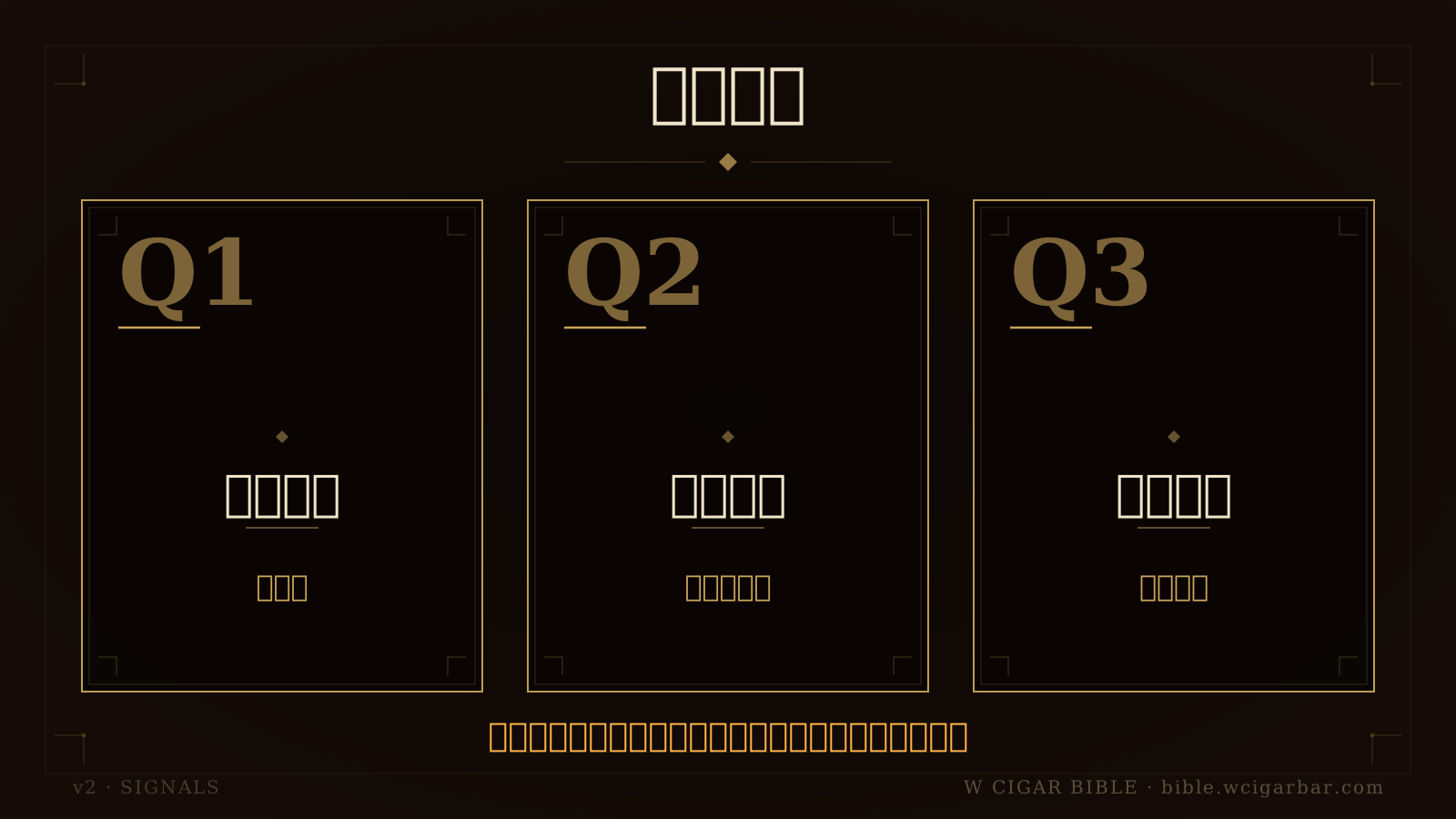
快問快答卡整理十年乾燥與白粉處理重點
Case Analysis: Looking at Flavor Curves Through the Three Vintages 2008, 2014, and 2019
Cuban long-filler cigars from 2008, if their provenance is clear and storage has been stable, have reached around 16 years by 2024. Common performance is reduced strength but more refined aroma. I once assessed a batch of 2008 H. Upmann Magnum 50. The wrapper was dark brown but still elastic, with a cold aroma of old wooden cabinet, dried fruit, and light beeswax. After lighting, the first third lacked the stimulation of youth, the middle showed beautiful hazelnut and milk tea character, but the final third was slightly dry. This type is not expired, but has entered an advanced age phase. The key is not to suppress it with overly high humidity; 65% RH often presents cleaner layers than 70% RH. 2014 is a very suitable year for observing "medium- to long-term aging". Taking Partagás Serie E No.2 as an example, at around 10 years, if well stored, the pepper becomes rounder, and the leather, coffee, and toast notes become more complete. But if it has been stored at high humidity, the large ring gauge of E No.2 can easily retain internal moisture. After lighting, it may feel dull and plugged, with slow combustion, causing people to mistake the blend for being heavy. 2019 cigars are mostly still in an active phase of change. For example, Montecristo Línea 1935 or Quai d’Orsay No.54 at around 5 years may show increased sweetness, but if stored too dry, the aroma may be destroyed by combustion before it has fully opened. Looking at the three vintages together, 2008 requires preventing hollowing in the later stage of aging; 2014 requires confirming whether integration has been achieved; and 2019 requires avoiding premature decline caused by impatient management. Vintage is a map, not the answer. Box condition, touch, and actual combustion are the final basis for judgment.
Frequently Asked Questions
Are Cigars Considered Expired Once Stored for More Than 10 Years?
No. 10 years is merely a long period of time and does not automatically mean expiration. Cigars with complete structure such as H. Upmann Sir Winston, Partagás Lusitanias, and Cohiba Siglo VI may still perform at a very high level at 8 to 15 years, provided storage is stable, there is no mold or beetle damage, and humidity has not been out of control long-term. Conversely, a cigar from 2022 that was left in a hot car cabin for a month may be worse than a well-stored cigar from 2012. The key points for judgment are aroma, elasticity, combustion, and mouthfeel, not age alone.
Can an Over-Dried Cigar Fully Recover After Rehumidification?
Usually it will not recover 100%. Over-drying causes some volatile aromas to be lost, and the wrapper may also develop fine cracks. Even if rehumidification succeeds, it only brings combustion and mouthfeel back into an acceptable range. If the drying period was short, for example below 58% RH for 3 to 4 weeks, the chance of recovery is higher; if it stayed below 50% RH for more than half a year, even if the appearance is repaired, the layers often become thinner. Experienced smokers should regard rehumidification as risk control, not magic.
Can White Material on the Surface of a Cigar Always Be Brushed Off for Continued Storage?
Not necessarily. If the white material is dry, finely powdery, odorless, and only on the surface, it is feasible to brush it lightly and observe. But if it is hairy, spreads in spots, has a blue-green-gray color, or is also present inside the foot, mold should be strongly suspected. If mold odor enters the filler, forced use is not recommended. During handling, first isolate the cigar to avoid carrying spores to other cigars while brushing, and clean the inner walls of the humidor and the cedar sheets.
What Humidity Is Suitable for Storing Old Cigars?
Aged cigars often do not need to be too humid. Many Cuban cigars older than 8 years perform more cleanly at 64% to 66% RH and 18°C to 21°C, with more stable combustion. Young thick-ring-gauge cigars may be kept at 66% to 68% RH depending on the situation, but if humidity exceeds 70% RH, the risks of stale odor, difficult combustion, and mold all increase. The best approach is to separate boxes by brand and size, rather than placing a 2008 Churchill and a 2023 Robusto under the same humidity strategy.
Is the Whole Box Hopeless After Beetle Holes Are Found?
Not necessarily, but it must be handled seriously. First isolate the entire box from other cigars and inspect each cigar for holes, powder, and abnormal soft spots. If only a small number are affected, remove the problematic cigars, then seal the others and carry out a low-temperature procedure, followed by slow return to room temperature to avoid condensation. After treatment, continue observing for 4 to 8 weeks. If large amounts of powder appear, holes are widespread, and the aroma clearly deteriorates, the value and usability of the whole box will greatly decrease.
Do Expired Cigars Still Have Collecting Significance?
It depends on the reason for "expiration". If it is simply old in years and excellently stored, it may instead have research and collecting value. If there is mold damage, beetle damage, high-temperature damage, or unclear provenance, collecting significance drops sharply. When discussing appreciation in collectible value, one must remain rational: appreciation in collectible value does not mean guaranteed appreciation; it still depends on provenance, storage, and the market. For experienced smokers, the box bottom code, provenance, storage records, and actual condition will always be more convincing than simply saying "old vintage".
Whether a cigar is expired has never been something the calendar decides for you; it is the result slowly written by storage details. I have seen long-filler cigars from 2008 that remained refined and elegant, and I have also seen young cigars from 2021 already ruined by heat and humidity. What experienced smokers truly need to cultivate is the ability to read feel, cold aroma, combustion, and year on the same map. Rescue what can be rescued slowly, and decisively let go of what should be let go. That is the most mature respect for a cigar.
--Cigar Prince Wilson Tsai
Smoking is harmful to health. Persons under twenty years of age must not smoke. Smoking cessation hotline: 0800-636363. This article is provided solely for adults aged twenty and above as a reference for cigar culture, storage, and regulatory knowledge. It is not tobacco advertising, promotion, or purchasing advice.
Like this article?Share with friends
Share this W Cigar Bible piece with friends who want to learn cigar culture, storage, and tasting.
想把這篇 化為實踐
雪茄聖經是知識;雪茄文化要在空間裡發生

W Cigar Bar 大安總店資訊
台北大安區 · 雪茄聖經總編輯 Wilson Tsai 主理的雪茄文化空間
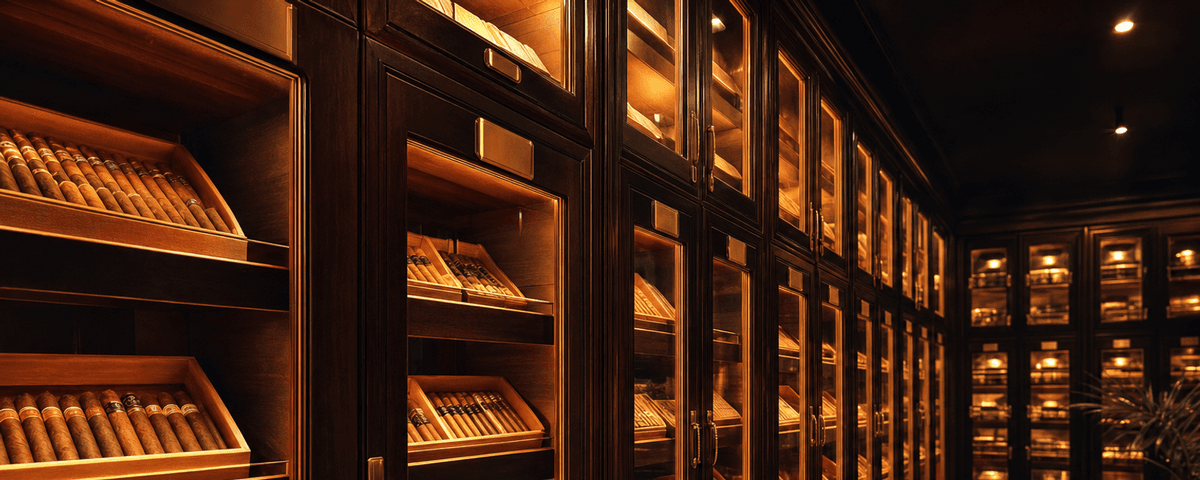
33 座 24 小時恆溫恆濕醇化室
W Cigar Bar 提供的會員醇化空間 · 場地資訊請洽編輯部
雪茄剪 / 打火機 / 雪茄盒 / Boveda
W Cigar 配件官網 · 專營雪茄配件正品

加 LINE 好友 · 文化諮詢
文化空間資訊 · 紳士沙龍 · 私人包場
本網站內容僅供雪茄文化、歷史、收藏與品吸知識研究參考。菸品有害健康、未滿法定年齡者請勿吸菸。實際規範請依所在地法律為準。
吸菸有害健康・戒菸專線 0800-636363・本站僅供 20 歲以上成年人閱覽。
讀到這裡,你不只是路過的人
留下 Email,加入 W 雪茄聖經內圈——總編輯 Wilson Tsai 親選的學院深文與國際新訊,先你一步送到信箱。
· 教育用途非銷售 · 隨時一鍵退訂 · Email 絕不對外公開 · 由勝茄股份有限公司營運
同分類延伸閱讀


資料來源:W Cigar Bible 編輯部整理 · 雪茄王子 Wilson Tsai 親自審稿
本文僅供雪茄文化、歷史、收藏與品鑑知識研究,不作為菸品促銷、銷售或購買建議。吸菸有害健康,未滿二十歲不得吸菸。