雪茄抽吸的藝術:如何掌握每一口的風味與技術
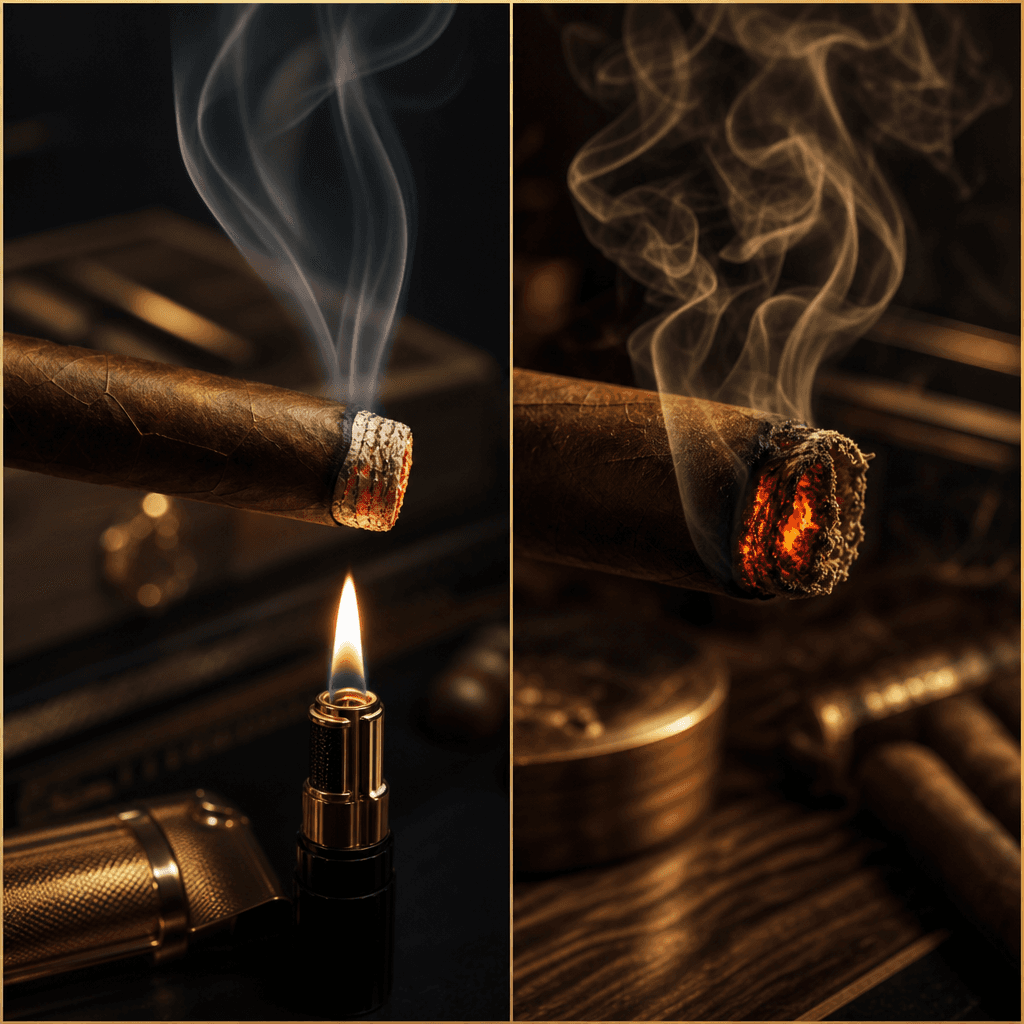
雪茄文化是一門結合技術與感官的藝術,了解其結構與燃燒邏輯是享受雪茄的關鍵。選擇合適的切口大小和抽吸節奏,能顯著影響風味的表現。正確的點燃方式與穩定的抽吸節奏,能讓煙霧的香氣與口感達到最佳平衡。學會如何在口腔中調整煙霧,並利用 retrohale 技巧,可以更全面地體驗雪茄的層次。掌握這些技巧,讓每一口雪茄都成為一次愉悅的享受。
- 理解雪茄的結構與燃燒邏輯,能有效提升每一口的風味體驗。
- 切口大小與抽阻影響風味,乾抽可預判雪茄狀態,避免不必要的失誤。
- 控制抽吸節奏與溫度,讓每口保持一致,能讓風味更立體。
Smoking is harmful to health. Persons under twenty years of age may not smoke. Smoking cessation hotline: 0800-636363. This article is provided solely for adults aged twenty or above as a reference for cigar culture, storage, and regulatory knowledge. It is not tobacco advertising, promotion, or purchasing advice.
Cigar smoking is not as simple as drawing smoke into the mouth. It is a comprehensive technique involving rhythm, temperature, humidity, cut, flame, and sensory records. Beginners usually already know how to cut the cap, light the cigar, and release the smoke, yet they often encounter situations where the first third of the same cigar has woody aromas, the middle suddenly turns bitter, and the final third becomes spicy and sharp. Or, despite a brand's strong reputation, they only perceive charred notes and off-flavors. The real key often lies not in whether the cigar is "good" or not, but in whether each puff is opened up by you in the correct way. Below, from the practical observations of the editor of W Cigar Bible, founder of W Cigar Bar, and PCC appointed distributor, I discuss how to master the flavor and technique of every puff.
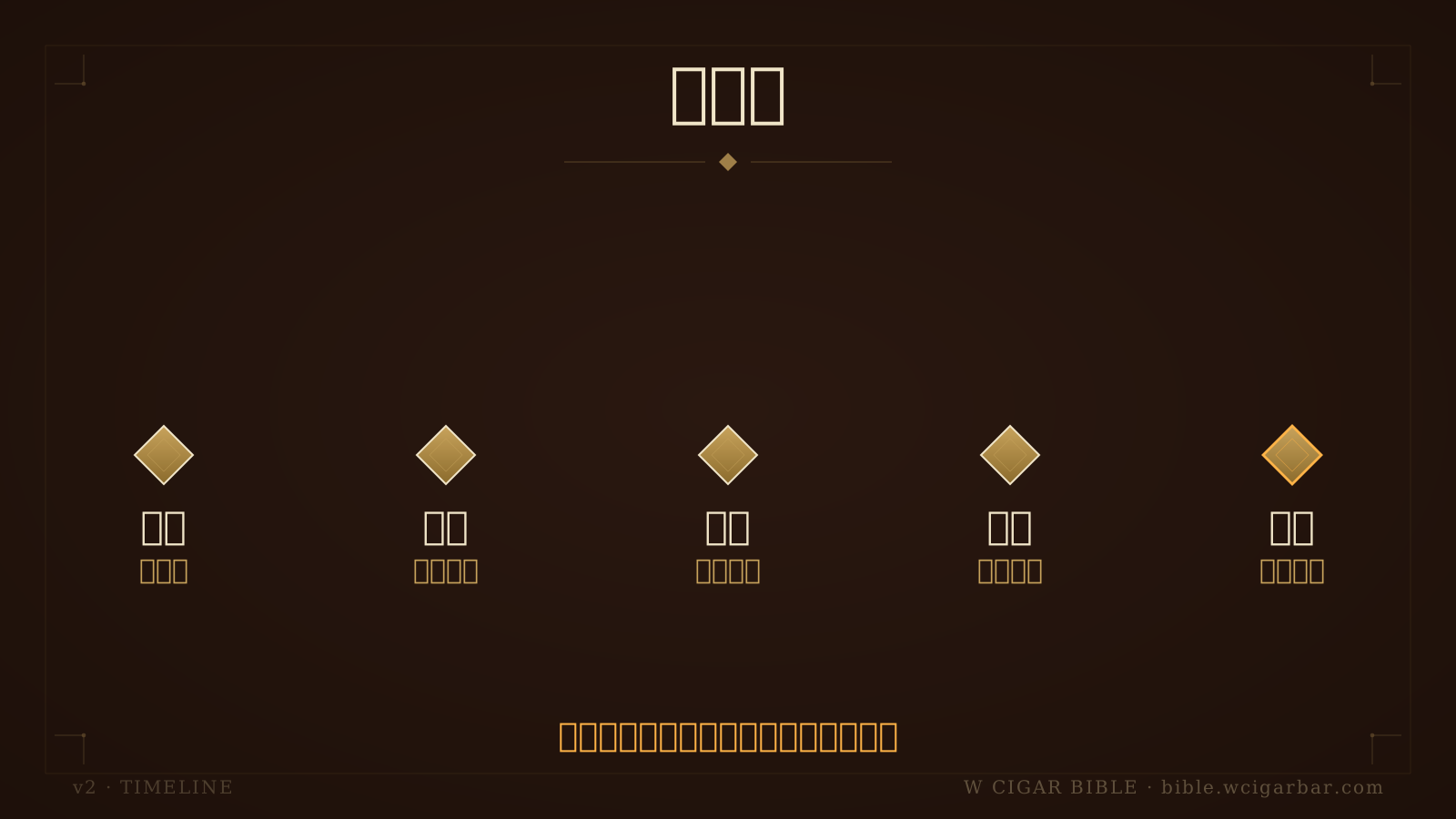
時間線呈現檢查濕度剪帽乾抽慢烘到慢吸流程
Before a Puff: First Understand the Structure and Burning Logic of a Cigar
The flavor of a cigar begins to be determined even before you light it. The proportions of the outer wrapper, inner binder, and central filler affect burn rate, smoke density, and aroma release. Taking the common Robusto size as an example, with a length of about 124 millimeters and ring gauge 50, such as Partagás Serie D No.4, it can usually present a clear three-stage progression within 45 to 60 minutes. A cigar like Cohiba Siglo VI, about 150 millimeters long with ring gauge 52, has a longer rhythm, and the transitions between the first, middle, and final thirds are also more subtle. Many beginners think that "big puffs" allow them to perceive more. In fact, over-drawing raises the temperature at the burning end, causing sugars and oils to char, while the original cream, cedar, and nut notes become covered by charred bitterness and spiciness.
I often use a simple example to explain this: the same Montecristo No.2, if stored at 70% relative humidity and puffed every 20 seconds after lighting, may quickly show a black-coffee-like bitterness in the first third. If changed to 65% to 67% relative humidity and maintained at about one puff every 45 to 60 seconds, the cocoa, leather, and faint spices can be perceived more clearly. A cigar is not a cigarette. It does not pursue frequency, but stable combustion. When combustion is stable, the smoke entering the mouth will feel soft, full, and oily. When the burn overheats, the palate will sting, the root of the tongue will taste bitter, and the nasal cavity will feel dry. Learning to understand structure before the first puff will help you avoid half of the common mistakes.
Cutting and Draw Resistance: The First Valve at the Entrance to Flavor
The first key to drawing technique is cut size and draw resistance. If the cut is too small, airflow is insufficient, and you will subconsciously draw harder, causing a sharp sensation in the mouth. If the cut is too large, the cap lacks support. Although the smoke may be large, it is prone to becoming loose, and the aroma becomes less focused. Taking a Parejo straight-sided cigar as an example, a common straight cut should remove only about 1 to 2 millimeters from the top of the cap, just enough for combustion air to pass through. If it is a Figurado or Torpedo, such as Montecristo No.2 or Cuaba Salomones, the cut should be tested in stages. Open it slightly at first, check resistance with a cold draw, and then adjust as needed. Ideal draw resistance is neither as laborious as drinking a milkshake nor as unresisting as an empty tube. It should have a slight rebound, allowing the smoke to enter the mouth naturally within 2 to 3 seconds.
Cold draw is a step many people overlook. Before lighting, take a gentle draw without igniting the cigar, and you can anticipate the flavor direction and storage condition. If the cold draw shows clear cedar, hay, hazelnut, and cocoa, it usually indicates a stable condition. If there are obvious moldy notes, ammonia, or damp cardboard, you should be more alert. Taking a 2019 boxed Hoyo de Monterrey Epicure No.2 as an example, if well stored, the cold draw often has honey, wood, and faint floral aromas. But if it has been kept above 72% humidity for a long time, it can easily become muted and bitter after lighting, with an uneven burn line. Cutting is not a formality, but the valve at the entrance to flavor. If the cut is well controlled, there will be details to discuss in every later puff. If the cut is wrong, any effort in the later stages is merely remedial.
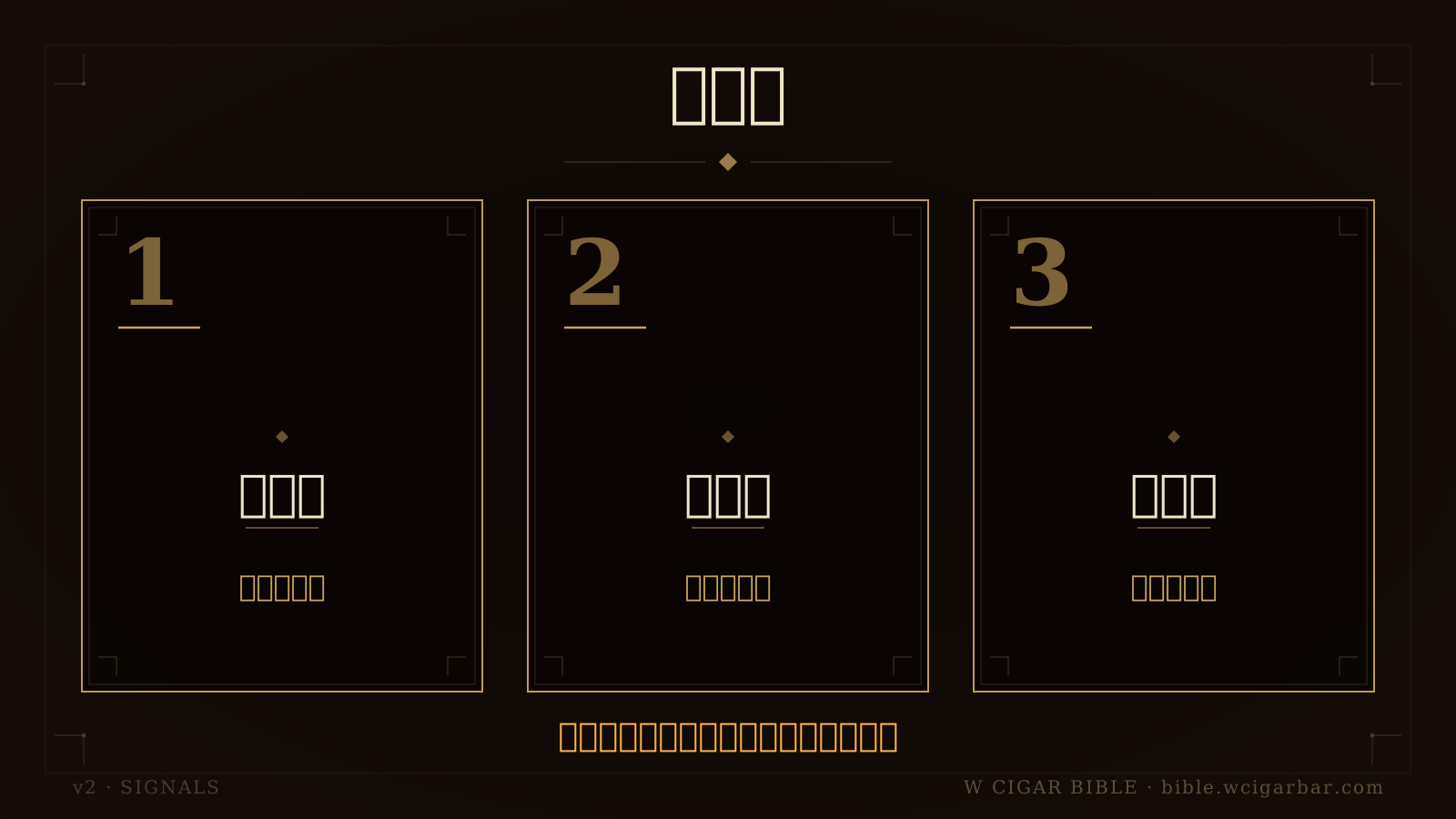
三張卡片整理雪茄抽吸的節奏濕度與切口要點
Lighting Is Not Burning It Red: From Flame Distance to the Rhythm of the First Puff
The most common mistake in lighting a cigar is placing the flame directly against the foot and scorching it aggressively. The center of a high-temperature torch flame can exceed 1,200 degrees Celsius. If it is applied directly for too long, the outer wrapper carbonizes quickly, and the first puff will naturally carry a charred taste. The correct method is to keep the tip of the flame about 1 to 2 cm away from the foot and slowly rotate the cigar so the outer ring is heated evenly. First toast the foot, observe the edge beginning to glow slightly, then blow gently to confirm whether the burning surface is complete. Many experienced connoisseurs do not rush into a large first puff after lighting. Instead, they use two or three short, gentle draws to stabilize the burn before entering the normal rhythm. This difference directly affects the flavor purity of the first 10 minutes.
I once compared the difference between two lighting methods on Romeo y Julieta Wide Churchills. This cigar is about 130 millimeters long with ring gauge 55, and it produces ample smoke. If the flame is held close and used aggressively, the first third can easily show black pepper and burnt caramel notes. If the outer flame is used for slow toasting, the first stage more often presents cream, toast, and light wood aromas. The first 5 puffs after lighting are especially important. It is recommended that each puff last about 3 seconds. Do not draw hard in succession, and release the smoke after holding it in the mouth for 2 to 4 seconds. At this point, the goal is not intensity, but to let the taste buds establish a baseline: where the sweetness is, how deep the woodiness is, and whether the spice is clean. The steadier the first puff, the more layers can be read later. If the first puff is damaged by scorching, the entire cigar will be dragged along by the shadow of charred notes.
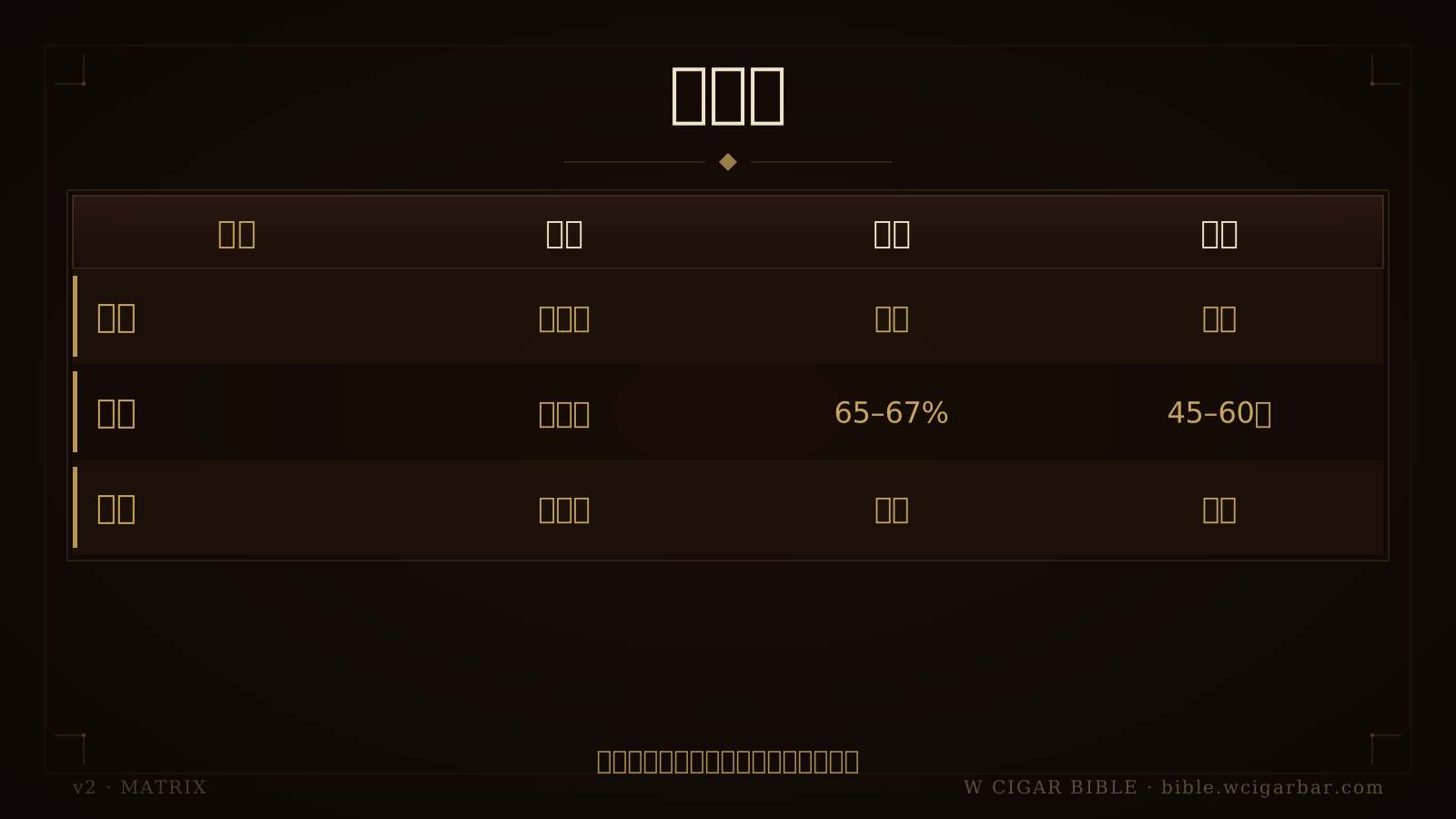
矩陣比較切口濕度與抽吸節奏在不同狀態的影響
Drawing Rhythm: How to Keep Temperature, Smoke, and Aroma in Balance
The rhythm of a cigar can be summarized in six words: "slow, steady, minimal interference". Generally, one puff every 45 to 60 seconds is recommended, but this is not a fixed rule. It should be adjusted according to size, humidity, and burn condition. For example, because Panetela or Lancero cigars have smaller ring gauges, such as Cohiba Lancero, about 192 millimeters long with ring gauge 38, the burn is more sensitive. If drawn too quickly, they can easily become hot. Robusto and Toro cigars, because their smoke channels are wider, can tolerate a slightly more ample smoke volume, but they are still not suitable for continuous fast puffing. To judge whether it is overheating, look at three things: whether the smoke changes from smooth to rough, whether the tongue surface suddenly becomes dry and astringent, and whether the burn line sinks rapidly. If these phenomena occur, the best response is not to touch it up with flame, but to set it down for 2 to 3 minutes and let the burning end cool naturally.
The following is a rhythm reference table for beginners, especially suitable for recording differences among sizes:
| Size Type | Common Ring Gauge | Suggested Interval Between Puffs | Time in Mouth | Common Flavor Risks |
|---|---|---|---|---|
| Lancero | 38 to 40 | 60 to 75 seconds | 2 to 3 seconds | Spiciness and charred wood after overheating |
| Corona Gorda | 46 to 48 | 50 to 65 seconds | 3 seconds | First third easily muted, final third easily bitter |
| Robusto | 50 | 45 to 60 seconds | 3 to 4 seconds | Fast puffing causes excessive caramelization |
| Toro | 52 to 54 | 50 to 70 seconds | 3 to 5 seconds | Skewed burn line, loose smoke |
| Churchill | 47 to 50 | More than 60 seconds | 3 to 4 seconds | Fatigue in the middle and final thirds, rising temperature |
A true expert is not someone who draws a lot every time, but someone who keeps every puff consistent. You can think of a cigar as a slow musical movement. If the beat is wrong, the melody becomes chaotic. When you learn to use time to control temperature, the flavor will naturally change from flat to three-dimensional.
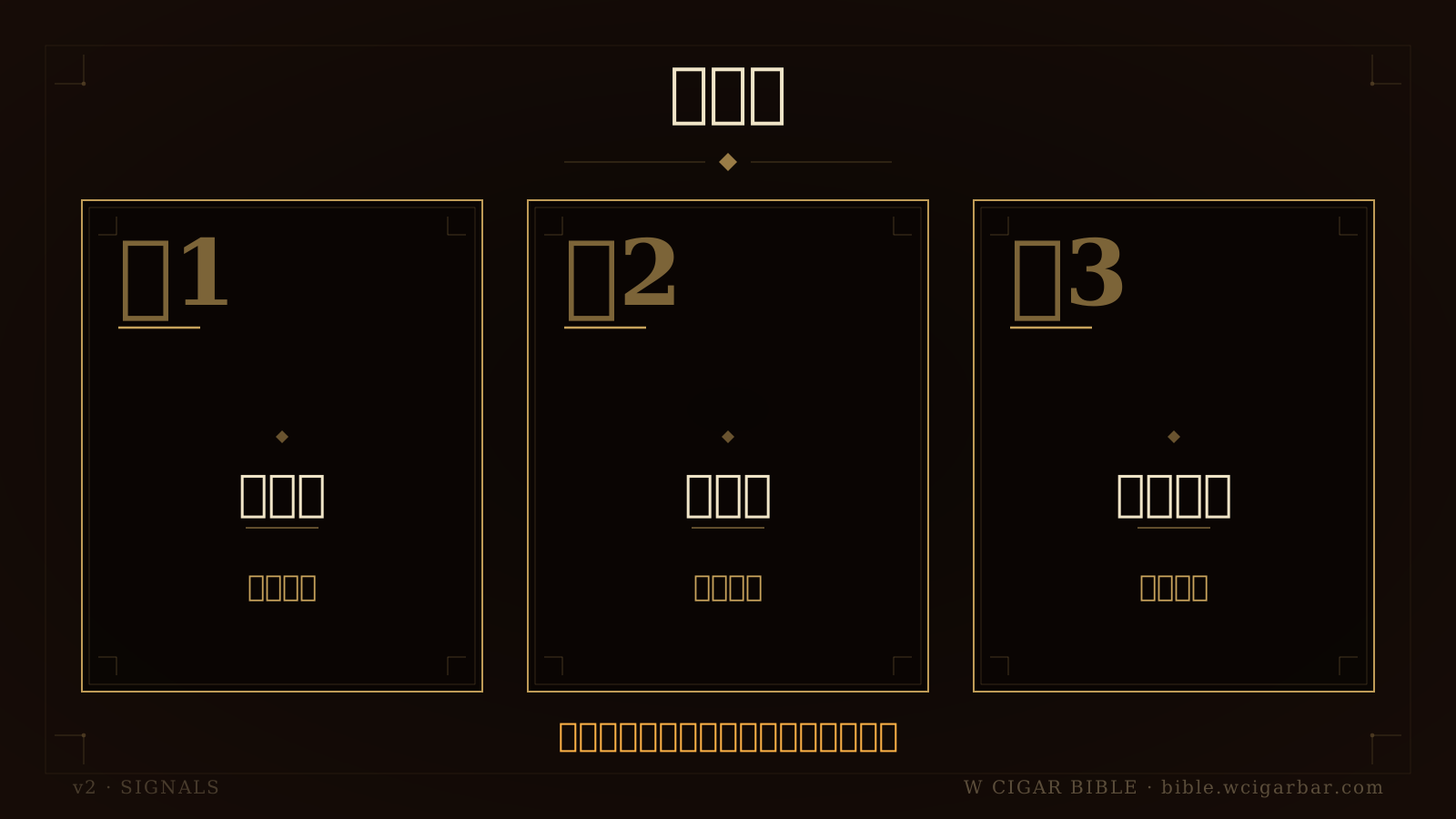
三張錯誤卡提醒吸太快吸入肺與久熄再點問題
Palate Adjustment: What the Tongue Surface, Palate, and Nasal Cavity Each Read
After cigar smoke enters the mouth, different positions read different information. The tip of the tongue mostly senses sweetness and acidity. The sides of the tongue more easily identify saltiness and minerality. The root of the tongue amplifies bitterness, while the palate is most sensitive to texture, oils, and spice. Beginners often hold the smoke motionless in the mouth and end up with only a mass of dense smoke. A better method is to let the smoke move gently in the mouth, mixing air and smoke as in tea appreciation, but do not inhale into the lungs. When releasing the smoke, it can be done in two stages: first release about eighty percent through the mouth, then let the remaining small amount pass naturally through the nasal cavity. This retrohale technique can make floral aromas, spices, woodiness, and minerality clearer, but beginners must use only a small amount, otherwise it can easily be choking and spicy.
Taking Davidoff Aniversario No.3 as an example, for cigars of this refined and highly balanced style, if perceived only through the mouth, one may find cream, nuts, and hay. After a small amount passes through the nasal cavity, white pepper, citrus peel, and faint floral aromas may also appear. By contrast, with cigars such as Bolívar Royal Coronas or the Partagás series, the nasal impression will be stronger. If too much is released at once, the spiciness will cover the details. When practicing, it is recommended to do a small nasal perception once every 5 to 6 puffs. There is no need to do it with every puff. Remember, the nasal cavity is not for showing off technique, but for supplementing information. When you can distinguish the differences among sweetness on the tongue surface, oiliness on the palate, and spices in the nasal cavity, you have truly begun to enter the layers of flavor, rather than merely saying "full-bodied" or "smooth".
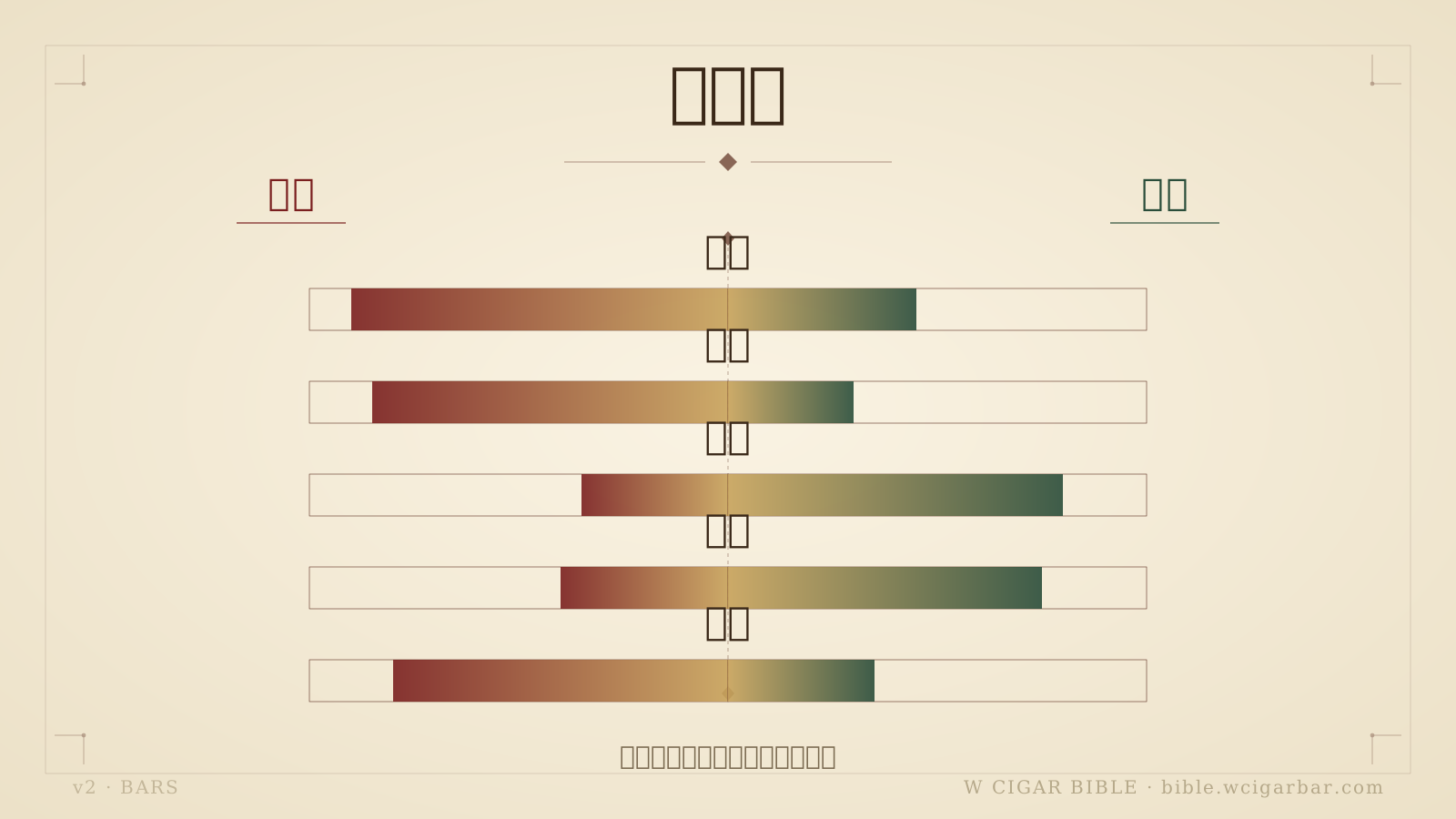
橫條比較快抽與慢抽在溫度苦辣香氣上的差異
Identifying Off-Flavors: Bitterness, Spiciness, Acidity, Ammonia, and Mold Each Have Their Causes
Many people collectively call all unpleasant smells and tastes "off-flavors", but different off-flavors represent different problems. Charred bitterness usually comes from overheating combustion or overly aggressive lighting. Bitterness at the root of the tongue that lingers may be due to drawing too quickly, or it may be that the cigar itself is not in sufficient condition. Spiciness has two types. Clean spice, like white pepper, cinnamon, or clove, flashes briefly in the nasal cavity. Rough spiciness feels as if the throat is being scraped, and is often related to high temperature or excessive humidity. Acidity also needs to be distinguished. Bright acidity, like citrus peel or red fruit, may be part of the flavor layering. Pungent acidity accompanied by an ammonia smell may indicate that aging has not yet stabilized, or that the storage environment has fluctuated too much.
For example, some young cigars produced in 2021 to 2022 with larger ring gauges may not yet have integrated shortly after boxing. The first third after lighting may show grass, ammonia, and raw woodiness. This does not mean the cigar has gone bad, but it does require more cautious storage and observation over time. Moldy smell is different. If it smells like a damp basement or wet cardboard box, and the wrapper surface has irregular fuzzy spots, one should not simply comfort oneself by calling it "natural oil bloom". White crystalline or mist-like oil crystallization differs from mold patches in both smell and form. In the process of collection and aging, people often discuss changes in value, but it must be understood: an increase in collectible value is not the same as a guaranteed increase in value, and it still depends on source, storage, and the market. The purpose of identifying off-flavors is not to nitpick, but to know whether to lower the temperature, let the cigar rest, adjust humidity, or stop using that cigar.
Enhancing Flavor: Detailed Management of Water, Time, Pairing, and Environment
If you want the cigar's flavor to be more complete, the most underestimated element is water. Room-temperature mineral water or sparkling water can cleanse the taste buds without covering details the way heavily sweetened drinks do. If pairing with alcohol, the principle should be matching intensity, not assuming that stronger is better. For example, H. Upmann Magnum 46 often has nuts, coffee, and woodiness. Pairing it with a 12 year or so Speyside whisky or unsweetened black coffee can draw out roasted grain and honey notes. If paired with a heavily peated whisky, it may overwhelm the original elegance. Cigars rich in detail, such as Cohiba Behike BHK 52, are more suitable with beverages that are light yet layered, allowing cream, honey, floral aromas, and grassy tones to unfold slowly.
The environment is also very important. Strong wind causes uneven burning. Direct air-conditioning makes the burning end fluctuate between fast and slow. Excessive perfume interferes with nasal judgment. An ideal space should have stable ventilation, clean odors, and enough light to observe the burn line. During smoking, it is recommended to make brief notes every 10 to 15 minutes: the main axis of the first third, the transition in the middle third, the strength in the final third, burn condition, and mouthfeel. Taking the batch differences often seen in Cuban brands after 2014 as an example, the same brand and same model may present different faces due to year, factory, and storage environment. Records help you build your own database rather than relying entirely on other people's scores. True flavor enhancement is not turning a cigar into another cigar, but reading the layers that already exist in it in a cleaner way.
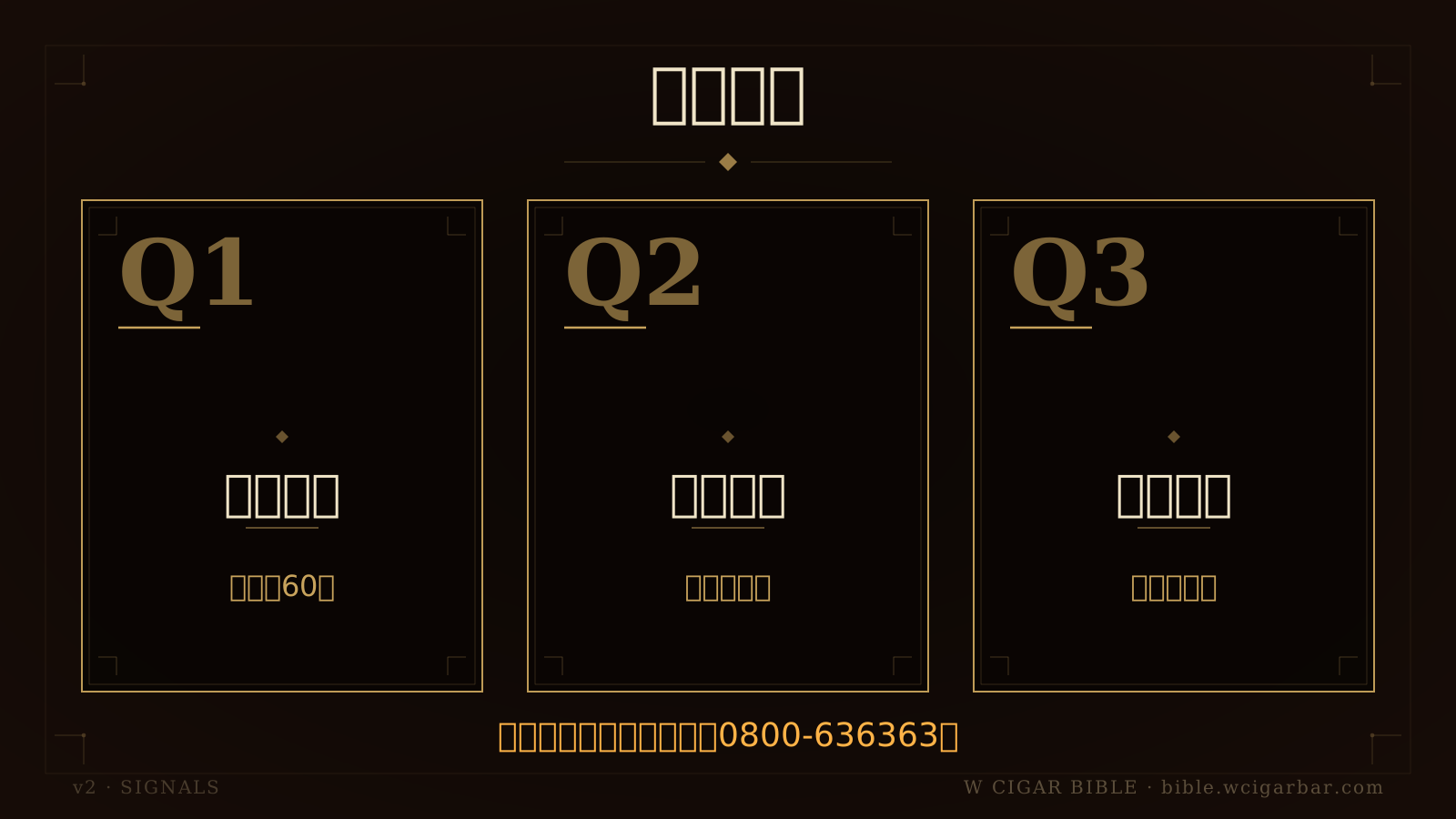
三張問答卡整理變苦進肺與熄滅後處理方式
Etiquette and Finishing: When to Touch Up, When to Set It Down, and When to End
The core of cigar etiquette is respecting the rhythm, respecting others, and also respecting the cigar itself. There is no need to hurry to tap off the ash. Stable ash helps the burning end maintain temperature. Usually, keeping about 2 to 3 cm and then gently resting it on the edge of the ashtray is sufficient. If the uneven burn is not serious, you can first rotate the cigar and place the slower-burning side downward, using heat convection to correct it. Only if the uneven burn exceeds 5 millimeters should you consider a small touch-up. When touching up, do not re-burn the entire ring. Gently toast only the unburned area, otherwise the originally clean middle third will become charred wood. If the cigar has gone out for more than 20 to 30 minutes, relighting it will usually bring cold tar and bitterness, and flavor quality will decline noticeably.
As for when to finish, there is no need to force yourself to smoke it down to the final centimeter. Most cigars increase in strength when about one-third remains, as tar and moisture accumulate. If the mouthfeel begins to become hot, bitter, or sticky, you can set it down gracefully. Do not stub out a cigar like a cigarette. Simply let it stop burning naturally. This is basic courtesy toward the aroma of the space and toward others. If seated with friends, you should also avoid loudly judging other people's choices. Cigar flavor involves objective technique as well as subjective preference. Some people like the rounder aged mouthfeel after 2008, while others prefer the grassiness and spice of young cigars. The two do not need to negate each other. Gentlemanly style is not affectation, but the display of restraint, patience, and propriety in every small gesture.
Frequently Asked Questions
1. Why does my cigar become bitter halfway through?
The most common reason is that the rhythm is too fast, causing the temperature at the burning end to become too high. First extend the interval between puffs to around 60 seconds. If necessary, set it down for 2 minutes to cool, then observe whether the bitterness decreases.
2. Can cigar smoke be inhaled into the lungs?
The focus of cigar appreciation is the mouth and nasal cavity. Inhaling into the lungs is not recommended. Let the smoke stay in the mouth for 2 to 4 seconds, perceive the texture, sweetness, woodiness, and spices, then release it.
3. Why does the same cigar taste different every time?
Year, batch, storage humidity, cutting method, lighting method, and the condition of your taste buds that day all affect the result. Even the same Partagás Serie D No.4 may present different mouthfeel at 65% and 70% humidity.
4. Do I need to use nasal perception with every puff?
No. Beginners can do a small nasal perception once every 5 to 6 puffs, especially after the first third has stabilized. Too much will be choking and spicy, and it will also fatigue the nasal cavity.
5. Can a cigar that has gone out be relit?
If it has only gone out briefly, first clear away loose ash, blow gently to expel old smoke, then carefully touch up with flame. If it has been left for more than 20 to 30 minutes, relighting often brings bitterness, astringency, and cold charred notes, and the flavor is usually poor.
6. Which size should beginners practice with first?
Robusto is a very good practice size. The duration is about 45 to 60 minutes, the rhythm is easy to master, and the first, middle, and final thirds are relatively clear. Lancero with a very small ring gauge requires higher technique and can be tried after your rhythm has stabilized.
The art of cigar smoking has never been about pursuing how large the smoke is or how rare the brand is. It is about slowing down, making each puff precise, and keeping it clean. When you can distinguish how heat, humidity, draw resistance, and rhythm change flavor, you will understand that the truly captivating part of cigars lies in how they require a person to return to focus. My view is simple: only those who know restraint can perceive layers; only those who know how to wait can read the details left by time.
-- Cigar Prince Wilson Tsai
Smoking is harmful to health. Persons under twenty years of age may not smoke. Smoking cessation hotline: 0800-636363. This article is provided solely for adults aged twenty or above as a reference for cigar culture, storage, and regulatory knowledge. It is not tobacco advertising, promotion, or purchasing advice.
Like this article?Share with friends
Share this W Cigar Bible piece with friends who want to learn cigar culture, storage, and tasting.
想把這篇 化為實踐
雪茄聖經是知識;雪茄文化要在空間裡發生

W Cigar Bar 大安總店資訊
台北大安區 · 雪茄聖經總編輯 Wilson Tsai 主理的雪茄文化空間
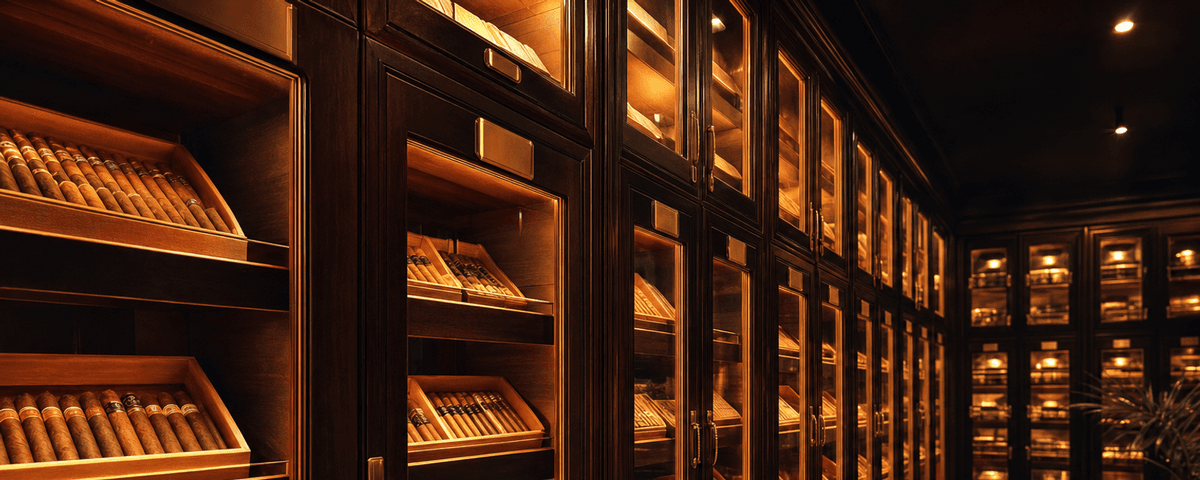
33 座 24 小時恆溫恆濕醇化室
W Cigar Bar 提供的會員醇化空間 · 場地資訊請洽編輯部
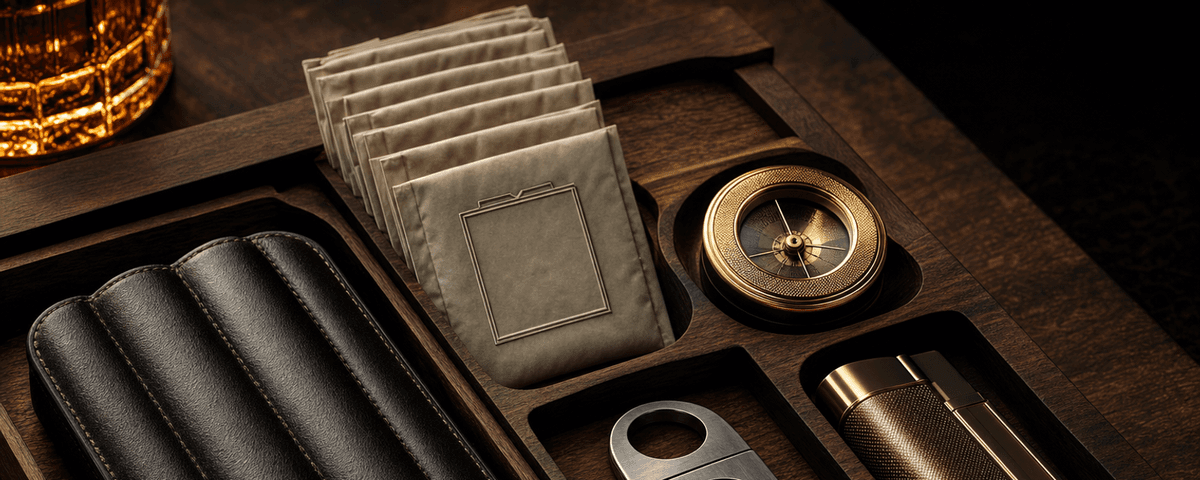
雪茄剪 / 打火機 / 雪茄盒 / Boveda
W Cigar 配件官網 · 專營雪茄配件正品

加 LINE 好友 · 文化諮詢
文化空間資訊 · 紳士沙龍 · 私人包場
本網站內容僅供雪茄文化、歷史、收藏與品吸知識研究參考。菸品有害健康、未滿法定年齡者請勿吸菸。實際規範請依所在地法律為準。
吸菸有害健康・戒菸專線 0800-636363・本站僅供 20 歲以上成年人閱覽。
讀到這裡,你不只是路過的人
留下 Email,加入 W 雪茄聖經內圈——總編輯 Wilson Tsai 親選的學院深文與國際新訊,先你一步送到信箱。
· 教育用途非銷售 · 隨時一鍵退訂 · Email 絕不對外公開 · 由勝茄股份有限公司營運
同分類延伸閱讀


資料來源:W Cigar Bible 編輯部整理 · 雪茄王子 Wilson Tsai 親自審稿
本文僅供雪茄文化、歷史、收藏與品鑑知識研究,不作為菸品促銷、銷售或購買建議。吸菸有害健康,未滿二十歲不得吸菸。