雪茄配方的藝術:從葉片選擇到獨特風味的構建
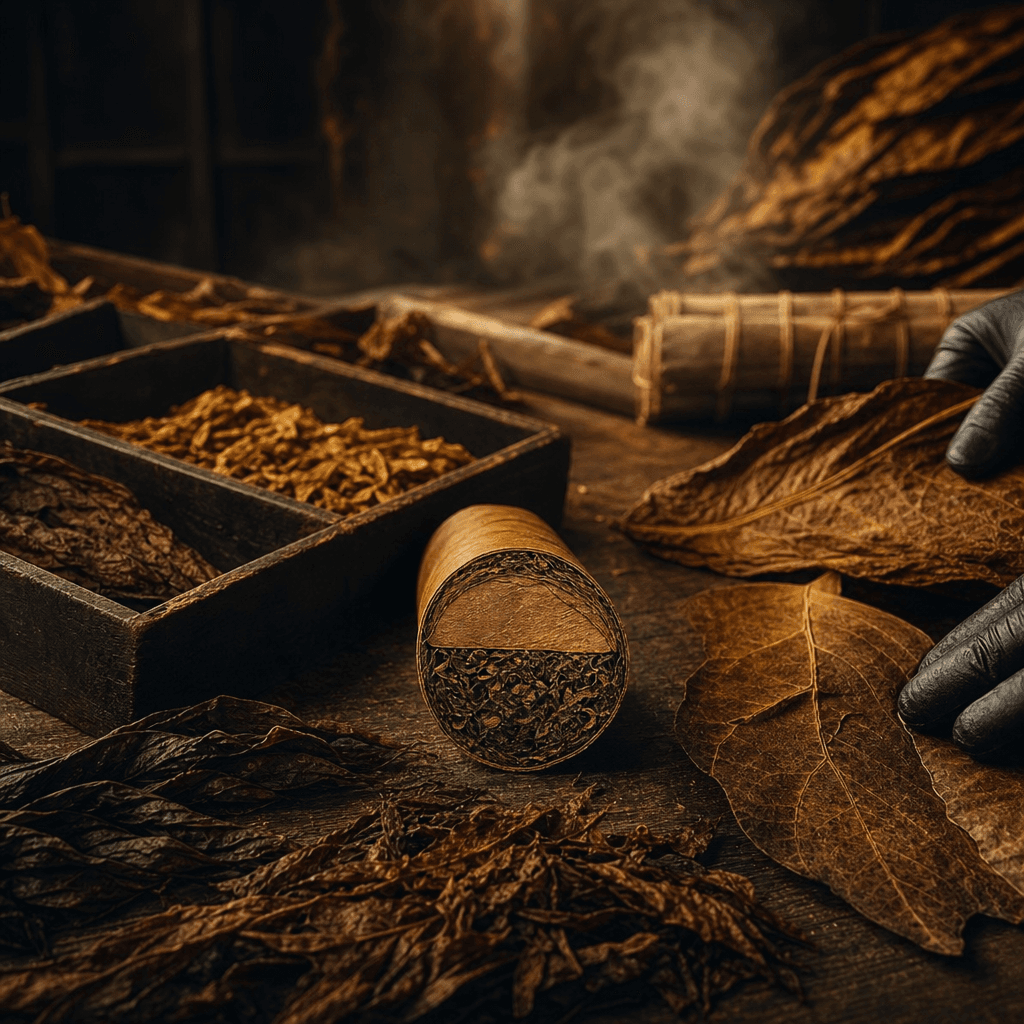
雪茄的配方不僅是煙葉的簡單混合,而是結合土地、年份、發酵與捲製技術的藝術。高階雪茄的結構由茄衣、茄套和茄芯三層組成,各自扮演不同角色,影響風味與燃燒特性。選擇葉片時,需考量其在配方中的功能,並確保每層葉片能在燃燒過程中發揮作用。優秀的配方師會通過精確的比例與尺寸調整,創造出具有層次感的風味,並保持品牌的獨特性與一致性。古巴雪茄的魅力在於其長期維持的品牌性格,讓每一支雪茄都成為經典。
- 雪茄配方的藝術在於葉片的選擇與搭配,影響風味層次與燃燒特性。
- 高階雪茄由茄衣、茄套與茄芯三層構成,各自有不同的功能與風味影響。
- 葉片的選擇需考量其在配方中的角色,非單純追求外觀或強度。
The Art of Cigar Blending: From Leaf Selection to Crafting Unique Flavors
Cigar blending is not merely the addition of various tobacco leaves, but the compression of land, vintage, fermentation, rolling, and burning rhythm into a recognizable work. What seasoned aficionados often inquire about is not "how strong," but why the same brand presents distinctly different layers in different sizes and vintages.
As an editor of the "Cigar Bible," I first deconstruct the structure when examining a blend, then look at the craftsmanship, and finally discuss the flavor descriptors. Flavor does not appear out of thin air; it results from the chain reaction of leaf position, proportion, moisture, ignition point, and time.
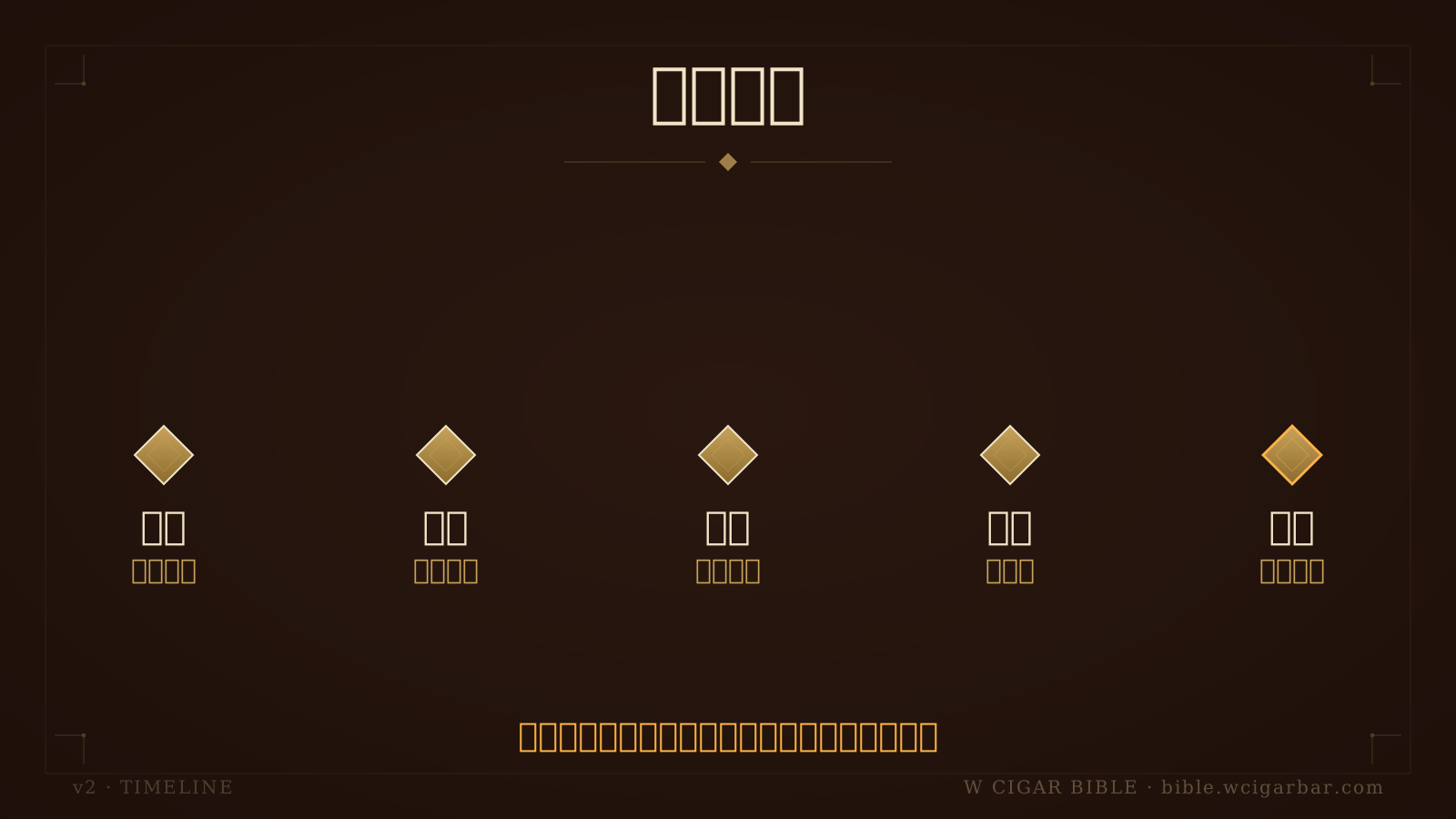
流程時間軸呈現從田間葉位到試配定型的五個步驟
The Three-Layer Framework of Blending: The Roles of Wrapper, Binder, and Filler
A high-end cigar blend typically consists of three layers: the wrapper, binder, and filler. The wrapper accounts for about 8% to 12% of the total weight but greatly influences the first impression; the binder is responsible for structure and burn stability; the filler is the main source of strength, aroma, and transitions. For example, with the commonly seen 52-ring gauge Robusto after 2020, weighing about 12 to 15 grams, adjusting the filler leaf proportion by 1 gram can change the burning speed and bitterness at the end.
Seasoned aficionados often focus on the color of the wrapper, such as Claro, Colorado, and Maduro, but what truly determines the depth of the blend is often the combination of different leaf positions in the filler. Ligero comes from the upper part of the plant, receiving more sunlight and having higher nicotine and oils; Seco offers more delicate aromas; Volado is good for burning. If there is too much Ligero, the front may be heavy but the back may be clogged; if Volado is insufficient, the burn line may be unstable.
The core of blending is not to pursue the strongest single leaf, but to let each layer of leaf speak in turn during the burning time. For example, the charm of Partagás Serie D No.4 lies not only in the rich Cuban wood and pepper notes but in the transition from earthy and coffee to slightly sweet spices in the middle; this is structural balance, not just stacking intensity.
From a technical perspective, a good blender will first set the "framework": whether the first third is clean, whether the second segment unfolds, and whether the end still has recognizability. If a 124 mm long Robusto overheats within 25 minutes, it is often not the customer's rhythm problem, but possibly the filler density, moisture, and leaf ignition points not aligning.
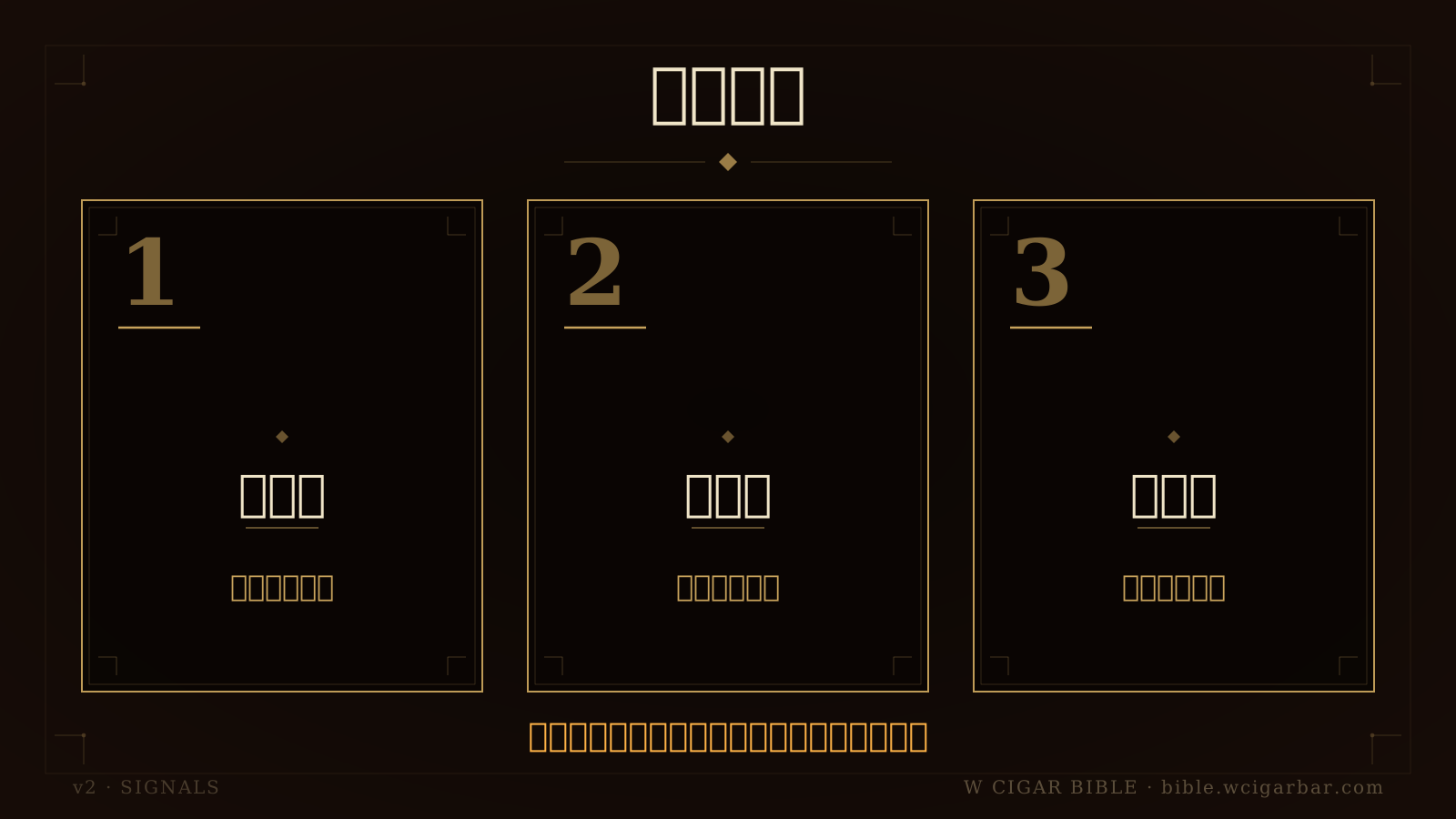
三張重點卡說明雪茄配方需先看結構工藝再談風味
From Field to Fermentation: Leaf Selection Determines Flavor Potential
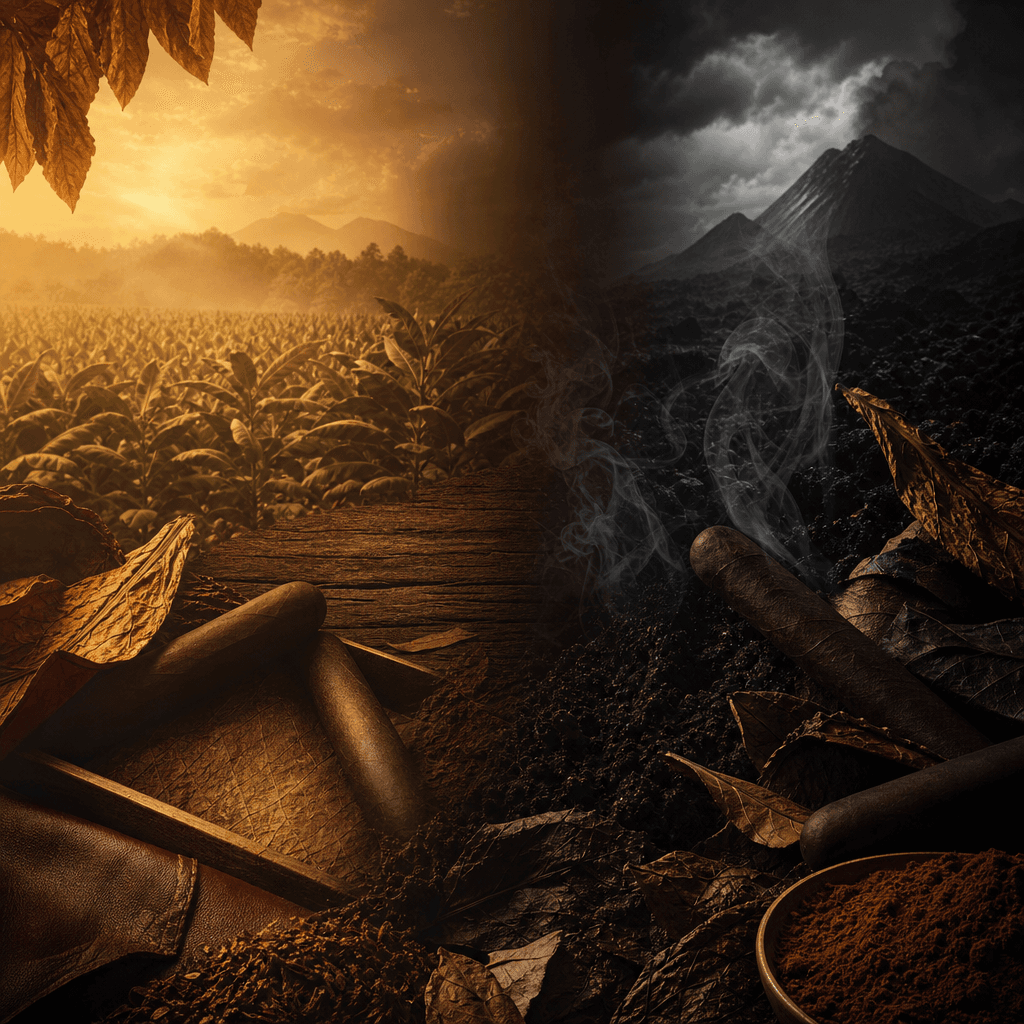
The potential of tobacco leaves is determined in the field. Taking Cuba's Vuelta Abajo, Nicaragua's Estelí, Honduras's Jamastrán, and the Dominican Republic's Cibao as examples, the same high-leaf-position Ligero will perform completely differently due to differences in soil minerals, day-night temperature differences, and rainfall. Estelí often gives impressions of black pepper, cocoa, and substantial strength; Dominican leaves are often creamy, nutty, floral, and cleanly sweet.
The key after harvesting is fermentation. Generally, quality cigar tobacco leaves undergo 2 to 3 main fermentations, with pile temperatures reaching 38 to 45 degrees Celsius, and some thick leaves or Maduro wrappers taking longer and higher temperatures, but ammonia residue and leaf brittleness must be avoided. After the 1990s, many new world brands emphasized batch fermentation, treating different farms, leaf positions, and harvest cycles separately before combining them into blends.
| Leaf Position | Common Function | Flavor Tendency | Blending Risk |
|---|---|---|---|
| Ligero | Strength, finish, thickness | Pepper, leather, dark coffee | Excess can be bitter, slow burning |
| Seco | Aroma, layers, sweetness | Woody, floral, roasted nuts | Too little can be monotonous |
| Volado | Burning, stability, lines | Hay, light woody | Too much can be weak |
| Medio Tiempo | Rare strength and oils | Dark chocolate, minerals, spices | Hard to manage, high cost |
Leaf selection is not just about choosing pretty or strong leaves, but materials that can complete tasks in the blend. When Cohiba Behike was officially launched in 2010, the rarity of Medio Tiempo was often discussed, but the real brilliance was that it was placed in a system that could still burn and still have aromatic lines, not just showcase strength.
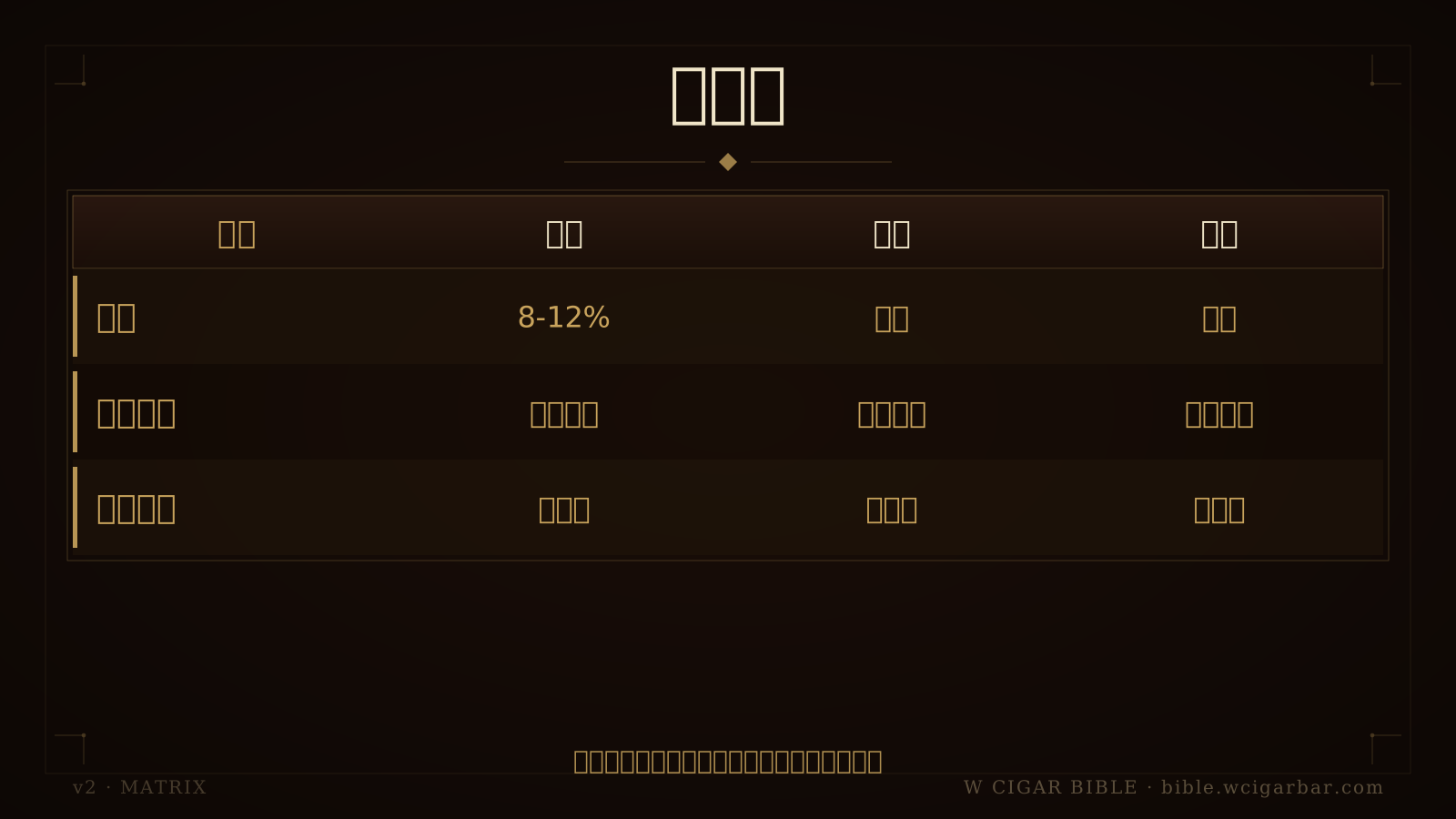
矩陣比較茄衣茄套茄芯在比重任務與風險上的差異
Blending Techniques: The Mathematics of Proportion, Size, and Burning Rhythm
When a blender creates a blend, it is not about finalizing the formula in one go but establishing a matrix. Suppose a Toro is 152 mm, 52 ring gauge, and may first set four filler proportions: Ligero 20%, 25%, 30%, 35%, then pair with two types of binders and three types of wrappers, theoretically resulting in 24 combinations. Before entering mass production, burning, draw resistance, ash column strength, and end cleanliness must be checked.
Size changes the logic of blending. The Corona Gorda and Double Robusto of the same brand, even if using similar leaf sources, should not just be enlarged or reduced. The larger the ring gauge, the more space for filler proportion, allowing for broader flavors; the smaller the ring gauge, the higher the proportion of wrapper and binder, concentrating the aroma but leaving less room for error. This is why ring gauges from 42 to 46 are often seen by old-school players as the size to observe blending skills.
Truly mature blending techniques allow the same blend to retain family traits in different sizes, yet each with its rhythm. For example, the Padrón 1964 Anniversary series, launched in 1994, with box pressing brings slower burning and more concentrated taste; different sizes within the same series still retain cocoa, coffee, and nut sweetness, but with different intensity and unfolding speed.
I personally record four numbers when looking at a blend: aroma development 10 minutes after lighting, ash column maintenance length, temperature rise per minute, and whether the end collapses before the remaining 3 cm. These seemingly detailed aspects reveal blend stability more than fancy flavor descriptors.
Flavor Construction: Balancing Sweet, Bitter, Spicy, Woody, and Mineral Sensations
Cigar flavor is not a linear list but "main axis, branch line, aftertaste" three layers. The main axis may be cedar, espresso, leather; the branch line may be white pepper, almond, toasted bread; the aftertaste is often determined by sugar conversion, fermentation cleanliness, and burning temperature. An excellent blend should establish direction in the front, have transitions in the middle, and not just leave heat and bitterness at the end.
Sweetness is especially easy to misunderstand. Cigar sweetness is not candy sweet but comes from natural sugars, lignin conversion, and oiliness in mature leaves. Maduro wrappers often carry dark sweetness, but if the filler lacks support, it will only be like a sweet shell covering a hollow core. When Arturo Fuente OpusX debuted in 1995, the focus was not "Dominican can also be strong," but putting spice, cream, wood, and tension on the same line.
The fear in flavor construction is having only intensity without direction; also fear of having only aroma without structure. When comparing Hoyo de Monterrey Epicure No.2 and Bolívar Royal Coronas, it is easy to feel that the former is softer, with more obvious wood and cream, while the latter has a deeper earthy, cocoa, and spicy backbone.
To train recognition, you can record with three different origin Robustos under the same humidity. It is recommended to control the storage environment at 18 to 21 degrees, relative humidity 65% to 69%, and write five words for each front, middle, and end segment. After doing 30 consecutively, you will find that "brand style" is actually the language accumulated from long-term blend choices.
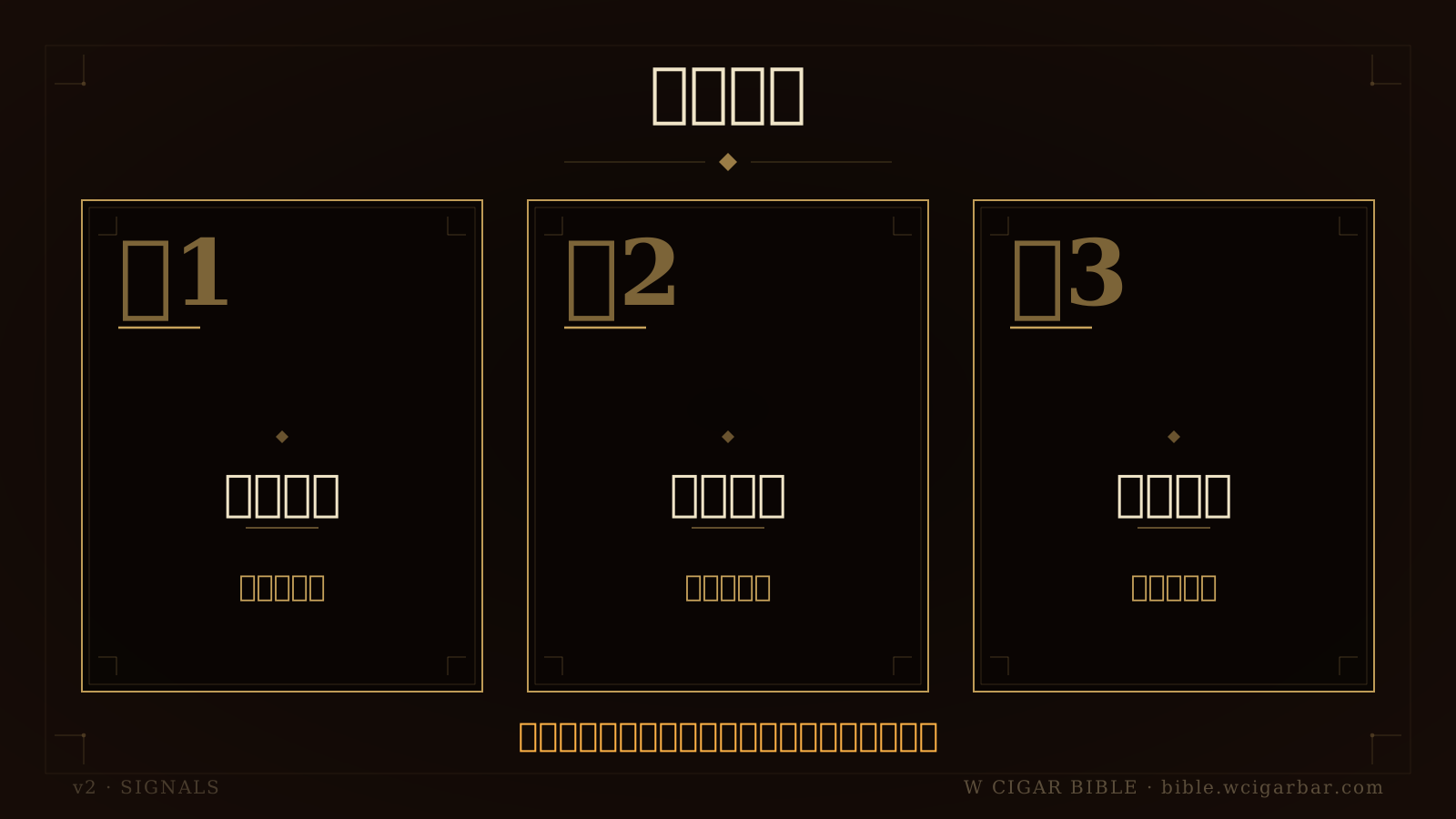
三張錯誤卡整理深色迷思評分依賴與同牌同味誤解
Classic Cuban Blends: How Brand Character is Maintained
The charm of Cuban brands lies in the fact that many works are not just a cigar but a set of vocabulary maintained over time. Montecristo No.2 has become the representative of the pyramid size since the brand's founding in 1935, with common flavors of wood, coffee, cocoa, and light spice; its difficulty lies in the concentration at the 52-ring gauge head and the filler burning heat in the back, requiring the blend to balance tension and balance.
Cohiba's story is different. Developed for high-end diplomatic use in 1966 and officially entering the international market in 1982, the style emphasizes delicate fermentation and elegant layers. Cohiba Siglo VI, launched in 2002, with a 150 mm, 52-ring gauge Cañonazo size, is often seen as a modern Cuban large ring gauge case that still retains detail: herbal, cream, honey, wood, and clean spice.
The focus of Cuban blends is not just the rarity of origin but the continuation of brand character in different sizes. Partagás often establishes an image with rich, earthy, peppery, and dark wood; H. Upmann more often showcases toasted bread, nuts, and elegant hay. Even if both are made into 46-ring gauges, leaf proportion and fermentation direction will still make personalities distinct.
Of course, vintage differences are also evident. Different box batches in 2014, 2016, 2019, and 2021 may vary greatly in burning, tightness, and unfolding speed. Seasoned aficionados should not only look at the band but also the box code, storage state, rolling density, and actual performance. Brand names provide reference coordinates, but whether the blend can be fully presented still depends on leaf source, craftsmanship, and storage chain.
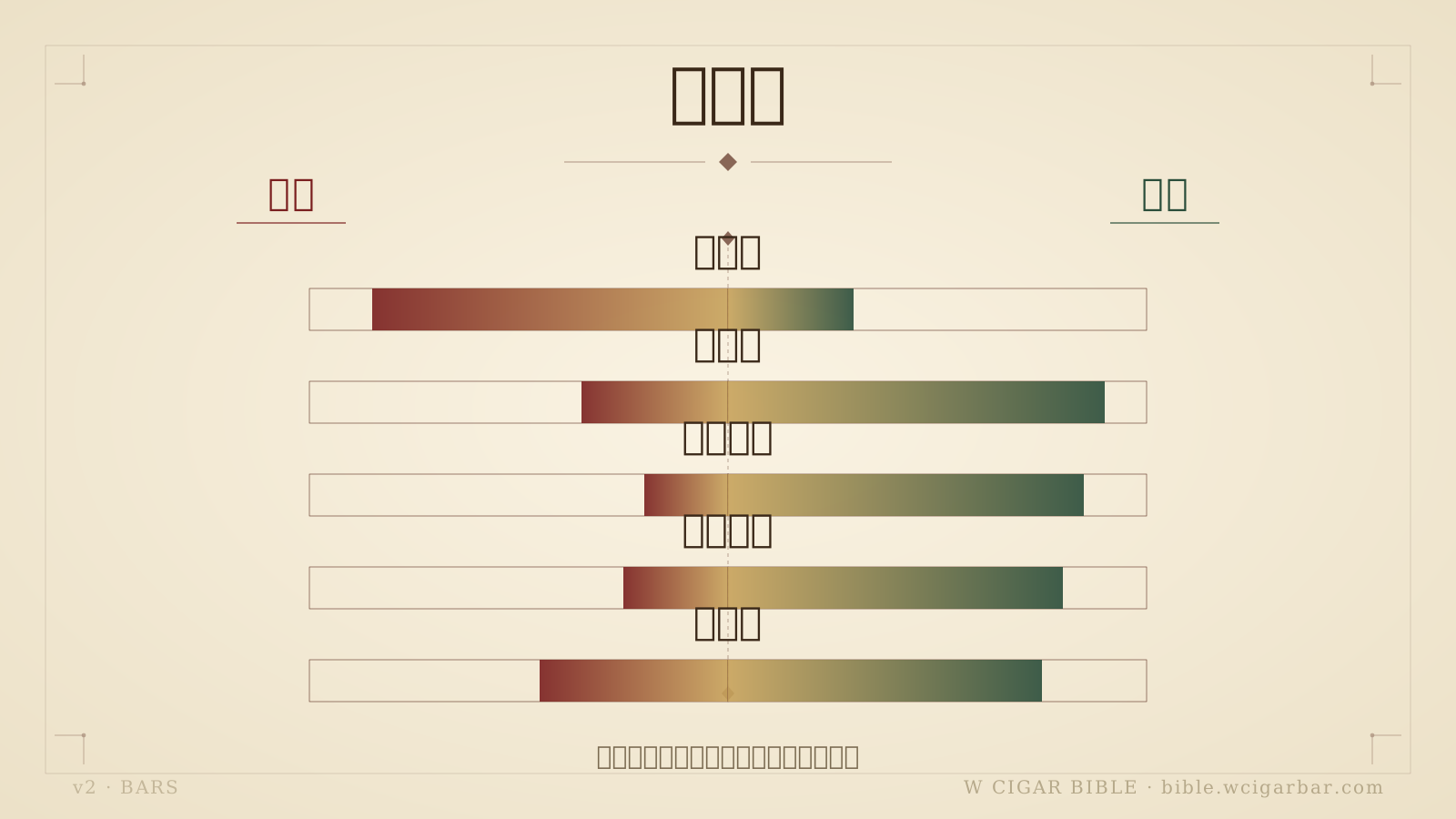
長條圖比較新手與老手在顏色結構紀錄尾段等判讀焦點
New World Blends: From Strength Competition to Precision Design
New world cigars matured rapidly after the 1990s, often simplified as "strong, sweet, heavy," but what is truly worth studying is their precision design. Origins like Nicaragua, Dominican Republic, Honduras, Ecuador, and Mexico can be combined across countries, giving blenders a broader palette. Ecuador Habano wrappers can bring spice and oils; San Andrés Maduro often gives cocoa, soil, and brown sugar; Cameroon has delicate spices and dry sweetness.
Davidoff Nicaragua, launched in 2013, is a clear case of the brand's style shift. It retains Davidoff's demand for clean lines and balance but adds Nicaraguan leaf spice, coffee, and cocoa, making the whole more darkly tense than the traditional Dominican line. This is not simply adding weight but transplanting the brand language to different soil.
The advantage of new world blends is the ability to precisely craft flavor structures with cross-origin leaves, rather than being limited by a single origin. Brands like My Father, Tatuaje, Oliva, and AJ Fernandez have all demonstrated various aspects of Nicaraguan leaves after 2000: some emphasize pepper explosions, some pursue cocoa sweetness and creaminess, and some use wrappers to create front-end recognizability.
Padrón takes another route. The 1964 Anniversary and 1926 Serie often use long-aged tobacco leaves, presenting cocoa, coffee, nuts, dark sweetness, and stable burning. Its brilliance lies not in complex origin puzzles but in consistent leaf source management, fermentation, and rolling standards, controlling the density of each puff to be very close.
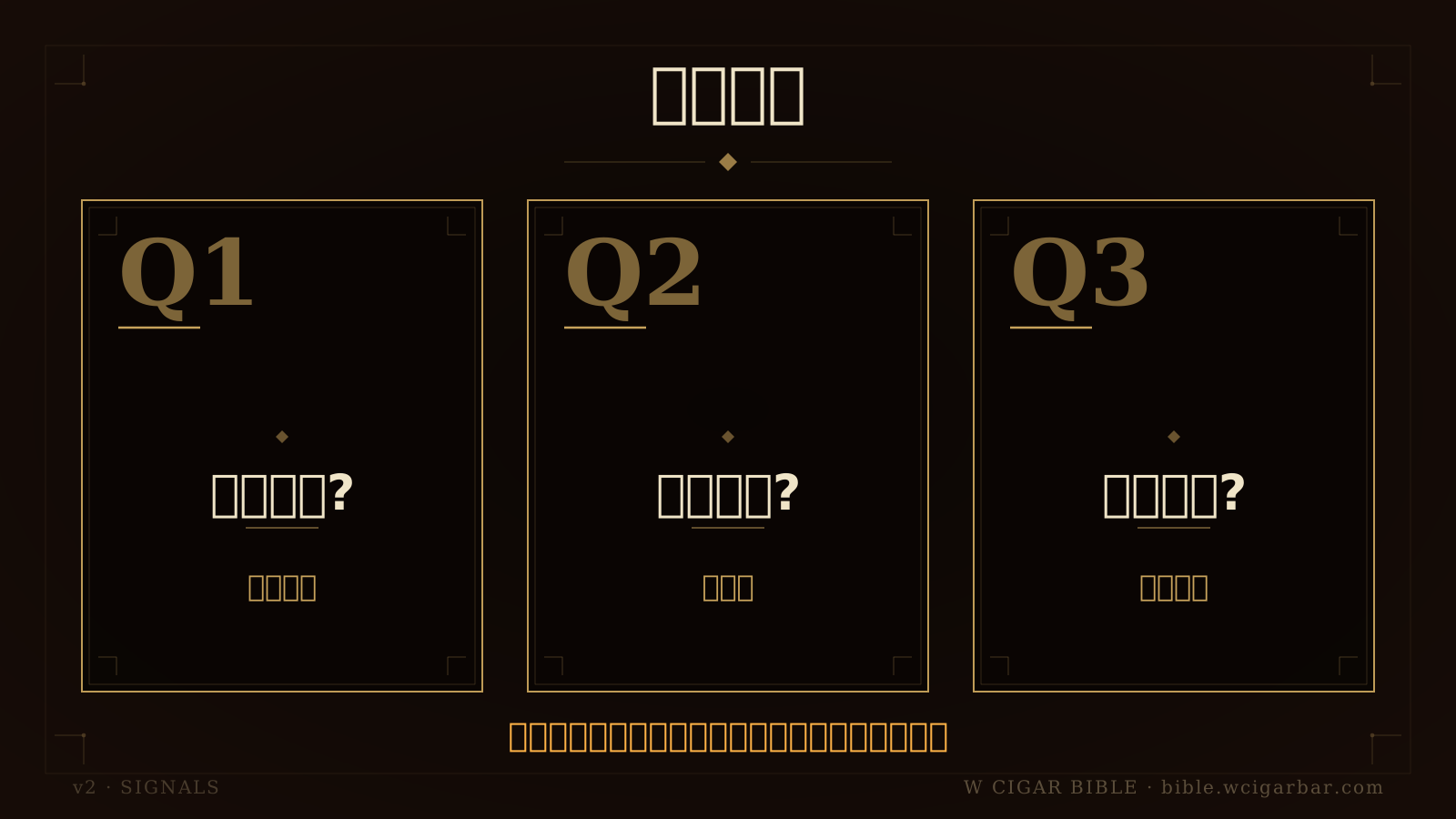
三張問答卡回答尺寸差異深色濃度與醇化檢查重點
Aging and Storage: The Blend Continues to Change After Completion
The blend does not completely stop changing upon leaving the factory. Once cigars enter the box, the moisture, oils, ammonia residue, and aromatic substances in the tobacco leaves will continue to slowly integrate. Generally speaking, strong new world blends may become rounder after 6 to 18 months; some classic Cuban cigars may transform herbal and spicy notes into honey, wood, and leather sensations after 3 to 5 years, provided storage is stable.
Storage numbers are important. If the long-term environment is above 72% relative humidity, burning may become dull, and wood and sweetness may be suppressed by moisture; if below 62%, the wrapper may crack, and the end's sharpness may rise. I prefer the range of 18 to 20 degrees, 65% to 68% humidity, especially safer for high-end Cubans and thin-wrapper styles. Temperature fluctuations are scarier than a single number because they cause cigars to repeatedly absorb and release water.
Aging is not a myth but a process of re-integrating various elements in the blend; but it cannot save inherently unbalanced or poorly stored cigars. For example, a cigar that is too tightly filled and difficult to burn will not naturally become perfect after 5 years; a piece with unclean fermentation and obvious ammonia may only make the flaws softer.
Collecting should also be calm. Some box releases from 2008, 2011, and 2017 are sought after due to rarity, good condition, or stable reviews, but collection appreciation does not guarantee value increase; it still depends on source storage and market. Seasoned aficionados should truly establish records: box code, acquisition month, humidity, status every six months, and actual flavor; these data are more reliable than rumors.
Frequently Asked Questions
When understanding a blend, first determine if the structure is established before discussing likes or dislikes; the difference among seasoned aficionados is being able to articulate reasons.
Why is there a big difference in the same brand's different sizes?
Because size changes the relative proportion of wrapper, binder, and filler. Comparing the same series Robusto and Churchill, the latter may be more than 50 mm longer, extending the burning time, and the blender must ensure sufficient support in the middle, or it will appear loose. Seasoned aficionados should not expect them to be identical but see if they retain family traits.
Does a darker wrapper mean stronger?
Not entirely. Maduro often carries dark sweetness, cocoa, and soil notes, but intensity still depends on the filler, especially the Ligero proportion and fermentation method. Connecticut Broadleaf can be heavy, and Ecuador Connecticut can also achieve medium to above strength; color is just a clue, not a conclusion.
Why do some high-rated cigars seem ordinary to me?
Ratings often reflect specific batches, storage conditions, and reviewer preferences. If your storage humidity, lighting rhythm, or resting time differs, performance will change. More importantly, everyone's taste data bank is different; people who often drink espresso and those who often drink light tea naturally have different sensitivity to bitterness, sweetness, and woodiness.
What is the hardest part of a blend to master?
I believe it's the end segment. The front can attract with a beautiful wrapper and aroma, the middle can be supported by Ligero and sweetness, but the end will expose whether fermentation, filling density, and proportions are precise. A cigar that remains clear and not anxious in the last 3 to 4 cm usually has a solid blend foundation.
How do seasoned aficionados build their blend interpretation skills?
The most effective method is fixed size, fixed humidity, and fixed recording format. Continuously comparing 20 Robustos is more effective than randomly tasting 100 in a year. Record each front, middle, and end segment, burn line, ash color, draw resistance, and aftertaste, then look back at brand and origin, and you will slowly see the blend logic.
How long is reasonable for aging?
There is no single answer. Medium-strength new world cigars can be observed for 6 to 12 months; high-strength or large ring gauge works can be seen for 18 to 36 months; some classic Cuban sizes can be extended to over 5 years. But checking the status every 6 months is more rational than blindly waiting.
I always believe that the most fascinating aspect of cigar blending is that it places agriculture and aesthetics in the same work. Leaves have vintages, craftsmanship has choices, burning has rhythm; understanding the deconstruction prevents being led only by the band. A true seasoned aficionado is not the one who speaks the most but the one who can read land, proportion, and time in a single puff.
—Cigar Prince Wilson Tsai
Smoking is harmful to health. Under 20 years old is not allowed to smoke. Quit smoking hotline: 0800-636363. This article is for reference only for adults over 20 years old as knowledge of cigar culture, storage, and regulations, not a tobacco advertisement, promotion, or purchase suggestion.
Like this article?Share with friends
Share this W Cigar Bible piece with friends who want to learn cigar culture, storage, and tasting.
想把這篇 化為實踐
雪茄聖經是知識;雪茄文化要在空間裡發生
W Cigar Bar 大安總店資訊
台北大安區 · 雪茄聖經總編輯 Wilson Tsai 主理的雪茄文化空間
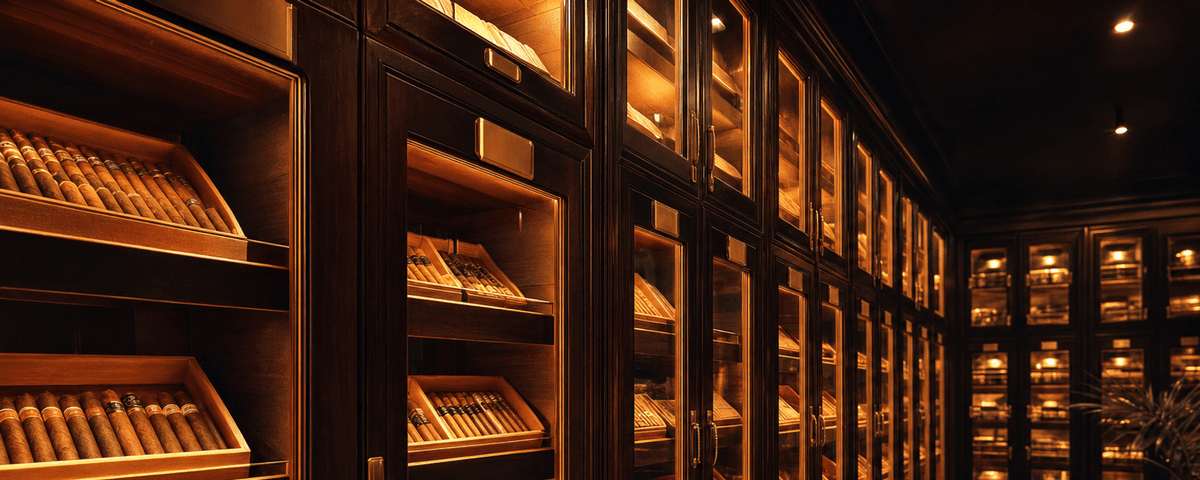
33 座 24 小時恆溫恆濕醇化室
W Cigar Bar 提供的會員醇化空間 · 場地資訊請洽編輯部
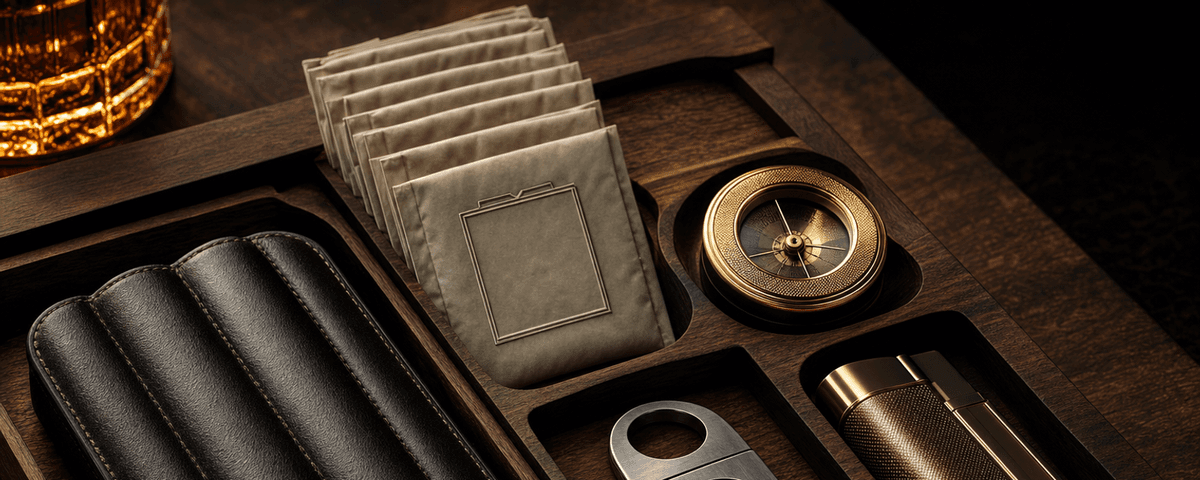
雪茄剪 / 打火機 / 雪茄盒 / Boveda
W Cigar 配件官網 · 專營雪茄配件正品
加 LINE 好友 · 文化諮詢
文化空間資訊 · 紳士沙龍 · 私人包場
本網站內容僅供雪茄文化、歷史、收藏與品吸知識研究參考。菸品有害健康、未滿法定年齡者請勿吸菸。實際規範請依所在地法律為準。
吸菸有害健康・戒菸專線 0800-636363・本站僅供 20 歲以上成年人閱覽。
讀到這裡,你不只是路過的人
留下 Email,加入 W 雪茄聖經內圈——總編輯 Wilson Tsai 親選的學院深文與國際新訊,先你一步送到信箱。
· 教育用途非銷售 · 隨時一鍵退訂 · Email 絕不對外公開 · 由勝茄股份有限公司營運
同分類延伸閱讀
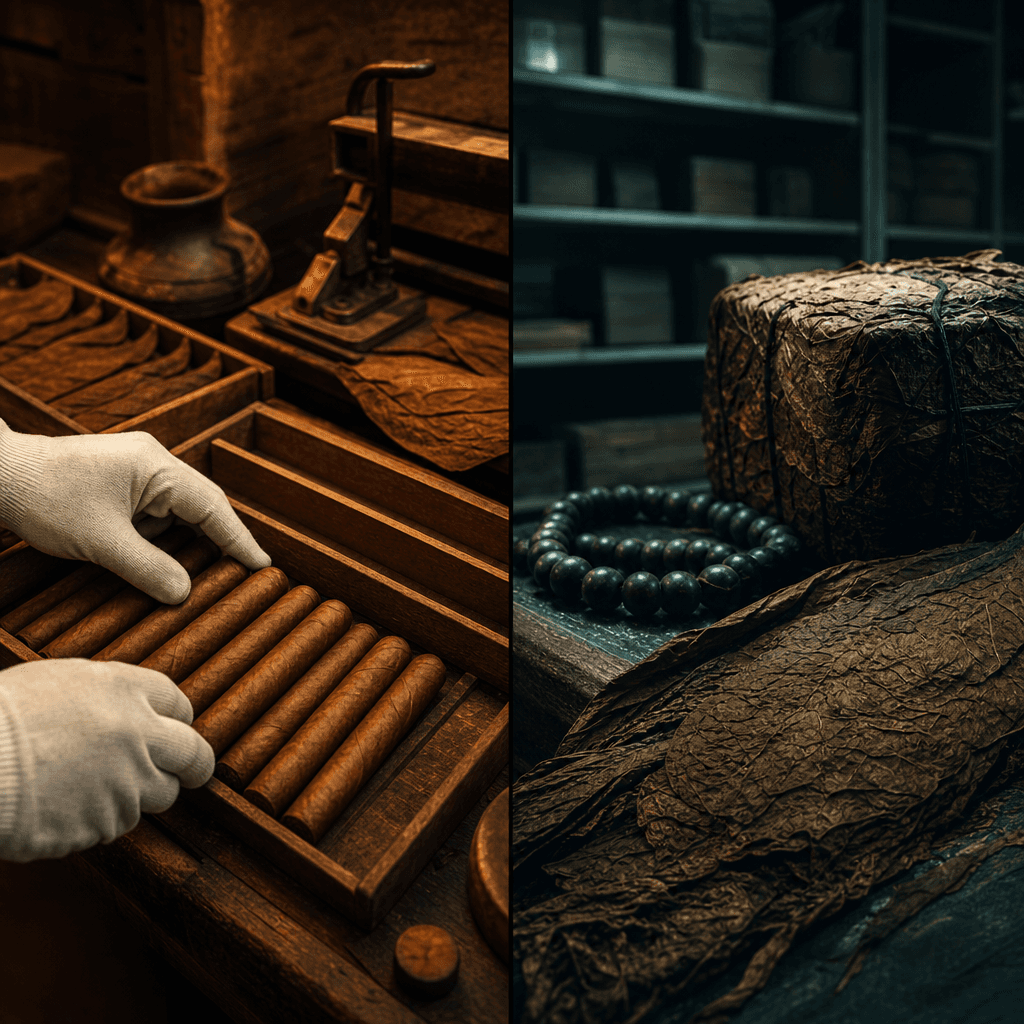
資料來源:W Cigar Bible 編輯部整理 · 雪茄王子 Wilson Tsai 親自審稿
本文僅供雪茄文化、歷史、收藏與品鑑知識研究,不作為菸品促銷、銷售或購買建議。吸菸有害健康,未滿二十歲不得吸菸。