雪茄的品鑒技術:從基礎到進階的全面指南
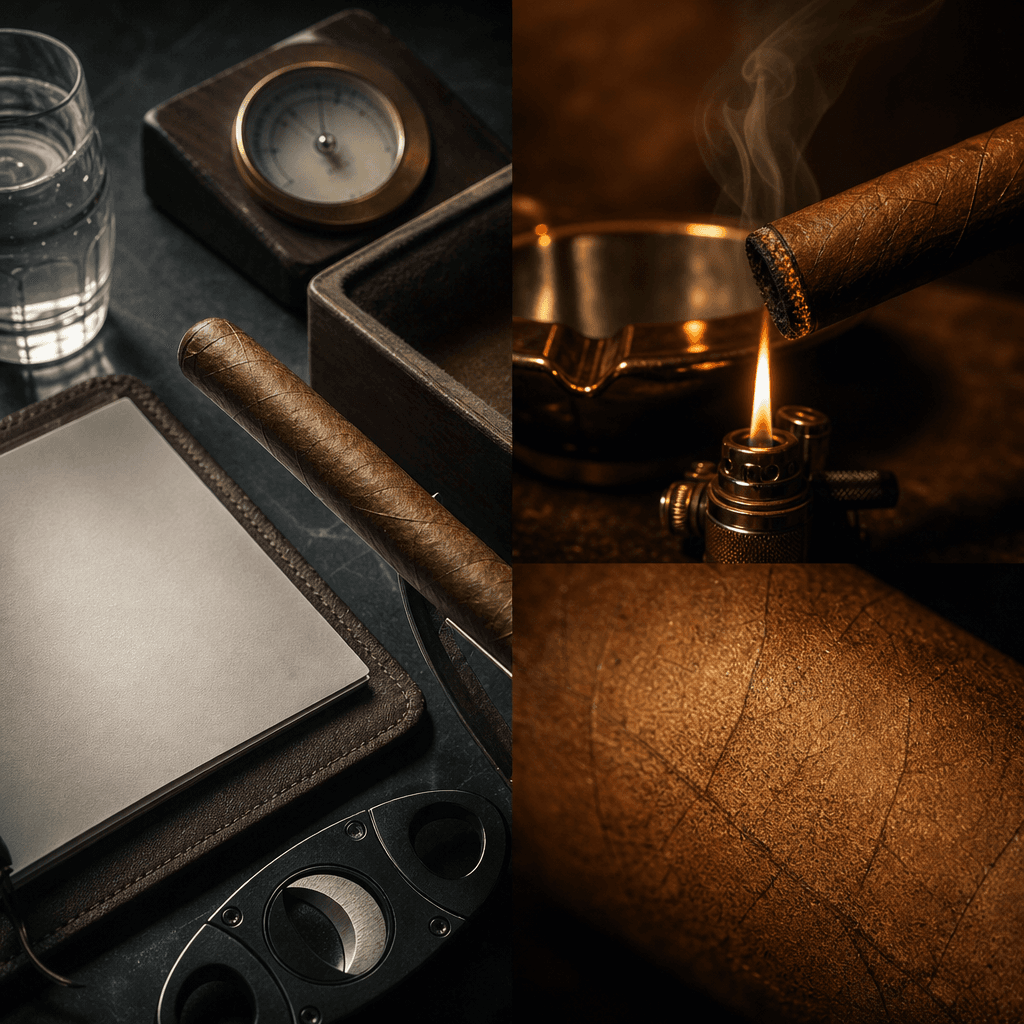
雪茄品鑒不僅僅是享受煙霧,還需掌握觀察、嗅覺和味覺的技巧。初學者應穩定地描述雪茄在不同段落的變化,從開場香氣到後段的餘韻,並記錄下各種風味。環境因素如室溫和濕度會影響品鑒結果,因此建議在固定條件下進行。透過視覺觀察茄衣的顏色與結構,嗅覺訓練及正確的點燃方式,能提升品鑒體驗。進階者可透過比較不同品牌與產區的雪茄,來建立更精確的味覺判斷力。
- 品鑒雪茄時,穩定觀察不同段落的變化比追求華麗形容詞更重要。
- 點燃前的香氣能預判風味方向,幫助理解雪茄的整體特性。
- 品鑒時應分開看入口味道、口腔質地、鼻腔香氣及餘韻長度,以便精準描述。
Smoking is just the first step in entering the world of cigars; true tasting techniques involve connecting your eyes, nose, tongue, rhythm, and record-keeping into a comprehensive method. When you can articulate "why this cigar is good" rather than just saying "smooth" or "strong," your appreciation will immediately broaden.
As the editor of "Cigar Bible," I often remind beginners: don't rush to use fancy adjectives. From a 45-minute Robusto to a 90-minute Churchill, flavors change with burning, temperature, and rhythm; what you need to learn is how to observe steadily.
時間軸呈現從環境設定到分段記錄的五步流程
Establishing Tasting Coordinates: Environment, Time, and Scoring Criteria
Before tasting, decide on your "coordinates." The same Montecristo No.2 can yield different results in an air-conditioned room, outdoor sea breeze, or next to a post-dinner whiskey. I recommend beginners start with fixed conditions: room temperature around 22 to 25°C, relative humidity 60 to 70%, 30 to 60 minutes after a meal, with only room temperature water nearby. This isn't about being rigid but reducing variables so you know the differences come from the cigar itself, not the environment.
Beginners should focus not on identifying many flavors but on consistently describing the changes in the same cigar at different stages. I usually divide a cigar into three parts: the first part observes the initial aroma and burn; the middle part assesses the main flavor and balance; the last part examines strength, off-flavors, and aftertaste. For example, with Partagás Serie D No.4, the first part often has woody and peppery notes, the middle part turns to roasted flavors, and if the rhythm is too fast in the last part, bitterness can overshadow the spice.
You can use a 100-point scale for recording, but don't be bound by scores. You can divide it into appearance 15, burn and draw 20, aroma 25, flavor structure 25, overall impression 15. For the first record, writing just five words is fine, such as "cedar, coffee, leather, white pepper, creamy." Three months later, when you look back, you'll find your vocabulary gradually becoming precise, which is more valuable than a single high score.
三張卡整理固定條件、分段觀察與記錄方法
Visual and Tactile: Observing Craft Clues from the Wrapper
After picking up a cigar, don't rush to cut it. Visual observation includes the wrapper's color, oiliness, leaf veins, rolling uniformity, and cap finish. Connecticut Shade often appears golden brown, with a mostly delicate taste; Maduro is darker, commonly associated with cocoa, coffee, and molasses impressions; the Colorado to Colorado Maduro commonly seen in Cuban cigars varies by brand and year, so you can't judge strength by color alone.
A beautiful wrapper doesn't necessarily mean it's a good smoke, but cracks, dryness, and hard spots are usually warning signs. You can gently press with your fingertip to check for consistent density from the head to the foot. If a section feels like a rock, the draw might be tight; if there are noticeable voids, the burn might be uneven. Since 2018, many non-Cuban boutique brands like Padrón 1964 Anniversary and My Father Le Bijou 1922 have shown high rolling consistency, making them suitable for beginners to establish a standard feel.
Also, check the filler distribution at the foot. Long filler usually provides a more consistent burn and layers; if the foot is loose and too many broken leaves fall out, it might affect the burn line. Cigar bands and box labels provide information but shouldn't replace observation. Even classics like Cohiba Robustos and H. Upmann Magnum 46 can show completely different gloss and elasticity depending on storage conditions.
矩陣比較前段、中段、後段的觀察重點與記錄詞
Olfactory Training: Tasting Begins Before Lighting
True olfactory tasting involves three steps: smelling the wrapper, smelling the foot, and cold draw. The wrapper often carries woody, hay, leather, or faint ammonia scents; the foot, with exposed filler, offers more direct aromas, possibly including nuts, cocoa, spices, and earth. If you smell a pungent sour or moldy scent, determine whether it's natural surface crystals, storage smell, or actual mold, as the differences are significant.
The aroma before lighting is a pre-judgment of flavor direction, not the final answer. For example, Trinidad Fundadores often gives a hay, honey, and floral impression before lighting, but after lighting, it may unfold into creamy, cedar, and delicate spice notes; Oliva Serie V from Nicaragua may have black chocolate and pepper in the cold draw, with strength only appearing after burning. Beginners who only note the hot smoke flavor can easily overlook the contrast before and after.
During the cold draw, gently draw a puff after cutting, without force. A good draw feels like sipping a milkshake through a straw, with resistance but not blockage. At this point, you can sense sweetness, saltiness, spiciness, and airflow. If the draw is too tight, check if the cut is too small; if too loose, the burning temperature may rise, increasing bitterness in the last part. Olfactory training doesn't have to be mysterious; smelling coffee beans, cedarwood, black pepper, cinnamon, and leather weekly can build a comparable memory bank.
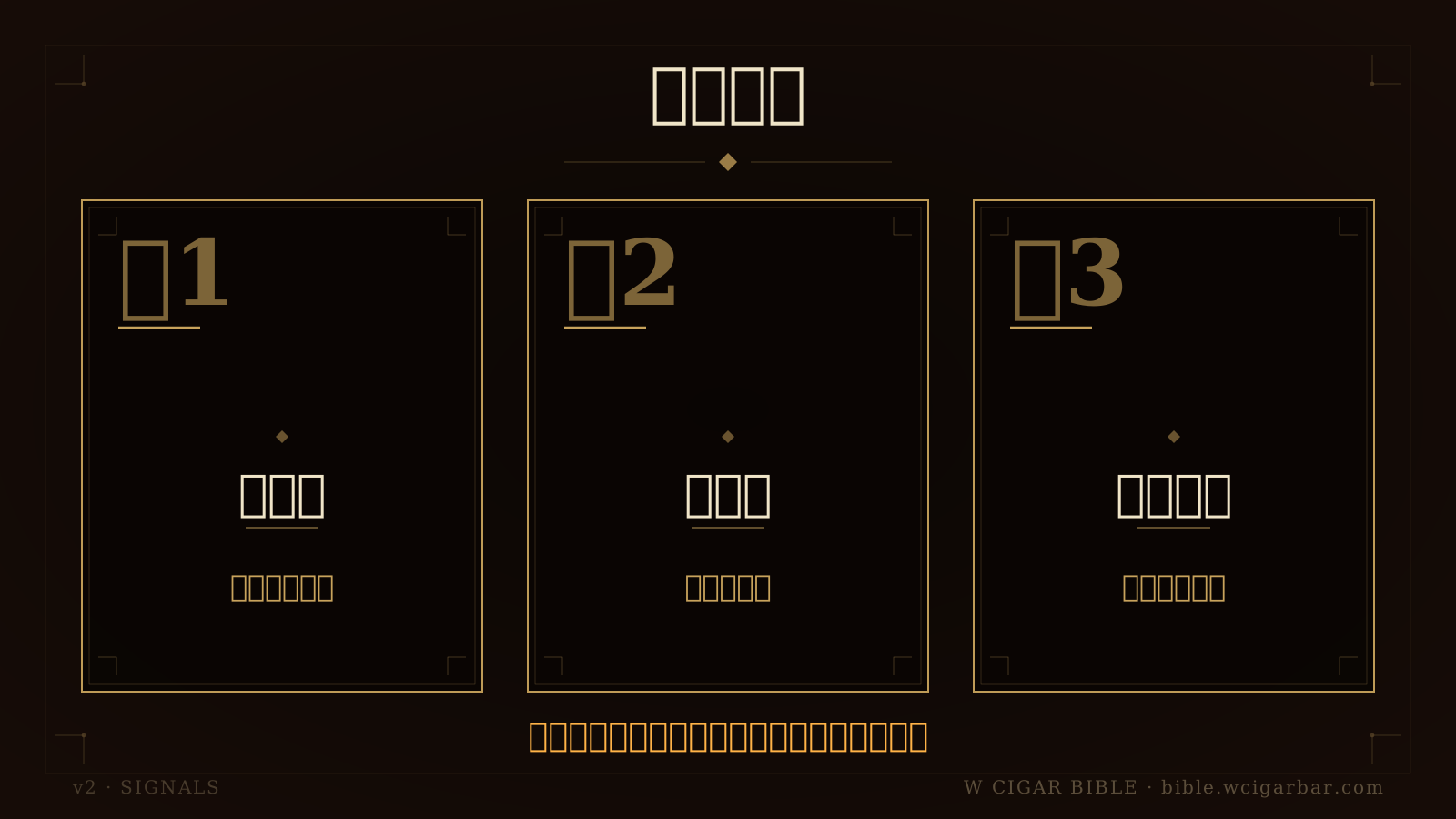
三張卡列出吸入、選太濃與迷信工具的誤解
Lighting and Rhythm: Burning Temperature Determines Flavor Cleanliness
When lighting, I prefer to toast the foot first, then slowly rotate while lighting to make the outer circle evenly red. Don't insert the flame directly into the center of the foot, as this will make the center temperature too high, causing bitterness in the first part. Torches, soft flames, and cedar spills each have their uses: torches are stable outdoors, soft flames are delicate indoors, and cedar spills add ritual and soft wood aroma.
The flavor of a cigar isn't clearer with more puffs but cleaner with a steadier rhythm. For a Robusto, a puff every 45 to 60 seconds is recommended, while a Toro can stretch to 60 to 75 seconds. Rapid consecutive puffs will overheat the burning end, and the original nutty, creamy, floral notes may be overshadowed by charred wood and bitterness. This is why the same Davidoff Signature 2000 can feel elegant to some and bland and bitter to others.
| Situation | Possible Cause | Solution |
|---|---|---|
| Burn line deviates within 5 mm | Indoor airflow, leaf vein density | Rotate the cigar to observe, don't rush to touch up |
| One side burns too fast | Uneven lighting or too rapid puffs | Slow down the rhythm, lightly touch up the slow-burning side if necessary |
| Ash column is loose and falls easily | Low humidity or loose structure | Shorten the ash column to avoid ash affecting the experience |
| Sudden bitterness in the last part | High temperature, tar buildup | Rest for 2 to 3 minutes, reduce consecutive puffs |
The ash column is also a clue. Solid white or gray-white ash usually indicates stable burning, but it's not the only indicator of quality. Many Cuban cigars have darker ash but can still have beautiful layers. The key is whether the burn is continuous, the smoke volume is stable, and the taste is clean.
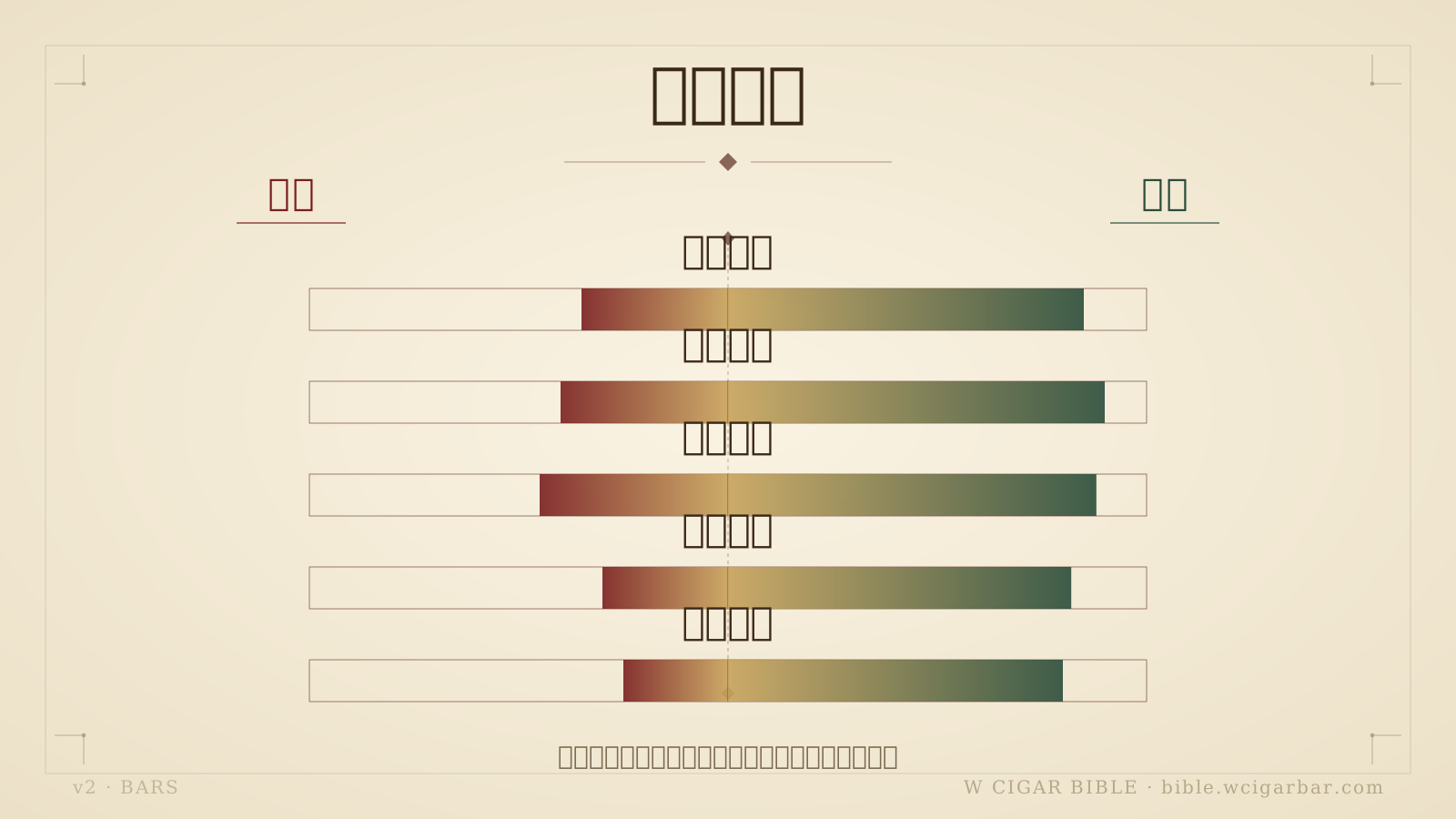
長條圖比較新手與老手在環境、節奏與記錄上的差異
Taste and Aftertaste: Breaking Down "Good Smoke" into Describable Layers
Taste analysis should be viewed separately: entry flavor, mouthfeel, nasal aroma, and aftertaste length. The entry might be sweet, bitter, salty, sour, spicy; the mouthfeel might be creamy, astringent, oily, powdery; nasal aroma relies on retrohale, which involves letting a small amount of smoke out through the nose. Beginners should only use 10% of the smoke for retrohale, as too much will stimulate only a spicy sensation.
Flavor terms aren't for showing off but tools for accurately categorizing your sensations. For example, "woody" can be further divided into cedar, oak, dry wood, charred wood; "sweet" can be honey, caramel, molasses, ripe fruit; "spicy" can be white pepper, black pepper, cinnamon, clove. When you can say "the middle part transitions from cedar to roasted almond, with black pepper rising in the last part," it's closer to a professional description than just saying "strong."
Aftertaste can be judged by time: disappearing within 5 seconds is short, 10 to 20 seconds is medium, over 30 seconds is long. Since Cohiba Behike became a regular high-end series in 2010, many enthusiasts mention its charm, often referring to its delicate aroma and extended aftertaste; but if stored too wet, this extension can be suppressed by musty flavors. During tasting, don't rush to pair with drinks; let your taste buds work alone first, then consider whether coffee, rum, or whiskey adds value.
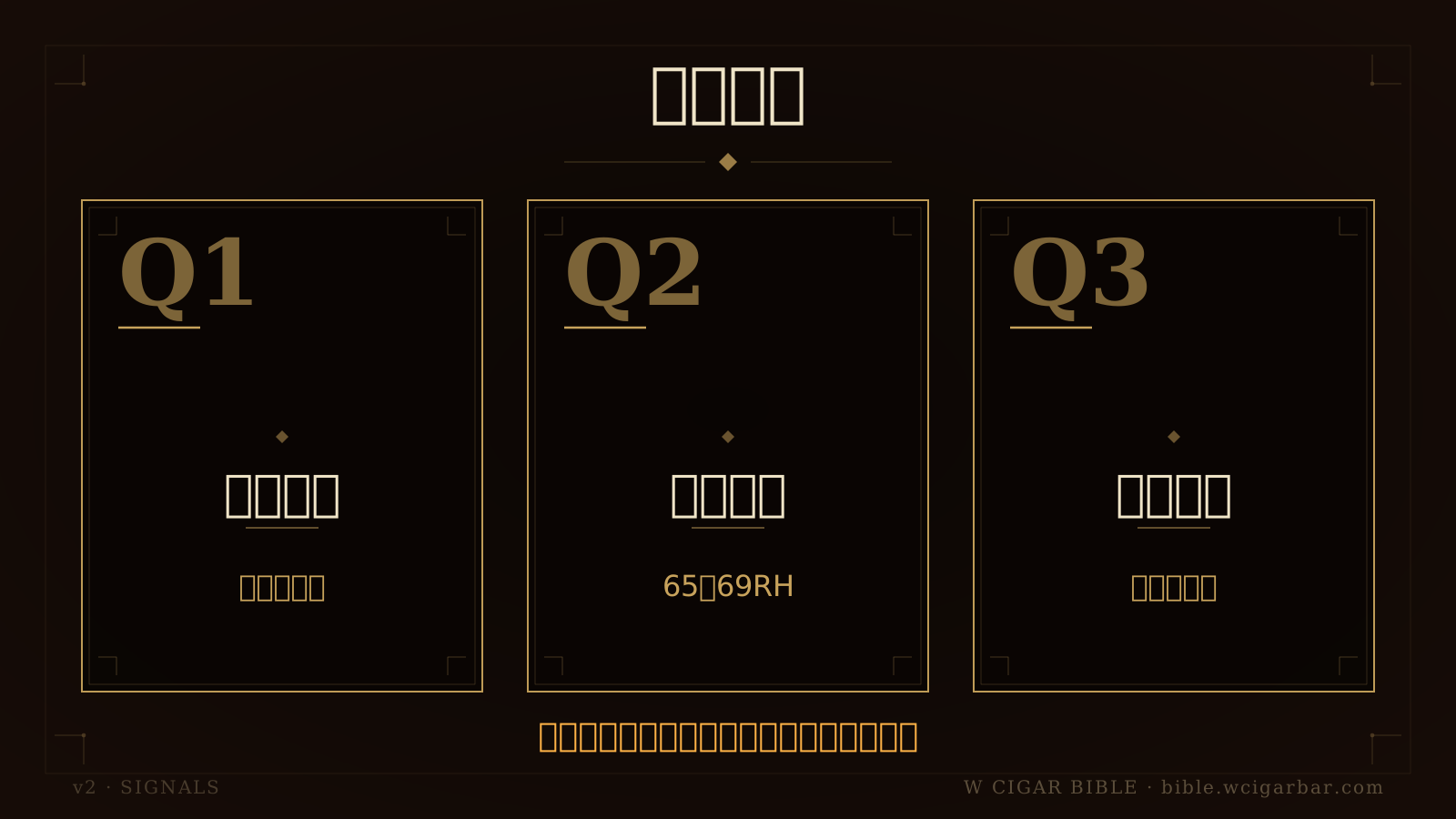
三張問答卡回答吸入方式、濕度範圍與工具需求
Brand, Region, and Vintage Cases: Building Judgment Through Comparison
To improve, it's best to make horizontal comparisons. Choose similar sizes from different regions, such as Cuban Hoyo de Monterrey Epicure No.2, Dominican Arturo Fuente Hemingway, Nicaraguan Padrón 1964 Exclusivo. None are extreme sizes, yet they allow comparison of Cuban herbal and woody notes, Dominican soft sweet aroma, and Nicaraguan cocoa and pepper strength.
True advanced tasting is comparing differences under similar conditions, not isolated impressions of a single cigar. You can also make vertical comparisons within the same brand, such as Montecristo No.4 and Montecristo No.2: the former is a Petit Corona, shorter with concentrated flavors; the latter is a Pirámide, with a more focused first part due to the tapered head, and increased smoke volume and layers in the middle and last parts. Size changes the burning ratio, so you can't just say "same brand, same taste."
Vintage is also important, but don't deify it. From 2020 to 2022, due to global logistics and storage condition changes, many box conditions on the market vary significantly; if the same box is stored at 65% RH and 72% RH, the taste may be completely different after six months. Collecting value can be discussed, but collecting appreciation doesn't guarantee appreciation; it still depends on source storage and market. For beginners, rather than chasing rumored vintages, it's better to establish reliable sources, stable storage, and complete records first.
Frequently Asked Questions
Should cigars be inhaled into the lungs?
No, and it's not recommended to focus on inhaling into the lungs. The main appreciation of cigars is in the mouth, nasal cavity, and aftertaste; the smoke should linger in the mouth for a few seconds before exhaling. The core of cigar tasting is aroma and texture, not inhalation depth.
Should beginners start with strong cigars?
Not necessarily. Starting with high Ligero content and strong nicotine cigars can easily lead to dizziness and spiciness. It's recommended to start with medium strength, such as H. Upmann, Romeo y Julieta, Davidoff Grand Cru, to first practice steady rhythm and descriptive ability.
What humidity is best for tasting?
Most cigars perform more balanced at 65% to 69% RH; for Cuban cigars, I often prefer 65% to 67%, and some non-Cuban large ring gauges can be slightly higher. If too wet, the burn is dull, and the aroma is blunt; if too dry, the chances of spiciness and cracked leaves increase.
Why does the same cigar feel different each time?
Possible reasons include storage, diet, mental state, environmental airflow, and lighting method. Post-meal, on an empty stomach, with coffee or spirits, all change taste sensitivity. Write down the conditions to distinguish whether the cigar has changed or your senses have changed that day.
Do you need many tools to be professional?
No need. Initially, a clean sharp cutter or punch, stable fire source, hygrometer, and notebook are enough. Advanced accessories can enhance convenience but can't replace basic skills. True professionalism is cutting accurately, lighting steadily, smoking slowly, and recording clearly.
As someone who has long been involved with cigars, I always believe: tasting isn't about making cigars sound mystical but about expressing feelings truthfully. Take each puff slowly, record a little each time; as your vocabulary, rhythm, and judgment gradually stabilize, the cigar world will naturally unfold from "good or bad smoke" into a map with vintage, region, craftsmanship, and memory.
—Cigar Prince Wilson Tsai
Smoking is harmful to health. Under 20 years old, smoking is prohibited. Quitline: 0800-636363. This article is for reference by adults over 20 years old for cigar culture, preservation, and legal knowledge, not as tobacco advertising, promotion, or purchase advice.
Like this article?Share with friends
Share this W Cigar Bible piece with friends who want to learn cigar culture, storage, and tasting.
想把這篇 化為實踐
雪茄聖經是知識;雪茄文化要在空間裡發生
W Cigar Bar 大安總店資訊
台北大安區 · 雪茄聖經總編輯 Wilson Tsai 主理的雪茄文化空間
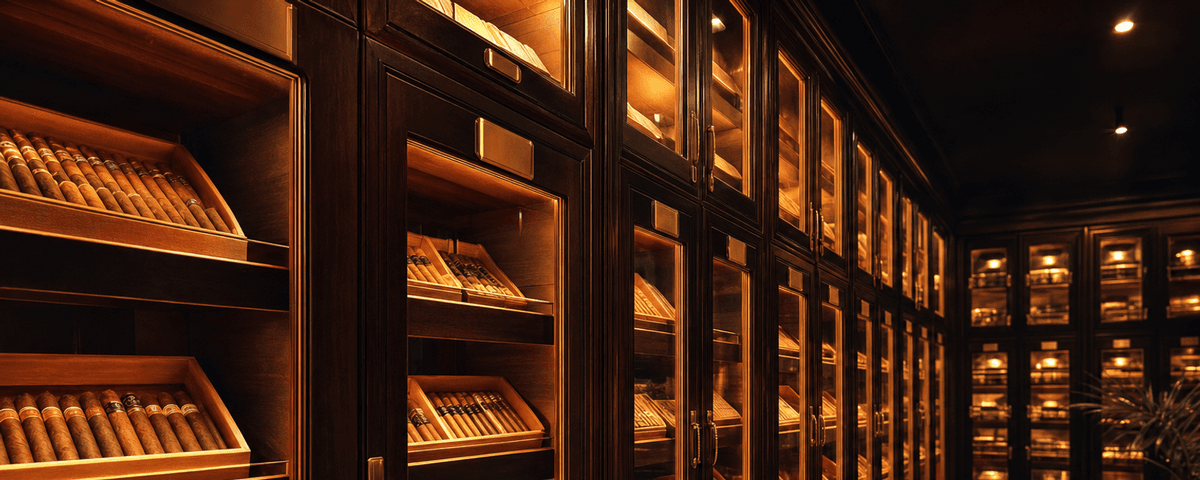
33 座 24 小時恆溫恆濕醇化室
W Cigar Bar 提供的會員醇化空間 · 場地資訊請洽編輯部
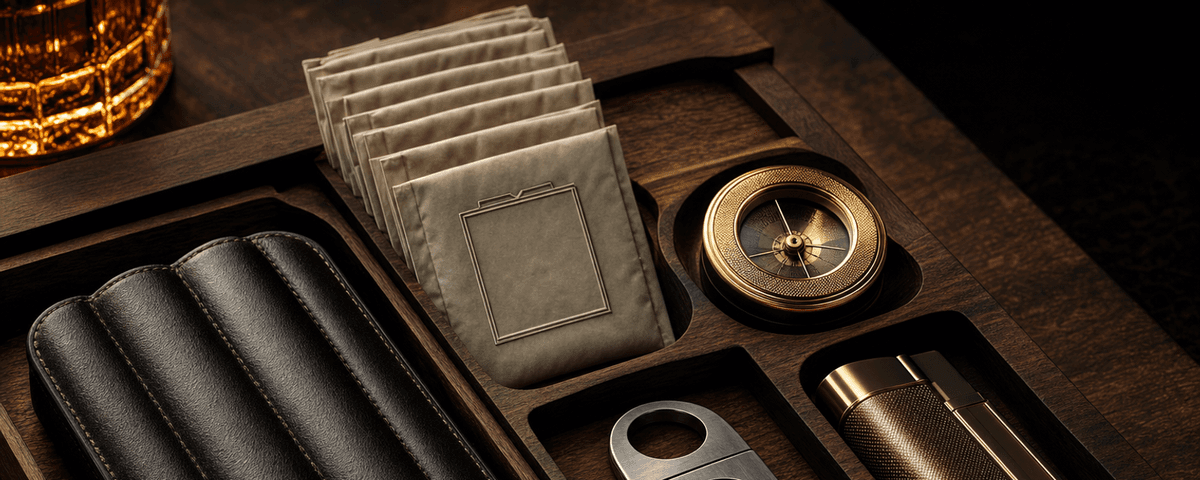
雪茄剪 / 打火機 / 雪茄盒 / Boveda
W Cigar 配件官網 · 專營雪茄配件正品
加 LINE 好友 · 文化諮詢
文化空間資訊 · 紳士沙龍 · 私人包場
本網站內容僅供雪茄文化、歷史、收藏與品吸知識研究參考。菸品有害健康、未滿法定年齡者請勿吸菸。實際規範請依所在地法律為準。
吸菸有害健康・戒菸專線 0800-636363・本站僅供 20 歲以上成年人閱覽。
讀到這裡,你不只是路過的人
留下 Email,加入 W 雪茄聖經內圈——總編輯 Wilson Tsai 親選的學院深文與國際新訊,先你一步送到信箱。
· 教育用途非銷售 · 隨時一鍵退訂 · Email 絕不對外公開 · 由勝茄股份有限公司營運
同分類延伸閱讀

資料來源:W Cigar Bible 編輯部整理 · 雪茄王子 Wilson Tsai 親自審稿
本文僅供雪茄文化、歷史、收藏與品鑑知識研究,不作為菸品促銷、銷售或購買建議。吸菸有害健康,未滿二十歲不得吸菸。