雪茄的個性化品味:造訪產區,探索獨特的香氣與回味
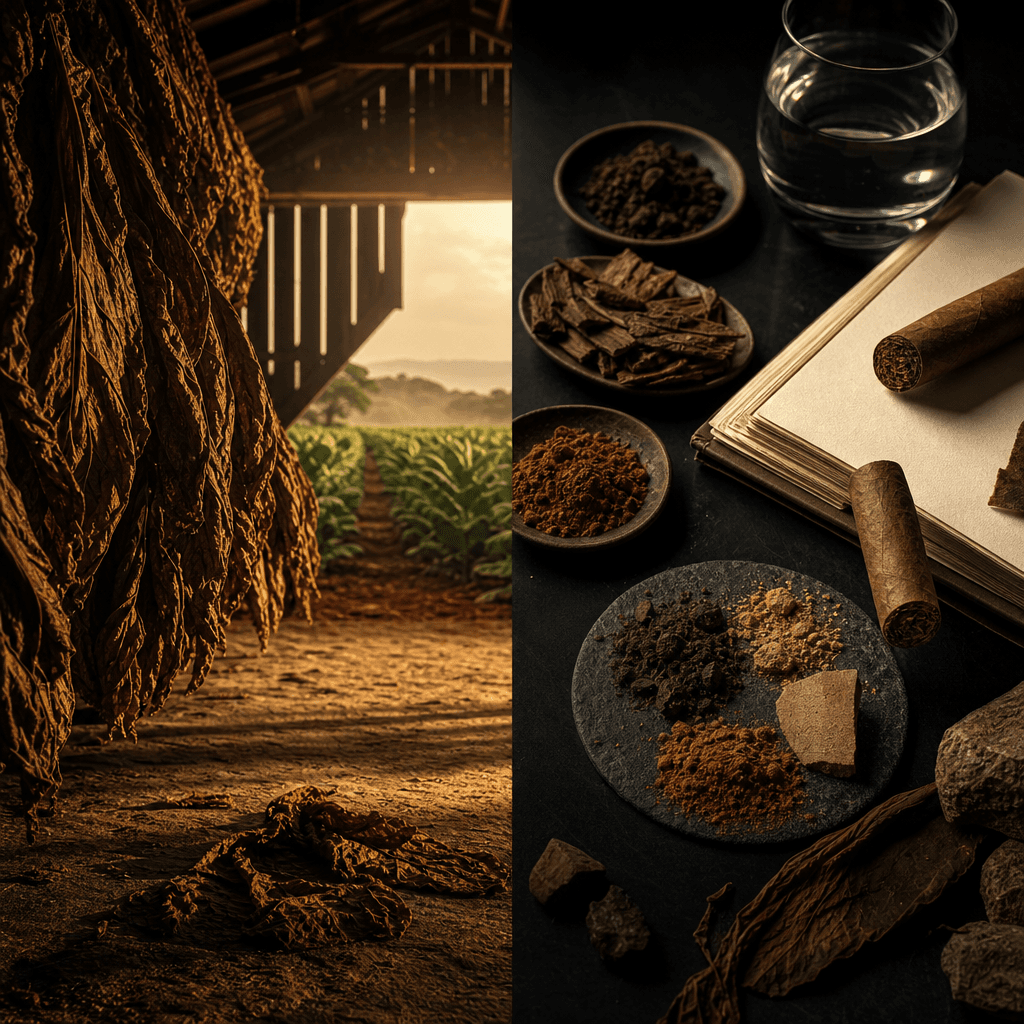
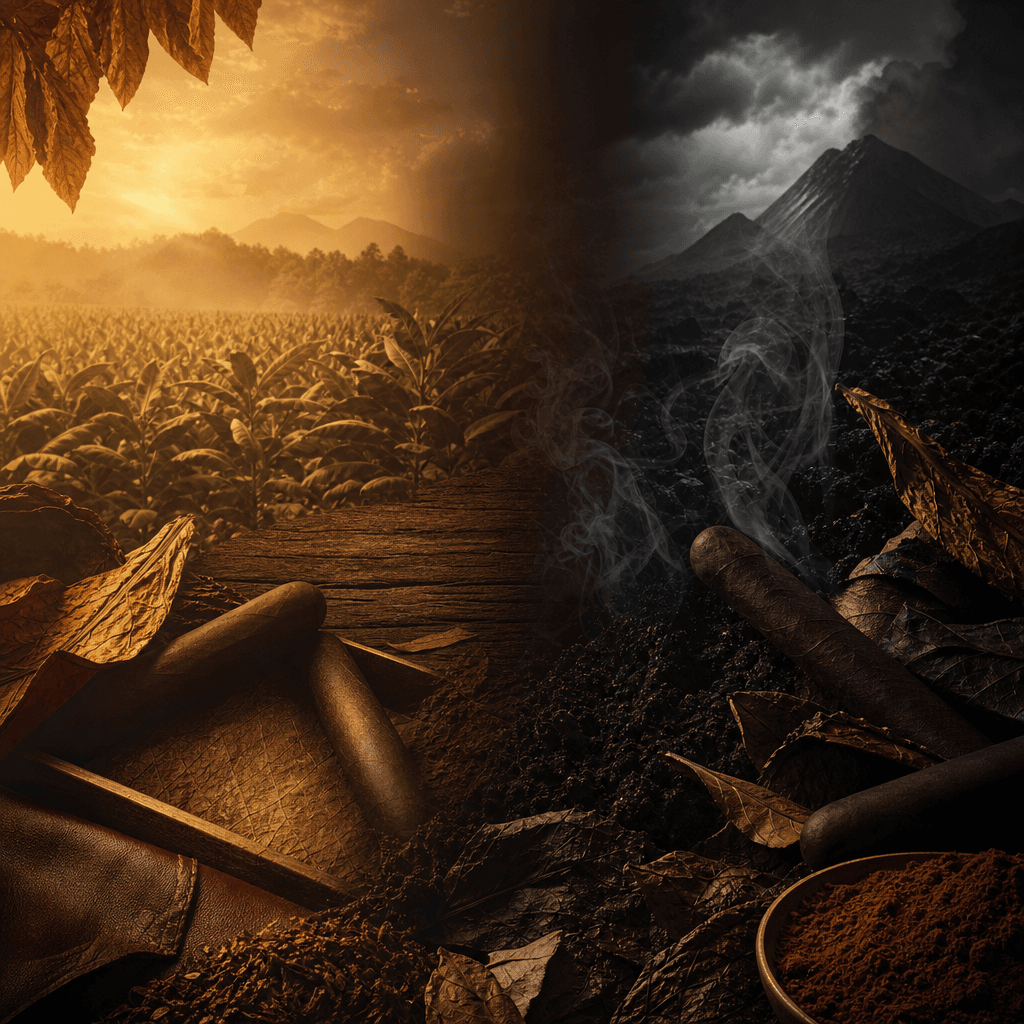
老手雪茄愛好者已不再滿足於基本的風味描述,而是追求更深層的個性化品味。透過對產區氣候、土壤及菸葉處理的理解,能夠精準辨識古巴、多明尼加、尼加拉瓜及宏都拉斯等地的雪茄特徵。古巴的雪茄以其香氣層次著稱,多明尼加則強調結構的精準與穩定性,而尼加拉瓜與宏都拉斯則展現出強烈的力量感與甜辣尾韻。實地考察產區的過程中,老手應關注田間、發酵室及分級桌的細節,並透過建立個人風味檔案來持續提升品味的準確性。
- 了解雪茄的個性化品味需分辨產區氣候、土壤及菸葉處理等因素,並轉化為自己的判斷。
- 多明尼加的雪茄風格強調結構控制與平衡感,並非單純的清淡。
- 實地走訪產區時,應關注田間、發酵室等現場,以便更深入理解風味來源。
The Personalized Taste of Cigars: Visiting Production Areas to Explore Unique Aromas and Aftertastes
Experienced cigar enthusiasts are no longer satisfied with basic flavor descriptions; they seek deeper personalized tastes. By understanding the climate, soil, and tobacco leaf processing of production areas, one can accurately identify the characteristics of cigars from Cuba, the Dominican Republic, Nicaragua, and Honduras. Cuban cigars are renowned for their aromatic complexity, while the Dominican Republic emphasizes precise structure and stability. Nicaragua and Honduras showcase strong intensity and sweet-spicy aftertastes. During field visits to production areas, experts should pay attention to the details in the fields, fermentation rooms, and grading tables, and continuously enhance the accuracy of their taste profiles by establishing personal flavor files.
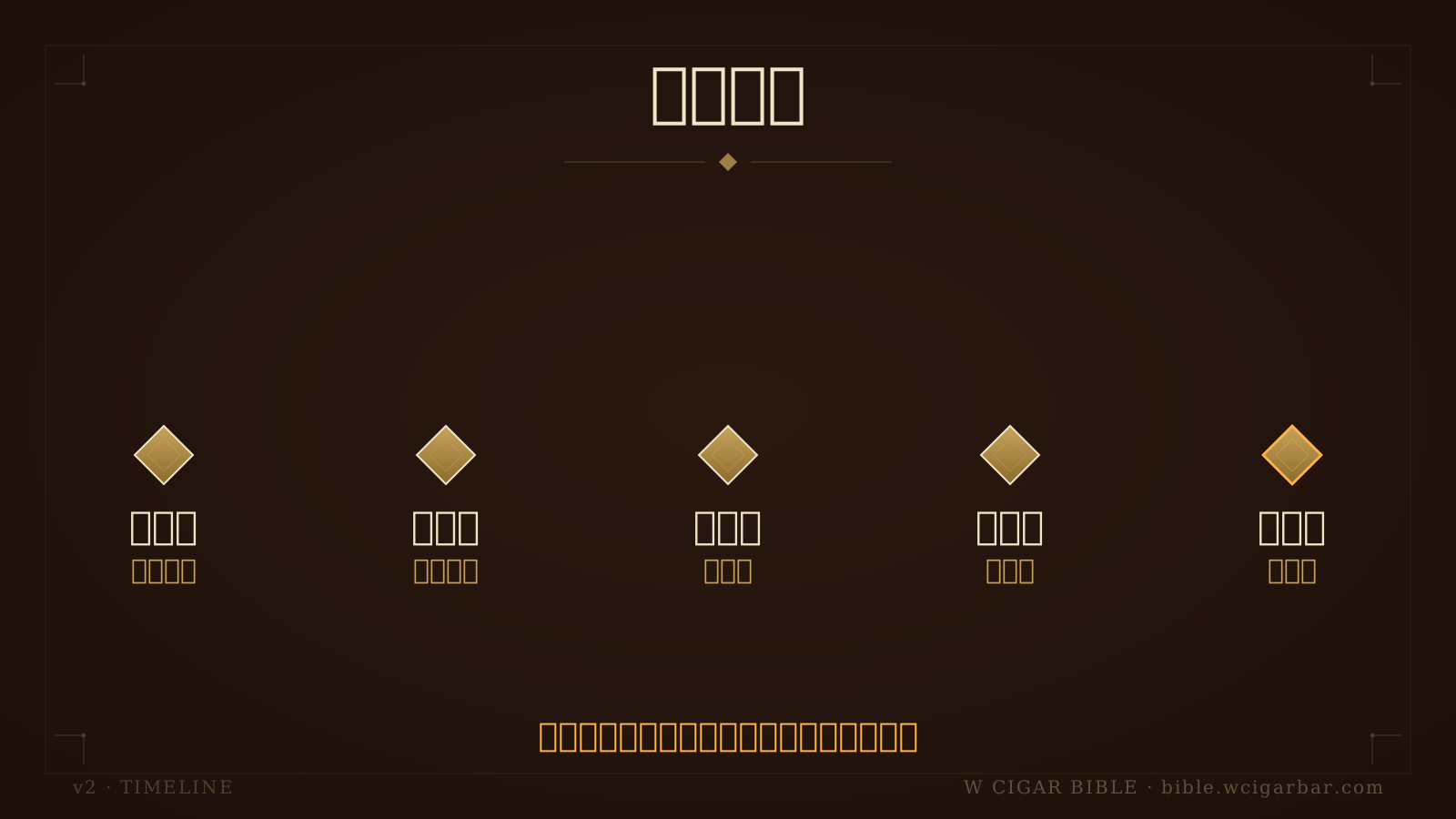
時間線呈現從選問題到回盲測的品味建立步驟
Cuba Vuelta Abajo: The Origin of Mineral, Leather, and Delicate Layers
When discussing Cuban flavors, one cannot simply say "classic." The Vuelta Abajo region in Pinar del Río, especially around San Juan y Martínez and San Luis, has long been regarded as the core of high-grade Cuban tobacco. The red soil, limestone, and humid climate here often impart notes of cedar, leather, roasted nuts, honey, and a slightly salty mineral quality to the tobacco leaves. Many enthusiasts remember the creamy texture in the middle and the herbal sweetness at the end of the Cohiba Siglo VI, launched in 2002, as a representation of the area's delicacy.
The most captivating aspect of Cuban cigars is not a single intensity but the aromatic transitions in each third of the cigar. For example, the H. Upmann Magnum 46 often starts with notes of hay, almonds, and light wood, transitions to coffee and cream in the middle, and gradually reveals white pepper and leather towards the end. Compared to the earthy, black pepper, and roasted notes of the Partagás Serie D No.4, both can be traced back to the same island, yet they present different brand formula languages.
During my visit to Pinar del Río in 2015, farmers emphasized "slow" when discussing temperature control in fermentation piles. If the pile heats up too quickly, ammonia does not dissipate cleanly, resulting in a rough taste; precise turning of the pile makes the aroma transparent. To understand Cuba, enthusiasts might consider observing different years of the same brand's box, such as the Montecristo No.2 from 2018, 2020, and 2022, to notice discernible differences in sweetness, burn line, and aftertaste length.
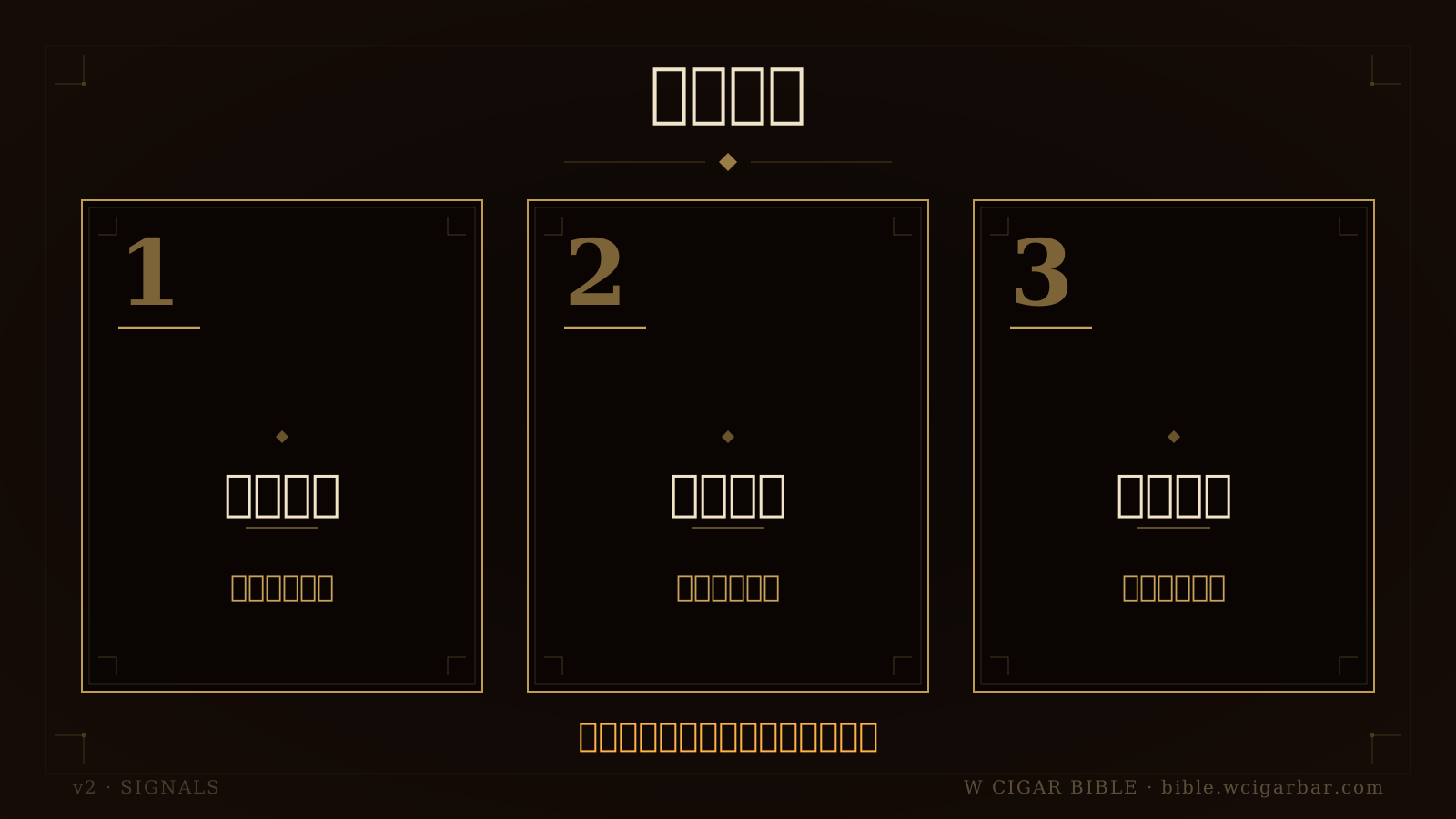
三張卡列出風味先行產區座標與尺寸校準
Dominican Republic: Elegance Is Not Blandness, but Precise Structure Control
The Cibao Valley and Santiago area in the Dominican Republic are technical hubs for many high-end brands. The tobacco leaves here often exhibit creamy, vanilla, baked bread, floral, and mild spice notes, often misunderstood as "milder." However, the true mature Dominican style focuses on clean structure, minimal off-flavors, stable burn, and the ability to let subtle aromas linger longer. The Yamasá series launched by Davidoff in 2016 is an example of transforming the more challenging red soil leaves into a recognizable style.
The expert route in the Dominican Republic is to replace flamboyant power with balance. Since the introduction of the Arturo Fuente OpusX in 1995, many have reimagined the Dominican Republic; it proves that the Dominican Republic can also produce rich, spicy, sweet woody cigars with a long aftertaste. This is achieved not solely through intensity but through the consistency of cultivation, shading, aging, and rolling.
I once observed a factory in Santiago conducting draw tests, where individual draw resistance was measured by machine and then manually corrected. Many enthusiasts only pursue large ring gauges and heavy flavors, neglecting the impact of draw resistance on aroma release. Dominican brands often make 46 to 52 ring gauges particularly precise because burn temperature is easier to control, and cream and floral notes are not flattened by excessive heat. If you prefer details, the Dominican Republic is a good place to train your taste patience.
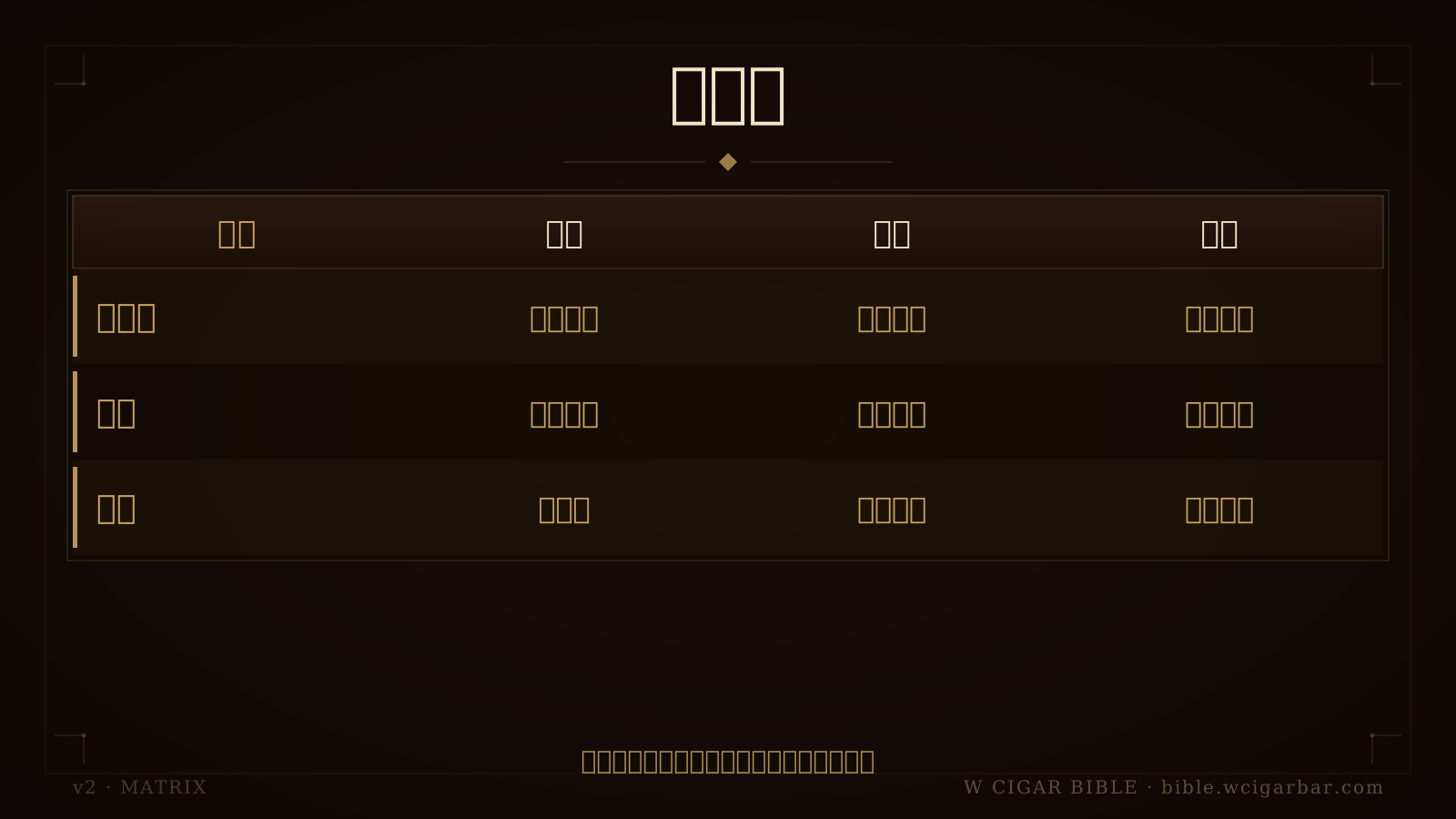
矩陣比較古巴多明尼加與尼宏的香氣結構差異
Nicaragua and Honduras: Volcanic Soil, Intensity, and Sweet-Spicy Aftertaste
The Estelí, Jalapa, and Condega regions of Nicaragua are often compared by enthusiasts for their flavors. Estelí is usually more robust, with noticeable black pepper, cocoa, and earthy notes; Jalapa is sweeter, with red dates, cocoa skin, and soft wood aromas; Condega often balances between spices and herbs. After the high praise for the Padrón 1964 Anniversary and My Father Flor de Las Antillas in 2012, more people have come to understand that Nicaragua is not just about strength but that sweetness, spiciness, and thickness can coexist.
Nicaragua's personality lies in its high energy density, while Honduras' value is in its wildness and wood depth. The Jamastran Valley and Talanga Valley in Honduras often feature deep woody, leather, coffee grounds, and slightly sweet spice notes. The Camacho Corojo has left many enthusiasts with a rough outline of Honduras, while some lines from Punch and Alec Bradley showcase smoother modern formulas.
In 2017, I compared Nicaraguan and Honduran works of the same 52 ring gauge, and the differences were most evident in the second third: Nicaraguan cigars often stack cocoa, chili, and molasses, while Honduran cigars lean towards dry wood, leather, and soil. Pairing them with the same unsweetened black coffee, the Nicaraguan aftertaste will bring out sweetness, while the Honduran will deepen the bitterness. This contrast is one of the quickest ways to establish a personal flavor profile.
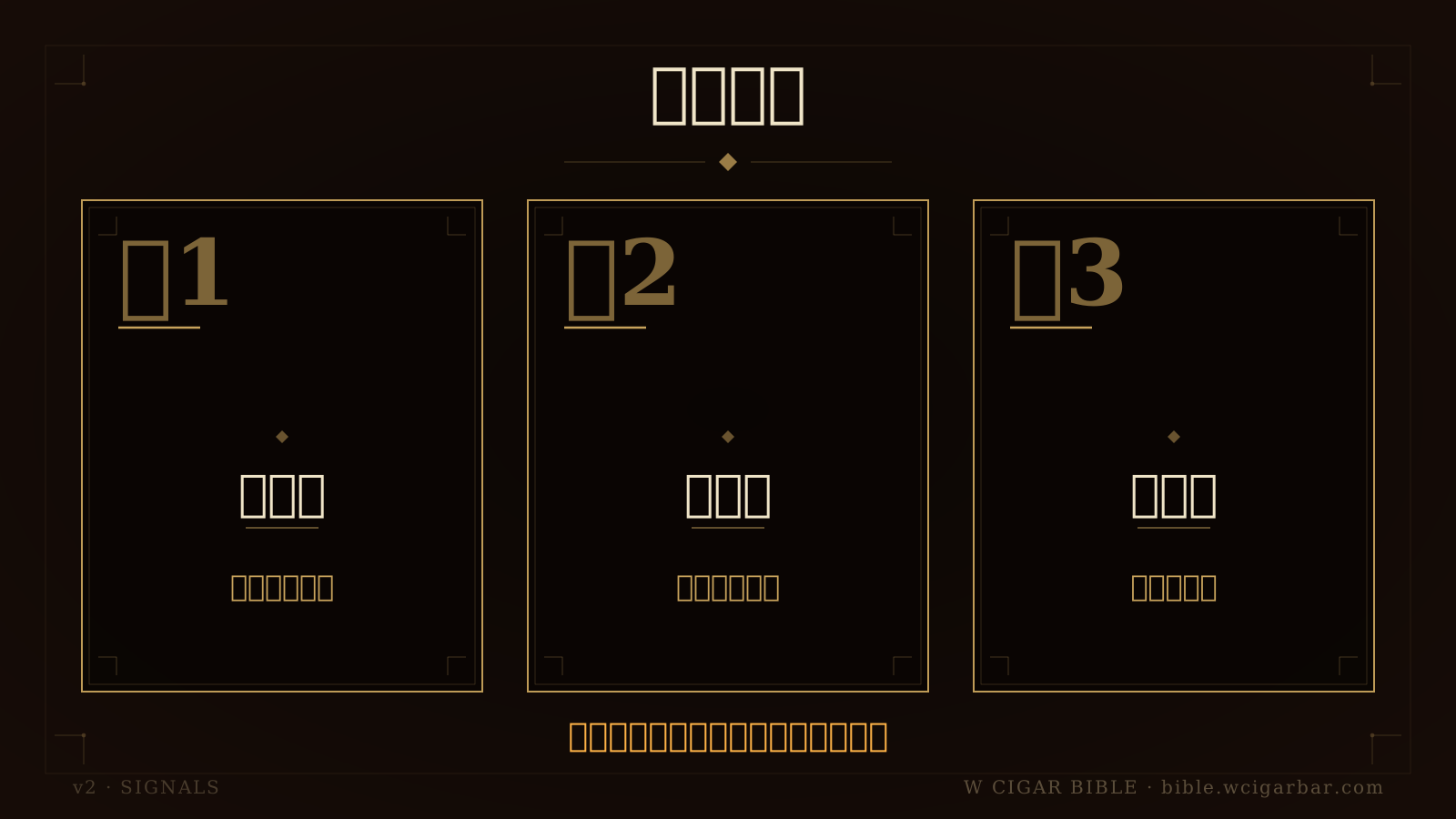
三張卡提醒看品牌大環徑與先搭飲品的誤解
Field Visits to Production Areas: Flavor Evidence from Fields to Fermentation Rooms
When visiting production areas, experts should focus not on display cabinets but on fields, curing barns, fermentation rooms, and grading tables. In the fields, one can observe planting density and leaf positions; in curing barns, the uniformity of color transformation; in fermentation rooms, the smell of ammonia, sweetness, and damp wood; grading tables reflect the brand's standards for wrapper, binder, and filler. In 2019, I saw a batch of wrappers in Estelí downgraded for other uses due to insufficient oil and elasticity, which is more convincing than any adjective.
True learning from production areas is to cross-verify flavor descriptions with the production process on-site. If a cigar has a noticeable ammonia taste, it is usually related to insufficient fermentation or aging; if the burn is uneven but there are no obvious hard spots in the roll, it may be due to moisture content and the thickness of the wrapper leaf. The following table is the observation framework I most commonly use during production area visits:
| Observation Location | Key Clues | Possible Impact on Flavor |
|---|---|---|
| Leaf Position in Fields | Proportion of ligero, seco, volado | Intensity, aroma, and burn speed |
| Curing Barn | Uniformity of color transformation to brown | Green notes, herbal feel, sweetness |
| Fermentation Pile | Temperature, turning frequency, smell | Ammonia, roundness, stimulation |
| Grading Table | Oil, elasticity, spots | Appearance, burn, and aroma clarity |
| Aging Room | Humidity, ventilation, time | Integration, aftertaste, and stability |
I recommend that experts set only three questions per production area visit, such as "Why is Corojo drier in Honduras than in Nicaragua?" "How does the oil content of the wrapper affect sweetness?" "How do different ring gauges change burn temperature?" The more specific the question, the more the answers can be brought back to your cigar humidor, rather than just leaving travel memories.
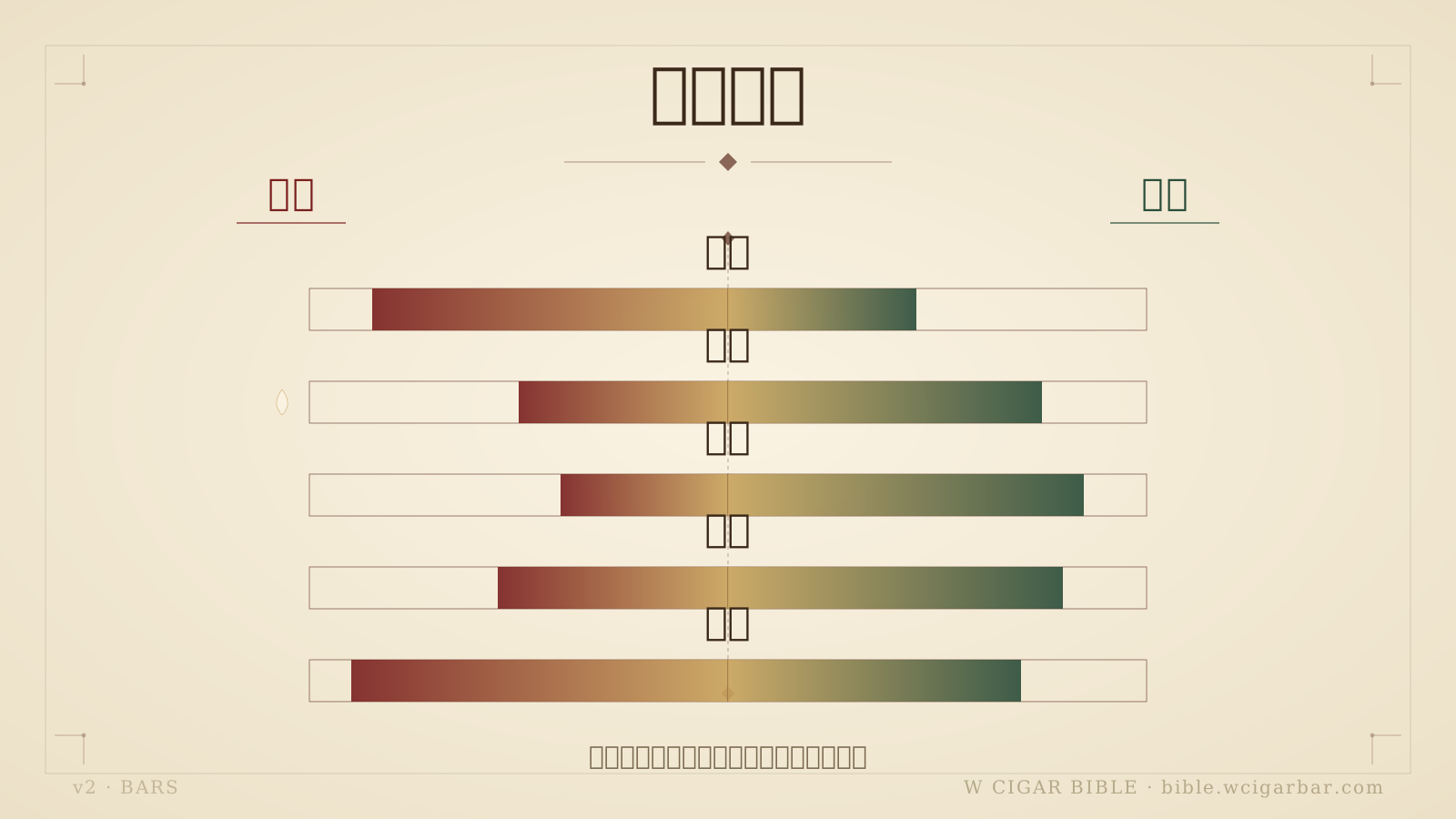
長條圖比較古巴與非古產區在五個風味軸向
Establishing a Personal Flavor Profile: Calibrating the Palate with Blind Tests, Vintages, and Ring Gauges
The bottleneck for experts is often not smoking enough but not recording accurately enough. I habitually divide each cigar into the front, middle, and end segments, recording time, burn condition, moisture content, paired drinks, and ambient temperature. If a Robusto is about 50 ring gauge and 124 mm long, the normal pace is about 60 to 75 minutes; if it ends in 35 minutes, excessive heat will amplify bitterness, and the record will be distorted.
Personal taste is not accumulated by impression but by finding preference patterns through repeatable conditions. For example, if you think you like strong cigars, after comparing Padrón 1926, Oliva Serie V, and Plasencia Alma Fuerte 2016, you may find that what you really like is the cocoa sweetness, not the nicotine strength. This discovery will change your selection logic and reduce being led by reputation.
I often use the following methods to calibrate taste:
- Same brand, different sizes: Compare the heat and aftertaste of Robusto, Toro, and Churchill.
- Same production area, different brands: Identify commonalities in the production area and brand differences.
- Same brand, different vintages: Observe aging, preservation, and batch changes.
- Blind test two similar style works: Avoid label influence on judgment.
- Change only one variable at a time: Do not change drink, humidity, cut, or pace simultaneously.
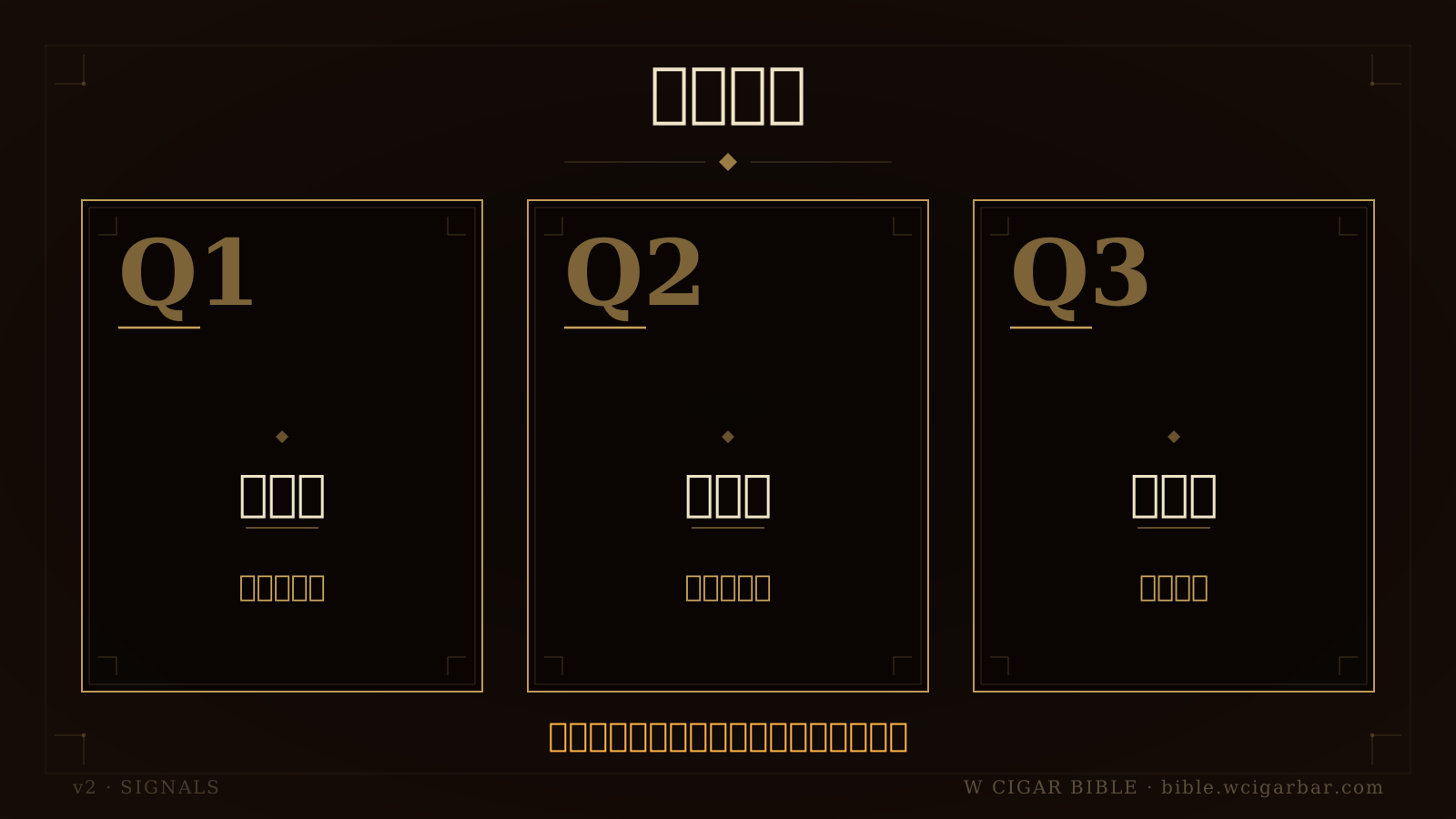
三張問答卡整理選產區年份差與大環徑判斷
Preservation, Aging, and Source: Ensuring Personalized Taste Is Not Distorted by Conditions
No matter how good the production area flavor is, if preservation is unstable, it will be distorted. A typical cigar humidor is set at 65% to 69% relative humidity and about 18 to 21°C as common references; however, heavy Nicaraguan cigars are often cleaner around 65%, while delicate Cuban cigars can be adjusted slightly based on burn performance. Humidity is not the higher, the better; excessive humidity will make the draw heavier, burn sluggish, suppress sweetness, and even produce a pungent damp wood smell.
The purpose of preservation is not to make cigars magical but to allow the original formula to perform stably. I have seen a 2014 box of Bolivar Belicosos Finos, which, after several years in a stable environment, beautifully integrated leather and cocoa; I have also seen works of the same vintage darken and burn poorly due to long-term high humidity. The vintage itself is not a guarantee; preservation records, source, and condition are the keys.
When discussing collection and market, experts should remain calm. Limited editions, discontinued products, and special vintages may indeed attract attention, such as some Cuban limited editions from 2006 to 2010 being discussed in the secondary market; however, collection appreciation does not equal guaranteed appreciation, still depending on source preservation and market. From the perspective of a PCC authorized dealer, a clear source, complete box code, and traceable preservation conditions are more important than rumors and packaging hype.
Frequently Asked Questions
Q1: How do experts determine their true preferred production area?
Start not with brand names but with repeatedly appearing flavors. If you often note cocoa, black pepper, molasses, Nicaragua may be the focus; if you often write about cream, floral, baked bread, the Dominican Republic is worth exploring; if you care about minerals, leather, and delicate transitions, Cuba will have more research space. Production area preference is not a single-choice question but finding the aroma structure you most often return to.
Q2: Is it normal for the same brand to have significant differences in different vintages?
Yes, it is normal. Tobacco is a crop, and rainfall, harvest time, fermentation rhythm, and aging length all affect the outcome. For long-term brands like Montecristo, Partagás, and Romeo y Julieta, different vintages often have differences in burn, sweetness, and thickness. It is recommended to record box codes, acquisition time, and preservation conditions; otherwise, it is difficult to determine whether differences are due to vintage, preservation, or individual batches.
Q3: Does a larger ring gauge mean better flavor?
Not necessarily. A larger ring gauge usually results in cooler smoke and thicker mouthfeel, but it may also dilute the influence of the wrapper leaf; a smaller ring gauge is more likely to highlight the aroma and spice of the wrapper. Lancero, Corona Gorda, Robusto, and Toro each have their logic. Experts can compare different sizes of the same series, such as 46, 50, and 54 ring gauges, to observe sweetness, burn speed, and aftertaste length.
Q4: What should be prepared before visiting a production area?
Preparation is more important than the itinerary. First, select 2 to 3 research questions and familiarize yourself with the main soil, brands, and representative leaf types of the production area. Bring a notebook to record field smells, curing barn humidity, fermentation room odors, and factory grading methods. Do not just take photos, as the true value lies in whether you can bring back on-site observations to your flavor judgment.
Q5: Will pairing cigars with drinks interfere with production area judgment?
Yes, so when initially comparing production areas, I usually choose low-interference drinks, such as room temperature water, unsweetened sparkling water, or light black coffee. Strongly aromatic drinks like whiskey, rum, and cognac are suitable for subsequent extension but not for establishing the first round of benchmarks. Understand the cigar itself first, then talk about pairing; the judgment will be cleaner.
Q6: How long is appropriate for aging?
There is no fixed answer. Some cigars become more stable after 6 to 12 months, while some structurally solid works can be observed for 3 to 5 years. The key is to regularly check burn, aroma, and wrapper leaf condition, rather than blindly pursuing time. If the preservation environment is unstable, the longer the time, the higher the risk; if the source and conditions are reliable, aging is meaningful.
I always believe that the advancement of experts is not in chasing more names but in making each burn a verifiable experience. Production area, vintage, preservation, size, and pace are all coordinates of personal taste. When you can clearly articulate what you like, why you like it, and under what conditions it is most beautiful, that is your true cigar language.
—Cigar Prince Wilson Tsai
Smoking is harmful to health. Under 20 years old is not allowed to smoke. Quit smoking hotline: 0800-636363. This article is intended for adults over 20 years old as a reference for cigar culture, preservation, and regulations, not as tobacco advertising, promotion, or purchase advice.
Like this article?Share with friends
Share this W Cigar Bible piece with friends who want to learn cigar culture, storage, and tasting.
想把這篇 化為實踐
雪茄聖經是知識;雪茄文化要在空間裡發生
W Cigar Bar 大安總店資訊
台北大安區 · 雪茄聖經總編輯 Wilson Tsai 主理的雪茄文化空間
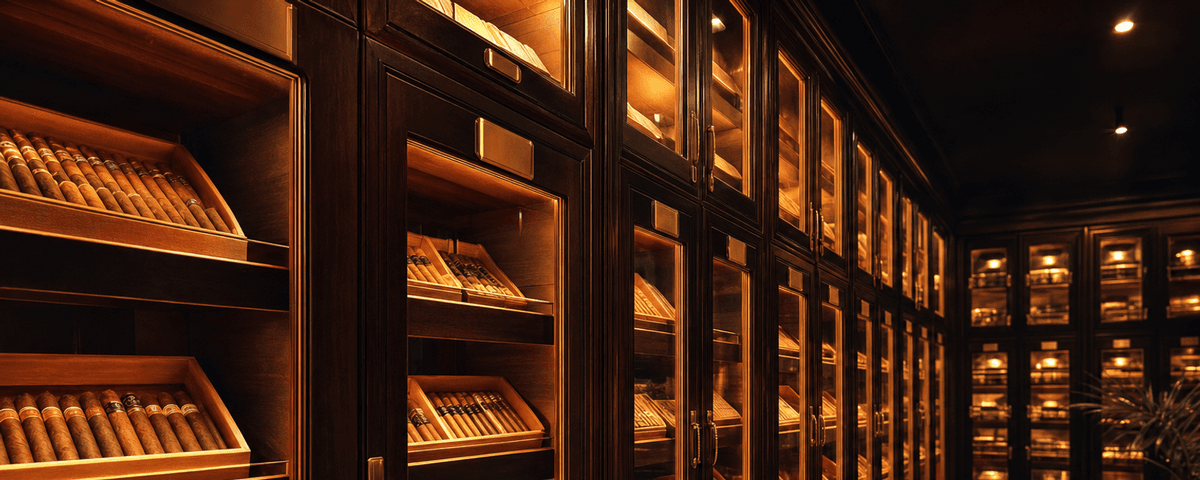
33 座 24 小時恆溫恆濕醇化室
W Cigar Bar 提供的會員醇化空間 · 場地資訊請洽編輯部
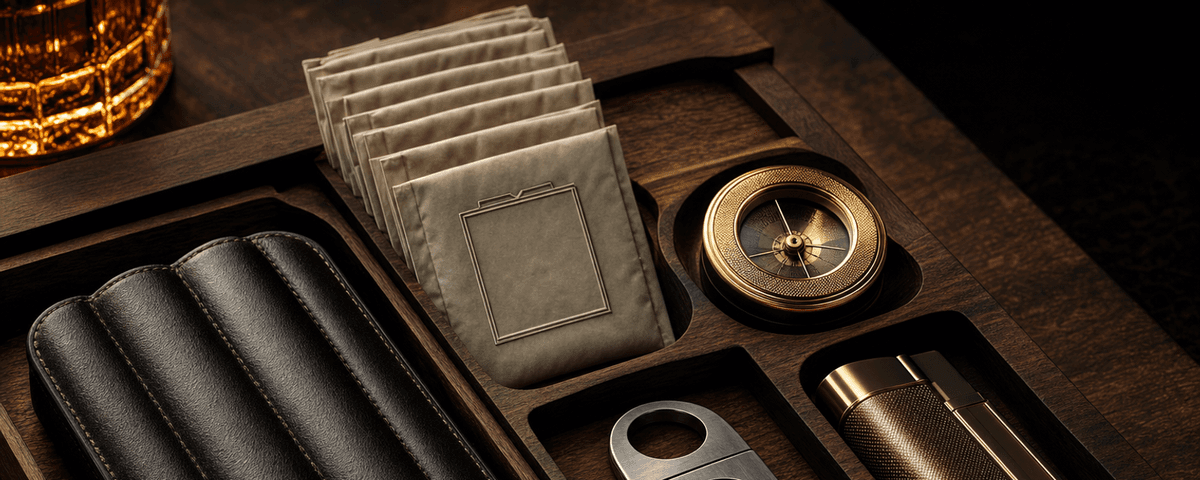
雪茄剪 / 打火機 / 雪茄盒 / Boveda
W Cigar 配件官網 · 專營雪茄配件正品
加 LINE 好友 · 文化諮詢
文化空間資訊 · 紳士沙龍 · 私人包場
本網站內容僅供雪茄文化、歷史、收藏與品吸知識研究參考。菸品有害健康、未滿法定年齡者請勿吸菸。實際規範請依所在地法律為準。
吸菸有害健康・戒菸專線 0800-636363・本站僅供 20 歲以上成年人閱覽。
讀到這裡,你不只是路過的人
留下 Email,加入 W 雪茄聖經內圈——總編輯 Wilson Tsai 親選的學院深文與國際新訊,先你一步送到信箱。
· 教育用途非銷售 · 隨時一鍵退訂 · Email 絕不對外公開 · 由勝茄股份有限公司營運
同分類延伸閱讀
資料來源:W Cigar Bible 編輯部整理 · 雪茄王子 Wilson Tsai 親自審稿
本文僅供雪茄文化、歷史、收藏與品鑑知識研究,不作為菸品促銷、銷售或購買建議。吸菸有害健康,未滿二十歲不得吸菸。