裸麥威士忌的辛香骨架:黑麥胡椒與薄荷,搭配 Partagás Serie P No.2 的香料火花
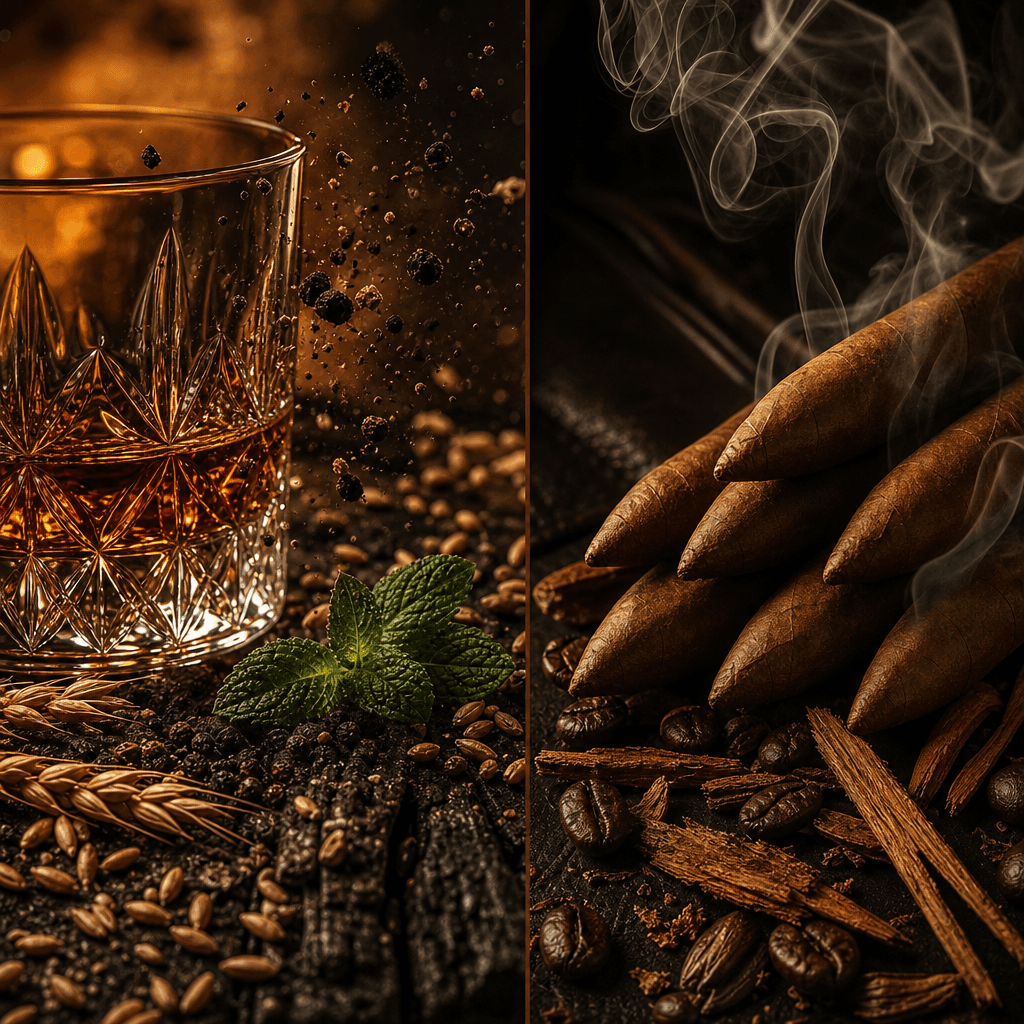
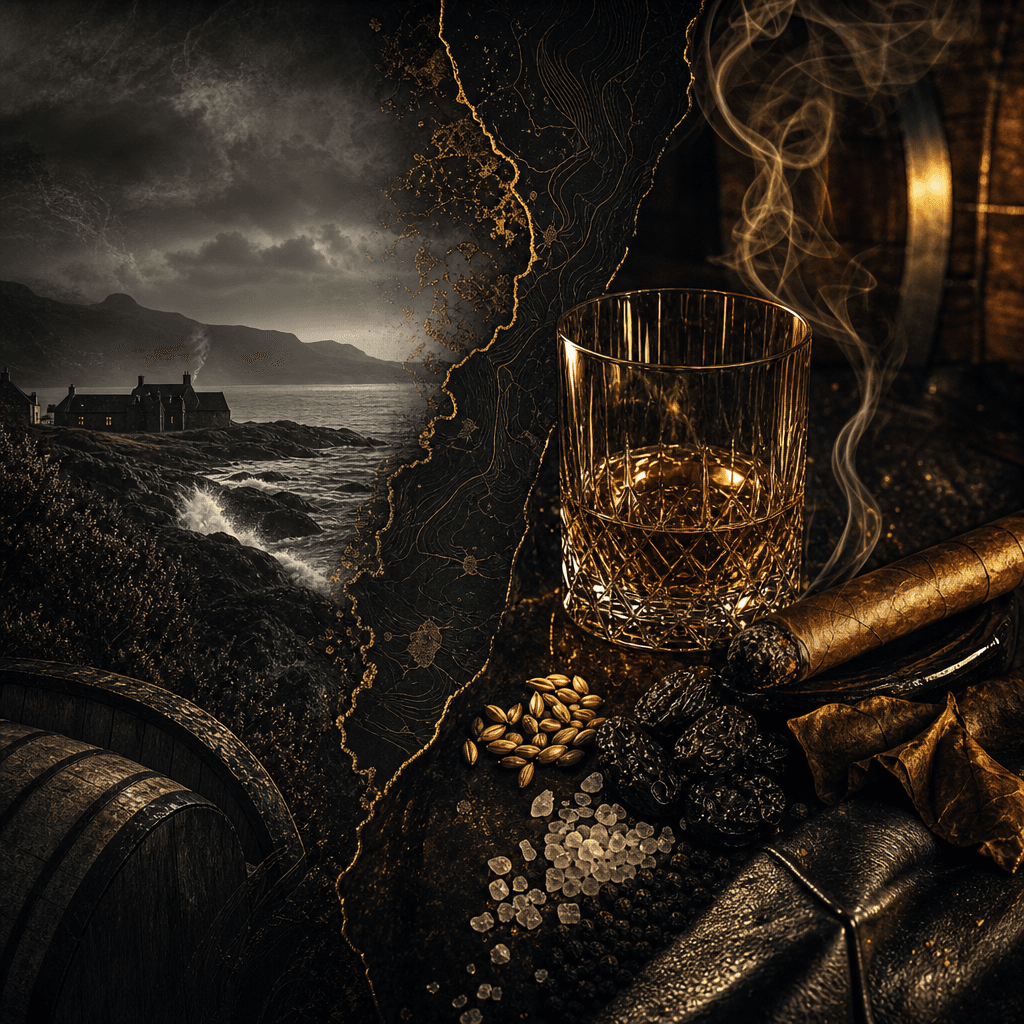
裸麥威士忌以 51% 以上裸麥穀物建立乾辛骨架,從禁酒令前東岸酒吧到 Manhattan、Sazerac 的原始調酒基酒,都指向黑胡椒、肉桂、薄荷與青草辛香。當它遇上 Partagás Serie P No.2,胡椒共振、薄荷涼感與皮革單寧形成明確對話,讓濃郁茄體不只更有火花,也更能被拆解。
- 裸麥威士忌比波本更乾、更辛,核心來自 51% 以上裸麥穀物與新橡木桶熟成。
- Partagás Serie P No.2 的黑胡椒、皮革與咖啡,會放大 Rye Whiskey 的辛香骨架。
- 搭配關鍵不是酒精強度,而是讓薄荷涼感與乾爽酒體替濃煙重啟層次。
The Spicy Framework of Rye Whiskey: Black Pepper and Mint, Paired with the Spicy Spark of Partagás Serie P No.2
The encounter between rye whiskey and Partagás Serie P No.2 is not just about "pairing drinks with cigars," but rather the direct clash of two spicy systems in the mouth. As an editor of the "Cigar Bible," I often say that the true test of an aficionado's judgment is not in pairing sweet with sweet or rich with rich, but in whether dry spice, bitter aroma, tannins, and smokiness can each stand their ground. The main theme of this combination is very clear: the black pepper, mint, and grassy spice of rye against the black pepper, cedar, roasted coffee, and leather of Partagás.
I regard this article as a deep dive into "spicy whiskey," rather than a simple tasting note. Rye whiskey, or black rye whiskey, is older and more hardcore in American spirits history than many imagine; Partagás Serie P No.2 is a highly recognizable Pirámide in the rich Cuban line. When the two are put together, saying "they pair well" would be an understatement, as the real focus is on how phenolic pepper, mint monoterpenes, lignin decomposition products, and tobacco combustion aromas push each other forward.
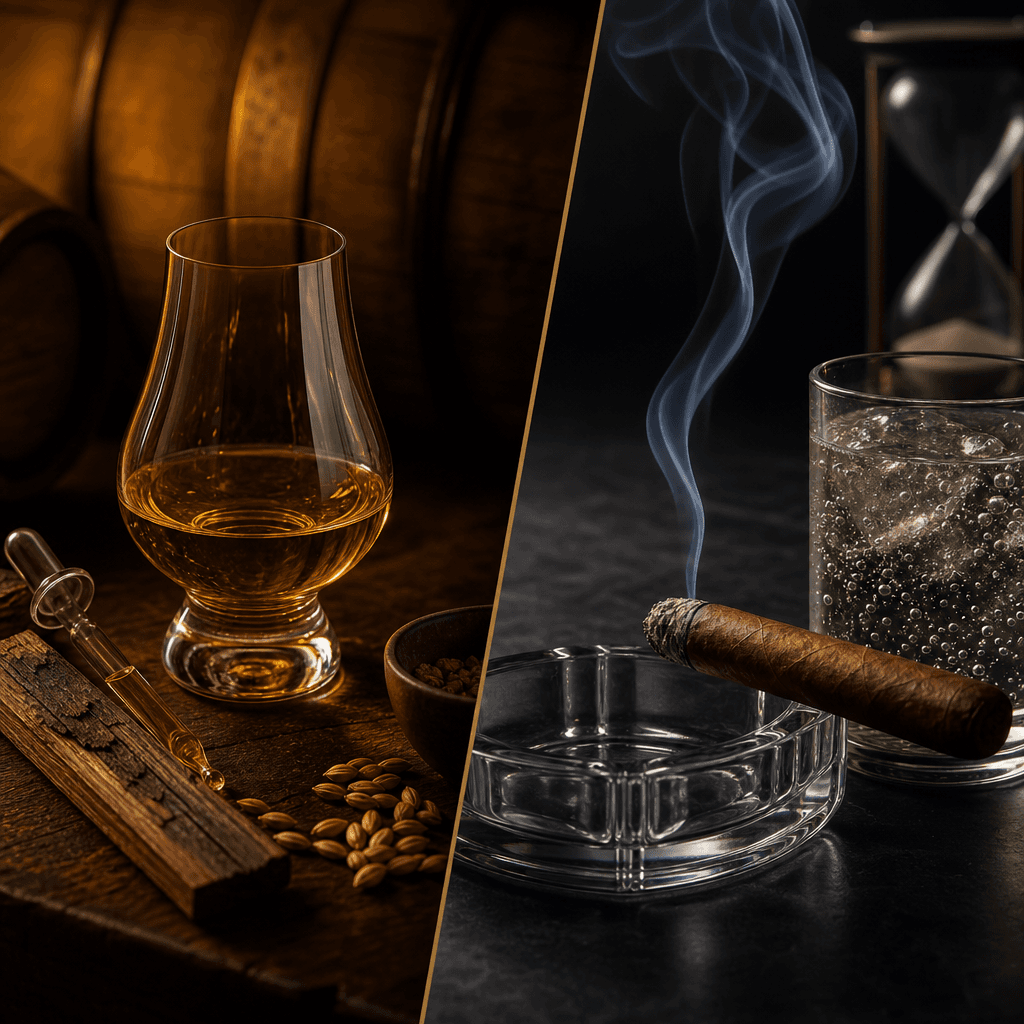
時間軸呈現雪茄穩定後導入裸麥並觀察尾韻的流程
The Regulatory Framework of Rye Whiskey: 51% Rye is Not Just a Slogan
In American regulations, rye whiskey must contain at least 51% rye in its grain formula, setting it apart from corn-based bourbon whiskey from the source. The distilled alcohol concentration must not exceed 80% ABV, and it must not exceed 62.5% ABV when entering new charred oak barrels, while bottling must meet basic whiskey standards. If labeled as Straight Rye Whiskey, it usually means at least two years of barrel aging, with stricter flavor modification restrictions.
Rye itself is leaner and sharper than corn, and the fermentation profile after starch conversion often brings out black pepper, husk, vanilla root, and a slight herbal feel. Bourbon's sweetness mainly comes from the corn ratio and the vanilla, caramel, and coconut tones brought by new oak barrels; rye, on the other hand, seems to hold sweetness behind the framework, letting spice take the stage first. The 51% rye regulation truly determines the dry spicy direction of the body, not just the grain ratio numbers.
Before Prohibition, rye was one of the mainstream spirits on the American East Coast, especially in Pennsylvania and Maryland. The Monongahela style of Pennsylvania is often described as thick, spicy, and grainy; the Maryland style may be softer, with a hint of fruitiness and spice sweetness. Prohibition, which began in 1920, devastated distilleries and bar culture, causing many rye distilleries to disappear, and bourbon later occupied a more prominent place in market memory, while rye became a ghostly protagonist in old cocktail recipes.
The recent craft revival has brought rye back to the bar and whiskey shelves. Emerging American distilleries are experimenting with 95% rye, high rye formulas, local grains, and different yeast strategies, making Rye Whiskey more than just a historical footnote in classic cocktails. For cigar aficionados, this revival is worth observing, as rye's dry spicy structure can more precisely bite into a rich cigar body than many sweet wines.
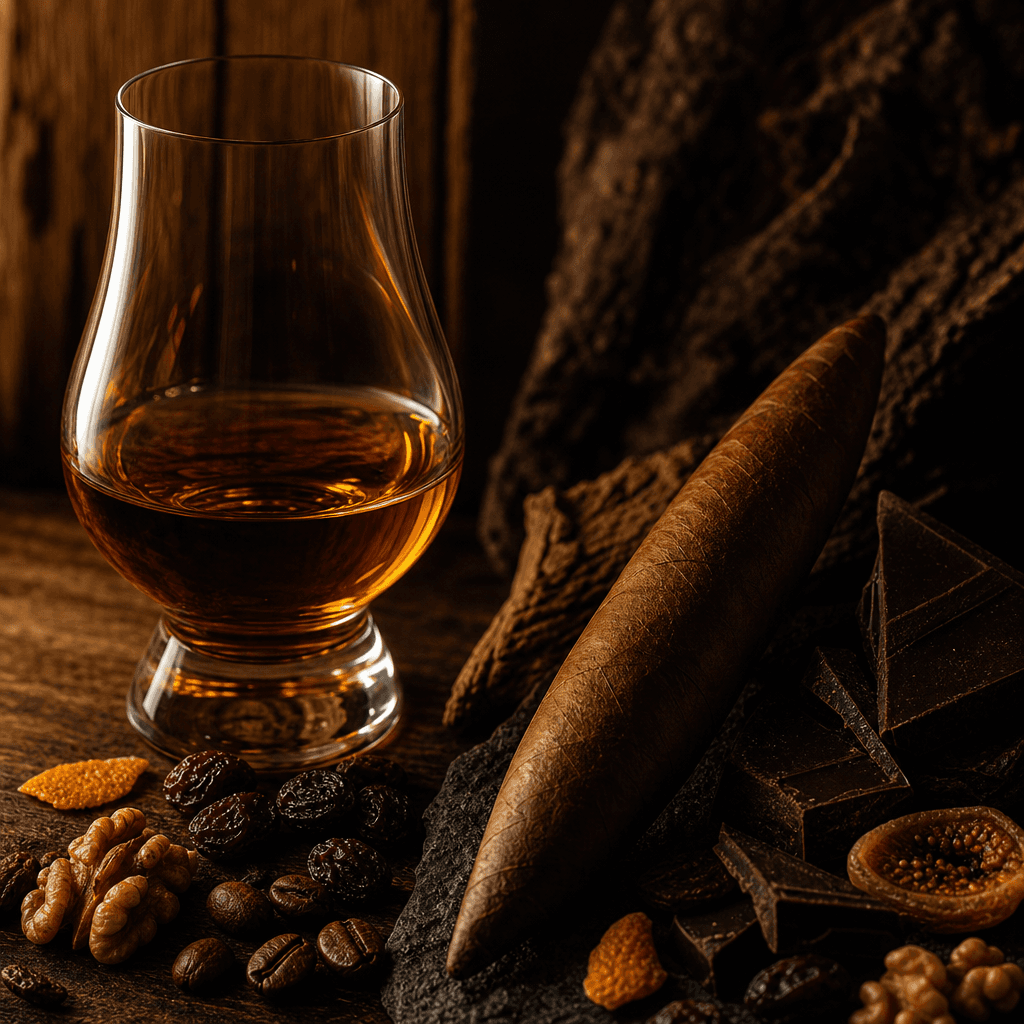
三張卡片整理裸麥與雪茄搭配的辛香骨架重點
From East Coast Bars to Classic Cocktail Bases: The Original Logic of Manhattan and Sazerac
The early appearance of Manhattan is often inseparable from rye whiskey. The late 19th-century New York bar culture, with the combination of sweet vermouth, aromatic bitters, and rye, relied not on stacking sweetness but on the dry spicy framework of rye supporting the complexity of bitters and herbal liqueurs. Replacing it with a sweeter bourbon would round out the body, but the sharp, neat, peppery classical feel would be noticeably different.
Sazerac's original context also points to rye, although it involves cognac, New Orleans pharmacy culture, and Peychaud’s bitters. When rye becomes the core, there needs to be a dry and straight backbone between anise, bitters, sugar, and alcohol heat. Rye's mint, pepper, grass, and woody aromas ensure that this cocktail does not become a simple sweet aromatic drink.
Calling rye a cocktail base does not mean it can only hide behind other ingredients. On the contrary, it can stand in Manhattan and Sazerac because its inherent flavor is directional enough to withstand the pressure of bitters, vermouth, citrus oil, and sweet vermouth. The value of rye whiskey as a cocktail base lies in its ability to control sweetness and herbal aromas with a dry spicy structure, rather than being diluted by the formula.
This logic can also be translated into cigar pairing. Partagás Serie P No.2 is not a mild cigar; it has a rich body, leather, black pepper, and roasted coffee, and if the wine is too sweet and soft, it can easily be overshadowed by the smoke in the early stages, leaving only sugar and barrel aroma in the later stages. Rye's historical role reminds us: its specialty is not to please but to establish order.
矩陣比較裸麥波本與調酒在香氣和收束上的差異
The Craft of Rye: Fermentation Spices, Barrel Char Layers, and Mint Coolness
The husk and protein characteristics of rye grain make saccharification and fermentation more challenging to manage than corn formulas. High rye mash has higher viscosity, and distilleries often need enzyme, temperature control, and stirring strategies to avoid unstable efficiency. These technical details affect the dry grass, husk, bread crust, and spice profile of the finished wine, not just the alcohol yield.
During fermentation, yeast forms esters, higher alcohols, and a small amount of sulfur compound precursors, which transform into fruit, spice, roasted grain, and herbal impressions after distillation and barrel aging. The black pepper sensation commonly found in rye does not actually come from pepper powder but is a sensory result shaped by the intersection of grain spice, barrel extraction, and alcohol volatilization. Mint coolness can be understood as a combined effect of monoterpenes, herbal aromas, and alcohol volatilization in the nasal cavity.
The char layer of new oak barrels is the second backbone of American rye whiskey. Lignin decomposes under heat to form vanillin, eugenol, and smoky woody notes; hemicellulose provides caramel, roasted sugar, and dark sweet aromas; tannins bring dry astringency. The spice of rye is not a single pepper flavor but a three-dimensional spice network built by grain, fermentation, distillation, and barrel aging.
Compared to bourbon, rye is usually drier and spicier, with sweetness more like a background light rather than the center stage. You will feel cinnamon, clove, black pepper, and roasted wood in the middle, and the finish often has mint, dry grass, black tea, or bitter orange peel. This taste structure is crucial for cigar pairing because it does not rush to fill the mouth but leaves room for the leather and coffee of the tobacco to slowly emerge.
Partagás Serie P No.2: The Advancement of Pirámide Shape and Rich Cigar Body
Partagás Serie P No.2 (Cuba, Pirámide, 52 × 156mm): black pepper, cedar, roasted coffee, leather, rich cigar body. This specification itself reveals a lot of information, with a 52 ring gauge providing enough burning surface, a length of 156mm allowing flavors to unfold in segments, and the tapered head of the Pirámide concentrating the smoke. For aficionados, this is not just a cigar to look at for strength but to see if there are lines and transitions in the thick smoke.
The core recognizability of Partagás often lies in dark spices, earthy notes, leather, and salty woody smoke. Serie P No.2 often has black pepper and cedar as a base in the early stages, with roasted coffee, cocoa shell, and leather pressing up in the middle, and deeper charred, wet wood, and mineral notes possibly appearing in the later stages. If stored and aged properly, the spiciness will not just be stimulating but will turn into a layered heat sensation.
The shape of the Pirámide also affects pairing. The tapered head concentrates the smoke, making the initial spice more focused and easier to connect with the peppery prelude of rye; by the middle and later stages, the burning surface increases and the oily feel rises, making the leather and coffee thicker. The richness of Partagás Serie P No.2 is not just about weight but about the pressure curve of pepper, wood, coffee, and leather advancing in sequence.
If this cigar is paired with overly sweet wines, it may make the middle coffee and leather heavy. If paired with too peaty or iodine-rich wines, it may compress the cedar and pepper of Partagás into a single smoke. The value of rye whiskey lies here: it has enough spice to counterbalance the thick smoke but does not necessarily use smoke to steal the show.
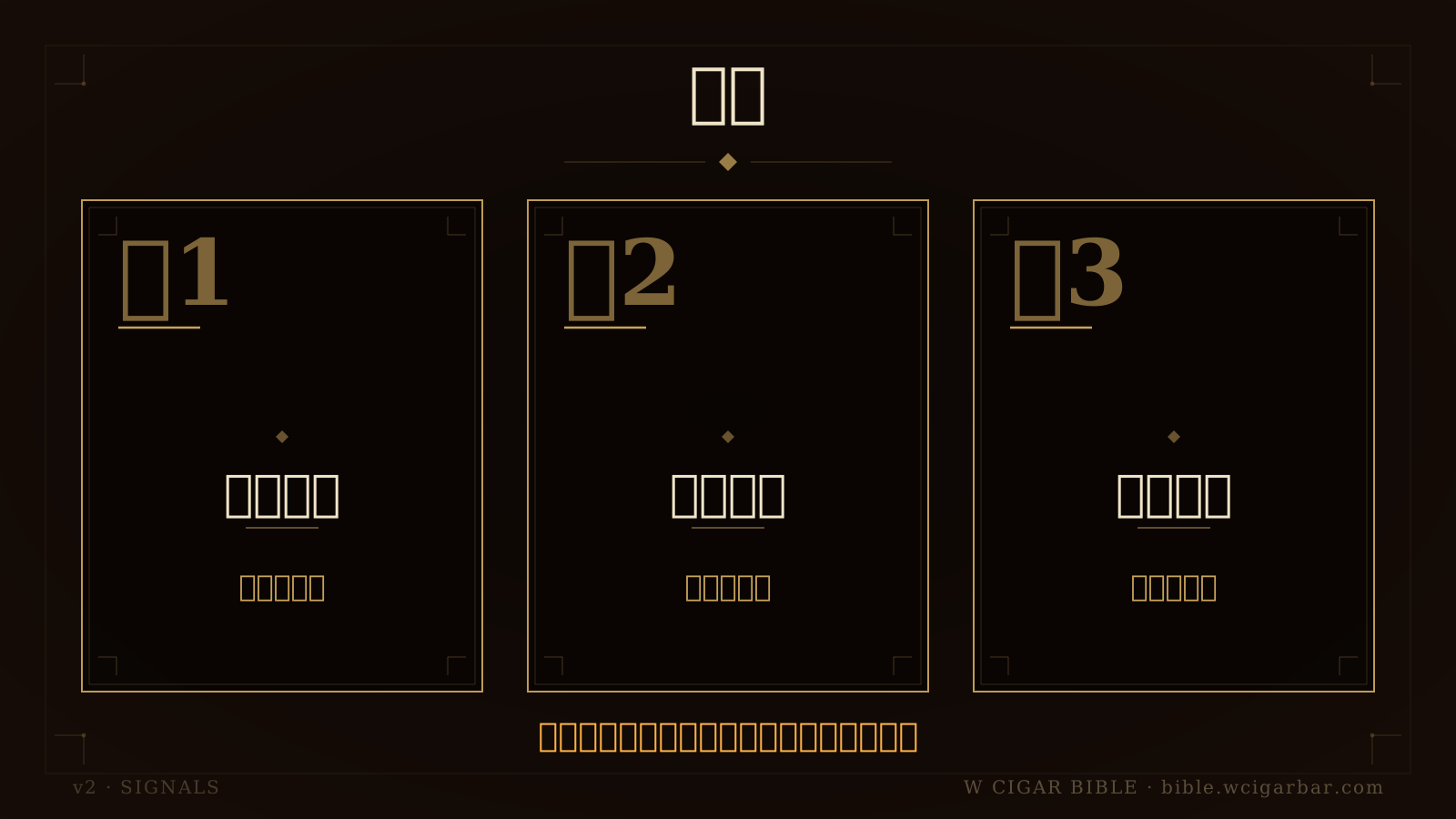
三張卡片列出波本過甜太早導入和加水過量等誤區
Pepper, Mint, and Leather: Flavor Chemistry Contrast of Token×Token
First, look at the most critical "rye pepper × Partagás pepper." The black pepper sensation of rye whiskey comes from the intersection of phenolic spices, barrel eugenol, alcohol volatilization, and grain spiciness; Partagás pepper is closer to the spicy smoke of burning tobacco, woody char, and nasal stimulation. When the two meet, the early stage will have the maximum resonance of spice, meaning the pepper does not become twice as spicy but is divided into three layers from the tongue, nasal cavity, and throat.
The second core is "mint coolness × thick smoke." Rye often has a coolness profile of mint, wintergreen, grass stems, or dry herbs, and these sensations will open gaps in the thick smoke like cold light after a puff. When Partagás enters the middle stage of roasted coffee and leather, the mint coolness can reset the palate, allowing the next puff to re-identify cedar, pepper, and cocoa shell, rather than just feeling heavy.
The third contrast is "dry body × leather tannins." The dryness of rye comes from lower sweetness, oak tannins, and spice closure; Partagás leather sensation includes tobacco polyphenols, dark leaf aroma after fermentation, and dryness brought by burning. These two will form a structure I call the tough guy dialogue: not soothing each other but sharpening each other's contours with dryness, bitter aroma, and woodiness.
| Flavor token | Rye Whiskey Side | Partagás Serie P No.2 Side | Changes After Encounter |
|---|---|---|---|
| Black Pepper | Grain spice, eugenol, alcohol volatilization | Spicy smoke, black pepper, charred wood | Spice resonance, more three-dimensional nasal stimulation |
| Mint | Herbal monoterpenes, wintergreen sensation, dry grass | Thick smoke, cedar, coffee thickness | Coolness opens the smoke screen, layers restart |
| Leather | Oak tannins, black tea dryness | Dark tobacco, leather, soil | Dryness bites each other, finish more robust |
| Cinnamon | Barrel sweet aroma, spice tone | Roasted coffee, cocoa shell | Slight sweetness supports bitter aroma, does not make the body greasy |
| Cedar | Roasted wood, vanillin background | Cedar woodiness, dry wood chips | Woodiness in sync, enhancing mid-stage lines |
The core of this pairing is not to make rye whiskey sweeter or the cigar softer, but to pull the three lines of spice, coolness, and tannins to the clearest. Therefore, when choosing rye, there is no need to blindly pursue the heaviest barrel sensation; instead, pay attention to whether there is a clear pepper, mint, dry grass, and black tea finish. If the wine only has caramel and vanilla left, this dialogue will deviate from the true advantage of rye.
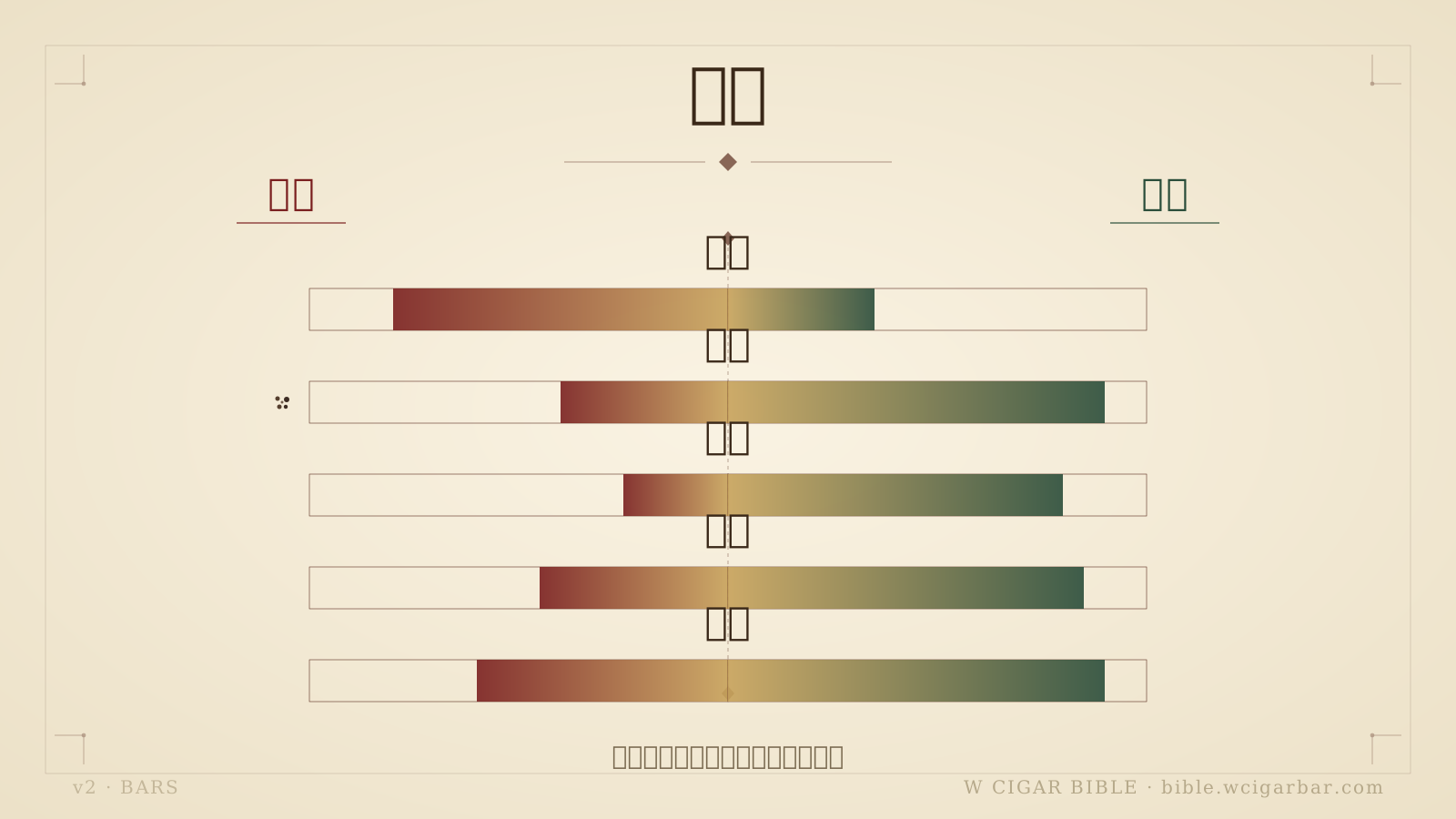
橫條圖比較波本與裸麥在甜感胡椒薄荷乾感上的強弱
How to Taste: Practical Judgment of Glass Type, Order, and Concentration Control
I would let the rye whiskey sit in the glass for a few minutes, not rushing to drink it. A tulip glass can concentrate the aroma, but if the alcohol sensation is too sharp, a wide-mouth glass can also disperse the volatilization more. In the first round, smell the black pepper, mint, cinnamon, roasted wood, and dry grass, then confirm with a small sip whether the finish is clean and spicy or suppressed by overly sweet barrels.
On the cigar side, first observe whether there is clear cedar and black pepper in the early stage. If the initial spiciness of Partagás Serie P No.2 is very sharp, a small amount of water can be used to organize the mouth, then let the rye enter the tongue with a very small sip. This is not a competition of strength but to let the mint and dry spice of the wine form a film before taking the next puff.
In terms of order, I prefer "smoke, drink, pause, smoke." First, let Partagás establish a tobacco baseline, then use rye to read pepper and herbs, pause to let the alcohol volatilization fade, and finally return to the cigar to confirm whether coffee, leather, and cedar are clearer. Good operation is not about increasing stimulation but controlling intervals so that each return to the cigar can read new layers.
If the alcohol sensation of rye is higher, a very small amount of room temperature water can be added to observe whether the aroma unfolds. Water will reduce the alcohol sting, making mint, cinnamon, and grain sweetness easier to emerge, but too much will loosen the structure. The most important thing for an aficionado to note is not how much the glass becomes diluted but whether the leather finish of Partagás can still connect with the dry sensation of rye.
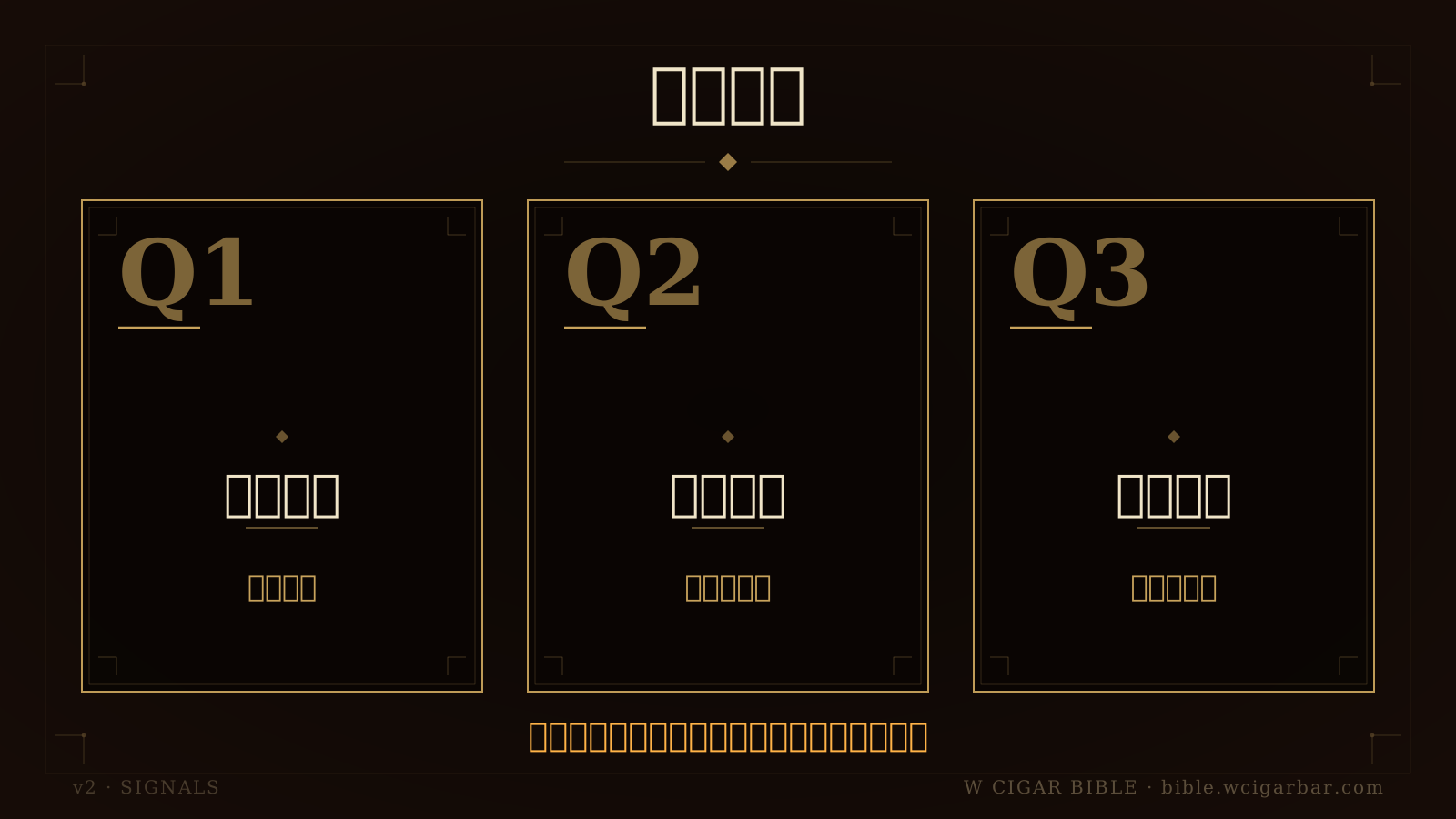
問答卡片精簡說明黑麥稱呼調酒搭配與加水判斷
When Choosing Rye Whiskey, Aficionados Should Look Beyond Label Hype
When choosing rye to pair with Partagás Serie P No.2, the first judgment point is rye content and style orientation. 51% rye wines may be rounder because the corn and barley ratio can supplement sweetness and breadiness; over 90% high rye often feels drier, more herbal, and has a stronger black pepper impact. There is no absolute superiority between the two, but when pairing with this Partagás, if the high rye barrel sensation is too thin, it may make the later stage appear too hard.
The second judgment point is barrel aging time and oak performance. Young rye often has obvious grass, husk, white pepper, and alcohol sharpness, which can create wild sparks when paired with rich cigars but may also seem rough. Longer-aged rye will have more black tea, dry orange peel, cocoa, leather, and roasted wood, making it easier to connect with the middle and later stages of Partagás.
The third judgment point is the position of sweetness. If rye immediately presents vanilla, caramel, and roasted coconut, with pepper only lightly appearing at the end, it is closer to bourbon syntax and will lack a bit of spark when paired with this cigar. If it first presents dry spice, cinnamon, and mint, with sweetness only supplementing in the middle, it usually better awakens the black pepper and leather of Partagás.
The recent craft revival has brought many interesting variants, such as local rye varieties, different roasting levels of oak barrels, single barrels, and small-batch blends. Aficionados can focus on the structure rather than the narrative packaging: whether there is mint in the nasal cavity, whether there is pepper on the tongue, whether the finish is clean, and whether the oak supports rather than obscures. The rye whiskey suitable for this cigar should be of the type with clear dry spice, discernible mint, recessed sweetness, and a finish with woody tannins.
Frequently Asked Questions
The most memorable aspect of pairing rye whiskey with Partagás Serie P No.2 is that after the spice resonance, there should still be coolness and dry sensation closure.
Are Rye Whiskey and Black Rye Whiskey the Same Thing?
In the Chinese context, Rye Whiskey is often translated as rye whiskey or black rye whiskey, both mostly referring to the same type of American whiskey based on rye grain. When strictly discussing American regulations, the focus is on a grain formula with at least 51% rye, as well as distillation, barreling, and aging standards. This article primarily uses rye whiskey to highlight the grain and spicy framework.
Why Not Pair Bourbon Directly with Partagás Serie P No.2?
Bourbon can be paired, but the syntax is different. The corn sweetness and vanilla caramel of bourbon will make the coffee and leather of Partagás rounder, while rye pushes the black pepper, cedar, and dry lines clearer. If you want to see the tough contours of this cigar, rye is more recognizable.
Can Manhattan or Sazerac Be Paired with This Cigar?
You can understand it from the flavor logic, but pay attention to the sweetness, bitters, and anise sensation in the formula. If the sweet vermouth ratio in Manhattan is high, it may overshadow the cedar of Partagás; if the anise in Sazerac is too prominent, it may interfere with the leather finish. If you want to try, the key is to keep the rye main body clear, rather than letting cocktail elements steal the show.
Does the Mint Coolness of Rye Really Affect the Cigar Layers?
Yes, and it often happens in the middle stage. After the thick smoke, coffee, and leather of Partagás Serie P No.2 accumulate, the palate can easily enter a heavy state; the mint and dry grass sensation of rye can allow the nasal cavity to re-differentiate wood and pepper. This coolness is not sweet mint candy but a clarity formed by herbal volatilization and a dry spicy body.
Is This Pairing Suitable to Start from the Early Stage of the Cigar?
You can, but I would suggest letting the cigar burn until the early stage flavors stabilize before introducing rye. The initial pepper of Partagás Serie P No.2 can sometimes be sharp, and if the alcohol sensation is also strong, the two may briefly stack into stimulation. Wait for cedar and coffee to start appearing, then let rye intervene, usually making it easier to read the complete structure.
Does Rye Whiskey Need to Be Diluted with Water?
Not necessarily, it depends on the sharpness of the alcohol and the unfolding of the aroma. If the nasal cavity only has an alcohol sting and mint, cinnamon, and black pepper are not obvious, a very small amount of room temperature water can help open up the aroma. If the finish becomes shorter and the woodiness becomes scattered after adding water, it means it has exceeded the suitable range for this glass of wine.
Rye whiskey and Partagás Serie P No.2 is a pairing that does not rely on a sweet finish. It pushes black pepper to the forefront, lets mint cut through thick smoke, and then uses a dry body to catch leather tannins. As an editor of the "Cigar Bible," I value this kind of tough structure that allows aficionados to recalibrate their taste.
Further Reading|Complete Map of Whiskey Regions: From the Five Major Regions of Scotland to the New Forces in Asia, and an Overview of Flavors Paired with Cigars|The Vanilla Caramel of Bourbon Whiskey: Kentucky's New Charred Oak Barrels, Paired with Padrón 1926 Serie No.9's Dark Cocoa|The Aesthetics of Mizunara Casks in Japanese Whiskey: The Style of Yamazaki and Yoichi with Kyara Aroma, Paired with the Subtle Layers of Cohiba Siglo VI
—Cigar Prince Wilson Tsai
Smoking is harmful to health. Smoking is prohibited for those under twenty years old. Quitline: 0800-636363. This article is intended for adults over twenty years old as a reference for cigar culture, preservation, and regulatory knowledge, not as a tobacco advertisement, promotion, or purchase suggestion.
No drunk driving. Excessive drinking is harmful to health. Drinking is prohibited for those under eighteen years old. This article is also not an advertisement, promotion, or purchase suggestion for alcohol; please drink responsibly.
Like this article?Share with friends
Share this W Cigar Bible piece with friends who want to learn cigar culture, storage, and tasting.
想把這篇 化為實踐
雪茄聖經是知識;雪茄文化要在空間裡發生

W Cigar Bar 大安總店資訊
台北大安區 · 雪茄聖經總編輯 Wilson Tsai 主理的雪茄文化空間
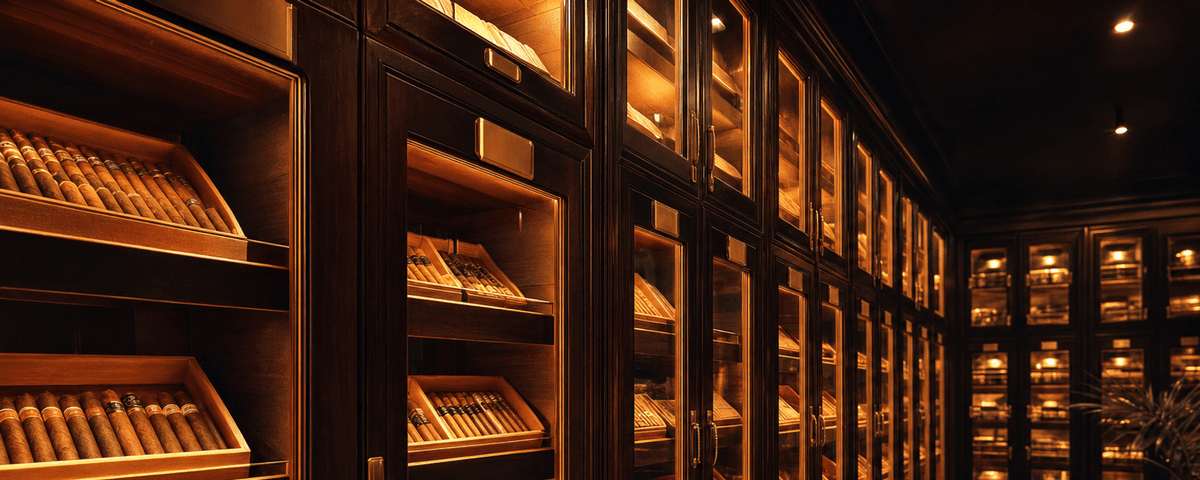
33 座 24 小時恆溫恆濕醇化室
W Cigar Bar 提供的會員醇化空間 · 場地資訊請洽編輯部
雪茄剪 / 打火機 / 雪茄盒 / Boveda
W Cigar 配件官網 · 專營雪茄配件正品
加 LINE 好友 · 文化諮詢
文化空間資訊 · 紳士沙龍 · 私人包場
本網站內容僅供雪茄文化、歷史、收藏與品吸知識研究參考。菸品有害健康、未滿法定年齡者請勿吸菸。實際規範請依所在地法律為準。
吸菸有害健康・戒菸專線 0800-636363・本站僅供 20 歲以上成年人閱覽。
讀到這裡,你不只是路過的人
留下 Email,加入 W 雪茄聖經內圈——總編輯 Wilson Tsai 親選的學院深文與國際新訊,先你一步送到信箱。
· 教育用途非銷售 · 隨時一鍵退訂 · Email 絕不對外公開 · 由勝茄股份有限公司營運
同分類延伸閱讀
資料來源:W Cigar Bible 編輯部整理 · 雪茄王子 Wilson Tsai 親自審稿
本文僅供雪茄文化、歷史、收藏與品鑑知識研究,不作為菸品促銷、銷售或購買建議。吸菸有害健康,未滿二十歲不得吸菸。