雪茄的切割藝術:選擇與技巧全指南
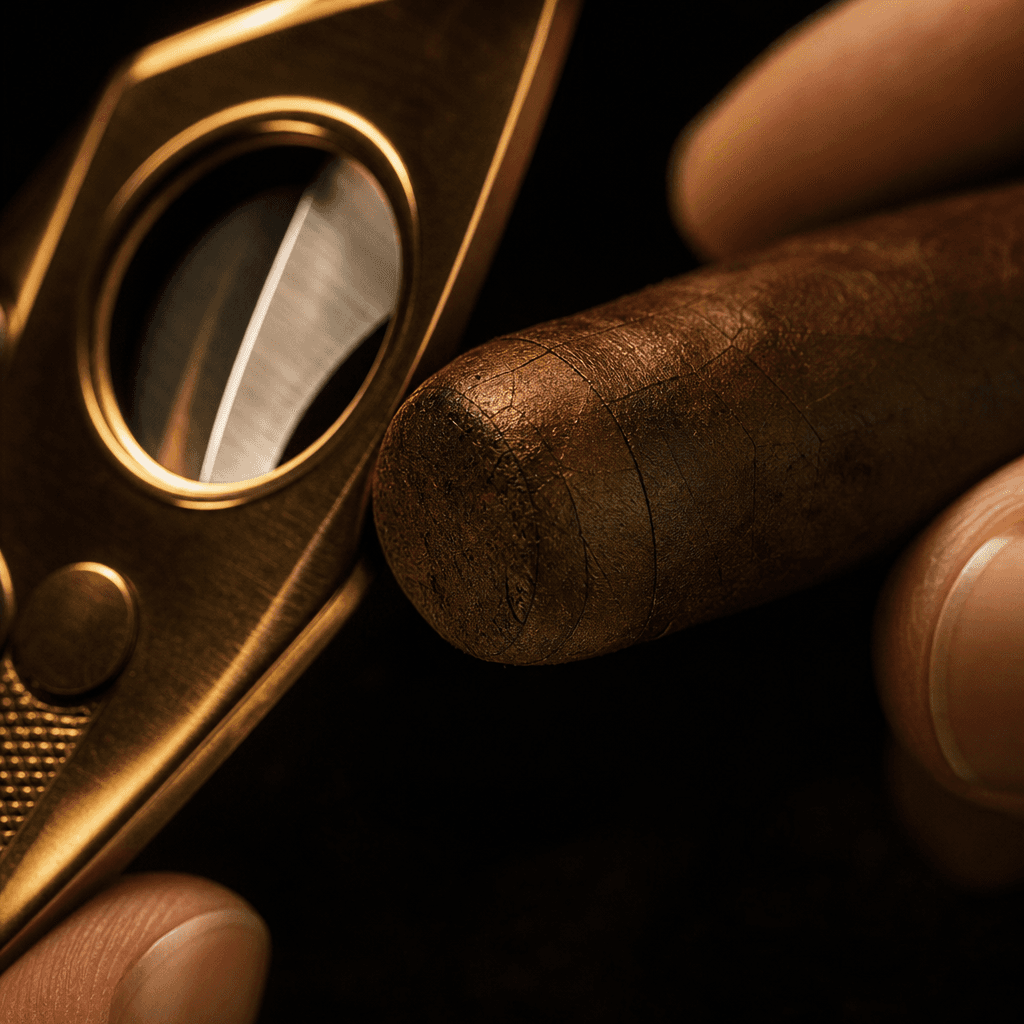
切雪茄的藝術在於掌握正確的切割技巧,這不僅影響抽吸的阻力與煙氣的集中度,還會左右你對雪茄風味的初步印象。新手常忽略切口的重要性,認為火源與濕度更為關鍵。切雪茄時,應該專注於帽線,切割深度控制在1至2毫米之間,以確保煙道暢通且保持茄衣穩定。選擇合適的工具如直剪、V剪或打孔器,根據雪茄的尺寸與形狀,能更好地調整煙氣表現。掌握這些技巧,能讓你更深入地享受雪茄的風味。
- 切割雪茄時,應保留足夠帽層以固定茄衣,切口深度控制在1至2毫米為佳。
- 選擇雪茄剪時,需考慮雪茄尺寸及個人抽吸習慣,直剪適合大多數雪茄。
- 尖頭雪茄應用小切口逐步放大,避免一開始切到最寬處,以保持集中風味。
The Art of Cigar Cutting: A Comprehensive Guide to Choices and Techniques
Cutting a cigar may seem like just a pre-lighting step, but it actually determines the draw resistance, smoke concentration, and the stability of the wrapper, as well as influencing your first impression of the cigar's initial flavors. Beginners often focus on the source of fire and humidity, overlooking that the cut is the first gateway for smoke into the mouth.
As the editor of the "Cigar Bible," I often remind newcomers: a beautiful cut doesn't mean bigger is better; a conservative cut doesn't mean there's no flavor. The art of cigar cutting lies in understanding the head structure, the characteristics of the tool, and your own smoking rhythm, allowing a cigar to unfold in the most stable way.
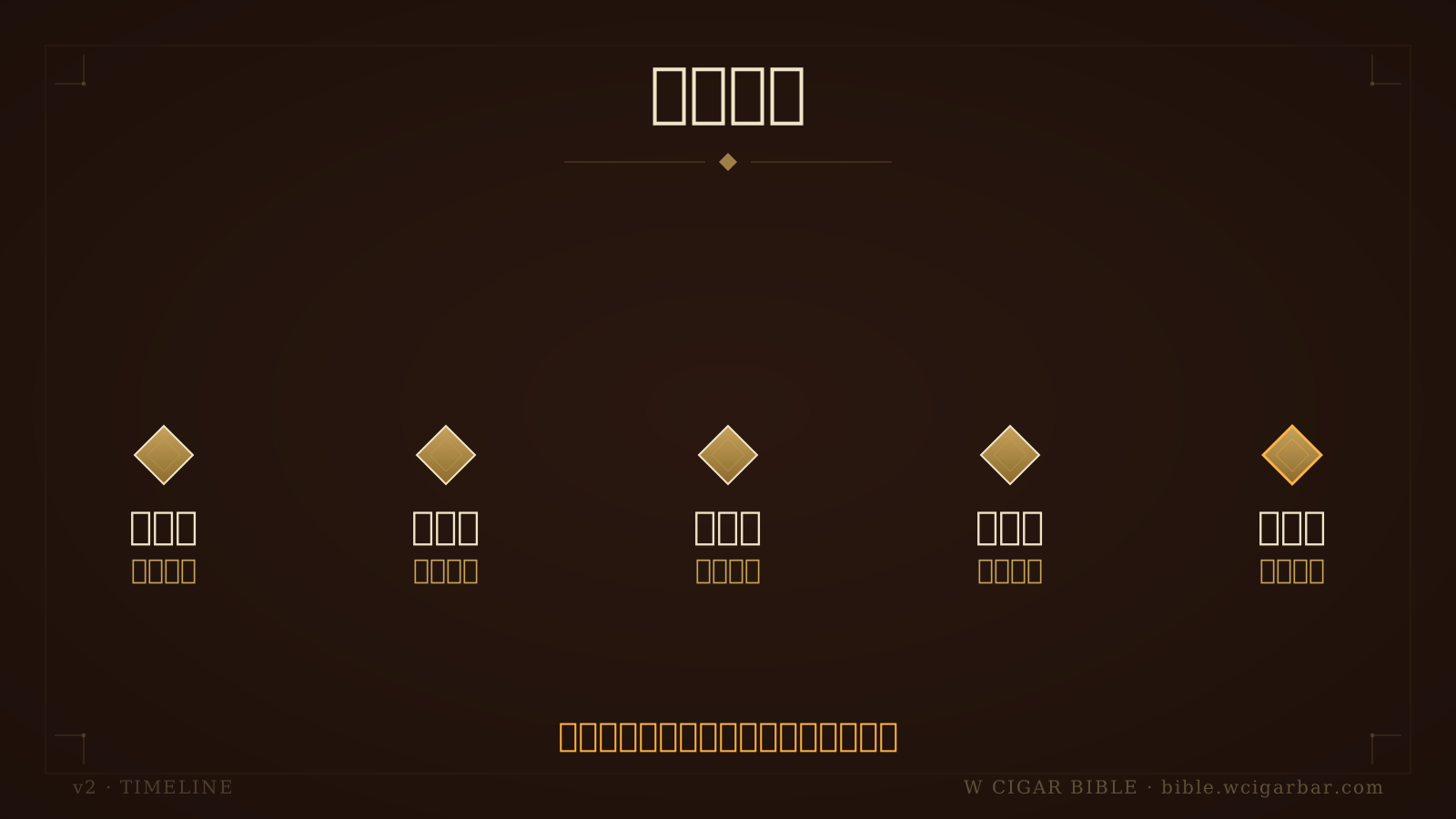
流程圖顯示直剪從辨帽線到試阻力
Understanding the Cigar Head: You're Cutting the Cap, Not the Entire Head
The head of a cigar is usually covered with a wrapper and sealed with one or more small circular tobacco leaves, known as the cap. For classic Cuban brands like Montecristo No.2 and Romeo y Julieta Churchill, the head often shows clear cap lines; new world brands like Padrón 1964 Anniversary and Arturo Fuente Don Carlos also emphasize the head's finish. What you actually need to remove when cutting is the very top part of the cap, not the shoulder.
The first principle of correct cutting is to open the smoke channel while retaining enough of the cap to secure the wrapper. If cut too deeply, the wrapper may gradually loosen after lighting, especially in larger cigars with a ring gauge above 52; if cut too shallowly, the draw will be tight, the smoke insufficient, and one might mistakenly think the cigar "lacks flavor." I recommend beginners observe the cap line and control the cut depth to about 1 to 2 millimeters.
A practical example is the Partagás Serie D No.4, a 50-ring gauge robusto about 124 millimeters long, with a rounded head but clear cap lines. If you use a straight cutter and cut too deeply at once, the first 10 minutes might draw smoothly, but the risk of the wrapper loosening later increases; conversely, if you only trim the very top, you can still adjust with a second cut if the draw is tight. Cutting a cigar is not a gamble on a single cut, but a way to maintain maximum stability with adjustable corrections.
Tool Selection: Straight Cutters, V-Cutters, and Punches Each Have Their Own Character
Cigar cutters are not about being expensive but about fitting the cigar size and personal smoking habits. Since the 1980s, double-bladed straight cutters have become the most common tool, for a simple reason: clean cuts and wide applicability, handling anything from a 42-ring gauge petit corona to a 56-ring gauge toro. Brands like Xikar, Colibri, and S.T. Dupont have introduced many improved models over the past 20 years, with differences mainly in blade curvature, grip, and spring mechanisms.
The choice of tool should first consider the shape of the cigar, then the smoke performance you desire. Straight cutters allow the maximum amount of smoke and direct flavor; V-cutters concentrate the smoke, enhancing sweetness and spiciness; punches are conservative and safe, suitable for short enjoyment after commuting or for those who don't want to handle a large cut. Here's a comparison I often give to beginners:
| Tool | Suitable Sizes and Shapes | Draw Feel | Risk | Recommended Scenario |
|---|---|---|---|---|
| Straight Cutter | Most parejos, like robusto, toro | Open, ample smoke | Cutting too deep can loosen wrapper | Beginner's choice |
| V-Cutter | Round-headed cigars above 46-ring gauge | Concentrated, distinct layers | Too deep can crush the head | To enhance aroma concentration |
| Punch | Round-headed cigars above 50-ring gauge | Stable resistance | Tar can accumulate easily | Outdoors or conservative cuts |
If you can only buy one, I recommend choosing a stable quality double-bladed straight cutter, with a blade opening that can accommodate at least a 54-ring gauge. Once you become familiar with large ring gauge cigars like Cohiba Siglo VI, H. Upmann Magnum 50, or Oliva Serie V Melanio, you can add a V-cutter or punch. Tools are not for showing off but for more stably understanding cigars.
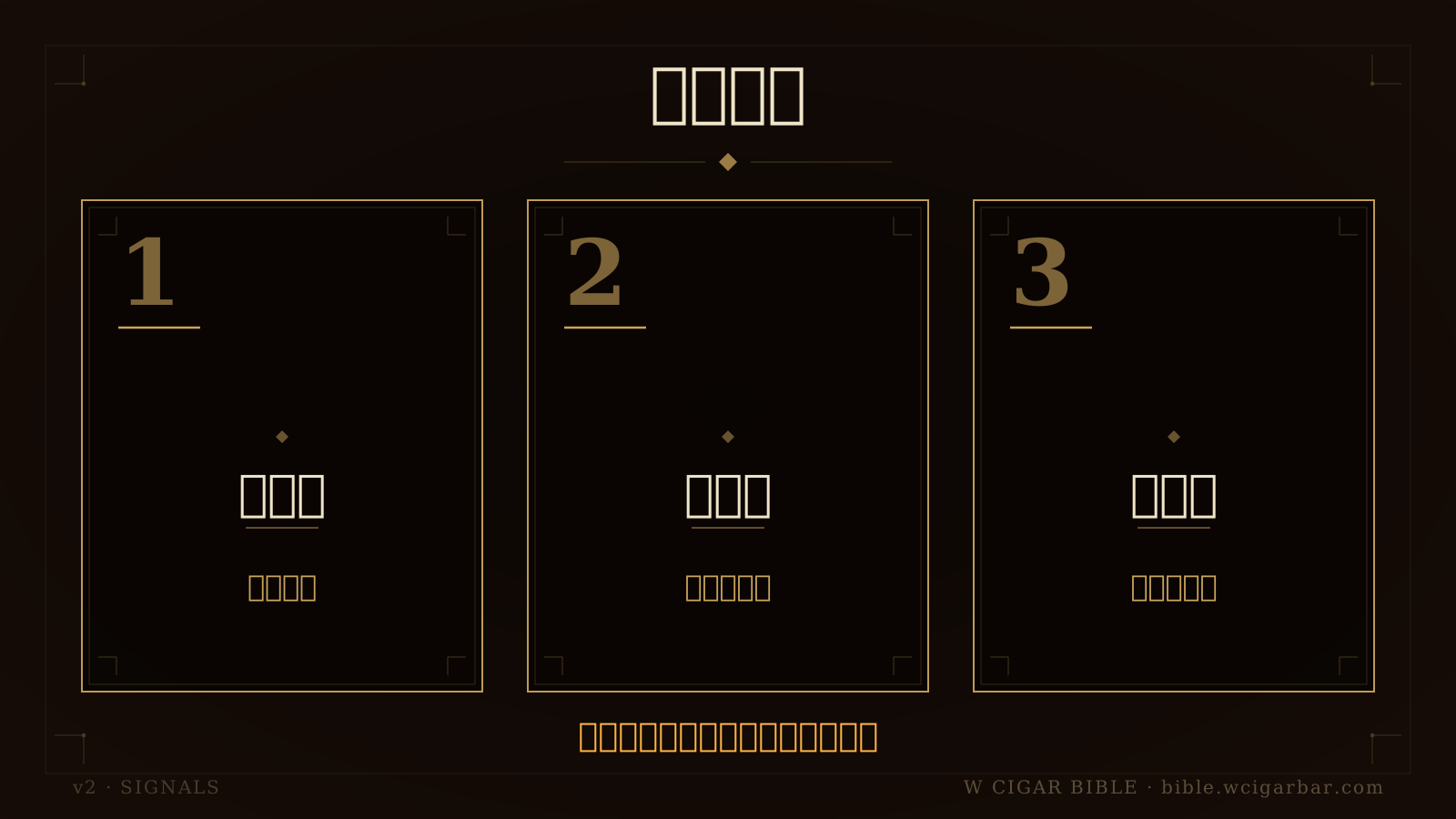
三張重點卡列出帽線淺切與選工具
Straight Cutting Technique: The Most Basic, Yet Most Testing of Hand Feel
The action of straight cutting seems simple, but the real challenge lies in "position" and "speed." I usually bring the cigar head close to the cutter opening, check the cap line from the side, then place the cut point slightly above the cap line; the blade should be parallel to the base of the head, not angled. Although angled cuts can sometimes increase the contact area, they are more likely to cause uneven pressure on one side of the wrapper, leading to cracking during burning.
Straight cuts should be quick, not slow; a clean, decisive cut protects the wrapper better than two seconds of hesitation. Before cutting, you can gently rotate the cigar to confirm the position, and avoid pinching the very front of the head with your fingers to prevent deforming the cap. If using a tabletop guillotine cutter, like the heavy-duty cutters common in cigar bars since the 1990s, the stability is high, but it's also easy to cut too deeply at once, so measure the depth first.
- Observe the cap line to find the top removable area
- Keep the blade level with the head, don't press at an angle
- Close quickly in one motion, don't saw through
- After cutting, gently blow or tap to remove debris
- If the draw is too tight, make a very small additional cut
Taking the Montecristo Edmundo as an example, with a 52-ring gauge and about 135 millimeters in length, if the first cut is only 1 millimeter, the draw is often slightly tight; in this case, a half-millimeter additional cut is safer than cutting off 3 millimeters at once. The mature technique of straight cutting is not about making a large cut in one go, but knowing when to stop.
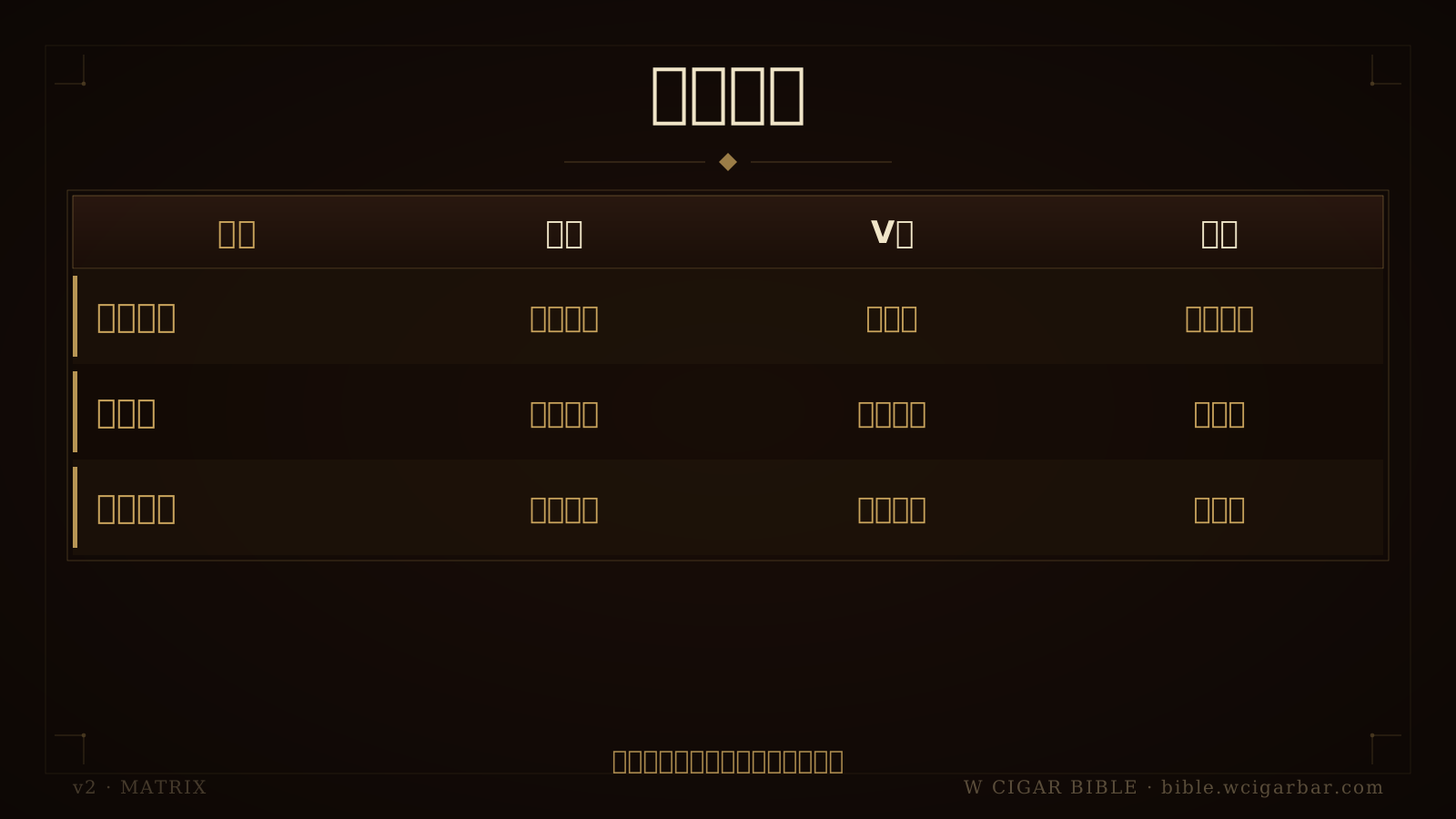
矩陣比較直剪V剪與打孔的抽吸風險
V-Cutters and Punches: Two Approaches to Smoke Concentration and Resistance Control
V-cutters have regained attention in recent years, especially with the popularity of deep groove designs like the Colibri V-Cut, leading many enthusiasts to use them for 50 to 60-ring gauge cigars. A V-shaped cut doesn't completely open the head but forms a wedge-shaped smoke channel, concentrating the smoke. For cigars with cocoa, coffee, and black pepper notes, such as Padrón 1926 Serie or My Father Le Bijou 1922, V-cuts often make the initial aromas more cohesive.
V-cutters are suitable for those who want concentrated flavors; punches are suitable for those who want conservative, stable, and reduced risk of wrapper loosening. Punches usually come in 7, 9, and 11-millimeter diameters, practical for robusto or toro cigars above 50-ring gauge. However, the smaller cut surface of a punch may make the draw more laborious if the cigar is tightly rolled; additionally, in the middle to later stages of burning, moisture and tar can accumulate around the hole, requiring moderate rest and wiping.
I view V-cutters as "advanced straight cutters," and punches as "stable options." For instance, the Hoyo de Monterrey Epicure No.2 is known for its soft woody and creamy notes, and a punch can maintain a gentle rhythm; while the Bolivar Royal Coronas has a more powerful structure, and a V-cut can make the spicy lines clearer. There is no superiority between the two, just different presentation methods.
It's important to note that torpedo and pyramid-shaped cigars usually aren't suitable for punching, as the head doesn't have enough flat surface. V-cutters also need careful angle control, as pressing too deeply can damage the pointed head structure. The purpose of tools is not to transform the cigar but to allow it to express its original character in a controllable way.
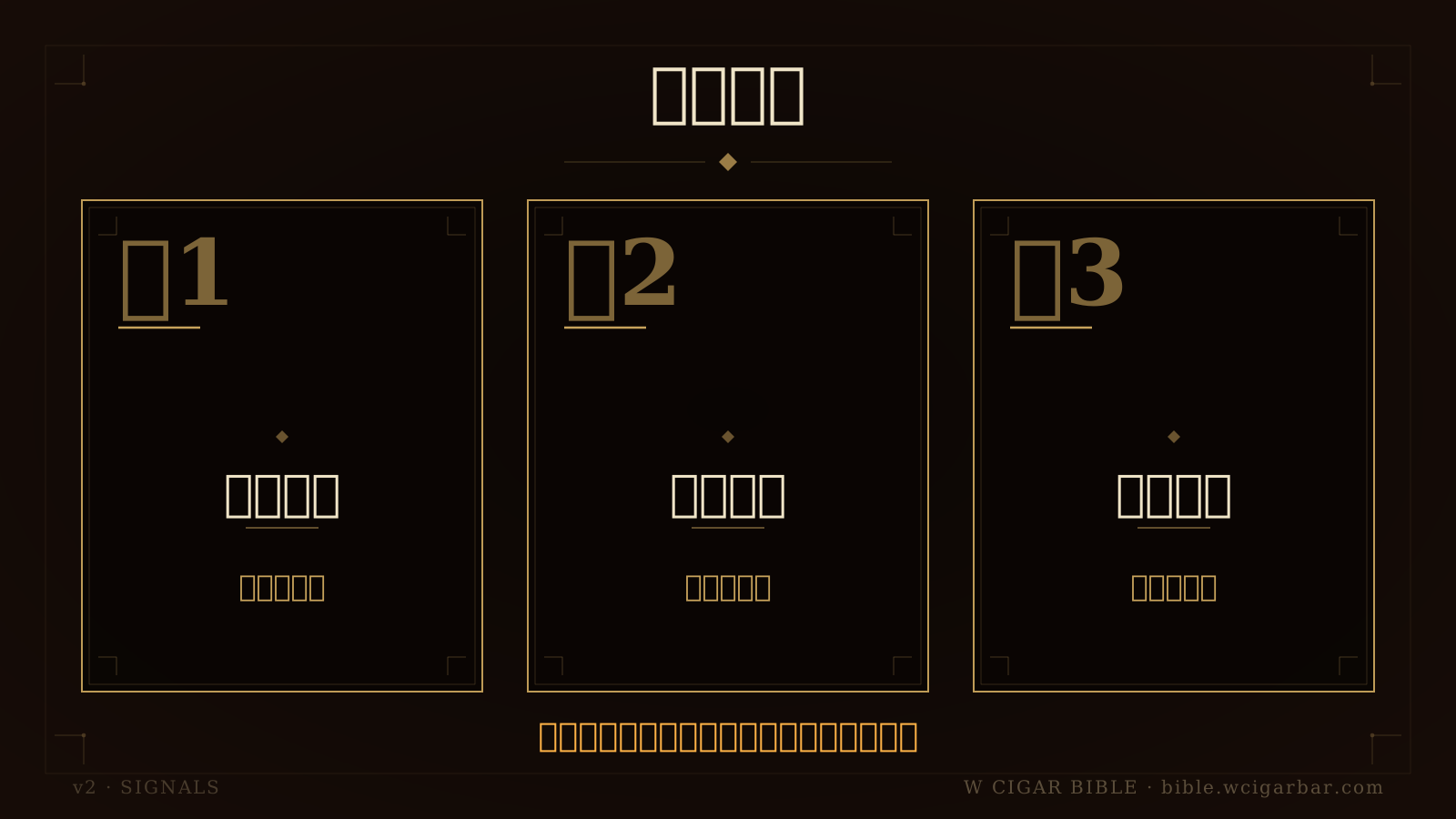
三張錯誤卡提示過深補切與打孔限制
Special Sizes and Shapes: How to Cut Torpedoes, Pyramids, and Perfectos
Cigar shapes can be broadly divided into parejo and figurado. The former is cylindrical, like Robusto, Toro, Churchill; the latter includes torpedo, pyramid, perfecto, and other special contours. Although the Cohiba Siglo VI, launched in 2002, is a large ring gauge parejo, the cutting method is relatively simple; but for pyramid-shaped cigars like Montecristo No.2 and Partagás Serie P No.2, cutting must be more precise, as the size of the cut will significantly alter the draw resistance.
The key to pointed cigars is to gradually enlarge the cut, not to cut to the widest point at once. I usually start with a straight cut about 3 to 5 millimeters from the tip, and after checking the draw, decide whether to make an additional cut. The closer the cut is to the wide point, the more open the smoke, but the more likely it is to lose the concentration brought by the pointed head. Many beginners find the flavor of the Montecristo No.2 to be scattered on their first try, often because the cut is too large, not because of the cigar itself.
Perfectos are even more interesting, such as the Arturo Fuente Hemingway Short Story, with both ends tapered and about 102 millimeters long, sometimes requiring a bit of handling at the lighting end as well. These cigars have a small burning surface in the early stages, and if the head is cut too large, it can cause an imbalance between the smoke and the burning surface, leading to inconsistent draws. A better approach is to keep a small cut, allowing the burn to gradually unfold.
If you encounter a pig tail closure, like some Cuban limited editions or small batch new world works, don't pull it with your hands. Use a straight cutter to trim the small knot at the end, preserving the surrounding cap layer. The pig tail is a detail of craftsmanship, not a pull tab; respecting the structure prevents damaging the cigar before lighting.
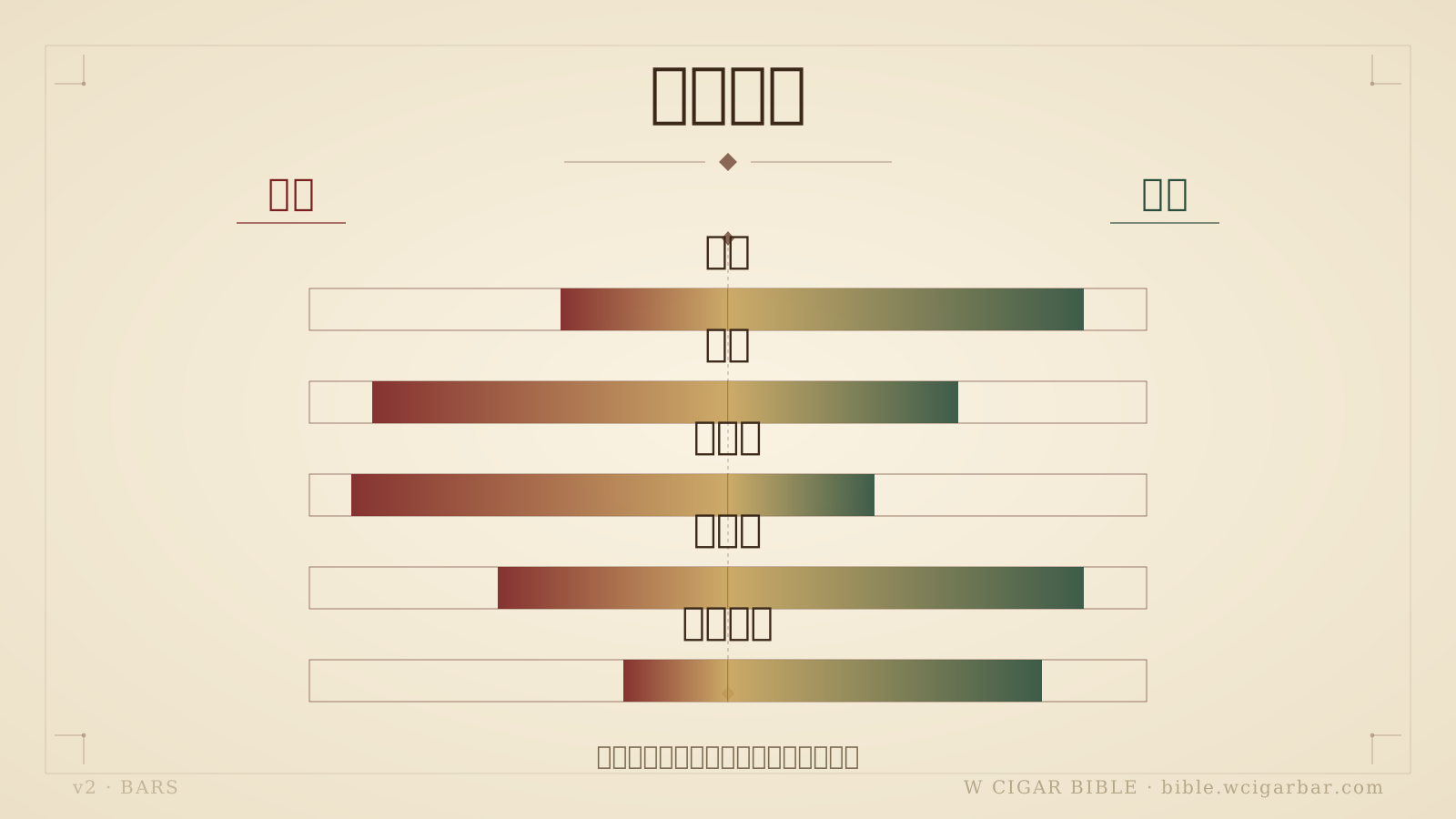
長條圖比較保守切與開放切的差異
How the Cut Affects Flavor: Smoke Volume, Temperature, and Rhythm
The same cigar can have different expressions with different cuts. A large straight cut allows high airflow and ample smoke, making the initial flavors more accessible; but if smoked too frequently, the burning temperature rises, and the spiciness can increase. V-cuts concentrate the smoke, providing a more pronounced entry impact, with sweetness and woody notes possibly more focused. Punches, due to their small opening, produce finer smoke, naturally slowing the pace.
The cut not only affects draw smoothness but also changes the burning temperature and flavor density. For example, the Davidoff Millennium Blend Robusto, a Dominican work with a delicate structure, can become hot towards the end if smoked quickly with a large straight cut; using a V-cut, the initial cocoa and nutty notes are more concentrated, but moisture needs to be monitored in the middle. Different tools are like different lenses, showing the same scene at different focal lengths.
I once compared the same box of H. Upmann Magnum 46 purchased around 2018: one with a straight cut, one with a punch. The straight cut opened the aroma quickly in the first 15 minutes, with noticeable herbal, woody, and slight sweetness; the punched one started slower but was smoother in the middle. This isn't a lab-grade test, but it illustrates the impact of the cut on perception.
Rhythm is also crucial. A larger cut doesn't mean you should smoke faster; a smaller cut doesn't mean the flavor is necessarily weaker. A pace of one puff every 45 to 60 seconds is a reference for many medium-sized cigars. Allowing smoke to cool and the burn line to stabilize reveals more details of a cigar than chasing large smoke volumes.
Common Mistakes and Remedies: Don't Give Up Immediately if You Cut It Wrong
The most common mistake is cutting too deeply. When the cap is completely removed, and the wrapper starts to loosen, don't rush to tear it with your hands. You can use a small amount of cigar glue or fruit pectin to repair it; if no tools are available, you can use oral moisture to gently press the edge of the wrapper, but this is only a temporary solution. If the loosening is not extensive, maintaining a slow draw after lighting still allows you to finish most of the cigar.
The principle of remedying a poorly cut cigar is to stabilize the structure first, then adjust the draw, not to keep cutting more. If it's cut too shallow and the draw is not smooth, a small additional cut will suffice; if it's too tight after punching, you can punch a second hole next to the original, creating a double-hole channel. Many people pull hard when encountering resistance, resulting in increased burning temperature and premature bitterness, making it worse.
Another issue is a dull blade. A dull cutter will squeeze the head, causing irregular cuts. If you use it 3 to 5 times a week, check the blade condition every six months; if cutting paper produces jagged edges, it's not suitable for cutting cigars anymore. High humidity environments can also oxidize metal parts, so wipe with a dry cloth after use, which is more effective than dealing with rust later.
Another problem is overly moist cigars. If stored at a relative humidity above 72%, the head will be softer and more prone to being crushed during cutting. Most cigars cut cleaner edges when stored in the 65% to 69% humidity range. Cutting technique is important, but storage conditions are equally crucial.
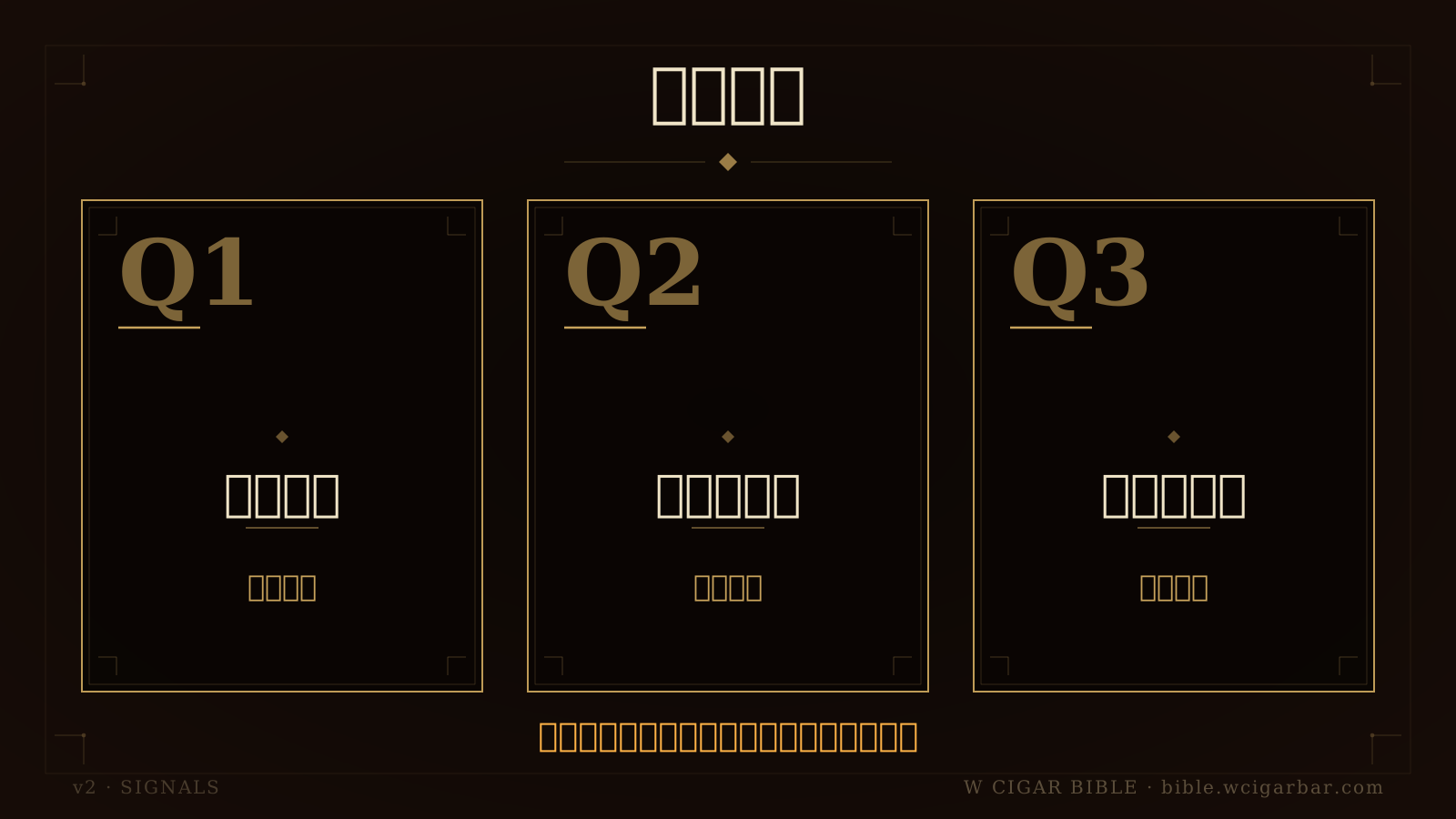
三張問答卡整理首把剪補切與打孔
Etiquette and Maintenance: Your Cigar Cultivation Seen in a Single Cut
Cutting a cigar also has etiquette. Before using public tools, ensure the blade is clean; don't tap your cigar on someone else's fire source, glass, or table to remove debris. If sharing a table with friends, gather the debris after cutting, don't flick it around. These small actions may seem trivial but are fundamental respects within cigar culture. From 19th-century Havana club culture to today's private collections, cigars have always been associated with moderation, order, and grace.
Good cutting etiquette means making yourself comfortable without disrupting others' rhythm and space. If borrowing someone else's cutter, wipe the blade before and after use; if the tool is a high-end model, like S.T. Dupont or Davidoff metal cutters, avoid single-handed flicking or using it to cut non-cigar items. No matter how beautiful the tool, it's essentially a precision blade, not a toy.
For maintenance, straight and V-cutters can be cleaned with a dry cloth after use, and the blade grooves can be gently wiped with a cotton swab if necessary. Pay special attention to leaf debris accumulation in punches; if leaves get stuck in the hole, the next punch will be uneven. Do not rinse wooden or leather-handled tools with water, and avoid applying oils with strong scents on the blades, as residual odors can transfer to the cigar head.
I also recommend preparing different tools for different scenarios: use a stable straight cutter at home, carry a small punch when going out, and use a V-cutter when you want to closely read a large ring gauge cigar. When you take care of your tools, they will reward you with cleaner, more stable cuts.
Frequently Asked Questions
What type of cutter should a beginner choose first?
I recommend starting with a double-bladed straight cutter, with an opening that supports ring gauges above 54 as the most practical. A straight cutter allows you to quickly understand the relationship between the cap line, cut size, and draw resistance. Once familiar with common sizes like robusto, toro, and churchill, try a V-cutter or punch to learn different smoke performances.
Can a cigar be recut if the initial cut is too small?
Yes, and it's safer than cutting too much initially. Start with a 1 to 2-millimeter cut, and if the draw is noticeably tight, add another half to 1 millimeter. Before recutting, dry the cigar head to prevent the moist wrapper from being pulled by the blade. If already lit, be even more gentle to avoid shaking off the ash column.
Will a V-cutter make the cigar stronger?
Not necessarily. V-cutters usually concentrate the smoke, so the entry feel may be more pronounced, but the strength still depends on the blend, aging state, ring gauge, and smoking rhythm. Tools change the expression method, not transform a mild cigar into something entirely different.
Are punches suitable for all cigars?
No, punches are best for round-headed, large ring gauge cigars, such as robustos or toros above 50-ring gauge. Torpedo and pyramid-shaped cigars are not recommended for punching due to the lack of a flat surface, which can damage the head. If the cigar is tightly rolled, punching may also make the resistance more apparent.
How often should the blade be replaced or maintained?
If used frequently, check every 6 to 12 months. If cutting results in crushing, jagged edges, or increased debris, it's a sign of declining blade condition. Regular cleaning with a dry cloth is sufficient, avoiding moisture and scented oils. Clean tools result in clean cuts.
—Cigar Prince Wilson Tsai
Cutting is the quietest and most honest moment in the cigar ritual. It doesn't rely on smoke or words, only on your understanding of the structure and the precision of your hands. As a beginner, there's no need to rush into complex tools; first, stabilize your straight cutting skills, learn to observe the cap line, control depth, and adjust resistance, and you've already crossed an important threshold. The appreciation of a cigar often doesn't start with lighting but with that one cut.
Smoking is harmful to health. Smoking is prohibited for those under twenty. Quitline: 0800-636363. This article is intended for adults over twenty as a reference for cigar culture, storage, and regulations, not as tobacco advertising, promotion, or purchase advice.
Like this article?Share with friends
Share this W Cigar Bible piece with friends who want to learn cigar culture, storage, and tasting.
想把這篇 化為實踐
雪茄聖經是知識;雪茄文化要在空間裡發生

W Cigar Bar 大安總店資訊
台北大安區 · 雪茄聖經總編輯 Wilson Tsai 主理的雪茄文化空間

33 座 24 小時恆溫恆濕醇化室
W Cigar Bar 提供的會員醇化空間 · 場地資訊請洽編輯部

雪茄剪 / 打火機 / 雪茄盒 / Boveda
W Cigar 配件官網 · 專營雪茄配件正品

加 LINE 好友 · 文化諮詢
文化空間資訊 · 紳士沙龍 · 私人包場
本網站內容僅供雪茄文化、歷史、收藏與品吸知識研究參考。菸品有害健康、未滿法定年齡者請勿吸菸。實際規範請依所在地法律為準。
吸菸有害健康・戒菸專線 0800-636363・本站僅供 20 歲以上成年人閱覽。
讀到這裡,你不只是路過的人
留下 Email,加入 W 雪茄聖經內圈——總編輯 Wilson Tsai 親選的學院深文與國際新訊,先你一步送到信箱。
· 教育用途非銷售 · 隨時一鍵退訂 · Email 絕不對外公開 · 由勝茄股份有限公司營運
同分類延伸閱讀



資料來源:W Cigar Bible 編輯部整理 · 雪茄王子 Wilson Tsai 親自審稿
本文僅供雪茄文化、歷史、收藏與品鑑知識研究,不作為菸品促銷、銷售或購買建議。吸菸有害健康,未滿二十歲不得吸菸。