威士忌產區完整地圖:蘇格蘭五大產區到亞洲新勢力,與雪茄搭配的風味總覽
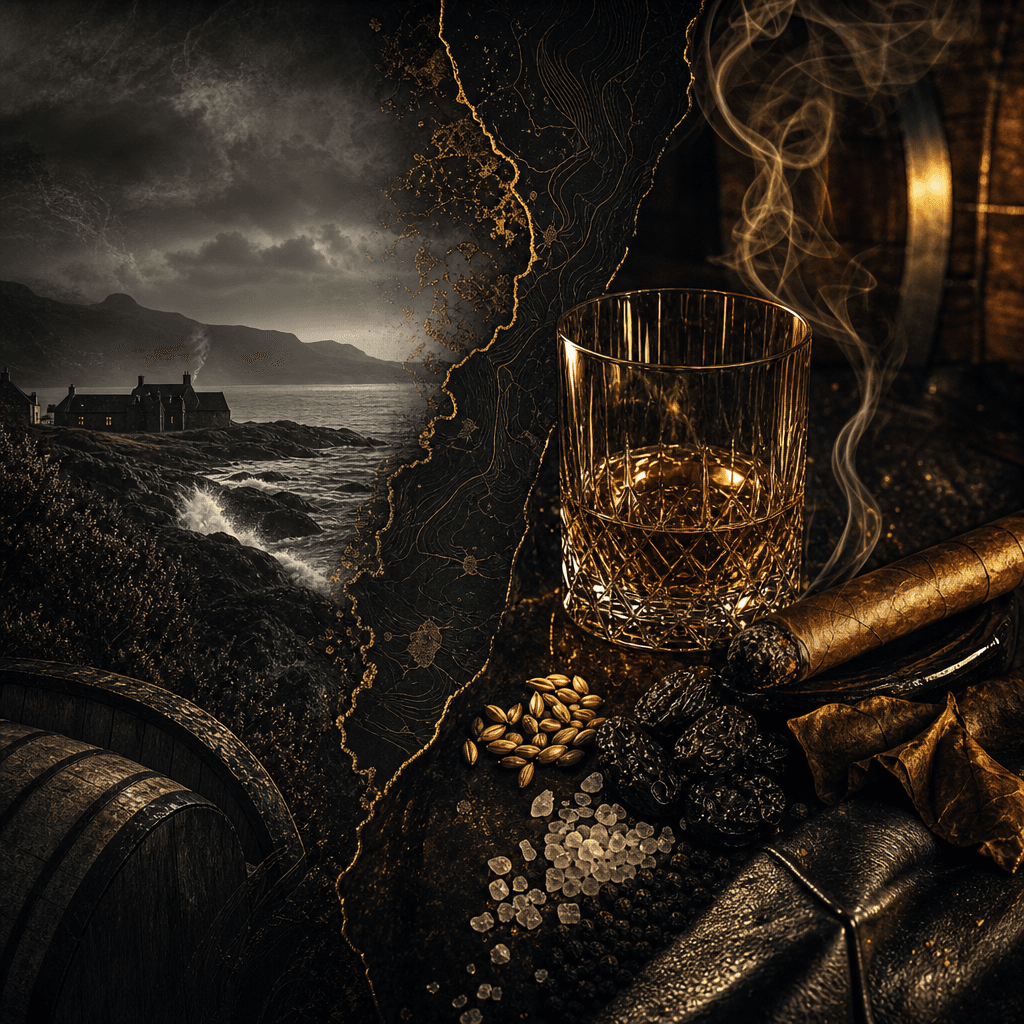
威士忌產區不是背地名,而是理解穀物、蒸餾、桶型與氣候如何形成風味光譜。本文從蘇格蘭五大產區、愛爾蘭三次蒸餾、美國波本與裸麥、日式調和與台灣噶瑪蘭談起,再以泥煤度、桶型與雪茄強度建立威士忌 雪茄搭配公式,讓入門者能用一張地圖看懂杯中與煙中的互動。
- 威士忌產區的差異,核心來自穀物、蒸餾器、桶型、氣候與法規。
- 泥煤、雪莉桶、波本桶,分別對應煙燻、可可、奶油等雪茄風味。
- 雪茄強度越高,越需要結構足夠的威士忌承接尾韻。
Complete Map of Whisky Regions: From Scotland's Five Major Regions to Asia's New Forces, A Comprehensive Overview of Flavors Paired with Cigars
The encounter between whisky and Partagás Serie D No.4 is often the moment when many readers first realize that "it's not enough for the drink and cigar to taste good individually." As the editor of the "Cigar Bible," I often say that the starting point for pairing whisky and cigars is not brand names, but the coordinates of region, cask type, peat level, and cigar strength. When an Islay single malt whisky meets a heavy Cuban cigar, the interplay of smoke, sea breeze, leather, and pepper is where the pairing truly becomes interesting.
This article serves as an introductory map to whisky, where I will first clarify the beverage side before establishing a formula on the cigar side. You will see the five major regions of Scotch whisky, the triple distillation of Ireland, the new oak barrel regulations of the United States, the blending philosophy of Japan, and the rapid maturation of Taiwan's Kavalan in a subtropical climate. Finally, we will place Partagás Serie D No.4 (heavy), Montecristo No.2 (medium), and H. Upmann Half Corona (light) into the same flavor coordinates.
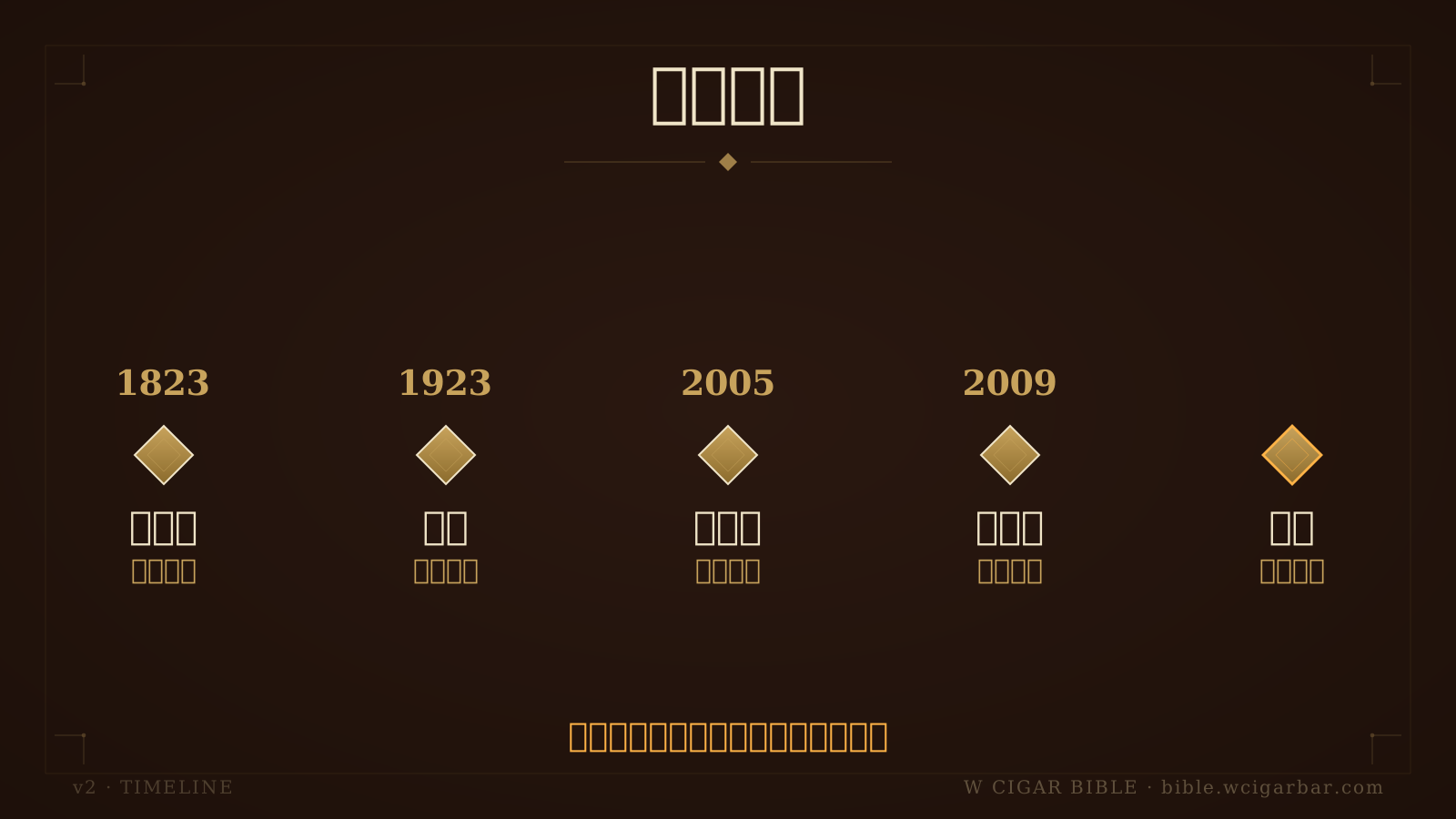
時間軸列出威士忌制度日式台灣與搭配判讀
Introduction to Whisky: Understanding Grains, Distillation, and Cask Aging
The framework of whisky is first determined by grains. Barley brings out malt biscuits, honey, husk, and nutty notes, corn often presents sweet corn, caramel, and vanilla, while rye leans towards black pepper, mint, hay, and spices. The allure of single malt whisky lies in its ability to condense the water source, malt, yeast, distillation apparatus, and cask aging strategy of the same distillery into a recognizable style.
The shape of the still changes the weight of the spirit. Tall and slender pot stills allow the liquid to contact more copper, weakening sulfur compounds and resulting in a lighter mouthfeel; short and stout stills retain oils, malt thickness, and a meaty feel. The 1823 Excise Act in the UK provided a more institutional basis for legal distillation, indirectly promoting Scotch whisky from a local drink to a clearly categorized industry.
Cask aging is like a second cooking. Bourbon casks impart vanilla, coconut, cream, and honey, sherry casks bring raisins, figs, cocoa, and cinnamon, while Mizunara casks offer sandalwood, agarwood, coconut flakes, and oriental spices. Whisky regions are just maps; the true scenery in the mouth is completed by grains, distillation, and cask types.
Map of Scotch Whisky Regions: The Flavor Spectrum of the Five Major Regions
When discussing Scotch whisky, the most common starting point is the five major regions: Speyside, Islay, Highlands, Lowlands, and Campbeltown. The 2009 Scotch Whisky Regulations placed regional names into a clearer regulatory context, but flavors are not the mechanical result of administrative boundaries. As the editor of the "Cigar Bible," I prefer to see it as a spectrum: from floral and fruity, malt, sea salt, peat to oily notes, each region provides different positioning clues.
Speyside is usually the easiest region for beginners to understand, commonly featuring apple, pear, honey, malt sweetness, sherry dried fruit, and gentle spices. The Highlands cover a large area with a wide range of styles, with Northern Highlands possibly having waxy, fruit peel, and sea breeze notes, while Southern Highlands may be softer with clearer grain notes. The Lowlands are often characterized by lightness, grassy notes, lemon peel, grain sweetness, and floral aromas, suitable for observing how whisky wins with details.
Islay is famous for peat, seaweed, iodine, tar, ash, and smoke, making it the region most likely to produce dramatic reactions when paired with cigars. Campbeltown, once home to a large number of distilleries in the late 19th century, now has fewer representatives but retains a unique framework of saltiness, oiliness, wet wood, minerals, and slight smokiness. The five major regions of Scotland are not five labels, but five flavor directions that can help you predict whether it will overpower the cigar, complement it, or open another tail note for it.
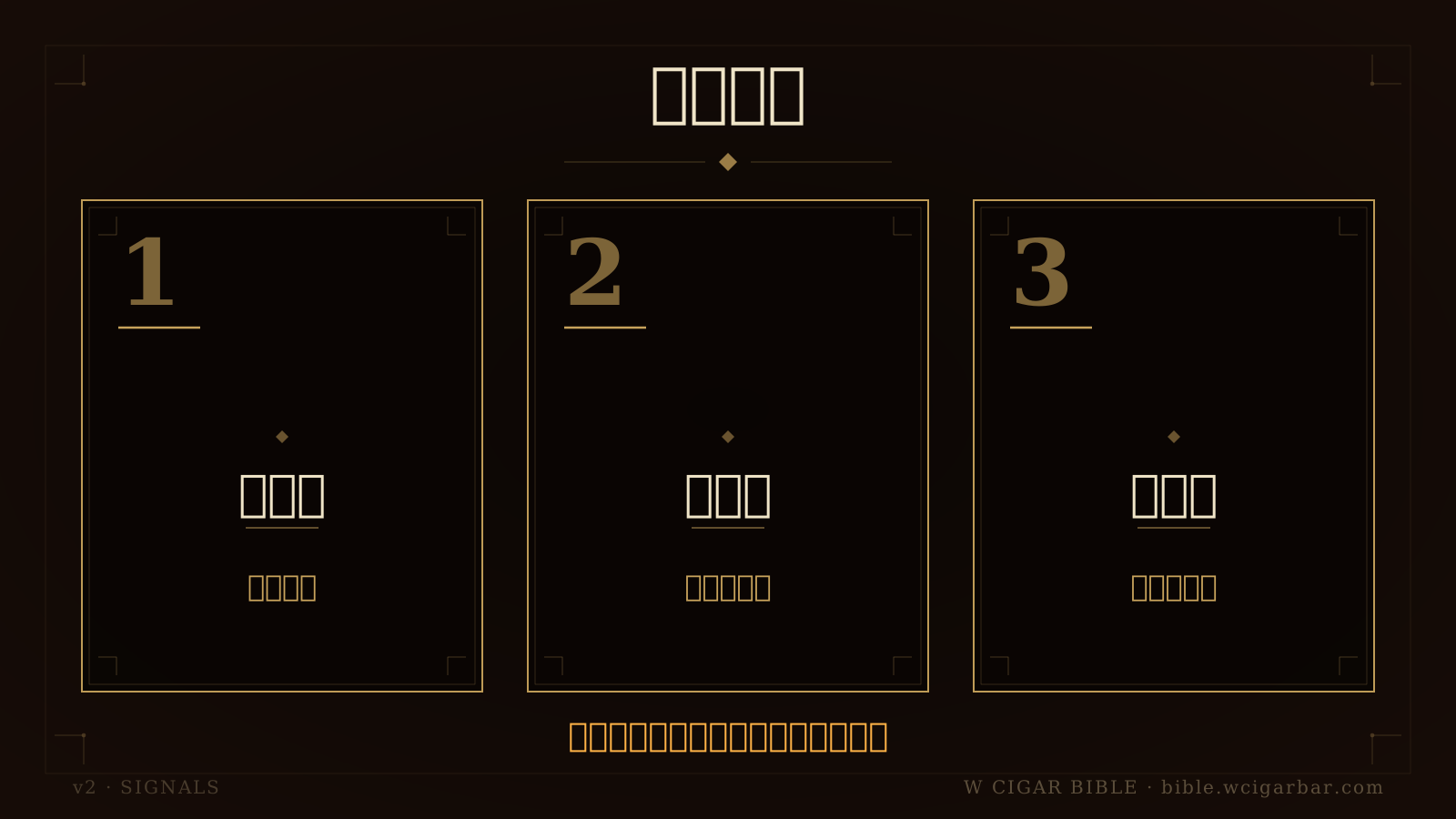
三張卡片整理產區桶型與雪茄強度判讀
Ireland, America, and Asia's New Forces: From Triple Distillation to Subtropical Maturation
Irish whiskey is often described as smooth, one reason being the tradition of triple distillation. Triple distillation increases the purity of the liquid, reducing some heavy oils, making green apple, honey, grain, white flowers, and cream more prominent. Coupled with the historical use of pot stills and unmalted barley, Irish whiskey often carries delicate grain spices rather than simple sweetness.
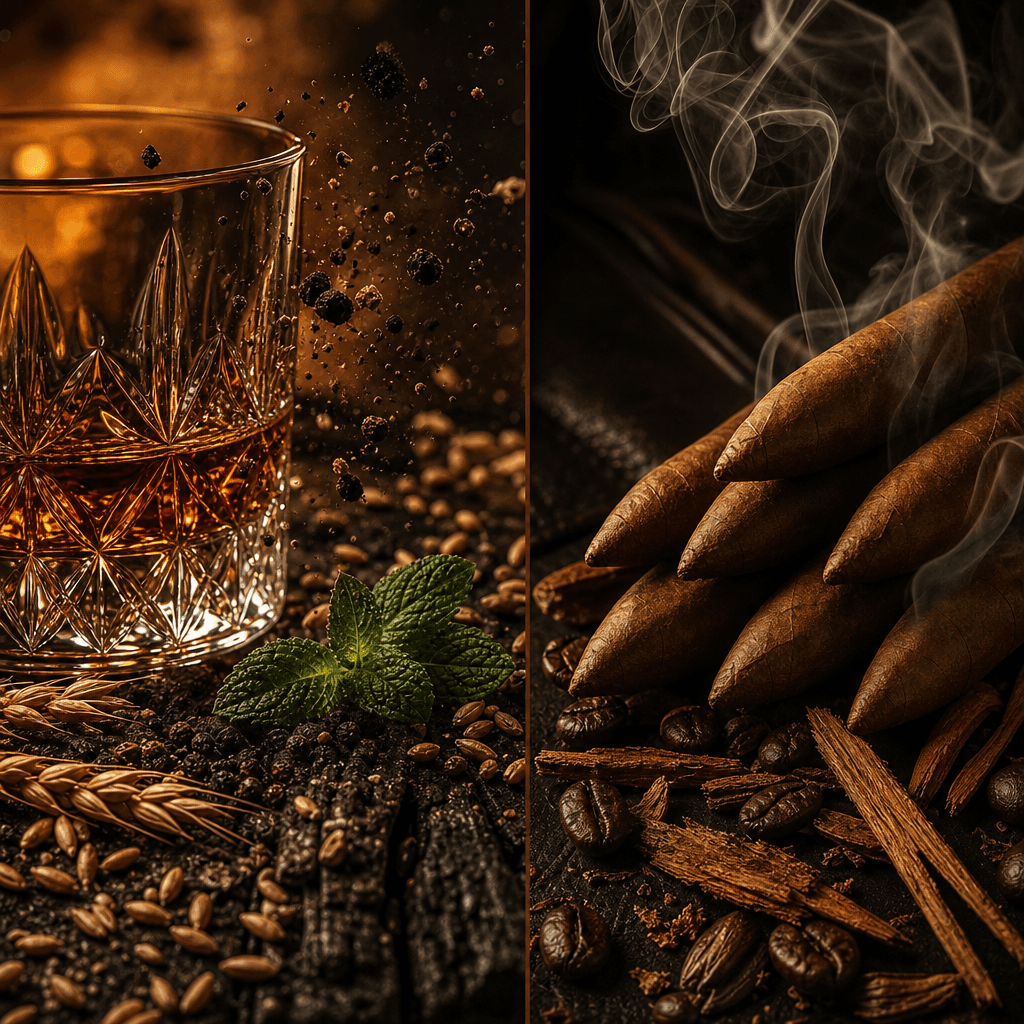
American whiskey is deeply shaped by regulations and oak barrels. Bourbon, primarily made from corn and aged in new charred oak barrels, has particularly vivid notes of vanillin, coconut lactone, caramelized xylose, and toasted spices. Rye whiskey, on the other hand, establishes its character with rye's pepper, mint, herbal, and dry spicy notes, easily forming a direct dialogue with cigars featuring pepper, woody, and leather notes.
Asia's new forces offer another perspective. Japanese whisky, since the establishment of the Yamazaki Distillery in 1923, has gradually formed a philosophy of precise blending, multiple cask types, and multi-original spirit assembly, with Mizunara casks bringing recognizable sandalwood, kyara, coconut flakes, and incense-like notes. Taiwan's Kavalan, since the distillery's completion in 2005, utilizes the high temperature and humidity of the subtropical environment to accelerate cask exchange, often amplifying tropical fruit, caramel, woody spices, and concentrated sweetness. Ireland, America, Japan, and Taiwan are not appendices outside of Scotland, but redefine the flavor syntax of whisky with different regulations, climates, and craftsmanship.

矩陣比較產區桶型與雪茄對搭配的影響
Cask Type as Whisky's Second Region: Bourbon, Sherry, and Mizunara Casks
If regions answer "where it comes from," cask types answer "how it became what it is now." During cask aging, alcohol, water, and wood components continuously exchange, with hemicellulose breaking down into caramel and baked sweetness, lignin generating vanillin, and oak lactones bringing coconut, woody, and creamy aromas. The char layer on the cask wall also absorbs some undesirable sulfur notes while providing smoky and toasted contours.
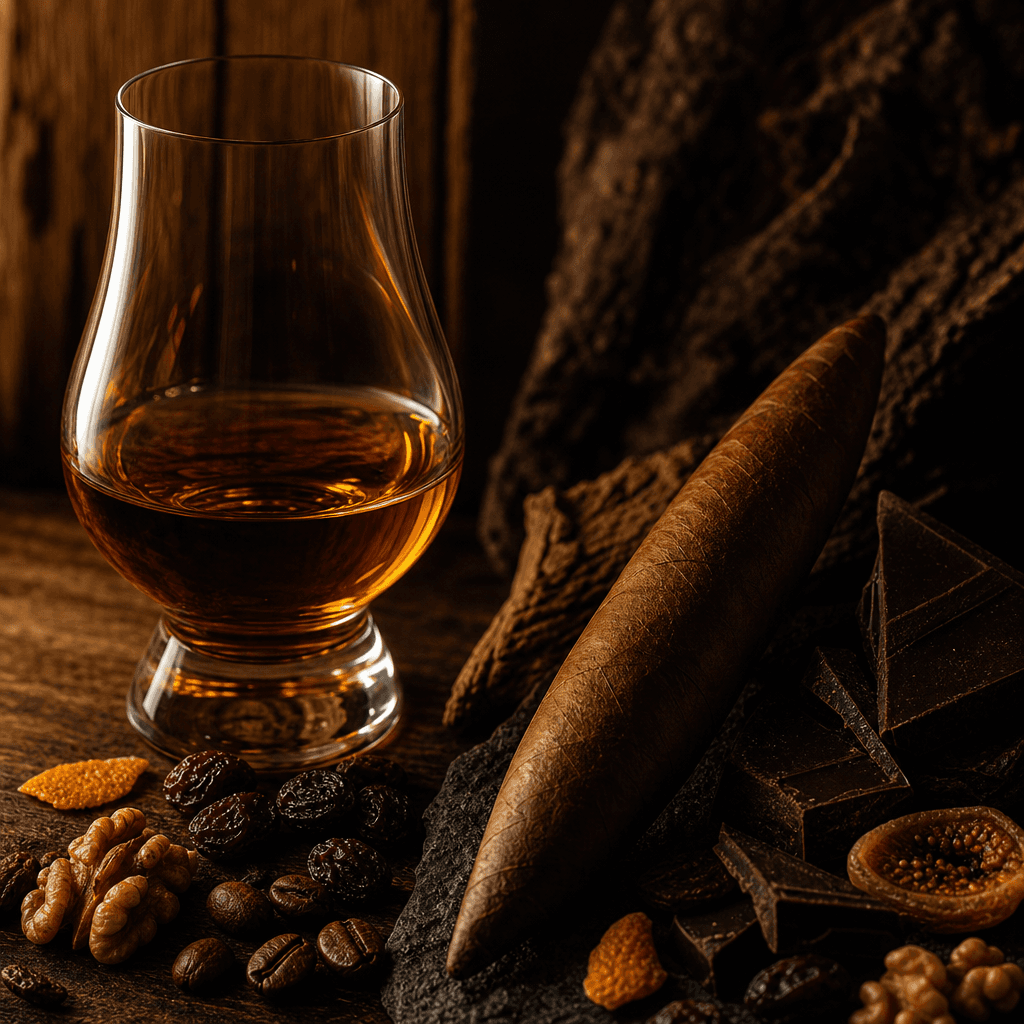
Bourbon casks often make the whisky brighter, commonly featuring vanilla, honey, cream, coconut, lemon peel, and white fruits. Sherry casks deepen the color of the whisky, shifting flavors towards raisins, prunes, orange peel, cocoa, walnuts, cinnamon, and leather. Mizunara casks, due to their larger wood pores and higher processing difficulty, can bring out unique sandalwood, agarwood, coconut flakes, oriental spices, and dry woodiness, particularly easy to layer with the woody segments of cigars.
For cigar pairing, cask types are sometimes more direct than regions. Bourbon casks are suitable for connecting cream, almond, and light woodiness; sherry casks are suitable for accommodating cocoa, coffee, dried fruit, and leather; Mizunara casks can extend the lines of sandalwood, cedar, hay, and spices. Cask type is not the background setting of whisky, but the key hinge that determines which cigar flavor it can align with.
Whisky and Cigar Pairing Formula: Peat Level, Cask Type, and Cigar Strength
The first coordinate on the cigar side is strength. Partagás Serie D No.4 (heavy) carries a thicker earthy feel, pepper, leather, coffee, and smoky tension; Montecristo No.2 (medium) commonly features cocoa, nuts, cream, toasted bread, and moderate woodiness; H. Upmann Half Corona (light) leans towards grains, cream, light woodiness, and delicate herbs. These three are not for ranking, but provide light, medium, and heavy reference points.
On the beverage side, we look at peat level and cask type. High peat whisky will bring out phenols, cresols, and guaiacol-like smoky and herbal notes, suitable for cigars with higher strength, sufficient smoke, and leather. Sherry cask whisky's dried fruit, cocoa, and nuts can accommodate the sweet-bitter balance of medium cigars; bourbon cask whisky's vanilla and cream can often clarify the soft segments of light cigars.
My simplified formula is: the higher the peat level, the higher the cigar strength should be; the sweeter the cask type, the cigar strength can be slightly reduced; the lighter the body, the cigar should not be too heavy. Partagás Serie D No.4 (heavy) can support whiskies with sea salt, peat, or heavy sherry structure; Montecristo No.2 (medium) is suitable for sherry casks, mild Highlands, or Speyside; H. Upmann Half Corona (light) can be placed next to Lowlands, Ireland, or bourbon cask styles. The pairing of whisky and cigars is not about who overpowers whom, but about maintaining the same center of gravity for body weight, cask sweetness, and cigar strength.
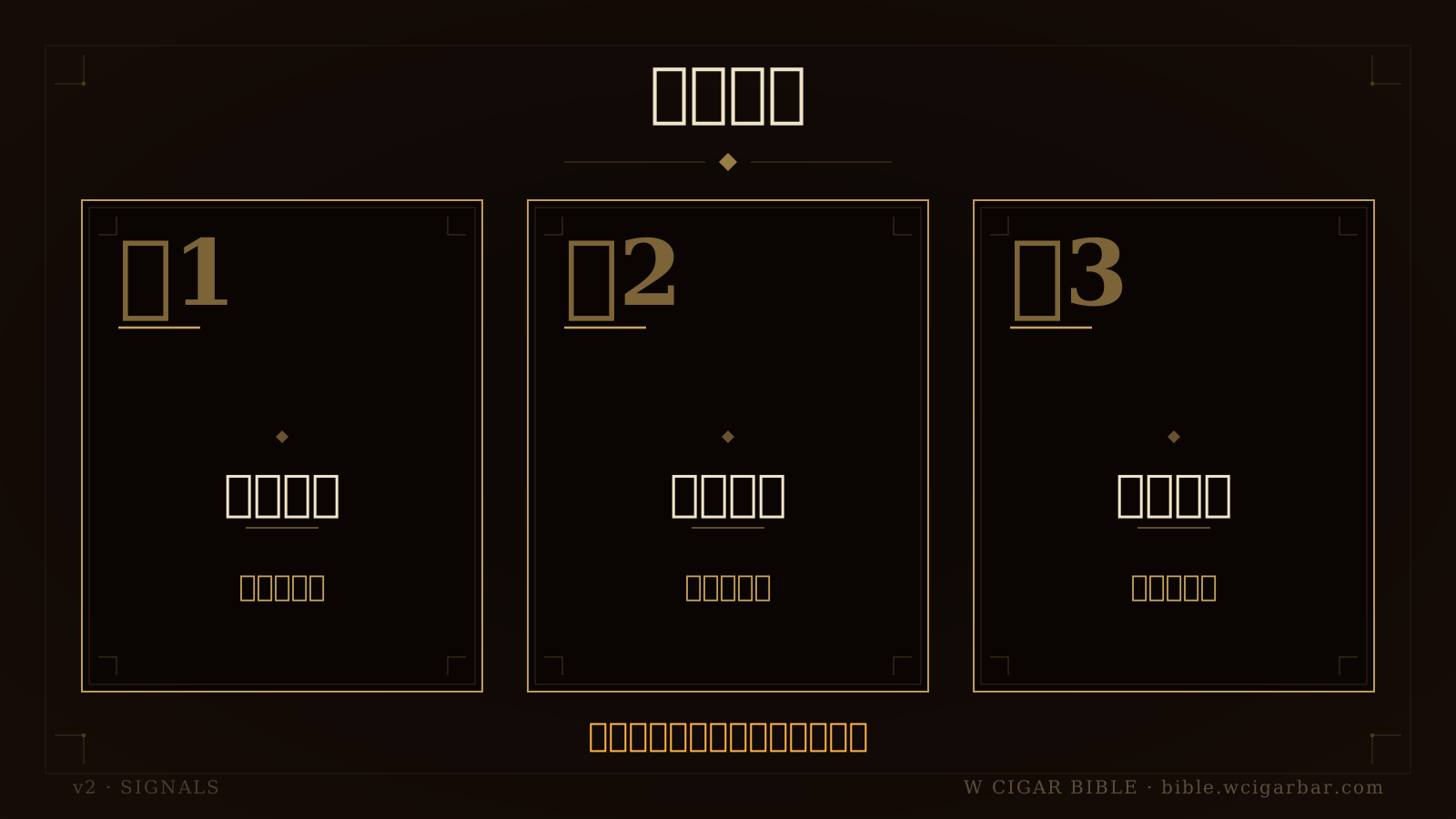
三張卡片標示產區泥煤與波本的常見誤解
Three Major Flavor Chemistry: Peat Phenols × Smoke, Dried Fruit × Cocoa, Vanilla × Cream
Flavor pairing cannot just say "it fits," it must be broken down to molecular and sensory levels. Phenolic compounds in peaty whisky, like phenol and cresol, bring out disinfectant, tar, ash, and seaweed notes; the breakdown of lignin during cigar combustion produces guaiacol, eugenol, and smoky woody notes. When the two meet, it's not a simple addition, but a smoky homogenous resonance, making the ash, roasted wood, and leather in the back of the nasal cavity more three-dimensional.
The dried fruit of sherry casks results from the combined effects of oxidation, the extraction of cask liquid, and wood, commonly featuring raisins, figs, prunes, orange peel, and nut oils. When it encounters the cocoa, coffee, and roasted nuts commonly found in Montecristo No.2 (medium), the sweet and sour of dried fruit will modify the cocoa bitterness, making the bitterness not sharp and the sweetness not cloying. Bourbon cask vanilla comes from the transformation of lignin into vanillin, and when it meets the cream, grains, and light woodiness of H. Upmann Half Corona (light), a vanilla × cream resonance occurs, rounding out the mid-palate.
| Pairing Formula | Source of Whisky Flavor | Corresponding Cigar Flavor | Specific Changes |
|---|---|---|---|
| Peat Phenols × Cigar Smoke Resonance | Islay Peat, Phenol, Cresol, Seaweed | Leather, Smoke, Black Pepper | Deepened smoky layers, tail note shifts to ash and roasted wood |
| Sherry Cask Dried Fruit × Cocoa Complement | Raisins, Prunes, Orange Peel, Walnuts | Cocoa, Coffee, Nuts | Sweet and sour modify bitterness, forming a dark chocolate-like thickness |
| Bourbon Cask Vanilla × Cream Resonance | Vanillin, Coconut, Honey, Cream | Cream, Grains, Light Wood | Mouthfeel becomes round, woody edges are softened |
| Mizunara Cask Sandalwood × Cigar Woody Extension | Sandalwood, Agarwood, Coconut Flakes, Spices | Cedar, Hay, Spices | Nasal aroma extends, aftertaste becomes cleaner and more delicate |
A true whisky and cigar pairing should be able to clearly articulate which set of flavor molecules, which segment of cigar aroma, and which type of mouthfeel structure are interacting.
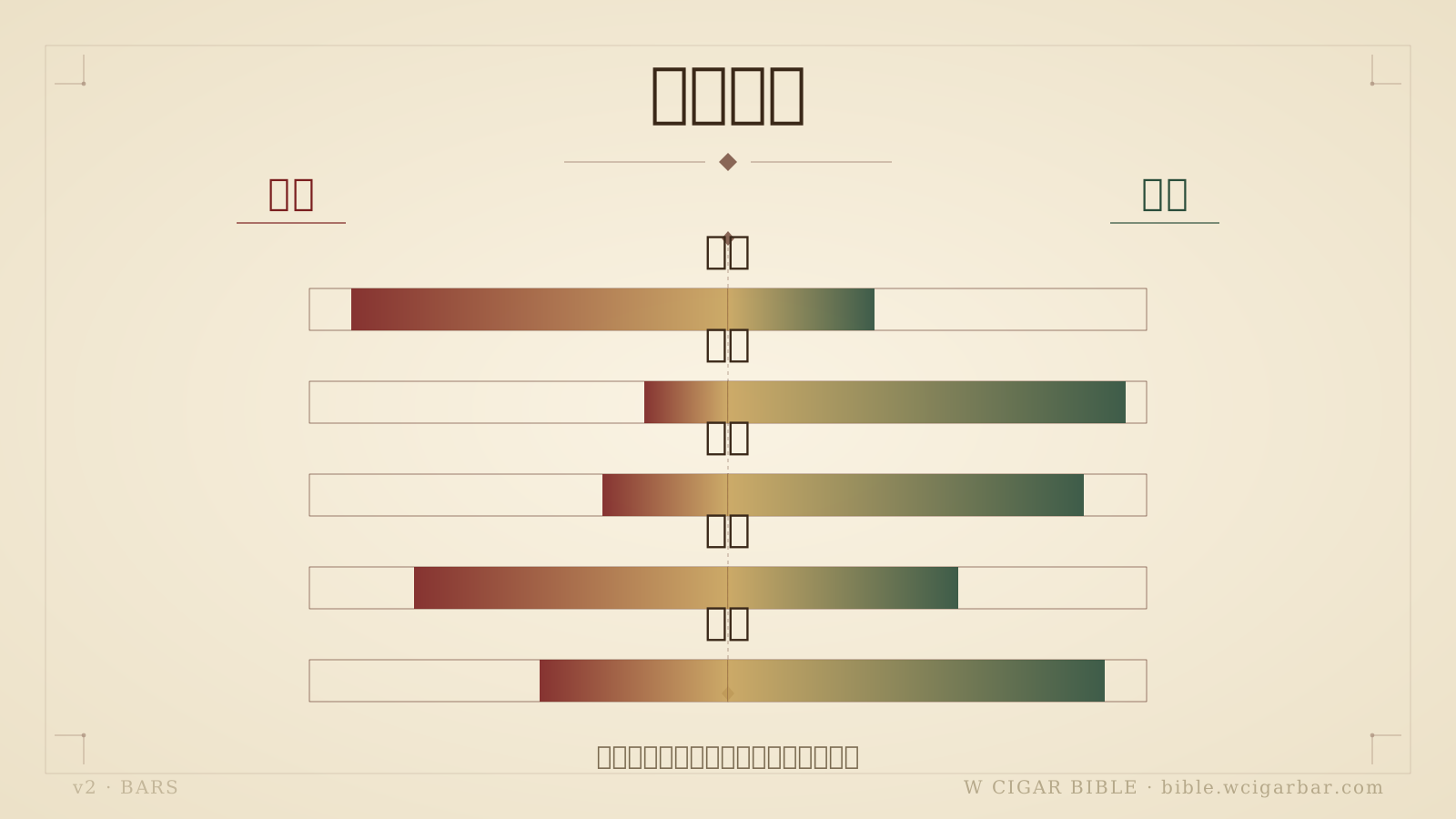
橫條圖比較輕雅與重煙取向的花果泥煤海鹽
Adding Water, Neat Drinking, and Puffing Rhythm: Aligning Single Malt Whisky with Cigars
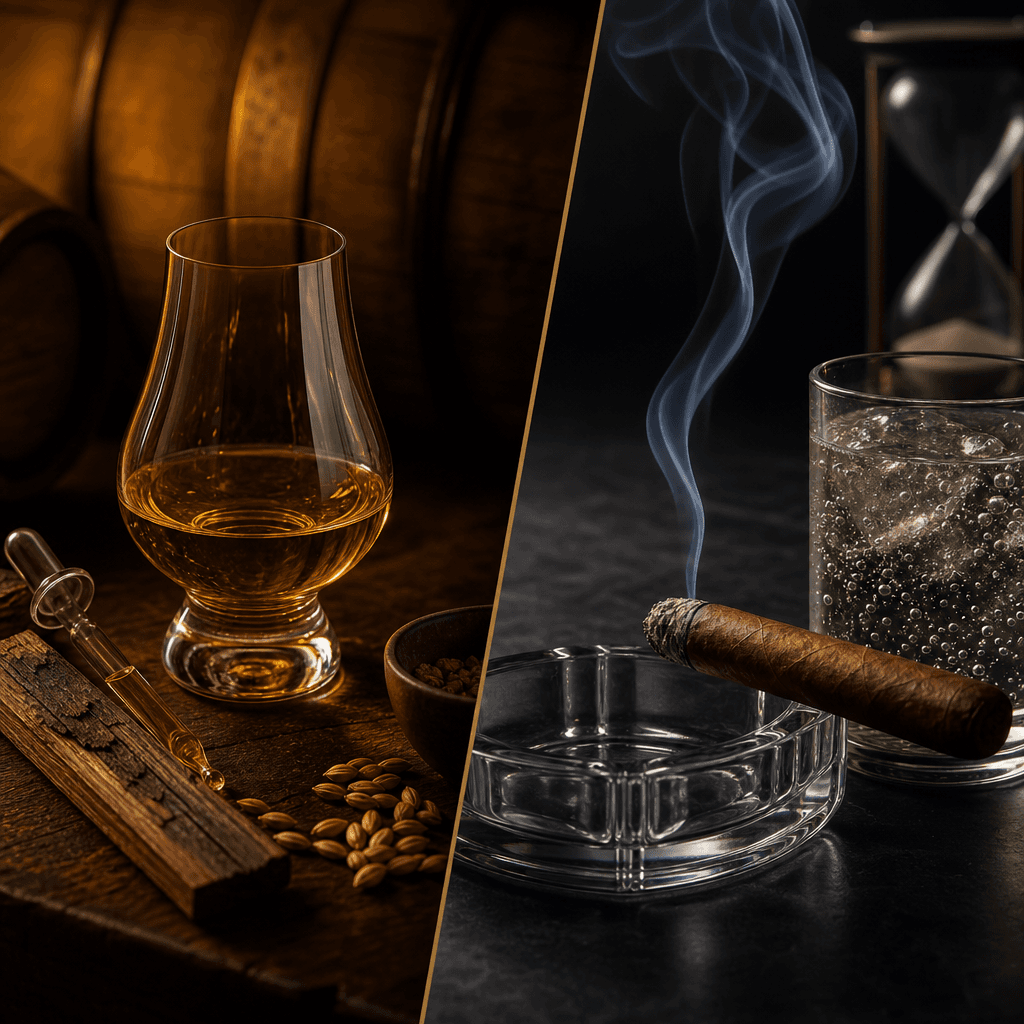
Drinking neat preserves the most complete body and cask aging structure of whisky, suitable for observing the first sip's oils, sweetness, spices, and tail note length. However, in single malt whisky where the alcohol sensation is more pronounced, adding a small amount of water can reduce the irritation, making ester fruitiness, malt sweetness, and cask aroma easier to unfold. Adding water is not diluting character, but adjusting the speed of aroma release, especially meaningful when cigar smoke already occupies the mouth.
When pairing with cigars, I habitually smell the whisky first, then take a puff of the cigar, let the smoke retreat to the back of the nasal cavity, and finally sip the whisky in small sips. This avoids alcohol directly covering the tongue and allows the cigar's woodiness, pepper, and cocoa to lay the foundation first. If the order is reversed, heavy peat or heavy sherry whisky may first color the taste buds, causing light cigars to lose detail.
The shape of the glass also affects interpretation. A tulip glass can concentrate aromas, suitable for analyzing regions and cask types; a wide-mouth glass allows alcohol to evaporate faster, with a looser aroma profile, but when paired with rich cigars, it sometimes won't be overly sharp. A rational tasting method is to use small sips, pauses, and water ratio adjustments to let whisky and cigars take turns speaking, rather than pushing both to maximum volume.
From Map to Glass: Three Classic Scenario Demonstrations
The first scenario is the Islay peat style with Partagás Serie D No.4 (heavy). The sea salt, iodine, tar, and ash of Islay will push the leather, black pepper, coffee, and earthy notes of Partagás deeper. This pairing is suitable for understanding the logic of "strong with strong," but if the whisky's peat level is too high and the body too sharp, the cocoa and sweetness in the middle of the cigar may be thinned.
The second scenario is the Speyside or Highland sherry cask style with Montecristo No.2 (medium). The raisins, prunes, orange peel, walnuts, and cocoa of the sherry cask can complement the roasted nuts, coffee, cream, and woodiness of Montecristo. This pairing is most suitable for whisky beginners to practice "sweet-bitter balance," as you can clearly feel how the sweet and sour of dried fruit make the cocoa bitterness rounder.
The third scenario is the Lowlands, Ireland, or bourbon cask style with H. Upmann Half Corona (light). The grains, honey, vanilla, white flowers, and cream of these whiskies won't quickly overshadow the delicate herbs, light woodiness, and grain sweetness of the cigar. If you want to add an Asian context, Japanese Mizunara casks can correspond to the cigar's woody line, while Taiwan's Kavalan's tropical fruit and concentrated cask aroma require attention to whether the cigar's strength is sufficient to support it. When moving from the regional map to the glass, the most important thing is not to remember fixed combinations, but to judge whether the weight, sweetness, smoke, and tail note of each pairing are aligned.
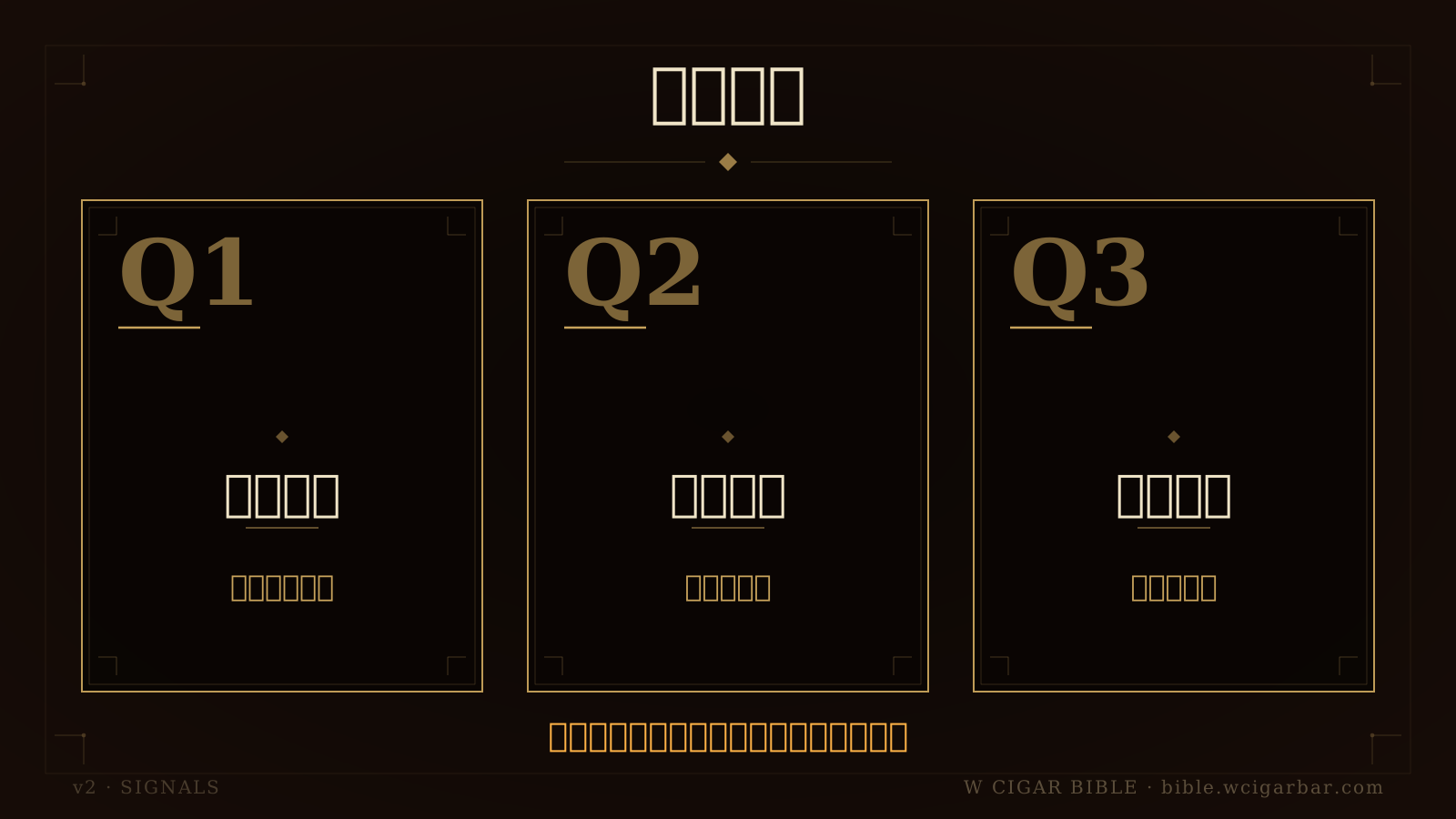
三張問答卡整理入門產區泥煤搭配與加水方式
Full Series Pairing Guide
Below is a comprehensive deep dive into all sub-axes of this main theme, covering the complete flavor spectrum, with each article being a specific drink × a specific cigar:
- Complete Analysis of Islay Whisky's Peat Flavor: Sea Breeze Iodine and Smoky Phenols, Paired with Partagás Serie D No.4's Smoky Dialogue
- Speyside Whisky Sherry Cask Flavor: Sweetness of Dried Fruit and Dark Chocolate, Paired with Montecristo No.2's Cocoa Tail Note
- The Mineral Framework of Highland Whisky: Heather Honey and Roasted Malt, Paired with H. Upmann Magnum 46's Creamy Baking
- The Lightness of Lowland Whisky's Triple Distillation: Afternoon of Grass and Citrus, Paired with Quai d'Orsay No.54's French Elegance
- The Oily Saltiness of Campbeltown Whisky: The Oil and Salty Freshness of the Former Whisky Capital, Paired with Bolívar Belicosos Finos
- The Smoothness of Irish Whiskey's Single Pot Still: Green Apple and Cream, Paired with Romeo y Julieta Wide Churchill
- The Vanilla Caramel of Bourbon Whiskey: Kentucky's New Charred Oak Barrels, Paired with Padrón 1926 Serie No.9's Dark Cocoa
- The Spicy Framework of Rye Whiskey: Black Rye Pepper and Mint, Paired with Partagás Serie P No.2's Spice Spark
- The Mizunara Cask Aesthetics of Japanese Whisky: Yamazaki Yoichi Style and Kyara Fragrance, Paired with Cohiba Siglo VI's Delicate Layers
- The Subtropical Maturation of Kavalan Whisky: Yilan's Snow Mountain Water Source and Rapid Cask Aging, Paired with Trinidad Fundadores's Elegant Long Cigar
- Everyday Introduction to Blended Whisky: The Art of Balance in Popular Styles, Paired with H. Upmann Half Corona's Half-Hour Ritual
- Complete Analysis of Cask Strength Whisky: The Art of Cask Aging Original Liquid and Adding Water, Paired with Cohiba Behike 52's Top-Level Duel
- How to Choose Between Peat and Sherry Casks: Personality Test of the Two Major Whisky Flavor Routes, with a Comparison Table of Cigar Intensity
- The Refreshing Formula of Whisky Highball: Bubbles and Malt on a Summer Night, Paired with Por Larrañaga Petit Corona
Frequently Asked Questions
Whisky regions can provide direction, but cannot replace the actual interpretation of cask type, age structure, and distillery personality.
Which region should whisky beginners start with?
You can start with Speyside, Lowlands, or Irish styles, as floral, fruity, honey, grain, and cream notes are easier to identify. Then move on to the Highlands, Campbeltown, and Islay, observing how waxiness, saltiness, oiliness, and peat change the body.
Is peaty whisky always suitable for heavy cigars?
In general, high peat usually requires a more structured cigar to support it. However, if the whisky has a sharp alcohol sensation, strong medicinal peat notes, and the cigar lacks sweetness, they may still pull against each other. Judging requires looking at peat level, body thickness, and cask sweetness simultaneously.
Why are sherry cask whiskies often paired with cigars?
Sherry casks bring dried fruit, nuts, cocoa, leather, and spices, which overlap with the core tones of many cigars. They can use sweet and sour notes to modify cocoa bitterness and make coffee, woodiness, and leather more layered.
Are bourbon whiskey and bourbon cask Scotch whisky the same?
No, they are not. Bourbon whiskey is influenced by American grain proportions and new charred oak barrel regulations, with obvious corn sweetness, vanilla, and caramel notes. Bourbon cask Scotch whisky is aged in barrels that once held bourbon, commonly featuring vanilla, coconut, and honey, but the base is still determined by malt and distillery style.
Will adding water ruin the whisky and cigar pairing?
Adding a small amount of water can often open up aromas, especially in cask strength or whiskies with concentrated alcohol sensations. When pairing with cigars, adding water can also reduce oral irritation, making woodiness, dried fruit, cream, and smoke easier to layer. The key is to adjust gradually, not to change too much at once.
Where do Japanese and Taiwanese whiskies fit in the pairing position?
Japanese whisky can be understood from the blending delicacy and Mizunara cask woodiness, suitable for pairing with light to medium-strength cigars. Taiwan's Kavalan, due to subtropical maturation bringing concentrated fruit and cask aromas, requires attention to whether the cigar has enough cocoa, woodiness, or spices to support it.
The value of the whisky region map lies in allowing us to describe the encounter between the glass and the smoke in clearer language. When you can place peat, cask type, body, and cigar strength on the same coordinates, each tasting is not just an impression, but a flavor experience that can be deconstructed, compared, and recorded.
—Cigar Prince Wilson Tsai
Smoking is harmful to health. No smoking under the age of twenty. Quitline: 0800-636363. This article is intended for adults over the age of twenty as a reference for cigar culture, preservation, and regulatory knowledge, not as tobacco advertising, promotion, or purchase advice.
No drunk driving. Excessive drinking is harmful to health. No drinking under the age of eighteen. This article is also not alcohol advertising, promotion, or purchase advice, please drink responsibly.
Like this article?Share with friends
Share this W Cigar Bible piece with friends who want to learn cigar culture, storage, and tasting.
想把這篇 化為實踐
雪茄聖經是知識;雪茄文化要在空間裡發生

W Cigar Bar 大安總店資訊
台北大安區 · 雪茄聖經總編輯 Wilson Tsai 主理的雪茄文化空間
33 座 24 小時恆溫恆濕醇化室
W Cigar Bar 提供的會員醇化空間 · 場地資訊請洽編輯部
雪茄剪 / 打火機 / 雪茄盒 / Boveda
W Cigar 配件官網 · 專營雪茄配件正品
加 LINE 好友 · 文化諮詢
文化空間資訊 · 紳士沙龍 · 私人包場
本網站內容僅供雪茄文化、歷史、收藏與品吸知識研究參考。菸品有害健康、未滿法定年齡者請勿吸菸。實際規範請依所在地法律為準。
吸菸有害健康・戒菸專線 0800-636363・本站僅供 20 歲以上成年人閱覽。
讀到這裡,你不只是路過的人
留下 Email,加入 W 雪茄聖經內圈——總編輯 Wilson Tsai 親選的學院深文與國際新訊,先你一步送到信箱。
· 教育用途非銷售 · 隨時一鍵退訂 · Email 絕不對外公開 · 由勝茄股份有限公司營運
同分類延伸閱讀
資料來源:W Cigar Bible 編輯部整理 · 雪茄王子 Wilson Tsai 親自審稿
本文僅供雪茄文化、歷史、收藏與品鑑知識研究,不作為菸品促銷、銷售或購買建議。吸菸有害健康,未滿二十歲不得吸菸。