Rioja 西班牙紅酒的桶陳哲學:Tempranillo 與美國橡木的香草椰子,搭配 Bolívar Royal Corona
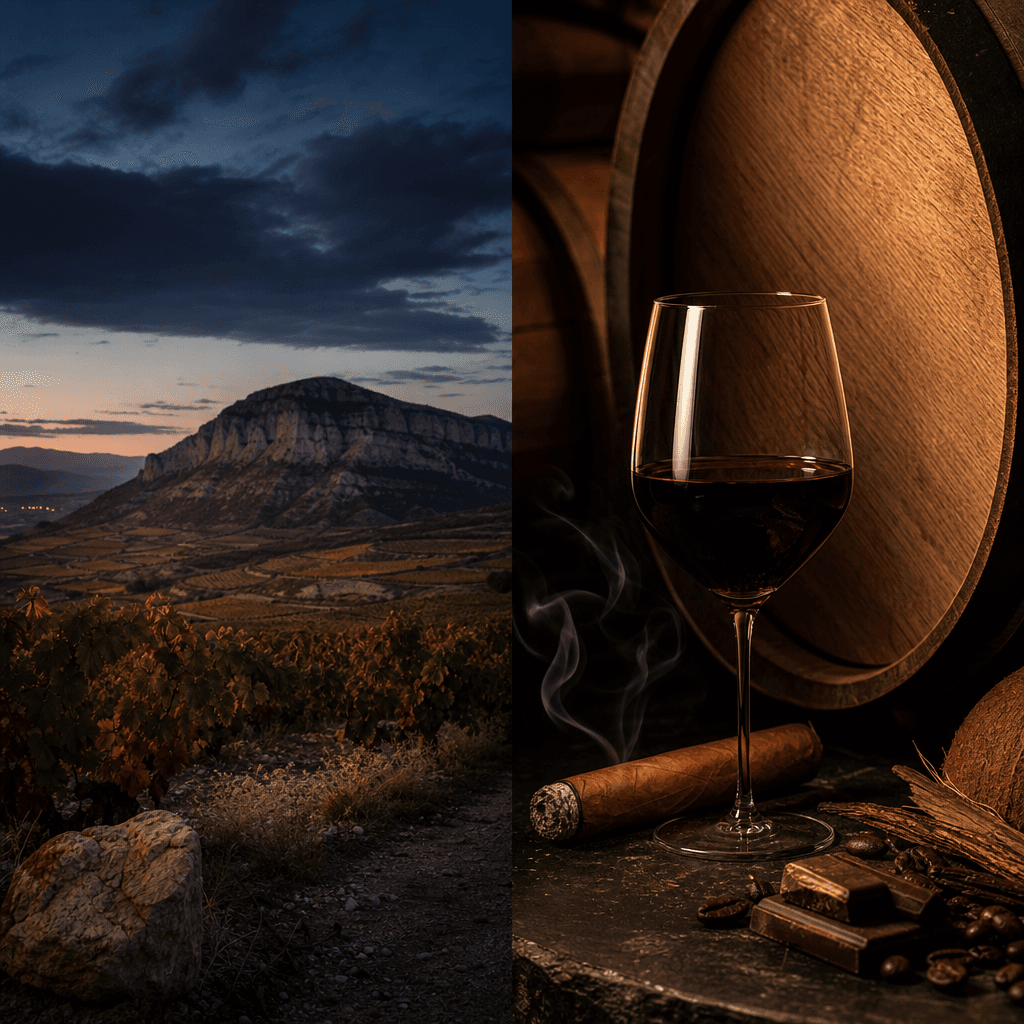
Rioja 的核心不只在 Tempranillo,也在美國橡木桶帶出的香草、椰子與蒔蘿線索。本文從 Ebro 河谷、桶陳分級到酒莊熟成傳統,解析 Rioja 與 Bolívar Royal Corona 相遇時,如何以甜香、果乾、咖啡與黑巧克力形成精準對位。
- Rioja 的桶陳哲學來自 Ebro 河谷、Tempranillo 早熟性與酒莊代放熟成傳統。
- 美國橡木桶的香草椰子甜,可與 Bolívar 黑巧克力苦甜形成互補結構。
- Gran Reserva 果乾與烘焙咖啡同烘同溫,是老手判斷搭配深度的關鍵。
The Barrel Aging Philosophy of Rioja Spanish Red Wine: Tempranillo and American Oak's Vanilla Coconut, Paired with Bolívar Royal Corona
The encounter between Rioja Spanish red wine and Bolívar Royal Corona may seem like a simple pairing of wine and cigar, but it's actually a structural dialogue between Tempranillo, barrel-aged spices, Cuban earthiness, and roasted bitterness. As an editor of the "Cigar Bible," I often say that a truly engaging pairing isn't about forcing two intense elements together, but observing who lays the foundation, who extends, and who concludes in the palate. Rioja is suitable for discussing depth because its history is not just about singular fruit flavors, but a flavor text written by grapes, oak, and time.
Bolívar Royal Corona (Cuba, Robusto, 50 × 124mm): Deep earth, dark chocolate, roasted coffee, spices, and a full-bodied cigar. This cigar isn't the type to speak softly; its low frequency is thick, and its progression is clear. If paired with overly sharp or alcohol-forward red wine, both sides will amplify each other's rough edges. This is where Rioja's value lies: it uses barrel aging smoothness, acidity support, and mature aromas to turn Bolívar's power from a linear push into a layered arc.

時間線顯示從產區判讀到熟成收束的搭配流程
The Map of Rioja: How the Ebro Valley Shapes Spanish Red Wine
Rioja is located in the Ebro Valley in northern Spain, bordered by the Cantabrian Mountains to the west and gradually opening to Mediterranean airflows to the east. This region is not a single climate but a mosaic of Atlantic, Mediterranean, and continental climates. Rioja Alta, Rioja Alavesa, and Rioja Oriental each offer different proportions of acidity, aroma maturity, and body weight.
Rioja Alta, with its higher altitude, experiences significant nighttime cooling, allowing Tempranillo to retain a clearer acidity line and red fruit profile. Rioja Alavesa's soil is rich in limestone clay, offering tight aromas often featuring violets, red cherries, and fine tannins. Rioja Oriental is warmer and has historically been used to supplement body and alcohol, especially when Garnacha is involved in blending.
To understand Rioja, one must first view it as a symphony of multi-climates, multi-soils, and multi-aging strategies within the Ebro Valley. Therefore, when we say a Rioja is suitable for Bolívar Royal Corona, we're not saying all Riojas automatically match; rather, it depends on whether it has enough acidity to cleanse the palate, enough barrel-aged sweetness to connect with tobacco, and enough aging depth to support a full-bodied cigar. Experienced pairers should first ask whether the wine leans towards red fruit, black fruit, or has entered the matured lexicon of leather, tobacco, dried fruit, and sweet spices.
Tempranillo: Early-Ripening Variety with Acidity, Tannins, and Fruit Structure
The name Tempranillo comes from the Spanish word "temprano," meaning early, indicating that it matures earlier than many other Spanish red grapes. Its early ripening allows it to retain certain acidity levels before sugar maturity in Rioja's environment, where day-night temperature differences are significant. This is crucial for pairing red wine with cigars because acidity is a cleansing tool, not just a bright taste sensation.
Tempranillo's fruit flavors often hover around red cherry, plum, dried strawberry, and blackberry edges. Its tannins are not like the square, thick walls of Cabernet Sauvignon but are more granular and can be rounded by barrel aging. If harvested early, it shows red fruit and herbal notes; if more mature, it shifts towards black plum, jam, and cocoa. The charm of Rioja's tradition lies in rarely relying solely on the grape itself but using Tempranillo as a framework to carry oak and aging.
The key function of Tempranillo for Bolívar Royal Corona is to cut through the full-bodied cigar with acidity and then use medium-thick tannins to capture the smoke's tail. When the cigar's deep earth and spices unfold in the mouth, Tempranillo's acidity line lifts the heaviness slightly, preventing dark chocolate and roasted coffee from piling up. This doesn't weaken Bolívar but gives its low frequencies a contour, like casting side light on a dark oil painting.

三張卡呈現酸度、桶香與熟成尾韻的搭配重點
The Tradition of American Oak Barrels: Where Vanilla, Coconut, and Dill Come From
Rioja's relationship with American oak barrels is closely linked to European wine history in the late 19th century. After the phylloxera crisis, Bordeaux's techniques and commercial influence entered northern Spain, and Rioja wineries began to systematically use oak barrels, blending, and long-term cellar aging. American oak became part of Rioja's tradition not only because of stable supply but also because it could impart very distinctive aroma imprints to Tempranillo.
American oak, Quercus alba, has higher lactone content, especially cis-oak lactone, often perceived as coconut, sweet wood, and creamy. Lignin breaks down into vanillin during toasting, bringing associations of vanilla and frosting; it may also exhibit clove, sweet spices, and light caramel. The dill, coconut, and vanilla commonly seen in traditional Rioja are not rhetorical but concrete traces left by oak chemistry and barrel aging time.
American oak barrels make Rioja not just a Spanish red wine but a flavor container that envelops fruit, sweet spices, and a sense of time. For Bolívar Royal Corona, these vanilla, coconut, and dill notes don't simply add sweetness but provide a layer of soft midrange. When the cigar's spices start to emerge, dill and sweet wood pull the sharp pepper towards dry herbs, making the flavor boundaries cleaner.

矩陣比較高區、阿拉與東區在酸度香氣酒體上的差異
From Crianza to Gran Reserva: The Ladder of Barrel Aging Duration and Winery Aging Tradition
Rioja's classification is largely based on aging time, differing from many regions that emphasize vineyard location. Crianza, Reserva, and Gran Reserva are not just style names but involve barrel time, bottle time, and the system of winery pre-release aging. This tradition allows Rioja to often reach the drinker in a more complete state, without relying solely on imagining future curves.
Crianza usually showcases more direct red fruit, vanilla, and light toasting, suitable for observing the initial meeting of Tempranillo and oak. Reserva adds dried flowers, tobacco, leather, and finer tannins, with fruit transitioning from fresh to mature. Gran Reserva typically comes from better vintages, developing complex vocabularies of dried fruit, cedar, spice box, cocoa, and aged leather after longer barrel and bottle aging.
| Classification | Typical Aging Direction | Common Aromas | Connection with Bolívar Royal Corona |
|---|---|---|---|
| Crianza | Fruit-forward, noticeable oak | Red cherry, vanilla, coconut | Sweetness can connect with dark chocolate, but depth is shorter |
| Reserva | Fruit and aging aromas parallel | Plum, leather, tobacco, spices | Can connect earthiness and spices, good balance |
| Gran Reserva | Aging aromas dominate, dried fruit extends | Fig, cedar, cocoa, coffee | Dried fruit tone × roasted coffee most complete |
| Traditional Winery Aging | More integrated flavors pre-release | Sweet wood, dried flowers, tobacco leaf | Barrel aging smoothness can buffer full-bodied cigar |
To truly unfold Bolívar Royal Corona's roasted coffee and deep earth, Gran Reserva often has more linguistic ability than younger Rioja. Gran Reserva's dried fruit isn't just sweetness but a dark caramelized sensation left after time has reduced moisture. When it meets the roasted coffee in the cigar, it creates an illusion of "same roast, same temperature": dried figs like low-temperature drying, coffee like medium-dark roast, both approaching each other in caramelization and Maillard reaction associations.

三張卡列出只選陳釀、桶香過高與酒溫隨意的誤解
The Cigar Language of Bolívar Royal Corona
Bolívar Royal Corona is a highly recognizable Cuban Robusto size, with a 50 × 124mm ratio concentrating smoke density and burning rhythm. Its core isn't light floral but a gradual layering of deep earth, dark chocolate, roasted coffee, and spices. A full-bodied cigar means it occupies the center of the mouth, leaving a noticeable dryness, bittersweetness, and mineral-like dark tail.
If this cigar is paired with a thin red wine, the wine will be flattened, leaving only acidity and alcohol. If paired with overly heavy and coarse tannin red wine, it will heighten mouth dryness, making the cigar's spices sharp. Mature versions of Rioja offer another path: not hard against hard, but using acidity, sweet wood, and aging aromas to support.
Bolívar Royal Corona doesn't need more volume but a drink structure that can illuminate its dark chocolate, coffee, and earth in layers. So when evaluating pairings, I first look at whether the wine's oak has integrated, not just whether the body is thick enough. If vanilla coconut floats on the surface, it will seem cloying; if barrel aging aromas have merged with dried fruit, leather, and tobacco, it can form a true dialogue with Bolívar's full-bodied cigar.
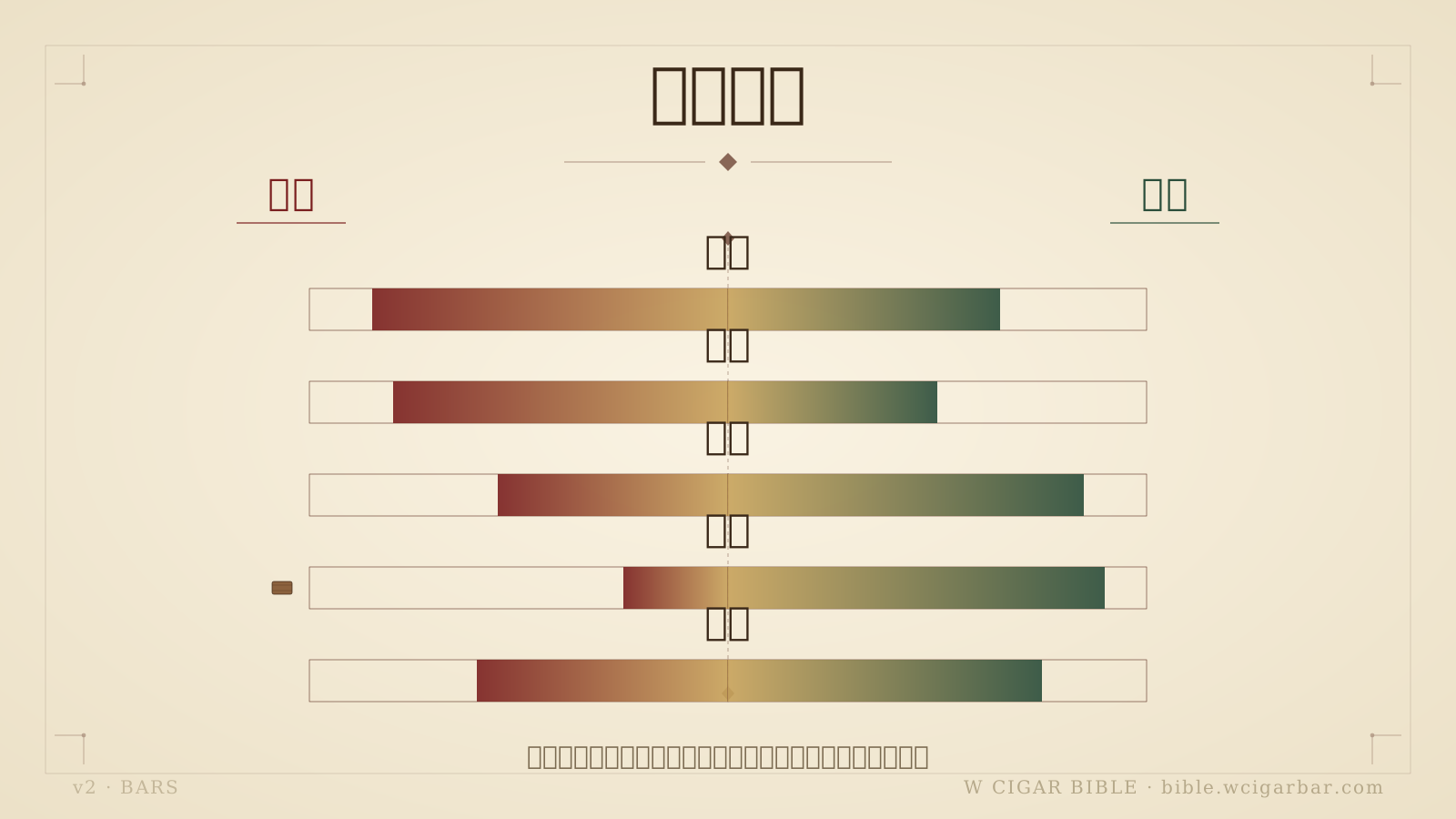
長條圖比較清新取向與熟成取向在酸度果味桶香上的差別
Flavor Chemistry Intersection: Vanilla Coconut Sweet × Dark Chocolate Bittersweet
American oak vanilla coconut sweet × dark chocolate bittersweet is the most easily perceived and misunderstood axis of this pairing. Vanilla comes from vanillin, coconut sensation from oak lactones, providing rounded, sweet wood, and creamy associations in the senses. Bolívar Royal Corona's dark chocolate carries cocoa, roasted bitterness, and the cigar's inherent slight bitterness; when they meet, it's not about eliminating bitterness but giving it a sweet aromatic frame.
Gran Reserva dried fruit tone × roasted coffee same roast, same temperature, is a deeper structure. Dried fruit like figs, dried dates, and dried black plums often evoke concentrated sugar and oxidative aging; the cigar's roasted coffee resembles caramel, nut, and bitter aromas produced by heat-treated coffee beans. When both appear simultaneously, the palate forms a continuous line from dried fruit sweetness, coffee bitterness, cocoa powder dryness to tobacco tail.
The best Rioja × Bolívar Royal Corona isn't sweet overpowering bitter but vanilla coconut sweet and dark chocolate bittersweet being each other's inside and outside. Barrel aging smoothness buffers Bolívar's power, relying on glycerol sensation, wood tannin aggregation, and post-aging acidity integration. This ensures that when the first sip of wine meets the first puff of smoke, the spices don't rush straight to the nose but are stretched into a complex tail of dill, clove, cocoa, and dry earth by sweet wood.
Service Temperature, Glass Type, and Rhythm: Letting Rioja and Bolívar Precisely Meet
Rioja, especially Reserva or Gran Reserva, should not be served at too high a temperature, or the alcohol will overshadow vanilla, dried fruit, and leather details. Around 16 to 18°C usually allows acidity, tannins, and barrel aging aromas to maintain balance. Glass type can be a medium-large Bordeaux glass or slightly tapered red wine glass, with the focus on letting aging aromas unfold while avoiding excessive concentration of volatiles.
Decanting depends on the vintage and state, not a fixed action. Younger Reserva can be given short air contact to integrate oak and fruit; deeper vintage Gran Reserva requires more caution to avoid quickly dissipating delicate dried flowers, tobacco, and dried fruit aromas. As an editor of the "Cigar Bible," I often use small sips, short pauses, and then another puff of smoke to observe, not pushing the rhythm too fast.
The core of the rhythm is to let the wine's acidity first cleanse the palate, then let the cigar's coffee and earth connect with barrel-aged sweetness. The first round can start with tasting the wine, remembering the positions of red fruit, vanilla, coconut, and acidity; the second round, smoke Bolívar, observing how dark chocolate and spices appear. The third round allows both to intersect, where it's easiest to see dill, cedar, coffee powder, and dried fruit overlapping in the tail.

快問快答卡整理陳年選擇、椰子桶香與酒溫影響
Veteran Judgment: When to Choose Reserva, When to Choose Gran Reserva
If Bolívar Royal Corona is relatively young, with strong smoke progression and noticeable spices, Reserva Rioja may be more suitable. Reserva retains more fruit and acidity, able to hold the cigar's front-end power, preventing the palate from quickly entering dryness and bitterness. At this time, the vanilla and coconut from American oak barrels act like a buffer, making the spices more like sweet spices rather than harsh stimulation.
If the cigar has undergone a period of good aging, with increased integration of earth, coffee, and dark chocolate, Gran Reserva's depth can be fully read. Dried fruit, cedar, leather, tobacco leaf, and cocoa will interact with the cigar's mid-to-late stages, forming a longer dark tail. This type of pairing doesn't chase the first-second impact but observes what's left in the mouth twenty minutes later.
What veterans truly need to judge isn't how impressive the Rioja classification name is but whether the wine's aging depth just catches Bolívar's cigar curve. If the wine's coconut aroma is too prominent, it may overshadow the cigar's earthiness; if the wine's acidity collapses, it can't cleanse the coffee bitterness. The ideal state is for dried fruit to have thickness, acidity still in line, and oak integrated, allowing Bolívar's richness not to be weakened or out of control.
Frequently Asked Questions
The key to pairing Rioja and Bolívar Royal Corona is having aging aromas, acidity, and oak sweetness all in place simultaneously.
Does Rioja have to be Gran Reserva?
Not necessarily. Gran Reserva's dried fruit, leather, cedar, and cocoa more easily correspond to Bolívar's coffee and dark chocolate, but if the cigar is more assertive, Reserva's acidity and fruit may better maintain balance.
Why is Tempranillo suitable for full-bodied cigars?
Tempranillo has enough fruit and medium-thick structure but doesn't have overly coarse tannins like some varieties. Its acidity can cleanse the palate, and tannins can capture the smoke's tail, suitable for supporting Bolívar's deep earth and spices.
Will the coconut flavor from American oak barrels interfere with the cigar?
If coconut and vanilla are too prominent, they may seem abrupt. The key to mature Rioja is that oak has integrated with dried fruit, leather, and tobacco cues, making the coconut sensation a soft midrange rather than standing out alone.
How to pair wine with the front and back of Bolívar Royal Corona?
The front has more noticeable spices and earth, so small sips of Rioja can open the palate with acidity. In the mid-to-late stages, as dark chocolate, coffee, and cocoa powder deepen, observe how Gran Reserva's dried fruit and cedar extend the tail.
Does serving temperature significantly affect this pairing?
It has a significant impact. Too high a temperature will amplify alcohol sensation, overshadowing vanilla, dill, and dried fruit details; a slightly lower but not cold serving temperature can better preserve acidity and barrel aging layers.
Is this pairing suitable for readers new to Rioja?
Yes, but it should be understood in a slow-reading manner. First, observe the wine and cigar separately, then cross-taste, making it easier to grasp layers than chasing intense impact from the start.
The brilliance of Rioja and Bolívar Royal Corona lies not in one overpowering the other but in how Tempranillo, American oak barrels, dried fruit, coffee, and deep earth complement each other. When vanilla coconut sweetness envelops dark chocolate bitterness, Gran Reserva's sense of time gives the full-bodied cigar a clearer outline.
Further Reading|Complete Guide to Wine Regions: Old World and New World Flavor Maps, and Pairing Overview with Cigars|Chianti Classico Tuscan Table Wine: Sangiovese Sour Cherry and Leather, Paired with Romeo y Julieta Short Churchill|The Sweet and Sour Balance of German Riesling White Wine: The Clarity of White Flowers and Minerals, Paired with the Elegant Route of Davidoff Aniversario
—Cigar Prince Wilson Tsai
Smoking is harmful to health. Under 20 years old is prohibited from smoking. Quitline: 0800-636363. This article is intended for adults over 20 years old as a reference for cigar culture, preservation, and regulations, not as tobacco advertising, promotion, or purchase advice.
No drunk driving. Excessive drinking is harmful to health. Under 18 years old is prohibited from drinking. This article is also not alcohol advertising, promotion, or purchase advice; please drink responsibly.
Like this article?Share with friends
Share this W Cigar Bible piece with friends who want to learn cigar culture, storage, and tasting.
想把這篇 化為實踐
雪茄聖經是知識;雪茄文化要在空間裡發生

W Cigar Bar 大安總店資訊
台北大安區 · 雪茄聖經總編輯 Wilson Tsai 主理的雪茄文化空間
33 座 24 小時恆溫恆濕醇化室
W Cigar Bar 提供的會員醇化空間 · 場地資訊請洽編輯部
雪茄剪 / 打火機 / 雪茄盒 / Boveda
W Cigar 配件官網 · 專營雪茄配件正品
加 LINE 好友 · 文化諮詢
文化空間資訊 · 紳士沙龍 · 私人包場
本網站內容僅供雪茄文化、歷史、收藏與品吸知識研究參考。菸品有害健康、未滿法定年齡者請勿吸菸。實際規範請依所在地法律為準。
吸菸有害健康・戒菸專線 0800-636363・本站僅供 20 歲以上成年人閱覽。
讀到這裡,你不只是路過的人
留下 Email,加入 W 雪茄聖經內圈——總編輯 Wilson Tsai 親選的學院深文與國際新訊,先你一步送到信箱。
· 教育用途非銷售 · 隨時一鍵退訂 · Email 絕不對外公開 · 由勝茄股份有限公司營運
同分類延伸閱讀
資料來源:W Cigar Bible 編輯部整理 · 雪茄王子 Wilson Tsai 親自審稿
本文僅供雪茄文化、歷史、收藏與品鑑知識研究,不作為菸品促銷、銷售或購買建議。吸菸有害健康,未滿二十歲不得吸菸。