紐西蘭紅酒 Central Otago 黑皮諾:冷涼氣候的純淨紅果,搭配 Quai d'Orsay No.50 的清雅
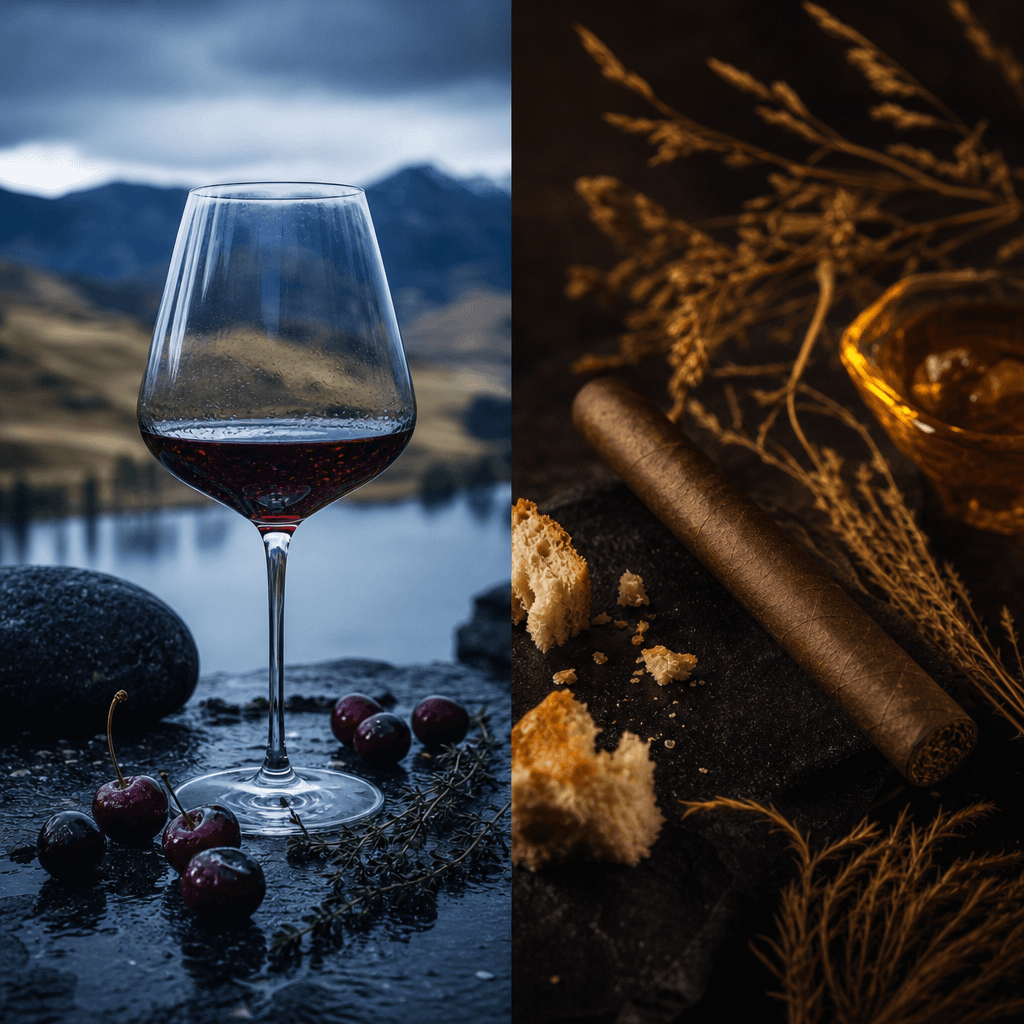
紐西蘭紅酒在冷涼氣候世界裡有清楚辨識度,Central Otago 黑皮諾更以紅櫻桃、百里香、礦物線條與明亮酸度聞名。本文以 Quai d'Orsay No.50 為搭配對象,從產區、氣候、螺旋蓋革命、黑皮諾結構,到紅果與青草奶油、酸度與煙霧之間的具體風味互動,建立新手也能理解的第一堂酒茄課。
- Central Otago 黑皮諾以大陸性冷涼氣候,形成紅果清晰、酸度明亮的輪廓。
- Quai d'Orsay No.50 的青草、奶油與烤麵包,適合對應輕盈紅酒。
- 紅酒酸度能洗開雪茄煙霧,使紅櫻桃與淡蜂蜜更乾淨地交替出現。
New Zealand Wine Central Otago Pinot Noir: Pure Red Fruit of Cool Climate, Paired with the Elegance of Quai d'Orsay No.50
The encounter between New Zealand wine Central Otago Pinot Noir and Quai d'Orsay No.50 is a low-pressure example I often share with beginners. It doesn't rely on a heavy body to overpower the cigar, nor does it use intense smokiness to challenge the palate. Instead, it uses layers of red cherry, thyme, grass, butter, and toast to clearly articulate the concept of "cleanliness."
As an editor of the "Cigar Bible," I like to call this pairing the first cigar and wine lesson because its signals are very clear. The wine's acidity is bright, and the cigar's body is elegant, with neither side rushing to dominate. By slowly observing the entry, stay, exhale, and aftertaste, you can feel how the red fruit washes away the smoke and how the grassy butter rounds off the wine's edges.
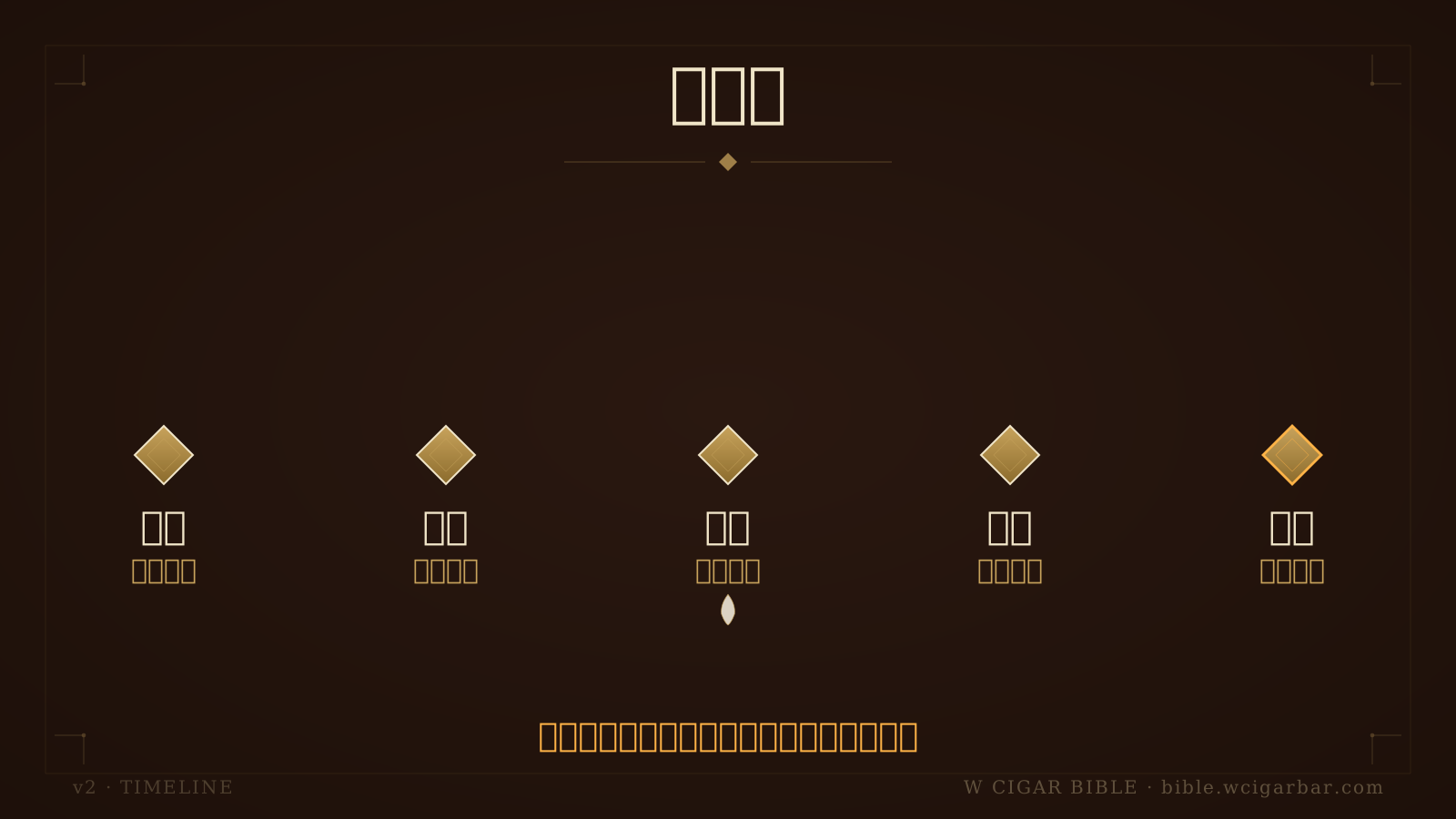
時間軸呈現從開瓶到回甘的五段酒茄觀察流程
Southern Coordinates of New Zealand Wine: One of the World's Southernmost Cool Climate Red Wines
When discussing New Zealand wine, you must first open the map. Located in the Southern Hemisphere, Central Otago on the South Island is one of the world's southernmost wine regions, approximately at 45 degrees south latitude. This location allows grapes to mature slowly in cool air, preserving acidity and pushing the fruit flavor towards clarity rather than density.
The modern development of New Zealand wine truly took off in the latter half of the 20th century. After the 1970s, Marlborough gained international visibility with Sauvignon Blanc, allowing the world to understand that New Zealand can produce high-purity, highly aromatic cool climate wines. Central Otago gradually established its reputation for Pinot Noir in the 1980s and 1990s, carving out a different red wine path from Marlborough.
Marlborough, near the ocean, has a noticeable climate moderation, often with strong citrus, grass, and passion fruit aromas. Central Otago, on the other hand, resembles a mountainous basin with significant diurnal temperature variation and distinct seasonal changes. Pinot Noir often exhibits red cherry, raspberry, dried herbs, and a stony mineral feel. The key to Central Otago is not thickness, but how the cool climate carves Pinot Noir's lines to be fine and bright.
Beginners might mistakenly think all red wines should be heavy, dark, and intense, but Pinot Noir is quite the opposite. Its charm often lies in transparency, acidity, and aromatic details, rather than alcohol sensation or tannin weight. This is also why it can align with Quai d'Orsay No.50: both do not rely on power to win but speak through clear layers.

三張卡片列出紅果酸度與清雅雪茄的搭配重點
Continental Climate of Central Otago: Where Red Cherry, Thyme, and Mineral Lines Come From
Although Central Otago is on New Zealand's South Island, it is not a typical maritime region. Surrounded by mountains, it has relatively low rainfall, strong summer sunlight, and significant nighttime cooling, which are core conditions of a continental climate. The daytime accumulates sugars and aromas, while the nighttime locks in acidity, allowing Pinot Noir to have both ripe red fruit and a bright structure.
Common sub-regions here include Bannockburn, Bendigo, Gibbston, Alexandra, and Cromwell Basin. Bannockburn often has more mature red berries, spices, and delicate soil feel; Gibbston has more noticeable altitude and coolness, with leaner fruit and sharper acidity; Alexandra often carries dried herbs and stony feel. For beginners, there's no need to memorize all the place names; just remember that Central Otago is not a single flavor but a spectrum of cool red fruits.
Pinot Noir has thin skin and is very sensitive to climate, which is part of its allure. Too hot, and the red fruit turns jammy, with acidity decreasing; too cold, and you might get green tannins and insufficient fruit ripeness. Central Otago's strong sunlight and cool nights allow red cherry, wild strawberry, and raspberry to remain pure while developing a background of thyme, sage, and rock dust.
When such wine meets a cigar, the mineral feel becomes important. It's not as simple as saltiness but a clean, slightly powdery touch, like wet stones dried by the wind. The red fruit and herbs of Central Otago Pinot Noir are not perfumed and extroverted but are slender structures pushed by sunlight, cool nights, and poor soil.
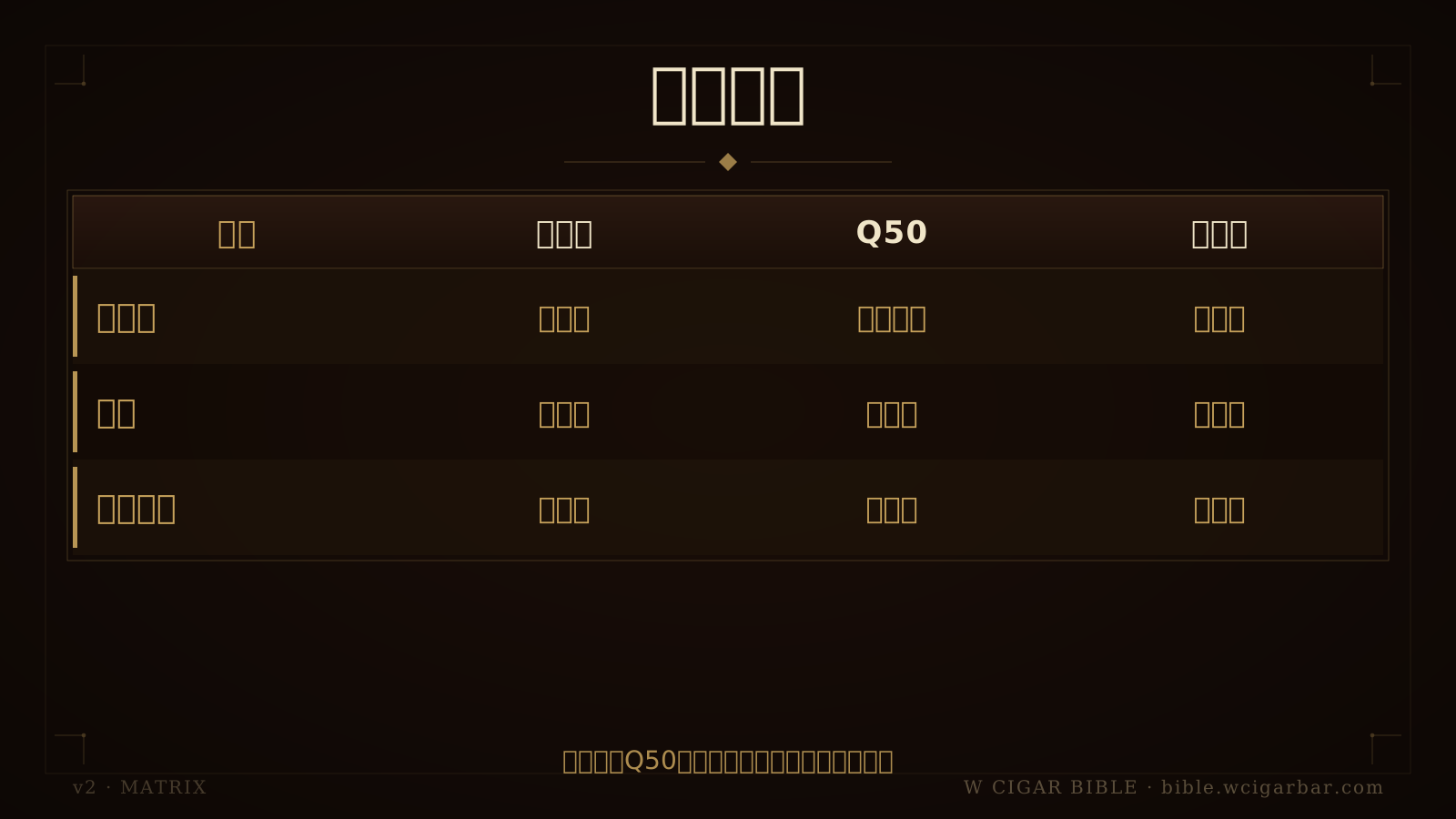
矩陣比較黑皮諾雪茄與濃郁雪茄的香氣結構角色
The Screw Cap Revolution: Why New Zealand Pinot Noir Often Feels Particularly Clean
Many beginners, upon seeing high-quality New Zealand red wine with screw caps, might think it's just a packaging choice for entry-level wines. However, New Zealand actively promoted screw caps around 2000, marking a shift in wine preservation concepts. Local wineries aimed to reduce the risk of cork taint and more stably preserve aroma, acidity, and fresh fruit flavors.
Cork taint is often associated with TCA odor, which can cause the wine to have wet cardboard, moldy smells, and dull fruit aromas. For a delicate variety like Pinot Noir, any minor contamination can overshadow the red cherry, floral, and herbal details. Screw caps are not a symbol of cheapness but a sealing technology that makes pure flavors more predictable.
In Central Otago Pinot Noir, screw caps often allow you to directly read red cherry, cranberry, light violet, thyme, and mineral lines. Without the interference of unstable corks, the wine appears crisp upon entry, and the finish is cleaner. This cleanliness aligns with the elegant body of Quai d'Orsay No.50, forming a common language.
Cigar and wine pairing fears mixed signals because the smoke itself already brings charred, woody, and slightly bitter notes. If the wine's fruit flavor is unclear and acidity is indistinct, the entry can become sticky. The significance of screw caps here is to allow New Zealand Pinot Noir to use a more stable red fruit acid line to carry the next sip after the cigar smoke.
Quai d'Orsay No.50: The Textbook of Elegance for Cuban Petit Robusto
Quai d'Orsay No.50 (Cuba, Petit Robusto, 50 × 110mm) is a cigar well-suited for beginners to understand that "elegance does not mean thinness." It lasts about 40 minutes, with a pace that doesn't drag on, and a format that doesn't impose too much pressure. The 50 ring gauge provides enough smoke, and the 110mm length allows for concentrated and clear flavor segments.
Its main axis is not a pepper explosion nor heavy leather but grass, butter, toast, and light honey. The start often has fresh grass and soft wood, the middle develops a buttery feel and toast crust, and the end has a slightly more pronounced roasted bitterness. For pairing with wine, this structure is very friendly because it leaves space for the wine's acidity and red fruit aroma to insert.
I often say Quai d'Orsay No.50 is like a clean beige canvas. It has sweetness but not syrup; herbs but not raw green; toast but not charred. The core of pairing Quai d'Orsay No.50 is to use the elegant cigar body to magnify the drink's details, not to push the wine into the background.
After cutting, if the draw is normal, the smoke will have a soft edge of butter and grass stalks. At this time, it's not suitable to use red wine with too high tannins or too thick oak, as it will dry out the butter and make the grass astringent. The light body and bright acidity of Central Otago Pinot Noir can just avoid this problem.

三張卡片列出紅酒雪茄搭配時常見的錯誤判斷
Token×Token Flavor Encounter: Specific Reactions of Red Fruit, Grass, Butter, and Smoke
A true pairing doesn't end with saying "it matches well" but needs to be broken down into individual tokens. The pure red cherry of Central Otago Pinot Noir, when encountering the grass and butter of Quai d'Orsay No.50, the first change is the brightness of the sweetness. The red fruit acid line acts like a light, making the butter not greasy and the grass not veering towards bitterness.
The second token is bright acidity × cigar smoke. Cigar smoke leaves an oily feel, woody particles, and roasted bitterness in the mouth. If the next sip of the drink is too sweet or too thick, it will stack into heaviness. The acidity of Pinot Noir acts like a fine brush, washing away the smoke's tail, allowing the next puff of the cigar to reappear with grass, toast, and light honey, rather than just charred bitterness.
The third token is thyme × light honey. The dried herbal aroma commonly found in Central Otago will push the light honey of Quai d'Orsay No.50 towards a fresher grassy honey direction. It doesn't increase sweetness but gives the sweet flavor more contour, like a dried herb leaf next to the honey.
| Flavor Token | From Wine or Cigar | Change After Encounter |
|---|---|---|
| Red Cherry Acid Line | Central Otago Pinot Noir | Washes away smoke oiliness, making the butter feel lighter |
| Thyme Herb | New Zealand Pinot Noir | Connects cigar grass, reducing raw green feel |
| Butter Texture | Quai d'Orsay No.50 | Softens the edges of Pinot Noir's acidity |
| Toast Crust | Quai d'Orsay No.50 | Amplifies subtle spices and soil feel in the wine |
| Mineral Dryness | Central Otago | Concludes the finish, returning the mouth to a clean state |
Beginners often overlook that "not stealing the show" itself is a high-quality interaction. Not every pairing needs to create explosive changes; sometimes, the best reaction is to make both sides clearer. The focus of pure red fruit × grassy butter is to let acidity, smoke, herbs, and light sweetness alternate in the same volume.

橫向長條比較厚重取向與清雅取向在五個感官軸的差異
The First Cigar and Wine Lesson for Beginners: How to Grasp Temperature, Glass Type, and Rhythm
This pairing is suitable for beginners for another reason: low operational threshold. Central Otago Pinot Noir does not require too high a temperature, around 14 to 16°C, to better preserve red fruit and acidity than room temperature. If the temperature is too high, the alcohol sensation will rise, and the red cherry will become soft, losing balance with the grass and butter of Quai d'Orsay No.50.
You can choose a medium-sized red wine glass, without using an overly large Bordeaux glass. Pinot Noir needs aroma concentration but not excessive oxidation; a medium belly and slightly closed mouth can concentrate red fruit, floral, and thyme. Pour a small amount to observe the aroma, with the key being to leave a blank between each sip, allowing the cigar smoke time to dissipate.
The cigar side should also slow down. Quai d'Orsay No.50 lasts about 40 minutes. If the smoking pace is too fast, the burning temperature rises, making the grass sharp and the butter replaced by charred bitterness. After each puff, wait a while before letting the Pinot Noir acidity enter the mouth, making it easier to grasp the feeling of "washing away the smoke."
I suggest beginners observe in three steps: first, take a small sip of wine to remember the red cherry and acidity; then draw a puff of the cigar to remember the grass, butter, and toast; finally, take another small sip of wine to feel how the smoke's finish is organized by the acid line. The learning focus of this pairing is not speed but making each entry a comparative experiment.

三張問答卡整理醒酒難度與酸度調整的實用答案
From Marlborough to Central Otago: Understanding the Differences in New Zealand Pinot Noir
When talking about New Zealand, many people first think of Marlborough. It is indeed New Zealand's international wine card, especially Sauvignon Blanc, known for high acidity, strong herbal, and tropical fruit aromas. However, applying the same understanding to Central Otago Pinot Noir would miss its more restrained, more red fruit, and more mineral appearance.
Marlborough also has Pinot Noir, but it often presents softer, earlier-maturing red berries and fresh spices. Central Otago, due to its continental climate, larger diurnal temperature variation, and valley terrain, has tighter red fruit contours and acidity more like a fine line running through the wine body. This acid line is the key to its pairing with cigars because it not only provides freshness but also structure.
Using food language as a metaphor, Marlborough might be like a bright berry salad, while Central Otago is like a plate composed of red cherries, dried herbs, and slate. The former has open aromas, while the latter has more angular layers. For Quai d'Orsay No.50, Central Otago's angles can just support butter and toast, preventing the whole from becoming too soft.
This is why I place Central Otago in the context of "cool climate red wine" rather than just saying it's New Zealand Pinot Noir. The acidity, aromatic transparency, and light body of cool climates are the main logic of pairing. Understanding the differences between Central Otago and Marlborough, beginners can understand why, even though both are New Zealand, the tone of red wine pairing with cigars can be completely different.
Frequently Asked Questions
Is it too difficult for beginners to try pairing New Zealand red wine with cigars for the first time?
No, this combination is actually very suitable for establishing basic sensory vocabulary. You just need to grasp three words: red cherry, acidity, and grassy butter to get into the situation. Don't rush to describe too complex aromas; first, feel "clean" and "not stealing the show."
Does Central Otago Pinot Noir need to be decanted?
Most young Central Otago Pinot Noir does not require long decanting. After opening, a little air contact in the glass is sufficient. If the aroma is tight at first, let it sit for 10 to 20 minutes to see if the red fruit unfolds. The focus is not on seeking intense oxidation but on making the acidity and herbs rounder.
Why is Quai d'Orsay No.50 more suitable for this wine than a rich cigar?
Because Central Otago Pinot Noir has a light body and bright acidity, it is not suitable to be completely covered by heavy smokiness. Quai d'Orsay No.50's grass, butter, toast, and light honey have a volume that can converse with the red fruit. If the cigar is too rich, the red cherry and thyme will retreat far back.
Can wine acidity really "wash away" smoke?
It can be understood in a sensory way: smoke leaves oiliness, charred aroma, and slight bitterness in the mouth, and acidity increases saliva secretion, making the mouth surface crisp again. This doesn't eliminate the smoke flavor but makes the next sip of wine or cigar easier to distinguish. The role of bright acidity × cigar smoke is to organize the finish cleanly, not to create a stronger flavor.
If Pinot Noir feels too acidic, how should it be adjusted?
First, check the temperature; too low will make the acidity sharp, too high will bring out the alcohol sensation. Around 14 to 16°C is usually more balanced, and you can also let the wine stay in the glass for a few more minutes. When pairing with cigars, try drinking the wine during the middle segment when butter and toast appear, and the acidity will feel softer.
Is this pairing suitable for observing with food?
You can choose simple-tasting foods as a neutral background, such as plain bread, low-salt nuts, or a small amount of hard cheese. Avoid foods that are too spicy, too sweet, or have too heavy sauces, as they will interfere with the red cherry and grassy butter. If beginners want to focus on learning, letting the wine and cigar be the main characters first will be clearer.
I often say that a good cigar and wine pairing doesn't push the taste to the fullest but lets you hear the details. Central Otago Pinot Noir pulls red cherry, thyme, mineral feel, and acidity into bright lines, while Quai d'Orsay No.50 gently responds with grass, butter, toast, and light honey. For beginners, this is a gentle yet precise lesson: learn cleanliness first, then talk about complexity.
Further Reading|Complete Guide to Wine Regions: Flavor Maps of Old and New Worlds, and Pairing Overview with Cigars|Australian Shiraz Wine Guide: Blackberries and Licorice from Barossa Old Vines, Paired with the Cocoa Thickness of Padrón 3000 Maduro|In-depth Analysis of South African Pinotage: Cape Town's Unique Variety of Smoky Wild Berries, Paired with Vegas Robaina Famosos
—Cigar Prince Wilson Tsai
Smoking is harmful to health. Smoking is prohibited for those under twenty. Quitline: 0800-636363. This article is for reference by adults over twenty as knowledge of cigar culture, preservation, and regulations, not as tobacco advertising, promotion, or purchase advice.
Drunk driving is prohibited. Excessive drinking is harmful to health. Drinking is prohibited for those under eighteen. This article is also not alcohol advertising, promotion, or purchase advice; please drink responsibly.
Like this article?Share with friends
Share this W Cigar Bible piece with friends who want to learn cigar culture, storage, and tasting.
想把這篇 化為實踐
雪茄聖經是知識;雪茄文化要在空間裡發生

W Cigar Bar 大安總店資訊
台北大安區 · 雪茄聖經總編輯 Wilson Tsai 主理的雪茄文化空間
33 座 24 小時恆溫恆濕醇化室
W Cigar Bar 提供的會員醇化空間 · 場地資訊請洽編輯部
雪茄剪 / 打火機 / 雪茄盒 / Boveda
W Cigar 配件官網 · 專營雪茄配件正品
加 LINE 好友 · 文化諮詢
文化空間資訊 · 紳士沙龍 · 私人包場
本網站內容僅供雪茄文化、歷史、收藏與品吸知識研究參考。菸品有害健康、未滿法定年齡者請勿吸菸。實際規範請依所在地法律為準。
吸菸有害健康・戒菸專線 0800-636363・本站僅供 20 歲以上成年人閱覽。
讀到這裡,你不只是路過的人
留下 Email,加入 W 雪茄聖經內圈——總編輯 Wilson Tsai 親選的學院深文與國際新訊,先你一步送到信箱。
· 教育用途非銷售 · 隨時一鍵退訂 · Email 絕不對外公開 · 由勝茄股份有限公司營運
同分類延伸閱讀

資料來源:W Cigar Bible 編輯部整理 · 雪茄王子 Wilson Tsai 親自審稿
本文僅供雪茄文化、歷史、收藏與品鑑知識研究,不作為菸品促銷、銷售或購買建議。吸菸有害健康,未滿二十歲不得吸菸。