雪茄的多重風味表達:如何透過抽吸技術發掘隱藏的韻味

雪茄的風味是一段由火、空氣與時間交織而成的旅程,真正的差異在於抽吸的技巧。本文深入探討如何透過抽吸節奏、深淺抽與鼻腔回吐等技術,挖掘雪茄的隱藏層次。穩定的抽吸節奏能讓風味更完整展現,而不同的抽吸方式則影響香氣的感知。剪口大小與濕度也會影響抽吸體驗,適當的控制能提升風味的釋放。透過這些技巧,老手能更深入地理解雪茄的複雜性,享受每一口的獨特風味。
- 穩定的抽吸節奏能讓雪茄的風味層次更完整,避免因溫度過高而燒掉細節。
- 深抽與淺抽的方式會影響到煙氣的結構感與香氣,應根據雪茄的特性選擇抽吸方式。
- 鼻腔回吐可用來辨認隱藏香氣,但需控制煙氣量與頻率,以免刺激感掩蓋香氣資訊。
The Multifaceted Flavor Expression of Cigars: How to Discover Hidden Nuances Through Smoking Techniques
The flavor of a cigar is not a fixed answer but a structure slowly unveiled by fire, air, and time. Many seasoned smokers are already familiar with brand characteristics: the grassy and creamy notes of Cohiba, the leathery and peppery tones of Partagás, the woody and coffee nuances of H. Upmann. However, the real difference often lies not in which cigar you hold but in how you let it speak.
As the editor of the "Cigar Bible," I have long documented the changes in the same cigar under different rhythms, humidity levels, cuts, and depths of draw. This article does not discuss beginner tips but rather dissects from a technical perspective: how to extract the hidden details in the second and third layers of a cigar through smoking techniques.
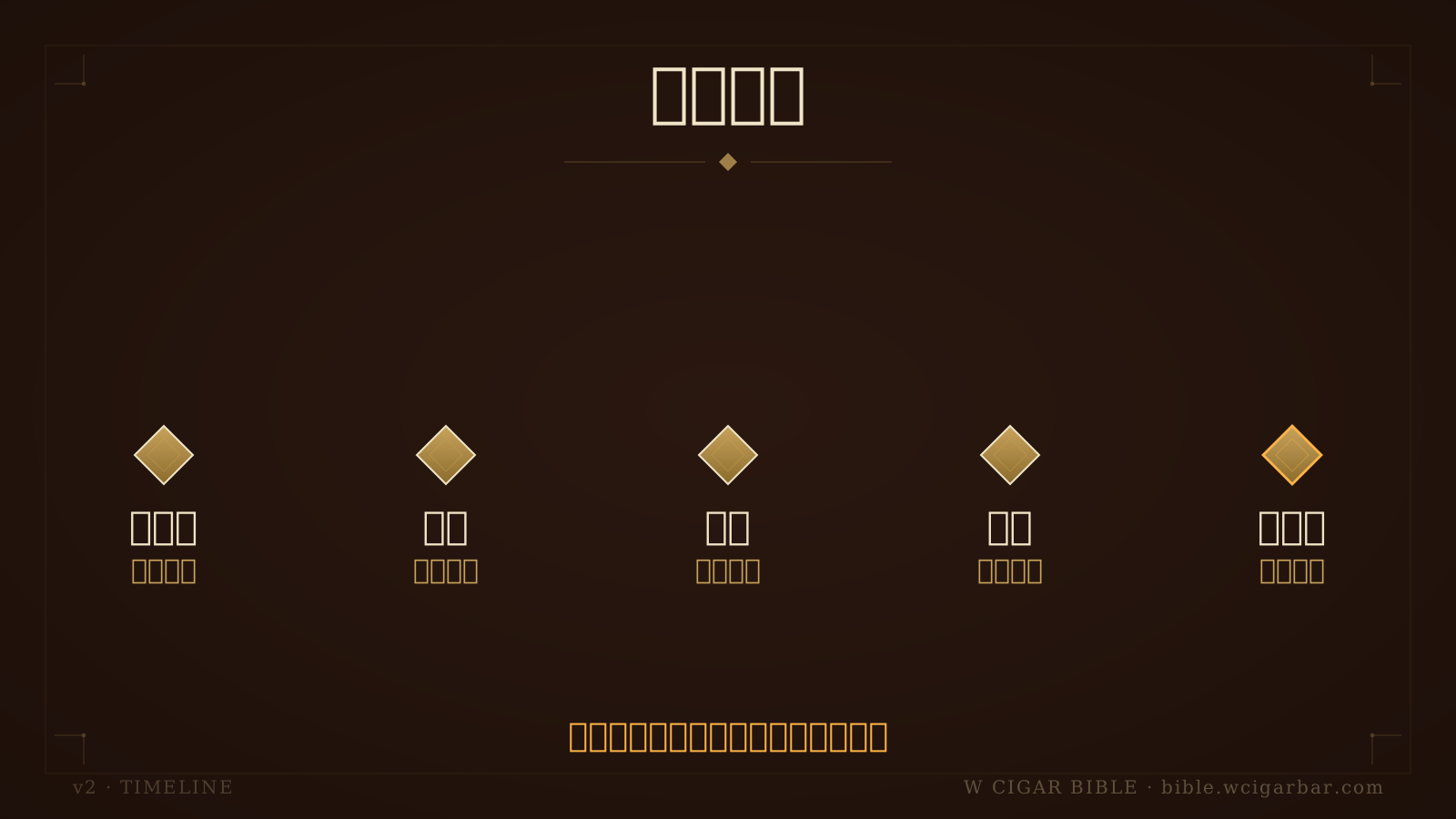
流程圖依序呈現觀察、輕抽、主抽、含停與少量鼻吐
Smoking Rhythm: The First Key to Flavor Layers
Most seasoned smokers know "not to smoke too fast," but the real key is not simply fast or slow, but whether the rhythm is stable. Take Montecristo No.2 as an example, with a 52 ring gauge and a length of 156mm. If you take a puff every 25 seconds, the front section often shows distinct spiciness and charred wood; extending it to 50 to 70 seconds per puff, almond, cocoa, and toasted bread notes are more likely to emerge. The more stable the rhythm, the more the cigar has the opportunity to present the changes originally designed.
In my own records, a box of H. Upmann Sir Winston from 2017, kept at 65% relative humidity and smoked at about one puff per minute, reveals honey, cedar, and faint floral notes in the middle section. If you switch to continuous short puffs, the burn line heats up, and the floral notes are quickly overshadowed by bitter wood and charcoal flavors. This is not the cigar deteriorating, but the temperature burning away the details.
Seasoned smokers can use a simple method to adjust the rhythm: after lighting, do not rush to judge in the first 10 minutes, just observe the ash column, burn line, and mouthfeel residue. If the aftertaste lasts only 5 seconds and is dry, the rhythm is usually too fast; if the aftertaste lingers for more than 20 seconds and the nasal cavity still has woody or creamy aromas, it indicates a more ideal burning temperature. Truly advanced smoking is not about maximizing smoke volume but controlling the heat within a range where flavors remain clear.
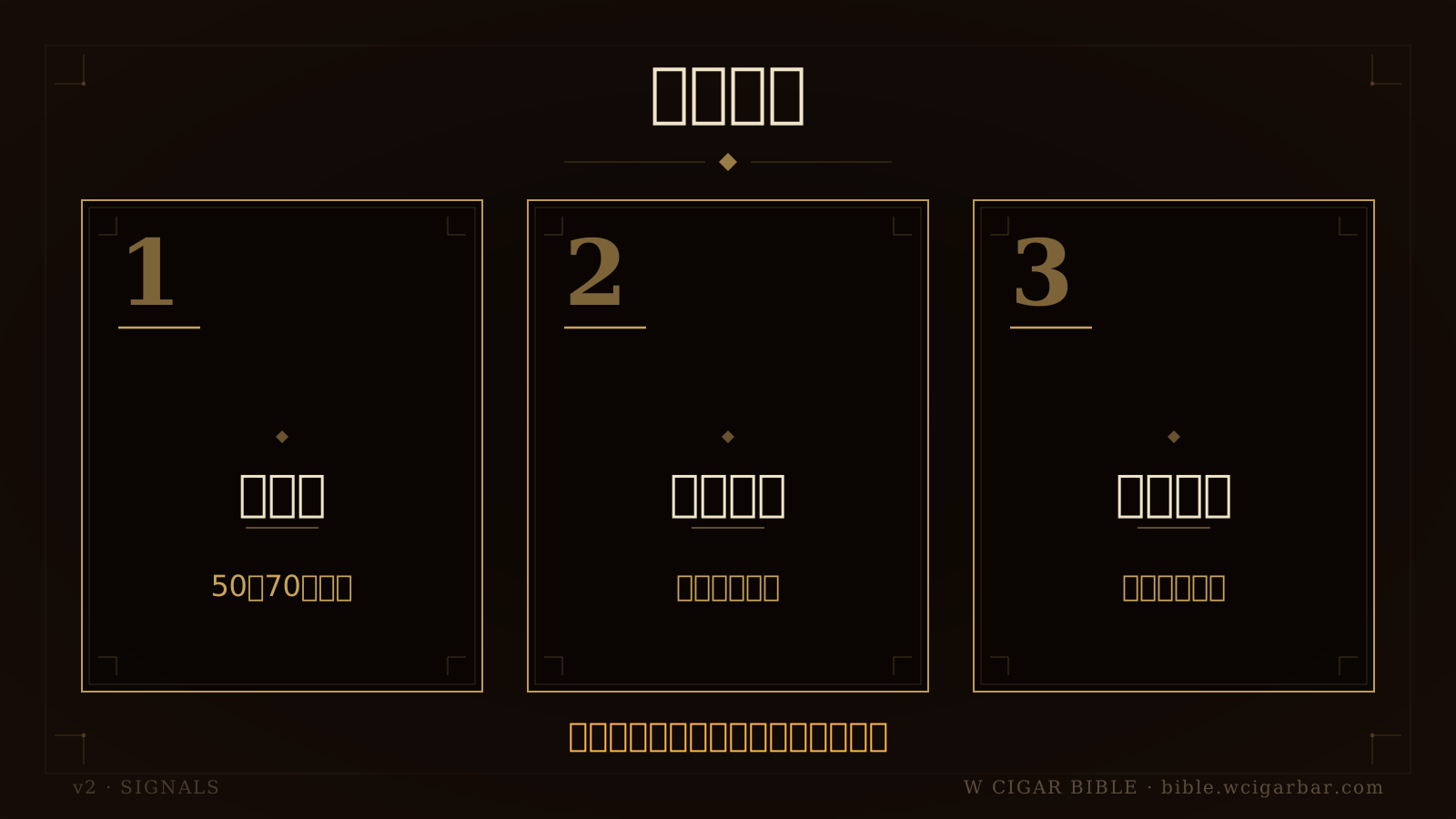
三張卡片整理穩定節奏、抽法分層與少量鼻腔回吐重點
The Differences Between Deep Draw, Light Draw, and "Smoke Retention"
With the same cigar, the information obtained from a deep draw and a light draw is completely different. A deep draw increases the smoke volume, making the structure, strength, and aftertaste more pronounced; a light draw can retain more top notes, such as floral, herbal, creamy, and sweet wood aromas. For a full-bodied cigar like Trinidad Vigía with a 54 ring gauge, if every puff is a deep draw, the delicate sweetness in the front section can easily be compressed into a dense woody note.
I recommend seasoned smokers break down a puff into three actions: first, take a 1-second light draw to confirm the channel, then take a 2-second main draw to obtain the smoke, and finally let the smoke stay in the mouth for 3 to 5 seconds without rushing to exhale. This retention is not inhaling but allowing the smoke to touch the tongue, palate, and cheeks. When treated this way, Padron 1964 Anniversary Maduro reveals black chocolate, coffee beans, and black pepper more distinctly than with quick exhalation.
- Light Draw: Capture high notes, suitable for finding floral, herbal, and fruit peel aromas
- Medium Draw: Observe balance, suitable for observing woody, nutty, and creamy notes
- Deep Draw: Test the framework, suitable for judging strength, spiciness, and finish
- Retention for 3 to 5 seconds: Amplify sweetness and mouthfeel
Deep draw is not the only answer for advancement; light draw and retention are tools for understanding details. If a cigar is already very dense in the front section, focus on light draws; if the middle section seems flat, use a deep draw once to confirm if there is a suppressed core flavor.
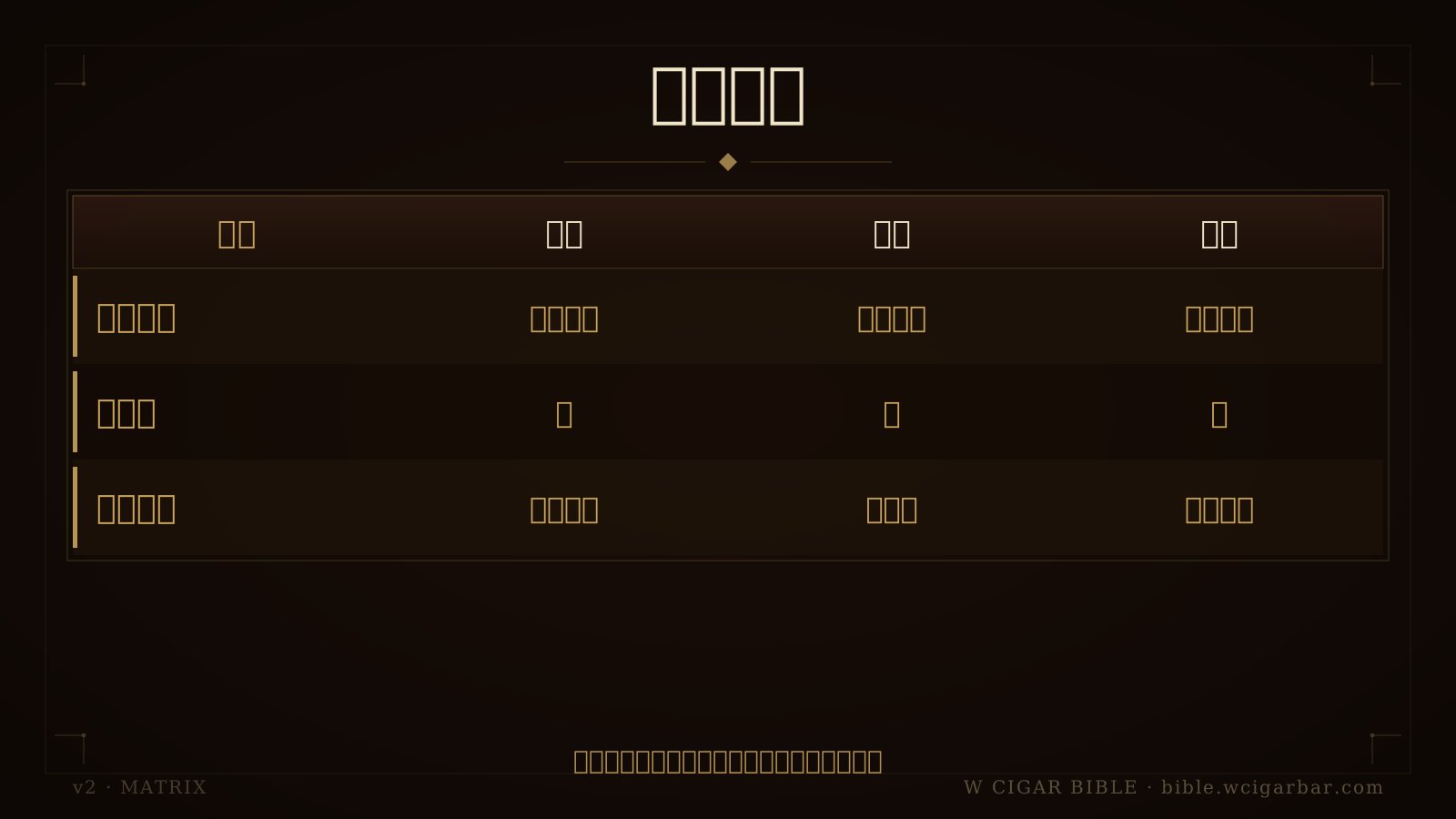
矩陣比較輕抽、中抽、深抽在香氣、煙量與適用時機上的差異
Nasal Exhalation: A Precision Tool for Detecting Hidden Aromas
Nasal exhalation is the most commonly used method by seasoned smokers to open up aroma layers, but it is also the technique most prone to overuse. The mouth can perceive sweet, bitter, sour, salty, and tactile sensations, while the nose can identify spices, wood, floral, leather, mineral, and fermentation tones. For example, with Cohiba Siglo VI, simply exhaling through the mouth often results in creamy, grassy, and honey notes; only with a small amount of nasal exhalation do finer citrus peel, roasted grains, and white pepper appear.
In practice, do not push the entire mouthful of smoke through the nose at once, especially with stronger cigars like Partagás Serie D No.4 or Bolivar Belicosos Finos. My habit is to let only about 10% to 20% of the smoke pass through the nose, with the rest exhaled through the mouth. With a 2019 box of Romeo y Julieta Churchill, this ratio reveals rose petals, cedar, and a light tea note in the middle section; too high a ratio leaves only a stimulating sensation.
The frequency of nasal exhalation should also be moderated. Do it once every 5 puffs in the front section, once every 3 puffs in the middle section, and reduce it in the final section based on heat. If the nasal cavity starts to feel numb, sour, or stinging, it means the signal is being masked by stimulation, and you should pause for 5 to 10 minutes. The purpose of nasal exhalation is not to seek impact but to obtain the most aroma information with the least smoke volume.
Cut and Ventilation: Two Personalities of the Same Cigar
The size of the cut changes the draw resistance and the speed of the smoke. If the draw is too tight, the burn may be unstable, and the flavor may seem muted; if the cut is too large, the smoke enters the mouth too quickly, easily becoming hot and coarse. For a 52 ring gauge Montecristo No.2, if the straight cut is too deep, the front section often loses its original concentration; a V cut can retain some resistance, allowing the wood and cocoa to have more definition.
In a 2021 box of Quai d’Orsay No.54, I compared three cigars from the same box: the first with a small straight cut, the draw was tight, and the cream aroma was slow to emerge; the second with a deep straight cut, the smoke volume was large but the middle section was slightly bitter; the third with a V cut, the draw was the most stable, and the transition of citrus, almond, and light wood was the clearest. This difference reminds us that the 1 to 2mm under the cutter can change the language of the entire cigar.
| Cut Method | Suitable Scenario | Possible Flavor Expression | Risk |
|---|---|---|---|
| Small Straight Cut | Normal draw resistance, want to retain concentration | Clear aroma lines, more controlled smoke volume | If too small, it will be muted |
| Deep Straight Cut | Tight draw resistance or large ring gauge | Full smoke volume, clear strength | Easily heats up |
| V Cut | Want to increase mouth coverage | Sweetness and woodiness more open | Not suitable for fragile caps |
| Punch Cut | Small ring gauge or want to smoke slowly | Stable rhythm, mild burn | Tar easily concentrates |
The cut is not a matter of form preference but of flavor tuning. Seasoned smokers who want to compare the impact of techniques should best record with the same box, same humidity, and same model, otherwise, it is easy to misjudge storage differences as cut differences.
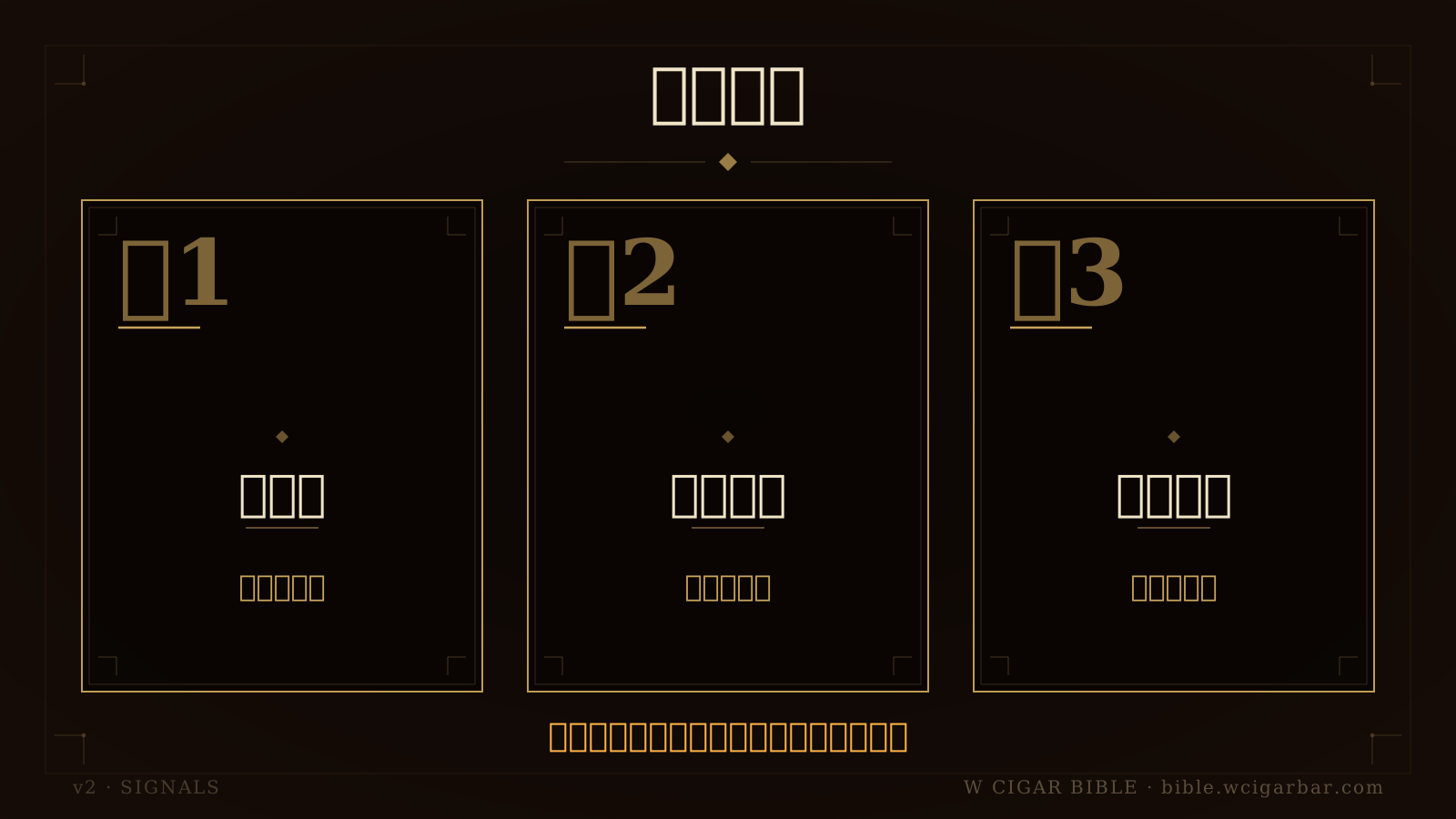
三張卡片列出變苦、醇化與環徑相關的常見誤解
Humidity, Burning Temperature, and Flavor Release
No matter how good the smoking technique is, it requires the storage state to cooperate. Generally, I keep most Cuban cigars at 65% to 67% relative humidity and 18 to 21 degrees Celsius; some thicker Nicaraguan or Dominican models can be stored at 67% to 69% depending on the structure. When humidity is too high, the draw becomes heavy, and grassy, acidic, and muted notes increase; when humidity is too low, the burn is too fast, and pepper and bitterness easily take over.
A Cohiba Behike 56 boxed around 2015, if well-preserved, often features cream, grass, roasted grains, and delicate sweetness. However, I have seen samples from the same year with different sources and unstable preservation, where the front section is dry and hot, and the final section is charred and bitter. In this case, slow smoking can only reduce damage, not completely restore balance. Collecting has its pleasures, but when it comes to future value, it does not guarantee appreciation, still depending on source preservation and market.
During smoking, the ash column can be used to judge temperature. Even gray, naturally falling every 2 to 3cm, usually indicates healthy burning; if the ash column is black outside and white inside, with a sharp burn line, it indicates localized overheating. At this point, do not immediately relight, slow down for 2 to 3 minutes, then use a light draw to recover. Humidity determines the starting line, and smoking rhythm determines whether the flavor can fully unfold.
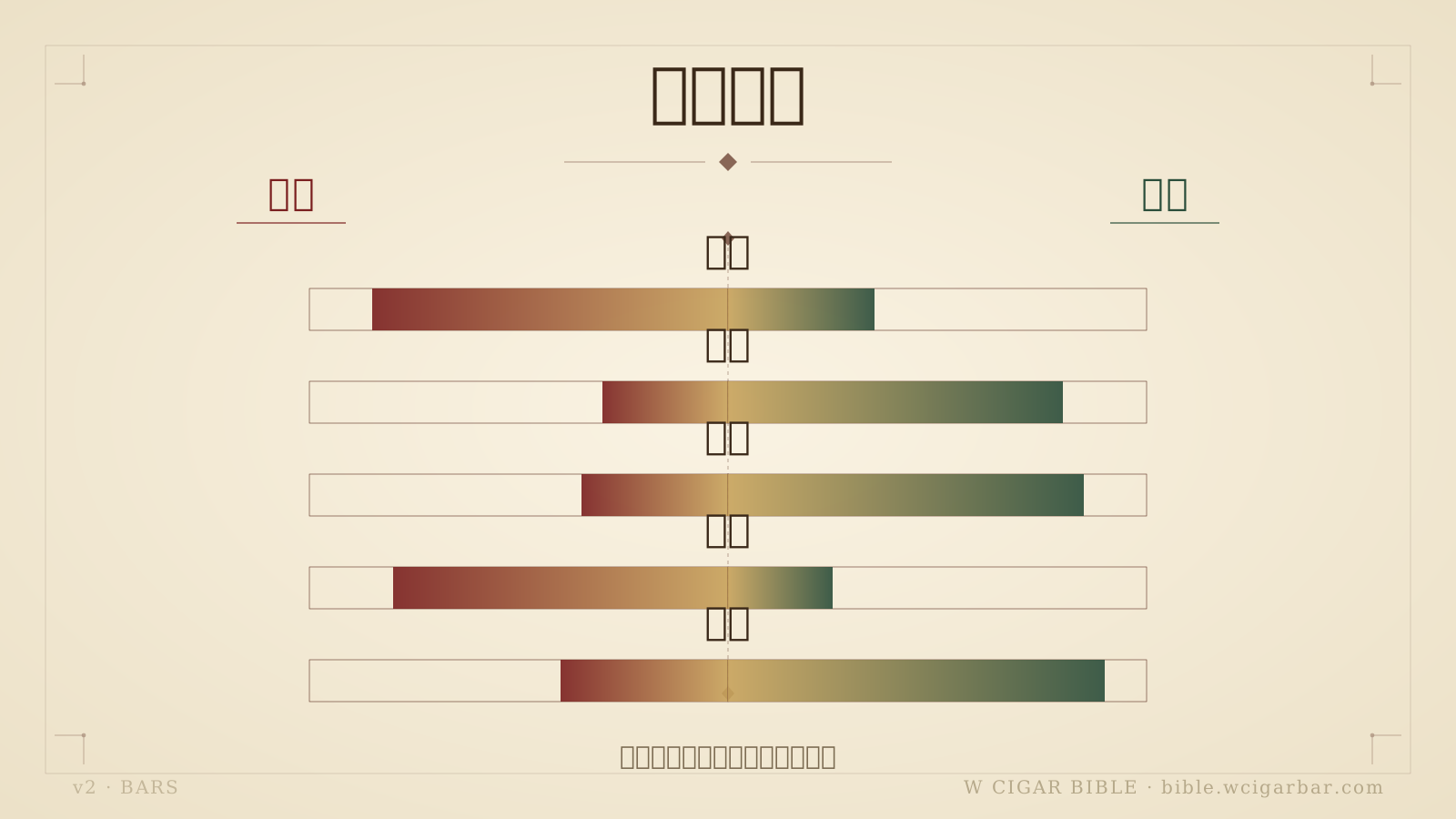
長條圖比較急抽與慢控在熱度、甜感、香氣、刺激與層次上的差異
Segment Reading: The Front, Middle, and Final Sections Are Not Averagely Divided
Many people divide a cigar into the front, middle, and final sections, but it is not actually cut into three equal parts with a ruler. The front section is the adjustment period from lighting to stable burning, about 5 to 15 minutes; the middle section is the core period where the flavor is most complete and the structure is clearest; the final section is the period where concentration, heat, and tar gradually increase. Different ring gauges and lengths will have significantly different proportions of these three sections.
For example, with Hoyo de Monterrey Epicure No.2, with a 50 ring gauge and a length of 124mm, the front section is usually mild, with cream, wood, and light floral notes; the middle section may transition to nutty, honey, and tea notes; if the rhythm is too fast in the final section, bitter almond and charred wood may appear. In contrast, a long and thin vitola like Cohiba Lancero has more intricate transitions, and smoking slightly faster may miss subtle herbal, bean, and citrus peel changes.
My approach is to record every 15 minutes: smoke volume, draw resistance, main aroma, secondary aroma, aftertaste duration, and mouthfeel. This kind of recording seems cumbersome, but after accumulating 20 cigars of the same brand, you will find that certain flavors are not accidental but the result of the interaction between brand formula, year status, and personal rhythm. Segmentation is not for writing beautiful adjectives but for finding when a cigar is most worth slowing down.
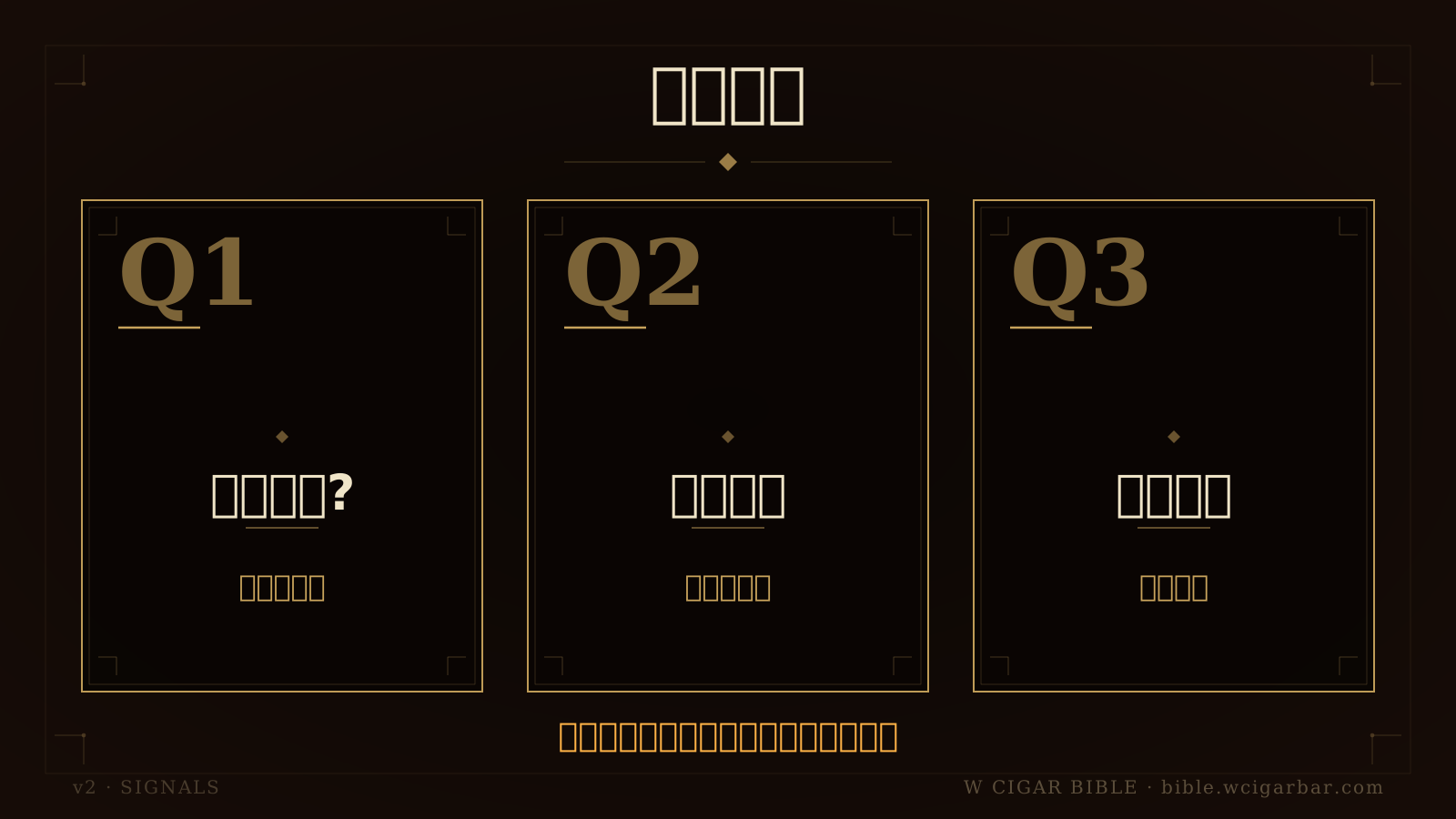
問答卡片整理同盒差異、變苦原因與老手先練節奏的建議
Building Your Own Flavor Database Through Contrast
What advanced smokers need most is not more adjectives but reliable contrast. If you smoke Partagás Serie P No.2 today and find leather and black pepper, and switch to H. Upmann Magnum 46 the next day, you will better understand what is meant by mild wood, coffee, and grain sweetness. Contrast allows the tongue to establish coordinates, rather than relying solely on impression stacking.
I often recommend comparing "same ring gauge different brands" or "same brand different years." For example, for sizes close to robusto, you can compare Cohiba Robusto, Partagás Serie D No.4, Romeo y Julieta Short Churchill; for the same brand year, you can separate and record the same model boxed in 2018, 2020, and 2022. The box labels, production codes, and status information commonly found in the PCC authorized dealer system can also help seasoned smokers establish a more complete context.
In practice, do not arrange too many models at once, two are enough. Use a standard rhythm for the first, and deliberately slow down by 20% for the second, observing whether the aroma widens, sweetness rises, or bitterness decreases. If the difference is significant, it means there is still room for adjustment in your smoking rhythm; if the difference is not significant, it may be that the cigar itself has a more direct structure. A truly useful flavor database must record both cigar information and smoking methods.
Common Questions
Why do cigars from the same box still taste different?
Handmade cigars are affected by leaf position, rolling density, and preservation micro-differences, and there may be a 5% to 15% variance even in the same box. If draw resistance, burn, and humidity differ, the differences will be magnified. Stability in the same box does not mean complete consistency; records are more reliable than memory.
Does a bitter cigar always mean poor quality?
Not necessarily. Smoking too fast, cutting too large, low humidity, or high temperature in the final section can all cause bitterness to appear early. First, slow down the rhythm, let the cigar rest for 2 to 3 minutes, then determine if it is a structural issue.
Does nasal exhalation ruin the flavor?
Not in moderation, only in excess. It is recommended to let only a small amount of smoke pass through the nose each time, especially with strong cigars like Bolivar, Partagás, or some Nicaraguan models. Nasal exhalation should be like fine-tuning focus, not turning up the volume to the maximum.
Is a larger ring gauge easier to extract layers?
Not necessarily. A larger ring gauge has more smoke volume and a more stable temperature, but it can also make details wider and less sharp. Thin and long models like Lancero, Lonsdale test rhythm more but often present clearer aroma lines.
Does aging always improve flavor?
Not necessarily. Aging can reduce spiciness and round out the structure, but too long or improper storage can also decrease vitality. For example, some medium-strength models around 2008, if stored too dry, will have a noticeable loss of sweetness.
Which technique should seasoned smokers practice first?
Start with rhythm. Control a cigar around a 50 ring gauge to one puff every 50 to 70 seconds, and record changes in the first 30 minutes. Once the rhythm is stable, add cut comparisons and nasal exhalation.
I have always believed that the charm of cigars lies not in making flavors sound mysterious but in the fact that the same cigar can be opened to different facets by different techniques. What seasoned smokers pursue is not to smoke harder but to listen more accurately. When you are willing to slow down a puff, reduce a bit of fire, and observe a little more, wood, cream, floral, mineral, and sweetness will emerge layer by layer. These details are what make cigars truly intriguing.
—Cigar Prince Wilson Tsai
Smoking is harmful to health. Under 20 years old is not allowed to smoke. Quitline: 0800-636363. This article is for reference by adults over 20 years old for cigar culture, preservation, and regulatory knowledge, not a tobacco advertisement, promotion, or purchase suggestion.
Like this article?Share with friends
Share this W Cigar Bible piece with friends who want to learn cigar culture, storage, and tasting.
想把這篇 化為實踐
雪茄聖經是知識;雪茄文化要在空間裡發生

W Cigar Bar 大安總店資訊
台北大安區 · 雪茄聖經總編輯 Wilson Tsai 主理的雪茄文化空間
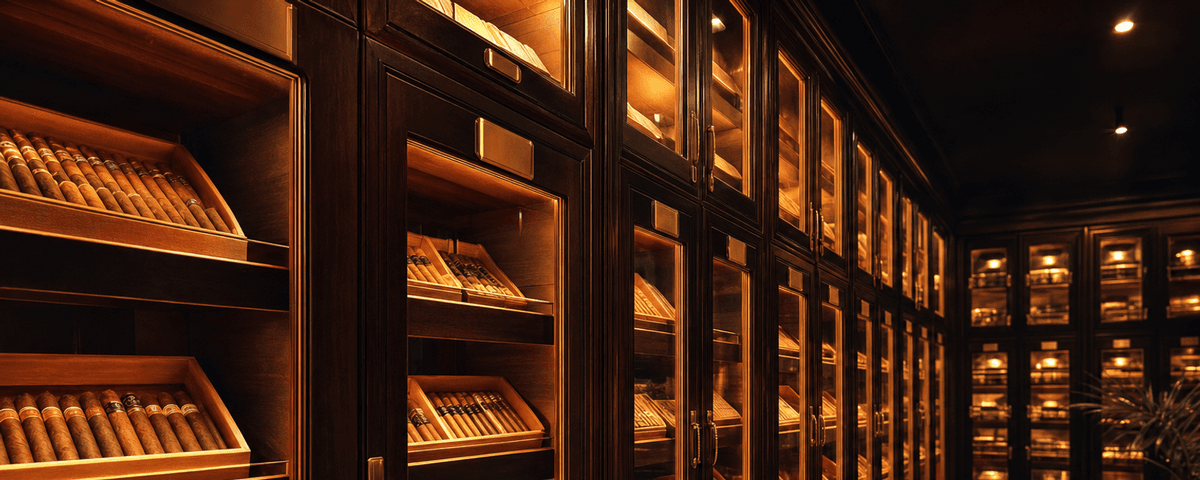
33 座 24 小時恆溫恆濕醇化室
W Cigar Bar 提供的會員醇化空間 · 場地資訊請洽編輯部

雪茄剪 / 打火機 / 雪茄盒 / Boveda
W Cigar 配件官網 · 專營雪茄配件正品

加 LINE 好友 · 文化諮詢
文化空間資訊 · 紳士沙龍 · 私人包場
本網站內容僅供雪茄文化、歷史、收藏與品吸知識研究參考。菸品有害健康、未滿法定年齡者請勿吸菸。實際規範請依所在地法律為準。
吸菸有害健康・戒菸專線 0800-636363・本站僅供 20 歲以上成年人閱覽。
讀到這裡,你不只是路過的人
留下 Email,加入 W 雪茄聖經內圈——總編輯 Wilson Tsai 親選的學院深文與國際新訊,先你一步送到信箱。
· 教育用途非銷售 · 隨時一鍵退訂 · Email 絕不對外公開 · 由勝茄股份有限公司營運
同分類延伸閱讀


資料來源:W Cigar Bible 編輯部整理 · 雪茄王子 Wilson Tsai 親自審稿
本文僅供雪茄文化、歷史、收藏與品鑑知識研究,不作為菸品促銷、銷售或購買建議。吸菸有害健康,未滿二十歲不得吸菸。