雪茄中微生物的角色:如何影響風味與品質
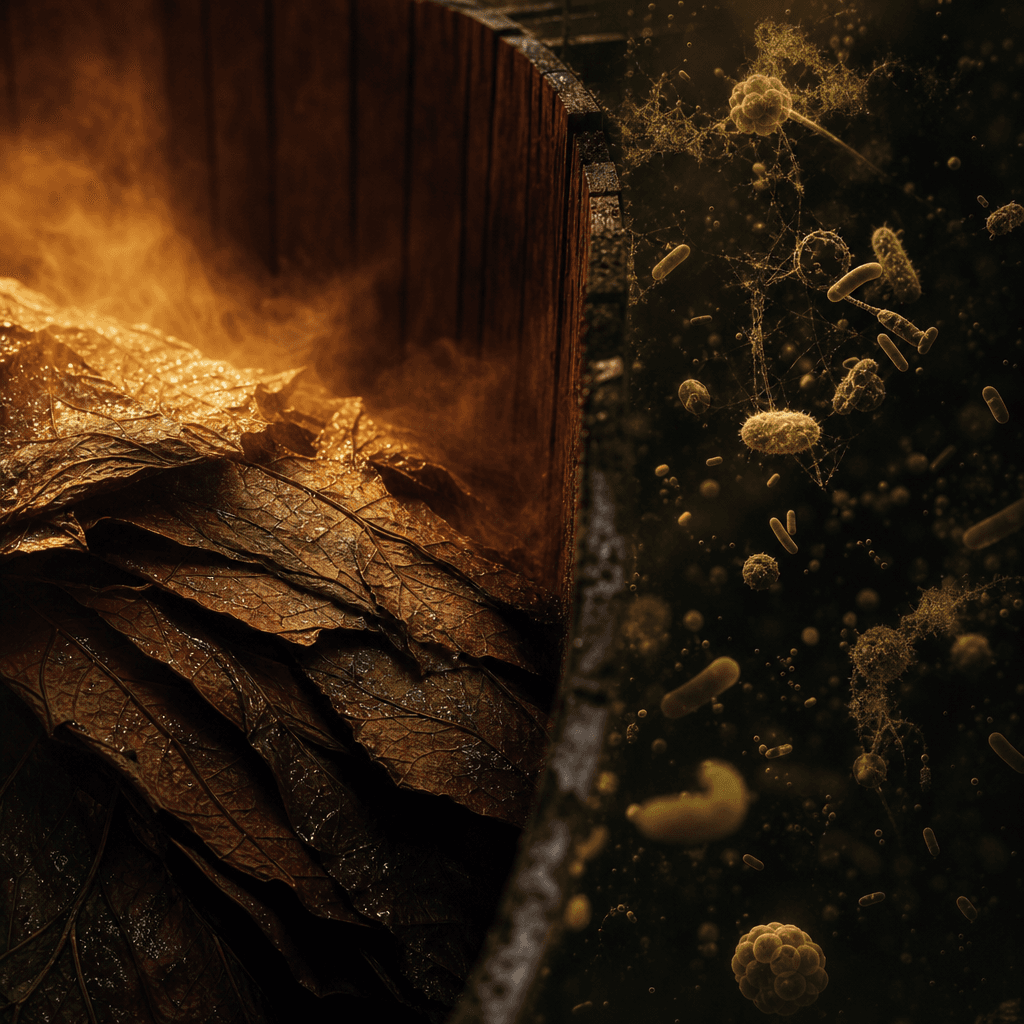
雪茄的風味不僅源自土壤與種子,微生物的角色同樣關鍵。發酵過程中,Bacillus、酵母及乳酸菌等微生物透過分解蛋白質與糖類,提升雪茄的香氣與口感。古巴、尼加拉瓜與多明尼加等產區各有其獨特的微生物環境,影響雪茄的風味特徵。透過精確的發酵管理,雪茄能夠呈現出堅果、可可及奶油木質等複雜層次。了解這些微生物的作用,對進階雪茄玩家而言,是深入品味的關鍵。
- 微生物在雪茄發酵中扮演關鍵角色,能轉化菸葉中的成分,影響風味層次。
- Bacillus 細菌能降低苦澀感,釋放堅果與可可風味前體,提升雪茄的口感。
- 發酵過程中的溫度、濕度與氧氣控制,對雪茄的風味與品質至關重要。
The Role of Microorganisms in Cigars: How They Affect Flavor and Quality
The aroma of cigars comes not only from the soil, seeds, and the hands of the fermentation master but also from microorganisms invisible to the naked eye. Experienced enthusiasts often talk about the mineral notes of Vuelta Abajo, the black pepper of Estelí, and the creamy woodiness of the Dominican Republic; delving deeper, one discovers a relay race of microorganisms behind these flavors.
As an editor of the "Cigar Bible," I've seen many simplify "fermentation" to just temperature and time, but what's truly fascinating is how microorganisms transform the proteins, sugars, nitrogen compounds, and polyphenols in tobacco leaves into layers perceivable by the nose, tongue, and throat. This article isn't about mysticism but the underlying logic advanced cigar enthusiasts should understand.
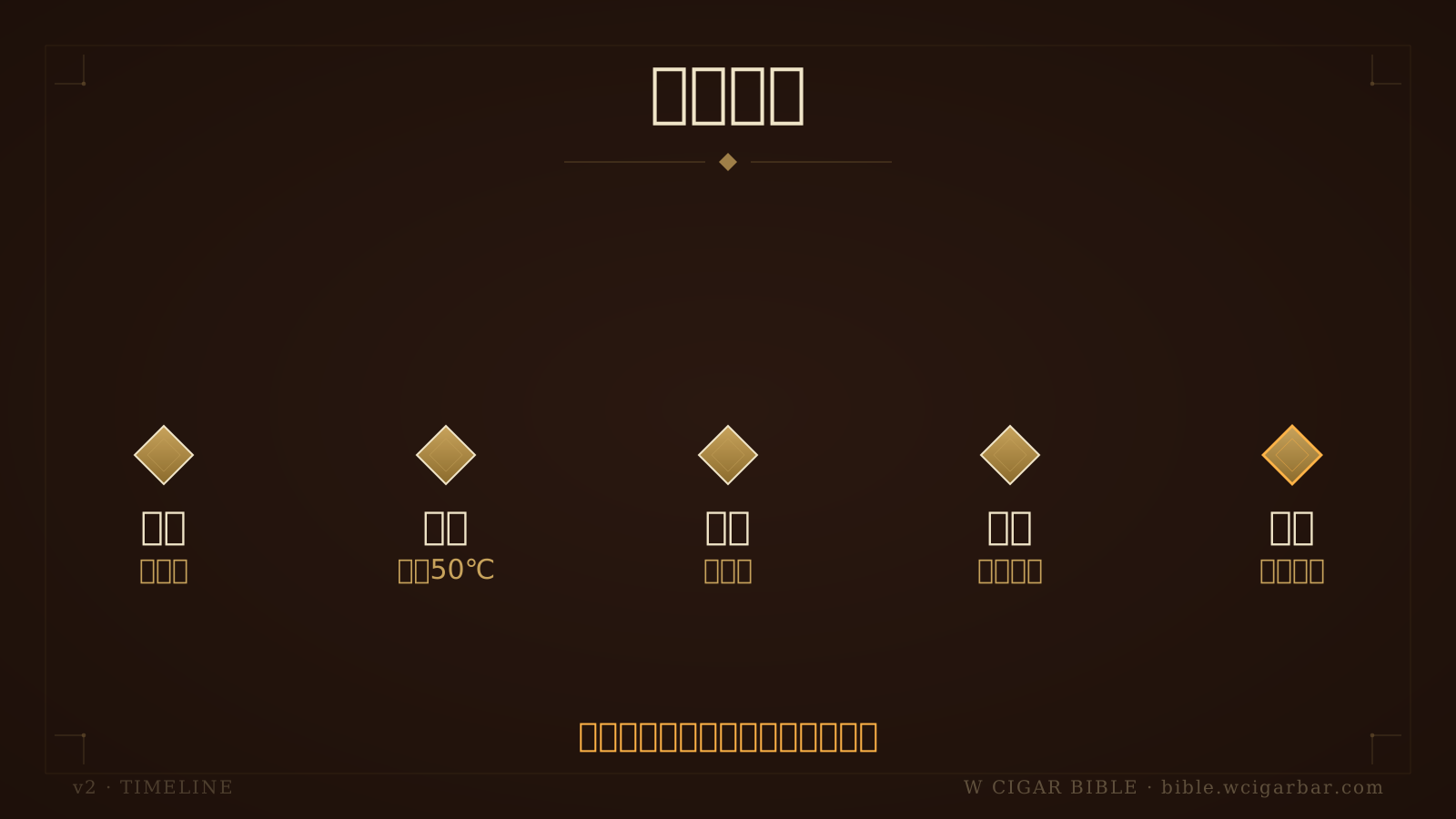
時間線呈現菸葉從入倉到醇化的發酵步驟
Microorganisms Are Not Dirt, But Flavor Engineers
After tobacco leaves enter the curing barn from the fields, they still carry natural microbial communities, including Bacillus from the soil, yeast from the air, lactic acid bacteria on the leaf surface, and a small amount of mold. When regions like Cuba, Nicaragua, and the Dominican Republic pile tobacco leaves into a pilón, the internal temperature often rises from 28°C to 42-50°C, which is the range where microorganisms start to work.
Good fermentation doesn't kill all microorganisms but allows the right groups to dominate the reaction under the right temperature, humidity, and oxygen conditions. For example, with traditional Cuban dark tobacco leaves, the initial fermentation lasts about 30 to 45 days; ligero, due to its thick leaves and high nicotine and protein content, may take longer; seco and volado are relatively faster, otherwise, the aroma would be depleted.
I often compare cigar fermentation to slow cooking in the kitchen: if the heat is too low, the greenness and ammonia won't dissipate completely; if too high, the aroma precursors are burned off, and the leaves become flat. After 2000, several major factories in Nicaragua began more precise monitoring of the core temperature of the pilón, and the stability of brands like Padrón and Oliva is closely related to this management mindset.
Bacillus: Reducing Greenness, Establishing Nutty and Cocoa Undertones
Bacillus bacteria are a crucial group in cigar fermentation, commonly found in soil, leaf surfaces, and fermentation room environments. They are heat-resistant and can maintain activity after the pilón heats up, secreting enzymes like protease and amylase to help break down macromolecules. These reactions reduce the bitterness from coarse proteins while gradually revealing sweetness and body.
Bacillus doesn't directly create a "cocoa flavor" but cleans up coarse substances, releasing flavor precursors that can form nutty and roasted tones. For example, if Nicaragua Estelí ligero is under-processed, it often has a raw green, spicy throat, and ammonia sensation; but after sufficient fermentation, the black pepper remains, yet it is enveloped by coffee, dark chocolate, and earthy notes.
Looking at the often-discussed Padrón style in the 1964 Anniversary series, its strength is not low, yet it rarely presents sharp throat irritation. This is related to long-term leaf material processing, stacking and turning rhythm, and humidity control. If the Bacillus-dominated stage is unbalanced, the cigar may become stuffy, bitter, or even have a rotten sensation; thus, "strong" and "coarse" are actually two different things.

三張卡整理微生物對雪茄風味的核心影響
Yeast and Lactic Acid Bacteria: Sources of Sweetness, Acidity, and Smoothness
Cigars don't pursue large-scale alcohol fermentation like wine, but yeast still participates in early reactions, especially when the leaf moisture content is higher and oxygen can still enter. Yeast can metabolize small amounts of sugars and organic matter, producing esters, alcohols, and trace aromatic compounds, which combine with the tobacco's polyphenols and sugar degradation products to form floral, dried fruit, and honey hints.
Lactic acid bacteria are often associated with a smooth mouthfeel. They can convert some sugars into lactic acid, gradually adjusting the pH value, making the smoke less sharp. Dominican tobacco leaves like Arturo Fuente Hemingway or Davidoff series are often described as creamy, cedar, and mildly sweet spices, which cannot be entirely attributed to lactic acid bacteria, but gentle fermentation and acid-base balance are indeed key factors.
Sweetness doesn't just come from residual sugars but often from yeast and lactic acid bacteria reducing irritability, allowing taste buds to detect finer aromatic layers. This is why some Dominican blends after 2010, although not high in strength, can present almond, white pepper, honey, and toasted bread in the mid-section; they rely not on impact but on cleanliness and balance.

矩陣比較三類微生物在發酵中的作用與風險
Mold and Actinomycetes: Aroma Depth and Risk Boundaries
When discussing cigar microorganisms, one cannot only talk about bacteria. Some molds and actinomycetes participate in surface material transformation, especially during traditional tercios or wooden box aging. They may break down cellulose, lipids, and polyphenols, creating leather, mushroom, damp earth, and old library aromas favored by old-school cigar enthusiasts; but once the boundary is crossed, it can lead to spoilage and mold damage.
Cigars need controlled microbial activity, not romanticized uncontrolled mold spots. White, uniform, frost-like crystals or surface bloom are entirely different from green, blue, black, fuzzy mold spots. The former is often seen in well-preserved and oil-rich cigars; the latter, if it penetrates the wrapper and filler, indicates that both flavor and safety have been compromised.
Between 1998 and 2001, some Cuban cigars circulated in high-humidity environments raised preservation controversies, and old players will remember that many boxed cigars were particularly sensitive during the humid season in Asia. This is not a single-brand issue but a joint effect of tobacco oil content, packaging, transportation temperature, and end preservation. The source must be clear; I personally only manage Cuban cigar sources and conditions according to PCC authorized dealer standards.
Fermentation Parameters: How Temperature, Humidity, and Oxygen Change Microorganisms
Fermentation masters touch the pilón, smell the ammonia, and measure the temperature daily, not as a formality but to interpret the speed of microbial metabolism. Usually, the moisture content of tobacco leaves increases after humidification, and the internal temperature of the stack rises due to microbial and enzymatic reactions; once it exceeds the safe range, the stack must be turned to cool down, preventing the leaves from "cooking" or aroma depletion.
The quality of cigar fermentation often depends on whether the reaction can go deep enough without letting microorganisms consume all the aroma. Different leaf positions require different strategies; ligero often requires more patience, while the wrapper fears damage and over-fermentation. Below is a framework I commonly use in factory and storage observations:
| Parameter | Common Range or State | Microbial Influence | Flavor Outcome |
|---|---|---|---|
| Core Temperature of pilón | 38–50°C | Bacillus activity increases, enzyme reactions accelerate | Greenness decreases, nutty and roasted notes increase |
| Relative Humidity | About 65–75% | Too low, reaction stagnates; too high, easily out of control | Moderate results in roundness, too high leads to moldy taste |
| Oxygen | Increases when turning the stack | Promotes aerobic bacteria, expels ammonia | Cleaner smoke, reduced pungency |
| Time | Varies from 30–180 days | Changes with leaf position and thickness | Too short, green; too long, may be hollow |
For example, after 2015, many Nicaraguan factories adopted more intensive temperature control records. If the same batch of Jalapa wrapper is turned half a day late, the surface gloss and spice balance may differ. The table is not a formula but a reminder: microorganisms are not abstract concepts; they are rewritten by each watering, turning, and ventilation.

三張卡指出白霜氨味與高濕保存的常見誤解
Microbial Styles of Different Regions: Cuba, Nicaragua, Dominican Republic
The red soil, hot and humid climate, and traditional fermentation rooms of Cuba's Vuelta Abajo create a unique microbial environment. Many old-school Habanos fans love the herbal creaminess of Cohiba, the earthy spice of Partagás, and the coffee woodiness of H. Upmann, which involves not only varieties and plots but also the accumulated microbial memory in the fermentation rooms over the years.
The differences in Nicaragua's Estelí, Jalapa, and Condega are more like three rhythms. Estelí leaves are thick, with strong mineral and black pepper notes, and if under-fermented, they can be fierce; Jalapa often has sweet and red pepper notes; Condega is in between, offering hay, wood, and clarity. After 2010, many Nicaraguan puros can combine strength and sweetness, closely related to meticulous fermentation management.
Regional flavor is not determined by a single soil but is a combination of soil microorganisms, leaf surface microbial communities, fermentation room environment, and craft habits. The Dominican Republic often exhibits softer, spicy, and creamy woody expressions, with Fuente, Davidoff, and La Flor Dominicana each having different strengths and routes; the same country can present completely different personalities depending on fermentation depth.
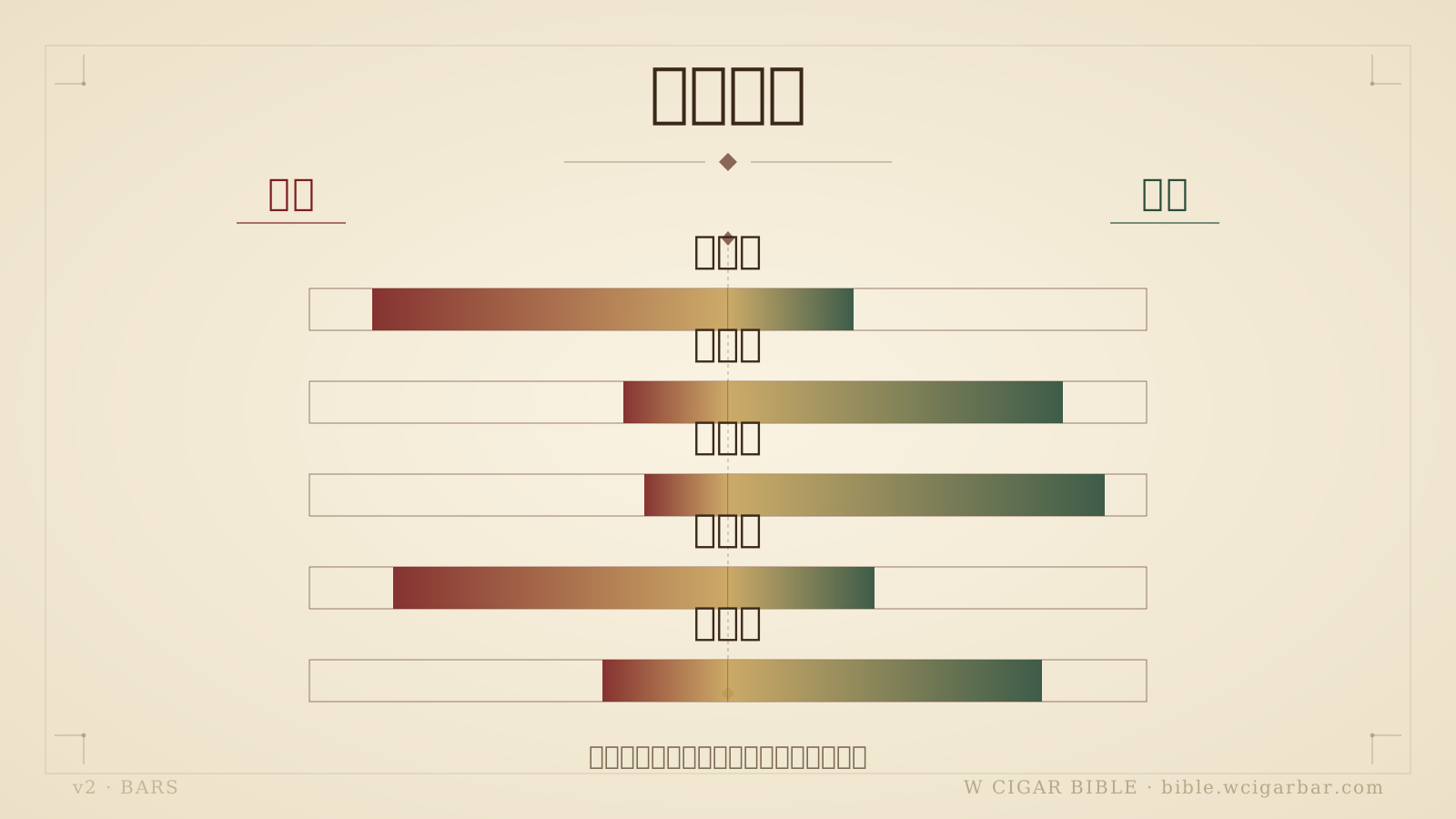
長條圖比較受控發酵與失控污染的五項差異
Reverse Engineering Microbial Management Issues from Flavor Defects
Experienced cigar tasters don't just ask "is it good to smoke" but should be able to reverse engineer where the problem occurred. If a cigar has a prominent ammonia, pungent cleaning agent sensation in the early stages, it often indicates insufficient fermentation or subsequent aging, with nitrogenous substances not fully converted. If the mid-section is bitter like burnt bean shells, it may be due to high-temperature fermentation or uneven leaf drying.
Truly mature cigar judgment is linking taste defects back to microorganisms, temperature, humidity, and processes, not just concluding with a brand name. For example, if a box of robusto from 2020 has a few cigars that are stuffy and sour, and a few are normal, it may be due to local moisture in storage; if the whole box is green and spicy, it is more likely due to insufficient fermentation depth before leaving the factory or too short aging time.
You can establish your fault notes in the following ways:
- Obvious ammonia: Record the production year, box code, and opening humidity, and observe for 3 to 6 months.
- Moldy or cardboard taste: Check if the ventilation inside the box and relative humidity have been above 72% for a long time.
- Bitter and dry scrape: Confirm if it has been stored too dry, or if the wrapper oil content has decreased.
- Sour and stuffy taste: Be alert to high humidity and microbial out-of-control, do not rationalize with "old taste."
Microorganisms in Storage: Aging, Humidity, and Flavor Refinement
Microbial activity doesn't completely stop after cigars leave the factory; it just slows down significantly. Generally stored in an environment of 18 to 21°C and relative humidity of 65 to 70%, microbial and enzymatic reactions become slow, volatile irritants gradually dissipate, oils and aromatic molecules integrate, which is what players often refer to as the charm of aging.
Storage is not just about making cigars old but allowing residual microbial reactions, oxidation, and moisture balance to complete flavor refinement. For example, a 2014 boxed Hoyo de Monterrey Epicure No.2, under good conditions, may transition from fresh woodiness to cream, honey, and gentle nuts; but if long-term above 75% humidity, it may become stuffy, sour, and unstable in burning.
I suggest experienced players view storage as a trackable experiment, not a belief. Record temperature and humidity, box aroma, and burning status once a season; store different regions separately to avoid mutual influence between humidity-sensitive Cuban cigars and oil-rich Nicaraguan cigars. If discussing collection appreciation, remember: it doesn't guarantee appreciation, still depends on source preservation and market.
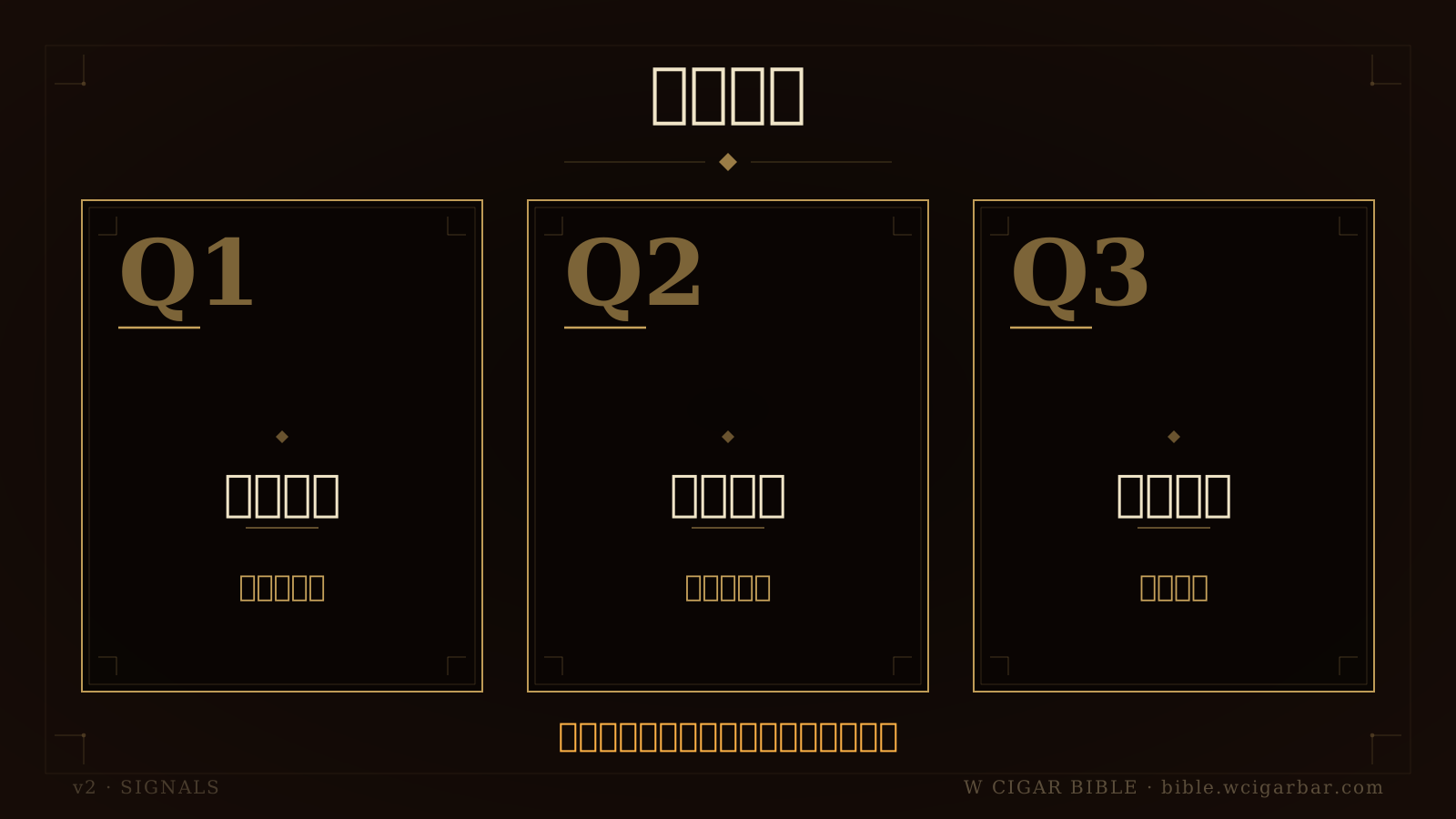
三張問答卡回答白霜氨味與濕度保存問題
How to Establish Advanced Microbial Interpretation Training
To truly understand the impact of microorganisms on cigars, one cannot just read data but must make repeatable comparisons. Choosing cigars of the same brand, same size, and different years is most effective, such as comparing 2018, 2020, and 2022 box periods for the same petit corona; record ammonia, sweetness, acidity, bitterness, and nasal aroma for each section.
The advanced ability of experienced players is to break down "I like" into describable, trackable, and verifiable flavor changes. I often suggest using a 0 to 5-point scale: ammonia, greenness, woodiness, sweetness, spiciness, and oiliness, and note the storage environment. Retest the same box of cigars three months later, more reliable than a single impression, and see if residual microbial reactions are still integrating.
You can also do horizontal comparisons: for the same 52-ring gauge robusto, choose one Cuban, one Nicaraguan, and one Dominican. Don't rush to rank them but compare the position of irritation: tongue tip spiciness, throat sting, nasal spiciness, and oral sweetness. These details will help you distinguish "under-fermented spiciness" from "mature flavor spice sensation."
Common Questions
Understanding cigar microorganisms is most important for distinguishing "controlled fermentation brings flavor" from "uncontrolled contamination causes defects". The following questions are the most frequently asked by experienced players and are most likely to cause misunderstandings in storage and tasting judgment.
Is the white stuff on the cigar surface something that shouldn't be touched?
Not necessarily. Uniform, frost-like, easily wiped white crystals are often related to oil and mineral precipitation; but if they appear fuzzy, green, blue, black, and penetrate the foot or inner wood surface, be highly alert. When judging, look at color, shape, smell, and whether it spreads, don't conclude based on a single photo.
Does ammonia mean poor cigar quality?
Ammonia indicates that nitrogen compounds have not fully volatilized or converted, not necessarily meaning poor raw materials. New boxes, heavily fermented ligero blends, or post-transport stuffiness can all temporarily appear. If it remains pungent after 3 to 6 months at 65 to 69% humidity, then suspect fermentation depth or storage history.
Does higher humidity mean faster aging?
Not recommended to understand it this way. High humidity will increase microbial activity but also increase the risk of mold, stuffiness, and poor combustion. For most handmade long cigars, stability is more important than speed; 18 to 21°C and 65 to 70% relative humidity is a more conservative and safer baseline.
Why do some cigars in the same box have different flavors?
Cigars are agricultural and handmade products, and even in the same box, they may differ due to leaf position, rolling density, local moisture content, and storage location. If only a few cigars have significant differences, it's mostly individual differences; if the whole box is stuffy, moldy, or ammonia, check the source, transport, and storage conditions.
Can microorganisms explain brand style?
They can explain part of it, but not all. Brand style also includes seeds, plots, harvest maturity, fermentation strategy, blend ratio, rolling craftsmanship, and post-aging. Microorganisms are like the bass section in an orchestra, not always heard alone, but once absent or out of tune, the overall structure changes.
Are old cigars always better than new ones?
Not necessarily. Aging can reduce irritation and integrate aromas, but the premise is that the raw materials have depth, fermentation is clean, and storage is stable. If a cigar was originally hollow, aging will only make it more so; if it was contaminated by high humidity, time won't automatically fix the defects. The year is a clue, not a guarantee.
The longer I look at cigars, the more I believe that good flavor is a "work completed by humans and microorganisms together." Farmers give life to the leaves, fermentation masters arrange the rhythm, preservers maintain the environment, and finally, it's our turn to read the woodiness, spiciness, sweetness, and aftertaste within. Understanding microorganisms is not about turning cigars into laboratory specimens but making each tasting more precise, humble, and respectful of the long journey a leaf takes to reach our hands.
—Cigar Prince Wilson Tsai
Smoking is harmful to health. Under twenty years old is not allowed to smoke. Quit smoking hotline: 0800-636363. This article is for reference by adults over twenty years old for cigar culture, preservation, and regulatory knowledge, not a tobacco advertisement, promotion, or purchase suggestion.
Like this article?Share with friends
Share this W Cigar Bible piece with friends who want to learn cigar culture, storage, and tasting.
想把這篇 化為實踐
雪茄聖經是知識;雪茄文化要在空間裡發生

W Cigar Bar 大安總店資訊
台北大安區 · 雪茄聖經總編輯 Wilson Tsai 主理的雪茄文化空間
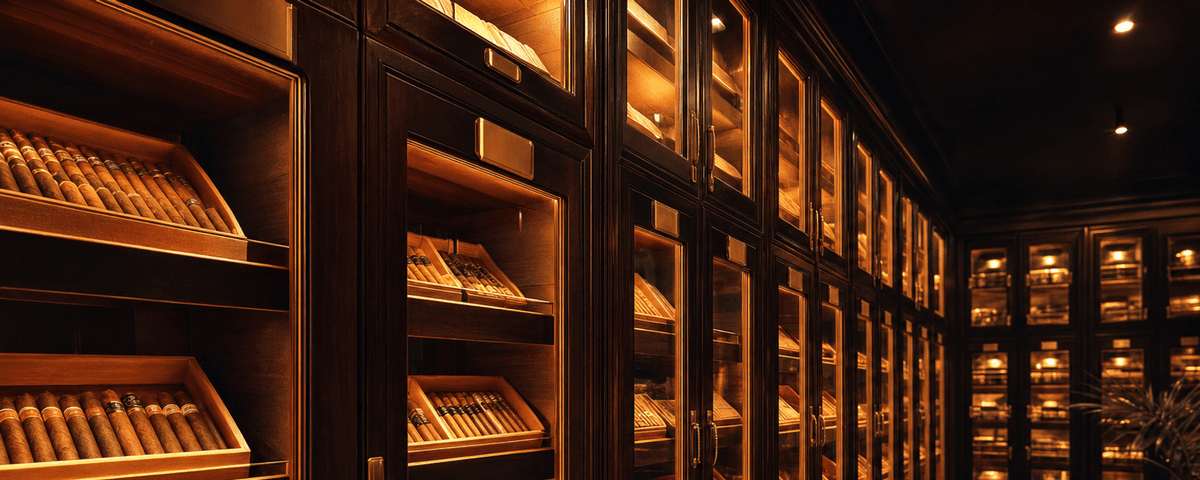
33 座 24 小時恆溫恆濕醇化室
W Cigar Bar 提供的會員醇化空間 · 場地資訊請洽編輯部

雪茄剪 / 打火機 / 雪茄盒 / Boveda
W Cigar 配件官網 · 專營雪茄配件正品

加 LINE 好友 · 文化諮詢
文化空間資訊 · 紳士沙龍 · 私人包場
本網站內容僅供雪茄文化、歷史、收藏與品吸知識研究參考。菸品有害健康、未滿法定年齡者請勿吸菸。實際規範請依所在地法律為準。
吸菸有害健康・戒菸專線 0800-636363・本站僅供 20 歲以上成年人閱覽。
讀到這裡,你不只是路過的人
留下 Email,加入 W 雪茄聖經內圈——總編輯 Wilson Tsai 親選的學院深文與國際新訊,先你一步送到信箱。
· 教育用途非銷售 · 隨時一鍵退訂 · Email 絕不對外公開 · 由勝茄股份有限公司營運
同分類延伸閱讀

資料來源:W Cigar Bible 編輯部整理 · 雪茄王子 Wilson Tsai 親自審稿
本文僅供雪茄文化、歷史、收藏與品鑑知識研究,不作為菸品促銷、銷售或購買建議。吸菸有害健康,未滿二十歲不得吸菸。