艾雷島威士忌泥煤風味完整解析:海風碘味與煙燻酚類,搭配 Partagás Serie D No.4 的煙燻對話

艾雷島威士忌的泥煤酚類、海風鹽感與碘味,遇上 Partagás Serie D No.4 的黑胡椒、泥土、皮革與深咖啡,會形成重口對重口的煙燻對話。本文從 Islay 地理、泥煤 ppm、島上蒸餾史、加水開香,到雪茄燃燒後的芳香化合物共振,解析老手該如何判斷這組搭配的張力與界線。
- 艾雷島泥煤風味來自泥煤烘乾麥芽、海風環境與桶陳結構共同塑形。
- Partagás Serie D No.4 的胡椒、皮革與深咖啡,能承接重泥煤煙燻。
- 泥煤酚類與菸草燃燒煙燻同源共振,是此搭配的核心邏輯。
Complete Analysis of Islay Whisky's Peaty Flavor: Sea Breeze Iodine and Smoky Phenols, Paired with the Smoky Dialogue of Partagás Serie D No.4
The encounter between Islay whisky and Partagás Serie D No.4 is never just a "smoky with smoky" pairing. As the editor of the "Cigar Bible," I often say that the biggest fear in pairing bold flavors is focusing only on intensity without considering the molecular origins. The phenolic compounds in Islay's peat and the smoky aroma from burning Cuban tobacco may seem similar on the surface, but they resonate along very specific pathways underneath.
Partagás Serie D No.4 (Cuba, Robusto, 50 × 124mm) itself features black pepper, earth, leather, deep coffee, and a rich cigar body. The traditional Havana craftsmanship also gives it a robust framework. If paired with overly sweet or fruity spirits, its spicy and earthy nature often overwhelms them. Islay's peaty whisky, however, enters the scene with sea salt, iodine, campfire smoke, and medicinal notes, which progressively amplify the dark flavors of this Robusto.

時間線呈現艾雷島蒸餾傳統到單一麥芽細讀
The Geographical Background of Islay Whisky: Peatlands, Sea Breeze, and Islay's Salinity
Islay is located at the southern end of the Inner Hebrides off Scotland's west coast, facing the Atlantic Ocean. The climate is wet, cold, windy, and noticeably salty. The island's surface has long accumulated moss, heather, grass roots, and coastal plant debris, forming a high-moisture, slow-burning, dense smoke peat layer. This is the starting point for the unique smoky profile of Islay whisky.
Peat is not simply a "burnt taste" but a release of phenols, cresols, guaiacol, and eugenol when plant humus accumulates in a low-oxygen environment and burns. The sea breeze of Islay doesn't mysteriously infuse salt directly into the whisky, but the warehouse environment, the breathing of oak barrels, the impression of brewing water, and the sensory connection of the drinker to coastal scents collectively shape the profile of sea salt, seaweed, and damp rocky shores.
The salinity of Islay whisky is not from a single source but is a geographical flavor formed by the overlay of peat smoke, coastal storage, and sensory memory. This is crucial for cigar pairing because the earthiness and leather of Partagás Serie D No.4 are also not single-point aromas but are dark bases formed by the interaction of fermented tobacco leaves, burning temperature, and cigar wrapper oils.
The Distillation History of the Island: From Farm Distillation to the Style Formation of Smoky Whisky
The distillation history of Islay can be traced back to the farm distillation traditions before the 18th century. Early farmers used barley, peat, and locally available water sources to produce spirits. Peat was used as fuel, not as a flavor design, but as a living condition. By the 19th century, as legal distilleries gradually formed, distilleries like Bowmore, Laphroaig, Lagavulin, and Ardbeg established the island's reputation for heavy peat.
In the 20th century, Islay whisky once played the role of a "smoky backbone" in blended whisky, providing a small but highly recognizable peat support. As single malt whisky was studied more closely by drinkers, Islay was no longer just a background in blended formulas but became a flavor language that could be deconstructed: medicinal notes, seaweed, ash, tar, lemon peel, malt sweetness, and oak spices each had their place.
The farm distillation tradition can still be seen in some of the island's distilleries today, such as local barley, floor malting, different peat cutting depths, and small-batch fermentation. These crafts do not all point to higher smokiness but allow for differences in smokiness, moisture, saltiness, sweetness, and herbal nuances.
The historical focus of Islay is not just "very smoky," but the evolution from a fuel need to a precisely adjustable peat syntax. Viewing Partagás Serie D No.4 from this perspective helps understand that it is not overshadowed by whisky but recognizes another set of old-school craftsmanship.

三張卡整理泥煤、海鹽與碘味的搭配重點
Peat PPM Spectrum: Light Peat, Heavy Peat, and the Numbers Experienced Drinkers Should Watch
Peat PPM usually refers to the phenolic concentration measured after malt drying, commonly expressed in parts per million. Light peat may fall around 5 to 20 ppm, medium peat around 20 to 40 ppm, and heavy peat is often seen above 40 ppm. However, experienced drinkers should remember that this is mostly malt-end data and does not equate to the smoky intensity when the whisky is tasted.
Fermentation, distillation cut points, still shapes, cask types, and aging years all alter the presentation of peatiness in the whisky. High PPM, when met with long cask aging and active oak, may be enveloped by vanilla, coconut, dried fruits, and spices. Conversely, medium PPM with low sulfur in new make and a linear body may appear sharp and ashy.
When pairing with Partagás Serie D No.4, I don't just look at the PPM number but observe whether the smoky form is "wet peat, medicinal, seaweed" or "dry ash, tar, charcoal." Wet peat and iodine can draw out the leather and pepper of the cigar, while excessive dry ash may push deep coffee towards bitterness, making the latter part of the palate seem thin.
Peat PPM is the starting point for interpretation, not the pairing answer; the real focus is on how phenols are carried by the body, cask type, and coastal atmosphere. This is why, even with the same Islay label, one whisky may appear three-dimensional when paired with Serie D No.4, while another may only leave ash.

矩陣比較濕泥煤、乾灰與桶甜對雪茄風味影響
Seaweed Iodine, Disinfectant, and Campfire: The Flavor Structure of Peaty Whisky
Typical Islay peaty whisky is often described as seaweed iodine, disinfectant, campfire smoke, sea salt, tar, and wet rope. These words sound intense but can be broken down into volatile phenols in the front, malt sweetness and alcohol structure in the middle, and oak tannins and saltiness in the finish.
Iodine and disinfectant impressions are often related to phenol, cresol, and other compounds, with a cool tone reminiscent of a medical kit, gauze, or coastal clinic. Campfire smokiness leans towards guaiacol, eugenol, and wood combustion notes. If cask aging involves bourbon cask vanilla, sherry cask nuts, or wine cask tannins, the smoke will be tinted with different colors.
In terms of entry structure, excellent smoky whisky will not only explode in the nasal cavity but will first open the saliva with salt and acidity, then let malt sweetness support the middle, and finally extend the finish with ash, pepper, and oak spices. This rhythm can perfectly echo the three-stage burn of Serie D No.4: black pepper and earth in the front, leather and deep coffee in the middle, and spicy, woody, and rich tobacco oils in the back.
If Islay's seaweed iodine is supported by malt sweetness, it can pull the cigar's spiciness into a three-dimensional line rather than just pushing the palate towards bitterness. This is the balance point that experienced drinkers should pay the most attention to when selecting a pairing whisky.

三張卡列出只看數字、乾灰過重與加水失衡
Adding a Drop of Water to Open the Aroma: Not Dilution, but Controlling the Order of Phenol Release
Adding a drop of water to open the aroma is a very practical technique when tasting peaty whisky, but the purpose is not to make the whisky milder but to rearrange the aromatic molecules. At high alcohol concentrations, some phenols and esters are enveloped by alcohol. When a small amount of water is added, the surface tension and evaporation state change, allowing seaweed, lemon peel, medicinal notes, vanilla, and ash to emerge in sequence.
I often use the "three-step method: smell the original whisky, add a drop of water, and then smell the glass wall again." The original whisky shows the body framework and smoky pressure; after adding water, observe whether the iodine becomes finer and whether the sweetness unfolds; the residual aroma on the glass wall can determine whether the finish is clean sea salt or coarse coal ash.
When pairing with Serie D No.4, the amount of water should be especially conservative because the cigar's rich body will continuously increase the intensity of the palate. If the whisky is stretched too thin by water, it will lose the framework to counter the black pepper and leather; if no water is added at all, some high-intensity peaty whiskies may make the initial spiciness appear tense.
The function of a drop of water is to break down the peat whisky from a whole wall of smoke into identifiable layers of iodine, sea salt, wood smoke, and malt sweetness. Only then, when it meets the cigar, is there a real dialogue, rather than both sides amplifying the volume simultaneously.
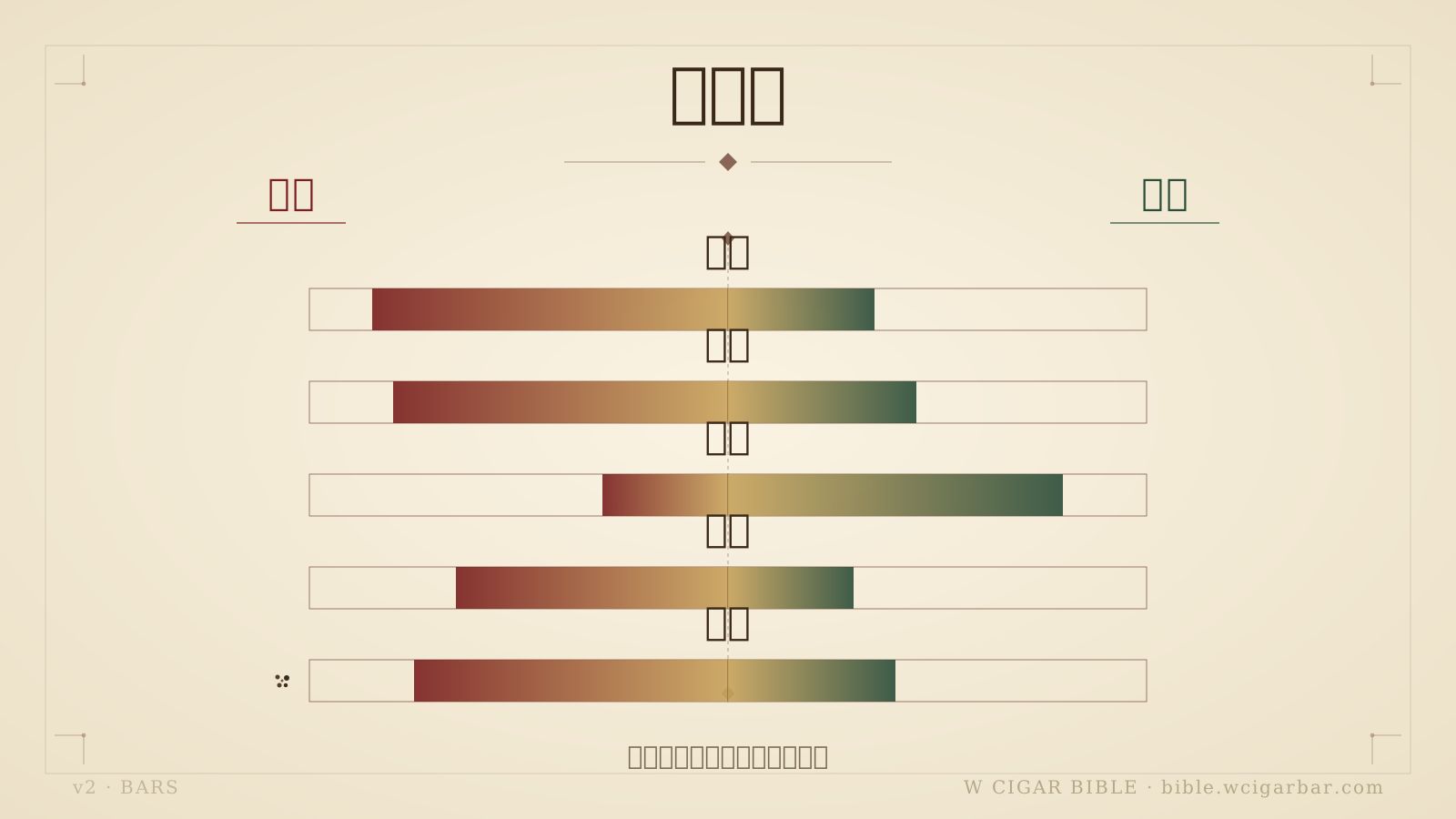
橫條圖對比濕碘取向與乾灰取向的風味強弱
Partagás Serie D No.4: The Pepper, Earth, and Leather Framework of Cuban Robusto
Partagás Serie D No.4 (Cuba, Robusto, 50 × 124mm) is a frequent guest in bold pairings, not only because of its rich cigar body but because its flavor center is low enough. Black pepper leads, followed by wet earth, old leather, deep coffee, and slightly bitter cocoa. The burn often brings woody spices and more pronounced tobacco oils in the later stages.
The historical context of Serie D No.4 is also worth revisiting for experienced drinkers. It has become a highly recognizable part of the Partagás line with its Robusto size (50×124mm). The 50 ring gauge provides enough smoke and oiliness, while the 124mm length keeps the rhythm concentrated, preventing the flavor from becoming too loose.
The challenge in pairing this cigar is its high demands on the sweetness and body of the spirit. Spirits that are too light will be overshadowed by the pepper and earth; spirits that are too sweet will turn deep coffee into a syrupy sensation; spirits that are too sharp will push the leather into dry wood shavings.
What Serie D No.4 needs is not a spirit to soften it but an opponent that can bear its black pepper, leather, and earth together. Islay peaty whisky fits well because its smokiness, salinity, and iodine can work below the center of gravity.
Peaty Phenols × Tobacco Smoke: Bold Flavor Chemistry
Peaty phenols and tobacco smoke can form positive resonance because both involve phenols and aromatic compounds from the thermal decomposition of wood. Phenol, cresol, and guaiacol in peaty whisky, when encountering the smoky phenols, pyrazines, and caramelization products from cigar burning, make the nasal cavity feel like "the same family of aromas being thickened," rather than two unrelated strong flavors colliding.
Sea Salt × Leather is the second hidden line of this pairing. The salinity of Islay reduces the dullness of leather, giving Serie D No.4's old leather, tobacco oils, and soil moisture an extra layer of savory base. This savory is not a food-like umami but makes it easier for the tongue to distinguish the oils, woodiness, and mineral feel in the leather.
Iodine × Black Pepper is the most beautiful three-dimensional reaction. Iodine has a cool tone, metallic edge, and herbal feel, while black pepper contains piperine stimulation and woody spiciness. When these two meet, the spiciness doesn't just stop at the tongue's tip but pulls up to the upper nasal cavity, giving the Robusto's front a more defined contour.
| Flavor Token | From Islay Whisky | From Serie D No.4 | Changes After Encounter |
|---|---|---|---|
| Peaty Phenols × Tobacco Smoke | Phenol, Cresol, Guaiacol | Burning Smoke, Woody Char | Resonance, Smoke Becomes Thicker Without Scattering |
| Sea Salt × Leather | Sea Breeze Salinity, Damp Rocky Shores | Old Leather, Tobacco Oils | Forms a Savory Base, Reduces Dullness |
| Iodine × Black Pepper | Medicinal Notes, Seaweed Iodine | Pepper Spiciness, Woody Stimulation | Elevates Nasal Cavity Levels, Spiciness Becomes More Three-Dimensional |
| Campfire × Deep Coffee | Wood Smoke, Charcoal, Ash | Deep Coffee, Cocoa Bitterness | Deepens Roasted Feel, But Avoids Over-Burning |
| Malt Sweetness × Earth | Malt Sugar, Grain Sweetness | Wet Earth, Cocoa Earthiness | Supports Earthiness, Prevents Dryness |
The core formula of this pairing is the resonance of peaty phenols and tobacco smoke, with sea salt and iodine separately pulling out the three-dimensionality of leather and black pepper. Without the salinity and malt sweetness, only high PPM smoke stacking remains, which can easily become coarse.

三張問答卡說明ppm、碘味來源與加水判斷
Practical Tips for Experienced Drinkers: Glass Type, Order, Temperature, and Rhythm Judgment
Regarding glass type, I prefer using a tulip glass or small nosing glass to concentrate the iodine, seaweed, and ash of peaty whisky, but avoid overly narrow glasses that force out alcohol spikes. The liquid temperature should be slightly below room temperature; too cold locks in phenols and malt sweetness, while too warm lets alcohol dominate, making the cigar's black pepper seem restless.
In terms of order, first smell the whisky without tasting it, then let Serie D No.4 establish the front black pepper and earth baseline, followed by a small sip of whisky, a brief pause, and a nasal return. Experienced drinkers can observe three signals: first, whether the leather of the cigar becomes clearer after the whisky; second, whether the iodine in the whisky becomes finer after the cigar; third, whether the finish leaves sea salt and deep coffee rather than bitter ash and alcohol heat.
The rhythm doesn't need to be intensive because the rich cigar body of Robusto and peaty whisky both carry high information content. Each alternation should let the previous round's finish complete before moving to the next, or else phenols, spiciness, and bitterness will stack into a single layer, losing judgment significance.
The focus of experienced pairing is not to increase intensity but to use rhythm to make each layer of smoke, salinity, pepper, and leather distinguishable. When you can articulate which sip elevates black pepper and which thickens leather, this pairing truly stands.
Frequently Asked Questions
The key to determining whether Islay whisky and Serie D No.4 are in harmony is to see if the smokiness has layers, not just the peaty image on the label.
Does a higher peat PPM mean it's more suitable for pairing with Partagás Serie D No.4?
Not necessarily. High peat PPM can provide enough smoky pressure, but if the whisky lacks malt sweetness, salinity, or cask aging support, it can push Serie D No.4's deep coffee towards bitterness. Experienced drinkers should look at the bottle's performance, not just the malt-end numbers.
Why does Islay whisky often have a seaweed iodine taste?
This is related to the phenols produced by peat burning, the island's coastal environment, storage impressions, and sensory associations. Iodine, medicinal notes, and seaweed often intertwine in Islay whisky, but different distilleries will have variations in dry ash, tar, lemon peel, or malt sweetness.
Will the black pepper of Serie D No.4 be overshadowed by smoky whisky?
If the whisky only has coarse heavy ash, it may indeed suppress the pepper. If the whisky has clear iodine and sea salt, the black pepper will instead be elevated, transforming from tongue-tip stimulation to a cool spiciness in the nasal cavity.
Will adding a drop of water make the peaty whisky lose its strength?
A small amount of water usually doesn't weaken the framework but allows phenols, esters, and oak aromas to emerge in layers. The key is to adjust drop by drop, observing whether the iodine becomes clearer and the malt sweetness unfolds, rather than adding too much at once.
Is this pairing suitable for those new to peaty whisky?
It has a high information content, with black pepper, earth, leather, iodine, and smokiness appearing simultaneously. If sensory experience is limited, it may be better to start with medium peat and round-bodied Islay to understand, then compare with heavier peat versions.
If the finish has a bitter ash feel, where is the problem usually?
It could be the overlap of dry ash in the whisky and the bitter finish of the cigar, or it could be the alternation rhythm being too fast, causing residual accumulation in the mouth. Try extending the intervals and observe whether there is enough sea salt, malt sweetness, or oak spices in the whisky to support the finish.
The classic pairing of Islay whisky and Partagás Serie D No.4 lies not in their strength but in their logical strength. Peaty phenols catch tobacco smoke, sea salt lifts leather, and iodine elevates black pepper. When these lines are visible, bold flavors are no longer just heavy but a structured smoky dialogue.
Further Reading|Complete Map of Whisky Regions: From Scotland's Five Major Regions to Asia's New Forces, an Overview of Flavors Paired with Cigars|Highball Whisky Soda's Refreshing Formula: Bubbles and Malt for a Summer Night, Paired with Por Larrañaga Petit Corona|Speyside Whisky Sherry Cask Flavor: The Sweetness of Dried Fruits and Dark Chocolate, Paired with Montecristo No.2's Cocoa Finish
—Cigar Prince Wilson Tsai
Smoking is harmful to health. No smoking under twenty years old. Quitline: 0800-636363. This article is for reference only for adults over twenty years old as knowledge of cigar culture, preservation, and regulations, not as tobacco advertising, promotion, or purchase advice.
No drunk driving. Excessive drinking is harmful to health. No drinking under eighteen years old. This article is also not alcohol advertising, promotion, or purchase advice, please drink responsibly.
Like this article?Share with friends
Share this W Cigar Bible piece with friends who want to learn cigar culture, storage, and tasting.
想把這篇 化為實踐
雪茄聖經是知識;雪茄文化要在空間裡發生

W Cigar Bar 大安總店資訊
台北大安區 · 雪茄聖經總編輯 Wilson Tsai 主理的雪茄文化空間

33 座 24 小時恆溫恆濕醇化室
W Cigar Bar 提供的會員醇化空間 · 場地資訊請洽編輯部
雪茄剪 / 打火機 / 雪茄盒 / Boveda
W Cigar 配件官網 · 專營雪茄配件正品

加 LINE 好友 · 文化諮詢
文化空間資訊 · 紳士沙龍 · 私人包場
本網站內容僅供雪茄文化、歷史、收藏與品吸知識研究參考。菸品有害健康、未滿法定年齡者請勿吸菸。實際規範請依所在地法律為準。
吸菸有害健康・戒菸專線 0800-636363・本站僅供 20 歲以上成年人閱覽。
讀到這裡,你不只是路過的人
留下 Email,加入 W 雪茄聖經內圈——總編輯 Wilson Tsai 親選的學院深文與國際新訊,先你一步送到信箱。
· 教育用途非銷售 · 隨時一鍵退訂 · Email 絕不對外公開 · 由勝茄股份有限公司營運
同分類延伸閱讀

資料來源:W Cigar Bible 編輯部整理 · 雪茄王子 Wilson Tsai 親自審稿
本文僅供雪茄文化、歷史、收藏與品鑑知識研究,不作為菸品促銷、銷售或購買建議。吸菸有害健康,未滿二十歲不得吸菸。