雪茄醇化原理:時間如何改變一支雪茄
氨揮發、糖份和緩、油脂遷移、水分平衡——出廠後 6 個演化階段的完整解析
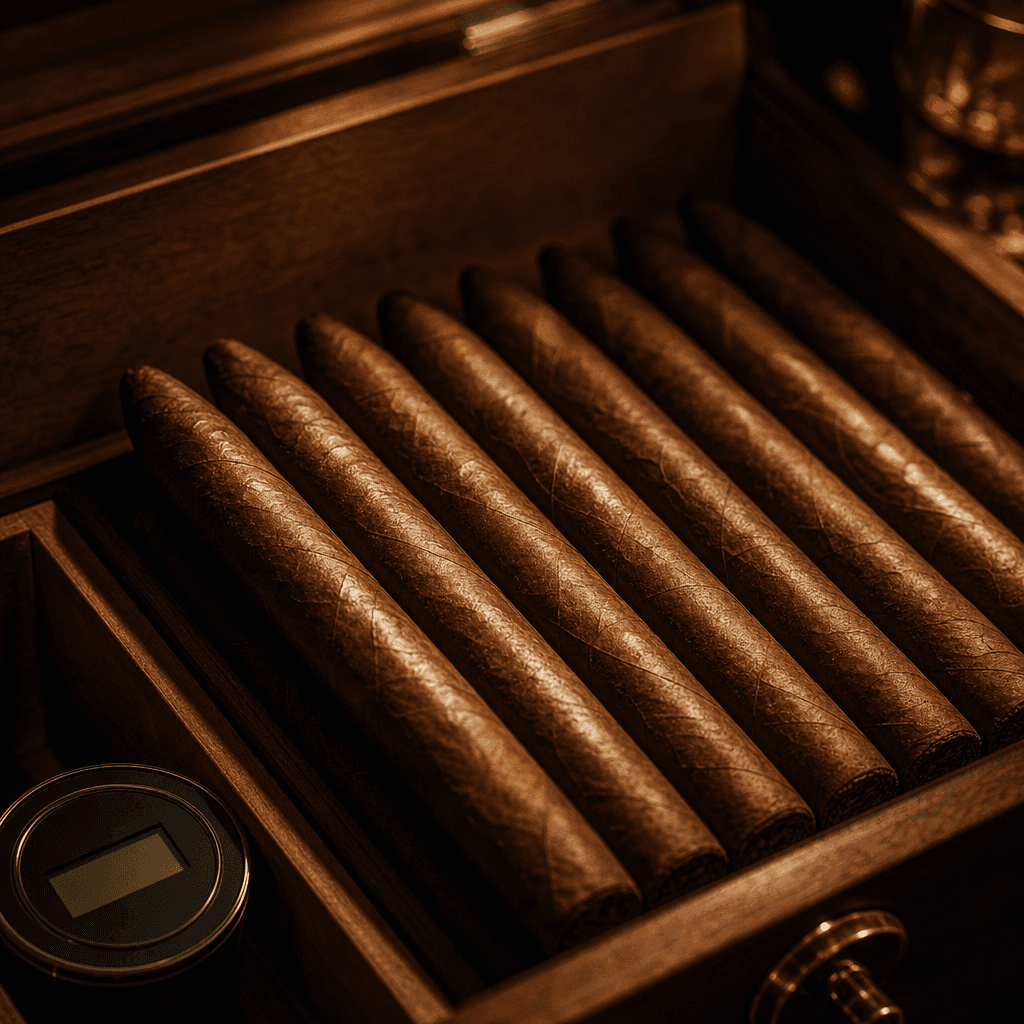
雪茄醇化原理深度解析—醇化 vs 工廠發酵差別、4 個化學變化(氨揮發、糖份和緩、酸類後熟、油脂遷移)+ 3 個物理變化(水分均勻、纖維鬆弛、Plume 結晶)、6 個時間軸階段(休眠/開窗/成熟/高峰/頂級陳年/老饕級)、適合長期醇化的雪茄、4 個失敗徵兆、5 個檢查指標。雪茄王子親寫 starter 核心原理。
- 醇化過程中,殘留氨會緩慢揮發,降低雪茄的刺鼻感,使口感變得柔順。
- 菸葉中的天然糖份在醇化期間持續焦糖化,讓甜感變得更複雜,從而提升風味層次。
- 醇化期間,雪茄的水分會均勻化,這樣能改善抽吸時的氣流,讓燃燒更加均勻。
The Principles of Cigar Mellowing: How Time Changes a Cigar
Many beginners think "a cigar is at its best when it leaves the factory" -- wrong. When a top-tier cigar leaves the factory, it has completed only the first half of its journey. The second half -- that is, mellowing (Mellowing / Aging) -- may still take 2 to 10 years to finish. This article provides an in-depth, practical analysis of mellowing principles from chemistry, physics, a 6-stage timeline, and storage practice.
Deeper chemical mechanisms (later-stage Maillard reactions, ester molecule stabilization, Arrhenius reaction kinetics) are included in the W Cigar Bar Cigar Bible deep article aging-molecular-transformation-deep.
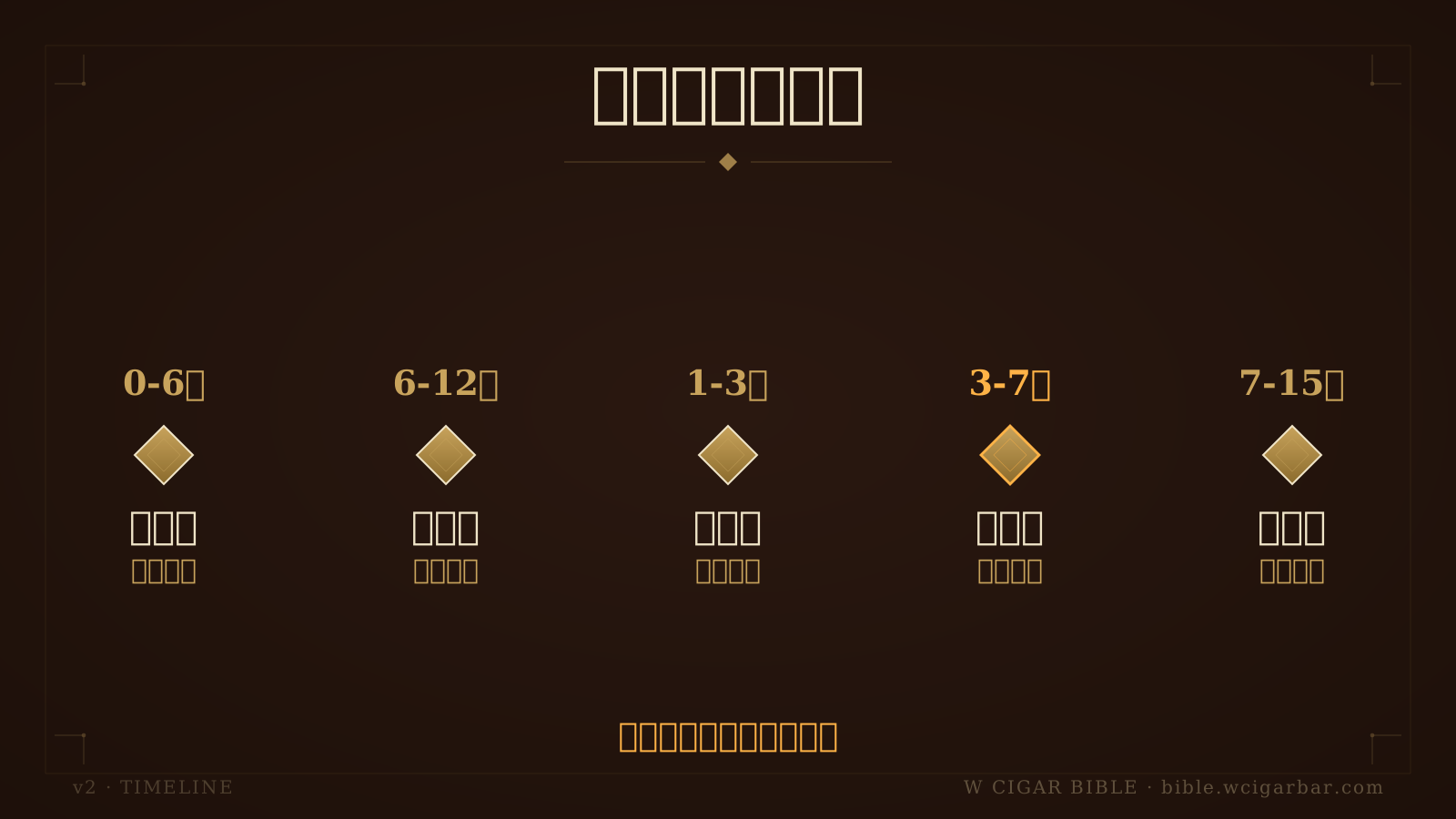
說明雪茄醇化從休眠期、開窗期、成熟期、高峰期到陳年期五個階段時間軸的演化流程圖
1. The Fundamental Difference Between Mellowing and Factory Fermentation
Factory side: Fermentation
- Timing: After tobacco leaves are harvested and before they are rolled into cigars
- Process: Tobacco leaves are stacked into a Pilón, self-heat to 35-55°C, and undergo 2-3 rounds (3-4 rounds for top Cuban cigars), with each round lasting 30-60 days
- Driver: Strong, intense, and guided by the master blender or craftsman
- Purpose: Reduce the harshness of tobacco leaves, release ammonia, initiate sugar caramelization, and turn green, raw tobacco into smokeable tobacco
Player side: Mellowing (Mellowing / Aging)
- Timing: After the cigar leaves the factory and enters a humidor
- Process: A constant temperature and humidity environment (16-20°C / 65-72%), slow and gradual chemical changes, with time measured in months and years
- Driver: Still, silent, and governed by time
- Purpose: Further reduce residual harshness, allow different tobaccos in the blend to integrate, and transform flavors from "strong and side-by-side" into "rounded and interwoven"
Industry consensus: When a good cigar leaves the factory, only 70% of its flavor is complete; the remaining 30% depends on mellowing in the humidor.
2. Why Are Factory-Fresh Cigars Not at Their Best?
Top factories all conduct a mandatory aging period before release:
- Top Cuban cigars: 6-18 months
- Davidoff: 5 years of mandatory aging
- Padrón Anniversary: 5-10 years
- Padrón 1926: More than 10 years
Even so, after leaving the factory, cigars continue to change -- and this is the true stage for "mellowing."
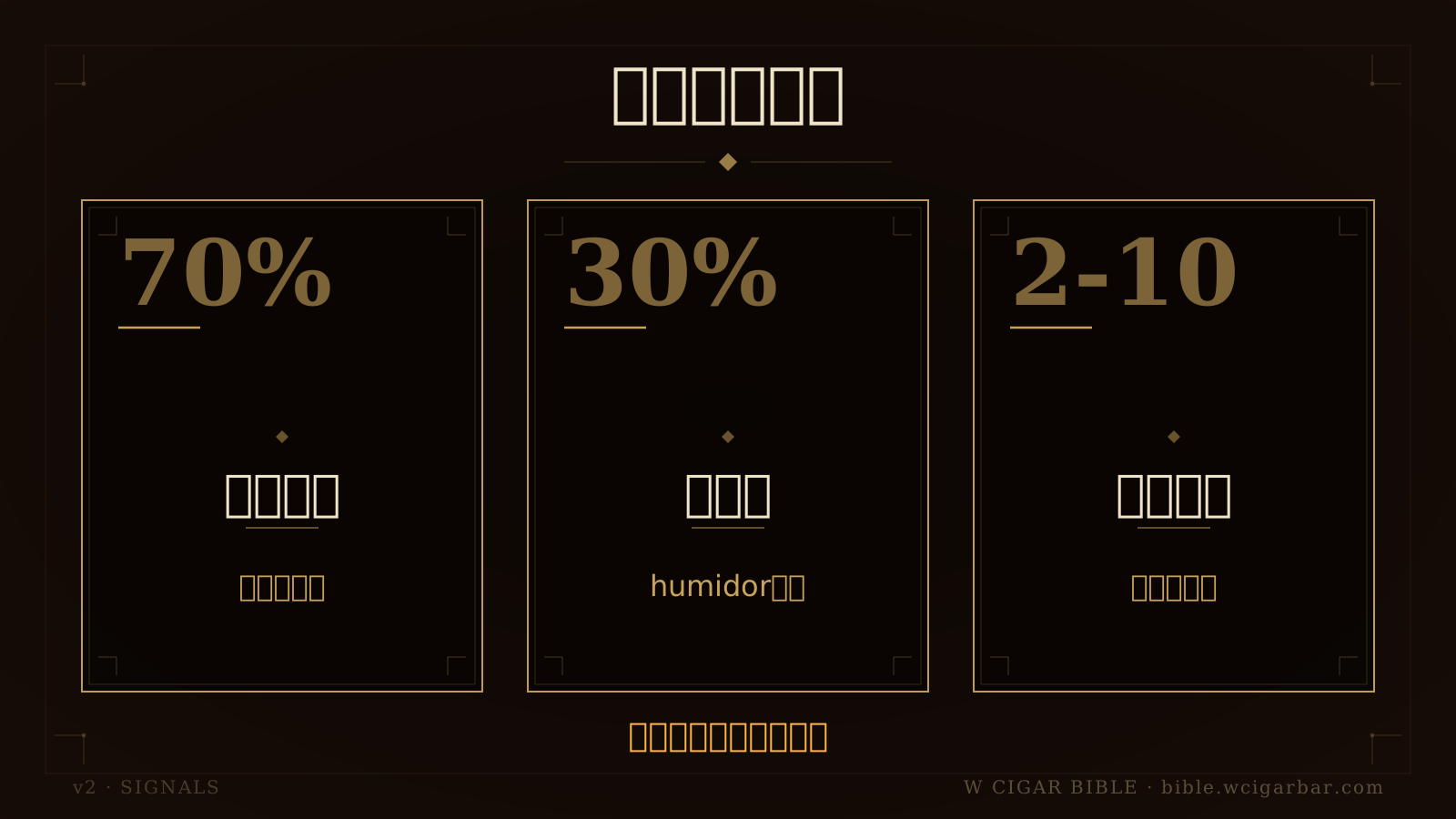
以三張卡片呈現雪茄出廠只完成七成風味、剩三成靠 humidor 醇化與需二到十年完成的核心結論圖
3. The 4 Chemical Changes of Mellowing
Chemical change 1 -- continued volatilization of residual ammonia: Although factory fermentation releases most of the ammonia, small amounts of volatile alkaline compounds remain in the tobacco leaves (the source of the pungent sensation, alkaline taste, and green rawness in new cigars). During mellowing, these compounds slowly volatilize, decreasing slightly each month and almost dissipating after 2-3 years. Result: The aggressive character decreases, and the mouthfeel becomes smoother.
Chemical change 2 -- post-maturation of sugar caramelization: The natural sugars in tobacco leaves already begin caramelizing during fermentation (Maillard reaction). During mellowing, Maillard reactions continue at a slow pace, and sugar molecules keep producing more complex furfural compounds and melanoidin compounds. Result: Sweetness changes from "direct sugary sweetness" into "complex caramel honey."
Chemical change 3 -- post-maturation of acidic compounds: New cigars often have a green, sharp acidity (organic acids such as malic acid and quinic acid). During mellowing, acids slowly oxidize, esterify, and combine with other molecules to form esters. Result: Sharp acidity becomes rounded fruit notes, blackcurrant, and cedarwood tones.
Chemical change 4 -- homogenization of oils and ester molecules: Top-tier cigar tobacco leaves are rich in natural oils and esters. In new cigars, flavor molecules are unevenly distributed among different leaf positions; during mellowing, they redistribute throughout the cigar through solid-phase diffusion. Result: The layers become more even, the mouthfeel becomes fuller, and combustion becomes more stable.

比較 Plume 細粉沉積與真黴菌在顏色、分布、可擦除與氣味四個面向差異的辨識資訊表
4. The 3 Physical Changes of Mellowing
Physical change 1 -- moisture equalization: When a new cigar leaves the factory, the moisture content of the wrapper, binder, and filler is slightly different. In a 70% humidor environment, moisture slowly balances among the three layers. Indicator: The elasticity is consistent throughout the cigar, and mellowing is underway.
Physical change 2 -- relaxation of tobacco leaf fibers: In a new cigar, the tobacco leaf fibers still retain the tightness from rolling. During mellowing, the fibers slowly relax, but do not become loose (because they are restrained by the wrapper). Result: The draw becomes smoother, and combustion becomes more even.
Physical change 3 -- Plume / Bloom deposition (an industry-disputed phenomenon): After long-term mellowing (usually 3+ years), a fine white powdery deposit may appear on the surface of the tobacco leaf, traditionally called "Plume" or "Bloom" in the industry.
The scientific controversy over Plume: Traditionalists in the industry believe it is crystallization of tobacco oils and esters precipitating at low temperature (the mainstream position of Cigar Aficionado). However, since the 2010s, sample tests by mycologists from Friends of Habanos (FOH) have concluded that all samples were "mold (such as Aspergillus / Penicillium)." FOH publicly offered a USD 250 reward for a cigar that could be proven in a laboratory to be a pure crystalline substance, and the reward has not been awarded to this day. In practice, what members of a gentlemen's club need is not an academic conclusion, but an operable set of judgment criteria.
Identifying Plume-like deposits vs real mold:
| Feature | Plume-like deposits (acceptable in most cases) | Real mold (must be handled) |
|---|---|---|
| Color | Fine white powder | White cottony fuzz, blue-green spots, dark green |
| Shape | Uniform granular form | Fuzzy form, filamentous branching |
| Wipeability | Falls off with a light wipe | Adheres and is hard to brush off, leaves marks |
| Distribution | Uniform, thin, and consistent across the whole box | Spotty, at vein junctions, localized |
| Smell | Maintains the mellowed aroma of tobacco leaves | Moldy smell, earthy smell, basement smell |
| Handling | Most players regard it as a sign of deep mellowing | Immediately isolate, assess, and discard if necessary |
For the complete scientific controversy over Plume and microscopic identification, see W Cigar Bar Cigar Bible starter article 13, plume-vs-mold-identification, and the deep article plume-mold-microscience-deep.
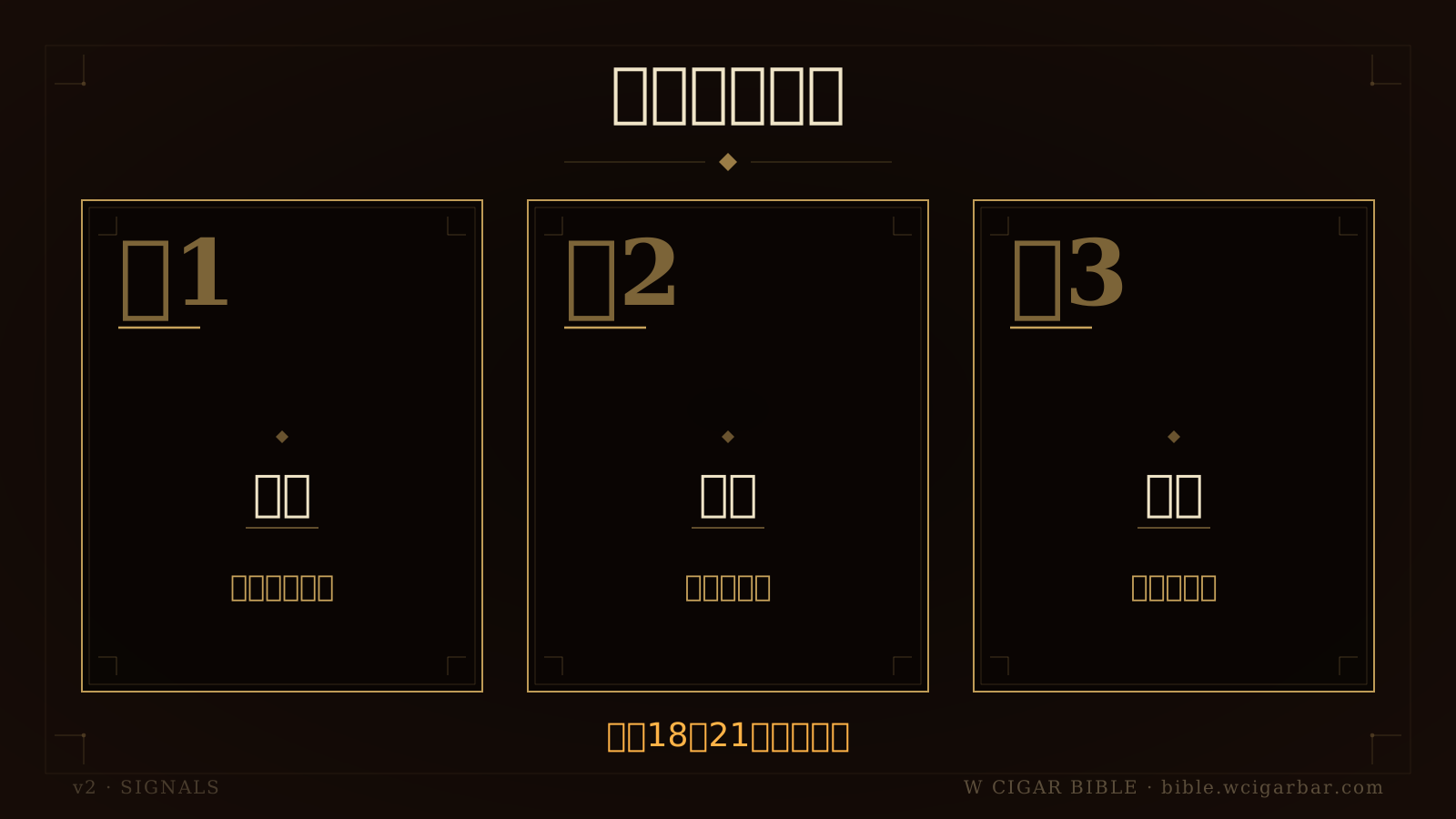
整理雪茄醇化發霉、蟲害與過乾三個失敗徵兆與對應處理方向的提醒圖
5. Mellowing Timeline: 6 Evolutionary Stages
The mellowing stages widely recognized in the industry (not absolute, and slightly different depending on cigar brand and storage conditions):
Stage 1 / Dormant (0-6 months): The cigar has just left factory mandatory aging and is recovering from transport vibration. Flavors are relatively closed, and the layers have not opened up. It is not suitable to smoke high-end cigars at this time (wasteful).
Stage 2 / Opening (6-12 months): Residual ammonia continues to volatilize, flavors begin to open up, and the cigar becomes suitable for appreciation. Most players start smoking at this point.
Stage 3 / Maturation (1-3 years): The blend integrates, oils become even, and flavor complexity begins to show. This is the entry point to the sweet spot.
Stage 4 / Sweet Spot (3-7 years): Flavors reach perfect balance, the layers of tobacco integrate to the point that they cannot be distinguished, and Plume-like deposits may begin to appear. This is the stage sought after by top players.
Stage 5 / Premium Aged (7-15 years): Flavors are extremely rounded, strength may decrease slightly, and complexity is very high. Market price may double. This is the "golden age" of top Cuban cigars.
Stage 6 / Veteran or Decline (15 years+): Two destinies diverge --
- Top-tier cigars (Cohiba Behike, Padrón 50 Years, Pre-Embargo Habanos): Enter a mythical stage, auction prices can reach the thousand-dollar level, and while flavor may be weaker, the layering reaches an extreme
- Ordinary cigars: Oils are depleted, the wrapper becomes brittle, flavors are lost, and the cigar declines after passing its peak
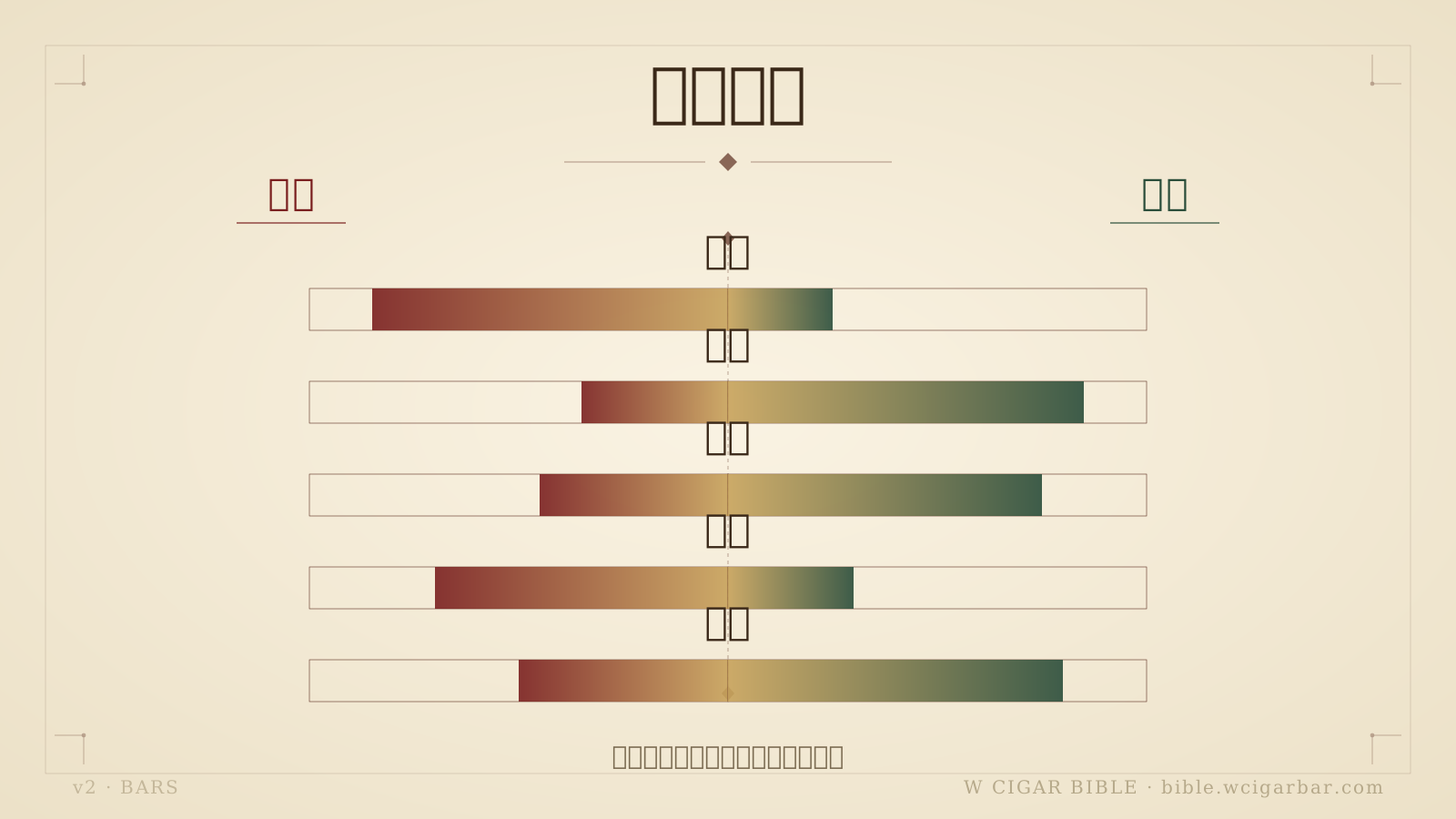
橫條圖比較新鮮與醇化雪茄在刺激融合甜感酸尖穩燃差異
6. Which Cigars Are Suitable for Long-Term Mellowing?
Suitable:
- Cuban Habanos flagships (Cohiba Behike, Trinidad Fundadores, Montecristo No.2, Partagás Lusitanias)
- Top-tier non-Cuban Maduro (Padrón Anniversary, Liga Privada, Fuente OpusX)
- Limited editions (Edición Limitada, Regional Edition, Gran Reserva, Reserva)
Not suitable:
- Entry-level cigars (such as Macanudo Café and other Connecticut Shade Mild cigars) -- they are designed to be "smoked and enjoyed immediately," and their oils are depleted after 5+ years
- Machine-made cigars -- the structure is not durable, and the wrapper easily becomes brittle
- Cigars already in poor condition -- mellowing will only magnify the problem
7. The 4 Signs of Failed Mellowing
Sign 1 -- mold: White cottony fuzz, blue-green patches, hypha-like filaments, sour and foul odor -> immediately isolate the whole box, assess it, discard if necessary, and clean the humidor.
Sign 2 -- cigar beetle (Lasioderma serricorne) hatching: The symptom is 2-3 mm round holes on the cigar surface (holes from beetles boring out). Cause: They can hatch at temperatures >22°C, and hatch fastest at 25-30°C. Handling: Immediately freeze the whole box at -18°C for 72 hours to kill all eggs; after thawing, store again; the cigar can be smoked, but the flavor is damaged. Prevention: Temperature 18-21°C, humidity 70% ± 2%.
Sign 3 -- too dry: Brittle wrapper, burns too fast, bitterness. Cause: Humidity below 60% for a long period. Handling: Put it back into the humidor with Boveda 70% packs for 1-2 weeks to ease the problem; severe cases are irreversible.
Sign 4 -- odor contamination: The cigar has strange odors (coffee, leather, plastic, perfume). Cause: The storage environment is mixed with other items. Handling: Basically irreversible; discard it. Prevention: Keep only cigars + Spanish cedar lining + Boveda packs inside the humidor.
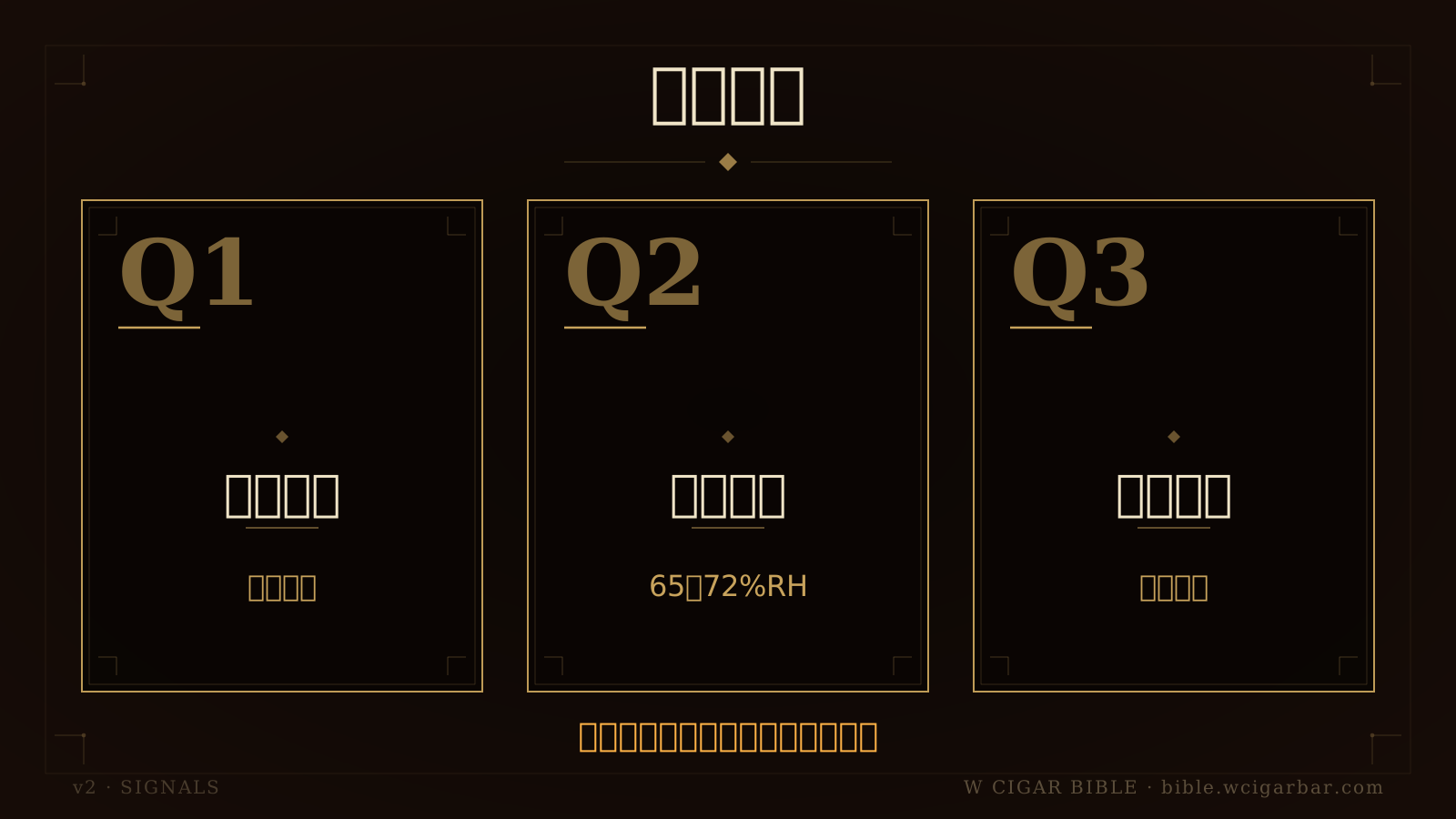
三張問答卡回答醇化年限濕度範圍與白粉判斷
8. The 5 Health Indicators of Mellowing
Check once every 3-6 months and look at 5 indicators:
- Wrapper color and sheen: Oiliness is maintained or slightly increased (oils migrate to the surface); the color darkens but remains even = mellowing in progress; becoming lighter and faded = too dry.
- Elasticity: A light press creates a slight indentation that immediately rebounds = perfect; too soft and does not rebound = too humid; too hard with no indentation = too dry.
- Aroma: Cedar, leather, light honey = mellowing in progress; moldy smell, sour and foul smell = failure; completely odorless = flavor loss.
- Plume-like deposits (3+ years): Uniform fine powdery distribution + maintaining the mellowed aroma of tobacco leaves = a common expression of deep mellowing; spotty distribution + moldy smell indicates hyphae and must be handled.
- Stable humidity: Humidor humidity stable at 65-72%, with fluctuations within ±5%, is ideal; large fluctuations will make the cigar "breathe" poorly.
Conclusion
Mellowing is not passively "leaving it there and waiting"; it is actively "creating the perfect environment and letting time do the work." After understanding the principles of mellowing, you may be willing to put top-tier cigars into a humidor and smoke them 5 years later -- that will be one of the most profound experiences in your cigar journey.
W Cigar Bar Gentlemen's Cigar Lounge, Da'an District, Taipei. Cuban cigars from four official channels (PCC authorized distributor, official Cuban state-owned store, Swiss general agent, Spanish general agent). LUBINSKI Italy accessories general agent (Travel Humidor, full series of humidification accessories). Da'an Main Store with 33 VIP cigar lockers (24-hour mellowing, professional mellowing environment) maintained by dedicated staff -- humidity 70% / temperature 18°C constant year-round; Cigar Prince Wilson Tsai personally plans a 5-10 year mellowing path for every VIP guest.
Reservation: Da'an Main Store. Accessories reference: LUBINSKI accessories official website cigarclub.tw.
Warning: Smoking is harmful to health. Smoking cessation hotline: 0800-636363. This site is for adults aged 20 and above only.
Like this article?Share with friends
Share this W Cigar Bible piece with friends who want to learn cigar culture, storage, and tasting.
想把這篇 化為實踐
雪茄聖經是知識;雪茄文化要在空間裡發生

W Cigar Bar 大安總店資訊
台北大安區 · 雪茄聖經總編輯 Wilson Tsai 主理的雪茄文化空間
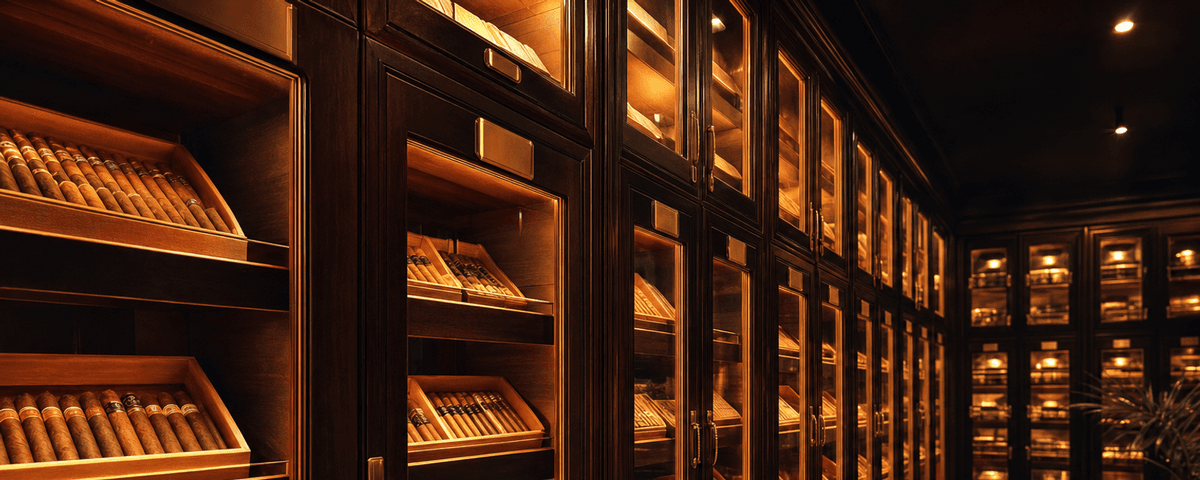
33 座 24 小時恆溫恆濕醇化室
W Cigar Bar 提供的會員醇化空間 · 場地資訊請洽編輯部
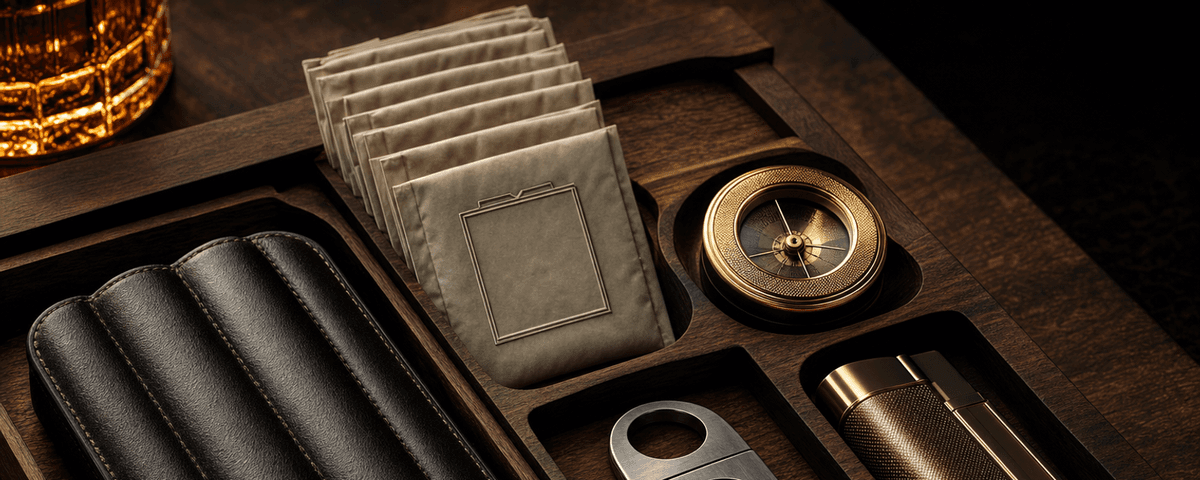
雪茄剪 / 打火機 / 雪茄盒 / Boveda
W Cigar 配件官網 · 專營雪茄配件正品

加 LINE 好友 · 文化諮詢
文化空間資訊 · 紳士沙龍 · 私人包場
本網站內容僅供雪茄文化、歷史、收藏與品吸知識研究參考。菸品有害健康、未滿法定年齡者請勿吸菸。實際規範請依所在地法律為準。
吸菸有害健康・戒菸專線 0800-636363・本站僅供 20 歲以上成年人閱覽。
影片來源:Habanos S.A. 官方 YouTube 頻道 · 教育性內容引用 · AI 智能配對
讀到這裡,你不只是路過的人
留下 Email,加入 W 雪茄聖經內圈——總編輯 Wilson Tsai 親選的學院深文與國際新訊,先你一步送到信箱。
· 教育用途非銷售 · 隨時一鍵退訂 · Email 絕不對外公開 · 由勝茄股份有限公司營運
同分類延伸閱讀
資料來源:W Cigar Bible 編輯部整理 · 雪茄王子 Wilson Tsai 親自審稿
本文僅供雪茄文化、歷史、收藏與品鑑知識研究,不作為菸品促銷、銷售或購買建議。吸菸有害健康,未滿二十歲不得吸菸。