雪茄的風味層次:從初嚐到深度品味的探索
雪茄的品味不僅在於煙霧的濃淡,還包括其在燃燒過程中的變化。學會「三段式」觀察法,能幫助入門者理解雪茄的前段、中段和後段風味。前段通常展現開場香氣,中段則是風味的核心,後段則考驗抽吸的節奏與技巧。記錄每支雪茄的風味變化,並透過比較不同品牌的特性,能提升品味的深度與準確性。抽吸的節奏與溫度也會影響最終的風味體驗,慢慢品味,讓雪茄的魅力自然展現。
- 雪茄的風味層次可分為前段、中段、後段,需注意每段的香氣與口感變化。
- 冷香、裁切與點燃的方式會影響第一口的品質,需謹慎處理。
- 抽吸節奏與溫度會影響後段的風味,應該保持適當的抽吸頻率。
The Flavor Layers of Cigars: An Exploration from First Taste to Deep Appreciation
The allure of cigars lies not only in the density of the smoke but also in the complexity beyond just "sweetness." Once you understand the basics of tasting and know not to inhale the smoke into your lungs, the next step is to learn how to read the nuances of a cigar as it burns.
As an editor of the "Cigar Bible," I often say: A good cigar is like a piece of music with movements. The first puff is the prelude, the middle is the main theme, and the final part tests the craftsmanship, storage, and smoking rhythm. Understanding these layers allows you to truly delve into the depth of appreciation.
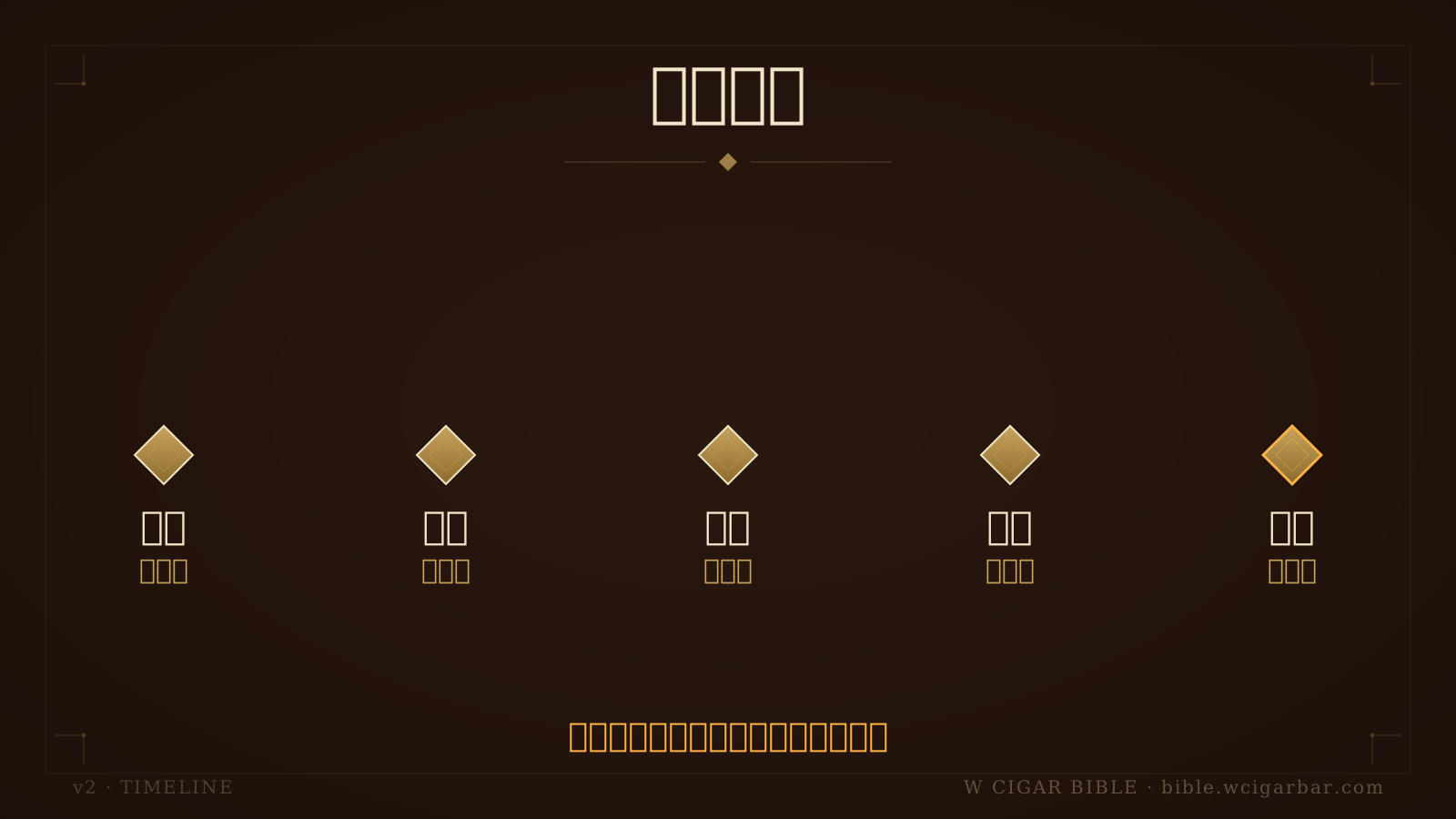
時間軸呈現冷香點燃前段中段尾段的觀察流程
Starting Point of Flavor Layers: Establishing the "Three-Stage" Observation
Most cigars can be understood in terms of the front, middle, and end stages. Not every cigar will have dramatic shifts, but this framework helps beginners record consistently. For a Robusto size, commonly around 50 ring gauge and 124 mm, with a smoking time of about 45 to 70 minutes, the first third often presents the opening aroma, the middle third enters the main body, and the final third sees an increase in both concentration and temperature.
Flavor layers are not about finding more adjectives but observing how the same cigar shifts over time, temperature, and rhythm. For example, a Montecristo No.4 in the Marevas size, about 42 ring gauge and 129 mm, often shows woody, coffee, and light cocoa notes in the front stage, with roasted grain notes possibly emerging in the middle. If smoked too quickly, the end stage may only offer spiciness and heat.
I recommend recording at 0, 15, 30, and 45 minutes instead of just noting "good smoke" or "strong." In 2023, I organized a batch of H. Upmann Magnum 46 in different storage conditions and found that samples with humidity between 65% and 67% had clearer woody and creamy notes; samples above 72% often appeared dull, with unclean sweetness in the front stage.
Before the First Puff: Cold Aroma, Cutting, and Lighting Determine the Opening
Many people think flavors start after lighting, but clues appear when smelling the foot, observing the sheen of the wrapper, gently squeezing for elasticity, and cold drawing after cutting. If the cold draw offers hay, honey, cocoa, or cedar, it doesn't guarantee the same after lighting, but it hints at the cigar's direction. If the cold draw is too tight, even the best tobacco won't unfold well later.
The quality of the first puff is often determined by the three minutes before lighting. It's recommended to preserve the cap structure when cutting, avoiding cutting too deep; for a Robusto, cutting about 1.5 to 2 mm is usually sufficient. When lighting, first toast the outer rim of the foot, then let the flame indirectly heat the center to avoid burning the wrapper at the start, which would result in a bitter char that masks floral or sweet woody notes.
Taking Romeo y Julieta Churchill as an example, a brand originating in 1875, the Churchill size, about 47 ring gauge and 178 mm, is inherently suitable for a slow unfolding. If the lighting is too aggressive, the first stage may become a monotonous charcoal taste; if the burn line is even, the front stage often reveals floral, leather, cedar, and a subtle sweetness, showcasing the delicate advantage of long-sized cigars at the start.
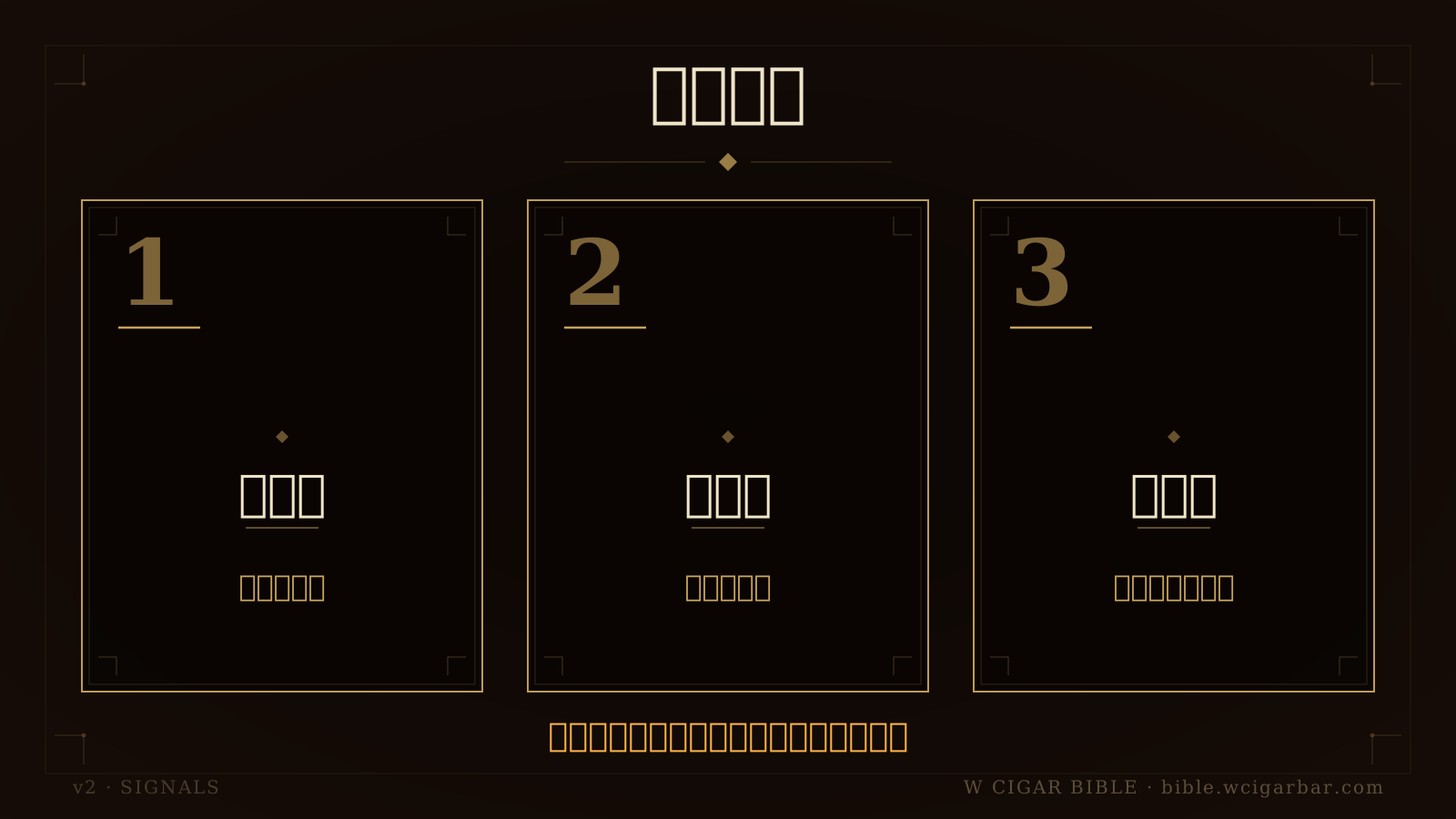
三張卡片整理雪茄風味層次的核心觀察重點
From Front to Middle Stage: How Sweet, Sour, Bitter, and Spicy Intertwine
Beginners often think of "sweet" as candy-like, but cigar sweetness is more akin to honey, roasted nuts, caramelized wood, or matured grains. Sourness isn't necessarily a flaw; citrus peel, black tea, or fermented fruit acidity, when balanced with sweetness, can make the palate more dimensional. Bitterness needs to be distinguished: the bitterness of cocoa or coffee beans is flavor; charcoal-like bitterness is often a burning or rhythm issue.
The middle stage is the core for judging whether a cigar has depth, as sweet, sour, bitter, and spicy begin to negotiate here. Cohiba became a representative Cuban brand in 1966, and larger ring gauge works like Siglo VI often showcase an interplay of cream, grass, honey, and spices in the middle stage. If storage and burning conditions are good, the aroma doesn't just intensify but gradually broadens.
Partagás, founded in 1845, is often described as earthy, leathery, peppery, and with robust woodiness. Taking Serie D No.4 as an example, the front stage may start with black pepper and coffee, with roasted bread, cocoa, and saltiness emerging in the middle. This variation reminds us not to judge too early; a cigar that isn't appealing in the first 10 minutes might have exciting turns in the middle stage.
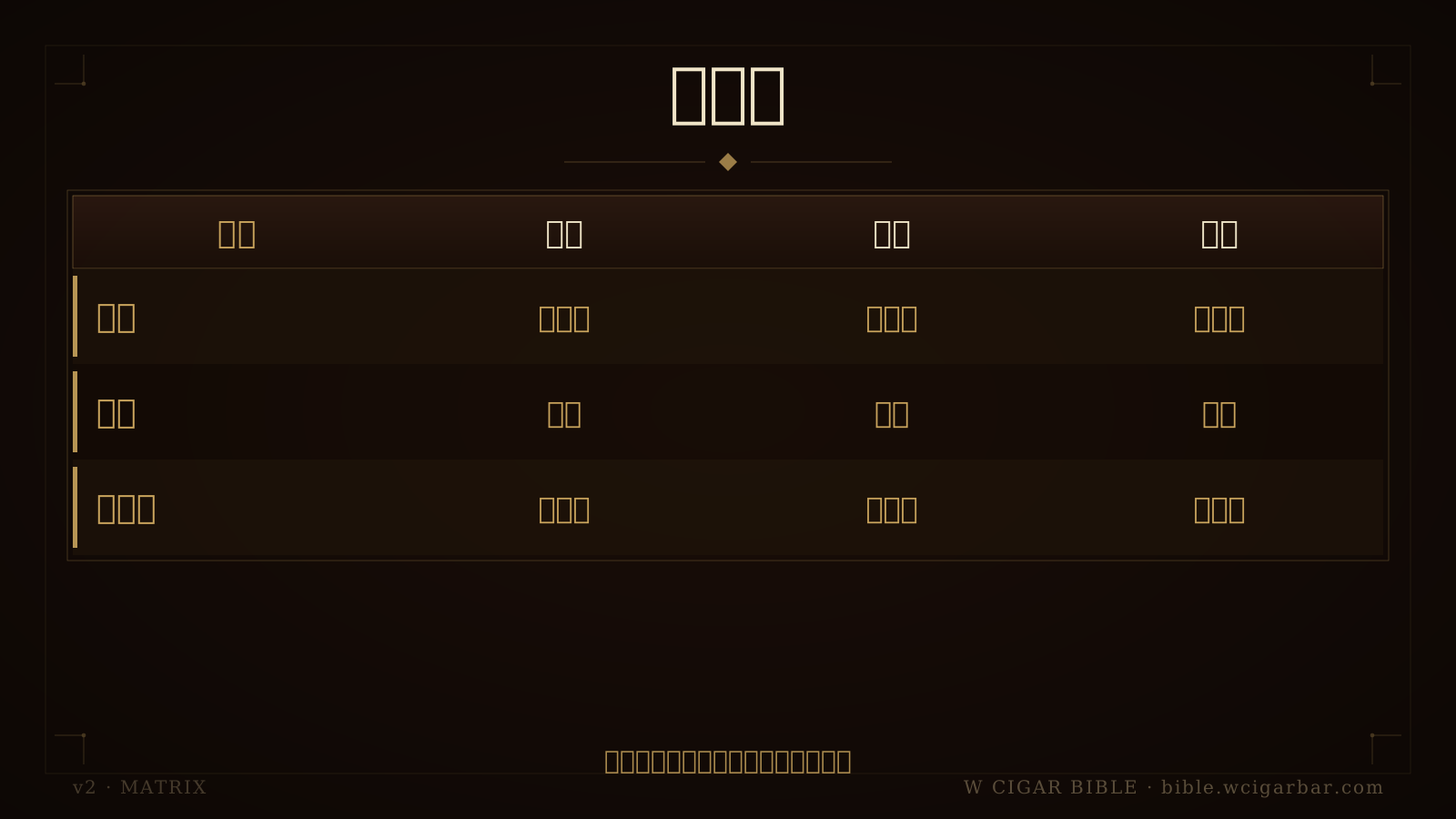
矩陣比較雪茄前段中段後段的時間溫度與風味差異
Training the Palate with Tables: Turning Sensations into Comparable Data
I encourage beginners to prepare a notebook with a fixed format, not to write literary works, but to allow for retrospective comparison. Each record should include brand, size, year or box code, storage humidity, smoking time, paired beverages, and the three-stage flavors. Once you accumulate over 20 cigars, you'll start to discover whether you prefer concentration, aroma, sweetness, or the length of the finish.
The key to palate training is turning subjective feelings into repeatable, comparable data. Here is a simplified example that can be used for different styles of cigars like Montecristo, Hoyo de Monterrey, Trinidad, Davidoff, or Padrón; different sizes of the same brand should also be recorded separately, as ring gauge and length directly affect burning speed and temperature.
| Observation Item | Front Stage 0-15 Minutes | Middle Stage 15-45 Minutes | End Stage After 45 Minutes |
|---|---|---|---|
| Aroma | Hay, Cedar, Floral | Coffee, Cocoa, Nuts | Leather, Earth, Spices |
| Mouthfeel | Light, Clean, Slightly Sweet | Rounded, Rising Oiliness | Heavy, Higher Temperature |
| Risks | Bitter from Lighting | Uneven Burn | Overly Spicy, Overheated |
| Recording Focus | Whether the Opening is Clear | Whether There are Transitions | Whether There is Still a Finish |
Taking Hoyo de Monterrey Epicure No.2 as an example, a brand originating in 1865, this Robusto is often seen as a representative of softer, clear floral and woody notes. If your notes show that you often like its front and middle stages but not the spicy end stage, it indicates that you might choose a smaller size in the future or maintain a slower smoking rhythm in the end stage.
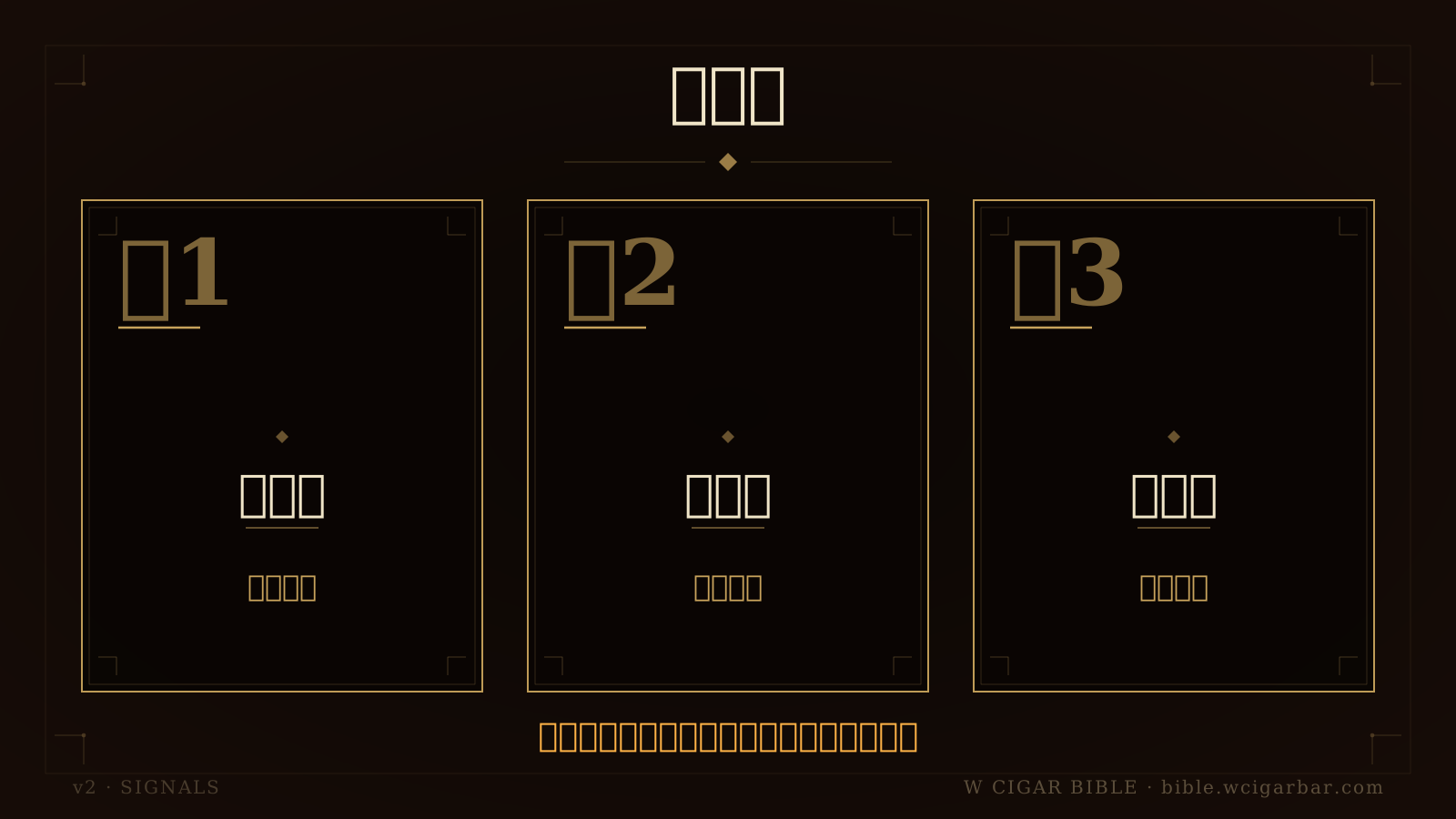
三張卡片列出抽吸太快只看濃度與硬抽尾段的誤解
Flavor Interpretation of Different Brands: A Contrast Between Cuban and Non-Cuban
When discussing brand styles, avoid absolutes, as year, batch, and storage can change performance, but brands do have a language. Montecristo often shows coffee, cocoa, and wood; Cohiba is expected to have grass, cream, and honey; Partagás leans towards robust and spicy; H. Upmann often has grains, nuts, and soft wood; Trinidad often balances elegant sweetness and spices.
Brand style is a map, not a verdict; the real answer still depends on the state of the cigar in hand. Trinidad was originally associated with diplomatic gifts around 1969 and became more widely visible in the market after 1998. Shorter sizes like Reyes can present cream, wood, spices, and slight sweetness in about 30 to 45 minutes, making them very suitable for training in recognizing layers in a short time.
Non-Cuban cigars are also worth understanding with the same method. Davidoff Nicaragua, launched in 2013, often features Nicaraguan tobacco's black pepper, coffee, and sweet spices; Padrón 1964 Anniversary is known for Nicaraguan terroir, cocoa, coffee, nuts, and stable burning. When comparing Cuban brands, don't just ask which is better, but which structure better fits the current preference.
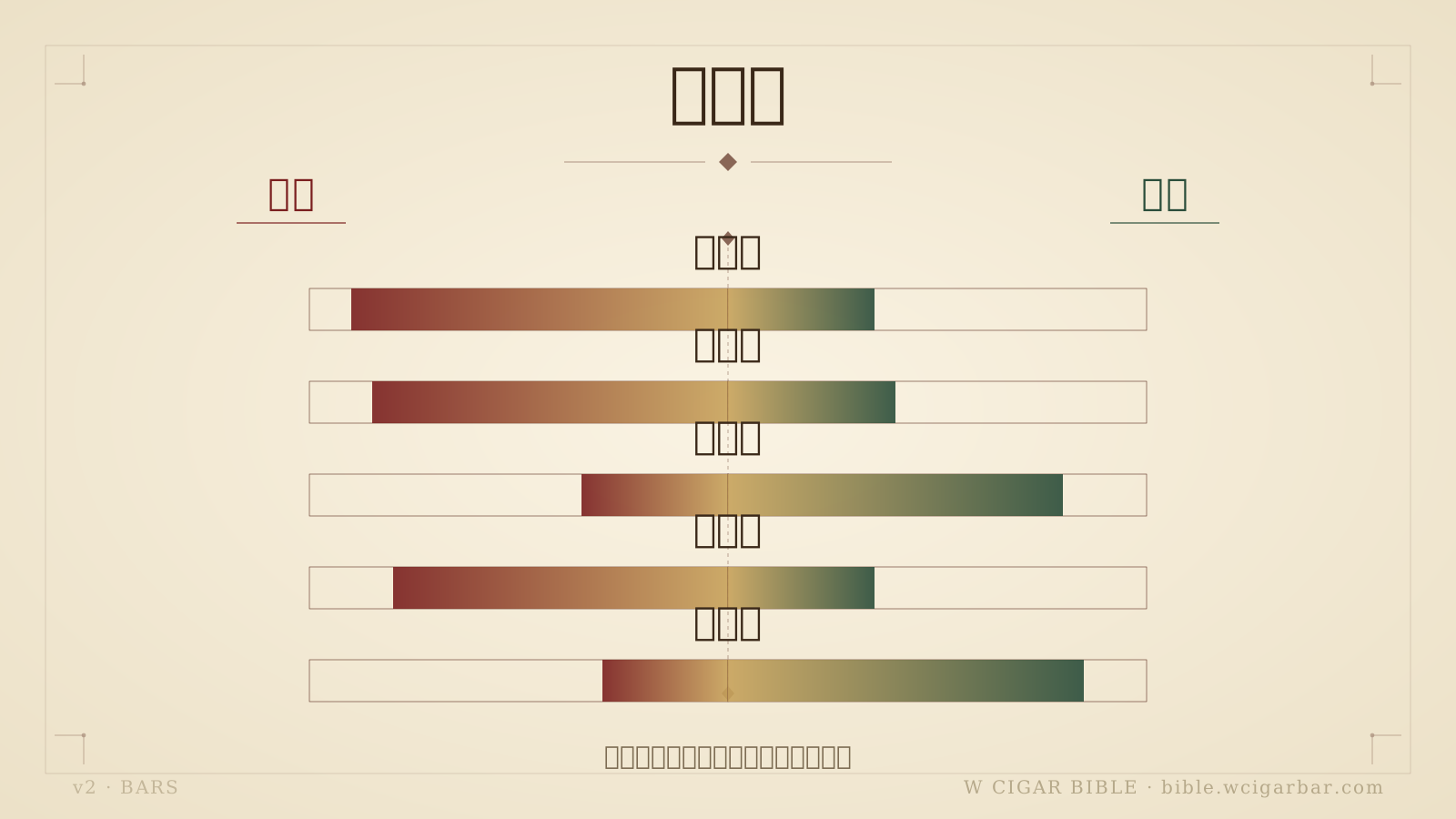
橫條圖比較快抽與慢品在溫度甜感苦辣與層次上的差異
Smoking Rhythm and Temperature: Why the End Stage Often Turns Bitter
The end stage turning bitter doesn't necessarily mean the cigar is bad; common reasons include too frequent puffs and high burning temperature, leading to concentrated tar and spiciness. It's generally recommended to take a puff every 45 to 75 seconds, adjusting based on ring gauge and burning condition; for larger sizes above 54 ring gauge, the rhythm can be further slowed. The holding position also affects temperature; the closer to the burning end, the more heat and irritation you'll feel.
A truly mature cigar appreciation is about letting the cigar speak for itself, not forcing it to perform with a rushed rhythm. If you find the smoke getting hot, the tongue tingling, or bitterness suddenly rising, you can put it down for 1 to 2 minutes to stabilize the burn line; if necessary, gently correct uneven burning, but avoid repeatedly relighting with a big flame, as it will cover the aroma with the taste of fire.
I once compared the same box of Partagás Serie P No.2 from around 2020, a torpedo size about 52 ring gauge and 156 mm. With a slow rhythm, the middle and end stages had leather, coffee, sweet wood, and black pepper; with a fast rhythm, it turned into intense spiciness after about 35 minutes. This case illustrates that flavor layers are not solely determined by the brand; the smoker's rhythm also contributes to the final result.
Pairing Beverages and Etiquette: Making Flavors Clearer, Not More Confused
The purpose of pairing beverages is not to steal the show but to cleanse the palate, extend the finish, or complement the structure. Water is the most reliable baseline; black coffee can amplify cocoa, nuts, and roasted tones; unsweetened tea can bring out wood and floral notes; single malt whisky or rum requires attention to alcohol strength, as too strong a drink can make cigar details disappear.
A good pairing lets you hear the cigar itself more clearly, rather than turning the cigar into a sidekick to the drink. For example, H. Upmann Magnum 50 paired with oolong tea often makes grain and nut notes clearer; Padrón 1926 Serie paired with black coffee easily brings out cocoa and espresso-like thickness. For a softer Hoyo, a heavy peated whisky might not be as suitable as water or light tea.
In terms of etiquette, please respect venue regulations and surrounding feelings. Before lighting, confirm ventilation and allowed areas; when conversing, don't point the cigar at others; ash doesn't need to be tapped off frequently, about 2 to 3 cm will naturally fall; if you need to pause, place the cigar on an ashtray to let it extinguish naturally, don't crush it like a cigarette, as this will cause unnecessary odors.
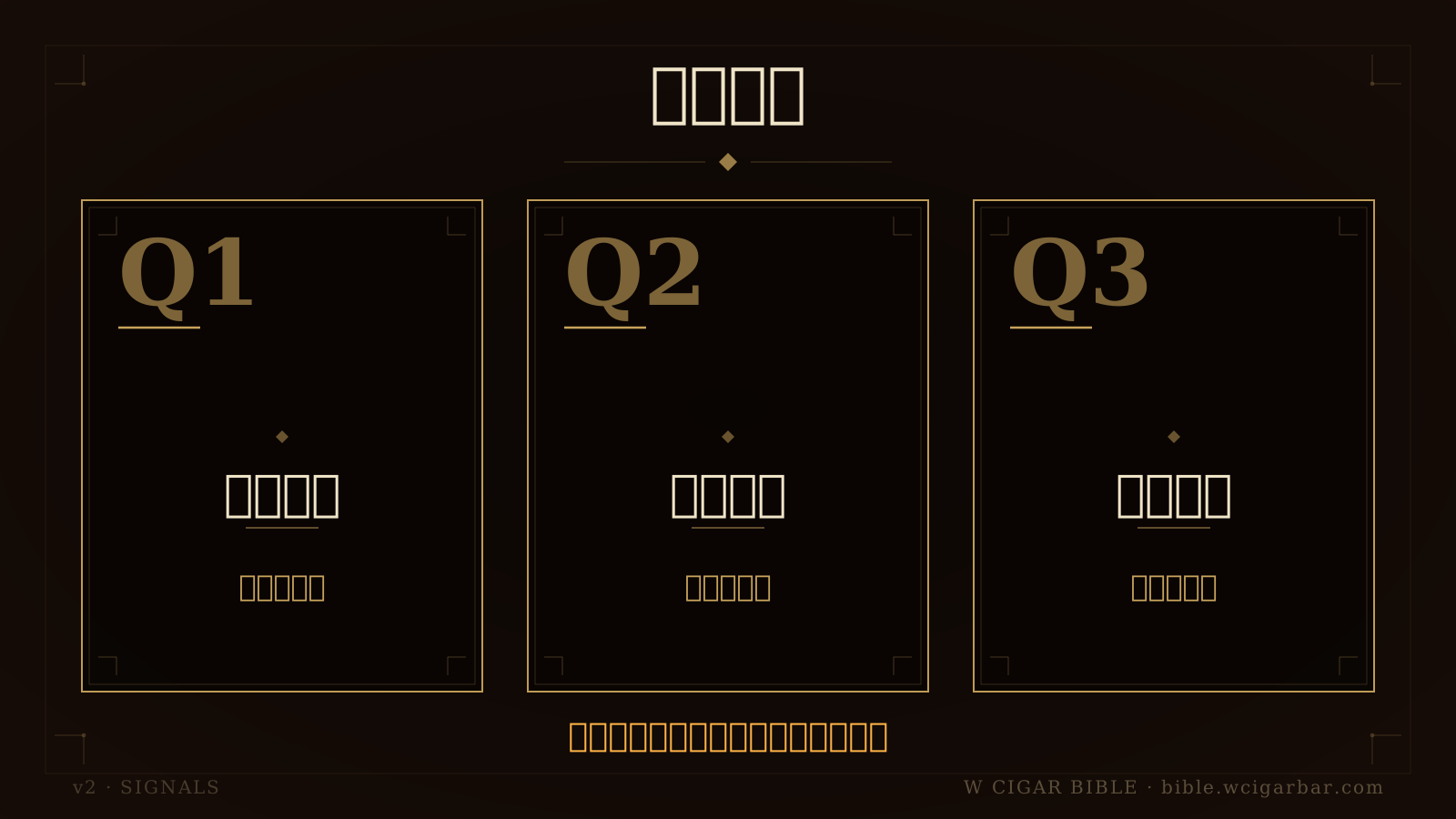
三張問答卡片摘要苦辣前段差與同款風味變化的答案
Aging, Storage, and Vintage: Why Flavors Become Rounder
Cigars that undergo time integration in suitable environments may become softer, with sharpness decreasing, which is the aging effect often mentioned by enthusiasts. General home storage can control relative humidity at 65% to 69%, with temperature around 18 to 21°C; long-term high temperature and humidity can lead to mold, pests, or dullness, and flavors won't improve as a result.
Aging is not magic; it can only improve cigars with potential and proper storage, not turn damaged cigars into masterpieces. For example, the same Montecristo No.2, if stably stored for three years, might see a decrease in front-stage sharpness, with coffee and cocoa in the middle stage becoming more integrated; but if exposed to humidity above 75% for a long time, draw resistance and dull acidity might destroy the layers.
Discussing vintage also requires rationality. Certain batches from 2014, 2016, or 2019 might be discussed by enthusiasts, but vintage doesn't equal quality assurance; it still depends on source, transportation, storage, and actual condition. If someone overstates the value of collection, I would remind them: collection appreciation doesn't guarantee value appreciation; it still depends on source storage and market. For beginners, getting storage right is more important than chasing vintage.
Common Questions
Why do I only taste "bitter" and "spicy"?
First, check the rhythm and humidity. If you take a puff every 20 seconds, the temperature will quickly rise, naturally overshadowing sweetness with bitterness and spiciness. It's recommended to change to a puff every 45 to 75 seconds and ensure storage humidity is around 65% to 69%. Most beginners don't have poor taste, but their rhythm is too fast, suppressing flavors before they unfold.
If a cigar's front stage is bad, does it mean the whole cigar is bad?
Not necessarily. For example, Partagás or some Nicaraguan works might be more direct in the front stage, with sweet wood, coffee, and cocoa emerging in the middle. It's recommended to observe until the first stage ends before judging, but if there's mold, excessive ammonia, or severe burning anomalies, it's a different matter.
Should beginners choose low-concentration brands?
You can start with medium to low concentration, but don't only look at concentration. Some sizes of Hoyo de Monterrey, H. Upmann, and Romeo y Julieta are often more friendly; if you want to understand robust styles, you can choose shorter-time Partagás or Padrón small sizes. The key is controlling time and physical burden.
Why does the same cigar taste different each time?
Differences may come from batch, vintage, transportation, storage humidity, lighting method, dietary state, and the environment of the day. Cigars are agricultural products, not standardized beverages. The differences in the same cigar are the training material for deep appreciation. The more complete your records, the better you can distinguish whether the cigar has changed or if your state is different.
Do you have to smoke a cigar to the very end?
No need. When the temperature gets too high, bitterness and spiciness become obvious, and the finish becomes coarse, you can stop. Many cigars are near the end when about 3 to 4 cm remain, and pushing further only leaves an unpleasant impression. Deep appreciation is not about bravado but knowing when to let a flavor segment conclude.
I have always believed that the true joy of cigars is not in flaunting rarity but in whether you can quietly read the rhythm of a cigar. From the cedar and floral notes of the first puff, to the coffee, cocoa, and nuts in the middle, and finally the leather and spices in the end, each stage reminds us: slow down to experience the layers. May each time you light up not be a repetitive action but a more precise sensory exercise.
—Cigar Prince Wilson Tsai
Smoking is harmful to health. Under 20 years old is prohibited from smoking. Quitline: 0800-636363. This article is intended for adults over 20 years old as a reference for cigar culture, storage, and regulations, not as tobacco advertising, promotion, or purchase advice.
Like this article?Share with friends
Share this W Cigar Bible piece with friends who want to learn cigar culture, storage, and tasting.
想把這篇 化為實踐
雪茄聖經是知識;雪茄文化要在空間裡發生
W Cigar Bar 大安總店資訊
台北大安區 · 雪茄聖經總編輯 Wilson Tsai 主理的雪茄文化空間
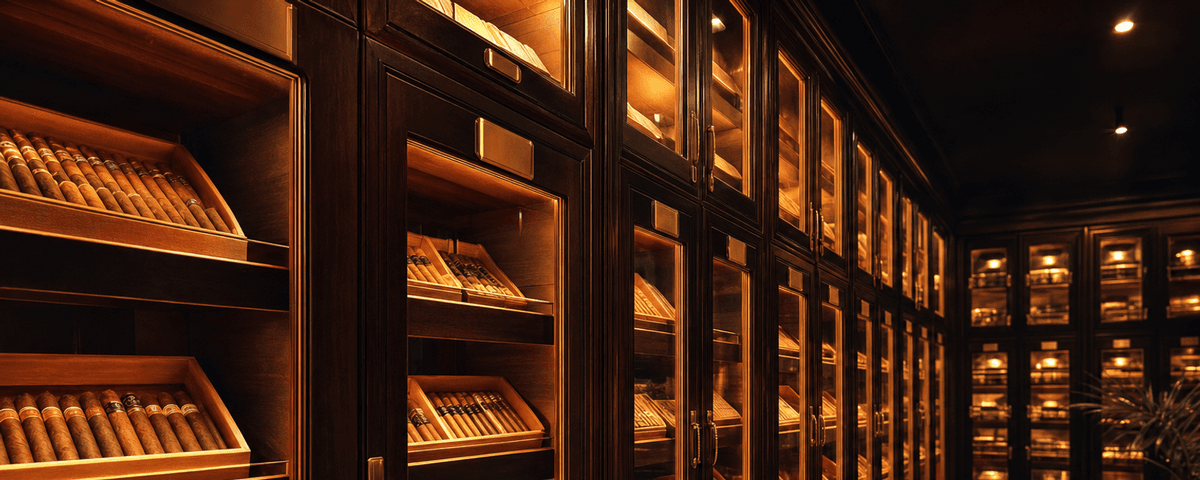
33 座 24 小時恆溫恆濕醇化室
W Cigar Bar 提供的會員醇化空間 · 場地資訊請洽編輯部
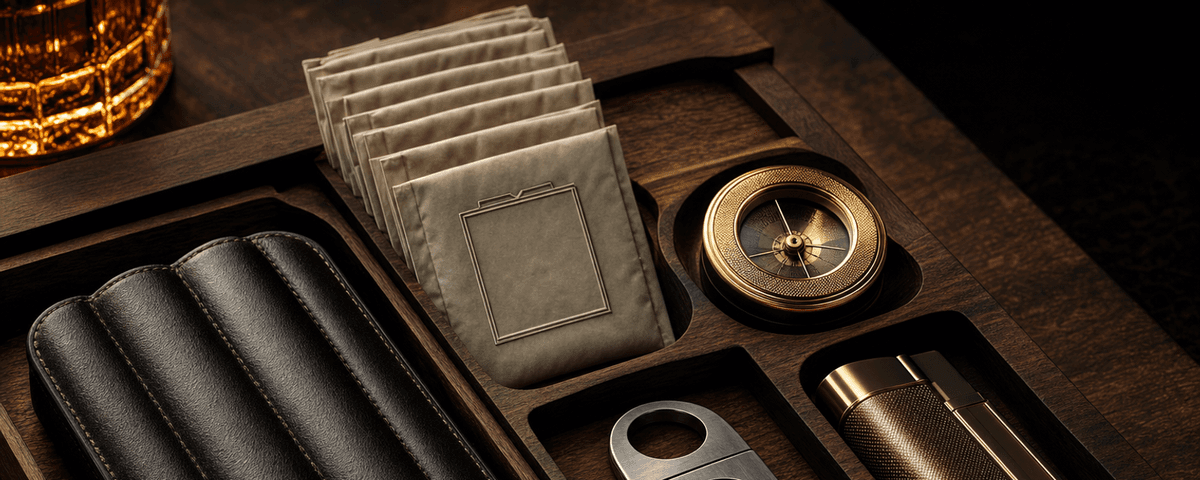
雪茄剪 / 打火機 / 雪茄盒 / Boveda
W Cigar 配件官網 · 專營雪茄配件正品
加 LINE 好友 · 文化諮詢
文化空間資訊 · 紳士沙龍 · 私人包場
本網站內容僅供雪茄文化、歷史、收藏與品吸知識研究參考。菸品有害健康、未滿法定年齡者請勿吸菸。實際規範請依所在地法律為準。
吸菸有害健康・戒菸專線 0800-636363・本站僅供 20 歲以上成年人閱覽。
讀到這裡,你不只是路過的人
留下 Email,加入 W 雪茄聖經內圈——總編輯 Wilson Tsai 親選的學院深文與國際新訊,先你一步送到信箱。
· 教育用途非銷售 · 隨時一鍵退訂 · Email 絕不對外公開 · 由勝茄股份有限公司營運
同分類延伸閱讀

資料來源:W Cigar Bible 編輯部整理 · 雪茄王子 Wilson Tsai 親自審稿
本文僅供雪茄文化、歷史、收藏與品鑑知識研究,不作為菸品促銷、銷售或購買建議。吸菸有害健康,未滿二十歲不得吸菸。