雪茄的風味體驗與心理學關聯

雪茄的風味體驗不僅僅是味覺的享受,更是一種心理與情感的探索。每支雪茄在不同的環境與心情下,能引發截然不同的回憶與感受。理解風味的關鍵在於將其視為個人經驗的共同創作,透過嗅覺、味覺與記憶的交互作用,來形成獨特的品味。進一步地,抽雪茄的節奏與情緒密切相關,慢下來才能真正感受到每一層風味的細膩。透過觀察與記錄,逐步建立自己的風味訓練,讓雪茄的品味成為更深刻的自我反思與社交體驗。
- 雪茄的風味體驗受多重感官影響,並與個人記憶密切相關。
- 抽雪茄的節奏會影響情緒,過快抽吸可能導致風味粗糙。
- 社交場合中,尊重彼此的節奏與空間是雪茄禮儀的重要部分。
The Flavor Experience of Cigars and Its Psychological Connection
The flavor of cigars has never been just about the woody, cocoa, leather, or peppery notes on the tongue. For those who have mastered the basics of tasting, the next truly fascinating step is understanding why the same cigar can evoke completely different memories on different nights, in different moods, or in different seats.
As an editor of the "Cigar Bible," I often view cigars as a form of "slow psychological measurement." They allow people to see their own rhythm, patience, social distance, and concentration, making flavor an entry point to emotions and cognition.
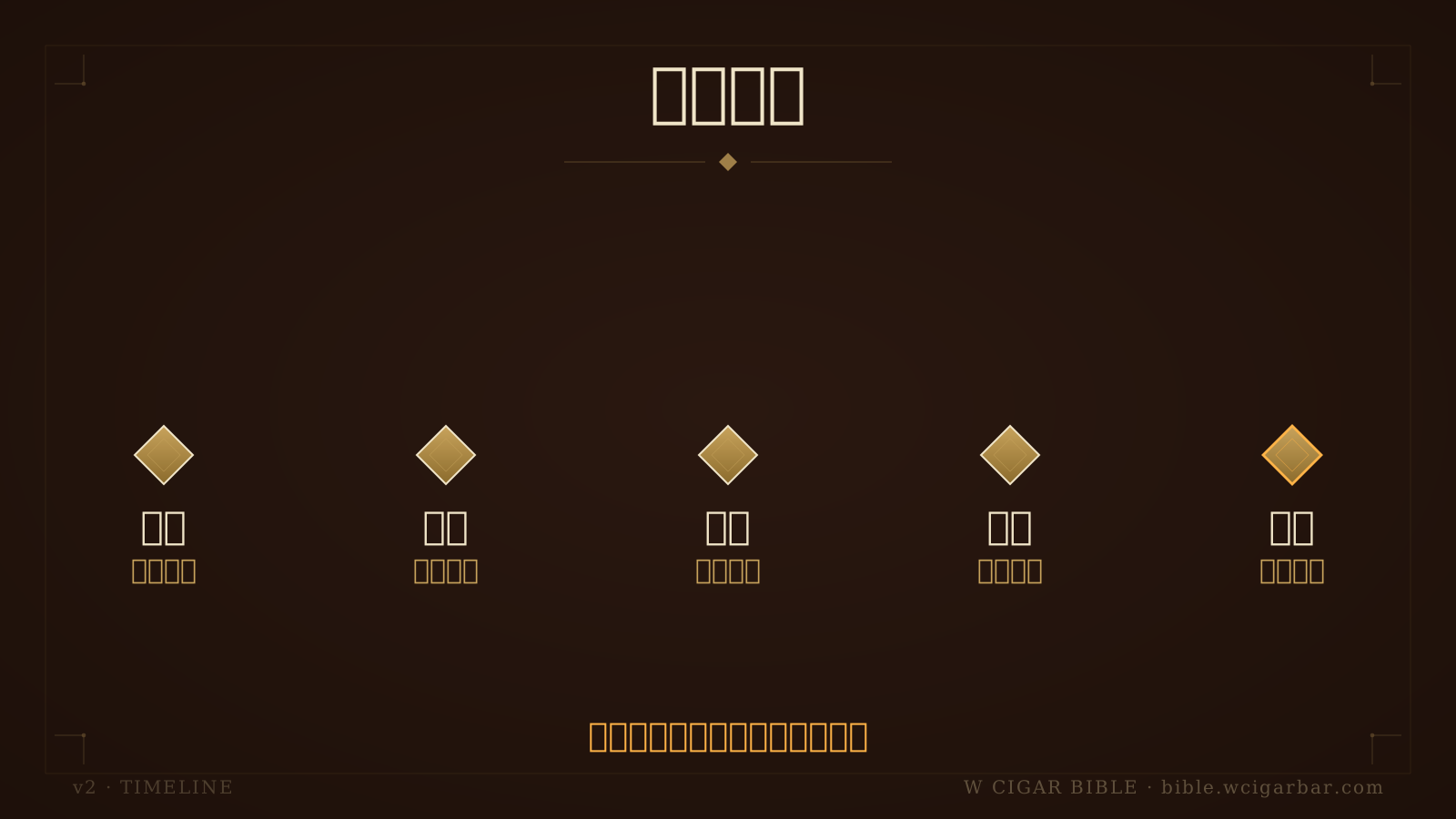
時間軸呈現從身體狀態到回寫紀錄的品味流程
Flavor is Not an Objective Answer, But a Co-Creation of the Brain
Many beginners ask, "Does this cigar taste like coffee or wood?" I usually remind them that flavor is not a judgment made by a single organ but a construction of smell, taste, touch, memory, and language. Take Montecristo No.2 as an example. This classic torpedo-shaped cigar has been one of the representatives since the brand was founded in 1935. Many people describe it as having cocoa, coffee, soil, and roasted bread notes, but these descriptions are actually translations of personal memories.
When the brain processes scents, it is particularly closely linked to the limbic system and hippocampus, making aromas easily trigger memories. Some people smell the spicy and woody notes of Partagás Serie D No.4 and think of an old leather chair; others associate the creamy and nutty notes of H. Upmann Magnum 46 with a childhood bakery. Cigar flavor is not a standardized test answer but the result of sensory signals meeting personal experiences.
When practicing, I suggest not rushing to "speak like an expert." First, divide the sensations into three layers: the first layer is strength, such as intensity, dryness, sweetness, and bitterness; the second layer is category, such as wood, spices, and nuts; the third layer is specific objects, such as cedar, white pepper, and dark chocolate. The more you can describe flavors in layers, the more you can reduce confusion caused by psychological suggestions.
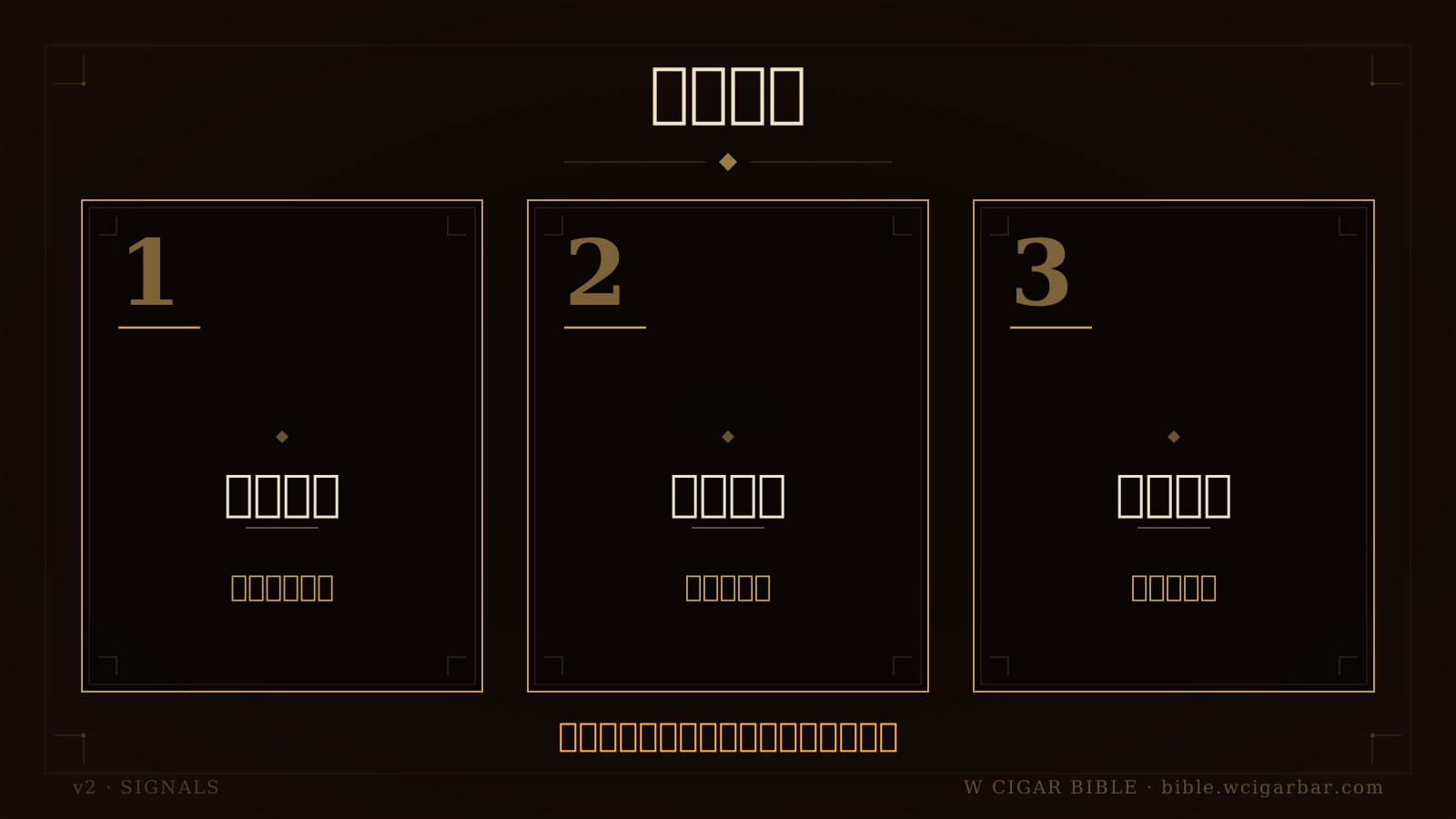
三張卡說明風味由感官記憶節奏共同形成
Rhythm and Emotion: Slow Down to Hear the Flavor
The connection between cigars and emotional regulation lies in rhythm. A typical Robusto size, about 50 ring gauge and 124 mm, like Partagás Serie D No.4 or Romeo y Julieta Short Churchills, usually takes 45 to 70 minutes for a complete experience. This time requires slowing down hand movements, breathing speed, and conversation density, forming a psychological ritual of "withdrawing from urgency."
I've observed many friends new to cigars, and the most common issue is not a lack of flavor recognition but smoking too quickly. Taking a puff every 30 to 60 seconds usually maintains temperature stability better than continuous rapid puffs. When the temperature rises, bitterness, charred taste, and irritation increase, and emotions can easily become irritable. The rhythm of a cigar can influence emotions; the faster you smoke, the more likely you are to push the originally delicate flavor towards coarseness.
Here, cigars can be used as a behavioral feedback tool. When you find the ash hot, the tongue dry, or the throat irritated, it often means the rhythm is off-balance; when you can steadily see the ash column forming, the smoke smooth, and the aftertaste extending, it usually means the mood has entered a more stable state. This is not mysticism but the result of synchronously slowing down attention, breathing, and muscle tension.

矩陣比較強弱類別與具體物件三層描述法
Expectation Effect: How Brand, Vintage, and Price Change Perception
In psychology, there is an important phenomenon called the expectation effect. When you know you are holding a Cohiba Siglo VI, you naturally expect it to be more elegant and layered; when you hear that Cohiba was born in 1966 and became more widely known internationally in 1982, the brand story also influences perception. Expectation itself is not a bad thing, but if unaware, it may lead people to mistake labels for flavor.
I once conducted a simple exercise: cutting two medium-strength cigars to similar lengths, covering the bands, and having experienced customers only record their impressions of the first third. Some judged a relatively young, spicy cigar as a "high-priced Cuban," while others described a better-aged non-Cuban cigar as "old-fashioned Havana." This shows that flavor judgment is often influenced by fame, price, and narrative.
The table below is a reminder of my perception biases:
| Psychological Factor | Possible Flavor Bias | Practice Method |
|---|---|---|
| Brand Halo | Preset as more delicate, higher-end | Cover the band and record the first 10 minutes |
| Vintage Imagination | Attribute all smoothness to vintage | Simultaneously record storage humidity and condition |
| Price Suggestion | More forgiving of flaws | Write flaws first, then strengths |
| Others' Comments | Follow authoritative descriptions | Write 5 words independently first |
A truly mature taste allows for brand excellence, but also allows for a brand not fitting you on a particular night. This way, the experience returns to your own tongue and nose, rather than being led by stories.
Three-Stage Flavor and Cognitive Load: Why the Last Stage Often Fails
A cigar is often observed in thirds: the first third establishes the impression, the middle third unfolds the structure, and the last third tests temperature control and sensory fatigue. For example, Trinidad Fundadores, known for its slender elegance since entering the commercial market in 1998; if the first part has floral and creamy notes, the middle may shift to woody and honey, and if smoked too quickly in the last part, it may be overwhelmed by spiciness.
Cognitive load affects judgment. When you chat, take photos, and check ratings simultaneously, attention is fragmented, making it harder for the brain to track subtle changes. Especially in the last part, when nicotine sensation, heat, and oral dryness increase, many people mistake physiological fatigue for the cigar itself "falling apart." The purpose of three-stage recording is not to dissect the cigar into a formula but to help the brain retain a timeline.
I suggest beginners use a simple note format: time, puff frequency, main aroma, mouthfeel, and emotion. Don't start with long adjectives. For example, "20 minutes in, nutty, light cocoa, relaxed mood, smooth smoke" is more useful than "extremely luxurious." After recording 10 cigars in a row, you'll find your preferences for strength, size, and brand style become clearer.
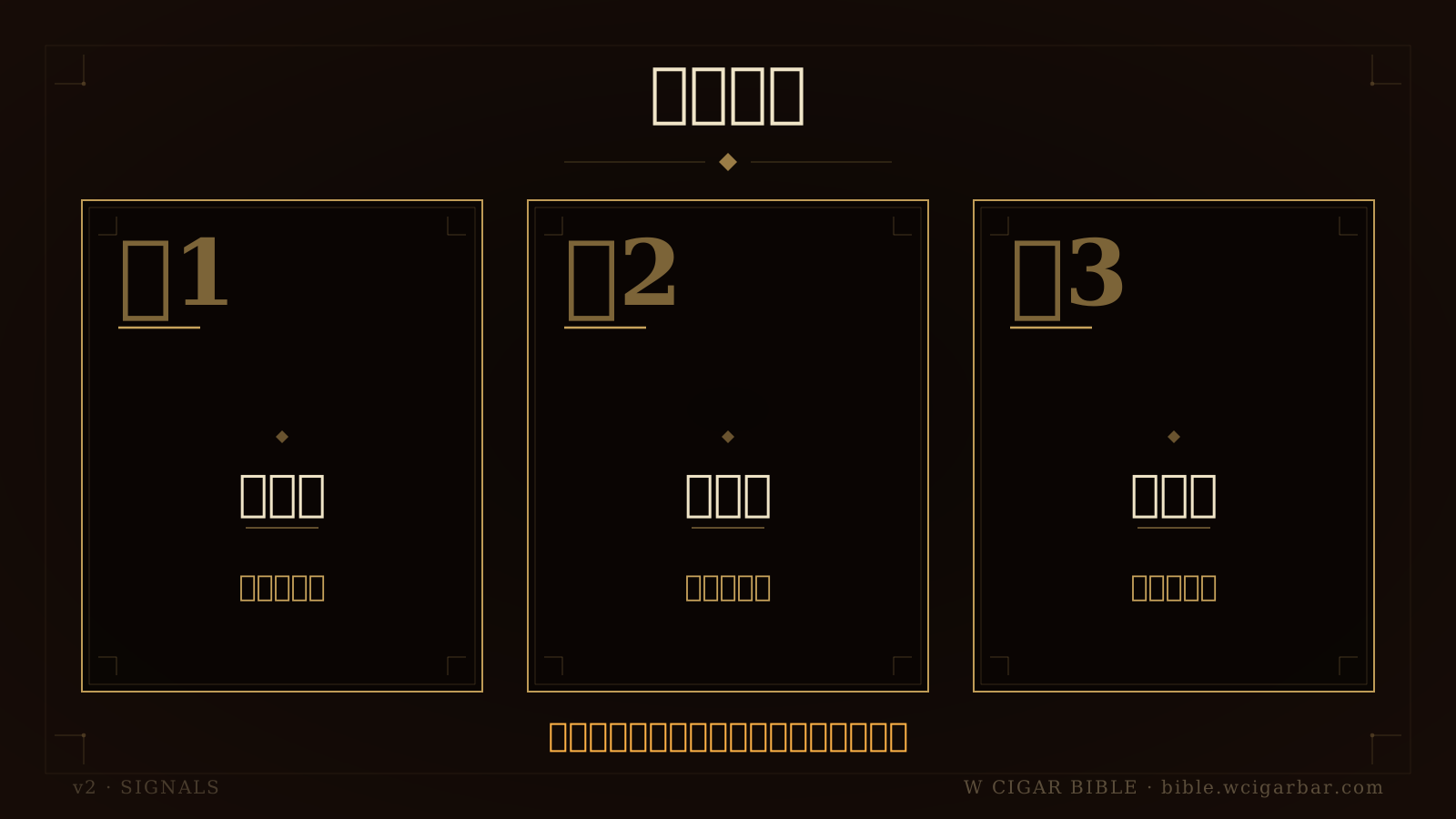
三張卡提醒抽太急追高分與跟隨評語的誤區
Social Distance and Cigar Etiquette: Psychological Boundaries in Smoke
Cigar settings easily form conversations, but true etiquette is not about flaunting collections but respecting each other's rhythm. Cigar smoke lingers longer than general aromas, so seating distance, wind direction, and ashtray position affect others' comfort. In daily observations at W Cigar Bar, the most popular guests are not necessarily those who talk most about brands but those who know how to reduce pressure.
Social psychology talks about "boundary sense," and cigars make boundaries visible. Do you comment on the brand someone else is holding without consent? Do you extend your lighter directly to others? Do you continuously ask about flavors when someone is quiet? These details change interaction quality. The elegance of cigar socializing lies not in talking a lot but in making others feel respected.
Beginners can remember a few simple principles:
- Do not touch others' cigars, cutters, or lighters unless indicated.
- When discussing brands, share experiences instead of judging high or low.
- Pay attention to wind direction, avoiding smoke drifting towards one person for long.
- When giving advice to novices, first ask if they need it.
- Avoid flicking ashes before they fall naturally to maintain environmental cleanliness.
These etiquettes are actually about psychological safety. When the environment is safe, people are more likely to speak honestly and remember the flavor of the night.
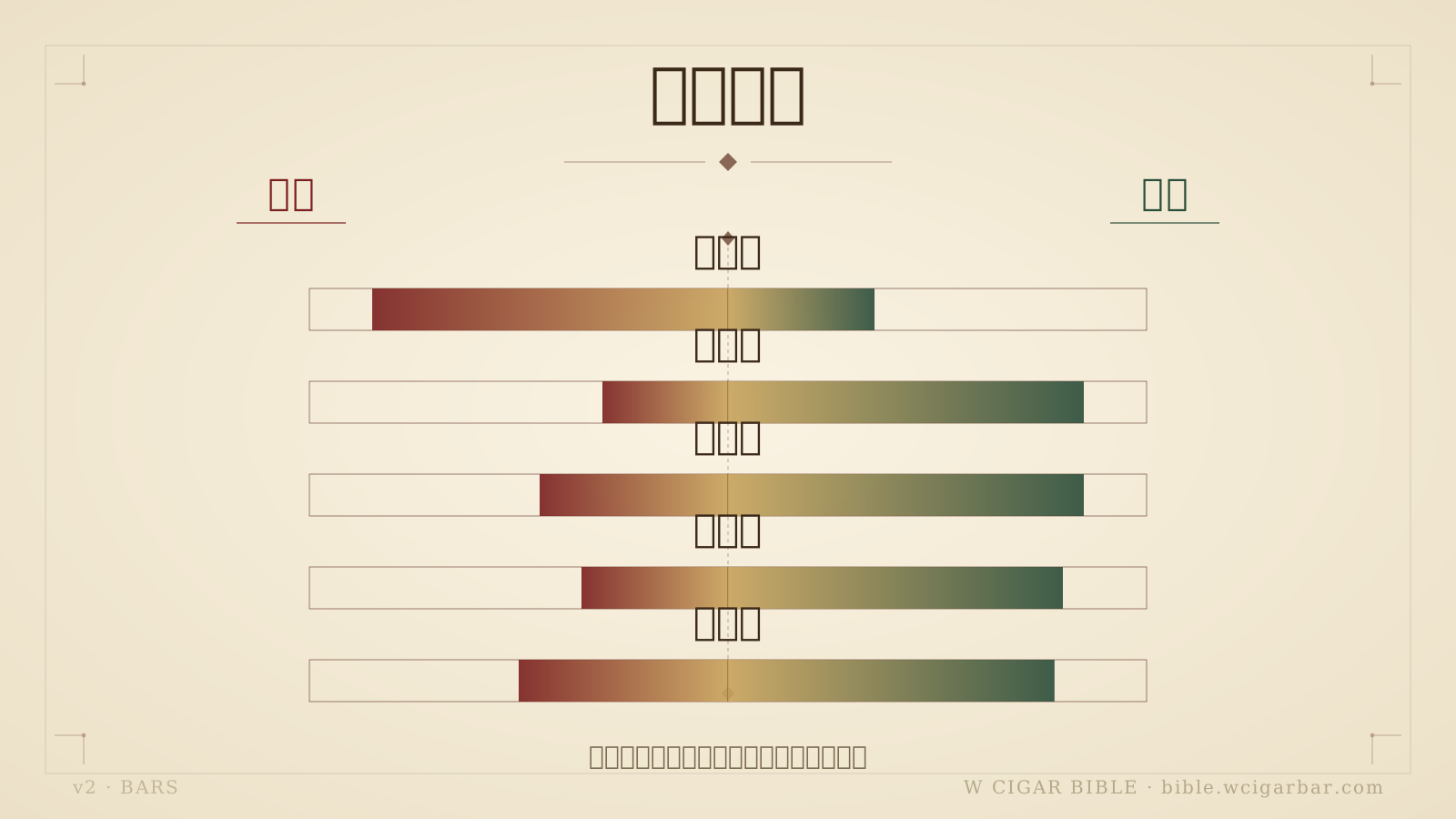
長條圖比較跟風與成熟品味在五個軸向差異
Aging, Collecting, and Memory: How Time Changes Psychological Value
When discussing the sense of time in cigars, it's important to distinguish between flavor changes and psychological projection. Many Cuban cigars, when placed under appropriate temperature and humidity for several years, may see a decrease in spiciness and a more rounded aroma; for example, the Montecristo Línea 1935, launched in 2017, is observed by many collectors for its concentration integration after 3 to 5 years. Brands like Cohiba, Bolívar, and Partagás are also often discussed for the aging performance of different vintage batches.
But time does not automatically improve all cigars. If stored at a relative humidity above 72% for a long time, it may lead to poor combustion, dampness, and mold risks; if below 60%, it may lead to cracking and aroma loss. I personally prefer to keep most Cuban cigars at a relative humidity of about 65% to 69%, with the temperature as stable as possible between 18 to 21°C. The value of aging comes from stable storage and patient observation, not just treating vintage as a myth.
Collecting also has a psychological aspect. People associate a box of cigars with travel, friends, birthdays, or career stages, so its value is not only in market price. When discussing collection appreciation, it must be viewed calmly: it does not guarantee appreciation, still depends on source preservation and market. As a PCC special distributor, I value clear sources, complete preservation records, and whether I can truly understand the flavor significance of that box of cigars.
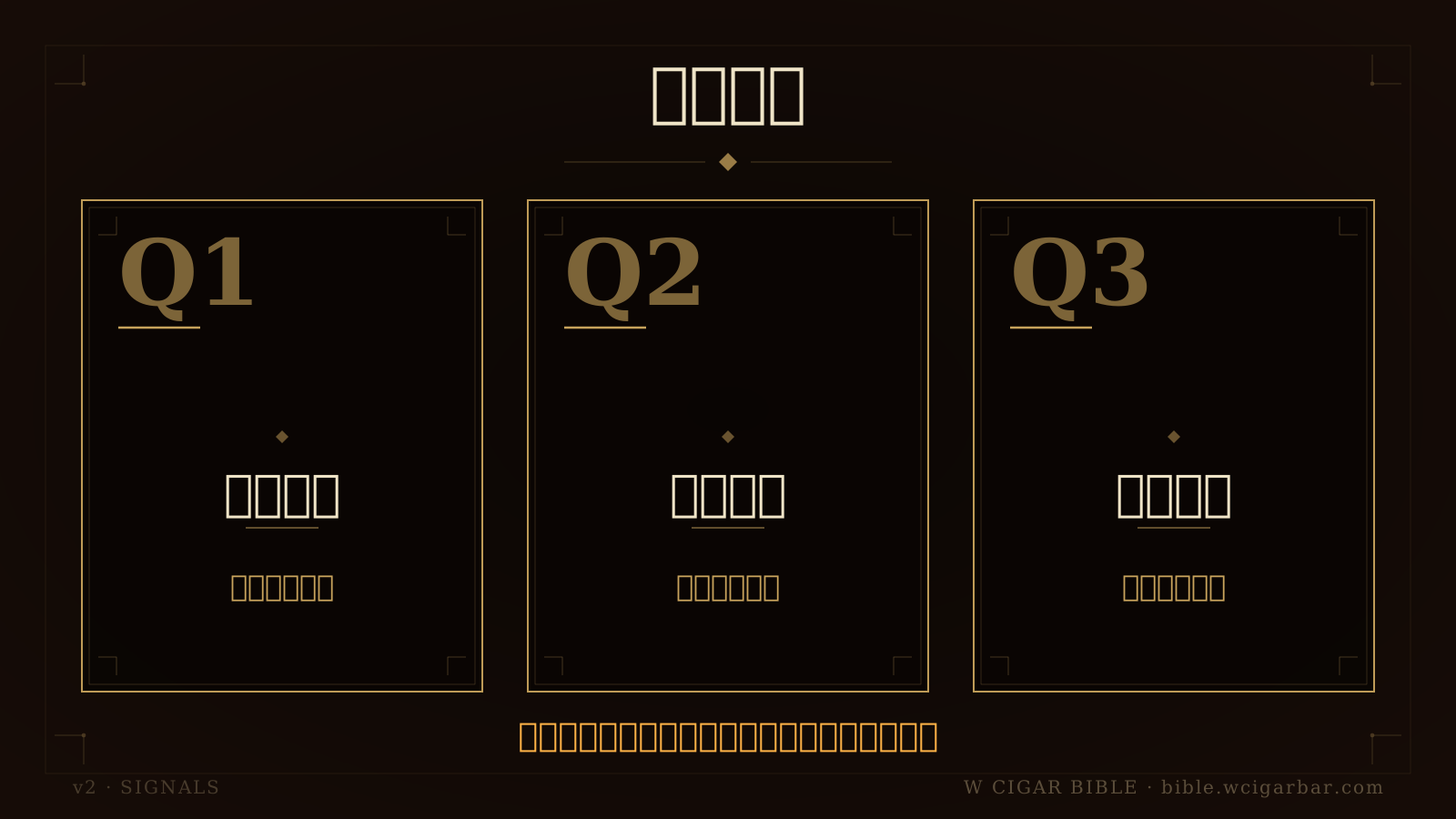
三張問答卡整理甜苦變化分數與速度重點
Building Your Own Flavor Training: Start with 30 Days
If you want to elevate cigars from a hobby to a systematic flavor ability, I suggest a 30-day training, not necessarily smoking cigars every day, but training smell and language daily. Prepare sources of aromas like coffee beans, dark chocolate, cedar wood chips, white pepper, cinnamon, leather, hay, and honey, smell 3 each time, and write down the first association and a second more precise word.
Choose 1 to 2 cigars per week that are not too large, such as Petit Corona, Robusto, or Corona Gorda, to avoid fatigue from starting with Double Corona. Use a fixed format for recording, don't be swayed by review sites. Flavor training is not about training yourself to be someone else's tongue, but about building a stable, checkable personal database.
You can follow this process:
- Before lighting: smell the wrapper and foot, record the dry aroma.
- First 10 minutes: only write strength and main categories, don't rush to conclusions.
- Middle: compare whether sweetness, woodiness, and spiciness increase or decrease.
- Last: observe heat, bitterness, and emotional tolerance.
- 5 minutes after finishing: write the aftertaste and overall mood.
After 30 consecutive days, you'll find you start to know "the strength I like" and "the strength others say" aren't necessarily the same. This is where psychology and flavor meet: as language becomes clearer, choices become freer.
Frequently Asked Questions
Why does the same cigar taste sweet today but bitter tomorrow?
It may be related to humidity, smoking speed, before or after meals, and sleep state. If you didn't sleep well the night before or are on an empty stomach, bitterness and irritation are often magnified. Eliminate physical state first, then judge the cigar's performance.
Do beginners need to chase high-scoring cigars?
No need. High scores can be a reference but should not replace personal records. Start with brands with clear styles like Montecristo, H. Upmann, and Romeo y Julieta to establish a baseline, making it easier to understand differences.
Is there a standard smoking speed?
There is no absolute standard, but 30 to 60 seconds per puff is a common safe range. If the smoke becomes hot, bitterness increases, and the head softens, it usually means the pace is too fast, and you should pause to let the temperature drop.
Are cigars suitable for socializing?
Yes, but the premise is respecting space and others' feelings. Good cigar conversations should relax people, not become a brand competition. Being able to listen, wait, and not interrupt is important etiquette.
How do I know I've improved?
When you can consistently describe flavors, distinguish the impact of emotions on judgment, and admit that a certain brand doesn't suit your taste, that's improvement. The mark of mature taste is honesty, not following trends.
The most captivating aspect of cigars is not how many layers of aroma are in the smoke, but that it forces us to spend time with ourselves. When a person is willing to slow down, observe their impatience, expectations, biases, and preferences, the flavor truly opens up. For me, cigars are about taste and psychological cultivation; not to prove identity, but to learn to feel the world more delicately.
—Cigar Prince Wilson Tsai
Smoking is harmful to health. Smoking is prohibited for those under twenty. Quitline: 0800-636363. This article is intended for adults over the age of twenty as a reference for cigar culture, preservation, and regulatory knowledge, not as tobacco advertising, promotion, or purchase advice.
Like this article?Share with friends
Share this W Cigar Bible piece with friends who want to learn cigar culture, storage, and tasting.
想把這篇 化為實踐
雪茄聖經是知識;雪茄文化要在空間裡發生

W Cigar Bar 大安總店資訊
台北大安區 · 雪茄聖經總編輯 Wilson Tsai 主理的雪茄文化空間

33 座 24 小時恆溫恆濕醇化室
W Cigar Bar 提供的會員醇化空間 · 場地資訊請洽編輯部

雪茄剪 / 打火機 / 雪茄盒 / Boveda
W Cigar 配件官網 · 專營雪茄配件正品

加 LINE 好友 · 文化諮詢
文化空間資訊 · 紳士沙龍 · 私人包場
本網站內容僅供雪茄文化、歷史、收藏與品吸知識研究參考。菸品有害健康、未滿法定年齡者請勿吸菸。實際規範請依所在地法律為準。
吸菸有害健康・戒菸專線 0800-636363・本站僅供 20 歲以上成年人閱覽。
讀到這裡,你不只是路過的人
留下 Email,加入 W 雪茄聖經內圈——總編輯 Wilson Tsai 親選的學院深文與國際新訊,先你一步送到信箱。
· 教育用途非銷售 · 隨時一鍵退訂 · Email 絕不對外公開 · 由勝茄股份有限公司營運
同分類延伸閱讀



資料來源:W Cigar Bible 編輯部整理 · 雪茄王子 Wilson Tsai 親自審稿
本文僅供雪茄文化、歷史、收藏與品鑑知識研究,不作為菸品促銷、銷售或購買建議。吸菸有害健康,未滿二十歲不得吸菸。