雪茄的品鑒與分析技術:五感的結合
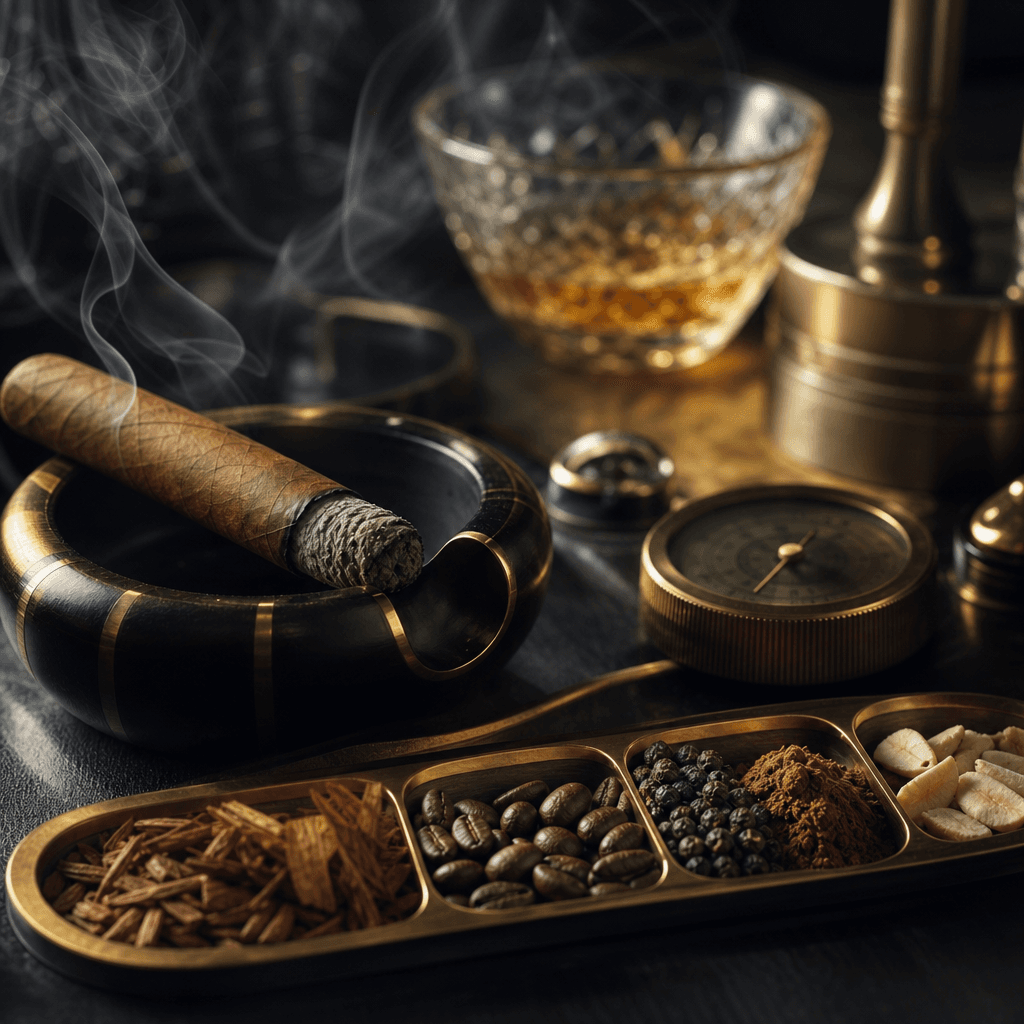
在雪茄品鑒中,老手的關鍵在於能否精確拆解雪茄的五感特徵:視覺、嗅覺、味覺、觸覺與聽覺。透過細緻的觀察,如茄衣的均勻性、香氣的層次與味道的結構,能夠揭示雪茄的品質與差異。視覺上,色澤與油光可預測燃燒風險;嗅覺上,冷香與腳香能反映填料狀況;而味覺則需關注各段風味的變化。觸覺與聽覺同樣重要,前者關乎抽吸的流暢度,後者則提供燃燒狀態的線索。整合五感分析,能建立更準確的品鑒紀錄,讓每次品鑒都具備可驗證的價值
- 雪茄的外觀分析需注意色澤均勻性、油光自然度及葉脈狀況,這些影響燃燒風險。
- 嗅覺分析應進行三次確認,冷香、切口香氣及燃燒後煙氣的變化能揭示雪茄狀態。
- 味覺分析要關注風味的出現時間及持續性,結構的平衡與複雜度才是品質的關鍵。
Cigar Tasting and Analysis Techniques: The Integration of the Five Senses
In cigar tasting, the key for veterans lies in their ability to precisely dissect the five sensory characteristics of a cigar: sight, smell, taste, touch, and hearing. Through meticulous observation, such as the uniformity of the wrapper, the layers of aroma, and the structure of taste, one can reveal the quality and differences of cigars. Visually, color and sheen can predict burning risks; in terms of smell, the cold aroma and foot aroma can reflect the condition of the filler; and taste requires attention to the changes in flavors at different stages. Touch and hearing are equally important, the former concerning the smoothness of the draw, and the latter providing clues about the burning state. Integrating the analysis of the five senses can establish more accurate tasting records, ensuring that each tasting has verifiable value.
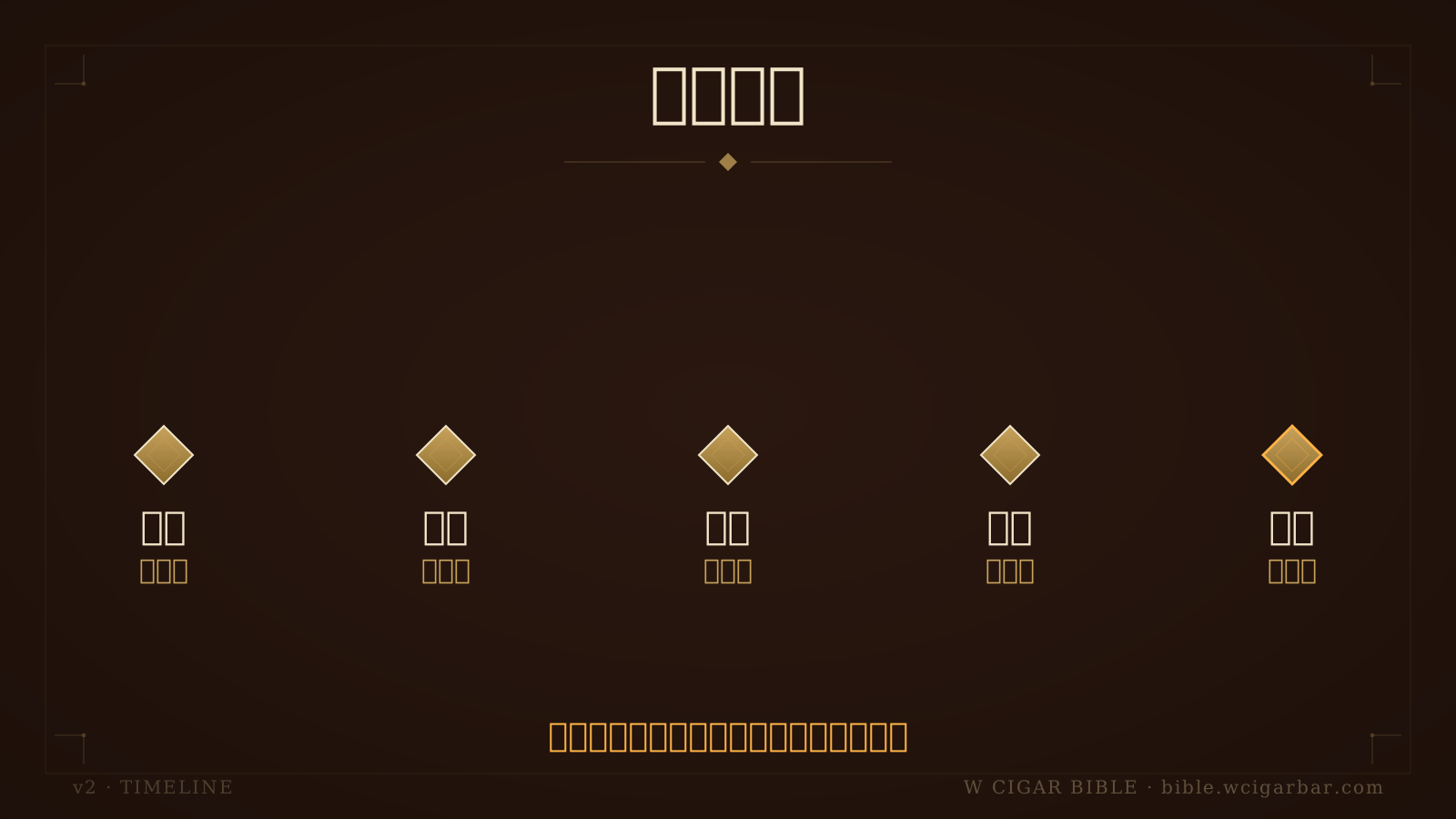
流程圖依序呈現視覺、嗅覺、味覺、觸覺與聽覺檢查
Veterans Discuss Cigars
The real watershed for veterans discussing cigars is not in how many brand names they can mention, but in whether they can break down a cigar into clues: appearance, aroma, entry, fingertips, and burning sound, verifying each other rather than speaking independently. As an editor of the "Cigar Bible," what I have cared about most over the years is not writing about feelings in a fancy way, but writing about them accurately.
The same Cohiba Siglo VI, boxed in 2018 and 2020, may have different rhythms; the same Partagás Serie D No.4 will also exhibit two personalities at 62% and 70% humidity. The value of five-sense analysis is to let you know where the differences come from.
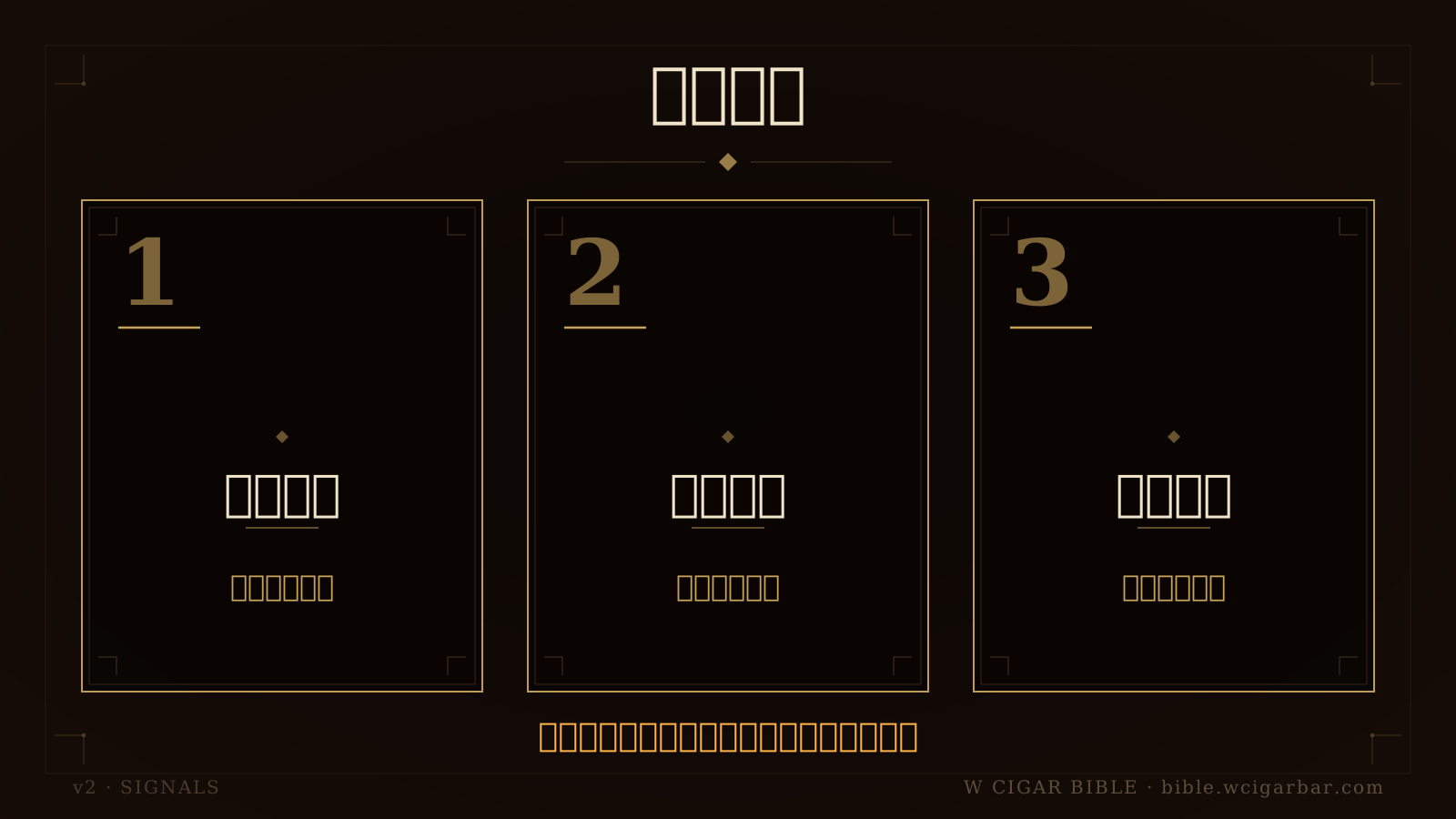
三張卡片整理五感互證、時間軸記錄與狀態分離重點
Sight: Reading Burning Risks and Craftsmanship Clues from the Wrapper
Many people look at cigars and only differentiate between Maduro, Colorado, and Claro at first glance. However, veterans are not looking for "dark equals strong," but whether the color is uniform, whether the sheen is natural, and whether the veins affect the burn. For example, Montecristo No.2, after 2021, many boxes present a beautiful Colorado to Colorado Maduro color gradient, but what is truly worth recording is the distribution of wrapper oil and whether the shoulder wrap is tight.
Visual interpretation is not a beauty contest, but a way to mark burning risks in advance. If a Romeo y Julieta Churchill's wrapper shows a significant color difference on one side, with protruding veins extending along the burn line, the chance of uneven burning after lighting will increase. This is not an absolute flaw but will affect your subsequent flame correction frequency and interfere with taste judgment.
I usually break down sight into three layers: first, the integrity of the wrapper, whether there are cracks, patches, or indentations; second, the symmetry of the roll, especially for Figurados like Montecristo No.2, Pyramid vitola, whether the tension at the head and tail is natural; third, the prediction of the cap cut. If all three layers are stable, subsequent analysis has a clean foundation. If there are structural doubts at first glance, record the burning and flavor issues separately.
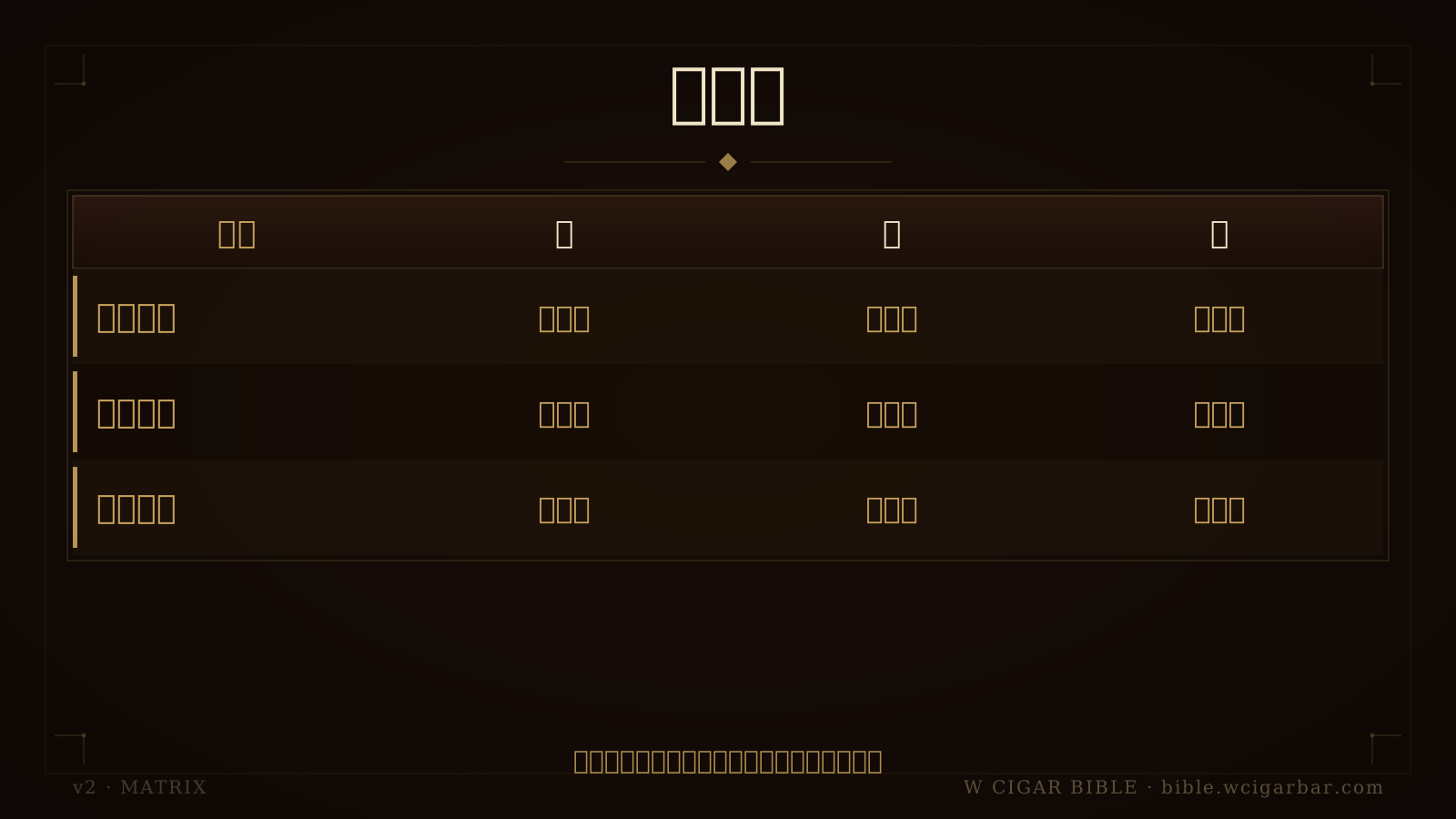
矩陣表比較視覺、嗅覺與味覺在記錄中的不同線索
Smell: Three Confirmations of Cold Aroma, Foot Aroma, and Initial Burning
The sense of smell before lighting is the most underestimated data. The foot aroma often reveals the direction of the filler: Hoyo de Monterrey Epicure No.2 often has hay, honey, and almond skin; Bolívar Royal Corona may show leather, earth, and black pepper. The cold draw aroma is closer to the overall profile after airflow passes through the filler, often able to judge whether the draw resistance is too tight or too loose.
The nose is not for finding single aroma nouns, but for confirming the cleanliness, layering, and consistency of the aroma. For example, a 2016 boxed Trinidad Fundadores, if the cold aroma has floral, creamy, and dry wood notes, but the first segment after lighting is obviously pungent with an ammonia feel, consider the storage humidity, resting time, or aging state, rather than rushing to say its flavor is off.
I habitually do three smell confirmations: smell the body before cutting, smell the cut and foot end after cutting, and observe the smoke in the first 1 cm after lighting. If the directions are consistent in these three instances, it usually represents a stable state; if the cold aroma is sweet and smooth, but the burn is bitter and sharp, it is often due to high moisture content, low burning temperature, or too fast a smoking rhythm. The role of smell is to establish a "possibility list" before taste.
Taste: Placing Sweet, Bitter, Sour, Salty, and Umami Back on the Timeline
The biggest fear in cigar taste analysis is only writing "cocoa, coffee, woody," without saying when they appear, how long they stay, and whether they synchronize with intensity. Taking Partagás Serie D No.4 as an example, the 2022 boxed often sees roasted grains and white pepper in the front section, transitioning to coffee and leather in the middle, and if the rhythm is too fast, bitterness will overpower the sweetness in the latter part. These transitions are more valuable than single flavor words.
The core of taste is not listing nouns, but describing the structure: entry, expansion, finish, and aftertaste. What you feel in the first 3 seconds is sweet or spicy, what remains on the tongue after 10 seconds is nutty oil or woody tannin, and whether there is a clean aftertaste 30 seconds after exhaling, these are the bases for veterans to judge quality. If a cigar is only beautiful in the front section and collapses quickly in the middle and back, the score should not be too high.
I record taste at four time points: the first 1/3 for opening clarity, the middle for complexity, the last 1/3 for balance maintenance, and before the last 2 cm for tar heaviness. Like the H. Upmann Sir Winston 2014 boxed, when in good condition, it often has cream, cedar, toast, and a light tea feel, with strength not aggressive, yet maintaining an elegant curve within 90 minutes.
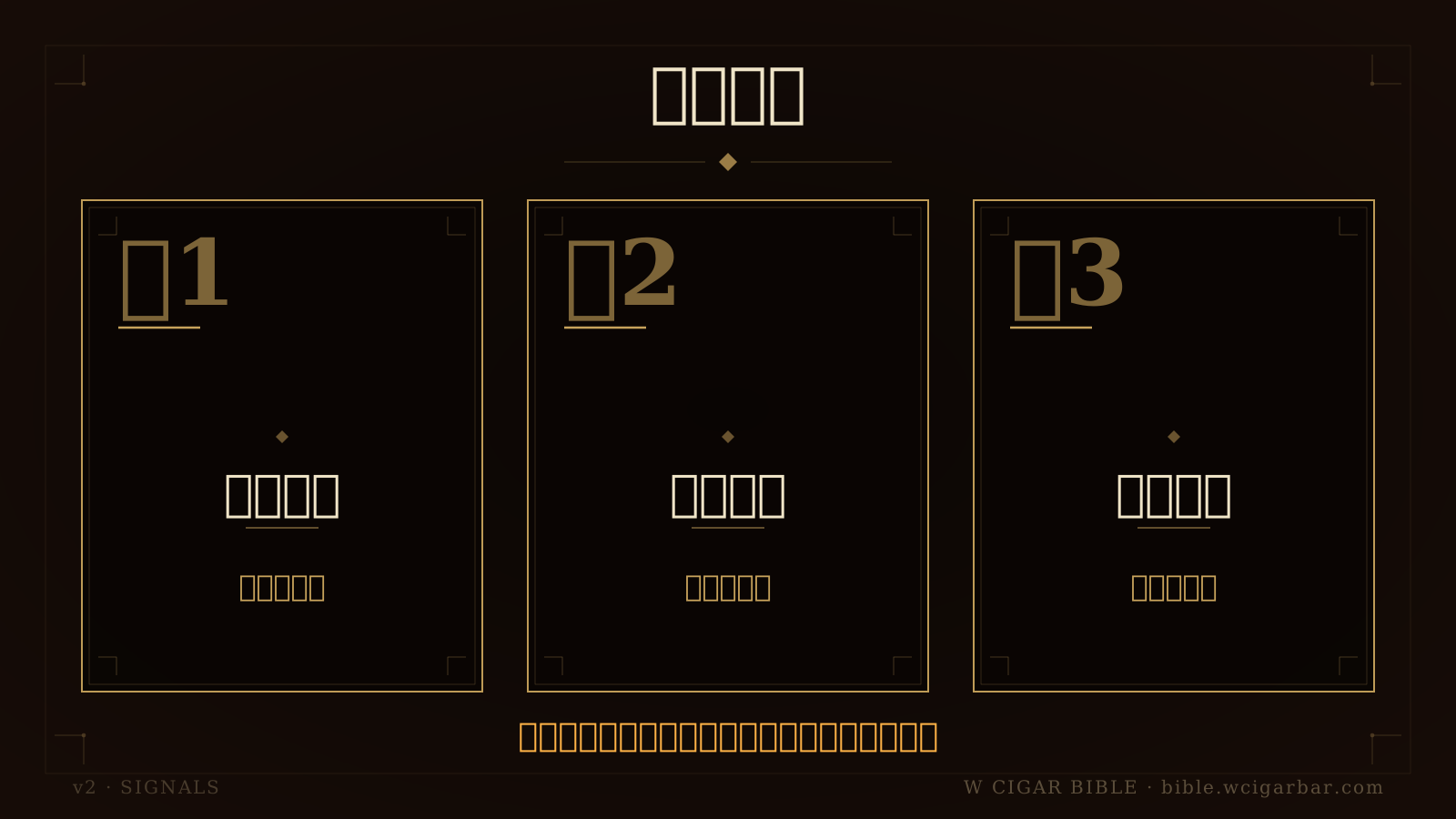
三張提醒卡列出深色等濃、只列香名與白灰神話誤解
Touch: Feel, Draw Resistance, Smoke Body, and Oral Weight
Touch is not just about pinching the cigar. Before lighting, the fingertips feel the filler density and moisture content; after lighting, the lips, tongue, and palate feel the smoke body weight and stimulation degree. If a Robusto feels locally hard in the hand, the common result is slower burning in that section; if locally empty, it may heat up too quickly, leading to thin, spicy smoke.
Touch can separate draw issues from flavor issues. For example, if a Cohiba Robusto has too tight a draw and insufficient smoke, many people will misjudge it as closed flavor; but the real reason may be humidity above 70%, insufficient resting, or too dense filler in a certain section. Conversely, too loose a draw will increase the burning temperature, making the front aroma seem exuberant, but the middle and back sections easily become coarse.
I often use the "three-stage draw resistance method": cold draw once after cutting, confirm once after the first 5 puffs, and confirm once again after the middle section when the ash column is stable. The ideal draw resistance should be like drinking thick milkshake through a straw, with resistance but not laborious. The smoke body touch should also be clearly written: is it creamy enveloping, tea-like refreshing, or black coffee-like astringent. These words can establish more comparable tasting data than simply saying "strong."
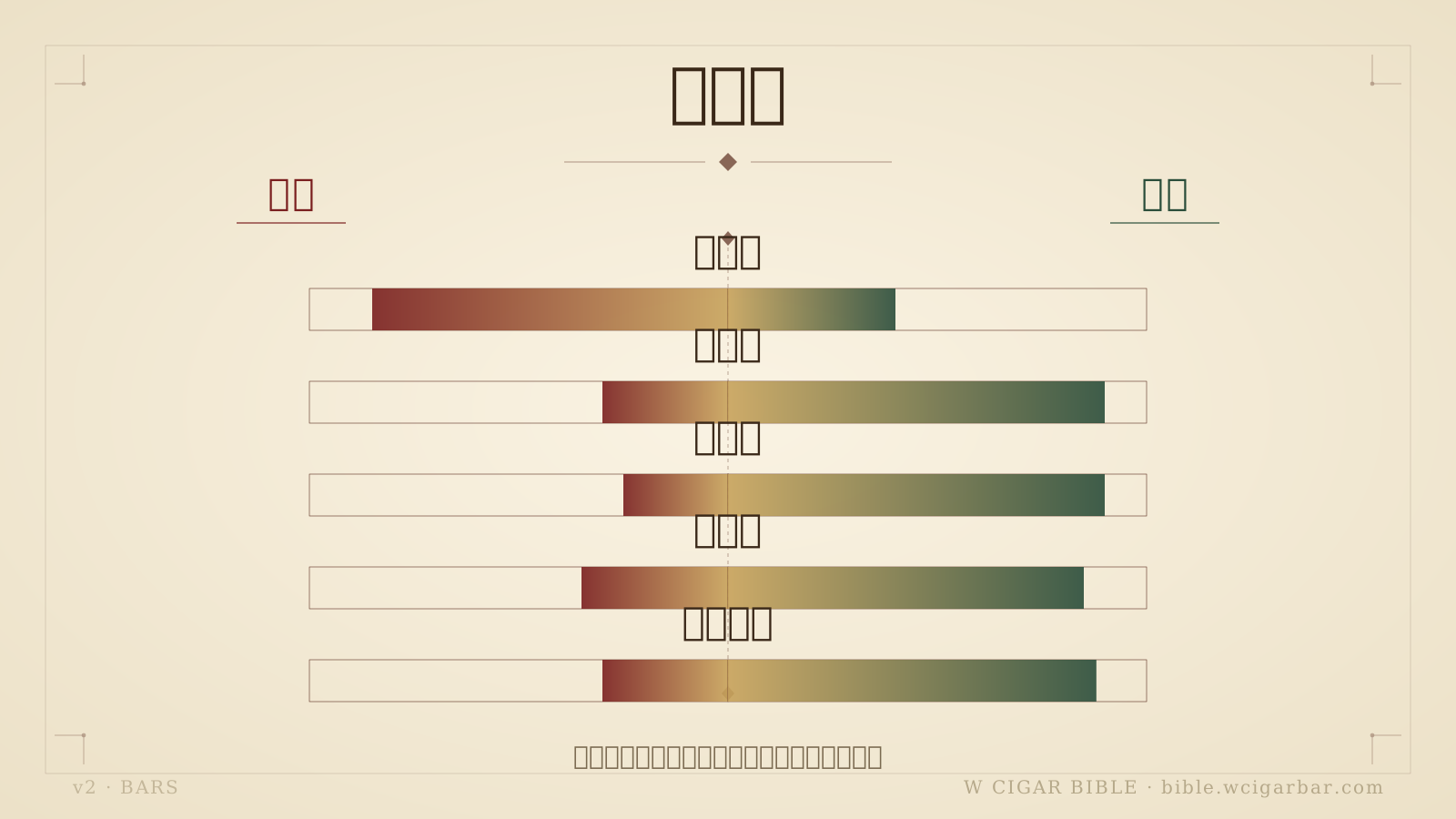
橫向長條比較新手與老手在品牌名、互證度與紀錄上的差異
Hearing: Burning Sound, Cutting Sound, and Ash Column Signals
Hearing is rarely formally discussed in cigar analysis, but it does exist. The "click" sound when cutting, if crisp, usually represents good cap moisture content and blade condition; if the sound is dull and the cut is squeezed, it may be due to high humidity or a dull blade. When lighting, if there is a subtle and even burning sound at the foot end, it is often a good sign of stable contact between the leaf moisture and flame.
Hearing is not mysticism, but an auxiliary alarm beyond touch and sight. For example, a Padrón 1964 Anniversary Maduro stored at 65% relative humidity for about 60 days usually has a delicate burning sound and firm ash in the initial stage; if the same model stays too long in a high humidity environment, the lighting sound is dull, the flame line sluggish, and the entry easily carries wet wood and bitterness.
Of course, hearing cannot draw conclusions alone. Wind, lighter flame, and environmental noise will all affect judgment. I use hearing in three scenarios: the cutting moment, during foot toasting, and before ash drop. If there is a fine cracking sound before ash drop, it may be uneven burning; if completely silent but with loose ash, it may indicate insufficient filler structure. Sound is just a small clue, but the advantage of veterans often comes from small clues.
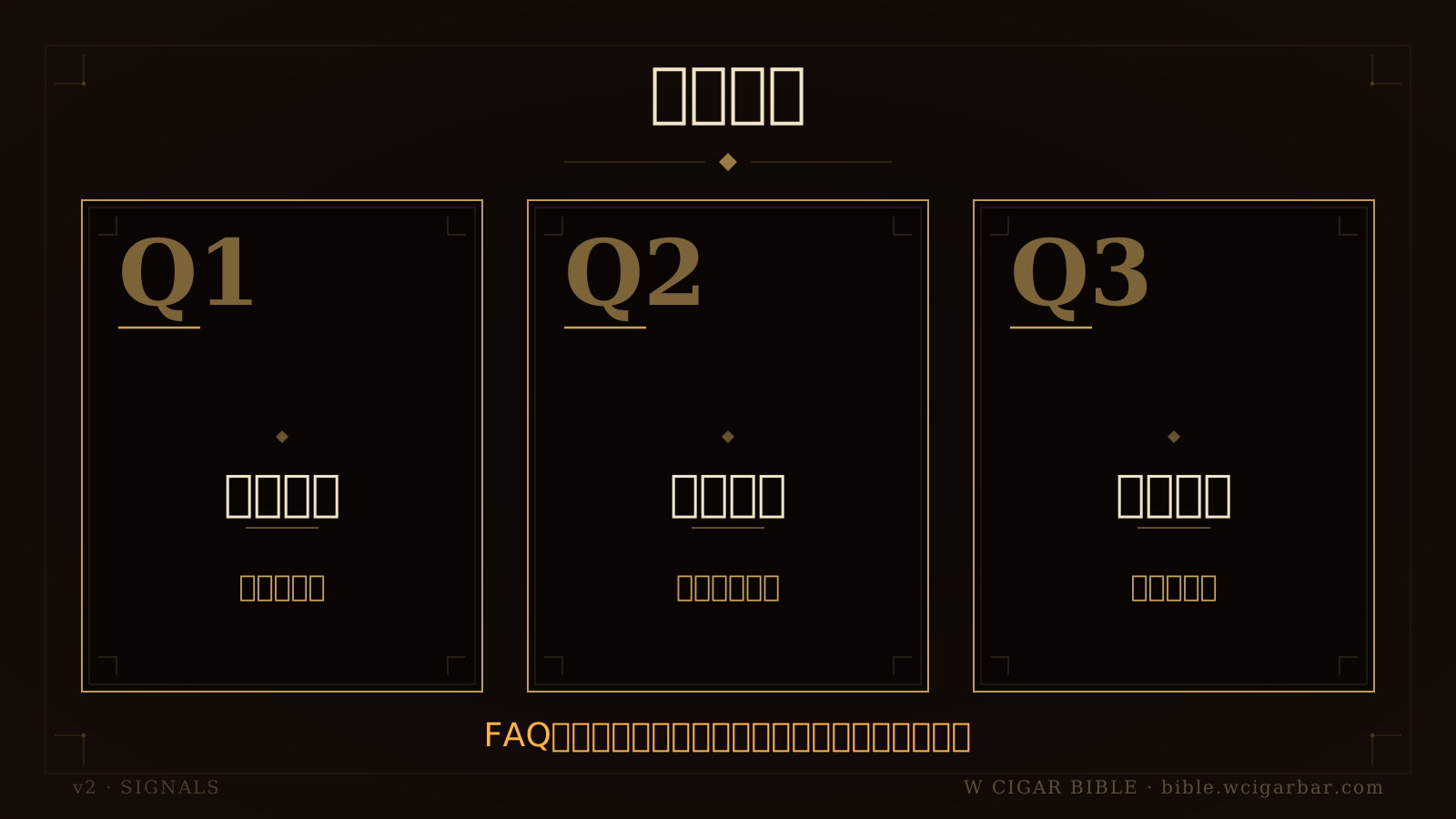
三張問答卡回答隔週感受、逆吹頻率與白灰判讀問題
Integration of the Five Senses: Establishing a Reproducible Analysis Process
A single sense is easy to misjudge; combining the five senses will form a stable conclusion. Taking the 2019 boxed Ramón Allones Specially Selected as an example, visually the wrapper is oily, the smell has raisins and earth, and the entry is distinctly sweet; but if touch shows loose draw and hearing indicates rapid burning, with increased bitterness in the middle and back, it should not just be recorded as "rich and sweet," but the reason for structural imbalance should be written.
Truly advanced tasting is turning feelings into records that can be verified later. I suggest leaving at least the date, box code or year, storage humidity, resting time, size, burning time, and three-stage flavor for each cigar. If you can continuously record 20 cigars of the same brand from different years, you will understand your preferences better than just looking at scores.
| Sense | Observation Focus | Common Signals | Possible Interpretation |
|---|---|---|---|
| Sight | Wrapper, veins, rolling | Color difference, cracks, sheen | Burning stability and storage state |
| Smell | Cold aroma, foot aroma, smoke | Floral, ammonia, wet wood | Aging, humidity, or cleanliness |
| Taste | Front, middle, back, and aftertaste | Sweet, bitter, spicy, tannin | Balance and complexity |
| Touch | Draw resistance, smoke body, oral weight | Too tight, too loose, astringent | Structure and burning temperature |
| Hearing | Cutting and burning sound | Crisp, dull, fine crack | Moisture content and ash column state |
In practice, I use a 100-point system but do not blindly trust scores: appearance 10, burning 15, aroma 20, taste 35, structure and aftertaste 20. Collection aspects can also be recorded, but collection appreciation does not guarantee appreciation, still depending on source preservation and market. The purpose of analysis is to accumulate with each tasting, not just leave vague impressions.
Common Questions
Why does the same cigar feel good today but ordinary next week?
The difference may come from humidity, resting time, dining state, and smoking rhythm. For example, with Cohiba Siglo II, if you ate lightly the night before, the tongue is clean the next day, and floral and creamy notes will be clearer; if you just drank high-tannin red wine, woody and bitter notes will be magnified. The body's state before tasting is also part of the five-sense analysis.
Is retrohaling necessary?
Necessary, but with moderation. Retrohaling allows the nasal cavity to capture cedar, spice, floral, and mineral notes, but do it once every 5 to 8 puffs. High-nicotine Bolívar Belicosos Finos or Partagás Lusitanias are not suitable for frequent retrohaling, otherwise nasal fatigue will distort judgment in the latter part.
Does whiter ash mean a better cigar?
Do not mythologize white ash. Ash color is affected by soil minerals, burning temperature, and leaf processing. White ash is beautiful but does not necessarily mean excellent flavor. More important is whether the ash column is firm, the burn line is stable, and whether the core is even after ash drop. Ash is just a visual clue, not the final score.
Is a bitter cigar of poor quality?
Not necessarily. Bitterness may come from high humidity, overheating, too dense smoking, or tar accumulation near the end, and it may also be that the wrapper itself has more pronounced tannins. If bitterness is accompanied by sweetness and coffee notes, it may be part of the structure; if bitterness is sharp, astringent, and obscures all aromas, then check storage and burning.
How should veterans train flavor vocabulary?
Do not pursue rare words at first. Prepare coffee beans, cedarwood chips, black pepper, cocoa powder, roasted almonds, black tea, honey, and leather to establish baseline aromas. Spend 10 minutes each week smelling, recording intensity and associations, and then apply it to the three-stage changes in cigars. Vocabulary is not for show, but to allow feelings to be accurately reproduced.
I have always believed that the most fascinating part of cigars is not in saying many fancy descriptions in one breath, but in having all five senses awake at the same time: eyes seeing structure, nose discerning cleanliness, tongue chasing the timeline, fingers reading tension, and ears listening to details. As a long-term observer of Cuban cigars in the PCC authorized dealer system, I value source, preservation, and records more; only in this way, each cigar is not just consumption, but an accumulative understanding.
—Cigar Prince Wilson Tsai
Smoking is harmful to health. Under 20 years old is prohibited from smoking. Quit smoking hotline: 0800-636363. This article is for reference only for adults over 20 years old regarding cigar culture, preservation, and regulations, not a tobacco advertisement, promotion, or purchase suggestion.
Like this article?Share with friends
Share this W Cigar Bible piece with friends who want to learn cigar culture, storage, and tasting.
想把這篇 化為實踐
雪茄聖經是知識;雪茄文化要在空間裡發生
W Cigar Bar 大安總店資訊
台北大安區 · 雪茄聖經總編輯 Wilson Tsai 主理的雪茄文化空間
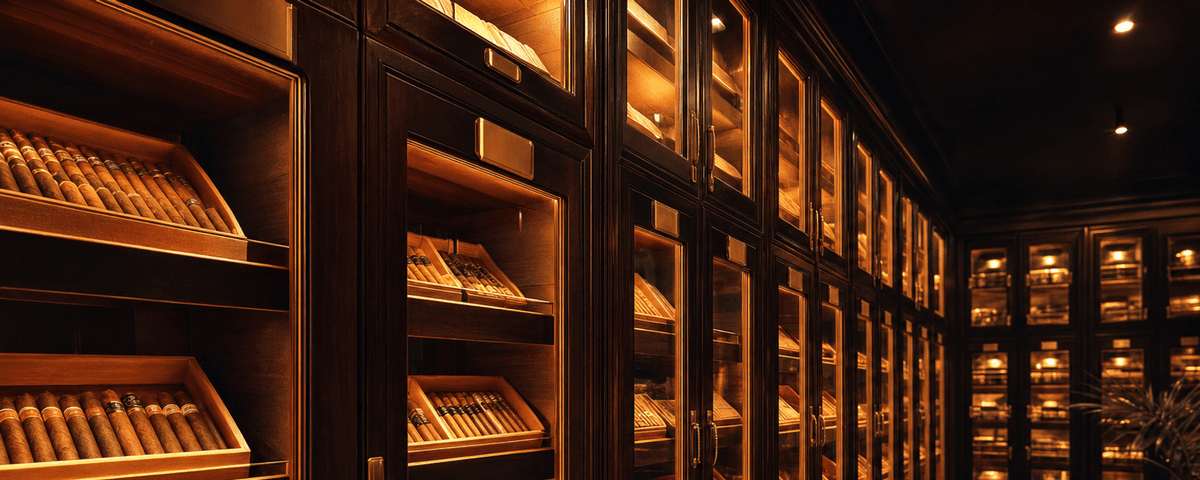
33 座 24 小時恆溫恆濕醇化室
W Cigar Bar 提供的會員醇化空間 · 場地資訊請洽編輯部
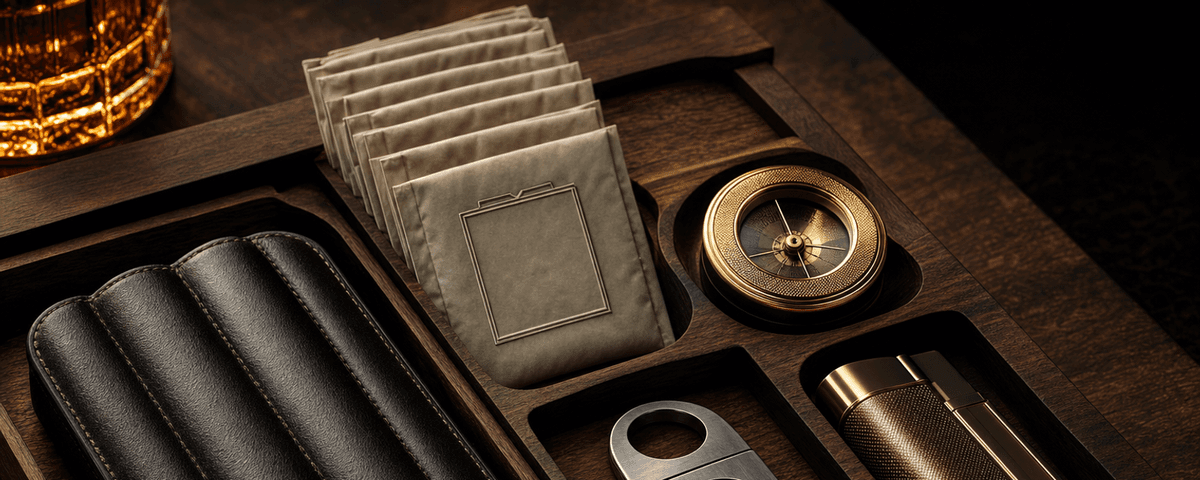
雪茄剪 / 打火機 / 雪茄盒 / Boveda
W Cigar 配件官網 · 專營雪茄配件正品
加 LINE 好友 · 文化諮詢
文化空間資訊 · 紳士沙龍 · 私人包場
本網站內容僅供雪茄文化、歷史、收藏與品吸知識研究參考。菸品有害健康、未滿法定年齡者請勿吸菸。實際規範請依所在地法律為準。
吸菸有害健康・戒菸專線 0800-636363・本站僅供 20 歲以上成年人閱覽。
讀到這裡,你不只是路過的人
留下 Email,加入 W 雪茄聖經內圈——總編輯 Wilson Tsai 親選的學院深文與國際新訊,先你一步送到信箱。
· 教育用途非銷售 · 隨時一鍵退訂 · Email 絕不對外公開 · 由勝茄股份有限公司營運
同分類延伸閱讀
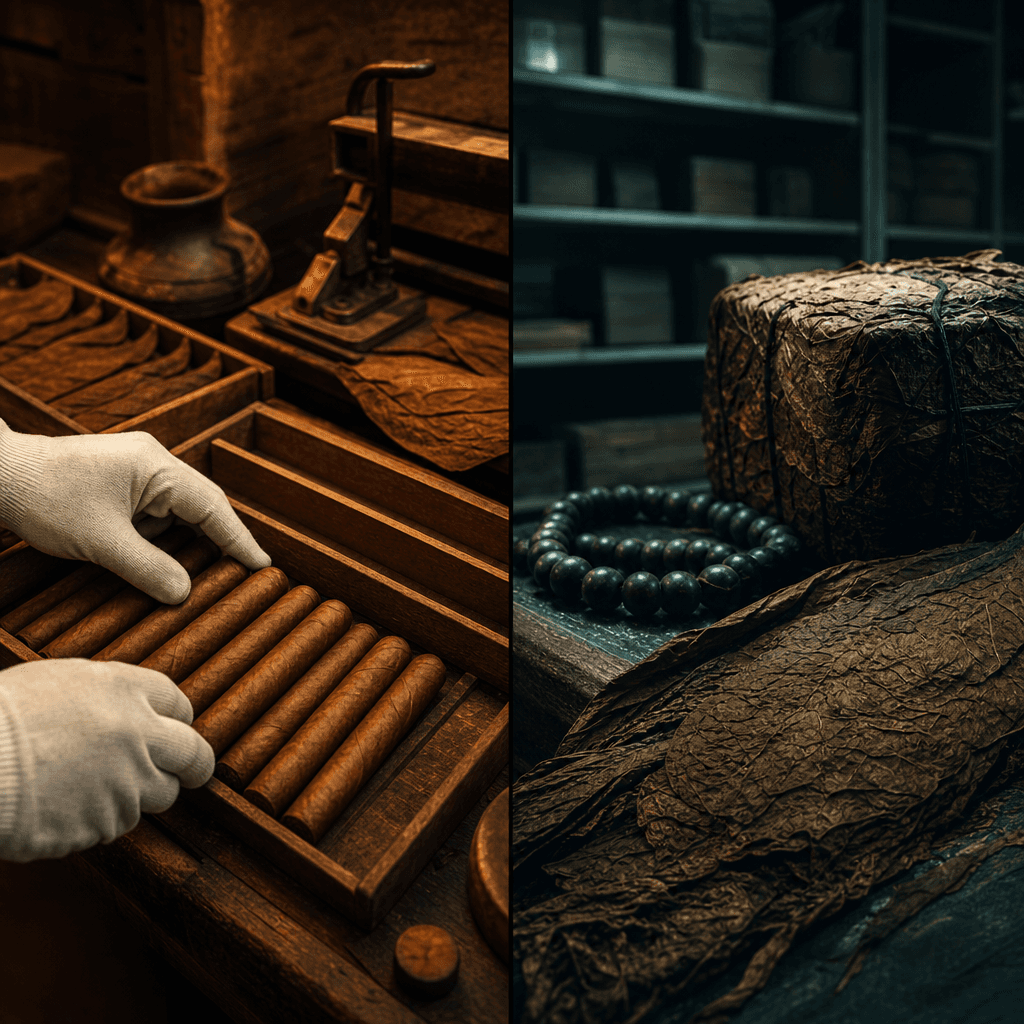
資料來源:W Cigar Bible 編輯部整理 · 雪茄王子 Wilson Tsai 親自審稿
本文僅供雪茄文化、歷史、收藏與品鑑知識研究,不作為菸品促銷、銷售或購買建議。吸菸有害健康,未滿二十歲不得吸菸。