雪茄的香料搭配藝術:風味的深度探索與創造
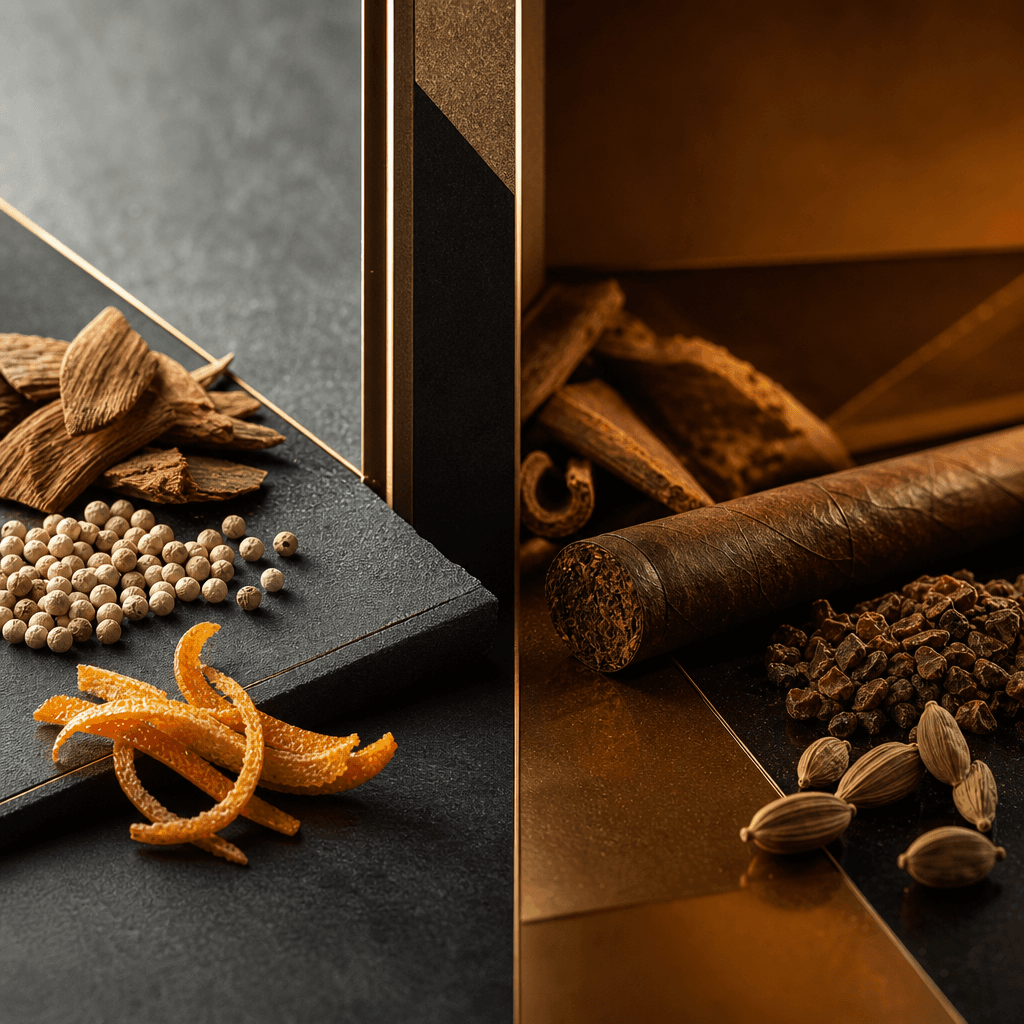
雪茄的香料搭配是一門藝術,需理解雪茄本身的風味結構,並適當選擇外部香料以增強其層次。搭配香料時,應將其視為風味座標,分為辛辣、甜暖、草本、樹脂及柑橘等五類,並根據雪茄的茄衣、產區及尺寸來判斷適合的香料方向。老手應注意香料的比例與進場時機,避免過量干擾雪茄本味。透過不斷實驗與記錄,能夠找出最佳搭配,提升品味的深度與享受。
- 香料搭配雪茄的第一原則是判斷其補強、對比或拉長餘韻的作用。
- 雪茄的茄衣、填料風格與尺寸會影響香料的適配方向。
- 香料搭配的關鍵在於比例與時間,過量會掩蓋雪茄本身的風味。
The Art of Pairing Spices with Cigars: An In-Depth Exploration and Creation of Flavors
Pairing spices with cigars is not simply placing cinnamon, pepper, and cloves beside them; the real challenge lies in understanding that cigars already possess notes of wood, leather, nuts, cocoa, earth, and floral scents. The goal is to "enhance the layers" with external spices, not to overshadow the main character.
As an editor of the "Cigar Bible," I often view this as a form of flavor architecture: cigars are the structure, and spices are the light. The pursuit for the seasoned smoker is not heavier or more complex flavors, but more precise and restrained ones, allowing a cigar to reveal new depths in the front, middle, and end segments.
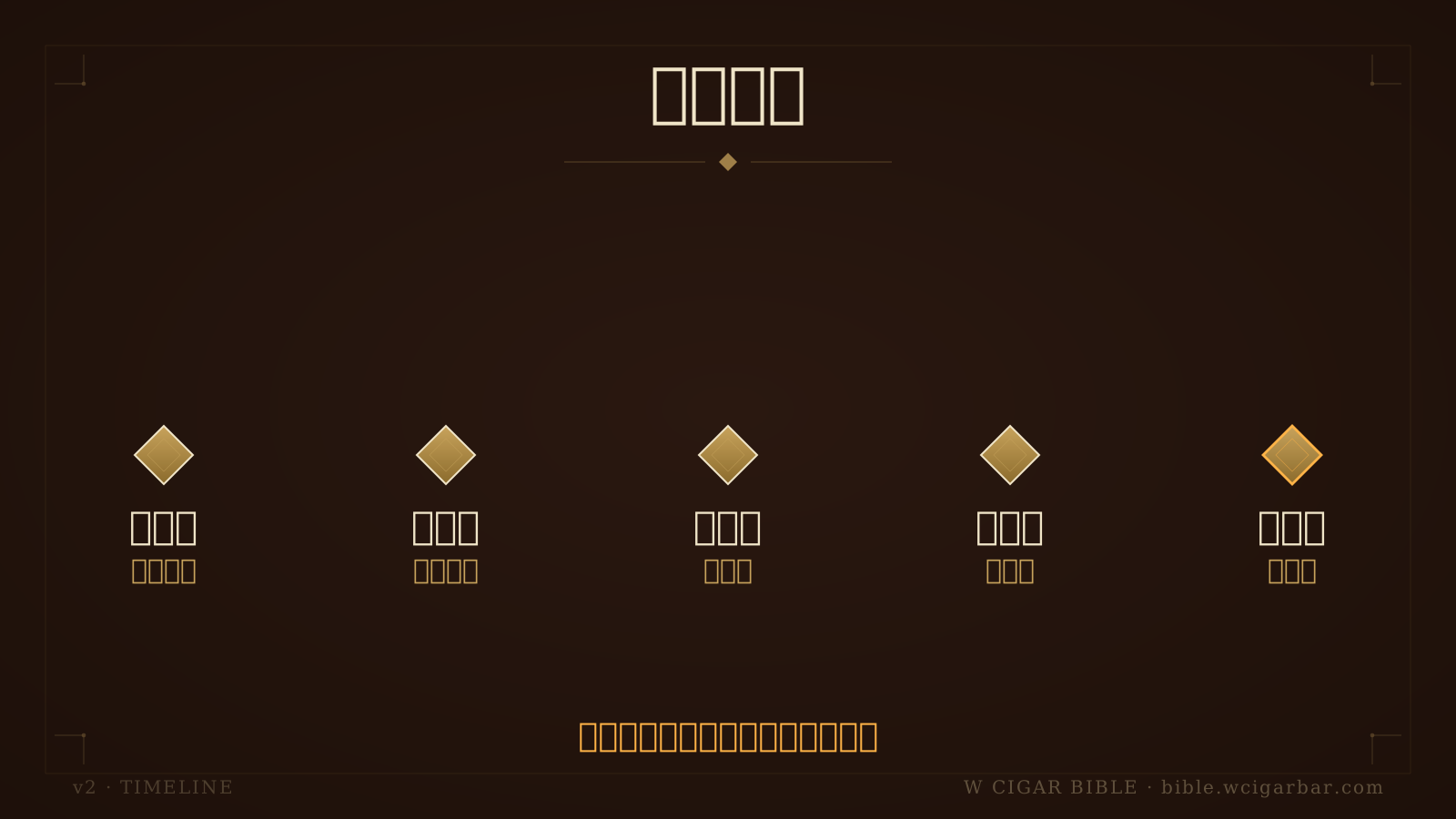
時間軸呈現辨識主調選香料到回寫筆記的流程
Spices Are Not Seasoning Powder, But Flavor Coordinates
Before discussing spice pairing, it's essential to break down spices from "flavors" into "coordinates." For example, black pepper leans towards spicy and dry wood, white pepper is brighter, and pink pepper has a fruity aroma; cinnamon has sweet wood, warm fragrance, and a slight resinous feel; cloves bring herbal, bittersweet, and numbing sensations; nutmeg often presents citrus peel, butter, and a cooling finish. The first principle of pairing spices with cigars is to determine whether they will enhance, contrast, or extend the finish.
Take the Partagás Serie D No.4, which was widely discussed around 2014, as an example. It often has black pepper, roasted wood, and concentrated coffee notes. If paired with heavy black pepper, it can make the front segment overly sharp; using a small amount of cinnamon or cocoa nibs can instead bring out the sweetness in the middle segment. Conversely, for milder cigars like the Hoyo de Monterrey Epicure No.2, which has noticeable cream and cedar, one must be cautious with cloves, as their herbal notes might overpower the delicate floral scent.
I usually categorize spices into five groups: spicy, sweet-warm, herbal, resinous, and citrus. Spicy types include black pepper and dried chili; sweet-warm types include cinnamon and vanilla pods; herbal types include rosemary and sage; resinous types include frankincense and benzoin; citrus types include orange peel and lemon peel. When making notes, seasoned smokers might mark each tasting with scores from 1 to 5: spiciness, sweetness, woodiness, bitterness, and finish length. After three times, they will see their pairing blind spots.
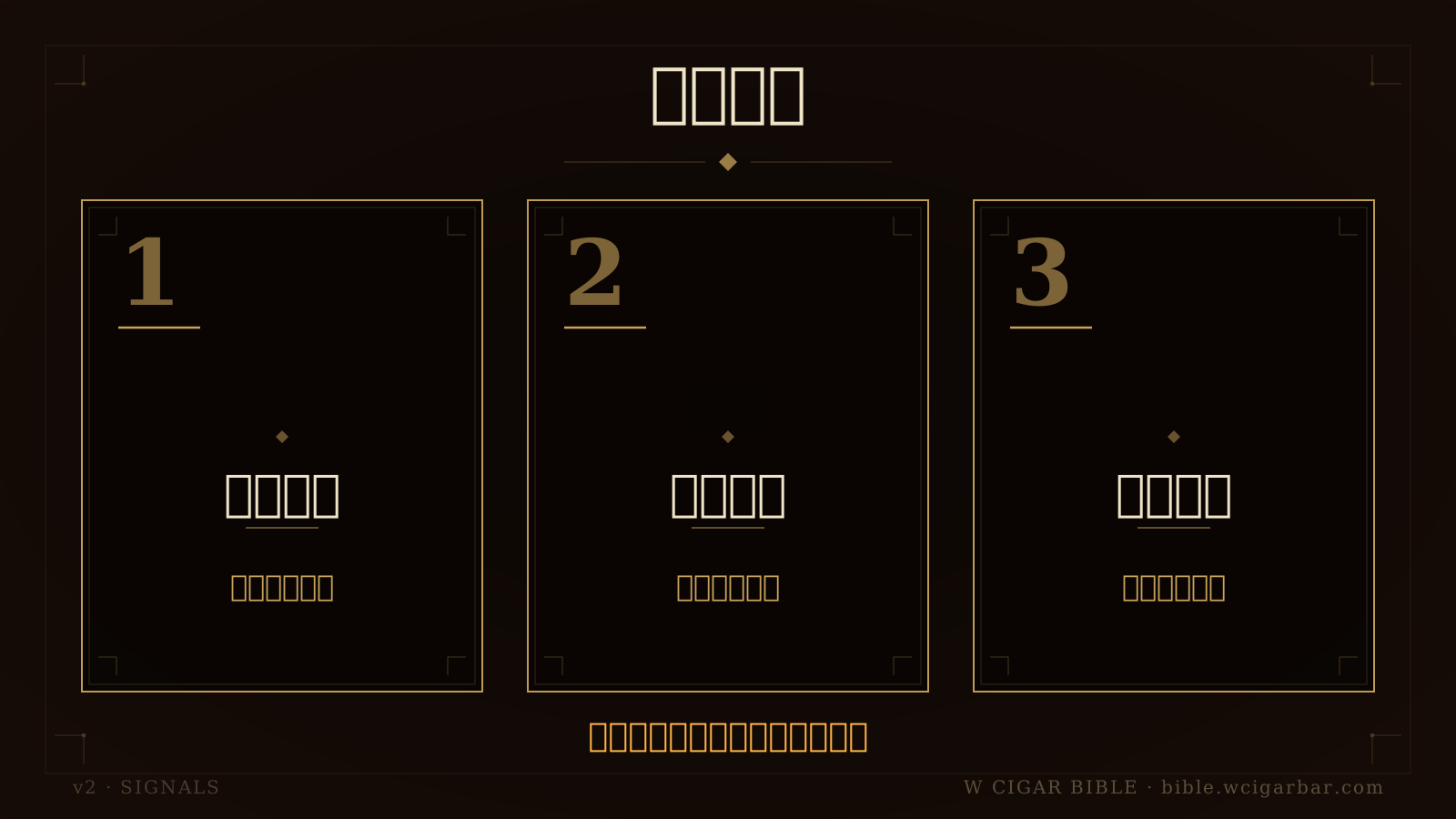
三張卡片列出判斷座標少量介入與記錄變因
Judging Spice Direction from Wrapper, Origin, and Size
The suitability of spices for cigars cannot be judged solely by brand name; one must also consider the wrapper, filler style, and size. Dark Maduro wrappers often carry cocoa, coffee, molasses, and damp earth, suitable for cinnamon, vanilla pods, nutmeg, and a small amount of dried chili; cigars with Colorado or Claro styles more easily exhibit cedar, nuts, and floral scents, pairing better with orange peel, white pepper, or rosemary for a cleaner profile. A darker wrapper does not mean it is more suitable for heavy spices; the key is whether the sweetness and bitterness can support it.
Size also changes the spice logic. A Robusto, approximately 50 ring gauge and 124 mm in length, burns directly, allowing spices to be introduced in the first 15 minutes; a Churchill, about 47 ring gauge and 178 mm, often unfolds in the front segment, and spices introduced too early can interfere with judgment. For classic sizes like the Romeo y Julieta Churchill, I would let the first 2 cm go without pairing, drinking only room temperature water, and once the cedar, floral, and leather notes stabilize, introduce a very thin orange peel or lightly roasted oolong.
Vintage also has an impact. Cigars with 3 to 5 years of good aging have reduced ammonia and rounded edges, requiring lighter spices; fresh batches with noticeable spiciness can be buffered with creamy, nutty, or slightly sweet spices. For example, many rich Nicaraguan cigars have gained attention in the market after 2020, with volcanic soil bringing mineral and spicy tension. In such cases, I avoid cloves and opt for roasted almonds, cocoa nibs, and a touch of sea salt to prevent the thickness from becoming oppressive.
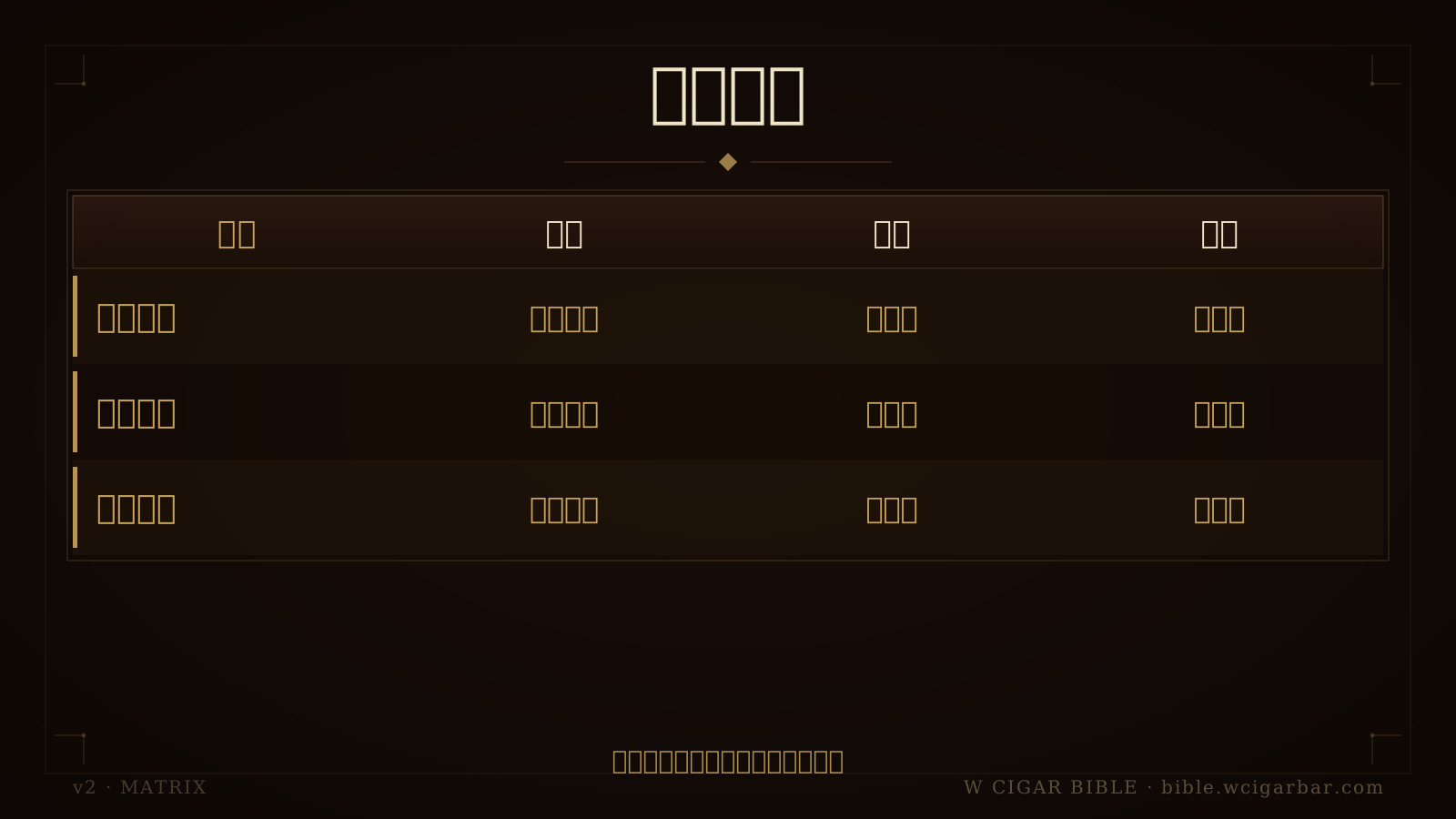
矩陣比較可可咖啡雪松堅果與皮革泥土的搭配
Spice Pairing Matrix: Enhancement, Contrast, and Bridging
The most common mistake seasoned smokers make is treating "similarity" as the only safe strategy. In reality, spices and cigars have three relationships: enhancement, contrast, and bridging. Enhancement makes existing flavors clearer, such as pairing cocoa cigars with cocoa nibs; contrast uses citrus peel to open up rich earthiness; bridging connects two flavor groups, such as using cinnamon to link woodiness and sweetness. Advanced pairing is not about stacking but allowing the original lines of the cigar to be seen.
The table below is a simplified matrix I often use in courses and private notes. It is not a fixed answer but a starting point; the same cigar's performance at 65% and 70% humidity can result in different spice reactions. It is recommended to change only one variable at a time to determine whether it is the spice, humidity, burning speed, or drink that altered the result.
| Main Cigar Flavor | Suitable Spices | Function Method | Representative Case |
|---|---|---|---|
| Cocoa, Coffee | Cinnamon, Vanilla Pods, Cocoa Nibs | Enhance Sweet-Bitter Balance | Maduro Wrapper, Short Fat Size |
| Cedar, Nuts | White Pepper, Orange Peel, Nutmeg | Increase Brightness | H. Upmann Magnum 46 |
| Leather, Earth | Rosemary, Black Tea, Small Amount of Cloves | Extend the Back End | Bolivar Royal Corona |
| Floral, Cream | Lemon Peel, Light Honey, White Tea | Contrast and Brighten | Hoyo Epicure Series |
| Spicy, Mineral | Roasted Almonds, Sea Salt, Cocoa | Buffer Intensity | Rich Nicaraguan |
In practice, I use the "three sips, one note" method: the first three sips only note the cigar's original flavor, the fourth to sixth sips add the spice aroma, and the seventh sip returns to plain water. If the nasal finish lengthens and bitterness does not increase after adding spices, it is effective; if the tongue root feels dry or the throat tightens, it indicates excess spices or the wrong direction. Practicing this matrix 20 times is more useful than memorizing 200 flavor terms.
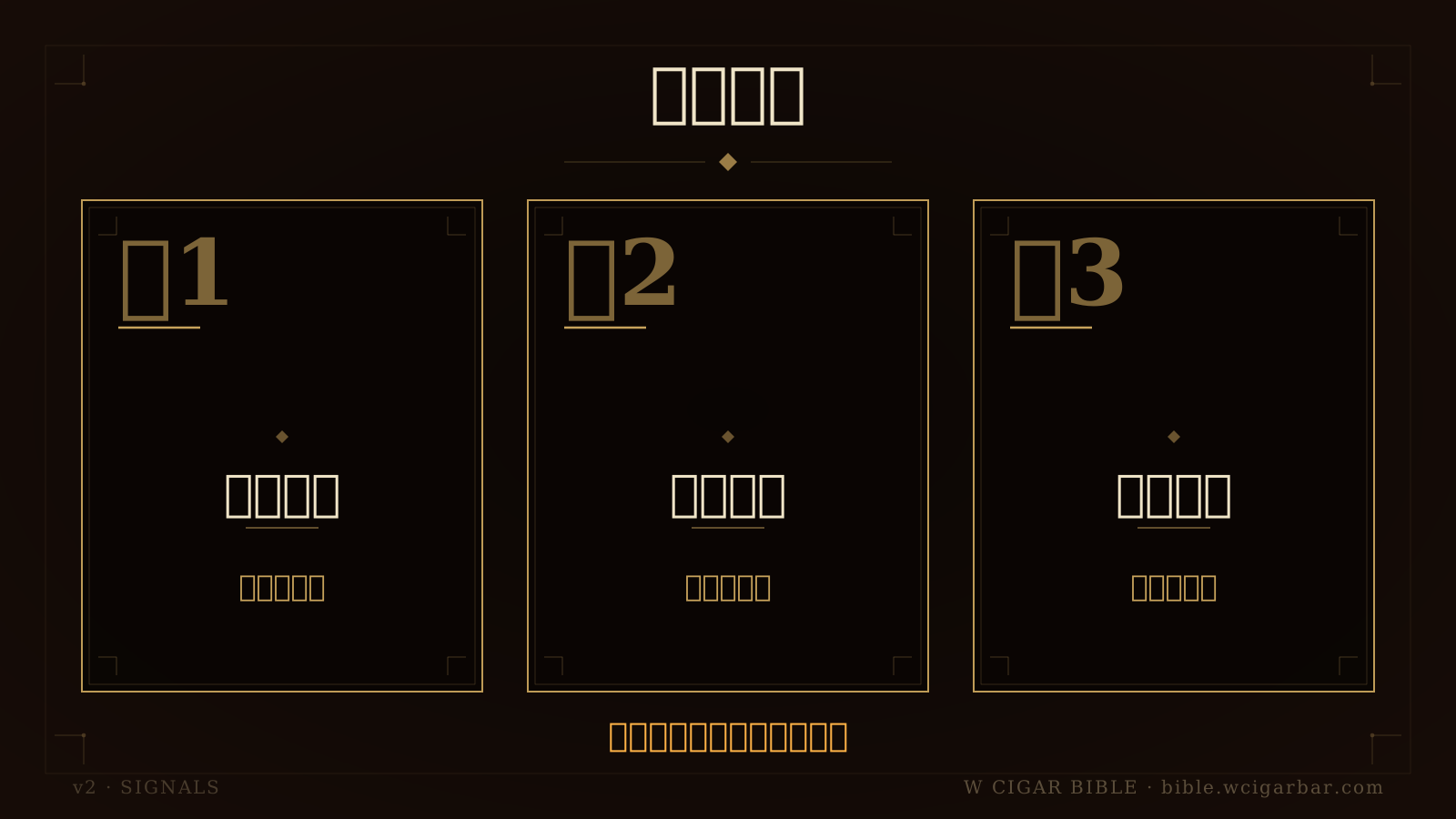
三張錯誤卡指出灑粉過量與醇化配重的問題
Proportion, Order, and Timing: Introducing Spices with Rhythm
The most crucial aspect of spice pairing is not the variety but the proportion and timing. Too many spices can turn the cigar into the background. My basic principle is "aroma over taste," especially for seasoned smokers; spices are better placed beside, in drinks, or in food, rather than directly contacting the cigar. The best role of spices is to establish a hint in the nasal cavity, not to create noise on the tongue.
The rhythm is simple: no spices in the front segment, light spices in the middle, and deeper spicy or resinous notes in the back. For a 60-minute Robusto, observe the burning and original flavor for the first 15 minutes; from the 20th to the 40th minute, introduce orange peel, cinnamon, or roasted nuts; in the last 15 minutes, if the cigar turns to leather, coffee, and bittersweet, use a small piece of dark chocolate or a minimal amount of cloves to echo. For Churchill or Double Corona, extend this rhythm to 90 to 120 minutes.
I suggest using the following steps to establish your spice process:
- Start with room temperature water to cleanse the palate and record the cigar's three main flavors in the front segment.
- Choose one spice as the main axis, not adding more than three at the same time.
- Record spiciness, sweetness, bitterness, and finish every 10 minutes.
- If bitterness rises by more than 2 points, stop spice intervention immediately.
- Conduct at least two tests with the same cigar to determine if the pairing is stable.
In terms of proportion, a cinnamon stick only needs 2 to 3 cm placed on the cup edge for aroma; a single thin slice of orange peel is sufficient; no more than one clove, and it is recommended only for aroma, not chewing. Many people think the stronger the spice, the more layers it has, but often the layers come from leaving space. When you can control the moments of "not adding," you truly understand "adding."
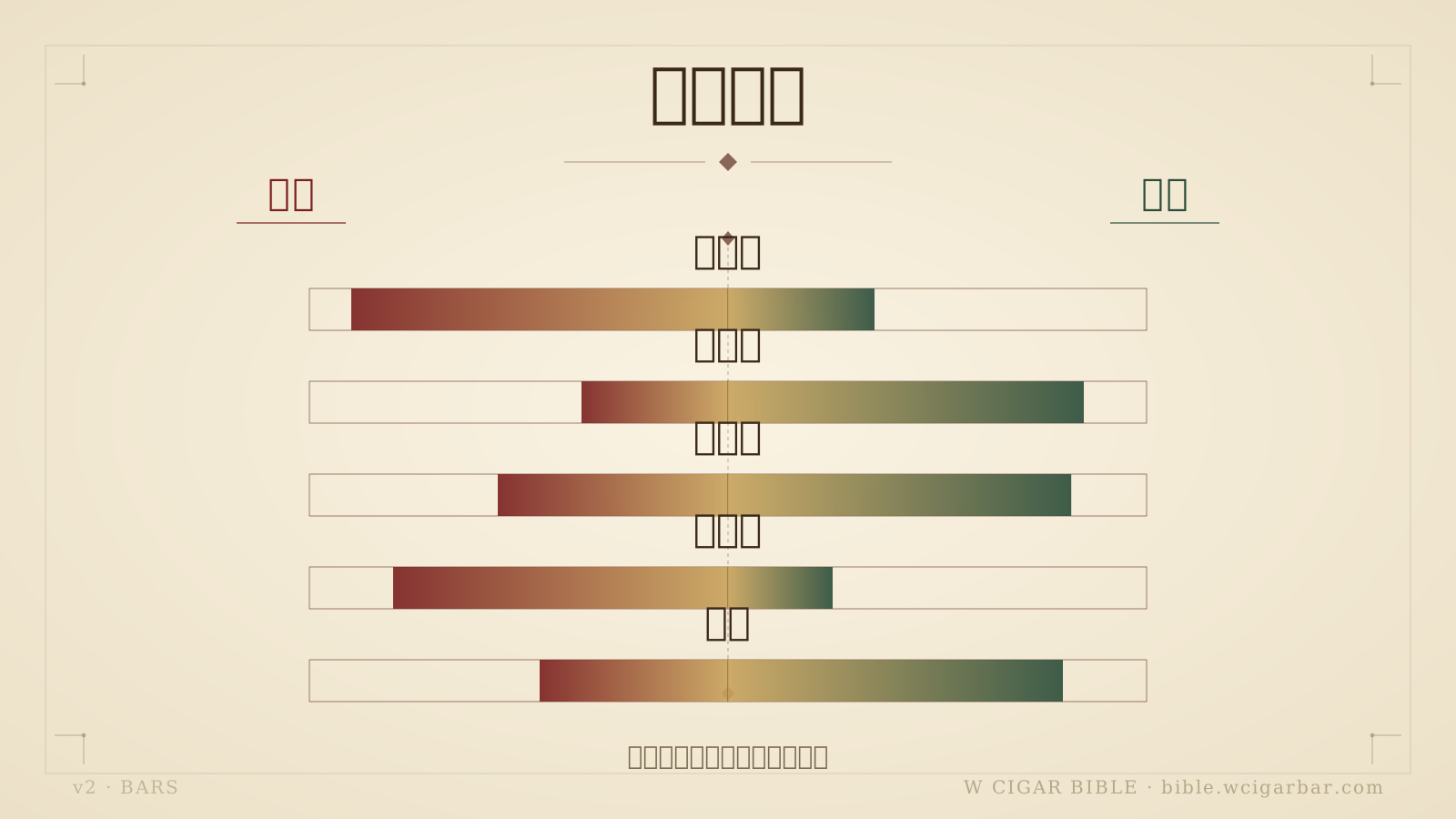
長條圖比較堆疊與克制在香料量層次和餘韻差異
Classic Brand Cases: The Same Spice Changes with Different Cigars
Take the Cohiba Siglo VI as an example. This member of the 2002 Línea 1492, with a Canonazo size of about 52 ring gauge and 150 mm, often has grass, cream, honey, cedar, and a hint of pepper. If paired with orange peel, it enhances the brightness; if paired with cloves, it may turn the delicate herbal into a bitter herbal taste. The more intricate the cigar structure, the more transparent the spices should be, not heavy.
The Partagás Lusitanias is a different world. The Double Corona size, about 49 ring gauge and 194 mm, can burn for over 100 minutes, often featuring black pepper, leather, coffee, and rich wood. Such cigars can accommodate rosemary, roasted coffee beans, and a small amount of cinnamon in the middle to back segments, even pairing with dried fruit-flavored whiskey. If it's a well-preserved batch from before 2016, the spicy edges are usually rounder, and spices should be halved to avoid disrupting the matured calmness.
Look at the Davidoff Nicaragua. Its Nicaraguan tobacco leaves have spicy, cocoa, roasted nuts, and mineral notes, more potent than traditional Dominican styles. Using black pepper here is repetitive stacking, leading to fatigue; I prefer bridging with vanilla pods, cocoa nibs, or sea salt caramel. As for the Arturo Fuente Hemingway series, the Perfecto shape makes the burning change from the front to the middle more evident, so spice intervention should be slower, best judged after the foot is fully stable.
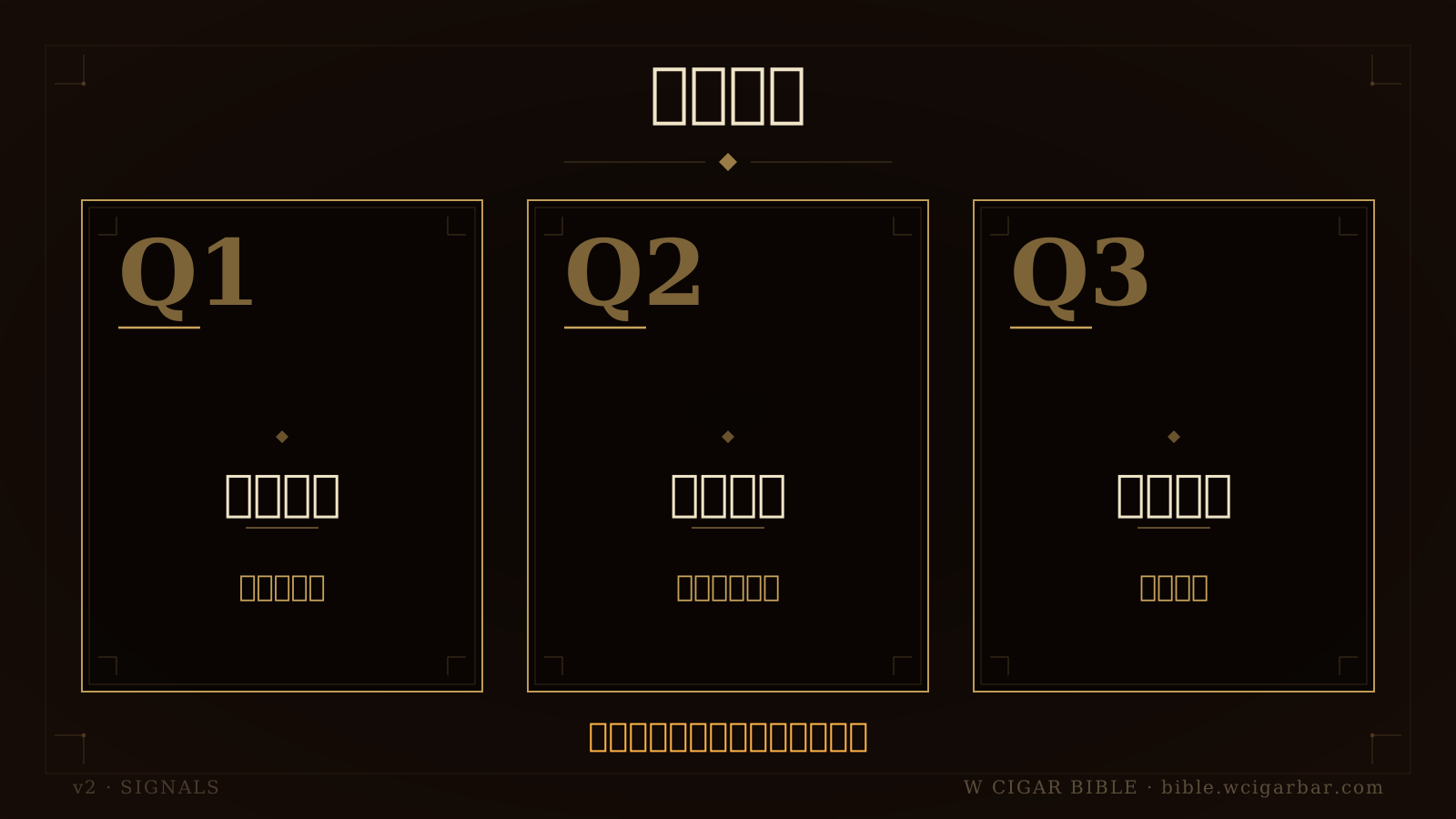
三張問答卡回答灑香料入門選擇與丁香用量
Beverages, Temperature, and Space: Spices Exist in the Entire Environment
Spices do not have to appear in solid form; beverages, cup shape, temperature, and air flow all alter the spice perception. Black coffee offers roasted and bittersweet notes, single malt whiskey may have vanilla, oak, and smoke, rum has molasses and tropical spices, and ripe Pu'er tea brings soil, wood, and herbal aromas. When the beverage itself has a spice tone, consider external spices as a second layer, not doubling them.
Temperature is especially critical. Room temperatures of 18 to 22°C allow cigar smoke to be clearer; if the environment is too hot, spiciness and ammonia are easily amplified; if humidity exceeds 72%, burning may slow, increasing bitterness and damp woodiness, making cloves or cinnamon appear stuffy. Conversely, when humidity is low, cigars burn quickly and sharply; orange peel and white tea can slightly pull back the brightness but cannot replace proper storage.
Space also affects spice judgment. At W Cigar Bar, I've observed many regulars; the same cigar in a well-ventilated, outer seat shows shorter floral and cream notes; in a stable air flow corner, wood and sweetness are more complete. For rigorous comparisons, fix the cup, beverage volume, cigar humidity, and seating conditions. If you have a clearly sourced, well-preserved Cuban cigar obtained through the PCC authorized dealer system, pairing judgments can more easily exclude variables.
Common Questions
Can spices be directly sprinkled on cigars?
Not recommended. The cigar wrapper is very sensitive, and oils, humidity, and burning can be affected. Directly sprinkling spices can cause uneven burning, residual odors, and even distort the original tobacco structure. A better method is to place spices on the cup edge, plate, drink, or small amount of food, allowing the nasal cavity and finish to naturally connect.
For beginners in spice pairing, what should the first set be?
Even for seasoned smokers rebuilding their system, I recommend starting with cinnamon, orange peel, and cocoa nibs. These three correspond to sweet-warm, bright, and bittersweet, with a larger safety range. Use the same Robusto for three comparisons, recording differences in the front, middle, and back segments, which is more effective than preparing ten types of spices at once.
Why are cloves often said to be difficult to use?
Cloves have a distinct herbal, bittersweet, and numbing sensation with strong penetration. They suit cigars with noticeable leather, earth, and coffee back segments but are not suitable for those with delicate floral or cream notes. It is recommended to smell only one clove, not ingest, and use only briefly in the middle to back segments.
The longer a cigar ages, should the spices be stronger?
Usually the opposite. Good aging makes flavors rounder and more integrated, so added spices should be finer. If a cigar over 8 years old has well-preserved dried fruit, old wood, leather, and honey notes, heavy spices will obscure its precious details. Collectible value does not guarantee appreciation; it still depends on source preservation and market.
Will spice pairing make brand characteristics disappear?
Yes, if pairing lacks restraint. Brand characteristics come from tobacco leaves, fermentation, formulas, and storage conditions; spices can only assist. My judgment standard is: if brand structure is still recognizable after adding spices, it's successful; if only cinnamon, coffee, or alcohol remain, it's excessive spice intervention.
Why does the same cigar have different pairing results each time?
Possible reasons include storage humidity, batch year, burning speed, beverage temperature, taste state of the day, and air flow. Seasoned smokers must accept the existence of variables, so each record should include date, humidity, temperature, cigar size, beverage, and spice amount. Accumulate over 10 times to see real patterns.
The highest realm of spice pairing is not to surprise others with how many materials you used but to make a cigar more like itself. Over the years, I increasingly believe that the advanced skill of seasoned smokers lies in restraint: knowing when to add cinnamon, when to leave only a glass of water; when to let orange peel brighten, when to let silence protect the finish. The depth of flavor often hides in the smallest actions.
—Cigar Prince Wilson Tsai
Smoking is harmful to health. Under 20 years old is prohibited from smoking. Quitline: 0800-636363. This article is for reference by adults over 20 years old on cigar culture, preservation, and regulations, not a tobacco advertisement, promotion, or purchase suggestion.
Like this article?Share with friends
Share this W Cigar Bible piece with friends who want to learn cigar culture, storage, and tasting.
想把這篇 化為實踐
雪茄聖經是知識;雪茄文化要在空間裡發生
W Cigar Bar 大安總店資訊
台北大安區 · 雪茄聖經總編輯 Wilson Tsai 主理的雪茄文化空間
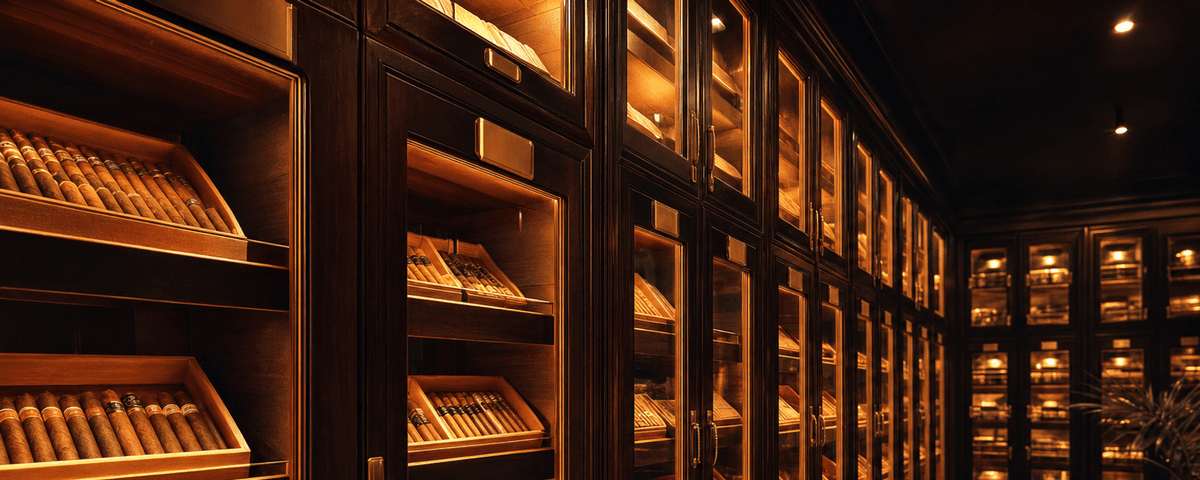
33 座 24 小時恆溫恆濕醇化室
W Cigar Bar 提供的會員醇化空間 · 場地資訊請洽編輯部
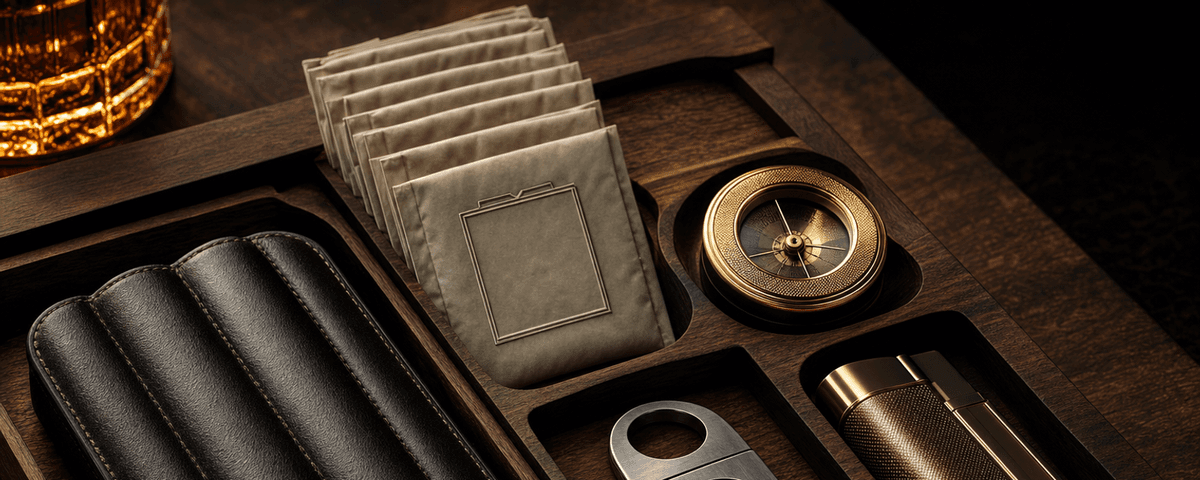
雪茄剪 / 打火機 / 雪茄盒 / Boveda
W Cigar 配件官網 · 專營雪茄配件正品
加 LINE 好友 · 文化諮詢
文化空間資訊 · 紳士沙龍 · 私人包場
本網站內容僅供雪茄文化、歷史、收藏與品吸知識研究參考。菸品有害健康、未滿法定年齡者請勿吸菸。實際規範請依所在地法律為準。
吸菸有害健康・戒菸專線 0800-636363・本站僅供 20 歲以上成年人閱覽。
讀到這裡,你不只是路過的人
留下 Email,加入 W 雪茄聖經內圈——總編輯 Wilson Tsai 親選的學院深文與國際新訊,先你一步送到信箱。
· 教育用途非銷售 · 隨時一鍵退訂 · Email 絕不對外公開 · 由勝茄股份有限公司營運
同分類延伸閱讀
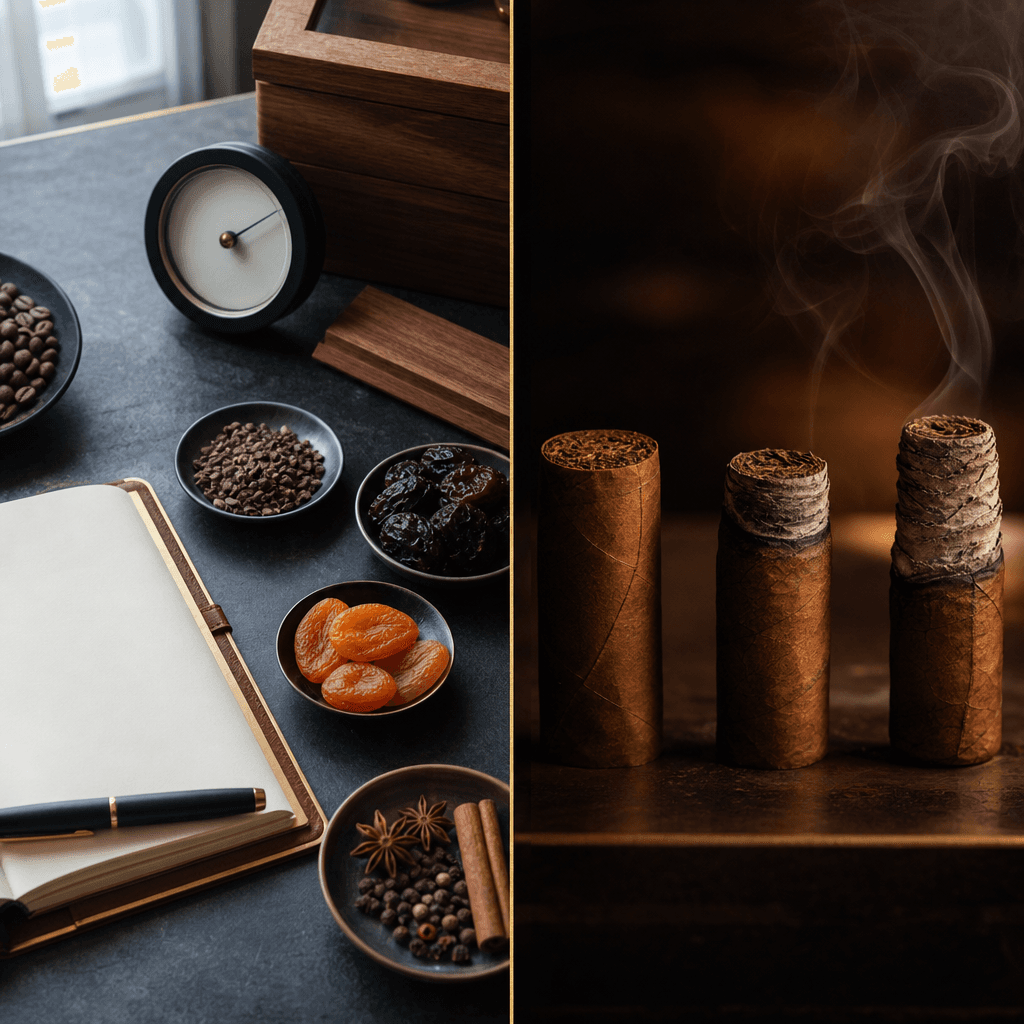
資料來源:W Cigar Bible 編輯部整理 · 雪茄王子 Wilson Tsai 親自審稿
本文僅供雪茄文化、歷史、收藏與品鑑知識研究,不作為菸品促銷、銷售或購買建議。吸菸有害健康,未滿二十歲不得吸菸。