雪茄的發酵與儲存環境對風味的影響
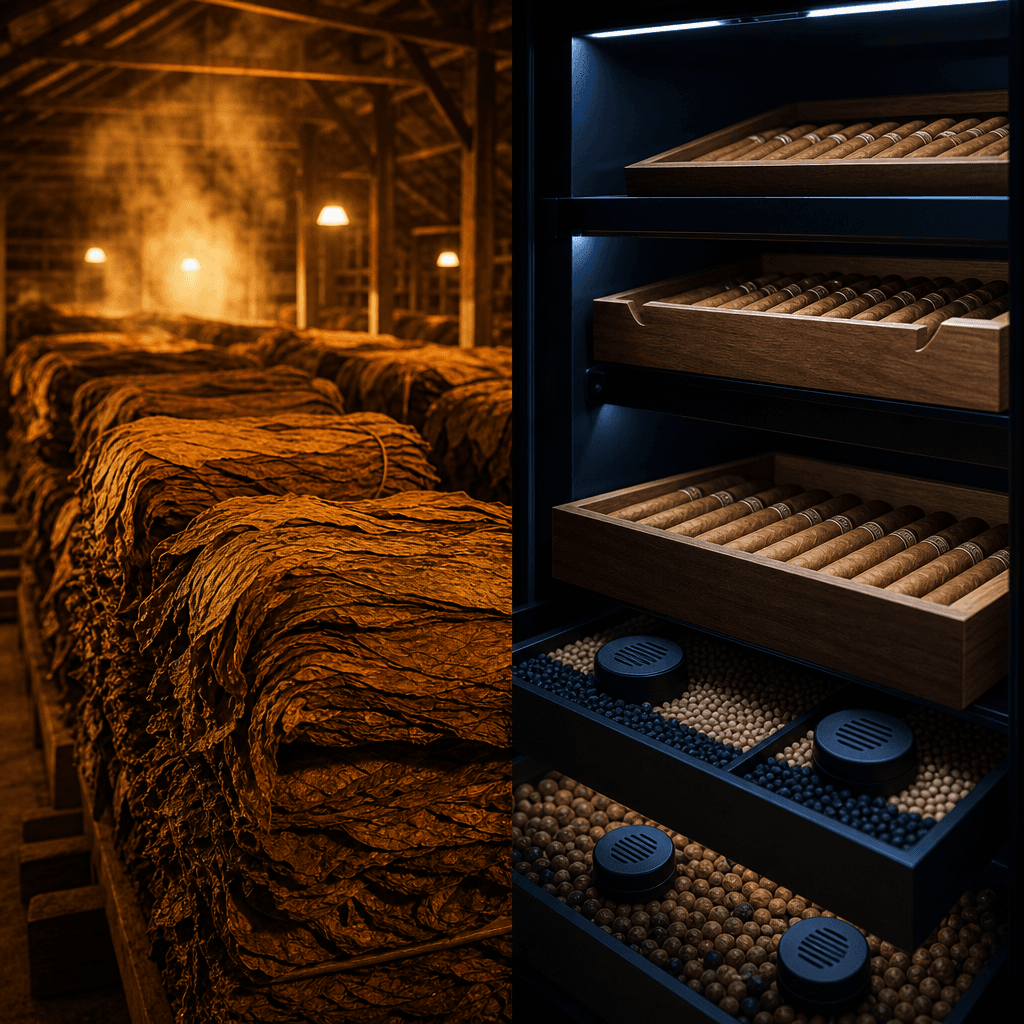
雪茄的風味受多種因素影響,包括發酵過程、儲存溫度與濕度等。發酵不僅是等待,更是一種可控的生化工程,對於不同葉種的處理與融合至關重要。溫度和濕度的管理則直接影響雪茄的口感與燃燒特性。相對濕度的選擇,如65%至72%之間,會影響煙氣的厚度和尾韻的乾淨度。此外,儲存環境的微氣候也會影響雪茄的質量,需定期檢查以防霉變。了解這些因素,能幫助雪茄愛好者更好地享受和保存雪茄。
- 發酵過程中,控制溫度與翻堆頻率是關鍵,影響雪茄的風味與口感。
- 儲存環境的相對濕度會直接影響雪茄的燃燒特性與尾韻,需根據環境調整。
- 記錄每盒雪茄的環境與風味變化,有助於建立個人的風味地圖,提升品吸體驗。
Smoking is harmful to health. Persons under twenty years of age must not smoke. Smoking cessation hotline: 0800-636363. This article is provided solely as a reference on cigar culture, storage, and regulatory knowledge for adults aged twenty and above. It is not tobacco advertising, promotion, or purchasing advice.
For veterans, the flavor of a cigar can never be fully explained by the three labels of "brand, ring gauge, and year." What truly determines depth is how many stable and traceable transformations the tobacco leaves have undergone on the farm, in the fermentation room, at the grading table, in the post-rolling resting room, and in your own humidor. Fermentation determines the framework: whether sweetness, spice, leather, woodiness, bitterness, and ammonia have been properly refined. The storage environment determines the presentation: the same box of 2019 Partagás Serie D No.4 will show different burn lines, smoke density, and final-third bitterness at 65% and 72% relative humidity. The following discusses, from an advanced perspective, how fermentation and temperature-humidity control jointly shape the final flavor on the palate.
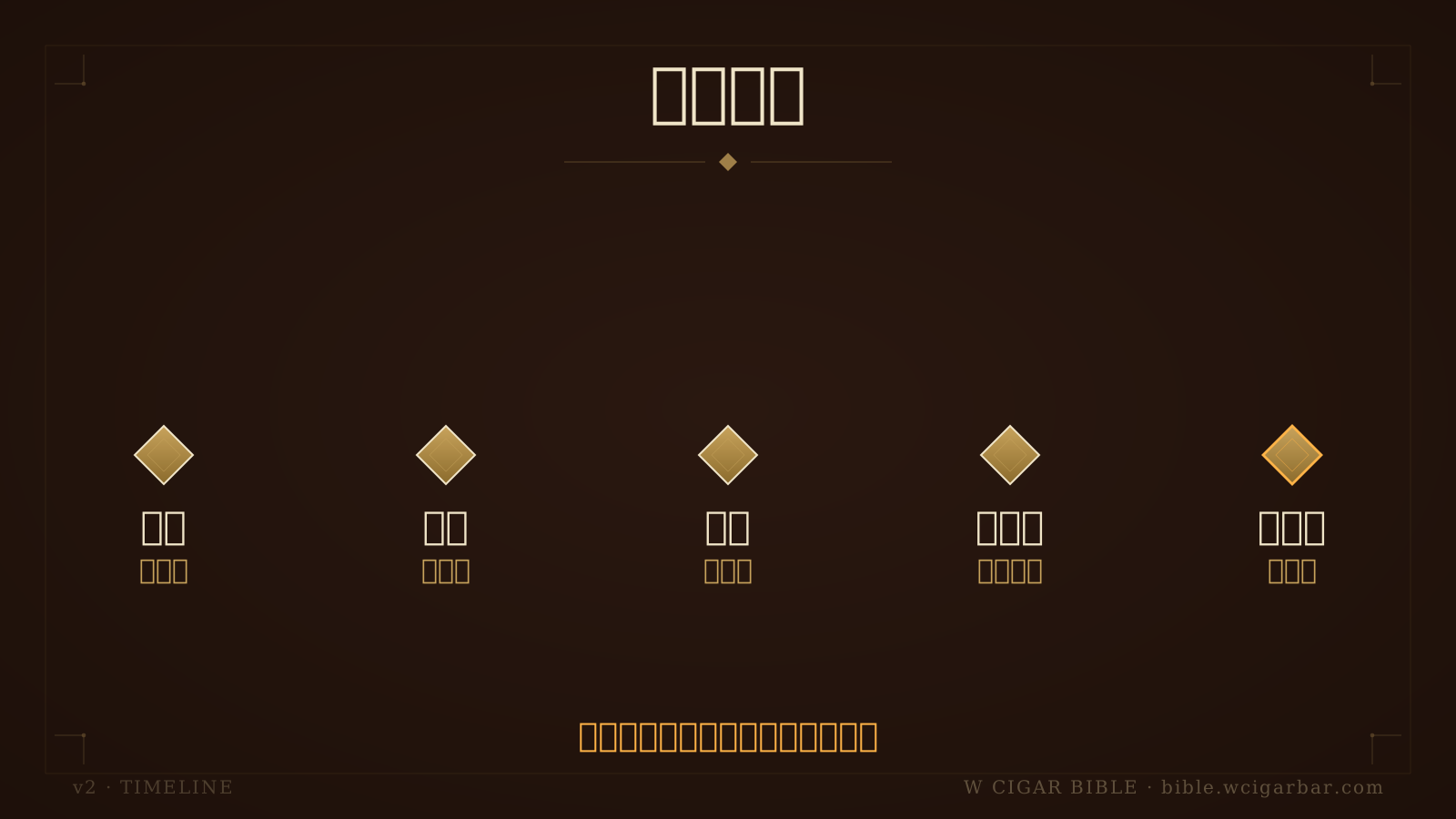
時間線呈現菸葉從乾燥發酵到盒中穩定的流程
Fermentation Is Not Waiting, but Controlled Biochemical Engineering
After cigar tobacco leaves are harvested from the field, they first undergo hanging and drying in the curing house. Over about 45 to 60 days, chlorophyll breaks down, moisture content decreases, and the color changes from green to yellowish brown before entering the truly critical fermentation stage. In common practices in Cuba, Nicaragua, and the Dominican Republic, tobacco leaves are stacked into a pilón, with weights ranging from 500 kg to 2,500 kg, and the internal temperature is often controlled at 38°C to 52°C. If the temperature is too high, oils and aromatic substances are consumed harshly; if it is too low, ammonia and grassy notes cannot be fully expelled. After 2006, many Nicaraguan factories placed greater emphasis on multi-stage fermentation. For example, Estelí strength leaves may first undergo long, low-temperature processing, then be stabilized for spiciness through short-cycle pile turning. The Padrón 1964 Anniversary, familiar to veterans, can present a composed character of cocoa, coffee, and black pepper not merely because the tobacco variety is strong, but because fermentation gives that strength order. Conversely, if fermentation is insufficient, the same black-soil tobacco leaves can become pungent, tongue-biting, and dry-bitter in the final third, and may even leave a distinct ammonia odor after burning.
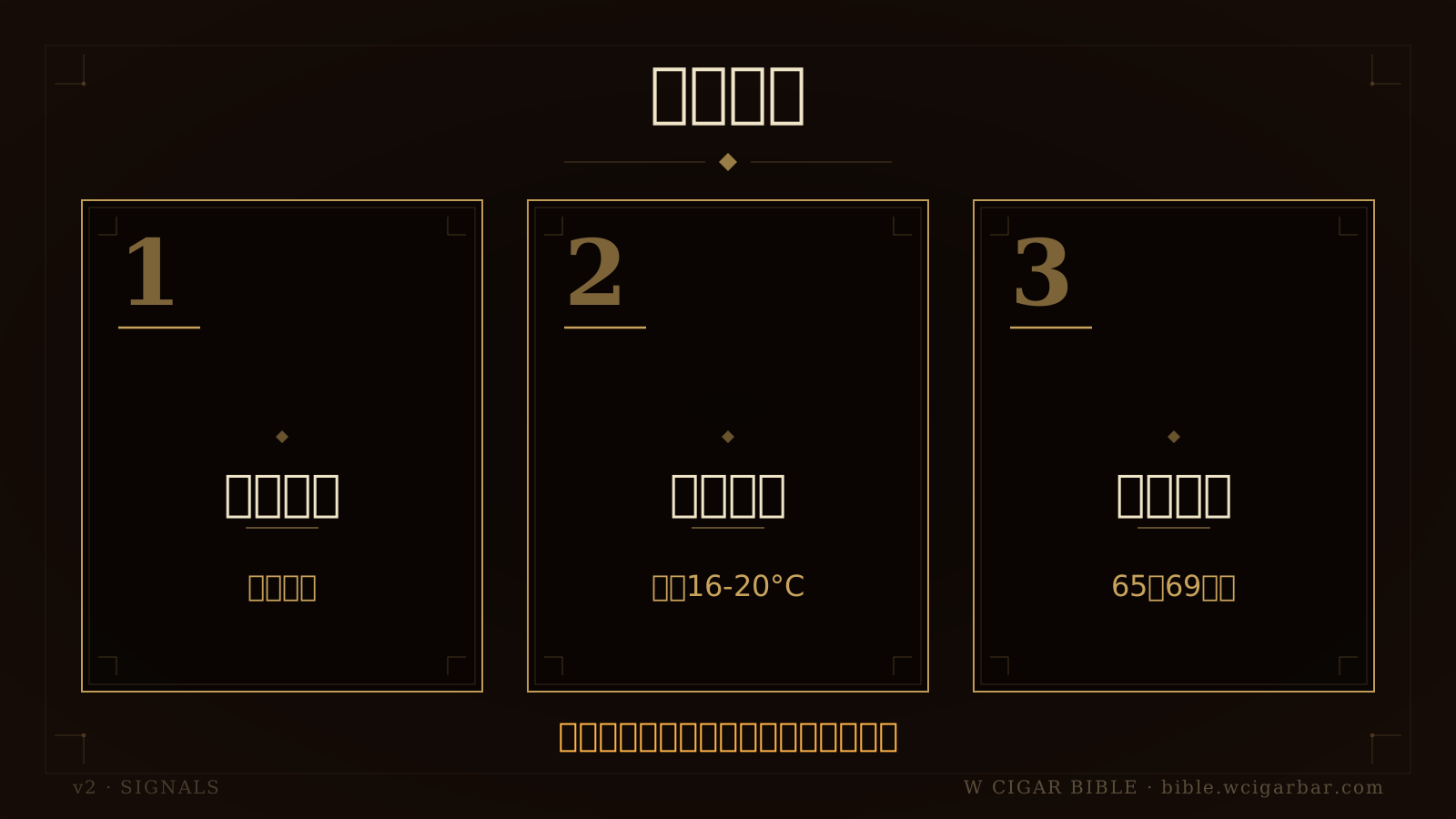
三張卡列出發酵、溫度與濕度三個核心結論
First Fermentation, Second Fermentation, and Post-Rolling Rest: Different Stages Correct Different Problems
Many people imagine fermentation as a single procedure, but advanced observation shows that the first stage mostly addresses "raw greenness and harshness," the second stage addresses "balance and aroma," and resting after rolling addresses "integration." For example, in traditional Cuban practice, ligero leaves, because they are thick, oily, and high in nicotine, often require longer fermentation and more frequent pile turning. seco leaves are clearly aromatic, but if over-fermented, floral notes and tea-like character are easily lost. volado leaves are mainly responsible for combustion, and excess moisture or insufficient fermentation can cause uneven burning. Taking market evaluations after the 2010 release of Cohiba Behike as an example, medio tiempo leaves bring concentrated sweet spice and creaminess, but without sufficient fermentation, these rare top leaves can become sharp and uncoordinated. After rolling, many high-end factories let finished cigars rest for at least 60 to 120 days, and some limited-edition boxes rest even longer, allowing the humidity and volatiles of the wrapper, binder, and filler to reintegrate. This is also why freshly produced cigars often have beautiful aromas yet seem loose when actually burned. It is not that the blend is wrong, but that the three layers of leaves have not truly begun to "speak the same language."

矩陣比較六十五、六十九與七十二相對濕度的差異
The Influence of Temperature: The Dividing Line Between Aroma Maturation and Risk Management
Storage temperature is not only for preventing insects; it changes the maturation speed and flavor direction of the entire cigar. In general, long-term storage is recommended at 16°C to 20°C, while short-term use can be relaxed to 20°C to 22°C. However, if it remains above 24°C for long periods, the risks of oil volatilization, insect egg hatching, and mold all increase. In the 1990s, many European collectors favored a cellar-like environment of about 16°C, 65%RH, allowing torpedo-shaped cigars such as 1998 Montecristo No.2 to develop softer woodiness, nuts, and cream after more than a decade. In high-temperature Asian cities, however, if indoor temperatures reach 28°C in summer, even when humidity appears to be 68%, heat energy may accelerate volatilization, reducing wrapper sheen and leaving aromas hollow. Temperature also affects relative humidity readings: in the same humidor at 18°C and 26°C, the water exchange rate differs, and the mouthfeel can shift from compact to loose. My approach is to set long-term box storage at around 18°C and use two calibrated digital hygrometers for cross-checking, avoiding reliance on the attractive numbers of a single device.
Higher Humidity Is Not Always Better: Flavor Differences at 65, 69, and 72
Relative humidity is the number most often debated by veterans because it directly affects burn, draw resistance, smoke density, and the cleanliness of the finish. 65%RH usually makes cigars burn more cleanly, with clearer flavor lines, and suits Cuban cigars with smaller ring gauges or oilier wrappers. 69%RH is a steady compromise, retaining smoke density without becoming overly damp and stuffy. 72%RH can be useful in dry and cold regions or for short-term recovery of overly dry cigars, but in hot and humid environments such as Taiwan, Hong Kong, and Singapore, long-term 72% often increases final-third bitterness and can even lead to difficult draw and extinguishing. The following is the reference table I often used when organizing Partagás Serie D No.4, H. Upmann Magnum 46, and Oliva Serie V Melanio from 2021 to 2023:
| Relative Humidity | Common Mouthfeel Presentation | Suitable Situation | Possible Risks |
|---|---|---|---|
| 62-64% | Sharp lines, clear woodiness, thinner smoke | Short-term adjustment of over-humidified cigars | Too long may cause cracking and a shorter aroma |
| 65-67% | Stable burn, clear sweetness, clean finish | Most Cuban cigars and small ring gauges | Rehydration must be watched during dry seasons |
| 68-70% | Good density, more obvious creaminess | Most New World cigars | Easy to become stuffy at high temperatures |
| 71-72% | Soft touch, large smoke volume | Short-term recovery from a dry state | Extinguishing, mold spots, increased bitterness and astringency |

三張卡整理氨味、白粉與高濕保存的常見誤解
The Microclimates of Humidors, Cigar Cabinets, and Original-Box Storage
Even with the same settings of 18°C, 67%RH, wooden boxes, acrylic boxes, electronic cigar cabinets, and sealed original boxes still present differently. The advantage of Spanish cedar is that it buffers humidity, absorbs excess ammonia, and provides a faint woody aroma, but if new wood has not been adequately seasoning, it can instead draw moisture out of the cigars. Acrylic boxes have strong sealing performance and are suitable for precise control with Boveda 65 or 69, but when air exchange is insufficient, newly boxed 2022 Romeo y Julieta Wide Churchills may develop a stuffy odor in the first two weeks and require brief, regular ventilation. Electronic cigar cabinets are convenient for temperature control, but one must watch for direct fan airflow causing localized dryness. I have seen a batch of 2017 Bolivar Belicosos Finos in which the wrappers in the front row near the air outlet had slight cracks, while the rear row had normal humidity. The issue was not the brand, but airflow. Original-box storage is closest to the microenvironment after factory shipment and suits long-term maturation, but the bottom of the box, corners, and areas near seals should still be inspected once every quarter. Especially during Taiwan's plum rain season, after external moisture enters the paper box, white, downy mold spots may first appear in the corners of the wooden box.
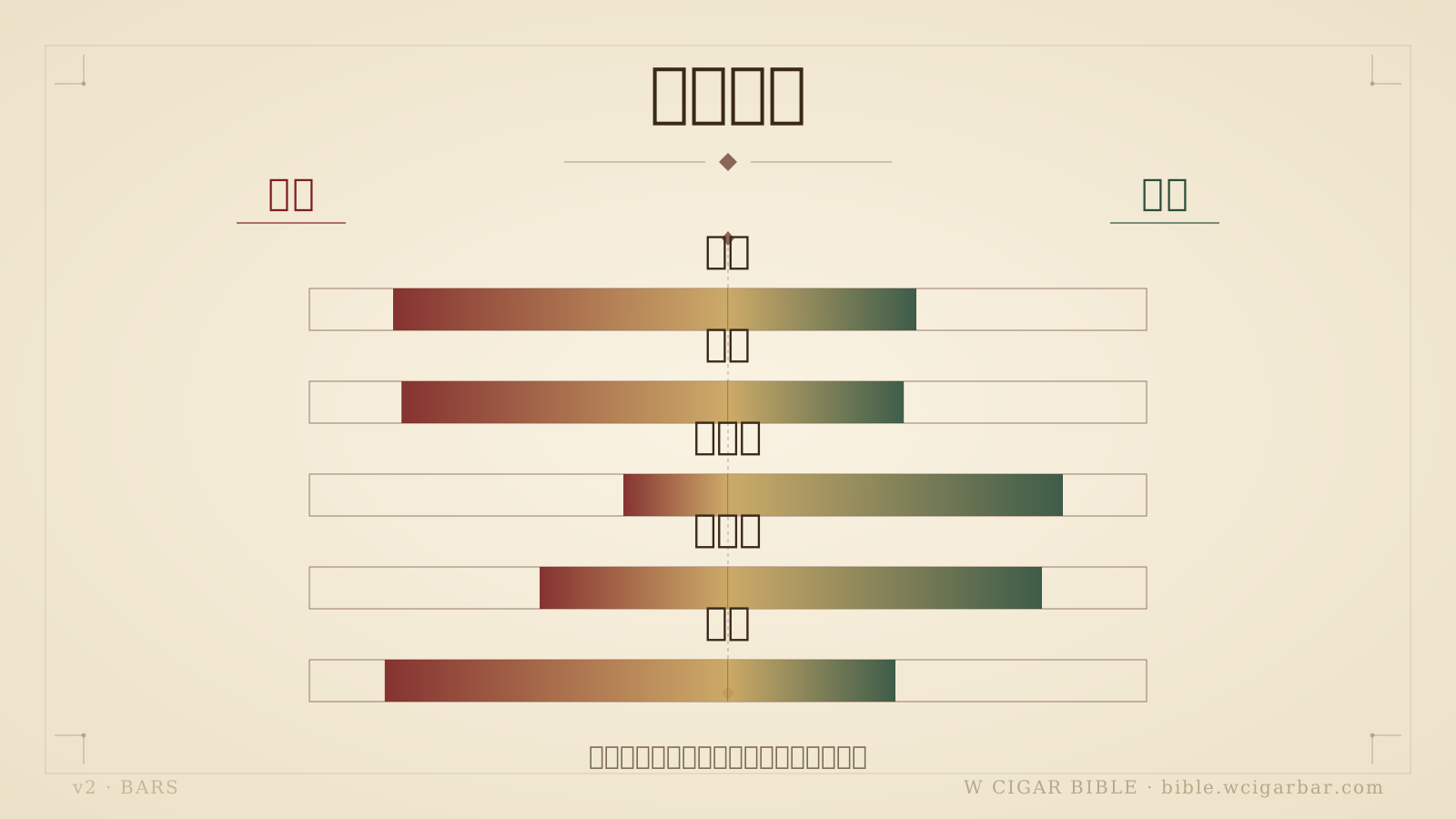
長條比較穩控保存與濕熱環境在香氣燃燒風險上的差異
The Timeline of Flavor Maturation: Not All Cigars Are Suitable for Long Aging
Cigar maturation can be understood as the combined result of slow oxidation, volatile restructuring, and humidity equalization, but longer storage is not necessarily better. Generally speaking, medium-to-high-strength Cuban cigars such as Partagás, Bolivar, Cohiba can often show rounder leather, honey, woodiness, and nuts after 3 to 8 years in a good environment. For medium-strength classics such as Montecristo No.4, if properly stored, bitterness decreases and cocoa character increases after 5 years, but beyond 12 years, if the cigar's structure is not strong enough, its aroma may become thin. For New World cigars, it depends on brand philosophy. For example, Arturo Fuente OpusX, launched in 1995, is known for intense Dominican aromatics and spice, and 3 to 5 years can rein in the spiciness in the opening section. The Davidoff Winston Churchill series already emphasizes cleanliness and balance, so excessive time may not necessarily bring more layers. If discussing collectible value appreciation, one must understand that it does not equal guaranteed appreciation, and provenance, storage, and the market still matter. For true veterans, the value of time lies not in price mythology, but in whether you can use stable records to prove that the box of cigars was properly treated.
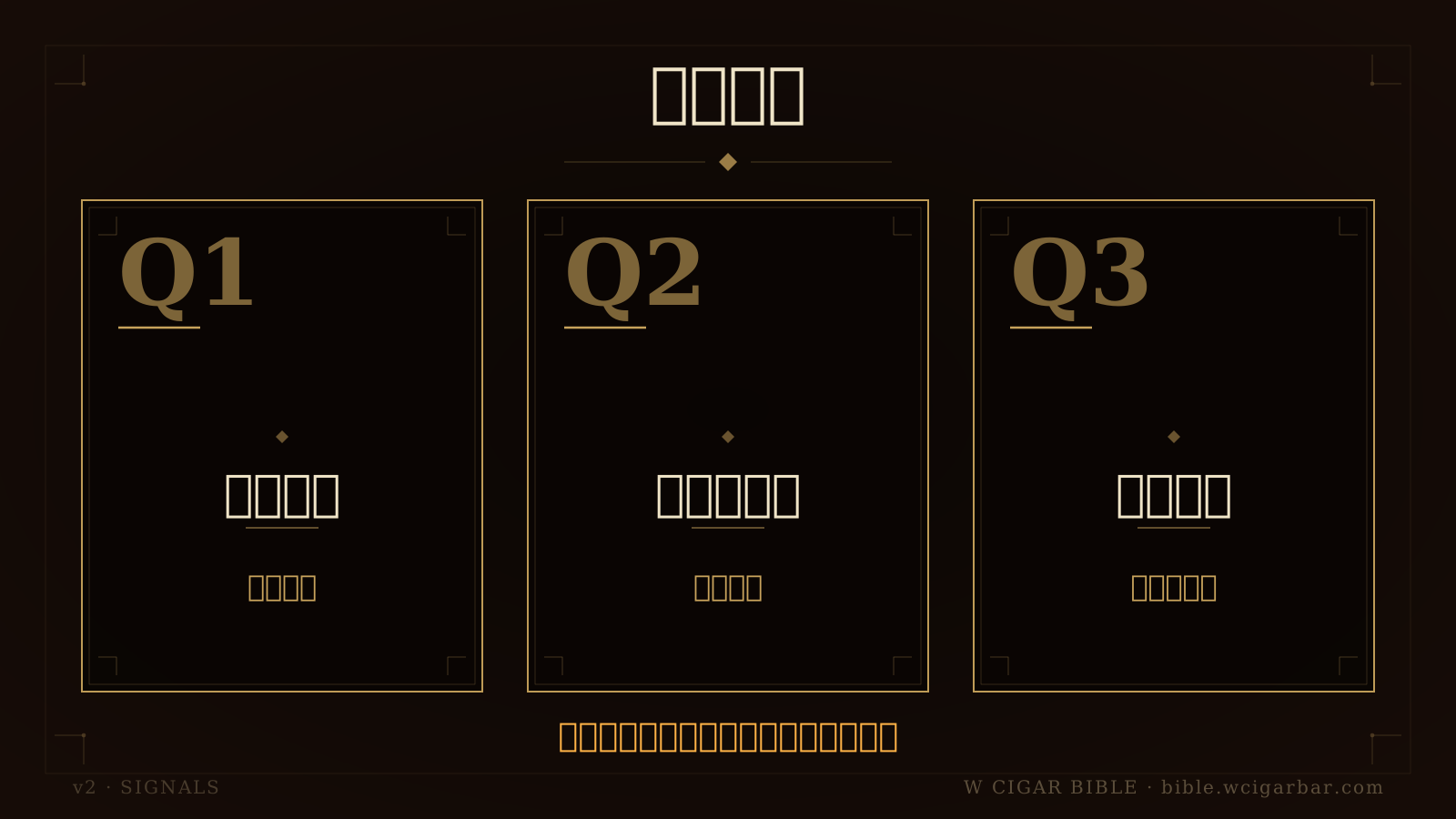
三張問答卡回答氨味白粉與雪茄櫃換氣問題
Practical Record-Keeping: Build Your Own Flavor Map with Data
The mistake advanced players most easily make is remembering the brand but forgetting the environment. It is recommended to create a record for each box, including at minimum the year of acquisition, box code or batch, date placed in the cabinet, initial condition, average temperature, average humidity, quarterly appearance observations, and flavor notes after each burn. For example, I would divide 2020 Hoyo de Monterrey Epicure No.2 into two groups, one stored at 65%RH and the other at 69%RH, then compare draw resistance, burn line, second-section sweetness, and final-third bitterness after three months. Only if 7 out of 10 cigars from the same batch show the same trend would I write the conclusion into my long-term settings. Records should also avoid excessive adjectives. Instead of writing "very good," it is better to write "cedar and almond in the opening, cream turning to toasted bread in the middle, black tea and slight mineral notes in the final section, 1 burn correction." When you have accumulated data on more than 30 boxes, you will discover that your preferences are not abstract feelings, but are closely related to temperature, humidity, brand fermentation style, and ring gauge. This kind of flavor map is more reliable than any one sentence from anyone else.
Frequently Asked Questions
1. If a cigar has an ammonia odor, does that mean it has gone bad?
Not necessarily. An ammonia odor is common when fermentation is incomplete, when post-factory resting is insufficient, or during the stage when humidity rebalances after long-distance transportation. If it is only mildly pungent, it can be left in an environment of 18°C, 65-67%RH for 3 to 6 months before further observation. If it is accompanied by a moldy smell, sour-rotten odor, or a sticky wrapper, it should be isolated and inspected.
2. Is white powder always mold?
Not necessarily. Even, fine plume that can be gently wiped off may be the precipitation of oils and minerals. However, if it appears downy, green-blue-gray, and penetrates into the foot or the corners of the wooden box, it leans toward mold. When veterans judge this, they should not look only at color, but also smell the odor and check whether it is spreading.
3. Should Cuban cigars be stored at 65% or 69%?
If they have a thinner ring gauge, a wrapper with high oil content, and you prefer clear lines, 65-67% is often more ideal. If they have a large ring gauge, are recently produced, or are slightly dry, they can temporarily be placed at 68-69%. I do not recommend long-term 72% in hot and humid regions, because burn and final-third cleanliness are often affected.
4. Does a cigar cabinet need frequent door opening for ventilation?
It is needed, but not excessively. If it is a sealed electronic cabinet, briefly opening the door for 1 to 3 minutes every 1 to 2 weeks is sufficient. The key is to avoid severe temperature and humidity fluctuations. When newly placing cigars in the cabinet, or when an entire box has just been moved in, the observation frequency can be increased during the first two weeks to confirm that there is no localized over-humidification or off odor.
5. Why do cigars from the same box still taste different from one another?
Cigars are agricultural products and handmade products. Leaf position, fermentation uniformity, rolling density, and position inside the box can all cause differences. If differences within the same box remain within a reasonable range, this is a characteristic of handmade cigars. Only when blockage, extinguishing, or pungent spiciness appears in large numbers is it necessary to go back and inspect storage and provenance.
6. Should cellophane be removed before long-term maturation?
For cellophane, common on New World cigars, keeping it can reduce impact and humidity fluctuations, while removing it facilitates aroma exchange. My approach is to keep the outer protection for long-term storage within the same box, but inspect the inside of the box once every six months. For original-box Cuban cigars, maintaining the original state is usually more conducive to tracking.
The depth of a cigar does not lie in adjusting the environment to some mysterious number, but in understanding how the tobacco leaves were once fermented and allowing subsequent storage to continue that rhythm. The true skill of a veteran is to use patience, records, and restraint to let each cigar express its most complete flavor at the appropriate time. - Cigar Prince Wilson Tsai
Smoking is harmful to health. Persons under twenty years of age must not smoke. Smoking cessation hotline: 0800-636363. This article is provided solely as a reference on cigar culture, storage, and regulatory knowledge for adults aged twenty and above. It is not tobacco advertising, promotion, or purchasing advice.
Like this article?Share with friends
Share this W Cigar Bible piece with friends who want to learn cigar culture, storage, and tasting.
想把這篇 化為實踐
雪茄聖經是知識;雪茄文化要在空間裡發生

W Cigar Bar 大安總店資訊
台北大安區 · 雪茄聖經總編輯 Wilson Tsai 主理的雪茄文化空間
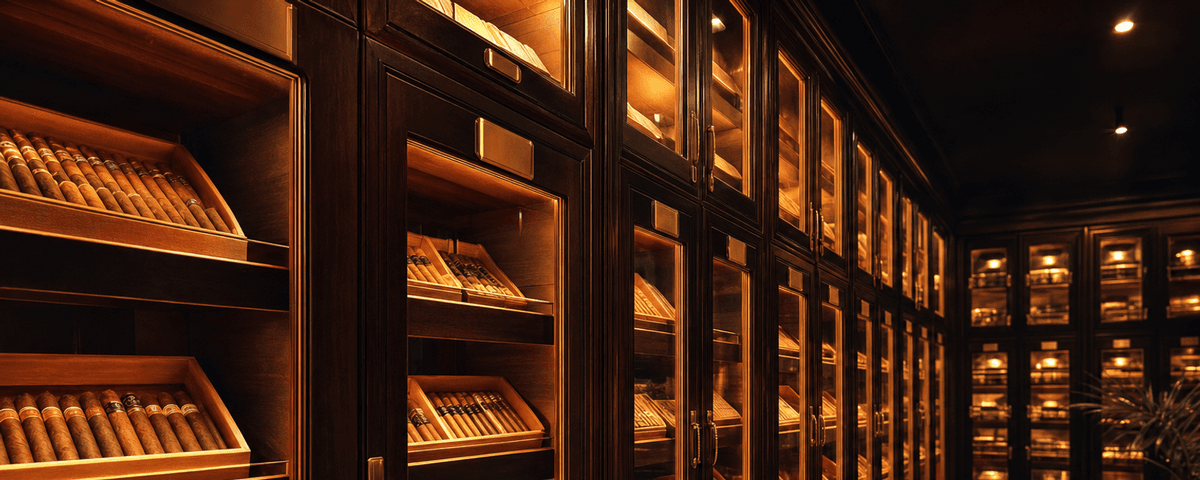
33 座 24 小時恆溫恆濕醇化室
W Cigar Bar 提供的會員醇化空間 · 場地資訊請洽編輯部
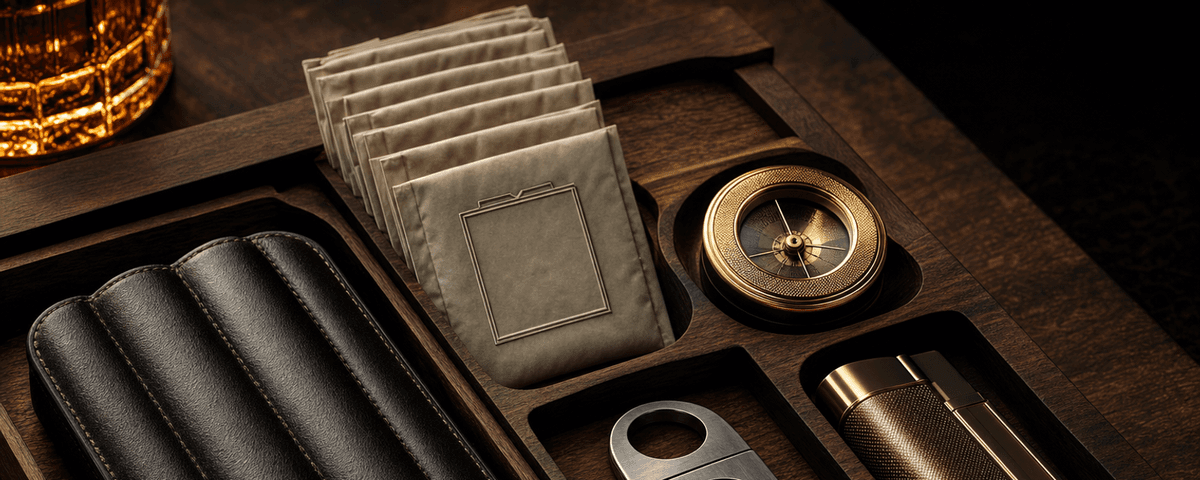
雪茄剪 / 打火機 / 雪茄盒 / Boveda
W Cigar 配件官網 · 專營雪茄配件正品

加 LINE 好友 · 文化諮詢
文化空間資訊 · 紳士沙龍 · 私人包場
本網站內容僅供雪茄文化、歷史、收藏與品吸知識研究參考。菸品有害健康、未滿法定年齡者請勿吸菸。實際規範請依所在地法律為準。
吸菸有害健康・戒菸專線 0800-636363・本站僅供 20 歲以上成年人閱覽。
讀到這裡,你不只是路過的人
留下 Email,加入 W 雪茄聖經內圈——總編輯 Wilson Tsai 親選的學院深文與國際新訊,先你一步送到信箱。
· 教育用途非銷售 · 隨時一鍵退訂 · Email 絕不對外公開 · 由勝茄股份有限公司營運
同分類延伸閱讀


資料來源:W Cigar Bible 編輯部整理 · 雪茄王子 Wilson Tsai 親自審稿
本文僅供雪茄文化、歷史、收藏與品鑑知識研究,不作為菸品促銷、銷售或購買建議。吸菸有害健康,未滿二十歲不得吸菸。