雪茄的常見誤區與真相:新手必知的真實知識
雪茄的魅力在於每次點燃前後的判斷,而非單純追求價格或產地。許多新手誤以為「越粗越長越貴」就越適合,實則應選擇穩定且風味清楚的款式。古巴雪茄雖歷史悠久,但尼加拉瓜與多明尼加的雪茄品質同樣出色,值得探索。茄衣顏色並非強度的唯一指標,剪口與抽吸的節奏更影響風味。最後,雪茄的保存環境需依據當地氣候調整,70/70的標準並非萬用。了解這些誤區,能讓雪茄體驗更加豐富。
- 選擇雪茄時,應以穩定、時間可控、風味清楚的款式為主,而非單純追求大或貴。
- 產地只是線索,真正的好雪茄需看菸葉來源、捲製穩定度與個人口味。
- 茄衣顏色只能做初步推測,雪茄的強度主要取決於茄芯比例,而非顏色。
Common Misconceptions and Truths About Cigars: Essential Knowledge for Beginners
The most fascinating aspect of cigars is not about memorizing terms beautifully, but about making the right judgments before and after each lighting. Many beginners can already perform basic tasting and exhaling, but they are often misled by statements like "the more expensive, the better," "only Cuban cigars are authentic," or "the higher the humidity, the safer," which ultimately leads them to miss out on the real enjoyment.
I often say that cigars are a slow art: slowly selecting, slowly cutting, slowly tasting, and slowly nurturing. Below is a compilation of the most common and easily overlooked misconceptions and truths I have encountered over the years while dealing with Cuban and non-Cuban cigars, editing materials, and practical preservation.
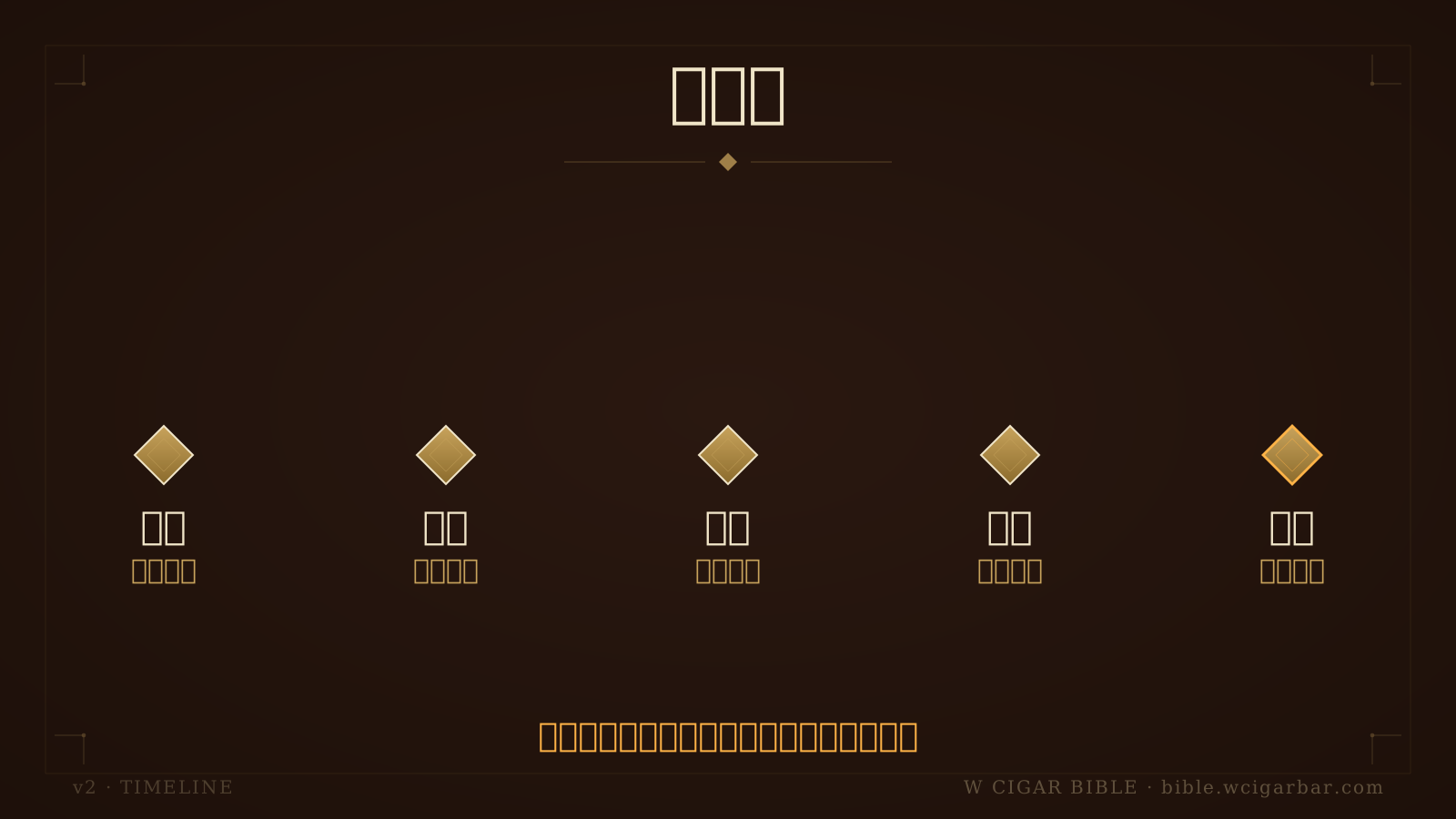
五步流程圖呈現選型查況剪點慢品與記錄順序
Misconception 1: The thicker, longer, and more expensive, the more suitable for beginners
Many beginners, when seriously choosing a cigar for the first time, are attracted to large sizes, such as 54, 56, or even 60 ring gauge, thinking that "larger size" means a more complete experience. In fact, size only represents burning time, filler ratio, and the way the flavor unfolds, not the level of difficulty. For example, the Montecristo No.4 with a 42 ring gauge and about 129mm in length, although not large in size, can clearly present woody, coffee, and slightly spicy aromas; conversely, some large ring gauge cigars with a strong blend may easily tire beginners.
The first advanced practice cigar should be "stable, time-controllable, and clearly flavored," rather than simply pursuing large or expensive ones. I usually recommend setting a practice range of 30 to 60 minutes, such as a Robusto with about a 50 ring gauge and 124mm, or a Petit Corona with about a 40 to 42 ring gauge and 110 to 130mm. These sizes allow you to observe the changes in the first, middle, and last thirds without losing attention due to excessive time.
Price is also not an absolute indicator. The Cohiba Behike series, launched in 2010, received high attention due to its brand, blend, and market demand; however, if beginners have not yet established a baseline taste, choosing items that are too rare and expensive at the start might only leave them with the memory of "being under pressure," without being able to describe the taste. Start with common brands to establish a coordinate, such as H. Upmann, Partagás, Romeo y Julieta, Padrón 1964 Anniversary Series, and then understand the high-end ones for a more solid learning experience.
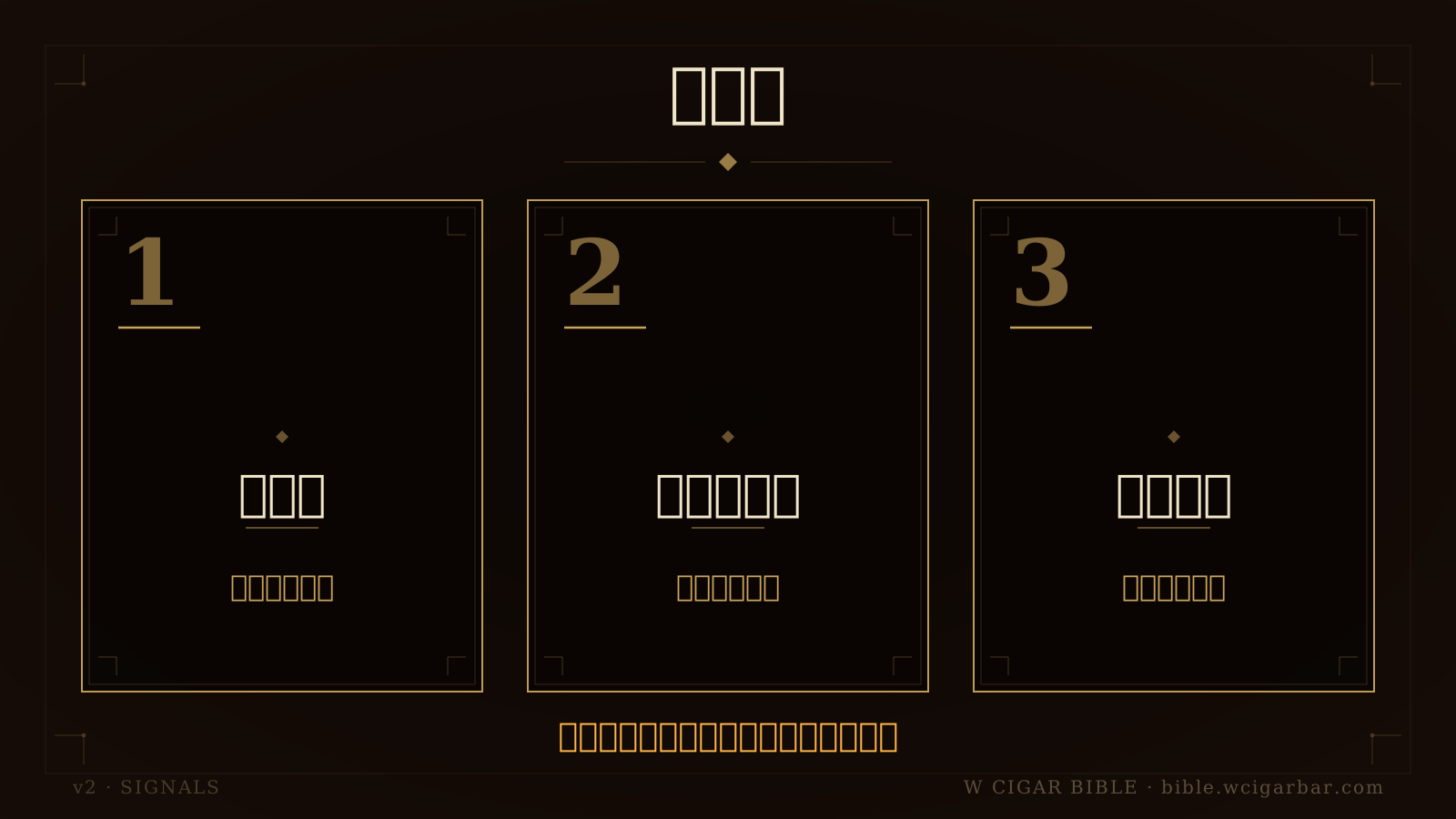
三張重點卡說明尺寸產地與茄衣顏色的判斷原則
Misconception 2: Only Cuban cigars are truly good cigars
Cuban cigars have an irreplaceable historical status. Habanos launched the Cohiba Siglo series in 1994, enhancing the recognition of the "new generation Cuban flavor"; Partagás Serie D No.4, Bolívar Royal Coronas, and Hoyo de Monterrey Epicure No.2 are also classics that many people use to establish their Cuban taste memory. However, equating "good cigars" only with Cuba would miss the tremendous progress in regions like Nicaragua, the Dominican Republic, and Honduras over the past thirty years.
The origin is a clue, not a conclusion; what truly matters is the source of the tobacco leaves, rolling stability, preservation status, and personal taste. For example, Arturo Fuente OpusX, since its debut in 1995, has proven that the Dominican Republic can also produce strong and exquisite high-end cigars; the Padrón 1964 and 1926 series have made Nicaragua's cocoa, coffee, and black pepper tones known worldwide. Davidoff, after transitioning from the Cuban era to the Dominican Republic, has also established a clean, delicate, and balanced brand language.
| Common Regions | Flavor Impressions | Representative Brands | Key Points for Beginners |
|---|---|---|---|
| Cuba | Woody, leather, floral, mineral | Cohiba, Montecristo, Partagás | Pay attention to year and preservation differences |
| Nicaragua | Cocoa, black pepper, rich sweetness | Padrón, Oliva, My Father | Feel the balance of strength and sweet spice |
| Dominican Republic | Creamy, nutty, hay, delicate aroma | Davidoff, Arturo Fuente | Observe cleanliness and layers |
| Honduras | Earthy, spicy, roasted wood | Camacho, Alec Bradley | Note structure and aftertaste |
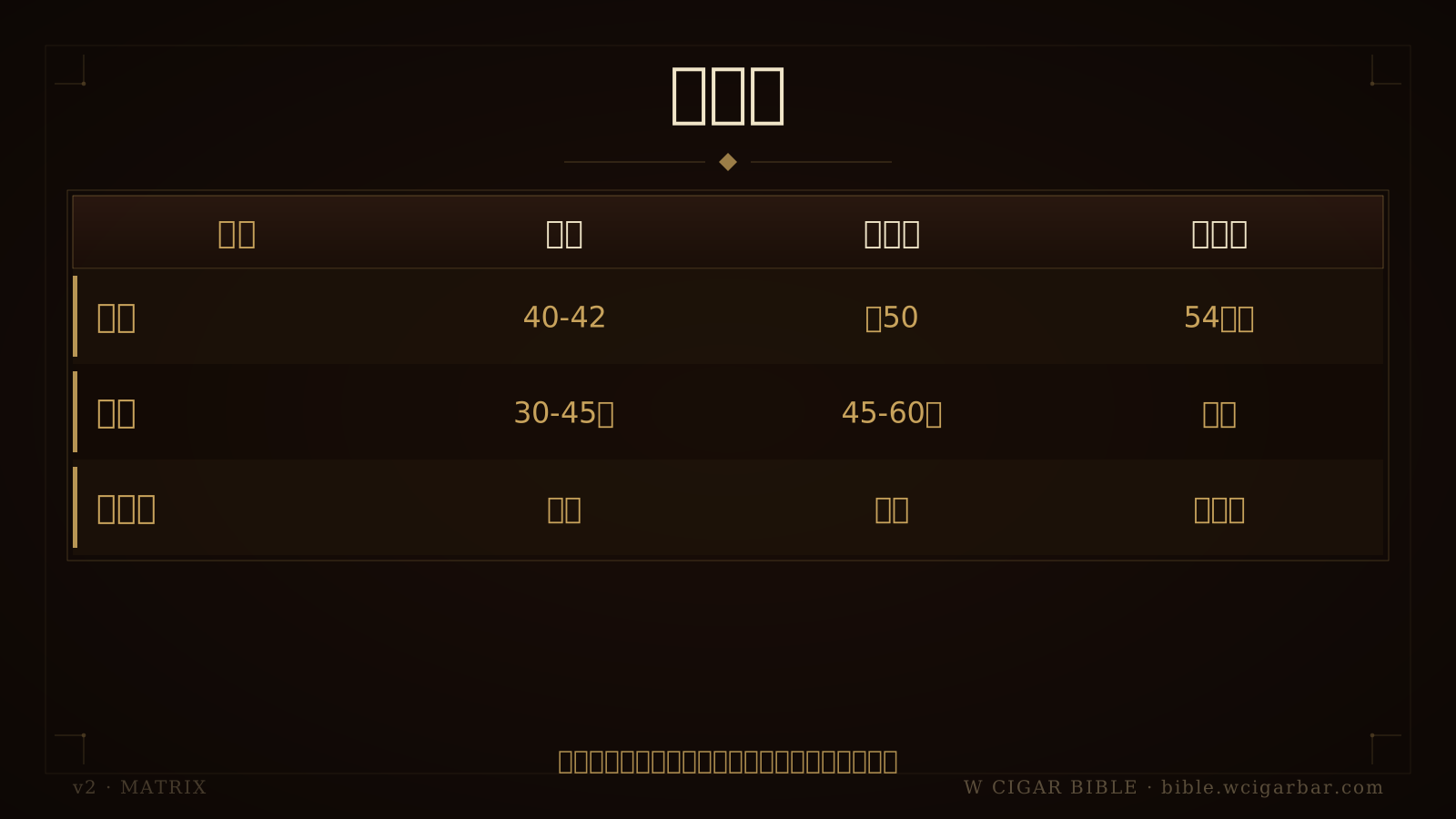
矩陣比較小冠羅布圖與大環徑的環徑時間和練習性
Misconception 3: The darker the wrapper, the stronger the cigar
Many people see Maduro or Oscuro wrappers and directly assume "very strong, very harsh, not suitable for beginners." This is a common misunderstanding. The color of the wrapper indeed affects the first impression, and darker wrappers usually undergo longer fermentation and treatment, possibly carrying cocoa, brown sugar, coffee, molasses sensations; however, the strength of a cigar mainly depends on the filler ratio, especially the configuration of ligero, seco, volado leaves.
Dark does not necessarily mean strong, and light does not necessarily mean mild; looking at the wrapper color can only make an initial guess, not replace actual blend judgment. For example, Connecticut Shade wrappers often give a creamy, nutty, hay impression, but if the inside uses a high proportion of Nicaraguan ligero, it may still have a noticeable stimulation. Conversely, some Maduro cigars, due to full fermentation, may be smooth and sweet on entry, not rough.
Taking the Padrón 1964 Maduro as an example, many styles, although having a dark appearance, are known for cocoa, coffee, mature sweetness, and clean burning; while some Cuban Colorado-colored cigars, like Bolivar Belicosos Finos, may look medium but have quite direct strength. Beginners should learn to record three things: first, the color gradient of the appearance, second, the strength on entry, and third, the body sensation. After continuously recording 10 sticks, you'll find that "color judging strength" is actually very unreliable.
Misconception 4: The bigger the cut, the more frequent the puff, the more complete the flavor
Cutting a cigar is not like opening a bottle cap; cutting too large often causes the cap to crack, leaves to enter, and overheating. A regular round head cigar only needs to cut the front end of the cap by about 1.5 to 2mm, keeping the shoulder line intact; torpedo shapes like Montecristo No.2 or Partagás Serie P No.2 can be cut at a small angle first, then adjusted according to the draw resistance. Many spicy entries are not because the cigar is bad, but because the cut is too large and the rhythm is too fast.
The most important rhythm of a cigar is to keep it at a comfortable temperature, not to burn it more vigorously. I often suggest beginners use 45 to 60 seconds per puff as a reference, staying in the mouth each time, feeling the aroma before exhaling, without deliberately pursuing a large amount of smoke. If you puff quickly in succession, the burning cone will heat up, and the original woody, nutty, coffee may turn into bitterness and spiciness, especially noticeable in the last third.
When practicing, you can remember three steps:
- First, smell the cold aroma, confirming clues like wood box, hay, cocoa, or floral.
- Start with a small cut, adjust if the draw is too tight, don't cut too much at once.
- When lighting, first evenly roast the foot, then slowly activate the burning surface, avoiding one side burning first.
If it goes out midway, don't panic. First, gently tap off the ash, blow out the residual smoke, then evenly relight. A mature action is not "constantly puffing," but knowing how to maintain a comfortable burning state for the cigar.
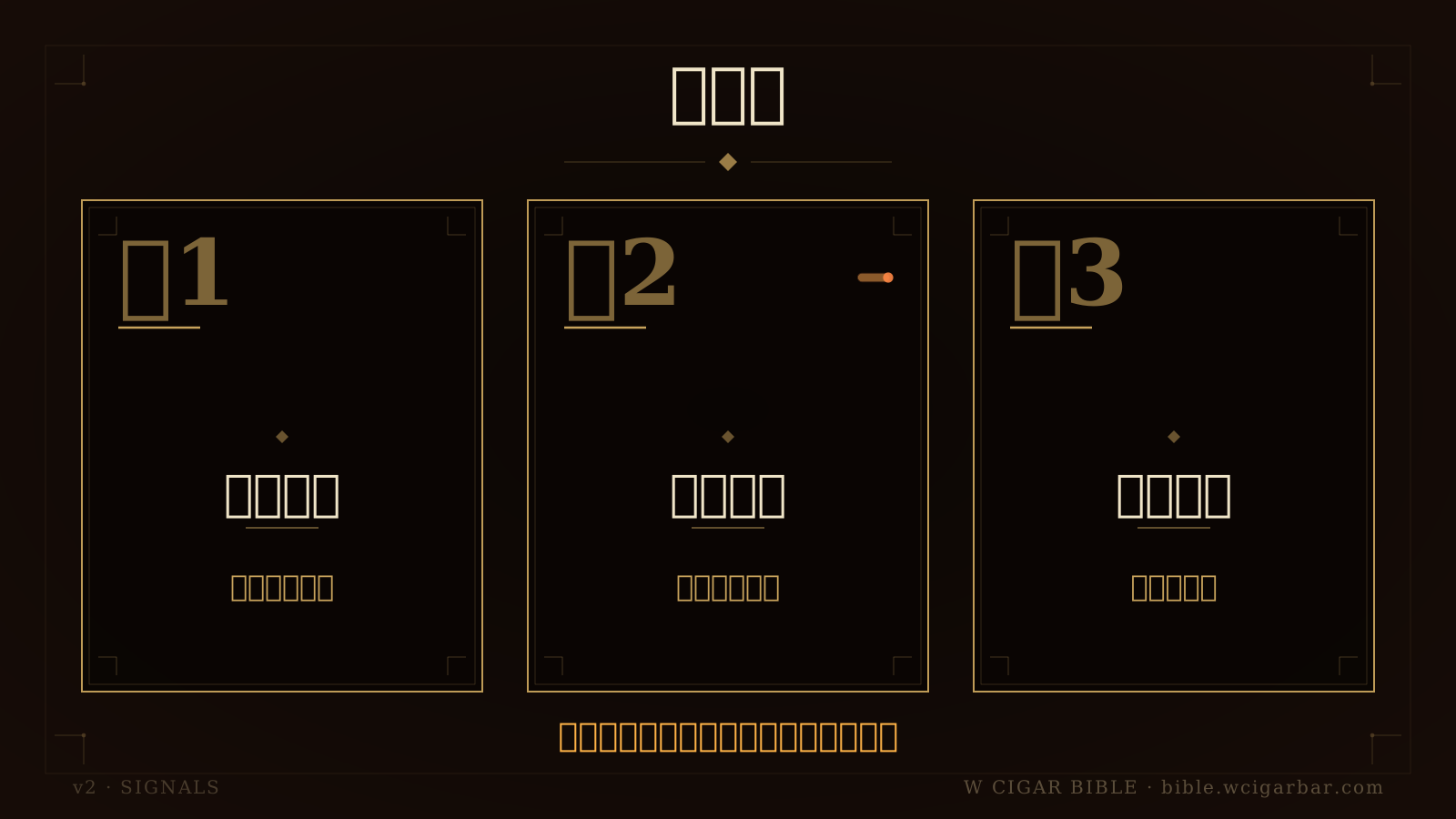
三張誤解卡指出大支產地與深色茄衣的常見偏差
Misconception 5: The longer the ash, the bigger the smoke, the higher the quality
Photos often show a long ash column, easily leading beginners to think the longer the ash, the better. Ash stability is indeed related to rolling, humidity, and burning, but it's not the only indicator. Usually, gently tapping off the ash at 2 to 3 cm is elegant and safe enough. Forcing it to over 5 cm, falling on clothes, tables, or leather chairs, is rather impolite. Cigar etiquette is not about showing off, but about making the surrounding environment comfortable.
Ash length is a reference for burning status, not a scoring standard; what should truly be looked at is the burn line, temperature, aroma, and aftertaste. For example, a well-preserved Hoyo de Monterrey Epicure No.2 may not have exaggerated smoke but has creamy, woody, floral, and slightly sweet sensations; conversely, a large smoke volume but overheated burning may only leave a heavy burnt taste. During evaluation, nasal sensation and aftertaste length are more important than visual effects.
In social occasions, there are a few commonly overlooked details. Don't use your cigar to touch others' cigars to "toast"; don't flick ash like a cigarette frequently; when resting, let the cigar naturally rest in the ashtray groove, don't press the burning end out. When the cigar goes out, let it naturally cool down, pressing hard will produce an unpleasant smell. These small actions often reveal more about your cultivation than which brand you are holding.
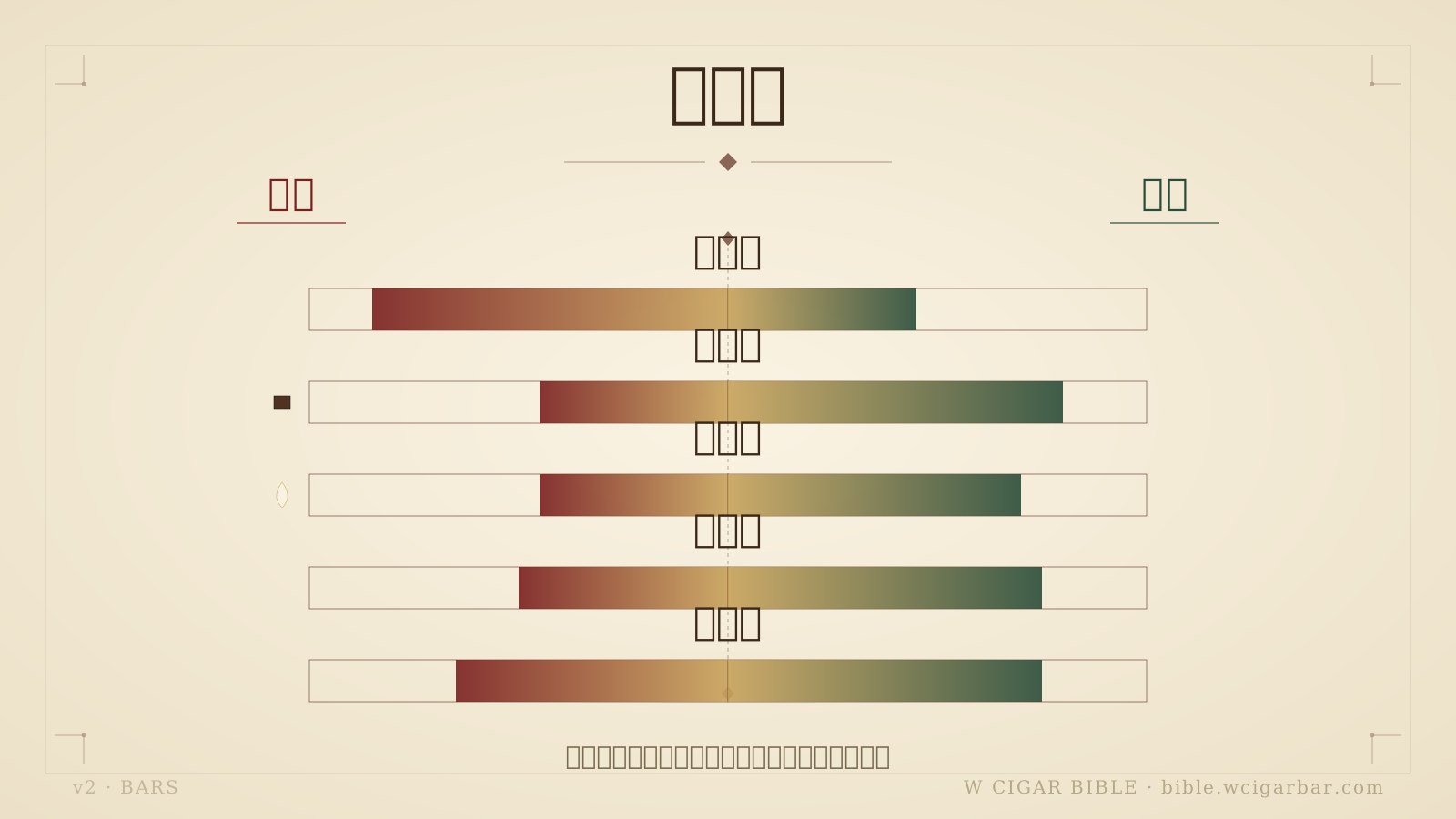
橫條圖比較古巴與非古產區在風味取向上的差異
Misconception 6: 70% humidity, 70°F temperature, is the universal answer for all cigars
"70/70" is a mnemonic many hear when first encountering preservation, meaning 70% relative humidity, 70°F temperature, about 21°C. It's not wrong, just too rough. In environments like Taiwan, Hong Kong, and Southeast Asia, which are hot and humid, if stored above 70% for a long time, it's relatively easy to encounter issues like uneven burning, tighter draw, and wrapper expansion. For most handmade cigars, I more often use a range of 65% to 69% RH, 18°C to 21°C as a baseline.
The purpose of preservation is not to make cigars as moist as possible, but to maintain the elasticity of the tobacco leaves, stable burning, and clean aroma. If using Boveda-type humidity packs, common choices are 65%, 69%, 72%. In a well-sealed plastic preservation box or acrylic box, 69% is quite sufficient; if it's a traditional Spanish cedar box, as the wood absorbs and releases moisture, more frequent observation may be needed initially. If the temperature is consistently above 26°C to 27°C, also be aware of the risk of tobacco beetles.
Aging is also not just throwing the box into the cabinet and ignoring it. Checking the hygrometer, box smell, and wrapper status every 2 to 4 weeks is basic. If the cigar feels soft and mushy, expands when lit, it may be too moist; if the wrapper is cracked, aroma thin, it may be too dry. A thin white frost that can be wiped off is mostly oil crystallization or surface change; if it appears fuzzy, has an odor, and spreads into spots, be alert for mold. Preservation judgment must combine touch, smell, burning, and time.
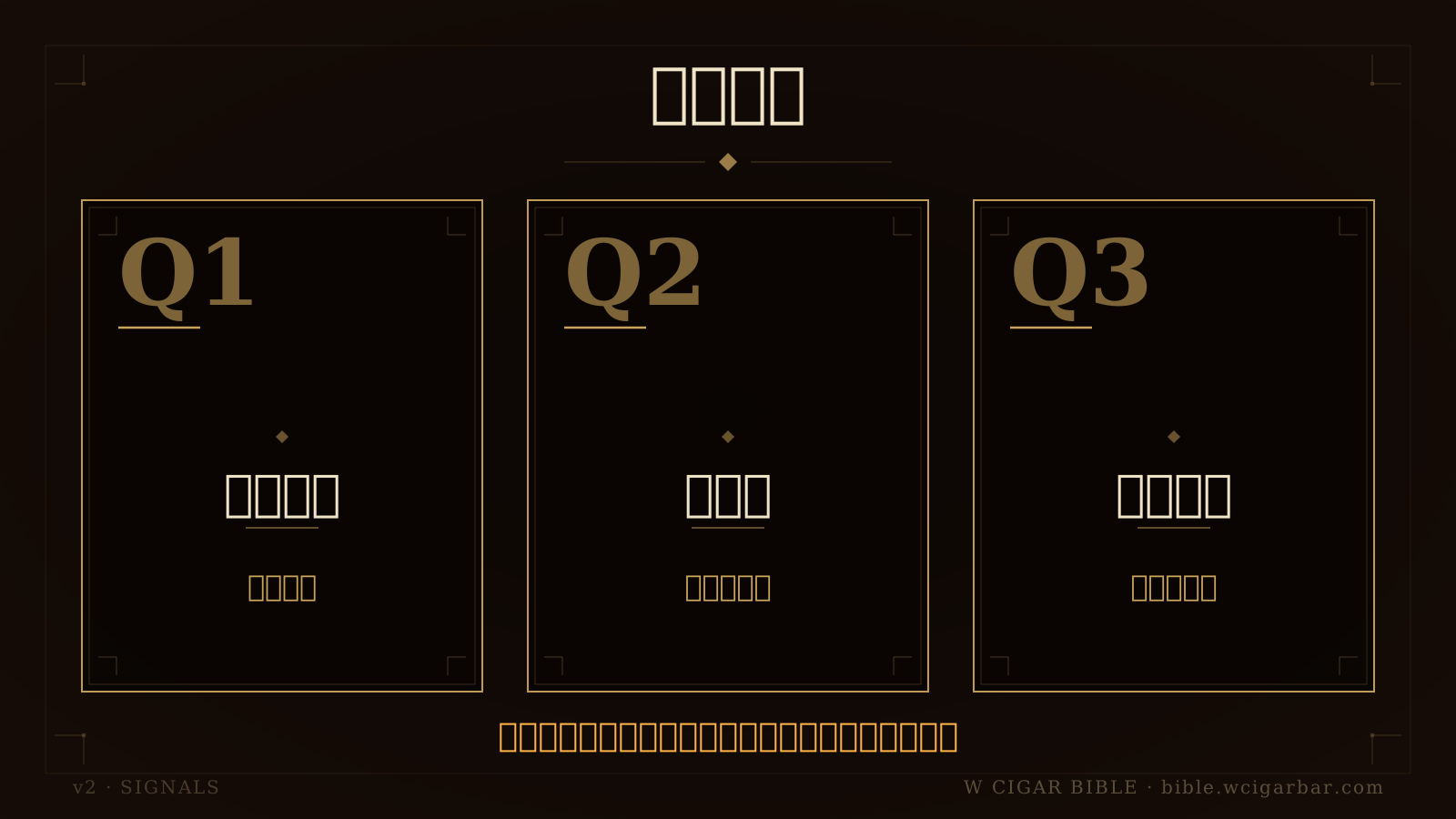
三張問答卡整理抽到多短拉不動與白點處理建議
Misconception 7: Looking at box codes, seals, prices, can completely determine authenticity and value
Box codes, seals, laser marks, and barcode inquiries of Cuban cigars are important clues, but not foolproof. Habanos has updated anti-counterfeiting designs in different eras, such as the post-2010 seal and barcode system, making verification more convenient than before; however, counterfeits also mimic appearances. A common mistake beginners make is only seeing a beautiful box and cheap price, ignoring source, preservation, batch reasonableness, and whether the taste is consistent.
Authenticity judgment requires looking at the entire evidence chain: source, outer box, band, foot, rolling, aroma, preservation, and market price must all be cross-referenced. For example, Cohiba Behike is a long-term counterfeit hotspot due to its rarity and high demand; if the price is 30% to 40% below the common market, without reasonable source explanation, be particularly conservative. Partagás Serie D No.4, Montecristo No.2, Cohiba Robusto, and other popular models are also often counterfeited because of high circulation and higher recognition threshold for beginners.
As for collection value, it cannot be summarized with "brand plus year." Some limited editions around 2006, the 2010 Behike, and some discontinued sizes are indeed of interest in the secondary market; however, collection appreciation does not guarantee appreciation, it still depends on source preservation and market. If the preservation environment is poor, no matter how rare, it will devalue. My principle is simple: first ensure the source is clear, status stable, and records complete before discussing collection; otherwise, it's just packaging risk into a story.
Common Questions
Should beginners start with Cuban or non-Cuban?
Both are fine. If you want to know the classic woody, leather, and floral, you can start with H. Upmann or Romeo y Julieta; if you want to feel cocoa, coffee, and sweet spice, Padrón, Oliva, Arturo Fuente are also suitable. The focus is not on the origin, but on controllable strength and stable burning.
How short should a cigar be smoked to be considered complete?
There is no standard answer. Usually, when about one-third is left, the temperature will increase, and bitterness will rise. If the flavor becomes coarse or the body feels uncomfortable, you can stop. Cigars are not an endurance test; knowing when to end at a beautiful aftertaste is also a mature judgment.
What to do if a cigar is too tight to draw?
First, check if it's too moist. If the storage humidity is consistently over 70%, place it in a 65% to 69% environment for a few days and observe again. You can also use a draw tool to slightly clear it, but be careful not to pierce the wrapper. If it's a rolling issue, excessive remedy may damage the structure.
Are white spots on the cigar surface always mold?
Not necessarily. If they can be gently wiped off, have no odor, and appear as fine powder mist, they may be oil crystallization or surface change; if they are fuzzy, have a moldy smell, green color, or spread, they need to be isolated and treated. Judgment should not rely solely on photos; smell and touch are equally important.
Can different brands be stored in the same humidor?
Yes, but be aware of mutual aroma influence. If strong-flavored Maduro and delicate Connecticut are stored together long-term, aromas may overlap. It's recommended to at least use original boxes, cedar dividers, or different storage areas to separate them. High-value, rare, or cigars intended for long-term aging should be managed separately.
Does going out midway mean the cigar is bad?
Not necessarily. Slow puffing rhythm, windy environment, or high humidity can cause it to go out. The correct approach is to first clear loose ash, gently blow out residual smoke, then evenly relight. If it repeatedly goes out and is accompanied by bitterness and expansion, check the storage conditions.
As the editor of "Cigar Bible," what I hope beginners establish is not superstition, but judgment. The joy of cigars comes from details: whether the source is clear, whether the preservation is stable, whether the rhythm is leisurely, and whether the etiquette is appropriate. Knowing how to doubt and knowing how to record will take you further than those chasing rumors. —Cigar Prince Wilson Tsai
Smoking is harmful to health. Under 20 years old is not allowed to smoke. Quit Smoking Hotline: 0800-636363. This article is for adults over 20 years old as a reference for cigar culture, preservation, and regulatory knowledge, not a tobacco advertisement, promotion, or purchase suggestion.
Like this article?Share with friends
Share this W Cigar Bible piece with friends who want to learn cigar culture, storage, and tasting.
想把這篇 化為實踐
雪茄聖經是知識;雪茄文化要在空間裡發生

W Cigar Bar 大安總店資訊
台北大安區 · 雪茄聖經總編輯 Wilson Tsai 主理的雪茄文化空間
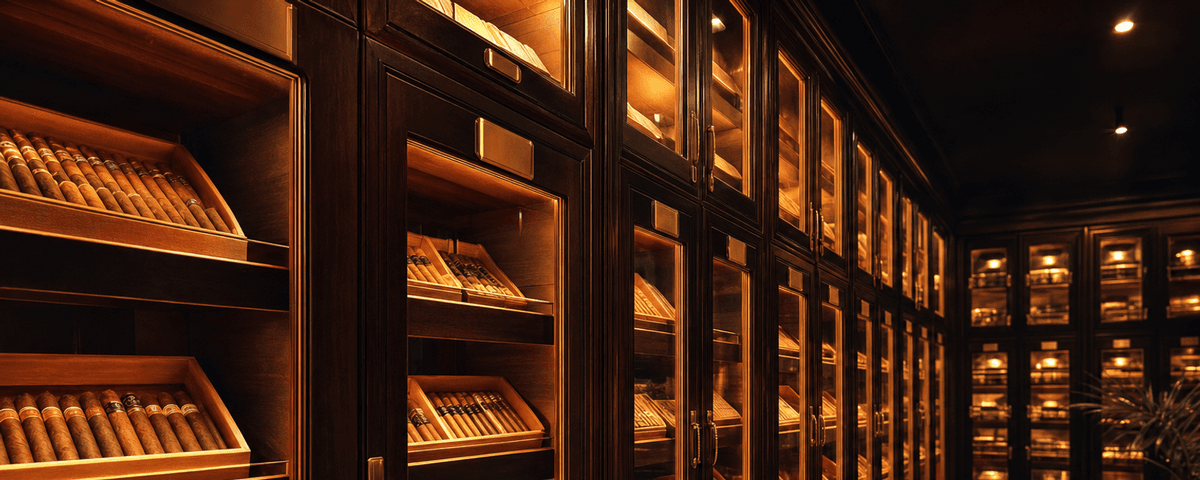
33 座 24 小時恆溫恆濕醇化室
W Cigar Bar 提供的會員醇化空間 · 場地資訊請洽編輯部
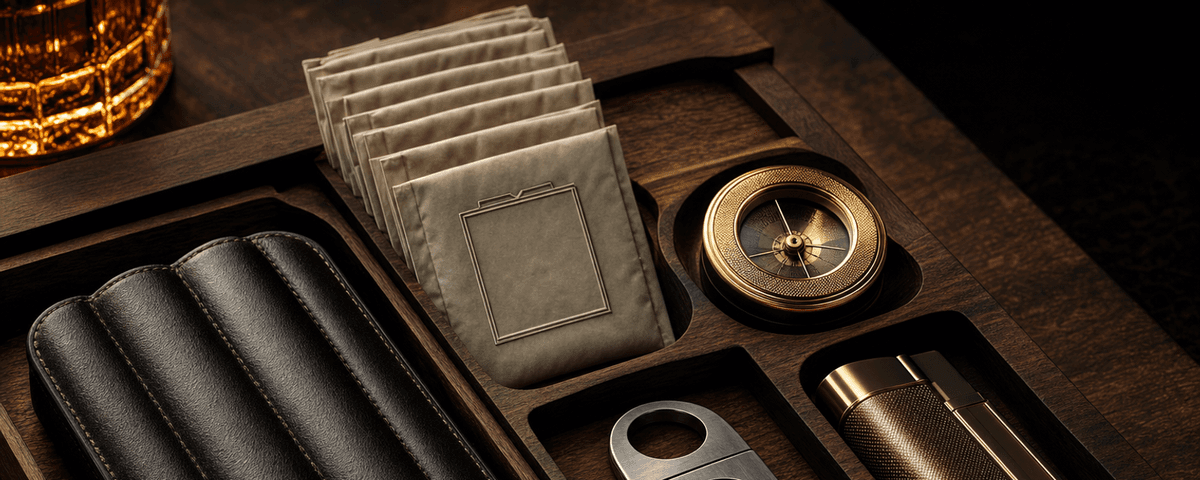
雪茄剪 / 打火機 / 雪茄盒 / Boveda
W Cigar 配件官網 · 專營雪茄配件正品

加 LINE 好友 · 文化諮詢
文化空間資訊 · 紳士沙龍 · 私人包場
本網站內容僅供雪茄文化、歷史、收藏與品吸知識研究參考。菸品有害健康、未滿法定年齡者請勿吸菸。實際規範請依所在地法律為準。
吸菸有害健康・戒菸專線 0800-636363・本站僅供 20 歲以上成年人閱覽。
讀到這裡,你不只是路過的人
留下 Email,加入 W 雪茄聖經內圈——總編輯 Wilson Tsai 親選的學院深文與國際新訊,先你一步送到信箱。
· 教育用途非銷售 · 隨時一鍵退訂 · Email 絕不對外公開 · 由勝茄股份有限公司營運
同分類延伸閱讀


資料來源:W Cigar Bible 編輯部整理 · 雪茄王子 Wilson Tsai 親自審稿
本文僅供雪茄文化、歷史、收藏與品鑑知識研究,不作為菸品促銷、銷售或購買建議。吸菸有害健康,未滿二十歲不得吸菸。