探索雪茄的品味傳承:從歷史到現代的演進

雪茄的品味歷史深受殖民貿易、工廠制度及消費者口味變遷影響。從16世紀西班牙人將菸草帶回歐洲,雪茄逐漸成為社交文化的一部分,並形成獨特的品味語言。19世紀的工廠制度使風味標準化,品牌如H. Upmann和Partagás展現了不同的風味特徵。1959年後,古巴革命導致雪茄產業分流,尼加拉瓜和多明尼加等地的品牌重新塑造了現代口味。隨著尺寸的變化和現代化的發酵、醇化技術,雪茄的風味傳承愈加豐富,成為品味
- 雪茄的品味傳承受多重因素影響,包括殖民貿易、工廠制度及消費者口味的變化。
- 19世紀的雪茄工廠制度使風味標準化,依賴配方與品管而非單一捲製師的直覺。
- 尺寸革命改變了雪茄的風味權重,影響茄衣、束葉與填葉的比例,進而影響口感。
As the editor of the "Cigar Bible," I am often asked by veterans: Why does the taste memory of the same brand differ so much between the 1950s, 1990s, and today? The answer lies not only in the tobacco leaves but also in colonial trade, factory systems, environmental changes, and shifts in consumer tastes.
The heritage of cigar taste has never been a simple dichotomy of "old school versus new school." What's truly interesting is how tradition is preserved and how innovation slowly rewrites our understanding of intensity, sweetness, woodiness, leather, and mineral notes through size, fermentation, aging, and market culture.
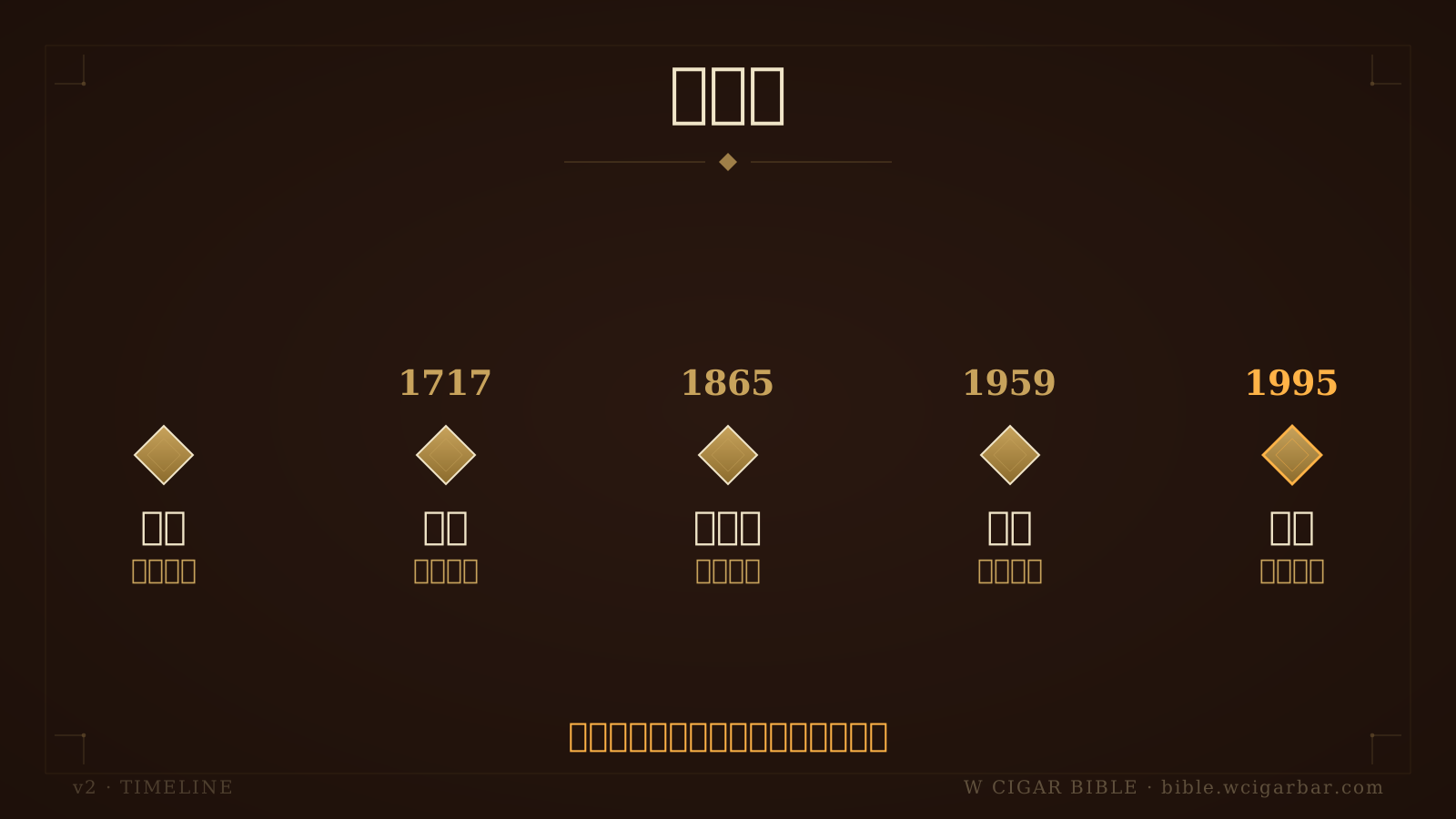
時間軸列出十六世紀一七一七一八六五一九五九一九九五節點
From the Caribbean to European Salons: The Birth of Taste Language
After the Spaniards brought tobacco back to Europe in the 16th century, cigars first became a colonial commodity before becoming part of identity, negotiation, and social order. By the 18th century, Havana was one of the most important tobacco distribution centers in the Caribbean; in 1717, the Spanish royal family established a tobacco monopoly system, bringing Cuban tobacco into a more centralized trading framework and making "origin" a core narrative of quality.
In the salons of 19th-century London, Paris, and Madrid, cigars began to be associated with coffee, cognac, and dinner parties. The taste language at this time was still crude, often described as "strong," "mild," or "fragrant," lacking today's common terms like cedar, cocoa, earth, pepper, and leather. The first layer of cigar heritage is not the brand but how European social culture transformed tobacco into a discussable taste language.
Take H. Upmann as an example, founded in 1844 by German banker brothers in Havana. The brand story includes finance, colonial trade, and high-end gift culture. Old-school Upmann is often described as creamy, nutty, woody, and medium strength, epitomizing the taste of 19th-century European gentlemen: not seeking explosive intensity but preferring balance, etiquette, and aftertaste.

三張卡整理風味變化制度傳承與雙線演進重點
Havana Factory System: How Traditional Flavors Were Standardized
In the latter half of the 19th century, Cuban cigar factories gradually formed a mature division of labor: sorting, stemming, rolling, bunching, labeling, and boxing, with each process handled by different skilled workers. Around 1865, the lector system became popular in Cuban factories, where workers listened to novels and newspapers while working, giving cigars a distinct worker culture and intellectual aura; this is not romantic folklore but a real background that influences brand spirit.
The factory system brought a crucial change: flavor no longer relied solely on the intuition of a single roller but on the stable reproduction of formulas, sizes, and quality control. Partagás, founded in 1845, is long known for its rich, earthy, spicy, and dark woody notes; Romeo y Julieta, founded in 1875, is known for its more floral, mild, and approachable balance. Tradition does not remain in handcraft romance but turns flavor memory into a standard that can be continued through the factory system.
Veterans comparing Partagás Serie D No.4 and Romeo y Julieta Churchill can understand this institutionalized difference. The former, a Robusto size of about 50 ring gauge and 124 mm, offers a short and concentrated rhythm; the latter, a Churchill of about 47 ring gauge and 178 mm, allows more time for the progression of woody, floral, and creamy notes. Size is not just a matter of appearance but a way of re-arranging traditional formulas over time.
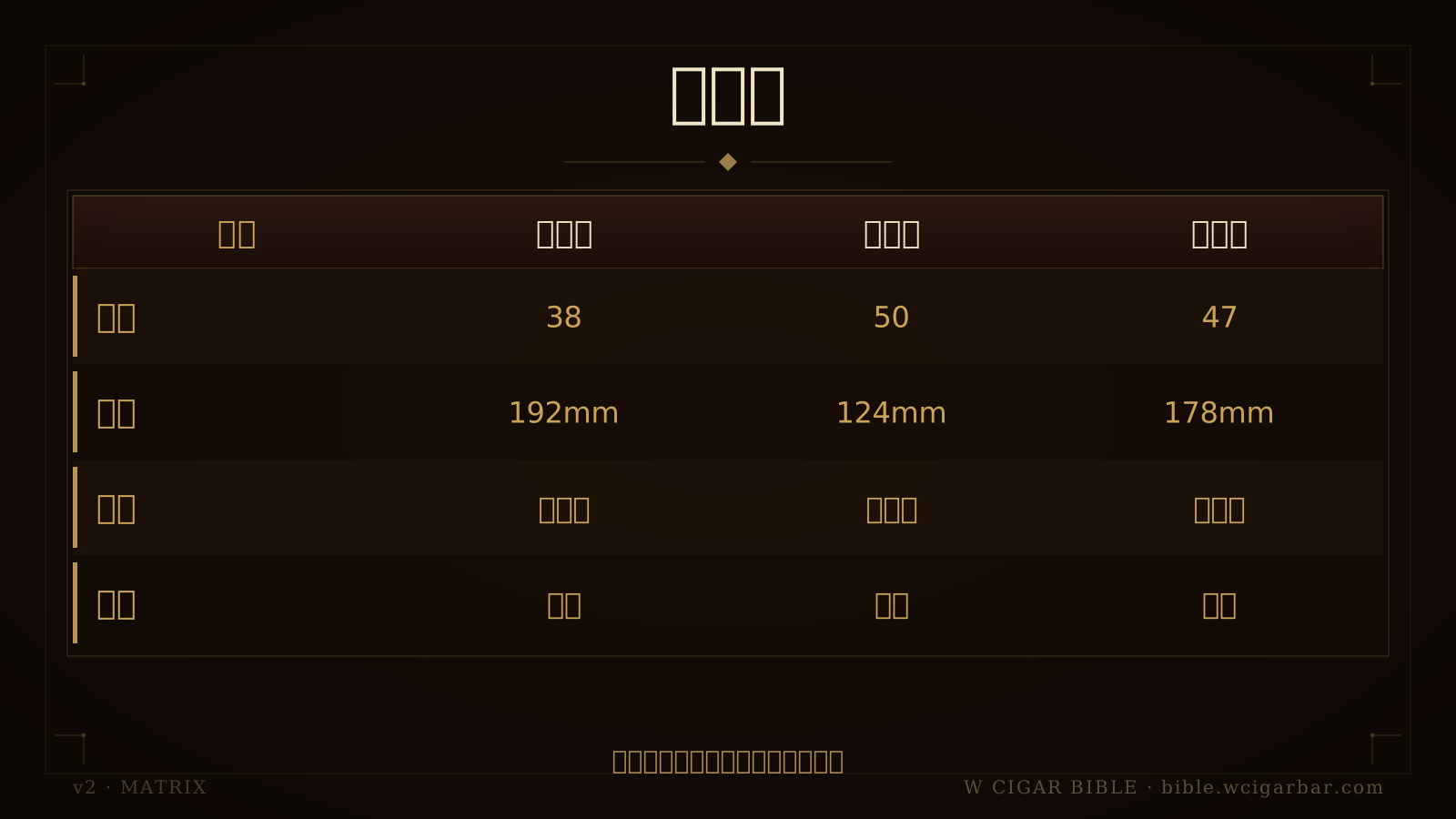
矩陣比較蘭塞羅羅布托丘吉爾的環徑長度節奏與味路
The Rupture and Dual Heritage After 1959
After the Cuban Revolution in 1959, a significant split occurred in the cigar world. In the early 1960s, many brand families, growers, and rollers who originally worked in Cuba left to re-establish the industry in places like the Dominican Republic, Nicaragua, and Honduras. This history means that "Cuban tradition" no longer resides solely in Cuba but continues to grow in the Caribbean and Central America in the form of immigrant memories, seeds, craftsmanship, and market demands.
Davidoff is a typical case. The brand had close ties with Cuban cigars in its early years, shifting to Dominican production around 1991, establishing another set of cleaner, more precise, and intricately layered styles. The Arturo Fuente family developed OpusX in the Dominican Republic, proving after its 1995 launch that the Dominican Republic could also grow high-quality wrapper leaves, reshaping many people's perceptions of the region's capabilities. The cigar history after 1959 is not a continuation of a single orthodoxy but a modern taste shaped by both the Cuban line and the New World line.
Veterans should not evaluate this history solely by "whether it resembles Cuba." The volcanic soil of Estelí, Nicaragua, often brings black pepper, cocoa, minerals, and stronger structures; the Cibao Valley in the Dominican Republic often presents cream, nuts, hay, and delicate spices. As brands rebuild tradition on different soils, taste heritage shifts from a narrative of lineage to a symphony of terroir, technology, and market.

三張卡指出老茄國籍與來源判斷上的常見誤解
Size Revolution: From Corona to Robusto and Large Ring Gauges
Before the mid-20th century, slender sizes like Corona, Lonsdale, and Churchill were important mainstreams of high-end cigars. A thin ring gauge means a higher proportion of wrapper, with flavor more influenced by the outer leaves and a faster burning pace. Take the Cohiba Lancero, for example, with about a 38 ring gauge and 192 mm, its slender shape allows herbal, floral, honey, and woody notes to unfold linearly, requiring high standards and technique.
After the 1990s, Robusto quickly became a favorite in the international market. The proportion of about 124 mm and 50 ring gauge offers the possibility of fully experiencing flavor transitions in a shorter time; after 2000, the American market further pushed the popularity of 54, 56, and even 60 ring gauges. Larger ring gauges increase the proportion of filler, providing a thicker mouthfeel and lower burning temperature, but sometimes dilute the precision character of the wrapper. The size revolution changes not just the feel but the flavor weight between wrapper, binder, and filler.
| Period | Mainstream Size Tendency | Representative Examples | Flavor Impact |
|---|---|---|---|
| 1950-1970s | Corona, Lonsdale | H. Upmann Lonsdale | Distinct wrapper feel, delicate lines |
| 1980-1990s | Churchill, Robusto | Romeo y Julieta Churchill, PSD4 | Balance of time and intensity |
| After 2000 | Increase in 52+ ring gauges | Various New World Toro, Gordo | Thick mouthfeel, slowed pace |
My suggestion is that veterans should not see large ring gauges as low-end nor should they deify thin ring gauges. The true criterion is whether the formula is designed for that size. If a brand enlarges the original formula indiscriminately, the flavor may become loose; if the filler ratio is readjusted, large sizes can also present depth and complexity.
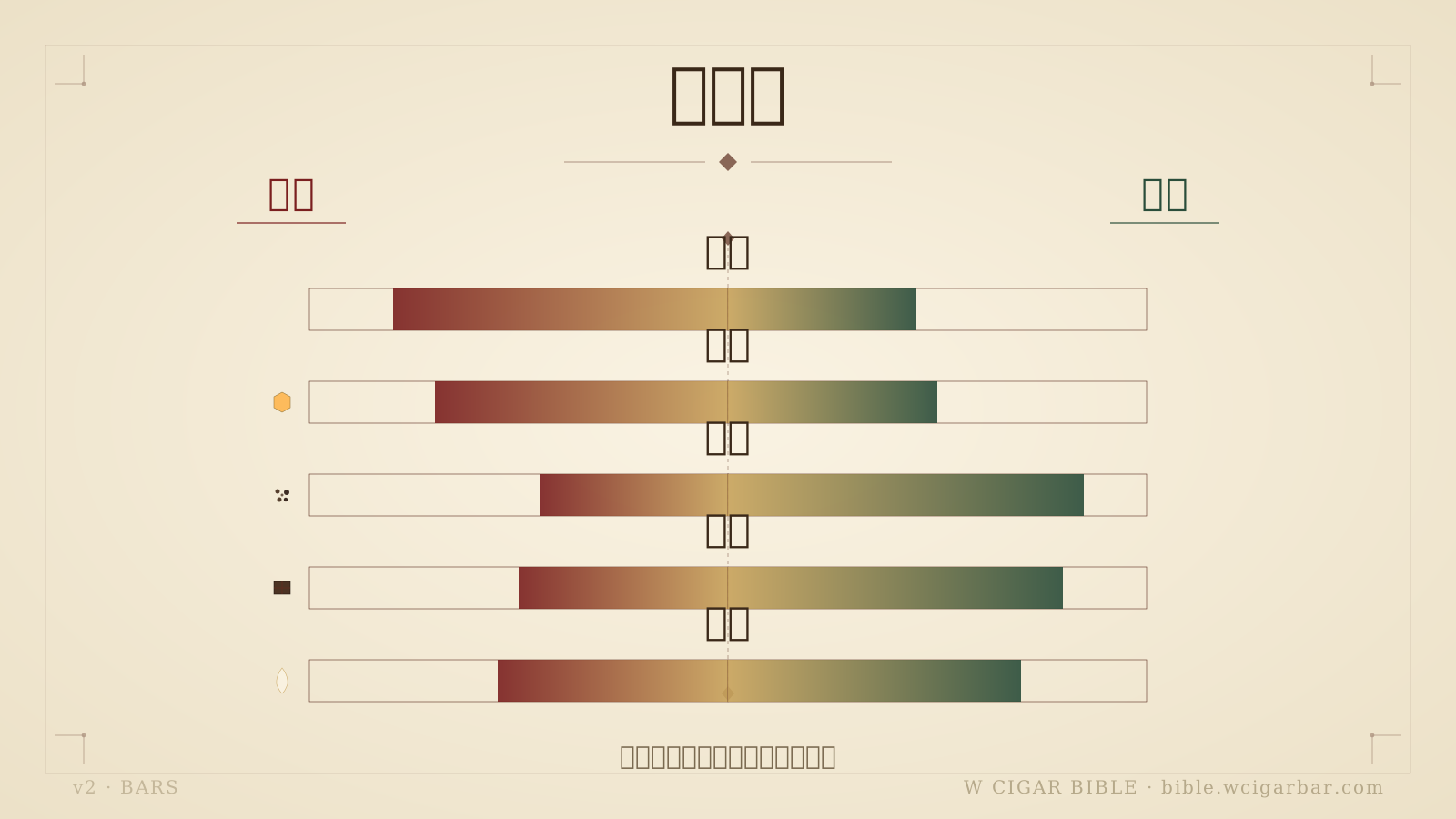
橫條圖比較古巴與新世界在草本蜂蜜胡椒可可奶油的傾向
Fermentation, Aging, and Humidity: The Invisible Engineering of Modern Flavor
The modernization of cigar flavor largely occurs in unseen places: fermentation pile temperatures, turning frequency, leaf grading, resting before boxing, and aging management on the consumer end. High-quality tobacco leaves can rise to temperatures of 40 to 50 degrees Celsius during fermentation, requiring factories to adjust turning based on leaf thickness and moisture content, gradually reducing ammonia, greenness, and rough spiciness.
Post-boxing aging is more akin to a negotiation of time and environment. Generally, 18 to 21 degrees Celsius and 65% to 70% relative humidity are common safe zones; if humidity exceeds 72% for a long time, the risk of burning and mold increases, while below 62%, oils and elasticity are easily affected. The old flavor pursued by veterans does not naturally appear by leaving cigars for a long time but is the result of origin, condition, temperature, humidity, and time working together.
For example, between 2003 and 2005, the market was particularly sensitive to boxing periods, factory codes, and preservation states, as the same model could show significant differences in different batches. The collection market often discusses rare boxes, discontinued models, and specific years, but collection appreciation does not guarantee value increase, still depending on source preservation and market. Without stable storage and clear provenance, even the most beautiful vintage is just a risk package.

三張問答卡整理老茄口感年份差異與味覺訓練方法
Cultural Trends and Brand Narratives: From Gentleman Symbols to Personal Style
The cultural image of cigars in the 20th century was deeply influenced by politicians, movies, and business elites. Churchill made the Churchill size a cultural symbol; Kennedy, before signing the Cuban embargo in 1962, was reportedly prepared with a large number of H. Upmann Petit Coronas, a story long cited in cigar circles. Regardless of the details, it illustrates that cigars have long surpassed consumer goods to become symbols of power, taste, and the emotions of the times.
The "cigar boom" in the United States in the 1990s, driven by magazines, clubs, and celebrity culture, caused demand to expand rapidly, also resulting in uneven quality. Some brands sacrificed aging time for production, leaving memories of both prosperity and chaos in the market at that time. After 2010, consumers began to pay more attention to small batches, single farms, limited formulas, and traceable information. Modern veterans not only ask for brand names but also inquire about origin, batch, leaf type, and the production logic behind it.
Brand narratives have also become more detailed. Padron builds recognizable cocoa, coffee, soil, and black pepper with Nicaraguan terroir and family style; Davidoff emphasizes precision, elegance, and service culture; Cohiba carries the top-tier imagination of the Cuban national brand. Veterans reading brands should not only look at the aura but also discern whether the narrative can be verified in burn, structure, transitions, and aftertaste.
Frequently Asked Questions
Why are old cigars often described as more rounded?
Time can reduce sharpness and integrate aromas more smoothly, but the premise is stable preservation. If high temperature and humidity or too dry, the flavor will be damaged. Aging is not magic but a process of slowly pushing a good state towards more harmony.
What is the biggest difference between Cuban and New World cigars?
Cuban cigars are often described by veterans as interweaving herbal, honey, cedar, earth, and mineral notes; Nicaraguan cigars commonly feature cocoa, black pepper, coffee, and strong structure; Dominican cigars often show cream, nuts, and delicate spices. However, brand formulas are more important than nationality labels.
Why do different years of the same brand differ greatly?
Tobacco is an agricultural product, with rainfall, sunlight, pests, harvest, and fermentation all affecting the outcome. Even the same model, the box state of 2008, 2014, and 2020 may differ. Veterans should record box codes, purchase sources, storage environments, and actual performance simultaneously.
How do veterans train their flavor judgment?
It is recommended to compare horizontally with the same brand in different sizes, the same size in different regions, and different years in the same region. Recording the sweetness, bitterness, spiciness, burn, and aftertaste of the front, middle, and back segments each time is more effective than simply scoring.
What should be noted when collecting cigars?
First, check if the source is clear, then see if the preservation is stable, and finally look at the year and rarity. Discontinued models, commemorative models, and special boxes do have market discussion, but collection appreciation does not guarantee value increase, still depending on source preservation and market.
What does PCC authorized dealer mean?
It represents a part of the supply chain and authorization system, focusing on source identification and circulation transparency. For veterans, reliable sources can reduce the risk of unclear status, improper preservation, and confusing labeling.
Having walked through the cigar world for many years, I increasingly believe that true taste is not about chasing legends but understanding how legends are formed. History gives us coordinates, brands give us language, and terroir and time give each cigar a different destiny. May veterans ask one more layer of reason before lighting up next time and leave a little more patience for the details.
—Cigar Prince Wilson Tsai
Smoking is hazardous to health. Smoking is prohibited for those under twenty. Quitline: 0800-636363. This article is intended for adults over the age of twenty as a reference for cigar culture, preservation, and regulations, not as tobacco advertising, promotion, or purchase advice.
Like this article?Share with friends
Share this W Cigar Bible piece with friends who want to learn cigar culture, storage, and tasting.
想把這篇 化為實踐
雪茄聖經是知識;雪茄文化要在空間裡發生

W Cigar Bar 大安總店資訊
台北大安區 · 雪茄聖經總編輯 Wilson Tsai 主理的雪茄文化空間

33 座 24 小時恆溫恆濕醇化室
W Cigar Bar 提供的會員醇化空間 · 場地資訊請洽編輯部

雪茄剪 / 打火機 / 雪茄盒 / Boveda
W Cigar 配件官網 · 專營雪茄配件正品

加 LINE 好友 · 文化諮詢
文化空間資訊 · 紳士沙龍 · 私人包場
本網站內容僅供雪茄文化、歷史、收藏與品吸知識研究參考。菸品有害健康、未滿法定年齡者請勿吸菸。實際規範請依所在地法律為準。
吸菸有害健康・戒菸專線 0800-636363・本站僅供 20 歲以上成年人閱覽。
讀到這裡,你不只是路過的人
留下 Email,加入 W 雪茄聖經內圈——總編輯 Wilson Tsai 親選的學院深文與國際新訊,先你一步送到信箱。
· 教育用途非銷售 · 隨時一鍵退訂 · Email 絕不對外公開 · 由勝茄股份有限公司營運
同分類延伸閱讀


資料來源:W Cigar Bible 編輯部整理 · 雪茄王子 Wilson Tsai 親自審稿
本文僅供雪茄文化、歷史、收藏與品鑑知識研究,不作為菸品促銷、銷售或購買建議。吸菸有害健康,未滿二十歲不得吸菸。