雪茄與巧克力的完美結合:品味與搭配的秘訣
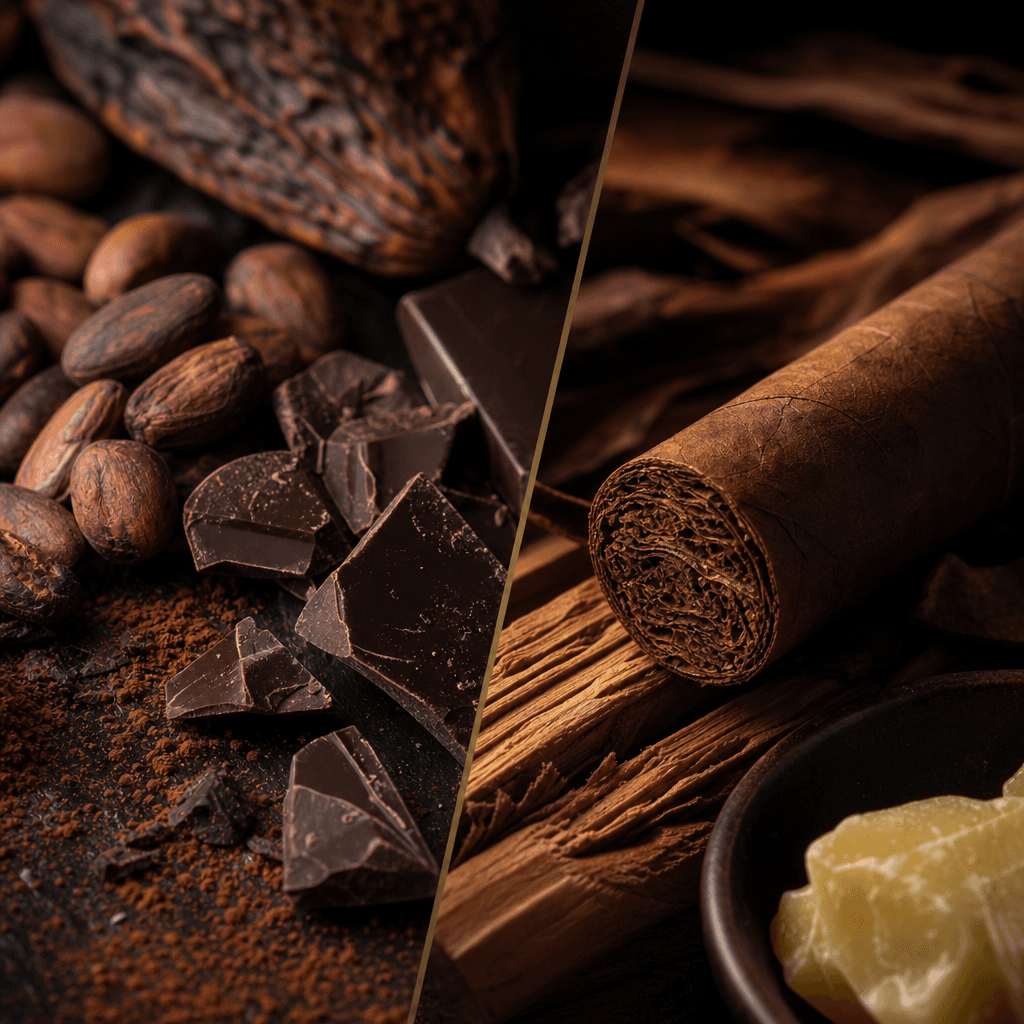
雪茄與巧克力的搭配是一門藝術,涉及發酵、苦韻與油脂等核心工藝。高階搭配不僅在於味道的濃郁,而是要讓雪茄隱藏的可可、咖啡等風味被巧克力激發。選擇巧克力時,需考量可可百分比與風味特性,並根據雪茄的強度與質地進行搭配。經典雪茄如Montecristo No.2與Cohiba Siglo VI,各自適合不同濃度的巧克力,搭配時要避免過重或過甜的選擇,以保留雪茄的細膩層次。透過精準的搭配,可以提升整體的品味
- 雪茄與巧克力的搭配應考慮發酵、乾燥與熟成等核心工藝,這些影響風味的因素不可忽視。
- 可可百分比並非唯一指標,巧克力的產地和風味特徵同樣重要,需根據雪茄的特性進行搭配。
- 搭配雪茄時,建議最多使用兩款巧克力,以避免味覺記憶混亂,提升品味體驗。
Smoking is harmful to health. Persons under twenty years of age shall not smoke. Smoking cessation hotline: 0800-636363. This article is provided solely for adults aged twenty and above as a reference on cigar culture, storage, and regulatory knowledge. It is not tobacco advertising, promotion, or purchase advice.
The encounter between cigars and chocolate is not, for experienced aficionados, as simple as "sweet with bitter." It is a precise calibration of fat, tannins, fermentation acidity, woody tones, minerality, and finish length. Truly advanced pairing is not about piling flavors higher, but about allowing the cocoa, coffee, nuts, leather, spices, or dried-fruit lines hidden within a cigar to be opened up by chocolate. From Cuban classics to the powerful Nicaraguan style, from 64% to 90% cacao content, every pairing is like tuning an instrument: if the ratio is wrong, the result becomes dull; if the rhythm is right, the middle and final thirds become more three-dimensional.
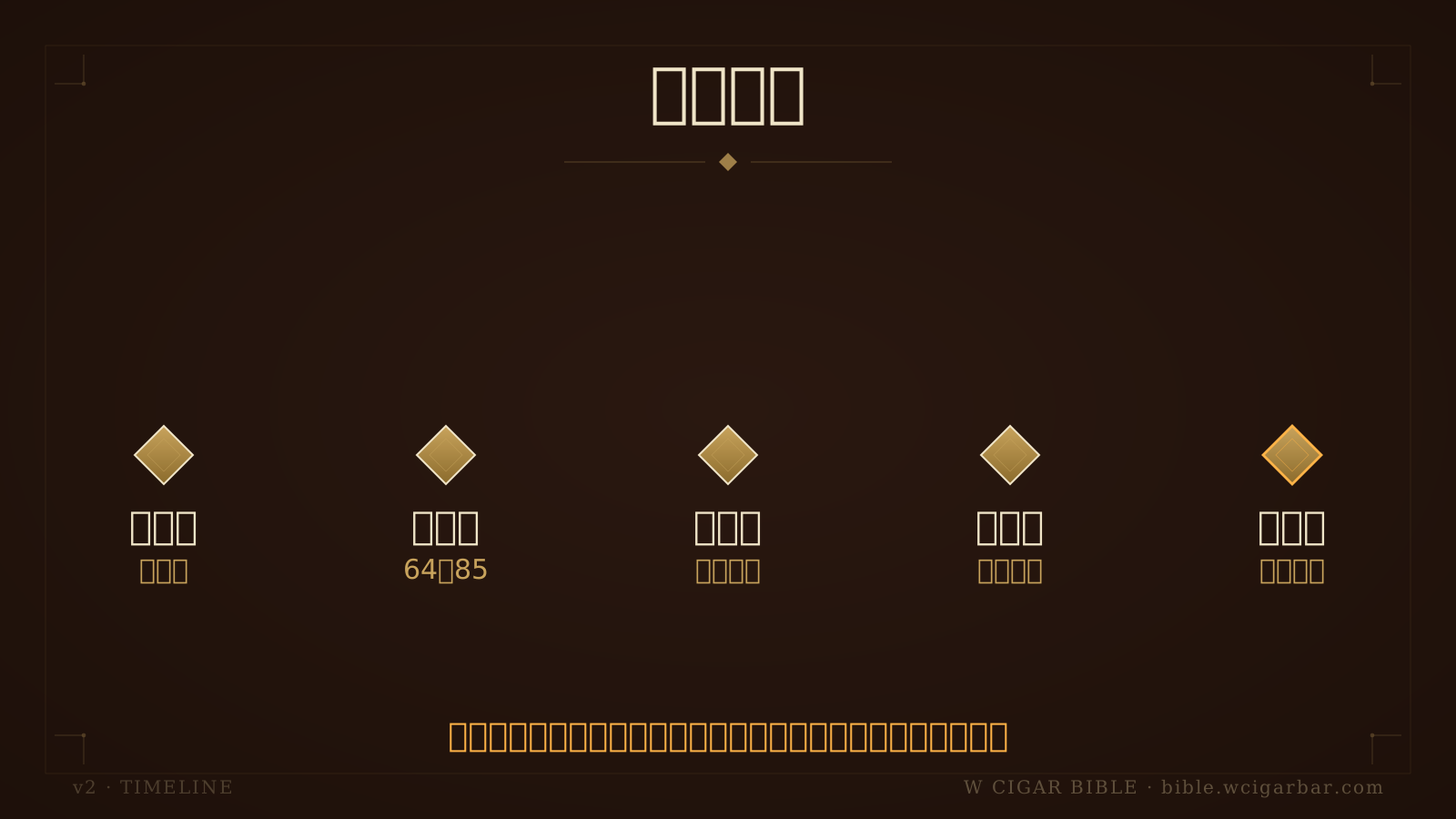
時間線呈現從辨濃度到記錄尾韻的五步流程
1. First Understand the Shared Language of Cigars and Chocolate: Fermentation, Bitter Resonance, and Oils
For experienced smokers seeking deeper pairings, the first step is not choosing a brand, but understanding that cigars and chocolate actually share three core processes: fermentation, drying, and aging. From the fermentation piles after harvest to subsequent maturation, cigar leaves develop woody, coffee, cocoa, honey, leather, and spice impressions; cacao beans for chocolate are fermented at origin for 5 to 7 days, then dried and roasted, producing red fruit, nuts, floral aromas, acidity, and bitter resonance. Neither is simply a "flavor"; both are the result of time and microbial action.
Take the Cuban Cohiba Behike 52 as an example. The Behike concept appeared in 2006, and in 2010 it officially became one of the regular high-end lines. Its Medio Tiempo tobacco brings deeper cocoa, cream, and woody density. When paired with 70% Ecuador single-origin dark chocolate, the acidity and oiliness of the cacao make the cigar's early grassy and creamy sensations more refined, while in the middle third they make the nutty and coffee notes more focused. By contrast, if milk chocolate is used, the sugar coats the tongue too quickly and instead blurs the details of the Behike.
The key lies in "strength with strength, texture with texture." Cigar strength can be roughly divided into mild, medium, and full; chocolate can likewise be assessed through cacao percentage, roasting level, and sugar content. Medium-bodied cigars can pair with 64% to 72% dark chocolate; richer cigars are suitable for 75% to 85%; if the chocolate is extremely sweet milk chocolate, it is best matched with cigars that show more obvious creaminess or floral notes, rather than heavy earth and pepper profiles. Pairing is not about putting two strong personalities together, but about letting each speak without interrupting the other.
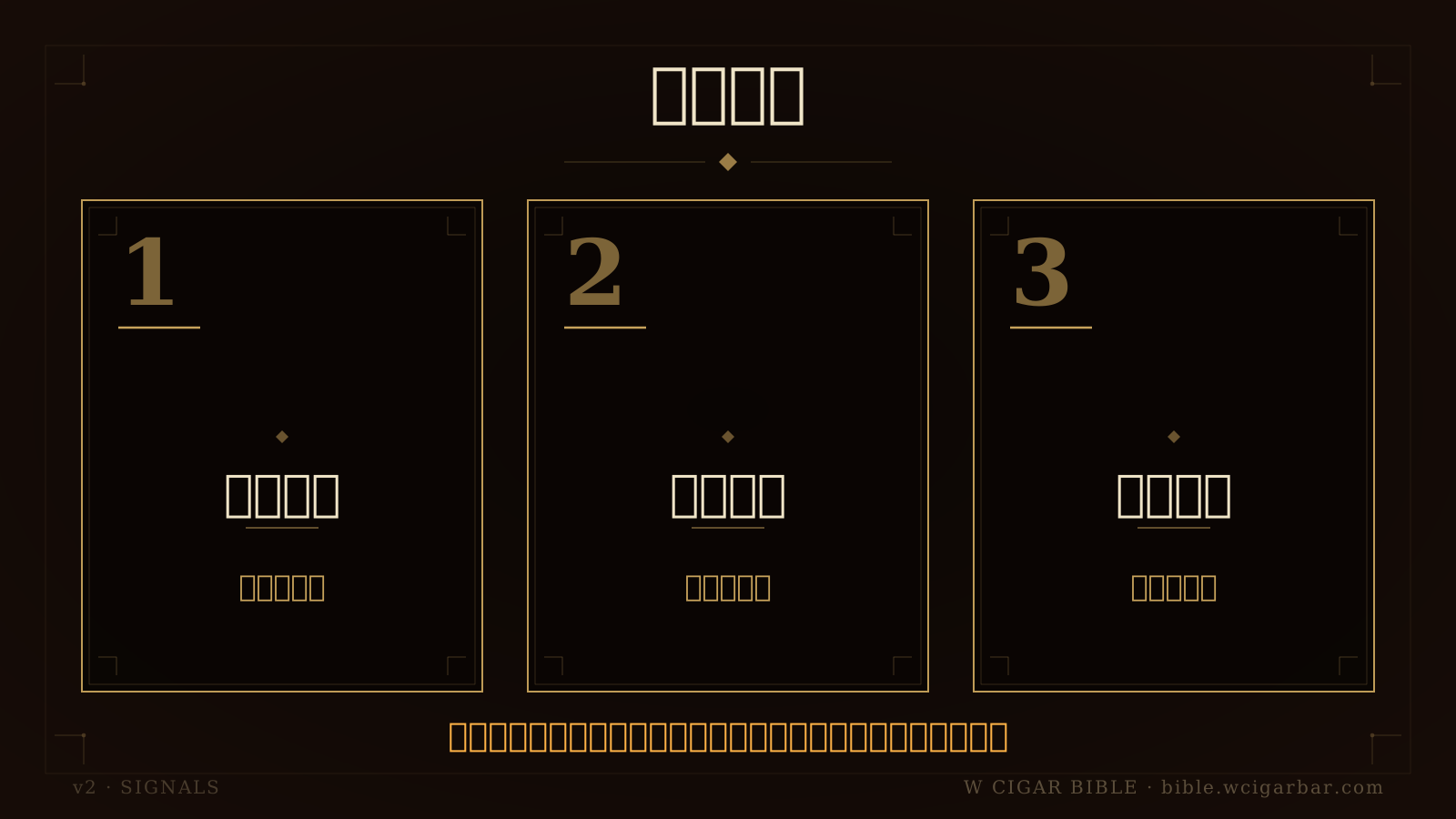
三張卡列出強度質地與分段加入巧克力
2. Cacao Percentage Is Not an Absolute Answer: When to Use 64%, 70%, and 85%
Many seasoned enthusiasts will ask directly: "If I smoke a Partagás Serie D No.4, what percentage of chocolate should I pair it with?" The question seems precise, but in reality it is only half of the issue. Cacao percentage indicates the proportion of cocoa solids and cocoa butter, but it does not mean flavor intensity is completely identical. Two dark chocolates that are both 70% can differ greatly: one from Madagascar may show bright berry acidity, while another from Venezuela Chuao may lean toward nuts, caramel, and cream. For cigars, acidity, sweetness, bitterness, and fat sensation are far more important than the number alone.
64% to 68% chocolate is suitable for "softening" cigars. A cigar like H. Upmann Magnum 46, with almond, cream, light wood, and mild herbal notes, paired with 66% Peru or Colombia dark chocolate, can gain roundness without obscuring its elegant lines. 70% to 72% is the most versatile range, suitable for medium to medium-full cigars such as Montecristo No.2, Romeo y Julieta Churchill, and Cohiba Siglo VI. It provides a cacao framework while preserving the cigar's original development.
75% to 85% should be reserved for cigars with deeper structure, such as Padrón 1964 Anniversary Maduro, Arturo Fuente OpusX, Oliva Serie V Melanio Maduro, or the Cuban Partagás Lusitanias. These cigars often show espresso, black pepper, roasted wood, leather, and dark molasses impressions. High-cacao dark chocolate can lengthen the finish and make the bitter resonance of the smoke feel more refined. Chocolate above 90% is not unusable, but it carries higher risk: if the cigar itself has firm tannins, the combination can become dry, astringent, and tight, as if coating the tongue with powder. Experienced smokers should treat high-cacao chocolate as a tool, not a display of technique.
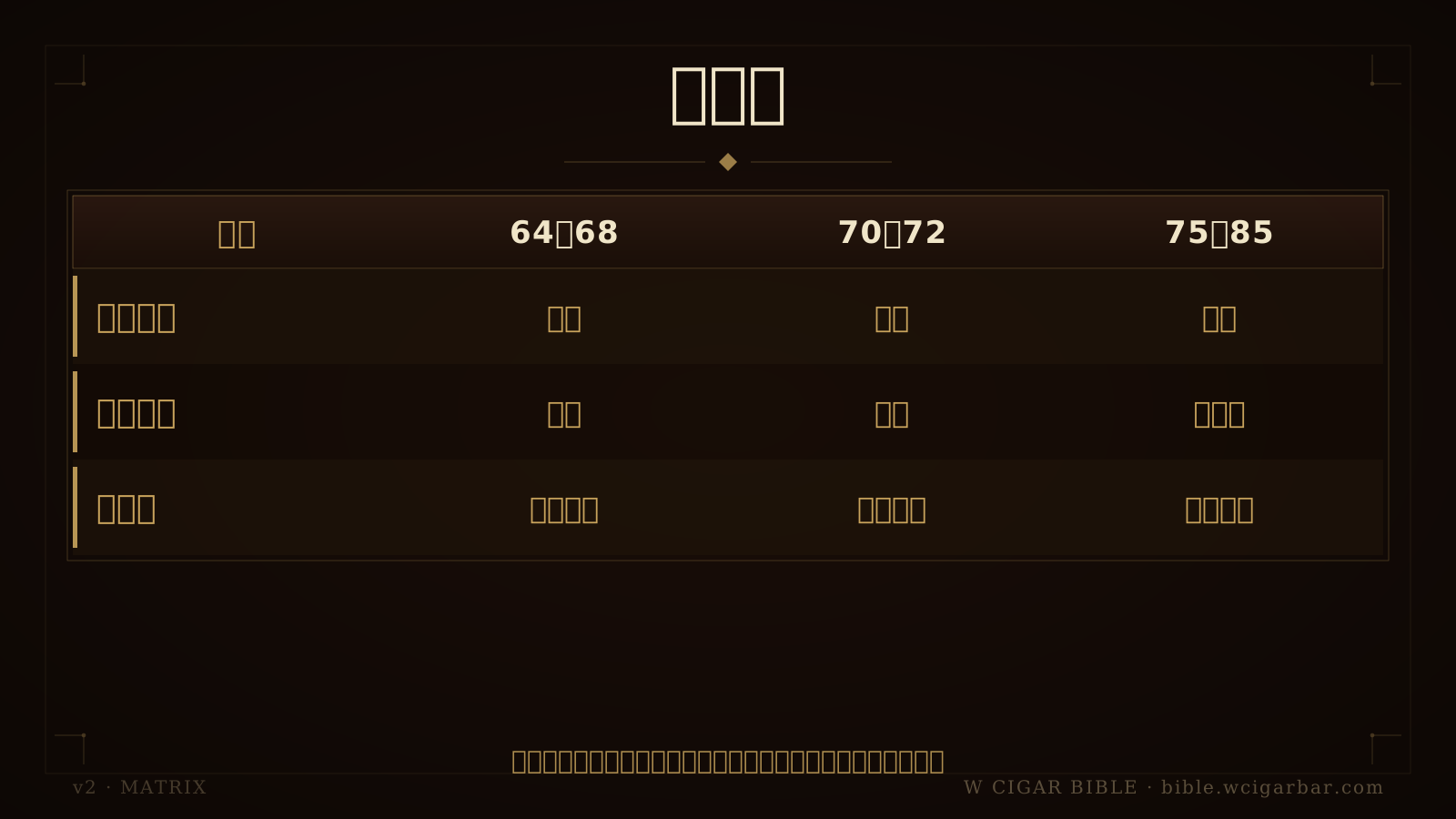
矩陣比較三種可可比例與雪茄濃度及風味線
3. Classic Pairing Quick Reference: Building Coordinates with Brand, Size, and Flavor
A truly reliable pairing table should not merely say "strong with strong, light with light"; it should take size, intensity, origin, and chocolate texture into account. Robusto usually enters its main flavor state quickly in the first third, making it suitable for a direct entry with a more clearly defined chocolate; Churchill or Double Corona takes longer, so the chocolate is best used in stages, for example cleansing the palate during the first 20 minutes and adding chocolate only in the middle third. The table below provides appreciation directions, not fixed formulas; even cigars from the same box may differ depending on year, storage humidity, and factory batch.
| Cigar Item | Common Flavor Core | Suggested Chocolate | Pairing Focus |
|---|---|---|---|
| Montecristo No.2 | Cocoa, coffee, cream, wood | 70% Venezuela dark chocolate | Strengthen the classic cocoa and coffee lines while avoiding excessive sweetness |
| Partagás Serie D No.4 | Pepper, leather, earth, roasted wood | 75% Ghana dark chocolate | Use solid bitter resonance to support the tension of the smoke |
| H. Upmann Magnum 46 | Almond, cream, hay, light honey | 64% Peru dark chocolate | Make the mouthfeel rounder while preserving delicacy |
| Cohiba Siglo VI | Cream, grass, cocoa, floral aroma | 70% Ecuador dark chocolate | Enhance middle-third layering without overpowering the herbal freshness |
| Padrón 1964 Maduro | Espresso, dark chocolate, nuts | 80% Dominican Republic dark chocolate | Bitter and sweet move in parallel, deepening the finish |
| Davidoff Millennium | White pepper, wood, nuts, cream | 68% Madagascar dark chocolate | Use fruit acidity to brighten the structure and avoid heaviness |
In practice, I recommend pairing at most two chocolates with one cigar; otherwise, taste memory becomes confused. Taking a vertical appreciation of Montecristo No.2 that I recorded in 2022 as an example: for the same No.2, a version stored for about 4 years was most stable with 70% dark chocolate; a version stored longer, with more pronounced wood and nuts, could instead be lowered to 66% to 68% so that sweetness could fill in the dryness of the final third. This is the greatest difference between experienced smokers and beginners: it is not about finding one answer, but about reading the cigar in the moment.
4. Cuban Cigars and Chocolate: Balancing Elegance, Wood, and Cacao Lines
The charm of Cuban cigars lies in the fact that they rarely offer only one dimension of strength. Instead, they form delicate layers through soil minerality, herbs, cream, dried fruits, wood, and cacao notes. When pairing with chocolate, the greatest danger is using chocolate that is too heavy, too sweet, or too obviously flavored, thereby covering the transparency of the Cuban cigar. Take Cohiba Siglo VI, for example. After its launch in 2002, it became one of the representative sizes of Línea 1492, with a 52 ring gauge and a length of 150 millimeters. Its smoking time can usually exceed 90 minutes. Its herbal creaminess and cacao aroma suit dark chocolate around 70%, but the chocolate should be clean, moderately acidic, and not over-roasted.
Montecristo No.2 is another classic case. This Pirámides size has long been regarded as one of Cuba's representative torpedo shapes, with flavors often showing coffee, cocoa powder, toast, and gentle wood. When paired with 70% Venezuela chocolate or chocolate made from Cuban-style cacao beans, it amplifies the mocha sensation in the middle third; if switched to 85% high-bitterness dark chocolate, the final third may become drier unless the cigar itself is in a very oily condition. Romeo y Julieta Churchill is better suited to chocolate between 64% and 70%, especially styles with red fruit, orange peel, or honey impressions, which can respond to its floral aroma and light sweetness.
Brands with greater strength, such as Partagás and Bolivar, allow for bolder pairings. The pepper, leather, and dense wood of Partagás Serie D No.4 suit 75% Ghana or Dominican Republic dark chocolate; the earth, cacao, and dark spice often found in Bolivar Belicosos Finos can be matched with chocolate around 78% that carries nutty and roasted-coffee impressions. When discussing collecting and age, certain limited editions or discontinued items do indeed attract market discussion, but potential appreciation in collection value does not equal guaranteed appreciation, and still depends on provenance, storage, and the market. This is true for both cigars and limited batches of high-end chocolate.
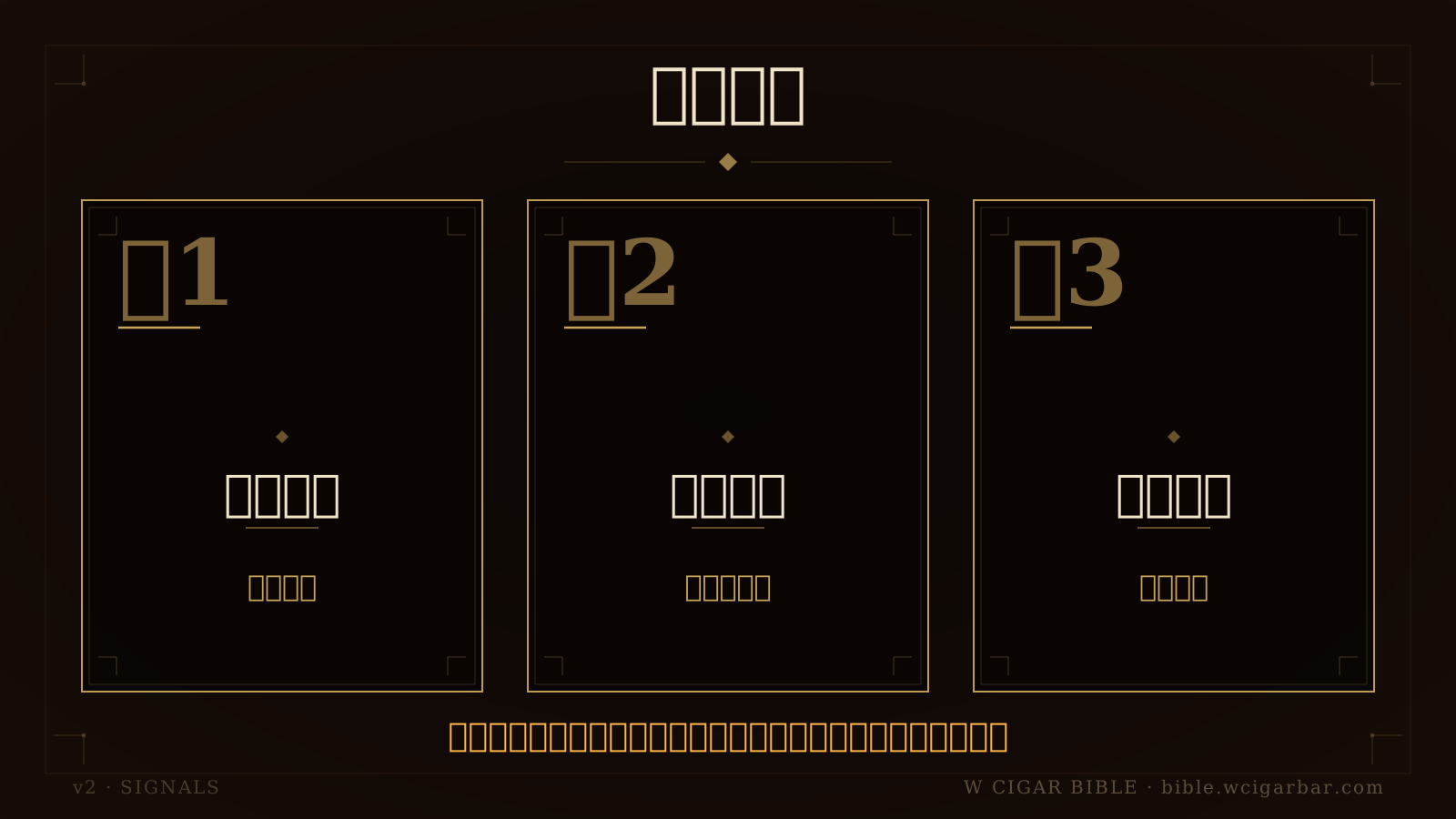
三張卡提醒甜苦趴數與高可可常見誤區
5. Chocolate Pairings for Non-Cuban Cigars: The Power of Nicaragua, the Dominican Republic, and Honduras
Non-Cuban cigars have developed rapidly over the past 20 years, especially in Nicaragua production areas such as Estelí, Jalapa, and Condega, which give cigars more defined black pepper, cocoa, espresso, and sweet spice notes. This style is highly compatible with chocolate, but it can also become overly heavy more easily. The Padrón 1964 Anniversary series was launched in 1994 to commemorate the brand's 30th anniversary. The Maduro version often shows dark chocolate, coffee, nuts, and molasses. When paired with 80% dark chocolate, it forms a depth similar to Italian espresso with cocoa powder; if milk chocolate is used instead, the sweetness rises, but structure may be sacrificed.
Arturo Fuente OpusX is an important milestone in Dominican cigars. In the 1990s, it proved that the Dominican Republic could also grow wrapper of a high standard. Its flavors often include roasted wood, floral aroma, spices, cream, and red pepper impressions. It is not suitable for chocolate that is too bitter, because the spice character of OpusX is already strong. I recommend using 70% to 75% dark chocolate with nuts and subtle fruit acidity to give the middle third more sheen. Davidoff Millennium can be paired with 68% to 72% Madagascar or Ecuador chocolate, using refined acidity to support white pepper, wood, and creaminess.
Honduras and blended-origin cigars are also interesting. Alec Bradley Prensado received considerable attention from international cigar media in 2011, and its rich cocoa, roasted wood, and leather flavors suit dark chocolate around 75%. Oliva Serie V Melanio Maduro leans toward espresso, sweet spice, and dark molasses, pairing very harmoniously with 78% Dominican Republic chocolate. The advantage of non-Cuban cigars is their clear profile; the drawback is that their tannins and spice can sometimes be rather direct. Here, the role of chocolate is not to add sweetness, but to polish the edges into a longer, broader, and more layered finish.
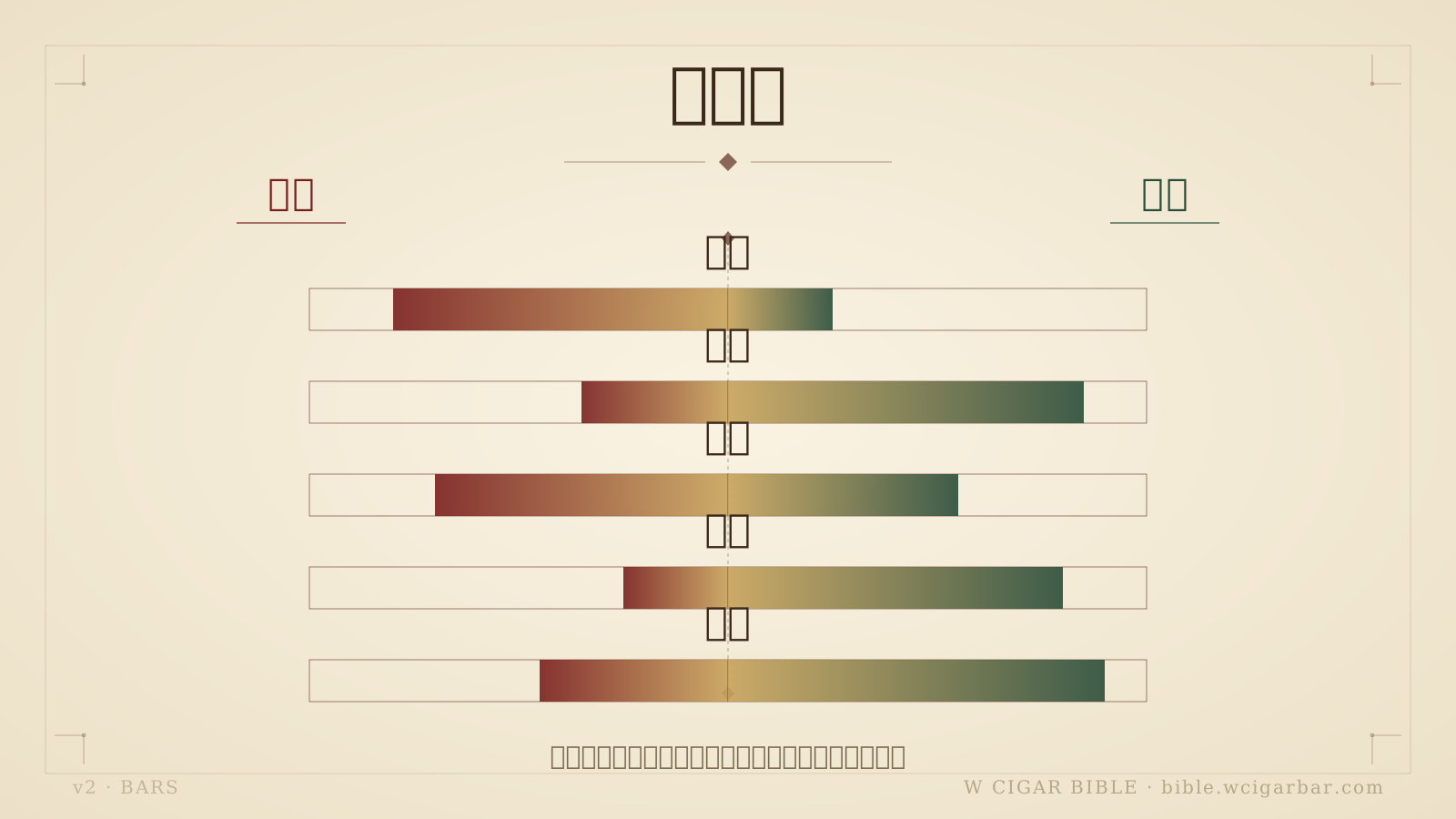
橫條圖比較柔化取向與深化取向在甜感苦韻單寧上的差異
6. Advanced Techniques: Order of Entry, Melting Time, Palate Cleansing, and Rhythm Control
The most common reason cigar and chocolate pairings fail is not the wrong brand, but the wrong rhythm. Experienced smokers should divide a cigar into three sections: establish the baseline in the first third, introduce the pairing in the middle third, and observe convergence in the final third. During the first 10 to 15 minutes, I usually avoid chocolate and cleanse the palate only with room-temperature water, confirming the cigar's combustion, draw, humidity, and initial flavors. If chocolate is eaten immediately, the tongue is coated with cocoa butter, making it difficult to judge whether the first third has ammonia, bitterness, astringency, or a stuffy feeling caused by excessive moisture.
After entering the middle third, do not bite the chocolate into pieces and swallow it. Instead, take 1 to 2 grams, place it on the tongue, and let it melt slowly for 15 to 25 seconds. After the cocoa butter melts, allow the smoke to rest briefly in the mouth, and you will notice the cigar's cocoa, coffee, nut, and spice lines becoming amplified. If it is 70% dark chocolate, the amount can be slightly larger; if it is 85% or higher, the amount should be small, otherwise the bitter resonance will accumulate. Leave at least 3 to 5 puffs between each chocolate and cigar interaction. Do not pair every puff, or the pairing will become concealment.
Palate cleansing is also very important. Room-temperature water is the most stable choice. Sparkling water can be used with richer cigars, but overly strong bubbles interfere with mouthfeel. Unsweetened black coffee can pair with cigars that show obvious coffee and cacao impressions, such as Padrón and Partagás, but if dark chocolate is added at the same time, the overall bitterness may become too high. Whisky and rum can also pair with chocolate and cigars, but alcohol amplifies spiciness and heat. This is especially true when older sherry-cask whisky is paired with Maduro cigars: the sweetness may be beautiful, but the final third can become too hot. The advanced approach is to regard chocolate as a "middle-third tuner," not an all-session supporting role, and certainly not the protagonist.
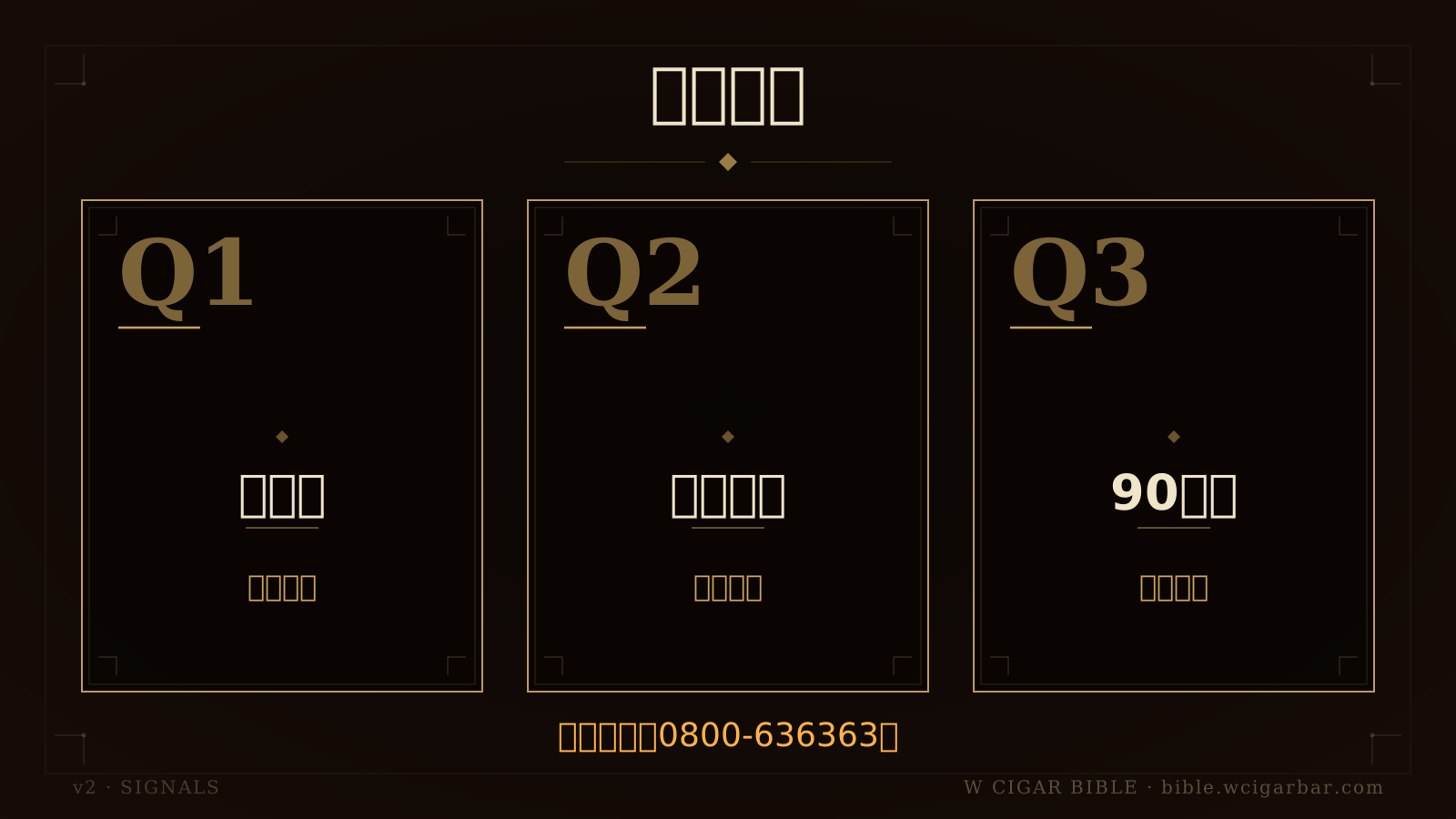
快問快答卡片回答可可比例、牛奶巧克力與高可可用法
7. Storage and Temperature: A 3% Humidity Difference and a 2°C Chocolate Difference Change the Result
Experienced smokers all know that cigar condition determines the upper limit of a pairing. Even if the most expensive chocolate is chosen, if the cigar's humidity is imbalanced, the flavor will still go astray. General cigar storage can refer to a range of 65% to 69% relative humidity and 18°C to 21°C. For Cuban cigars, if clearer expression is desired, many enthusiasts prefer 65% to 67%; for heavy Maduro or large-ring-gauge non-Cuban cigars, around 68% can sometimes maintain better oiliness. But this is not a rigid rule. The key is stable combustion, normal draw, and smoke that does not feel stuffy.
Chocolate also requires temperature control. High-quality dark chocolate is best stored at 16°C to 20°C in a dry, dark environment, avoiding repeated removal from the refrigerator, which can cause sugar bloom or fat bloom. If a white bloom appears on the surface of chocolate, it does not necessarily mean spoilage, but the mouthfeel will become powdery. When paired with cigars, the sensation of melting fat decreases, and the finish loses roundness. Before pairing, chocolate can be allowed to return to about 20°C to 22°C. At this temperature, its melting speed in the mouth is more natural; if too cold, the aroma closes down, while if too warm, it becomes cloying and easily sticks to the hands.
I once conducted a small experiment: the same medium-bodied Robusto was stored for two weeks at 64%, 67%, and 70% humidity, then paired with the same 72% dark chocolate. The 64% version burned quickly and had sharper wood, so the chocolate could only add a little oil; the 70% version had thicker smoke, but the first third felt stuffy, and the chocolate made the sweet-bitter impression heavier; the 67% version was the most balanced, with cacao and nut sensations amplified without becoming greasy. This shows that pairing does not begin at the last moment at the table, but with the storage environment. Only when both cigar and chocolate are in the correct condition does the pairing have real depth for discussion.
8. Frequently Asked Questions
1. Can Milk Chocolate Be Paired with Cigars?
Yes, but the cigar must be chosen correctly. Milk chocolate has higher sugar and milk fat, making it suitable for medium or softer cigars with more obvious creaminess, nuttiness, or floral aroma, such as H. Upmann, Davidoff Grand Cru, and certain sizes of Romeo y Julieta. If it is used with Partagás, Bolivar, or full-flavored Nicaraguan Maduro cigars, the sugar may make the final third cloying and flatten the layers of leather, wood, and pepper.
2. Is White Chocolate Suitable?
White chocolate contains no cocoa solids; it is mainly cocoa butter, sugar, and dairy products. Therefore, it does not provide the bitter resonance and cacao framework typical of dark chocolate. It can be paired with very gentle cigars that have creamy and honeyed impressions, but it is not suitable for rich styles. If you wish to try it, choose white chocolate with more than 30% cocoa butter and lower sweetness, and keep the portion extremely small.
3. Is High-Cacao Chocolate Above 90% the Most Professional Choice?
Not necessarily. 90% and above dark chocolate is very demanding of cigar condition and oral tolerance. If the cigar itself already has obvious tannins and a dry final third, high cacao will make the astringency more prominent. It is more suitable for Maduro cigars that are oily, sufficiently sweet, and clearly defined in coffee and cacao lines, and only about 1 gram is needed each time. It should not be used in large quantities.
4. Should Chocolate Be Paired with the First, Middle, and Final Thirds of a Cigar?
Not recommended. The first third should establish the cigar's original flavor. Chocolate can then be introduced in the middle third to observe changes, while in the final third the decision should depend on whether the cigar is heating up and whether bitterness is increasing. If the final third is already spicy or charred-bitter, chocolate may not correct it and may instead increase the burden on the palate. A mature approach is small amounts, staged use, and leaving space.
5. Should Alcohol Be Added When Pairing with Chocolate?
It can be, but greater caution is needed. Cigars, chocolate, and alcohol are all high-flavor-density elements, and when all three appear together, overload is easy. If pairing with alcohol, I recommend starting with low-sweetness rum, port-cask whisky, or unsweetened black coffee, while reducing the amount of chocolate. Alcohol amplifies spice and heat, so rhythm must be especially controlled with rich cigars.
6. Does Chocolate Differ by Origin?
The differences are significant. Madagascar often has berry acidity, Ecuador leans toward floral aroma and nuts, Venezuela commonly shows cream, nuts, and caramel, the Dominican Republic may carry coffee and tropical fruit impressions, while Ghana often has a stable cacao, roasted, and nutty foundation. When experienced smokers pair, they should treat origin as a second-layer variable, not merely look at cacao percentage.
The perfect union of cigars and chocolate has never been about placing two expensive terms together. It is about using experience to judge when to deepen, when to lighten, and when to let the cigar speak for itself. I have always believed that true gentlemanly taste is not the pursuit of sensory display, but the ability to read, within one puff of smoke, one small piece of chocolate, and three minutes of silence, the traces left by land, time, and craft. May every appreciation session bring you closer to your own standard.
--Cigar Prince Wilson Tsai
Smoking is harmful to health. Persons under twenty years of age shall not smoke. Smoking cessation hotline: 0800-636363. This article is provided solely for adults aged twenty and above as a reference on cigar culture, storage, and regulatory knowledge. It is not tobacco advertising, promotion, or purchase advice.
Like this article?Share with friends
Share this W Cigar Bible piece with friends who want to learn cigar culture, storage, and tasting.
想把這篇 化為實踐
雪茄聖經是知識;雪茄文化要在空間裡發生
W Cigar Bar 大安總店資訊
台北大安區 · 雪茄聖經總編輯 Wilson Tsai 主理的雪茄文化空間
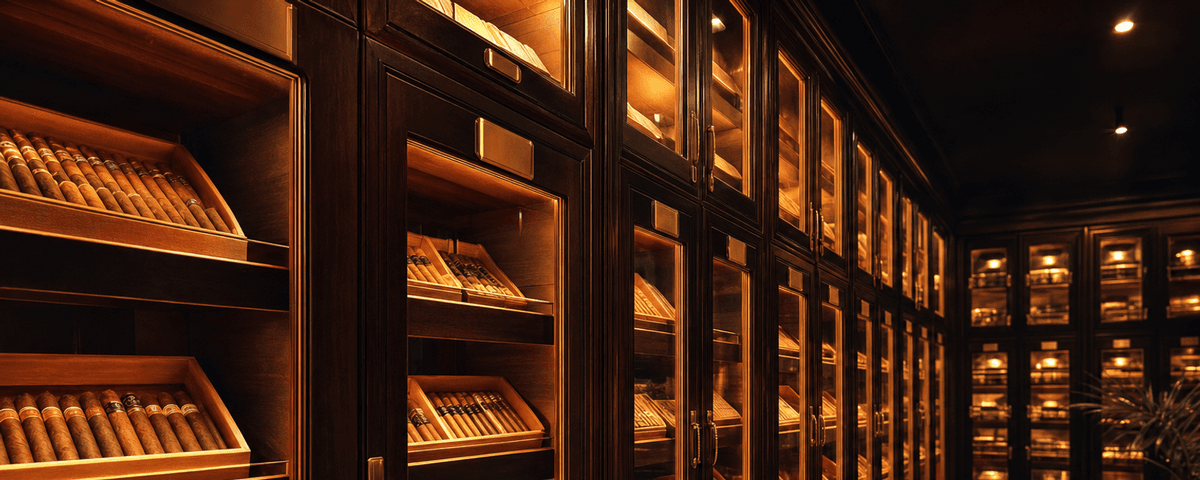
33 座 24 小時恆溫恆濕醇化室
W Cigar Bar 提供的會員醇化空間 · 場地資訊請洽編輯部
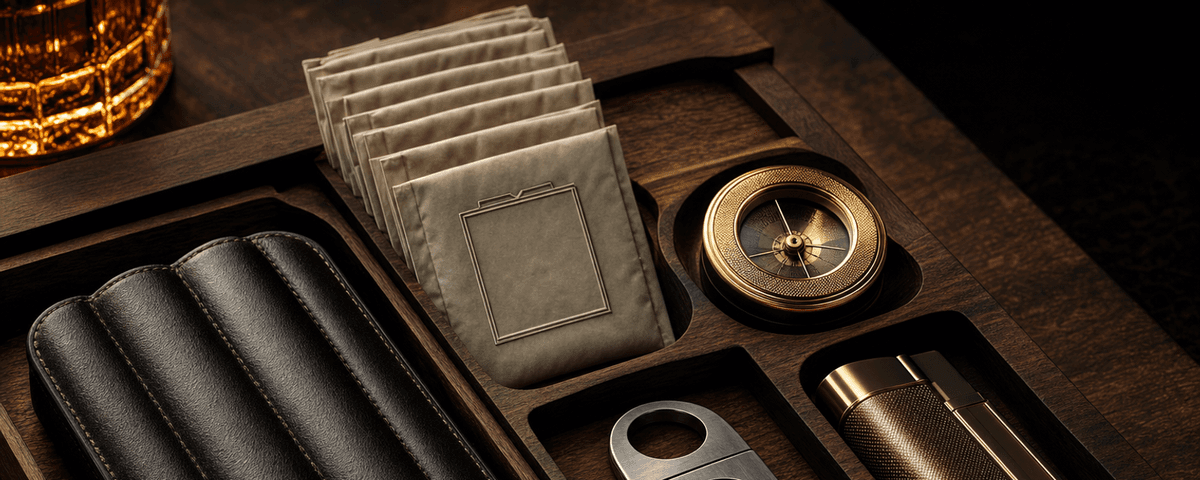
雪茄剪 / 打火機 / 雪茄盒 / Boveda
W Cigar 配件官網 · 專營雪茄配件正品
加 LINE 好友 · 文化諮詢
文化空間資訊 · 紳士沙龍 · 私人包場
本網站內容僅供雪茄文化、歷史、收藏與品吸知識研究參考。菸品有害健康、未滿法定年齡者請勿吸菸。實際規範請依所在地法律為準。
吸菸有害健康・戒菸專線 0800-636363・本站僅供 20 歲以上成年人閱覽。
讀到這裡,你不只是路過的人
留下 Email,加入 W 雪茄聖經內圈——總編輯 Wilson Tsai 親選的學院深文與國際新訊,先你一步送到信箱。
· 教育用途非銷售 · 隨時一鍵退訂 · Email 絕不對外公開 · 由勝茄股份有限公司營運
同分類延伸閱讀
資料來源:W Cigar Bible 編輯部整理 · 雪茄王子 Wilson Tsai 親自審稿
本文僅供雪茄文化、歷史、收藏與品鑑知識研究,不作為菸品促銷、銷售或購買建議。吸菸有害健康,未滿二十歲不得吸菸。