雪茄品鑒的專業評估技巧
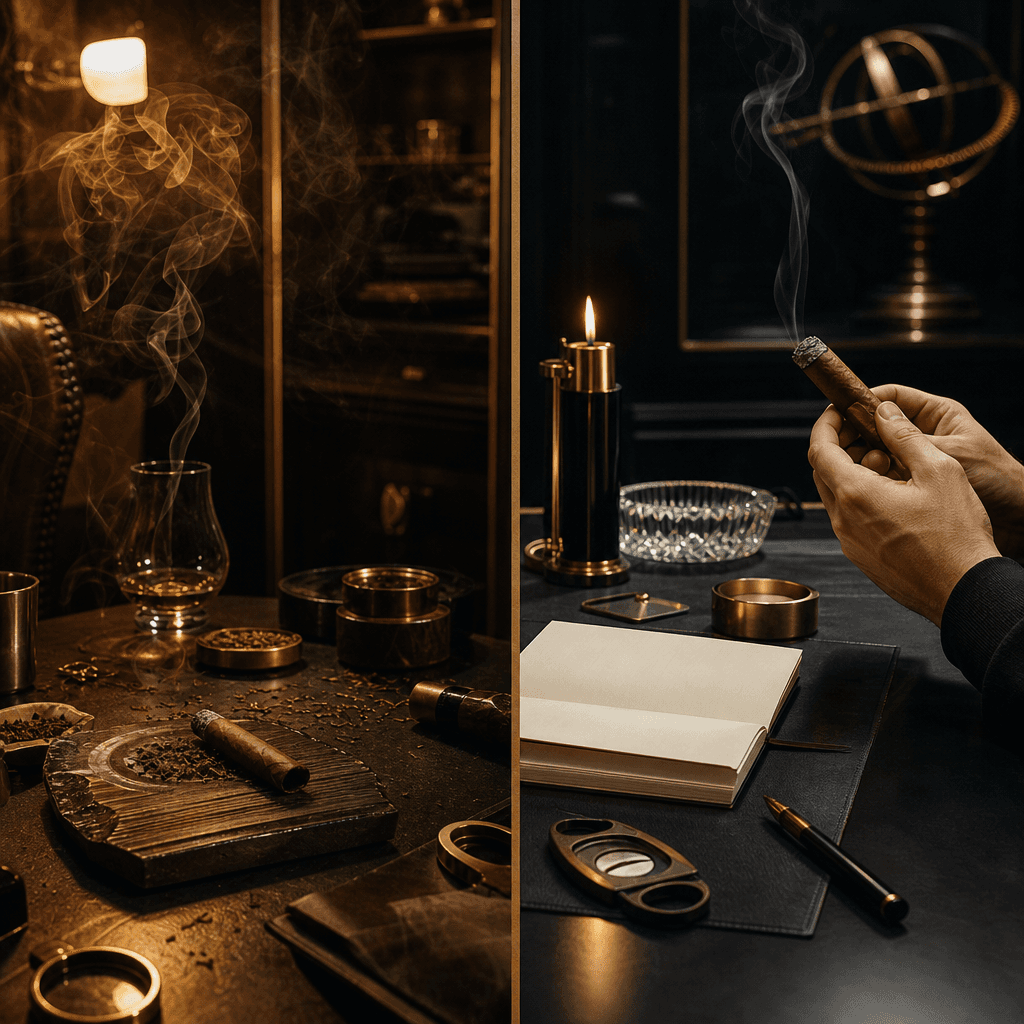
在雪茄品評中,入門者常困惑於如何準確辨識雪茄的好壞。關鍵在於建立穩定、可重複的評估方法,從環境、工具到紀錄皆需謹慎準備。香氣分析應分為點燃前後的不同層次,並注意其來源與變化。口感與力量的評估則需清晰區分濃度、強度與質地。此外,結構判讀需關注燃燒與氣流的穩定性,分段評估則有助於理解雪茄的整體表現。最後,餘韻與回甘的細節能揭示雪茄的品質,透過表格化的評分系統,讓品評變得更具系統性與可比較性。
- 建立穩定的品評框架,重點在於可重複的評估方法,而非僅僅增加形容詞。
- 香氣評估需分層次觀察,包括入口香、鼻腔香與環境香,重點在於辨別來源與變化。
- 結構評估需關注氣流、燃燒線與平衡感,好的結構能保持合理的節奏與風味表現。
Professional Evaluation Techniques for Cigar Tasting
As the editor of "Cigar Bible," the most common question I get from beginners is not "which one is the best," but "why can I tell the difference between good and bad, but can't articulate it." The key to advanced cigar tasting is not memorizing more adjectives, but establishing a stable and repeatable evaluation method.
A cigar changes continuously from pre-light, the first third, the middle third, the final third, to the finish. If you only judge by "smooth, strong, fragrant," it's easy to miss clues left by brand, vintage, aging, and storage conditions. Below, I will guide you through establishing a professional yet unpretentious tasting framework using practical methods.
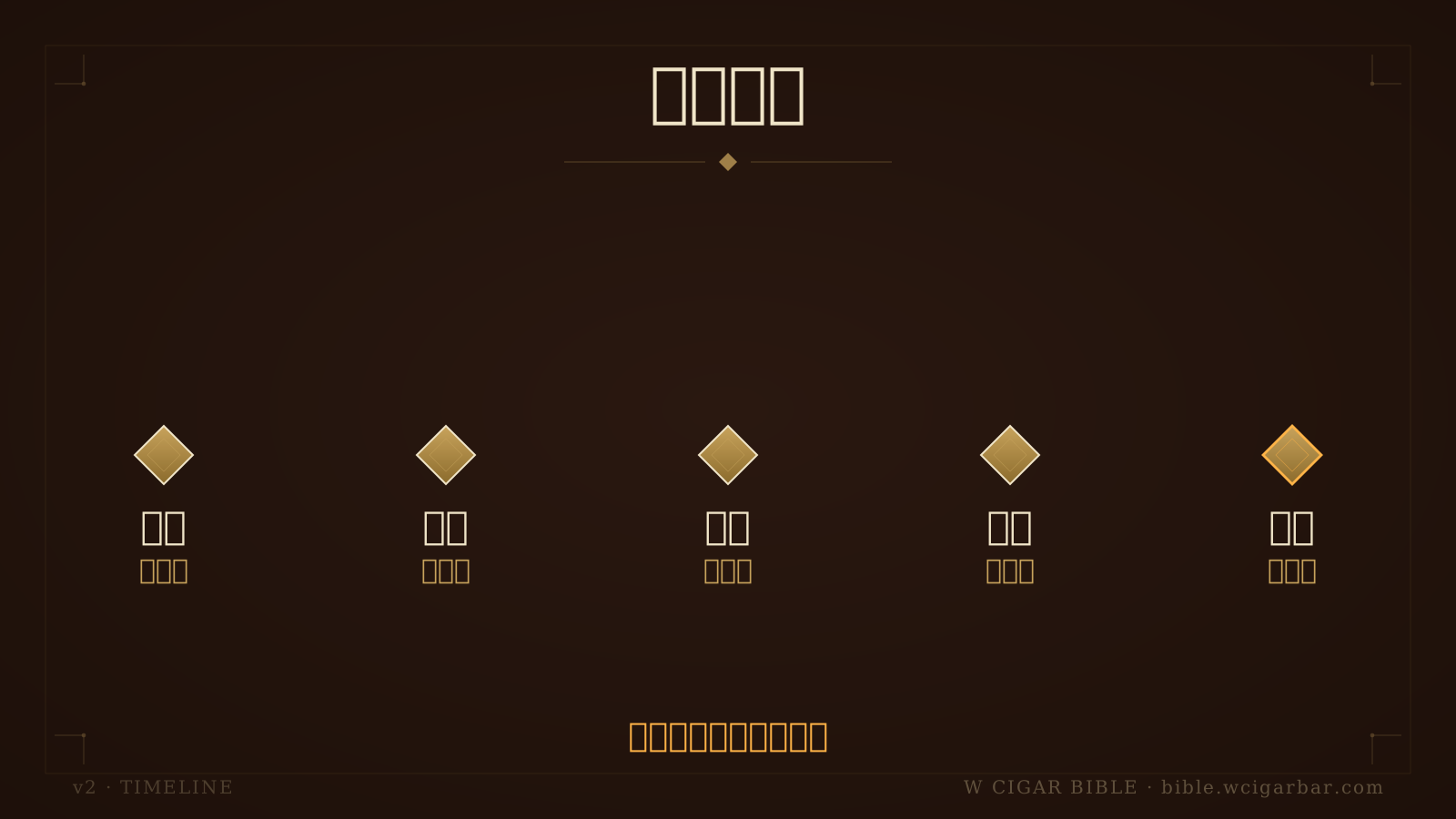
時間軸顯示從準備到餘韻的品評步驟
Preparation Before Evaluation: Environment, Tools, and Records Determine Accuracy
The first step in professional evaluation is not lighting up, but minimizing variables. An indoor temperature of about 22 to 25°C and relative humidity of 60 to 65% usually better present the state of the cigar than overly cold or dry spaces. If you've just had espresso, whiskey, or spicy food, your taste buds will be covered, so it's recommended to wait at least 20 minutes and cleanse your palate with room temperature water.
Tools also affect judgment. If a double-bladed cutter is not sharp, it can cause the cap to crack, making the airflow loose; a torch lighter that's too strong can easily char the foot, causing unnecessary bitterness in the first third. I usually prepare a cigar cutter, long matches or a soft flame torch, a clean ashtray, a timer, and a notebook. The stability of tasting comes from observing the same thing under similar conditions each time.
Records don't have to be literary works at the start. For example, with a 2022 boxed H. Upmann Magnum 46, I would first note the size, box code, storage humidity, lighting time, and total burn length, then write about aroma, taste, structure, and finish in segments. Even details like "slightly tight in the first 15 minutes, opens up after 30 minutes" could become important references for judging aging and storage suitability in the future.
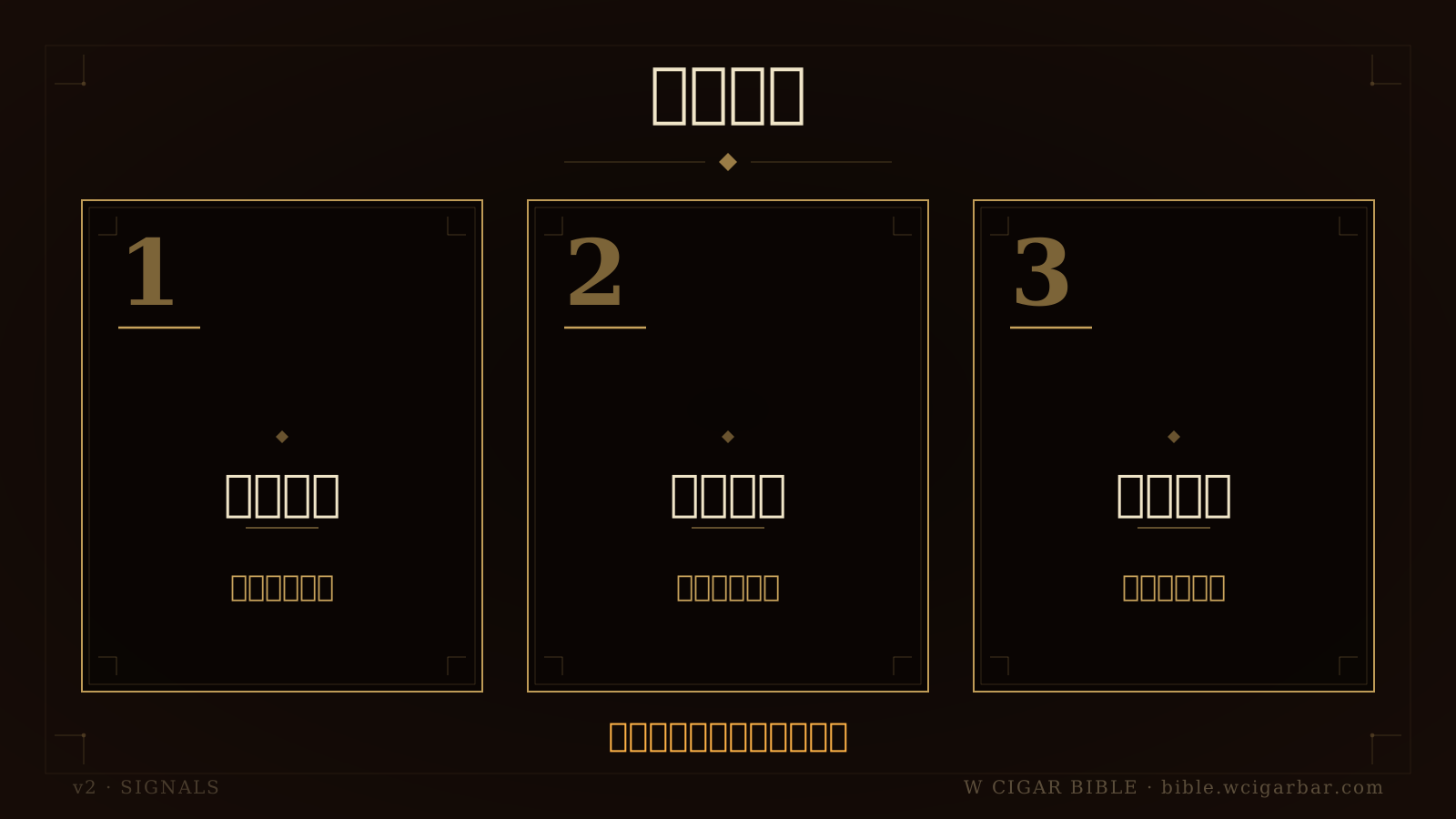
三張卡呈現控變因、分層聞香與口感拆解
Aroma Analysis: Observe in Three Layers from Unlit to Lit
Aroma is not a single noun but a layer. Before lighting, you can smell the wrapper and foot: the wrapper often presents leather, hay, cedar, cocoa; the foot more easily reveals the sweetness, fermentation, or spiciness of the filler. For example, a well-preserved 2018 batch of Cohiba Siglo VI often has notes of grass, honey, and light cream before lighting, which helps predict its direction.
After lighting, aroma should be divided into "entry aroma," "nasal aroma," and "ambient aroma." Entry aroma is the direct sensation of smoke through the mouth; nasal aroma, through slow exhalation, can capture more delicate signals like wood, floral, cardamom, pepper; ambient aroma is the lingering scent noticed by others or oneself after a pause. The focus of aroma evaluation is not on elaborate descriptions but on distinguishing the source, intensity, and change over time.
For example, when Montecristo No.2 is in good condition, the first third often shows toasted bread, coffee, and cocoa, the middle third transitions to nuts and cedar, and the final third may present black pepper and caramel edges. If there's a sharp ammonia or wet cardboard smell from the start, it might indicate insufficient aging, improper storage, or moisture. In such cases, don't rush to dismiss the brand, but check the source, humidity, and the condition of other cigars in the same box.
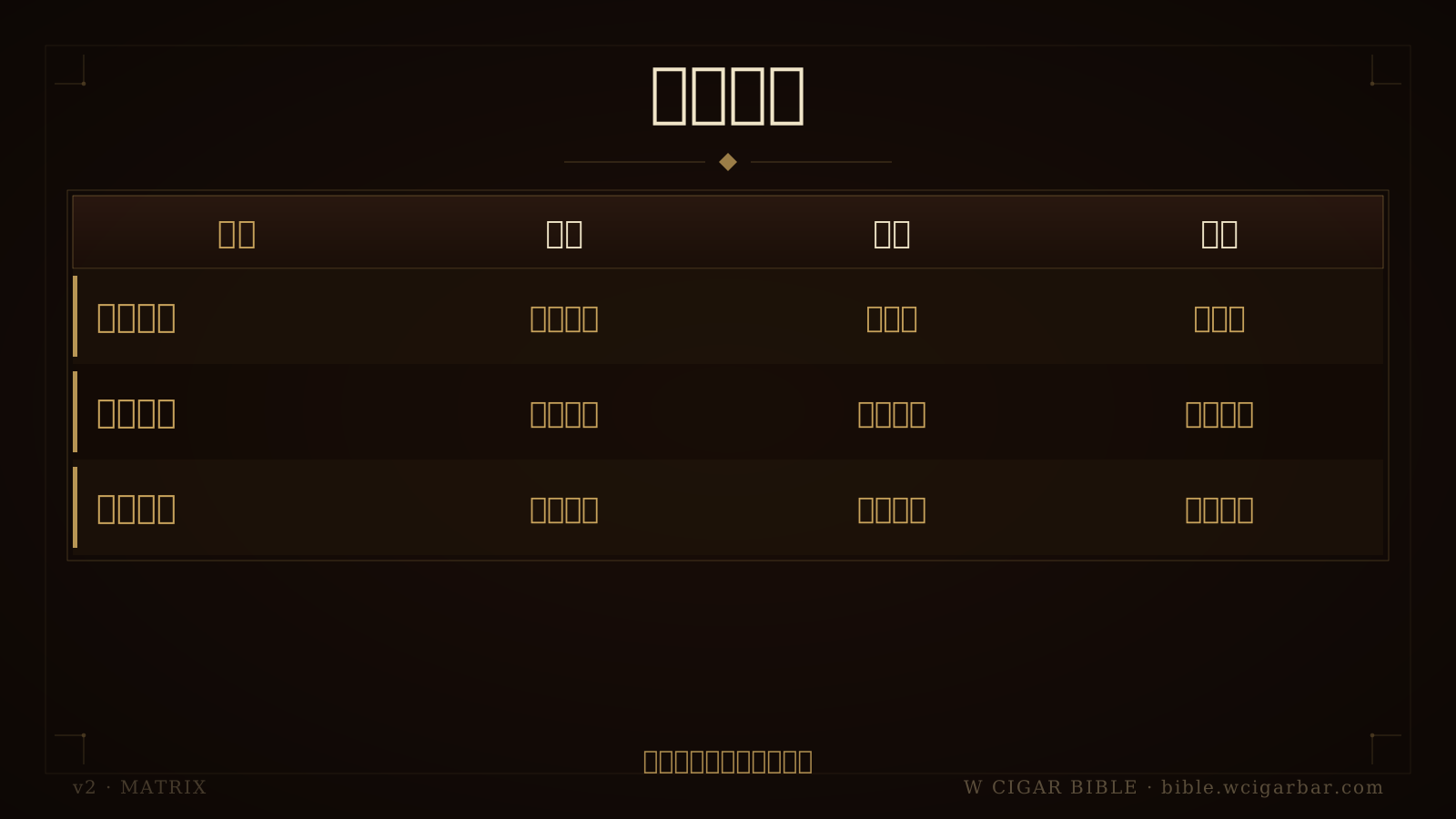
矩陣比較濃度、強度與質地三種口感維度
Taste and Strength: Distinguish Concentration, Strength, and Texture
Many beginners confuse "rich flavor" with "strong strength." Concentration is the density of flavors, such as whether coffee, cocoa, and wood are substantial; strength is the nicotine and physical sensation, such as head warmth, stomach pressure, or heartbeat changes; texture is like the body in wine, it can be creamy and smooth, tea-like and clear, or dark chocolate-like and heavy. The three are interrelated but not the same.
For example, Partagás Serie D No.4 is often regarded as a representative of medium-high concentration and strength in Robusto; while Davidoff Grand Cru No.2 may have a more elegant concentration, more restrained strength, and a finer texture. Simply saying "light" or "heavy" would overlook their design differences. Mature evaluation should describe flavor density, physical sensation, and smoke texture simultaneously, rather than using one word to decide.
Practically, you can record using a scale of 1 to 5: concentration 1 is like tea, 5 is like espresso; strength 1 is almost no burden, 5 is obvious physical pressure; texture can be noted as "dry, smooth, oily, thick, powdery." For example, Padrón 1964 Anniversary Maduro often has cocoa, coffee, and brown sugar tones, concentration can reach 4, strength about 3 to 4, smoke texture is full but not necessarily coarse, which is why it's important to observe them separately during evaluation.
Structure Interpretation: Burn, Airflow, Ash Color, and Balance
Structure is the skeleton of a cigar, including rolling density, airflow, burn line, ash column, temperature, and balance. Good structure doesn't mean it never needs correction, but it maintains a reasonable rhythm from start to finish. If airflow is too tight, flavors are suppressed, and burn temperature is low; if airflow is too loose, smoke volume is large but may seem hollow, heat up too quickly, and bitterness rises more easily in the final third.
The burn line can be observed for long-term deviation over 5 mm. Temporary unevenness may relate to lighting angle, indoor airflow, or wrapper moisture; if it tunnels severely throughout, it might be a filler distribution issue. Ash color can be a reference but shouldn't be overly trusted. White ash doesn't necessarily indicate high quality, nor does dark ash necessarily indicate poor quality; the real importance is whether the ash column is stable, the burn is even, and the temperature is controllable.
For example, Romeo y Julieta Churchill, being longer, if the first third is too fast, the middle third is prone to overheating, and the elegant floral and cedar notes may be overshadowed by bitterness. I would suggest spacing each puff about 45 to 75 seconds apart to keep the core temperature stable. Structure evaluation isn't about momentary perfection but whether the entire cigar can maintain balance in a reasonable rhythm.
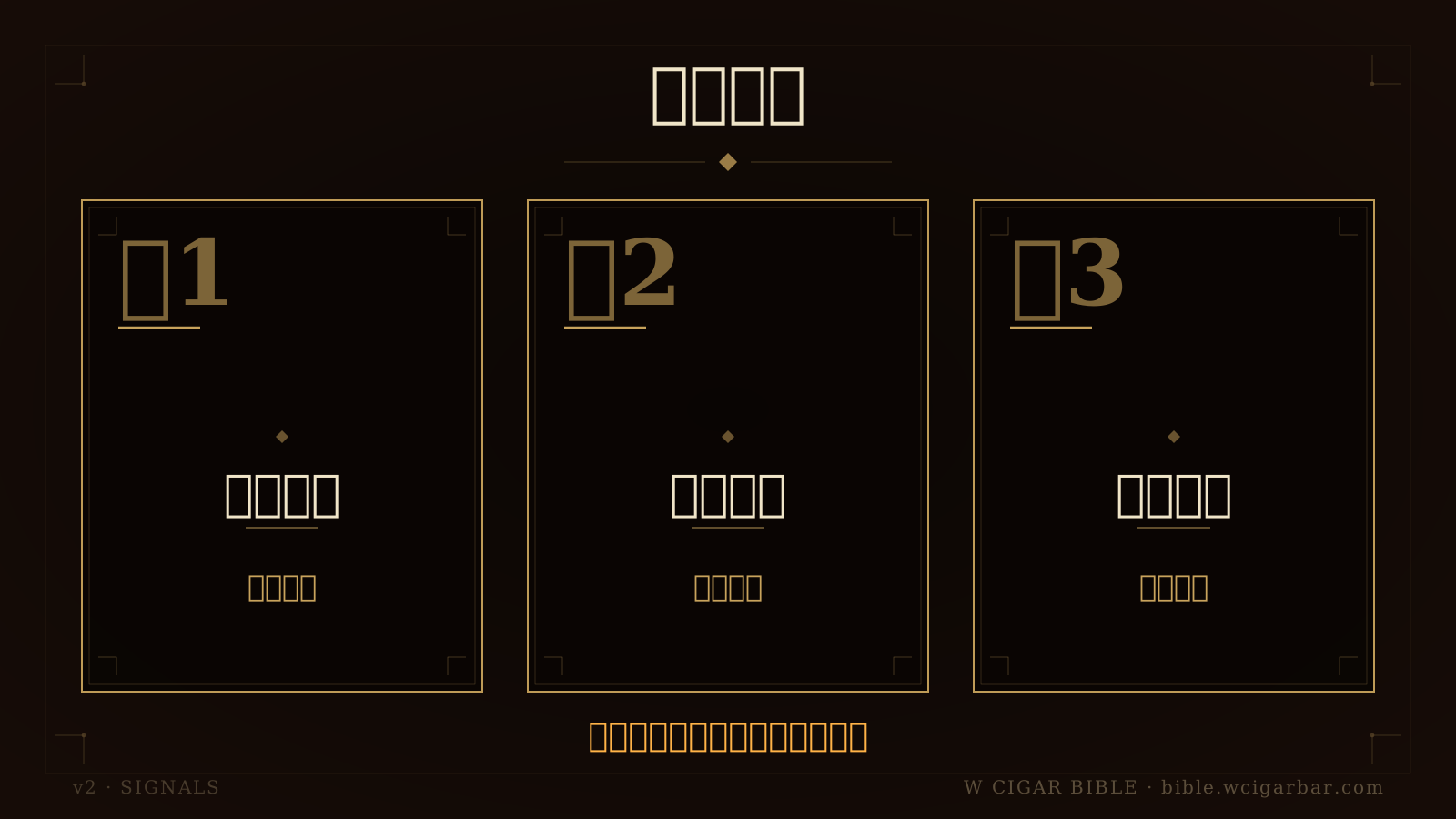
三張卡列出味道、分數與搭配的常見誤解
Segment Evaluation: Each Third Has Its Task
Professional notes usually divide a cigar into three segments: the first third is about 0 to 30%, the middle third about 30 to 70%, and the final third about 70% onwards. The first third is like an overture, focusing on whether the lighting is clean and the main theme is clear; the middle third is the core, most revealing the depth of the blend; the final third is a stress test, observing whether sweetness, bitterness, spiciness, and temperature are balanced.
For a well-conditioned Bolivar Belicosos Finos around 2020, the first third might be earth, leather, and black coffee, the middle third gradually transitions to cocoa, roasted nuts, and licorice, and if the rhythm is well-controlled, the final third will have pepper and mineral notes but shouldn't only be hot and bitter. Segmented records help you determine if a cigar is monotonous, progressive, has clear transitions, or collapses in the final third.
I often use three columns: "main theme, transition, imbalance point." The main theme notes the most stable flavors, like cedar, coffee, cream; transition notes when new flavors appear; imbalance point records when bitterness, spiciness, acidity, or dryness rises. If the same model consistently shows nutty sweetness after 40 minutes in different box codes, it might be a blend characteristic; if only one cigar is spicy within 10 minutes, it might be individual or storage differences.
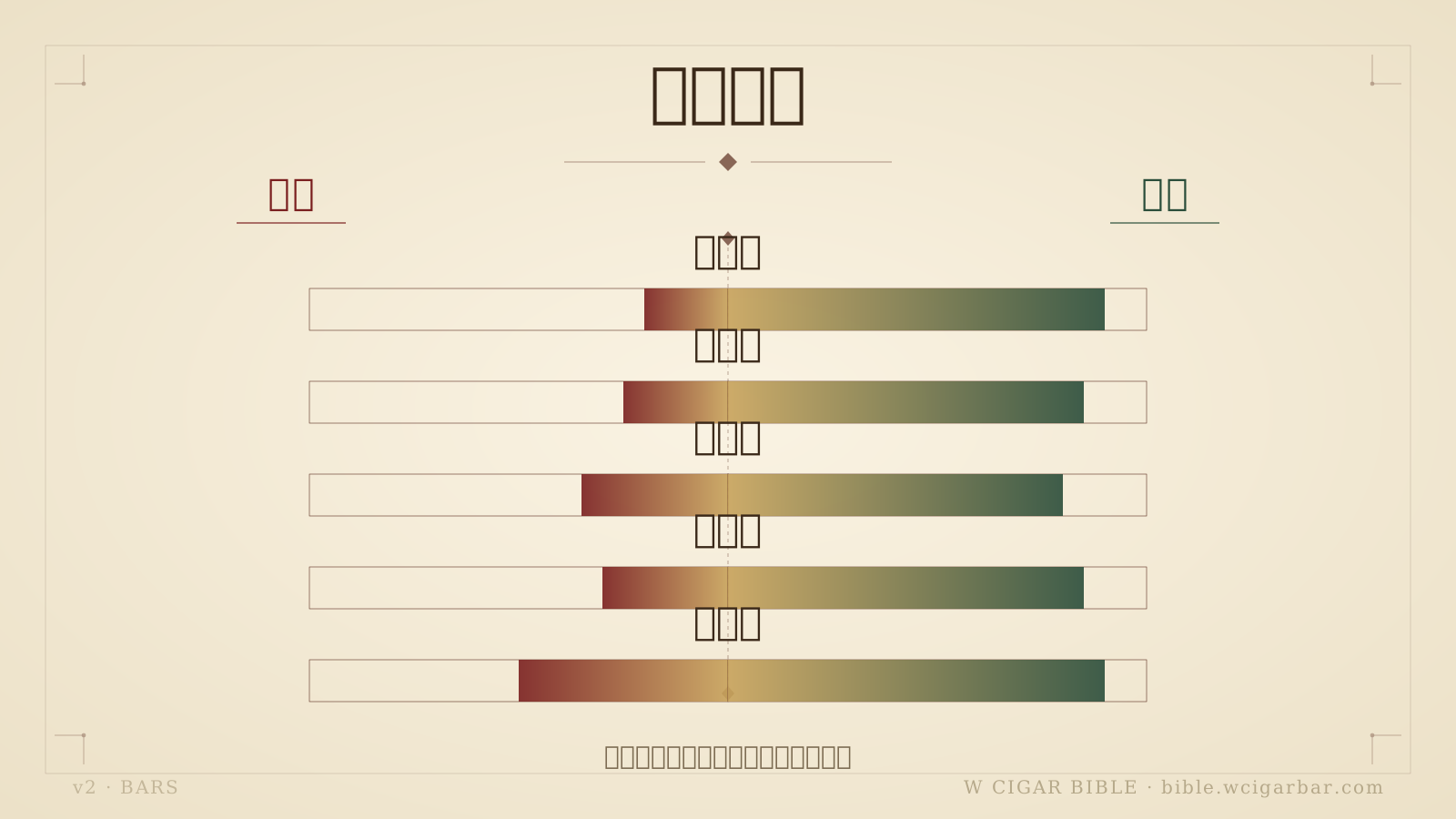
長條圖比較隨興品評與專業品評的差異
Finish and Aftertaste: True Details Often Come After Exhalation
Finish is the length and quality of flavors lingering after smoke leaves the mouth. A short finish might dissipate in 5 to 10 seconds, medium about 15 to 30 seconds, and a long finish can exceed 45 seconds. A good finish doesn't have to be rich but should be clean, extended, and layered; a bad finish might be burnt, metallic, tongue-stinging, or moldy sensations lingering too long.
Aftertaste is different from sweetness; it's more like the sweet return at the root of the tongue, palate, or throat after tea. For example, Hoyo de Monterrey Epicure No.2 often has cream, wood, light honey, a soft finish, and a more pronounced aftertaste in the middle third when in good condition; while Arturo Fuente Hemingway Short Story might have roasted wood, spices, and bell pepper-like tail notes.
When evaluating the finish, I close my mouth for 10 seconds after exhaling, then record the position and content: is it sweet on the tip of the tongue, sour on the cheeks, woody on the palate, or spicy in the throat. The value of the finish is not just in length but in whether it's clean, coherent, and echoes the preceding flavors. If a cigar has a lavish aroma in the first third but a coarse and broken finish, the overall score shouldn't be too high.
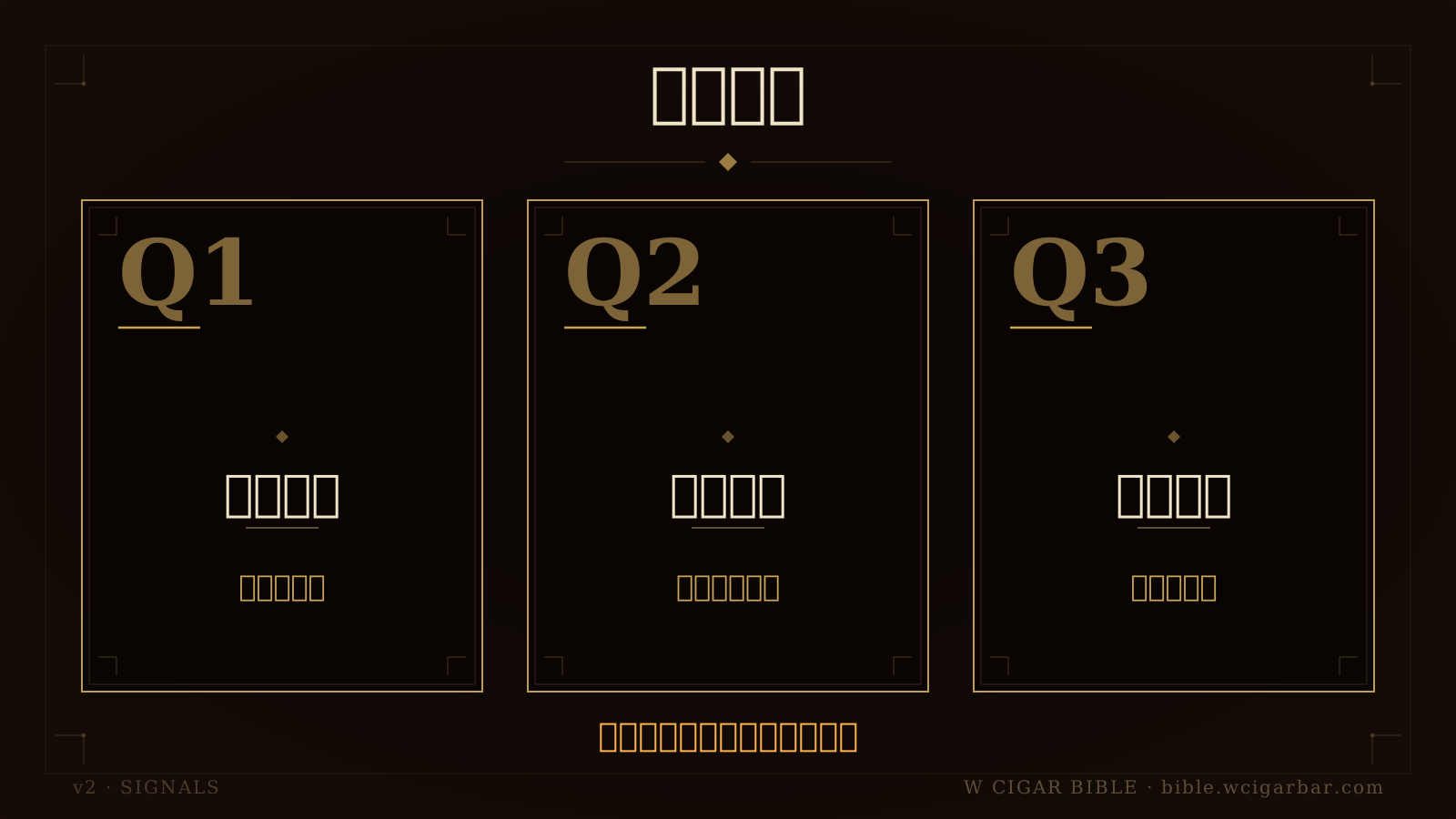
三張問答卡回答味道、同款差異與停止時機
Using Tables to Establish a Scoring System: Turning Feelings into Comparable Data
Scoring isn't about turning enjoyment into an exam but making memory traceable. The internationally common 100-point system can be daunting for beginners, so start with four major categories: appearance and structure, aroma and flavor, balance and transition, finish and overall impression. Write reasons for each category; the reasons are more important than the score itself. High scores without textual reasons are almost useless for future learning.
Below is a simplified table I often use, suitable for a 60 to 90-minute complete observation. For smaller sizes like Petit Corona, time can be shortened; for Churchill or Double Corona, give it enough space, don't force it into a Robusto rhythm.
| Evaluation Item | Suggested Weight | Observation Focus | Example Record |
|---|---|---|---|
| Appearance and Structure | 20% | Wrapper oil, rolling, airflow, burn | Fine wrapper, slightly tight airflow in the first third, improved after 20 minutes |
| Aroma and Flavor | 35% | Main theme, complexity, cleanliness | Coffee, cedar, cocoa, roasted almonds in the middle third |
| Balance and Transition | 25% | Three-part changes, sweet-bitter-acid-spicy ratio | Best in the middle third, pepper rises in the final third but remains controlled |
| Finish and Overall | 20% | Length, texture, aftertaste, memory points | Finish about 30 seconds, woody and cocoa finish |
I recommend recording at least 3 cigars of the same model before drawing conclusions. For example, if three cigars from the same 2021 box of Trinidad Vigía consistently show cream, herbal, and almond in the middle third with stable structure, it can be considered a reliable impression. Judging good or bad based on just one cigar is easily misled by storage, transportation, or individual differences. The same logic applies to collection value; it doesn't guarantee appreciation, still depending on source storage and market.
Common Questions
Does being able to detect many flavors mean good tasting ability?
Not entirely. Being able to identify cedar, coffee, and leather is helpful, but more important is judging whether the flavors are clean, balanced, and change reasonably over time. If a cigar has ten flavors but they clash, it may not be more mature than a cigar with three clear main themes and stable structure. The core of tasting ability is organizing sensations into verifiable judgments.
Why do the same brand and model feel different each time?
Cigars are agricultural and handmade products; vintage, leaf batch, roller, storage humidity, and transportation state all affect the outcome. For example, different box codes of Montecristo No.4 may have significant differences in coffee, wood, and spice proportions. If storage drops from 72% to 65%, the entry may change from damp to clear.
Do beginners need to start with a 100-point system?
No. Start with three columns: "good, average, needs further observation," plus four text records for aroma, taste, structure, and finish. After accumulating notes on over 30 cigars, introducing a 100-point system will be more meaningful. Scores are a tool for organization, not an authoritative decoration.
Can tasting be paired with alcohol or coffee?
Yes, but during the learning phase, it's recommended to establish a baseline with room temperature water. Coffee can amplify roasted and bitter flavors, rum may add sweetness, and whiskey can bring out barrel and spice notes. If comparing two cigars, it's best to use the same pairing; otherwise, it's hard to judge whether differences come from the cigar or the drink.
How to train one's aroma vocabulary?
Start with everyday materials. Smell hay, cedarwood chips, dark chocolate, coffee beans, almonds, pepper, cinnamon, leather products to build a memory bank. Practice 3 to 5 types each time, don't overdo it. You can also divide flavors into six categories: wood, nut, spice, sweet, earthy, floral, and gradually refine them.
When should tasting be stopped?
If you experience dizziness, nausea, cold sweats, or significant discomfort, stop, hydrate, and rest. Professionalism isn't about enduring to the end but knowing your body's limits. Especially when fasting, lacking sleep, or choosing a high-strength cigar, slow down, and if necessary, save notes for when you're in better condition.
I have always believed that the most fascinating aspect of cigar tasting is not making a cigar sound mysterious but using clear methods to see its character. When you can distinguish the source of aroma, the thickness of taste, the stability of structure, and the quality of finish, each lighting becomes more orderly and enjoyable. Maintain curiosity, keep records, and respect your body and environment; this is what makes the gentleman's cigar culture truly intriguing.
—Cigar Prince Wilson Tsai
Smoking is harmful to health. Underage smoking is prohibited. Quitline: 0800-636363. This article is for adults over 20 years old as a reference for cigar culture, storage, and regulations, not a tobacco advertisement, promotion, or purchase suggestion.
Like this article?Share with friends
Share this W Cigar Bible piece with friends who want to learn cigar culture, storage, and tasting.
想把這篇 化為實踐
雪茄聖經是知識;雪茄文化要在空間裡發生

W Cigar Bar 大安總店資訊
台北大安區 · 雪茄聖經總編輯 Wilson Tsai 主理的雪茄文化空間
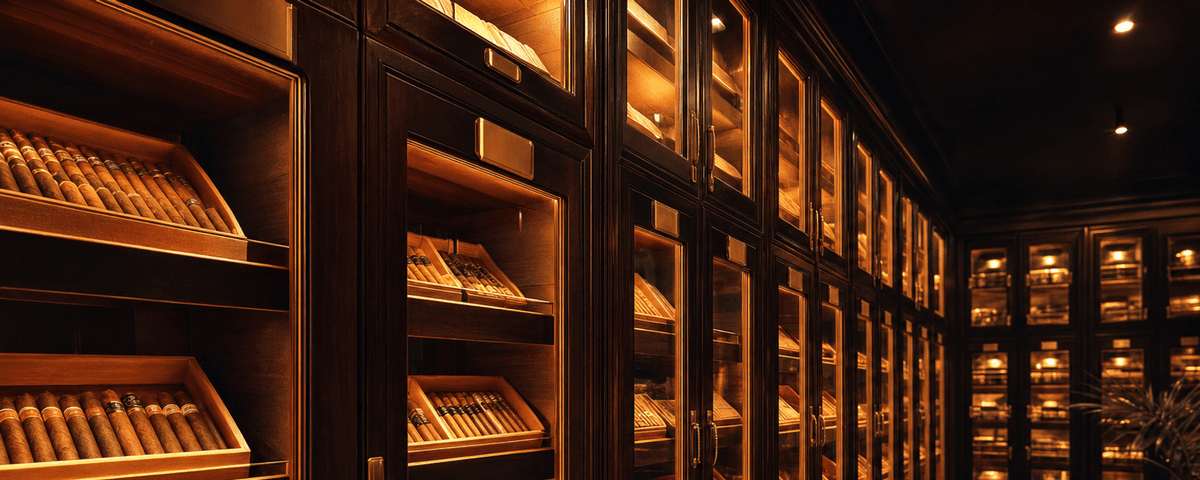
33 座 24 小時恆溫恆濕醇化室
W Cigar Bar 提供的會員醇化空間 · 場地資訊請洽編輯部
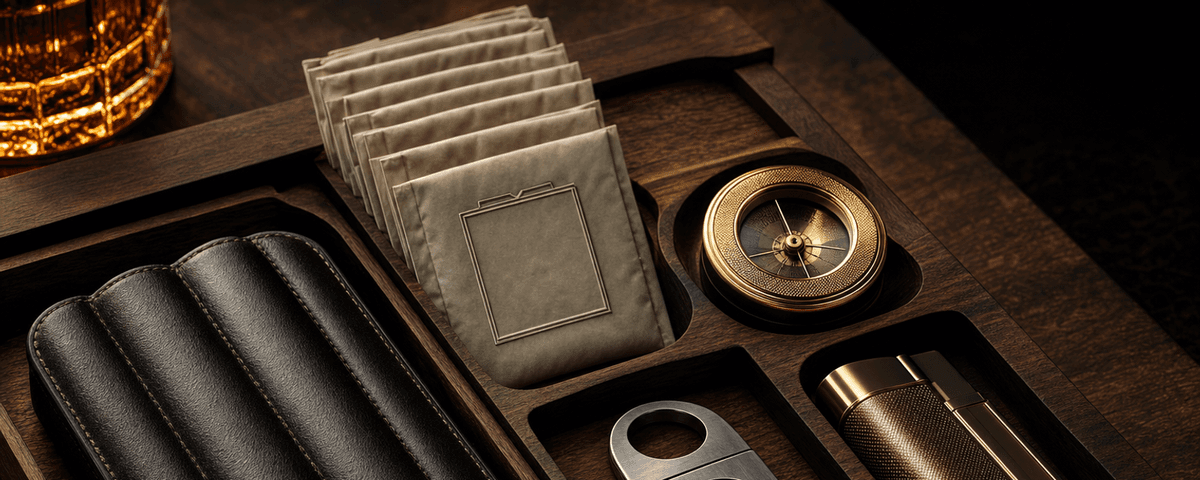
雪茄剪 / 打火機 / 雪茄盒 / Boveda
W Cigar 配件官網 · 專營雪茄配件正品
加 LINE 好友 · 文化諮詢
文化空間資訊 · 紳士沙龍 · 私人包場
本網站內容僅供雪茄文化、歷史、收藏與品吸知識研究參考。菸品有害健康、未滿法定年齡者請勿吸菸。實際規範請依所在地法律為準。
吸菸有害健康・戒菸專線 0800-636363・本站僅供 20 歲以上成年人閱覽。
讀到這裡,你不只是路過的人
留下 Email,加入 W 雪茄聖經內圈——總編輯 Wilson Tsai 親選的學院深文與國際新訊,先你一步送到信箱。
· 教育用途非銷售 · 隨時一鍵退訂 · Email 絕不對外公開 · 由勝茄股份有限公司營運
同分類延伸閱讀

資料來源:W Cigar Bible 編輯部整理 · 雪茄王子 Wilson Tsai 親自審稿
本文僅供雪茄文化、歷史、收藏與品鑑知識研究,不作為菸品促銷、銷售或購買建議。吸菸有害健康,未滿二十歲不得吸菸。