雪茄與古巴文化的深度連結

古巴雪茄不僅是一種消費品,更是文化的象徵,融合了土地、手工藝、社交與音樂。對於入門者而言,理解雪茄的社交意義與禮儀至關重要。雪茄在古巴的社交場合中,成為人們交流的媒介,強調放慢節奏與建立關係。歷史背景也賦予了雪茄深厚的文化內涵,從西班牙殖民時期到現今,古巴雪茄的製作過程與工藝代表了當地人的身份認同。透過正確的品吸方式,入門者能更深入體會古巴雪茄的獨特魅力與文化價值。
- 古巴雪茄是社交語言,強調慢節奏與人際關係,而非單純消費品。
- 雪茄的文化背景與歷史緊密相連,反映了古巴人的身份認同與自豪感。
- 理解雪茄的禮儀與分享故事比展示收藏更重要,讓社交環境更自在。
The Deep Connection Between Cigars and Cuban Culture
To me, Cuban cigars have never been just agricultural or luxury products. They are cultural symbols that blend land, craftsmanship, language, music, and social etiquette; what you ignite is not "a piece," but a way the Caribbean island understands time.
For beginners who already know the basics of tasting, the next step is not just to pursue strength, ring gauge, or vintage, but to learn to read the human stories behind them. As the editor of the "Cigar Bible," I care more about how a cigar allows you to see the daily life, dignity, and identity of the Cuban people.
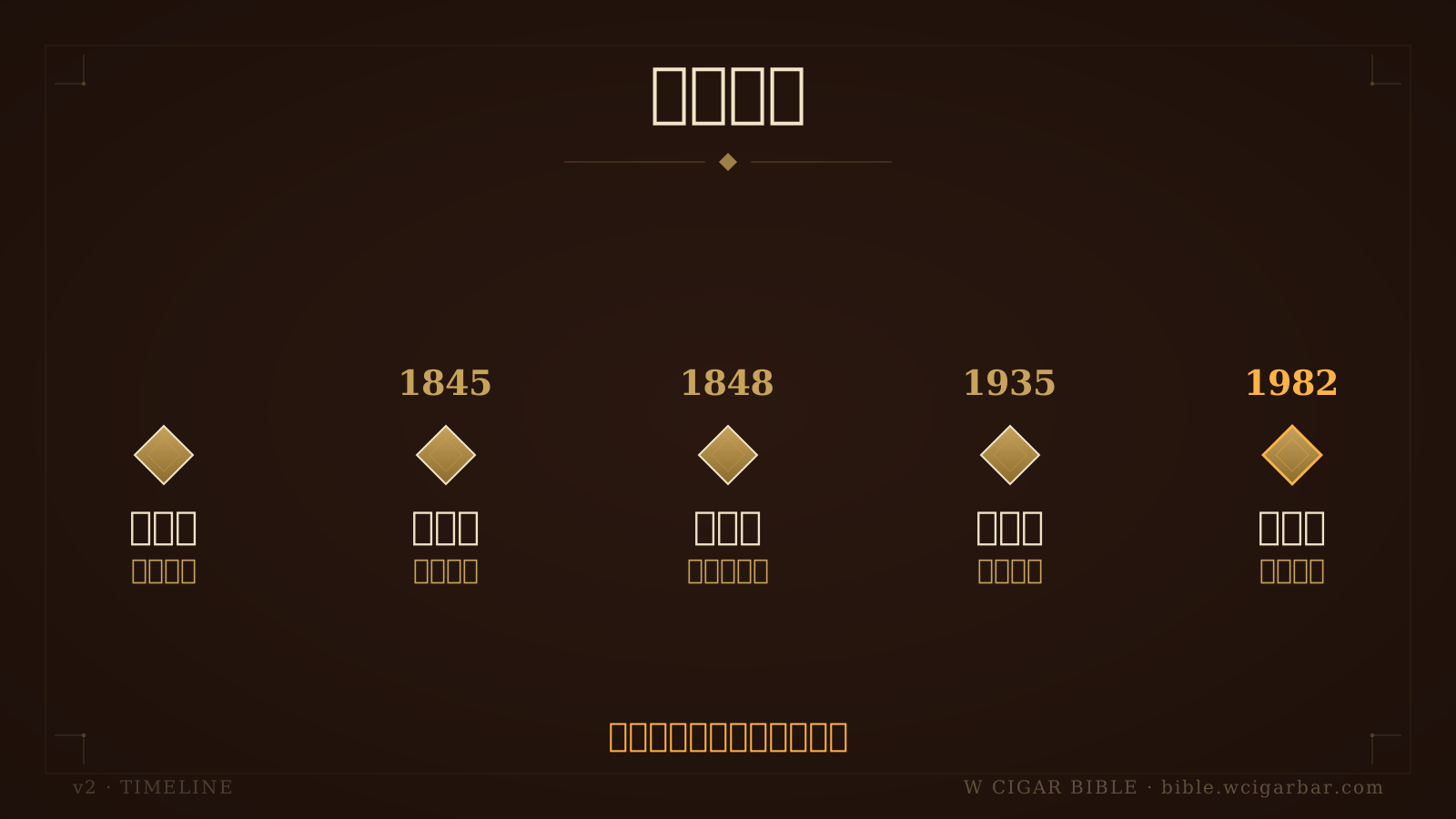
年表列出古巴雪茄文化形成的重要節點
Cigars as the Slow-Paced Language of Cubans
In Cuba, cigars are not just an after-dinner pastime; they are more like a social language. From the balconies of Old Havana to the tobacco fields of Pinar del Río, cigars often appear in conversations, chess games, music listening, political discussions, and family gatherings. Locals may not use complex vocabulary to describe flavors, but they understand them through rhythm: when to light up, when to stay silent, when to let the smoke disperse on its own.
The core of cigars in Cuban culture is not about showing off, but about slowing down time and bringing relationships closer. This is crucial for beginners because true cigar etiquette is not about reciting terms but knowing not to rush, not to interrupt, not to blow smoke towards others, and not to treat a cigar as a quick consumable.
Take a common Montecristo No.4 as an example, with a length of about 129mm and a ring gauge of 42, many people finish it in 30 to 45 minutes; if it's a Cohiba Siglo VI, with a length of about 150mm and a ring gauge of 52, the time may stretch to over 90 minutes. This time difference perfectly illustrates the social nature of Cuban cigars: it requires people to sit down and let a conversation have space to ferment.
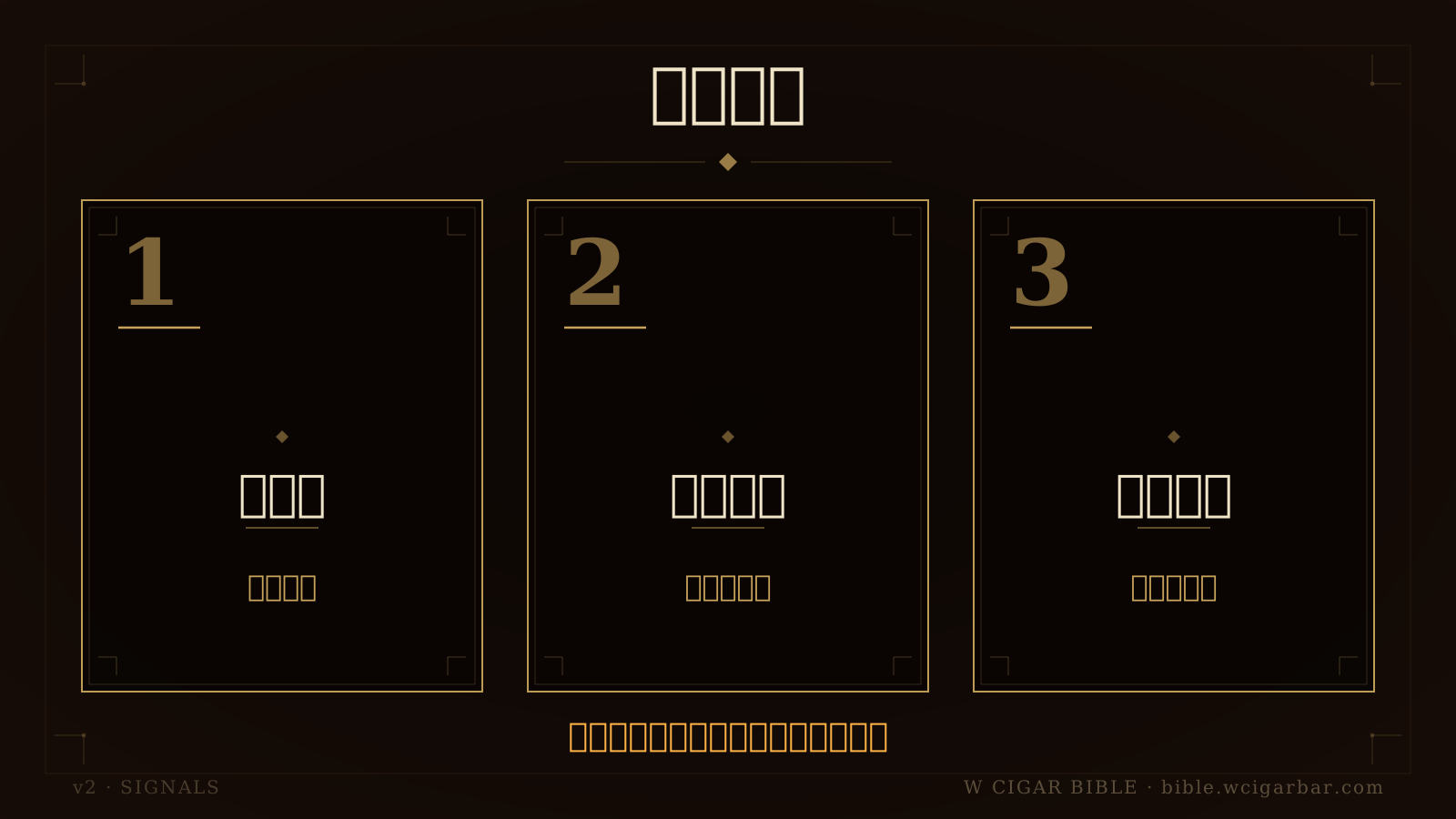
三張重點卡呈現慢節奏歷史與禮貌
From Tobacco Fields to Factories: History Rolls Culture into the Leaves
The cultural weight of Cuban cigars is inseparable from history. During the Spanish colonial period, tobacco gradually became an important crop after the 16th century; by the 19th century, Havana was already a hub for international cigar trade. The Partagás brand was established in 1845; H. Upmann appeared in 1848; Montecristo was born in 1935. These brands are not cold trademarks but traces left by cities, immigrants, workers, and commercial networks.
In Cuban factories, one of the most culturally representative roles is the "lector de tabaquería" or reader. Starting in the mid-to-late 19th century, readers would read newspapers, novels, and political articles while the rolling workers worked. The naming of Montecristo is said to be related to the popularity of "The Count of Monte Cristo" in the factory, linking a cigar to literature, thought, and class consciousness from the production site.
The uniqueness of Cuban cigars lies in the fact that they are not simply manufactured but "cultivated" in historical narratives. For example, Cohiba initially appeared as a special supply cigar in the 1960s, often considered its brand starting point in 1966, and officially entered the international market in 1982. This transition from private reception to a global brand also made it part of Cuba's national image.

矩陣比較風味禮儀與歷史三種讀法
Social Etiquette: How a Cigar Determines Your Sense of Propriety
In Cuban-style cigar socializing, manners often outweigh equipment. Beginners often focus on lighters, cutters, and hygrometers, which are important, but more easily overlooked is "propriety." For example, not lighting up in enclosed spaces, not exhaling smoke while talking to someone, not commenting on the authenticity and price of others' cigars—these are more mature than naming ten brand vintages.
True cigar etiquette is about making everyone at the table feel comfortable, not making yourself seem knowledgeable. In Havana's social scenes, sharing stories is more natural than showcasing collections; someone might talk about their grandfather working in the tobacco fields, another about a hurricane affecting the harvest, or someone might just quietly listen to a son cubano. Cigars become the prelude, not the entirety of the main act.
I suggest beginners remember a few basic actions:
- Confirm the environment allows lighting up before doing so, and respect others' feelings.
- Be conservative with the cut to avoid deep cuts that cause the cap to crack.
- Puff rhythmically about every 45 to 60 seconds to avoid overheating.
- Avoid heavy perfumes as the scent can interfere with yourself and others.
- Don't rush to compare highs and lows, first describe the sensations of wood, coffee, leather, honey, pepper, etc.
These seemingly small matters are actually the entrance to culture. When you are willing to slow down, Cuban cigars become more than just nicotine and smoke; they become a social medium that encourages conversation, contemplation, and music listening.
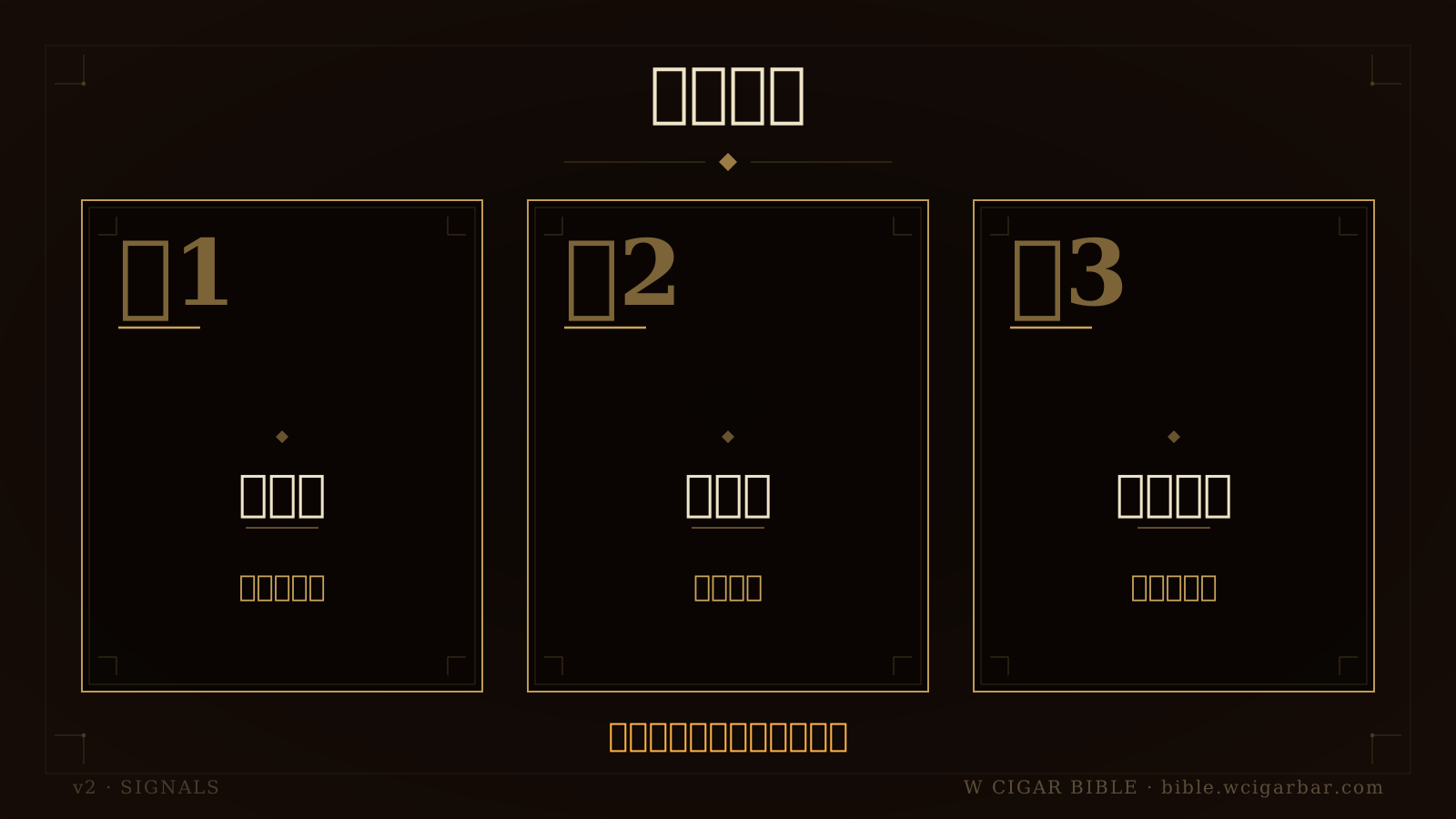
三張錯誤提醒卡說明雪茄社交分寸
The Image of Cigars in Music, Painting, and Literature
If you walk into Old Havana, you'll find the image of cigars almost everywhere: the canvases of street painters, posters in jazz bars, workers and musicians in old photos, even the elderly man sitting at the door on travelers' postcards. These images are sometimes commercialized, but their roots are not false; cigars have indeed long coexisted with Cuban artistic life.
Music is similar. After the release of the self-titled album by Buena Vista Social Club in 1997, the world rediscovered the voices of the older generation of Cuban musicians. The nostalgia, rhythm, and improvisation in those melodies are quite similar to the sense of time in cigars: not rushing to reach a climax but unfolding layers in repetition, pauses, and turns. When smoking a Ramón Allones Specially Selected, pairing it with an old-fashioned bolero helps you understand that "thickness" exists not only in flavor but also in emotion.
In Cuban art, cigars often represent memory, craftsmanship, and dignity, not just masculine symbols. Hemingway lived in Cuba for many years, and although his stories with cigars are often romanticized by later generations, his literary imagination left in Havana, Cojimar, and the Caribbean indeed connected the world to Cuba with ruggedness, sea breeze, rum, and cigars. For beginners, understanding these artistic backgrounds adds a cultural coordinate to appreciating cigars.
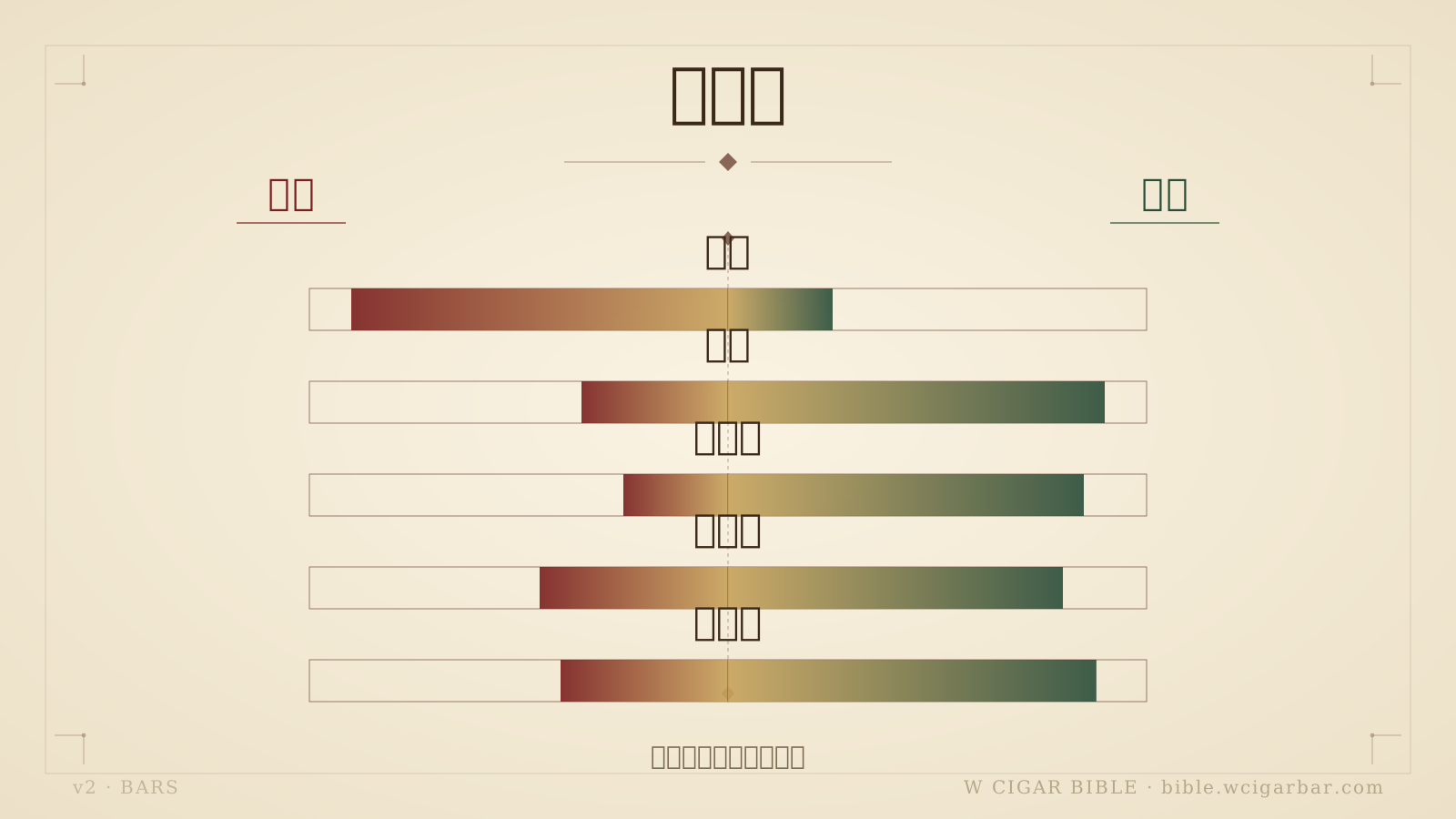
長條圖比較快消與慢讀兩種雪茄取向
Identity in Daily Life: How Cubans View Their Cigars
When Cubans talk about cigars, it often comes with a complex pride. It is a national icon, a product of farmers and workers' labor; it is sought after by the international market, yet it originates from land, hands, and long training. Take the Vuelta Abajo region as an example, this area in Pinar del Río is considered one of the core regions for premium Cuban tobacco leaves, with soil, humidity, and farming methods shaping its reputation.
Behind a handmade long cigar usually involves processes like planting, harvesting, leaf drying, fermentation, grading, rolling, inspection, and boxing. In factory rolling, the daily output of skilled torcedores varies depending on size and difficulty, with complex large ring gauges or figurado shapes naturally taking more time. This labor intensity makes cigars a way for Cubans to recognize themselves: we have the land, and we have the craftsmanship.
The identity brought by Cuban cigars comes from "the world knows who we are," and also from "we know how to make it." For example, Habanos releases Edición Limitada, La Casa del Habano exclusives, or regional editions each year, often sparking discussions among collectors; but I must remind you, collecting may have market price fluctuations, not guaranteeing appreciation, still depending on source preservation and market. Cultural value and financial expectations should never be confused.
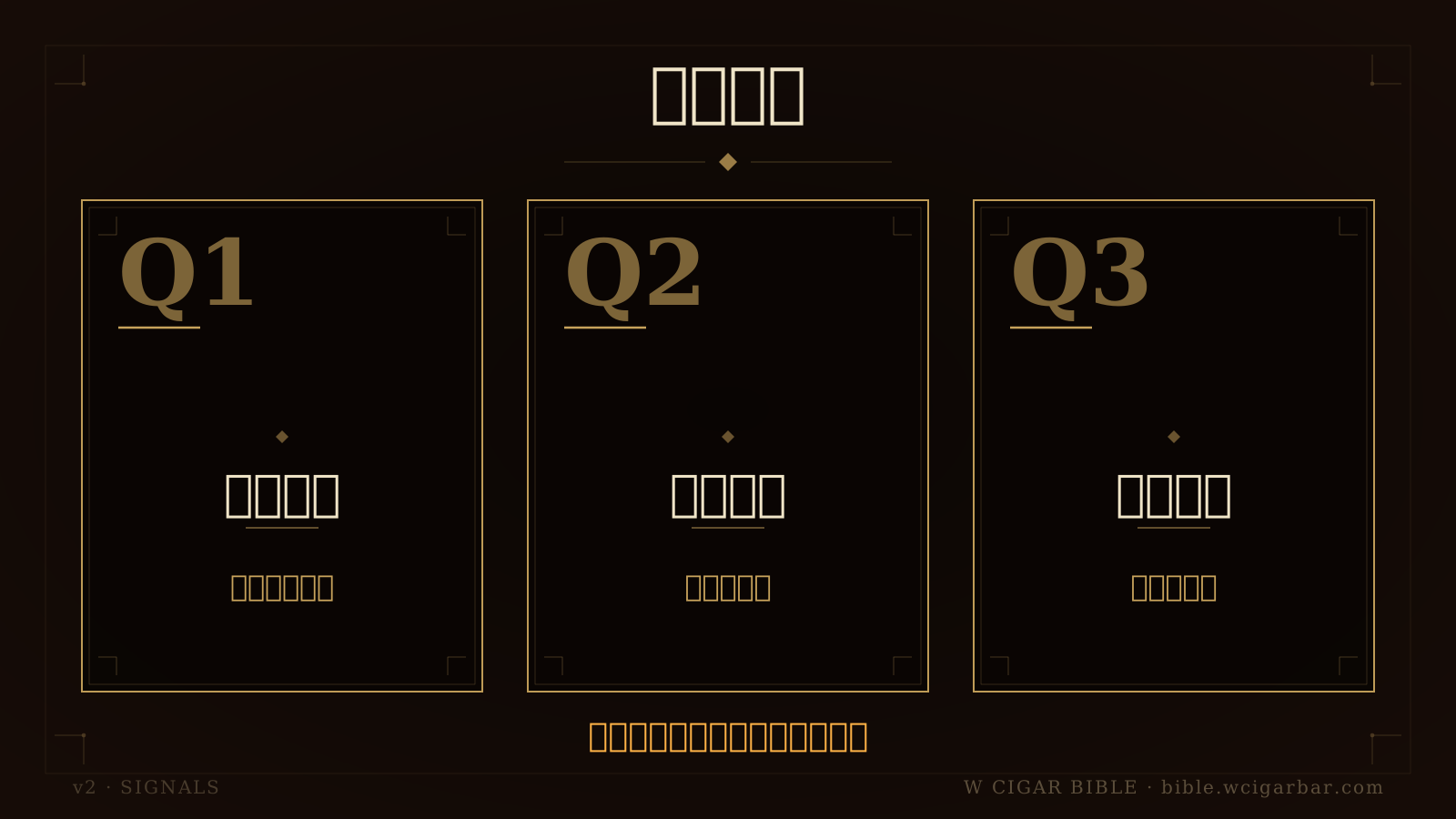
三張問答卡回答古巴雪茄文化入門問題
How Beginners Can Properly Understand Cuban Cigars
For beginners wanting to delve deeper into Cuban culture, it is recommended not to pursue the most expensive or rarest models at first but to build "comparative ability." For example, with the same Robusto size, Cohiba Robustos, Partagás Serie D No.4, Bolívar Royal Coronas, Hoyo de Monterrey Epicure No.2, can all help you understand different brand styles: some lean towards creamy and herbal, some towards earthy, leathery, and spicy, while others are more mild and rounded.
Here is a learning comparison method I often suggest, not a ranking, but a cultural and style map:
| Brand / Model | Common Size Concept | Style Clues | Suitable Learning Focus |
|---|---|---|---|
| Montecristo No.4 | About 129mm, Ring Gauge 42 | Cocoa, Wood, Coffee | Classic Balance |
| Partagás Serie D No.4 | About 124mm, Ring Gauge 50 | Leather, Earth, Spice | Strength and Rhythm |
| Hoyo de Monterrey Epicure No.2 | About 124mm, Ring Gauge 50 | Cream, Cedar, Floral | Smoothness and Detail |
| Bolívar Royal Coronas | About 124mm, Ring Gauge 50 | Robust, Pepper, Mineral | Concentration Recognition |
| Cohiba Siglo VI | About 150mm, Ring Gauge 52 | Honey, Grass, Layers | Long-term Change |
The most effective way to understand Cuban cigars is to compare brand personalities horizontally and record the changes of the same cigar in the front, middle, and back sections vertically. I suggest preparing a notebook to record the date, humidity, cutting method, paired drinks, front 15 minutes, middle 30 minutes, and end feelings. When you accumulate records of more than 20 cigars, you'll find yourself no longer just saying "smooth" or "strong," but being able to articulate why it feels Cuban.
Common Questions
For beginners to understand Cuban cigar culture, the focus is not on memorizing brands but on learning to place history, etiquette, and flavor on the same map. Here are some questions I often encounter and are worth clarifying first.
Why are Cuban cigars considered cultural symbols?
Because they combine specific land, craftsmanship, national image, and a long history of export. From the 19th-century Havana factories to today's Habanos system, they have long been more than just commodities but symbols by which the world recognizes Cuba.
Do beginners have to start with Cohiba?
No. Cohiba is very representative, but Montecristo, H. Upmann, Hoyo de Monterrey, and Partagás all offer clear learning paths. Establishing a stable rhythm and flavor vocabulary is more practical than chasing fame.
Why are Cuban cigars often said to have a "taste of the land"?
The so-called taste of the land usually refers to a composite sensation of earth, minerals, wood, dry grass, cocoa, etc. It is related to the region, tobacco leaf processing, and humidity preservation, not a single aroma but an overall impression.
What are the most common mistakes in cigar social settings?
The most common are smoking too fast, blowing smoke towards others, lighting up without checking the environment, and judging others' choices by price. The maturity of cigar socializing comes from respect, not showing off knowledge.
Does aging make Cuban cigars better?
It might, but it's not guaranteed. Preservation of humidity, temperature, box condition, and original state all affect the result. Generally, a relative humidity of 65% to 69% and a temperature of about 18 to 21°C can be referenced, but still need to be adjusted according to the environment.
Can collecting Cuban cigars be an investment?
You can pay attention to the market, but be very cautious. Some limited or discontinued products are indeed discussed; however, collection prices do not guarantee appreciation, still depending on source preservation and market. Understand culture and preservation first, then talk about market judgment.
I always believe that the most fascinating aspect of cigars is not the smoke itself, but how it teaches people to relearn slowness. The reason Cuban cigars are captivating is that they roll the hands of farmers, the sounds of factories, the music of the islands, and the history of the city into a leaf. If beginners are willing to be a little less impatient and a little more observant, they will understand: the true flavor often comes after the third puff and in the silence.
—Cigar Prince Wilson Tsai
Smoking is harmful to health. Under 20 years of age, smoking is prohibited. Quitline: 0800-636363. This article is intended for adults over 20 years old as a reference for cigar culture, preservation, and regulations, not as a tobacco advertisement, promotion, or purchase suggestion.
Like this article?Share with friends
Share this W Cigar Bible piece with friends who want to learn cigar culture, storage, and tasting.
想把這篇 化為實踐
雪茄聖經是知識;雪茄文化要在空間裡發生

W Cigar Bar 大安總店資訊
台北大安區 · 雪茄聖經總編輯 Wilson Tsai 主理的雪茄文化空間

33 座 24 小時恆溫恆濕醇化室
W Cigar Bar 提供的會員醇化空間 · 場地資訊請洽編輯部

雪茄剪 / 打火機 / 雪茄盒 / Boveda
W Cigar 配件官網 · 專營雪茄配件正品

加 LINE 好友 · 文化諮詢
文化空間資訊 · 紳士沙龍 · 私人包場
本網站內容僅供雪茄文化、歷史、收藏與品吸知識研究參考。菸品有害健康、未滿法定年齡者請勿吸菸。實際規範請依所在地法律為準。
吸菸有害健康・戒菸專線 0800-636363・本站僅供 20 歲以上成年人閱覽。
讀到這裡,你不只是路過的人
留下 Email,加入 W 雪茄聖經內圈——總編輯 Wilson Tsai 親選的學院深文與國際新訊,先你一步送到信箱。
· 教育用途非銷售 · 隨時一鍵退訂 · Email 絕不對外公開 · 由勝茄股份有限公司營運
同分類延伸閱讀

資料來源:W Cigar Bible 編輯部整理 · 雪茄王子 Wilson Tsai 親自審稿
本文僅供雪茄文化、歷史、收藏與品鑑知識研究,不作為菸品促銷、銷售或購買建議。吸菸有害健康,未滿二十歲不得吸菸。