古巴咖啡 Cafecito 文化:蔗糖打發 espuma 的哈瓦那早晨,搭配 Cohiba Siglo II 的原鄉組合
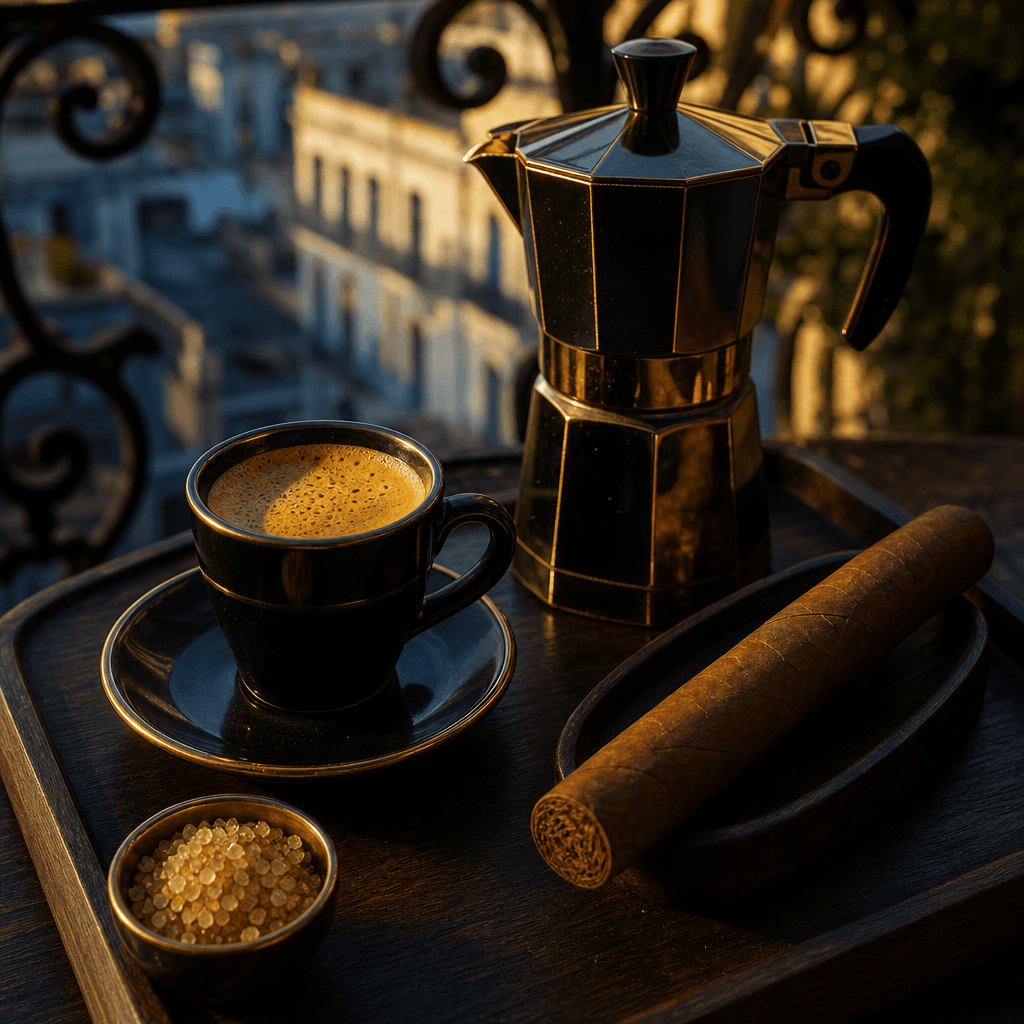
古巴咖啡 Cafecito 的靈魂,在於以第一滴濃縮咖啡打發蔗糖,做出金棕色 espuma 甜霜。本文從水晶山產區、colada 分享文化、Little Havana 離散傳承談起,再細拆它與 Cohiba Siglo II 的奶油、蜂蜜、青草、烤杏仁如何形成同島風土閉環。
- Cafecito 的 espuma 不是裝飾,而是蔗糖、咖啡油脂與高濃度萃取的核心結構。
- Cohiba Siglo II 的中等偏淡茄體,能承接古巴咖啡高甜高濃而不被壓過。
- 古巴豆與古巴煙相遇時,甜霜、蜂蜜、青草與烤杏仁會形成風土閉環。
Cuban Coffee Cafecito Culture: The Havana Morning with Sugar-Whipped Espuma, Paired with Cohiba Siglo II
Cuban coffee Cafecito and Cohiba Siglo II make a perfect pairing for beginners to understand the "beverage × cigar" native combination. Cafecito is not just a small cup of black coffee; it involves whipping the first drop of espresso with sugar into a sweet espuma, allowing the entire cup to deliver sweetness, bitterness, caramel, and oils together. Cohiba Siglo II (Cuba, Mareva, 42 × 129mm): cream, honey, grass, roasted almonds, with a medium-light body, perfectly complements this high-sweetness, high-intensity small cup of coffee with its delicate and clear cigar lines.
I often say that beginners shouldn't rush to see coffee and cigar pairing as a profound ritual; just understand "which flavor is pushing, and which flavor is receiving." Cafecito offers sugar sweetness, deep roast bitterness, coffee oils, and Caribbean rhythm; Siglo II captures honey cream, hay aroma, roasted nuts, and the fine fermentation of Cuban tobacco. As the editor of the "Cigar Bible," my concern is not to romanticize the two but to clearly explain the flavor changes that genuinely occur with each sip.
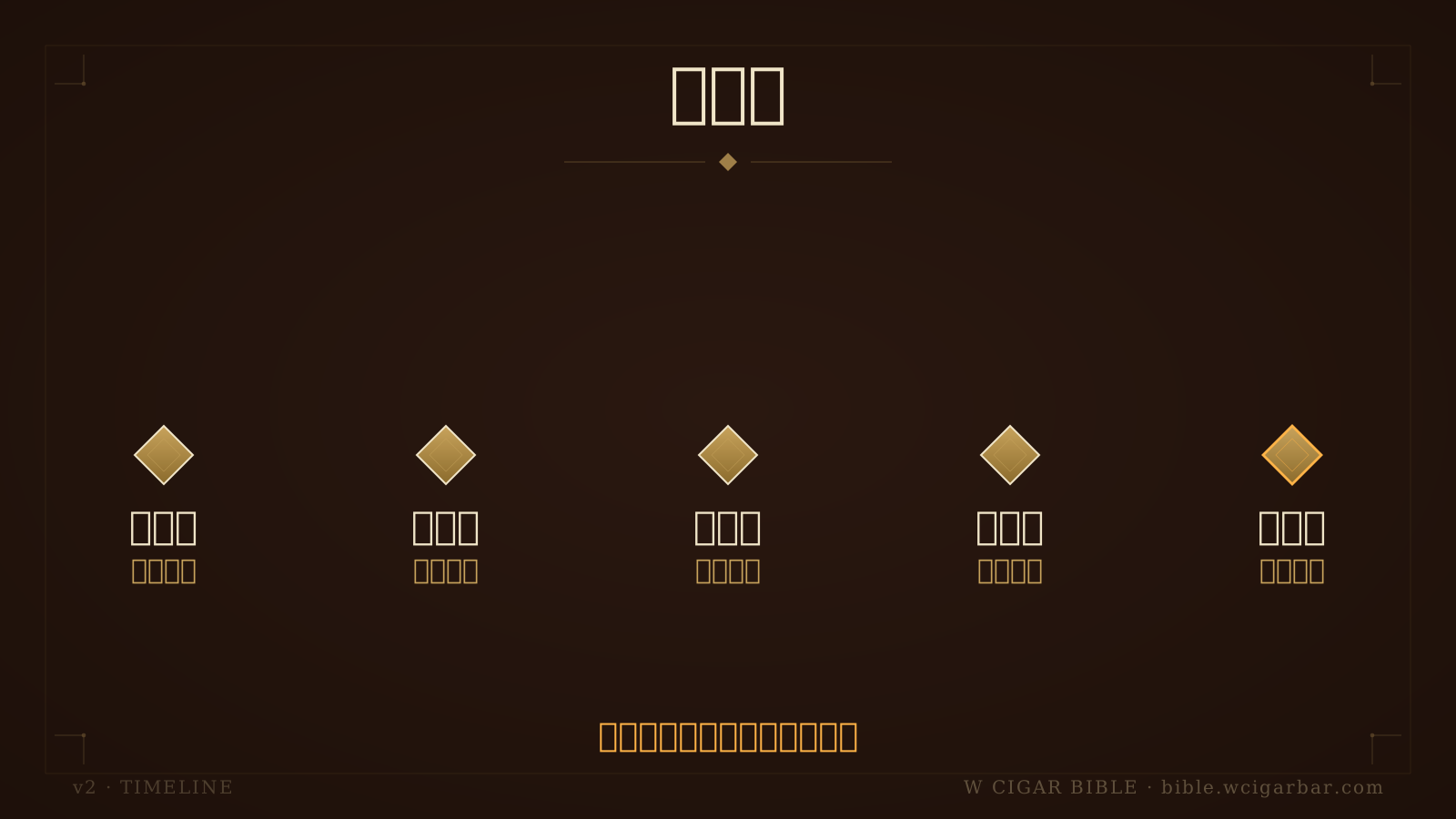
流程圖呈現首滴咖啡打發蔗糖成甜霜
Cuban Coffee Cafecito: Sweet and Bitter Caribbean in a Small Cup
The history of Cuban coffee can be traced back to the 18th century when coffee trees were brought to the island through European colonial trade and Caribbean agricultural networks. In the 1790s, after the turmoil in Santo Domingo, French planters and skilled workers moved to eastern Cuba, bringing more complete knowledge of cultivation, processing, and roasting. Mountain ranges like Sierra Maestra and Escambray gradually formed coffee belts, making Cuban coffee not just a daily beverage but also a common language of island agriculture and urban life.
Cafecito is small in volume but high in flavor density. It usually uses dark roast, finely ground coffee, extracted with a moka pot or espresso method, concentrating bitterness, caramel, cocoa, nuts, and coffee oils into a few sips. This small cup is not meant for sipping slowly all morning but is like a fast-paced Havana greeting: short, bright, sweet, bitter, yet with a definite weight.
The core of Cafecito is not "coffee with sugar," but transforming sugar into an espuma structure that can carry the bitterness of coffee. If you just stir sugar into coffee, the sweetness will float on the surface, and the bitterness will remain at the bottom, each speaking its own language. The authentic Cuban method is to let the sugar meet the most concentrated, oil-rich first drop, whip it into a thick sweet cream, and then let the rest of the coffee flow in, forming a sweet-bitter Caribbean character.
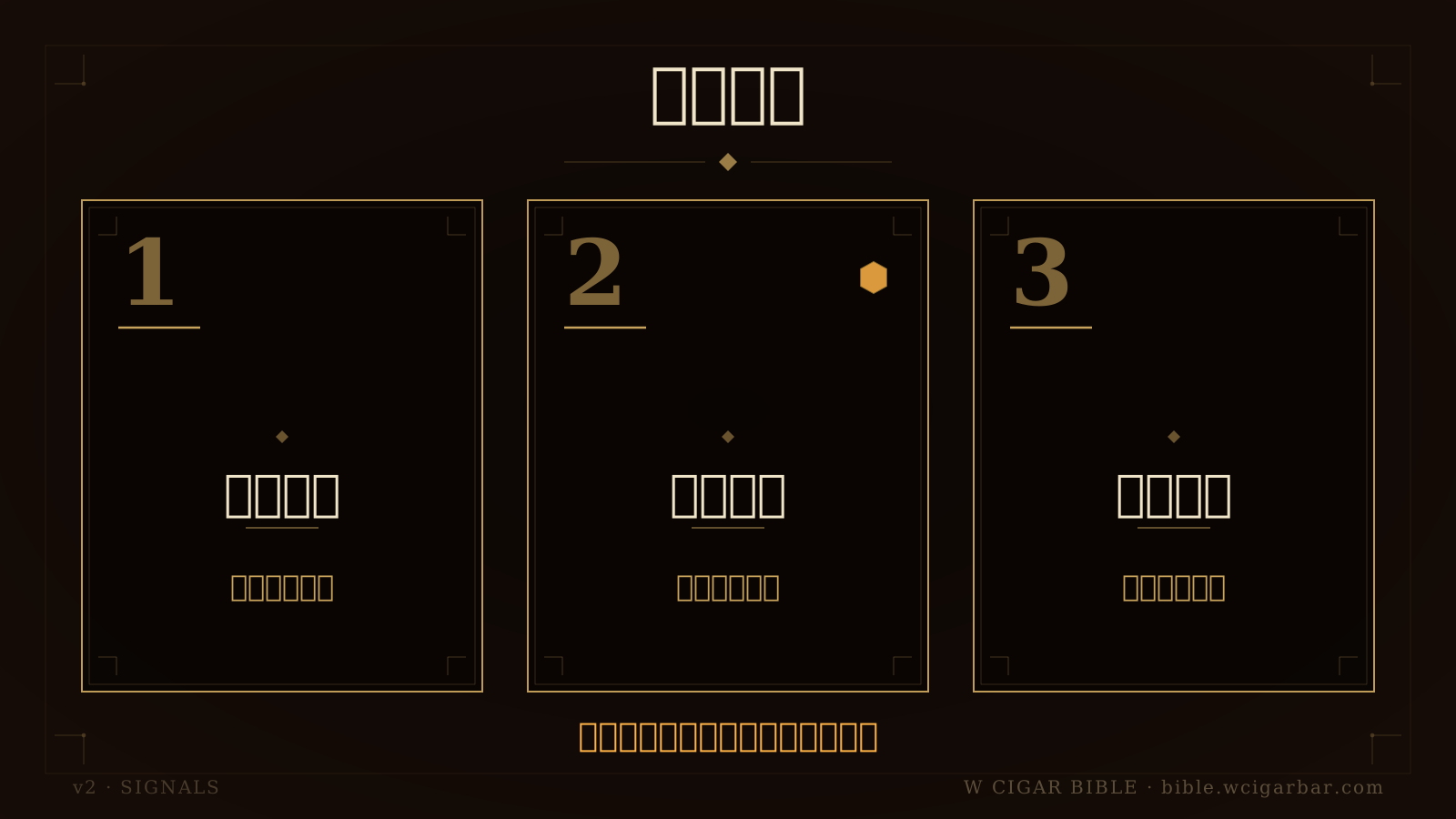
三張卡列出甜霜蜂蜜與杏仁的順序
Espuma Technique: The Logic of Whipping the First Drop of Espresso with Sugar
The key to espuma is the "first drop." When the moka pot first starts to pressurize, the initial coffee liquid that flows out is usually the most concentrated, oily, and deep, with strong Maillard reaction products and dark roast caramelization signals. Pour these few drops immediately into a cup containing sugar, stir quickly with a spoon, and the sugar crystals will be moistened, rubbed, and dissolved by the coffee liquid, slowly turning into a golden-brown foamy paste.
Beginners can think of it as a coffee version of sugar frosting emulsification. Sugar itself contains no fat, but the first drop of coffee contains fine oils, colloids, and soluble solids, which will encapsulate air when whipped, making the sweetness no longer just a linear rise. When the remaining espresso is poured back into this layer of espuma, a delicate sweet cream forms on the surface, entering the mouth with sweetness first, followed by bitterness, and finally leaving a caramel and nut aftertaste.
The sugar sweetness of espuma × the honey cream of Cohiba Siglo II creates a roundness that is not sugary but a Caribbean sweet cream alliance. Siglo II itself has honey, cream, and roasted almonds, which are not heavy dessert-like flavors but light sweet aromas in a medium-light cigar body. When espuma is first laid on the tongue, and cigar smoke follows, the honey tone is amplified, and the creaminess feels more like smooth coffee fats rather than standalone dairy aroma.
The chemical language here can be further clarified. In the hot environment and roasting background of dark roast coffee, sugar aligns with caramel, furan compounds, and maltol sensations; the honey impression of Siglo II often comes from sweet aldehydes and soft woody tones after tobacco aging. When the two meet, the tongue first receives "sweet," the back of the nose receives "honey," and the middle section is held by coffee bitterness to prevent it from becoming a monotonous sugar sensation.

矩陣比較咖啡甜霜與雪茄的風味作用
Crystal Mountain: The Mountain Framework of Cuban Coffee
When discussing Cuban coffee, it's not just about sugar; it's also about the beans themselves. Crystal Mountain is often regarded as one of the representative names of Cuban mountain coffee, pointing to high altitude, mist, mineral feel, and relatively delicate sweet-sour balance. Cuba is not known for exaggerated fruit acidity; it more often presents cocoa, roasted nuts, brown sugar, wood, and soft spices, making it easy to connect with the tobacco vocabulary of Cuban cigars.
The focus of the Crystal Mountain region is the maturity speed brought by the mountain environment. Cooler nights allow coffee cherries to accumulate sugars, while daytime sunlight promotes fruit ripening, forming a more substantial sweet base. If processed and roasted properly, the cup will not only have dark roast bitterness but also notes of nuts, cocoa, cane syrup, and a bit of bright acidity, all of which are important fulcrums when meeting Siglo II later.
The mountain framework of Cuban coffee allows Cafecito to retain the cocoa, nut, and slight acidity layers of the coffee beans themselves, even when espuma is added. This is crucial because if the coffee is only left with sugar and bitterness, it will flatten the cigar into a thin tobacco flavor. When the nut and cocoa base of the Crystal Mountain style is present, the roasted almonds of Siglo II have a place to extend, and the grass and cream can stand out separately, rather than being covered by sweet cream.
From a terroir perspective, pairing Cuban beans with Cuban tobacco is not just a slogan. Both coffee trees and tobacco are sensitive to soil drainage, sunlight, humidity, and post-harvest processing, developing similar warm sweetness and plant aromas in the island climate. This native terroir loop makes the pairing of Cafecito and Cohiba Siglo II feel less like a forced match and more like two pronunciations in the same language.
Colada Sharing Pot and Little Havana: The Community Rhythm of Cuban Coffee
Cafecito in Cuba is not an isolated personal beverage; it often appears in the form of colada. Colada is a larger serving of Cuban espresso, accompanied by several small cups for sharing. This form has a strong community feel: a pot of strong, sweet, hot small coffee passing through doorsteps, street corners, workspaces, and conversation gaps, making coffee a metronome of daily exchanges.
In Miami's Little Havana, this Cuban Coffee culture is preserved and rewritten by the diaspora community. The ventanita small windows sell not just coffee but also Cuban memories, language, music, and neighborhood relationships. You'll see people standing and drinking a small cup of cafecito, a few words in Spanish, a few laughs, a few sips of sweet bitterness, compressing the city's pace into that small cup.
The sharing nature of colada reminds us that the intensity of Cafecito is not for show but to convey clear, concentrated flavor signals in a short time. This is also enlightening for cigar pairing: Cohiba Siglo II is a Mareva size, with concentrated lines and a brisk rhythm, not needing excessive elaboration to present cream, honey, grass, and roasted almonds. The rhythm of small coffee and small cigars is similar, both emphasizing "concentration without being rough."
The version in Little Havana also shows us how tradition lives in technical details. Even with different roasting brands, different moka pots, and different family ratios, as long as the first drop whipped sugar espuma is retained, the soul of Cafecito remains. This concept of "method over equipment" is very friendly to beginners: you don't need to pursue complex equipment first; just grasp the sweet cream, concentration, and rhythm to understand the character of this coffee.
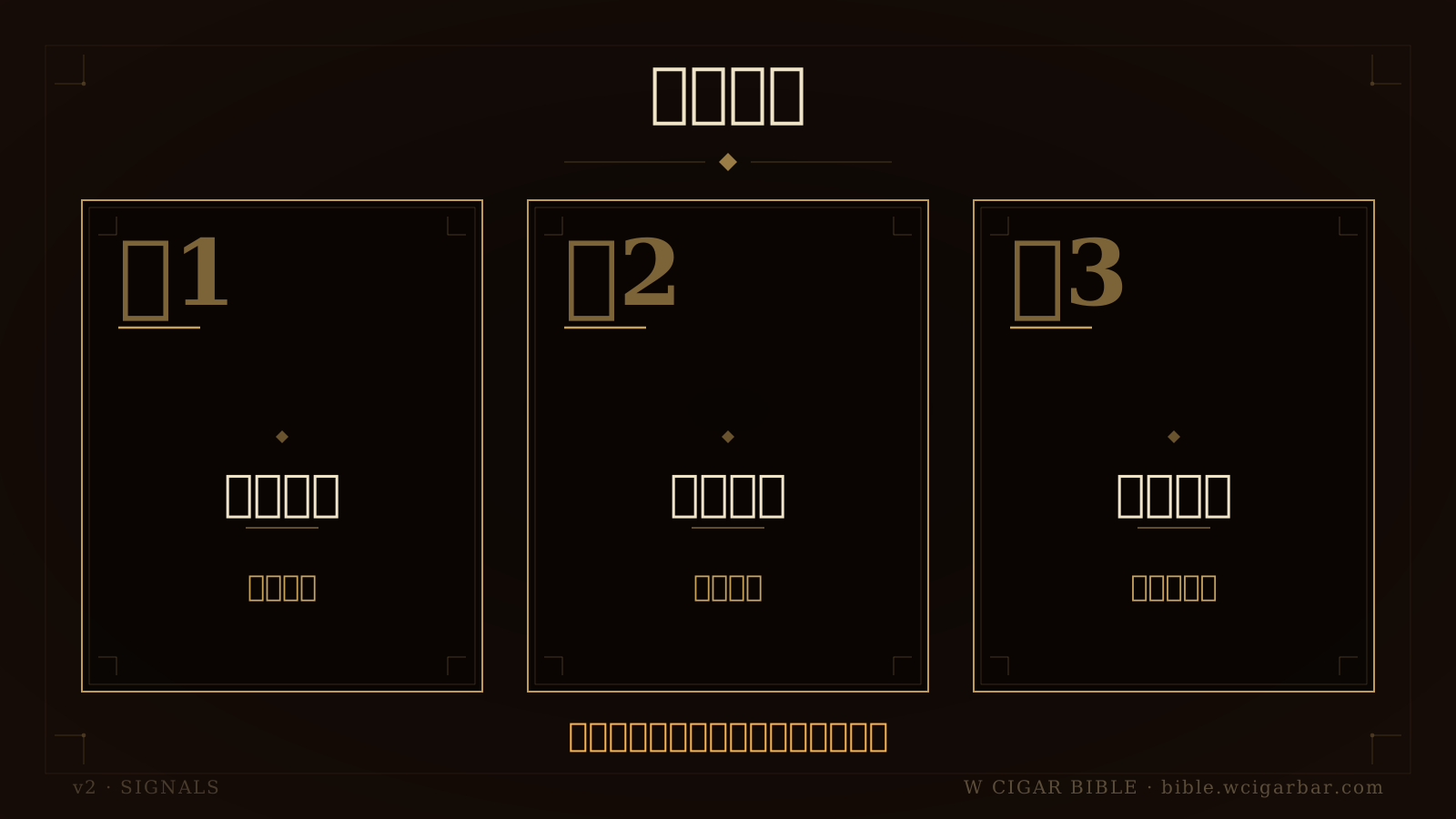
三張卡提醒首滴攪打與甜度的常見失誤
Cohiba Siglo II: Honey, Grass, and Roasted Almonds in Mareva Size
The specification of Cohiba Siglo II is Mareva, 42 × 129mm. This size has great educational significance for beginners because it doesn't spread a large amount of smoke like a big ring gauge, nor is it too short to show layers. Its medium-light body makes it easy to recognize the delicate cream, honey, grass, and roasted almonds of Cuban cigars, rather than being led by heavy power.
Siglo II often starts with cream and grass. The cream is not the direct taste of dairy products but a smooth, round, sweet mouthfeel; the grass is like fresh hay, tender leaves, and a faint herbal note. As the burn stabilizes, roasted almonds emerge from the background, accompanied by a slight honey sweetness, transitioning the overall from fresh to warm.
The medium-light body of Cohiba Siglo II is the key to receiving Cafecito's high sweetness and intensity without losing detail. If the cigar is too heavy, the sweet cream of espuma may only have an opening effect, and the later stage will be overwhelmed by smoke; if the cigar is too light, the deep roast bitterness of Cafecito may make the tobacco feel thin. Siglo II stands in the middle-light position, organizing sweetness, bitterness, and herbal aroma into a clear triangle.
Cutting and lighting also affect the pairing. Beginners should keep the cut smooth without pursuing excessive draw resistance; when lighting, ensure an even burn to avoid excessive bitterness at the start. Since Cafecito already has high concentration bitterness, the cigar end needs clean burning to allow honey, cream, and grass to fully emerge.
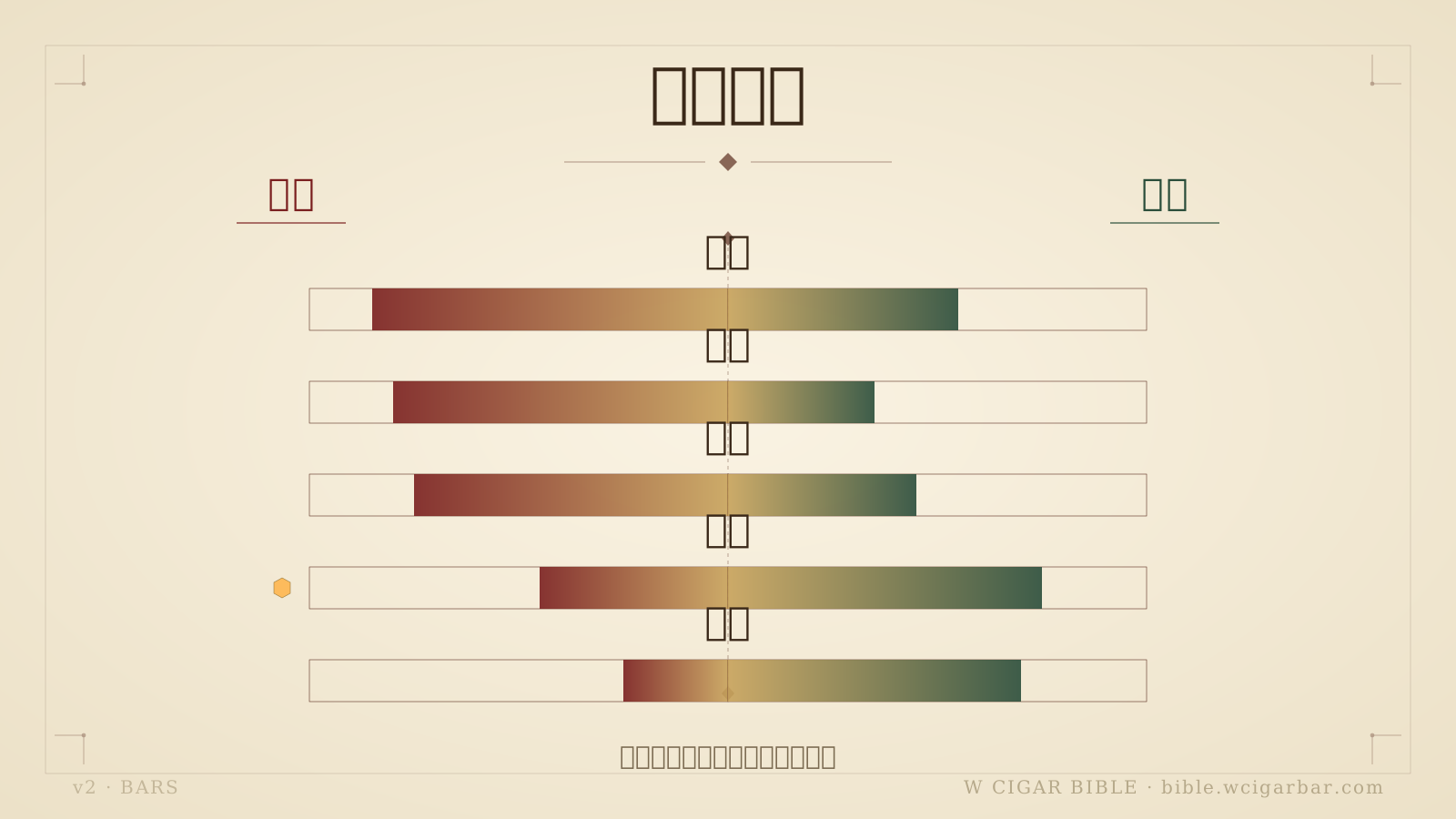
長條圖對照咖啡推力與雪茄接線的強度
Token × Token: The Specific Flavor Chemistry of Cafecito and Siglo II
When putting Cafecito and Cohiba Siglo II together, I first look at three main axes. The first is the sugar sweetness of espuma × honey cream, responsible for the opening roundness. The second is the furan, cocoa, and roasted nuts of dark roast coffee × the roasted almonds of Siglo II, responsible for the middle-stage roasting resonance. The third is the slight acidity and woody bitterness of coffee × the grass, hay, and faint spice of cigars, responsible for pulling the sweetness back to the ground.
The high sweetness and intensity of a small cup of Cafecito must rely on the balanced structure of Mareva to bring the sweetness back to the ground, creating layers rather than just sweetness. In the first second of entry, espuma establishes sugar sweetness on the tip of the tongue; then cigar smoke enters the back of the nose, amplifying honey and cream. From the third second, coffee bitterness and roasted almonds connect, compressing sweetness into brown sugar, nuts, and light cocoa, rather than stopping at the sugar surface.
| Cafecito Flavor Token | Siglo II Flavor Token | Changes After Meeting |
|---|---|---|
| Espuma Sugar Sweetness | Honey, Cream | Sweetness becomes smooth, forming a Caribbean sweet cream sensation |
| Dark Roast Furan Compounds, Cocoa | Roasted Almonds | Roasting aromas extend each other, nut aftertaste becomes clearer |
| Coffee Slight Acidity | Grass, Hay | Acid line brightens herbs, preventing smoke from feeling heavy |
| Brown Sugar Bitterness | Medium-Light Body | Bitterness is softened, cigar structure becomes more stable |
Looking further, the pyrazine compounds brought by coffee roasting often remind people of nuts, roasted grains, and cocoa edges; Cuban tobacco, after aging, also shows intersections of wood, nuts, honey, and herbs. When both are present, the retronasal olfaction makes "roasted almonds" more three-dimensional, like the outer layer of almonds slightly colored, with an oily sweet inside. This is why Siglo II is more suitable for Cafecito than heavy cigars: it leaves enough space for coffee roasting aromas to be heard.
The most charming aspect of the native terroir loop is that sweetness and herbs do not cancel each other out but calibrate each other. If the sugar sweetness of Cafecito exists alone, it may seem direct; if the grass of Siglo II appears alone, beginners may sometimes find it dry. Together, the sweet cream wraps the grass edges, and the grass pulls the sweet cream into a refreshing line, forming a bright, short, and warm flavor profile of a Havana morning.
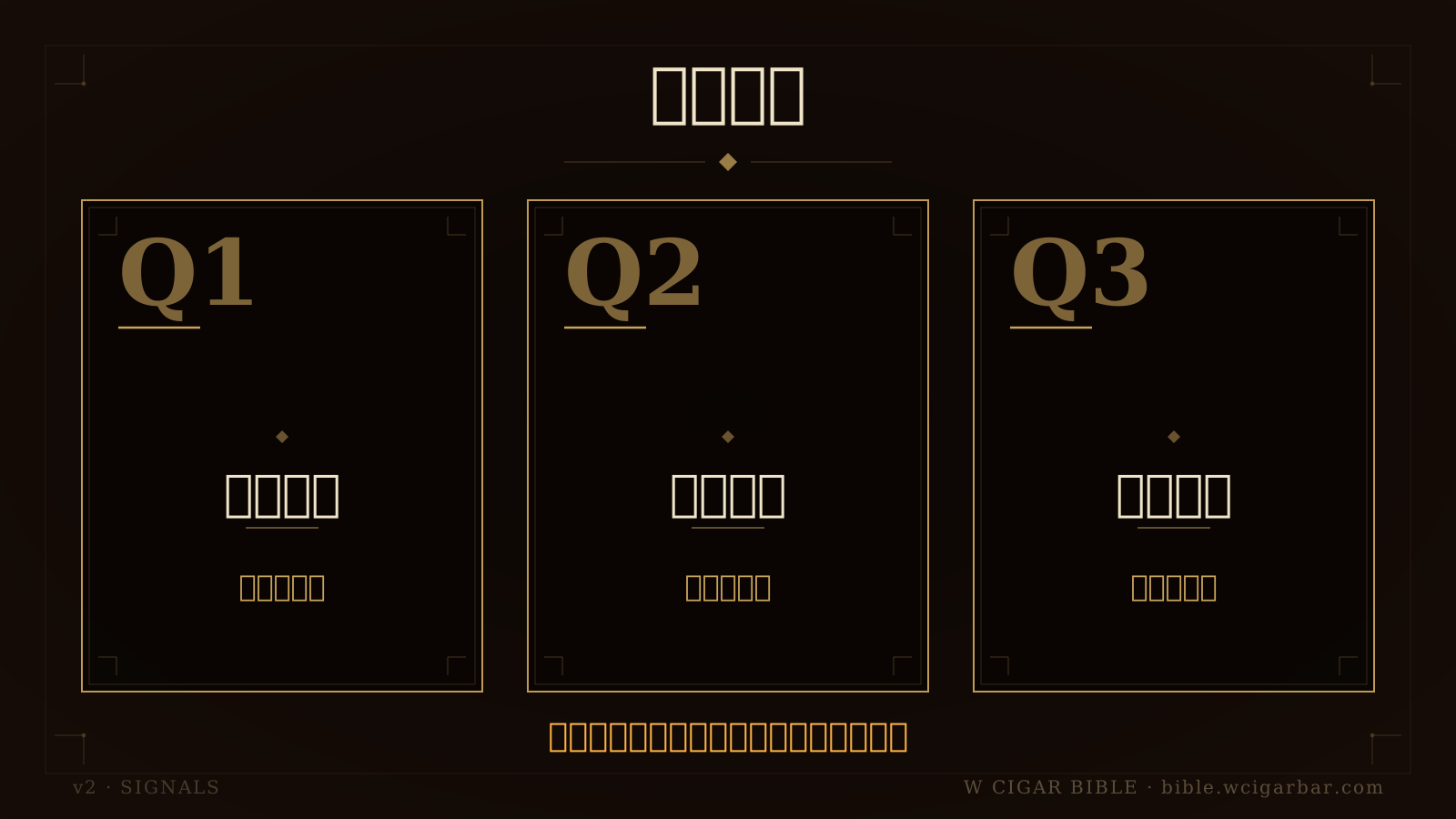
三張問答卡整理豆子器具與甜度調整
Practical Rhythm: How to Brew, How to Drink, and How to Make the Havana Feel Clearer
If making Cafecito with a moka pot, the grind can be finer than pour-over, but not so fine as to block. The water amount should follow the pot's scale, coffee grounds leveled but not tamped, and heat controlled at medium-low to avoid over-bitter extraction at the end. When the first drop of coffee flows out, immediately take a small amount and pour it into sugar, stirring until the color changes from wet sand to light brown foam paste, then pour the remaining coffee back.
The sugar ratio will affect the pairing direction. Too little sugar, and the espuma won't form easily, turning Cafecito into a bitter small espresso; too much sugar, and the grass and roasted almonds of Siglo II will be overshadowed by sweetness. Beginners can start with "about one teaspoon per small cup" as a starting point for understanding, then adjust according to the dark roast level of the beans and personal taste, focusing on giving the sweet cream thickness without making it the main character.
The best rhythm is not a mechanical alternation of one sip of coffee, one puff of cigar, but letting the espuma lay the foundation first, then allowing Siglo II's honey cream and roasted almonds to unfold. I would suggest taking a small sip of Cafecito first to confirm the sweet-bitter profile; then let the cigar enter the mouth, feeling how cream and grass are modified by the sweet cream. When the middle-stage roasted almonds emerge, take another small sip of coffee to extend the nut aftertaste with cocoa bitterness.
Cup temperature should also be noted. If Cafecito is too hot, the sweetness will appear sharp, and cigar smoke can be interfered with by the heat; slightly cooling to still warm but not scalding will make the viscosity and aroma of espuma clearer. Siglo II should not be smoked too quickly; although the Mareva size is neat, too fast a rhythm will increase burning temperature, making grass charred and honey thin, wasting the delicate balance of this pairing.
Frequently Asked Questions
For beginners to understand this pairing, just grasp the three steps of "sweet cream laying the foundation, honey cream following, roasted almonds finishing" and that's enough.
Does Cafecito have to use Cuban coffee beans?
Not necessarily, but using Cuban coffee beans will make the theme more complete. If you can find Crystal Mountain-style Cuban beans, cocoa, nuts, brown sugar, and soft acid lines will be closer to the honey, grass, and roasted almonds of Cohiba Siglo II. If using other Caribbean or Central and South American dark roast beans, you can also capture the high concentration and espuma technique to approach the style.
Can Cafecito be made without an espresso machine?
Yes, a moka pot is a very typical and easy-to-understand method. The focus is not on the machine but on whipping the first drop of coffee with sugar into espuma. As long as the concentration is sufficient, and there are enough coffee oils and soluble solids, the sweet cream can form a basic structure.
Where does espuma usually fail?
The most common issue is taking too much of the first drop of coffee, diluting the sugar so it can't whip into a paste. Another reason is not stirring fast or long enough, so the sugar crystals haven't fully combined with the concentrated coffee liquid. It's recommended to add a small amount of coffee liquid first, whip until light brown, thick, and glossy, then pour in the remaining coffee.
Why is Cohiba Siglo II suitable for beginners to understand this pairing?
Because its body is medium-light, with clear flavor lines, it won't overpower the coffee with strength. Cream, honey, grass, and roasted almonds are relatively easy-to-recognize signals, allowing beginners to clearly feel how Cafecito pushes cigar flavors. The Mareva size also keeps the rhythm concentrated, preventing beginners from getting lost in too long changes.
If Cafecito is too sweet, will it ruin the cigar flavor?
Yes, too high a sugar sensation will make Siglo II's grass and roasted almonds blurry. You can reduce the sugar amount or choose beans with more pronounced cocoa and nut notes to support the structure with bitterness and roasting aroma. The goal is not the sweeter, the better, but to make the sweet cream a bridge.
What time of day is this pairing suitable for understanding?
It's very suitable for short time segments in the morning or afternoon because Cafecito is small in volume and concentrated in flavor, and Siglo II's size is relatively neat. If you want to study the flavors in detail, do so when the environmental scent is simple, avoiding interference from perfumes, strong-flavored meals, or overly sweet desserts. This makes it easier to identify changes in honey cream, grass, and roasted almonds.
The true charm of the native combination of Cafecito and Cohiba Siglo II lies not in volume but in accuracy. The espuma whipped from the first drop of espresso lays a sweet cream for honey cream; the cocoa nuts of Cuban beans catch the roasted almonds of Mareva; grass pulls the sweetness back to the bright ground of a Havana morning. Beginners can start with this cup and cigar to understand how terroir, technique, and taste speak simultaneously.
Further Reading|Complete Guide to Coffee Origins and Roasting: From African Floral and Fruity to Asian Earthy Flavor Spectrum, with Cigar Pairing Overview|American Coffee and Pour-Over Daily: An Accessible Black Coffee Guide, Paired with José L. Piedra Petit Cazadores|The Milk Aroma of Latte and Cappuccino: The Round Envelopment of Steamed Milk Microfoam, Paired with Romeo y Julieta Mille Fleurs' Gentle Thousand Flowers
—Cigar Prince Wilson Tsai
Smoking is harmful to health. Under 20 years old is not allowed to smoke. Quitline: 0800-636363. This article is for reference by adults over 20 years old for cigar culture, preservation, and regulatory knowledge, not a tobacco advertisement, promotion, or purchase suggestion.
Like this article?Share with friends
Share this W Cigar Bible piece with friends who want to learn cigar culture, storage, and tasting.
想把這篇 化為實踐
雪茄聖經是知識;雪茄文化要在空間裡發生

W Cigar Bar 大安總店資訊
台北大安區 · 雪茄聖經總編輯 Wilson Tsai 主理的雪茄文化空間
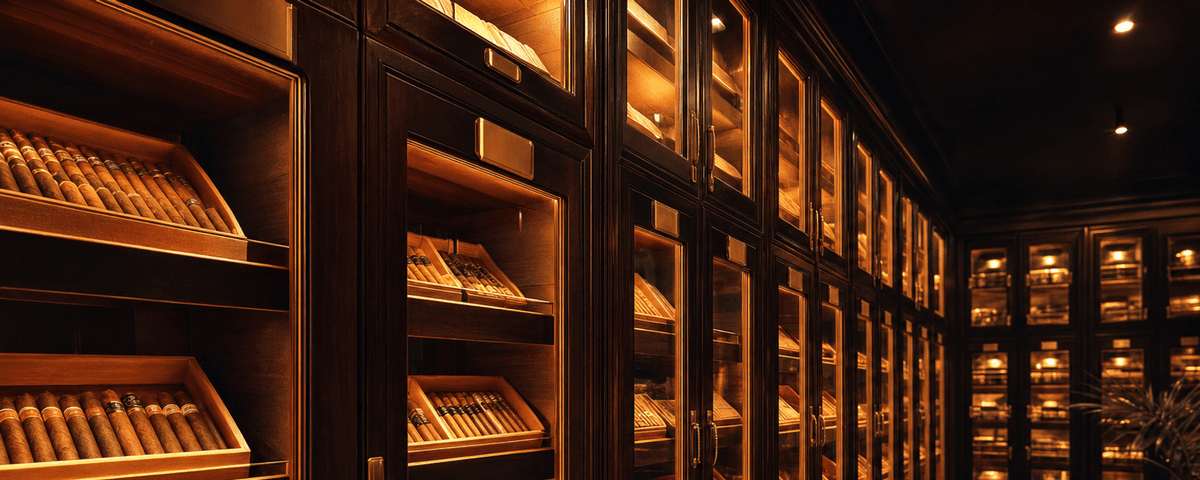
33 座 24 小時恆溫恆濕醇化室
W Cigar Bar 提供的會員醇化空間 · 場地資訊請洽編輯部
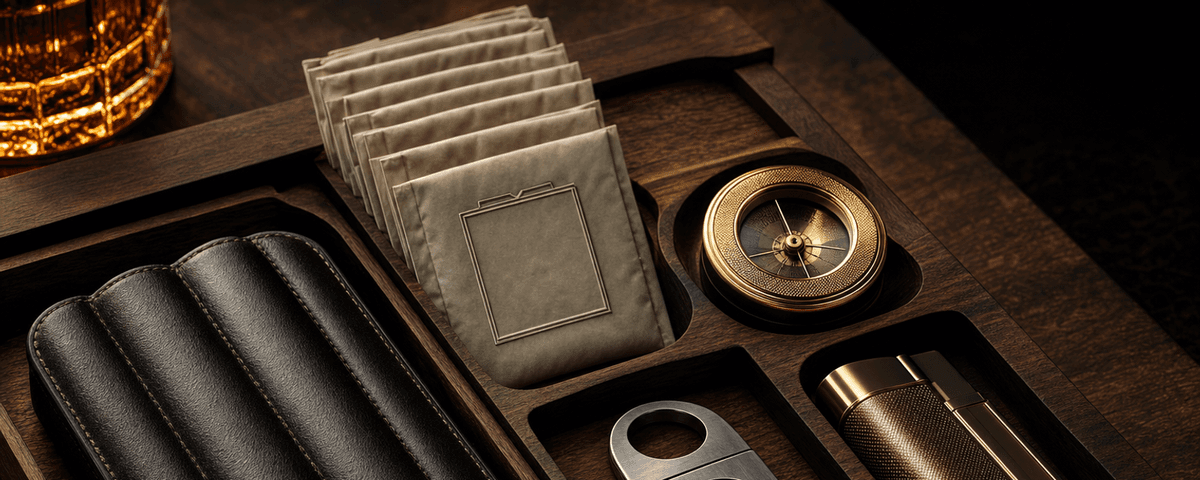
雪茄剪 / 打火機 / 雪茄盒 / Boveda
W Cigar 配件官網 · 專營雪茄配件正品

加 LINE 好友 · 文化諮詢
文化空間資訊 · 紳士沙龍 · 私人包場
本網站內容僅供雪茄文化、歷史、收藏與品吸知識研究參考。菸品有害健康、未滿法定年齡者請勿吸菸。實際規範請依所在地法律為準。
吸菸有害健康・戒菸專線 0800-636363・本站僅供 20 歲以上成年人閱覽。
讀到這裡,你不只是路過的人
留下 Email,加入 W 雪茄聖經內圈——總編輯 Wilson Tsai 親選的學院深文與國際新訊,先你一步送到信箱。
· 教育用途非銷售 · 隨時一鍵退訂 · Email 絕不對外公開 · 由勝茄股份有限公司營運
同分類延伸閱讀


資料來源:W Cigar Bible 編輯部整理 · 雪茄王子 Wilson Tsai 親自審稿
本文僅供雪茄文化、歷史、收藏與品鑑知識研究,不作為菸品促銷、銷售或購買建議。吸菸有害健康,未滿二十歲不得吸菸。