古巴雪茄與當代工藝:傳承與創新的對話
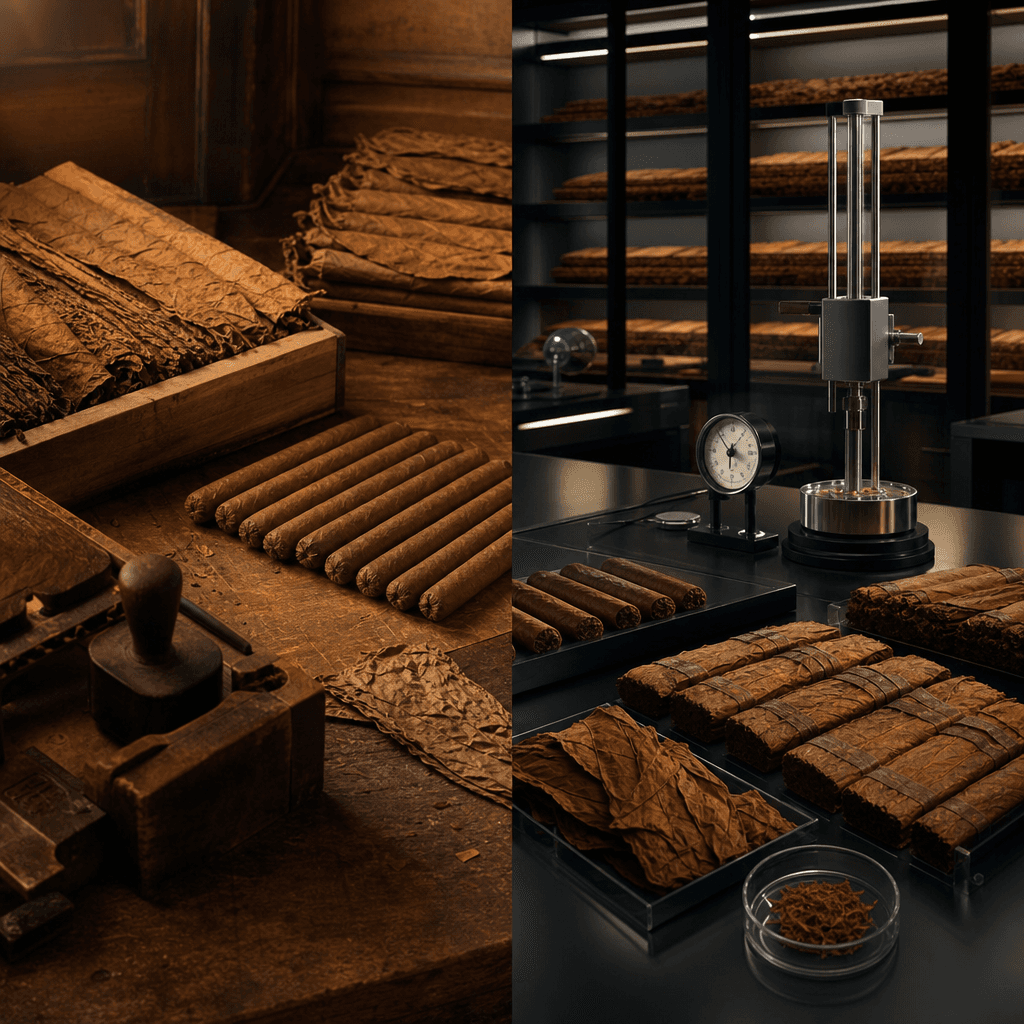
古巴雪茄的工藝歷史悠久,結合了土地、制度與城市工業的發展。從1492年哥倫布引入菸草開始,古巴逐漸形成其獨特的雪茄文化。Vuelta Abajo地區以其優質菸葉聞名,現代農業技術進一步提升了葉位的處理與發酵過程,確保了雪茄的風味與品質。古巴雪茄的手工製作仍然保持傳統,但也引入現代檢測技術,以提高產品一致性。品牌如Montecristo與Cohiba不僅代表市場價值,更承載著獨特的配方語言,讓雪茄愛
- 古巴雪茄的工藝結合了傳統手工與現代技術,確保品質與風味的一致性。
- Vuelta Abajo 產區的葉位分工影響雪茄的燃燒與風味,理解這一點有助於選擇合適的雪茄。
- 發酵與醇化過程對雪茄的最終風味至關重要,需掌握溫度與濕度的管理。
Smoking is harmful to health. Persons under the age of twenty may not smoke. Smoking cessation hotline: 0800-636363. This article is provided solely for adults aged twenty and above as a reference on cigar culture, storage, and regulatory knowledge. It is not tobacco advertising, promotion, or purchasing advice.
The craft of Cuban cigars has never been an antique frozen behind glass, but a system that still breathes, adjusts, and is tested by the market and climate. For veterans, discussing Cuban cigars cannot stop at brand stories or band years; it must return to cultivation, fermentation, rolling, size design, quality control, and maturation logic. From the Havana factory system of the 19th century, to the globalized management after the establishment of Habanos S.A. in 1994, and then to the introduction after 2000 of limited editions, Reserva, Gran Reserva, Behike, and modern draw-testing equipment, the true fascination of Cuban cigars lies in how they preserve the handmade core of Totalmente a Mano while continually using new technologies to answer old questions.
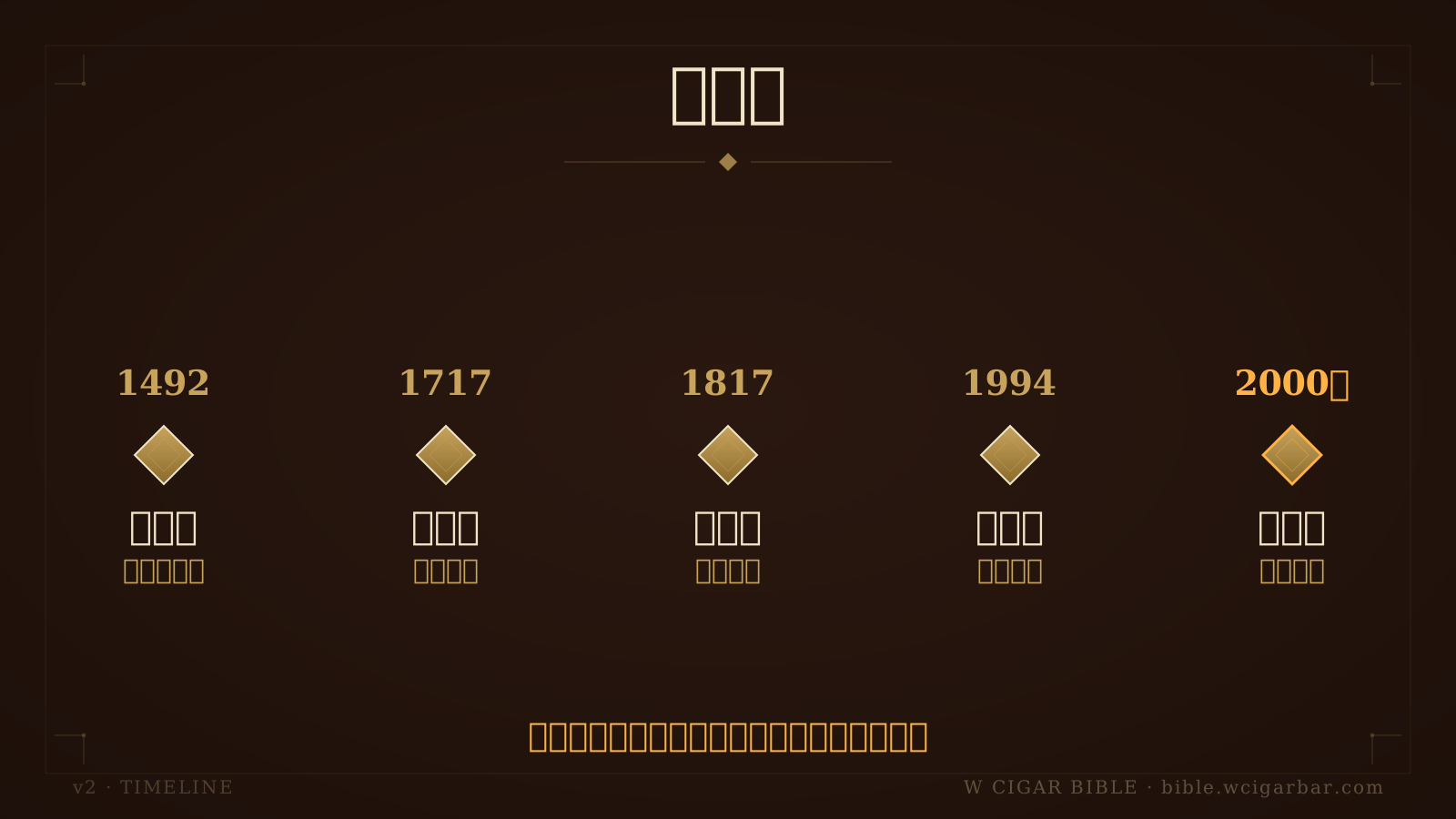
時間軸呈現古巴雪茄工藝從貿易到現代管理
From Colonial Trade to Havana Factories: The Historical Framework of Cuban Craft
The core of Cuban cigar craft is not the birth of a single brand, but the result of land, institutions, and urban industry forming together. After Columbus arrived in the Caribbean in 1492, tobacco became known to the European world; in 1717, the Spanish Crown established the "Estanco del Tabaco" tobacco monopoly system, bringing Cuban tobacco into the colonial trade order; after Spain abolished the export monopoly on Cuban tobacco in 1817, Havana factories expanded rapidly, and branding and export packaging truly matured. Partagás was founded in 1845, H. Upmann can be traced back to 1844, and Romeo y Julieta appeared in 1875. These years are not decoration, but represent Havana's transformation from a raw material distribution center into a center of precise handmade manufacturing. When veterans study a Cuban cigar, they cannot look only at the band; they must also understand the factory division-of-labor system behind it: leaf selection, destemming, classification, bunching, wrapper application, shaping, draw testing, and boxing. Each step turns agriculture into a recognizable style. Although nationalization after the Revolution changed the ownership structure, it did not erase the logic of the craft; on the contrary, brand blends, factory traditions, and export standards were reorganized, forming the Cuban cigar system we see today.
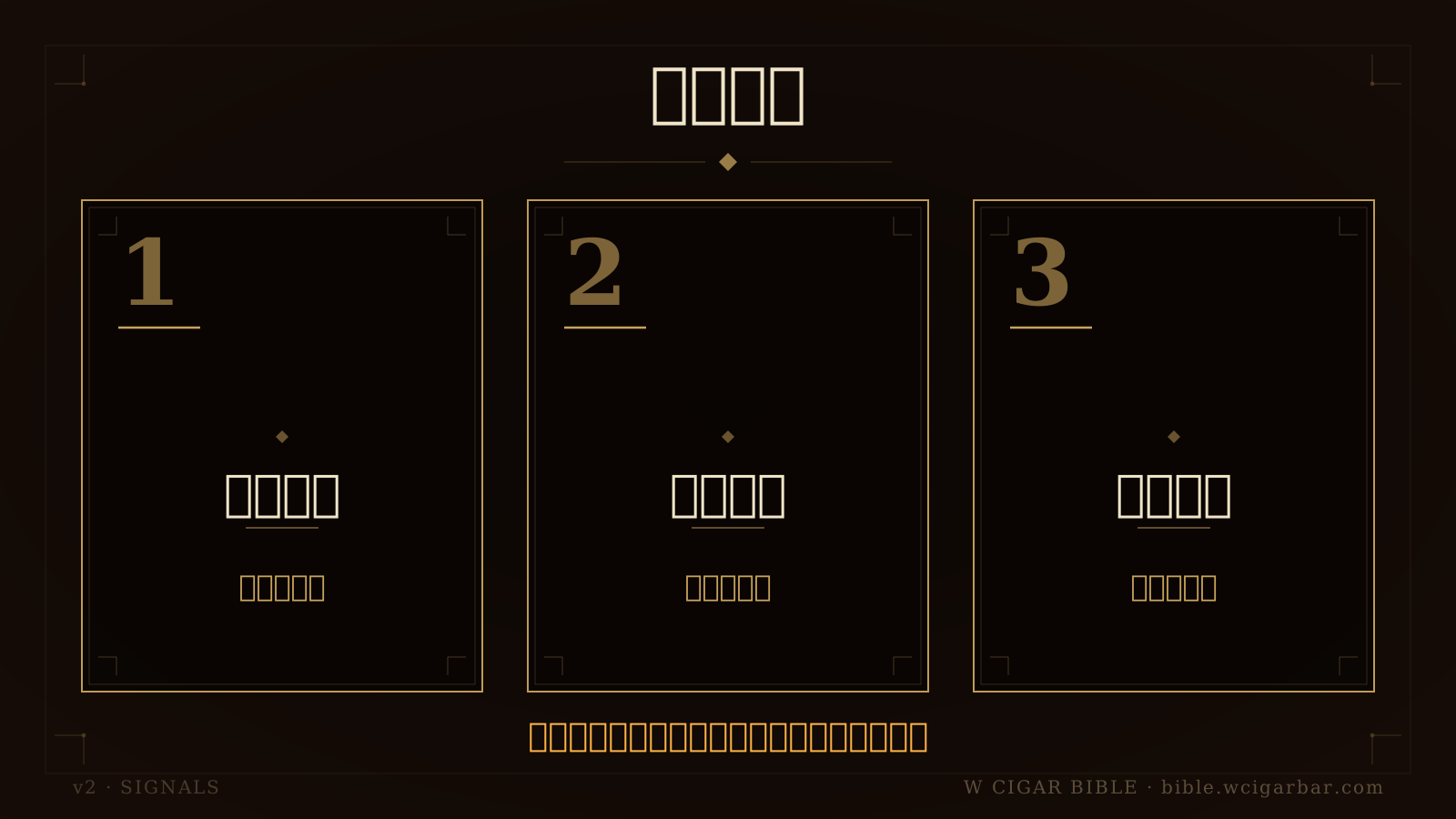
三張卡整理手工核心技術校準與時間管理
Vuelta Abajo Is Not a Myth: A Modern Reading of Soil, Seed, and Leaf Position
To discuss the heritage of Cuban cigars, one must first unpack the two words "production region." Vuelta Abajo in Pinar del Río province has long been regarded as the core production area for the highest-grade tobacco leaves, especially around San Luis and San Juan y Martínez. Because of its combination of red soil, drainage, mist, and day-night temperature variation, it can supply wrapper, binder, and filler leaves at the same time. Veterans often say that a good Cuban cigar has "layers within linearity." The source is often not a mysterious blend, but division by leaf position: Volado is responsible for combustion, Seco provides aroma and a smooth structural framework, and Ligero brings strength, thickness, and support in the latter stages. Modern agricultural technology has not overturned this old wisdom, but has made it more refined. Since the late 20th century, Cuba has placed greater emphasis on consistency in seed selection, tapado shade cultivation, disease management, and harvesting batches; different leaf positions on the same field may be harvested days to weeks apart, which directly affects fermentation speed and nicotine perception. Taking the higher-end lines of Cohiba as an example, they are often discussed not only because of brand status, but also because certain leaf materials undergo stricter handling, pursuing a balance of cream, grassiness, bean aroma, and delicate spice. A truly advanced understanding is the ability to transform "regional reputation" into a reading of "leaf position, handling, and blend."

矩陣比較土地手藝技術三個工藝判讀面向
Fermentation, Maturation, and Storage: How Traditional Time Is Managed by Technology
The flavor of Cuban cigars is not generated only in the field; fermentation and maturation are the key to transforming a rough agricultural product into a refined craft product. After tobacco leaves are harvested, they undergo air-curing, usually gradually reducing moisture in a curing barn, and then enter pilón fermentation piles. Traditional experience relies on masters touching the leaf temperature, smelling the aroma, and observing color changes; modern management adds control of temperature, humidity, and pile-turning rhythm. Generally speaking, fermentation temperatures for filler and binder leaves may fall roughly between 35°C and 45°C. Thick Ligero, because of its higher nitrogen content and oils, requires a longer time for harshness to decline; wrapper leaves must be treated more gently to avoid damaging elasticity and sheen. Veterans can often distinguish the "green note," "ammonia sensation," or "sharp pepper" of newly boxed cigars. These phenomena are mostly related to fermentation, the stabilization period after boxing, and storage conditions. After 2000, Cuba launched Edición Limitada, which usually uses wrapper leaves that have undergone longer handling; this is an example of packaging "time" into a series system. As for maturation in personal collections, it should be understood as flavor integration and changes in volatile substances, not magic; appreciation in collection value does not equal guaranteed appreciation, and still depends on source, storage, and the market.
Factory Handcraft and Modern Testing: The New Boundary of Totalmente a Mano
Totalmente a Mano Tripa Larga is one of the most important markings for premium handmade Cuban cigars. It means entirely handmade, long filler, but it does not mean rejecting modern tools. At traditional Havana galera workstations, the torcedor uses a chaveta half-moon knife, a board, molds, and presses to complete bunching and wrapper application; these actions seem ancient, but in reality they depend heavily on tactile memory. The issue is that the charm of handwork also comes with inconsistency. Especially from the late 1990s to the early 2000s, as global demand increased and production pressure rose, unstable draw was once a problem frequently criticized by veterans. Since then, some factories have introduced draw-testing equipment, using numerical values to determine whether airflow falls within a reasonable range, reducing the proportion of cigars that are too tight or too loose. This is not using machines to replace hands, but using data to help the craft maintain a baseline. For high-circulation vitolas such as Montecristo No.2, Partagás Serie D No.4, and Hoyo de Monterrey Epicure No.2, the sizes are fixed and demand is stable, so draw consistency is extremely important to brand trust. If several cigars in the same box of 25 cigars burn unevenly or have excessive resistance, veterans will notice immediately. The challenge for contemporary Cuban craft lies in preserving tactile differences while preventing differences from becoming defects.
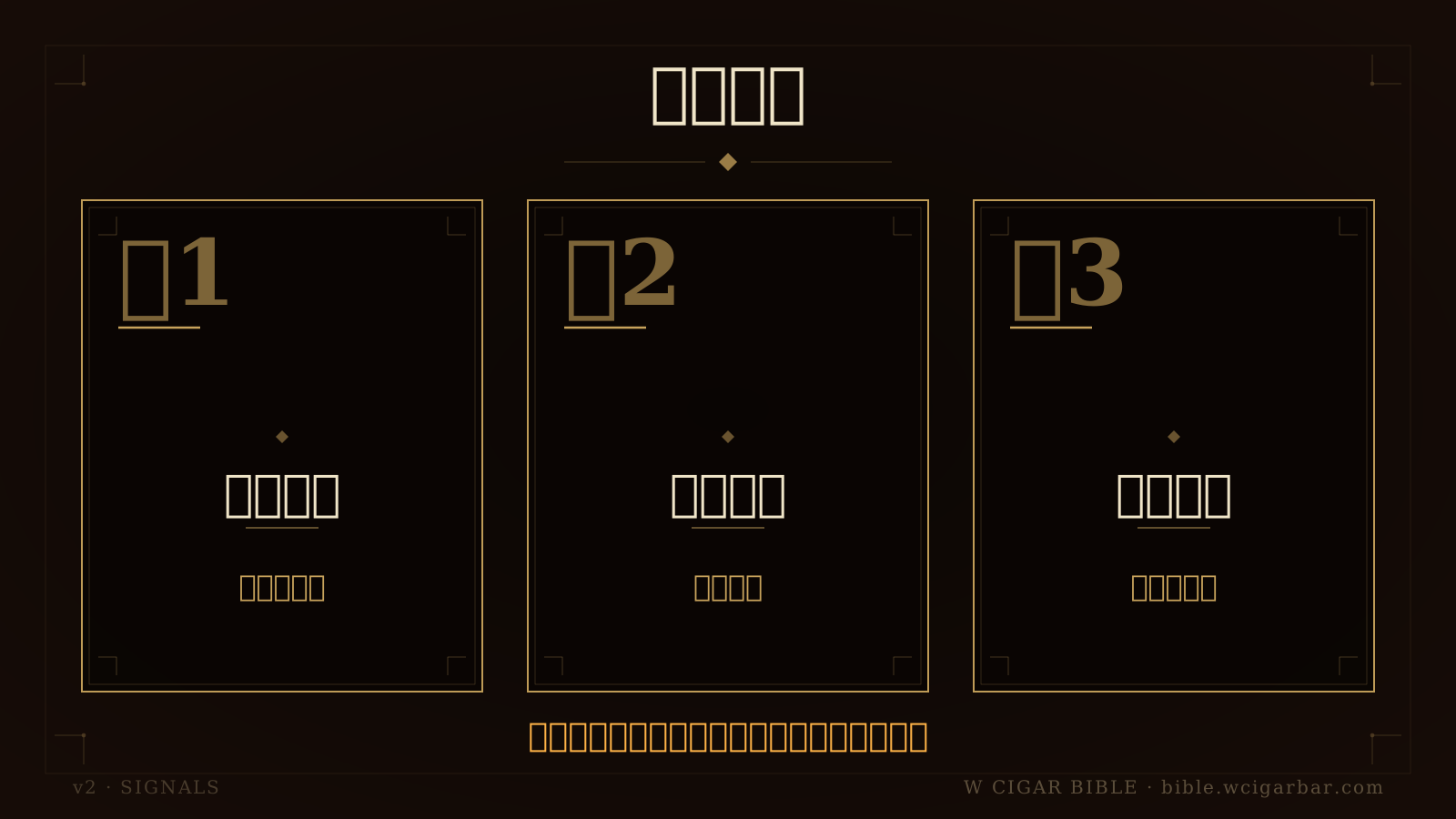
三張誤解卡提醒產地盒碼與濕度不可單看
The Blend Language of Classic Brands: From Montecristo to Cohiba Behike
The brand character of Cuban cigars is often misunderstood as marketing rhetoric; but for veterans, what truly matters about a brand is its "blend language." After Montecristo was founded in 1935, the No.2 torpedo became its most representative model and is often regarded as a standard answer for cocoa, coffee, wood, and medium strength. Partagás leans more toward earth, leather, black pepper, and a thick mouthfeel. Serie D No.4, because of its robusto size and stable recognizability, has long served as a comparison sample. H. Upmann is often known for hay, nuts, cream, and a more delicate sweetness. Bolívar is more recognizable in strength and minerality. The story of Cohiba is even more special. It was born in 1966 as a high-end brand, entered a broader export horizon after 1982, launched Línea 1492 in 1992, including Siglo I to Siglo V, added Siglo VI in 2002, and in 2010 Behike BHK 52, 54, 56 officially appeared, pushing the medio tiempo leaf position into the center of discussion. These innovations were not simply changes of bands, but changes in leaf-material narrative and size experience. When contemporary veterans evaluate a new series, they should not only ask whether it is "more premium," but whether it can still speak the brand's original grammar while providing new structural reasons.
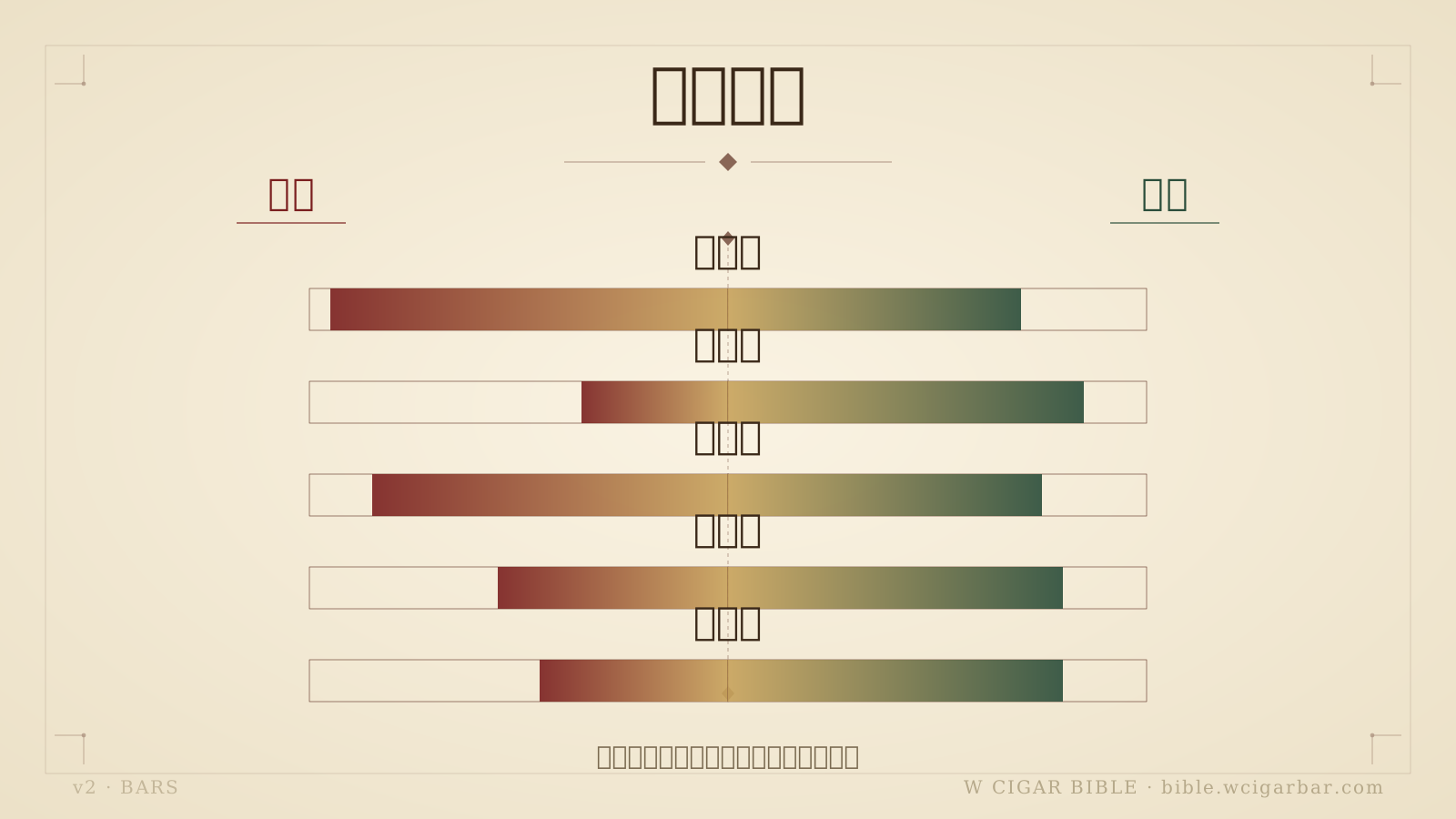
橫條圖比較傳統手工與現代管理在五個面向的強度
Size, Ring Gauge, and the Market: How Modern Aesthetics Change Combustion Rhythm
Among traditional Cuban vitolas, corona, lonsdale, churchill, and torpedo were once mainstream aesthetics. But after 2000, the global market clearly favored larger ring gauges, and robusto, double robusto, genios, and magnum types continued to receive attention. This change is not only visual luxury; it also changes combustion temperature, leaf-material proportions, and the speed of flavor development. Taking Romeo y Julieta Churchill as an example, its 47 ring gauge, 178mm length represents the rhythm of a classic long size; while H. Upmann Magnum 50 is about 50 ring gauge, 160mm in length, with a wider opening and more direct aroma release in the opening stage. Cohiba Siglo VI's 52 ring gauge and 150mm length, when it appeared in 2002, symbolized Cuba's response to the modern large-ring-gauge trend. The following organizes several size cases veterans often use to understand "heritage and innovation":
| Brand and Model | Launch or Representative Year | Size Features | Craft Observation |
|---|---|---|---|
| Montecristo No.2 | Became a classic after 1935 | 52 ring gauge, 156mm | The torpedo head tests precision in wrapper application and cap finishing |
| Partagás Serie D No.4 | Became popular in the late 20th century | 50 ring gauge, 124mm | The robusto rhythm is condensed, with high demands for balanced combustion |
| Cohiba Siglo VI | 2002 | 52 ring gauge, 150mm | Must still maintain Cohiba delicacy within a large ring gauge |
| H. Upmann Magnum 50 | Regularized in 2008 | 50 ring gauge, 160mm | A compromise between modern size and traditional gentle style |
A larger size does not mean greater complexity, and a smaller ring gauge is not necessarily more elegant; the key is whether the blend can support the combustion rhythm.

三張問答卡整理同盒差異盒碼與濕度設定的實用答案
Limited Editions, Reserva, and High-End Series: The Double-Edged Sword of Innovation Systems
After Habanos S.A. was established in 1994, Cuban cigars entered global market management in a more systematic way. The Edición Limitada series, which began in 2000, made "year, brand, size, and special wrapper" the focus of collection and discussion. Around 2004, the Reserva series gradually received attention. Later, Gran Reserva built a high-end narrative with leaf materials matured for longer periods and smaller-volume releases, such as Cohiba Siglo VI Gran Reserva Cosecha 2003 and Montecristo No.2 Gran Reserva Cosecha 2005, both of which made vintage leaf materials the protagonist. The positive significance of these systems is that they prompted Cuba to present leaf-material time, batches, and brand value more clearly; the negative challenge is that the market can easily misread rarity as a guarantee of quality. Veterans should look at three things: first, whether the size suits the brand blend; second, whether the leaf materials of that year have passed the harsh stage while still retaining vitality; third, whether the box condition, source, and humidity records are credible. Bands, wooden boxes, and certificates can provide clues, but they cannot replace the actual storage condition. Especially if high-priced series remain in an overly humid environment for a long time, risks may include delayed combustion, muted aroma, or mold; if too dry, the wrapper may crack and aroma may be lost. A truly mature view of collection is to judge rarity within the context of craft, rather than being led by release numbers.
Common Questions
Is the traditional craft of Cuban cigars really more complex than New World cigars?
It is not appropriate to judge by a single hierarchy. Cuba's complexity comes from the accumulation of a single island production region, long-standing brand blends, and a handmade system; New World cigars are often known for multi-country tobacco blending, wrapper experiments, and more open style design. When veterans compare them, they should look at structure, balance, combustion, and finish, rather than only the aura of origin.
Why do differences appear within the same box of Cuban cigars?
Handmade cigars naturally have variations, especially because long-filler arrangement, moisture content, wrapper elasticity, and storage environment all affect the result. Even with the same brand, same size, and same box code, there may still be subtle differences due to the density of the leaves in a single cigar or differences in rolling feel. Modern draw testing can reduce serious problems, but it cannot eliminate all individual differences.
How important is the box-code year to veterans?
The box-code year is very important, but it is not the only answer. It can help determine boxing time, preliminary maturation length, and possible factory background, but it still needs to be considered alongside box condition, aroma, wrapper oiliness, foot condition, and storage records. Some years are pursued by the market, but that does not mean every box will perform the same; there may also be differences in quality within the same year.
Does a large ring gauge represent the progress of modern Cuban cigars?
A large ring gauge represents changes in market aesthetics and combustion design, but it does not necessarily equal progress. A larger ring gauge can accommodate more variation in leaf-material proportions, has a more open draw at the entrance, and may also have a more stable combustion temperature; but if the blend does not provide enough support, it can instead seem loose. Thin ring gauges can still show concentration, sharpness, and an elegant rhythm.
Should the humidity setting be fixed when collecting Cuban cigars?
Veterans usually adjust according to size, wrapper condition, and local climate, rather than rigidly holding to a single number. About 65% to 69% relative humidity is a commonly discussed range, but the focus is stability, ventilation, and avoiding severe fluctuations. If the environment is too humid over the long term, combustion and aroma clarity will decline; if too dry, both the wrapper and internal oils will be damaged.
When I look at Cuban cigars, I never look only at whether they are old, nor only at whether they are rare. What is truly worth studying is how a cigar connects land, year, leaf position, handcraft, and modern management into a complete language. As editor of W Cigar Bible, founder of W Cigar Bar Gentlemen's Cigar House, and PCC appointed dealer, I believe even more that a veteran's advanced ability lies in respecting heritage while also understanding the cost and boundaries of innovation. - Cigar Prince Wilson Tsai
Smoking is harmful to health. Persons under the age of twenty may not smoke. Smoking cessation hotline: 0800-636363. This article is provided solely for adults aged twenty and above as a reference on cigar culture, storage, and regulatory knowledge. It is not tobacco advertising, promotion, or purchasing advice.
Like this article?Share with friends
Share this W Cigar Bible piece with friends who want to learn cigar culture, storage, and tasting.
想把這篇 化為實踐
雪茄聖經是知識;雪茄文化要在空間裡發生

W Cigar Bar 大安總店資訊
台北大安區 · 雪茄聖經總編輯 Wilson Tsai 主理的雪茄文化空間
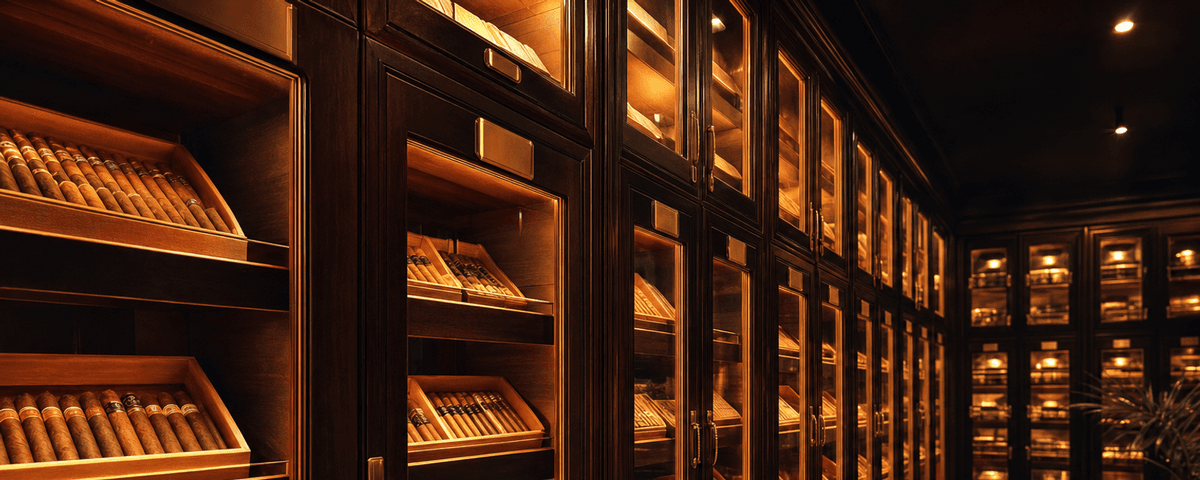
33 座 24 小時恆溫恆濕醇化室
W Cigar Bar 提供的會員醇化空間 · 場地資訊請洽編輯部
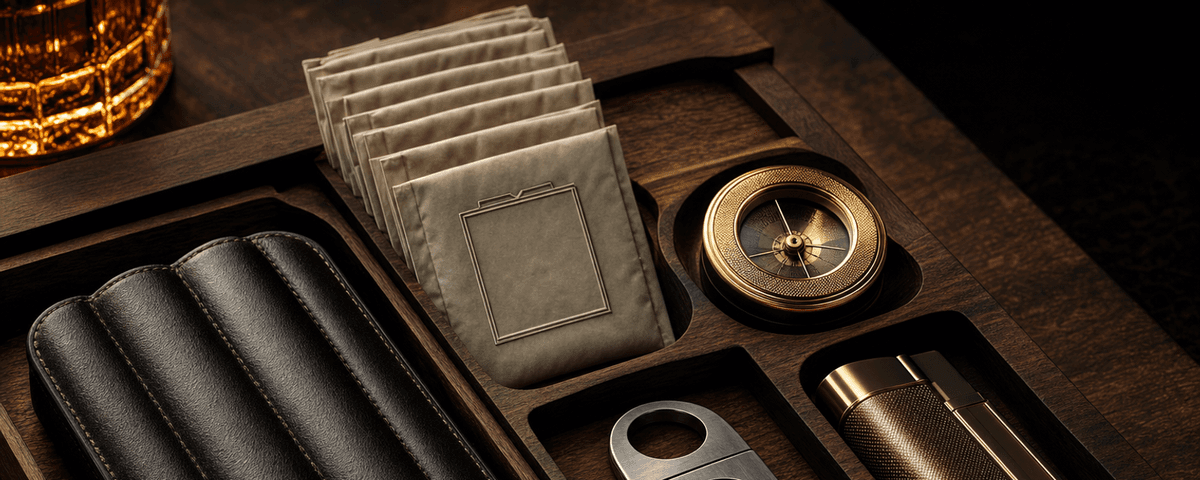
雪茄剪 / 打火機 / 雪茄盒 / Boveda
W Cigar 配件官網 · 專營雪茄配件正品

加 LINE 好友 · 文化諮詢
文化空間資訊 · 紳士沙龍 · 私人包場
本網站內容僅供雪茄文化、歷史、收藏與品吸知識研究參考。菸品有害健康、未滿法定年齡者請勿吸菸。實際規範請依所在地法律為準。
吸菸有害健康・戒菸專線 0800-636363・本站僅供 20 歲以上成年人閱覽。
讀到這裡,你不只是路過的人
留下 Email,加入 W 雪茄聖經內圈——總編輯 Wilson Tsai 親選的學院深文與國際新訊,先你一步送到信箱。
· 教育用途非銷售 · 隨時一鍵退訂 · Email 絕不對外公開 · 由勝茄股份有限公司營運
同分類延伸閱讀


資料來源:W Cigar Bible 編輯部整理 · 雪茄王子 Wilson Tsai 親自審稿
本文僅供雪茄文化、歷史、收藏與品鑑知識研究,不作為菸品促銷、銷售或購買建議。吸菸有害健康,未滿二十歲不得吸菸。