雪茄的品味循環:從初嚐到高級品味的進階旅程

雪茄的學習是一個循環過程,從初學者到高級品味,經歷了多個關鍵階段。入門者應以燃燒穩定性和口感為首要考量,而非品牌名氣。隨著經驗增長,學會分段品評雪茄的不同層次,並理解尺寸對風味的影響,將有助於提升品味。進一步,濃度、強度和複雜度是三個獨立的概念,能夠分辨這些差異將使選擇雪茄變得更精準。此外,環境與保存條件也會顯著影響品評結果,進階者需重視這些因素。
- 雪茄品味循環是從初嚐到高級品味的進階旅程,重視不同年份、尺寸與產區的層次感。
- 初學者應以燃燒穩定性與口感乾淨度為判準,而非品牌名氣。
- 分段品評能幫助理解雪茄的結構,觀察不同階段的香氣與口感變化。
The Taste Cycle of Cigars: An Advanced Journey from First Try to Sophisticated Taste
I often view the learning of cigars as a cycle rather than a straight line. Initially, one might think they are looking for "good or bad to smoke," but later realize that the true charm lies in how you interpret the layers of a cigar across different years, sizes, origins, and moods.
As an editor of the "Cigar Bible," I've seen many beginners progress from merely distinguishing between light and strong to articulating subtle differences like wood, nuts, leather, cocoa, and mineral notes. In this article, I want to discuss not the technicalities but the key stages that cigar enthusiasts experience from their first taste to a sophisticated palate.
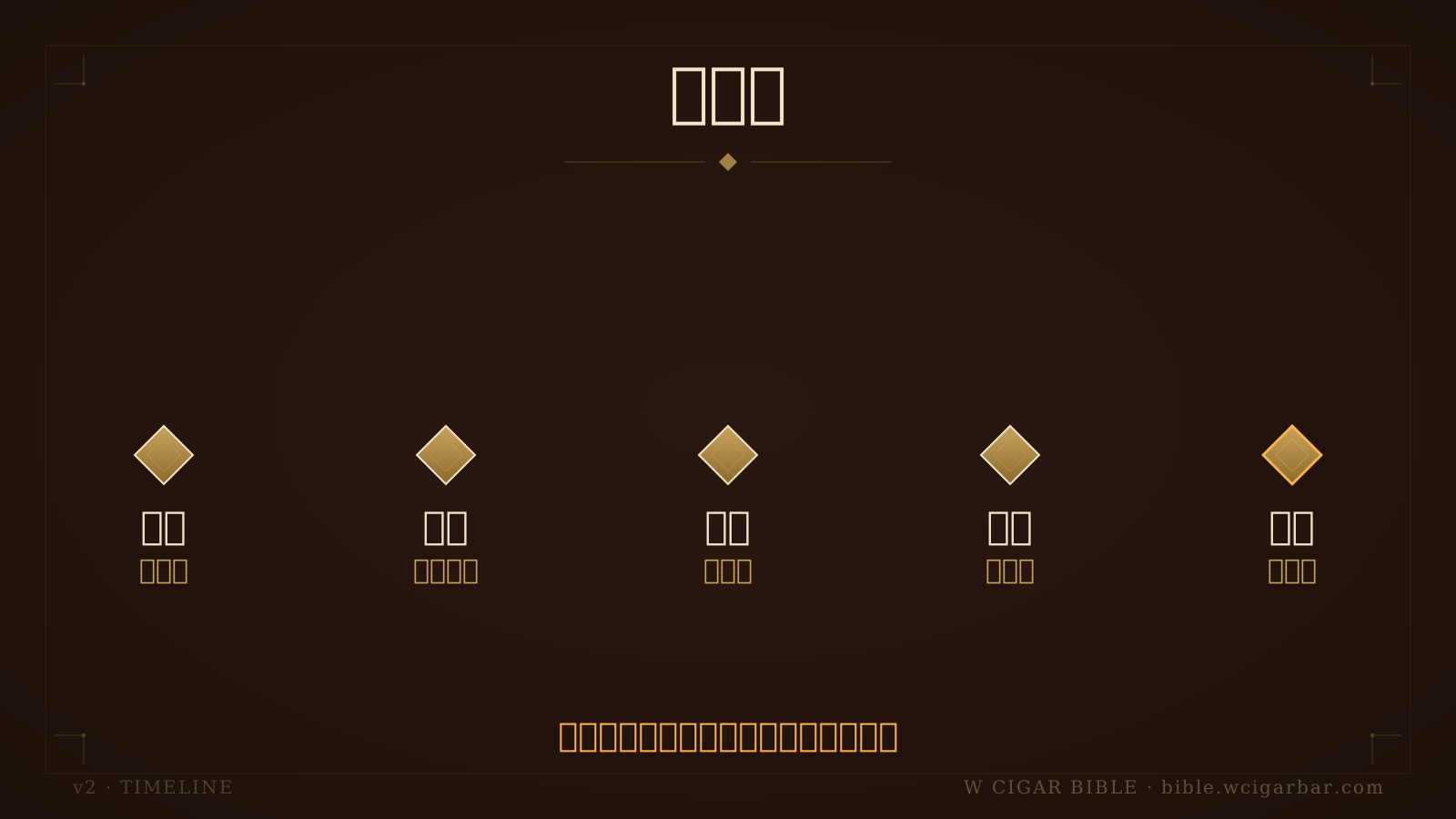
五個節點呈現初嚐到回看偏好的品味流程
Stage One: Start with "Smoothness," Not Rushing to Famous Brands
Beginners are easily swayed by brand halos. For instance, hearing names like Cohiba, Montecristo, Partagás might lead one to believe that the more famous, the more suitable. However, from 2015 to 2018, I observed many novices who started directly with a robust Robusto often only remembered the spiciness and dizziness, missing out on the aroma. The most important criteria at the beginner stage are not fame but whether the burn is stable, the taste is clean, and the body can comfortably handle it.
I usually recommend establishing a baseline with sizes ranging from 40 to 52 ring gauge, lasting about 30 to 60 minutes, such as Montecristo No.4, Hoyo de Monterrey Epicure No.2, Romeo y Julieta Mille Fleurs, or non-Cuban Arturo Fuente Hemingway Short Story. These cigars may not be the most complex but allow you to practice identifying wood, cream, nuts, herbs, and a hint of sweetness.
At this stage, don't rush to write elaborate notes; you can simply record five indicators: aroma in the first third, changes in the middle, strength in the final third, burn status, and length of the finish. Use a 10-point scale to record, and after consistently noting 20 cigars, you'll find you don't "like a particular brand," but rather a certain structure. True entry-level understanding is moving from vague liking to repeatable preferences.
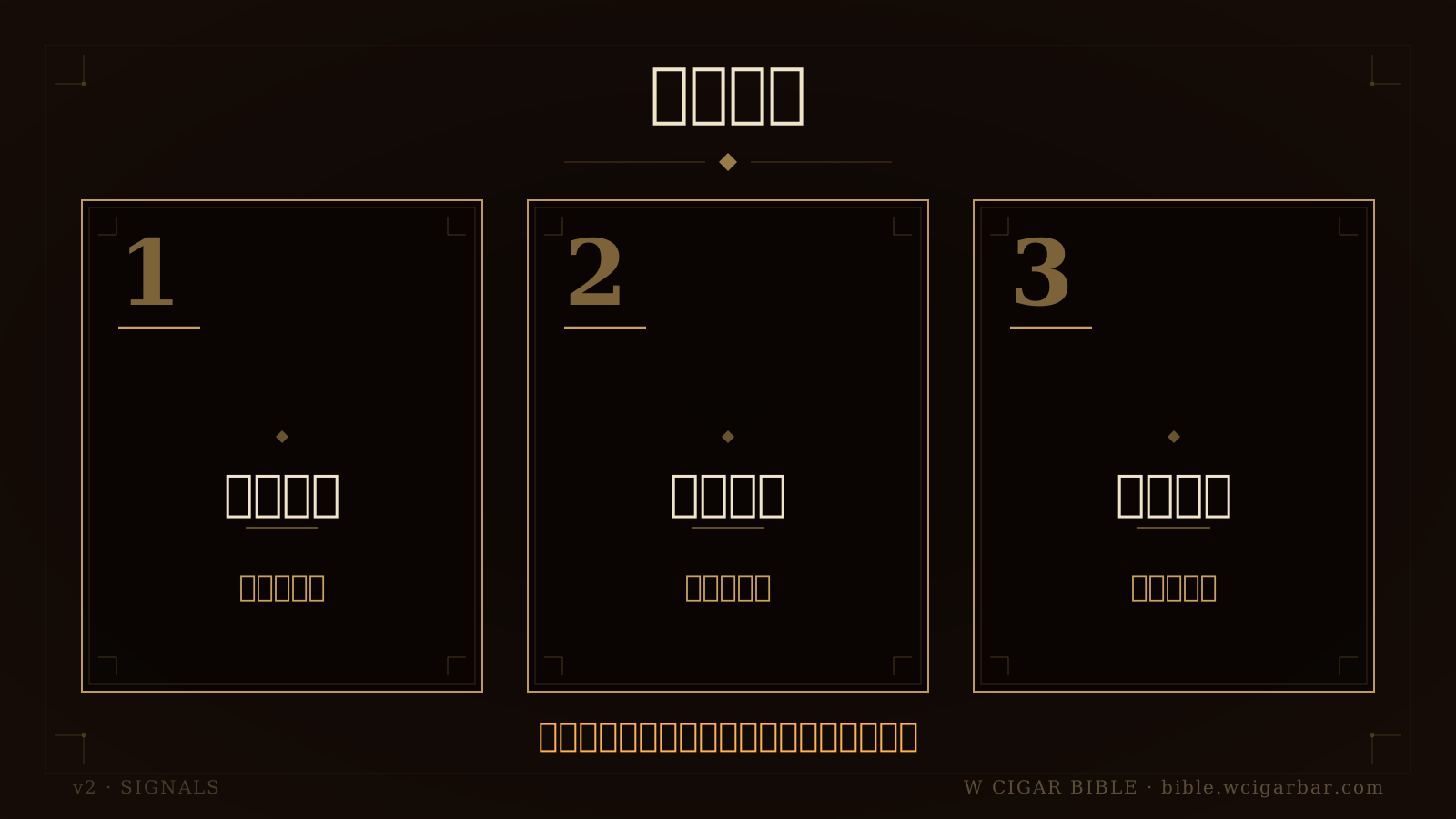
三張卡片整理順感分段與尺寸三個品味重點
Stage Two: Learn to Taste in Segments to See the Lifeline of a Cigar
Many people can already perform basic tasting but still summarize an entire cigar as "good to smoke" or "too strong." The first step in advancing is dividing a cigar into three parts: first third, middle third, and final third. For example, with a Robusto about 124 mm long and 50 ring gauge, the first 15 minutes may lean towards herbal and toasted bread, the next 20 minutes shift to nuts, coffee, and wood, and only in the final third do leather, pepper, or cocoa bitterness appear.
Take Partagás Serie D No.4 as an example. Around 2016, I recorded several boxes with different codes, and in well-conditioned samples, the first third often had rich wood and black pepper, the middle third showed roasted coffee and earthy notes, and the final third had a noticeable increase in strength. Judging after just the first 5 minutes might lead to the misconception that it's only spicy; enduring to the middle third reveals its structure.
When tasting in segments, it's recommended to make brief notes every 10 minutes without rushing to find adjectives for every puff. You can observe smoke volume, burn line, ash length, and mouthfeel. Sophisticated taste isn't about having more adjectives but being able to point out where changes occur and why. The same cigar might perform differently at 65% versus 72% humidity, which is precisely the allure of cigars.
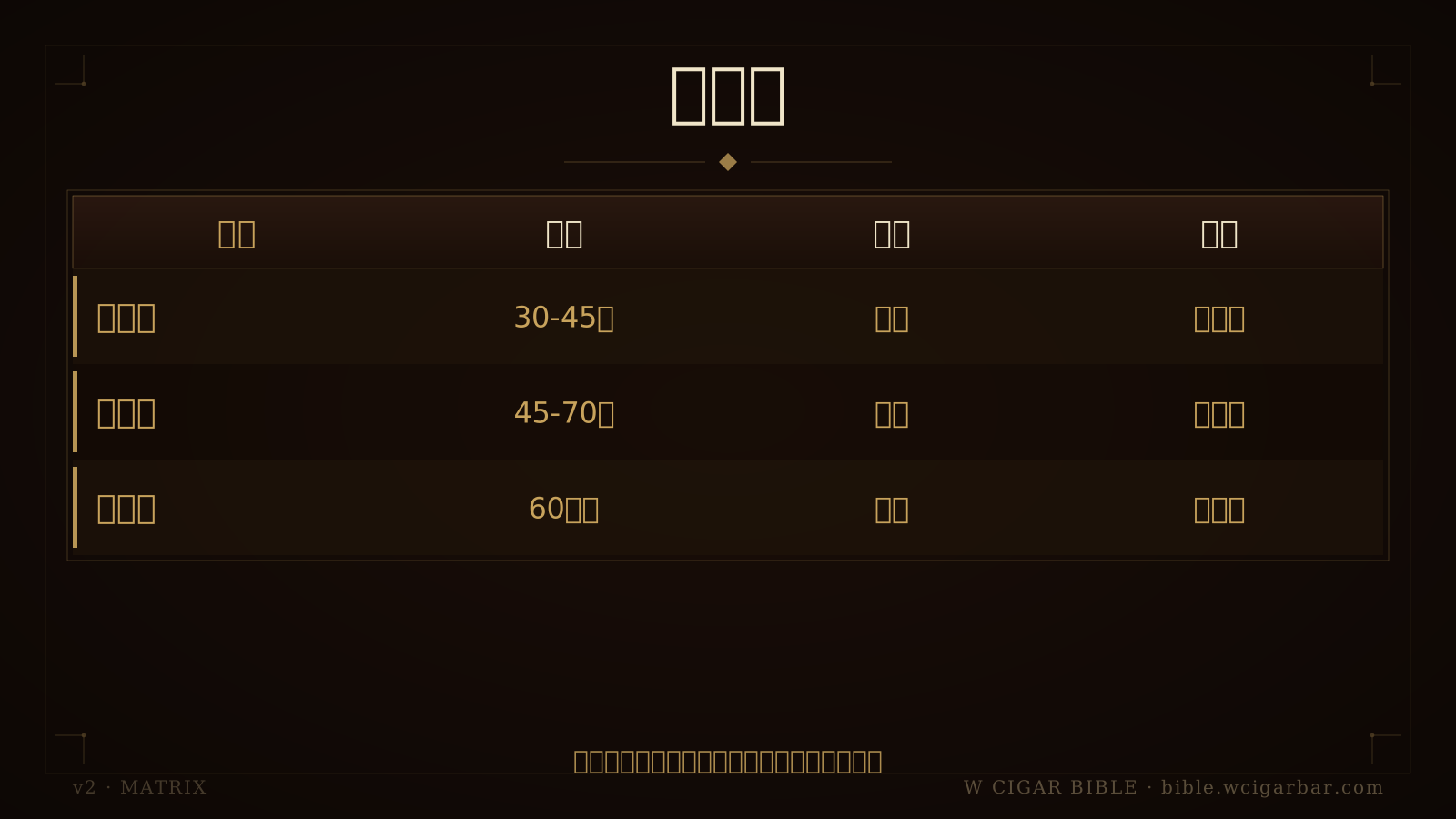
矩陣比較小環徑羅布圖與大環徑的時間節奏風味
Stage Three: Understand Flavor Through Size, Not Just Brand Names
Different sizes within the same brand can have flavors as distinct as different personalities. Many people like to ask "which brand is the best," but a more precise question would be: "In what size does this blend best express itself?" For example, Cohiba Siglo II and Siglo VI both belong to Línea 1492, but the former is short and sharp, with more direct herbal, honey, and wood notes; the latter, due to its different length and ring gauge, has a broader rhythm, allowing creaminess and layers to unfold more.
Size affects the proportion of filler, burn temperature, and entry concentration. Generally, thinner Lanceros or Panetelas more easily present the lines of the wrapper and filler but require high burning technique; thicker 54 to 60 ring gauges have fuller smoke volume and a softer entry but may dilute details. Trinidad Fundadores is a good example; its charm lies not in explosive concentration but in the floral, woody, and sweet-salty notes brought out by its slender size.
Below is a simple table I often use to help advanced learners understand size:
| Size Type | Common Ring Gauge | Time Sense | Flavor Characteristics | Representative Example |
|---|---|---|---|---|
| Petit Corona | 40-42 | 30-45 minutes | Concentrated, Direct | Montecristo No.4 |
| Robusto | 50 | 45-70 minutes | Balanced, Observable | Partagás Serie D No.4 |
| Toro | 52-54 | 60-90 minutes | Broad, Full Smoke | Padrón 1964 Anniversary |
| Lancero | 38-40 | 70-100 minutes | Delicate, High Technical Feel | Trinidad Fundadores |
When you start interpreting flavor through size, you won't be led solely by brands. This is also a crucial turning point from entry-level to maturity.
Stage Four: Strength, Intensity, and Complexity Are Three Different Things
Beginners often equate richness with sophistication, which is a common misconception. Strength can refer to the thickness of the palate, such as heavy coffee, dark chocolate, earthy, or leathery notes; intensity is the nicotine and bodily sensation, which might cause increased heart rate or dizziness; complexity is the aroma changes, layer transitions, and finish details. All three can coexist or be completely separate.
For example, Padrón 1926 Serie is often considered to have a rich palate, with cocoa, coffee, black pepper, and nuts, but its true allure lies in its stable sweetness and clean finish. Conversely, some young, intense cigars are very strong at the entry but only have spicy and bitter notes in the final third, which doesn't equate to complexity. If well-conditioned, Cuban H. Upmann Magnum 46 may not have the highest strength but can have elegant transitions of honey, wood, cream, and tea notes.
I suggest advanced learners evaluate in three columns in their notes:
- Strength: Entry thickness, smoke texture, flavor weight.
- Intensity: Bodily reaction, pressure in the final third, whether you need to slow down.
- Complexity: Aroma types, segment changes, finish length.
Sophisticated taste isn't about pursuing the heaviest flavors but being able to distinguish between "having power" and "having layers." When you can separate these three aspects, you'll be more precise in choosing cigars and less easily swayed by single ratings.
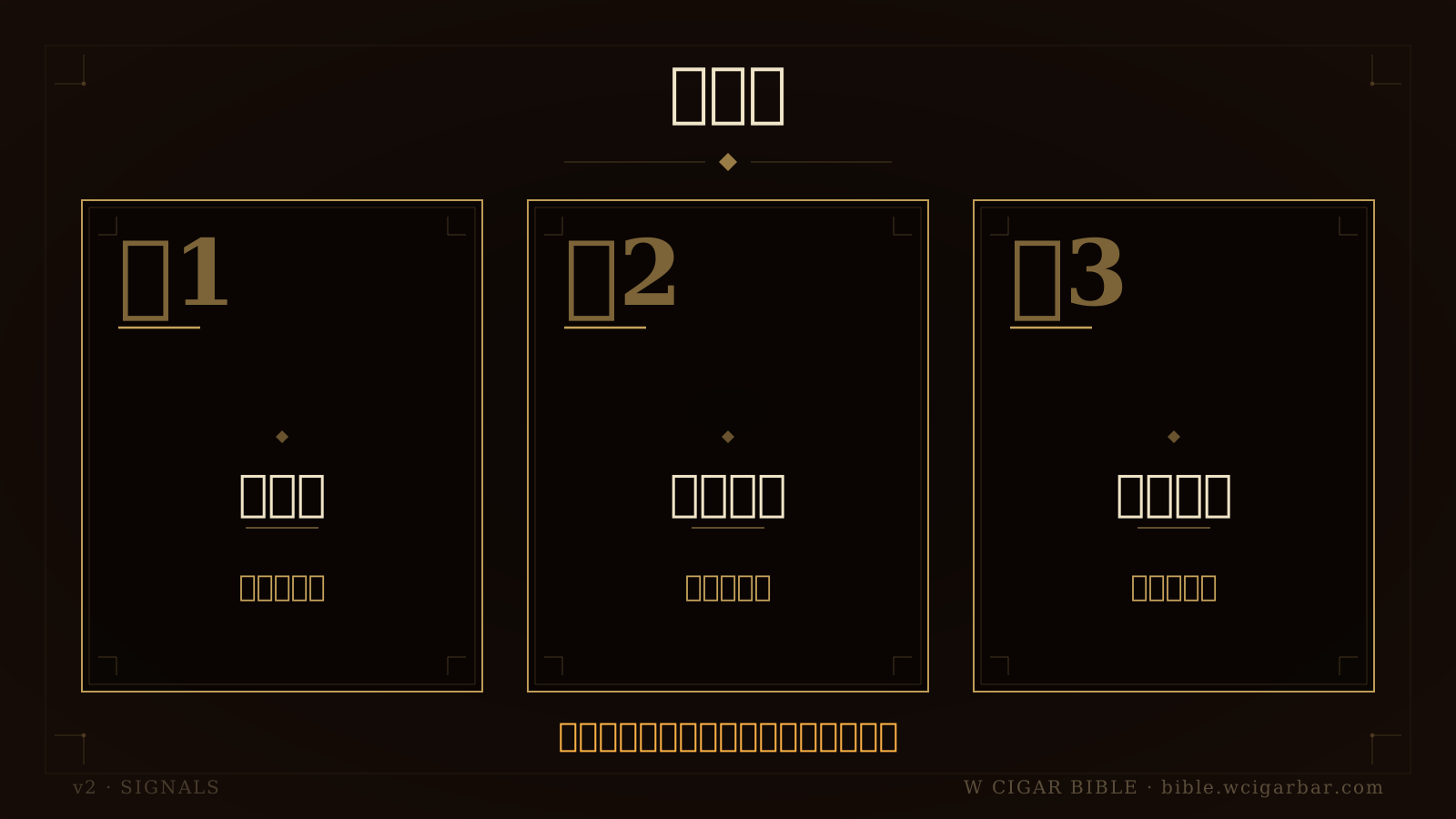
三張錯誤卡提示追名牌早下判斷與搭配迷思
Stage Five: Environment, Humidity, and Rhythm Will Change Your Judgment of the Same Cigar
The same cigar can seem like a completely different work under different storage conditions. From my long-term records, Cuban cigars stored above 72% relative humidity for extended periods often have tight draw, crooked burn lines, and muted aromas; if below 60%, they may become spicy, crack, and burn too quickly. In most cases, 65% to 69% is a more controllable range, but it still depends on the origin, size, and personal preference.
Rhythm is also crucial. Many people, when nervous, inhale and exhale frequently, leading to high burn temperatures and bitterness and spiciness in the final third. My habit is to take a puff every 45 to 75 seconds, slower with a Lancero, and adjust slightly with unstable burning in thicker ring gauges. Cigars aren't about speed; the more rushed, the more likely you are to burn away the original delicate sweetness.
Regarding the environment, wind, alcohol, and post-meal state all affect judgment. In 2020, I recorded the same box of Hoyo de Monterrey Epicure Especial indoors with air conditioning, outdoors with a breeze, and paired with whiskey after a meal, and the notes varied greatly: indoors, the cream and wood were most visible, outdoors, the smoke dissipated quickly, and after pairing with alcohol, the sweetness was amplified. Advanced learners should remember that what you evaluate isn't just the cigar itself but the result formed by storage, temperature, humidity, and rhythm.
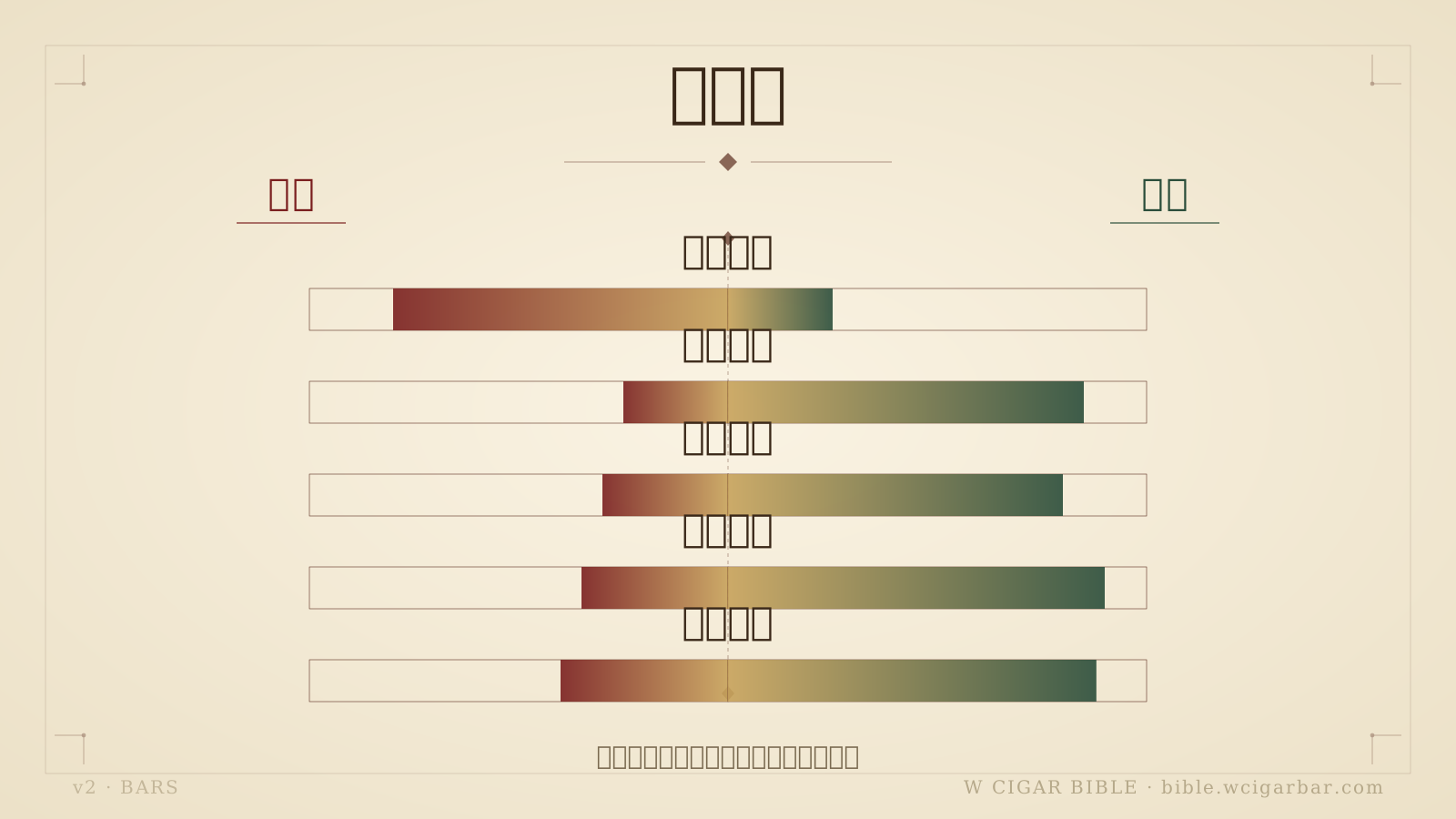
長條圖對比初學與進階在記錄分段尺寸上的差異
Stage Six: Aging and Collecting Should Start with Source, Box Code, and Storage Records
When it comes to aging, many people only ask "how many years will make it better." In reality, time isn't magic; source, initial condition, storage environment, and consistency within the box are more important. For Cuban cigars, box codes and production years provide basic clues; for example, a box of 2014 Ramón Allones Specially Selected, if stored steadily at 65% to 67% humidity over ten years, may develop softer dried fruit, wood, and sweet aromas, but if exposed to high temperature and humidity, it may have a noticeable musty smell.
Non-Cuban cigars also have aging value, such as Fuente Fuente OpusX, Padrón 1964, Davidoff Winston Churchill series, where the spicy notes often integrate, and sweetness rises after 2 to 5 years. However, not every cigar is suitable for long aging. Smaller sizes, simple structures, or cigars that are already light may lose vitality after many years. The focus of aging isn't to age all cigars but to judge which structures have the potential to become more refined.
If discussing collecting and market prices, I always remind: collecting for appreciation doesn't guarantee appreciation; it still depends on source storage and market. Especially limited editions, commemorative editions, and discontinued models, price fluctuations are often influenced by supply, demand, and authenticity. A more mature approach is to establish your own box code, purchase time, storage humidity, and opening records. When you have 3-year, 5-year, 10-year data, you can judge whether your cellar has truly improved.
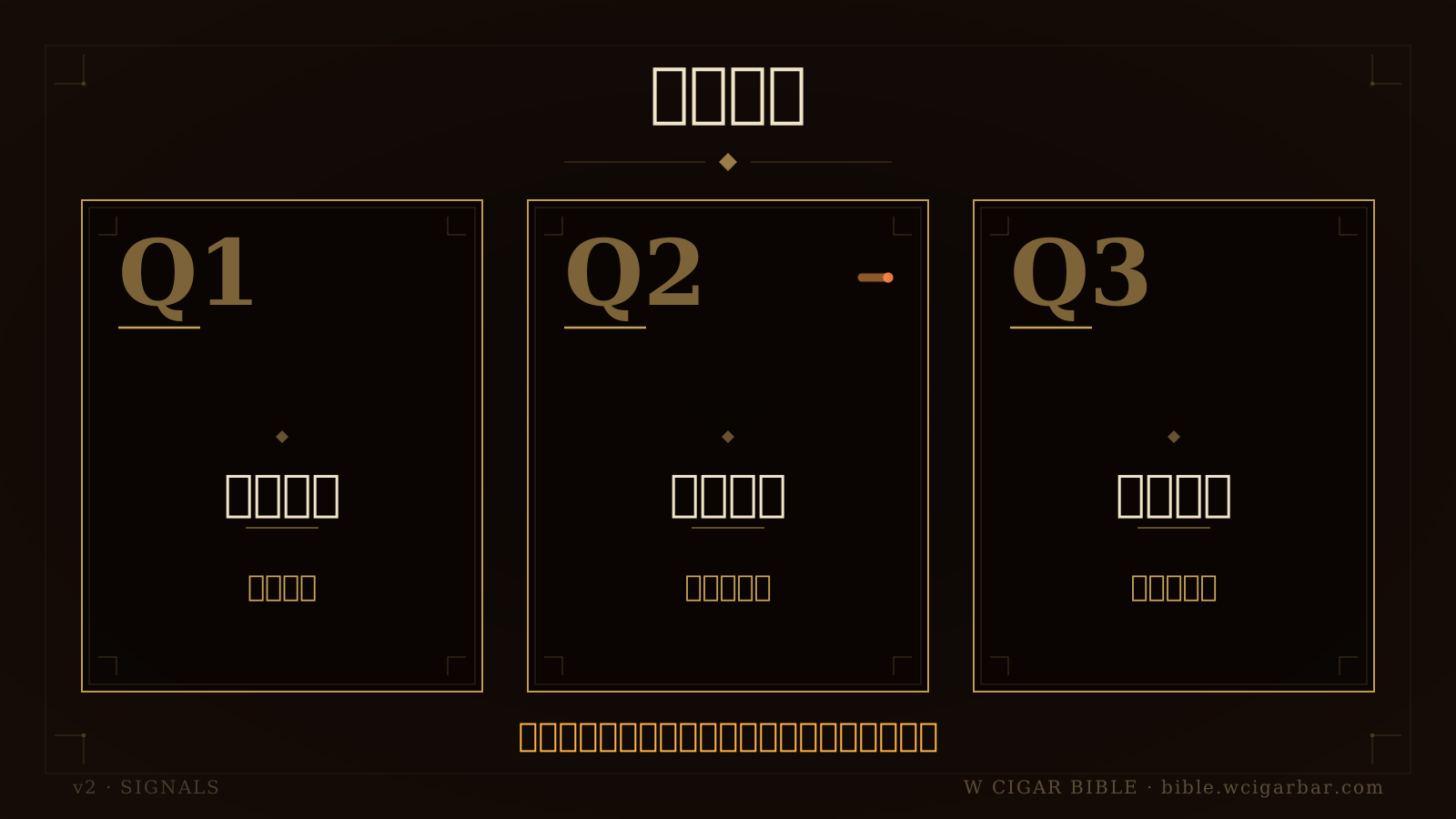
三張問答卡回答進階時間產區選擇與筆記方式
Stage Seven: Etiquette and Mindset Are the Final Watershed of Sophisticated Taste
A truly mature cigar enthusiast not only understands flavors but also occasions. Cigar smoke is thick and not suitable for every space; when sharing with others, the cut, lighting, ash length, and conversation rhythm all reflect cultivation. Observe the cap before cutting, don't cut too deep; rotate the foot slowly when lighting, don't rush to burn the flame into the filler; let the ash fall naturally at about 2 to 3 cm, no need to show off how long the ash can hold.
I also value "non-comparative sharing." Some people open by saying a certain brand isn't good or only a certain year is understood, which actually narrows the exchange. In a private gathering in 2019, a seasoned collector brought out a 2008 Bolivar Belicosos Finos, without first talking about rarity or rushing to score, he simply asked everyone to quietly smoke to the middle third before discussing wood, leather, and subtle saltiness. That rhythm was more convincing than any high-score review.
The core of sophisticated taste is respecting yourself and others' rhythm. Some people like the elegance of Quai d’Orsay, some are fascinated by the richness of Liga Privada No.9; some value Cuban tradition, others appreciate the stability and strength of Nicaragua. When you no longer rush to prove you understand and let a cigar speak quietly, taste begins to mature.
Frequently Asked Questions
How long does it take for a beginner to become advanced?
It's usually not about time but about the volume of records. If you seriously record 30 to 50 cigars within 6 to 12 months and can distinguish changes in the first, middle, and final thirds, you've already crossed the threshold of simple entry. The mark of advancement is being able to articulate why you like something, not just saying you like a name.
Do I have to start with Cuban cigars?
No. Cuba has its terroir, herbal, and woody charm, but the Dominican Republic, Nicaragua, and Honduras also have very complete flavor worlds. Brands like Arturo Fuente Don Carlos, Padrón 1964, Oliva Serie V can provide stable and clear learning samples.
How should cigar notes be written effectively?
Don't pursue literary quality, first pursue comparability. It's recommended to record the date, brand, size, year or box code, humidity, pairing drink, three-part flavor, and overall rating. After writing continuously 20 times, you'll start to see your preference trajectory.
Why does the same cigar feel different each time?
Reasons may include storage humidity, resting time, environmental wind speed, dietary state, and batch differences. Even within the same box, there may be slight differences due to position, moisture content, and filler density. This isn't a flaw but the personality of handmade products.
When is it appropriate to start buying whole boxes for collection?
When you've already tried the same cigar individually three times or more and still like it in different contexts, then consider buying a whole box. If it's just due to ratings, rumors, or price fluctuations, the risk is higher. Before collecting, also ensure that storage equipment can operate stably.
Is pairing with whiskey the most traditional?
No. Whiskey is common, but black coffee, unsweetened tea, rum, port wine, or even sparkling water can also be paired. The key is not to let the drink completely overshadow the cigar. A light cigar paired with mild tea, a rich cigar paired with dark roast coffee, often makes it easier to see the details.
The taste cycle of cigars ultimately returns to a simple matter: are you willing to slow down. From the curiosity of the first taste to the advanced recording, to understanding years, sizes, aging, and etiquette, each step isn't for showing off but for making the senses more honest. In my view, true sophisticated cigar taste isn't about how many famous cigars are in your cabinet, but whether you can read the traces of land, time, and craftsmanship in an ordinary cigar.
— Cigar Prince Wilson Tsai
Smoking is harmful to health. Under twenty years old is not allowed to smoke. Quit smoking hotline: 0800-636363. This article is for reference by adults over twenty years old for cigar culture, preservation, and regulatory knowledge, not for tobacco advertising, promotion, or purchase suggestions.
Like this article?Share with friends
Share this W Cigar Bible piece with friends who want to learn cigar culture, storage, and tasting.
想把這篇 化為實踐
雪茄聖經是知識;雪茄文化要在空間裡發生

W Cigar Bar 大安總店資訊
台北大安區 · 雪茄聖經總編輯 Wilson Tsai 主理的雪茄文化空間
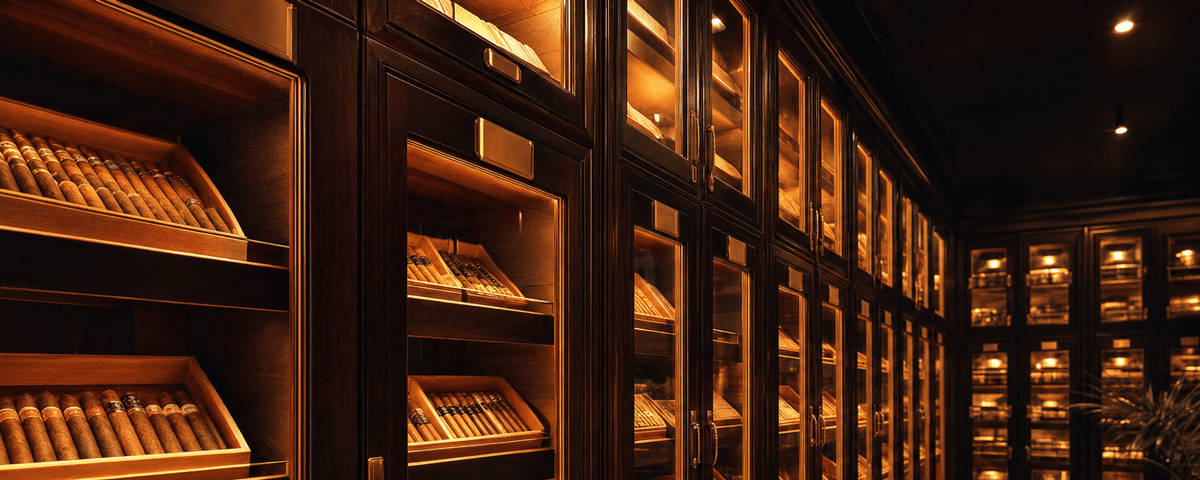
33 座 24 小時恆溫恆濕醇化室
W Cigar Bar 提供的會員醇化空間 · 場地資訊請洽編輯部
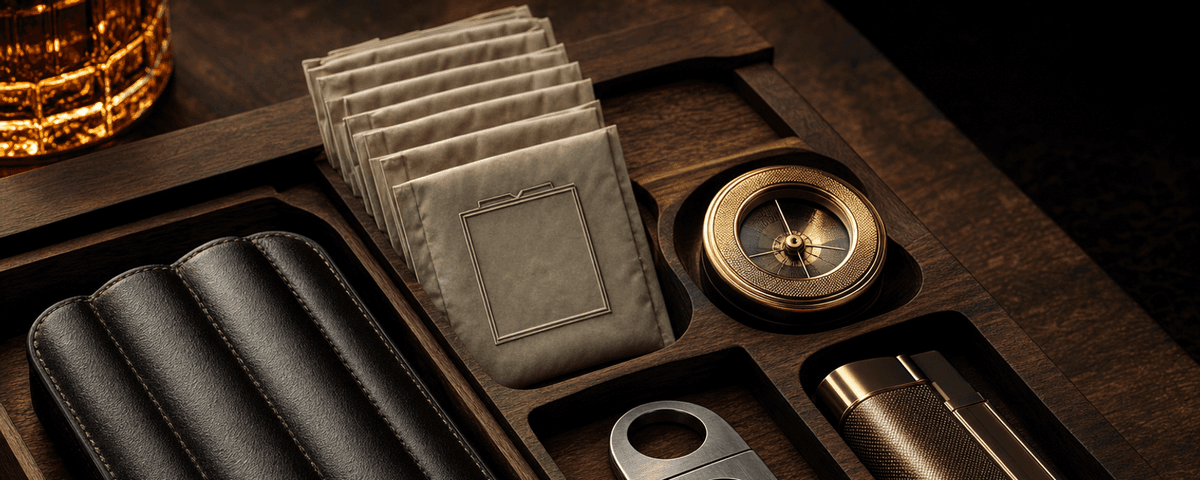
雪茄剪 / 打火機 / 雪茄盒 / Boveda
W Cigar 配件官網 · 專營雪茄配件正品
加 LINE 好友 · 文化諮詢
文化空間資訊 · 紳士沙龍 · 私人包場
本網站內容僅供雪茄文化、歷史、收藏與品吸知識研究參考。菸品有害健康、未滿法定年齡者請勿吸菸。實際規範請依所在地法律為準。
吸菸有害健康・戒菸專線 0800-636363・本站僅供 20 歲以上成年人閱覽。
讀到這裡,你不只是路過的人
留下 Email,加入 W 雪茄聖經內圈——總編輯 Wilson Tsai 親選的學院深文與國際新訊,先你一步送到信箱。
· 教育用途非銷售 · 隨時一鍵退訂 · Email 絕不對外公開 · 由勝茄股份有限公司營運
同分類延伸閱讀


資料來源:W Cigar Bible 編輯部整理 · 雪茄王子 Wilson Tsai 親自審稿
本文僅供雪茄文化、歷史、收藏與品鑑知識研究,不作為菸品促銷、銷售或購買建議。吸菸有害健康,未滿二十歲不得吸菸。