雪茄中的雜草與香氣:風味的秘密武器
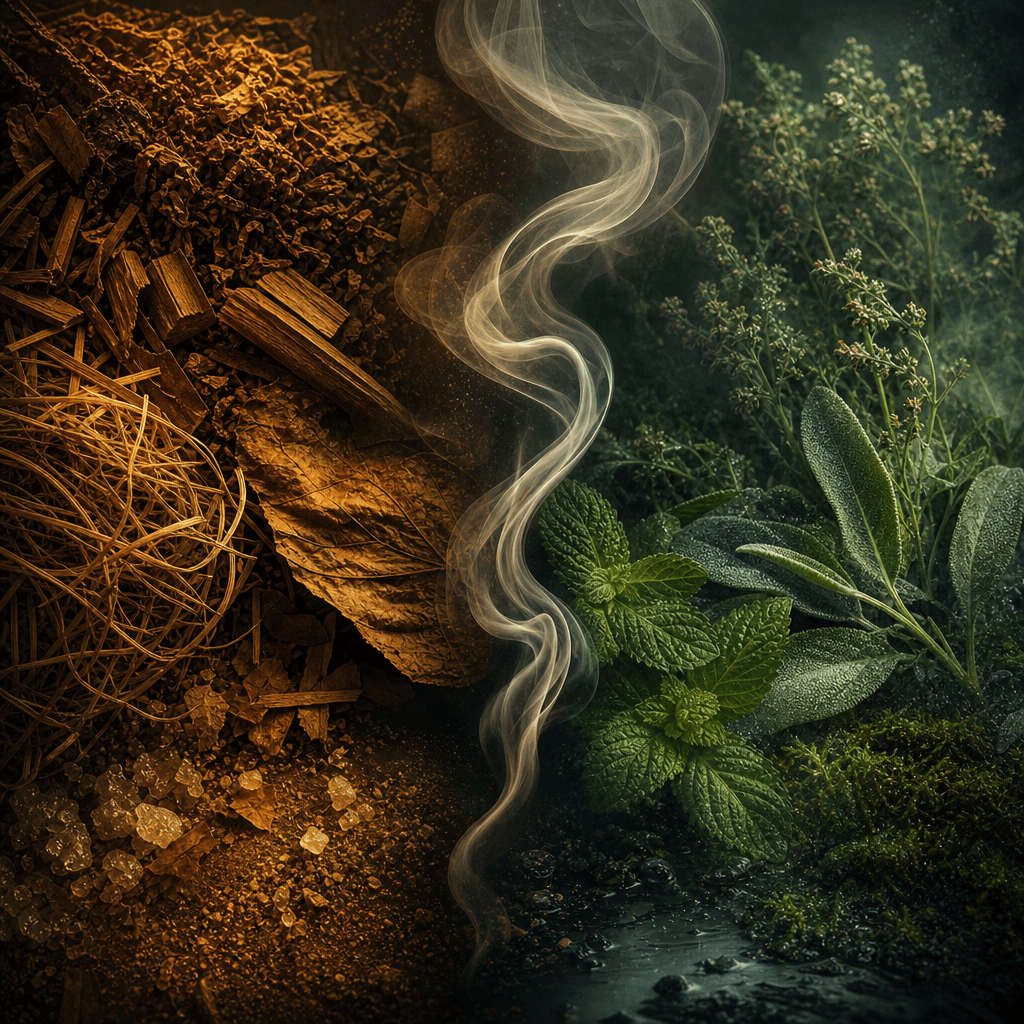
雪茄的草本香氣常被忽視,但實際上它是品味層次的重要指標。老手能透過草本香判斷雪茄的產區、年份及醇化狀態。成熟的雜草香,如乾草和藥草,能提升雪茄的甜感與風味結構,而青澀的青草味則可能暴露菸葉處理的缺陷。不同產區的土壤與氣候影響草本的表現,古巴的草本多呈現乾草和雪松,而多明尼加則偏向柔和的甘草與奶油。透過細緻的品味技巧,老手能更深入理解雪茄的複雜風味。
- 雪茄的草本香氣是判斷菸葉成熟度與工藝細節的關鍵,成熟的雜草香能提升整體風味層次。
- 不同產區的土壤與氣候影響雪茄的草本風味,古巴偏向乾草與礦物,多明尼加則偏向花草與奶油。
- 草本香的表現與發酵、醇化及保存環境密切相關,適當的濕度與溫度能保持草本的清晰度與層次感。
Weeds and Aromas in Cigars: The Secret Weapon of Flavor
Veteran cigar enthusiasts often focus on leather, coffee, cocoa, nuts, pepper, and wood; however, what truly elevates a cigar's complexity is often the subtle "weediness": hay, wild mint, sage, barley, ferns, alfalfa, wet grasslands, and even the scent of a field after rain.
I often say that herbal aromas are not the "green notes" that beginners notice, but clues for veterans to judge the origin, vintage, aging status, and fermentation process of a cigar. If clean, it enhances the sweetness; if coarse, it exposes the shortcomings in tobacco processing.
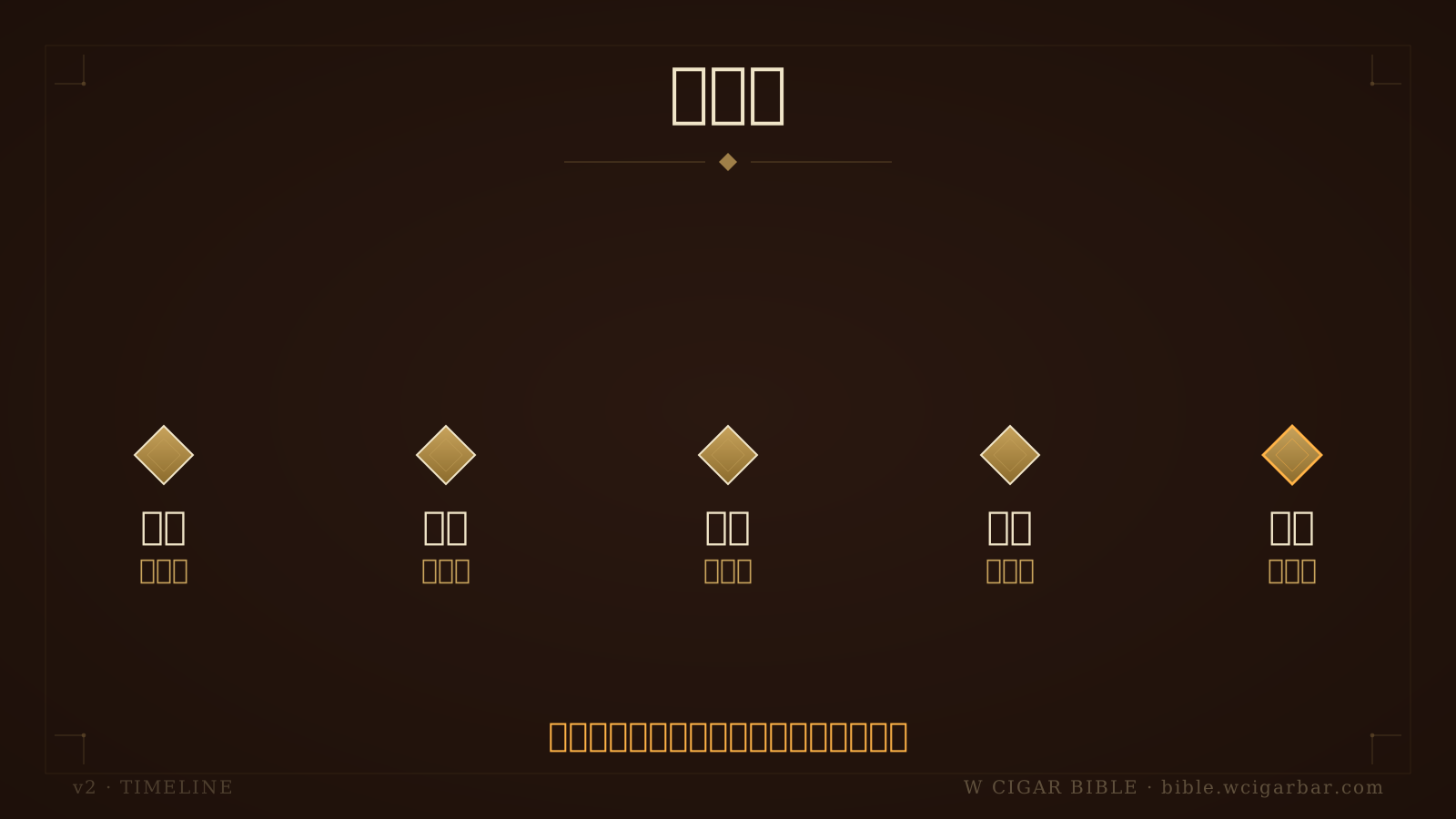
時間軸呈現從嗅聞草本到記錄前中後段的辨識流程
Weedy Aromas Are Not a Flaw, But Part of the Flavor Framework
Many people, when first describing the herbal tones of a cigar, might say "grassy," "vegetable-like," or "leafy," as if it indicates poor processing. It's important to distinguish: raw greenness usually carries a pungent ammonia scent, bitter tongue, and sharp nasal notes; mature weedy aromas resemble dried hay, wild herbal tea, and herbal bundles, capable of connecting woodiness, creaminess, honey, and earthy tones. Weedy aromas are not coarse grassy notes but are key coordinates for assessing tobacco maturity and craftsmanship details.
Take the Cohiba Siglo VI from 2008 to 2012 as an example. Well-preserved boxes often exhibit light hay and lemongrass in the early stages, transitioning to cream, cedar, and honey in the middle, and cocoa and mineral notes in the final stages. If stored at humidity levels above 72% for a long time, the same cigar's herbal notes become stuffy, like wet straw and green bean skins, suppressing sweetness and causing burn line fluctuations.
Veterans need to practice breaking down "grass": hay is sweet, grass is sharp, herbs are refreshing, wet grass is a warning of moldy dampness, and roasted grass approaches grains and malt. The Partagás Serie D No.4, in many batches after 2016, shows significant black pepper and wet earth, but with over five years of aging and stable storage, the herbal notes shift from stimulating to smoky vanilla, broadening the structure.
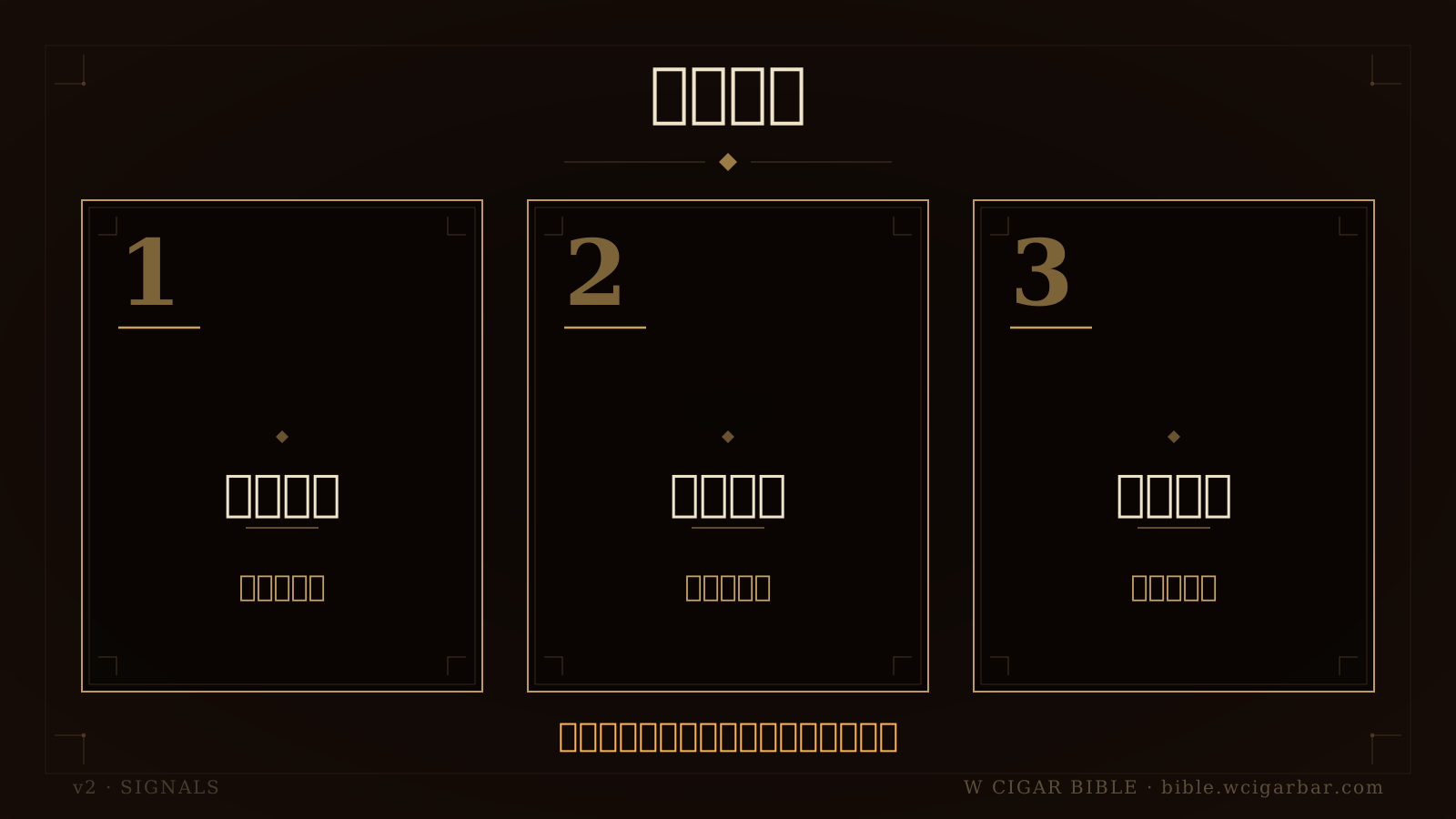
三張卡片整理草本香不是缺陷並提示甜青與保存線索
How Terroir Determines Herbal Profiles
Herbal aromas do not solely come from "the leaves themselves" but are also related to soil minerals, drainage, sunlight, wind direction, and harvest maturity. The red soil and limestone layers of Cuba's Vuelta Abajo give many cigars hay, cedar, floral stems, and mineral lines; the Cibao Valley in the Dominican Republic often has softer licorice, dried flowers, and sweet hay. Though both are called herbal, Cuba leans towards mineral and hay, the Dominican Republic towards floral and creamy, while Nicaragua often features spicy herbs and roasted notes.
Looking at brand examples, Hoyo de Monterrey Epicure No.2's herbal notes are not sharp but like hay cushioned under cream, almonds, and light wood; Romeo y Julieta Wide Churchill may show floral stems, red tea leaves, and slight strawberry leaves. These are not the main characters but are like violas in a symphony, without which the sweetness would feel thin.
Nicaragua's Estelí and Jalapa have different herbal notes. Estelí's volcanic soil provides deeper spice, black pepper, and roasted vanilla, while Jalapa often has sweet wood, licorice, and dried flowers. The Padrón 1964 Anniversary series, when well-preserved, often combines cocoa, coffee, and dry hay ash; My Father Le Bijou 1922 has more pronounced spicy herbs and pepper, with sharp lines suitable for veteran deconstruction.

矩陣比較古巴多明尼加與尼加拉瓜的草本輪廓差異
"Grass" in Different Cuban Regions: From Hay to Herbs
When discussing Cuban cigars and herbal notes, one cannot simply say "Cuban flavor." Pinar del Río's Vuelta Abajo has long been regarded as a core region for premium tobacco, often exhibiting hay, honey, cedar, light floral stems, and mineral saltiness; while Vuelta Arriba, used for more everyday blends, sometimes has more direct notes like sun-dried hay and earth. The sophistication of Cuban herbal notes lies in their ability to blend with sweetness, woodiness, and mineral notes, rather than standing out alone.
| Region/Common Style | Herbal Expression | Sensory Clues | Veteran Observation Focus |
|---|---|---|---|
| Vuelta Abajo | Hay, cedar leaves, floral stems | Honey, minerals, cream | Whether the herbal notes are clean with a sweet base |
| San Juan y Martínez | Vanilla, straw, light pepper | Wood, cocoa, leather | Whether the mid-section transitions delicately |
| San Luis | Floral, dry leaves, light herbs | Cream, nuts, soil | Whether the early section has green sharpness |
| Vuelta Arriba | Pasture, earthy grass, roots | Rough wood, spice, smoke | Whether it is overly linear and dry |
Trinidad Fundadores is an excellent practice sample. Many well-preserved boxes from 2007 to 2013 have hay, honey, and light floral notes in the early stages, transitioning to cedar, cream, and nuts in the middle, with light white pepper emerging in the final stages. Its herbal notes are not "loud" but very long, like extending the aftertaste of the entire cigar.
Conversely, Bolívar Belicosos Finos has thicker herbal notes, often linked with leather, earth, and coffee grounds. If not aged enough, it may appear as bitter grass, wood spikes, and spiciness; if stored for 6 to 10 years at humidity around 65% to 68%, the herbal notes sink into the background, allowing brown sugar, leather, and mineral notes to be more complete.
Non-Cuban Cigar Herbal Language: Spices, Sweet Herbs, and Rainforest Feel
The herbal world of non-Cuban cigars is broader. The Dominican Republic often features soft sweet herbs, dried flowers, licorice, and cream; Nicaragua often shows rosemary, sage, black pepper leaves, and roasted grass; Honduras sometimes carries wet wood, ferns, and cocoa shells; Ecuadorian wrappers often add floral stems, tea leaves, and delicate herbal scents. In non-Cuban cigars, herbal notes are not just supporting roles but are often designed as balancers of intensity, sweetness, and spiciness.
Since its launch in 2013, Davidoff Nicaragua has made many veterans reconsider Nicaraguan herbal notes: not just heavy flavors and pepper, but also sweet herbs, roasted hazelnuts, coffee, and delicate spices. Arturo Fuente OpusX often makes Dominican tobacco rich, with dried flowers, vanilla pods, herbal sugar, and spicy wood, with herbal notes wrapped in sweet spice.
The Oliva Serie V Melanio is also a typical case. Using Ecuadorian Sumatra wrappers, it often shows cocoa, coffee, sweet wood, and light tea grass notes; if the burning temperature is too high, the herbal notes will be swallowed by bitterness. For such cigars, I recommend veterans slow down, taking a puff every 60 to 90 seconds, allowing the spices and sweet herbs time to open up.
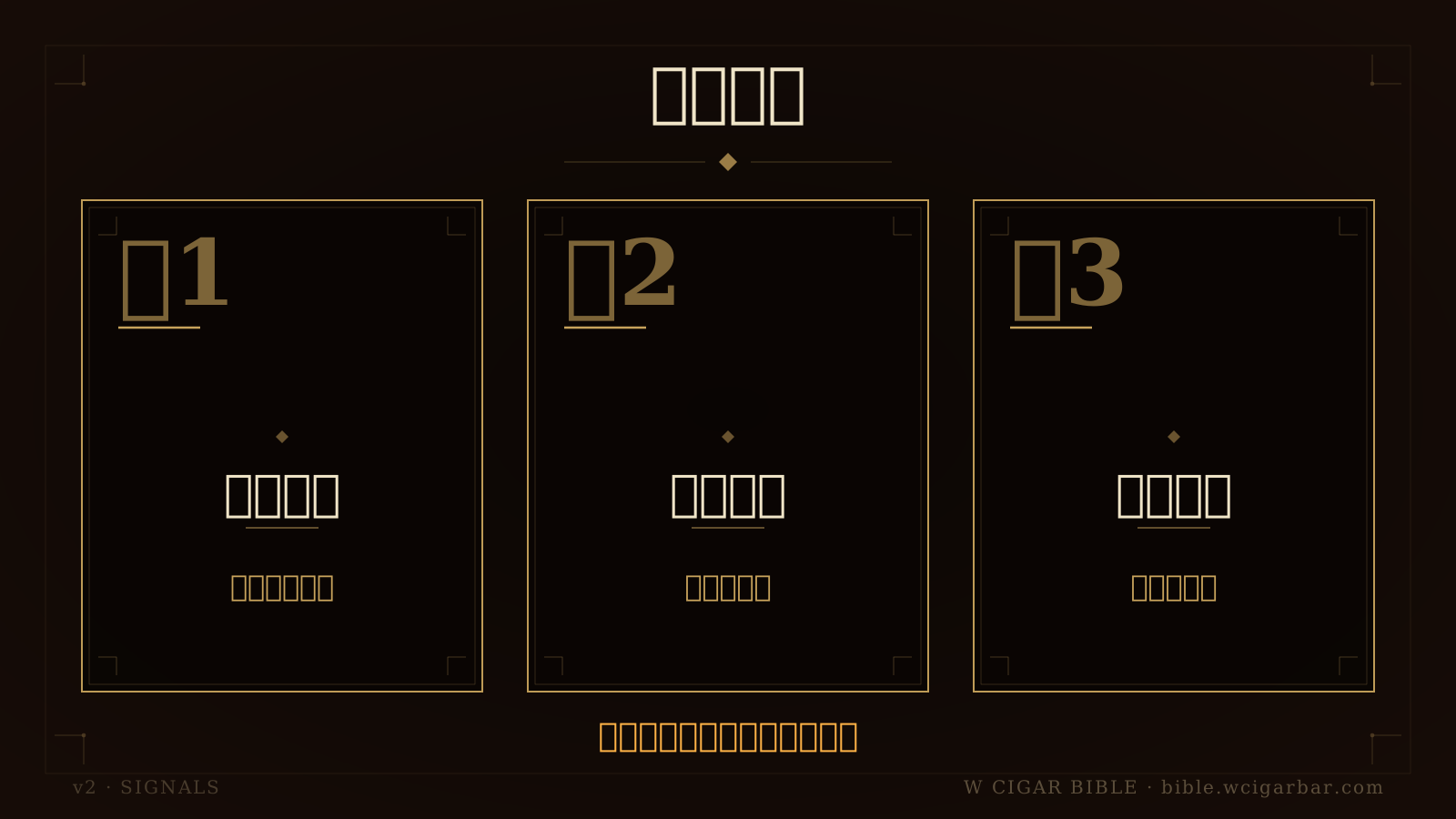
三張卡片指出把草本當缺陷與過度調濕等常見誤解
Fermentation, Aging, and Herbal Transformation
Herbal aromas fear two things the most: insufficient fermentation and unbalanced storage. After harvest, tobacco leaves undergo drying in barns, chlorophyll breaks down, and green notes decrease; then through fermentation piles, temperatures may reach 40 to 50°C, with ammonia, sharpness, and bitterness gradually weakening. If this step is insufficient, the herbal notes will be like broken green branches, pungent, bitter, and short. Good craftsmanship turns green notes into hay, honey grass, and herbs; poor craftsmanship leaves only bitter green and ammonia.
The aging of cigars after rolling is also crucial. Generally, Cuban cigars show a significant shift from sharp to round herbal notes 3 to 5 years after production; rich non-Cuban cigars may integrate spicy herbs, coffee, and cocoa within 2 to 4 years. Of course, this is not a formula; some Cuban boxes from 2001 and 2002 can vary greatly due to craftsmanship and storage differences.
The storage environment directly rewrites herbal notes. Humidity above 70% easily makes herbal notes thick, stuffy, and like wet cardboard; below 60%, herbal notes may crack, resembling dry leaf ash and burnt tea. My benchmark is 18 to 20°C, with relative humidity of 65% to 68%, adjusted slightly based on the cigar's condition. If the herbal notes are clean, the aftertaste will extend; if unbalanced, the first puff will reveal it.
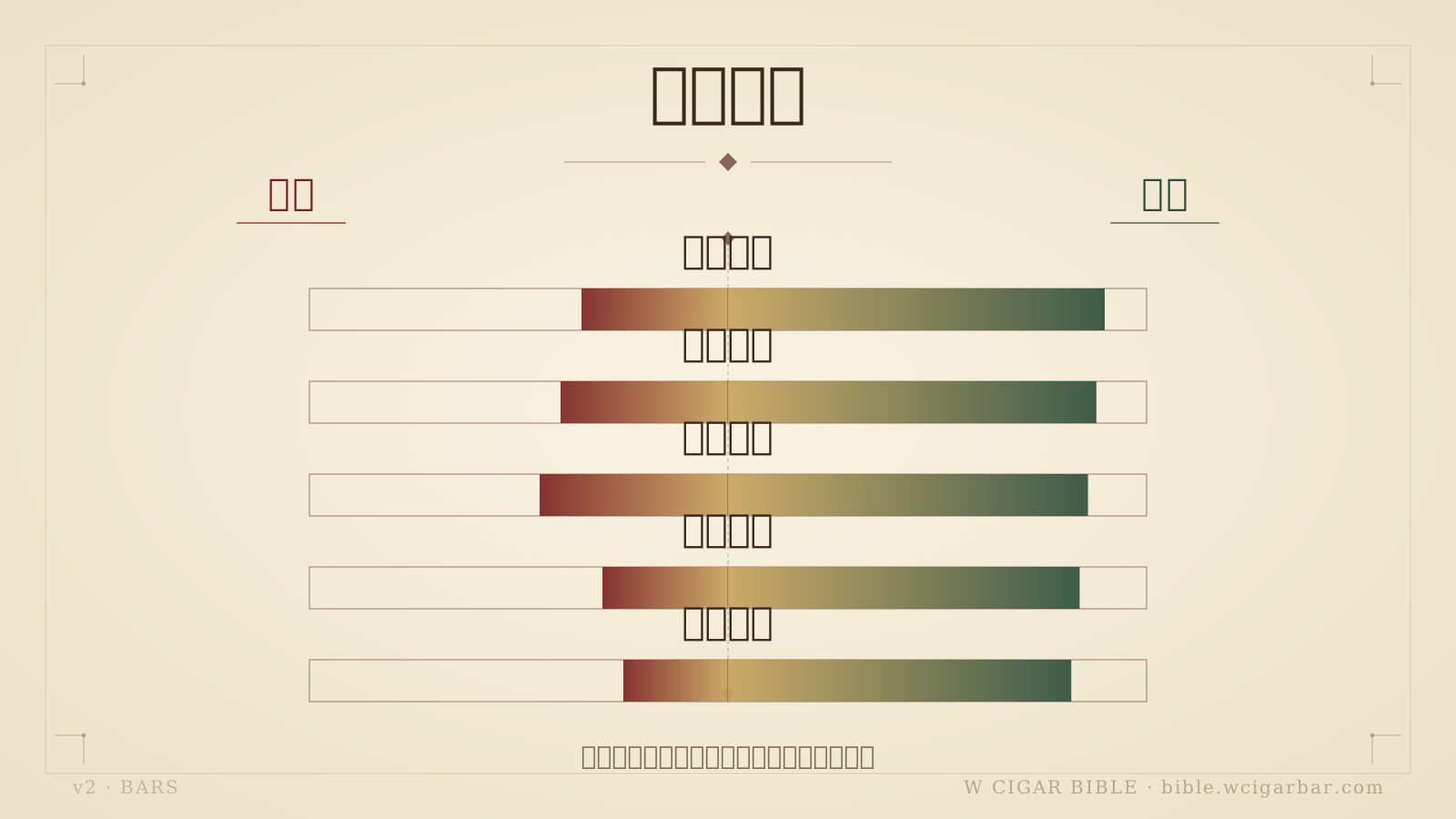
長條圖比較新手與老手在草本判讀保存與產區線索的差異
How Veterans Deconstruct Weedy Aromas: Five Sensory Steps
To grasp herbal notes, don't rely solely on the first puff. Before lighting, smell the foot and wrapper: hay, tea leaves, floral stems, barn, and herbs often appear in the cold smell. In the first centimeter after lighting, don't rush to conclusions, as flame, cut, and draw rhythm all affect perception. Judging herbal notes requires dividing into early, middle, and late stages, while simultaneously observing sweetness, bitterness, spiciness, and nasal aftertaste.
I often use the following five steps to train myself and recommend veterans use notes to build a database:
- Cold smell: Record whether the wrapper and foot have hay, wet grass, floral stems, or herbs.
- Early stage: Observe whether the herbal notes are sweet, sharp, bitter, or refreshing.
- Middle stage: See if the herbal notes blend into wood, nuts, coffee, or cream.
- Late stage: Determine if it turns into bitter grass, burnt leaves, or becomes a spice aftertaste.
- Review: Look at the notes the next day to avoid magnifying a particular flavor due to emotions at the time.
Take Montecristo No.2 as an example. Well-preserved boxes from 2014 to 2018 often have hay, cocoa, coffee, cedar, and light orange peel; if the early stage herbal notes are sharp and the middle stage doesn't turn sweet, it's usually not the best state for this cigar. Conversely, if the herbal notes in the middle stage become malt, nut shells, and light cream, it typically indicates that burning and storage are in the right place.

三張問答卡整理同盒差異草本年輕感與濕度調整方法
Pairing, Burning Rhythm, and Herbal Magnifiers
Pairing can magnify or obscure herbal notes. High-alcohol spirits easily flatten delicate hay, leaving only spiciness; sweet sherry or aged rum may pull herbal notes towards honey, roasted grass, and dried fruits; unsweetened oolong, ripe Pu-erh tea, and cold-brewed black tea can clarify hay, floral stems, and woody lines. To study herbal notes, first choose low-interference pairings, then control the draw rhythm, or you may only taste alcohol and high temperatures.
Burning temperature is especially important. A Robusto size like a 50 ring gauge, around 124 mm, if puffed every 30 seconds, the late stage easily turns into burnt grass, spicy wood, and bitter coffee; if changed to about 70 seconds per puff, the herbal notes will be more like hay tea and roasted nuts. Churchill or Lancero are even more sensitive, drawing too quickly will burn fine herbal notes into sharp bitterness.
If discussing collection, herbal notes should also be included in observations. Certain vintages of Cohiba, Trinidad, Davidoff limited editions, or Padrón anniversary series do have tracking value in the market, but collection appreciation does not guarantee appreciation, still depending on source preservation and market. I personally value the state after opening the box more: if the herbal notes are clean, sweetness remains, and burning is stable, it is a sample worth long-term recording.
Frequently Asked Questions
Why do some cigars in the same box have sweet herbal notes, while others taste grassy?
Differences within the same box may come from tobacco leaf position, rolling density, individual humidity, and burning speed. If only one or two cigars are green, there's no need to rush to negate the entire box; if the whole box has ammonia and bitter green, recheck the vintage, storage, and source. Sweet or green herbal notes are often the result of both craftsmanship and storage.
Does a more pronounced herbal aroma mean the cigar is younger?
Not necessarily. Young cigars may have sharp herbal notes, but high-quality, well-aged cigars can also retain hay, floral, and herbal aftertastes. The key is not whether it is pronounced, but whether it is clean, has a sweet base, and can blend with woodiness and oiliness.
Are Cuban cigars' herbal notes always more delicate than non-Cuban ones?
Not necessarily. Cuba often has mineral hay and cedar leaf lines, but the Dominican Republic, Nicaragua, and Honduras can also produce very charming herbal layers. Brands like Davidoff, Fuente, Padrón, and Oliva have works worth dissecting from an herbal perspective.
How should humidity be adjusted so herbal notes don't become stuffy?
I usually start with a relative humidity of 65% to 68%, maintaining a temperature of about 18 to 20°C. If wet grass, cardboard, and uneven burning occur, first lower the humidity by 1% to 2% and observe for two weeks, avoiding drastic adjustments.
How do you differentiate between herbal and moldy scents?
Clean herbal notes resemble hay, tea leaves, herbs, or floral stems, usually with sweetness and a refreshing aftertaste; moldy scents resemble damp basements, old rags, and stuffy cardboard, clinging to the nasal passages and being uncomfortable. If the wrapper has suspicious spots and odors, it should be carefully checked, not judged solely by appearance.
How should veterans build a memory of herbal flavors?
Prepare dried hay tea, oolong tea stems, rosemary, sage, licorice slices, and cocoa shells as olfactory references, and write each experience into three columns: early, middle, and late stages. After accumulating notes on over 30 cigars, you will begin to see the herbal patterns of brands and regions.
Herbal notes are the most underestimated language in cigars. They are not as likable as cocoa or coffee, nor as direct as pepper, but they can reveal origin, vintage, craftsmanship, and storage. As the editor of "Cigar Bible," the more I study, the more I believe that veteran advancement lies not in memorizing more brands but in distinguishing whether a strand of hay is sweet, green, mineral, or an elegant trace left by time.
—Cigar Prince Wilson Tsai
Smoking is harmful to health. No smoking under the age of twenty. Quitline: 0800-636363. This article is for reference by adults over the age of twenty regarding cigar culture, preservation, and regulations, not as tobacco advertising, promotion, or purchase advice.
Like this article?Share with friends
Share this W Cigar Bible piece with friends who want to learn cigar culture, storage, and tasting.
想把這篇 化為實踐
雪茄聖經是知識;雪茄文化要在空間裡發生

W Cigar Bar 大安總店資訊
台北大安區 · 雪茄聖經總編輯 Wilson Tsai 主理的雪茄文化空間

33 座 24 小時恆溫恆濕醇化室
W Cigar Bar 提供的會員醇化空間 · 場地資訊請洽編輯部

雪茄剪 / 打火機 / 雪茄盒 / Boveda
W Cigar 配件官網 · 專營雪茄配件正品

加 LINE 好友 · 文化諮詢
文化空間資訊 · 紳士沙龍 · 私人包場
本網站內容僅供雪茄文化、歷史、收藏與品吸知識研究參考。菸品有害健康、未滿法定年齡者請勿吸菸。實際規範請依所在地法律為準。
吸菸有害健康・戒菸專線 0800-636363・本站僅供 20 歲以上成年人閱覽。
讀到這裡,你不只是路過的人
留下 Email,加入 W 雪茄聖經內圈——總編輯 Wilson Tsai 親選的學院深文與國際新訊,先你一步送到信箱。
· 教育用途非銷售 · 隨時一鍵退訂 · Email 絕不對外公開 · 由勝茄股份有限公司營運
同分類延伸閱讀


資料來源:W Cigar Bible 編輯部整理 · 雪茄王子 Wilson Tsai 親自審稿
本文僅供雪茄文化、歷史、收藏與品鑑知識研究,不作為菸品促銷、銷售或購買建議。吸菸有害健康,未滿二十歲不得吸菸。