Tasting the Style and Culture of Cigars: Unique Flavors Across Regions
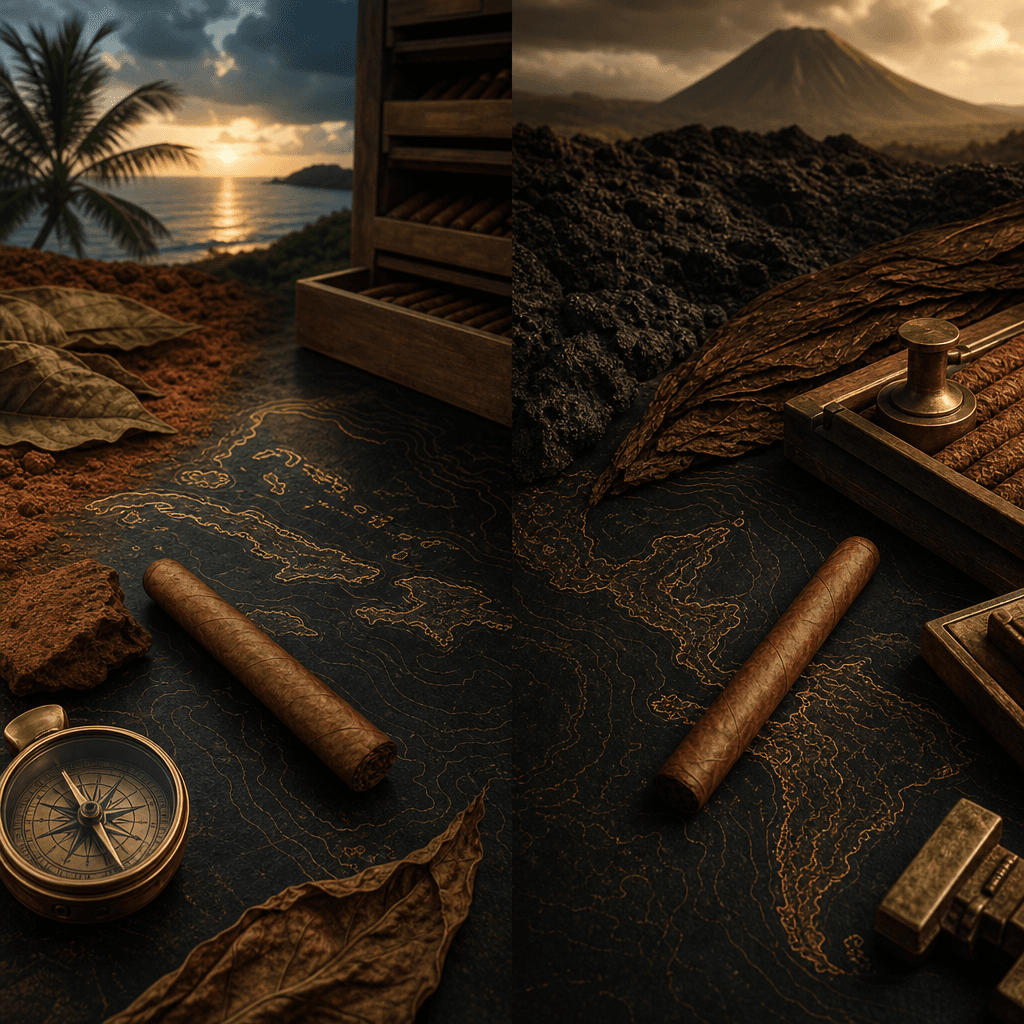
雪茄的魅力在於其背後的土地、工藝與文化交織。古巴雪茄以獨特的風味結構和歷史背景著稱,展現出層次感與土地印記。多明尼加則以精準與優雅的風格聞名,強調平衡與細膩。尼加拉瓜的雪茄則展現出火山土壤的強烈個性,形成高對比的風味。宏都拉斯和墨西哥則以扎實的口感和獨特的包葉文化,為雪茄世界增添豐富的層次。每個產區都有其獨特的風味語法,值得深入探索。
- 雪茄的風味受土地、工藝及當地文化影響,產區是風味的語法而非單純產地。
- 古巴雪茄的魅力在於其土地感與層次轉折,強度並非唯一追求。
- 多明尼加雪茄以精準與優雅為核心,展現強度與平衡的完美結合。
Veteran cigar enthusiasts often fall into the trap of brand rankings and vintage myths; however, what truly brings a cigar to life is the style woven from the land, craftsmanship, port trade, colonial history, immigrant skills, and local culinary culture. I often say, a region is not just a place of origin, but the grammar of flavor.
As the editor of the "Cigar Bible," I am more concerned with why a cigar presents such a rhythm: the herbal notes in the beginning, the nutty middle, and the leathery and mineral finish often have traceable soil, climate, tobacco processing, and brand heritage behind them.
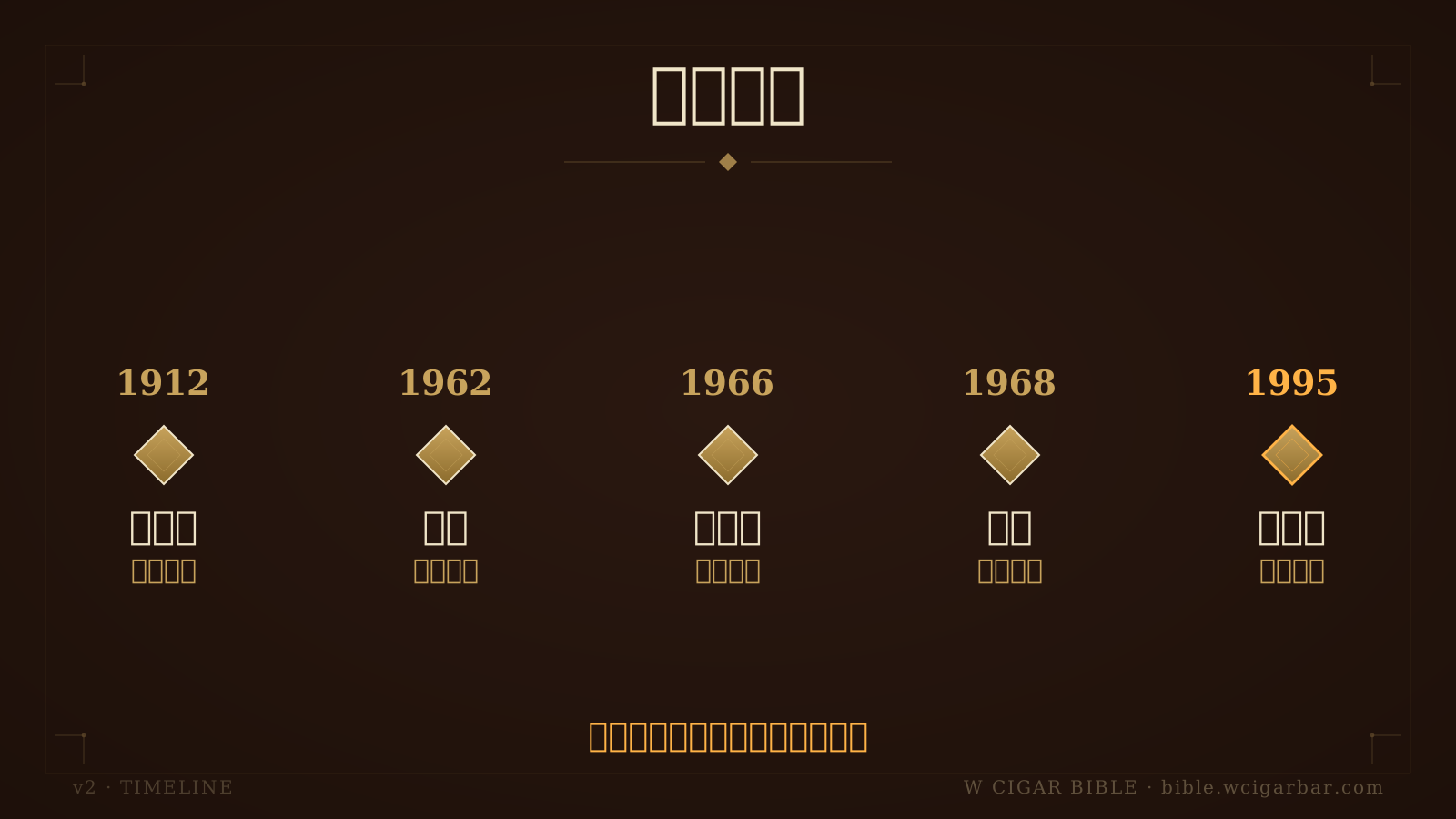
時間軸列出富恩特禁運高希霸霍亞與奧普斯節點
Cuba: The "Classic Coordinate" Established by Land, State System, and Historical Sense
Cuba has long been regarded as a reference point in the cigar world, not just because of its fame, but because its flavor structure is quite clear: the red soil of Vuelta Abajo, sea breeze, humid climate, and traditional fermentation rhythm shape the common grassy, cedar, honey, coffee, leather, and mineral undertones. After the U.S. embargo in 1962, Cuban cigars formed an even stronger cultural imagination in Europe and Asia.
Take Cohiba, for example, which was born in 1966 as a diplomatic brand and officially released commercially in 1982; its representative Siglo series was launched in 1992 to commemorate the 500th anniversary of Columbus's arrival in the Americas. If you place Cohiba Siglo VI, Montecristo No.2, and Partagás Serie D No.4 on the same style map, you will see that Cuba is not a single flavor but expresses different notes from creamy grains, cocoa bitterness to spicy wood.
The core of Cuban cigars is not about "strength," but the sense of the land and the recognizability of layered transitions. Veterans who only pursue intensity can easily miss the delicate floral fragrance of Hoyo de Monterrey Double Corona or the dried fruit and brown sugar notes that emerge after aging Ramón Allones Specially Selected.
Culturally, Cuban cigars carry a strong national narrative: brands, sizes, limited editions, and regional editions are all related to quotas, export markets, and collection culture. When it comes to collection value, I always add: collection appreciation does not guarantee appreciation, it still depends on source preservation and market. True deep appreciation is about deconstructing the myth back to craftsmanship and reading craftsmanship back to culture.
三張卡片說明產區工藝與文化脈絡如何形成風味
Dominican Republic: The Caribbean Version of "Elegant Balance" with Immigrant Craftsmanship
The modern cigar industry in the Dominican Republic is closely related to the wave of immigration after the Cuban Revolution in 1959. Many Cuban tobacco farmers, rollers, and brand families moved to the Dominican Republic, re-establishing farms and factories in places like Santiago and La Romana. This makes the Dominican style not a substitute for Cuba, but another Caribbean language centered on precision, cleanliness, and elegance.
Arturo Fuente is an important entry point to understanding the Dominican Republic. Founded in Tampa in 1912, it later established a deep foundation in the Dominican Republic; the launch of Fuente Fuente OpusX in 1995 proved that the Dominican Republic could also produce high-quality wrappers, breaking the past prejudice of "only suitable for filler." After Davidoff shifted production to the Dominican Republic in the 1990s, it also pushed clear burning, delicate wood, white pepper, cream, and almond notes to the international high-end market.
The charm of the Dominican Republic is hiding strength within order; it does not rush to declare power but persuades the palate with balance. For example, Davidoff Aniversario No.3 often features cream, hay, white pepper, and floral notes; while La Flor Dominicana Double Ligero shows that the Dominican Republic can also have heavy spicy and high nicotine notes.
From a cultural background, the Dominican Republic is more like a representative of "workshop rationality": stable supply, strict grading, fermentation control, and international market orientation make it an important region for many veterans' daily rotation. If Cuba is like an old record, the Dominican Republic is like a meticulously edited jazz in a recording studio, with clear sound fields and clean details.
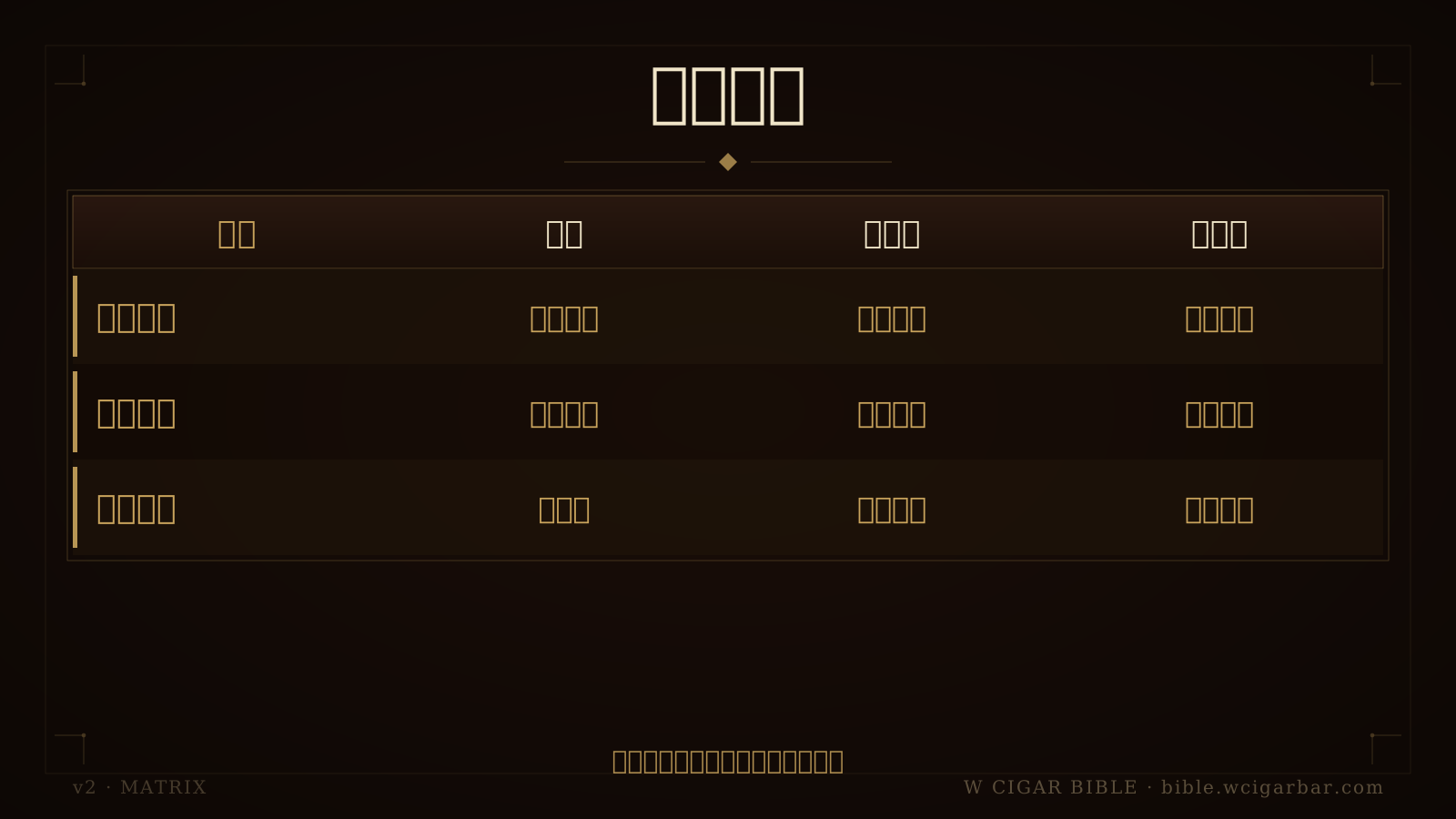
矩陣比較古巴多明尼加與尼加拉瓜的風味線索
Nicaragua: Volcanic Soil, Strong Personality, and New World Confidence
The rise of Nicaraguan cigars is closely related to the three major regions of Estelí, Jalapa, and Condega. Estelí's soil is rich in minerals, often carrying black pepper, earth, cocoa, and dark wood; Jalapa is more delicate and sweet, often with floral and caramel notes; Condega is in between, offering herbal, nutty, and mid-range support. This regional puzzle gives Nicaraguan blends a high degree of freedom.
The Nicaraguan Revolution in 1979 and the political turmoil of the 1980s once severely damaged the local cigar industry; but after the 1990s, brands like Padrón, Joya de Nicaragua, Oliva, and Drew Estate gradually pushed Nicaragua onto the world stage. Joya de Nicaragua, established as early as 1968, is a key brand for understanding the country's history; Padrón 1964 Anniversary Series combines richness, sweetness, and stable structure quite maturely.
Nicaragua is not simply "heavy flavor," but a high-contrast style shaped by volcanic soil and modern blending techniques. A good Nicaraguan cigar may start with black pepper and roasted coffee, transition to cocoa, caramel, and nuts in the middle, and end with earth, leather, and mineral notes.
Culturally, Nicaragua represents the confidence of New World cigars: no longer aiming to imitate Cuba as the highest goal, but directly establishing its own aesthetic of strength. Veterans who want to train their taste buds can compare Padrón 1926, Oliva Serie V, and Joya de Nicaragua Antaño 1970 within the same week to clearly feel the differences in sweetness, spiciness, and mouthfeel weight.
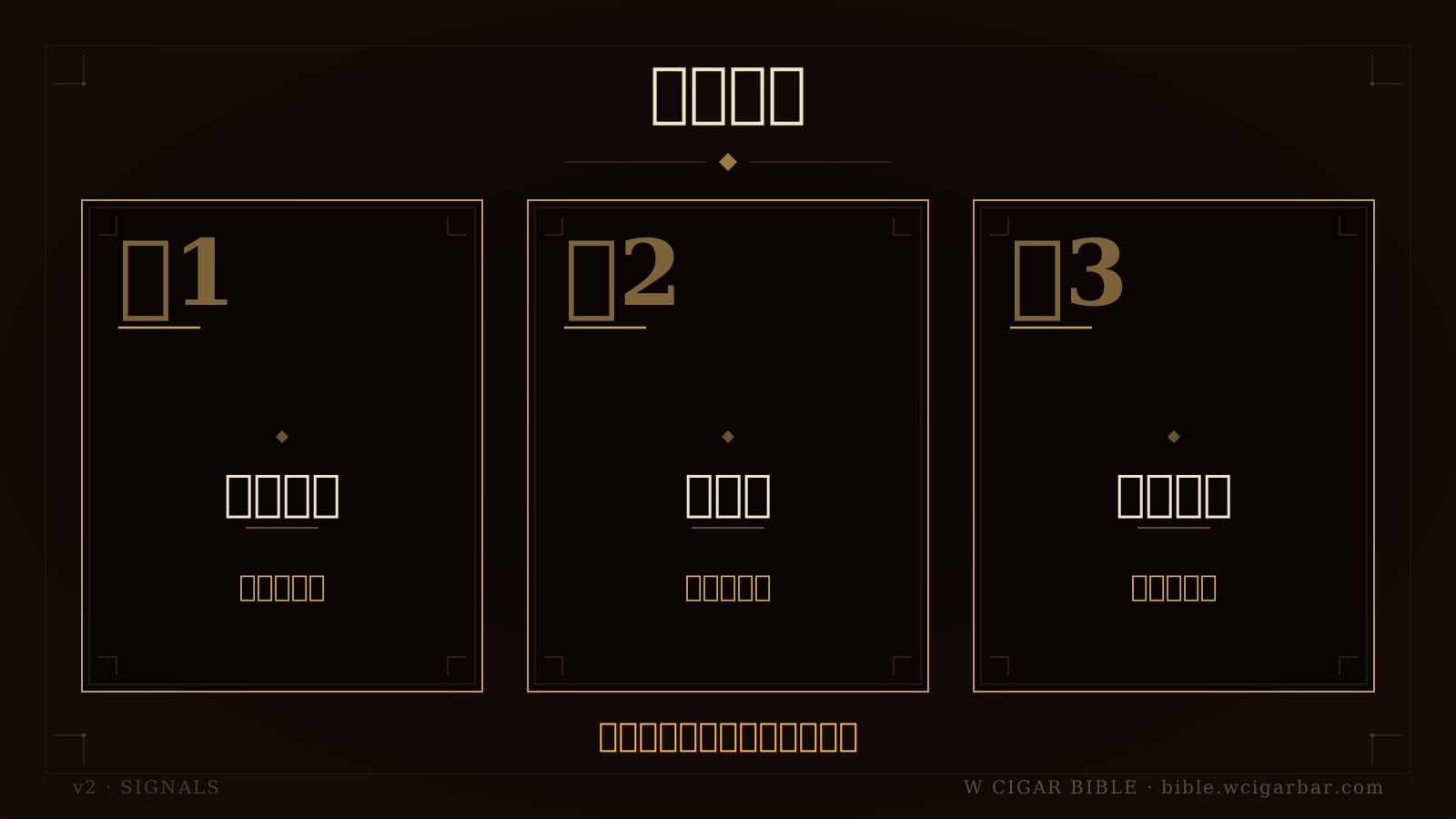
三張卡片整理品牌迷思強度崇拜與搭配過重問題
Honduras and Mexico: Underrated Thickness, Land, and Wrapper Culture
Honduras is often compared alongside Nicaragua and the Dominican Republic, yet it has its own rugged charm. Tobacco from regions like Jamastran Valley and Talanga Valley often features earth, wood, coffee, leather, and dry spice notes. After the 1960s, the combination of Cuban immigrants and local agricultural conditions gradually formed a medium to high-intensity, solid flavor style in Honduras.
Camacho is one of the representative brands of Honduras, especially the Corojo series, which has made many people re-notice the spiciness and thickness of the Corojo tobacco. Non-Cuban versions of Punch and Hoyo de Monterrey also often use Honduran tobacco to build a solid framework. These cigars do not necessarily pursue luxurious transitions but often have a straightforward, thick, and wild character, like black coffee and smoked meat on a wooden table.
The goodness of Honduras lies not in refined rhetoric, but in solid taste and the power of the land. For veterans, it is a good material for calibrating taste: when a cigar lacks excessive decoration, the true burning, fermentation, and blending skills become clearer.
Mexico must be mentioned for its San Andrés wrapper. This dark wrapper often has cocoa, wet earth, brown sugar, coffee, and slightly bitter-sweet notes, playing a key role in many New World cigars. For example, the Turrent family has a deep position in Mexican cigar history, and many popular works in the U.S. market also use Mexican San Andrés wrapper. It gives cigars a sweet-bitter contrast, like grinding dark chocolate into an earthy aroma.
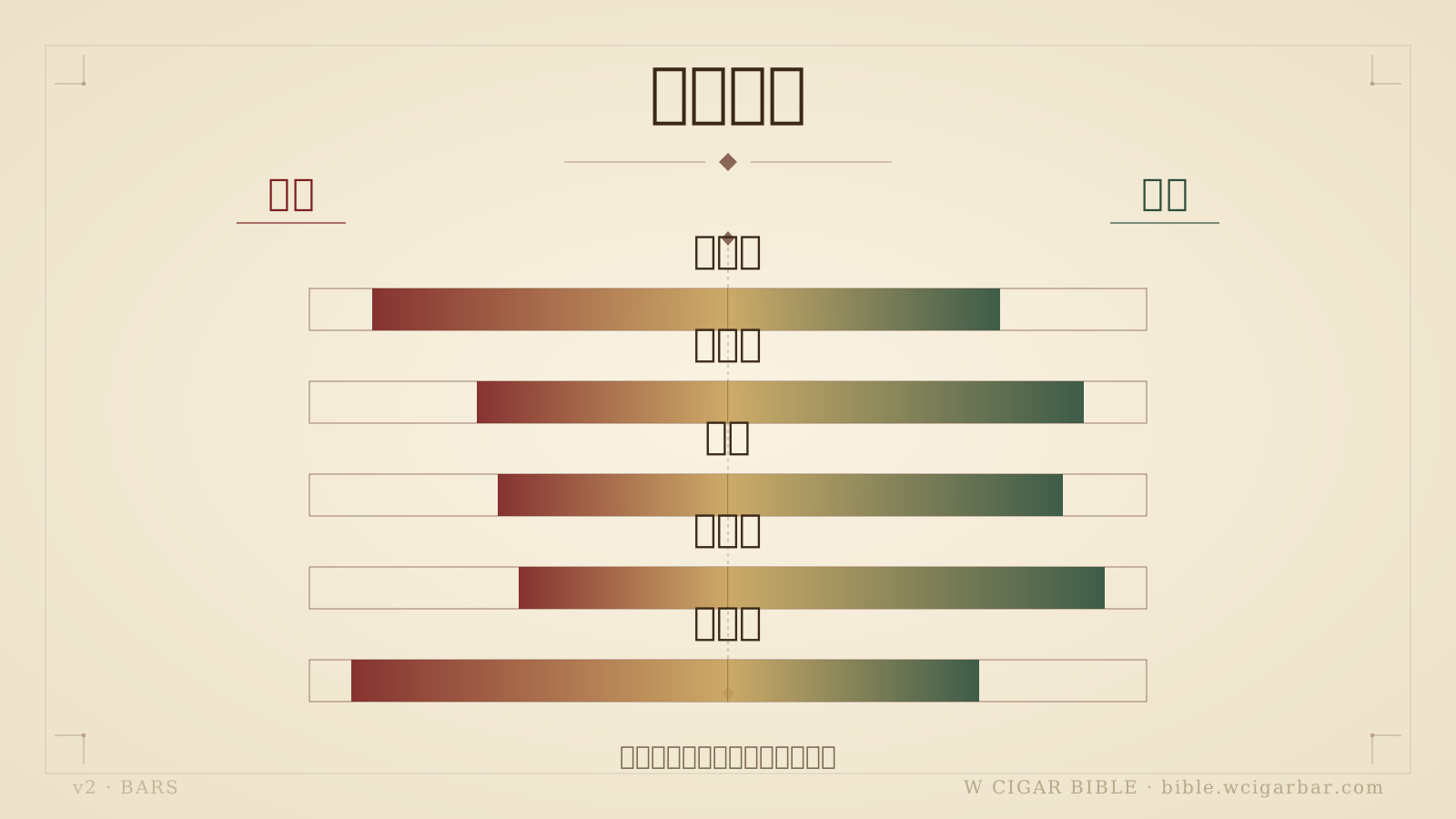
橫條圖比較古巴與新世界在土地感穩定度與調配度差異
Wrapper Map: Cameroon, Connecticut, Indonesia, and Flavor Coats
Veterans know that the wrapper is not just about appearance; it directly affects burning, aroma, sweetness, and first impression. Cameroon wrappers often carry cinnamon, roasted nuts, and dry sweet aromas, with thin leaves and delicate oils, making cultivation and processing challenging. The Fuente Hemingway series has long introduced many to the elegant spiciness of Cameroon wrappers.
Connecticut Shade is often misunderstood as "bland." In fact, excellent Connecticut Shade will present cream, hay, almond, cedar, and white pepper, with an emphasis on cleanliness and detail. As for Ecuador Connecticut, due to natural cloud cover conditions, it often has more sweetness and oiliness than the U.S. Connecticut version. Indonesian Sumatra wrappers often carry herbal, woody, light sweet spice, and drier mouthfeel.
| Wrapper Type | Common Origin | Typical Flavor | Representative Case |
|---|---|---|---|
| Cameroon | Cameroon | Cinnamon, nuts, dry sweet aroma | Arturo Fuente Hemingway |
| Connecticut Shade | U.S. Connecticut, Ecuador | Cream, hay, almond | Davidoff Signature |
| San Andrés | Mexico | Cocoa, wet earth, brown sugar | Turrent, some New World blends |
| Sumatra | Indonesia, Ecuador | Herbal, woody, spice | Ashton VSG often compared for its spicy tone |
The wrapper is like the voice of a cigar; the filler is the lung capacity, and the wrapper decides how the first sentence is spoken. In advanced appreciation, try fixing the filler from the same country and comparing different wrappers, which will build a taste database better than blindly chasing new products.
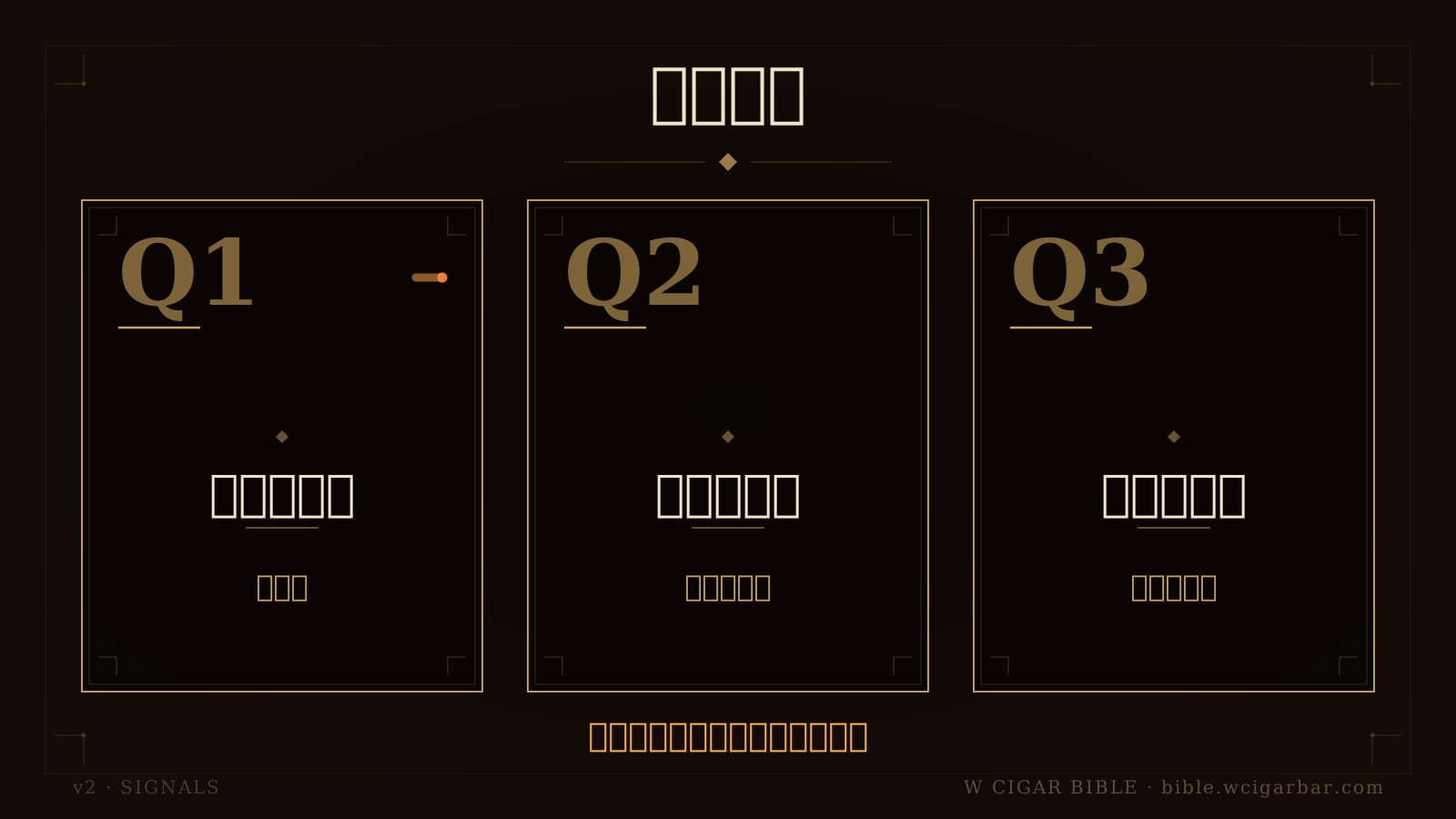
三張問答卡回答古巴深度尺寸差異與產區訓練方法
From Blending, Size to Aging: Three Things Veterans Should Really Practice
Regions provide character, blending determines narrative. Ligero, Seco, and Volado leaves each have their functions: Ligero provides strength and spiciness, Seco contributes aroma, and Volado aids burning. The skill of brand blenders lies in combining different origins, leaf positions, fermentation batches, and size proportions to form a stable flavor. This is why the same brand can have obvious differences in different sizes.
Size is not simply about length and thickness. Robusto is about 5 x 50, with a burn time usually between 45 to 70 minutes, with concentrated flavor; Churchill is about 7 x 47, with a longer rhythm; Lancero is about 7.5 x 38, with a high wrapper ratio, more likely to present delicate aromas but very sensitive to rolling and humidity. Veterans who only pursue large ring gauges will miss the precise lines brought by small ring gauges.
The key to advanced tasting is to establish conditions for repeatable comparison, rather than relying solely on immediate impressions each time. I suggest recording in the following way:
- Humidity control: relative humidity about 65% to 69%, temperature about 18 to 21°C.
- Record front, middle, and back sections: write down sweetness, spiciness, woodiness, and bitterness every 20 minutes.
- Compare the same model in different years: retest at least 6 to 12 months apart.
- Compare the same size across regions: for example, Robusto vs. Robusto, to avoid size interfering with judgment.
Aging is not magic, but a gradual integration of moisture, ammonia, tannins, and aroma. Some strong Nicaraguan cigars will become rounder after 2 to 5 years; some large Cuban sizes may need more time to unfold. However, source, preservation, and original quality always come first; time will only magnify the essence, not turn mediocrity into legend.
Frequently Asked Questions
Truly mature cigar appreciation is not about remembering more brands, but knowing where each flavor clue comes from. The following questions are the core barriers I often encounter when communicating with senior players.
1. Are Cuban cigars always deeper than New World cigars?
Not necessarily. Cuba excels in land feel, historical context, and delicate transitions; New World cigars often stand out in stability, strength, and blending freedom. When comparing Cohiba Siglo VI and Padrón 1964, the focus is not on who wins, but on the respective establishment of Cuba's gentle mineral feel and Nicaragua's cocoa spiciness.
2. How should veterans judge whether a cigar is worth long-term storage?
First, look at clear sources, stable preservation, brand batch performance, and personal taste needs. High ratings or special editions do not necessarily mean better future performance; collection appreciation does not guarantee appreciation, it still depends on source preservation and market. If a cigar is already unbalanced when young, time will usually only make the flaws more apparent.
3. Why do cigars of the same brand taste so different in different sizes?
Because changing the ring gauge affects the wrapper, filler, and binder ratio. Lancero has a higher wrapper ratio, with clear aroma lines; Robusto is more concentrated and powerful; Toro often has advantages in balance and continuity. Size is not a packaging option, but part of the blending language.
4. How to train oneself to distinguish regional styles?
You can practice by using "same size, different regions." For example, choose one Robusto each: Cuba, Nicaragua, Dominican Republic, Honduras, and record the front, middle, and back sections for several consecutive weeks. The key is to fix humidity, time, and pairing drinks; otherwise, there are too many variables, and conclusions will be inaccurate.
5. What is the most common mistake when pairing with alcohol or coffee?
The most common is using too strong a drink to overwhelm the cigar. High-alcohol barrel-strength whiskey may mask delicate floral notes; high-sweetness rum will alter the finish judgment. If you want to read the cigar itself clearly, black coffee, sparkling water, or low-sweetness tea drinks are more suitable for establishing a baseline.
Having walked through the soil of Cuba, the elegance of the Dominican Republic, the volcanic strength of Nicaragua, and seeing the character of Honduras, Mexico, and various wrappers, I am more convinced: cigars are not a single luxury symbol, but a microcosm of agriculture, craftsmanship, time, and culture. The joy of veterans lies not in chasing answers but in reading flavors deeper, more accurately, and with more context each time.
—Cigar Prince Wilson Tsai
Smoking is harmful to health. Smoking is prohibited for those under twenty. Quitline: 0800-636363. This article is for reference on cigar culture, preservation, and regulations for adults over twenty years old, not a tobacco advertisement, promotion, or purchase suggestion.
Like this article?Share with friends
Share this W Cigar Bible piece with friends who want to learn cigar culture, storage, and tasting.
想把這篇 化為實踐
雪茄聖經是知識;雪茄文化要在空間裡發生
W Cigar Bar 大安總店資訊
台北大安區 · 雪茄聖經總編輯 Wilson Tsai 主理的雪茄文化空間
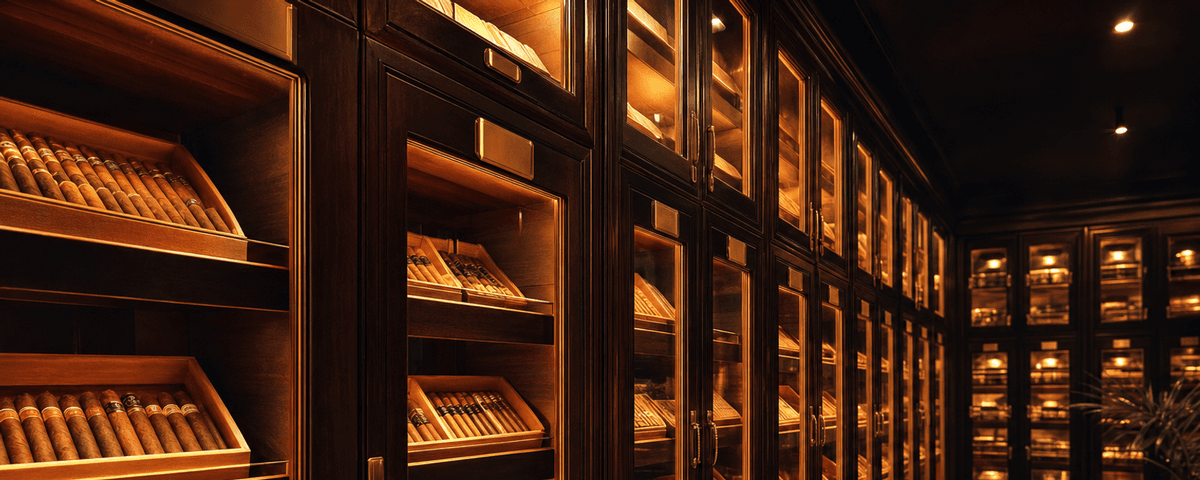
33 座 24 小時恆溫恆濕醇化室
W Cigar Bar 提供的會員醇化空間 · 場地資訊請洽編輯部
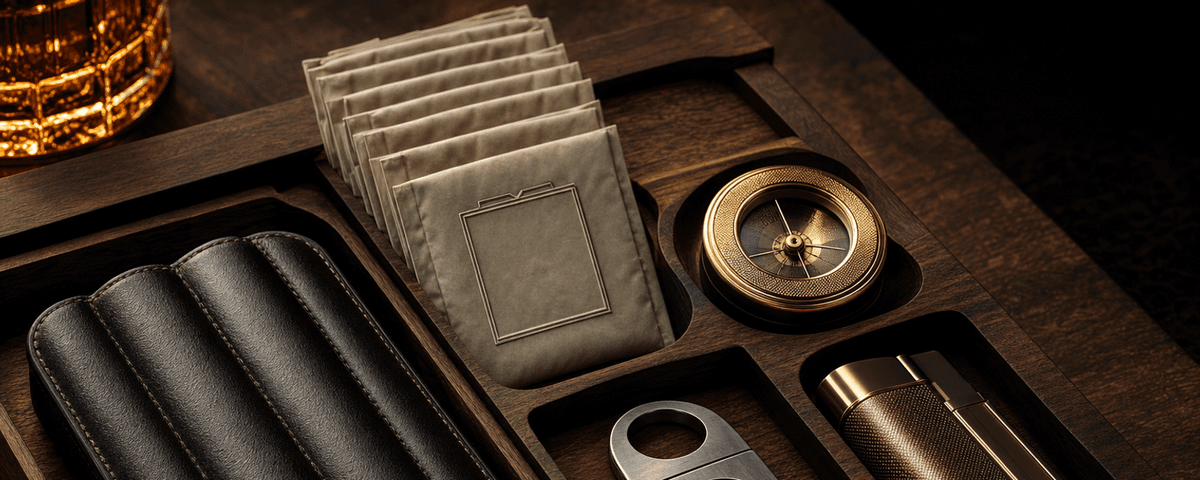
雪茄剪 / 打火機 / 雪茄盒 / Boveda
W Cigar 配件官網 · 專營雪茄配件正品
加 LINE 好友 · 文化諮詢
文化空間資訊 · 紳士沙龍 · 私人包場
本網站內容僅供雪茄文化、歷史、收藏與品吸知識研究參考。菸品有害健康、未滿法定年齡者請勿吸菸。實際規範請依所在地法律為準。
吸菸有害健康・戒菸專線 0800-636363・本站僅供 20 歲以上成年人閱覽。
讀到這裡,你不只是路過的人
留下 Email,加入 W 雪茄聖經內圈——總編輯 Wilson Tsai 親選的學院深文與國際新訊,先你一步送到信箱。
· 教育用途非銷售 · 隨時一鍵退訂 · Email 絕不對外公開 · 由勝茄股份有限公司營運
同分類延伸閱讀
資料來源:W Cigar Bible 編輯部整理 · 雪茄王子 Wilson Tsai 親自審稿
本文僅供雪茄文化、歷史、收藏與品鑑知識研究,不作為菸品促銷、銷售或購買建議。吸菸有害健康,未滿二十歲不得吸菸。