雪茄的節奏:抽吸速度與品味的關聯

吸菸有害健康,未滿二十歲者不得吸菸。雪茄品味的精髓在於掌握抽吸的節奏,而非僅僅是速度。每支雪茄的前段、中段與尾段應採取不同的抽吸間隔,以確保風味的完整展現。一般建議每 45 至 60 秒一口,但具體節奏需根據雪茄的尺寸、抽阻及濕度調整。細環徑雪茄需延長抽吸間隔,而大環徑則需注意不要抽得過慢。適當的濕度也會影響燃燒與風味,掌握這些要素才能真正享受雪茄的魅力。
- 抽吸間隔應控制在45至60秒,以保持煙霧濃度和風味的穩定性。
- 前段、中段和尾段的抽吸速度應有所不同,以適應雪茄內部變化。
- 濕度影響抽吸節奏,過高需輕短穩,過低則需慢柔少碰火。
The Rhythm of Cigars: The Relationship Between Puffing Speed and Taste
Smoking is harmful to health. Underage smoking is prohibited. Quitline: 0800-636363. This article is intended for adults over the age of twenty as a reference for cigar culture, preservation, and regulations, and is not an advertisement, promotion, or purchase suggestion for tobacco products.
The high level of cigar appreciation is not just about how familiar you are with brands, vintages, regions, and sizes, but whether you can let a cigar speak at the right temperature, humidity, and burning speed with a steady rhythm. Veterans often talk about Cuban and non-Cuban cigars, aging curves, box pressing, and draw resistance, but they tend to overlook the importance of "how long between each puff." Puffing too quickly can overshadow the layers with spiciness, bitterness, ammonia, and charcoal flavors; puffing too slowly may result in extinguishing, thinning smoke, and broken aftertaste. The true essence of refined cigar tasting is aligning time, breath, smoke, and taste buds on the same beat line, allowing a cigar to express its personality clearly from the front, middle, to the end.
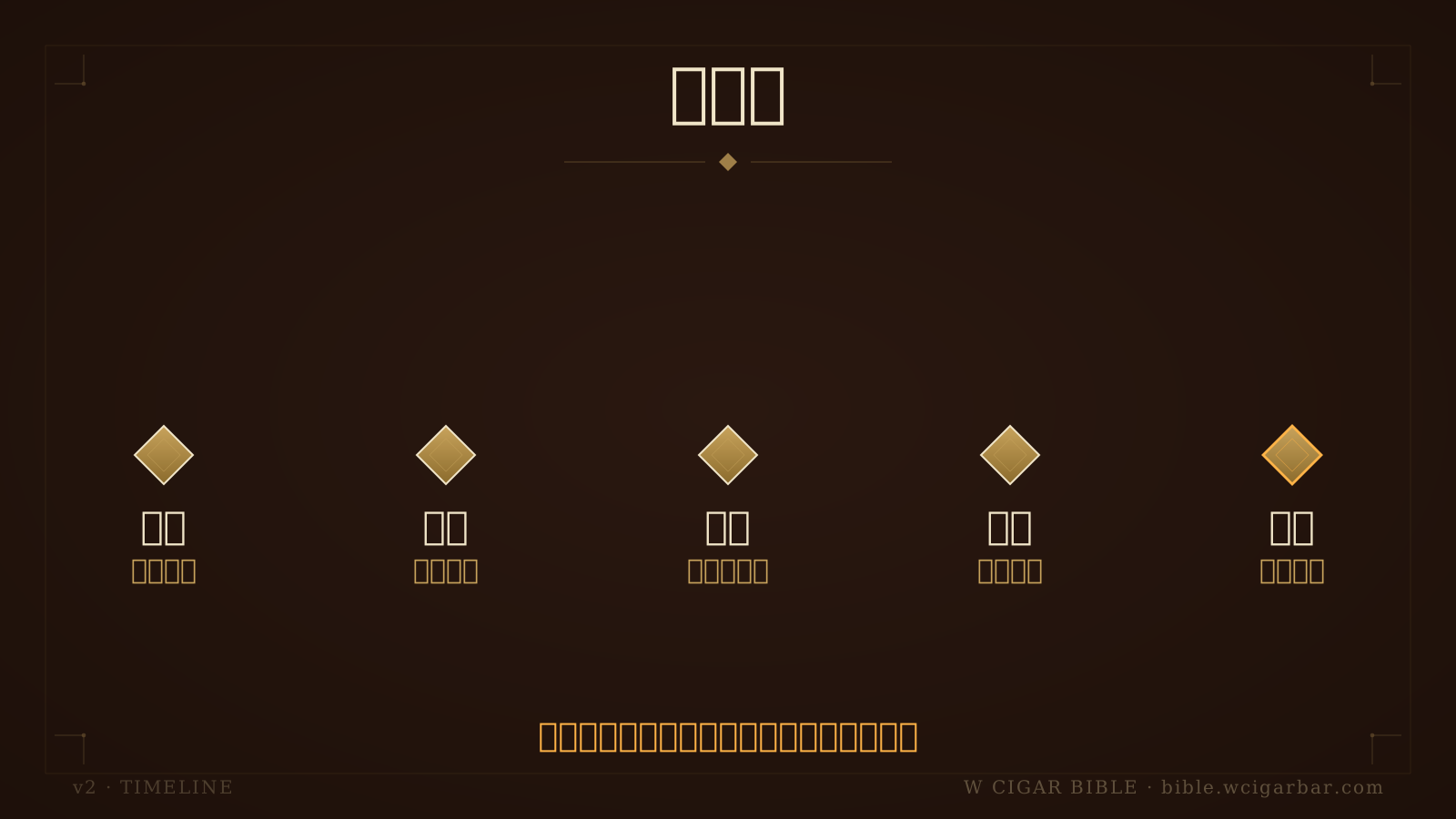
時間軸依序呈現點火前段中段尾段與收尾節拍
1. Rhythm is Not Just Speed: It is the Common Language of Burning, Temperature, and Taste
Many veterans know the phrase "smoke slowly," but how slow, when to slow down, and when to speed up slightly is the dividing line of advanced skills. For a typical Robusto size, such as Partagás Serie D No.4, with a length of about 124mm and a ring gauge of 50, a reasonable completion time is about 55 to 75 minutes; if finished within 35 minutes, it often indicates a fast rhythm, leading to elevated burning temperatures, making pepper, leather, and roasted wood overly sharp. Conversely, if it takes over 100 minutes with multiple extinguishments, the smoke density and continuity will be fragmented, and the original cocoa, earth, and nutty notes may become intermittent.
The burning end of a cigar heats up rapidly during puffing and gradually cools down when left idle. The essence of rhythm is managing this temperature fluctuation. For a Pirámide size like Montecristo No.2, if puffed every 20 seconds in the front section, it often causes the tapered head to accumulate too much heat, resulting in a dry sawdust sensation within the first 2 centimeters; if adjusted to 50 to 70 seconds per puff, allowing the smoke to linger in the mouth for about 3 to 5 seconds before slowly exhaling, the flavor lines are usually more complete. Rhythm is not a fixed formula but a language adjusted according to the cigar's condition: tighter draws require more patience, faster burns need extended intervals, and thin smoke can have slightly shortened distances without overheating. Those who understand rhythm do not just finish a cigar but allow it to be understood at the right temperature.
2. One Puff Every 45 to 60 Seconds: Why This Interval is Often Seen as a Benchmark
In many cigar teachings, one puff every 45 to 60 seconds is often mentioned as a benchmark, not as a ceremonial slogan but as a compromise value after the intersection of combustion science and taste experience. Taking Cohiba Siglo VI as an example, with a length of about 150mm and a ring gauge of 52, if well-preserved with humidity between 65% to 69% RH, the burn is usually relatively stable. For this type of medium to large cigars, maintaining one puff every 50 seconds or so keeps the burn line even, allowing the smoke density enough time to accumulate again, and the common front notes of grass, cream, honey, and delicate wood are less likely to be pulled into bitterness by high temperatures.
But a benchmark is not an ironclad rule. For instance, the H. Upmann Magnum 54, popular among players after 2020, with a ring gauge of 54, has a larger smoke channel capacity, and if the draw is smooth, 45 seconds per puff may still seem leisurely; however, the same rhythm applied to slender Lancero cigars, such as Cohiba Lancero or Trinidad Fundadores, may be too fast, as the heat in thin ring gauge cigars concentrates more easily, and the narrow smoke channel causes floral and sweet notes to be quickly covered by spiciness when the temperature rises. Conversely, the Nicaragua-based Padrón 1964 Anniversary Maduro, with thick smoke and strong burning power, may not easily extinguish even if the interval exceeds 75 seconds, but the flavor becomes heavy, and the layers of dark cocoa, coffee, molasses, and earth, if lacking stable advancement, will have an aftertaste like a sentence read in fragments. Veterans can view 45 to 60 seconds as a calibration point, then fine-tune according to size, draw resistance, humidity, and the day's taste bud condition, which is the core of rhythm skills.
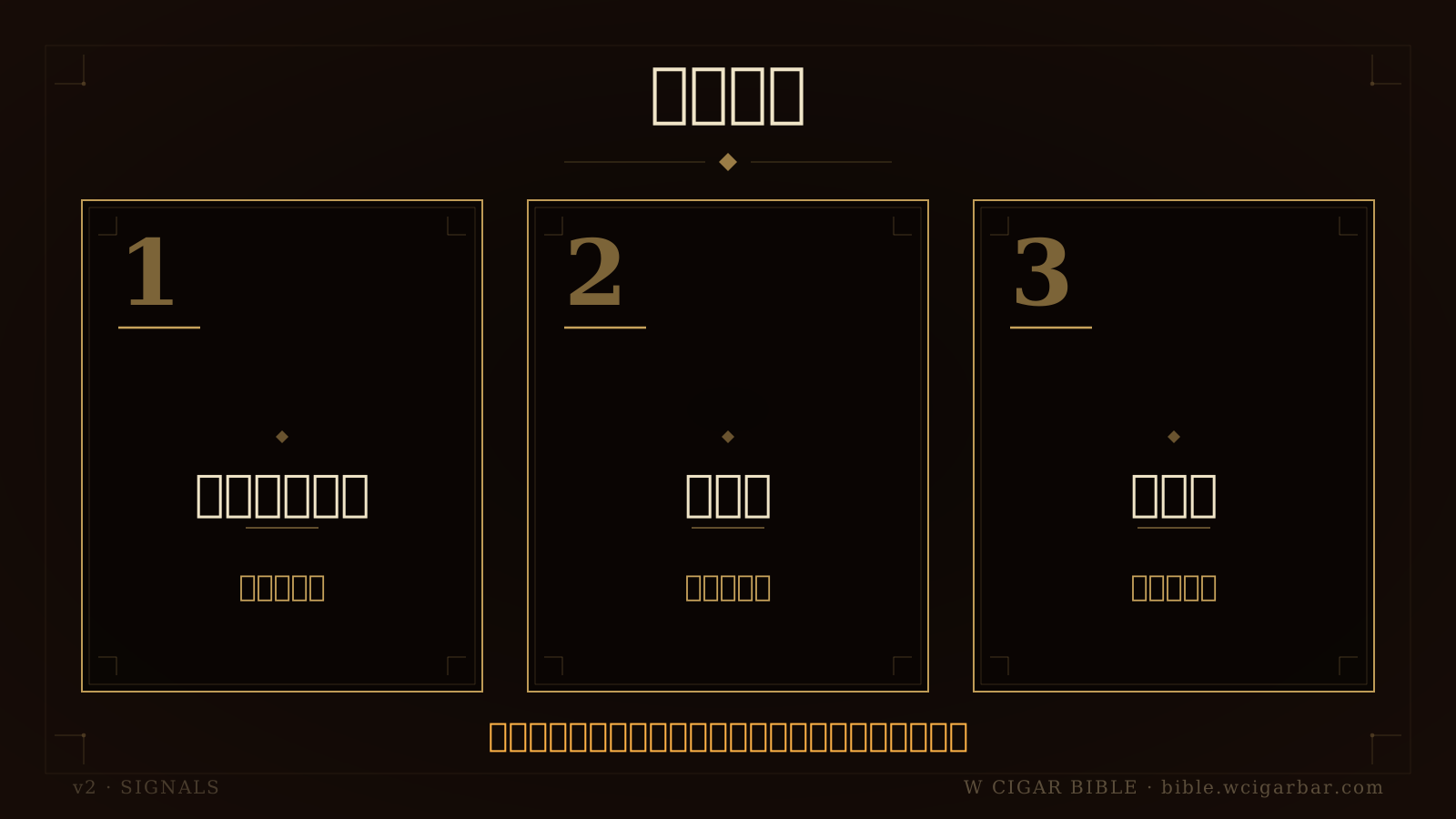
三張卡片標示抽吸間隔溫度反應與尺寸調整重點
3. The Beat of the Front, Middle, and End: The Same Cigar Should Not Be Smoked at the Same Speed Throughout
From lighting to finishing, a cigar's internal moisture, tar accumulation, temperature, and smoke channel resistance all change, so using a single speed throughout is often not the ideal way. The front section is about the first 1/3 after lighting, where the tobacco leaves have not been fully awakened by heat, and the aromas of the wrapper and binder often appear first. For Romeo y Julieta Churchills, if the rhythm is too fast in the front section, the original floral, light dried fruit, and cedar wood will become flat; it is recommended to take about 60 to 75 seconds per puff in the first 10 minutes, allowing the burning end to stabilize without rushing for a large amount of smoke.
Entering the middle section, the cigar usually reaches the most balanced area. For Bolivar Belicosos Finos, the middle section often presents earth, leather, black pepper, and dark nuts, where the rhythm can be adjusted to 45 to 60 seconds per puff, keeping the smoke density full and allowing the flavor peak to unfold naturally. The end section is the most challenging part to control, as tar and heat gradually accumulate, and if puffed frequently at the middle section speed, the end tends to become bitter, spicy, and hot. For cigars with a higher strength like Arturo Fuente OpusX Perfecxion No.2, it is best to return to 70 to 90 seconds per puff in the end section, reducing the intensity of each puff and not pulling the heat in the smoke channel all at once. A truly delicate rhythm is like playing a three-movement symphony: slow in the front, stable advancement in the middle, and restrained in the end without being greedy. Many veterans can distinguish brands but may not grasp the segment rhythm; once you learn to adjust the speed by segment, the same familiar cigar often reveals previously overlooked details.
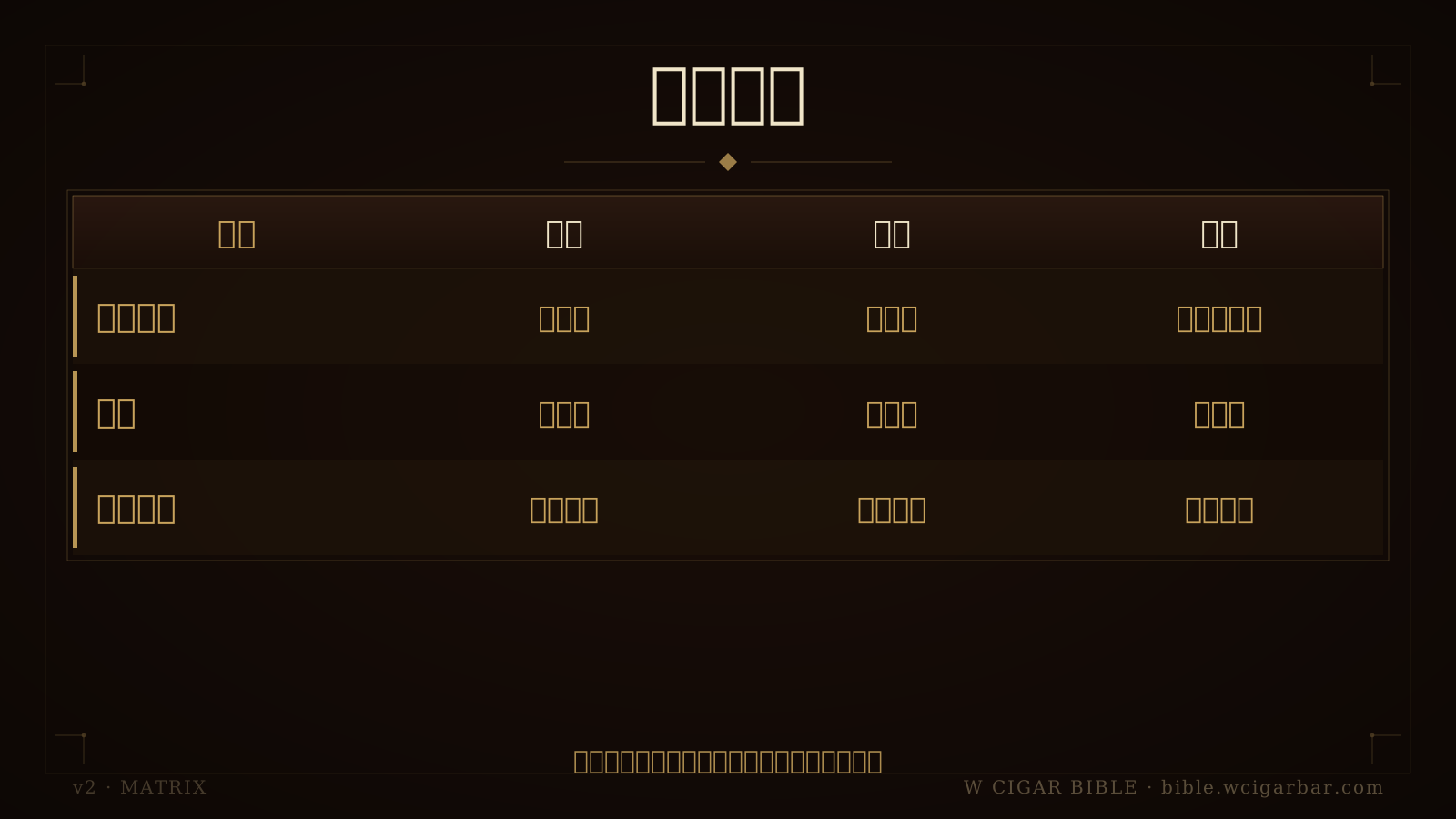
比較矩陣呈現細環常規大環在間隔熱量與風味上的差異
4. Ring Gauge, Length, and Draw Resistance: Size Determines the Starting Line of Rhythm
Cigar size is not just about feel and visuals; it directly affects rhythm strategy. Thin ring gauges like 38 to 42 have a burning core close to the smoke channel, with fast heat rise, usually requiring extended puff intervals; large ring gauges like 54 to 60 have wide smoke channels and large filler volume, with dispersed heat, offering relatively high tolerance, but if puffed too slowly, the smoke may appear loose. Comparing the Hoyo de Monterrey Epicure No.2 (Robusto, ring gauge 50) and Hoyo de Monterrey Double Coronas (length about 194mm, ring gauge 49) commonly seen in the market around 2017, the similar ring gauge but different lengths affect the overall rhythm. The advancement of Double Coronas should be more patient, with no rush in the first 30 minutes, or else the heat accumulation in the later section will make the originally elegant creamy wood and light sweetness rough.
Draw resistance is also key. Cigars with loose draw resistance, like some new world large ring gauge styles, produce a large amount of smoke with a light pull, and if puffed with excessive force, the burning end expands rapidly, and bitterness appears prematurely. Tight draw resistance cigars are the opposite; users often instinctively increase force, resulting in seemingly more smoke but actually concentrating heat in the narrow smoke channel, causing spiciness and burnt bitterness. When encountering tight draw resistance, check if the cut is too small or use a specialized needle for slight correction, rather than relying on rapid puffing to forcefully pull. For example, if Montecristo No.4 has heavy draw resistance due to high storage humidity, increasing the rhythm will only make the taste more muddled; the correct approach is to reduce puffing intensity, extend the interval, and maintain a small and stable fire core at the burning end. Size provides the starting line, draw resistance determines how you should start, and rhythm is the steering wheel to keep the entire journey under control.
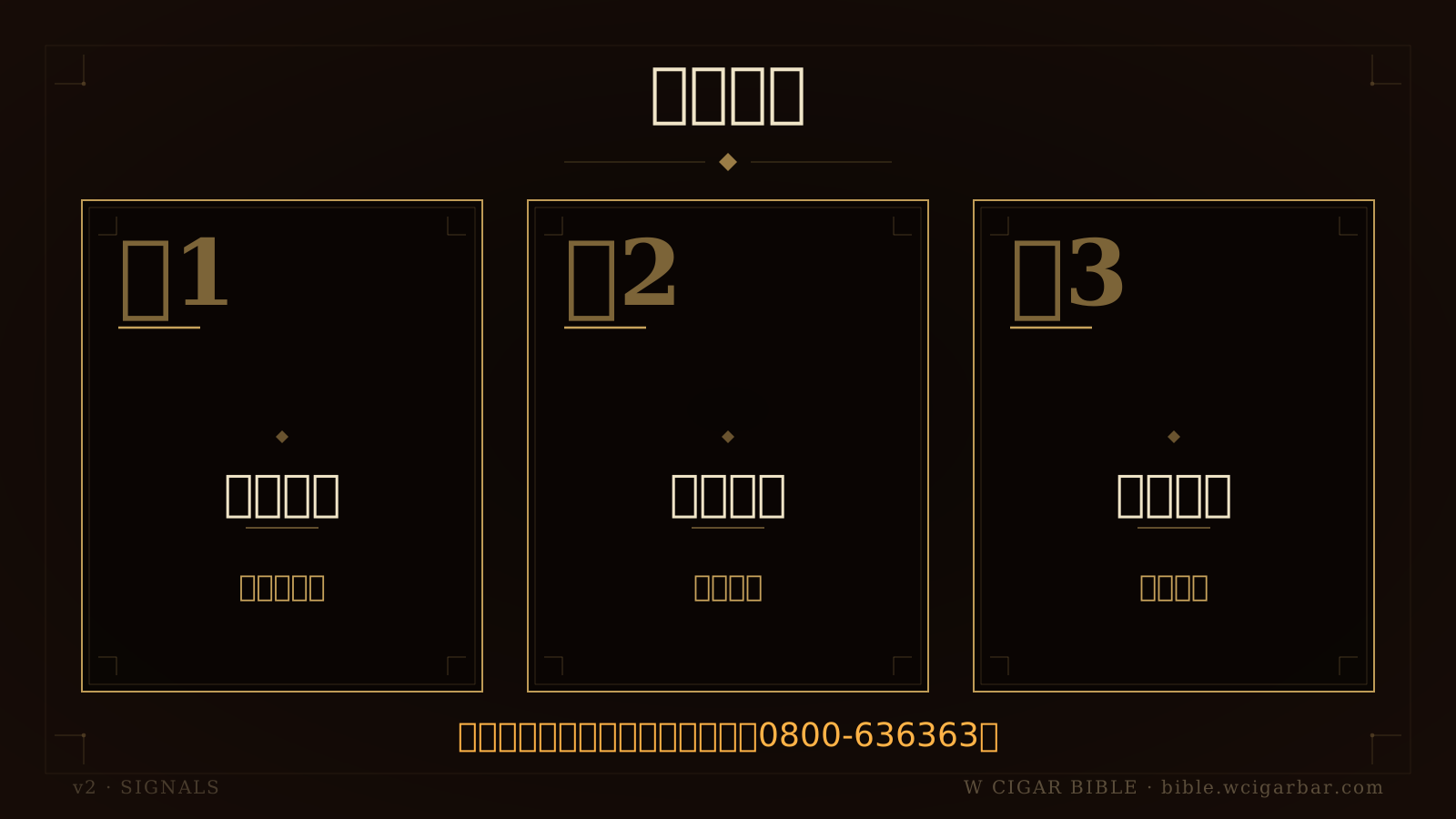
三張錯誤提醒卡列出過慢熄火誤判與尾段硬撐
5. Humidity and Rhythm: The Flavor Difference Between 65% and 72% May Be Greater Than Imagined
Veterans discussing preservation mostly know that 65% to 69% RH is often considered a relatively ideal range for Cuban cigars, while some new world cigars can maintain a smoother taste at 69% to 72% RH. But humidity is not just a preservation number; it changes the puffing rhythm. Taking the same box of 2018 box date Partagás Serie P No.2 as an example, if maintained at 72% RH for a long time, the smoke may be thicker after lighting, but the burning speed is slow, and the draw is slightly heavy; if the rhythm is still 60 seconds per puff, it may easily extinguish; if reduced to about 66% RH and stabilized for 3 to 4 weeks, the burn will be cleaner, with clearer wood, pepper, and cocoa notes, and the puffing interval can naturally extend.
Cigars with high humidity need "light, short, stable": do not draw too deep each puff, and the interval can be slightly reduced to 40 to 55 seconds to maintain burning, but avoid continuous rapid puffing. Cigars with low humidity require "slow, gentle, minimal fire contact": due to insufficient moisture in the leaves, they burn fast and feel hot; it is recommended to extend to over 70 seconds and avoid frequent relighting, or else the aroma will be replaced by a roasted sensation. Many people think a cigar is difficult to smoke due to brand issues, but it may just be a mismatch between humidity and rhythm. For Davidoff Aniversario No.3, characterized by delicate, clean, creamy wood from the Dominican Republic, if stored too dry and puffed too quickly, the elegance will be destroyed by thin spiciness; but at around 68% RH, with a 55 to 70-second rhythm, the layers of white pepper, almond, hay, and light cream will be noticeably three-dimensional. Humidity is the environment, rhythm is the operation; if the two are not synchronized, even the most expensive cigars may appear coarse.
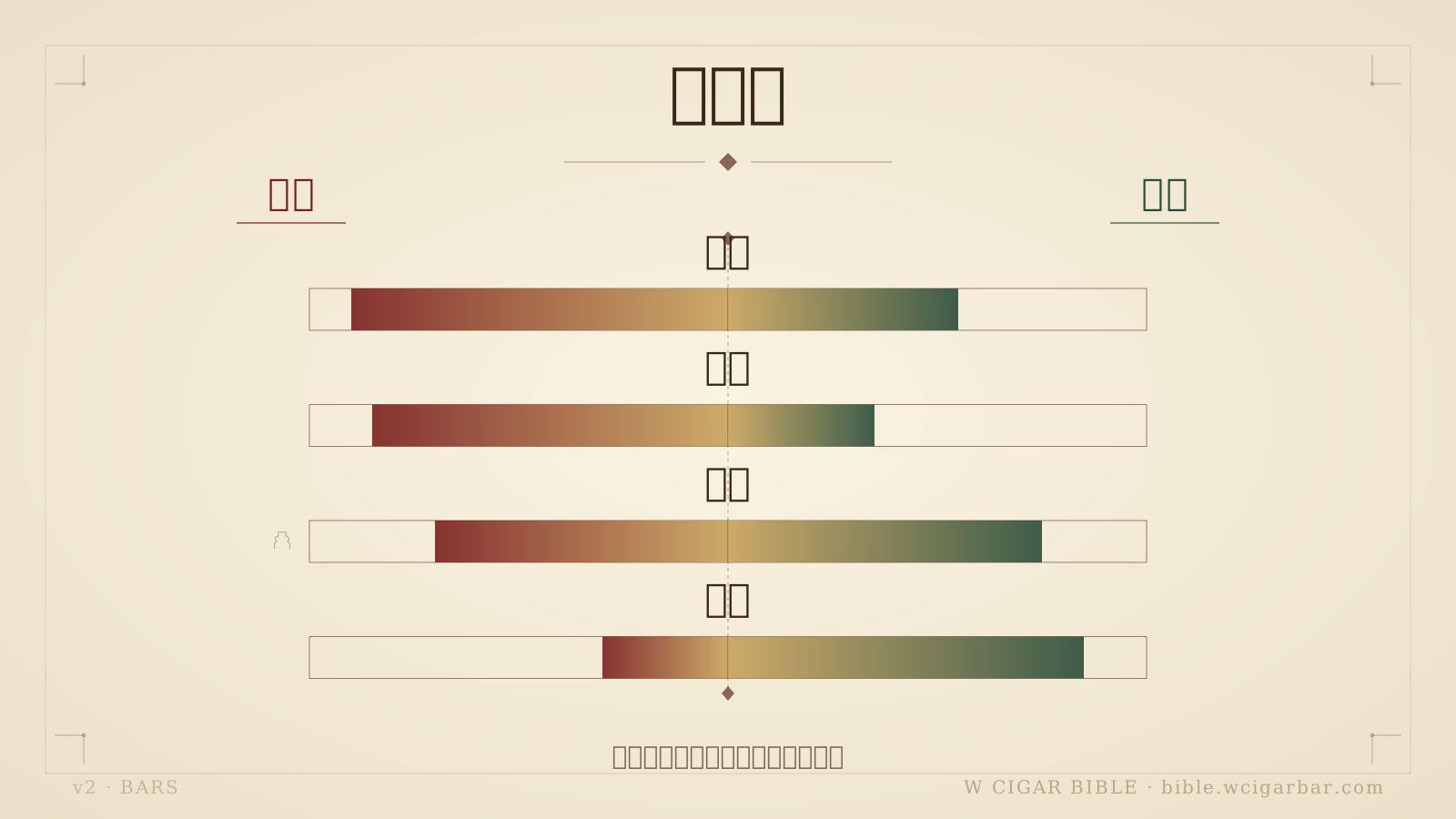
長條圖比較急抽與穩抽在溫度苦辣尾韻差異
6. The Practical Impact of Rhythm on Flavor: Observing Differences Through Brand Cases
Below are some familiar cigars for veterans as references for rhythm observation. These are not absolute formulas but directions organized based on size, leaf composition personality, and common burning performance. If the same brand has different box dates, preservation conditions, or batch differences, the rhythm still needs on-site adjustment. Especially for Cuban cigars, different box dates may have significant differences in draw resistance and aging speed; non-Cuban cigars often exhibit more stable or direct strength due to regional leaf composition and fermentation style.
| Cigar Case | Size and Features | Suggested Rhythm | Flavor Changes When Puffing Too Fast | Flavor Changes When Puffing Too Slow |
|---|---|---|---|---|
| Cohiba Siglo VI | 150mm, ring gauge 52, cream, grass, honey wood | 50–70 seconds per puff | Green spiciness rises, sweetness shortens | Smoke thins, honey sensation intermittent |
| Montecristo No.2 | Pirámide, coffee, cocoa, cedar | 55–75 seconds per puff | Bitter coffee and dry wood chips prominent | Middle section lacks thickness, aftertaste loose |
| Partagás Serie D No.4 | Robusto, pepper, earth, leather | 45–65 seconds per puff | Black pepper too sharp, throat pressure increases | Easy to extinguish, leather sensation dull |
| H. Upmann Magnum 46 | Ring gauge 46, biscuit, nut, light wood | 60–80 seconds per puff | Elegance overshadowed by roasted flavor | Cream and biscuit tones not continuous |
| Padrón 1964 Maduro | Nicaragua, dark cocoa, coffee, molasses | 50–70 seconds per puff | Concentrated coffee bitterness too strong | Sweetness decreases, smoke density unstable |
From the table, it is clear that rhythm is not simply about being slow but about keeping the core flavors of each cigar clear. For example, H. Upmann Magnum 46, when aged 5 to 8 years, often has more rounded biscuit, nut, and light sweet wood, and a too-fast rhythm will destroy this gentle sensation; Padrón 1964 Maduro naturally has thick smoke, and if puffed too quickly, the richness becomes oppressive. Veterans practicing rhythm should use familiar styles for comparison, changing only one variable at a time, such as extending the interval from 45 seconds to 60 seconds or reducing puffing intensity by 20%, to truly determine the source of differences.
7. Advanced Techniques: Managing the Rhythm of Breathing, Exhaling, Reheating, and Relighting
Advanced practitioners who want to refine rhythm should not only watch the clock but also observe the path of breathing and smoke in the mouth. The first step is to separate puffing from breathing: cigar smoke is primarily experienced in the mouth and does not require rapid inhalation. Each puff can be gently drawn for 2 to 3 seconds, allowing the smoke to stay in the mouth for 3 to 5 seconds, feeling the aroma on the tongue, palate, and back of the nasal cavity before slowly exhaling. If doing retronasal, where a small amount of smoke is brought out through the back of the nasal cavity, the amount should be very small, especially with cigars with pronounced strength like Bolivar, Partagás, Oliva Serie V, or else the stimulation will overshadow the discernibility.
The second step is learning to reheat. When you notice the smoke becoming hot, the tongue tip numbing, and bitterness sharpening, it does not necessarily mean the cigar has deteriorated; it may just be a fast rhythm. At this point, you can set the cigar down for 2 to 3 minutes to let the burning end cool, then gently resume with a soft puff, avoiding immediate continuous relighting. Relighting also has a rhythm: the flame should not directly burn the wrapper for a long time but correct the burn line with heat about 1 to 2 centimeters away. If one side burns slower, only heat the outer edge of the slow-burning area, then gently draw to guide it, rather than roasting the entire burning end again. In 2019, a seasoned collector compared two cigars from the same box of Hoyo de Monterrey Epicure Especial, one frequently relit and the other only corrected when the burn line deviated over 5mm; the latter had a noticeably more complete cream, light wood, and floral aroma in the middle section. Techniques are not for show but to reduce interference, allowing the cigar to maintain its rhythm.
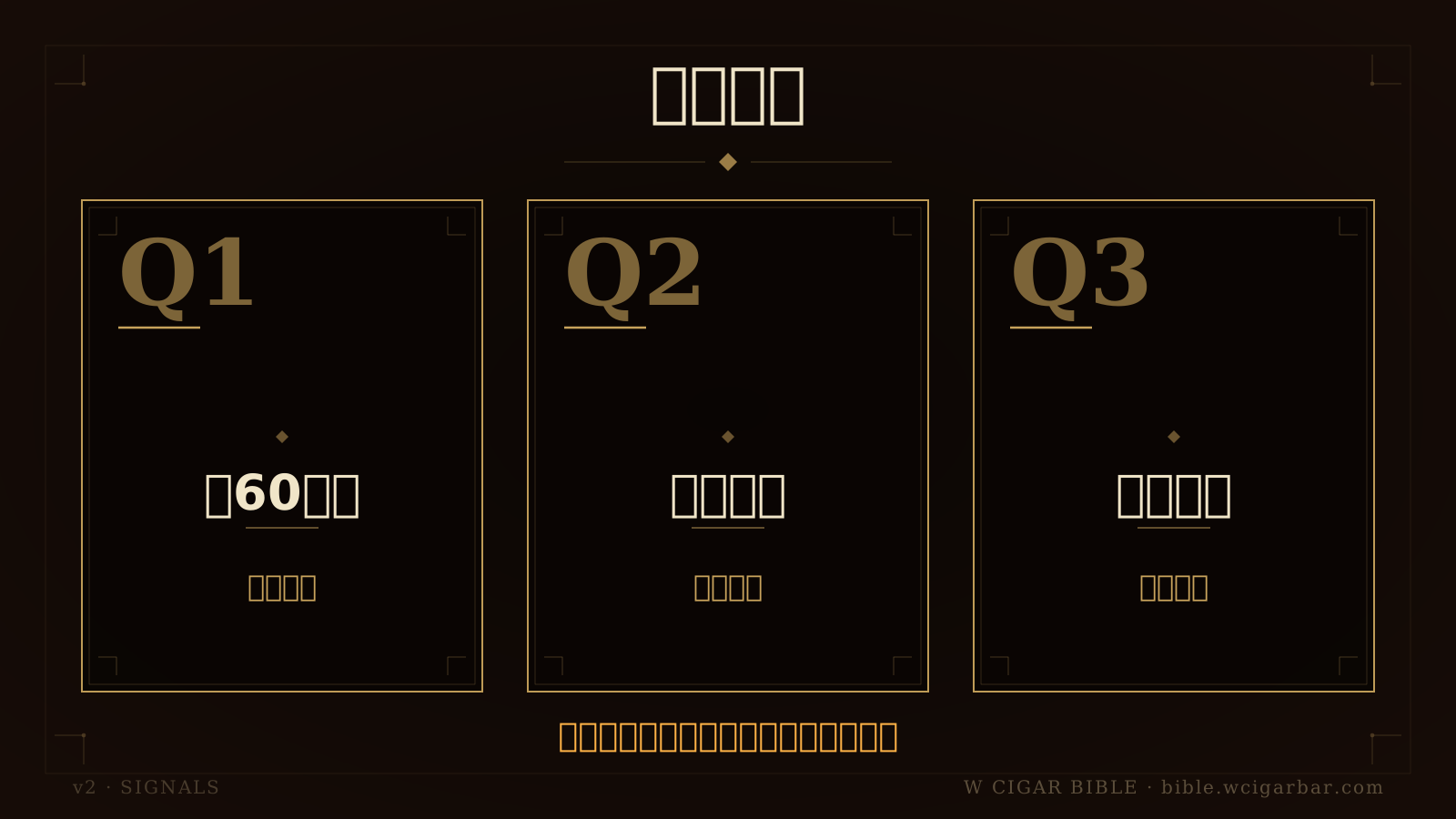
三張問答卡整理六十秒慢抽與尾段苦味問題
8. Building a Personal Rhythm Database: The Refined Training of Veterans
A truly stable cigar taste is not based on impressions like "this one is good" or "that one is ordinary," but on establishing a traceable rhythm database. Veterans are advised to start recording from 20 familiar cigars, noting at least the date, box date or purchase year, storage humidity, pre-light weight feel, cut method, first puff time, rhythm for each section, whether relighting occurred, completion time, and flavor changes for each cigar. For instance, the same 2016 box date Ramon Allones Specially Selected, one stored at 65% RH for 2 months, completed in about 70 minutes with a 60-second puff interval; another stored at 70% RH, with a 45-second puff interval and frequent relighting, may present completely different results. The former's brown sugar, ripe fruit, earth, and nut layers are more structured, while the latter may appear heavy, spicy, and burnt.
Records also help you understand the relationship between aging and rhythm. 3-year, 5-year, 10-year aged cigars of the same type have different tolerance for speed. Young cigars often have more pronounced herbal, ammonia, or rough edges, and the rhythm should be slowed to avoid high temperatures amplifying coarseness; more mature aged cigars have more integrated aromas but may also be more delicate and fragile, with fast puffing destroying the soft aftertaste. If involving collection and market prices, remember: it does not guarantee appreciation, still depending on source preservation and market. From the perspective of PCC authorized dealers, clear source, stable preservation, and complete records are of substantial help for future flavor review and state judgment. The most valuable aspect of a rhythm database is not turning cigar smoking into an exam but knowing how your preferences are formed and making more precise adjustments between different brands, sizes, and years.
Frequently Asked Questions
Q1: Is every cigar suitable for a 60-second puff interval?
Not entirely. 60 seconds per puff is just a good starting reference, especially practical for common sizes like Robusto, Toro, Corona Gorda. But for thin ring gauge cigars like Lancero, Panetela, it is recommended to extend to 70 to 90 seconds; for large ring gauge and strong-burning Nicaraguan cigars, 45 to 60 seconds may be sufficient to maintain stability. The true basis for judgment is whether the smoke temperature, burn line, flavor becomes bitter, and whether the aftertaste is continuous.
Q2: Does smoking slowly always mean better flavor?
Not necessarily. Smoking too slowly can lead to insufficient burning end temperature, causing extinguishment, thinning smoke, and broken aroma. For cigars with distinct personalities like Partagás Serie D No.4, a certain push is needed; if puffed every 2 minutes, the middle section's earth, pepper, and leather may not fully unfold. A good rhythm is "slow enough to avoid overheating, stable enough to maintain burning."
Q3: If a cigar keeps extinguishing, is it of poor quality?
Not necessarily. Extinguishing may relate to high humidity, tight filler, long puff intervals, uneven lighting, or environmental wind speed. If storage humidity is consistently above 72% RH, some Cuban cigars may appear heavier and require more careful lighting and slightly shortened intervals. If multiple cigars from the same box have severe draw resistance issues, further evaluation of structure and preservation is needed.
Q4: If the end section becomes bitter, should I finish or adjust the rhythm?
If it's only slightly bitter, set it down for 2 to 3 minutes to cool, then resume with shorter, lighter puffs, extending the interval to over 80 seconds. If there is a noticeable tar taste, tongue irritation, and hot smoke, it indicates the end section is overheated or heavily accumulated, and continuing usually only ruins the final impression. Veterans know how to finish, not necessarily smoking to the very end for completeness.
Q5: Should the rhythm differ for the same cigar of different years?
Yes. Young cigars usually have more pronounced edges, suitable for slower, gentler rhythms; cigars aged over 5 years have improved flavor integration but also more delicate details that fear high temperatures. For Montecristo No.2, younger box dates should avoid rapid puffing that amplifies spiciness; mature box dates should protect coffee, cocoa, cedar, and light sweet aftertaste, avoiding overheating the burning end.
Q6: Can a timer be used to train rhythm?
Yes, but not always rely on it. Initially using a phone or mechanical watch to observe the differences of 45, 60, 75 seconds helps establish a sense. Once proficient, return to judging by smoke temperature, burn line, and mouthfeel. A truly mature rhythm is not about precision to the second for every puff but being able to adjust in advance before the flavor turns bitter or the smoke thins.
The rhythm of cigars is the key for veterans to reach deeper levels of taste. Brand, vintage, region, and preservation are important, but what truly touches the soul of a cigar is the waiting, force, and restraint between each puff. I always believe that those who know how to slow down have the chance to hear the details of a cigar; those who know when to advance can let a cigar reach its climax completely. May you, every time you light up, not chase time but arrange it precisely.
—Cigar Prince Wilson Tsai
Smoking is harmful to health. Underage smoking is prohibited. Quitline: 0800-636363. This article is intended for adults over the age of twenty as a reference for cigar culture, preservation, and regulations, and is not an advertisement, promotion, or purchase suggestion for tobacco products.
Like this article?Share with friends
Share this W Cigar Bible piece with friends who want to learn cigar culture, storage, and tasting.
想把這篇 化為實踐
雪茄聖經是知識;雪茄文化要在空間裡發生

W Cigar Bar 大安總店資訊
台北大安區 · 雪茄聖經總編輯 Wilson Tsai 主理的雪茄文化空間
33 座 24 小時恆溫恆濕醇化室
W Cigar Bar 提供的會員醇化空間 · 場地資訊請洽編輯部
雪茄剪 / 打火機 / 雪茄盒 / Boveda
W Cigar 配件官網 · 專營雪茄配件正品

加 LINE 好友 · 文化諮詢
文化空間資訊 · 紳士沙龍 · 私人包場
本網站內容僅供雪茄文化、歷史、收藏與品吸知識研究參考。菸品有害健康、未滿法定年齡者請勿吸菸。實際規範請依所在地法律為準。
吸菸有害健康・戒菸專線 0800-636363・本站僅供 20 歲以上成年人閱覽。
讀到這裡,你不只是路過的人
留下 Email,加入 W 雪茄聖經內圈——總編輯 Wilson Tsai 親選的學院深文與國際新訊,先你一步送到信箱。
· 教育用途非銷售 · 隨時一鍵退訂 · Email 絕不對外公開 · 由勝茄股份有限公司營運
同分類延伸閱讀



資料來源:W Cigar Bible 編輯部整理 · 雪茄王子 Wilson Tsai 親自審稿
本文僅供雪茄文化、歷史、收藏與品鑑知識研究,不作為菸品促銷、銷售或購買建議。吸菸有害健康,未滿二十歲不得吸菸。