雪茄品鑒的心理學:如何提升抽吸體驗的情感連結

雪茄的風味體驗不僅源自其煙霧,還與抽吸者的情緒、記憶和環境息息相關。心理學研究顯示,情緒會影響我們對風味的感知,入門者應在每次抽吸前進行自我評估,以便更清楚地理解當下的感受。記憶也在風味的判斷中扮演重要角色,個人經歷會重塑對雪茄的認知。此外,儀式感能幫助大腦進入專注狀態,提升抽吸的整體體驗。搭配飲品時,選擇適合的飲品可改變雪茄的風味輪廓,從而增強感官享受。
- 雪茄的風味受情緒影響,心情好時更能辨識甜感,焦躁時則放大苦味。
- 建立三層記憶筆記有助於擴充感官字典,提升風味辨識能力。
- 儀式感能幫助大腦進入專注模式,讓抽雪茄的體驗更完整。
The Psychology of Cigar Appreciation: Enhancing the Emotional Connection of the Smoking Experience
The flavor of a cigar is not only found in its smoke but also in the moment you sit down, the temperature of the wrapper felt by your fingers, your mood of the day, and the memories awakened in your mind. As the editor of the "Cigar Bible," I often say: learning to cut, light, and puff is just the beginning for beginners; the real charm lies in understanding why you like a particular cigar.
The same Partagás Serie D No.4 might feel robust when paired with coffee for some, while others might find it has a woody sweetness on a quiet night. This is not about right or wrong but about how psychological state, sensory attention, and past experiences shape the experience. In this article, I want to guide you to re-understand cigar smoking from a psychological perspective.
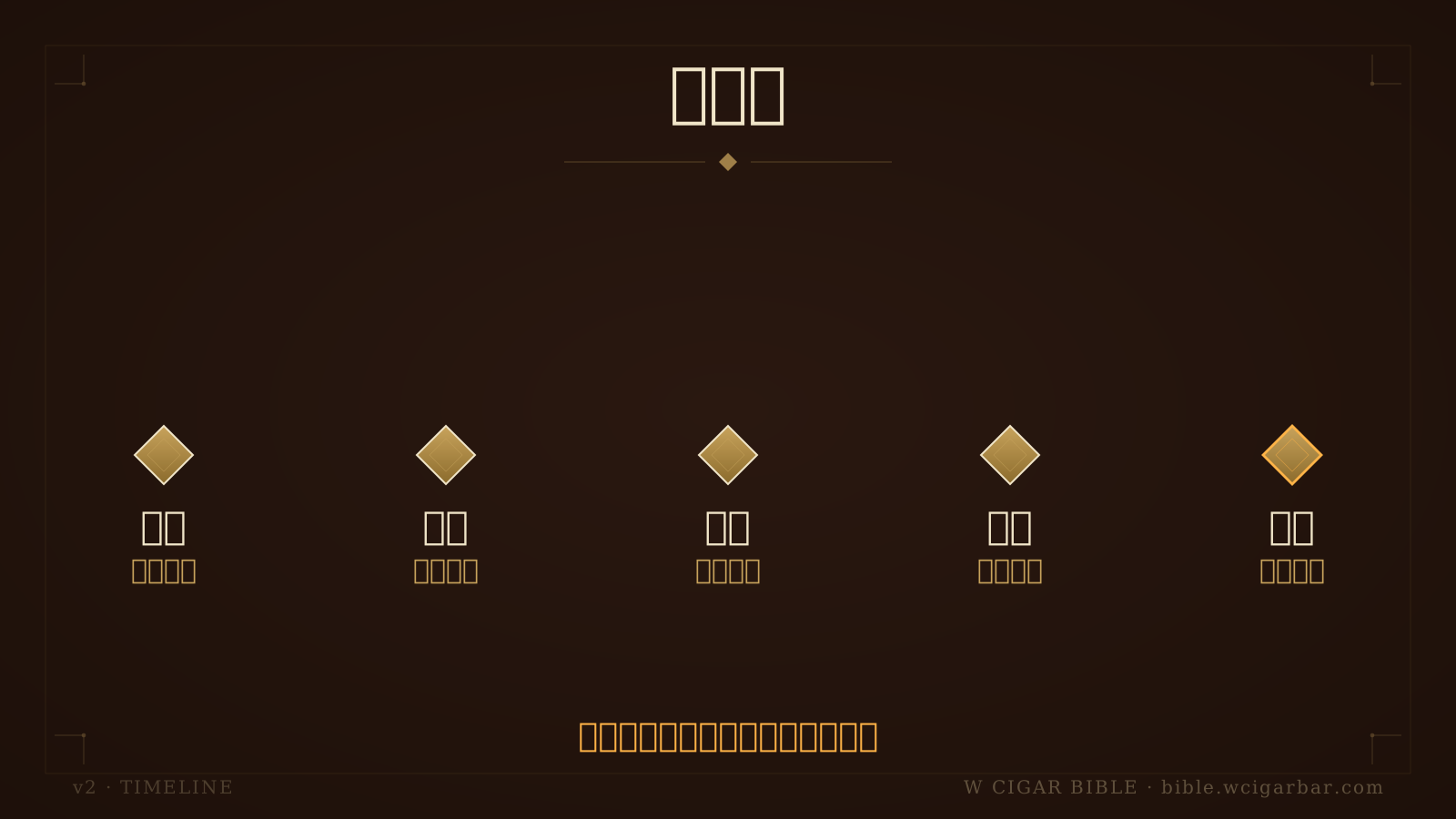
時間軸呈現從靜坐到三段記錄的品鑒流程
Emotions Before Flavor: Why Mood Changes a Cigar
Many beginners think that flavor judgment comes entirely from the tongue and nasal cavity, but psychological research has long pointed out that emotions first influence attention. The olfactory research by 2004 Nobel Prize winners Richard Axel and Linda Buck helps us understand the relationship between smell and the brain's limbic system; olfactory messages, unlike visual ones, are not first rationally processed but quickly linked to emotions and memories. The woody, leathery, cocoa, and nutty notes of cigars are often not "simply smelled" but "amplified by a certain state."
For example, in 2020, I recorded a novice friend's experience. The first time he smoked a Hoyo de Monterrey Epicure No.2, he found it bland; three months later, on a weekend night after work stress had ended, he smoked the same box from the same batch and said he felt cream, roasted almonds, and a gentle sweetness. The cigar didn't suddenly perform magic; what changed was his mental load and quality of attention. Emotions are not distractions to flavor but the background against which flavor is understood.
Therefore, I suggest beginners do a simple self-assessment for 30 seconds before each smoke: mental state from 1 to 5? Stress from 1 to 5? Expectation from 1 to 5? After recording this 10 times, you'll find that you can more easily identify sweetness in low-stress states and amplify bitterness and spiciness when anxious. This is not mysticism but the way the brain allocates attention.
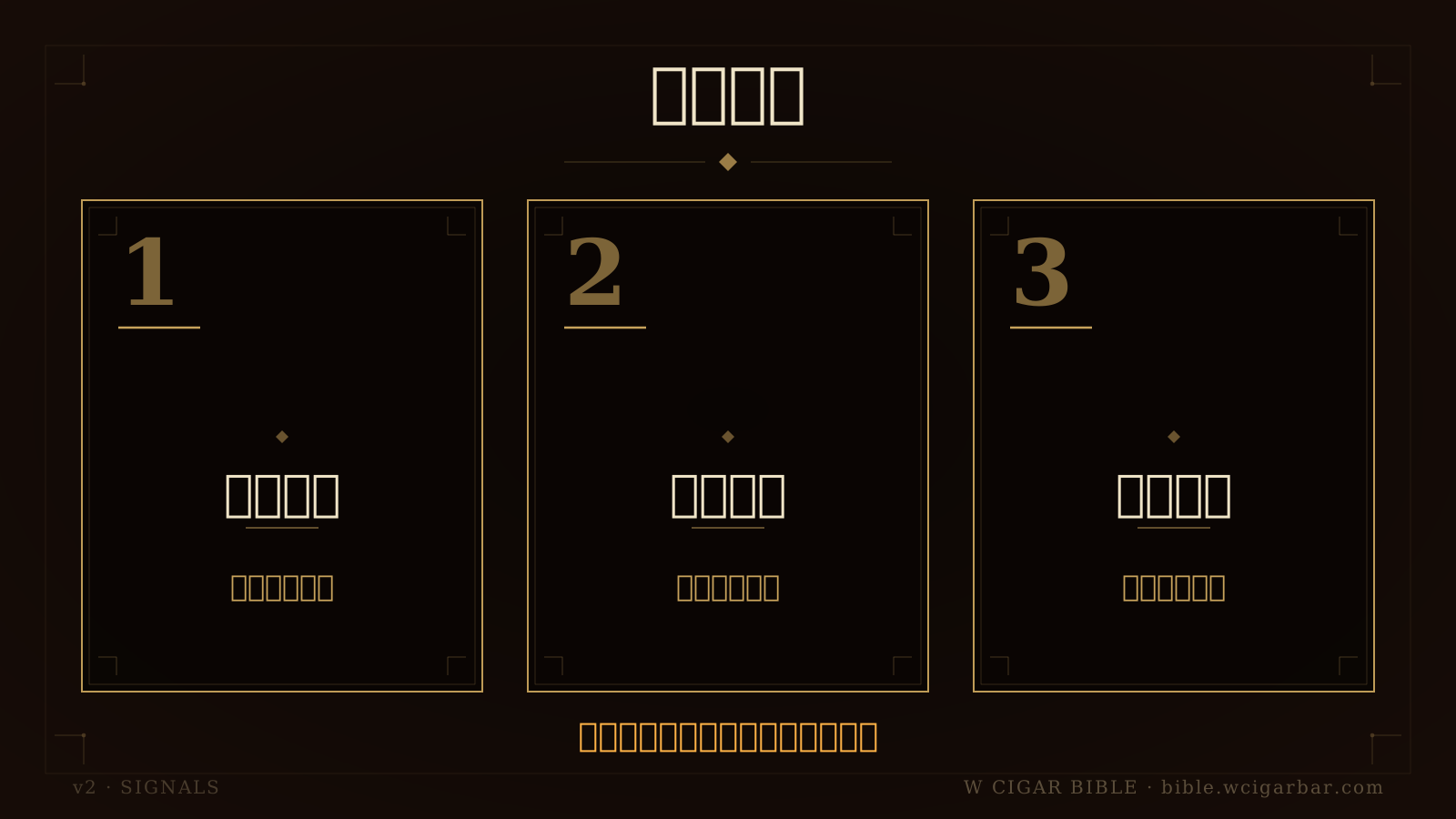
三張卡說明情緒記憶與儀式如何影響品鑒
Memory is the Second Cigar: How Flavor is Rewritten by Life Experiences
The emotional connection to cigars often comes from memory. In 2012, when I first deeply compared Cohiba Siglo VI and Montecristo No.2, the most profound aspect was not which one was "more premium" but the different images they evoked: Siglo VI reminded me of bright honey, hay, and delicate wood aromas; Montecristo No.2 often brought coffee, cocoa, and study leather notes. These descriptions seem objective but are backed by personal memory databases.
Beginners often ask, "I can't detect leather, cedar, or hazelnut; does that mean I'm not skilled enough?" Not really. If you grew up rarely encountering real leather sofas, cedar boxes, or roasted nuts, your brain naturally lacks corresponding labels. Flavor training is not about memorizing terms but expanding your sensory dictionary. The flavors you can articulate are usually from the world you've lived in, smelled, eaten, and remembered.
I recommend creating a "three-layer memory note": the first layer records direct sensations, such as sweet, bitter, spicy, dry, smooth; the second layer records specific objects, such as black coffee, toasted bread, dried longan; the third layer records scenarios, such as an old bookstore, rain-soaked wooden floors, or your father's wallet. For cigars like Ramón Allones Specially Selected, which are medium to full-bodied, dried fruit and spice notes often appear in the second third, and using this note-taking method is more memorable than just writing "good smoke."
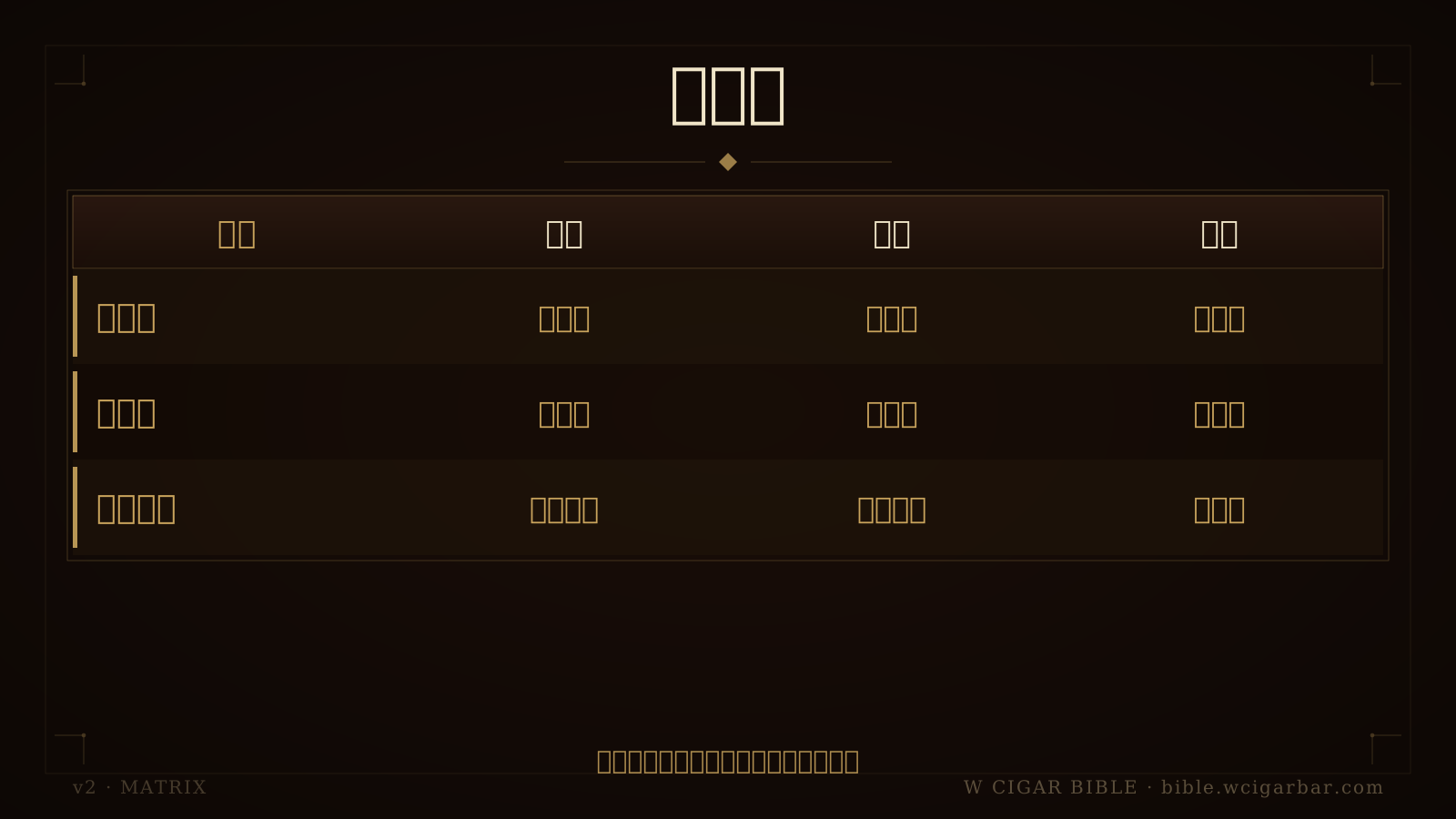
矩陣比較情緒記憶與儀式三個品鑒維度
Rituals Are Not Decorations: They Are the Switch to Entering a Focused Mode
Many misunderstand rituals, thinking they are merely the superficial forms of gentleman culture. From a psychological perspective, rituals are a "state transition technique." When you take out the cutter, check the humidity, slowly rotate the cigar, and evenly preheat the foot with a flame, the brain receives a signal: what follows is not a hurried consumption but a period requiring focus. This is similar to the preparation for a tea ceremony, hand-brewed coffee, or listening to vinyl records.
Take Romeo y Julieta Wide Churchills as an example, with a ring gauge of 55 and a length of about 130mm. If the smoking pace is too fast, the temperature can rise, causing the original floral, woody, and slightly sweet notes to be overshadowed by bitterness. If you spend 2 minutes observing the wrapper's oiliness, smelling the unlit aroma, and checking the draw resistance before lighting, these actions naturally slow down the pace. The core of ritual is not about pomp but about helping you shift your attention from the outside world back to the senses themselves.
Beginners can establish a fixed routine, but it doesn't have to be complicated:
- Sit quietly for 30 seconds before smoking to avoid starting right after being busy.
- Observe the wrapper's color, oil content, and rolling density.
- Take a dry draw and note the sweetness, woodiness, herbal, or spicy notes before lighting.
- Don't rush to rate the first 5 puffs after lighting; just feel the body thickness.
- Record changes every 15 minutes instead of analyzing every puff nervously.
These seemingly simple actions can help you more easily enter a stable flow state. When the flow forms, flavors are no longer fragmented signals but become a complete narrative.
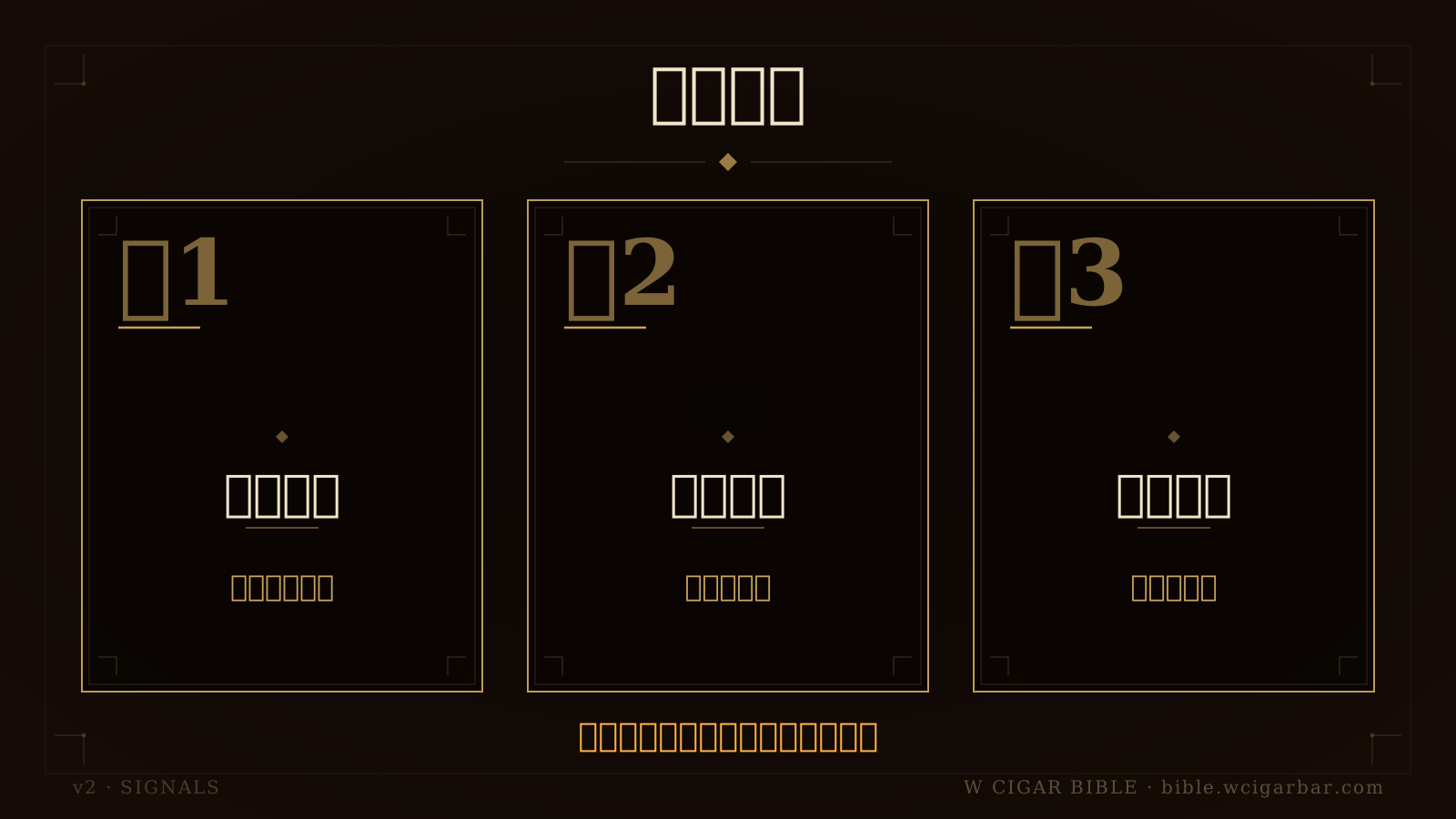
三張卡列出急評猛抽與硬背詞彙的誤區
Sensory Interaction: How Pairing Drinks Changes Mood and Flavor Judgment
Pairing cigars with drinks is essentially a sensory dialogue. Sweetness, acidity, alcohol, tannins, and fat content will all change how the mouth perceives smoke. In 2018, I conducted a private record, pairing the same box of Bolivar Royal Coronas with black coffee, bourbon whiskey, unsweetened oolong tea, and sparkling water, resulting in significant differences: coffee amplified cocoa and earthy notes, bourbon brought out vanilla sweetness, oolong clarified the woodiness, and sparkling water made the spiciness more direct.
The key here is not to pursue the most expensive pairing but to understand "contrast" and "extension." Rich cigars paired with sweet drinks often reduce bitterness; light cigars paired with high-tannin red wine might make the mouth feel dry. A good pairing doesn't let the drink steal the show but clarifies the emotional contour of the cigar.
| Cigar Style | Common Brand Examples | Suitable Pairing | Psychological Feeling |
|---|---|---|---|
| Soft and Delicate | Hoyo de Monterrey Epicure No.2 | Oolong tea, light coffee, sparkling water | Relaxed, clear, afternoon feel |
| Medium Balanced | Montecristo No.4 | Black coffee, aged rum, black tea | Stable, focused, study feel |
| Rich and Robust | Partagás Serie D No.4 | Bourbon, espresso, dark chocolate | Strength, depth, night feel |
| Spicy Notes | Bolivar Belicosos Finos | High cocoa chocolate, aged pu-erh tea | Warmth, thickness, contemplative feel |
Beginners can practice with "one cigar, two drinks." Pair with water or light tea in the first half and switch to coffee or spirits in the second half, observing whether the flavor shifts from woody to cocoa or from herbal to sweet. After recording 5 times, you'll understand your preferences faster than simply memorizing pairing rules.
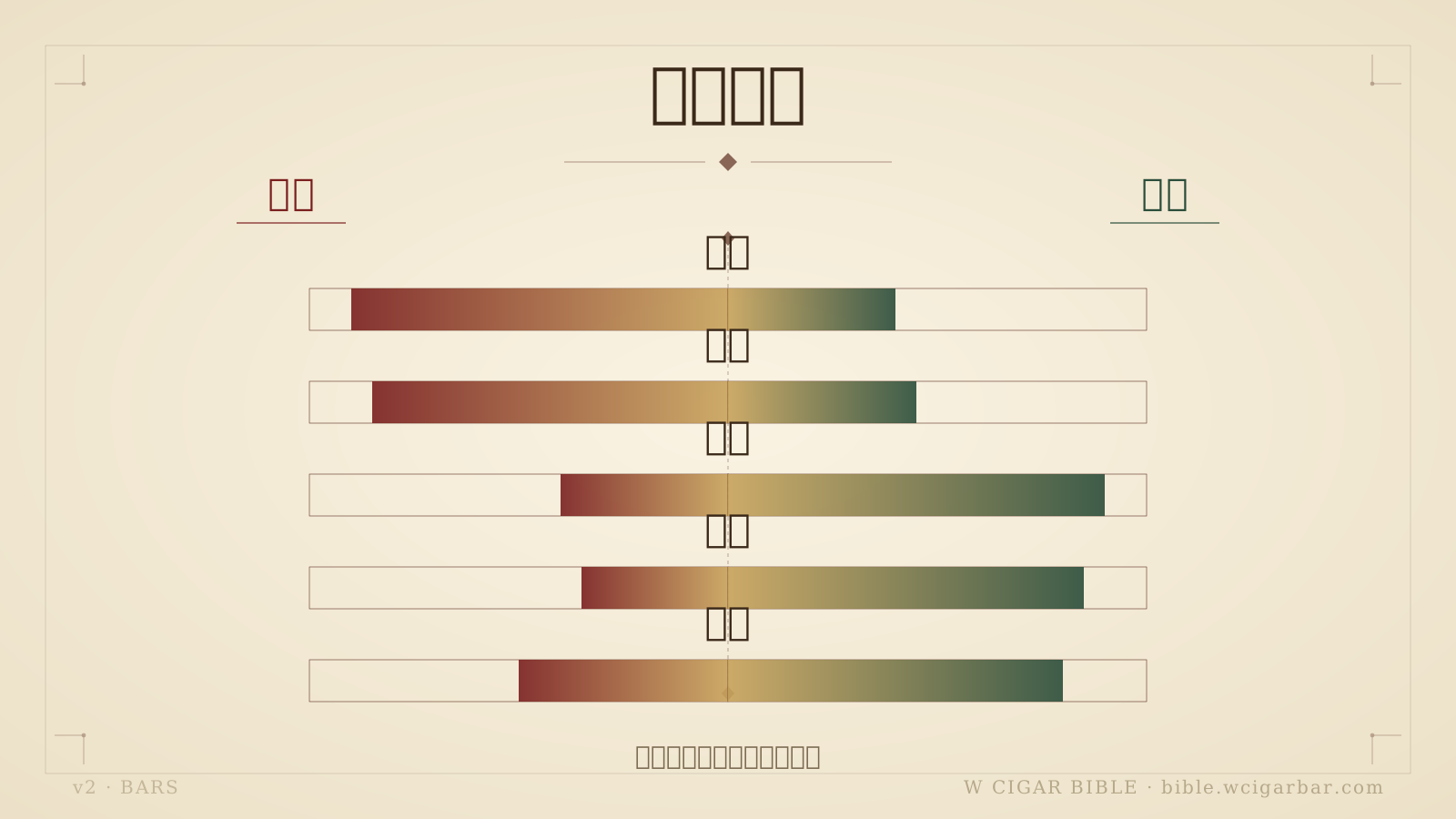
長條圖對照理性評估與感性連結的強弱
Social Psychology and Cigar Etiquette: Respect Enhances Good Experience
Cigars have a strong social attribute, but good social interaction is not about noise but about respecting the pace. Beginners often feel nervous about etiquette: should I cut it? Should I ask about the brand? Should I keep flicking the ash? In fact, the core of cigar etiquette is simple: don't disturb others, don't show off, and don't rush to comment. In 2006, at a small cigar gathering in Hong Kong, I was most impressed by an old collector who said, "Let others' cigars burn quietly before letting your opinions speak."
Emotional safety greatly affects the experience. If people at the table keep urging, comparing prices, or criticizing smoking methods, the beginner's brain will enter a defensive state, and flavor recognition will naturally decrease. Conversely, if the environment allows silence and slowly expressing feelings, even smoking a Trinidad Reyes can reveal cream, herbal, and delicate wood notes unfolding in stages. The sophistication of cigar socializing lies not in who knows the most but in who makes each other more comfortable.
A few basic etiquettes to remember: don't pick up someone else's cigar without permission; don't blow smoke directly at others; don't force others to agree with your flavor description; don't judge taste by price; if discussing collections, you must understand the source, preservation, humidity, and market changes, as collection appreciation does not guarantee value increase, still depending on source preservation and market. These principles will shift cigars from "display" back to "sharing."
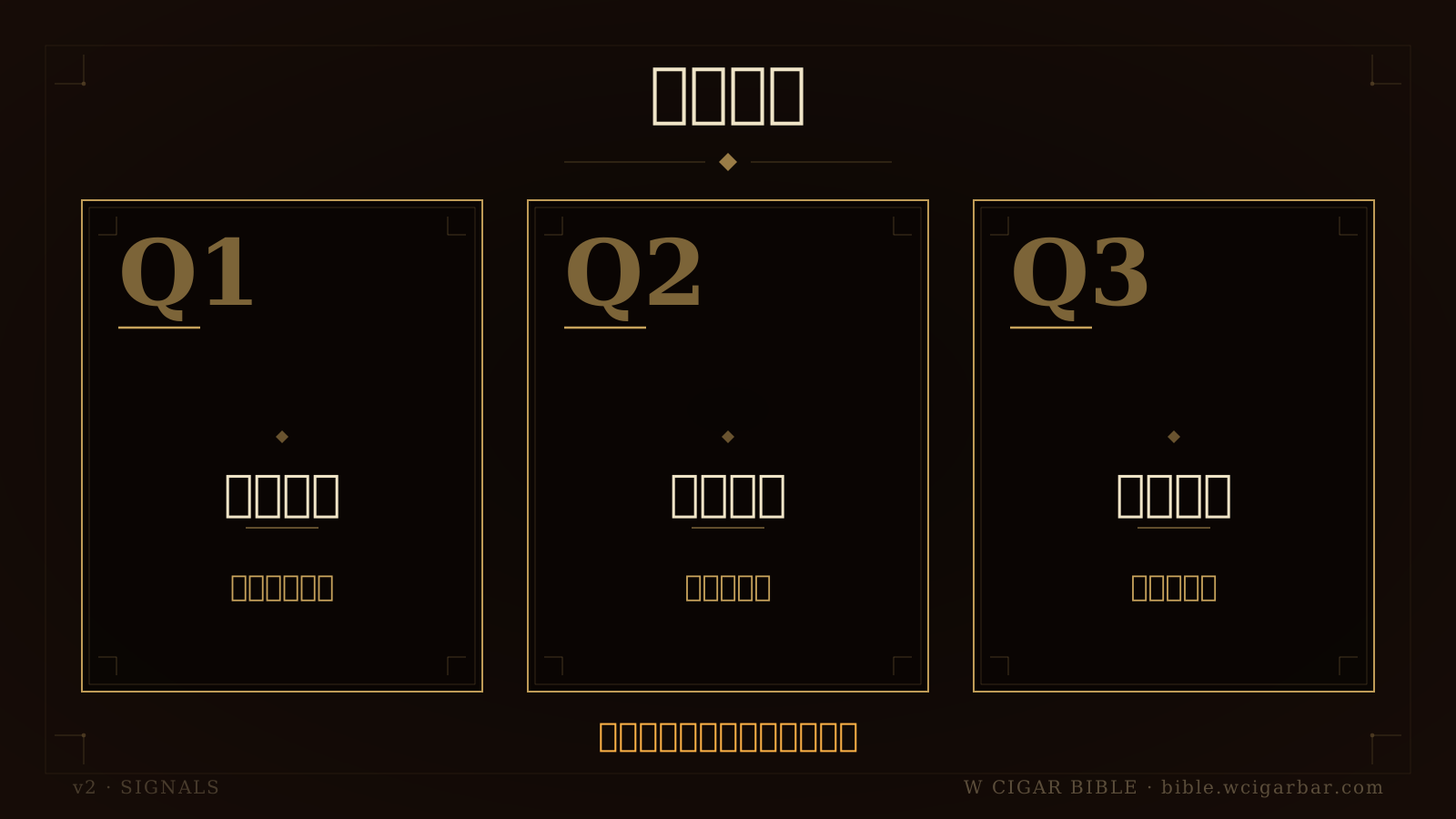
三張問答卡整理感受差異詞彙與苦味原因
Building an Emotional Curve with Three-Stage Smoking
The psychological charm of a cigar often comes from its beginning, middle, and end. Most handmade cigars can be roughly divided into the first, middle, and last thirds. For a Robusto size of 124mm in length and a 50 ring gauge, it takes about 45 to 70 minutes to complete a full journey; the first 15 minutes are acquaintance, the middle 25 minutes are understanding, and the last 15 minutes are the most distinctive moments.
For example, H. Upmann Magnum 46 often has wood, light cream, and gentle herbal notes in the first third, nuts and slight sweetness in the middle, and shifts to spicy and roasted notes in the last third. If beginners only ask "is this good," they might easily overlook changes; if they ask "which part moved me the most," the answer will be much more nuanced. A cigar is not a single flavor object but an emotional curve that moves over time.
I suggest using a three-stage record:
- First third: first impression, smoke volume, draw resistance, gentle or direct.
- Middle third: main flavors, balance, any transitions.
- Last third: strength changes, aftertaste, whether you still want to continue.
- Conclusion: use an emotional description, such as "like a quiet study" or "like a post-rain dinner."
After recording 20 cigars, you'll find that your preference is not for a single brand but for a certain emotional rhythm. Some people like the bright lines of Cohiba, some love the robust strength of Partagás, and others prefer the gentle closeness of Hoyo. Understanding this is the true maturity of a beginner.
Common Questions
Why do I and others have completely different experiences with the same cigar?
Because everyone's olfactory memory, eating habits, mood of the day, and smoking pace are different. The same Montecristo No.2 might first reveal cocoa to some and woodiness to others, which doesn't mean anyone is wrong. Flavor descriptions can be referenced, but ultimately they should return to your own sensory experience.
Do beginners need to memorize a lot of flavor terms?
No need to memorize a lot of terms at first. Start with basic sensations like sweet, bitter, spicy, sour, salty, dry, smooth, thick, thin, and then gradually extend to specific associations like coffee, nuts, leather, cedar, dried fruit. Flavor terms are tools, not exam answers.
Should I take notes constantly while smoking?
No need to write for every puff, as it would disrupt relaxation. It's recommended to record once for each third, with 2 to 3 sentences each time. If you particularly want to preserve the memory, you can add the date, brand, size, pairing drink, environment, and mood score.
Why do cigars sometimes taste bitter?
Common reasons include smoking too fast, high burning temperature, dry mouth, high stress of the day, or poor cigar preservation. You can extend the interval between puffs to 45 to 60 seconds and pair with room temperature water to cleanse the palate. If the bitterness decreases, the pace might be the main reason.
Does emotional connection make judgment less objective?
Yes, but this is not a bad thing. Cigars inherently include both objective quality and subjective experience; burning, rolling, and draw resistance can be more objectively evaluated, while memory, emotion, and preference are personal levels. Mature appreciation can distinguish between "this is well-made" and "this particularly moved me."
How to cultivate your cigar memory?
Consistent recording is most effective. It's recommended to record at least 30 cigars consecutively, each including brand, size, year or purchase time, preservation humidity, pairing drink, three-stage flavor, and an emotional summary. After three months, looking back, you'll clearly see how your preferences have formed.
After years of smoking cigars, I increasingly believe that what a good cigar truly leaves behind is not just the length of the ash or flavor scores, but the mood it preserved for you on a certain night. Techniques make us smoke steadily, knowledge makes us judge accurately, but emotional connection turns cigars into memories. May every time you light up be not a hurried consumption but a quiet encounter with yourself.
—Cigar Prince Wilson Tsai
Smoking is harmful to health. Under 20 years old is not allowed to smoke. Quit smoking hotline: 0800-636363. This article is for reference by adults over 20 years old on cigar culture, preservation, and regulations, not a tobacco advertisement, promotion, or purchase suggestion.
Like this article?Share with friends
Share this W Cigar Bible piece with friends who want to learn cigar culture, storage, and tasting.
想把這篇 化為實踐
雪茄聖經是知識;雪茄文化要在空間裡發生

W Cigar Bar 大安總店資訊
台北大安區 · 雪茄聖經總編輯 Wilson Tsai 主理的雪茄文化空間
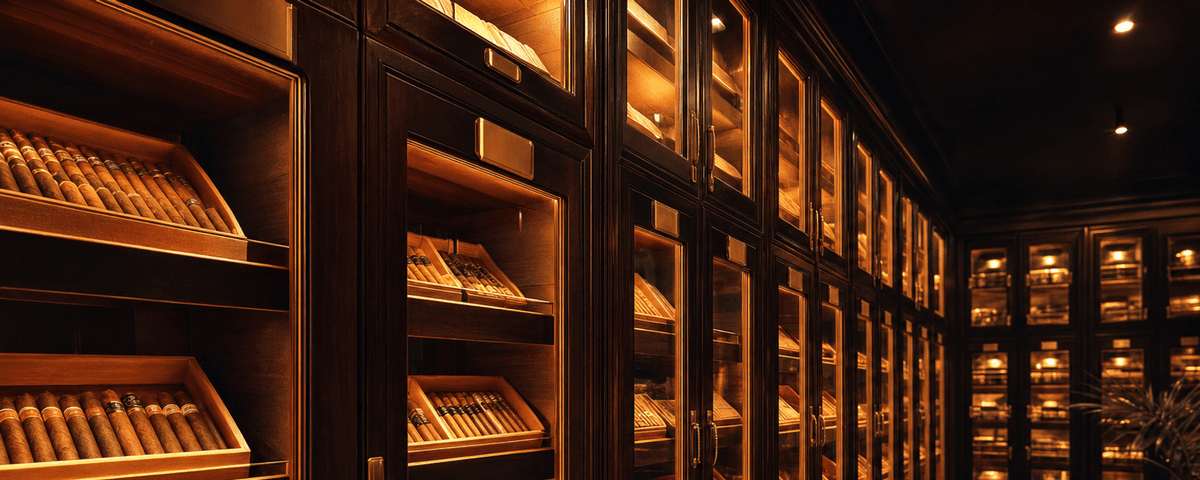
33 座 24 小時恆溫恆濕醇化室
W Cigar Bar 提供的會員醇化空間 · 場地資訊請洽編輯部
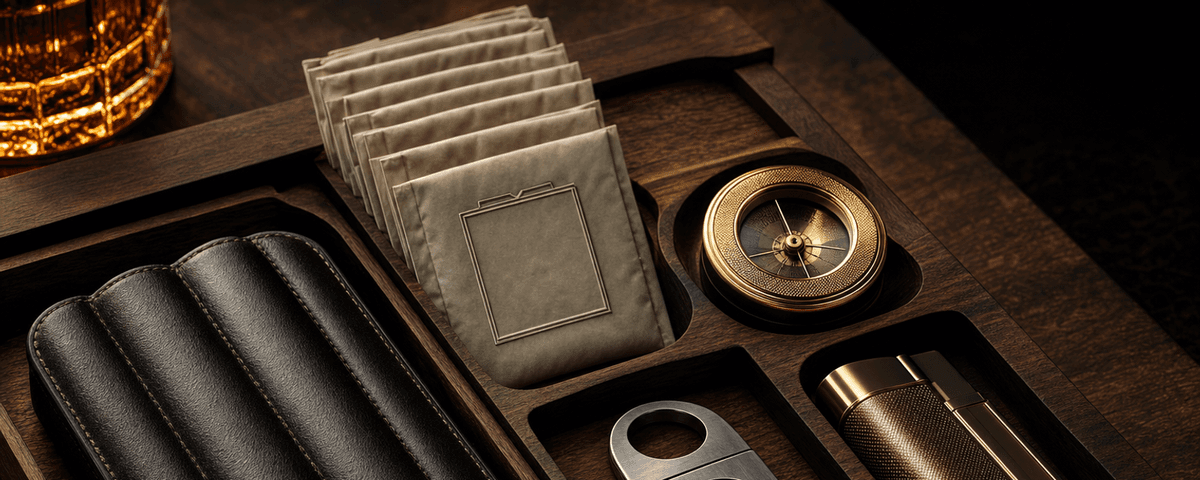
雪茄剪 / 打火機 / 雪茄盒 / Boveda
W Cigar 配件官網 · 專營雪茄配件正品

加 LINE 好友 · 文化諮詢
文化空間資訊 · 紳士沙龍 · 私人包場
本網站內容僅供雪茄文化、歷史、收藏與品吸知識研究參考。菸品有害健康、未滿法定年齡者請勿吸菸。實際規範請依所在地法律為準。
吸菸有害健康・戒菸專線 0800-636363・本站僅供 20 歲以上成年人閱覽。
讀到這裡,你不只是路過的人
留下 Email,加入 W 雪茄聖經內圈——總編輯 Wilson Tsai 親選的學院深文與國際新訊,先你一步送到信箱。
· 教育用途非銷售 · 隨時一鍵退訂 · Email 絕不對外公開 · 由勝茄股份有限公司營運
同分類延伸閱讀

資料來源:W Cigar Bible 編輯部整理 · 雪茄王子 Wilson Tsai 親自審稿
本文僅供雪茄文化、歷史、收藏與品鑑知識研究,不作為菸品促銷、銷售或購買建議。吸菸有害健康,未滿二十歲不得吸菸。