雪茄的品味與評估技術:提升抽吸經驗的關鍵
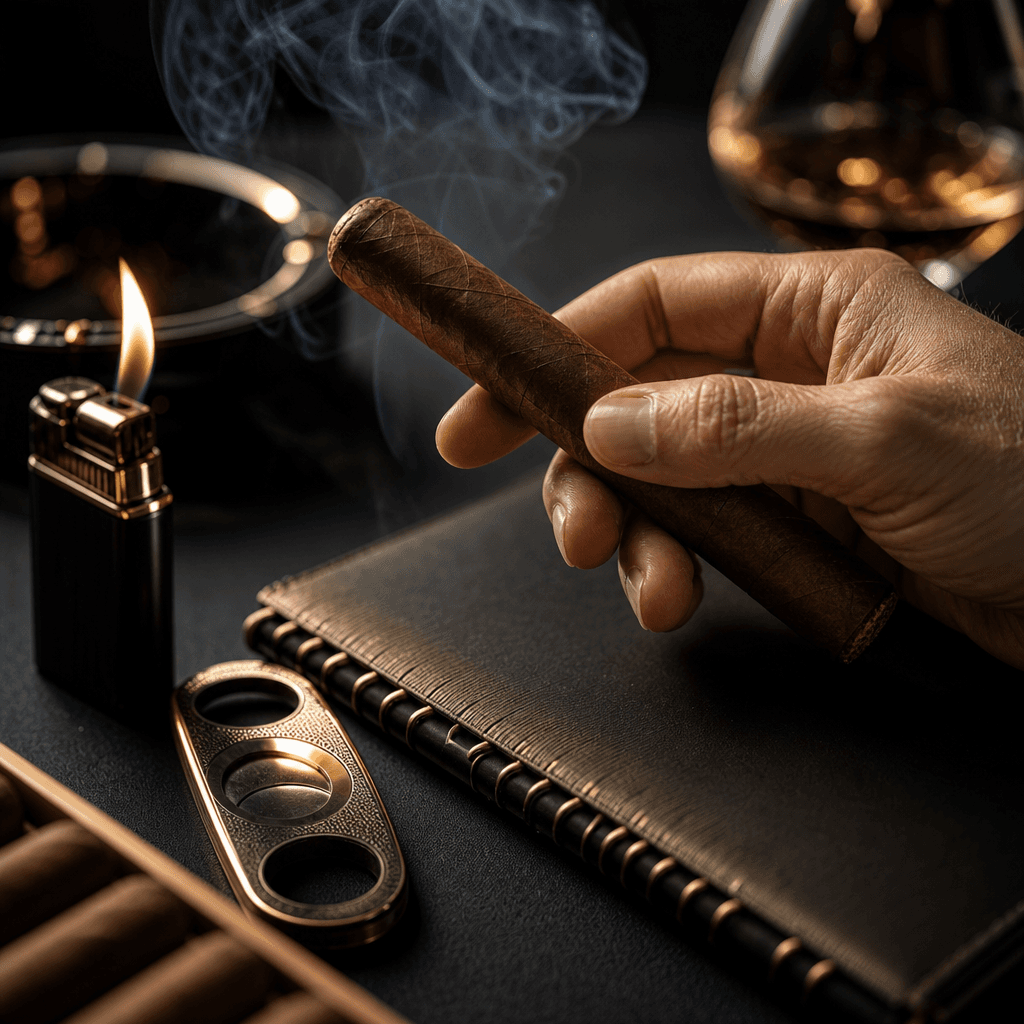
在享受雪茄的過程中,了解其各個細節至關重要。從視覺與觸感開始,觀察茄衣的顏色與質地,能初步判斷雪茄的狀態。剪切與點燃的技術也會影響風味,適當的剪口與點燃方式能讓煙氣流暢,提升抽吸體驗。香氣的辨識則可透過分類法來訓練,將不同香氣歸類有助於更精確的評估。記錄每次的抽吸感受,建立個人的評估表,能幫助你找出偏好,並在未來的選擇中更具依據。
- 雪茄的評估應從視覺、觸感開始,茄衣的顏色和彈性可反映其狀態。
- 剪切技術影響煙氣流量,直剪適合大多數雪茄,剪口的深度需謹慎掌握。
- 香氣分類法能幫助辨識雪茄的風味,將香氣分為木質、堅果、可可等家族進行訓練。
The Art of Cigar Tasting and Evaluation: Key to Enhancing the Smoking Experience
When starting out, most people focus on whether a cigar is enjoyable to smoke. However, the real lesson lies in understanding why it is enjoyable. Is it the aroma, structure, burn, draw resistance, or a combination of current conditions and storage?
As an editor of the "Cigar Bible," I often remind myself that cigars are not about who can describe them in the most mystical way, but about breaking down the experience into observable, recordable, and comparable details. When you can evaluate a Robusto, Torpedo, or Churchill using a consistent method, your smoking experience evolves from "by feel" to "systematic enjoyment."
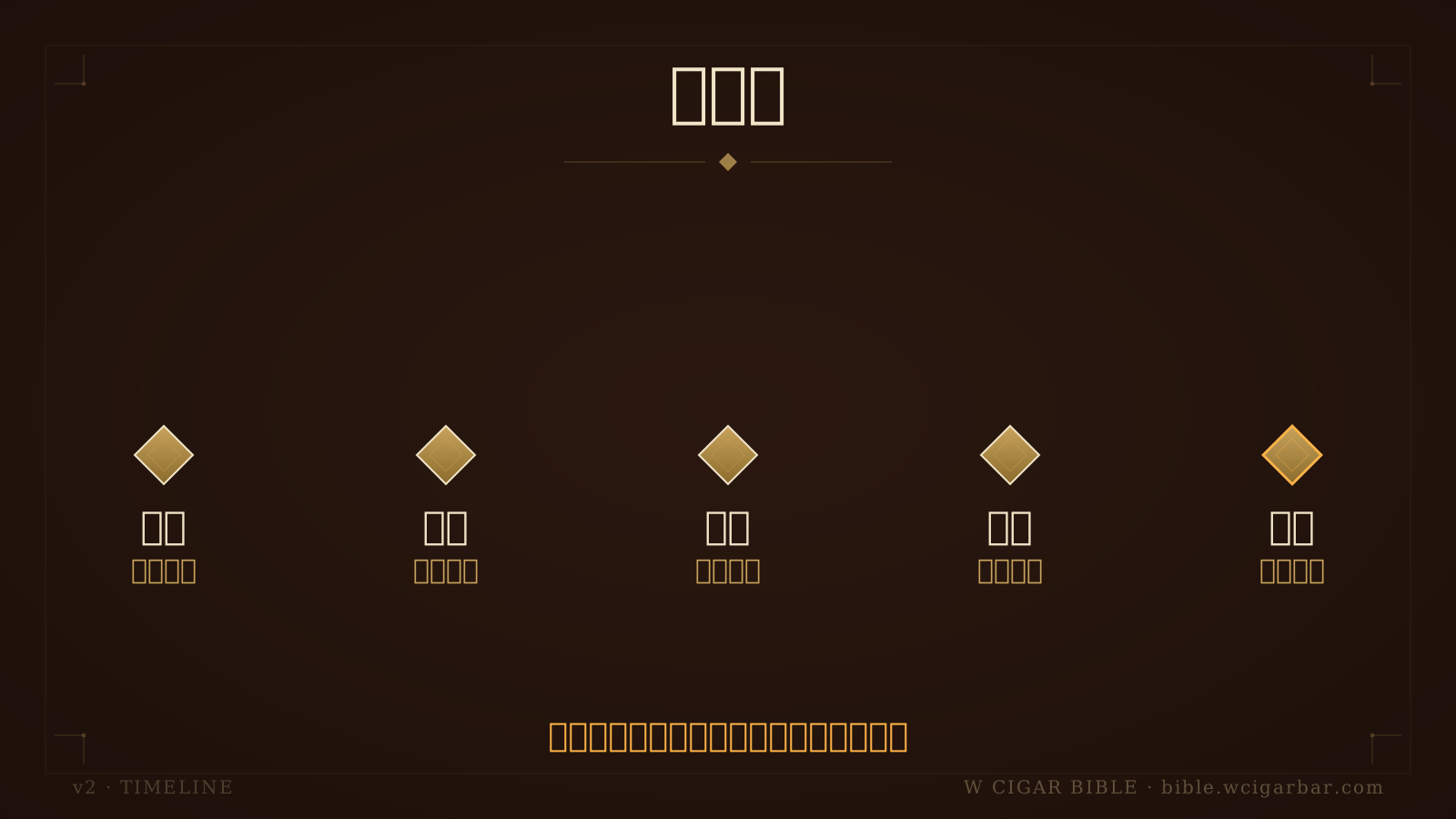
時間軸依序呈現看茄衣、按彈性、聞香氣、剪點與分段記錄
Starting with Visual and Tactile Clues: The First Hints Before Smoking
Before picking up a cigar, first examine the wrapper. Common Cuban colors like Colorado, Colorado Claro, and Maduro not only indicate shade but also reveal differences in sunlight exposure, fermentation, and batch variations. Take the Cohiba Siglo VI, for example, a cigar introduced in 2002 with a 52 ring gauge and 150mm length. If the wrapper is glossy, with fine veins and even rolling, it usually indicates a stable initial experience. Visuals are not the entirety of scoring, but they are the first threshold for assessing condition.
Touch should assess elasticity, not hardness. Gently press the cigar with your thumb and forefinger; ideally, it should have a slight rebound. If a section feels empty, the burn might be inconsistent; if it's as hard as a stick, the draw might be tight. For a torpedo like Montecristo No.2, if the tapered head is too tight, a small cut can often magnify draw issues.
Before smoking, you can also smell the foot and wrapper. The foot often has scents of hay, wood, cocoa, pepper, or a faint fermentation aroma, while the wrapper might carry leather, honey, or nutty oiliness. This isn't about identifying dozens of aromas at first but establishing a "baseline." The same Partagás Serie D No.4, if stored differently between 2020 and 2023, may have noticeable aroma differences before lighting.
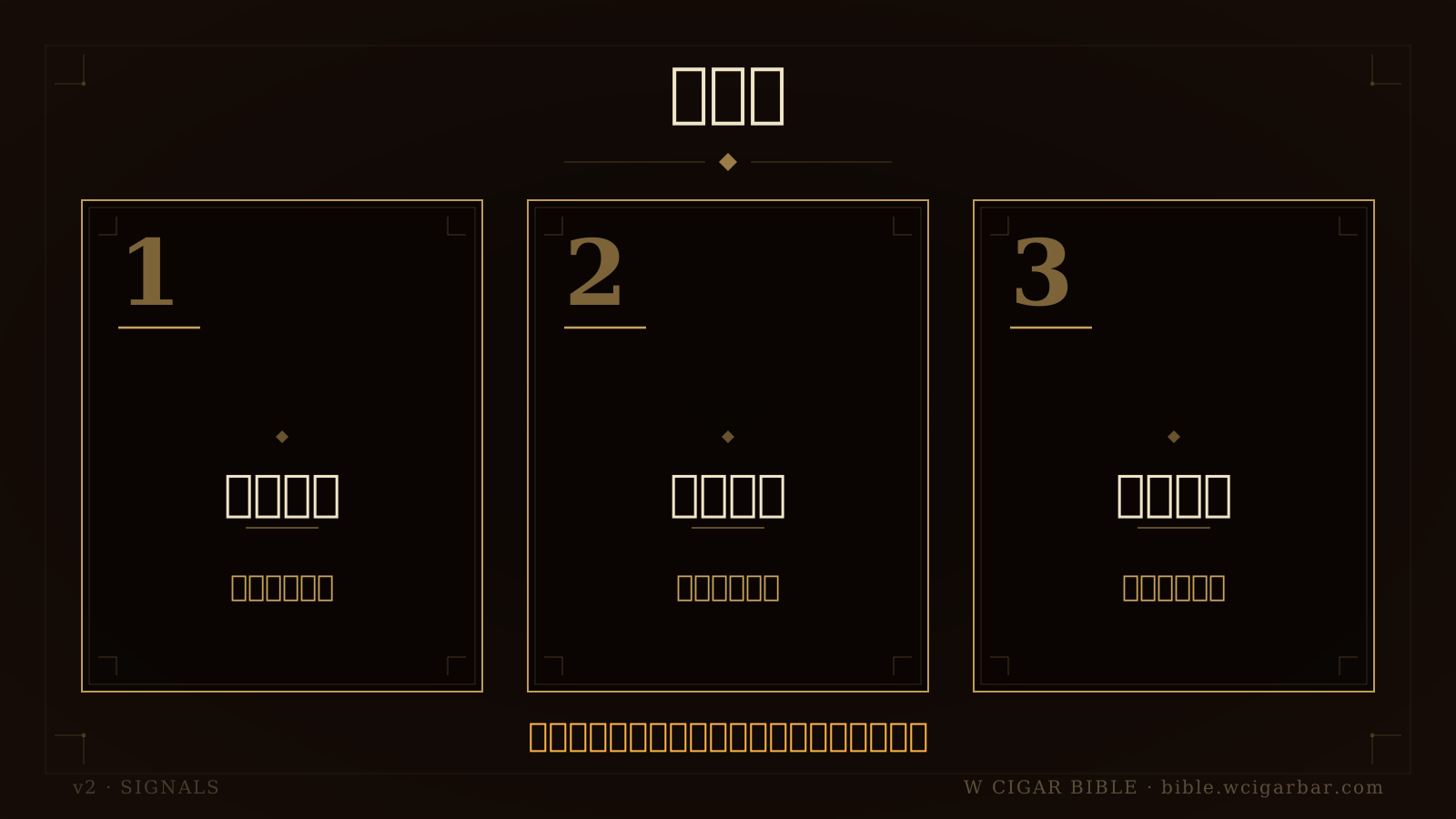
三張卡片呈現檢視狀態、控制技術與記錄比較的品評重點
Cutting and Lighting: Techniques Directly Affect Flavor
Cutting is not about form but controlling airflow. A straight cut suits most Parejos like Robusto and Corona Gorda; a V-cut can concentrate smoke, often enhancing mid-section flavors; a punch cut creates a small opening, which may concentrate tar and isn't ideal for cigars with a ring gauge above 50. The goal of cutting is not to "cut beautifully," but to ensure smooth, concentrated, and clean smoke.
Take the H. Upmann Magnum 46, for instance, a Corona Gorda with a 46 ring gauge and 143mm length. A straight cut of about 2mm to 3mm usually achieves balanced draw resistance. However, cutting too deep can loosen the cap, causing leaf fragments to enter the mouth, disrupting the rhythm. For torpedoes like Vegas Robaina Unicos, start with a small cut to test the draw, adjusting as needed without cutting too deep at once.
When lighting, I prefer to toast the foot before fully igniting. Keep a butane flame 2 to 3 cm away, slowly rotating the cigar's foot to evenly darken the outer ring, then briefly flame the center. Avoid holding the flame against the tobacco for too long, as overheating can bring out bitterness, ammonia, and harsh spiciness. If the initial burn is uneven, don't rush to chase the burn; let it rest for 30 seconds before correcting the slower side with a flame.
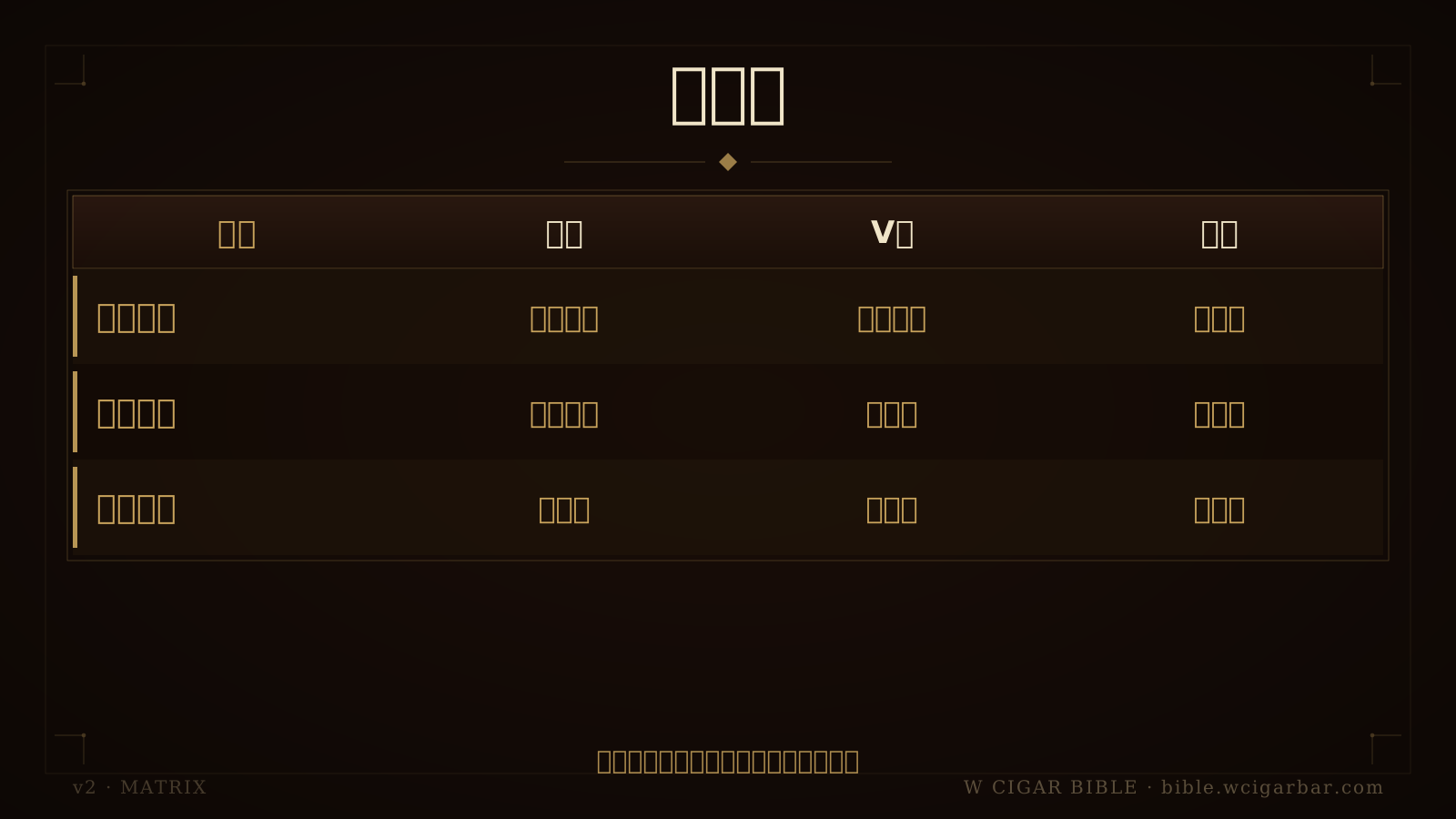
比較矩陣列出直剪、V剪與打孔在適用、抽阻和風味風險的差異
Aroma Mapping: Training the Nose and Palate with Classification
Beginners often struggle with "I just find it fragrant but can't describe it." I suggest categorizing aromas into families: woody, nutty, cocoa/coffee, spicy, herbal, leathery, sweet, and mineral. For instance, Ramón Allones Specially Selected often features mature dried fruit, nuts, and earthy tones, while Hoyo de Monterrey Epicure No.2 often evokes cream, hay, cedar, and subtle sweetness. Describing aromas is not about using flowery language but placing vague sensations into recognizable categories.
The training method is simple: focus on 2 to 3 main axes at a time. Note the "primary aroma" on the first puff; record "transitions" at the 10-minute mark; observe if pepper, coffee, or woodiness deepens in the mid-section. For Bolivar Royal Coronas, the initial section might be rich soil and wood, the mid-section often adds black pepper and coffee, and if the temperature isn't controlled in the final section, bitterness can overpower the layers.
You can also practice with everyday ingredients. Smell cedar chips, roasted almonds, dark chocolate, tea leaves, white pepper, and leather products, then relate those impressions back to cigars. Don't be afraid to describe things differently from others, as olfactory perception is influenced by diet, environment, and humidity. The key is whether you can identify similarities and differences in the same brand and similar sizes in the next cigar.
Mouthfeel, Smoke Volume, and Draw Resistance: The Triangle That Truly Affects Comfort
Mouthfeel isn't just about taste; it includes smoke weight, texture, and lingering sensation. Some cigars produce large smoke volumes but have a coarse texture; others don't produce much smoke but are delicate and dense. Take Trinidad Fundadores, for example, with a 40 ring gauge and 192mm length. If in good condition, the smoke is fine and long, with sweet and woody notes unfolding slowly; if stored too moist, the draw becomes heavy, and the aroma is stifled.
Draw resistance can be loose, moderate, or tight. Loose draw leads to fast burning, increased temperature, and thin flavors; tight draw makes you inhale forcefully, causing bitterness. A good draw should feel like sipping a thick beverage through a straw: requiring some effort but not strenuous. For a 50 ring gauge Robusto, the ideal pace is usually one puff every 45 to 70 seconds; too frequent, and it overheats easily.
Smoke volume and burn are also related to humidity. Most cigars are more stable at a relative humidity of 65% to 69% and a temperature of about 18°C to 21°C, but there are still differences based on origin and size. Thick ring gauges like 54 or 56, if stored too moist for a long time, may not burn the center leaves fully; thin ring gauges like Lancero are more sensitive to dryness and can become sharply spicy if not careful.
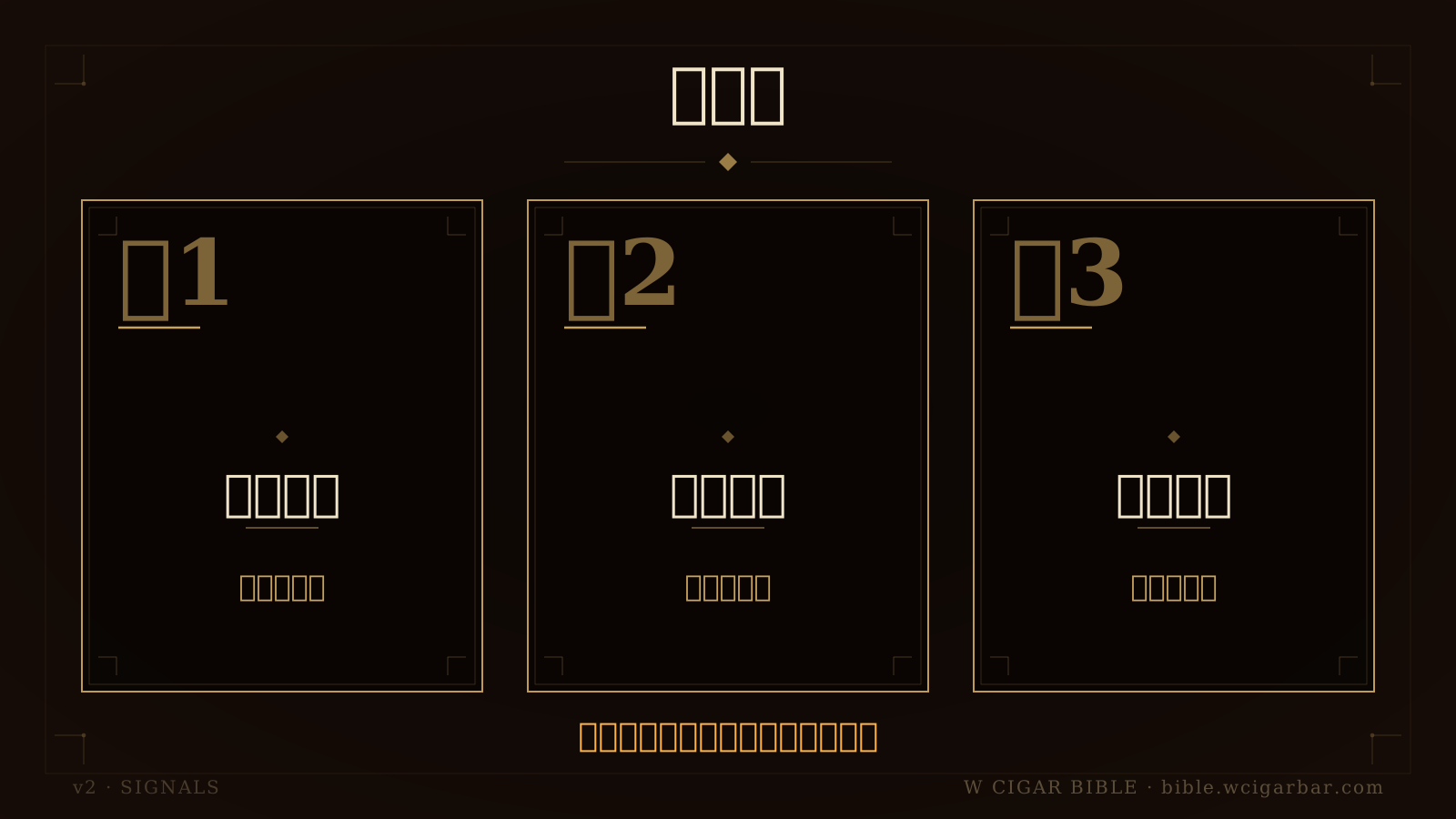
三張錯誤提醒卡呈現深色判斷、斜燒處理與新手評分的常見誤解
Creating Your Evaluation Chart: Turning Feelings into Data
Many people have smoked numerous cigars but can't articulate their true preferences. The reason isn't poor memory but a lack of a consistent recording format. I suggest noting at least the date, brand, model, box code or purchase year, storage humidity, smoking start time, beverage pairing, and impressions of the initial, mid, and final sections each time. After three months, you'll find you might prefer cigars with a 46 to 52 ring gauge, noticeable woody sweetness, and medium concentration.
Below is a simplified evaluation framework I often use, which can be recorded with scores from 1 to 5. There's no need to pursue complex professional scoring initially. The value of an evaluation chart lies not in labeling cigars but in helping you identify stable preferences and condition variables.
| Item | Observation Focus | Common 1-Point Condition | Common 5-Point Condition |
|---|---|---|---|
| Appearance | Wrapper, oiliness, rolling | Damaged, cracked, hollow | Glossy, even, good elasticity |
| Draw Resistance | Airflow | Too tight or too loose | Smooth, with moderate resistance |
| Burn | Burn line and ash column | Frequent uneven burn, extinguishing | Stable burn line, solid ash column |
| Aroma | Recognizability | Monotonous, heavy burnt smell | Clear layers, with transitions |
| Balance | Concentration and flavor | Overwhelming spiciness | Balance of strength, sweetness, bitterness |
| Finish | Lingering time | Short, dry | Clean, lasting, with a sweet aftertaste |
When recording, avoid simply writing "good smoke" or "bad smoke." Instead, rephrase as: "Initial section with cedar and cream, mid-section transitions to coffee, final section with rising pepper; stored at 65% humidity for 40 days, stable burn." This way, when encountering the same model from a different year, you'll have a basis for comparison.
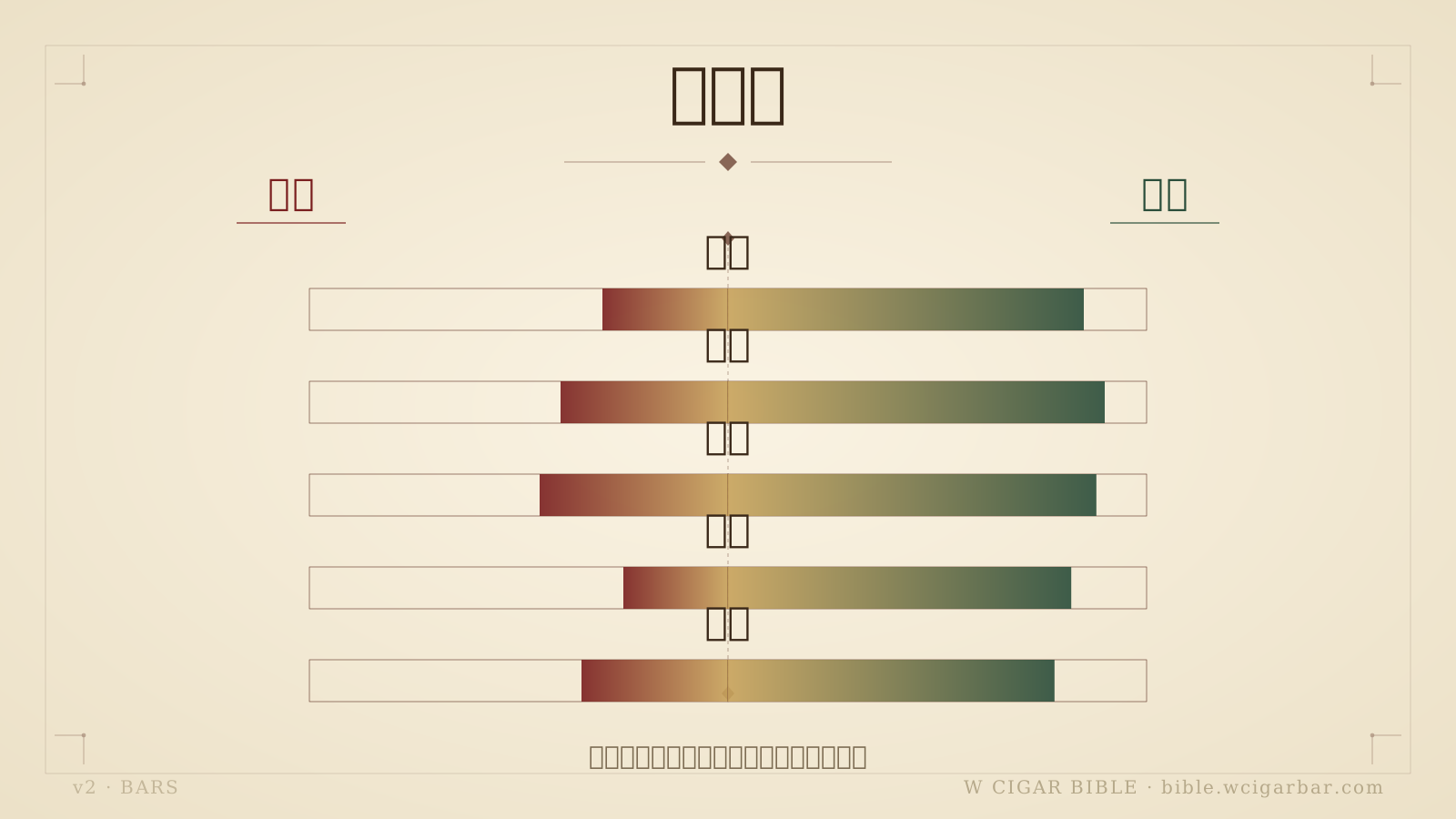
橫條圖比較憑感抽吸與系統品評在外觀、抽阻、香氣和記錄上的差異
Interpreting Initial, Mid, and Final Sections: A Cigar Isn't Judged by a Single Puff
Cigars are usually divided into initial, mid, and final sections. The initial section is about the first third, focusing on opening aroma and burn stability; the mid-section is the core, best showing blend balance; the final section tests temperature control and leaf structure. Take Cohiba Robustos, for example, when in good condition, the initial section has herbal, honey, and woody notes, the mid-section transitions to cream and nuts, and the final section may reveal coffee and spices.
Don't decide the fate of a cigar based on the first puff. The first 5 minutes after lighting are often influenced by the flame, cut, and humidity, and the taste may not be stable. If there's initial spiciness, slow down to lower the burn temperature. Mature evaluation observes how flavors evolve rather than drawing conclusions from a single puff.
There's no need to forcefully finish the final section. When a cigar is down to about 3 to 4 cm, the temperature rises, tar accumulates, and spiciness and bitterness often intensify. If the flavor is already unbalanced, it's better to put it down gracefully than to forcefully finish it. For long sizes like Romeo y Julieta Churchill, the full experience can last 90 to 120 minutes, and if the environment is windy or conversation frequent, the burn rhythm can also affect the final section's performance.
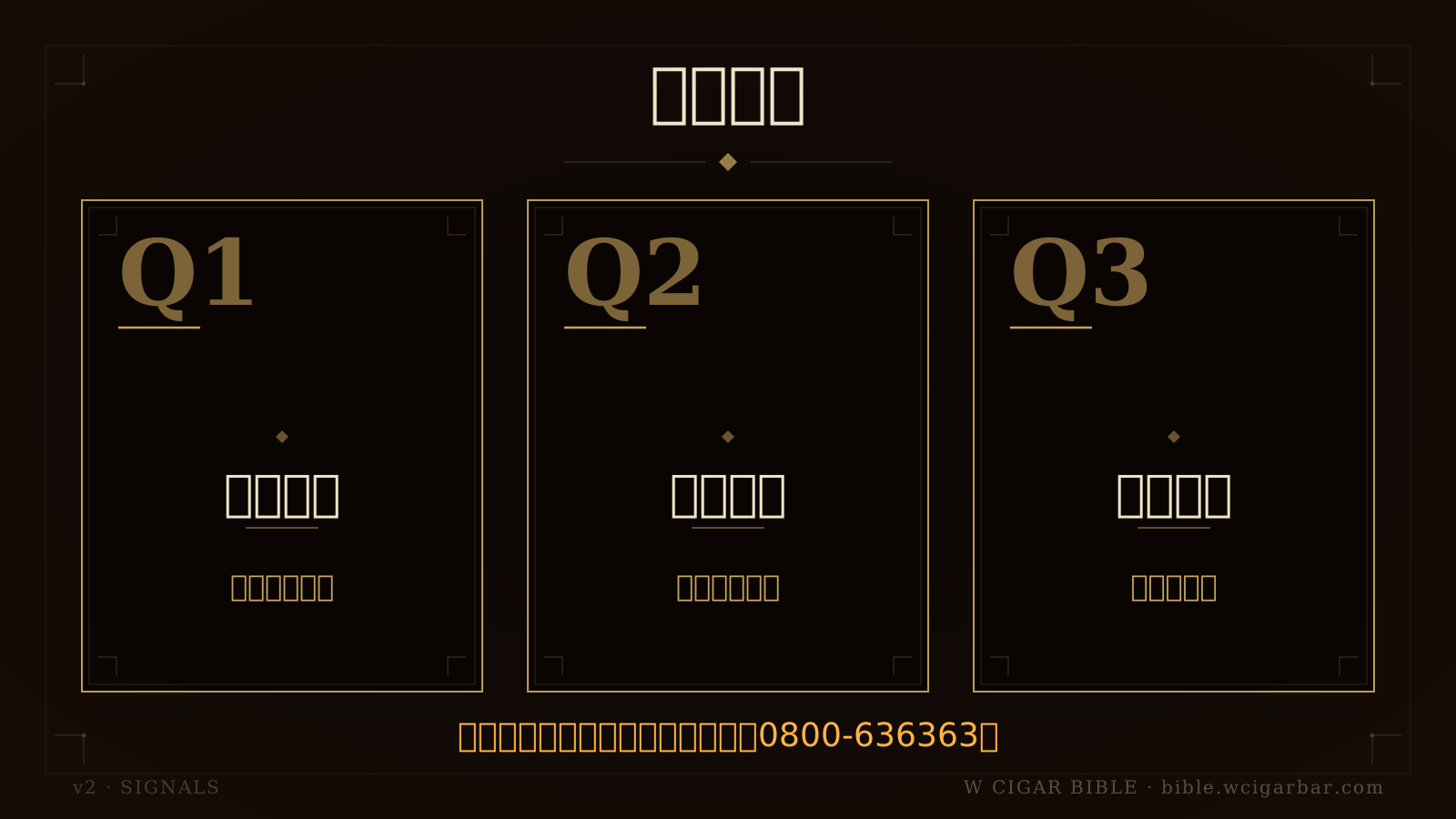
快問快答卡片整理新手評分、同款差異與深色濃度三個實用問題
Etiquette and Environment: Knowing How to Enjoy and Maintain Decorum
The core of cigar etiquette is respect. Respect those around you, space regulations, and the cigar in your hand. When smoking, don't blow smoke directly at others, don't light up in places without confirmed regulations, and don't flick ashes like a cigarette. Cigar ash columns can be retained at about 2 to 3 cm; too long, and there's a risk of falling, gently resting on the ashtray edge is sufficient.
When interacting with others, use less of a "this is how it's done" tone and share more. Everyone's taste experience is different; some prefer the mildness of Hoyo, others the spiciness of Partagás, and some are fascinated by the robustness of Bolivar. True gentlemanly style isn't about flaunting how many famous cigars you've smoked but making everyone present feel comfortable.
Pairing drinks should also be done with moderation. Coffee, tea, and unsweetened sparkling water can keep the palate clear; whiskey, cognac, and rum can enhance sweetness and woodiness, but alcohol can also numb the taste buds. If comparing two cigars, it's recommended to cleanse the palate with water and plain crackers in between, with at least a 20 to 30-minute interval, or the latter cigar can easily be influenced by the former's aftertaste.
Frequently Asked Questions
Should beginners learn to score first or accumulate experiences?
Accumulate experiences first, then organize them with simple scoring. Initially, there's no need to pursue a 100-point scale; start with scoring "appearance, draw resistance, burn, aroma, balance, finish" each from 1 to 5. Scoring is a tool, not the goal; the goal is to better understand your preferences.
Why does the same cigar feel very different on two occasions?
Reasons may include storage humidity, box year, transportation conditions, lighting method, diet, and physical condition. Eating spicy food for lunch and drinking strong coffee will yield different results than pairing with water after dinner. There can also be differences between batches of the same model, which is why recording is important.
Does a darker cigar mean it's stronger?
Not necessarily. Dark wrappers may carry more sweetness, cocoa, or coffee impressions, but strength depends on filler leaves, fermentation level, and blend. Maduro doesn't equal strong, and Claro doesn't equal mild. Judging strength involves the overall smoke weight and nicotine sensation.
Does collecting cigars mean they will be more valuable in the future?
Some limited, discontinued, or well-preserved boxes do attract attention in the market; however, collecting doesn't guarantee appreciation and still depends on source preservation and market conditions. If only for investment while neglecting humidity, temperature, and authenticity, the risk is high. Collection should establish preservation ability before discussing market value.
What should I do if I encounter uneven burning?
Wait 30 to 60 seconds to observe; some uneven burns will self-correct. If the deviation enlarges, lightly flame the slower-burning side, avoiding a full circle re-burn. You can also slightly rotate the cigar, letting the slower-burning side face down, using heat flow to assist correction.
What defines a suitable cigar for oneself?
Suitability isn't the most expensive but what feels comfortable in terms of time, strength, aroma, and physical sensation. If you enjoy around 45 minutes, noticeable sweetness, and medium strength, start comparing Robusto or Petit Robusto types; if you like long-lasting complexity, Churchill or Double Corona is worth exploring.
I have always believed that the art of cigar tasting is not about memorizing terms but training oneself to observe quietly. From the cut, burn line, smoke, to the subtle transitions of the initial, mid, and final sections, every step returns to the same question: are you truly focused on the present moment? When you can clearly articulate what you like and why you like it, and also respect the environment and others, cigars become more than a hobby—they become a mature lifestyle rhythm.
—Cigar Prince Wilson Tsai
Smoking is harmful to health. Smoking is prohibited for those under twenty. Quitline: 0800-636363. This article is intended for adults over twenty as a reference for cigar culture, preservation, and regulations, not as an advertisement, promotion, or purchase suggestion.
Like this article?Share with friends
Share this W Cigar Bible piece with friends who want to learn cigar culture, storage, and tasting.
想把這篇 化為實踐
雪茄聖經是知識;雪茄文化要在空間裡發生
W Cigar Bar 大安總店資訊
台北大安區 · 雪茄聖經總編輯 Wilson Tsai 主理的雪茄文化空間
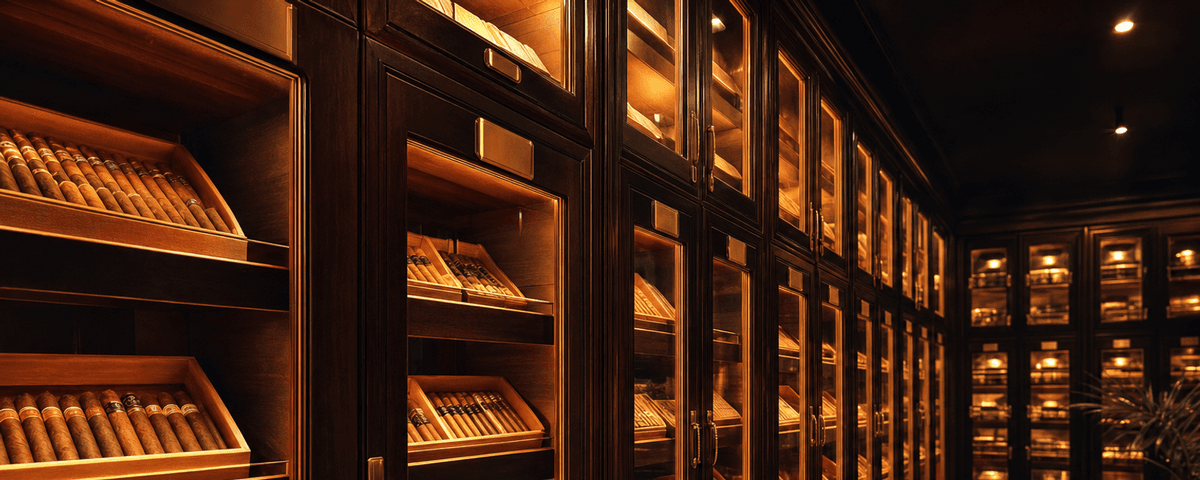
33 座 24 小時恆溫恆濕醇化室
W Cigar Bar 提供的會員醇化空間 · 場地資訊請洽編輯部
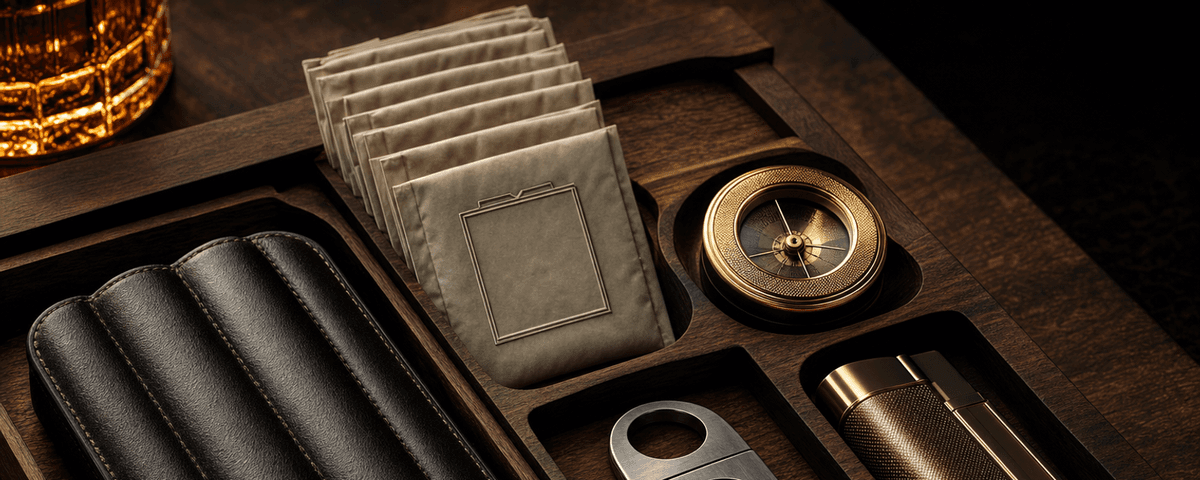
雪茄剪 / 打火機 / 雪茄盒 / Boveda
W Cigar 配件官網 · 專營雪茄配件正品
加 LINE 好友 · 文化諮詢
文化空間資訊 · 紳士沙龍 · 私人包場
本網站內容僅供雪茄文化、歷史、收藏與品吸知識研究參考。菸品有害健康、未滿法定年齡者請勿吸菸。實際規範請依所在地法律為準。
吸菸有害健康・戒菸專線 0800-636363・本站僅供 20 歲以上成年人閱覽。
讀到這裡,你不只是路過的人
留下 Email,加入 W 雪茄聖經內圈——總編輯 Wilson Tsai 親選的學院深文與國際新訊,先你一步送到信箱。
· 教育用途非銷售 · 隨時一鍵退訂 · Email 絕不對外公開 · 由勝茄股份有限公司營運
同分類延伸閱讀


資料來源:W Cigar Bible 編輯部整理 · 雪茄王子 Wilson Tsai 親自審稿
本文僅供雪茄文化、歷史、收藏與品鑑知識研究,不作為菸品促銷、銷售或購買建議。吸菸有害健康,未滿二十歲不得吸菸。